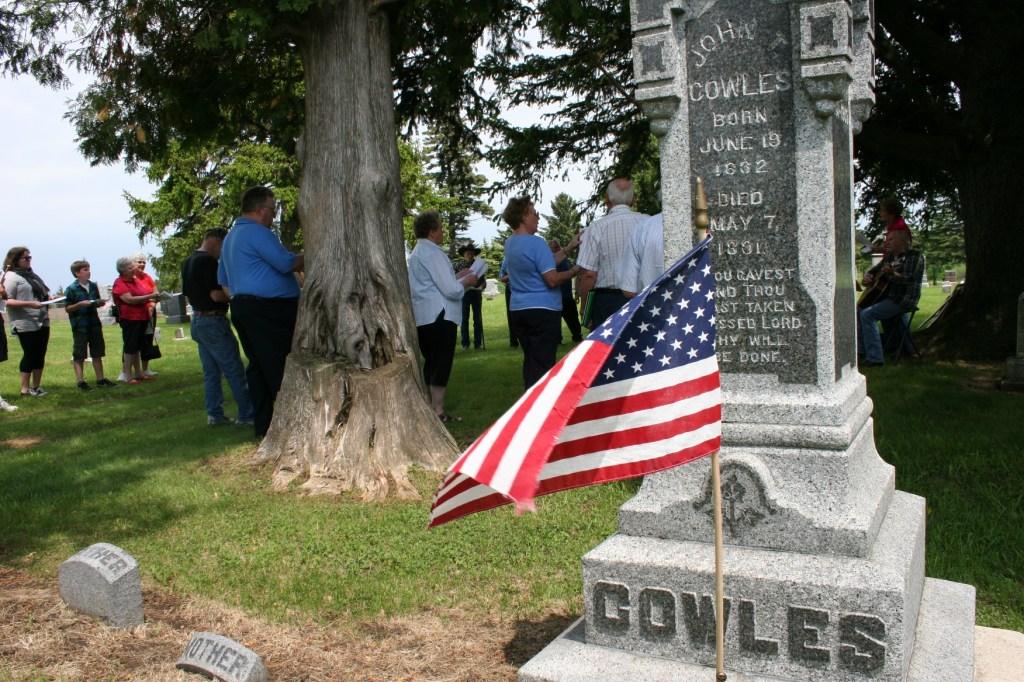
About 30 people gather at the Cannon City Cemetery for an afternoon Memorial Day observance.
IN THE SHELTER of the spruce, of the pines, we formed a semi circle, clustered together in this small country cemetery to honor the veterans buried here, 22 of them from the Civil War.
Ezekiel and Samuel. Spencer and Charles. Henry and Theodore. Emcee Mel Sanborn read the list of names as the wind whipped his words into sometimes inaudible, unintelligible syllables at the Cannon City Cemetery.
Since the late teens or early 1920s, folks have gathered in this Rice County cemetery every Memorial Day, initially called “Decoration Day,” to honor the war dead. Civil War veteran Elijah Walrod was quoted as saying that his son Luther “would strike up the Death March and lead the procession” from the nearby Cannon City School, along the country road to the cemetery.
School children—some of them in attendance at the 2011 Memorial Day observance—once marched with flags and flower bouquets and lilac wreaths and then, afterward, celebrated at the school picnic.
When the school closed in the 1960s, the Cannon City Cemetery Board took over the annual Memorial Day observance, a tradition that continues today, minus the Death March from the country school. It is an unpretentious, informal program that is touching and moving and heartfelt. Americana through and through.
My husband and I came here on this muggy afternoon to experience a small-town Memorial Day observance. We were the strangers among those who had grown up here and had loved ones buried in this ground butted against the rich black soil of farm fields.
Yet, we were welcomed like family and I felt as if I had stepped back in time to the Memorial Day observances of my youth—the days of patriotic songs and playing of taps and reading of “In Flanders Fields.” I mouthed the words silently: “In Flanders Fields the poppies grow between the crosses row on row…” These poetic lines I knew nearly from heart, having recited them as a young girl on the stage of the Vesta Community Hall some 125 miles from this cemetery.
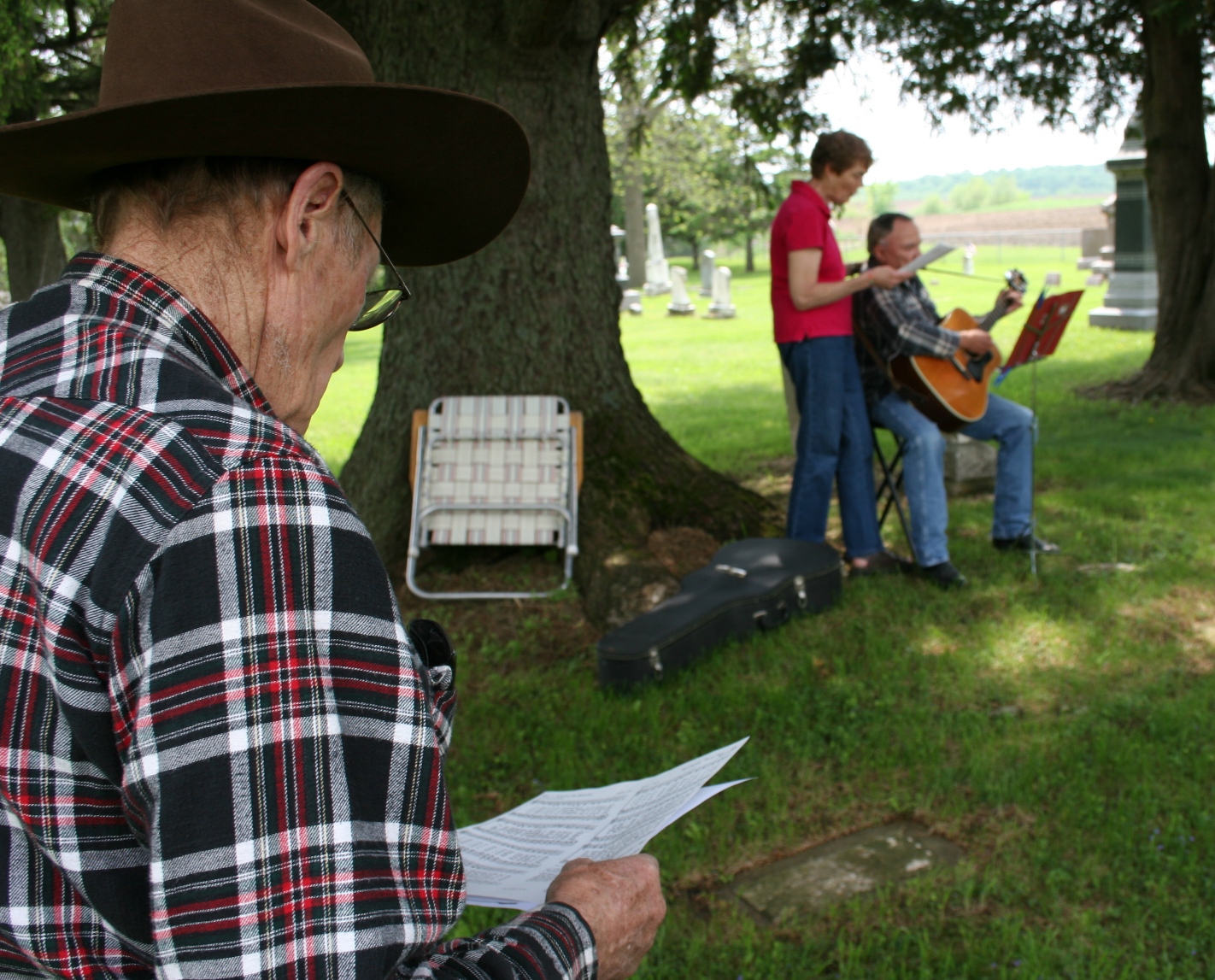
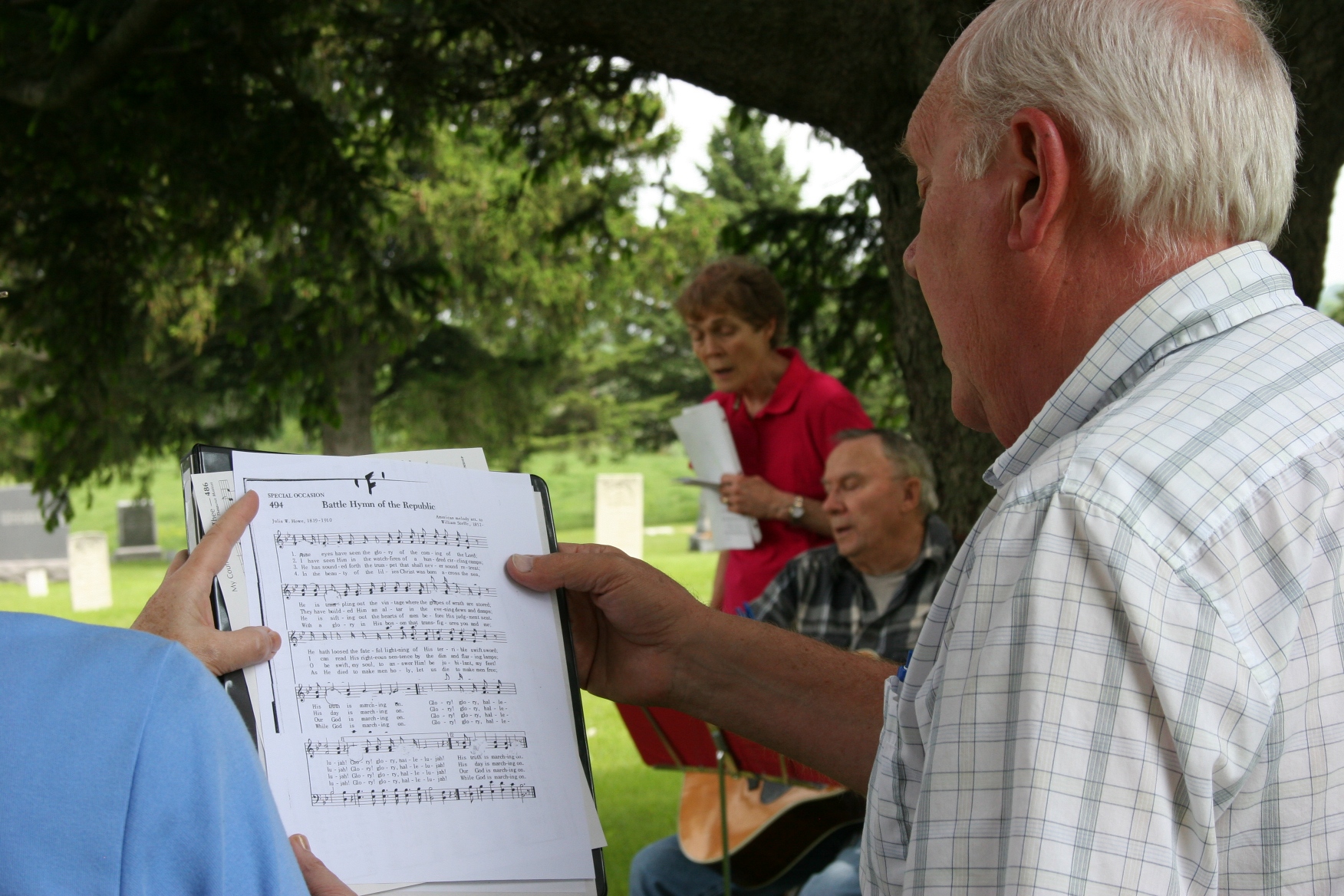
As Don Chester strummed his guitar and clamped his harmonica, we sang “My country, ‘Tis of Thee” “The Battle Hymn of the Republic” and other patriotic songs.
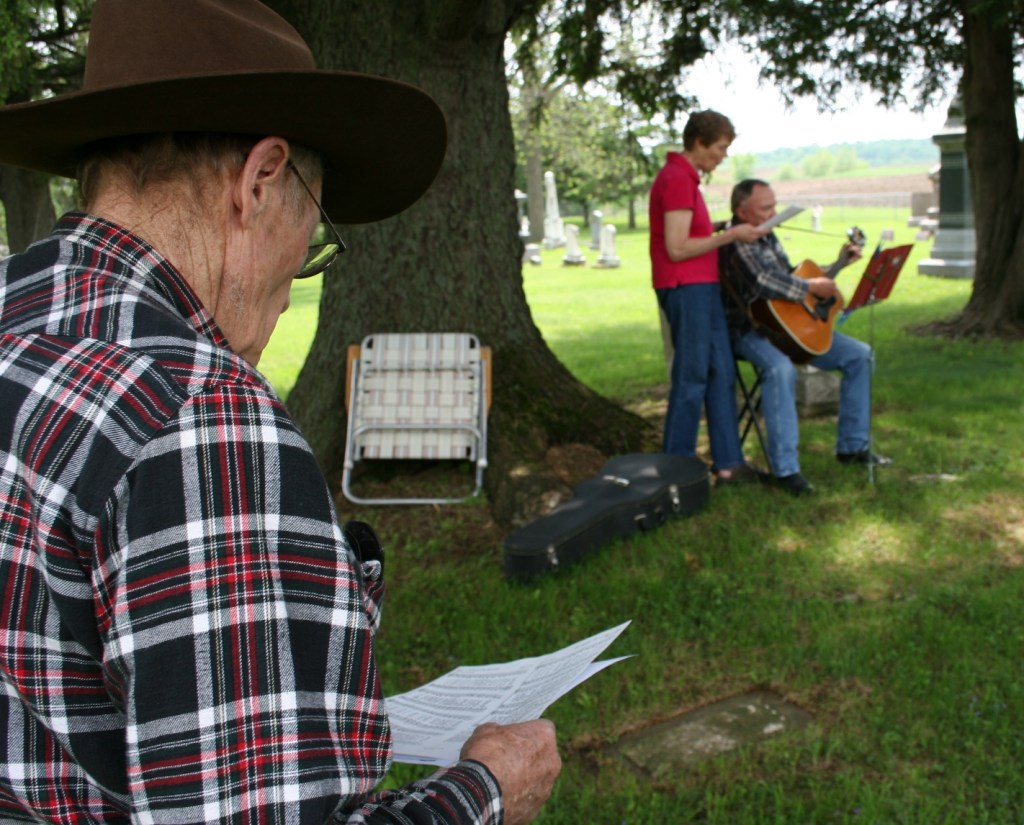
Bob (didn't get his last name) sings as Don and Judy Chester lead the group in song. Bob attended Cannon City School and participated in Memorial Day programs here as a student.
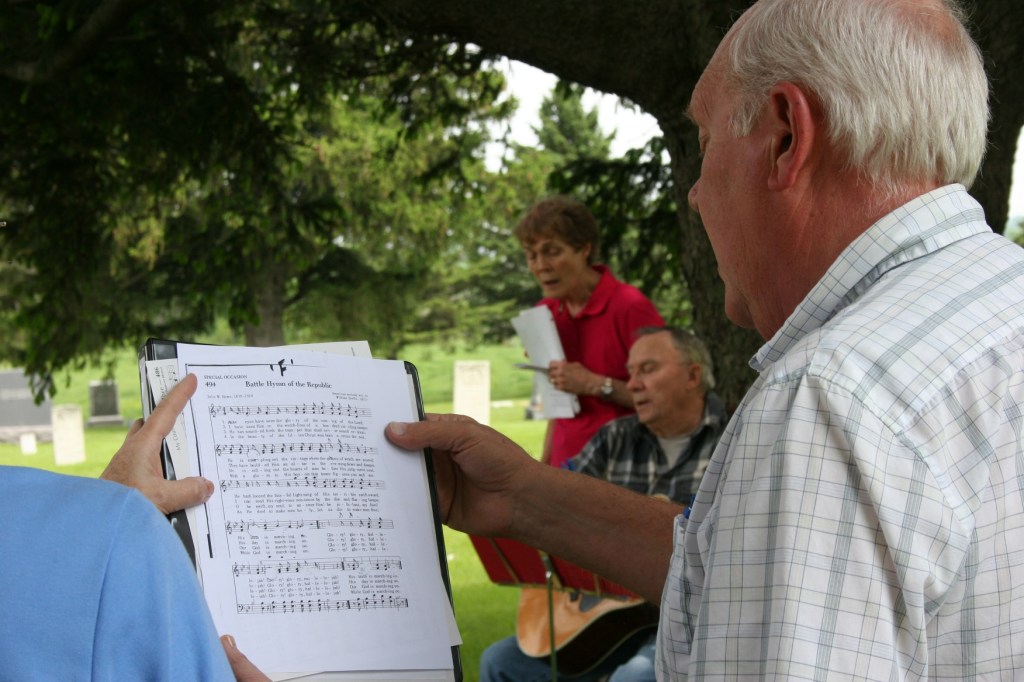
Song sheets were handed out to attendees. Here Mel Sanborn sings "The Battle Hymn of the Republic."
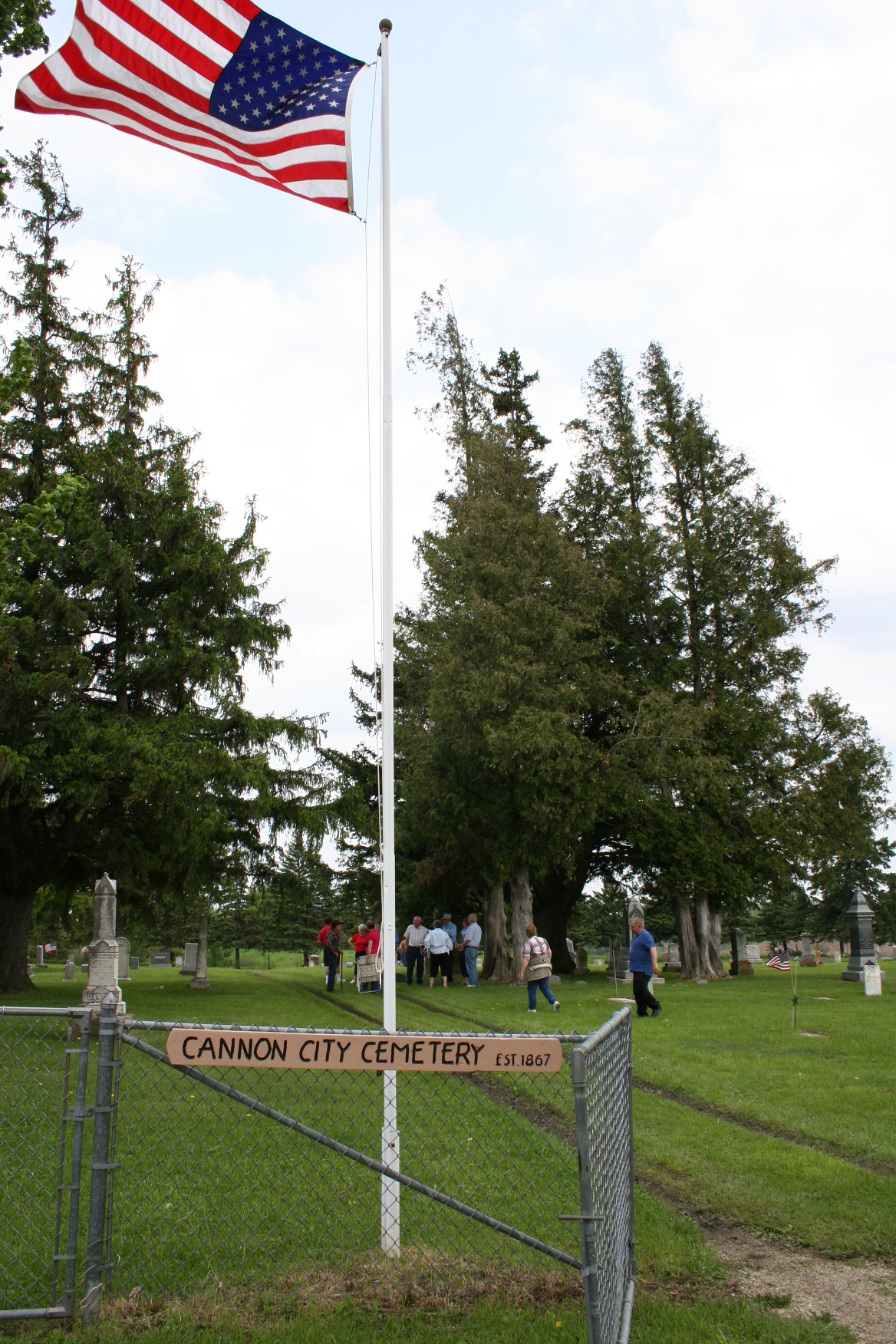
When Steve Bonde blasted “The Star Spangled Banner” on his trumpet, we sang along, turned toward the flag at the cemetery entrance, the brass quelling voices that drifted away with the word-flogging wind.
It mattered not how well or how loudly the 30 or so of us sang. It mattered not that a young girl darted inside the semi circle to pluck a dandelion from the grass. It mattered not that the occasional airplane droned out our voices. We were focused on the songs, “The Gettysburg Address” read by Audrey Sanborn Johnson, and, finally, Bonde’s mournful playing of taps.
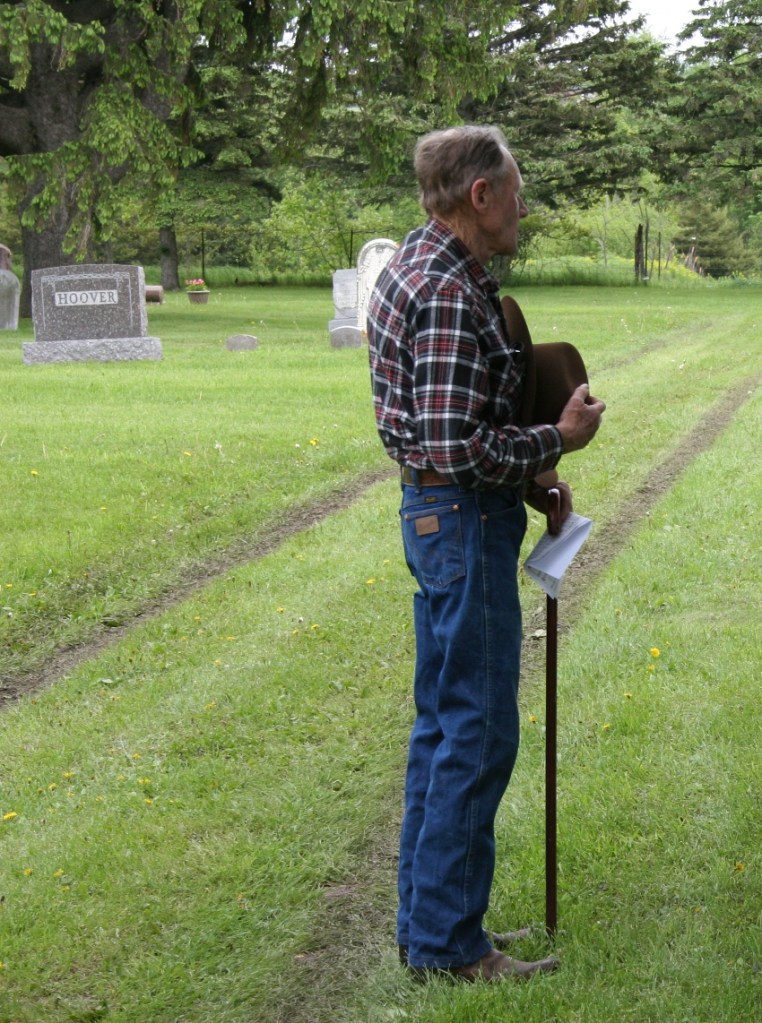
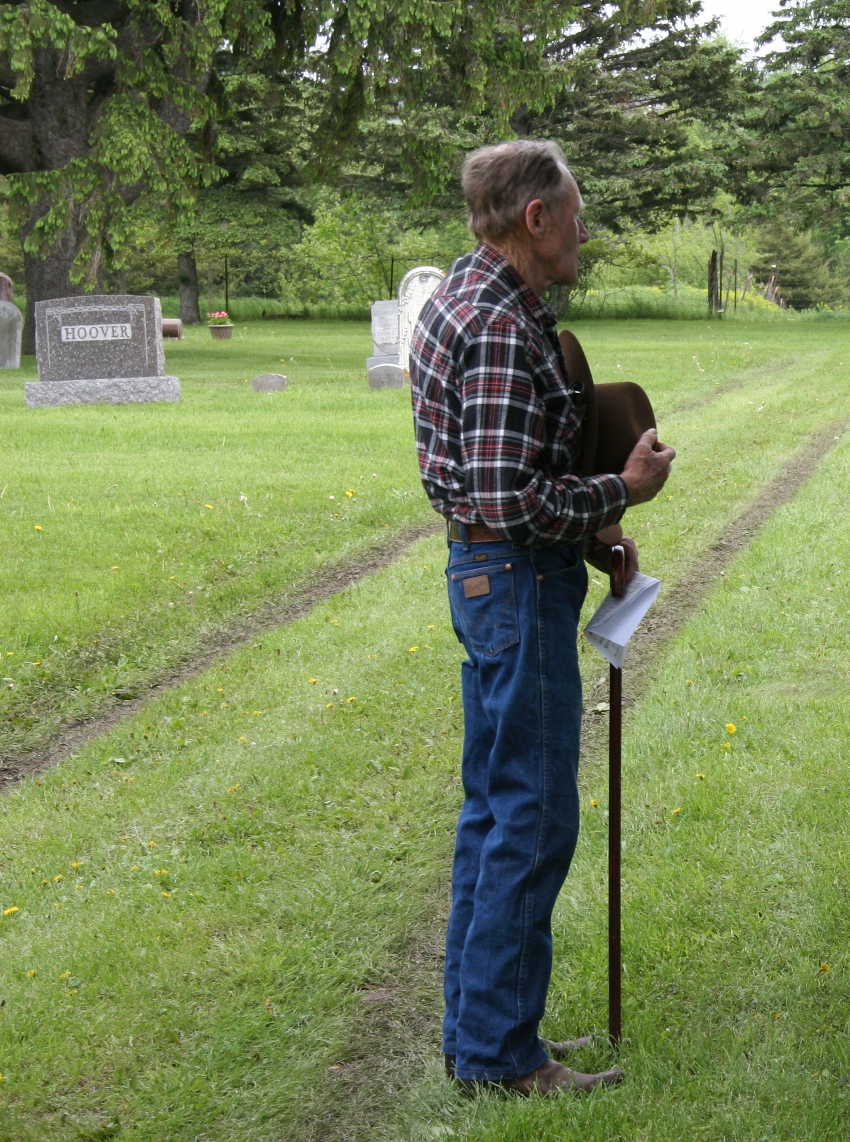
Long-time Cannon City resident Bob respectfully removes his cowboy hat during the playing of taps, a tribute that moves me to tears.
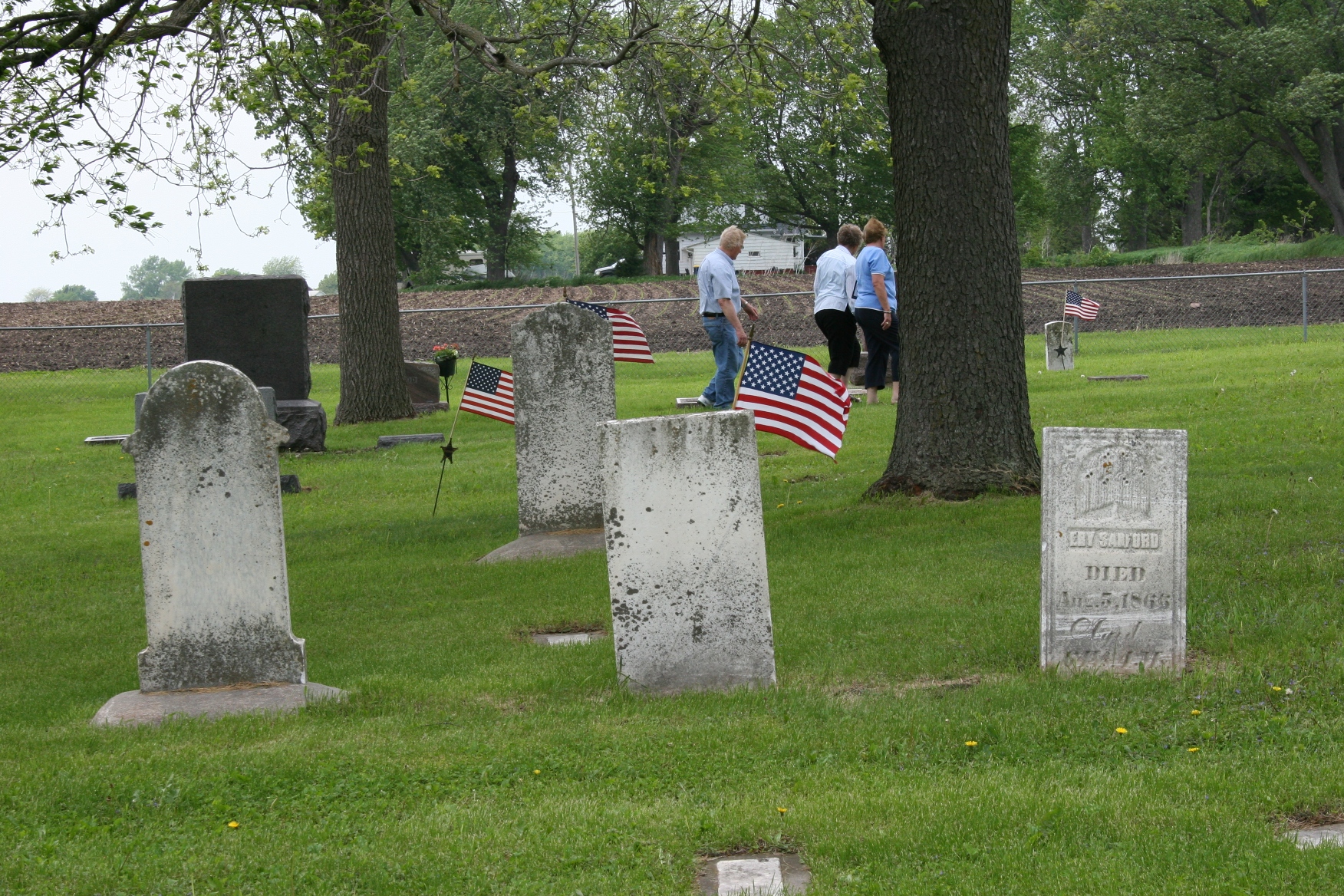
When the final note ended, the small group drifted, scattering across the cemetery to visit the graves of loved ones. I wandered, drawn by American flags to the final resting places of veterans. Names I did not know in an unfamiliar cemetery I was walking for the first time.
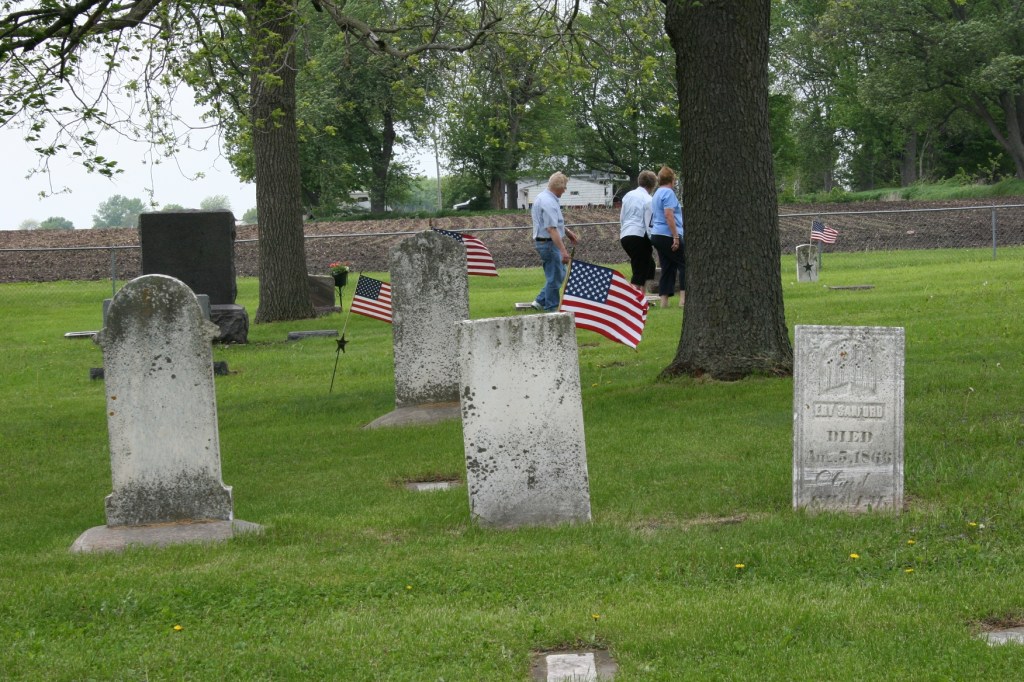
After the program, attendees visited gravesites.
Yet, despite the unfamiliarity with this place or these people, I felt connected to them by the reason I was here—to reflect upon the sacrifices made by so many American men and women in defense of our freedom. America. Land of the free and home of the brave.
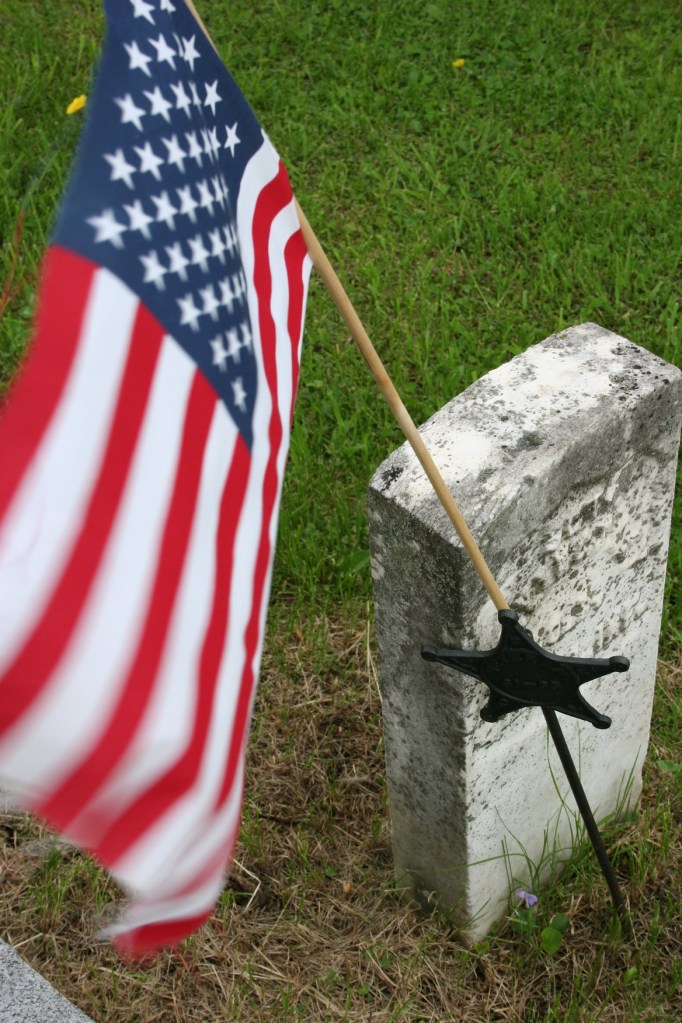
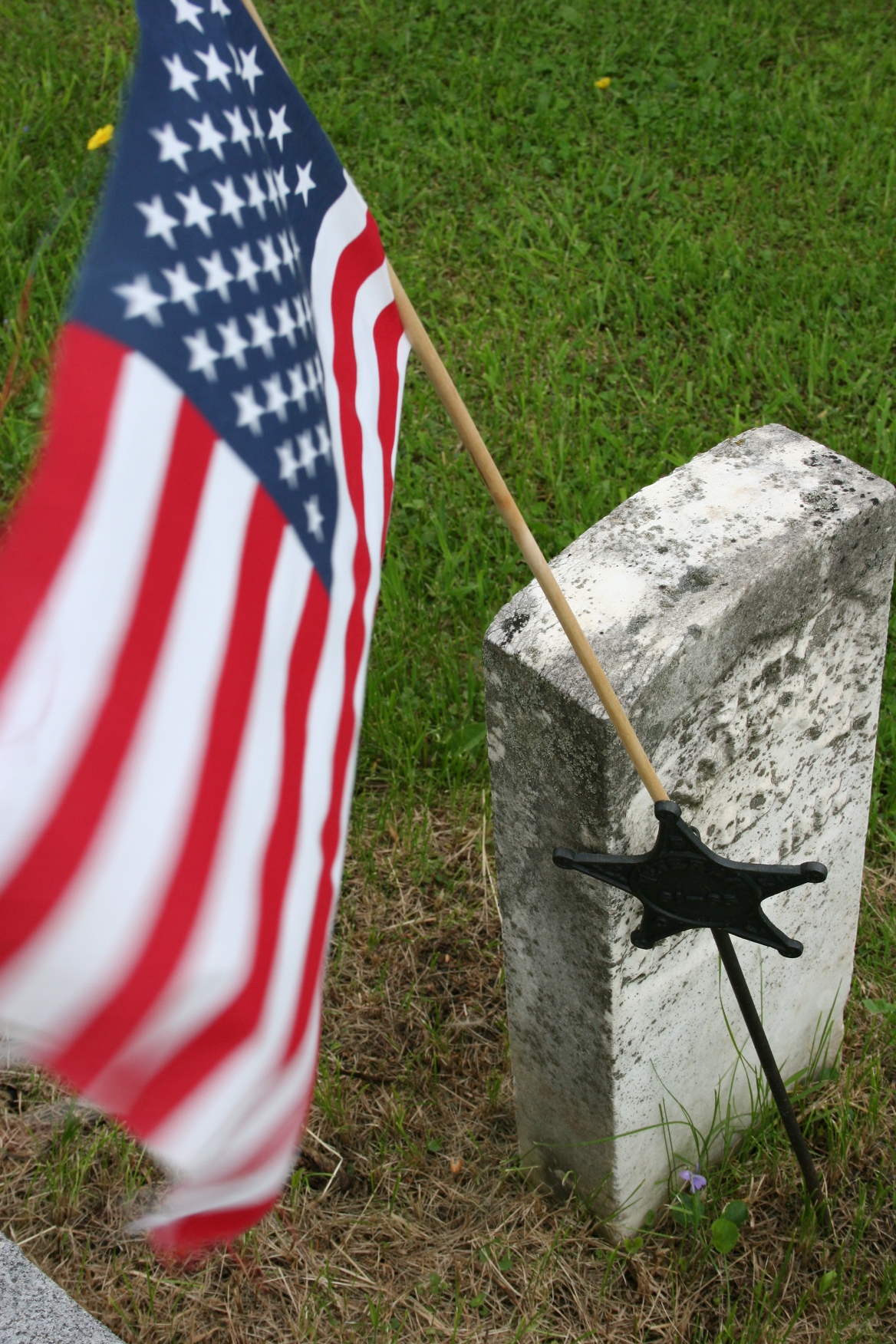
A flag waves in the wind on a soldier's grave.
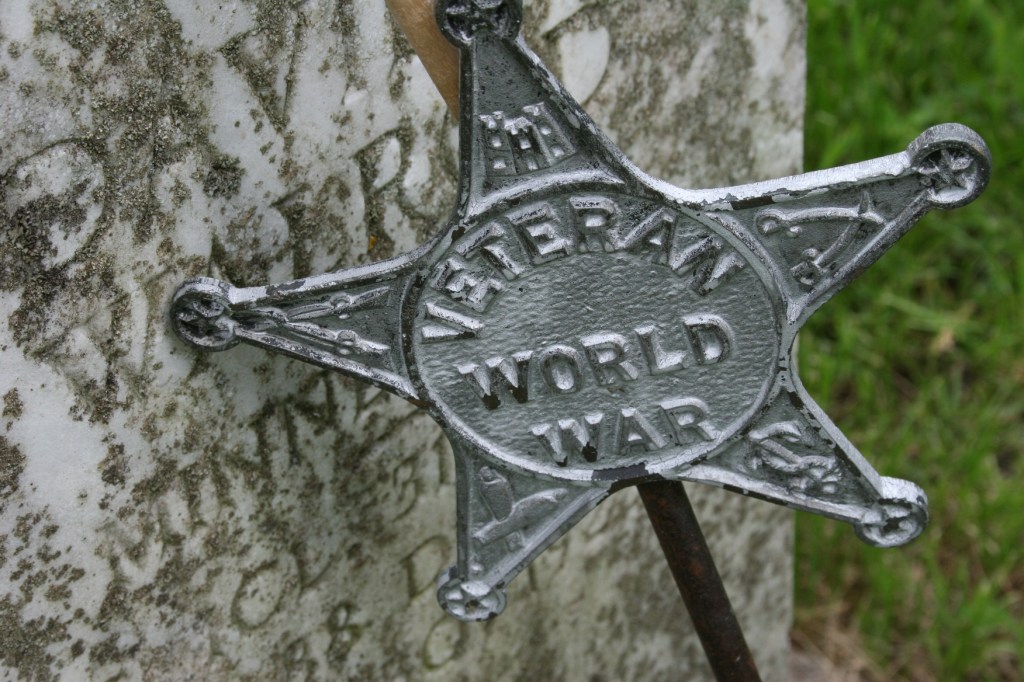
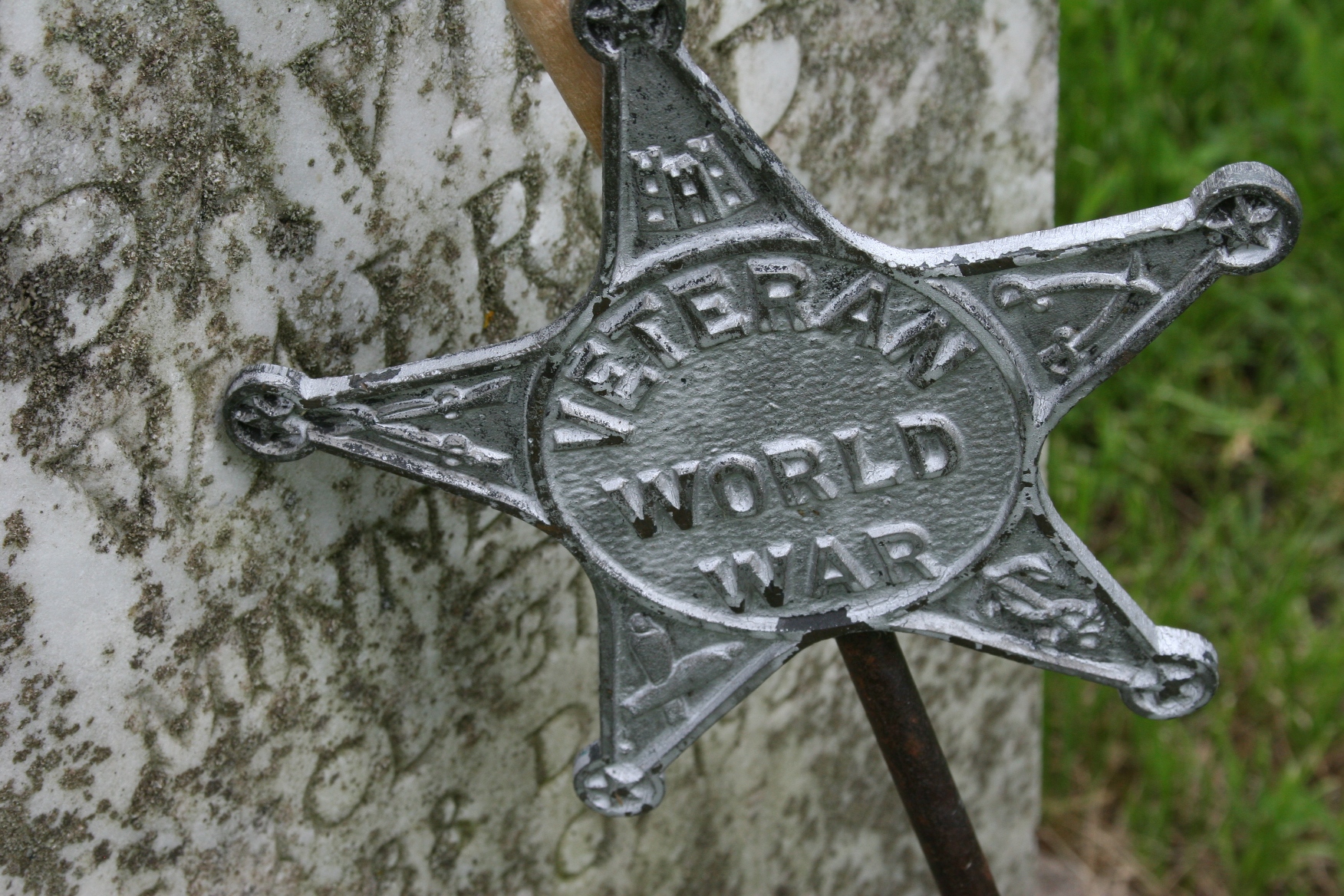
A star marks a veteran's tombstone.
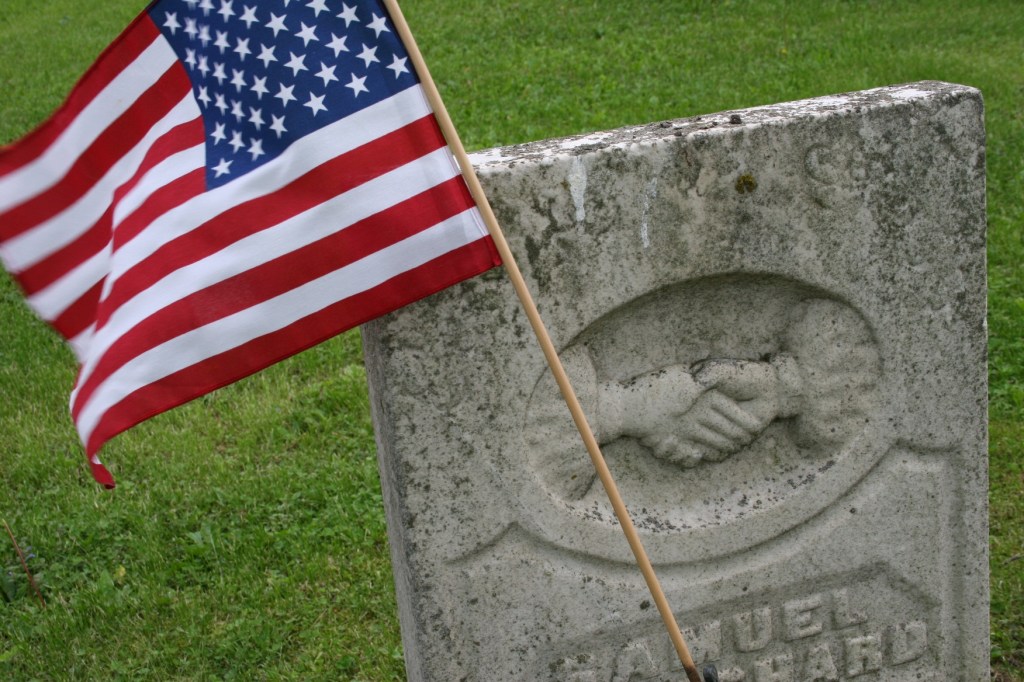
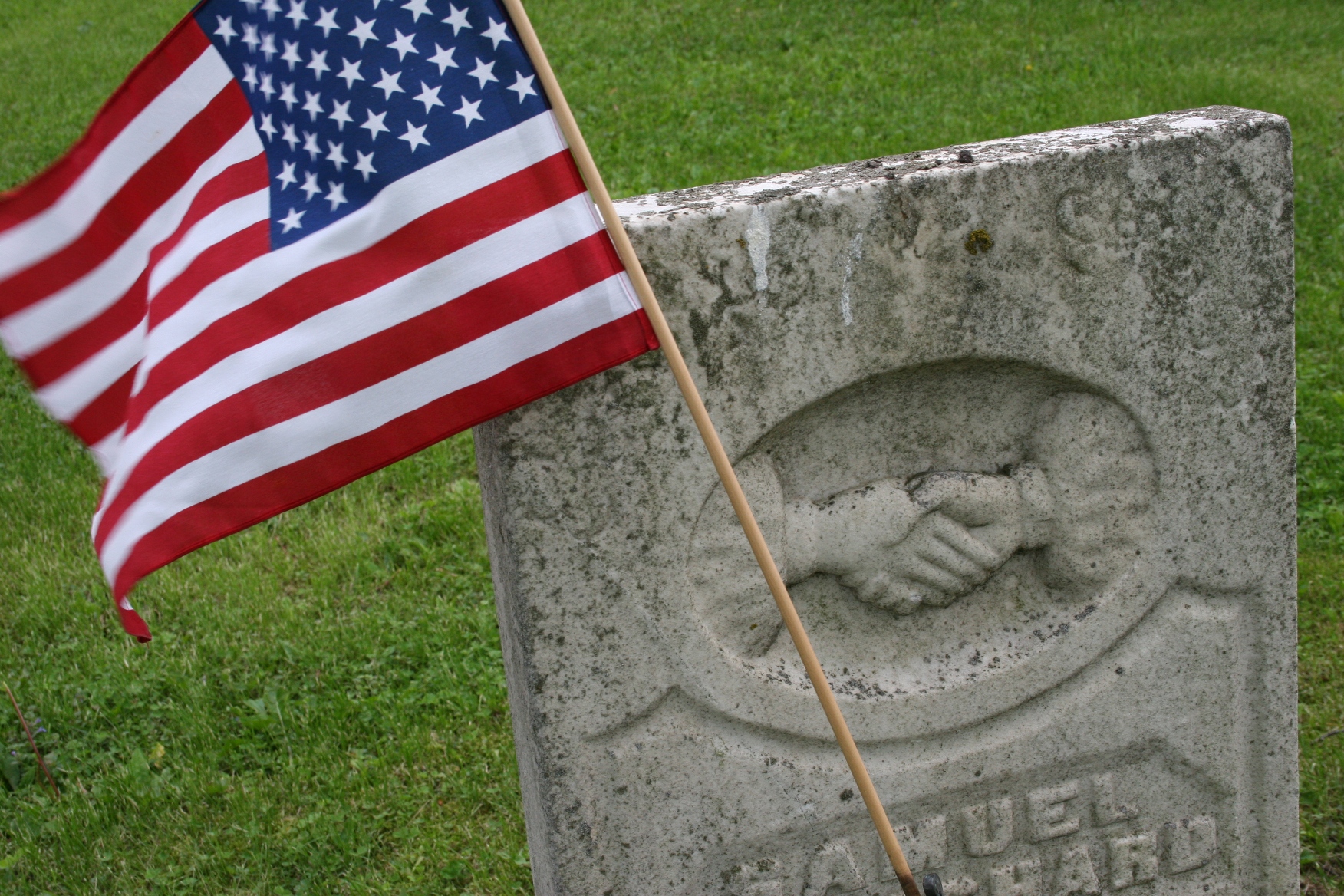
Can anyone explain the symbolism of these clasped hands on a veteran's grave?
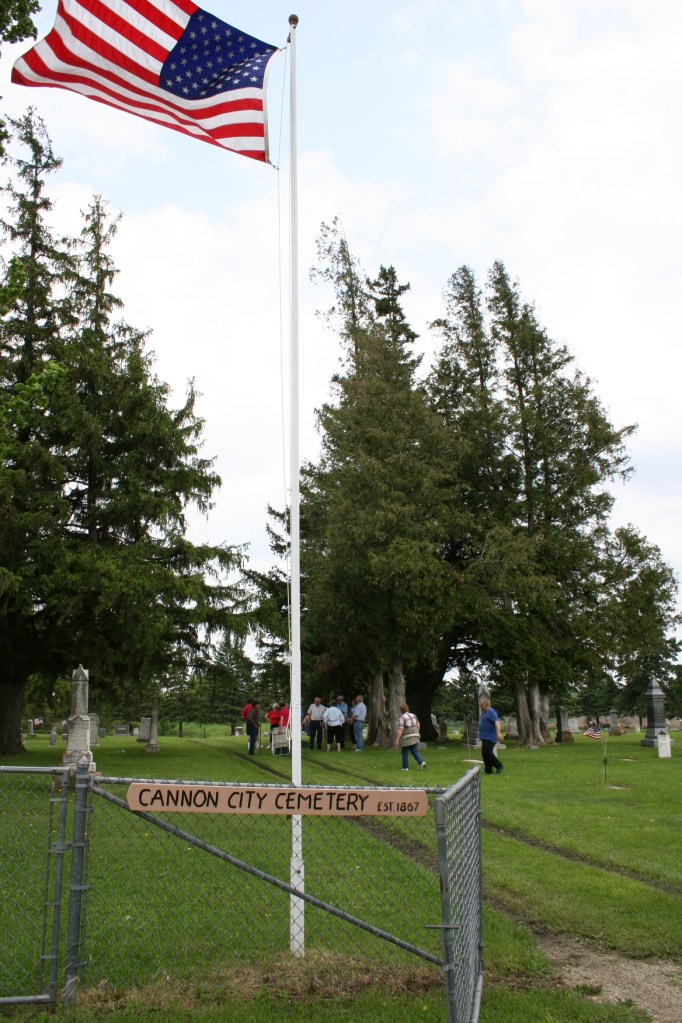
A flag marks the entrance to the Cannon City Cemetery.
© Copyright 2011 Audrey Kletscher Helbling






 Minnesota Prairie Roots
Recent Comments