Minnesota Prairie Roots

Writing and photography by Audrey Kletscher Helbling

Poetry that sings from Minnesota’s poet laureate May 2, 2024

Book cover sourced online. Cover watercolor painting, “The Musician,” is by Cherokee artist Roy Boney, Jr.

HER POEMS SING with the rhythm of a writer closely connected to land, heritage and history. She is Gwen Nell Westerman of Mankato, Minnesota poet laureate and author of Songs, Blood Deep, published by Duluth-based Holy Cow! Press.

Of Dakota and Cherokee heritage, Westerman honors her roots with poems that reflect a deep cultural appreciation for the natural world. The water. The sky. The seasons. The earth. The birds and animals. They are all there in her writing, in language that is down-to-earth descriptive. Readers can hear the birdsong, feel the breeze, see the morning light… That she pens nature poems mostly about the land of my heart—fields and prairie—endears me even more to her poetry.

This slim volume of collected poems is divided into seasons of the year, each chapter title written in the Dakota language. The book features multiple languages—Dakota, Cherokee, Spanish and English. That adds to its depth, showing that, no matter the language we speak, write or read, we are valued.
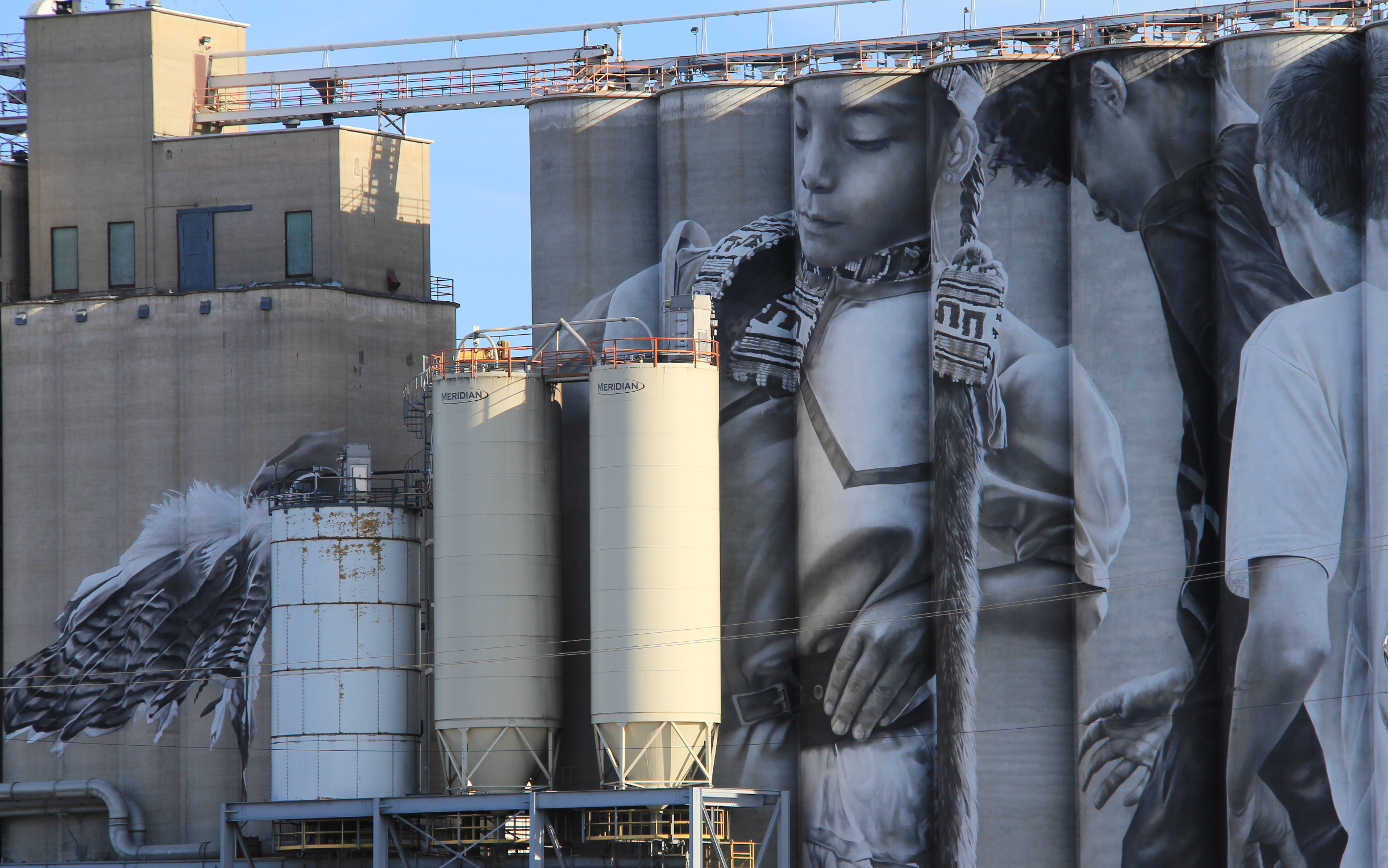
This silo mural in downtown Mankato celebrates the cultural diversity of the region, including the Dakota. (Minnesota Prairie Roots copyrighted photo November 2023)

Westerman clearly values her Native heritage, how lessons and stories have been passed to her through generations of women, especially. Songs, blood deep. In her poem “First Song,” she shares a lesson her grandmother taught her about the importance of sharing. After reading that thought-provoking poem, I considered how much better this world would be if we all focused on the singular act of sharing.

The Dakota 38 Memorial at Reconciliation Park in downtown Mankato lists the names of the 38 Dakota men hung at this site on December 26, 1862. (Minnesota Prairie Roots copyrighted photo November 2023)

This poet, who is also a gifted textile artist (creator of quilts), wraps us in her words. In the season of waniyetu, her poetry turns more reflective and introspective, as one would expect in winter. She writes of family, injustices and more. “Song for the Generations: December 26” is particularly moving as that date in history references the mass execution of 38 Dakota sentenced to death in 1862 and hung in Mankato. Westerman writes of rising and remembering, of singing and prayer. It’s a truly honorable poem that sings of sorrow and strength.

Her poems remind us that this land of which she writes was home first to Indigenous Peoples. Westerman writes of a state park in New Ulm, the sacred Jeffers Petroglyphs and Fort Snelling, where Dakota were imprisoned after the U.S.-Dakota War of 1862 and before their exile from Minnesota. The name of our state traces to Mni Sota Makoce, Dakota for “the land where the water reflects the sky.” It’s included in Westerman’s poetry.

I appreciate poems that counter the one-sided history I was taught. I appreciate Westerman’s style of writing that is gentle, yet strong, in spirit. Truthful in a way that feels forgiving and healing.

In the all of these poems, I read refrains of gratitude for the natural world, gratitude for heritage and gratitude for this place we share. We sang. We sing. Songs, blood deep.

FYI: Songs, Blood Deep, is a nominee for the 2024 Minnesota Book Award in poetry. The winner will be announced May 7. This is Westerman’s second poetry book. Her first: Follow the Blackbirds. In addition to writing poetry and creating quilts, Westerman teaches English, Humanities and Creative Writing at Minnesota State University, Mankato.

© Copyright 2024 Audrey Kletscher Helbling


Looking west in a new poetry collection by five Northfield poets April 18, 2024

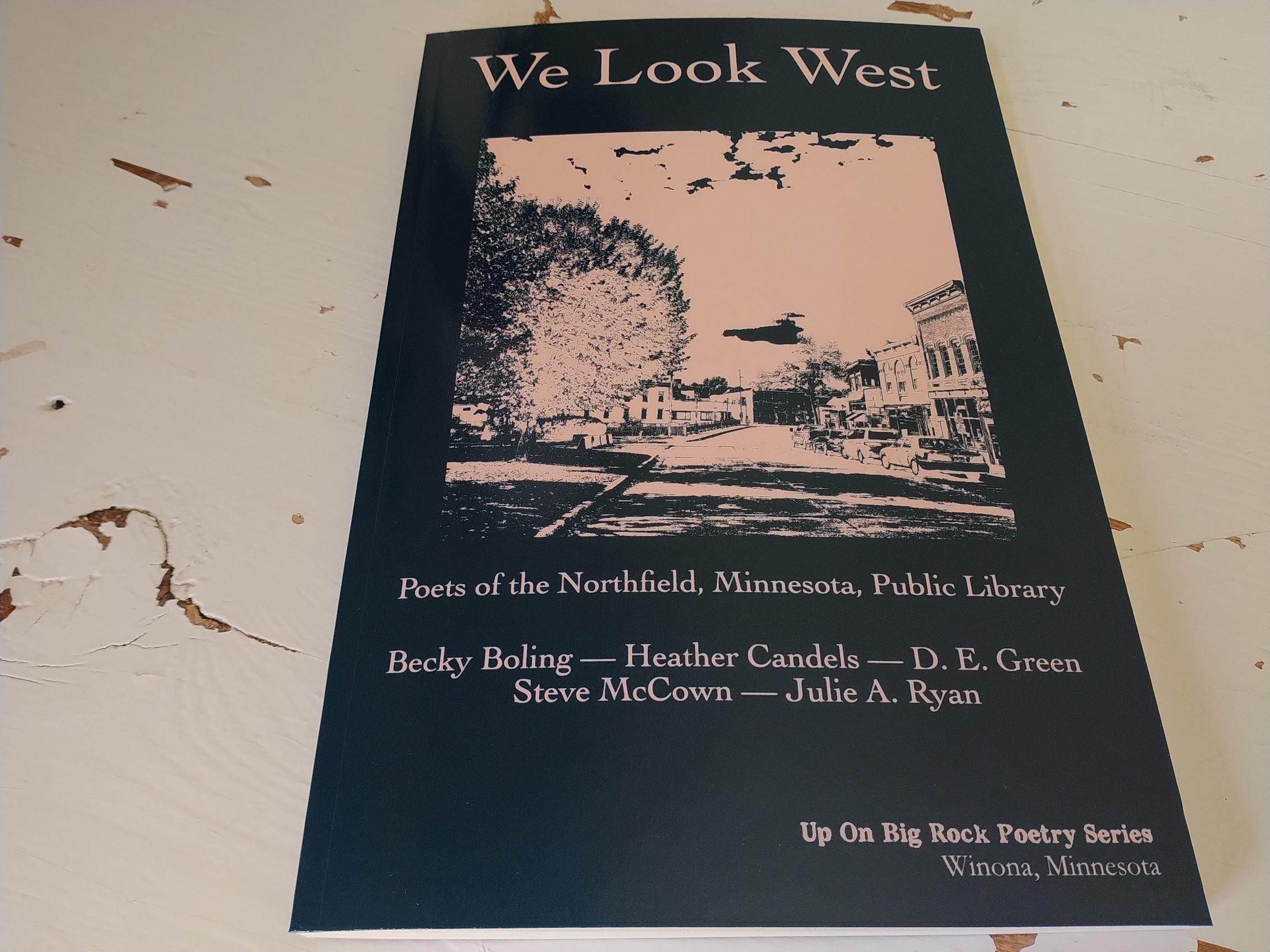
Just-published, a 116-page anthology featuring the poetry of five Northfield, Minnesota, poets. (Minnesota Prairie Roots copyrighted photo April 2024)

ON AN APRIL AFTERNOON when gray skies reverberated thunder and unleashed sheets of rain upon parched southern Minnesota, I read their words, table-side lamp pooling light onto pages. It felt right, to cozy under a fleece throw, to immerse myself in the poetry of Becky Boling, Heather Candels, D.E. Green, Steve McCown and Julie A. Ryan on a day meant for sheltering indoors.

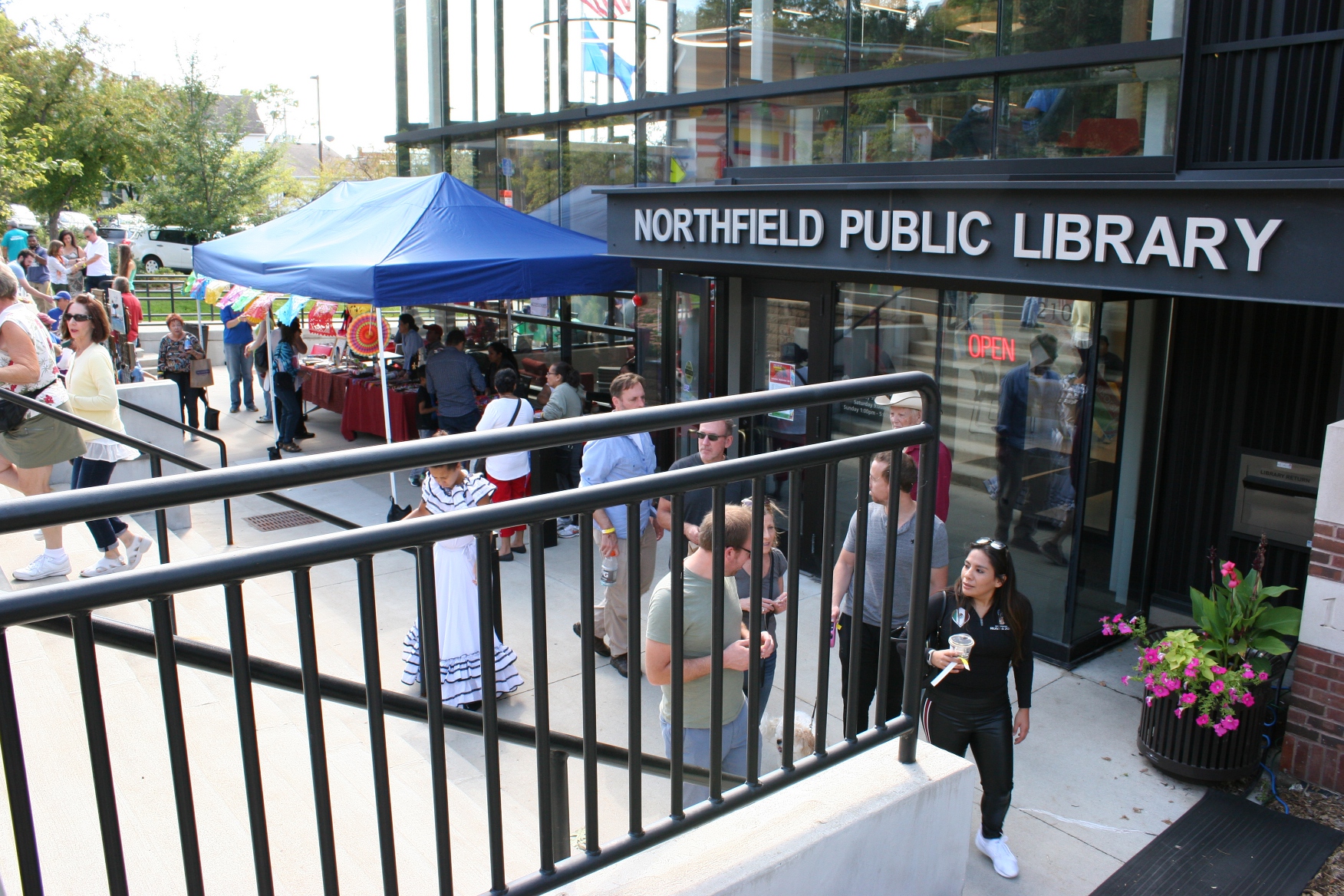
Outside the Northfield Public Library during a 2019 celebration of Hispanic Heritage Month. (Minnesota Prairie Roots copyrighted file photo September 2019)

Their collective poetry, printed in the recently-released anthology, We Look West, is decidedly reflective, introspective and individually unique. Unique in voice and style for this group of writers tagged as Poets of the Northfield, Minnesota, Public Library. This book is part of the Up on Big Rock Poetry Series published by Winona-based Shipwreckt Books Publishing Company. It showcases the work of not only seasoned writers, but also poets seasoned in life. This is a relatable read, especially for Baby Boomers like me.

Antiques on 4th in Cannon Falls. (Minnesota Prairie Roots copyrighted file photo October 2021)

Youthful memories of grandmothers, homemade ice cream, small towns as they once were and much more flow through the pages. At times I feel as if I’m reading about “the dusty excess of nostalgia” of my life, as Steve McCown writes “In an Antique Store.” His mention of a Tom Thumb toy cash register sends me back to a long ago Christmas. His poems are sparse, yet fully-descriptive in the way of language carefully-culled by a man who taught high school and college English.

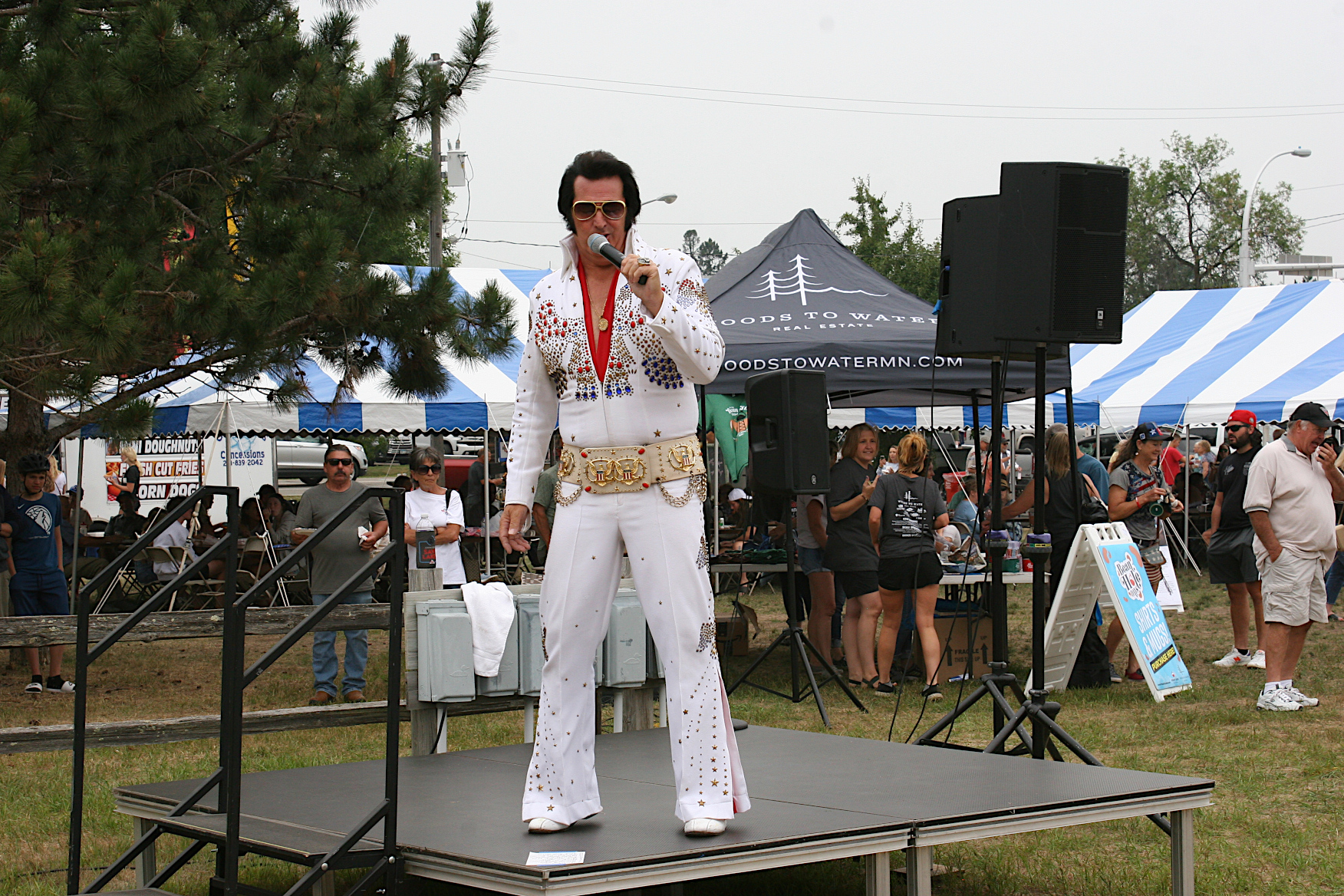
An Elvis impersonator performs during Bean Hole Days in Pequot Lakes. (Minnesota Prairie Roots copyrighted file photo July 2021)

Likewise, Julie A. Ryan, has me reminiscing with “Candy Cigarettes,” the chalky white sticks of fake cigarettes that I, too, “smoked” in the 1960s. Ryan paints with her words, revealing the visual artist side of her creativity. She mentions Van Gogh and painting and also leans into music within her poetry. Especially powerful is her poem, “’68 Comeback Special,” in which she shares about a near-death experience, of almost meeting Elvis. Her final poem, “We Look West,” titles the book, summarizing well the transition of life from sunrise/birth to sunset/death. That themes the anthology, the movement of life from east to west.

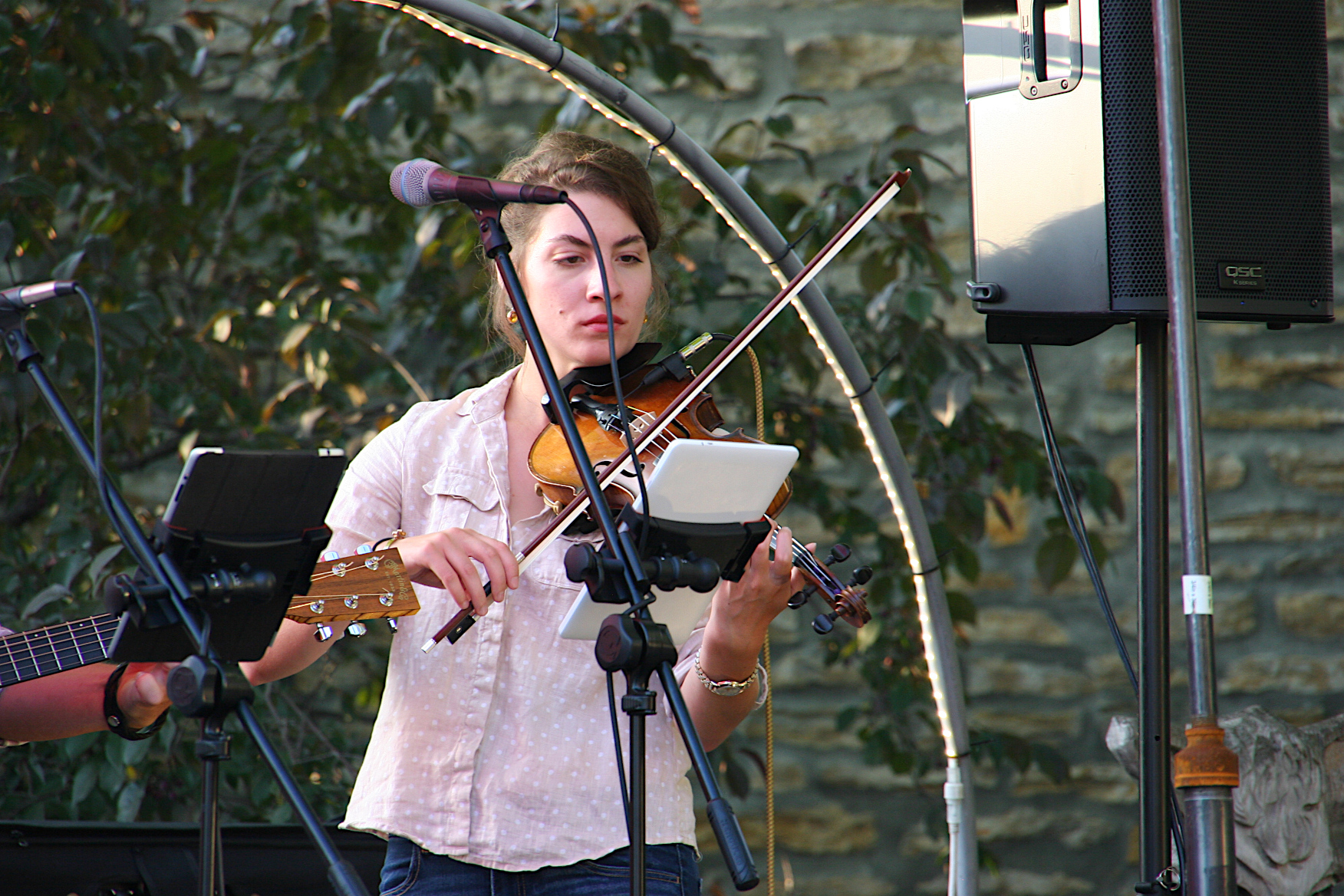
Performing at The Contented Cow in downtown Northfield. (Minnesota Prairie Roots copyrighted file photo August 2020)

In her poetry, Becky Boling moves readers through life from playground monkey bars to motherhood to contemplating old age. I am particularly drawn to “Violin Lesson,” in which Boling observes her young son learning to play the violin. From a deep cushioned armchair, she is caught up in the artistry, the beauty, the movement as am I through her observational writing. And then she closes with the emotional thought of not wanting the moment to end, of understanding that some day she will let her son go. As the mother of three, I feel her sadness at the lesson completed. I expect in her 36 years of teaching Spanish and Liberal Arts at Carleton College in Northfield, Boling has observed the movement of young people whose parents let them go to learn and grow their independence.

A southwestern Minnesota prairie sunset between Redwood Falls and Morgan. (Minnesota Prairie Roots copyrighted file photo)

D.E. Green, who taught English for 33 years at Augsburg University, has likely seen the same. His poems reflect life and love. Particularly endearing is his poem, “For Becky: Love Sonnet after Neruda,” written for Boling, to whom he’s married. (They also share the position of interim co-poet laureates in Northfield.) His appreciation for and study of Shakespeare show in this love poem, as touching as any love poem I’ve read. “I love you unthinkingly/like a deep breath, a careless yawn, a sigh,” he writes. Beautiful. Green also reflects on his life lived “good enough” and on life during retirement. His poetry should be required reading for anyone closer to west than to east.

My mom lived in a care center, confined to a wheelchair in the end years of her life. I took this photo of her hands about a year before her January 2022 death. (Minnesota Prairie Roots copyrighted file photo December 2020)

Heather Candels, too, reflects on her passing life in a poem aptly titled “Passing.” But it is “Situation Comedy,” a poem about a 104-year-old woman living in a care center, which elicits an especially emotional reaction from me. I can picture the centenarian shoving her walker (as my octogenarian mom did) to the dining room, then sitting with Grace and Lloyd, whom she secretly calls Grease and Lard. “Something has to be funny about all this,” Candels writes. The former English teacher is a gifted storyteller who brings unexpected emotional lines to her writing.

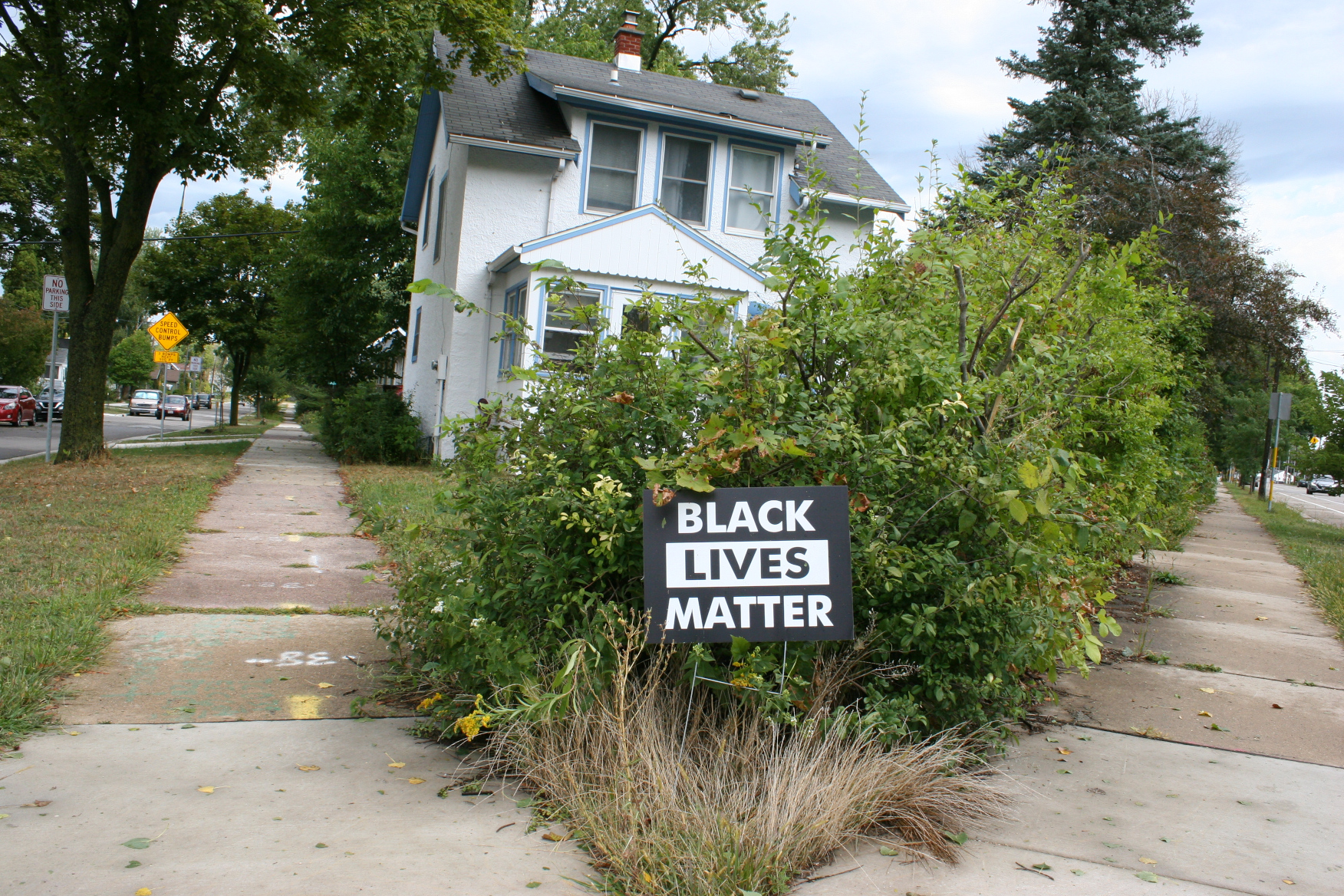
In “A Sign,” Heather Candels writes about racial injustice via white lilies of the valley and “their colonies spreading underground/roots nurtured by the rich dark soil…” This poem alone is reason enough to buy this anthology. Photo taken in Madison, Wisconsin. (Minnesota Prairie Roots copyrighted file photo September 2020)

And then there are the poems that touch on tough topics, on social issues, on disparities. Climate change. Evidence in the Nuremberg Trials. Racial injustice. Poetry doesn’t right life. But it opens our minds, causes us to think, reflect, perhaps take positive action as we move from east to west.

#

FYI: The five Minnesota poets included in We Look West will launch their anthology during a reading and book signing at 7 pm on Thursday, May 16, at the Northfield Public Library. I encourage you to attend if you live in the area. If not, I suggest you buy a copy of this 116-page anthology through an independent bookseller. These poets are gifted writers, this collection a must-read whether you’re a Baby Boomer or not.


The poetry of Rob Hardy, Northfield poet laureate April 20, 2022

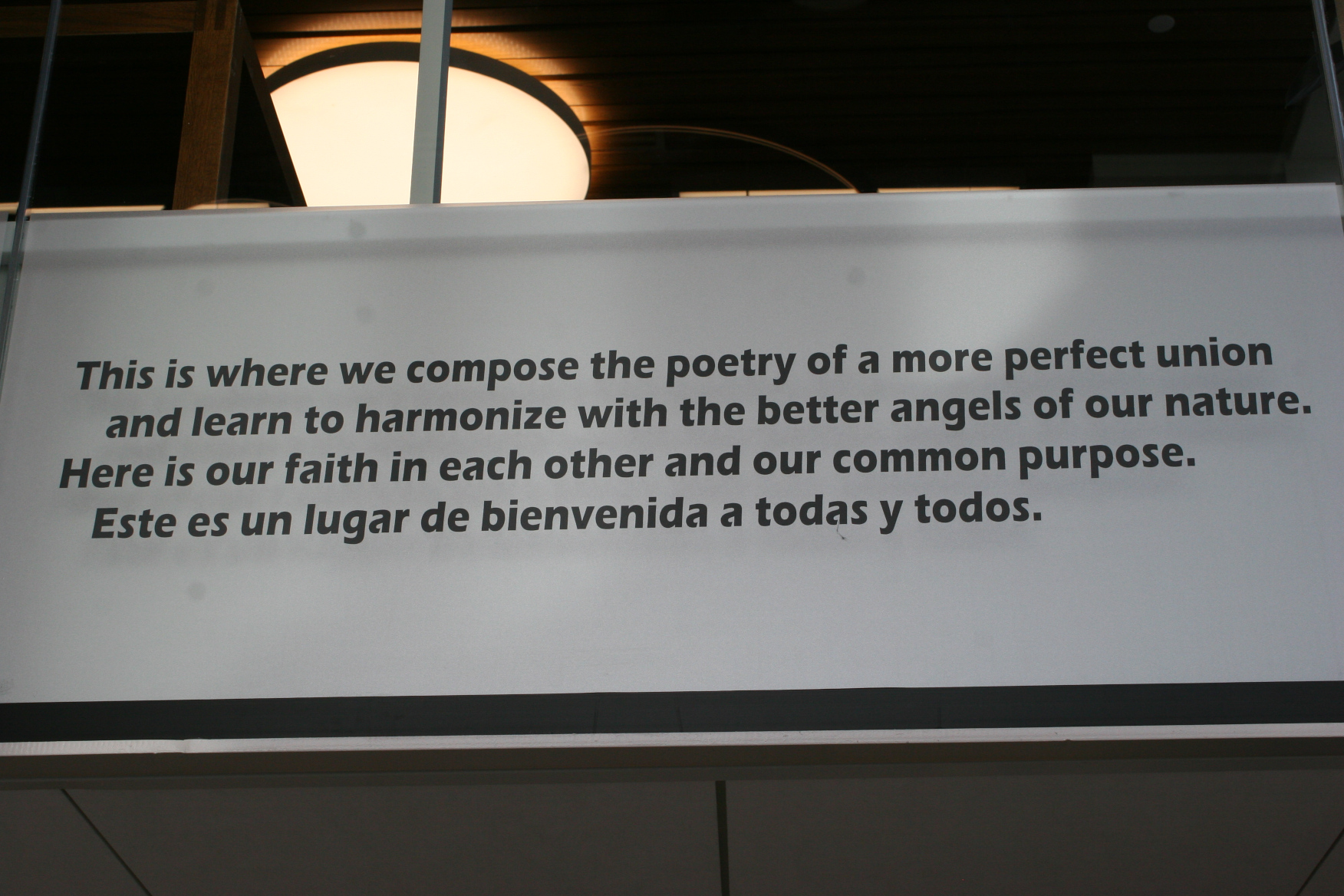
A portion of Rob Hardy’s poem displayed at the Northfield Public Library. (Minnesota Prairie Roots file photo)

ROB HARDY, poet laureate of Northfield, is the kind of laid back guy who appreciates a good craft beer. I know. Back in September 2017, I met him at Imminent Brewing, where we shared a table while enjoying a beer, listened to other beer lovers read poems about beer and then read our own beer poems. He organized that Beer Poetry Contest. Poetry at a brewery, how creative and fun is that?

In January 2019, I again found myself in the company of Hardy, and other gifted area poets, for a poetry reading at Content Bookstore in Northfield.

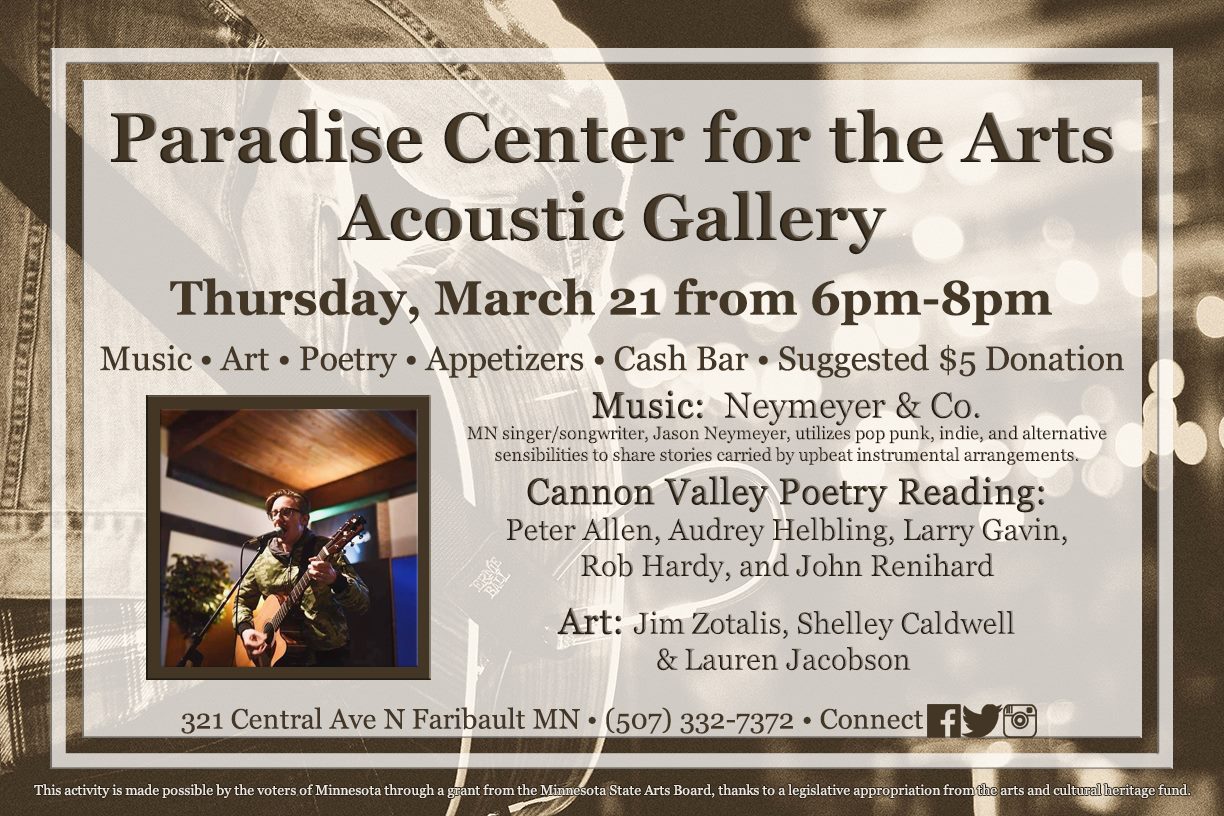
Promo courtesy of the Paradise Center for the Arts for a past event that included a poetry reading.

And then several months later, we gathered at the Paradise Center for the Arts in Faribault for more public poetry reading.

Hardy is a champion of poetry. He tirelessly promotes poetry in Northfield, where poems, including his, imprint sidewalks. He organizes poetry events and publishes a poetry-focused newsletter and even has a poem permanently posted at the public library.

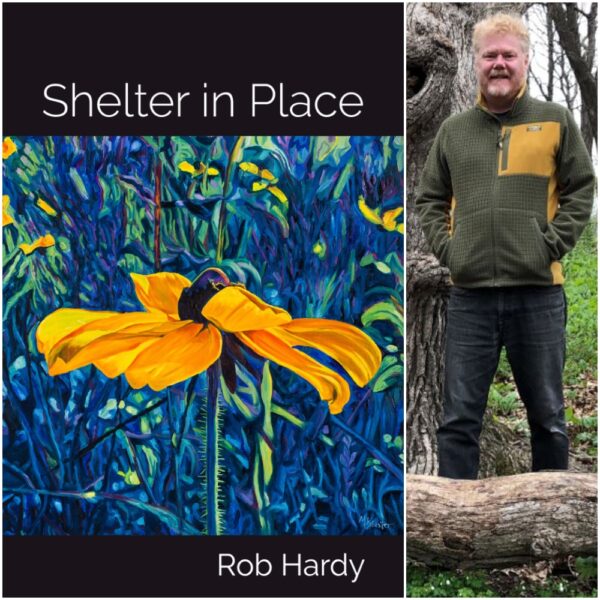
Rob Hardy, right, and his new poetry collection. (Photo source: Finishing Line Press)

And he just released a new collection of poetry, Shelter in Place, published by Finishing Line Press. The slim volume of 20 poems is a quick read with many of the poems therein inspired by his daily walks in the Carleton College Cowling Arboretum during the pandemic year of 2020.

The influence of the pandemic upon this poet’s life and writing is easy to see. In “Lyrical Dresses,” for example, he writes about looking at ordinary life through the wrong end of a telescope and sometimes crying for no reason. In “Today’s Headlines” the fourth line reads: Rice County has the highest rate of new cases in the country. That would be our county.

But these COVID-19 themed poems are not necessarily doom, gloom and darkness. They are an honest, reflective historical record of life during a global pandemic from the creative perspective of a wordsmith. Just as important as a news story in telling the story of this world health crisis. In “Grounded” he writes of pulling a shoe box from the closet to relive travel memories while unable to travel. While grounded.

He did, however, put his feet to the ground, immersing himself in nature through daily walks. He writes of birds and prairie and sky and river and wind…in poems inspired by his deepening connection to the natural world.

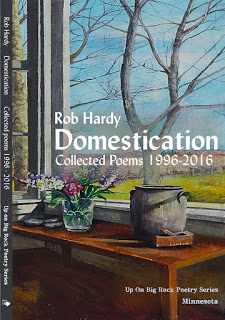
Shipwreckt Books Publishing published Northfield Poet Laureate Rob Hardy’s previous poetry collection.

I encourage you to read Hardy’s Shelter in Place and/or attend a reading at Content Bookstore featuring Hardy and Greta Hardy-Mittell, a Carleton College student and writer. That event begins at 7 pm on Thursday, April 21. Click here for details. Rob Hardy is also the author of two other poetry collections, Domestication: Collected Poems, 1996-2016 and The Collecting Jar.

#

TELL ME: Have you attended any poetry events or read/written poems in April, National Poetry Month.

© Copyright 2022 Audrey Kletscher Helbling
 

How I love this poetry collection April 22, 2019


HOW DO I LOVE THEE? Let me count the ways.

Those introductory words to sonnet number 43 by Elizabeth Barrett Browning imprinted upon many a heart, mine included. Not that I can recite the poem. But I remember that first love line and the two lines that follow.

I love thee to the depth and breadth and height
My Soul can reach, when feeling out of sight.


Ah, how I appreciate lyrical love poems. Words with depth penned from the soul.


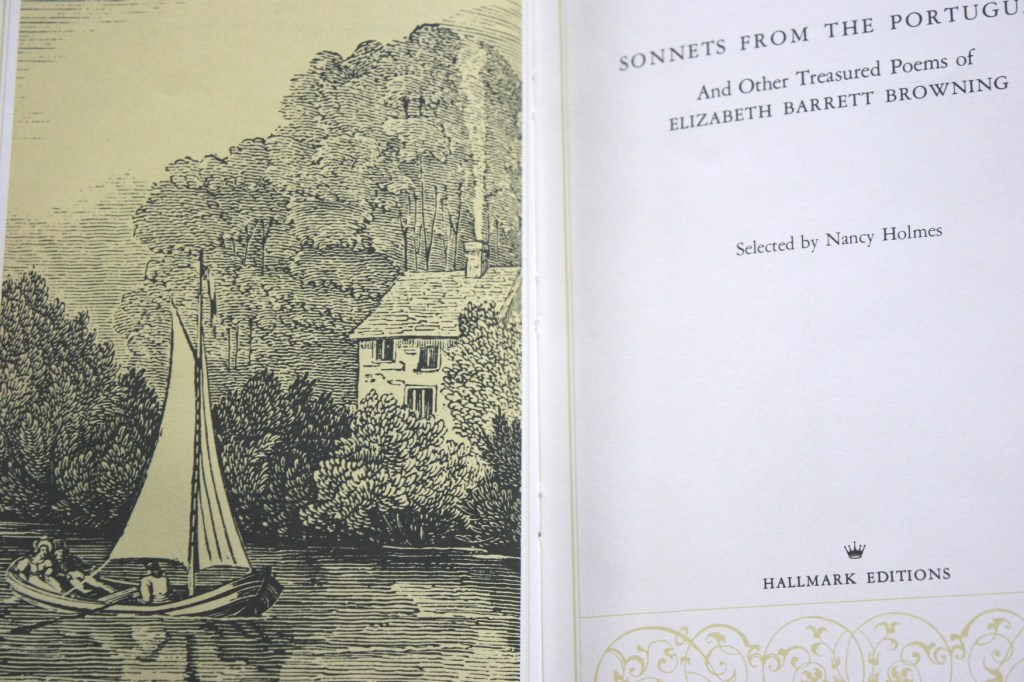
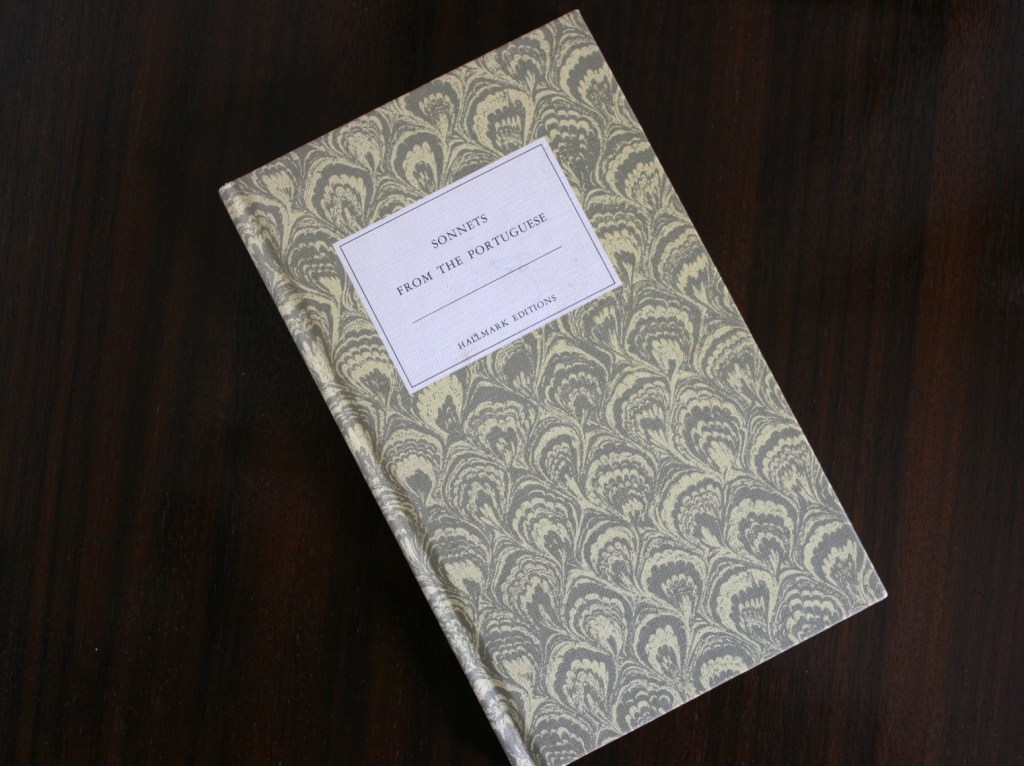
And how I appreciate those who embrace poetry. Like my friend Barb. She recently gifted me with a 1967 Hallmark Editions volume of Sonnets from the Portuguese and Other Treasured Poems of Elizabeth Barrett Browning. It’s a beautiful vintage collection of Browning’s love poems written between 1845-1846 and published in 1850. The British poet wrote the sonnets before her marriage to Robert Browning, a union disapproved of by her father. The couple secretly married in 1846.

I won’t pretend to understand everything Browning writes. If I chose to study her works, I would gain that depth of understanding. But I’m OK with simply reading and interpreting on my own.


My delight in unexpectedly receiving this 52-year-old slim collection reaches beyond words. The book is a work of art with poems printed in Garamond typeface on Hallmark Eggshell Book paper and with several illustrations interspersed therein. The covers, too, are lovely in a muted sage. To hold and page through this book is to hold creativity.

I feel intentionally and richly blessed when friends like Barb understand how I value the literary and visual arts. Barb knew this collection of Browning’s writing would hold meaning for me as a poet, as a creative. Especially during April, National Poetry Month.

TELL ME: Do you have a favorite poet or poem?

© Copyright 2019 Audrey Kletscher Helbling