
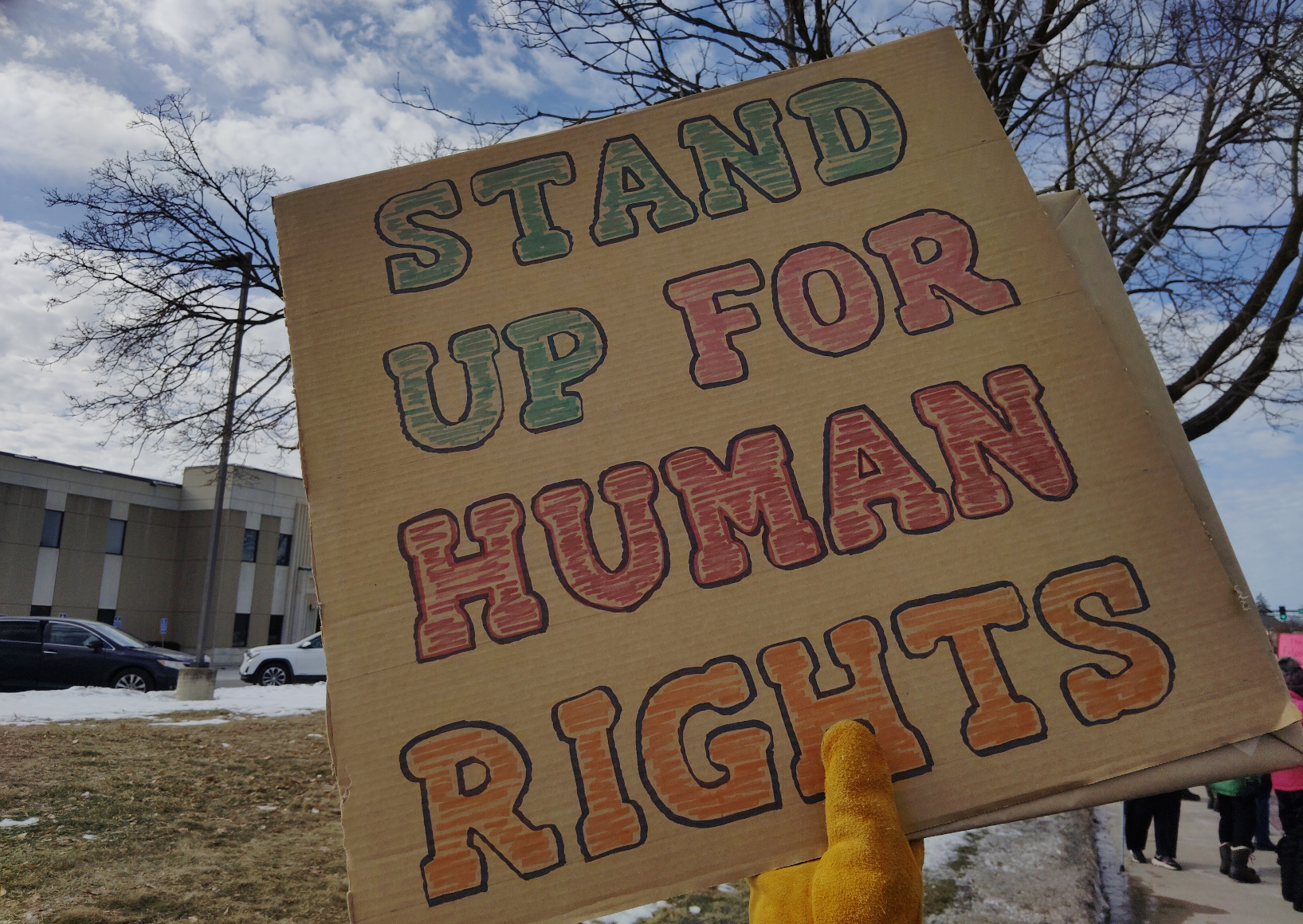
I PULLED OUT my long johns, wool socks, stocking cap, mittens, hand warmers, winter boots and scarf. Then I pulled out my parka and my protest sign: STAND UP FOR HUMAN RIGHTS.
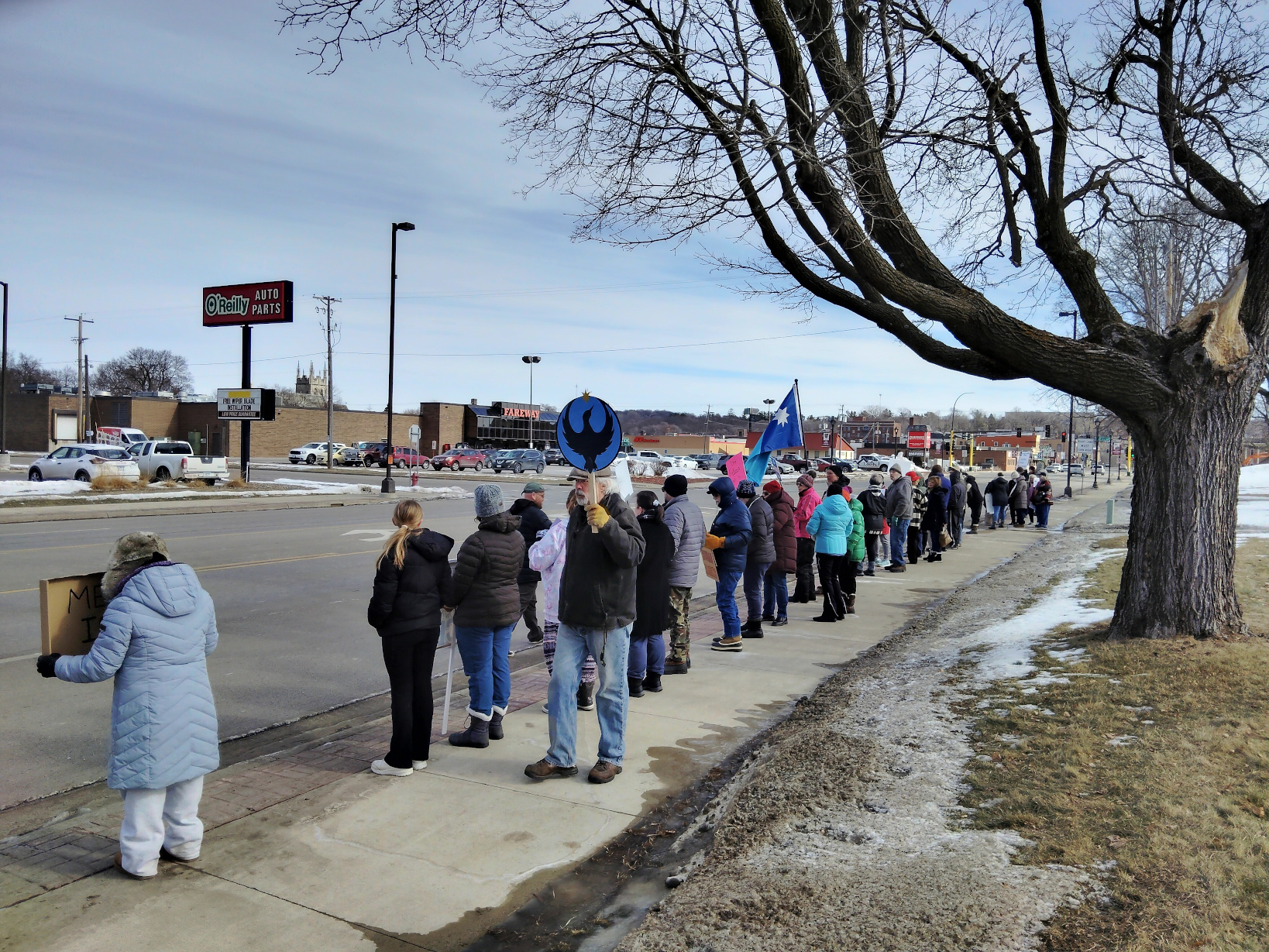
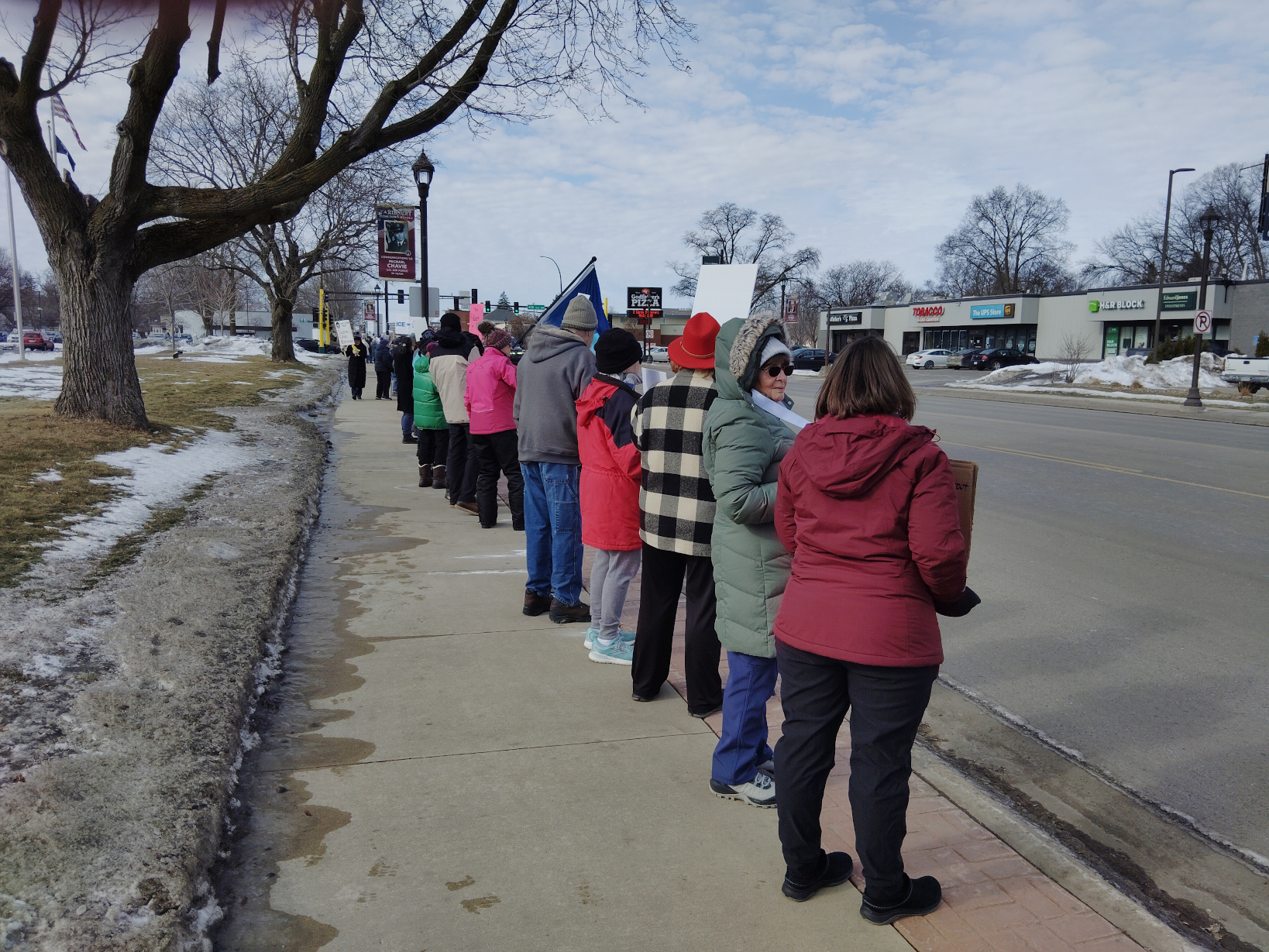
Just before 11 a.m. Saturday, Randy and I joined others outside the Rice County government services building along Minnesota State Highway 60 for our fourth protest there and the fifth in Faribault. Each week numbers grow, this time reaching some 80 of us stretched along the sidewalk with our signs.
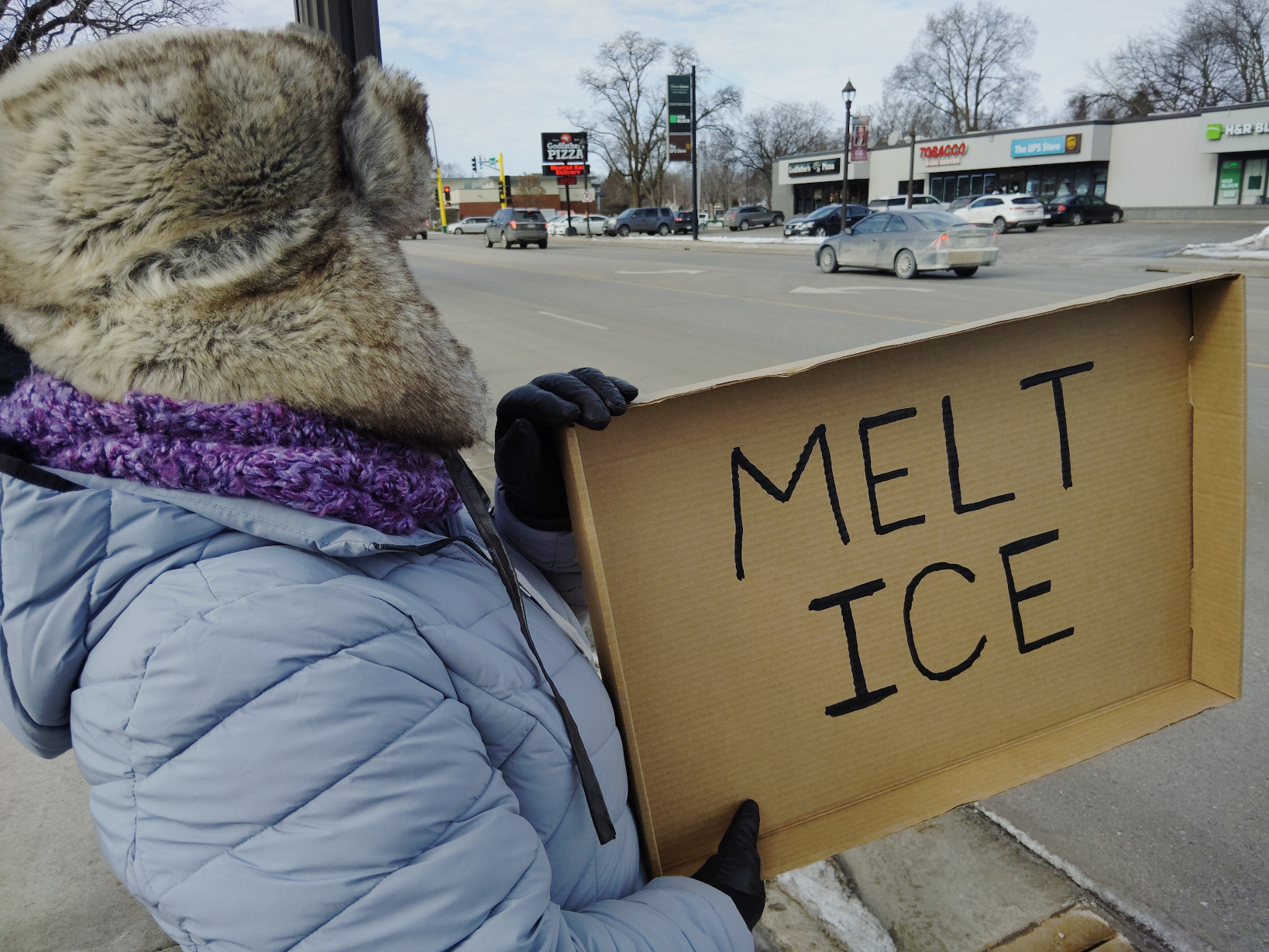
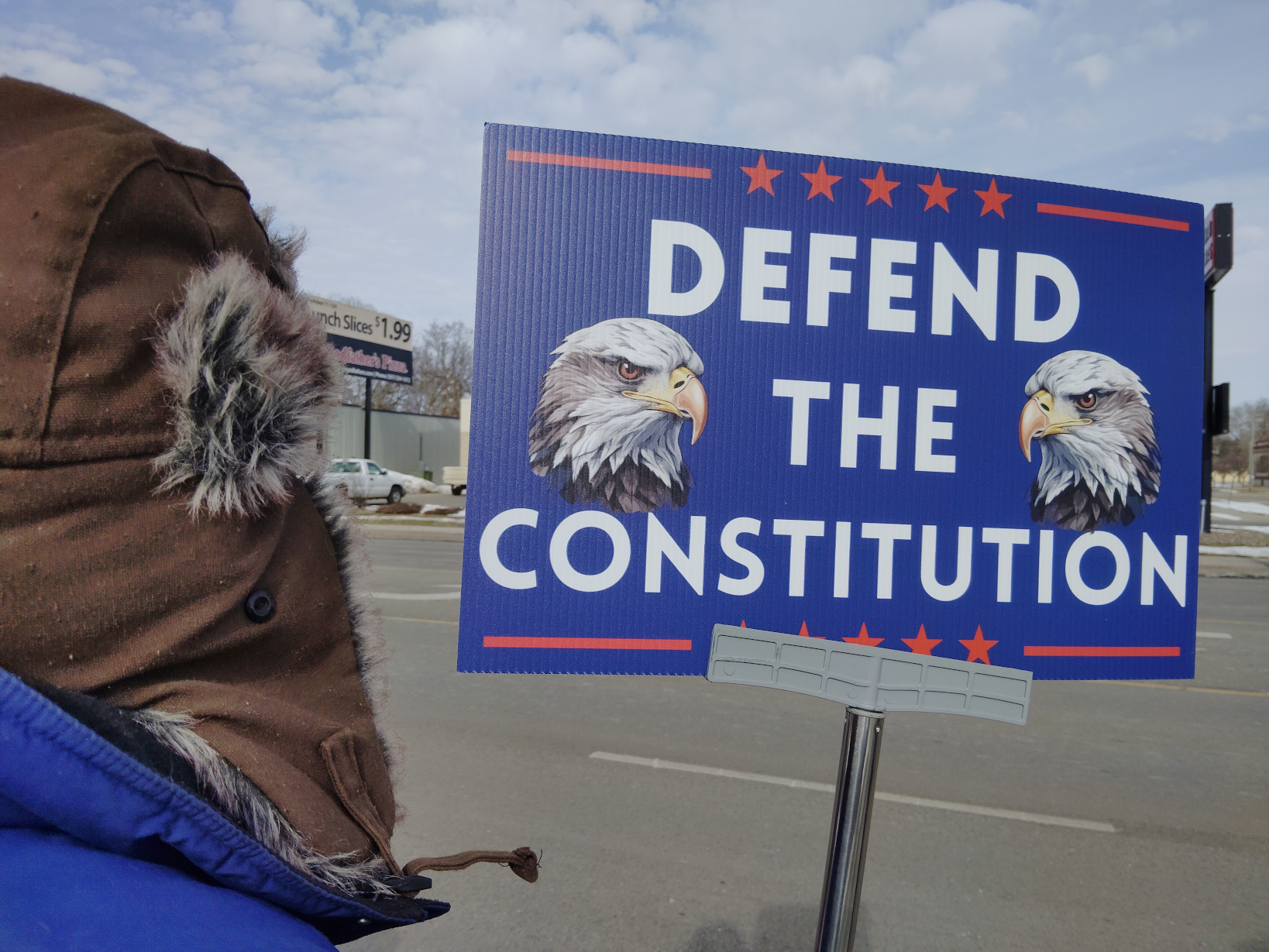
We are not agitators or paid protesters as some claim, but rather ordinary Minnesotans united, called by our morals, our compassion, our concerns, to publicly say we are not OK with what is happening in this country. We are Minnesotans who care about immigrants and refugees, about freedom, about the Constitution, about due process and much more. We are concerned about the presence of ICE agents, whom we want out of our community, out of our state, after two-plus months of occupation.
And so we protest, week after week in our community an hour south of Minneapolis, because our city, too, has been impacted by ICE. People have been taken by federal agents from an apartment complex near the public library, by the railroad tracks near the turkey processing plant, from the trailer parks… It’s documented in videos. Warning horns blare, whistles sound, bystanders yell, sometimes. ICE has parked for hours in a neighborhood with Hispanic families. Watching, intimidating, silently threatening. Agents have photographed license plates at a gas station. This is reality in my city of 25,000.
School attendance has dropped. People are afraid to go to work, afraid to go grocery shopping and/or to food shelves (because ICE is watching), afraid to go to the doctor, afraid to leave their homes for fear of being taken by ICE. Legal status doesn’t seem to matter, only skin color, although even white people have been detained (with two killed) in Minnesota. Neighbors, churches and more have rallied to help with grocery shopping and delivery, walking kids to bus stops, giving co-workers rides. That support matters as does participating in protests. I’ve personally been thanked by Latinos and a Somali man for protesting.
This is why I’ve become an activist. This is why I use my voice as a writer and photographer. That is why I’ve started volunteering at a local food shelf. No one should live in fear of simply going about their daily lives. I am also doing this for my young grandchildren. I want them to understand the importance of speaking up for others. I want them to realize, when they are old enough, that their grandma did not remain silent in the face of atrocities inflicted by the federal government upon its people.
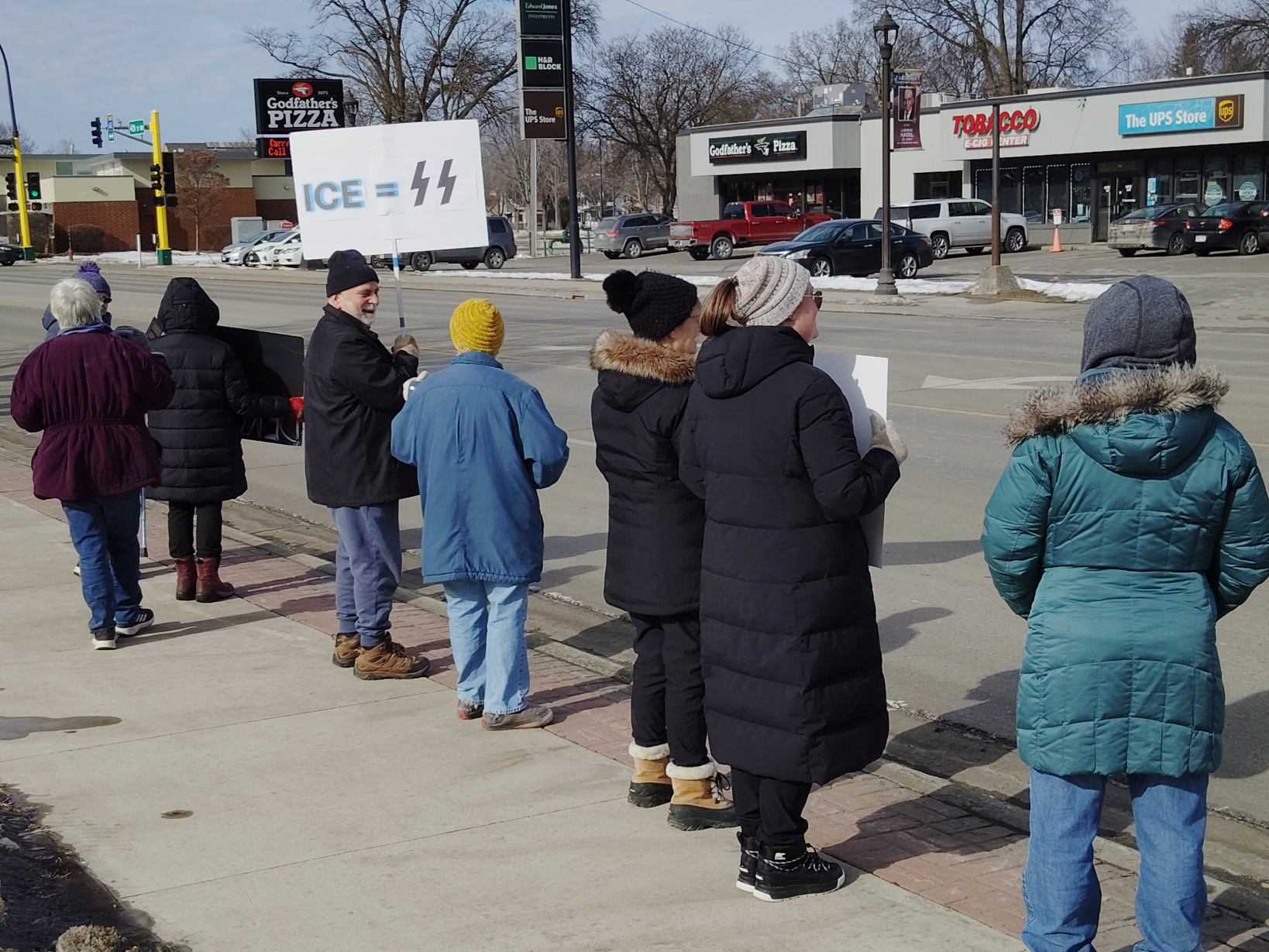
There is value in publicly taking a stand, especially in a city like mine which votes red. (Well, certainly not all of us.) Every protest brings out some who object to our activism as they drive by. That is their Constitutional right. They flash middle fingers, shout profanities, sometimes drive aggressively close, raging mad. That is not OK, potentially endangering people protesting in a public space. But we remain undeterred in raising our voices.
ON TUESDAY, FEBRUARY 10, a group of county residents are going to the Rice County Board of Commissioners meeting to speak about the impact of ICE on the community. That will happen during the open comments portion of the meeting at 8 a.m. I’m not part of that group, but was made aware of it. I’ve felt for a while that our local city and county government officials need to address this topic. ICE is certainly having a negative impact on the health, safety and well-being of county residents both directly and indirectly. That should not, and cannot, be ignored.
We must all do whatever we can, whenever we can, however we can to speak up, help and love our neighbors, and stand strong in the face of tyranny and injustice.
© Copyright 2026 Audrey Kletscher Helbling





 Minnesota Prairie Roots
In appreciation of those protesting in rural areas on No Kings Day March 27, 2026
Tags: commentary, democracy, Minnesota, No Kings Day, opinion, protesting, protests, resistance, rural Minnesota, small towns
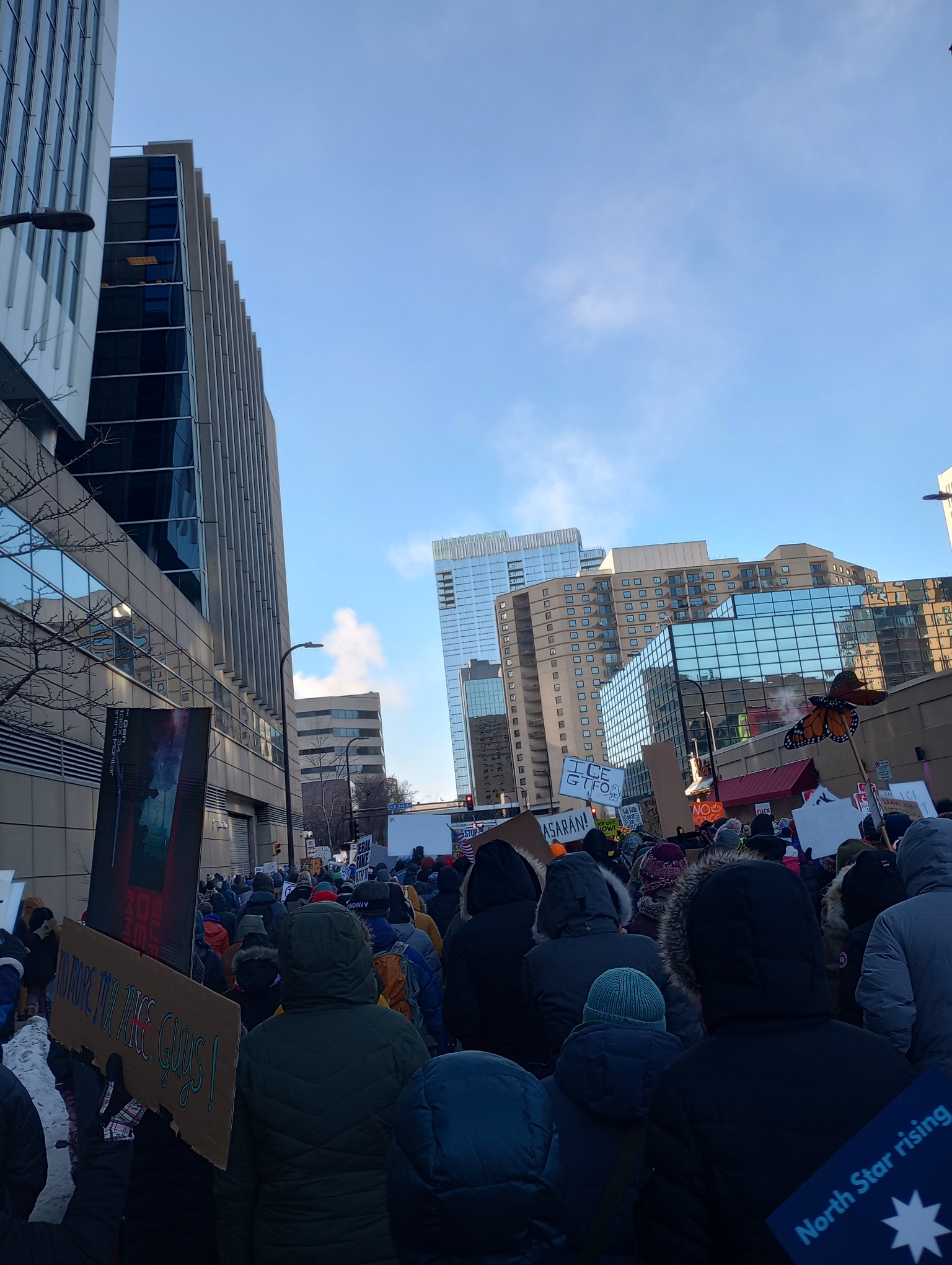
ON THIS, THE DAY before nationwide No Kings Day protests, I want to pause and thank the many people in small towns, in the most rural of regions, who are standing up for democracy. Media attention tomorrow will focus on protests in big cities. That coverage is expected. But equally as important are the rallies in communities of a couple hundred or several thousand deep in red territory.
In these places, publicly standing against the Trump administration takes, simply put, guts. Everyone knows everyone in small towns and it’s not necessarily easy to be politically at odds with one another. These are the people you see at the post office, worship with, meet for coffee, work beside, live next door to, do business with.
When those who oppose Trump, his administration and policies protest in rural Republican strongholds, they expose themselves as “the other.” Yet, it is this very public act of defiance and resistance which can get people thinking, start conversations, open doors to change. Now, more than ever, it’s important to fearlessly oppose tyranny. It’s important to stand up for freedom, voting rights, immigrants, justice, due process… It’s important to express concerns about the economy, the war in Iran, the overall state of this country.
Upon looking at a map of all the No Kings Day protest sites in Minnesota, I found many in rural areas. From Madison, population 1,500 and the self-proclaimed “Lutefisk Capital of the USA” near the South Dakota border, to Baudette, population 1,100 and the “Walleye Capital of the World” near the Canadian border, Minnesotans will gather. Even in my deeply red home county of Redwood in southwestern Minnesota, a protest is planned in the county seat of Redwood Falls.
In St. James, also in southwestern Minnesota and a town where I once lived and worked as a regional news reporter for the Mankato Free Press, a No Kings Day event is set. The community of 4,800 is home to many Hispanics and Latinos and was targeted by federal immigration enforcement agents during Operation Metro Surge.
Even Hackensack, in Paul Bunyan’s northern Minnesota lake country, is on the Saturday protest map. That town has a population of just under 300 as does Cyrus, near Morris in far western Minnesota, also holding a No Kings Day protest.
From my community of Faribault, with a population of around 25,000, to Kenyon to the east with some 1,800 residents, to the small towns of Rushford, St. Charles, Spring Grove and Preston in the far southeastern corner of Minnesota, and many small towns and cities across the state, people will gather in protest on Saturday.
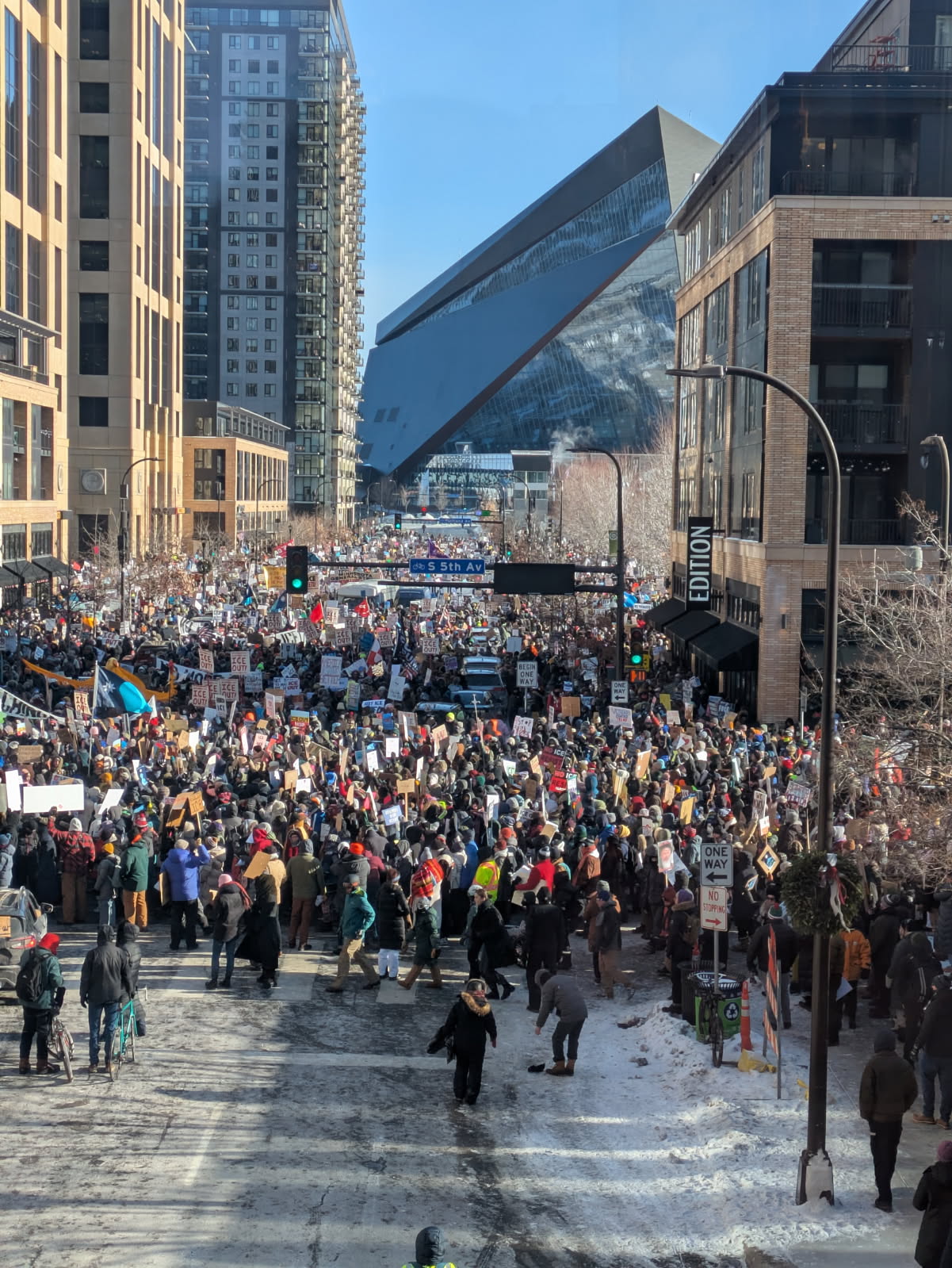
In St. Paul, organizers are expecting up to 100,000 to rally at the state capitol. Those are some impressive numbers. Yet, if even five people show up in a small town to protest, that’s impressive, too.
Every voice of resistance matters, wherever you live, rural, suburban or urban.
FYI: The Faribault No Kings Day protest is from 11 a.m.-noon March 28 (and every Saturday) by the Rice County government services building along Minnesota State Highway 60.
© Copyright 2026 Audrey Kletscher Helbling