
“YOU GOT WHAT YOU WANTED!” he yelled from his massive red pick-up truck nearly stopped in a westbound traffic lane of busy four-lane Minnesota State Highway 60 Saturday morning in Faribault.
Now we’ve had lots of hatred, insults, offensive words and gestures, threats and more directed at us by angry motorists in the past 11 months of protesting (although they are in the minority) in my southeastern Minnesota city. But this guy’s comment seems particularly ignorant. He clearly has no understanding that, even though Democrats overwhelmingly defeated Republicans in the mid-terms, a Republican president and his administration remain in power. And the new Congress has not yet been seated.
The problems which existed before the election remain issues in this country. But how can you explain that to those who flip us the bird, give us thumbs down, yell horrible, hateful words that should never be spoken to anyone in this country or think we “got what we wanted”?
With the election behind us—and I am thankful for the blue wave that may put an end to the madness—I am hopeful our country can be reclaimed. Yes, those of us on the protest line mostly got what we wanted in the context of election results. But…
This country is still at war. Inflation runs rampant. Immigrants are still being illegally taken and imprisoned. Incompetent individuals are in positions of power. People are hungry. Americans cannot afford healthcare. People are needlessly dying. Government corruption continues. And on and on.
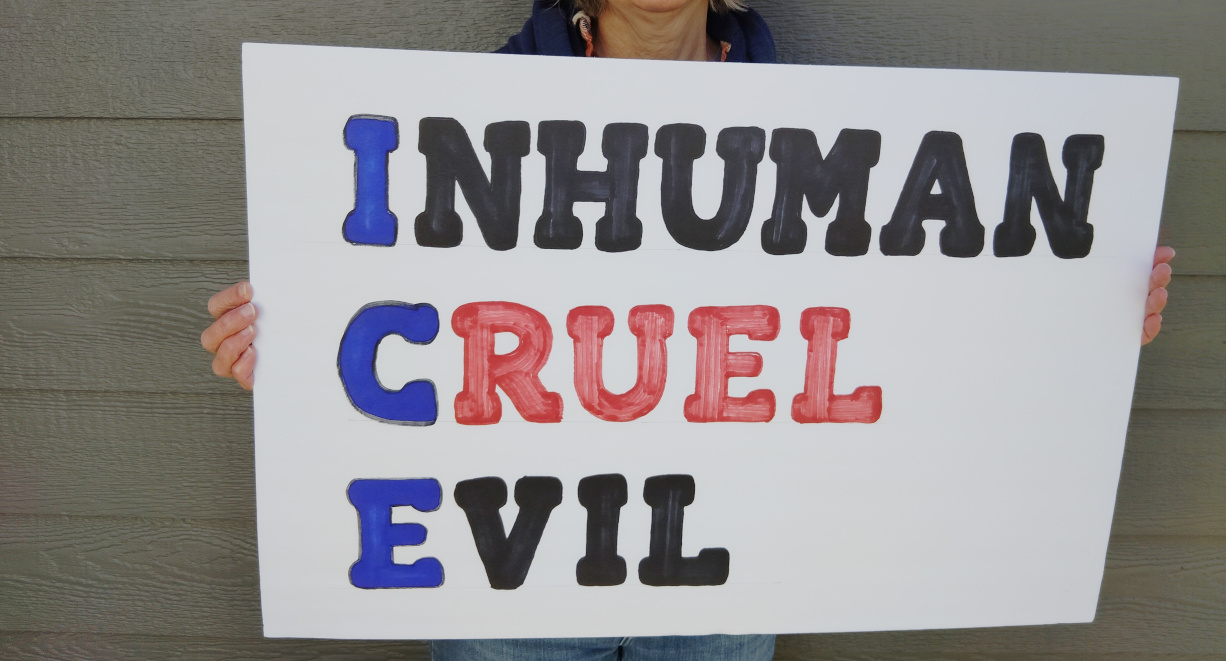
Every week I can craft, and I often do, a new sign to hold on the protest line. This past Saturday I pulled out the poster board, the markers and stencils to write a message about ICE. Immigration Customs and Enforcement is full front on my mind again with the opening of a detention center in Appleton in far western Minnesota and the arrival of the first detainees last week.
CoreCivic sold the abandoned former privately-run prison to the federal government for $495.6 million earlier this year. Only a year prior, the Minnesota Department of Corrections refused to buy the abandoned prison from CoreCivic for $75 million, citing concerns about distance from the densely-populated metro, condition, services and staffing. Did you catch that? The feds paid nearly $421 million more than the initial sale price offering to the state of Minnesota for a run-down prison. That’s our money, taxpayers’ money. And now CoreCivic is running the detention center.
Something stinks here.
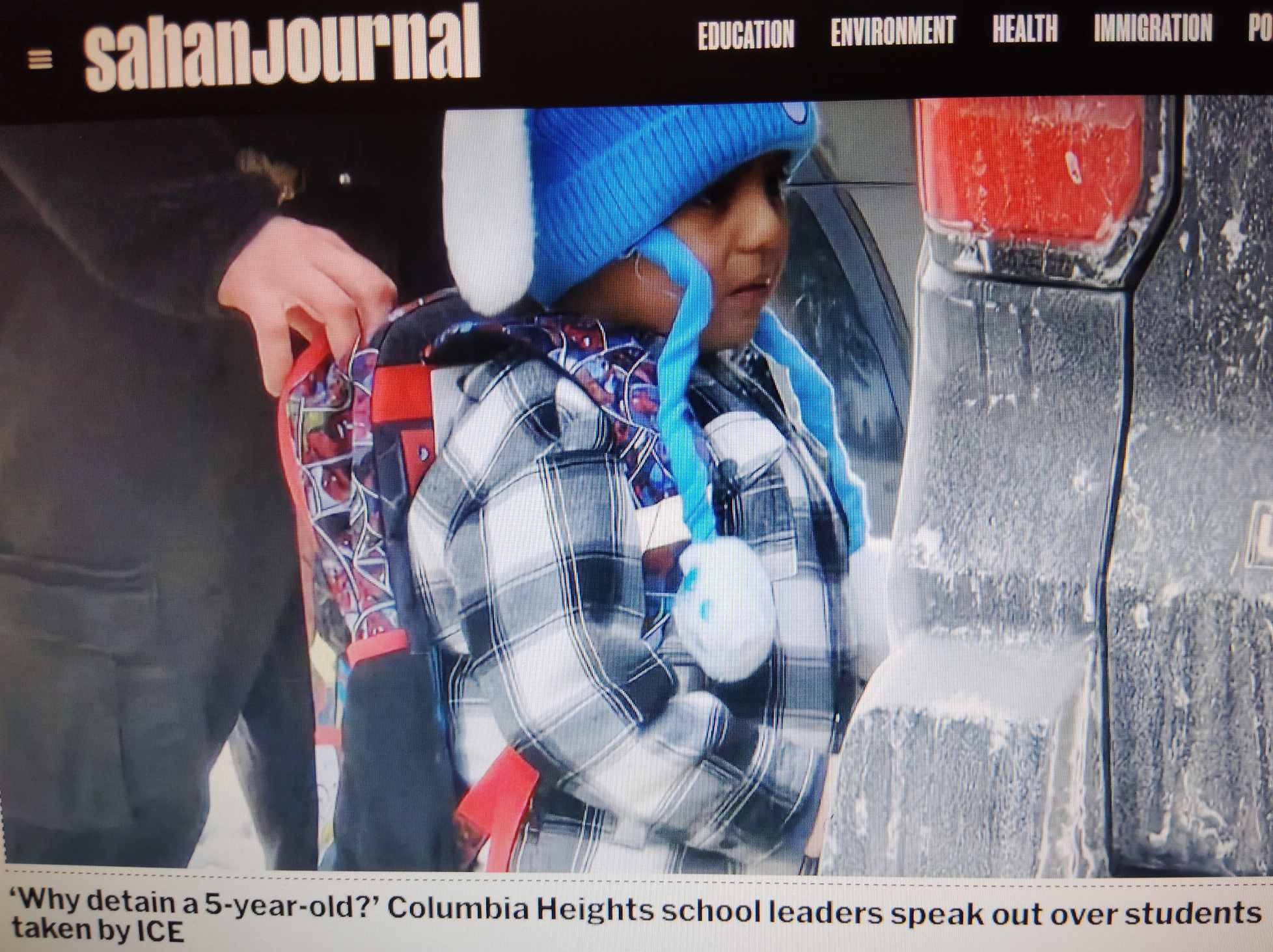
I continue to be outraged at a government that is snatching (and, yes, that word fits) people off the streets and falsely imprisoning them. Ripping families apart. Detaining those who have done nothing wrong. Denial of due process. Hating on entire groups of people. Taking people who are following all the rules to stay legally in this country. This is not living by the Golden Rule and is not in any way, shape or form “Christian.”
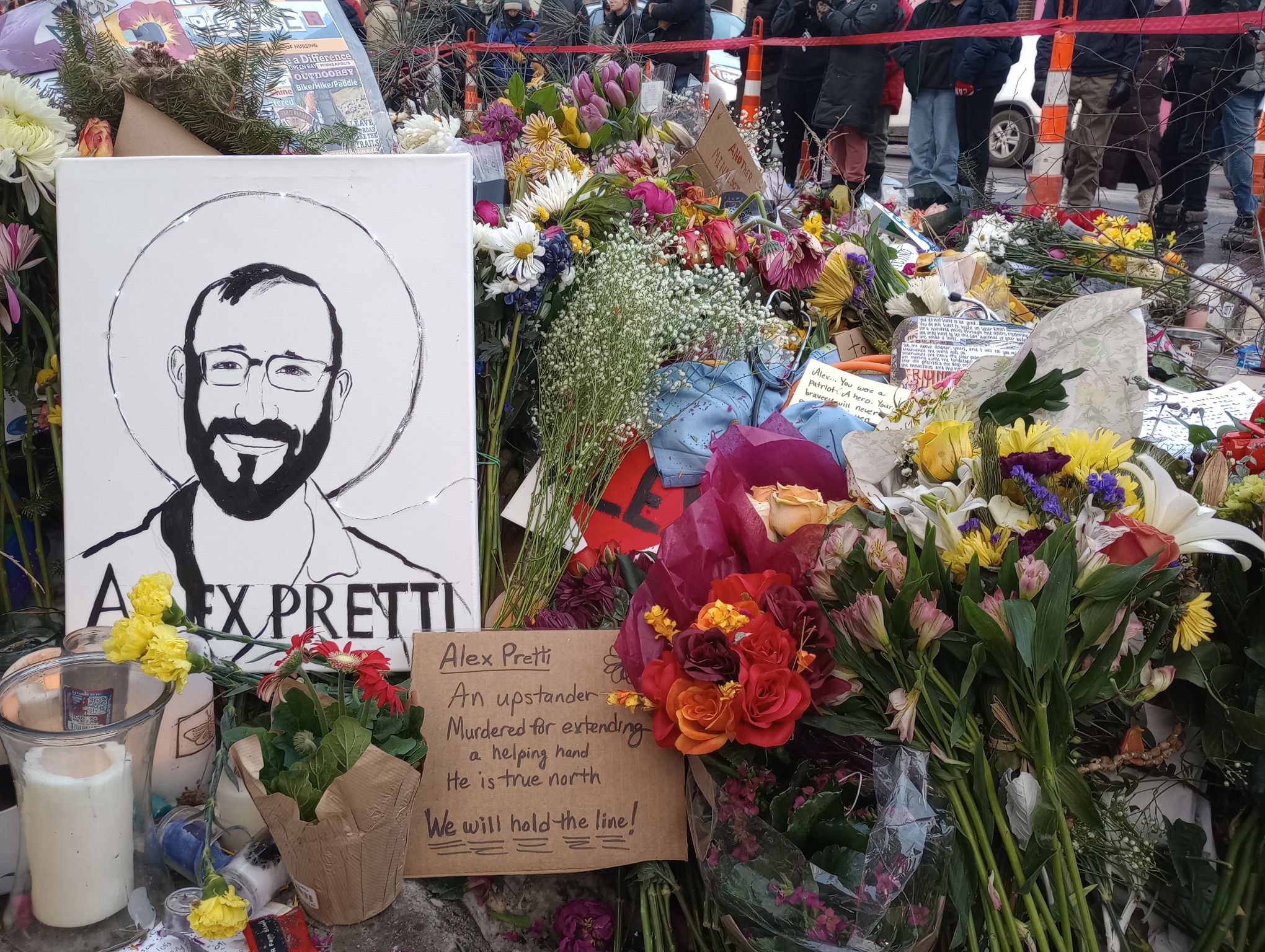
In positive news, legendary singer Bruce Springsteen’s anti-ICE song, “Streets of Minneapolis,” has been nominated for a Grammy. He wrote and released the protest song during Operation Metro Surge, shortly after the killings of Renee Good and Alex Pretti by federals agents on the streets of Minneapolis. He wrote truth in his art.
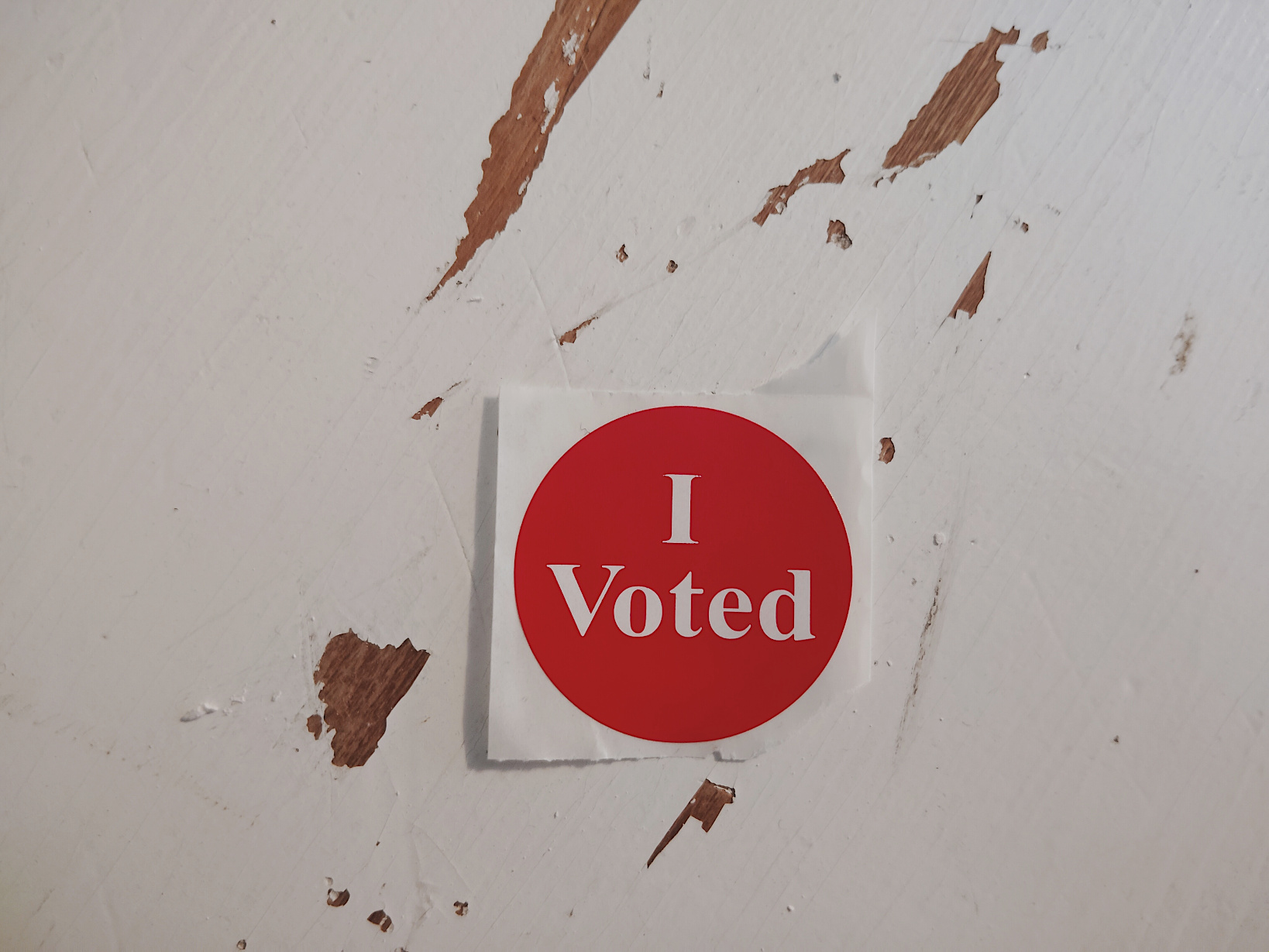
After the mid-term elections, Minnesotans began placing “I Voted” stickers at the site of the Alex Pretti memorial. Soon stickers and accompanying notes arrived from across the country. Voting is a way of raising our voices. And so is protesting when you’re not OK with hatred, corruption, racism, false imprisonment, deportation of immigrants, war, and on and on.
© Copyright 2026 Audrey Kletscher Helbling




My thoughts on the prejudice that threads through my Minnesota community April 19, 2018
Tags: comment, community, discrimination, Faribault, Faribault Public Schools, hit-and-run, Minnesota, minorities, open enrollment, opinion, prejudice, race, racism, thoughts
A photo and comment by a visitor posted at the “Selma to Montgomery: Marching Along the Voting Rights Trail” exhibit at St. Olaf College in 2015, used here for illustration only. Minnesota Prairie Roots file photo 2015.
TWELVE YEARS AFTER my then 12-year-old son was struck by a car while crossing the street to his school bus stop, my husband and I are still occasionally asked whether the driver in the hit-and-run has ever been found. The answer: No.
I’m OK with that. Caleb was not seriously injured and enough time has passed since the May 12, 2006, incident that my anger has subsided.
But now my anger has risen anew—not at the driver but rather at a recent comment made by an acquaintance. “Was it a Mexican?” the man asked of the unknown driver.
A chair placed before a Stephen Somerstein photo offers visitors a place to sit and contemplate in the “Selma” exhibit. Minnesota Prairie Roots file photo 2015.
How do you respond to something like that—something so totally ignorant and racist and uncalled for that it makes my blood boil to think that someone in this day—2018—would even think that, let alone speak it. Why that assumption? What led him to believe the driver was a “Mexican” versus a Caucasian or even a green alien from Mars?
I can’t tolerate this type of blatant racism. About Hispanics. About Somalians. About anyone. Just days ago I heard negative comments about Somalians as it relates to parking issues in Faribault’s downtown business district.
A St. Olaf College student/staffer studies an image of Dr. Martin Luther King Jr. at the “Selma” exhibit in April 2015. Minnesota Prairie Roots file photo 2015.
I didn’t grow up here. Once I was an outsider trying to fit into Faribault, where generations of families live, where many people are inter-related, where young people stay upon graduating from high school or return to after college. I’m not saying those are bad things. Faribault’s a wonderful place to live. But I suspect the hometown factor, the deep roots, may have something to do with the “was it a Mexican” type attitude some locals hold toward newcomers, especially those of color. There’s fear in the unknown, fear in change, fear in the prospect of a community becoming something different than it has always been.
Kids used markers to create flags from their native countries during the International Festival Faribault in August 2015. Minnesota Prairie Roots file photo used for illustration only.
Change oftentimes does not come easily. Yet, that’s no excuse for sweeping negative assumptions and racism. I am thankful for the efforts of many within Faribault who welcome newcomers. Like the Faribault Diversity Coalition and individuals who tutor, assist, teach, embrace immigrants and, yes, even welcome outsiders like me from Redwood County, Minnesota. I arrived here 36 years ago knowing only my new husband (also a non-native). It took awhile for me to fit in, to find my place here.
Today I consider Faribault home. I love this community and the many dear friends I’ve made here. But I don’t appreciate the underlying and sometimes overt prejudice I occasionally see and hear.
“Was it a Mexican?”
No, my son was struck by a blue 4-door Chevrolet Cavalier or Corsica. Driver unknown. Race unimportant.
#
ON THE SAME TOPIC:
I find especially notable a comment made by Faribault Public School Superintendent Todd Sesker during an “AM Minnesota” interview with Gordy Kosfeld on KDHL radio. During that Monday morning interview, Sesker discussed the issue of 400-plus students open-enrolling outside of the Faribault School District. The district plans to survey families and learn why these students are choosing to attend schools elsewhere.
The ever-changing/growing diversity of Faribault High School shows in this post commencement photo taken in May 2012. Minnesota Prairie Roots file photo 2012.
Sesker says, in part, “We know some of the rumors that are out there and some of the people that are complaining about our schools. We know about the cultural differences…”
“…the cultural differences…”
That tells me a lot.
According to 2018 enrollment by race/ethnicity data published on the Minnesota Department of Education website, more than half of the students in Faribault Public Schools are of a race/ethnicity other than White. Here’s the break-down on the three largest ethnic groups among the district’s 3,777 students, according to the MDE: 24.2 percent are Hispanic/Latino, 23.8 percent are Black/African American, and 47.4 percent are White.
I suggest you listen to the radio interview with Sesker by clicking here. Discussion on the open enrollment issue begins at about minute 13.
NOTE: All comments are moderated. Please be respectful in your comments and discussion. I reserve the right as author of this personal blog to decide whether or not to publish a comment.
© Copyright 2018 Audrey Kletscher Helbling