Minnesota Prairie Roots

Writing and photography by Audrey Kletscher Helbling

The art of a southern Minnesota farm show & rural flea market September 4, 2025

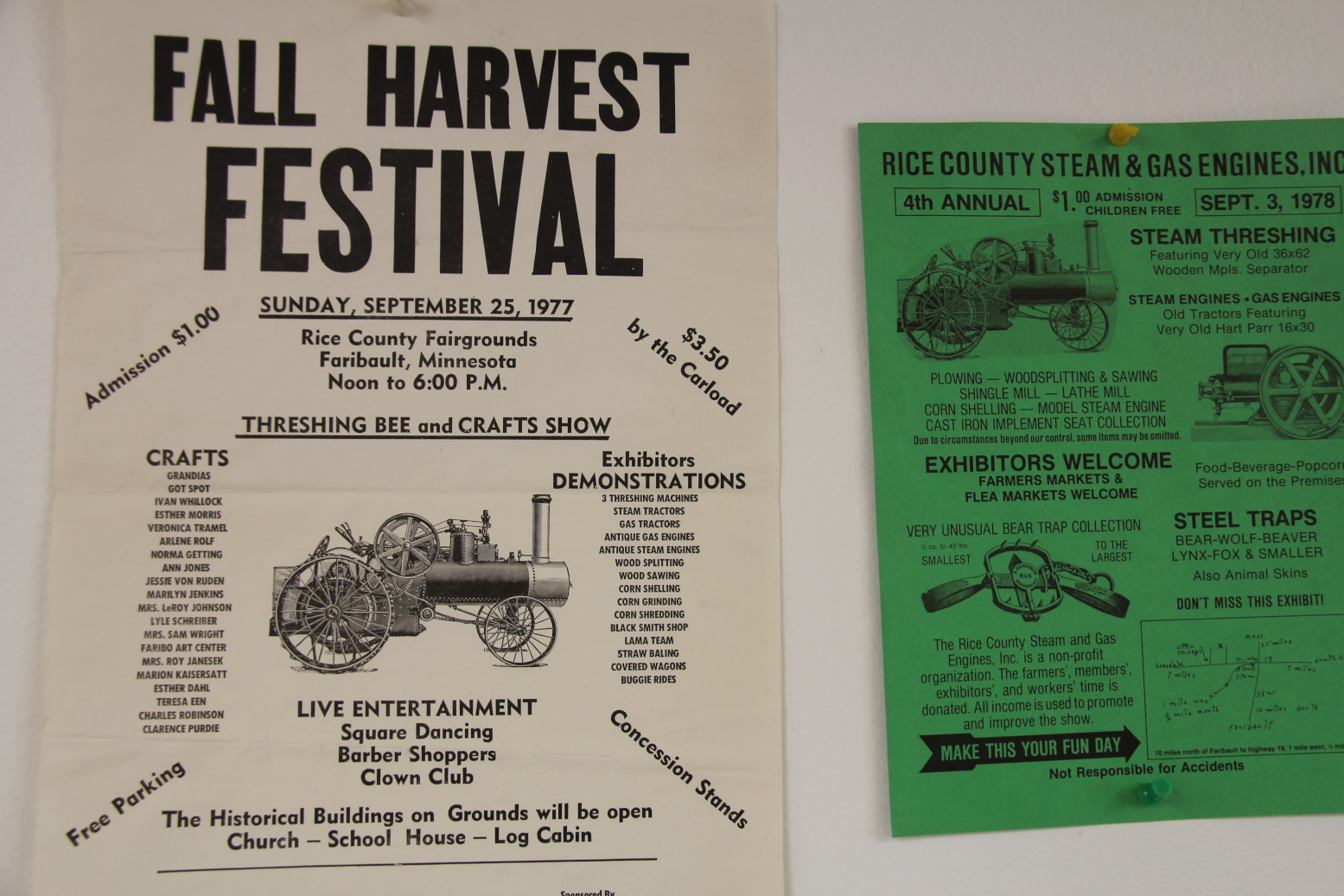
Vintage posters displayed from the early years of the current Rice County Steam & Gas Engines Fall Show, before the name and location changed. (Minnesota Prairie Roots copyrighted photo August 2025)

ART EXISTS EVERYWHERE, even at a farm-themed event. My photos from the Rice County Steam & Gas Engines Fall Show last Saturday in rural Dundas prove that. As a creative, I view life through an artistic lens. So I’m naturally drawn to photograph items that others may not necessarily see as art.

I see tractor emblems, including this one on a vintage Ford, as works of art. (Minnesota Prairie Roots copyrighted photo August 2025)

In this photo essay, you’ll view a sampling of the “art” I discovered. I found art on vintage tractors, on clothing, at the flea market, especially at the flea market, and beyond.
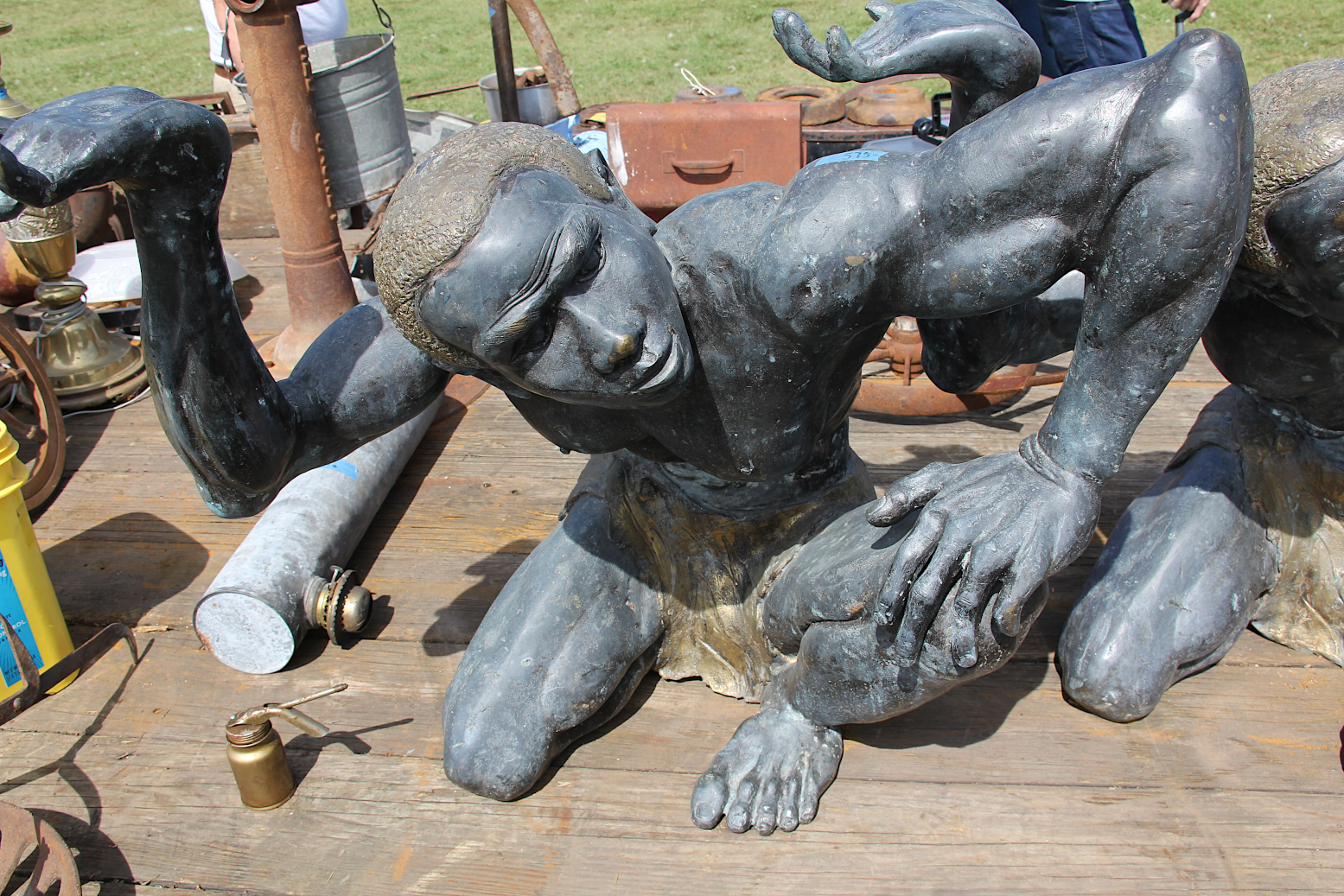
Two brass sculptures offered by a vendor. They are not solid brass, so not as heavy as they appear. (Minnesota Prairie Roots copyrighted photo August 2025)

Let’s start there, among market vendors selling a variety of goods ranging from toy tractors to glassware to home décor and everything in between. The art that drew my deepest interest—two massive brass sculptures of African men—sat on a flatbed trailer. They were nothing short of spectacular. Such grace. Such power in their muscular arms and legs. Truly, truly stunning. Seller Daniel Bell of Faribault, who calls himself a picker, found the matching pair in Iowa. The sculptures once supported tabletops, now missing. He’s priced each at $575. I can connect you with Dan if you’re interested.
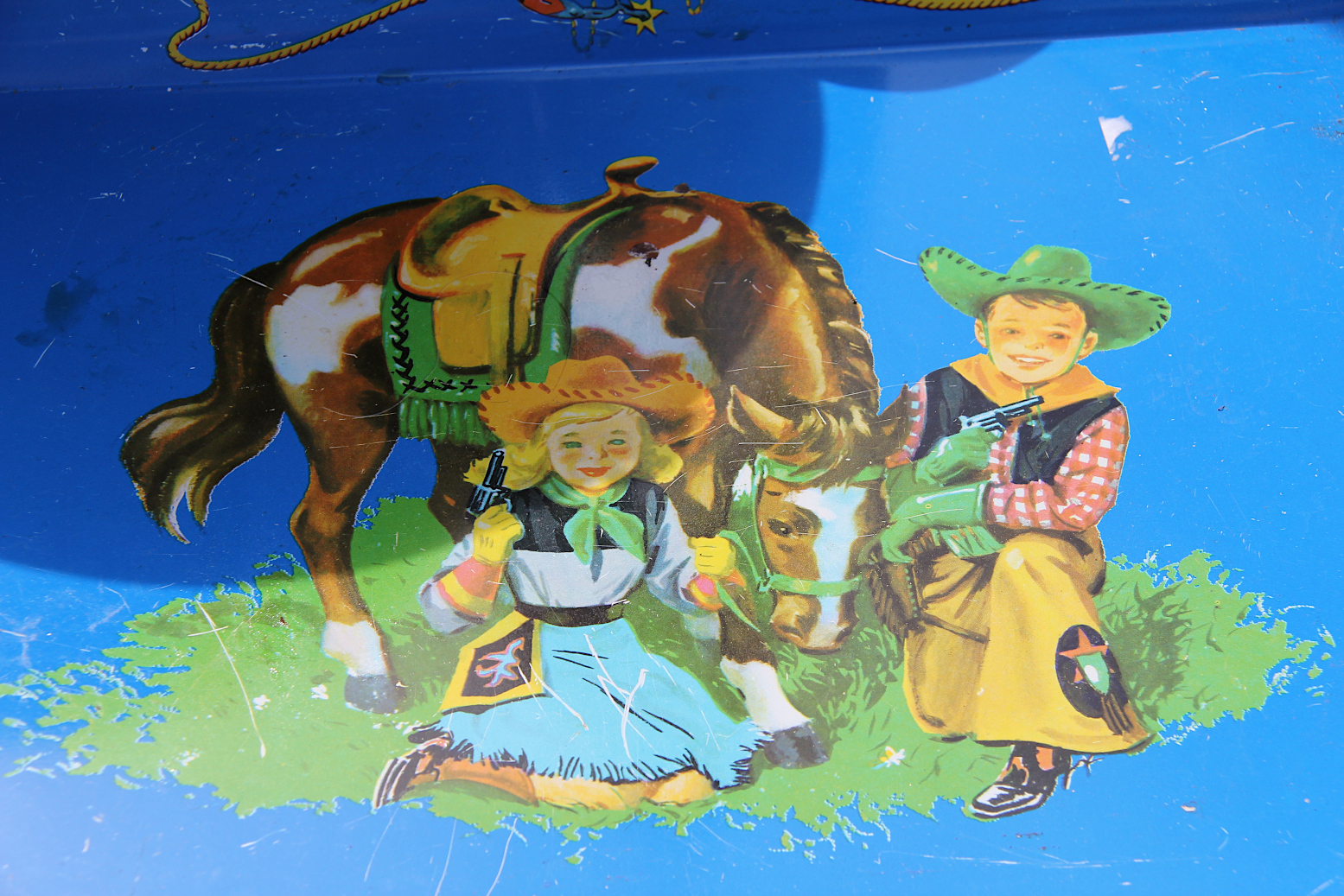
Vintage tray art from the 1950s. (Minnesota Prairie Roots copyrighted photo August 2025)

Almost as interesting, and certainly thought-provoking in 2025, is a 1950s image of children dressed in western attire and brandishing pistols. When I reflect on that scene printed on a tray, I remember how I, too, owned a toy cap gun and played “Cowboys and Indians.” That all seems so terribly wrong now when viewing this as an adult in a world riddled by gun violence. I’m thankful for changed attitudes and perspectives about our Indigenous Peoples and about toy guns.
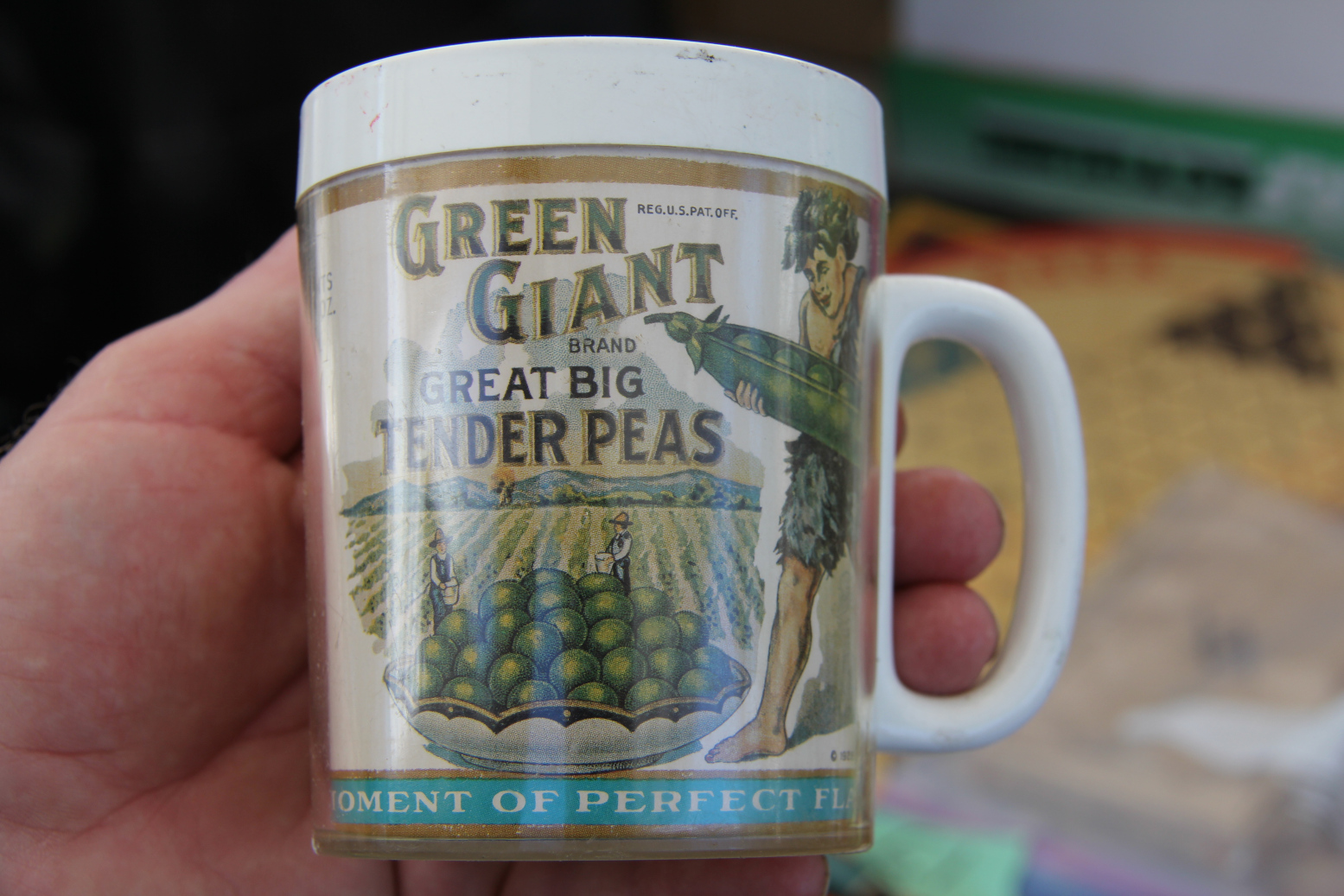
A Jolly Green Giant themed plastic mug. (Minnesota Prairie Roots copyrighted photo August 2025)

I spotted art on a plastic coffee mug from Minnesota Valley Canning Company featuring the Green Giant brand of GREAT BIG TENDER PEAS. The back side of the mug is imprinted with the story of the Jolly Green Giant. I should have purchased the cup, which belonged to the father of the flea market vendor. He worked at the canning company in Le Sueur until its 1995 closure. This mug is more than a mug. It’s a collectible piece of regional literary and visual art.
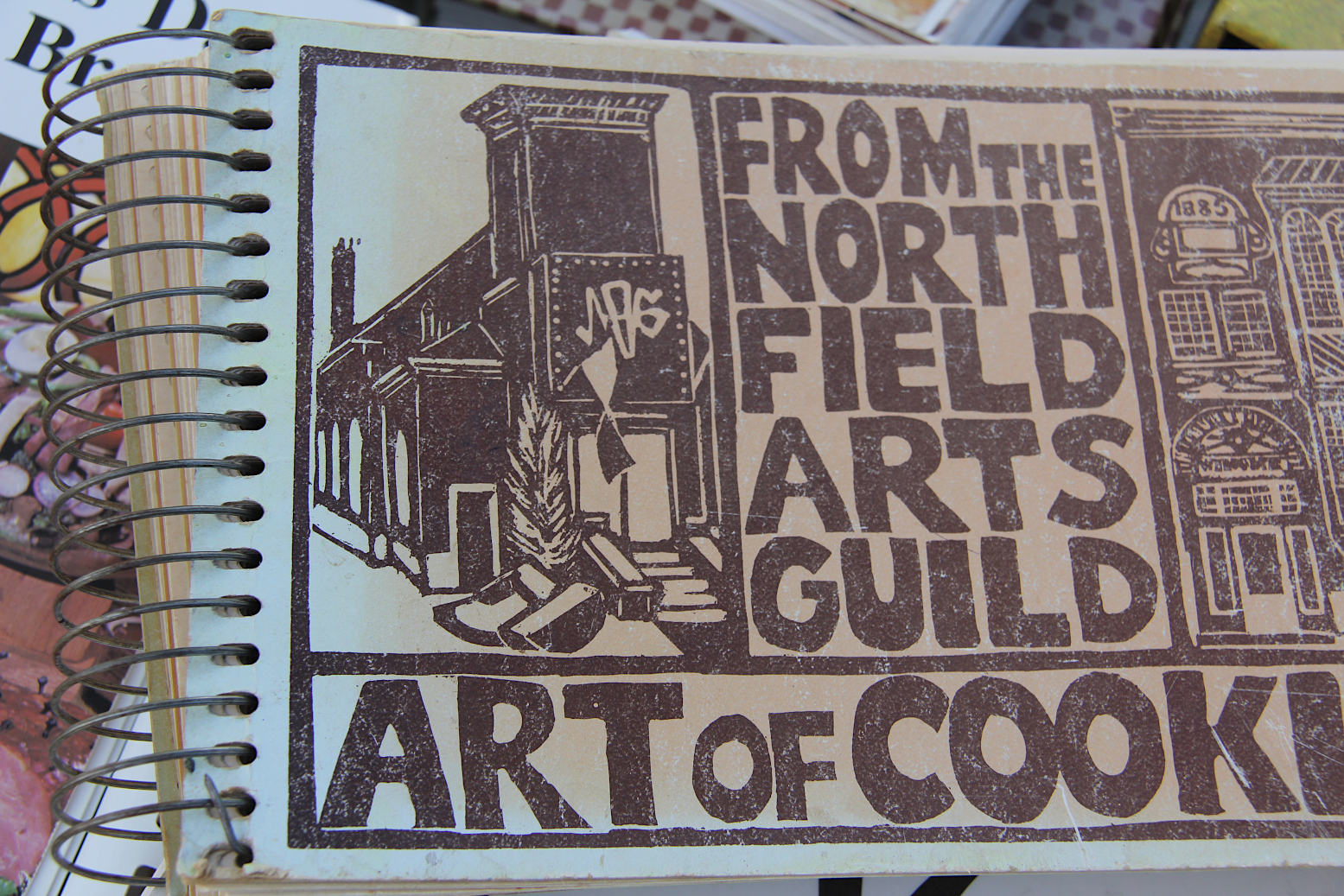
The artsy cover of the 1984 Northfield Arts Guild commemorative cookbook. (Minnesota Prairie Roots copyrighted photo August 2025)

And then I found art on the cover and inside the Northfield Arts Guild’s 25th anniversary cookbook from 1984. Not unexpected, it features the art of rural Northfielder Fred Somers, whose work I admire.
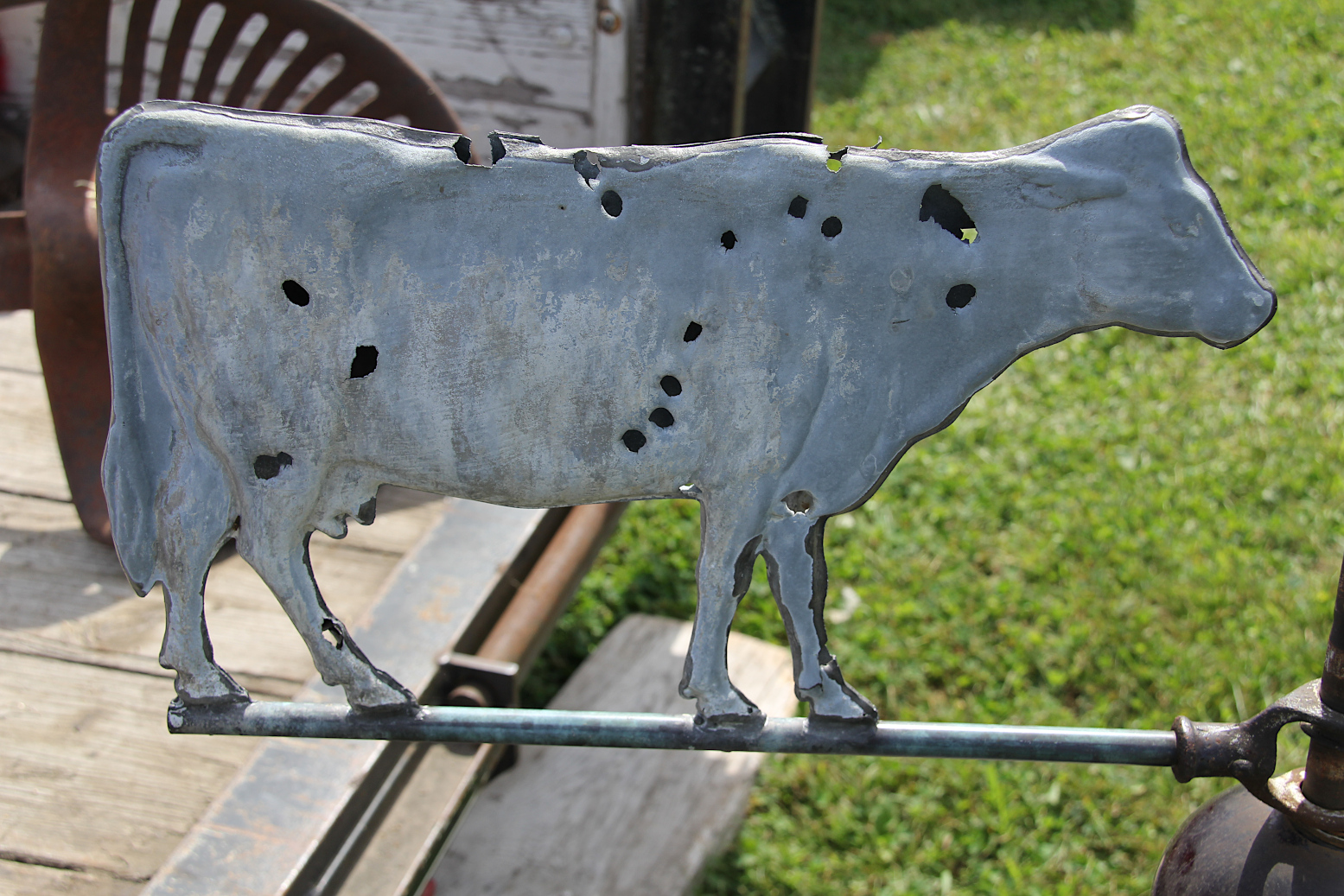
A damaged work of art. (Minnesota Prairie Roots copyrighted photo August 2025)

At another vendor, I spotted a bullet-riddled cow weather vane, a form of functional rural art. And apparently a shooting target, too. I saw a horse weather vane inside a showgrounds building.
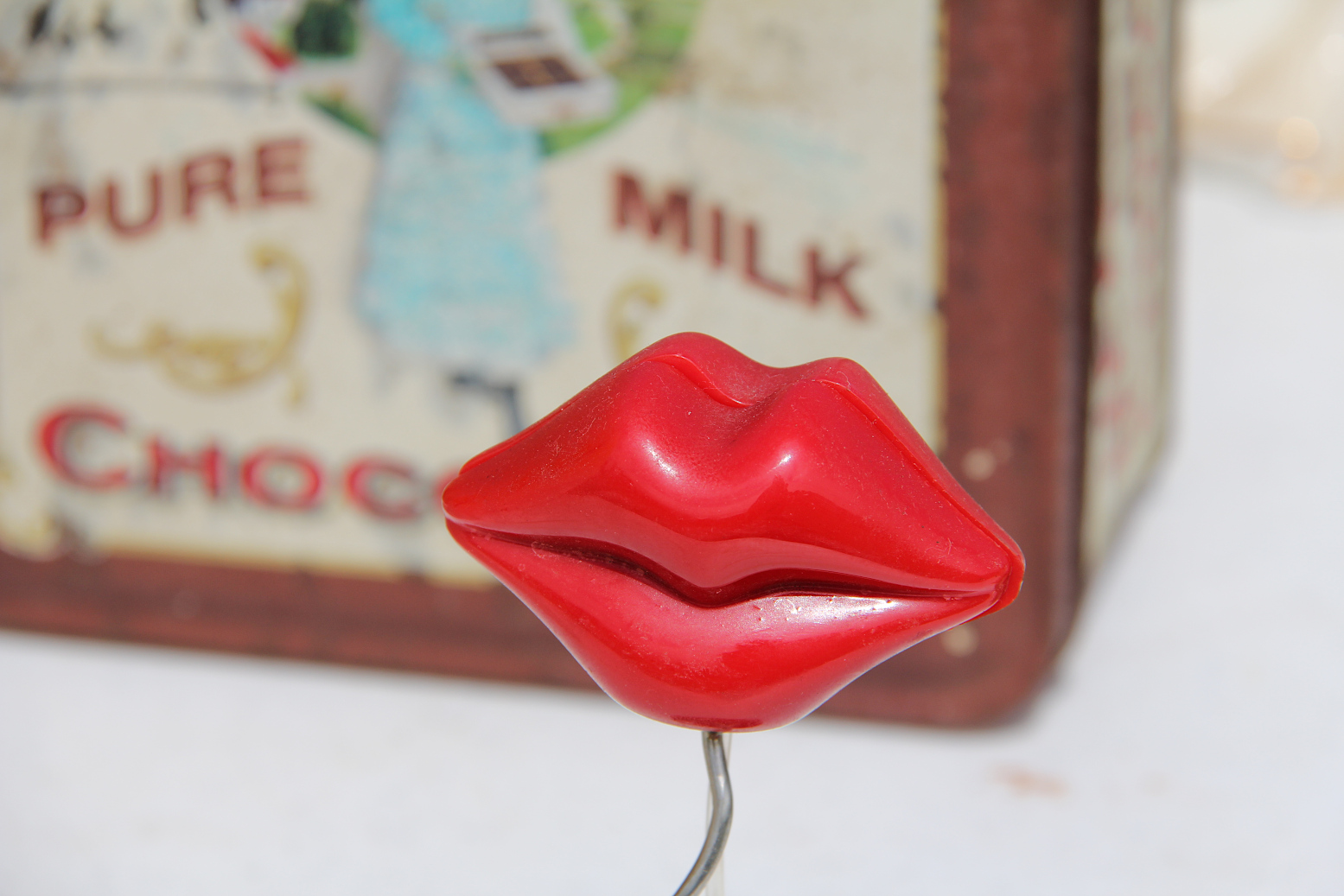
Pop art in my eyes. The vendor saw the lips as otherwise, as a bill holder. (Minnesota Prairie Roots copyrighted photo August 2025)

And then there were the duck decoys, the red plastic lips and the jar full of colored plastic clothespins, all viewed as art by me.
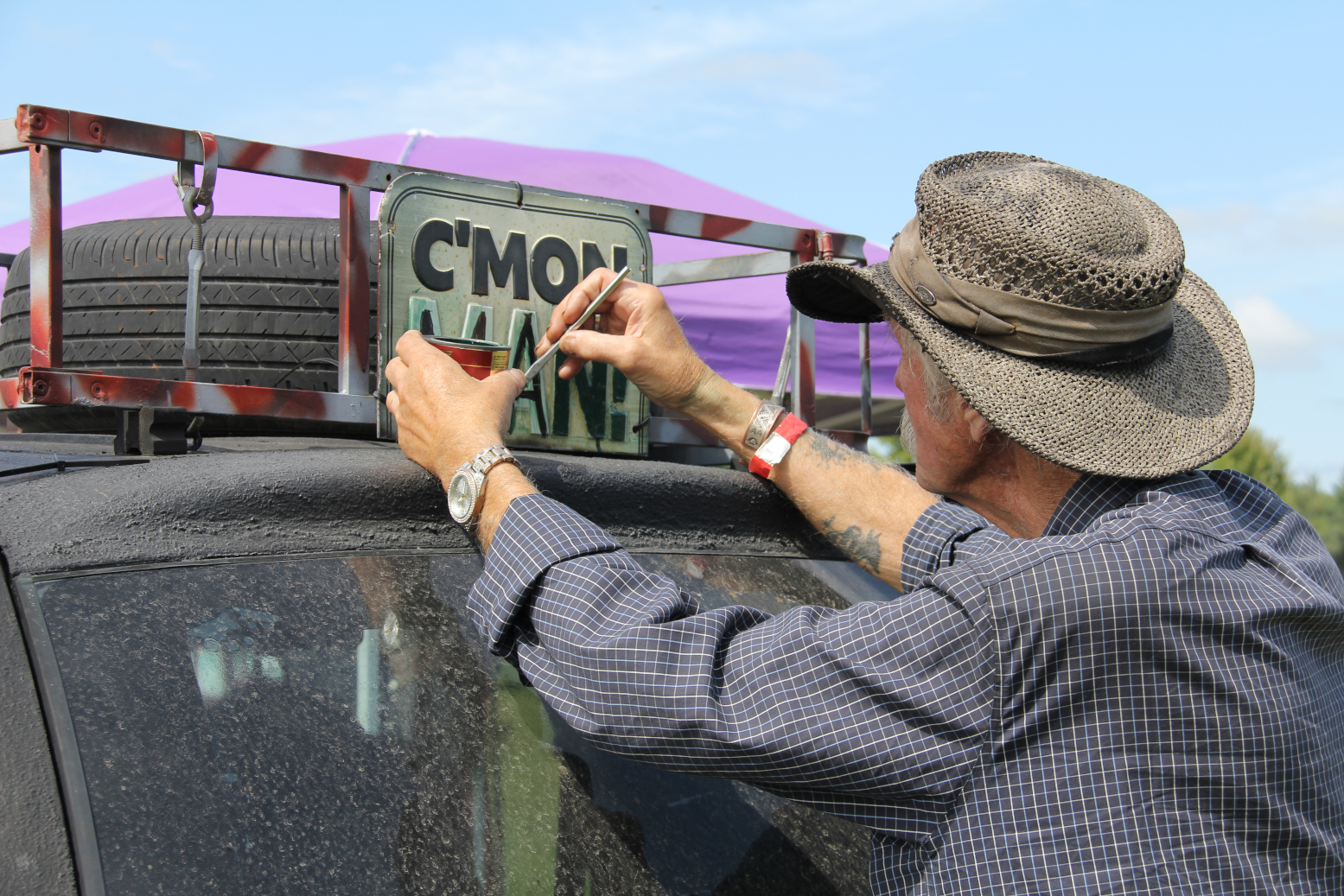
The leather goods vendor paints while manning his stand. (Minnesota Prairie Roots copyrighted photo August 2025)

I even saw a vendor painting, freshening up the words “C’MON MAN!” on his van. He was selling mostly leather belts, an inventory purchased when a leather goods shop closed.
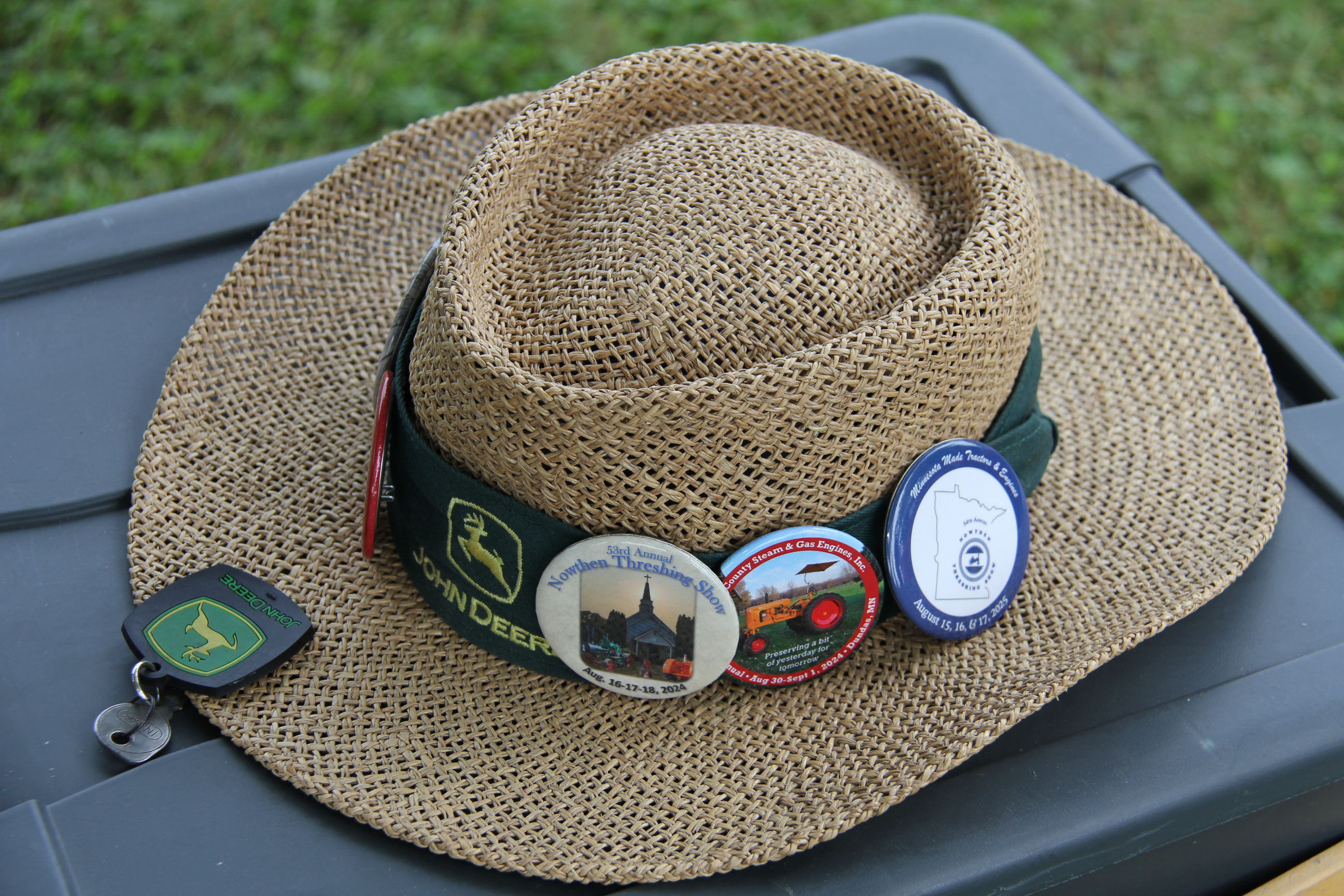
Show buttons on a straw hat and even a keychain are forms of art. (Minnesota Prairie Roots copyrighted photo August 2025)
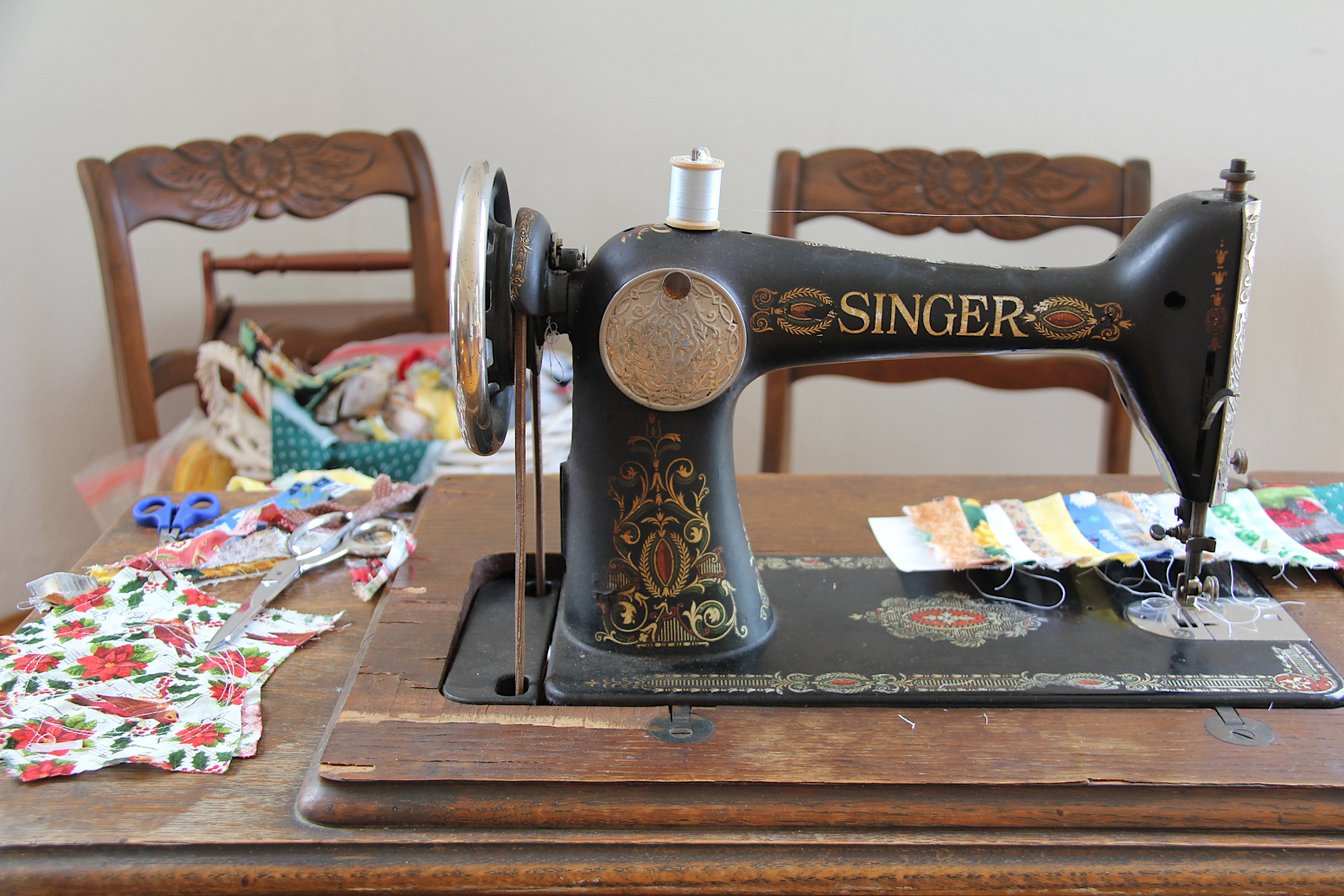
Creative arts of yesteryear shown inside the old farmhouse. (Minnesota Prairie Roots copyrighted photo August 2025)

Elsewhere around the showgrounds, art exists also. I discovered it on commemorative buttons, stickers and signs. Inside the 1912 farmhouse a vintage sewing machine and fabric scraps highlighted the creative arts.
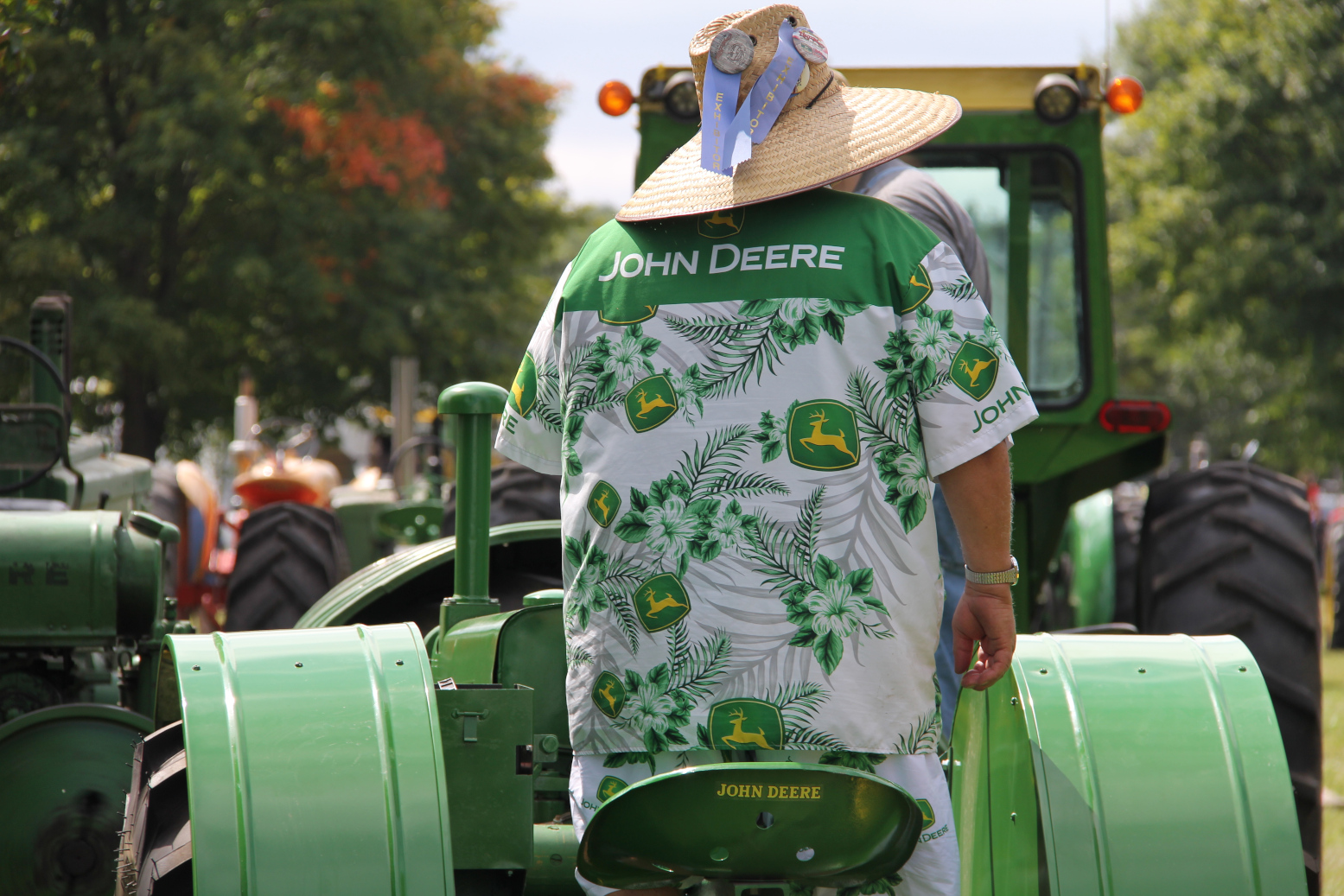
Brand loyalty in fashion. (Minnesota Prairie Roots copyrighted photo August 2025)

I even found fashion art—in a John Deere/Hawaiian shirt worn by a John Deere tractor owner.
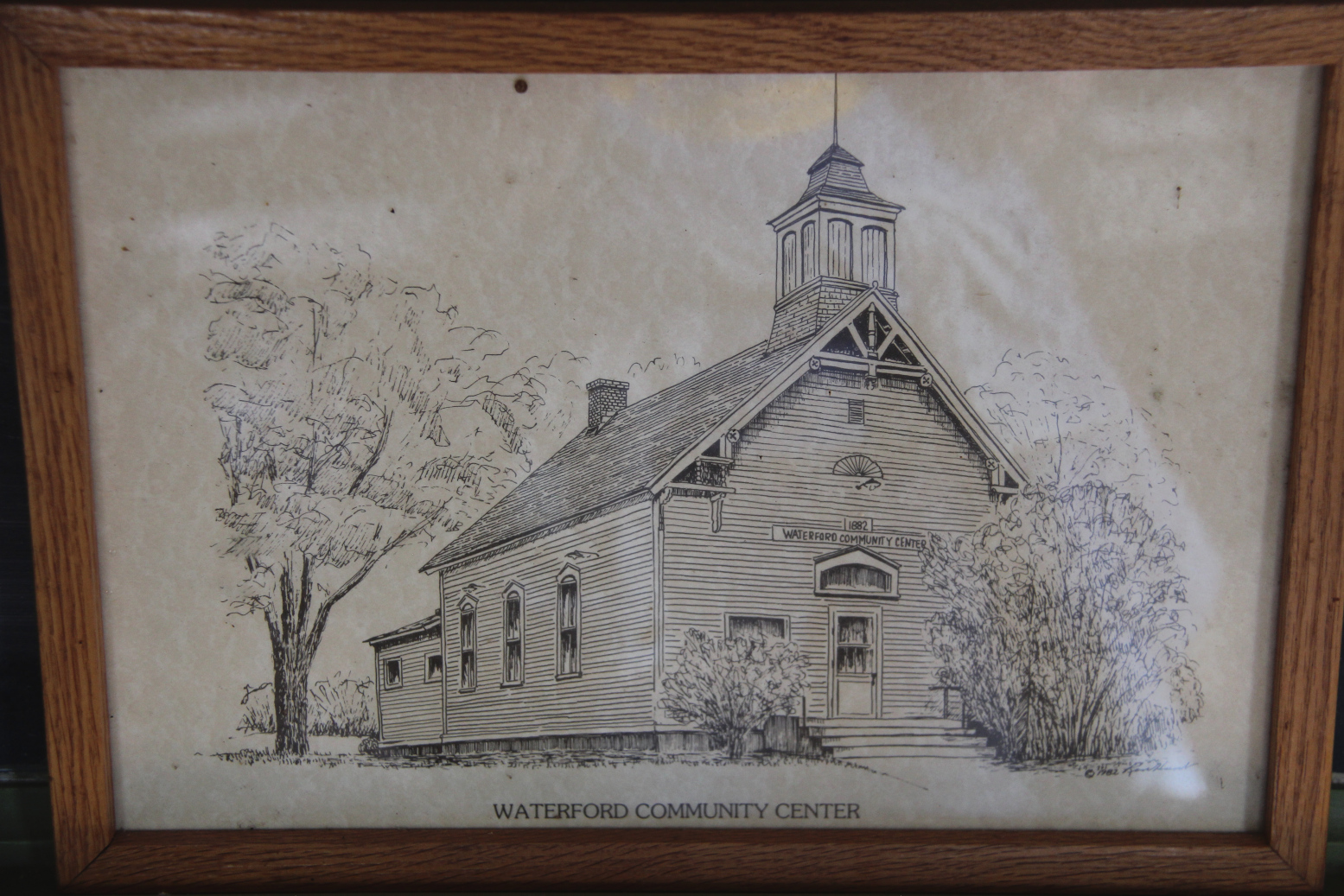
Among the art displayed inside the old Waterford School and then community center. (Minnesota Prairie Roots copyrighted photo August 2025)

Art (prints and photos) graces a wall of the Waterford Community Center, once a one-room school, moved onto the Steam & Gas Engines showgrounds and opened to the public this year.
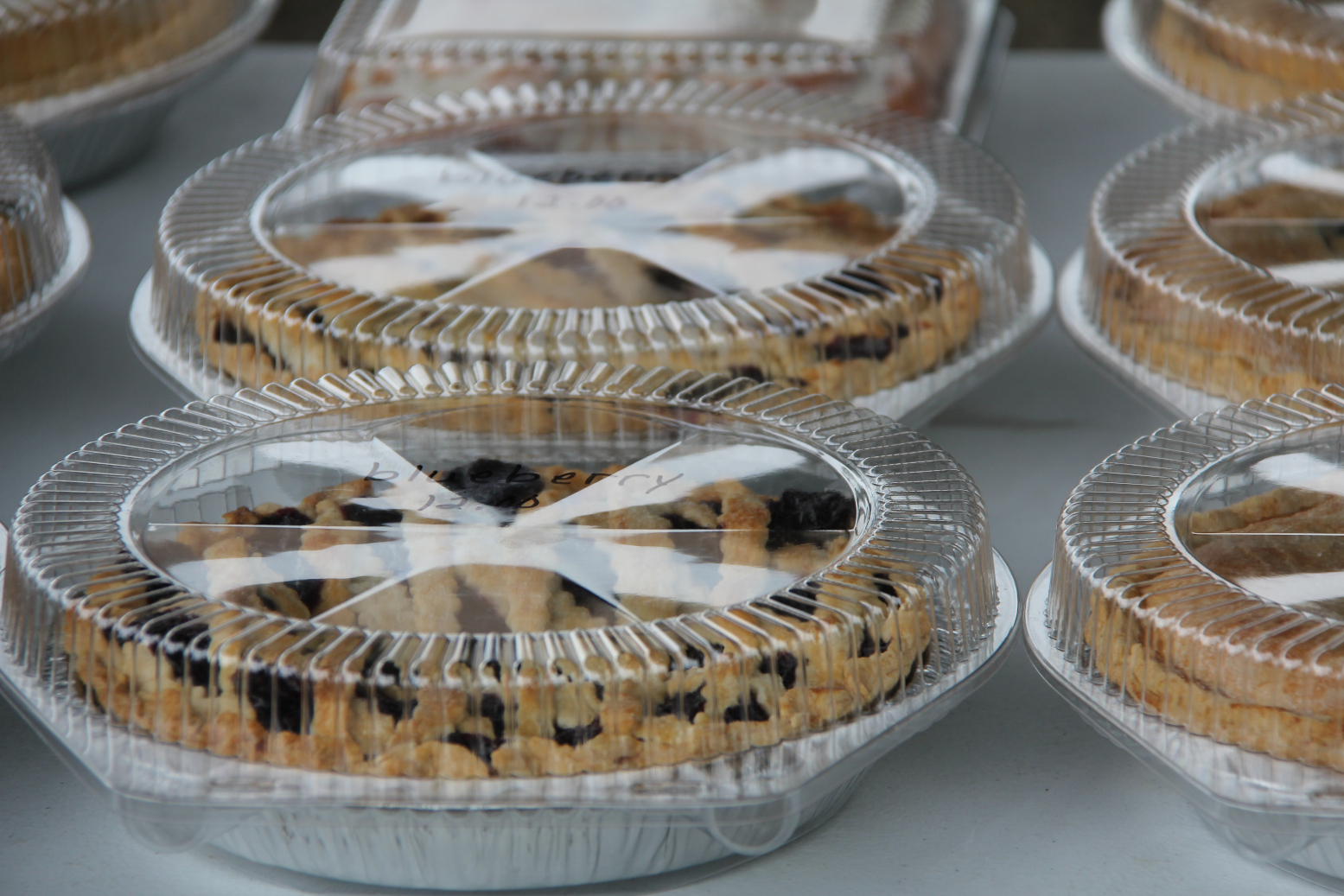
The culinary arts in pies crafted by the Amish. (Minnesota Prairie Roots copyrighted photo August 2025)

And then there are the culinary arts as perfected by an Amish family selling handheld fruit pastries and pies plus homemade ice cream crafted on-site as attendees watched. They are new-to-the-show vendors. The peach pastry and ice cream, oh, my, so delicious. They sold out of pies and handhelds.
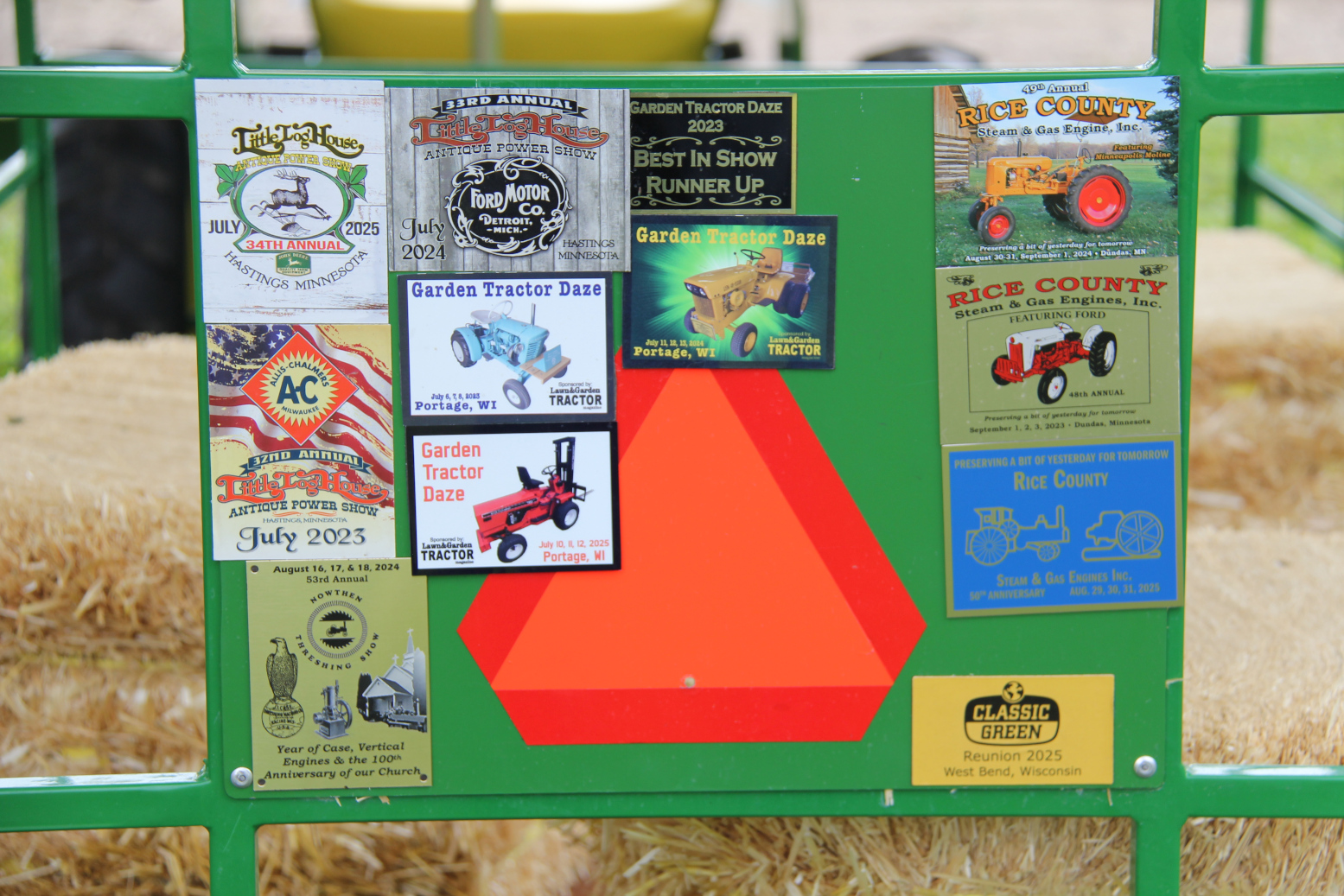
I see this collage of farm show stickers as art. (Minnesota Prairie Roots copyrighted photo August 2025)

This may be a show themed to farming of yesteryear. But, as I discovered, art also abounds. Sometimes you just have to look through an artistic lens to see it.

© Copyright 2025 Audrey Kletscher Helbling


Linoleum block print art stories from the prairie February 15, 2023

“Main Street,” watercolored block print by Nan Karr Kaufenberg. (Minnesota Prairie Roots copyrighted photo September 2022)

MANY DECADES AGO, in a time when gender roles factored strongly into classes a student could and couldn’t take in high school, I learned to carve a design into a linoleum block for printing. Girls and boys traded classes for two weeks with female students allowed into the male-dominated world of shop class. The guys headed to the home economics kitchens to acquire basic cooking and baking skills.

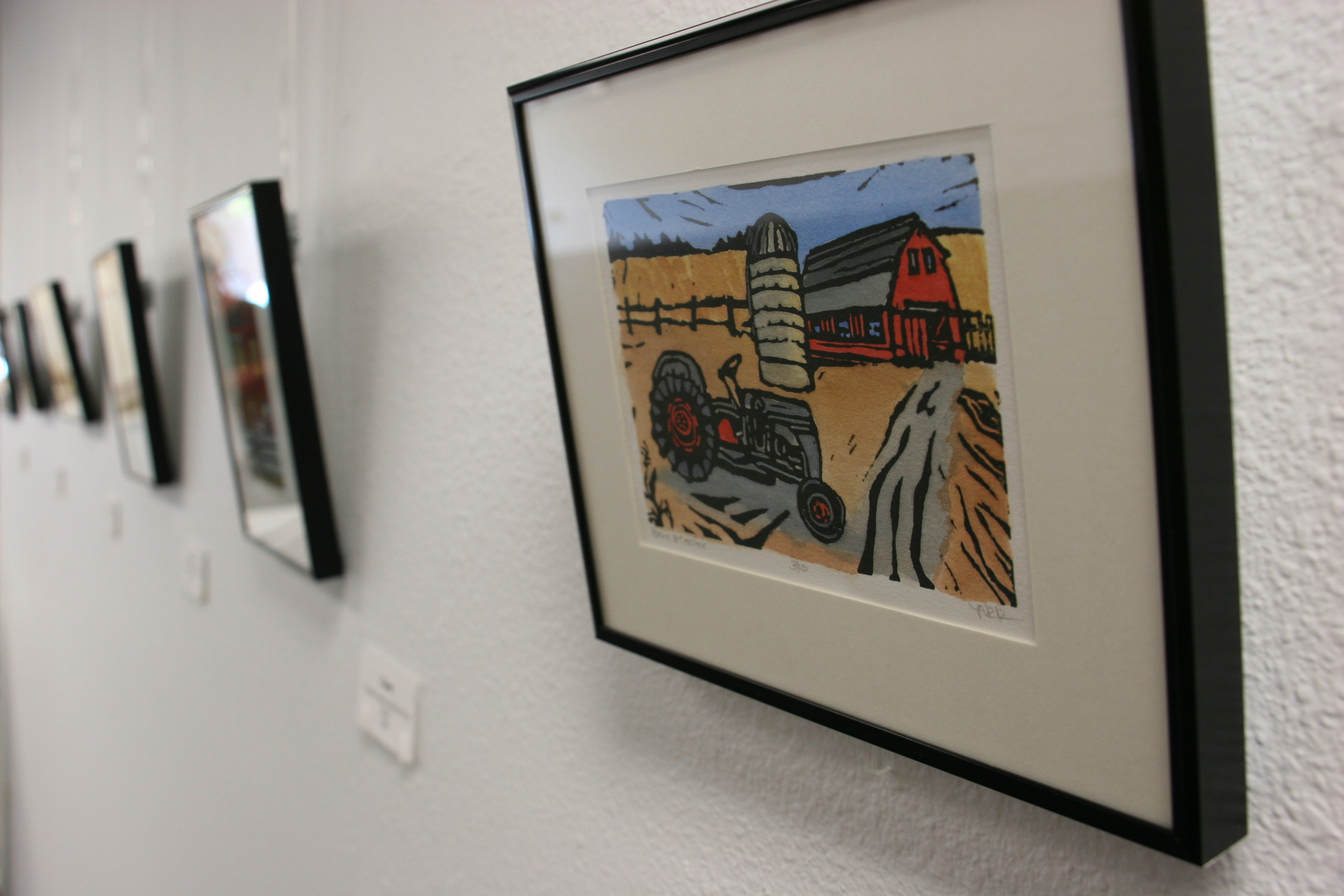
Nan Karr Kaufenberg’s depiction of a farm site. (Minnesota Prairie Roots copyrighted photo September 2022)

Oh, how things have changed since I was an early 1970s high school student briefly surrounded by saws and tools and other equipment and carving art into a linoleum block. I don’t recall the design I crafted. But I do remember feeling empowered inside that industrial arts shop, my eyes opened to possibilities that stretched beyond societal limitations.

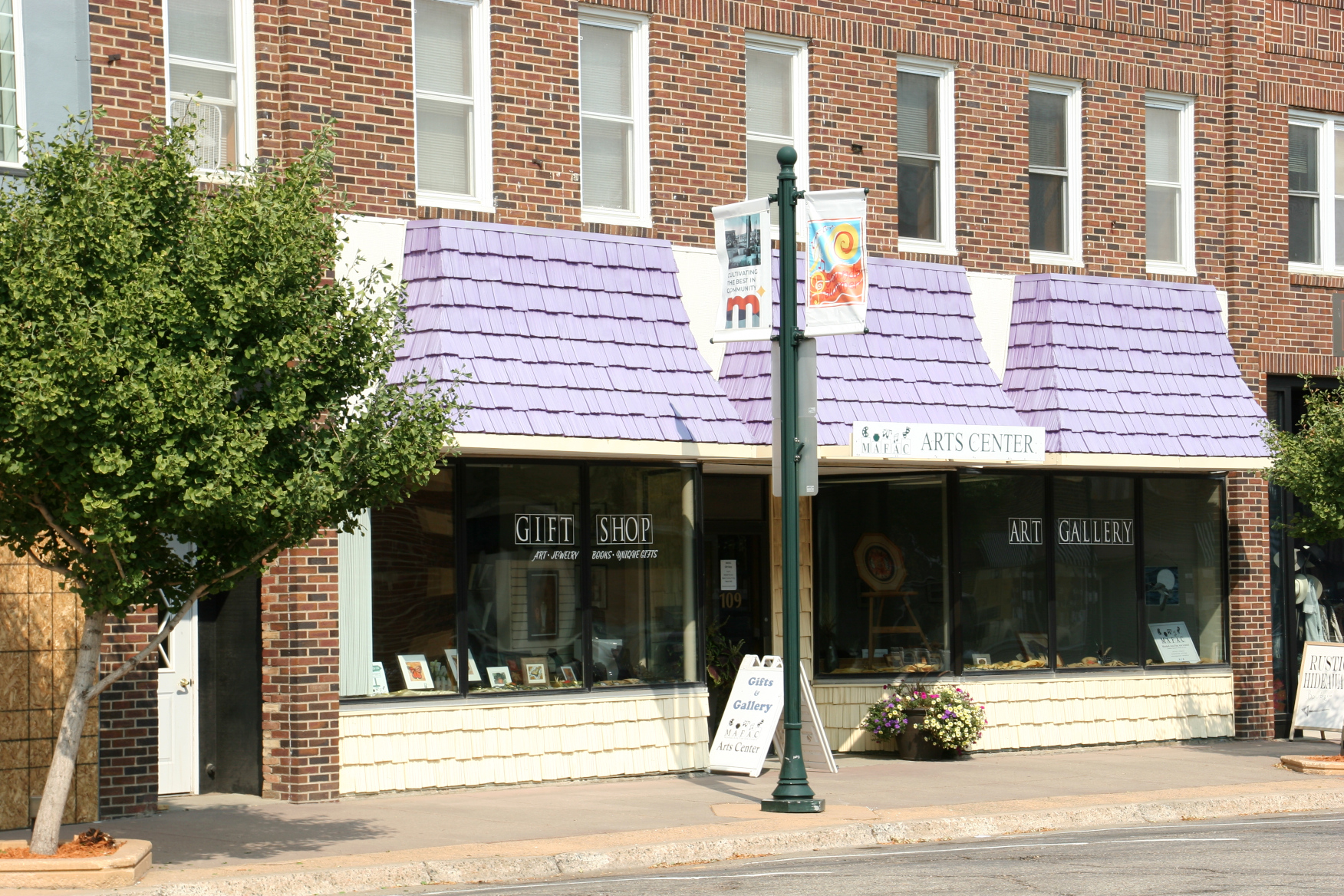
The Arts Center in downtown Marshall. (Minnesota Prairie Roots copyrighted photo September 2022)

Maybe that experience is partially why I am drawn to linoleum block prints. On a return trip to my native southwestern Minnesota prairie in September, I visited the Marshall Area Fine Arts Council Arts Center which was hosting an exhibit, appropriately named “Block Party,” by watercolor block print artist Nan Karr Kaufenberg of Redwood Falls. I’d previously seen, and admired, her work.

Nan Karr Kaufenberg’s “Coneflowers.” (Minnesota Prairie Roots copyrighted file photo September 2022)
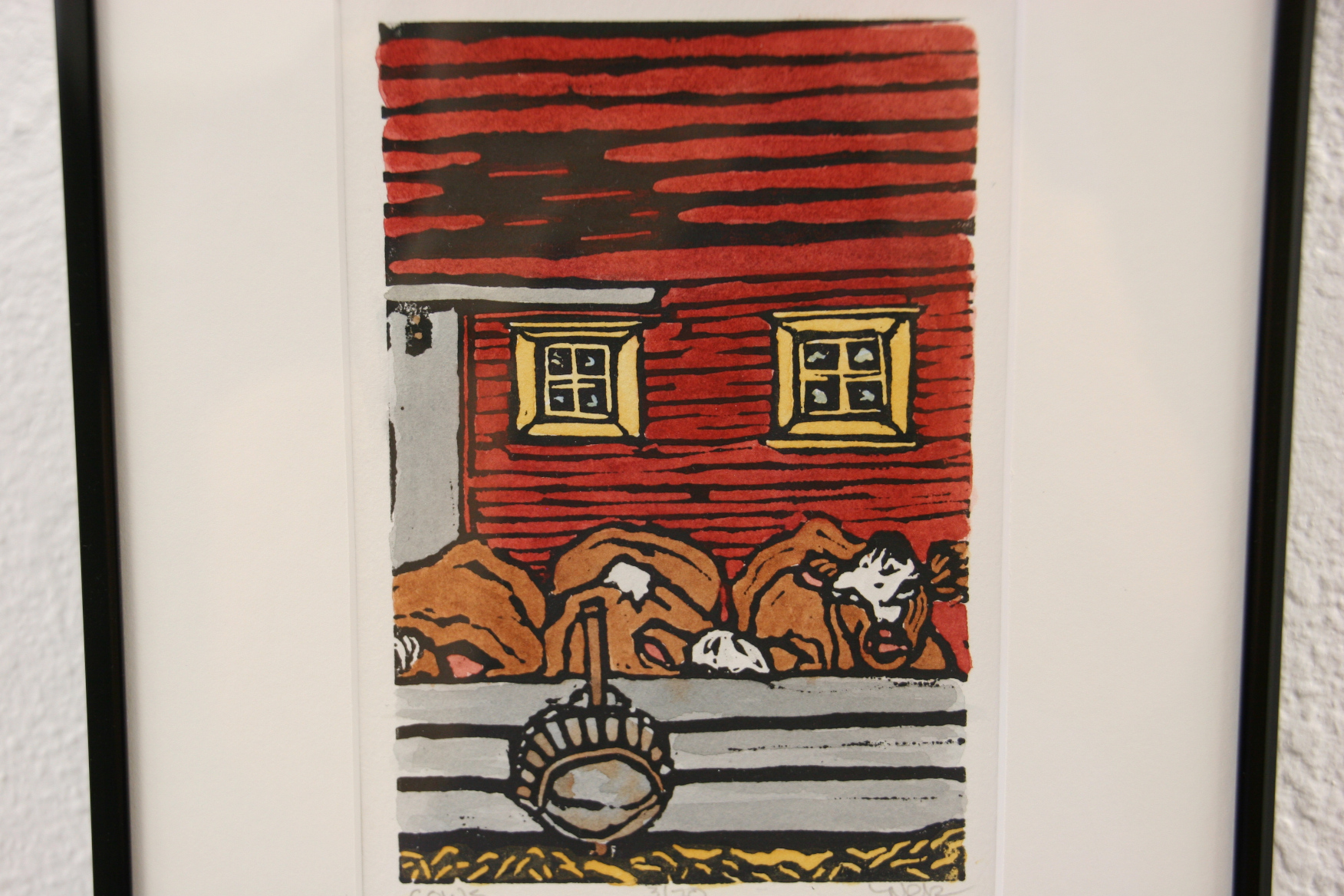
Feeding cattle focus this print by Nan Karr Kaufenberg. (Minnesota Prairie Roots copyrighted photo September 2022)
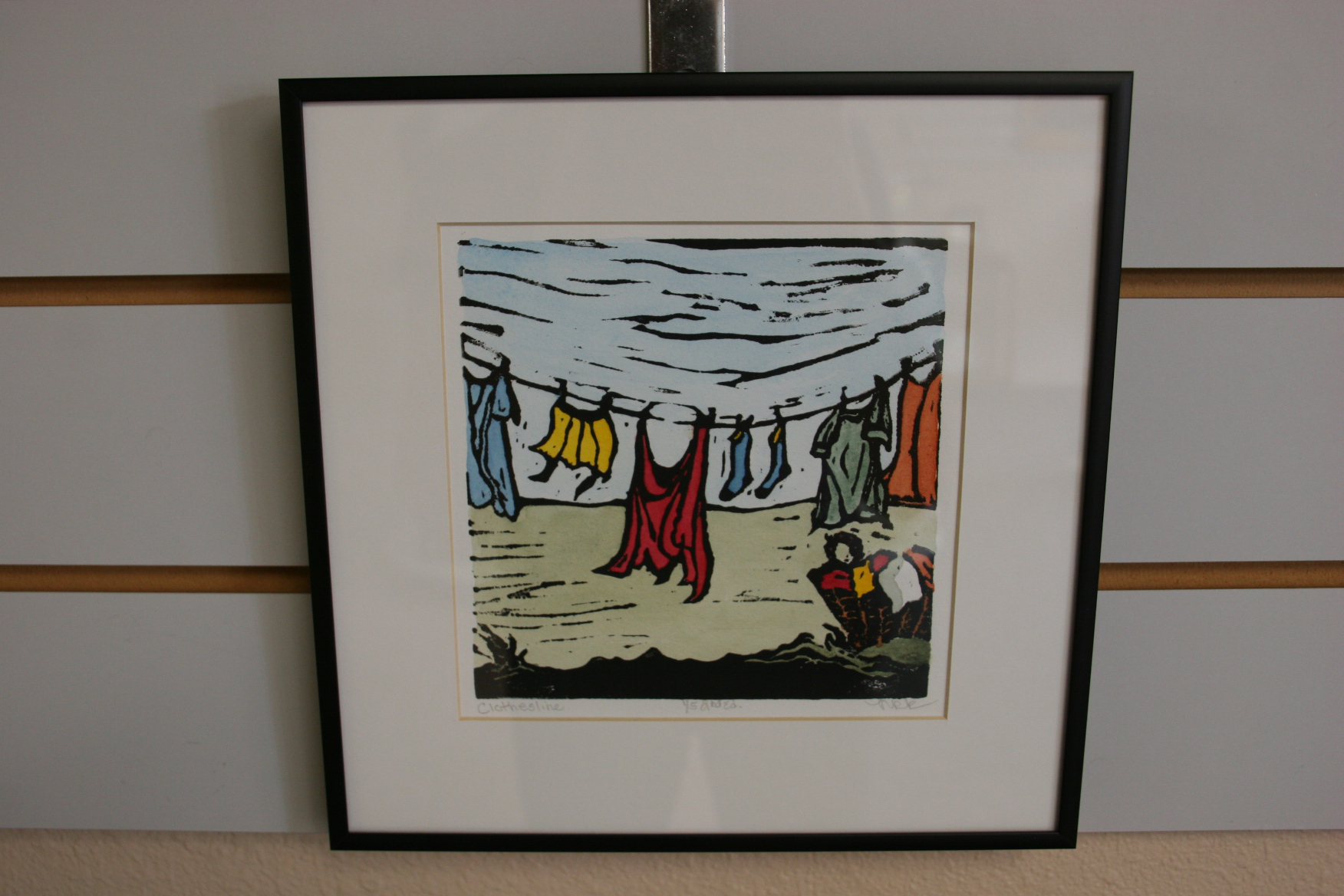
“Clothesline” by Nan Karr Kaufenberg. (Minnesota Prairie Roots copyrighted photo September 2022)

That admiration remains for this artist who observes the prairie world around her and then creates. I feel comfortably at home with her interpretations of rural southwestern Minnesota. Her depictions of prairie flowers, farm scenes, small towns, even laundry on a clothesline, touch me with that sense of familiarity, that feeling of connection to a place I called home and forever hold dear.

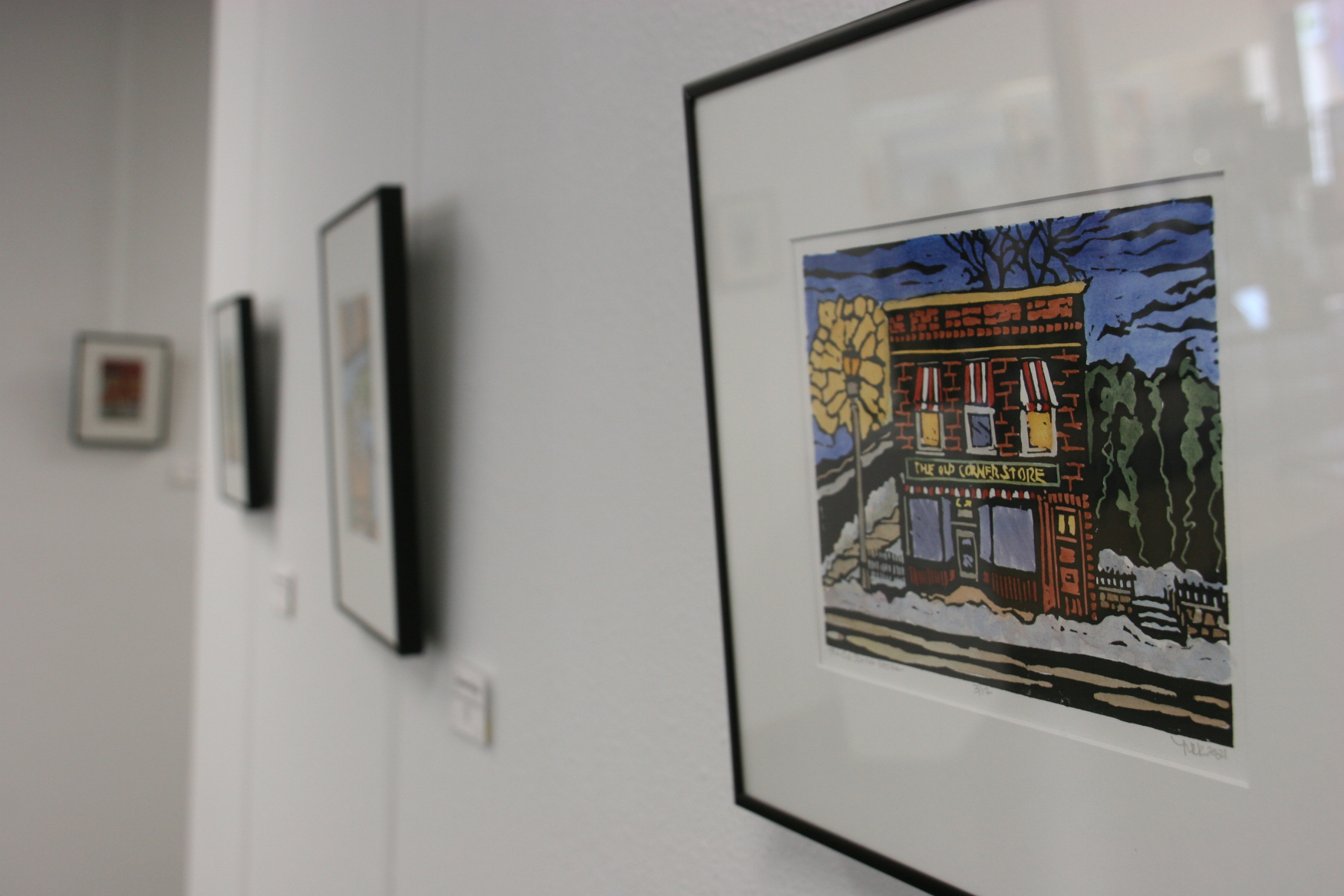
A block print by Nan Karr Kaufenberg of The Old Corner Store. (Minnesota Prairie Roots copyrighted photo September 2022)

For more than 30 years, Kaufenberg, who has art degrees (from the University of Minnesota and Southwest Minnesota State University), who once worked at a tourism center in extreme southwestern Minnesota (she moved following the 2001 high profile murder of her daughter Carrie Nelson), and who is also a realtor, has specialized in tinted linoleum block prints. She colors her printed designs with watercolors. The results are simply stunning. Bold black stamped ink softened by watercolor.

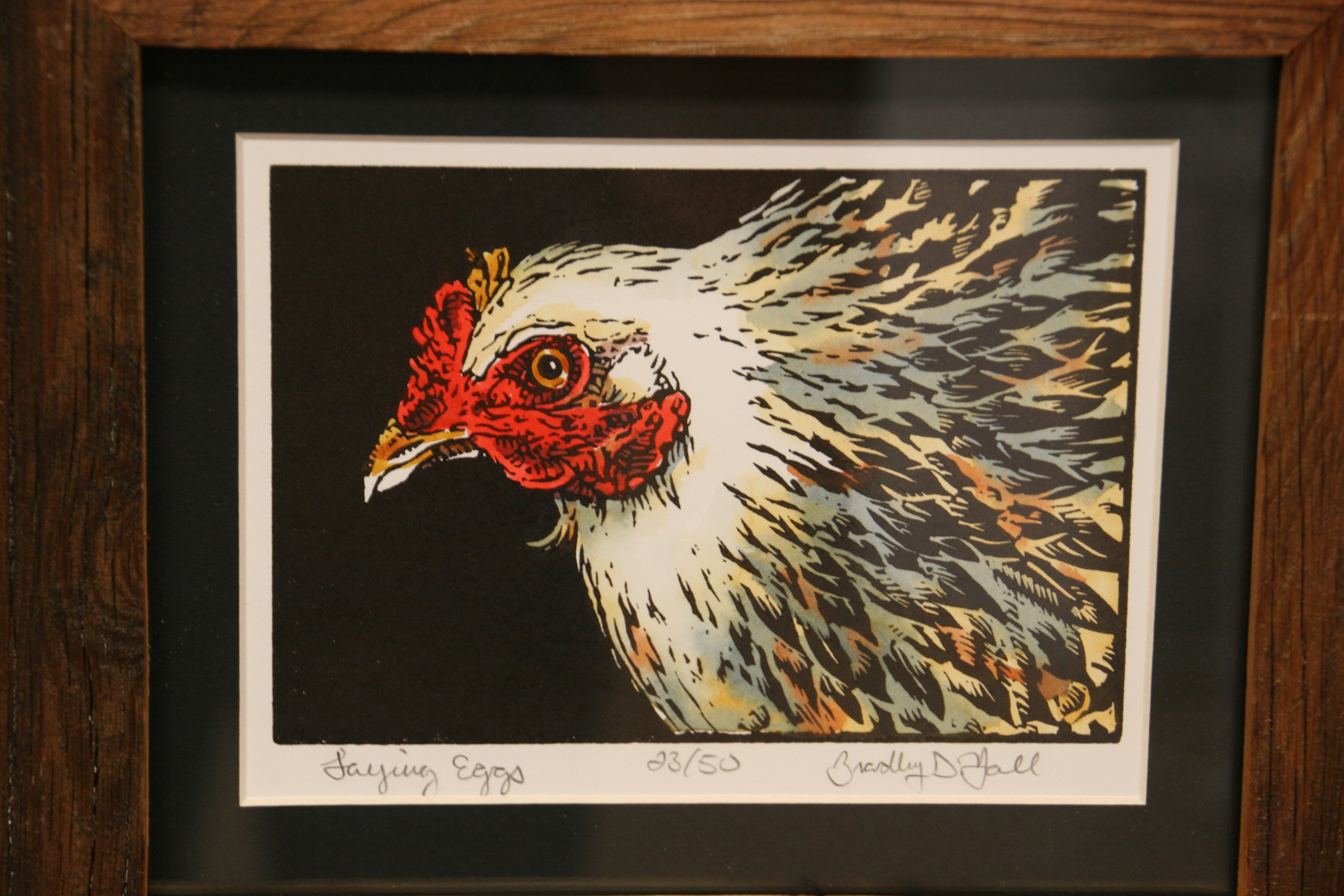
“Laying Hens” by Bradley D. Hall. (Minnesota Prairie Roots copyrighted photo September 2022)

Granite Falls artist Bradley D. Hall does the same, hand-carving linoleum blocks, then hand-printing the inked block design before hand-coloring with watercolors. I also saw his work inside the Marshall Arts Center. While similar to that of Kaufenberg in its rural themes, Hall’s art features finer black lines. Each artist has developed a certain identifiable style with the same basic art form.

A view of the Marshall Arts Center gift shop. (Minnesota Prairie Roots copyrighted photo September 2022)

Hall, who left southwestern Minnesota for Chicago and worked there for 20 years in factories, returned to his native Granite Falls in 2002 to open a studio. By then he’d already taken numerous art classes, including at the American Academy of Art in downtown Chicago. Upon his return to Minnesota, Hall connected with letterpress artist Andy Kahmann of A to Z Letterpress in Montevideo and learned the arts of linoleum block carving and printmaking. I love that these creatives shared with, and learned from, one another.

“Windmill” by Bradley D. Hall. (Minnesota Prairie Roots copyrighted photo September 2022)

More than 50 years ago, industrial arts teacher Ralph Brown shared his linoleum block print skills with me and a shop full of other teenage girls at Wabasso High School. Those two weeks of hands-on learning inside a place typically reserved for male students proved pivotal. I could see the world beginning to crack open to young women, emerging women who would ink life with their designs, their styles, their strong bold lines.

© Copyright 2023 Audrey Kletscher Helbling
Artwork photographed with permission of the Marshall Area Fine Arts Council Arts Center. Individual art is copyrighted by the artists.


One definition of rural art September 3, 2014

WHEN YOU THINK ART, you likely think of a studio artist creating a work of art via paint or ink or some other media.


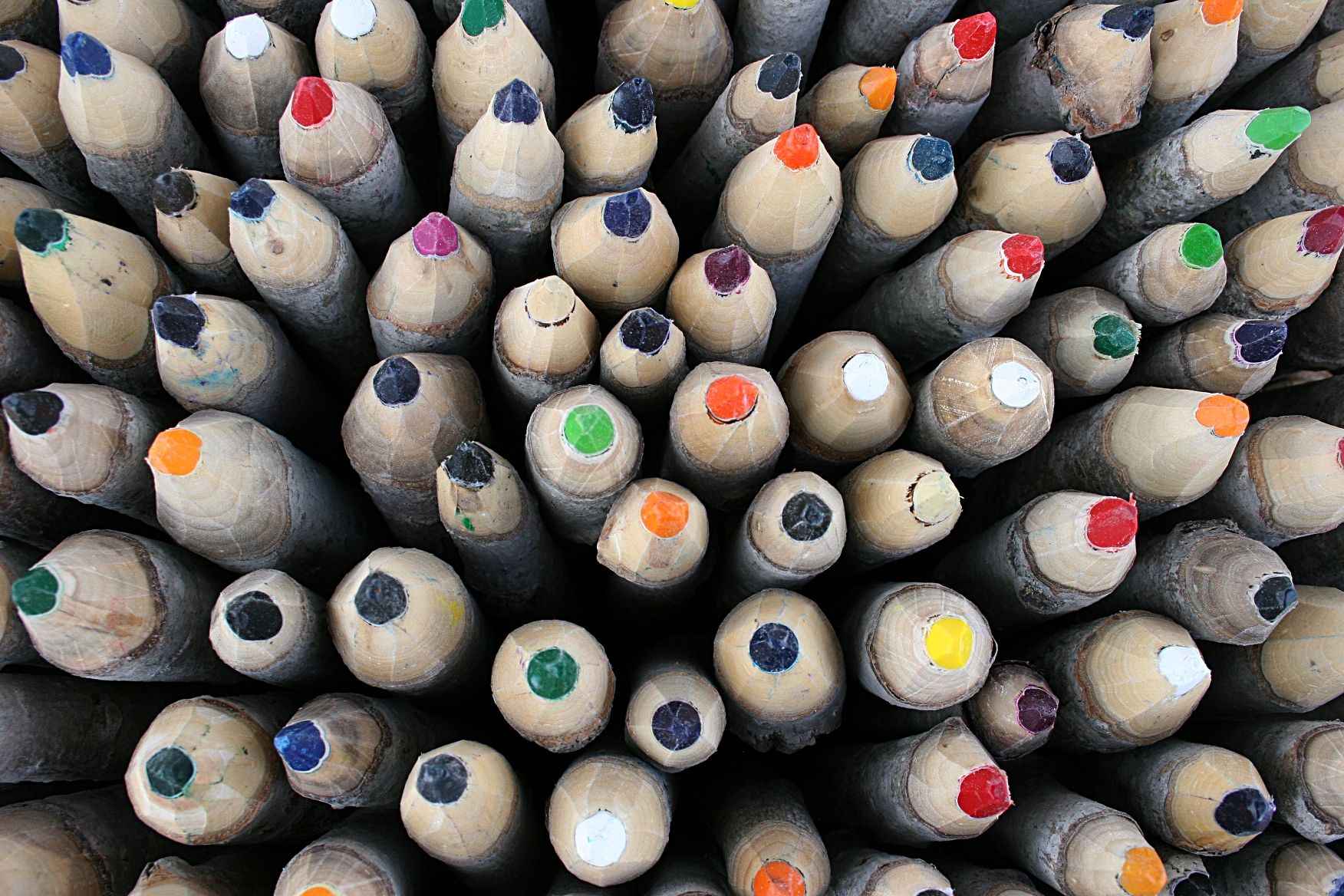
Dan and Pam Larson of Rice, Minnesota, craft these gigantic crayons from poplar wood. For the past six years, the couple has traveled to flea markets around the country peddling their popular crayons. They make 20,000 - 25,000 of these crayons annually.

Dan and Pam Larson of Rice, Minnesota, (their home in the warm months) craft these gigantic crayons from poplar wood and three crayons per crayon. For the past six years, the couple has traveled to flea markets around the country peddling their popular crayons. Last weekend they were at a flea market in rural Dundas. They make 20,000 – 25,000 of these crayons annually. I consider their rustic crayons to be works of art as much as tools of art.


But I think beyond the expected.


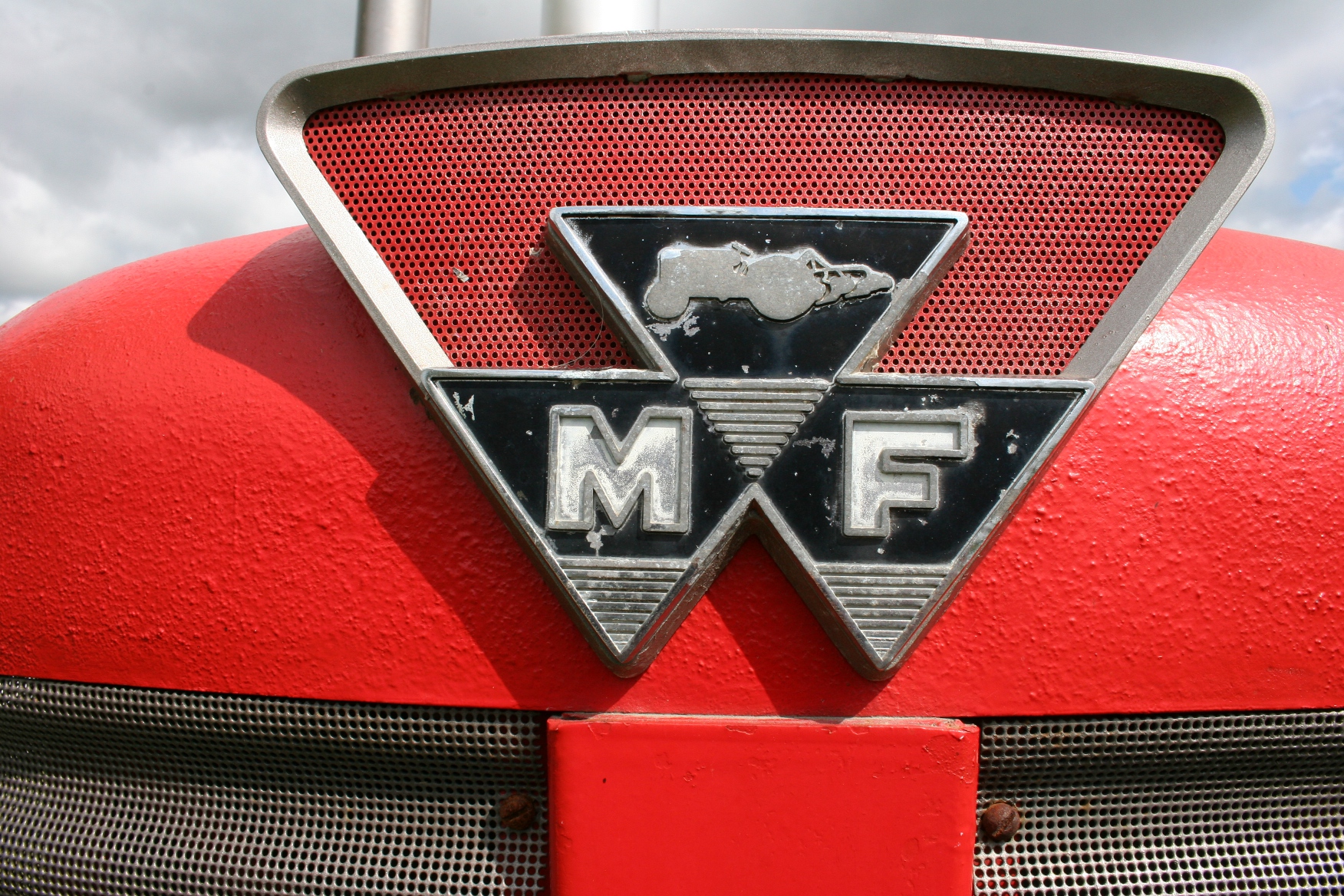
Art, Massey F emblem


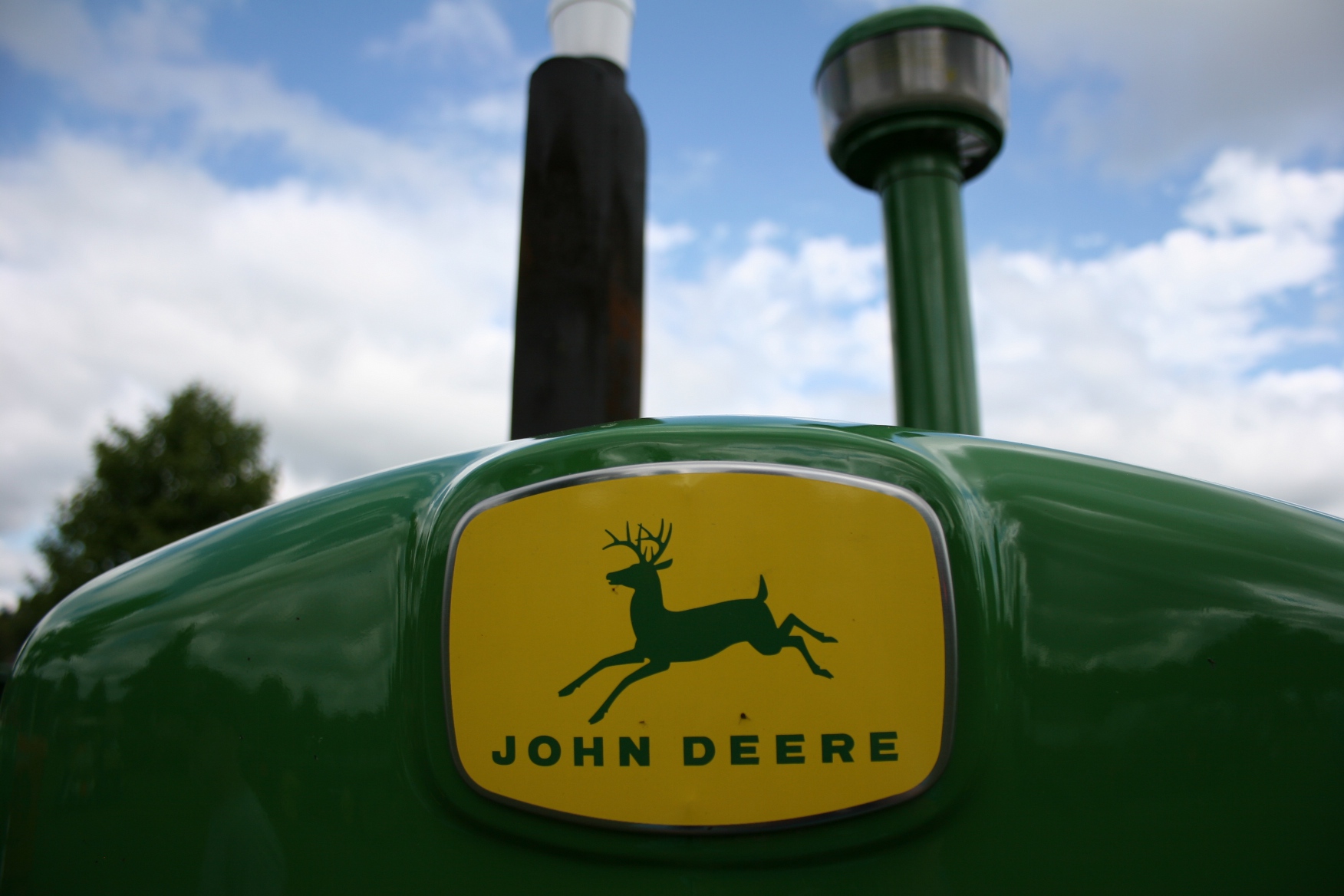
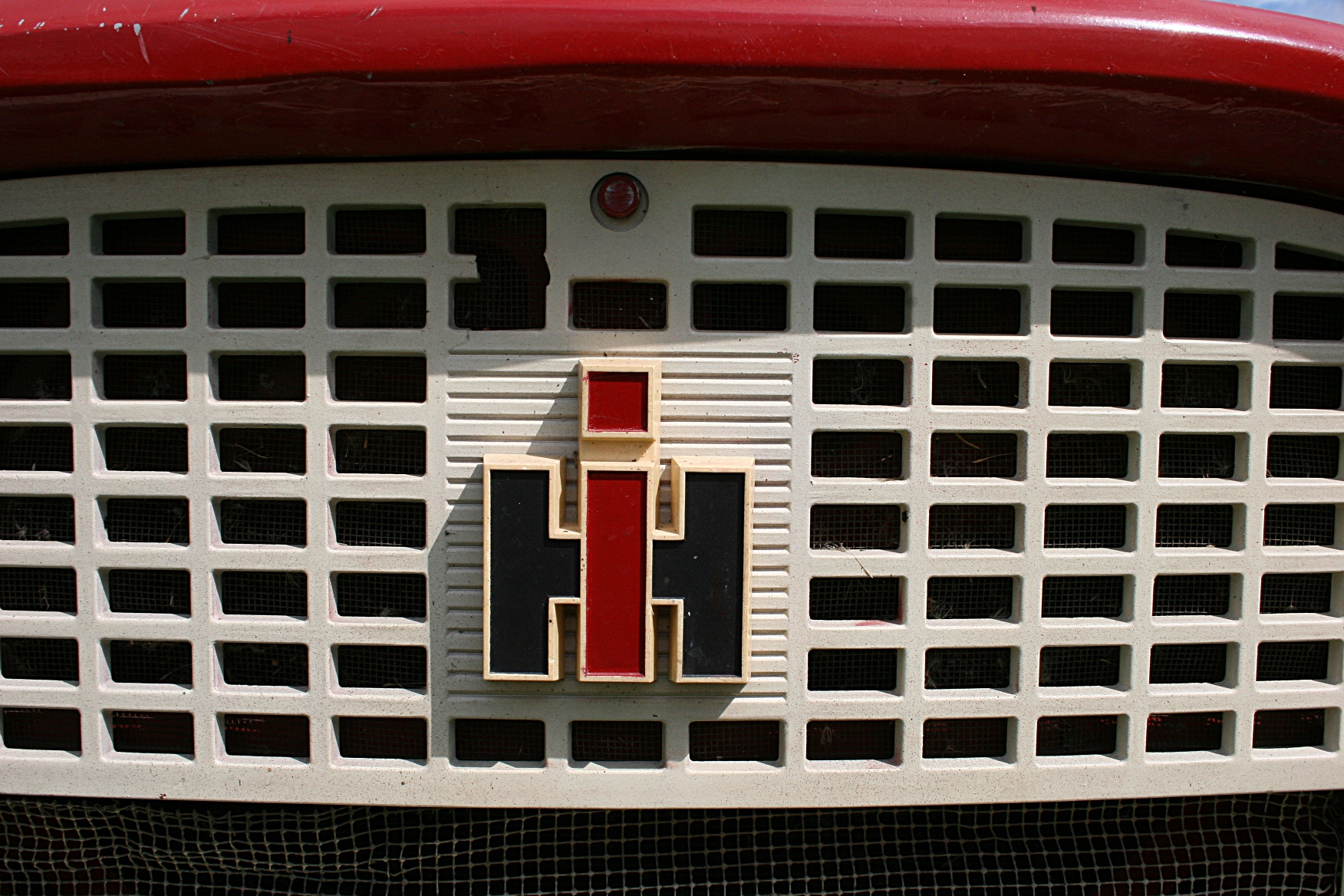
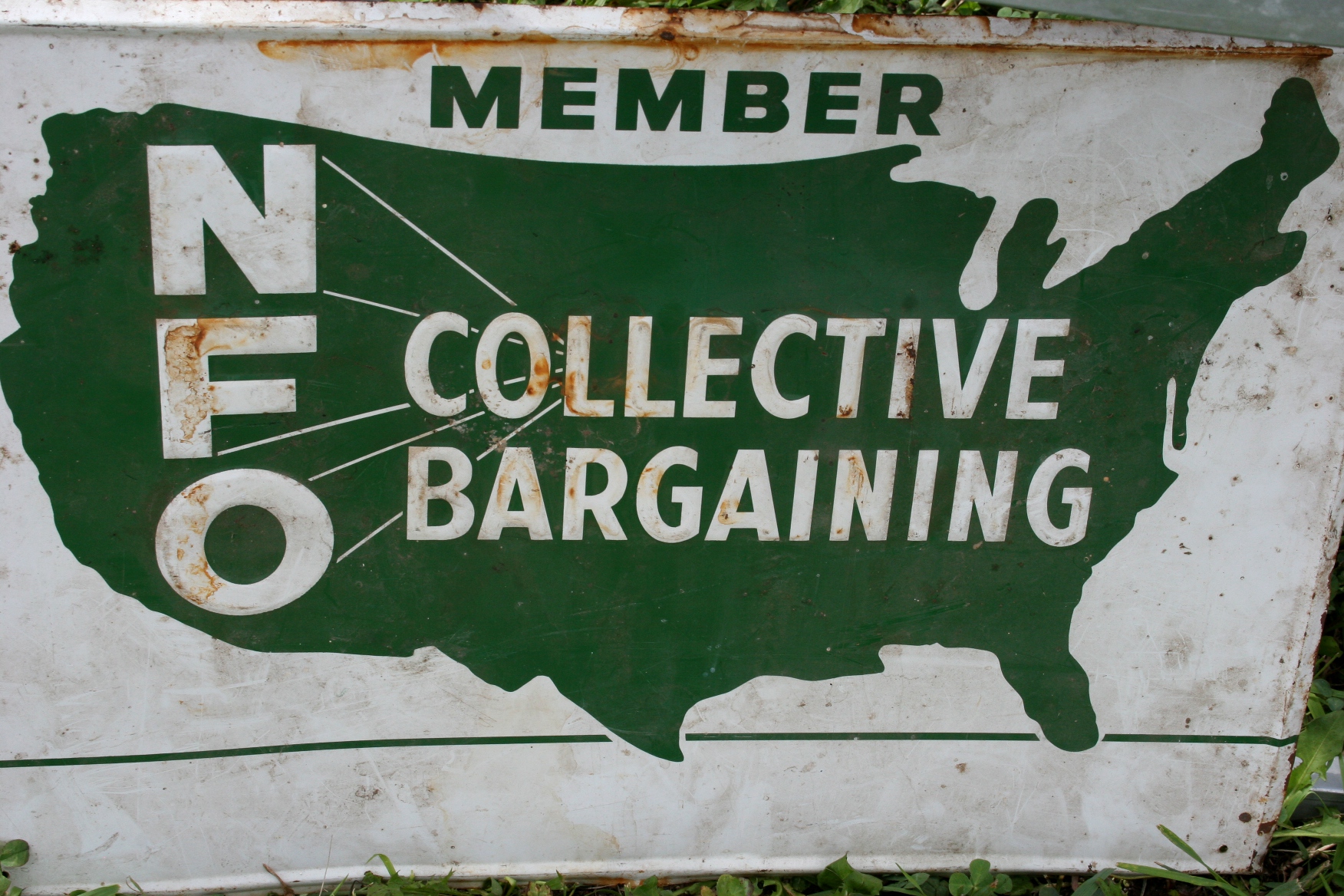
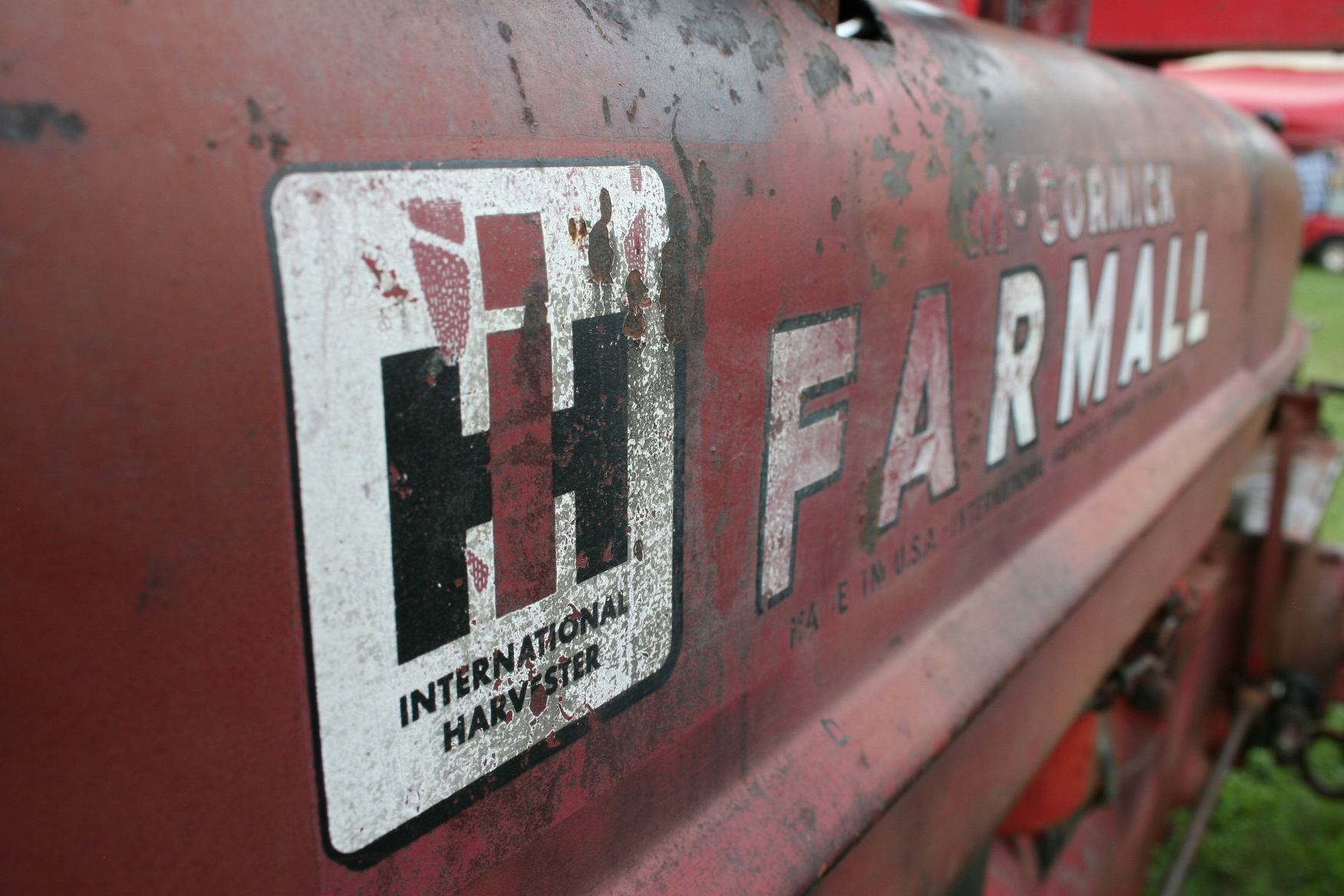
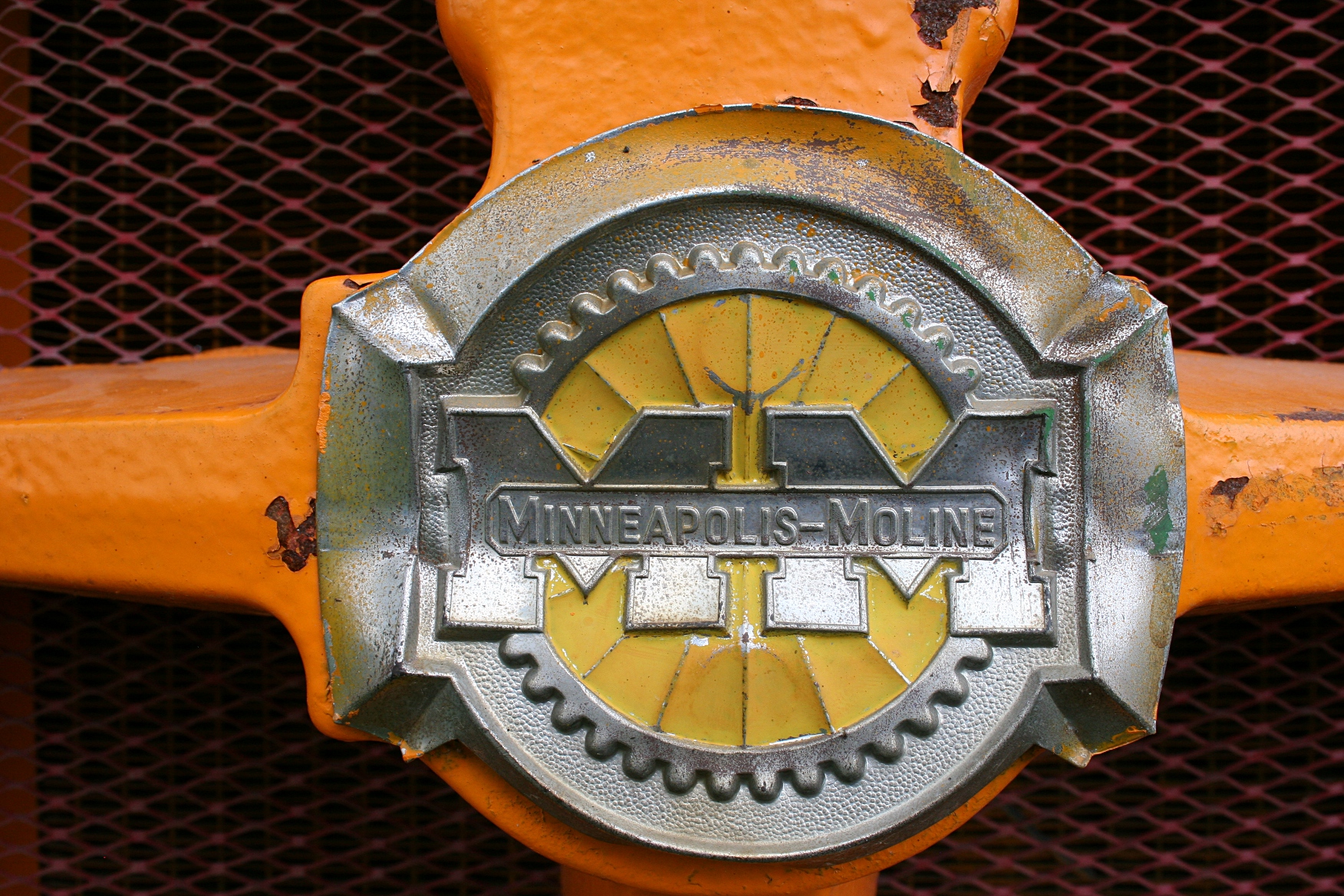
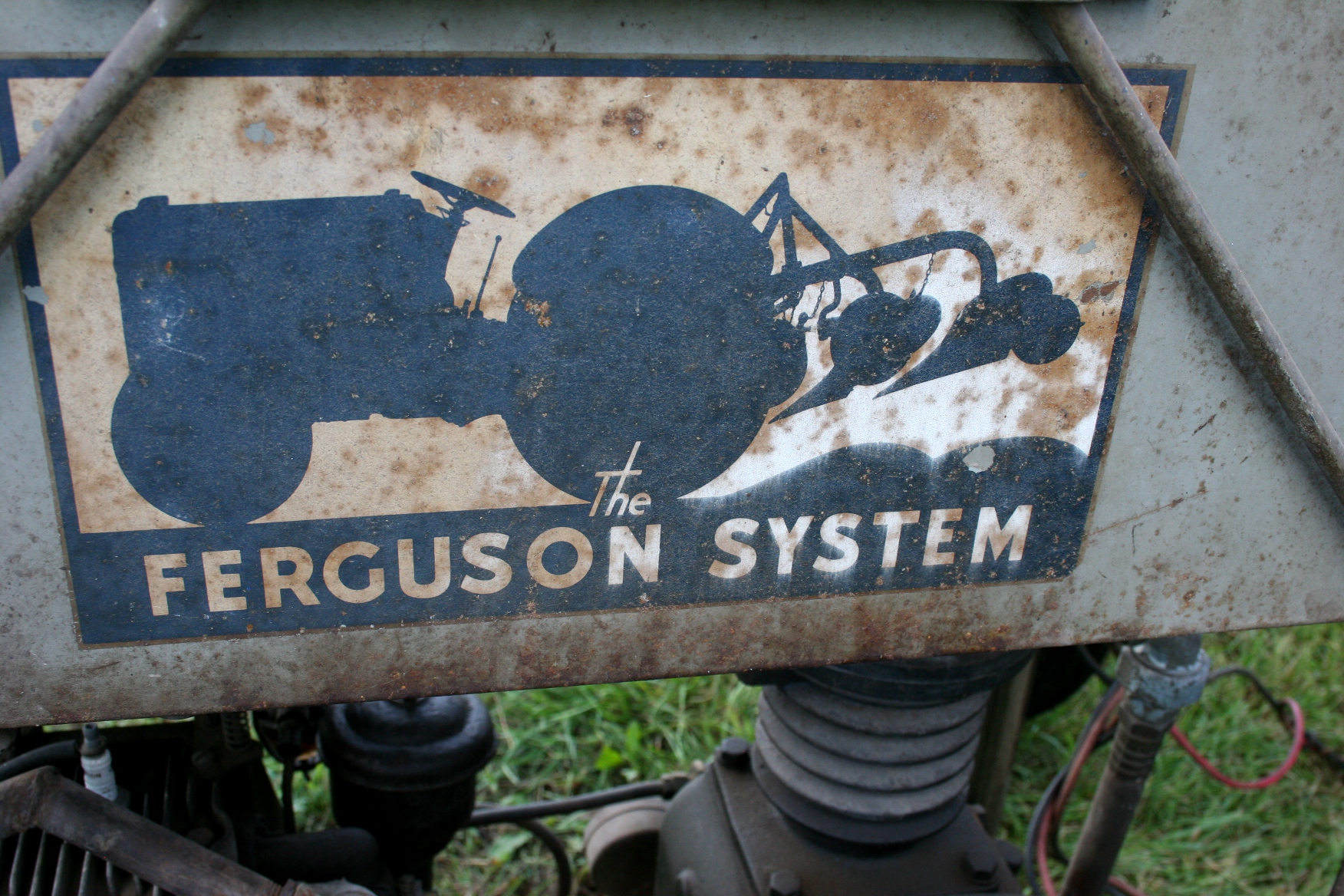
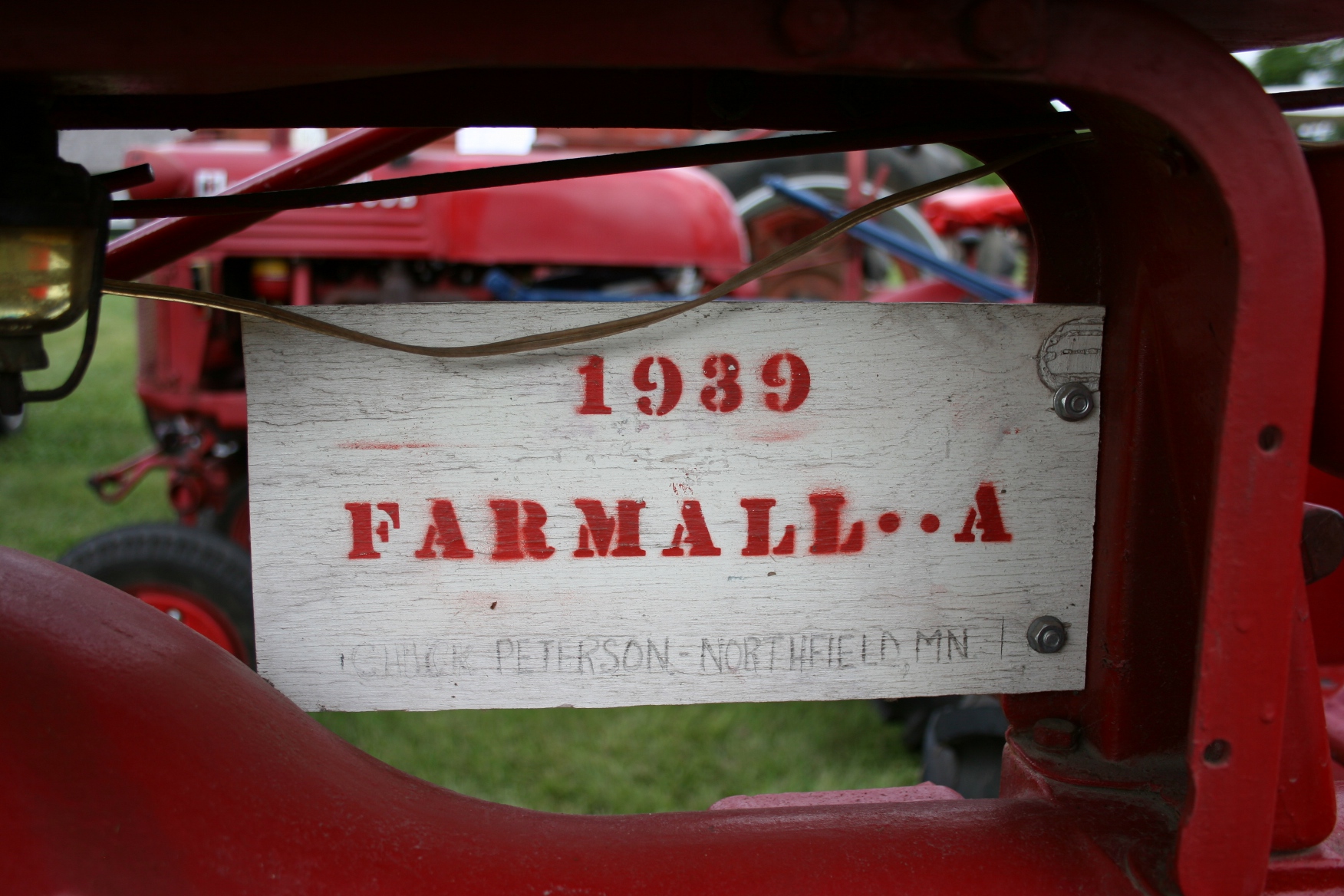
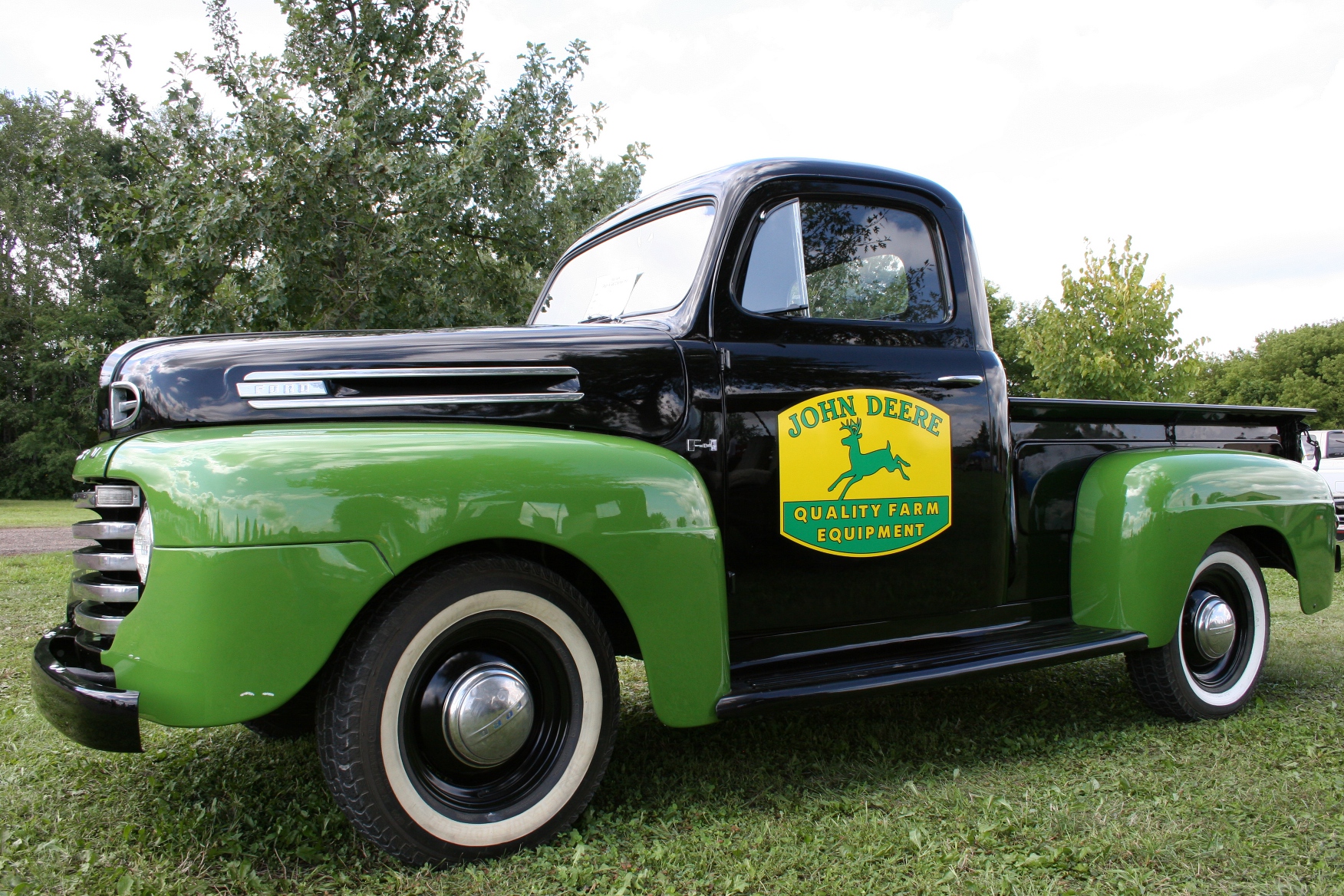
I also see art in other places, like on the front end of a tractor. Emblems, while identifying a tractor brand, are also art. Rural art.

Here’s some rural art I photographed at the recent Rice County Steam & Gas Engines Show in rural Dundas, Minnesota:


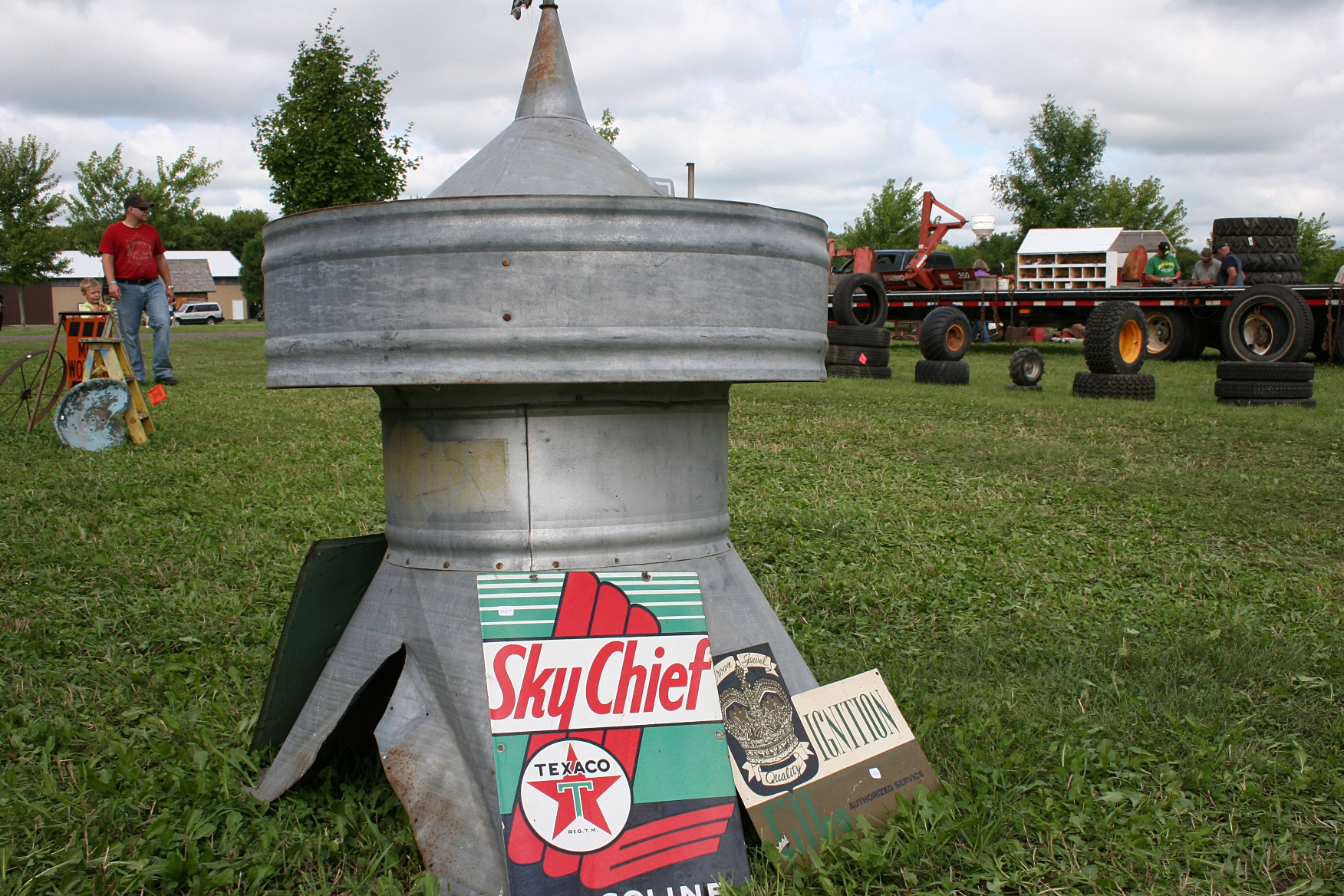
Art, cupola


Art, John Deere emblem


Art, IH emblem and grill


Art, NFO sign


Art, IH


Art, Minneapolis Moline


Art, Ferguson


Art, Farmall homemade sign


Art, John Deere pick-up


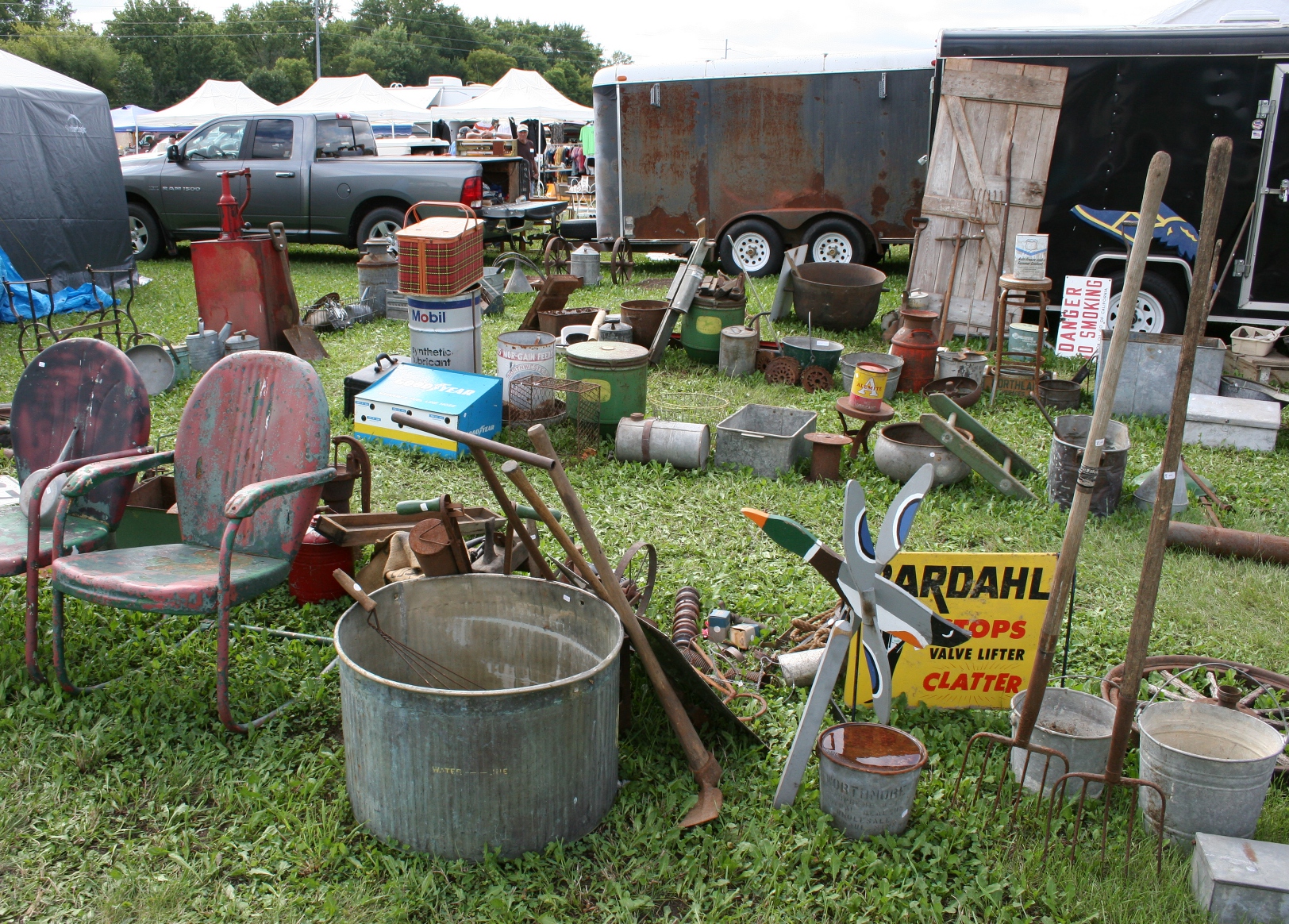
Art, overall flea market finds


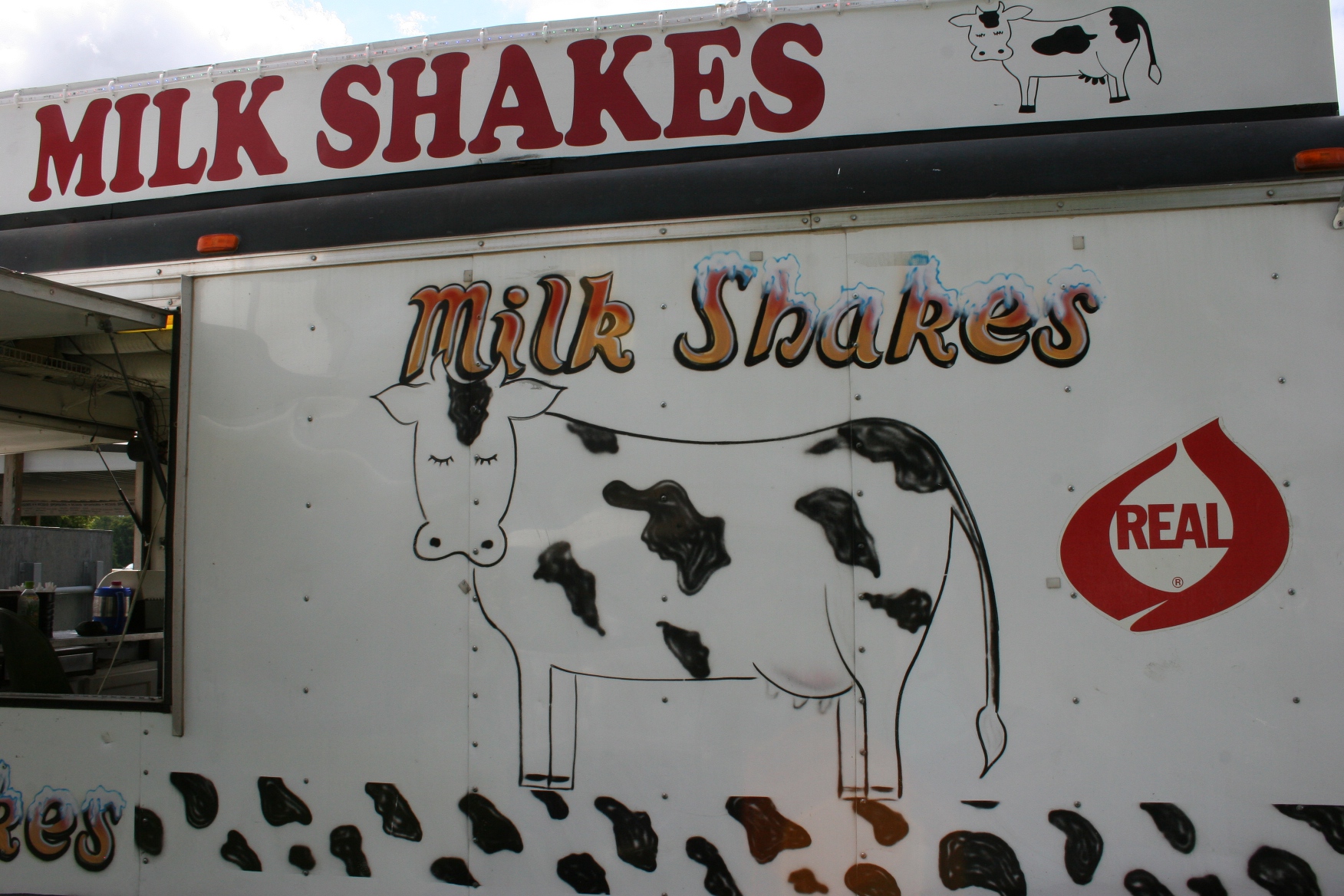
Art, milk shake sign

© Copyright 2014 Audrey Kletscher Helbling