Minnesota Prairie Roots

Writing and photography by Audrey Kletscher Helbling

Inside the 1894 Valley Grove Church October 19, 2009

Filed under: Uncategorized — Audrey Kletscher Helbling @ 9:25 PM
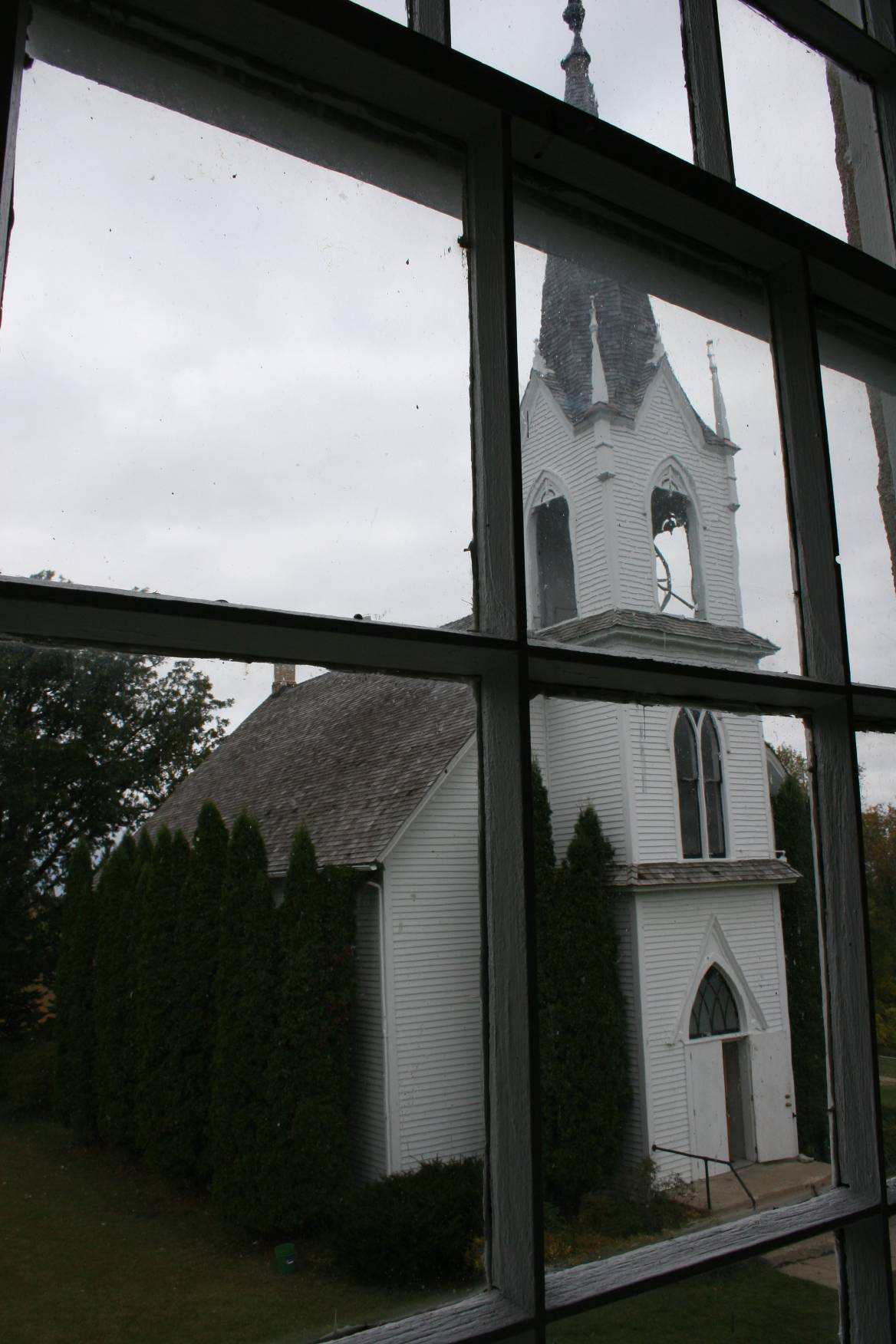
The 1894 Valley Grove Church as seen trhough the second floor window of the 1862 stone church.

The 1894 Valley Grove Church as seen through the second floor window of the 1862 stone church.

Entry door into the church.

Entry door into the church.

COUNTRY CHURCHES INSPIRE a certain reverence of holiness not found in modern churches. In the wood, in the workmanship, in the setting, these houses of worship reflect the history of past generations.

Such is historic Valley Grove Church, once known as Tyske Grove, a Norwegian immigrant parish established northwest of Nerstrand. In 1862, the first stone church was built, then replaced in 1894 by a white clapboard building.

By that time, the congregation had already been renamed Valley Grove, a change made in 1870.

In the nearly four decades since the congregation dissolved, efforts have continued to preserve the two Valley Grove churches.

Walk inside the 1894 building and you’ll step back in time, to simpler days, when families gathered here to worship God, to socialize and to draw strength from each other in their new homeland.

The song Praise and Thanksgiving written by Albert F. Bayly seems appropriately fitting for country churches like those at Valley Grove:

“Praise and thanksgiving, Father we offer, for all things living, created good: Harvest of sown fields, fruits of the orchard, hay from the mown fields, blossom and wood.

Bless, Lord, the labor we bring to serve you, that with our neighbor we may be fed. Sowing or tilling, we would work with you, harvesting, milling for daily bread.

Father, providing food for your children, by your wise guiding teach us to share one with another, so that, rejoicing with us, all others may know your care.”

The otherwise plain windows in the church are topped by points of colored glass.

The plain windows in the church are topped by points of colored glass.

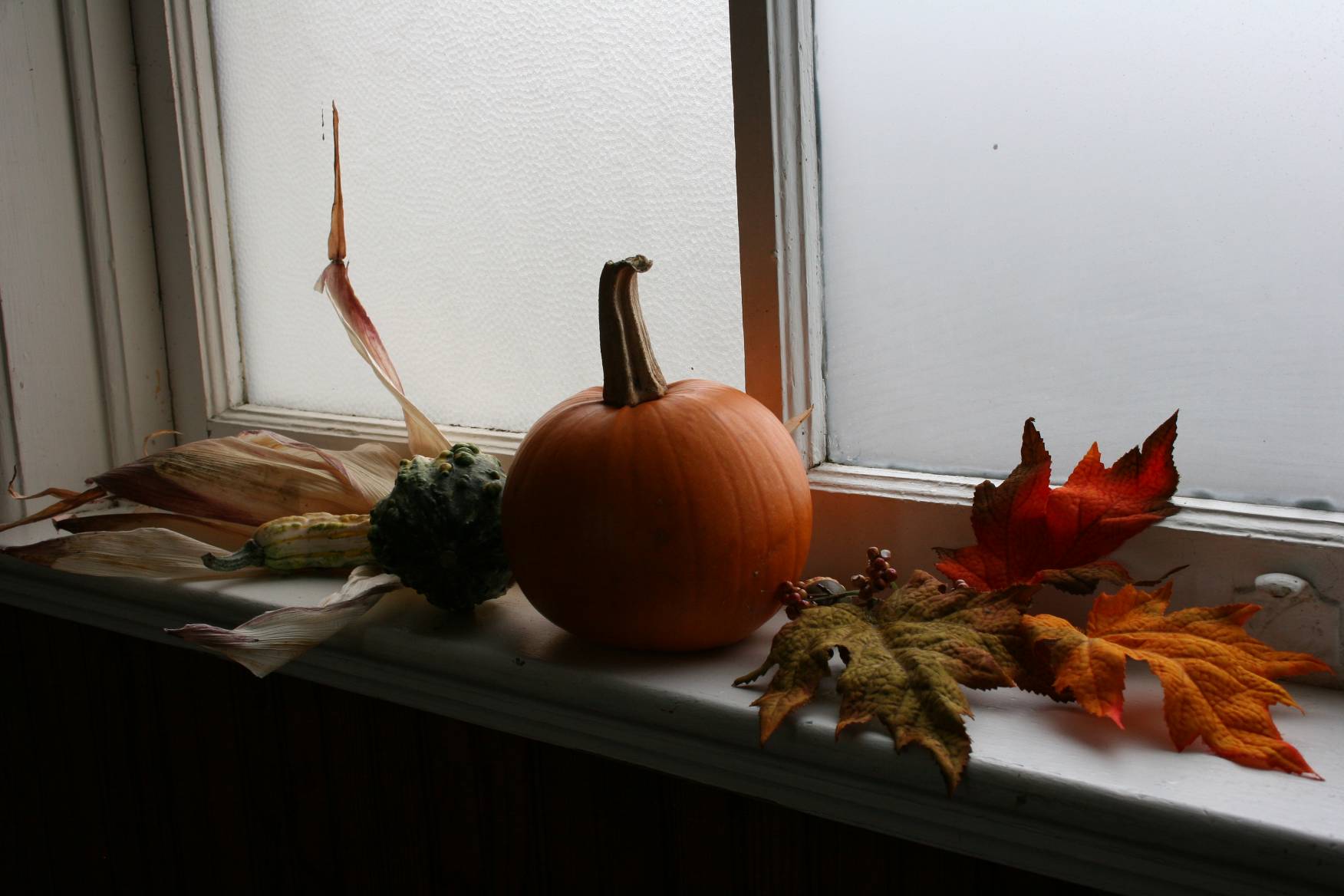
Autumn decorations from a wedding adorn the church window sills.

Autumn decor from a wedding adorn window sills.

How many feet have touched the pedals of the old pipe organ?

How many feet have touched the pedals of the old pipe organ?

The graceful wood of the balcony.

The graceful wood of the balcony.

Ringing the church bell.

Ringing the church bell.

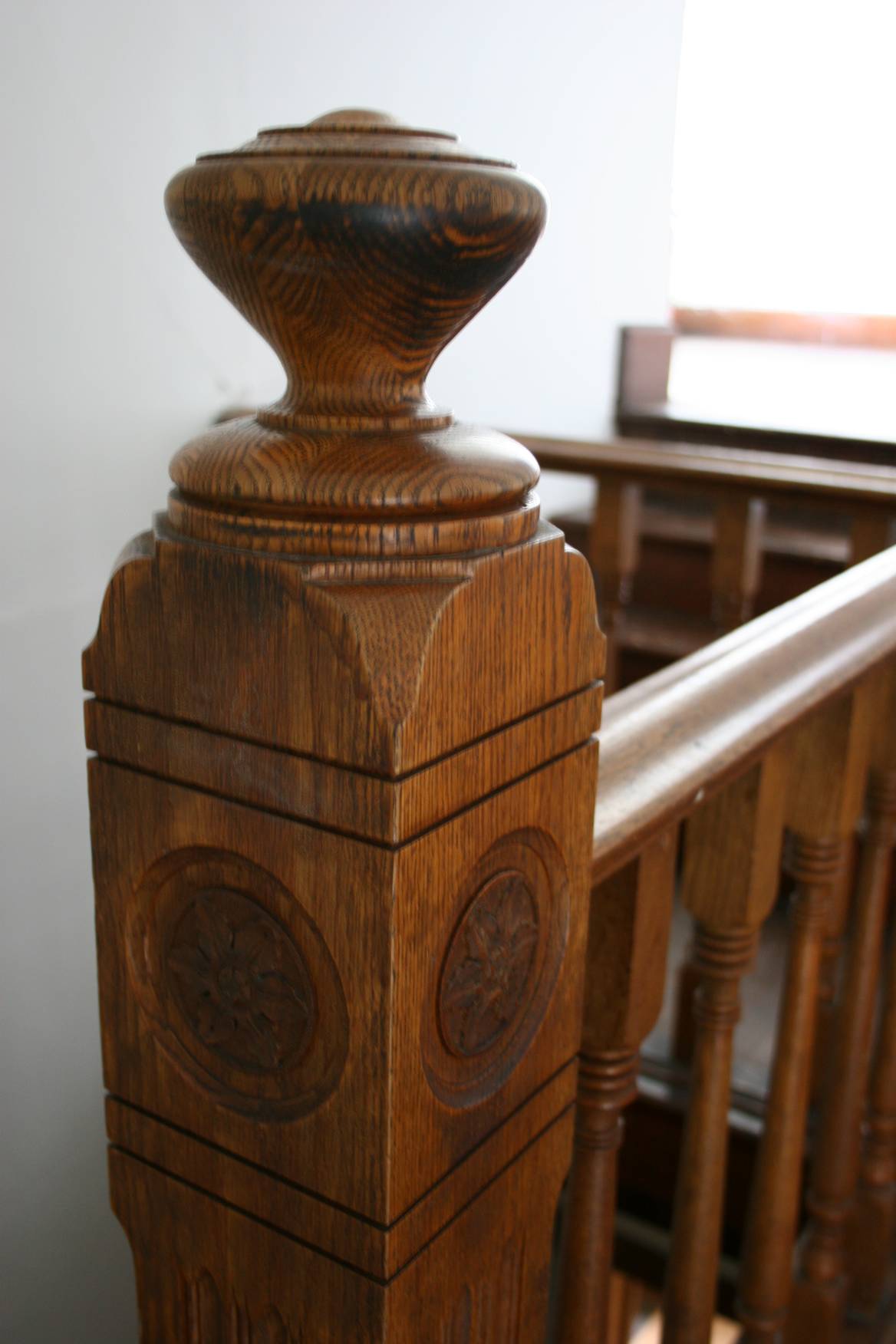
Stairway banister in the balcony.

Stairway banister in the balcony.

Hydrangea arrangement inside the entry.

Hydrangea bouquet in the entry.

For more information, go to www.valleygrovemn.com. Read my earlier blog about Valley Grove, posted Oct. 9.

Photos © Copyright 2009 Audrey Kletscher Helbling


An autumn drive in Rice County, Minnesota October 17, 2009

Filed under: Uncategorized — Audrey Kletscher Helbling @ 9:47 AM

“DO YOU KNOW WHERE you’re going?” I ask my husband as he turns the car down a gravel road.

“Yes,” he says and I can only hope Randy is not saying that just to appease my uneasiness. I like to know where I am, meaning I would not make a good explorer, vagabond or gypsy.

He would.

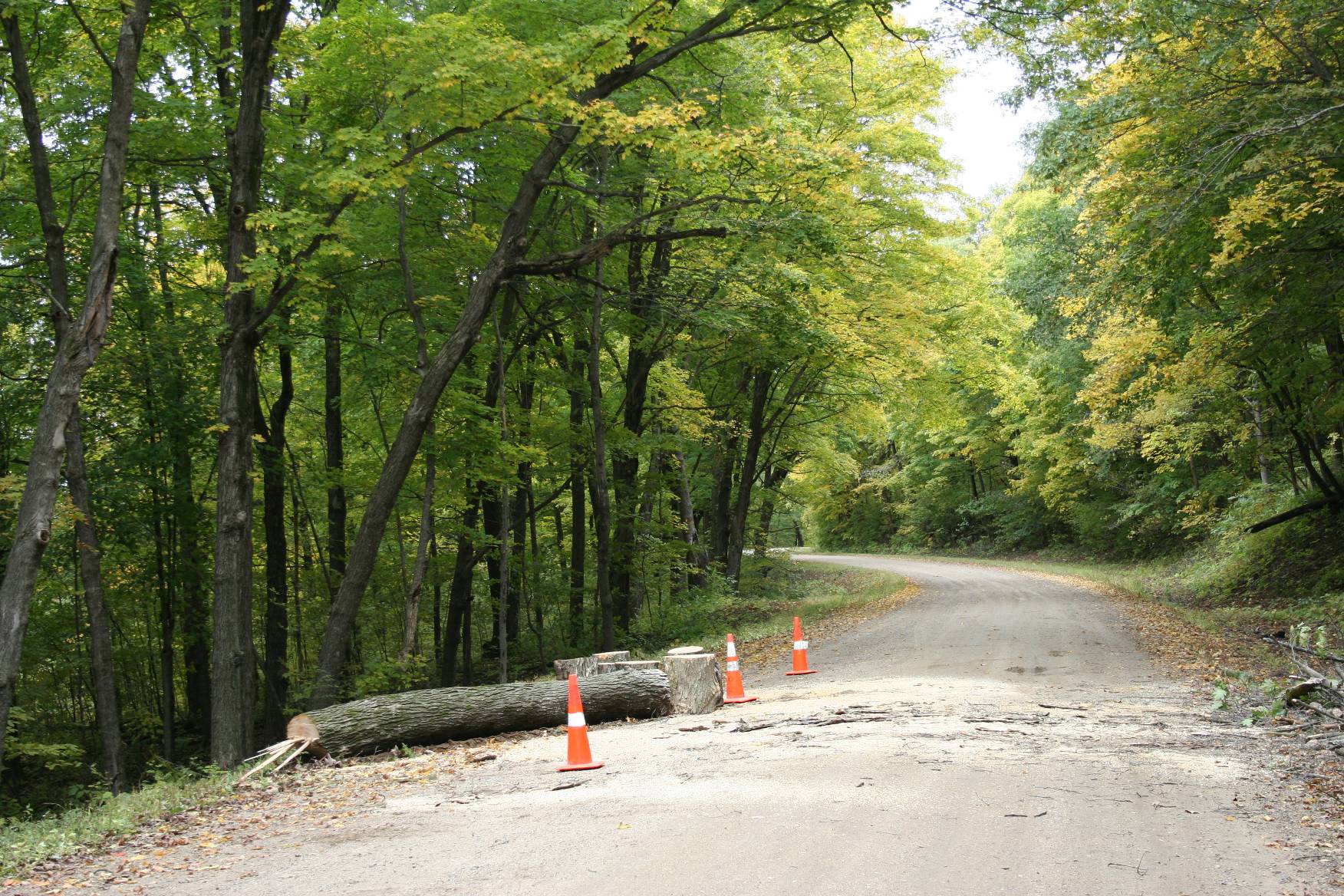
We are driving along Farmer Trail northwest of Nerstrand in Rice County. The gravel road twists and turns through the woods. And then, as we round a bend, three neon orange traffic cones mark our driving lane where a tree has fallen. Someone has been here already, sawing the tree into movable chunks. We skirt the mess and I think how fortunate that we are only on a Sunday afternoon cruise and not zipping along Farmer Trail.

A fallen tree on Farmer Trail.

A fallen tree on Farmer Trail.

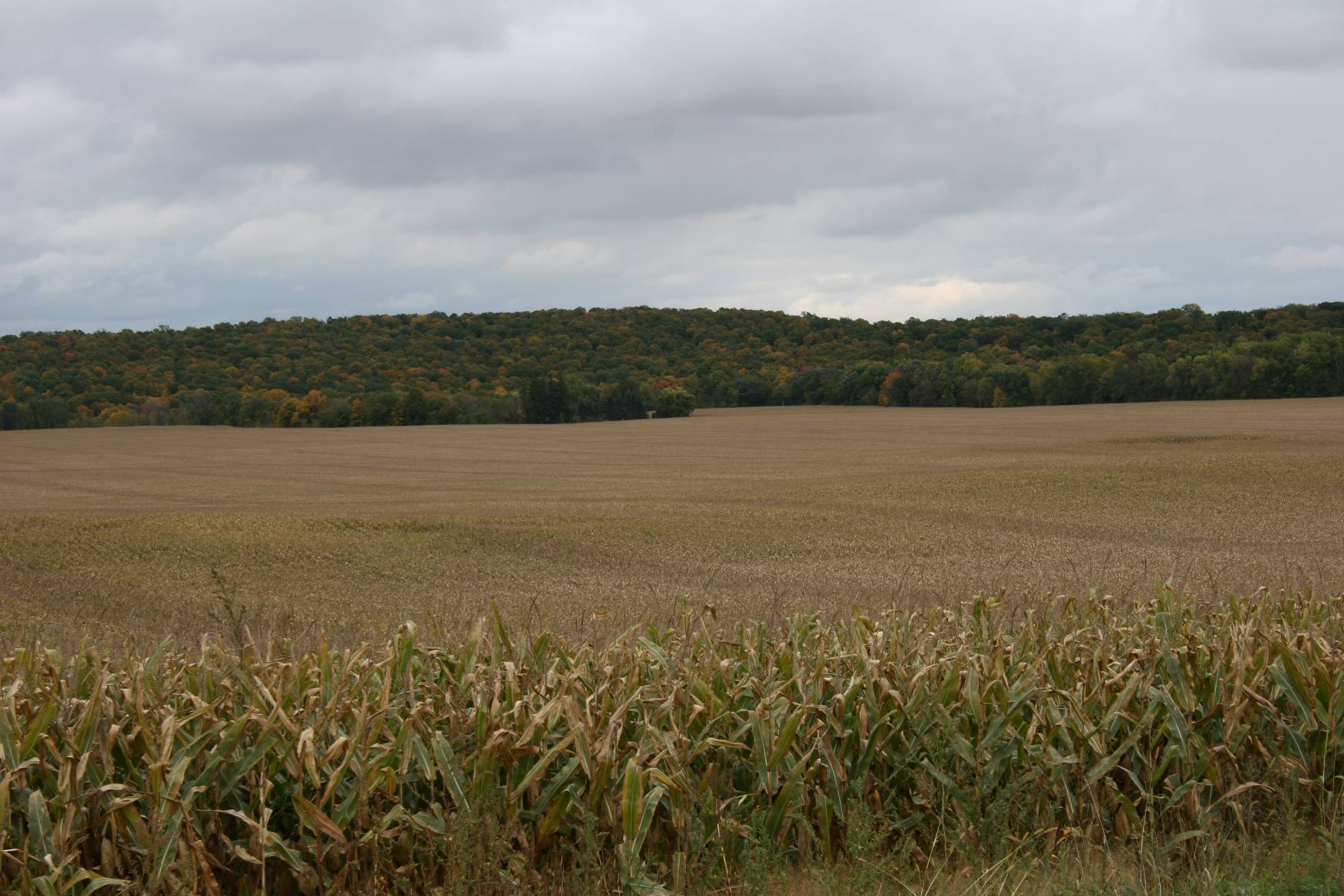
Even though the leaves have little color and the skies are heavy with oppressive gray clouds on this early October day, the rural setting is beautiful, and undiscovered. This is the second year we have traveled Rice County back roads in the autumn, following routes that few others seek out for fall colors.

A corn field ripens against a back drop of trees.

A corn field ripens against a back drop of trees.

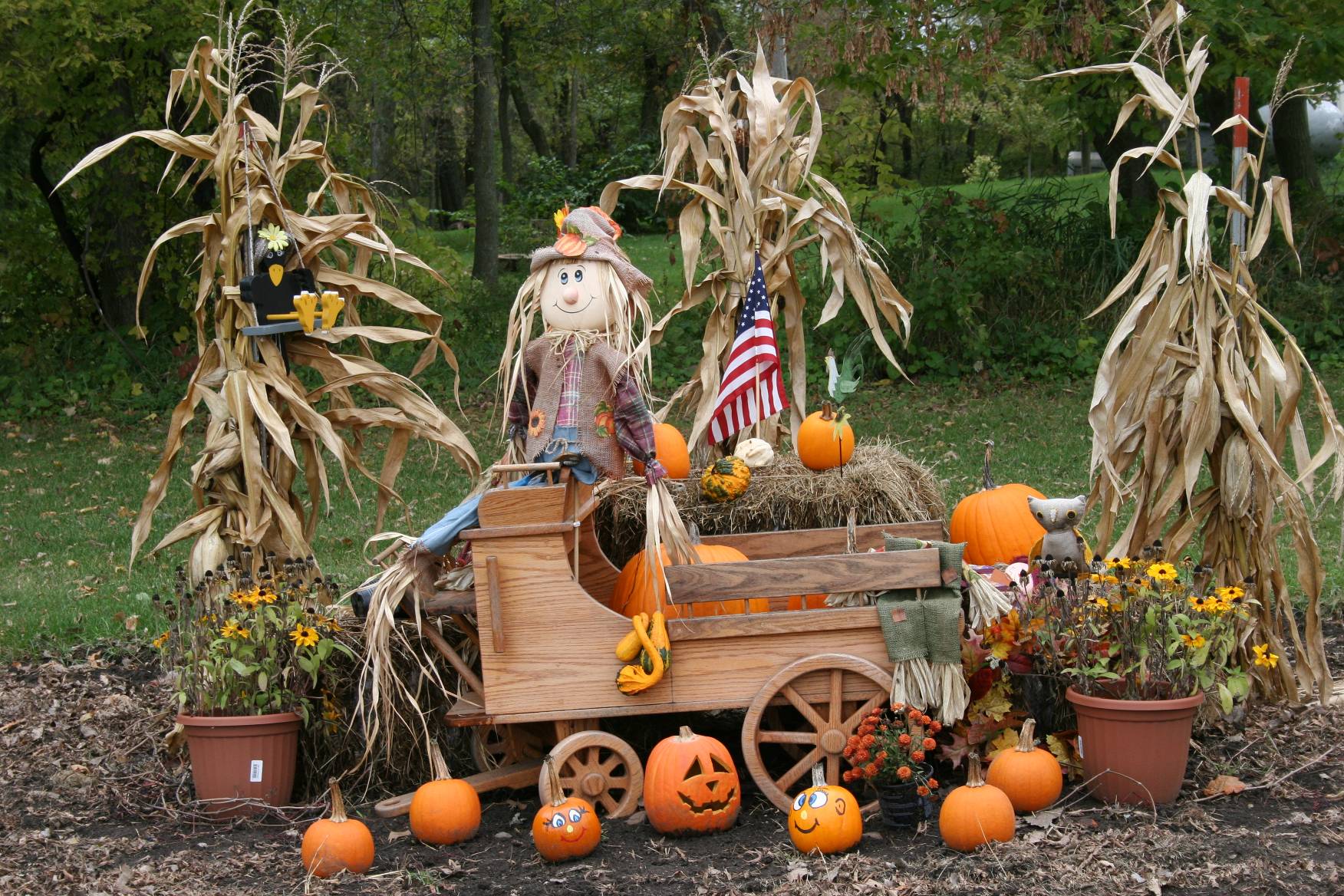
Later, as we angle toward Faribault near Cannon City, I spot an autumn-themed display of pumpkins, corn shocks, a scarecrow and flowers. It’s worthy of a photo. As I compose an image, I hear the bark of a dog, a bark that promptly scares me back to the car.

An autumn scene near Cannon City.

An autumn scene near Cannon City.

As we pull into town, we stop at Trump’s Apple Orchard. And while Randy is helping a customer who is having car trouble, I scan the tables of apples, admire the pumpkins and gourds, and then tell co-owner Todd Trump that I would like SweeTango® apples. I think I’ve got him, but the joke is on me. He steps away and returns with a SweeTango®, the newest apple developed by the University of Minnesota. He hands me a slice.

His orchard should have the variety, which is a cross between Honeycrisp and Zestar, available for sale next year, Todd says.

He likes the taste and the crunchiness (something customers prefer in an apple), Todd tells me. I’m no apple connoisseur, so I can’t distinguish the uniqueness of SweeTango®. But I agree with Todd. This is one crisp apple.

Trump's Orchard apples

Trump's Orchard apples

Trump's sells apple and other homemade pies from Trinity Lutheran Church in Faribault.

Trump's sells apple and other homemade pies from Trinity Lutheran Church in Faribault.

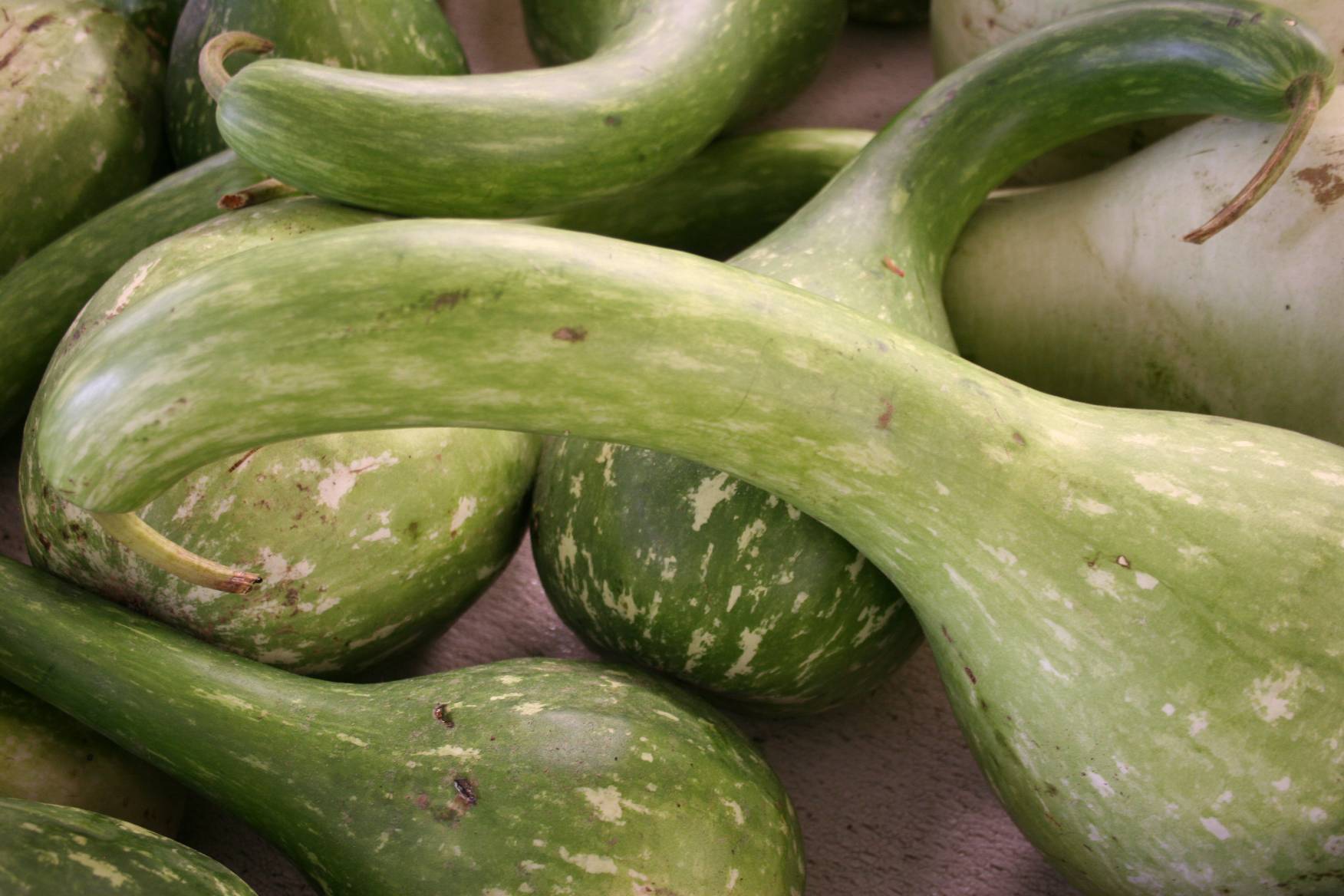
Gourds at Trump's

Gourds at Trump's

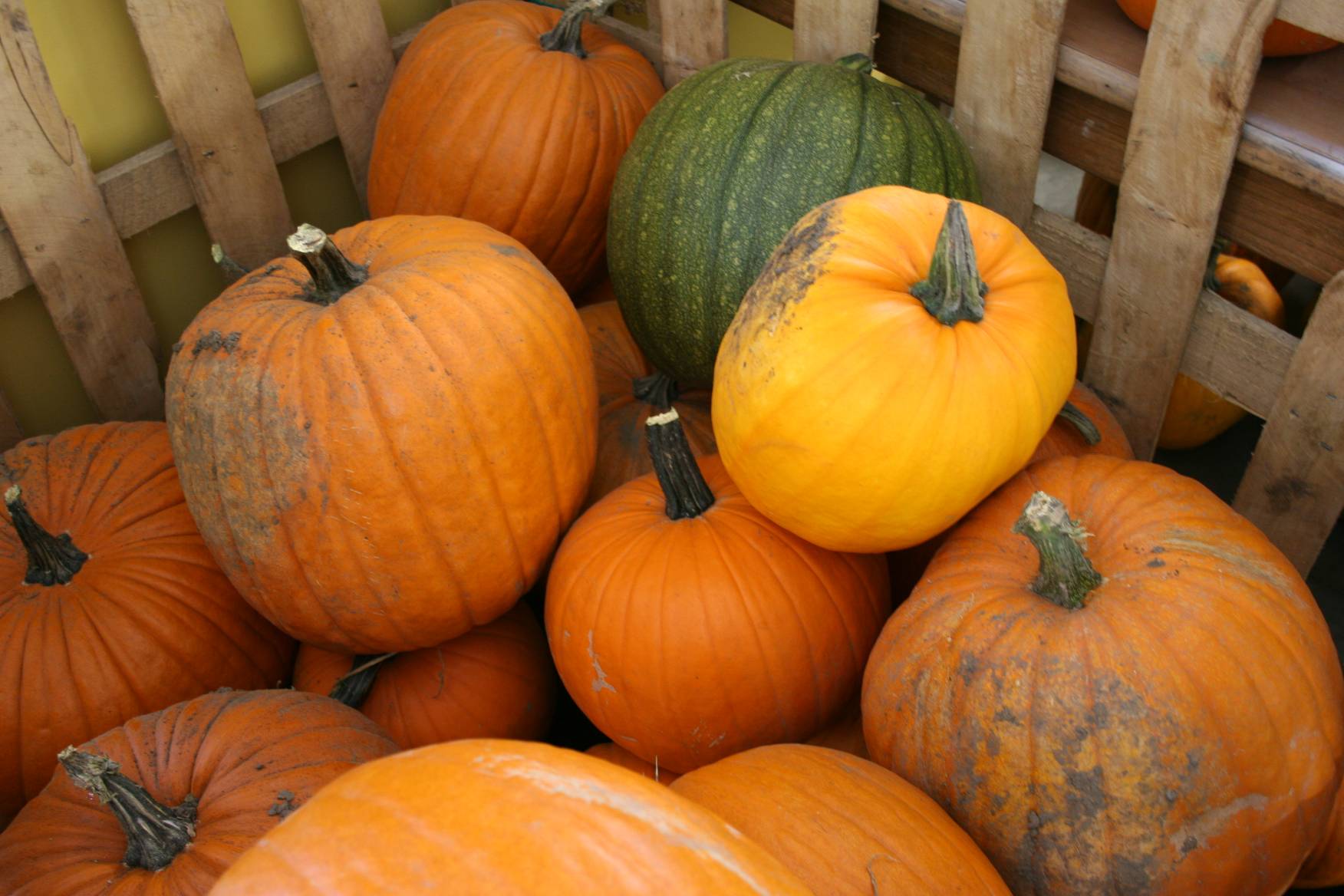
Pumpkins at Trump's Orchard

Pumpkins at Trump's Orchard

A stone’s throw down the road, Randy and I stop at Twiefhoff Gardens for fresh potatoes. While Randy gathers spuds, I aim my camera at colorful squash, pumpkins, gourds and Indian corn.

Indian corn at Twiehoff's Gardens

Indian corn at Twiehoff Gardens

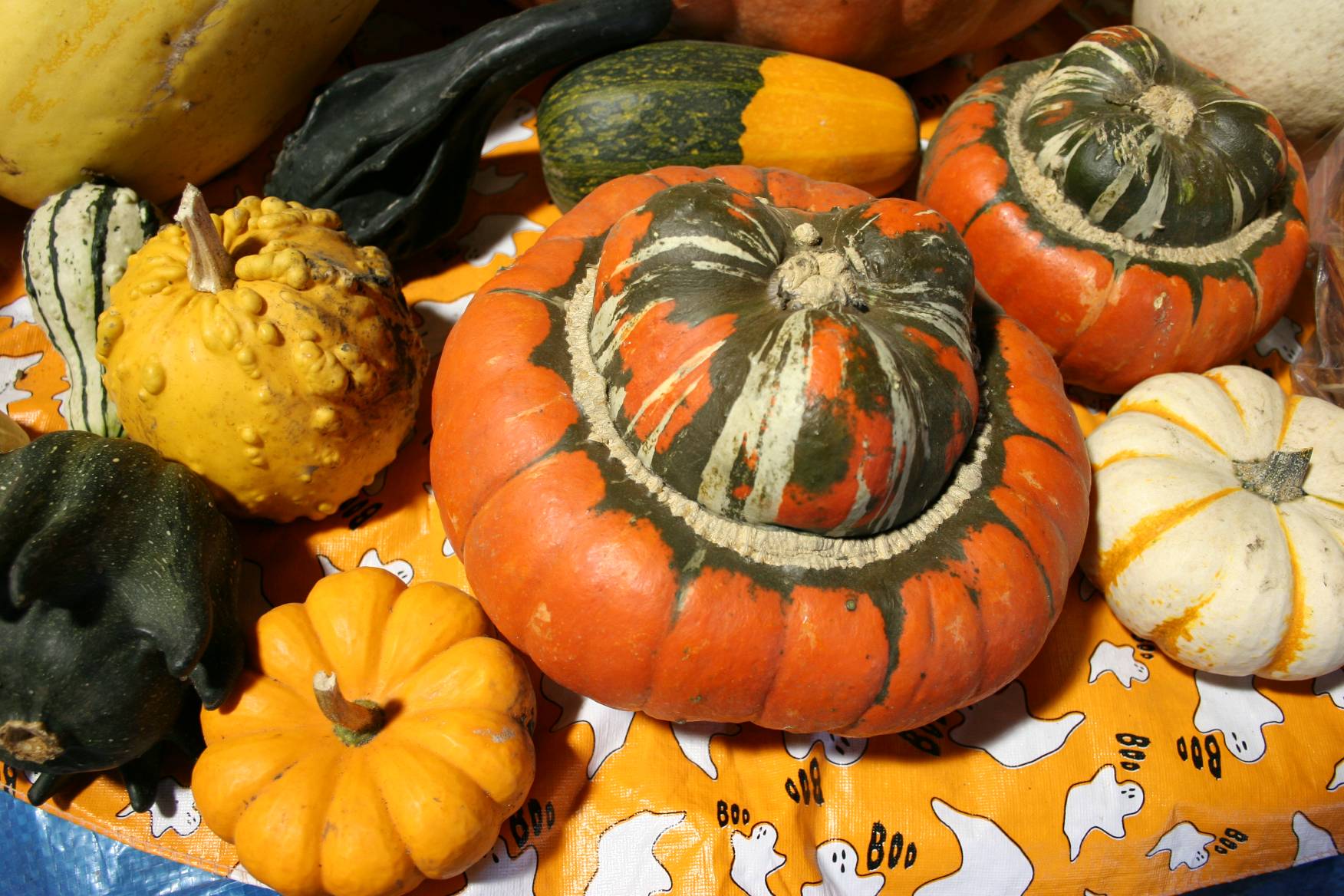
Squash, mini pumpkins and gourds at Twiehoff's Gardens.

Squash, mini pumpkins and gourds at Twiehoff's.

The bright oranges and yellows speak of autumn, of harvest from the earth, of meandering country roads, of trails taken by the adventuresome, and the not-so-adventuresome.

© Copyright 2009 Audrey Kletscher Helbling


My way of dealing with Minnesota gloom October 16, 2009

Filed under: Uncategorized — Audrey Kletscher Helbling @ 11:20 AM
Nothing like cheery packaging to brighten your mood.

Nothing like cheery packaging to brighten your mood.

THIS SEEMS RATHER PATHETIC. But yesterday I purchased three boxes of Kleenex® brand tissue based on the cheery packaging. No subdued decorator colors for me. Rather, I chose a box dotted with vivid hues of pink, green, yellow, orange, purple and blue. The other two boxes were imprinted with happy monkeys romping in a jungle of funky flowers.

These colors complement none of the décor in my home, except my daughters’ vacated lavender bedroom with the green closet doors. And I don’t even need tissues in that room.

So, why then, would I opt for these “look-at-me-I’m-a-Kleenex®-box” designs?

If you live in Minnesota, you would understand. For the past week, we have resided in a state of dreary gray skies, premature snowfall and cold.

I am sick of this weather. Already.

Give me sunshine and warmth, not clouds and freezing temperatures. My mood seems to match the weather, and that worries me. Months of cold and snow and gloom loom ahead. Five months more of this stuff, minimum, I figure.

Not everyone, I realize, feels as I do. Take the guy I saw jogging last night, in the dark, at 7:45, dressed in shorts and a T-shirt in 35-degree temperatures. Was he crazy? I thought so.

Or am I the crazy one, buying boxes of brightly-colored Kleenex® brand tissues to lift my spirits?

© Copyright 2009 Audrey Kletscher Helbling


Dog gone fashionable October 15, 2009

Filed under: Uncategorized — Audrey Kletscher Helbling @ 8:18 AM
Baby, the model Yorkyshire

Baby, the model Yorkyshire

Baby shows off for the camera and does a sort of frenzied dance.

Baby shows off for the camera and does a sort of frenzied dance.

THIS LOOKS LIKE the type of dog Paris Hilton would carry in her purse.

She’s petite, fashionable, cute and a bit of a show-off. The dog, I mean, although those adjectives certainly describe Paris as well.

But this fashion conscious, chic Yorkyshire resides far from hip Rodeo Drive in Beverly Hills. Baby lives in Faribault, Minn., where I saw her strolling recently along Central Avenue on our first really cold autumn evening.

Typically, dogs don’t draw a second look from me. But Baby, well, who could miss her strutting her stuff in a cotton candy pink turtleneck?

One-year-old Baby posed nicely for my camera, until she apparently decided she’d had enough. I don’t know for certain, but I expect she was tired of the paparazzi hounding her.

Enough of this already, Baby seems to say as she turns away from the camera.

Enough of this already, Baby indicates as she turns away from the camera after an impromptu photo shoot.

© Copyright 2009 Audrey Kletscher Helbling


Celebrate the reprinting of Maud Hart Lovelace’s The Black Angels October 14, 2009

Filed under: Uncategorized — Audrey Kletscher Helbling @ 11:35 AM
Historical artist David Geister painted the new cover art for The Black Angels, reprinted by Minnesota Heritage Publishing.

Historical artist David Geister painted the new cover art for The Black Angels, reprinted by Mankato-based Minnesota Heritage Publishing.

THE OLDER I GET, the more appreciative I become of history. Funny how that happens.

With that said, I direct you to a historical novel, The Black Angels, first published in 1926 and now reprinted in a limited edition by Mankato-based Minnesota Heritage Publishing. See www.mnheritage.com

This Saturday, Oct. 17, the re-release of Mankato author Maud Hart Lovelace’s The Black Angels will be celebrated at the Betsy-Tacy houses, 332 and 333 Center Street in Mankato. Lovelace is best known for her Betsy-Tacy book series. See my blog, “Betsy-Tacy books debut as Modern Classics,” posted Sept. 29 on Minnesota Prairie Roots.

Now, I have not yet read The Black Angels, so I am going on good faith that this historical novel will match my expectations for a quality book by one of my favorite Minnesota authors. Set in fictional Cloudman (Mankato), Minn., in the days before the Civil War, this novel tells the story of a traveling opera troupe. Lovelace bases the troupe on the Andrews Opera Company, which performed throughout the Midwest in the mid to late 1800s. The Andrews family, at one time, lived near Mankato. Lovelace also patterns one of the characters after her Uncle Frank, who left home and for awhile joined an opera troupe.

You can learn more about the book by attending Saturday’s book release party from 1 p.m. – 3 p.m. The event includes a Black Angels vignette at 1 p.m. Historical artist David Geister of Minneapolis, who painted the cover for the reprint edition, will be signing books. See www.davidgeister.com.

Adding to the festivities will be the burning of the mortgage for the Betsy-Tacy houses. The Betsy-Tacy Society owns the childhood homes of Maud Hart Lovelace (Betsy in the book series) and her friend, Frances “Bick” Kenney (Tacy in the books). For more information, go to www.betsy-tacysociety.org.

This dust jacket graced the third printing of The Black Angels by Grosset & Dunlap of New York.  The artist is unknown. The John Day Company first published the book in 1926 with a plain yellow calico cloth cover.

This dust jacket graced the third printing of The Black Angels by Grosset & Dunlap of New York in 1926. The artist is unknown. The John Day Company first published the book, also in 1926 , with a plain yellow calico cloth cover.

Thanks to Julie A. Schrader of Minnesota Heritage Publishing for sharing the book cover images with Minnesota Prairie Roots readers.


Remembering an October 1967 farm accident October 13, 2009

Filed under: Uncategorized — Audrey Kletscher Helbling @ 8:07 AM

“WHY DO YOU have that Band-Aid on your hand?” I ask.

“I was frying potatoes and grease splattered and melted a hole,” he replies.

Already I am laughing so hard that his answer is barely audible above my squawking. But I find this extremely hilarious. My father-in-law, Tom, has placed a small round Band-Aid on his artificial hand.

At first I think he is playing a joke. He has a quirky sense of humor. But he is serious, dead serious. Grease really did melt a hole in his prosthesis and he needs the Band-Aid to keep out water and gunk.

Prosthetic hand

Soon laughter gives way to seriousness as I ask how long it’s been since the farm accident that eventually claimed his hand and forearm up to inches below his elbow.

“1967,” he says. “You do the math.”

Figures flash through my brain. “Forty-two years,” I say. It was Saturday, Oct. 21, 1967.

Later, after Tom has left our house following an overnight visit, I ask Randy about that afternoon four decades ago. He had driven an empty wagon to the corn field shortly before the accident.

“He (Dad) said he would make one more round,” Randy remembers of the fateful day when his dad was chopping corn on the family farm near Buckman, Minnesota. “He said, ‘Why don’t you just stay here?’ and I said, ‘I’ll ride along.’”

The then 12-year-old’s decision to accompany his dad likely saves his father’s life. They are nearing the far end of the field when the corn chopper plugs with corn. Tom hops off the tractor to hand-feed corn into the chopper when the unimaginable happens. Along with the corn, Tom’s hand is pulled into the spring-loaded rollers. The blades chop off his fingers. The rollers trap his arm.

As his father screams for help, Randy disengages the power take-off. Soon he is running across swampland and along a cow pasture to a neighboring farm. Randy and his neighbor, Nick, jump into Nick’s car and race back through the pasture toward the accident scene. Nick parks the car. They cut across swampland to the field.

While Nick struggles to free Tom from the rollers’ grip, his son and daughter-in-law, Dick and Kathy, are also racing to the field. They have been summoned there from nearby Buckman. Dick somehow navigates through another cow pasture and along a trail to reach the far end of the field. Later he will wonder how he managed to traverse the land.

“If anyone could do it, Dick could,” Randy says. “That was his (Dad’s) ambulance ride.”

But first, the trio stops at the Helbling family farm for ice and a cloth and to gas up the car before barreling northwest to St. Gabriel’s Hospital in Little Falls 20 miles away.

Just as Dick and Kathy arrive at the hospital with Tom, another farm accident victim arrives. Meinrad, a high school student, has caught his arm in a corn picker. He lives only four miles west of my father-in-law.

Together, the two are placed inside a single ambulance that rushes them toward the St. Cloud Hospital. Later, they will share a room.

All of this I learn from my husband who remembers with vivid clarity the details of the October 1967 farm accident that cost his father his left hand and much of an arm.

For years, Tom attached a hook, secured in place by a shoulder harness, onto his shortened limb. Today he wears the prosthetic arm with several movable fingers and that small round Band-Aid that has made me laugh.

Farmers, please be careful and safe this harvest season so that we can always hear your laughter.

© Copyright 2009 Audrey Kletscher Helbling.


Snow on October 11? You’re kidding, right? October 12, 2009

Filed under: Uncategorized — Audrey Kletscher Helbling @ 10:18 AM
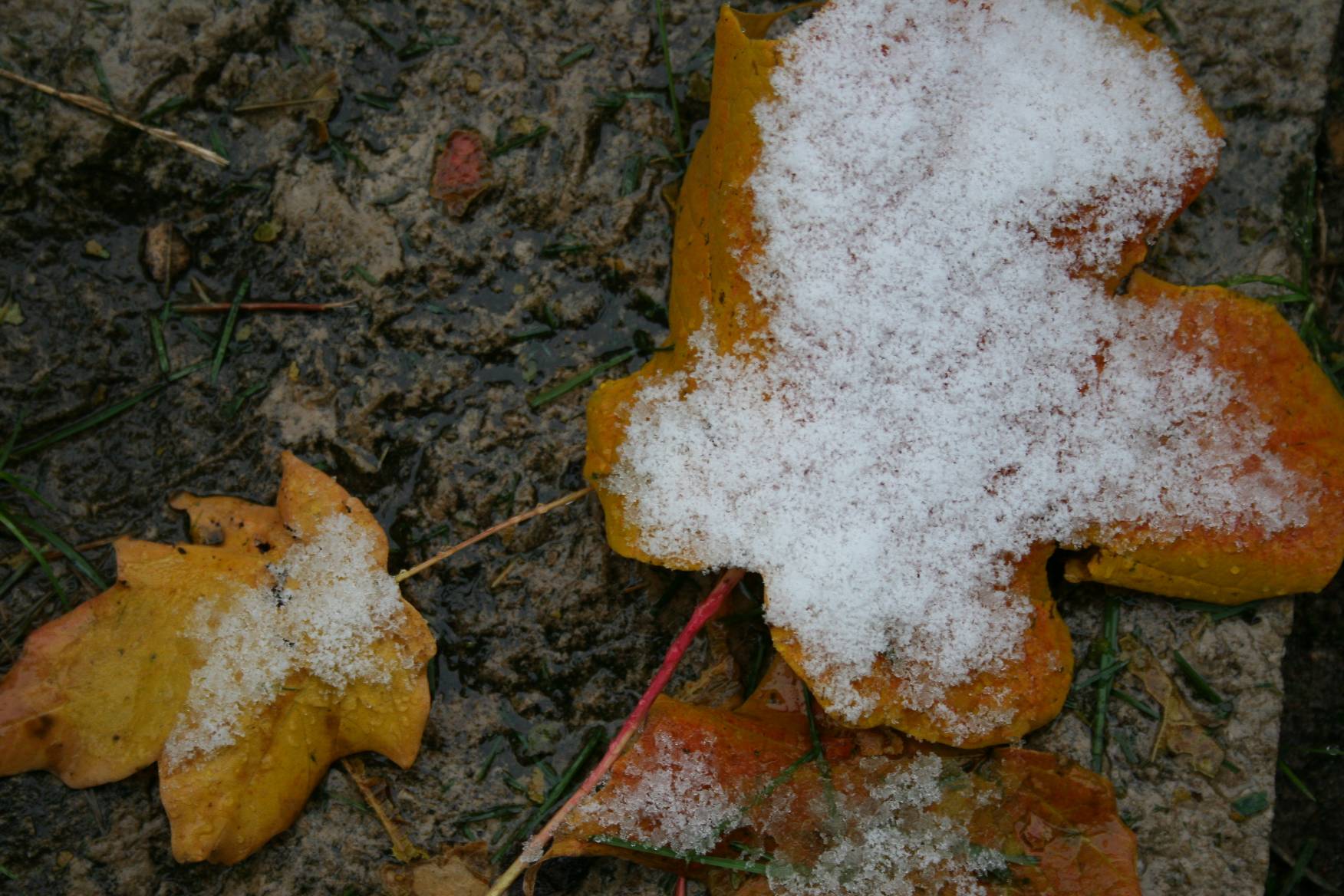
Snow clings to maple leaves in my backyard.

Snow clings to maple leaves in my backyard. Most leaves on the maple have not even turned color.

My footprint in the snow at 9 a.m. Monday.

My footprint in the snow.

SNUGGLED UNDER a fleece blanket in a La-Z-Boy recliner watching the nine o’clock news on Sunday night, I can’t believe what I am hearing. The news anchors and weather forecaster are predicting up to three inches of snow beginning in the overnight hours and stretching into Monday.

The map shows Faribault, where I live, on the northern fringe of the region doomed to receive the most snow.

Sure enough, when I emerge 15 minutes later from my reclining cocoon and glance out the front window, I see snow already falling.

How can this be? It is, for gosh sakes, only October 11.

Just days ago we had our first hard frost. Few trees have shed their leaves. Heck, many leaves have not even turned color. I have tulip bulbs to plant, dead flowers to pull, pots to haul into the garage, green tomatoes still clinging to vines.

This is way too early for the first snowfall of the season. (OK, we did have a light dusting overnight on Friday.) As I write, it is mid Monday morning and the flakes are still spurting from gray skies. Today is only October 12, my husband’s birthday, for gosh sakes.

Happy birthday, honey!

© Copyright 2009 Audrey Kletscher Helbling

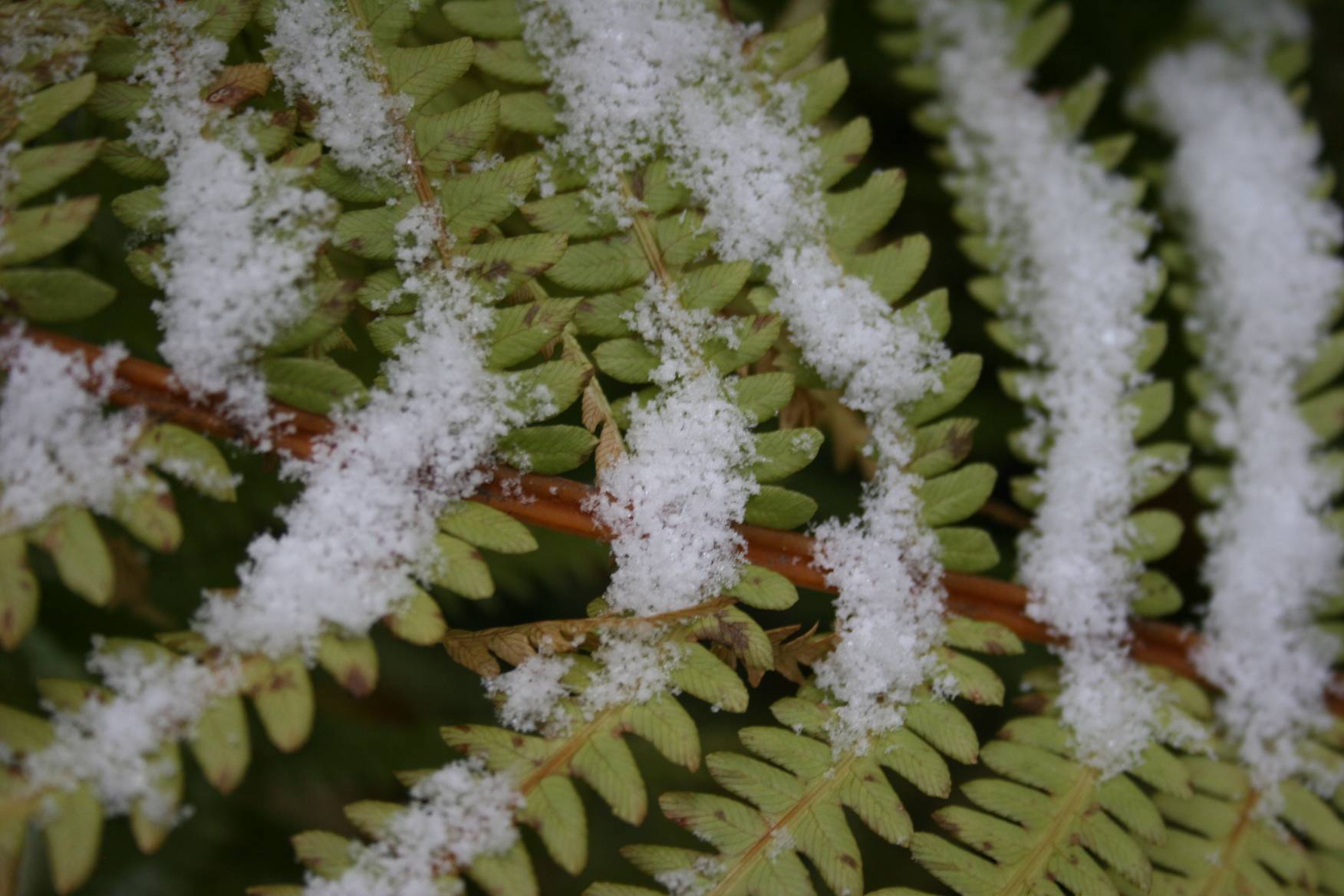
Snow frosts ferns.

Snow frosts ferns.

Summer takes a seat to winter.

Summer takes a seat to winter.


Cruisin’ the Bemidji art scene October 10, 2009

Filed under: Uncategorized — Audrey Kletscher Helbling @ 8:35 AM

WHEN YOU THINK of Bemidji, what pops into your mind? Likely Paul Bunyan and the Mississippi River.

But the area also thrives with the arts, which will be showcased Oct. 16 – 18 during the second annual Bemidji First City of Arts Studio Cruise. The event takes visitors into the working studios of 16 artists who specialize in painting, jewelry, pottery, glass, wood, fabric and sculpture.

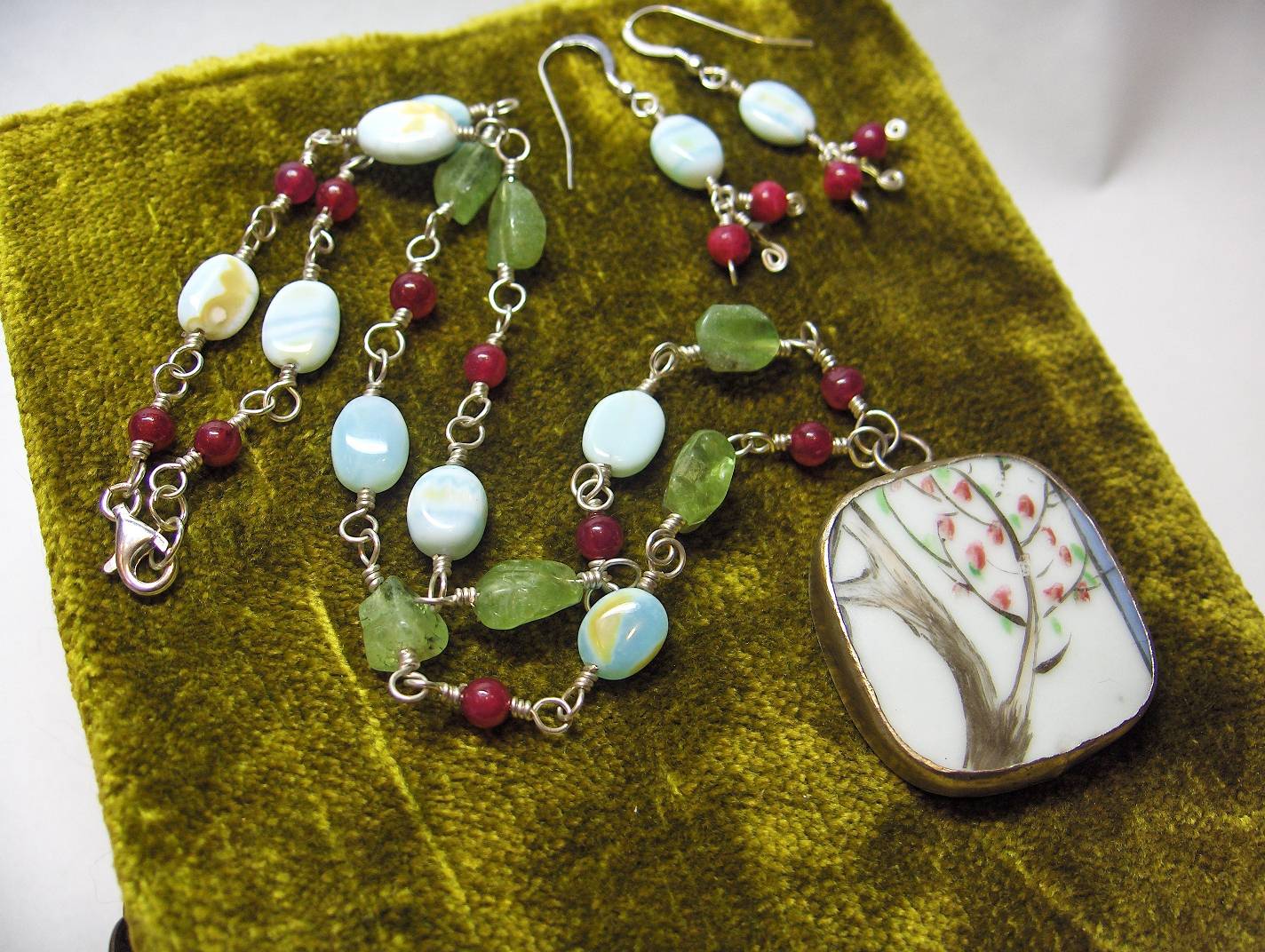
Artist Christina Thorne makes one-of-a-kind jewelry using stone and other natural elements.

Artist Christina Thorne makes one-of-a-kind jewelry using stone and other natural elements.

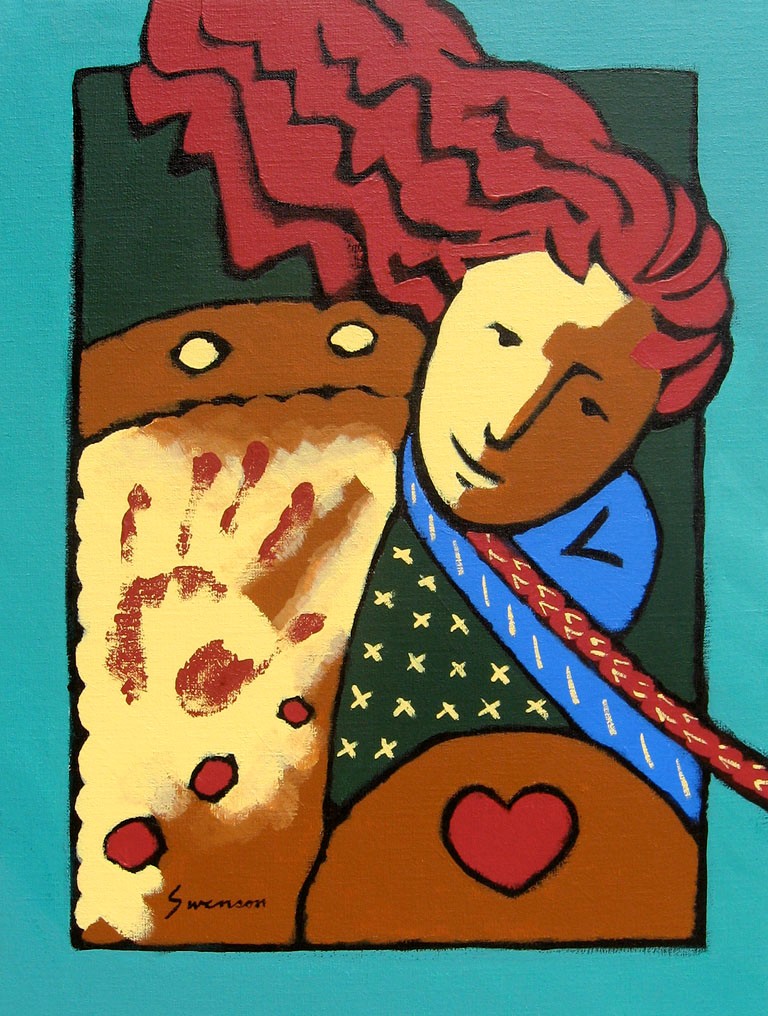
Paula Swenson creates colorful contemporary art, like "Be Here Now," with acrylic and mixed media.

Paula Swenson creates colorful contemporary art, like "Be Here Now," with acrylic and mixed media.

Wanting to learn more, I interviewed woodworker Dave Towley, who heads the Cruise steering committee and is an enthusiastic promoter of the Bemidji arts scene. I was seeking event information and insights into the Bemidji area as a mecca for artists.

According to Towley, as he views it, his hometown of Bemidji attracts artists for numerous reasons. He speaks of the region’s beauty in the lakes, trees, eagles and loons. It is a place, he says, that allows for “a contemplative pace of life.” Distraction and competing noise are few.

“There’s a certain harmony that allows you to create work,” he says. “This area nurtures creativity.”

I can understand that. My formative years spent on the southwestern Minnesota prairie shaped who I became as a writer. The wide open spaces and endless skies there created within me a deep awareness of my environment. And that has made me a more insightful writer. I expect Towley and other Bemidji artists feel the same about the quiet northwoods.

These artists, however, want to keep anything but quiet about their existence. They welcome Cruise visitors into their studios to observe and interact. They also hope to create economic opportunities for the Bemidji region and for area artists.

And, Towley adds, “It’s about bringing people to Bemidji and raising awareness of Bemidji residents to the tremendous art scene.”

Towley’s right on that. While vacationing in Bemidji in August, I learned first hand of the community’s dynamic arts focus, most visible in the downtown Bemidji Sculpture Walk.

That walk and other venues will also be highlighted during the Cruise. The event kicks off with a reception from 6 p.m. to 8 p.m. Friday, Oct. 16, at the Bemidji Community Art Center, 426 Bemidji Avenue. Artists will greet the public and show examples of their works. Information will be posted daily at the art center about evening arts-related activities.

Artists’ studios will be open during the Cruise from 10 a.m. – 5 p.m. on Oct. 16 and 17 and from 10 a.m. – 3 p.m. Oct. 18. For more information, go to www.visitbemidji.com

Visual artist Terry Honstead uses texture and a variety of materials including oil, acrylic and watercolor in addition to mixed media.

Visual artist Terry Honstead uses texture and a variety of materials including oil, acrylic and watercolor in addition to mixed media. This piece is "Harmony."

Dean Schnell transforms glass into jewelry and functional works of art.

Dean Schnell transforms glass into jewelry and functional works of art.

Paul Bunyan and Babe and the Mississippi River grace the logo for Bemidji First City of Arts Studio Cruise.

Paul Bunyan and Babe and the Mississippi River grace the logo for Bemidji First City of Arts Studio Cruise.


Preserving the churches of Valley Grove near Nerstrand October 9, 2009

Filed under: Uncategorized — Audrey Kletscher Helbling @ 8:13 AM
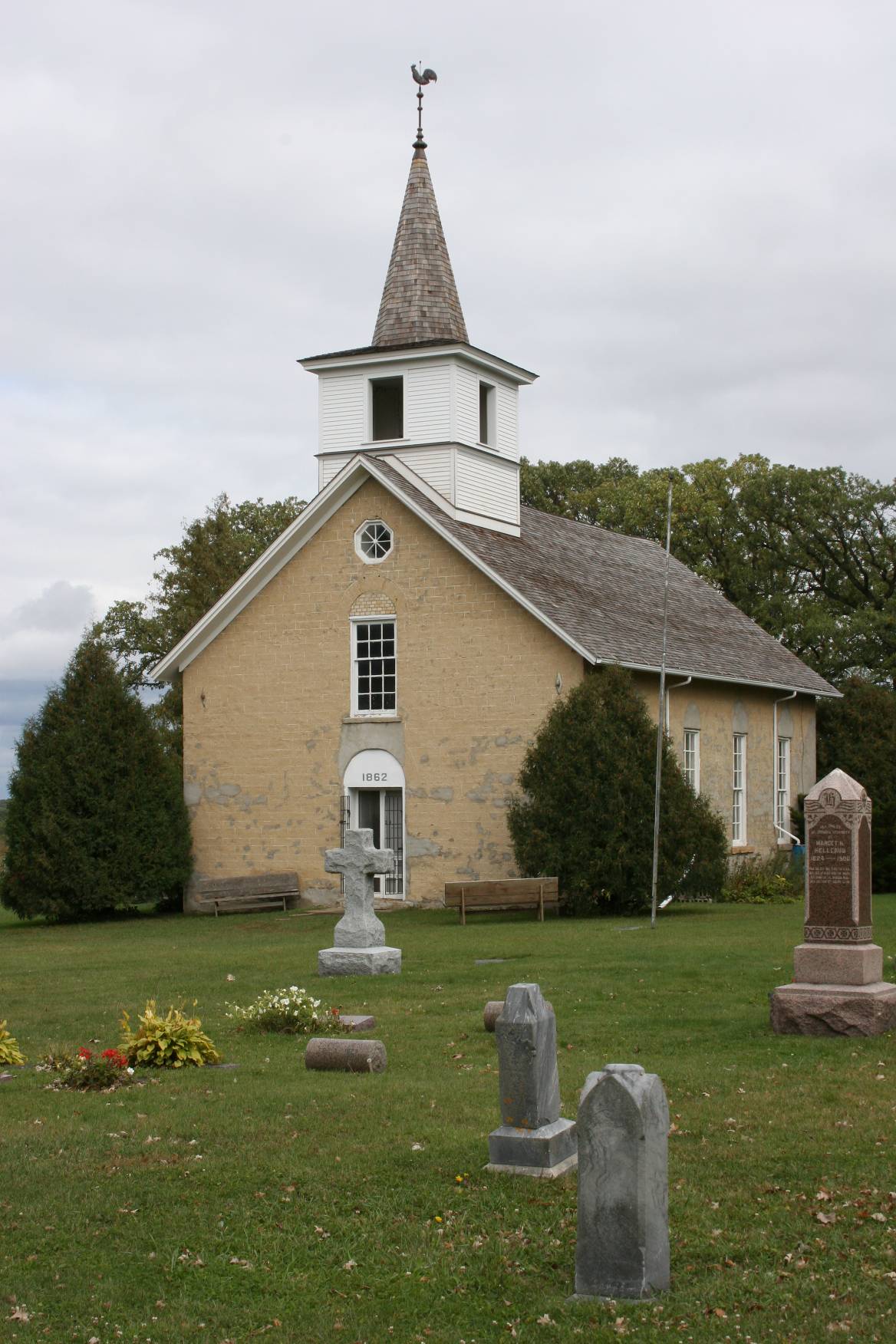
A sign marks the entry into the grounds of Valley Grove church with the 1862 church on the left and the 1894 church on the right.

A sign marks the entry into the grounds of Valley Grove Church with the 1862 stone church on the left and the 1894 wooden church on the right.

The 1862 stone church, the first one built at Valley Grove.

The 1862 stone church built by Norwegian immigrants.

WINFIELD RUDNINGEN drove three hours from Brainerd to see the graves of his great grandparents, Ole Syverson Rudningen and Gunneld Andersdatter.

They are buried in Valley Grove Cemetery, next to two historic Norwegian immigrant churches that sit atop a hill overlooking the picturesque countryside just northwest of Nerstrand.

Before Winfield arrives, my husband turns our car onto the gravel drive leading up to the churches. “I don’t think they want us in there,” Randy says as he observes the fence surrounding the church yard.

But I don’t hesitate. I throw open the car door and walk over to a double gate, lift the latch, swing open the gate and walk inside. It is that easy.

I am ecstatic that we can wander the church grounds and cemetery on this dreary Sunday afternoon, when gray skies loom heavy and occasional drizzles of rain force me to periodically cover my camera lens.

We are here only a few minutes when Winfield, his wife and two friends pull up to the church. Shortly thereafter, another car zooms up the gravel drive toward us. Valley Grove Preservation Society member Ken Sahlin has come to open the churches for a couple planning to be married here.

We cannot believe our good fortune, or rather, given the locale, the blessing of Ken’s arrival. If anyone knows the history of this place, it’s Ken.

Looking toward the steeple of the 1894 church.

Looking toward the steeple of the 1894 church.

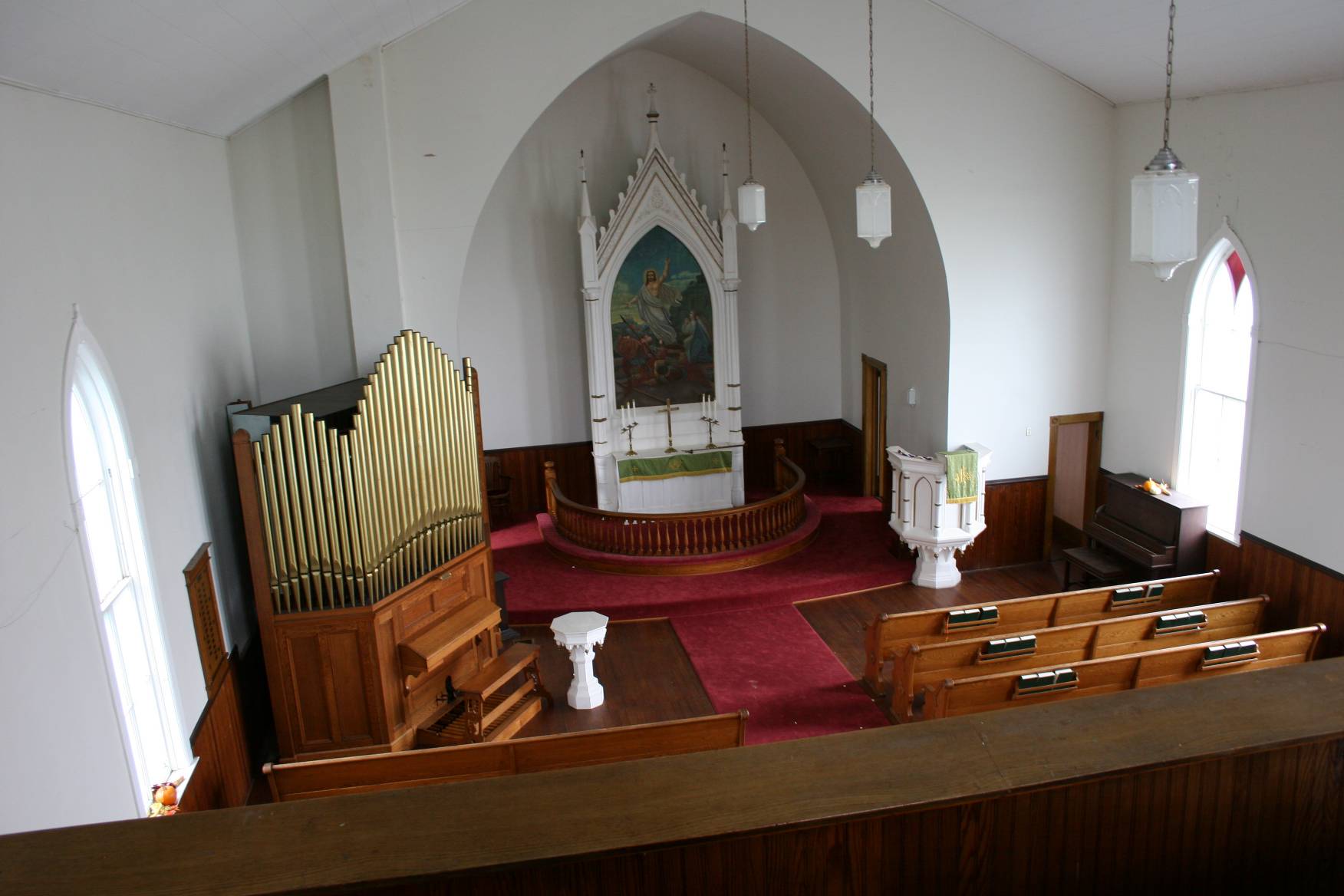
First we enter the 1894 white clapboard church which closed in 1973 and is on the National Register of Historic Places. Words cannot adequately describe the simplistic beauty of this sanctuary with its wooden pews, plain arched windows topped with points of color, the beautifully-restored organ, the alcove that shelters the white altar enhanced by a painting of the glorious, risen Lord.

As I tread almost reverently upon the burgundy aisle carpet that covers the wooden plank floor, I step upon rose petals left here from a wedding on Saturday. This church is a popular wedding site for couples seeking a place of history and of beauty. Tradition calls for the newlyweds to ring the church bell after the ceremony.

Then I climb the steep wooden stairs to the balcony. A sense of profound sadness sweeps over me. This could be the Lutheran church I attended as a child, the church now converted into apartments.

At least the folks around Valley Grove had the foresight to save this 1894 sanctuary and the next door 1862 stone church by forming a non-profit in 1974. In 2000, the Preservation Society stopped a planned housing development by acquiring 52 acres of land around the churches. Since then, 150 trees have been planted on the property and walking trails developed.

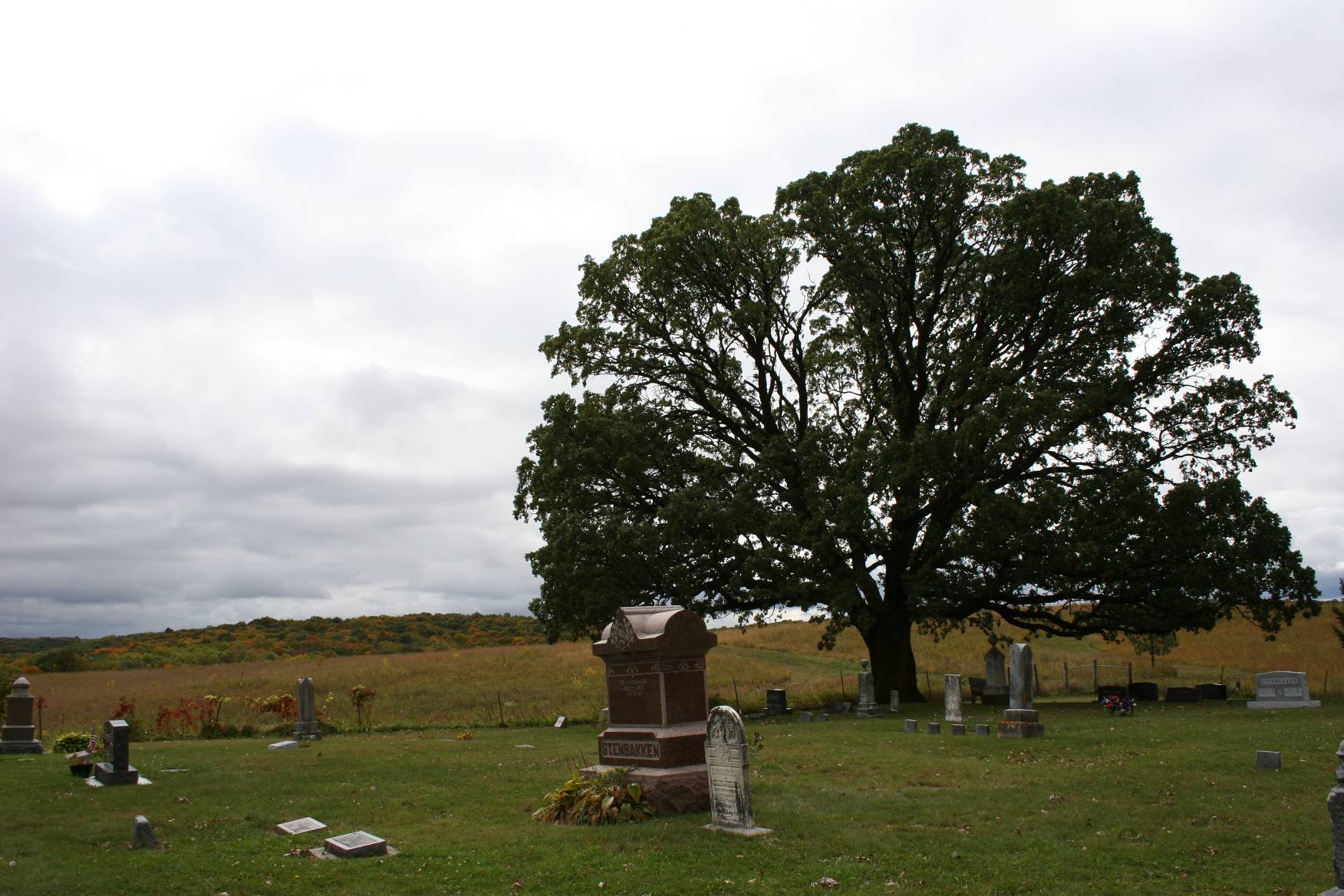
When Ken tells me about the trees and the Forest Legacy Program, I ask about the perfectly-shaped, sprawling oak tree in the southwest corner of the cemetery. It is, he says, 350 years old and hollow inside.  Chains keep limbs secure. Yet, there are no plans to remove the oak under which a Norwegian pastor baptized 52 children in 1859.

At every turn, Valley Grove sings with history. I hear it when Randy pulls on the thick, twisted rope that moves the bell. The sound resonates across this land of prairie and of oak savanna. How many times has this bell tolled in sadness at a funeral, in celebration at a wedding?

I hear more history from Ken, who talks of old pews and steeples and railings and the Society’s efforts to restore both churches. The recession has temporarily halted restoration because of a lack of funding.

And then I hear history in the voice of Winfield, who has come here to pay respects to his great grandparents. I stand beside him near Ole and Gunneld’s gravestone. How, I ask, do you pronounce Gunneld Andersdatter? He hesitates. I joke that I can’t pronounce the name because I am German, not Norwegian, like him.

Winfield bends close to touch the cold tombstone. His fingertips linger upon the letters. He tells me then that he cannot see the words because he suffers from macular degeneration.

Yet this great grandson has come all the way from Brainerd on a Sunday afternoon to see something which he truly cannot see. I nearly weep at the joy and sadness of it all, right here on this land where Ole and Gunneld lie buried.
Simplistic Norwegian style inside the 1894 sanctuary, as viewed from the balcony.

Simplistic Norwegian style inside the 1894 sanctuary, as viewed from the balcony.

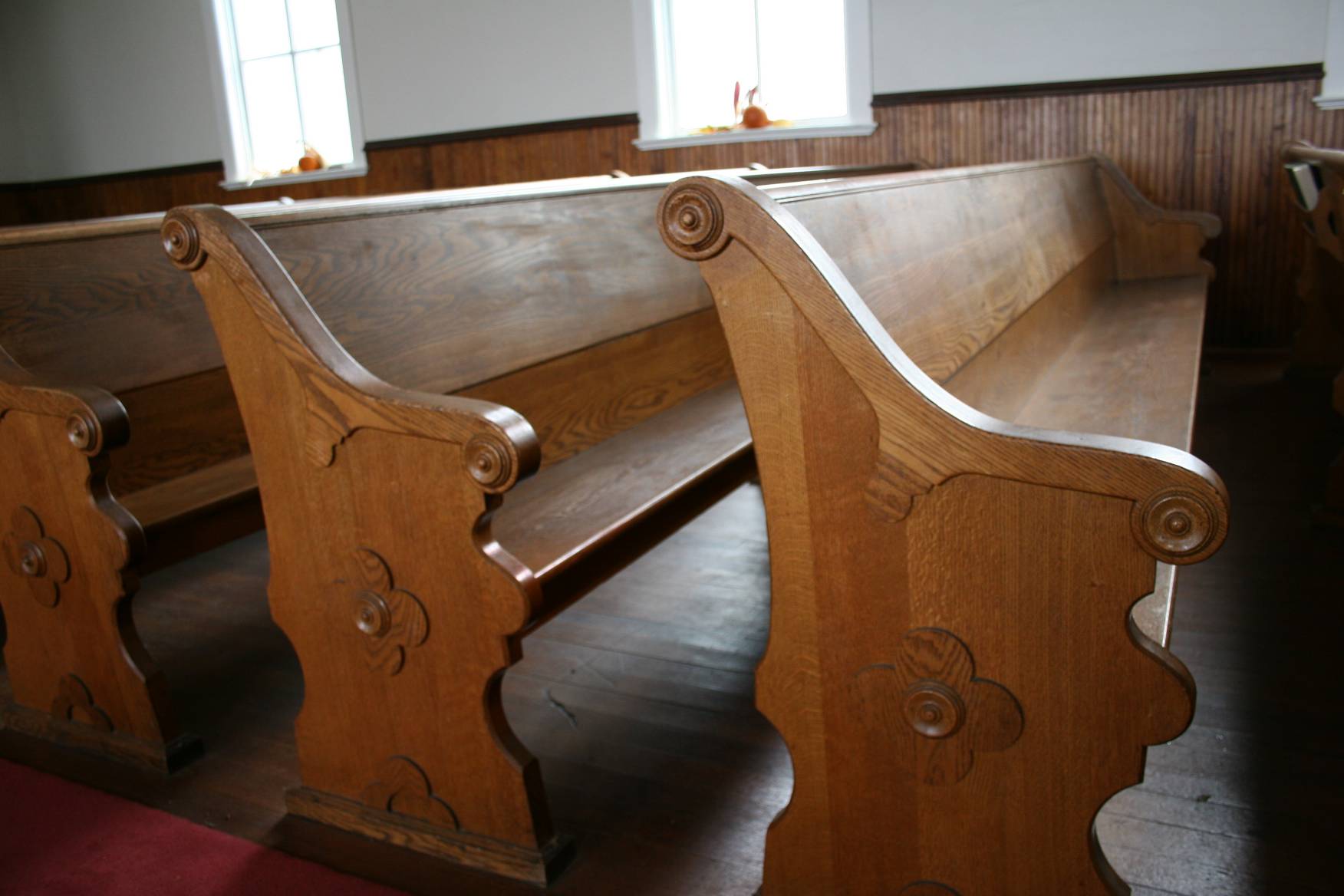
Original pews inside the 1894 church.

Original pews inside the 1894 church.

The majestic 350-year-old oak that anchors a corner of Valley Grove Church Cemetery.

A 350-year-old majestic oak anchors a corner of the Valley Grove Church Cemetery.

The tombstone of Ole Olsen, who died in 1897.

The tombstone of Norwegian Ole Olsen, who died in 1897.
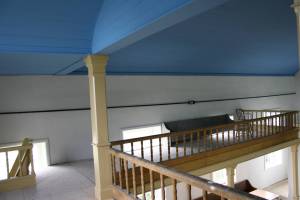
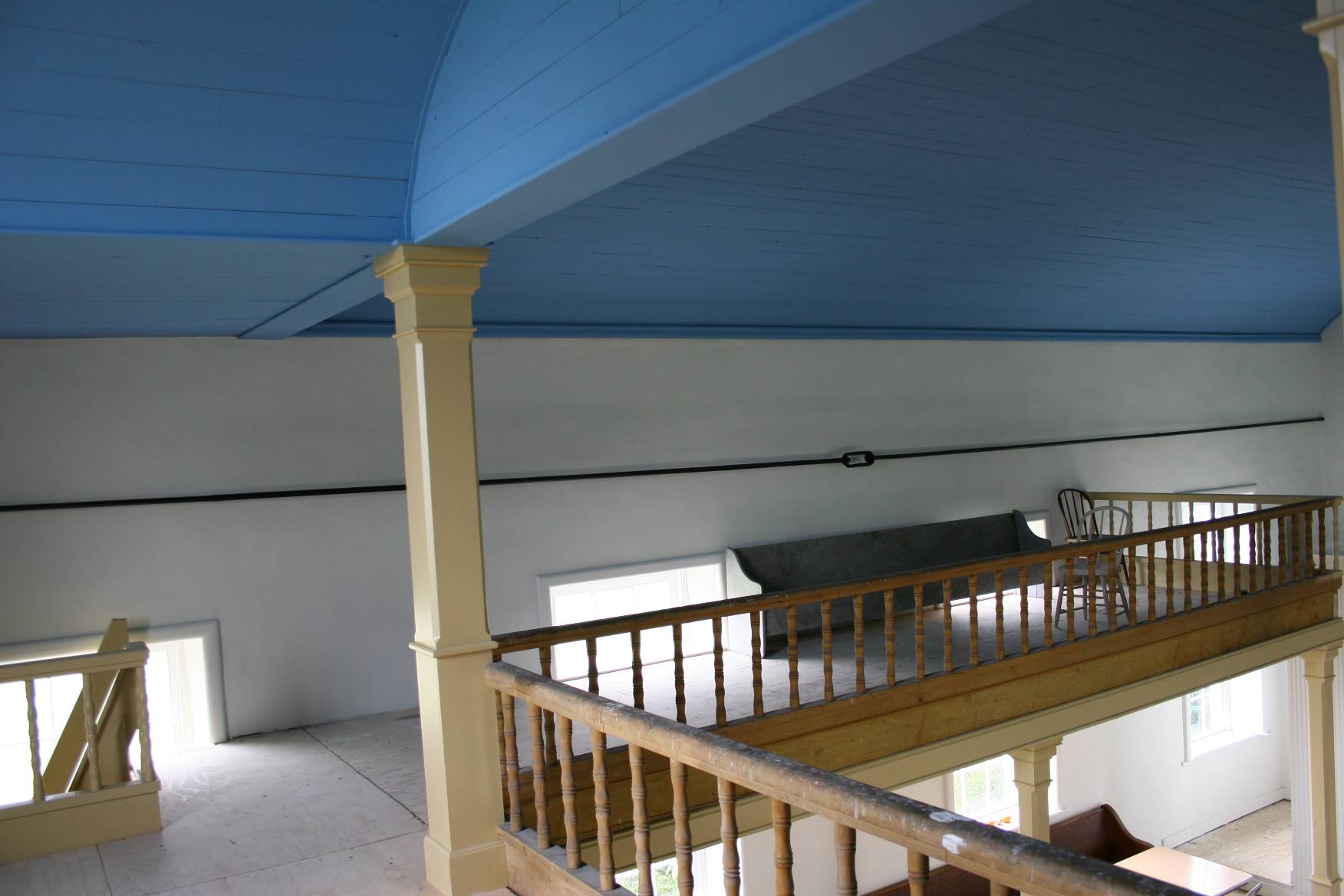
Inside the 1862 church, restoration continues, including work on the balcony area. The blue color is historically correct to the original church.

Inside the 1862 church, restoration continues, including work on the balcony area which is accessible by a steep ladder-like stairway. The blue color is historically correct to the original church.
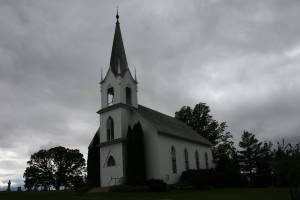
The 1894 Valley Grove Church hosts weddings and other events, while the neighboring 1862 church serves as a social hall.

The 1894 Valley Grove Church hosts weddings and other events, including a popular Christmas Eve service. The neighboring 1862 church serves as a social hall.

For more information, go to www.valleygrovemn.com. Watch for another blog with more photos from Valley Grove.

© Copyright 2009 Audrey Kletscher Helbling


Hundreds and hundreds and hundreds of bricks, oh my October 8, 2009

Filed under: Uncategorized — Audrey Kletscher Helbling @ 8:14 AM
My son and I carried all of these bricks out of our house after my husband dismantled an old chimney.

My son and I carried all of these bricks out of our house after my husband dismantled an old chimney.

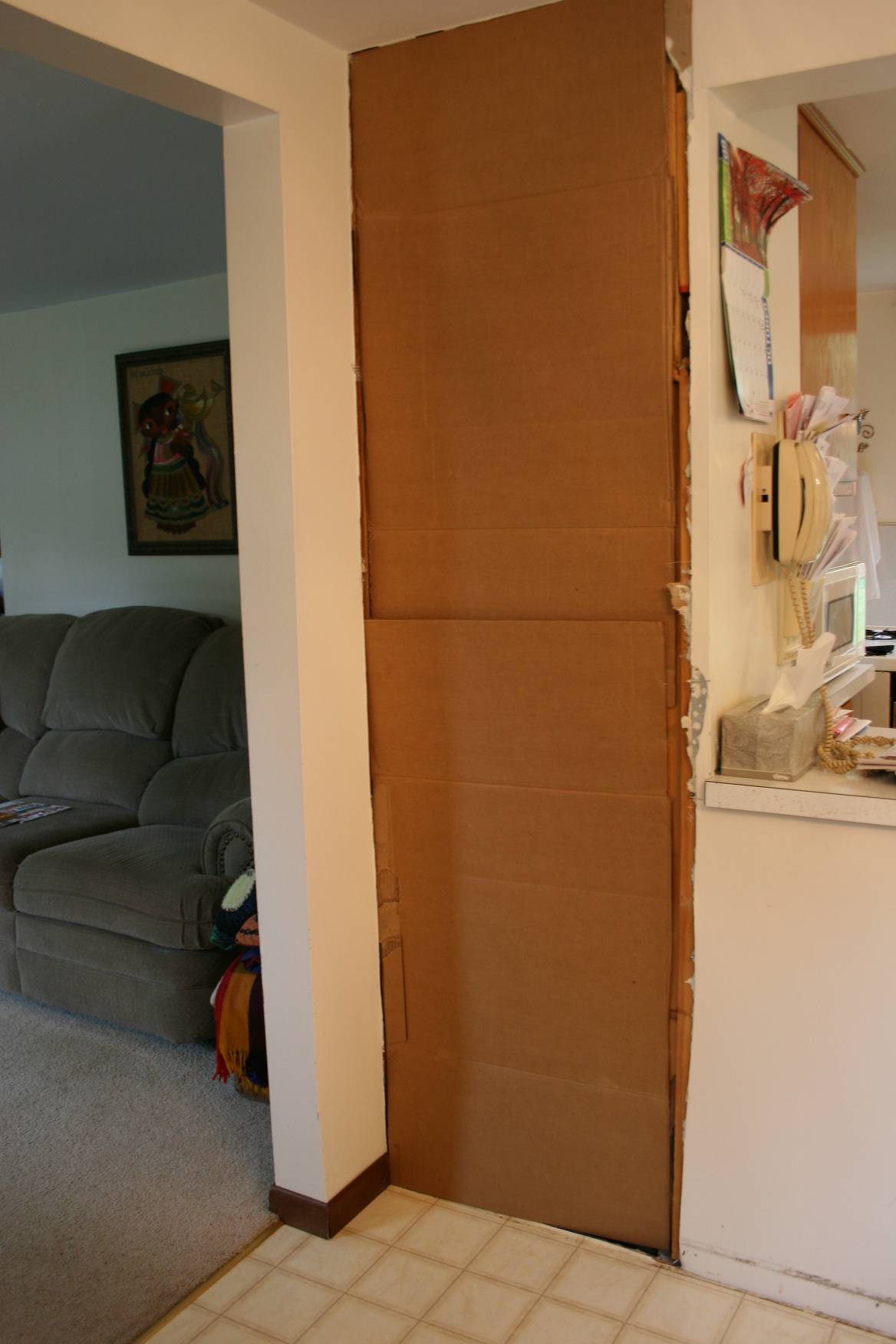
Little kids are temporarily banned from our house while this cardboard wall is in place in my dining room. Lean against this wall, and you will tumble into the basement.

Little kids are temporarily banned from our house while this cardboard wall is in place in the dining room. Lean against this wall, and you will tumble into the basement.

“DR. WILLE WOULDN’T like this,” I tell my husband as I lug the 5-gallon bucket of heavy bricks up the stairs, slowly, step by step.

“Well, you don’t have to do this,” Randy says.

“Yeah,” I mutter and continue my trudge to the top of the steps, through the kitchen, down the steps, through the garage and to the driveway. There I sort through the bricks—good ones added to the stack of teetering ones and broken ones dumped onto the pile of throwaways.

Already my hip aches and we have only just begun our work for the evening, dismantling the basement level of a useless brick chimney inside our house. We are nearly done with a project, though, that began in the attic, moved to a second story bedroom, down to the dining room and now, finally, to the lowest level.

My new right hip, the one I got 16 months ago, is getting a good work out.
With my physical stamina dwindling, so is my enthusiasm for this endeavor. Whose crazy idea was it anyway to remove this chimney so duct work for a new furnace can run through the vacant chimney chase area?

Originally, this seemed like a good idea. But I never realized that so many bricks comprise a chimney. I underestimated the weight of the bricks and just how many bucketsful my son and I would need to carry.

And then there’s the soot. I didn’t even think of it. The further we progress down the chimney, the blacker the bricks become with years of sooty build-up. With each swing of the hammer, dirt and grime sail into the air.

We don our face masks to keep from breathing in the particles. My glasses fog up and I labor to breathe. “I would hate to be a coal miner,” I tell Randy. “That would be the worst job.” He doesn’t respond, just keeps scooping dustpans full of grimy soot from the chimney.

All the while I am hounding my son to close the basement door. He complains, says it’s too hard to open and close the door constantly. But I am adamant. I have just spent all day yesterday washing every inch of my kitchen and dining room. The evening before, Randy had removed the chimney in that area, leaving a film of grime on every surface. I am bone tired and grumpy and determined to keep the soot confined to the basement.

By 10 p.m., we have finished this portion of the project. Randy cracks open a beer. I think he expects me to celebrate by chugging down half his brew. But I don’t. I take a sip, just enough to wash away the soot that has filtered through my mask. All I want is to shower, to lay my head on my pillow, to rest my sore hip and forget about the bricks piled on the driveway, the holes in the floors and walls, and the work that still lies ahead of us.

Bricks with character, soot and all.

Bricks with character, soot and all.

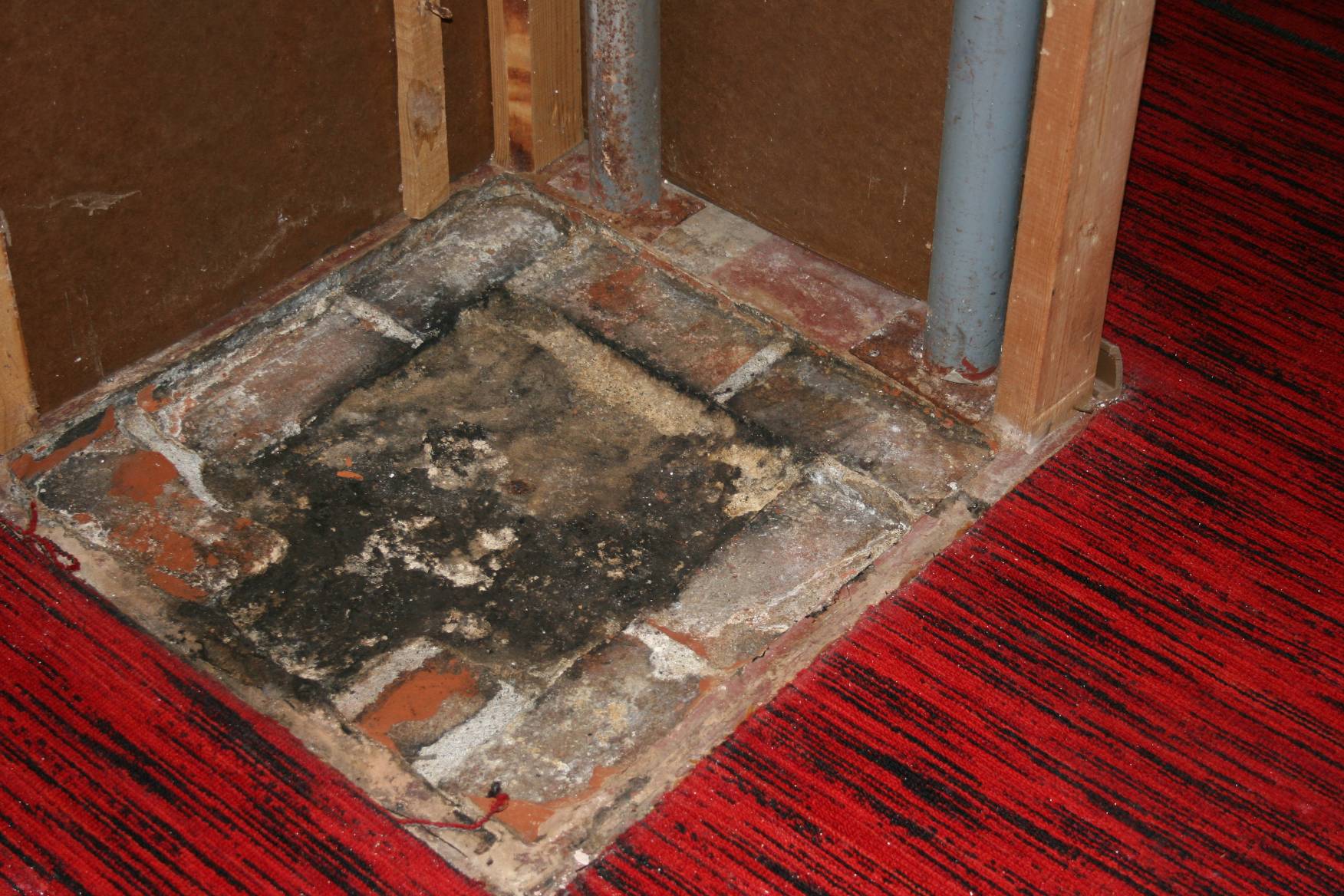
Finally, we reached the bottom of the chimney in the basement. And, yes, the red carpet has to go too.

Finally, we reached the bottom of the chimney in the basement. And, yes, the red carpet has to go too.

(If you are looking for bricks say to build a fire pit or for landscaping, or need bricks for fill, contact me. I’m into recycling, but mostly I want these bricks off my driveway.)

© Copyright 2009 Audrey Kletscher Helbling