Minnesota Prairie Roots

Writing and photography by Audrey Kletscher Helbling

It’s all about stories in Faribault’s new branding campaign April 4, 2019

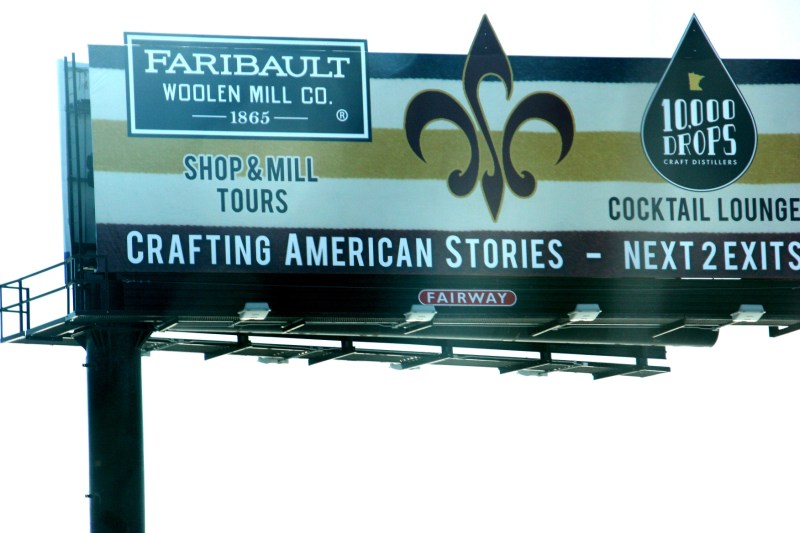
Faribault tourism’s newest billboard along Interstate 35 focuses on Crafting American Stories. Photo edited. Minnesota Prairie Roots file photo 2019.


I CONSIDER MYSELF a storyteller, using images and words to share stories. Storytelling resonates with people, connects with them, builds a sense of community.
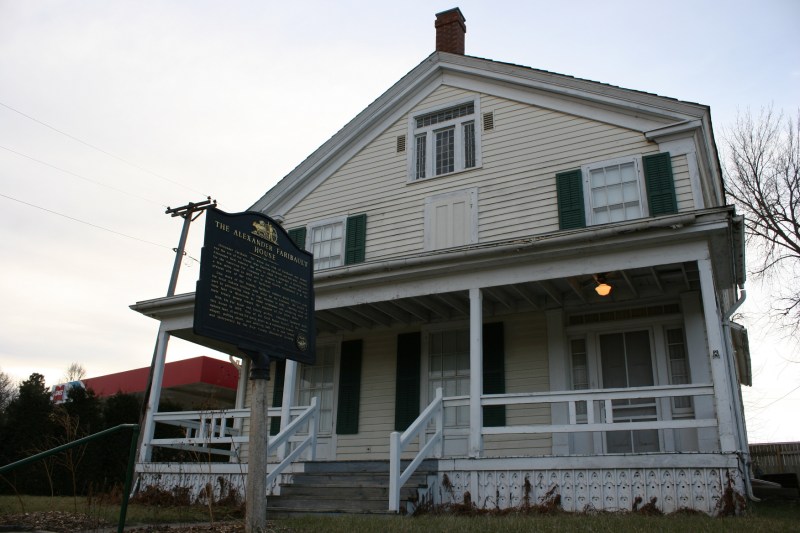
 

The home of town founder Alexander Faribault. Minnesota Prairie Roots file photo 2017.


Now my community of Faribault is embracing the same storytelling concept through a new branding campaign themed as American Stories. A collaboration of the Faribault Main Street Design Committee and the City of Faribault, including the park and rec department, this storytelling approach seems a good fit for my southern Minnesota city. We truly are a place of stories—from past to present.
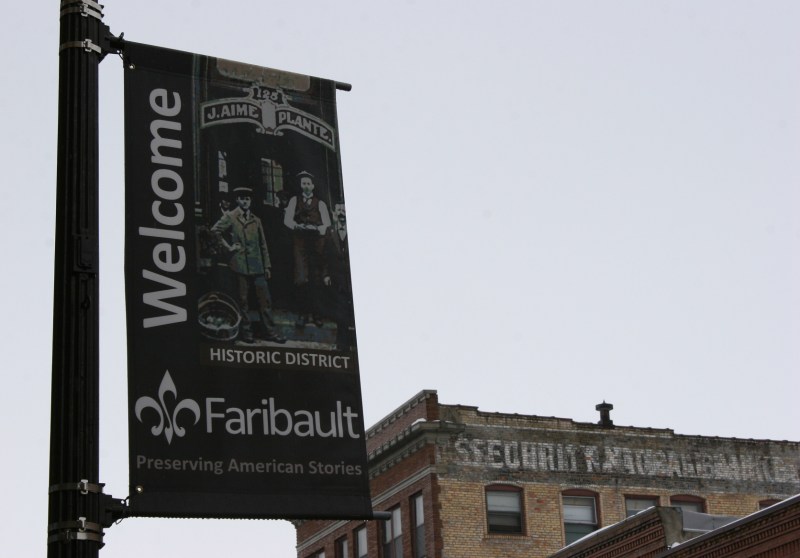
 

The first in a series of banners to be placed throughout Faribault includes this one photographed outside the Paradise Center for the Arts. The historic Security National Bank building backdrops this image. See the end of this post for more details.


Already, this American Stories theme has launched on the Faribault tourism website, on a billboard along Interstate 35 near Faribault and in banners hung throughout the downtown historic district. We truly have a gem of a downtown with many well-preserved historic buildings. Now Preserving American Stories banners flag this historic area.

 

A photo I took inside the Faribault Woolen Mill retail store several years ago after the mill reopened. Minnesota Prairie Roots file photo.


More banners are yet to come, according to Kelly Nygaard of the Faribault Area Chamber of Commerce & Tourism office and the Faribault Main Street Coordinator. Those markers will include Experiencing American Stories to be posted near River Bend Nature Center, Crafting American Stories near the Faribault Woolen Mill and Shaping American Stories near the Minnesota State Academies for the Deaf and for the Blind and by Shattuck-St. Mary’s School. Additionally, Making American Stories banners will be placed throughout town.
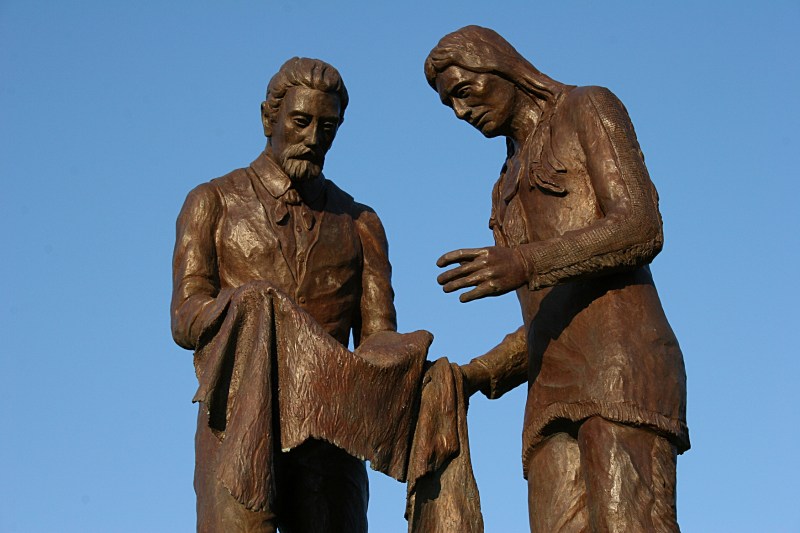
 

This sculpture of Alexander Faribault trading with a Dakota trading partner stands in Faribault’s Heritage Park near the Straight River and site of Faribault’s trading post. Faribault artist Ivan Whillock created this sculpture which sits atop a fountain known as the Bea Duncan Memorial Fountain. Minnesota Prairie Roots file photo.


Says Nygaard: “America is often described as a melting pot, and Faribault has always had diversity with Alexander Faribault himself being part First Nations. We have a beautiful downtown, great industry, a wide array of educational options, and plenty of fun ways to experience the outdoors and fun events.”


One of my all-time favorite photos taken at the 2012 International Festival in Faribault shows the diversity of Faribault as children gather to break a pinata. Minnesota Prairie Roots file photo 2012.


I agree. This stories theme not only portrays the many unique aspects of Faribault, but it creates a sense of identity. And, I hope it also instills in locals a sense of pride in this place we call home. Individually and together we are Faribault’s stories.

#
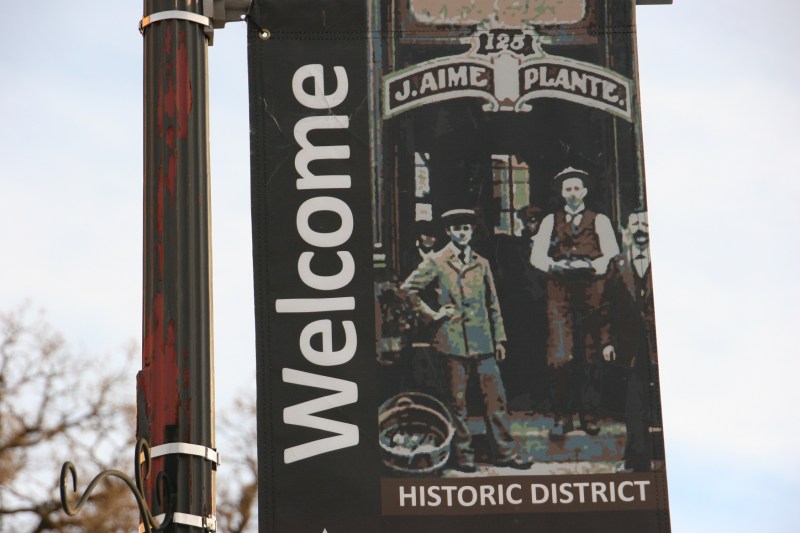
 

A close-up of the banner posted outside Buckham Memorial Library.


ABOUT THAT Preserving American Stories banner. The banner photo features the then Plante Grocery on Third Street which “offered customers a wide variety of household products and foods in baskets, barrels and boxes,” according to info on the Faribault Heritage Preservation Commission website. 
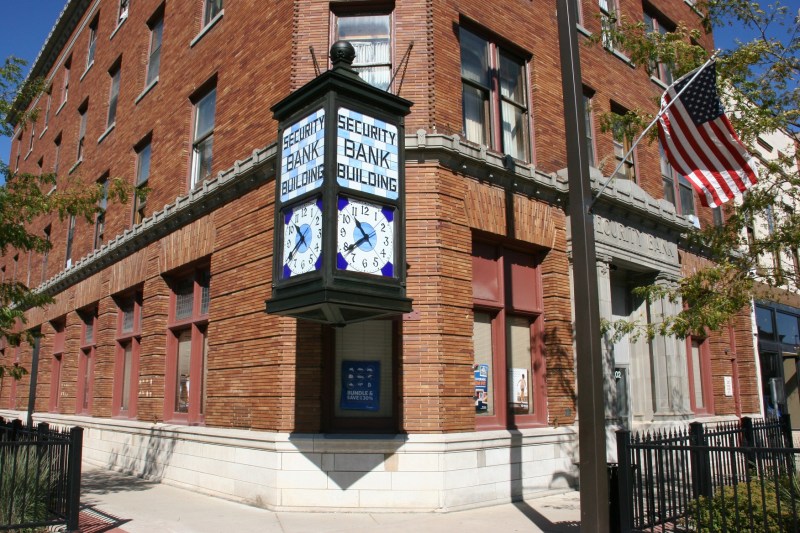


In my photo of the banner, you will see the top of the 1870 National Security Bank building. The HPC website provides this additional information about the historic structure:  “A Classical Revival-style brick facade covers a stone structure constructed originally by mercantile entrepreneur F.A. Theopold. The building was leased by Security Bank in 1899. The bank eventually purchased the building, and a fourth story was added in 1914, possibly the same year that brick was used to radically alter the structure’s appearance.”


© Copyright 2019 Audrey Kletscher Helbling


Small town observations from southwestern Minnesota April 3, 2019

Filed under: Uncategorized — Audrey Kletscher Helbling @ 5:00 AM
Tags: , , , , ,


I APPRECIATE THE ODDITIES of small towns. If oddities is the correct word.

But there are things you can do in rural communities that you can’t in others much larger.

For example, while driving through downtown Belview, Minnesota, on a recent Saturday afternoon, I spotted two guys outside the August Donnor American Legion Post washing a tank. One with a hose, the other with hands on hips. Supervising probably.

The scene seemed so iconic rural.

I snapped two frames while Randy and I passed by, returning from the Cenex just down the main street on the northern end of the short business district. I needed a cylinder of Pringles for my mom back at the city-owned care center. She’d asked for them. I found a few canisters in several flavors, a neon orange sticker pricing the potato chips at $2.39. That sticker in itself speaks small town.

I explained my mission to the clerk, who used to work at Parkview, whose mother was once my mother’s table mate in the assisted living part of the facility. That’s the thing about rural Minnesota, too. Lives weave into lives.

© Copyright 2019 Audrey Kletscher Helbling

 

“Singin’ in the Grain” documentary celebrates southern Minnesota’s Czech heritage April 2, 2019

Singin’ in the Grain promo photo from Minneapolis St. Paul International Film Festival website.


HERITAGE. WHAT’S YOURS? German? Irish? French? Scandinavian? How about Czech?


Clarence Smisek, photographed at the August 2011 Veseli Ho-Down. Minnesota Prairie Roots file photo.


The heritage, history, stories and music of the Czech people of southern Minnesota focus a documentary, Singin’ in the Grain—A Minnesota Czech Story, debuting on April 6 at the Minneapolis St. Paul International Film Festival. I spoke recently with noted Minnesota filmmaker Al Milgrom who co-directed and co-produced the film with Daniel Geiger.


Mary Ann Kaisersatt, left, and Jule Franke make prune-filled kolacky at Franke’s Bakery in Montgomery, a small town which calls itself the Kolacky Capital of the World. Minnesota Prairie Roots file photo.


In our 45-minute interview, Milgrom shared his excitement about this documentary with filming spanning from 1974 until just weeks ago and centering on the communities of Montgomery, New Prague, Lonsdale and Veseli. All hold a strong Czech heritage well known in this area of Minnesota, but not necessarily elsewhere in the state. Milgrom calls this regional Czech culture a hidden treasure and wants others to expand their knowledge of Minnesota’s cultural identity by viewing his film.


The Most Holy Trinity Catholic Church photographed during the August 2011 Veseli Ho-Down. Minnesota Prairie Roots file photo.


The Eddie Shimota Band performs at the 2011 Veseli Ho-Down. Minnesota Prairie Roots file photo August 2011.


The film’s storyline follows the Eddie Shimota, Sr., Polka Band and three generations of the Shimota family. But this documentary is about much more than a single family or a single band. The filmmakers showcase the Czech culture and heritage via the Veseli Ho-Down, an annual event at Most Holy Trinity Catholic Church; Montgomery’s Kolacky Days; New Prague’s Dozinky Festival; St. Paul’s Sokol (Czech-Sloval Protective Society) Hall; music from groups like the Czech Concertina Club; and much more. Even via an interview with two bachelor farmers from Union Hill.


Kolacky, a fruit-filled Czech pastry, were among the many ethnic baked goods sold at the 2011 Veseli Ho-Down. Minnesota Prairie Roots file photo.


Although I’ve not seen the film, I am familiar enough with the area’s Czech culture to understand the background of this film. I recognize Czech surnames. I’ve eaten more than one kolacky, attended the Veseli Ho-Down complete with polka mass, heard area Czech bands, visited Franke’s Bakery in Montgomery…


Photographed at the August 2011 Veseli Ho-Down, Minnesota Prairie Roots file photo.


Milgrom’s film covers the Czech heritage, efforts to continue traditions, generational assimilation, symbolic ethnicity and more. He noted, too, the evolution of Czech music from polka/folk to more gypsy-like with a beat differing from Old Country style Czech.


The New Prague Czech Singers perform in their mother tongue at the August 2011 Veseli Ho-Down. Minnesota Prairie Roots file photo.


Music is integral to Singin’ in the Grain, a take on Gene Kelly’s Singin’ in the Rain. Milgrom describes a scene of locals working in cornfields, polka music pulsing in the background. That visual and audio alone are enough to interest me in the film.


The New Prague Czech singers perform at the August 2011 Veseli Ho-Down. Minnesota Prairie Roots file photo.


Milgrom’s interest in this culture sparked when he was a child growing up in Pine City among many, as he calls them, Bohemian kids. His high school band played Czech folk songs. And when his interest in photography and then filmmaking developed, so grew his appreciation of Czech filmmakers with their unique take on filmmaking that included a wry humor, he says.


A sign several miles from Veseli directs motorists to the Ho-Down. Minnesota Prairie Roots file photo 2011.


It’s easy to embrace this experienced—he’s pushing age 97 with more film ideas in the works—documentarist’s enthusiasm for Singin’ in the Grain. Audiences, he says, will have a lot of fun watching this film packed with music and dancing. From Veseli, which he calls “a hidden little town somewhere in the hills,” to New Prague and places in between, Milgrom has spent nearly 50 years working on this film, gathering 100 hours of footage now condensed into this 109-minute documentary.


A mural in downtown Montgomery, Minnesota. Minnesota Prairie Roots file photo.


While the film debuts this Saturday at the Minneapolis St. Paul International Festival at St. Anthony Main Theater, Milgrom hopes to eventually bring the documentary to rural southern Minnesota, to communities of strong Czech heritage.


FYI: The April 6 showing of Singin’ in the Grain is sold out, but tickets may still be available for a 4:15 p.m. Wednesday, April 17, screening at St. Anthony. The documentary also screens at noon on Thursday, April 18, at the Rochester International Film Festival in Rochester, Minnesota.

Milgrom’s credentials include founding and serving as artistic director of U Film Society and co-founding the Minneapolis St. Paul International Film Festival and much more.

Daniel Geiger also has an extensive film background with work on feature films such as Fargo, North Country, Purple Rain and more.

CLICK HERE to watch a short clip from Singin’ in the Grain.

CLICK HERE and then click here to read posts I wrote on the 2011 Veseli Ho-Down.

© Copyright 2019 Audrey Kletscher Helbling