Minnesota Prairie Roots

Writing and photography by Audrey Kletscher Helbling

Reflecting on pre-surgery anxiety & ways I coped February 20, 2024

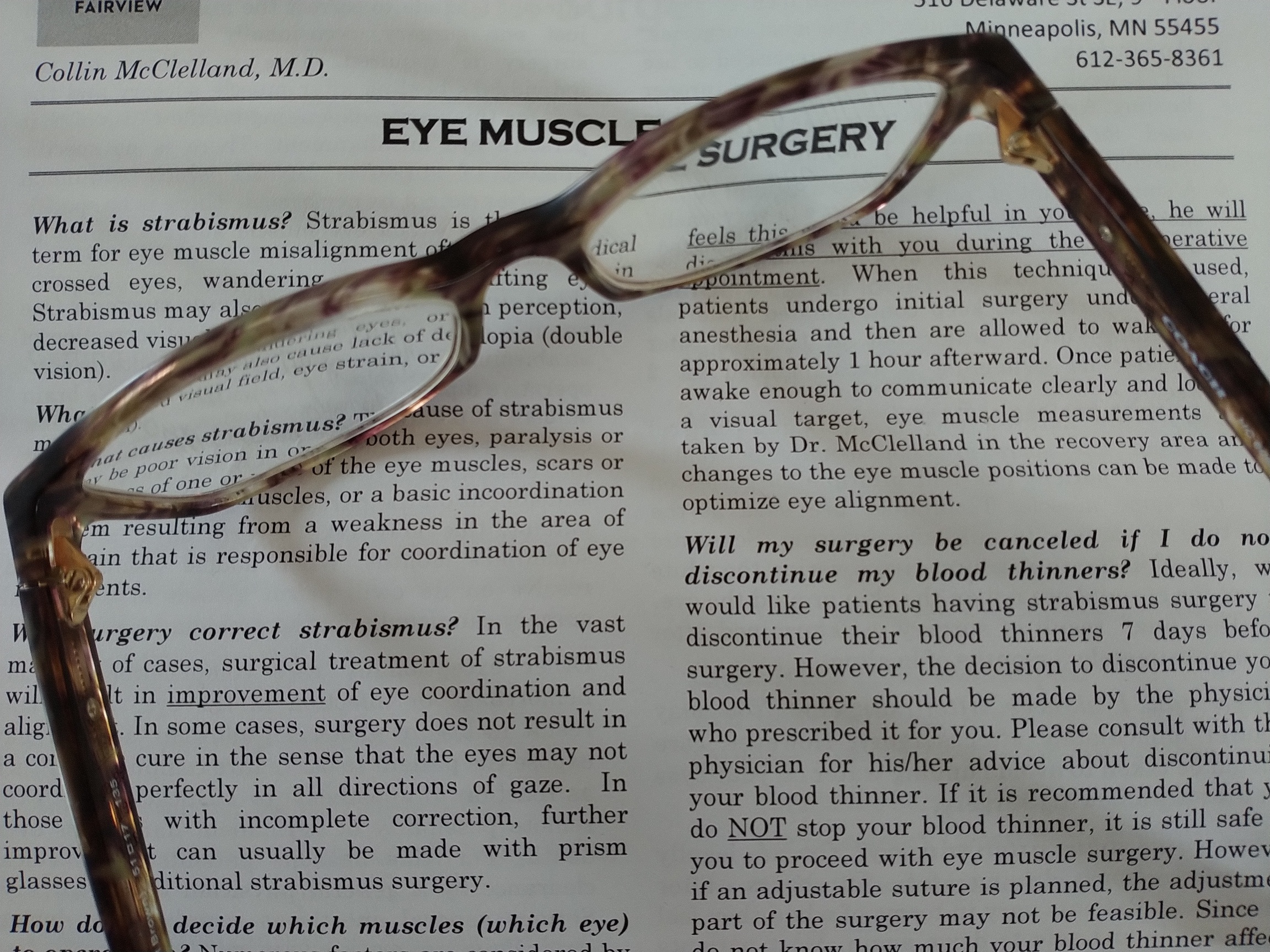
Information about my eye muscle surgery. (Minnesota Prairie Roots copyrighted file photo 2023)

SURGERY. Most of us would rather not hear that word when it comes to our health. But sometimes surgery is necessary. I’ve had surgery nine times in my lifetime. I’m currently four weeks out from my second bilateral strabismus eye surgery (the first was at age four) to realign my misaligned eyes. Healing and recovery are progressing.

Nearing downtown Minneapolis, the route to M Health Fairview Surgery Center and Clinics. (Minnesota Prairie Roots copyrighted file photo)

Today’s post, though, is not about recovery, but rather about my January 22 surgery day. As a creative, I have stories to tell about my experiences at M Health Fairview Clinics and Surgery Center. Admittedly, I felt anxious as Randy and I aimed north along Interstate 35 to the surgery center about an hour away on the campus of the University of Minnesota in Minneapolis. I detest metro traffic, which added to my pre-surgery anxiety. But on this morning, traffic was not horrible.

Waiting is always the hard part. I waited at check-in behind an angry patient. We’d ridden the same elevator to the fifth level, but she got ahead of me because she knew where she was going. I did not. And so I had to stand there listening to her spew about how she’s never been called about whatever. Her voice volume increased. I felt increasingly frustrated by this hostile woman who should have taken her complaints elsewhere, not to the surgery check-in desk. She was not there for surgery. Finally, I bypassed her to another check-in station, wondering if the first employee would need to call security. This was not off to a good start.

I settled onto a green upholstered chair in a spacious room filled with people, most on their phones, waiting. A bank of tall windows revealed a sunny day. I heard persistent coughing on the other side of a waiting room half-wall, somewhat worrisome to me. I’d been screened for COVID symptoms, but Randy and other caregivers weren’t. That is typical of clinic screenings, it seems. But I digress.

Eventually, after I’d people-watched, tried to work a crossword puzzle, studied abstract fabric artwork, Tatenda called me to begin the process of preparing for surgery. That started with basic questions followed by depression screening. I am thankful this screening is now routine in healthcare and I told Tatenda that. And then I added, “But you didn’t ask about anxiety.” Anyone who says they aren’t anxious about surgery is, in my opinion, not being truthful. Thankfully, Tatenda and others who cared for me understand pre-surgery anxiety and helped ease mine.

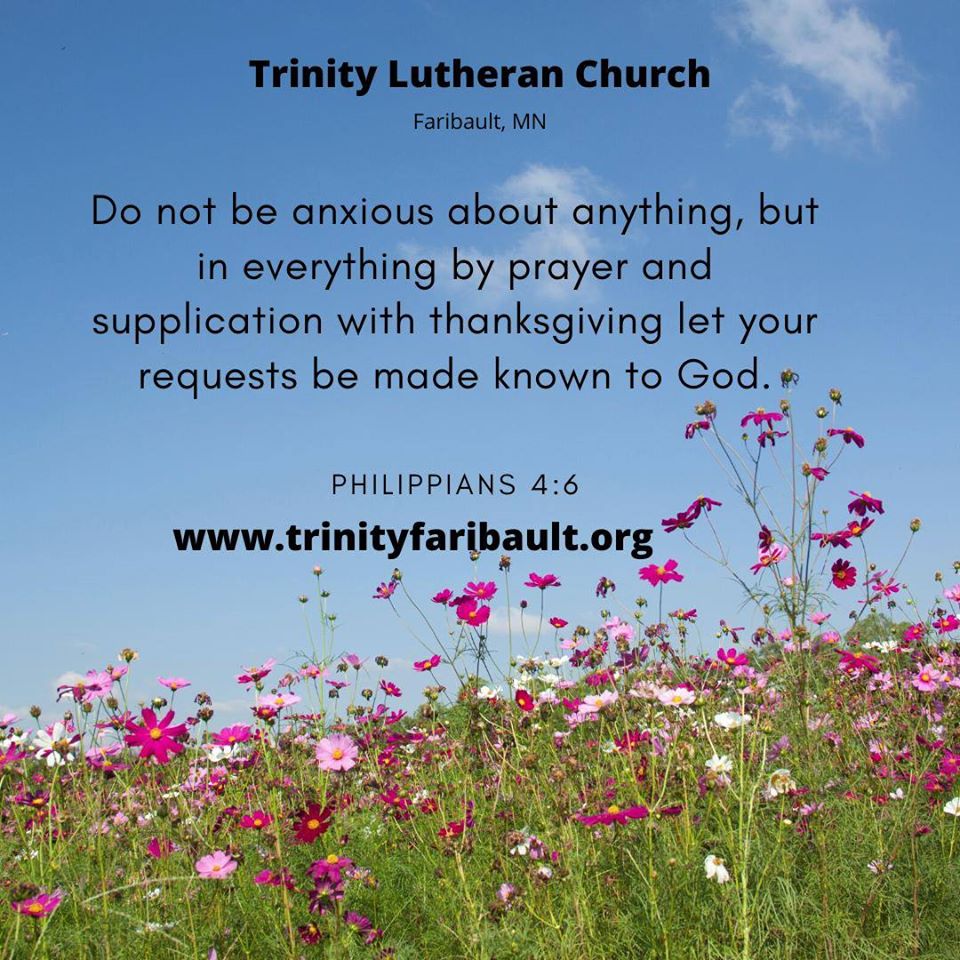
One of my go-to Bible verses when I’m worried or anxious. This is displayed at my church, Trinity Lutheran in Faribault. (Minnesota Prairie Roots copyrighted photo February 2024)

There was one point, though, when I had to dig deep mentally to stop myself from fleeing a small room where I waited alone for the next step in surgery prep. Tatenda handed me a lavender paper gown, instructing me to change into that and pull on a pair of purple socks. Then she left. Do. Not. Leave. Me. Alone. I expected her back quickly. As the minutes ticked by, I felt my anxiety rising. I was cold, shivering almost, hugging my folded legs to my body for warmth. The over-sized, one-size-fits-all paper gown that smelled to me of antiseptic provided zero warmth. Maybe I should have wrapped it around my slim body twice. I attempted to calm myself by repeating the words of Psalm 46:10: Be still…be still…be still…

Eventually nurse Amanda arrived and connected a hose to my lovely lavender gown, a hose that blew air inside to either warm or cool me. She explained how I could turn a switch to adjust the temperature. It was a game-changer not only for my comfort level, but also in giving me control. Of. Something.

Signage on The Pearl, a popular ice cream spot in downtown La Crosse. (Minnesota Prairie Roots copyrighted file photo 2015)

As Amanda searched and poked twice for an adequate vein to start an IV, we talked. Conversation distracts me. This nurse, the same age as my eldest daughter, and I chatted about her hometown of Potosi, Wisconsin, where I’ve been to the brewery; our love of La Crosse (and The Pearl ice cream shop); motorcycles; and then how I met Randy and where we went on our first date. “Stir Crazy,” I replied. The movie starring Richard Pryor and Gene Wilder. Amanda said she would ask Randy the same when she brought him to see me shortly before surgery. When he answered “Blazing Saddles” to the first date question, I told Amanda that he was an imposter, that she needed to find my real husband. We laughed. Humor helps.

Once Amanda left, the anesthesiologist and neuro ophthalmologist surgeon arrived for last-minute briefings and questions. I was ready. Soon I was being wheeled down a hallway toward the operating room. I remember nothing until I awoke 1 ½ hours later in recovery. That is another story…please check back for more storytelling.

TELL ME: If you’ve had surgery, how did you cope with pre-surgery anxiety? How did others help ease your anxiety right before surgery?

© Copyright 2024 Audrey Kletscher Helbling


Fiction focus on teens’ mental health with Van Gogh thrown in the mix June 21, 2023

I NEARLY WALKED OUT of church once during a sermon. The pastor called Vincent Van Gogh “crazy.” Yes, the artist suffered from mental illness. But labeling him as “crazy” did not sit well with me. I find the term derogatory and disrespectful of anyone battling a mental health issue.

So when I picked up a newly-released book, Screw You Van Gogh, by Minnesotan Jeff Howard, I wondered how the Dutch painter would fit into the story line. Turns out the reference to the artist, who battled anxiety and depression, was held in asylums for the insane and eventually committed suicide, proved a good focal point for a story about high school students.

This fictional book, based on real life experiences, is not a feel good story about teenagers. But rather, this story is heavy, heavy with the issues teens face. Depression. Anxiety. Bullying. Relationship struggles. Trauma from abuse. Pressure to do well. And more.

WRITING WITH AUTHENTICITY

The author, a high school counselor for the past 15 years, writes with authenticity. A main character in the book, Michael Burns, is a counselor at Roosevelt High School. Therein comes the Van Gogh reference. Burns has a jigsaw puzzle of the artist’s painting, “Starry Night,” in his office for kids to work on with him. One of those students is Cassidy Towers, 16, new to Masonville, Iowa, and dealing with panic attacks, suicidal thoughts and more.

As the plot unfolds, so does a certain familiarity. This could be a high school anywhere so real are the characters. The popular kids. The quiet ones who follow the rules. The kids who, on the outside, appear not to give a damn about what they say or do, but who are hurting inside, hiding their truth. Like Tommi, who befriends Cassidy. She is in counseling for severe anxiety and depression, a fact she hides from her classmates. “Tommi could not bear the thought of people knowing she was crazy,” Howard writes.

There’s that word, “crazy,” again. But this time it fits because this is the thinking of a high school student with thoughts of suicide that sometimes “crept into her mind like an evil spirit.” As Tommi and Cassidy’s friendship grows, so does Cassidy’s awareness of Tommi’s struggles. She observes the vacant look in her friend’s eyes, her unkempt appearance, her repetitive petting of a kitten, all signs of Tommi’s declining mental health. By this time, Cassidy has worked through her own mental health issues via talking with the high school counselor, an improved relationship with her mother and using tools (like music) to help her cope.

HELP, HOPE & STIGMA

The author, given his professional work as a counselor, includes helpful ways to deal with anxiety, depression and more. Like Cassidy’s use of music. He emphasizes listening, empathy, deep breathing, hope…

He also addresses the ongoing stigma attached to mental illness. In a conversation with Cassidy, fictional counselor Burns talks about Van Gogh and how he grew anxious and depressed after art experts criticized his impressionist style of painting. Van Gogh turned to alcohol. Burns tells Cassidy that people, especially teens, “don’t want to admit they need help because that makes them weird.” And, because of that sometimes people “crash,” he says. That happens in this book, in a tragic way.

HUNTING & HOTDISH

Within all the heaviness of Screw You Van Gogh are the subplots of counselor Burns’ personal life and relationships and then a budding relationship between Cassidy and classmate Patrick, who once called her “a little crazy” and “goofy upstairs.” When the teens eventually go on a first date, it’s not to a movie, but pheasant hunting. That proved a lighthearted moment for me in the reading of this book. Oh, how rural Iowa/Minnesota, I thought. And then when the author threw in Minnesota’s signature tater tot hotdish served in the school cafeteria, I laughed aloud.

This book is authentic through and through and should be read by every teen, every parent, every educator, every counselor… And perhaps every counselor should purchase the jigsaw puzzle “Starry Night” as a tool to get kids to open up about their emotions, experiences, struggles, as Van Gogh did via his painting.

© Copyright 2023 Audrey Kletscher Helbling


Sunday thoughts about worry, connecting & faith March 29, 2020

On the Trinity Lutheran Church Facebook page, you will find daily inspirational bible verses such as this one posted last week.


I TEND TO BE AM a worrier. I overthink things. I consider all angles and possibilities. Maybe my journalism persona is partly to blame. Lessons learned in college classes and in my days of news reporting called for balanced, unbiased reporting. Consider all sides of a story.

But, in all honesty, my personality is such that I ruminate. I don’t particularly like change. I like to feel some sense of control. I expect that applies to many of you. Especially now.

These are days that challenge us in so many ways. The uncertainty. The fears. Separation from loved ones. The reality of COVID-19 touching us personally. Our families. Our friends.

Now, more than ever, I rely on my faith. To calm me. To give me hope. To reassure me.

This morning I listened, for the second week in a row, to worship services online, live-streamed from my church, Trinity Lutheran in Faribault. This was a gospel service with violin and piano music and old familiar hymns. Volunteers and staff practiced social distancing during that service. Not to worry.

As I listened to the music, the sermon and Scripture read, and prayed, I remembered the pastor’s opening words that we can still be “spiritually present with one another.” Yes, we can. I miss my faith family, people who mean a great deal to me. People who have supported me during really difficult times. People who have celebrated with me. People whom I care for deeply.

I care about you, too.


A photo of Christ’s face from a stained glass window in my church, Trinity Lutheran, Faribault. Minnesota Prairie Roots file photo.


While listening to the songs played today in the Trinity worship service, I jotted down these especially meaningful snippets:

O Mighty God, great is your love.

All to Jesus I surrender, Lord, I give myself to thee.

Let trials turn us not aside.

In the children’s message and pastor’s sermon, we were encouraged to “go” (without “going”) and do what we can—even in this time of isolation—to spread the love of Jesus. Make cards. Call people. Connect.


Vintage art from the Trinity radio room. Minnesota Prairie Roots file photo.


We all have the power to do exactly that. From our homes. Even when ordered to stay home, to social-distance, to isolate, we can support and encourage each other. Be there for one another. Work together through the fear, worry and anxiety. I turn to Scripture, too, to uplift, encourage and give me peace. I pray.

And I write, because writing is a way to help myself and others through the COVID-19 crisis. Click here to read my latest Warner Press blog post, “Past Plagues Remind Us of God’s Power & Compassion,” published as part of our new Sunday “Scriptures of Hope” series.

These all help me deal in these difficult days… Be well, my friends.

PLEASE SHARE WITH ME ways you are connecting with others, dealing with your personal concerns, etc. I’d like to hear. We can all learn from on another. Watch this week for posts showing ways people in my community are sharing the love.

FYI: To hear this morning’s Trinity worship service and more, click here, for Trinity Radio and Video YouTube videos.

Disclaimer: I am paid for my work as the Warner Press blog coordinator. 

© Copyright 2020 Audrey Kletscher Helbling


Opening up about mental health January 3, 2019

Filed under: Uncategorized — Audrey Kletscher Helbling @ 5:00 AM
Tags: , , , , , , , ,

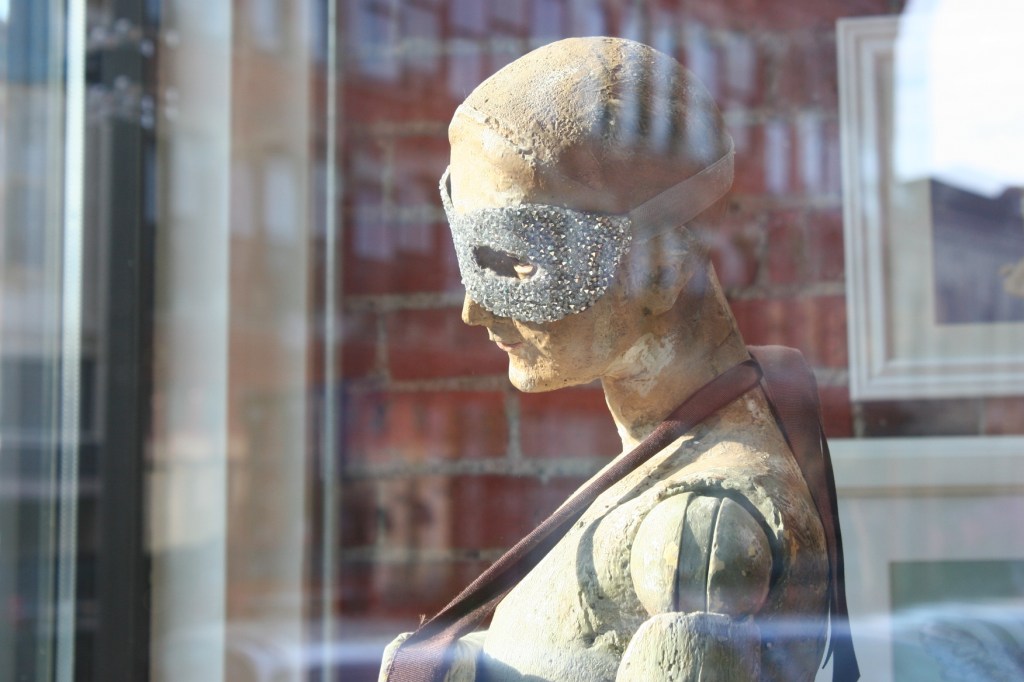
Slowly we are beginning to remove the stigma that masks mental illness. Minnesota Prairie Roots file photo 2018.


FOR WEEKS, WE’D PRAYED for Lila*. I had no idea why she needed prayers. But it didn’t matter, pray we would as a church family for this friend who’d moved to another state.

A few weeks later, Lila’s husband returned, alone to Minnesota, to lead a local fundraiser. That morning he stepped up to the microphone after worship services and told us about Lila. She was hospitalized, undergoing treatment for severe depression and anxiety. I could almost hear the silent gasp. That took courage, I thought to myself.

I told Henry* the same when I later hugged him, expressed my concern and offered encouragement. He admitted to struggling with his decision to go public. But we agreed that the stigma surrounding mental health is beginning to lift, that talking about mental health issues is important and necessary. For Henry, a retired educator, his openness about Lila proved a freeing, teachable moment.

We all have much to learn on the topic, including me. Kicking depression is not a matter of simply willing yourself to feel better, to just get over whatever someone thinks you need to get over. It’s much deeper than that. Overcoming anxiety is not as simple as jumping into the deep end of a swimming pool and expecting someone to stay afloat.

I admire Henry’s decision to speak up. Likewise, I appreciate that my pastor publicly acknowledges his struggles with depression. That’s a first for me, to hear a pastor talk from the pulpit about personal mental health challenges. He’s young, of a generation seemingly more open to discussing mental health issues. The more we talk about mental illness, the better for those suffering and for loved ones and others trying to help.

Still, talk only goes so far. Waits can be long to see a mental health professional here in greater Minnesota. If you were having a heart attack, you wouldn’t be told to wait six weeks. If you had cancer, you wouldn’t be told to wait for treatment. A mental health crisis is no less important.

I am grateful to two bloggers I follow—Bob Collins at Minnesota Public Radio (NewsCut) and Penny Wilson (Penny Wilson Writes)—who write often on the topic of mental health. (Click here for a particularly enlightening post by Penny.) They are breaking through the stigma, opening the discussion, pointing out the challenges.

Twice in recent years I’ve stood in a snaking line at a Faribault funeral home to comfort the families of young men who committed suicide. I struggled to find the right words. I expect their loved ones struggle with the what ifs, survivor’s guilt, regrets, but, most of all, an unfathomable pain. Some grieving families are choosing now to go public in obituaries about their loved one’s struggles with depression or other mental health issues. That takes a lot of courage. We often read about a deceased person’s long and courageous battle with cancer. Battles with mental illness are no less courageous. I’m thankful to see this shift in thinking, to see people like Henry step up to a microphone and speak about mental illness.

THOUGHTS?

* Not their real names.

© Copyright 2019 Audrey Kletscher Helbling