Minnesota Prairie Roots

Writing and photography by Audrey Kletscher Helbling

Author tracks the James-Younger Gang’s escape from Northfield May 29, 2026

An overview of a presentation given by Russ Swanson at the Rice County Historical Society on May 28. The coat lying on the podium is a replica of the inverness capes worn by the James-Younger Gang. (Minnesota Prairie Roots copyrighted photo May 2026)

THEY WERE, HE SAID, masters of deception. And after listening to a well-researched and entertaining presentation about the James-Younger Gang at the Rice County Historical Society in Faribault recently, I agree.

This assessment of the outlaws who attempted to rob the First National Bank of Northfield on September 7, 1876, comes from Russ Swanson of Canton, South Dakota. The ag teacher, farmer, author and researcher shared a wealth of information on the gang, focusing on the outlaws’ efforts to escape capture after the failed robbery.

(Book cover sourced online)

But Swanson, author of A Chase to the Death: The Detailed Pursuit of the James-Younger Gang Following the Northfield Raid, also provided plenty of pre-robbery history that I found especially interesting. The eight-member gang arrived in St. Paul in late August 1876 after a 13-hour train ride from Sioux City, Iowa. I always thought they rode into Minnesota on their horses and headed for Northfield. Not so.
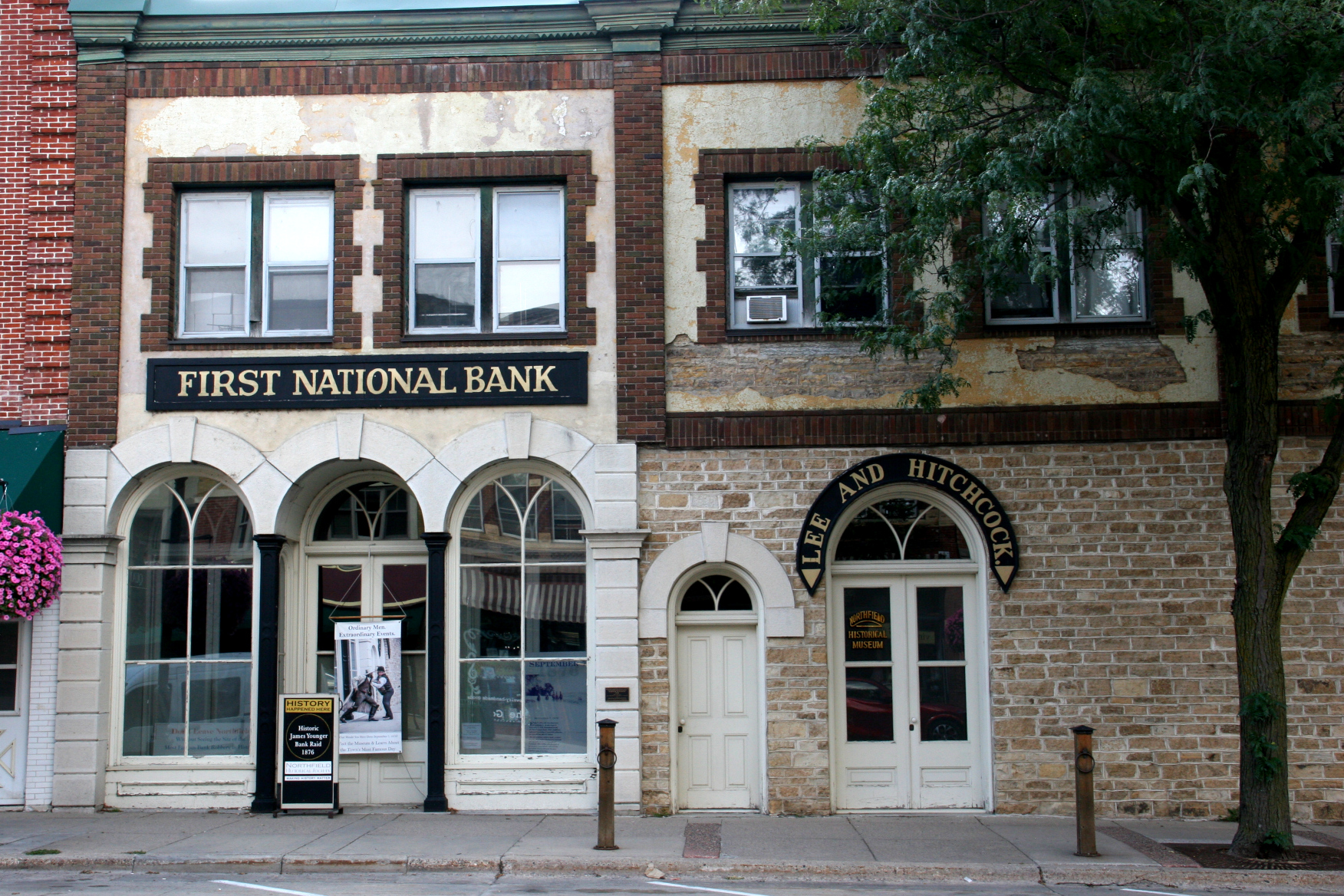
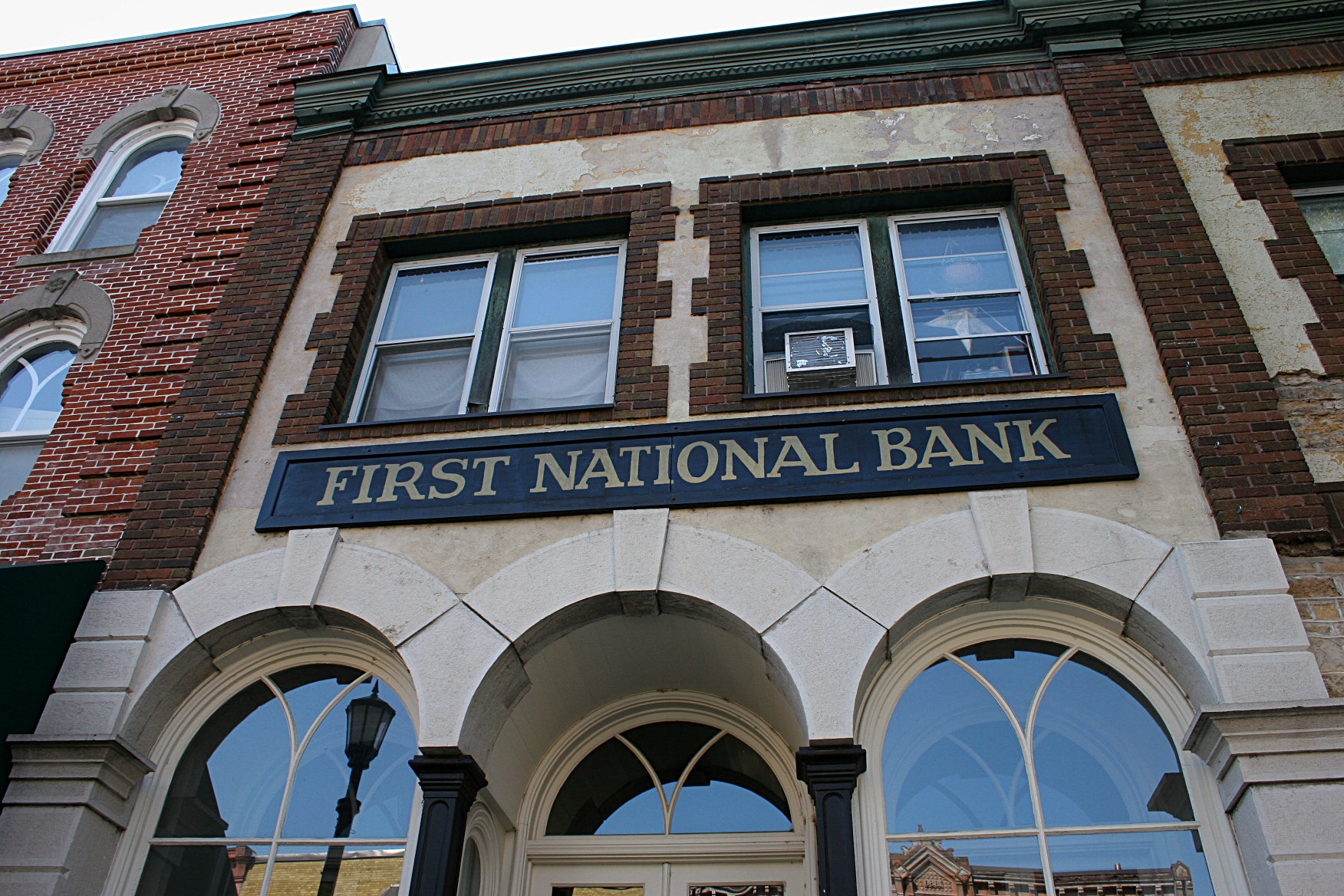
Instead of robbing the bank in Mankato, the gang attempted to rob the Northfield bank, pictured here. (Minnesota Prairie Roots copyrighted file photo)

PLANS TO ROB MANKATO BANK

The gang split upon their arrival in St. Paul with some going to Red Wing, where they stayed at the St. James (National) Hotel. Others went to St. Peter, then to Madelia. By this time, they’d purchased horses. Eventually the eight met in Mankato, intending to rob the First National Bank of Mankato, their original Minnesota target. But they were recognized and ditched the plan.

Swanson threw out a lot of information as he led the audience on the gang’s journey through Minnesota, then back west to Dakota Territory and Iowa. En route to Northfield, they stayed in LeSueur Center (current-day Le Center), Janesville and then Millersburg, imbibing in whiskey purchased there. Swanson spun a detail-rich storyline.

He didn’t spend much time on the actual seven-minute Northfield bank robbery, a point Swanson acknowledged at the beginning of his presentation. The short crime left a bank cashier, a bystander and two of the outlaws dead and others wounded.

This slide created by Russ Swanson shows the eight outlaws with information in red about them and also their horses. To the left are the locals wounded and killed during the attempted robbery.

PURSUIT & ESCAPE

The gang’s efforts to escape capture prompted the largest manhunt in U.S. history with 1,000 men searching for the outlaws. Swanson used maps to show the routes taken by the gang, which eventually split. Frank and Jesse James traveled together while the three Younger brothers and Charlie Pitts stuck together.

The saga is one of stolen horses, the first taken near Dundas. Of gunfights, including south of Shieldsville. Of taking men captive to guide them through the Big Woods near Kilkenny and elsewhere. Of awakening to church bells by Marysburg. Of abandoning horses near German Lake. Of crossing the Cannon, the Blue Earth and other rivers. Of hiding in cornfields.

Russ Swanson points to information specific to Northfield in another slide. (Minnesota Prairie Roots copyrighted photo May 2026)

MASTERS OF DECEPTION & HORSE THIEVES

To hear so many familiar place names took me along the escape route—riding into woods, crossing an unguarded railroad bridge, traversing rivers, stopping at farm sites. Desperate to evade capture, the savvy outlaws pretended to be members of the posse pursuing them. They stayed with farm families under those false pretenses.

That their true identities remained mostly hidden speaks to that “masters of deception” label Swanson tags to the gang. The outlaws stood out in their mannerisms, their talk and even their dress—draping, sleeveless inverness capes concealing their firearms—yet still fooled many.

They stole Percheron draft horses in Garden City. The James brothers stopped for breakfast in Luverne and then were pursued into Dakota Territory, stealing more horses. Blind and partially-blind horses. Eventually, the pair stole a horse at gunpoint north of Canton, South Dakota. Turns out that horse owner, Peter Wahl, homesteaded on land that Russ Swanson now owns. That prompted his 10 years of researching the James-Younger Gang, authoring a book and today presenting on the topic.

“This area is a hotbed of their territory,” Swanson told the audience in Faribault. He backs up that statement with extensive research, tapping into maps, newspaper articles, census records and more from Minnesota into South Dakota and Iowa. He noted the abundance of eyewitness accounts.
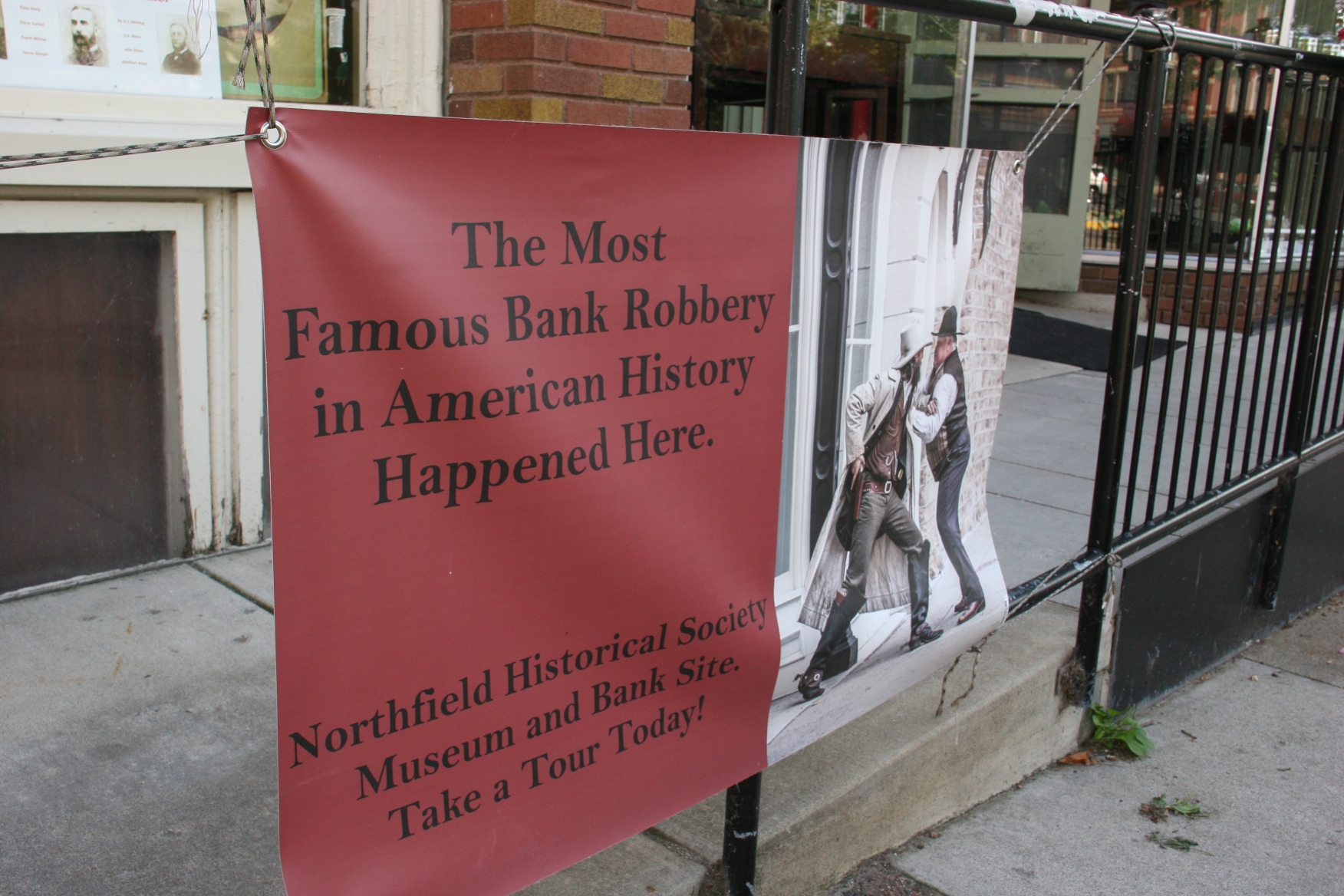
The First National Bank is now a museum with tours available. (Minnesota Prairie Roots copyrighted file photo)

DETAIL-RICH STORIES

I found the entire presentation intensely fascinating, rich in details. A lost hat. Nights of impenetrable darkness. Stolen chickens. Too much whiskey. Eleven bullet holes in Cole Younger, whose toenails fell off when he removed his boots after days of riding. A bullet that wounded a pursuer’s horse still in possession of his family generations later.

As Swanson concluded his talk, he shared a quote from Cole Younger, captured in a September 21 shoot-out in Hanska Slough near Madelia that took the life of outlaw Charlie Pitts. “Be true to your friends if the Heavens fall,” Younger said, refusing to give up any information to authorities. The Younger brothers went to prison while the James brothers escaped to Missouri.

Swanson shared more, much more, in his lengthy talk and Q & A. In the all of it, I was surprised to learn of so many locations in this region connected to the failed Northfield bank raid. Had the eight gang members remained incognito while in Mankato, this story would have followed a different plot line, a different path into history.

© Copyright 2026 Audrey Kletscher Helbling


Minnesota Faces: Northfield historian September 11, 2015

Portrait #39: Christian Hakala

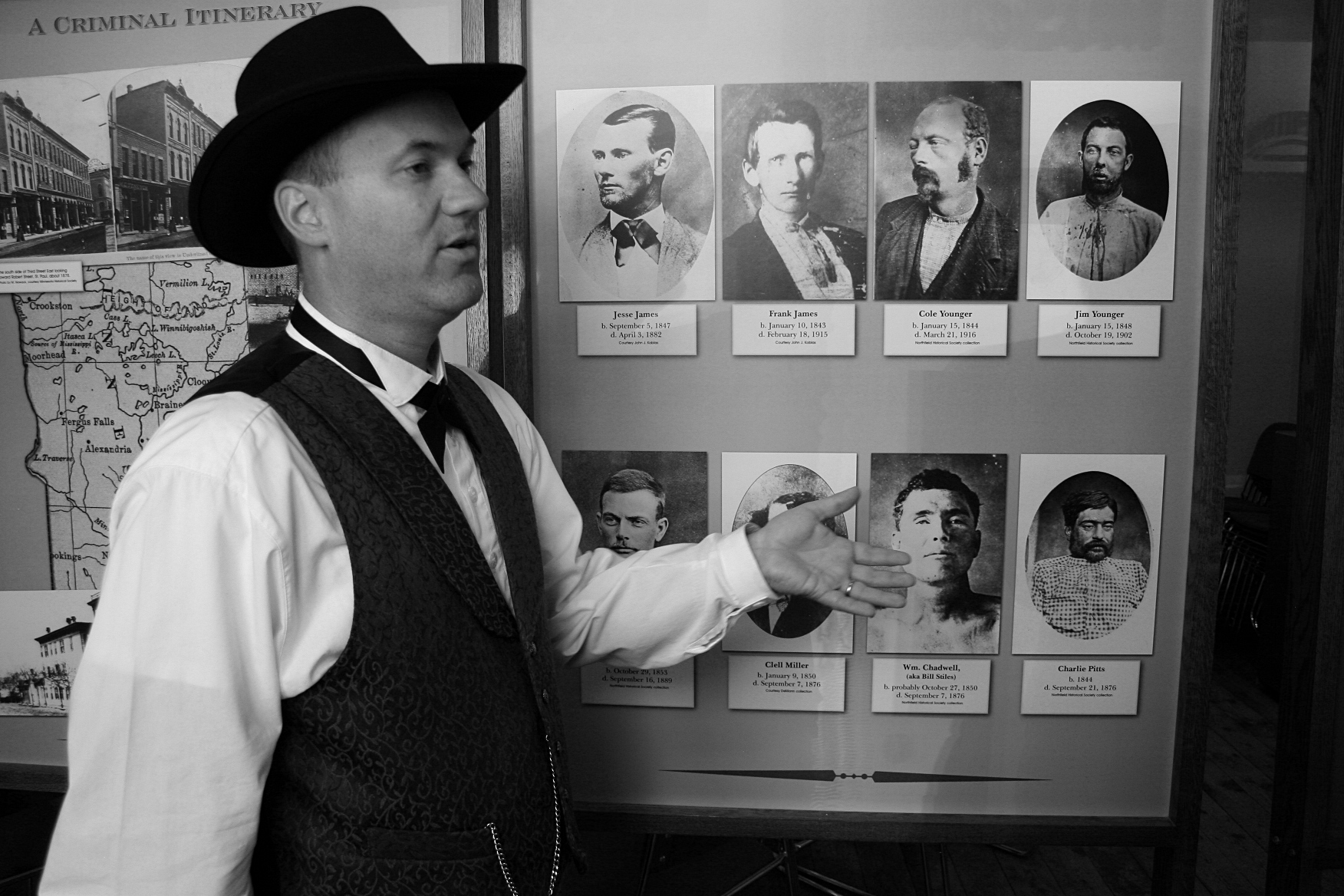
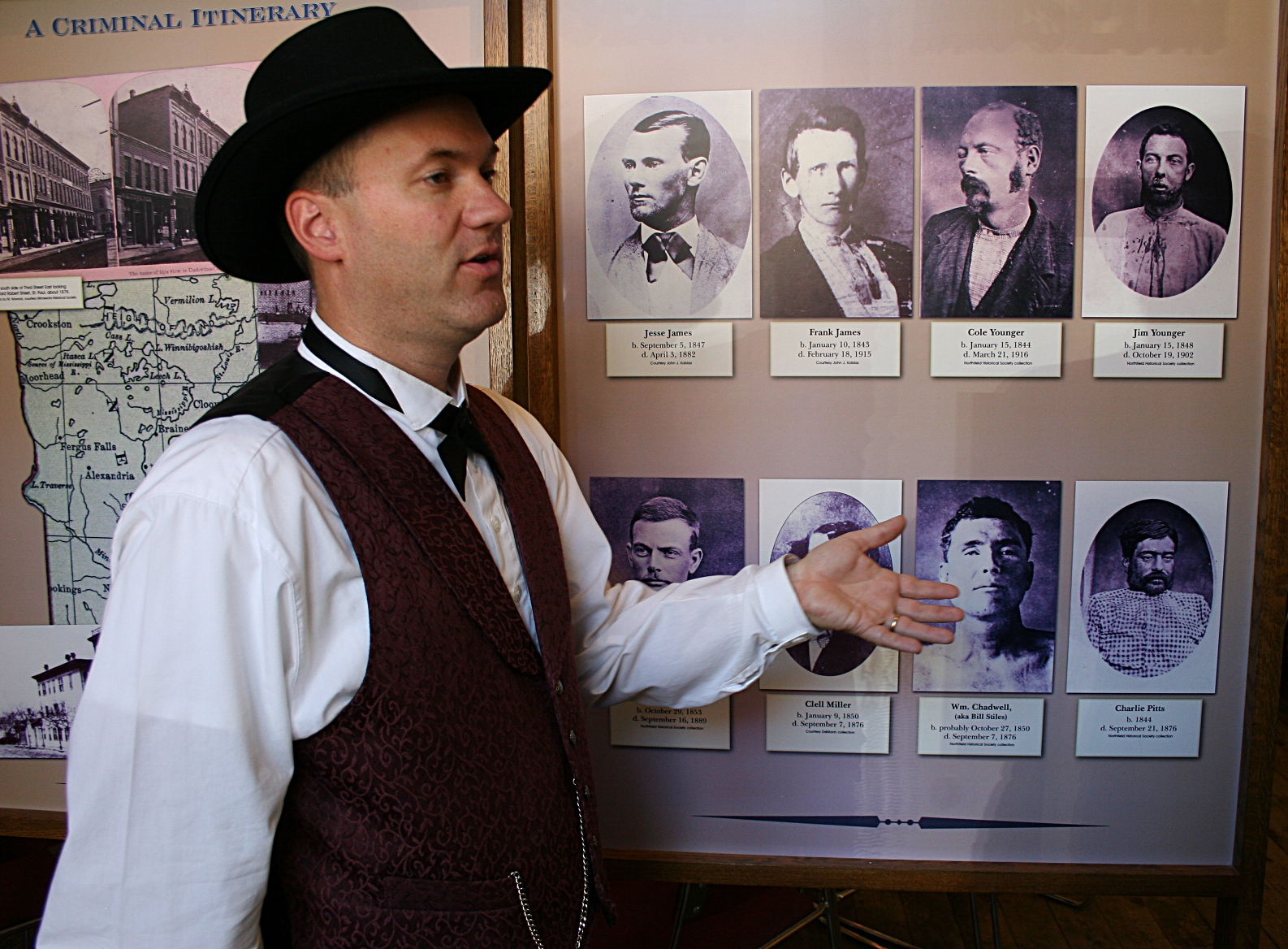
Christian Hakala talks about gang members involved in the Northfield bank raid, pictured to his left: Frank and Jesse James; Cole, Bob and Jim Younger; Clell Miller; William Chadwell; and Charlie Pitts.

Christian Hakala talks about gang members involved in the Northfield bank raid, pictured to his left: Frank and Jesse James; Cole, Bob and Jim Younger; Clell Miller; William Chadwell; and Charlie Pitts. Minnesota Prairie Roots file photo 2012.

To say folks in Northfield, Minnesota, appreciate local history would be an understatement.

Take Christian Hakala. He has a Master of Arts in history, has taught history, has served as Northfield Historical Society Board president and volunteers as a tour guide.

During his day job, he’s Director of Individual Giving at Northfield’s Carleton College.

It was in his capacity of NHS tour guide that I met Hakala in September 2012 as he walked visitors through the “Attempted Bank Raid” exhibit. That would be the September 7, 1876, attempted robbery of the First National Bank of Northfield by the James-Younger Gang. A bank cashier, a Swedish immigrant and two of the outlaws died in seven minutes as townspeople fought back.

Northfield this week is celebrating the heroism of locals during the annual The Defeat of Jesse James Days, an event which is among Minnesota’s most popular community celebrations. DJJD includes bank raid re-enactments. Hakala has participated in those, too, role-playing a townsperson.

If you appreciate history and drama and community celebrations, then head on over to Northfield this weekend. This beautiful historic river city knows how to showcase local history in a big way.

FYI: Click here for more details about The Defeat of Jesse James Days.

Minnesota Faces is featured every Friday on Minnesota Prairie Roots.

© Copyright 2015 Audrey Kletscher Helbling


In which I learn a lot about the James-Younger Gang bank raid in Northfield September 3, 2012

CHRISTIAN HAKALA WEAVES the story of the bank robbery with the skills of a seasoned storyteller, his voice rising as the tension mounts, his hands gesturing, his eyes locking with those of a rapt audience.

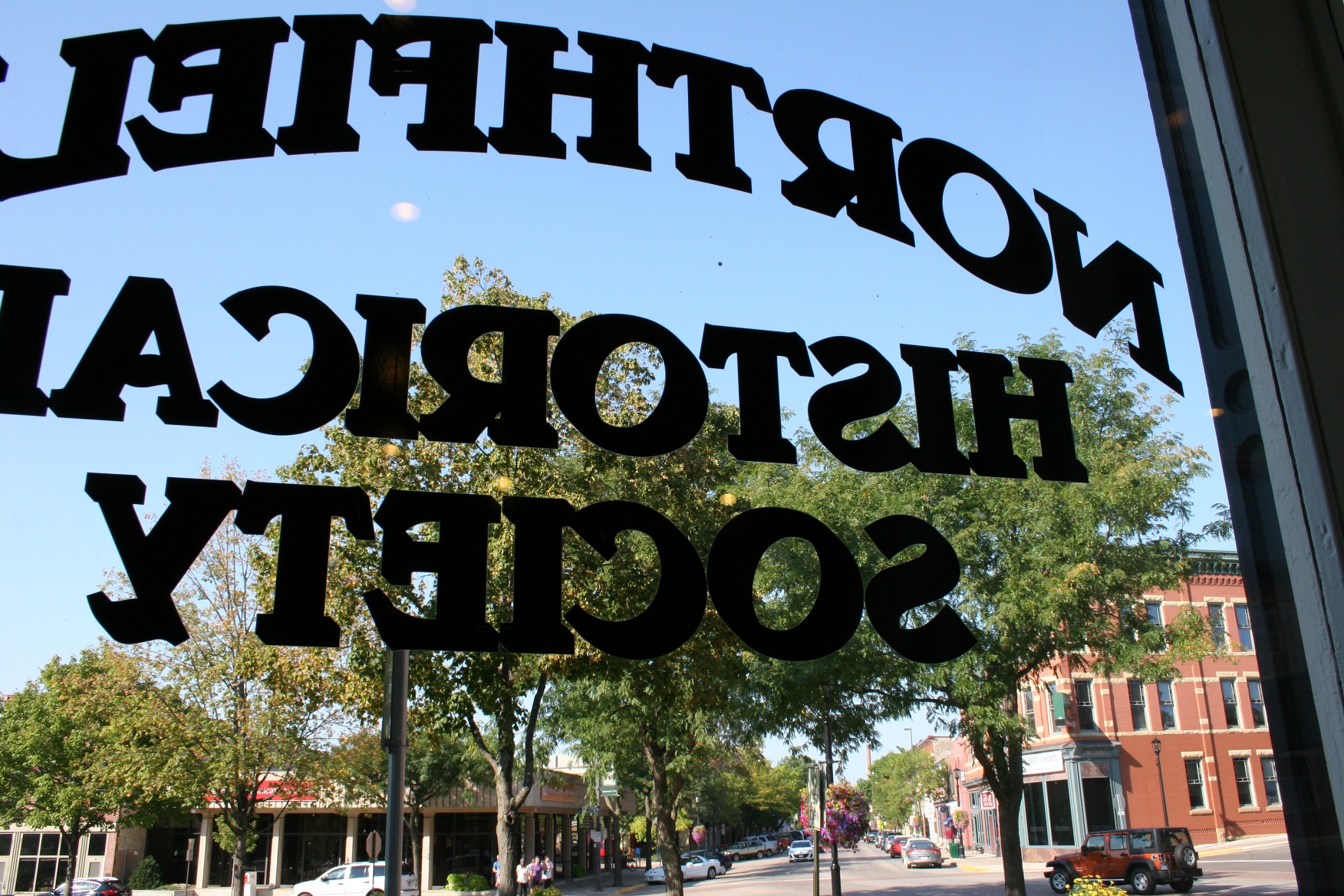
Looking through a front window of the Northfield Historical Society museum toward Division Street.

It is Sunday afternoon and I am with a small group touring the Northfield Historical Society. I have come here with my husband to view the temporary U.S.-Dakota War of 1862 exhibit as it relates to Rice County.

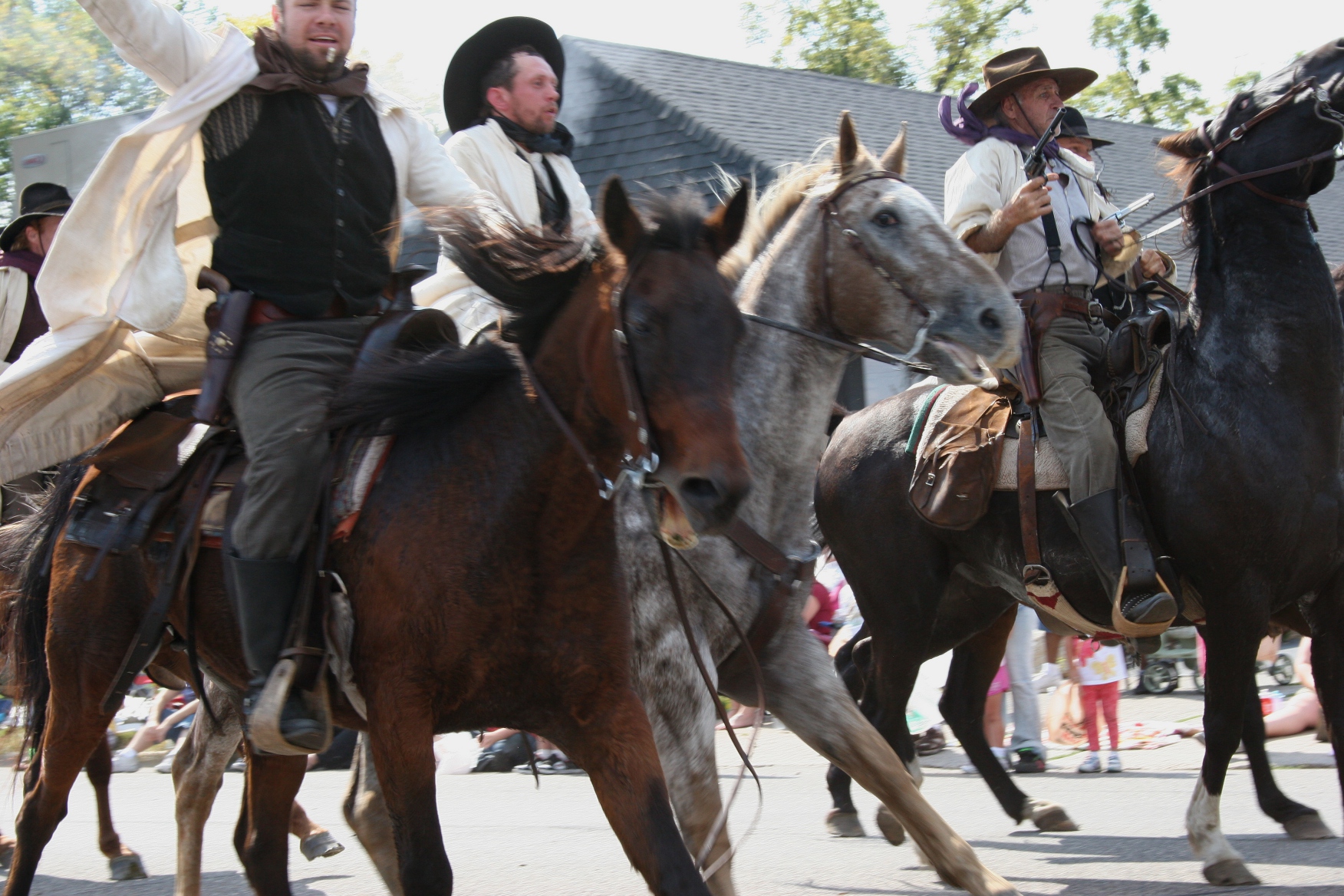
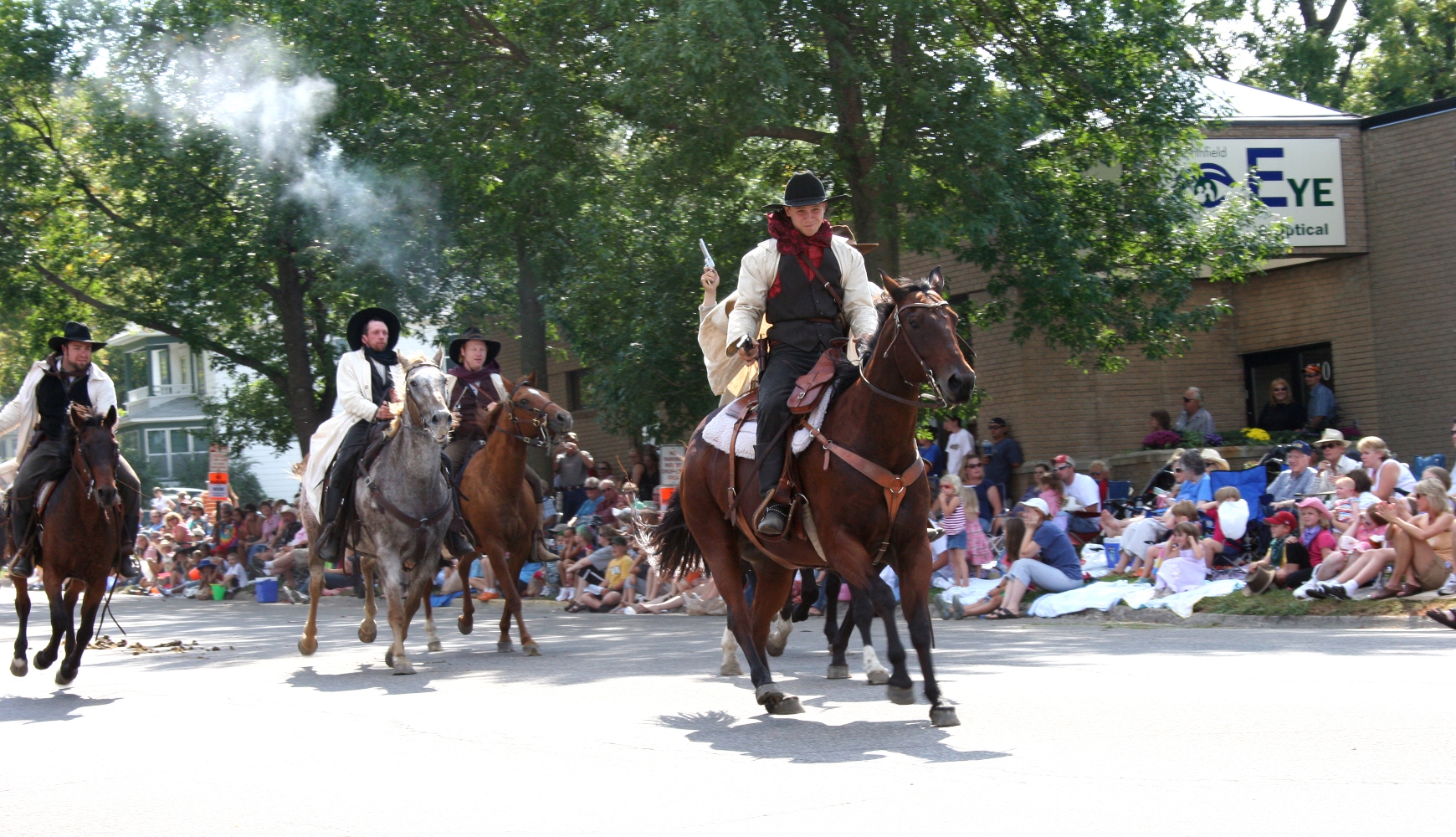
The James-Younger Gang re-enactors riding in The Defeat of Jesse James Days parade perhaps five years ago.

But I find myself, instead, captivated by Hakala’s intriguing play-by-play account of the James-Younger Gang bank robbery of September 7, 1876, as he leads us through the historical society and into the bank. I am embarrassed to admit that I’ve never visited this museum, site of perhaps the most historic bank robbery in U.S. history, even though I live only 15 miles away and once worked briefly as a newspaper reporter in this town.

This week some 100,000 visitors, according to Hakala, are expected in Northfield for the annual Defeat of Jesse James Days celebration September 5-9.

Christian Hakala talks about gang members involved in the Northfield bank raid, pictured to his left: Frank and Jesse James; Cole, Bob and Jim Younger; Clell Miller; William Chadwell; and Charlie Pitts.

The former history teacher, and now a fund raiser at Carleton College in Northfield, serves on the historical society board, volunteers as a tour guide and role plays a townsperson in the annual re-enactments of the bank robbery. His knowledge of the crime is precise, right down to the minute on the original bank clock, stopped at 1:50 p.m., the time of the deadly and unsuccessful robbery.

The front of the original First National Bank of Northfield. I didn’t photograph the entire building as the sidewalk in front of the bank was torn up and blocked for installation of sidewalk poetry.

It was all over in seven minutes with four shot dead, including acting cashier Joseph Lee Heywood who refused to allow the robbers into the vault; Swedish immigrant Nicolaus Gustafson; and outlaws Clell Miller and William Chadwell.

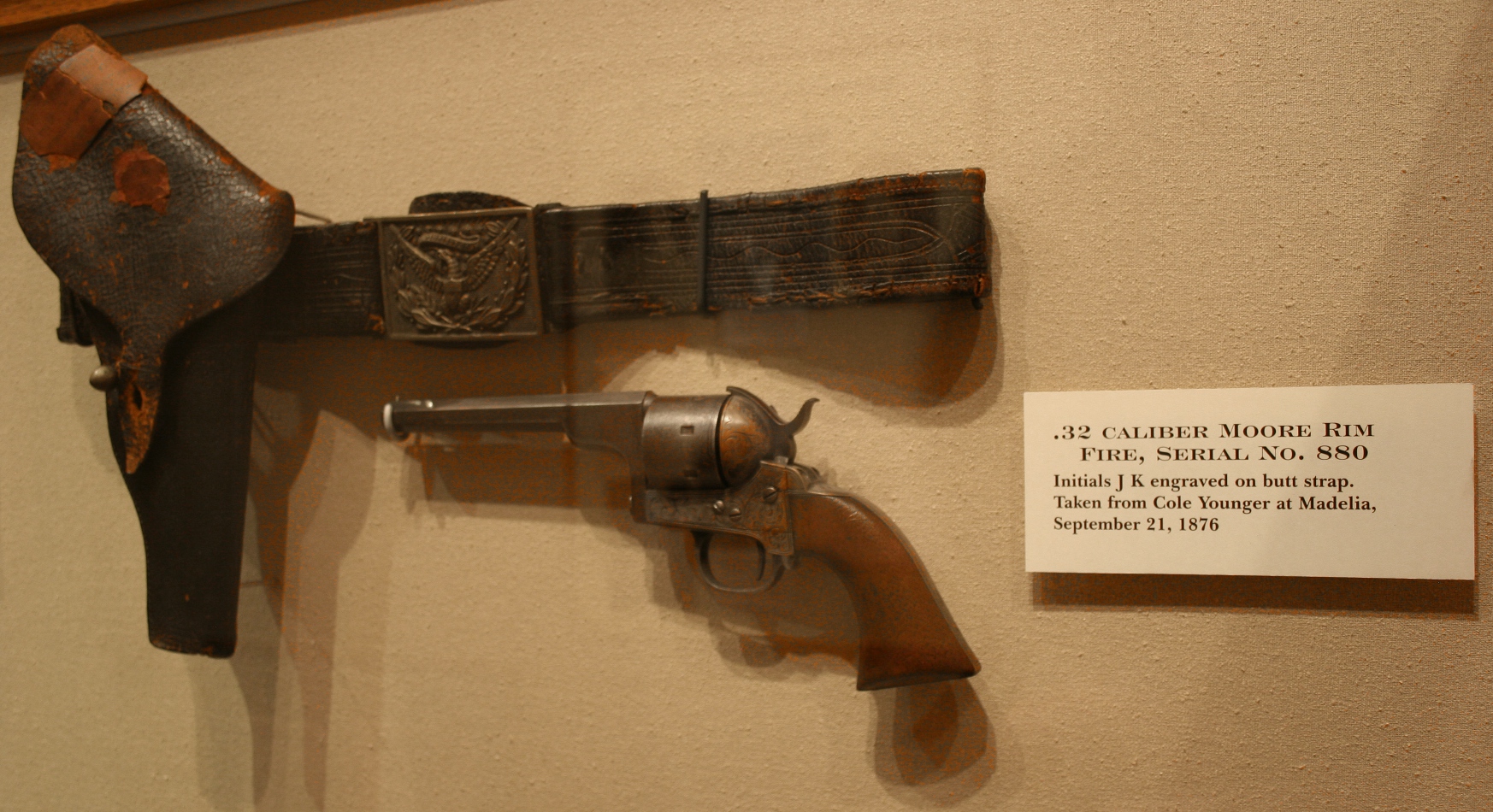
The gun confiscated from Cole Younger when he was captured two weeks later near Madelia. I shot this glass-encased weapon in available light, without a tripod and without flash, meaning quality is not there in this image.

Not until the end of the tour does Hakala reveal that efforts are currently underway to exhume and determine if the presumed body of gangster Miller, buried in his home state of Missouri, truly is Miller.

Hakala explains: Then-medical student Henry Wheeler, who shot Miller from an upper story level of a building across the street from the bank, dug Miller from his grave and shipped the body from Northfield to his Michigan medical school for dissection and study. Later, Wheeler would return the supposed body of Miller to his family in Missouri. But, as the story goes, Wheeler kept a skeleton, purported to possibly be Miller, in a closet of his Grand Forks, N.D., medical practice office. That skeleton is today owned by a private collector.

The Miller family, Hakala says, is cooperating in proposed plans to positively identify the body buried in Missouri via forensic testing. The body was badly decomposed and thus not identifiable by the time it was received by the Miller family for burial.

Wheeler’s actions, Hakala further says, would not have been all that unusual for the time period with a likely attitude of “I killed the guy. He’s mine.”

This recent development simply adds to the mystery and drama and varying versions of events and details which have long accompanied the James-Younger bank raid in Northfield. Hakala, a northeastern Minnesota native who has also lived and taught in Missouri, knows how perspectives and stories differ based on source locations.

Yet, Hakala assures that the minute-by-minute account he relates of the actual bank robbery is based on the eyewitness testimony of a bookkeeper, collaborated by a teller who also witnessed part of the hold-up.

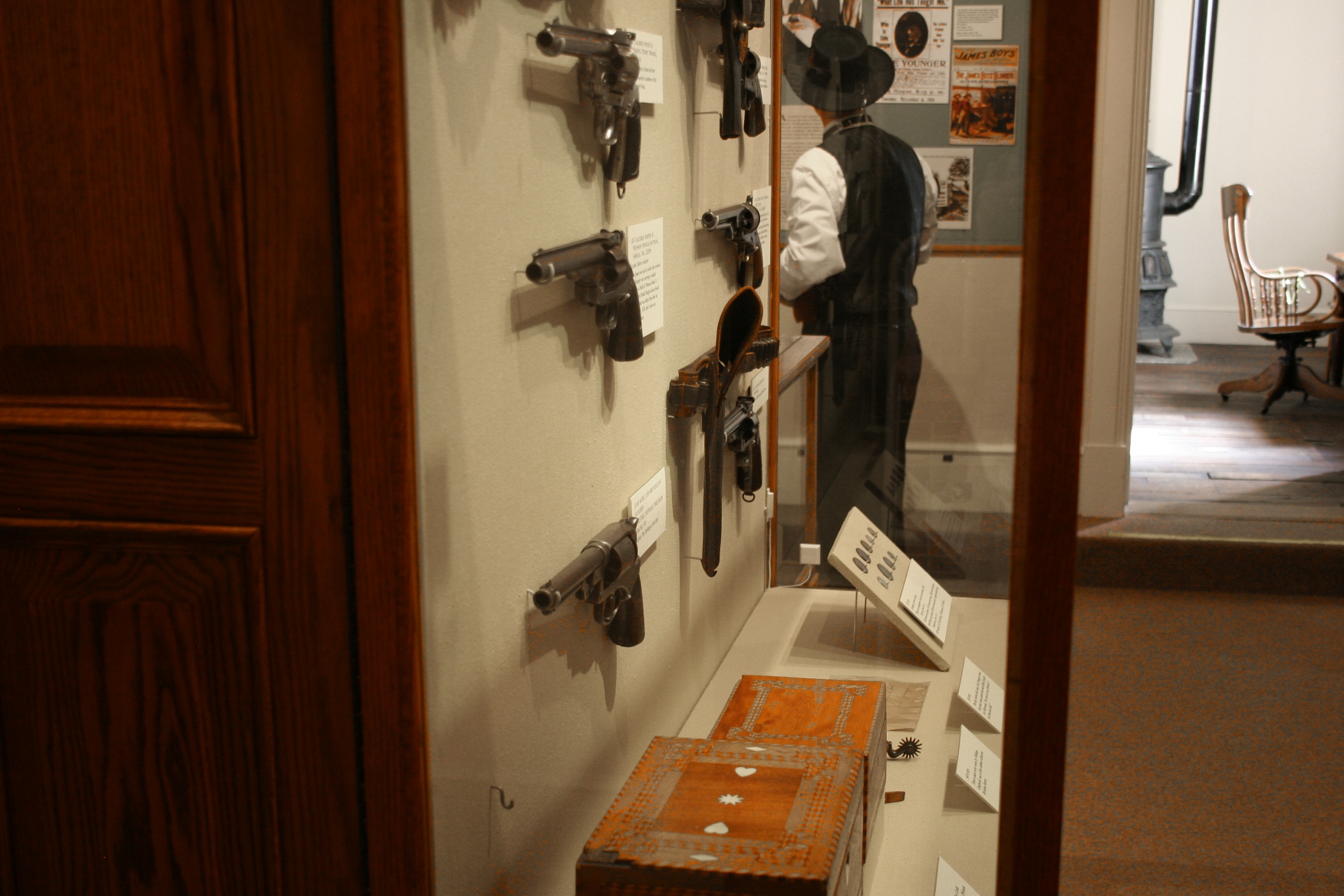
The only portion of the original bank you’ll see in this post is to the right in the background, caught when I was photographing this display case in the adjoining museum space which is in a separate building.

I can’t possibly share with you here the entire scenario Hakala presented in his tour on Sunday. Nor can I show you images, because photography is not allowed inside the original First National Bank of Northfield. But I can tell you that walking upon the very same rough floor boards trod by outlaws with a 10-year history of successful raids on trains and in banks, eying the massive black vault (closed, but unlocked at the time of the crime) and seeing blood stains on the bank ledger makes an impression.

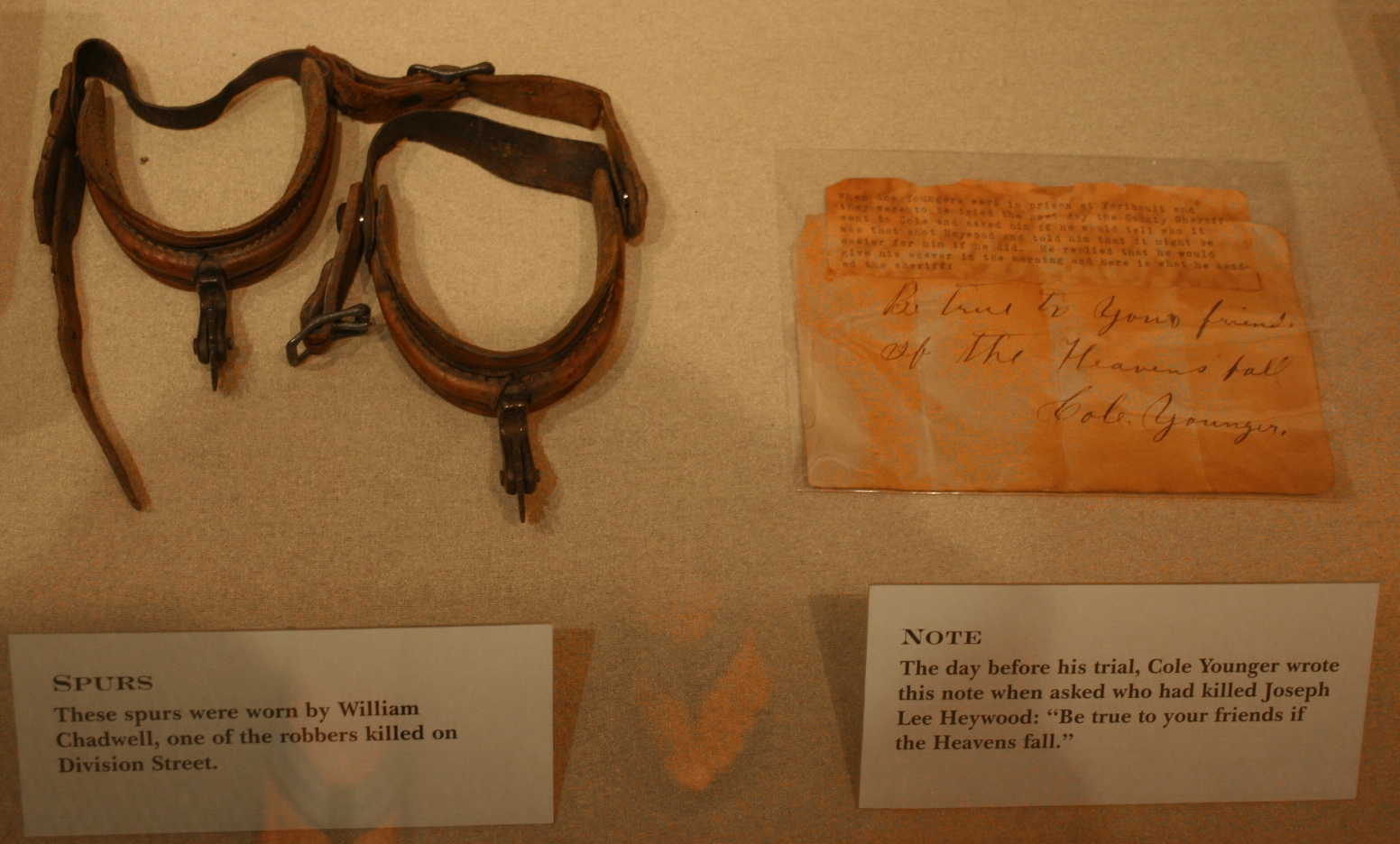
These two items in a display case caught my attention. On the right is a note written by Cole Younger the day before his trial. When asked who killed Joseph Lee Heywood, he answered. “Be true to your friends if the Heavens fall.” In other words, he wasn’t telling. To the left are spurs worn by outlaw William Chadwell, who was shot and killed on Division Street during the raid.

However, here are some select pieces of information presented by Hakala which I find particularly interesting:

  • Jesse and Frank James’ father was a Baptist minister.
  • The James-Younger Gang invented the “stick ’em up” bank hold-up, conducting the first bank raid during daylight business hours, in which no war was going on, in Northfield.
  • One theory surmises that the James-Younger Gang was trying to get back at the Union by robbing banks.
  • In following with that anti-Union theory, Hakala notes that Union General and post Civil War provisional governor of Mississippi Adelbert Ames was a member of the Northfield family—coincidentally Jesse Ames and sons—which owned the local Ames (flour) Mill. Adelbert’s father-in-law was Benjamin Butler, a Union general much-despised by Southerners. This could explain why the gang targeted Northfield since the Ames’ family had money in the First National Bank.
  • While there was $15,000 in the Northfield bank vault, the outlaws made off with only $26.70 in cash, and not from the vault, which was protected by hero/cashier Heywood.
  • The unarmed Heywood was shot out of frustration and “cold-blooded meanness” (Hakala’s words, not mine). He was also slit across the throat, just enough to scare him, and pistol-whipped.
  • Northfield townspeople were throwing cast iron skillets, tossing bricks and aiming birdshot at the trapped gang members as they tried to ride away from the narrow canyon-like street setting in Northfield.
  • A posse of some 1,000 people formed to track down the gang.  The three Younger brothers were shot and captured in a gun battle at Hanska Slough near Madelia. Charlie Pitts was killed there. Frank and Jesse James escaped to Missouri.
  • Jesse James was killed by a friend and fellow gang member, Robert Ford, in 1882 for the reward money.
  • Postcards featuring photos of the dead outlaws, Clell Miller and William Chadwell, were sold to the public after their bodies were taken to a professional photography studio in Northfield and photographed.
  • It is written into a lease on an apartment across the street from the original First National Bank that re-enactors can use the apartment each year for bank raid re-enactments. An actor is stationed in the upper level room to portray medical student Henry Wheeler shooting, and killing, Clell Miller.

Another shot of the James-Younger Gang re-enactors riding in The Defeat of Jesse James Days parade several years ago.

If you wish to witness the seven-minute bank raid re-enactment, this is the week to do so. Performers will shrug into their long linen dusters, tuck their sidearms in place, saddle up and shoot it out at the Northfield Historical Society Bank Site & Museum, 408 Division Street in downtown Northfield.

Re-enactments are set for 6 and 7 p.m. Friday, September 7—the actual date of the robbery—and at 11 a.m. and 1, 3 and 5 p.m. on Saturday and at 11 a.m. and 12:30 p.m. on Sunday.

A copy of a wanted poster posted next to the front door of the museum.

For a complete listing of The Defeat of Jesse James Days activities, click here.

For more information about the bank site and museum, click here.

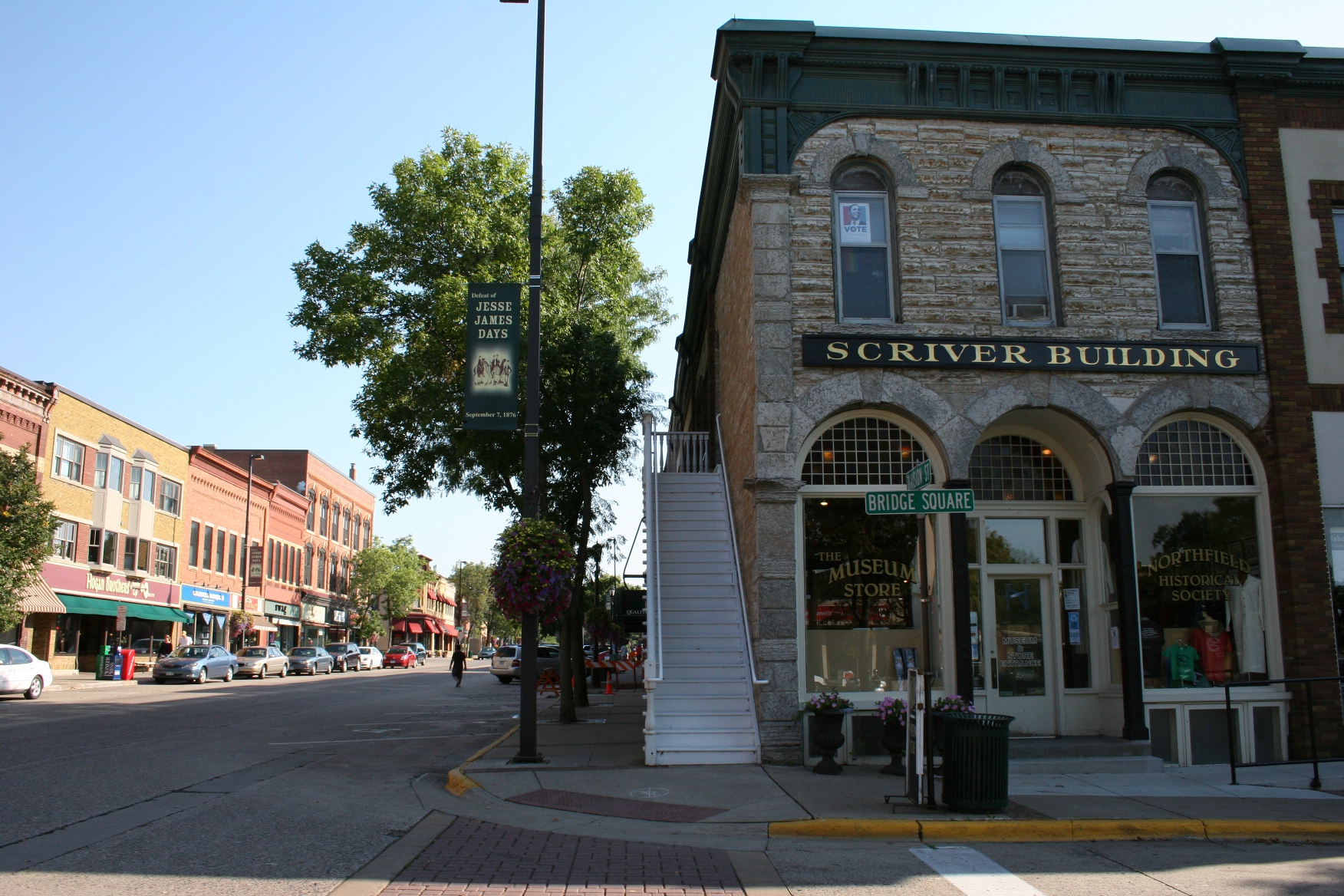
The front of the museum. If you look underneath the white steps, you’ll find three holes ringed in black, supposedly bullet holes made during the raid. It’s conjecture with nothing proven, according to Christian Hakala, who has his doubts about the holes being made by bullets. That’s Division Street on the left.

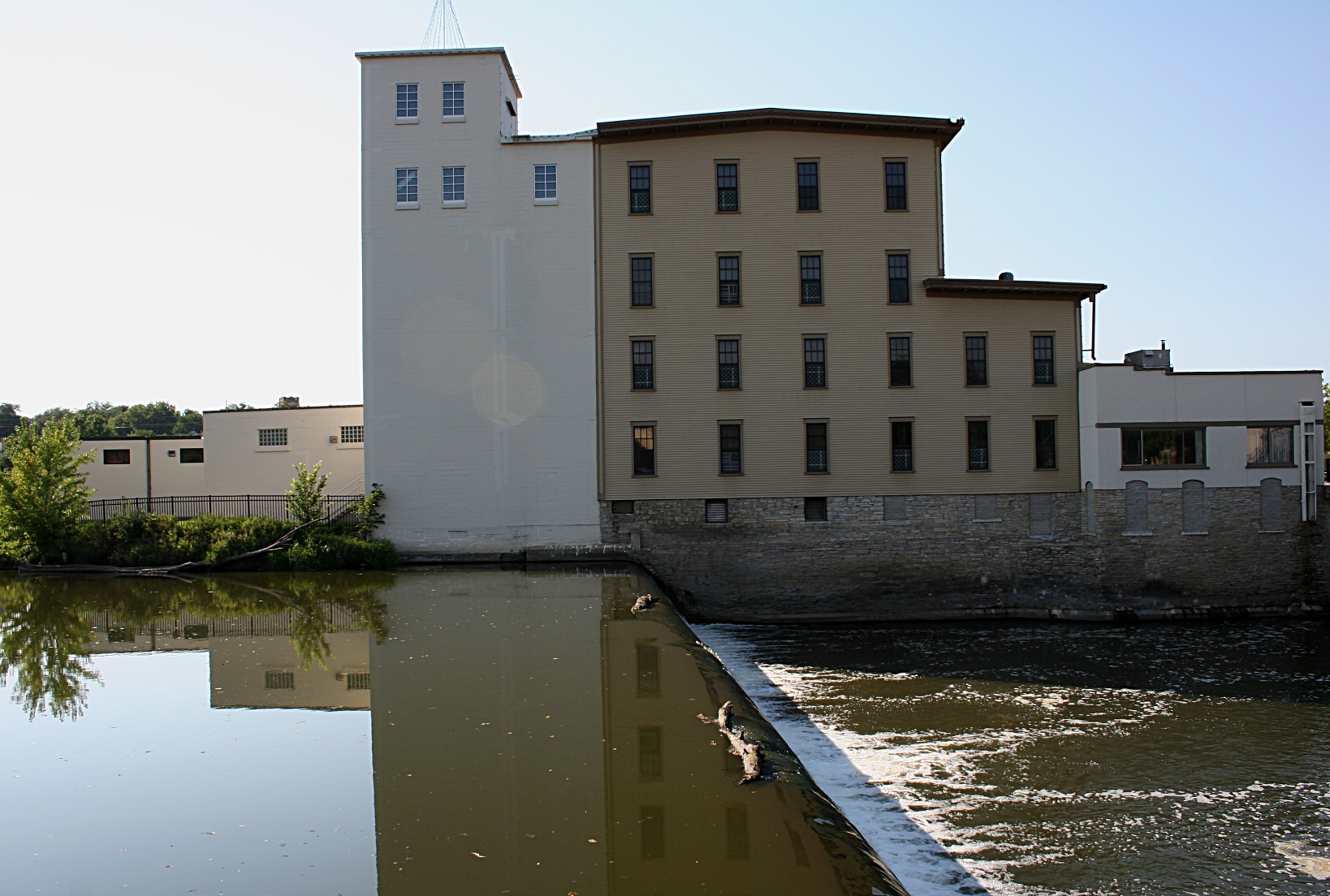
The original Ames Mill, once owned by Jesse Ames and sons, and today owned by Malt-O-Meal. It’s located around the corner and across the river from the bank. The company’s hot cereal is made here in the old flour mill.

© Copyright 2012 Audrey Kletscher Helbling