Minnesota Prairie Roots

Writing and photography by Audrey Kletscher Helbling

Only in Minnesota in winter January 24, 2011

Filed under: Uncategorized — Audrey Kletscher Helbling @ 5:23 PM
Tags: , , , , , , , ,

FORGIVE ME if you’re not from Minnesota. But we Minnesotans obsess about the weather, especially in winter. We have good reason. With snow and cold hanging around for six months or more, the weather definitely impacts our daily lives.

Take my life.

Sunday night my husband grilled chicken and potatoes in the Weber grill atop the snow mountain that was once a backyard patio. The temperature hovered around 10 degrees.

This morning, when my 16-year-old left for school, the temperature registered 15 degrees. That’s 40 degrees warmer than the minus 25-degree reading on Friday morning when he refused to walk eight blocks to school.

The past two days I’ve had an upstairs window open with a fan blowing hot air outside. Sounds crazy, I know. But I’ve been staining and varnishing window trim on the second floor and the fumes were getting to me. I had a headache. My mouth tasted like stain and varnish. Not healthy. So for some six hours, that window remained open on Sunday and is still open today.

But, hey, the temperature this afternoon is a balmy 28 degrees, so it’s not like I’m allowing sub-zero air into the house.

WHAT TYPES of crazy things have you done in the cold of winter?

© Copyright 2011 Audrey Kletscher Helbling


Craving comfort foods January 18, 2011

Filed under: Uncategorized — Audrey Kletscher Helbling @ 8:40 AM
Tags: , , , , , , , ,

WITH THE START of a new year, I’ve tried to focus on eating healthier foods. Salads. More fruits and vegetables. Less bread. Less cheese.

The strategy worked for awhile. But then my body demanded more. Grilled cheese and tomato soup. Mashed potatoes and gravy. Macaroni and cheese.

So I caved in to my cravings. I couldn’t help myself. This time of year, in Minnesota, we tend to burrow into our homes, tuck ourselves under fleece throws while snuggled on the couch and wait for spring.

To ward off the winter blues that result from too much snow, cold and darkness, we often opt for hearty comfort foods with a lot of substance.

That said, the other night, instead of opening a boxed macaroni and cheese product, I opted for homemade. Years ago I always made maci and cheese from scratch using Velveeta. That’s how my mom made it, so that’s how I prepared it. But I wanted to try a different version.

I found a yummy recipe for Traditional Macaroni and Cheese on allrecipes.com. I loved the rich cheddar taste. The guys in the household rated it as much better than the boxed mac made with powdered cheese. (What’s in that stuff anyway?) But my husband says he prefers Velveeta to cheddar. Go figure. I’m sticking with the cheddar.


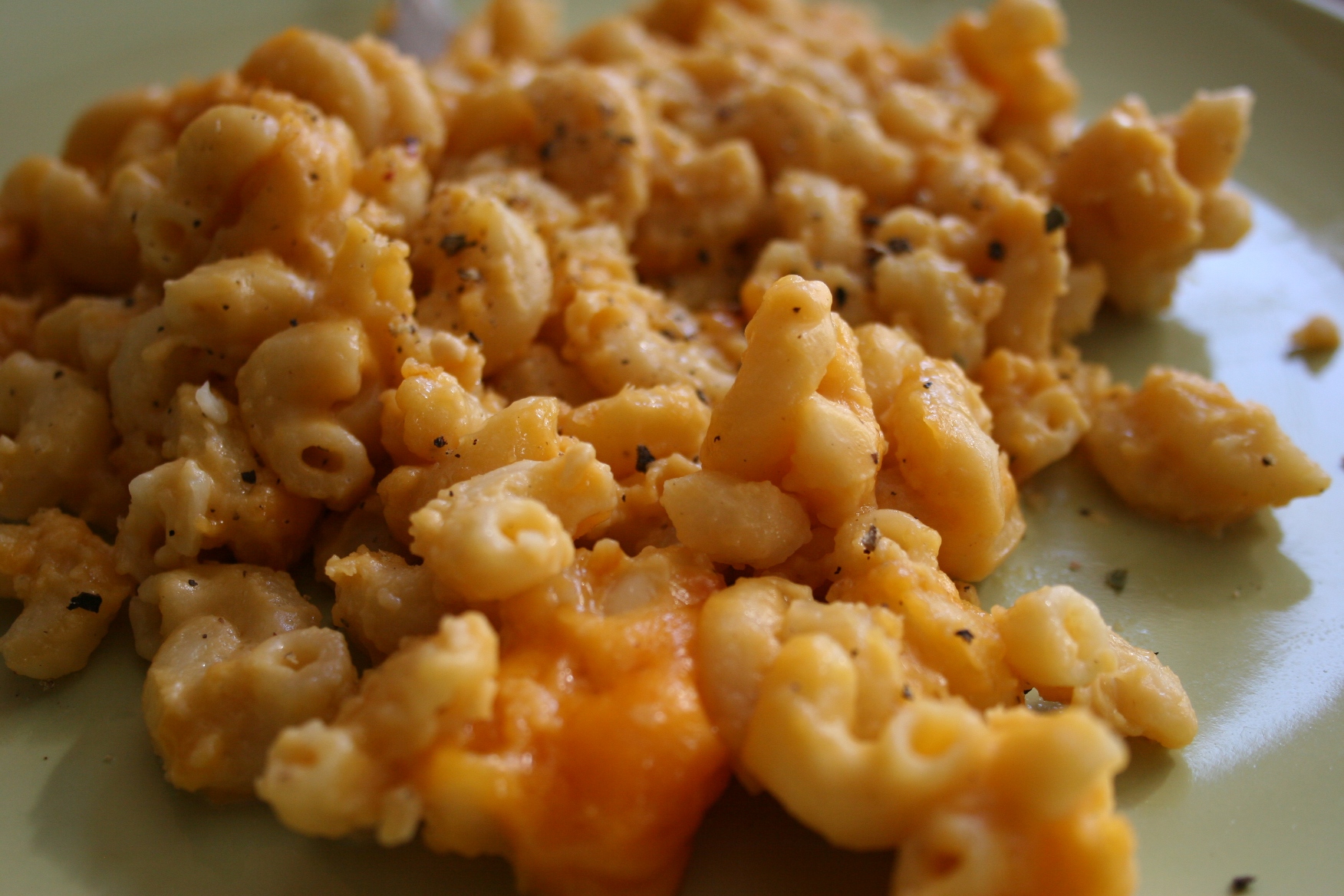
The mac and cheese I made from scratch and seasoned with extra pepper.

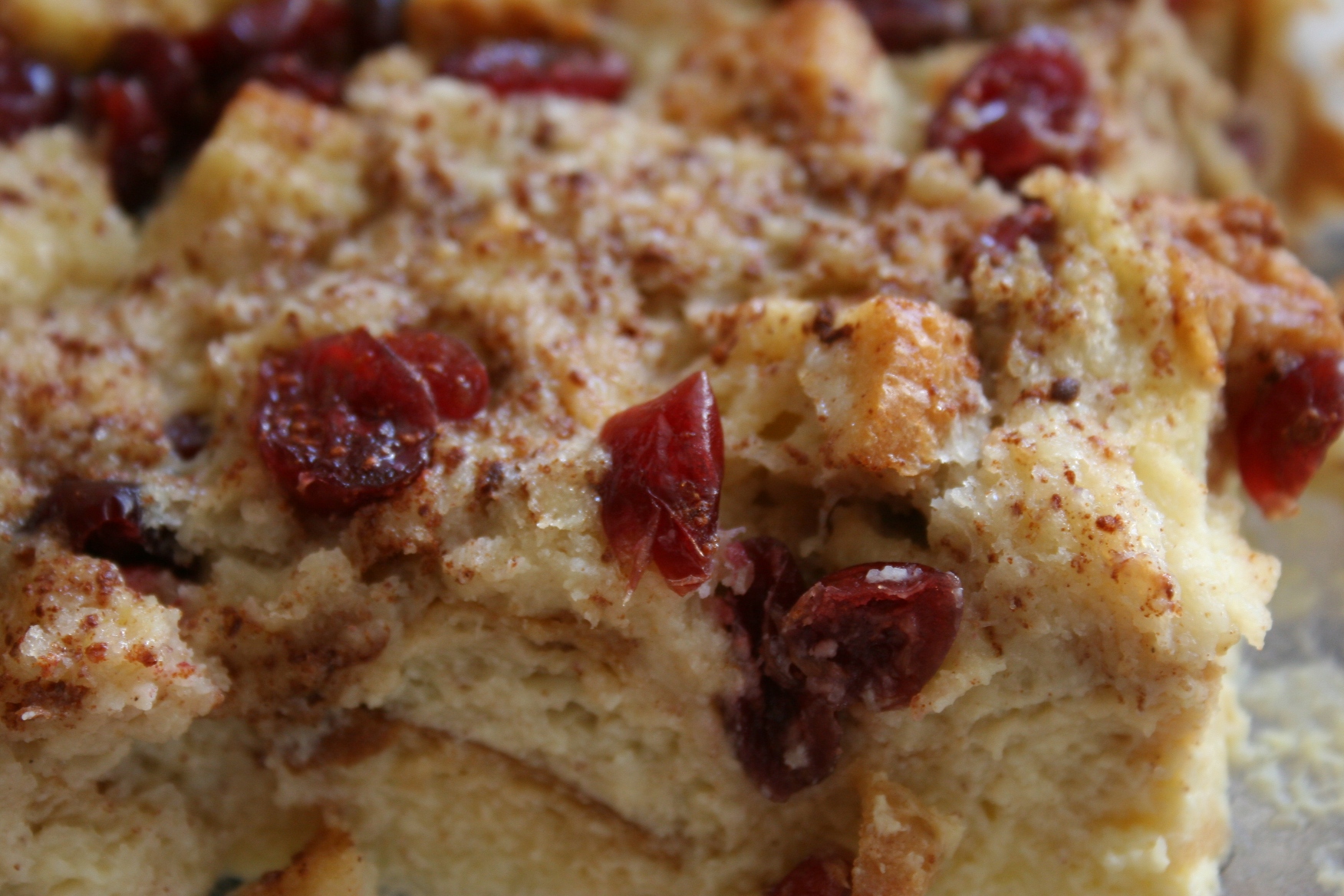
Then, as if that wasn’t enough comfort food for one meal, I made bread pudding for dessert with a recipe I also pulled off allrecipes.com. I adapted the Bread Pudding II recipe by substituting dried cranberries for the raisins, cutting the cinnamon to ½ a teaspoon and using only ½ a cup of sugar. I loved it and ate the bread pudding for dessert that evening and for breakfast the next day.

SO TELL ME, what comfort foods do you crave in the deep, dark depths of winter?


Bread pudding laced with dried cranberries because I prefer those to raisins.

© Copyright 2011 Audrey Kletscher Helbling


Sauerbraten and sauerkraut in Morristown November 15, 2010

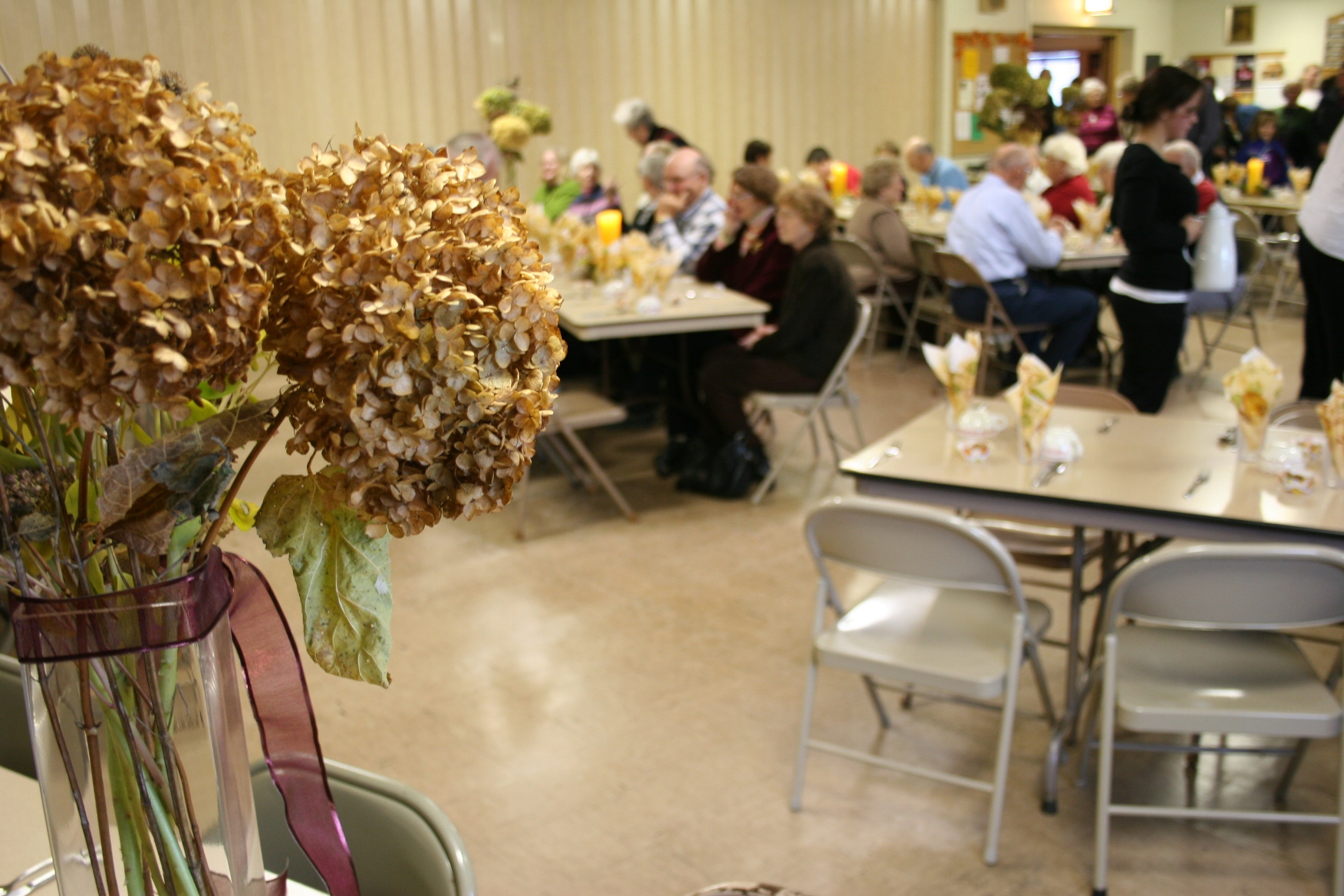
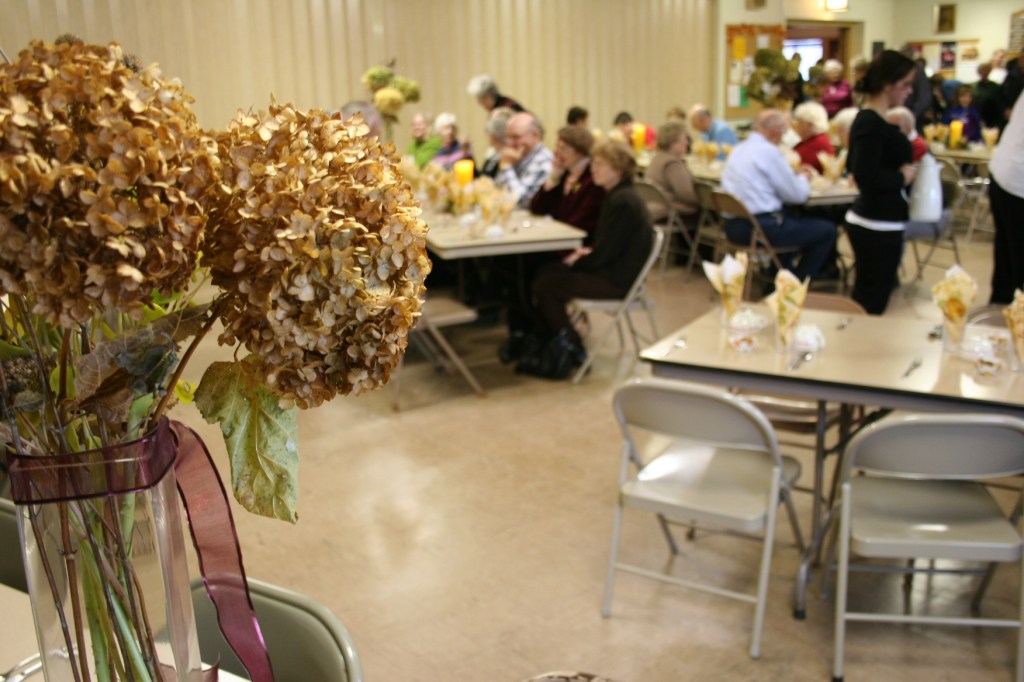
Diners gathered in the fellowship hall at Bethlehem Lutheran Church in Morristown for a German meal served by the Cannon Valley Lutheran High School German Club following a German Fest of Thanks & Praise.

THE LAST TIME I ATE an authentic German meal, I was in high school. The German Club, of which I was a member, was on a Christmas trip to New Ulm, that most Deutsch of all Minnesota cities.

After visiting Domeier’s German Store, a quaint import shop, and Christmas shopping downtown, we gathered at Eibner’s, a German restaurant. Of our ethnic meal there, I remember only the main dish, sauerbraten.

Fast forward nearly four decades to yesterday and a German meal served by the Cannon Valley Lutheran High School German Club at a fundraising dinner in Morristown. The group is traveling to Germany in February. The main dish sauerbraten, beef served atop spaetzle, tasted tangy and vinegary, exactly as I remembered. But then so did several of the other foods like the German potato salad and the purple cabbage, which my friend Mike claimed was transformed from green to purple in a sort of scientific experiment.
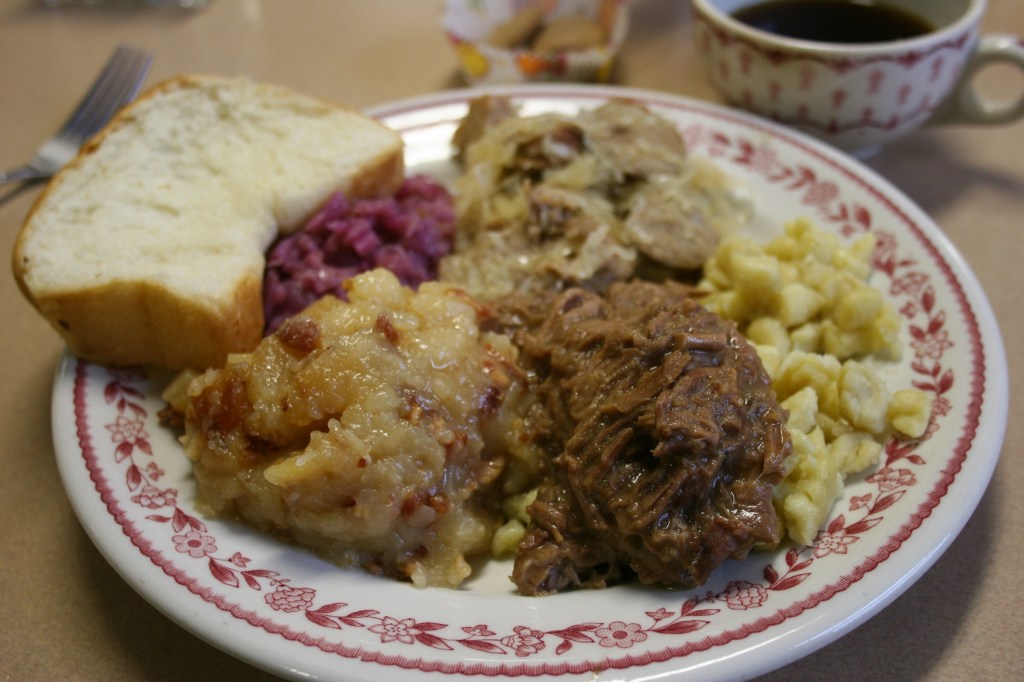
The plated portion of the meal included German potato salad, cabbage, brats with sauerkraut, sauerbraten served atop spaetzle (a German dumpling) and bread (rye may have been a more authentic choice).

Magic or not, the meal turned out by the kitchen crew (primarily German students’ parents and CVLHS board members) was worthy of any good German restaurant. I give it five stars.

That said, I honestly could not eat this food on a regular basis. Too much starch. Too heavy. Too all-one-boring blah white, except for that colorful dash of purple cabbage. I fear a steady diet of this would clog my arteries and cause me to gain weight more rapidly than I already am at my slowing metabolism mid-50s age.

In all fairness to the Germans, I’m certain they don’t eat this much or these types of foods daily just like I don’t eat pizza and potatoes every day. In fact, CVLHS language teacher Sabine Bill, who recently moved to Morristown from Germany, told me the German meal served on Sunday is representative of the food eaten in the Bavarian region of southern Germany, not the entire country.

Now I’m unsure where my German ancestors lived, but I know they liked their sauerkraut. My dad was the king of sauerkraut makers, a tradition carried on by my sister Lanae. We got sauerkraut on Sunday served with slices of brats.

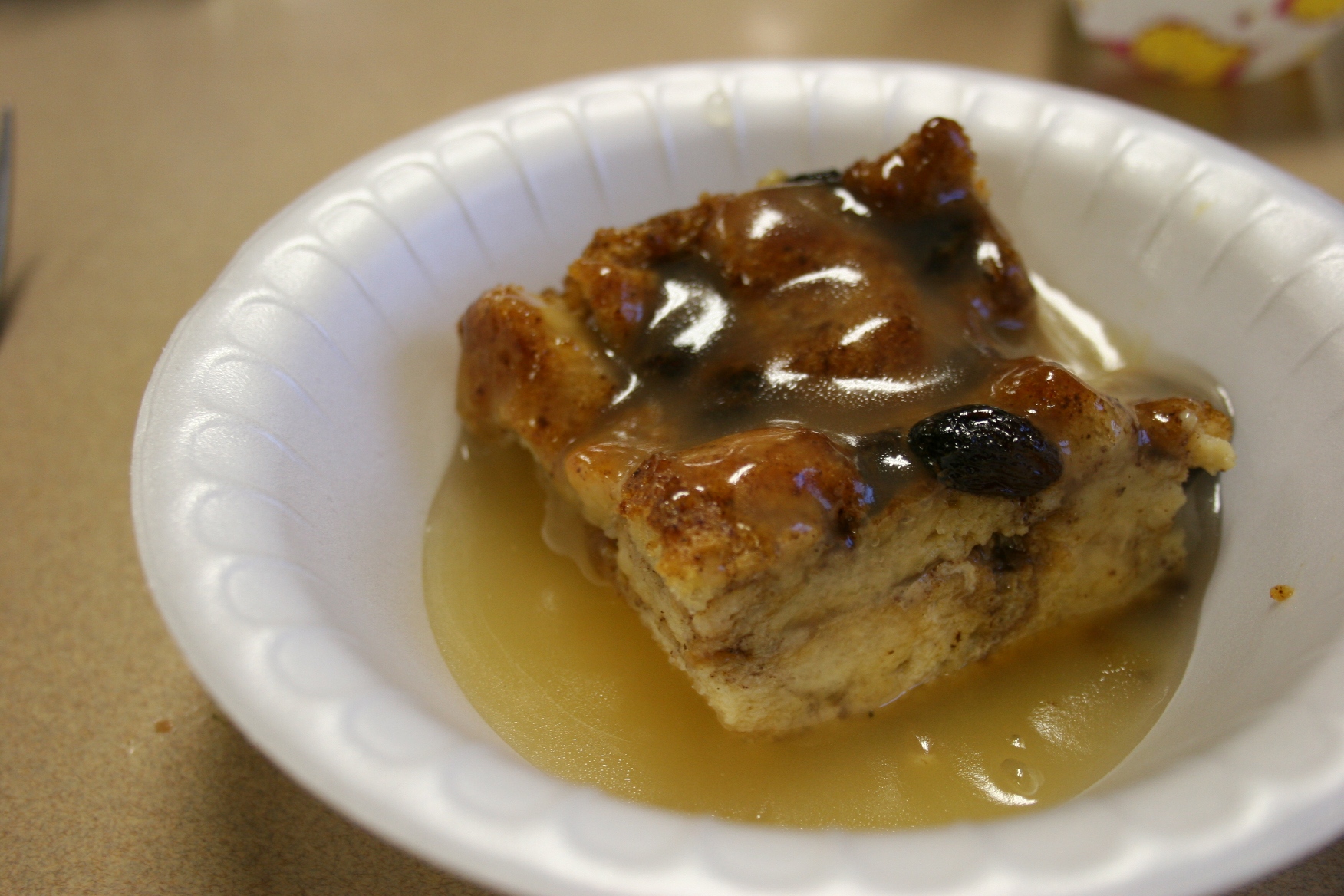
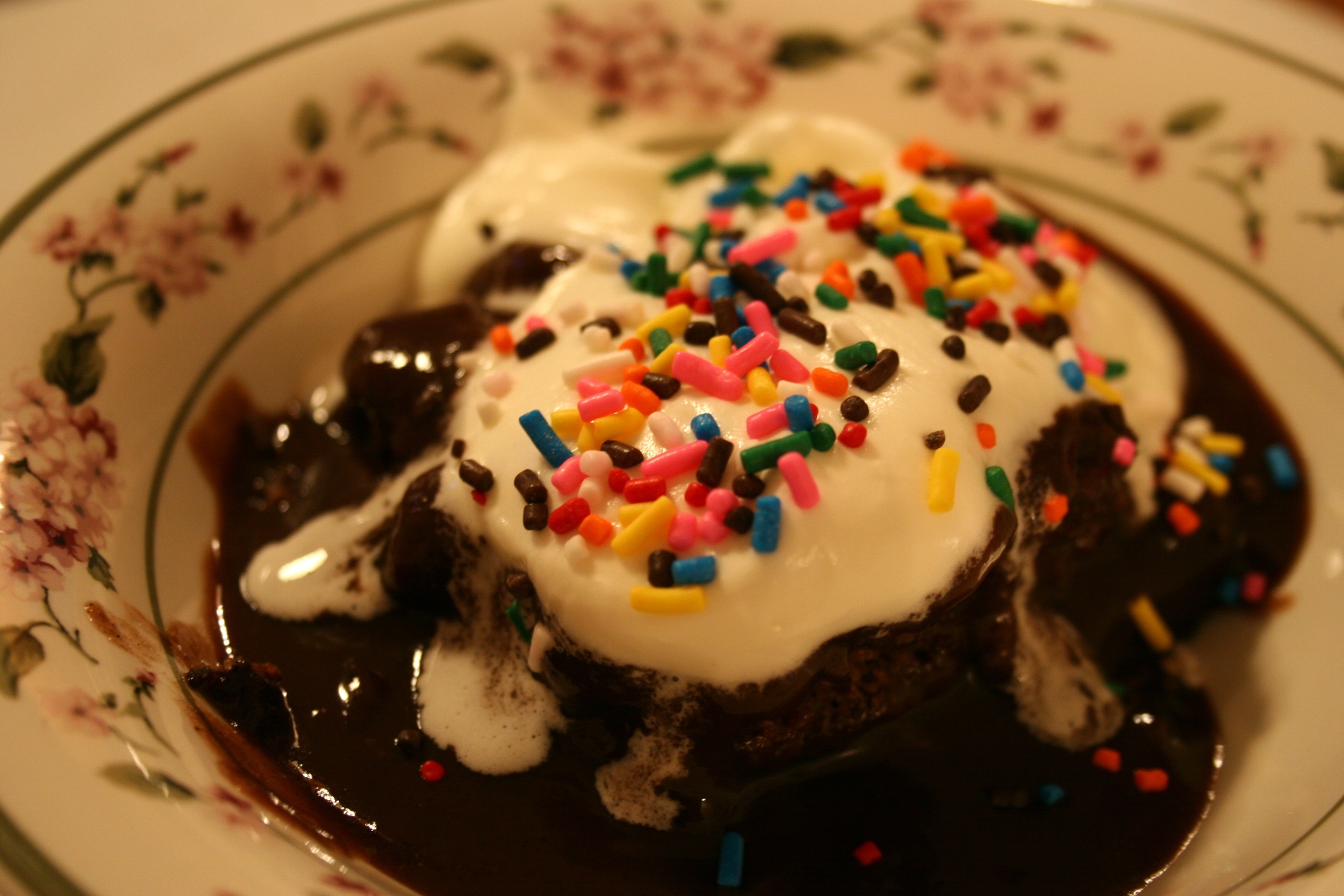
Just when I thought I couldn’t possibly eat another bite of anything, I was handed a bowl of bread pudding laced with raisins and immersed in a decadent, over-sweet buttery sauce. My husband complained that his piece was smaller than mine and I offered to share. But I didn’t, not one single bite. I could have. I should have…
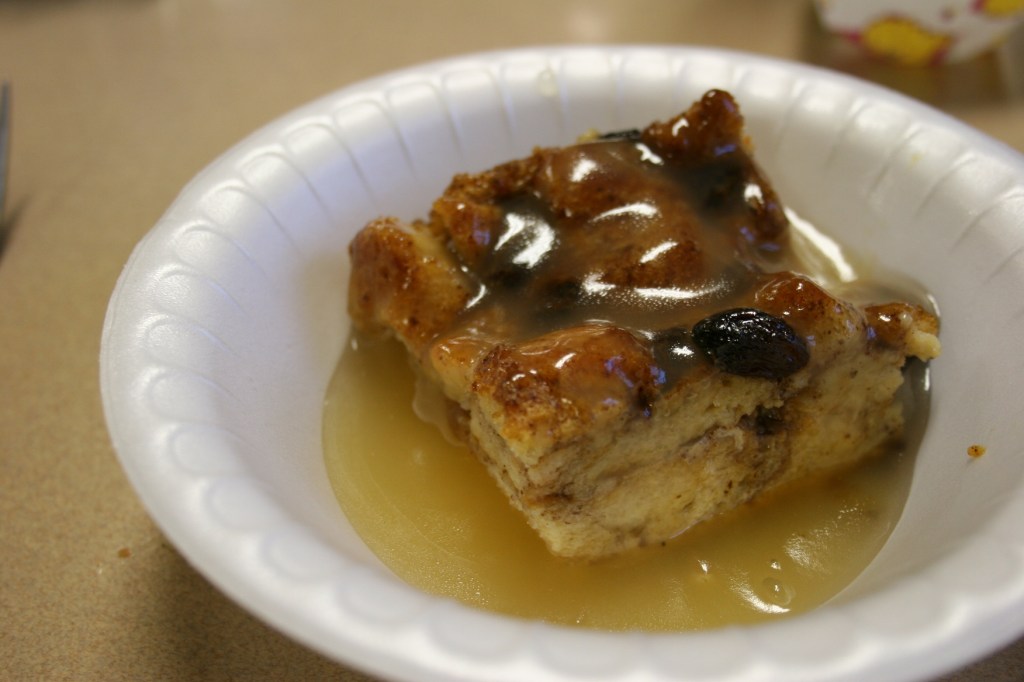
The decadent bread pudding...

Typically I don't drink coffee. But it was decaff, went well with the bread pudding and pfeffernusse and was served in the prettiest, sturdiest cups.
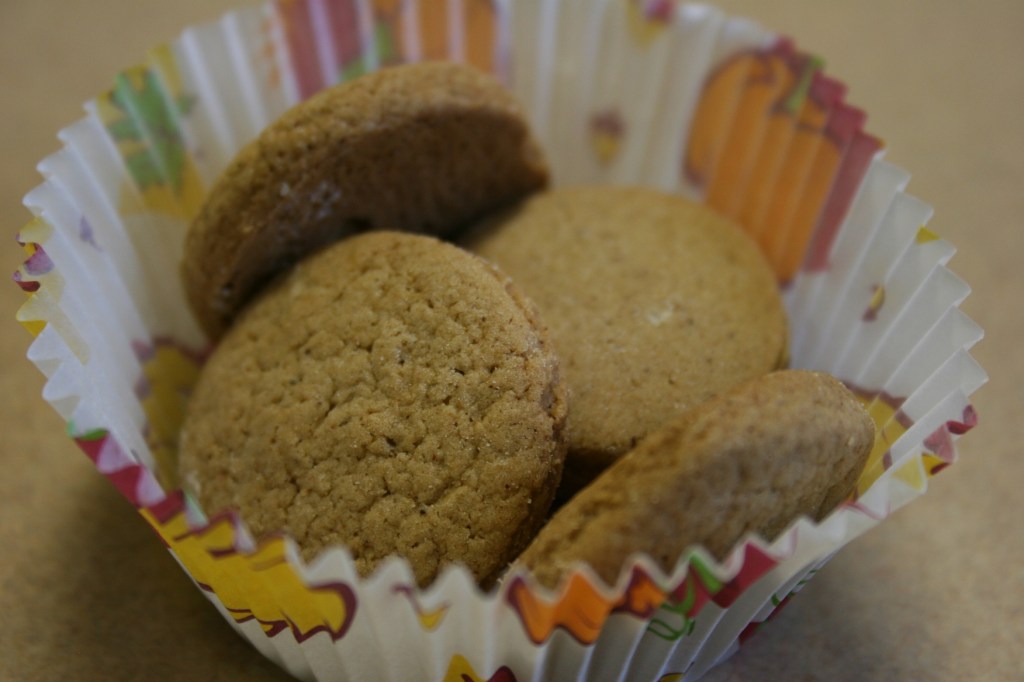
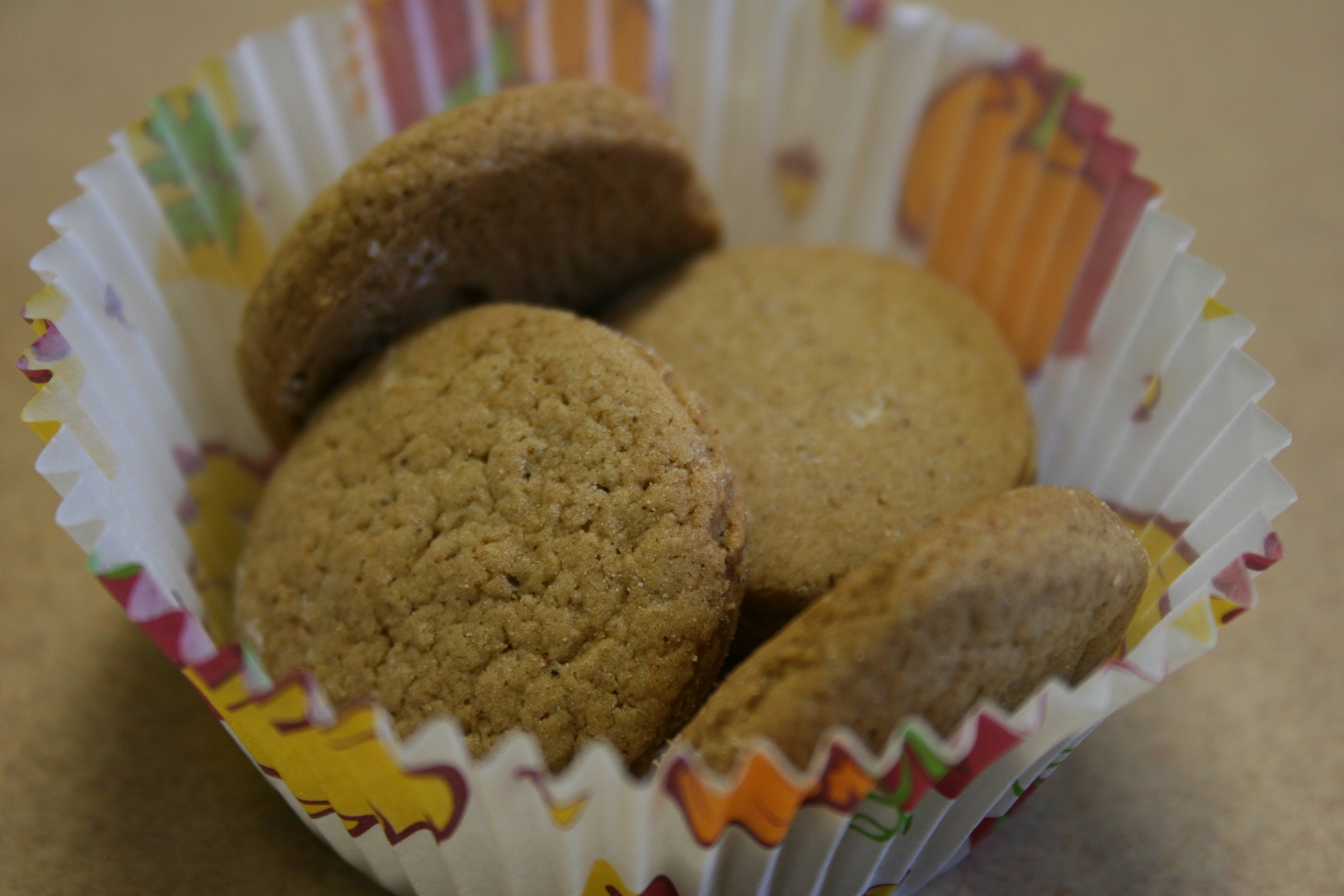
Diane, a CVLHS board member, made more than 1,000 pfeffernusse, tiny hard cookies which include black pepper, black coffee and several spices. Each diner got five cookies, served in festive cupcake liners.

On the way out of the Bethlehem Lutheran Church fellowship hall, where the German meal was served, I told my friend Mike that his group had started something. They would have to host this German Fest of Thanks & Praise and the German meal annually.

I could eat this ethnic food once a year. To my several-generations-removed-from-Deutschland taste buds, this homemade meal rated as authentically delicious.
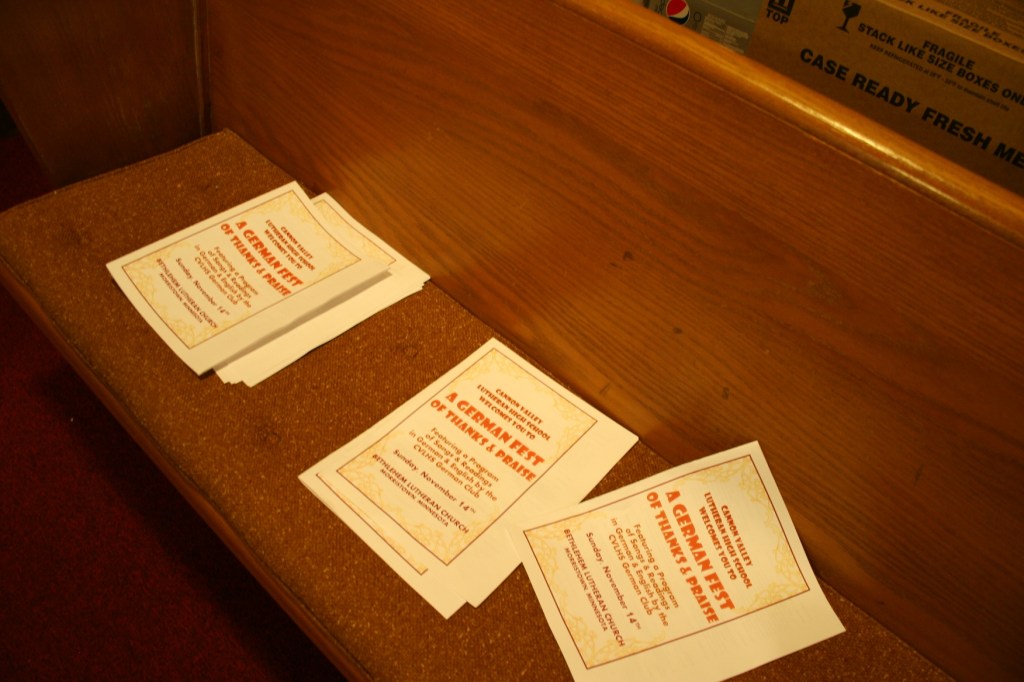
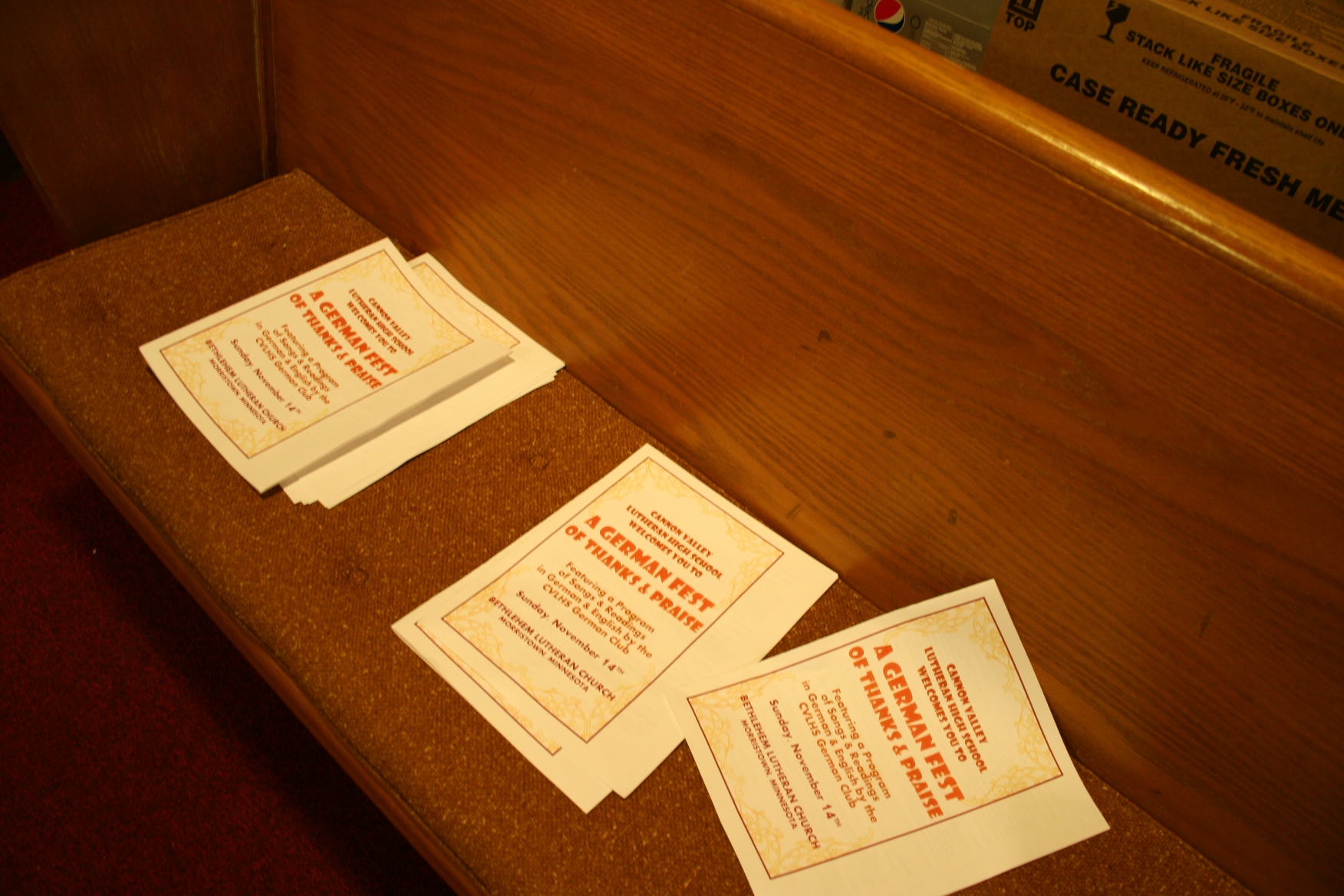
Programs from the pre-dinner German Fest of Thanks & Praise lie on a pew inside Bethlehem Lutheran Church. The fest included prayers, songs and Scripture readings in German.
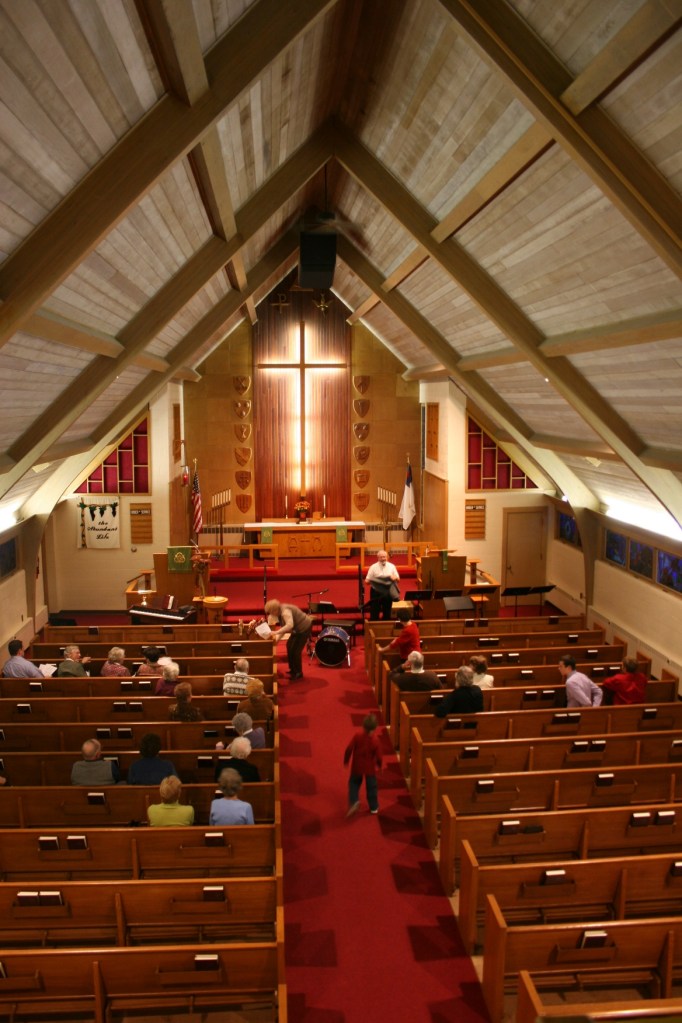
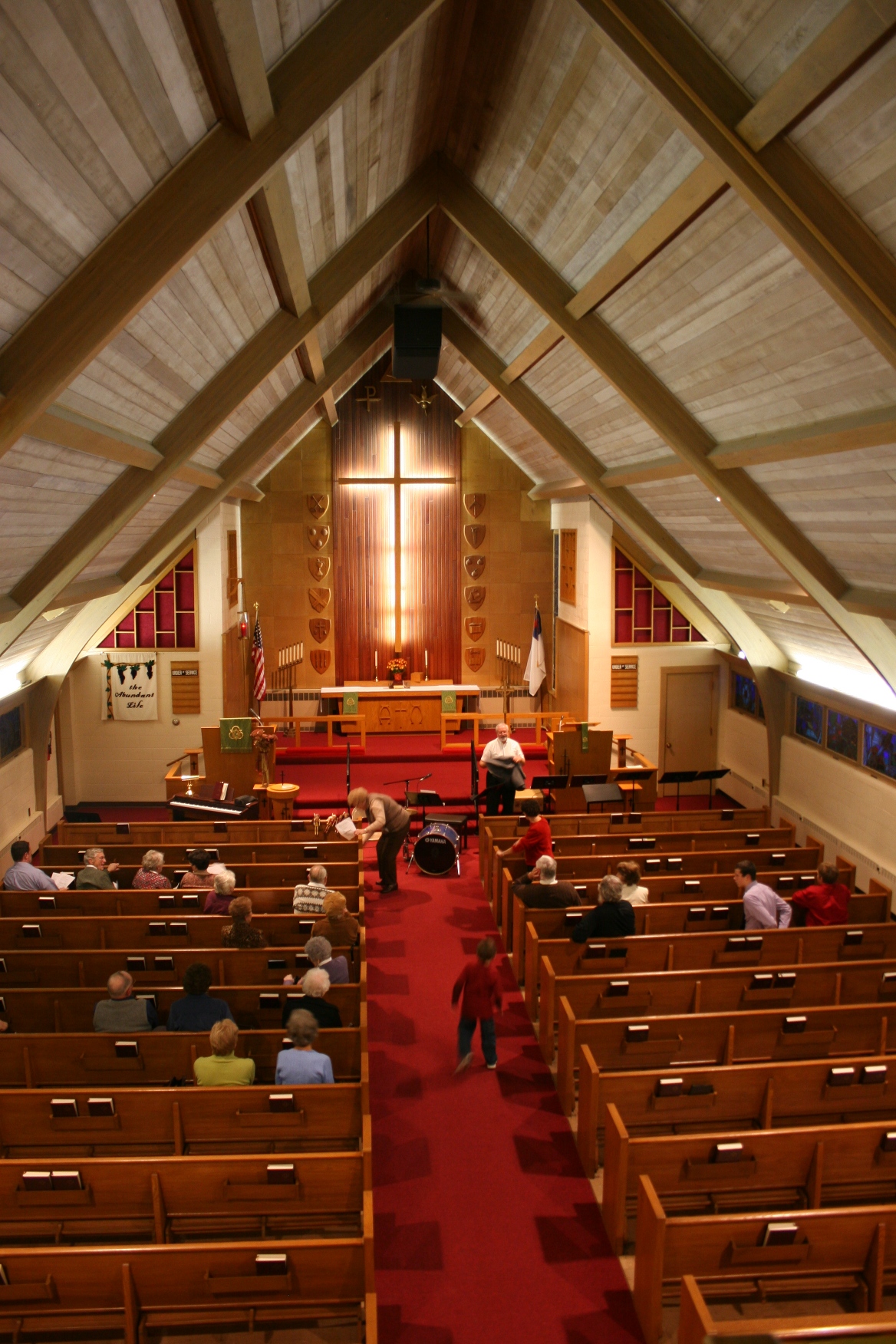
Between meal sittings, musicians entertained waiting diners inside the Bethlehem Lutheran Church sanctuary.

On my way to the church balcony, I found this CVLHS sign on a bulletin board.

© Copyright 2010 Audrey Kletscher Helbling


Honesty goes a long ways at roadside market October 19, 2010


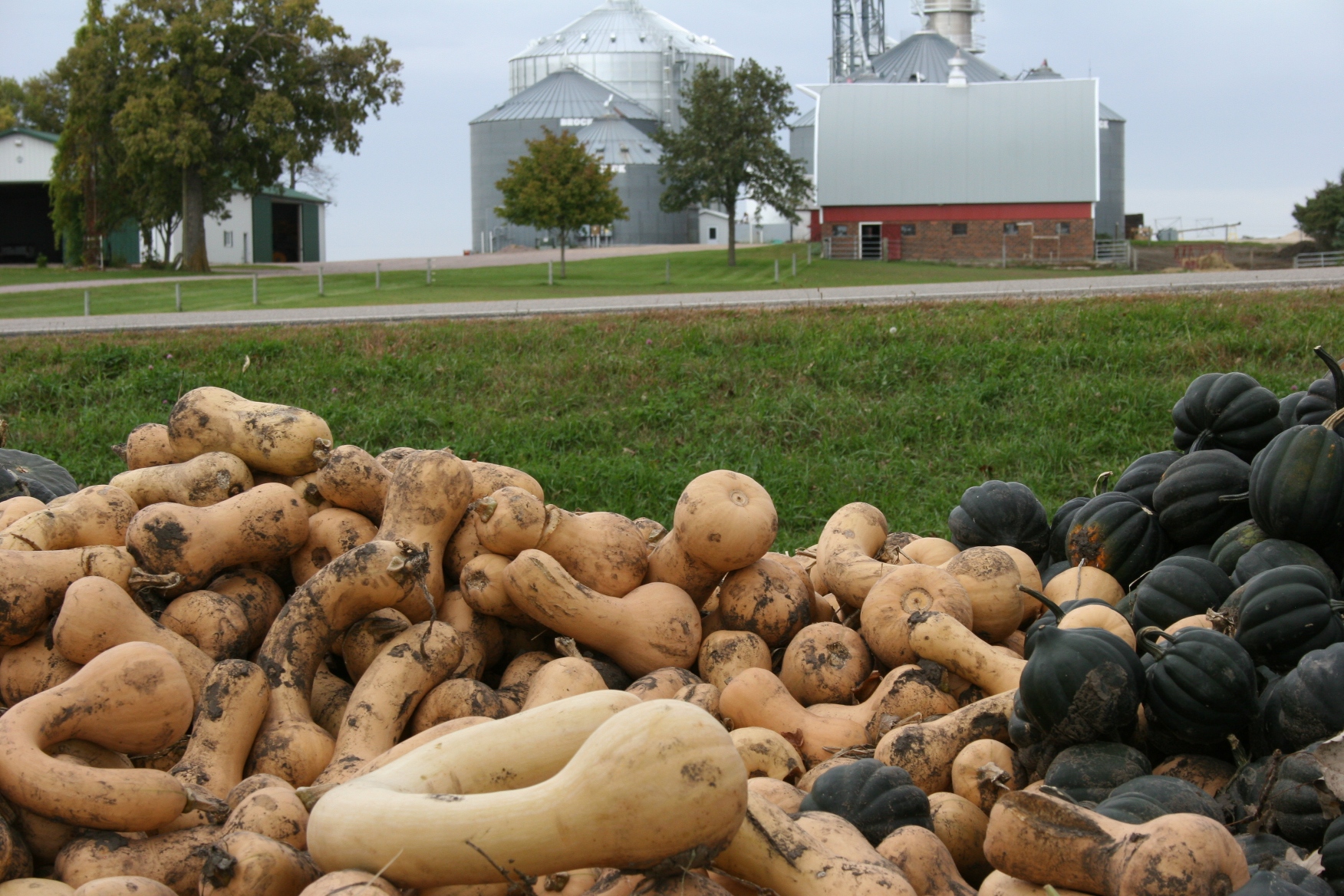
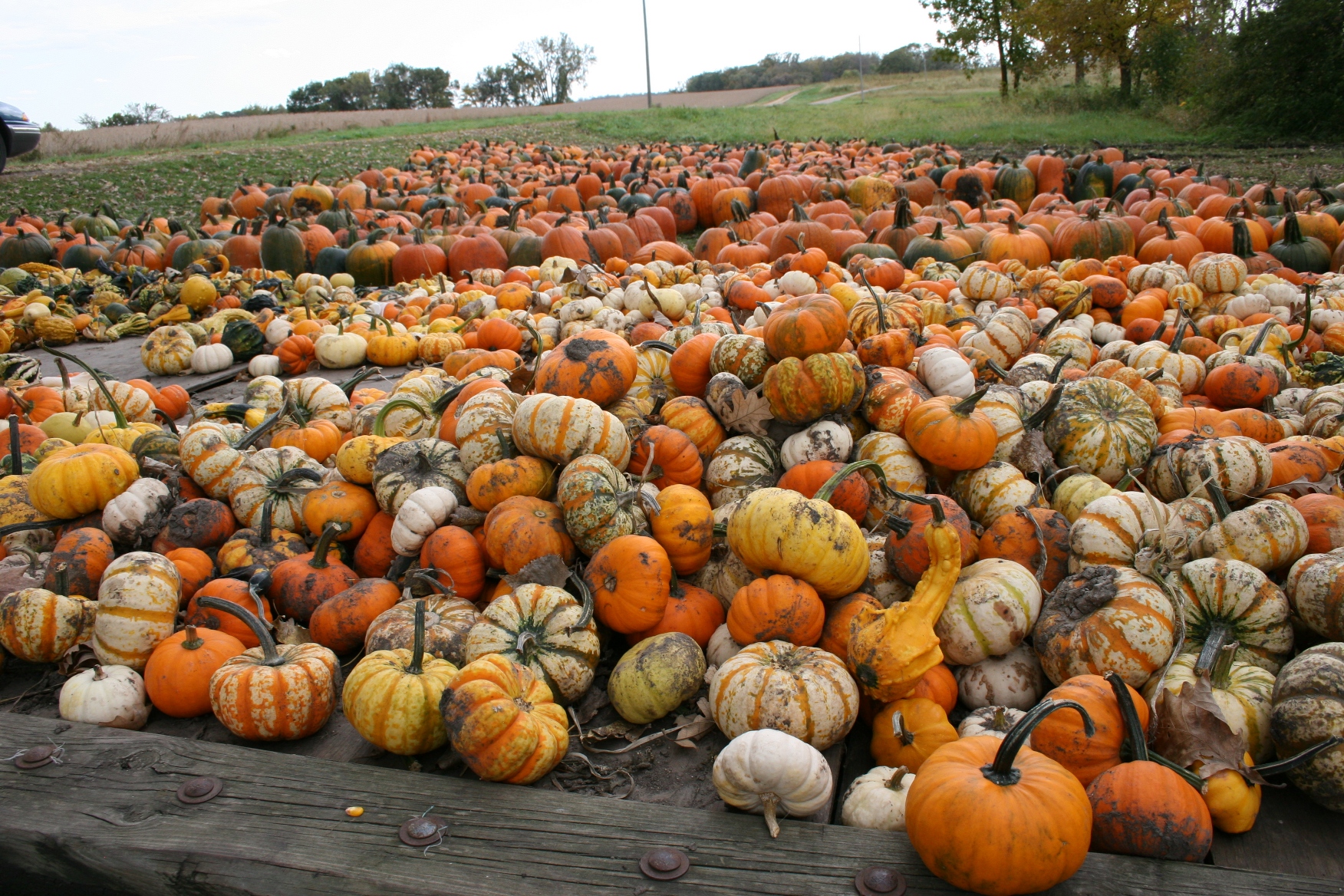
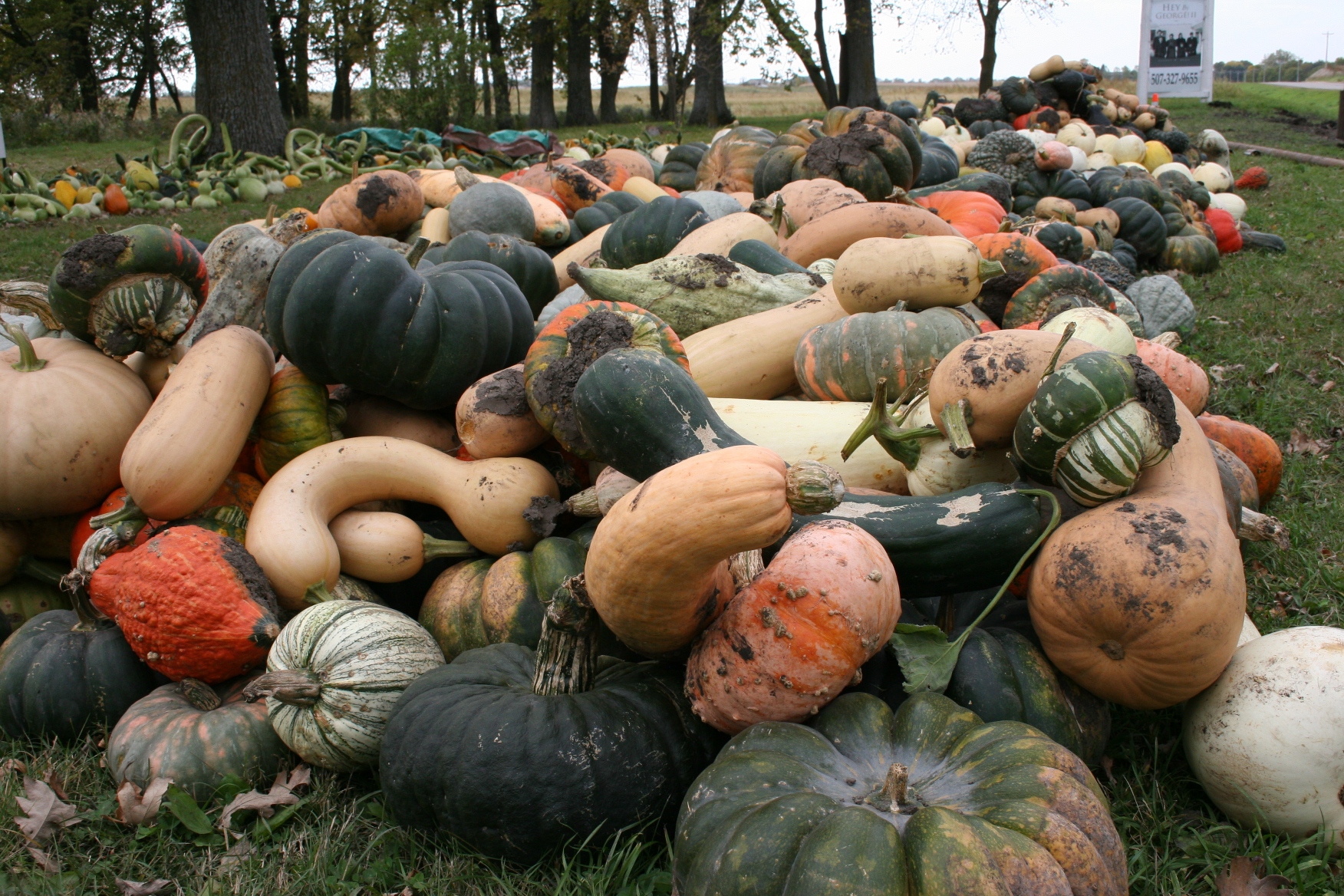
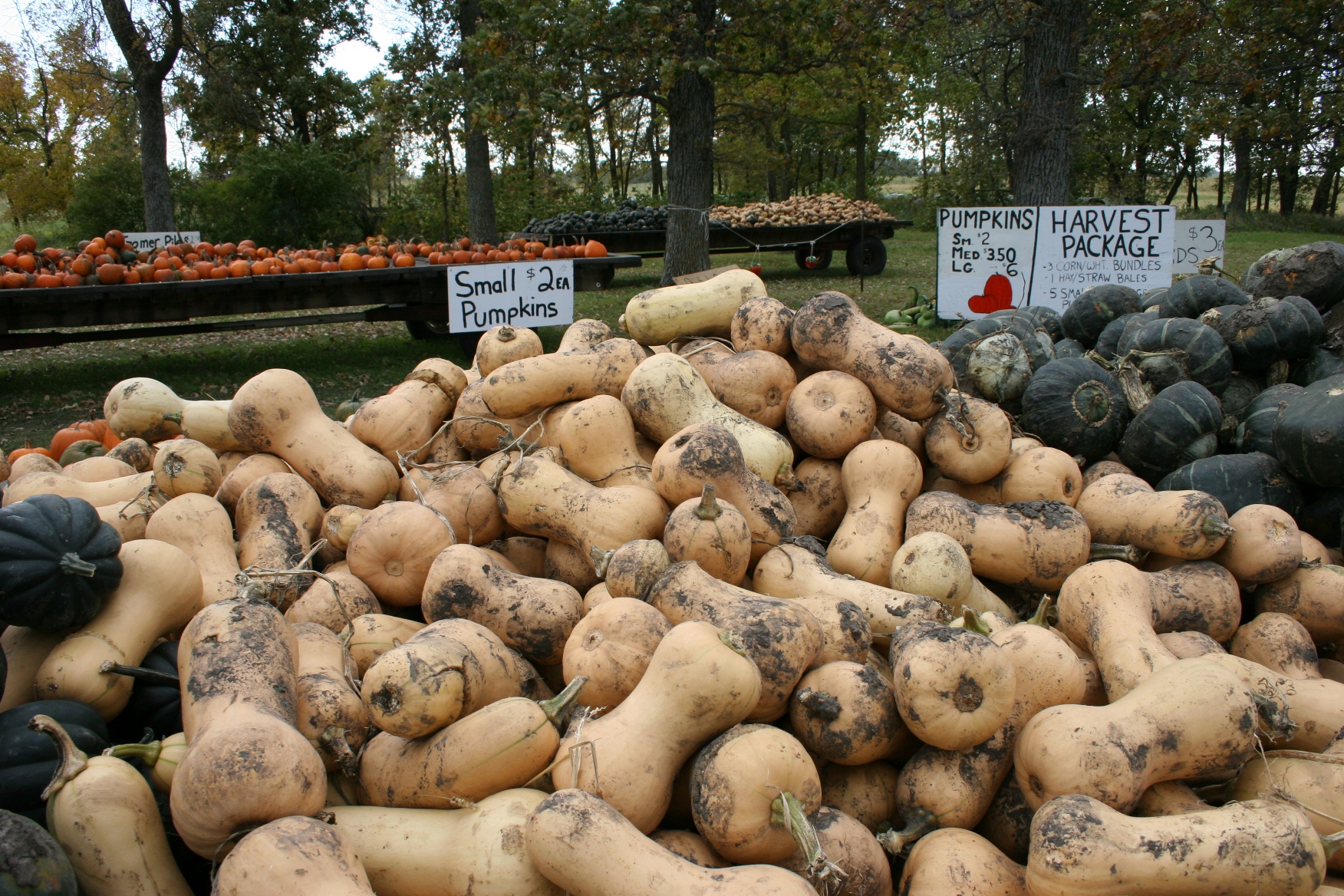
Mounds of squash for sale at George Denn's roadside market.


BY GEORGE, that George is a mighty trusting fellow.

But, hey, the system must work for George W. Denn, purveyor of pumpkins, gourds, squash, hay and straw bales, corn shocks, apples, honey, popcorn, wheat, pumpkin seeds and books—I think that’s it—along Blue Earth County Road 2 on the Blue Earth/Le Sueur county line.

When you pull up to George’s roadside spread northeast of Mankato by Wita Lake next to his farm, he’s nowhere to be seen. That’s where the word “trust” factors into his Hey by George! business.

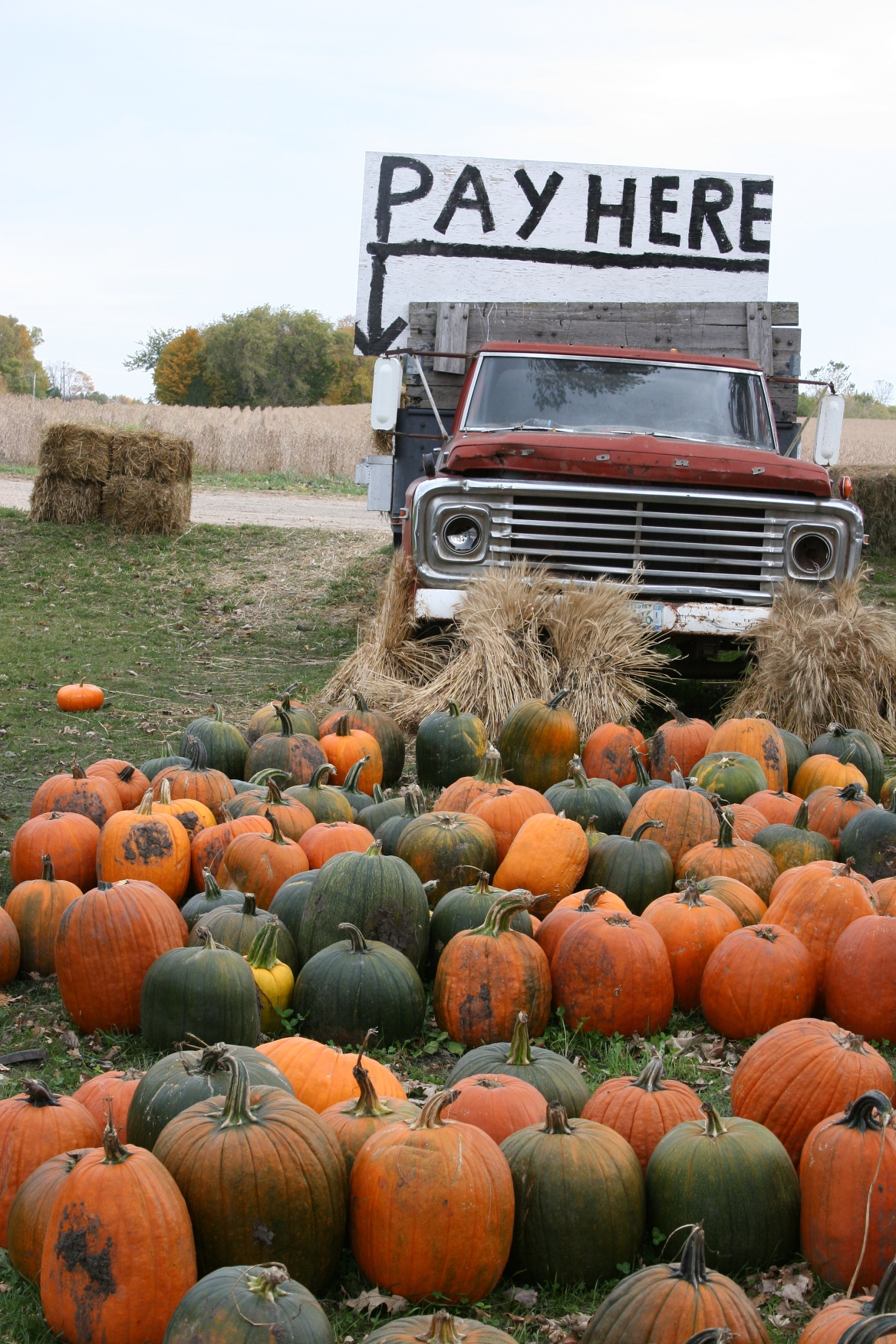
The Christian pumpkin farmer-writer relies on his customers’ honesty to simply deposit their payments in a secure metal box attached to the side of an old truck. Signage directs shoppers to “PAY ON OTHER SIDE” or to “PAY HERE.”

Apparently the system works. Or, if it doesn’t always work, perhaps George figures his business can survive a few stolen pumpkins, gourds or squash among the thousands he’s displayed.

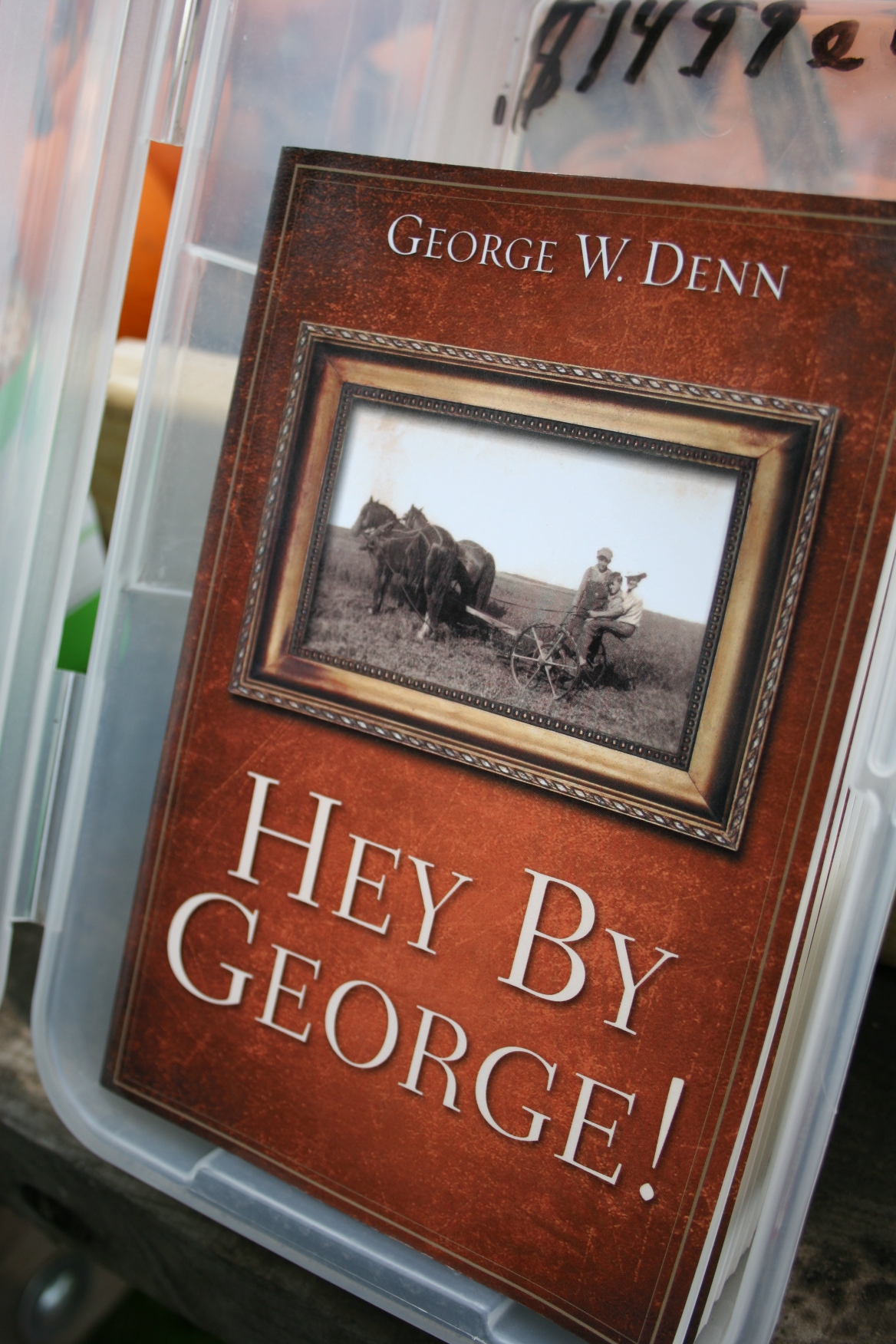
If anyone happens to take one of George’s $14.99 inspirational books or some of his produce without paying, he/she may want to turn to page 35 in Hey By George!.

George reveals that he’s not only mighty trusting, but he’s also mighty forgiving.


You pay on the honor system, depositing your money into a box attached to the side of this old truck.


The money goes here, in this secured box, as directed.


If you can't find the perfect pumpkin here, then you probably won't find one anywhere.


A kitschy sign lists the price for corn shocks.


Piles of squash for purchase.


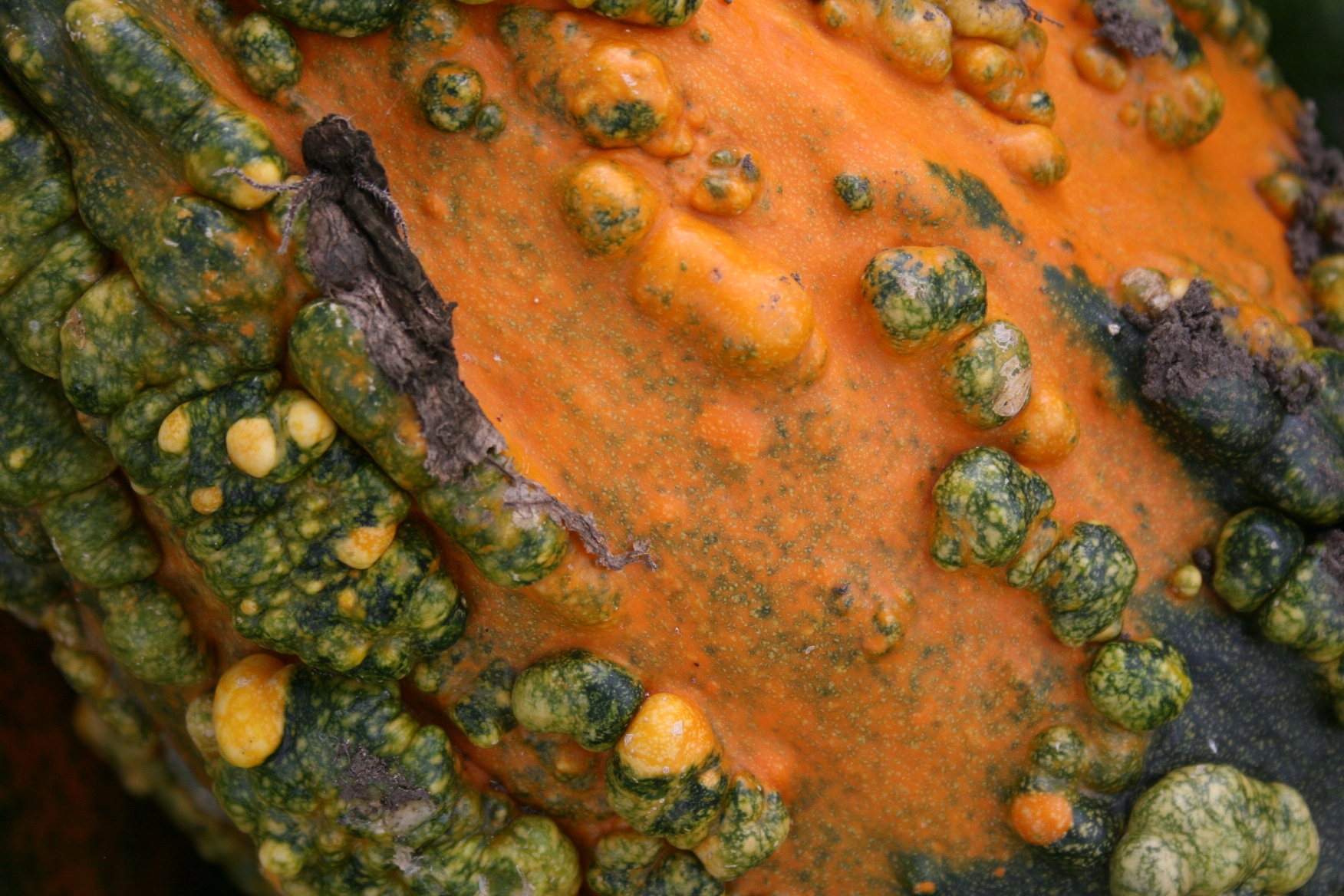
A close-up of the bumpy squash at Hey by George!


Heaps of squash at Hey by George!


Wispy wheat makes an artful display beside the wheel of the old truck.


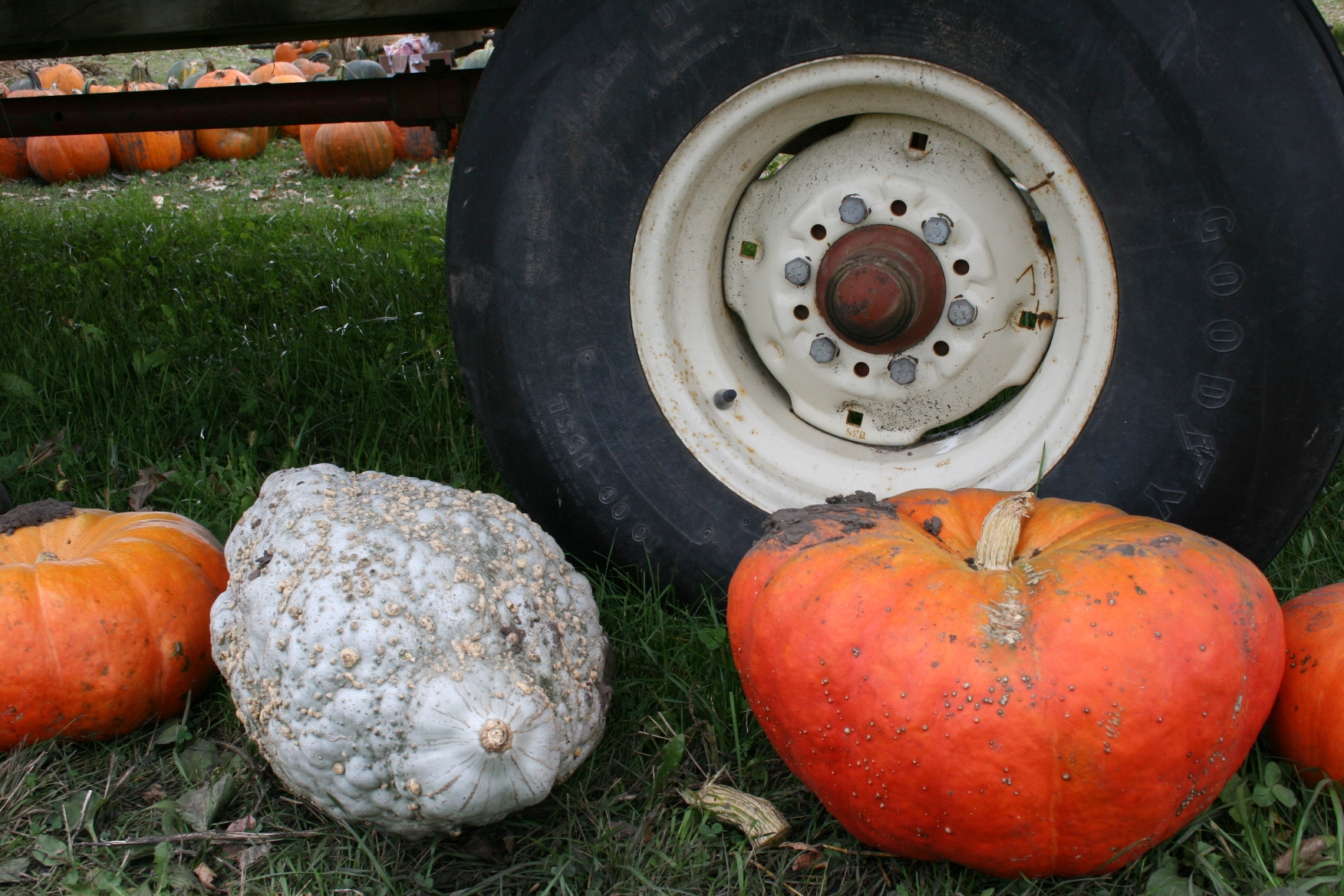
Colorful squash next to the old truck are for sale.


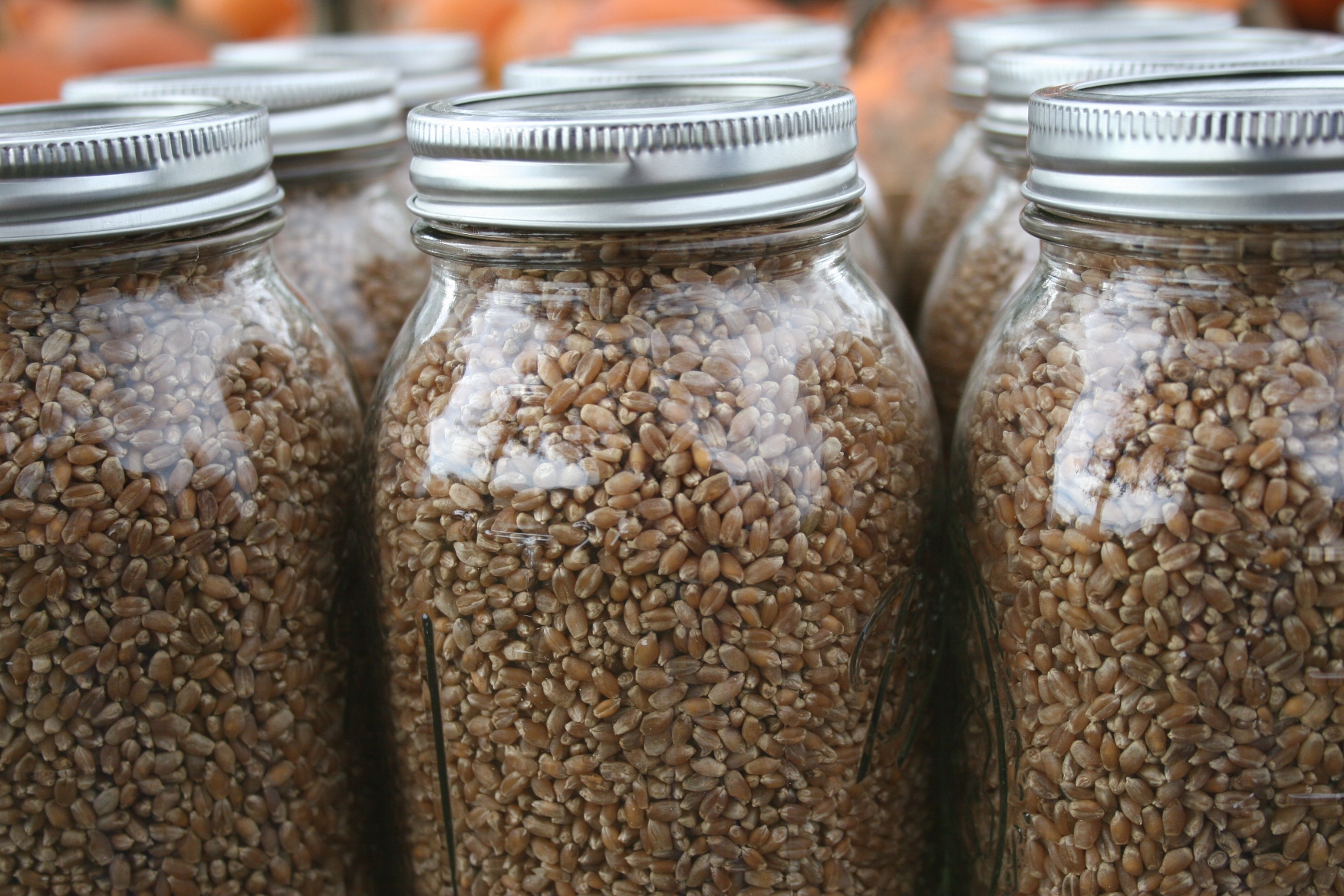
Jars of wheat are among the offerings at George's roadside market.


George Denn's two books, Hey By George! and Hey By George II, are tucked into plastic boxes and are also sold on the honor system.


© Copyright 2010 Audrey Kletscher Helbling
 

Geeky chili and more at Faribault Fall Festival October 15, 2010

Filed under: Uncategorized — Audrey Kletscher Helbling @ 8:02 AM
Tags: , , , ,


Christine Henke serves chili, which I classified as "very spicy," at Glam Central Salon in downtown Faribault.


HOW MUCH CHILI could you eat if offered 25 samples? Visitors to downtown Faribault took on that challenge last Saturday in the Fall Festival Chili Cook-off. For $2 you could buy a plastic spoon and taste-test 25 chilies served at businesses along a five-block area of Central Avenue.

I tried 19 and quit when my stomach just couldn’t hold any more fiery or peppery or anything at all.

My efforts to rate the chilies based on originality, presentation and flavor ended at about taste table five. Although I jotted notes on my Chili Cook-off ballot, I found it impossible to rank them in three categories. That task was just too difficult and time-consuming considering I was also juggling a camera, a camera bag and a notebook, and chatting with people.


Tami Schluter, right, of the Historic Hutchinson House Bed & Breakfast, won second place with her Chili "Corn" Carne served at The Sweet Spot, a downtown candy and ice cream shop.


But, back to that chili. Here are the notations I made on my ballot, in no particular order: real spicy, very spicy, extremely spicy, beany, blah, sweet/tomatoes, green chili, lots of veggies, Berry Weiss, Argentine, all-meat Texas chili, cinnamon and lots of cilantro, strong beer taste, jalapenos.

There you have it. Now you figure it out. You can, clearly, make chili many, many, many different ways.

If you’re Geek Central, you’ll also masterfully present your chili as “Genuine Nerd Chili. Made with science!” Clever, clever.


The guys at Geek Central served Genuine Nerd Chili. The formula can be translated as follows: M for meat; P for peppers; T for tomatoes; H x 3 for heat; and C for chili.


Had I rated the Geek’s chili on presentation, I would have given it a one, the highest score, simply because of the creative signage. I would have rated the taste high too. Computer geek John Stepan informed me that his chili included 12 fresh jalapenos (yikes!), three big dried chilies and a habanero pepper. Isn’t that a formula for fire? Honestly, my husband and I heard a buzz on the street about the Geeks’ very spicy chili.

At least two contestants tied the words “a little kick” to their chili offerings. That would be native Argentinean Ozzy Amelotti, who is a chef at The Depot, and the Friendship House crew, which includes three Minnesotans and one Texan (who added the “little kick”).

Two cooks—Carl Mortenson at The Nook & Cranny and Rich Mackey at The Cheese Cave—stirred a bit of brew into their chili pots. Mortenson added his favorite Guinness, creating an Irish-inspired beer (his wife Jeanie revealed) and Mackey poured in Leinenkugel’s Berry Weiss. Surprisingly, I could taste both beers.

By the time I reached Mortenson and Mackey, I was ready for a beer, although I would have preferred mine in a bottle. The hot day and all those fiery spices and peppers passing over my palate were pleading for a cool, refreshing drink of something, anything.

Thanks to the chili servers at Energy Crave, I gulped down a sample of energy tea, which gave me enough energy to cross the street, sample several more chilies, chug a bit of fresh apple cider and end my grazing along the Central Avenue chili smorgasbord.

Even though I officially did not cast a ballot in the Chili Cook-off, I did choose a favorite, which, coincidentally, won the competition. That would be Phi & James “Ribless Chili.” The pair, from Hy-Vee Foods and serving at Creating a Ruckus, concocted a winning recipe that included, among other ingredients, pork ribs, chili powder, cayenne pepper and Thai peppers grown in Phi Ho’s garden.


Phi Ho, left, and James Marthaler, the winning chili team from Hy-Vee Foods.


Coincidentally, Rich Mackey, the winner in last year’s Chili Cook-off, also used pork ribs to create his first-place winning dish. Mackey tied for third this year.

If I had voted for a second-place winner, I would have chosen the Argentine chili with cinnamon and “a little kick at the end,” scooped up by Chef Ozzy at The Cheese Cave.

All in all, the Chili Cook-off presented a wonderful opportunity to explore downtown Faribault, and sample some darned good chilies (and a few not-so-good), on a beautiful autumn day in October.


Craft and other vendors set up shop in a one-block area of Central Avenue during the Fall Festival. A brief, passing shower halted festivities for about five minutes before the sun emerged again.


I ducked inside Burkhartzmeyer Shoes during a short downpour. Outside, Sharon Geyer served chili, made from a family recipe, under an awning.


I shot this image through a window of Burkhartzmeyer Shoes while waiting for the rain to stop so I could resume my chili tasting along Central Avenue in Faribault.


A vendor sold pumpkins to festival goers.


Different cultures, all the faces of today's Faribault, mingled during the Fall Festival, one bonus aspect that I appreciated.


A wagon full of pumpkins were for sale in the 400 block of Central Avenue.


© Copyright 2010 Audrey Kletscher Helbling


Serving up bullheads in Elysian October 1, 2010

Filed under: Uncategorized — Audrey Kletscher Helbling @ 8:18 PM
Tags: , , , ,

A sign advertises the October 2 Bullhead Feed at the Elysian Legion, 106 E. Main St.

OK, FOLKS, if you’re looking for something different to do on Saturday night, how about attending a Bullhead Feed?

Yeah, that’s as in those yellow-bellied, whiskered fish that are about as ugly as a fish can be.

Anyway, American Legion Post #311 in Elysian is hosting its first Bullhead Feed of the season on Saturday. I know because I was in Elysian this afternoon and read the sign posted on the Legion.

I’ve heard about these first-Saturday-night-of-the-month feeds from my brother-in-law, who happens to be a native of Waterville, Bullhead Capital of the World, just down Minnesota Highway 60 from the Bullhead Feed site.

Although my relative raves about the bullheads, he hasn’t quite convinced me that they’re worth eating. I ate bullheads as a child, but I didn’t know that tastier fish existed. Heck, at least they weren’t fish sticks was my naïve opinion back then.

But apparently plenty of Elysianites, Watervillians and others like bullheads as the Legion offers these monthly feeds from October through May in this town of 580.

I’m unsure what time the Legionnaires start serving bullheads. But I figure if you show up around 5 p.m., you might find the door open. Just make sure you use the bar door.

A sign on the Legion directs patrons to the bar door.

© Copyright 2010 Audrey Kletscher Helbling


How some Minnesota schools are serving healthier meals September 14, 2010

DECADES AGO when my relatives from the Cities (Minneapolis and St. Paul, for you non-Minnesotans), visited my southwestern Minnesota childhood farm, they would scoop up fresh garden produce by the bags full to take home. We didn’t mind, if we had extras, and were happy to share the bounty of the land.

I’ll admit, though, that even back then I felt a bit smug about our ability as farmers to provide food for the city dwellers. They had small gardens, but certainly could not grow what we could on our acres and acres of soil.

Today, as a city dweller, I’m the one carting home fresh garden produce from the country. No longer smug, I humbly accept the eggplant, tomatoes, spinach, cucumbers, okra, green beans, zucchini and other fruits and veggies that my country-dwelling family and friends share. I could live on fresh vegetables; I love them that much. But in my scrunched yard, I have room only for growing tomatoes and lettuce.

Some of the garden-fresh vegetables I got from my brother a few days ago.

Eating local, eating fresh, seems the healthy, trendy thing to do these days.

So when I read in the September 9 issue of The Gaylord Hub (a weekly newspaper where I worked in the 1970s) that students at the Sibley East, Arlington campus, will eat garden-fresh vegetables in their lunches this year, I took note.

According to the article, last spring students and staff planted a one-acre vegetable garden, which has produced beans, potatoes, cucumbers, onions, cabbage and squash. Later the garden will yield pumpkins, carrots and kale. Food service staff has been busy freezing the beans and making salsa and refrigerator pickles. The other vegetables will be incorporated fresh into meals.

Four grants are helping to fund the Farm to School Program project, which is more labor intensive and costly than a regular school food service offering.

Some Minnesota schools are growing onions in gardens.

Sibley East students grew cabbage, which will be made into coleslaw.

I don’t know if I’ve had my head in the refrigerator or what, but I don’t recall hearing about the Farm to School Program, which has been around nationally since the late 1990s and began in Minnesota in 2005.

Today a check of the Farm to School Program Web site reveals that an “estimated 69” Farm to School programs exist in Minnesota. (Sixty-nine doesn’t sound like an estimate to me but rather like a precise number.) Seventeen existing programs are profiled on the site.

Several districts, including Alexandria and Dover-Eyota, have planted apple trees.

Some Minnesota school districts have planted mini apple orchards.

In Bemidji, students at Solway Elementary School planted a garden and are now eating fresh, and frozen, vegetables. Others, including Dover-Eyota, plus Little Falls and Minneapolis Public Schools, are buying locally-grown produce.

Over in Montevideo, the public schools hosted an educational tomato-tasting event.

Down in the southeastern corner of the state, Winona Area Public Schools students are eating bison burgers and hot dogs thanks to a partnership with a local bison farm.

I liked what I read about these districts partnering up with local growers and producers. Even more, I like that some districts are taking the initiative and getting students involved by planting gardens and mini-orchards. Hands-on involvement, in my opinion, creates ownership, which spawns success.

Despite my excitement about the 69 Farm to School programs in Minnesota, I wonder why more districts are not involved. According to 2008-2009 statistics from the Minnesota Department of Education Web site, the state had 336 public-operating elementary and secondary independent school districts and 153 charter schools with a total of 2,006 public schools as of July 1 (2009).

Although I don’t know this for a fact, I suspect that funding is a problem in this tough economy and tight budgets. Perhaps also apathy and apprehension exist among parents, students, administrators and food service personnel. Finicky taste buds are likely a consideration given this generation is growing up on lots of processed foods and fast food.

Last winter I watched Jamie Oliver’s Food Revolution on television as Oliver sought to get fresh, healthy foods into a West Virginia school. The task proved difficult as food service workers, students and others didn’t exactly embrace the health-conscious meals.

But that doesn’t mean we shouldn’t keep trying. I would like to see more Minnesota schools join the Food to School Program and provide healthier meals for a student population that truly needs a healthier diet, both at home and in our schools.

Ditto for us adults. We certainly could learn to eat better too by buying (or accepting from family and friends) more locally-grown, fresh produce or growing our own.

© Copyright 2010 Audrey Kletscher Helbling
 

I plead guilty to eating key lime pie for breakfast July 23, 2010

Filed under: Uncategorized — Audrey Kletscher Helbling @ 9:34 AM
Tags: , , , , ,

IF EVER YOU FEEL GUILTY about eating dessert for breakfast, do as I do. Adapt.

I have, on occasion, crumbled a cookie into vanilla yogurt, thereby justifying that this qualifies as a nutritious breakfast (by my definition).

And just the other day, when I opened the refrigerator early in the morning and eyed the key lime pie, I decided, what the heck.

I pulled this key lime pie from the refrigerator. Had my husband and I really eaten this much pie already?

With a handful of blueberries tossed on the side, this could qualify as a breakfast food. Blueberries, after all, are high in antioxidants, which protect cells from damage that leads to aging and various diseases. That’s good enough for me.

So I plated a piece of the key lime pie I had made just a day earlier, added the blueberries and indulged without a twinge of regret.

With a side of blueberries, key lime pie makes a balanced breakfast. You've got your protein (eggs), your dairy products (sweetened condensed milk and sour cream) and your fruit (blueberries and lime juice).

Later I e-mailed Joanne Fluke, creator of this pie, and asked if I could publish her recipe on Minnesota Prairie Roots. She obliged.

But first, you should know that Joanne is a Swanville, Minnesota native and the New York Times bestselling author of the Hannah Swensen culinary cozy mysteries. She defected to California, where she’s lived for years, but I don’t hold that against her. Joanne writes some good Minnesota-based mysteries that include some equally great recipes. And she returns to her home state at least once a year to visit and to promote her books.

The recipe for key lime pie published in 2007 in Key Lime Pie Murder. In that mystery, main character Hannah Swensen, who owns a bakery, is judging baked entries at the Tri-County Fair. As she leaves the fairgrounds one evening while carrying a key lime pie, she discovers a dead body. So that, dear readers, is the story behind the decadent, to-die-for dessert that I devoured for breakfast.

Key Lime Pie

Filling:

5 eggs

14-ounce can sweetened condensed milk

½ tsp. lemon zest (optional, no substitutes)

½ cup sour cream

½ cup key lime juice (may substitute frozen key lime juice or juice from regular limes)

¼ cup white sugar

Crack one whole egg into a medium-sized bowl. Separate the 4 remaining eggs, placing the 4 yolks into the bowl with the whole egg. Place the 4 whites in another mixing bowl and set aside for later use in the meringue.

Whisk the whole egg and yolks until uniform in color. Stir in sweetened condensed milk. Add the lemon zest, if you decided to use it, and the sour cream. Stir together and set the bowl aside.

Juice the limes and measure out ½ cup of the juice into a small bowl. If you are using the ready-made lime juice, measure out ½ cup of that. Add ¼ cup sugar to the lime juice and stir until the sugar has dissolved. Next, whisk the sugared lime juice into the egg mixture.

Pour the filling into a pre-made graham cracker or cookie crust. Bake 20 minutes at 325 degrees F. Remove from oven and place on cooling rack.

Increase the oven temperature to 350 degrees F. to bake the meringue.

Meringue:

4 egg whites

½ tsp. cream of tartar

pinch of salt

1/3 cup white sugar

Add the cream of tartar and salt to the bowl with the egg whites and mix in. Using an electric mixer, beat the egg whites on high until soft peaks form. Continue to beat at high speed as you sprinkle in the sugar. When the egg whites form firm peaks, stop mixing. Spread the meringue over the filling with a spatula, sealing to the edge of the crust.

Bake at 350 degrees F. for an additional 12 minutes. Remove and cool to room temperature on a wire rack. Refrigerate if you wish. Serve chilled or at room temperature.

Text & images © Copyright 2010 Audrey Kletscher Helbling

Recipe courtesy of Joanne Fluke


Barbecue heaven July 18, 2010

Filed under: Uncategorized — Audrey Kletscher Helbling @ 2:13 PM
Tags: , , ,

IF YOU’RE GONNA BARBECUE, you better have beer.

And, if you’re a novice at barbecuing ribs, then the bible helps too.

Not that my husband turned to God’s Word Saturday night during his first-ever attempt to make barbecued ribs. But he did refer to The Barbecue! Bible by Steven Raichlen.

My husband checked out The Barbecue! Bible from the local library to find a recipe for grilled ribs. I don't know why he chose a Memphis recipe.

Flipping to the Book of High on Hog, the second to last chapter, “Memphis-Style Ribs,” he read not of sweet, flowing honey, but of cumin and cayenne, pepper and paprika. Apparently the tribe of Memphis prefers spicy to sweet.

Following the written word, he mixed a dry rub of mostly spicy spices with a bit of brown sugar tossed in for a touch of sweetness. But because we were missing an ingredient for the mop sauce—namely yellow mustard—he substituted Sweet Baby Ray’s Barbecue Sauce for the homemade sauce. What can I say? Sometime we obey; sometimes we commit sins of omission.

But he certainly didn’t omit the beer. Apparently when you barbecue, you need beer, so says the Book of, well, uh…

While my husband grilled, he drank beer and did a sudoku puzzle.

After fueling up the Weber grill with charcoal, he grabbed a slab of wood from an oak pallet and axed the piece into wood chips. I watched and uttered, “Thou shalt not cut off thy fingers,” or something similar.

Next he baptized the wood—total immersion style—and later tossed the sticks inside the hot-as-you-know-where grill.

Flipping the ribs, adding wood for a smoked flavor...

Some two hours later, after more stoking of the fire, tending of the pork and imbibing of beer (for me a strawberry margarita) we feasted on savory ribs, fresh baby red potatoes and corn-on-the-cob, in a meal fit for royalty.

And if gluttony is a sin, then on Saturday I sinned grievously.

Grilling pork ribs over charcoal and wood made for a savory meat.

Fresh baby red potatoes and sweetcorn, purchased at the Faribault Farmers' Market, rounded out the meal.

© Copyright 2010 Audrey Kletscher Helbling
 

They serve the best food in Minnesota church basements July 1, 2010

Filed under: Uncategorized — Audrey Kletscher Helbling @ 7:36 AM
Tags: , , , ,

FOR ALL OF YOU FOODIES out there, here’s a little secret. Some of Minnesota’s best down-home food is served in church basements.

Whether a chicken and ham dinner, an annual lutefisk meal, a soup supper or simply an old-fashioned ice cream social, the faithful serve up some mighty heavenly culinary delights. I know. I’ve indulged—uh, sinfully overindulged—at plenty of these church-sponsored social events.

Take last Sunday, for example, when my husband and I church-hopped from a worship service at the Old Stone Church along Monkey Valley Road south of Kenyon to Moland Lutheran Church several miles further south and west.

“Are you going to the Strawberry Festival at Moland?” a fellow worshiper asks Randy while I’m off shooting photos of the historic stone church.

Moland Church, near the Dodge, Goodhue, Rice and Steele County lines, held its first Strawberry Festival in 1955.

After hearing this man rave about Moland’s festival and how he never misses a dinner there, Randy and I decide we’re heading south. With the clock ticking toward noon, we’re hungry and tempted to eat of the tasty, unforbidden fruit.

However, I secretly question our decision since we picked nearly 20 pounds of strawberries a day earlier and still have about five pounds sitting on the counter at home. We really don’t need more strawberries.

But the promise of pulled pork sandwiches, and for me the promise of getting inside another old country church, entices us to Moland.

I expect the fest to be held outdoors in tents strategically-placed under towering shade trees. But this church, ringed by a graveyard, stands in the full sun, exposed to the elements.

So we head inside, down the narrow stairs to the church basement where tables are crammed together and a serving line awaits us. We both choose a pork sandwich, a generous spoonful of potato salad and two scoops of vanilla ice cream (not homemade; I ask) topped with a mountain of fresh, sliced strawberries.

A sign in the church entry lists the food choices at The Strawberry Festival.

I am surprised at the quantity of strawberries, but shouldn’t be given this is a Strawberry Festival. For $12, we’ve gotten more than enough food to fill our stomachs. The two homemade baby dill pickles I spear onto my plate seal the deal for me.

We weave our way past tables and support posts to a table along the north wall. Despite the din (why is it always so hard to hear in these church basements?), we strike up a conversation with our dining companions, Angie who has driven down from Eagan to visit her aunt and uncle and the aunt and uncle from Owatonna whose names now elude me. They are a cordial trio.

We discuss church dinners, churches, pastors, computers, cursive writing, strawberry picking, diverticulosis (where food gets stuck in pockets of the colon, namely strawberry seeds in the case of the unnamed uncle) and whether it’s OK to eat our strawberries and ice cream before we eat our sandwiches.

We are served a generous amount of strawberries with two scoops of ice cream.

Randy and I agree that sampling our quickly melting ice cream before we finish our savory pulled pork sandwiches is no sin.

Before we part, our new friends make a confession. In a few hours, they’ll drive over to St. John’s Lutheran Church in Claremont for, uh, some strawberry pie.

#

IN A FUTURE POST, I’ll take you on a photographic journey inside Moland Lutheran Church.

© Copyright 2010 Audrey Kletscher Helbling