Minnesota Prairie Roots

Writing and photography by Audrey Kletscher Helbling

From Faribault: A community poised to learn from tragedy December 28, 2016

Barbara Larson is Minnesota’s 17th known victim of domestic violence homicide in 2016. We will raise the Live Free Without Violence flag in her honor on Tuesday. We send our condolences to the community of Faribault.Minnesota Coalition for Battered Women


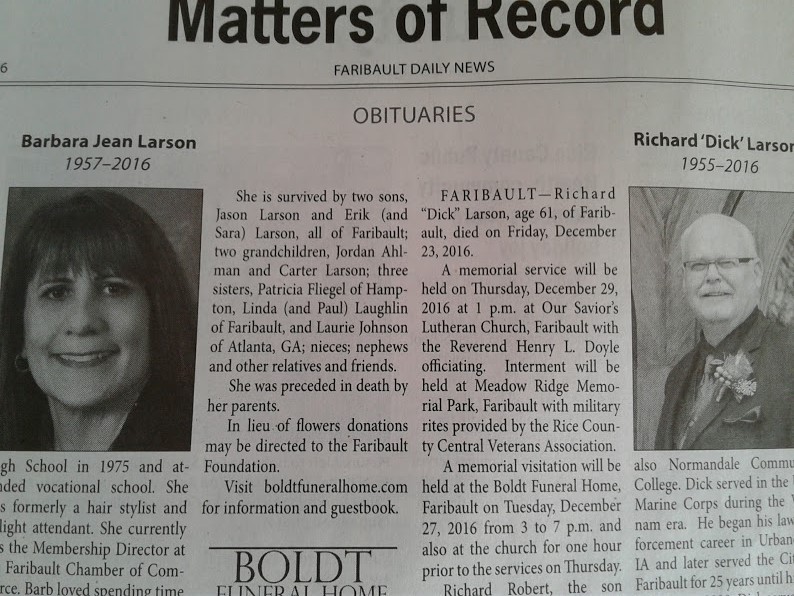
The obituaries of Barbara Larson and Richard Larson, published in Tuesday's Faribault Daily News.

The obituaries of Barbara Larson and Richard Larson, published in Tuesday’s Faribault Daily News.

YESTERDAY THE MCBW raised that “free without violence” flag honoring Barbara Larson, who was shot to death last Friday by her ex-husband at the Faribault Area Chamber of Commerce & Tourism office where she worked. Richard Larson, a retired Faribault police officer, then killed himself. Several days prior, Barbara Larson was granted a harassment restraining order against her ex-husband.

This afternoon, my community celebrates Barb’s life at her funeral. We are a community grieving, even if we didn’t personally know either Barb or Dick. I didn’t. We are a community in shock over this latest tragedy, the second murder-suicide here in December. We are a community rocked by the violence and four lives lost.
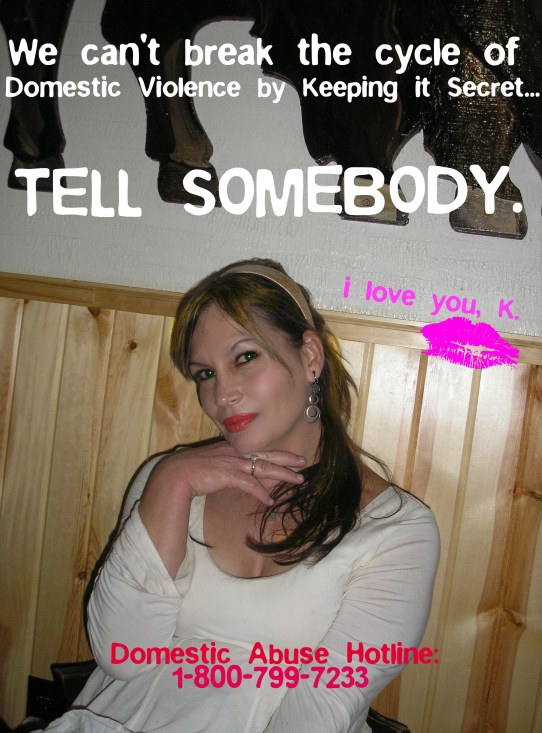
Kim has made it her mission to speak out against domestic violence. She is the voice of her sister Kay, pictured here.

This photo graphic comes from the website of Kim Sisto-Robinson, a Duluth woman who has made it her mission to be the voice of her deceased sister, Kay (shown in this photo), by speaking out on domestic violence. Kay was shot to death by her estranged husband in May 2010. Kim writes at myinnerchick.com with a deeply personal and powerful voice.

And we are a community on the cusp of an opportunity to learn, to make a difference. No one wants education to come at such great cost. But we must find a way to deal with this, heal and create change. Women need to be protected via a system that does not fail them. Mental health services need to be more available in our area. It’s not acceptable that such a shortage of mental health workers exists here that individuals must wait weeks to see a provider. Or choose the ER. Or nothing. Or something unacceptable.

We as individuals need to begin to understand and openly acknowledge issues that are all too often avoided. We need open dialogue—an opportunity to vent, share ideas and formulate solutions.

Already, community leaders, led by members of the Larson family, are discussing a campaign to raise awareness on the issues of domestic violence and mental health, according to an article published yesterday in The Faribault Daily News.
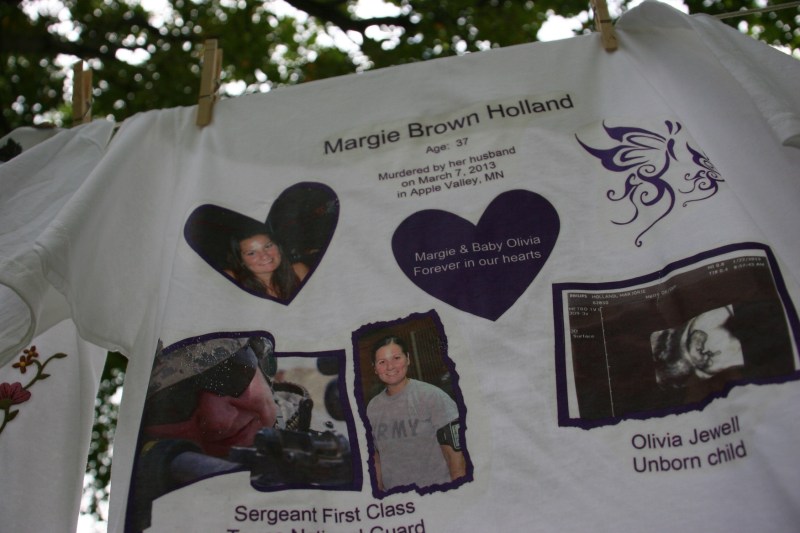
Margie Brown Holland and her unborn daughter, Olivia, were honored at The Clothesline Project display this summer in Owatonna. The Minnesota Coalition for Battered Women coordinates the project to honor victims of domestic violence. Redeemer Lutheran Church brought the project to Owatonna this past summer.

Faribault native Margie Brown Holland and her unborn daughter, Olivia, were honored in The Clothesline Project in Owatonna in July 2015. Margie was murdered by her husband in March 2013. Margie’s dad once lived across the street from me.

I am beyond pleased. Those of you who read my blog regularly know that I have written often about domestic violence and abuse. It’s an important topic to me because many friends and family have been affected both directly and indirectly by both.

Nothing is ever black-and-white simple. Already, anger and frustration have been expressed in comments published online on the Daily News website. That’s OK. People are talking. We all need also to make a conscious effort to listen, to educate ourselves and then do what we can to make a difference. We each have a voice. We need to stop looking the other way, pretending domestic violence and mental health issues don’t exist. They do. No matter your social, economic, educational or professional status.

Just last week four squad cars and an ambulance parked near my home early one morning while law enforcement dealt with a suicide threat in my neighborhood.

On this day, in my community, we remember Barb Larson, described as sassy and classy, upbeat and smiling—simply all-around positive.
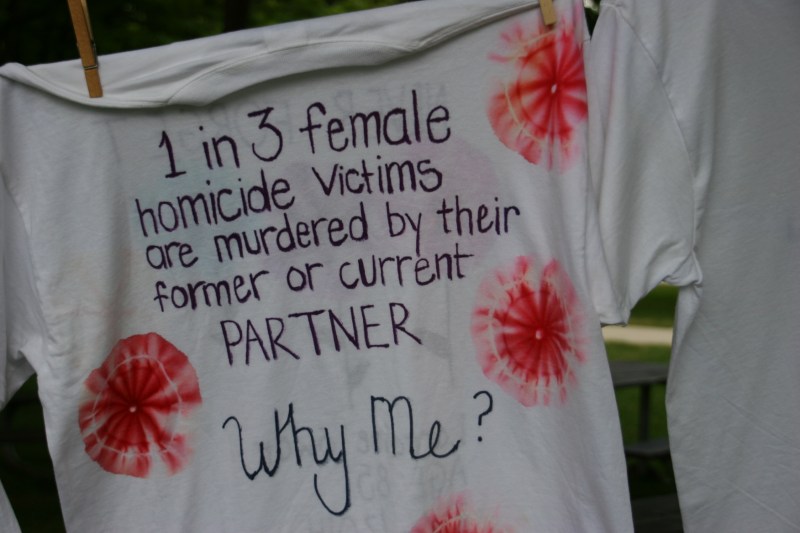
Statistics on a The Clothesline Project t-shirt from the Minnesota Coaltition for Battered Women..

Statistics on a The Clothesline Project t-shirt from the Minnesota Coaltition for Battered Women, photographed in July 2015 in Owatonna. Minnesota Prairie Roots file photo.

It is my hope that, through Barb’s death, we as a community can come together and learn. This needs to be a concerted effort that involves all of us. I’d like to see The Clothesline Project return to Faribault. It’s a powerful visual to remember those who were murdered as a result of domestic violence or child abuse. I’d like to see increased education in the schools. I’d like to hear the stories of survivors. Who better to make a personal impact.


My great niece Kiera painted this stone, which I got at a recent family reunion.

My HOPE stone, painted by a great niece. Minnesota Prairie Roots file photo.

We already have a great resource with HOPE Center, which offers healing, outreach, prevention and education related to domestic violence. (Call the 24-hour safe-line at 800-607-2330.) That includes Rice County Blueprint for Safety, a collaborative inter-agency victim-centered response to domestic violence-related crimes.


South Central Mobile Crisis Team Info


We also have the South Central Mobile Crisis Team which responds on-site to help individuals experiencing a mental health crisis. I was unaware of this until the recently-published newspaper articles. I’d suggest increasing awareness via clinics, churches, schools…

Now we, individually, need also to reflect and ask, “What can I do?”

© Copyright 2016 Audrey Kletscher Helbling


If you’ve never understood why “she stays,” then you need to read this book April 26, 2016

Filed under: Uncategorized — Audrey Kletscher Helbling @ 5:00 AM
Tags: , , , , , , , ,

IN MY IGNORANCE, I often asked the question, “Why does she stay?”

I couldn’t understand why any woman would stay in an abusive relationship. I expect many of us, if we are honest, have blamed the woman, faulted her for staying with a partner who is verbally, mentally, emotionally, financially, spiritually and/or physically abusive.

Why does she stay?


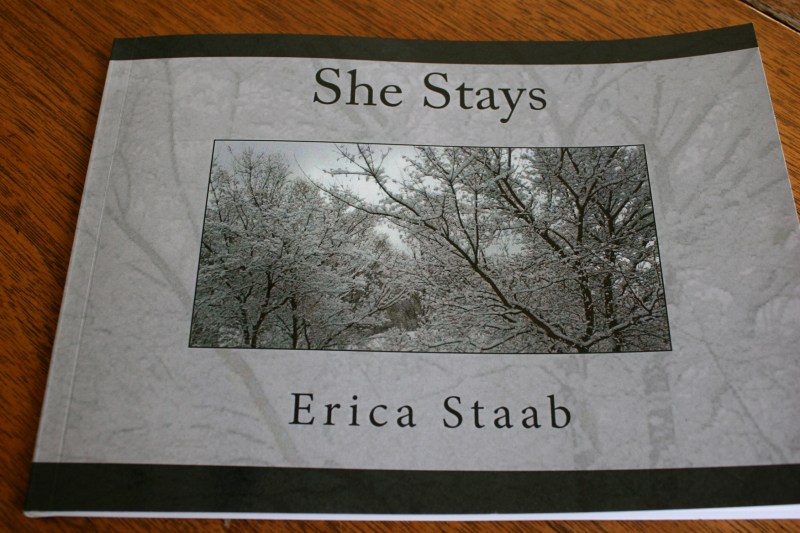
She Stays by Erica Staab


Erica Staab, director of the HOPE Center in Faribault, answers that question in She Stays. This self-published book is an absolute must-read for everyone. You. Your friends. Your daughter. Your niece. Your sister. Your brother. Your pastor.

Why?

Because you likely know someone who is a victim of domestic abuse. Maybe even you. And you need to know why she stays. It is only when we educate ourselves that we understand. And when we understand, we begin to make a difference.

Long before I read Erica’s recently-released book, I became educated on domestic abuse. Off the top of my head, I can list 13 women, by name, who are survivors. I don’t know the stories of each of these women. But some I do. They were in relationships with men who convinced them they had changed or whom the women believed they could change. These men professed their love. These men were initially charming, loving and attentive. Until they insidiously evolved into monsters who shoved, strangled, smothered, isolated, verbally-destroyed, brainwashed…

Margie Brown Holland and her unborn daughter, Olivia, were honored at The Clothesline Project display this summer in Owatonna. The Minnesota Coalition for Battered Women coordinates the project to honor victims of domestic violence. Redeemer Lutheran Church brought the project to Owatonna this past summer.

Margie Brown Holland and her unborn daughter, Olivia, were honored at The Clothesline Project display in the summer of 2015 in Owatonna. The Minnesota Coalition for Battered Women coordinates the project to honor victims of domestic violence. Redeemer Lutheran Church brought the project to Owatonna. Minnesota Prairie Roots file photo 2015.

I can also personally list the names of three women who were murdered by the men who supposedly loved them: Kay, Becky and Margie. Erica dedicates She Stays to her friend Margie Brown and unborn daughter Olivia. Margie’s dad once lived across the street from me. She also dedicates her book to Julie Carroll, another victim of domestic violence. I didn’t know Julie.

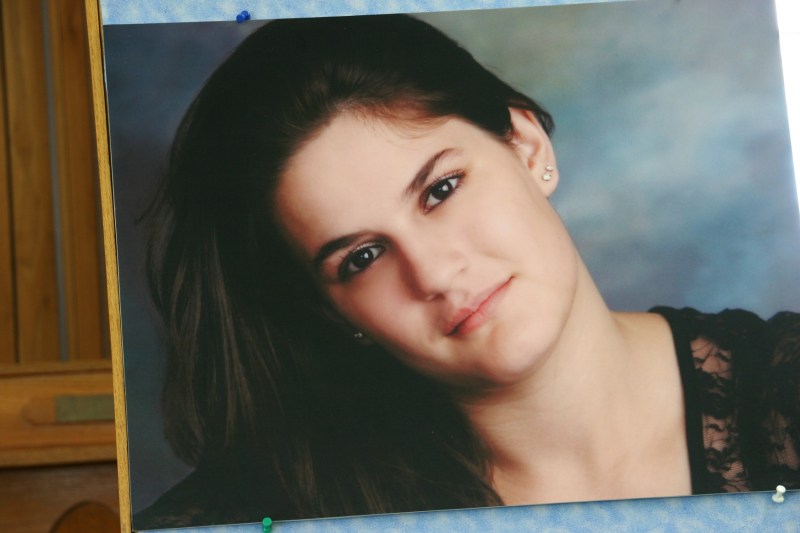
Becky Kasper's portrait.

Becky Kasper of Northfield was murdered in April 2013 by her former boyfriend. She was a student at Arizona State University. This portrait was posted by her father, Dan Kasper, who spoke about domestic violence at Redeemer Lutheran Church in Owatonna in January. Minnesota Prairie Roots file photo January 2016.

But I know that too many women are suffering and dying every day. Too many women are trapped in abusive relationships—whether because of fear, financial worries, even because of hope that the abuser will revert to the loving man he seemed at the beginning of the relationship. I doubt a woman ever enters a relationship thinking the man she loves will abuse her.

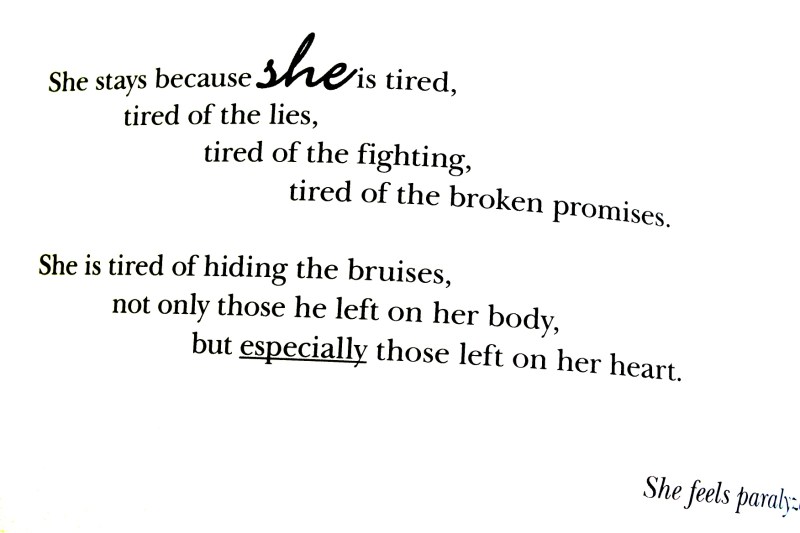
Reasons she stays, published on page 18. Text copyright of Erica Staab.

Reasons she stays, published on page 18. Text copyright of Erica Staab.

Erica lays out the reasons she stays in this compilation based on real stories of real women. And she writes in a way that is direct, honest and to the point. You can read this slim 42-page book in less than a half hour. It’s simplistic, state-it-like-it-is understandable.

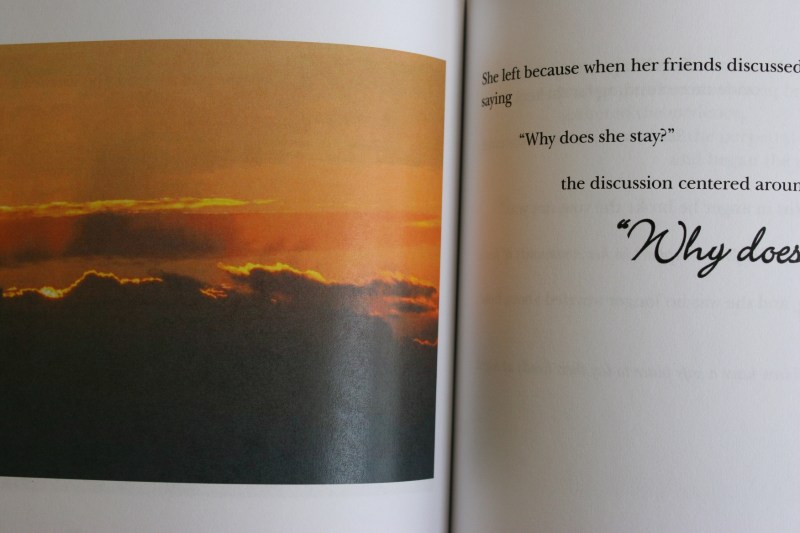
Erica's book also focuses on reasons she leaves.

Erica’s book also focuses on reasons for leaving. Interspersed throughout this volume are Erica’s photos, primarily nature themed.

But this author and experienced advocate doesn’t end with she stays. She also writes about why she left. Therein lies another reason you must read this book. You will learn that listening, understanding and believing can make all the difference to a woman in deciding whether she stays or she leaves. You can offer hope.

On the final page of She Stays, Erica pens four powerful words: You are not alone.

A victim of domestic abuse should never feel alone. But all too often she does, because we continue to ask, “Why does she stay?”

Statistics on a The Clothesline Project t-shirt from the Minnesota Coaltition for Battered Women..

Statistics on a The Clothesline Project t-shirt from the Minnesota Coalition for Battered Women, displayed this past summer in Owatonna. Minnesota Prairie Roots file photo.

FYI: To purchase a copy of She Stays, click here. Use this discount code to get $2 off: WCPXLKQS. All proceeds from the book will benefit HOPE Center, an advocacy organization in Faribault. Copies may also be purchased directly from HOPE Center.

If you are in an abusive relationship and in immediate danger, call 911 now.

Or contact a local crisis resource center for help and support.

You can find additional information through the following resources:

National Coalition Against Domestic Violence

Minnesota Coalition for Battered Women

NOTE: Men can also be victims of domestic abuse. But because the majority are women, I use that noun and the pronoun she. Just as Erica does in her book.

© Copyright 2016 Audrey Kletscher Helbling
 

No more December 30, 2014

Filed under: Uncategorized — Audrey Kletscher Helbling @ 5:00 AM
Tags: , , , , , , , ,

YOU KNOW HOW IT IS when a conversation starts and then rolls seamlessly from one topic into another and soon you have these thoughts spinning through your brain.

Here’s how it started: Sunday morning a friend told me that her husband and youngest daughter rode along with their police officer son/brother during a Christmas night shift in another city in another state. That shadowing proved uneventful. I’m sure that was just fine with my friend. No mother likes to see her son placed in a dangerous situation.

I shared that ride-along tidbit with my husband and son during Sunday dinner and then we were talking about my Uncle Bob, a retired Minneapolis police officer, and how he always said domestics were the most dangerous calls. Makes sense given the emotions involved.

The holidays often see an increase in the number of domestics. Daily we hear and read reports of (mostly) women assaulted and sometimes murdered in cases of domestic violence. Saturday evening a woman was fatally stabbed in St. Paul, allegedly by her ex-boyfriend.

Last week the Faribault Daily News, the newspaper in my community, published this headline: Faribault man charged with assaulting girlfriend, two police officers. The story included a photo of the 28-year-old repeat domestic abuse offender. I think I recognize the man.

In late October, I phoned local law enforcement when I witnessed a young man verbally attacking, grabbing and shoving a young woman. I believe it is the same man now charged with fourth-degree assault on a peace officer and domestic assault. My stomach churned. A year ago, this man was convicted of felony domestic assault and violation of an order for protection. Now this.

When will this ever end, this psychological control and manipulation, the physical and/or verbal assaults, the lies and deception that define domestic abuse? When?

I’m not privy to details about the Faribault man’s past. But any felony charge and conviction is serious. And now to read in a newspaper story of his live-in girlfriend found crying and huddling in the corner of the living room holding their two-year-old…after she was allegedly attacked.

I just want to take that young mother in my arms, embrace her, rescue her, and tell her everything will be OK.

But I can’t save her; only she can decide to leave her abuser. I can’t promise her everything will be alright, that the judicial system will work, that this man will never harm her, or any other woman, ever again.

It would be all too easy to give up. Yet, we cannot. Ever. As a society, as human beings, as parents who love our daughters, as sisters who love our sisters, as friends who love friends, we cannot simply walk away.

Like the Hope Center in Faribault, recently awarded a $135,000 federal grant to fight domestic violence through The Blueprint for Safety Project, we must continue to do all we can to educate ourselves about domestic violence and to say, “No more.”


NO MORE logo

The signature blue “vanishing point” in the NO MORE campaign logo evolved from the concept of zero, as in zero incidences of domestic violence and sexual assault.


Like NO MORE, a national public awareness and engagement campaign focused on ending domestic violence and sexual assault, we must do all we can to end domestic violence. NO MORE ran a spot during Sunday afternoon’s Minnesota Vikings-Chicago Bears football game. That outreach to football fans was good to see.


NO MORE logo


No more. Strong words. Let’s speak them, believe them, practice them.

If you witness a case of domestic abuse, whether verbal or physical or both, call the cops. In the case of the 28-year-old Faribault man, officers were responding “to a report of a woman being grabbed by a man outside a home,” according to the newspaper article.


NO MORE logo


Someone saw. Someone called. Someone decided, no more.

© Copyright 2014 Audrey Kletscher Helbling


Ending domestic violence: It takes a community October 21, 2014

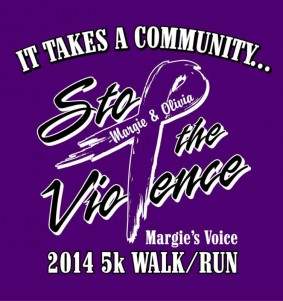
This logo comes from a 5K walk/run honoring Faribault native Margie (Brown) Holland and her unborn daughter, Olivia. Margie's husband, Roger Holland, is serving two terms of life in prison for their 2013 murders.

This logo comes from a recent fundraiser honoring Faribault native Margie (Brown) Holland and her unborn daughter, Olivia, murdered in 2013. Roger Holland, Margie’s husband, is serving two terms of life in prison for their murders. Margie’s dad was once my neighbor.

THE MEMORY STILL STIRS ANGST.

His voice rising in anger. Yelling in her face. Rage exploding. The peace of a glorious autumn morning shattered.

The disturbance drew me from my task of emptying flower pots to observe the young couple passing by across the street.

He was shirtless on this October morning when the temp had not yet reached 60 degrees. That in itself seemed odd.

But it was his anger toward the woman walking beside him that led me into my front yard, thoughts of calling the police already formulating.

I pulled muddy gloves from my hands, patted the cell phone locked in my back jeans pocket. Then I watched. I watched as he shoved her, grabbed her. Then a parked vehicle blocked my view before they emerged on the other side and she attempted to cross the street. He pulled her back. Then they disappeared around the corner, out of my view.

I’d witnessed enough.

This is not fiction. This is an actual case of domestic abuse. This happened last week in my neighborhood in my community of Faribault, Minnesota, where last year the Hope Center served 473 women and 54 children through its domestic violence program. The center’s sexual assault program served 62 primary and 38 secondary (family and friends) victims.

Hope Center advocates provide additional assistance and education. Click here to learn more.

I don’t know what happened to the couple after I phoned law enforcement. Could I have done more? Should I have intervened?

If this man was verbally and physically abusing this woman in public along a busy street, I fear how he treats her behind closed doors.

#

THE HOPE CENTER and my county of Rice have submitted a grant request to fund a new program, “The Blueprint for Safety,” in an effort to stop domestic violence, according to information on the county attorney’s Facebook page. I wish it wasn’t needed. But it is.

The program initiates a collaborative effort among agencies to tackle issues, “to move forward with things such as better data collection, information sharing, training, and understanding of each player’s role to help improve the response to domestic violence in our community.” (Click here to learn more.)

I applaud this effort.

But it still takes each of us, individually, to speak up with a strong and unwavering voice against domestic violence. It takes a community.

FYI: If you live in Rice County, Minnesota, and are a victim of domestic abuse, you can call the Hope Center 24-hour SafeLine at 1-800-607-2330.  The center also offers support to family and friends. Call 507-332-0882 during business hours to speak with an advocate.

#

FORTY YEARS AGO in St. Paul, the first shelter in the U.S. for battered women and their children was established. Women’s Advocates will mark that occasion with an anniversary celebration and benefit on Thursday evening, October 23, at the Minnesota History Center in St. Paul. Click here for more info. Today the center serves an average of 45 women and children daily.

FYI: For Women’s Advocates information or help, call the 24-hour crisis line at 651-227-8284 or state-wide toll free at 1-866-223-111.

#

TO THE NORTH IN DULUTH,  a coordinated community response to domestic violence has just received an international award. The World Future Council last week bestowed the 2014 Future Policy Award for Ending Violence against Women and Girls upon The Duluth Model at a ceremony in Geneva, Switzerland. The equivalent of a gold award recognizes best policies to combat violence against women and girls. In summary, the plan focuses on the community working together to end domestic violence and on holding offenders accountable and keeping victims safe. To learn more about The Duluth Model, click here. To learn more about the World Future Council, click here.

FYI: For more information about the Domestic Abuse Intervention Programs in Duluth, call 218-722-2781.

#

Another resource to call is the National Domestic Violence Hotline at 1-800-799-SAFE (7233).

Click here to read an earlier post I published about domestic violence.

© Copyright 2014 Audrey Kletscher Helbling