Minnesota Prairie Roots

Writing and photography by Audrey Kletscher Helbling

The art of reclaiming and repurposing in a Northfield shop April 20, 2013

Makeshift accessories

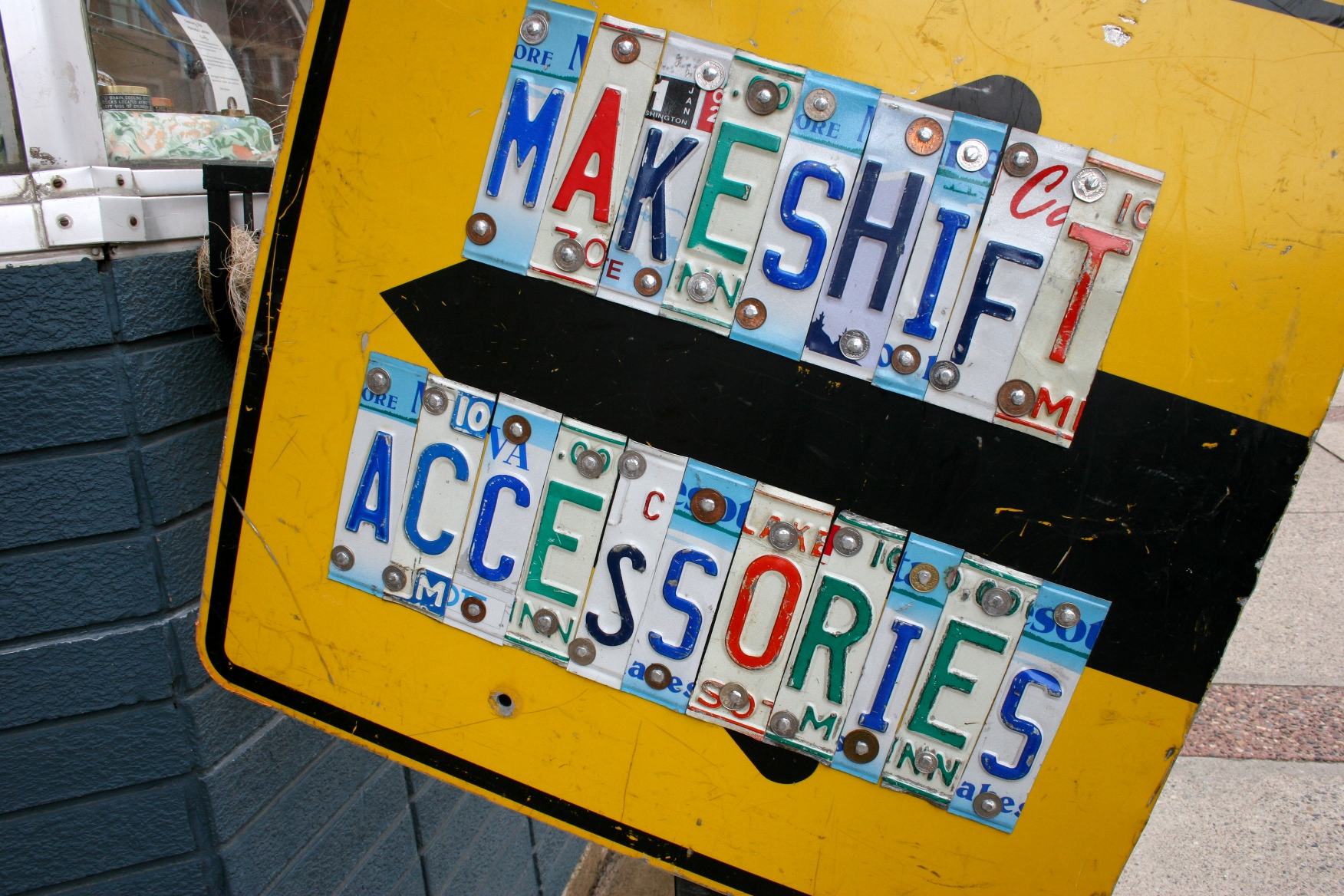
THE CLEVER CREATIVE sidewalk sign crafted from license plates catches my eye and draws me into a cozy shop in downtown Northfield.

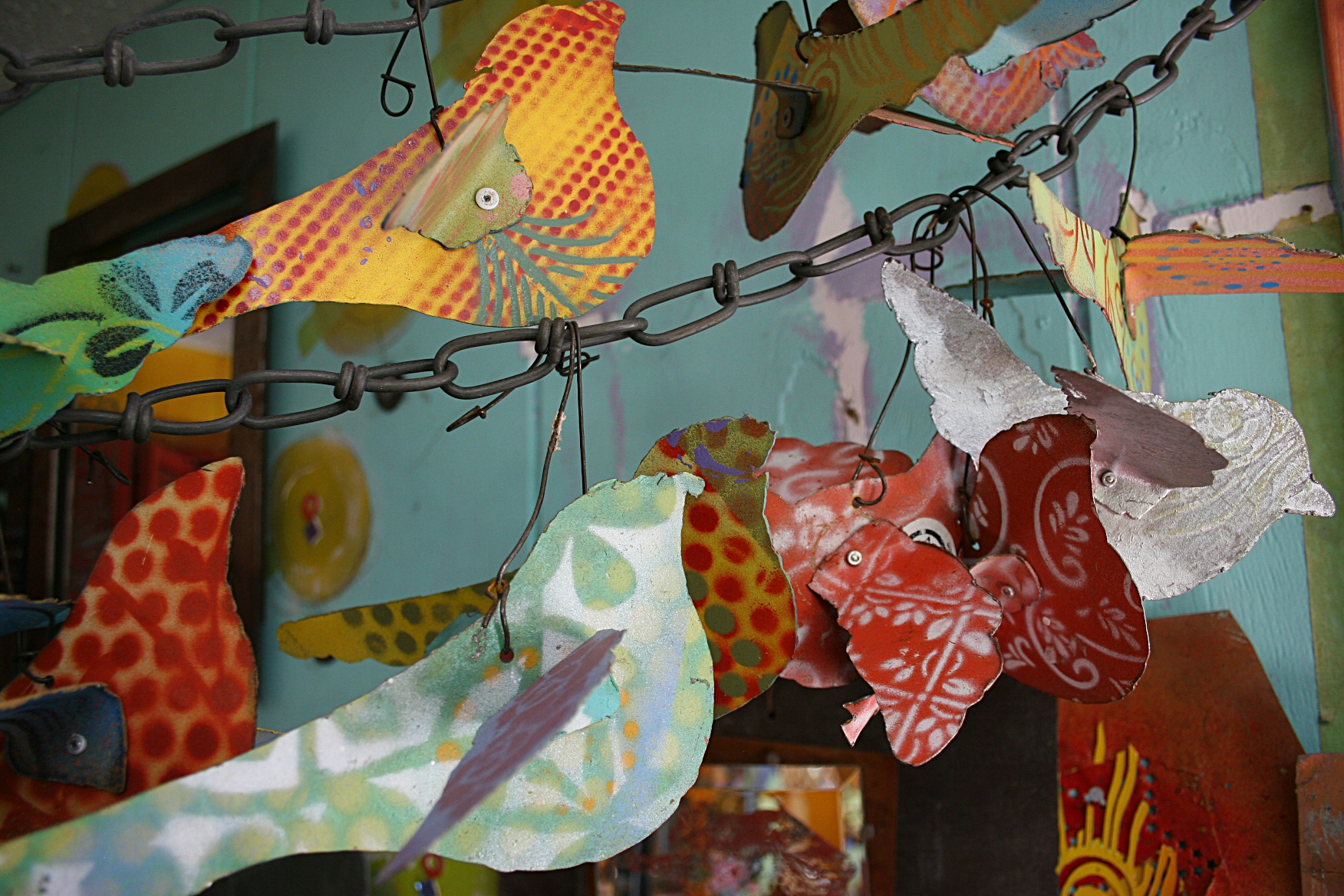
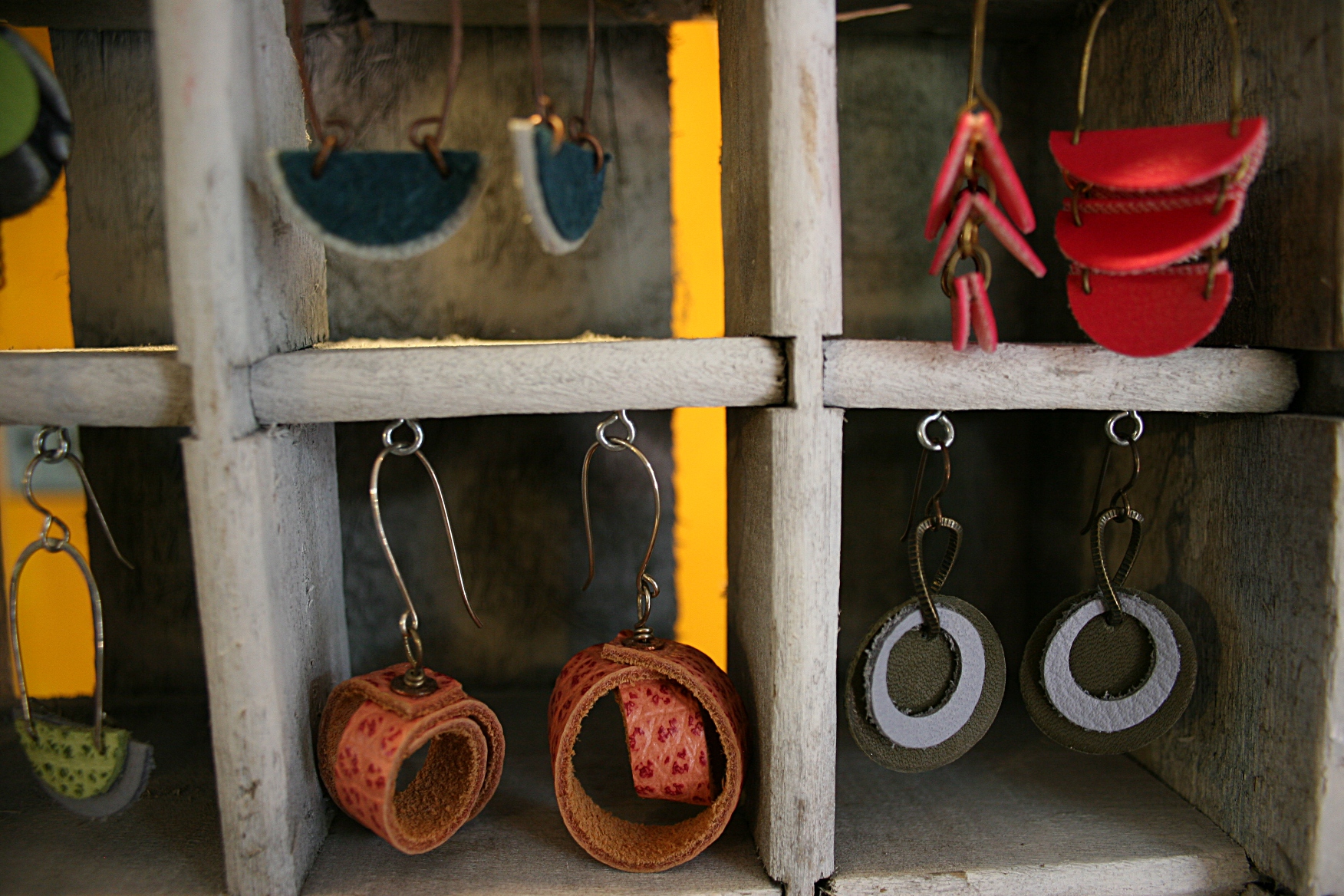
Inside I finger rings formed from spoons, try to slide on bracelets shaped from old license plates and other materials, admire oversized blooms folded from pages.

But I don’t take a single photo to show you, save that outdoor sign.

I Should have asked to photograph the art. I didn’t.

So you will have to imagine a one-of-a-kind home-grown shop featuring handmade merchandise repurposed from reclaimed items.

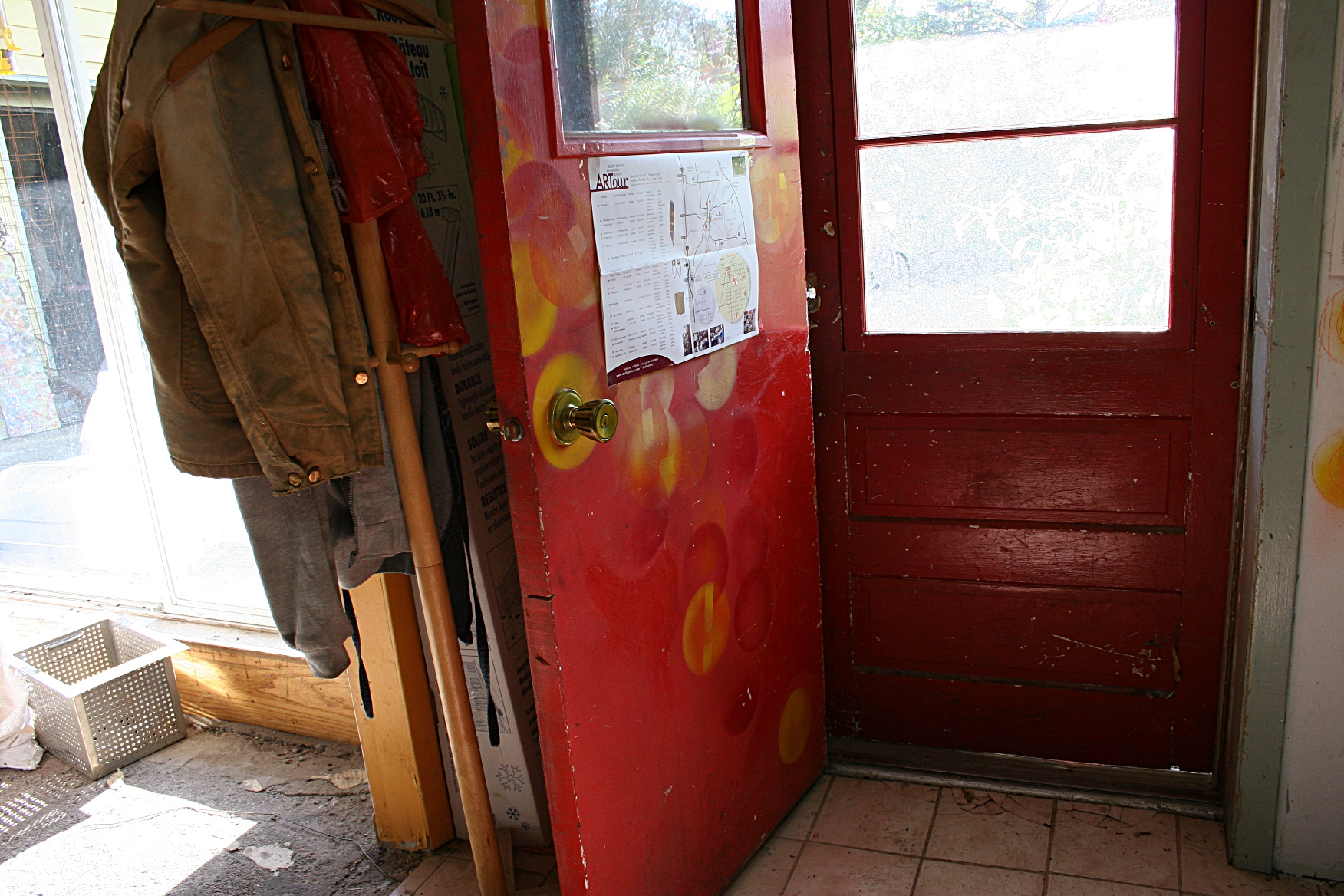
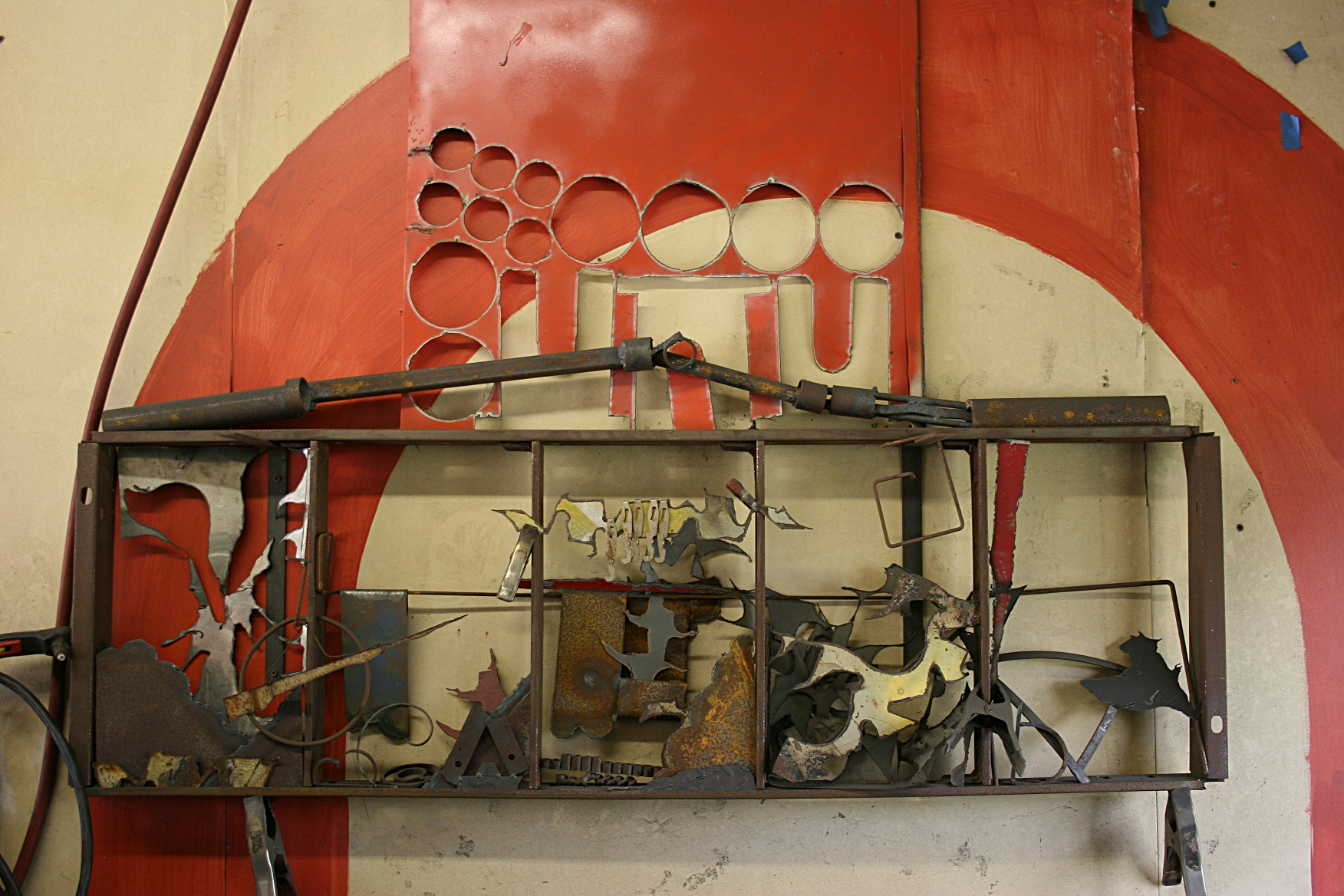
MakeShift Accessories, owned by artist-enterpreuner Devin Johnson, hometown boy come back home to Northfield, is my kind of store with its authentic artsy vibe.

FYI: To learn more about MakeShift Accessories, 418 Division Street, click here to reach the business website. Or, if you’re at Junk Bonanza today at Canterbury Park in Shakopee, scout out Johnson’s booth.

His work is also sold in Minneapolis at “I like You,” Gallery 360 and Mill City Museum; in New Prague at Cranky Alice; and in other locations.

© Copyright 2013 Audrey Kletscher Helbling


The barn April 18, 2013

Filed under: Uncategorized — Audrey Kletscher Helbling @ 6:57 AM
Tags: , , , , ,
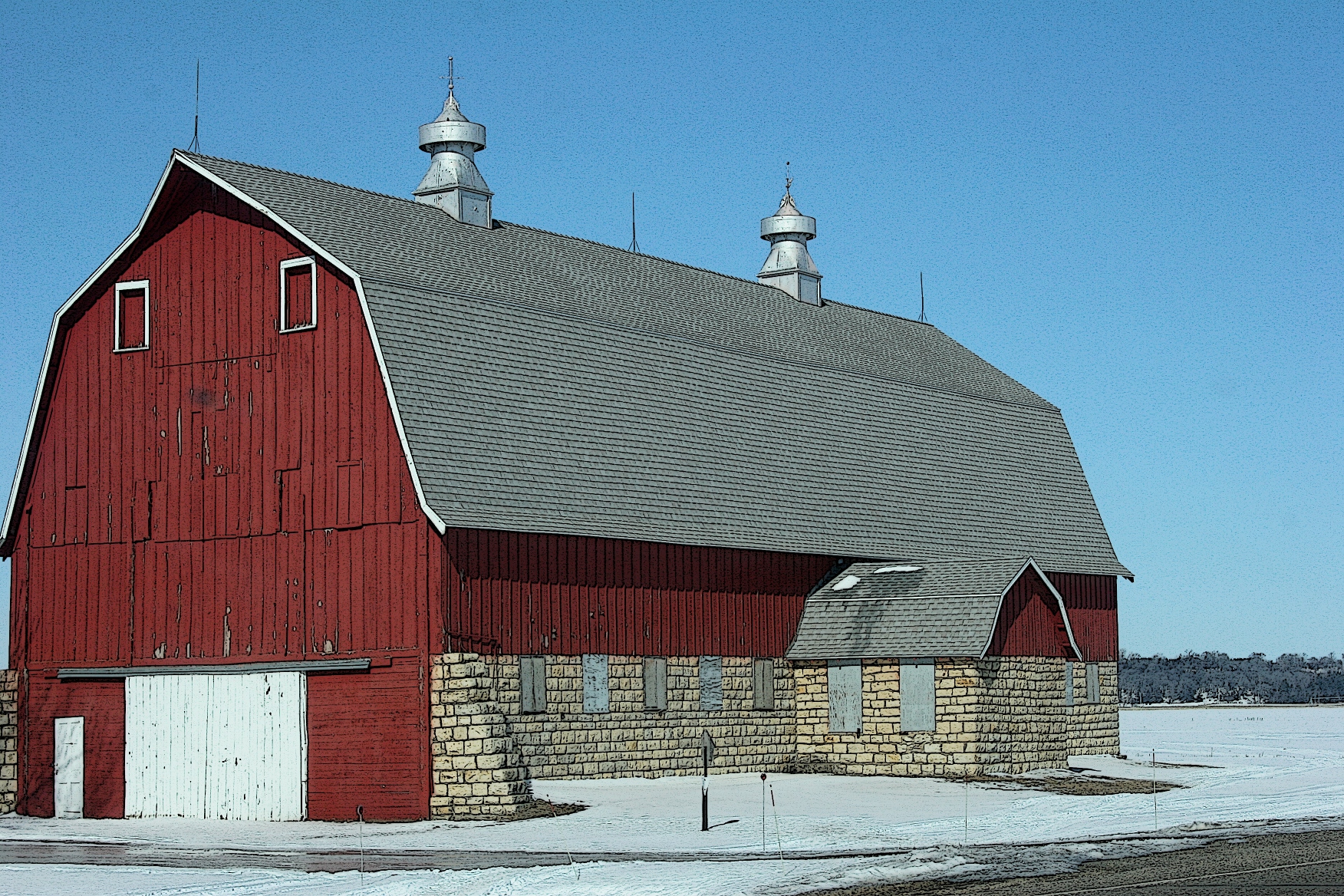
This study and well-maintained barn sits at the intersection of Minnesota Highways 19 and 56 near Stanton, east of Northfield.

This study and well-maintained barn sits at the intersection of Minnesota Highways 19 and 56 near Stanton, east of Northfield.

NOTHING DEFINES RURAL Minnesota more than a red barn.

Whether nestled among the rolling hills of southeastern Minnesota or anchored to the earth in the wide open spaces of the west, red barns symbolize the hope, the fortitude and the dreams of generations of Minnesotans.

For inside the walls of our barns, farm families have worked together—pitching manure, stacking bales, milking cows, building a livelihood as much as a lifestyle.

Strong work ethics have been birthed here, life lessons taught.

While many red barns now stand empty, their roofs sagging, their paint peeling, they remain a symbol of all that is good about life in rural Minnesota.

© Copyright 2013 Audrey Kletscher Helbling
Text first published in the September/October 2005 issue of Minnesota Moments


Complex & compelling define Scott Dominic Carpenter’s novel, Theory of Remainders April 1, 2013

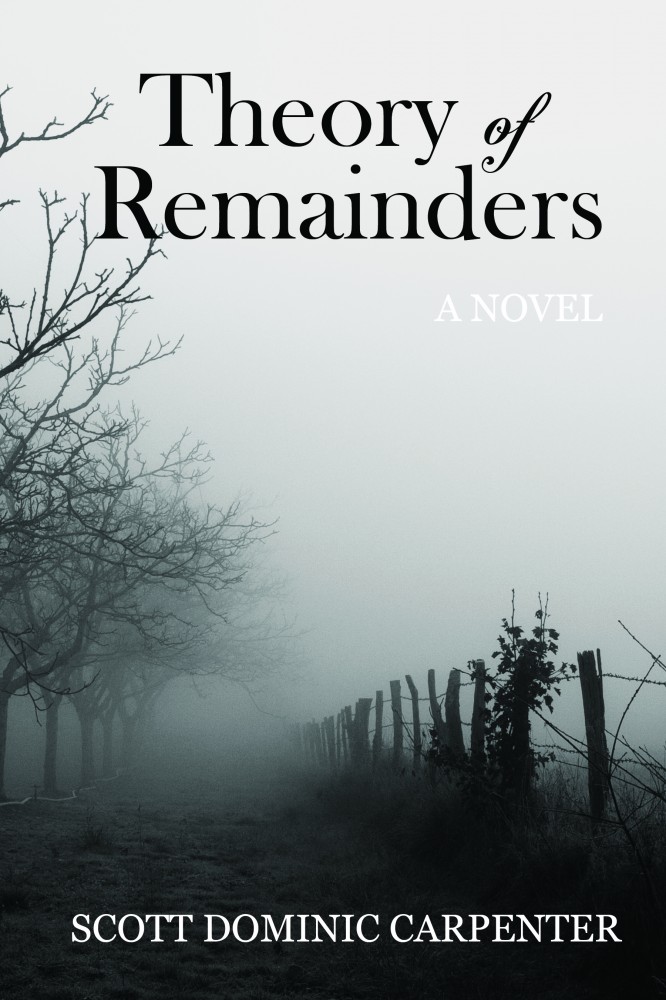
Theory of Remainders coverA SINGLE QUESTION POPS into my mind upon finishing Theory of Remainders by Northfield, (MN.), author Scott Dominic Carpenter. How did he come up with the ideas for this creatively complex literary novel about a Boston psychiatrist who returns to France nearly 15 years after his teenage daughter’s murder?

This adept writer uses language as a primary tool in the telling of this story, taking the reader deep into a French village where Philip Adler searches for answers related to Sophie’s disappearance. Carpenter’s astuteness to the nuances of language, his use of word play and his command of several languages riddle this novel. And, yes, the word “riddle” is a deliberate word choice.

“Graves were always a presence pointing to an absence…” Carpenter writes early on. Later, he pens these memorable statements: “Things don’t ever square up. In short, the world is not tidy, by which I mean that there are no equations without remainders.”

Unlike other books centered by a mystery, Theory of Remainders challenged me to examine words, to puzzle through conversations and scenes, to rely on the thought process rather than tangible evidence. That engagement of the reader sets this novel apart.

Nothing, really, is at it seems in this can’t-put-down compelling read.

That’s a credit to an author who clearly understands the depth of the human psyche and how that affects love and relationships, guilt and regret, the past and the present.

This story goes beyond one man’s search to settle his past. It is about those he loves/loved, a place he lived, complicated relationships, animosity, secrets, personal weaknesses and so much more.

A strong sense of place, such as “villages that sat like beads on a rosary,” the intertwining of history into the plot, multifaceted characters and more meld to create the tension that weaves through this novel.

Carpenter masters impressive visuals with similes like these: “Memories nuzzled at his mind’s gate like kenneled dogs” and “The silhouette of an idea flitted like a sylph through the shadows.” Reading his writing is a literary pleasure.

I can almost visualize Carpenter, when writing Theory of Remainders, placing strategic dots upon paper and then challenging the reader to connect those dots. Once the connected dots reveal a picture, the reader is left wondering how this gifted writer developed such a multi-layered and truly exceptional novel.

For anyone who values a literary novel of substantial depth in character development, language, sense of place and reader engagement, Theory of Remainders ranks as a must-read.

FYI: Click hear to read an excerpt, hear an audio or order a copy of Theory of Remainders, releasing May 22.

If Scott Dominic Carpenter’s name rings familiar with you here, it’s because I previously reviewed his collection of short stories, This Jealous Earth. You can read that review by clicking here.

© Copyright 2013 Audrey Kletscher Helbling
 

Northfield writer Scott Carpenter masters the craft of short stories in This Jealous Earth March 1, 2013

Intrigued by this cover image like me? Learn why  it was selected and placed upside down at the end of my review.

Intrigued by this cover image? Learn why it was selected and placed upside down at the end of my review.

I’VE STRUGGLED, since reading This Jealous Earth, to pinpoint a word which best describes my reaction to a collection of 16 short stories by Northfield (MN.) author Scott Dominic Carpenter. And that should be considered a compliment.

Carpenter’s stories about relationships and aging, choices and regrets, and more, hold an element of mystery, a deeper meaning which reveals itself as the plots progress, until the ending and the ah-ha moment evoked.

For example, in the first paragraphs of “The Tender Knife,” I expect a husband to kill his wife, not his koi. He didn’t, but he did. Now if that makes no sense, that is precisely my point. Carpenter possesses that unique ability to mess with your mind/throw you for a loop, cliché phrases that totally apply to a writing style that is anything but cliché.

He takes aspects of everyday life—vacations, marital and sibling discord, the death of a parent, aging, love, fear and more—and crafts stories to which his readers can relate. Aging Baby Boomers can surely empathize with Donna, married 30 years with three grown children and the main character in “Riddles.” She and her husband are on a long-awaited European vacation when she loses her way in an art museum. As she struggles to weave through a labyrinth of art she cannot understand, Donna understands she’s waited too long for this trip.

Carpenter writes, in Donna’s voice:

To think that she had begged for this trip! What in God’s name had she been thinking? What was the point? And what on earth were you to do after the scales have tipped in your life, after the children have gone, and all you have left to do is wait?

His stories mostly center on choices—to shoplift or not, to keep or to toss, to reconcile or give up, to attempt to save or to let go, to stand up for yourself or to submit, to simply accept or to challenge/change/question.

In “This Jealous Earth,” the story from which the book draws its title, a family awaits the rapture. But one, the non-believing son, Randy, will be left behind. Therein lies the conflict for his obedient younger sister, Cat. Will she choose faith or family? That dilemma, and the consequences, leave the reader hanging on every word until the clincher ending.

Likewise, in “The Visit,” the tension builds when a child goes missing on a rural acreage with a pond. I’m not going to reveal the ending, but I simply must share the final sentence of that story because it’s so powerful and perhaps so true of how we often choose to cover our fears with meaningless conversation:

And with lavish servings of words, always more words, they covered over the memory of the pond, black and still.

Carpenter chooses words with care. That is obvious, especially so in “The Spirit of the Dog” where even the name of the main character, Caleb, holds significance. Because I have a son named Caleb, I know the name means “dog” (although I chose my son’s name for the biblical Caleb and certainly not the canine reference). Read this story about miners, a dog that is killed, superstition and stolen possessions and you will understand the double-meaning in that name.

I couldn’t pen a fair review of This Jealous Earth without noting that I nearly stopped reading half way through the first story, “The Tender Knife.” I struggled with details in killing of the koi. Don’t allow that to distract if you are squeamish like me. The story is most definitely worth reading. Likewise, several stories include the f-word and sexual undertones that may offend. However, these are not used lightly, but as integral parts of shaping a character and/or developing the plot.

If Carpenter’s first book of fiction is any indication of what readers can expect from him, then I’m already a fan. His next book, Theory of Remainders, is due for release in May. Here’s the promo description: A suspenseful literary novel set in the lush backgrounds of Normandy, Theory of Remainders explores the secret ties between love, trauma, and language.

Carpenter has already proven to me that he can write, and with a strong voice definitively his.

Scott Dominic Carpenter

Scott Dominic Carpenter

FYI: To learn more about Carpenter and his writing, click here to reach his website.

His upcoming appearances include public readings at  6 p.m. Thursday, March 7, at Barnes & Noble, 14880, Apple Valley, and at 7:30 p.m. Friday, March 8, at Monkey See, Monkey Read, 425 Division Street South in downtown Northfield. Besides writing, Carpenter teaches French literature and critical theory at Carleton, a liberal arts college in Northfield.

BECAUSE I WAS PARTICULARLY intrigued by the upside down placement of the field and sky image on the cover of This Jealous Earth, I posed these questions to publisher MG Press:

Could you explain the photo selection and why it was placed upside down on the cover? What message/feeling/whatever are you hoping to evoke in the reader?

Here’s the response from MG’s Robert James Russell:

The fact that the photo is upside down aligns with the themes of miscommunication and the confrontations of strangeness inherent in all of the stories in the collection. The land (or earth, as it were), gives us a sense that the disconnect and strangeness is dealing with familiar things (that is, it is not a paranormal strangeness, or anything truly otherworldly).

It’s meant to be disorienting, but not jarring, and demonstrate how a simple choice or change of perspective can completely alter how something is viewed. These types of choices are the ones the characters in This Jealous Earth face in all of the stories, ones that will permanently alter how they view their lives.

On a more aesthetic level, we chose this image specifically because, quite simply, it was gorgeous and we felt the contrasting tones would work well to achieve our goal.

© Copyright 2013 Audrey Kletscher Helbling
Images courtesy of Scott Dominic Carpenter and MG Press
The book cover design is by Sarah E Melville, Sleeping Basilisk Graphic Design.
Author photo is by Paul Carpenter.


A heartwarming Christmas story & an interview with Northfield author Patrick Mader December 4, 2012

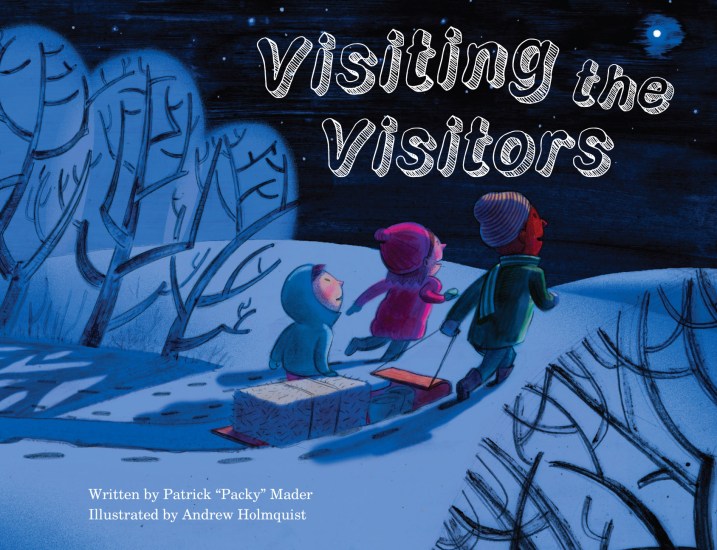
NORTHFIELD AUTHOR PATRICK MADER possesses a gift—a gift to create, along with illustrator Andrew Holmquist, award-winning children’s picture books.

His latest, a Christmas story, continues that winning tradition of excellence. Visiting the Visitors recently received a silver award in the holiday book category in the 2012 Moonbeam Children’s Book Awards competition.

The cover of Patrick Mader's latest book, illustrated by Andrew Holmquist. The artist incorporated the wise men's heads into the tree branches.

The cover of Patrick Mader’s latest book, illustrated by Andrew Holmquist. See how Holmquist incorporated the wise men’s heads into the tree branches.

In his holiday tale, Mader takes the reader again into a rural setting, as he does in his first two books, Opa & Oma Together and Oma Finds a Miracle.

He’s reworked the story of the wise men visiting the Christ child into a contemporary story line of three siblings and their grandparents trekking across snow-covered fields to deliver gifts, but in this version to the wise men and the animals, not the Holy Family.

This heartwarming spin on the timeless and enduring biblical record of the wise men journeying to Bethlehem is especially memorable when told from the perspective of children. That coupled with animals as an integral part of the plot—we all know how much most kids love animals—makes this an especially appealing book.

Illustrator Andrew Holmquist, a Northfield native now living and working as an artist in Chicago.

Illustrator Andrew Holmquist, a Northfield native now living and working as an artist in Chicago.

Illustrator Holmquist’s artwork, created via pencil, charcoal, graphite washes, colored pencil and markers combined with digital coloring in the computer, sets a peaceful and inviting mood that reminds me so much of my childhood winter nights on the star-studded Minnesota prairie, warm light spilling from barn and house windows onto the snow.

Yes, this book evokes nostalgia, at least for me.

But it also evokes a sense of wonderment and thankfulness, of understanding and simplicity, of treasuring the real gift of Christmas, of reclaiming that special magic we adults felt as children.

I promise, Visiting the Visitors will hold your heart and those of the children you love.

THAT SAID, HOW DID PATRICK MADER, an elementary school teacher in Morristown (about 10 miles west of my Faribault home in southeastern Minnesota), create this story?

How does he continue to reap awards (Writer’s Digest honorable mention for Opa & Oma Together and the bronze medal for Big Brother Has Wheels from the Independent Publisher Books Awards in 2010) and the accolades of well-known Minnesota writers?

I posed those questions, and more, to Mader and here’s what he had to say:

Q: What inspires you in your writing?

A: My objective is to write books with positive messages—I refer to them as “Heartwarming Stories of the Heartland.” They are based on what I have seen, what I have heard, what I remember, and what I have felt as I witness life. Family members and friends have had some fascinating events in their lifetime and I simply try to make the stories come to life with a bit of creativity and Andrew Holmquist’s stunning artwork.

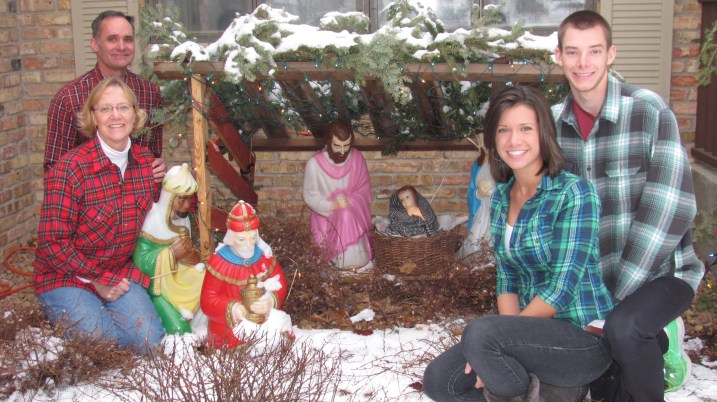
Patrick Mader with his wife, Karen, and children, Karl and Ellen, by the family's nativity set. the wood stable was crafted of wood from the barn on the childhood farm (home of his parents, George and Mary Margaret Mader) near St. Bonifacius where Mader grew up.

Patrick Mader with his wife, Karen, and children, Karl and Ellen, by the family’s nativity set. The stable was crafted of wood from the barn on Mader’s childhood farm (home of his parents, George and Mary Margaret Mader) near St. Bonifacius.

Q: What specifically inspired Visiting the Visitors?

A: When our children were very young, they would ask whether we could go to a neighbor’s very large outdoor nativity set. We would sing songs, they would hug the statues of the nativity characters, and then we would return home for hot chocolate and cookies. They were very tender and memorable moments that you don’t forget as a parent. It was stored in my memory until I felt confident that I could write and market a Christmas book.

Q: Is there a message you’re attempting to convey via this story?

A: Yes, it is that the origin of the Christmas holiday is still of interest and can have a quiet majesty to children.

Q: Two of the names you chose for the three children in this story are unusual. Can you explain the significance of the names Malik and Balta?

A: Actually, the names of all three children took a few hours to finalize. The names are Malik, Cassie, and Balta. They are multicultural children and in my research I learned the name Malik has been a popular African-American name. Cassie is the girl in the story and that is not an uncommon name. The name Balta was chosen because some ethnic groups have an a or o as a last letter. When you put the three names together, they are derivations from the supposed names of the three wise men who are characters in the book: Melchior, Casper, and Balthazar. While most children will not grasp the significance, adults who question the names will often figure it out and it can become a teachable moment.

Q: You’ve garnered three awards and also accolades from well-known Minnesota authors. How do you explain such success?

A: I am thrilled that our books have won awards. The success is due to many professional and talented people at Beaver’s Pond Press, the editors, the layout design artist, and, most significantly, the illustrator, Andrew Holmquist.

The success in obtaining endorsements from Tom Hegg, Catherine Friend, Doug Wood, and Jim Gilbert probably are more due to them being gracious and thoughtful people than it is of my writing. Combined they have probably sold over five million books, yet they are very approachable and quietly candid.

Q: Are you working on, or do you have plans for, a fourth book?

A: Yes, it worries my wife! I have begun to co-author a non-fiction book about Minnesota athletes with a former StarTribune sportswriter. I like sports and thought that some of the lesser known athletes had intriguing stories to tell. They do. It may take us two to four years to get it published because it requires lots of travel since we decided to have personal interviews with each of the athletes that will be profiled.

Meanwhile, I have drafts for two more children’s picture books: one is a story that revolves around Halloween, the other is about a young girl who mixes up sounds of words—it will be my first attempt at a book that will have lots of humor yet have a tender ending.

Q: Why do you write?

A: I have found writing enjoyable, but I really thrive on sharing our books through presentations. I like engaging an audience, providing teachable moments, and encouraging attendees to follow their own aspirations. So writing is the vehicle that allows me not only to do programs, but it also leaves its own small legacy. It has been very rewarding to read letters or listen to people say that our books have touched them. Those conversations and messages touch me and bring great joy.

FYI: To learn more about Patrick Mader and Andrew Holmquist and their books, and how to purchase them, click here to reach Mader’s website.

Disclaimer: I received a free copy of Visiting the Visitors for purposes of reviewing this book. Patrick also donated copies of his first three books to the Little Free Library in my hometown of Vesta.

© Copyright 2012 Audrey Kletscher Helbling
Artwork and photos courtesy of Patrick Mader and Andrew Holmquist.


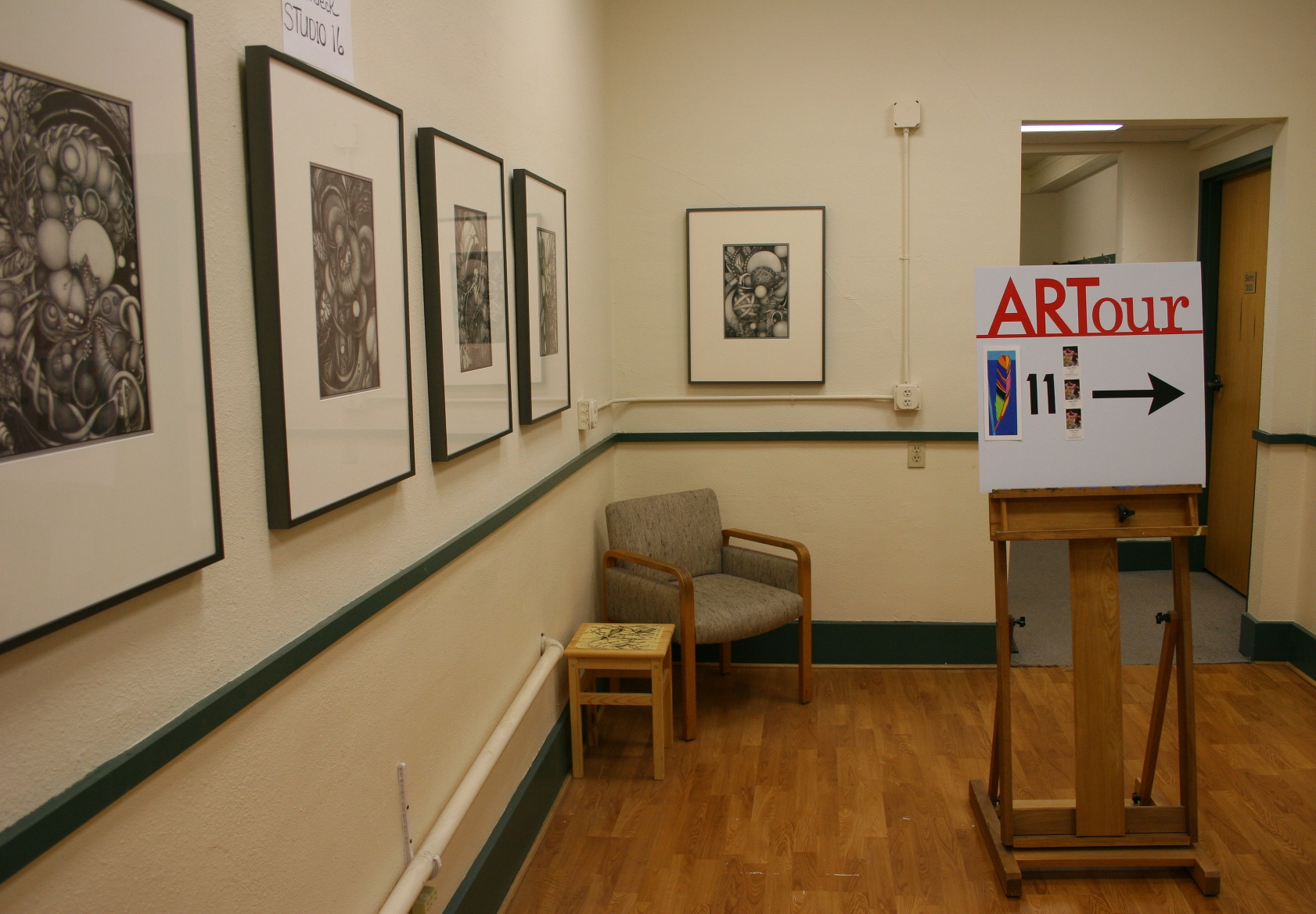
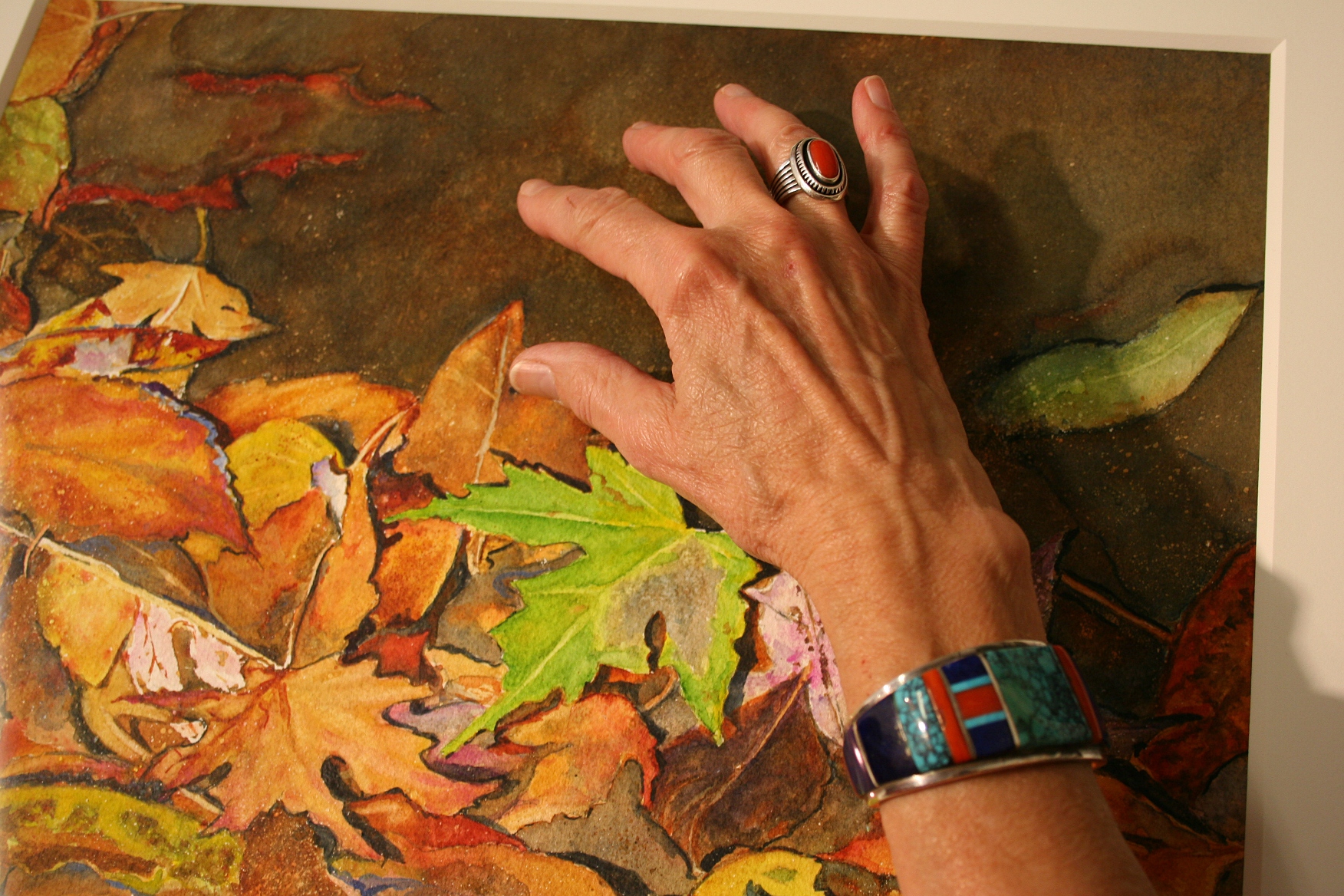
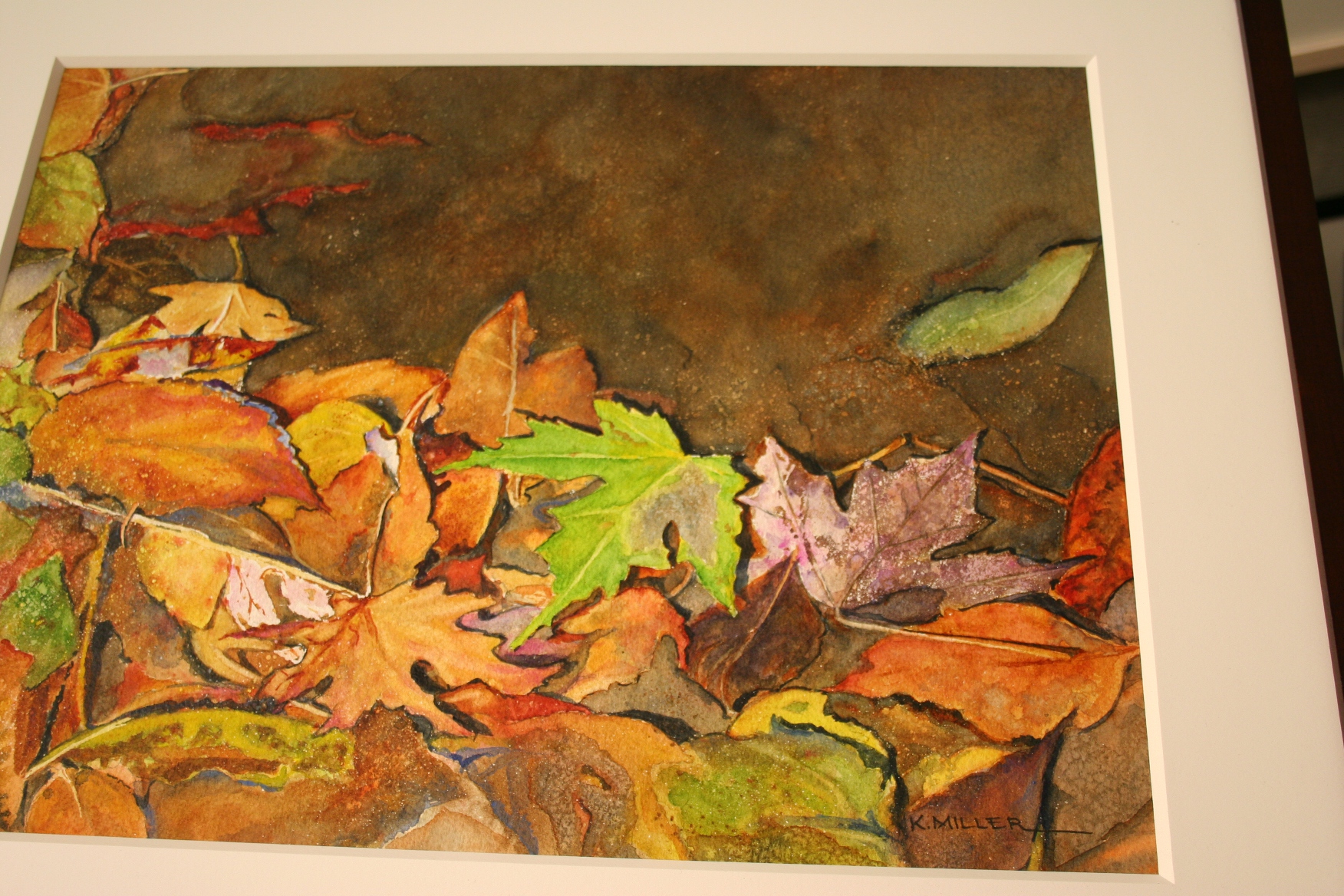
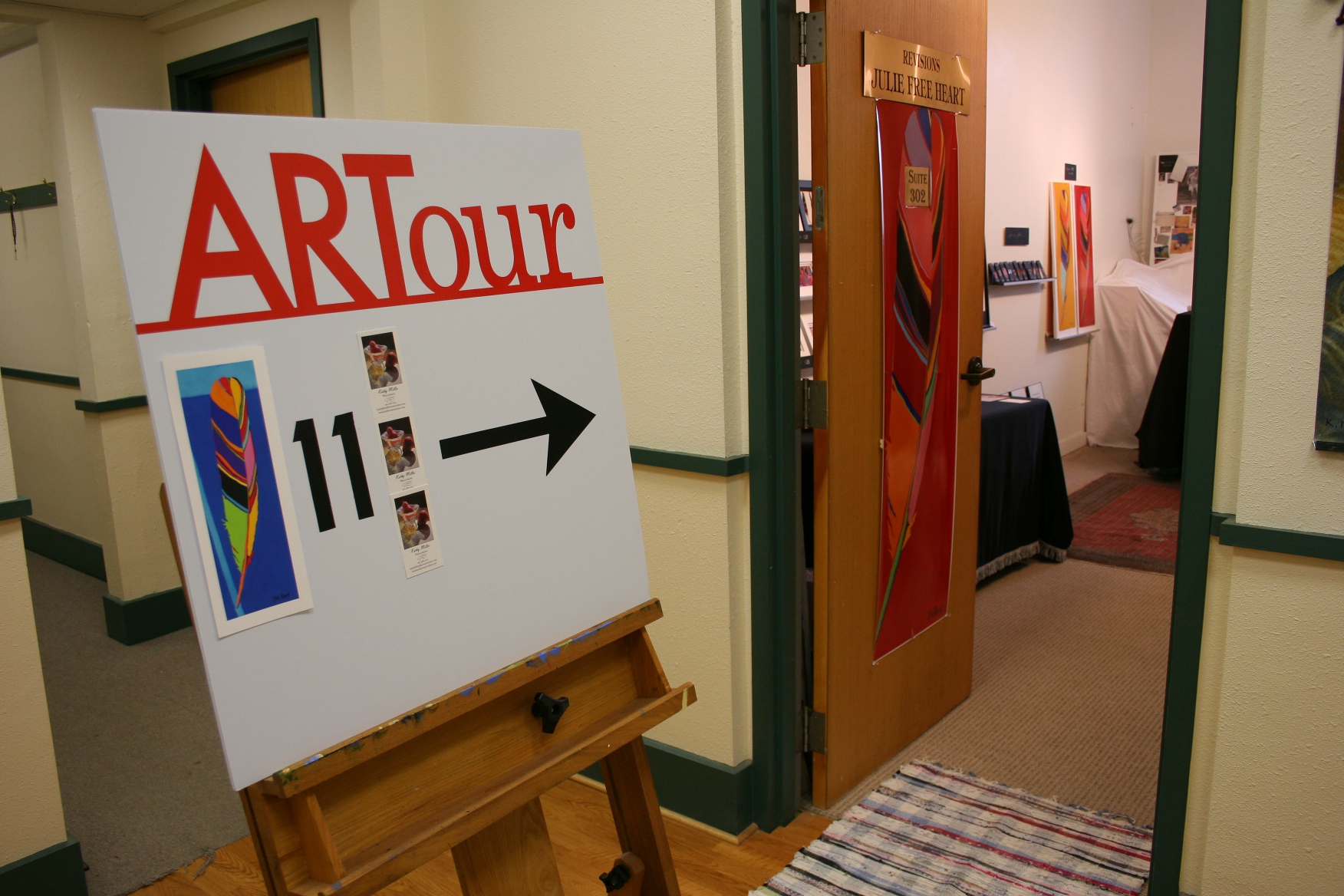
Meet 52 South Central Minnesota artists during weekend ArTour October 19, 2012

Faribault artist Julie Fakler’s paintings will be displayed in her JMF Studio at 1212 First Ave. N.W., Faribault, along with the textile art of Deb Johnson. Fakler specializes in animal portraits. Her cow painting graces promotional materials for this year’s South Central Minnesota Studio ArTour.

FIFTY-TWO ARTISTS. Twenty-four studios. And all showcased right here in the Faribault-Northfield-Cannon Falls area this weekend during the eighth annual South Central Minnesota Studio ArTour.

If you’ve never taken this studio tour, I’d encourage you to do so as a) You’ll meet a broad spectrum of talented local artists. b) You’ll view incredible art in wood, glass, photography, textiles, painting, ceramics, jewelry and more. c) It’s free, unless you purchase art, which, of course, you should consider doing. d) You’ll visit three charming communities.

I can’t attend this year’s tour. But I have in the past and here are the photos to prove it.

Just look at the talent we have, right here, in Greater Minnesota.

Meg Jensen Witt will showcase her ceramics at Lillart, 101 E. Fifth St., #209, Northfield, along with the paintings of Lilla Johnson. I photographed this example of Witt’s art in 2011.

At Holmquist Pottery, 11780 90th St. E., Northfield, you will find Lucky Rimpila’s glass art, like this photographed last year. Chris and Sue Holmquist will also display their ceramics and Marsha Kitchel will showcase her paintings.

Last year at Sunset Studio, 10754 Farrel Avenue, Northfield, I photographed the ceramics created by Tom Willis. You will find the work of six other artists at Sunset Studio.

During the 2010 ArTour, I visited Somers’ Studio & Gallery, 9775 Dennison Blvd. S., Northfield, where Fred Somers paints on his rural acreage.

In 2010 I photographed this wood block art created by Carla Thompson. This year she will exhibit her painting, along with Julie Free Heart, at Revisions, 101 E. Fifth St., #302, Northfield.

Animal paintings propped on the floor of Julie Fakler’s JMF Studio during the 2010 ArTour.

FYI: The South Central Minnesota Studio ArTour runs from 10 a.m. – 6 p.m. on Saturday, October 20, and Sunday, October 21. Select studios will also be open from 4-8 p.m. today.

For details, including studio locations and participating artists, click here to reach the ArTour website.

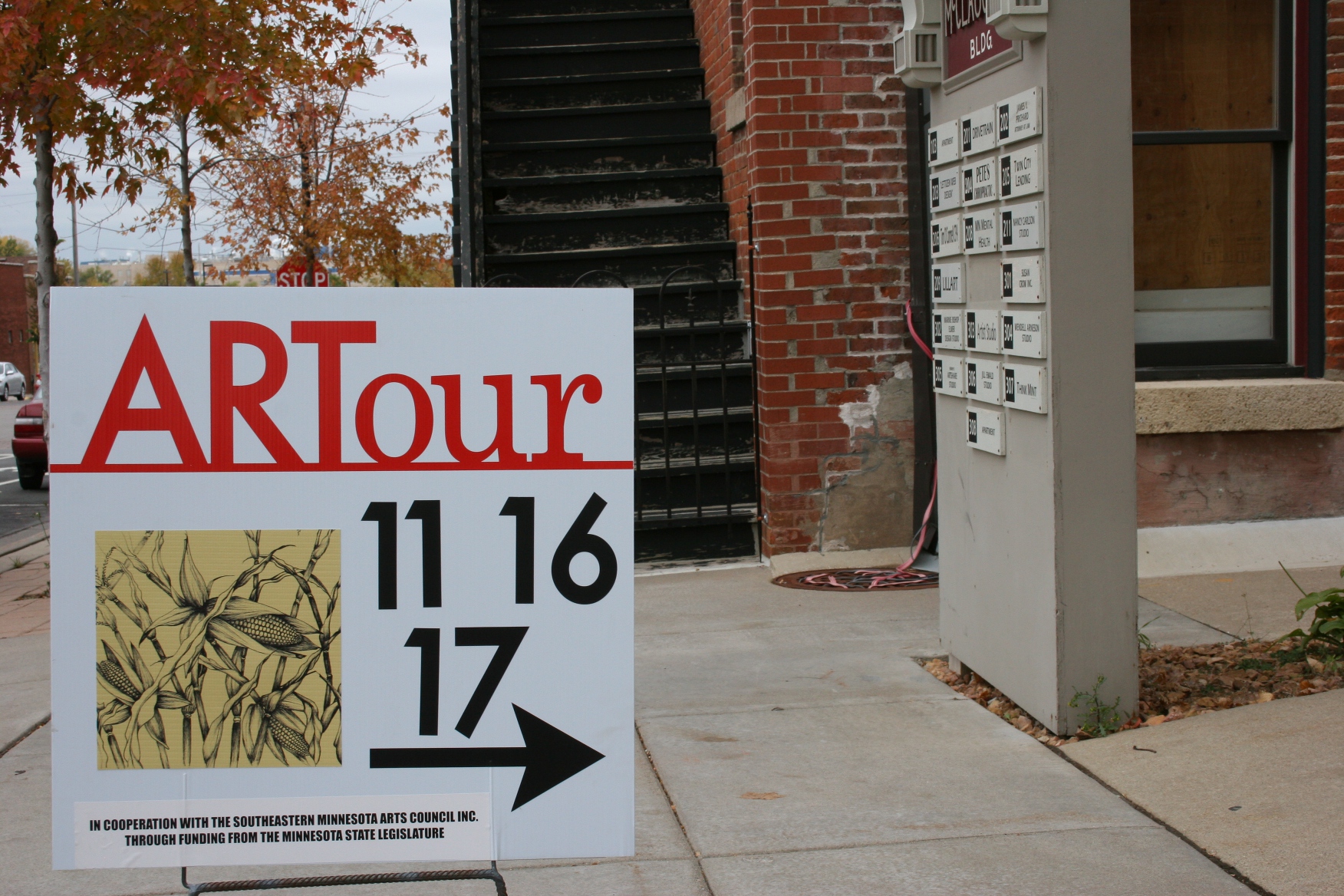
I photographed this scene from the 2010 ArTour marking a Northfield studio.

Click here to read about my visit to Fred Somers’ gallery/studio during the 2010 tour.

Click here to see Faribault artist Julie Fakler’s studio, one of my stops on the 2010 tour.

© Copyright 2012 Audrey Kletscher Helbling
Cow image courtesy of Julie Fakler


In which I learn a lot about the James-Younger Gang bank raid in Northfield September 3, 2012

CHRISTIAN HAKALA WEAVES the story of the bank robbery with the skills of a seasoned storyteller, his voice rising as the tension mounts, his hands gesturing, his eyes locking with those of a rapt audience.

Looking through a front window of the Northfield Historical Society museum toward Division Street.

It is Sunday afternoon and I am with a small group touring the Northfield Historical Society. I have come here with my husband to view the temporary U.S.-Dakota War of 1862 exhibit as it relates to Rice County.

The James-Younger Gang re-enactors riding in The Defeat of Jesse James Days parade perhaps five years ago.

But I find myself, instead, captivated by Hakala’s intriguing play-by-play account of the James-Younger Gang bank robbery of September 7, 1876, as he leads us through the historical society and into the bank. I am embarrassed to admit that I’ve never visited this museum, site of perhaps the most historic bank robbery in U.S. history, even though I live only 15 miles away and once worked briefly as a newspaper reporter in this town.

This week some 100,000 visitors, according to Hakala, are expected in Northfield for the annual Defeat of Jesse James Days celebration September 5-9.

Christian Hakala talks about gang members involved in the Northfield bank raid, pictured to his left: Frank and Jesse James; Cole, Bob and Jim Younger; Clell Miller; William Chadwell; and Charlie Pitts.

The former history teacher, and now a fund raiser at Carleton College in Northfield, serves on the historical society board, volunteers as a tour guide and role plays a townsperson in the annual re-enactments of the bank robbery. His knowledge of the crime is precise, right down to the minute on the original bank clock, stopped at 1:50 p.m., the time of the deadly and unsuccessful robbery.

The front of the original First National Bank of Northfield. I didn’t photograph the entire building as the sidewalk in front of the bank was torn up and blocked for installation of sidewalk poetry.

It was all over in seven minutes with four shot dead, including acting cashier Joseph Lee Heywood who refused to allow the robbers into the vault; Swedish immigrant Nicolaus Gustafson; and outlaws Clell Miller and William Chadwell.

The gun confiscated from Cole Younger when he was captured two weeks later near Madelia. I shot this glass-encased weapon in available light, without a tripod and without flash, meaning quality is not there in this image.

Not until the end of the tour does Hakala reveal that efforts are currently underway to exhume and determine if the presumed body of gangster Miller, buried in his home state of Missouri, truly is Miller.

Hakala explains: Then-medical student Henry Wheeler, who shot Miller from an upper story level of a building across the street from the bank, dug Miller from his grave and shipped the body from Northfield to his Michigan medical school for dissection and study. Later, Wheeler would return the supposed body of Miller to his family in Missouri. But, as the story goes, Wheeler kept a skeleton, purported to possibly be Miller, in a closet of his Grand Forks, N.D., medical practice office. That skeleton is today owned by a private collector.

The Miller family, Hakala says, is cooperating in proposed plans to positively identify the body buried in Missouri via forensic testing. The body was badly decomposed and thus not identifiable by the time it was received by the Miller family for burial.

Wheeler’s actions, Hakala further says, would not have been all that unusual for the time period with a likely attitude of “I killed the guy. He’s mine.”

This recent development simply adds to the mystery and drama and varying versions of events and details which have long accompanied the James-Younger bank raid in Northfield. Hakala, a northeastern Minnesota native who has also lived and taught in Missouri, knows how perspectives and stories differ based on source locations.

Yet, Hakala assures that the minute-by-minute account he relates of the actual bank robbery is based on the eyewitness testimony of a bookkeeper, collaborated by a teller who also witnessed part of the hold-up.

The only portion of the original bank you’ll see in this post is to the right in the background, caught when I was photographing this display case in the adjoining museum space which is in a separate building.

I can’t possibly share with you here the entire scenario Hakala presented in his tour on Sunday. Nor can I show you images, because photography is not allowed inside the original First National Bank of Northfield. But I can tell you that walking upon the very same rough floor boards trod by outlaws with a 10-year history of successful raids on trains and in banks, eying the massive black vault (closed, but unlocked at the time of the crime) and seeing blood stains on the bank ledger makes an impression.

These two items in a display case caught my attention. On the right is a note written by Cole Younger the day before his trial. When asked who killed Joseph Lee Heywood, he answered. “Be true to your friends if the Heavens fall.” In other words, he wasn’t telling. To the left are spurs worn by outlaw William Chadwell, who was shot and killed on Division Street during the raid.

However, here are some select pieces of information presented by Hakala which I find particularly interesting:

  • Jesse and Frank James’ father was a Baptist minister.
  • The James-Younger Gang invented the “stick ’em up” bank hold-up, conducting the first bank raid during daylight business hours, in which no war was going on, in Northfield.
  • One theory surmises that the James-Younger Gang was trying to get back at the Union by robbing banks.
  • In following with that anti-Union theory, Hakala notes that Union General and post Civil War provisional governor of Mississippi Adelbert Ames was a member of the Northfield family—coincidentally Jesse Ames and sons—which owned the local Ames (flour) Mill. Adelbert’s father-in-law was Benjamin Butler, a Union general much-despised by Southerners. This could explain why the gang targeted Northfield since the Ames’ family had money in the First National Bank.
  • While there was $15,000 in the Northfield bank vault, the outlaws made off with only $26.70 in cash, and not from the vault, which was protected by hero/cashier Heywood.
  • The unarmed Heywood was shot out of frustration and “cold-blooded meanness” (Hakala’s words, not mine). He was also slit across the throat, just enough to scare him, and pistol-whipped.
  • Northfield townspeople were throwing cast iron skillets, tossing bricks and aiming birdshot at the trapped gang members as they tried to ride away from the narrow canyon-like street setting in Northfield.
  • A posse of some 1,000 people formed to track down the gang.  The three Younger brothers were shot and captured in a gun battle at Hanska Slough near Madelia. Charlie Pitts was killed there. Frank and Jesse James escaped to Missouri.
  • Jesse James was killed by a friend and fellow gang member, Robert Ford, in 1882 for the reward money.
  • Postcards featuring photos of the dead outlaws, Clell Miller and William Chadwell, were sold to the public after their bodies were taken to a professional photography studio in Northfield and photographed.
  • It is written into a lease on an apartment across the street from the original First National Bank that re-enactors can use the apartment each year for bank raid re-enactments. An actor is stationed in the upper level room to portray medical student Henry Wheeler shooting, and killing, Clell Miller.

Another shot of the James-Younger Gang re-enactors riding in The Defeat of Jesse James Days parade several years ago.

If you wish to witness the seven-minute bank raid re-enactment, this is the week to do so. Performers will shrug into their long linen dusters, tuck their sidearms in place, saddle up and shoot it out at the Northfield Historical Society Bank Site & Museum, 408 Division Street in downtown Northfield.

Re-enactments are set for 6 and 7 p.m. Friday, September 7—the actual date of the robbery—and at 11 a.m. and 1, 3 and 5 p.m. on Saturday and at 11 a.m. and 12:30 p.m. on Sunday.

A copy of a wanted poster posted next to the front door of the museum.

For a complete listing of The Defeat of Jesse James Days activities, click here.

For more information about the bank site and museum, click here.

The front of the museum. If you look underneath the white steps, you’ll find three holes ringed in black, supposedly bullet holes made during the raid. It’s conjecture with nothing proven, according to Christian Hakala, who has his doubts about the holes being made by bullets. That’s Division Street on the left.

The original Ames Mill, once owned by Jesse Ames and sons, and today owned by Malt-O-Meal. It’s located around the corner and across the river from the bank. The company’s hot cereal is made here in the old flour mill.

© Copyright 2012 Audrey Kletscher Helbling
 

New exhibit highlights Rice County in the U.S.-Dakota War of 1862 September 2, 2012

IT IS EASY TO FORGET SOMETIMES, because I grew up in the region of Minnesota where the U.S.-Dakota War of 1862 was centered, that residents of the county in which I now live also played an integral role in the conflict.

Specifically, Rice County residents Bishop Henry Whipple and Alexander Faribault, after whom my community of Faribault is named, are key persons often noted in historical information written about the war.

I am always surprised that relatively few people from outside of southwestern and central Minnesota know so little about the bloody, six-week war between the Dakota and the white settlers and soldiers given it is a major, defining event in Minnesota history.

An overview of 1862, Through Rice County’s Eyes, which opened August 22 in Northfield.

However, awareness has grown considerably this year on the 150th anniversary of the war, including right here in Rice County. The Northfield Historical Society, partnering with the Rice County Historical Society, is currently showcasing an exhibit, 1862, Through Rice County’s Eyes.

I recently checked out the Northfield exhibit, which features mostly memorable quotes, volumes of summarized information and copies of photos. It’s a lot of reading.

But if you’re interested in educating yourself, it’s worth the time and concentration needed to absorb the information presented in this exhibit. And I’ll admit to occasionally skimming the postings because I am more of a visual, multi media, show-and-tell kind of history learner. I also had a pretty good background of knowledge going into the exhibit.

This sculpture of Alexander Faribault trading with a Dakota trading partner stands in Faribault’s Heritage Park near the Straight River and site of Faribault’s trading post. Faribault artist Ivan Whillock created this sculpture which sits atop a fountain known as the Bea Duncan Memorial Fountain.

I knew, for example, that fur trader Alexander Faribault was one-quarter Dakota and married to Mary Elizabeth Graham, whose mother was a family member of a Dakota chief. I knew, too, that Faribault was involved in the negotiating and translating of land treaties between the government and the Dakota before the war and that he benefited financially.

I was aware that Alexander Faribault sheltered the Dakota.

Above the photos and info is this quote by Bishop Henry Whipple to President Buchanan in August 1860: “In my visits to them, my heart had been pained to see the utter helplessness of these poor souls, fast passing away, caused in great part by the curse which our people have pressed to their lips.”

But I had forgotten that Bishop Henry Whipple, a long-time advocate for the rights of the Dakota and known to them as “Straight Tongue,” worked to find a safe refuge for them in the city of Faribault.

Alexander Faribault opened his land to the Dakota. Information in the exhibit states:

This land was the only safe-haven of its kind in a state now prejudiced in fear and anger against anyone with Dakota blood.

According to info in the exhibit, Alexander Faribault, whom you recall was one-fourth Dakota, also experienced prejudice against him. By 1869, this once successful fur trader, flour mill owner and politician had to sell his land and assets, including the land occupied by the Dakota.

Equally interesting is the quote, below, attributed to Mary Whipple. Even though her husband, the bishop, worked tirelessly to help the Dakota, fear still existed in his home community.

A quote from a letter written by Mary Whipple to her sister during the U.S.-Dakota War.

Perhaps the most interesting fact I learned relates to that of Lt. Rollin Olin, a decade-long resident of Northfield. He was second in command of the Third Minnesota Regiment at the Battle of Wood Lake—the final battle of the war—and a member of a five-man military tribunal which tried the Dakota following the war. He signed more than 300 death sentences for nearly 400 Dakota charged with murder, rape and/or robbery.

For me, that raises the obvious question: How could someone who fought against the Dakota judge them without bias? All members of the tribunal, in fact, had fought the Dakota. The answer, of course, is that Lt. Olin and the other four could not.

Likewise, the Northfield Historical Society is wisely careful to indicate that its new, temporary exhibit may not please everyone or include everything on the topic of Rice County’s connection to the war. On the NHS website, you’ll read this disclaimer:

As varied as these and other local perspectives may be, any exploration of the U.S.-Dakota War of 1862 suffers from the inevitable limitations facing every historical examination—limitations such as scope and biases, past and present, which impact the telling and perception of the stories and data. In presenting the exhibit 1862, Through Rice County’s Eyes this fall, NHS endeavors to draw visitors into thoughtful interest and discussion of this momentous event and its aftermath by sharing local connections. Come and critically examine this exhibit.

The exterior of the Northfield Historical Society, 408 Division Street, Northfield.

FYI: To learn more about 1862—Through Rice County’s Eyes, click here to the NHS website.

To learn more about the Minnesota counties, county by county, involved in the U.S.-Dakota War of 1862, click here.

© Copyright 2012 Audrey Kletscher Helbling
 

Not exactly kick the can June 29, 2012

Filed under: Uncategorized — Audrey Kletscher Helbling @ 7:15 AM
Tags: , , , , ,

HOT, HUMID WEATHER can cause all sorts of issues. Frizzy hair. Over-taxed air conditioners. Crabby kids, and adults. Buckling pavement.

And sometimes…sticky doors.

The door to Personal Touch Office Services.

But Patti, at Personal Touch Office Services, 307 Division Street in historic downtown Northfield, offers a solution to the sticky door problem at her place of business. Simply follow her instructions:

Follow the instructions to get the door open during humid weather.

Please note that Patti instructs you to “tap,” not kick, the door. Got that?

I expect door tapping kicking has been a popular sport in Minnesota this week.

FYI: I do not know Patti nor have I ever done business with her. I simply found her note amusing and wanted to share it with you.

© Copyright 2012 Audrey Kletscher Helbling
 

Embracing everyday & public art, plus a new sculpture in Northfield June 28, 2012

GROWING UP, I DIDN’T have all that much formal exposure to the arts. Not at home. Not in school. Not outside of either.

Life was different back then, in the 1960s and early 1970s, with families in my southwestern Minnesota farming community simply working long, hard hours to survive. We didn’t, for the most part, have art galleries and live theatre, concerts or art shows or any of those cultural centers and events that today are an assumed aspect of life, even in the most rural of areas.

Despite that absence of organized art opportunities, I was not deprived of art. Rather, its presence was subtle—found in the flower gardens of Great Aunt Dora, in the dance of corn tassels on a breezy summer afternoon, in the patchwork symphony of quilts my Grandma Ida stitched, in the blazing orange of a prairie sunset painted across the wide sky, in the distinguishable cadence of a John Deere tractor, in the stones my great uncle rockhounds collected, sculpted and polished to shiny perfection.

Those exposures to art were so much a natural part of my life that I never realized their significance as artful influences.

Today I can find organized art anywhere, including right here in my community of Faribault. I embrace (most of) it with exuberance.

And to the north, in neighboring Northfield, the arts scene is even more vibrant.

The recently-installed “Tree of Knowledge and Delight” at the Northfield Public Library.

At 4:30 p.m. this Friday, June 29, Northfield celebrates its latest addition to downtown art at the official unveiling of the “Tree of Knowledge and Delight,” a sculpture created by 10 Northfield High School students and installed in the Northfield Public Library plaza.

A St. Olaf College emeritus professor of art and a St. Olaf art apprentice guided the students in their non-credit, extra-curricular public art course which resulted in the sculpture. Funding for the Northfield Young Sculptors Project came via a $4,150 Legacy grant approved by the Southeastern Minnesota Arts Council.
I viewed the sculpture for the first time Sunday evening. I’ll admit that I didn’t study the sculpture like I should have. But oftentimes it takes me awhile to warm up to abstract art.

Eight branches comprise the tree sculpture.

But if you take the time to examine the tree, you will see the visual themes related to learning and individual artistic expressions—the book, the faces, the snake, the harmony of colors and more.
That students would have this opportunity to create such a sizable piece of public art seems exceptional. What an encouragement to them as young artists.

The “Tree of Knowledge and Delight” will remain at the library plaza for a year before relocating to a permanent home at Northfield High School. Plans call for a public sculpture to become an annual project for NHS students and their professional mentors. And that is good.

Yet, aside from this organized project, I hope students will not overlook the art in their everyday lives. For that is the art which, as I see it, defines the artistic world in its simplest, purest, most grassroots form.

FYI: This project was also supported by the Northfield Arts and Culture Commission, the Northfield Public Library, Northfield High School and the City of Northfield.

Right next to the Northfield Young Sculptors Project you’ll see this knit art wrapped around a “Do not enter” sign post. An attached tag, which includes a photo of a young woman, reads: “It’s immortality, my darlings.– Alison.” This is apparently a memorable line by character Alison DiLaurentis from the teen drama television series, “Pretty Little Liars.” Never heard of it. Any idea who placed this quote and knit art on the Northfield street sign? And what does that message mean anyway?

© Copyright 2012 Audrey Kletscher Helbling