Sheets and towels hang on my clothesline Thursday morning, patches of snow still showing on the lawn. (Minnesota Prairie Roots copyrighted photo November 2023)
IN THE BRIGHT SUNSHINE of a frosty last day of November morning, I clipped towels and sheets onto the clothesline. It’s a task I love, for many reasons.
There’s something remarkably soothing about the rhythm of pulling laundry from a basket and then methodically clipping it onto a line. It’s a rather mindless task, although I do consider placement, hanging heavier items in the spotlight of the morning sun.
I love how this draws me outside, to appreciate the beginning of the day. To see the sky, the trees. To hear birdsong, mostly in warm weather. To feel the wind, the warmth of sunshine and the bite of the almost-winter air.
If the patio is clear of snow and the sun shining brightly, I will sometimes hang laundry outdoors in the winter, as seen in this file photo with snow piled in the background. (Minnesota Prairie Roots copyrighted file photo)
Admittedly, hanging laundry outdoors in below freezing temps requires some fortitude. As I hung laundry Thursday morning, I felt my fingers numbing against the cold of damp, wet laundry. I paused half way through to step inside my warm kitchen, to put on a pot of coffee, anticipating my chilled hands wrapping a warm mug.
Then I headed back outside, remnants of snow remaining on the lawn near the patio where my removable clothesline stretches. The towels were already stiff, frozen.
Pioneer women faced the added challenge of grasshoppers devouring their laundry. This info was included in a Minnesota Historical Society traveling exhibit at the Steele County History Center about disasters in Minnesota. (Minnesota Prairie Roots copyrighted file photo April 2016)
I continued hanging laundry, just like generations of women before me. Prairie women, pioneer women, hardy women who labored in the elements, who (unlike me) washed their clothing and bedding in rivers and on washboards. Yet, we each worked under the same sky, the same sun. We are linked in a sisterhood of women hanging laundry. I love that historic connection.
I love, too, the scent of laundry dried by the sun. Especially sheets. They smell of wind and sky and sun.
I seldom use my clothes dryer, relying on solar power and indoor drying racks to dry my laundry. My friends Jackie and Lisa do the same. They understand me, why I intentionally choose on a nippy November morning, to step outside, to methodically clip towels and sheets to the clothesline.
TELL ME: Do you hang laundry outdoors? If yes, why?
Deer photographed at River Bend Nature Center, Faribault. (Minnesota Prairie Roots copyrighted file photo April 2022)
MANY MINNESOTANS hold a love-hate relationship with deer. We love watching them in the wild. But when they devour our flowers and other plants, then deer are not quite so cute. Or, if they dash onto a roadway, slamming into our vehicles (or perhaps us into them), then the hate factor amps up considerably.
Leaping across a path near the nature center parking lot. (Minnesota Prairie Roots copyrighted file photo 2013)
And then there are the deer hunters, including many in my extended family. While I’ve never asked why they hunt, for some it’s a food source, others tradition, a challenge, a sport, camaraderie and the joy of time spent in the woods, fields and prairie.
Spotted on a back country road near Mazeppa. (Minnesota Prairie Roots copyrighted file photo May 2022)
Right now is prime deer hunting season in Minnesota with the recent firearms deer hunting opener. It’s a big deal with even our governor donning his blaze orange attire. The Minnesota Department of Natural Resources regulates hunting with detailed rules for firearms, muzzleloader and archery hunts plus a whole lot of other specifics for ages and regions. Way too complicated for me. But then I don’t need to understand given I don’t hunt.
A hunter in bright orange roamed fields during the opening weekend of deer hunting in Minnesota in 2018. (Minnesota Prairie Roots copyrighted file photo 2018)
But I do need to be aware. I prefer not to go on leisurely country drives during firearms hunting. Bullets can travel a long way. While I know most hunters are careful, not all are. Being sure of your target before firing is a basic rule of hunting. Even I, a non-hunter, understand that.
Spotted along a trail at River Bend while hiking on Sunday. (Minnesota Prairie Roots copyrighted photo November 2023)
I also understand the need to heed warning signs like the one I spotted while hiking at River Bend Nature Center late Sunday morning. The nature center will be closed Thursday, November 9, through Sunday, November 12, for an archery management hunt. It’s a necessary event to manage the deer population. Coyotes do some of that, but clearly not enough.
The muted autumn landscape at River Bend, the path leading back to the woods or onto the prairie. (Minnesota Prairie Roots copyrighted photo November 2023)
I appreciate River Bend for its diverse landscape of woods, prairie, wetlands and river. To walk the trails within is to connect with nature, to feel peace, to experience a sense of awe and wonder at the intricacies and beauties of the natural world.
One of my favorites at River Bend, grass that stretches 10 feet and bends poetically in the wind. (Minnesota Prairie Roots copyrighted photo November 2023)
Here sky meets prairie. Here woods shelter. Here river twists. Here milkweeds flourish and grasses stretch and snakes slither. And here deer roam, too, in this land that is more theirs than ours. Yet, we claim it also.
Deer nearly camouflaged in the dried grasses at River Bend. (Minnesota Prairie Roots copyrighted photo April 2022)
And even though I intellectually recognize the need for an archery management hunt, part of me wants to shout a warning: “Run, deer, run!”
Individual leaves, like this maple, are works of art. (Minnesota Prairie Roots copyrighted photo October 2023)
TEMPS DIPPING INTO THE LOW 20s definitely feel more like winter than autumn here in southern Minnesota. I pulled on my parka, stocking cap and mittens earlier this week for my morning walk.
A still colorful treeline behind Pollard Hall. (Minnesota Prairie Roots copyrighted photo October 2023)
But the weekend, oh, the weekend, even if only in the 30s, was a wonderful one for final fall walks. I wanted one last glimpse of the foliage. Leaves have dropped from many trees, but some remain, like stubborn, defiant kids refusing to leave the playground.
A solitary oak set against the backdrop of Noyes Hall is simply stunning. (Minnesota Prairie Roots copyrighted photo October 2023)
Per our usual weekend walking route, Randy and I headed to the campus of the Minnesota State Academy for the Deaf on Faribault’s east side. I love walking here. It’s quiet, secluded and just plain achingly beautiful. From aged limestone buildings to green space to a wooded area behind the buildings, there’s much to appreciate. Nature and old architecture always appeal to me as does a safe, unimpeded place to walk.
The woods I was drawn to explore. (Minnesota Prairie Roots copyrighted photo October 2023)
Typically we stick to following sidewalks or crossing parking lots. But this time we diverged into the wooded area behind Pollard Hall, a boarded up building and the HVAC and maintenance headquarters. I’d previously seen people with their dogs tracking across the grass near woods’ edge. But we’d never detoured to explore, mostly because in the summer and early autumn the woods appear a dense forest. Now with most leaves fallen, the space opened up, drawing me in.
We followed a leaf-strewn, narrow dirt path for a ways into the woods. (Minnesota Prairie Roots copyrighted photo October 2023)
Since I’m directionally challenged in a town that is not prairie grid straight, I wondered what lay beyond the woods, below the bluff. After a bit of crunching over leaves, dodging branches and skirting trees, I saw the answer. Below lay the river and train tracks and Straight River Apartments next to Fleckenstein Bluffs Park. Finally, I understood my geographical placement.
Woods, hills, fallen leaves and creek bed meld behind MSAD. (Minnesota Prairie Roots copyrighted photo October 2023)
Mostly I took in the topography of hills bumping into each other, a dry creekbed twisting between. Yellow leaves covered the hillsides as thick as shag carpeting, but much lovelier.
Oak leaves blanket the lawn. (Minnesota Prairie Roots copyrighted photo October 2023)
Once out of the woods, Randy alerted me to two deer near the HVAC building. A third had already run away upon spotting us. But the other two stood still as statues, fully aware of our presence. We mimicked them, opting to stand quietly and appreciate their unexpected appearance. As much as I dislike deer along roadways, I find them endearing in any other location. Finally the pair decided they’d had enough of this stare off. They white-tailed it across the grass, disappearing over a hill.
Sometimes you have to look up, directly up, to see the beauty, like this oak tree. (Minnesota Prairie Roots copyrighted photo October 2023)
And so we continued on, me pulling out my cellphone once again to snap photos of the remaining colorful trees. My mind understands that soon this landscape will be devoid of color, transformed to the black-and-white of winter. But on this weekend, I pushed those thoughts mostly aside, focusing instead on autumn’s lingering beauty.
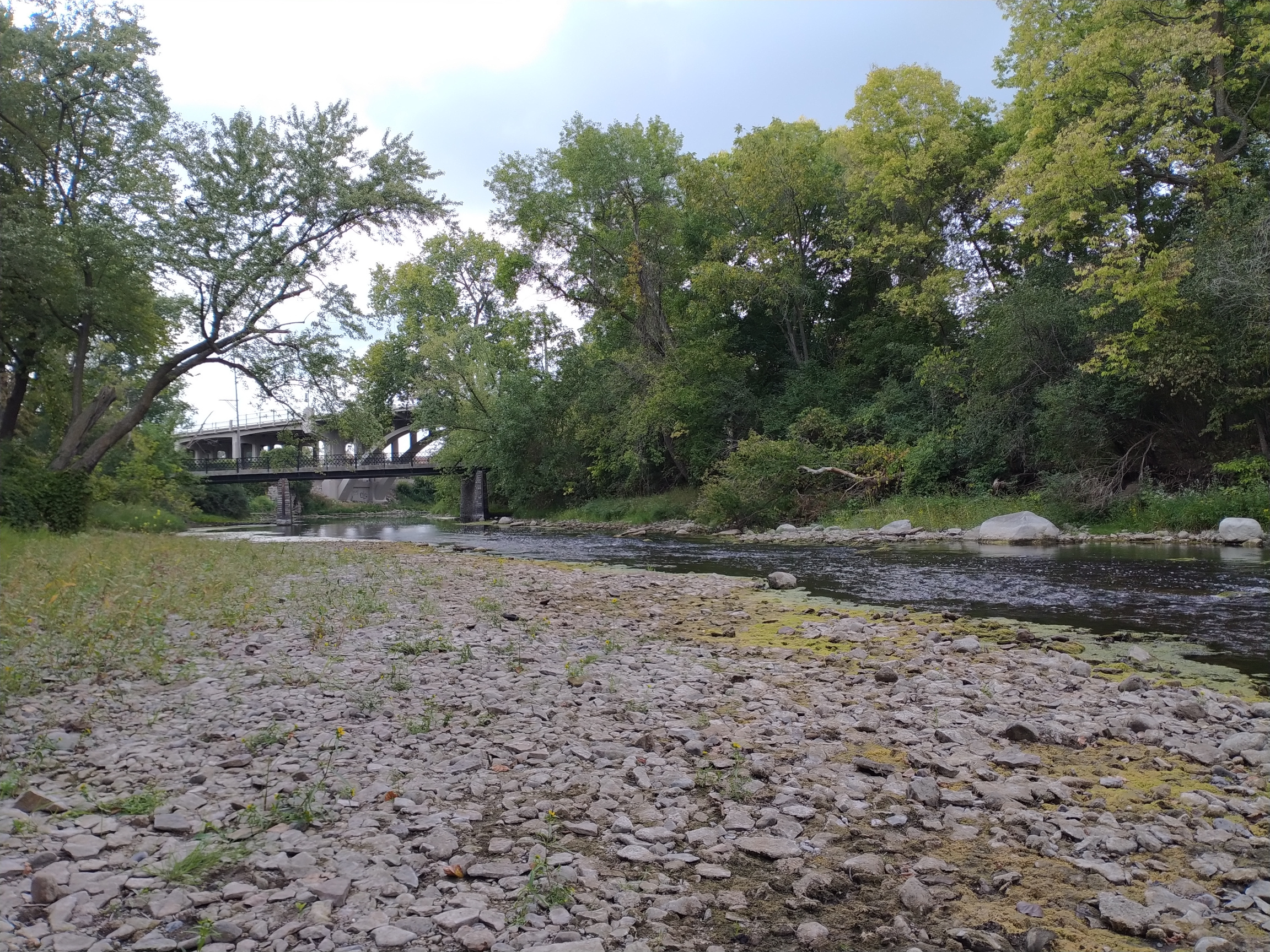
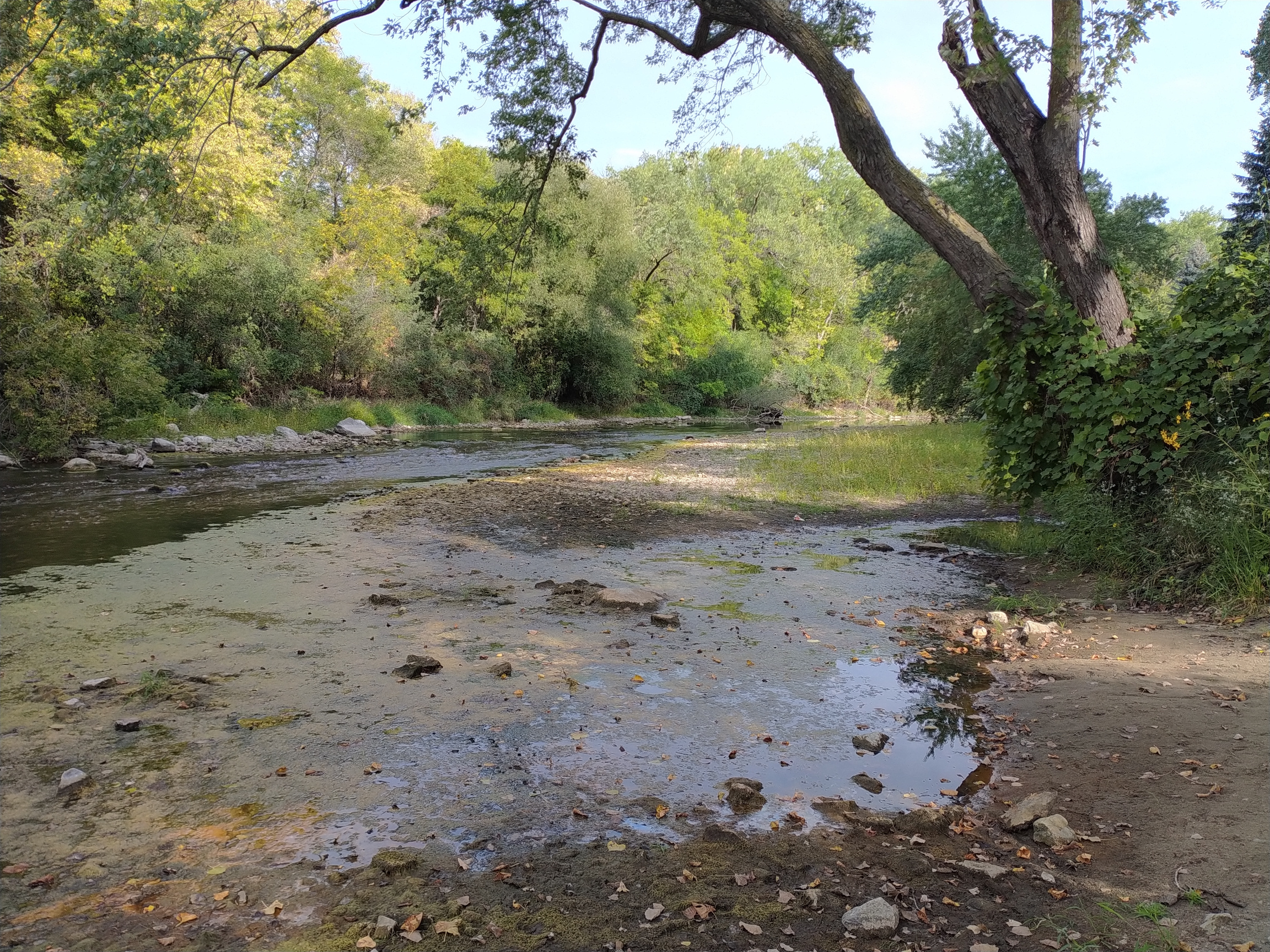
The river bottom revealed, weeds and flowers growing where once water flowed in the Straight River at Faribault’s Teepee Tonka Park. (Minnesota Prairie Roots copyrighted photo September 2023)
CAUTIOUSLY I SIDLED down the silty river bank, hand clasping Randy’s to steady myself. “This isn’t one of the smartest things we’ve done recently,” I said. I held no desire to slip on the unstable ground, to tumble and break a bone. I’ve twice done that. The doctor who recently diagnosed me with osteopenia likely would remind me of my bone density scan results and of my age, which is much closer to 70 than sixty.
But risk outweighed fear. I wanted to reach the dry river bottom, to stand upon the rocky bed, soles touching a place where water once flowed strong and steady.
In this summer of abnormally high temps and little rainfall, the water level in the Straight River, like so many other waterways in Minnesota, is low. The Minnesota Department of Natural Resources, which monitors river depths, terms the level of the Straight near Faribault as “scrapable.” Defined, that’s “so low that paddlers may have to get out of their watercraft to avoid rocks.” At the Straight River West Bridge Street location in Owatonna, the river level measures only slightly better at “low.” The Cannon River, into which the Straight flows, rates as “scrapable” in Morristown, near Faribault, in Northfield and in Welch.
The effects of the ongoing statewide drought are evident. My county of Rice, like 39 percent of Minnesota, is in a severe drought. And much of southeastern Minnesota, including more than half of Steele County to the south through which the Straight River twists and turns, is in an extreme drought.
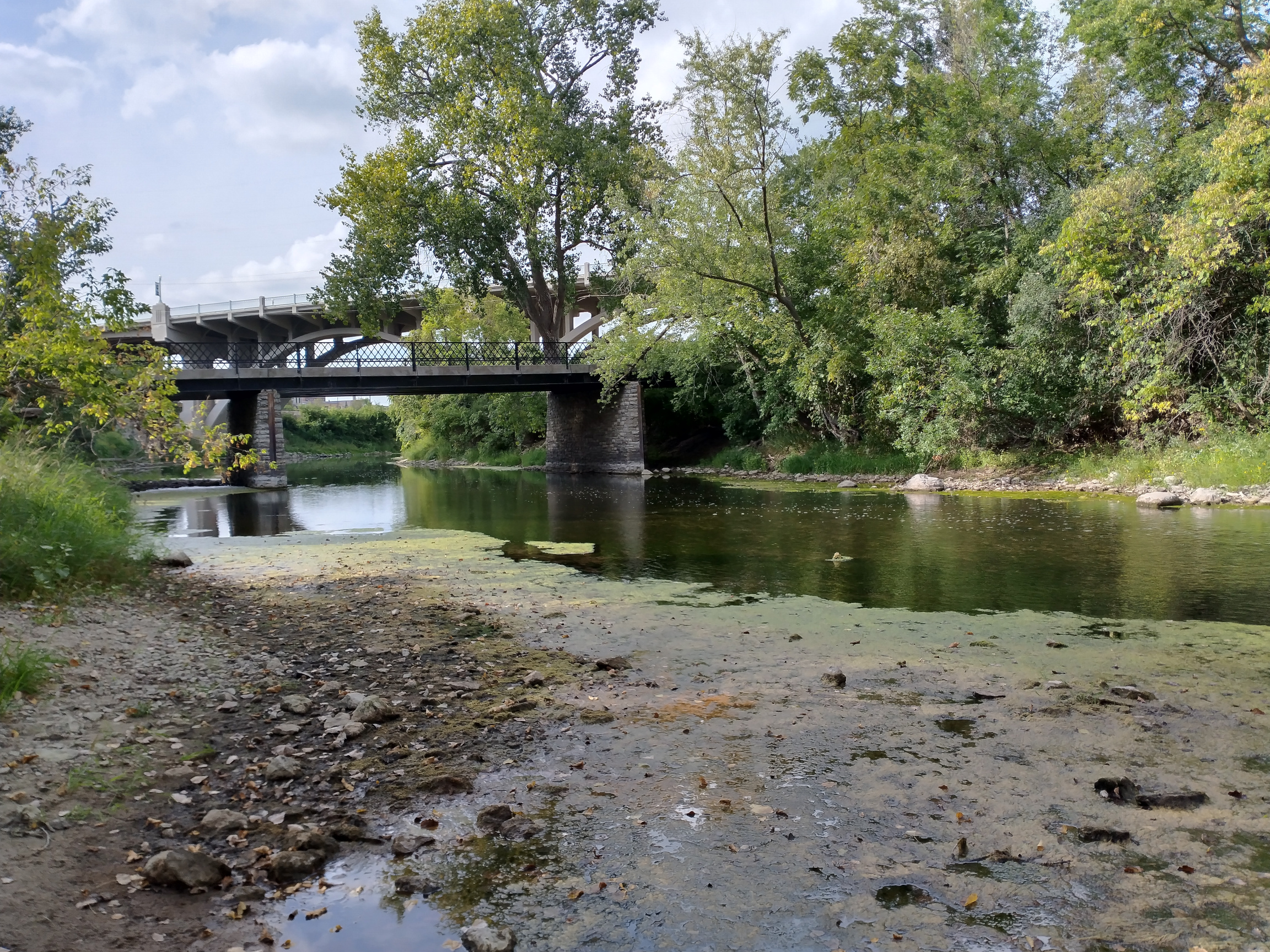
Stagnant water ponds near the bridge leading into Teepee Tonka Park with the viaduct in the distance. (Minnesota Prairie Roots copyrighted photo September 2023)
It’s no wonder that on this afternoon in mid-September, I can walk upon a rocky river bottom where water once flowed, even flooded this spring into Teepee Tonka Park near Faribault’s historic viaduct. Earlier this summer, a Faribault teen discovered a cephalopod fossil in an area of a local river typically under water. He refused to identify the specific waterway, but I guessed, perhaps incorrectly, that it was the Straight.
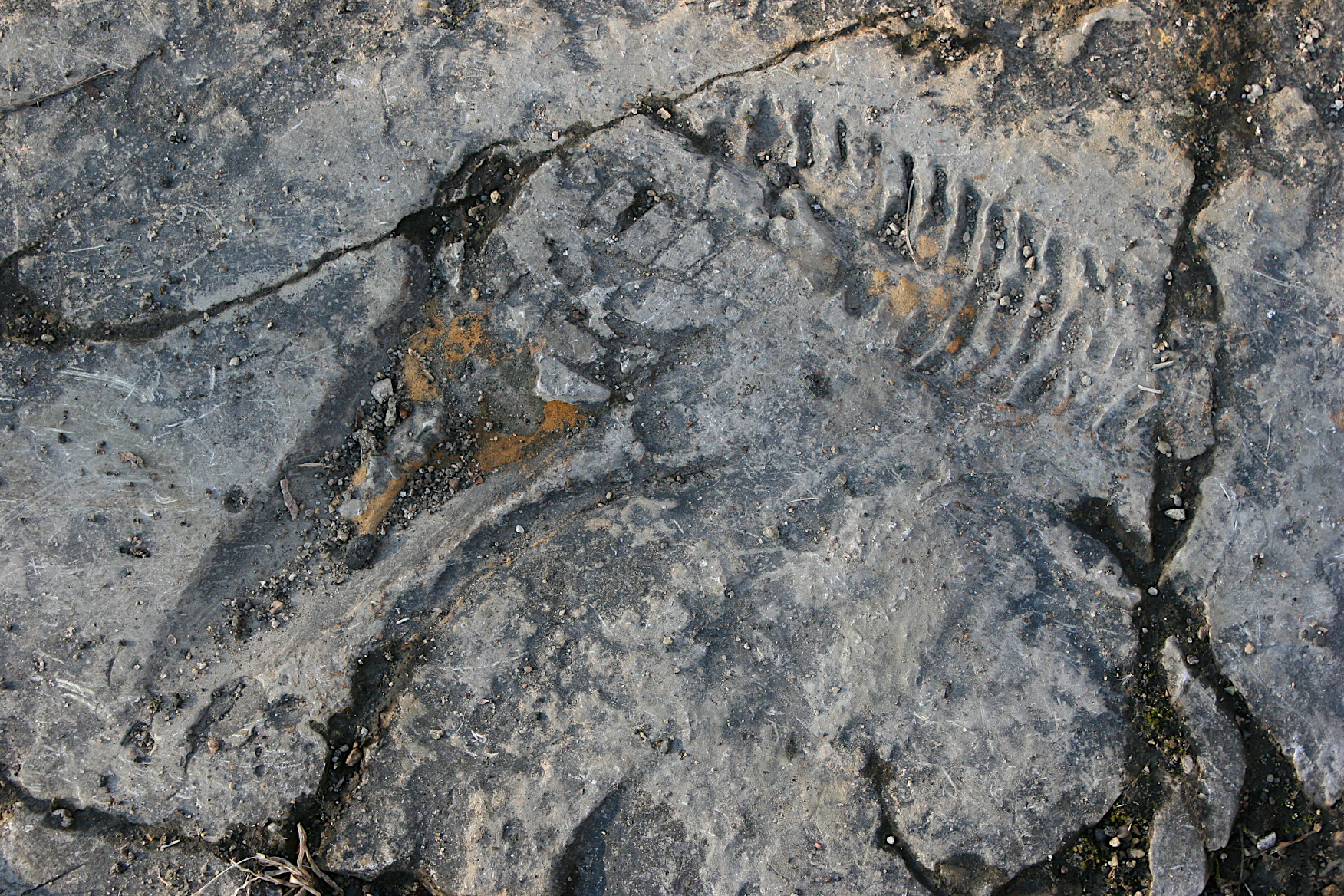
A fossil along a trail near the Straight River overlook in Faribault’s River Bend Nature Center, which connects to Teepee Tonka Park. (Minnesota Prairie Roots copyrighted file photo)
That fossil discovery was also part of my reason for descending the river bank near the east-side Faribault park entrance. I had great uncles who were rock hounds, inspiring in me a childhood fascination with agates and shells and interesting finds revealed only at ground level. That’s carried through into adulthood.
Wildflowers bend toward the narrowed river of exposed river bottom and rocks. (Minnesota Prairie Roots copyrighted photo September 2023)
But on this day I found nothing of interest, only weeds and wildflowers sprouting between stones aside the drought-narrowed river. Correction: I spotted a bra atop a rock, just out of reach in the river, and wondered about the story behind that.
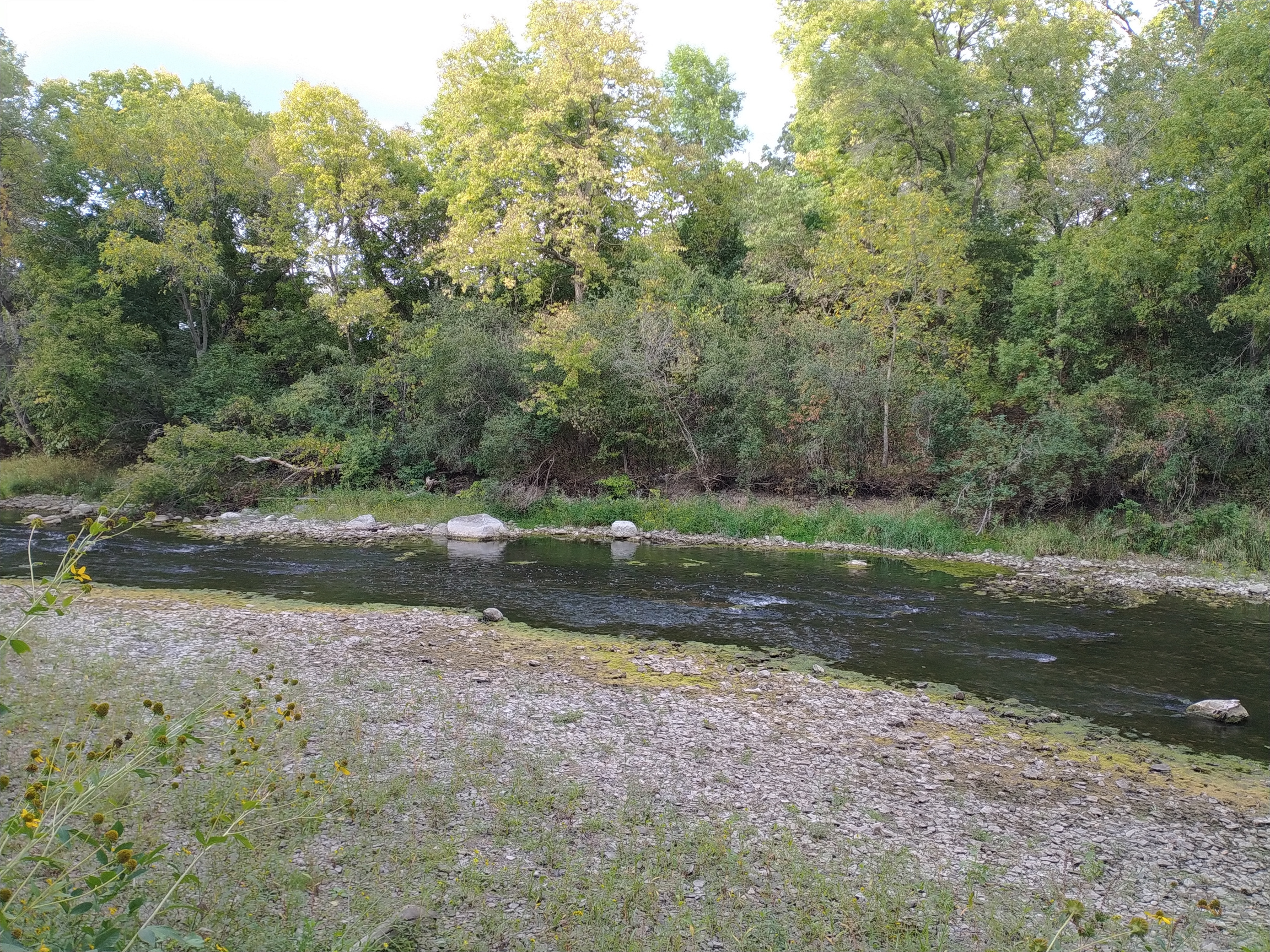
Outdoor enthusiasts intending to paddle the Straight or Cannon rivers now would assuredly have their own disappointing stories to tell about abandoned plans. I observed ankle deep water in parts of the Straight, making water recreation impossible, any recreational outings scrapable.
Around this bend in the river, to the right, the water deepens a bit and flows freely. (Minnesota Prairie Roots copyrighted photo September 2023)
Only a pair of hunting dogs let loose by their owner in Teepee Tonka Park enjoyed the low river level on the day I eased down the river bank. They scrambled down the bank, surefooted, racing along river’s edge, shallow water splashing. Then back up they dashed, sprinting along the grassy bank before returning to the river. I delighted in their antics while simultaneously concerned they might come near me. I never quite trust strange dogs not under the control of their owner. A large muddy-pawed dog once jumped on me while I walked at a city park.
Mud. We’ve seen little of that in most parts of Minnesota this summer. There are exceptions, of course, including flash floods in Duluth on Monday, not something any of us want. Light rain fell in Faribault early on this week, enough to dampen the pavement. But I yearn to hear the steady thrum of rain upon the earth. Rain that will ease this drought, replenish our rivers, revive our waterways, restore the land.
Monarch on milkweed flower at the Rice County Master Gardeners Teaching Gardens, Faribault. (Minnesota Prairie Roots copyrighted photo June 2023)
ADMITTEDLY, A TIME EXISTED when I considered milkweeds to be, well, weeds. A weed, by definition, is an unwanted plant. And my farmer dad didn’t want milkweeds growing in his Redwood County soybean fields. So we—meaning me and my siblings—were instructed to eradicate milkweeds, cockle burrs and thistles while walking beans.
If the term “walking beans” is unfamiliar, it simply means walking between soybean rows to remove weeds either via pulling or hoeing, preferably yanking so as to assure root removal. This was a necessary, albeit unpleasant, task assigned to farm kids who labored and sweated under a hot summer sun. The reward was a clean field. And a grateful farmer father.
Occasionally, this job paid…if done for anyone other than Dad. One summer my cousin John hired my sister Lanae and I and two of our cousins to walk his beans. As the oldest among the four, I was the designated crew leader, quickly thrust into settling arguments between my two cousins. I decided then and there that I wasn’t management material.
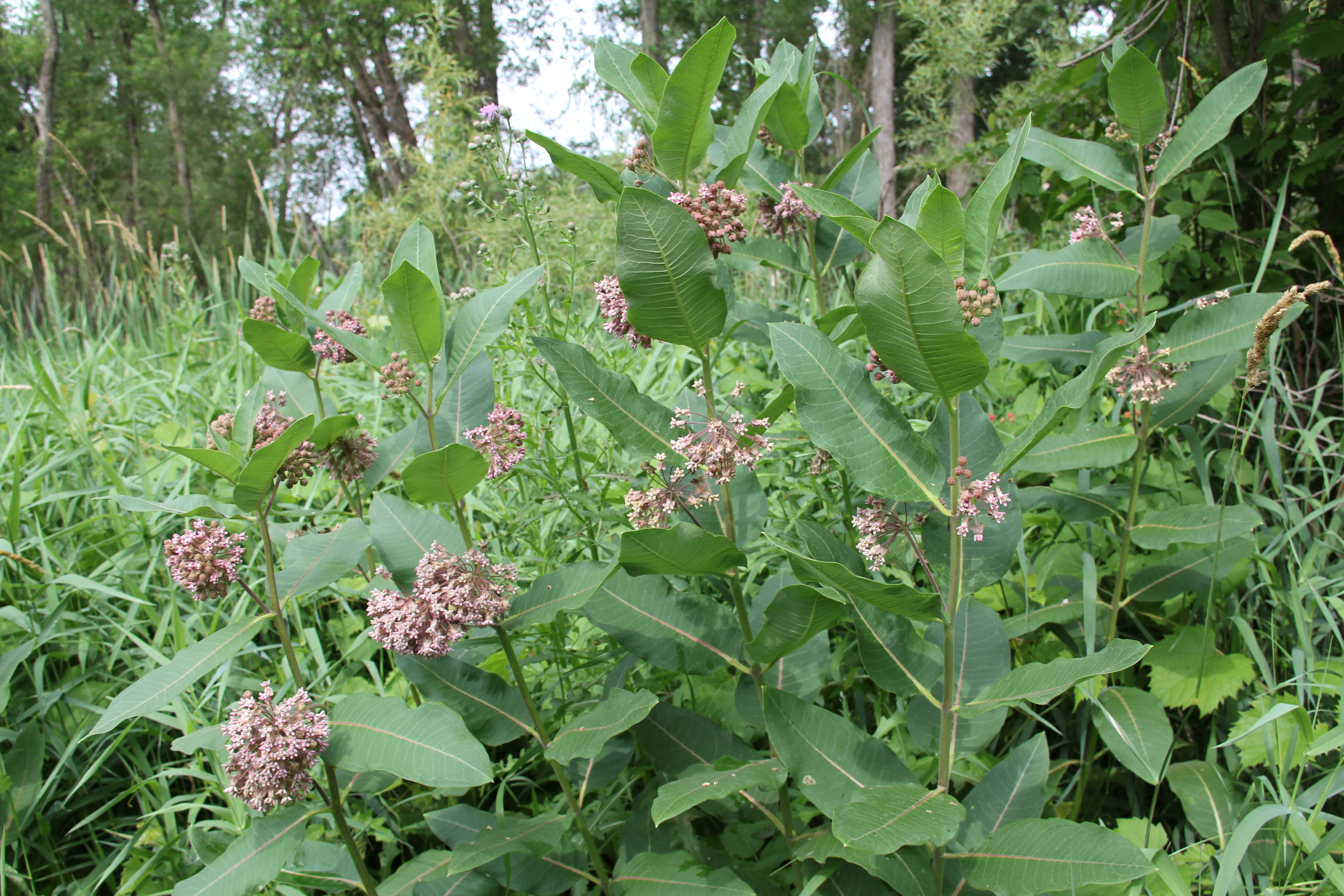
Milkweeds flourish at River Bend Nature Center, Faribault. (Minnesota Prairie Roots copyrighted photo July 2023)
But back to those milkweeds. Now, some 50+ years later, my opinion about milkweeds has changed. I no longer pull them. I plant them and then allow them to go to seed. And this year I have a bumper crop growing in my flowerbeds, much to my delight.
Milkweed flowers are not only beautiful, but also smell lovely. (Minnesota Prairie Roots copyrighted photo July 2023)
Milkweeds are the host plant for monarch butterfly larvae, the reason I grow this food source. I want to do my part to protect the monarch, today considered to be endangered. I’ve been rewarded with monarchs flitting among my phlox and other plants in my tangled mess of flower gardens.
The other evening, while walking in a local park, I watched two monarchs swooping and dancing in a pre-mating ritual. Their aerial acrobatics impressed me like a line of well-written poetry. In many ways, their performance was poetry. Beautiful. Creative. Mesmerizing. Connective in a way that touched my spirit.
If my farmer dad (gone 20 years) heard me describe monarchs in this context, he may just shake his head and wonder about that poet daughter of his. And he would wonder even more whether I learned anything from pulling milkweeds all those summers ago in his southwestern Minnesota soybean fields.
#
FYI: You can learn about monarch butterflies and how you can help them, see caterpillars, then hike to look for monarchs during a 10-11:30 a.m. Saturday, August 19, program at the Nerstrand Big Woods State Park amphitheater. Minnesota Master Naturalist Katy Gillispie is leading the Friends of Nerstrand Big Woods State Park free “Monarchs and Milkweeds” event. A state park parking pass is required for entry to the park near Nerstrand.
Horseshoe Lake, south of Crosslake in central Minnesota. (Minnesota Prairie Roots copyrighted photo July 2023)
WE LOVE OUR LAKES in Minnesota, dubbed “The Land of 10,000 Lakes.” In reality, our state has more than 10K, but that’s a nice, round, marketable number.
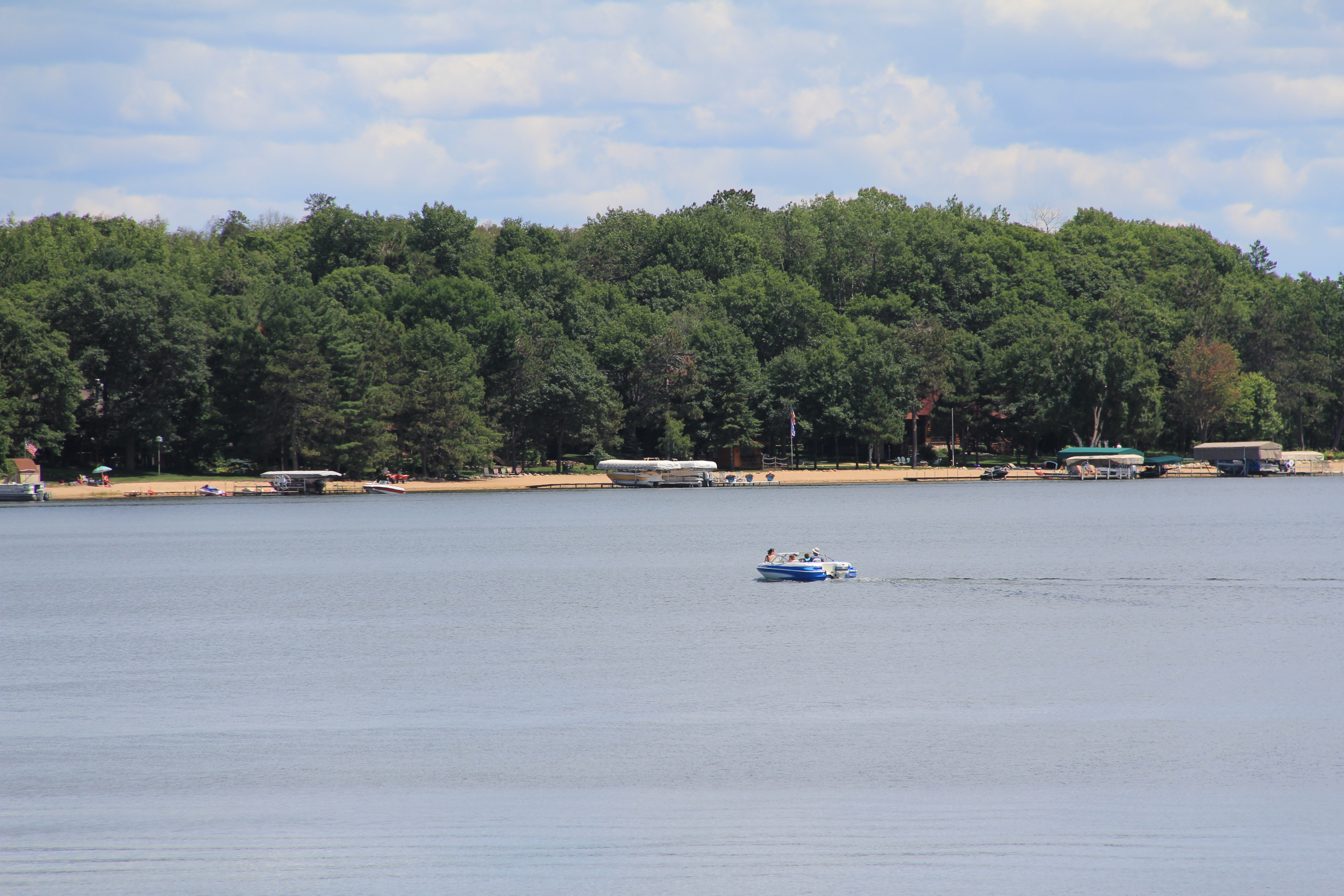
Recreational boating. (Minnesota Prairie Roots copyrighted photo July 2023)
And because we love our lakes so much, we spend endless hours enjoying them year-round, especially during the summer. I was well into my sixties before I experienced cabin lake life.
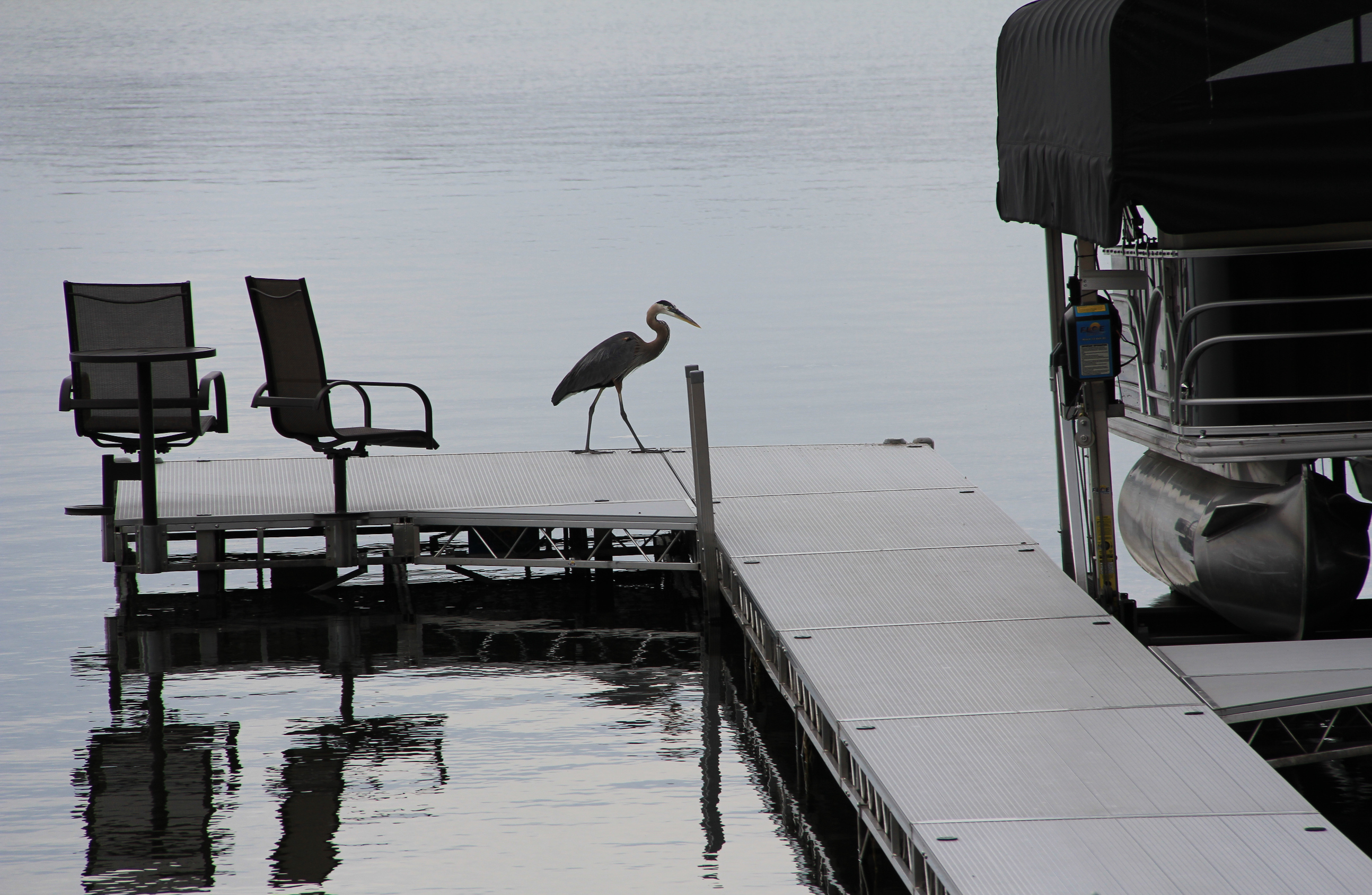
A blue heron walks the dock. (Minnesota Prairie Roots copyrighted photo July 2023)
Recently, Randy and I headed to a family member’s lake property south of Crosslake in central Minnesota, to us Up North since we’re from southern Minnesota. Randy’s youngest sister and her husband have graciously invited extended family to stay in their guest lake cabin. And each summer for the past several, we’ve made the four-hour drive north to relax at the lake.
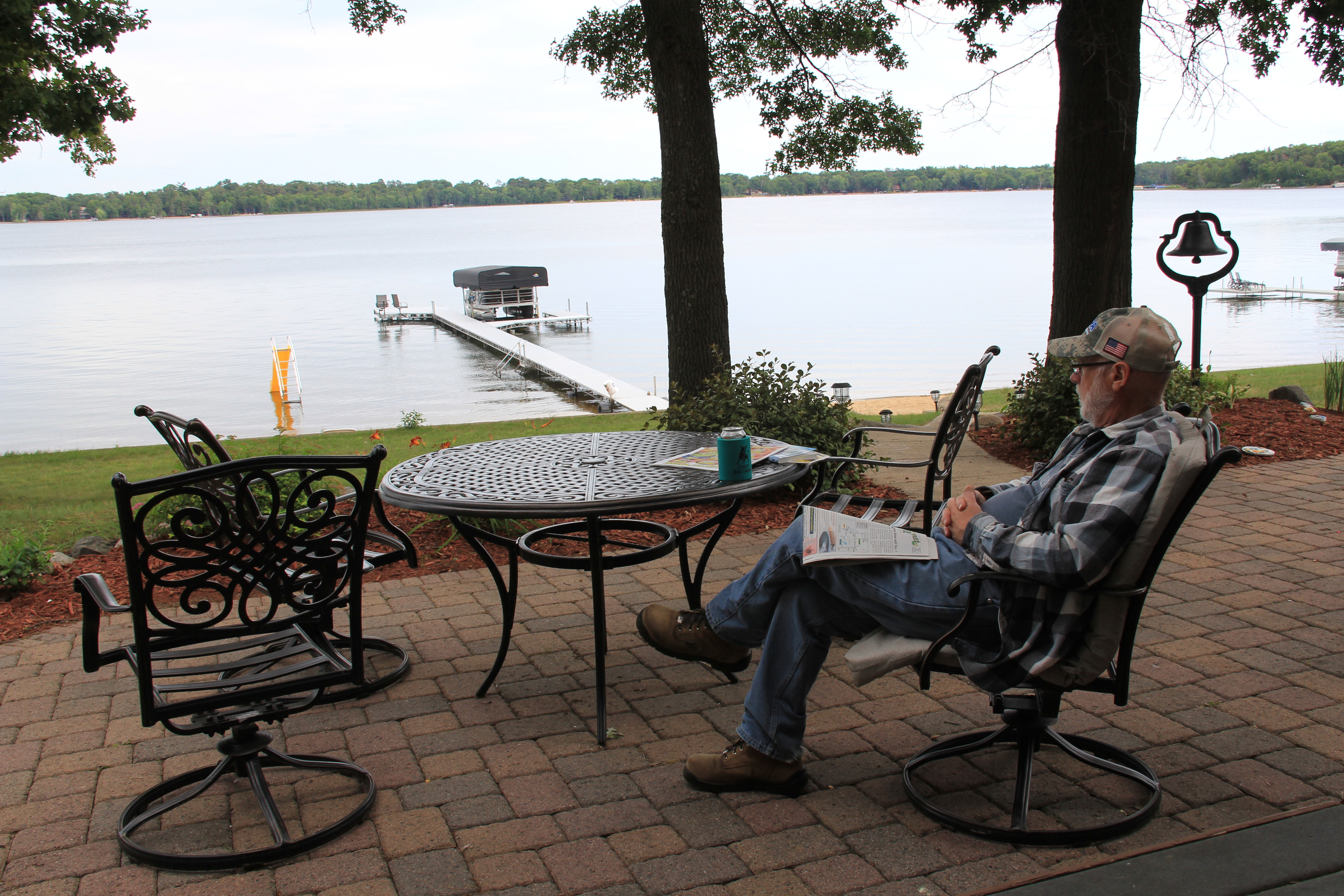
The lake experience is new for Randy also, relaxing on the patio on a cool day. (Minnesota Prairie Roots copyrighted photo July 2023)
As someone who grew up on a dairy and crop farm with only two childhood vacations in her history, none of them at a lake, these cabin stays have proven tranquil, relaxing and lovely in every way. There among the tall pines with a clear view of Horseshoe Lake, I feel such peace. Isolated. Disconnected from the world unless I opt to connect via my smartphone.
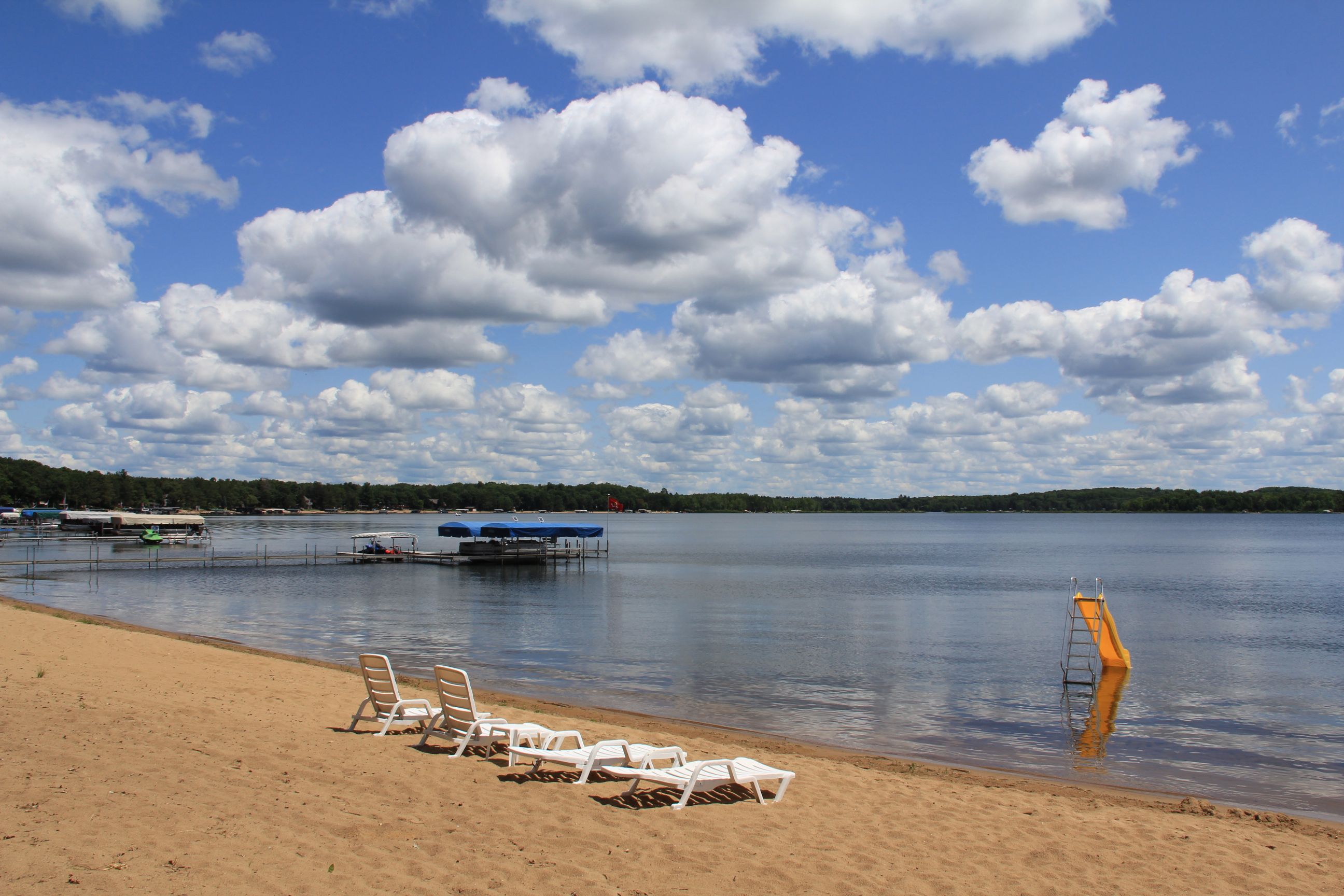
Lounge chairs line the beach. (Minnesota Prairie Roots copyrighted photo July 2023)
Time has no clock here. No schedule.
A loon on Horseshoe Lake. (Minnesota Prairie Roots copyrighted file photo 2022)
Awaken with the sun or sleep in. While away hours fishing from the dock, lounging on the beach or reading lakeside. Pull a kayak into the lake if you’re a water lover, which I am not. I like water, just not being on water. Watch the loons while listening to their haunting call.
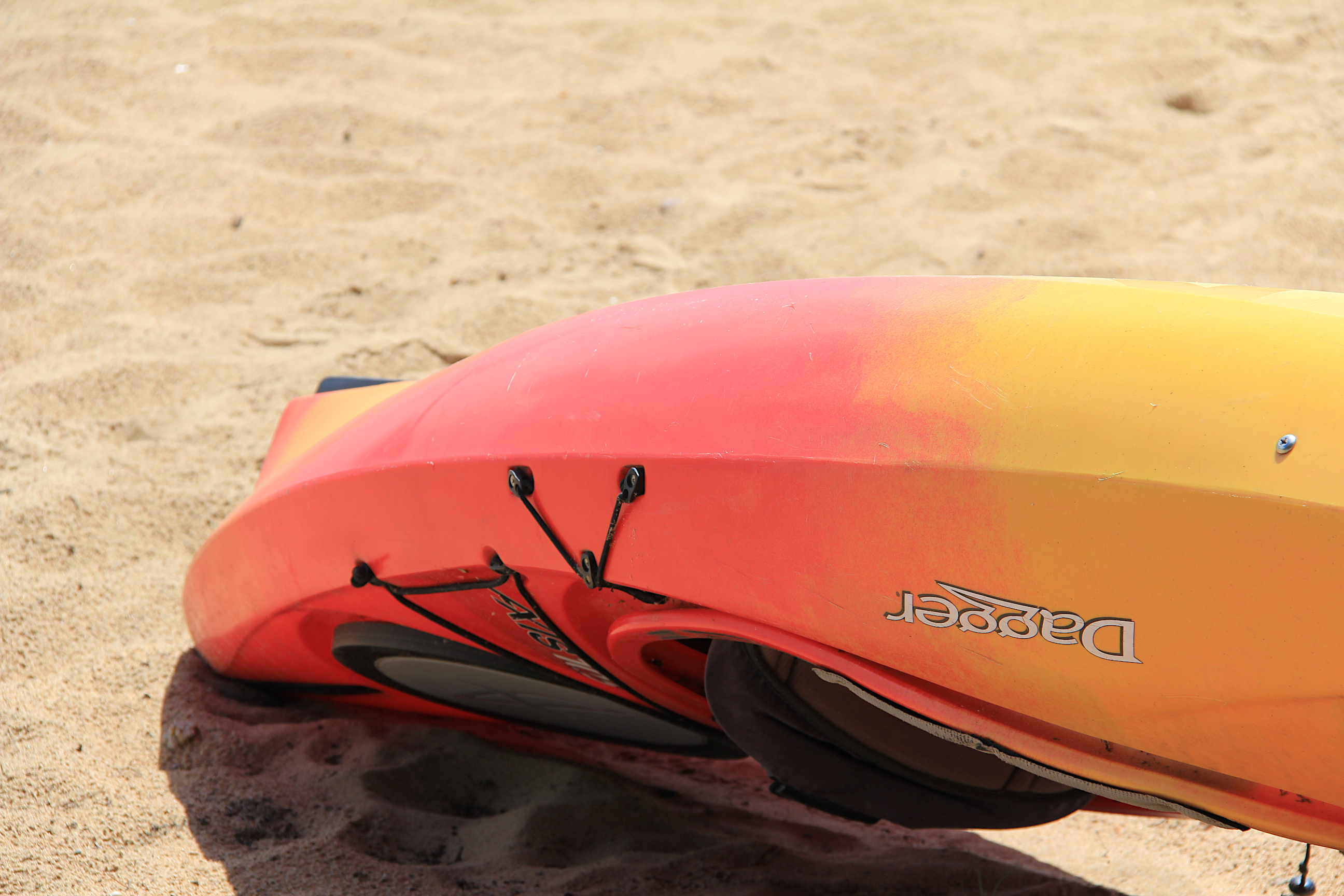
Randy took a kayak out to retrieve a kite he lost in the lake. (Minnesota Prairie Roots copyrighted photo July 2023)
Delight in the imaginative play of the grandchildren, this year forming the Shovel Team with their over-sized beach toys. For me, this is part of the joy of lake life, this time together with Izzy, 7, and Isaac, 4, who always anticipate their family vacation to the “brown house.” They look forward to helping Grandma assemble s’mores, to swimming and playing on the beach, to ice cream at Lake Country Crafts & Cones and to pizza from Rafferty’s. We are building life-long memories.
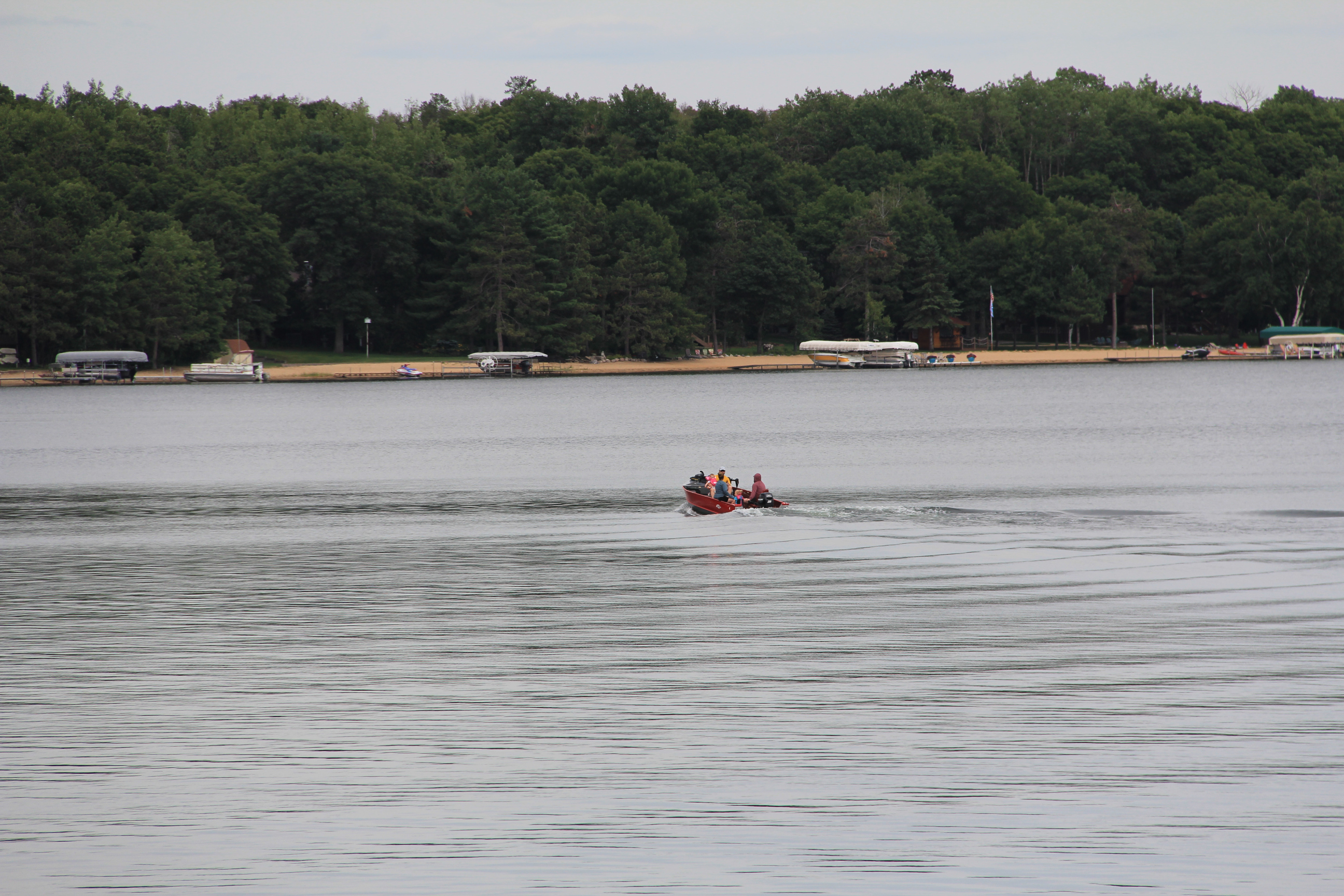
The lake can be busy with boaters at times, especially weekends. (Minnesota Prairie Roots copyrighted photo July 2023)
This is perhaps what I love most, this being with family. Mornings and afternoons and evenings spent together, then sleeping under the same roof. Meals mostly charcoal-grilled and shared. Walking hand in hand with the grandchildren down the long pine-lined driveway. Collecting shells. Washing sand from little feet. Cuddles and hugs and sitting on the bed playing a card game with made up rules.
And this year, solar system artwork created by artist-in-residence Isaac taped to the log walls in our bedrooms.
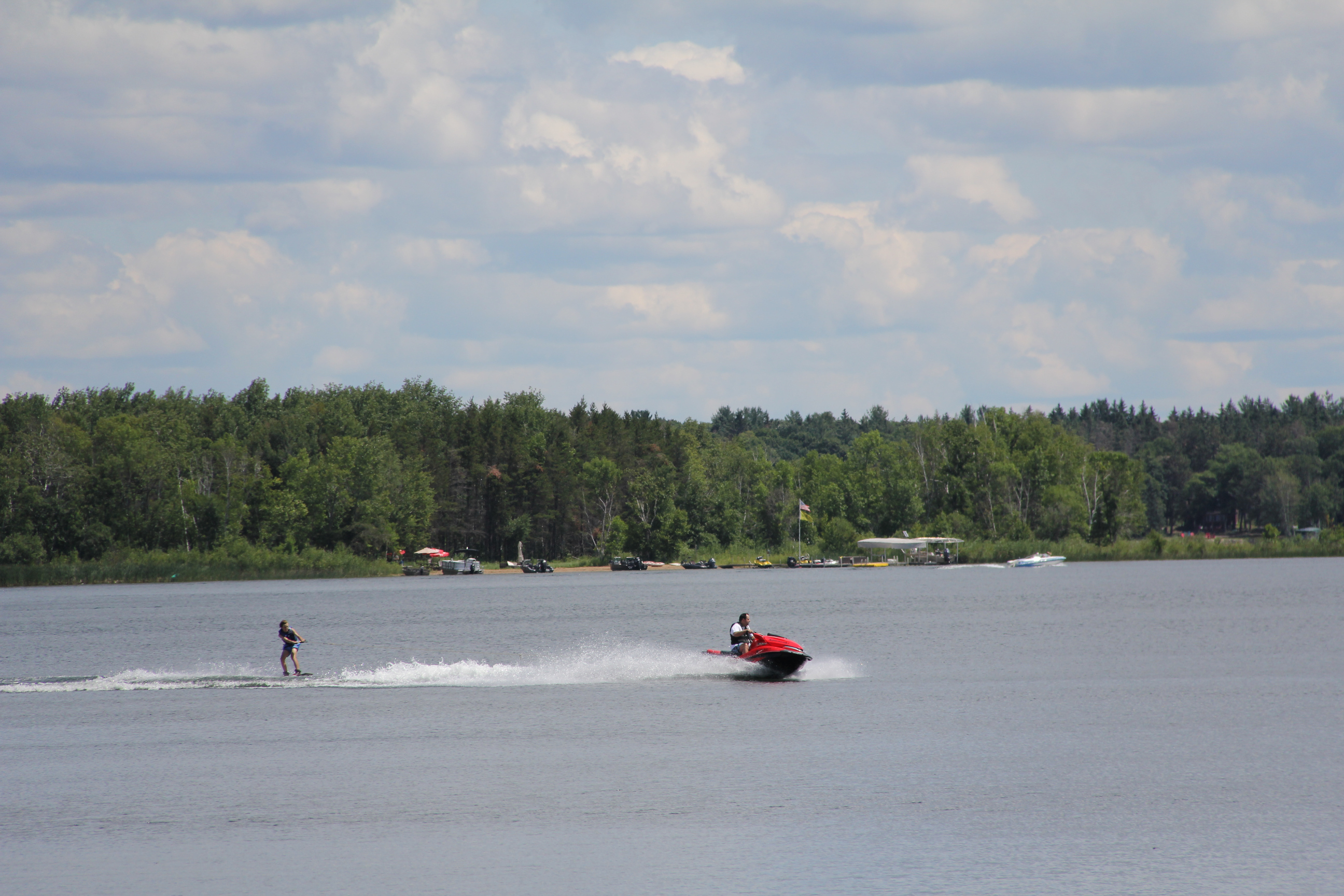
Water skiing behind a jet ski. (Minnesota Prairie Roots copyrighted photo July 2023)
This is the stuff of Up North at the cabin. Generational connections defined by love-filled, joyous moments at the lake.
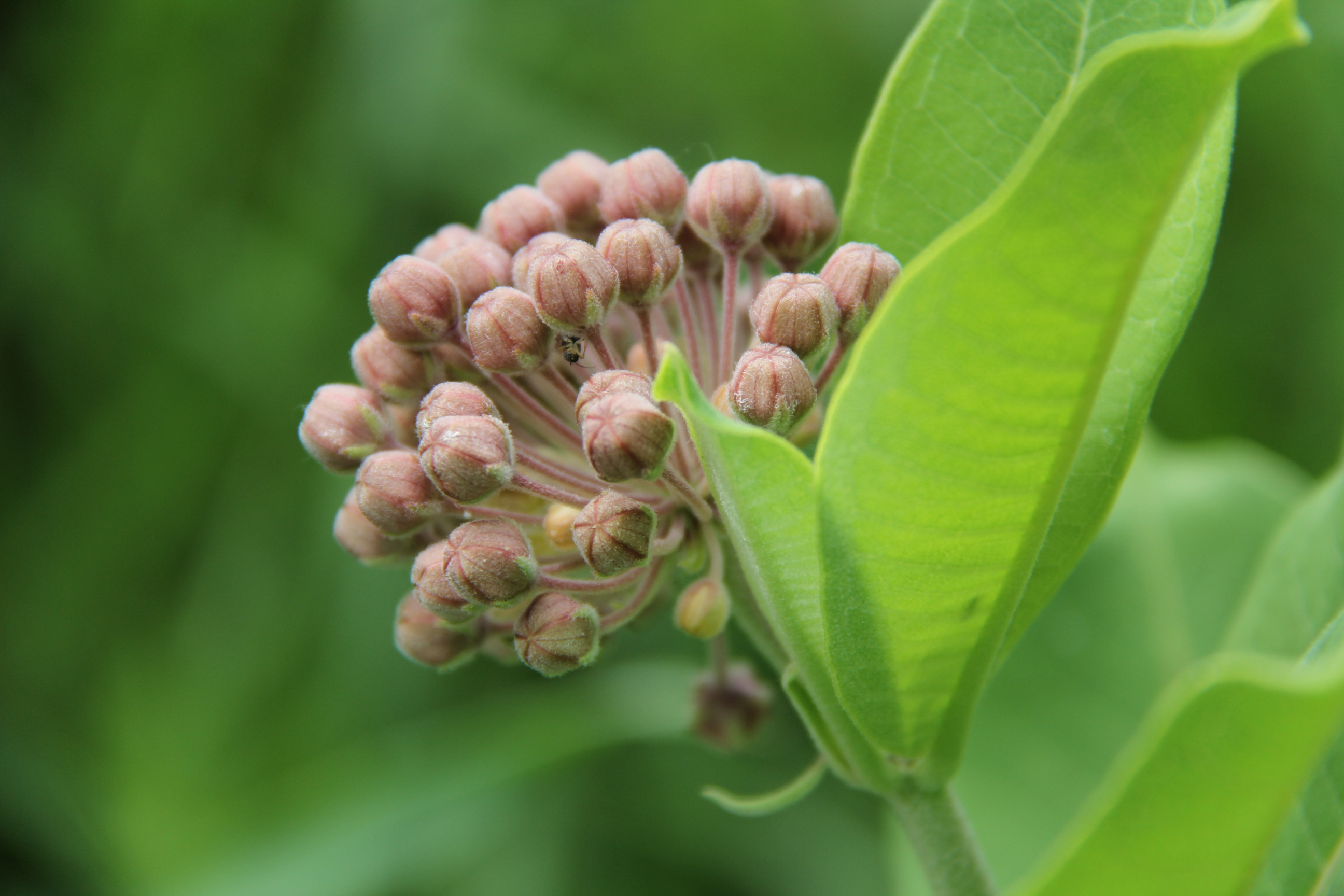
An unopened dusky milkweed brings a soft color into the prairie landscape.(Minnesota Prairie Roots copyrighted photo July 2023)
MID-SUMMER, AND THE MINNESOTA landscape is awash in color, despite the drought.
Walk the prairie or the woods. (Minnesota Prairie Roots copyrighted photo July 2023)
This is the season to get outdoors and explore. Walk the land. Through woods or across prairie. Around a city block or park or public garden. Along a river, upon a beach. Delight in the essence of Nature in all her summer glory.
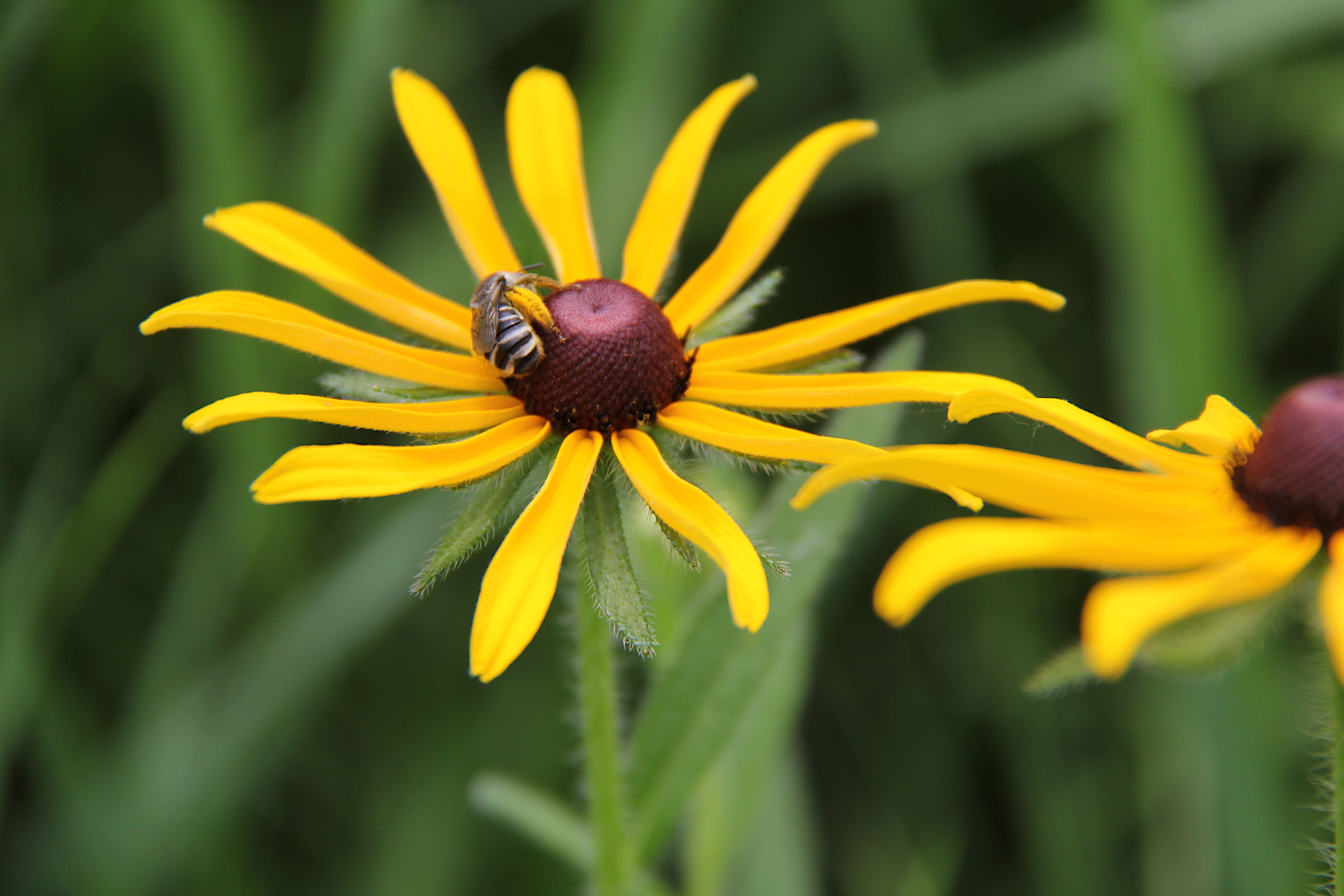
Black-eyed Susan. (Minnesota Prairie Roots copyrighted photo July 2023)
Flowers flush color.
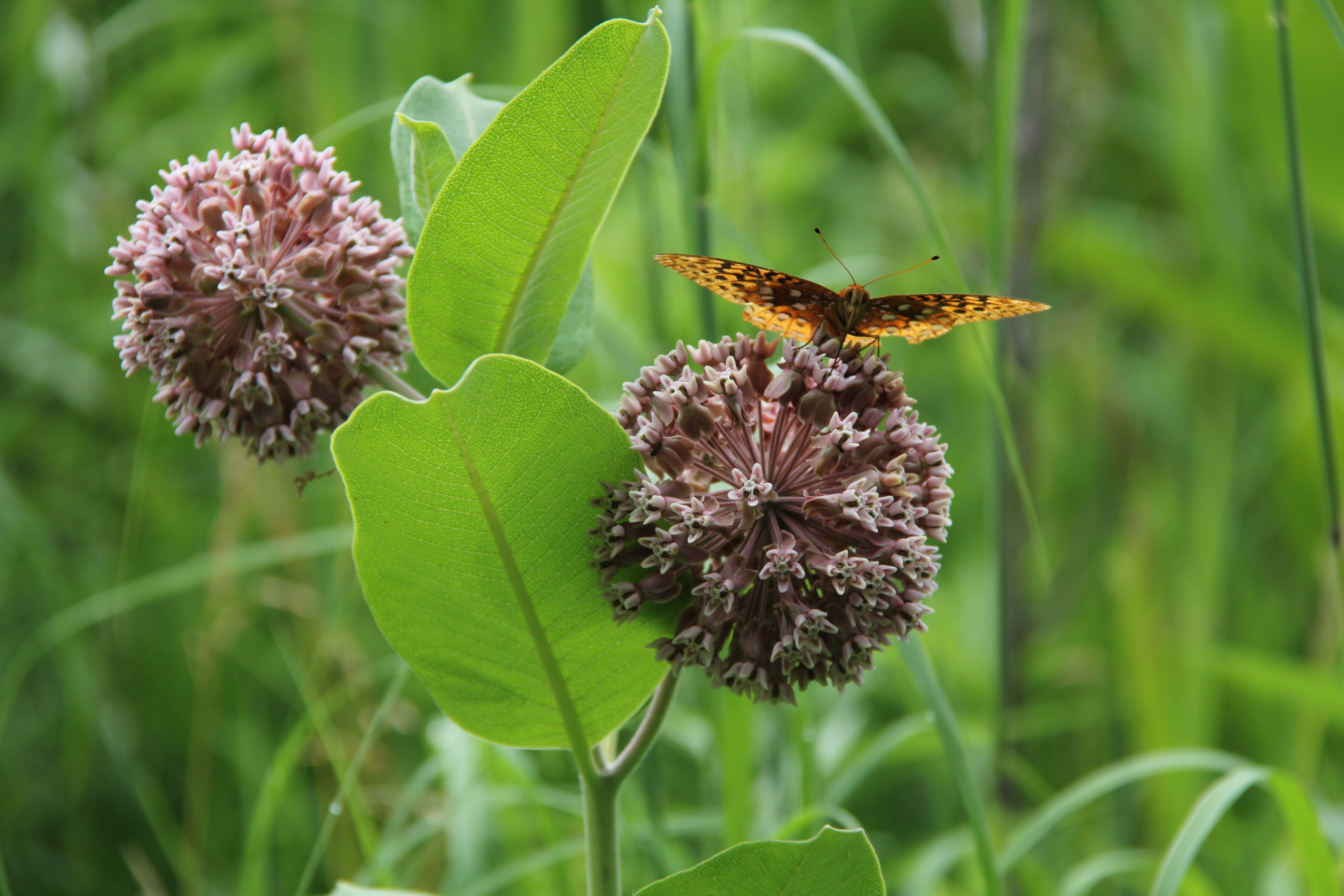
A butterfly feeds on a milkweed flower. (Minnesota Prairie Roots copyrighted photo July 2023)
Patterned butterflies flit, then pause to unfurl proboscis and drink of sweet floral nectar.
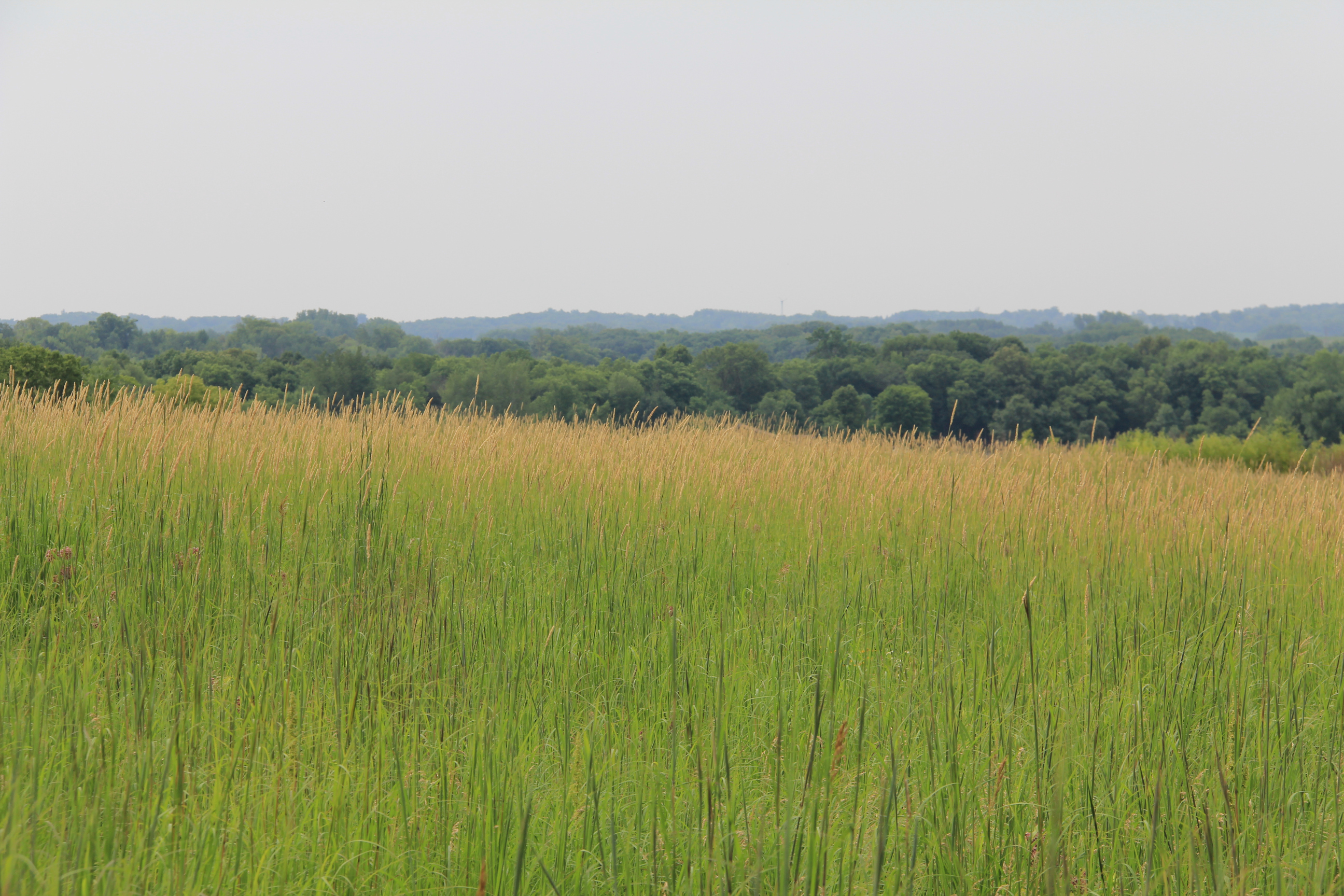
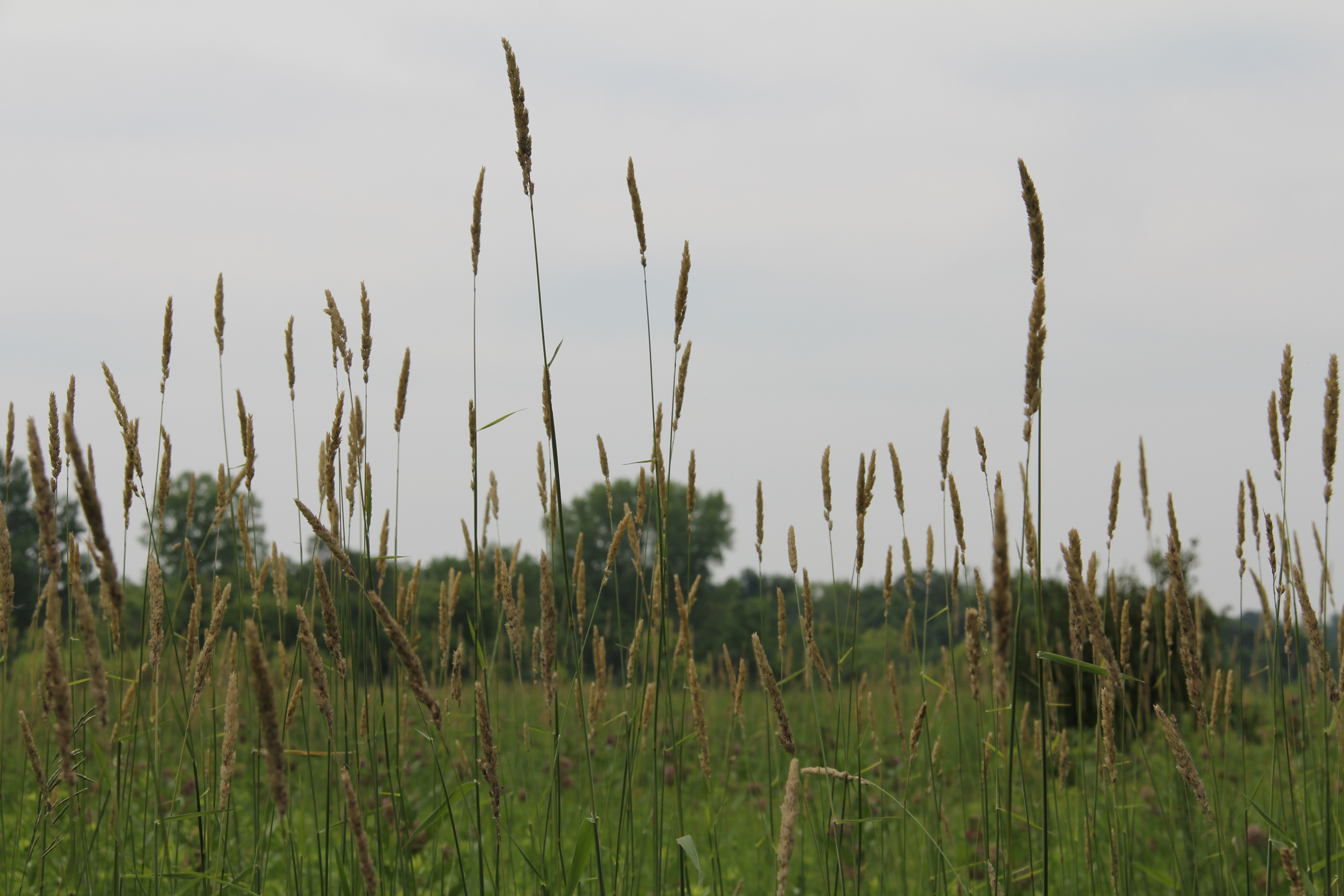
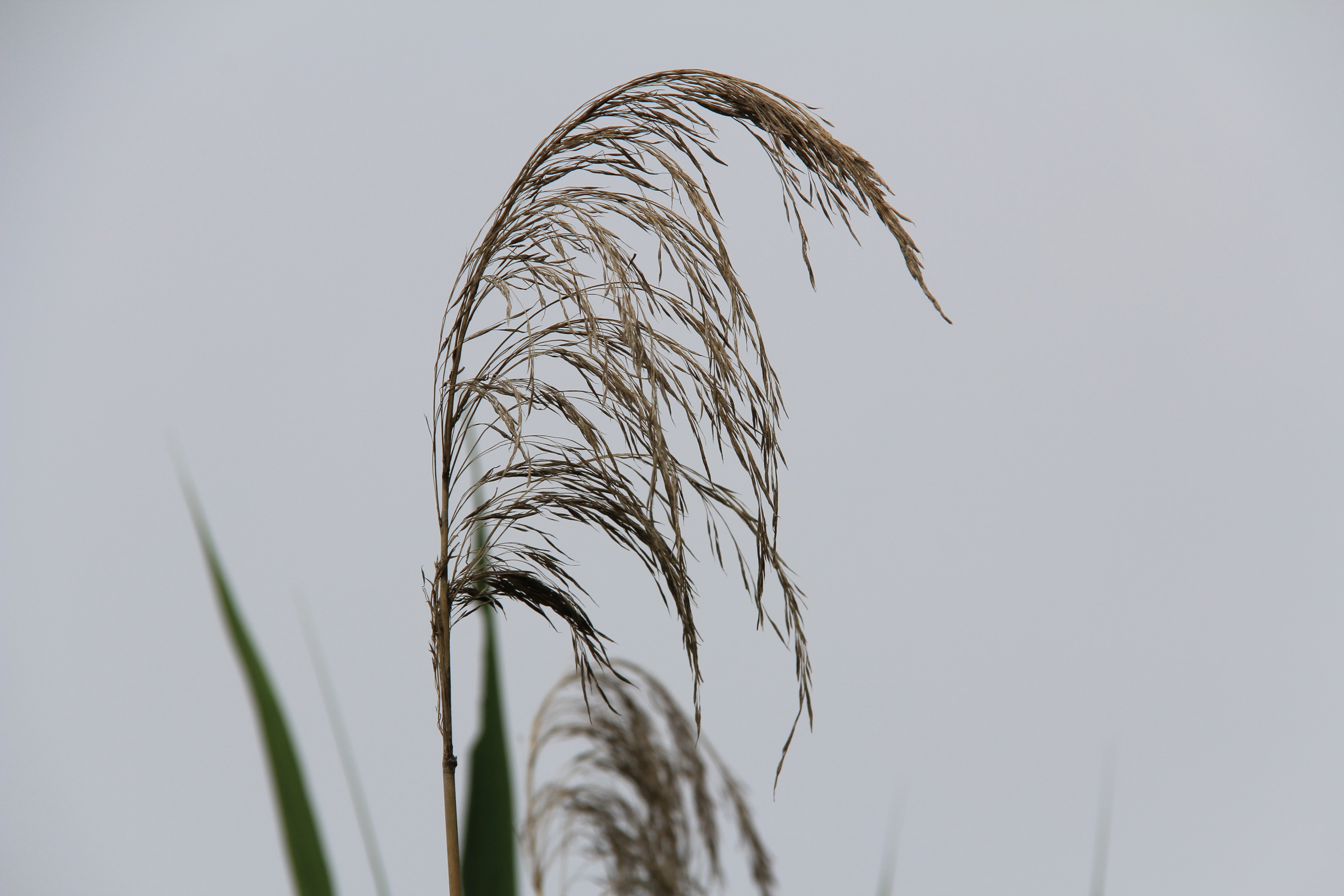
Prairie grasses. (Minnesota Prairie Roots copyrighted photo July 2023)
Long-stemmed grasses stretch toward the July sky.
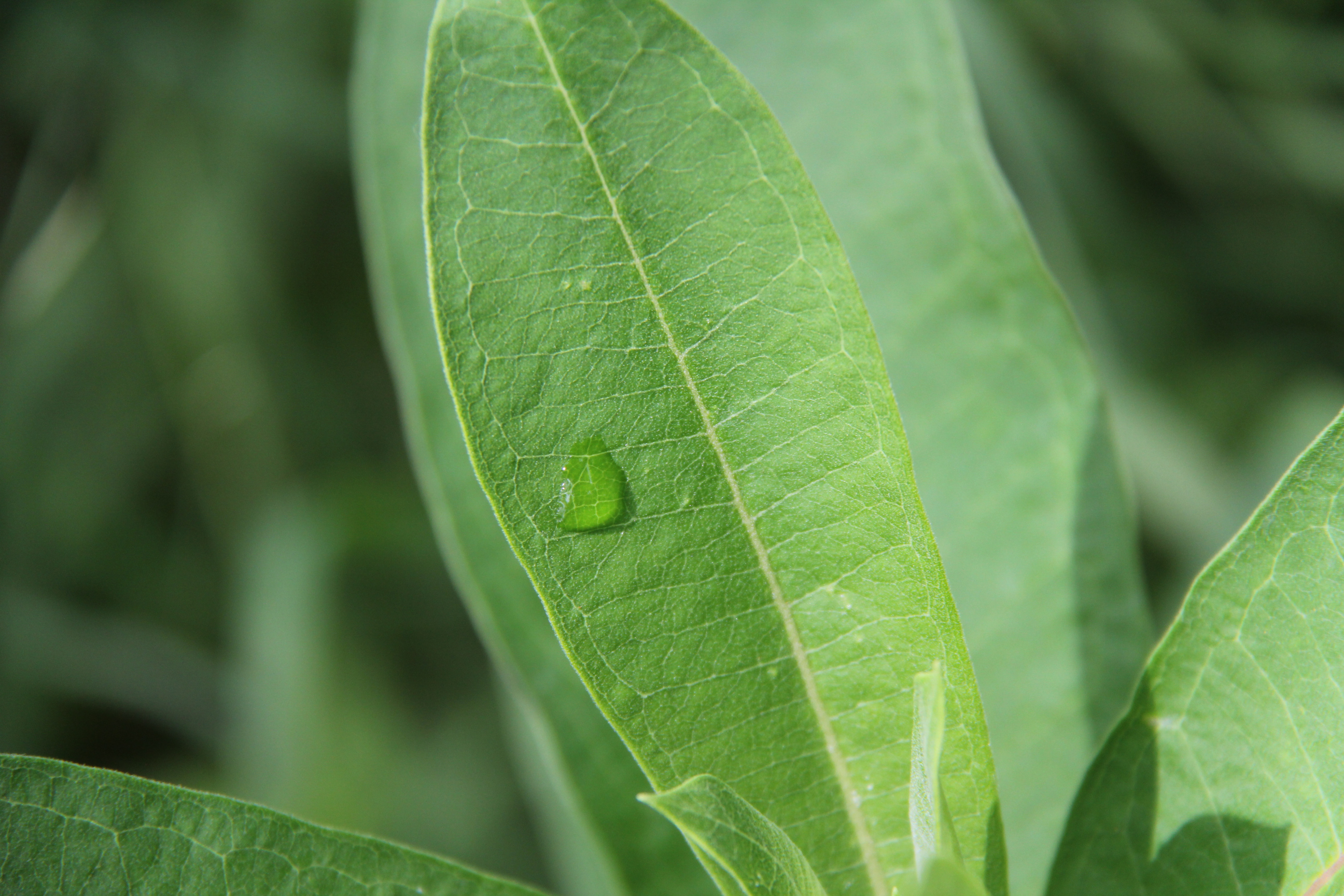
A solitary dewdrop on a milkweed leaf. (Minnesota Prairie Roots copyrighted photo July 2023)
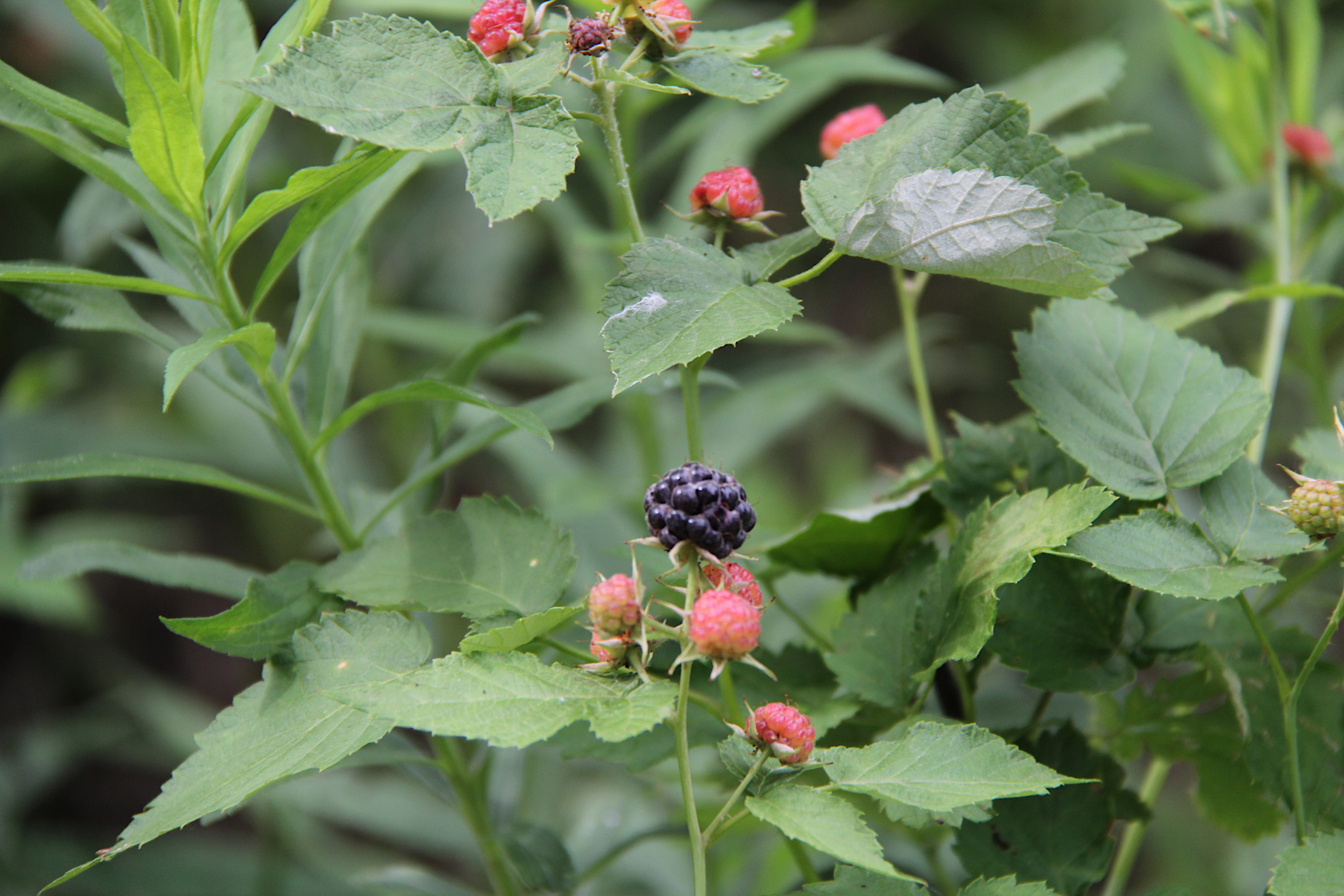
Wild raspberries. (Minnesota Prairie Roots copyrighted photo July 2023)
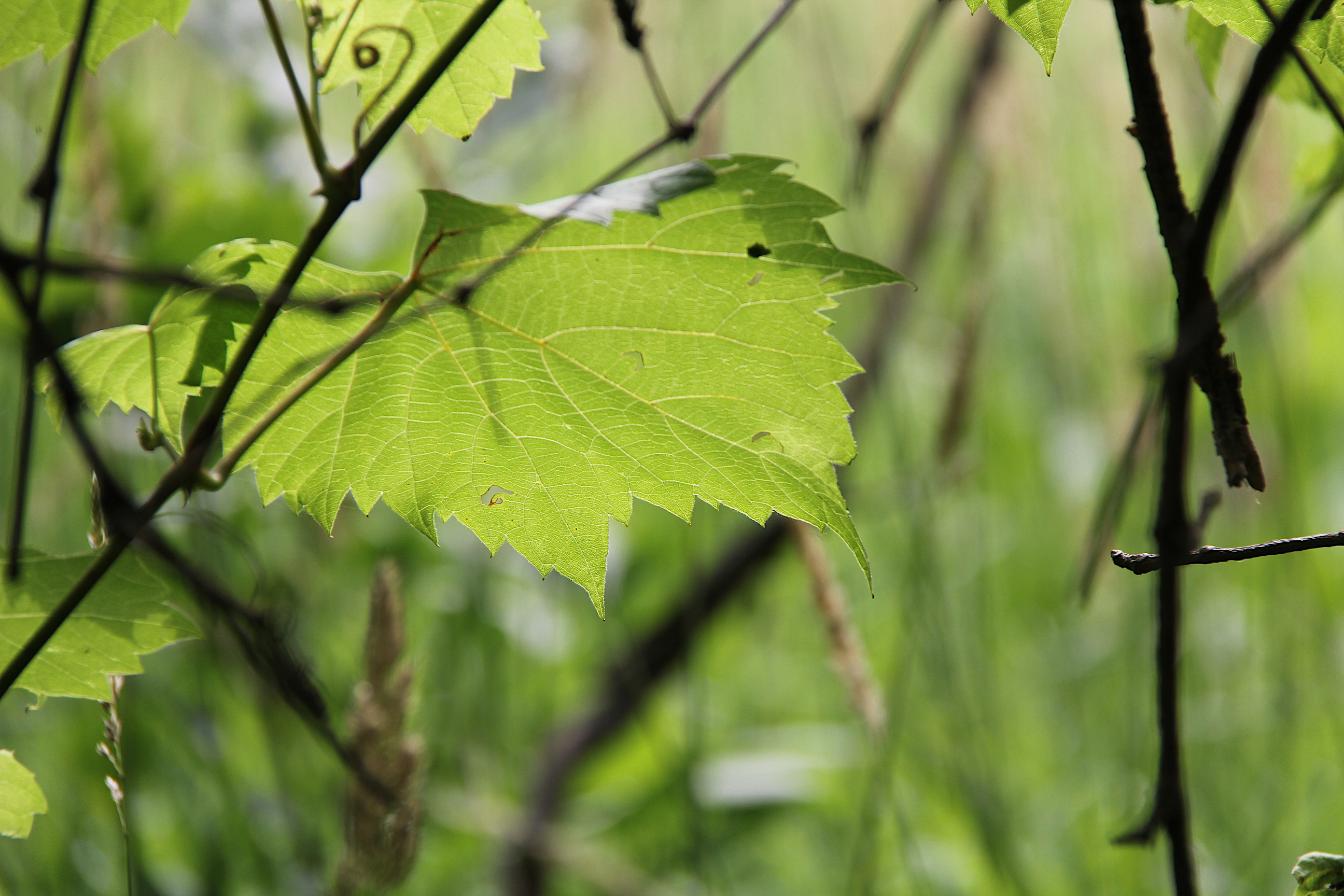
Veins run through the leaves of wild grapes. (Minnesota Prairie Roots copyrighted photo July 2023)
I tend to notice details, especially with camera in hand. And therein, in the part of the whole, is the beauty we often pass by in our hurried lives. I encourage you to slow your pace so as not to miss a solitary dewdrop, the texture of leaves, the deep purple of a plump wild raspberry.
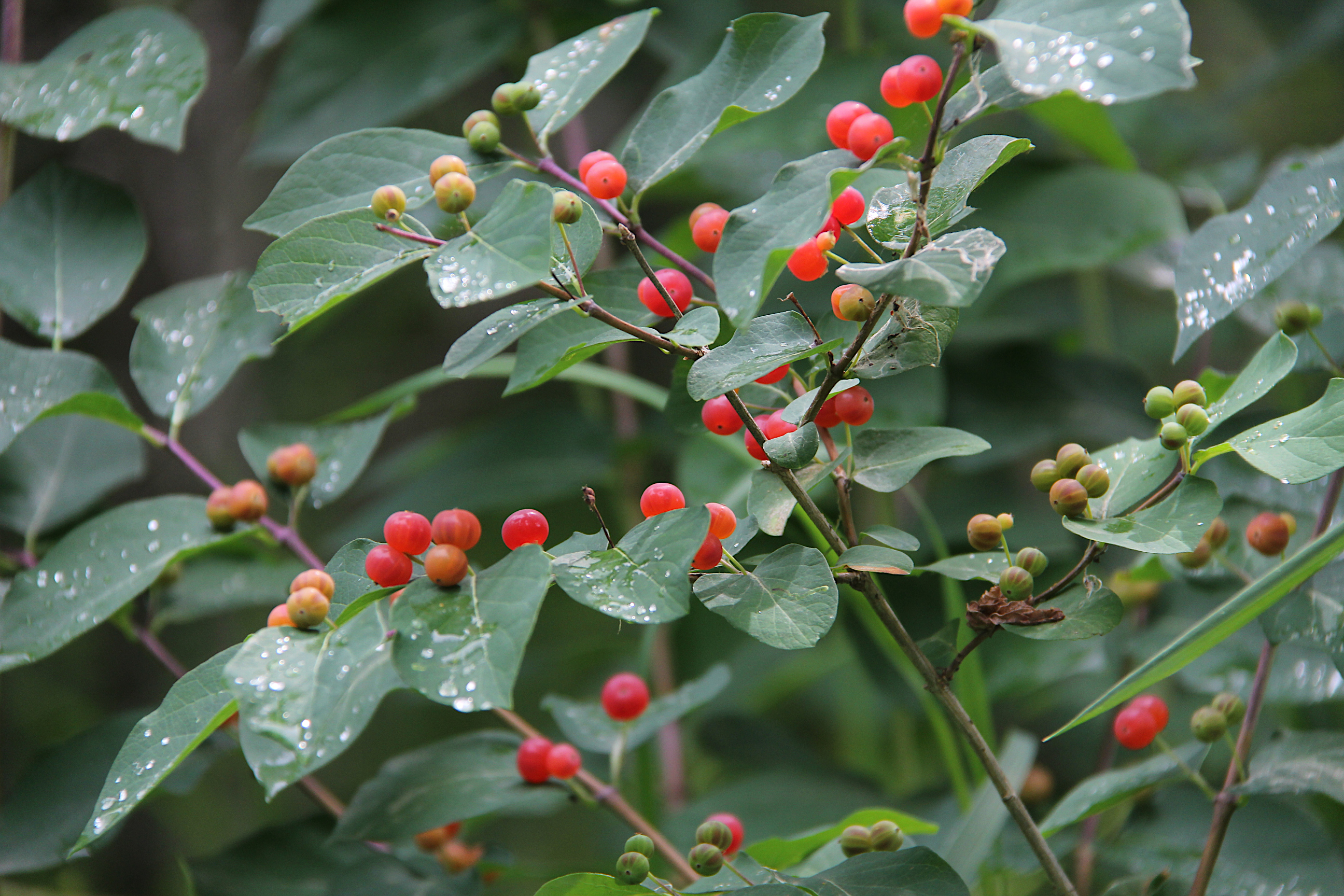
Bold berries jolt color into the greenery. (Minnesota Prairie Roots copyrighted photo July 2023)
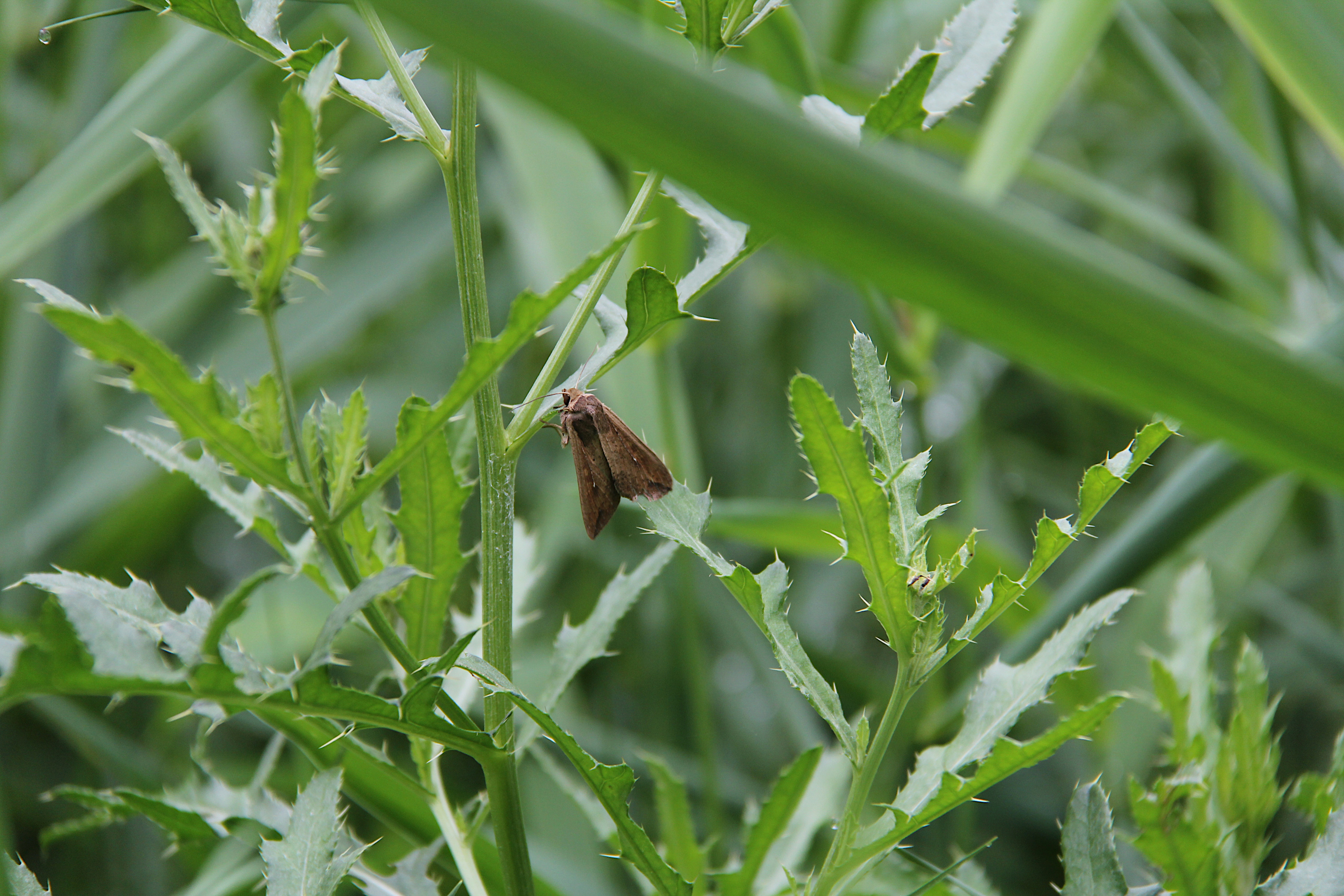
Moth upon thistle holds its own beauty. (Minnesota Prairie Roots copyrighted photo July 2023)
Notice the veins in bright red berries, the dusky moth among thistles, the way grass heads heavy with grain bend toward the earth.
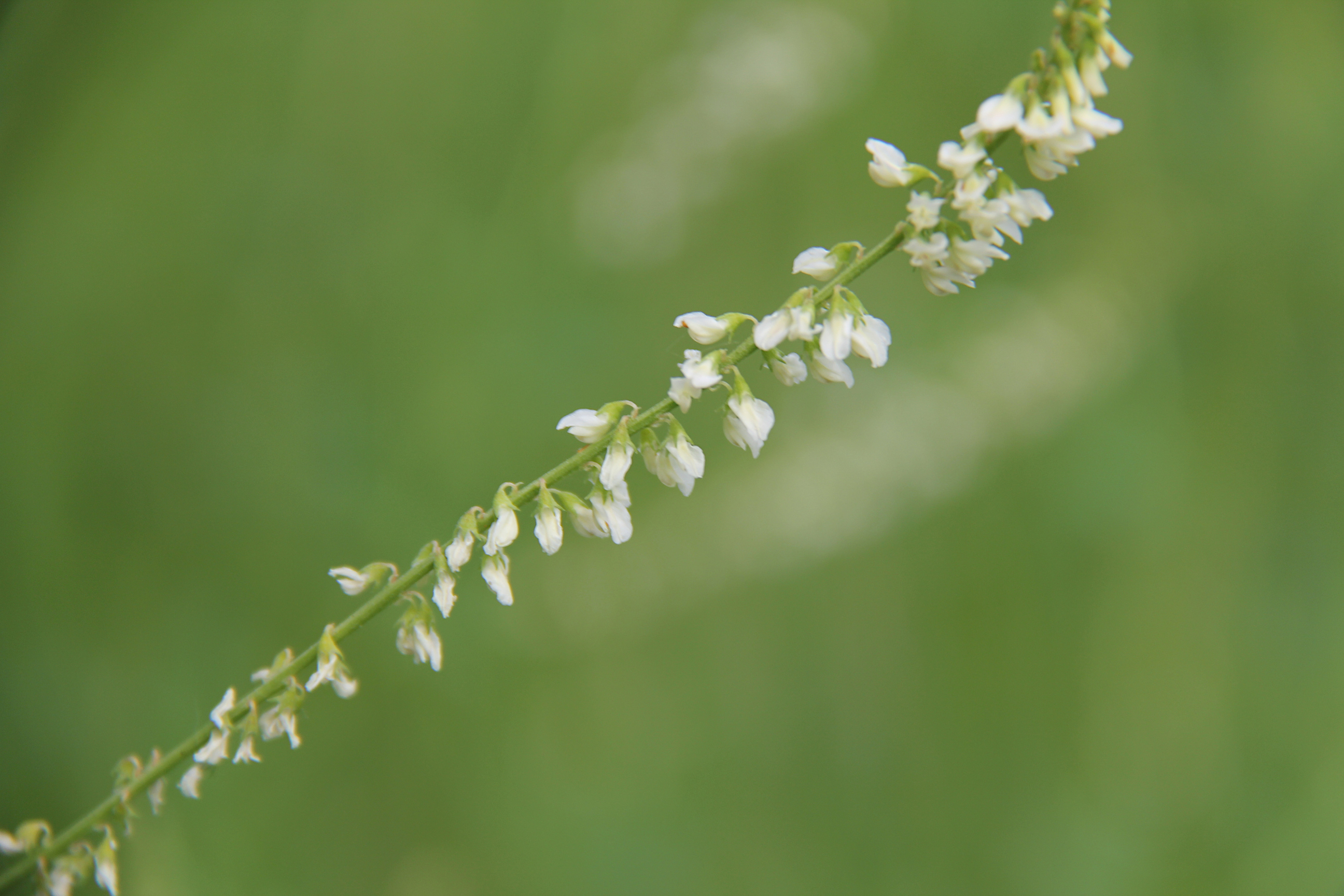
Unidentified white flower. (Minnesota Prairie Roots copyrighted photo July 2023)
From the daintiest of white blossoms laddering a stalk to the bold gold of a prairie wildflower, there is much to see, to appreciate, to embrace in these summer days.
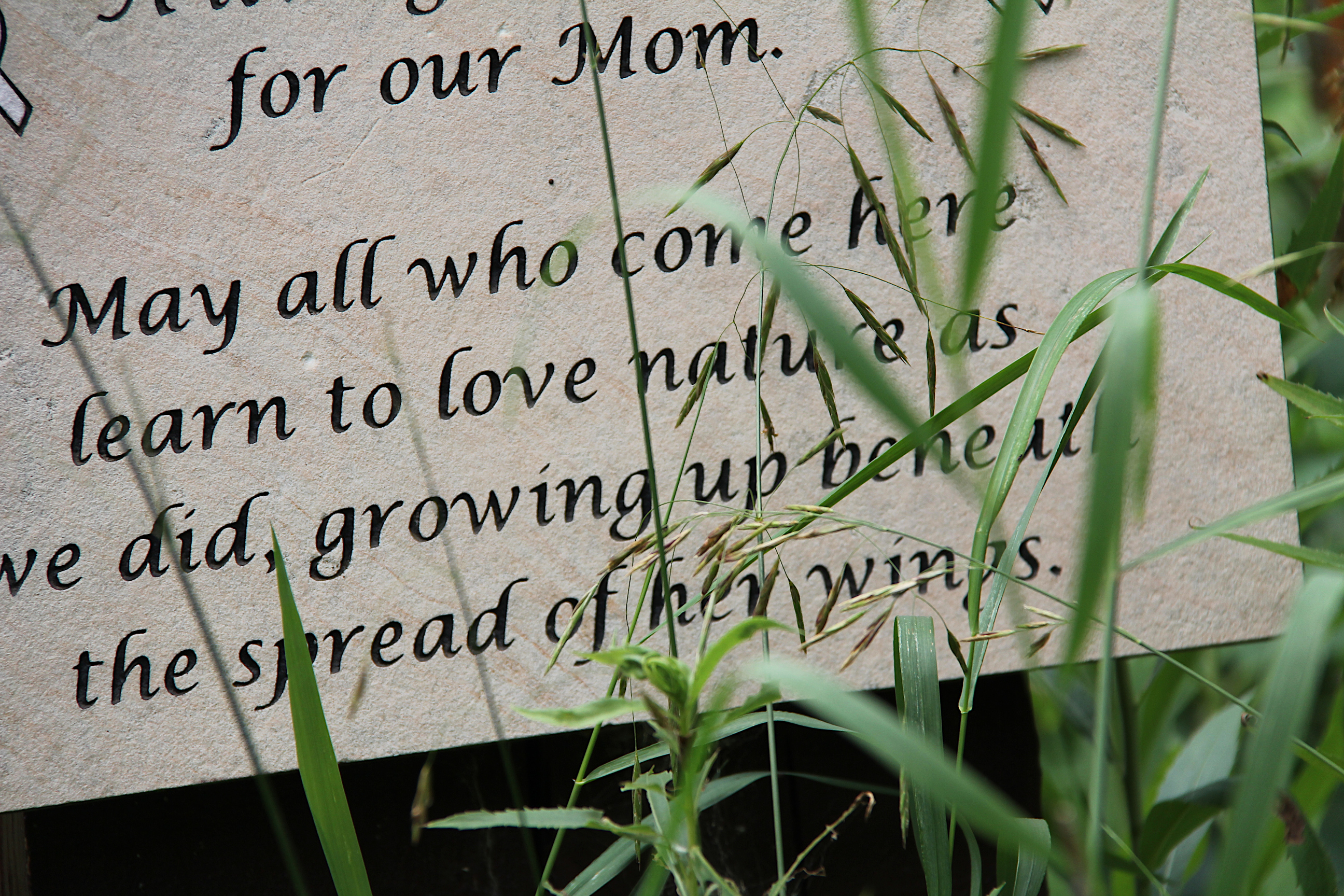
A nature-themed memorial at River Bend Nature Center, Faribault. (Minnesota Prairie Roots copyrighted photo July 2023)
Fill your eyes, your heart, your spirit, your mind with Nature’s beauty. Ride on the wings of the butterflies. Sway in the wind like blades of grass. Then settle, like a single dewdrop upon a leaf. Quiet. Filled with peace. Calmed in the presence of the land.
NOTE: All photos were taken recently at River Bend Nature Center, Faribault.
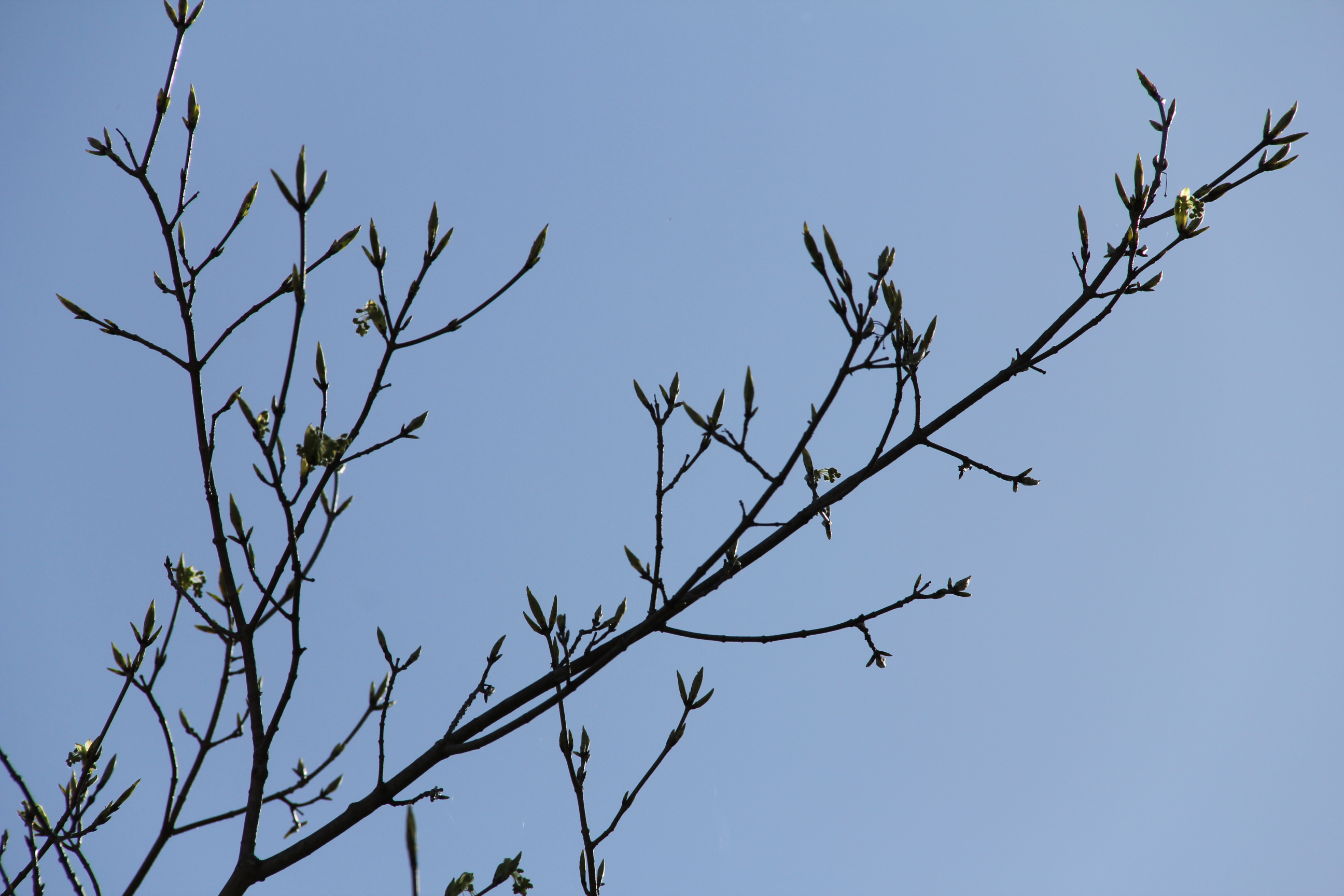
Buds begin to open on my backyard maple. (Minnesota Prairie Roots copyrighted photo May 2023)
AS A WRITER AND PHOTOGRAPHER, I view the natural world through a creative lens. I appreciate the nuances that comprise the whole. And right now those details are sharp, vivid and nearly visually overwhelming (in a good way) after living for too many months in a monochromatic environment.
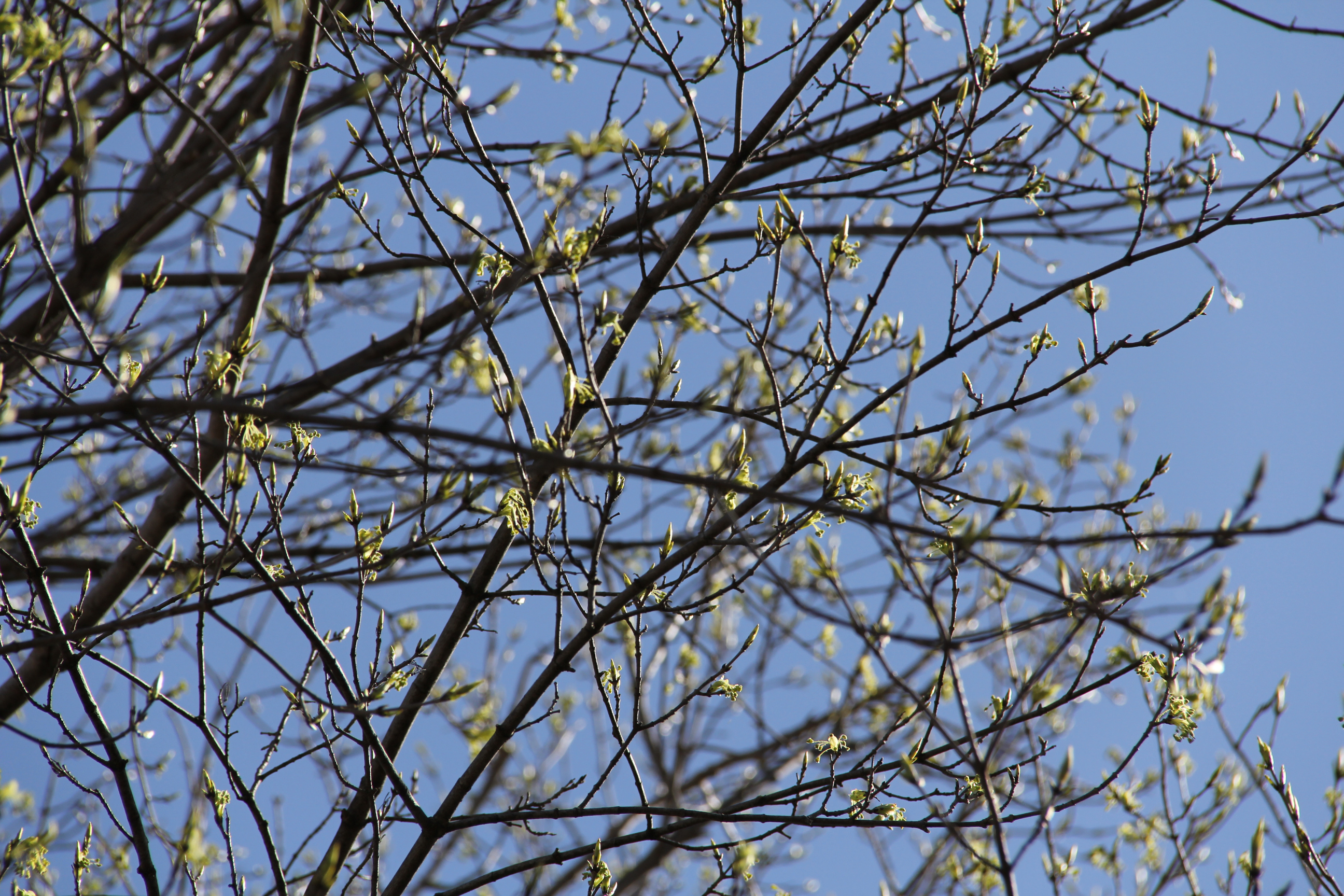
The maple flush in unfurling leaves. (Minnesota Prairie Roots copyrighted photo May 2023)
I need only step into my yard to take in the greening of spring. Buds forming and then unfurling on the maple.
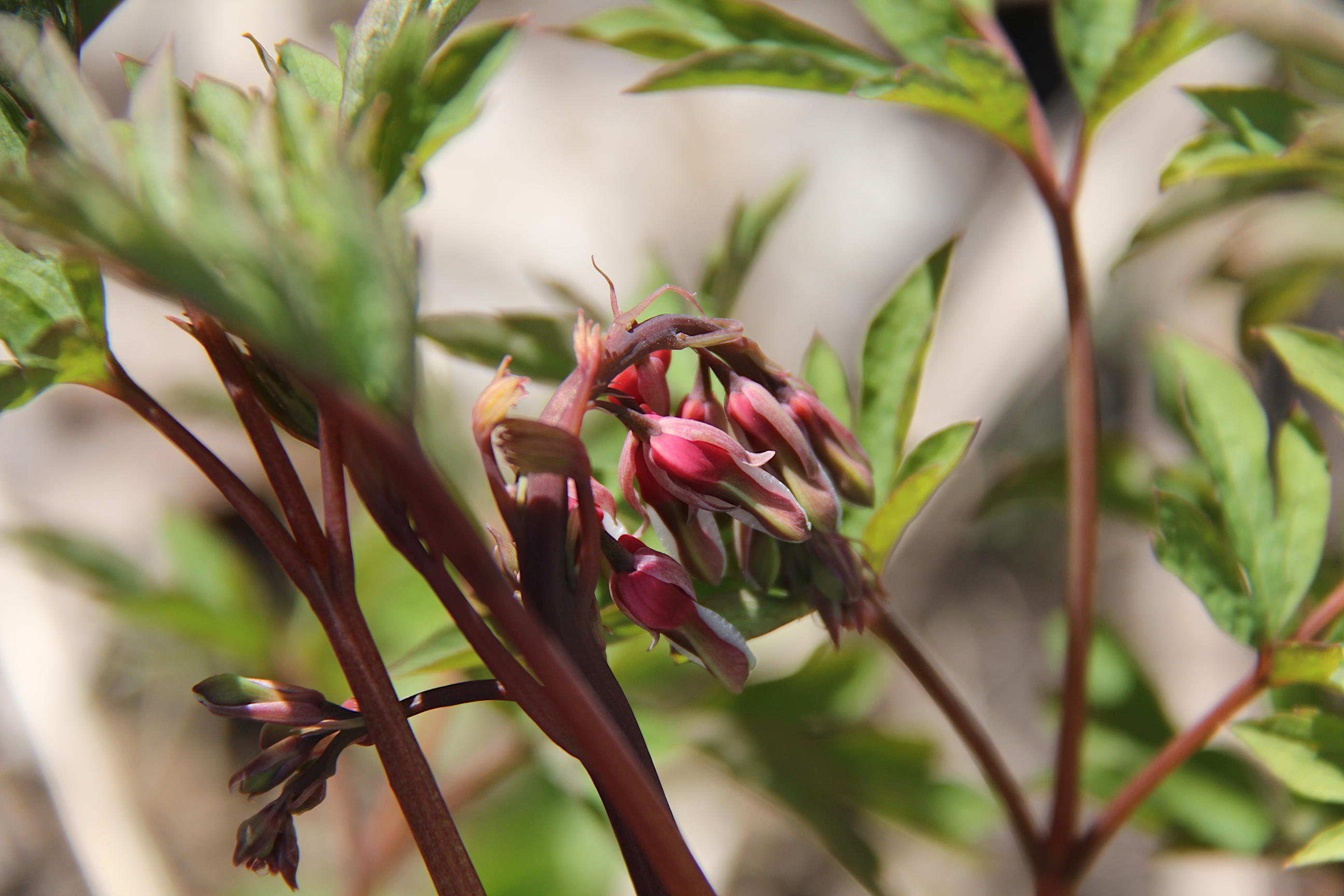
Bleeding hearts dangle, preparing to open. (Minnesota Prairie Roots copyrighted photo May 2023)
Clumped, clamped buds about to open into fuchsia bleeding hearts.
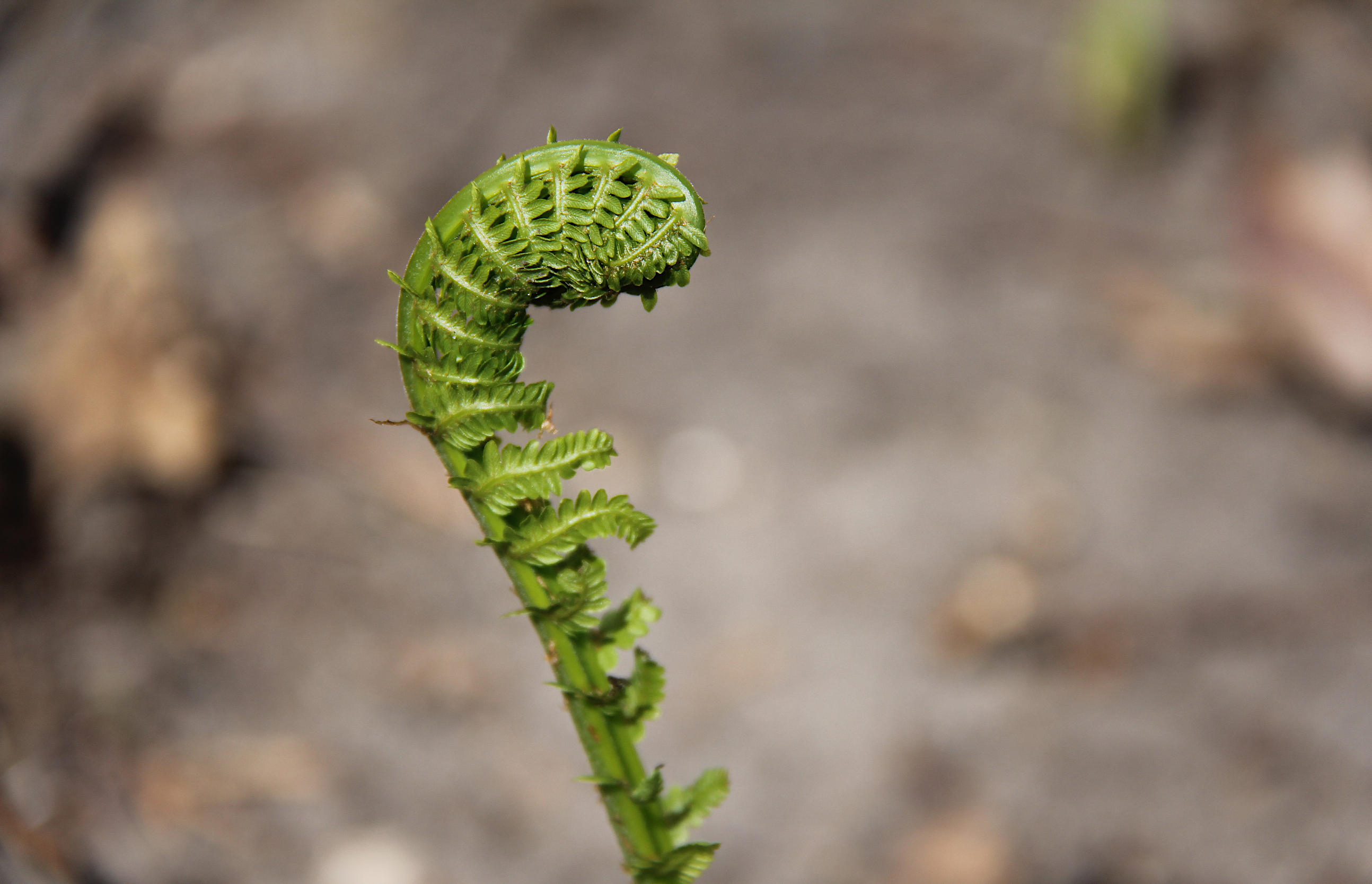
A tightly-clasped fiddlehead. (Minnesota Prairie Roots copyrighted photo May 2023)
Curled fiddleheads stretching, soon to unfold into fronds of ferns that wave in the wind.
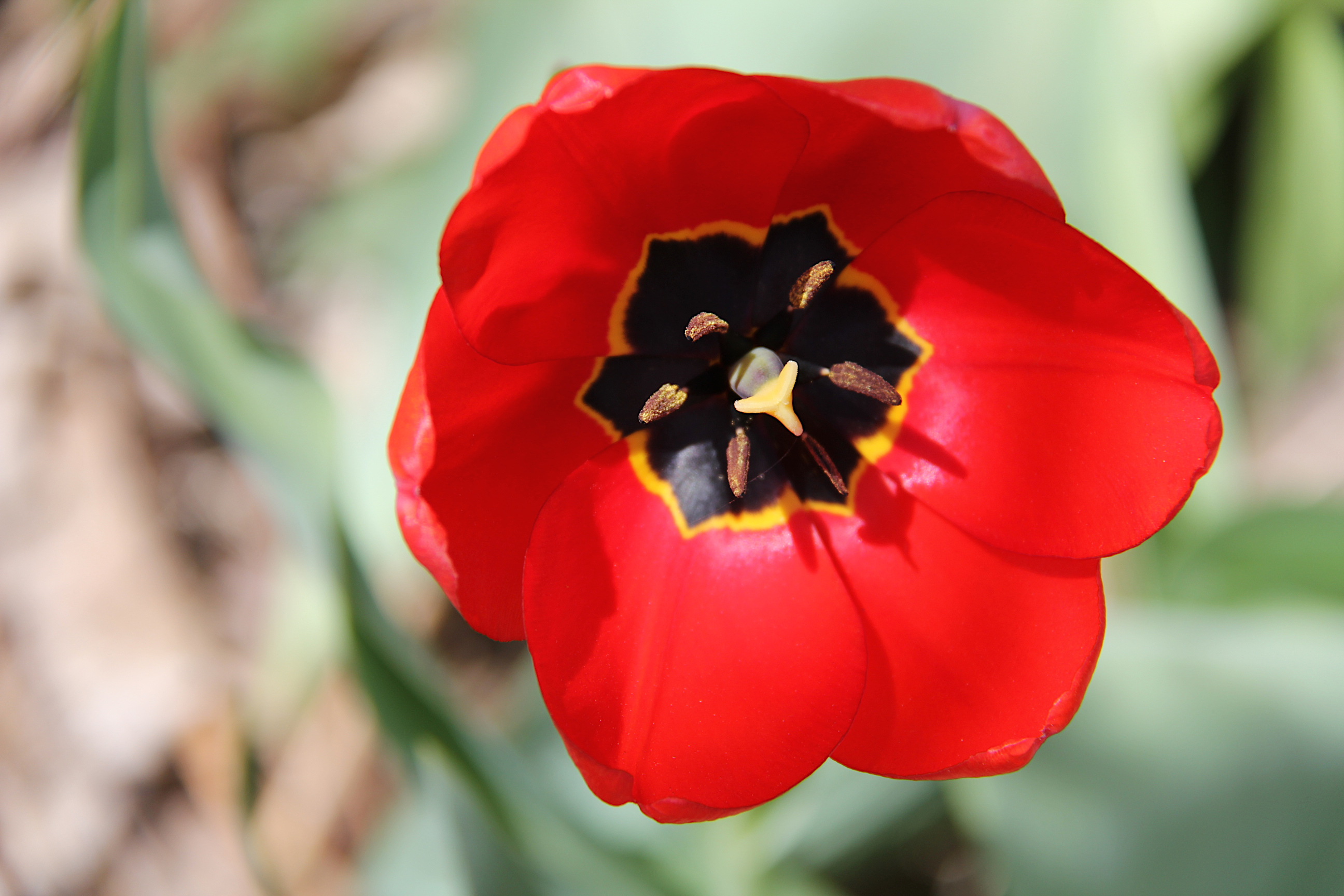
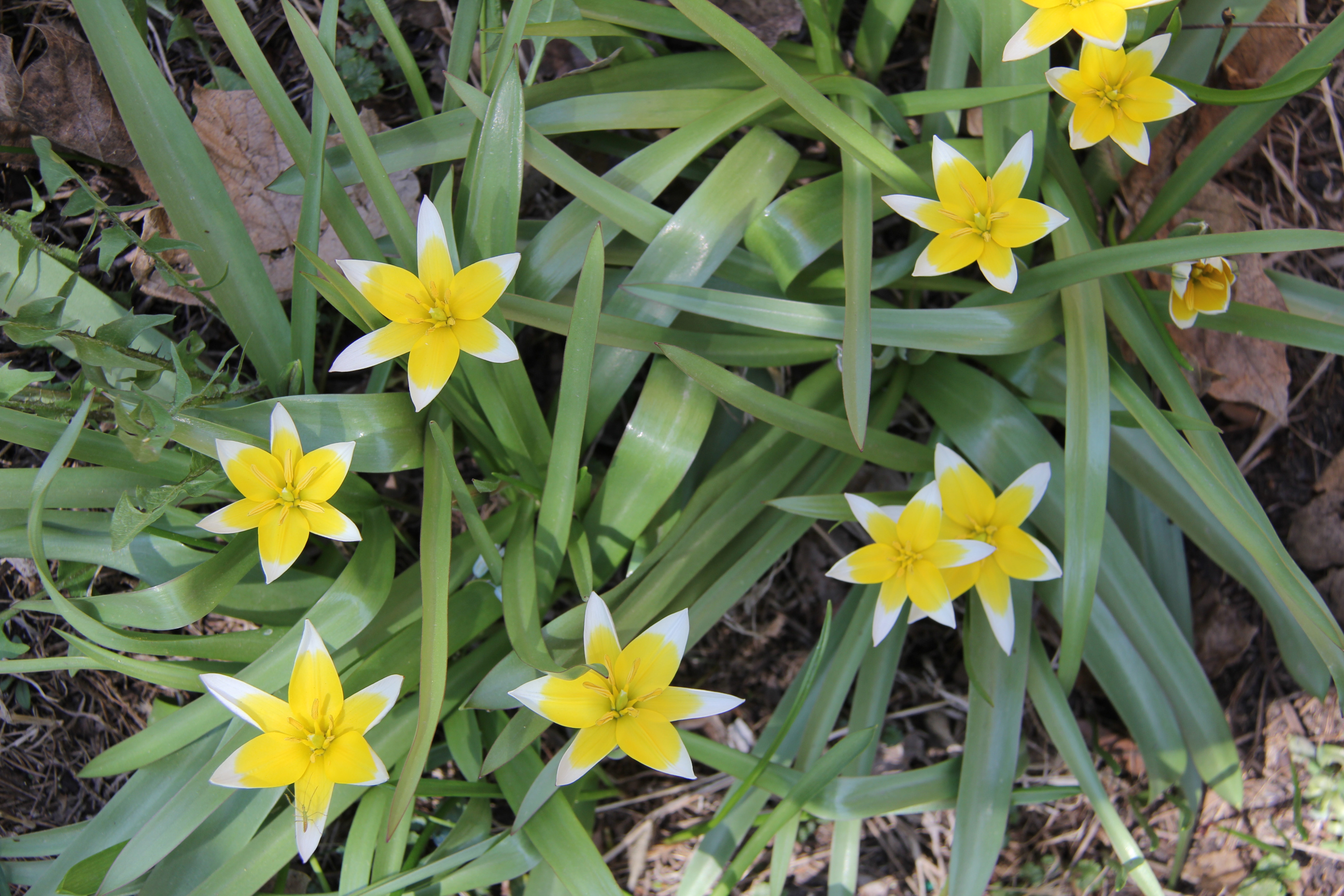
My tulips are in full bloom. (Minnesota Prairie Roots copyrighted photo May 2023)
Within the perimeters of my property, spring bursts in new growth. Tiny green buds line the thick wood stalks of old-fashioned hydrangea that will soon fill the spaces flanking my front steps. Red and yellow tulips jolt color into flowerbeds, among a jumbo of irises that will eventually blossom in yellow and purple, their sweet scent a reminder of my mother. Iris was her favorite flower.
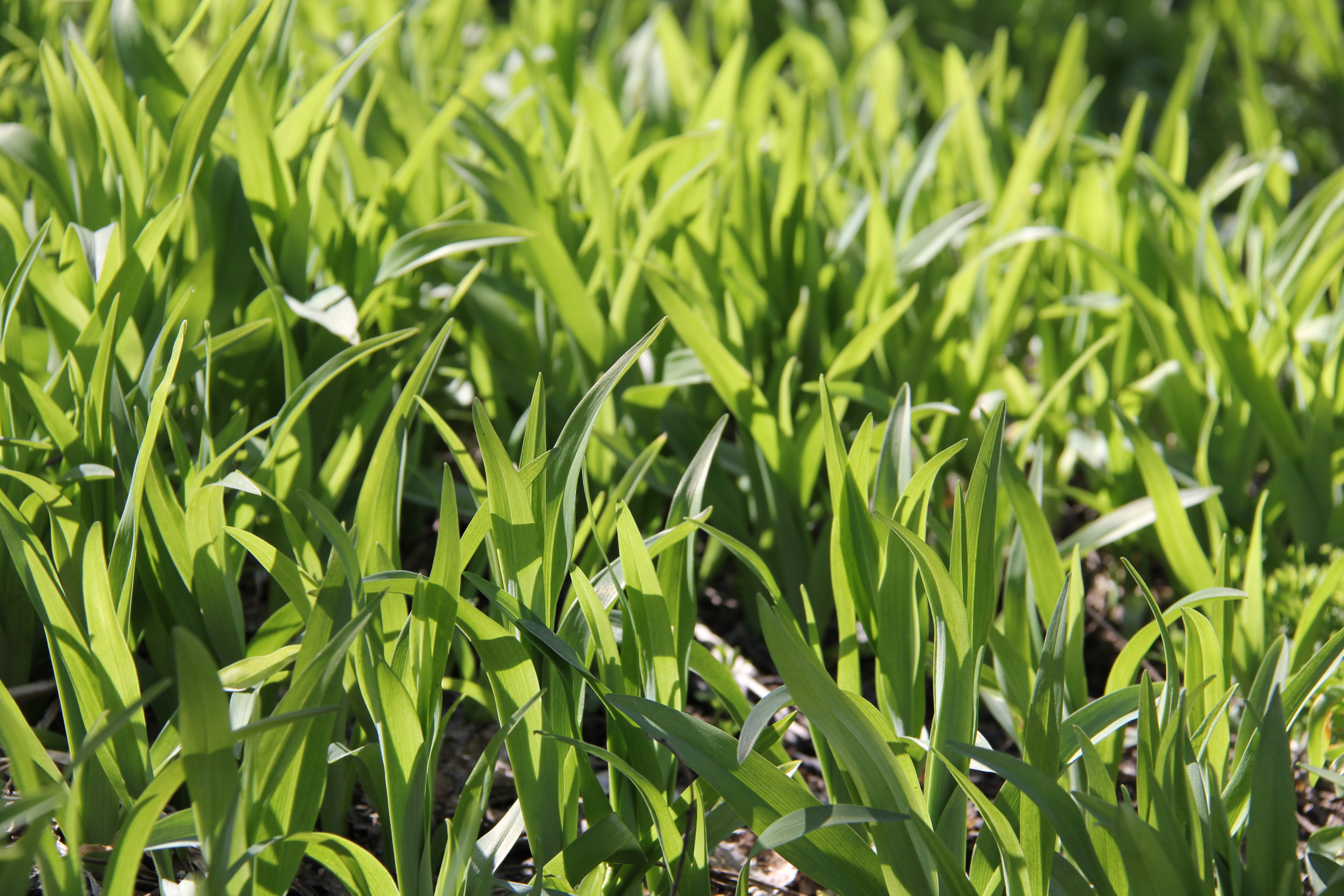
Tiger lilies grow wild on my backyard hillside, here emerging from winter dormancy. (Minnesota Prairie Roots copyrighted photo May 2023)
Oh, how I love these early days of May. These days when everything appears lush and intensely green. Spring green. Vibrant. It’s as if every bright green in a box of Crayola crayons colors the landscape. And when the sky is intensely blue, the greens seem even more intense.
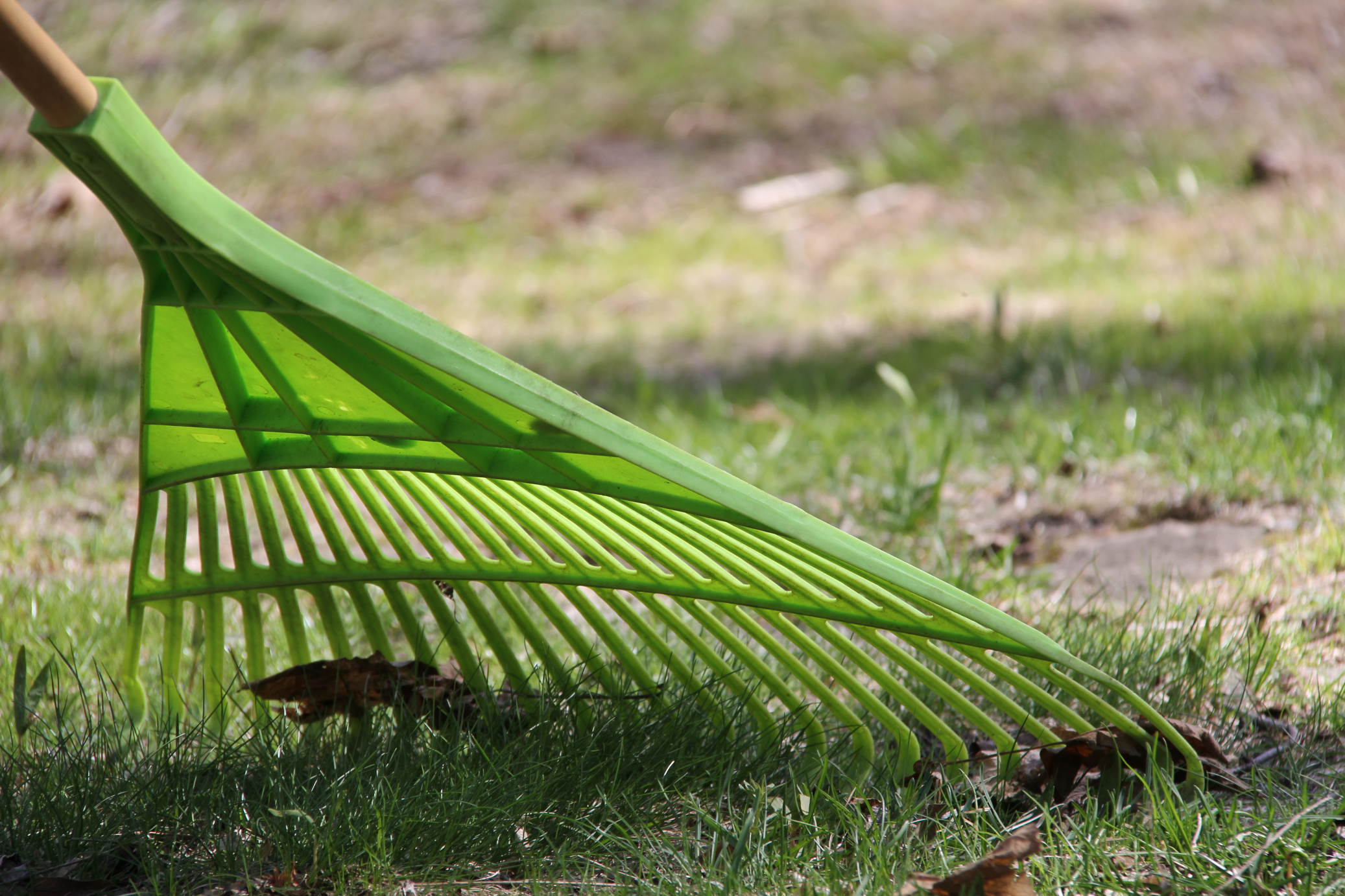
Even my rake is green. (Minnesota Prairie Roots copyrighted photo May 2023)
These are the days when dandelions pop and grass seemingly grows as you watch. These are the days, too, of raking away the leaf remnants of last fall and cutting back dead flower stems and mentally transitioning into this season we’ve been awaiting since the first snow fell.
My neighbor’s unidentified flowers grow just around the corner of my fence, jolting color into the landscape. (Minnesota Prairie Roots copyrighted photo May 2023)
It was an undeniably long winter in Minnesota with near-record snowfall, with teases of spring (even summer) before snow fell again. We are now only finally beginning to believe that we can put away the snow shovels, shove the snowblowers into the corners of our garages, banish winter coats to the back of the closet.
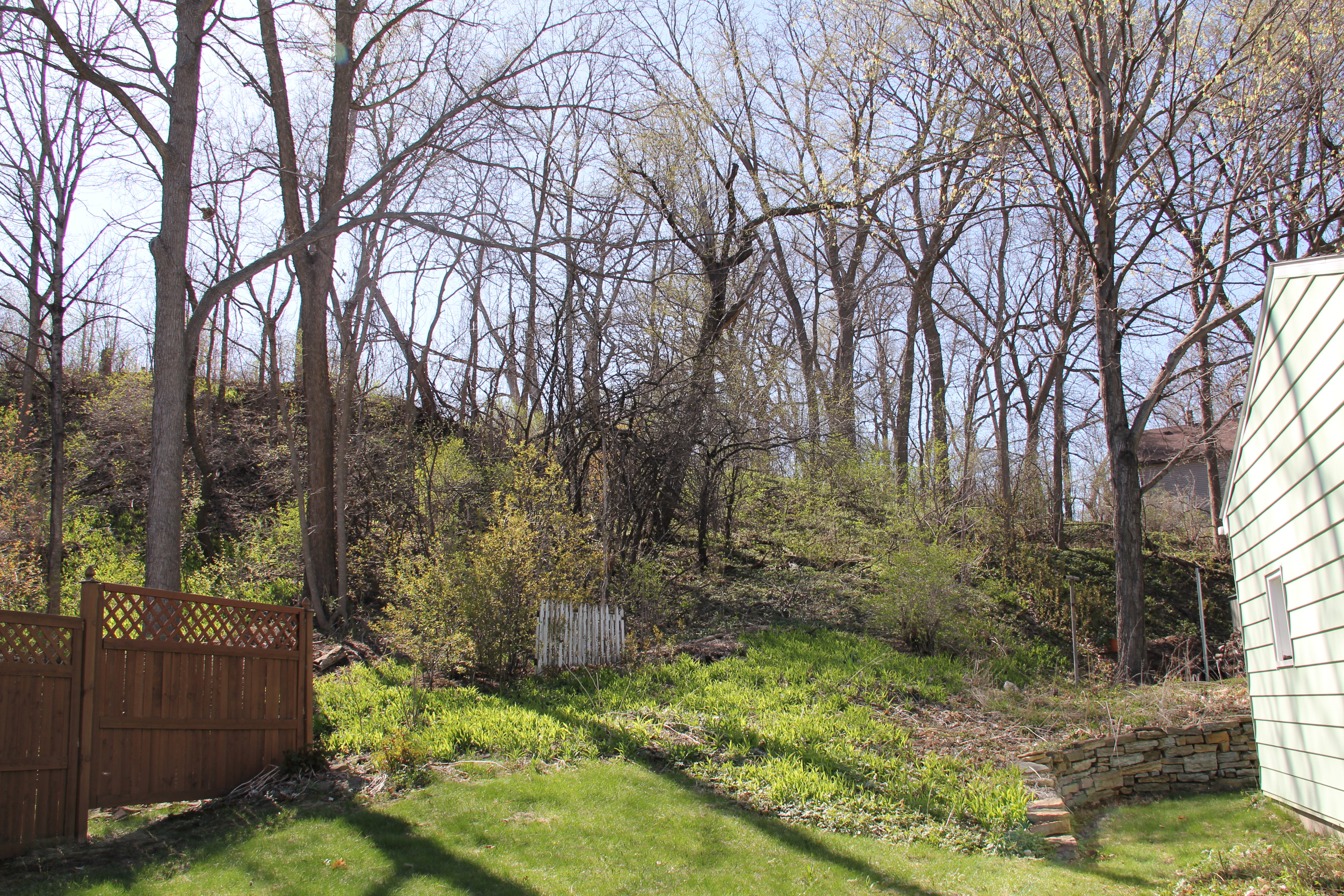
The wooded hillside behind my garage and house is just beginning to fill in with green. We own the open part of this hillside. (Minnesota Prairie Roots copyrighted photo May 2023)
Every day of warm temps and blue skies and new greens convinces me that this is for real. Spring has finally arrived in southern Minnesota in her poetically beautiful way. I hear it in birdsong, in the piercing whistle of a cardinal flashing red in the wooded hillside behind my house. I hear it in the rhythmic raking of dried leaves. I hear it in the roar of motorcycles flying down my street.
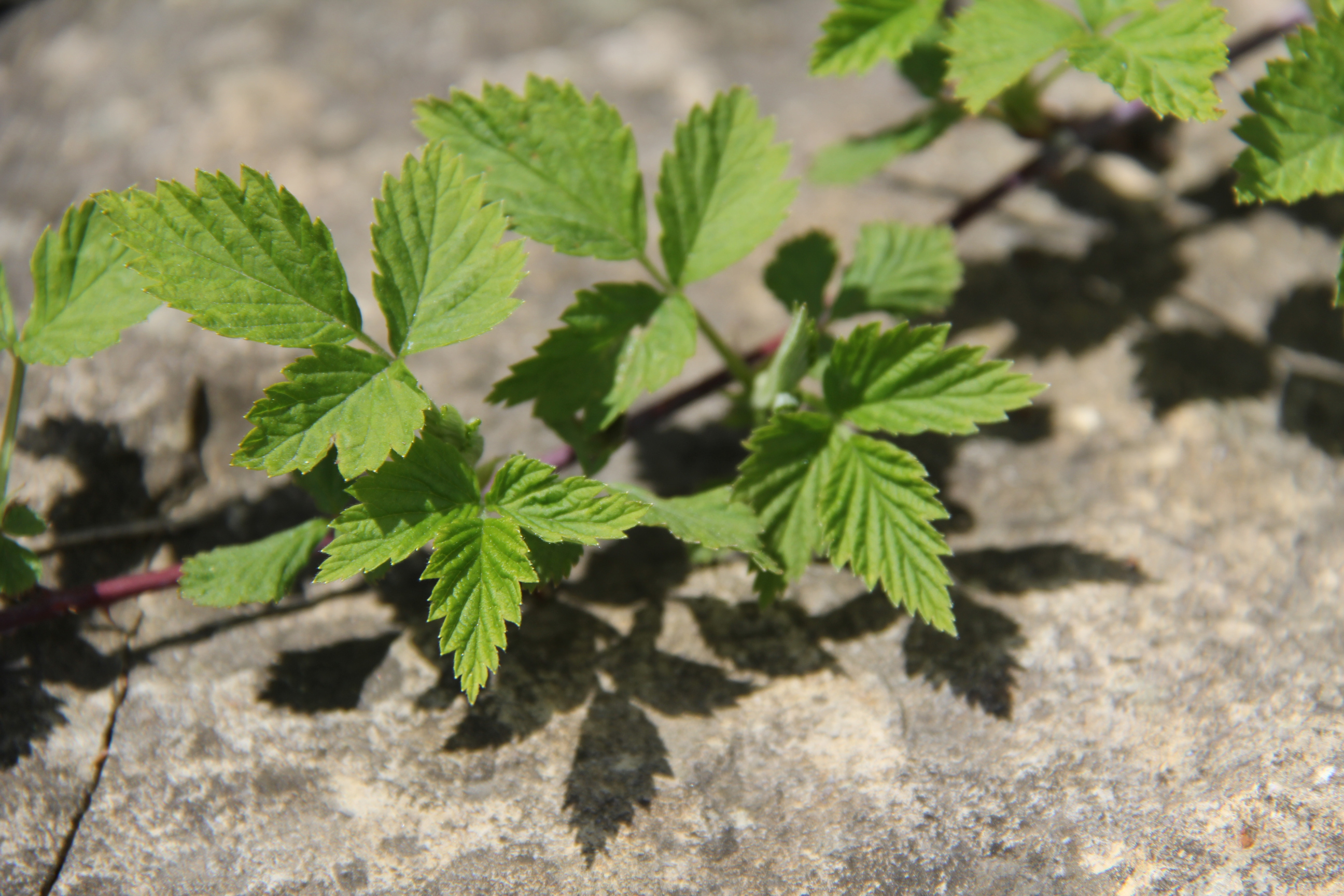
A raspberry vine shadows across the limestone wall Randy built many years ago from the foundation of a fallen barn. (Minnesota Prairie Roots copyrighted photo May 2023)
But mostly I see the shift of seasons in the greening of spring, of trees no longer bare, but spreading in a canopy of green. Of wild raspberries stretching across limestone wall to latch into the earth. Of hostas erupting.
My neighbor’s lovely low-lying flowers, up close. (Minnesota Prairie Roots copyrighted photo May 2023)
This marks a time of renewal, of hope, of emerging from the cocooning quiet and oppressiveness of winter into a world that feels, looks, sounds utterly and joyfully alive.
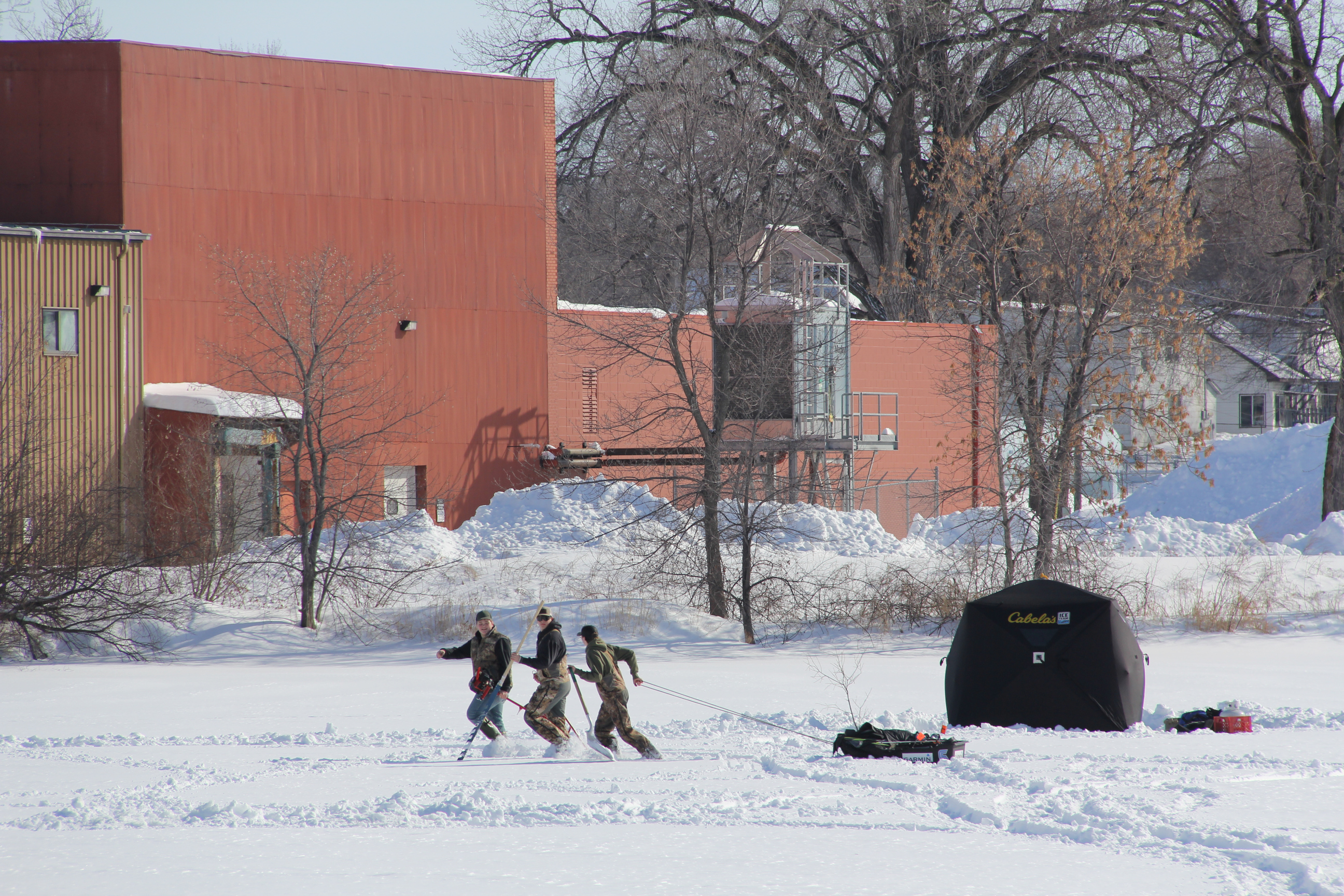
Carting ice fishing gear across the snow-covered Cannon River by the Faribault Mill. (Minnesota Prairie Roots copyrighted photo February 2023)
ICE FISHING RATES AS A SPORT that must seem absurd to anyone living in a warm weather climate.
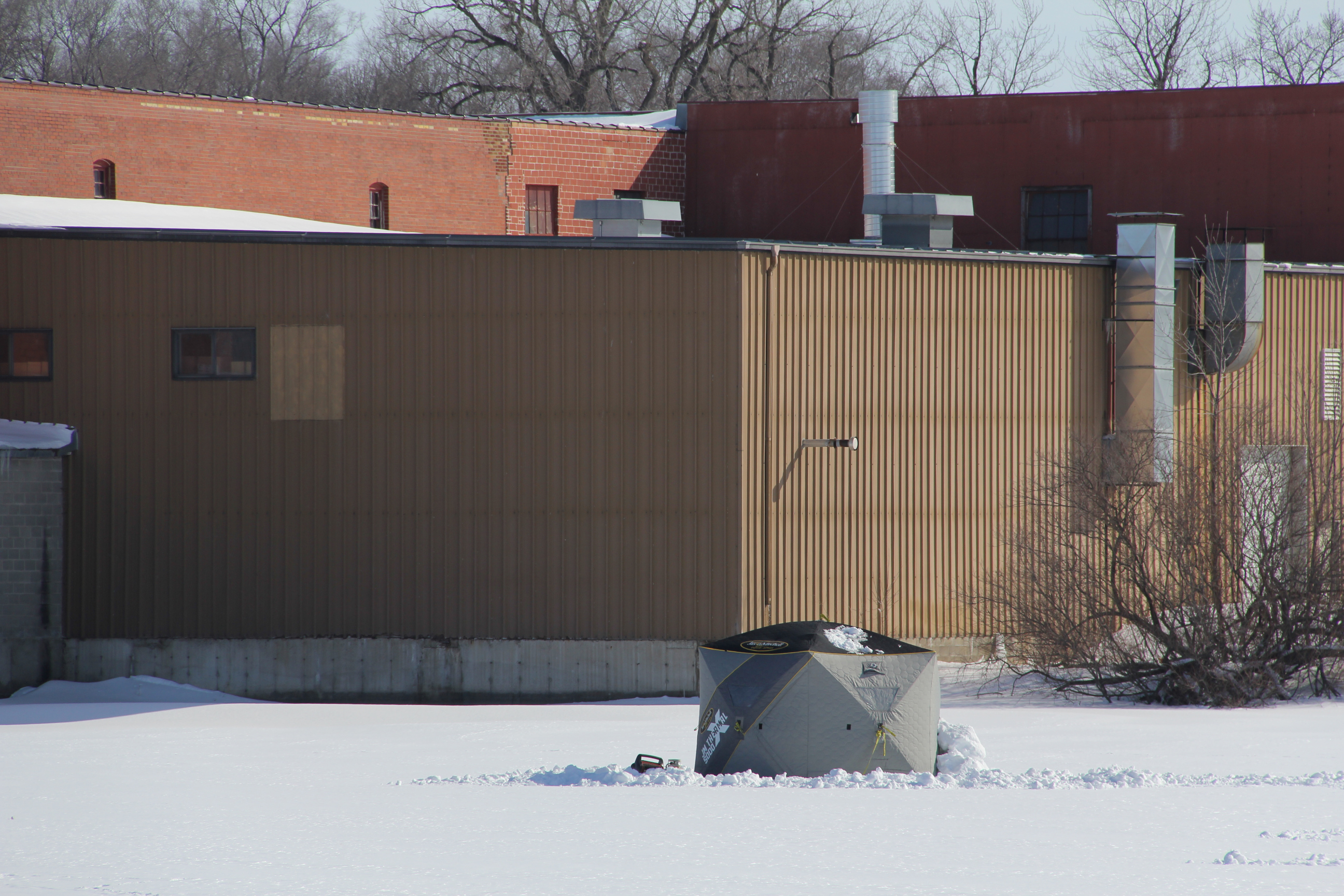
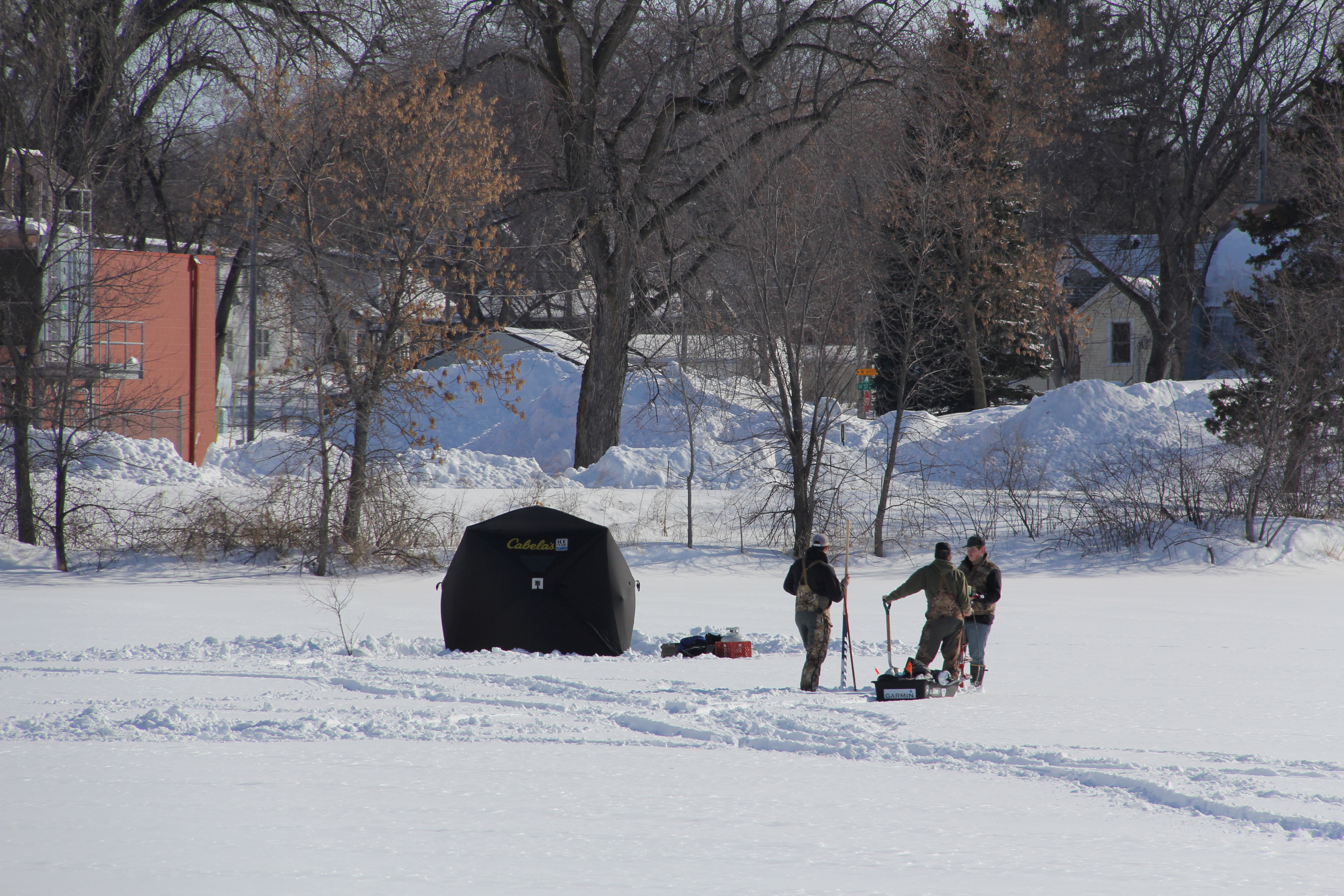
The second portable fish house the anglers set up on the Cannon River near the mill. (Minnesota Prairie Roots copyrighted photo February 2023)
I mean, if you aren’t from a place like Minnesota or Wisconsin, how would you react to anglers driving their vehicles onto a frozen lake, fish houses in tow? That seems reckless and unsafe and dangerous, and it can be. No ice is ever considered 100 percent safe. But, take precautions like knowing your lake (or river) and its ice thickness, driving with windows rolled down and carrying safety equipment, and the sport can be relatively safe.
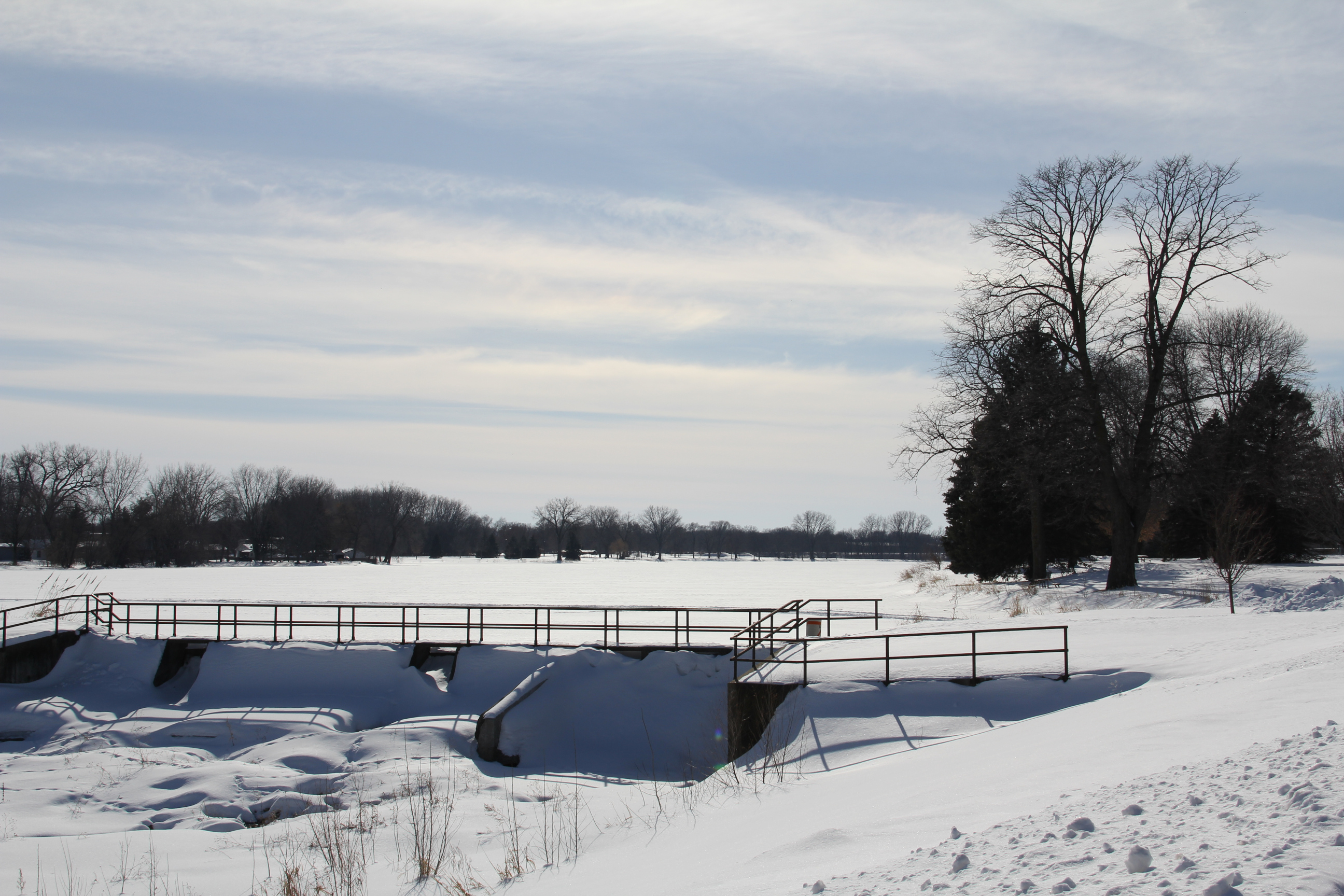
A view of the dam and frozen Cannon River from the recreational trail in North Alexander Park. There are two dams in this location, one next to the woolen mill and then this one. (Minnesota Prairie Roots copyrighted photo February 2023)
Still, this time of year and with the particularly snowy winter we’ve had in Minnesota, ice fishing right now doesn’t seem all that safe to me. Snow acts like a blanket, insulating the ice, resulting in thinner, inconsistent and weaker ice. Decades have passed since I engaged in the sport so I am not writing from current day experience, only from basic knowledge.
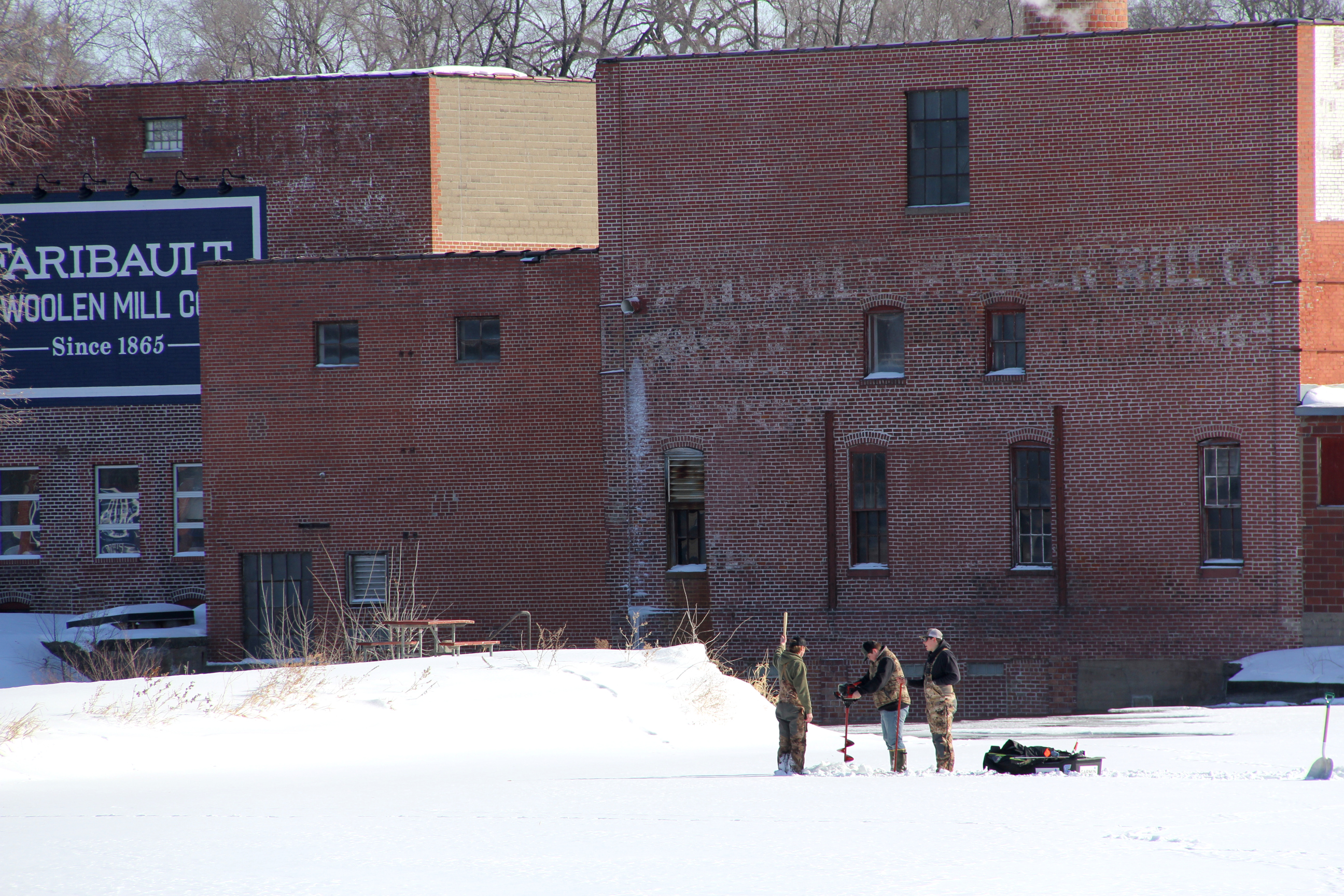
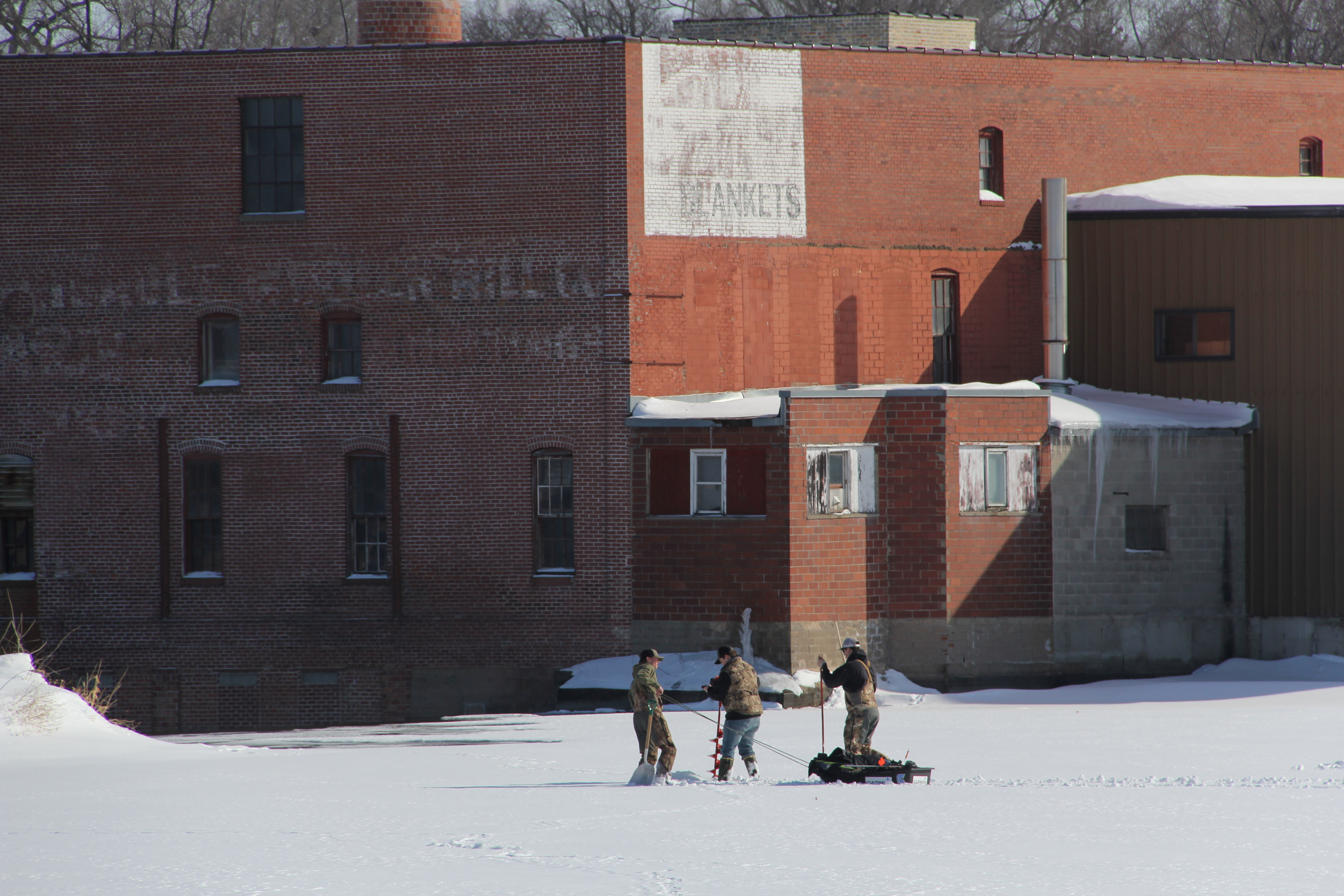
Drilling a hole in the frozen river near the top of the Woolen Mill Dam. (Minnesota Prairie Roots copyrighted photo February 2023)
Sunday afternoon while out and about in Faribault, I came upon three guys with ice fishing equipment on the frozen Cannon River Reservoir by the Woolen Mill Dam. As I watched, I hoped they knew what they were doing because I didn’t feel all that confident in the strength of the river ice with water flowing below.
I can almost hear the discussion about where to drill holes in the ice. (Minnesota Prairie Roots copyrighted photo February 2023)
But I appreciated that they were out enjoying the 30-degree sunny afternoon, warm enough even to shed their gloves and heavy coats. They’d already set up two portable fish houses by the time I arrived at North Alexander Park. I stood there and observed as the trio carried ice auger, ice saw, and scoop shovel and towed a sled with fishing gear across the snow-covered river. I was uncertain whether they were spearing for or simply angling for fish. Turns out neither.
Local avid outdoorsman and columnist Larry Gavin clarified: Those guys were actually netting carp. The net is stretched from one tent to the other using a hook and a series of holes. They were checking to see if the location was a good one. Every year they net Wells Lake and get a semi tanker full of carp that are shipped overnight to Chicago. There is a high demand for carp as a food source in some ethnic dining.
Turning the ice auger into the ice to create a hole. (Minnesota Prairie Roots copyrighted photo February 2023)
It was such an iconic Minnesota winter scene, the fishermen in their camouflage attire, a visual clue that they are year-round sportsmen. I can only imagine the camaraderie, the BS, the anticipation of these friends as they searched for fish.
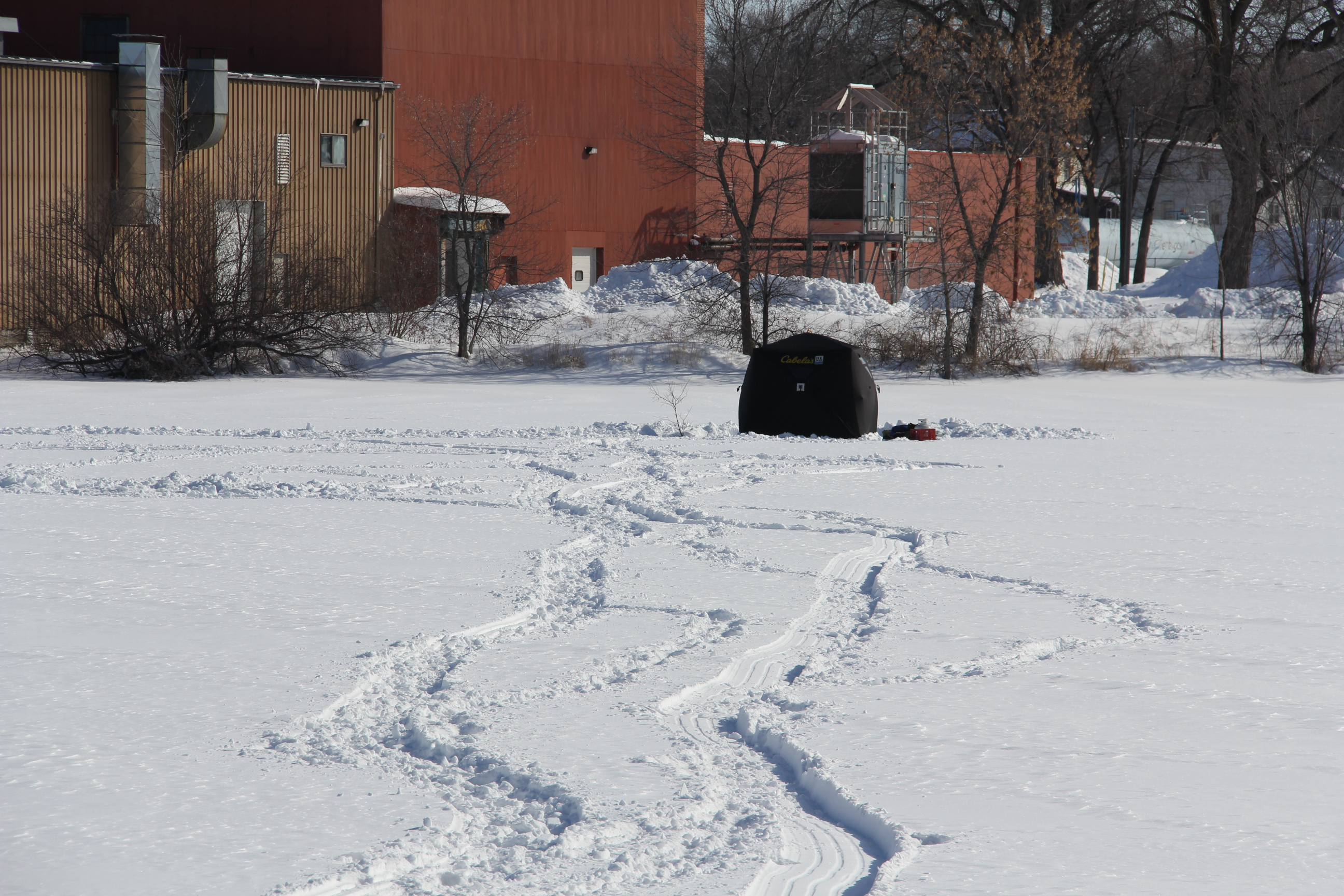
A sled trail across the river to the portable fish house. (Minnesota Prairie Roots copyrighted photo February 2023)
I loved the way their sled left a snaking trail across the Cannon, almost like a line of poetry winding through the snow, writing of winter outdoors, of fish tales, of ice fishing in Minnesota.
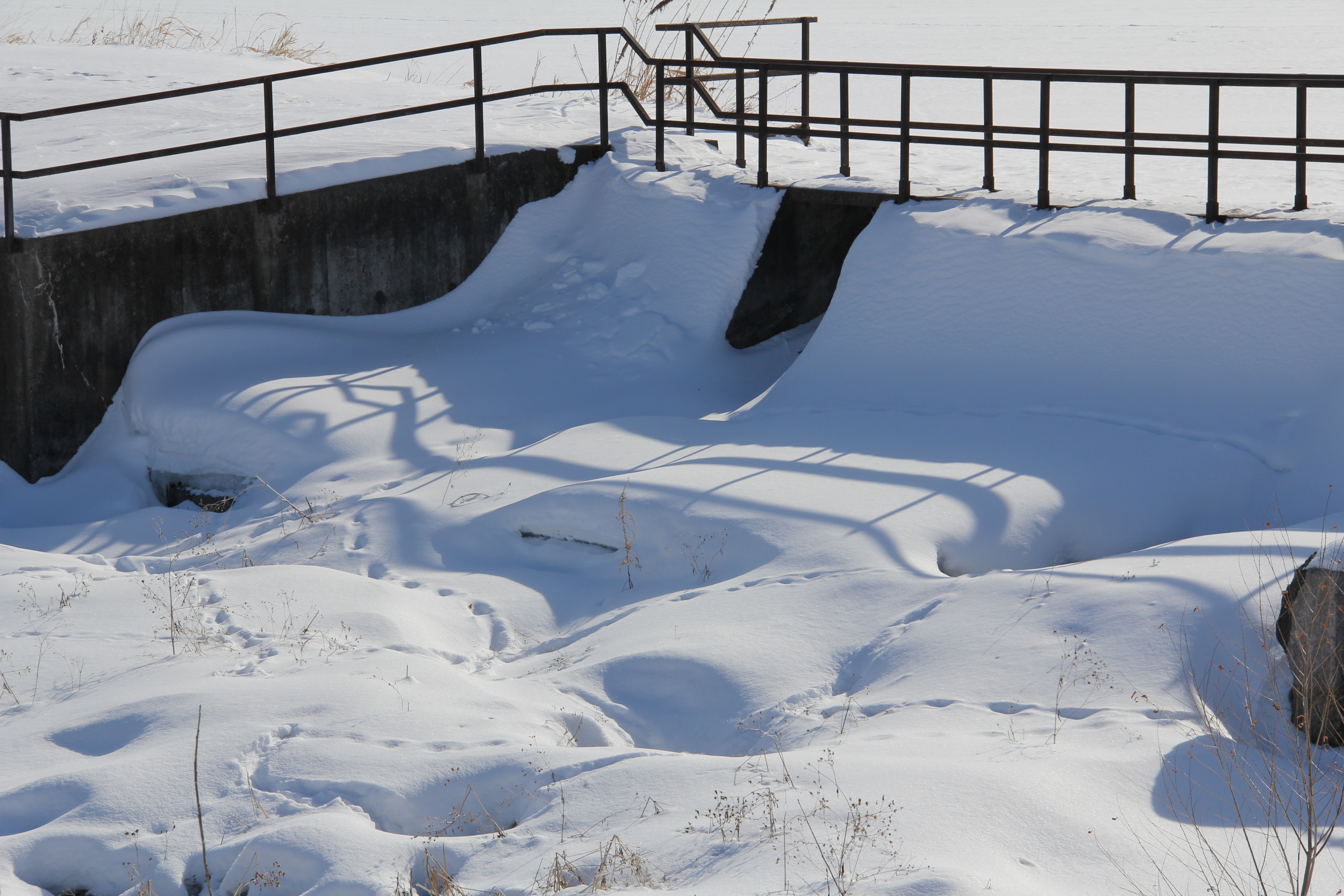
Animal tracks through the snow below the Cannon River dam nearest the recreational trail. (Minnesota Prairie Roots copyrighted photo February 2023)
FYI:The ice fishing season is winding down in Minnesota. All dark houses, fish houses and portables must be off inland lakes by the end of the day beginning on March 6 in the southern two-thirds of the state and by March 20 in the northern third. You can still ice fish, just can’t leave houses unattended. Local officials can set different restrictions if unsafe conditions call for such action.
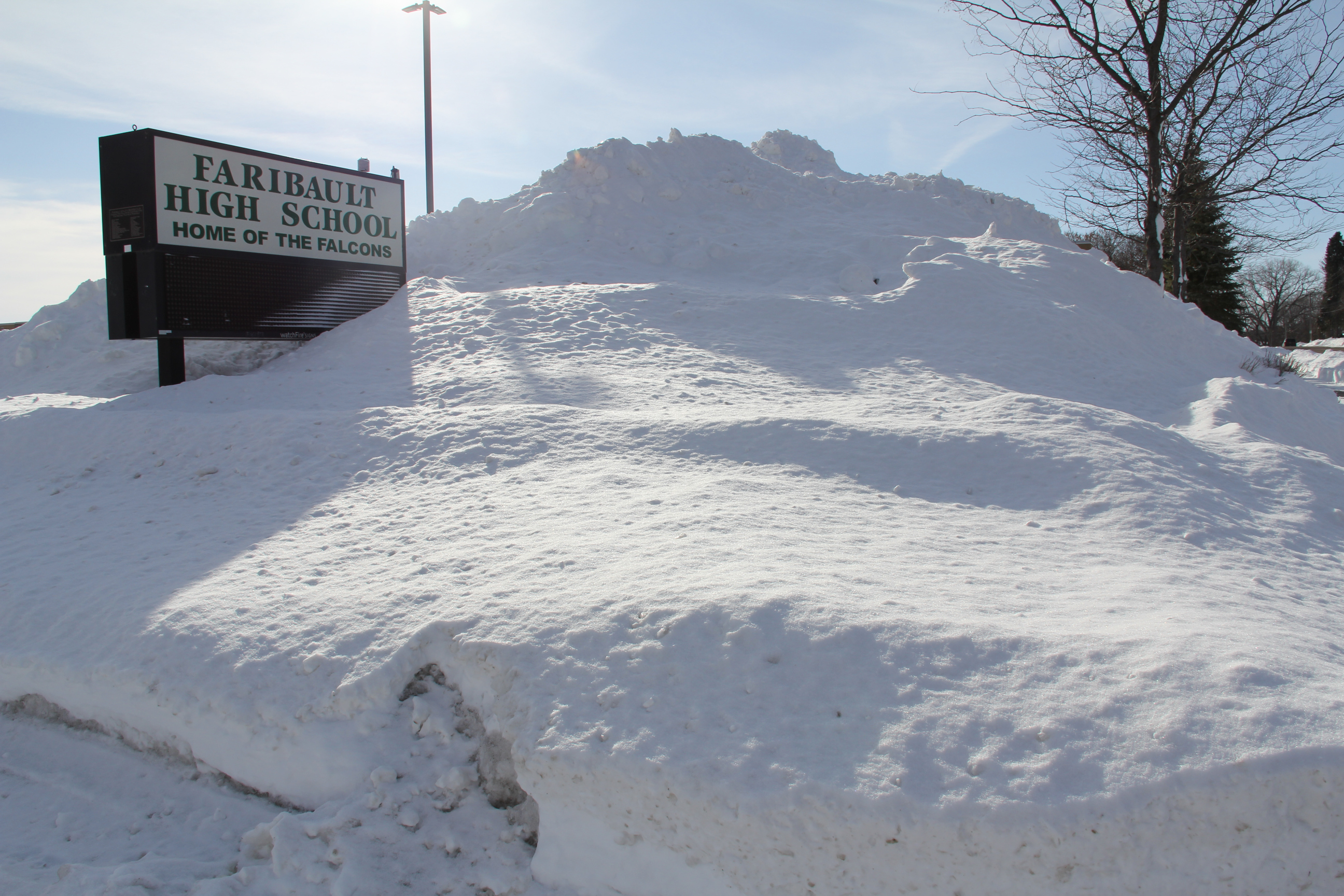
A massive snow pile fills a corner and side of the Faribault High School parking lot. (Minnesota Prairie Roots copyrighted photo February 2023)
BEFORE THE RAIN OF MONDAY, which reduced our significant snow pack, I determined to document the snowy landscape of Faribault. Plus, Randy and I needed to get outdoors, stretch our legs and embrace the 30-some-degree warmth of a sunny Sunday afternoon.
A different view of the FHS snow pile shows the length and height of the mountain in comparison to the vehicle pulling up to the intersection. (Minnesota Prairie Roots copyrighted photo February 2023)
Traveling around town these days requires a bit of extra caution, starting in our driveway. The towering snowbanks flanking the ends necessitate creeping out, all the while trying to see whether any vehicles are approaching. The same goes for many intersections around my community. It’s been a few winters since I’ve seen snow mounded this high. City crews are doing a good job of moving or removing snow to increase visibility. They were on my corner Monday morning to clear snow from the storm sewer drain and intersection.
From behind the massive FHS snow pile, the rambler across the street is barely visible and seems dwarfed in comparison. (Minnesota Prairie Roots copyrighted photo February 2023)
Parking lots hold mountains of snow which take me back to just how much fun I had as a kid playing on the massive piles of snow my dad built with the loader on his John Deere tractor. Up and down the snow hills my siblings and I ran, playing Canadian Mounties or whatever our imaginations decided.
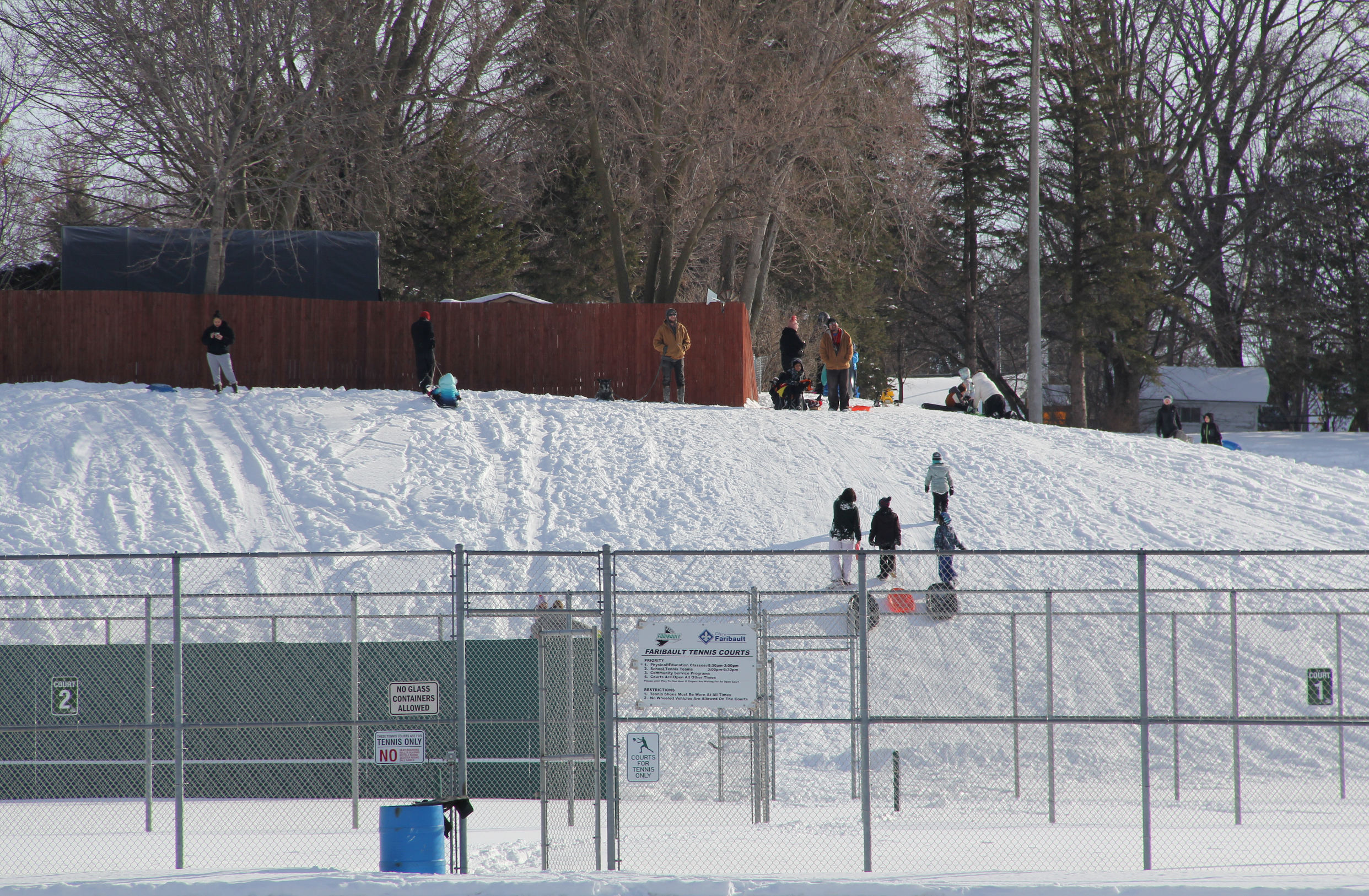
The sledding hill by Faribault High School proved a popular place Sunday afternoon. (Minnesota Prairie Roots copyrighted photo February 2023)
In Faribault on Sunday, I observed families scaling the hill by the high school after sliding down. I love seeing kids enjoying winter outdoors in Minnesota.
Many Minnesota schools, including Faribault Public Schools, have closed during snowstorms and gone to distance and/or e-learning. (Minnesota Prairie Roots copyrighted photo February 2023)
In a corner of the high school parking lot, the snow is pushed so high that I’m clueless as to how it got that high. It’s impressive. I don’t even want to think about how long it will take for that glacier to melt. June?
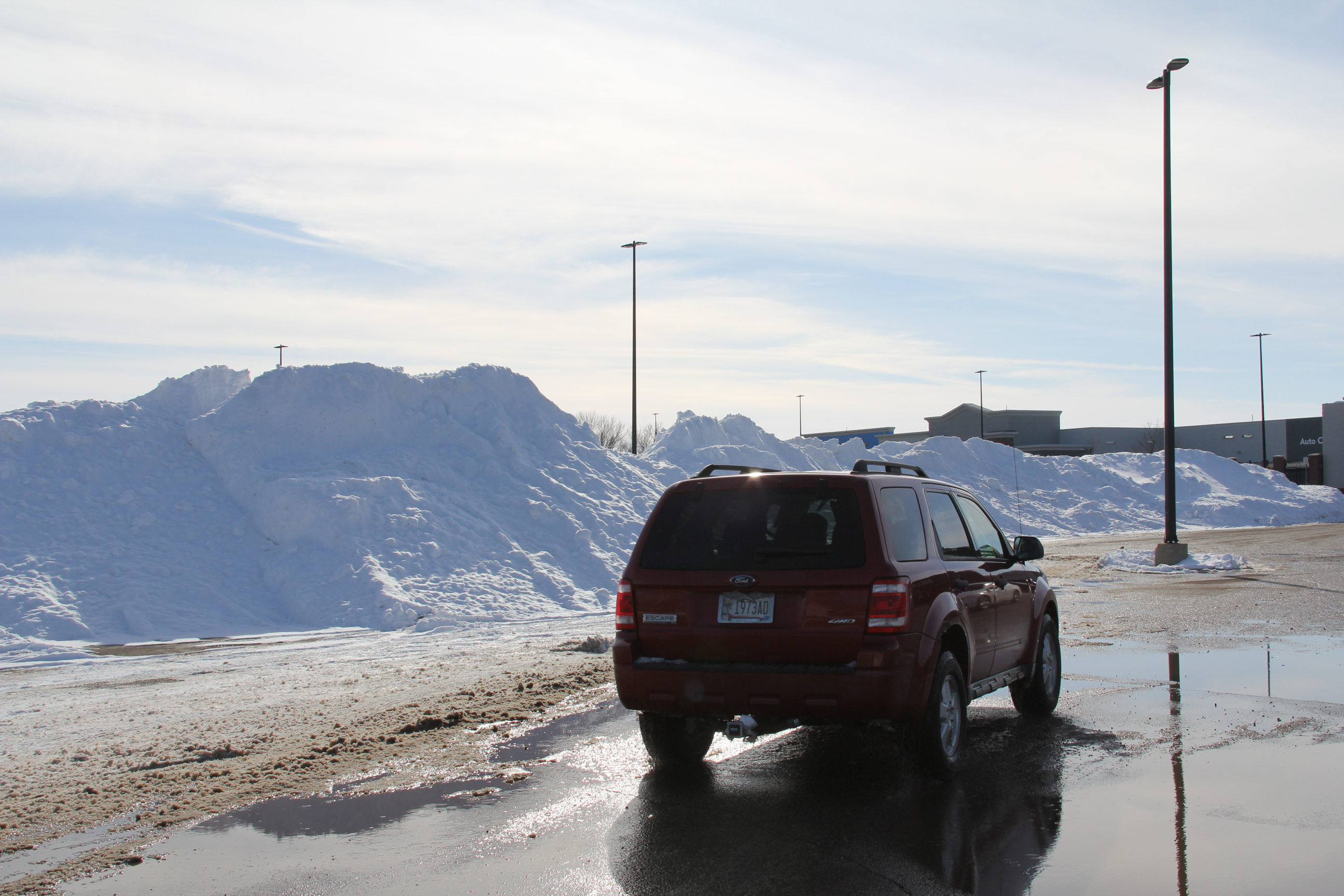
Mountains of snow fill the parking lot at the Faribo West Mall. Walmart is barely visible in the distance. (Minnesota Prairie Roots copyrighted photo February 2023)
The same goes for the snow piled in the Faribo West Mall parking lot. Or maybe it’s the Walmart parking lot. The roofline of the discount retailer is barely visible.
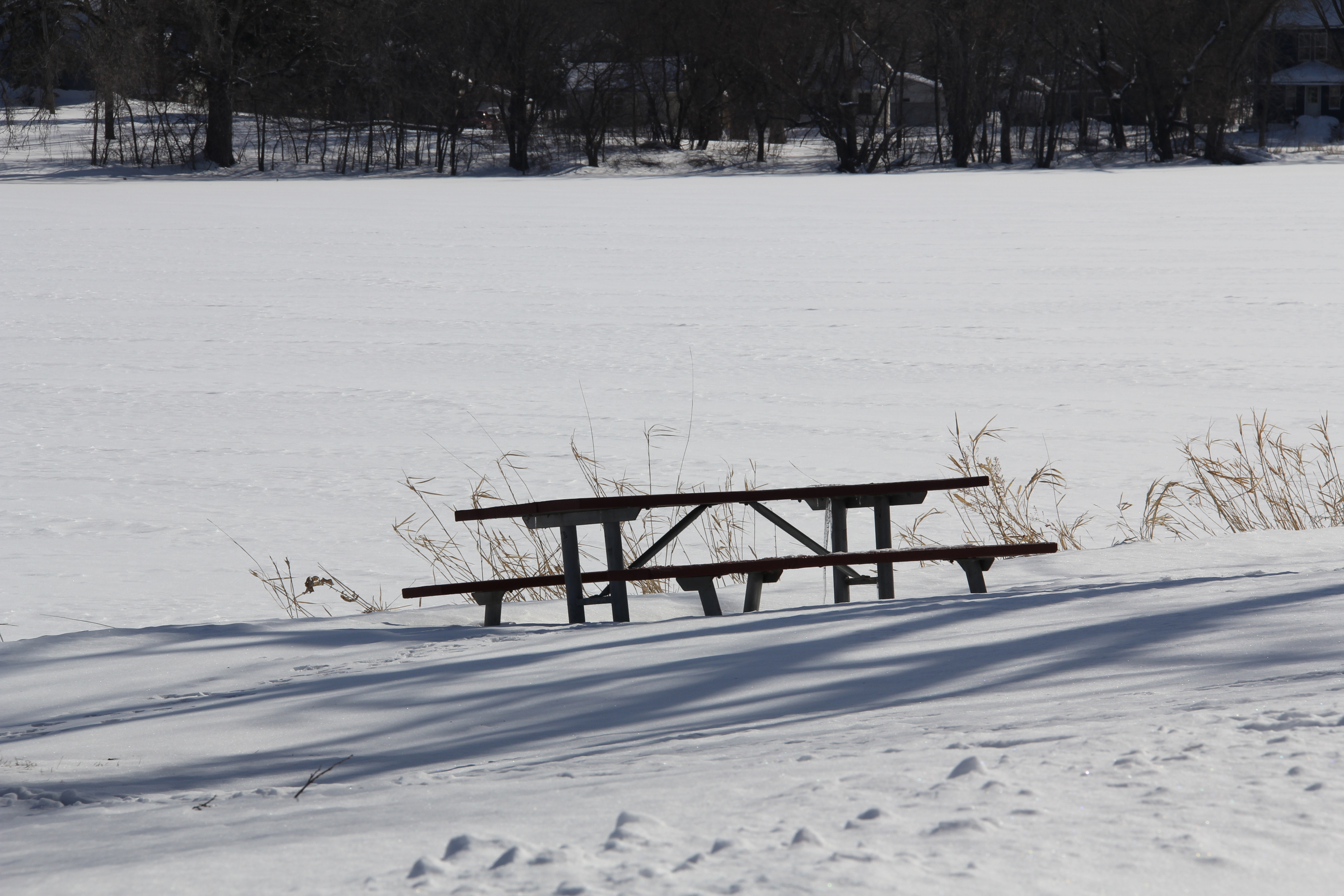
A picnic table sits along the bank of the frozen and snow-covered Cannon River in Faribault’s North Alexander Park. (Minnesota Prairie Roots copyrighted photo February 2023)
Along and near the river in two city parks, picnic tables surrounded by snow remind me that many months will pass before anyone can picnic. Well, I suppose, technically one can picnic in winter, if you are willing to slog through a foot plus of snow to dine.
Carrying ice auger and ice saw and pulling a sled full of gear, this trio of ice fishermen aim toward a spot to fish on the Cannon River by the Woolen Mill Dam. They had set up two portable fish houses. Check back for more images. (Minnesota Prairie Roots copyrighted photo February 2023)
To my photographic delight, though, three ice fishermen slogged through the snow to fish on the Cannon River by the Faribault Woolen Mill Dam. Randy suggested I might want to walk out there for some close-up photos rather than rely on my zoom lens. No, thank you. At this stage in winter, especially, with snow acting as insulation on ice, I don’t trust the ice. These guys, with their portable pop-up fish houses, clearly think differently than me.
My thoughts about right now are those of being ready for winter to end. But, realistically, I understand that we have two months of winter remaining here in Minnesota. As a life-long Minnesotan, I can’t deny that. Onward, into March.










 Minnesota Prairie Roots
Recent Comments