Minnesota Prairie Roots

Writing and photography by Audrey Kletscher Helbling

WARNING: Proposal would erode Minnesota’s Freedom to Breathe Act April 11, 2011

WARNING: Cigarettes are addictive.

WARNING: Tobacco smoke can harm your children.

WARNING: Cigarettes cause fatal lung disease.

WARNING: Cigarettes cause cancer.

WARNING: Cigarettes cause strokes and heart disease.

WARNING: Smoking during pregnancy can harm your baby.

WARNING: Smoking can kill you.

WARNING: Tobacco smoke causes fatal lung disease in nonsmokers.

WARNING: Quitting smoking now greatly reduces serious risks to your health.

 

I didn't need to search long or hard to find these cigarette butts. Two were tossed into one of my flowerbeds by a neighbor. I found the third in the street by my house.

Just as Minnesota legislators are considering proposed changes to the state’s Freedom to Breathe law, the U.S. Food and Drug Administration is finalizing plans to modify warnings on cigarette packaging and advertising.

Following requirements of The Family Smoking Prevention and Tobacco Control Act, the FDA has proposed that cigarette packaging and ads bear one of the above nine warnings along with a matching colorful graphic.

The shock value of the proposed graphics—like a toe-tagged corpse and a mother blowing smoke into her baby’s face—are an effort to make a powerful impact on the smoking public. Enough to make a smoker stop smoking.

The final graphics will be selected by June 22 and the warnings must be in place on all cigarette packages sold in the U.S. and in cigarette ads by October 2012.

As a nonsmoker, I’m all for this move to prevent, reduce or stop smoking.

However, I don’t support proposed legislation in Minnesota that would once again allow smoking in bars under specific conditions. Not that I frequent bars, but bars and restaurants are often interconnected, so this matters to me.

The plan basically would allow smoking in bars if a ventilation system is installed to remove the smoke. In bars connected to restaurants, the bar must be walled off with a door separating the bar and restaurant.

Come on. A door will not keep smoke from filtering into a restaurant. And I don’t know about you, but I don’t need smoke served with my meal.

I make no apologies for my strong stand against smoking and my intense dislike of cigarette smoke.

I’m also honest enough to admit that, in my youth, I tried tobacco products on several occasions, enough to realize smoking wasn’t for me.
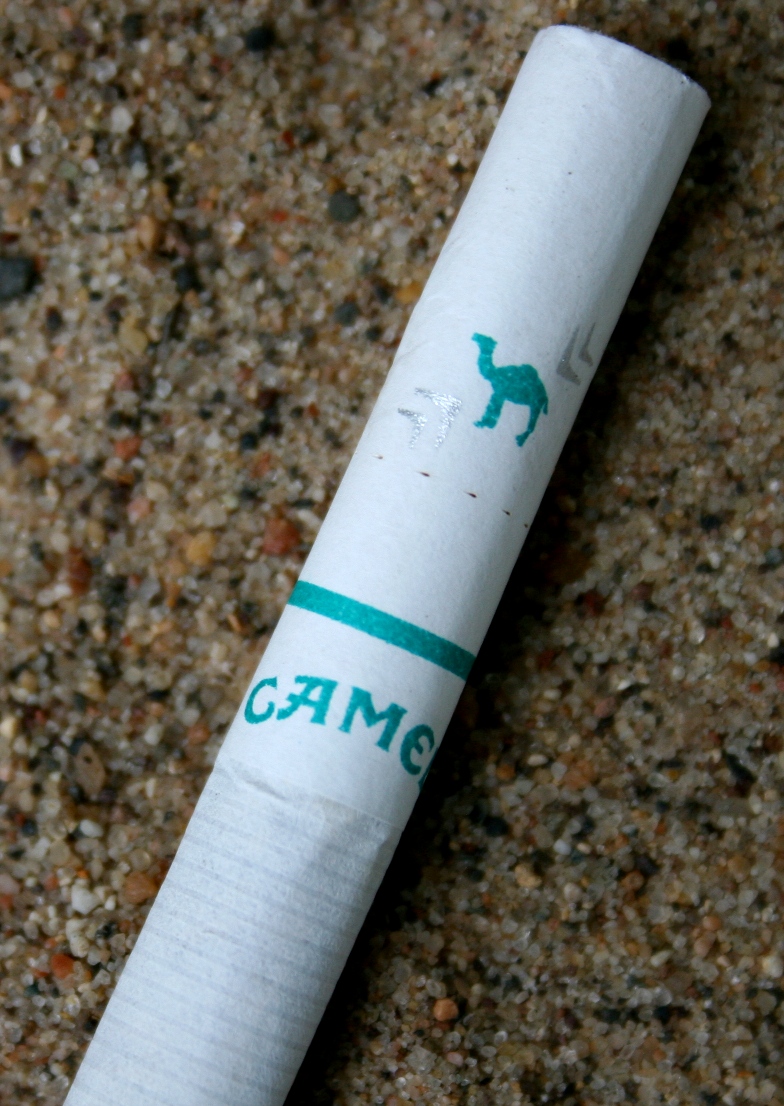
My dad became addicted to cigarettes when he was in the military, serving on the front lines during the Korean Conflict. He preferred Camel cigarettes. Sometimes he also rolled his own.

My dad, a smoker for many years, first exposed me to cigarettes. Once he even let me puff on his Camel. Now before you start calling him an irresponsible parent, consider this.  He knew I’d cough and sputter and spit and never want to touch a cigarette again. He was right. Eventually he gave up smoking but never quit chewing snuff.

Although I never took up smoking, I was addicted to candy cigarettes as a kid. But candy cigarettes were as popular as Bazooka bubble gum back in the 1960s and no one thought anything of subtly encouraging kids to smoke via those chalky white sticks with the red tips.

As for the few Swisher cigars I smoked in my mid-20s, I offer no excuse except my ignorant, youthful stupidity. I bet many smokers who are now habitual tobacco users wish they’d never started.

If you’re a smoker and want to smoke in the privacy of your home, then go ahead. Just don’t invite me over because, physically, I can’t tolerate cigarette smoke.  I’ve had numerous bad experiences with cigarette smoke.

Back in the early 1980s, I worked for a southern Minnesota daily newspaper that allowed smoking in the office. I came home every night smelling like I’d been in a bar all day. My clothes reeked. My skin reeked. My hair reeked. I remember complaining, with several other nonsmokers in the office, about the smoking. Nothing changed, because the news editor smoked. She didn’t care. So what if the copy editor sat outside the conference room during the weekly staff meeting because he couldn’t tolerate the smoke? I wish I had joined him instead of breathing the toxic air. So what if the news editor should have been more considerate given the Minnesota Clean Indoor Air Act passed in 1975? None of that mattered.

My second worst experience with smoking occurred several years ago at a Winona hotel. The manager tried to pass off a smoking room as a nonsmoking room. The instant I walked into the room, I smelled cigarette smoke. The mobile air purifier that was running on high and the lack of a sign on the door stating that this was a nonsmoking room confirmed my suspicions. When I went to the front desk and demanded a nonsmoking room, the manager denied that he had given me a smoking room. I didn’t believe him. My nose and lungs don’t lie.

My other notable smoke experience also involves a hotel, this one at a southwestern Minnesota casino. I was there attending a cousin’s wedding reception. Although the hotel room my family booked was supposedly smoke-free, the odor of cigarette smoke filtered from the smoke-filled hotel lobby, halls and casino into our room. I barely slept that night because of the tightness in my chest caused by the smoke.

So, Minnesota legislators, listen up. Listen to representatives of The American Cancer Society, the American Heart Association, the American Lung Association and Clearway Minnesota, all of whom have been at the State Capitol opposing the proposed changes to Minnesota’s Freedom to Breathe Act.

Consider the 83.9 percent of adult Minnesotans (according to results of the 2010 Minnesota Adult Tobacco Survey) who do not smoke. Please keep our Freedom to Breathe Act intact and smoke-free.

© Copyright 2011 Audrey Kletscher Helbling


The Kletscher family legacy of public service February 4, 2011

WE’RE NOT EXACTLY the Kennedys. But the Kletscher family, my family, has a long history of political, church and community involvement.

My uncle, Merlin Kletscher, writes in the family history booklet he compiled:

“Many of us (in this older generation) have, like our forefathers, been active in our community. We have served our country in the military, on church councils, city councils, township boards, ambulance squads, fire departments, and school boards. We’ve served on Legion auxiliaries, vocational school cooperatives, electric power cooperatives and grain elevator board cooperatives. Fire chiefs, mayors and county commissioners are among our family—and it makes me proud. The list for our family could go on and on. The point here is that our families have seen the need, as our forefathers did, to serve others to make someone else’s life a better life.”

For the Kletschers, that service to others traces back to my great grandfather, Rudolph Kletscher, a German immigrant. In 1890, he started a mission church at his home near Vesta in southwestern Minnesota. The families who met in his farmhouse would eventually organize St. John’s Evangelical Lutheran Church, where I worshipped as a child and which my mother and many other relatives still attend today.

I never knew my great grandfather, who died three decades before I was born. But his legacy of community involvement continued when his son Henry, my grandfather, served for many years on the Vesta School Board. When I was attending Vesta Elementary School, I would walk by a plaque just inside the front door engraved with my grandpa’s name. I suppose, subconsciously, that made an impression upon me.

My Uncle Merlin, the family historian, like his father before him, became involved in education by serving on two school boards. His community involvement is too long to list. But suffice to say that Rudolph Kletscher would be impressed with his grandson.

He would also be proud of my Uncle Harold, who held public office for more than 30 years in Vesta. Two of Harold’s sons likewise were elected to office.

In my immediate family, my dad, Elvern, fought on the front lines in the Korean Conflict and was active locally in church and Legion organizations and probably other groups of which I am unaware. He once unsuccessfully ran for Redwood County commissioner.

One of my brothers served several terms as a county commissioner. My older brother was the Westbrook fire chief for many years and his son is currently a volunteer fireman.

My eldest daughter holds a political science degree and today works in the State Capitol complex.

Like my Uncle Merlin, I am proud to be part of a family that gives back via public service.

MY COUSIN JEFF KLETSCHER, who is current president of the Minnesota Association of Small Cities and who served on the Floodwood City Council for 10 years before being elected mayor in 2003—he’s in his fifth mayoral term—was a DFL candidate for the House District 5B seat in northeastern Minnesota.

Jeff finished fourth among five DFLers in Tuesday’s special primary election. It was hard, he says, to be from a small community (Floodwood, population 503) with two big communities (Chisholm, population 4,960, and Hibbing, population 17,071) in the district.

DFL-endorsed candidate and Iron Range attorney Carly Melin easily won the primary with 50 percent of the votes. The 25-year-old is from Hibbing.

I’m not going to pretend that I am informed about northeastern Minnesota politics or the DFL candidates (other than my cousin) who vied for the office vacated by Tony Sertich, the newly-appointed commissioner for the Iron Range Resources and Rehabilitation Board.

But I can tell you that Jeff, like his great grandfather, grandfather and father (my Uncle Harold) before him, is living a legacy of service. He cares about rural and small-town Minnesota. Jeff’s length of public service (nearly 20 years) speaks volumes to me about his dedication to making life better for Minnesotans.

© Copyright 2011 Audrey Kletscher Helbling
 

We don’t “need” new stadiums February 2, 2011

I’VE ABOUT HAD IT with Minnesota sports teams thinking taxpayers should help them finance construction of new stadiums.

First the University of Minnesota got their new TCF Stadium. Then the Twins got Target Field.

And, as we know, the Minnesota Vikings have been pushing for a new stadium for years.

The St. Paul Saints have now hopped on the gotta-have-a-new-stadium bandwagon and are proposing a $45 million facility in downtown St. Paul, subsidized, of course, by taxpayer dollars.

Over at Target Center in Minneapolis, a proposal is now on the table to make $150 million in renovations to that building, home to the Timberwolves.

Come on, team owners, athletes, government officials, lobbyists, etc., have you heard of budget shortfalls, the bad economy, unemployment, struggling to make ends meet, high healthcare costs, high gas prices, high food prices, etc.?

I have no time, none, to listen to your list of so-called “needs.” You might “want” a new stadium, but in these difficult economic times, when the average Minnesotan is struggling, you don’t “need” a new stadium.

Here are some real needs:

  • Jobs (and pu….lease don’t tell me stadium projects will create new jobs; those are temporary)
  • Affordable healthcare
  • A decent wage for those who work long, hard hours to provide for themselves and their families (no multi-million dollar contracts here)
  • Lower gas prices
  • Better highways in outstate Minnesota (ever drive Minnesota Highway 3 between Faribault and Northfield or U.S. Highway 14 between Mankato and New Ulm?)

Readers, what’s your opinion on the whole gotta-have-a-new-stadium issue? Choose to agree or disagree with me, but you better have a really, really good reason for supporting a new stadium if that’s your stance.

© Copyright 2011 Audrey Kletscher Helbling


Thanks for the Sputnik memories, Mr. President January 27, 2011

GROWING UP on a southwestern Minnesota dairy farm back in the 1950s and 60s, in the middle of the Cold War, I didn’t know all that much about the Soviet Union, except to fear “the Russians.”

Then along came Sputnik, the Russian satellite, which made quite an impression on my impressionable young mind.

So when President Barack Obama worked Sputnik into his Tuesday night State of the Union address and stated, “This is our generation’s Sputnik moment,” something niggled in my memory.

That something would be a cat.

Just to make sure I was remembering correctly, I phoned my mom, who quickly assured me that I was right. During my childhood, we had a black-and-brown mixed barn cat called Sputnik.

“I think you kids named it after the Russian satellite,” my mom said.

She was right. My oldest brother and I, enamored with the whole space thing, had named the barn cat with the stump tail (likely sliced off by a mower in the alfalfa field) Sputnik.

I hadn’t thought about that feline in decades, until the President tripped my memory Tuesday evening while referencing Sputnik in his call for American innovation.

Then Wednesday I got caught up even more in the Russian satellite memory when I learned that the President was visiting Manitowoc in eastern Wisconsin. On September 6, 1962, a 20-pound chunk of glowing debris from Sputnik IV plummeted to earth, landing on 8th Street in Manitowoc.

This Wisconsin city celebrates that monumental event every September at Sputnikfest, complete with a Miss Space Debris Pageant, Cosmic Cake Contest, Cosmic Costume Contest, a Sputnik Re-enactment and more.

How space-age cool is that?

The President’s trip to Manitowoc was clearly well-planned and orchestrated to tie in with his Sputnik speech reference. Otherwise why would he have chosen to visit this city of 32,520 southeast of Green Bay? It’s not like he’s a Packers fan, although he received a yellow and green jersey upon his arrival.

This town on the shores of Lake Michigan is also home to several green energy plants, which Obama toured, thus reemphasizing his State of the Union directive to move forward in developing clean energy alternatives.

That all said, thank you, Mr. President, for mentioning Sputnik in your speech. I hadn’t thought about that barn cat in decades.

© Copyright 2011 Audrey Kletscher Helbling

 

The President’s speech: salmon, Sputnik and nation-builders January 26, 2011

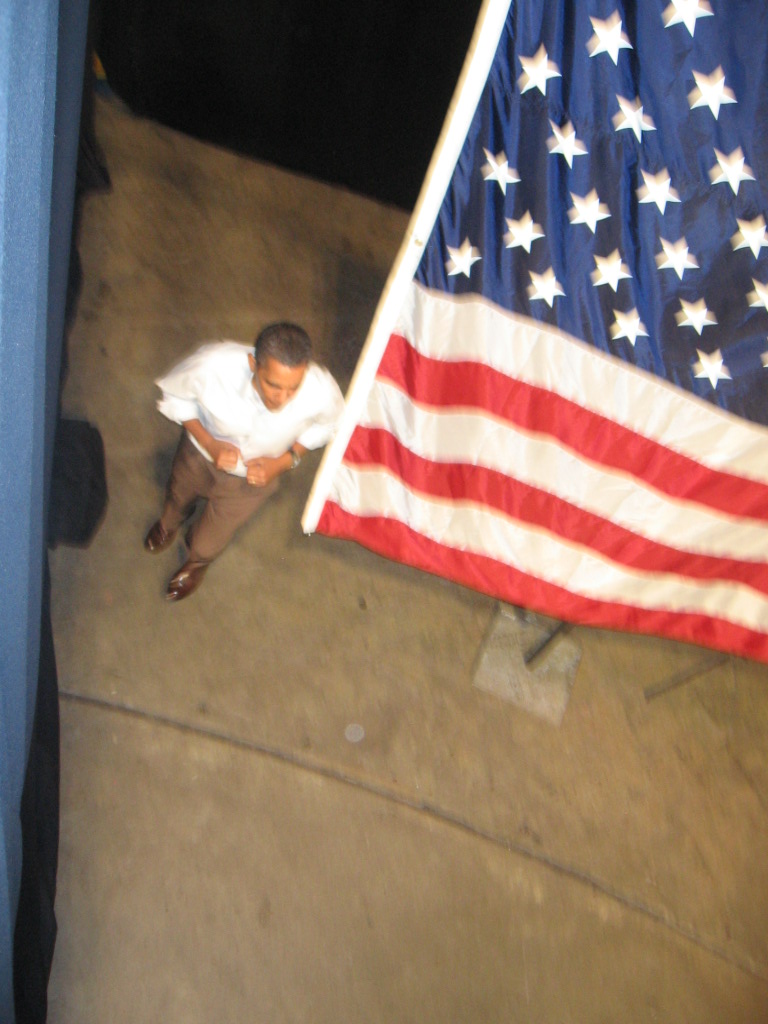
President Barack Obama in Minneapolis in September 2009.

DID YOU LISTEN to President Barack Obama’s State of the Union address? And, if so, what did you think?

I can’t exactly put my finger on it, but the whole speech seemed more lackluster than your typical Presidential annual summary, although Obama certainly tried.

Political commentators attribute the noticeably subdued reaction among attendees to the fact that Republicans and Democrats sat jumbled together rather than each party in its distinct spot. I agree that one would be more hesitant to strongly react to a Presidential statement when seated with members of the opposite party than when sitting with your own crowd.

On to the speech…Obama tried to convince Americans numerous times that our nation is now on the road to economic recovery. “The economy is growing again,” he said at one point.

I see some glimmer of that, but I don’t think the current situation—with the unemployment rate hovering around 9.5 percent—is quite as bright as the President believes.

“America still has the largest most prosperous economy in the world,” Obama told us. Right or not, I don’t know. I hope he’s right, but I’m no economist.

He offered encouraging words: “The future is ours to win…but to get there we can’t just stand still.”

President Obama outlined steps to move our country forward via innovation, investment in education, rebuilding America and controlling spending.

His call for clean energy and improving our infrastructure with a high-speed rail system are nothing new. I’ve heard this all before and, although the ideas are good, I question whether independent “I-love-my-car” Americans will embrace electric cars and high-speed rail. Geographically our country is much larger than nations with successful lightning-speed rail systems. And how, exactly, will this be funded?

“Innovation is how we make our living,” the President said as he defined his first step in building a stronger country.

ONE OF HIS MORE MEMORABLE QUOTES: “This is our generation’s Sputnik moment.” Sputnik, for those of you who haven’t a clue, was the first earth-orbited artificial satellite launched by the Soviet Union in 1957. I thought America had its moment when we landed on the moon.

I liked the President’s statement that “…the winner of the science fair needs to be celebrated,” although I find it odd that he compared such recognition to Super Bowl winners. I’ve long thought those who excel in academics deserve the same recognition as those who excel in sports. But I doubt you’re going to change an entire society’s attitude. I mean, will local newspapers devote a whole section to academic achievers like they do to athletes? I wish they did, but it’s not going to happen.

When addressing the topic of education, Obama called for Americans to treat teachers with the same level of respect as teachers in South Korea, who are called “nation-builders.” Yikes. That word choice really, really bothers me. That, in my mind, produces an image of students in uniforms and teachers drilling science and math into students’ heads. I’m sure the President did not mean it that way, but that was my honest, first gut reaction.

As the President discussed streamlining government and curtailing government spending, he informed us that salmon—yes, the fish—are regulated by two government agencies. That drew audience laughter and certainly made the point that reform is needed within government operations.

He proposed a freeze on annual domestic spending for the next five years.

“Our government spends more than it takes in,” Obama said. “That’s not sustainable.”

You think? And how did we get there?

Numerous times the President called for Americans—and specifically politicians—to work together. “We are part of the American family,” he said. “I believe we can, and must, work together.”

Yet, he recognized that differences will always exist and that such differences are part of the foundation of a democracy. “We will argue about everything,” Obama said. I appreciated that the President emphasized that point, that freedom of speech point.

“I know there isn’t a person here who would trade places with any other nation on earth,” our nation’s leader said toward the end of his speech.

Then he cheered one more time: “We do big things.”

And finally: “The state of our union is strong.”

IF YOU HAVE THOUGHTS on the State of the Union address, I’d like to hear them. What did you like or dislike? What did you believe or disbelieve? And how would you describe the state of our union?

© Copyright 2011 Audrey Kletscher Helbling
 

Balancing security, freedom and accessibility at the Capitol January 12, 2011


I photographed the Minnesota State Capitol during a fall 2009 tour.

TWICE IN MY LIFE, I’ve toured the Minnesota State Capitol.

The first time was back in the 1960s, when my sixth grade classmates and I traveled some 130 miles from Vesta Elementary School on a field trip to St. Paul.

Then, more than four decades later in the fall of 2009, my husband, teenage son and I toured the Capitol while on a day-trip.


Italian marble columns embrace the Capitol's grand stairway.

While the grandeur of the building with its marble columns and staircases, opulent furnishings, ornate carvings and impressionable art certainly awed me, I was most struck by an assertion from our tour guide.

“This is the people’s place. You own this building,” he told us repeatedly. And, yes, that’s a direct quote. I was taking notes because I later wrote a magazine feature story about my Capitol visit.


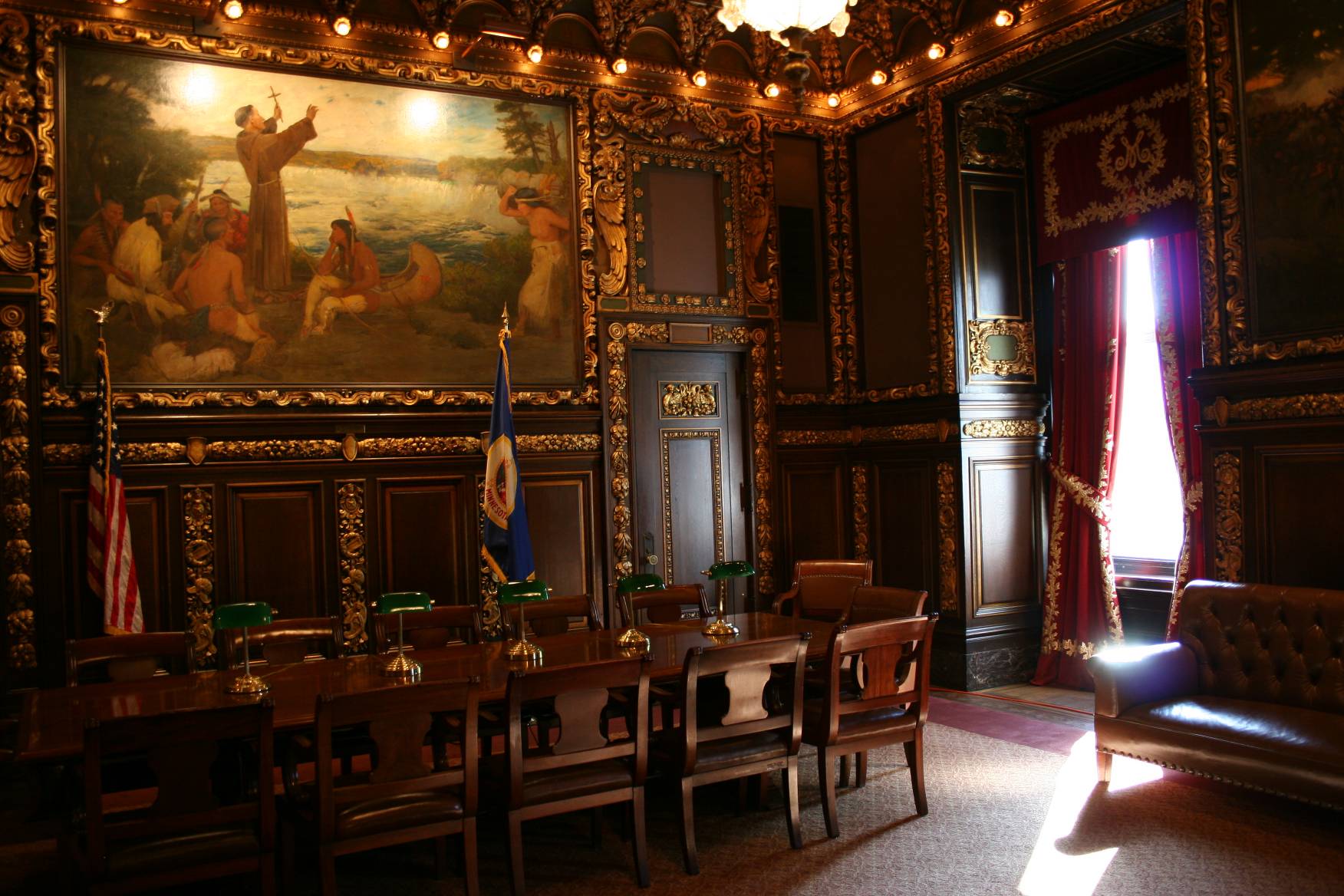
The lavish Governor's Reception Room at the Capitol.

I remember thinking then, and writing later, how I would love to welcome guests into the lavish Governor’s Reception Room with dark wood, leather chairs, extensive carvings, heavy drapes, a fireplace and historic paintings.

I also remember feeling surprised that our tour group could just walk into the reception room. At the time, I also wondered which door would lead me to the governor.

Now, today, in the aftermath of the wounding of Arizona Congresswoman Gabrielle Giffords and 13 others and the shooting deaths of six in last Saturday’s attack, I am rethinking our fall 2009 visit to the Minnesota State Capitol.

Because the legislature was not in session when we were there, the building felt almost abandoned to me. I don’t recall seeing hardly anyone, let alone a security presence, anywhere. And security cameras? If they were there, I didn’t notice them, not that I was looking.

Honestly, I was a bit of a lagger during our fast-paced tour. I dawdled and lollygagged to snap photos. I expect our guide noticed my lingering with only five tourists in our group. But he never said anything and I probably could have slipped inside somewhere I shouldn’t have been if I really wanted to do so.

I felt then like I could have wandered anywhere and that surprised me.

Today, in the wake of the Arizona shootings, security issues are once again, as you know, the focus of concern at places like the Capitol complex. But the dilemma lies, as you also know, in balancing security needs with public accessibility.

Here’s a paragraph lifted from that magazine feature I wrote about my Capitol visit:

“Remember, it’s we the people,” our guide impresses upon us as we sit in the House chamber gallery. After a half hour of listening to him, I am beginning to feel like I own this place, like my voice could make a difference. He speaks of approachable lawmakers, who are open to constituents and who mentor pages. As we stand in a back stairwell, he tells of lobbyists and lawmakers who mingle here during the legislative session.


A view of the Minnesota House of Representatives chamber from the gallery.

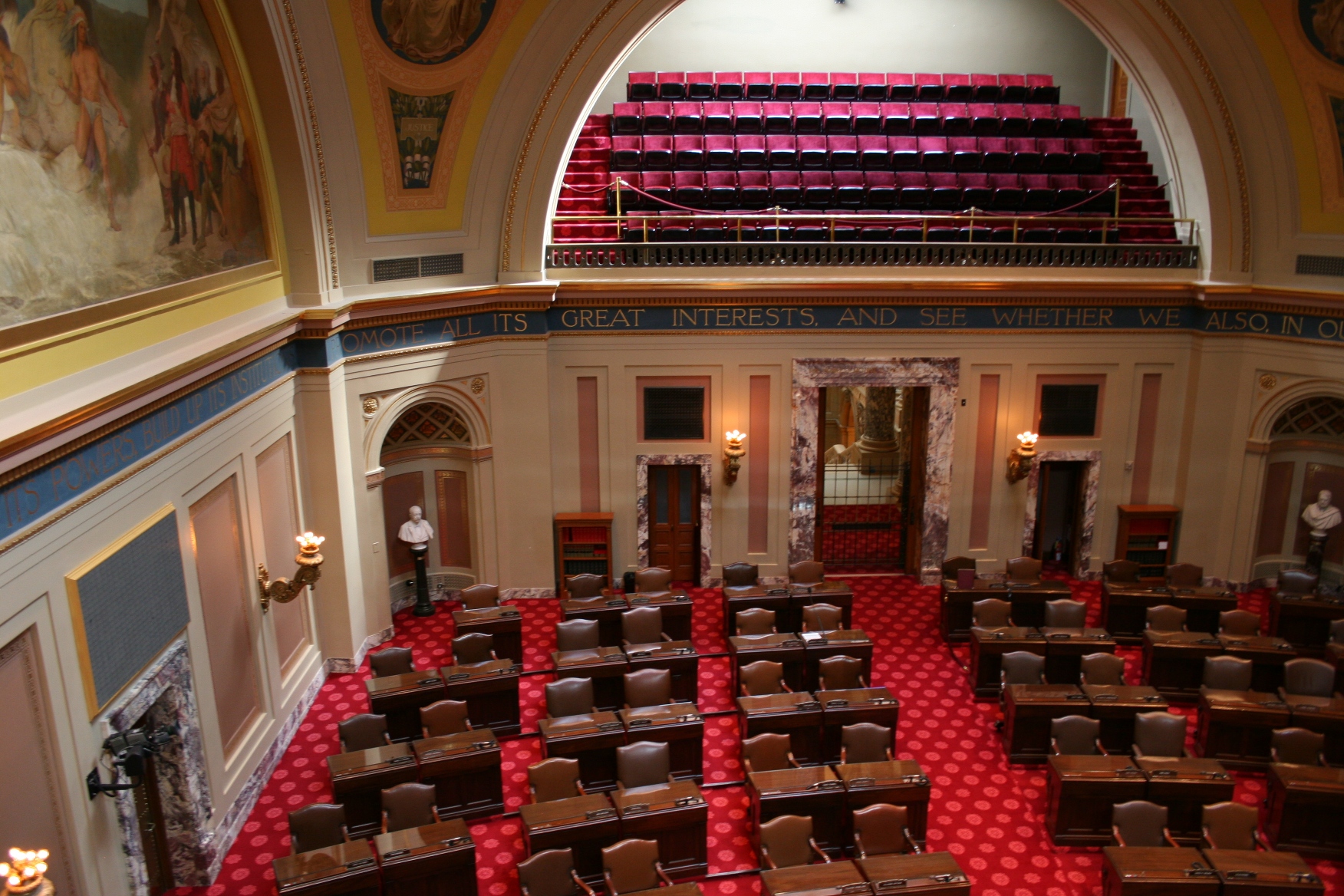
Looking from the gallery onto the Senate floor.

I wonder now if those legislators and lobbyists will mingle so easily in that back stairway.

Will those of us who tour the Capitol still feel as comfortable as we did before the Arizona shooting?

Will the Capitol guides still tell visitors: “This is the people’s place. You own this building.”

If you read these words inscribed in the Capitol, will you take them to heart?

“The true grandeur of nations is in those qualities which constitute the true greatness of the individual. Labor to keep alive in your heart that little spark of celestial fire called conscience.”

Will you wonder about the weight of these words written above the doorway and viewable from the Minnesota Supreme Court bench?

“Where law ends tyranny begins.”

Conscience and tyranny and law.

The Arizona shootings do not qualify as tyranny, but the violence fits the definition of tyrannical—harsh, severe, unjust, cruel.

How do we weigh it all? Security, freedom and accessibility.

I have no answers.


Words from The Declaration of Independence inspire on the House ceiling.

The Star of the North centers the floor of the Capitol rotunda in the "people's place."

© Copyright 2010 Audrey Kletscher Helbling


FOX 9 anchor Heidi Collins deserves criticism November 4, 2010

AFTER SOME THOUGHT, I feel compelled to add to my earlier post regarding FOX 9 news anchor Heidi Collins’ on-air interview with Minnesota Secretary of State Mark Ritchie last night. The more I think about the interview, the madder I get.

Typically, I stick up for journalists. I once became so upset with a circle of friends who were blasting newspaper reporters and newspapers that I stalked out of the room. I had never done that before, but I get fed up with media-bashing.

This time, though, I cannot defend journalist Collins, if you can even call her a journalist. She deserves every ounce of criticism, every degree of heat, every negative comment tossed her way.

Her condescending attitude, her insinuations, her talking over Ritchie and that “I ask, you answer” statement showed an utter lack of respect for the office of Secretary of State.

Collins seemed biased and intent on provoking Ritchie. In other words, she was anything but professional and she was downright mean.

I cannot, as a professional writer and a former newspaper reporter, stick up for anyone in the media who conducts herself/himself in such an unprofessional manner.

© Copyright 2010 Audrey Kletscher Helbling


After the election comments and mud-slinging in Minnesota

Filed under: Uncategorized — Audrey Kletscher Helbling @ 10:11 AM
Tags: , , , , , , ,

IN ALL THE POLITICAL NEWS and rhetoric that filled our Wednesday here in Minnesota, the most sensible sound-bite of the day, in my opinion, came during an on-air interview between FOX 9 television news anchor Heidi Collins and Minnesota Secretary of State Mark Ritchie.

During the interview, with the two sometimes talking over each other, Collins became a bit testy and instructed Ritchie, quite curtly, that she was asking the questions and he was to answer.

So…, when Collins asked when we’ll have a new governor, Ritchie responded that Minnesota will have a new governor when the governor takes the oath of office.

All of us—my husband, 22-year-old daughter and 16-year-old son—watching the interview burst out in simultaneous laughter. Ritchie nailed that question with an answer that not even a politician can twist into a political statement.

Speaking of which, Minnesota GOP Chairman Tony Sutton has done nothing to endear himself to me with his snotty, snide, venomous comments that portray the ugly opposite of Minnesota Nice.

With words like “should be reamed” directed toward Ritchie, “something doesn’t smell right” aimed toward a Hennepin County vote reporting glitch  and promises to be “very, very aggressive” in the recount process, I already dislike the man. Honestly, I just wanted him to shut up.

For the record, I don’t specifically align myself with any particular party. I evaluate candidates based on their views, stands on issues, personalities and character. Through the years, I’ve voted Republican, Democrat and Independent.

Whatever the outcome of the expected gubernatorial recount, I hope that both political parties can maintain civility and stop the mud-slinging that has already begun, by the GOP, in this process. Enough already.

© Copyright 2010 Audrey Kletscher Helbling


A message from an “Angry American Voter” August 23, 2010

Filed under: Uncategorized — Audrey Kletscher Helbling @ 7:37 AM
Tags: , , , , , ,

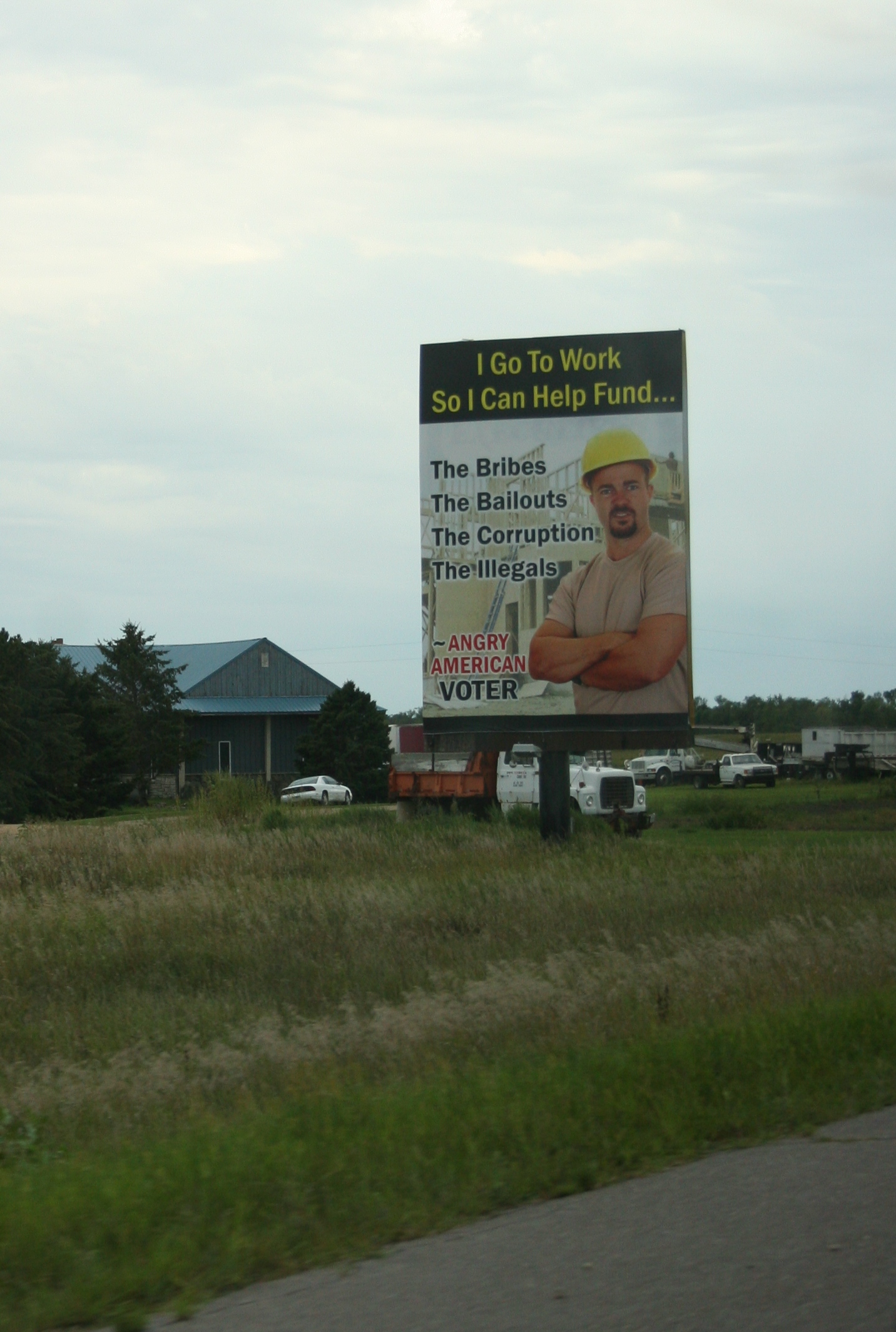
WHAT’S THE STORY behind this billboard along Minnesota Highway 60 just northeast of Lake Crystal? Do you know? I photographed the sign about 10 days ago.

I doubt I’ve ever seen a more strongly-worded billboard.

Who is this “Angry American Voter”?

Is it you? Is it some of us? Most of us?

No matter the identity of the vocal voter, the opinionated message is clearly aimed at government.

And whether you agree or disagree, you have to agree that we are fortunate to live in a country where we can freely vote and freely express our opinions right there, along the busy highway, for all to read.

© Copyright 2010 Audrey Kletscher Helbling


Politics have no place in commencement speeches May 21, 2010

Filed under: Uncategorized — Audrey Kletscher Helbling @ 7:39 AM
Tags: , ,

“SO, WHAT DID YOU THINK of the speakers?” I ask my daughter as we walk toward the clock tower on the campus of the University of Wisconsin, La Crosse, following commencement ceremonies. She has just graduated with a Spanish degree and I am curious if she shares my opinion of the commencement speeches.

My daughter is at first non-committal, certainly not enthusiastic, but not critical either.

“I felt like we were at a political science pep fest,” I tell her. She quickly agrees.

Between the two speakers—a political science graduate and the Wisconsin Public Service Commissioner, also a former legislator—I’ve heard enough references to politics and a certain UW-L political science professor that those comments overshadow all other content.

Given the context of this celebration, I don’t care who campaigned for President here beginning back with John F. Kennedy. I don’t care which Wisconsin politician was inspired by an instructor here. I don’t care about re-election in Wisconsin, especially since I am a Minnesotan.

It is unfortunate that I feel this way, but I can’t deny my reaction to commencement speeches laced with political references.

At one point during the graduation ceremony, I ponder leaving the stuffy, packed gymnasium in protest. I once walked out on a sermon that particularly needled me and I once failed to return to a theatrical performance. But I realize that exiting this time will serve no purpose except to disappoint my daughter.

Instead, let me offer this suggestion to university commencement organizers and speakers: Please, keep the spotlight on the graduates, all of the graduates. They have worked hard, and paid a lot of money, to earn their degrees whether in education, communications, a foreign language and, yes, even political science, and many other fields of study.

If you wish to recognize retiring faculty or single out individual professors for accolades, then do that at another ceremony. Like the graduates, they deserve their own hour of honor.

Keep even the slightest hint of politics out of the podium.

Commencement should focus solely on the graduates (although that “thank you” to the families was a nice touch) and all that they have accomplished.

© Copyright 2010 Audrey Kletscher Helbling