Minnesota Prairie Roots

Writing and photography by Audrey Kletscher Helbling

Welcome to Fargo, as in the “real” Fargo June 20, 2012

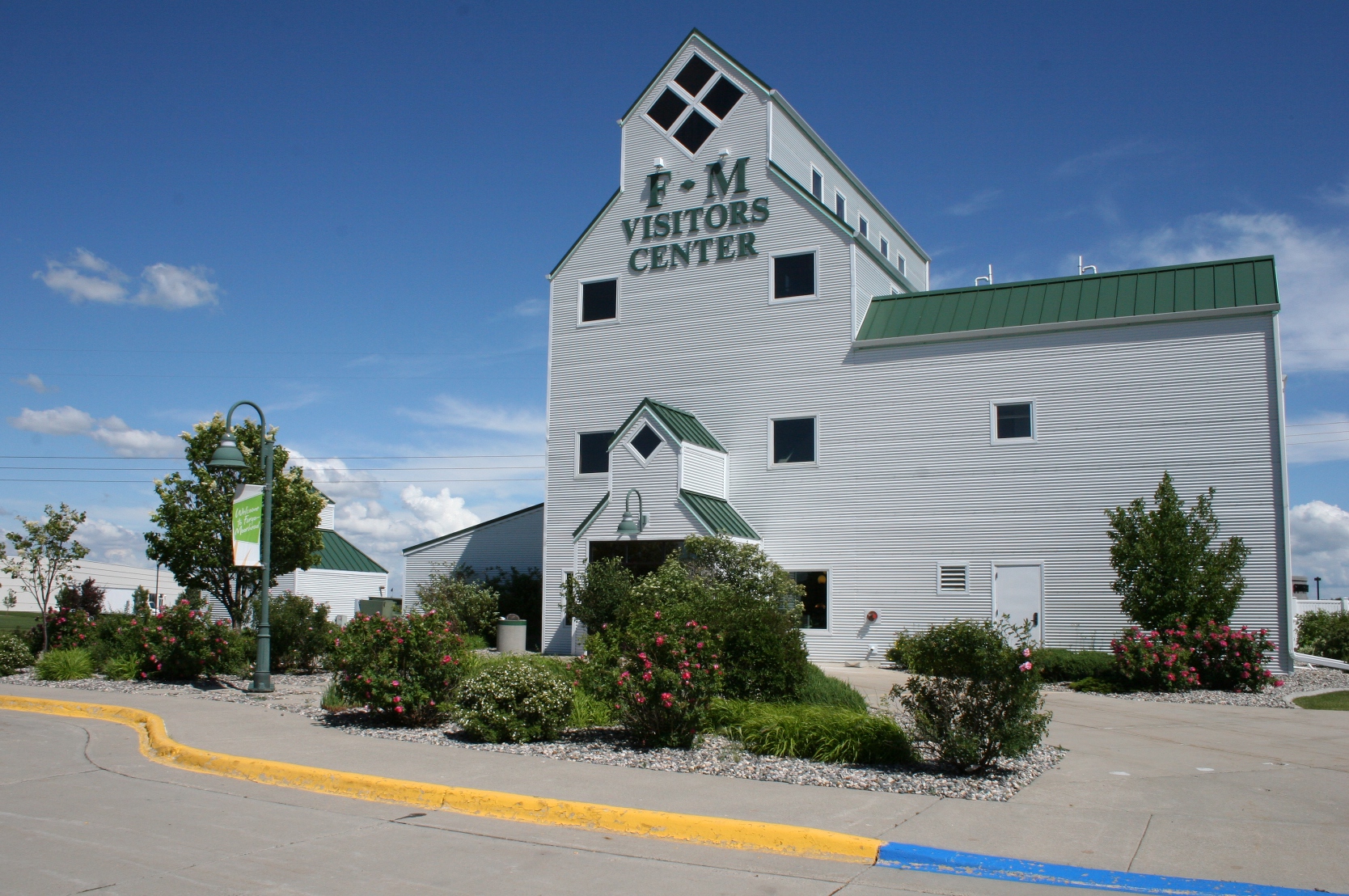
The official Fargo-Moorhead visitors guide reads: A warm welcome awaits you. Our Visitors Center, the “Grain Elevator,” located at Interstate 94 exit 348, has bushels of information, maps, brochures and a gift shop.

THE RAPID POP, pop, pop of tumbling popcorn, its buttery aroma scenting the air, impresses upon my senses as I enter the Fargo-Moorhead Vistors Center on a hang-onto-your-hat, grass-bending windy summer afternoon in North Dakota. (Is it always windy here?)

We’ve arrived in town around 4 p.m., five hours after leaving Faribault. I am determined on this, my third visit to Fargo—the first was 18 ½ years ago passing by on the interstate, the second in February—to see the infamous woodchipper from Minnesotans Joel and Ethan Coen’s 1996 award-winning dark comedy/crime film, Fargo.

The famous woodchipper from the movie, Fargo, is a focal point in the Visitors Center. Other film memorabilia is also on display.

In all honesty, I don’t recall the “feeding a body into the woodchipper” bit from the movie. Perhaps I shut my eyes or turned away as I cannot handle gruesome scenes. I remember, instead, the accents that made us northerners sound like backwoods hicks.

Visitors can also peruse copies of the Fargo script written by the Coen brothers from Minnesota.

But the F-M Visitors Center hypes up the film and specifically that woodchipper. And why not? Tourists embrace this kind of stuff, this opportunity to pull on furry ear flapper caps, pose next to the “real” woodchipper from the movie and then post the images on “The Woodchipper in Fargo” Facebook page.

I didn’t even attempt to persuade my husband and 18-year-old son to pose for a woodchipper photo.

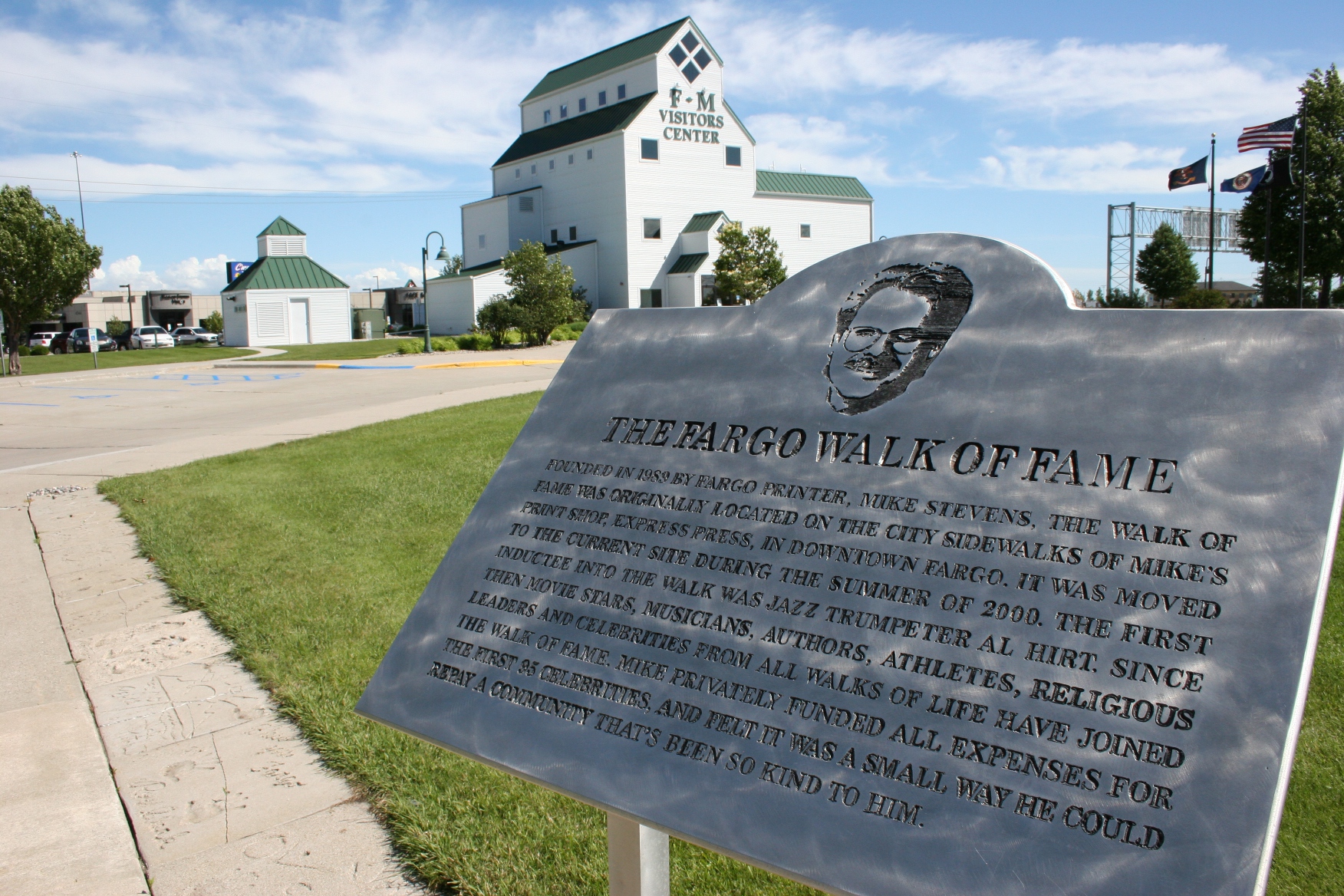
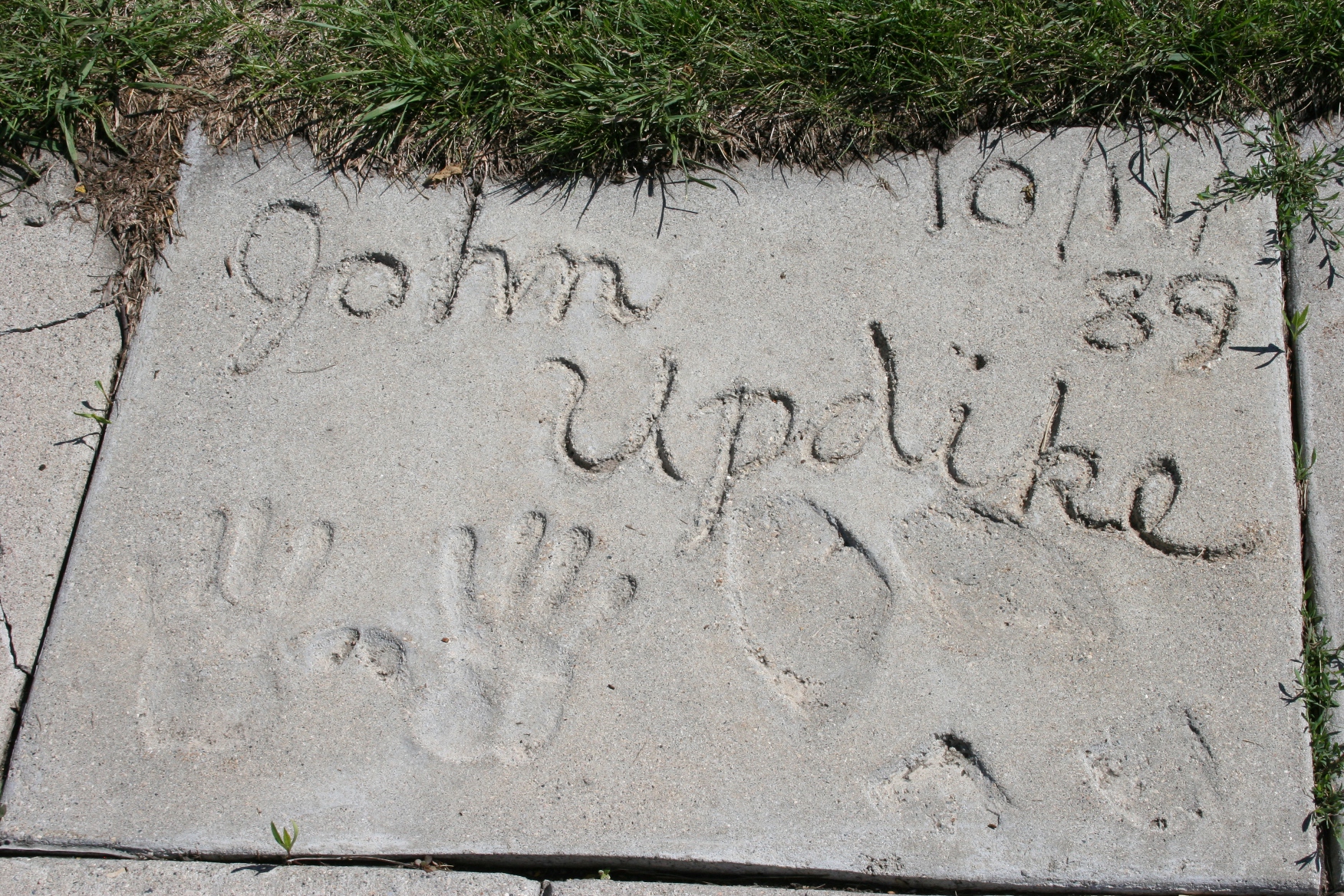
A Fargo businessman started the Celebrity Walk. When his business moved, the Walk was relocated to the F-M Visitors Center. Some of the cement squares cracked during the move. Others have cracked due to weather.

We just grabbed bags of popcorn, quite fitting for the whole going-on movie theme, and munched while gathering brochures, asking questions and then, back outside, checking out the names imprinted in cement on The Celebrity Walk of Fame. The Coen brothers were noticeably absent.

Of course, you might know that I would photograph the signature and handprints and footprints of a writer, like John Updike, who several times won the Pulitzer Prize in fiction.

But you’ll find the names, and sometimes hand and footprints and art, of 113 celebrities—from authors to movie stars to musicians and more—here. Notables like The Moody Blues, Bill Gates, Toby Keith, Paul Harvey, Travis Tritt, Conway Twitty, Garth Brooks, Kiss and many more have left their marks on 150-pound squares of cement in Fargo.

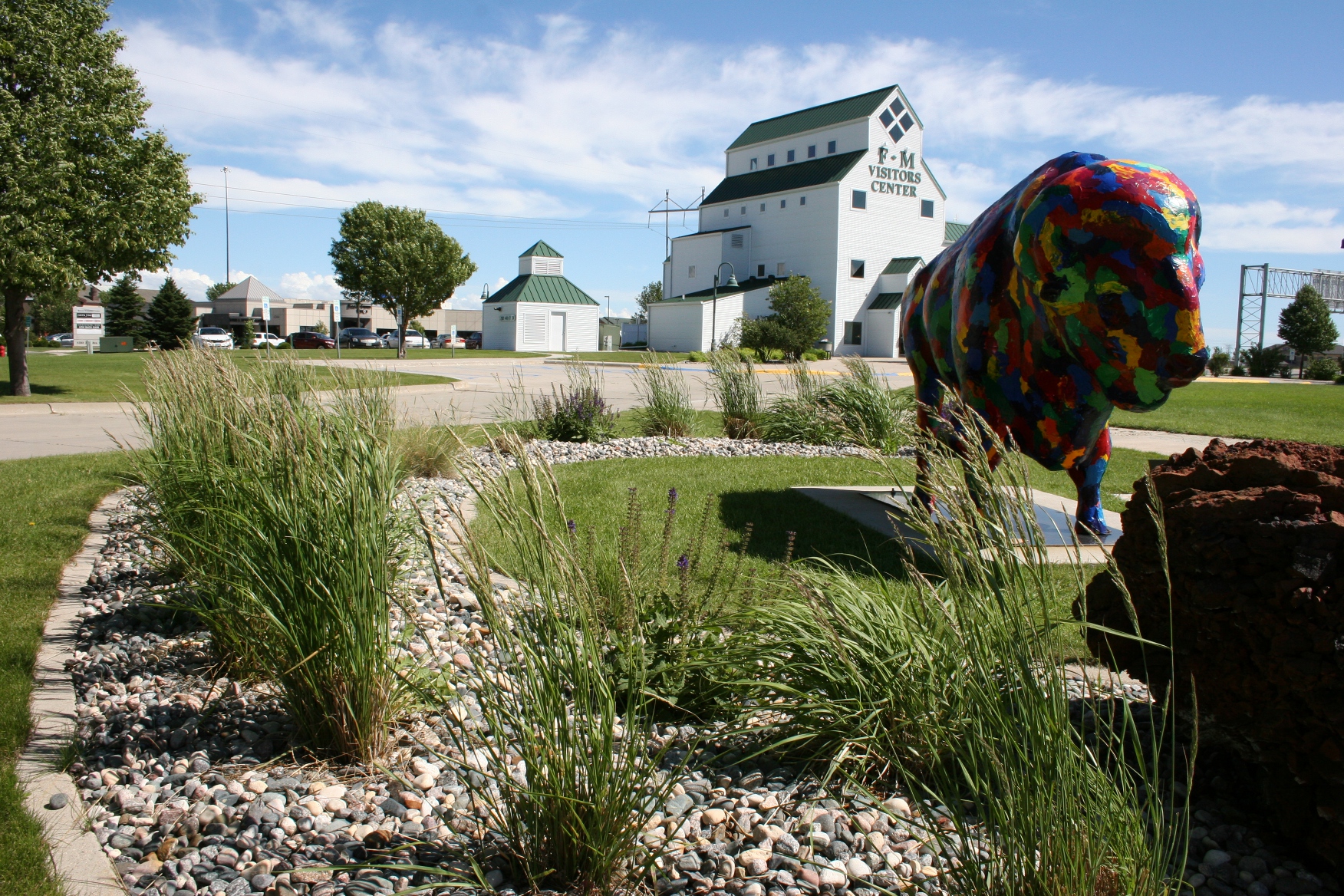
Anne Bradley Kiefel’s colorful “Herd About the Prairie” public art sculpture, right, is located at the Visitors Center.

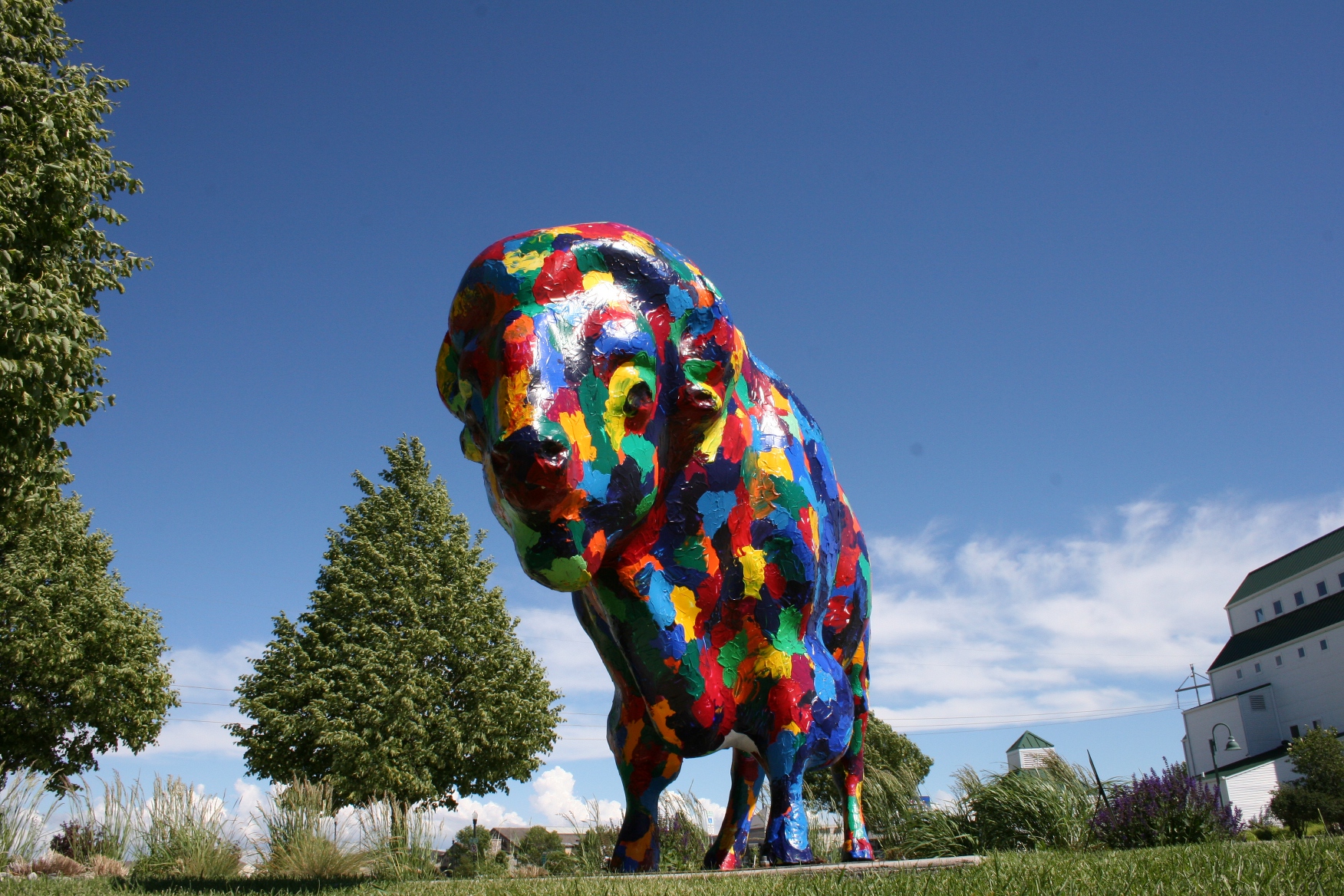
While circling the Celebrity Walk, I broke away to snap photos of the colorful fiberglass buffalo sculpture, “Aunie,” created by Anne Bradley Kiefel as part of a 2006 Lake Agassiz Arts Council public art project, “Herd About the Prairie.” The Visitors Center bison is among 19 such sculptures in the Fargo-Moorhead area.

A looking-up-from-the-ground shot of the buffalo.

Spend any time here, and you’ll soon discover that these F-M folks love their buffalo as much as they love Fargo.

P.S. I just checked out a copy of the movie, Fargo, from my local public library last night. I never intended to do so. But as I was walking past a catch-all basket for books/movies/magazines, there was Fargo, right on the top, staring up at me. Gives you goosebumps, doesn’t it? So…, I will see if I am actually able to watch the woodchippper scene this time around.

© Copyright 2012 Audrey Kletscher Helbling
 

At the WordWalk: Why I won’t eat tuna June 28, 2011

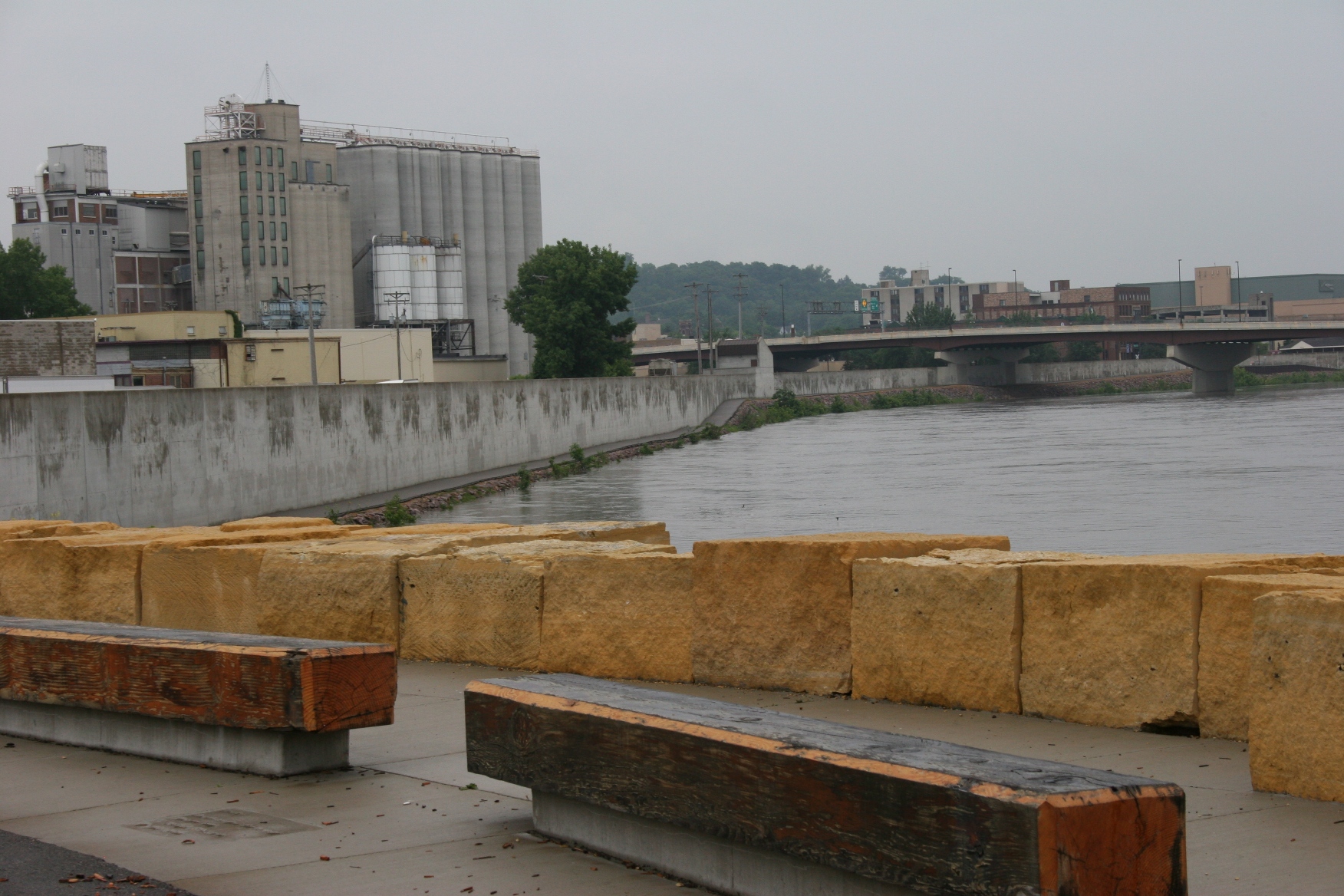
A view of the Minnesota River as seen from Riverfront Park, looking toward downtown Mankato.

THE MANKATO PARK SEEMS, in many ways, an ideal setting for poetry.

The usually playful Minnesota River bumps against the land here, acting on this Saturday afternoon like a willful, unruly child.

On the other side of Riverfront Park, across the tracks, historic buildings stand like forlorn children, neglected, waiting for someone to care.

Overhead, moody skies pout.

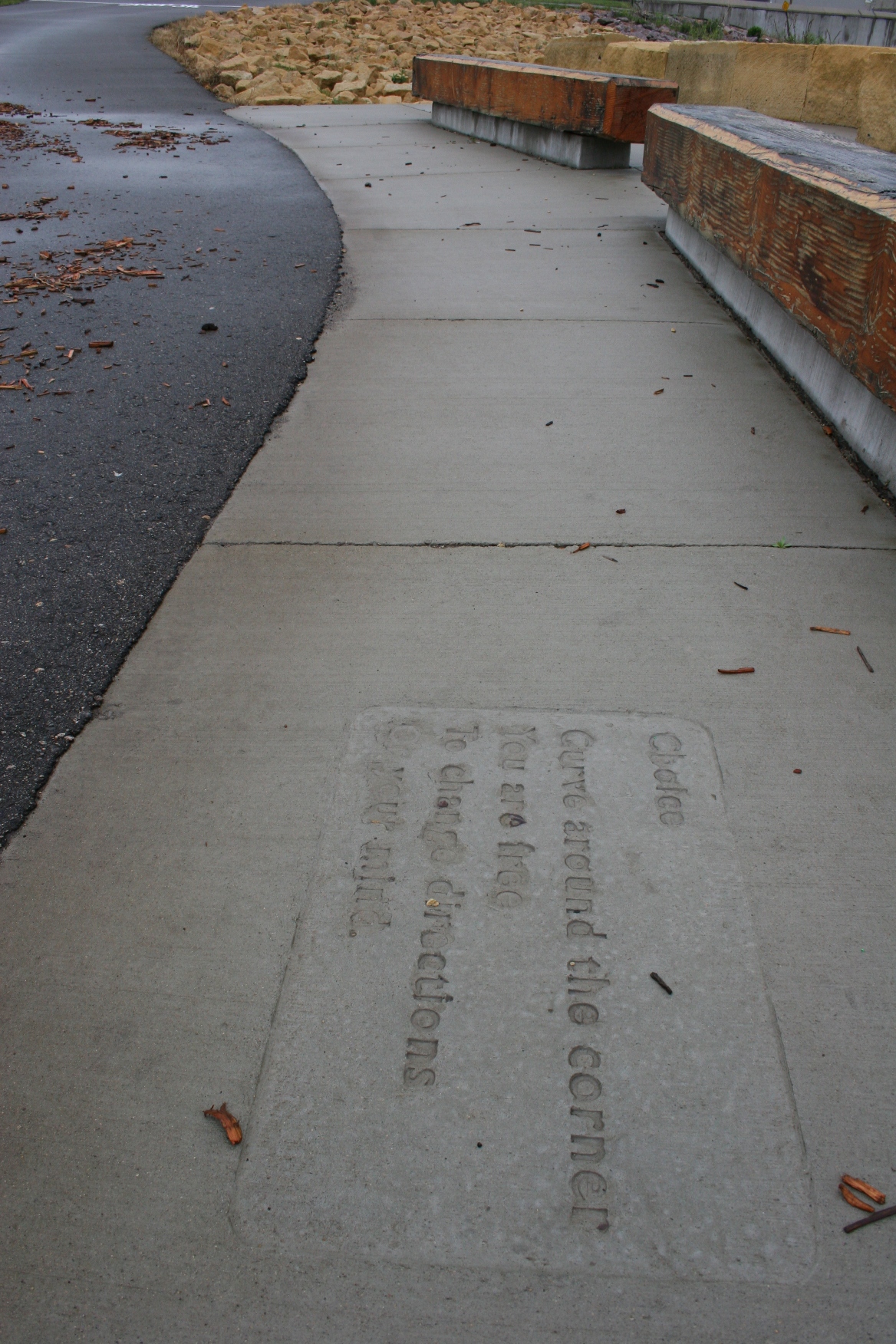
I have come here at this late afternoon hour to read the poetry imprinted upon cement. Occasionally the sky spits rain at me as I follow the gray sidewalk which mimics the gray day.

"Curve around the corner/You are free/To change directions/Or your mind," reads this poem by Marlys Neufeld of Hanska.

I read:

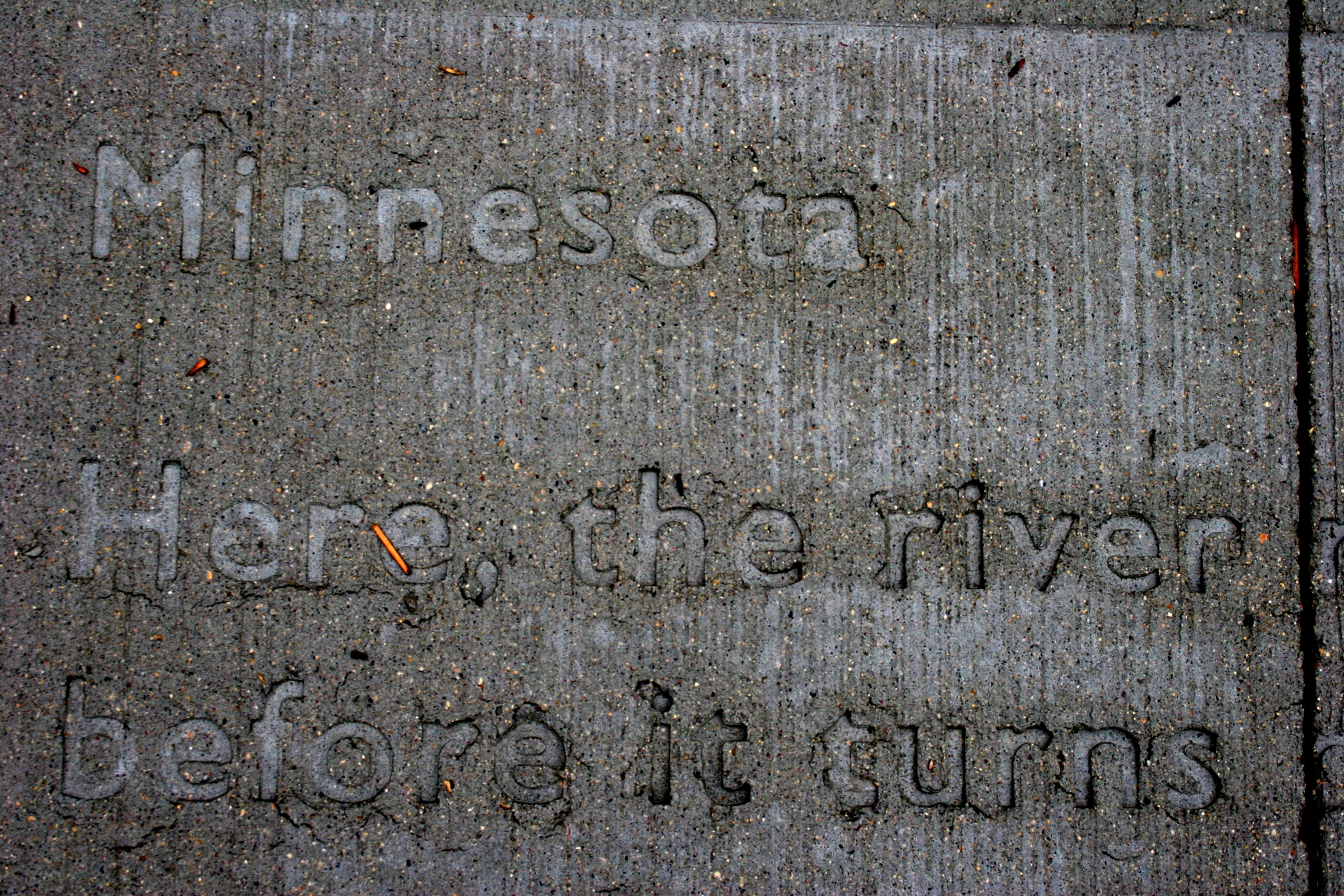
Minnesota

Here, the river rests its elbow

before it turns north to meet

the father of them all.

Here we made 38 mistakes

we now try very hard

not to forget.

A snippet of the poem, "Minnesota." I've edited this image so that you can better read the words. The poems are, unfortunately, a bit difficult to read because of a lack of color contrast between the letters and the cement.

The poem by Ikars Sarma of Mankato refers to the hanging of 38 Dakota here on December 26, 1862. A heavy thought to match the heaviness of the sky, the raging of the river, the anger that still simmers over this shameful moment in this city’s history.

I move on.

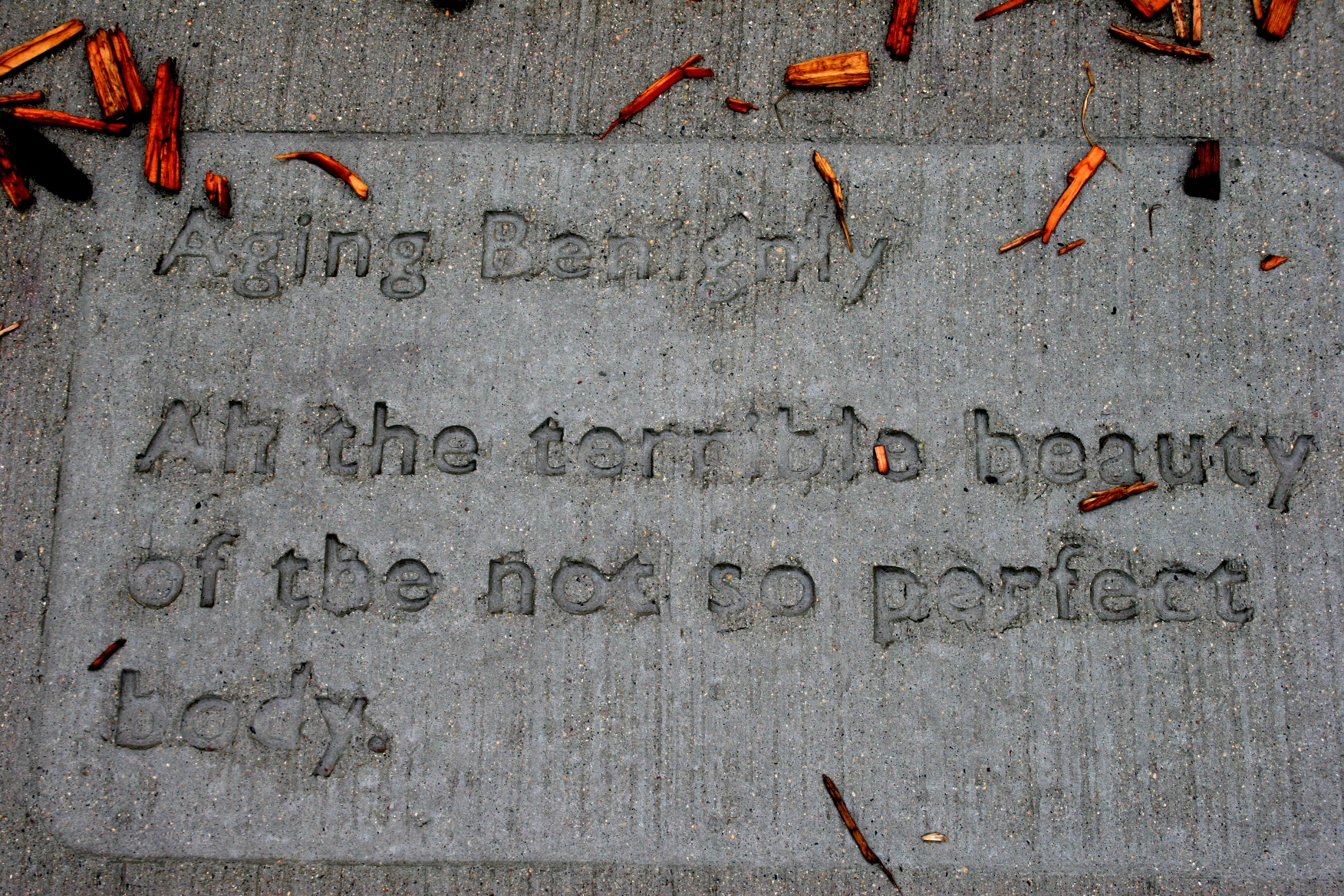
Susan Stevens Chambers of Good Thunder writes:

Aging Benignly

Ah the terrible beauty

of the not so perfect

body.

In this edited photo, read Susan Stevens Chambers' poem about aging.

Nearby kids scramble up a rock wall as I struggle to lift my aging bones from the sidewalk where I have bent close to read and photograph Chambers’ poem.

Then I laugh at the words penned by Mankato resident Yvonne Cariveau:

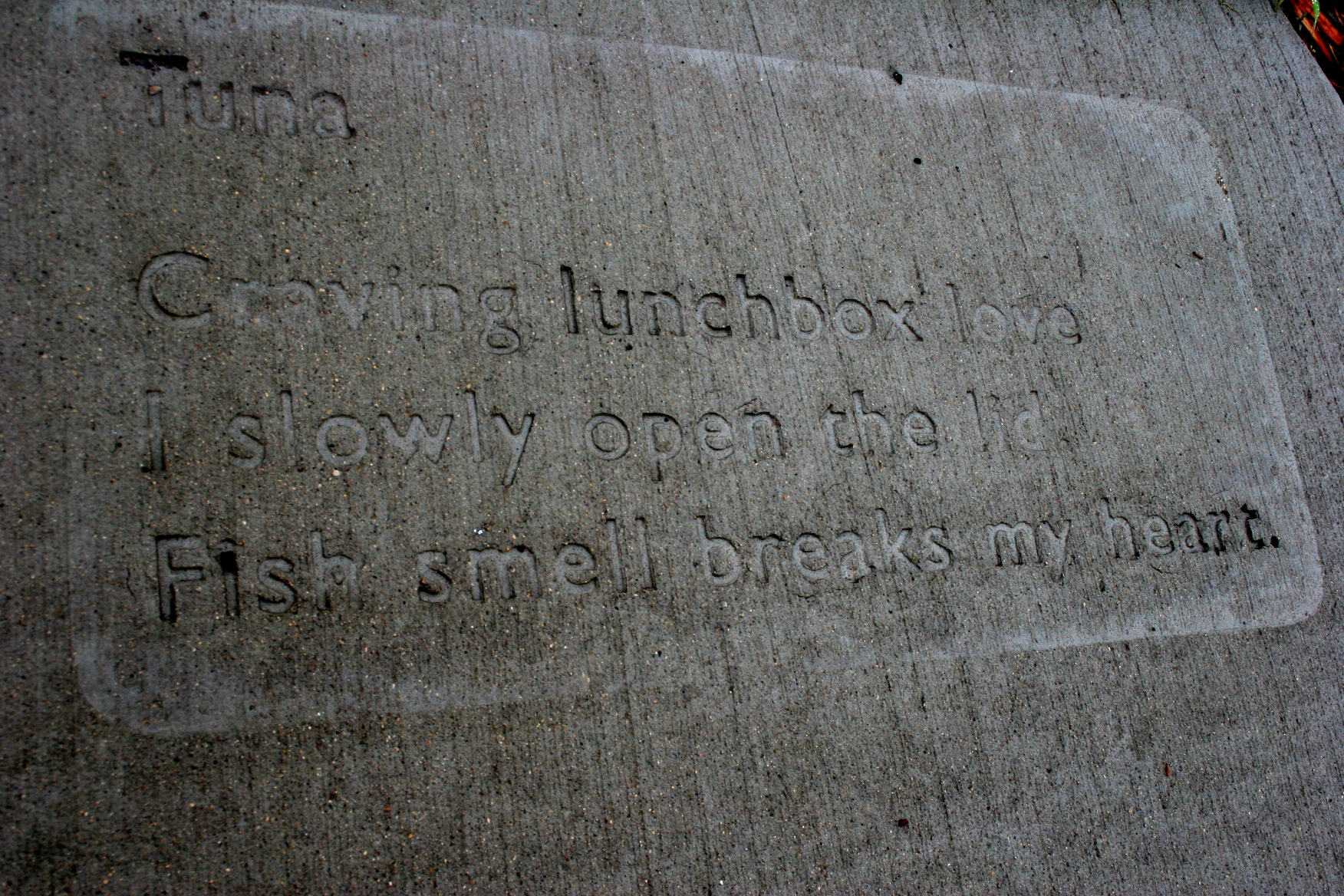
Tuna

Craving lunchbox love

I slowly open the lid.

Fish smell breaks my heart.

The poem that causes me to remember all the tuna I ate during my last two years of college.

Exactly. I ate too much tuna in this college town between 1976 and 1978. I could write my own poem about cramming tuna sandwiches while cranking out stories at the Mankato State University (I still can’t call it Minnesota State University, Mankato) student newspaper, The Reporter.

Deadlines and words.

Words and deadlines.

Tuna. Words. Deadlines.

Cariveau’s writing reminds me of those years so long ago when I was young and only beginning my journey into the poetry of life.

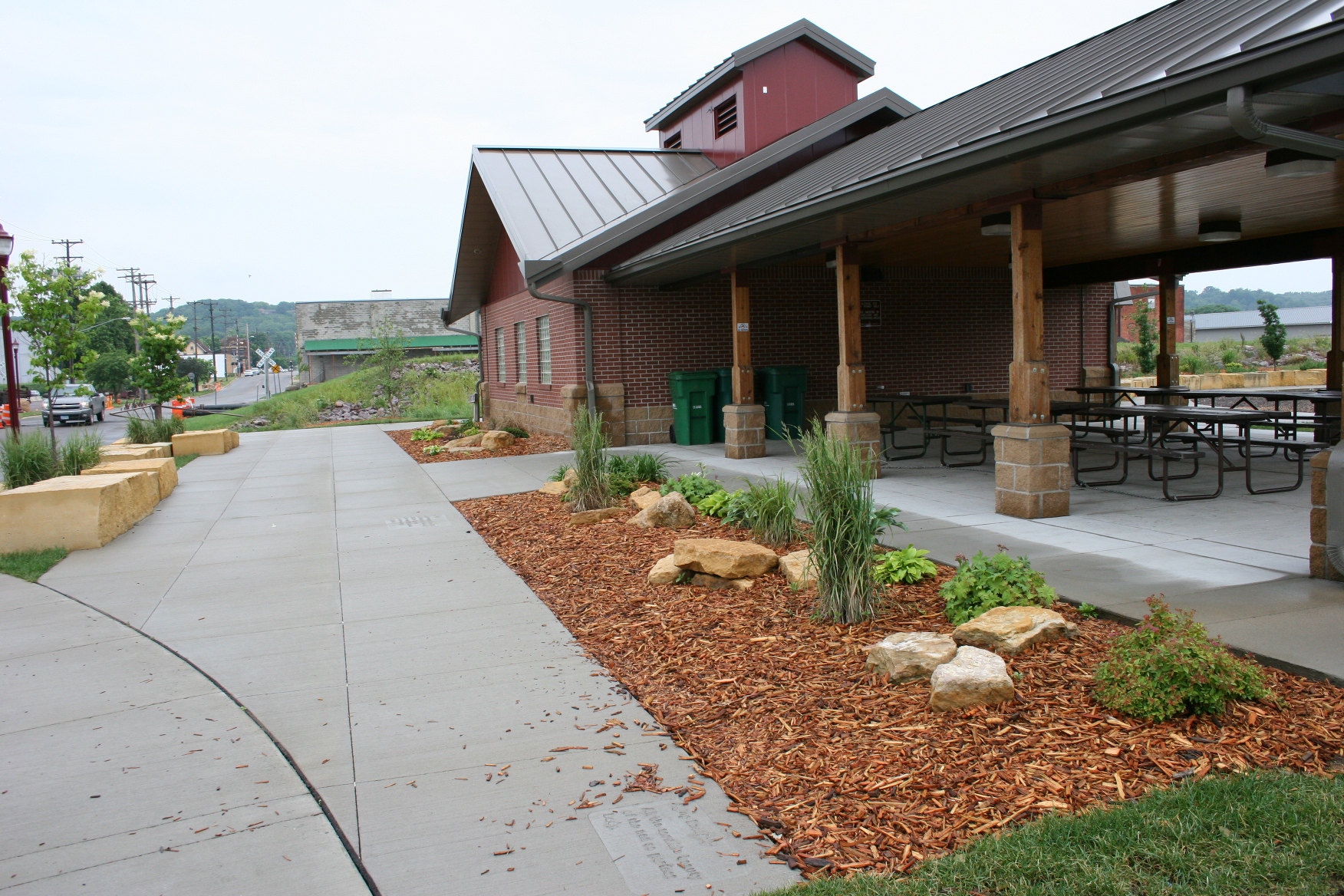
WordWalk poems are imprinted on the sidewalk circling this restroom/shelter facility at Riverfront Park in Mankato.

FOR MORE INFORMATION about Mankato’s public sidewalk poetry, WordWalk, click here and here. At least two other Minnesota cities, of which I am aware, have sidewalk poetry: St. Paul and now Northfield.

WHAT’S YOUR OPINION on sidewalk poetry? Do you like it, or not? Would you like to see more such public poetry in Minnesota communities? Why or why not?

© Copyright 2011 Audrey Kletscher Helbling
 

Mankato brings art to the sidewalks with walking sculpture tour June 21, 2011

Martin Eichinger of Portland, Oregon, created this graceful "Bird in the Hand" bronze sculpture valued at $14,500 and posed near the City Center.

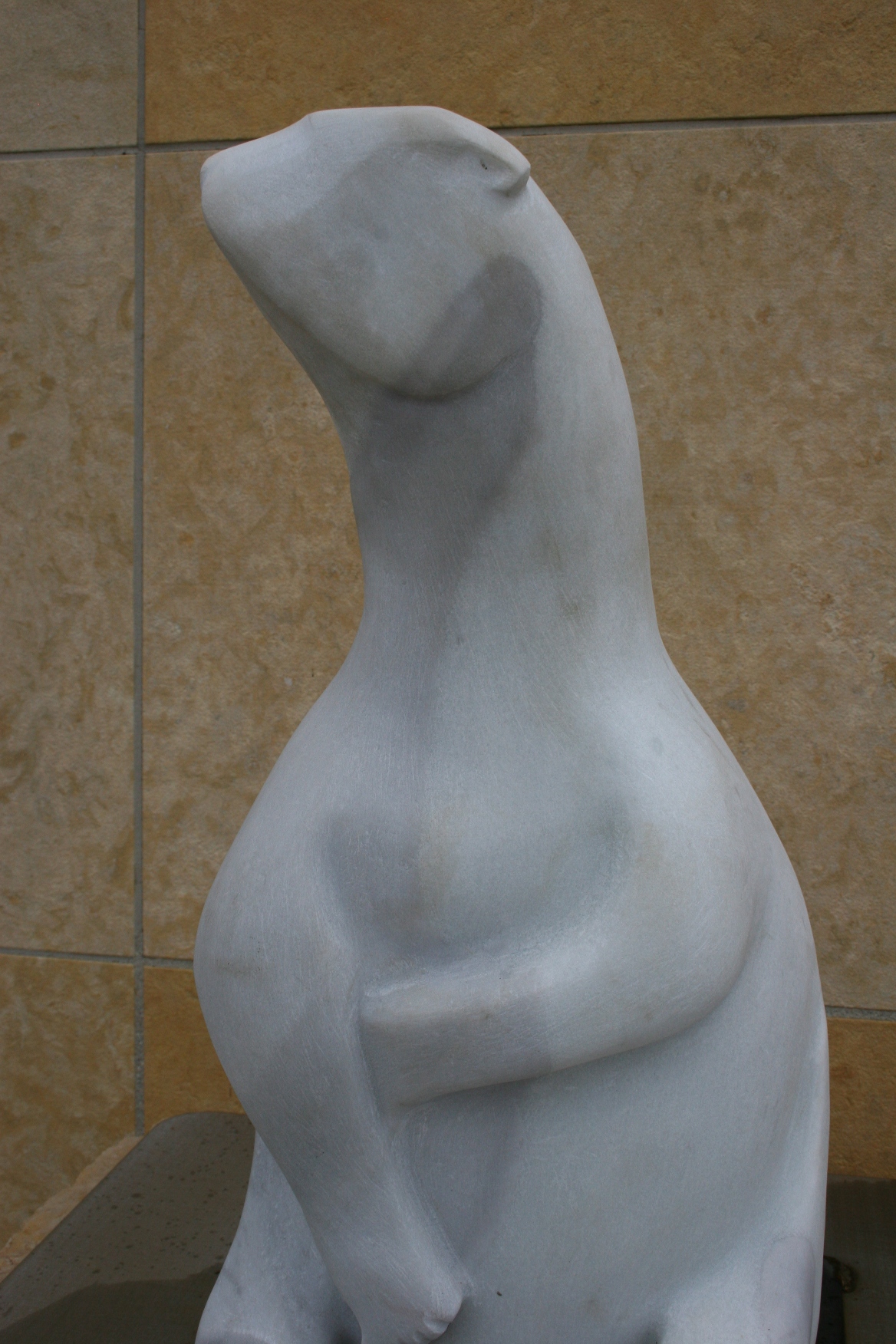
You'll find "Play Thing" by Ryszard, Denver, Colorado, and sculpted from Colorado marble, in North Mankato.

MAYBE IT’S BECAUSE I grew up without much art—no paintings, no piano, no library—that I so appreciate the visual, performing and literary arts.

I still can’t paint a painting or read a musical note. But I value those two art forms and words, which have always been a part of me, who I am.

Several years ago I walked the Bemidji Sculpture Walk and I quickly became enamored with the idea of placing sculptures in a community and then swapping them out a year later for new sculptures. The touring sculptures scattered primarily through-out Bemidji’s downtown impressed me as an ingenious way to get art before the general public.

Now I needn’t drive hours and hours and hours to view such public art. In 45 minutes I can reach downtown Mankato and view the 25 sculptures positioned there and in North Mankato as part of the City Art Walking Sculpture Tour. For free.

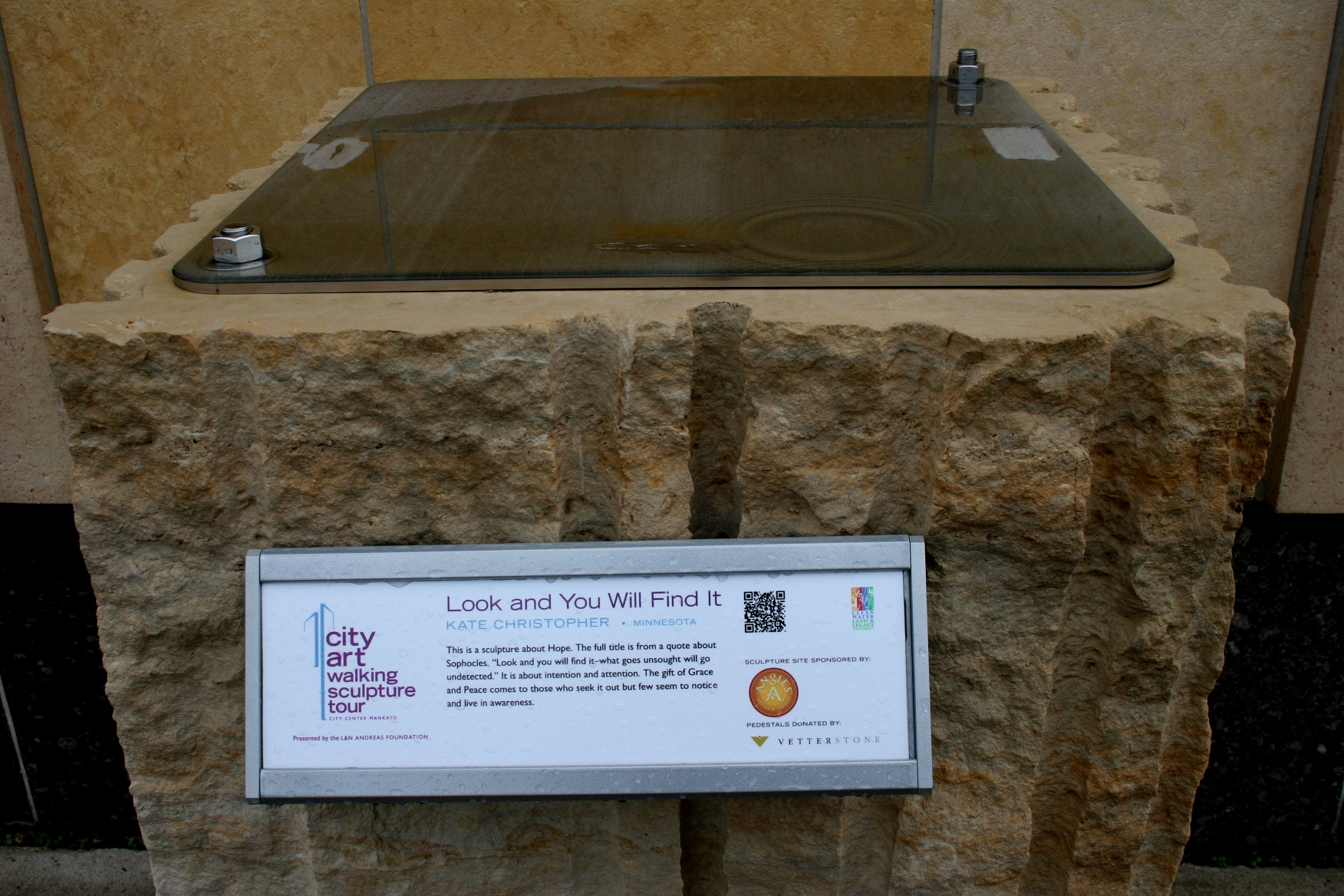
On Saturday, while in Mankato for a graduation reception, my husband and I made it a point of afterward checking out those sculptures. We missed seeing only a few of the art pieces, including one along Belgrade Avenue that was vandalized and, ironically, titled “Look and You Will Find.” We found only an empty block of Minnesota limestone, donated by Vetter Stone, where the sculpture once stood.

Mahtomedi artist Kate Christopher's $6,900 bronze sculpture, "Look and You Will Find It," was vandalized. The art piece symbolized HOPE.

I expected to find a bustling downtown Mankato. Obviously I have not been downtown for many years. Nearly all of the shopping has moved to the fringes of the city, into the malls and big box stores, and the downtown houses primarily office buildings, restaurants, bars, a hotel and the Verizon Wireless Center. Honestly, except for the sporadic motor traffic on Second Street and a few pedestrians, the place was basically deserted around mid-afternoon. Granted, the weather was less than ideal with on-again-off-again rain. We could park almost anywhere we wanted and walk to the sculptures within a several-block area.

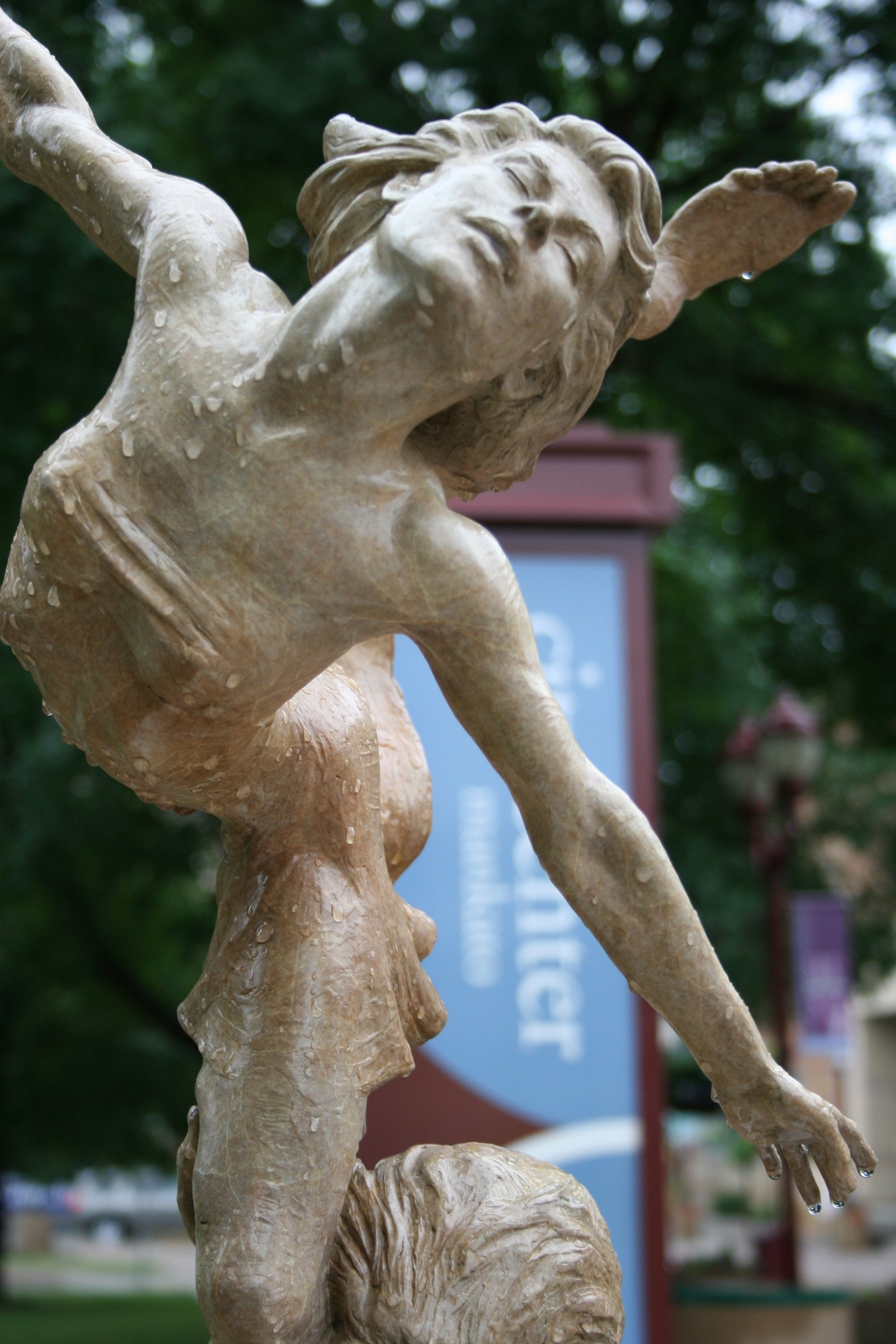
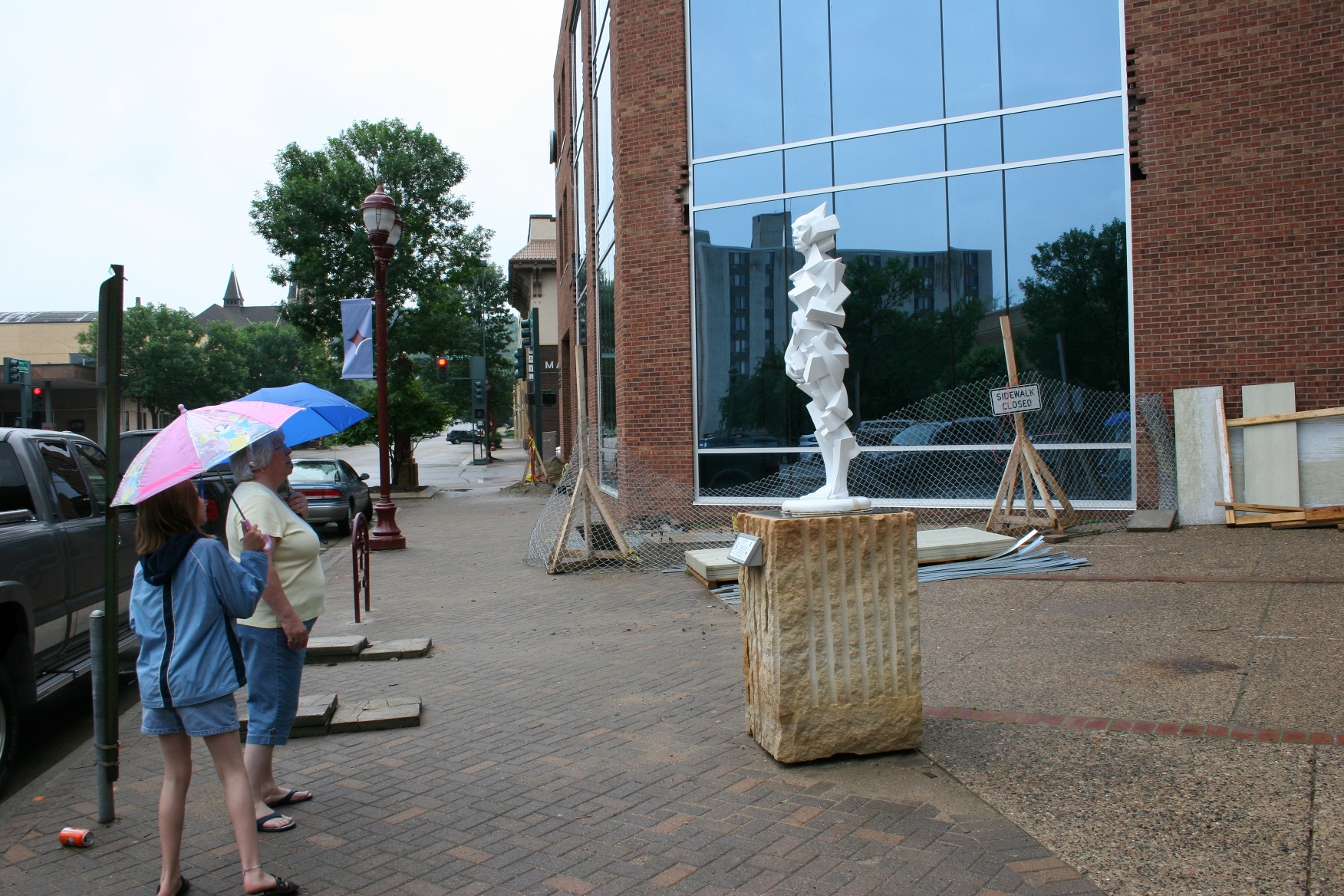
We spotted only two other individuals walking around viewing the sculptures. Dana Parlier of Brooklyn, New York, created this resin sculpture, "Cubist Woman." The man-made concrete canyons of New York City inspired this contemporary art, which seems to match the modern look of the building.

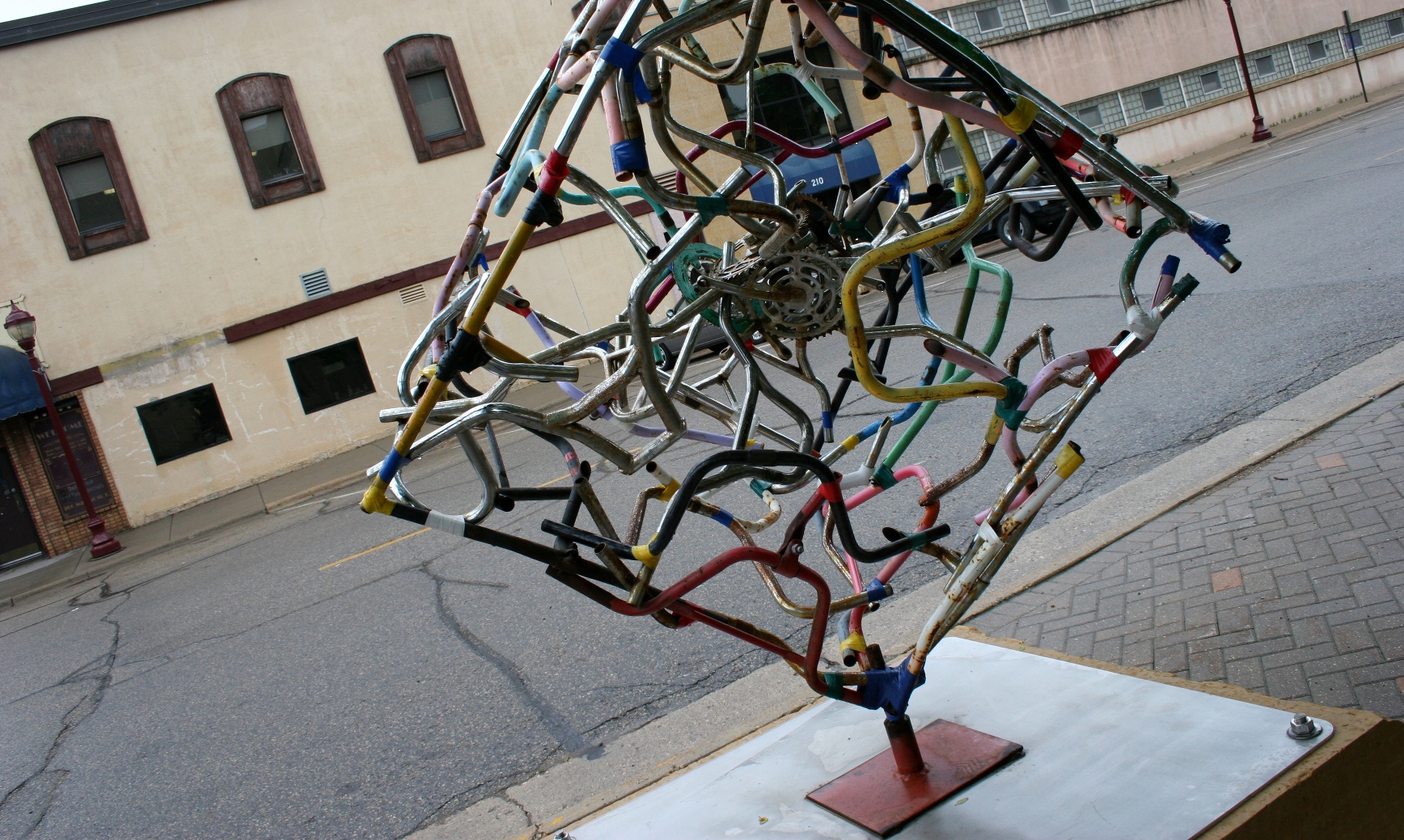
The art pieces certainly present a reason to visit downtown Mankato and then cross the Minnesota River to North Mankato to view several more sculptures. I’m not going to tell you I liked every sculpture, because I didn’t. But that’s OK; no one expects that. Sometimes first impressions change though. When I spotted “Twenty Seven (China)” from across the street, I honestly thought it looked like a mess of twisted junk. But up close, the steel sculpture of recycled bicycle parts—mostly handle bars—grew on me. Joe Forrest Sacke’s $3,500 conglomeration seemed modernish and hippyish and vintageish jumbled into one. Art will surprise you that way.

Joe Forrest Sacke's "Twenty Seven (China)."

You can vote for your favorite, for The People’s Choice Award. We didn’t, although I narrowed my favorites down to three. Voting booths are strategically located through-out the Walk area.

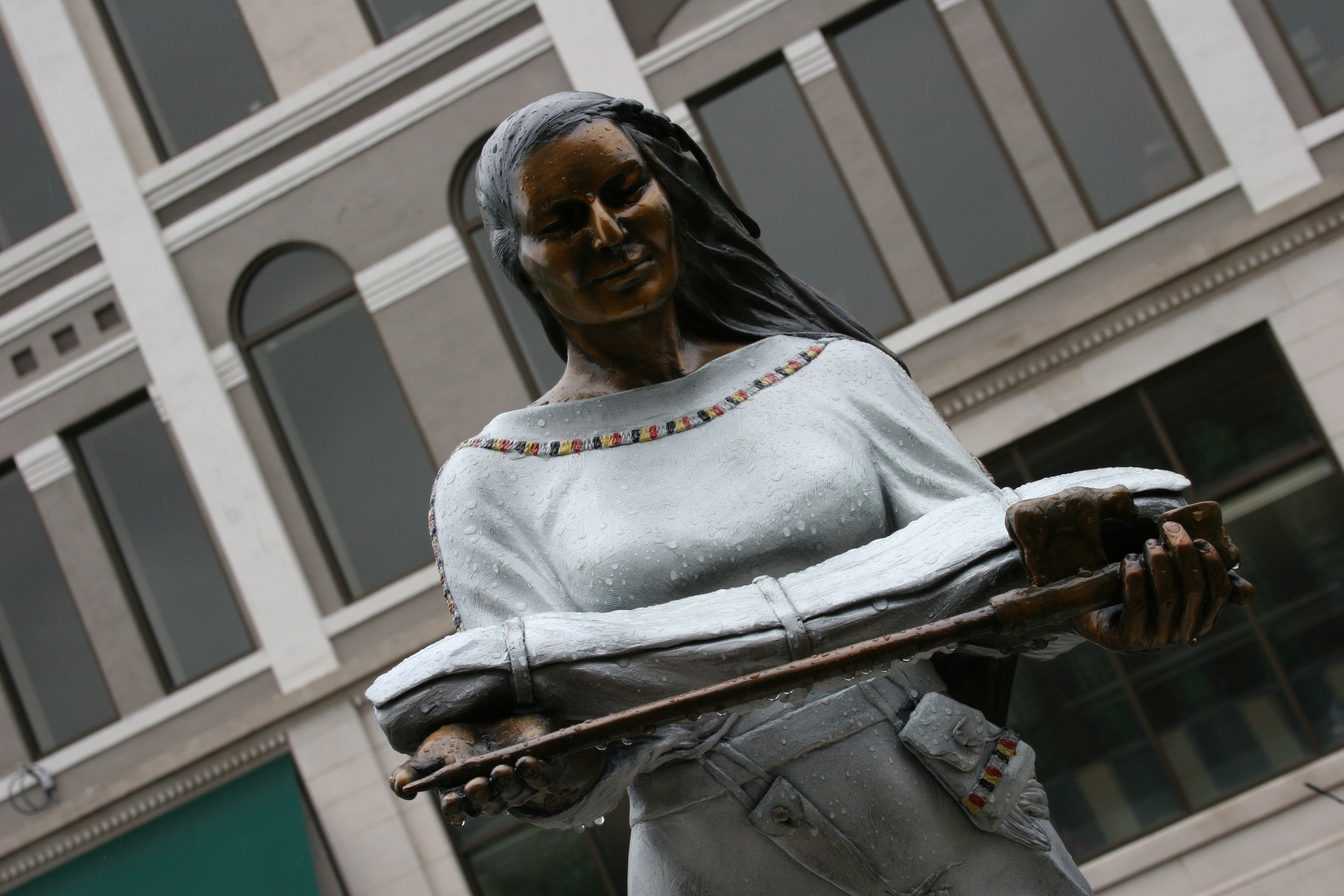
One of my three favorite sculptures, "White Buffalo Calf Woman," a bronze piece created by Aberdeen, South Dakota, artists Lee Leuning and Sherri Treeby. Notice how the dominant color in the sculpture blends with the building's color. Wait until you see the building on the other side of this Native American woman. You will be wowed. I'll share those images with you in another post.

This bronze piece, "The Farmer's Wife," by Dee Clements of Loveland, Colorado, is also among my three favorite sculptures. A photo Clements took in a Korean village inspired this art creation.

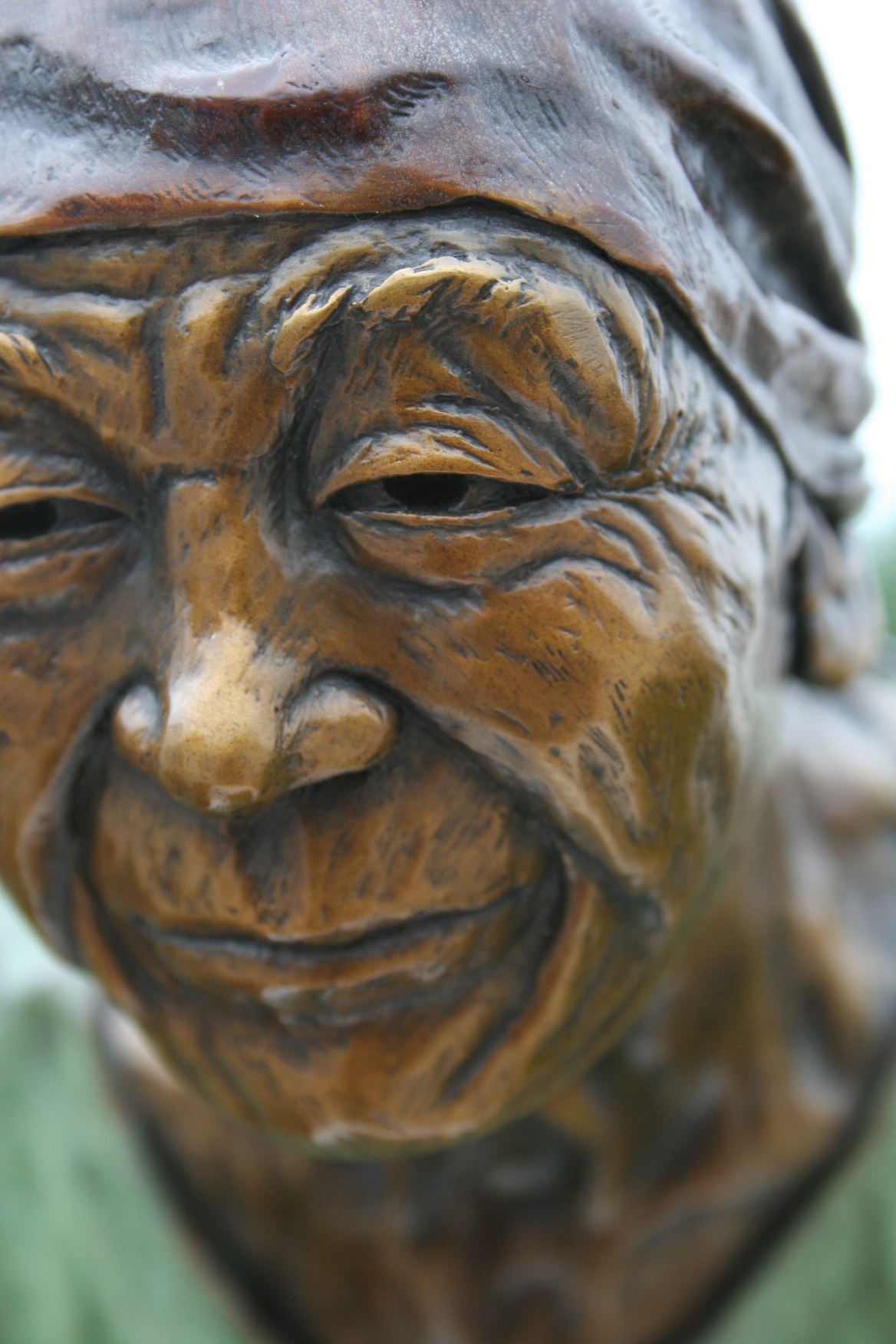
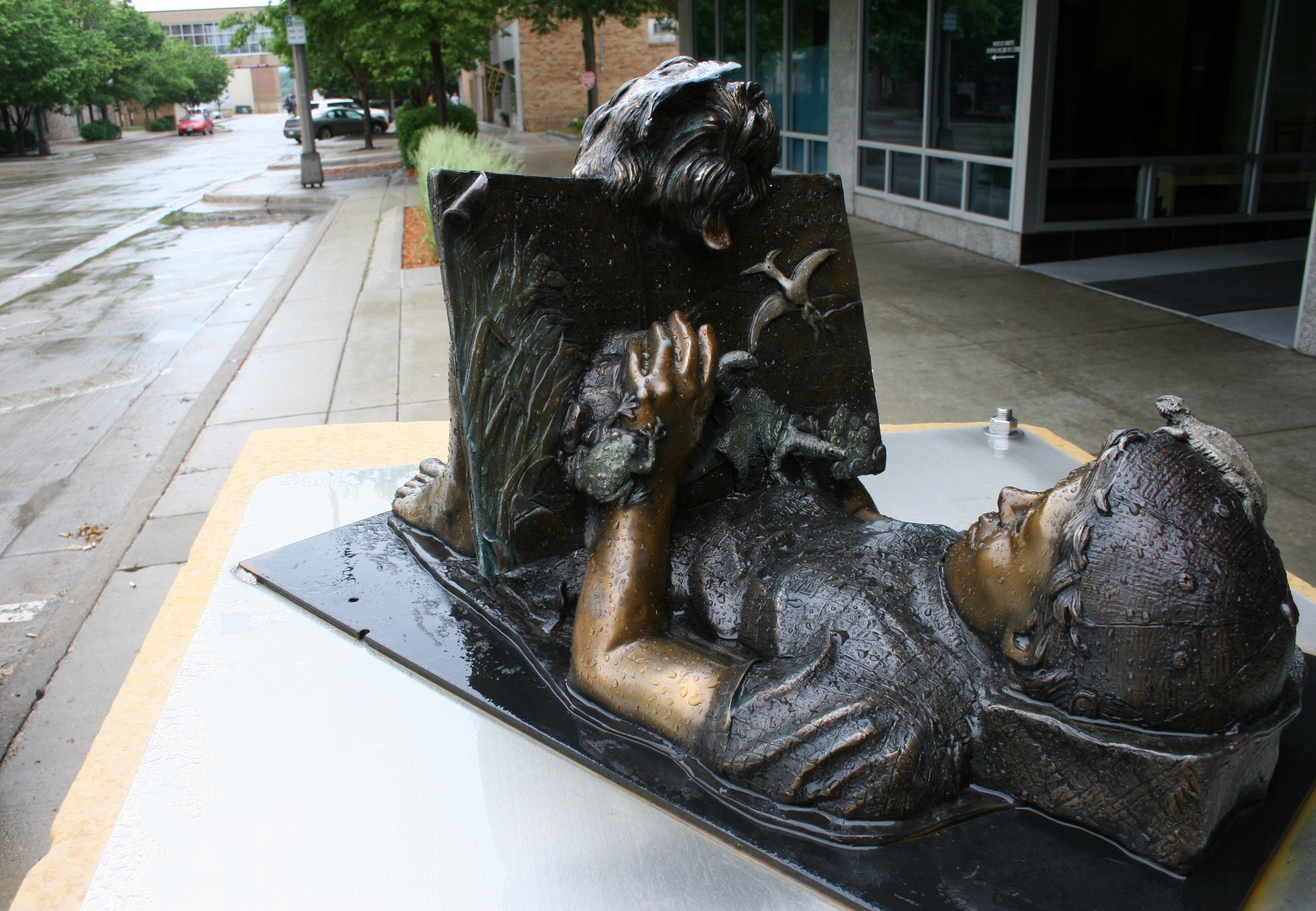
The detail in this bronze, "Reading Magic," by Julie Jones of Fort Collins, Colorado, appeals to me and makes it one of my top favorites among the 25 sculptures in the exhibit.

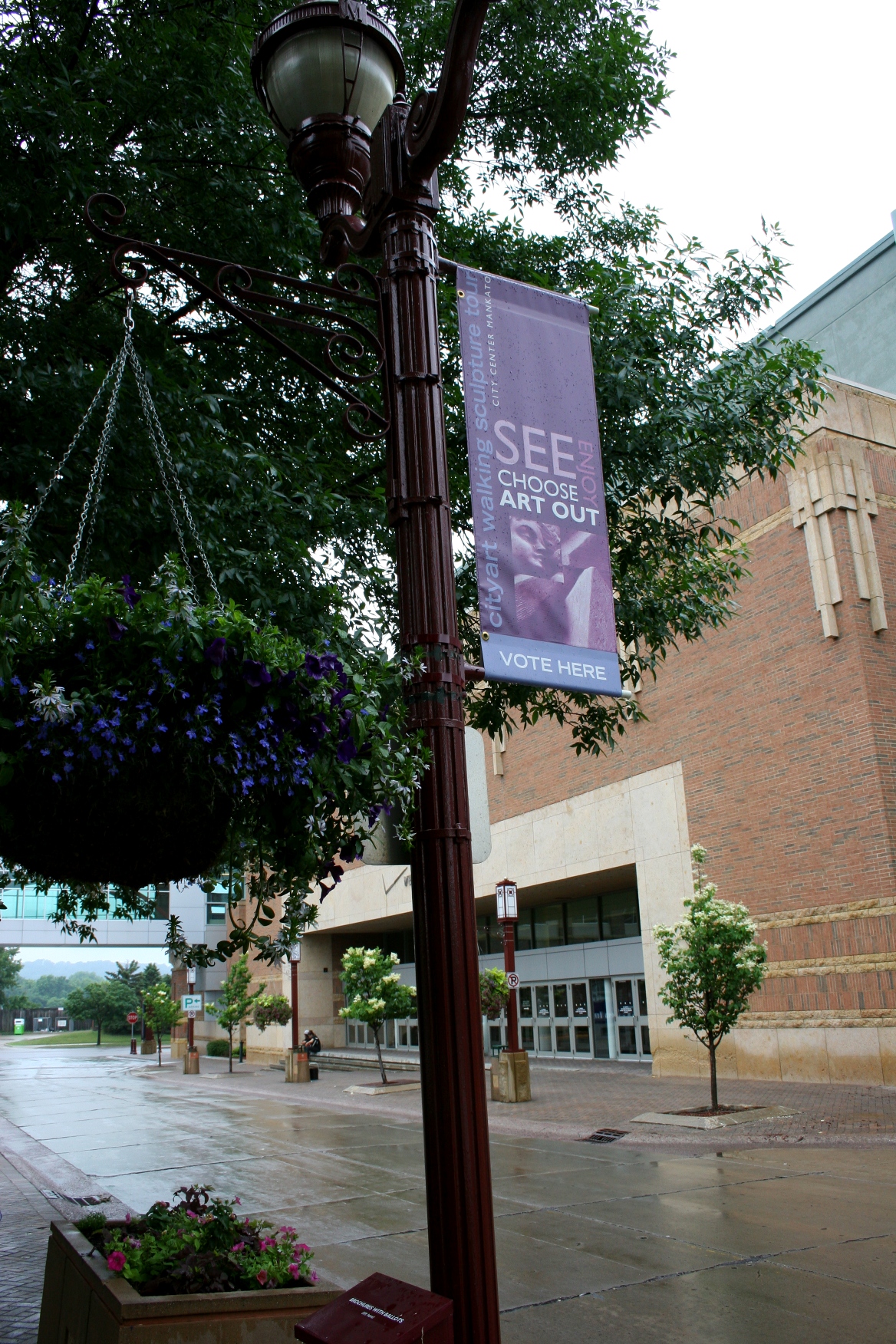
Banners draw visitors to the sculptures and to voting spots in downtown Mankato.

I also noticed, and I don’t know whether this was on purpose, but the sculptures often seemed to jive, architecturally and environmentally, with the buildings they were situated near.

Mankato is committed for the next five years to bringing these rotating sculptures into the community via a partnership with the Sioux Falls-based SculptureWalk program. Of course, this all costs money and with the help of a grant, business sponsorships, donations and more, Mankato has managed to bring this art directly to the people.

It’s a grand idea. I expect to return to Mankato to see next year’s art and perhaps other area attractions. Even though I attended college here for four years, I really didn’t appreciate the city. And so much has changed since 1978.

For someone like me, who doesn’t venture into Minneapolis to engage in the art scene there, mostly because I don’t like the congestion and busyness of the metro, outstate art opportunities like City Art in Mankato offer me culture at a quieter, more enjoyable (at least for me) pace.

#

SINCE I CAN’T POSSIBLY show you all of my photos in one post, I’ll bring you more images in future stories.

© Copyright 2011 Audrey Kletscher Helbling