Minnesota Prairie Roots

Writing and photography by Audrey Kletscher Helbling

A mother’s reflections on her daughter’s birthday November 16, 2013

Filed under: Uncategorized — Audrey Kletscher Helbling @ 6:00 AM
Tags: , , , , , ,

EVEN AS A BABY, she was fiercely her own person.

Miranda didn’t snuggle. She cried way too much. In those early months, it was sometimes tough being her mother, dealing with a colicky infant while also nurturing my first-born, only 21 months older.

But that all seems so long ago now that my second daughter is turning 26 today.

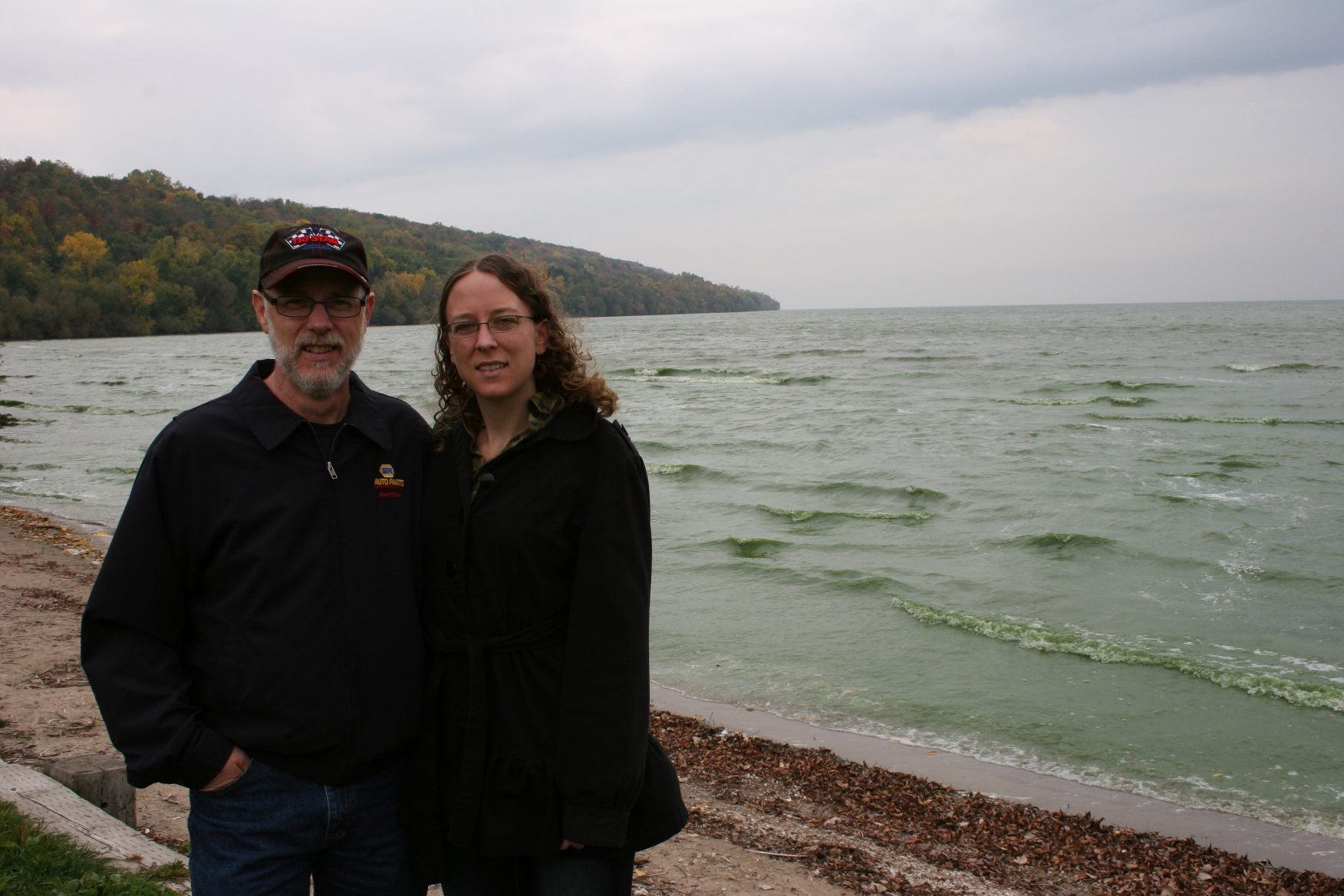
Miranda and her dad, along the shore of Lake Winnebago near Appleton, when we last visited in October.

Miranda and her dad, along the shore of Lake Winnebago near Appleton in High Cliff State Park, when we last visited her in October.

Where have the years gone? I have asked myself that often this past year—the year in which my eldest daughter married, my 19-year-old son moved to Boston to attend college and my middle child, Miranda, is now edging away from 25. In many ways, it’s been a tough year for me as I adjust to life as an empty nester.

But then I consider my three and I can only be happy for them, proud of the independent adults they’ve become, seemingly content in their lives.

Take Miranda, the birthday girl. She’s lived and worked for the past three years as a Spanish medical interpreter in Appleton, Wisconsin, 300 miles from Faribault. She possesses a deep passion for her work and the people she serves. And there is nothing more noble in a job than to love what you do and to serve others.

Although I’m not privy to details due to patient confidentiality, I know Miranda has dealt with some difficult situations, interpreting for patients in hospital emergency rooms, physicians’ offices and elsewhere. It takes a special type of person to remain calm and professional and compassionate in the face of emotional stress and/or trauma. My daughter is all of those.

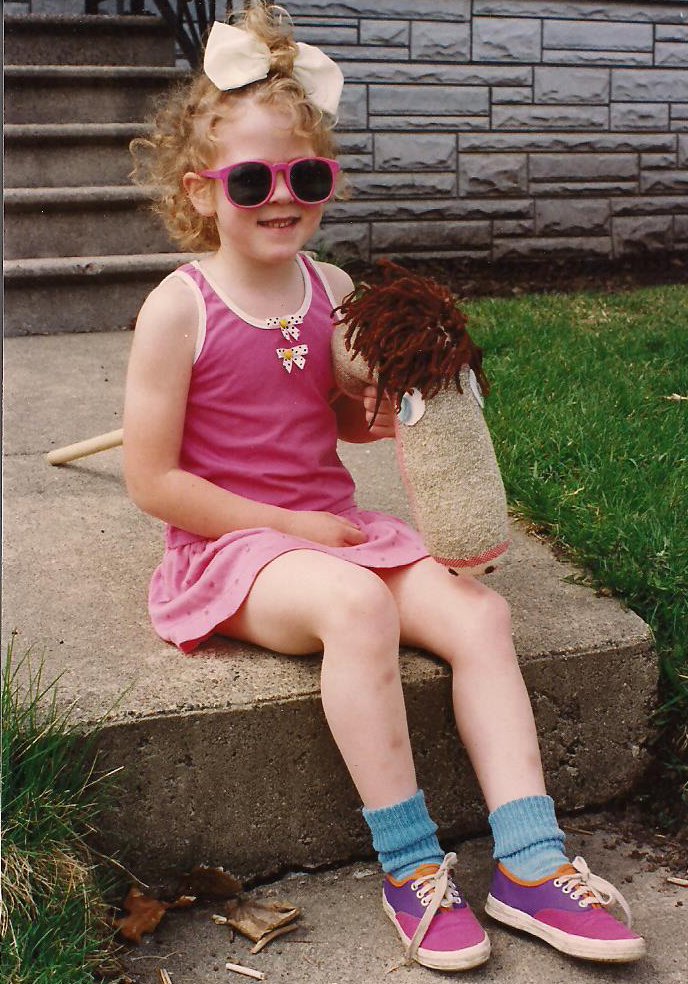
As a little girl, Miranda was all girly girl, wearing only skirts and donning ribbons in her hair. She also loved horses, including her stick horse, shown here in a photo taken when she was 5 1/2.

As a little girl, Miranda was all girly girl, wearing only skirts and donning ribbons in her hair. She also loved horses, including her stick horse, shown here in a photo taken when she was 5 1/2.

I wonder, sometimes, if that core strength and heartfelt empathy come from her own experiences. At age four, she underwent hernia surgery. Even now I can visualize my darling curly haired girl walking down the hospital hallway to the operating room, Big Bird clutched in one hand, the other hand held by a nurse. My preschooler never cried. I did.

And then, years later, she was diagnosed with scoliosis (an abnormal curvature of the spine) and wore a full torso back brace 24/7 for a year. That time we both cried at the diagnosis. But Miranda soldiered on and never complained although I know it had to be difficult for her. Life’s challenges often make us stronger.

Miranda is undeniably strong and independent. She’s studied, interned and vacationed in Argentina. On her second trip of three to South America, she was mugged. Not assaulted, thankfully. Thousands of miles away, I felt utterly helpless. Miranda managed, with the help of friends and my assistance back home, to work through the situation.

I need only look back at the baby and preschooler she was to see the roots of her independence and strength. I remember how, as a preschooler, Miranda would tell me to “go away” when she was playing alone in the toy room, now my office. So I would turn around and walk away, only semi understanding her desire for solitude.

That, I suppose, was the beginning of the letting go. As mothers, that is our ultimate goal—to let our children go. It is not easy, but that is our job from the moment they are born. I eased Miranda onto that path of independence early on, as much for myself as for her, by sending her to bible camp every summer, supporting her decisions to go on multiple mission trips (including two to clean up after Hurricane Katrina), sucking up my own worry and enthusing about her time in Argentina, and now, even though I wish she lived nearer than 300 miles away, accepting that she’s happy where she’s at in her life.

Now, on my daughter’s 26th birthday, I reflect on this beautiful young woman her dad and I raised. Miranda is a woman of faith, caring and compassionate and kind and giving, and, bonus, a darned good cook. Whenever we visit, she treats us to delicious home-cooked ethnic food. She worked two summers in the Concordia Spanish Language Village kitchen near Bemidji, where she learned to cook. I failed her in that skill.

But I succeeded where it counts, and that is in raising my girl to cherish God, family and friends and to pursue her passions in life.

Please join me in wishing Miranda a happy 26th birthday.

Happy birthday, Tib! I love you now and forever.

© Copyright 2013 Audrey Kletscher Helbling


Reflecting on Minnesota’s rural landscape November 5, 2013

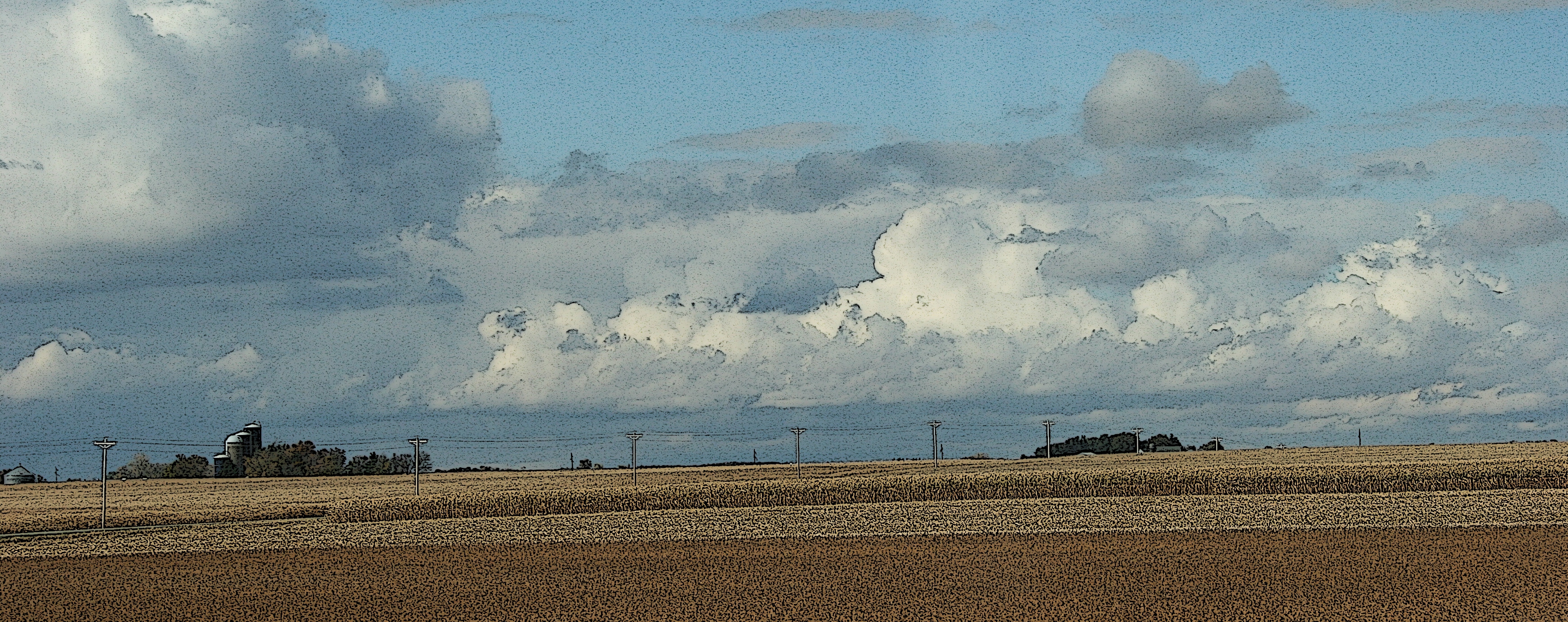
Expansive sky and land inspire the poet in me. Photographed, as are all photos here, along Minnesota State Highway 60 between Faribault and Kenyon.

Expansive sky and land inspire the poet in me.

WHAT DRAWS YOUR EYE in a rural landscape?

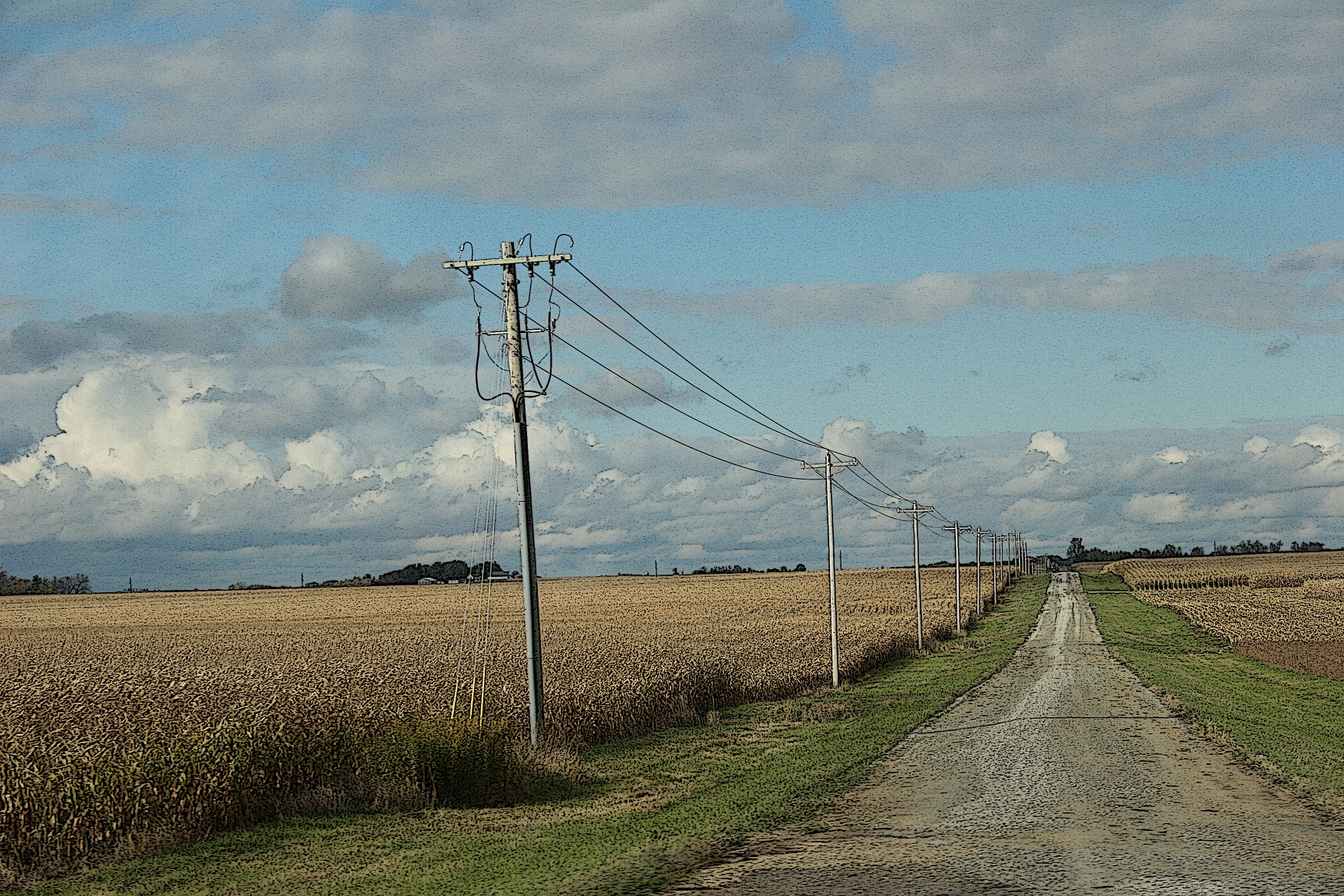
Strong lines pull me in, lead me to wonder where that gravel road would take me.

Strong lines pull me in, lead me to wonder, “Where would that rugged gravel road take me?”

Or do you even notice your environment as you travel from point A to point B?

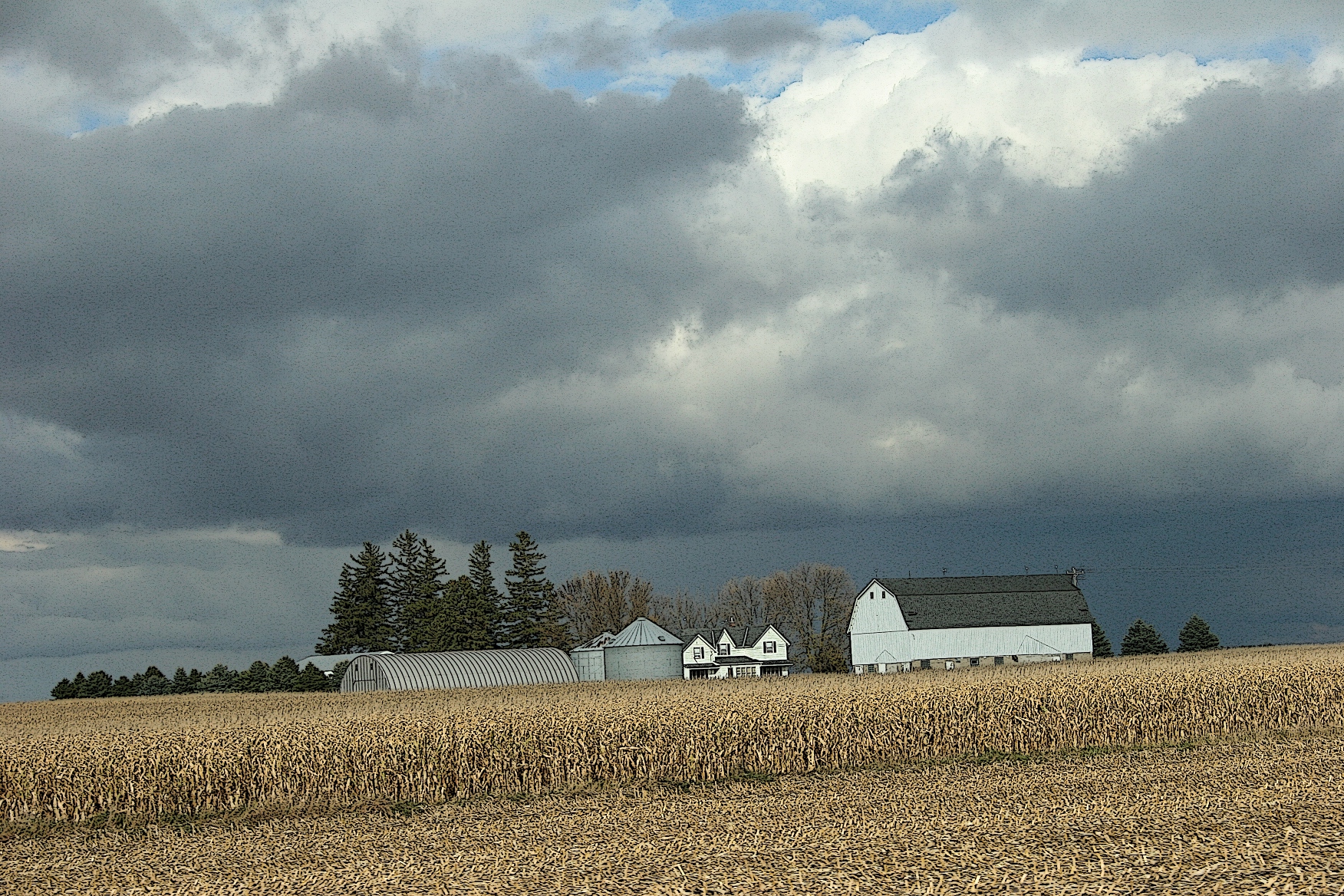
Noticing the geometry in these buildings clustered on a farm site.

I notice the geometry in these buildings, how they cluster and fit together on this farm site.

I challenge you, the next time you drive through rural Minnesota, or rural Anywhere, to truly see your surroundings. Don’t just look with glazed eyes. See. Once you see, you will appreciate.

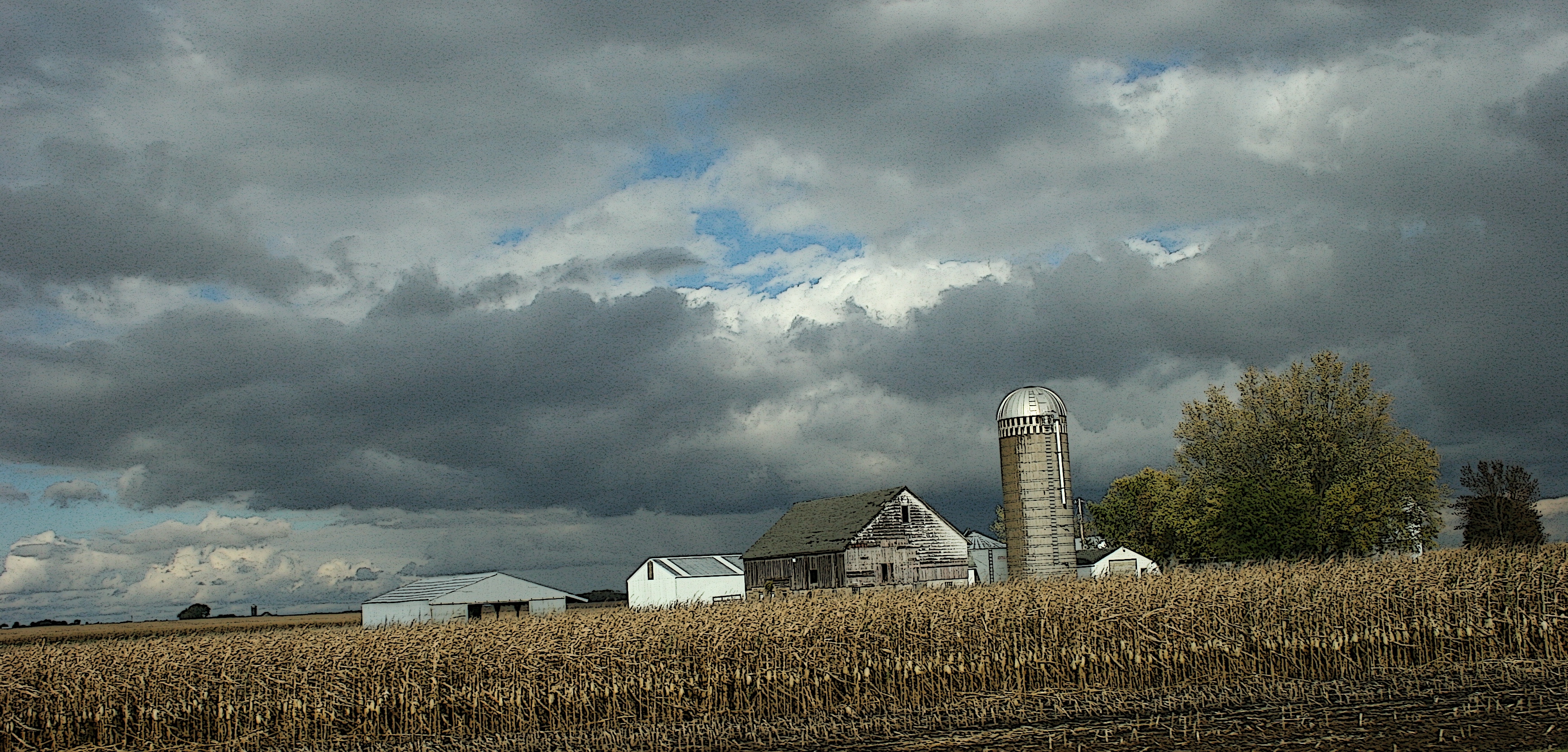
A sense of history defines this farm in that strong barn which dominates.

A sense of history defines this farm in that strong barn which dominates and in the mishmash roof lines of the farmhouse. Both cause me to reflect upon my rural upbringing, upon my forefathers who settled 150 miles from here on the southwestern Minnesota prairie.

History, point in life, memories, even your mood on a given day, will influence how you view the rural landscape, what draws your focus.

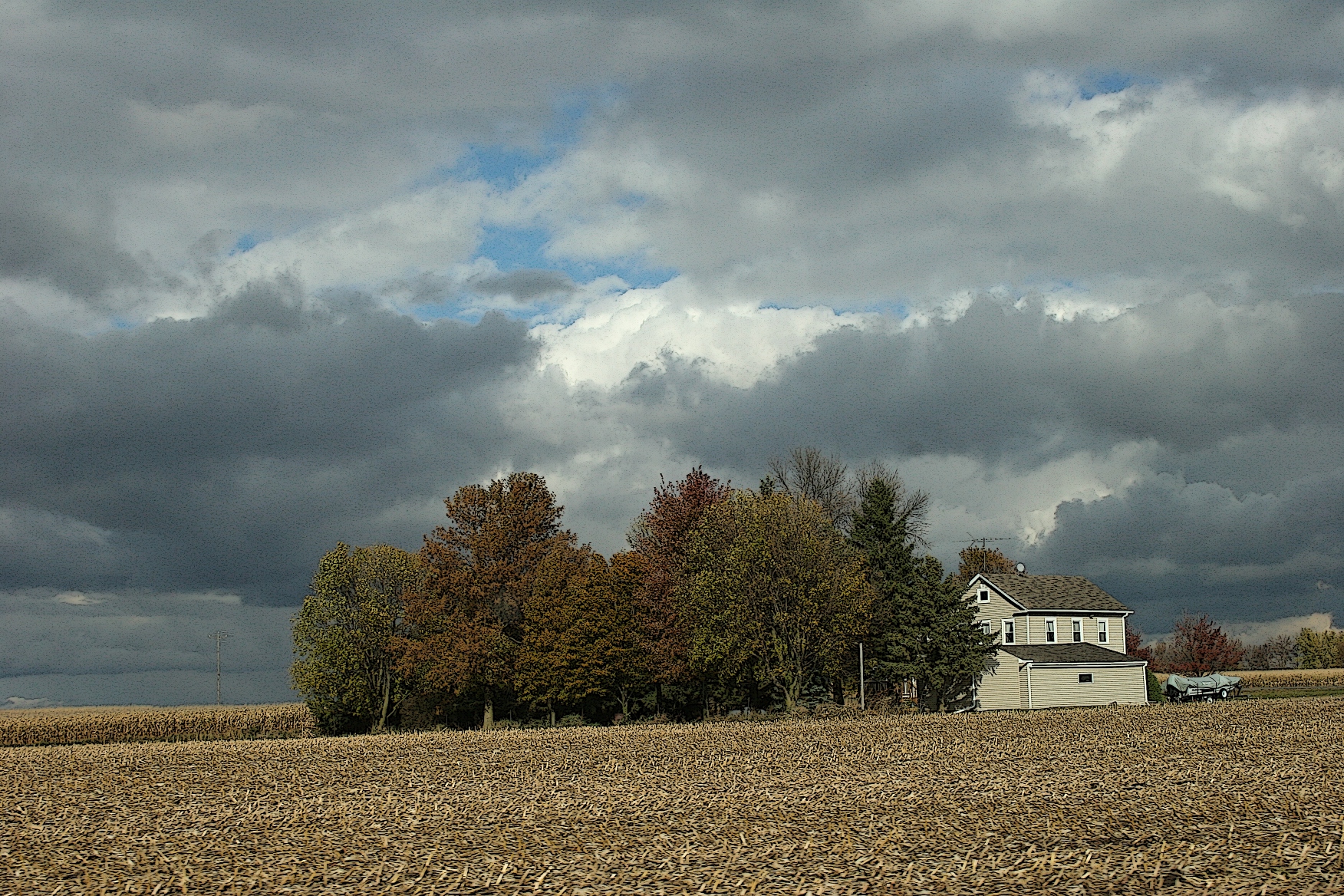
I see here trees huddled, protecting and sheltering that house from the elements. My thoughts turn introspective at this scene.

I see trees huddled, protecting and sheltering that house from the elements, from that threatening sky. My thoughts turn introspective as I consider how we are all sometimes vulnerable and huddled, drawn into ourselves.

Whether a writer or photographer, architect or historian, teacher or retiree, stay-at-home mom (or dad), a farmer or someone in between, you will lock onto a setting that inspires creativity or prompts thought or perhaps soothes your soul.

There is much to be said for noticing details, for understanding that the miles between small towns are more than space to be traveled.

FYI: These edited images were photographed nine days ago while traveling along Minnesota State Highway 60 between Faribault and Kenyon. In just that short time, the landscape has evolved with crops harvested, trees stripped of their leaves by strong winds and now, today, snow in the forecast.

© Copyright 2013 Audrey Kletscher Helbling


Remembering my mother-in-law, Betty October 18, 2013

Filed under: Uncategorized — Audrey Kletscher Helbling @ 6:00 AM
Tags: , , , , , , , ,
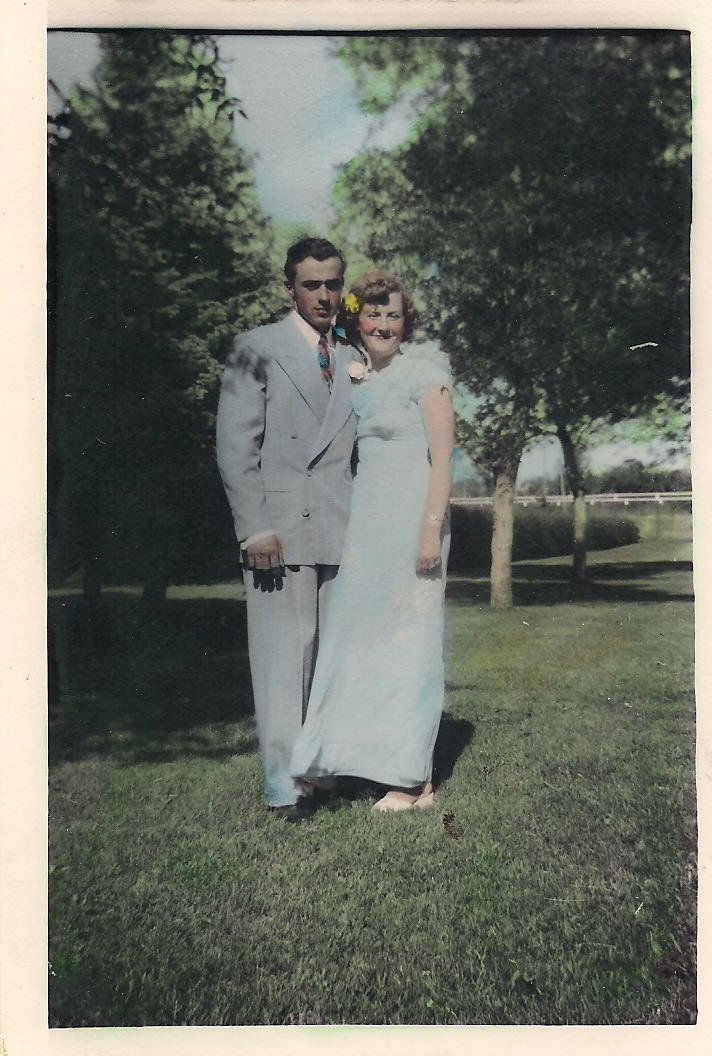
Tom and Betty

Tom and Betty in a vintage photo, date unknown.

YOU THINK YOU WILL ALWAYS REMEMBER.

But then the years, the decades, slip by and the memories begin to fade.

You can’t picture their smile, hear their voice, recall their mannerisms.

Twenty years ago on October 16, my mother-in-law, Betty Helbling, died after suffering a heart attack the previous evening. She was just weeks shy of turning sixty.

I still remember that phone call around 9 p.m. on a Friday. Not every detail. Not even who phoned with the devastating news that my husband’s mother was in the hospital. Alive. But not alert.

I remember the request that we drive northwest to Little Falls several hours away. But the hour was late, the fog as thick as the proverbial pea soup making travel impossible for my husband and me and our two daughters, ages seven and five.

To add to the concern, I was five months pregnant with our youngest, the baby Grandma Helbling hoped was a boy after a long string of granddaughters. I knew, for my unborn child’s sake, that I needed to remain as emotionally unstressed as possible, which was impossible given the situation.

It was a mostly sleepless night of tossing and turning, of prayer and worry. By morning we were making phone calls—me to my mother, another to a dear friend and my husband to the local Red Cross to get his brothers and a sister-in-law home from their respective military bases, one as far away as Germany.

We packed and left Faribault. By then, before our arrival, Betty had already passed.

Those next days on the family farm were a blur of grief and of condolences, phone calls and visits, food and family hugs. The wake and funeral and burial. I remember seeing my husband cry, for the first and only time. Ever.

Today, two decades later, I am thinking of my mother-in-law, of the woman who never saw the grandson I birthed in early February 1994. She would have loved my son, knitted him a baby blanket or a blue sweater or something equally adorable like she had for Caleb’s sisters. It saddens me to think that Betty never saw the grandson she so badly wanted to carry on the Helbling family name. It saddens me that my now 19-year-old never knew his paternal grandmother.

But I still have the memories, one occurring only weeks before her death, when we all gathered on the farm to celebrate the 40th wedding anniversary of my in-laws. I arose in the middle of the night to pee, descending the stairs to the first floor bathroom in the dark of a country night. I’d just settled onto the toilet when movement, that of a mouse, caught my eye. I hate mice, just hate them. And there I was, pregnant and stuck in a small bathroom with a mouse circling my feet. I could see no way out.

I calmed myself down between shrieks of fear, which I tried to hold in, not wanting to awaken the entire household. But apparently I was loud enough to rouse my mother-in-law. She simply thought I was in the bathroom with a sick child and did not investigate.

Eventually, after climbing onto the bathtub, I grabbed a pile of wet bath towels from the floor, tossed them onto the menacing mouse and fled up the stairs to my still sleeping husband.

That is the last memory I associate with my mother-in-law.

Tom and Betty. This may be from their 40th anniversary party, although I am not sure.

Tom and Betty. This may be from their 40th anniversary party, although I am not sure.

But there are other memories—that of a competitive Scrabble player who could beat me, the master of words. I loved the challenge of playing Scrabble with Betty, even if she usually won.

Cooking wasn’t her strength, but she made the best darned chicken and caramel rolls.

Once my husband, brother-in-law Neil and I rummaged through Betty’s cupboards while she was gone, seeking to spice up her bland hotdish baking in the oven. When a sister-in-law later praised the tastiness of the dish, we three could barely contain our laughter as Betty attributed the flavor to a dash of Mrs. Dash seasoning.

Four generations: Great Grandma Katherine Simon holding my daughter, Amber, with my mother-in-law behind them beside my husband, Randy. Photo taken in July 1986 at a family picnic, Pierz, Minnesota.

Four generations: Great Grandma Katherine Simon holding my daughter, Amber, with my mother-in-law, Betty, behind them beside my husband, Randy. Photo taken in July 1986 at a family picnic in Pierz, Minnesota.

I knew my mother-in-law for only 11 years. Not very long really. But long enough to know that she was a woman of deep faith who loved God and family. Above all.

On Thursday, October 16, 2013, twenty years after her death, Betty was joined in heaven by her brother, Steve.

Blessed be the memories of those we loved and those who loved us, sometimes even before we were born.

© Copyright 2013 Audrey Kletscher Helbling


Reflections on a prairie sunset June 30, 2013

Filed under: Uncategorized — Audrey Kletscher Helbling @ 2:59 PM
Tags: , , , , , , , , ,

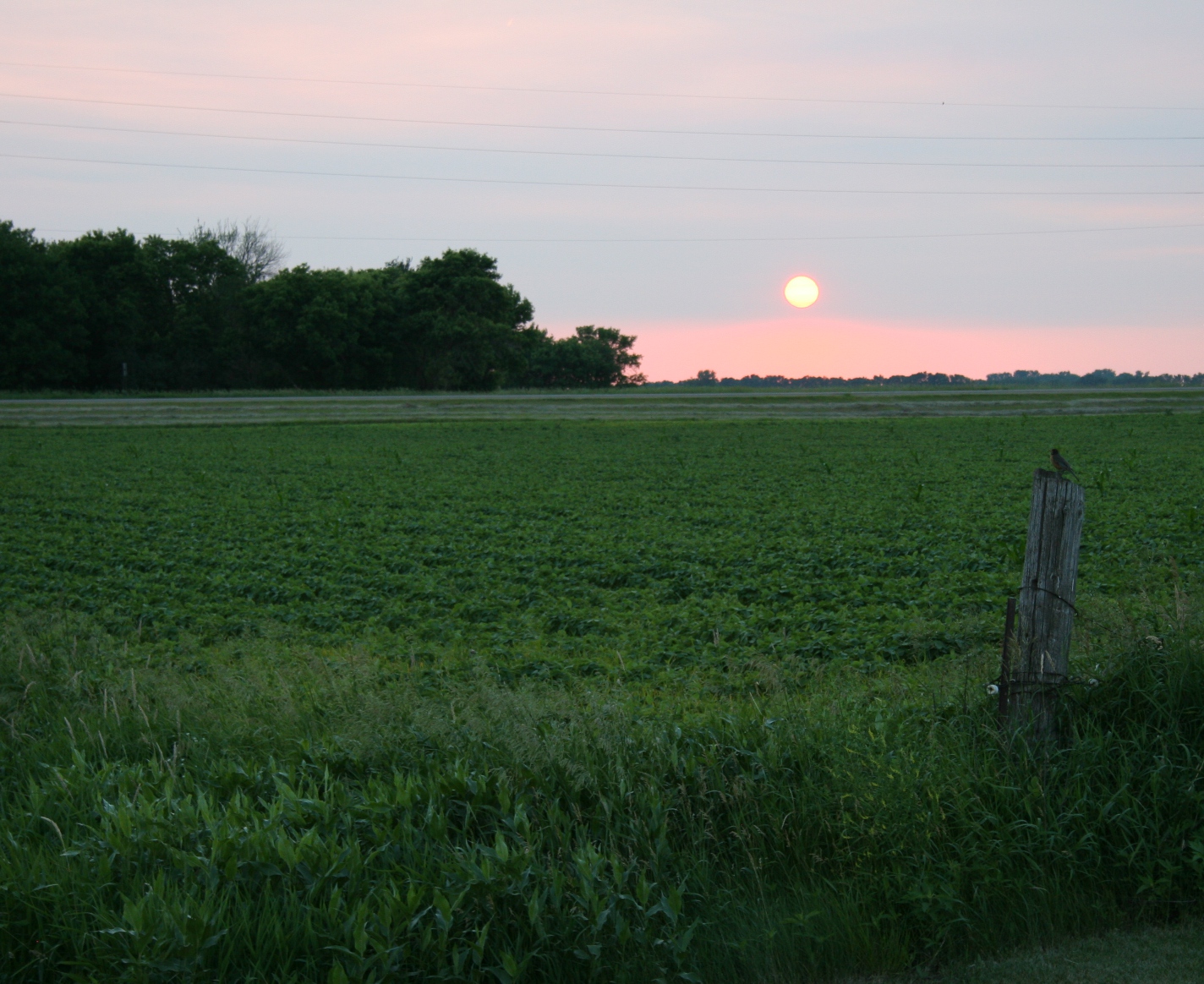
Sunset on the prairie

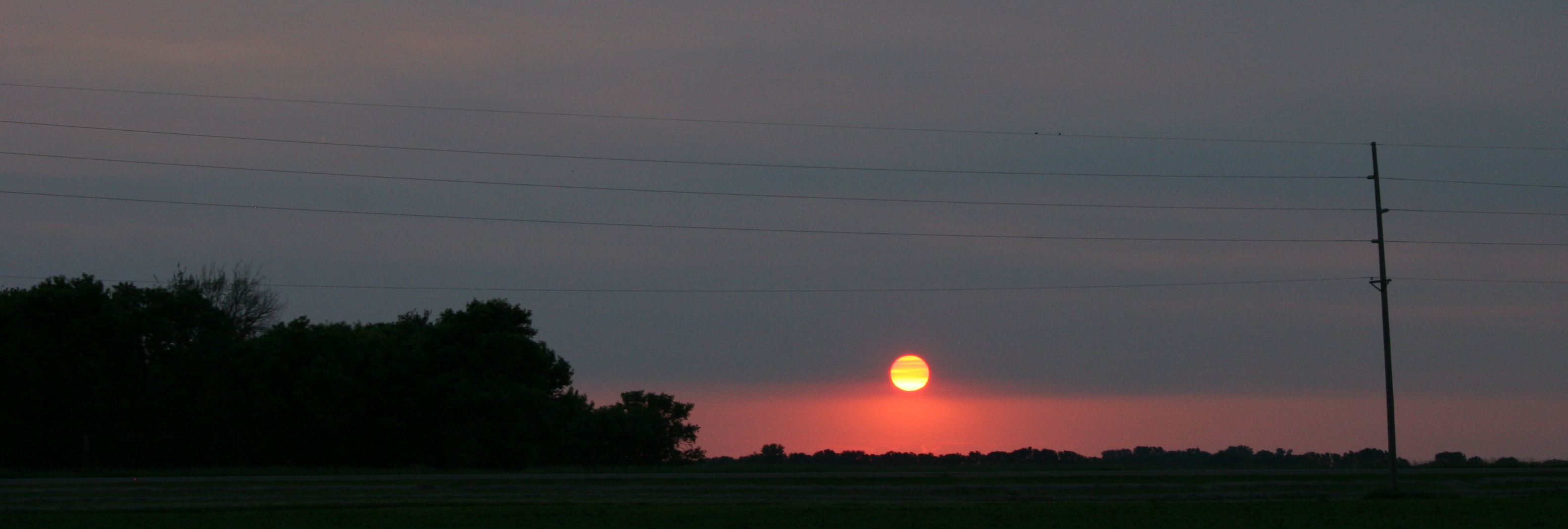
WE STOOD ALONG THE EDGE of the gravel road Saturday evening, my 13-year-old nephew and I, mesmerized by the glorious golden sun pinking the sky above and below a layer of blue grey.

I raised my camera. He lifted his phone. We snapped several photos, compared, wished for better zooms to photograph the prairie sky north of Lamberton in southwestern Minnesota.

Sunset on the prairie 2

“It’s what I miss most about this place, the sunrise and the sunset,” I said.

“And the stars,” Stephen added.

Sun and stars.

He was right. The stars, too.

Copyright 2013 Audrey Kletscher Helbling


One family’s journey: Five years after the Cottonwood school bus crash February 13, 2013

SHE ASKS IF I REMEMBER “the cupcake thing.”

But I have only a vague recollection of lots and lots of cupcakes.

Traci Olson, though, remembers, like yesterday, the details of “the cupcake thing,” which she compares to the biblical account of the feeding of the 5,000.

First, the cupcakes started coming in, then more and more and more for her 9-year-old daughter Emilee’s funeral. There were enough left over to serve mourners at the funeral of the Javens brothers, Hunter, 9, and Jesse, 13. The cupcakes just kept coming, so the sweet treats were also offered at the funeral of Reed Stevens, 12.

Still, all the cupcakes had not been eaten. So whoever wanted the mini cakes could take them home.
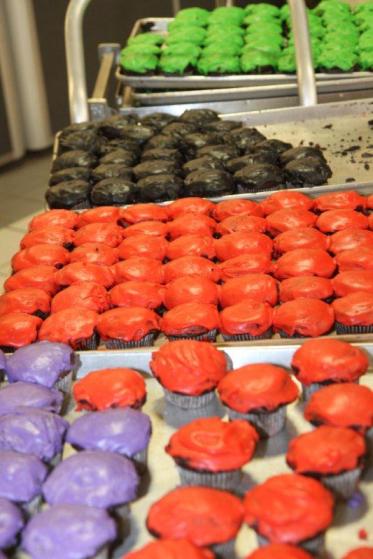
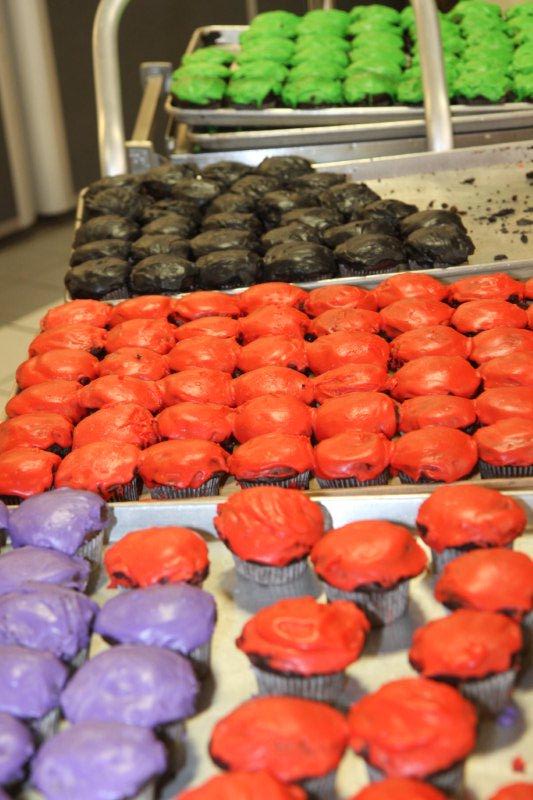
Lakeview kitchen staff bakes cupcakes each February to celebrate the four students.

Lakeview kitchen staff bakes cupcakes each February to celebrate the four students.

“The cupcake thing” didn’t end in February 2008, when Emilee, Hunter, Jesse and Reed, all students at Lakeview Public School in Cottonwood, died in the crash of their school bus and a mini van. Five years later, the tradition continues every February 19 (or the nearest date school is in session) at Lakeview. The cooks bake cupcakes and frost them in the students’ favorite colors—pink or purple for Emilee, red for Reed, green for Hunter and black for Jesse.

It is a way to celebrate the lives of the four, whom Traci describes as “fun, happy-go-lucky kids.”

“We don’t want the kids to be defined by how their lives ended,” she emphasizes.

Traci, who teaches early childhood special education at Lakeview, has, by default, she says, become the key organizer of Lakeview’s annual Journey of Hope, a community gathering to celebrate the lives of those lost and the healing that has taken place since that February 19 afternoon in 2008 when life forever changed in Cottonwood, a farming town of 1,200 in southwestern Minnesota.
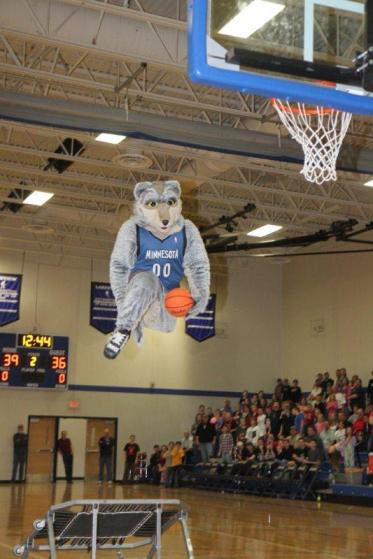
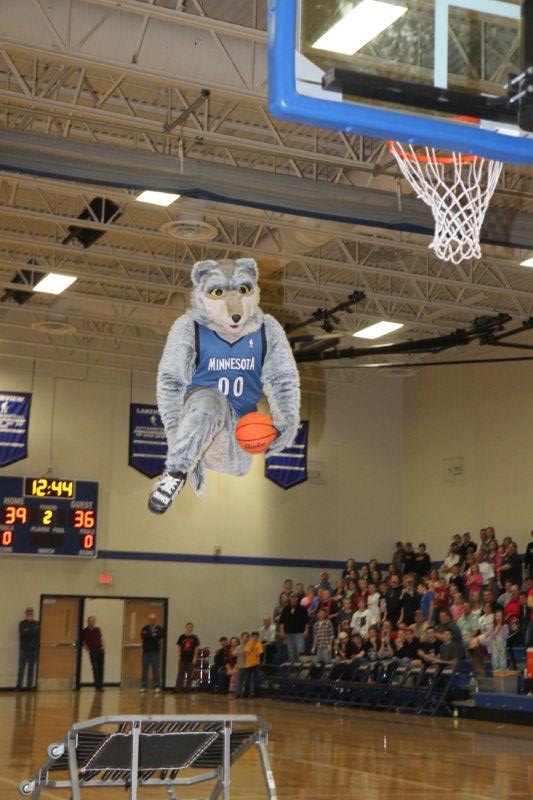
Timberwolves mascot Crunch during an earlier appearance at Lakeview.

Timberwolves mascot Crunch during an earlier appearance at Lakeview.

This year’s celebration is slated for Valentine’s Day and starts with an afternoon presentation on bullying by Minnesota Timberwolves mascot Crunch followed by a community gathering in the evening. That includes serving of pulled pork sandwiches beginning at 5 p.m., photos with Crunch, a slam/dunk half-time show and three basketball games.

Traci says Journey of Hope has always focused on the positive, not on mourning the community’s loss.

Days before the five-year anniversary, Traci shared her thoughts with me, in an hour-long phone interview, about her daughter, life since the crash and the healing that has taken place. We did not discuss Olga Franco del Cid, who was driving the mini van that blew through a stop sign and slammed into the school bus. Franco del Cid was convicted of criminal vehicular homicide and other charges and sentenced to 12 ½ years in prison.

Chun Wen (Emilee) in China

Chun Wen (Emilee) in China

TRACI REMEMBERS WITH CLARITY the first time she laid eyes on baby Emilee in China. Chun Wen, among about 20 babies, just sat and stared at her adoptive mom. “I picked her up and she was mine,” Traci says of her strong-willed, independent girl with the deep, raspy voice who came home to Minnesota at 10 months of age.

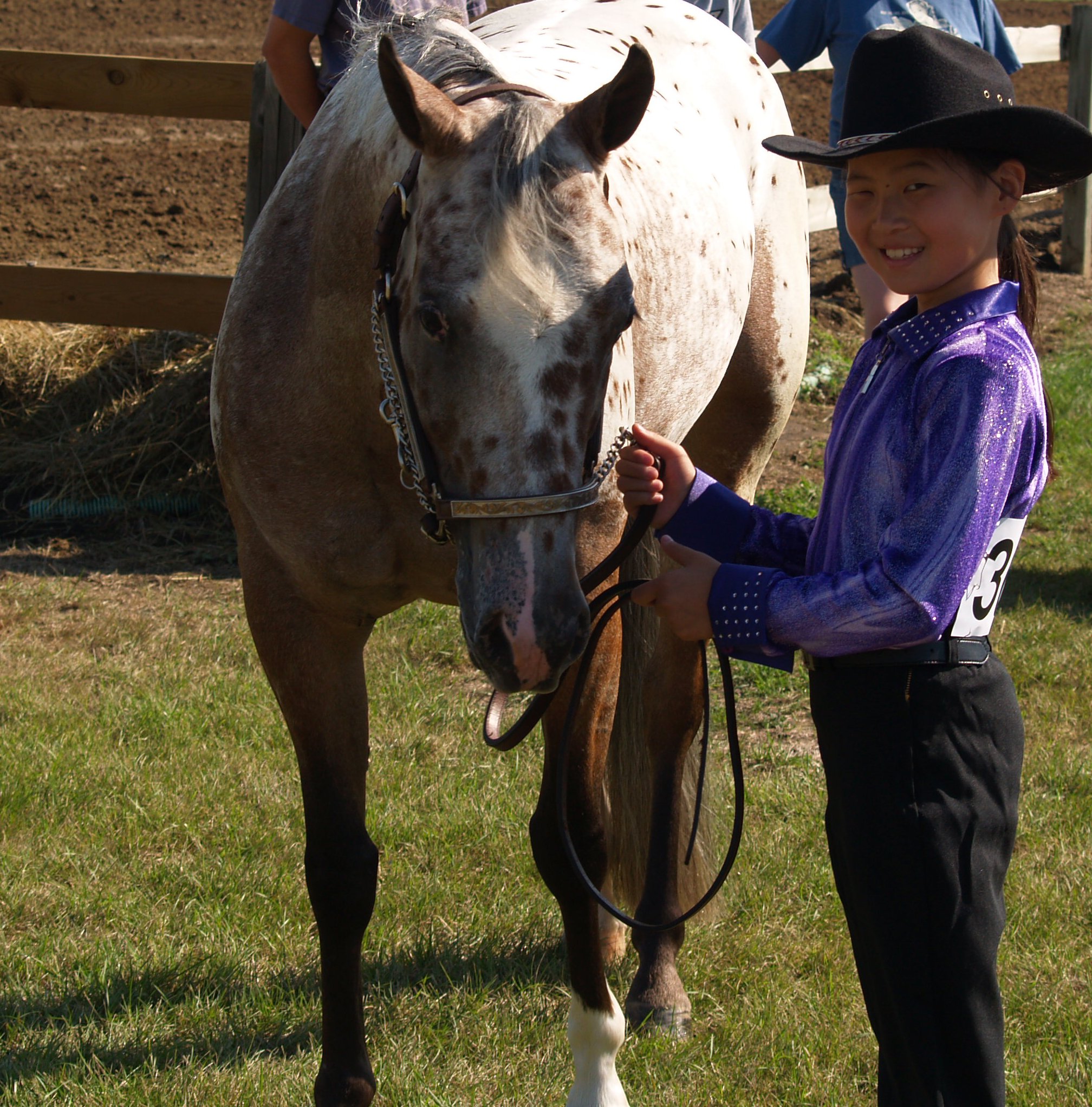
Emilee LaVanche, as Traci and Charlie Olson renamed their daughter after Traci’s grandparents Emil and LaVanche, fit right in with her older siblings, Bailee and Sidnee. She emulated Bailee’s piano playing, becoming an accomplished pianist, and eventually followed the family’s passion for showing horses. On her seventh birthday, Emilee got her own horse, Barbie.

“Everybody knew her,” Traci says of her outgoing and vivacious daughter who made friends wherever she went. She would light up a room or a show ring. And she was, most assuredly, Traci says, a blessing to her and Charlie’s family, which at the time of Emilee’s death included Bailee, 14; Sidnee, 11; and Rilee, 6.

Traci would later return to China for the third time (Rilee is also from China) to adopt seven-year-old Lucee. She makes it clear that Lucee is not meant to replace Emilee, noting rather her deep love of children: “I was meant to be with kids and to do stuff with kids.”
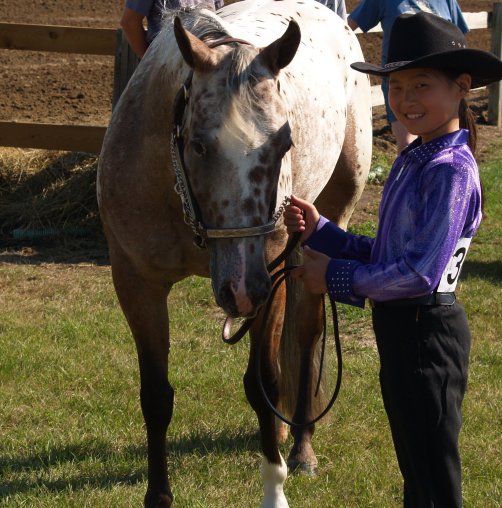
Emilee with her horse, Barbie

Emilee with her horse, Barbie

ON THE AFTERNOON OF THE CRASH, Traci, then a health and physical education teacher at Lakeview, told Emilee, “You need to ride the bus (home about two miles)… I love you.”

That marked the last time she spoke to her daughter.

A short while later her husband, a part-time school bus driver, phoned to tell Traci about a “bad bus accident” half a mile from their farm. Traci rushed to the crash site to help.  Then, upon realizing it was her children’s bus, she desperately began searching for her three kids riding the bus that day. She found Rilee, but could not locate Sidnee or Emilee.

As Traci recounts the aftermath of the crash which killed four and injured 17, she describes a chaotic scene, “a lot of hoping and praying,” racing to the hospital in nearby Marshall, helicopters coming and going, her desperate inquiries for information about “the only Chinese girl on the bus,” the family’s journey to Sioux Falls where Sidnee underwent emergency surgery for a lacerated eye, and the eventual visit to the funeral home to identify Emilee.

Traci recalls a phone conversation with her sister. “I can’t find Sidnee and Emilee. This is really, really bad.” In that moment, when she could not find her daughter, Traci says, “I knew right away.”

Emilee and Sidnee were sitting across from each other half way back on the bus, Emilee with Hunter. Jesse and Reed were behind them. Rilee was at the front of the bus.

Thinking back to that awful day, Traci says, “You never move on, but you’re forced to move forward. We can’t change it, we can’t make it go away.” But, she is determined that her surviving kids, now ages 9 – 19, not reference their lives “before and after Emilee.” And she is determined, too, to celebrate Emilee’s life.

For example, each year Traci celebrates Emilee’s November 2 birthday with her classmates. This past November, the now Lakeview 8th graders made and donated 30 fleece blankets to the Ronald McDonald house in Rochester. In the past, Emilee’s classmates have made Native American horse sticks and welcomed former WCCO TV news anchor Don Shelby in honor of their classmate’s birthday. Lakeview students got copies of Shelby’s inspirational book, The Season Never Ends.

The birthday party always focuses on honoring her daughter in an educational and memory-building way, Traci says. And it always ends with serving of Emilee’s favorite root beer floats.

Traci also coaches Emilee’s classmates’ basketball team.

“My saddest day will be when no one will remember who Emilie is,” Traci shares.

THAT IS NOT LIKELY to happen any time soon as Traci speaks of a caring community that continues to “wrap their arms around us and the other families.” Good friends before the crash, the Olson, Javens and Stevens families now lean on one another.

Not that there aren’t difficult days. Her family is open and honest enough, Traci says, to admit when they’re having a bad day. Sometimes that means stepping out of school for 20 minutes to cry in her car, or doing something with the horses or her family to deal with the grief. She’s especially grateful, Traci notes, for supportive school administrators and colleagues.

Losing a child “makes you totally rethink what’s important,” Traci says. And for her and Charlie, that’s being together as a family, participating in those competitive Ponies of America Club horse shows, celebrating Emilee’s birthday and more. “We’re not thinking coulda, shoulda, woulda.”

The Olsons also have adopted a new perspective on life as they’ve already endured the most difficult of losses. “If we lose a crop (the Olsons farm), we can live through that,” Traci says.

TODAY THE FAMILY CONTINUES to sense Emilee’s presence in their lives, whether in the pink and purple of a prairie sunset or someone mistakenly calling Lucee—now nine years old, the same age as Emilee five years ago—by her older sister’s name.

Traci tells me, too, “It is really hard to believe it has been that long.”

Five years.

But for this mother, the details of the day she lost Emilee remain as clear as the day she first locked eyes with her little girl in China.

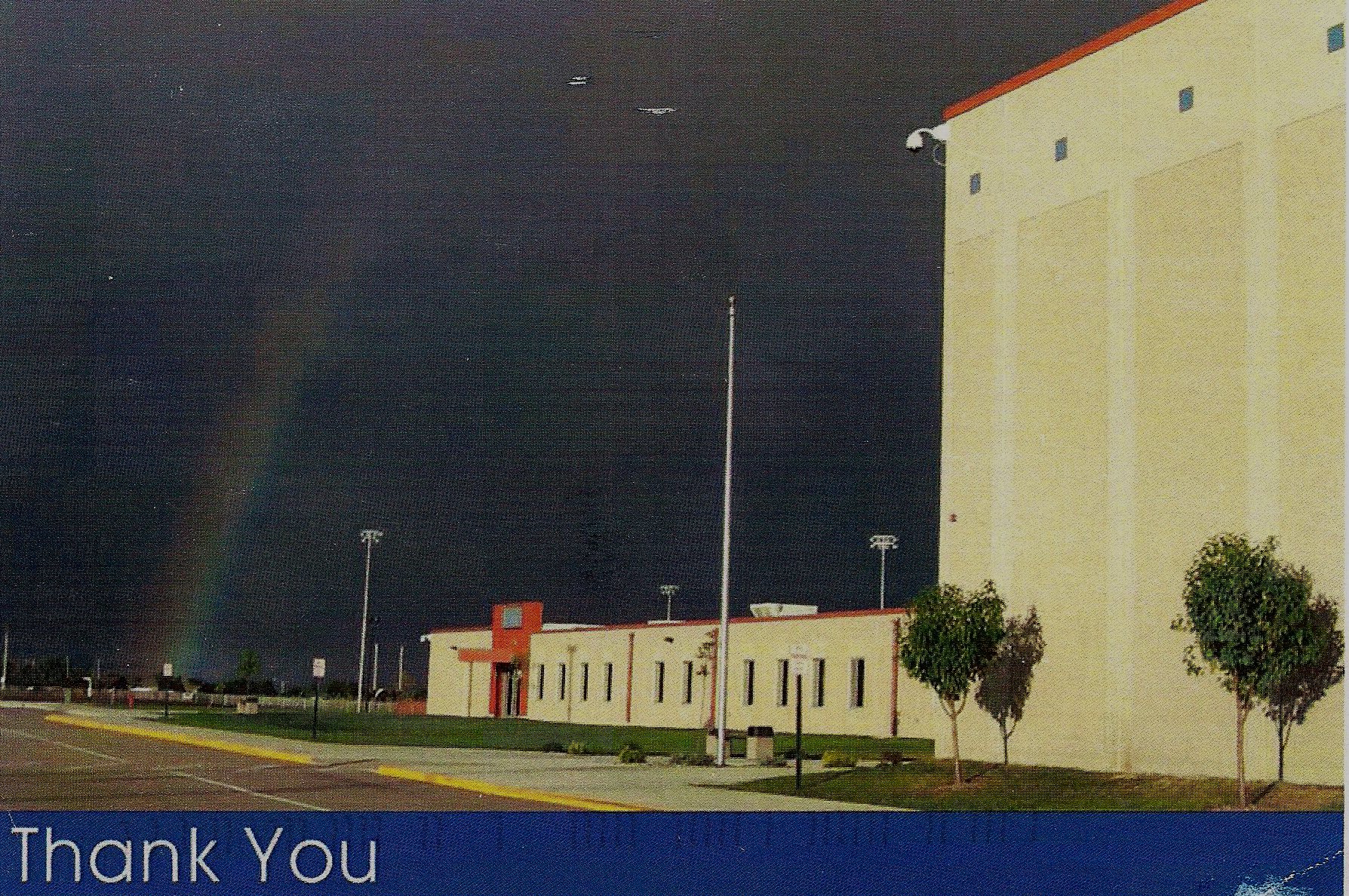
Lakeview School graces the front of a thank you card I received a month after the bus crash.

Lakeview School graces the front of a thank you card I received a month after the 2008 bus crash.

FIVE YEARS AGO on February 19, I “knew” that an extended family member was on that same bus Emilee, Hunter, Jesse and Reed rode.

My cousin Joyce Arends’ grandson, 8-year-old Bryce, suffered minor injuries in the crash. Wanting to show my concern, I mailed a book, teddy bear and candy to Bryce as well as a note and memorial gift to Lakeview School.

I received thank yous from Bryce and the school and I’ve saved both.

Bryce told me he’d named his bear Fluffy and was sleeping with him.

The school responded, in part, with this message:

The outpouring of response from across the state, the nation, and even the world has overwhelmed all of us at Lakeview School, but the power of that support has given us strength and has allowed us to begin the long process of healing. Please know that we are all grateful.

I expect on this, the five-year anniversary of the bus crash, that Lakeview School, the Olsons, Javens and Stevens families, and the community remain grateful for the ongoing support of those who remember their children, for Emilee, Hunter, Jesse and Reed truly were all of their children.

© Copyright 2013 Audrey Kletscher Helbling

Photos courtesy of Traci Olson


Land of the FREE July 30, 2012

Filed under: Uncategorized — Audrey Kletscher Helbling @ 7:28 AM
Tags: , , , , , , ,

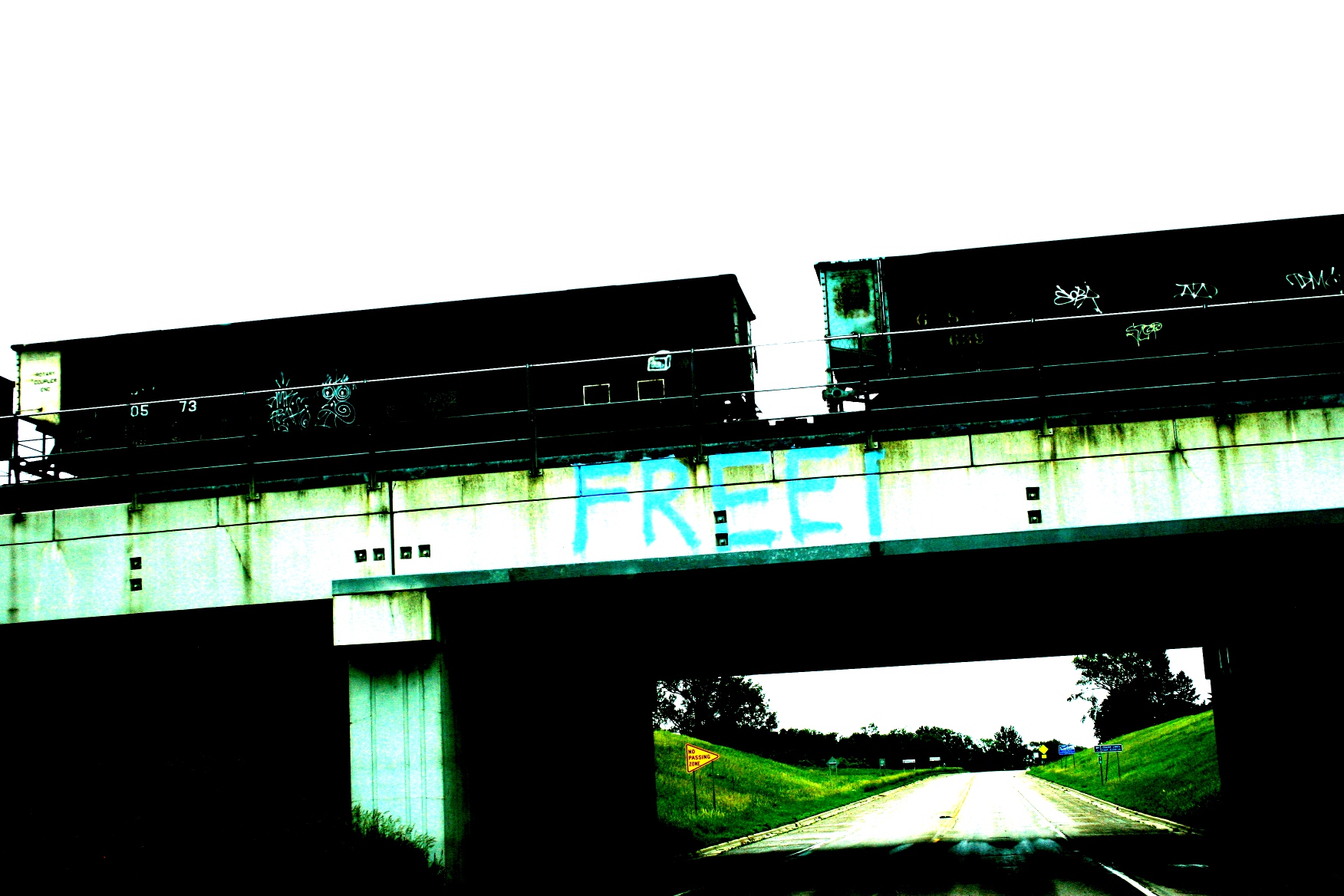
Bridge graffiti along Minnesota Highway 28.

DO YOU EVER WONDER—because I do—how, when and why graffiti is spray painted onto bridges, buildings, boxcars and elsewhere?

Do these artists/vandals/rebels/criminals (choose the noun that fits) plot and then sneak, in the cover of darkness, to scrawl their messages and art upon these very public canvases?

Why?

Who are these defiers of rules?

Did they scribble with crayons on walls while growing up? Did they doodle in notebooks when they should have been doing homework? Are they reckless and wild or the girl/boy next door accepting a dare?

I’ve never known a graffiti artist, although I’d like to meet the one who block-letter-printed “FREE” on this train overpass along Minnesota State Highway 28 between Morris and Sauke Centre.

I’d ask him/her, “Why did you choose that word, ‘FREE?’”

Have you freed yourself from something? Have you set someone free? Or do you simply appreciate what it means to live in the land of the free?

© Copyright 2012 Audrey Kletscher Helbling


Always obey Rule 99 & other historic reflections July 12, 2012

VISIT A PLACE like the Village of Yesteryear in Owatonna, especially during a celebration such as last weekend’s Steele County Historical Society Extravaganza, and you get an in-depth glimpse of life back in the day.

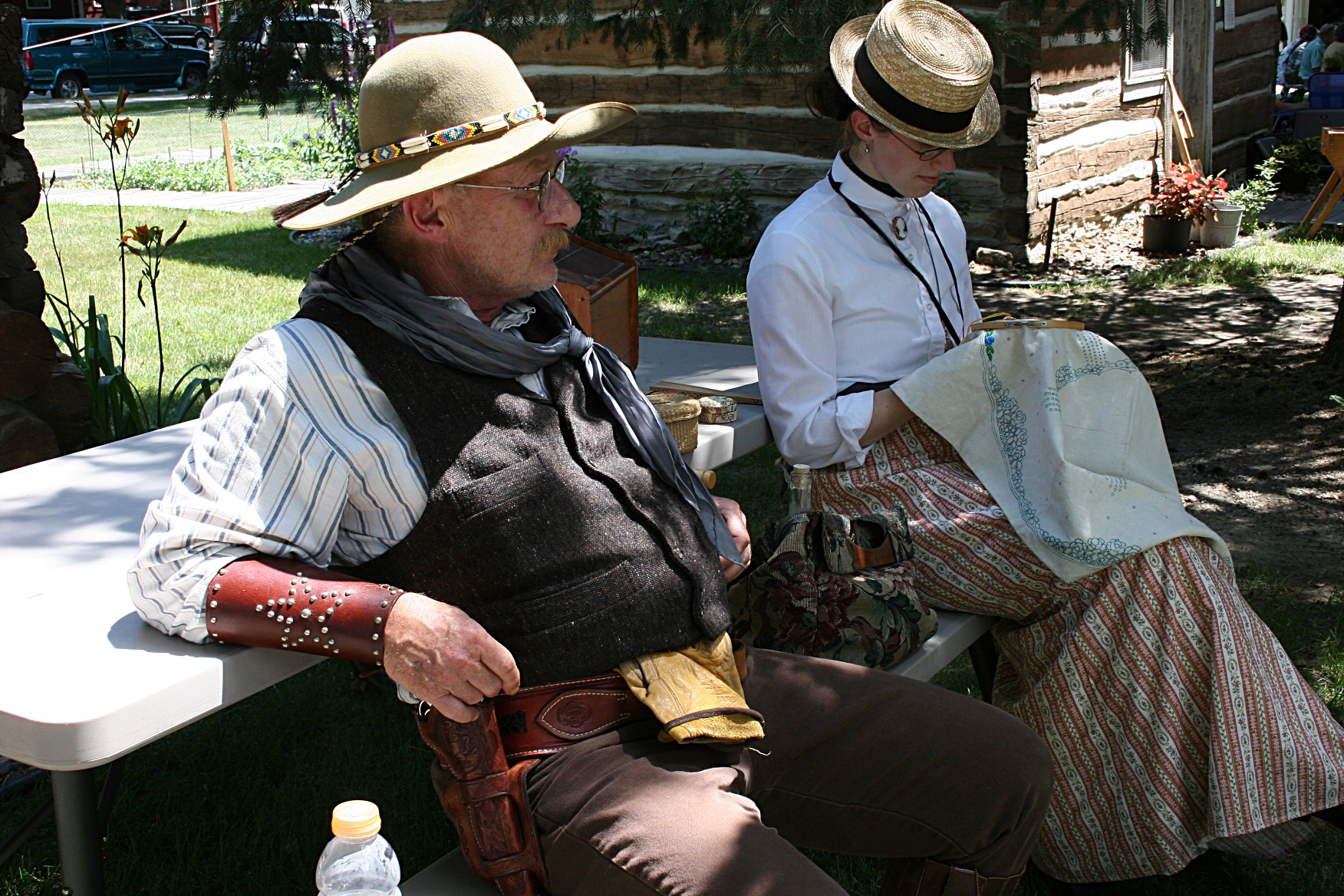
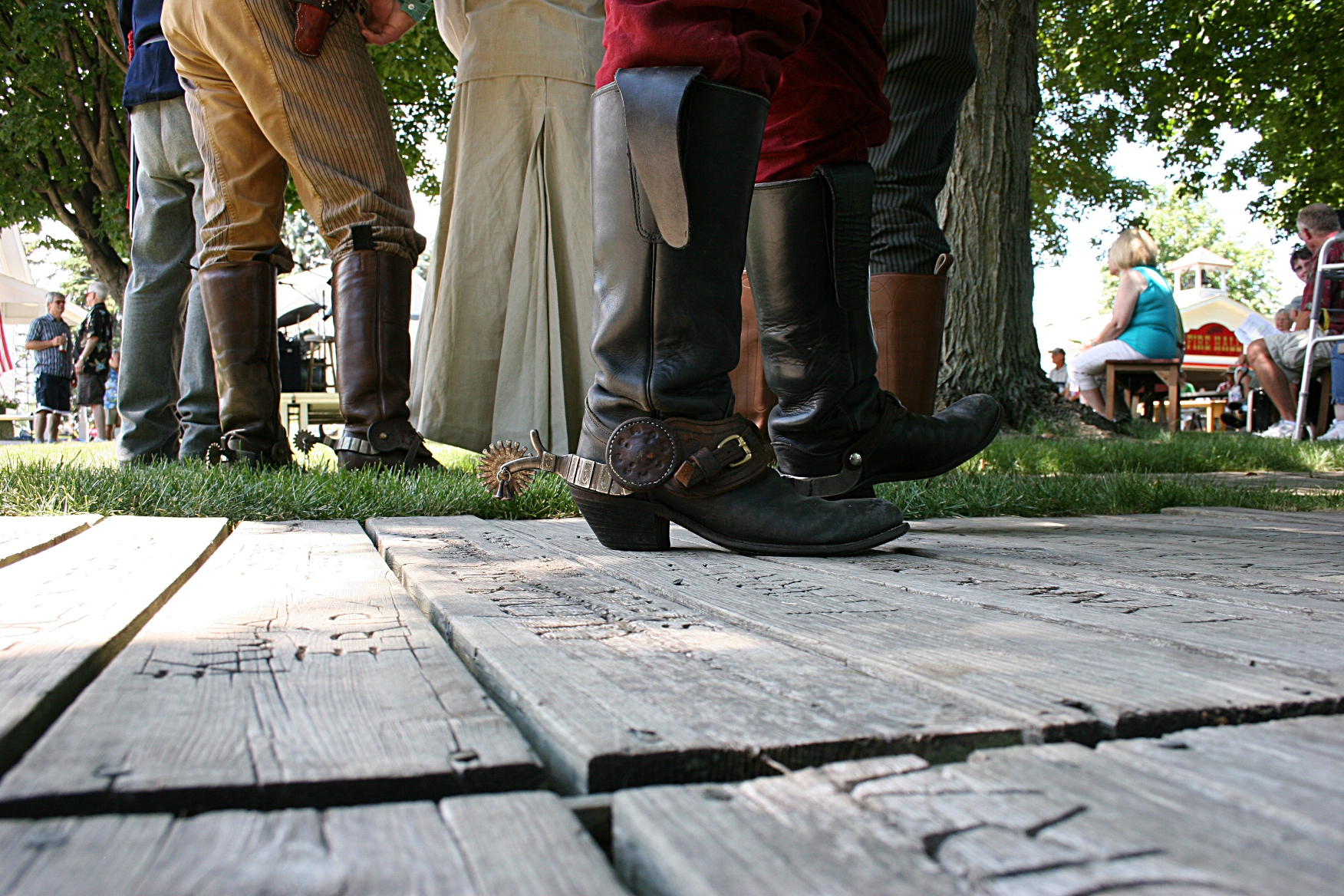
Dressed in period costumes, members of the Old West Regulators added a real-life element to the Extravaganza.

Guides, costumed reenactors and others, with their extensive historical knowledge, most assuredly add to the educational and entertainment value.

But, because it is impossible to speak with every one of them or to observe every activity or to read every informational sign, one must sometimes rely on simple observations to consider the historic stories and realities which define life years ago.

I therefore present these Extravaganza photos with basic information. Much more lies open to your interpretation, influenced perhaps by your experiences or the stories passed down from generation to generation within your family. That is your personal history. Take it. Remember it. Own it. Pass it along.

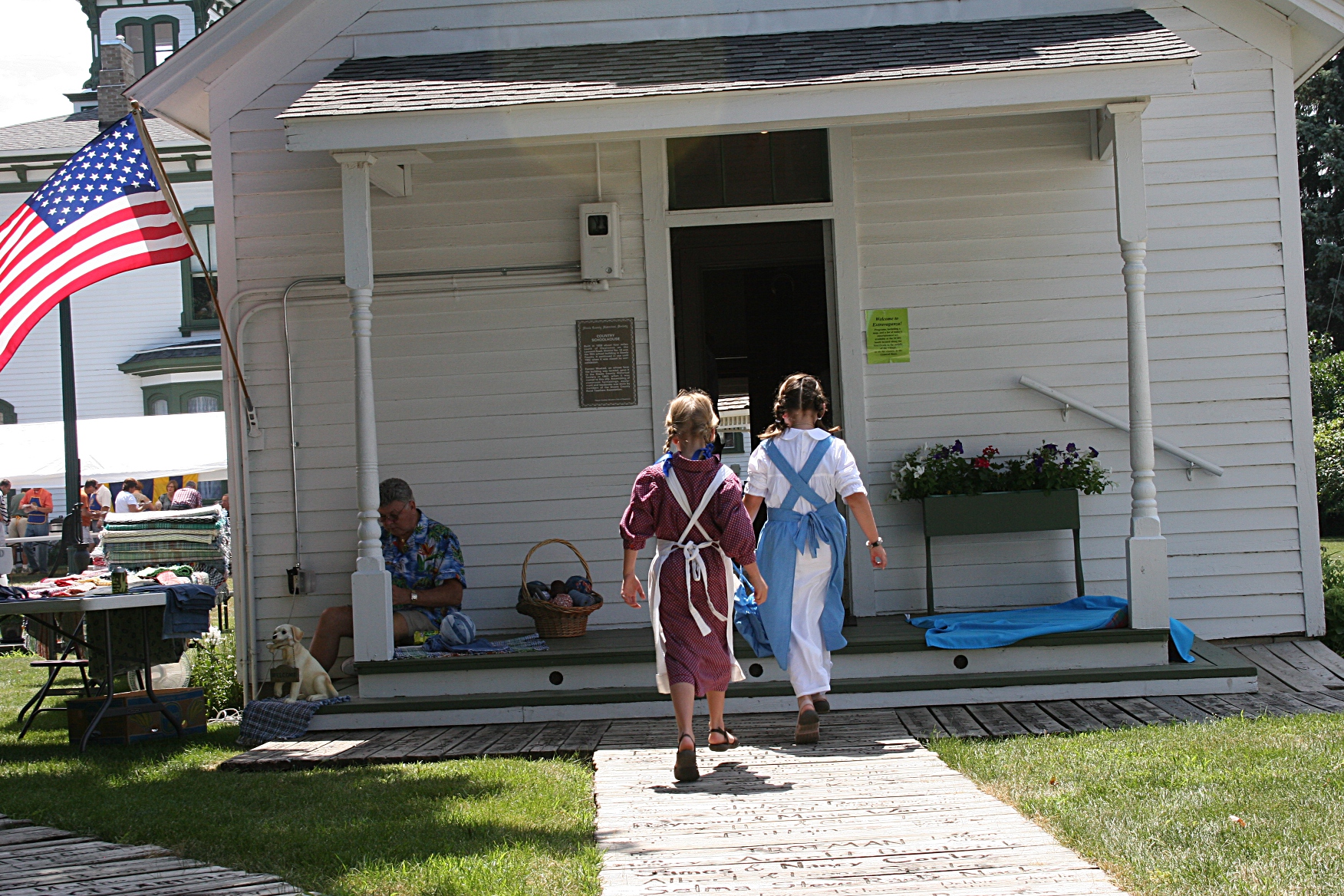
Memories of attending a one-room country school remain for many, including my 55-year-old husband. He attended Chimney Butte School in rural North Dakota and recalls the day students were kept indoors during recess because of coyotes roaming the schoolyard.

What memories does the District 14 country schoolhouse, pictured above, hold for those who were taught in this 1856 building four miles south of Owatonna until the school closed in 1962 due to consolidation?

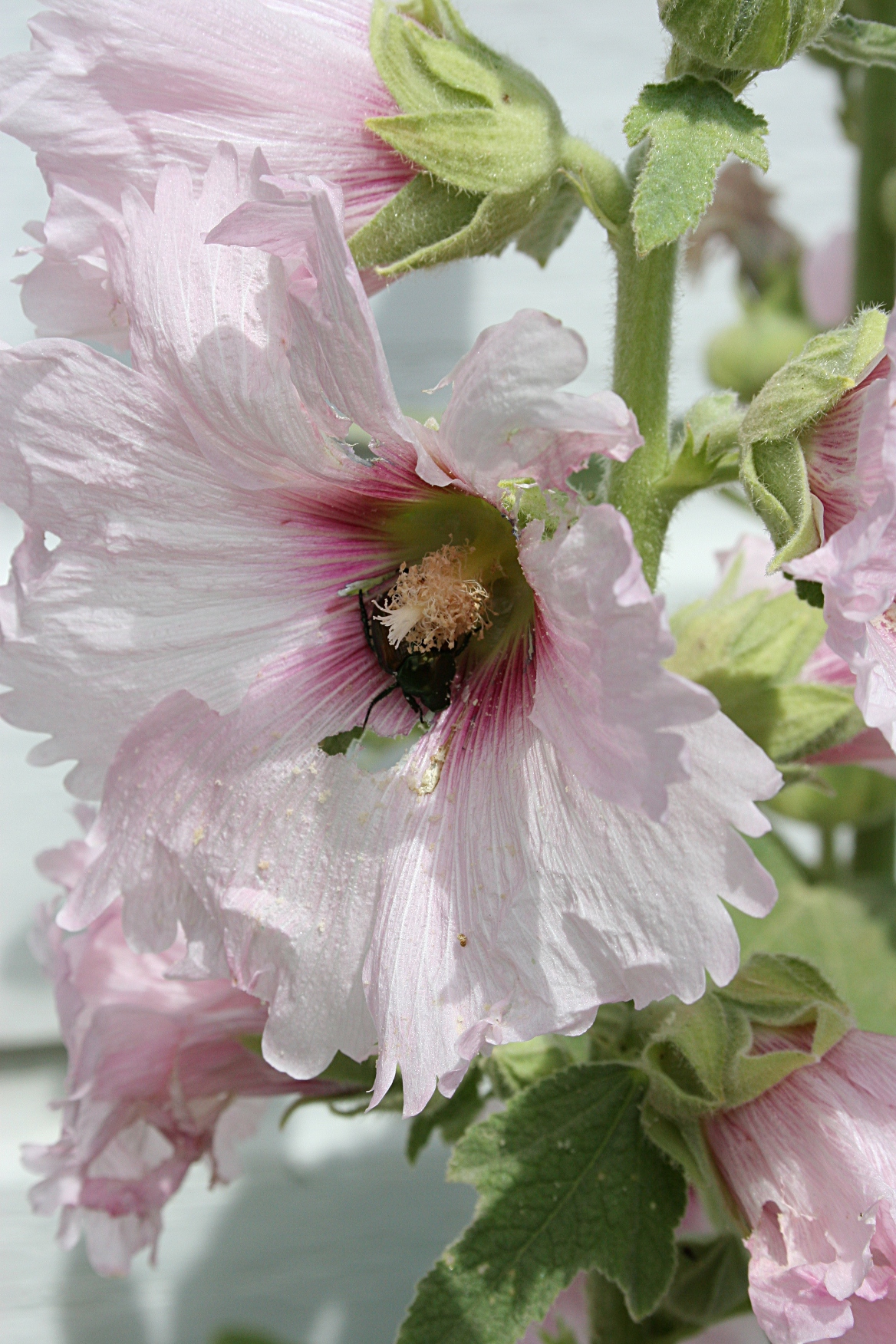
Hollyhocks stand strong and sturdy outside that same schoolhouse at the Village of Yesteryear.

But for me, hollyhocks belong next to the milkhouse, an odd place for flowers, it would seem. Yet, on the southwestern Minnesota dairy and crop farm where I grew up, that was their spot, a splash of beauty perhaps more for my mother than for her farmer husband.

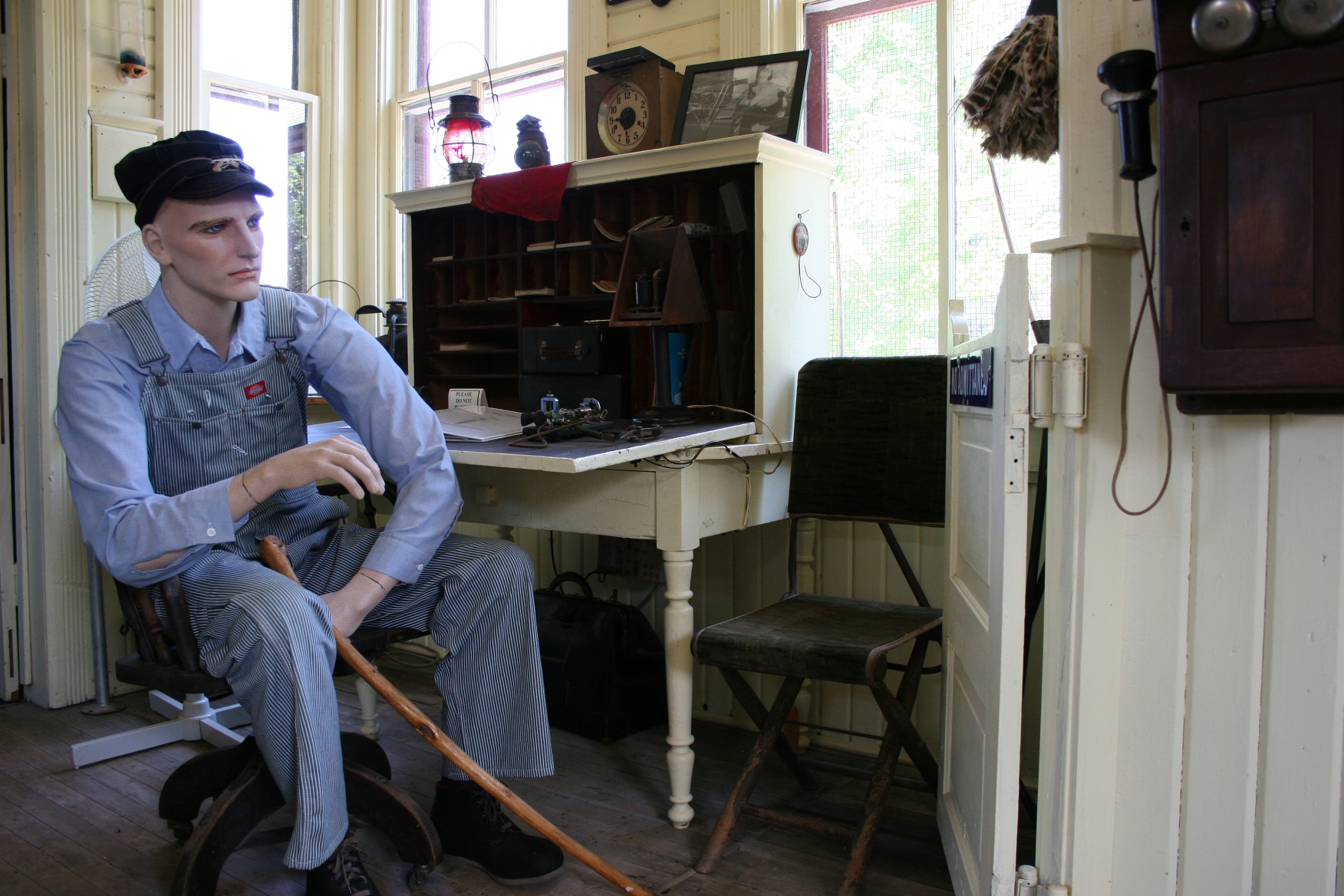
 A scene recreated in the 1866 Bixby railroad depot leaves you wondering about the railroad crew and passengers who waited here to board trains. Where were they going? And, for the passengers, why?

And then you see this sign inside an old caboose and completely forget about those passengers and question why the railroad employees climbed onto the roof of the caboose because they certainly must have or there would be no Rule 99.

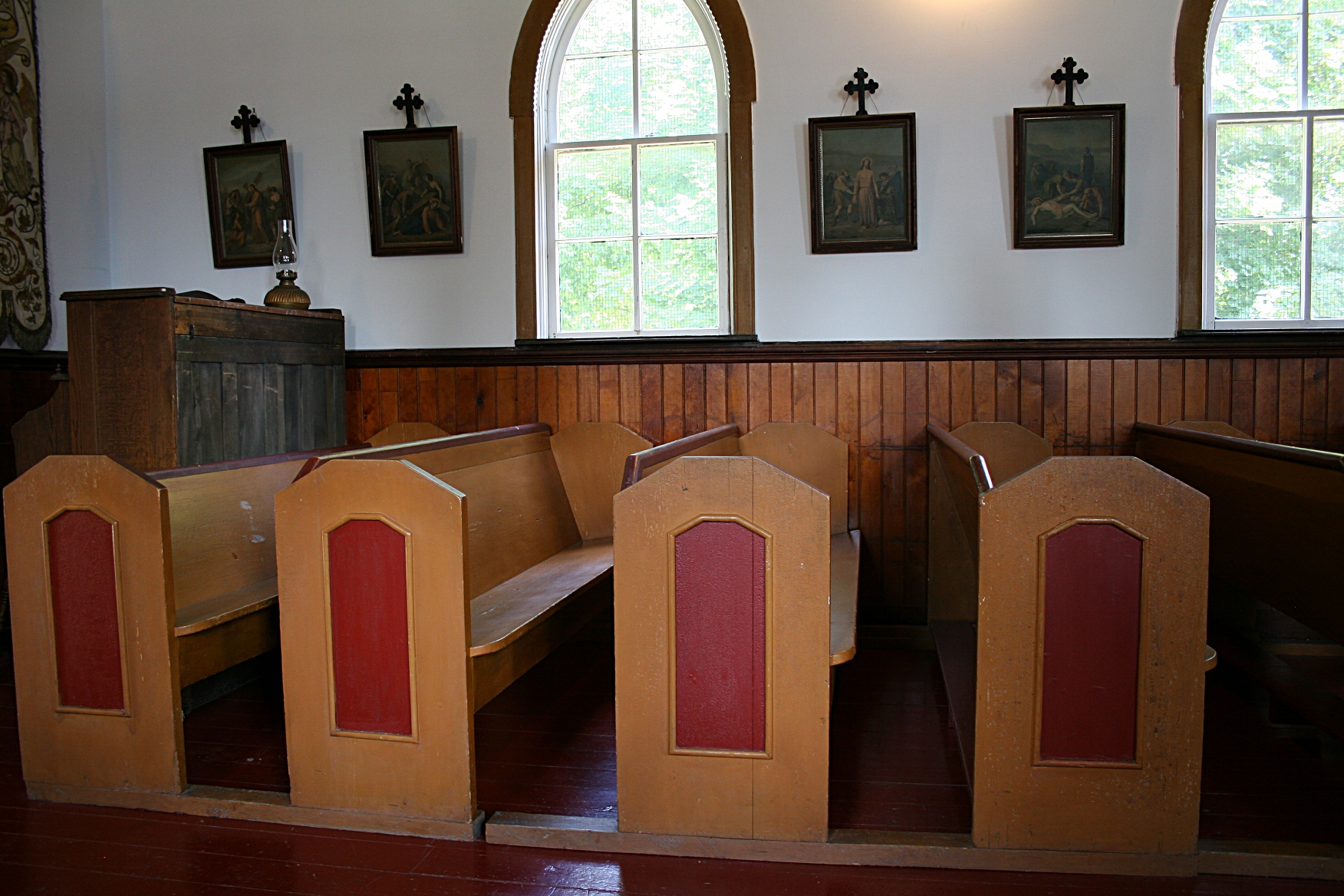
How many tears were shed, in joy and in sorrow, by those occupying these pews in the 1891 St. Wenceslaus Mission in Moravia Church built in 1891 in Moravia seven miles south of Owatonna? Who crafted these pews? And how did parishioners feel when their church closed in 1952?

Perhaps you could ask Tony Seykora, whose mother, Mary Meixner, attended St. Wenceslaus and whose daughter, Susan, was married here. He wasn’t sharing any stories on Sunday while touring his ancestral church at the Village of Yesteryear.

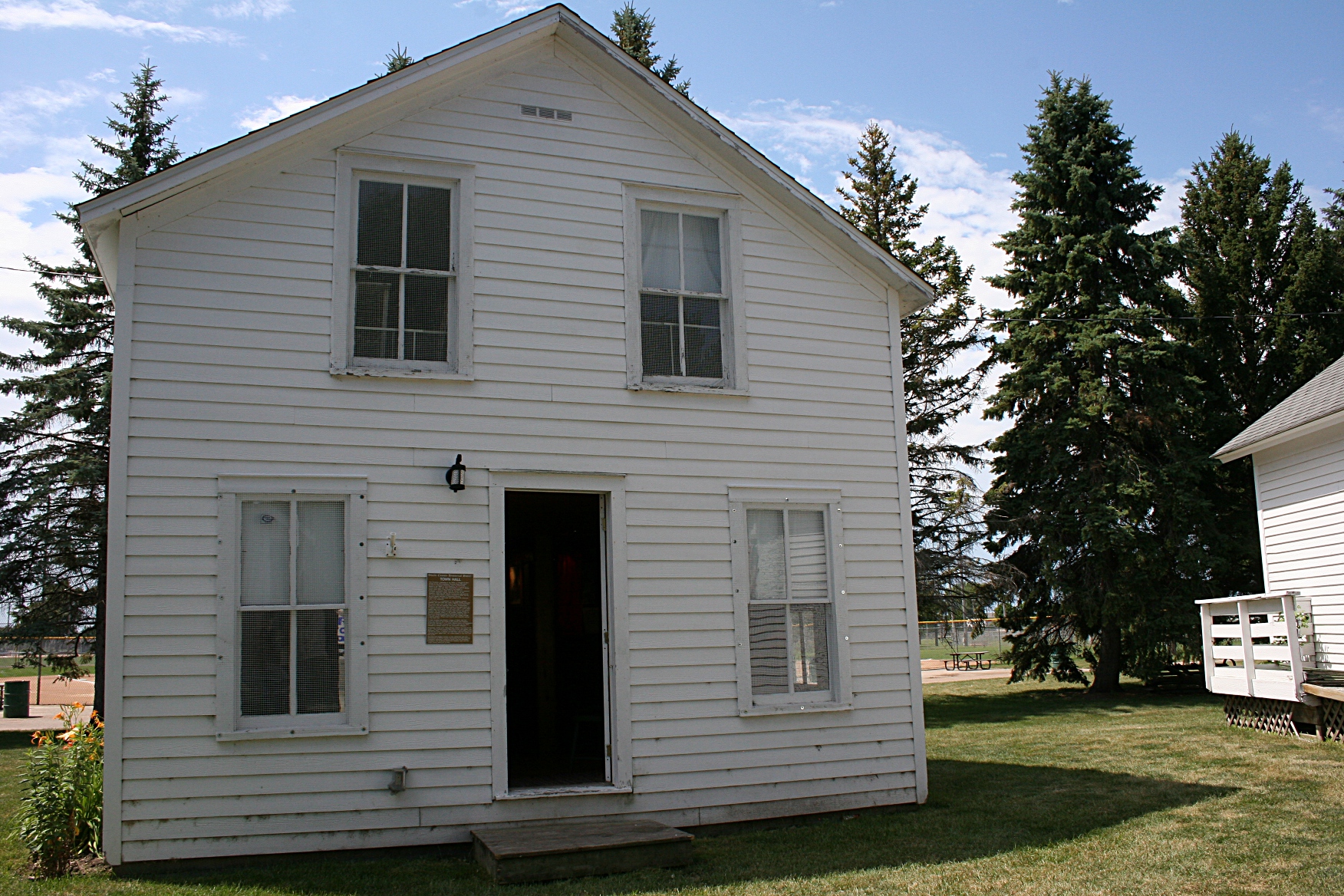
 Oh, the stories this old town hall, the Owatonna Town Hall built in the late 1850s, could tell about those who met here and shaped the future of the city.

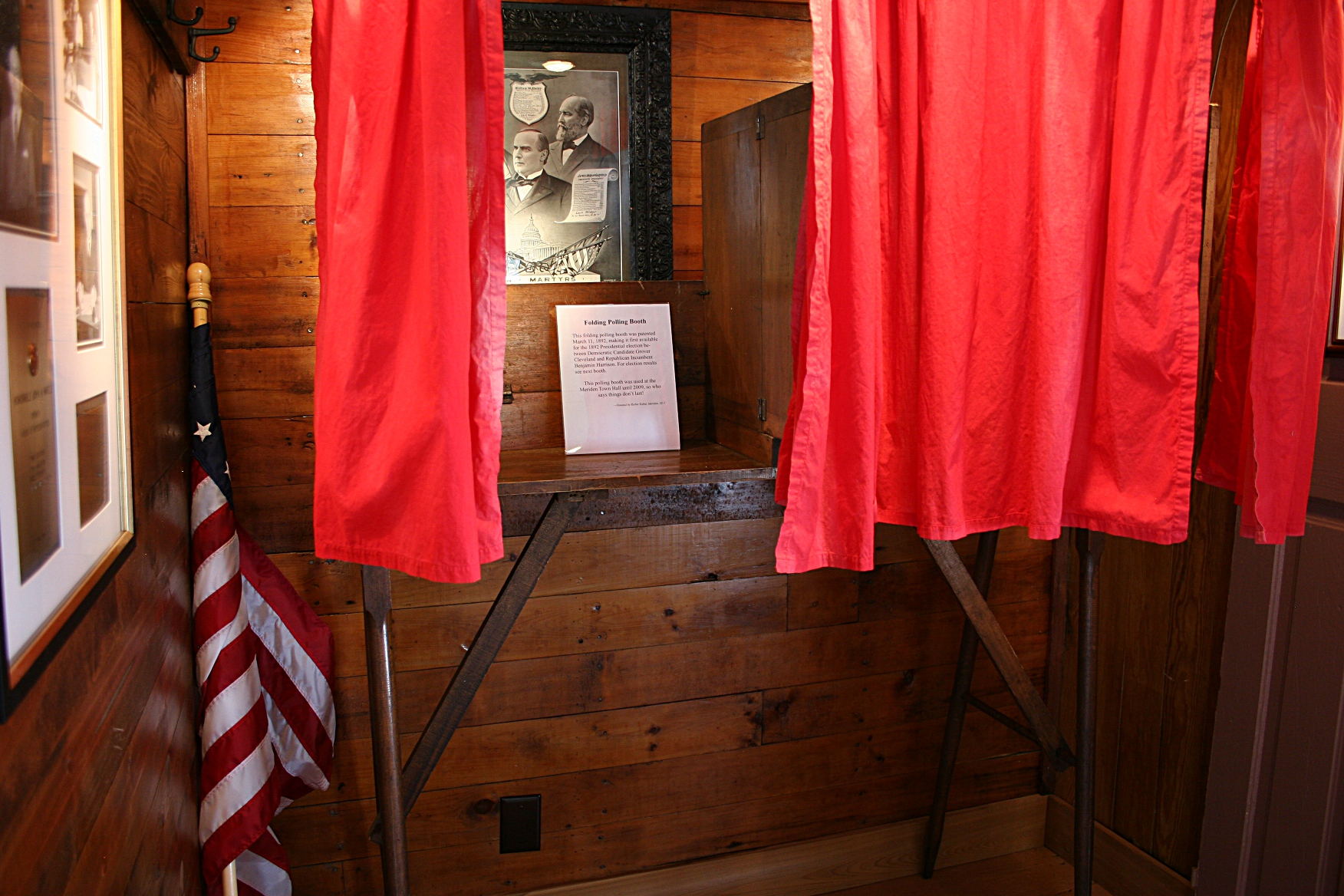
And if you could peek over their shoulders, would you to see how those in the Meriden area voted? This folding polling booth was patented in March of 1892 making it first available for the Presidential election that same year. The polling booth was used at the Meriden Town Hall until 2009. Until 2009, people.

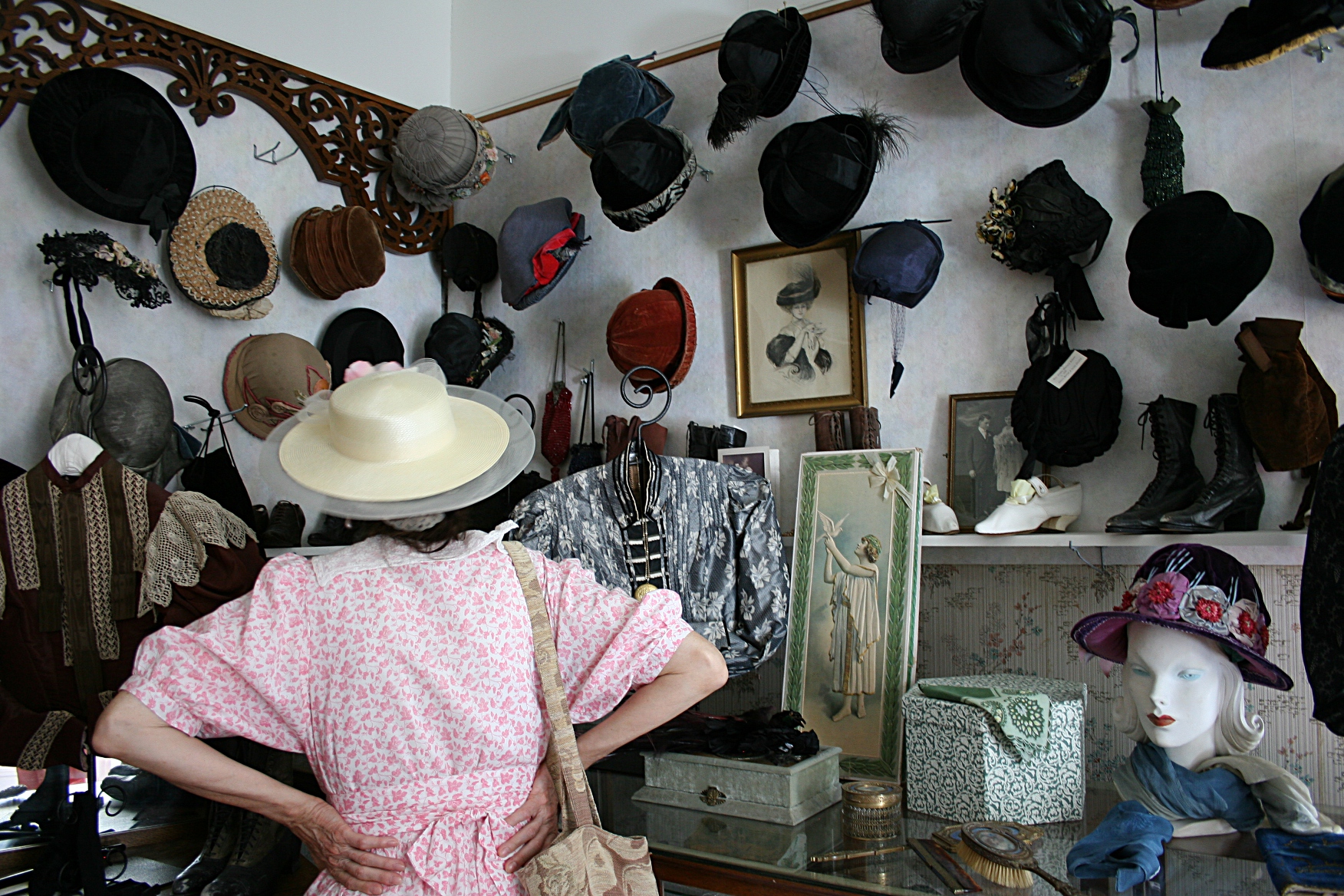
Who wore these hats displayed inside the historic 1868 Dunnell House, home of Minnesota legal scholar, educator and Congressman Mark Hill? Were they hats of mourning, hats of celebration, practical hats…?

A volunteer who works with the Blue Earth County Historical Society and the Betsy-Tacy Society in Mankato in decorating vintage hats studies the collection for ideas.

Also in the Dunnell House, a nook in the parlor offers a place for quiet conversation. Oh, to have been there, eavesdropping…the stories and secrets you may have heard about/from Congressman Hill and other legislators.

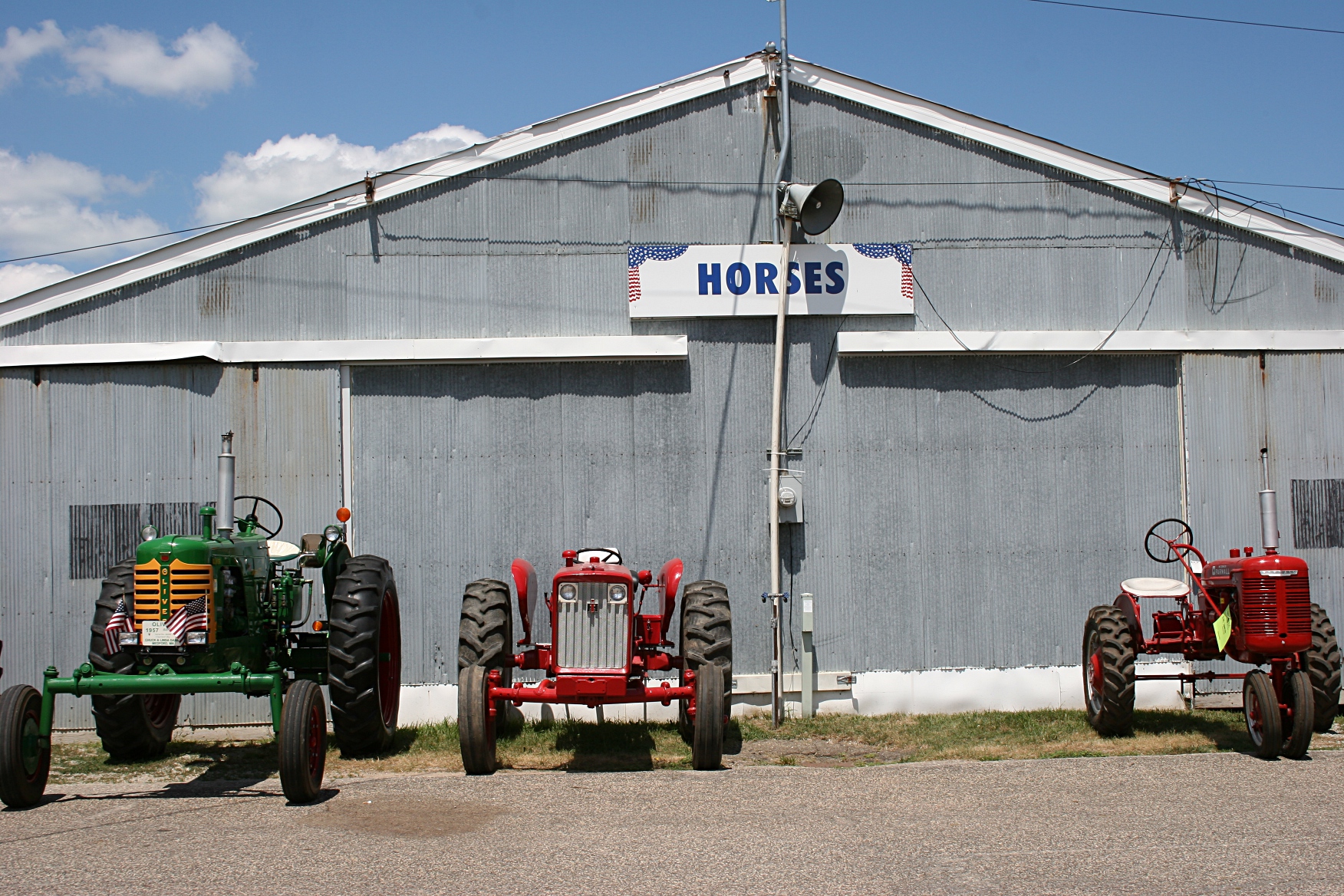
Horse power, but certainly not horses…these vintage tractors were parked next to the horse barn at the Steele County Fairgrounds. Surely they would speak of long, hard days on the farm, their wheels weighed down by the burdens of a farmer’s worries and the uncertainties that have always been a part of farming from the early days of Minnesota to current day Minnesota.

What is that saying? You haven’t walked a mile until you’ve walked in my shoes. Consider that, how challenging it would have been to walk in the boots/shoes of your ancestors for whom life presented so many daily challenges simply to survive.

FYI: To learn more about the Steele County Historical Society, click here.

CLICK HERE to read my first blog post about the Steele County Historical Society Extravaganza. Watch for one final, upcoming post.

© Copyright 2012 Audrey Kletscher Helbling


Gravel road on the prairie July 9, 2012

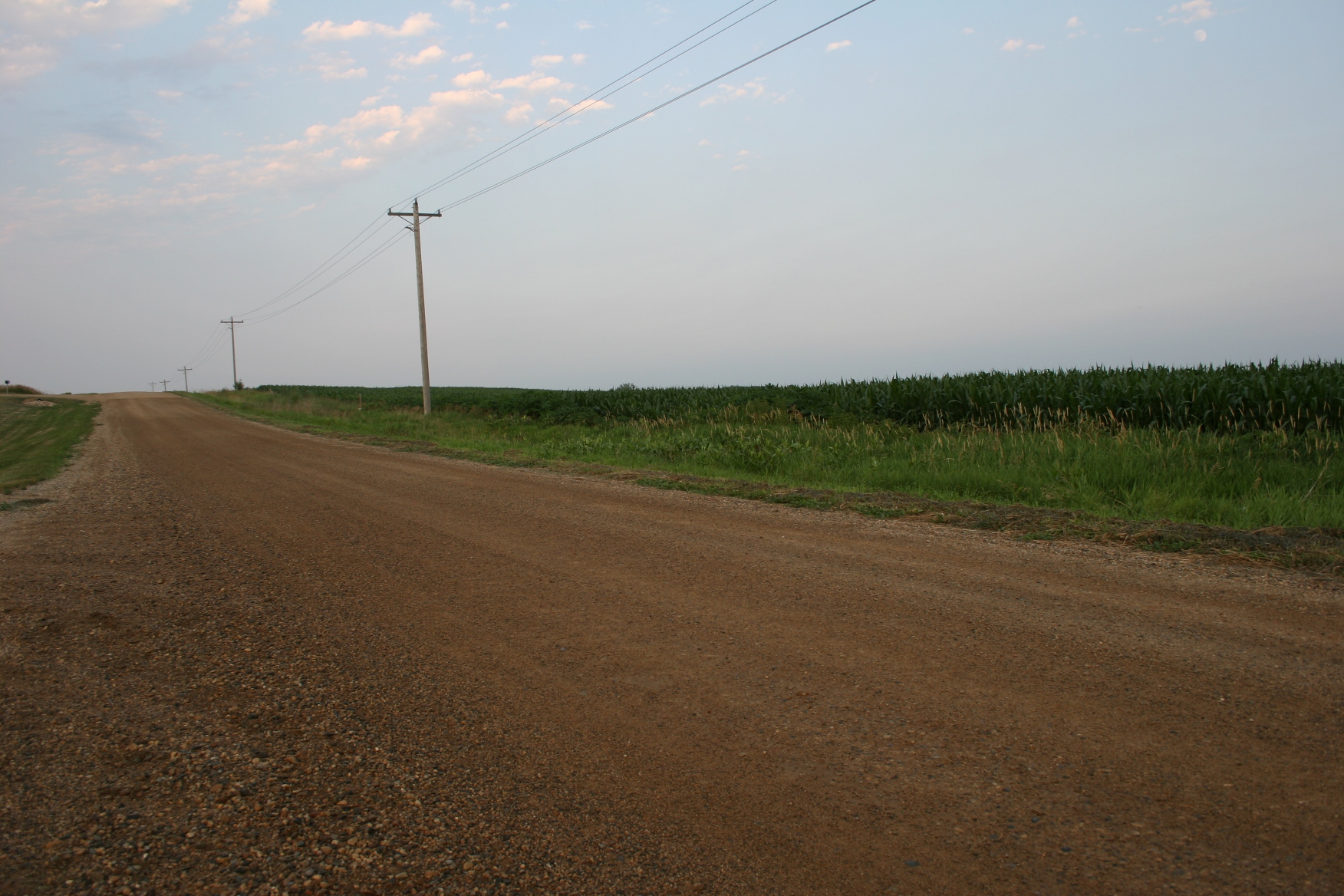
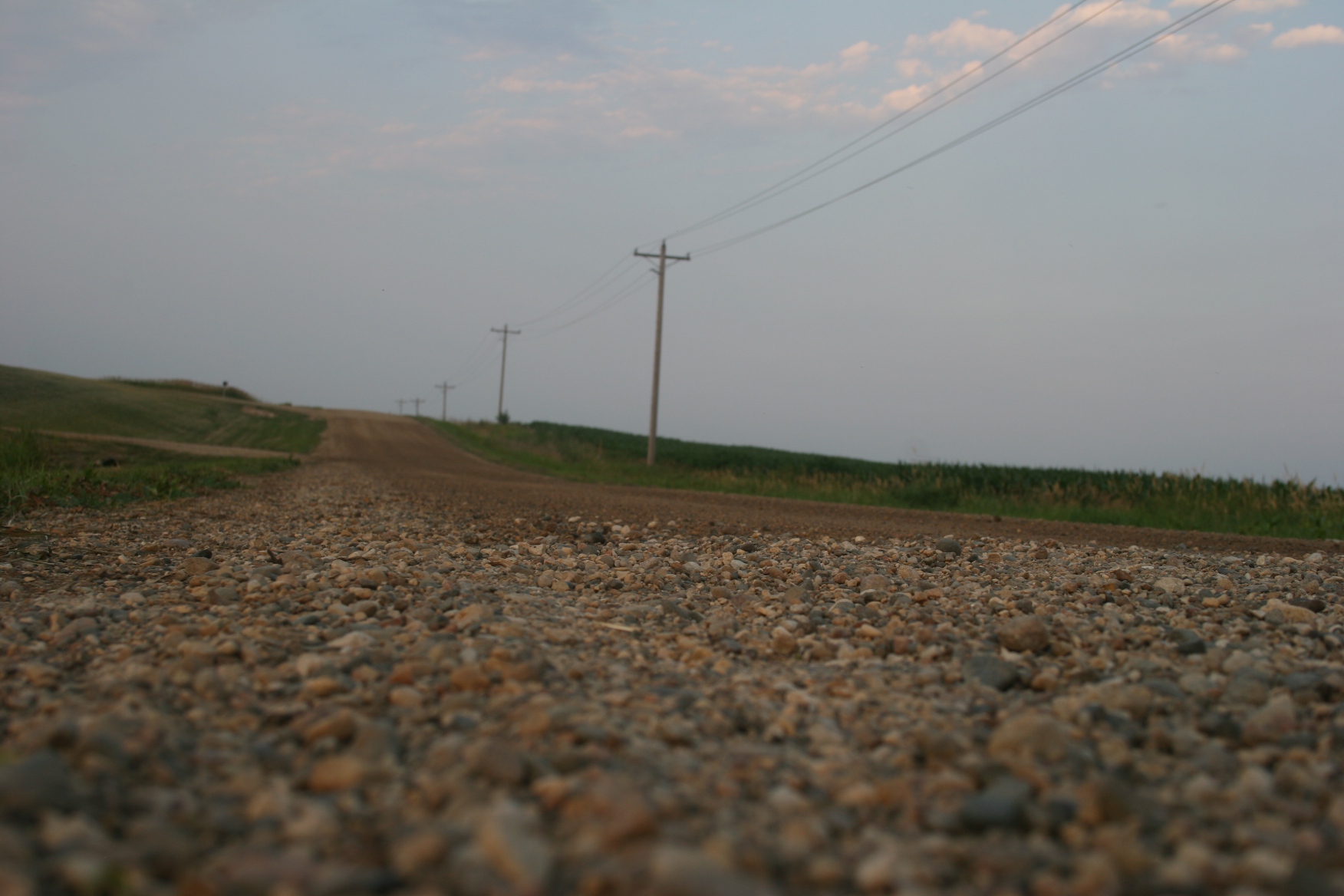
A gravel road just north of Lamberton in southwestern Minnesota.

WHAT IS IT ABOUT a gravel road?

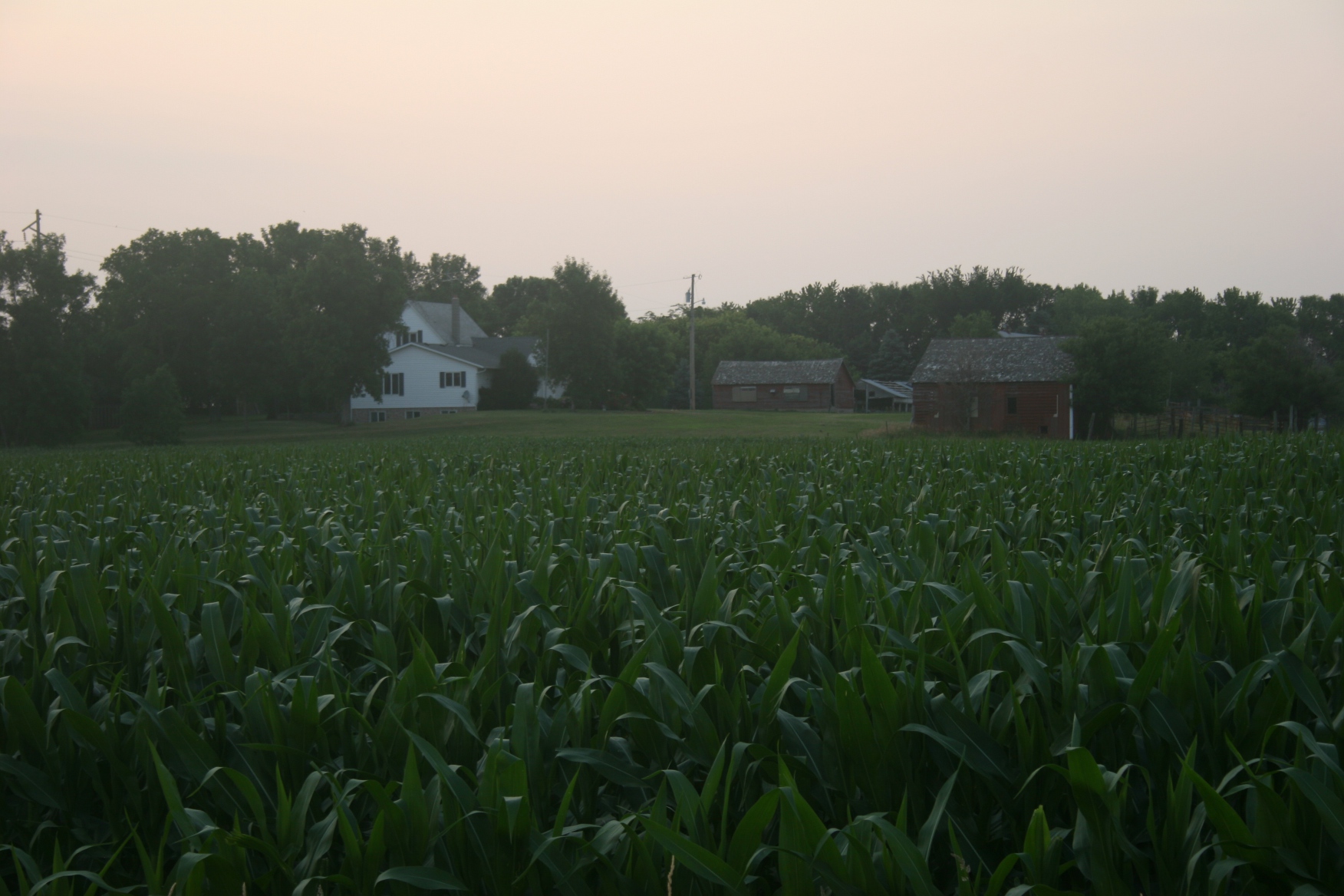
A picturesque farm site on a sultry summer evening as seen from a gravel road north of Lamberton.

It is poetry and peace, country and charm.

You can almost hear the crunch of the gravel in this image.

But it is more. It is small stones crunching under tires and feet as dust rises and lingers, marking the trail traveled.

As the sun sets on the prairie, a truck travels along a gravel road up to a paved roadway north of Lamberton.

It is a marker of townships, the route of massive yellow road graders blading the road surface to a flat finish or heaving snow toward ditches.

It is memories of bumpy school bus rides and squishing into the back seat of the family car between brothers and sisters.

It is Dad’s admonition to always, always, move to the right when cresting a hill.

Utility lines along the same gravel road stretch into forever.

It is the memory of pinpoint stars dotting the pitch black darkness of a prairie night and the sweet scents of wild roses (once) rambling in ditches and of freshly-mown alfalfa and of hay baled and stacked onto a swaying wagon.

A gravel road is all of these to me, and yet, in its most basic definition, it serves as a way to get from point A to point B, and marks borders between town and country.

Standing on the gravel road, I turned south to photograph the cornfield and Lamberton in the distance.

It is a line in a plat book, a route connecting paved roads, a path to a rural home.

It is a gravel road on the prairie.

© Copyright 2012 Audrey Kletscher Helbling


Embracing everyday & public art, plus a new sculpture in Northfield June 28, 2012

GROWING UP, I DIDN’T have all that much formal exposure to the arts. Not at home. Not in school. Not outside of either.

Life was different back then, in the 1960s and early 1970s, with families in my southwestern Minnesota farming community simply working long, hard hours to survive. We didn’t, for the most part, have art galleries and live theatre, concerts or art shows or any of those cultural centers and events that today are an assumed aspect of life, even in the most rural of areas.

Despite that absence of organized art opportunities, I was not deprived of art. Rather, its presence was subtle—found in the flower gardens of Great Aunt Dora, in the dance of corn tassels on a breezy summer afternoon, in the patchwork symphony of quilts my Grandma Ida stitched, in the blazing orange of a prairie sunset painted across the wide sky, in the distinguishable cadence of a John Deere tractor, in the stones my great uncle rockhounds collected, sculpted and polished to shiny perfection.

Those exposures to art were so much a natural part of my life that I never realized their significance as artful influences.

Today I can find organized art anywhere, including right here in my community of Faribault. I embrace (most of) it with exuberance.

And to the north, in neighboring Northfield, the arts scene is even more vibrant.

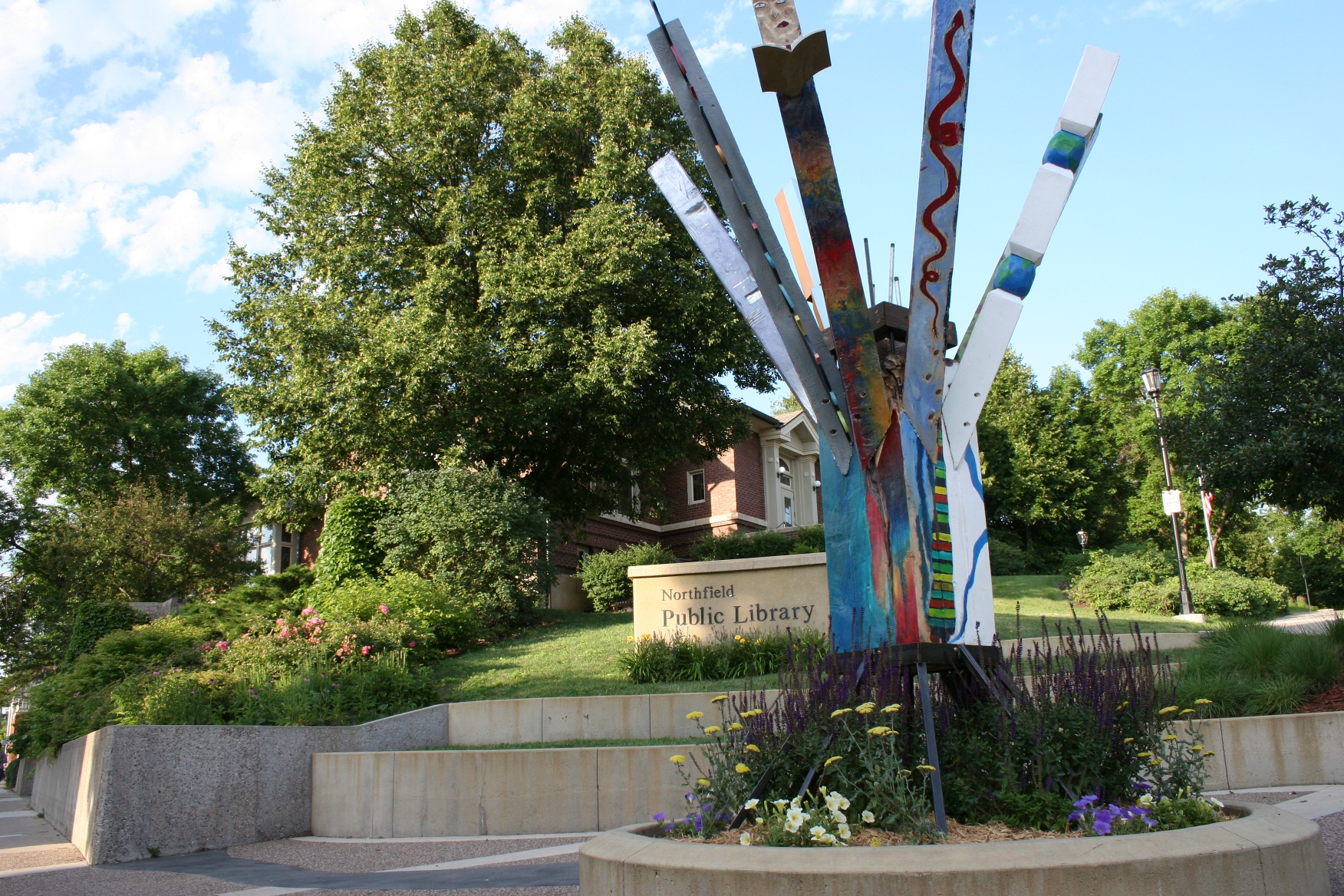
The recently-installed “Tree of Knowledge and Delight” at the Northfield Public Library.

At 4:30 p.m. this Friday, June 29, Northfield celebrates its latest addition to downtown art at the official unveiling of the “Tree of Knowledge and Delight,” a sculpture created by 10 Northfield High School students and installed in the Northfield Public Library plaza.

A St. Olaf College emeritus professor of art and a St. Olaf art apprentice guided the students in their non-credit, extra-curricular public art course which resulted in the sculpture. Funding for the Northfield Young Sculptors Project came via a $4,150 Legacy grant approved by the Southeastern Minnesota Arts Council.

I viewed the sculpture for the first time Sunday evening. I’ll admit that I didn’t study the sculpture like I should have. But oftentimes it takes me awhile to warm up to abstract art.

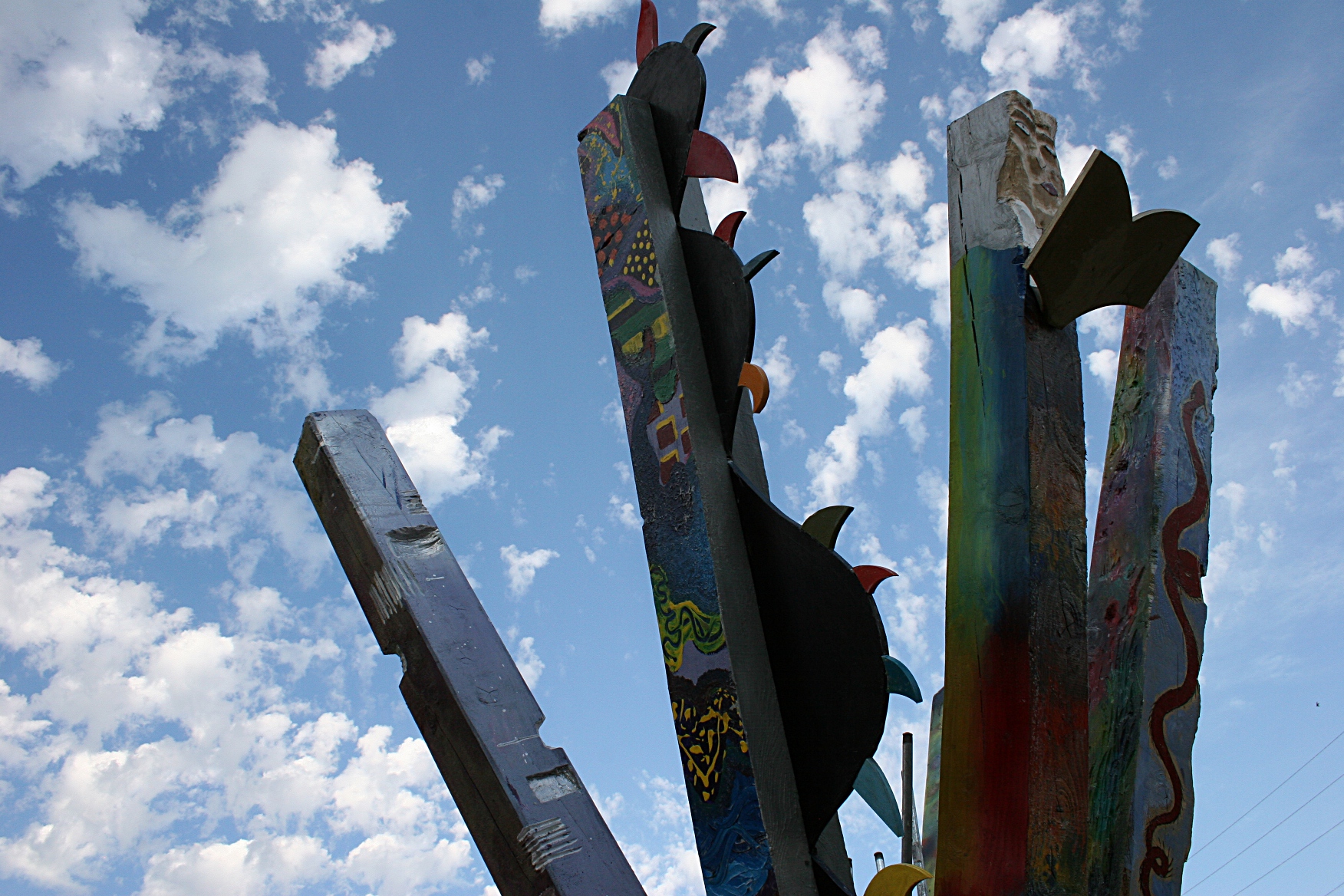
Eight branches comprise the tree sculpture.

But if you take the time to examine the tree, you will see the visual themes related to learning and individual artistic expressions—the book, the faces, the snake, the harmony of colors and more.

That students would have this opportunity to create such a sizable piece of public art seems exceptional. What an encouragement to them as young artists.

The “Tree of Knowledge and Delight” will remain at the library plaza for a year before relocating to a permanent home at Northfield High School. Plans call for a public sculpture to become an annual project for NHS students and their professional mentors. And that is good.

Yet, aside from this organized project, I hope students will not overlook the art in their everyday lives. For that is the art which, as I see it, defines the artistic world in its simplest, purest, most grassroots form.

FYI: This project was also supported by the Northfield Arts and Culture Commission, the Northfield Public Library, Northfield High School and the City of Northfield.

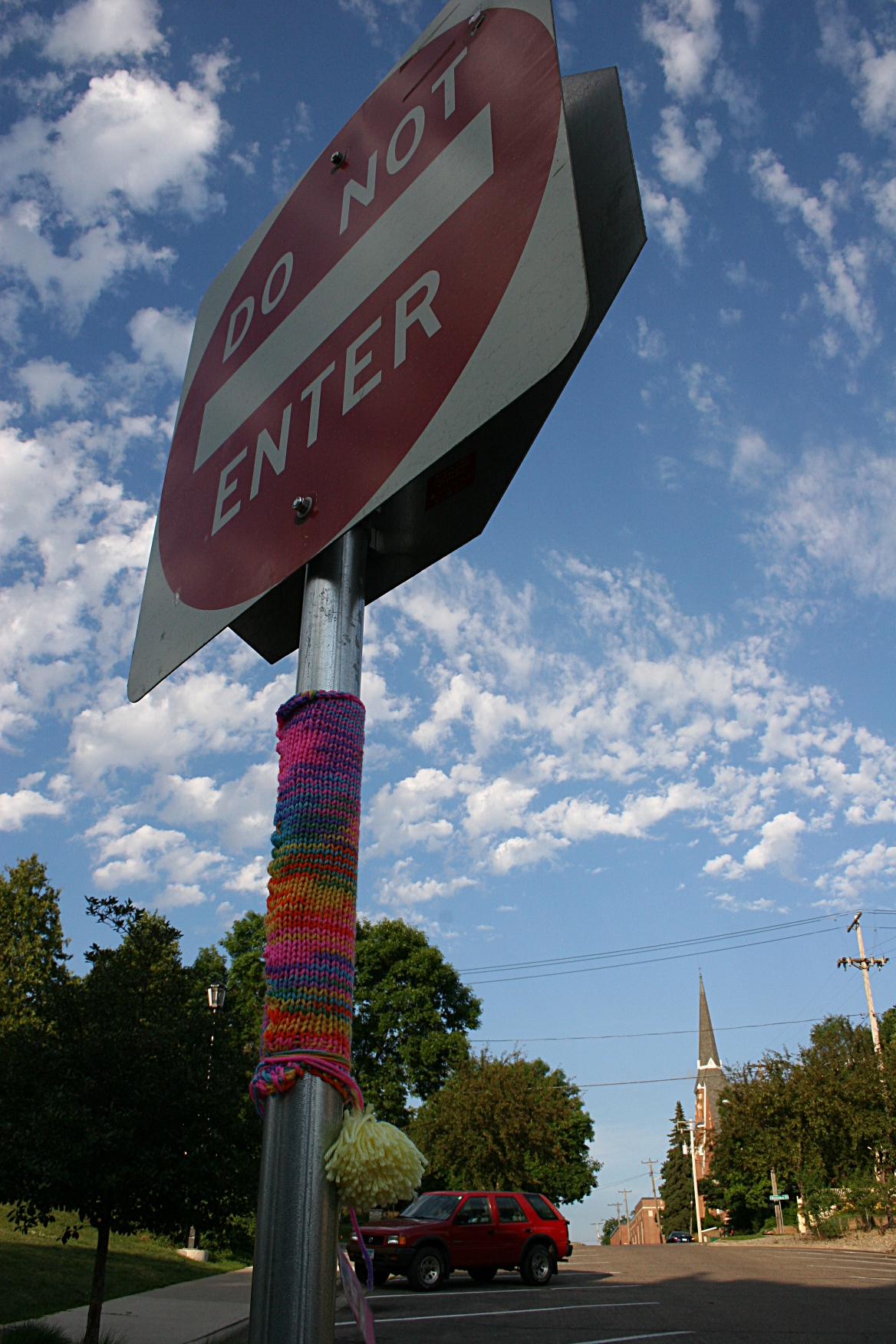
Right next to the Northfield Young Sculptors Project you’ll see this knit art wrapped around a “Do not enter” sign post. An attached tag, which includes a photo of a young woman, reads: “It’s immortality, my darlings.– Alison.” This is apparently a memorable line by character Alison DiLaurentis from the teen drama television series, “Pretty Little Liars.” Never heard of it. Any idea who placed this quote and knit art on the Northfield street sign? And what does that message mean anyway?
© Copyright 2012 Audrey Kletscher Helbling


From LEGOs to college-bound, my son turns 18 February 9, 2012

Filed under: Uncategorized — Audrey Kletscher Helbling @ 8:35 AM
Tags: , , , ,

Notice the size of Caleb's hand when he was only 1 1/2 days old.

MY SON, my youngest, turns 18 today, a bittersweet day for this mom soon facing an empty nest after 26 years.

Caleb’s officially an adult now. But that doesn’t mean his dad and I will allow him to drive alone to Canada to check out the University of Manitoba in Winnipeg because we don’t have passports and he does. This would be his plan, not ours.

Yes, he’s strong-willed and smart, traits that will take him far in life. Yet those same qualities can frustrate the heck out of his parents who happen to know just a wee bit more than him, even if he doesn’t think that could be remotely possible.

I don’t want to focus on the struggles sometimes oftentimes waged between parents and teens. Rather, I want to celebrate my son. This will sound all trite and mushy and everything. But I value every day I have my boy in my life, even those days that challenge my parenting skills and patience.

You see, in 2006 Caleb was struck by a hit-and-run driver while crossing the street to his school bus stop. The panic that seared my soul on that morning is unlike any I’ve experienced. To those of you who have lost children, my very heart and soul ache for you. I cannot imagine a greater loss. (Caleb, by the way, suffered only minor injuries in the incident.)

With that background, you will understand why I tend to turn introspective on my son’s birthday.

This year I decided to pull out a three-ring binder filled with Christmas letters I’ve written through the years. These represent my family’s history, including interesting tidbits about my three children. Not to worry; I won’t give you a play-by-play of Caleb’s first 18 years of life. But I will pull out a few choice stories for your amusement.

Let’s start with his birth 18 years ago. Caleb arrived weighing 10 lbs, 12 oz., and stretching 23 ½ inches long. Yes, he was born via C-section. No, the hospital did not have diapers large enough to fit him. And, yes, I had to return a pack of under-sized diapers that a friend gave me prior to the big boy’s birth.

By age four, my son was taking things apart to see how they work—or asking me or his dad to do so—and was interested in all things space. Those interests continue. Saturday he placed first in the gravity vehicle race and third in the astronomy competition at the regional Science Olympiads. Sunday he dismantled my non-functioning computer monitor which now lies in a heap on the living room floor.

One of my all-time favorite photos of my son at age 5.

During his fifth year of life, Caleb blind-sided me and broke my heart by proclaiming that he loved his kindergarten teacher more than me. But the affair proved short-lived after Mrs. K caught him stuffing green beans into his milk carton at lunchtime.

About this same time, my boy discovered the joys of reading on his own and building with LEGOs. This may seem rather mundane to mention. But I am convinced that his strong interest in books and in LEGOs contributed to his academic success through the years.

By third grade, Caleb was reading books like The Benefits of Bacteria (hey, I’m not making this up) and had chosen his life’s profession as a rollercoaster designer. Today he’s planning a career in computer engineering. See how that works? If you’re the parent of a young child, you can foresee your child’s future in his/her current interests.

In 2005, my husband and I gave Caleb a bow and arrows and made him promise never to aim toward the neighbor’s house.

A year later, deep into computers, he began checking out thick manuals on Java Script and Html from the public library. He was only 12.

During these pre-teen years, Caleb became an accomplished unicyclist who managed to wipe out—enough to prompt a 911 call from a bystander—while riding a two-wheeled bicycle on a public bike trail. Go figure. We took seriously his mantra of “Caleb likes to live life on the edge.”

The following summer he broke his little finger while unicycling. No, he didn’t tumble from the unicycle, but rather jammed his hand into a parked car while riding on our driveway.

Caleb in a senior class picture I shot last fall.

And so, eventually we reach today, 18 years after his birth, to the man Caleb has become. At well over six feet, he towers over the rest of us and delights in reminding his sisters of his height and their shortness.

He’s smart and funny and loving (although I don’t get nearly as many hugs as I once did) and makes me proud. I can’t wait to see what the next 18 years bring for my precious boy, my son.

© Copyright 2012 Audrey Kletscher Helbling