Minnesota Prairie Roots

Writing and photography by Audrey Kletscher Helbling

Reflecting on bee lawns, invertebrate inns, learning & the future August 29, 2024

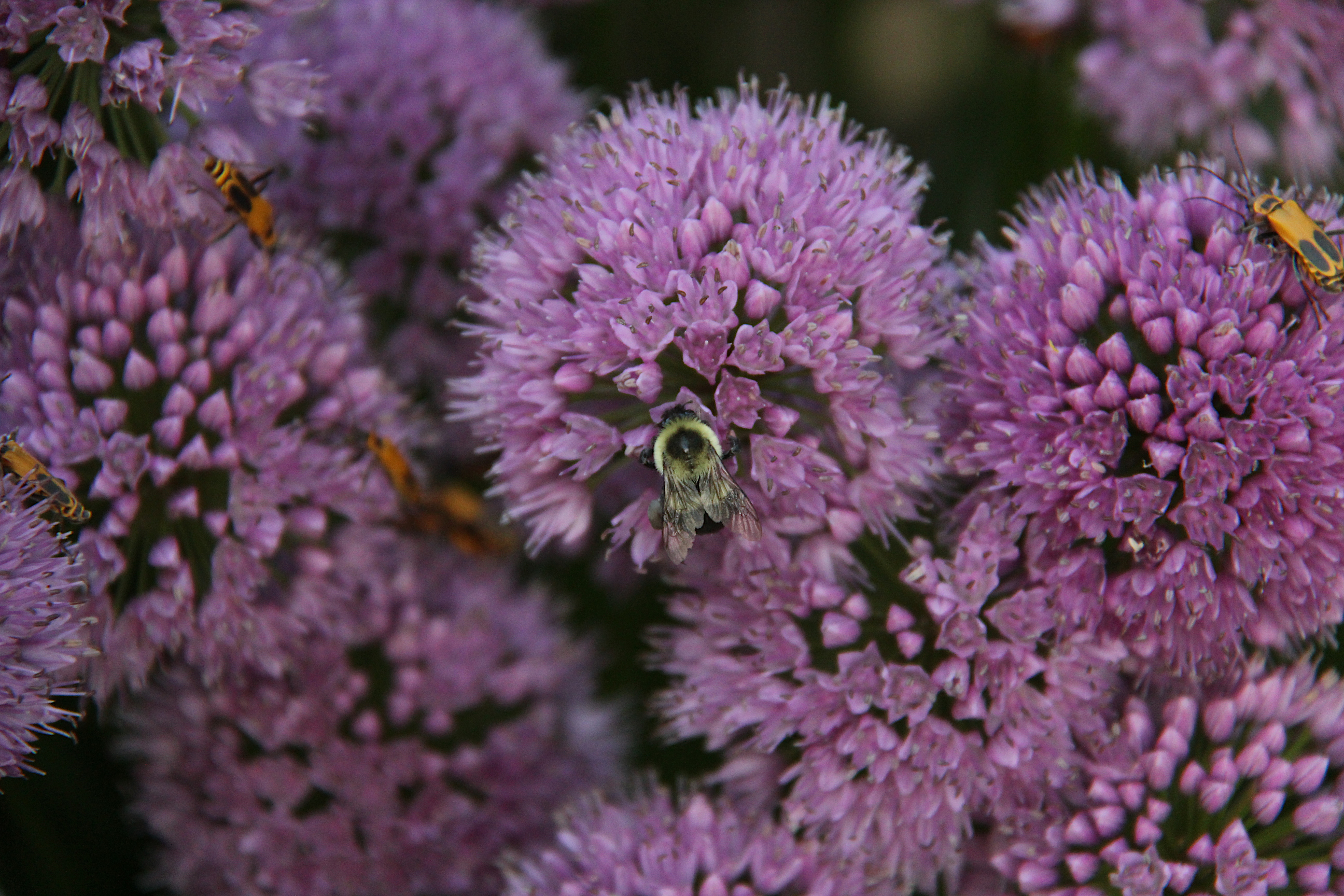
I spotted this bee and other bugs on flowers in the Rice County Master Gardeners’ Teaching Gardens. (Minnesota Prairie Roots copyrighted photo August 2024)

ADMITTEDLY, I NEVER EXCELLED in science. I sort of just got by, learning what I needed to learn to get reasonably good grades in science class. But if I was to go back to the classroom, I’d listen more intently, ask more questions, figure out how the information I was taught actually related to me and my world. In other words, I wouldn’t simply absorb, regurgitate and then move on, which seemed to be the way subjects were taught when I was a student.
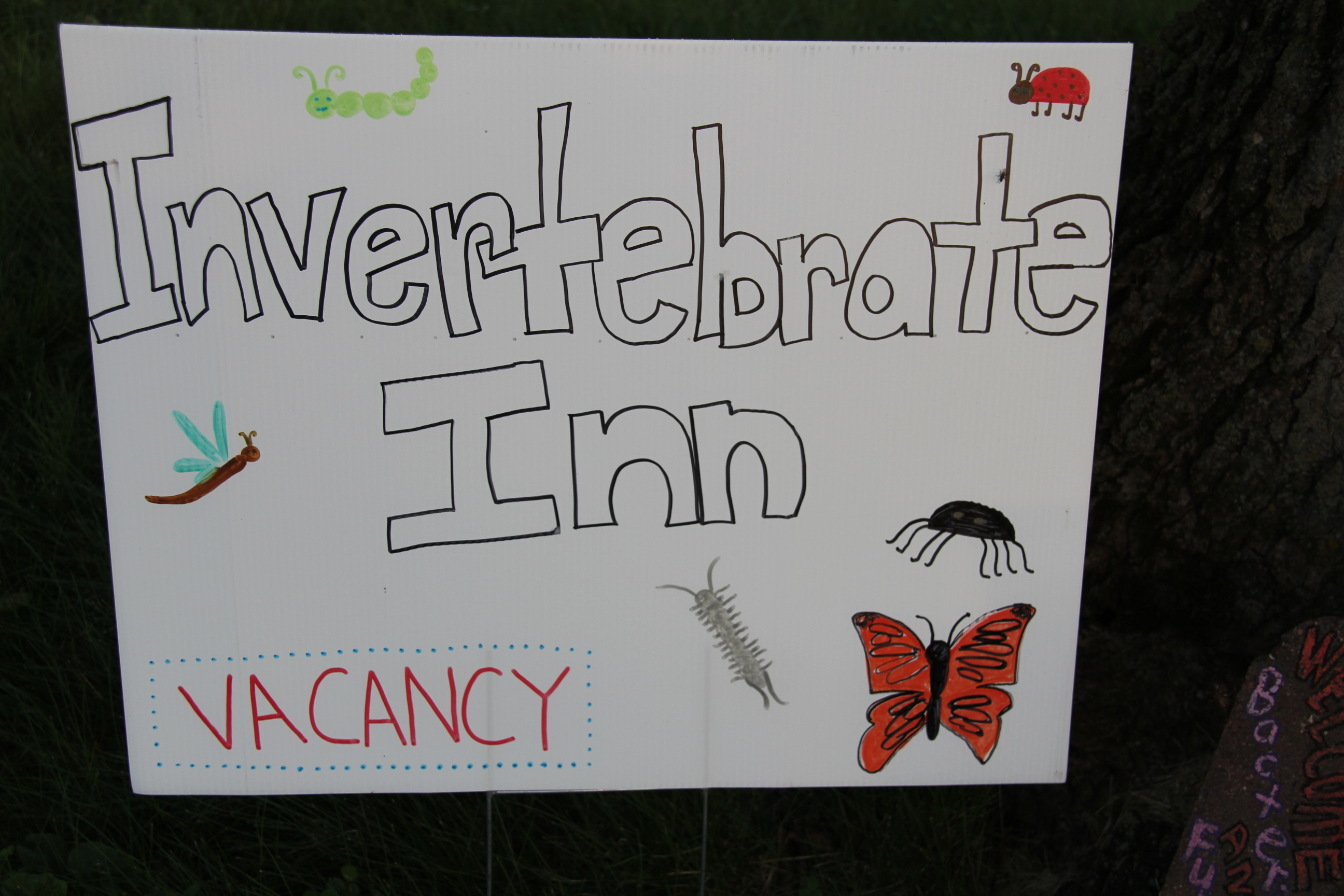
This sign drew me to the base of a tree, where I found an inn and a bee lawn. (Minnesota Prairie Roots copyrighted photo August 2024)
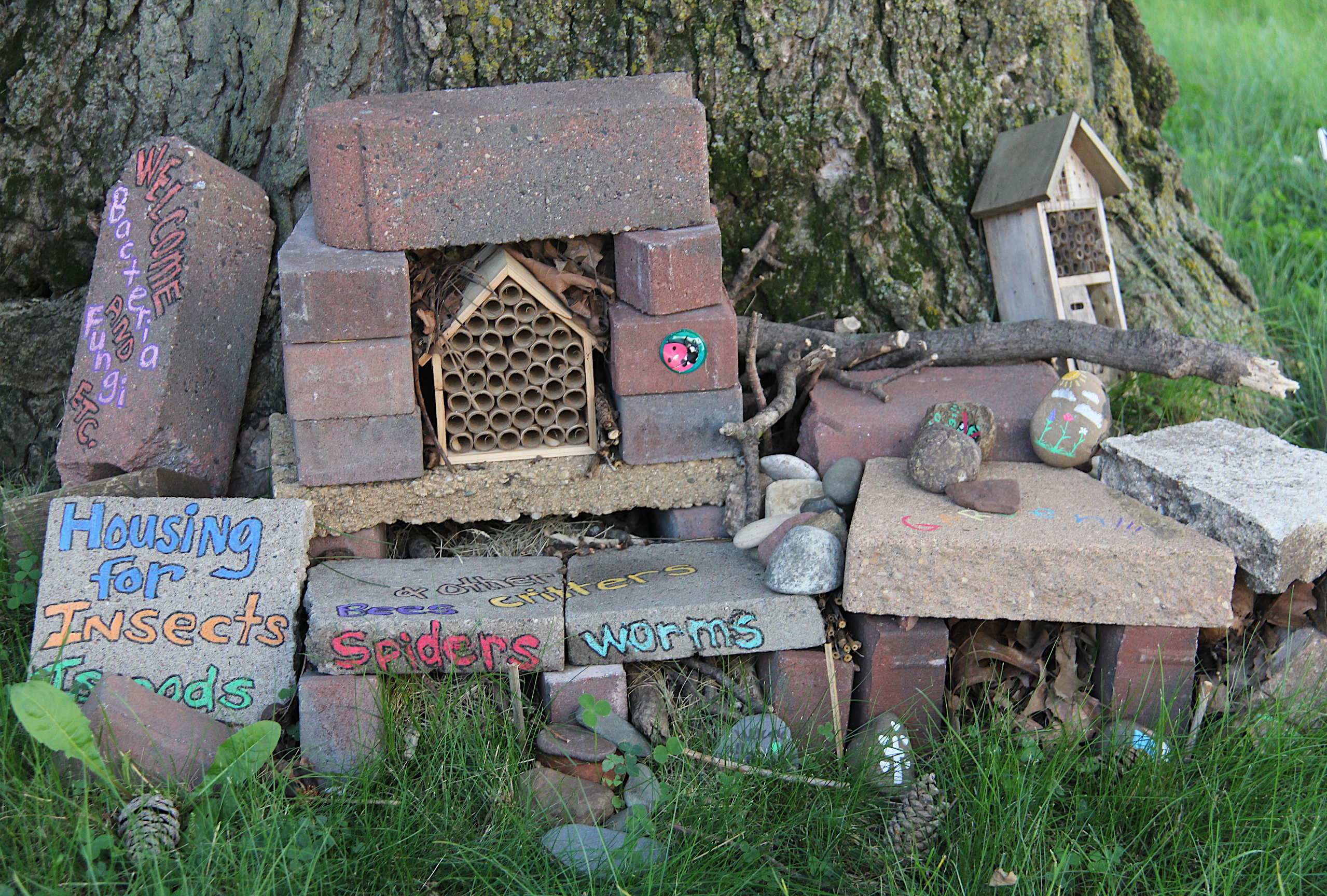
Bricks, stones, sticks and more comprise this haphazard housing unit. (Minnesota Prairie Roots copyrighted photo August 2024)
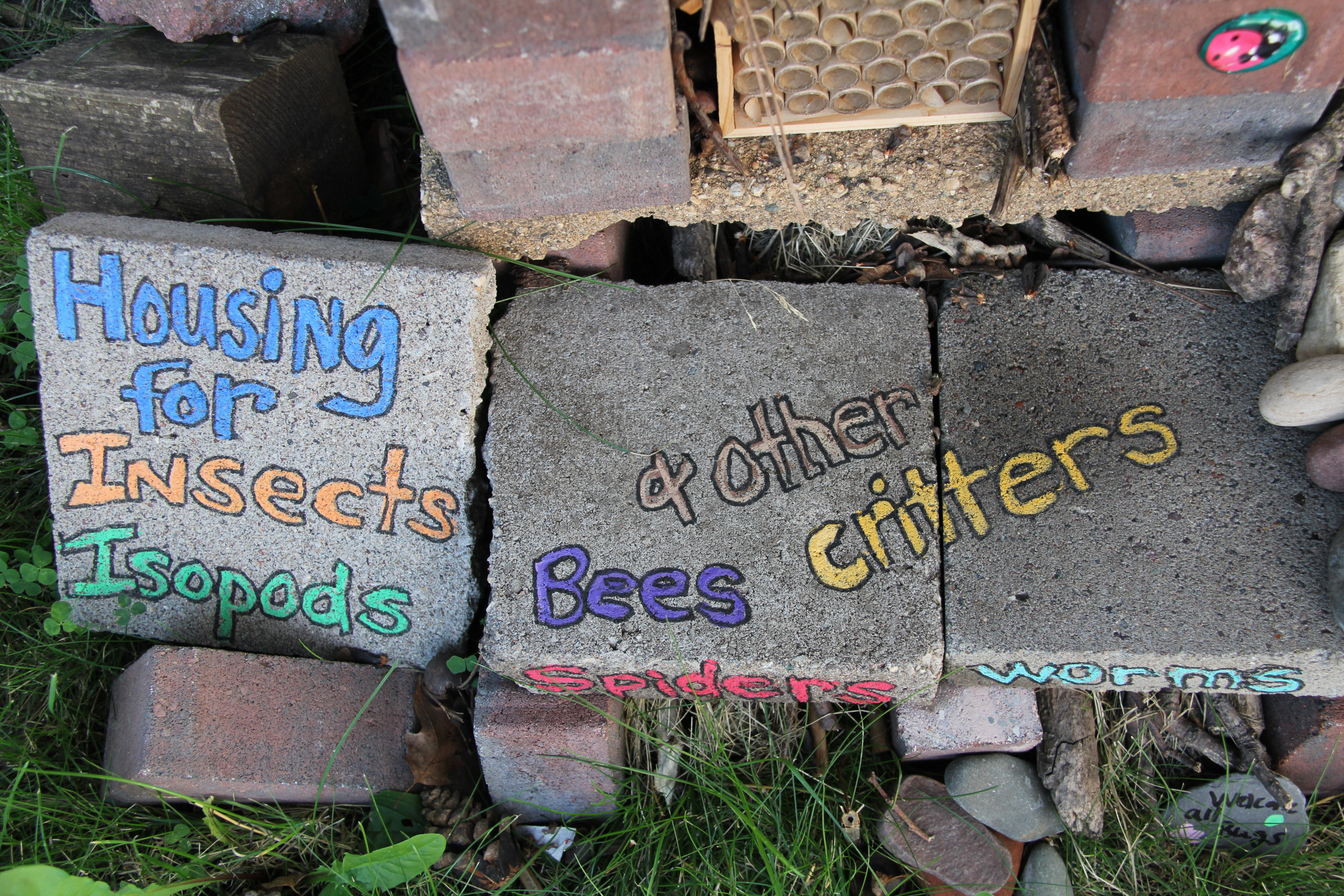
Identifying signage on the Invertebrate Inn. (Minnesota Prairie Roots copyrighted photo August 2024)

Now, as an adult, and an aged one at that, I realize that the core of learning is not memorization. It is rather taking in information that sparks interest, raises questions, causes independent thinking. I am still learning well into my sixties, this year marking 50 years since I graduated from high school.
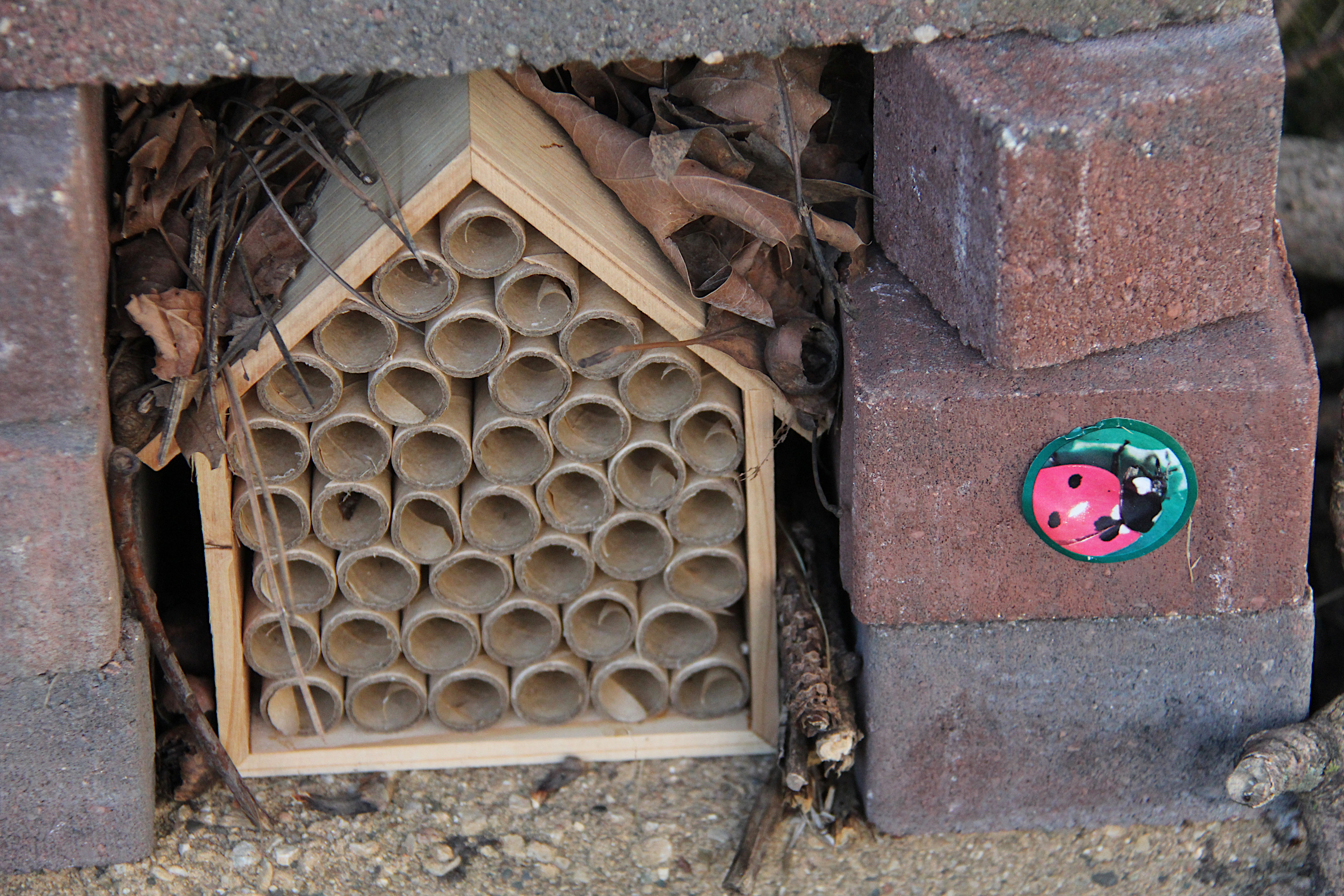
I trust this structure would be a good home for a bug. (Minnesota Prairie Roots copyrighted photo August 2024)

Today I learn because I want to, not because I need to take some class for credits or to earn a degree.
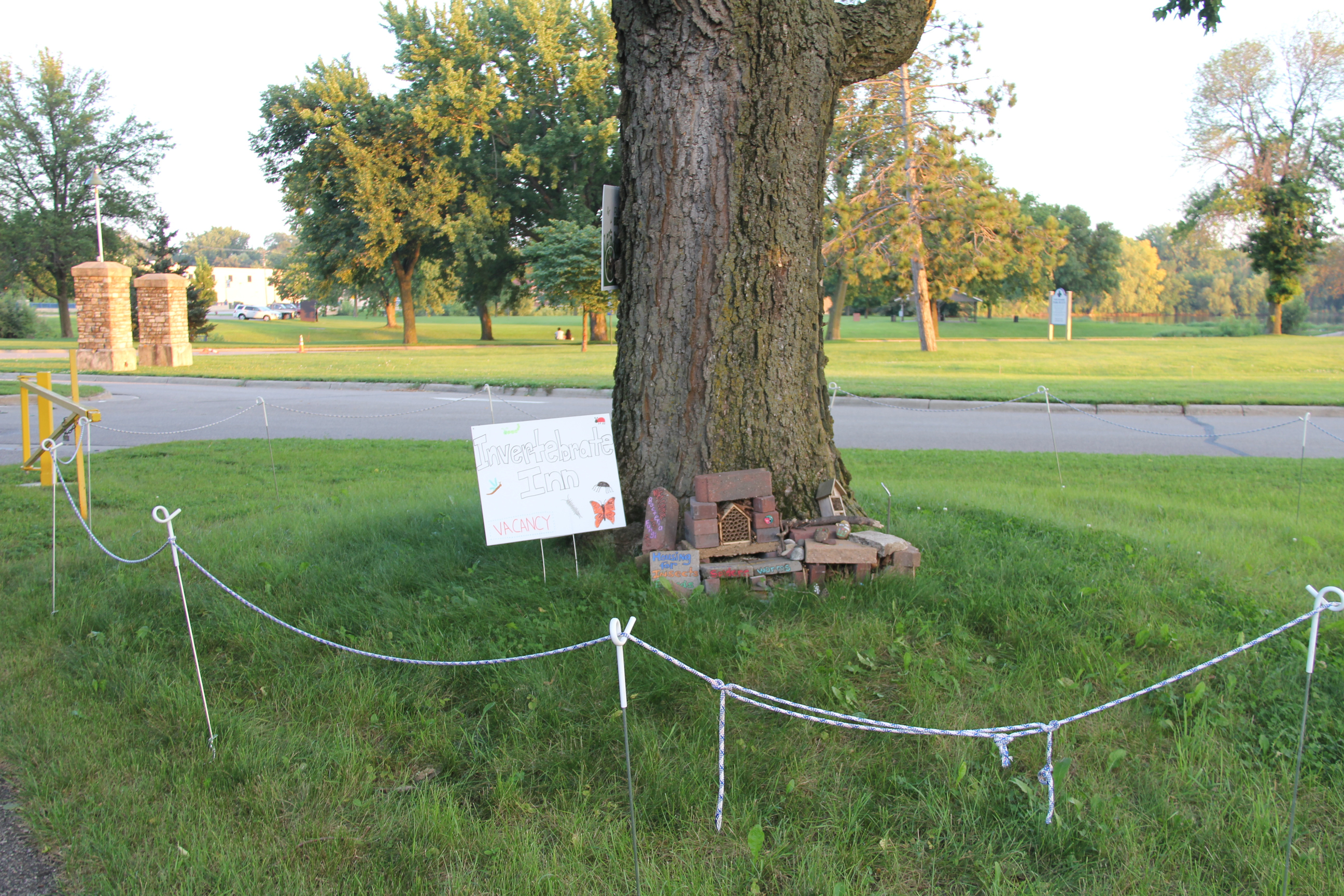
The bee lawn was roped off when I visited. (Minnesota Prairie Roots copyrighted photo August 2024)
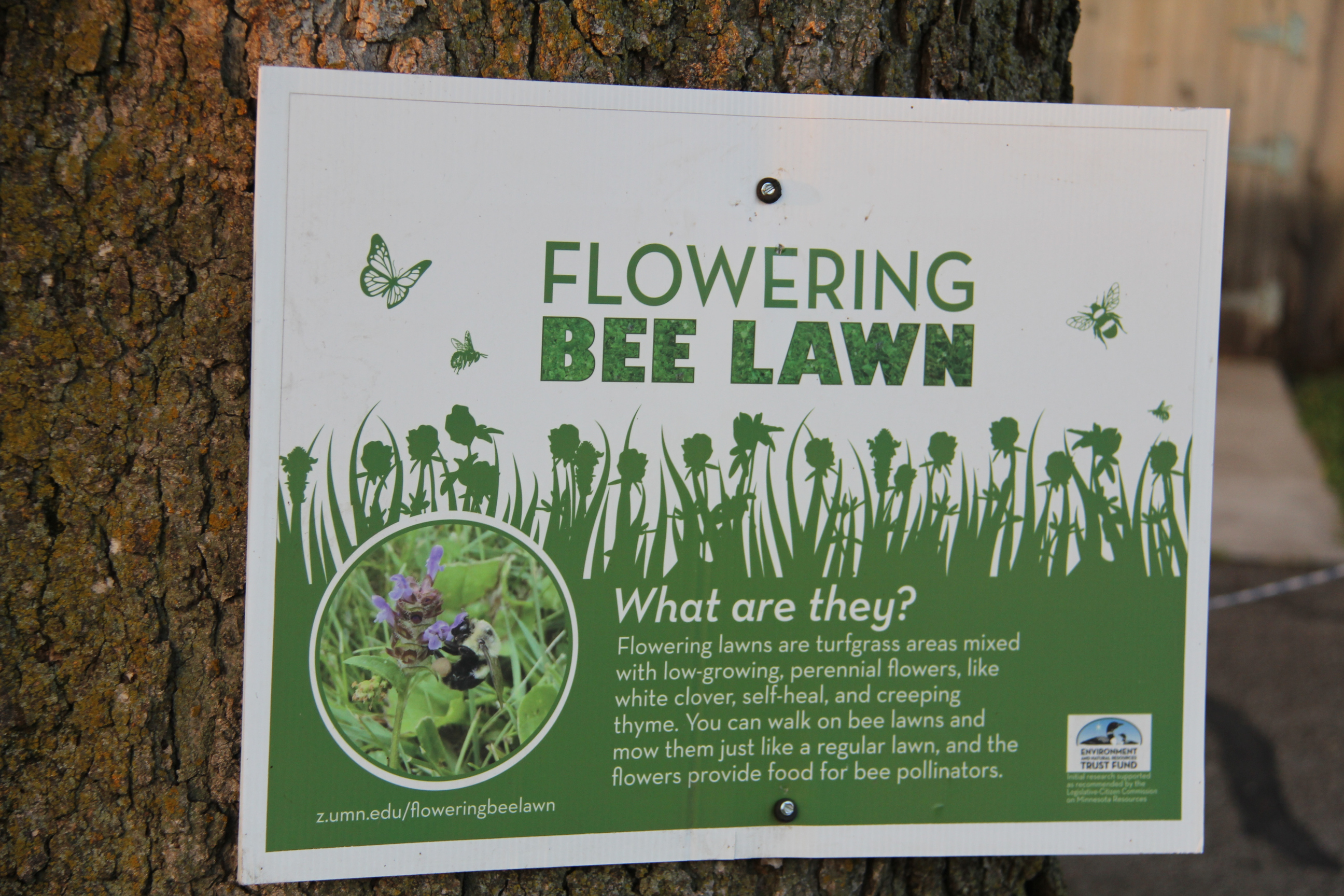
Signage on the tree explains a flowering bee lawn. (Minnesota Prairie Roots copyrighted photo August 2024)
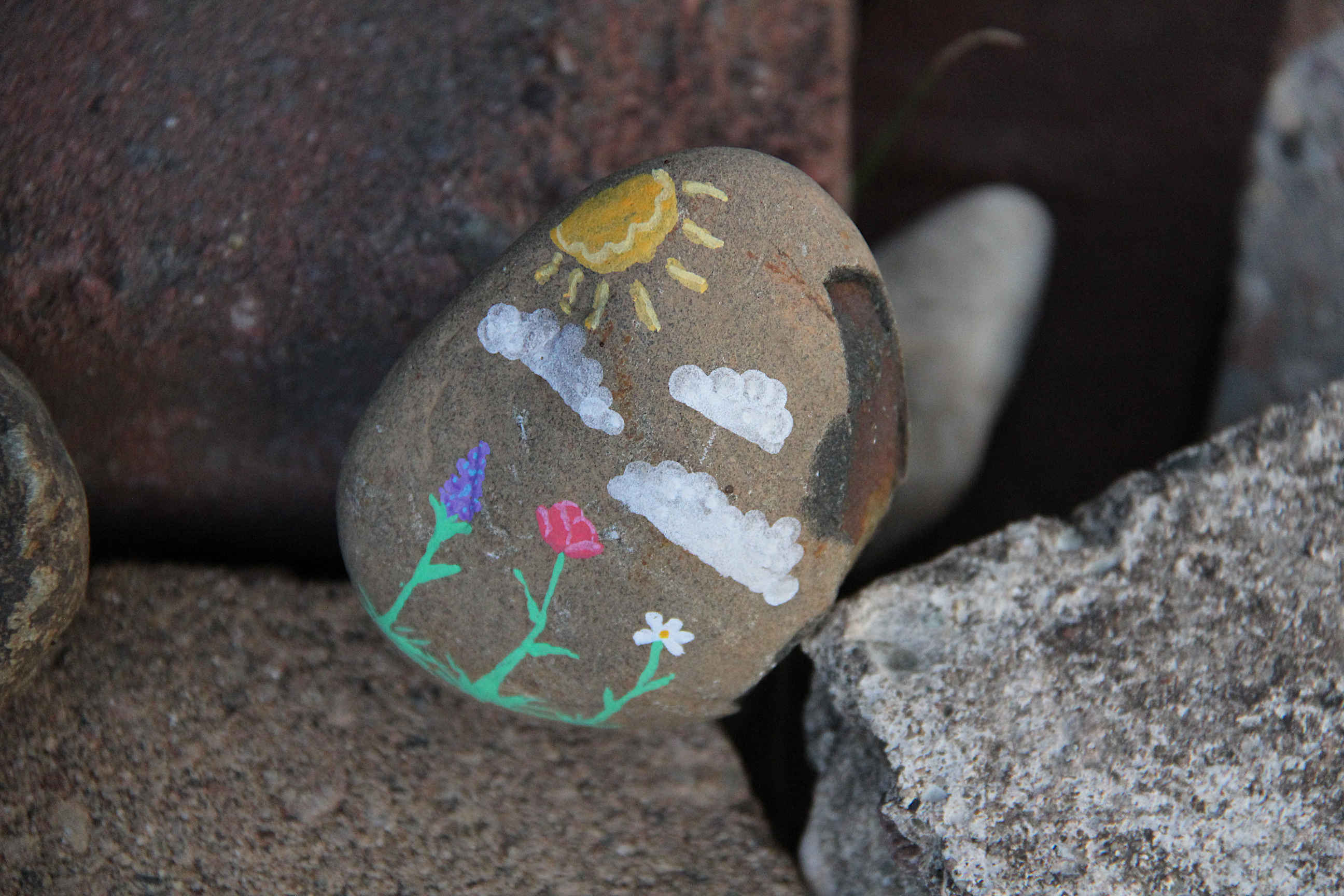
Fitting floral rock art in the inn. (Minnesota Prairie Roots copyrighted photo August 2024)

My latest delve into science was prompted by a visit to the Rice County Master Gardeners Teaching Gardens in Faribault. There I spotted an Invertebrate Inn and a bee lawn, recent additions to the beautiful gardens located at the Rice County Fairgrounds. These are not exactly novel ideas. But I’d not previously considered them much and how they benefit the natural world. Low-lying bee lawns, with their clover and other flowers like creeping thyme, provide nectar and pollen for pollinators.
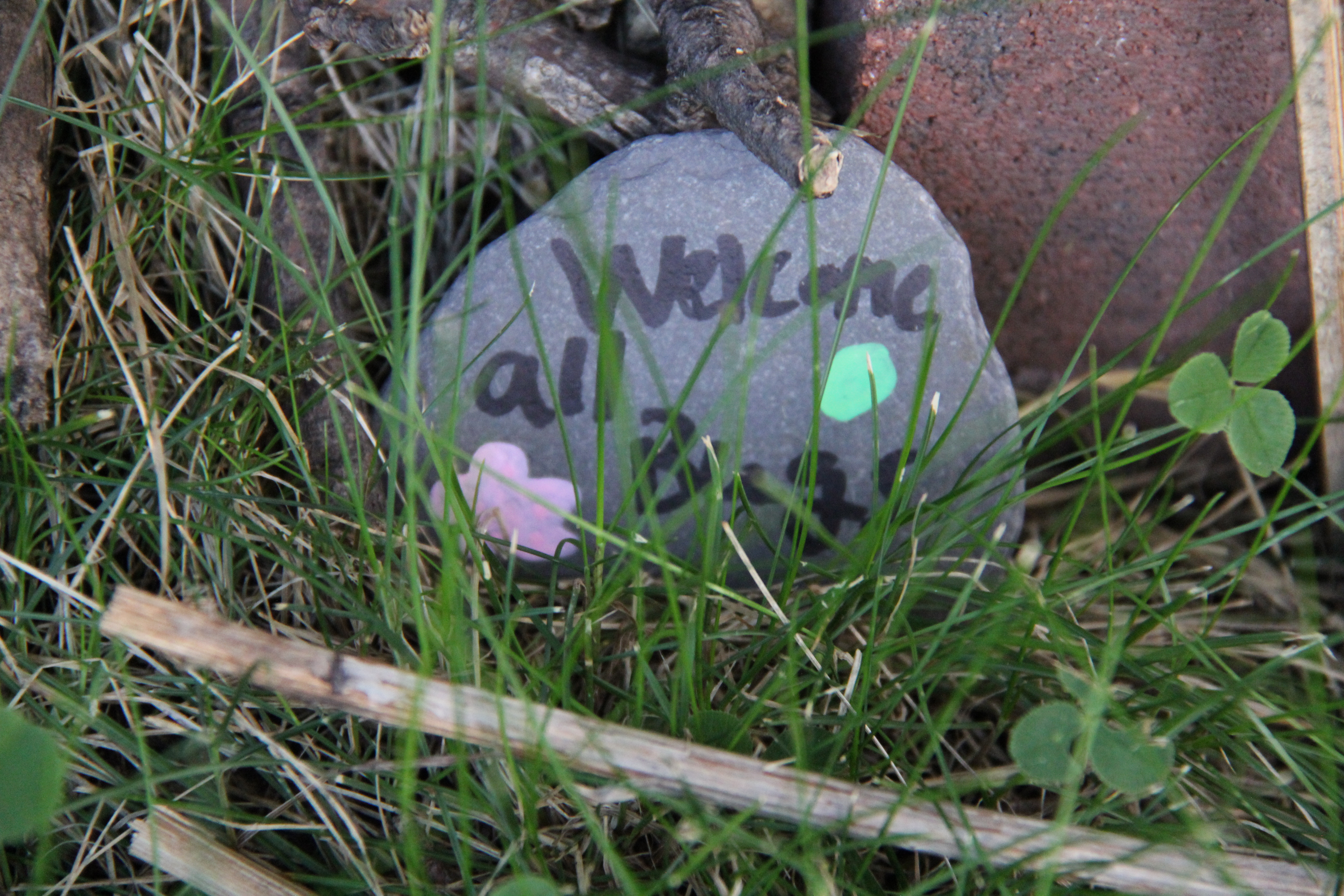
At the inn, a welcome sign for guests. (Minnesota Prairie Roots copyrighted photo August 2024)

In some ways, the inn and the bee lawn remind me of childhood days on the farm with our grass anything but weed-free and manicured. Dandelions and clover were prolific. No weedkiller or insecticides were used except on crops. No nothing applied to the grass, because who cared and who had time to nurture a lawn when there were crops to plant and cultivate and animals to tend?
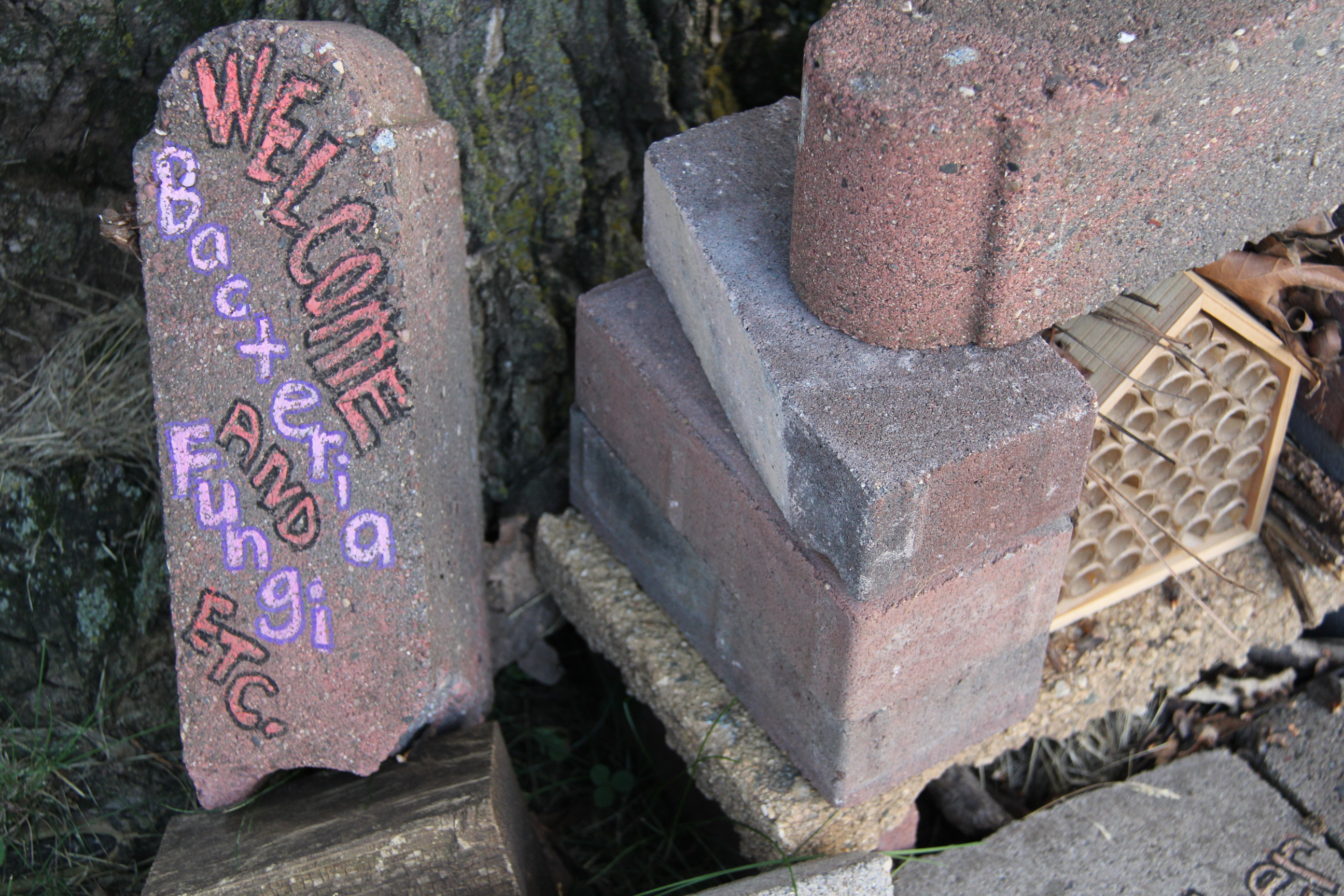
Housing for more than just insects, isopods, bees, spiders, worms and other critters. (Minnesota Prairie Roots copyrighted photo August 2024)

Times have changed as farming and yard care have evolved. Insecticide and herbicide usage is prevalent. We would be naive to think this has not affected pollinators like butterflies and bees. And so when I discover something like a bee lawn and an Invertebrate Inn, I feel a spark of joy, a sense of gratitude for those who create them.
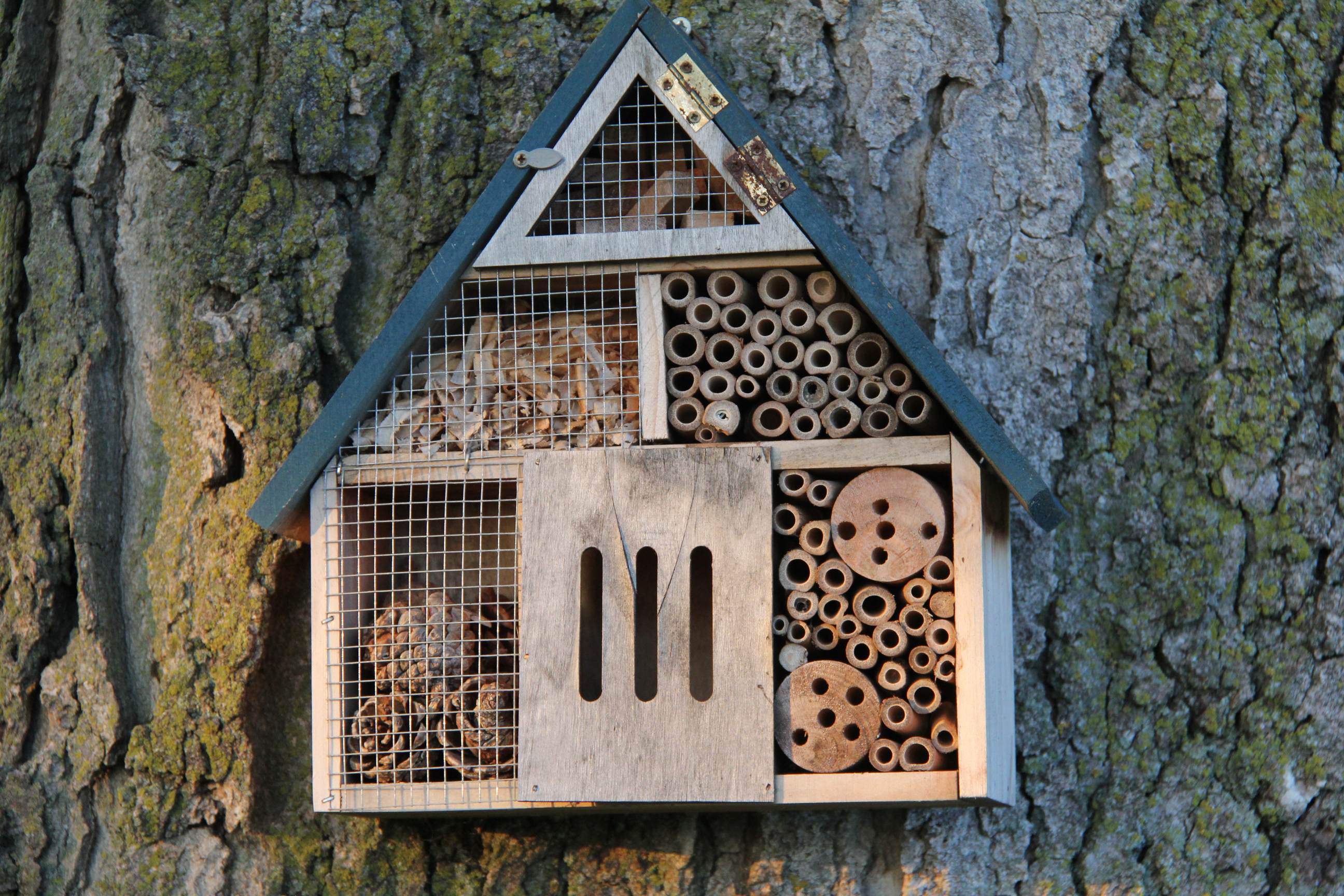
High rise housing. (Minnesota Prairie Roots copyrighted photo August 2024)

I want my grandchildren to understand that this world they’ve been given is one that needs to be nurtured and appreciated, taken care of in a way that perhaps my generation did not. Sure I celebrated Earth Day, wore Earth Shoes and spouted environmental platitudes of the 1970s. But did that really mean anything, make any long-lasting impact? It was a beginning, I suppose.
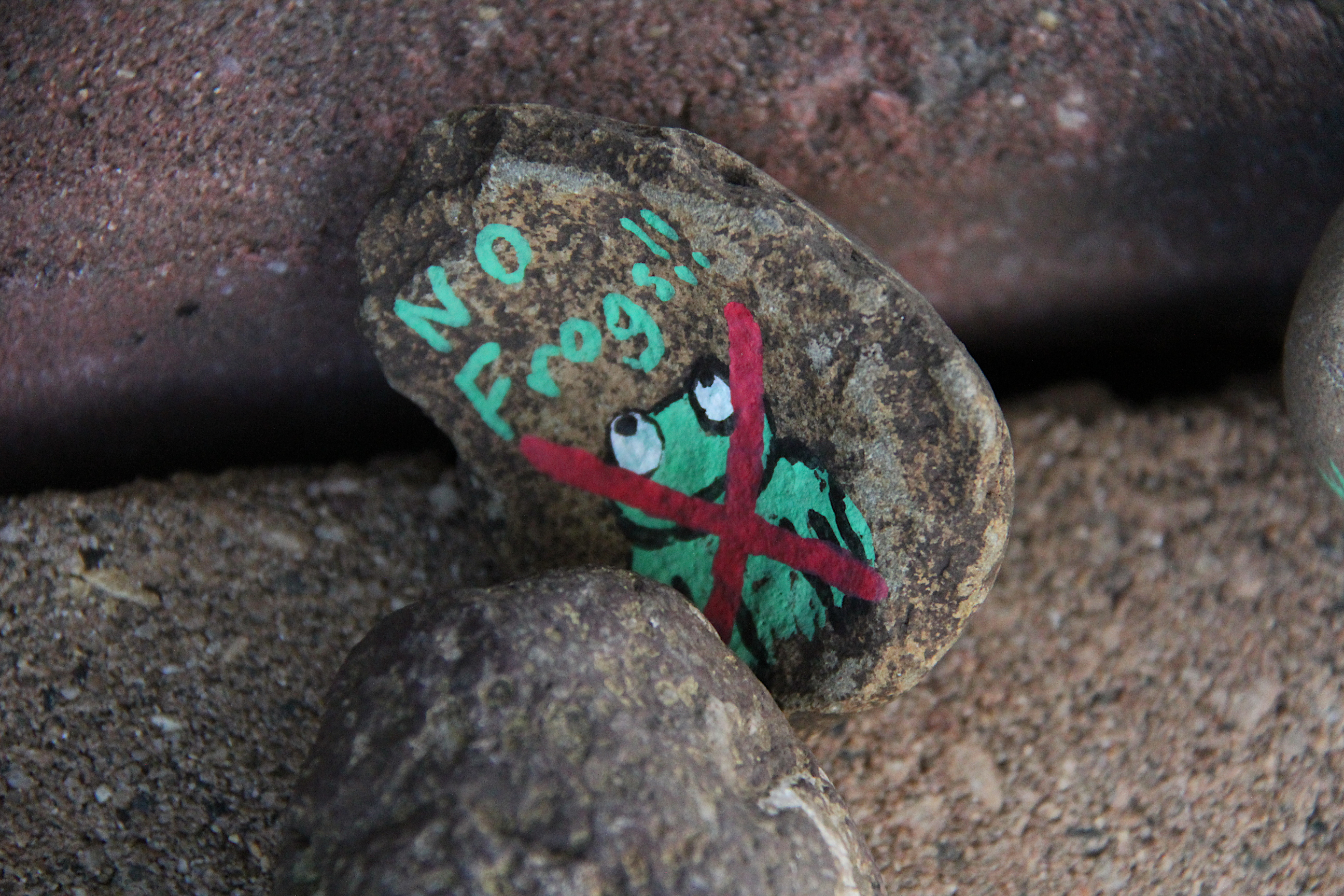
Frogs are banned from the inn. (Minnesota Prairie Roots copyrighted photo August 2024)

I want my grandchildren to ask questions in class, seek out information, learn in a way that is focused on curiosity rather than feeding back facts. I want them to care about the bees and the butterflies and the bugs.
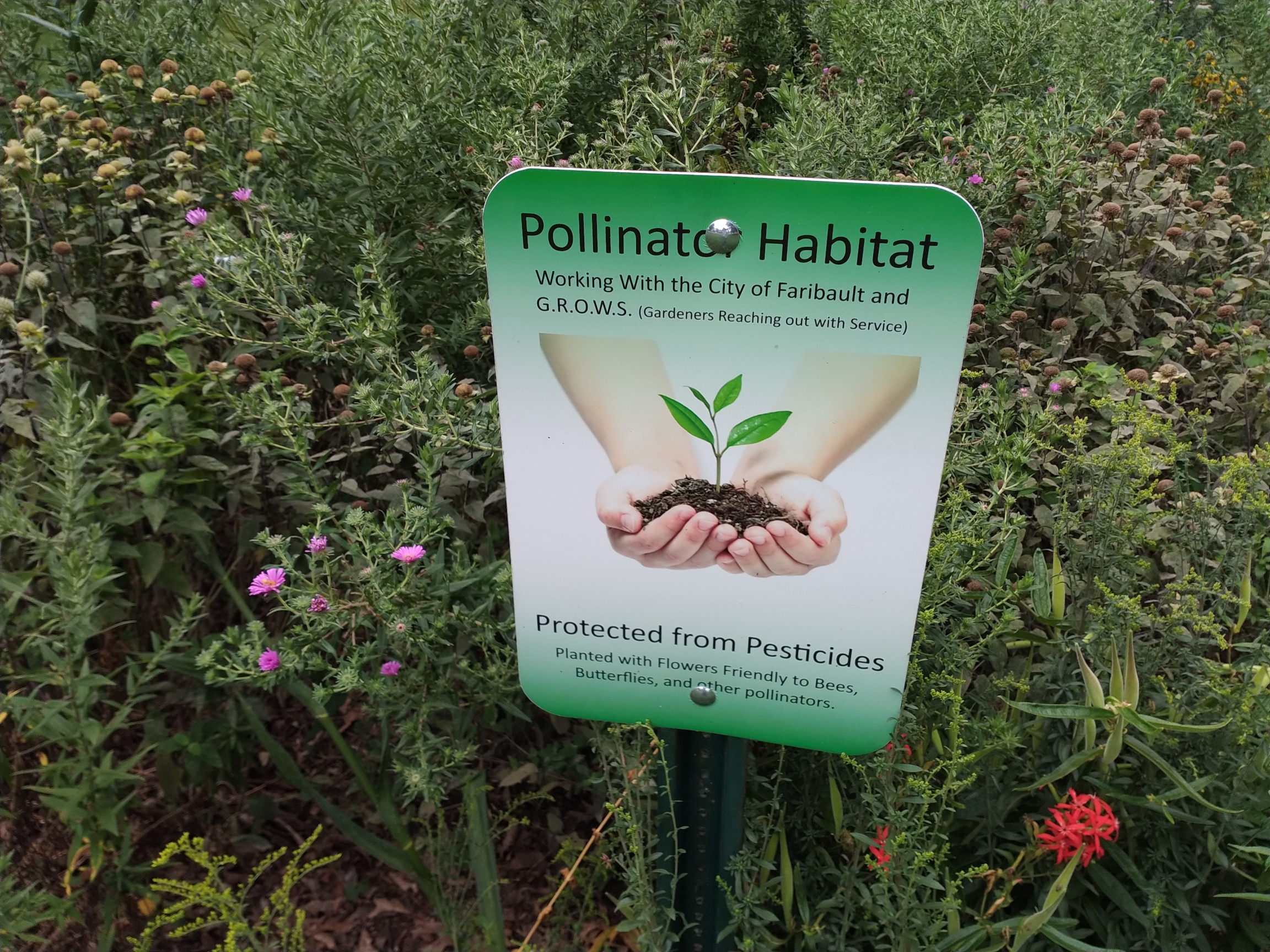
There are other bee lawns, pollinator gardens, etc., in my community, including this one in Central Park. (Minnesota Prairie Roots copyrighted photo August 2024)

I want them to connect with nature, to understand that what they do, or don’t do, to the earth matters. I want them to get their hands dirty in the soil, overturn rocks, hold bugs, pick up worms, plant flowers and, most of all, appreciate this natural world of ours. The science of it. The beauty of it. The peace it brings to the soul. The joy it brings to the spirit. And I want them to care. Always.

FYI: Click here to watch an informative video about creating a bee lawn by Faribault master gardener Jayne Spooner.

© Copyright 2024 Audrey Kletscher Helbling


Waiting for the solar eclipse in Minnesota April 7, 2024

The moon rises while the sun sets. (Minnesota Prairie Roots copyrighted file photo)

SUN. EARTH. SKY. MOON.

Monday, April 8, marks the date of much hype, intense interest and eyes focused skyward for an afternoon solar eclipse. Here in Minnesota, we will witness a partial eclipse with the moon covering about 75 percent of the sun around 2 pm.

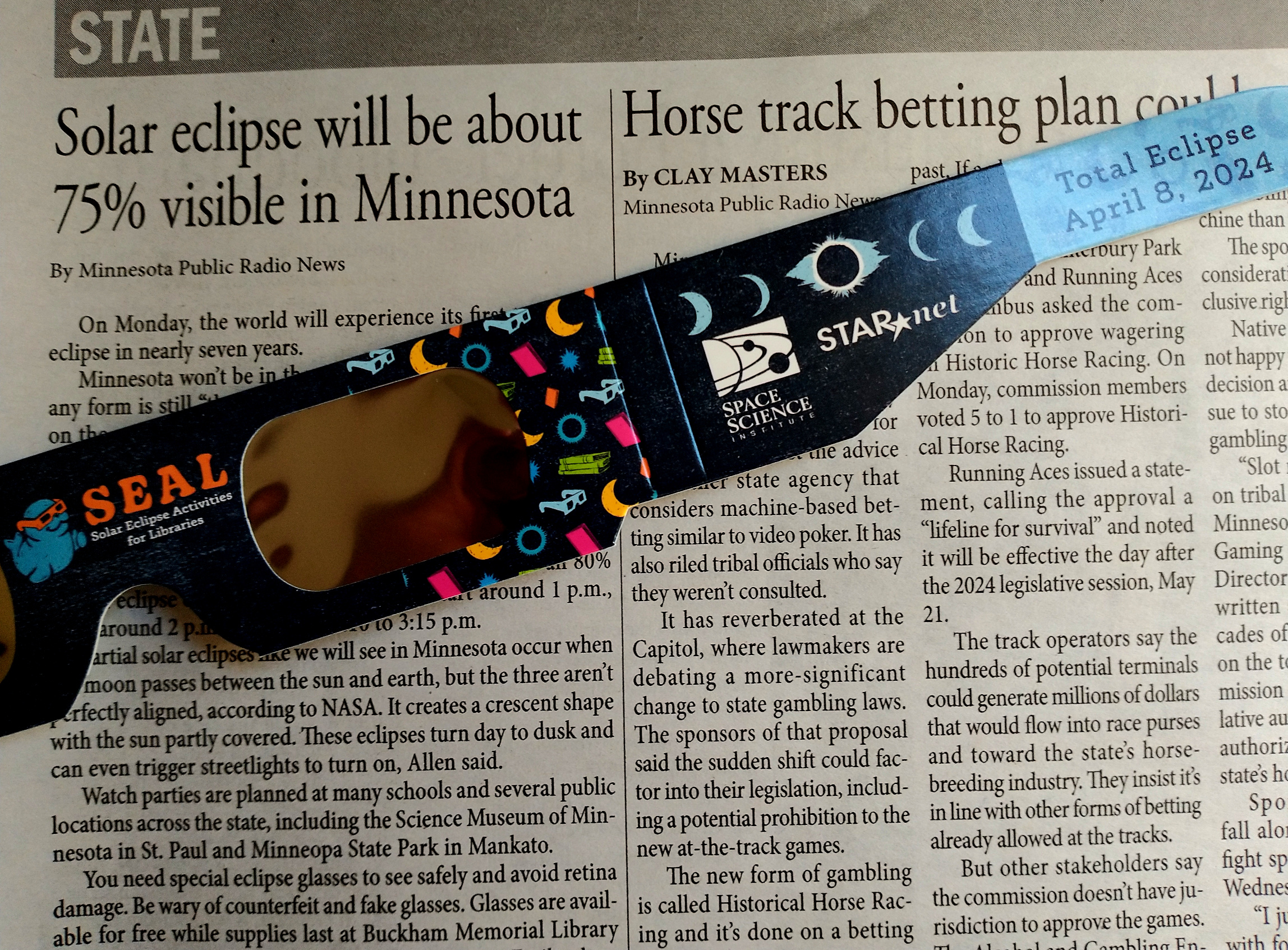
Solar eclipse glasses overlay a Minnesota Public Radio News article published in the Faribault Daily News. (Minnesota Prairie Roots copyrighted photo April 2024)

But…the weather forecast is for cloudy skies, meaning disappointment for many in Minnesota who hope to view the solar event through special eye wear. I picked up free eclipse glasses at my local library. So I’m set, just in case the cloud cover lifts.

Carleton College in nearby Northfield is also set to celebrate at Goodsell Observatory, where small telescopes will be placed outside the building for solar viewing beginning at noon. That is if the weather cooperates. (Check the website for updates.) The event is open to the public.

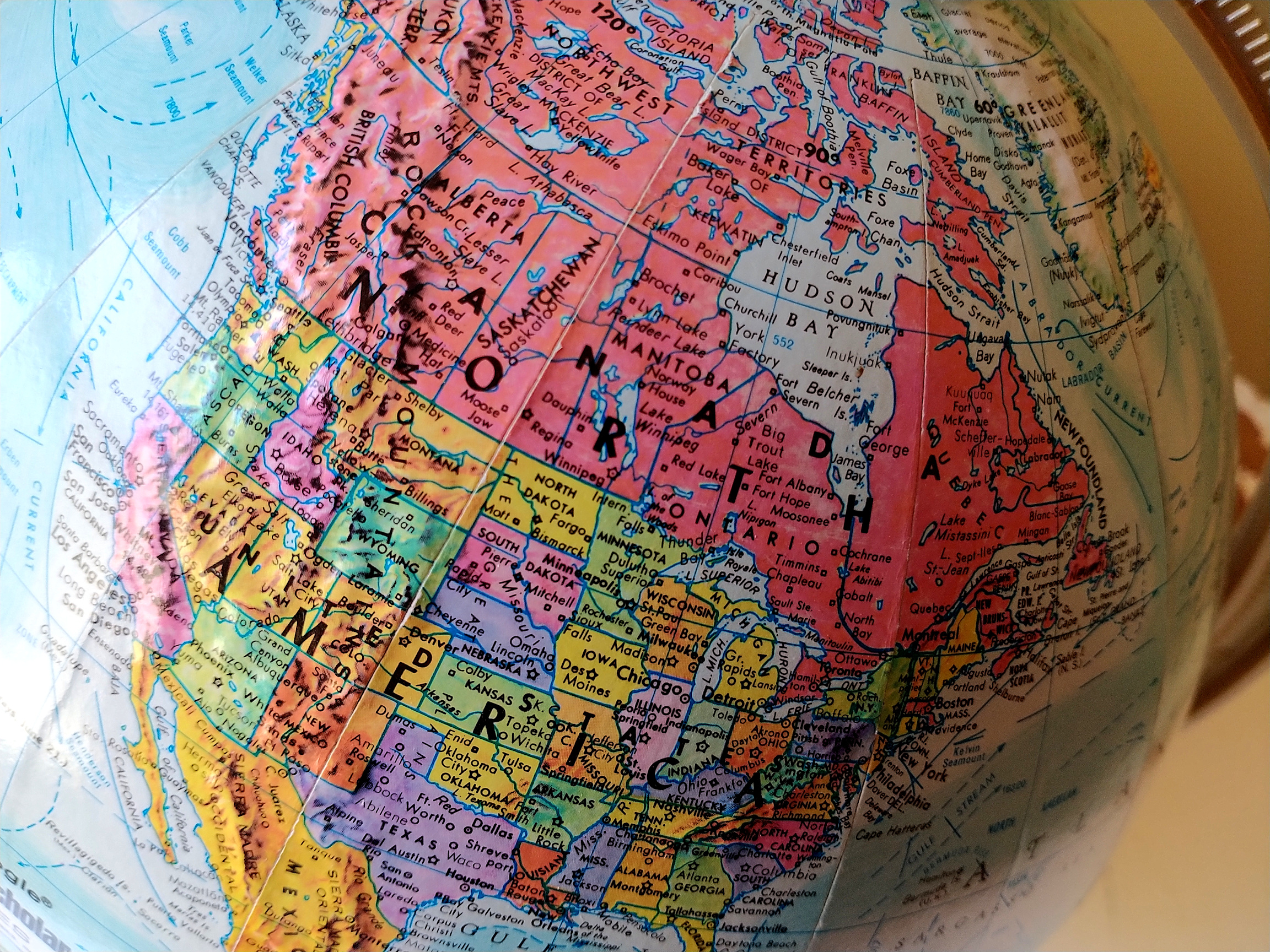
The total solar eclipse will cut a diagonal across the country from Texas through Indiana to New York and beyond. (Minnesota Prairie Roots copyrighted photo April 2024)

No matter, I expect to notice visible changes in daylight as the moon passes between the sun and earth from 12:45-3:15 pm in Minnesota.

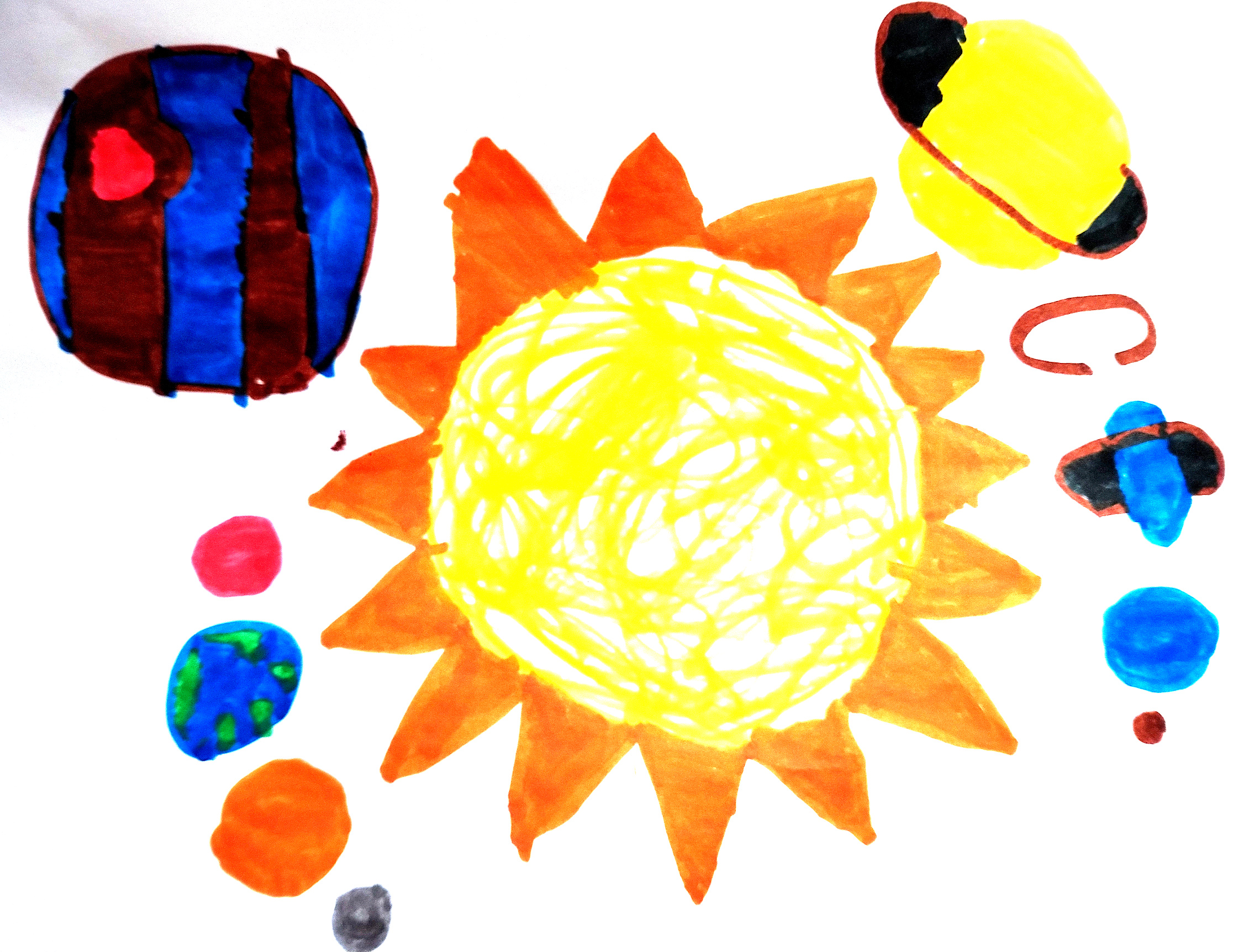
Isaac’s solar system art, created several months before he turned five. (Minnesota Prairie Roots edited photo April 2024)

A half hour to the north of my southern Minnesota home, my 5-year-old grandson Isaac likely will be all-a-chatter about the eclipse. He can rattle off facts about the solar system with the knowledge of an expert. Plus he loves art and has created enough solar system drawings to fill a gallery or at least plaster my refrigerator. I expect many other kids share his excitement. And that is a good thing—anytime kids (and adults) get excited about science.

© Copyright 2024 Audrey Kletscher Helbling


“The Great Invader,” neither fable nor fairy tale February 2, 2021

Filed under: Uncategorized — Audrey Kletscher Helbling @ 5:00 AM
Tags: , , , , , , ,
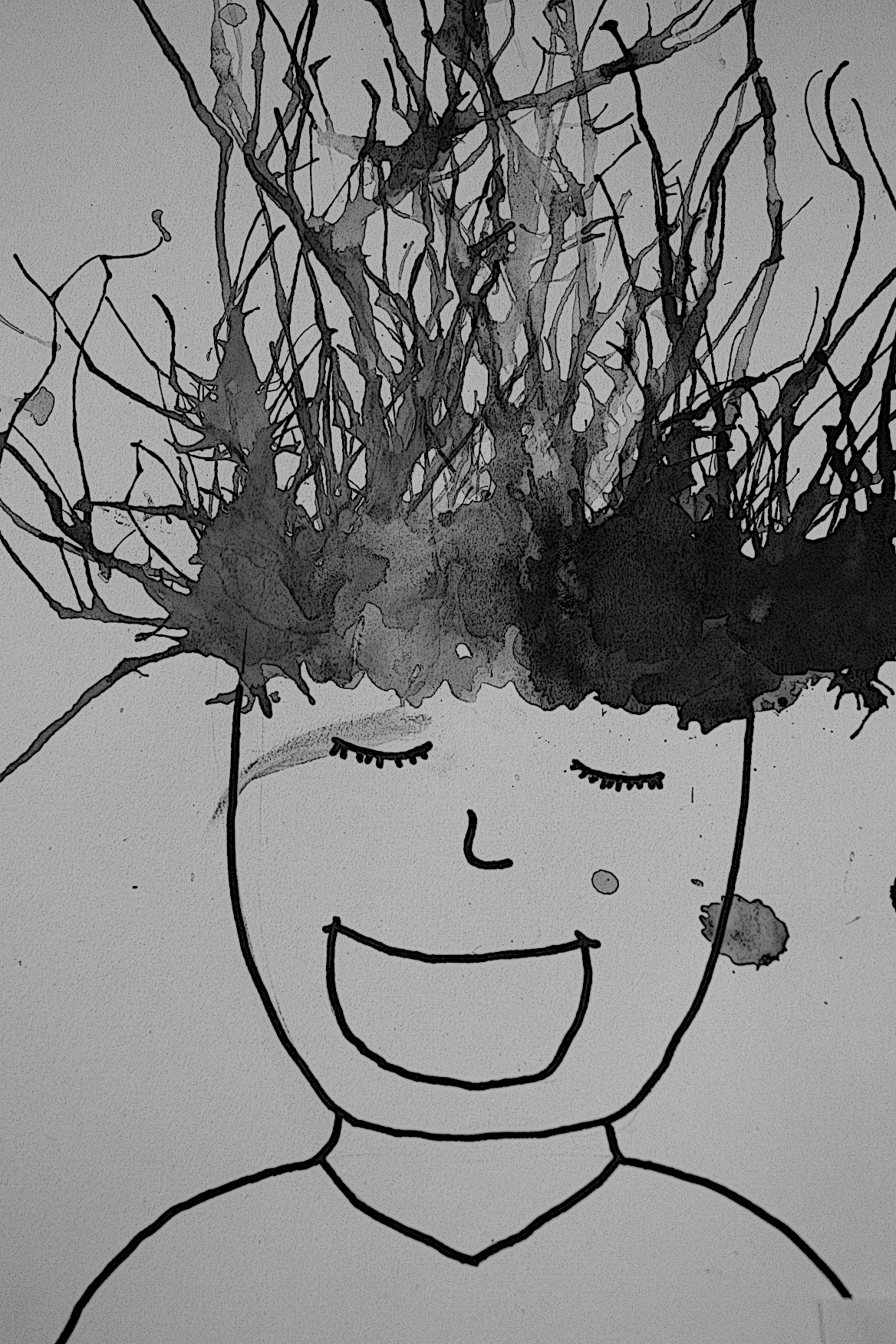
Edited painting by Ruby from the 2018 student art show at the Paradise Center for the Arts, Faribault. Minnesota Prairie Roots file photo.

ONCE UPON A TIME, in The Land of Plenty…

Ah, a fairy tale, you say. Not exactly. Rather, this is a story rooted in reality. A story with a main character who, for ease of writing, shall be identified in secondary references as “he.” Not that The Great Invader is male.

So let’s dive into the story. Once upon a time in The Land of Plenty, The Great Invader landed, making himself comfortably at home. He was, by nature, a traveler. But he wasn’t the type of guest you’d knowingly invite into your home. You know the kind. Ungrateful. Demanding. Messy. And mean, just plain mean. Because of those undesirable traits, he soon found himself on the road, hopping from place to place under a guise of masterful deception. West Coast to East Coast. Then to the South and Up North and to the Midwest. He wanted, above all, to avoid detection and negative publicity.

But word soon got out about The Great Invader. Scientists found him especially fascinating. The more they studied the strange-looking traveler with his signature spiky hair, the more alarmed they grew. They realized he was much more than he appeared. Dangerous. He left a path of death and destruction wherever he went. Yes, that’s a cliché. But it fits.

The scientists warned about the intruder and suggested ways to deal with him. By then they’d studied him in their labs and determined that he traveled mostly by air. No ticket required. “Wear masks,” public health officials who collaborated with the scientists, advised. “Distance yourself from others. Avoid crowds. If you’re sick or feel like you’re coming down with something, stay home.” All of those tactics would discourage The Great Invader. But these proactive protocols were especially difficult for some people in The Land of Plenty to hear, let alone follow. They didn’t like anyone telling them what to do.

The Great Invader was acutely aware of these efforts to stop his adventures. He also recognized the discontent and division spreading across the land like a California wildfire. He needed a plan. And he didn’t have to think too hard. He’d simply rely on people who doubted scientists, who took little stock in warnings from health officials, who spread false information, especially via social media. People who could be a voice. He didn’t much care if that voice was loud or insidiously quiet.

As the months passed, The Great Invader found his hands-off strategy working quite well. He traveled to nearly every corner of The Land of Plenty. Even to the smallest village, where the villagers never dreamed he would visit and leave his imprint. “Why would The Great Invader come here? We have no great theaters or art museums or sports arenas or five-star restaurants or any major tourist attractions,” the villagers reasoned. So many went on with life as usual. Yet, an undercurrent of concern began to bubble when evidence of The Great Invader’s presence surfaced in the remotest of villages.

Meanwhile, across The Land of Plenty, scientists, health and government officials, and even journalists, were tracking The Great Invader on his journey around the country. And the world. They soon discovered they were no longer dealing with a sole sojourner, but rather many with magical powers. The spiky haired traveler had reproduced millions, if not billions, of times and created new versions of himself. This frightened the scientists, who by then had called upon experts to develop a battle plan. They needed to stop the traveler as he asserted his deadly powers. So researchers created a powerful potion to protect the people.

Soon squabbles arose as to who would get the potion first. The Great Invader laughed. He thrived on chaos, confusion and discontent. And lies. He admired selfishness.

He also secretly applauded those who defied common sense and science. He reveled, especially, in those in The Land of Plenty who refused to wear face masks. He celebrated every single person who wore their masks below their noses. And he saw plenty of those, whom he considered valued allies. The mask-less and the half-maskers allowed The Great Invader to travel with ease. If he found himself temporarily removed from a region, he just moved on for a while, only to return when people thought he’d permanently left.

And so, while the people of the land claimed all sorts of indignities brought on by The Great Invader and even tried to stop distribution of the powerful potion, he continued mapping his routes, plotting strategies and documenting his travels in his Once Upon a Time journal.

#

NOTE: In every story there are truths, this one no exception. To all who have encountered The Great Invader/COVID-19 at his worst, I am sorry.

Observations in my community of Faribault sparked the idea for this story. As COVID-19 infections and deaths rise in Rice County, I see too many individuals in public who are wearing masks below their noses and/or mouths or not masking at all. I am beyond frustrated. We’re not talking just a few people. While I shopped at a local big box retailer, a smaller discount store and grocery stores recently, I saw perhaps 30 individuals who were half-maskers, plus a mask-less couple and children old enough to wear masks (but who were unmasked). Employees were among those half-maskers. I implore the people of Faribault to, please, just wear a tight-fitting, multi-layered mask, and wear it over your mouth AND nose. It’s not that difficult.

© Copyright 2021 Audrey Kletscher Helbling
 

Wisconsin exhibit highlights Leonardo da Vinci’s inventive side November 27, 2012

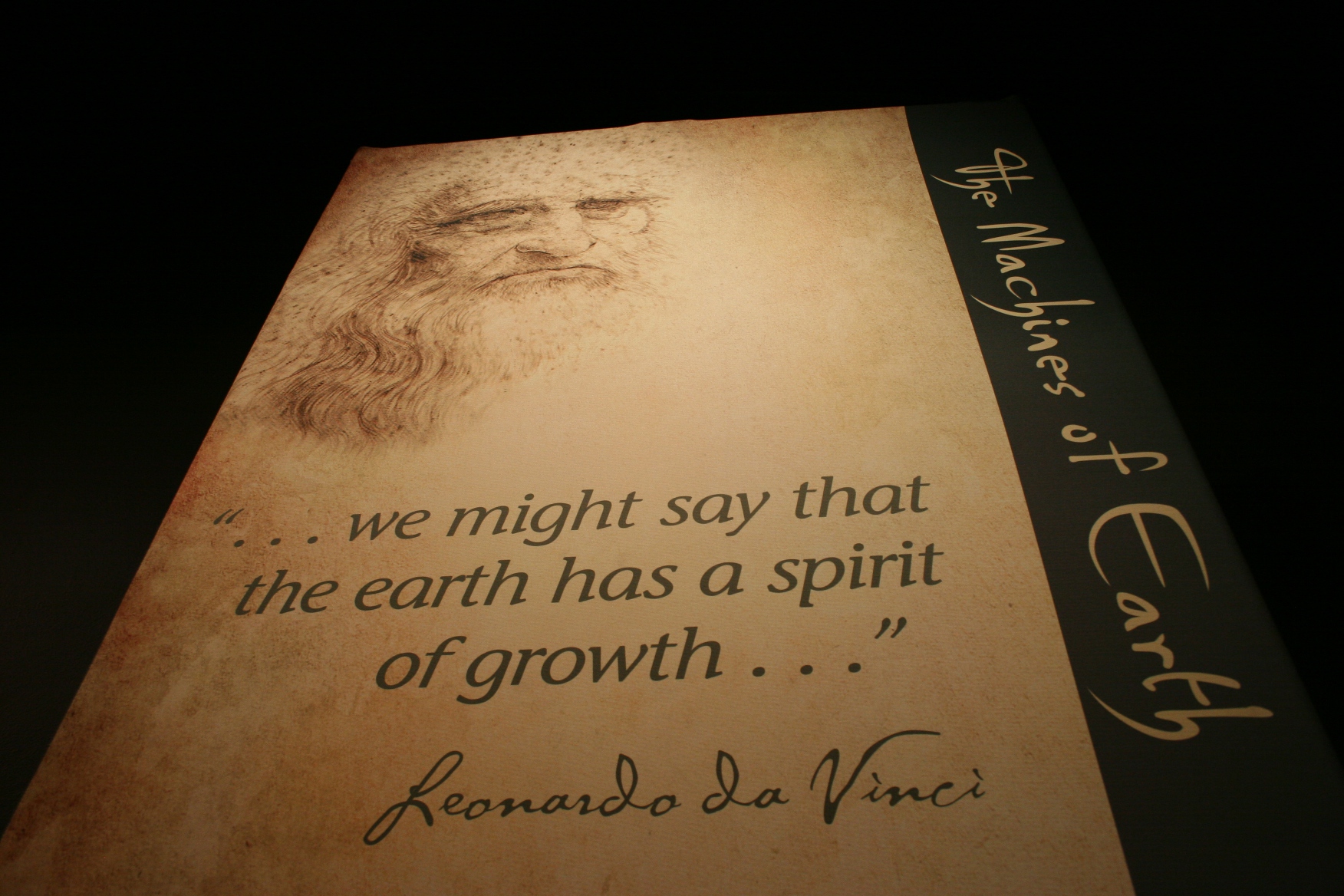
Another facet of Leonardo da Vinci, on exhibit in Appleton, Wisconsin.

QUICK. When I say “Leonardo da Vinci,” what pops into your mind?

For me, it’s his “The Last Supper” painting.

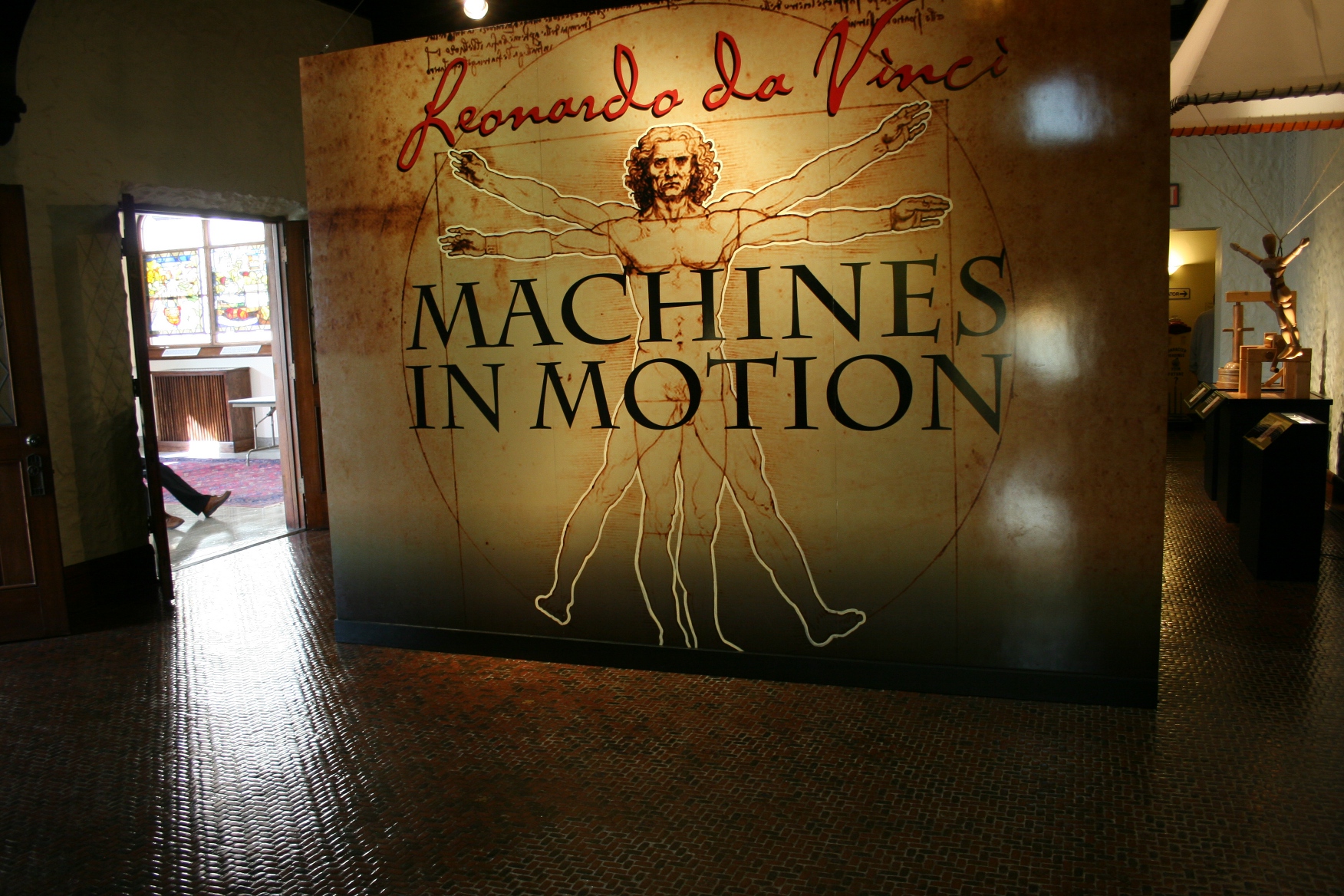
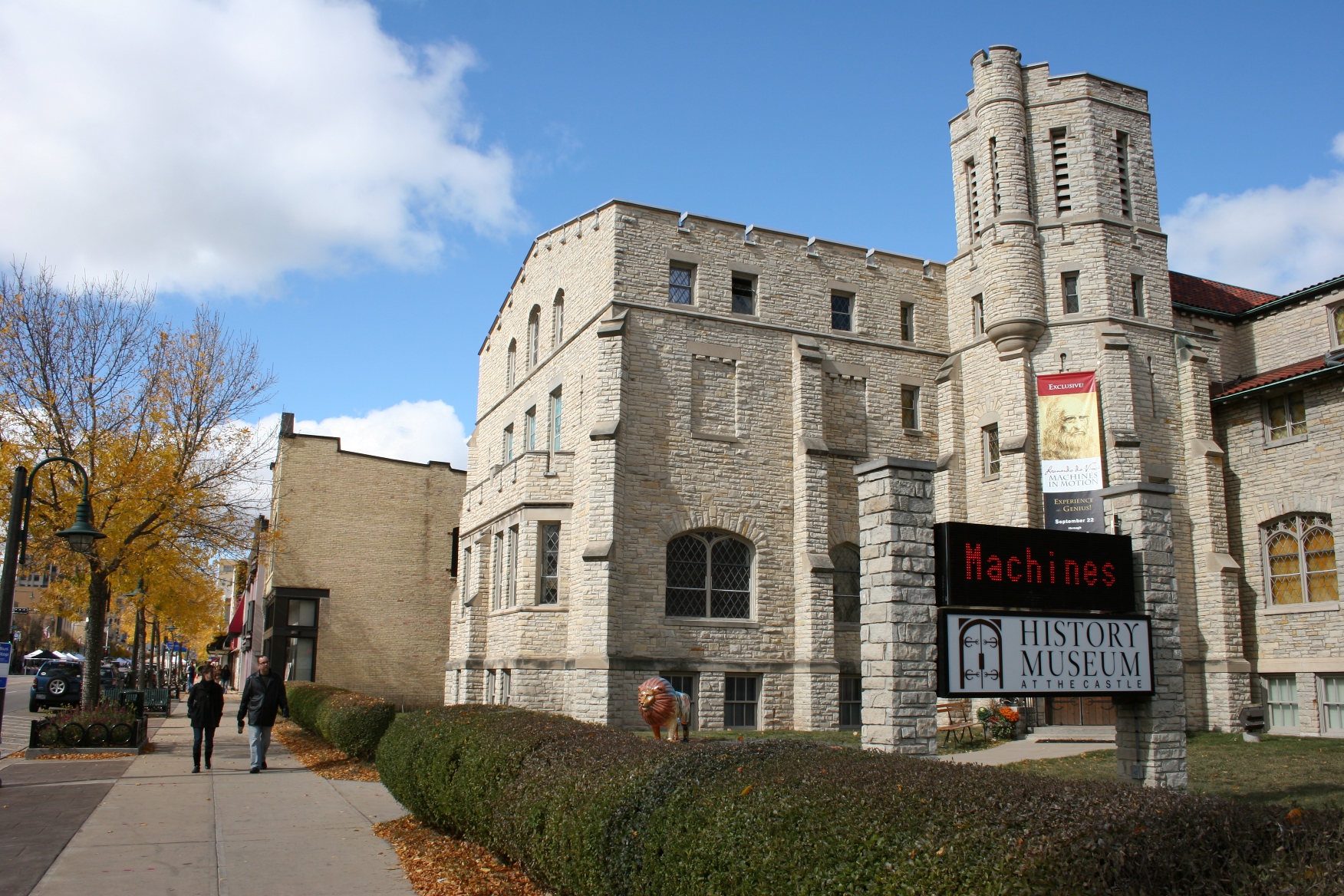
Inside The History Museum, a sign welcomes visitors to the da Vinci exhibit.

I do not even think of him as a scientist or inventor.

But this Renaissance man surely was, a fact emphasized in a current exhibit originating in Florence, Italy, and currently showing at a northeastern Wisconsin museum through January 6, 2013.

The History Museum at the Castle, 330 W. College Avenue, Appleton, Wisconsin.

Two months ago I toured “Leonardo da Vinci: Machines in Motion” at The History Museum at the Castle in downtown Appleton, a hip and historic city some 300 miles from my southeastern Minnesota home and today home to my daughter Miranda.

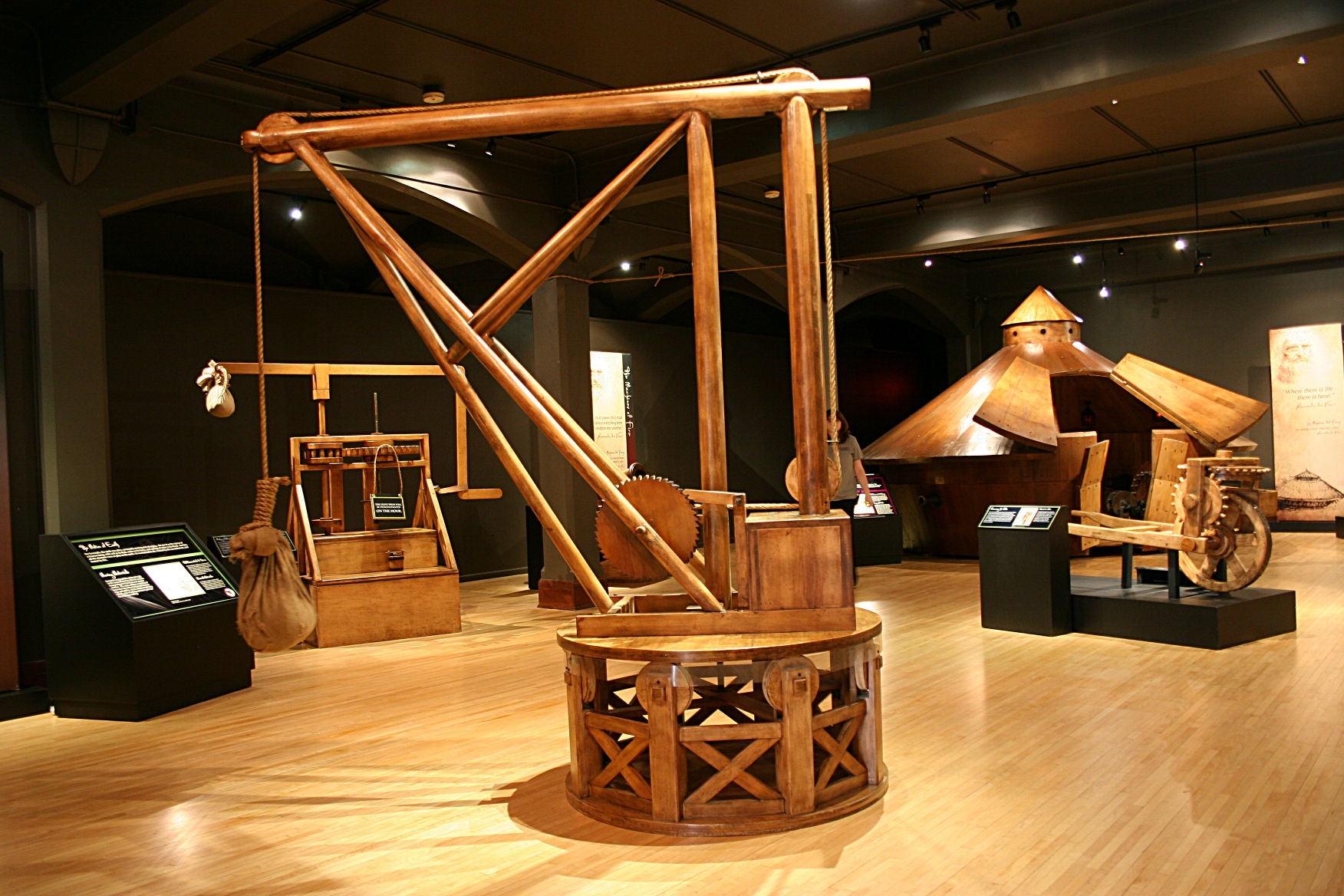
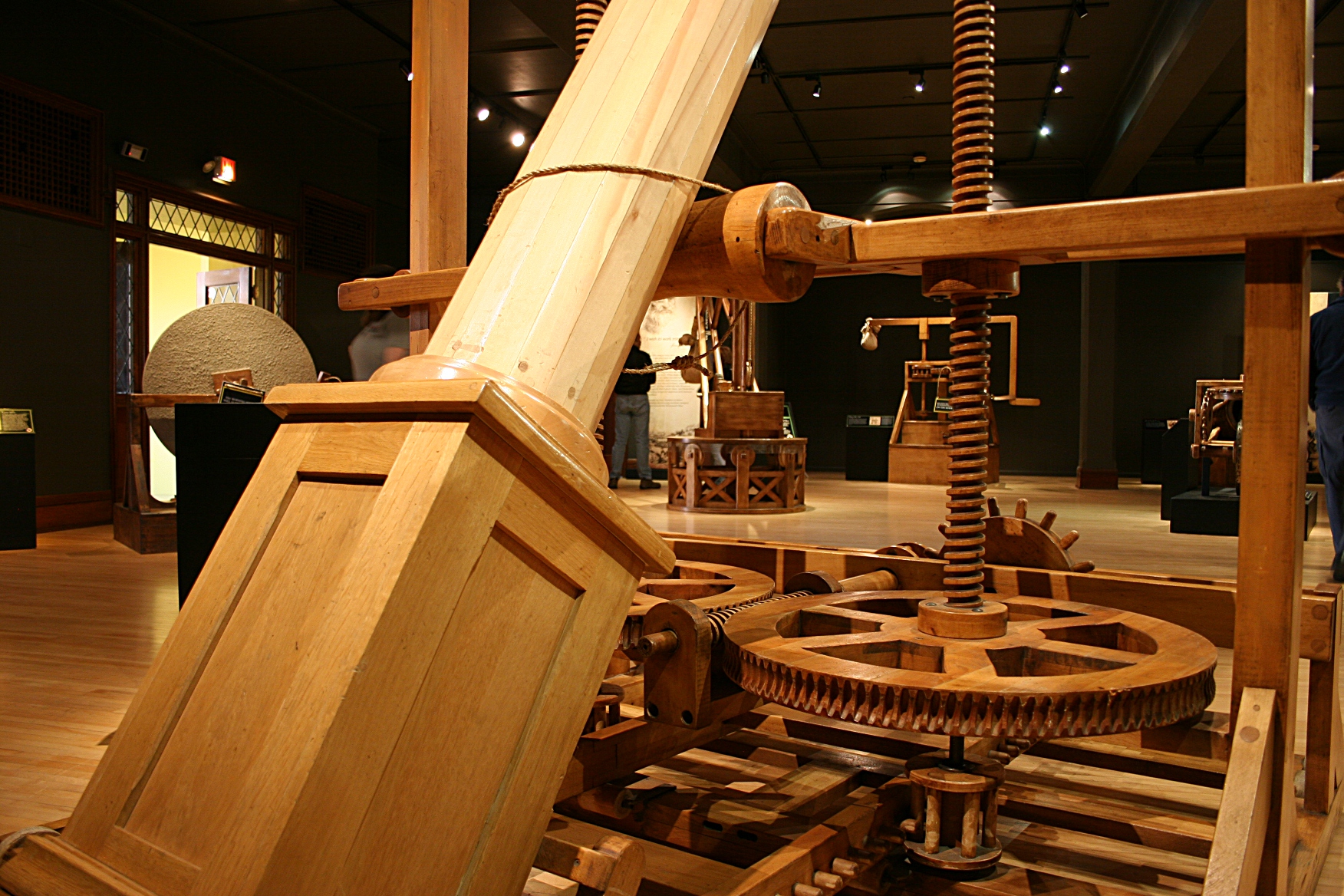
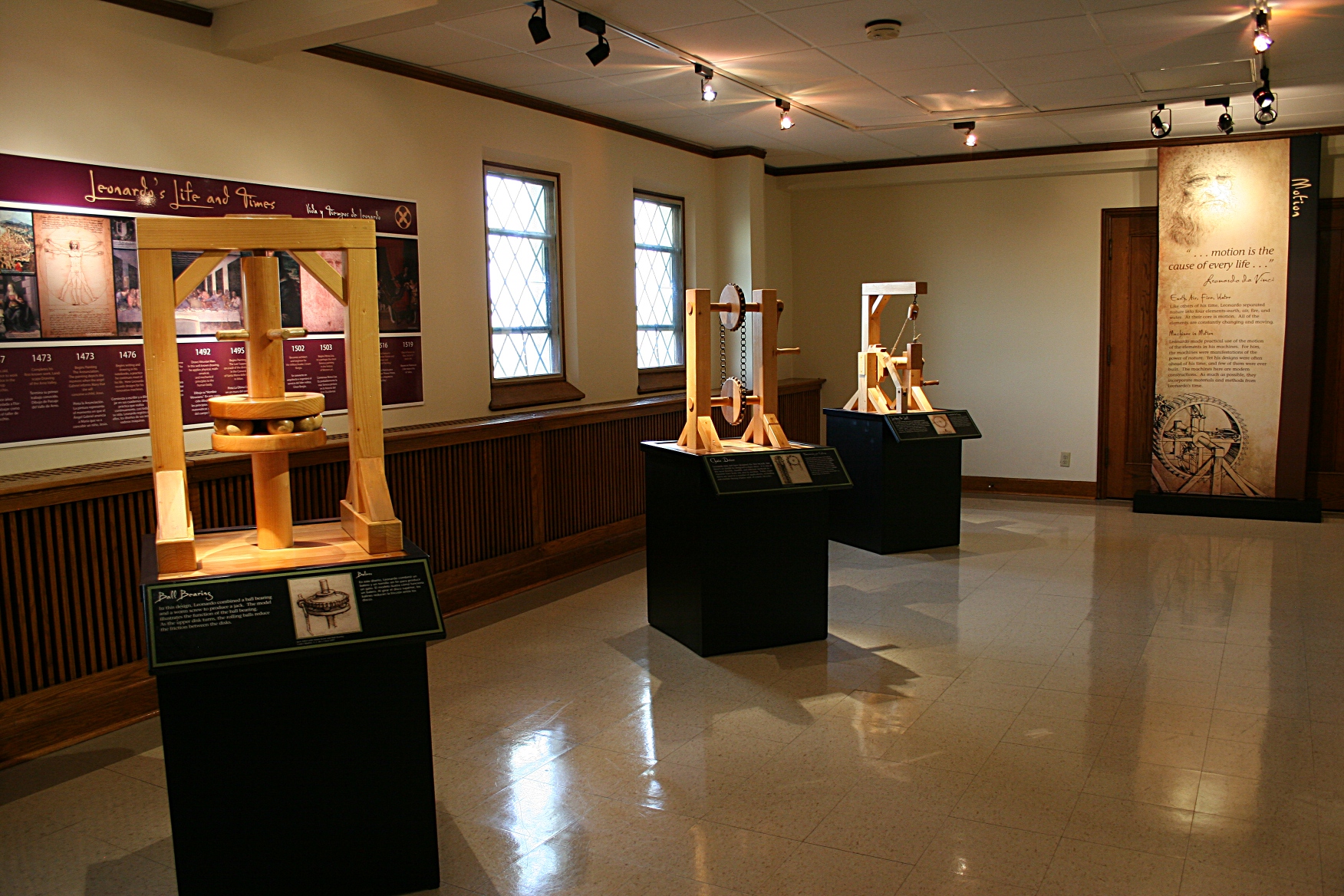
An overview of one exhibit room, a working crane in the front and a tank in the back, right.

Typically I would not get particularly excited about a show which features mechanical-oriented displays. But given da Vinci’s notoriety and my interest in art and in sharing discoveries with you, I embraced this working models exhibit of 40 da Vinci machines. Modern day scientists and artisans built the machines based on da Vinci’s codices.

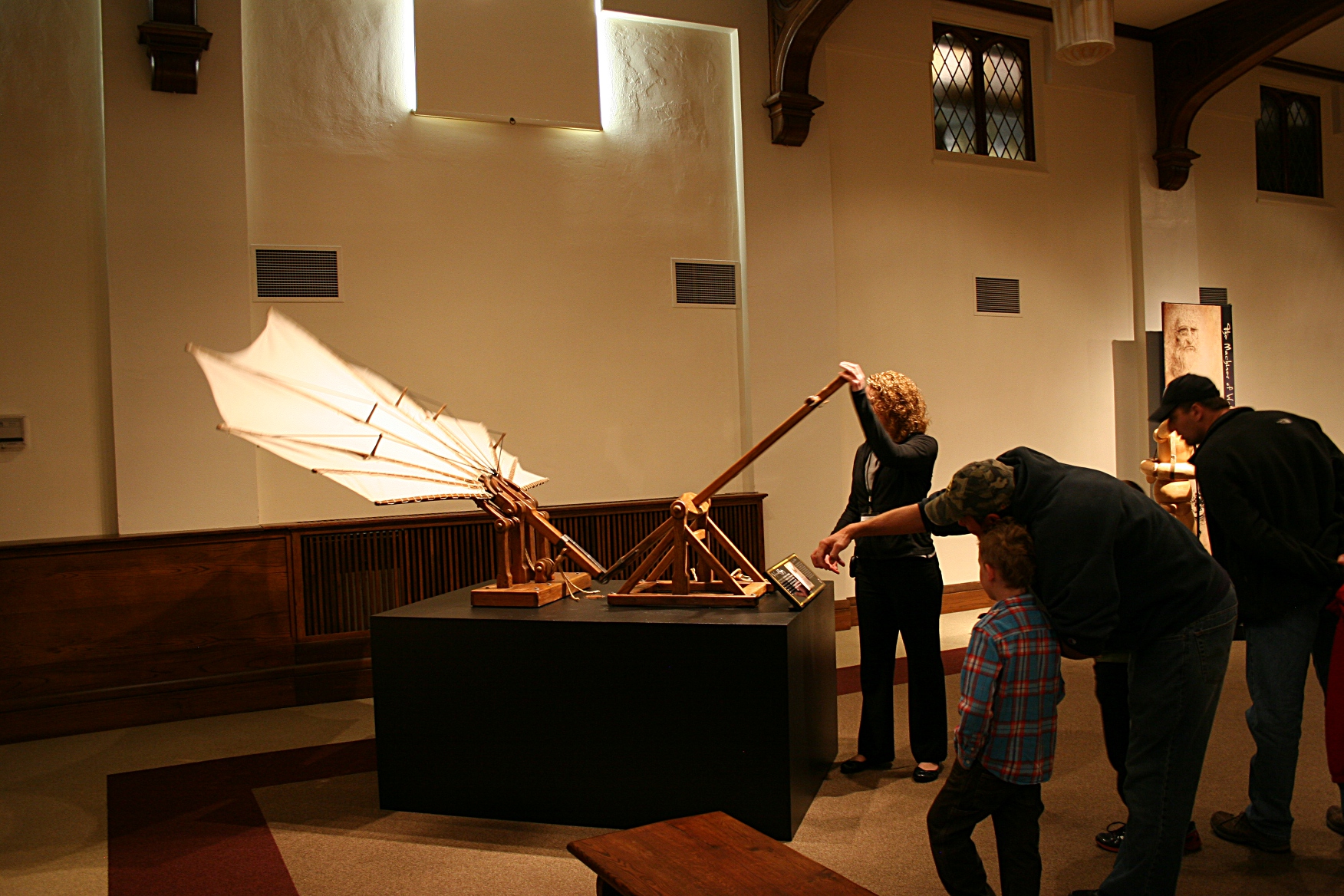
This is an interactive exhibit.

Kids will thrill in “Machines in Motion” as much as adults.

An informational sign summarizes well the multiple talents da Vinci possessed:

Perhaps more than anyone before him—and perhaps anyone since—Leonardo was a great scientist, engineer, and artist all in one. He combined a scientist’s passion for exploring how things work and an artist’s ability to vividly illustrate his revelations. His machine designs were ingenious and visionary—often ahead of his time. They illustrate principles at the heart of machines today.

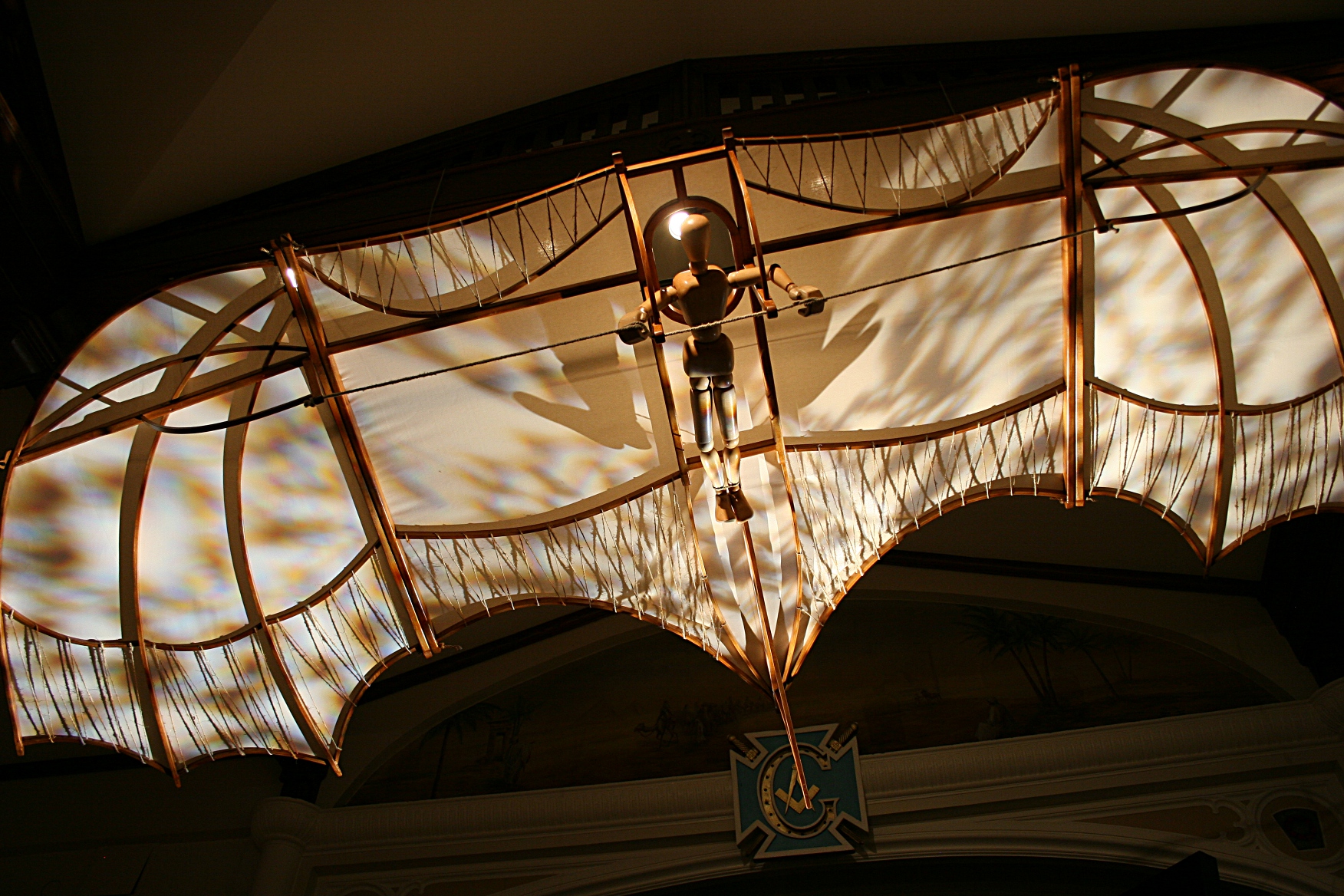
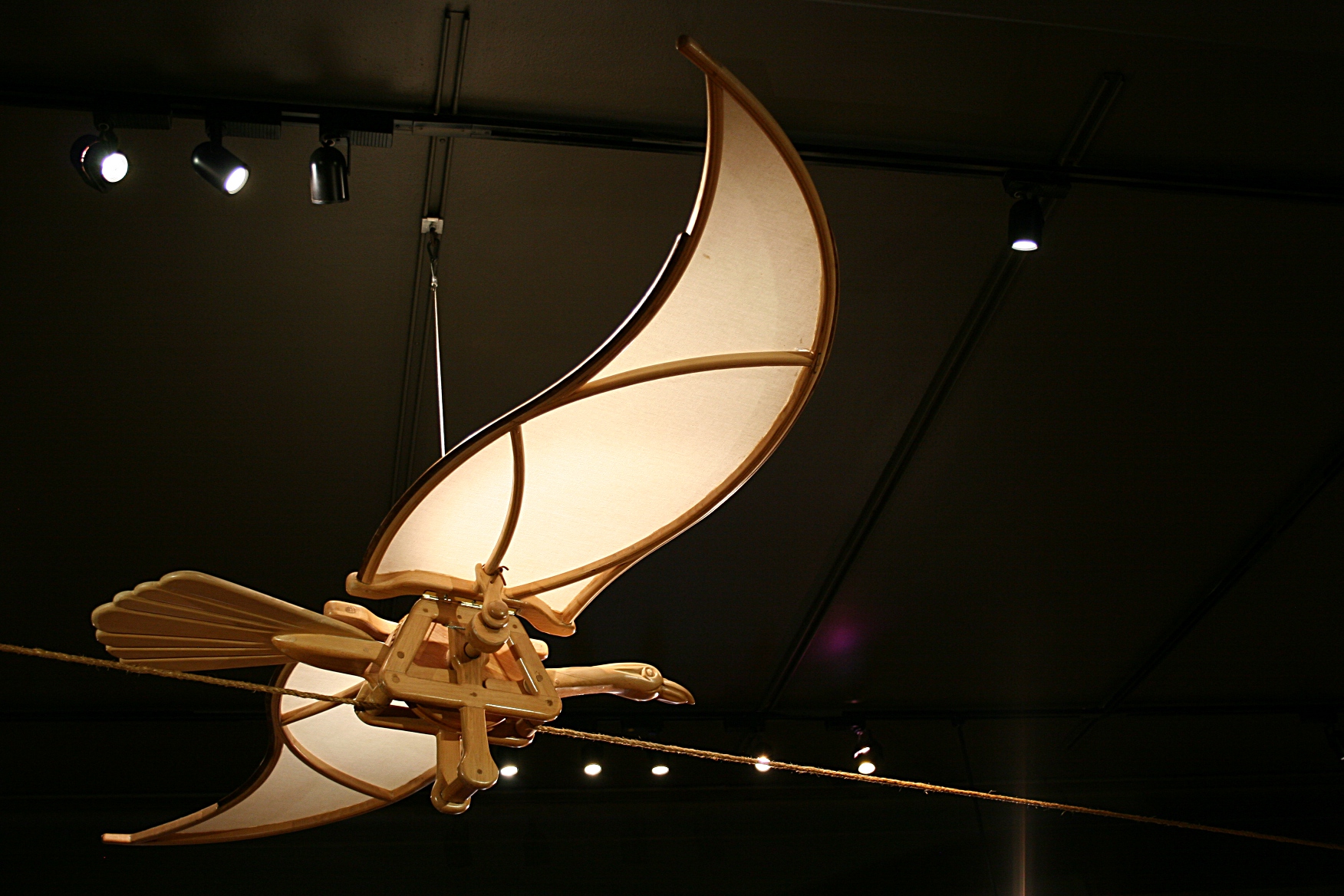
One of da Vinci’s more impressive flight designs, suspended from the ceiling of an auditorium at the History Museum.

In his study of air, water, earth and fire, this genius—and I don’t hesitate to term someone of da Vinci’s intellectual and artistic talent as thus—created ideas which evolved into workable solutions aiding mankind.

See for yourself via these selected photos from the exhibit or by traveling to Appleton to tour this vast, interactive display. Click here for more information about “Leonardo da Vinci: Machines in Motion.”

An illustration by the scientist/inventor, Leonardo da Vinci.

Machines created from da Vinci’s codices.

More inventions showcased.

Da Vinci’s version of a horse-drawn armored military tank.

The bird’s wings flap as it moves across the stage during theatrical performances.

A machine in motion.

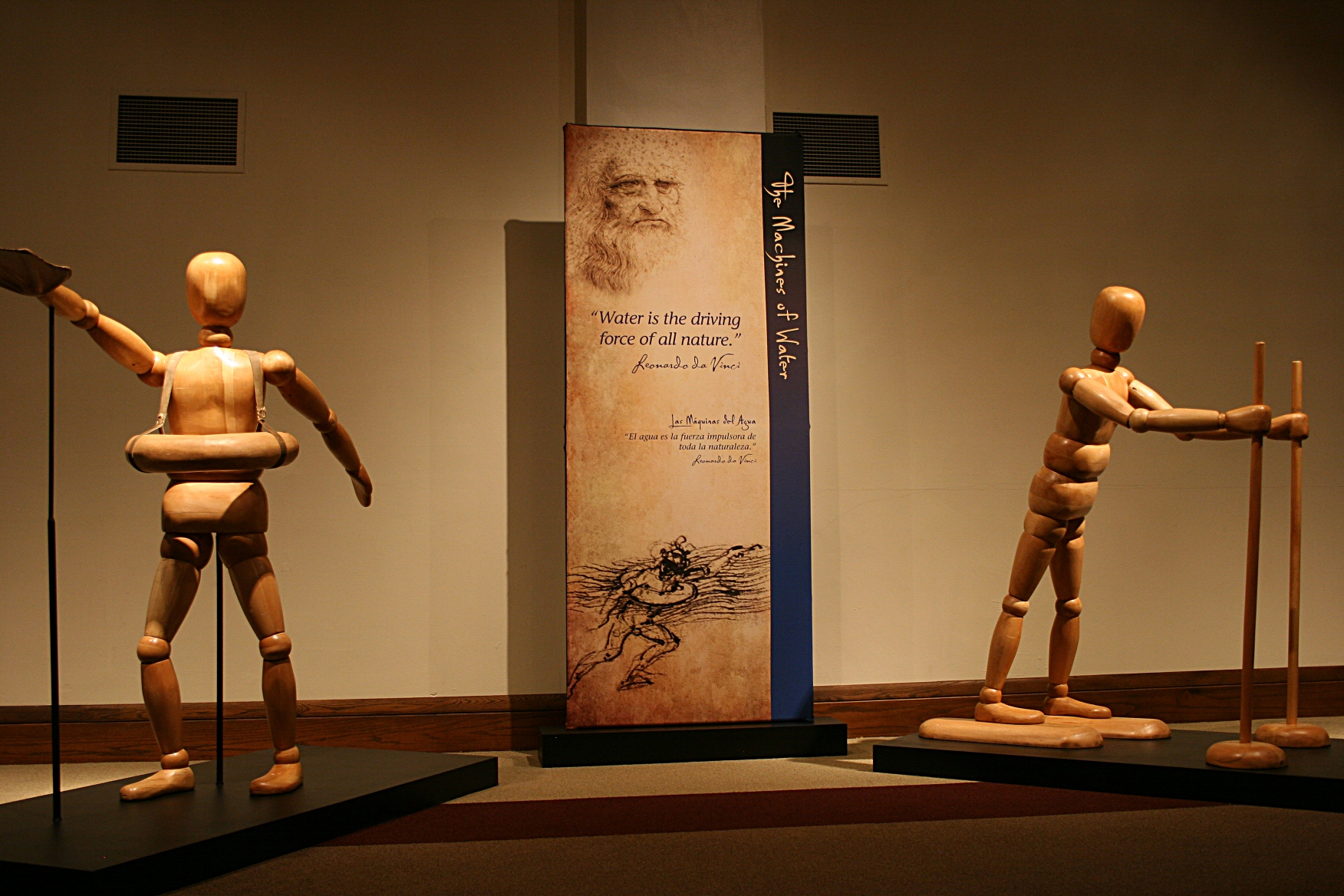
Da Vinci the artist and da Vinci the scientist.

Da Vinci’s idea to traverse water.

One final exhibit overview.

Disclaimer: I received a $25 gift certificate from Downtown Appleton, Inc., prior to my visit and used that money toward museum admission for myself, daughter and husband. That did not influence my decision to post about the da Vinci exhibit.

© Copyright 2012 Audrey Kletscher Helbling


Kudos to the smart science kids out there February 8, 2012

Filed under: Uncategorized — Audrey Kletscher Helbling @ 8:27 AM
Tags: , , , , , , ,

SEARCH THE RECESSES of my home and you won’t find a single sports trophy, medal or ribbon. We are not athletes.

But you will find honors for academic achievements.

During elementary school, my second daughter consistently placed in the region’s Lutheran schools spelling competition, bringing home trophies and ribbons. In 2006, she graduated from high school at the top of her class. (My mom and a niece also graduated at the tops of their classes and I graduated second.)

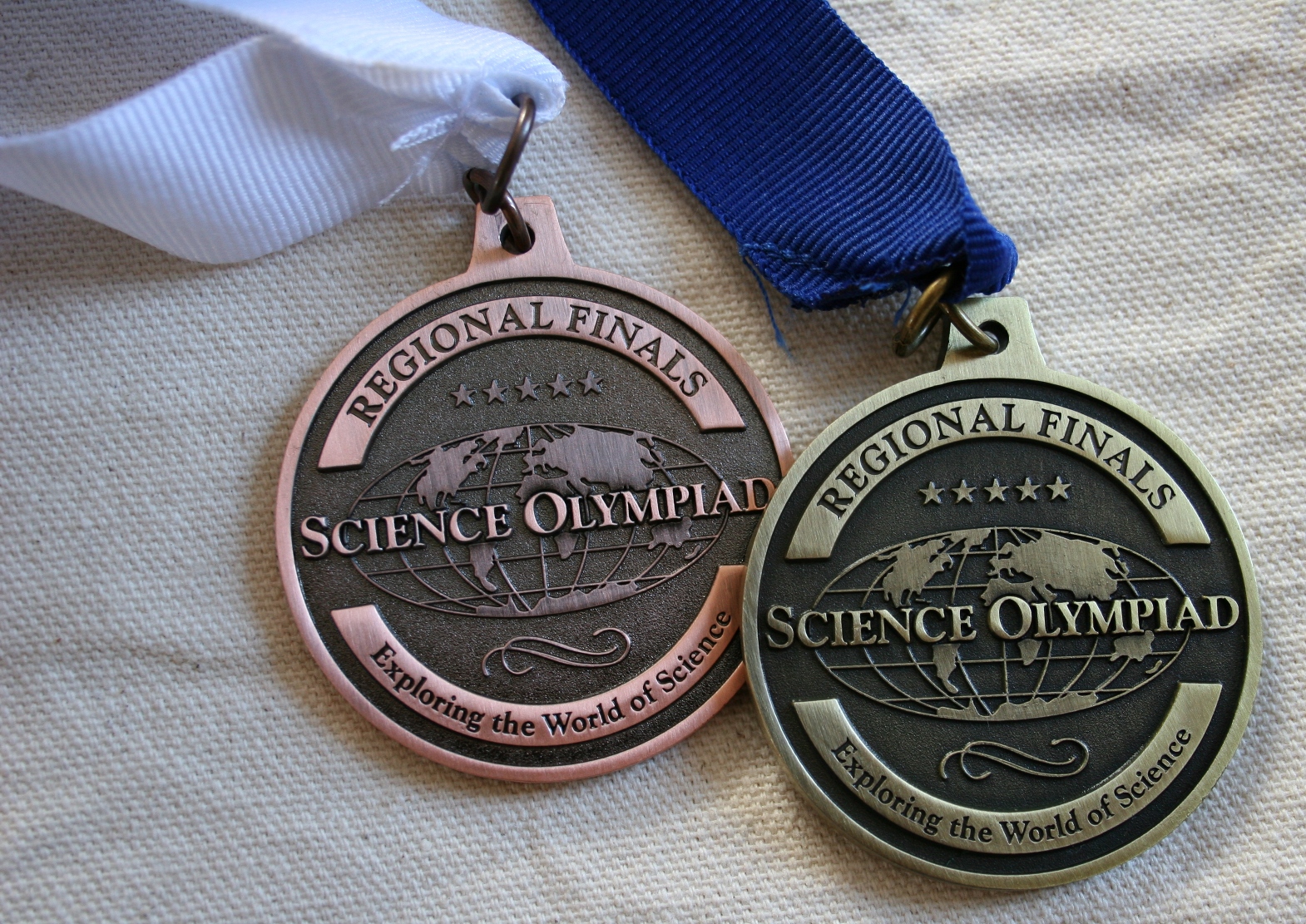
Now my 17-year-old high school senior has won two medals for his scientific and mathematical skills and knowledge. This past weekend Caleb and his Faribault High School Science Team teammate, Luke, earned first place in the Regional Finals Science Olympiad competition in Rochester with their gravity vehicle.

They built a vehicle and ramp and then, using physics skills, calculated time, distance and speed to race and stop their car at a specific point. They came within about an inch of the target. I won’t attempt to explain the details of how they accomplished this because, well, I don’t understand it. Suffice to say, they did everything right to win the contest.

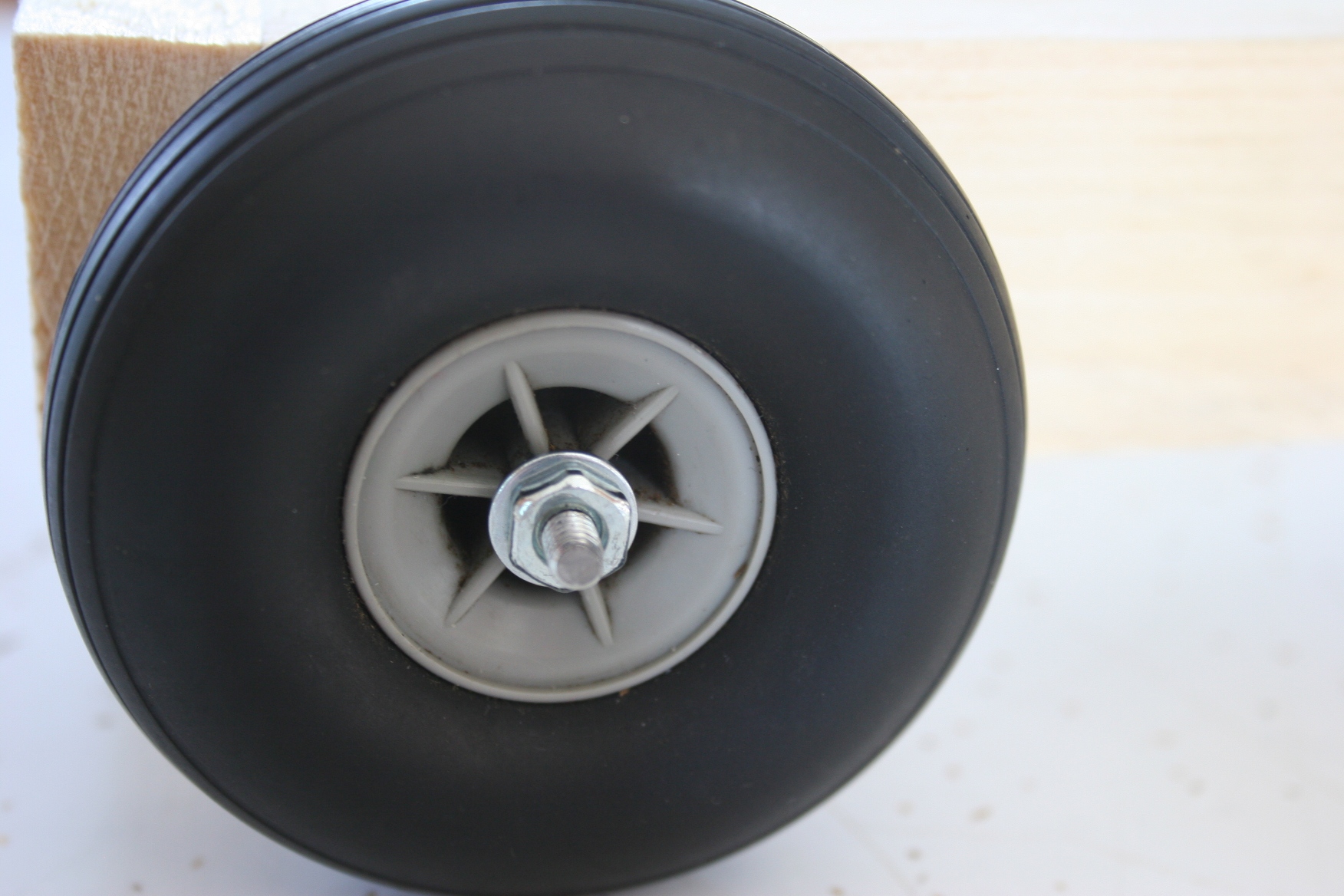
A wheel on the winning car, as it was being built. I would show you the car, except I did not get a good shot of it and now the car is at school and Caleb would not like that I want to photograph it. Suffice to say the car is basically four pieces of wood joined into a rectangular shape. Caleb and Luke wrote their names on the car. That's it. Why make it flashy? Flashy doesn't count, my son says. Gotta love that attitude.

Caleb, along with a different teammate, Travis, also placed third in an astronomy competition.

Faribault students Anna and Anwyn earned first place regional honors in “Write It Do It.” Sara and Riley placed second and Anwyn and Tanner, fourth, in “Forestry.” And a fourth place finish also went to Nathaniel and Max in the “Fermi Questions” competition. (Don’t even ask about “Fermi.” I have no clue; I never claimed I was smart in science.)

Faribault High’s two science teams finished fifth and eighth at region, qualifying both teams for state competition. However, rules allow only one team from each school to compete at state.

FHS science teacher Jason Boggs says this is the first time since he’s been co-coaching the science teams that both teams have technically qualified for state.

Caleb and 14 other FHS students will compete at state on March 3 at the University of St. Thomas.

So there you have it—my little plug today for all those smart kids out there who excel in academics but seldom receive the recognition they deserve.

Be proud.

Your academic successes will take you far in life.

© Copyright 2012 Audrey Kletscher Helbling