Minnesota Prairie Roots

Writing and photography by Audrey Kletscher Helbling

From proverbs to culture, native Tanzanian shares his insights & stories February 16, 2026

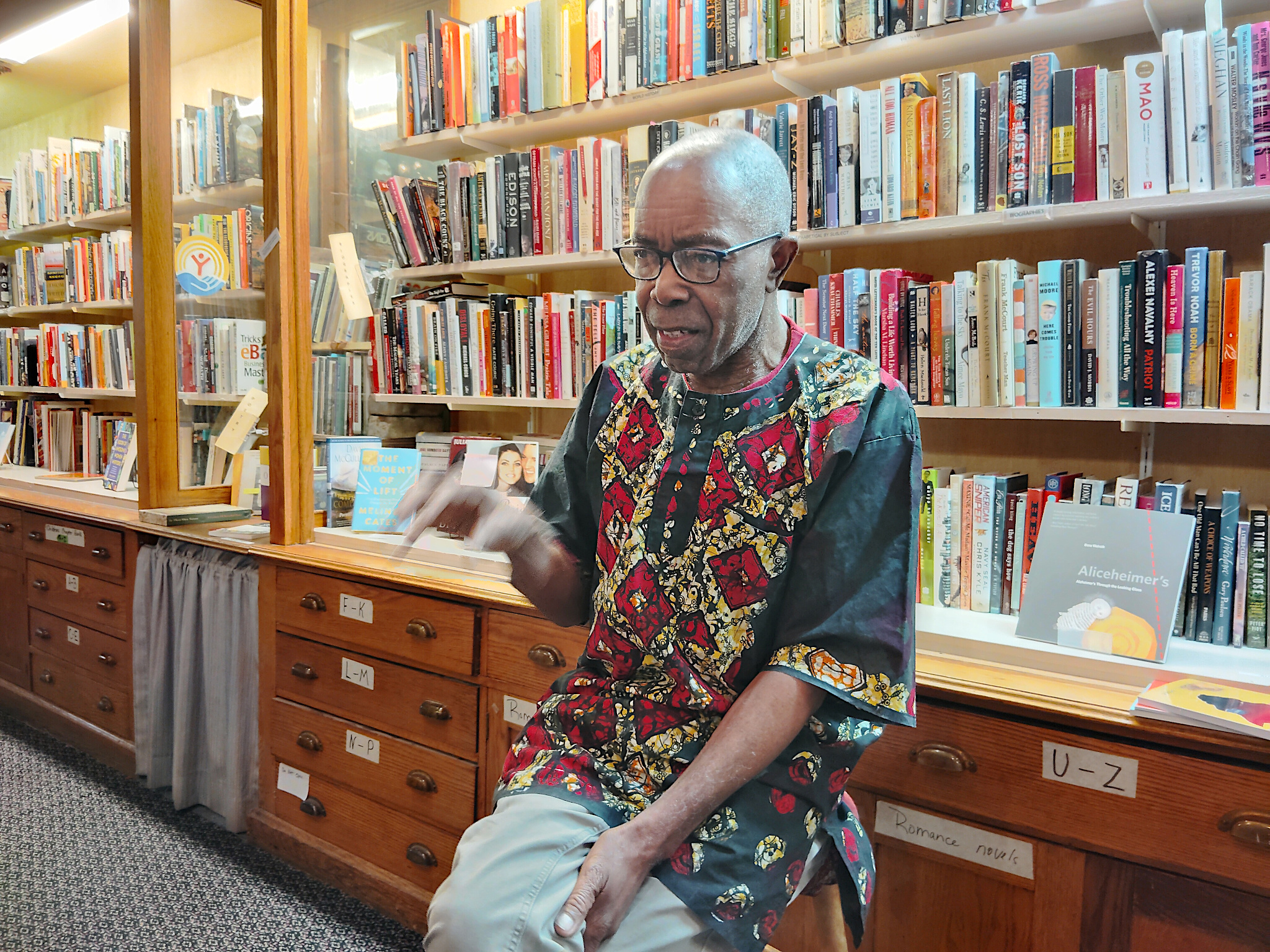
Joseph Mbele shares stories, proverbs and culture on February 11 at Books on Central, Faribault. (Minnesota Prairie Roots copyrighted photo February 2026)

FABLES TEACH LESSONS. Fairy tales offer happy endings. And African proverbs impart wisdom.

Last Wednesday evening, Joseph Mbele, retired St. Olaf College professor of post-colonial literature, cultural consultant, author and storyteller, shared three African proverbs during a literary event at Books on Central. This man, who calls himself an African and a Tanzanian, held the rapt attention of attendees gathered in the used bookshop in the heart of downtown Faribault, home to many Somalis.

THE CROCODILE

While I enjoyed the two African folktales Mbele told, I really appreciated the proverbs. They are, by nature of a proverb, succinct. A few words carry a whole lot of punch. First up, this proverb: “Before you cross the river, don’t insult the crocodile’s mouth.”

Immediately the image of a crocodile’s sharp teeth popped into my mind. As it should have. This proverb, Mbele explained, is about being respectful to people in our relationships and in life in general. Be anything but respectful and we risk negative consequences. Snap.

THE BLACKSMITH

Second up this African proverb: “It’s because of man that the blacksmith makes weapons.” Thinking in African terms, the weapons would be knives and spears. I thought of guns. Mbele repeated the proverb, letting it sink into our brains. “It’s because of man that the blacksmith makes weapons.” The lesson here, Mbele said, is that we can be better than this—be kind, helpful and supportive—so we don’t need to bear arms/weapons. That’s an oversimplification, of course. But proverbs are not meant to be complex.

THE VISUALLY-IMPAIRED

Third, Mbele recited this proverb: “The one-eyed person only thanked God after he saw a blind person.” As someone with vision issues, that hit home. The proverb is a way of teaching gratitude, Mbele said. The contrast between seeing with only one eye and total blindness put the situation in perspective. The thought that there’s always someone who has it worse probably flitted through the minds of everyone in the bookshop.

THE STORYTELLERS

Mbele talked about the tradition of Africans sitting around telling stories to entertain and teach. Languages like his native Matengo, an indigenous language in Tanzania, are oral, not written. As he spoke, I began to understand the importance of folktales in African life. Stories connect people and, like proverbs, teach lessons.

Applied to my own community, Mbele explained that Somali men gathering on downtown Faribault street corners are simply socializing and sharing stories and are not to be feared. “It’s un-African to be by yourself,” he said of a culture that focuses on family and togetherness.

He even went so far as to say an African could be considered evil or a witch if living alone. That surprised me, but drove home the cultural importance of community and family. Now if only everyone in Faribault could hear these proverbs and insights from this native Tanzanian. Then perhaps they would not fear that which they don’t understand, like the Somali elders gathered on street corners downtown telling stories, sharing news or simply sitting in each other’s presence.

© Copyright 2026 Audrey Kletscher Helbling


African folktales & culture focus bookshop literary event February 10, 2026

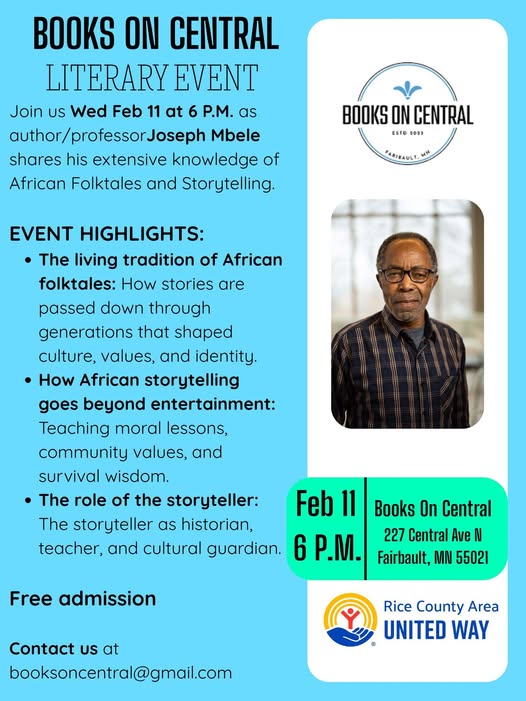
(Promo credit: Books on Central)

HE’S A MESMERIZING and engaging storyteller. He is Joseph Mbele, retired professor of post-colonial literature at St. Olaf College in Northfield, cultural consultant and author.

And Wednesday, February 11, at 6 p.m., Mbele will be the featured speaker at a free literary event at Books on Central, a volunteer-run used bookshop of the Rice County Area United Way. Located in the heart of historic downtown Faribault, home to many Somali immigrants and refugees, the bookshop seems a fitting place for Mbele to talk about the living tradition of African folktales and the role of the storyteller. Somali men gather on street corners in downtown Faribault to share stories and news.

I’ve heard Mbele speak at this bookshop previously. I absolutely cannot say enough positive things about the warm way he connects with the audience, the way he uses stories to teach, the way he genuinely cares about bridging cultural differences.

Love this book by Joseph Mbele.

As an author, his writing carries that same compassionate, culturally-connective message. He’s written Africans and Americans: Embracing Cultural Differences, Chickens in the Bus: More Thoughts on Cultural Differences, and Matengo Folktales.

Mbele knows of what he speaks and writes. Born in rural Tanzania, he studied and taught at a public university there; earned a PhD in African Language and Literature from the University of Wisconsin—Madison; and eventually landed in the English department of St. Olaf College in 1991.

His visit to Books on Central on Wednesday evening presents an opportunity to learn from a gifted storyteller about African folktales and culture in a comfortable setting back-dropped by shelves of books.

© Copyright 2026 Audrey Kletscher Helbling
 

Minnesota cultural consultant & author to talk about chickens in the bus & more February 13, 2024

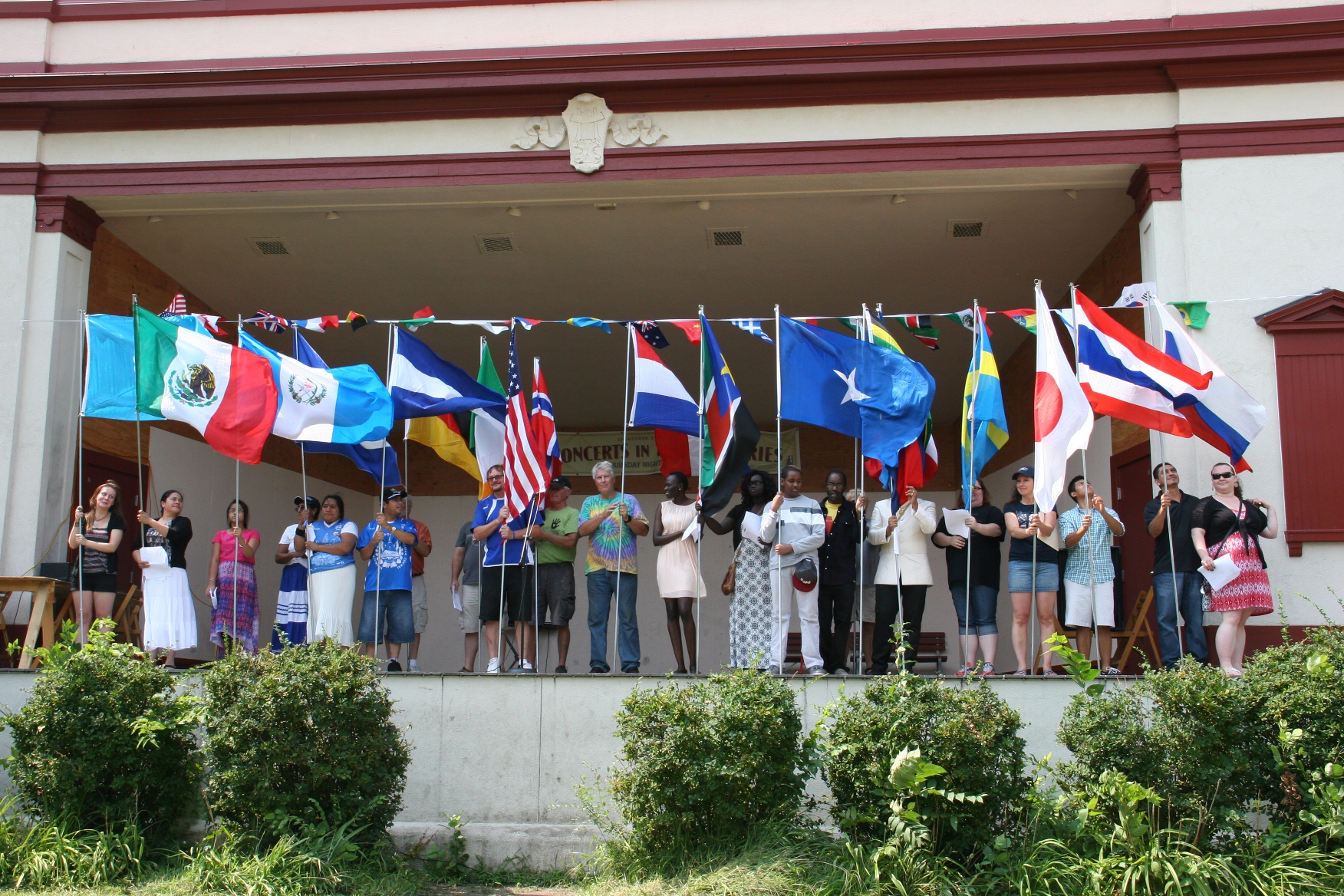
A flag ceremony, representing the country of origins of many peoples who call Faribault home, was part of the 2015 International Festival Faribault. Joseph Mbele is shown just to the right of center in this photo, dressed in black with a yellow and red shirt. (Minnesota Prairie Roots copyrighted file photo August 2015)

I FIRST MET JOSEPH L. MBELE in 2015 at the International Festival Faribault. The author, cultural consultant and professor of English at St. Olaf College in Northfield was representing his native Tanzania during this fest celebrating the cultural diversity of my community. Then late last year I talked to Mbele again, when he was selling his latest book, Chickens in the Bus: More Thoughts on Cultural Differences, at a local holiday church bazaar. He is engaging, soft-spoken, knowledgeable and just an overall kind and gentle soul.

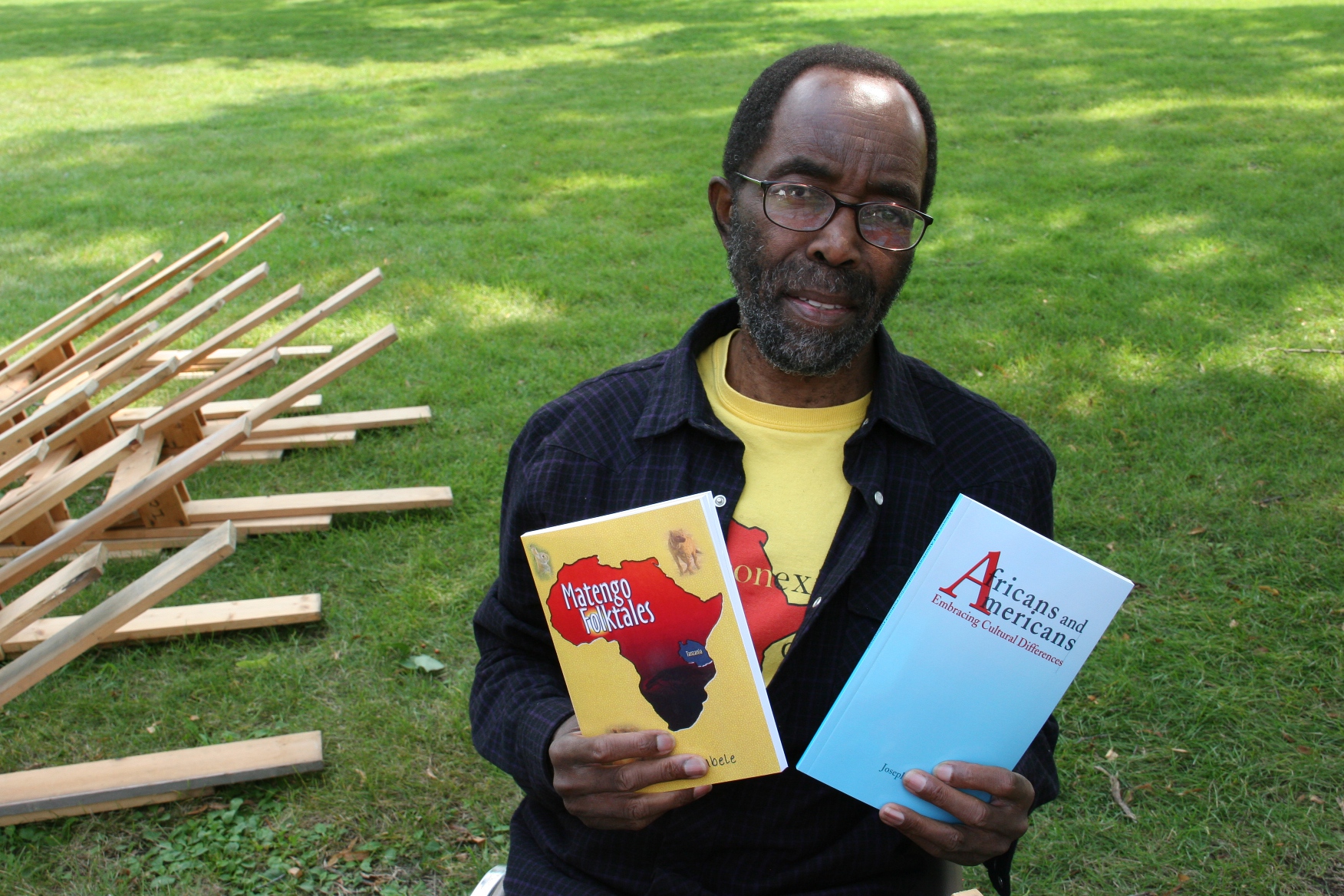
Author Joseph L. Mbele with two of his three books, photographed at the 2015 International Festival Faribault. (Minnesota Prairie Roots copyrighted file photo August 2015)

This Thursday evening, February 15, the writer and expert on cultural differences returns to Faribault for a literary event at Books on Central, a recently-opened used bookstore operated by the Rice County Area United Way. Mbele will share stories, offer cultural insights and lead an interactive discussion. The event begins at 6 pm at the bookshop, 227 Central Avenue North.

This image shows the cultural diversity of Faribault. This photo was taken at a downtown car show in 2015. (Minnesota Prairie Roots copyrighted file photo July 2015)

That he is appearing at a business along Faribault’s Central Avenue is meaningful in itself. Many Somali residents live in second floor apartments here in the heart of our downtown business district. Other of our newest immigrants have opened restaurants and shops along the avenue and side streets, making for a diverse downtown. But it was their presence here that stirred up complaints and controversy a few years back, and likely still does, although those are not as loudly vocalized as previously.

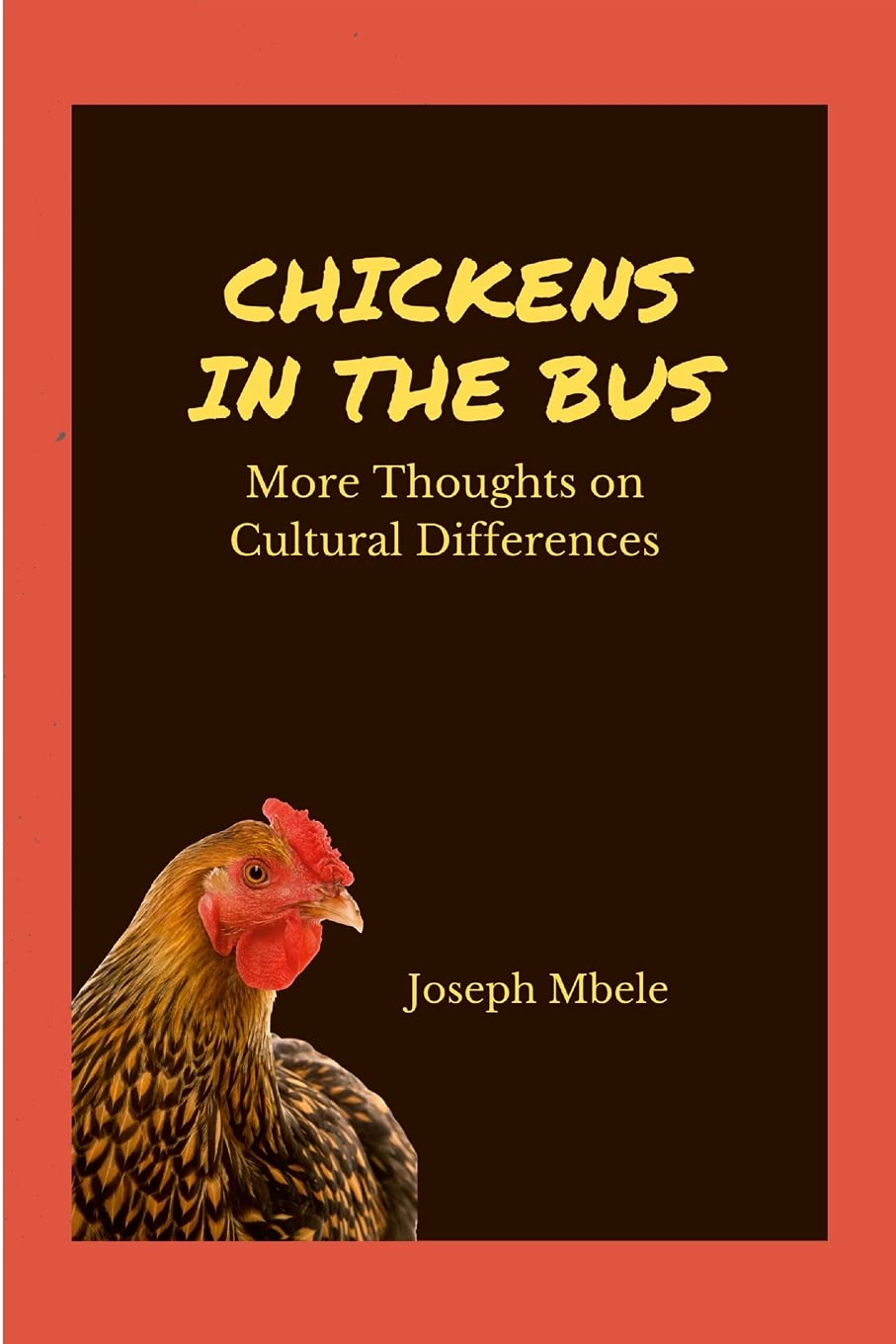
Mbele’s latest book, published in 2021. (Cover image sourced online)

In Chickens in the Bus, Mbele terms this “the sidewalk issue.” Business owners expressed concerns about Somali men congregating outside, blocking sidewalks, scaring customers away, Mbele writes. His words are not new to me. I’d heard them, too, from business owners and from local residents. People were, they said, afraid to come downtown. I’ve never feared walking along Central Avenue past groups of Somali men. What people don’t understand, they all too often fear.

To Mbele’s credit, he has worked hard to inform, to enlighten, to listen, to help bridge cultural divides. He spoke to Faribault business owners. He spoke to members of the Somali community. He’s also spoken publicly at libraries and elsewhere. I appreciate his efforts.

At the core of “the sidewalk issue” are cultural differences, according to this native Tanzanian who specializes in teaching folklore at Northfield’s St. Olaf College. Somalians come from an oral culture, one that relies on social gatherings to share news, Mbele writes. “…Somali gatherings in downtown Faribault are the Somali newsstands,” he told local business owners and includes in his book. That’s so down-to-earth understandable.

Mbele’s slim volume, Chickens in the Bus, which I purchased at the November 2023 holiday market, is an excellent primer for anyone desiring to learn more about cultural differences. This author and cultural consultant highlights how those differences can both challenge communities, but also present opportunities in an ever-increasingly connected world that is decidedly global. He writes in a way that is peaceful and soothing and seeks to create harmony.

A rooster, photographed at a rural Faribault farm and used here for illustration only. (Minnesota Prairie Roots copyrighted file photo May 2018)

I learned a lot about “African Time” and “American Time,” about native-born Africans who do not view themselves as black or as “people of colour” (vs African Americans who do), about chickens in the bus, and much more. In Africa, Mbele writes, someone may carry a chicken onto a bus, a gift from a rural villager.

His newest book, a sequel to Africans and Americans: Embracing Cultural Differences, proved an easy and informative read, one that enlightened me about my newest neighbors. They enrich Faribault with their culture, bringing their food, language, dress, customs and more. I will never travel to Africa. So I am the richer for the Africans who now call southern Minnesota home, who bring their culture into my community, to me.

© Copyright 2024 Audrey Kletscher Helbling