Minnesota Prairie Roots

Writing and photography by Audrey Kletscher Helbling

Discovering a Monet painting near St. Charles August 25, 2011

A section of downtown St. Charles, Minnesota, on a recent summer afternoon.
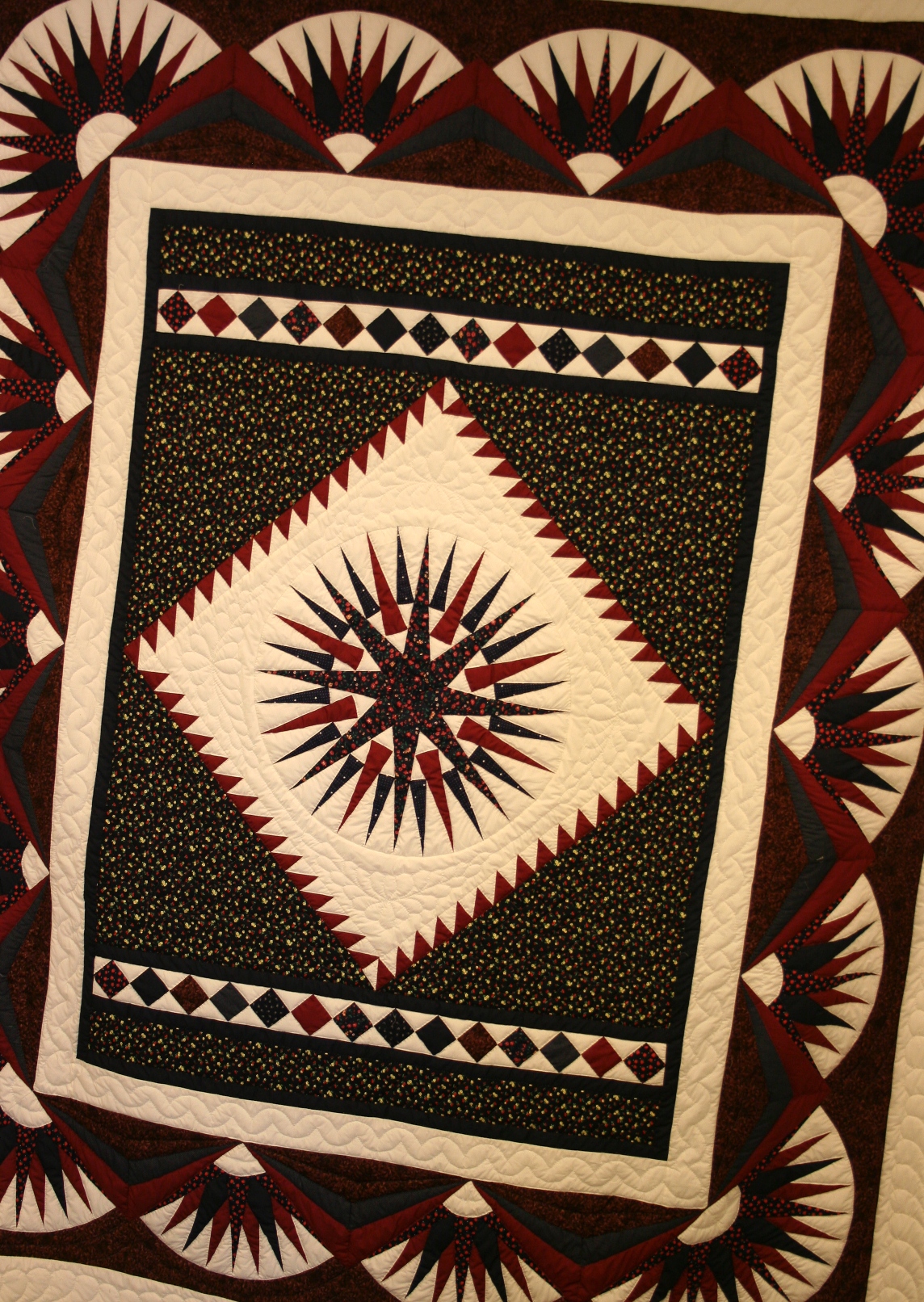
A quilt made by local southeastern Minnesota Amish and sold at the Amish Market Square.

MID-AFTERNOON ON A TUESDAY and we are dining at the Whitewater Café in downtown St. Charles.

We’ve driven to this southeastern Minnesota community of 3,300, sandwiched between Interstate 90 and U.S. Highway 14, because we’re meandering home from a family vacation to Wisconsin.

I’ve specifically placed St. Charles on our route back to Faribault for two reasons: the Amish and the gladiolus.

Before dining at the fishing-themed Whitewater Café in downtown, we stopped at Amish Market Square just off I-90 where you can gas up, eat, buy products handmade by the Amish and pose for a photo in an Amish buggy. While I admired the stunning hand-stitched quilts—priced around $1,500—and the wood cutting boards and more, I didn’t climb into that buggy for a photo. I wanted authentic Amish, not tourist Amish.

That would come later, after lunch downtown, next to “The Table of Knowledge,” aka a group of local guys who gather each morning and afternoon to shoot the breeze, drink coffee and, when asked, give directions to the gladiolus fields and Amish farms.

I didn’t get any of their names, but one of those friendly club members—and I use that term loosely here—found a Winona County map in the restaurant and highlighted a route that would take us southeast of St. Charles past Amish farms and then back north to the glad field just south of Utica. He praised the hardworking Amish, two of whom were working on a fence on his farm at that very moment. He picks them up in the morning, then drives them home at the end of the work day.
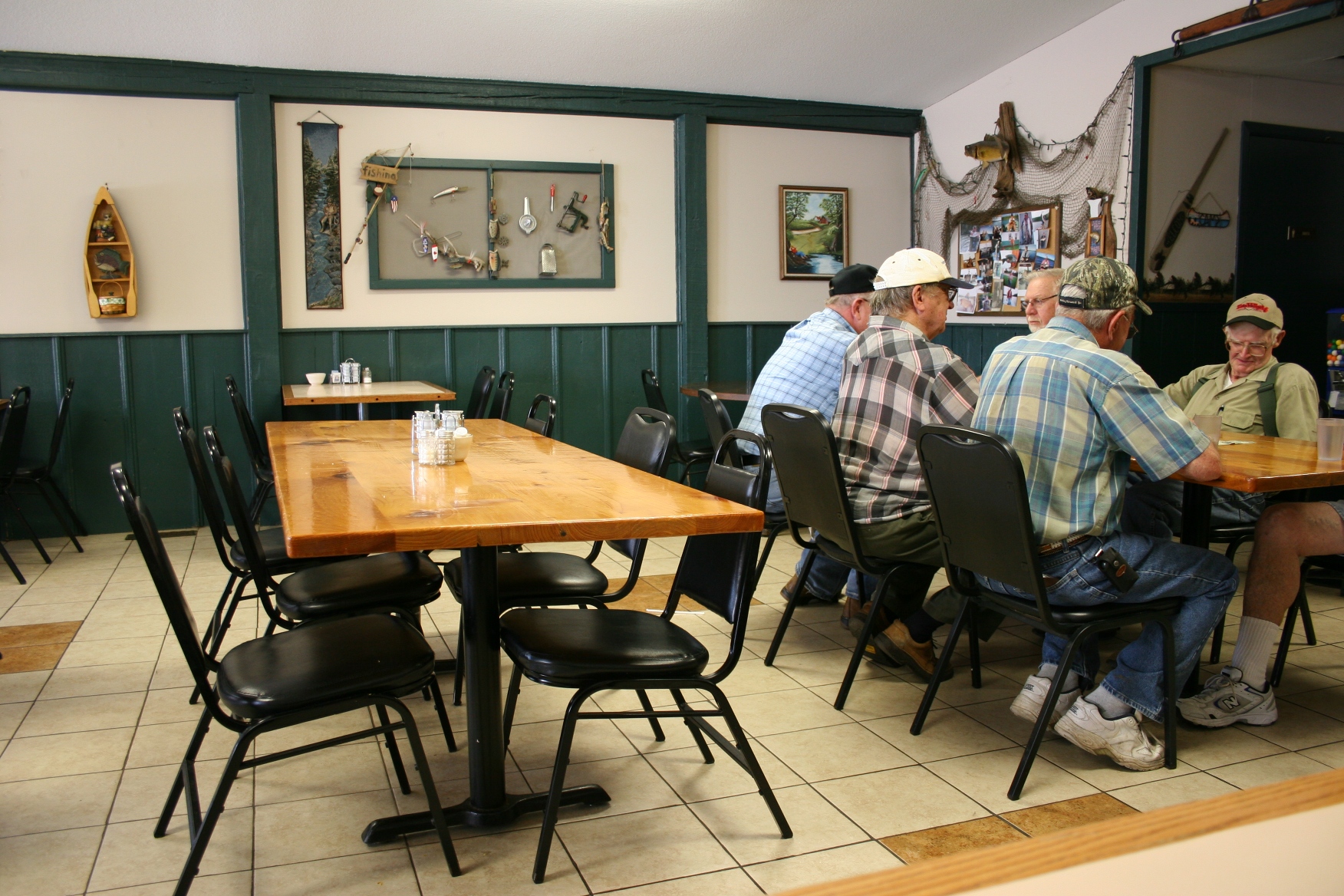
These friendly locals at the Whitewater Cafe gave us directions to the glad field and Amish farms.

We left the restaurant, opting to view the flower field first by following Highway 14 east of St. Charles, turning south onto Winona County Road 33 into Utica until we found the rows of gladiolus just outside of town. It should be noted that the flower-growing location changes annually to keep the plants disease-free. Last year the glads were grown next to St. Charles, so the knowledgeable locals told us.

Up until that moment, I’d thought mostly of gladiolus as “funeral flowers,” a moniker that has stuck for decades based on my memories of glads at every funeral I ever attended as a child. Interesting how you associate something with an impressionable event, isn’t it?

As we slowed the car to get an overview of the gladiolus in the field below, I felt as if I was viewing a painting by Claude Monet. Soft pinks and purples and blues—punctuated by splashes of brilliant red, and broken by lines of green, tight-clasped buds and foliage—created a surreal scene against the backdrop of corn, farm places, sky and a distant tree line.
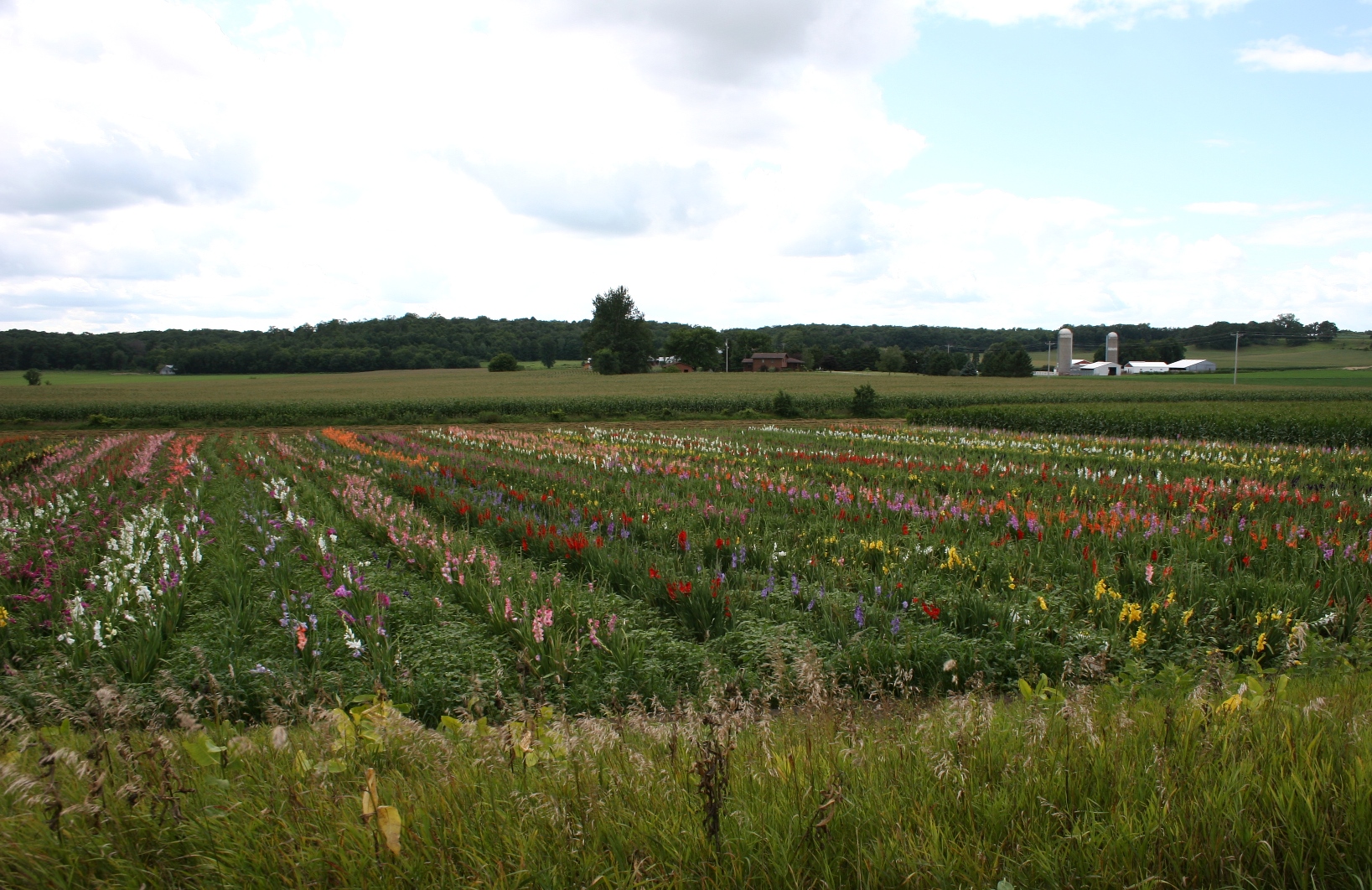
A view of the gladiolus field just south of Utica along Winona County Road 33.

This is as close as I got to the glads, standing along the shoulder of the road photographing them.

I hoped for a close-up look, but found no signage indicating we could stop at a next-door building site to view or purchase flowers.

And so we drove on, further south and then west past several Amish farms—past the horses and wagons, the laundry on clotheslines, the shocks in fields and the Amish men throwing bundles high atop a wagon, their arm muscles bulging from seasons of labor.

An Amish farm site southeast of St. Charles.
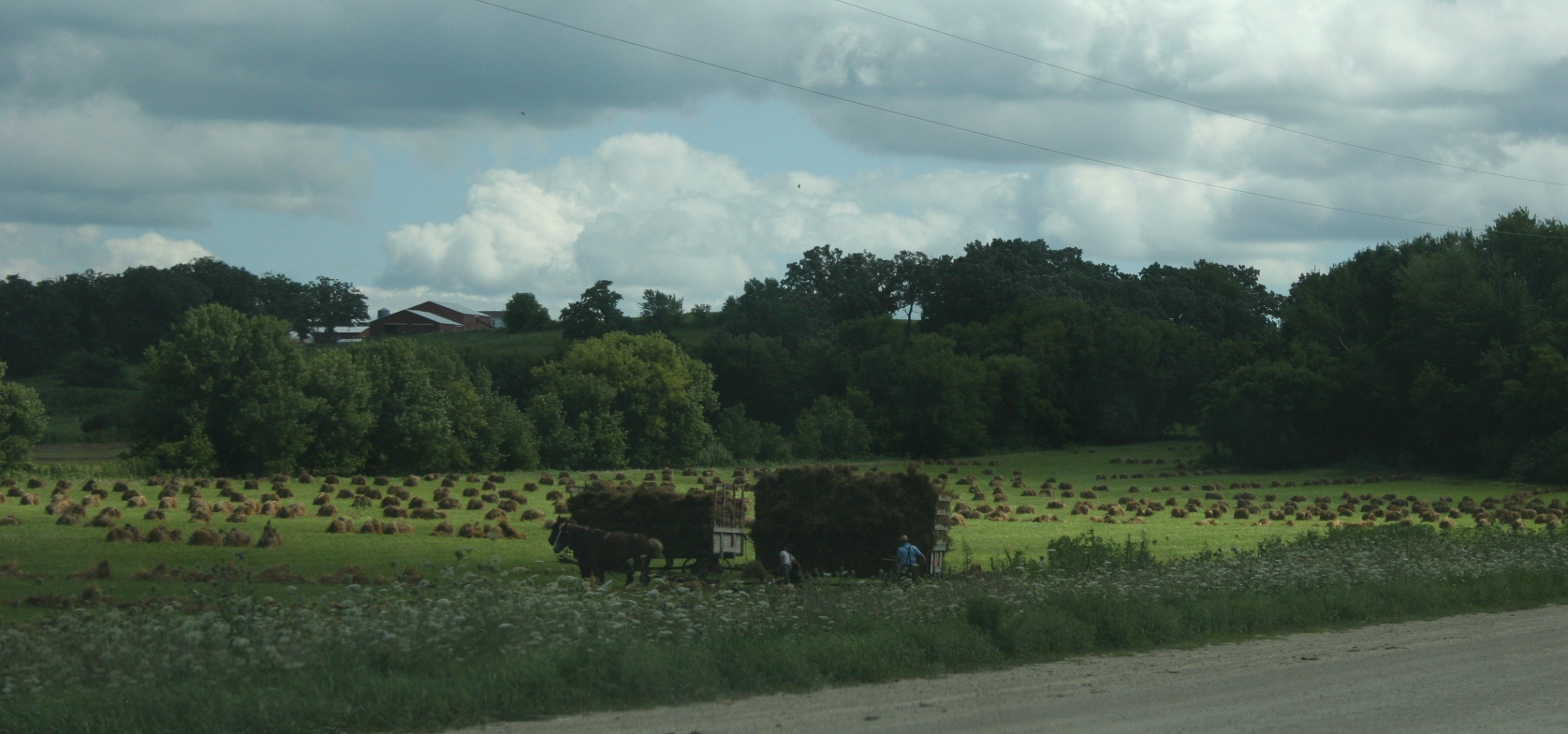
We came upon this pastoral scene south of St. Charles, where the Amish were pitching bundles onto wagons.

Heading back into St. Charles, I wished I could spend more time here, in this town promoted on its website as “The Gateway to the Whitewater Valley,” and made world-famous by Carl Fischer, now deceased. He was the world’s leading hybridizer of new and distinctive gladiolus and established Noweta Gardens in 1945.

Each August this Minnesota town celebrates Gladiolus Days, which is happening right now and continues through Sunday, August 28. For a schedule of events, click here.

I fully intend to return some day to experience this festival, to this place where, if you look, you will see southeastern Minnesota’s version of a Monet painting.

The gladiolus field before me could have been a Claude Monet painting.

MORE PHOTOS OF ST. CHARLES:

The main road through downtown St. Charles, the "Gateway to the Whitewater Valley."
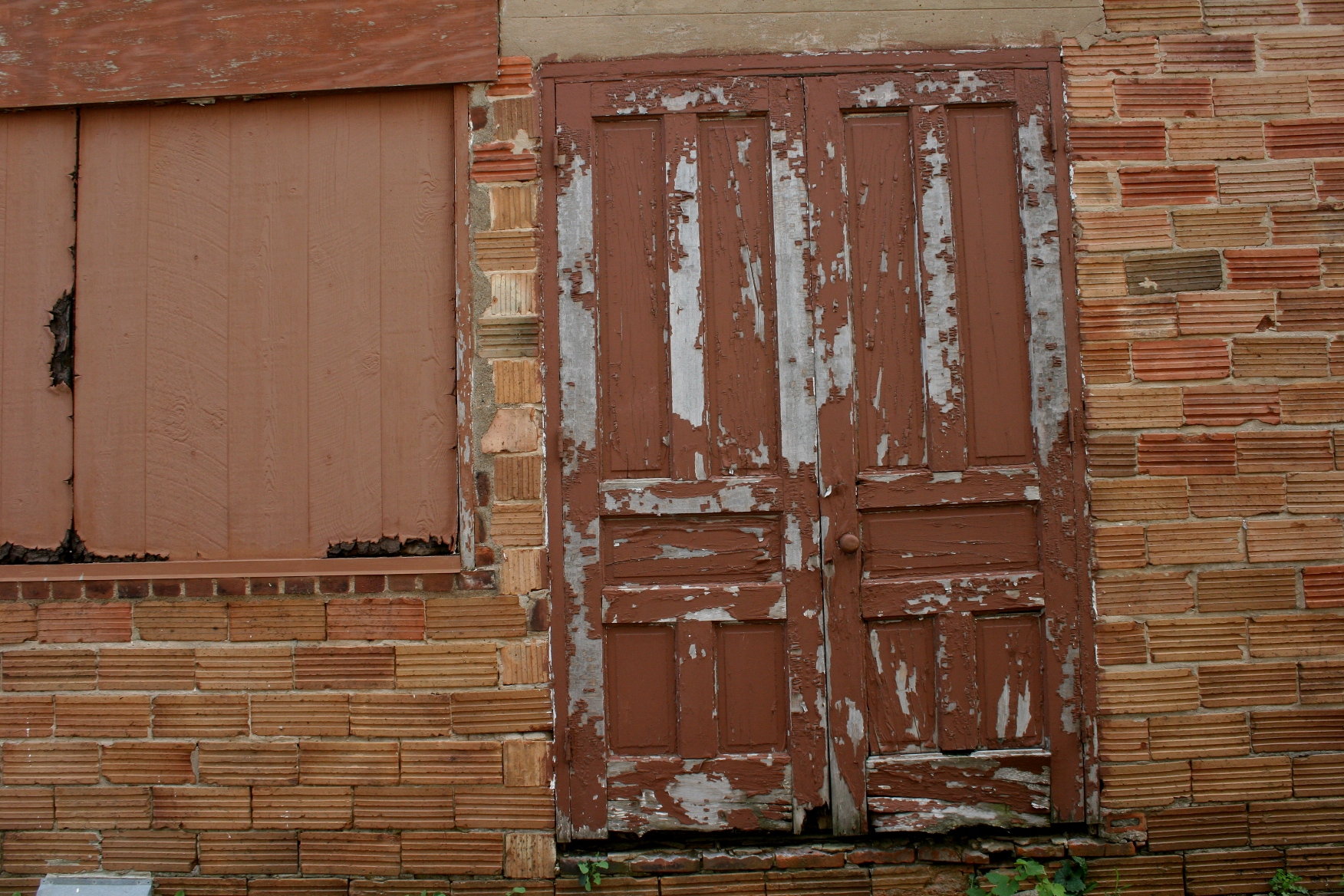
I discovered these weathered doors, found them charming, so photographed them in downtown St. Charles.
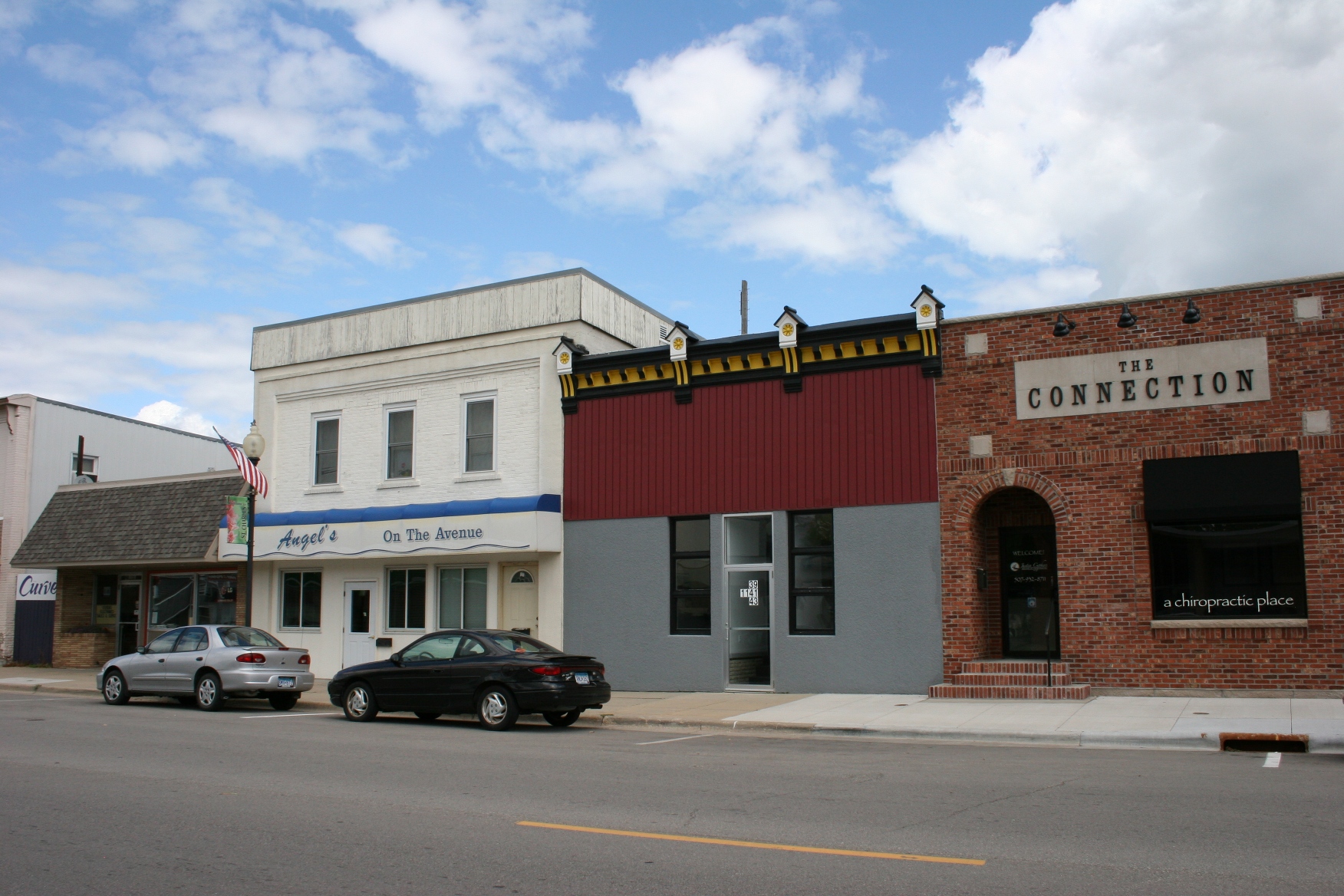
More downtown St. Charles businesses.

The post office and a pizza place along St. Charles' main drag.

I refused my husband's offer to photograph me in this Amish buggy at the Amish Market Square just off I-90.

© Copyright 2011 Audrey Kletscher Helbling


Inside the Hamilton Wood Type Museum & the Target connection August 17, 2011

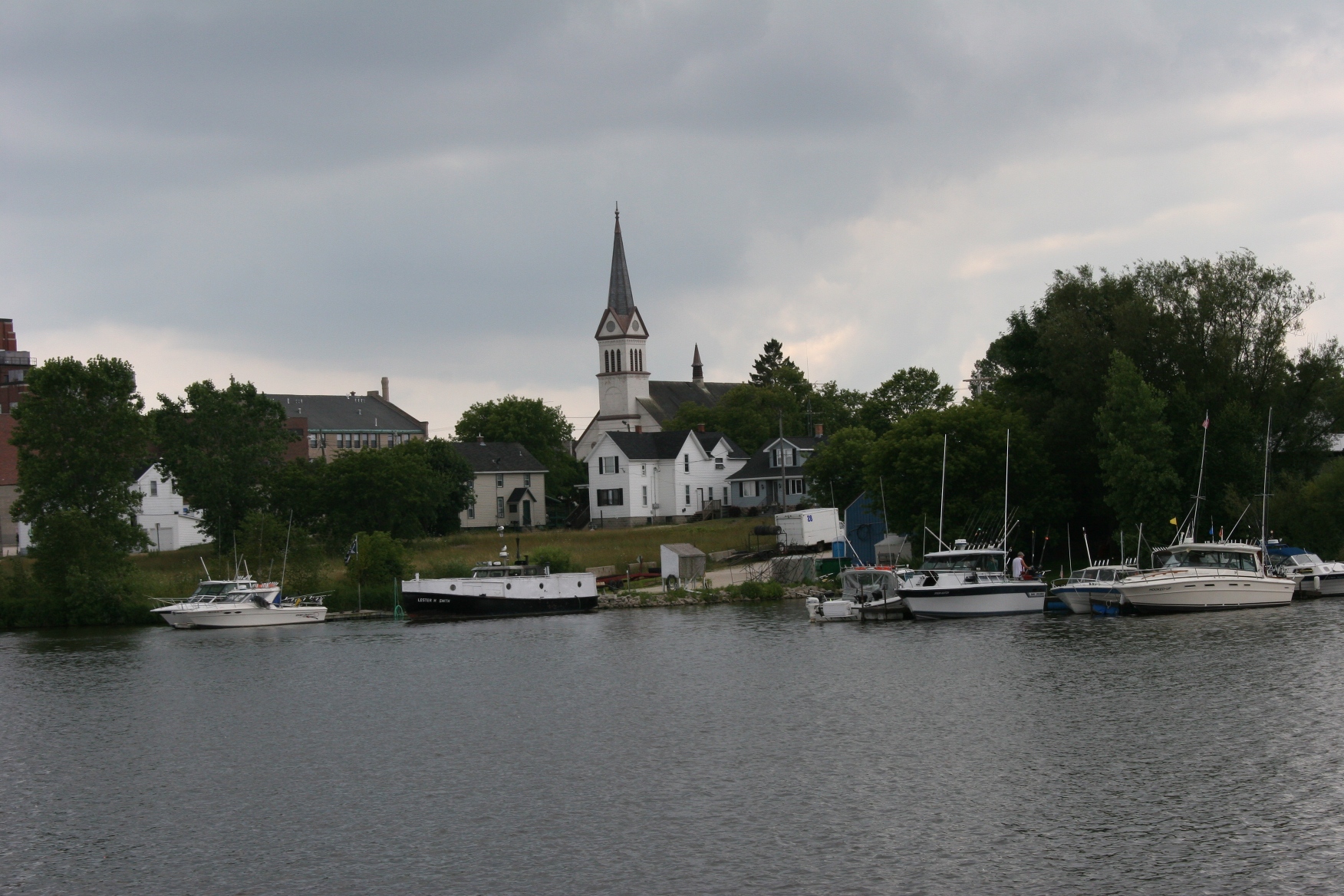
A picturesque view of Two Rivers, Wisconsin, as seen from the historic Rogers Street Fishing Village.

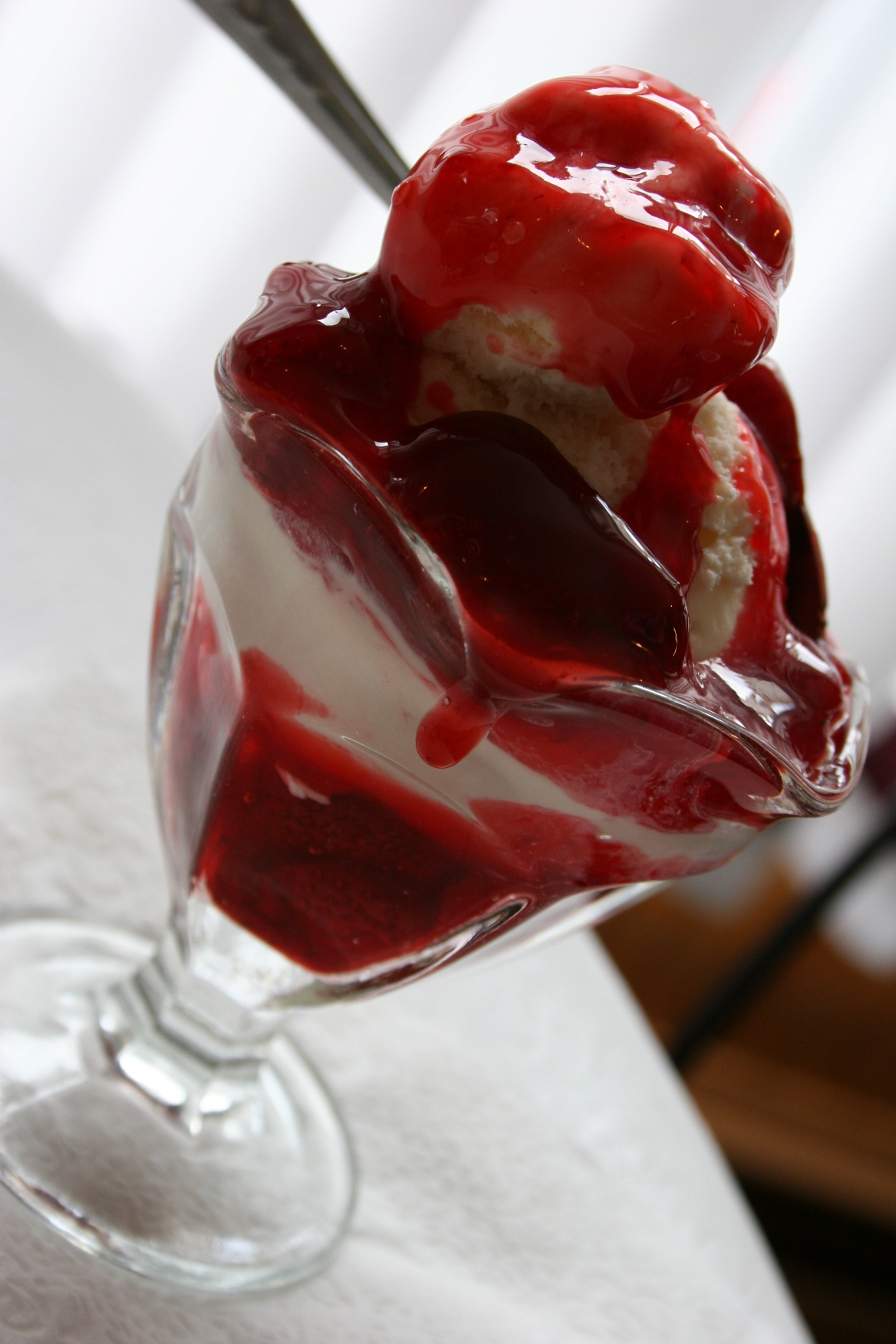
We treated ourselves to ice cream sundaes after the museum visit.

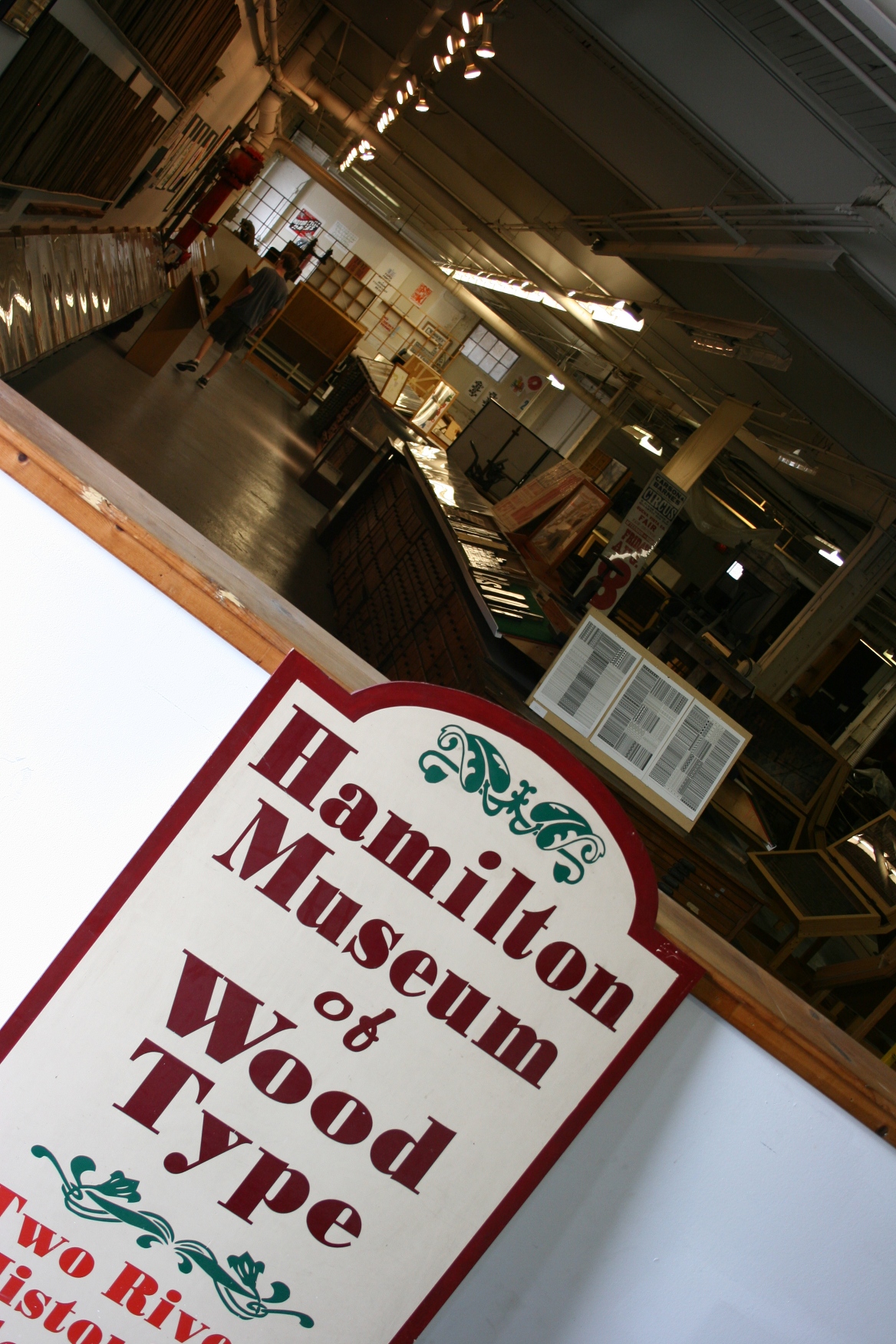
IF NOT FOR MY SECOND DAUGHTER’S neighbor mentioning a day trip to Two Rivers, Wisconsin, I might never have discovered the Hamilton Wood Type & Printing Museum or its connection to Minnesota-based Target.

The retailing giant collaborated with the museum on a recently-released fall Vintage Varsity collection promoted as “Cool Never Fades.”

With vintage so in vogue right now, Target definitely found the right place for designers to authenticate this new line. Hamilton made wood type from 1880-1985 and boasts a collection of 1.5 million pieces, the largest in the world. Target dipped into that collection to create graphics for the Vintage Varsity line.

The Target connection, however, wasn’t my reason for visiting Two Rivers, a city of 13,000 just south of Door County. Rather, Lake Michigan drew me here on a recent Sunday when my husband, son and I were visiting our daughter Miranda at her Appleton home 50 miles to the west.

My family can assure you that fashion wouldn’t draw me anywhere. But wood type would.

So, when I planned our day trip from Appleton to Two Rivers, Hamilton Wood Type ranked high on my must-see list, right after Lake Michigan. A promise to the teenage son of ice cream afterward at the historic Washington House, just across the street from the museum, kept him from complaining too much about my museum meandering. Interestingly enough, the sundae originated in Two Rivers in 1881.

Had I opted to take the official Hamilton tour, I likely would have learned much more about Hamilton Manufacturing Company and the museum, which also includes a collection of 1930s – 1970s advertising cuts, wood type and Linotype equipment, tools and more. The manufacturing company, which once made medical office furniture, appliances and more, is still in business today producing steel lab equipment.

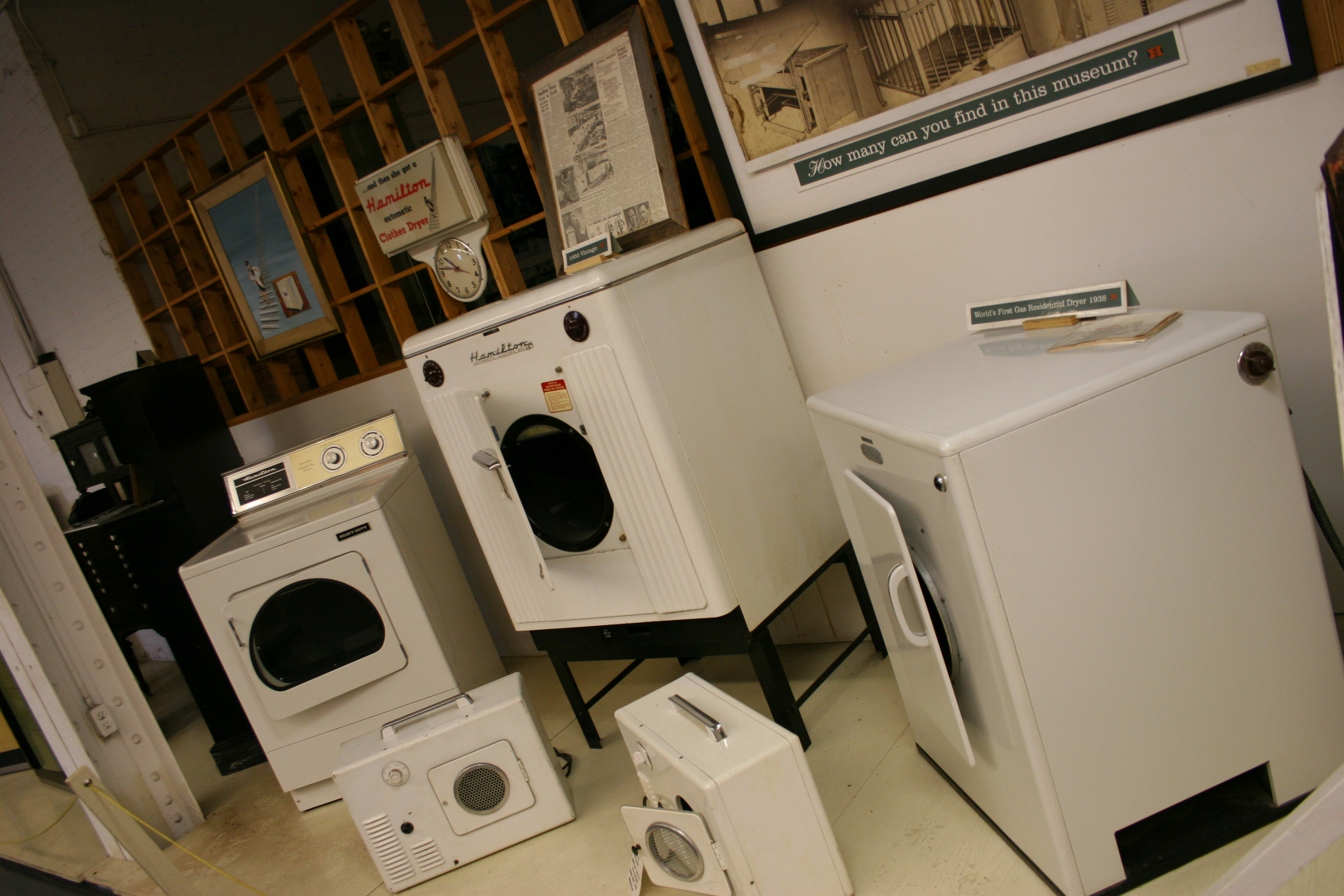
Hamilton manufactured the first gas-powered clothes dryers.

The museum is a self-supporting, working museum where artists and designers and others get hands-on experience in wood type printing and where custom printing is done, according to a Minneapolis woman who was printing at the museum on the day I visited.

In all honesty, Hamilton’s historical details didn’t interest me. Rather, I was here because of my decades-earlier connection to Linotype and because of my profession. During my first job out of college in 1978, I worked as a reporter at The Gaylord Hub, a small-town weekly newspaper that still used hot metal type to create auction bills and other custom printing. At the time, I failed to appreciate this fading art. Rather, I found the constant clack-clack-clack of the vintage machines bothersome, especially when conducting phone interviews.

Today my attitude has changed. I appreciate printing as an art. I took that perspective to the Hamilton Wood Type & Printing Museum and knew, even before I stepped inside the 1927 building, that my focus would be visual.

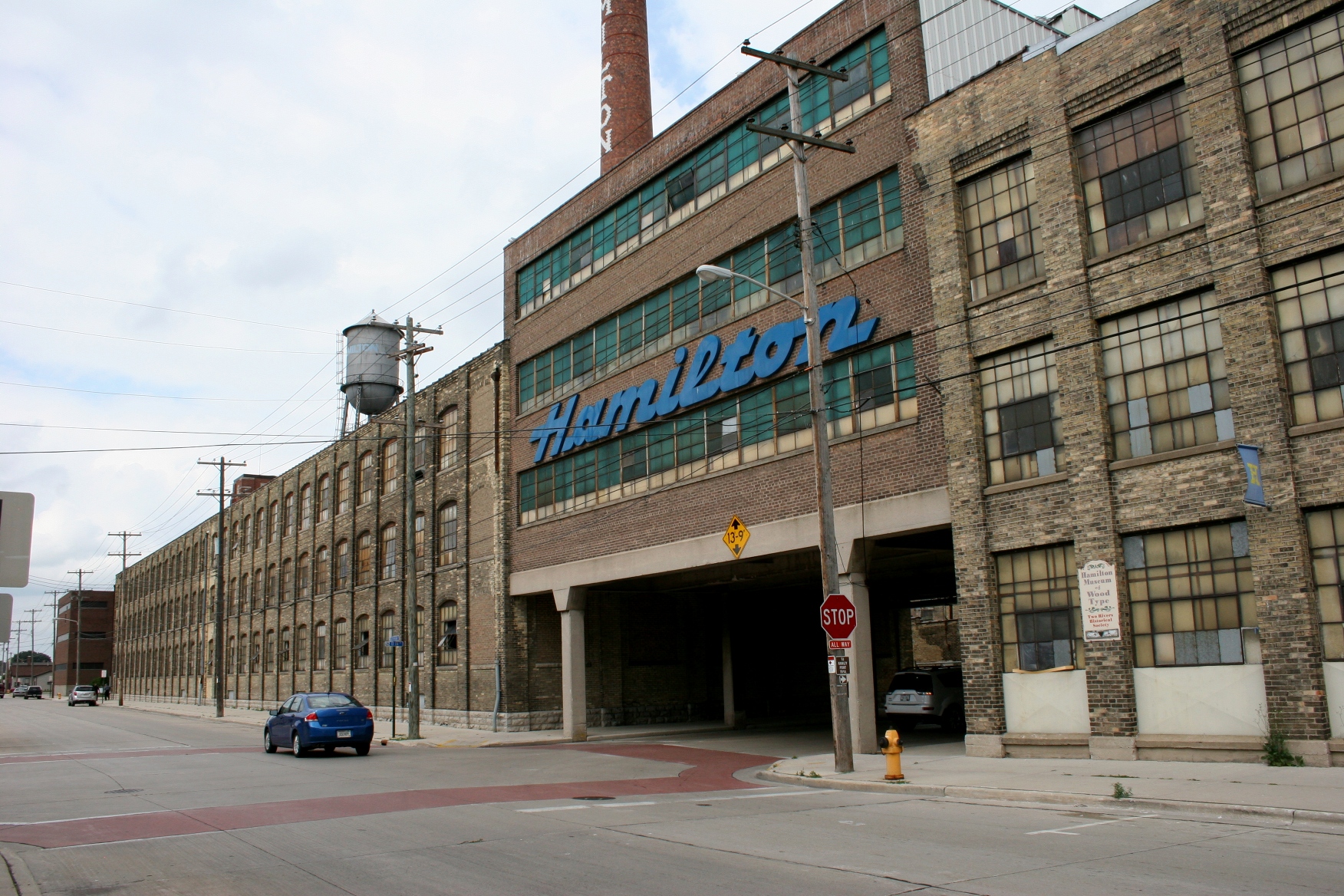
The Hamilton complex of buildings covers blocks.

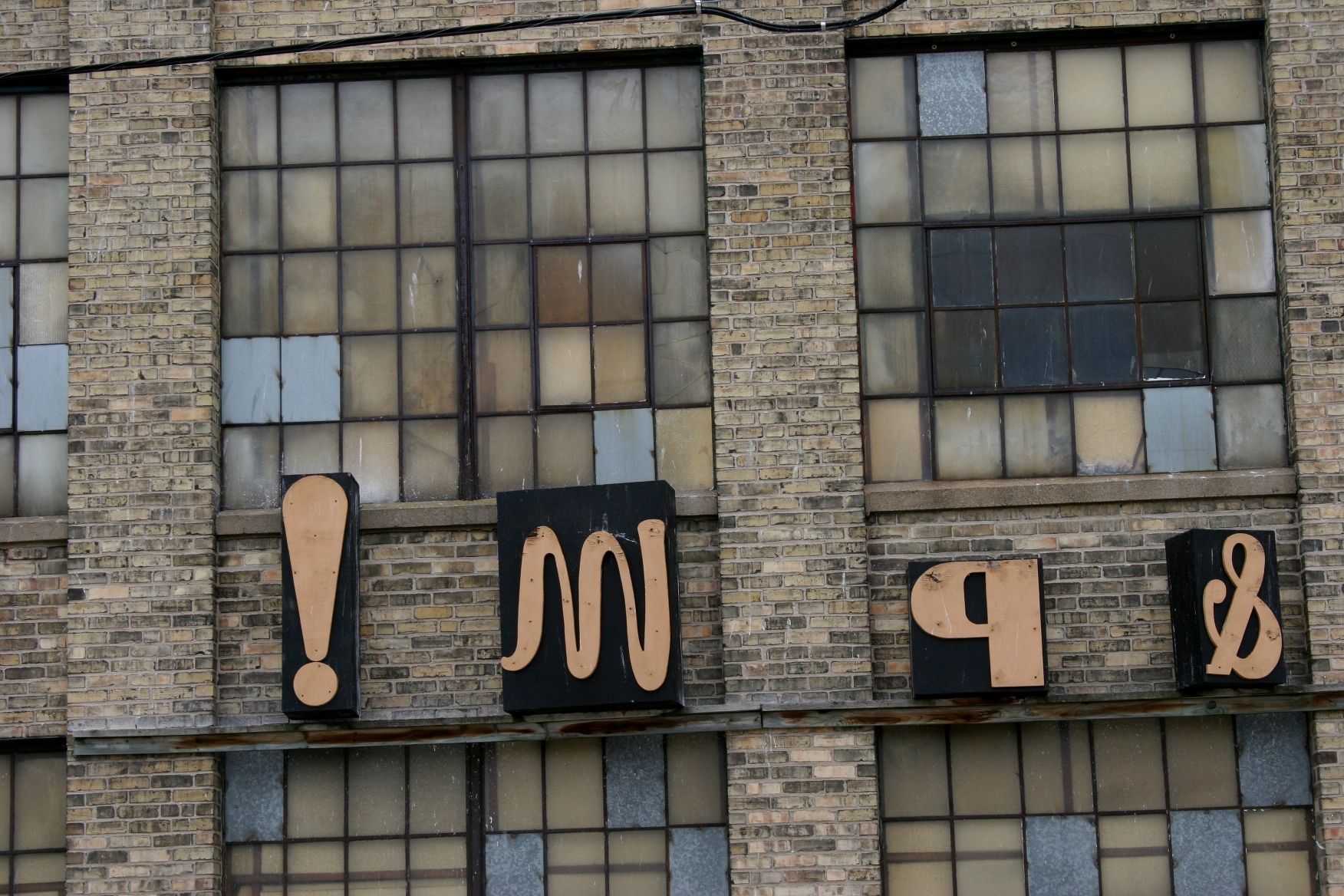
The building exterior features aesthetically appealing letters and punctuation.

My eyes swept across the nothing-fancy, industrial space filled with letters in more fonts and sizes than I could ever imagine. Posters. Colors. Graphics. Drawers upon drawers upon drawers that I wished I could pull open. Machines. Cement floors and brick walls. Jumbled pieces of wood and smeared paint cans, and brushes hung on walls.

I felt almost overwhelmed by the photographic possibilities, the kaleidoscope of colors and shapes that changed as I circled the room.

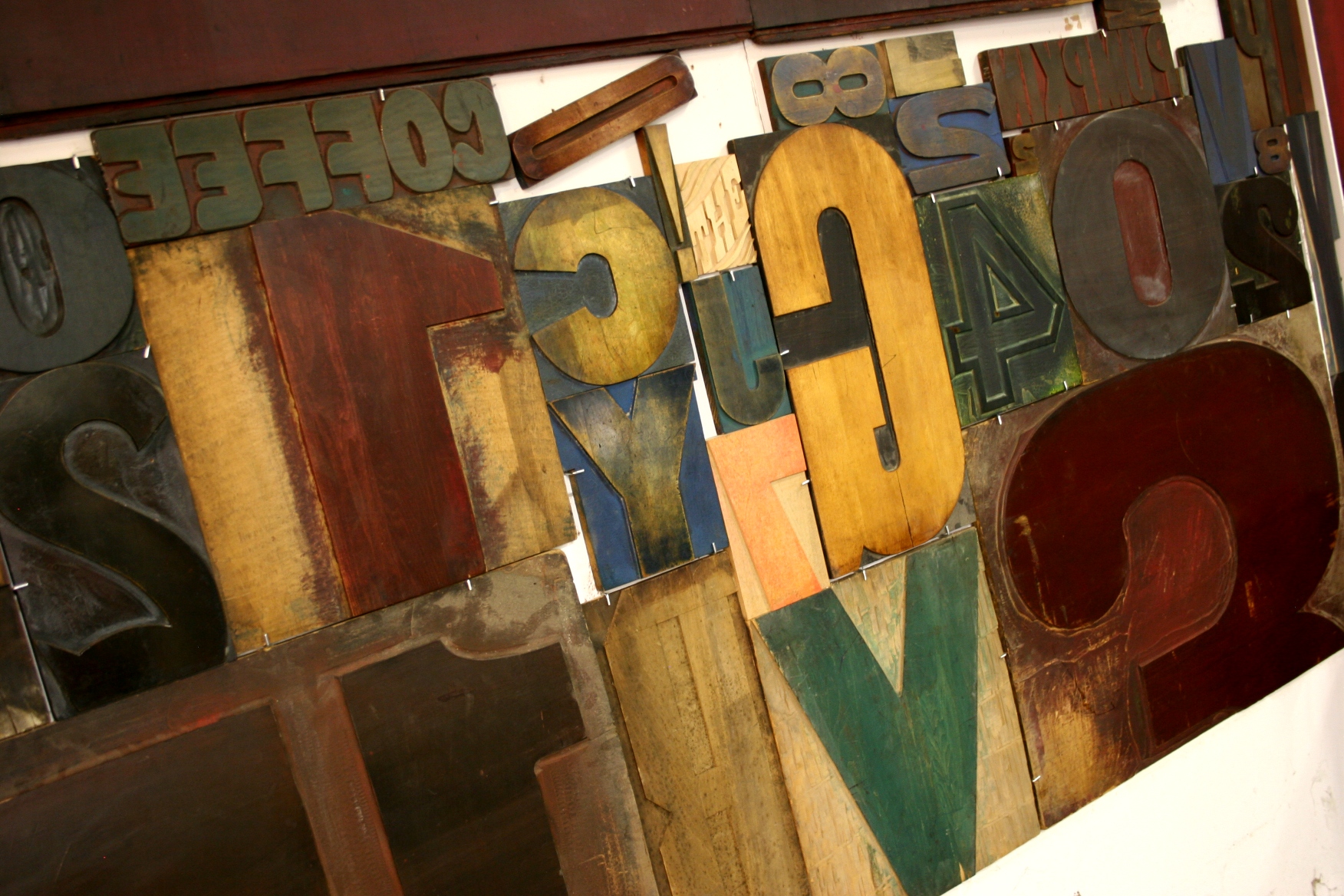
Everywhere you'll see letters and numbers in differing sizes and fonts, a visual delight.

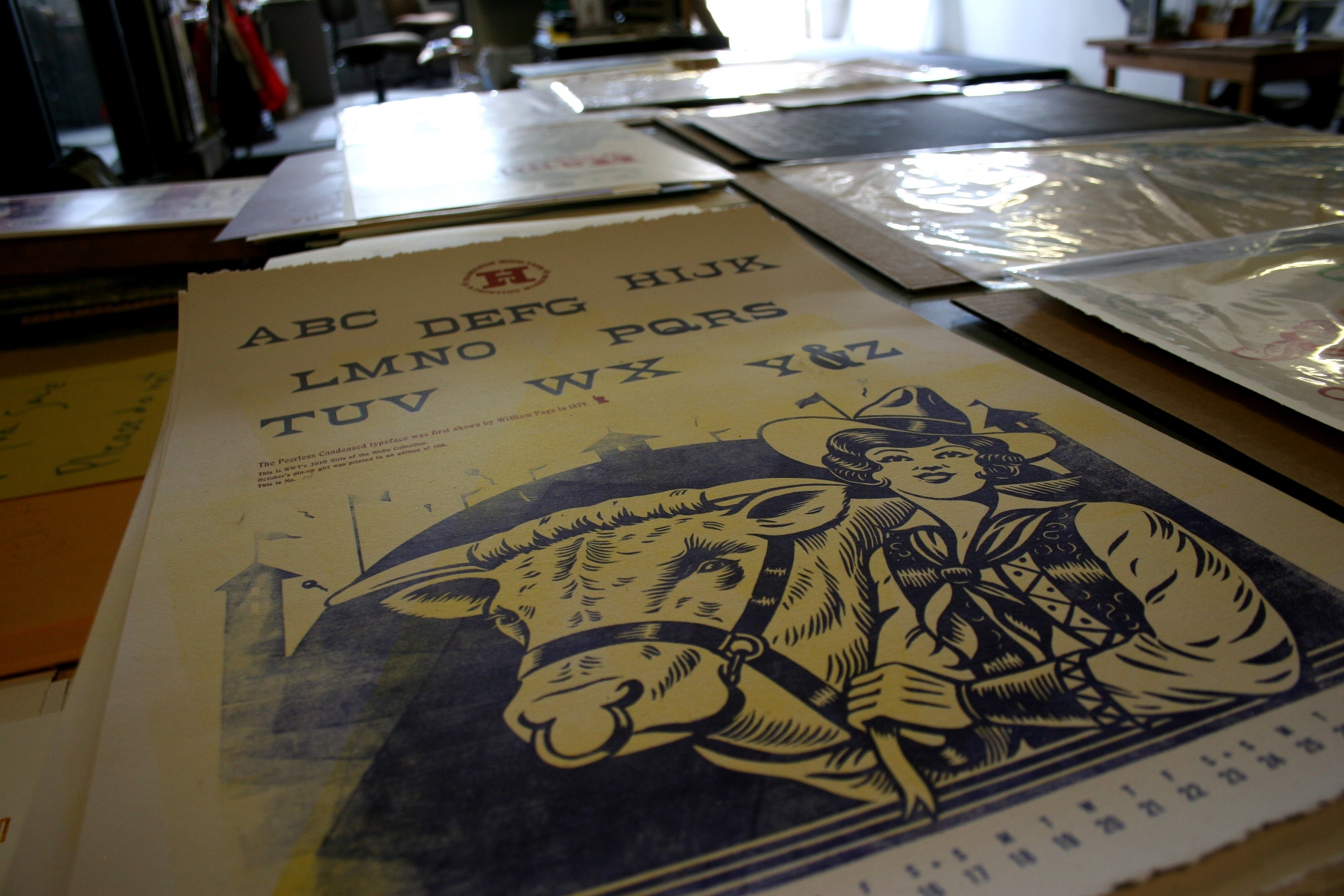
One of the many vintage prints you'll see in the museum.

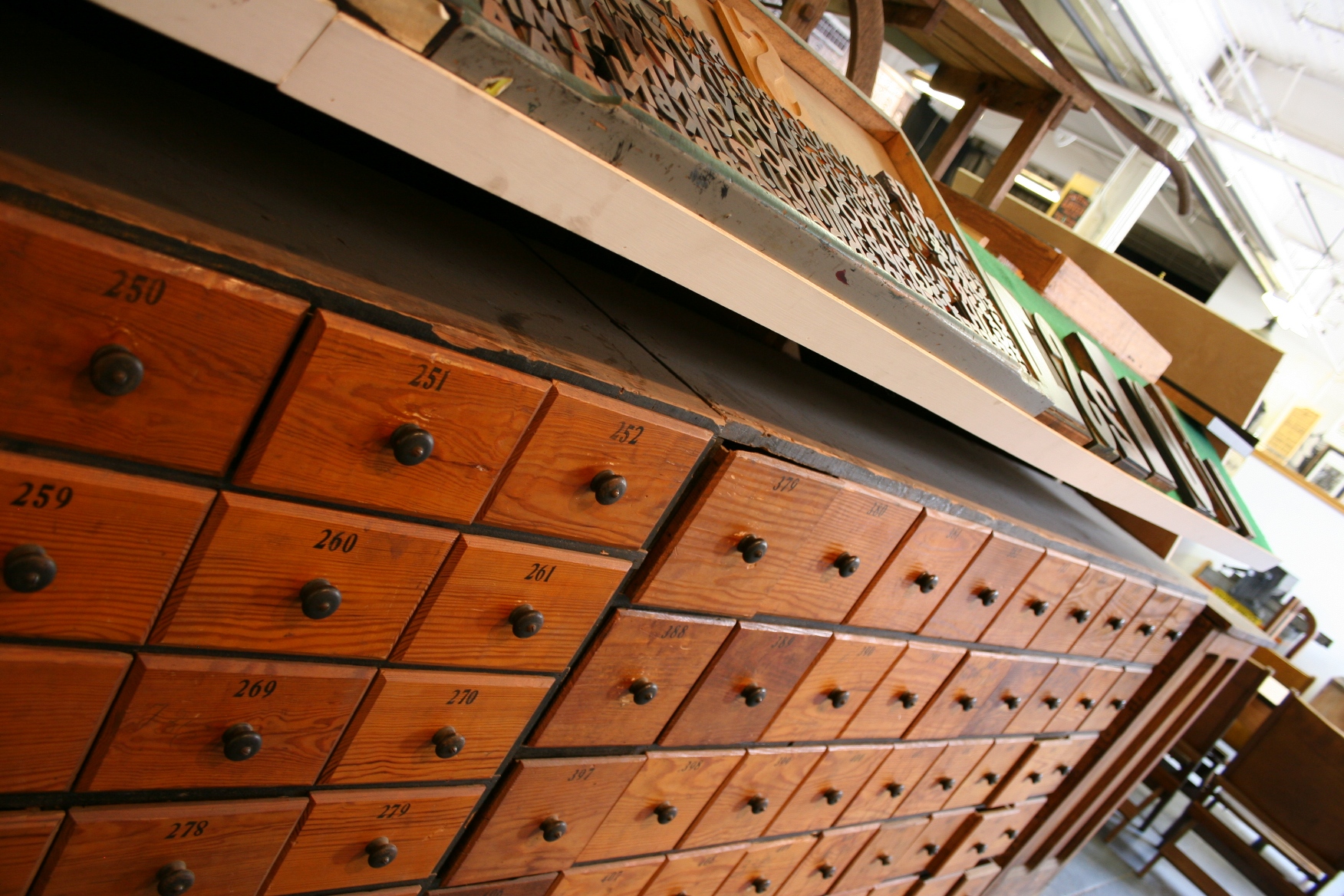
Rows upon rows of tempting drawers, presumably filled with wood type.

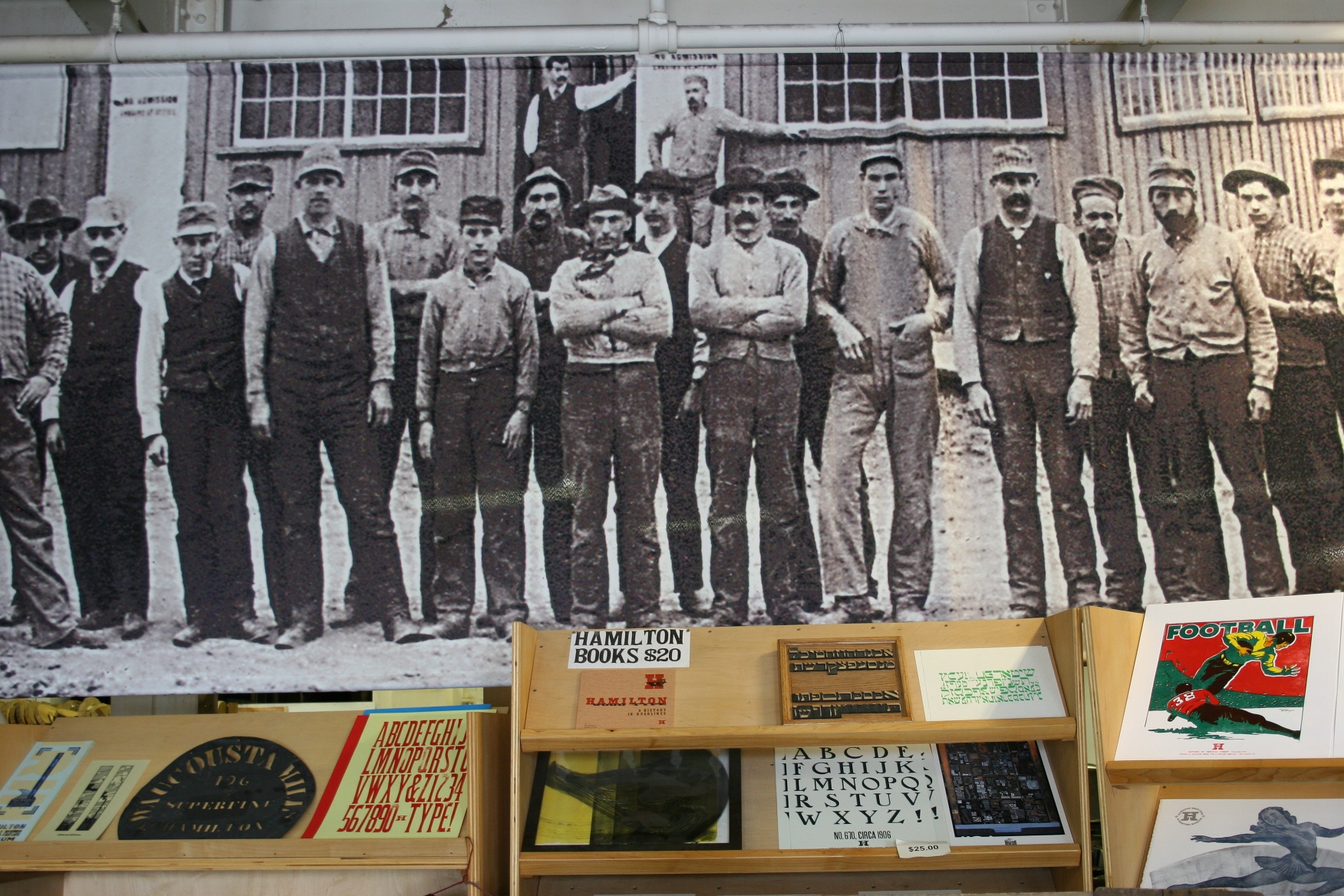
An oversized vintage photo anchors the wall you first see upon entering the museum.

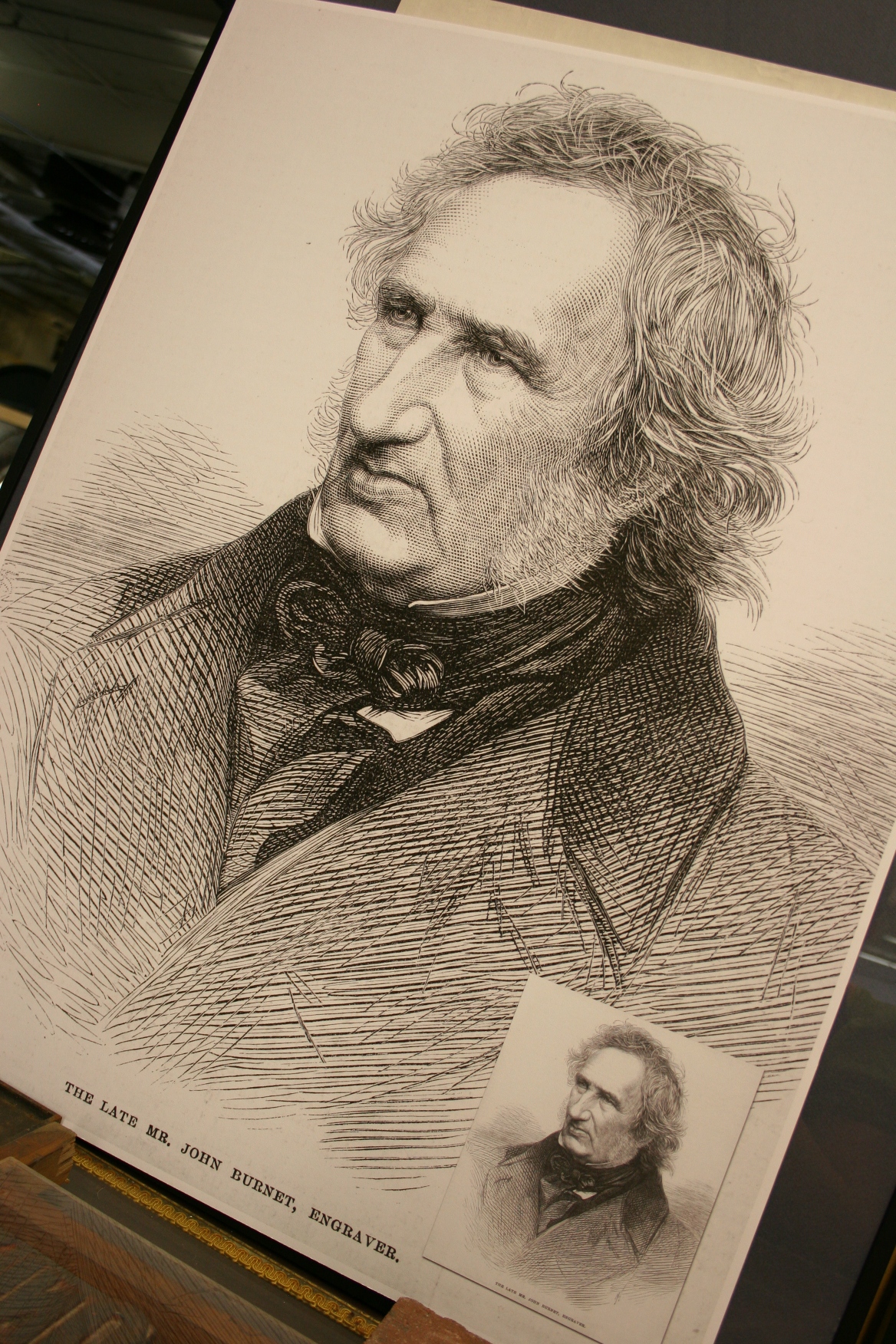
John Burnet, an early engraver at Hamilton.

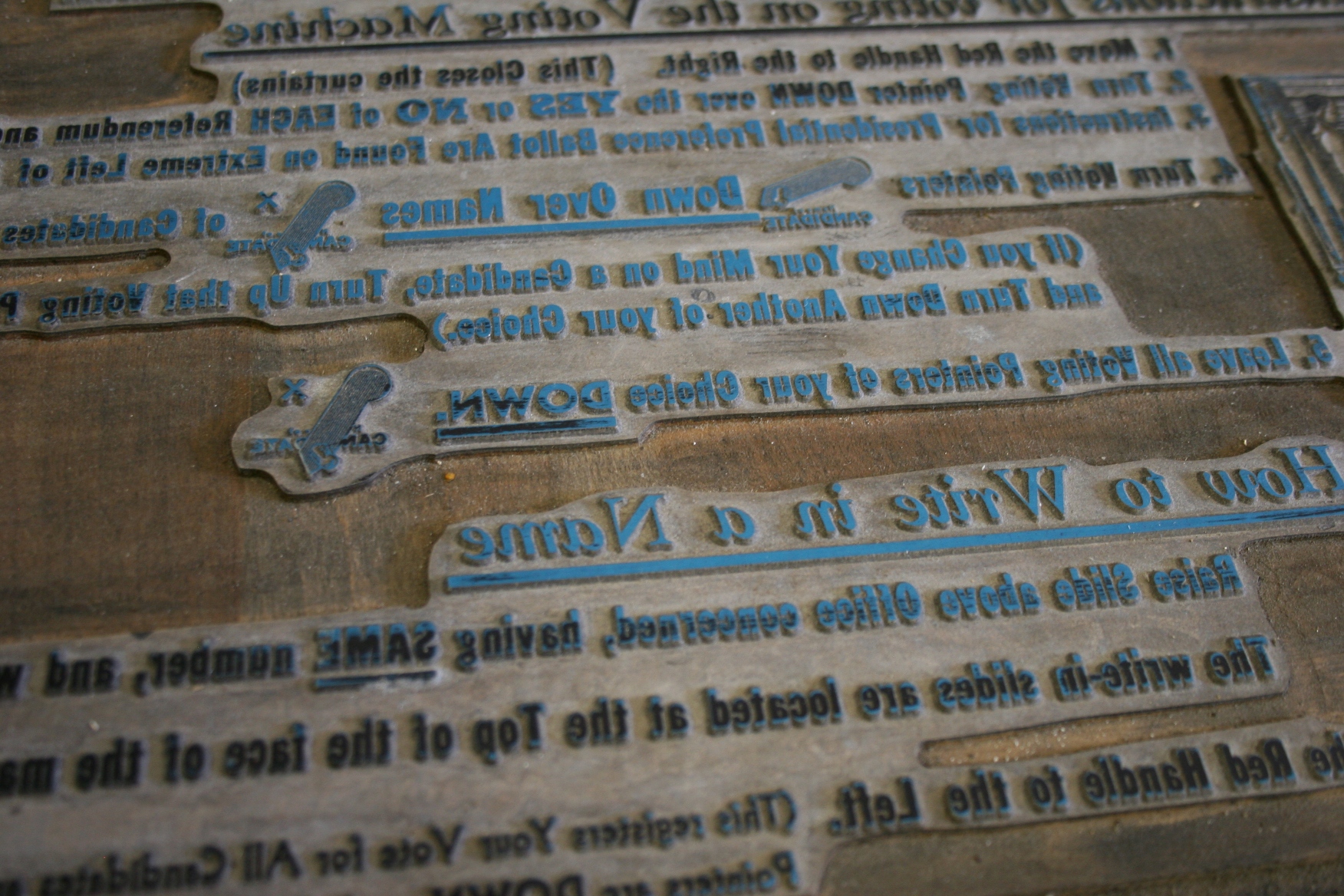
Lines of type.

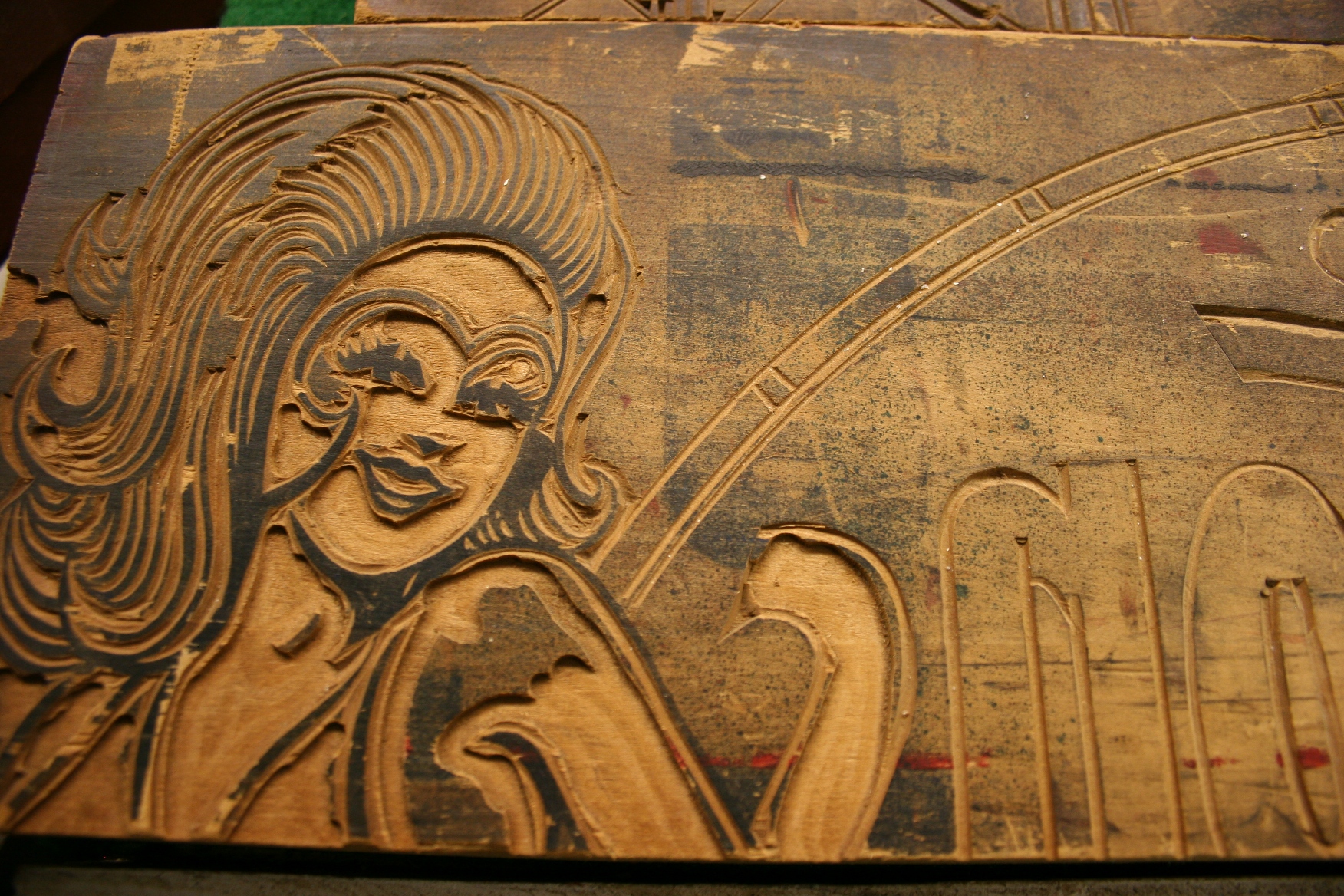
One of the many graphic cuts you'll see in the museum.

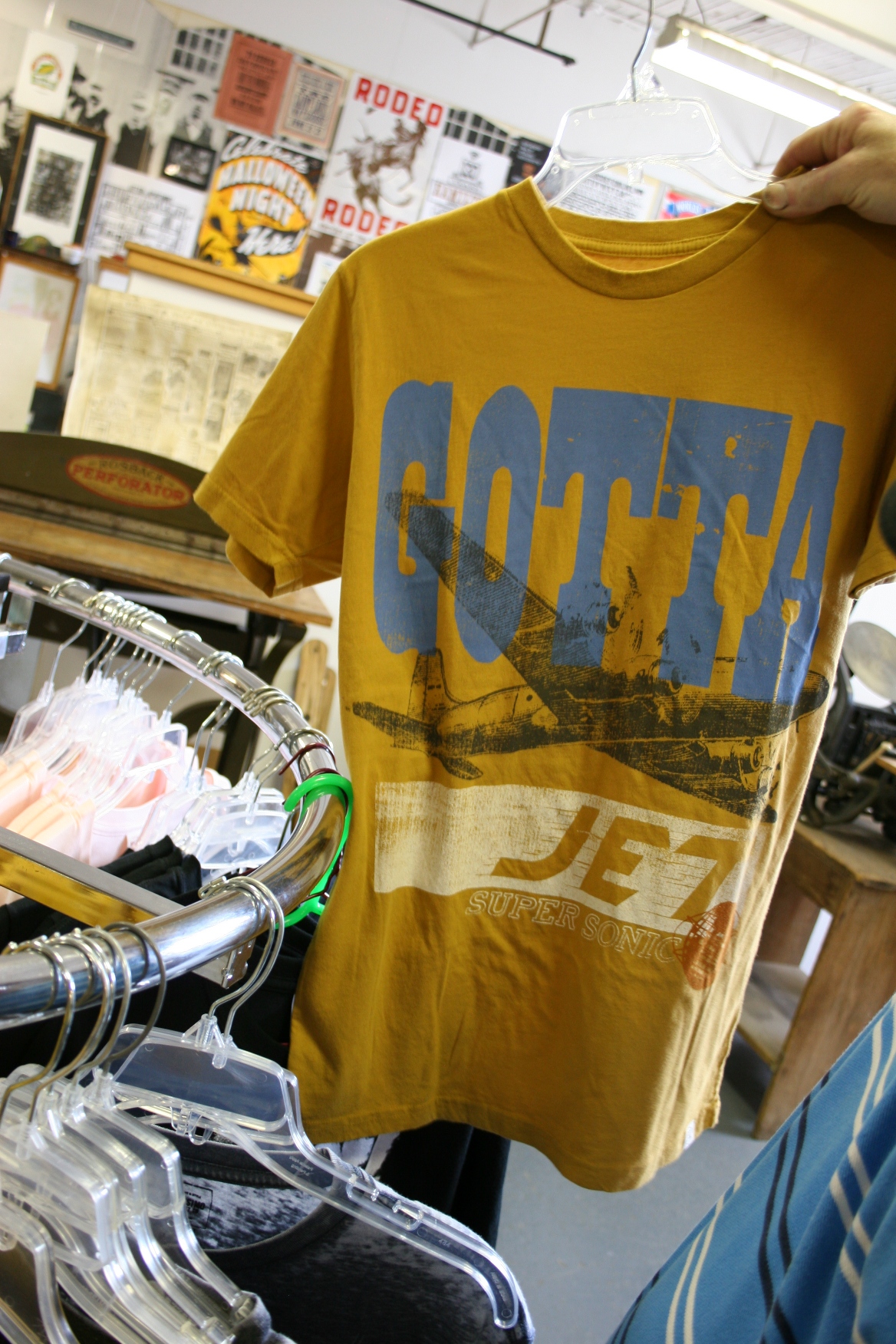
Only when I was in a back room, where the Minneapolis artist was printing and the museum manager/tour guide chastised me for taking his photo without asking, did I think about the Target collection. I had passed by a clothing rack earlier, hadn’t even looked. But then the Minnesotan mentioned Target. So on my way out the door I paused, shot a quick photo and then joined the impatient teen for an ice cream sundae across the street.

A t-shirt I pulled from the rack of clothing at the museum. I don't know whether this is from the Target collection, because I didn't check.

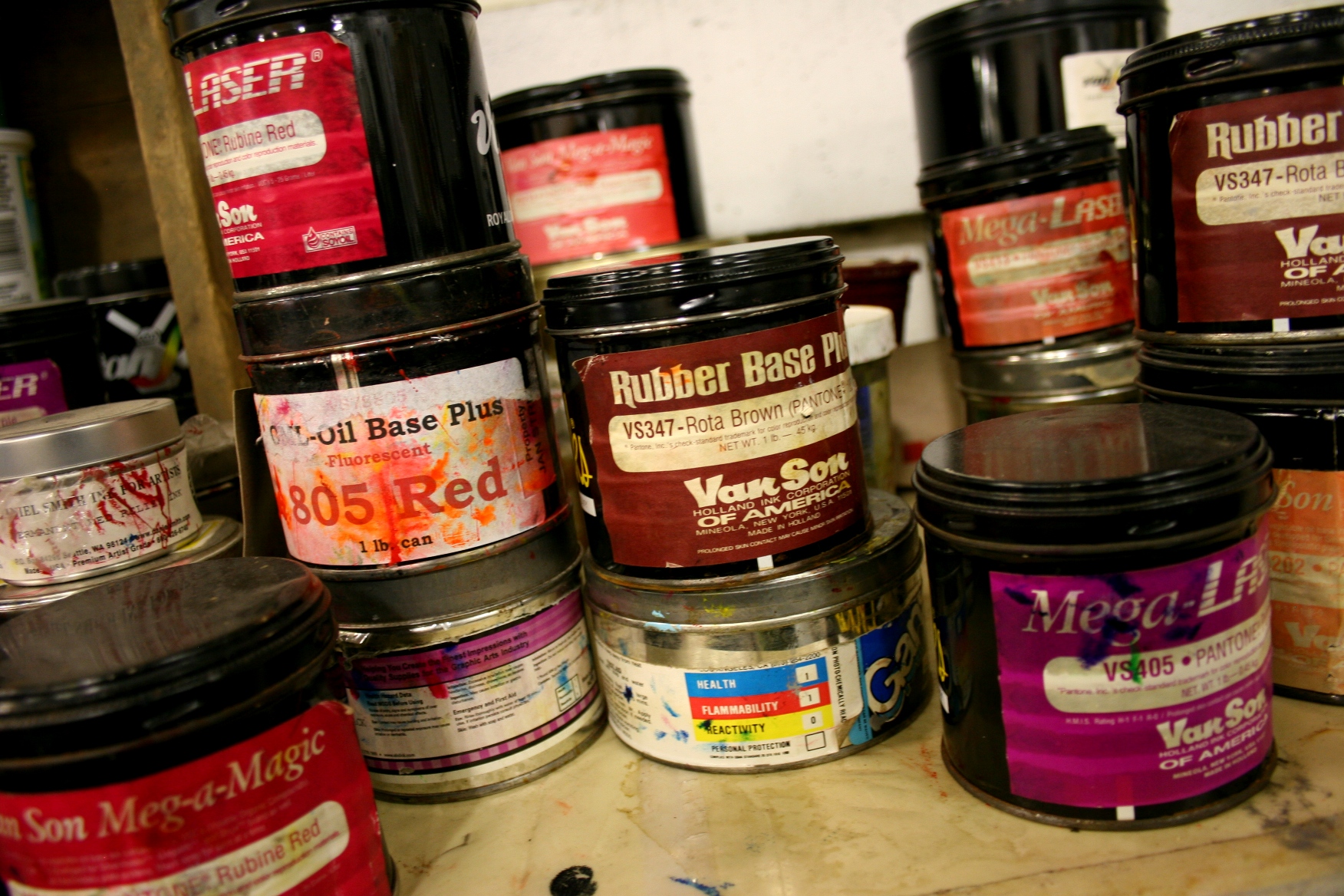
Stacks of paint cans clue you in that this is a working museum.

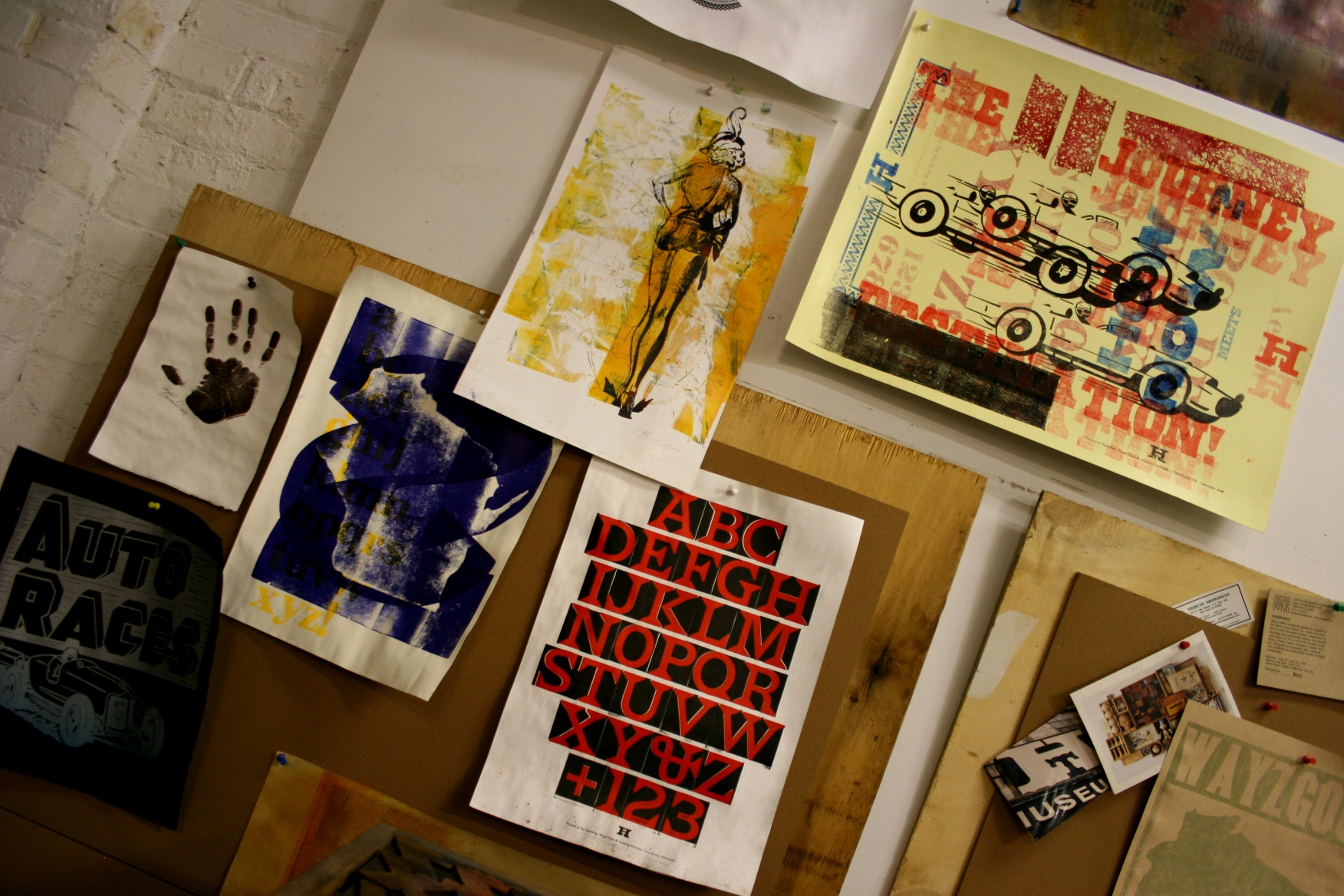
Prints hang on a wall in one of the back rooms.

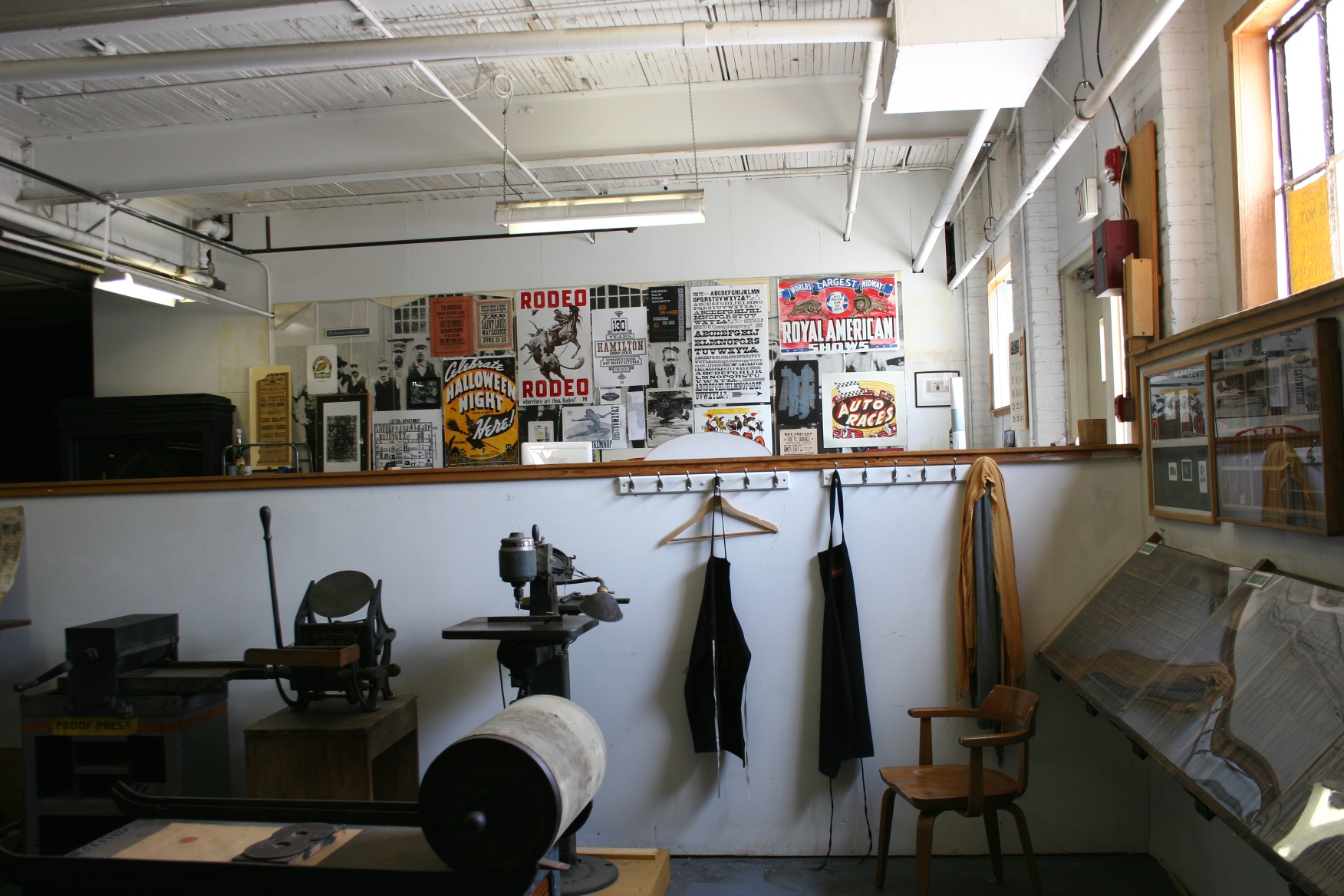
This photo shows printers' aprons and, to the back, the wall just inside the museum entry.

The entry provides a sweeping view of the museum.

FYI: For more information about the Hamilton Wood Type & Printing Museum, click here. The museum is open from1 p.m. – 5 p.m. on Sunday and from 9 a.m. – 5 p.m. Tuesday – Saturday from May 1 to October 31. Winter hours are from noon – 5 p.m. Tuesday – Friday and Saturday by appointment. Admission is free, but donations are accepted.

© Copyright 2011 Audrey Kletscher Helbling
 

Mankato brings art to the sidewalks with walking sculpture tour June 21, 2011

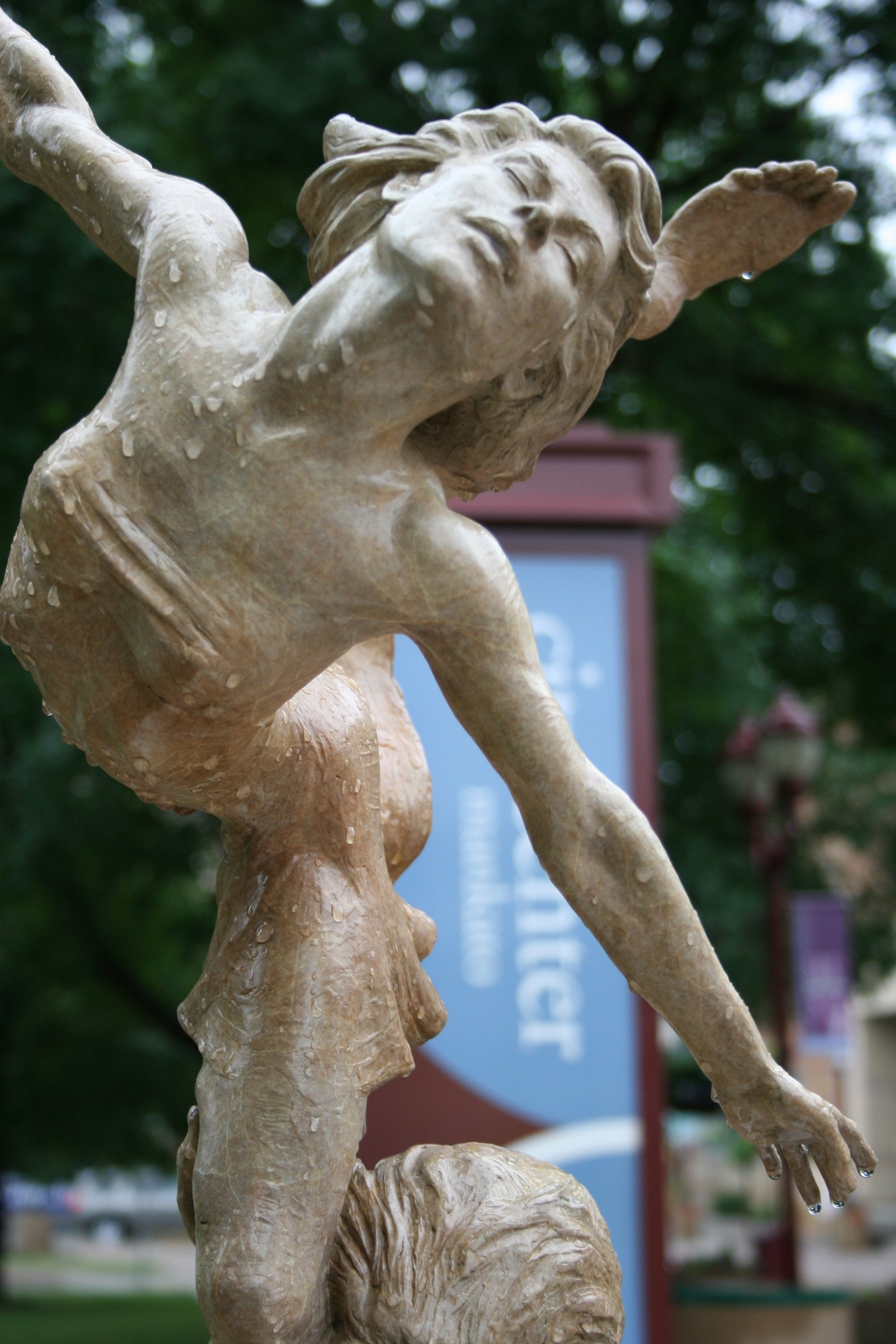
Martin Eichinger of Portland, Oregon, created this graceful "Bird in the Hand" bronze sculpture valued at $14,500 and posed near the City Center.

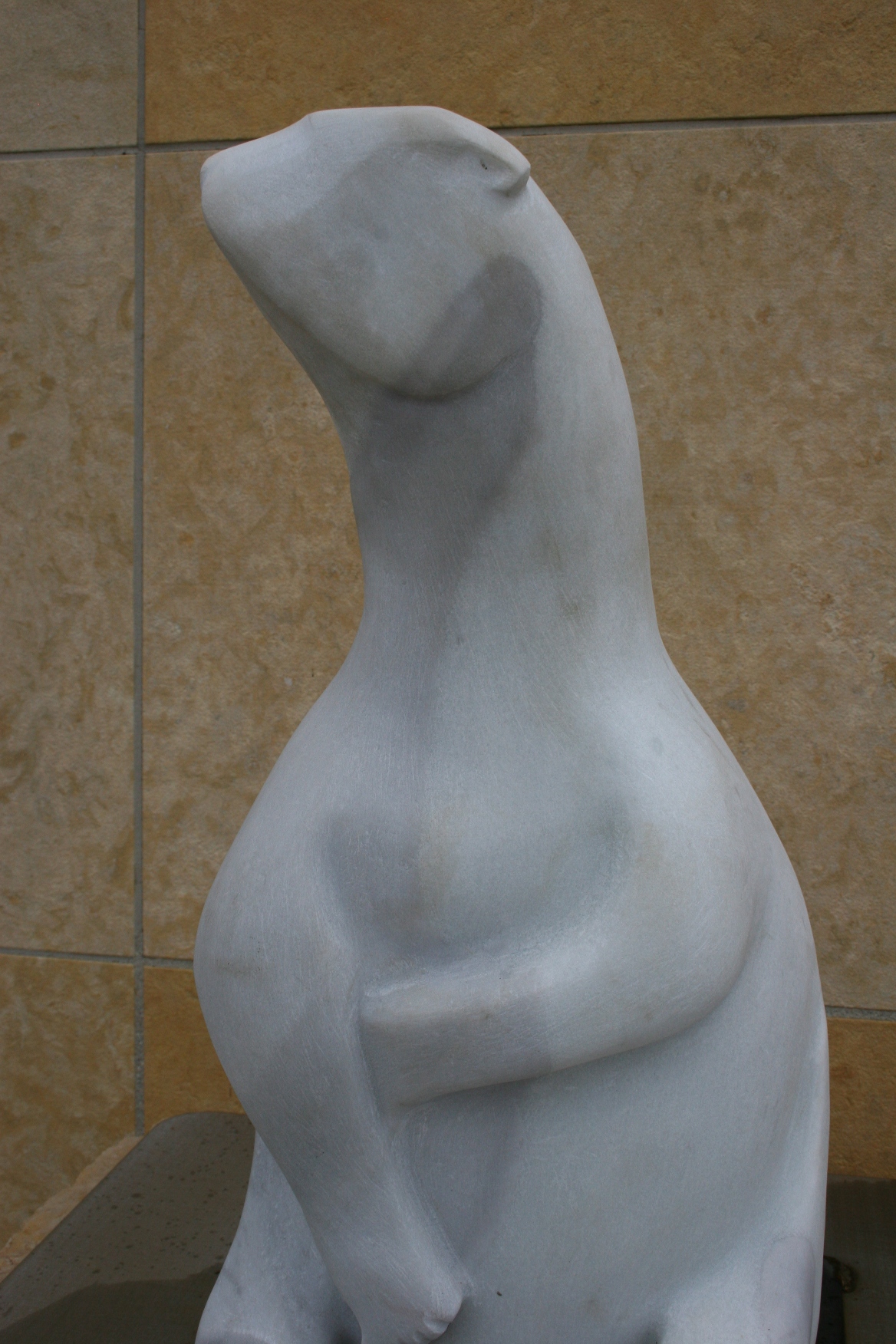
You'll find "Play Thing" by Ryszard, Denver, Colorado, and sculpted from Colorado marble, in North Mankato.

MAYBE IT’S BECAUSE I grew up without much art—no paintings, no piano, no library—that I so appreciate the visual, performing and literary arts.

I still can’t paint a painting or read a musical note. But I value those two art forms and words, which have always been a part of me, who I am.

Several years ago I walked the Bemidji Sculpture Walk and I quickly became enamored with the idea of placing sculptures in a community and then swapping them out a year later for new sculptures. The touring sculptures scattered primarily through-out Bemidji’s downtown impressed me as an ingenious way to get art before the general public.

Now I needn’t drive hours and hours and hours to view such public art. In 45 minutes I can reach downtown Mankato and view the 25 sculptures positioned there and in North Mankato as part of the City Art Walking Sculpture Tour. For free.

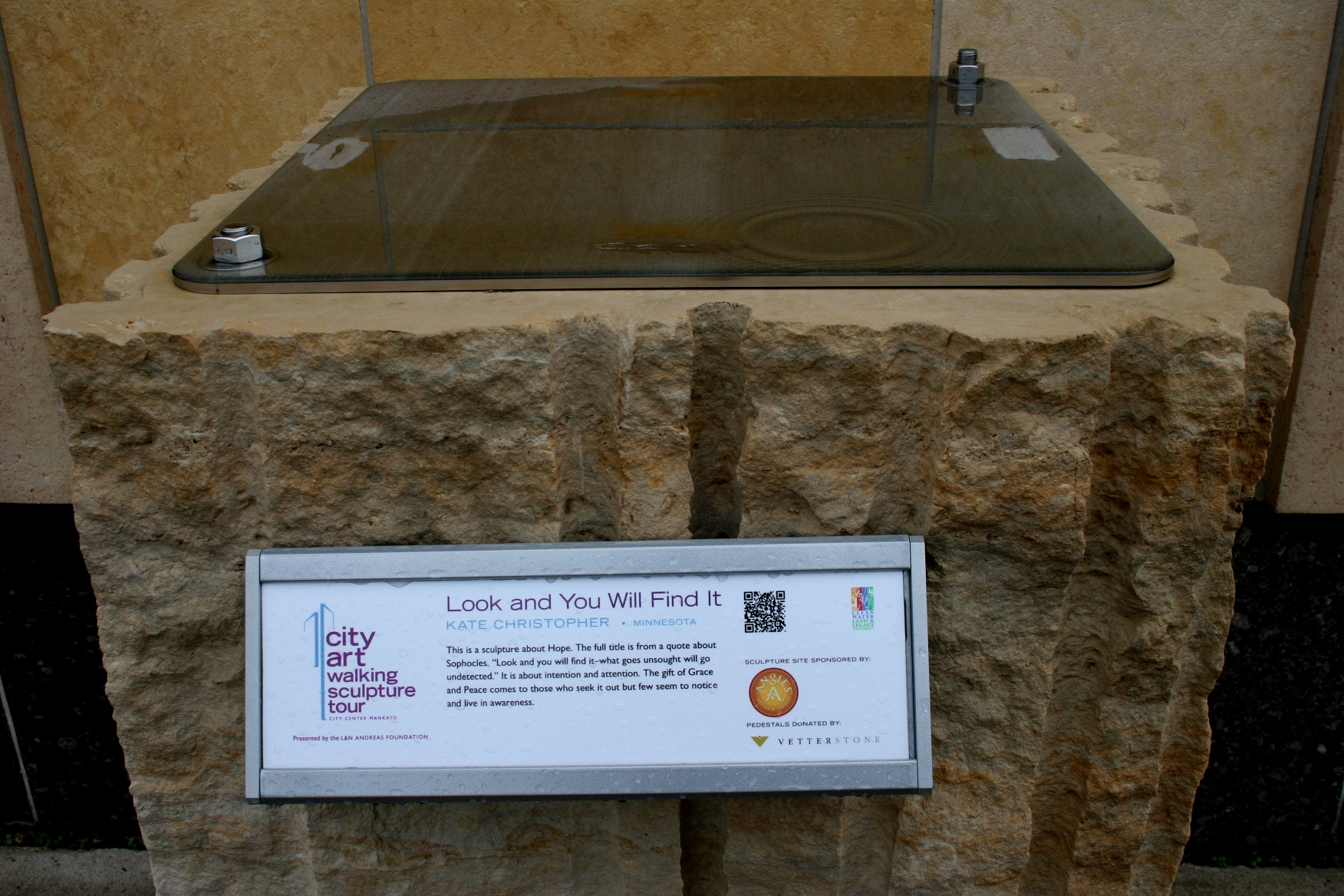
On Saturday, while in Mankato for a graduation reception, my husband and I made it a point of afterward checking out those sculptures. We missed seeing only a few of the art pieces, including one along Belgrade Avenue that was vandalized and, ironically, titled “Look and You Will Find.” We found only an empty block of Minnesota limestone, donated by Vetter Stone, where the sculpture once stood.

Mahtomedi artist Kate Christopher's $6,900 bronze sculpture, "Look and You Will Find It," was vandalized. The art piece symbolized HOPE.

I expected to find a bustling downtown Mankato. Obviously I have not been downtown for many years. Nearly all of the shopping has moved to the fringes of the city, into the malls and big box stores, and the downtown houses primarily office buildings, restaurants, bars, a hotel and the Verizon Wireless Center. Honestly, except for the sporadic motor traffic on Second Street and a few pedestrians, the place was basically deserted around mid-afternoon. Granted, the weather was less than ideal with on-again-off-again rain. We could park almost anywhere we wanted and walk to the sculptures within a several-block area.

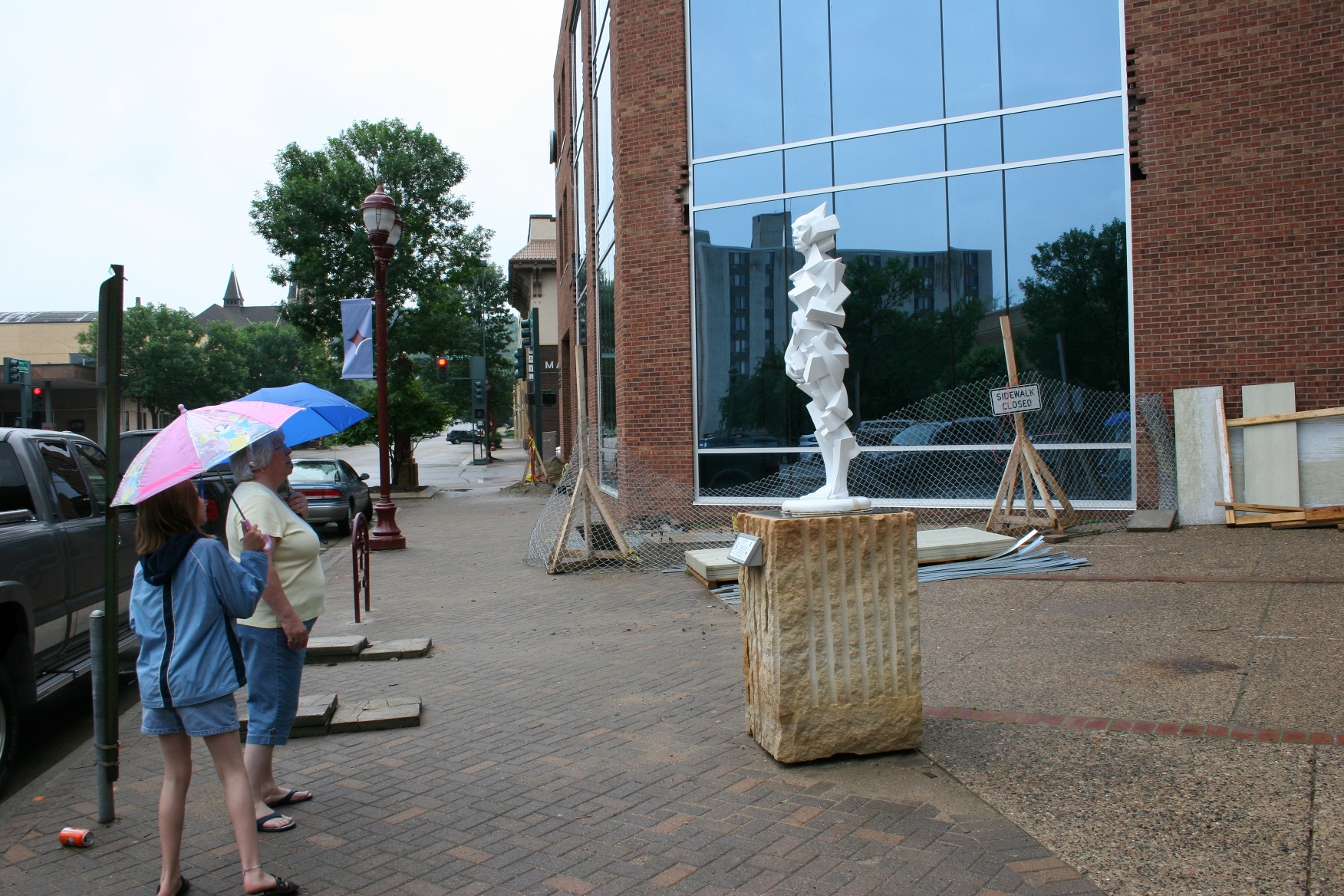
We spotted only two other individuals walking around viewing the sculptures. Dana Parlier of Brooklyn, New York, created this resin sculpture, "Cubist Woman." The man-made concrete canyons of New York City inspired this contemporary art, which seems to match the modern look of the building.

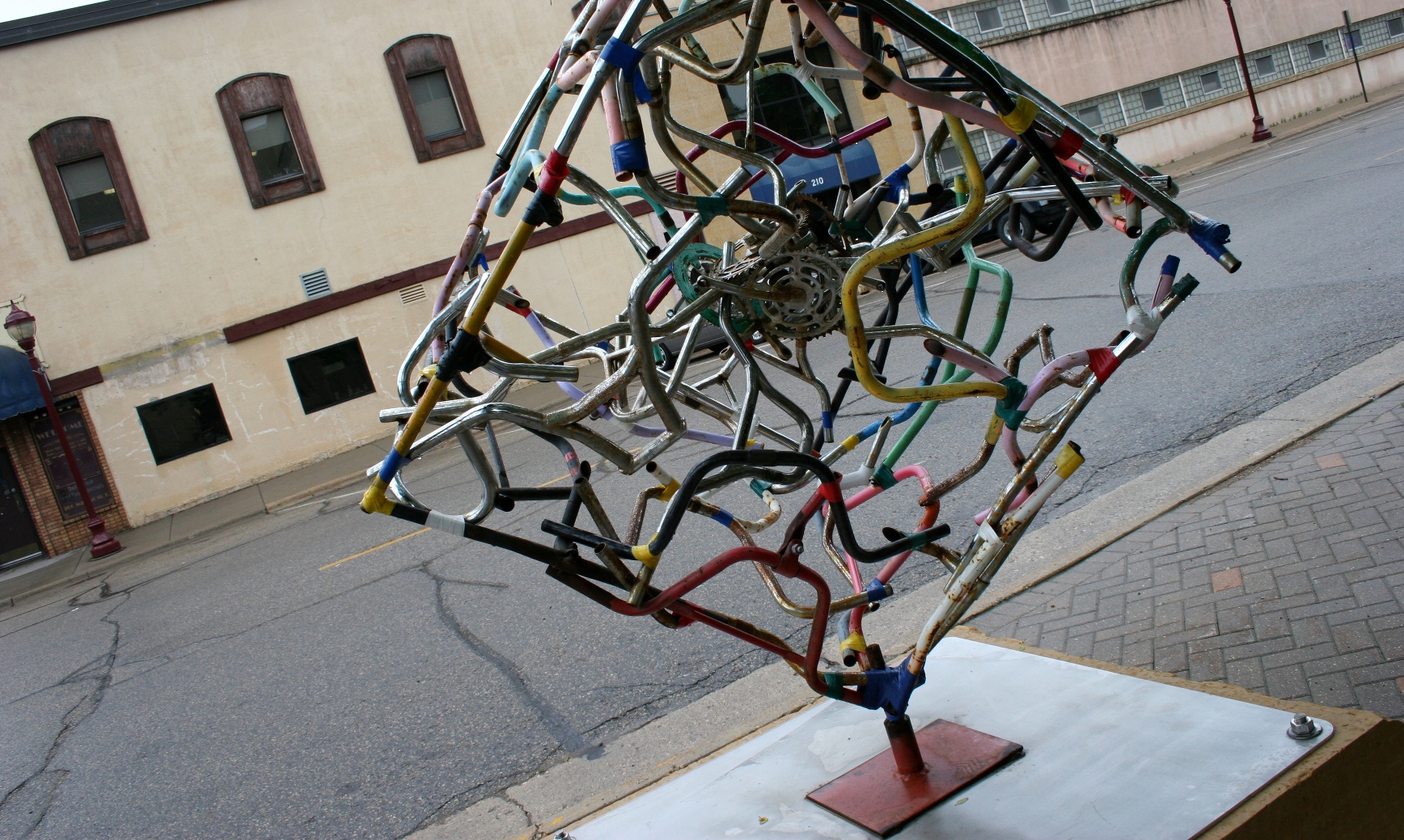
The art pieces certainly present a reason to visit downtown Mankato and then cross the Minnesota River to North Mankato to view several more sculptures. I’m not going to tell you I liked every sculpture, because I didn’t. But that’s OK; no one expects that. Sometimes first impressions change though. When I spotted “Twenty Seven (China)” from across the street, I honestly thought it looked like a mess of twisted junk. But up close, the steel sculpture of recycled bicycle parts—mostly handle bars—grew on me. Joe Forrest Sacke’s $3,500 conglomeration seemed modernish and hippyish and vintageish jumbled into one. Art will surprise you that way.

Joe Forrest Sacke's "Twenty Seven (China)."

You can vote for your favorite, for The People’s Choice Award. We didn’t, although I narrowed my favorites down to three. Voting booths are strategically located through-out the Walk area.

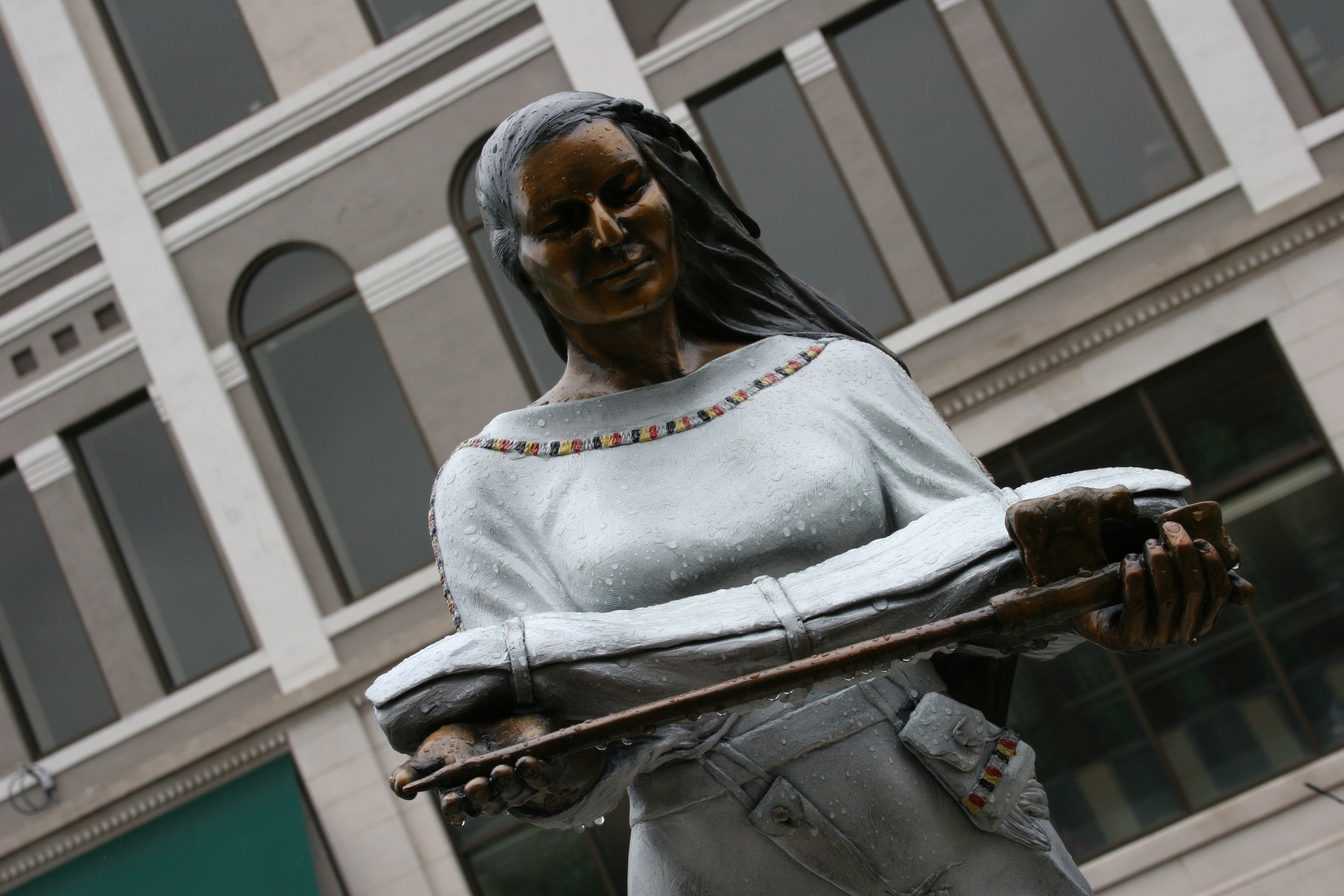
One of my three favorite sculptures, "White Buffalo Calf Woman," a bronze piece created by Aberdeen, South Dakota, artists Lee Leuning and Sherri Treeby. Notice how the dominant color in the sculpture blends with the building's color. Wait until you see the building on the other side of this Native American woman. You will be wowed. I'll share those images with you in another post.

This bronze piece, "The Farmer's Wife," by Dee Clements of Loveland, Colorado, is also among my three favorite sculptures. A photo Clements took in a Korean village inspired this art creation.

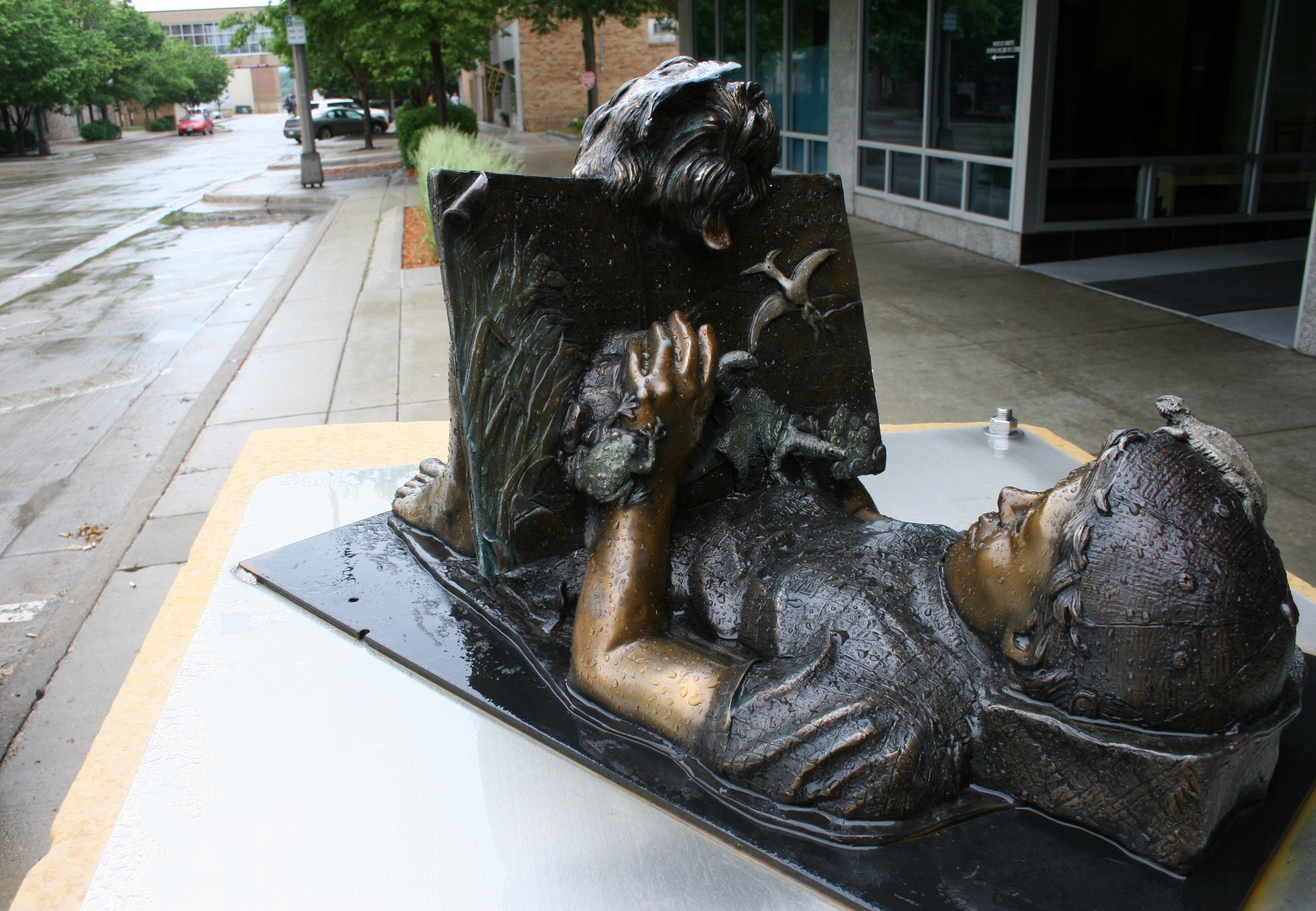
The detail in this bronze, "Reading Magic," by Julie Jones of Fort Collins, Colorado, appeals to me and makes it one of my top favorites among the 25 sculptures in the exhibit.

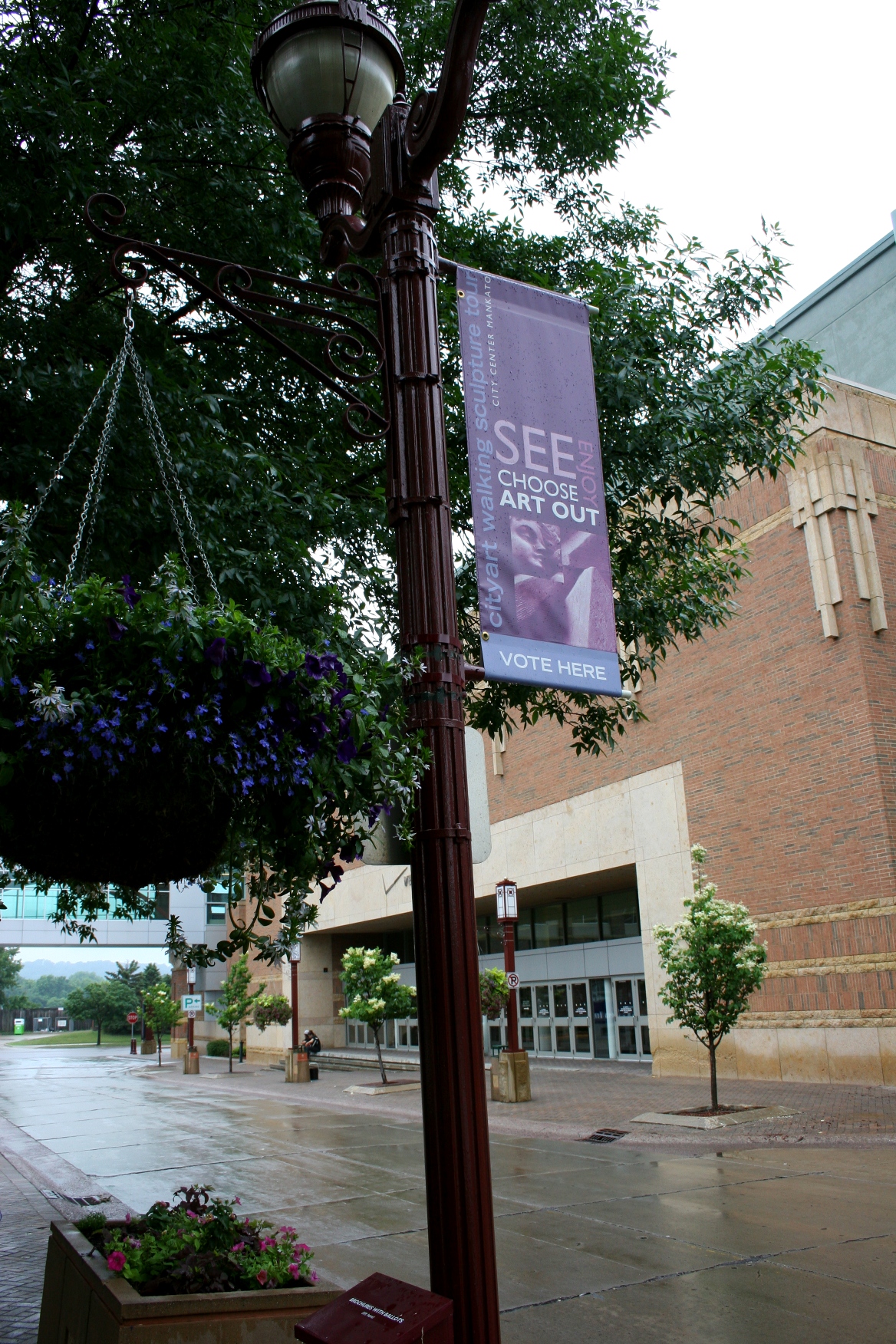
Banners draw visitors to the sculptures and to voting spots in downtown Mankato.

I also noticed, and I don’t know whether this was on purpose, but the sculptures often seemed to jive, architecturally and environmentally, with the buildings they were situated near.

Mankato is committed for the next five years to bringing these rotating sculptures into the community via a partnership with the Sioux Falls-based SculptureWalk program. Of course, this all costs money and with the help of a grant, business sponsorships, donations and more, Mankato has managed to bring this art directly to the people.

It’s a grand idea. I expect to return to Mankato to see next year’s art and perhaps other area attractions. Even though I attended college here for four years, I really didn’t appreciate the city. And so much has changed since 1978.

For someone like me, who doesn’t venture into Minneapolis to engage in the art scene there, mostly because I don’t like the congestion and busyness of the metro, outstate art opportunities like City Art in Mankato offer me culture at a quieter, more enjoyable (at least for me) pace.

#

SINCE I CAN’T POSSIBLY show you all of my photos in one post, I’ll bring you more images in future stories.

© Copyright 2011 Audrey Kletscher Helbling
 

Off I-94: Artsy Fergus Falls June 17, 2011

The vintage-looking sign on the side of a building in downtown Fergus Falls caught my attention. The Market sells a variety of merchandise from kitchen to bath and body, garden and home accent products and lots more.

UNTIL LAST SATURDAY, I’d never entered Fergus Falls, only driven past this west central Minnesota community along I-94 en route to the Dakotas. After miles and miles of interstate travel, the towns don’t seem to matter any more. On the fringes, one seems like the other—just another rest break, a place to tank up on gas or a quick stop for a bite to eat.

Sadly, that marks the reality of today’s fast-paced, get from point A to point B, world.

But then one day you have a reason to pull off the four-lane, to explore one of these interstate-side communities and you discover a town with a personality and identity, and you wonder why you have not come here before this day.

And so that is how I found Fergus Falls, population 14,500, when I traveled there last weekend to view my Roadside Poetry Project poem displayed on four billboards. (My spring poem has since been replaced by a summer poem.)

After photographing my poem and dining at the downtown Viking Café (click here to read my earlier post on this vintage restaurant), I explored this Otter Tail County seat with my husband, Randy.

Certainly, we saw only a small portion of this riverside town. But I toured enough of Fergus Falls to come up with a single word to describe it: artistic.

I wonder if the folks who live in Fergus also see their hometown as an art community. Or would they choose another word to describe their town?

Here are photos to back up my word selection.

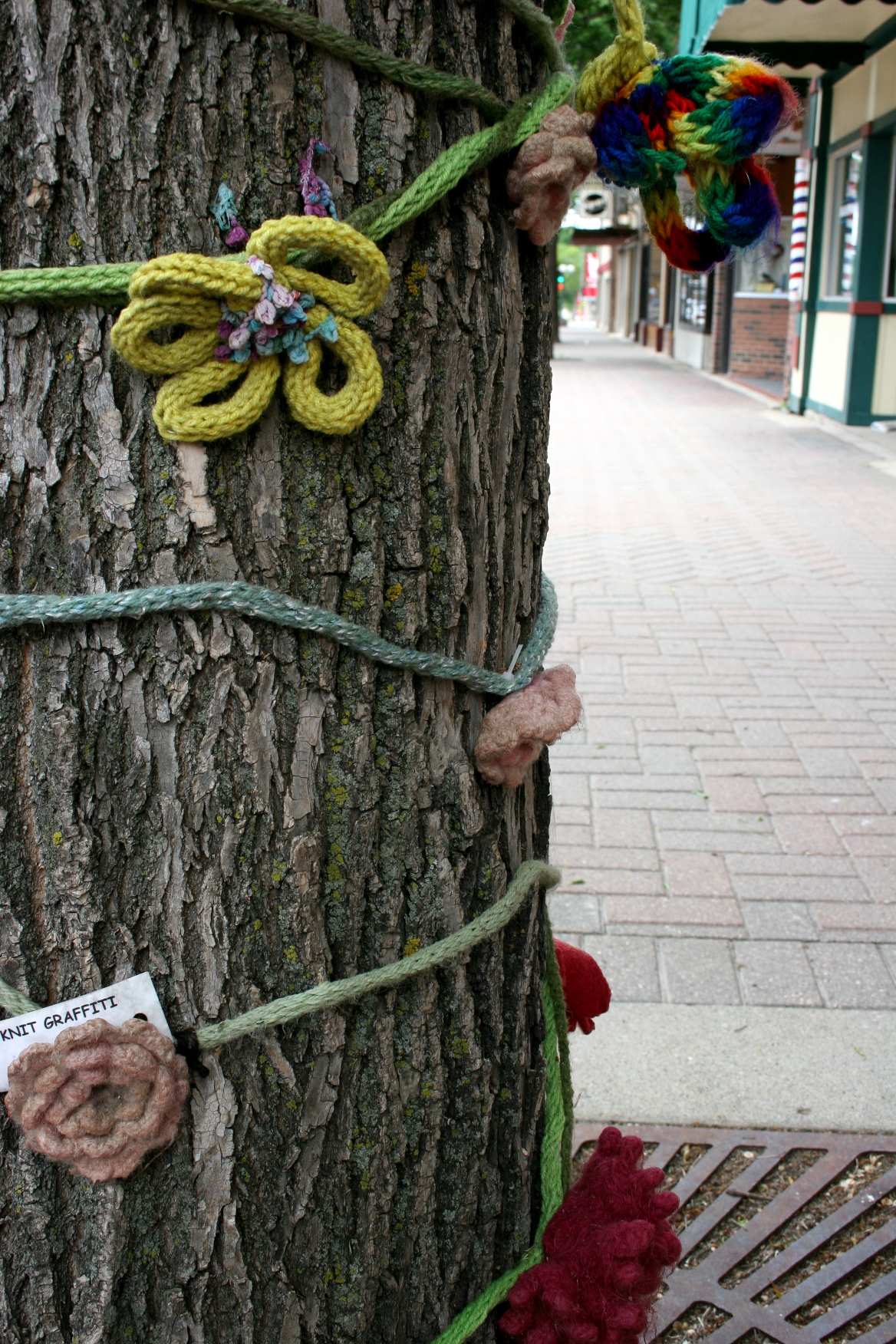
Knit graffiti circled a tree downtown. Bottlecaps were strung on another tree by this one. What a simple and memorable art idea.

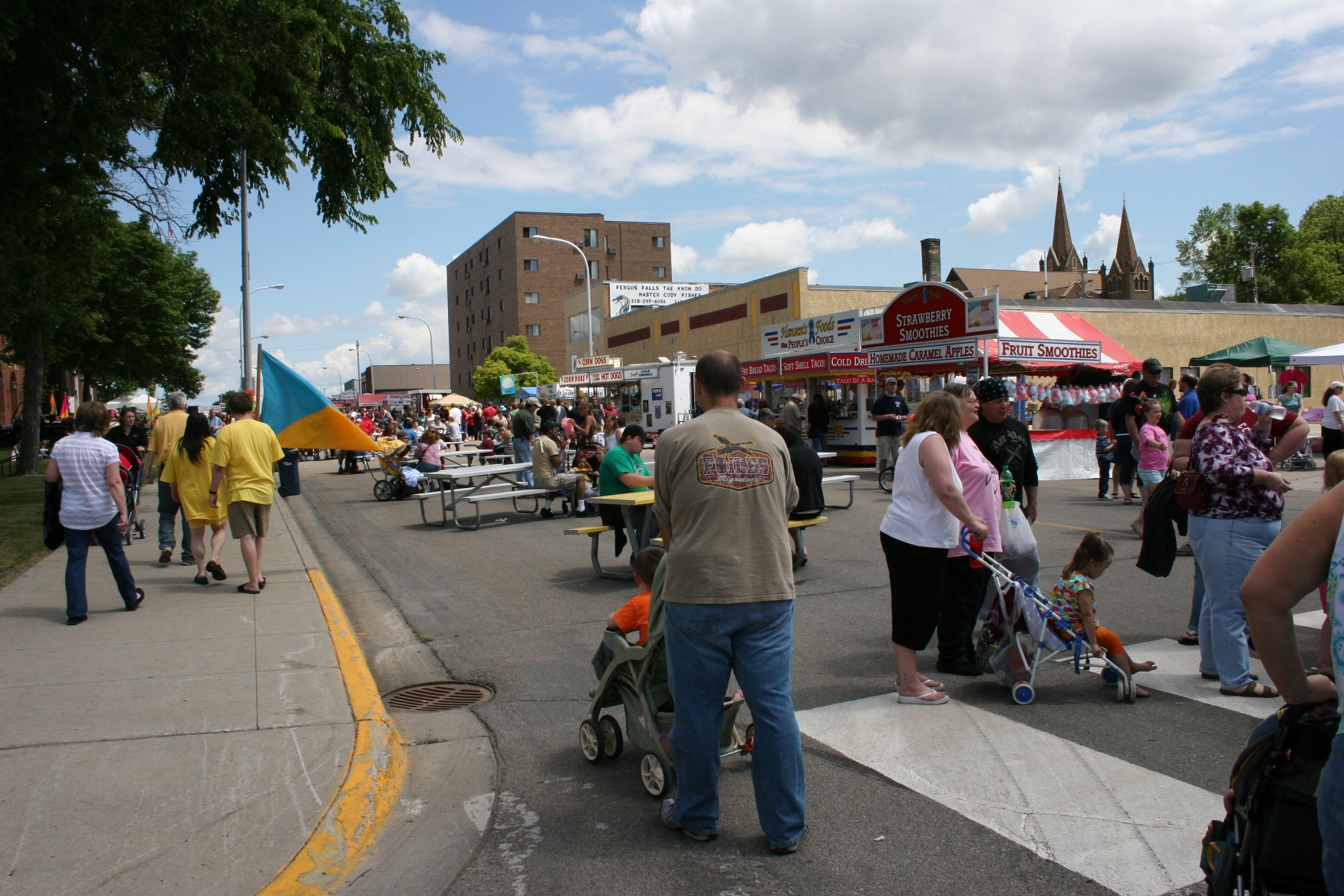
Fergus Falls Summerfest happened to be on when we were in town. Here's one section of the event.

Clear Lake, S.D., artist Karlys Wells of Back Porch Art created this gourd art, among my favorite art at the fair.

Even signage can be art, like this on a downtown bakery.

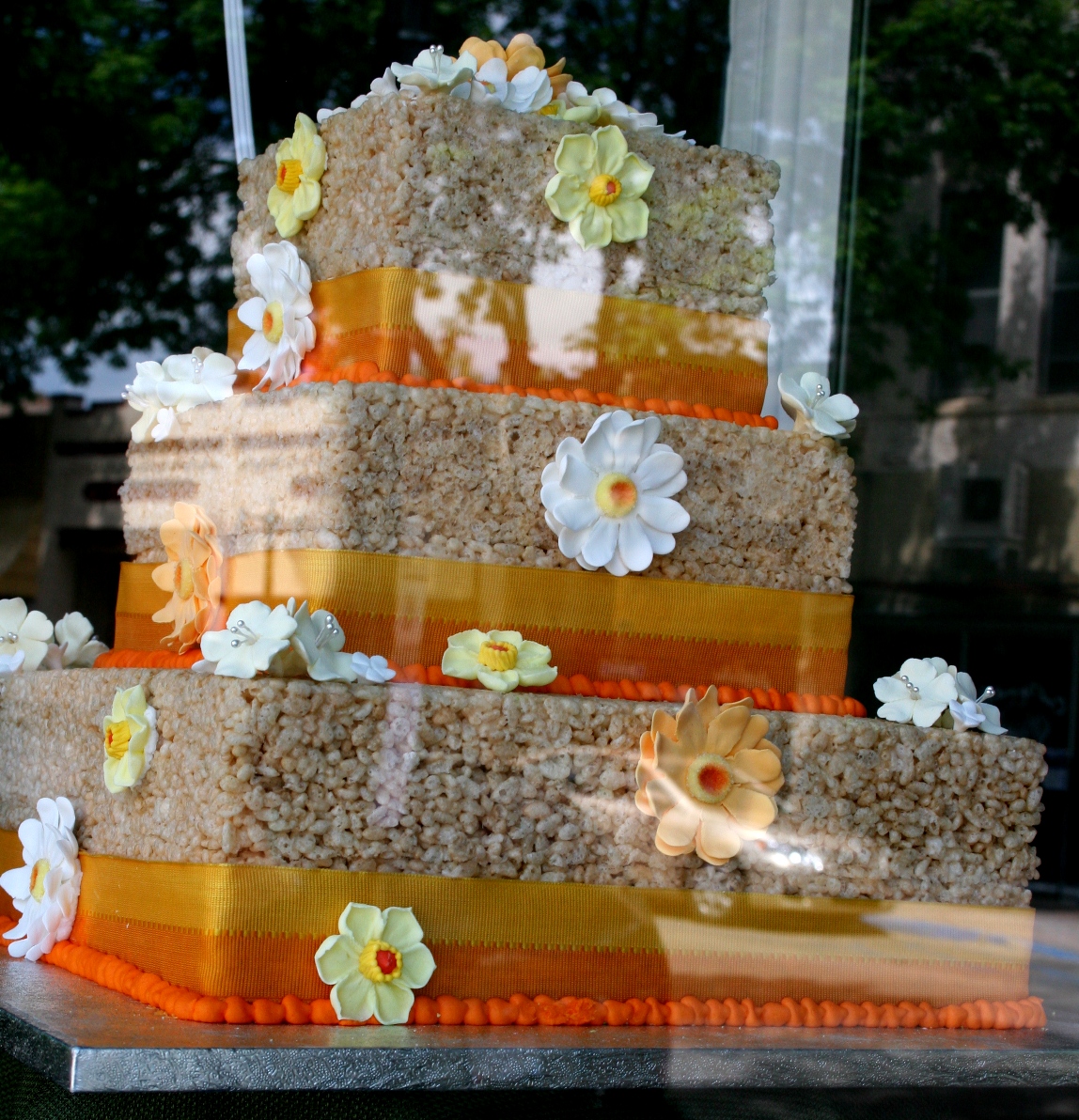
Call it art, or something else, but this Rice Krispie cake in a bakery window display made me laugh out loud.

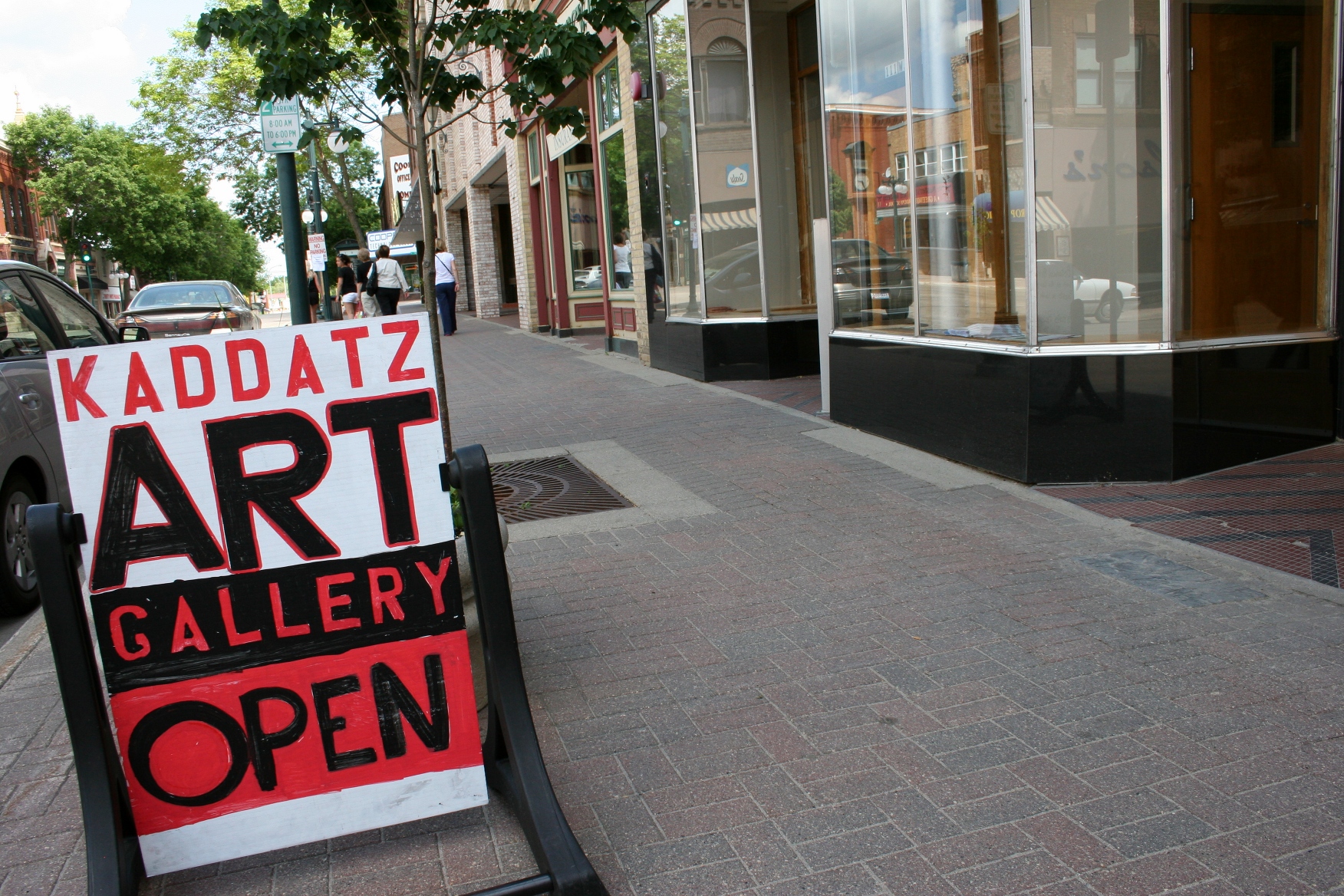
Kaddatz Galleries, a nonprofit art gallery, showcases the work of Charles Beck and other local artists.

Woodcuts and woodblock prints by one of Minnesota's most-recognized artists, Charles Beck of Fergus Falls. His subjects are the landscapes and nature of Otter Tail County. Until I walked into this gallery, I do not recall having ever heard of Beck. His earthy, rural art appeals to me.

I was impressed with the number of visitors in the Kaddatz Galleries.

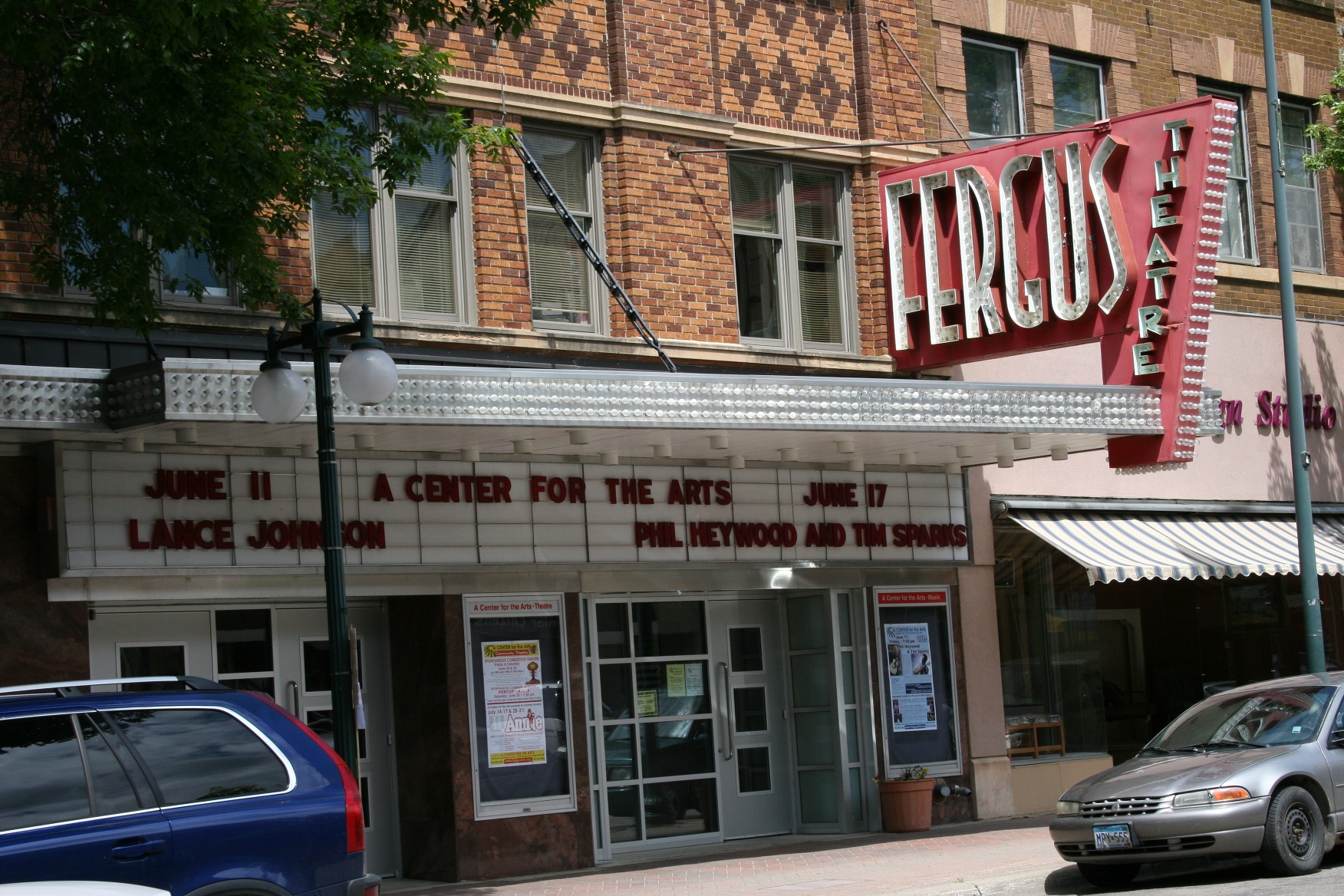
The doors to the Fergus Theatre were locked, or I would most definitely have gone inside. The vintage exterior adds so much to the charm of downtown Fergus Falls.

I am a big fan of vintage signs for the character they add to a community.

SO HAVE I CONVINCED you to pull off I-94 in west central Minnesota and explore Fergus Falls? Fergus lies 2 1/2 hours northwest of Minneapolis/St. Paul, mighty close to Fargo, N.D.

Here are several websites to check out and learn more about some of the places highlighted in my photos and story:

www.VisitFergusFalls.com

www.kaddatzgalleries.org

www.fergusarts.org

www.fergusfallssummerfest.com

www.roadsidepoetry.org

www.marketfergusfalls.com

Copyright 2011 Audrey Kletscher Helbling
 

Tilt-A-Whirl tradition continues in Faribault May 13, 2011

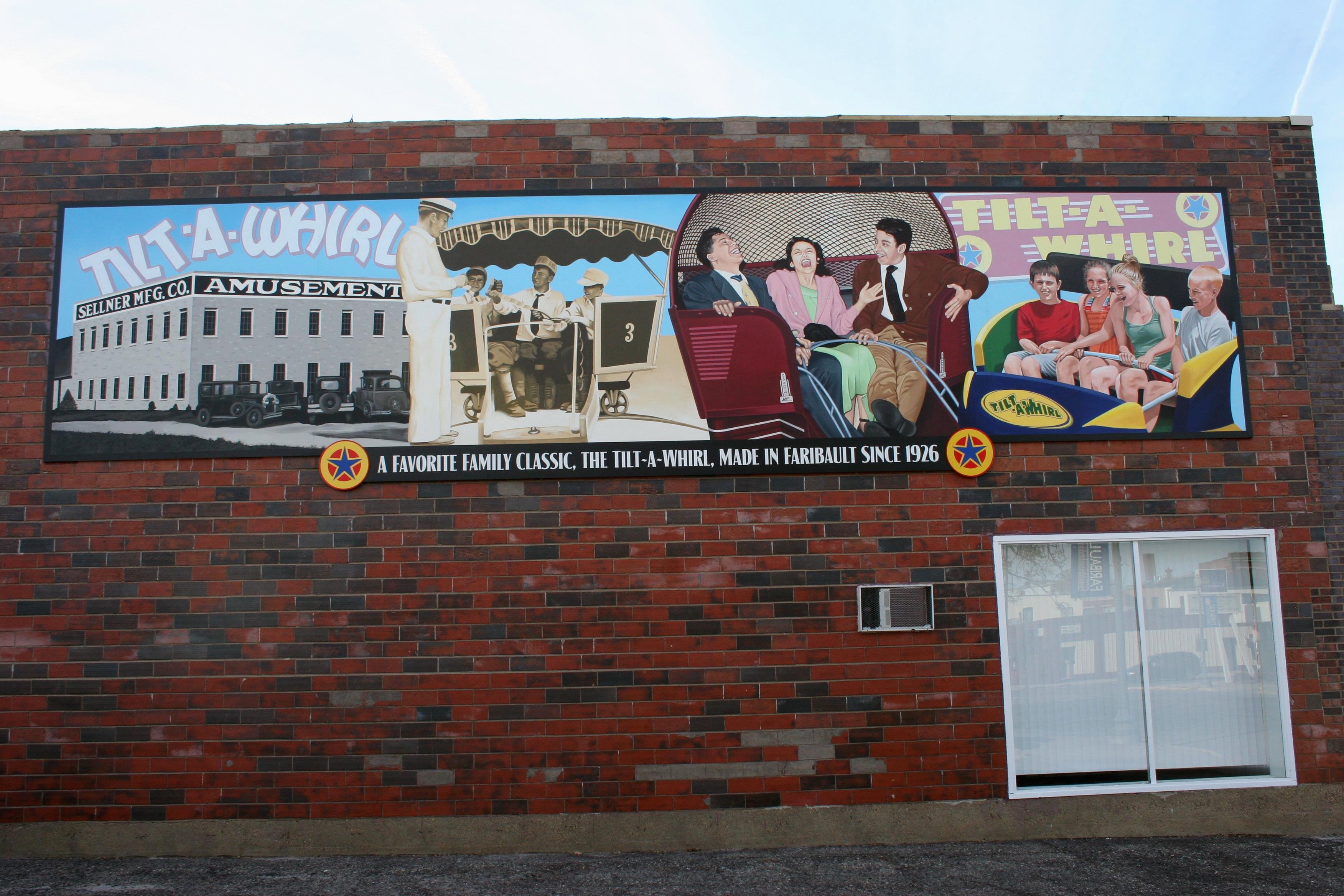
The Mural Society of Faribault created and placed this Tilt-A-Whirl mural on the side of Jim's Auto & Tire along Fourth Street in downtown Faribault in the fall of 2010.

AN AMERICAN ICON amusement ride made in Faribault since 1926 will remain here despite the sale of Sellner Manufacturing to a Texas company.

Jim Hermel and Mike Featherston, co-owners of Gold Star Manufacturing, recently purchased the fiberglass and staging portions of Sellner, I learned in a recent e-mail exchange with Hermel.

That’s good news for Faribault, where the Tilt-A-Whirl, perhaps America’s best-known carnival ride, has been made by the Sellner family since 1926.

If you didn’t realize the Tilt-A-Whirl was produced in Faribault, don’t fret your lack of knowledge. Not until I moved in 1984 into a house blocks away from the carnival ride maker, did I even know this icon ride was made in Minnesota, let alone Faribault.

Local State Representative Patti Fritz tried to get the word out in 2007 by introducing a bill to make the Tilt-A-Whirl Minnesota’s official amusement ride. However, that legislation failed.

My community has also missed the mark on tapping into this home-grown carnival ride as a tourist attraction. But now that the fiberglass ride car portion will continue to be produced here, I believe the opportunity still exists to promote the Tilt-A-Whirl. I’ve always envisioned a fun-focused carnival atmosphere museum and gift shop complete with Tilt-A-Whirl rides, cotton candy, popcorn, activities for kids and more.

Given the current economy, I doubt my vision for a Tilt-A-Whirl tourist site will happen any time soon, unless…

For now I’m content with the fact that Faribault-based Gold Star Manufacturing is contracting with Larson International, Inc., of Plainview, Texas, to manufacture the fiberglass cars for the Tilt-A-Whirl and for other amusement rides. The working machinery part of the business went toTexas.

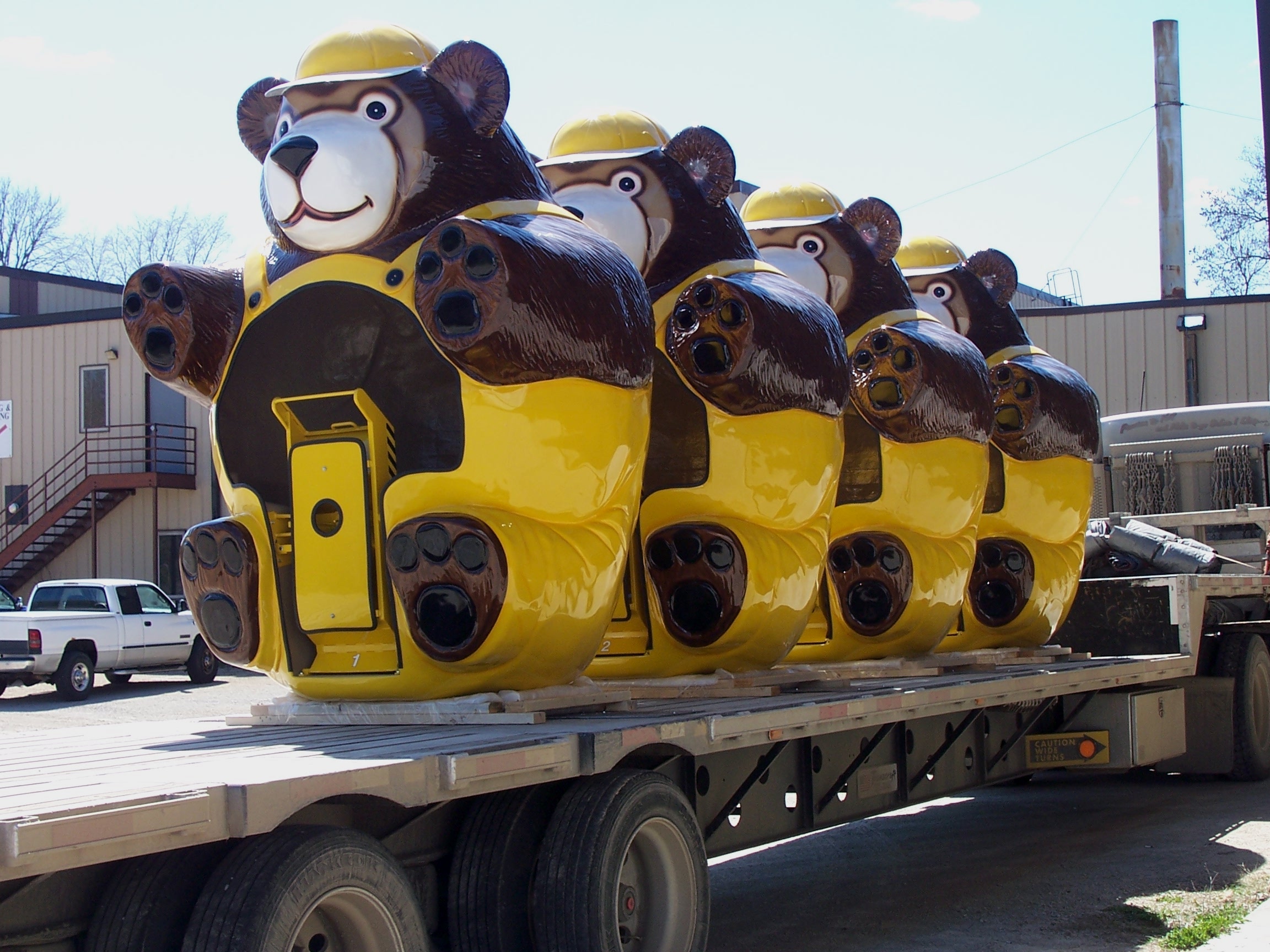
Gold Star Manufacturing shipped its first carnival ride, Bear Affair, to Toronto, Canada, earlier this month.

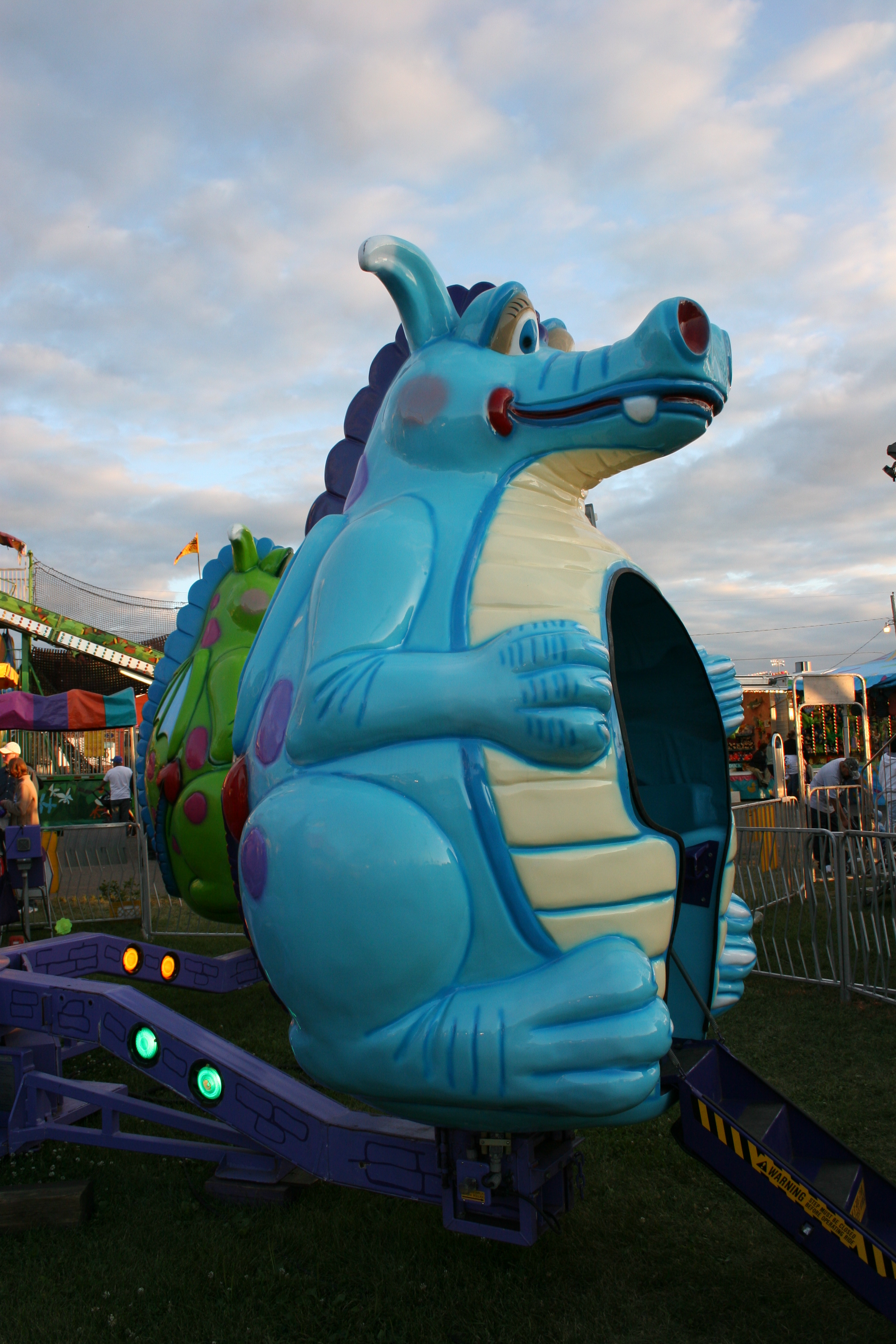
Dizzy Dragons, one of the carnival rides that Gold Star will continue to manufacture.

Gold Star will also continue to make the fiberglass bodies for other Sellner-created carnival rides: the Bear Affair, Dizzy Dragons, Ships Ahoy and Pumpkin Patch. Another ride is in the works, Hermel says, and three other fiberglass products are in the development stage.

If anyone can succeed at revitalizing a company which fell into financial hardship, Hermel and Featherston would be the men.

Hermel comes to Gold Star Manufacturing with nearly 30 years in the tire business (selling almost 2 million tires, he says) and with 14 years as executive secretary and manager of the Rice County Fair.

“I wanted to get into something that would offer me a challenge,” the 59-year-old Hermel says.

His partner, Mike Featherston, brings a life-time of experience in the outdoor amusement industry to the new company. Featherston and his family own GoldStar Amusements, Inc., a traveling entertainment business with amusement rides, food and games based in Coon Rapids, Minnesota, and Louisiana. GoldStar contracts for the midway at the Rice County Fair.

Featherston was recently elected second vice chair of the Outdoor Amusement Business Association which aims “to encourage the growth and preservation of the outdoor amusement industry through leadership, legislation, education and membership services.”

Now, as co-owner of Gold Star Manufacturing, Featherston is certainly fulfilling one of those missions by keeping an iconic American carnival ride in production, in Faribault. He and Hermel are continuing the legacy of Herb Sellner who built the first nine-car wooden Tilt-A-Whirl 85 years ago.

© Copyright 2011 Audrey Kletscher Helbling
Bear Affair photo courtesy of Gold Star Manufacturing