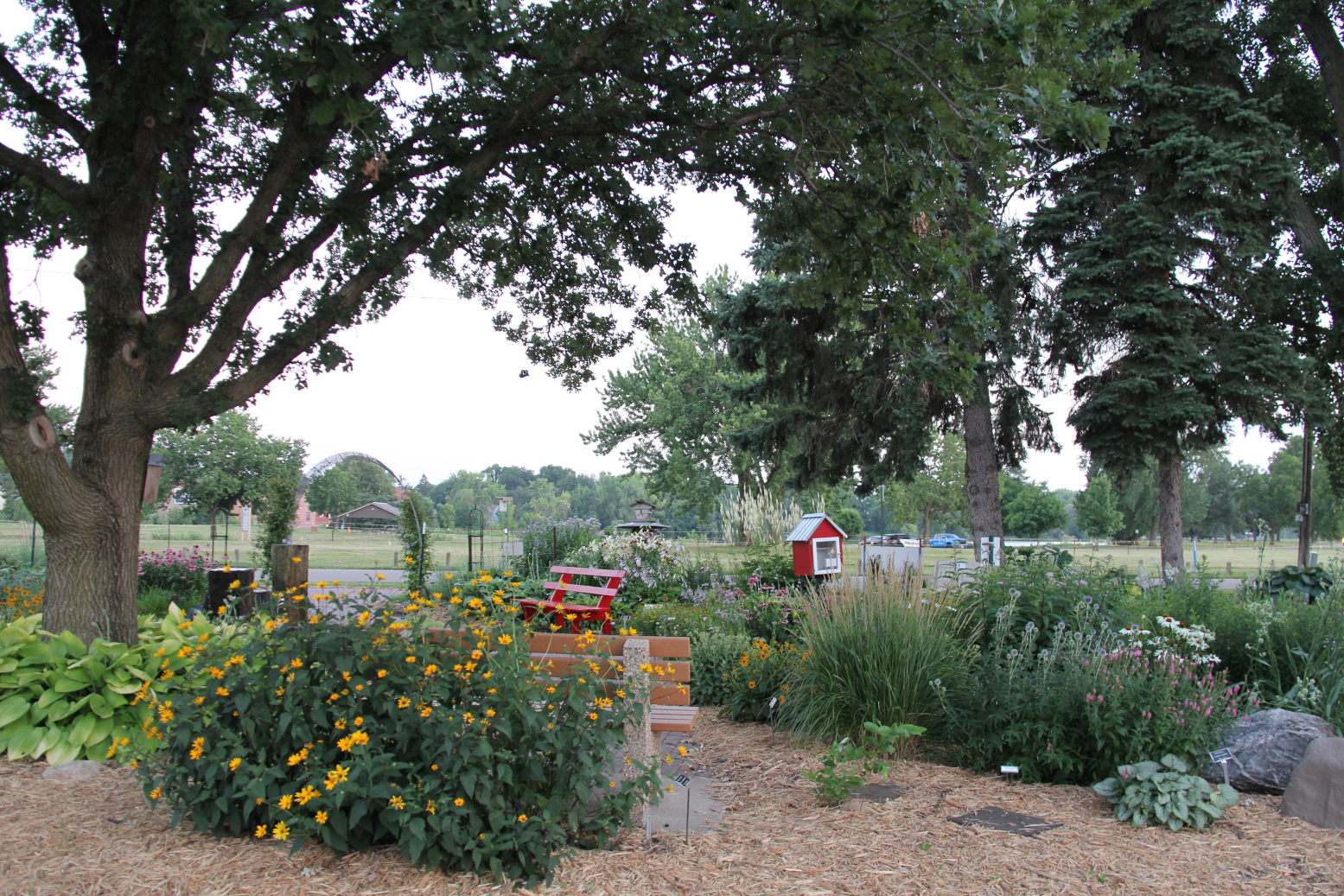
Coneflowers and other flowers are in full bloom in the on-site gardens. (Minnesota Prairie Roots copyrighted photo July 2026)
I’m detail-oriented. So when I was at the fairgrounds with my camera several days in advance of the fair, I focused on signage and other evidence of fair prep and readiness.
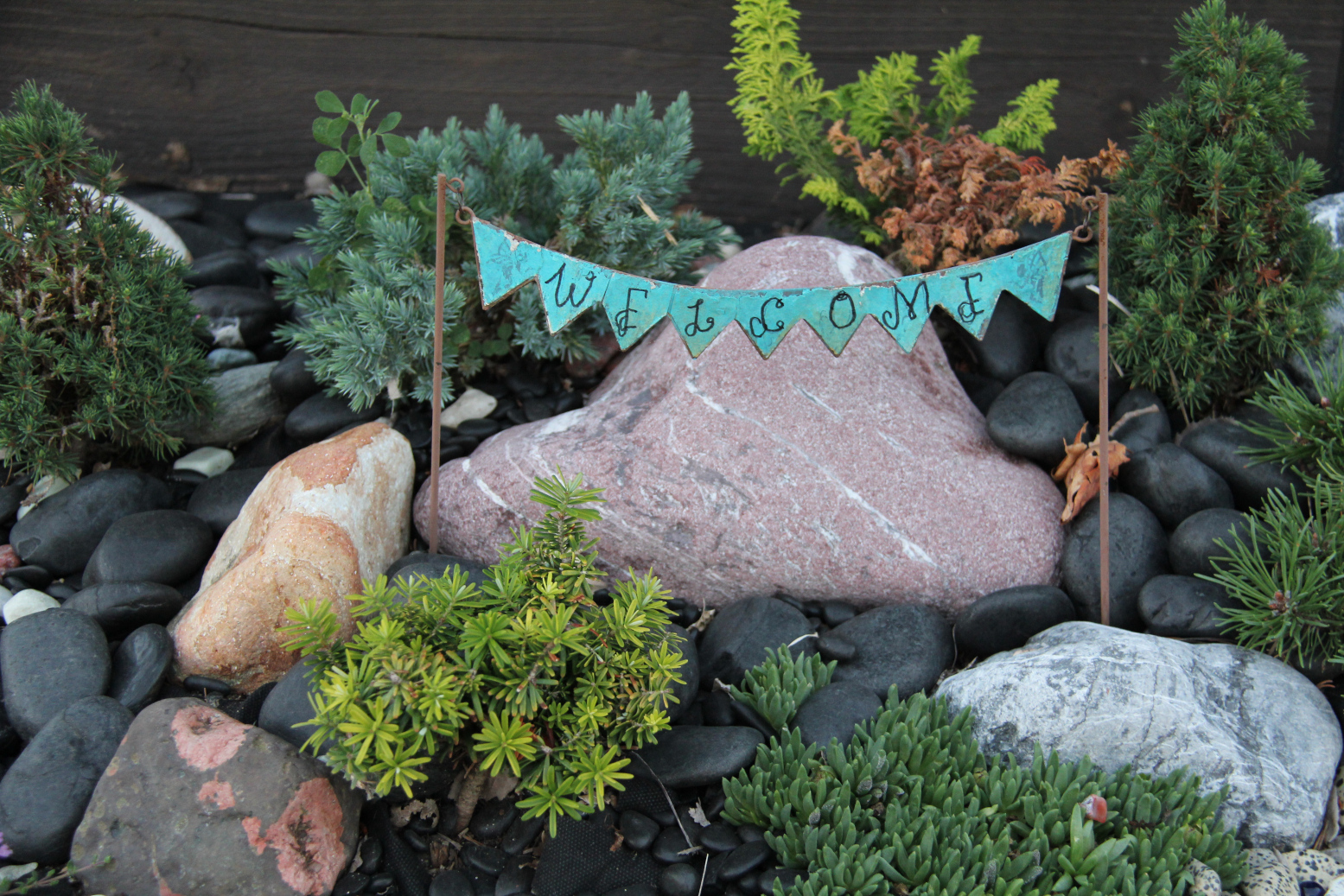
The smallest of signs in the fairy garden. (Minnesota Prairie Roots copyrighted photo July 2026)
In the Rice County Master Gardeners Teaching Gardens on the east side of the fairgrounds, among all the plants and flowers, I found the smallest of welcome signs. In the fairy garden. Usually tiny figurines occupy the space along with small-scale plants and stones. But, none were there yet during my Saturday evening walk.
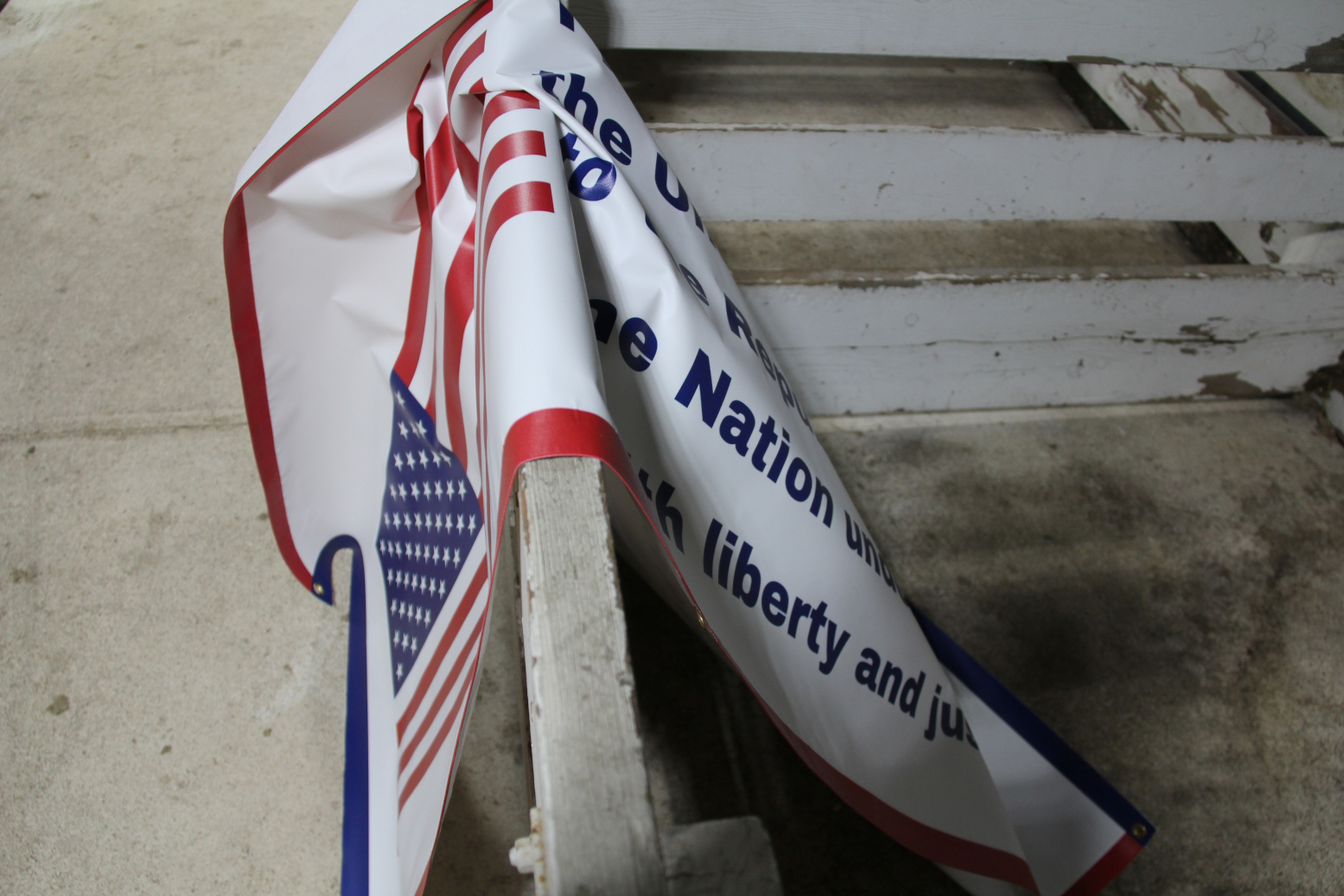
The Pledge of Allegiance on a banner in the sheep barn. (Minnesota Prairie Roots copyrighted photo July 2026)
Over in the sheep barn on the opposite end of the fairgrounds, patriotic and 4-H banners, yet to be hung, draped pens.
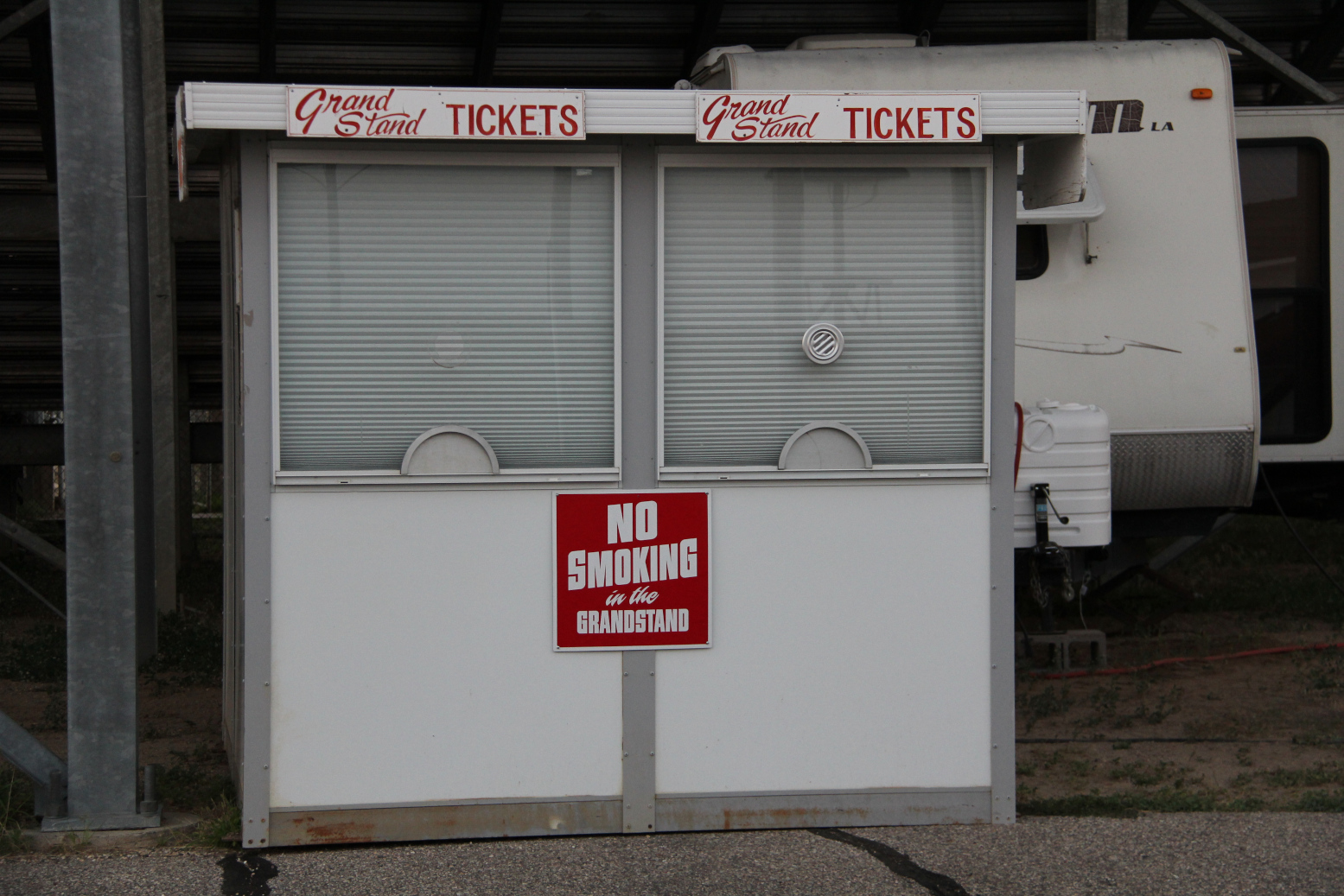
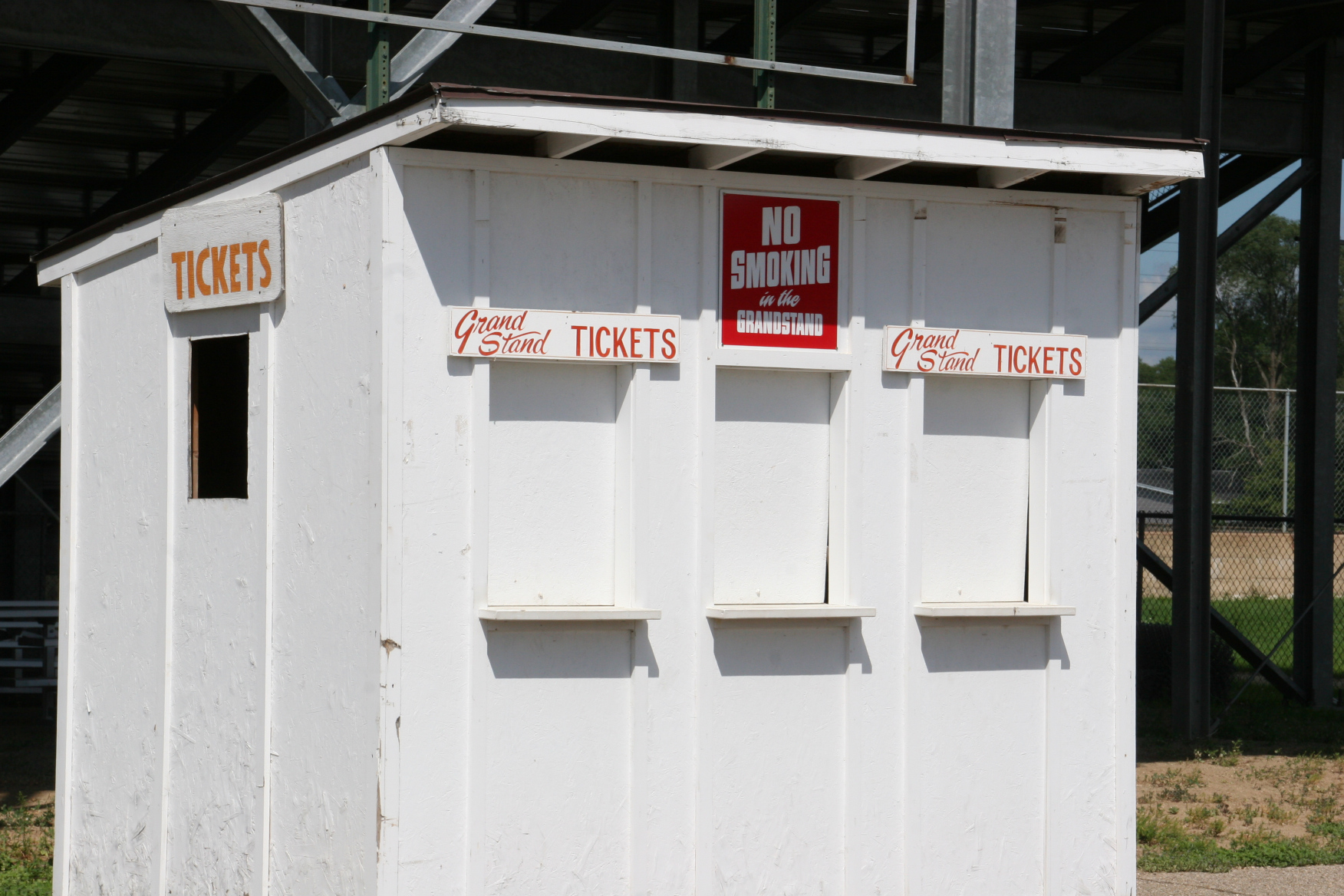
The grandstand ticket booth. (Minnesota Prairie Roots copyrighted photo July 2026)
The ticket booth was locked tight outside the grandstand, awaiting paying customers.
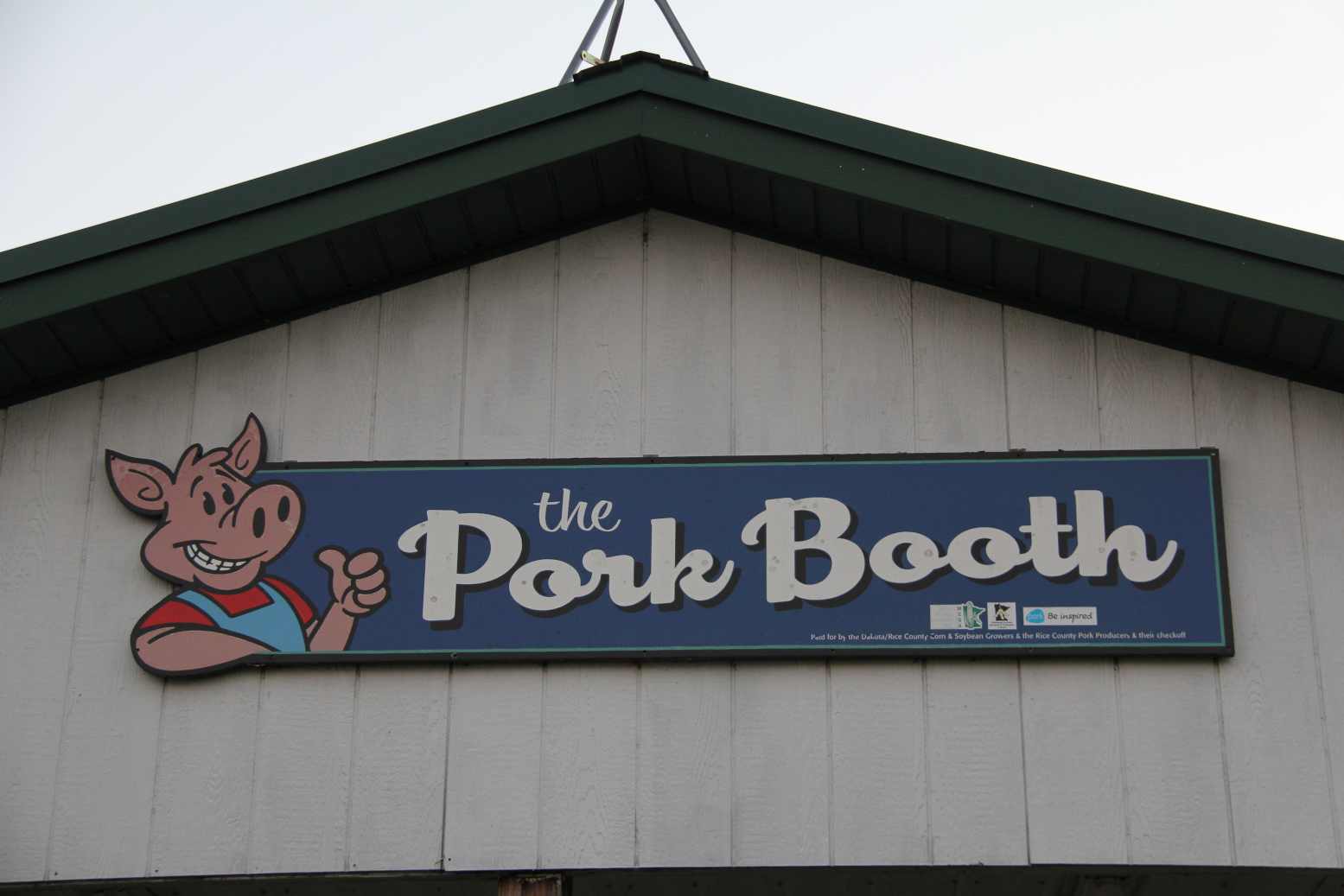
A cartoonish pig fits The Pork Booth concession stand. (Minnesota Prairie Roots copyrighted photo July 2026)
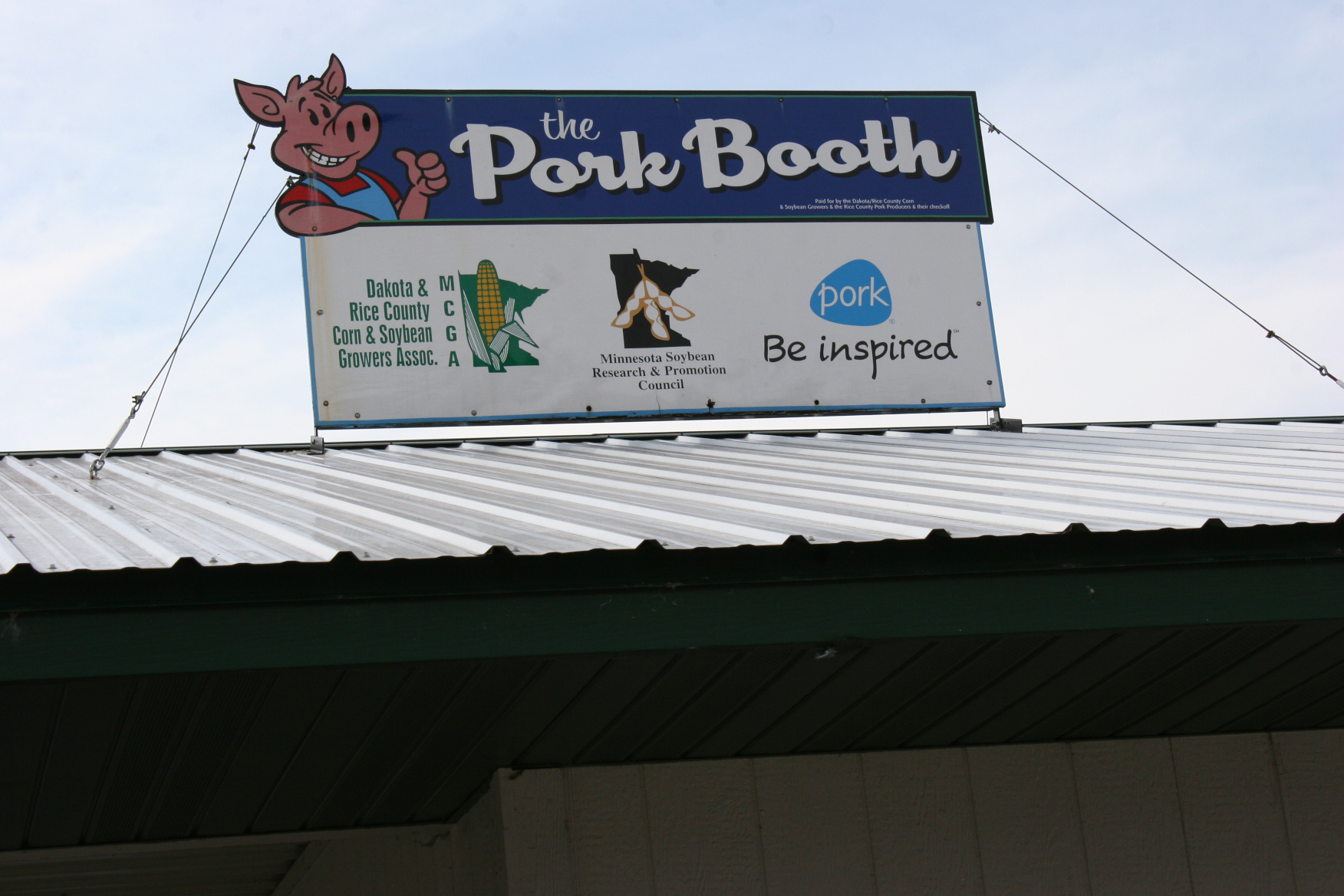
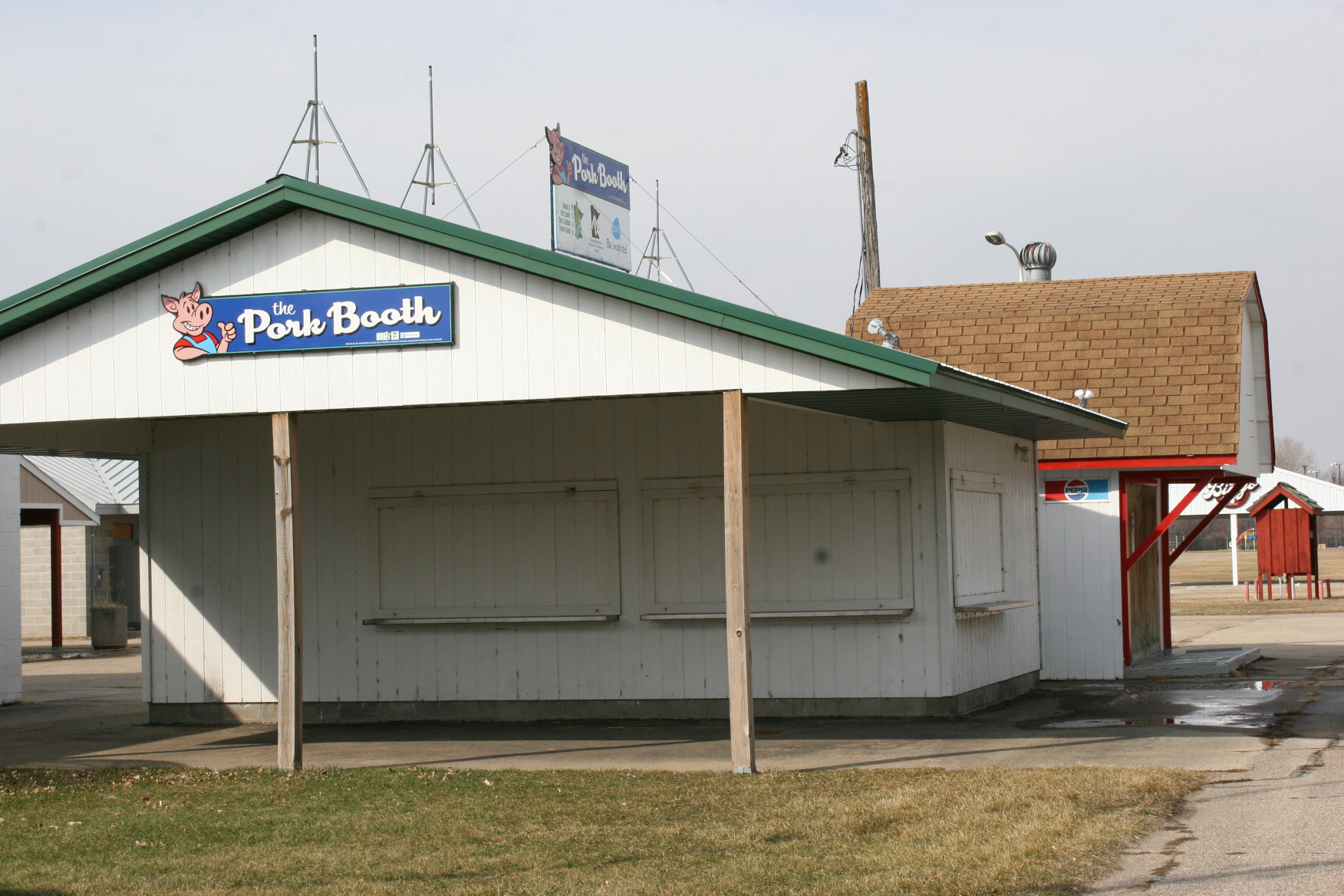
Likewise concession stands were shuttered. I’m drawn to signage like that on The Pork Booth, which leaves no question about the food served there. The Rice County Pork Producers sell pork chops on-a-stick, pork burgers and pulled pork.
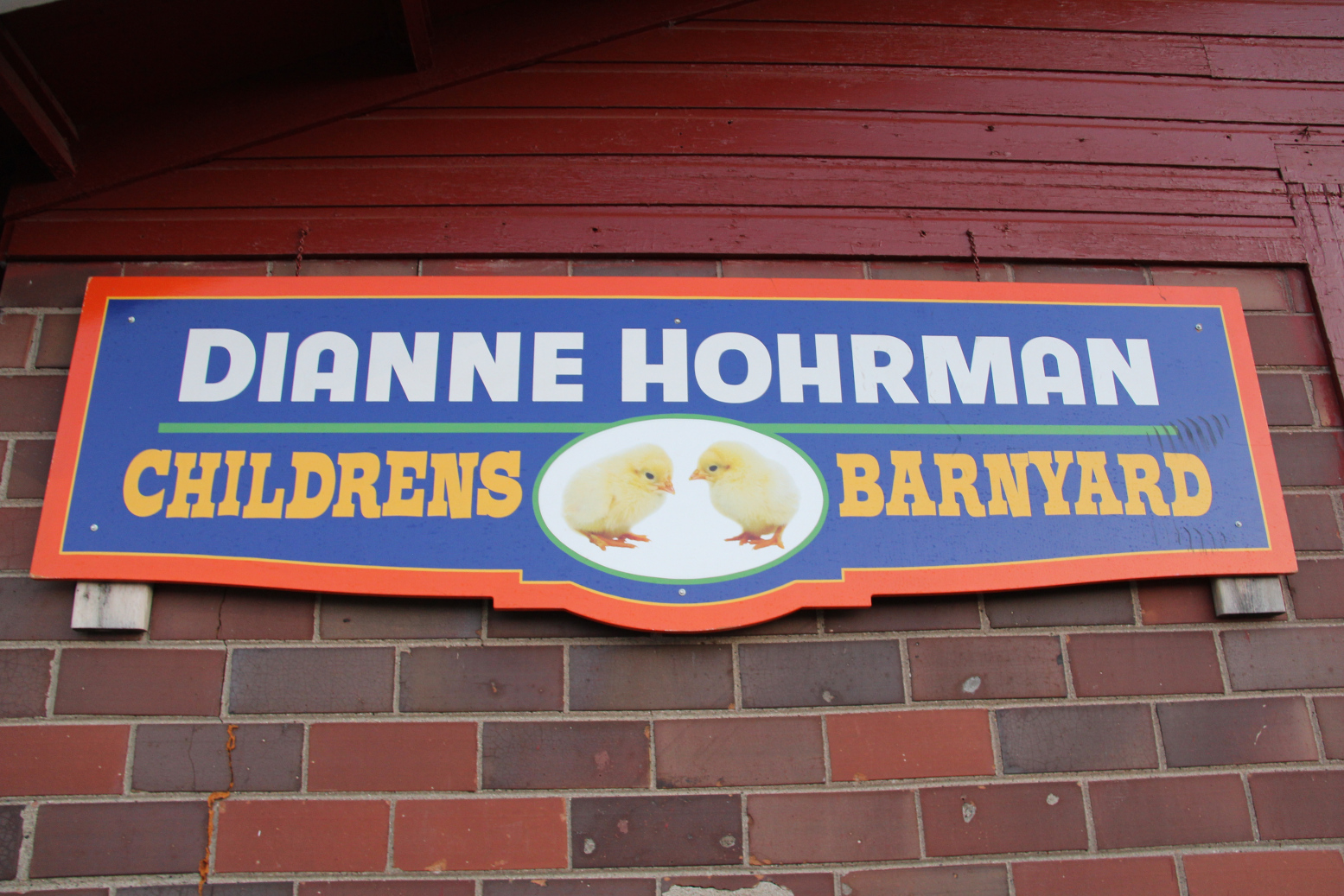
Barnyard signage honors a long-time fair board member. (Minnesota Prairie Roots copyrighted photo July 2026)
This fair is rooted in agriculture as noted by the line of barns stretching along the south side of the fairgrounds. A sign on the children’s barnyard honors Diane Hohrman. She started the barn for kids. The Northfield woman, who died in 2017, served on the fair board and was as an adult leader of the Big Giants 4-H Club for 33 years. I’d say Hohrman deserved this name-sake barnyard in her honor.
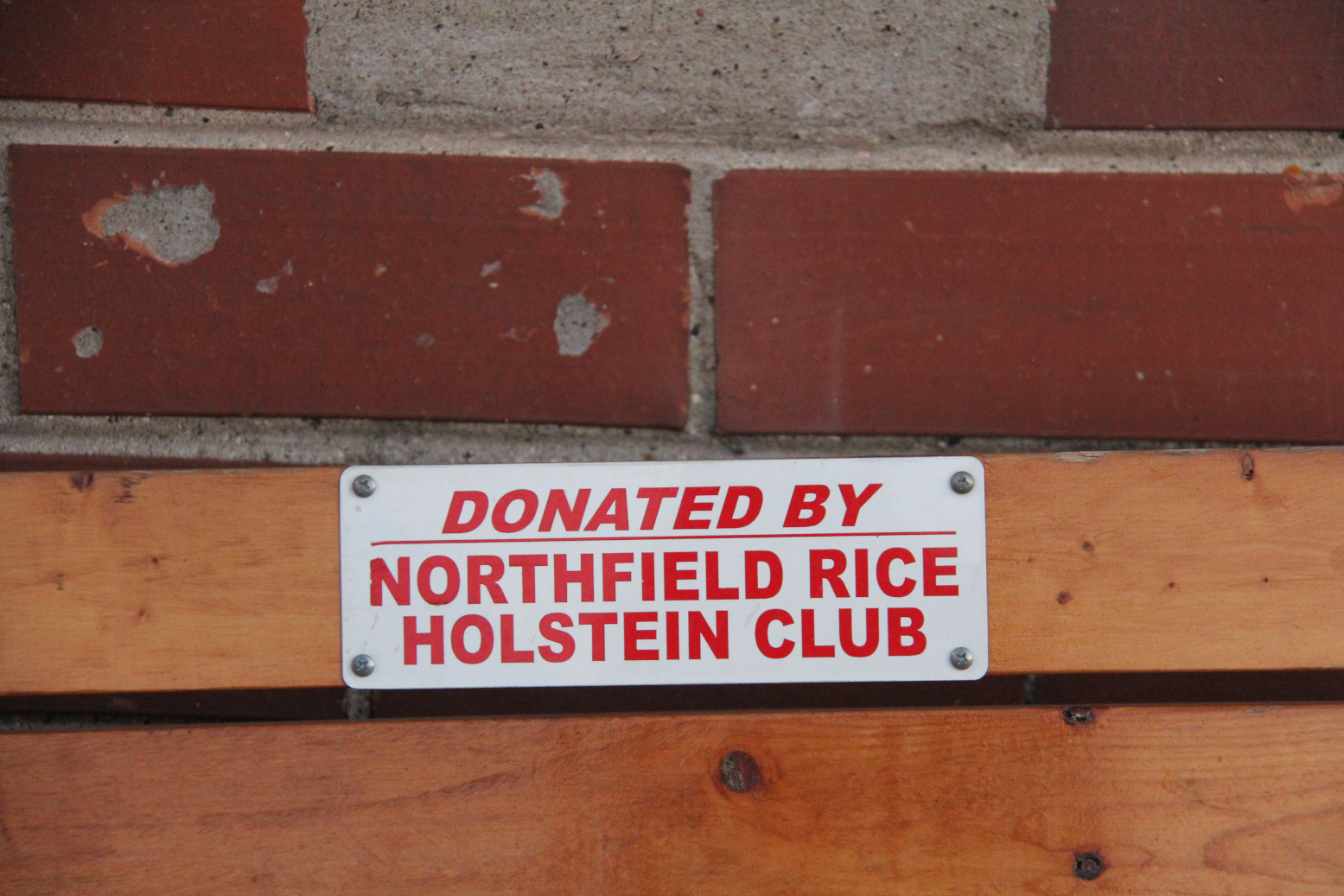
Bench signage. (Minnesota Prairie Roots copyrighted photo July 2026)
Small Holstein Club signs label benches outside the barns, a nod to a breed of cattle. My dad raised Holsteins, which I helped care for while growing up. But I wasn’t in any clubs, including 4-H. No time for that, Dad said. He needed his kids on the farm, not going to meetings or working on projects. That may have been short-sighted on his part. But I wasn’t arguing when Dad needed me in the barn or field.
Beautiful potted flowers outside one of the barns. (Minnesota Prairie Roots copyrighted photo July 2026)
The fair provides a good opportunity to learn about agriculture for kids and others not connected to rural life. That’s reality, vastly different from my youth when nearly all of my peers lived on small family farms.
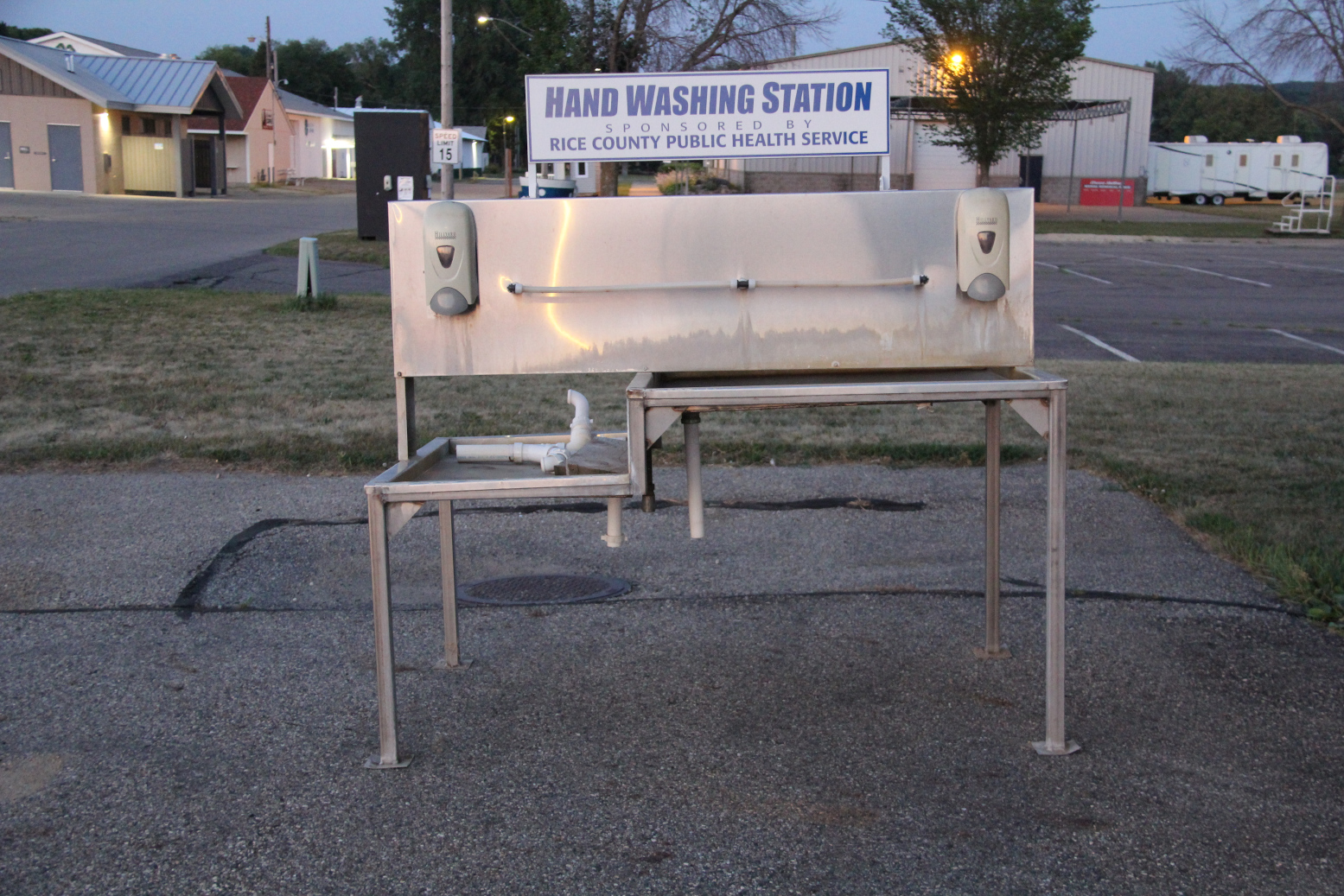
A reminder from Rice County Public Health to wash your hands after going in the animal barns to prevent spread of disease. (Minnesota Prairie Roots copy
To celebrate agriculture up close with animals at the fair seems necessary in a time when many are a generation or more removed from the land. So the fair comes and goes each year, reminding us of our, or at least Rice County’s, agrarian roots.
TELL ME:What do you like best about a county fair?
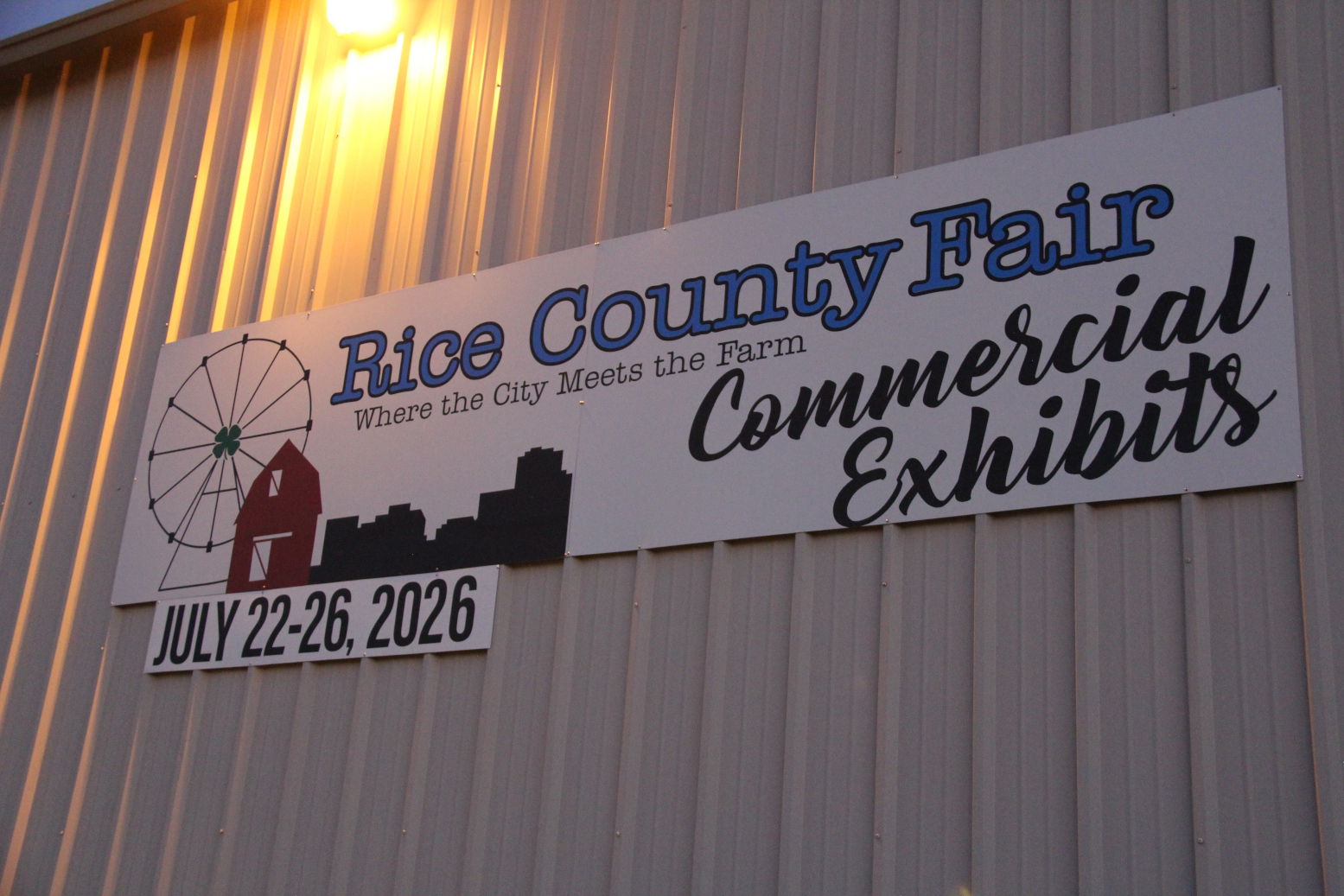
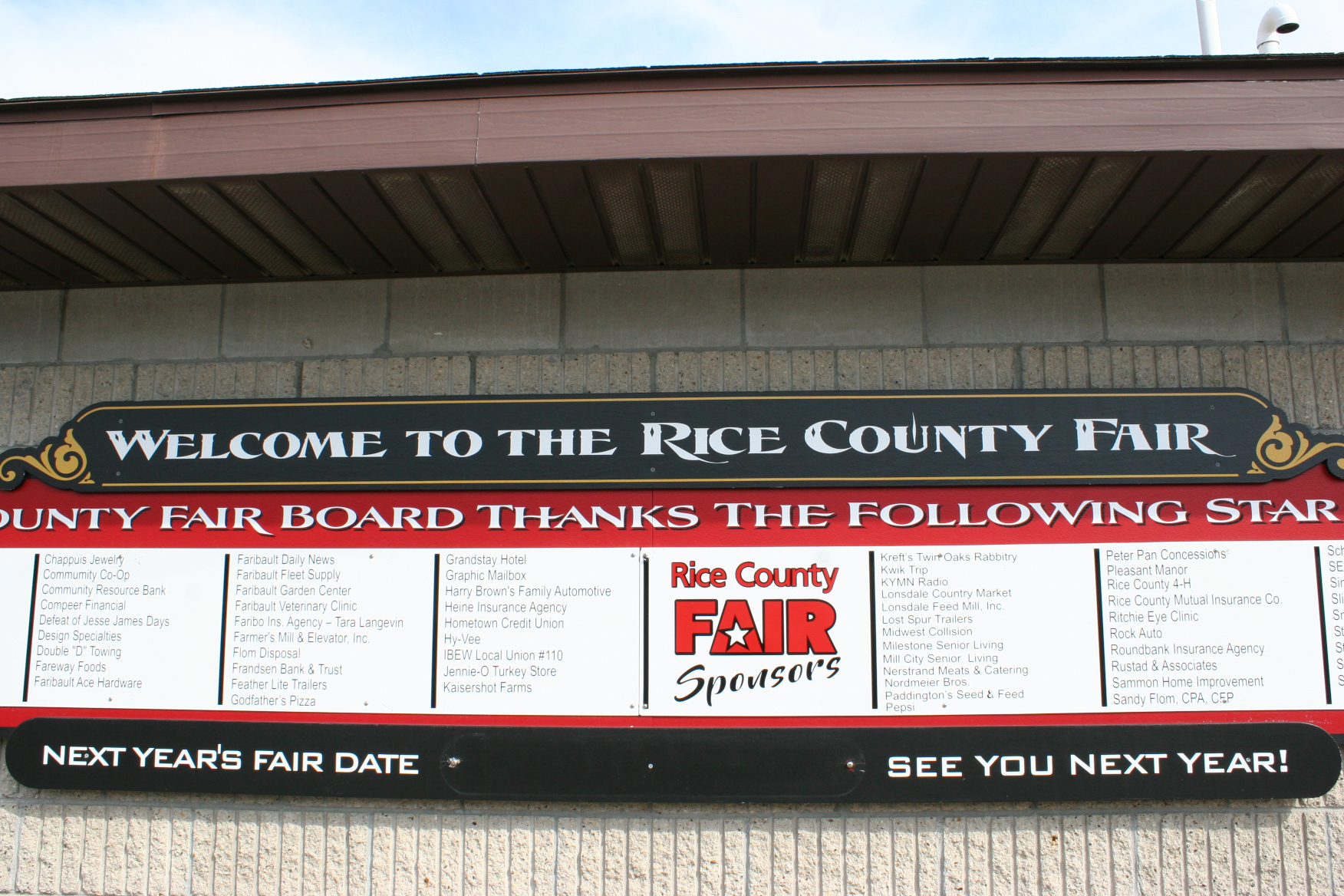
A sign advertising the fair banners a fairgrounds building. (Minnesota Prairie Roots copyrighted photo July 2026)
IN THE STILL of a Saturday summer evening, I wandered the Rice County Fairgrounds days before the fair opens for a five-day run July 22-26 in Faribault. I took in a scene which will appear and feel decidedly different once this annual “Where the City Meets the Farm” event begins.
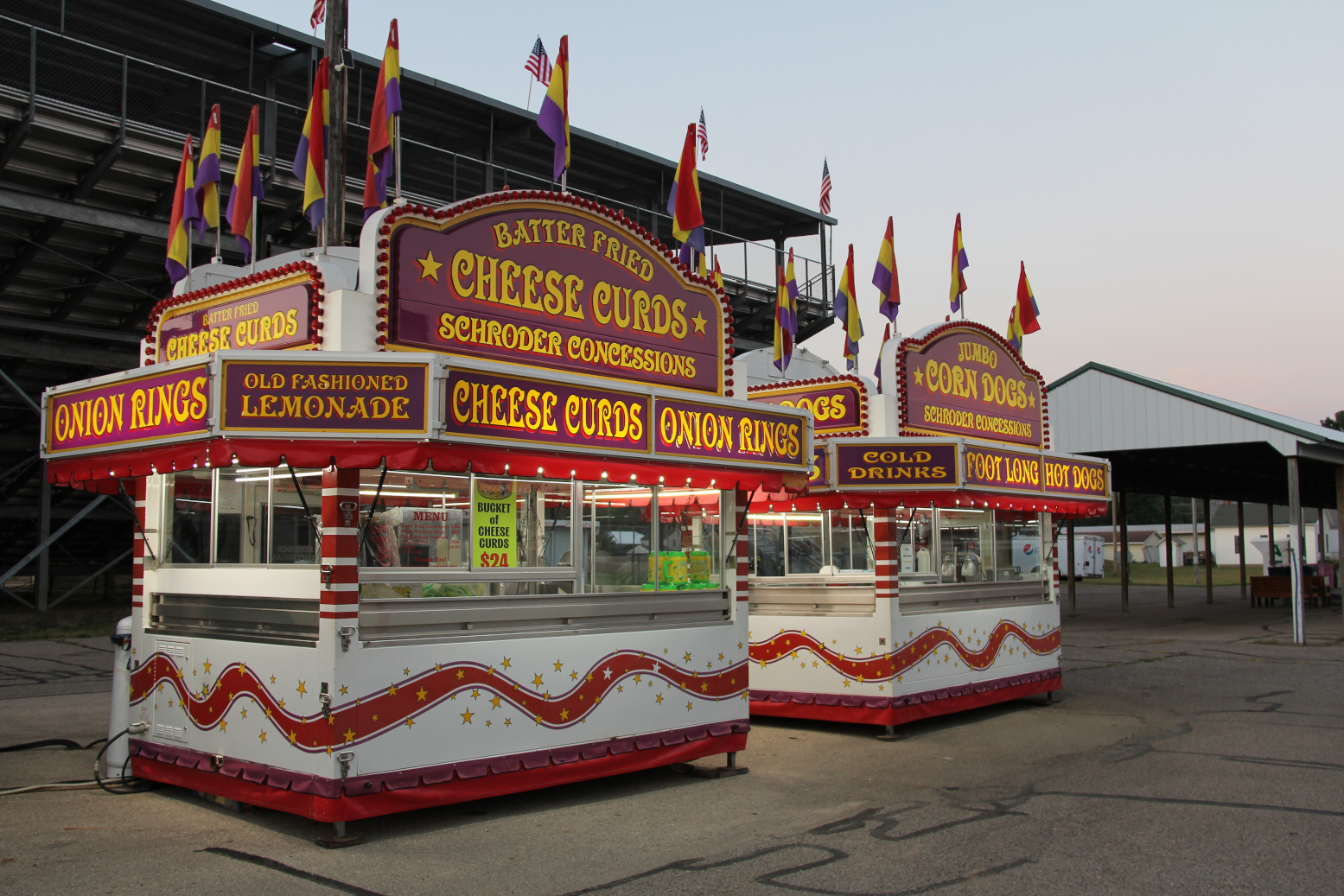
Locally-based Schroder Concessions stands sit outside the grandstand. (Minnesota Prairie Roots copyrighted photo July 2026)
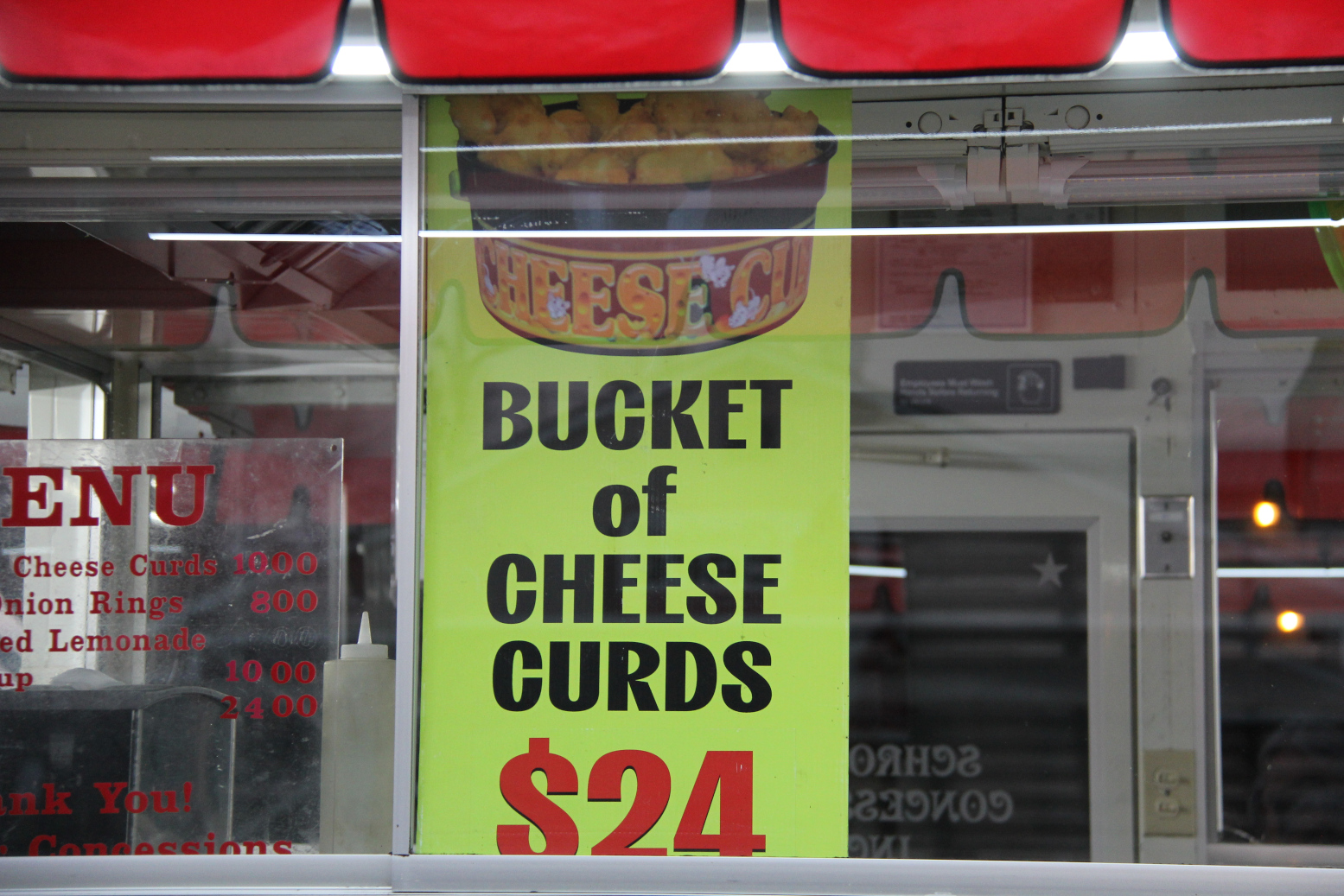
This vendor sells cheese curds, including in a bucket. (Minnesota Prairie Roots copyrighted photo 2026)
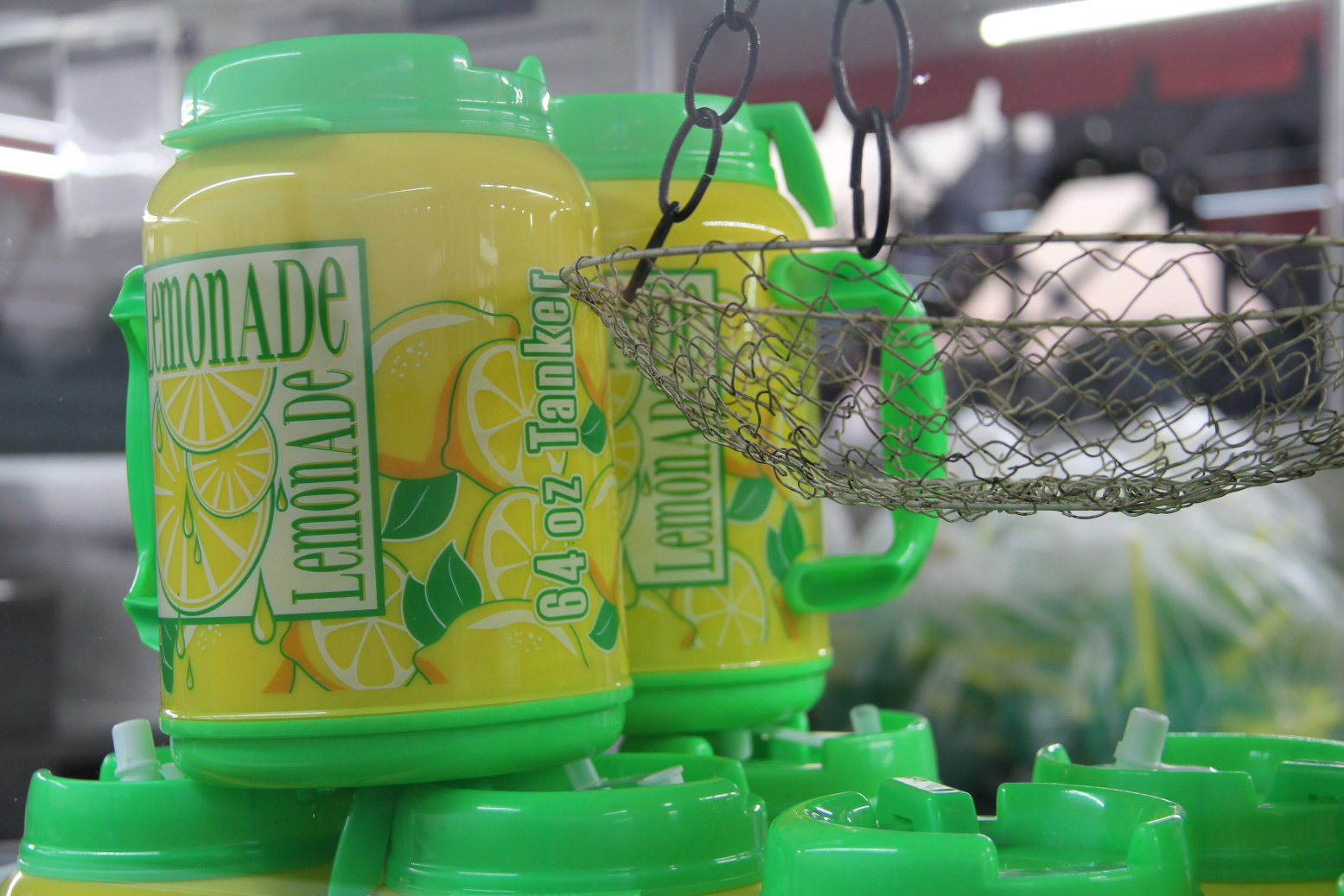
You can buy 64 ounces of lemonade from the same vendor. (Minnesota Prairie Roots copyrighted photo July 2026)
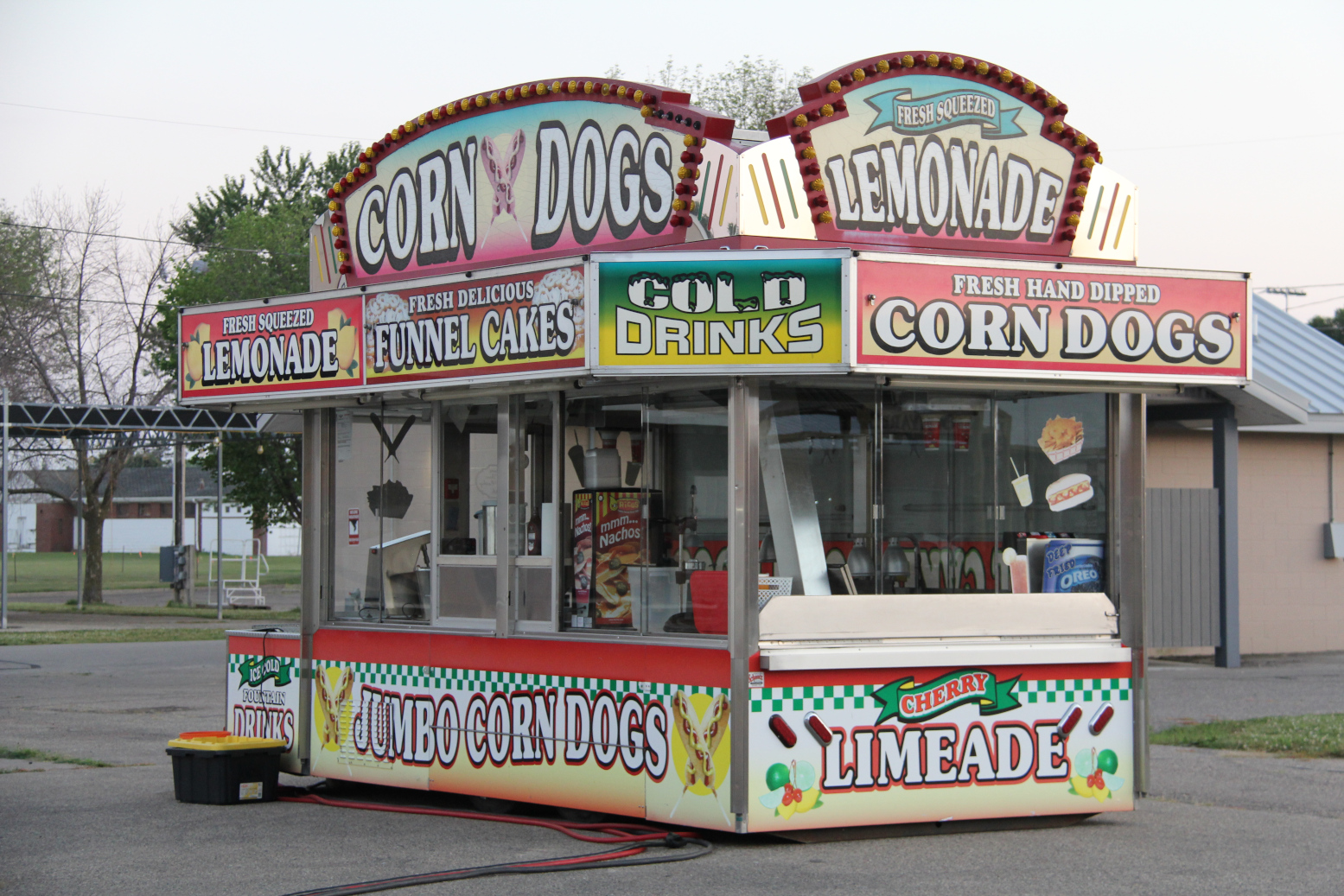
On this evening, with the sky tinged a muted pink by the setting sun, the glowing lights of two mobile concession stands offered a peek at the festive atmosphere soon to come. I could almost see the line of fair-goers waiting for a bucket of cheese curds, a foot long hot dog or an icy cold old-fashioned lemonade.
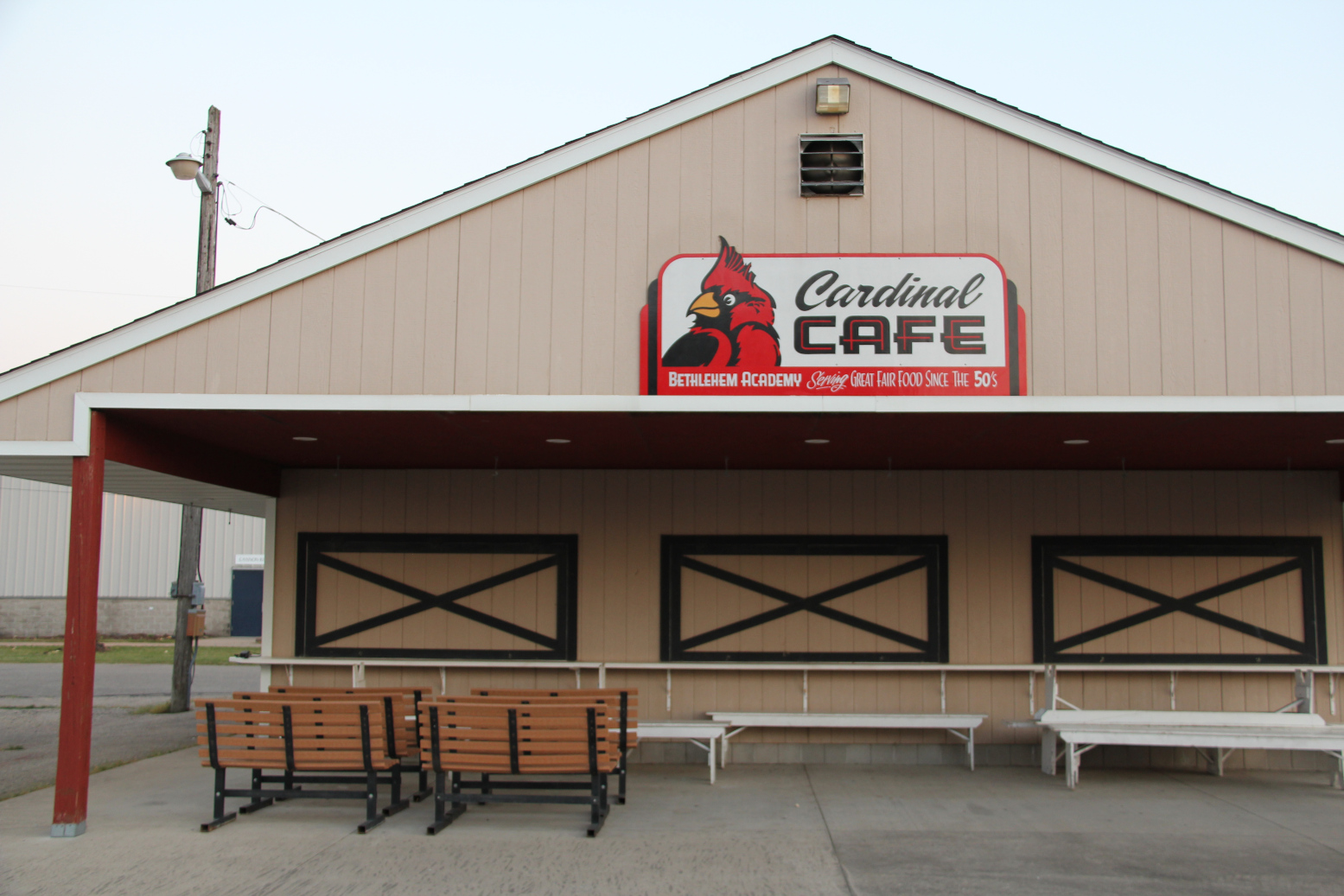
The food stand run by Bethlehem Academy, home of the Cardinals. (Minnesota Prairie Roots copyrighted photo July 2026)
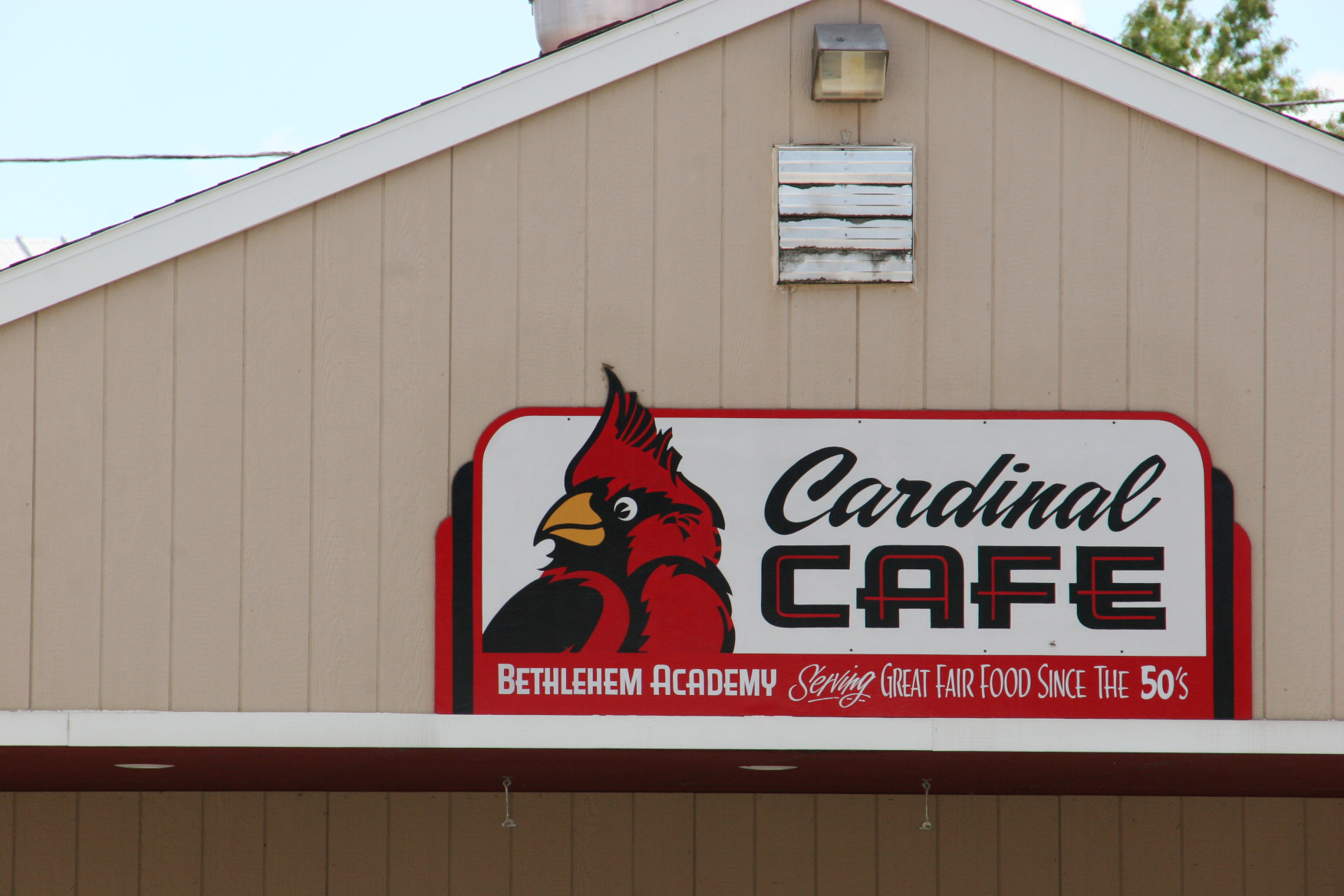
Nearby, permanent structures house long-time food vendors—the Cardinal Cafe since the 1950s, The Pork Booth, the 4-H Food Stand and others.
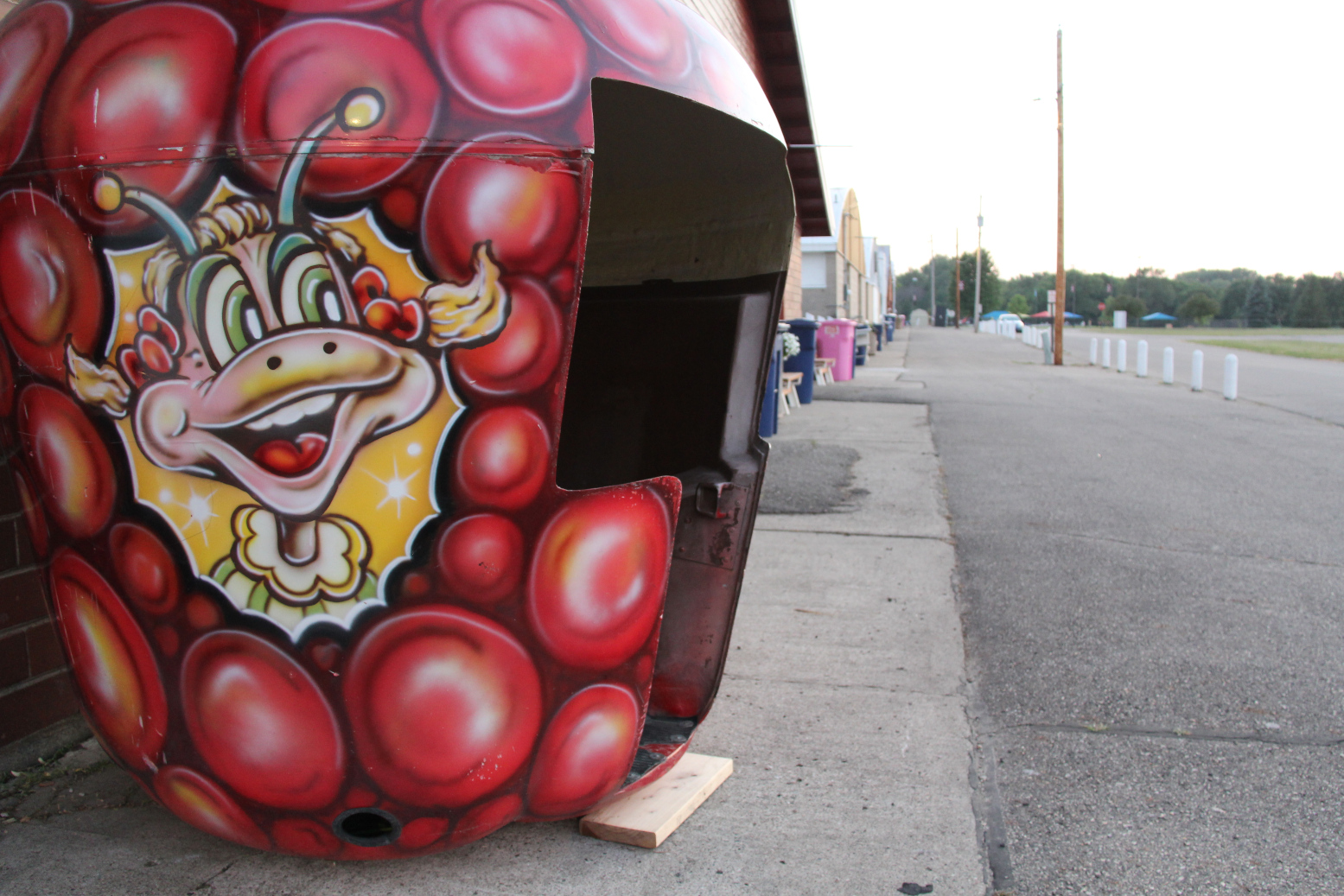
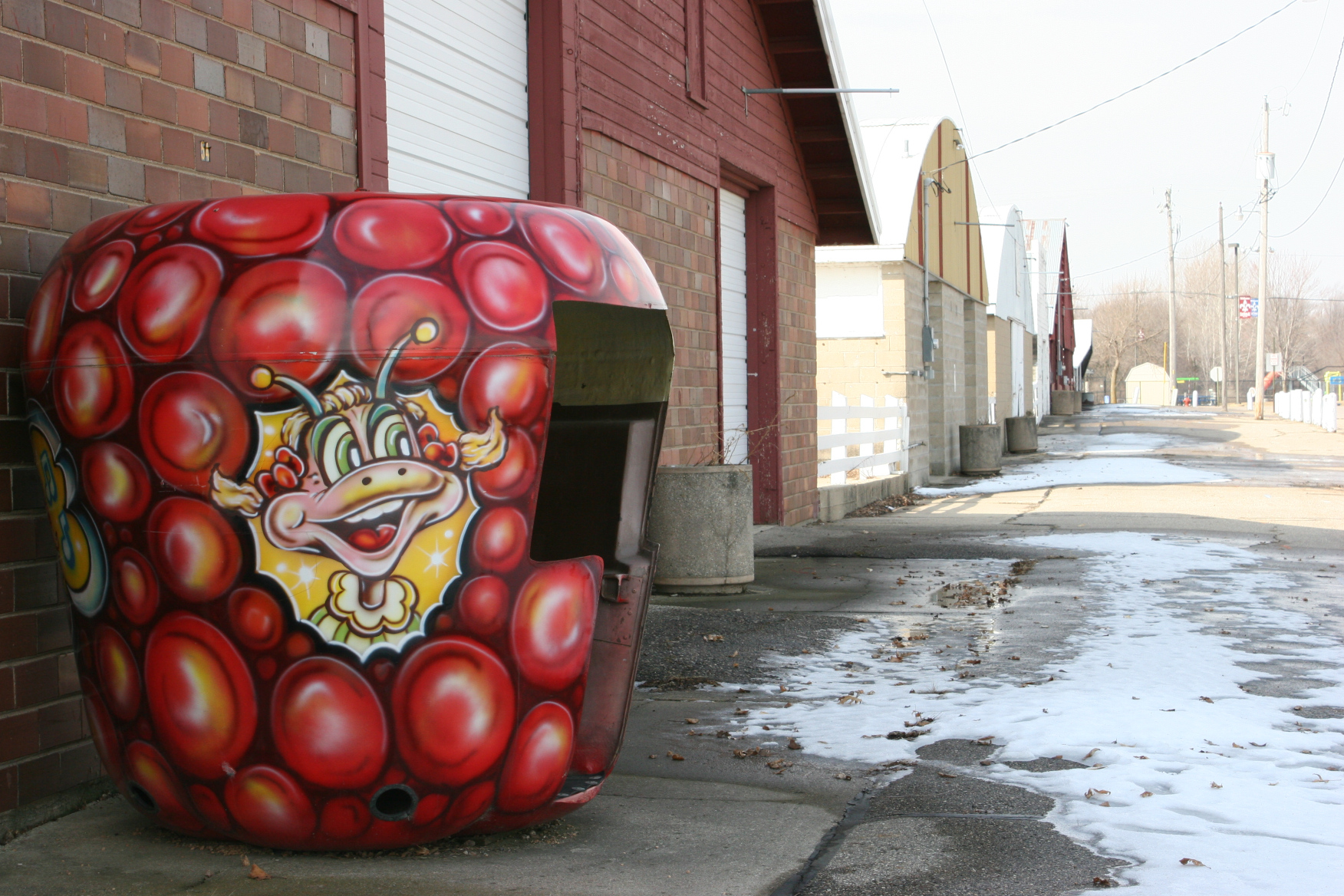
An inoperable carnival ride made in Faribault splashes color outside a livestock barn. (Minnesota Prairie Roots copyrighted photo July 2026)
Food, fun and friends theme the 2026 fair, according to the fair’s website. That seems fitting as I consider the people who will gather here, some coming primarily for the food; others for the carnival rides; many to see the exhibits; others to show off their animals, talents, creativity and much more; many for the entertainment; and, above all, to connect with family and friends for a whole lot of fun.
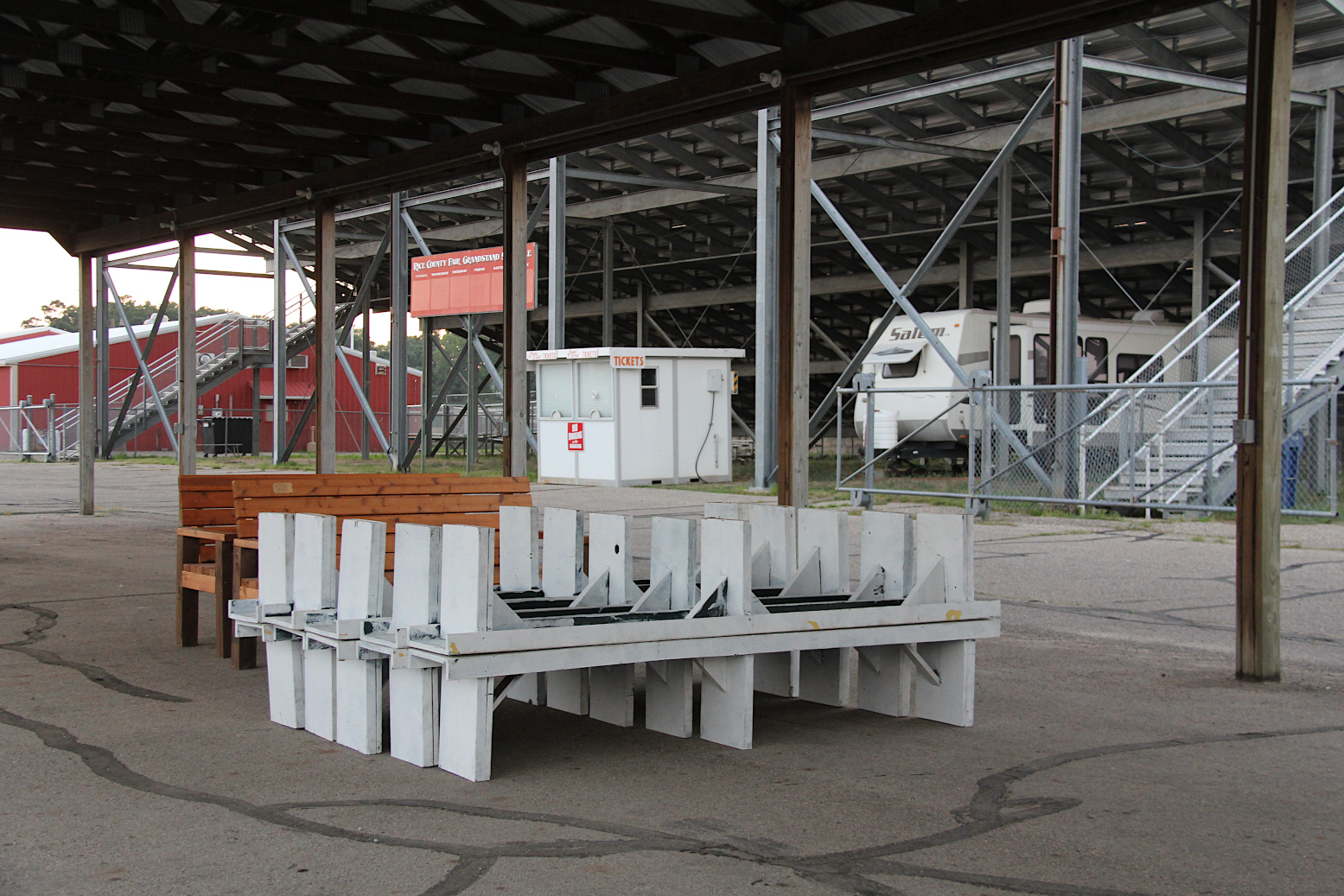
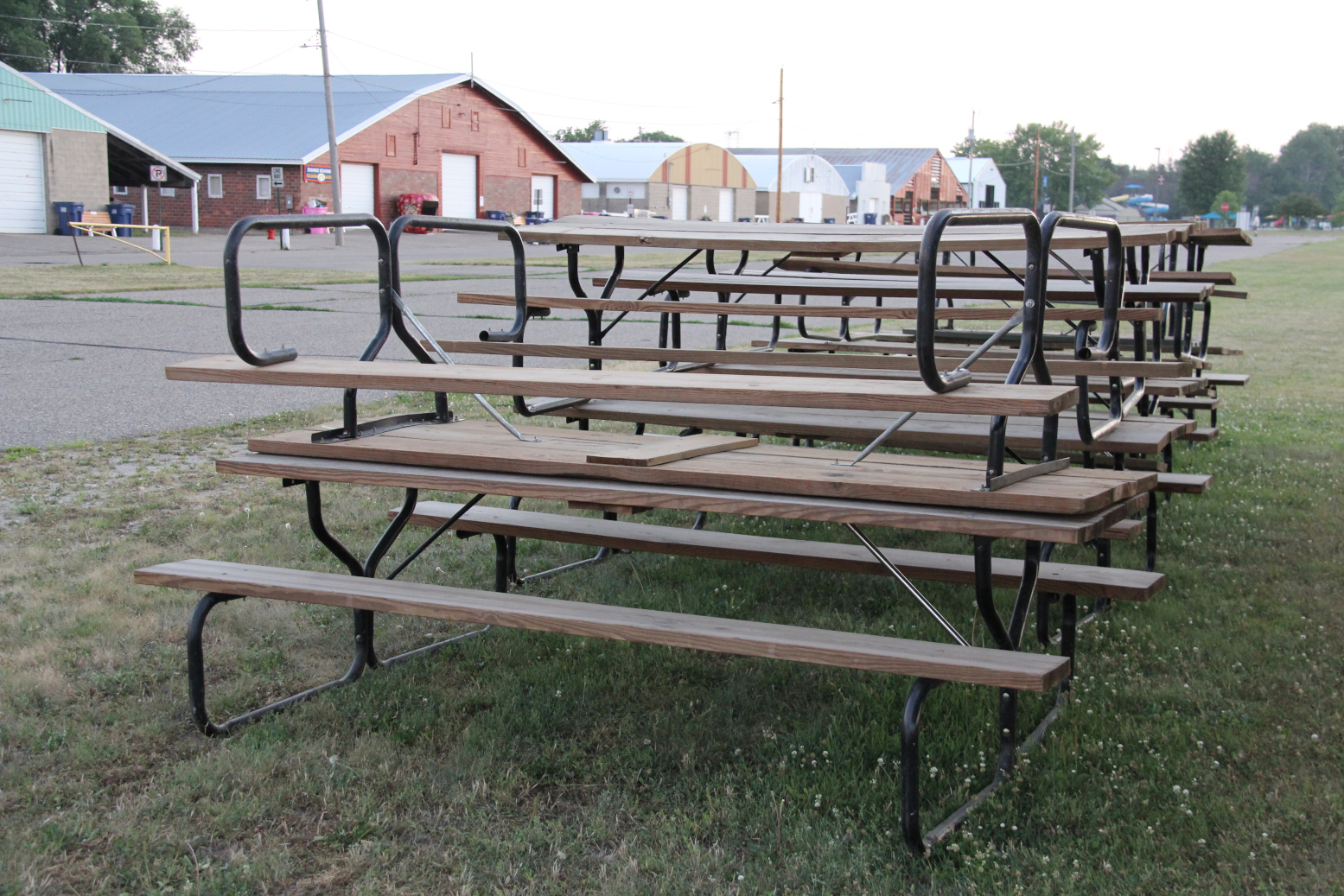
Picnic tables stacked and ready to put in place for the fair. (Minnesota Prairie Roots copyrighted photo July 2026)
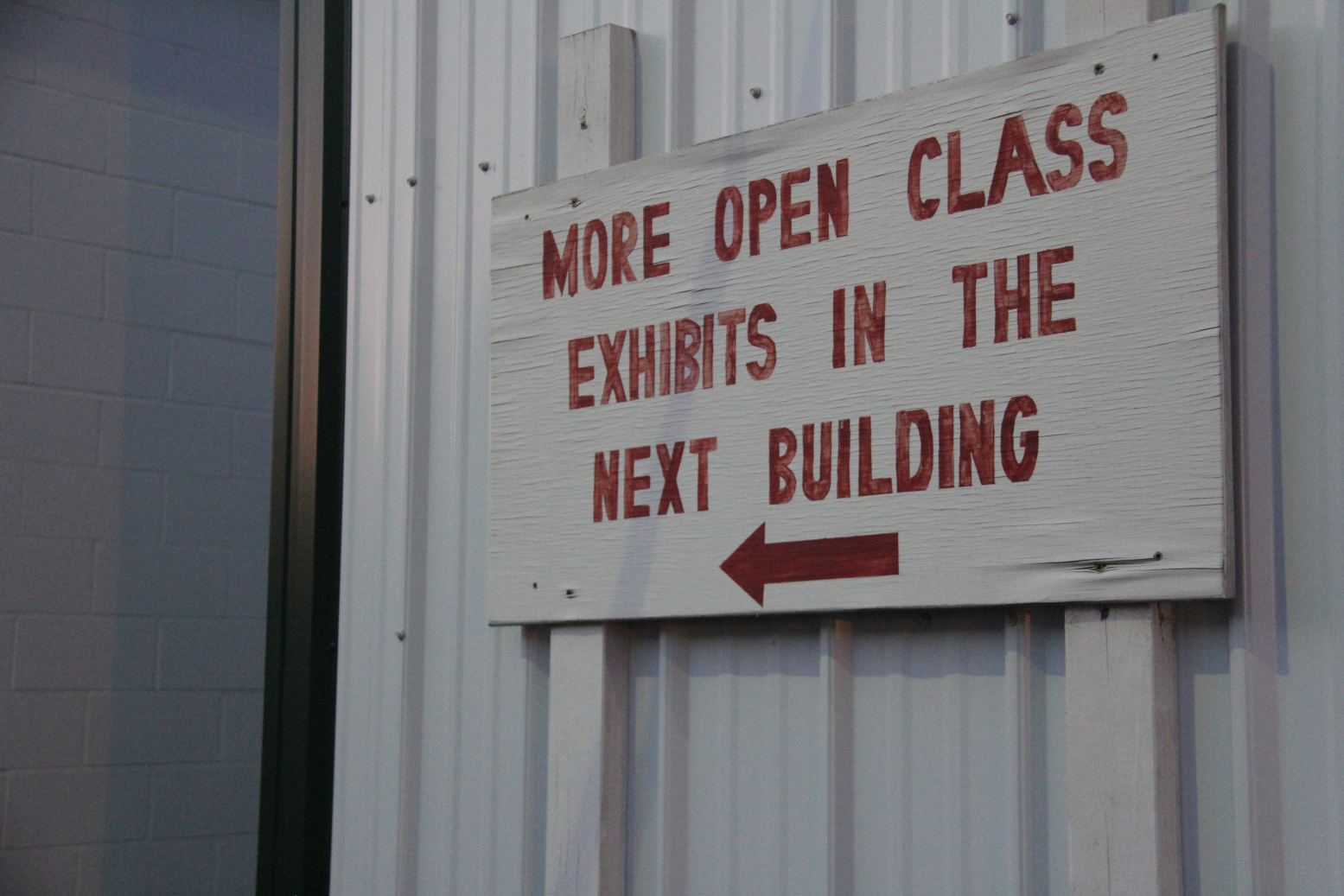
A sign directs visitors to exhibits. (Minnesota Prairie Roots copyrighted photo July 2026)
An old stock watering tank repurposed as a flower planter sits outside the sheep barn. (Minnesota Prairie Roots copyrighted photo July 2026)
But on this pre-fair evening, all was quiet. I observed a state of readiness. Benches and picnic tables stacked. Trash bins in place. Signs posted. Flowers blooming in stock tanks and other containers. Ticket booths set up. American flags flying atop the grandstand.
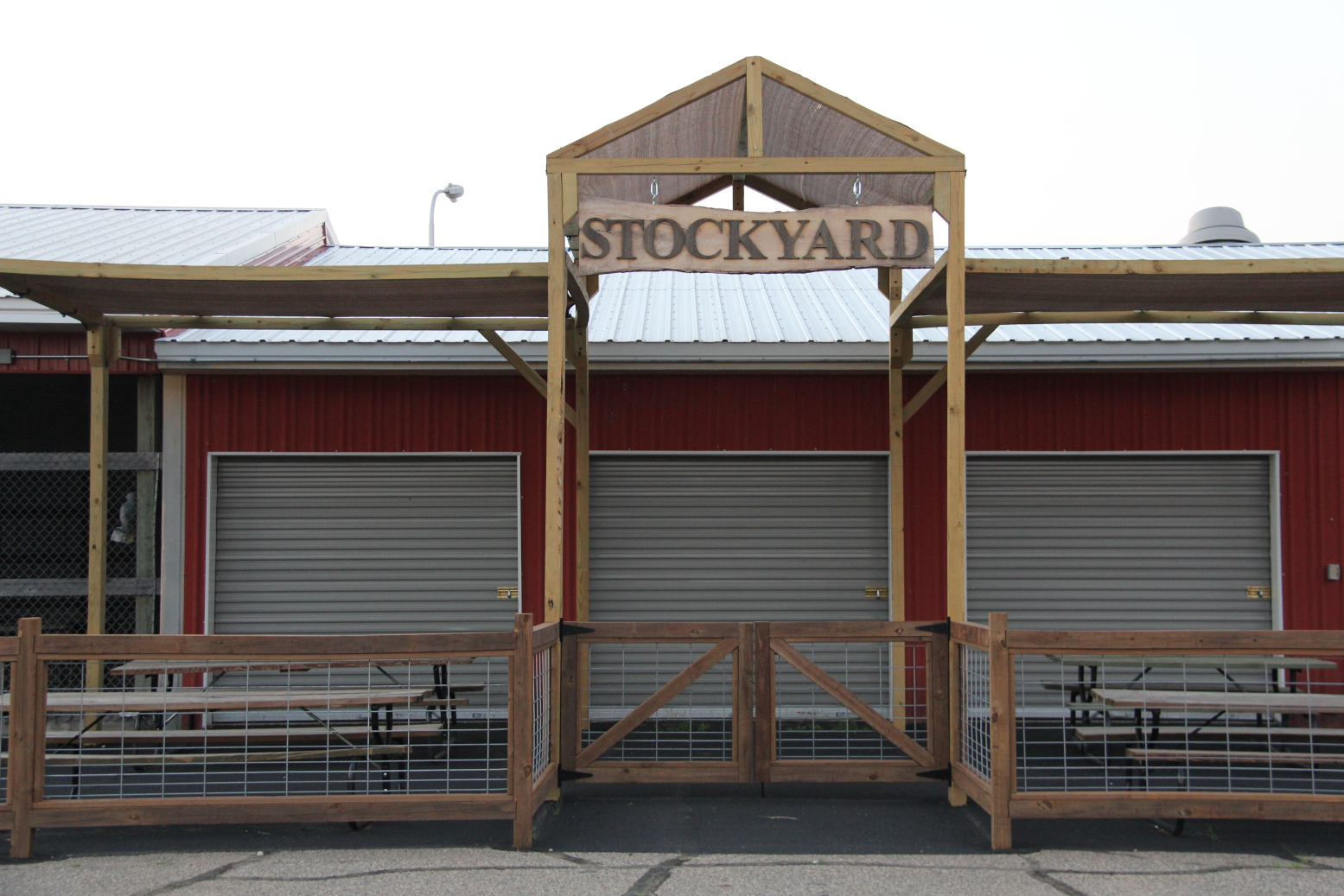
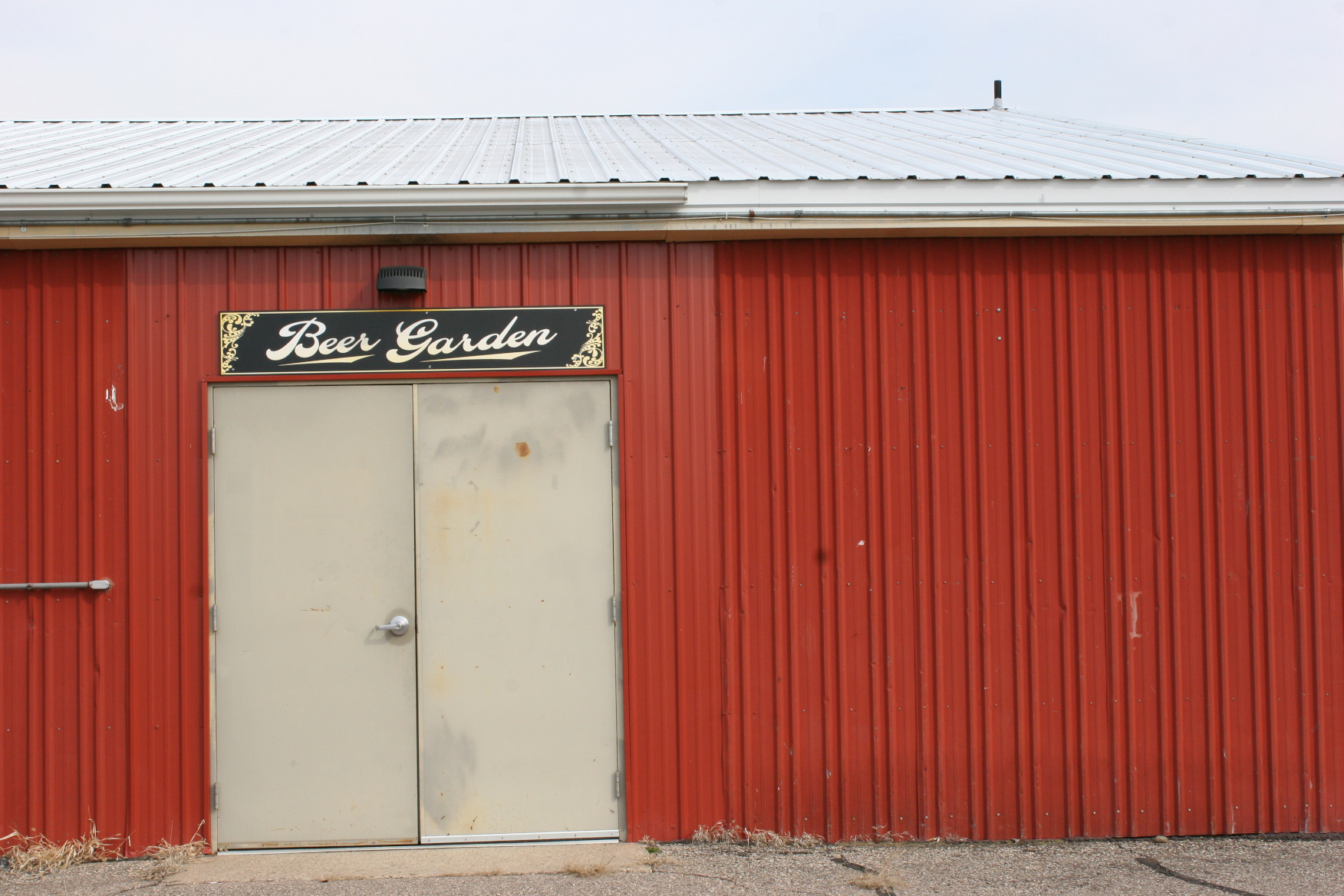
The Beer Garden is now The Stockyard, a place of beer and bands. (Minnesota Prairie Roots copyrighted photo July 2026)
And near the grandstand, I noticed a new sign, a change at the Beer Garden, now renamed The Stockyard. I suppose that’s appropriate given the agricultural roots of the county fair. It’s a catchy and identifiable tag.
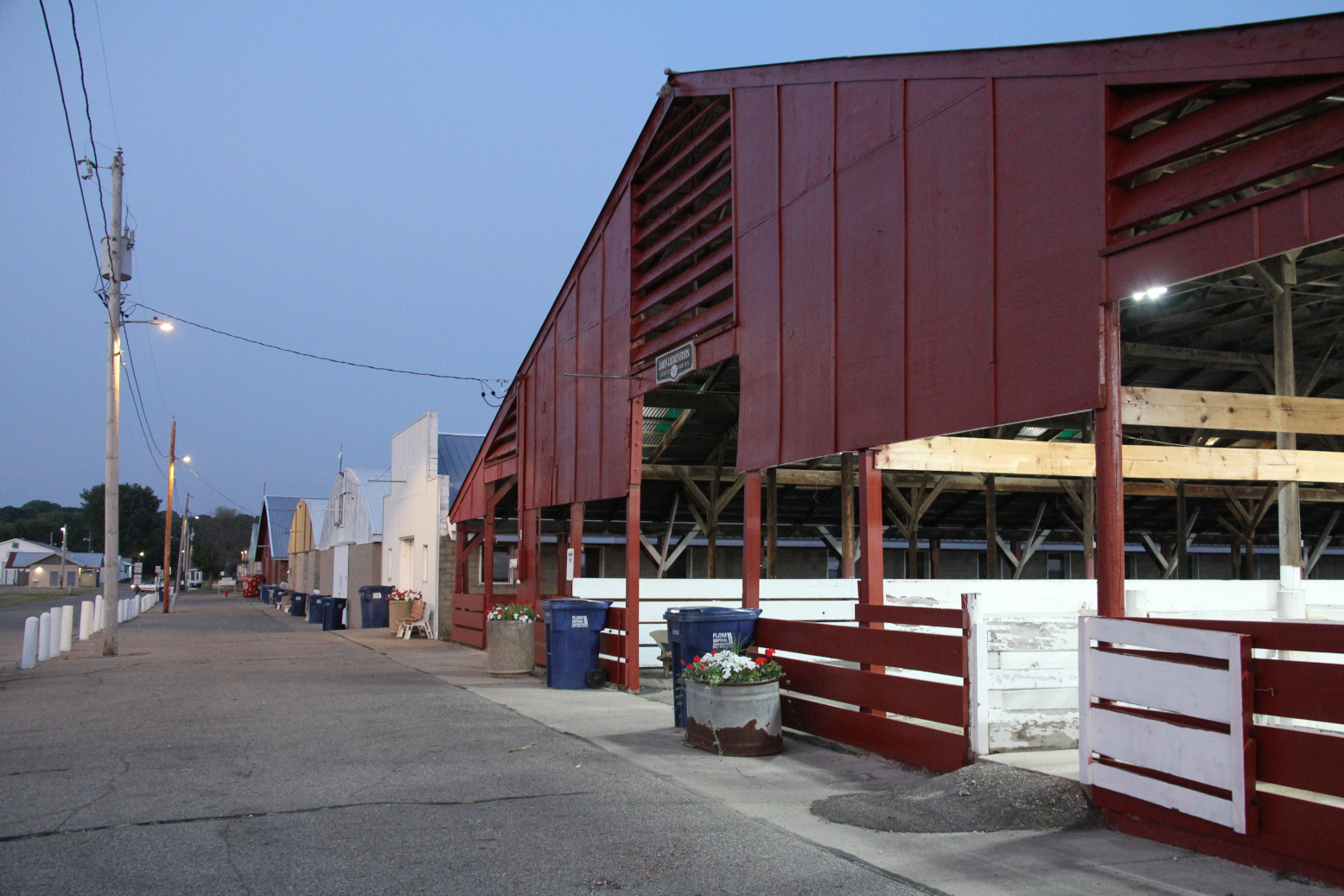
A line of barns that will house animals stretches along the south side of the fairgrounds. (Minnesota Prairie Roots copyrighted photo July 2026)
I continued my loop around the fairgrounds, following the row of buildings that will soon house prized animals. Pigs, sheep, poultry, cows, cattle, rabbits and goats. Horses have their separate space across the grounds.
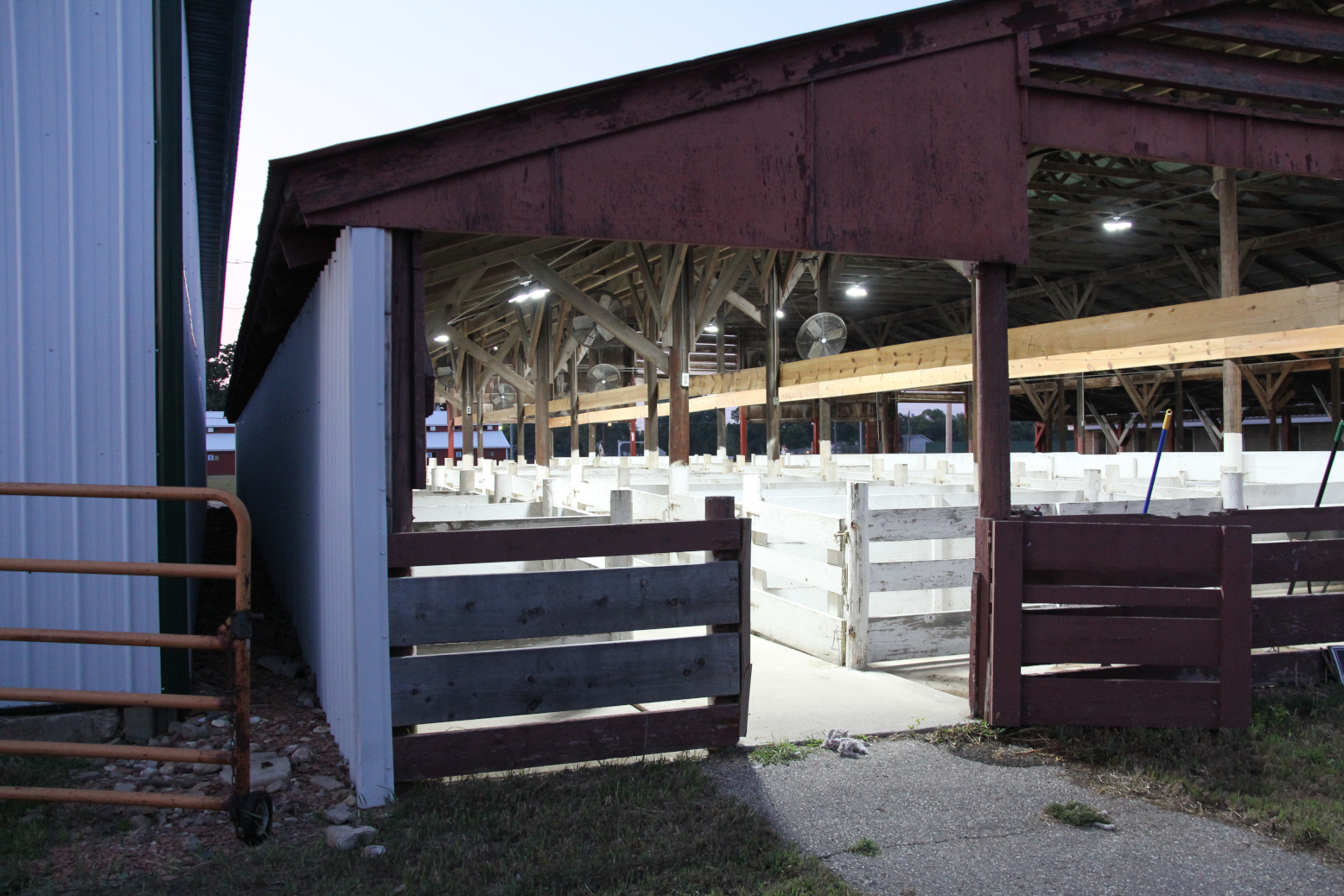
The back entry to the sheep barn. (Minnesota Prairie Roots copyrighted photo July 2026)
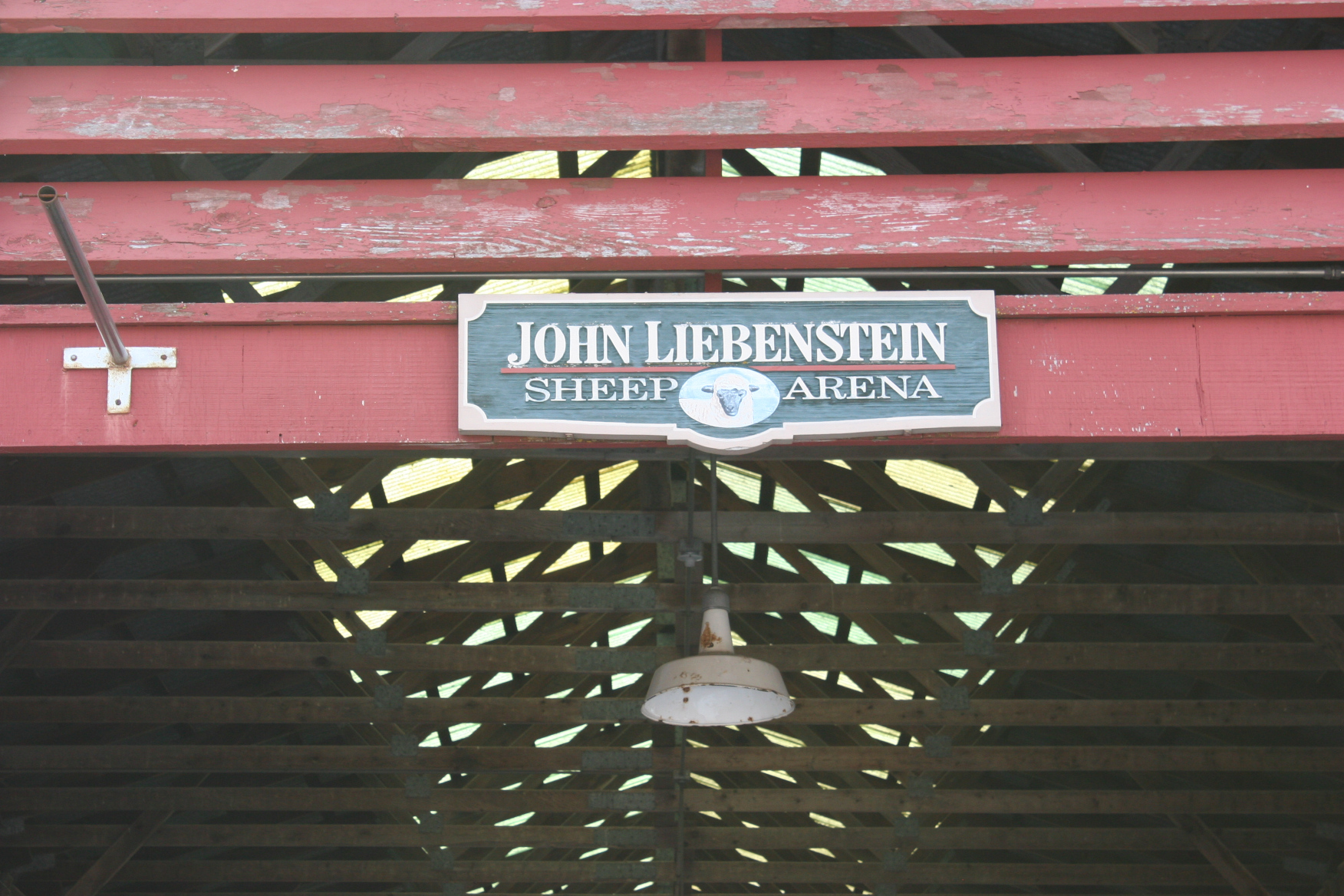
Barn doors were locked. But near the end of the row, lights glared in the John Liebenstein Sheep Arena. I stepped inside the open air barn defined by rows of white wooden pens. I followed the clean-swept floor, passed by wheelbarrows. Already, families had claimed their spots with surnames marked on masking tape. Some were there Saturday evening preparing for the arrival of sheep.
Banners defining the purpose of 4-H and the 4-H pledge of head, heart, hands and health draped over a pen, awaiting display.
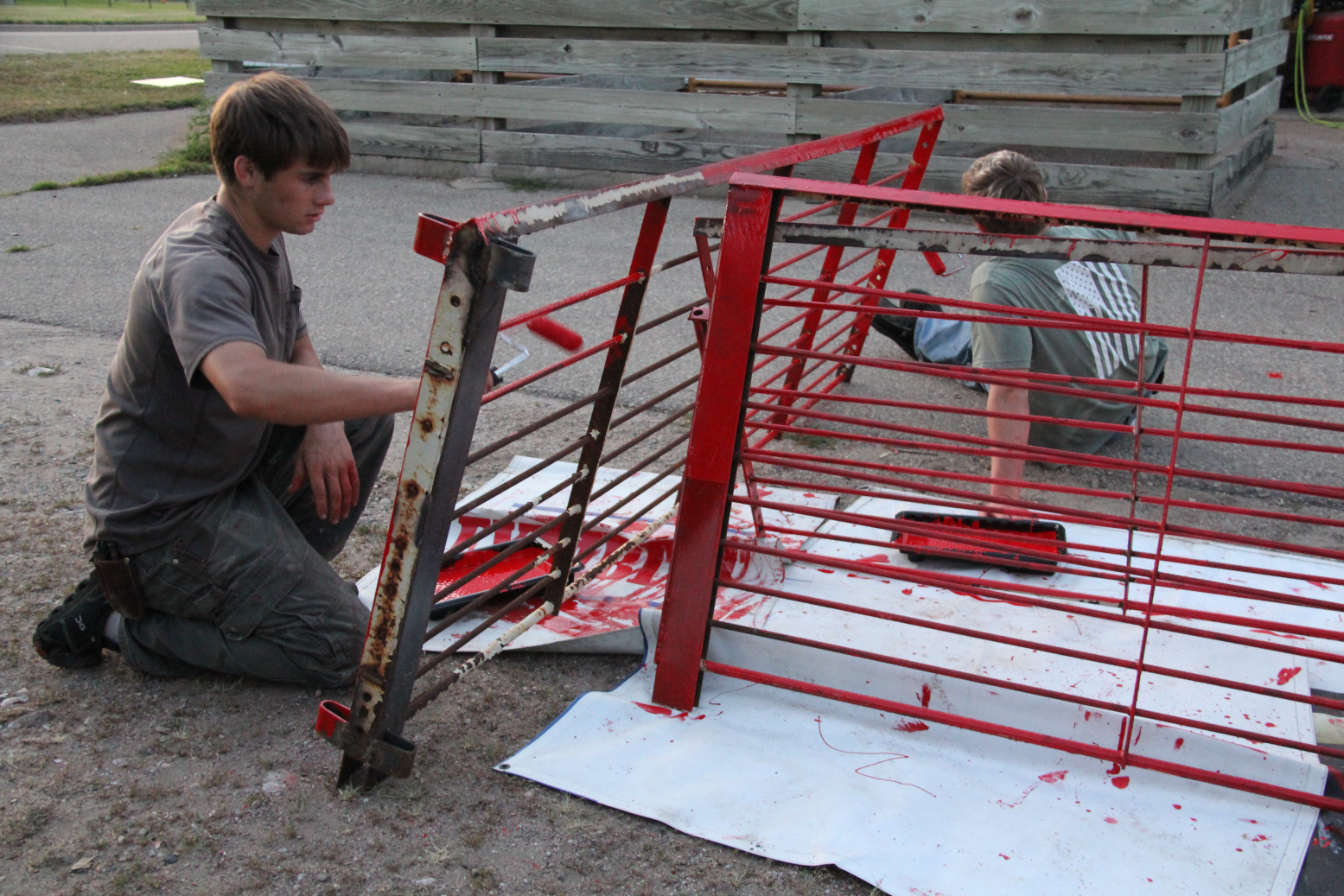
Brothers Keith, left, and Sam paint gates for the swine barn. (Minnesota Prairie Roots copyrighted photo July 2026)
And behind the swine building I found three young men—Keith, Sam and Charlie—rolling bright red paint onto metal gates to corral pigs. “Nothing like waiting until the last minute,” I teased, my comment not phasing them a bit.
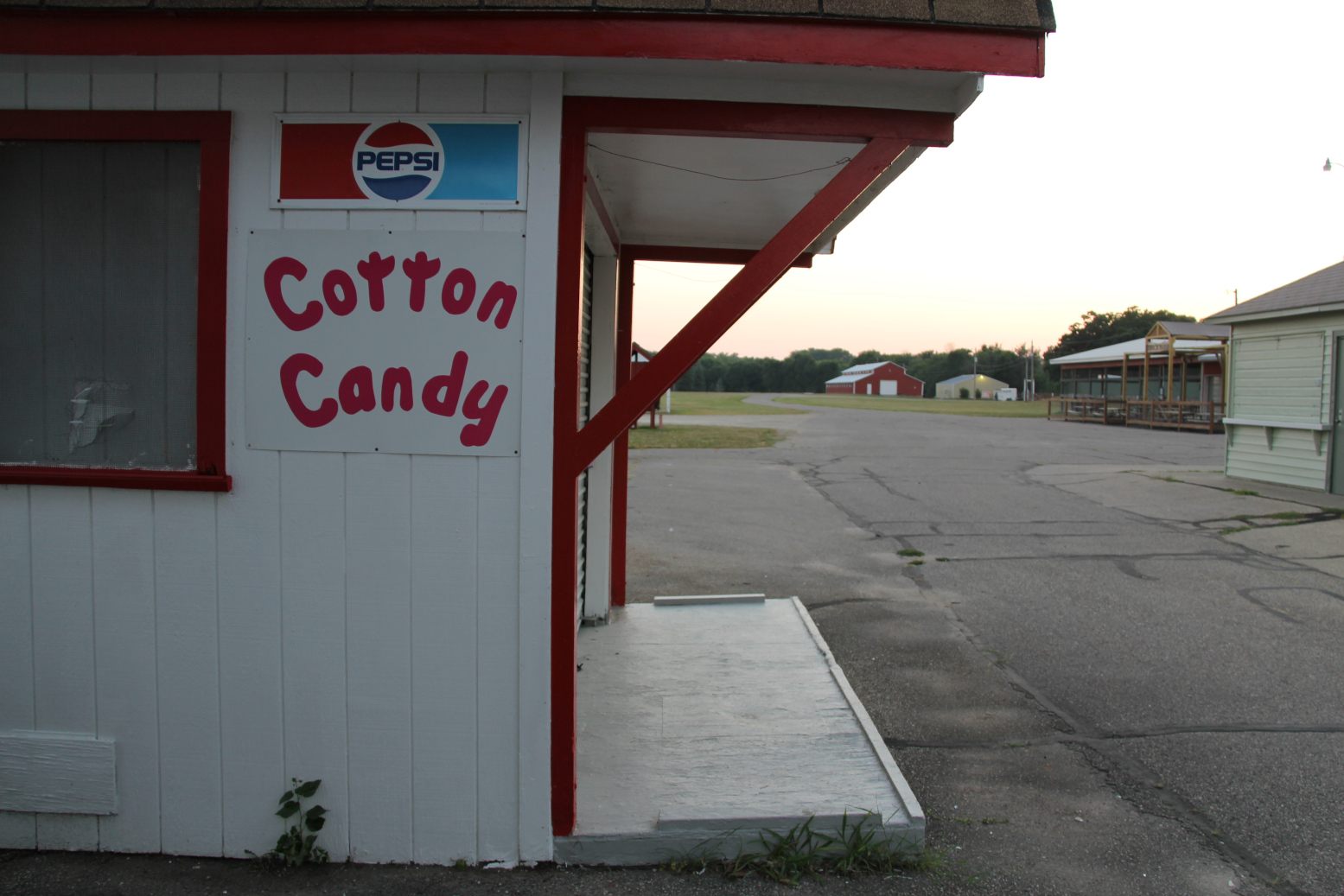
Cotton candy will be available for purchase. (Minnesota Prairie Roots copyrighted photo July 2026)
In the final days before the fair, much will happen as the carnival sets up, vendors and kids arrive, and everything is put in place. I can only imagine the amount of planning and execution that go into creating an inviting and successful fair.
This shows a small portion of the garden, complete with benches, on the east side of the fairgrounds. (Minnesota Prairie Roots copyrighted photo July 2026)
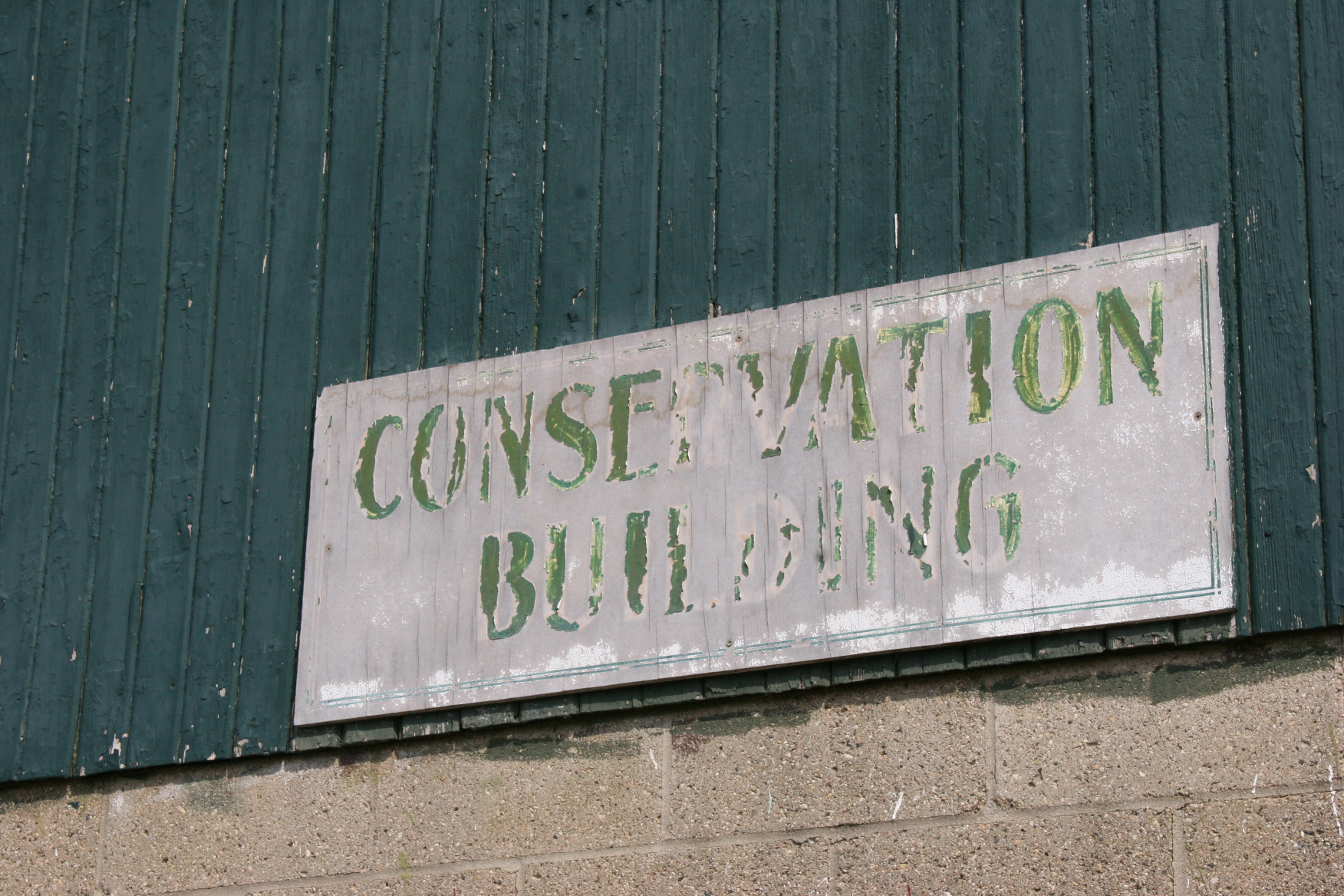
Over at the Rice County Master Gardeners Teaching Gardens on the east end of the fairgrounds, the pristine gardens are in full bloom, an oasis of natural beauty, a respite from the busyness of the fair. The next door conservation building has been reshingled and repainted.
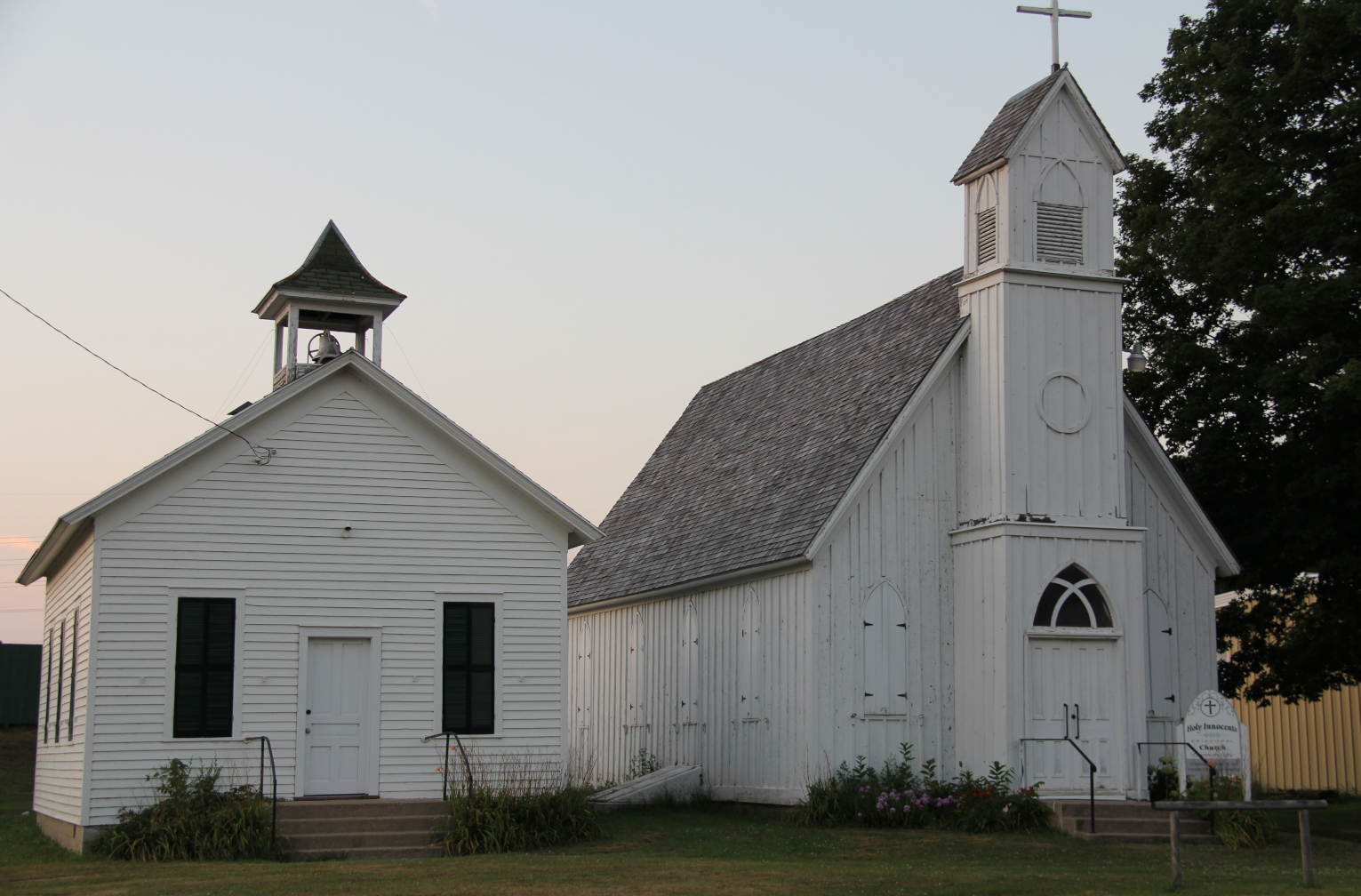
The historic Pleasant Valley School and Holy Innocents Episcopal Church will be open during the fair. (Minnesota Prairie Roots copyrighted photo July 2026)
The Rice County Historical Society has been lining up volunteers to greet fair visitors inside the old schoolhouse and church. I got a call while on vacation, but couldn’t commit. Churches have been lining up volunteers, too, to staff booths. Likewise, businesses are set with promotional displays.
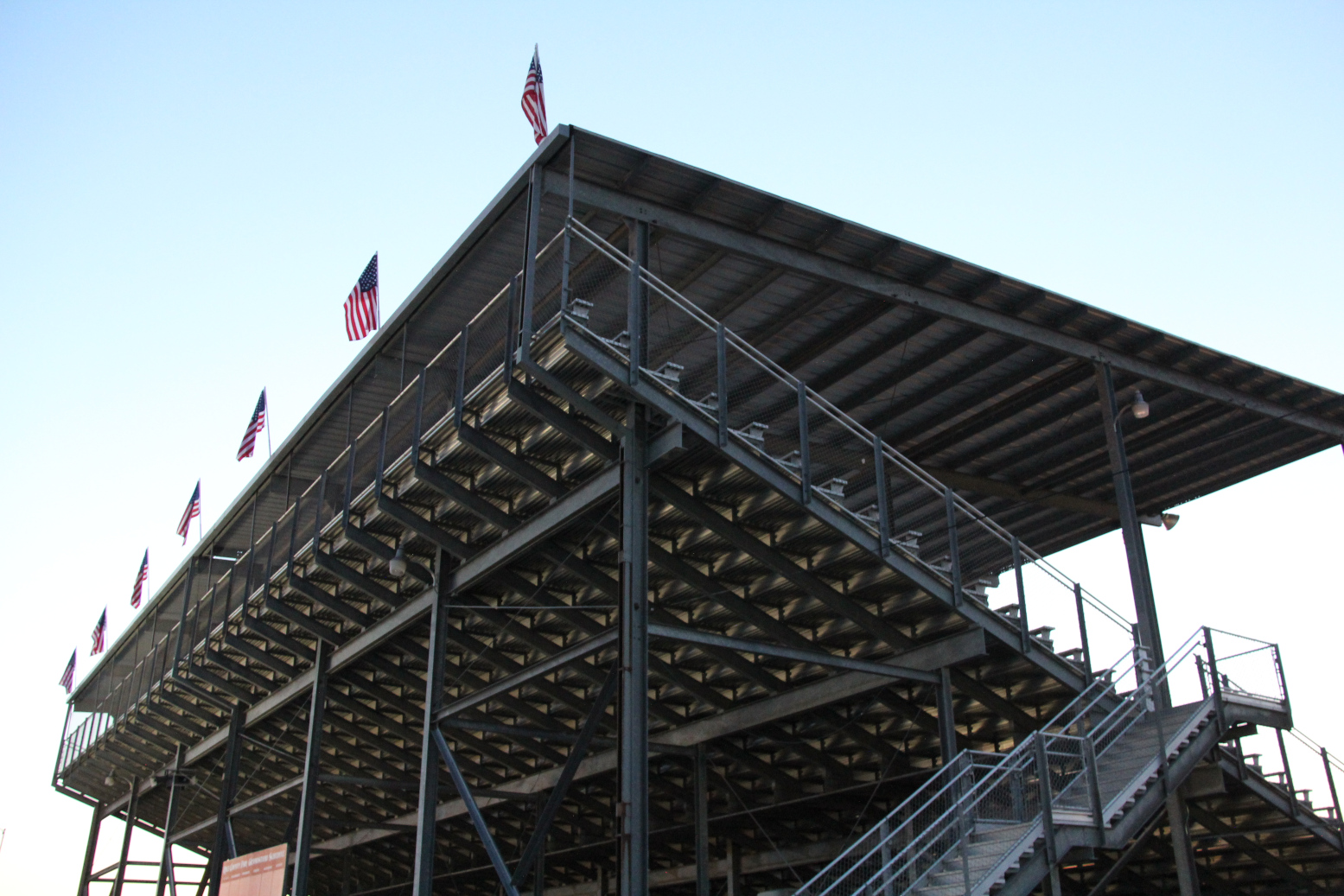
Looking up at the grandstand, which will feature races, an antique tractor pull, alligator wrestling and more. (Minnesota Prairie Roots copyrighted photo July 2026)
Days before the fair opened, I felt a sense of anticipation that comes with any big annual event. Memories will be made here, perhaps while watching juggling, a magic show or alligator wrestling; playing free mini golf, BINGO or Euchre; listening to La Raza de Mexico and other musicians; perusing exhibits of quilts, photos and more; checking out the animals; interacting with Jack Sparrow the Pirate; going on a scavenger hunt; and more, oh so much more.
One of the food vendors already in place when I toured the fairgrounds Saturday evening. (Minnesota Prairie Roots copyrighted photo July 2026)
I haven’t attended the Rice County Fair in years, having been “faired out” decades ago as a young newspaper reporter and photographer covering several county fairs. But my pre-fair tour of the fairgrounds proved motivating. This just may be the year I return to the fair and wait in line for my favorite fair food—mini donuts. Or perhaps I’ll try funnel cakes, order cheese curds, grab an old-fashioned lemonade…
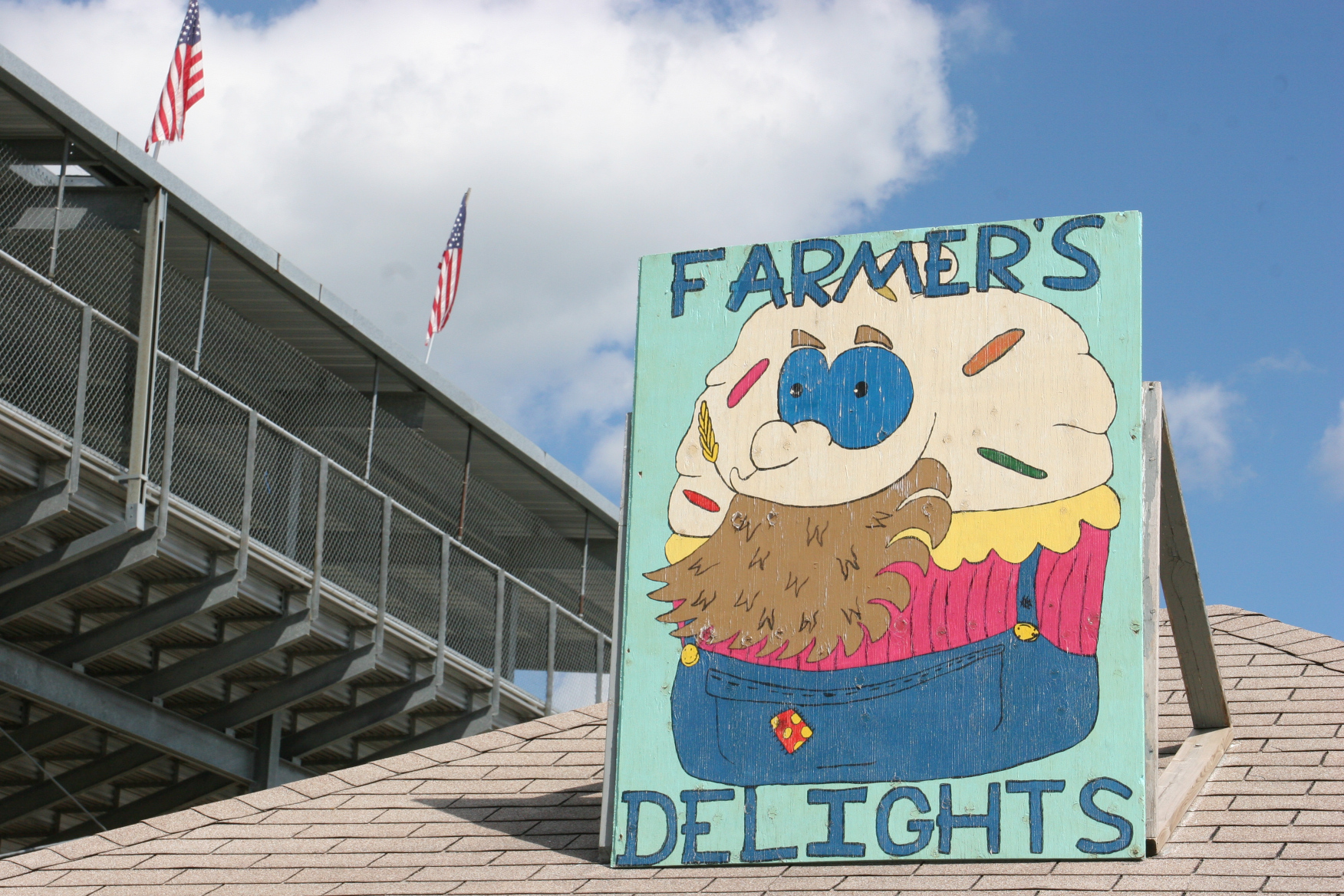
A dessert specialty at the Farmer’s Delights food stand at the Rice County Fairgrounds in Faribault. The fair was held in late July. (Minnesota Prairie Roots copyrighted photo August 2022)
IF I WAS ATTENDINGthe Minnesota State Fair, which opens today and runs through Labor Day, I’d try these three new foods: Pickle Pizza, Sweet Potato Poutine and Minneblueberry Pie. Those were my quick picks while scrolling through the 39 new food offerings listed on the fair website. The fair, has, after all, become seemingly food-focused.
Food booths near the Rice County Fair grandstand. (Minnesota Prairie Roots copyrighted photo August 2022)
But I’m not going to the Great Minnesota Get Together. I haven’t been there in decades. I find nothing appealing about the massive crowds, the pressing together of fair-goers, the congestion, the waiting in lines, the dealing with metro traffic. Nope. Not my thing.
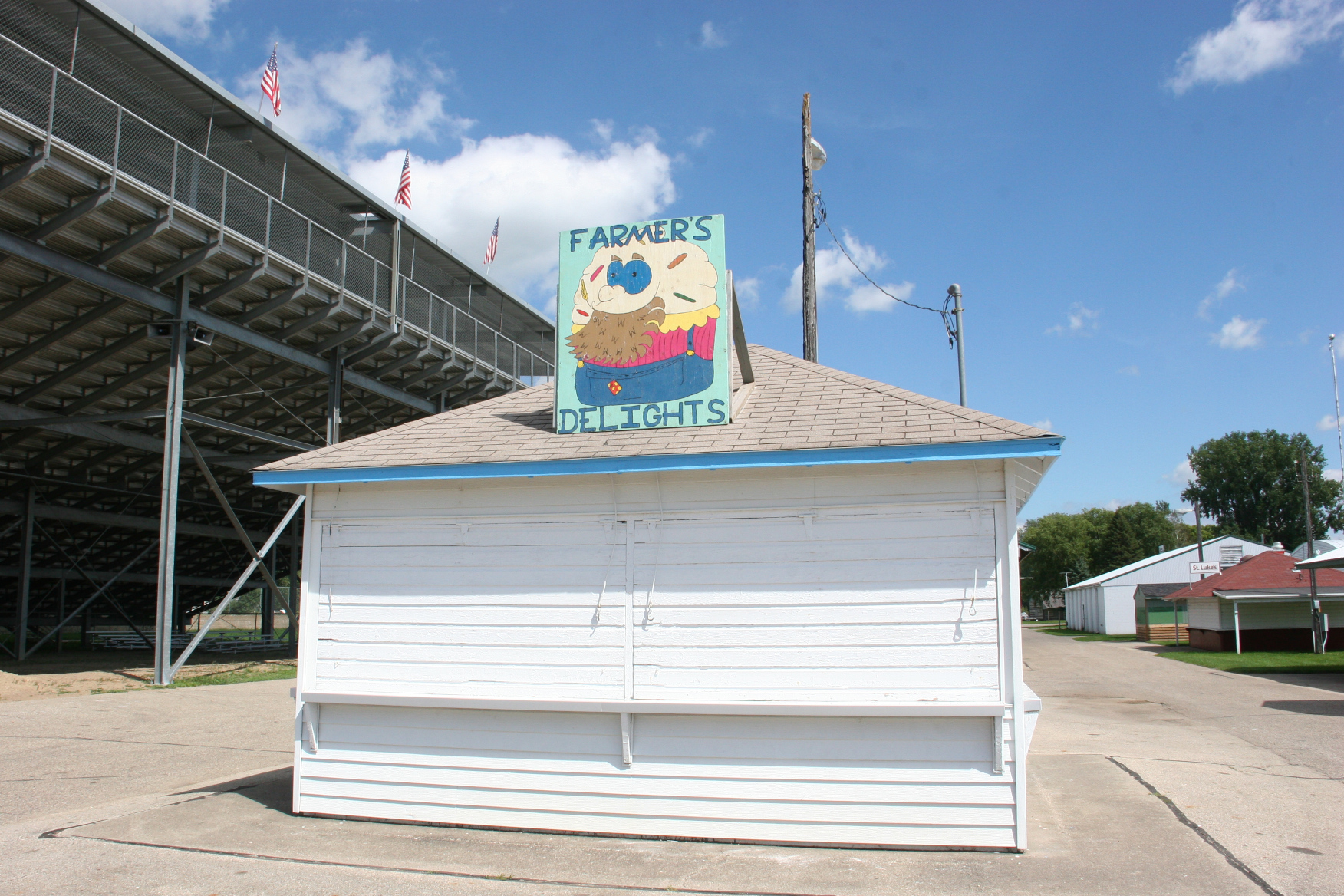
Homemade signage tops the Farmer’s Delights food vendor building. (Minnesota Prairie Roots copyrighted photo August 2022)
Yet, many Minnesotans love the State Fair and there are many reasons to appreciate it from the Seed Art to the entertainment to all that vended food.
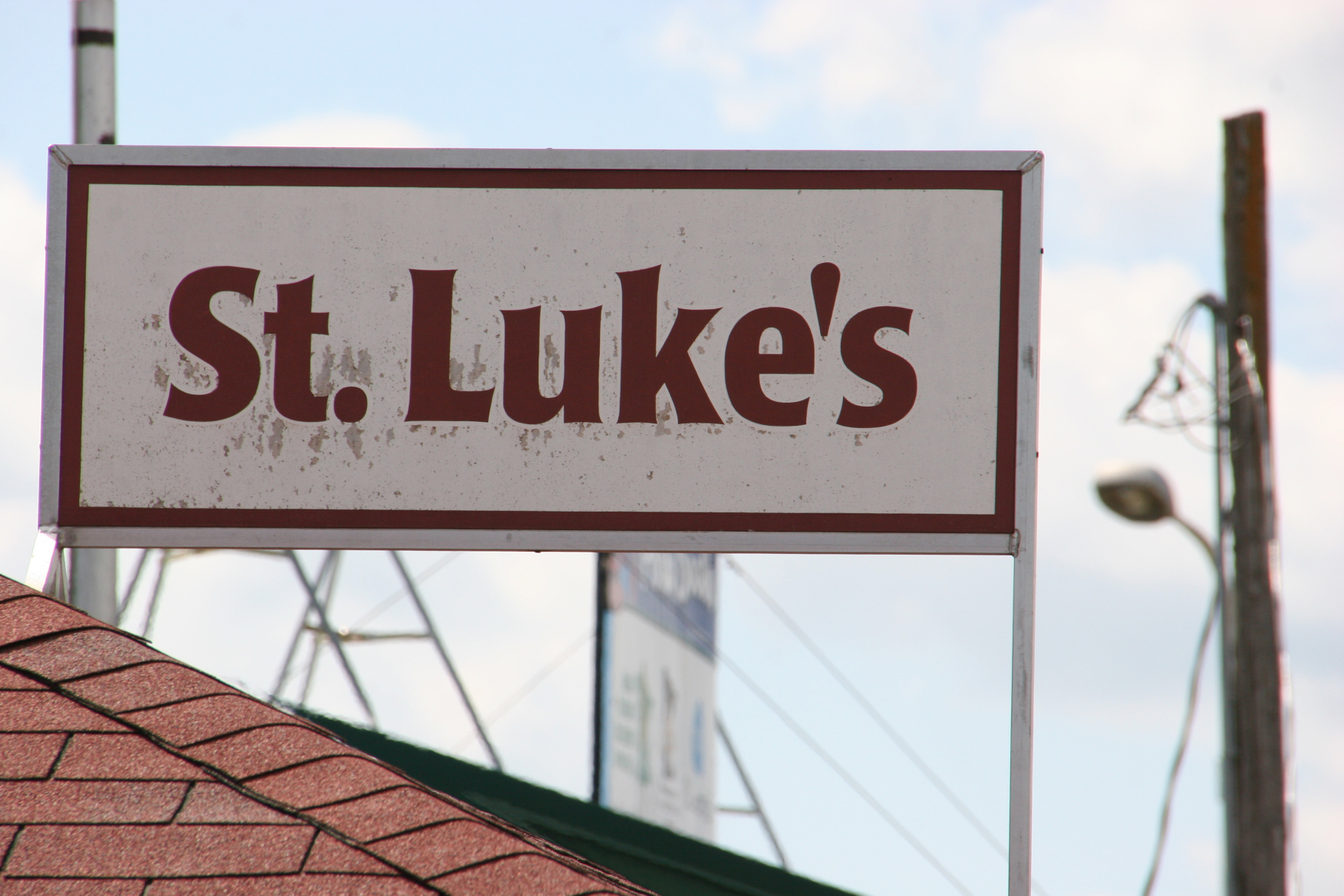
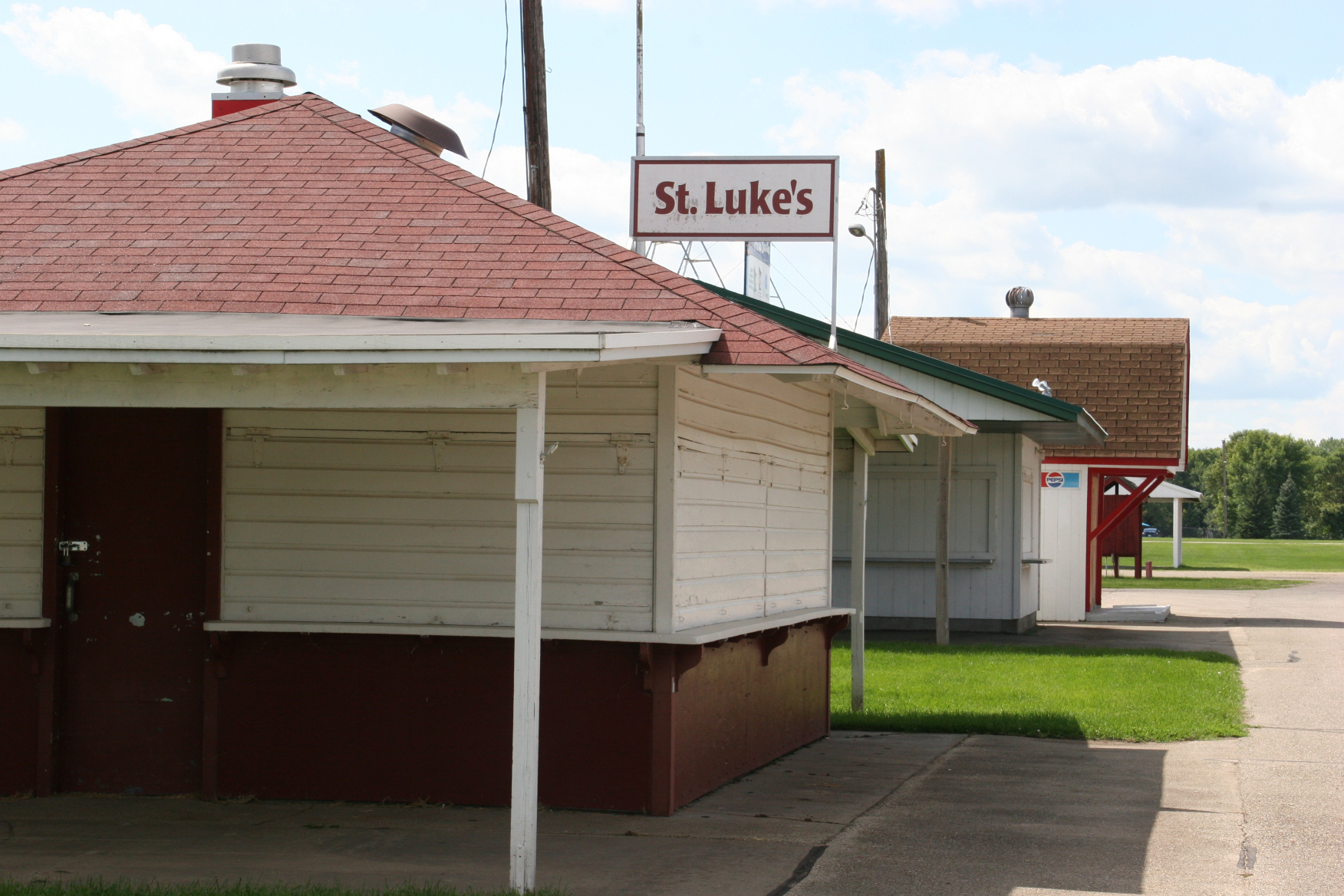
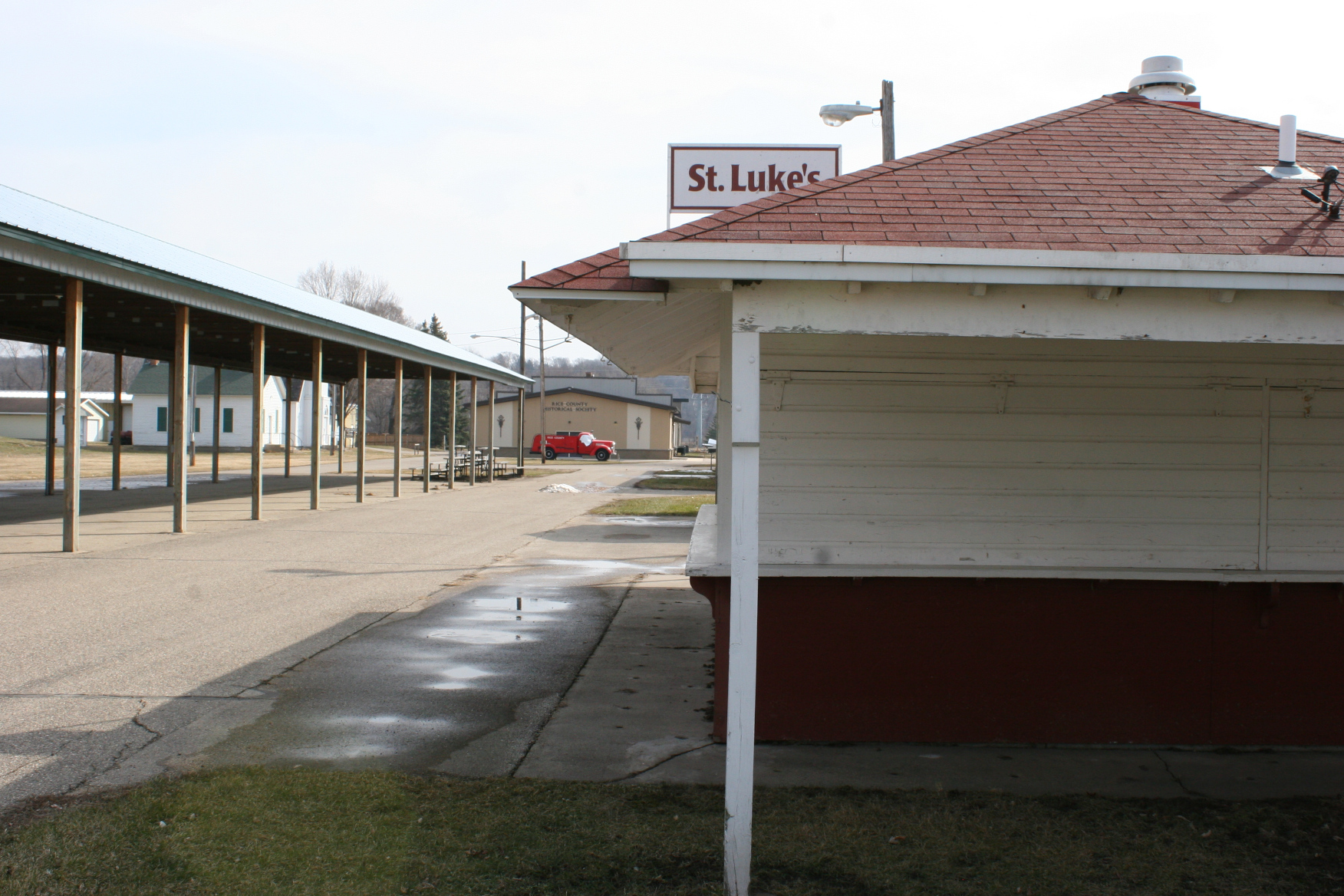
A sign marks the St. Luke’s food booth at the Rice County Fair. (Minnesota Prairie Roots copyrighted photo August 2022)
My youthful fair memories—I attended a few times—are of the giant slide, Machinery Hill (no longer there), an overly-crowded conservation building stocked with fish and dining at a church diner.
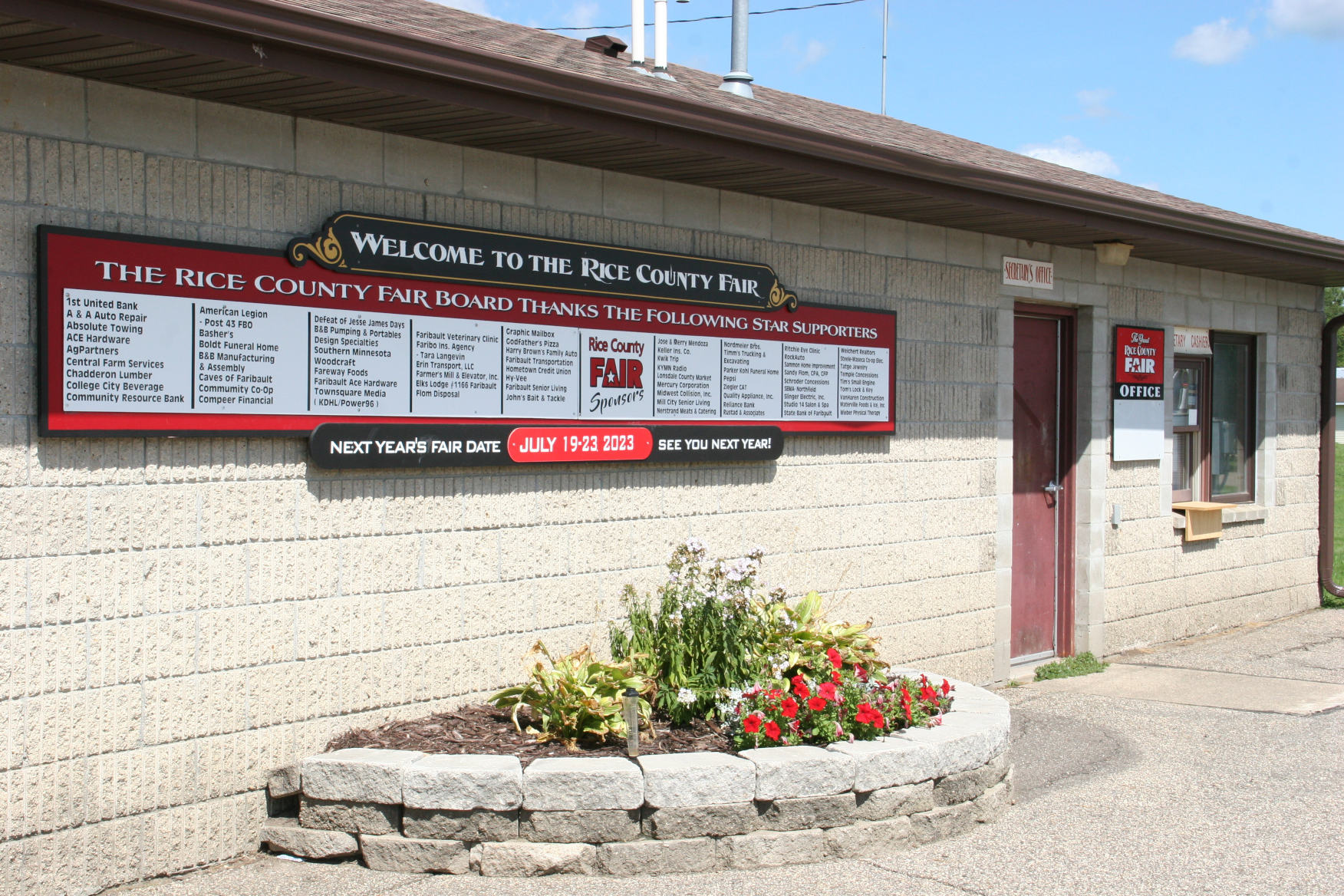
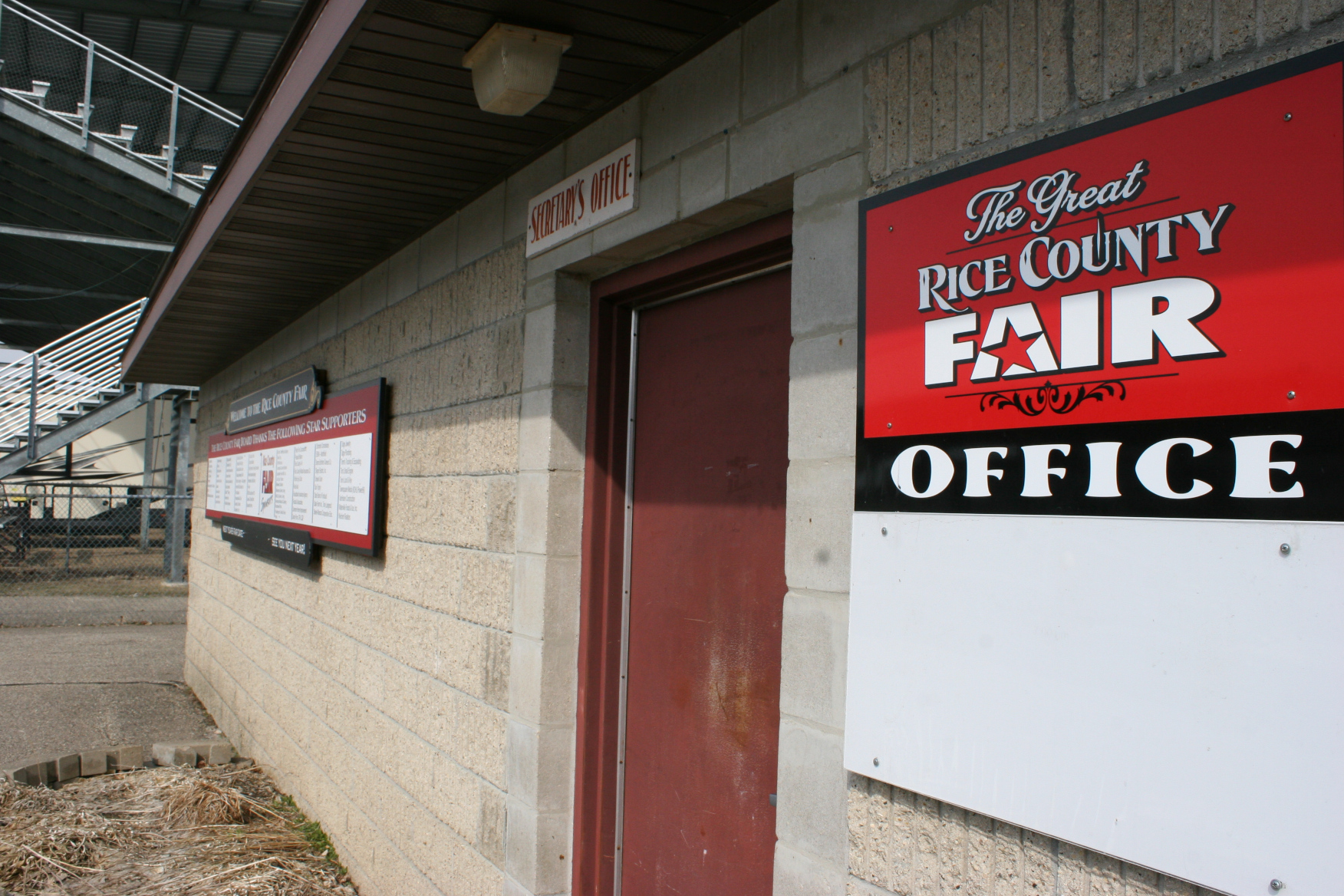
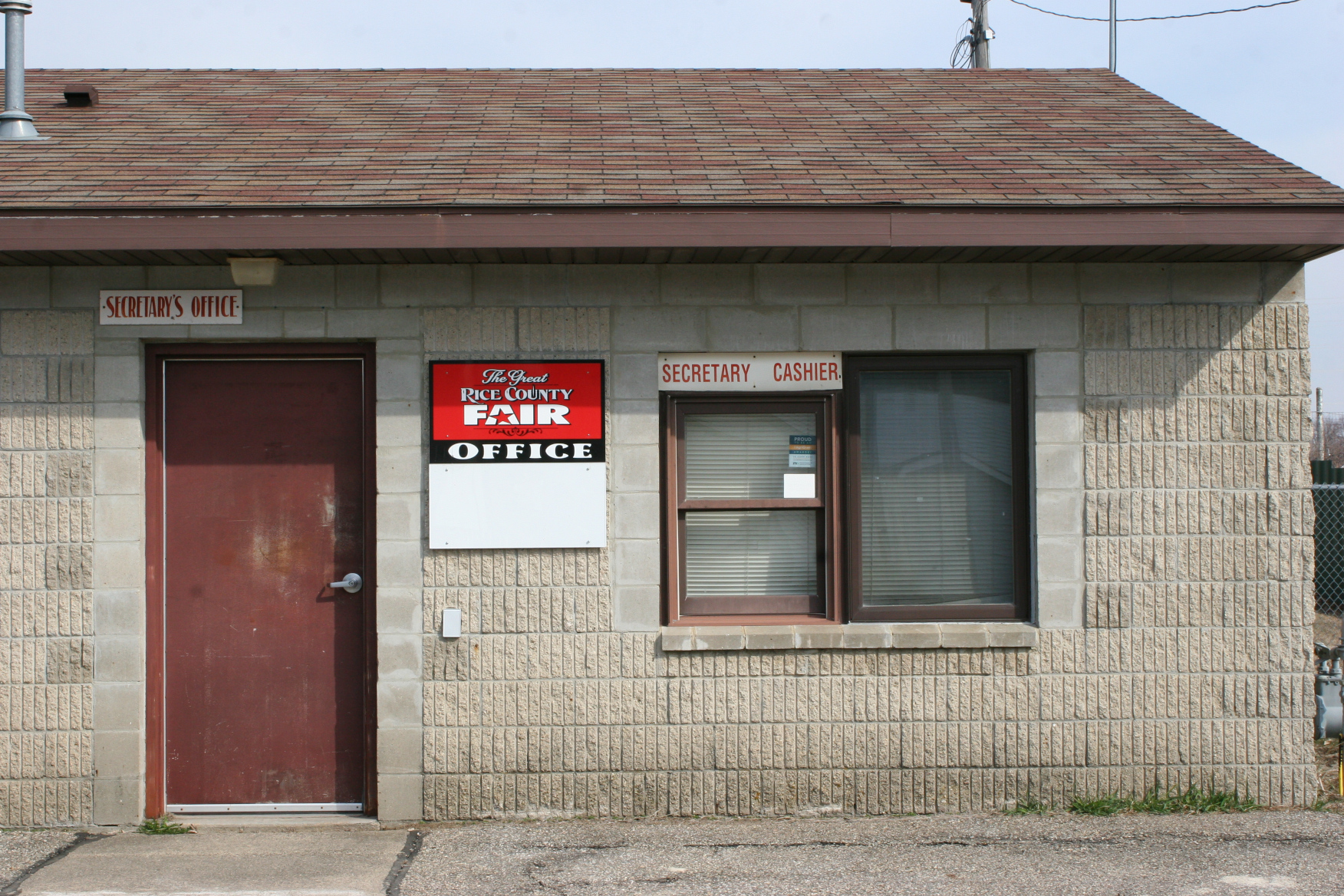
The Rice County Fair office near the grandstand. (Minnesota Prairie Roots copyrighted photo August 2022)
That brings me to the Rice County Fair, done and over for this summer, but set for July 19-23, 2023. I didn’t attend this year and haven’t for several. But I should return, check out the food stands, see what I’ve missed.
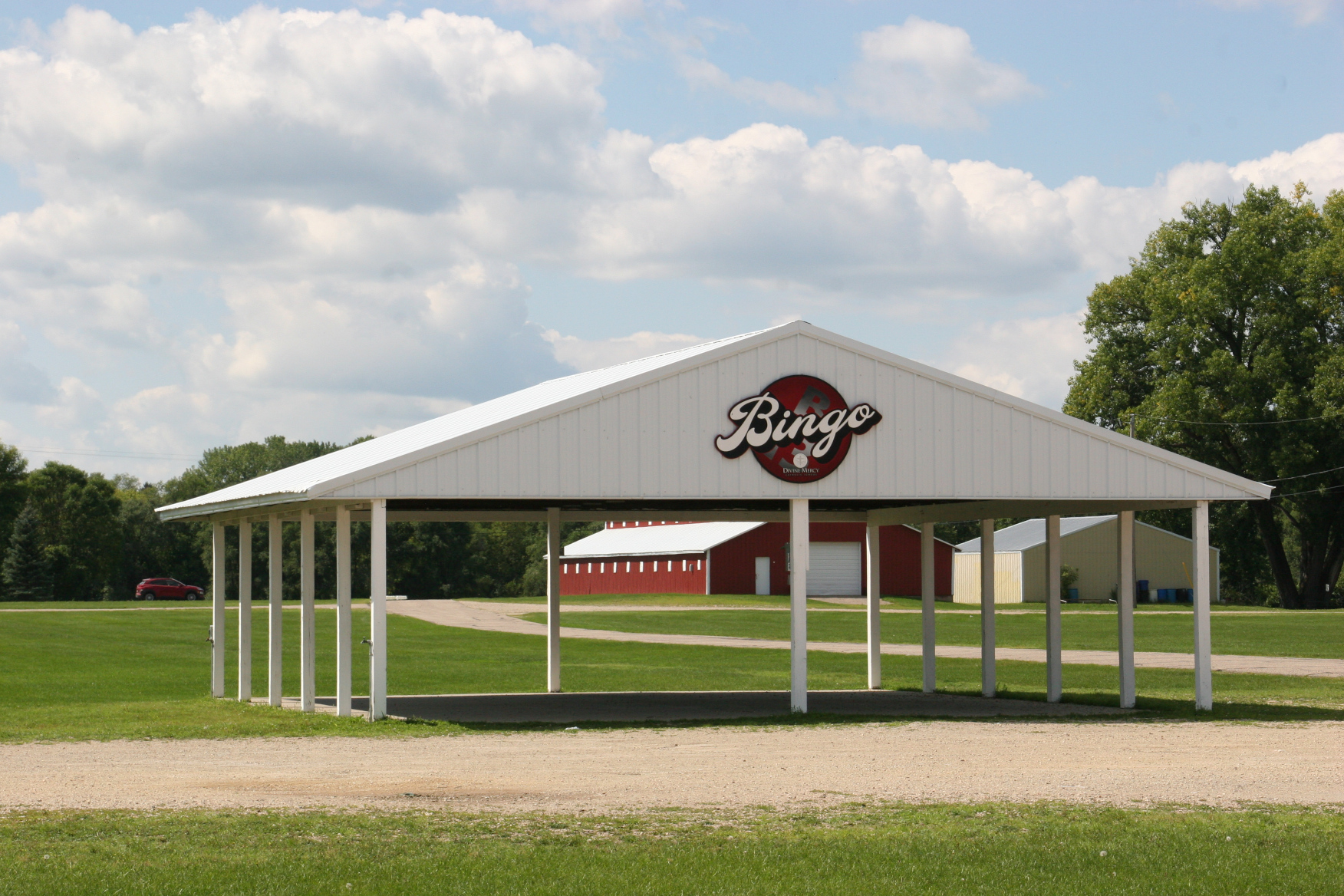
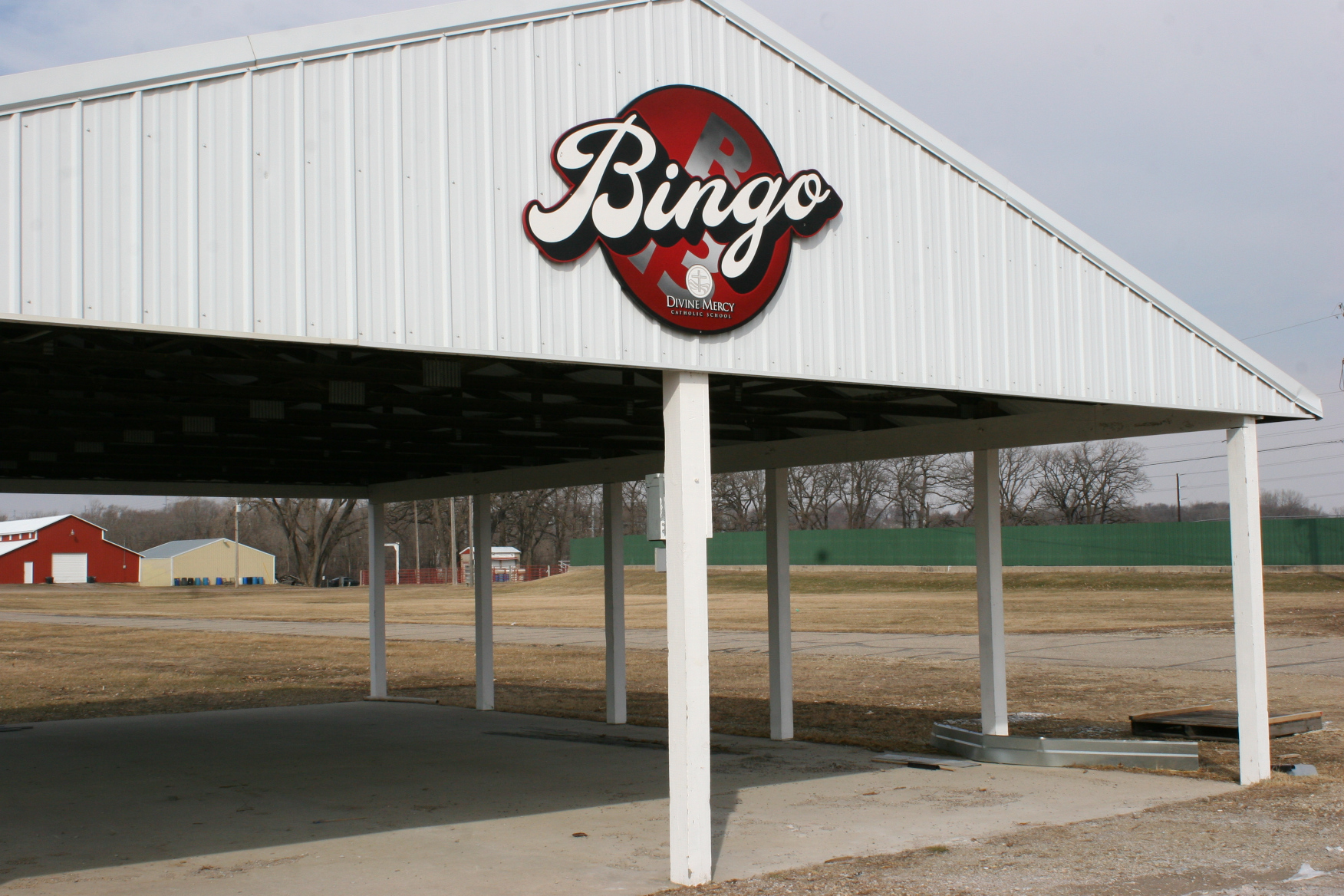
I passed the Bingo shed in the heart of the Rice County Fairgrounds. (Minnesota Prairie Roots copyrighted photo August 2022)
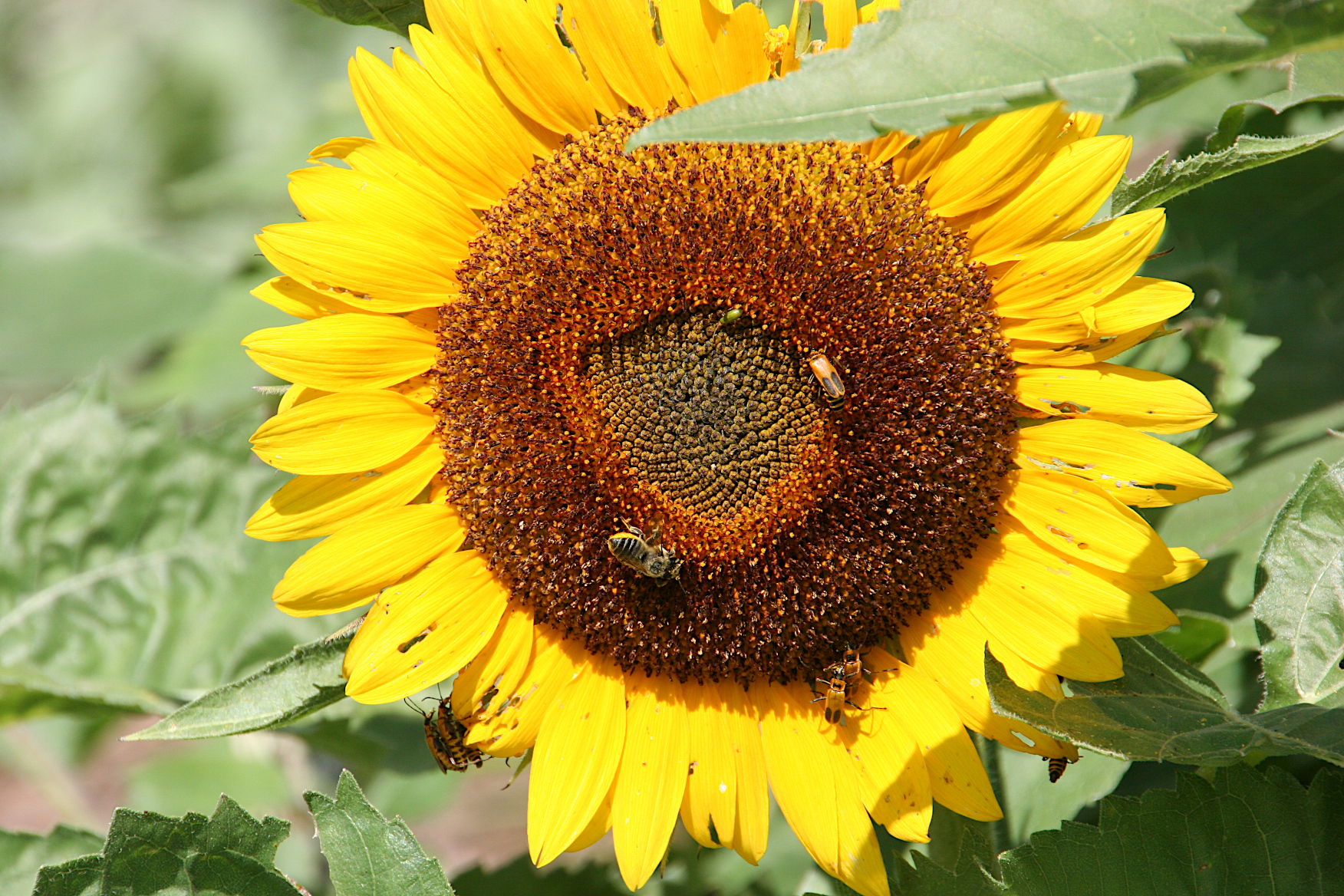
On the east end of the fairgrounds, I paused to photograph this sunflower in the Rice County Master Gardeners Teaching Garden. (Minnesota Prairie Roots copyrighted photo August 2022)
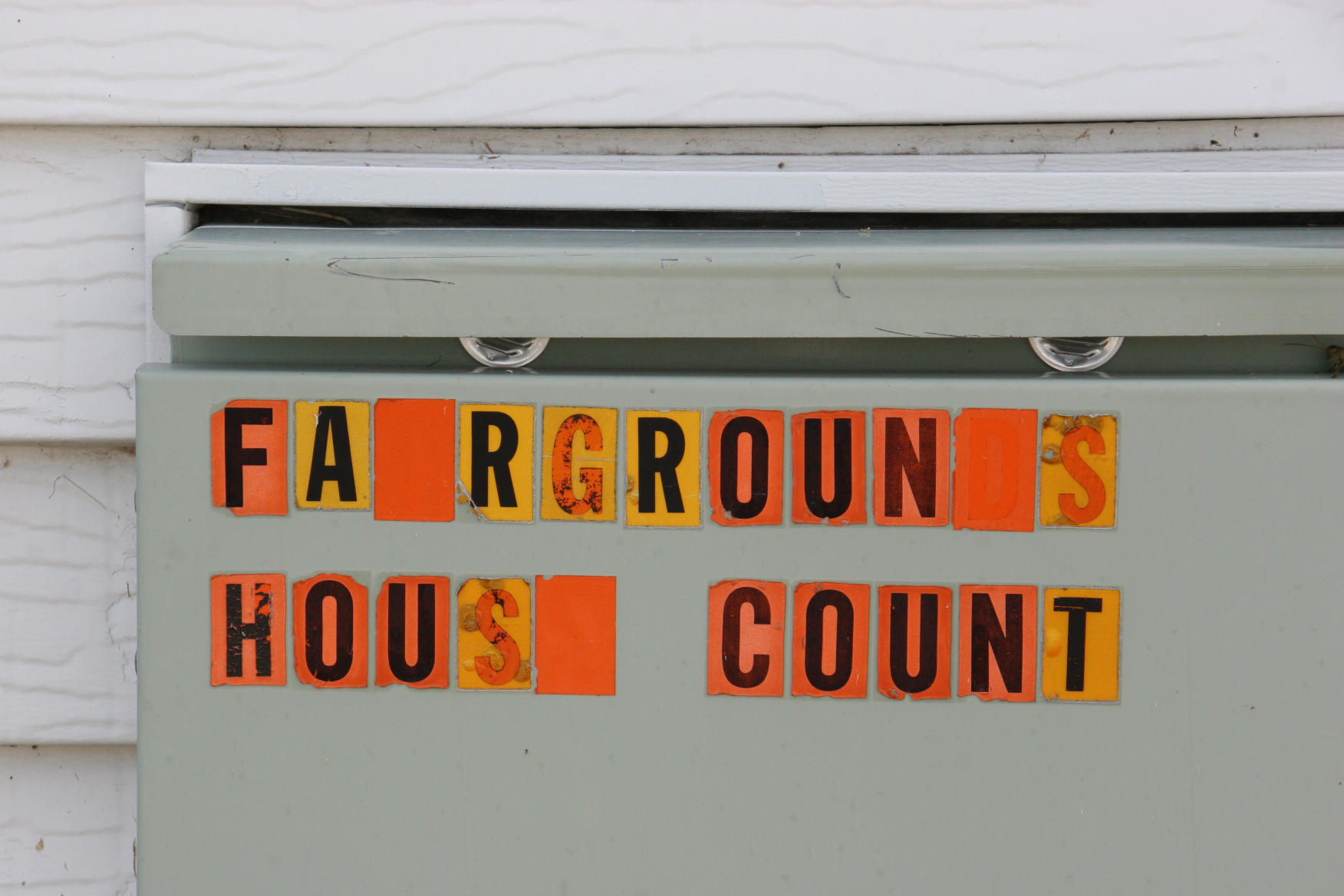
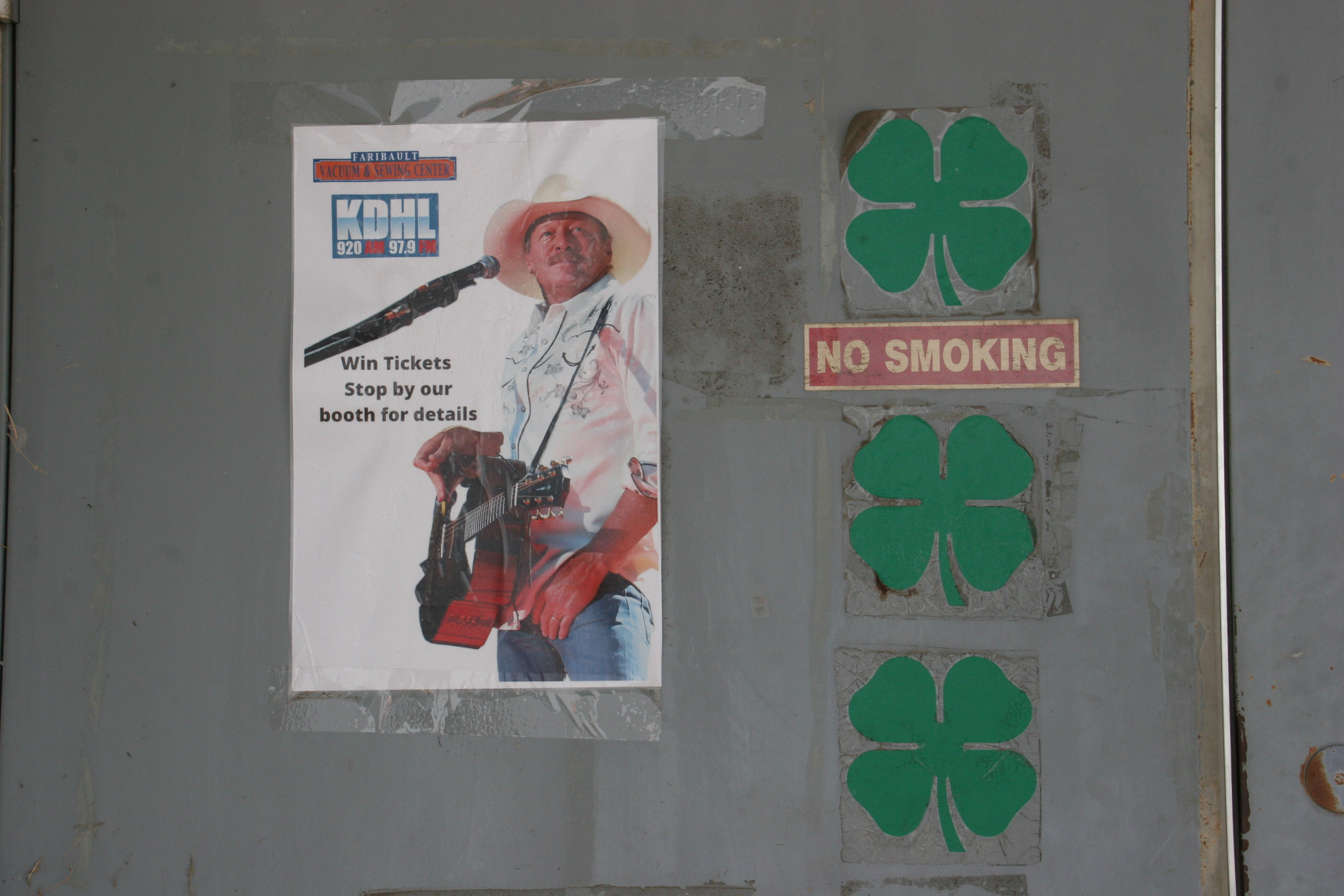
Even this sign on a utility box drew by eye. (Minnesota Prairie Roots copyrighted photo August 2022)
Recently, I walked through a section of the vacated fairgrounds, camera in hand, with no worries about bumping into fair-goers. My primary focus was on signage, on food service buildings, some of them aged, some new. I never made it to the animal barns.
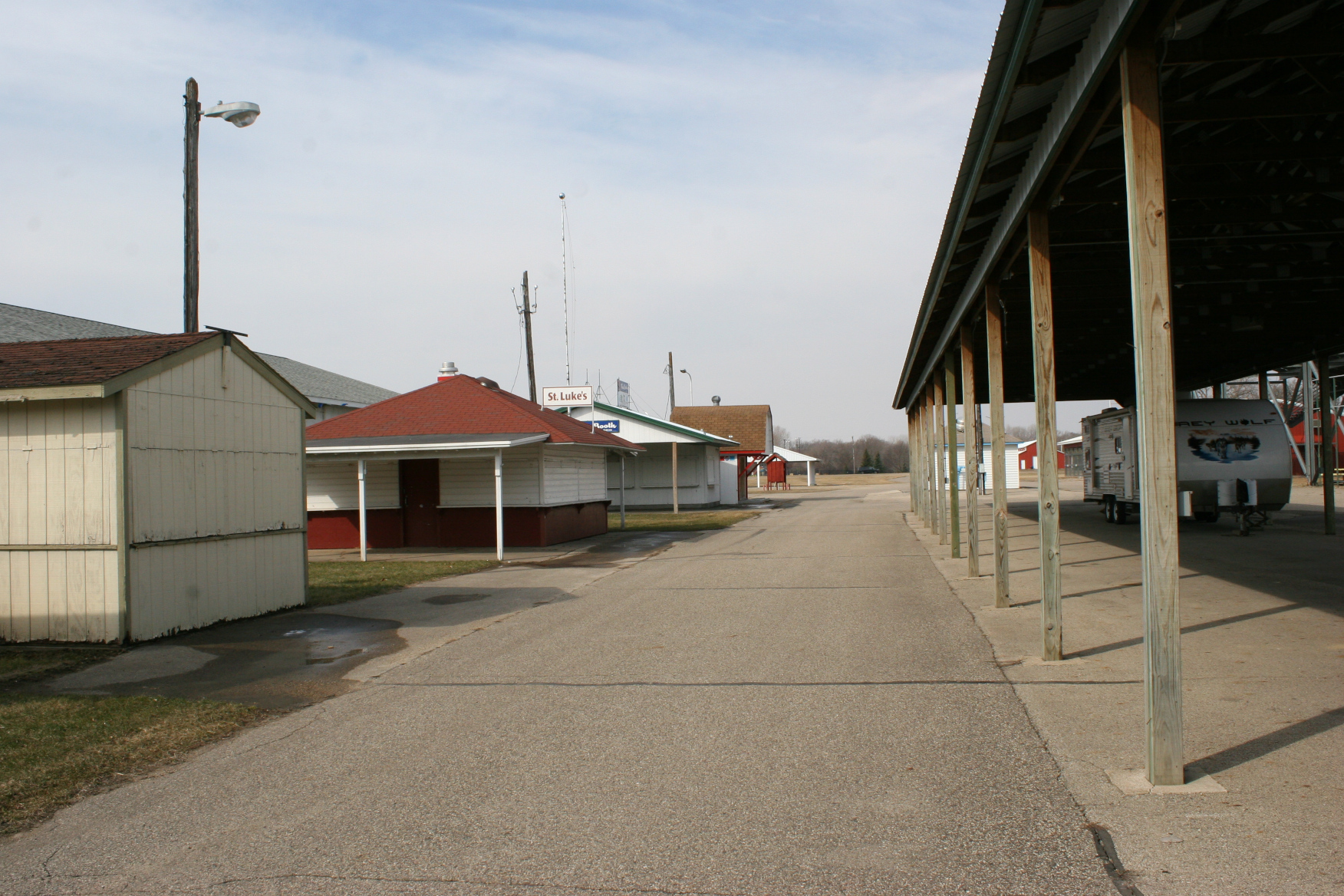
A line-up of permanent food booths at the Rice County Fair. (Minnesota Prairie Roots copyrighted photo August 2022)
The Rice County Fair does a good job of drawing local food vendors, many mainstays of the fair. Like the St. Luke’s booth, stationed here for nearly 80 years.
A sign marks the cafe run by Bethlehem Academy, a Catholic High School in Faribault. (Minnesota Prairie Roots copyrighted photo August 2022)
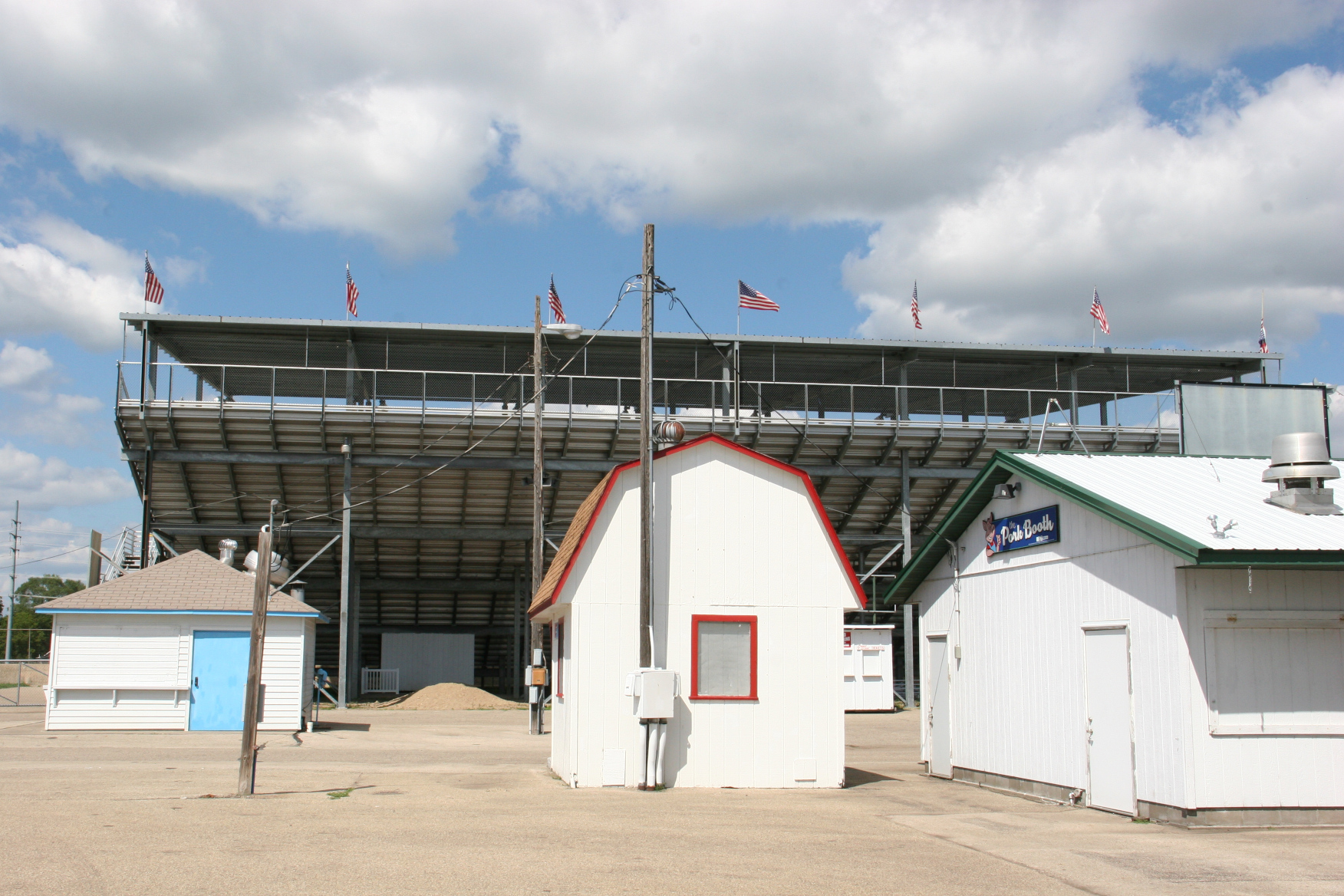
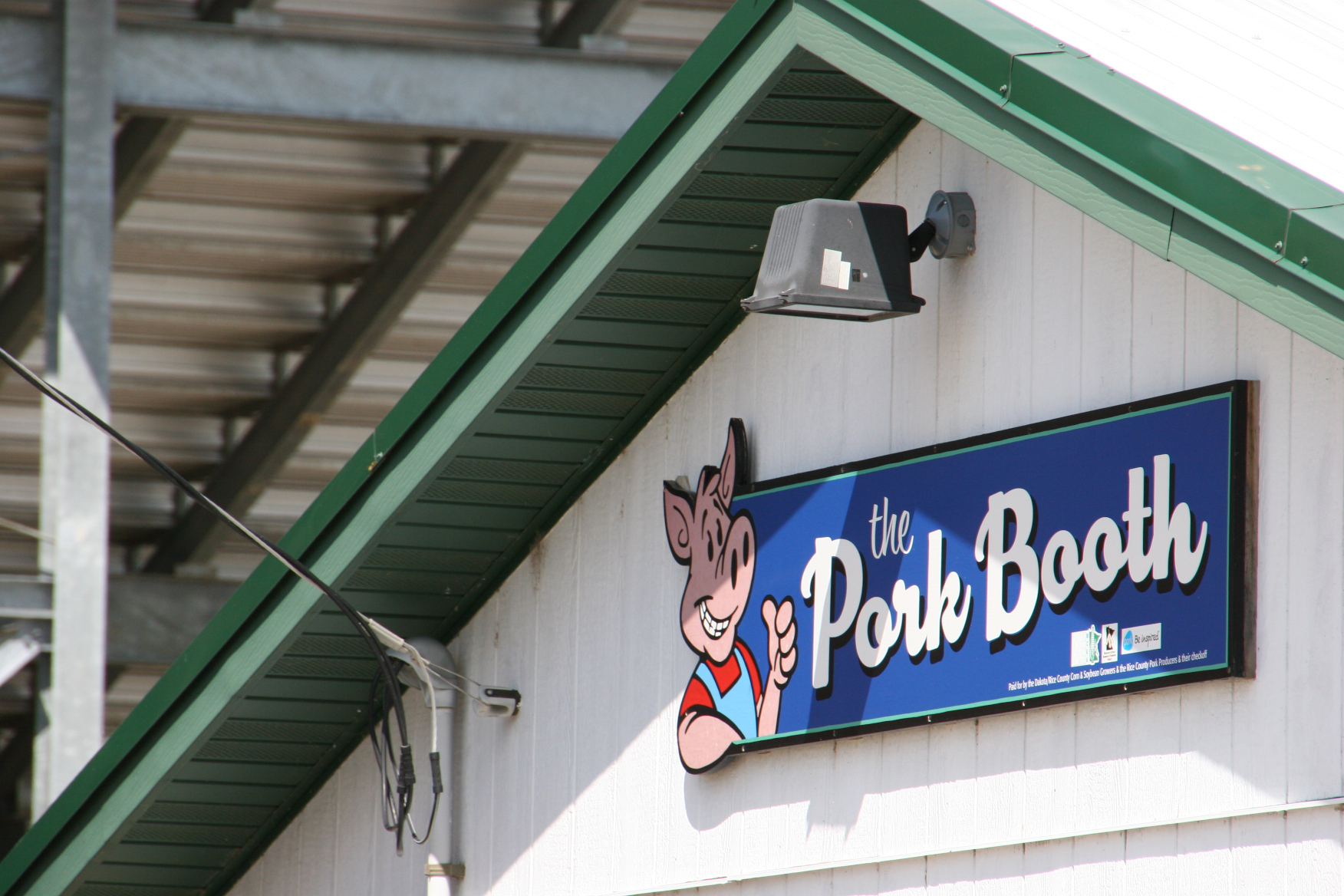
The Pork Booth sits near the grandstand. (Minnesota Prairie Roots copyrighted photo August 2022)
Likewise, the Rice County Pork Producers have been around for some 50 years serving pulled pork, sandwiches, pork burgers and pork chops on-a-stick.
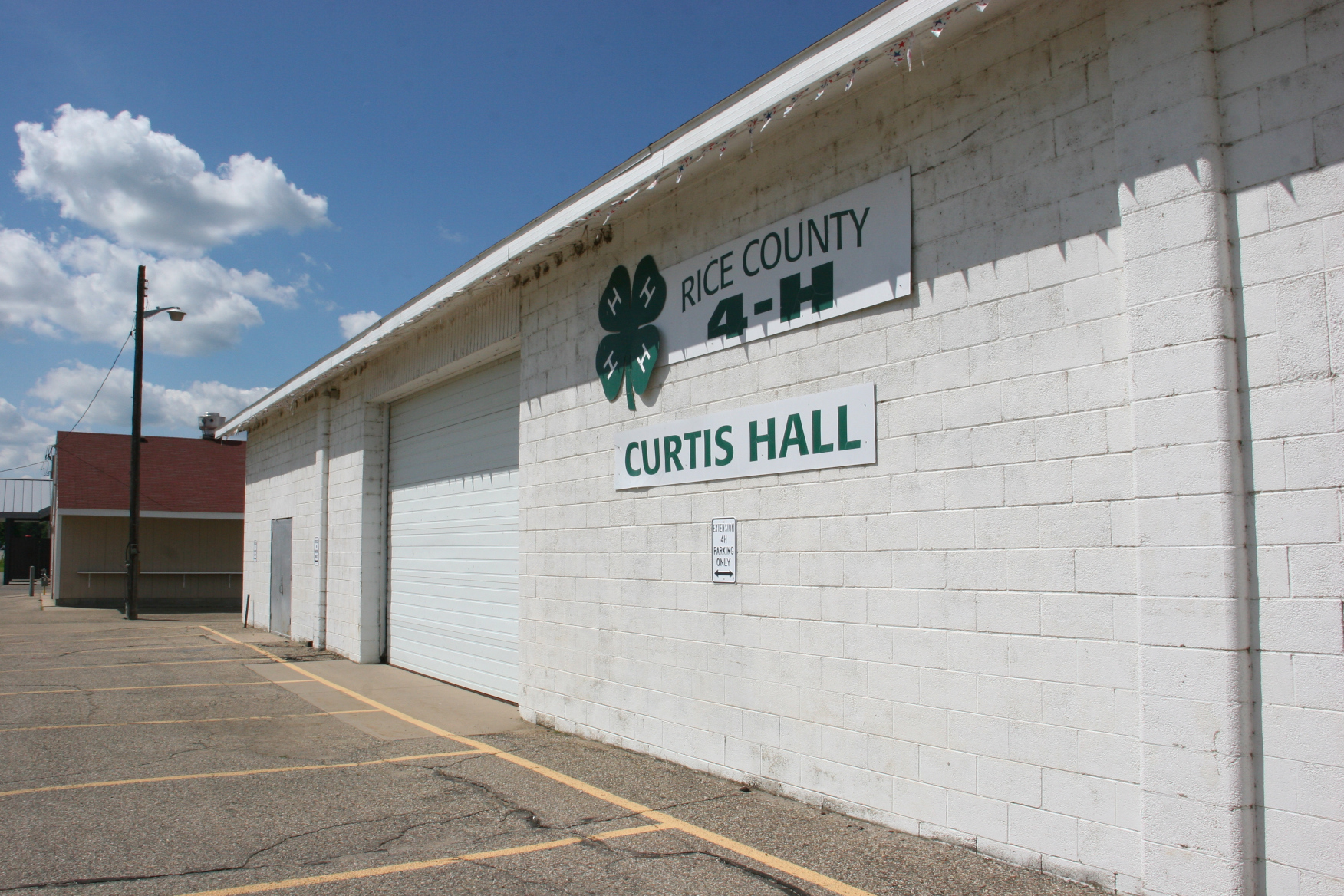
The 4-H building is named after radio personality Dean Curtis. (Minnesota Prairie Roots copyrighted photo August 2022)
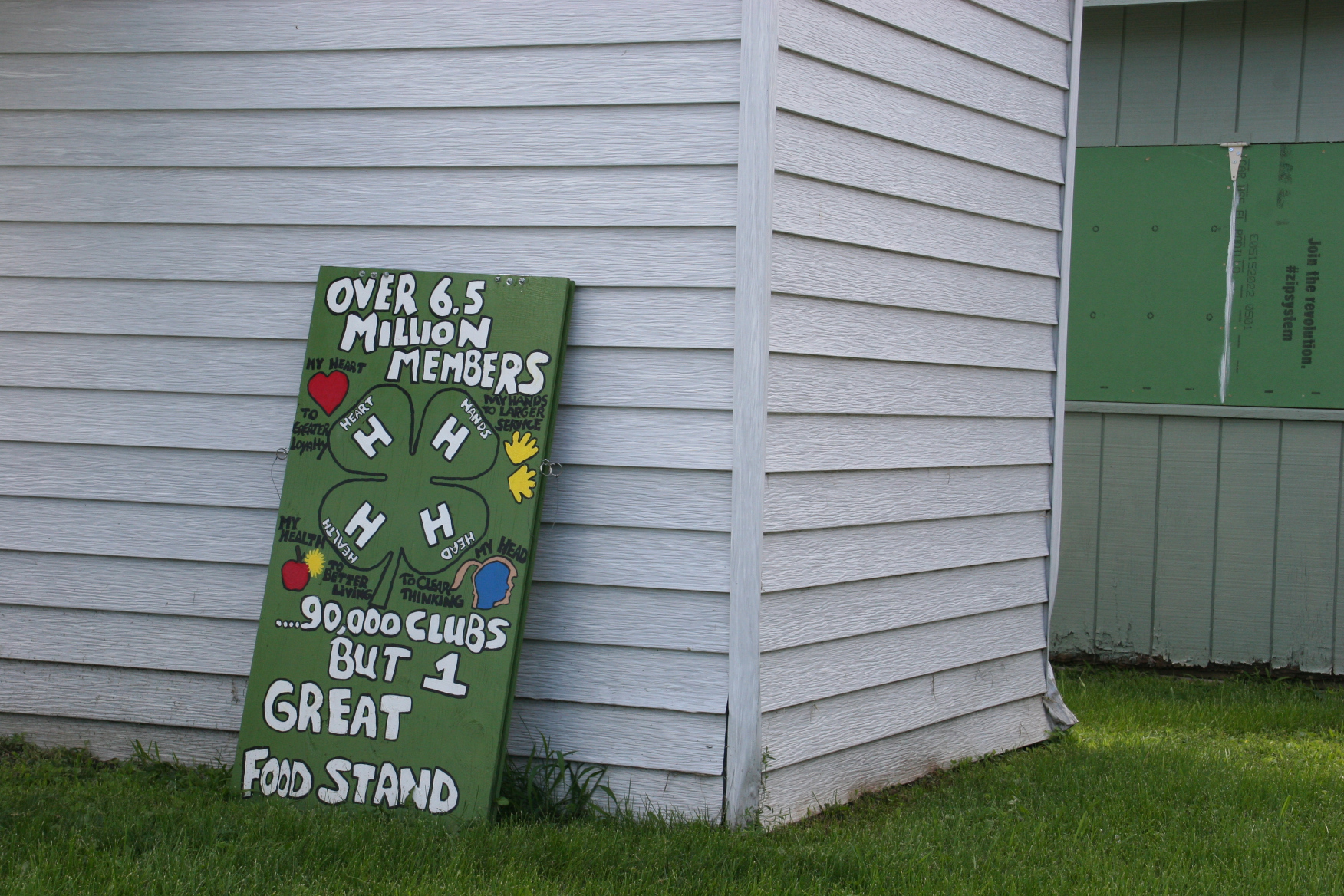
Propped against a building post fair. (Minnesota Prairie Roots copyrighted photo August 2022)
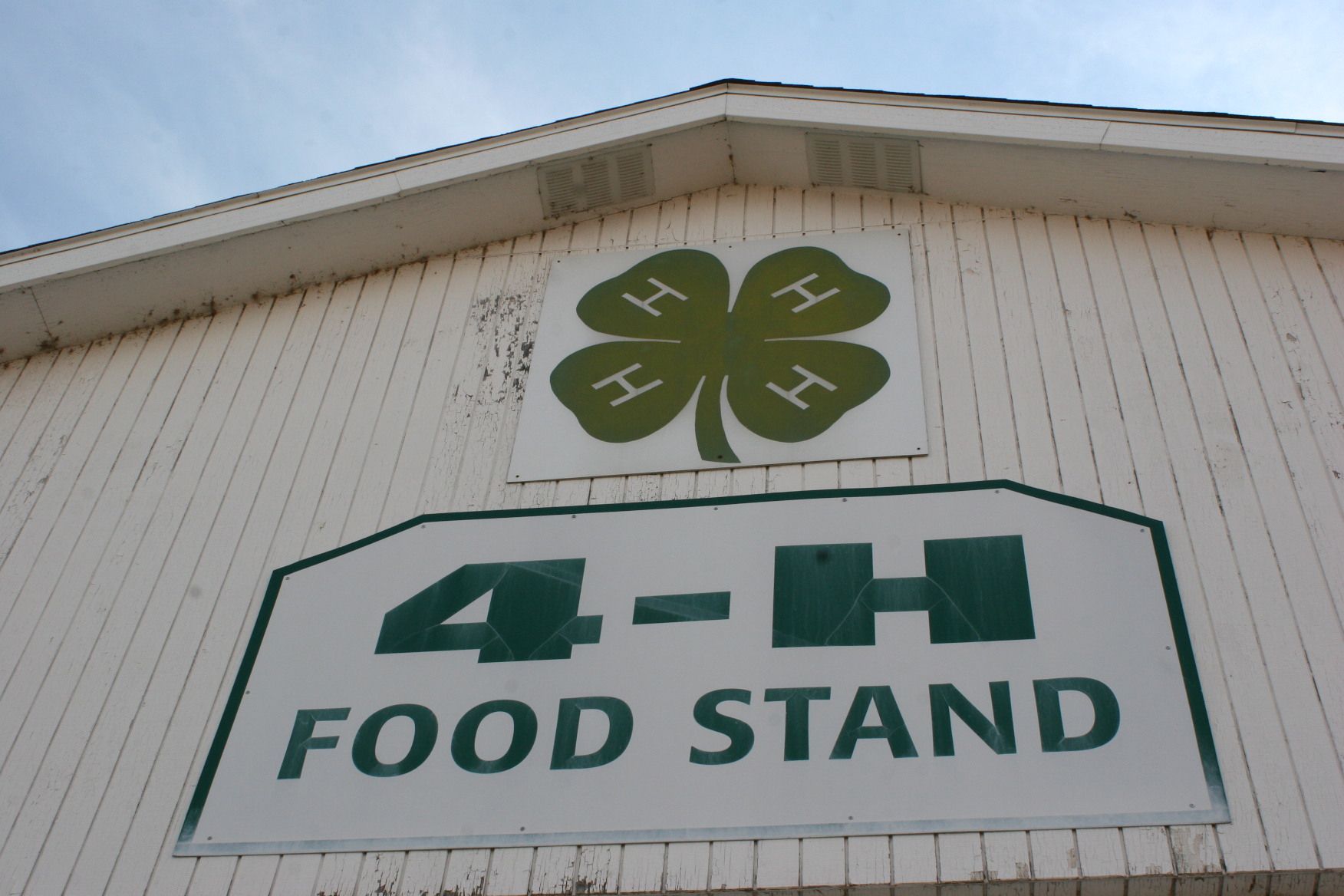
On the door to the 4-H building. (Minnesota Prairie Roots copyrighted photo August 2022)
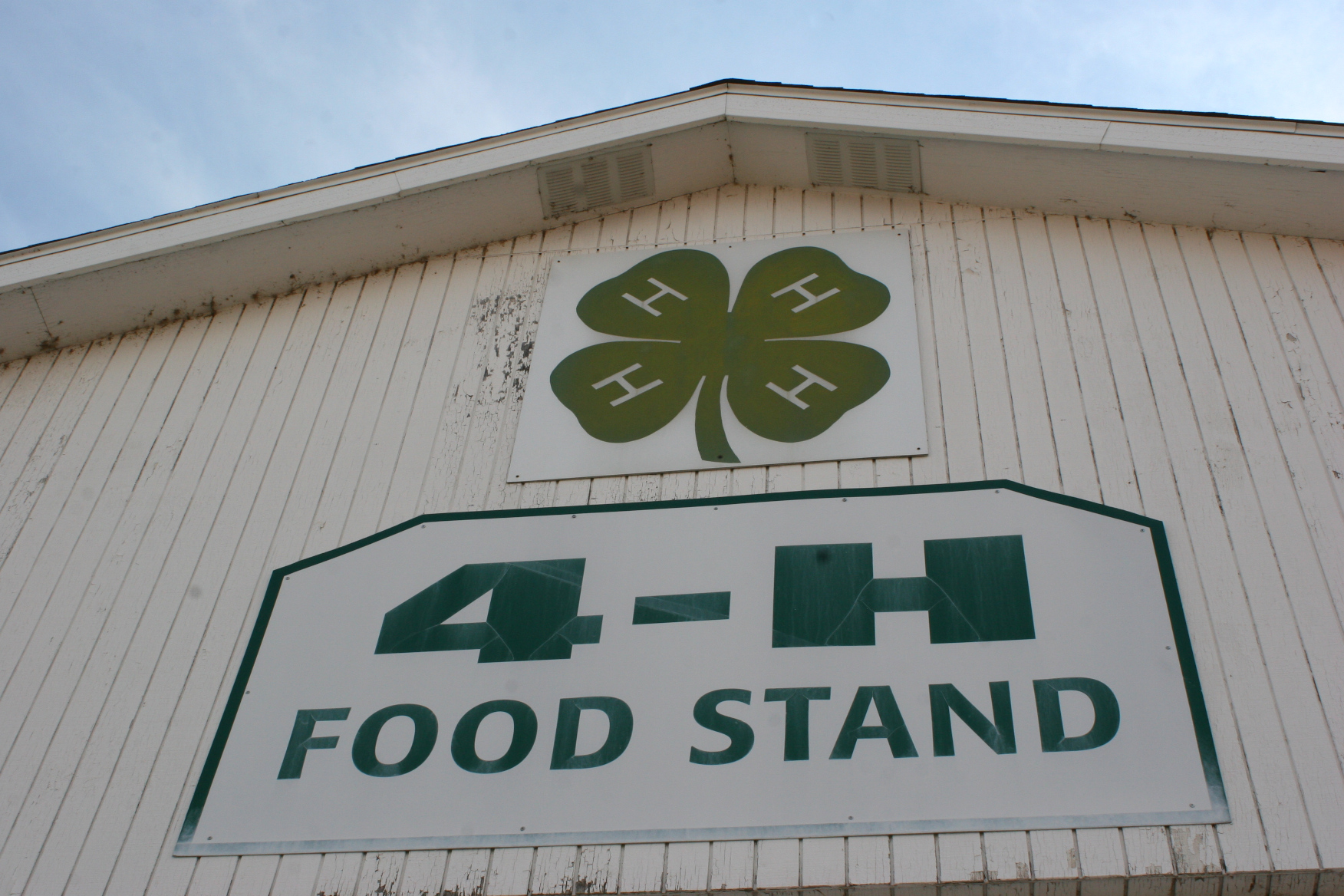
And 4-Hers (along with their parents), I expect, have served food for decades at the 4-H Food Stand.
Most food vendors have mobile units while others are housed in buildings. (Minnesota Prairie Roots copyrighted photo August 2022)
The gastronomical offerings far exceed what I’m showing you from my brief post-fair visit. Many locally-based concession stands are mobile, without on-site buildings like that of Farmer’s Delights. That needs to be noted here. I expect Rice County fair-goers find plenty to please their palates.
The Rice County Fair grandstand ticket booth. (Minnesota Prairie Roots copyrighted photo August 2022)
Just like the Minnesota State Fair, food rates highly in the overall county fair experience. Whether at a rural Minnesota fair or the biggest fair in the state, options abound to eat traditional—roasted corn-on-the-cob, mini-donuts, cheese curds—to that which expands our Minnesota taste buds well beyond Ole and Lena’s Tator Tot Hot Dish on-a-stick with cream of mushroom dipping sauce.
TELL ME: What’s your favorite fair food? County or State Fair, doesn’t matter, although please specify.
Looking toward food stands and the Midway. To the right, is the outdoor entertainment center. Minnesota Prairie Roots photo March 2021.
VACATED. That word best describes my assessment of the Rice County Fairgrounds in Faribault during a recent walk there.
Many local groups have food stands at the fair. Minnesota Prairie Roots photo March 2021.
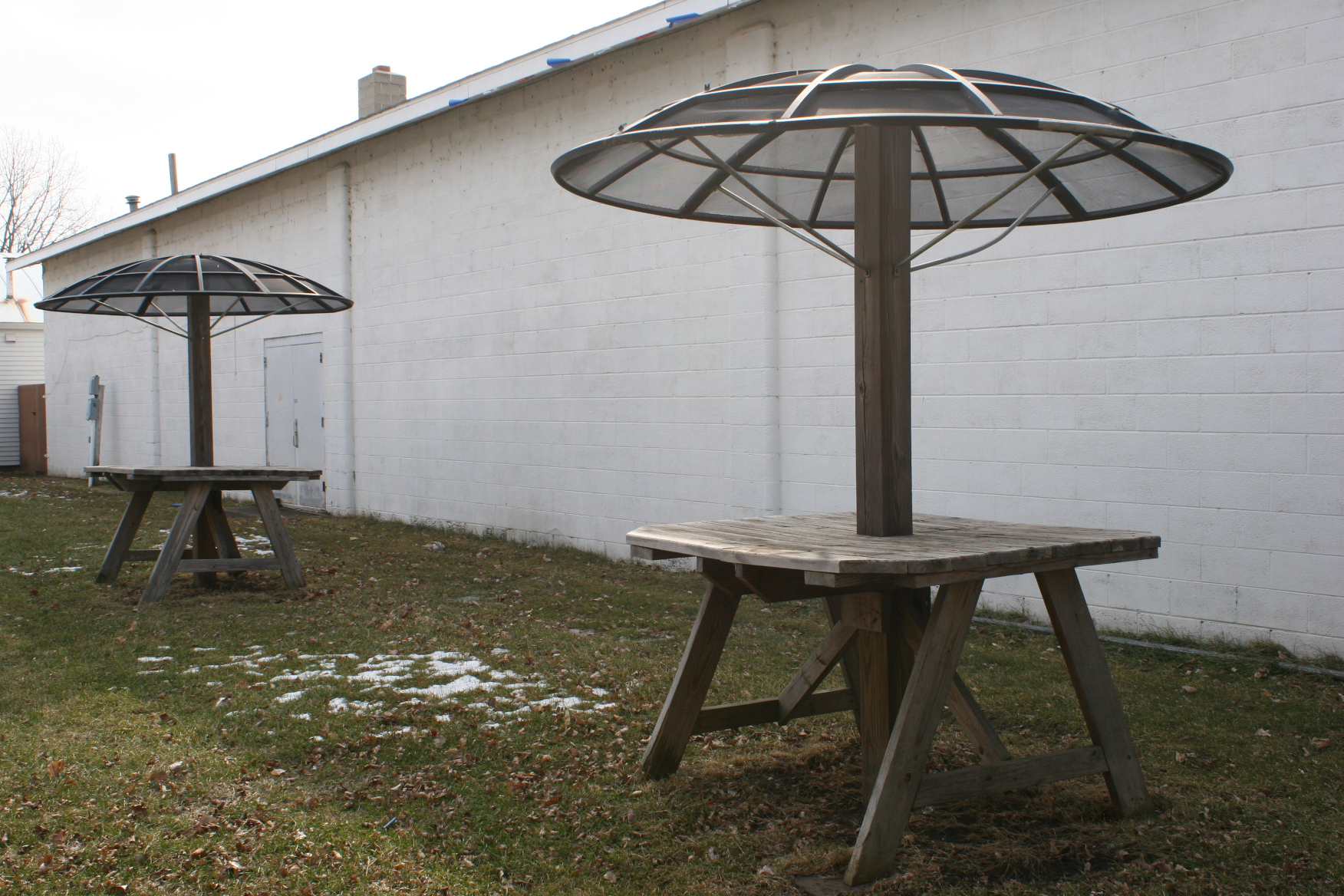
Picnic tables near the pork food stand. Minnesota Prairie Roots photo March 2021.
The presence of 4-Hers at the fair is strong. Minnesota Prairie Roots photo March 2021.
In the absence of people, the absence of animals, the absence of a carnival, the absence of exhibits, the place feels empty. No pulsating lights on the Midway. No smell of grilling burgers. No taste of sugary mini donuts. No shouts of kids. No feel of a prize stuffed animal clutched in arms.
The entertainment space to the left with the St. Luke’s food stand on the right. Minnesota Prairie Roots photo March 2021.
If everything works out COVID-wise, this fairgrounds will teem with people come late July. Animals will fill barns. Ribbons will mark prize-winning 4-H entries. Greasy cheese curds will satisfy those who crave fair food. The sounds of music and clustered conversations and happy kids will create a steady buzz of noise. Little hands will grasp adult hands and teenage hands will lock in fair love. People will reconnect. Celebrate. Experience that which was lost last summer, during the height of the pandemic.
Love this signage. Minnesota Prairie Roots photo March 2021.
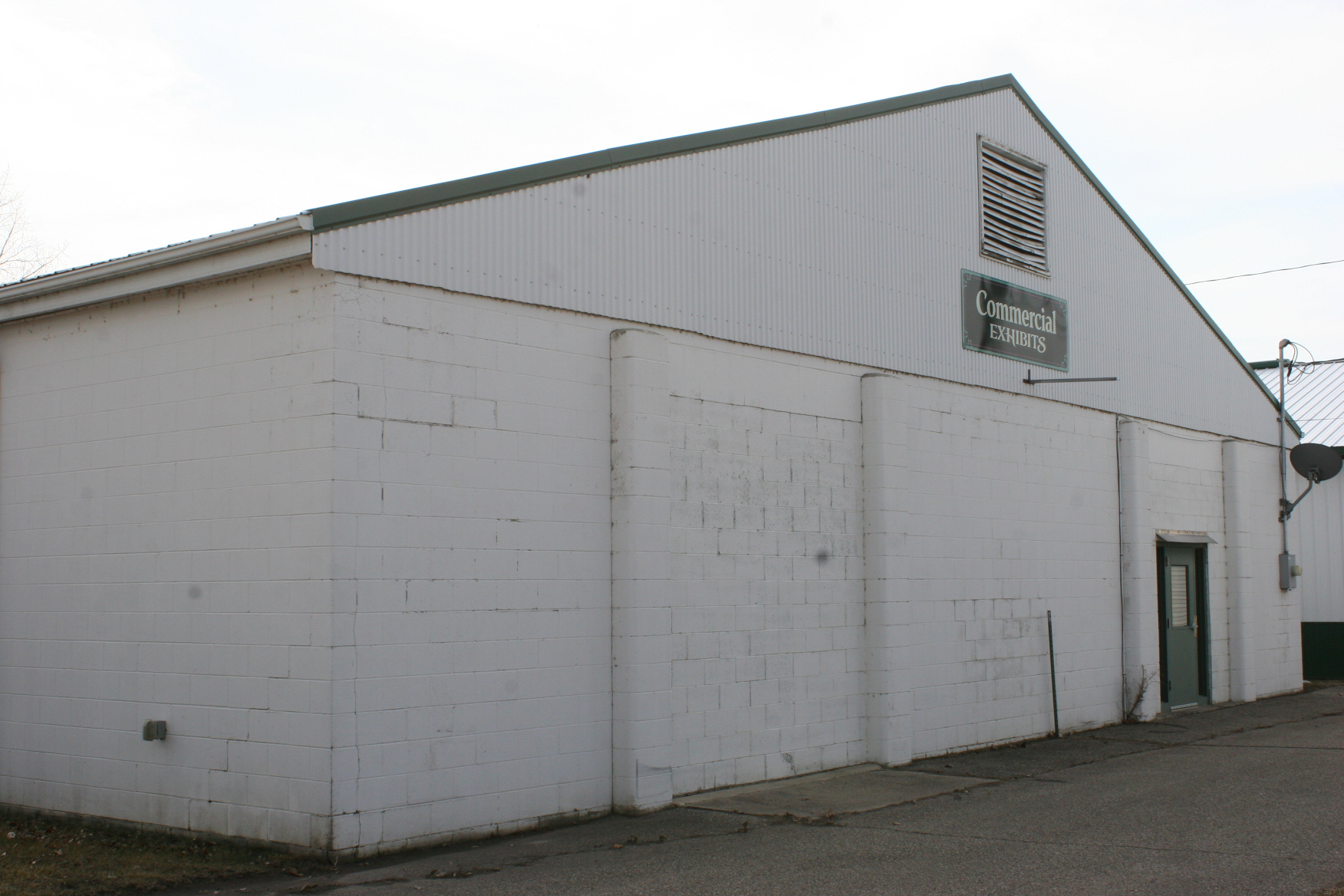
The commercial exhibit building. Minnesota Prairie Roots photo March 2021.
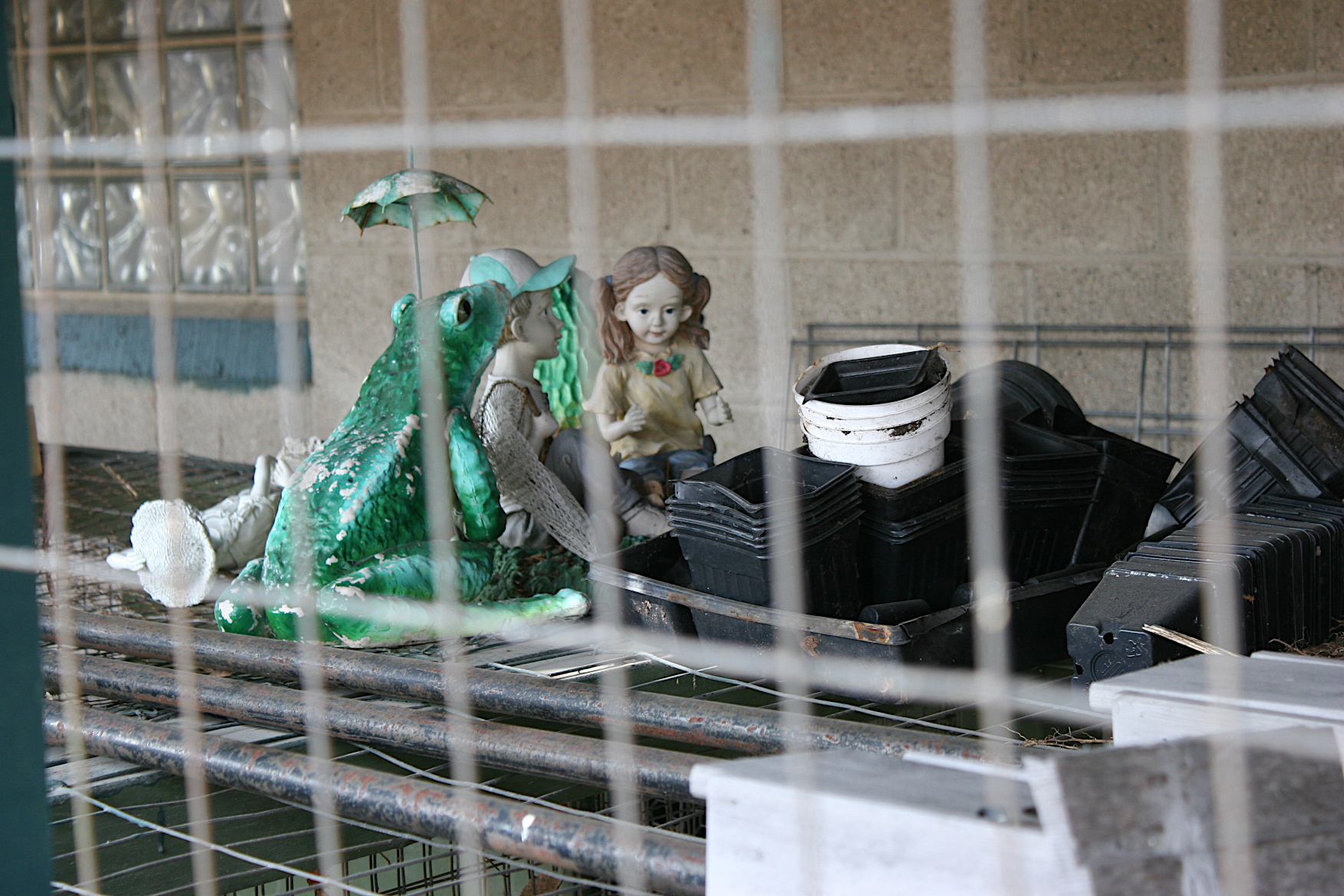
Garden decor stored until the fair. The garden is next to the conservation building. Minnesota Prairie Roots photo March 2021.
This is the fair I imagine as I walk past shuttered buildings, as I pause to photograph buildings and signs and expanses of open space.
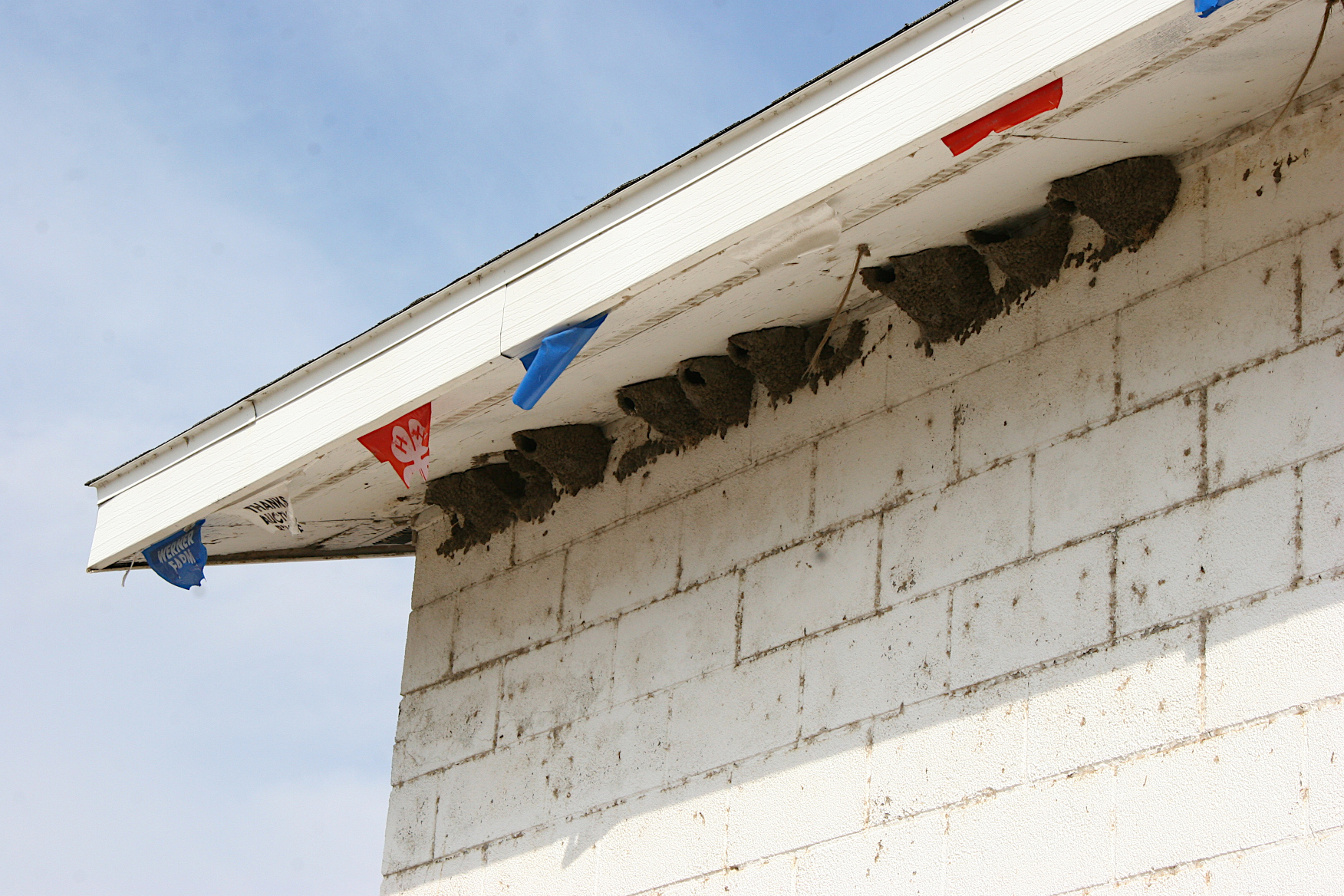
Just a snippet of the 32 barn swallow nests on Curtis Hall. Minnesota Prairie Roots photo March 2021.
And then I pause outside the 4-H building, Curtis Hall, to photograph the row of barn swallow nests mudded under the eaves. So many. Thirty-two. Too many. If there’s one bird I dislike, it’s the barn swallow. We have a history. As a child, I endured barn swallows swooping over me as I did farm chores. The swallows built their nests on beams above the barn aisle, my direct work route. I felt threatened by them as I shoveled manure into gutters, pushed a wheelbarrow full of ground feed down the aisle. My feelings for the swallow have not changed. Even though they eat mosquitoes, I still don’t like this bird.
Just another view of those swallow nests. Minnesota Prairie Roots photo March 2021.
That’s my sidebar from the fairgrounds, perhaps one you can relate to if you did farm chores like me.
The sheep arena is named after a Rice County deputy killed in the line of duty. Minnesota Prairie Roots photo 2021.
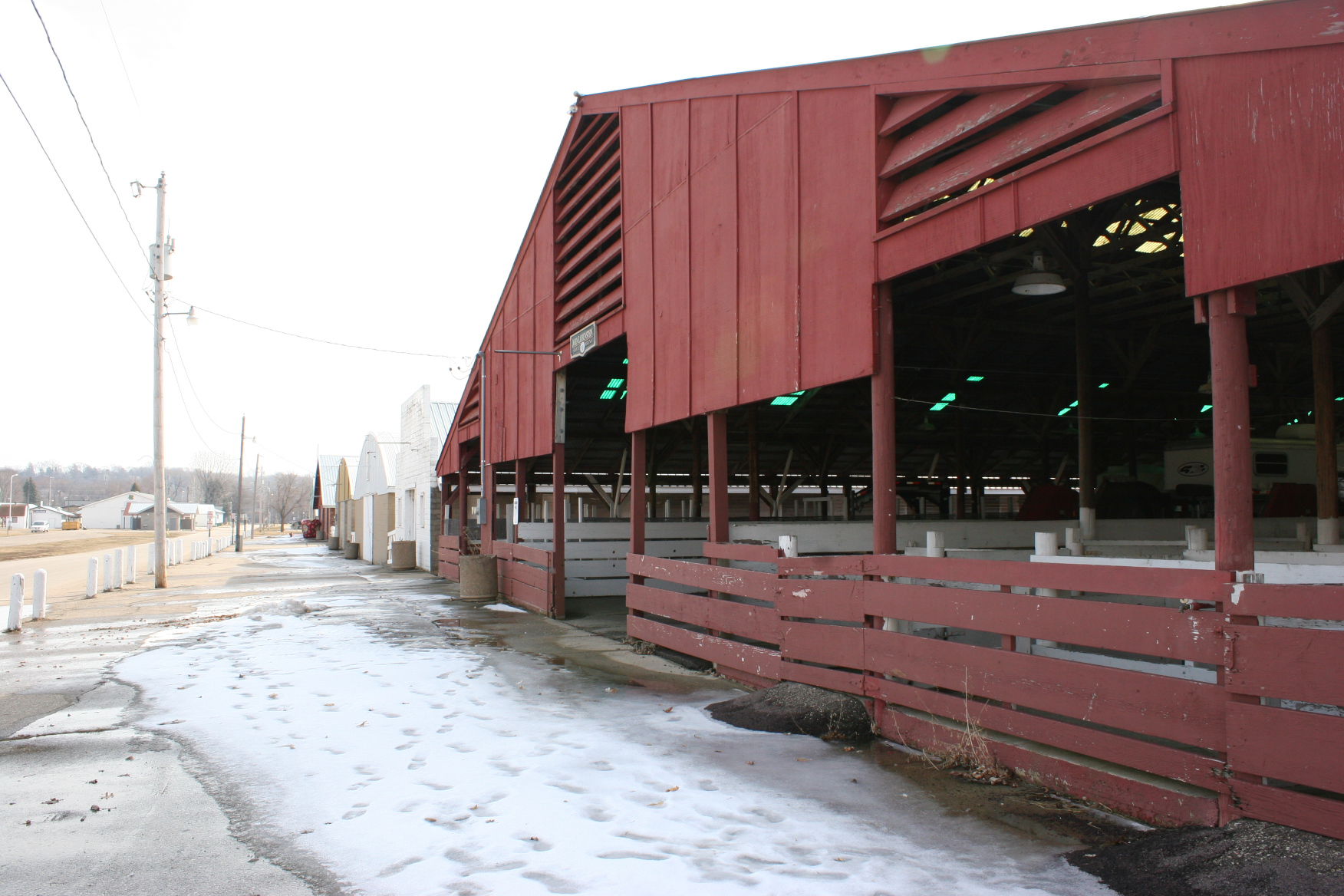
A view of the sheep barn. Minnesota Prairie Roots photo March 2021.
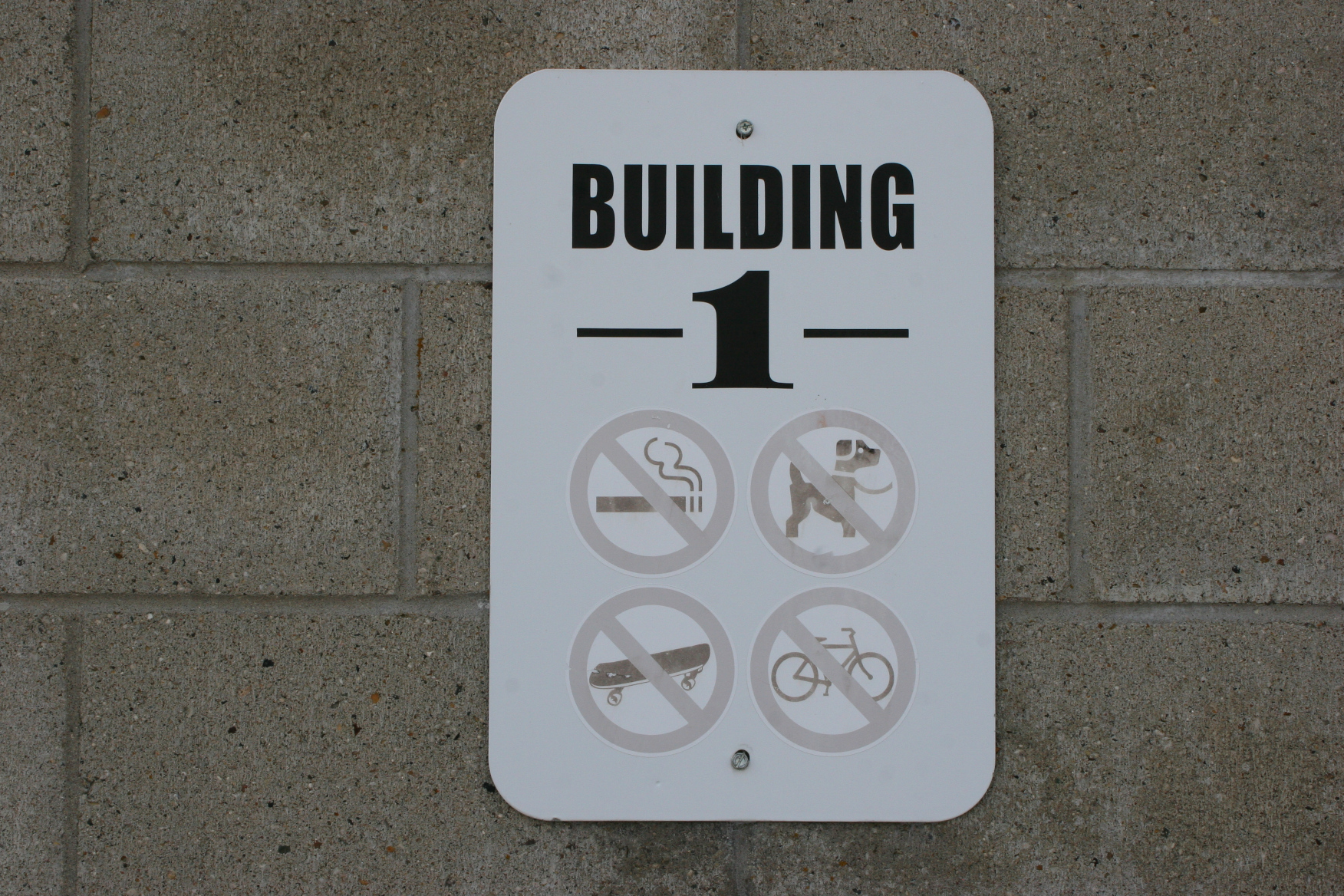
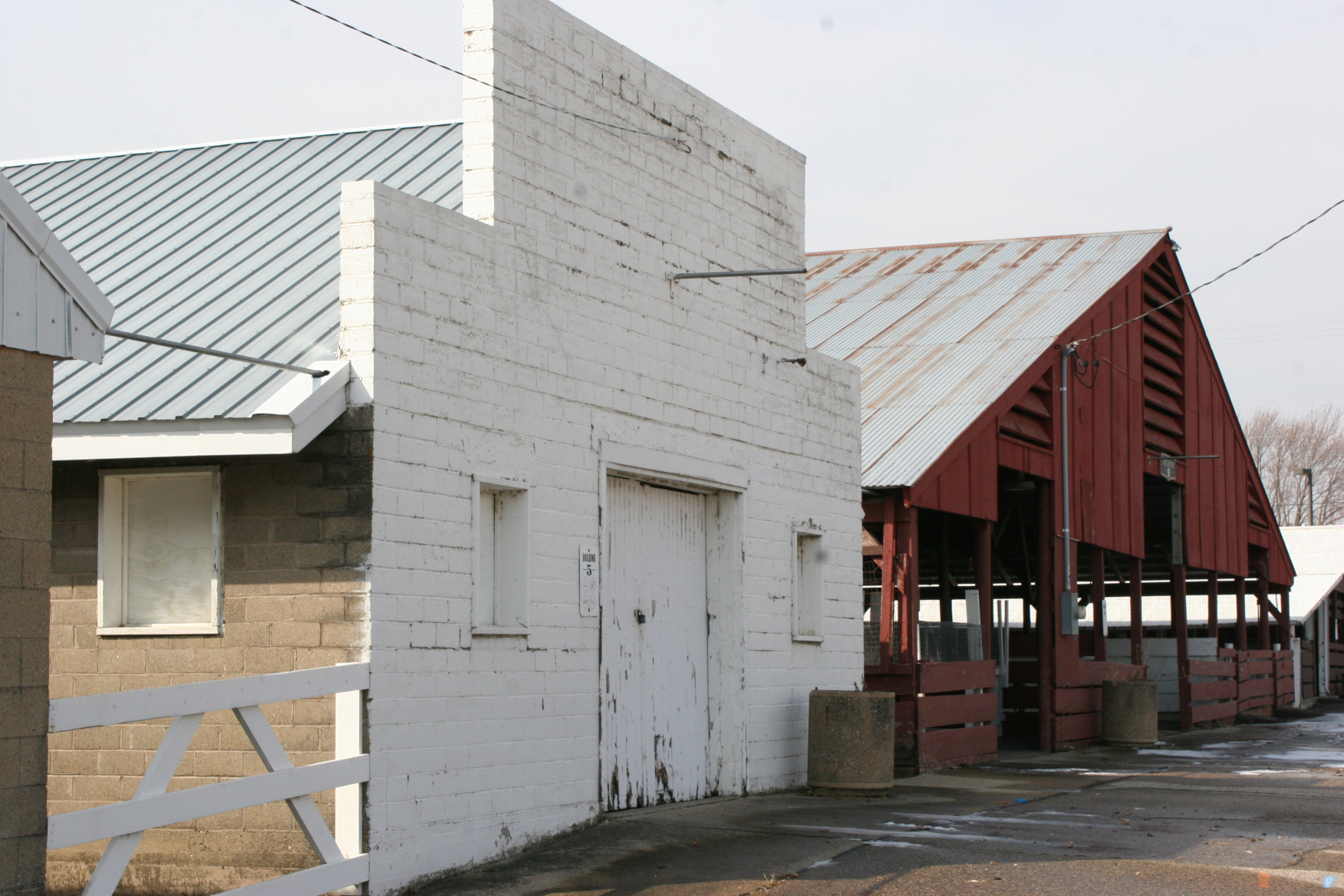
Each of the livestock buildings is numbered. Minnesota Prairie Roots photo March 2021.
Fairs are rooted in agriculture. Prize animals. Prize vegetables. A once-a-year opportunity to showcase the best of barns and of gardens. But today’s fair is much more. Entertainment. Creativity. And, above all, a place for communities to come together once a year in one place. To celebrate. To connect.
The Rice County Fair office with the grandstand in the background. Minnesota Prairie Roots photo March 2021.
The Rice County Fair office, Faribault. Minnesota Prairie Roots photo March 2021.
DECADES AGO, AS A YOUNG newspaper reporter, I covered county fairs. I’d grab my notebook and my camera and head to the fairgrounds. One particular summer, I was assigned to photograph 4-H kids and their animals at the Brown County Free Fair in New Ulm while working for The Sleepy Eye Herald-Dispatch. I spent days tracking down youth and photographing them with their prize livestock. Pigs. Cows. Sheep. Horses. Chickens. Try getting animals to cooperate for a photo shoot. Not easy. The experience left me so exhausted and fair-weary that I lost all interest in county fairs.
Among the many popular local food booths. Minnesota Prairie Roots photo March 2021.
Rice County 4-H is an integral part of the fair. Minnesota Prairie Roots photo March 2021.
Next to a livestock building sits this carnival ride, originating in Faribault. Minnesota Prairie Roots photo March 2021.
Ever since, I’ve seldom attended a county fair. But I recognize most people love fairs, including the Rice County Fair here in Faribault. They enjoy the food, the carnival rides, the entertainment, the exhibits and, yes, even all those penned animals hauled to town by 4-H families.
Livestock buildings at the Rice County Fairgrounds. Minnesota Prairie Roots photo March 2021.
Last summer, COVID-19 canceled our fair. And most other fairs, including The Minnesota State Fair, aka The Great Minnesota Get-Together. This summer, from small town Minnesota to the metro, officials hope to host fairs. In Rice County, the fair board tentatively plans for a July 21-25 fair. Whether that happens will depend on the pandemic and state restrictions on gatherings.
The open air BINGO shed at the Rice County Fairgrounds. Minnesota Prairie Root photo March 2021.
Just across the way from the BINGO shed sits the Beer Garden. Minnesota Prairie Roots photo March 2021.
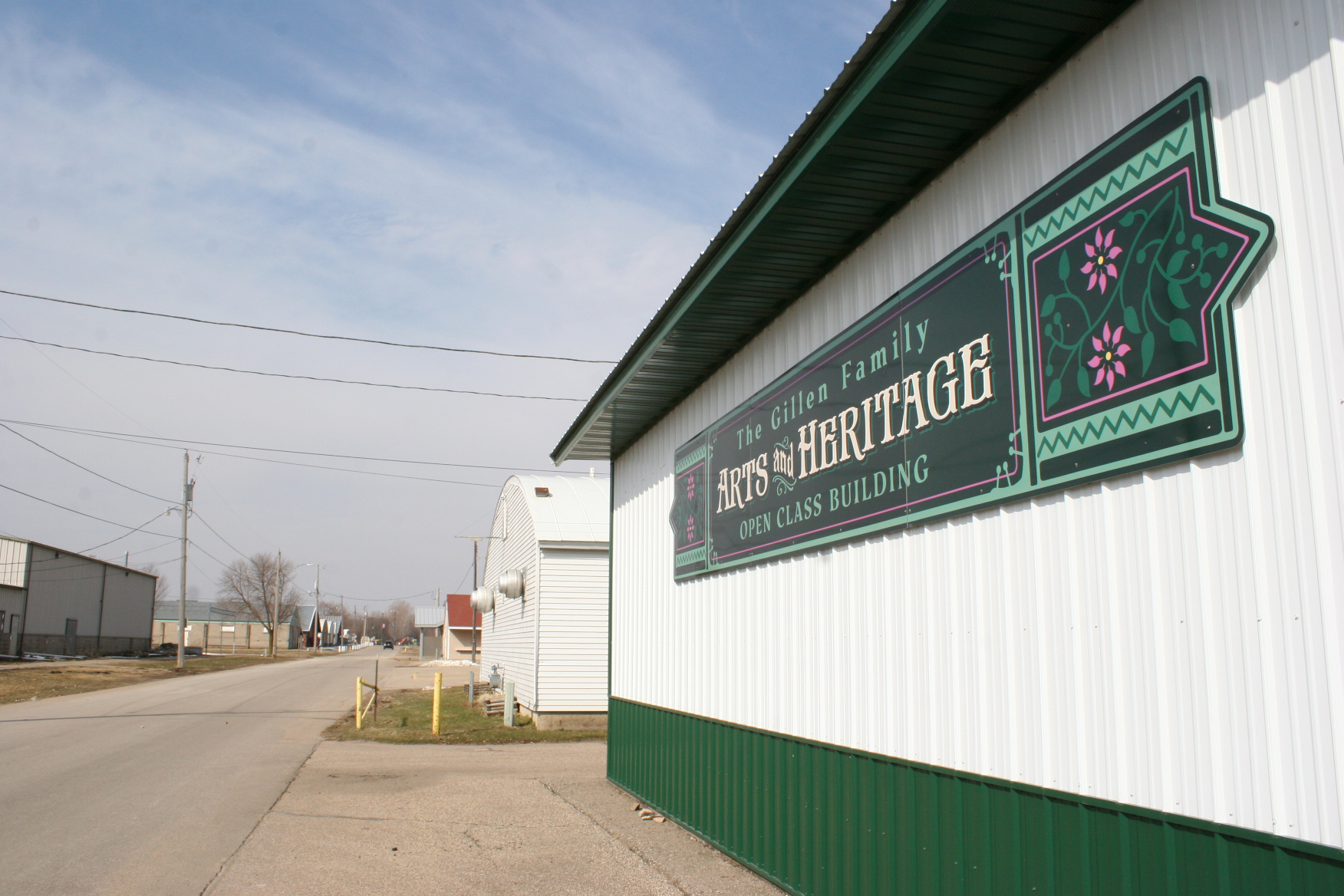
One of the newer fair buildings houses open class exhibits. Minnesota Prairie Roots file March 2021.
I’m all for putting health and safety first. This pandemic is far from over with cases of the virus surging. I recognize the weariness folks are feeling, but don’t accept that as an excuse for behavior that is increasing the spread. If people want to enjoy BINGO and beer, cheese curds and carnival rides, art and animals, and so much more at the fair, then they need to intentionally choose to help stop the spread of COVID. Mask up. Properly. Social distance. Stay home when feeling unwell. Get vaccinated.
An example of needed touch-ups. Minnesota Prairie Roots photo March 2021.
On a recent afternoon, Randy and I walked the Rice County Fairgrounds, just to have a different place to explore away from people. The emptiness of the space, without distracting crowds, exposes much. I observed that many of the aging buildings need upkeep, especially paint.
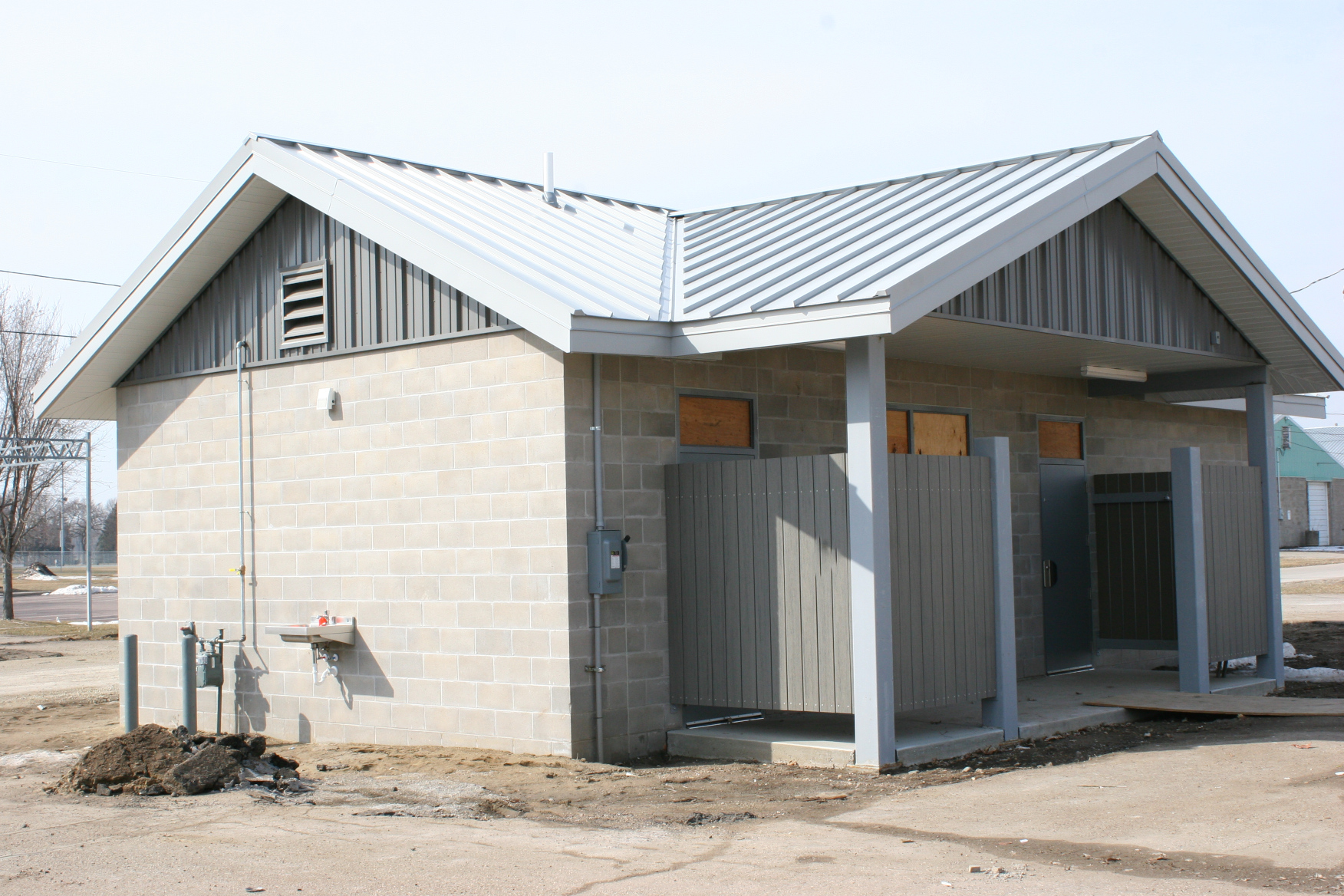
The new public restrooms at the Rice County Fairgrounds. Minnesota Prairie Roots photo March 2021.
I’m sure fair-goers will appreciate one new addition—the construction of public restrooms.
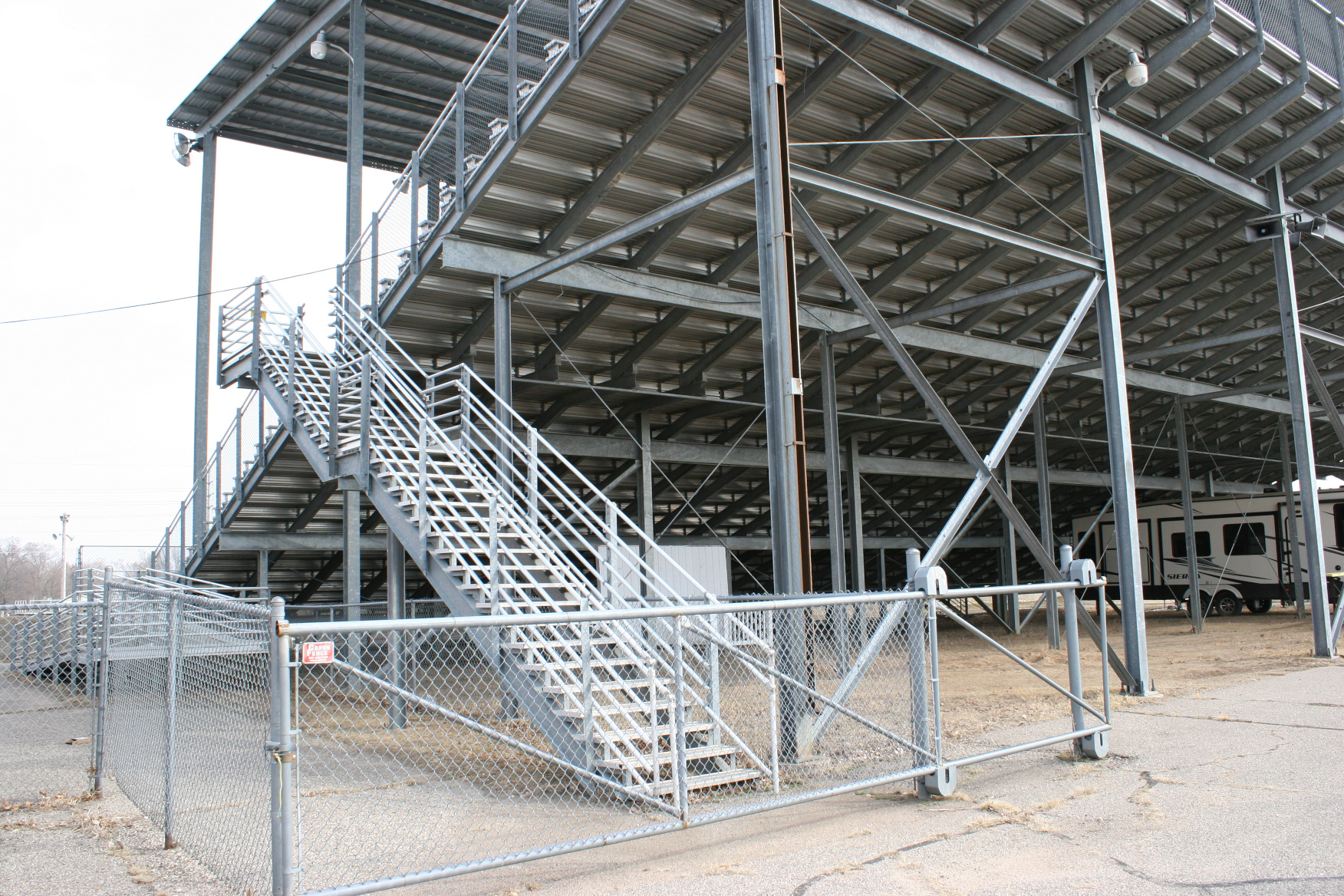
A view of the grandstand underside. This was rebuilt following an arson fire many years ago. Minnesota Prairie Roots photo March 2021.
I often wonder why the fairgrounds aren’t used more, especially the grandstand. That said, the Cannon Valley Farmers’ Market sets up occasionally at the fairgrounds in Faribault. Car shows and food trucks have also used the grounds. In a year when spread of the virus remains an ongoing concern, this vast outdoor space offers options to indoor gatherings.
Photographed on the side of the Rice County Fair office in March. Minnesota Prairie Roots photo March 2021.
Whether the Rice County Fair happens in July remains unknown. It’s really up to us to follow public health and safety mandates/guidelines and to choose vaccination. We’re not powerless. We have the ability to control our behavior, to think beyond ourselves to the public good. To make the fair happen in 2021.
FYI: Rice County is lagging in vaccinations. According to Rice County Public Health April 16 data, 41.7 percent of county residents ages 16 and above have received at least one dose of the COVID vaccine. That compares to 52 percent statewide. We can do better.
THE RICE COUNTY FAIR in Faribault officially opened at 5 p.m.Tuesday.
But even before then, fair officials were telling 4-H kids and other livestock exhibitors that, because of the excessive heat and humidity, they could arrive late and take their critters home after judging, according to information I heard on local radio station KDHL.
Then Tuesday at 10 p.m., my 17-year-old received a text message and asked me to switch the TV to KARE 11 news. “Adam’s going to be on,” he said. And sure enough, 30 seconds later the camera focused on his friend Adam Donkers spraying a pig with water in the swine barn at the fair. Adam informed viewers that hogs can’t sweat so he was sweating for them by cooling them with water. His family farm lost 11 pigs overnight due to heat stress.
So that got me thinking about excessive heat warnings for livestock, none of which I’ve heard. That doesn’t mean, however, that such warnings haven’t been issued; I simply might not be tapping into the right media sources.
This morning I checked the Rice County Fair website, but didn’t find any information there. I do know that fair officials brought extra fans into the barns on Tuesday.
Then I googled “livestock heat warning,” only to find warnings (not all of them current) from places like Kansas, Iowa, Nebraska and Montana. Not Minnesota.
I googled the Minnesota Department of Agriculture, the Minnesota Pork Producers, the Linder Farm Network and the University of Minnesota Extension Service and, in quick scans of the websites, found nothing.
But then, I suppose, most farmers already understand the importance of keeping their swine, cattle, poultry and other animals cool with fans and water during extended periods of excessive heat and humidity like we’re experiencing in Minnesota. Yesterday the heat index reached 119 in Minnesota, the highest since July 11, 1966. The dew point soared to an all-time high of 82.
But back to those animals… Some may question why removing livestock from the fair would help because conditions are just as hot back on the farm. Consider the stress factor. Take an animal out of its familiar environment, load it into a trailer or truck, haul it to the fair, place it among strange animals and gawking people in unfamiliar surroundings, and stress multiplies. I mean, how would you feel?
IF YOU’RE A FARMER with cattle, swine, poultry or other animals, how are you keeping your animals comfortable and cool during this weather? How is the excessive heat affecting your animals? Have you lost any due to heat stress? How are your crops faring? Submit a comment and share.
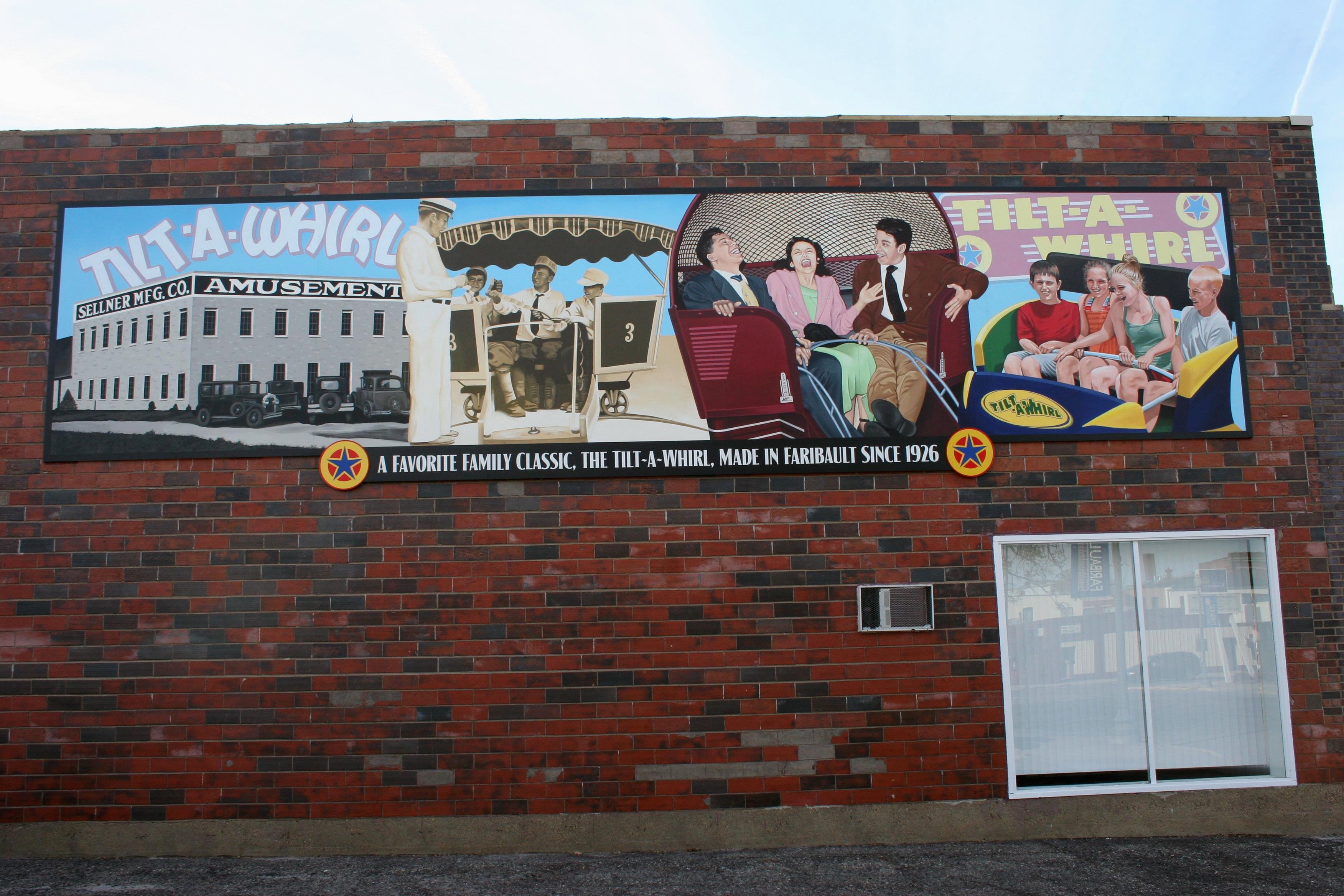
The Mural Society of Faribault created and placed this Tilt-A-Whirl mural on the side of Jim's Auto & Tire along Fourth Street in downtown Faribault in the fall of 2010.
AN AMERICAN ICON amusement ride made in Faribault since 1926 will remain here despite the sale of Sellner Manufacturing to a Texas company.
Jim Hermel and Mike Featherston, co-owners of Gold Star Manufacturing, recently purchased the fiberglass and staging portions of Sellner, I learned in a recent e-mail exchange with Hermel.
That’s good news for Faribault, where the Tilt-A-Whirl, perhaps America’s best-known carnival ride, has been made by the Sellner family since 1926.
If you didn’t realize the Tilt-A-Whirl was produced in Faribault, don’t fret your lack of knowledge. Not until I moved in 1984 into a house blocks away from the carnival ride maker, did I even know this icon ride was made in Minnesota, let alone Faribault.
My community has also missed the mark on tapping into this home-grown carnival ride as a tourist attraction. But now that the fiberglass ride car portion will continue to be produced here, I believe the opportunity still exists to promote the Tilt-A-Whirl. I’ve always envisioned a fun-focused carnival atmosphere museum and gift shop complete with Tilt-A-Whirl rides, cotton candy, popcorn, activities for kids and more.
Given the current economy, I doubt my vision for a Tilt-A-Whirl tourist site will happen any time soon, unless…
For now I’m content with the fact that Faribault-based Gold Star Manufacturing is contracting with Larson International, Inc., of Plainview, Texas, to manufacture the fiberglass cars for the Tilt-A-Whirl and for other amusement rides. The working machinery part of the business went toTexas.
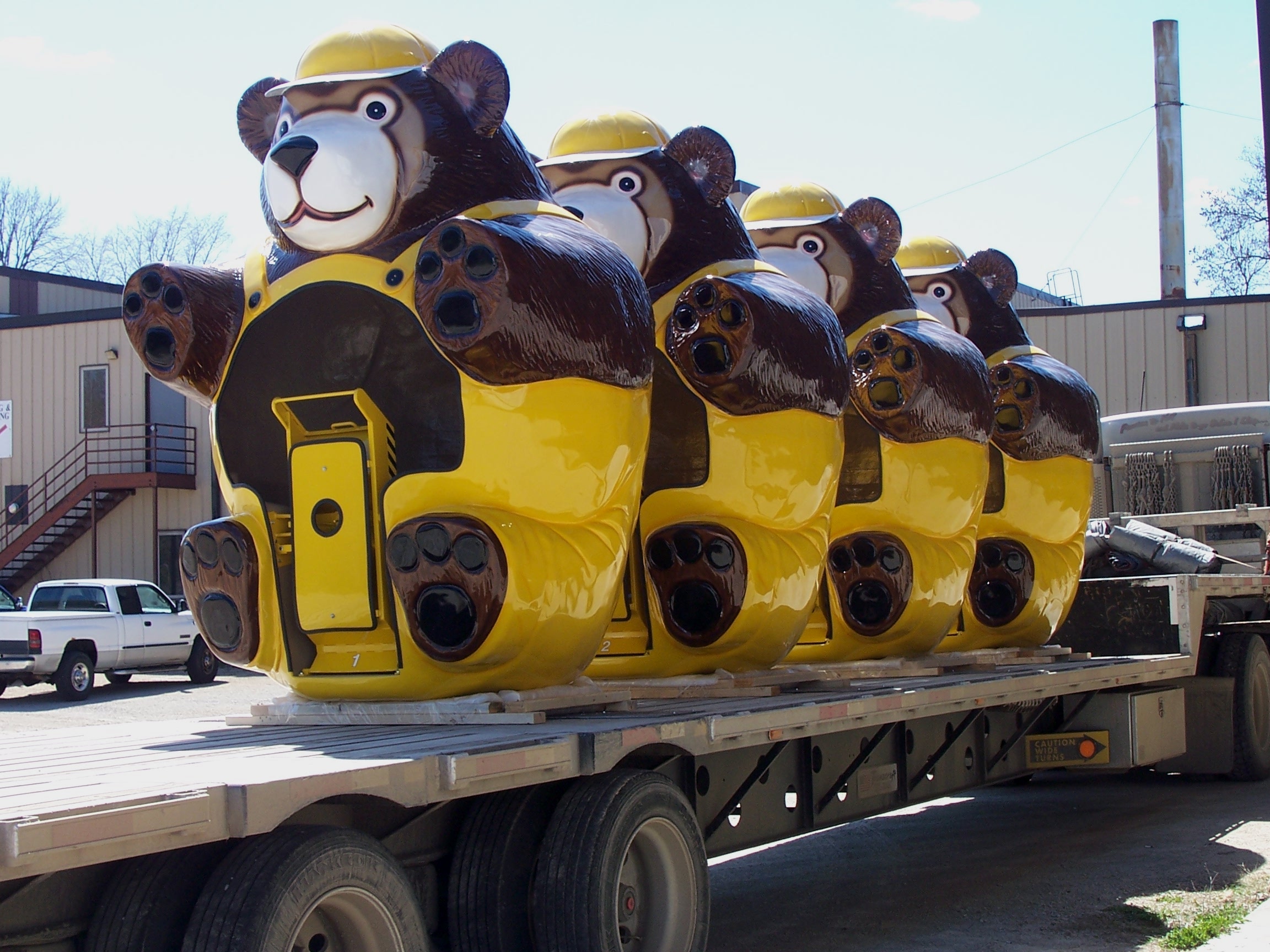
Gold Star Manufacturing shipped its first carnival ride, Bear Affair, to Toronto, Canada, earlier this month.
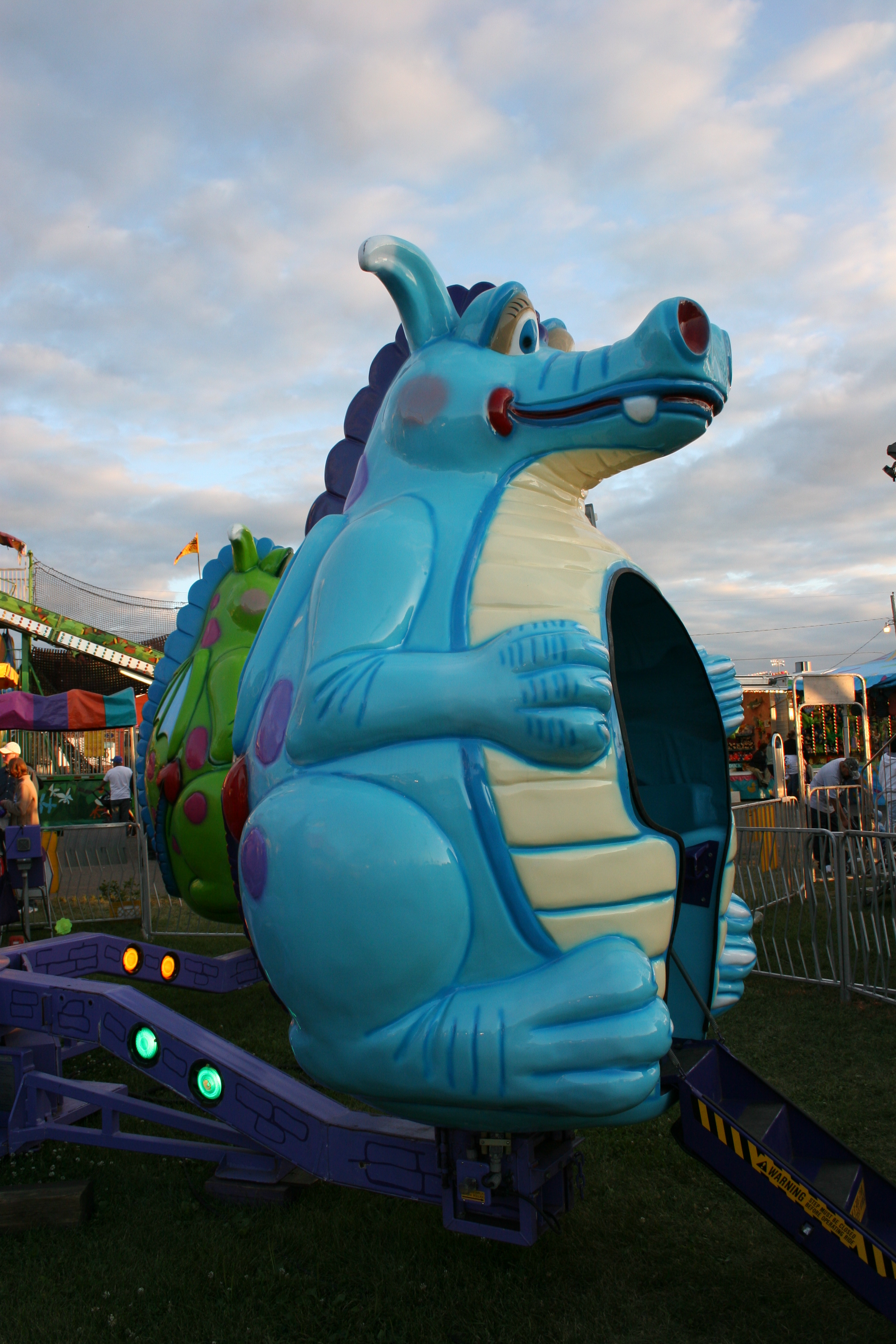
Dizzy Dragons, one of the carnival rides that Gold Star will continue to manufacture.
Gold Star will also continue to make the fiberglass bodies for other Sellner-created carnival rides: the Bear Affair, Dizzy Dragons, Ships Ahoy and Pumpkin Patch. Another ride is in the works, Hermel says, and three other fiberglass products are in the development stage.
If anyone can succeed at revitalizing a company which fell into financial hardship, Hermel and Featherston would be the men.
Hermel comes to Gold Star Manufacturing with nearly 30 years in the tire business (selling almost 2 million tires, he says) and with 14 years as executive secretary and manager of the Rice County Fair.
“I wanted to get into something that would offer me a challenge,” the 59-year-old Hermel says.
His partner, Mike Featherston, brings a life-time of experience in the outdoor amusement industry to the new company. Featherston and his family own GoldStar Amusements, Inc., a traveling entertainment business with amusement rides, food and games based in Coon Rapids, Minnesota, and Louisiana. GoldStar contracts for the midway at the Rice County Fair.
Featherston was recently elected second vice chair of the Outdoor Amusement Business Association which aims “to encourage the growth and preservation of the outdoor amusement industry through leadership, legislation, education and membership services.”
Now, as co-owner of Gold Star Manufacturing, Featherston is certainly fulfilling one of those missions by keeping an iconic American carnival ride in production, in Faribault. He and Hermel are continuing the legacy of Herb Sellner who built the first nine-car wooden Tilt-A-Whirl 85 years ago.
GROWING UP IN HOUSTON—that would be Minnesota, not Texas—Julie M Fakler always envied the farm kids with their farm animals.
Today, though, Julie has no reason to feel jealous. She’s surrounded by a menagerie of animals, some real (her cats), most not.
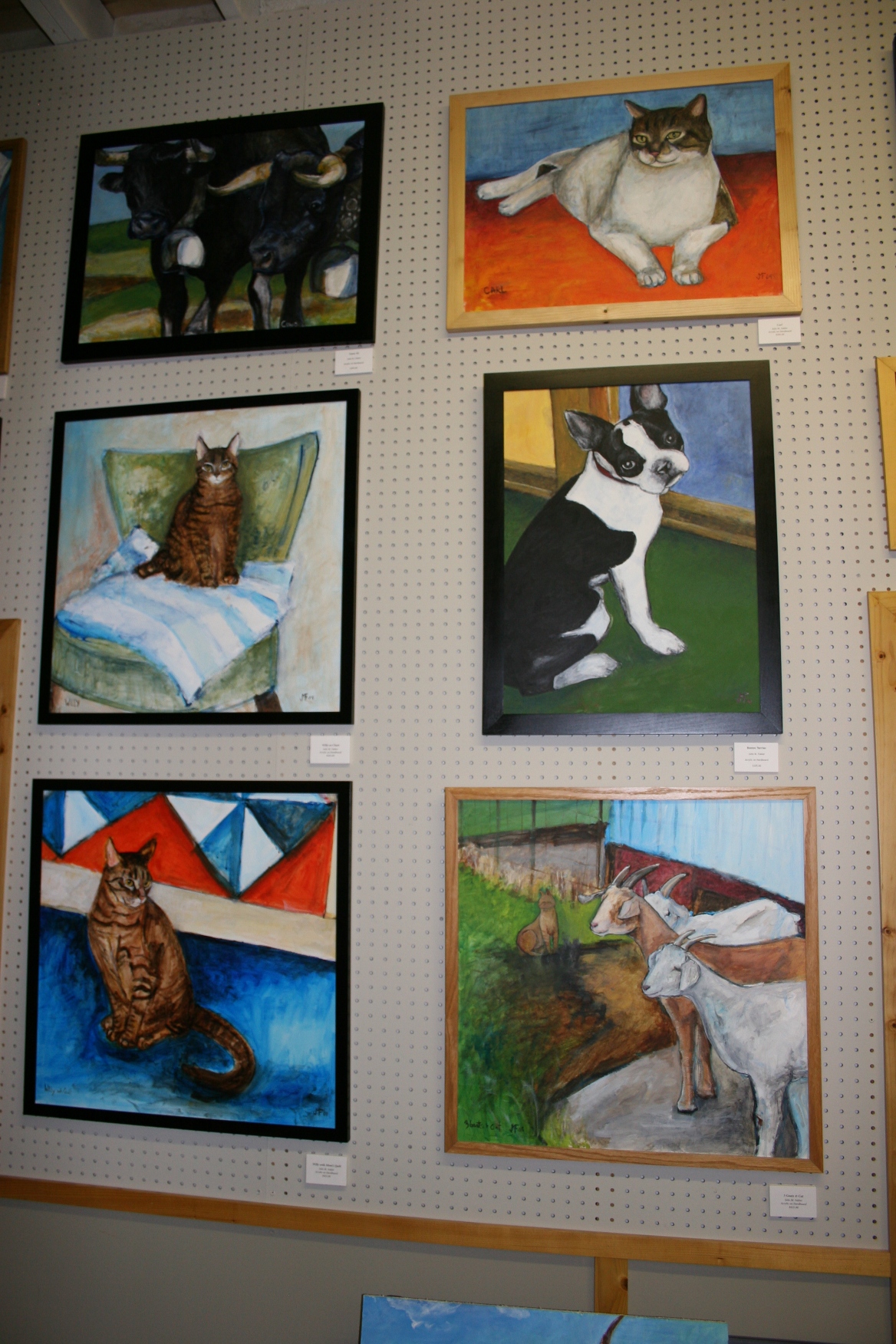
She’s an artist, specializing in pet portraits. A quick peek inside her Faribault studio and gallery during the recent South Central Minnesota October Studio arTour and Sale reveals that Julie especially loves cats and dogs. They comprise the bulk of her acrylics.
Examples of Julie M Fakler's animal portraits.
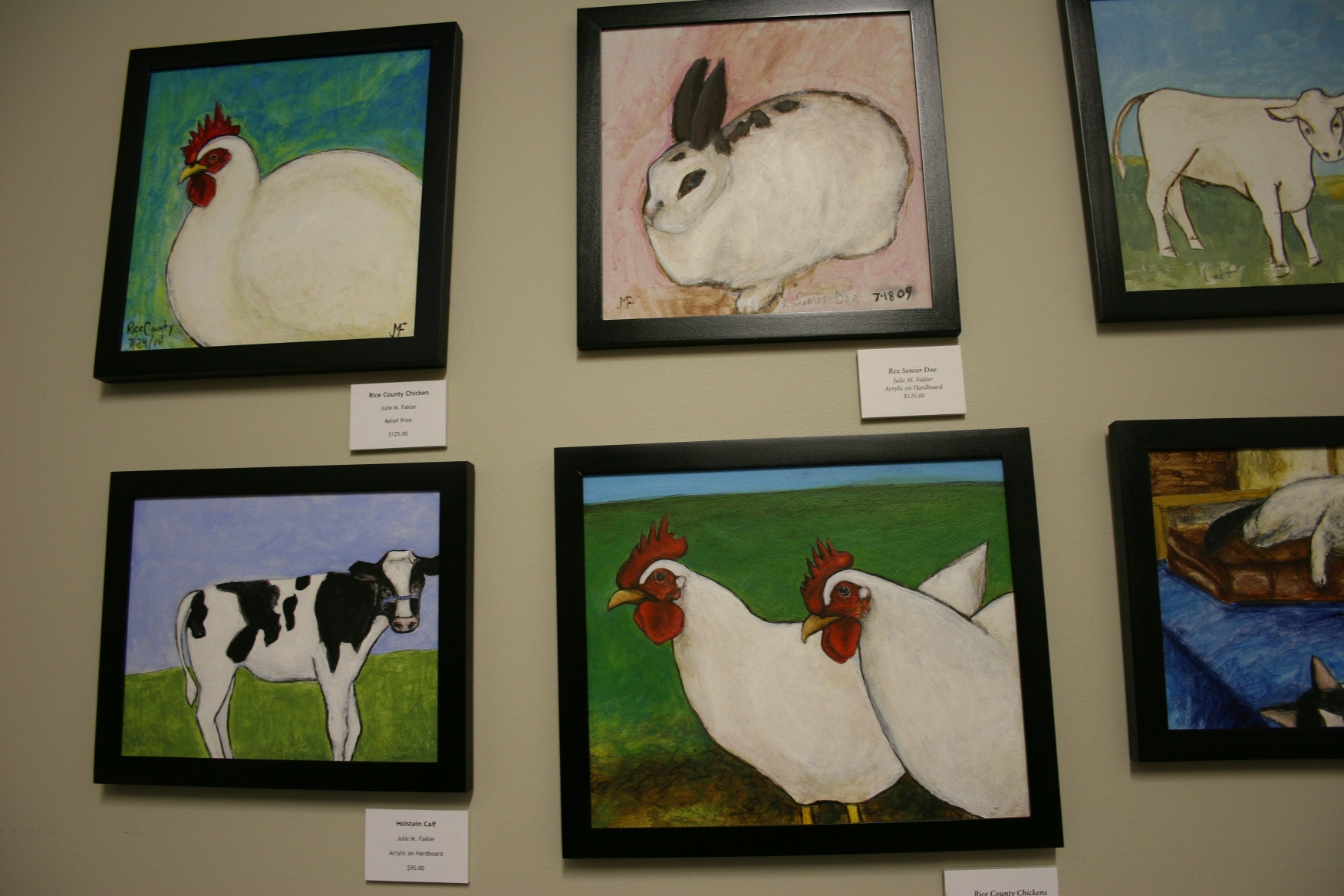
Occasionally, though, you’ll see a farm animal like a goat, chicken or calf. Some of those she’s painted at the nearby Rice County Fairgrounds, setting up her easel during the fair to recreate those critters.
Rice County Fair animal portraits painted during the fair.
As I sorted through the photos I took of Julie’s artwork, I finally figured out what was niggling at my brain about her paintings of animals against simple backgrounds of primarily primary colors. Her paintings, in my opinion, would fit perfectly into children’s picture books.
I haven’t asked Julie whether she’s ever considered illustrating a children’s book. But she will paint a portrait of your pet, on commission, or hand-stitch a quilt for you (another one of her artistic endeavors).
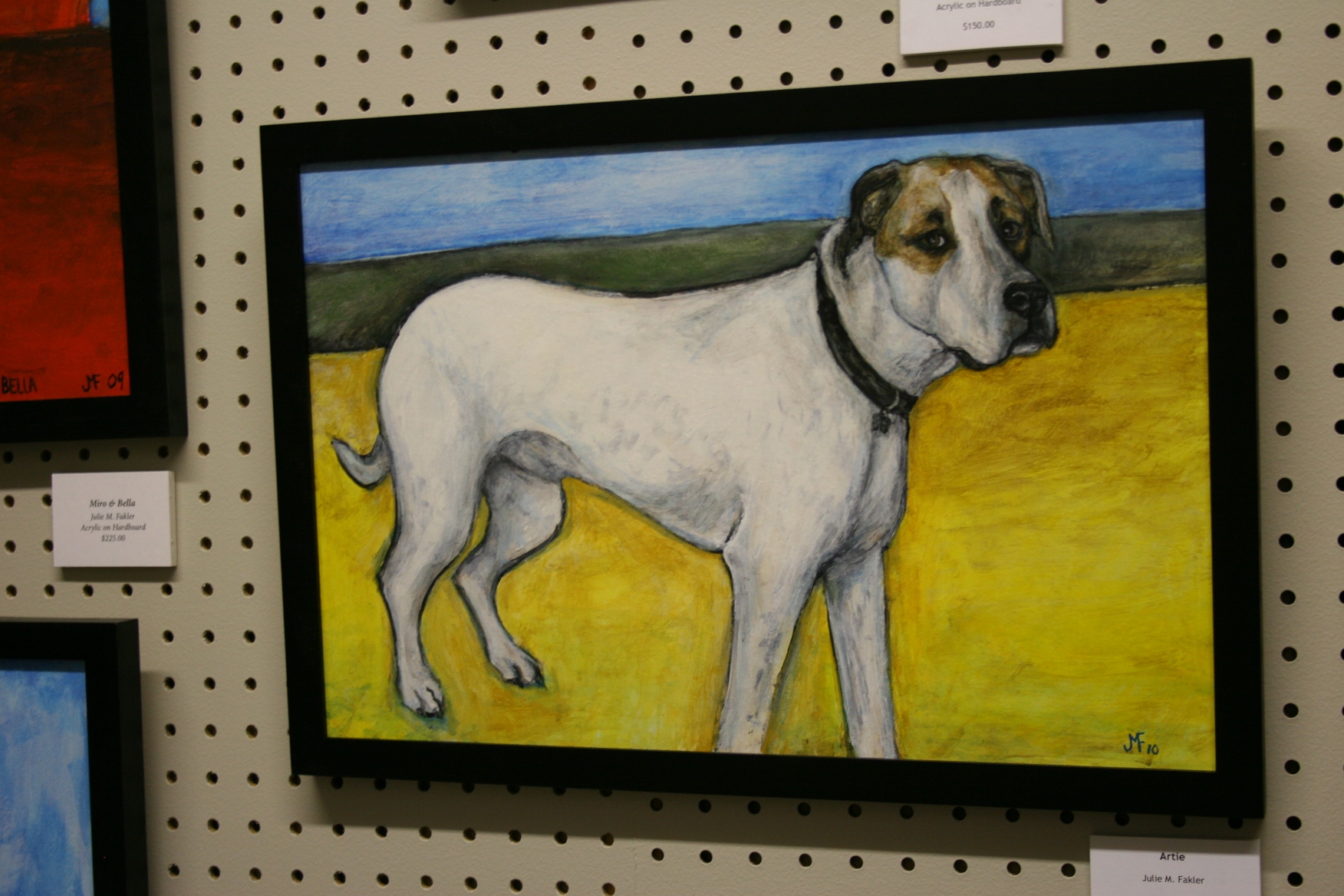
Julie painted this neighborhood dog.
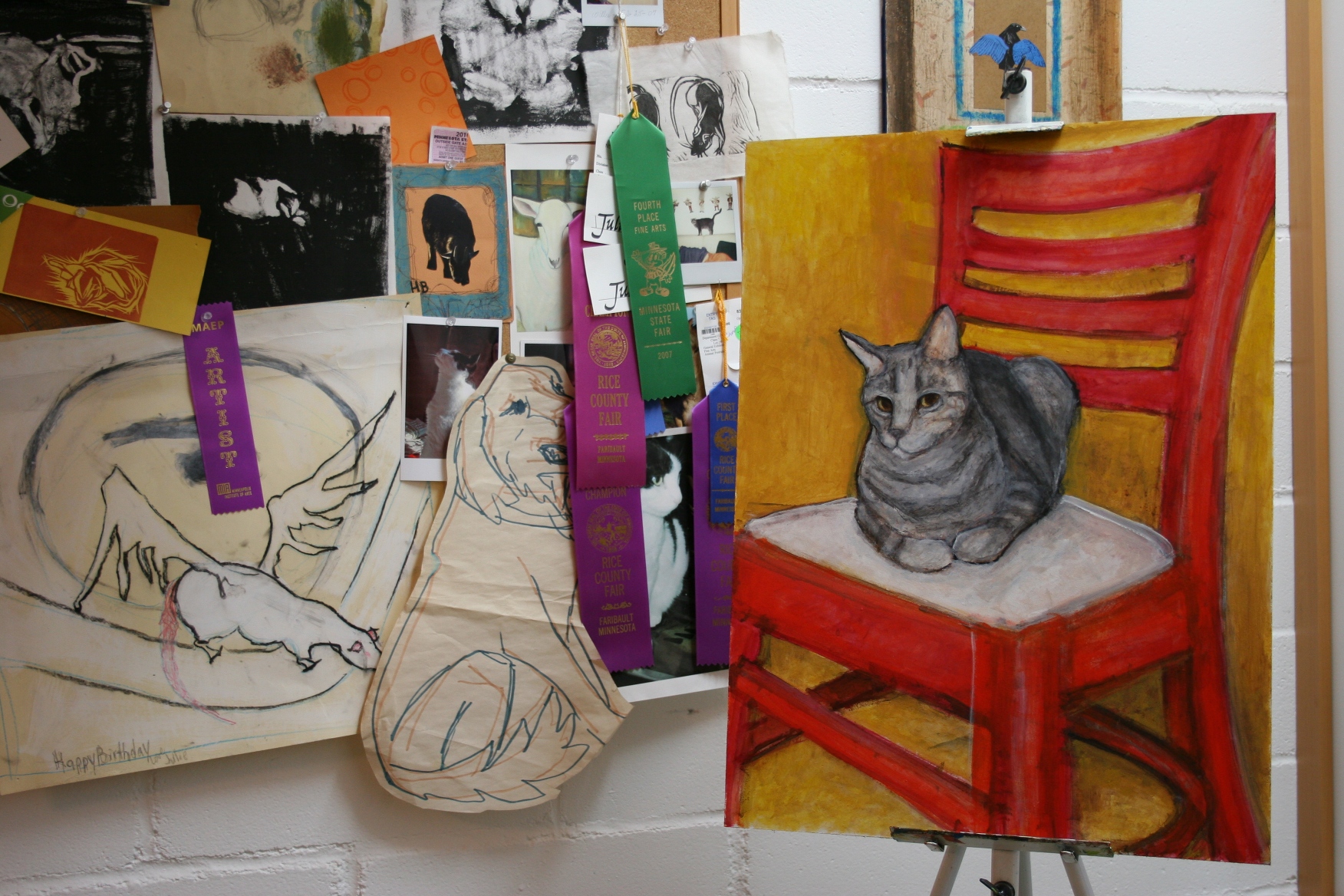
Items tacked onto a bulletin board, left, provide Julie with inspiration for her paintings.
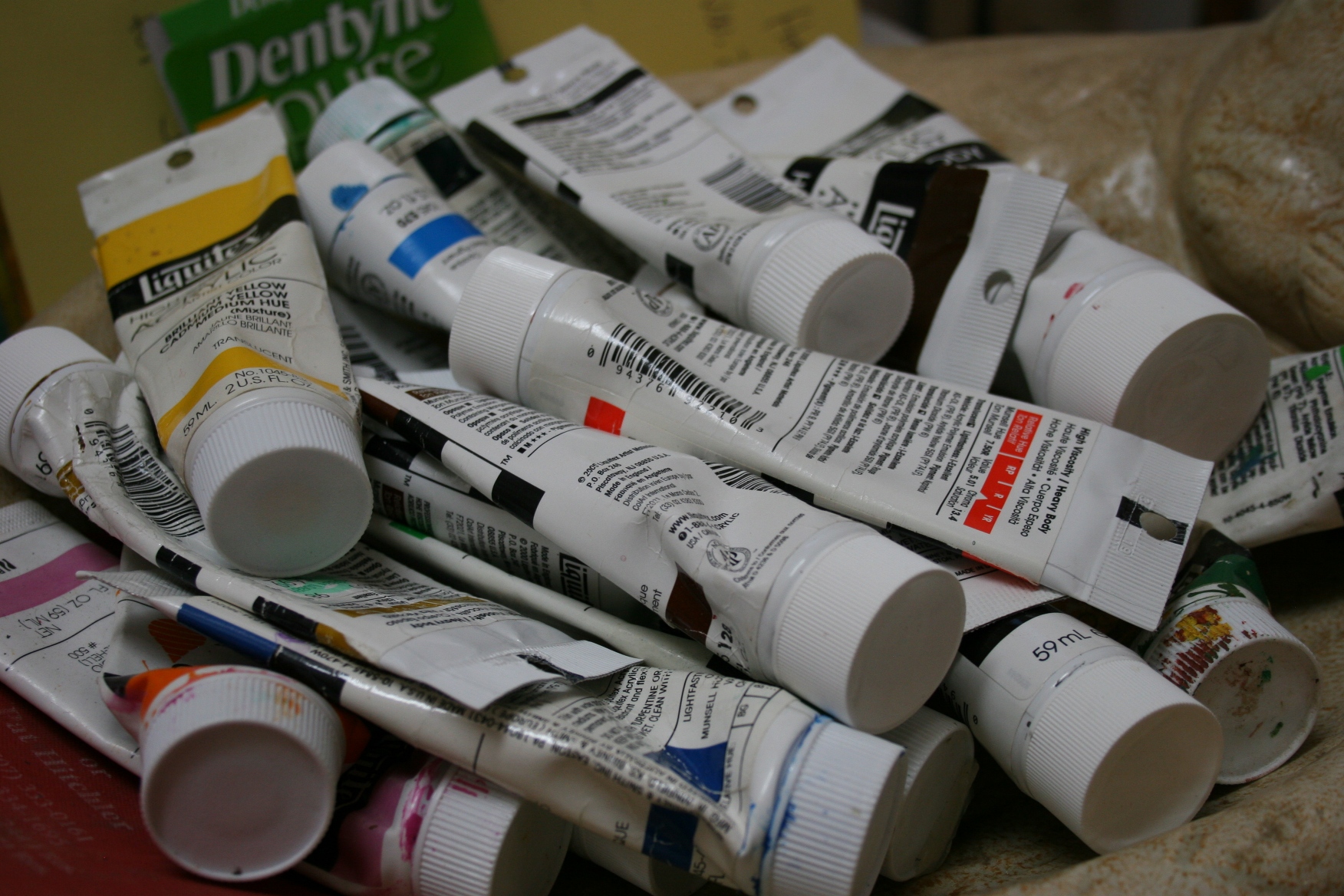
A jumble of paint tubes in the studio, which is housed in a former upholstery shop behind her Faribault home.
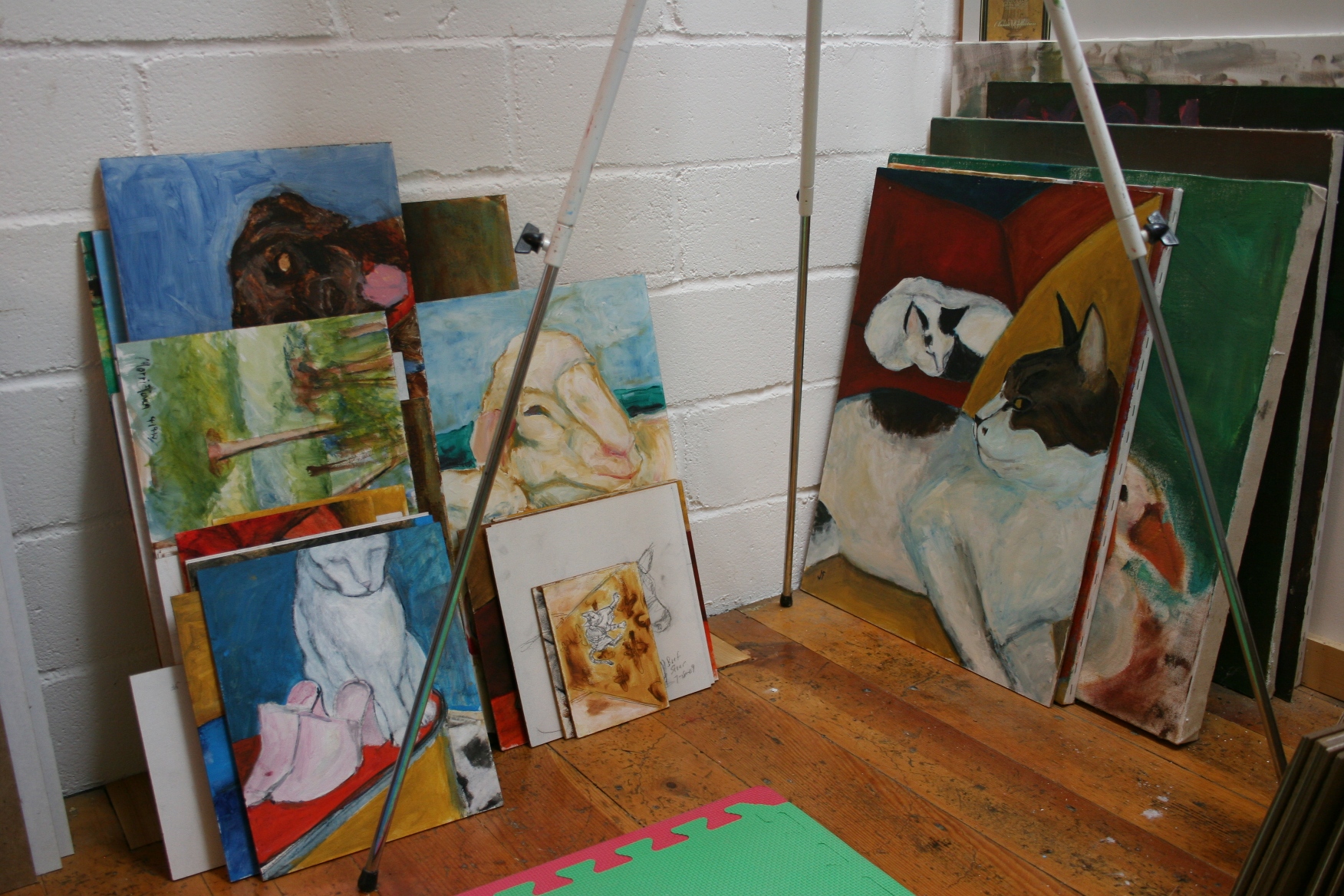
Paintings propped on the studio floor.
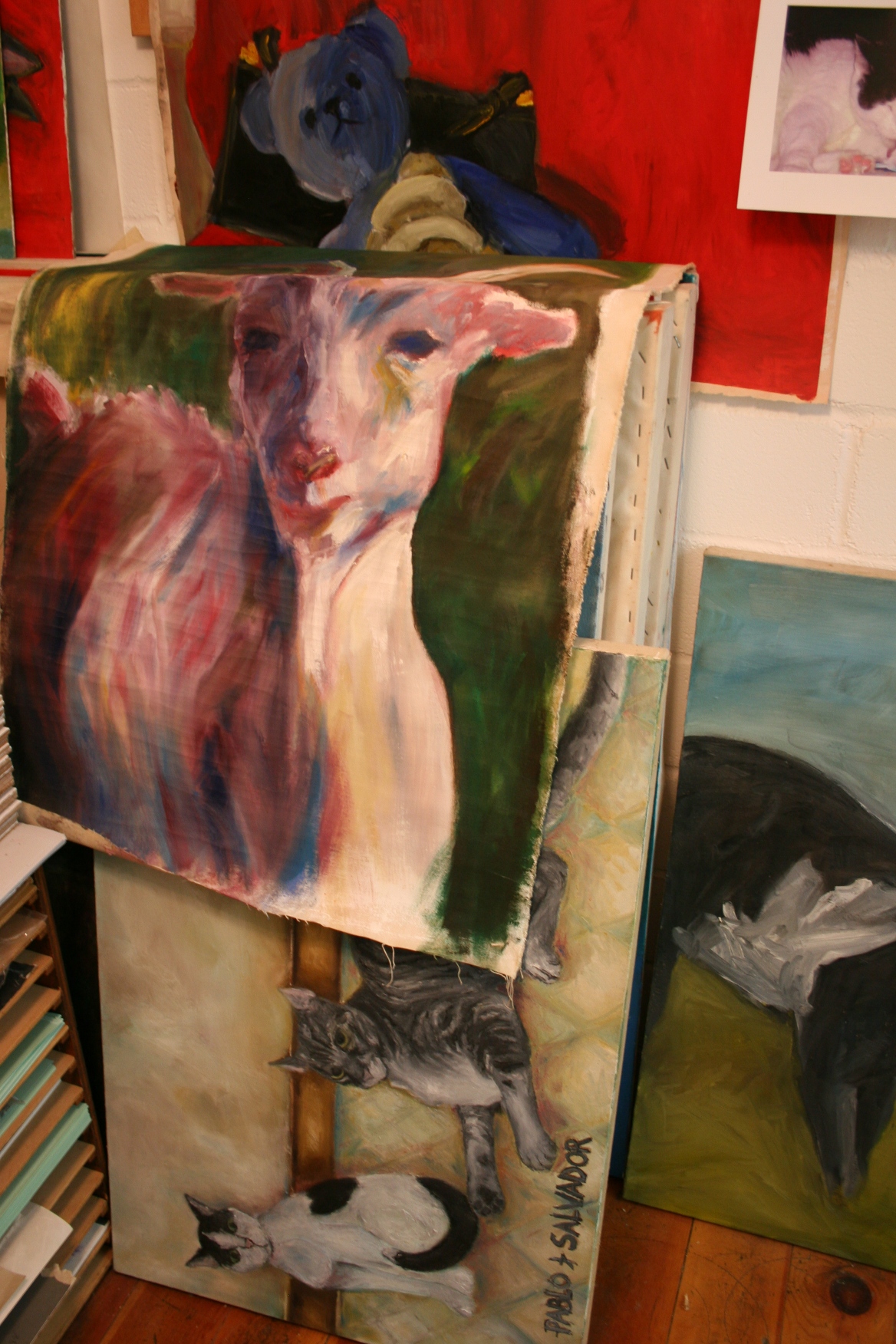
More animal art.
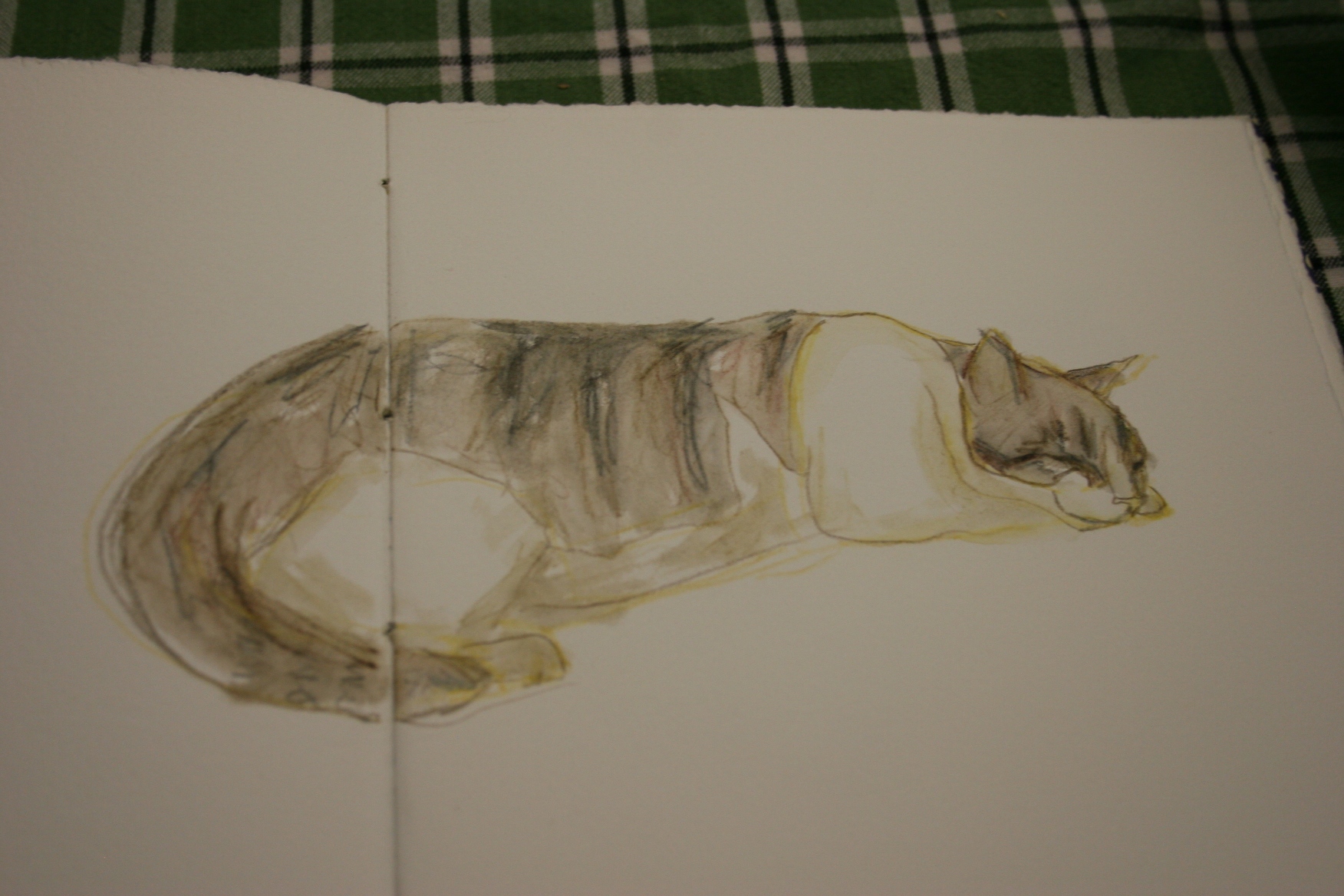
Julie and her sister make books, using them to record their world-wide travels via words and art.
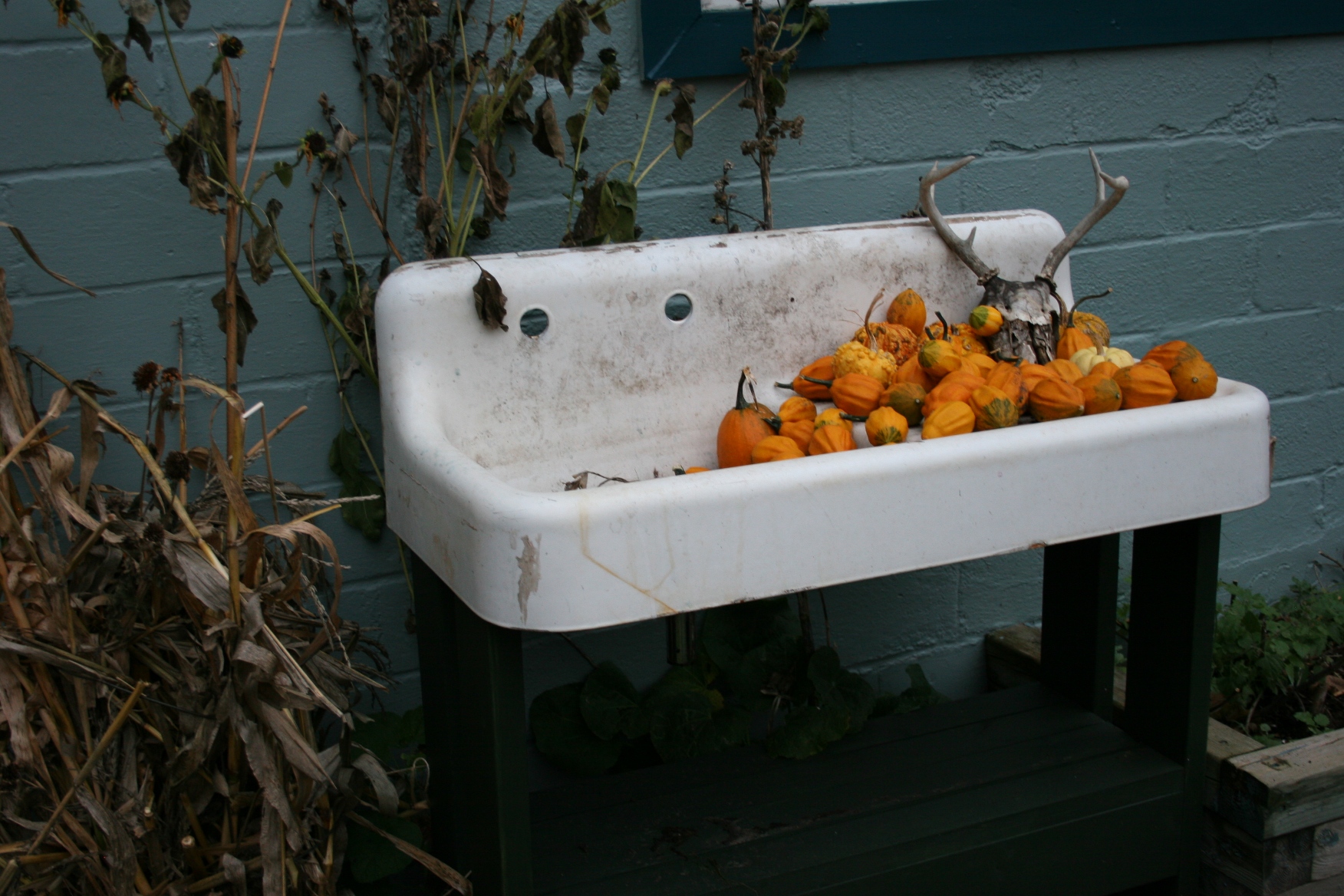
One final nod to Julie's artistic side is represented in this old sink, acquired from a neighbor, and decorated for fall. It's outside her studio/gallery door. She intends to use the sink as a potting station in the spring.
For additional information and to view more of Julie’s art, click here to visit her Web site.









Recent Comments