Minnesota Prairie Roots

Writing and photography by Audrey Kletscher Helbling

A tractor, pumpkins & a conversation after sunset October 1, 2025

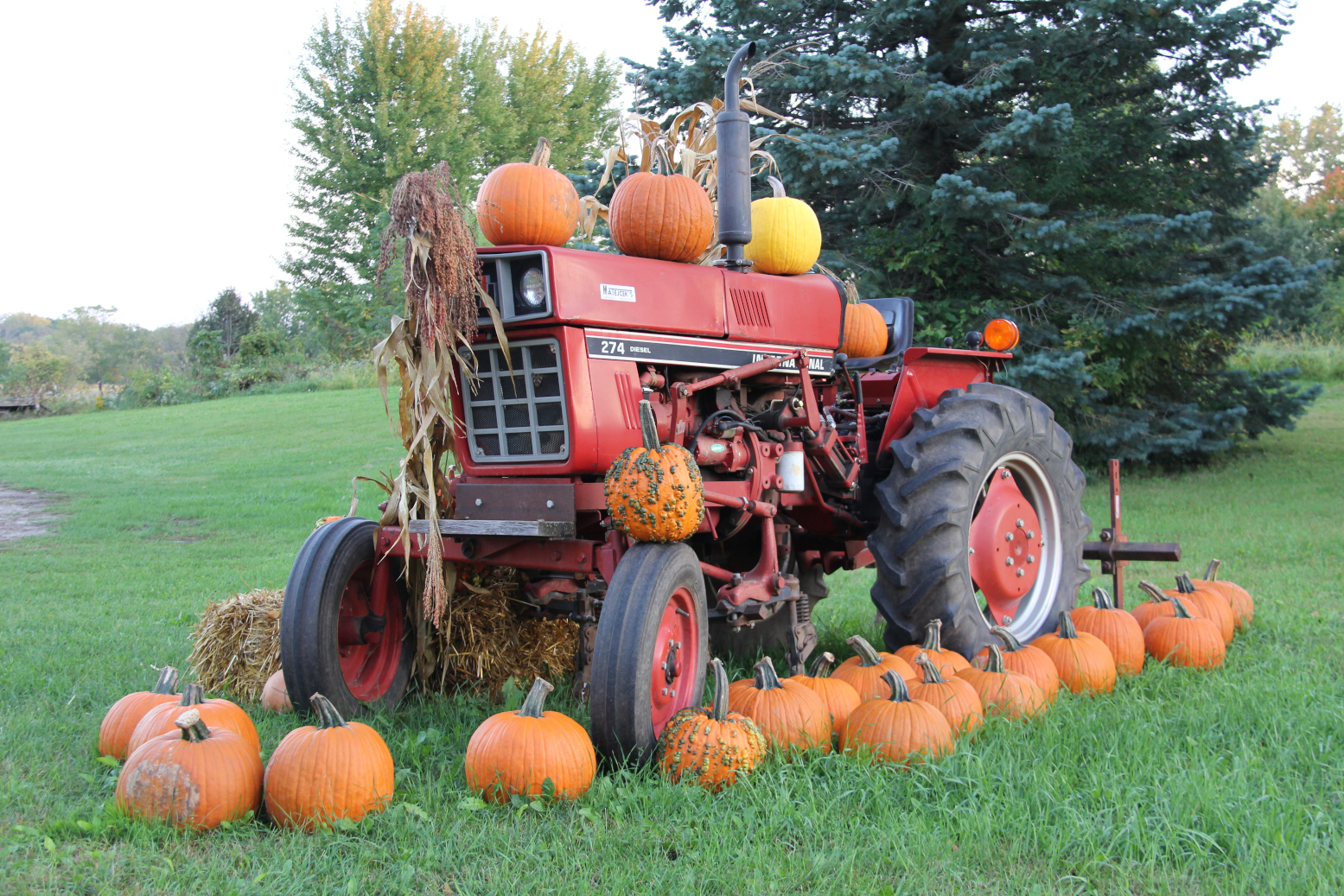
Parked at Thomas Gardens in Faribault, a late 1970s or early 1980s International tractor centers an autumn photo op scene. (Minnesota Prairie Roots copyrighted photo September 2025)

ON THE EVENING of the autumn equinox, I headed to Faribault’s east side, crossing the viaduct over the Straight River to Thomas Gardens along St. Paul Road. The business was closed upon my arrival, which mattered not to me. I was here to photograph an International 274 tractor and pumpkins during “the golden hour.” That’s an hour before sunset or an hour after sunrise when the warm, soft glow of the setting or rising sun proves particularly lovely for taking photos.
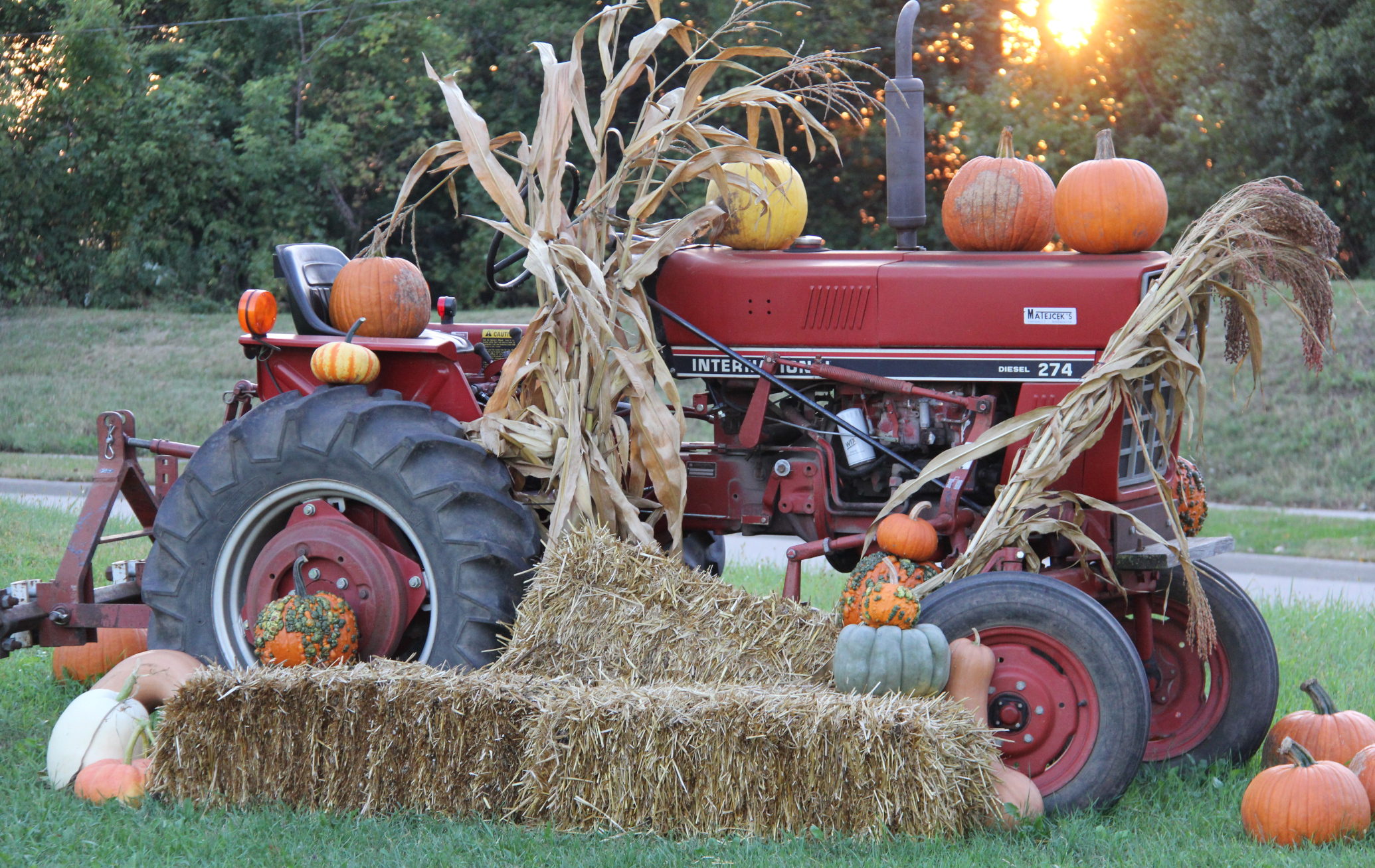
The setting sun shines through an opening in the treeline as I shot this image. (Minnesota Prairie Roots copyrighted photo September 2025)

As I framed the tractor, staged as a photo prop in an autumn scene of straw bales, varied colorful pumpkins and corn shocks, I noticed the golden orb of the sun peeking through the treeline across the street. I remained ever cognizant of the light, diminishing with each snap of the shutter button.
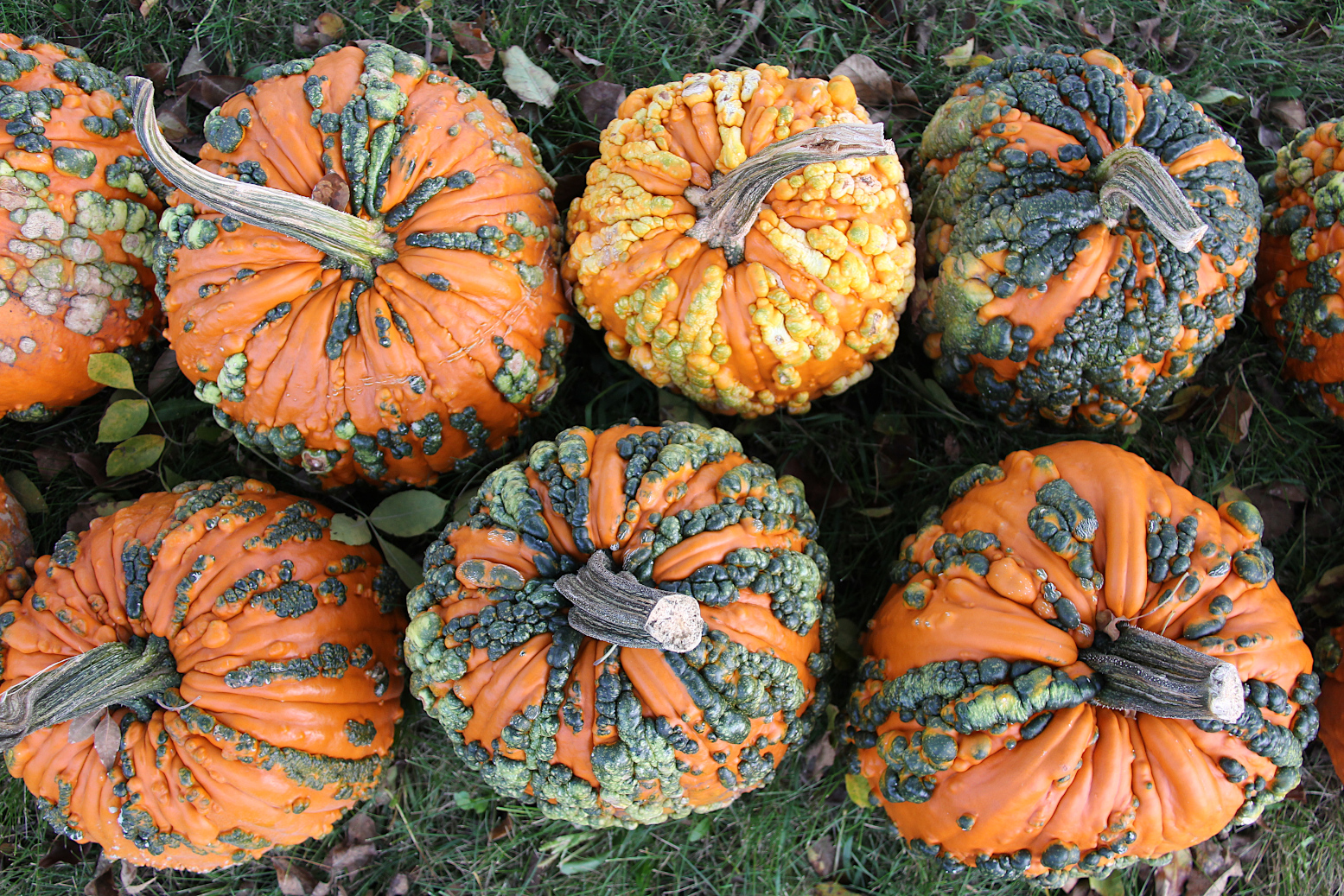
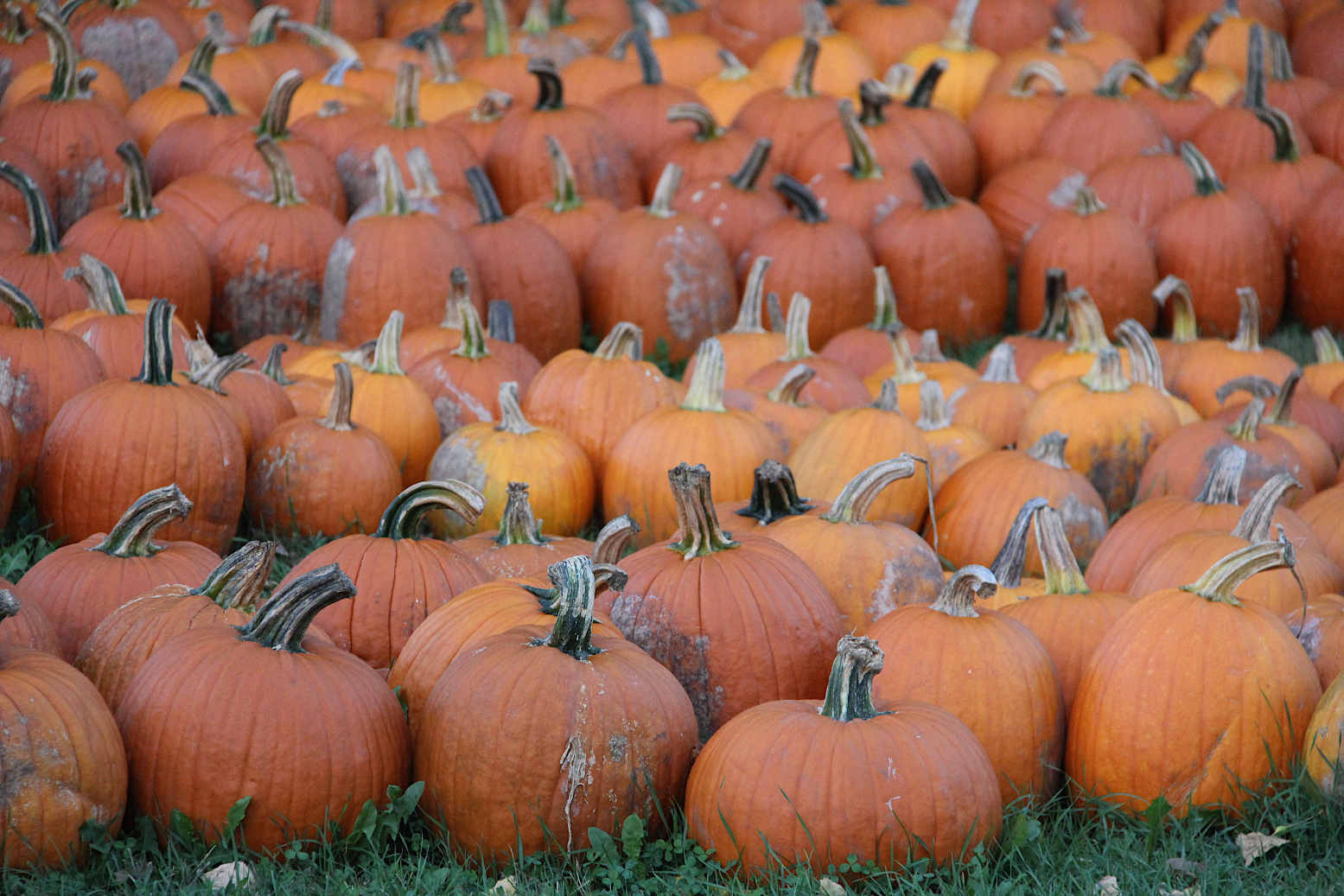
(Minnesota Prairie Roots copyrighted photo September 2025)

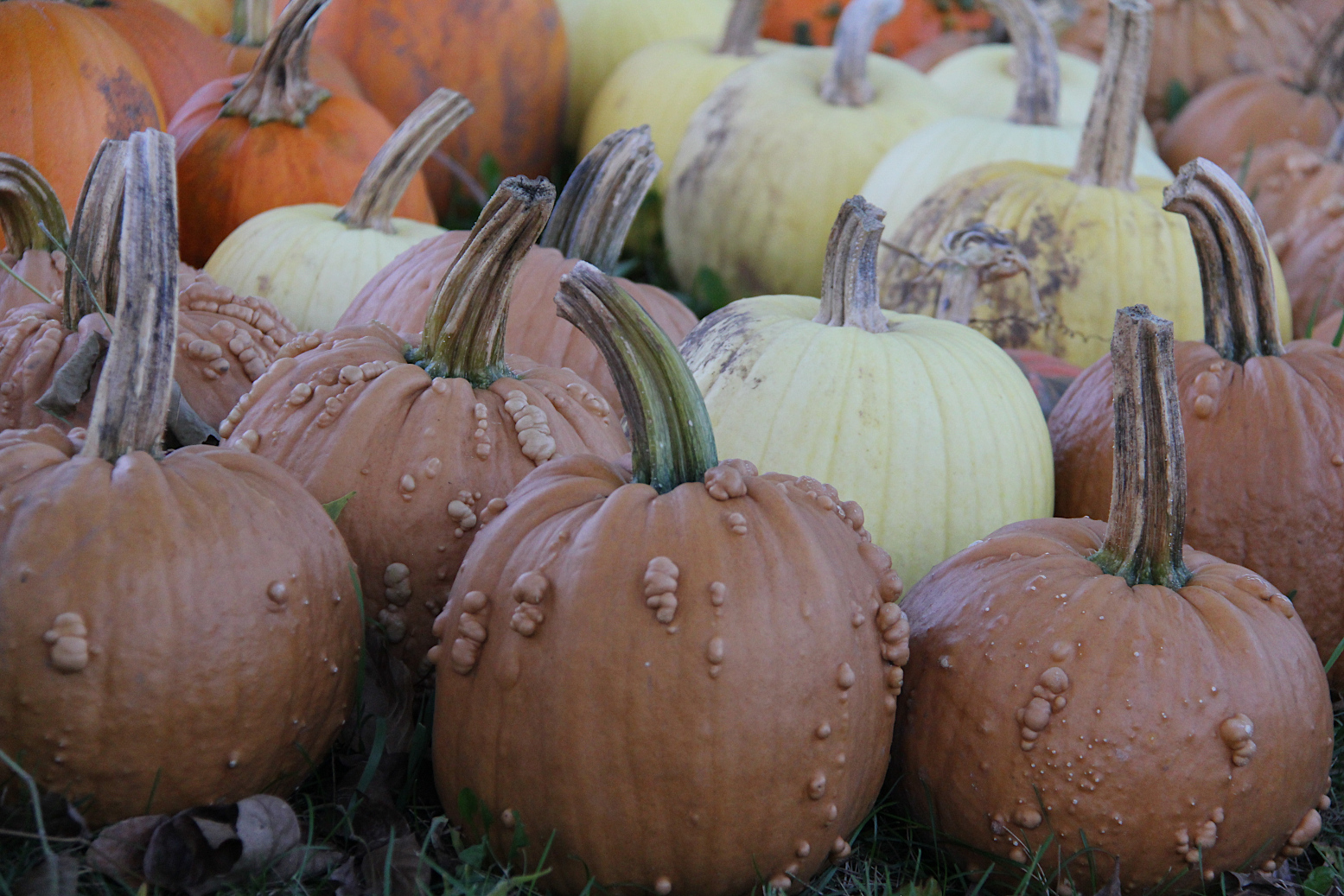
I felt giddy as I photographed first that tractor and then masses of pumpkins outside the building. Colors popped in the perfect light. Multi-hued pumpkins. Deep orange ones. White ones. Yellow ones. Pumpkins with warty bumps, others smooth. Sooooo many pumpkins scattered across the street-side yard.
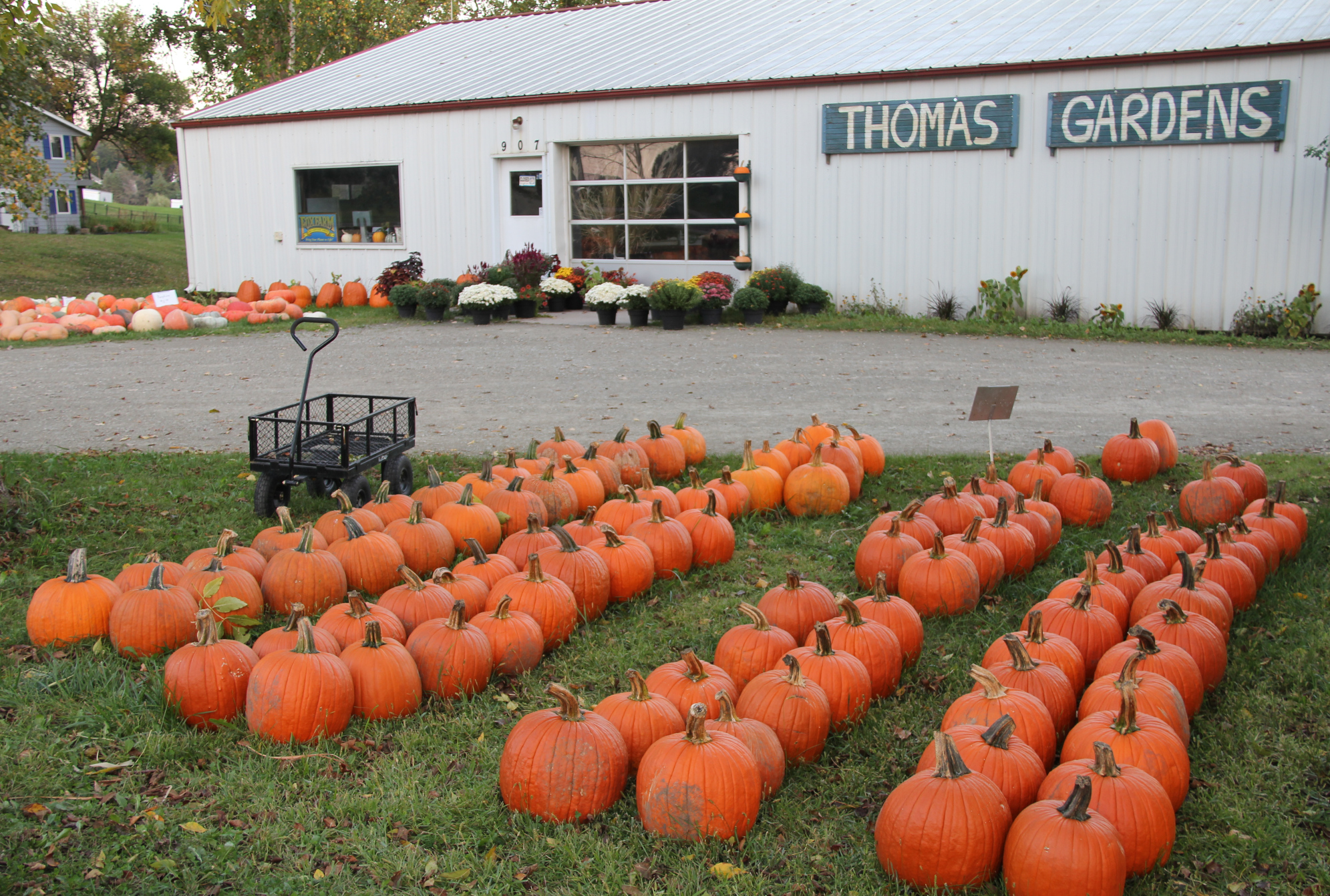
Thomas Gardens is housed in this building along St. Paul Road on Faribault’s east side. (Minnesota Prairie Roots copyrighted photo September 2025)

I remember when the previous owners of 50-plus years piled pumpkins onto flatbed trailers parked inside and outside Twiehoff Gardens & Nursery. Matt and Stefanie Thomas bought the business in 2019. Matt grew up on a dairy farm near Dundas, which pleases me given I was also raised on a dairy farm. Like me, he understands hard work. On his business website, Thomas writes about teaching his three kids the value of hard work, teamwork and family values. This seems a good place to do that.
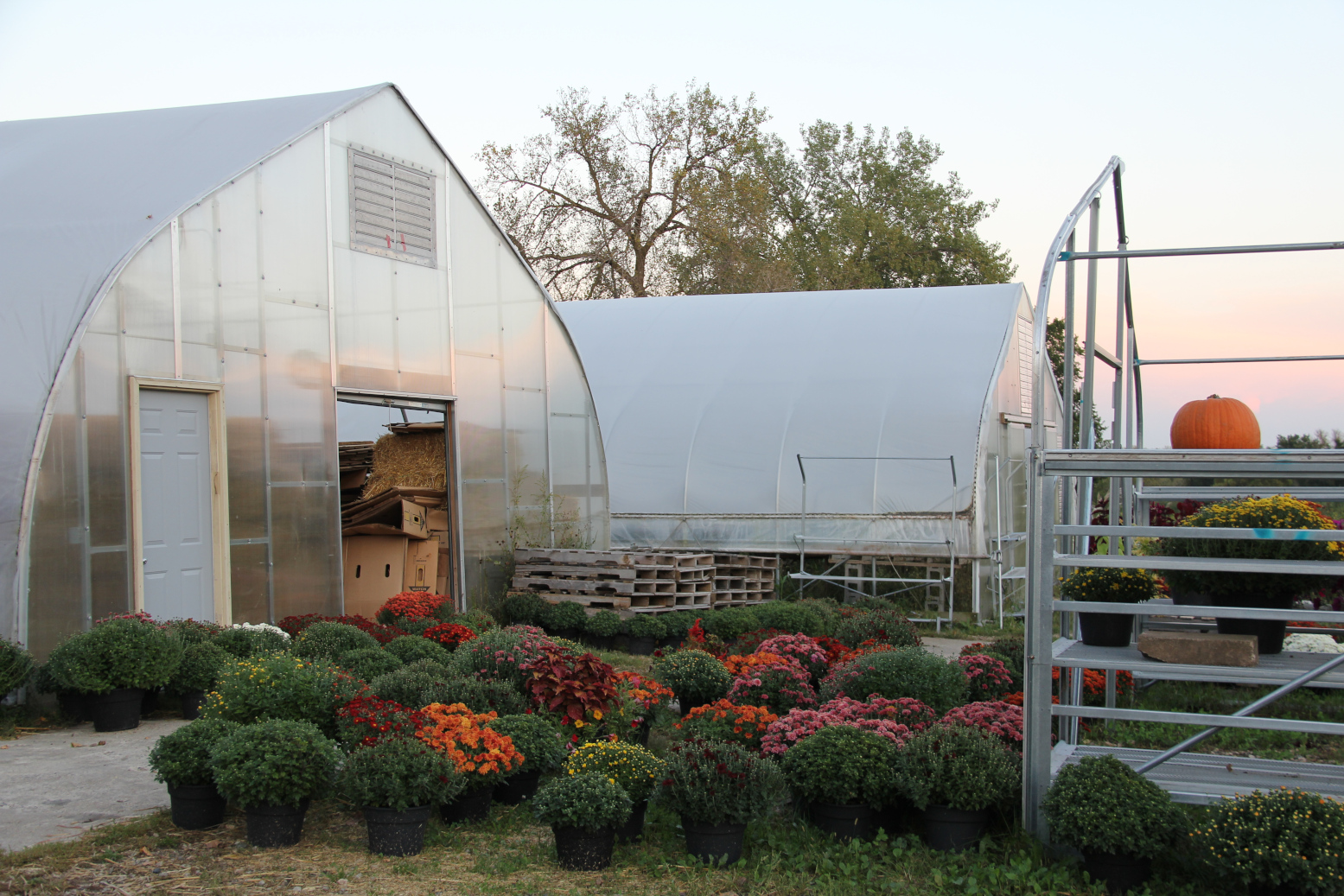
Mums for sale outside the greenhouses. (Minnesota Prairie Roots copyrighted photo September 2025)

Here the Thomas family grows and sells garden-fresh vegetables, flowers and plants, plus markets honey, maple syrup, Christmas trees and more from their pole shed style building, greenhouses and the yard where I roamed with my 35mm Canon EOS 60D camera.

Mostly potted mums, but a few other flowers and plants, are for sale in autumn. (Minnesota Prairie Roots copyrighted photo September 2025)

When I finished photographing the tractor and all those pumpkins, I moved onto the flowers, mostly mums. The flower of fall. Single colors and multi colors in pots. Oranges, yellows, rose, even white.
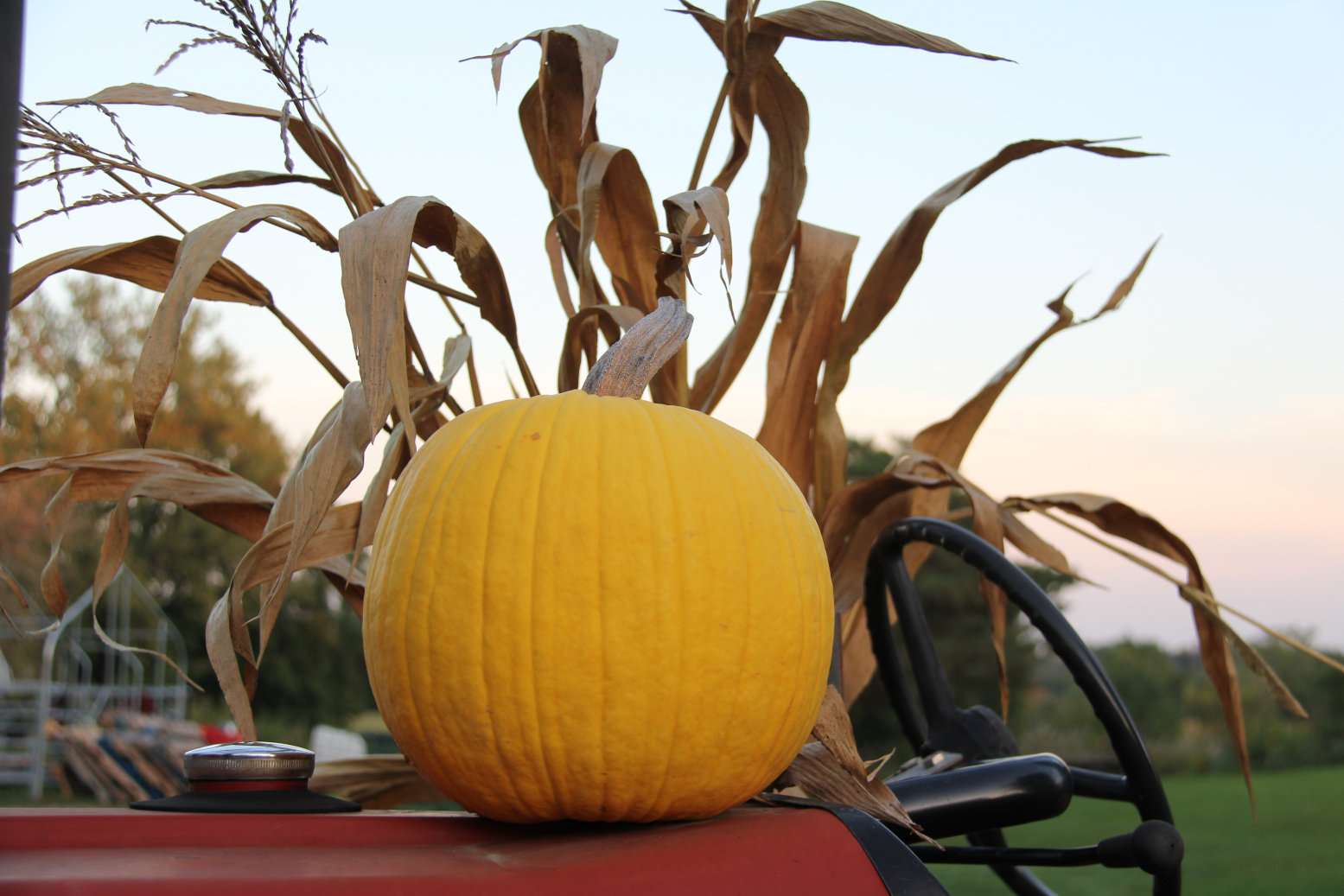
A pumpkin tops the tractor against a corn shock with a tint of pink in the sky. (Minnesota Prairie Roots copyrighted photo September 2025)
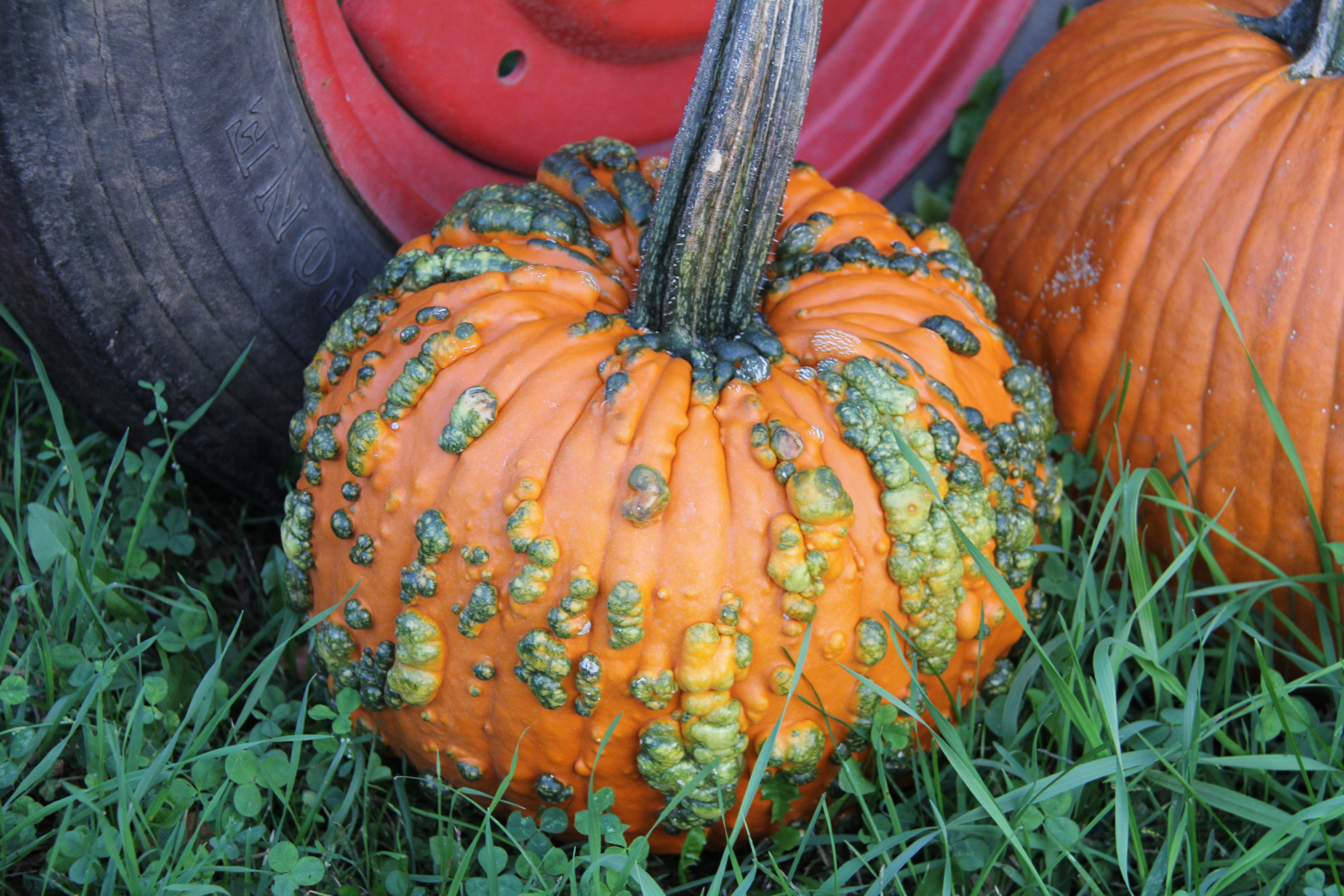
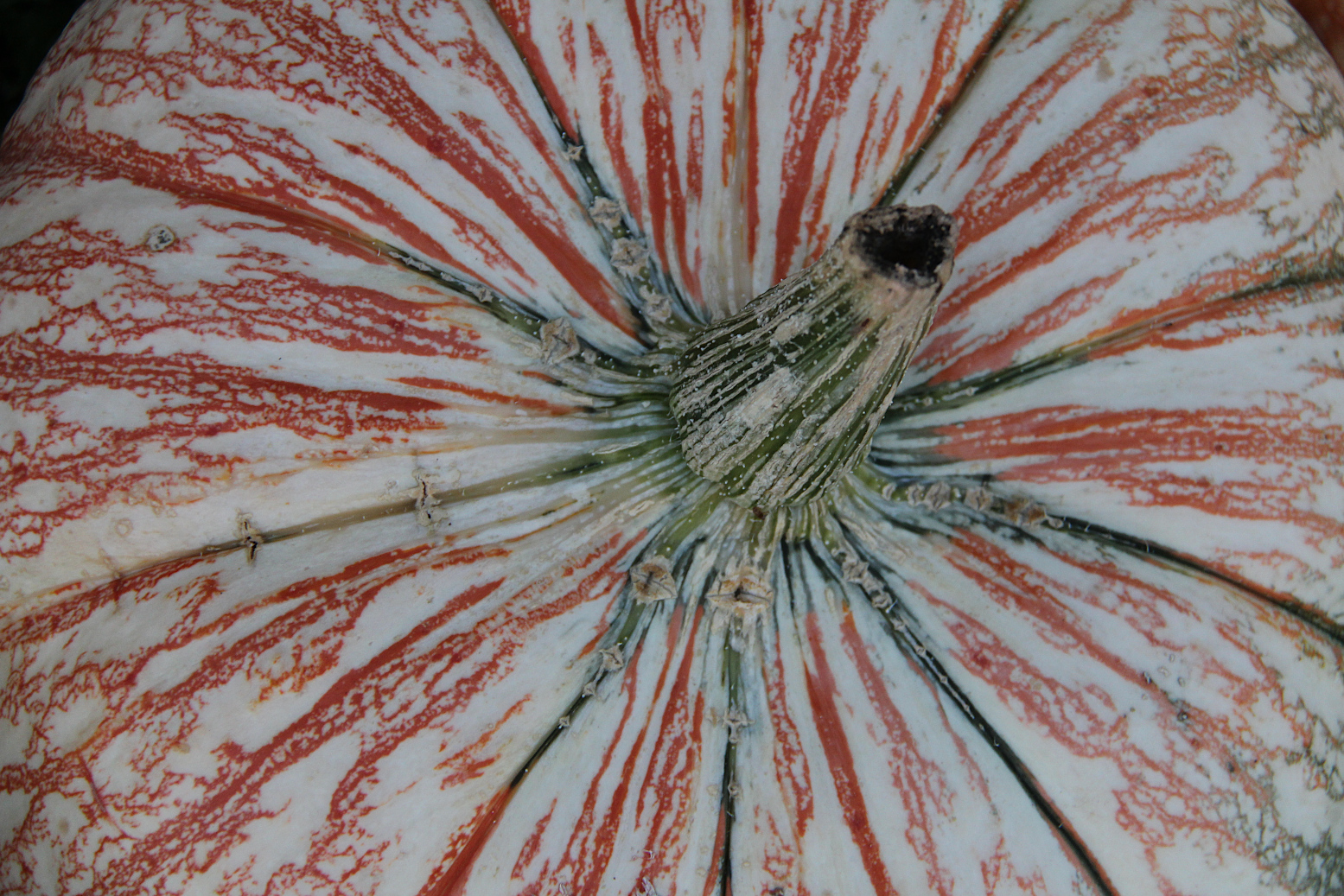
I aimed my camera lens down for a closeup photo of a massive striped pumpkin. (Minnesota Prairie Roots copyrighted photo September 2025)
Pumpkins set next to a tractor tire pop color in the grass. (Minnesota Prairie Roots copyrighted photo September 2025)

I remained caught up in my photography until I glanced back at the tractor and the treeline. In that moment I realized I really wanted to watch the sun set at City View Park, just down the road a bit. It’s a beautiful site overlooking Faribault next to a city water tower and across the street from Trump’s Apple Orchard. We occasionally picnick here and watch the Fourth of July fireworks at this hilltop location.
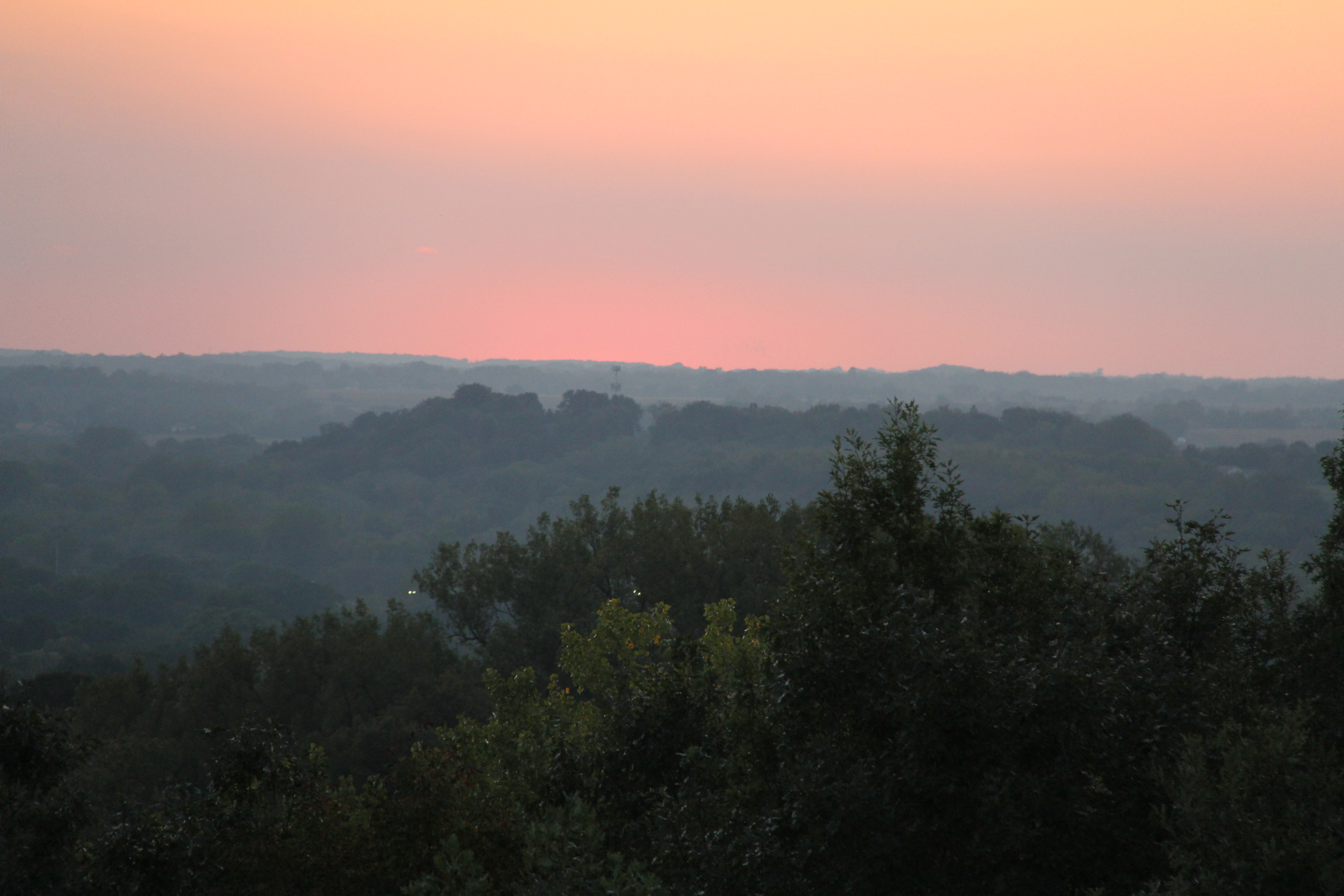
Just after sunset at City View Park, Faribault. (Minnesota Prairie Roots copyrighted photo September 2025)

But Randy and I arrived too late. I could see, as we pulled into the small parking lot, that the orange ball of the sun had already dropped leaving a skyline tinged with pink. Disappointment coursed through me.

Yet, others didn’t miss the sunset. Three teenage boys sat on a park bench facing the city overlook. As I walked toward them, I wondered why they were here, what they might be doing. Yes, I admit I thought they might be up to no good. I was wrong. They were here watching and photographing the sunset with their smartphones. I asked to see their pictures and they pulled out their phones and showed me the beauty I missed by my delayed arrival.

I took the opportunity then to praise them—to tell them how wonderful it was to see them outdoors, appreciating the sunset. Moments like this, generational interactions like this, conversations like this, matter. These youth understood the value of pausing to sit and watch the sun set across their city on the first evening of autumn. And I recognized the value of acknowledging that.

© Copyright 2025 Audrey Kletscher Helbling


You know you live in rural Minnesota when… April 25, 2024

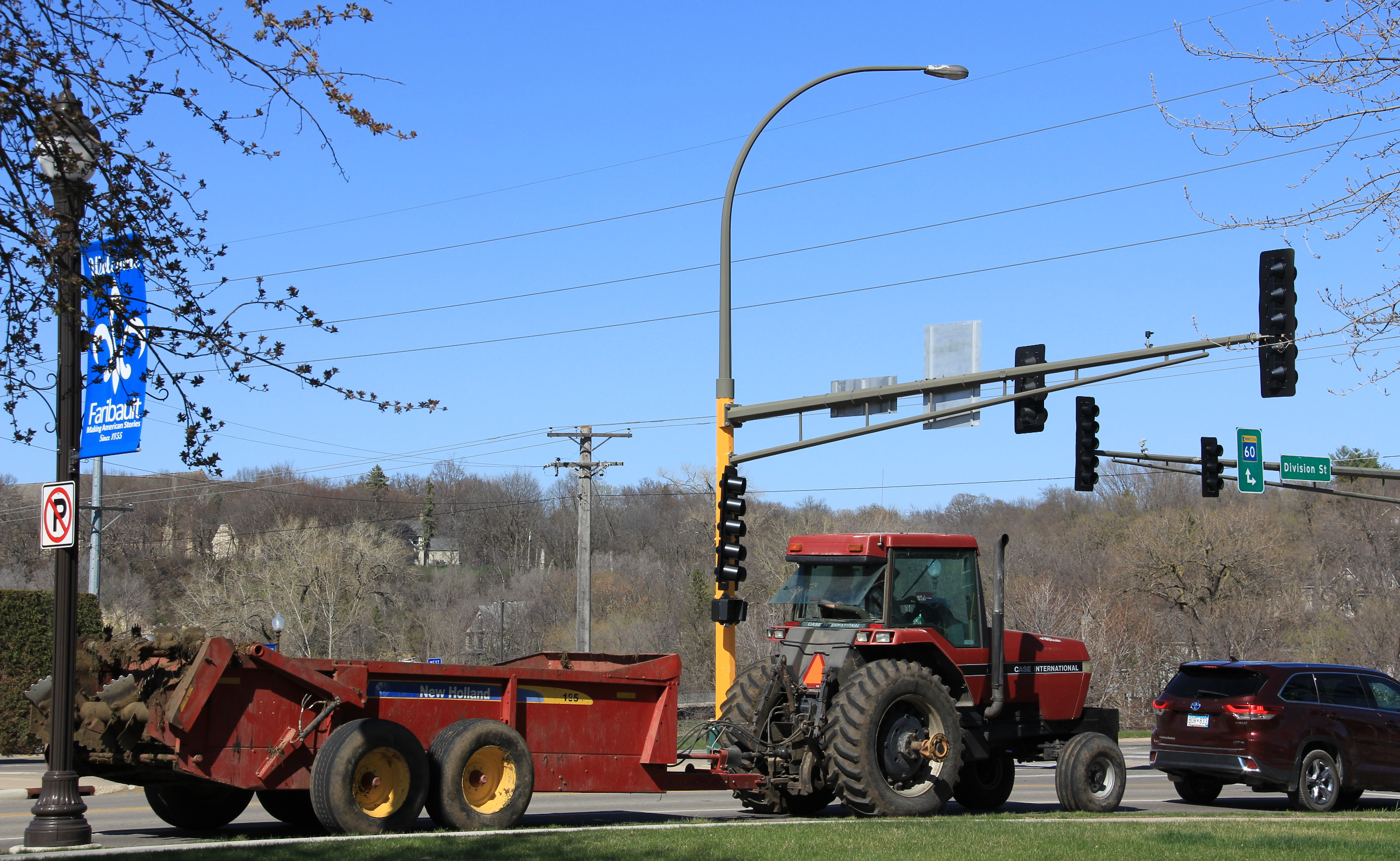
A tractor pulling a manure spreader fuels up at the local co-op. (Minnesota Prairie Roots copyrighted photo April 2024)

LIVING IN FARIBAULT, a city of some 24,000 surrounded by farm fields, I sometimes see ag machinery pass through town. I live along an arterial route. Tractors pulling implements or solo tractors and combines occasionally roar by my house, especially during spring planting and fall harvest.

But the sighting of a tractor with attached manure spreader spotted several blocks from my house at the local Faribault Community Co-op Oil Association on a recent afternoon proved a first. I’d never seen a manure spreader, marketed as a box spreader, within city limits. But there the New Holland brand spreader sat, linked to a Case International tractor. Right there aside the co-op fuel pumps along Division Street in the heart of downtown.

Leaving the co-op. The historic Alexander Faribault house can be seen on the other side of the hedge. (Minnesota Prairie Roots copyrighted photo April 2024)

My mind asked, “Why? Why wouldn’t you unhook a manure spreader before driving a tractor into town to fuel up?” I’ll never know.

Whatever, the scene drew my eyes and reminded me of the importance of agriculture in this region. Although farming has changed from mostly small family farms with livestock to much larger acreages minus the animals, the importance of agriculture to the local economy remains. All I need do is drive into the country to observe farmers busy in the fields, planting corn and soybeans.

Back in the 1860s and 1870s, wheat was the primary crop in this area. Flour mills populated the region. None remain here today.

But what remains are memories and history, including the Alexander Faribault house, which sits next to the co-op, on the other side of a hedge row. The house, built in 1853 and thought to be the oldest woodframe house in southern Minnesota, served as a fur trading post for the town founder. He also farmed, on land that is today within the city limits, and sheltered Indigenous Peoples on his farm.

After waiting at the Division Street/Minnesota State Highway 60 stoplight, the tractor continued east across the historic viaduct, presumably heading back to the farm. (Minnesota Prairie Roots copyrighted photo April 2024)

Community Co-op has been in Faribault since 1925, closing in on 100 years in business. That’s remarkable really. Good customer service and loyalty withstand the tests of time. And no one seems to mind a tractor with attached honey wagon pulling up to the pumps on a Sunday afternoon in April.

© Copyright 2024 Audrey Kletscher Helbling