Minnesota Prairie Roots

Writing and photography by Audrey Kletscher Helbling

White Cane Day & more focus Faribault Lions as they serve October 15, 2024

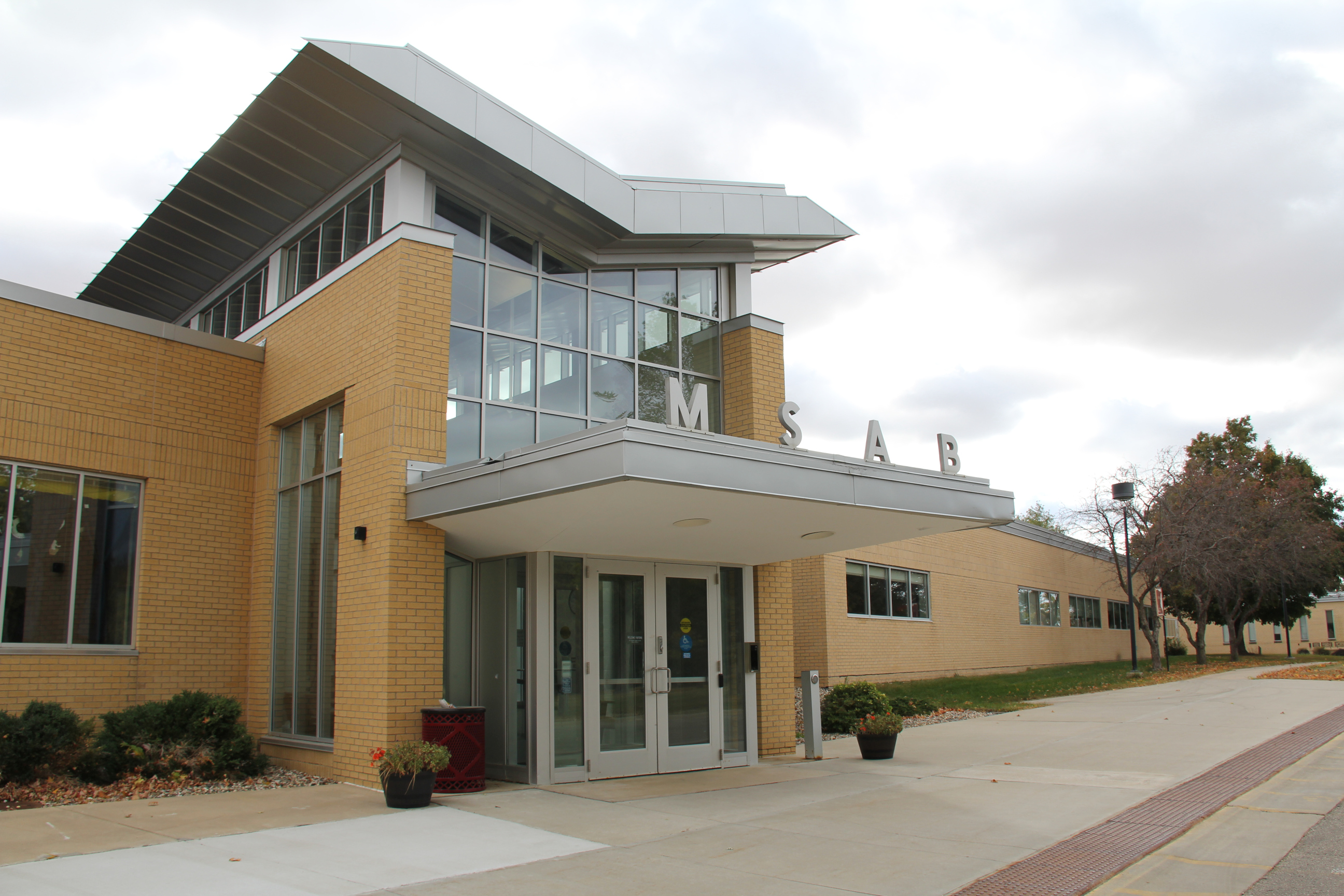
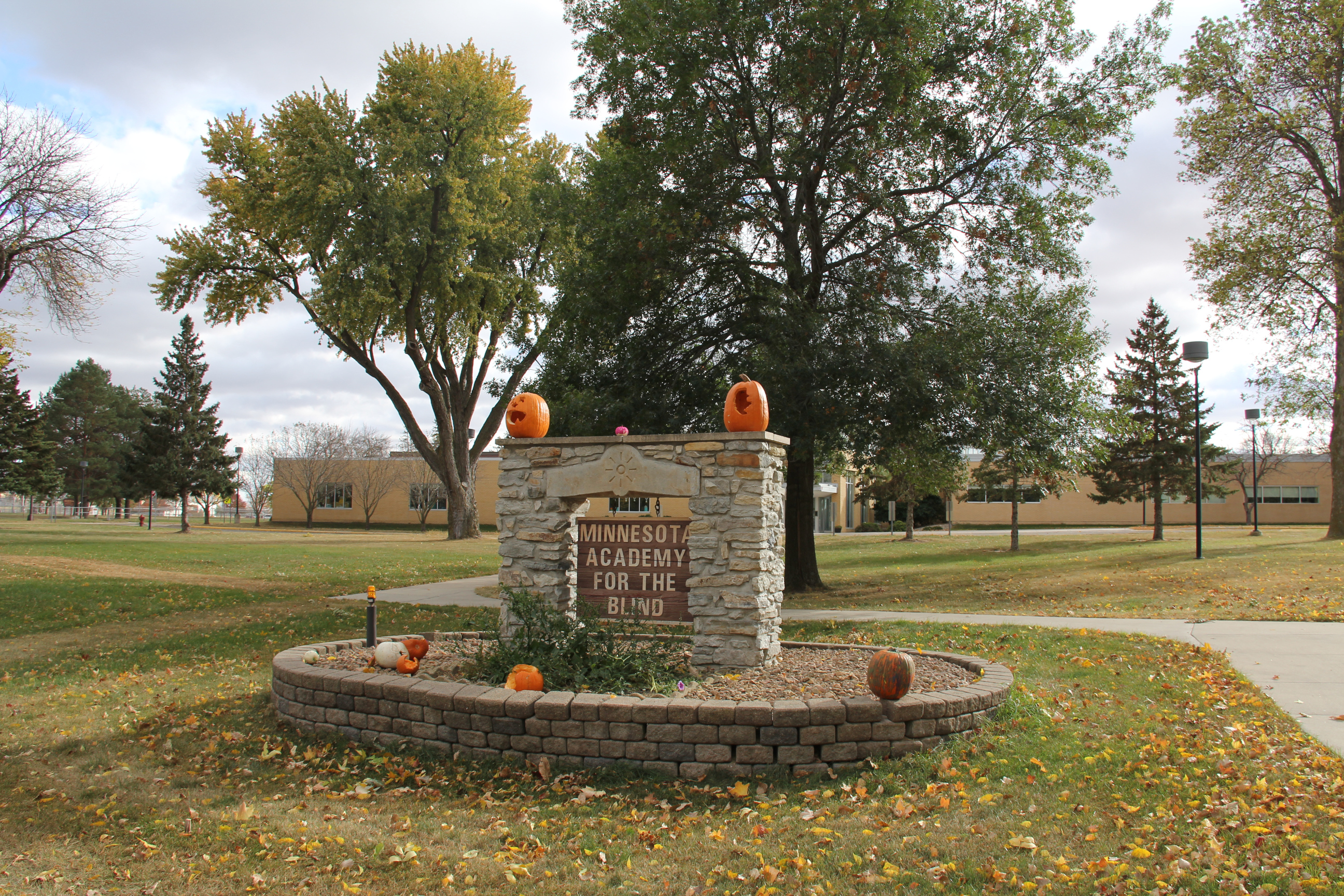
The entrance to the Minnesota State Academy for the Blind, located on Faribault’s east side. (Minnesota Prairie Roots copyrighted photo October 2024)

AS SOMEONE WHO DEALS with vision and hearing impairments, I feel fortunate to live in a community with a heightened awareness of those issues. Faribault is home to the Minnesota State Academies for the Deaf and Blind. Medical professionals offer local care in vision and hearing. And the Faribault Lions Club, focused on both, is especially active.
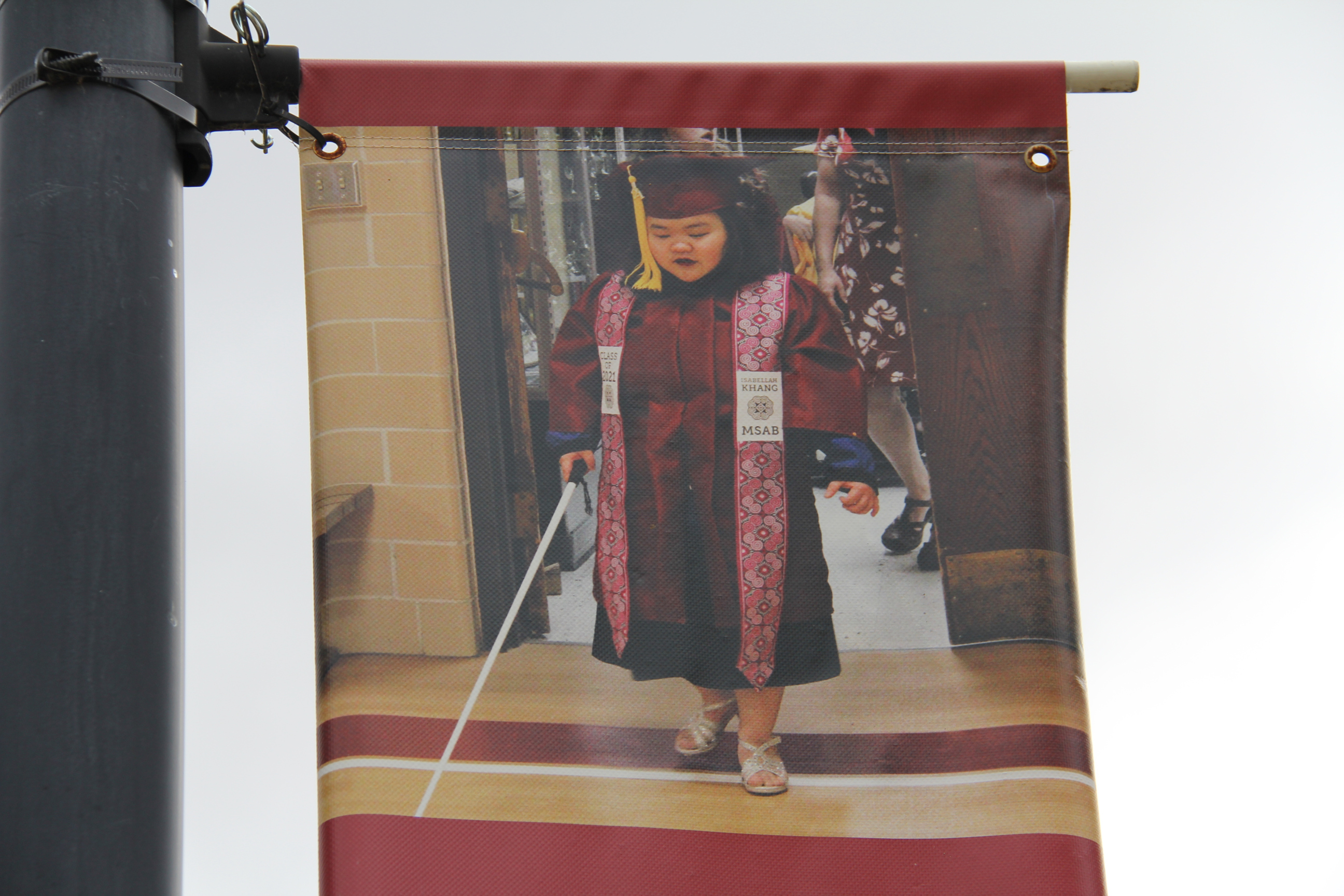
Pictures of MSAB students are featured on banners scattered around the campus. This one highlights a graduate. (Minnesota Prairie Roots copyrighted photo October 2024)

And that is why I met local Lion John Battles and learned about White Cane Awareness Day, celebrated annually on October 15. Battles was standing inside the exit area of Fareway Foods handing out information about white canes and collecting donations. Those monies will help blind and visually impaired individuals deal with mobility issues. For example, past gifts have been used to purchase canes and/or replacement tips for students at MSAB.
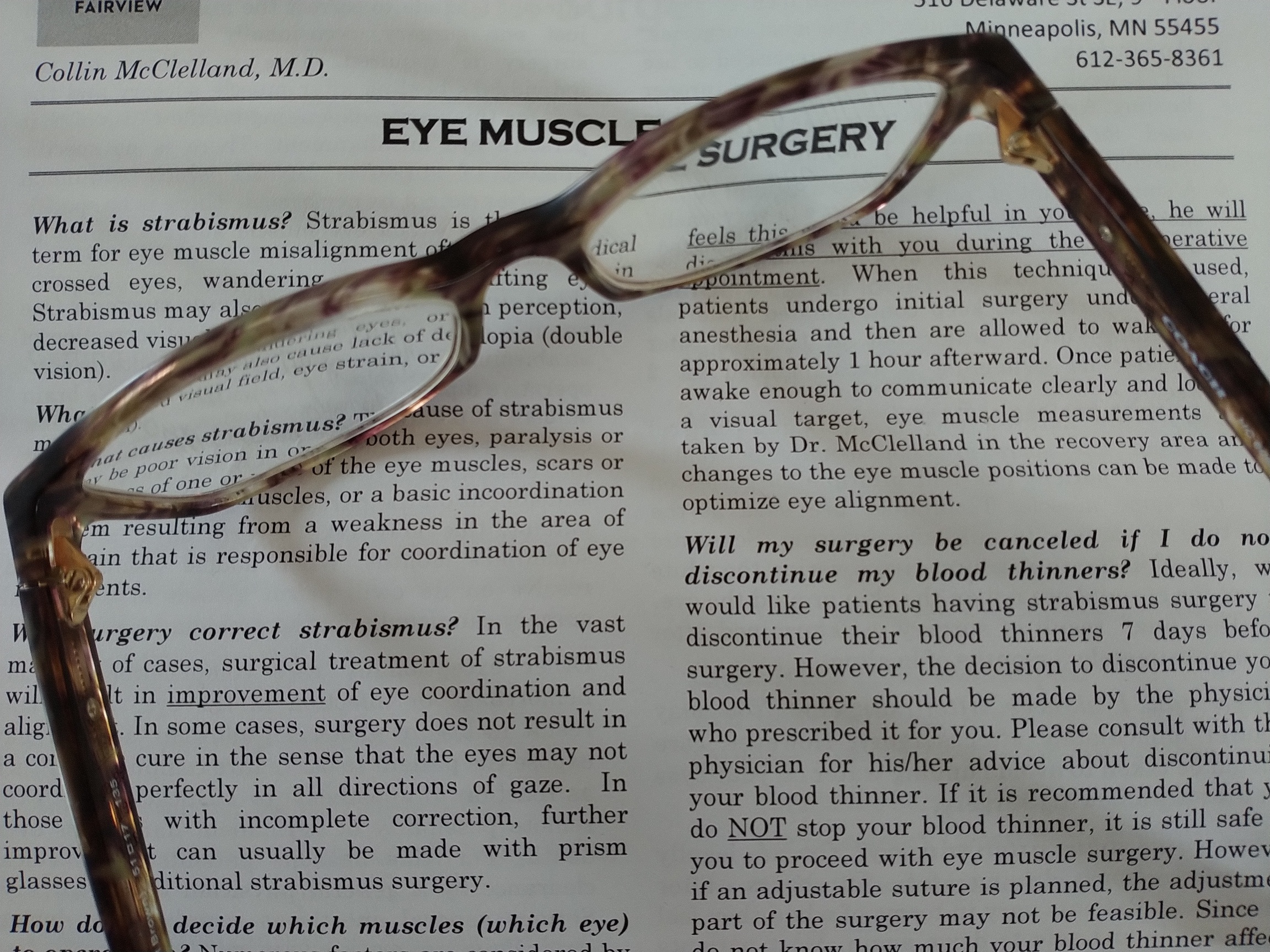
I underwent eye muscle surgery as a child and then again 64 years later, this time using an adjustable suture in my left eye. (Minnesota Prairie Roots copyrighted file photo 2023)

I paused to drop money into John’s bucket and also to chat a bit about the Lions’ work and my own struggles with vision. I’ve been diagnosed with bilateral strabismus and in January underwent surgery to realign my eyes with the goal of eliminating my double vision. Unfortunately, the corrective surgery did not work long-term. That’s true in 10-20 percent of surgical outcomes. Rather than attempt another surgery, I opted to try prisms in my prescription eyeglasses. Adjusting to the high number of prisms took time and they are not perfect. I struggle with depth perception and sometimes still see double. But, as I told John, at least I can see.

This photo of me (far left in group picture) with family on a vacation to northern Minnesota in 1960 shows me wearing a patch over my left eye. This was an attempt to correct my vision without surgery. (Minnesota Prairie Roots copyrighted file photo by Elvern Kletscher)

My vision issues are not something which suddenly developed. Rather, I was born with misaligned eyes, requiring strabismus surgery at age four. I am forever grateful to my parents for understanding the importance of corrective surgery. Although I never asked, I expect it was a huge financial burden for them. Had I not undergone this operation at the hospital in New Ulm, I likely would have gone blind in my less dominant eye.
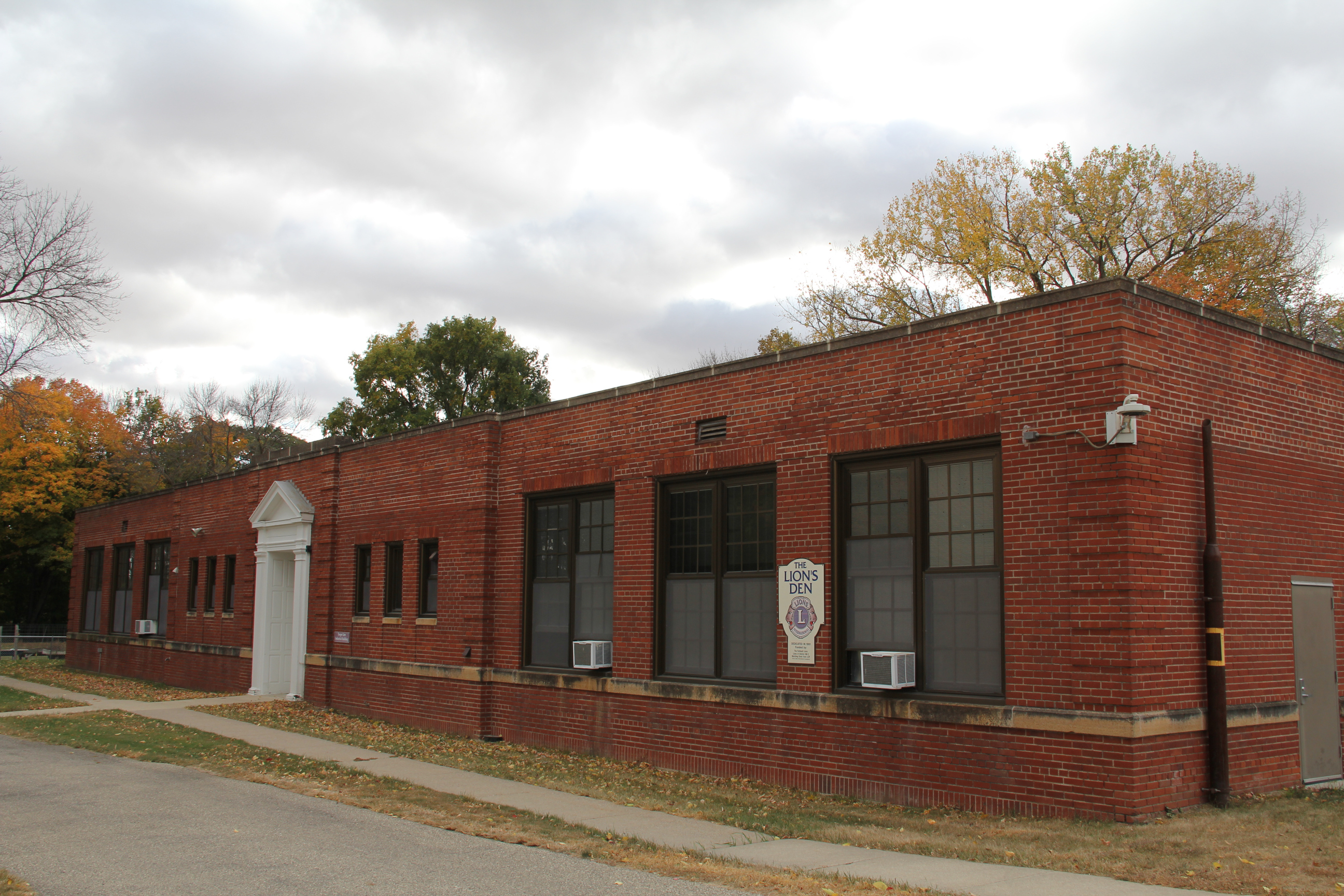
This building on the MSAB campus houses the Lion’s Den, an apartment setting to help students learning to navigate independent living. (Minnesota Prairie Roots copyrighted photo October 2024)
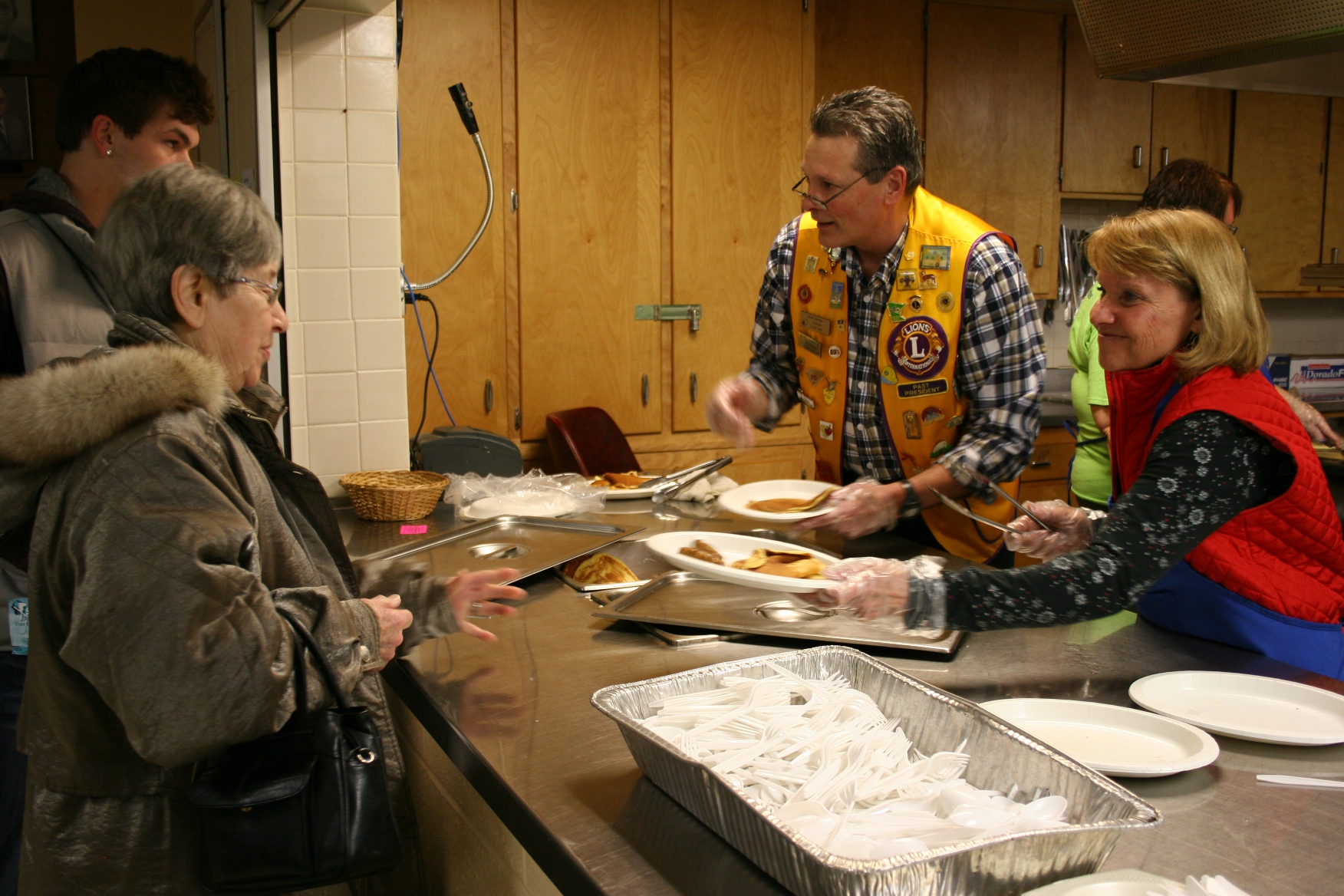
Serving up pancakes and sausage at the annual Lions Club pancake breakfast, a major fundraiser for the Faribault service organization. (Minnesota Prairie Roots copyrighted file photo 2015)
The main entry to the Minnesota State Academy for the Blind. The local Lions Club supports students and programs at MSAB. (Minnesota Prairie Roots copyrighted photo October 2024)

As I shared parts of my story with John, I felt his empathy and his strong desire to help others. The Faribault Lions clearly practice their motto of “We serve.” They collect used eyeglasses and hearing aids, offer vision screenings for kids, support Can Do Canines (which trains service dogs), funded the Lion’s Den apartment at the school for the blind (helping students adjust/learn in an apartment setting) and much more. Their service projects are not solely focused on vision and hearing.
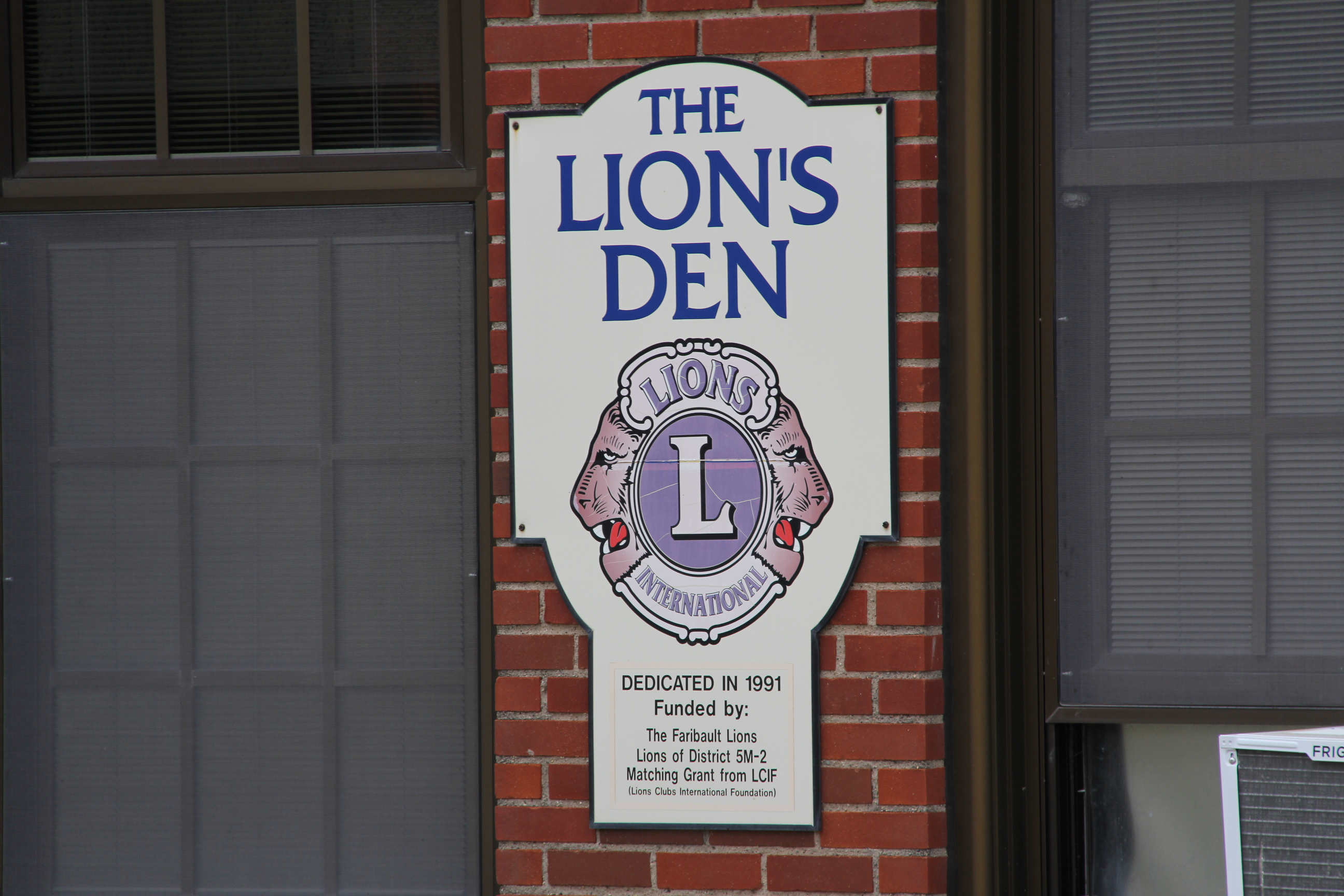
This sign on the Lion’s Den acknowledges this as a project of the Faribault Lions Club with a grant from the Lions Club International Foundation. (Minnesota Prairie Roots copyrighted photo October 2024)

But on this day, I want to highlight the efforts of John and his fellow Lions to educate the public about white canes. In the printed information John distributed at the grocery store, I learned that the idea of white canes originated in 1930 with the Lions Club of Peoria, Illinois. The club president suggested white canes with red tips as a tool to help those with visual impairments. The idea caught on as a way to grow their independence and also as a way to create awareness among the public.
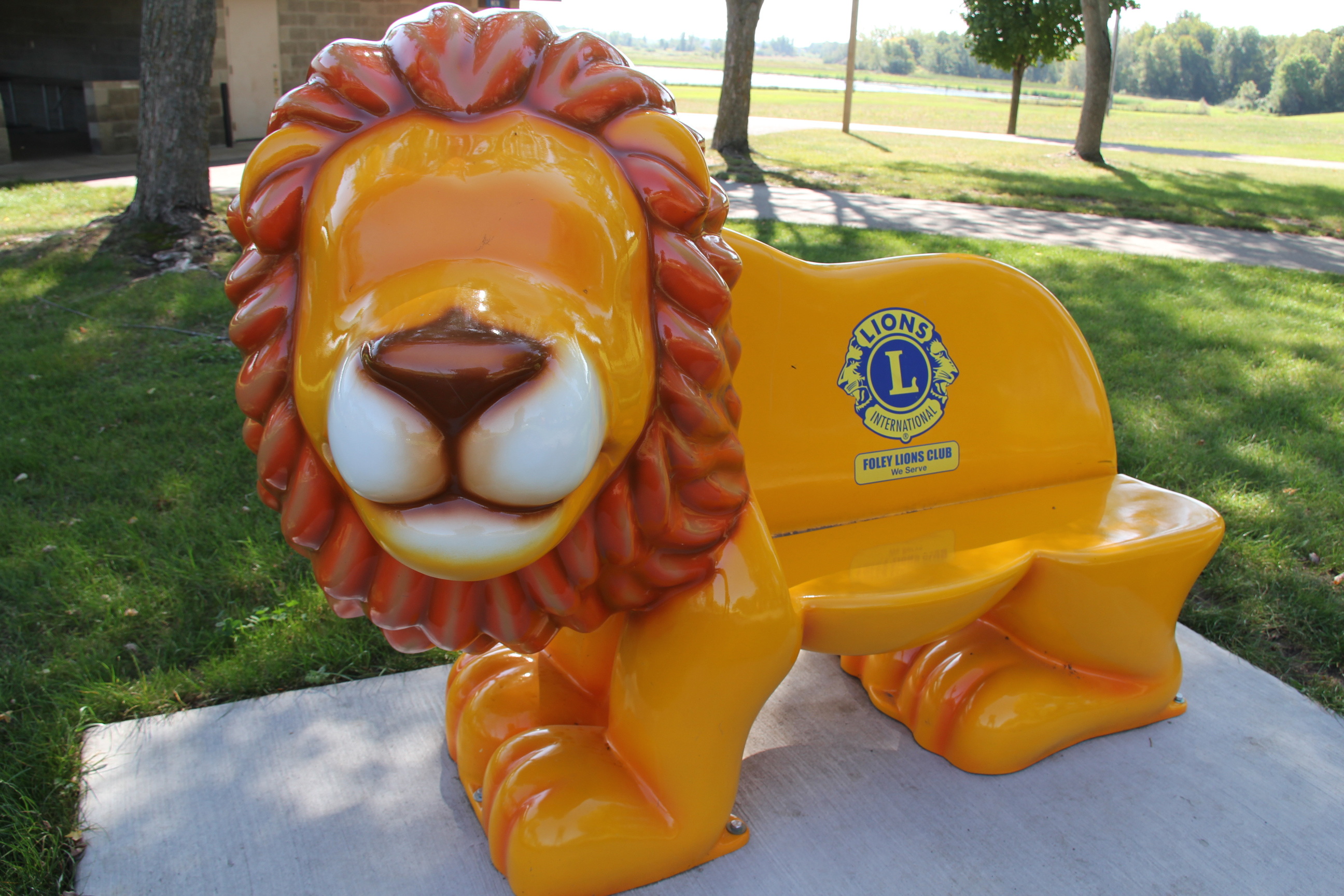
The Foley Lions Club in central Minnesota is raising awareness about vision via this bench in Lion’s Park. There’s also a lion’s head drinking fountain in the park. (Minnesota Prairie Roots copyrighted photo September 2024)

Awareness is assuredly a goal of the Lions. The informational sheet from John quotes two subdivisions of Minnesota state law #169.202 regarding white cane usage and how those operating motor vehicles must stop and yield to those carrying white or metallic canes. That seems common sense. But sometimes common sense is elusive.

A banner on the MSAB campus shows pride in the school mascot. (Minnesota Prairie Roots copyrighted photo October 2024)

I appreciate the efforts of the Faribault Lions, especially when it comes to vision and hearing. They are determined to raise awareness, offer financial and other support, and make a difference for those of us who have vision and hearing impairments. Mine are manageable. I can see. And I can hear, even though I have profound hearing loss in my right ear (due to sudden sensory hearing loss from a virus).

Outside the M Health Fairview Eye Clinic. Inside the clinic, donors names are listed on a wall, including some I recognized as from Faribault. (Minnesota Prairie Roots copyrighted file photo 2023)

It’s humbling to sit in the packed waiting room of a specialty clinic like M Health Fairview Eye Clinic on the campus of the University of Minnesota and see young children with white canes. That puts my vision issues in perspective. In every situation, opportunities exist to learn and to grow empathy. I did and I have. And now, thanks to Faribault Lion John Battles, I have grown my understanding of White Cane Awareness Day and how much my community cares.

© Copyright 2024 Audrey Kletscher Helbling


Reflections & updates June 10, 2024

Photographed at the Rice County Master Gardeners garden in Faribault on one of my meandering walks. (Minnesota Prairie Roots copyrighted photo May 2024)

WHEN I GO FOR A WALK, I’m either walking to primarily exercise or to photograph. One involves fast-paced movement to increase my heart rate. The other entails a leisurely pace of observing the world around me.

There was a time when I always carried my camera. No more. I need to feel the freedom of just being, without thought of, oh, I need to photograph that. If I’m without my 35 mm digital camera and absolutely need to take a photo, I will use my smartphone.

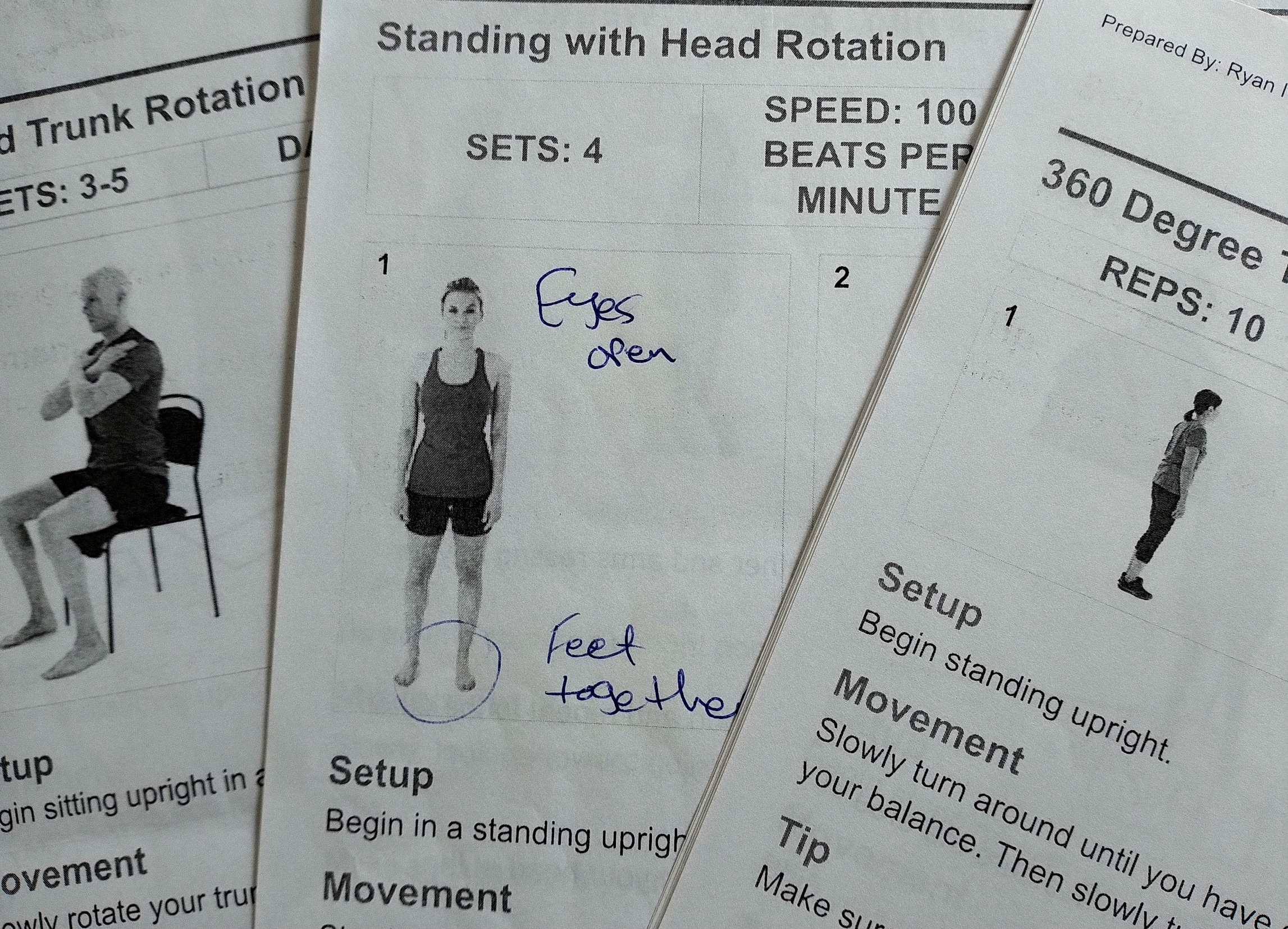
An example of exercises I did in vestibular rehab therapy. (Minnesota Prairie Roots copyrighted file photo 2023)

A NEW PERSPECTIVE

What prompted this change? My health. Last summer was, for me, the summer that wasn’t. I was primarily housebound from April through September due to long haul COVID. You’ve probably read my story, detailed here. I dealt with balance, sleep, sensory and other issues. All aspects of my life were affected. I left my house only for medical appointments because I couldn’t handle being out in the world of noise, light, sound, movement. I felt overwhelmed. I sat in my darkened living room, curtains drawn, lights low, no sound.

But here I am, a year later, with six months of vestibular rehab therapy behind me, and doing significantly better. Time and a lot of hard work on my part got me to this better place health-wise. I still deal with residual sensory issues. But mostly, I manage. And when I don’t, I temporarily sequester myself.

That I am back walking and photographing is, in many ways, remarkable. Last summer I couldn’t walk half a block due to imbalance. And I certainly couldn’t use my camera. I credit my physical therapist for patiently working with me, helping me regain my sense of balance and build my tolerance and ability to manage sensory overload. There is hope for anyone dealing with similar issues. But it can be a difficult road. There’s no denying how often I felt unheard, unsupported, without hope.

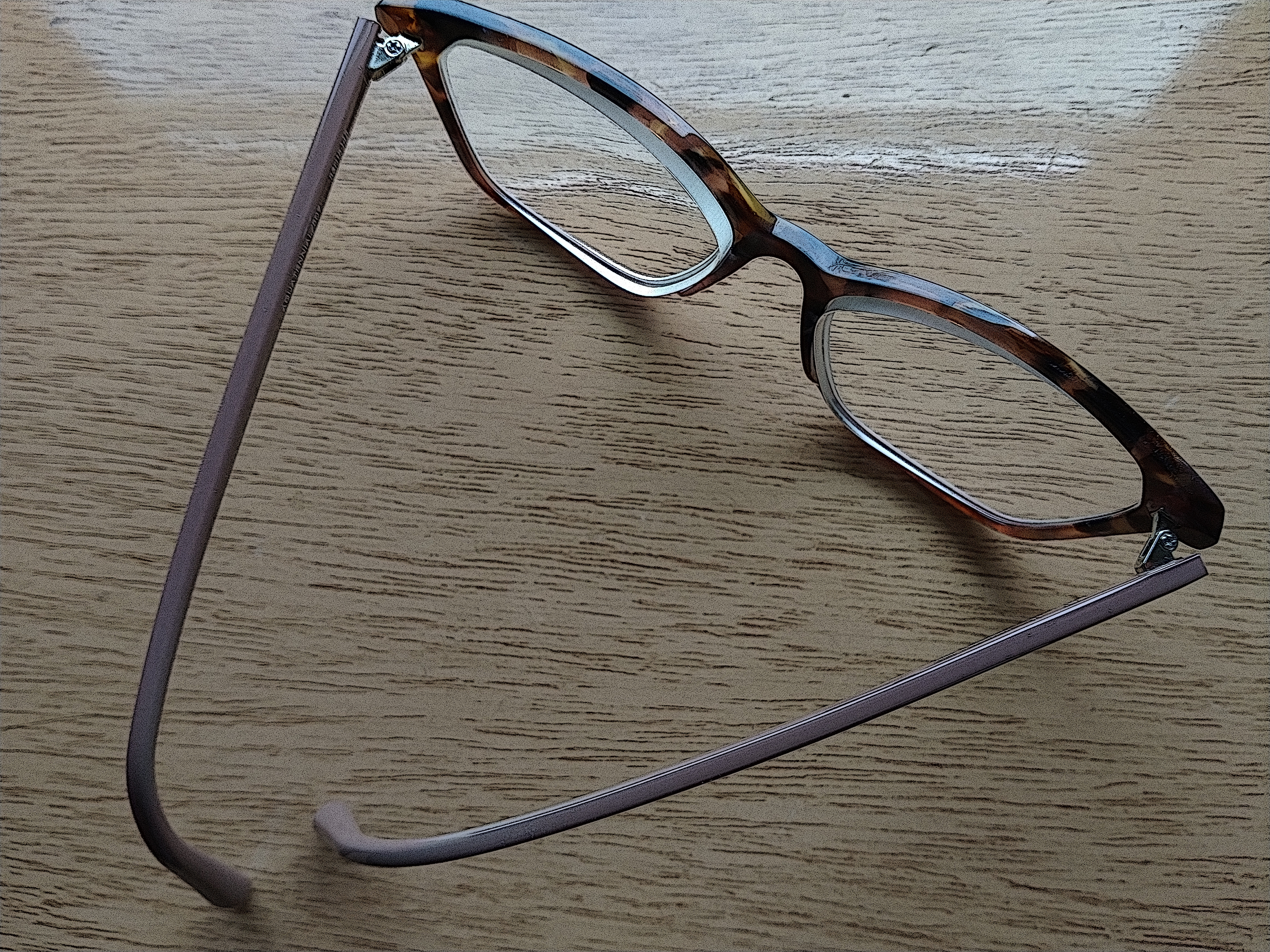
My new prism-heavy prescription eyeglasses. (Minnesota Prairie Roots copyrighted file photo May 2024)

DEALING WITH VISION ISSUES

At the same time all of this was happening, I was experiencing increasing double vision. In late January, I had bilateral strabismus eye surgery to realign my eyes. It was successful until it wasn’t. In 10-20 percent of cases, the eyes shift back to misalignment post-surgery. Mine did. I opted to try prism-heavy prescription lenses before considering a third surgery. I had my initial eye surgery at age four.

Four weeks out from getting my new prescription eyeglasses, my eyes and brain are still adjusting. The prisms have mostly corrected my double vision. But I’m struggling with distorted close-up vision, specifically slanting. I’m hoping, with time, that will vanish. I also can’t see things clearly on my computer screen, which is problematic when writing and when processing photos.

But onward I forge. Sometimes I push myself too much, taking too many photos, doing too many things. That results in strained, aching eyes and headaches. Often I feel just plain tired due to all the effort it takes to simply see. My brain and my eyes are working hard to focus my vision.

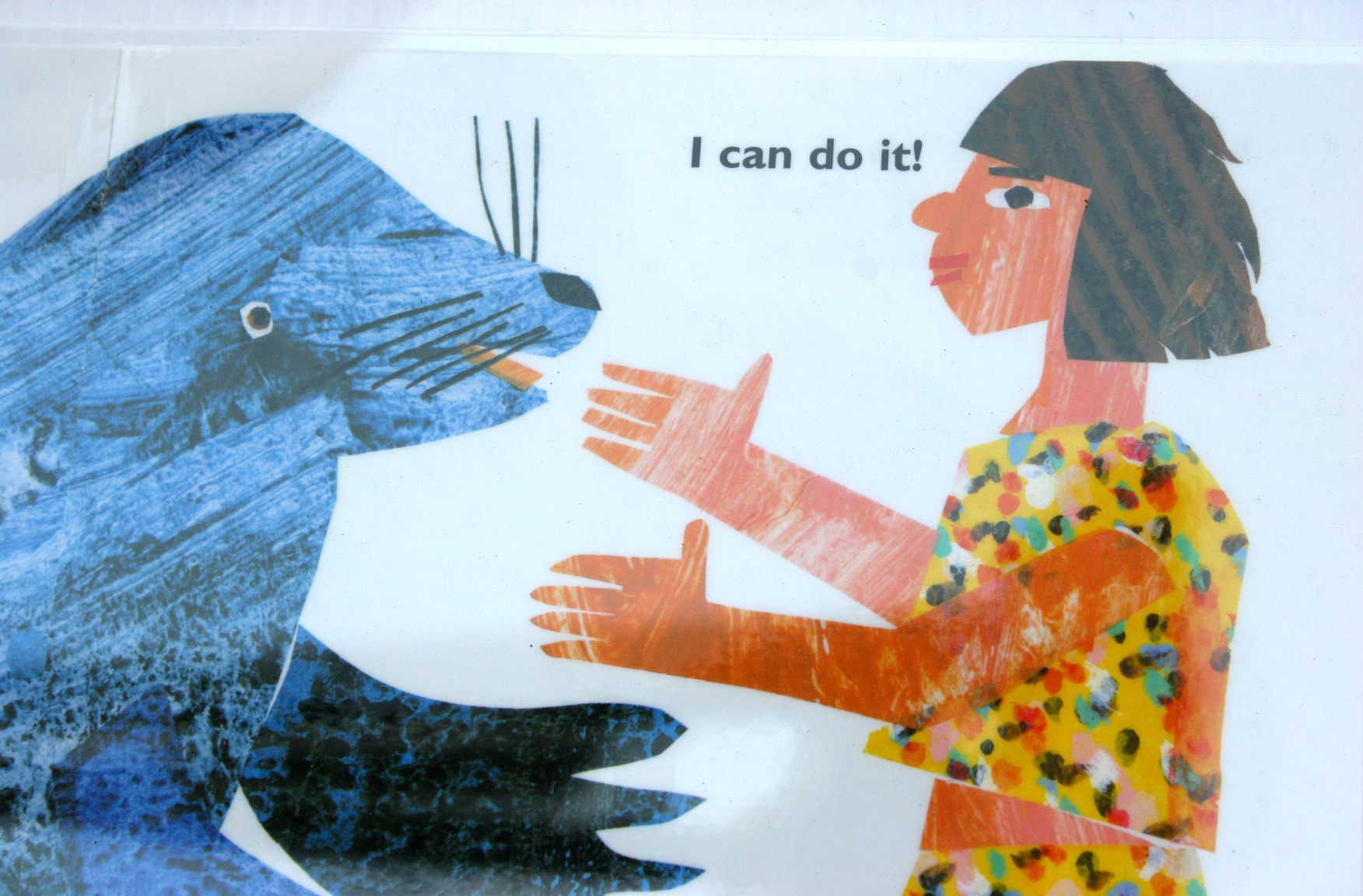
A page from Eric Carle’s book, From Head to Toe.

TAKE NOTHING FOR GRANTED

Too often in life, we take things for granted—the ability to walk, to hear, to see. And then something happens to us or someone we love and we realize that, hey, none of these are givens. I recognize that I have a responsibility to take care of myself in the best way I can. Sometimes that means walking to stay fit and sometimes that means walking to feed my creative spirit.

© Copyright 2024 Audrey Kletscher Helbling

 

So my vision is a little distorted right now May 16, 2024

Filed under: Uncategorized — Audrey Kletscher Helbling @ 5:00 AM
Tags: , , , , , , ,
My new glasses with added prisms have rather thick lenses (especially the left one) near the nosepiece. (Minnesota Prairie Roots copyrighted and edited photo May 2024)

“DO NOT WEAR your glasses when you leave here,” she warned. I listened. I didn’t want Heidi picking me up off the pavement outside the eye clinic.

“Be careful going up and down steps tomorrow,” Randy warned Tuesday evening. I listened.

A MAJOR CHANGE

Just hours into my first day of wearing new prism-heavy prescription eyeglasses on Wednesday, I understand why my optician and my husband issued those warnings. These new glasses, which are supposed to help me deal with double vision via prisms, are a big change. Make that a major change.

Time will tell whether I can handle the “5 base in” horizontal prisms ground into each lens. That’s ten total, which Heidi says is a lot. I don’t pretend to understand all of these numbers. But the neuro ophthalmologist who did recent surgery to realign my eyes said I really needed fourteen. He didn’t think I could tolerate that amount.

TRYING TO AVOID ANOTHER SURGERY

Hopefully I can manage the prisms added to my glasses. If not, I will need to consider more surgery, something I’m hoping to avoid. I’ve already had bilateral strabismus surgery twice—at age four and most recently in late January. Immediately post-surgery, my eyes were in near perfect alignment. But then they reverted to being misaligned in a “significant regression of surgical effect.” This happens sometimes.

So here I am today, trying a new prescription with more prisms in hopes it will help me achieve “comfortable binocular vision” and avoid a third surgery on my eyes.

AN OVAL DINNER PLATE

As I type, I am looking at a computer screen that appears slanted, curved. My world is distorted. I’d been warned, but didn’t think the distortion would be quite this bad. A dinner plate, when tilted, appears oval rather than round. And when I pulled a key lime pie from the oven, I nearly dropped it. I saw a pie that was sliding; it wasn’t. I feel almost like I’m up high looking down on the world. It’s weird and odd and disconcerting.

But I’m trying. I intellectually understand that my eyes and brain are adjusting. I must give it time. Two weeks minimum, my surgeon said.

My optician, Heidi, who has supported me from pre-surgery through today, advised me to keep wearing my new glasses, as tempted as I am to pull out my old ones with fewer prisms. I stashed them in a drawer. Out of sight, out of mind. Well, maybe not out of mind.

HOLDING HOPE

I’ll check in with Heidi today. She asked me to do that, going above and beyond because she gets it. She also deals with double vision and prism eyeglasses. Her positive attitude and encouragement have helped me tremendously. The word “hope” runs strong in our conversations.

And that is my focus, along with being really really careful on steps and elsewhere as my eyes and brain adjust to these new lenses through which I view a currently distorted world.

© Copyright 2024 Audrey Kletscher Helbling
 

The eyes have it until they don’t May 7, 2024

My old glasses atop info about bilateral strabismus eye surgery. (Minnesota Prairie Roots copyrighted file photo November 2023)

SIGNIFICANT REGRESSION OF SURGICAL EFFECT. Those are words you don’t want to read/hear following any surgery. But, three months out from surgery to realign my eyes, that’s where I’m at with my vision.

During my second post-op check last week with my neuro ophthalmologist, Dr. Collin McClleland, I learned that my eyes apparently have a mind of their own. They are back to not working together. This came as no surprise. I’ve been experiencing ongoing double vision, although less than before my January 22 surgery.

What I didn’t expect was the word “significant.” I knew the possibility existed that my eyes would return to misalignment; I did my homework in advance of bilateral strabismus eye surgery. But who thinks they are going to be in the minority of that final surgical outcome? Not me.

Several days after my January surgery, I was smiling, happy to have surgery behind me, happy with flowers from my family. (Minnesota Prairie Roots copyrighted file photo by Randy Helbling, January 2024)

Immediately after surgery, my eyes were in near perfect alignment. I was happy. My surgeon was happy. But then, as my eye muscles healed and my brain and eyes adjusted, the shift began.

Extensive testing during my recent appointment showed “significant regression.” I won’t confuse you with numbers and medical terminology. Suffice to say I’m frustrated and disappointed as is my surgeon. But, Dr. McClelland said, he wouldn’t have done anything differently during surgery. I needed it, and the surgery did improve alignment. I agree. Why my eyes reverted mostly back to their misaligned positions is unknown. I asked. There’s no answer.

I explained to my doctor that it takes effort sometimes to see just one, and not two. That exhausts me. And if I’m doing anything that requires a lot of visual back-and-forth, like shopping, my eyes feel like they’ve done calisthenics. They hurt. Whenever I have lots of sensory input or am doing multiple things, my double vision worsens. I was experiencing all of this before surgery, too.

In the recovery room after surgery on both eyes in January. (Minnesota Prairie Roots copyrighted file photo by Randy Helbling, January 2024)

What to do next was the question of the morning. My surgeon offered two choices: One, add more prisms to my glasses and hope that alleviates some of my double vision. Or try surgery again. I was mentally unprepared for this. But I quickly opted for more prisms. I am in no hurry to rush back into an operating room, even if the 1 ½-hour surgery was not horrible and I have full confidence in Dr. McClelland. Surgery is surgery.

So here I am, no line bifocal prism glasses ordered. The lenses will take about two weeks to make given the extensive work required. Then I’ll be without glasses while the lenses are placed in my frames. Then the test begins. Will the added prisms, divided between both lenses, help with my double vision? Time will tell. Prisms bend light before it travels to your eyes and the brain has to sort it all out and create a singular image, or something like that.

The issue, my ophthalmologist explained, is whether I can tolerate more prisms added to my prescription lenses. I could experience distortion, what he calls “the fish bowl effect.” The goal is “comfortable singular binocular vision.” If I can’t handle the added prisms (which are actually less than they should be, but within the hopefully tolerable range), then I will need to revisit surgery.

That’s where I’m at today. Waiting for those prism-heavy lenses. I’m trying to prepare myself for what I know will be several weeks of adjusting to my new prescription. And hoping this non-surgical approach works.

These buildings house outpatient clinics, including the M Health Fairview Eye Clinic, on the campus of the University of Minnesota in Minneapolis. (Minnesota Prairie Roots copyrighted photo May 2024)

As disappointed and frustrated as I feel about the final surgical outcome, I remain grateful for the vision I do have, even if far from perfect. Sitting in the waiting room at M Health Fairview Eye Clinic in Minneapolis puts my situation in perspective. I have watched little kids there navigating with the aid of a white cane…

© Copyright 2024 Audrey Kletscher Helbling
 

Update: My eyes are aligned February 5, 2024

My old glasses with prisms atop information about bilateral strabismus eye surgery. (Minnesota Prairie Roots copyrighted file photo November 2023)

TWO WEEKS OUT from bilateral strabismus eye surgery at M Health Fairview Clinics and Surgery Center in Minneapolis, my vision is looking good, pun intended.

Neuro ophthalmologist Dr. Collin McClelland was pleased with the results of his 1.5-hour surgery on my eyes. I saw him and his team last Wednesday for my post op visit. My previously misaligned eyes are now in full alignment. In three to four months, I should know the final outcome. Eyes can shift yet as muscles heal and my brain adapts to the new alignment.

Updated glasses (minus prisms) and updated eyes, nine days after surgery. (Copyrighted photo by Randy Helbling)

This is a process, this recovery and healing. I can tell my brain is working hard to adapt to my new way of seeing the world. My eyes remain red, irritated and itchy. But I am looking less ghoulish each day with my eyes no longer leaking fluid and blood. Time, healing, ointment and eye drops have all helped.

Mostly gone is the double vision which led me first to my local ophthalmologist late last summer and then to the specialist at the University of Minnesota in Minneapolis in October. Today I see double only upon awakening and for a while thereafter and when I’m overly-tired. That compares to more often than I could count pre-surgery. That is reason to feel thankful.

As you may expect, I arrived at my post-op visit with a list of questions, tasking Randy to take notes as I focused on eye checks done by two doctors and another medical staff member. Yes, the exams were repetitive and exhausting. But I appreciate the thoroughness of the post-op evaluations.

I won’t get into the medical details of my surgery, not that I understand them anyway. But I learned that Dr. McClelland worked on two muscles in my right eye and one in my left to realign my eyes. He had to work through extensive scar tissue from this same surgery done in 1960 by Dr. Theodore Fritsche in New Ulm.

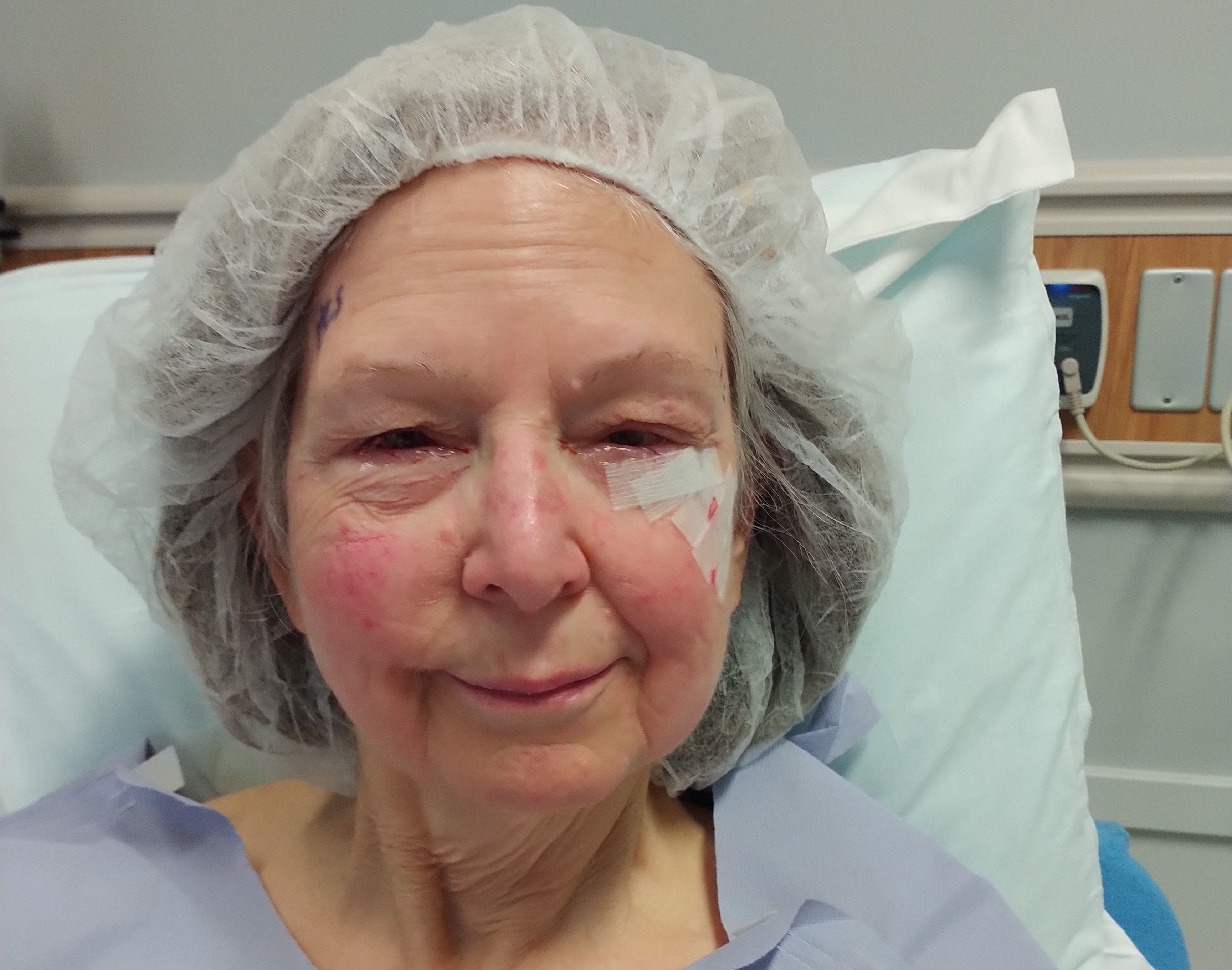
This is what I looked like shortly after surgery in the recovery room. If you look closely at my left eye, right above the steri strips, you’ll see a black thread taped to my skin. That’s the end of the adjustable suture. (Copyrighted photo by Randy Helbling. I asked him to take the photo, not realizing how awful I looked.)

Perhaps the most intriguing part of my recent surgery is the adjustable sutures stitched into my left eye. That’s exactly what it means. Adjustable. During recovery, when I was alert enough to focus on a big letter E across the room, Dr. McClelland tweaked the alignment based on what I saw. Twice he had to pull on the sutures to move my left eye into alignment. I’m thankful for the topical anesthetic eye drops that semi dulled the pain and for my inability to clearly see what he was doing. I could only see the blurry movement of his hands and what I think was a tweezers. I will admit the tug on my eye felt unsettling.

Several days post-surgery, I was already looking better. It’s difficult to see my red eyes in this image. But trust me, they were still very red. The flowers are from my dear children, sons-in-law and grandkids. (Photo credit: Randy Helbling)

But here I am today, two weeks out from all of that. Each day brings some improvement in the physical appearance of my eyes and in the way my eyes feel. I still feel, though, like a pebble is stuck in my right eye. That, my surgeon explained, is likely the end of a suture irritating my eye. I asked him to clip it off. Of course, I was joking because I realized he couldn’t possibly do that. But I had to bring some humor into the post-op exam room where medical residents listened, observed and learned.

Healing takes time and patience. Not only do my eye muscles need to heal, but my brain needs time to adjust. I’ve learned a lot about the brain in the past year since developing neurological issues from COVID and undergoing six months of vestibular rehab therapy, finishing that less than five months ago. My brain, an amazing and complex organ, is still trying to manage all that goes into it.

Beth, a blogger friend from Michigan, sent this handcrafted get well card, which made me laugh aloud. I love it and all the other cards and wishes I’ve received. (Minnesota Prairie Roots copyrighted photo 2024)

Now with this recent eye surgery, I must limit screen and reading time. I learned this past Saturday that shopping is like physical therapy for my eye muscles and brain. My eyes hurt and I felt exhausted after grocery shopping and stops at Books on Central, Eclectic Alliance and a Big Box retailer. Eyes move a lot when you’re looking at items on store shelves. I overdid it.

My vision is not crystal clear and is sometimes blurry and distorted. I haven’t attempted photography yet, except with my cellphone. Putting anti-inflammatory drops into my eyes four times a day to reduce inflammation has proven challenging. I can’t seem to master that skill. I am thankful for Randy’s help.

Meanwhile, I am wearing prescription glasses without prisms. Before surgery, no number of prisms would correct my double vision. To see such improvements so soon after surgery leaves me feeling grateful to my surgeon and this team—for their knowledge, their skill and their compassion.

#

NOTE: I am grateful also to you, my blog readers, for your support and encouragement offered in the comments section and in get well cards I’ve received. You’ve lifted my spirits. Thank you.

© Copyright 2024 Audrey Kletscher Helbling
 

Seeing one, then two, then one, then two January 17, 2024

My current eyeglasses atop info about bilateral strabismus eye surgery. (Minnesota Prairie Roots copyrighted file photo November 2023)

THE EYES HAVE IT. Until they don’t.

Next week I undergo bilateral strabismus eye surgery at M Health Fairview Clinics and Surgery Center in Minneapolis. Basically, I’m having surgery to align my misaligned eyes. The neuro ophthalmologist will cut into the white of my eyes and then the muscles, tightening them into alignment using adjustable sutures. That’s the plan. Randy has advised me not to watch any online videos. I have no intention of doing so. Reading about this surgery is more than enough for me.

If you look closely at this image, you can see the patch covering my left eye. This 1960 photo of my mom, sister Lanae and brother Doug was taken on a rare family vacation to the North Shore near Duluth, Minnesota. (Photo sourced from my personal photo album)

The thing is, I’ve had this surgery before. Sixty-three years ago. I was just four, cross-eyed and needing medical intervention to correct my vision. Patching my lazy eye didn’t work. So my parents took me to a specialist in New Ulm 60 miles away from our southwestern Minnesota farm. Eventually, ophthalmologist Dr. Theodore Fritsche would do corrective eye surgery at Union Hospital. I will always be grateful to this surgeon and to my parents for recognizing I needed help or I likely would have gone blind in one eye.

I remember little about that long ago surgery except drinking tomato juice at the hospital and looking at books. The books I understand. But tomato juice? I like it now, but didn’t as a preschooler. I also remember getting orange circus peanut candy as a treat from the dime-store following my numerous appointments. I’ve blocked any other memories.

Fast forward to today and how I got here, on the brink of another corrective eye surgery.

As my neuro ophthalmologist explains, my eye muscles loosened through the decades, shifting my eyes into misalignment. My brain was compensating for the most part until I experienced neurological issues following a January 2023 viral infection suspected to be COVID. (I self-tested negative twice.) The niggles of double vision which had bothered me for a few years, mostly in the evening when I was tired, worsened. COVID messed up my brain function and communication between the brain and my eyes was misfiring. In the past year, it’s become increasingly difficult to only see one, even with prisms in my prescription lenses. Trying to see only one taxes, exhausts, me. Sometimes I can’t read. Sometimes I close one eye simply to eliminate the double vision. It is getting to be too much.

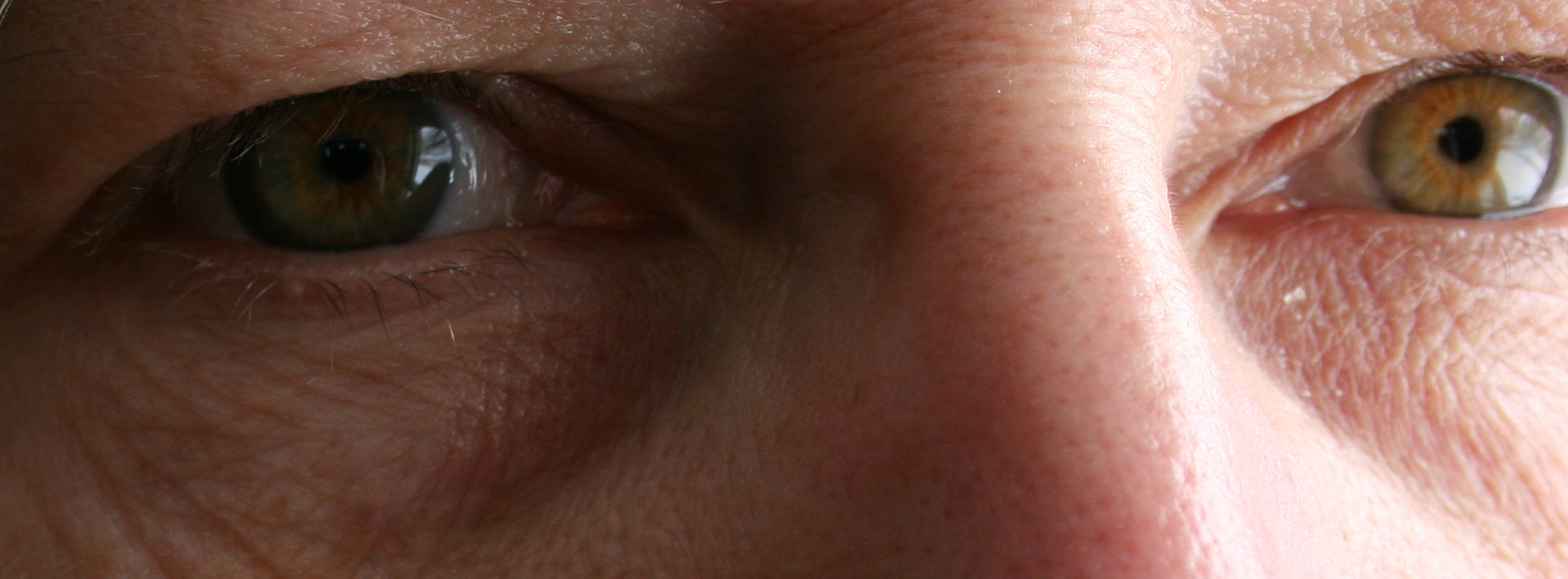
My green eyes up close pre double vision. (Minnesota Prairie Roots copyrighted file photo)

Once I completed 5 ½ months of vestibular rehab therapy to retrain my brain and help me deal with the devastating affects of long haul COVID, I was ready to see a professional about my double vision. I started locally. I went into an August ophthalmology appointment optimistically thinking I could simply get a new pair of prescription eyeglasses with more prisms added. Not so. As the ophthalmologist held up prism after prism to my eyes, it became clear nothing in his trays of prisms would effectively improve my vision. I was, he said, beyond his realm of expertise and would need to see a specialist.

After a several-month wait, I saw the neuro ophthalmologist at M Health Fairview in late October. Following 2 ½ hours of exhaustive testing, of looking through prisms and layers of prisms, I understood that I was well beyond the corrective lenses with prisms option. I would need surgery.

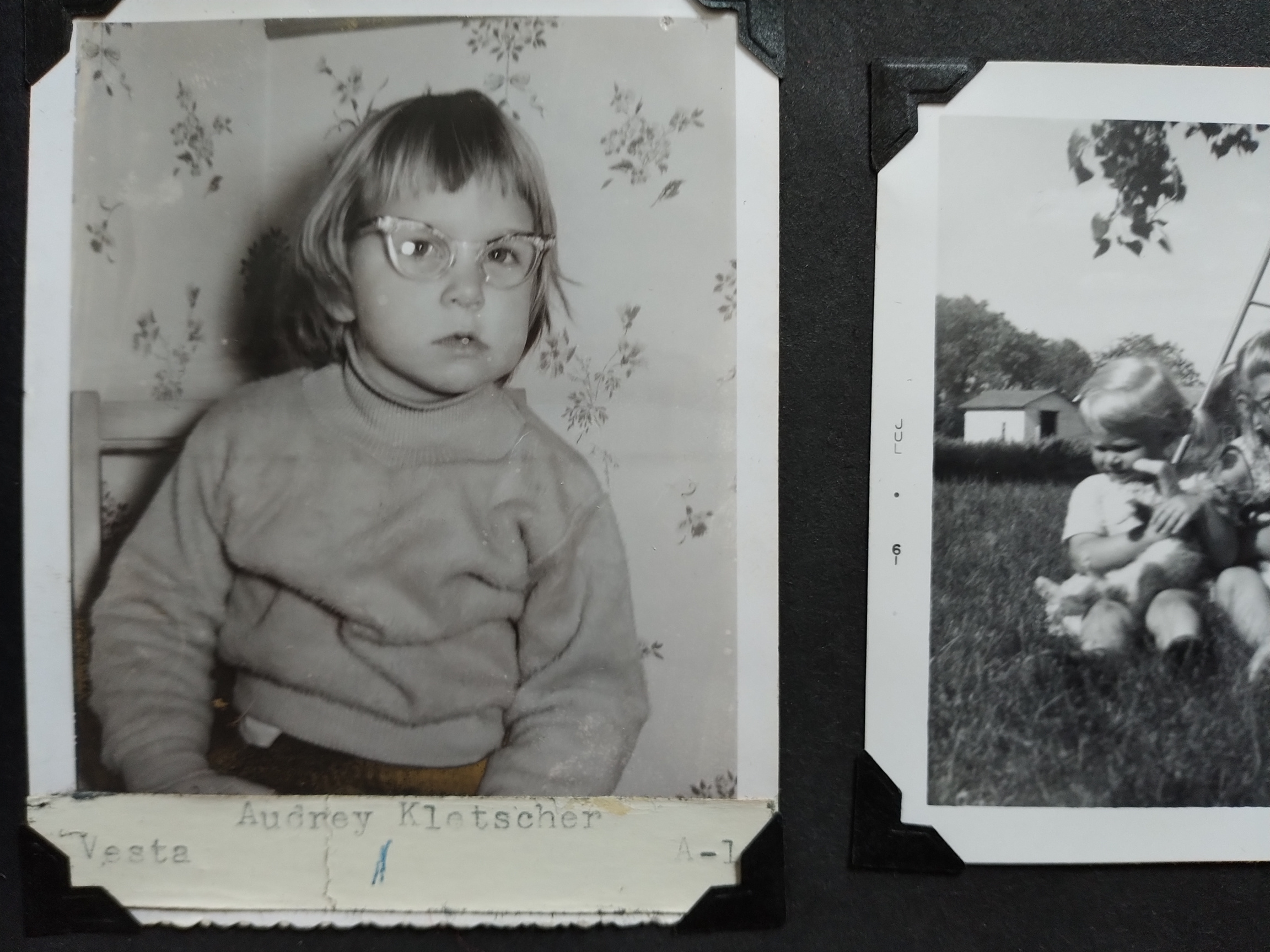
A childhood photo of me taken at an optometrist’s office in Redwood Falls. (Photo sourced from my personal photo album)

So here I am after another long wait—three months this time—on the cusp of bilateral strabismus eye surgery. I just want to be done. I am hopeful this outpatient surgery will fix my eyes and eliminate my double vision. Am I scared? Yes. The idea of undergoing general anesthesia and having a surgeon cut into my eyes and eye muscles is frightening. If only I could zoom back in time to my 4-year-old self who remembers nothing but books, tomato juice and circus peanut candy.

#

FYI: If I’m absent from blogging for a while, it’s because I’m resting my eyes, recovering from surgery. I’ll be back, hopefully no longer seeing double.

© Copyright 2024 Audrey Kletscher Helbling
 

An outsider’s quick look at, & visions for, downtown Sleepy Eye, Part II March 9, 2018


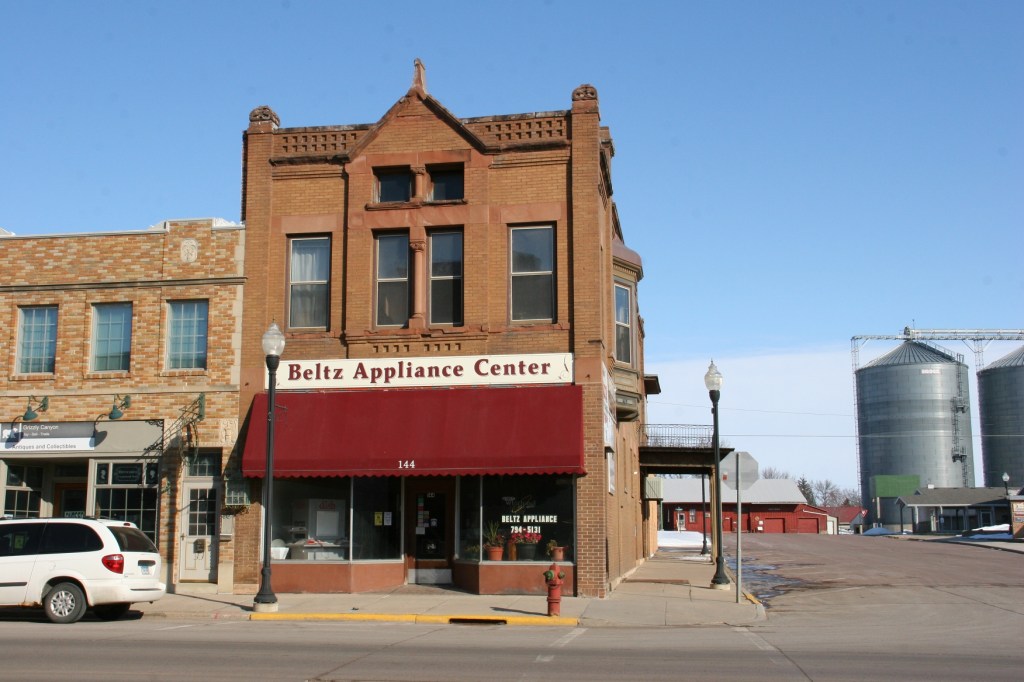
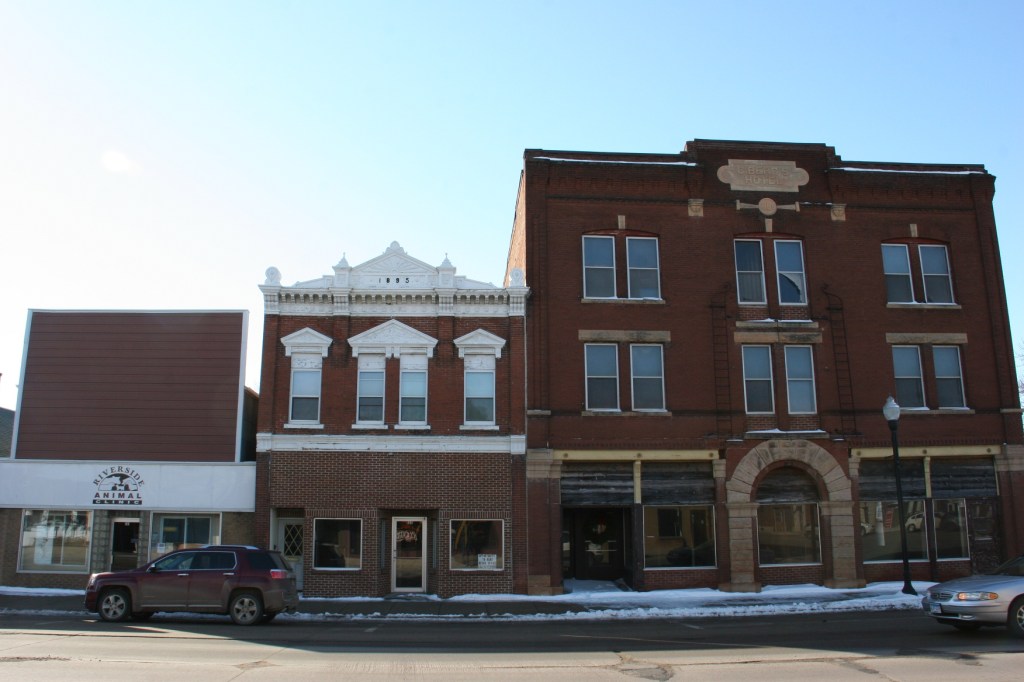
WHEN I SEE A COMMUNITY like Sleepy Eye with so many architecturally-pleasing historic buildings, I wish I could wave a financial wand.


If I could, I would sweep away the metal, the wood, the stucco, the fake fronts that hide the bones of these beautiful, mostly-brick, structures. I would restore them to their grandeur, drawing the interest of motorists passing through this southwestern Minnesota community. I would give people a reason to stop, to check out the architecture, the unique small town shops and eateries. Many do. More could.


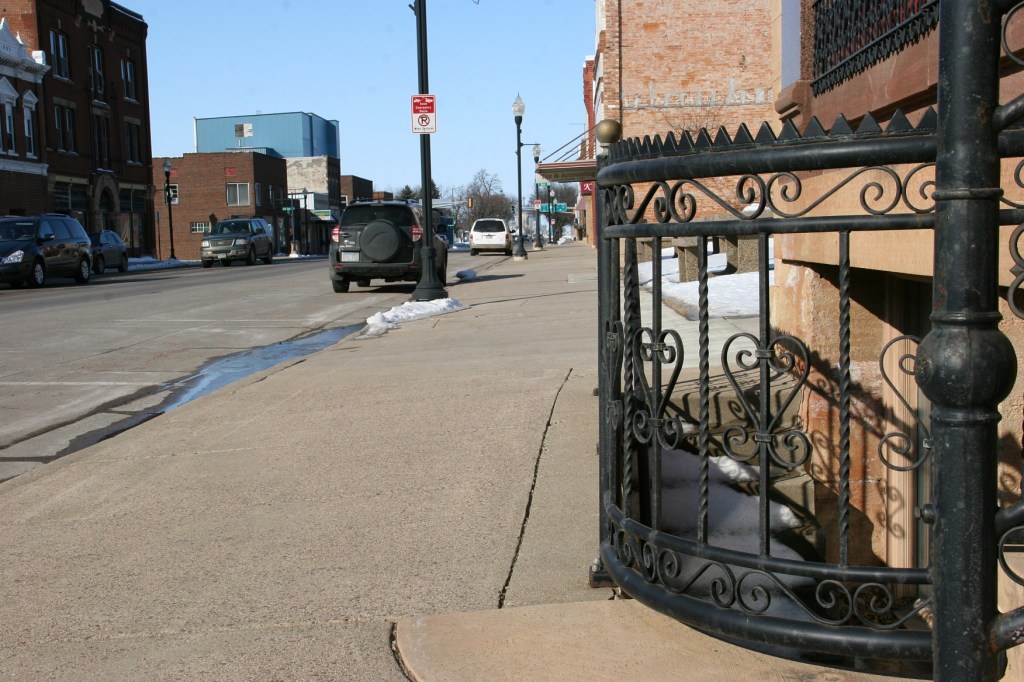
Details like this curved, ornate railing on city hall add visual interest and charm.


I would also make this busy main street more pedestrian and visually-friendly with bump-out corners graced by public art and lovely flower planters.  I would replace concrete sidewalks with brick, or at least edge them in brick. I’d buy some paint and repair windows and fix unsafe and run-down buildings…if only I held a magical wand of unlimited finances.


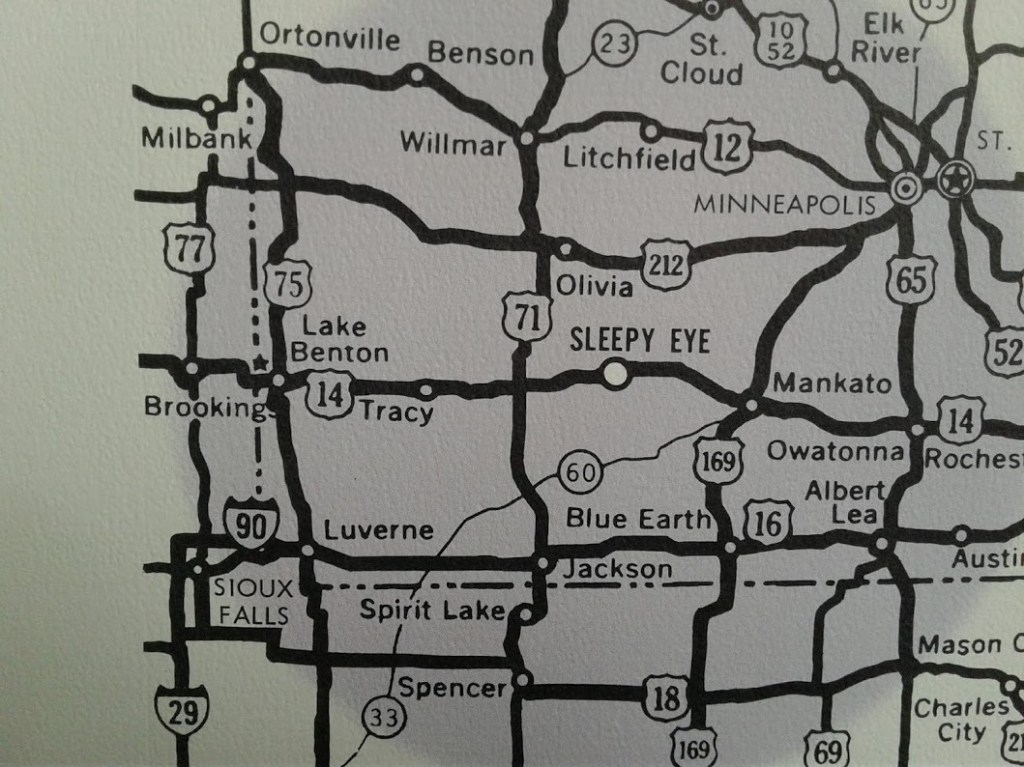
This map, from a vintage Orchid Inn promo, shows Sleepy Eye’s location in southwestern Minnesota.


With US Highway 14, a major east-west roadway running right through Sleepy Eye, heavy traffic is already here. And the bonus of this route as the Laura Ingalls Wilder Historic Highway adds to the potential.


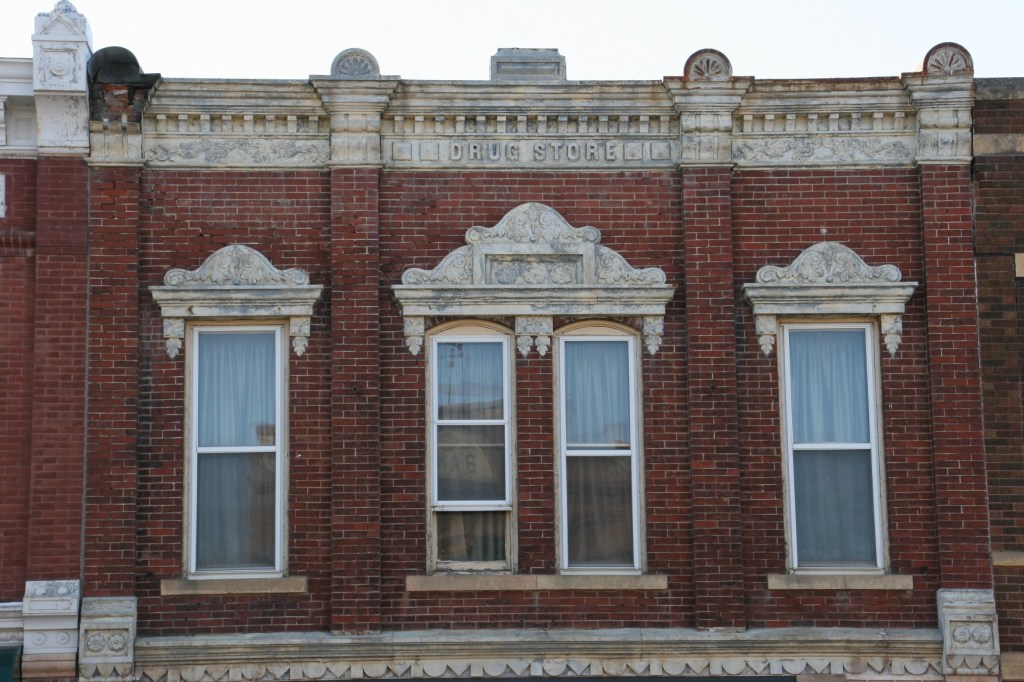
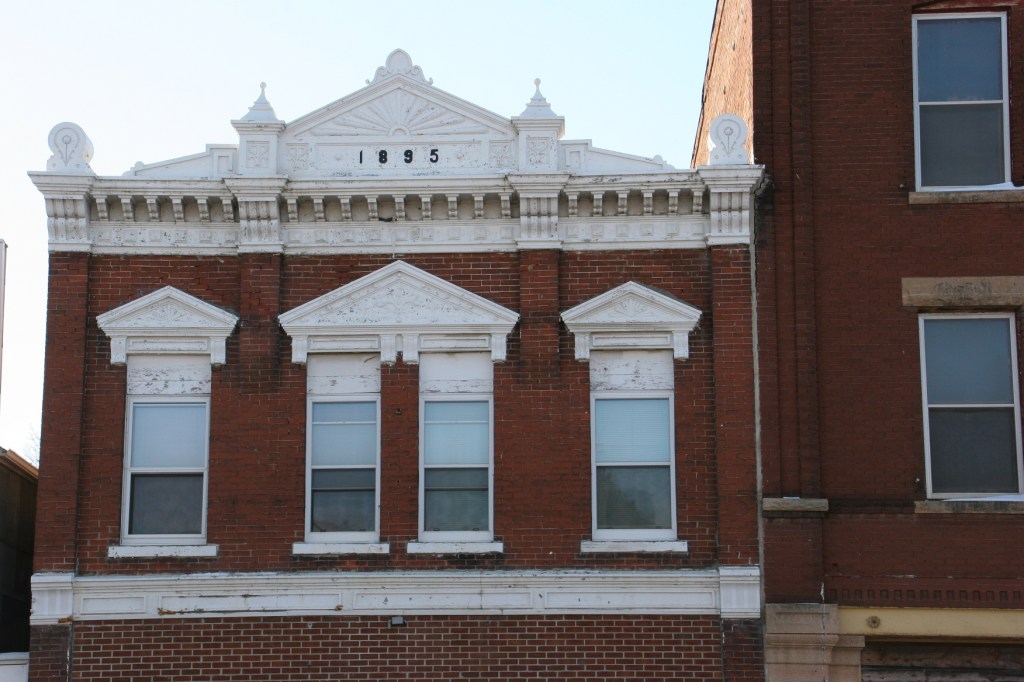
These architecturally detailed buildings hold Sleepy Eye’s history in dates and names.


You have to look upward to see the true beauty of these historic buildings.


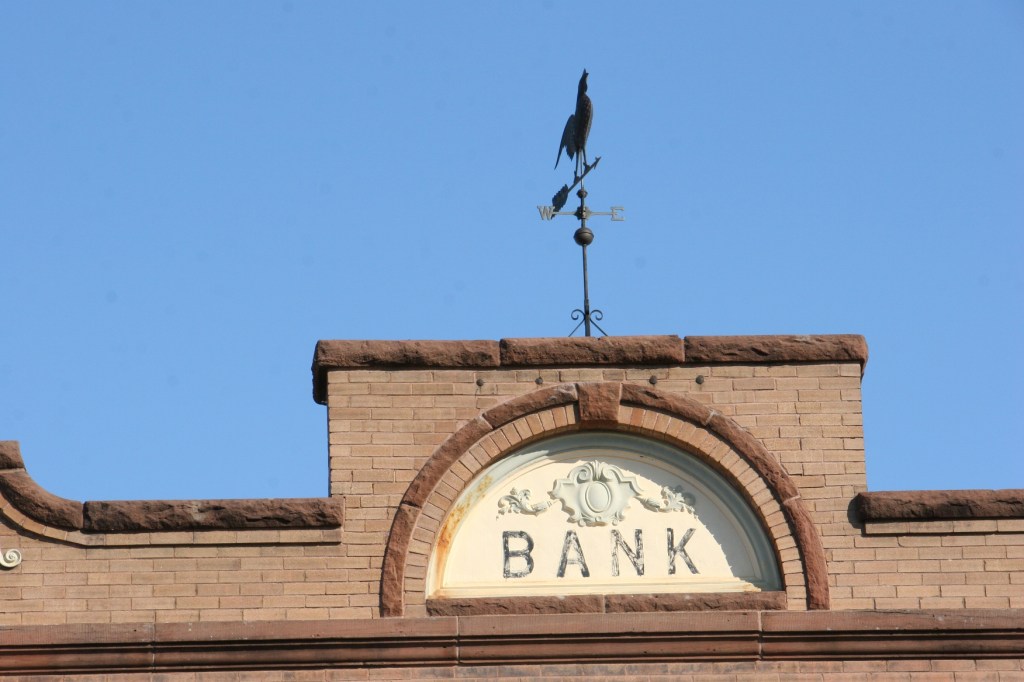
A rooster weather vane drew my interest atop city hall, housed in a former bank.


If I had unlimited financial resources, I would do all of these things for this Brown County community west of New Ulm. But magical wishes differ from reality. It takes money to make these improvements. And I expect the merchants here, like those in so many small farming communities, are simply happy they’re still in business given competition from regional shopping centers, Big Box stores and online sources.


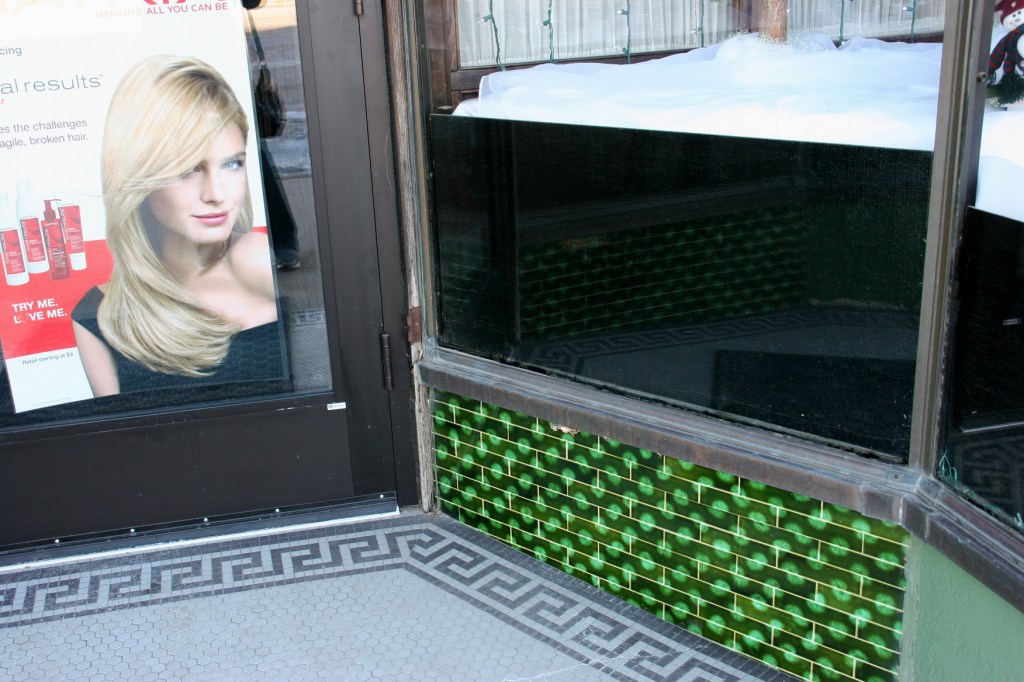
In numerous buildings I noted lovely tile, inside and out.


Yet, small towns like Sleepy Eye offer an alternative, a welcome break from the sameness of mass everything. Places like Sleepy Eye Stained Glass draw customers from all over to purchase stained glass supplies or to get stained glass windows and more restored. Three local antique shops, other shops and the friendliness and service of small town proprietors are additional draws. Schweiss Meats is a popular place for those who appreciate small town meat markets.


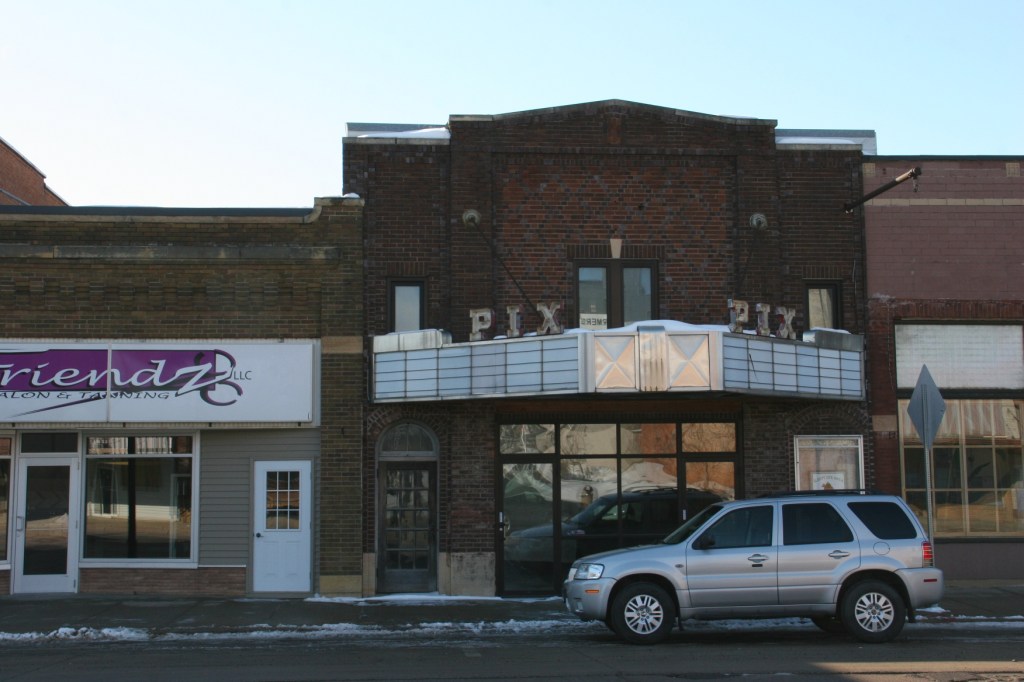
The old Pix Theatre needs lots of work inside and out. The intention is to save and restore the marquee, according to EDA Coordinator Kurk Kramer.


Within a year or so, two local physicians hope to reopen the abandoned Pix Theatre as a nano-brewery and coffee shop, according to Sleepy Eye Economic Development Authority Coordinator Kurk K. Kramer. He also runs K & J Antiques and Collectibles. If all goes as planned, the former Orchid Inn motel and event center will become AGlobal, a STEM-based learning center with a focus on agriculture. Additionally, the Orchid would house a language immersion institute.


Those plans show me people are working hard to keep this community thriving, with businesses that distinguish Sleepy Eye from other small Minnesota towns. EDA Coordinator Kramer noted that Sleepy Eye is also home to a business (Mark Thomas Company) which serves the funeral home industry by producing such products as handcrafted wooden urns. Who knew? Not me.


Sleepy Eye honors its namesake on its water tower.


But I do know that Sleepy Eye is named after Chief Sleepy Eyes, buried at a monument site marking his grave. Everywhere you will see the respected Dakota leader’s portrait. He brings historical interest and identity to Sleepy Eye. Those are existing strengths.


Perhaps some day these historic downtown buildings will all be restored. I appreciate that some already are. Funds are available through the Sleepy Eye Downtown Rehabilitation Incentive Program to make improvements. So perhaps my vision for this small Minnesota town will evolve into more than simply a wish…


FYI: Highway 14 improvements in downtown Sleepy Eye this summer call for sidewalk replacement, pedestrian flashers at ped crossings and more. Click here to read details.

Please check back next week for “The Art of Signs in Sleepy Eye, Part III.”


© Copyright 2018 Audrey Kletscher Helbling
Content on this site may not be duplicated, transmitted or otherwise copied without the permission of Audrey Kletscher Helbling.


46 years of serving pancakes for a cause on Super Bowl Sunday February 2, 2012

Filed under: Uncategorized — Audrey Kletscher Helbling @ 8:10 AM
Tags: , , , , , , , , ,

THEY’RE SYNONYMOUS in Faribault—the Super Bowl and pancakes.

For 46 years, the Faribault Lions Club has sponsored a pancake and sausage breakfast on Super Bowl Sunday, raising funds to support projects that adhere to the club motto: “We serve.”

Let me repeat that. Forty-six years. Wow. You have to admire an organization so committed to helping others. The Faribault Lions expect to feed 1,200 – 1,500 and raise $5,000 at their Super Bowl Pancake Breakfast.

Now I’m no fan of pancakes (ranking them right alongside liver) or of football, but I may have to eat pancakes this Sunday simply to support a worthy cause. I’ll skip the football except for the commercials.

The Faribault Lions provide funding for college scholarships, dictionaries for third graders, food for children in need, and assistance for the visual and hearing impaired, among other projects.

While all are worthy causes, the club’s effort on Sunday to collect used prescription eyeglasses and hearing aids and to raise dollars to assist those with visual and hearing impairments resonates with me.

I’ve worn glasses since age four, after undergoing surgery to correct crossed eyes. Without that surgery, I would have gone blind in my “lazy eye.” I value my vision and know that without corrective lenses, I would struggle to see.

Lions Club International’s commitment to helping those with vision issues stretches back to 1925 when Helen Keller presented this challenge during a speech to the Lions:

Will you not help me hasten the day when there shall be no preventable blindness; no little deaf, blind child untaught; no blind man or woman unaided? I appeal to you Lions, you who have your sight, your hearing, you who are strong and brave and kind. Will you not constitute yourselves Knights of the Blind in this crusade against darkness?

And so with that challenge, the Lions became “Knights of the Blind,” collecting and distributing prescription eyeglasses through clinics world-wide. Can you imagine the joy of giving someone the gift of sight?

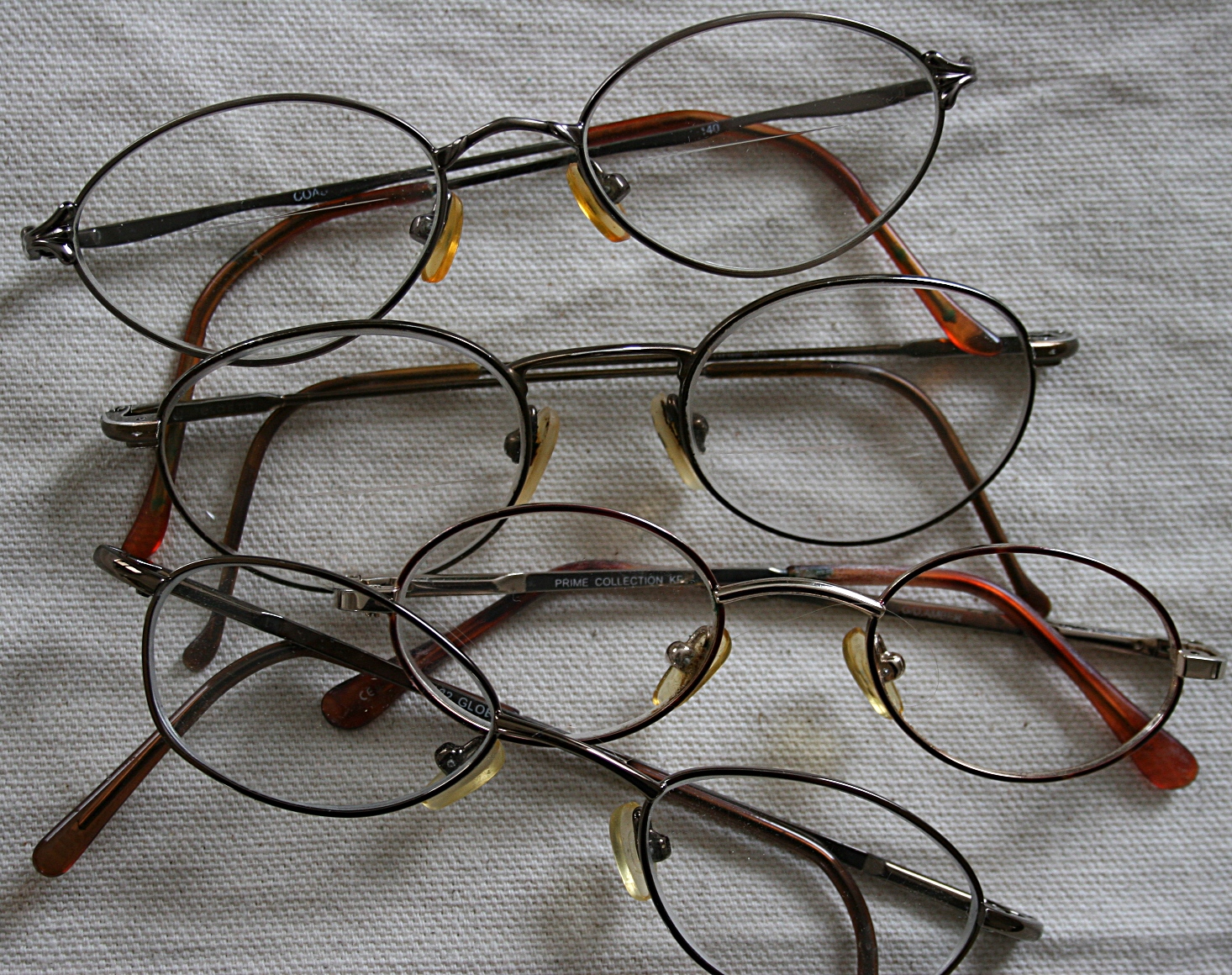
I just rummaged through a dresser drawer and found four eyeglasses that I can donate to the Faribault Lions Club on Sunday.

The prescription eyeglasses I'm donating.

Faribault Lions have also connected with the Minnesota State Academy for the Blind in Faribault, supporting numerous projects there, including an apartment to teach independent living skills.

My community is home to the Minnesota State Academy for the Deaf, perhaps another reason local Lions take such a strong interest in helping those who are hearing impaired.

I am among those with a hearing impairment having lost 70 percent of the hearing in my right ear last March in an episode defined as “sudden sensory hearing loss.” (Click here to read about that.) Unfortunately, a hearing aid will not help with this type of near-deafness.

But for most who suffer from a hearing impairment, a hearing aid will help. The Lions are committed to collecting used hearing aids for distribution to those in need. Can you imagine the joy of giving the gift of hearing?

It’s impressive, isn’t it, how so many worthy causes have evolved from two powerful words: “We serve.”

FYI: The Faribault Lions Club Super Bowl Pancake Breakfast will be held from 7:30 a.m. – 1:15 p.m. on Sunday, February 5, at the Eagles Club, 2027 Grant Street Northwest. Cost is $6 for adults and $4 for those 12 and under.

The Lions are also selling Super Bowl snacks—8-ounce packages of nuts for $5 – $6—to raise monies for their Backpack Blessings Program which provides local children in need with food for the weekends.

It should not go without stating here that many local businesses and volunteers (within and outside of the Faribault Lions Club) contribute to the annual Super Bowl breakfast.

Bring your used prescription eyeglasses and hearing aids, your money and your appetite on Sunday to participate in the “We serve” endeavor.

Click here to learn more about the Faribault Lions Club.

© Copyright 2012 Audrey Kletscher Helbling