Minnesota Prairie Roots

Writing and photography by Audrey Kletscher Helbling

In Faribault: Prepping & waiting for the Traveling Vietnam Memorial Wall August 31, 2016

Filed under: Uncategorized — Audrey Kletscher Helbling @ 1:28 PM
Tags: , , , , , ,

IN A FEW HOURS, the Traveling Vietnam Memorial Wall arrives in Faribault.

I am prepping. And so are others.


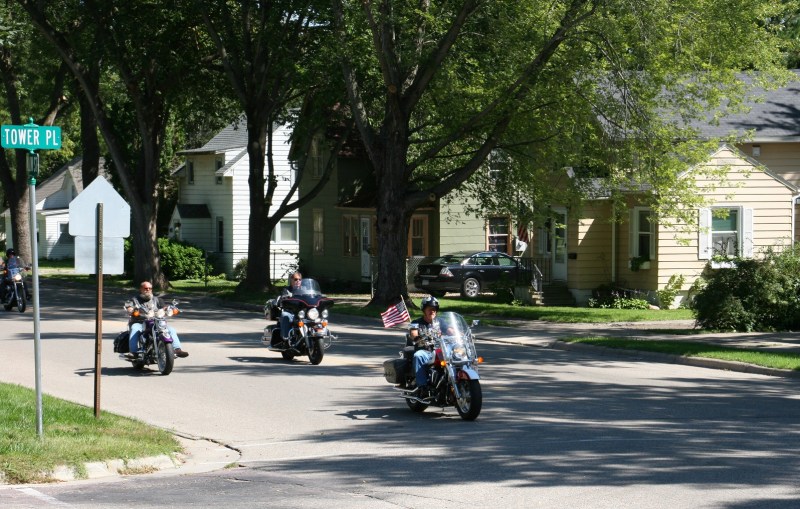
Vietnam Wall prep, #1 bikers


Around noon, a contingent of bikers, motorists and others swept past my Willow Street home en route to the Steele County Fairgrounds in Owatonna. There the group will gather for a 3 p.m. departure. The entourage will travel through Owatonna, Medford and into Faribault, ending at the wall construction site, the Rice County Fairgrounds.


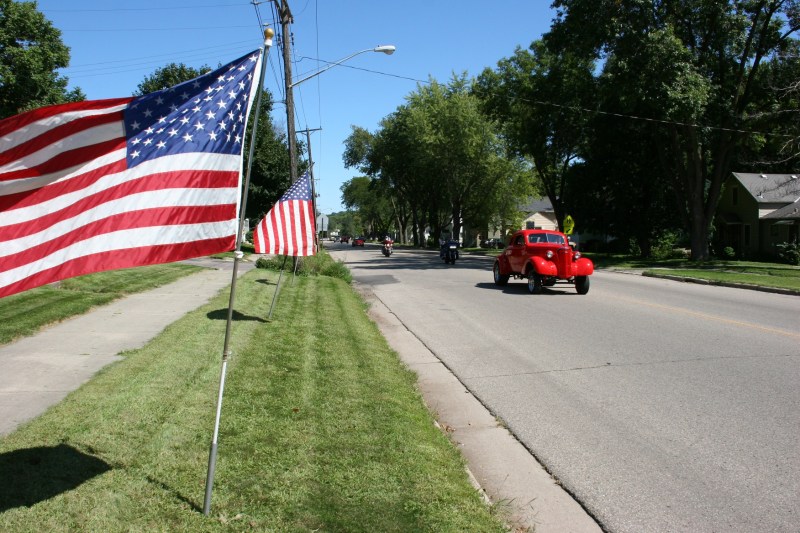
Vietnam Wall prep, #13 red vehicle


Here at my home, three flags are staked in the boulevard, a sight that prompted the Faribault group to honk horns and wave as they passed by.


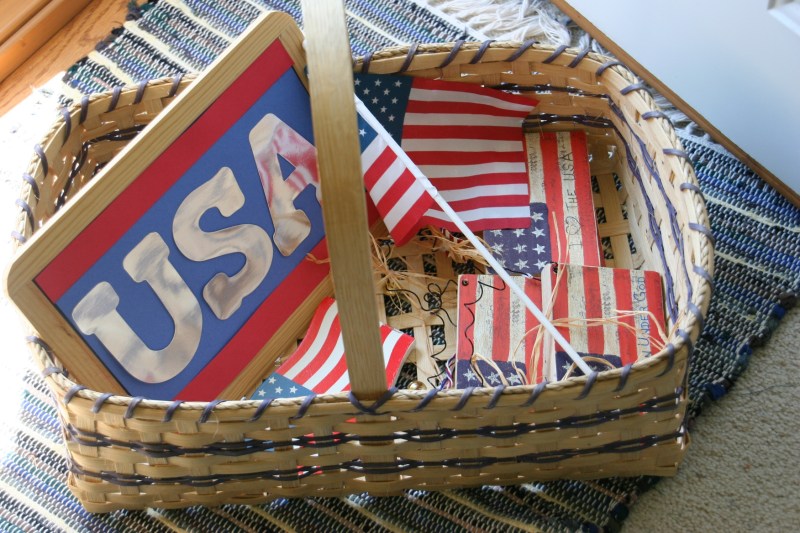
Vietnam Wall prep, #24 basket of American flags


A basket of American flags sits inside my front door, awaiting kids I expect here for the processional. I’ve dug out the sidewalk chalk to keep them busy while waiting. Ice cream treats are stashed in the freezer. Water bottles are cooling in the fridge.


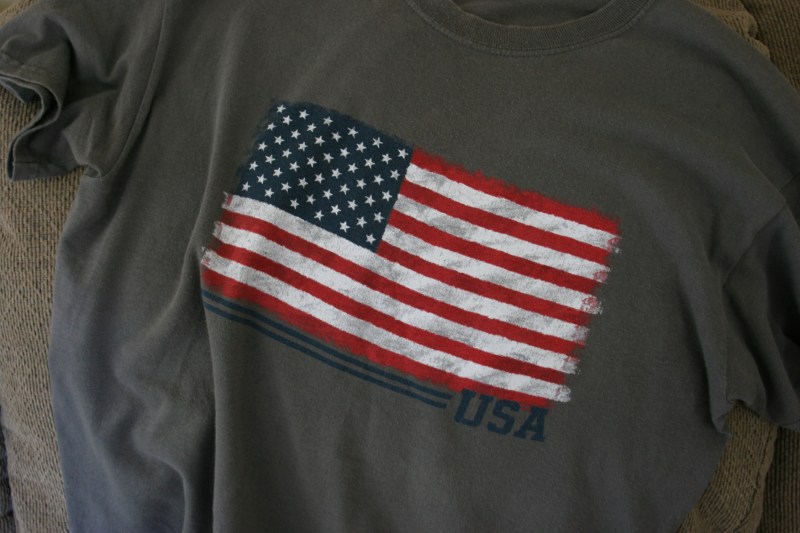
Vietnam Wall prep, #25 patriotic t-shirt


I’ve swiped my husband’s American flag t-shirt from his dresser drawer.

Shortly before invited friends, and maybe others, arrive, I’ll spray for mosquitoes.

Today’s processional promises to be a memorable and moving experience, especially for those of us old enough to remember Vietnam. I expect the kids to learn something today about this chapter in America’s history.

Faribault, I hope you will show your honor and respect by lining the processional route and by showcasing your patriotism with American flags.

Copyright 2016 Audrey Kletscher Helbling


Vietnam wall replica arrives in Faribault today with opportunities to honor & heal

Filed under: Uncategorized — Audrey Kletscher Helbling @ 5:00 AM
Tags: , , , , , , , ,
Many Vietnam veterans attended the ceremony.

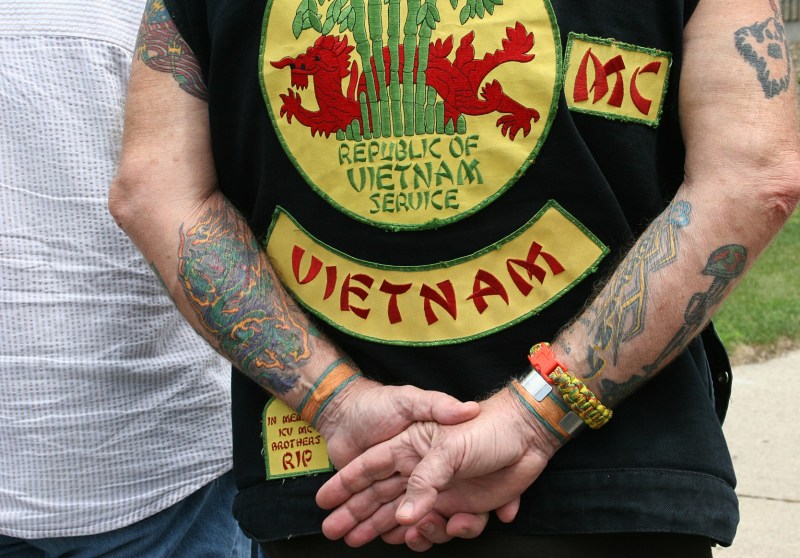
I photographed this Vietnam veteran during a ceremony at Faribault American Legion Post 43 in July 2013. Minnesota Prairie Roots file photo.

VIETNAM WAR. Those two words can create angst in those of us who remember that turbulent time in our nation’s history. Unrest and protests headlined media coverage. Veterans found themselves returning to a country ungrateful for their service. They were shunned, neglected, disrespected.

But today, with decades since the end of that war and with an aging population of Vietnam veterans, thinking has shifted and we as Americans recognize the need to honor these men and women who served and those who died doing so.

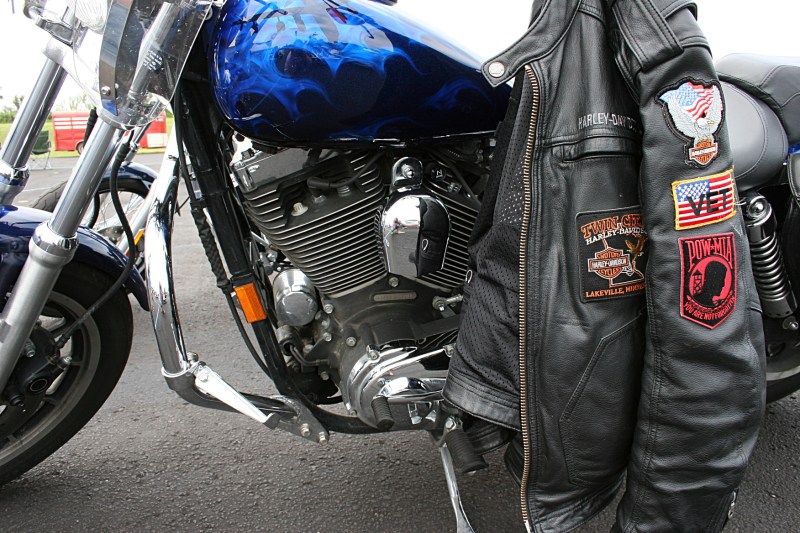
The Harley dress code: black leather.

Bikers will be among those escorting the traveling wall from Owatonna, through Medford and into Faribault between 3 – 4 p.m. today. Minnesota Prairie Roots file photo.

This afternoon in my southeastern Minnesota community of Faribault, the Traveling Vietnam Memorial Wall arrives under escort for a several-day stay at the Rice County Fairgrounds. For those living along the route, like me, this presents a public opportunity to pay respect. I hope Faribault residents and others will show an enthusiastic and honorable patriotic welcome as the motorcade proceeds through town. Click here to see the specific processional route for the entourage, expected to arrive here around 3:30 p.m. today.

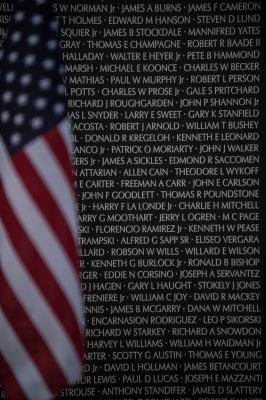
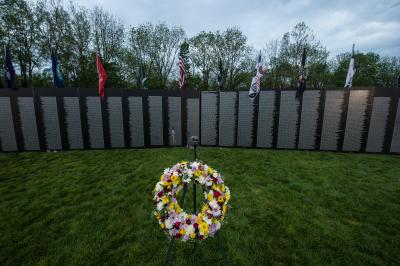
I hope, too, that many will visit this 80 percent replica wall of the original memorial in Washington, D.C. It will be open 24/7 from Thursday afternoon through early afternoon on Labor Day. I am certain seeing the thousands of names thereon will make a powerful personal impact.

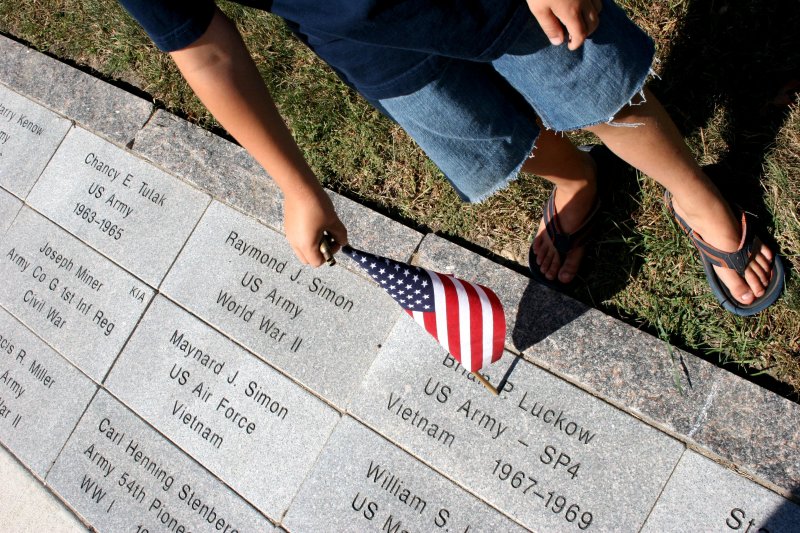
A young boy peruses the pavers honoring veterans at the Rice County Veterans Memorial in Faribault.

Pavers at the Rice County Veterans Memorial in Faribault honor Vietnam and other veterans. Minnesota Prairie Roots file photo.

There is hope also among local organizers for healing as written in their mission statement:

To offer veterans and visitors an opportunity to experience both an educational and healing experience, and offer an important historical contribution to the understanding of our nation’s history.

Healing is possible, even decades after the Vietnam War ended.

© Copyright 2016 Audrey Kletscher Helbling


Traveling Vietnam Memorial Wall rolling into Faribault August 29, 2016

AS A TEENAGER OF THE EARLY 1970s, the Vietnam War proved part of my life in the fringe sort of way war does when you’re an emerging adult.

Along with my too short hot pants ensemble and my shiny go-go boots, I sported a POW bracelet, the shiny medal banding my wrist with the name of an American soldier held captive by the Viet Cong. I wish I remembered his name or even what happened to that bracelet. It may be stashed away in a cardboard box in a closet. To even write that seems dishonorable. How could I not give more respect to a prisoner of war who deserved my gratitude?

This week I will have a local opportunity to honor those who died in the Vietnam War, the war from which veterans arrived home without a nation’s welcome. Protests prevailed. I remember.

traveling wall logo


Thankfully attitudes have changed. This Wednesday, the Traveling Vietnam Memorial Wall rolls into Faribault for a six-day stay at the Rice County Fairgrounds. I am grateful to the individuals, businesses and organizations—like the Faribault Elks, multiple American Legion Posts, the local VFW Post and the Marine Corps League—that worked hard to bring this 80 percent scale version of the wall here to southeastern Minnesota.

Stock image courtesy of the Traveling Wall Faribualt 2016.

Stock image courtesy of the Traveling Wall Faribualt 2016.

Perhaps my POW’s name is imprinted on that wall, among the 58,282 Americans who died in this war. I will search for one name, that of Benjamin Franklin Danielson whose fighter jet was shot down over Laos in 1969. I remember the media coverage when this Minnesota soldier’s remains were returned to his native Kenyon in 2007, several years after bone fragments were found to match his DNA. I expect many individuals will be looking for names of loved ones or classmates or others on this 360-foot long by eight foot high replica wall.

Stock image courtesy of Traveling Wall Faribault 2016.

Stock image courtesy of Traveling Wall Faribault 2016.

But before the temporary memorial goes up on the north side of Faribault, it will arrive in my community of 23,000 Wednesday afternoon under escort by law enforcement, fire department personnel, bikers and others in private vehicles. Organizers emphasize that this is not a parade but rather a solemn procession. Those living aside the route from Owatonna along County Road 45 to Medford and then into Faribault are encouraged to line the roadway with American flags and to show their support.

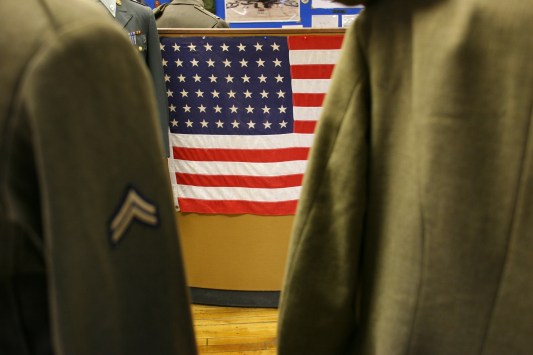
Between two military uniforms, I shot this view of a 48-star American flag.

Minnesota Prairie Roots file photo.

I live along the processional route. Those who know me personally and would like to join me in my front yard are welcome to do so. Dress in patriotic attire and bring American flags and patriotic items plus a lawn chair. I expect the entourage to pass my home around 3:20 – 3:30 p.m.

At 6:30 p.m. on Thursday, the traveling wall debuts with a grand opening ceremony. The memorial remains open 24/7 until the closing ceremony at 1 p.m. on Labor Day. What a great opportunity this will be for us, as a community, as a county, as Minnesotans, as Americans, to honor those like Benjamin Danielson and my unidentified POW. Decades after I clamped that POW bracelet around my wrist, I understand the significance of this opportunity.

FYI: Many related events are planned in conjunction with the Traveling Vietnam Memorial Wall exhibit in Faribault. Click here to learn details. And click here to learn about the original memorial wall in Washington, DC.

© Copyright 2016 Audrey Kletscher Helbling


Near Faribault: Roberds Lake memorials honor veterans July 23, 2013

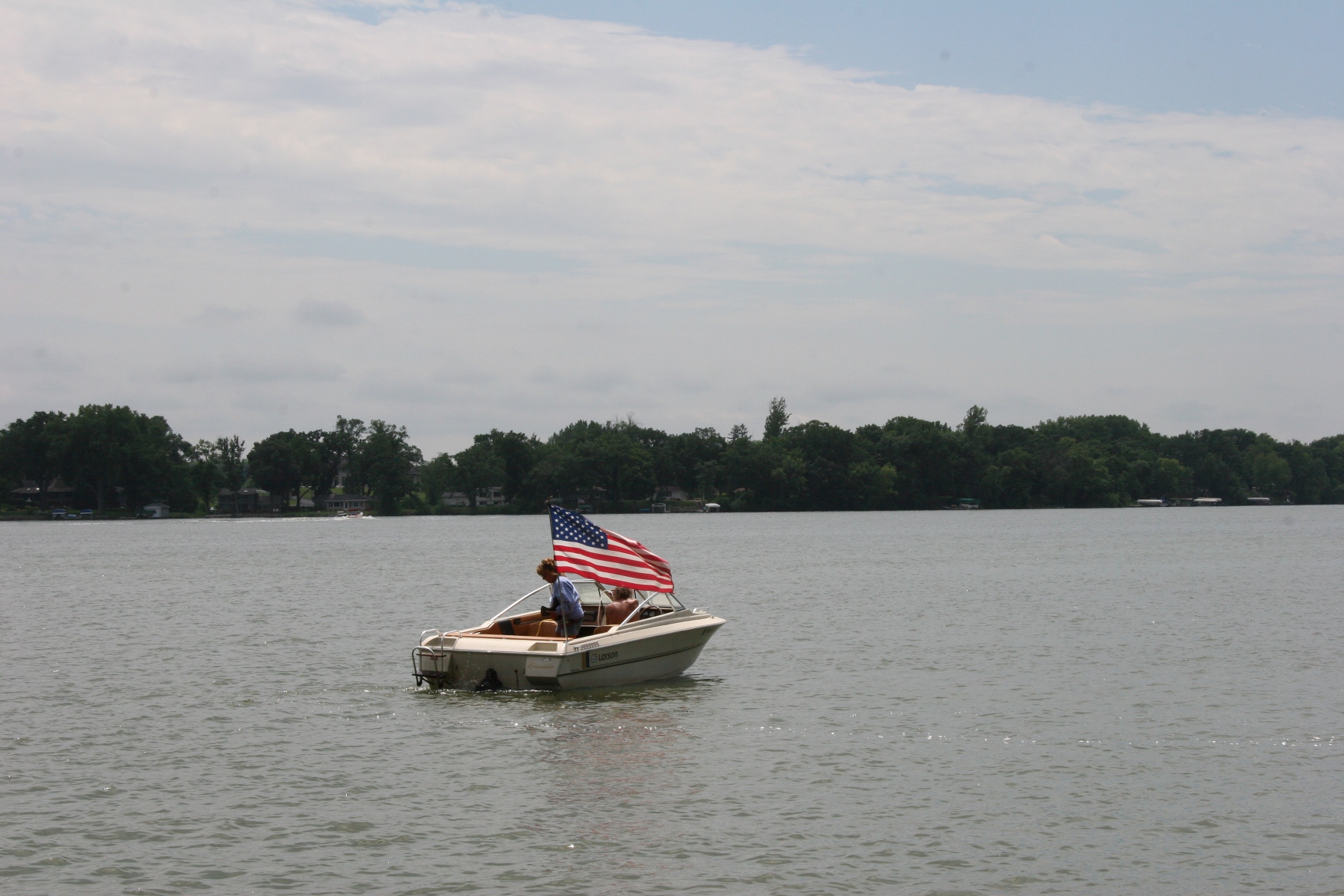
This boat was among two arriving for the 2 p.m. memorial dedication ceremony.

A boat arrives for the 2 p.m. memorial dedication ceremony at Roberds Lake.

THEY COME BY LAND and by lake Sunday afternoon to Geri Larson’s place along Roberds Lake near Faribault for the latest unveiling of a private veterans’ memorial, the third along the shoreline.

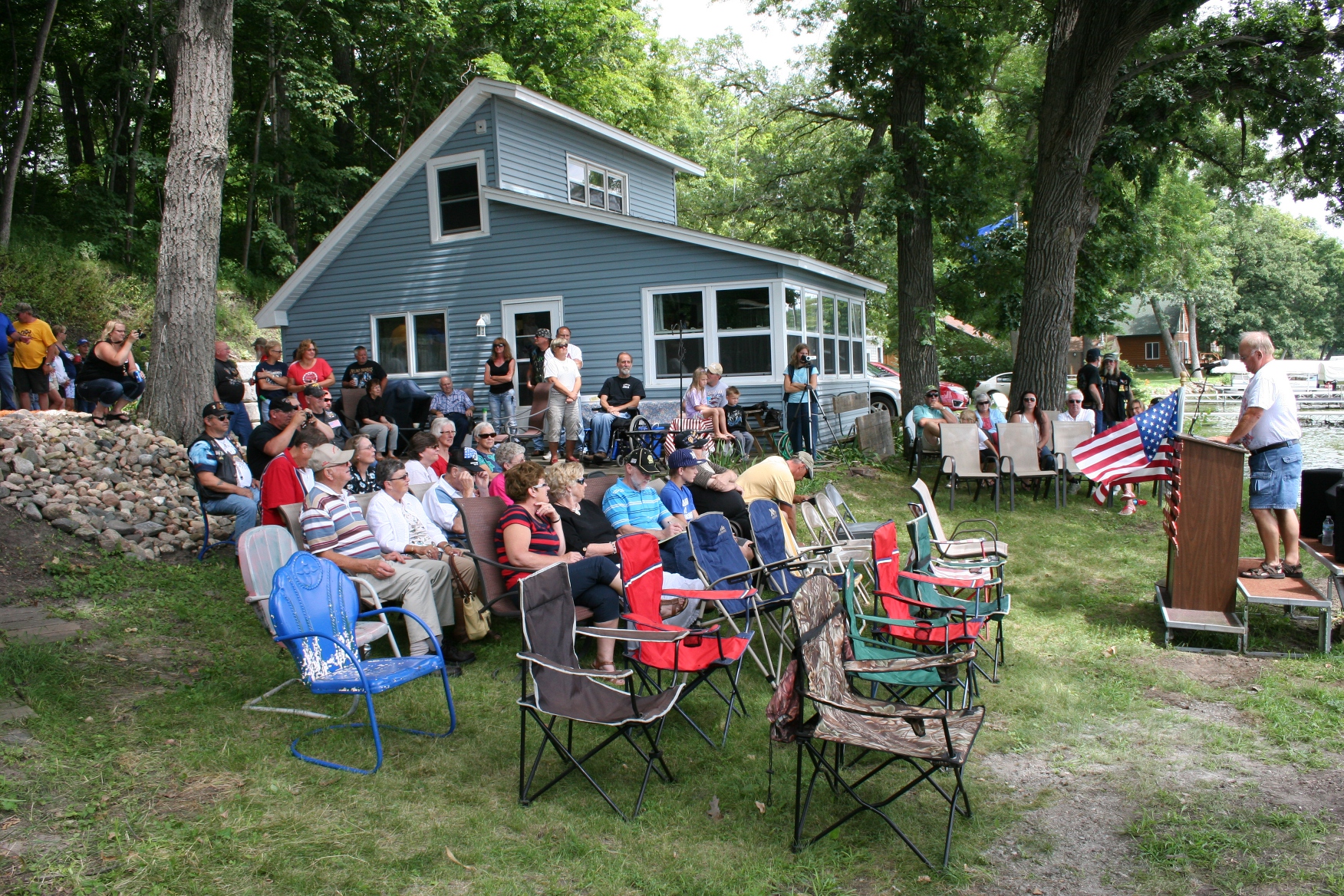
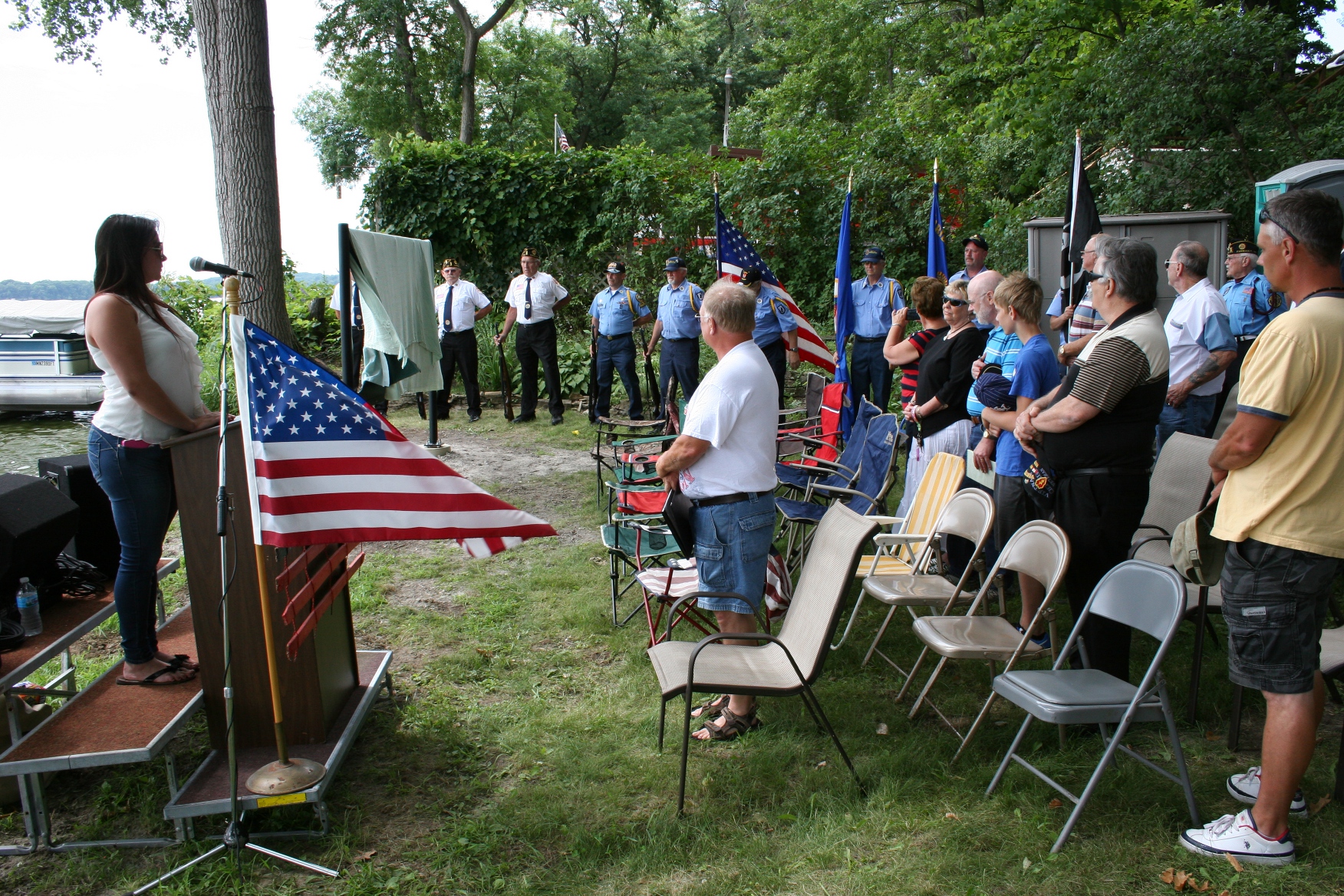
A portion of the crowd gathered for the ceremony. Attendees also lined a mulch-lined path along the steep side of the river bank to the read in this photo.

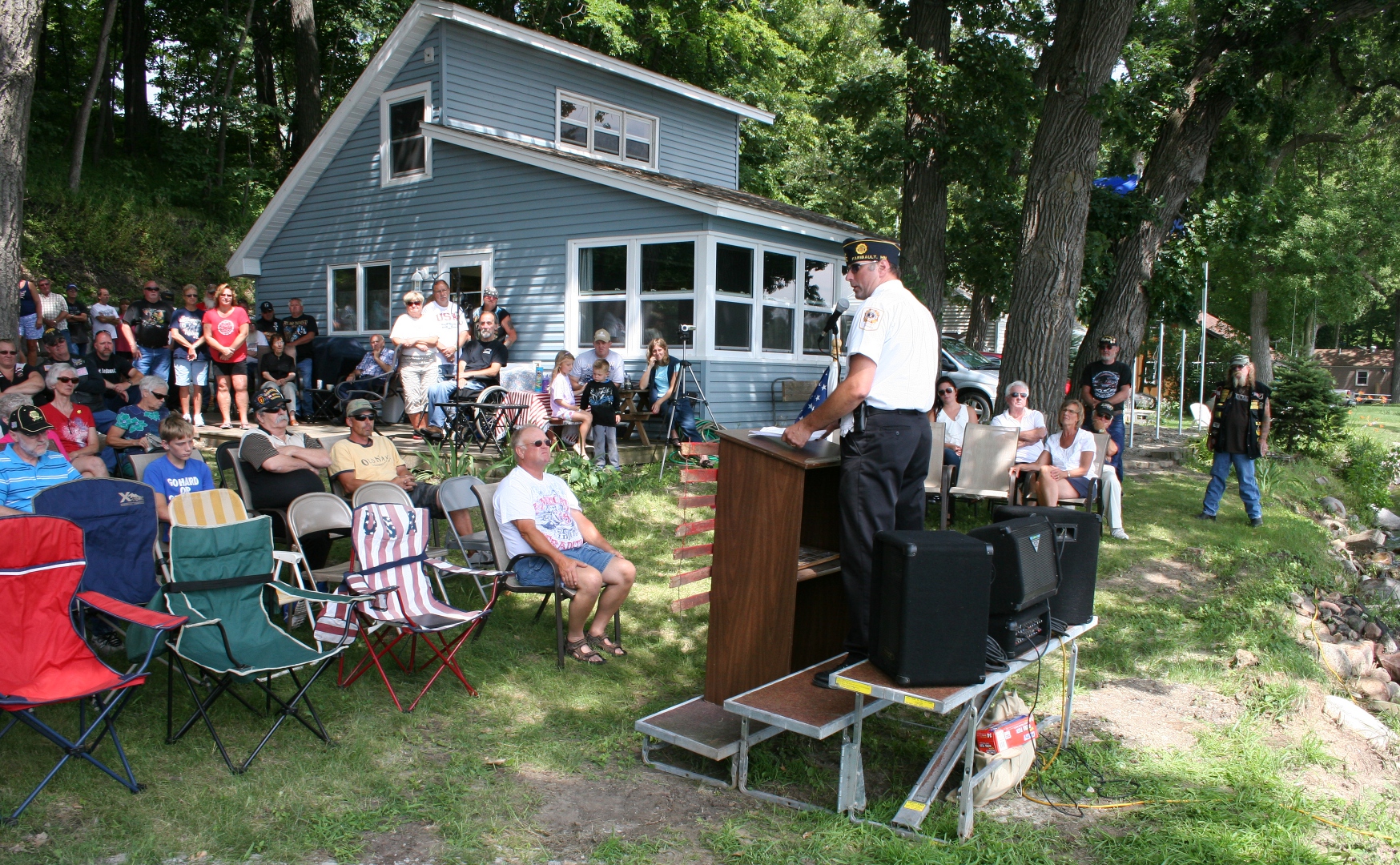
A portion of the crowd gathered for the ceremony. Attendees also line a mulch-lined path along the steep side of the lake bank. Jim Williams, who has two vets’ memorials on his property next door, starts the program.

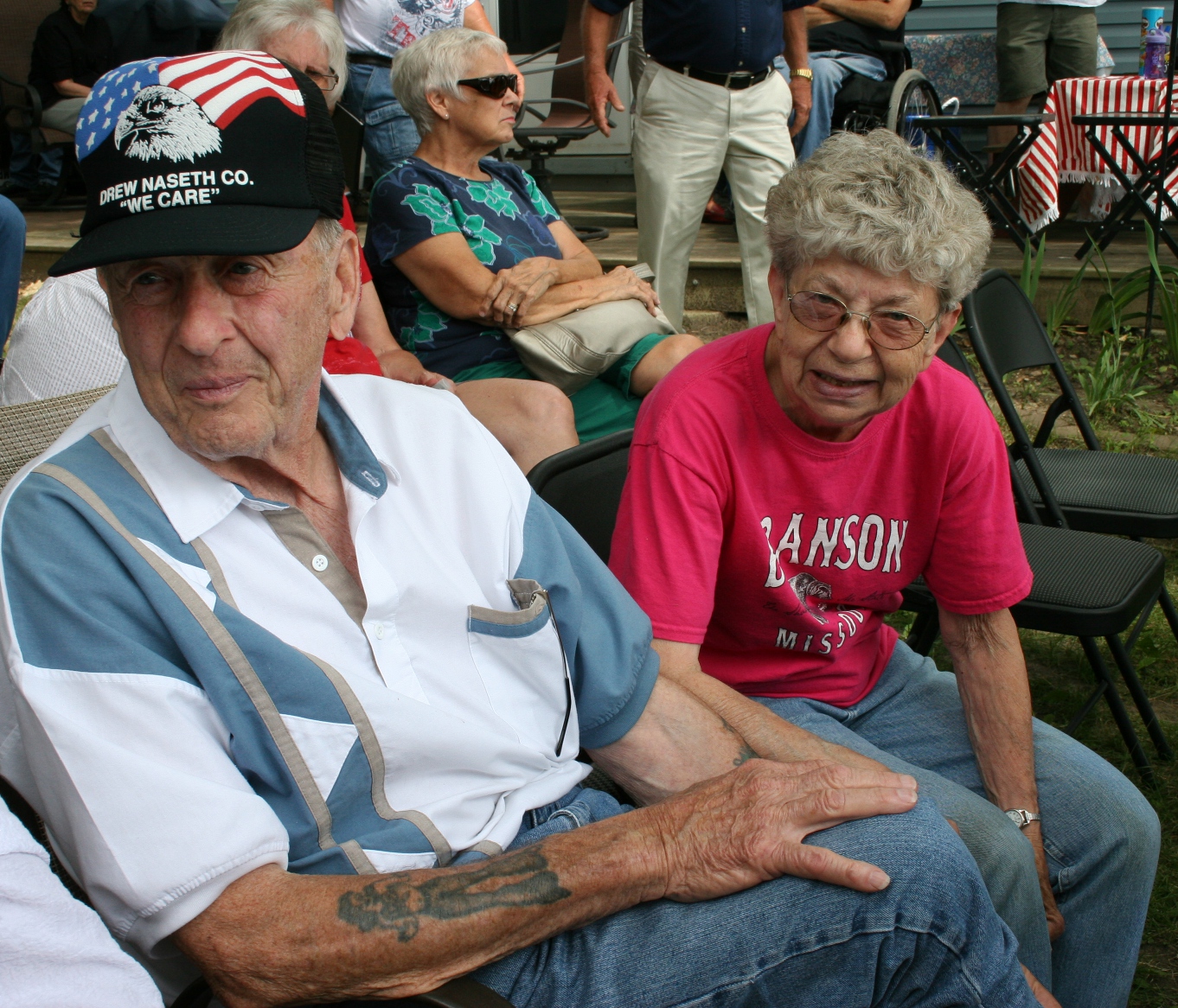
Nearly half of the estimated 75 attendees are veterans, gathered here on Geri’s parcel of property between steep hillside and water, under the shade of trees, including a sturdy oak, to honor and remember.

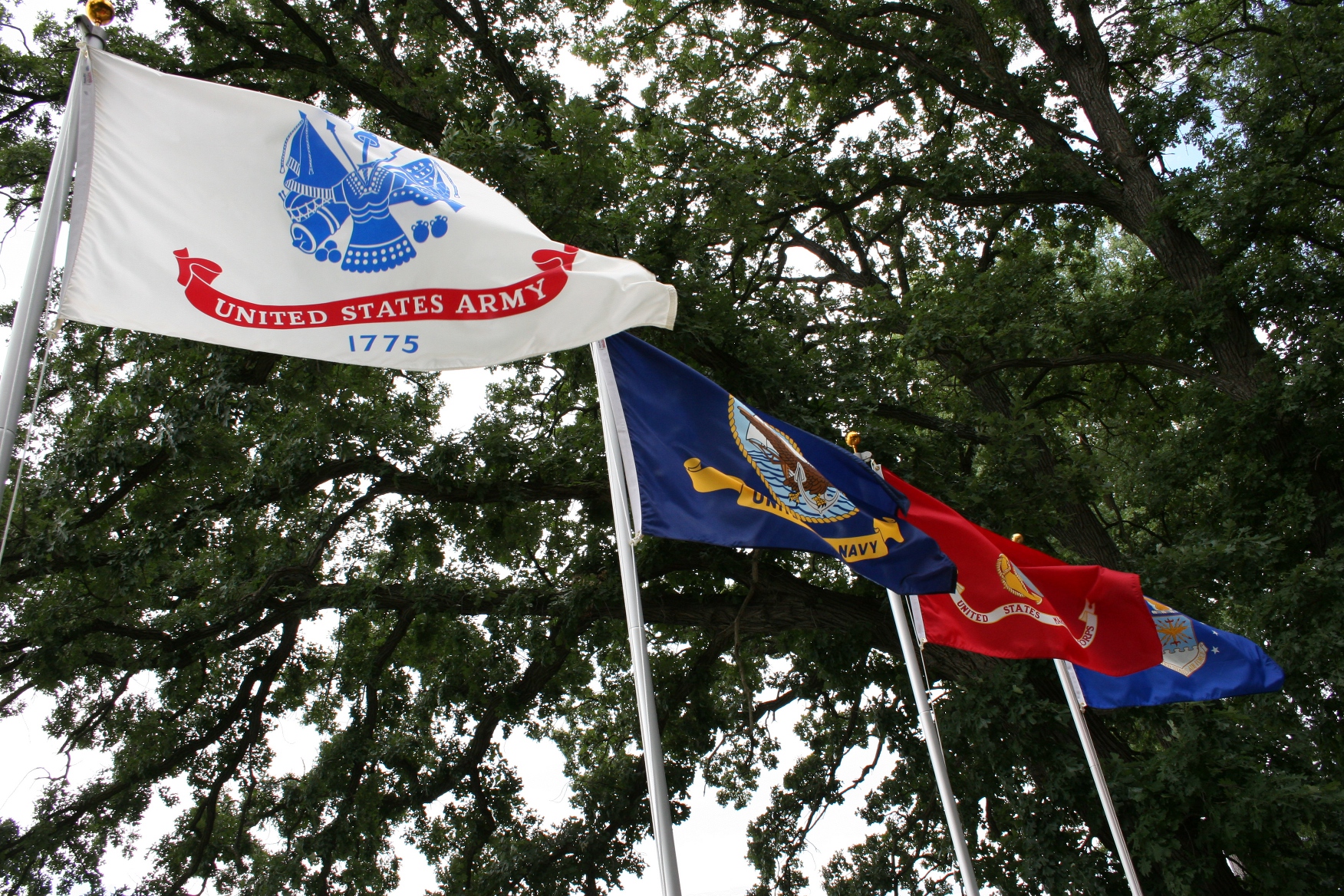
Flags from the four branches of the military fly next to Geri Larson's cabin.

Flags from the four branches of the military fly next to Geri Larson’s cabin.

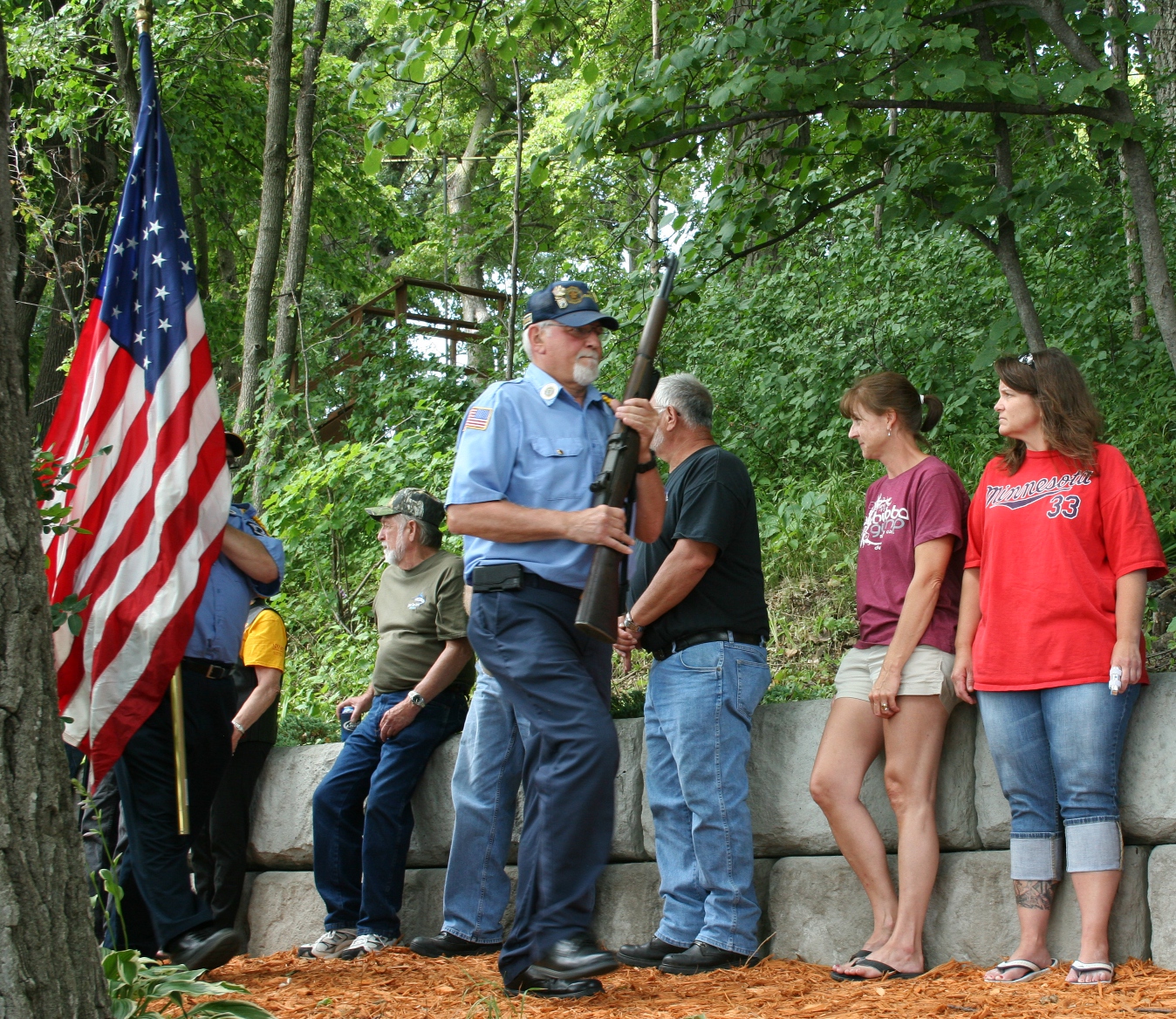
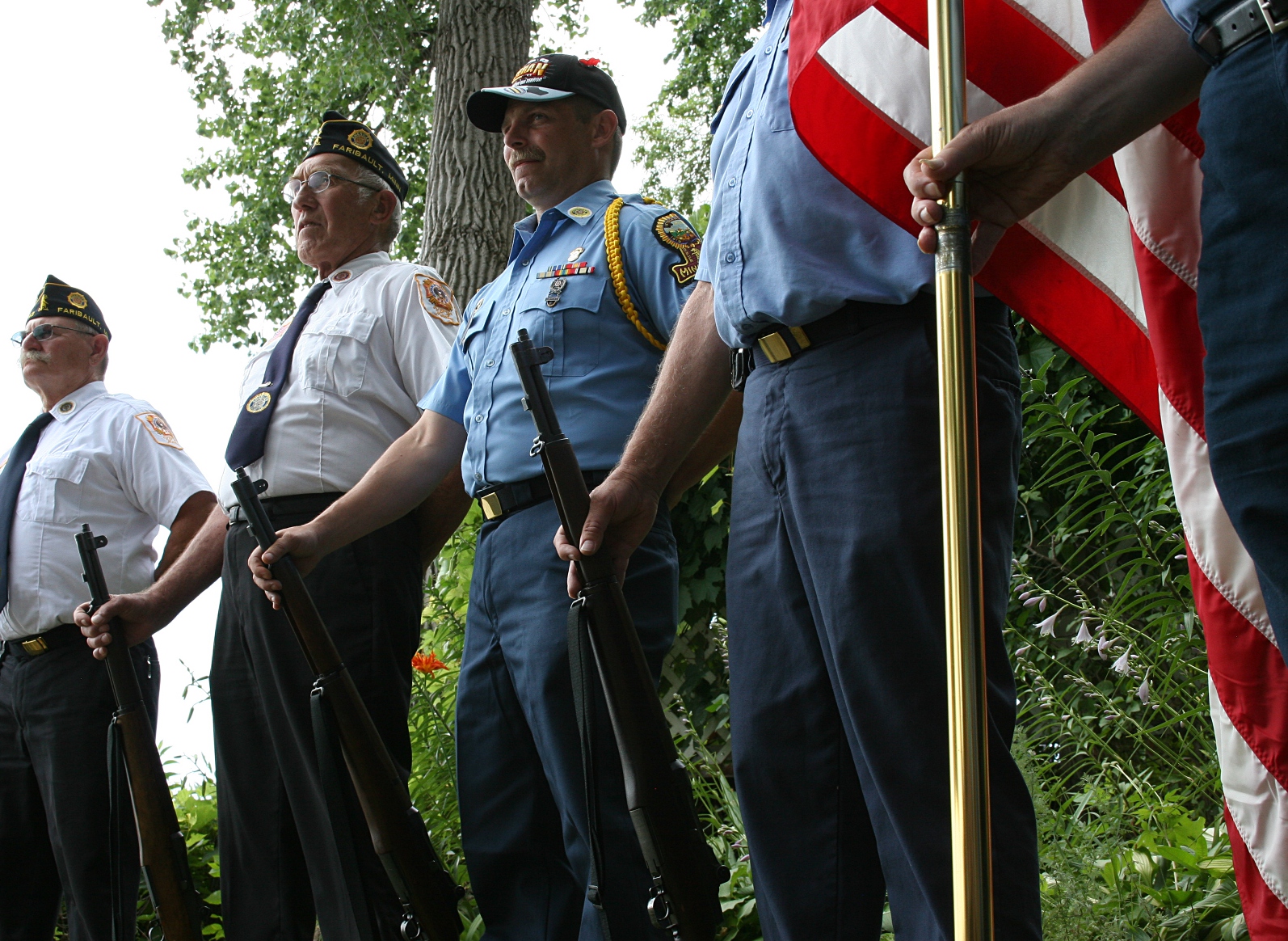
In a formal ceremony, while American and military flags waft in the breeze, folks listen to guest speakers and observe the protocols of a patriotic program—advancement of the colors by the Color Guard, a gun salute, playing of “Taps” and singing of the National Anthem.

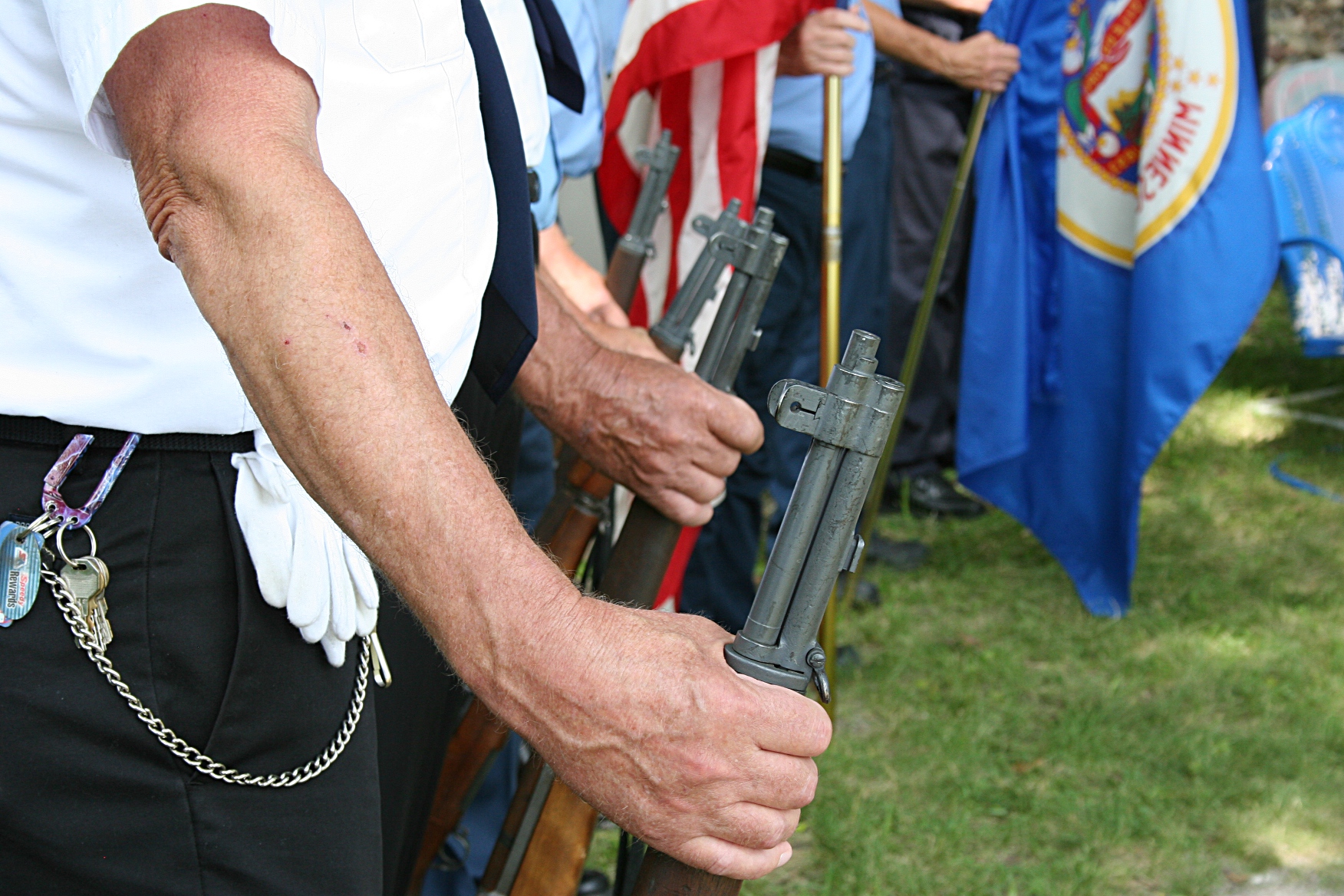
Veterans arrive with flags and guns to start the dedication program.

Veterans arrive with flags and guns to start the dedication program.

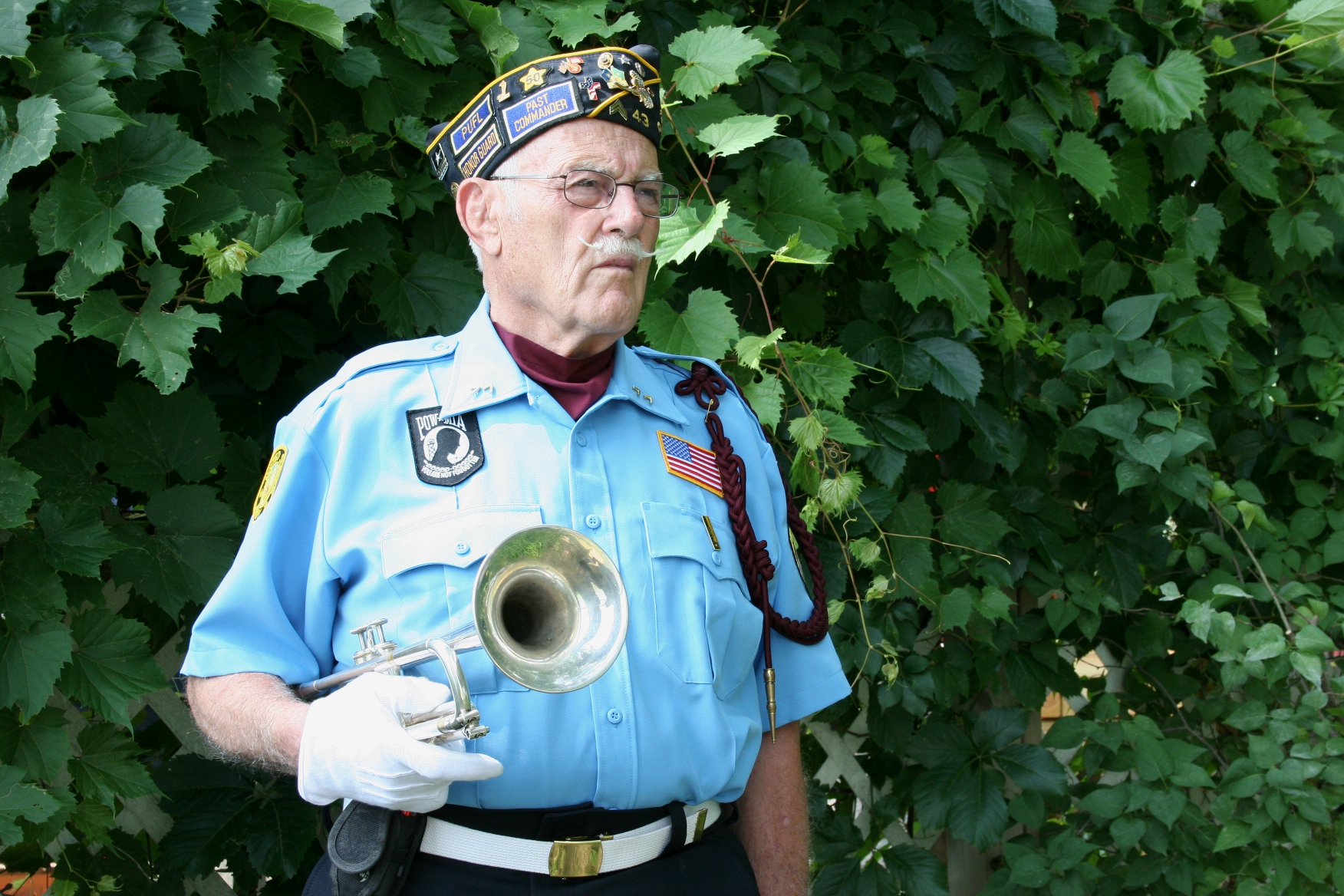
Lloyd Grandprey waits to play taps.

Lloyd Grandprey waits to play “Taps.”

Emmee Grisim steps up to the podium to sing "The Star Spangled Banner."

Emmee Grisim, of Lake City and the niece of Jim Williams, steps up to the podium to sing “The Star Spangled Banner” as the program gets underway.

The occasional drone of a motor, in air and by water, breaks the rhythm of the program. “I told you the Air Force was coming,” retired National Guard Lt. Col. Roger Williams jokes as he notes a plane overhead, pausing in his talk focused on remembering and honoring, as far back as his family’s involvement in the Civil War to the more recent war in Iraq.

Hands on guns.

Hands on guns.

Occasional laughter erupts. But the tone of the 45-minute ceremony remains primarily serious, aimed at remembering, honoring and thanking those who served.

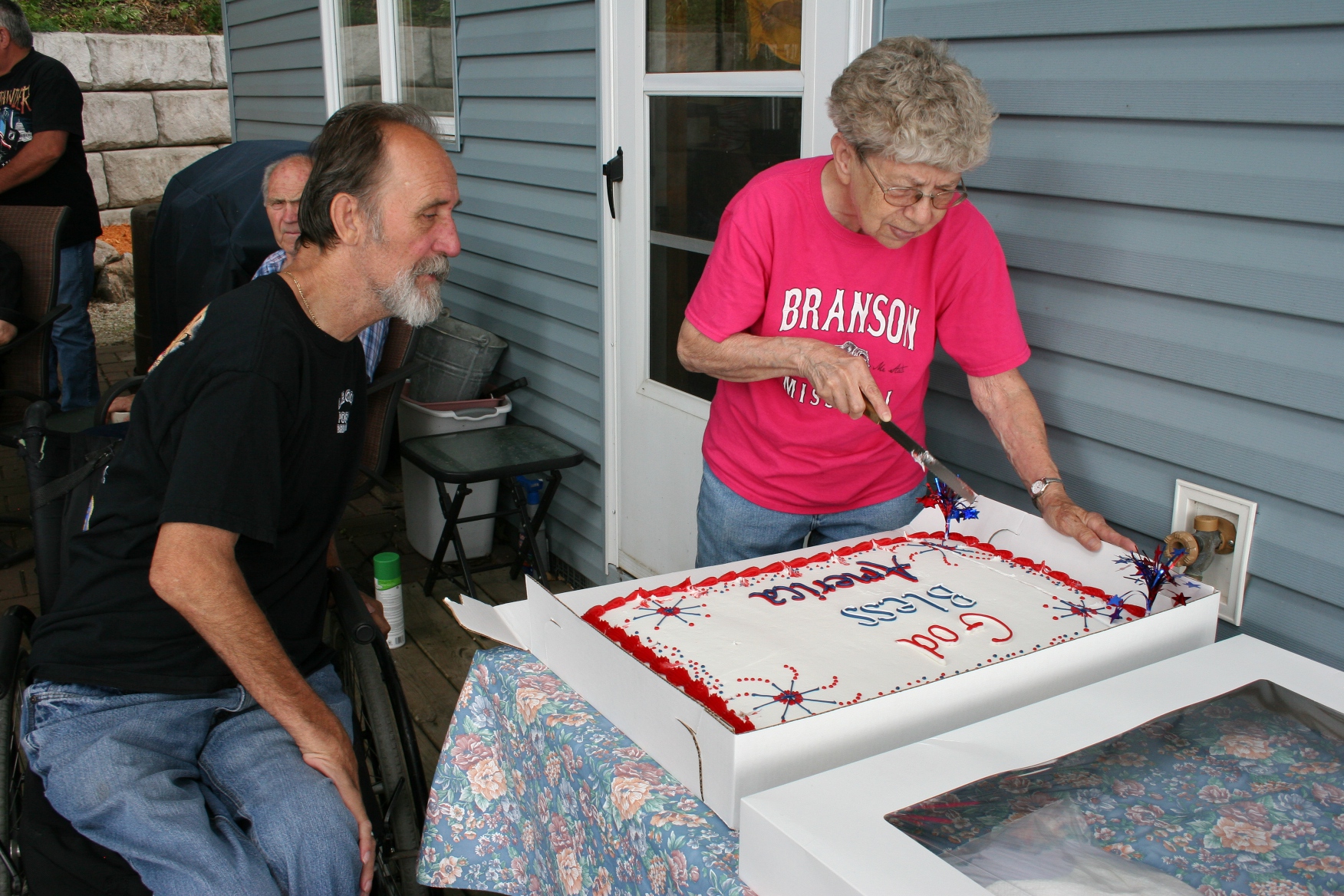
Geri Larson prepares to slice the cake, served along with sandwiches and beverages, after the dedication ceremony.

Before the ceremony, Geri Larson slices the patriotic themed cake which will be served along with sandwiches and beverages after dedication of the new vets’ memorial on her land.

That marks Geri Larson’s purpose in erecting the newest Roberds Lake veterans’ memorial, right next door to the two memorials on the property of Jim Williams, brother of Roger. Larson says the “Window in Time” piece honors the fallen and all veterans, including three of her brothers who served in the military.

Faribault American Legion Post 43 Commander Kirk Mansfield speaks before the unveiling.

Faribault American Legion Post 43 Commander Kirk Mansfield speaks before the unveiling.

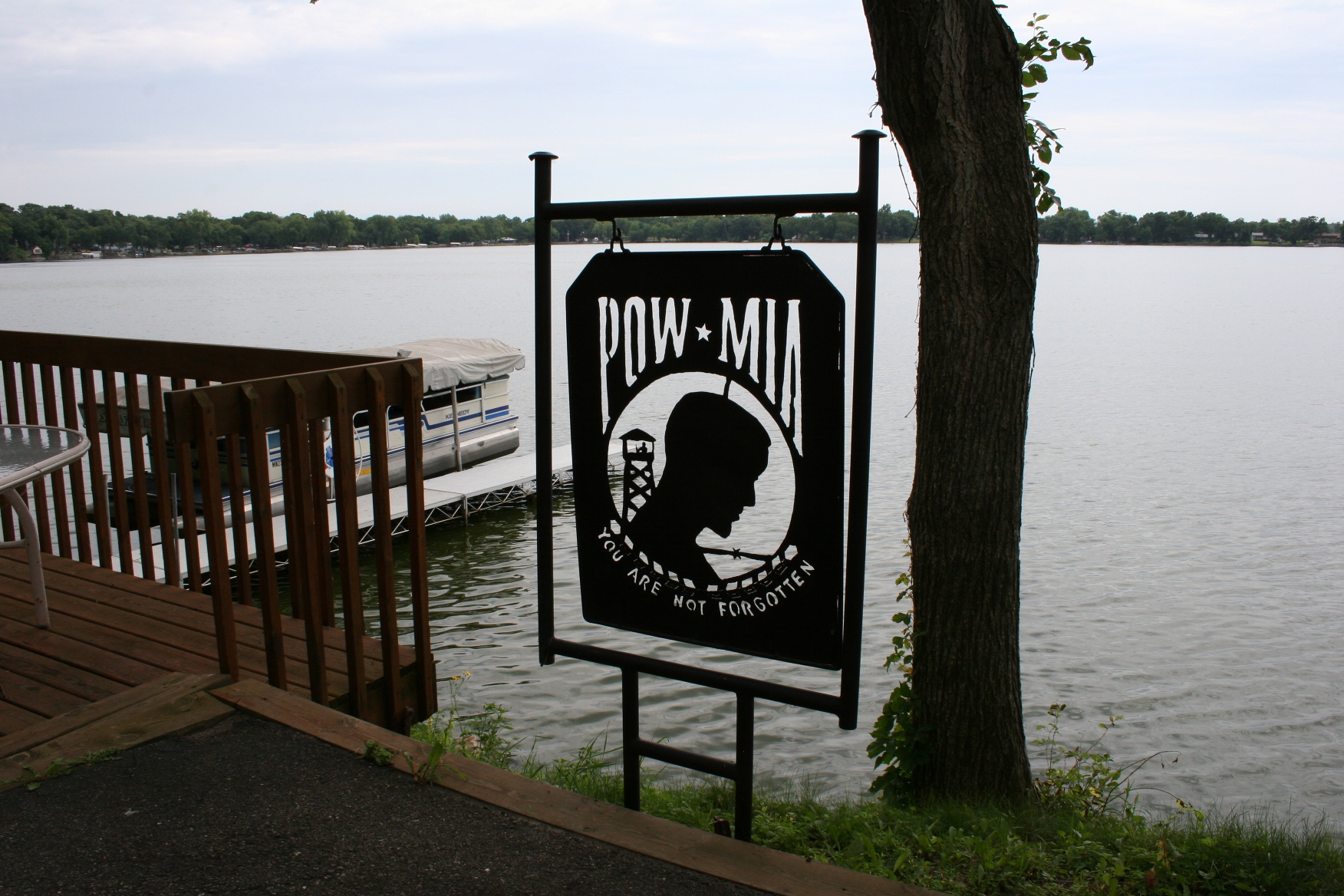
Larson and Jim Williams’ neighbor, Faribault American Legion Post 43 Commander and Gulf War veteran Kirk Mansfield, was instrumental in establishing the Roberds Lake veterans’ memorials. He worked with others on the designs and then crafted “Window in Time” and “American Joe,” with his father, Dick, creating the POW/MIA memorial.

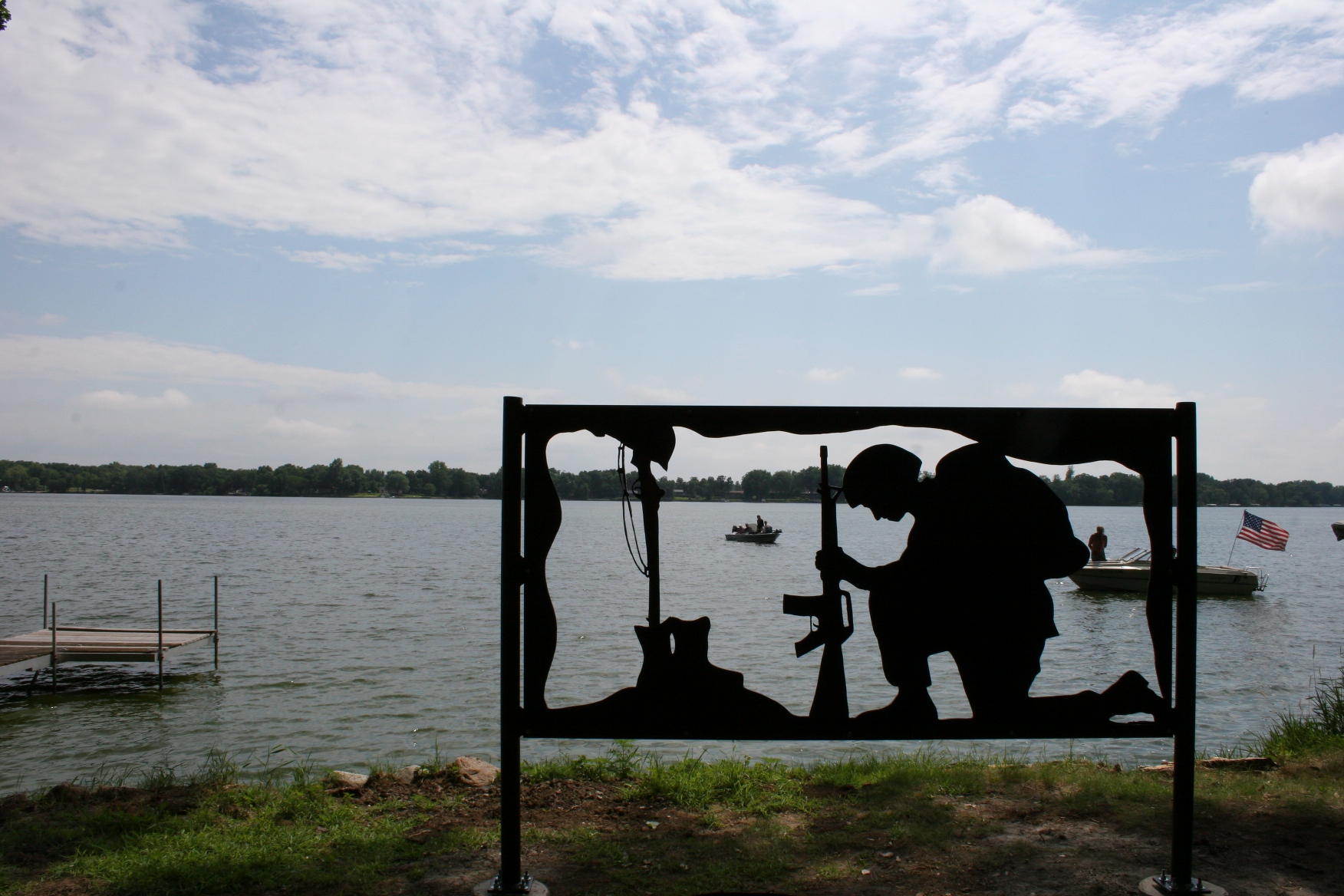
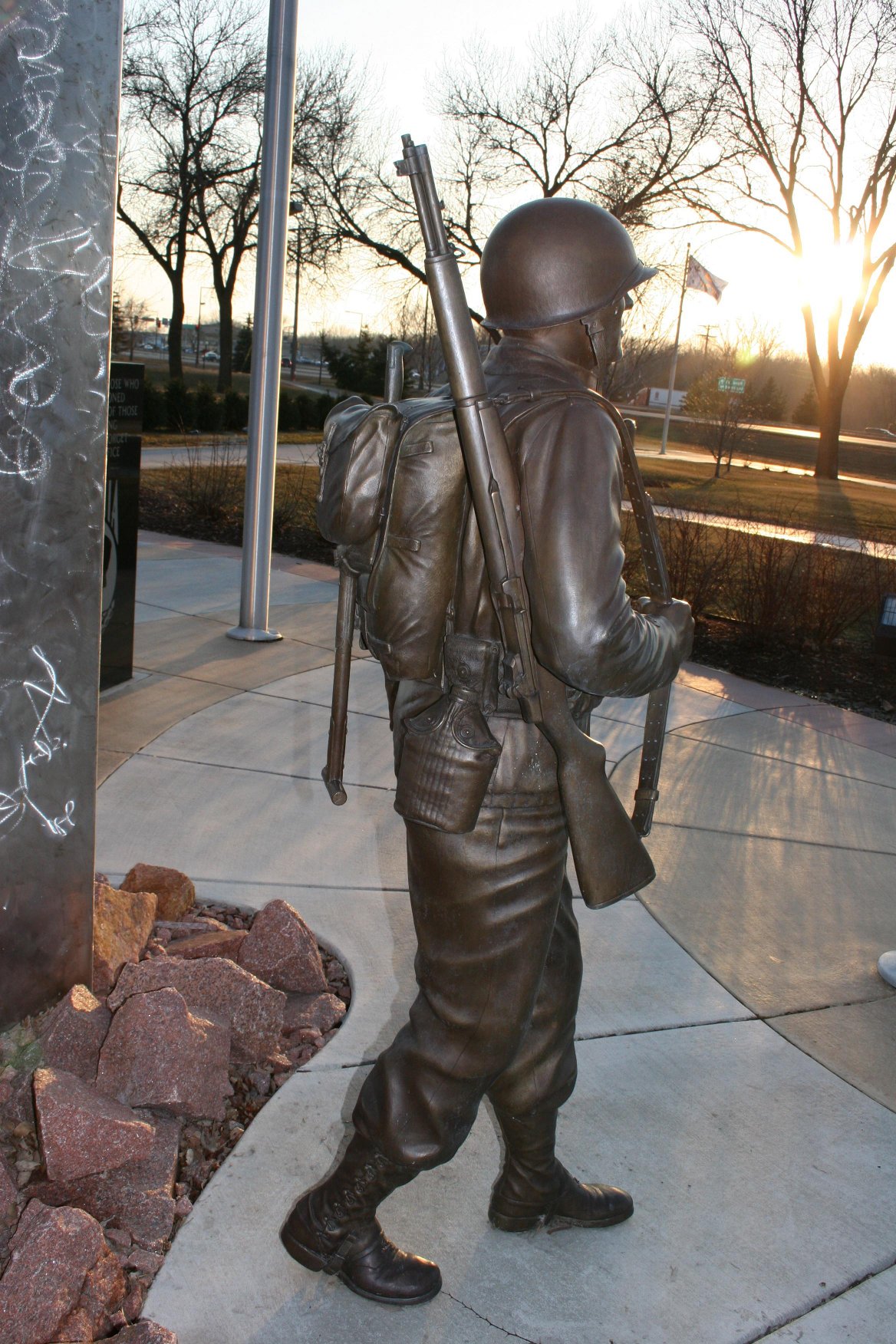
The "Window in Time" memorial shows a current day Marine praying before a grave/memorial. The young man depicted in the 4x8-foot steel sculpture is carrying a heavy burden, Kirk Mansfield notes, with the burden on his back representing a simple thank you. The tipped helmet also symbolizes thanks. The weapons are representative of those from WW II and the Korean War. The piece carries a theme of honoring and respecting elders. Mansfield was joined by many volunteers in working on the project.

The “Window in Time” memorial shows a current day Marine praying before a grave/memorial. The young man depicted in the 4-foot x 8-foot steel sculpture is carrying a heavy burden, Kirk Mansfield notes, with the burden on his back representing a simple thank you. The tipped helmet also symbolizes thanks. The weapons are representative of those from WW II and the Korean War. The piece carries a theme of honoring and respecting elders. Mansfield was joined by many volunteers in working on the project. It was installed on Saturday, dedicated on Sunday.

Mansfield tells the group gathered on Sunday that the newest memorial represents “a time for remembrance, solace and peace.”

He reflects on the numbers of Americans who have died in service to their country—some 1,500 since the “American Joe” memorial next door was dedicated in 2009 to 400,000-plus lives lost during WW II.

“The price of America’s freedom,” Mansfield notes, “is buried in the ground.”

BONUS PHOTOS:

Veterans participate in the program.

Veterans who participated in the program.

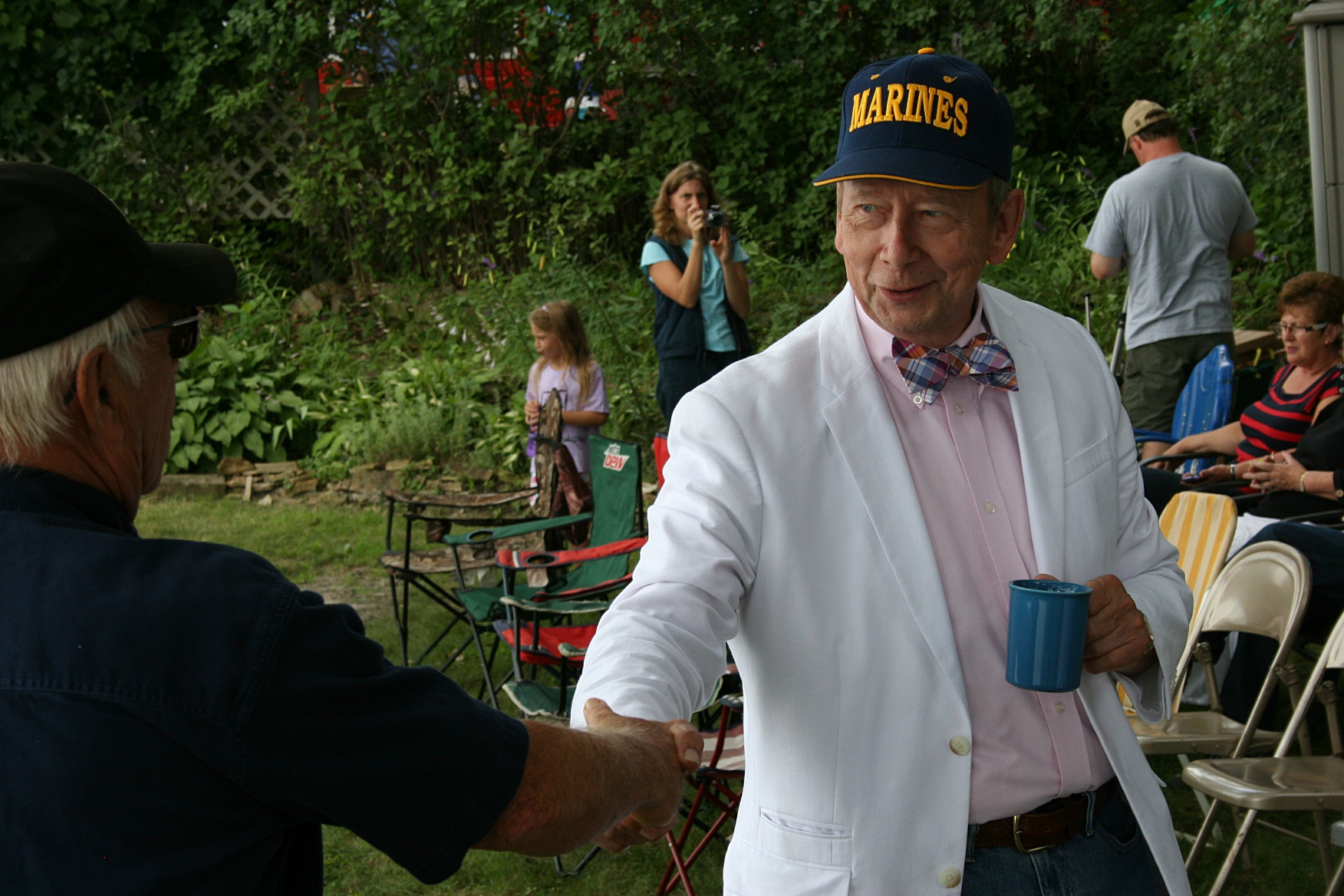
Friends greet friends before the dedication begins.

Friends greet friends before the dedication begins.

Geri Larson with her friend, George LaRoche, who installed the poles for the military flags on her property.

Geri Larson with her friend, George LaRoche, who installed the poles for the military flags on her property.

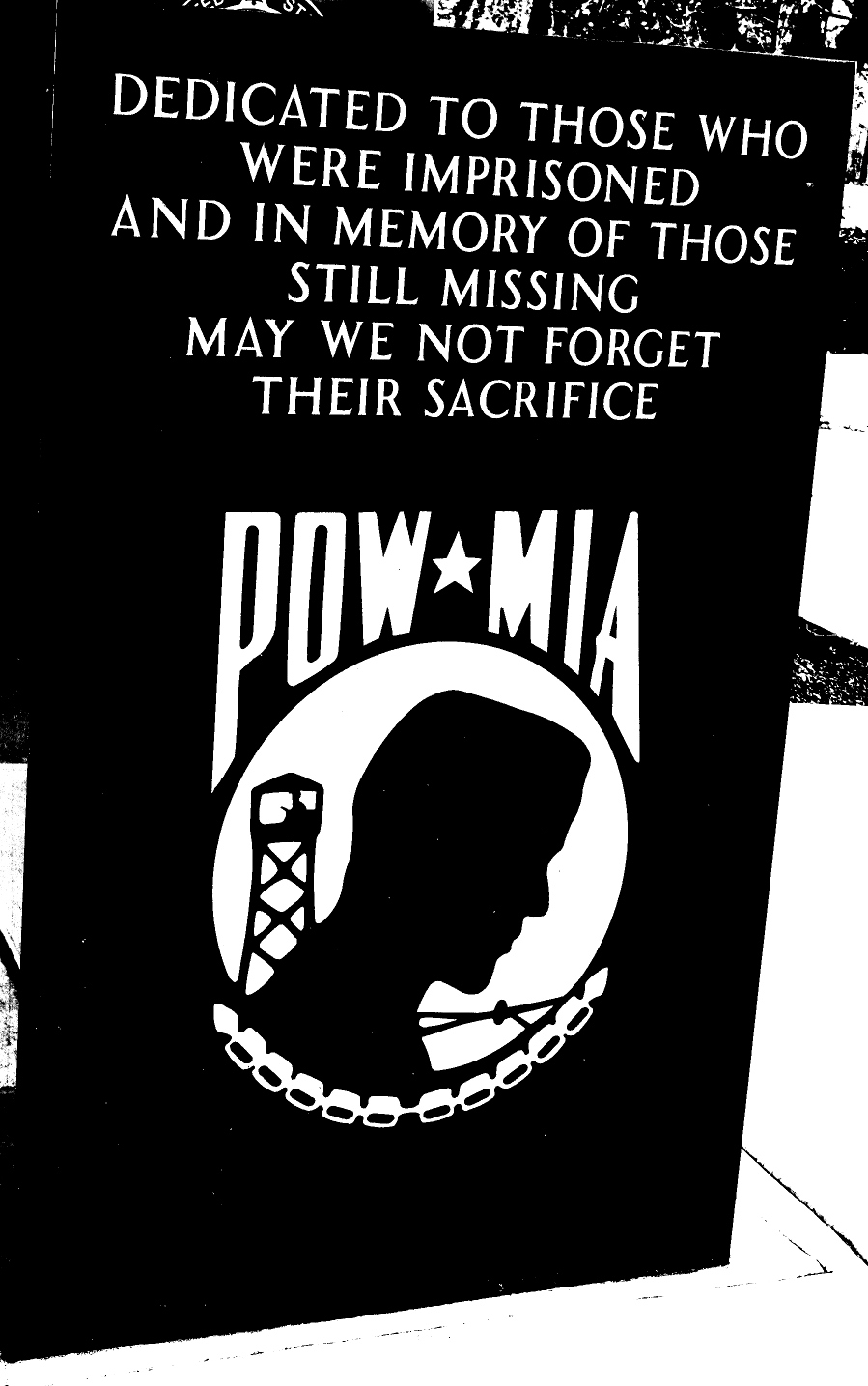
The POW/MIA memorial on Jim Williams' lakeshore.

The POW/MIA memorial created by Dick Mansfield and placed on Jim Williams’ lake shore.

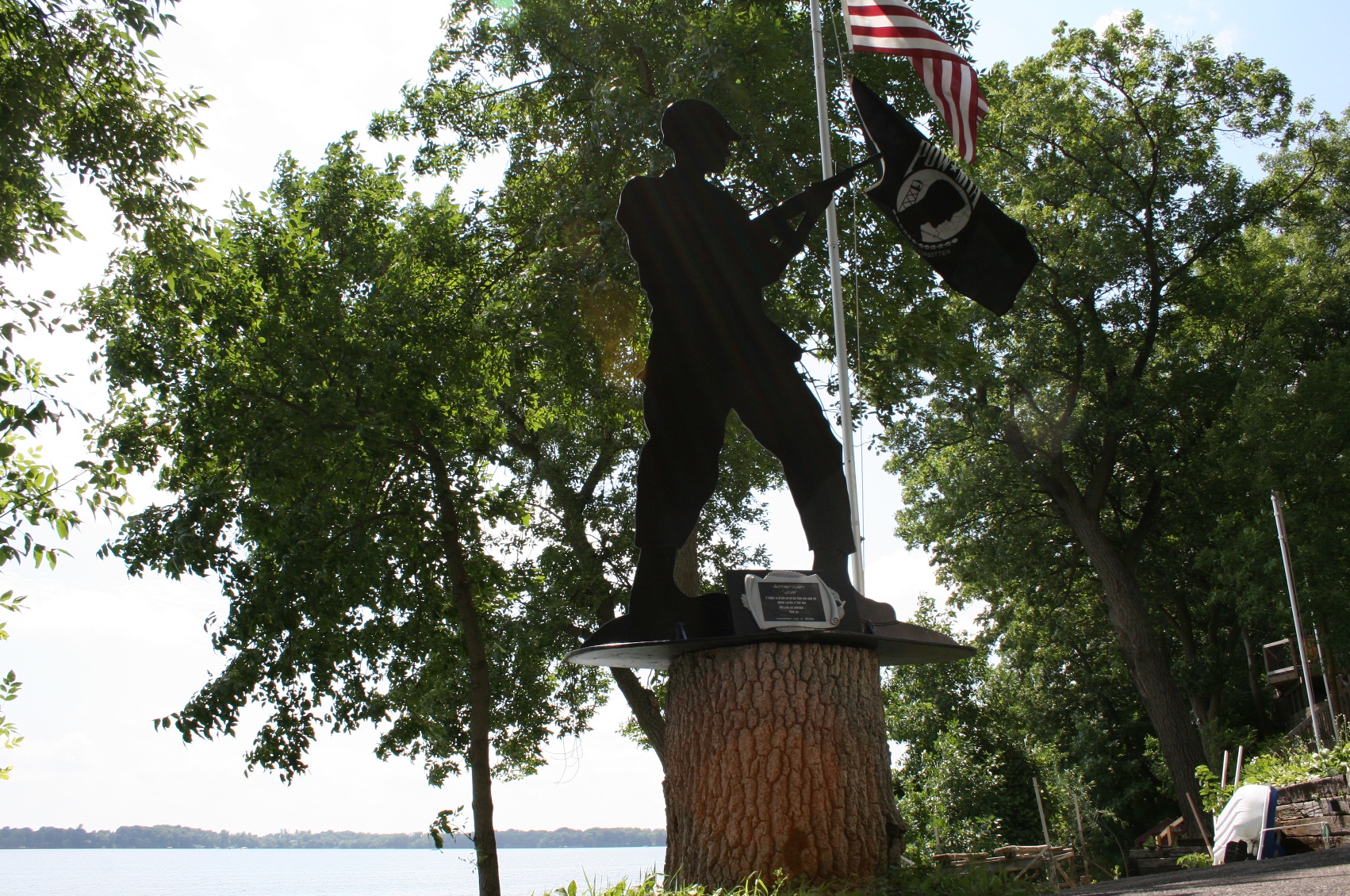
The "American Joe" memorial was crafted by metal artist Kirk Mansfield, who "sits at a computer all day" in his professional career,

The “American Joe” memorial crafted by metal artist Kirk Mansfield, who “sits at a computer all day” at his paying job. The memorial was dedicated in 2009. The soldier represented in the art is from the 1970s, Jim Williams says. His brother, Gary, served during that time, in Vietnam.

© Copyright 2013 Audrey Kletscher Helbling


Viewing North Korea’s threats from a personal perspective April 5, 2013

Filed under: Uncategorized — Audrey Kletscher Helbling @ 7:31 AM
Tags: , , , , , , , , ,

HAVE YOU CONSIDERED North Korea and the recent missile threats lobbed against the U.S.?

I have.

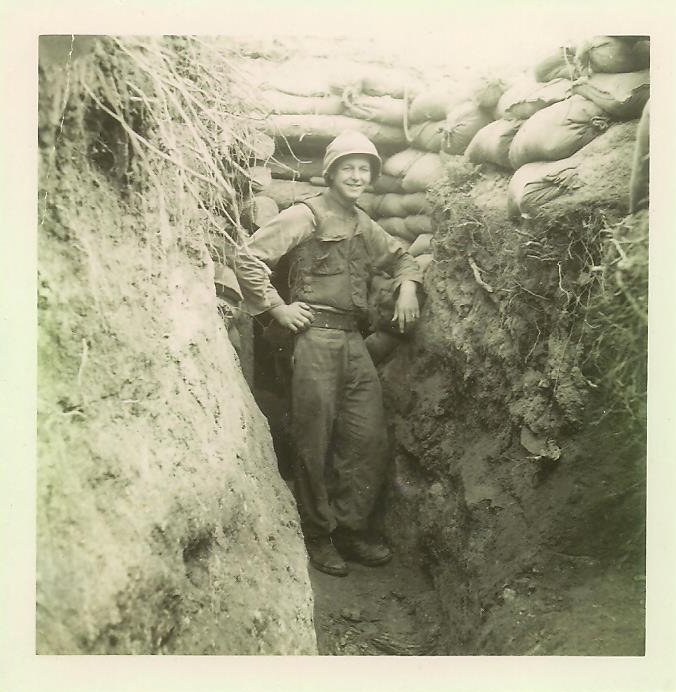
U.S. Army Cpl. Elvern Kletscher, my father, in the trenches in Korea.

U.S. Army Cpl. Elvern Kletscher, my father, in the trenches in Korea.

For me it’s personal. Personal because some 60 years ago my father, dead 10 years now, fought as an infantryman in the Korean War. On February 26, 1953, he was struck by shrapnel at Heart Break Ridge. In May 2000, he was awarded a Purple Heart for those wounds. I don’t need to explain Heart Break Ridge. The name tells the story.

Today I reflect on his horrible experiences there and wonder whether that war was worth all the death, all the physical and psychological damage inflicted upon those who fought? Like my dad.

I suppose you could wonder this about any war. Was the war worth the lives lost, the lives changed?

The answer to that question cannot be tidied into a succinct statement, for the response would vary depending on your perspective—perhaps as a soldier, a parent who lost a son or daughter, the daughter who watched her father struggle with Post Traumatic Stress Disorder.

War is never neat and tidy, but rather complicated.

Did the Korean War halt the spread of Communism? Yes, in the south.

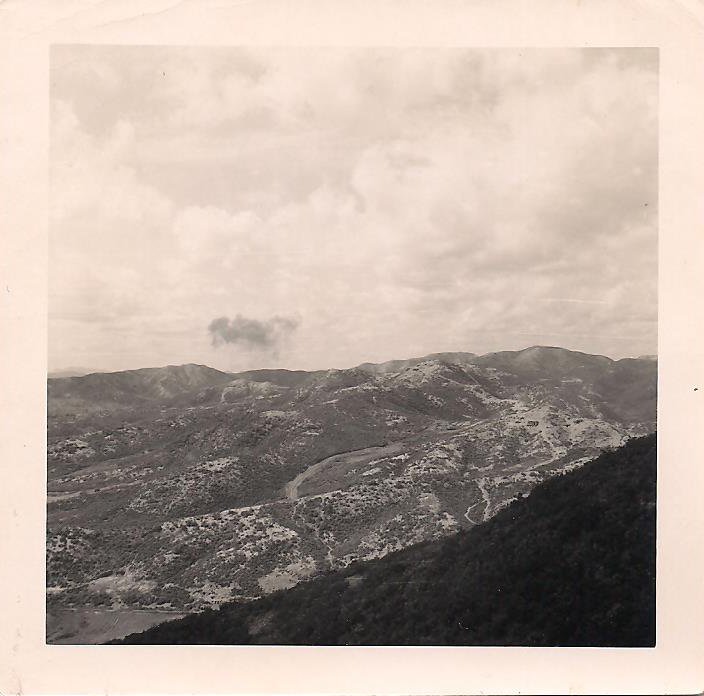
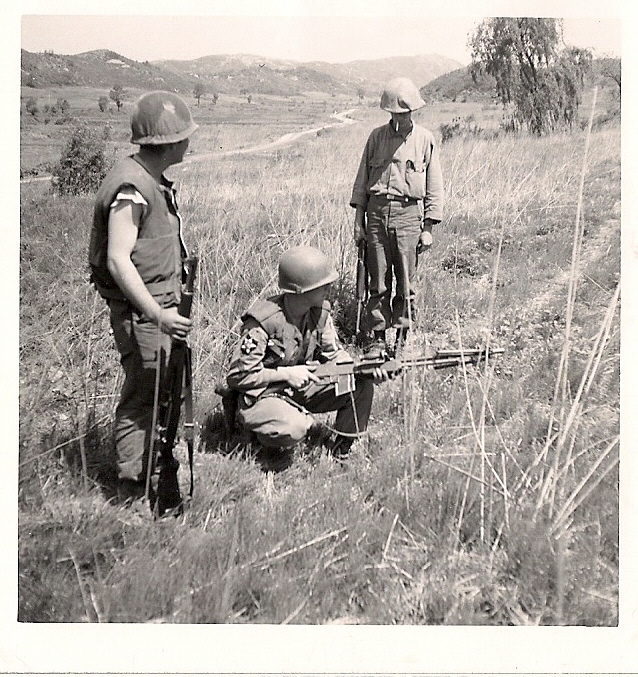
This photo, pulled from the shoebox which holds my dad's military photos, is simply labeled "front line." That would be "front line" as in Korea, where my soldier father fought.

This photo, pulled from the shoebox which holds my dad’s military photos, is simply labeled “front line.” That would be “front line” as in Korea, where my soldier father fought.

Yet, despite the signing of a truce, a definite uneasiness has existed between the two Koreas, separated by a 155-mile long, 2.5-mile wide fortified Demilitarized Zone, for 60 years.

Now North Korea’s new leader, Kim Jong-un, has thrown the region into even more uncertainty by his actions and threatened actions. I won’t expound, only note that when I heard mention of North Korean missiles on standby to possibly strike U.S. targets in  Hawaii, Washington, Los Angeles and Austin (Texas), I listened. Anytime a specific place in the U.S. is named, the entire situation becomes much more personal.

I suppose that is part of the strategy, to heighten anxieties. With so much information out there, whom do we believe? Is North Korea capable? Is it not?

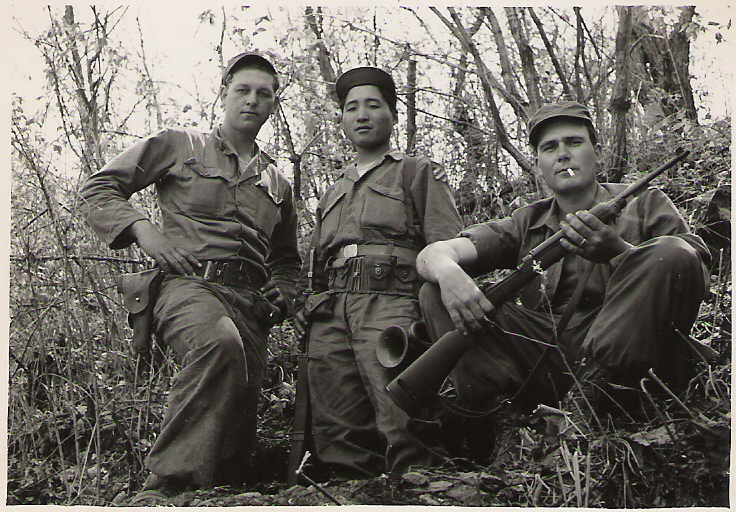
This photo from my dad's collection is tagged as "Kim, Rowe, Allen & me, May 1953 Machine Gun Crew." That's my father on the right.

This photo from my dad’s collection is tagged as “Kim, Rowe, Allen & me, May 1953 Machine Gun Crew.” That’s my father on the right.

What would my Dad, who termed Korea “a hell hole,” say about all of this?

What would Teri Rae say about all of this? She was only six weeks old when her dad died. My father witnessed Ray’s death on the battlefield. (Click here to read about Ray.) He never forgot. I’ve never forgotten either the heart-wrenching and horrific story of the Nebraska soldier who never returned home to his wife or his first-born.

These are my thoughts as I consider the unsettling situation unfolding in Korea.

What are your thoughts?

© Copyright 2013 Audrey Kletscher Helbling


The educating & healing continue 150 years after The U.S.-Dakota War December 28, 2012

STUDYING MINNESOTA HISTORY decades ago, I learned about “The Sioux Uprising of 1862” and even wrote a term paper on the topic bearing that title.

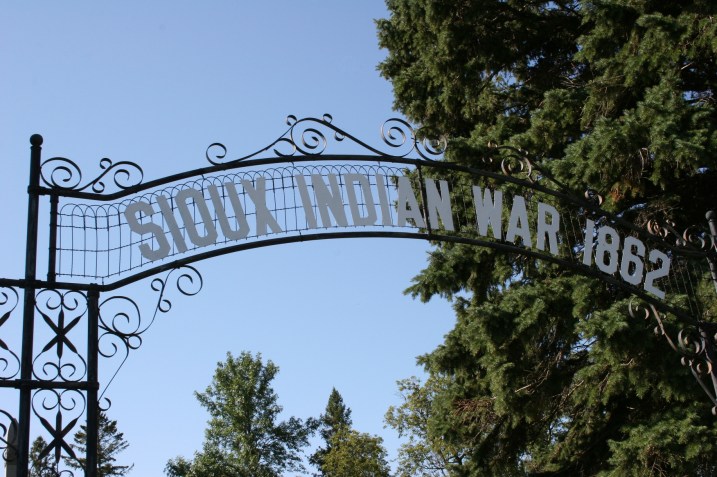
This archway leads to the Wood Lake State Monument, on the site of the battle which ended the U.S.-Dakota Conflict of 1862.

This archway leads to the Wood Lake State Monument, on the site of the battle which ended the U.S.-Dakota Conflict of 1862.

I thought nothing negative of that word, Sioux, which translates to “snake.” The Ojibway, once enemies of the Dakota, gave the tribe that name. I did not know; it was the word I was taught.

That I even studied “The U.S.-Dakota War of 1862,” the proper terminology for the six-week war fought primarily in my native southwestern Minnesota 150 years ago, seems remarkable. So many in Minnesota never knew of this conflict in our state’s history.

I don’t pretend to know every detail of the war between the Dakota and the white settlers and soldiers. But I do remember that I grew up with a fear of “Indians,” reinforced by the television westerns especially popular during my formative years and by the history lessons delivered about The Sioux Uprising of 1862, as it was then called.

Those classroom lessons were decidedly one-sided: The whites were the good guys, the Indians the bad guys. That line of thinking was wrong, oh, so wrong. I realize that now, having reached that conclusion decades ago.

The maltreatment of the Dakota by greedy traders, broken treaty promises, starvation, efforts to convert and transform the Dakota people into Christian farmers, expulsion from their homeland and more contributed to the war.

Yet, even the Dakota disagreed about the need to wage this battle. Some helped settlers escape to safety while others plundered and killed. My own maternal forefathers fled the New Ulm area to St. Peter, making this war a part of my personal family history.

The Milford State Monument along Brown County Road 29 west of New Ulm commemorates the deaths of 52 settlers who were killed in the area. Located along the eastern edge of the Lower Sioux Reservation, Milford had the highest war death rate of any single township.

The Milford State Monument along Brown County Road 29 west of New Ulm commemorates the deaths of 52 settlers who were killed in the area. Located along the eastern edge of the Lower Sioux Reservation, Milford had the highest war death rate of any single township.

While I carry no ill will toward the Dakota, I will tell you, unequivocally, that feelings still run deep in southwestern Minnesota. I am also honest enough to admit that perhaps I would feel differently if my family members had been massacred or if I was of Dakota, instead of German, heritage.

Although time can heal, it doesn’t always. Misconceptions and misguided expectations, even after 150 years, exist on multiple sides of the issue. I won’t delve into that here, but I do think the healing is still ongoing, forgiveness (on both sides) still not attained.

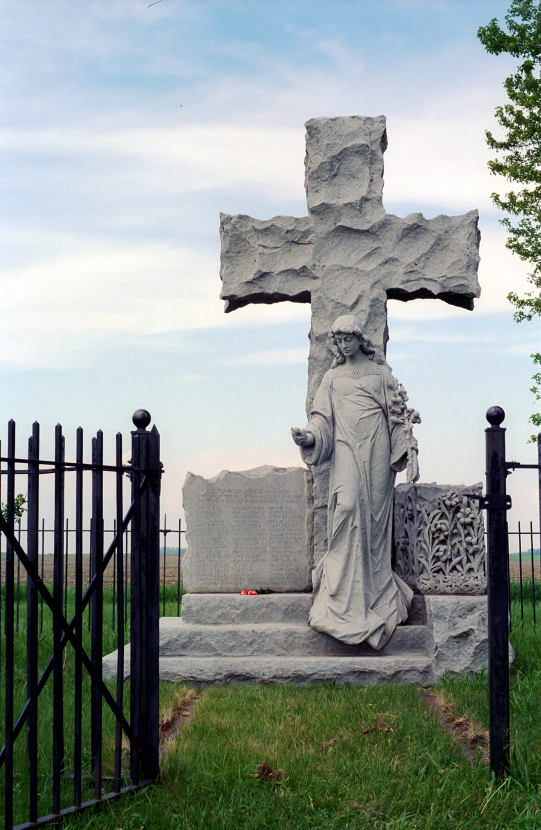
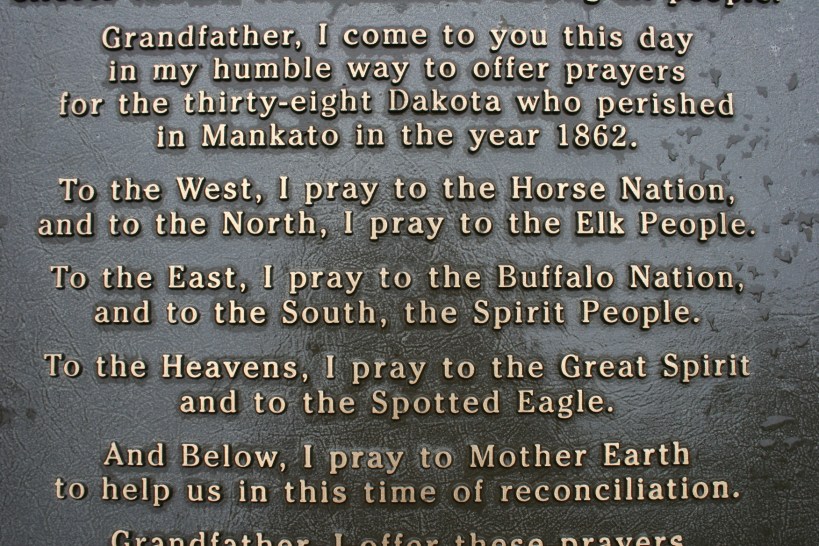
Words on a marker in Reconciliation Park in Mankato where 38 Dakota were hung on Dec. 26, 1862.

Words on a marker in Reconciliation Park in Mankato where 38 Dakota were hung on Dec. 26, 1862. On Wednesday, a new Dakota 38 Memorial was dedicated listing the names of the 38 men who died here. This file photo was taken of an existing plaque in the park.

In a ceremony in Mankato on Wednesday marking the 150th anniversary of the hanging of 38 Dakota, Mayor Eric Anderson proclaimed this the year of “forgiveness and understanding.”

The Dakota also called upon all to “forgive everyone everything.” Those words will be engraved into Kasota stone benches to be installed next summer at the site of the new Dakota 38 Memorial dedicated in Reconciliation Park on Wednesday.

Strides toward understanding and forgiveness, and education, can perhaps finally heal the still festering wounds of this long ago war.

TO VIEW PHOTOS from the event in Mankato on Wednesday, click to link here to Minnesota Public Radio.

TELL ME, ESPECIALLY if you grew up in Minnesota, did you study The U.S.-Dakota War of 1862? Also, are Minnesota students today being taught about this war?

© Copyright 2012 Audrey Kletscher Helbling


Veterans’ Day: Grief in a shoebox November 11, 2012

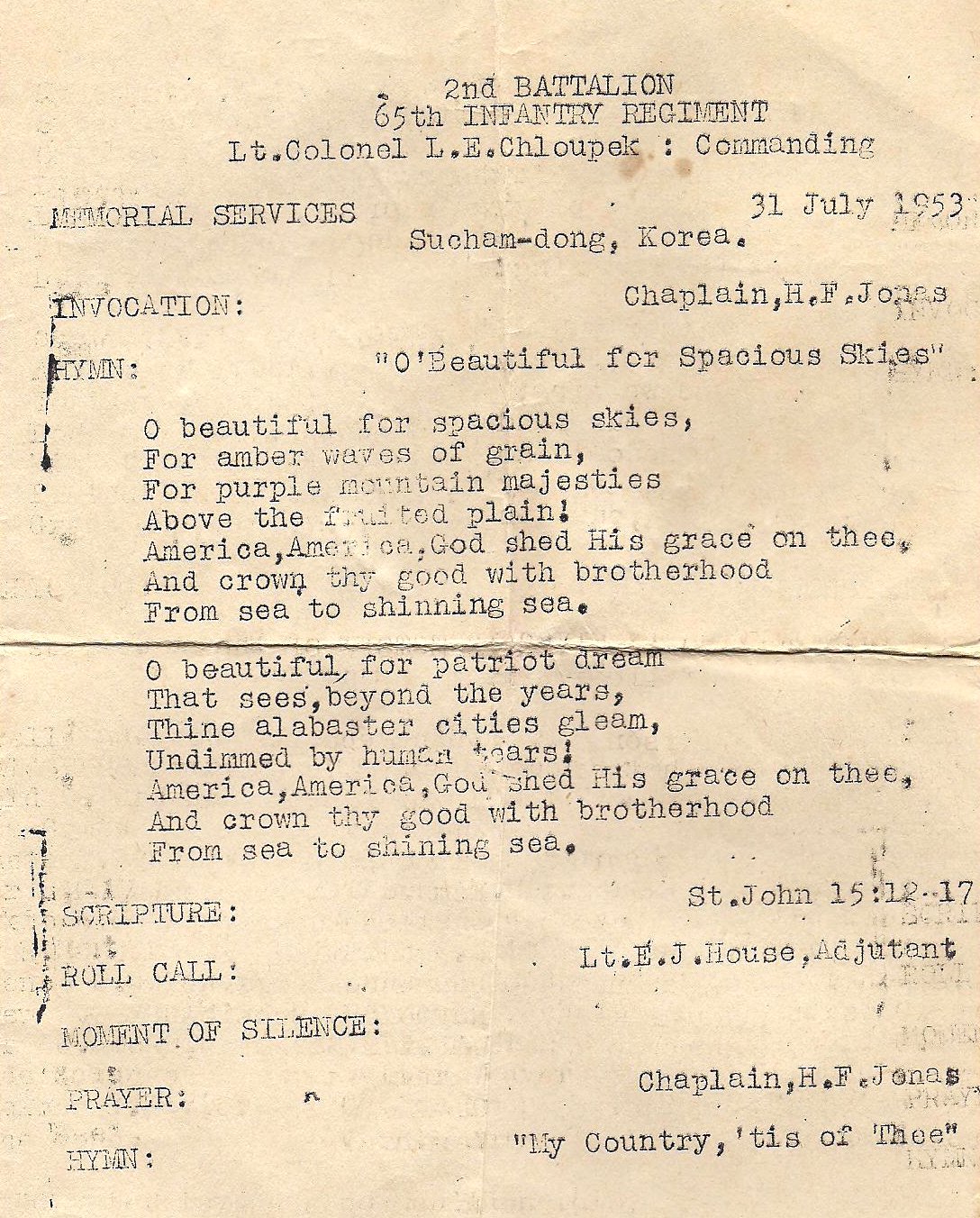
IT IS BUT A SINGLE SLIP of paper, creased and yellowing with age. Yet, it is so much more. The words typed thereon, 59 years ago, hold heartache and honor and memories of my soldier father and his buddy.

My father shipped home from Korea into the welcoming arms of family.

Cpl. Ray W. Scheibe shipped home from Korea in a box, to a grieving family.

The third section of the memorial service bulletin my soldier dad carried home from Korea.

It’s all there, on that piece of paper, a memorial service bulletin dated July 31, 1953, Sucham-dong, Korea. My father folded that paper into quarters, carried it across the ocean and across the country and back home to southwestern Minnesota and then tucked his grief inside a shoebox.

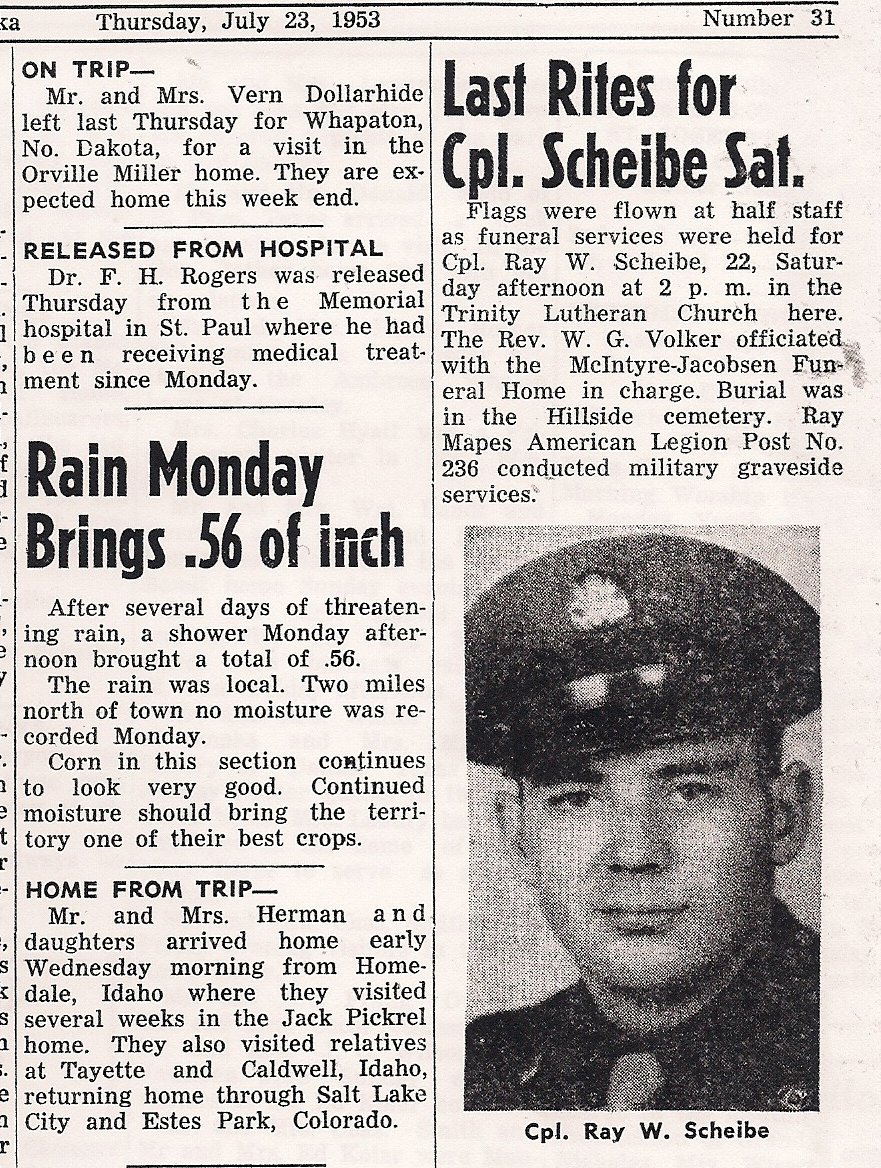
A story about Cpl. Ray W. Scheibe, published in the July 23, 1953, issue of  his hometown newspaper, The Wolbach Messenger, Wolbach, Nebraska.

Cpl. Ray William Scheibe lost his life in Korea June 2, 1953, when he was hit by a round of mortar fire, according to information received from a buddy. He was a member of an infantry unit and was on patrol duty at the time of his death.—from The Wolbach Messenger, Thursday, July 23, 1953.

Sgt. Elvern Kletscher, my father, witnessed the horrific death of Ray, who was due to ship out the next day. Back in tiny Wolbach, Nebraska, Ray’s wife, Marilyn, and their 3-month-old daughter, Terri Rae, waited.

The memorial service bulletin lists the names of those soldiers who died, including Ray Scheibe.

Greater love has no man than this, that a man lay down his life for his friends. John 15:13—scripture quoted in the memorial service folder dated July 31, 1953, Sucham-dong, Korea.

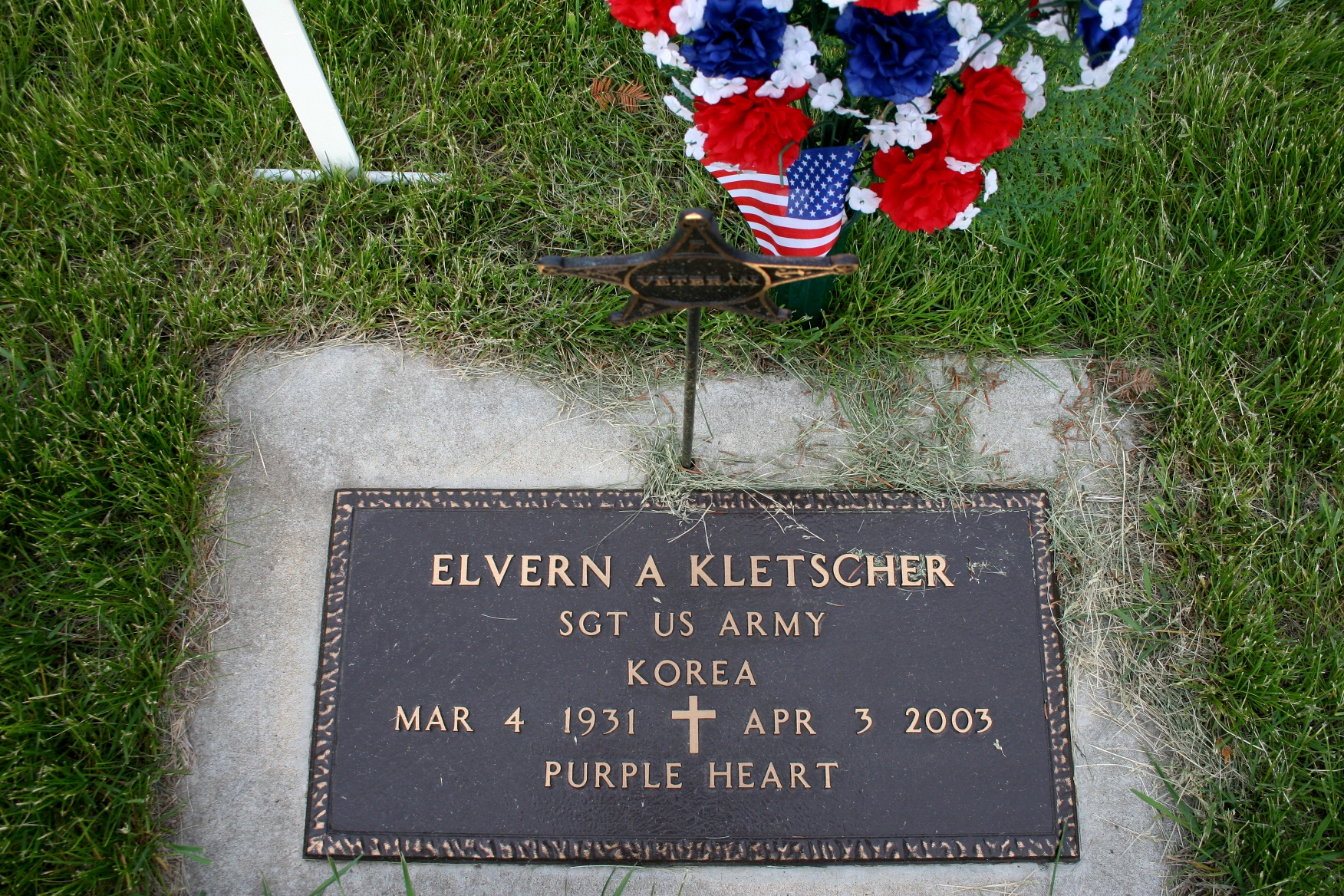
An in-ground marker honors my father, Elvern Kletscher, a Korean War veteran and recipient of the Purple Heart for wounds he suffered at Heartbreak Ridge in Korea. My father did not receive his Purple Heart until 2000.

This Veterans’ Day let us remember, always, those who have served and are serving.

My father, Elvern Kletscher, left, with two of his soldier buddies in Korea.

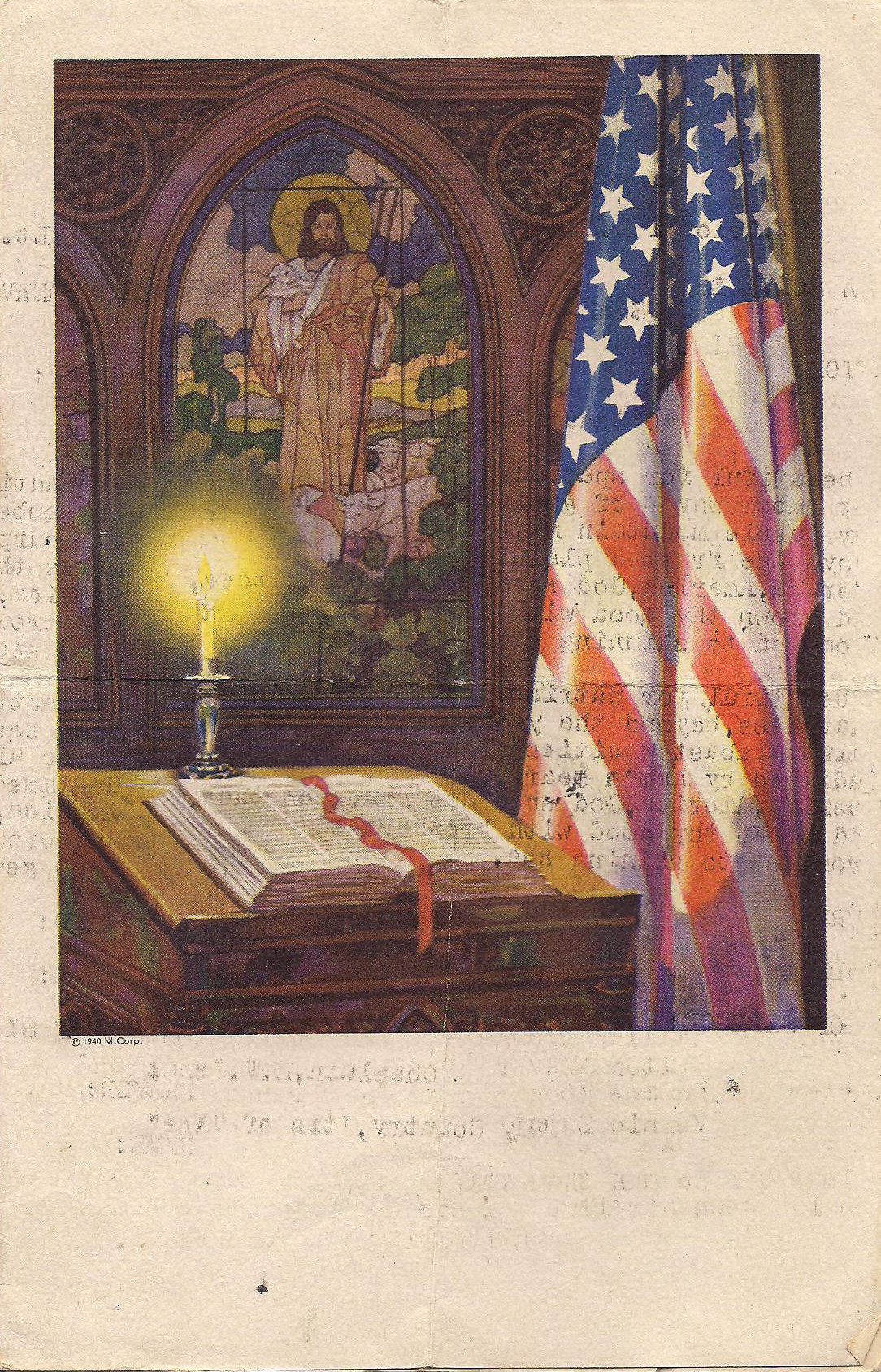
The cover of the 1953 memorial service folder from Korea.

© Copyright 2012 Audrey Kletscher Helbling


Memorial Day: Greater love has no man (or woman)… May 25, 2012

Filed under: Uncategorized — Audrey Kletscher Helbling @ 7:16 AM
Tags: , , , ,

A soldier statue at the Northfield Area Veterans Memorial at Riverside Lions Park in Northfield.

WAR. It is easy to distance ourselves, to forget. Out of sight, out of mind.

But when war becomes personal—when a close loved one is serving his/her country, then the perspective changes. War weaves into lives with threads of fear and uncertainty, with distraction and unease, with life lived always on the cusp of “when the soldier returns home.”

I’ve never lived that life in the present. But I have experienced it in the past, in the afterward of war. My father fought on the front line during the Korean War. Battle forever changed him. How could it not? If you killed someone close enough to see the whites of their eyes, how would you feel? Even if you understood the choice, kill or be killed?

My father, Elvern Kletscher, left, with two of his soldier buddies in Korea.

My dad lived with the demons of war—the nightmares, the flashbacks of buddies blown apart on the battlefield, the memories of hunger and cold and the digging into foxholes and a sniper picking off members of his platoon and mortar rounds winging toward him.

There is no glory in war or in violent death on the battlefield.

My dad carried home a July 31, 1953, memorial service bulletin from Sucham-dong, Korea. In the right column is listed the name of his fallen buddy, Raymond W. Scheibe.

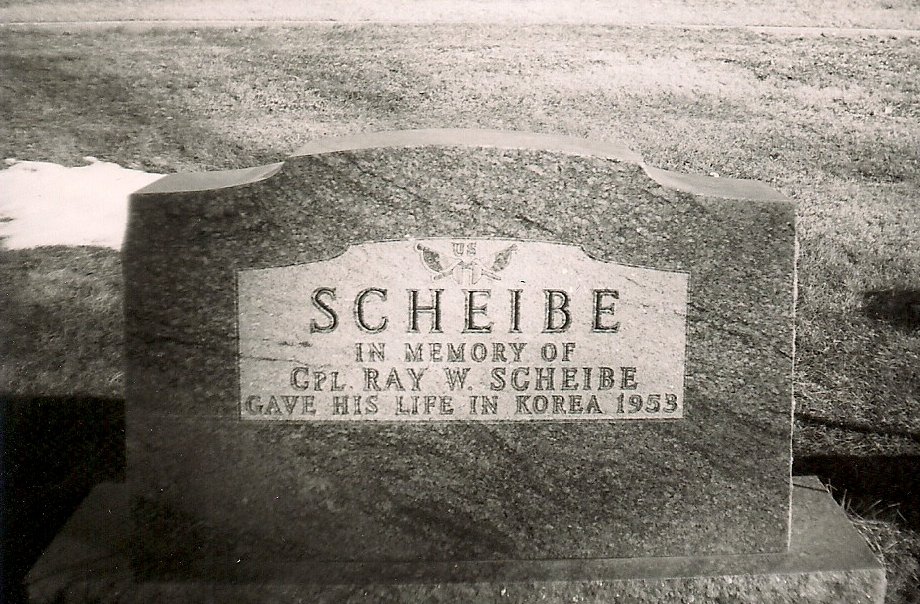
Sonny Nealon, Ray’s best friend in high school, sent me this photo he took of his friend Ray’s gravestone. Ray was killed by a mortar round on June 2, 1953, the day before he was to leave Korea and return home to his wife and six-week-old daughter in Wollbach, Nebraska. My dad witnessed his buddy’s death.

On this Memorial Day weekend, let us remember, not war, but the men and women who served their country. Remember them as individuals—as sons and daughters, sisters and brothers, husbands and wives, fathers and mothers, aunts and uncles…

Honor them. Respect them. Thank them for giving of themselves to preserve and protect our freedom.

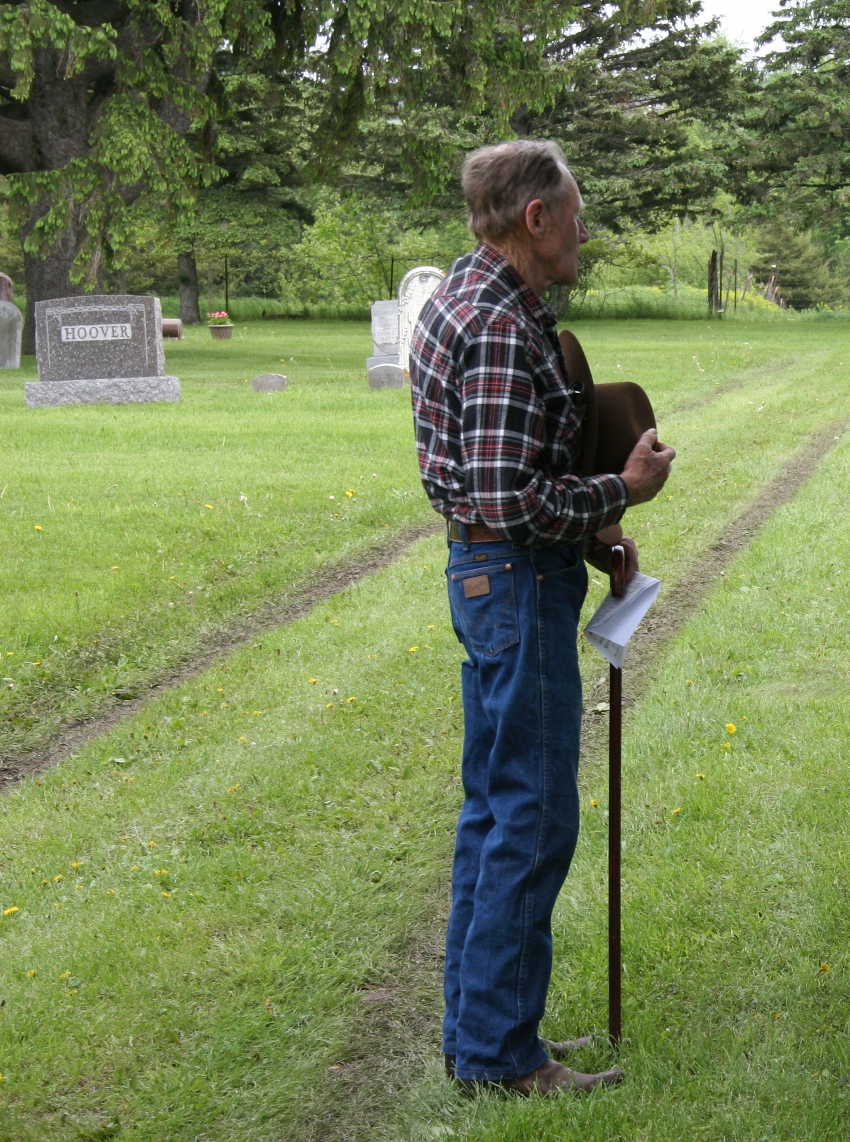
Long-time Cannon City resident Bob respectfully removes his cowboy hat during the playing of taps at the 2011 Memorial Day service at the Cannon City Cemetery. If you want to experience a simple and moving program in a rural cemetery, attend this one at 2 p.m. Monday at Cannon City (near Faribault).

An in-ground marker honors my father, Elvern Kletscher, a Korean War veteran and recipient of the Purple Heart, for wounds he suffered at Heartbreak Ridge in Korea.

And if they are no longer living, like my dad, honor them by visiting their grave sites or a veterans’ memorial or by attending a Memorial Day service or parade. That is the very least we can do to express our gratitude.

An eagle at the new Veterans Memorial Park in Morristown. The memorial will be dedicated at 3 p.m. Saturday.

TO READ A STORY I wrote about my Dad’s service in Korea, click here. The story was published by Harvest House Publishers in 2005 in the book, God Answers Prayers: Military Edition, edited by Allison Bottke.

HOW WILL YOU HONOR veterans this Memorial Day?

© Copyright 2012 Audrey Kletscher Helbling


An unbelievable 83,451 still missing March 23, 2012

Filed under: Uncategorized — Audrey Kletscher Helbling @ 7:21 AM
Tags: , , , , ,

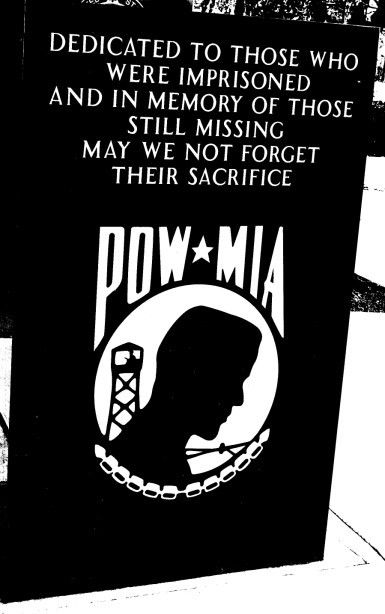
A tribute to POWs and MIAs at the veterans' memorial in Northfield.

United States suspends recovery of troop remains in North Korea

I nearly skipped over the AP article on page A5 of my local daily newspaper. But then I paused, allowed my eyes to linger on the headline before reading the heartbreaking story.

Just as efforts to find American service members missing during the Korean War were set to resume, that mission has been suspended. The action comes on the heels of North Korea’s plans to rocket-launch a satellite in apparent violation of United Nations’ sanctions.

That’s the situation in a nutshell. Hopeful families who have been waiting for the return of their loved ones for more than 60 years still wait.

I cannot imagine. The wait. The not knowing. The pain in losing a child to war. How many mothers and fathers of Korean War veterans have died without bringing their soldier boys back home for proper burial? Many.

The statistics shocked me. I had no idea that 7,960 Americans are unaccounted for from the Korean War, according to the Defense Prisoner of War-Missing Personnel Office, U.S. Department of Defense. Among the missing/unaccounted for are 146 Minnesotans. Click here to read that list.

But the numbers are even more staggering when you consider the totals for wars from World War II through the 1991 Gulf War. There are 83,451 Americans missing. That’s almost the entire population of Duluth. Most of the unaccounted for, 73,690, served during WW II.

Yet, until you begin thinking of the missing in terms of names, the totals seem merely overwhelming statistics that cannot be comprehended. So I went to the DPMO website and clicked on news releases. There I found what I was seeking—the names of soldiers gone missing in Korea and who, all these years later, have been identified through the use of modern-day forensics.

Just to explain, North Korea gave the U.S. 208 boxes of remains believed to be those of 200-400 U.S. servicemen, according to the DPMO.

Among the recently-identified remains are those of Army Cpl. William R. Sluss, 21, of Nickelsville, Va. He was captured by the Chinese and died as a result of malnutrition in the spring of 1951 while a POW in North Phyongan Province, North Korea.

The remains of Army Pfc. George A. Porter, 21, of Philadelphia, were also recently-identified. He was among more than 100 men taken prisoner by the Chinese during what became known as the “Hoengsong Massacre.”

And then there’s Sgt. Willie D. Hill, 20, of Catawba, N.C., whose infantry division was encircled by Chinese forces in November 1950 resulting in heavy losses, including that of Hill.

William. George. Willie.

They were young men lost to war, in a very literal sense.

I have never lost a loved one to death by war. But I have lost a loved one to war. My father fought as an infantryman on the front lines during the Korean War. He was wounded on Heartbreak Ridge and decades later, in May of 2000, was awarded a Purple Heart. He returned to Minnesota a changed man, unable to bury the horrific memories of buddies blown apart before his eyes, of enemies he’d killed.

Today he would have been identified as suffering from Post Traumatic Stress Syndrome. But back then, upon his military discharge in 1953, my dad was simply expected to return to civilian life as if nothing had changed for him personally.

April 3 marks nine years since my dad died at the age of 72. I am convinced that he would have lived longer had any type of counseling been available to him upon his return  to the farm fields of southwestern Minnesota.

Yet, despite my wish that he could have gotten help, I am thankful that he came home. In one piece. Alive.

Thousands of other American families do not have the comfort that is mine—to visit a cemetery knowing their loved one is buried here, on American soil.

© Copyright 2012 Audrey Kletscher Helbling


Remembering Ray November 11, 2011

My dad carried home a July 31, 1953, memorial service bulletin from Sucham-dong, Korea.

THEY DIED IN SERVICE to their country—Frankie L. Davis, Eugene Jones, Charles Musgrove, Raymond W. Scheibe…

Names. Of soldiers. Men who were remembered during a July 31, 1953, memorial service in Sucham-dong, Korea.

Names, typed onto a service folder that my dad, Elvern Kletscher, carefully folded and carried home to southwestern Minnesota from the killing fields of Korea.
One name—Ray Scheibe—that meant so much to him. A soldier-brother. His 22-year-old friend. His buddy who died, blown apart by a mortar the day before he was to leave Korea and return home to his wife and 6-week-old daughter in Wolbach, Nebraska.

My father witnessed Ray’s horrific death. He never forgot Ray.

Neither have I.

A story about Cpl. Ray W. Scheibe, published in the July 23, 1953, issue of The Wollbach Messenger.

My dad’s been gone since 2003; his buddy since that fateful day during the Korean War on June 2, 1953.

Yet their intertwined lives as soldier-brothers remain forever preserved in black-and-white photos and that service bulletin tucked inside a shoebox stored in my office. Memories of war and of lives lost confined to a box measuring 13 x 6.5 x 4 inches.
This photo, taken by my dad, shows Ray on the left. The photo is dated May 1953. On the back my dad had written: "Sgt. Shibe, June 2, 1953."

It doesn’t seem right, that I should keep these photos and scraps of war in a non-descript box, pushed into the back of a dresser drawer. But that is how my dad kept his war memories, stashed in that shoebox, shoved out of sight, away from family, away from emotions that could easily overwhelm him.

Two years after my dad’s death, I became interested in the contents of that shoebox and began wondering about that baby girl back in Nebraska—Ray’s daughter. I decided to look for her.
After a short search, I found Terri living in Harlan in southwestern Iowa, about five hours from my Faribault home. (Click here to read a previous blog post about finding Terri.) We’ve talked, although not recently, by phone, exchanged e-mails, letters and Christmas cards.

Yet, we’ve never met.

Every Veterans Day, every Memorial Day, every June 2, I think of Terri and her dad and how her dad never came home. And mine did.

Sonny Nealon, Ray's best friend in high school, sent me this photo he took of Ray's gravestone.

© Copyright 2011 Audrey Kletscher Helbling