Minnesota Prairie Roots

Writing and photography by Audrey Kletscher Helbling

A tribute to internationally-known Minnesota wildlife photographer Jim Brandenburg April 8, 2025

A bison photo by Jim Brandenburg hangs to the left and the photographer talks about his work in a video, right, inside the Brandenburg Gallery. (Minnesota Prairie Roots copyrighted file photo 2013)

IN MY EYES, he was Minnesota’s best-known photographer. Exceptionally talented. No one even comes close to matching the wildlife and nature photography of Jim Brandenburg. He died April 4 at the age of 79. Not only has Minnesota lost a creative icon, but so has the world. Brandenburg’s prolific work was featured in National Geographic Magazine, earning him the publication’s coveted Lifetime Achievement Award in 2023. His award-winning photos were widely-published internationally. He also published numerous books featuring collections of his photos.
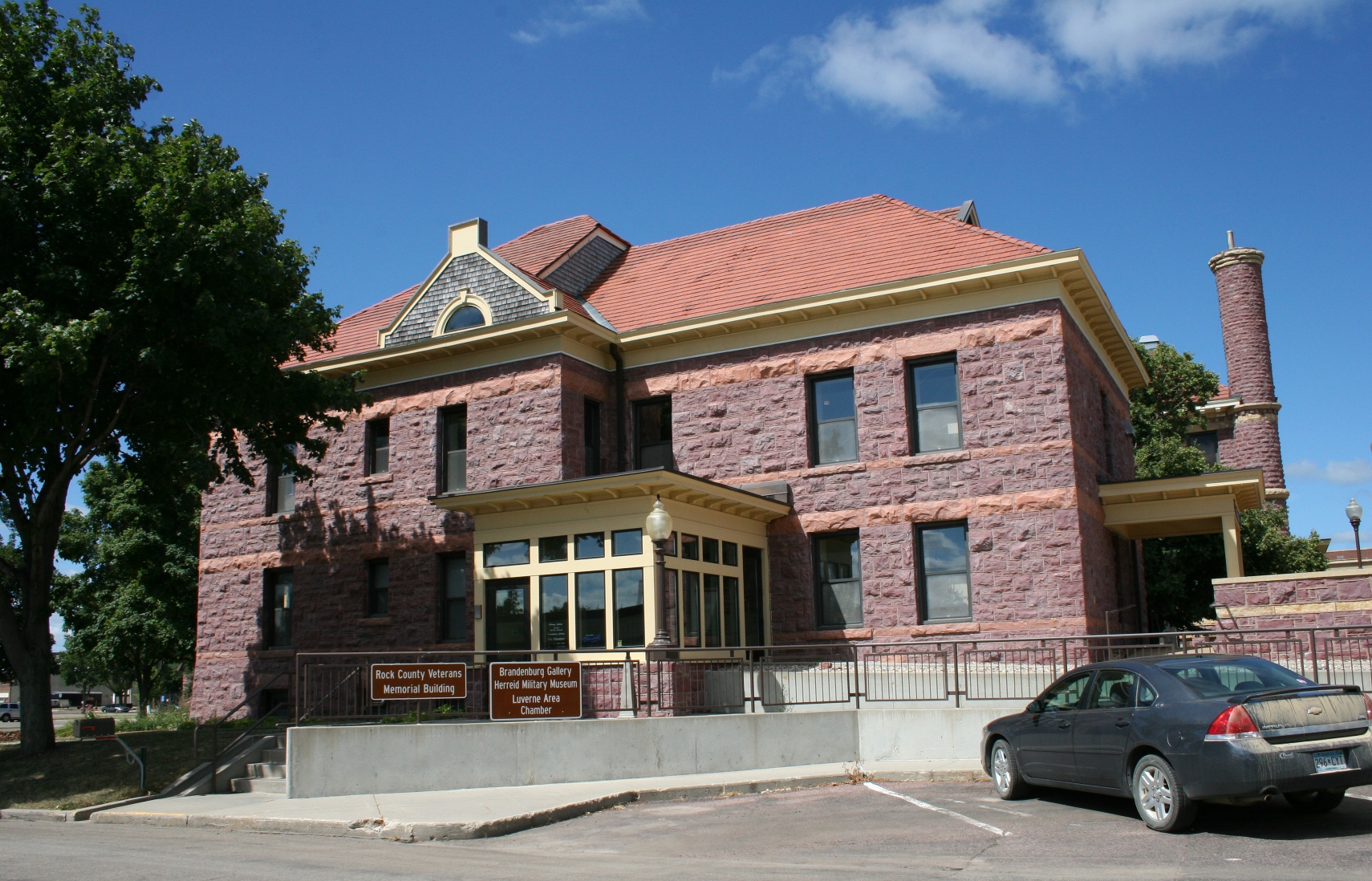
The entry to the Brandenburg Gallery, located in the Rock County Courthouse square. (Minnesota Prairie Roots copyrighted file photo 2013)

But there is perhaps one lesser-known place where Brandenburg’s images can be found. And that’s in the Brandenburg Gallery inside the historic Rock County Courthouse in his hometown of Luverne. That’s in the extreme southwestern corner of Minnesota. The prairie. My prairie.
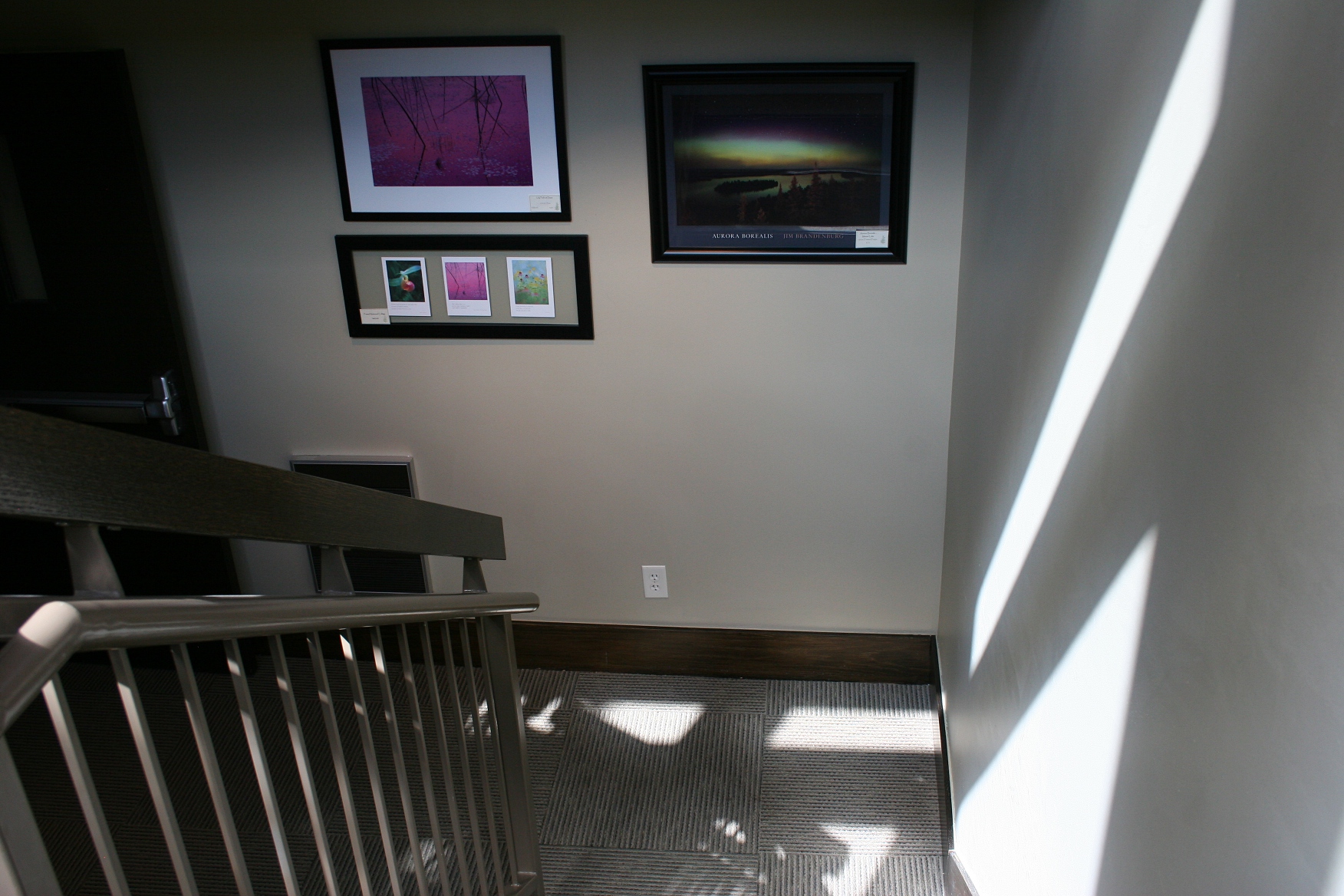
Light plays upon walls, floors and Brandenburg photos in a stairway display. (Minnesota Prairie Roots copyrighted file photo 2013)

Eleven years ago I toured that gallery, studying and enjoying a sampling of Brandenburg’s images. Many in this collection are prairie-themed. Because I’m a photographer, I viewed his photos with a more focused perspective, noticing angles, light, background and all the components which come together in creating an outstanding image.
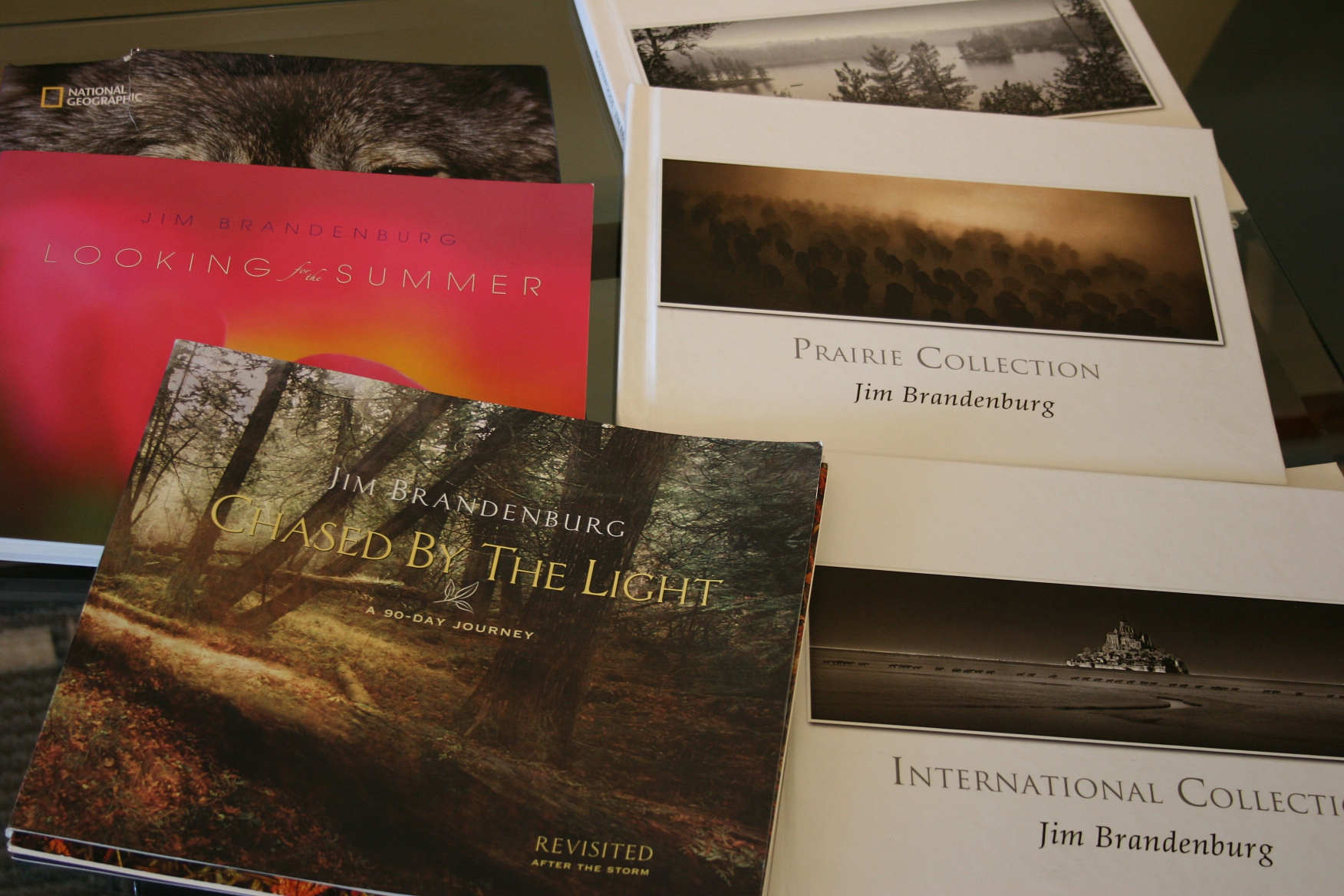
Some of Brandenburg’s photo books. (Minnesota Prairie Roots copyrighted file photo 2013)

Every photographer understands that light is the very basic element to consider in shooting photos. Brandenburg challenged himself to take a single picture per day between the autumnal equinox and the winter solstice. The result is his collection of photos, Chased by the Light: A 90-Day Journey, a favorite of mine among his books.
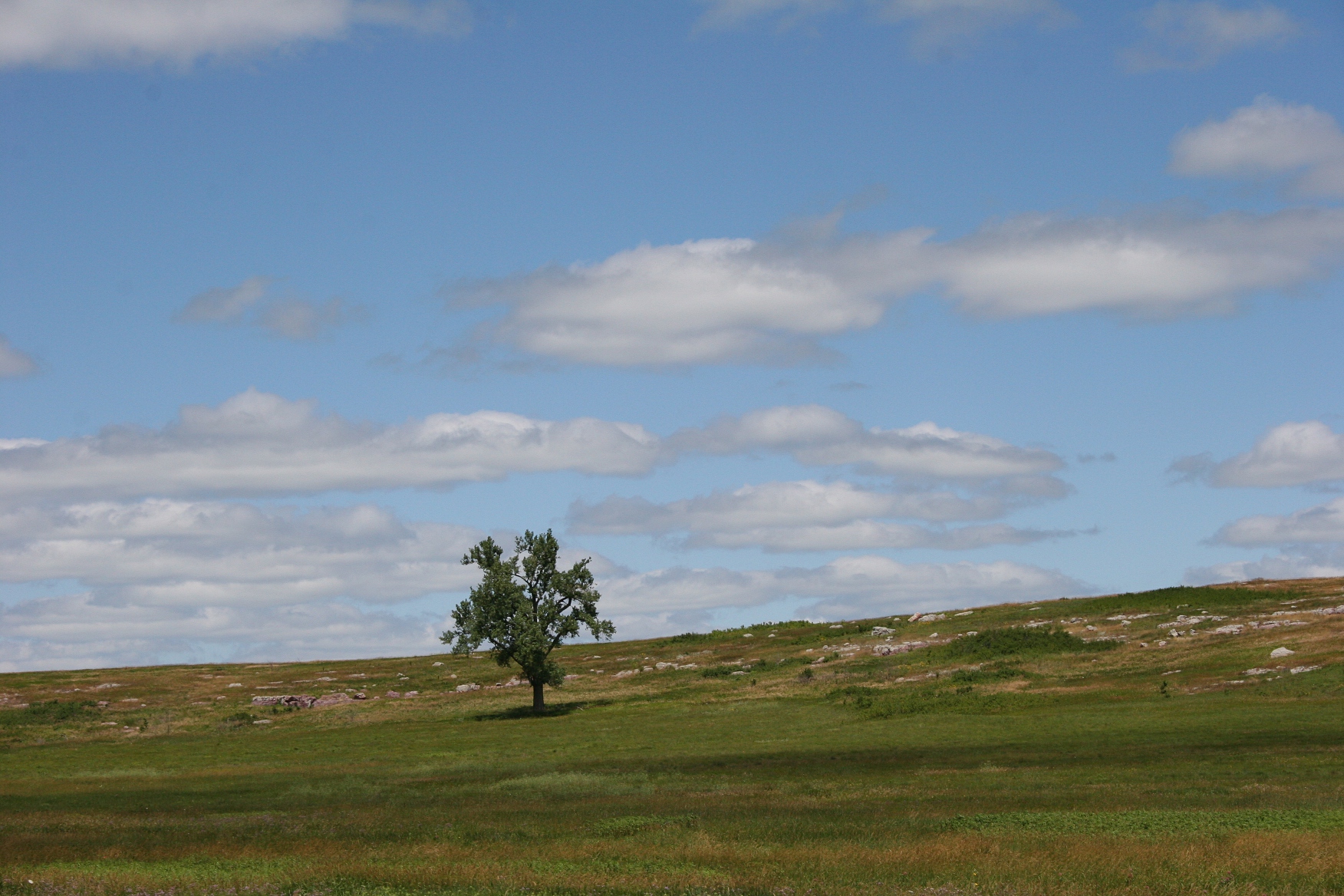
Beautiful natural scenery on the prairie near Blue Mounds State Park. The part of the prairie where I grew up is not rocky like this and is a bit further north. (Minnesota Prairie Roots copyrighted file photo 2013)

When I traveled to Luverne in 2013 to visit the Brandenburg Gallery and other attractions, including Blue Mounds State Park, I was returning to the wide open land and big skies of the prairie, the place that shaped me as a person, photographer and writer. The same can be said for Brandenburg. He loved the prairie and, in fact, established the Brandenburg Prairie Foundation aimed at southwest Minnesota native prairie education, preservation and expansion. His organization partnered with the U.S. Fish and Wildlife Service to purchase nearly 1,000 acres of untilled Rock County prairie, creating Touch the Sky Northern Tallgrass Prairie National Wildlife Refuge.

Those environmental efforts are revealing. Brandenburg cared deeply about the land, especially the prairie. After college, he returned to the prairie and worked as a picture editor at The Worthington Daily Globe. While there, he freelanced for National Geographic Magazine. And so his career developed until he became that homegrown photographer whose work so many worldwide grew to appreciate and love.
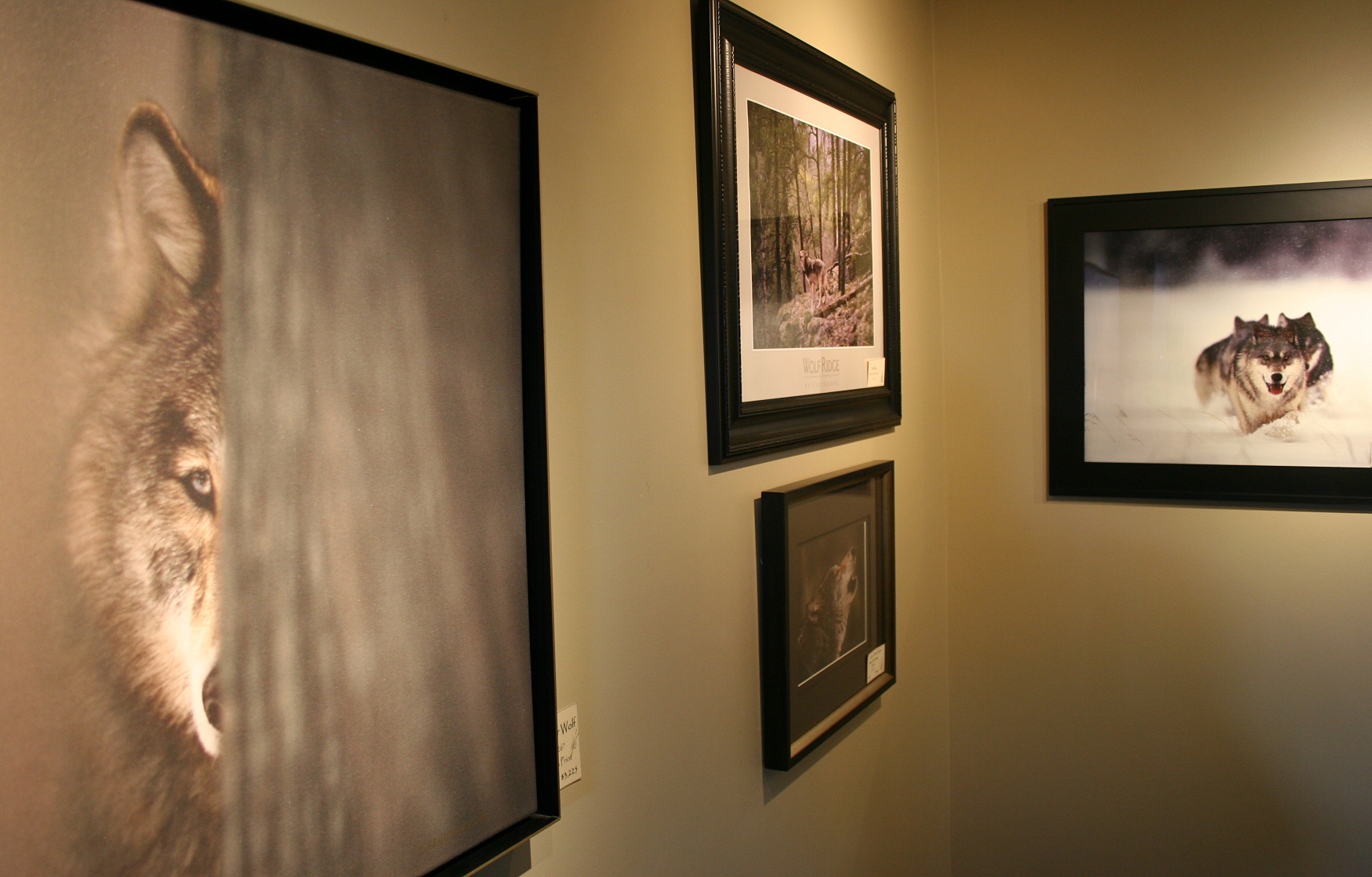
Wolf photos displayed in the Brandenberg Gallery. Brandenburg’s published books include Brother Wolf–A Forgotten Promise. (Minnesota Prairie Roots copyrighted file photo 2013)

I admire photographers who excel in the craft. And Brandenburg certainly excels in wildlife photography, a specialized field that requires much more than understanding photo basics. Photographing wildlife requires incredible patience and knowledge of animals. I have neither. But when you look at a Brandenburg photo, it’s like you are right there up close with the subject. Perhaps a wolf—one of his favorite subjects. Or bison. You can see the deep respect Brandenburg holds for these creatures of the wild.
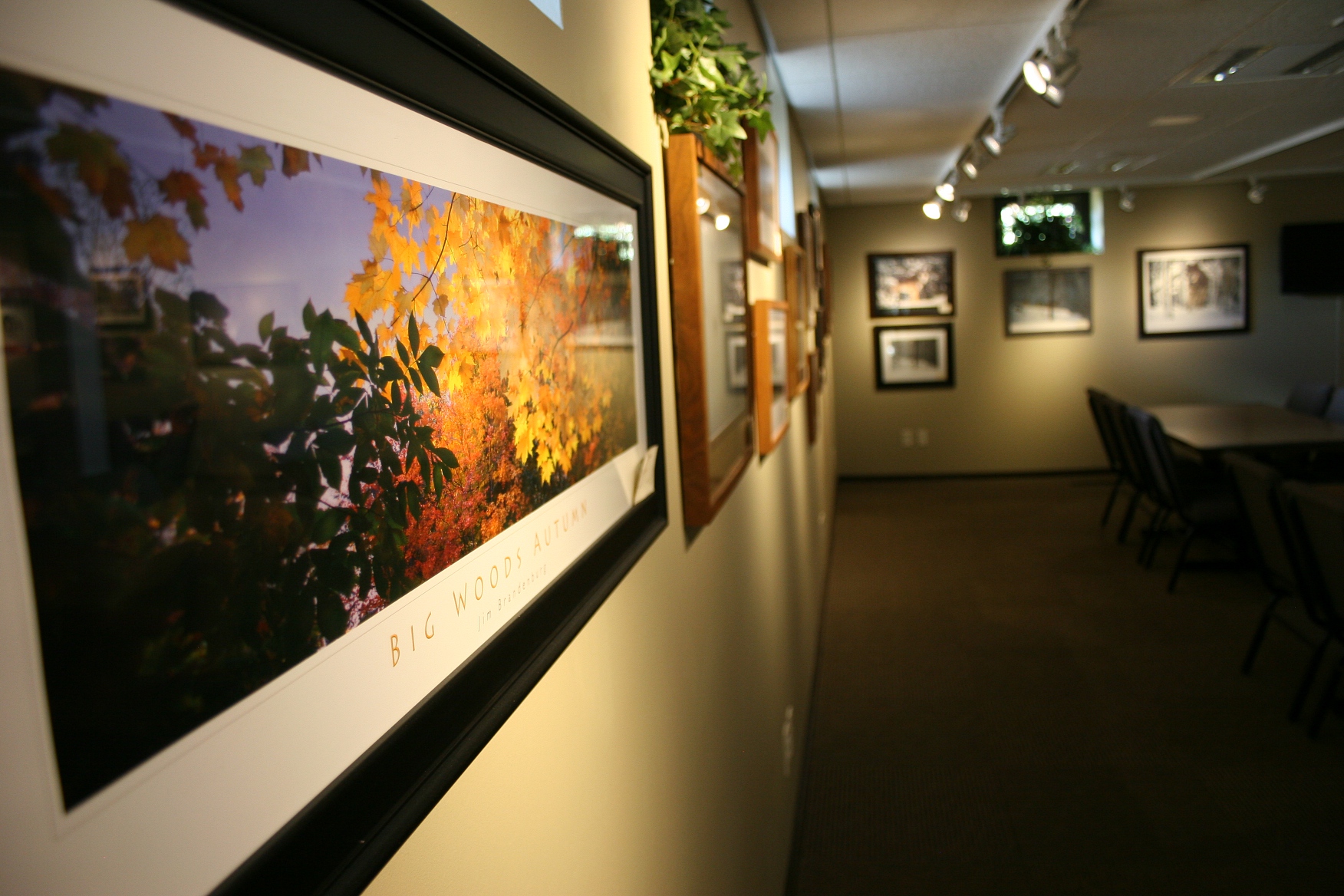
A familiar scene to me, autumn leaves photographed in the Big Woods of Minnesota, within 20 miles of my home and showcased in the Brandenburg Gallery. (Minnesota Prairie Roots copyrighted file photo 2013)

And then there’s landscape photography which, when done well, draws you into a scene and evokes an emotional response. Again, Brandenburg has this seemingly effortless ability to capture the essence of a place and connect it to his audience.

Minnesota has lost an incredibly gifted photographer. But Brandenburg’s legacy lives on in his work, a gift to all of us. And one place to find that is in the Brandenburg Gallery in Luverne. On my beloved prairie. On Brandenburg’s beloved prairie.

FYI: The Brandenburg Gallery, 213 E. Luverne St., is owned and operated by the Luverne Area Chamber of Commerce. It’s open from 8 a.m.-5 p.m. Monday-Friday and from 10 a.m.-5 p.m. Saturday. Admission is free. All photos featured in this post were taken with permission of the Brandenburg Gallery in 2013.

© Copyright 2025 Audrey Kletscher Helbling


Wildlife observations from along the flooded Cannon River in Faribault June 25, 2024

An egret flies over the Cannon River by the barely visible dam at North Alexander Park on Friday evening. (Minnesota Prairie Roots copyrighted photo June 21, 2024)

WILDLIFE SENSES, understands, picks up on nuances that we as humans often fail to notice in our heads-bent-to-our-smartphones, busy scheduled lives.

A blue heron perches on the edge of a tree along the Cannon River by the park-side dam. (Minnesota Prairie Roots copyrighted photo June 21, 2024)

The recent flooding is a prime example. I saw countless cellphones raised to record floodwaters and rising rivers. I carried my 35 mm Canon camera, drawn just like everyone else to document the historic natural event unfolding before me along the Cannon River in Faribault.

An egret and blue heron seem to be checking out the river as a red-winged blackbird sits among the grasses to the right. That’s the Faribault Mill in the background, railings for the park-side dam in the foreground. (Minnesota Prairie Roots copyrighted photo June 21, 2024)

But I also noticed the wildlife. They, too, were observing. Watching the water. And watching people invade their river habitat by the hundreds. I sensed how uncomfortable the egret, blue heron, ducks and red-winged blackbirds were amid all the human chaos. So many people and so much traffic.

Flying high above the flooded river. (Minnesota Prairie Roots copyrighted photo June 21, 2024)

I expect they longed for quiet. Peace. A respite from the attention. A return to normalcy. No more peering eyes. No more crowds gathering.

A bullhead partially emerges from shallow water on dam’s edge as it tries to swim up the floodwaters. (Minnesota Prairie Roots copyrighted photo June 21, 2024)
Another bullhead attempts to swim up river. (Minnesota Prairie Roots copyrighted photo June 2021)

And then there were the fish, primarily bullheads, but a few bass, attempting to swim up through water that was rushing down, spilling over the edges of the dam by North Alexander Park. The fish appeared determined to make it to the other side, to the quieter waters of the widened river. It seemed a losing cause to me. But who am I to discourage a stubborn bullhead? If anything, it was fascinating to watch.

A duck family swims in the shallow floodwaters next to the top of the dam. (Minnesota Prairie Roots copyrighted photo June 21, 2024)

Finally, I observed a mama duck and her brood aside the top of the dam. They began edging, descending toward the river. Foolish ducks, I thought, judging the mother mallard. And then I voiced my concern out loud, “Stop, you’ll drown!”

The ducks move toward the deep river. (Minnesota Prairie Roots copyrighted photo June 21, 2024)

I can only imagine the thoughts of that mother and her six ducklings. “Did that woman really say that, warn us to stay out of the water lest we drown?” If ducks could laugh, the seven of them would have chortled, chuckled, carried on and then shared what they’d heard me say. Quack. Quack. Quackity. Quack.

A mallard drake swims in the Cannon River, nowhere near the female duck and ducklings. (Minnesota Prairie Roots copyrighted photo June 21, 2024)

But it was my husband who spoke for them. “They’re ducks, Audrey,” Randy said. “They can swim.”

An egret stands watchful and tall, next to the water rushing, roiling over the dam. (Minnesota Prairie Roots copyrighted photo June 21, 2024)

Uh, yeah. He was right. But it was the mom in me emerging, the protective spirit that, in that moment, did not separate wildlife from human so focused was I on the dangers of the swollen, swift-moving river.

© Copyright 2024 Audrey Kletscher Helbling
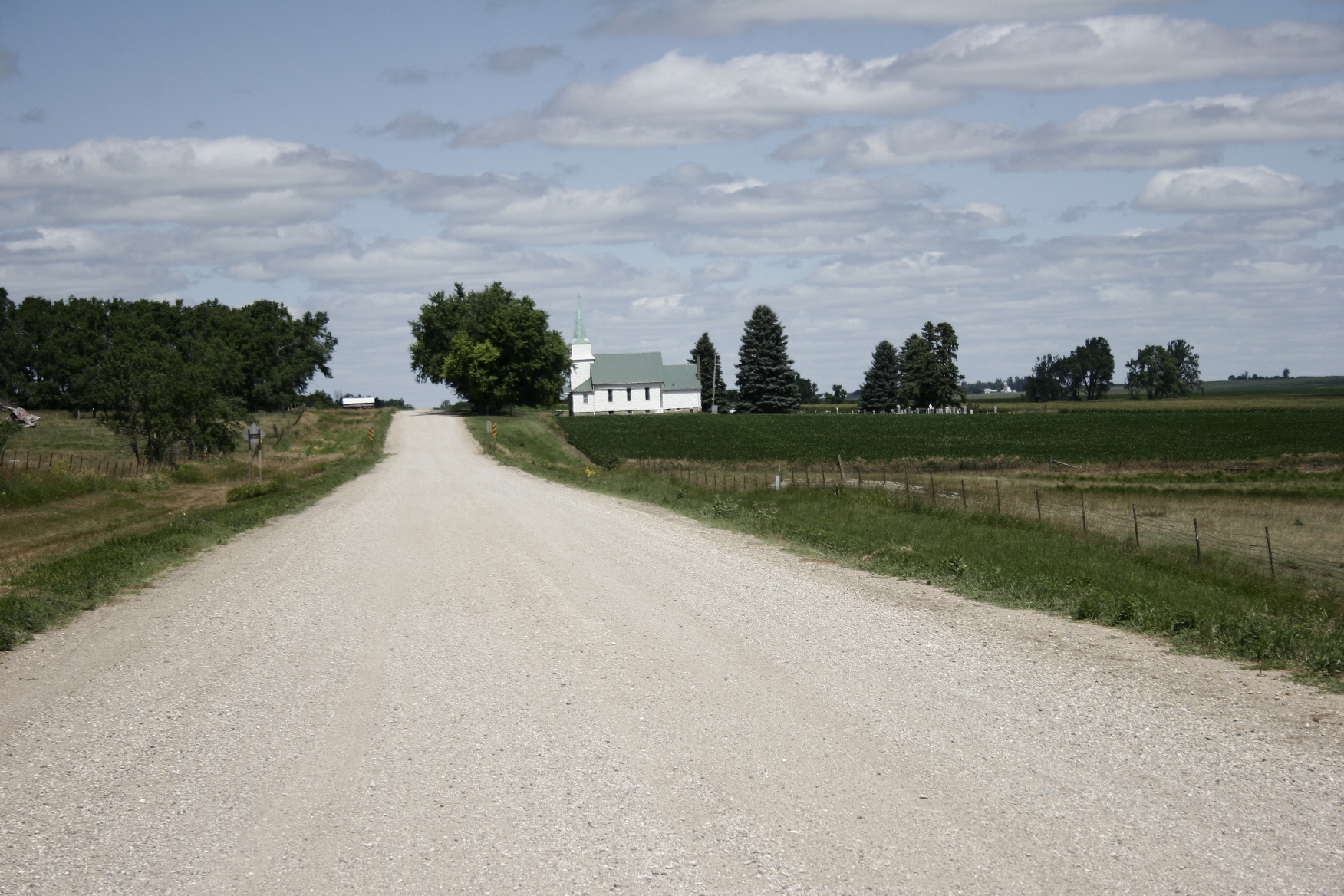
 

Minnesota prairie native Jim Brandenburg wins top photo honor March 25, 2023

A Brandenburg bison photo hangs to the left and the photographer talks about his work in a video, right, inside the Brandenburg Gallery. (Minnesota Prairie Roots copyrighted file photo 2013)

OF ALL THE PHOTOGRAPHY—from general to portrait to sports to nature and wildlife—it is wildlife photography that most impresses me as particularly challenging. And now one of the best wildlife and nature photographers in the world, who happens to be a native of my beloved southwestern Minnesota prairie, has received National Geographic’s Lifetime Achievement Award. Luverne-born and raised Jim Brandenburg, today based in Ely in northern Minnesota, won that top honor. He’s so deserving. His photos are beyond any star rating.

Brandenburg’s published books include “Brother Wolf–A Forgotten Promise.” He is known for his wolf photos, including these displayed in the Luverne gallery. (Minnesota Prairie Roots copyrighted file photo 2013)

Brandenburg joins only five other National Geographic photographers who’ve received this award. That he hails from the prairie, my homeland, makes me especially proud.

The entry to the gallery, located in the Rock County Courthouse square. (Minnesota Prairie Roots copyrighted file photo 2013)

Ten years ago, I toured the Brandenburg Gallery, owned and operated by the Luverne Area Chamber of Commerce. It was of special interest to me as a photographer. I wanted to study Brandenburg’s images—the light, the perspective, the techniques he uses to draw viewers into scenes.

Some of Brandenburg’s photo books displayed in the Luverne gallery. (Minnesota Prairie Roots copyrighted file photo 2013)

I have no ambition to pursue wildlife photography. I don’t have the interest, talent, knowledge of the natural world or patience required for the craft. But I appreciate those who excel in this specialized photography and I can learn from them. Brandenburg has been honing his craft for some 50 years with National Geographic. He’s won countless awards, produced many books filled with his images.

Beautiful rocky landscape of Rock County. (Minnesota Prairie Roots copyrighted file photo 2013)

In all of this, this world travel, this move from southern to northern Minnesota, from prairie to northwoods, he’s remained rooted to his roots. He established the Luverne-based Brandenburg Prairie Foundation with a mission “to educate, preserve and expand native prairie in southwest Minnesota.” Brandenburg’s Foundation and the U.S. Fish and Wildlife Service bought 800 acres of untilled prairie in Rock County some eight miles northwest of Luverne, where visitors can immerse themselves in tallgrass prairie. I regret not walking the Touch the Sky Northern Tallgrass Prairie National Wildlife Refuge during my 2013 visit to this area. I need to return.

Hiking the path up and through the prairie grass at Blue Mounds State Park. (Minnesota Prairie Roots copyrighted file photo 2013)

I recognize that to many, this region of Minnesota seems desolate, lacking in beauty, just a place to get through when traveling. But for prairie natives like me, beauty is everywhere. In the wide sky. In sunsets so profoundly beautiful that they almost defy description. In farm sites set like islands among endless fields. In small towns and acres of corn. In prairie grasses swaying in the breeze. I can forever sing the praises of the prairie in refrains of howling wind and songbird and the silence of quiet.

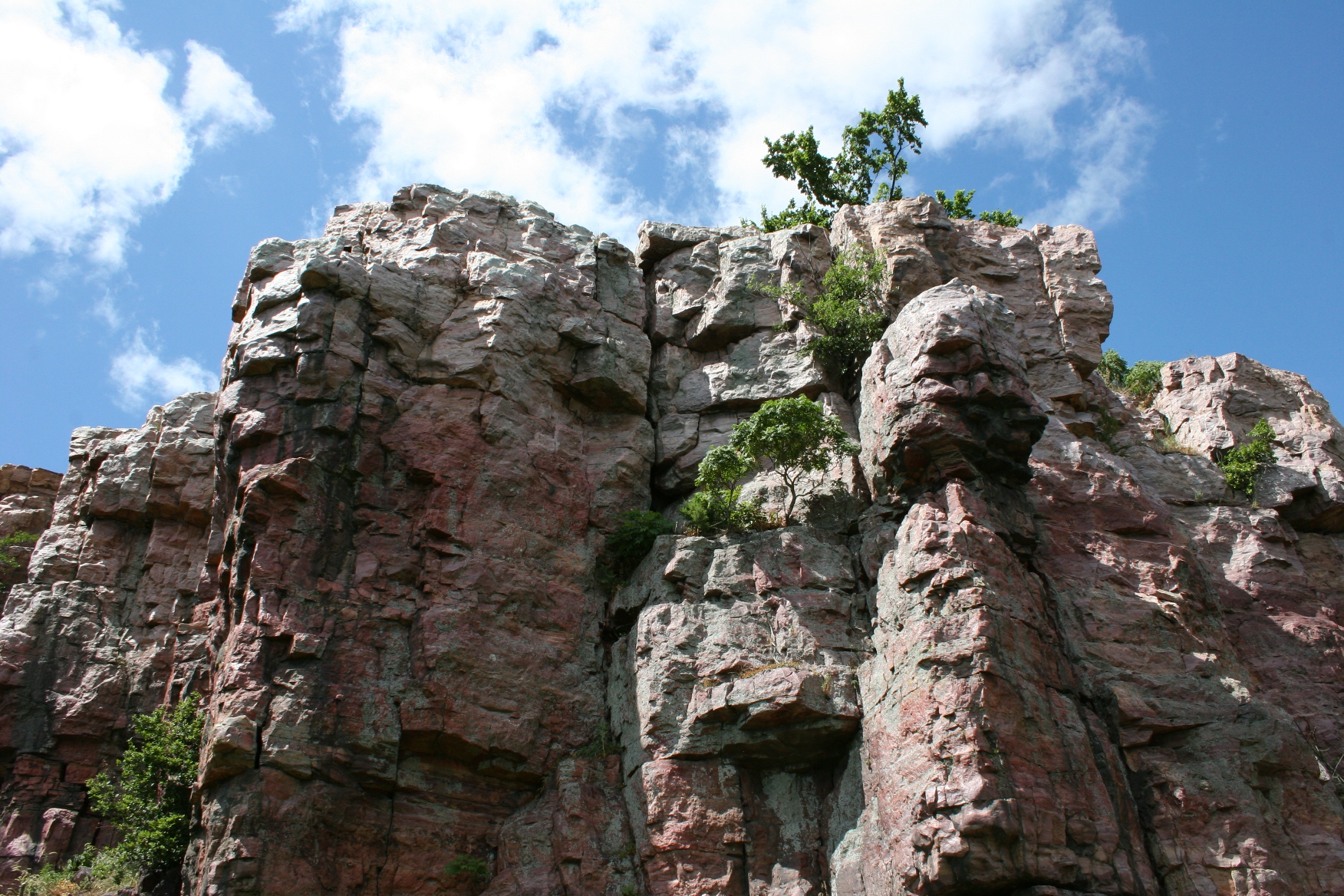
An impressive quarry wall of Sioux quartzite. (Minnesota Prairie Roots copyrighted file photo 2013)

Brandenburg, I expect, experienced all of these, even if his native Rock County differs from my home county of Redwood a bit farther to the north and east. Even on the prairie, landscapes vary. Near Luverne, at Blue Mounds State Park, cliffs of Sioux quartzite rise 100 feet above the plains. It’s amazing, unexpected in this place where prickly pear cacti also grow, where bison graze, where wildflowers bloom.

A gravel road around the state park passes a sheep pasture and country church. (Minnesota Prairie Roots copyrighted file photo 2013)

I encourage you, if you’ve never spent time in southwestern Minnesota, to do so this spring or summer. View the landscape through an appreciative lens that takes in every nuance, every detail. Notice the light. Feel the wind. Hear the quiet. Settle into the simplicity of this place that renews the spirit, that a world-class photographer called home. That I, too, once called home.

© Copyright 2023 Audrey Kletscher Helbling
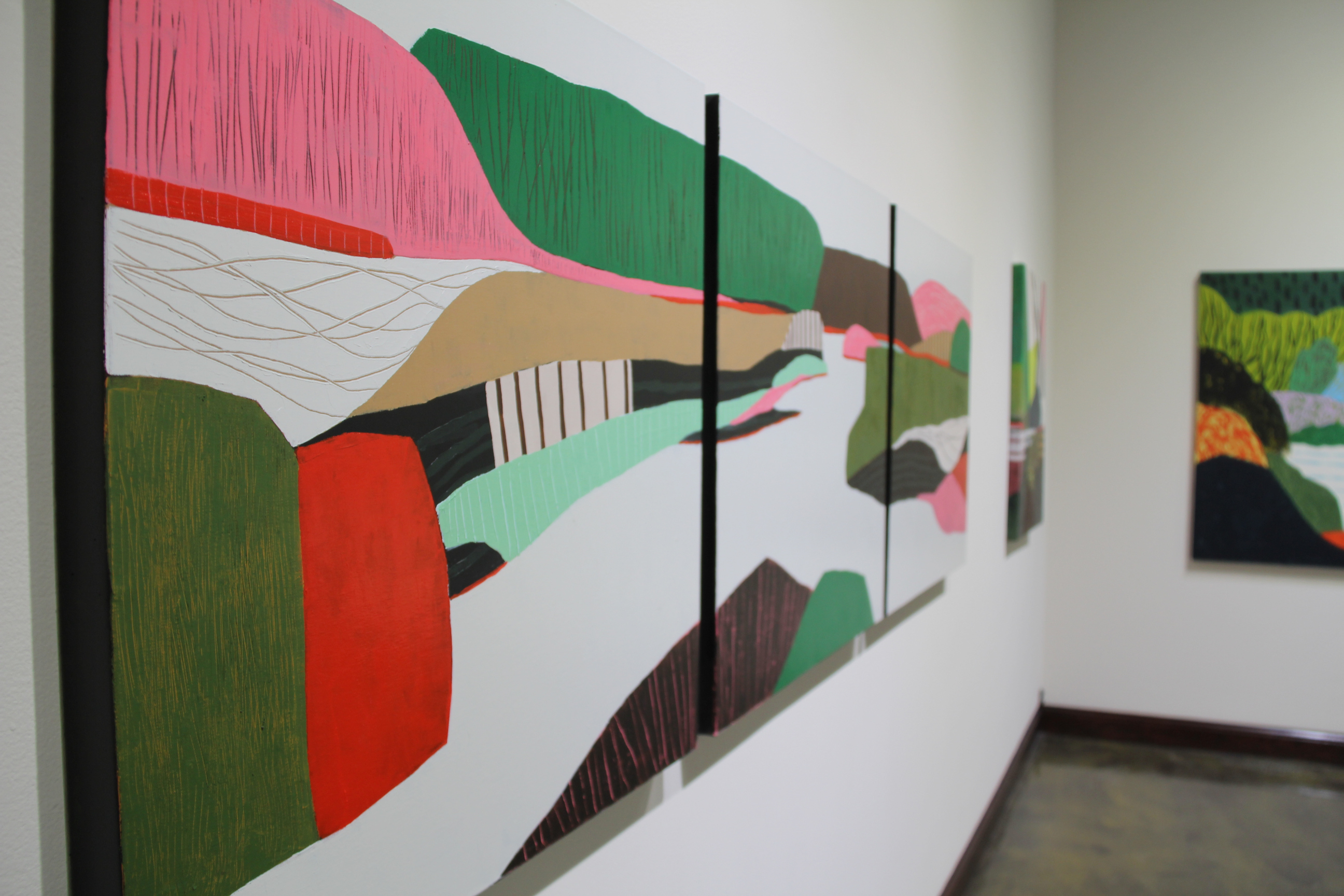
 

Inside the Paradise galleries, an array of art March 22, 2023

A side view of Amanda Webster’s “Just The Three of Us, A Triptych of Three” acrylic on canvas. (Minnesota Prairie Roots copyrighted photo March 2023)

FROM WILD ANIMALS to wildly vivid abstracts, the art of creatives fills four first floor galleries at the Paradise Center for the Arts in historic downtown Faribault. What an array of artwork to infuse color, joy and more into these lingering, colorless days of winter in the season of spring here in southern Minnesota.

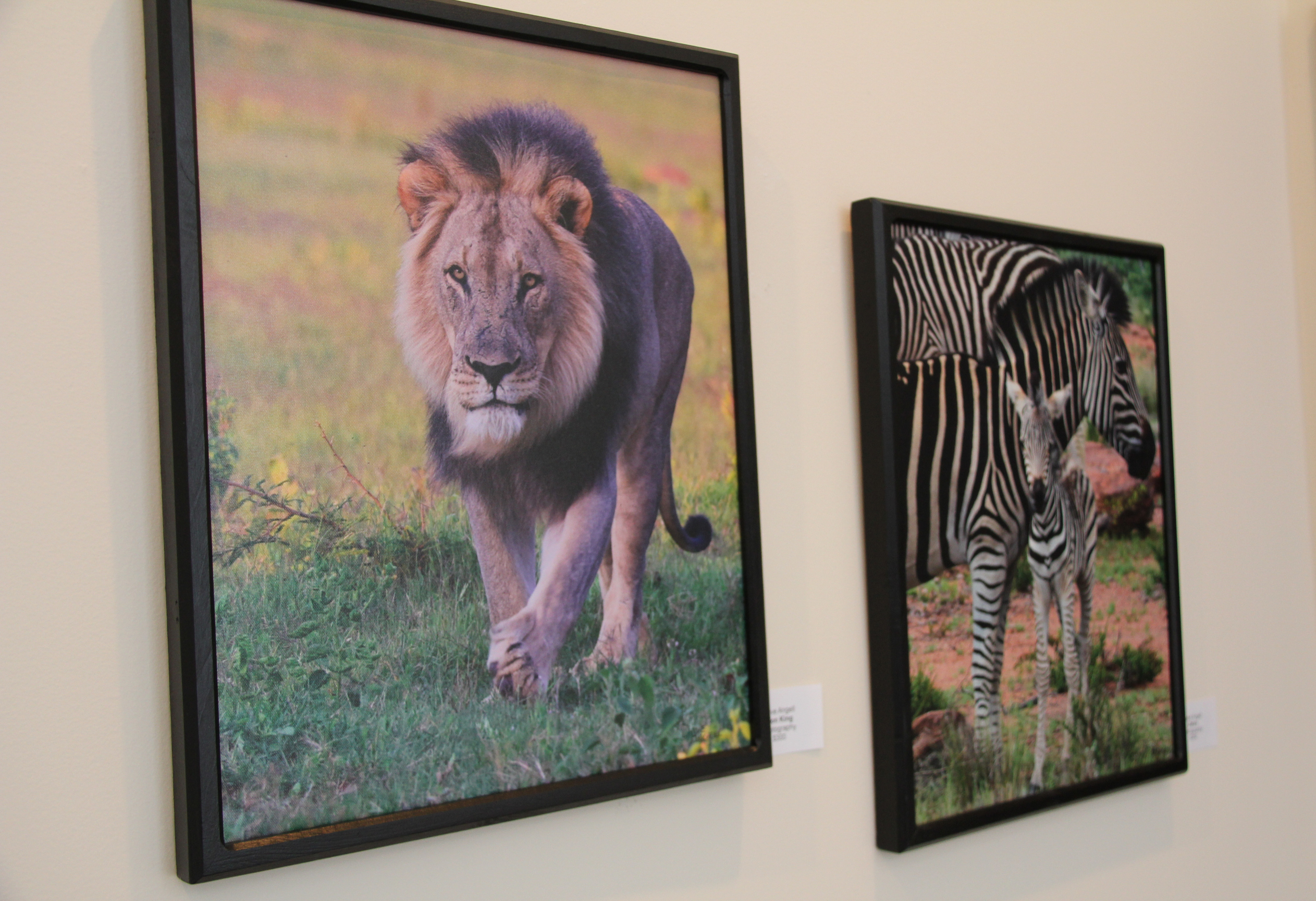
“Lion King” and “Zebra” by long-time wildlife and nature photographer Dave Angell of Faribault. (Minnesota Prairie Roots copyrighted photo March 2020)

The incredible talent showcased in these galleries impresses me. Whether created with a camera, a brush, or with a pencil in a sketchbook, this art shows a passion for the craft.

The relatively new digital marquee at the Paradise Center for the Arts in Faribault flashes gallery hours. (Minnesota Prairie Roots copyrighted file photo March 2023)

Only a few days remain to view the current exhibits, which close on Saturday, March 25.

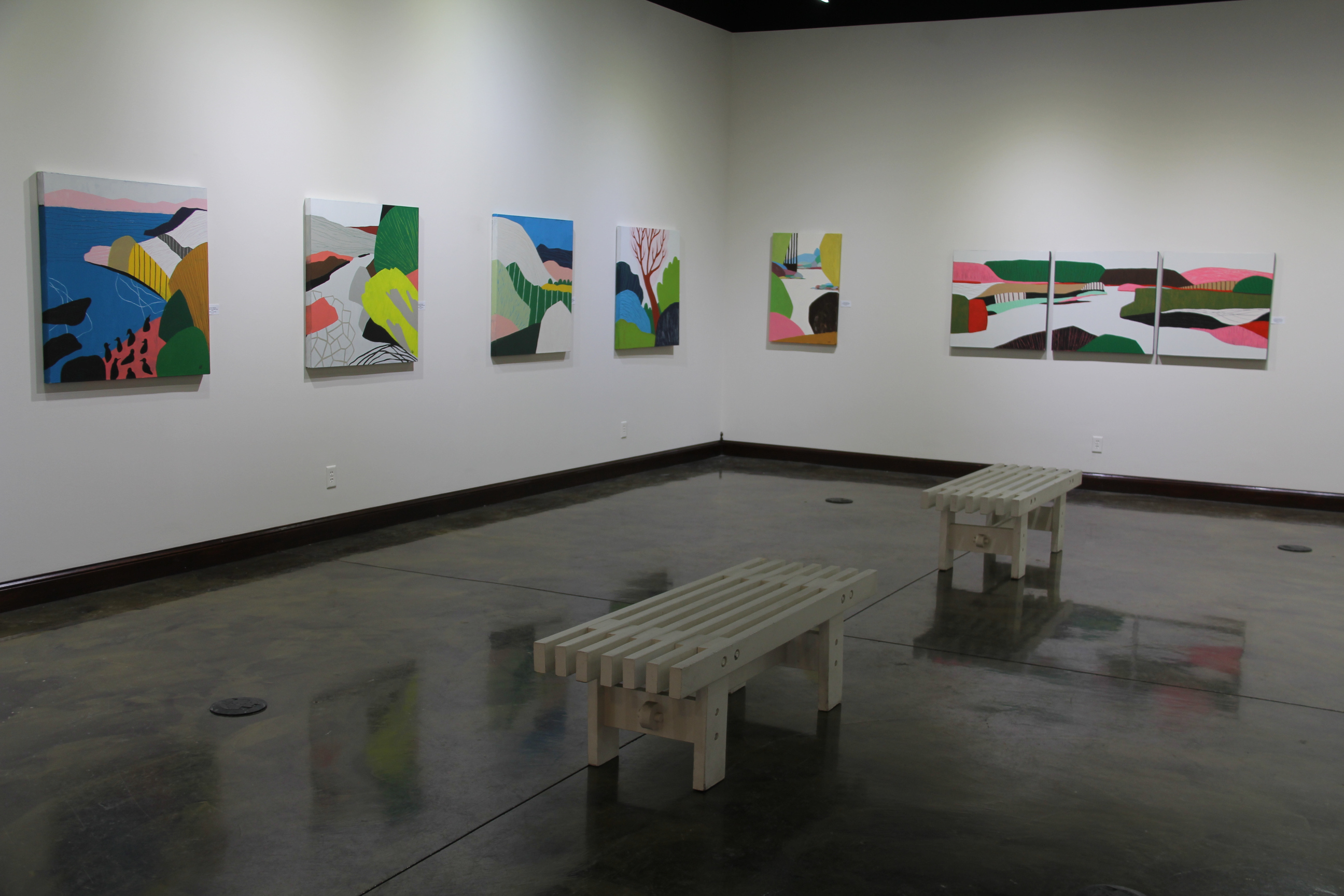
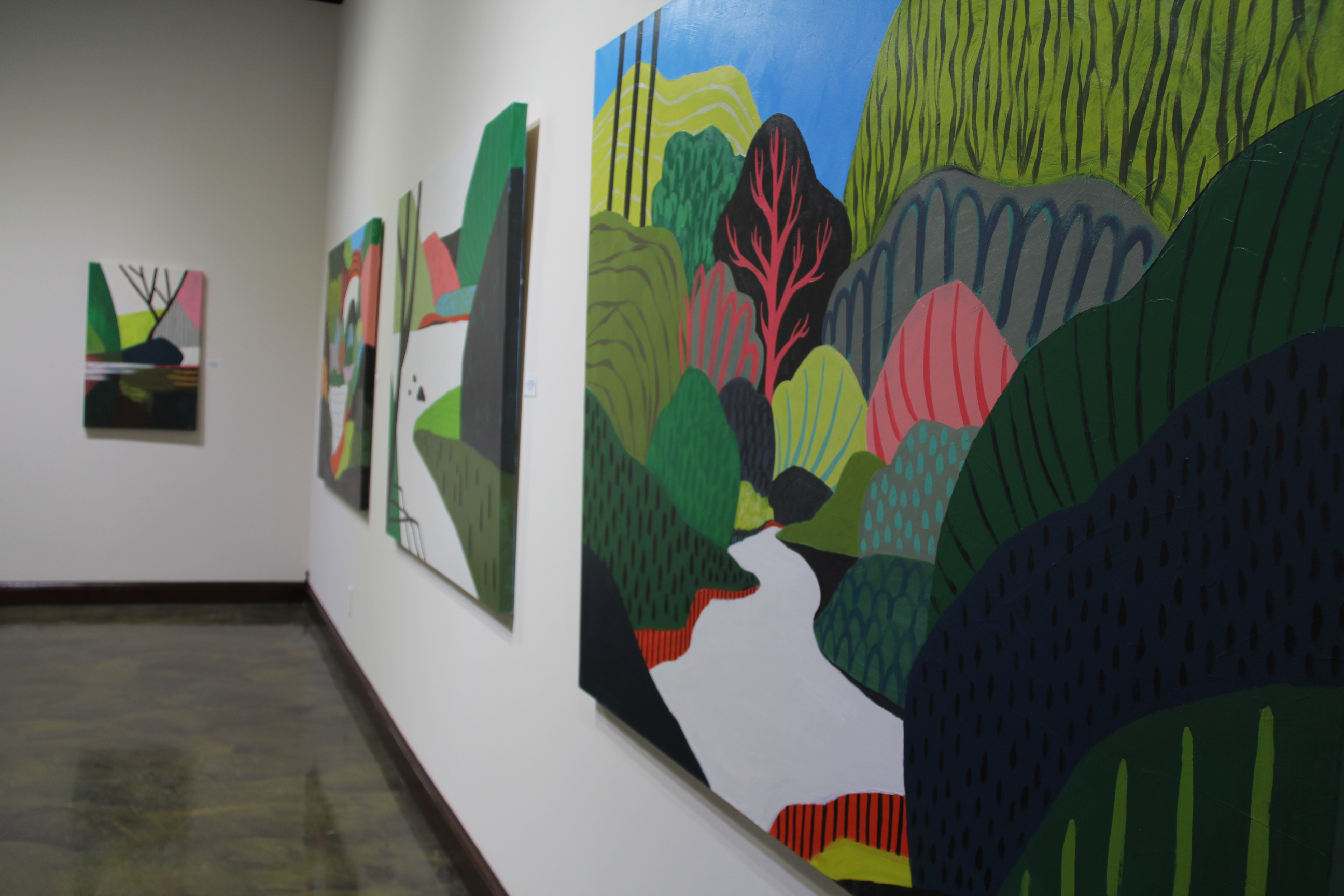
Some of Amanda Webster’s bold abstract acrylic on canvas art showcased at the Paradise Center for the Arts. (Minnesota Prairie Roots copyrighted photo March 2023)

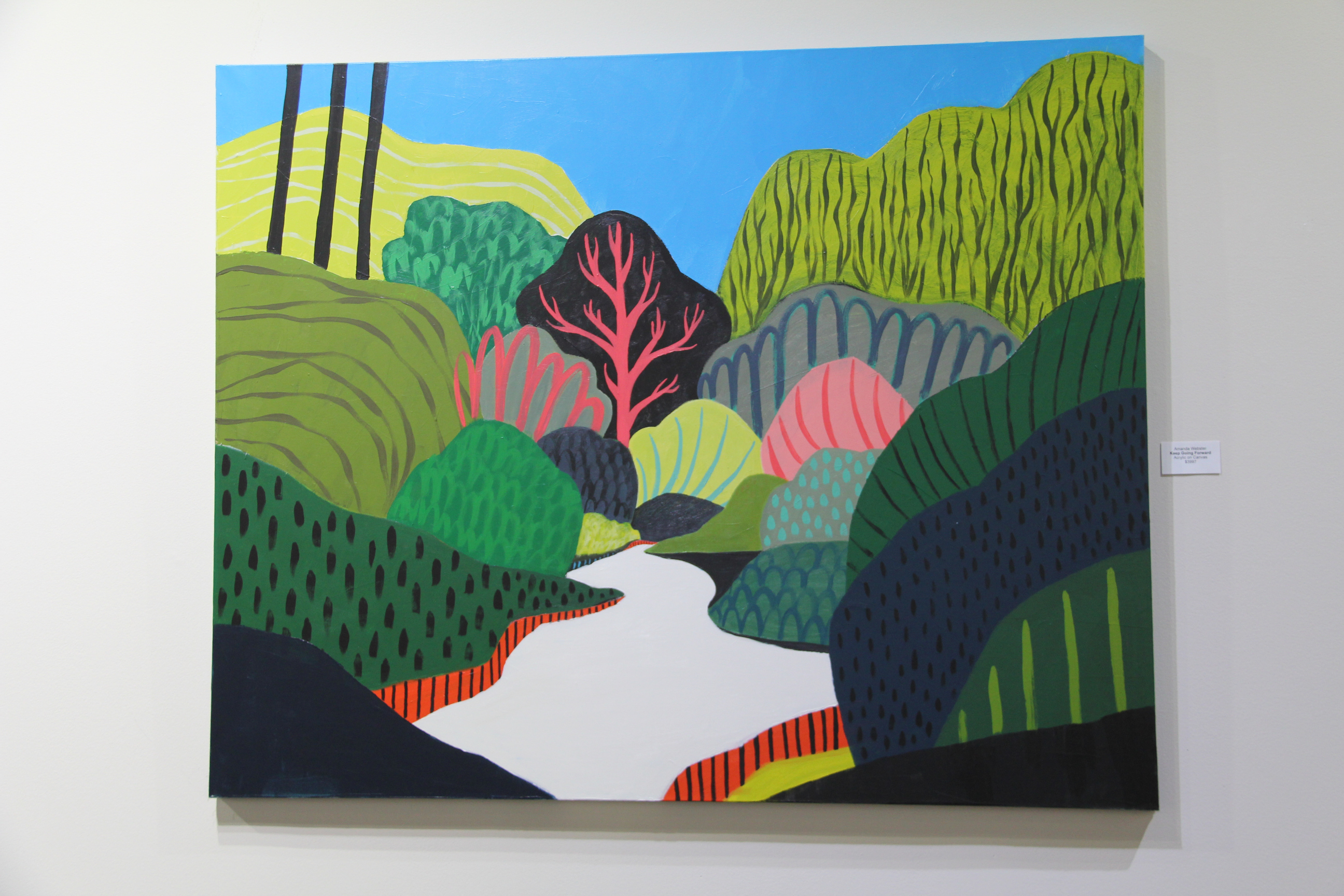
When I stepped inside the main gallery at the Paradise to view the bold acrylic paintings of Twin Cities artist Amanda Webster, I simply stopped. Wow! Her large-scale colorful abstracts jolted me into a happy place.

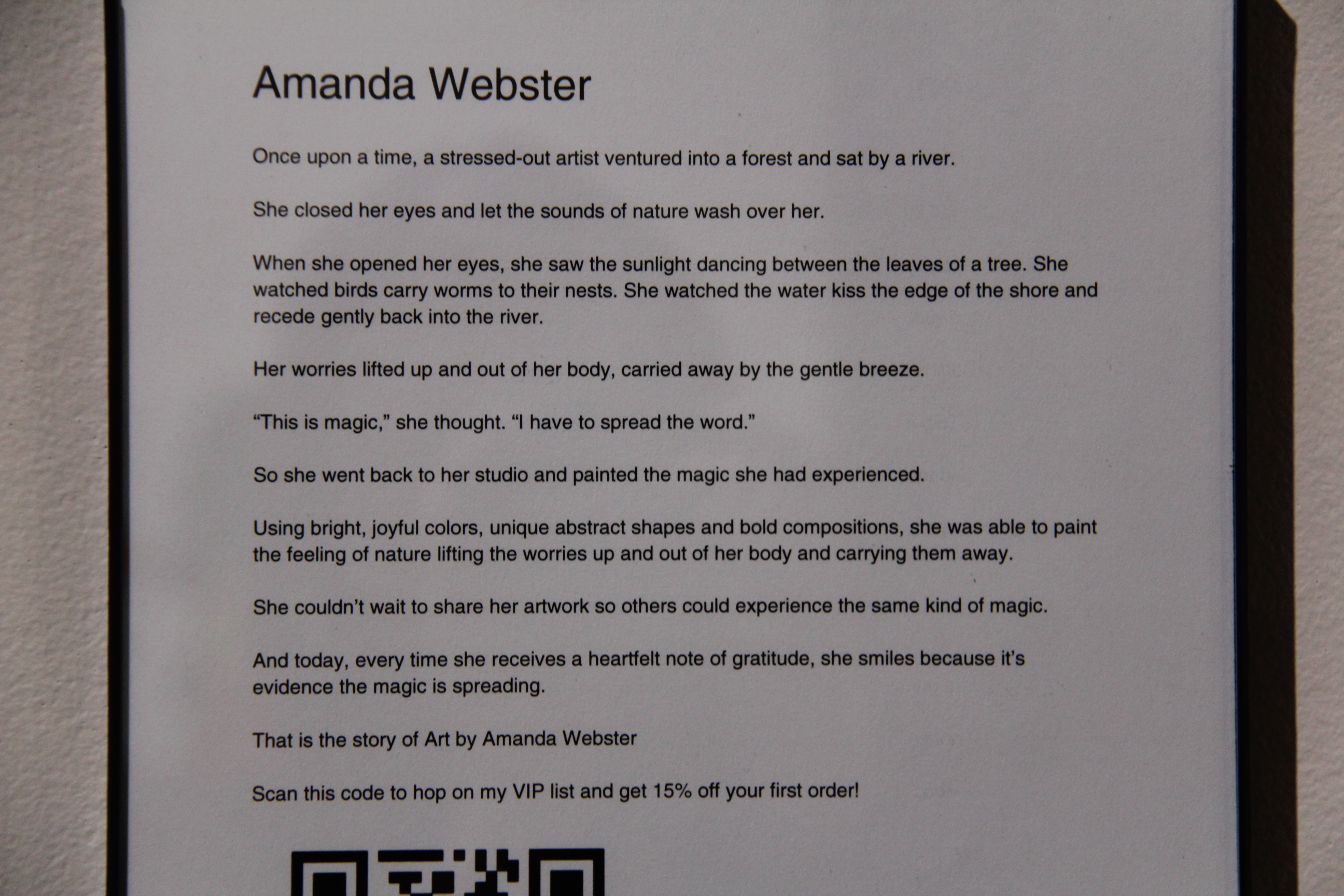
Amanda Webster’s artist statement reveals the story behind her abstract art. (Minnesota Prairie Roots copyrighted photo March 2023)

That I saw Webster’s nature-inspired work on a cold January-like afternoon with a strong, biting wind likely enhanced my reaction. I wanted to walk right into those magical settings and leave this Minnesota winter behind. For an artist’s work to inspire that type of immersive response says something.

The winding white path leads the eye right into Amanda Webster’s vivid acrylic on canvas abstract, “Keep Going Forward.” (Minnesota Prairie Roots copyrighted photo March 2023)

I envisioned Webster’s work in a corporate space, filling a business with energy. I envisioned her art in a medical setting, creating a positive, healing energy. I envisioned her art in my home, if only I had higher ceilings and a more modern, than traditional, house.

This shows a section of Bill Nagel’s “Walk Around,” an oil on canvas. (Minnesota Prairie Roots copyrighted photo March 2023)

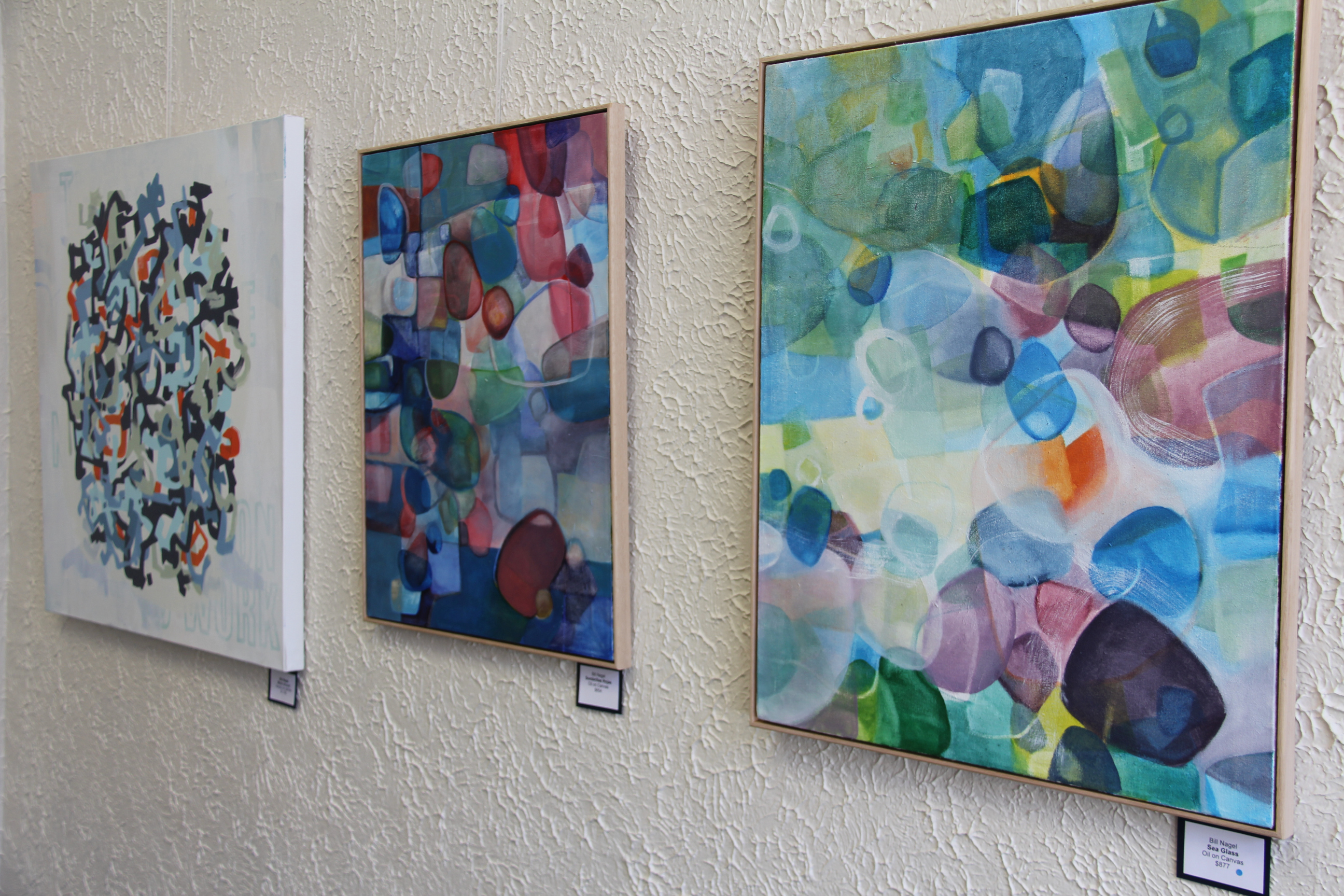
Just off the Paradise’s lobby, abstract art also fills a small boardroom gallery. This space features the art of multi-talented, award-winning Minnesota artist Bill Nagel. He paints abstract art and also creates modern still-life and illustrations.

Bill Nagel’s oil on canvas, from left to right: “Work Around,” “Sombrillas Rojas” and “Sea Glass.” (Minnesota Prairie Roots copyrighted photo March 2023)

His abstracts are decidedly different than Webster’s. While still colorful, they are more subdued, more geometric, more defined. At least to my eyes. Everyone views art differently. Nagel’s “Sea Glass” oil painting, especially, felt calming to me. Perhaps it was the mostly blue and green hues. Or maybe the very thought of being seaside was enough to carry me into a tranquil setting of warmth and water lapping against shoreline.

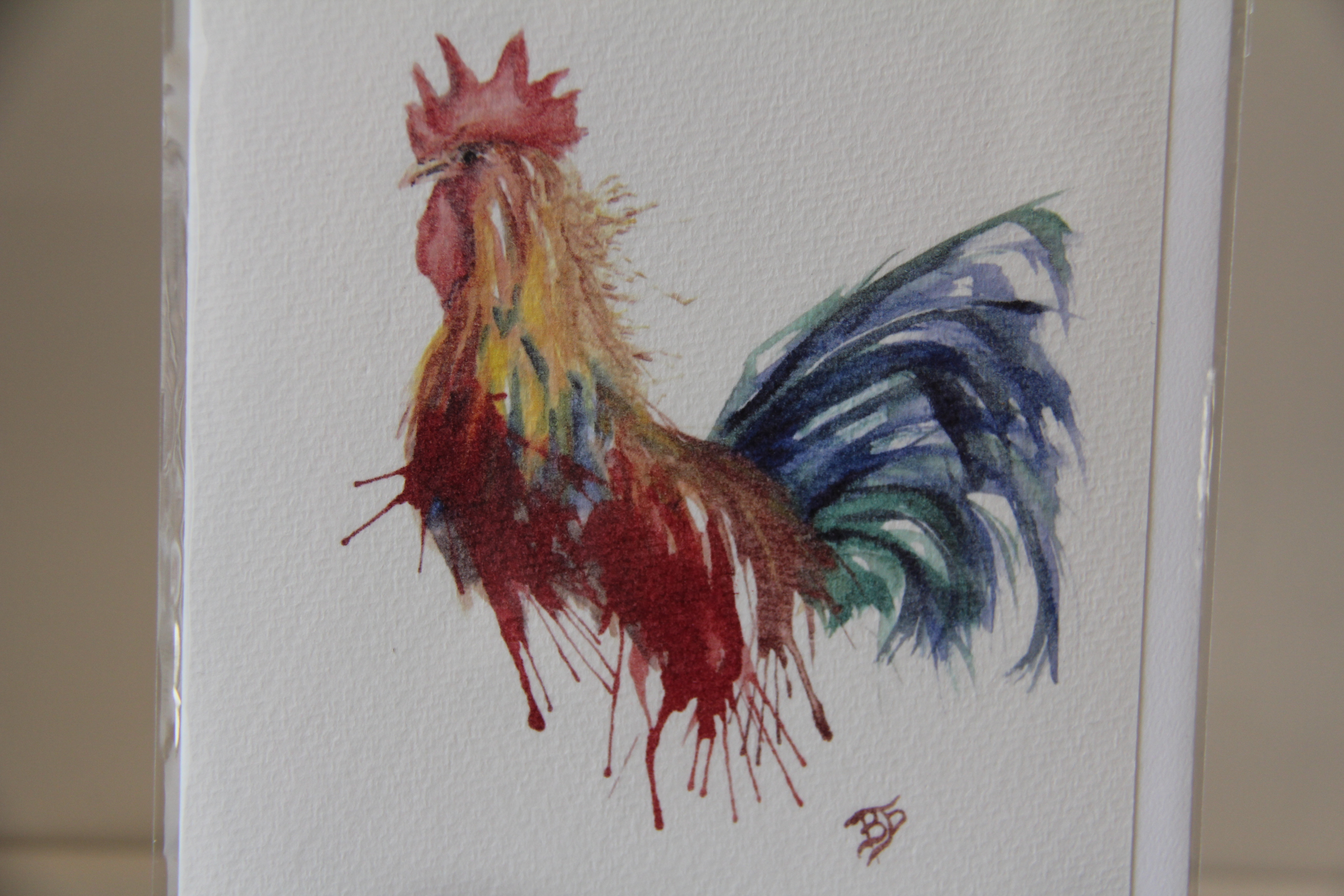
Barb Pendergast created this watercolor of a rooster. (Minnesota Prairie Roots copyrighted photo March 2023)
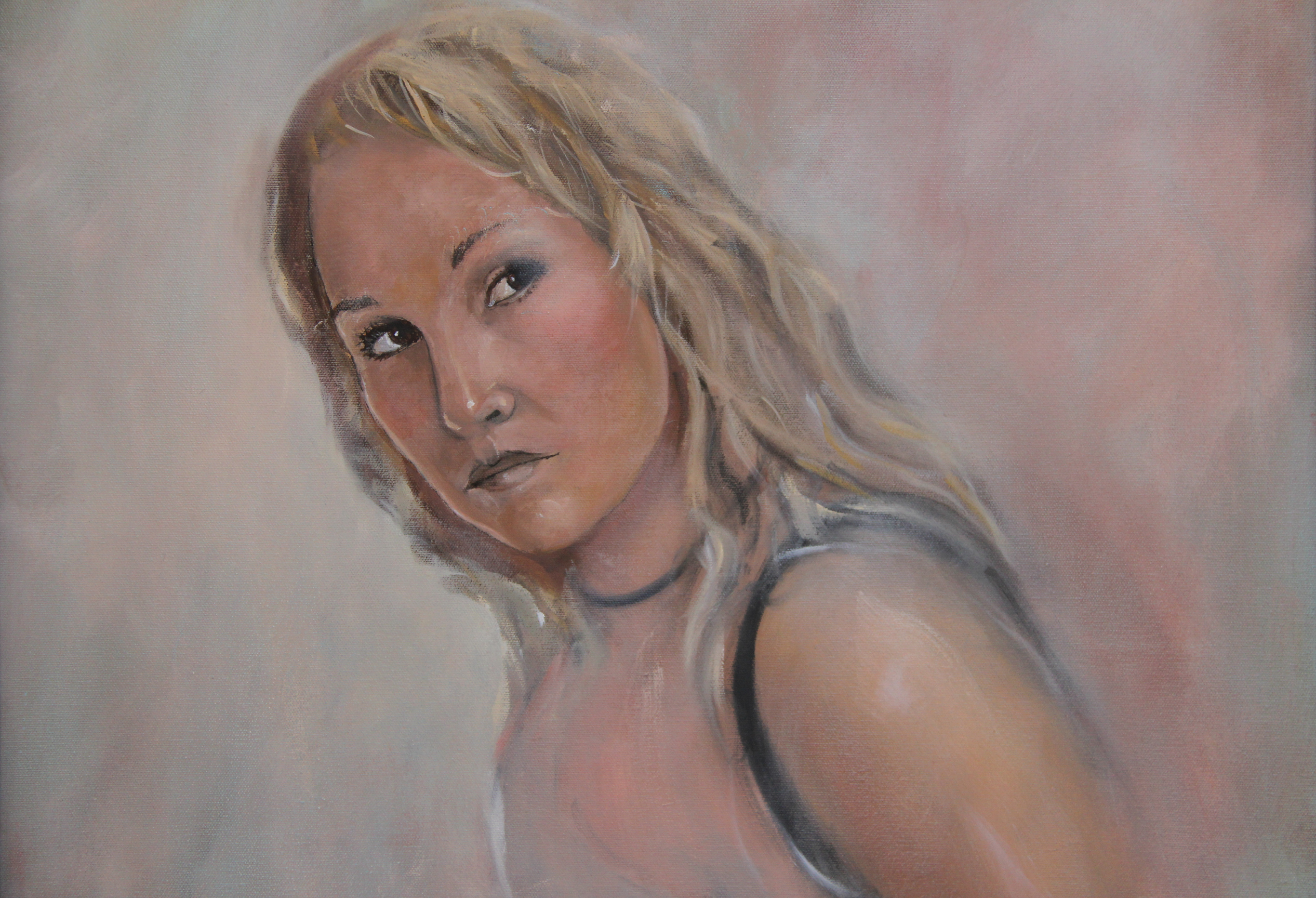
“Jes,” an oil portrait by Ivan Whillock. (Minnesota Prairie Roots copyrighted photo March 2023)
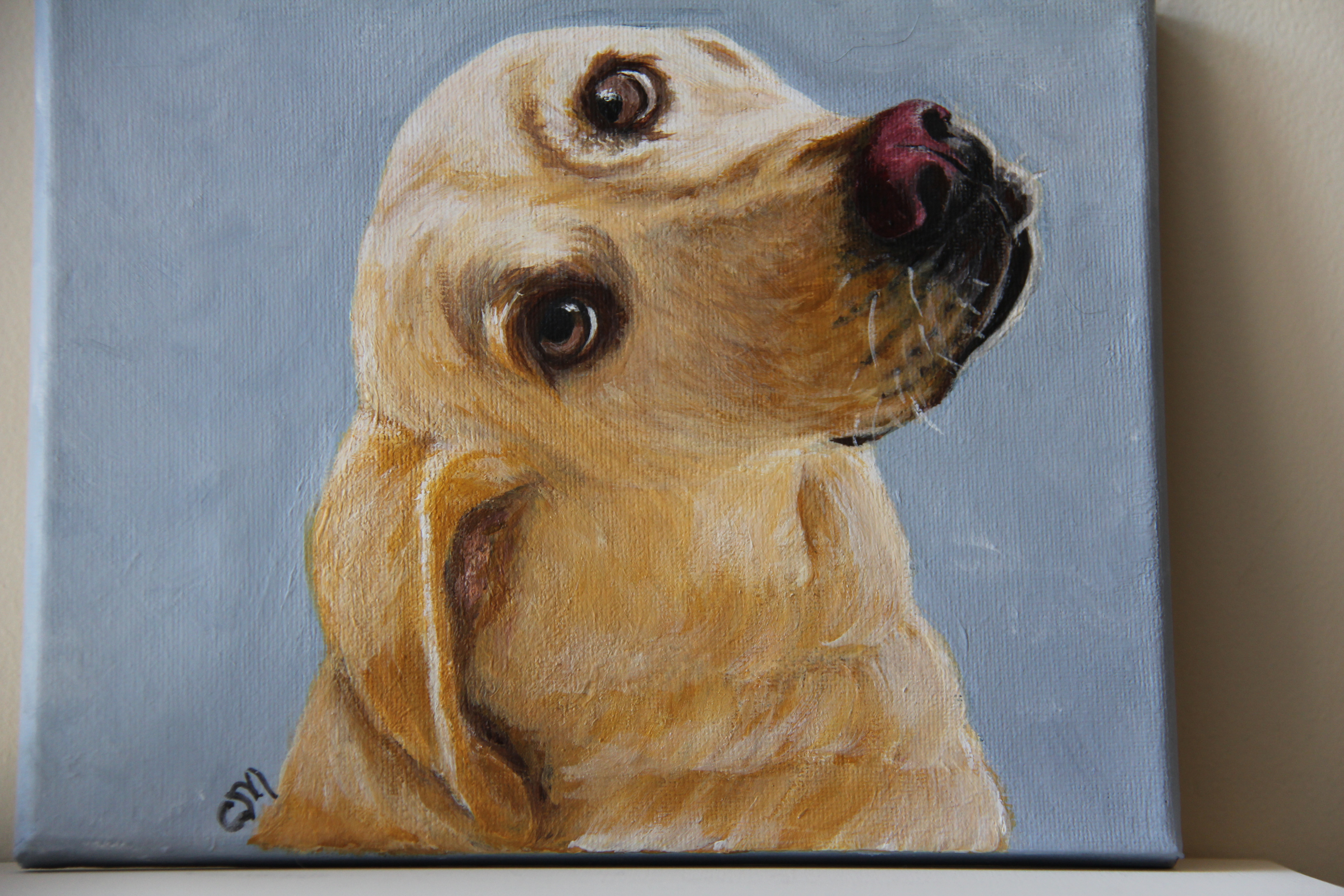
“Haley,” an acrylic portrait by Cheryl Morris. (Minnesota Prairie Roots copyrighted photo March 2023)

Across the lobby in another smallish gallery, I perused the images of photographer Stephen Hadeen and of Paradise Center for the Arts members. I always enjoy seeing what locals create. From a nature and wildlife photographer of 40 years, to an internationally-acclaimed woodcarver (who also paints) to a watercolor artist, these creatives embrace a variety of ways to make art. It’s simply fun to take it all in, whether photos of zebras or a watercolor of a rooster or a portrait of a canine with soulful eyes.

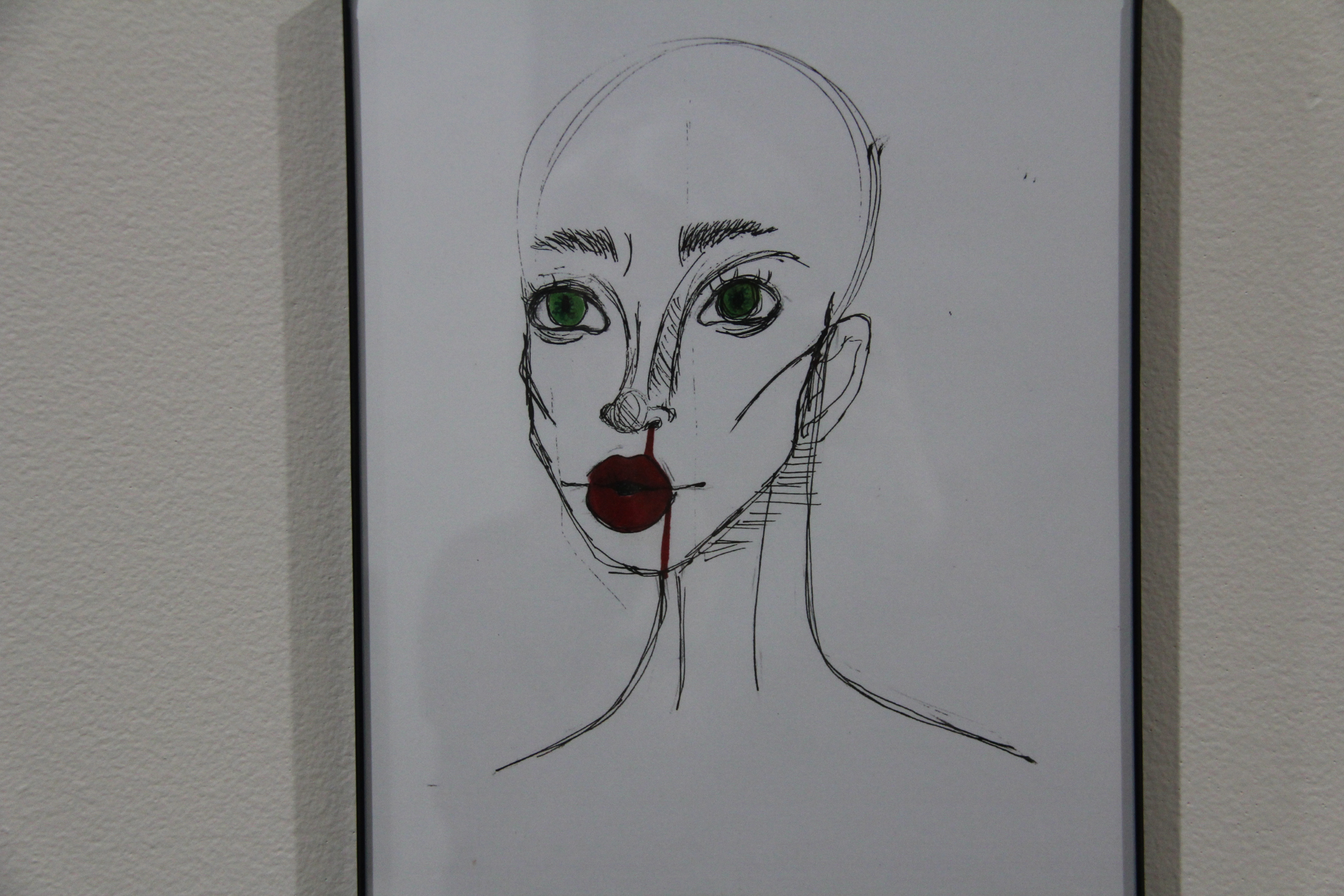
Student artist Syra Romero’s untitled art from a sketch book scan. (Minnesota Prairie Roots copyrighted photo March 2023)

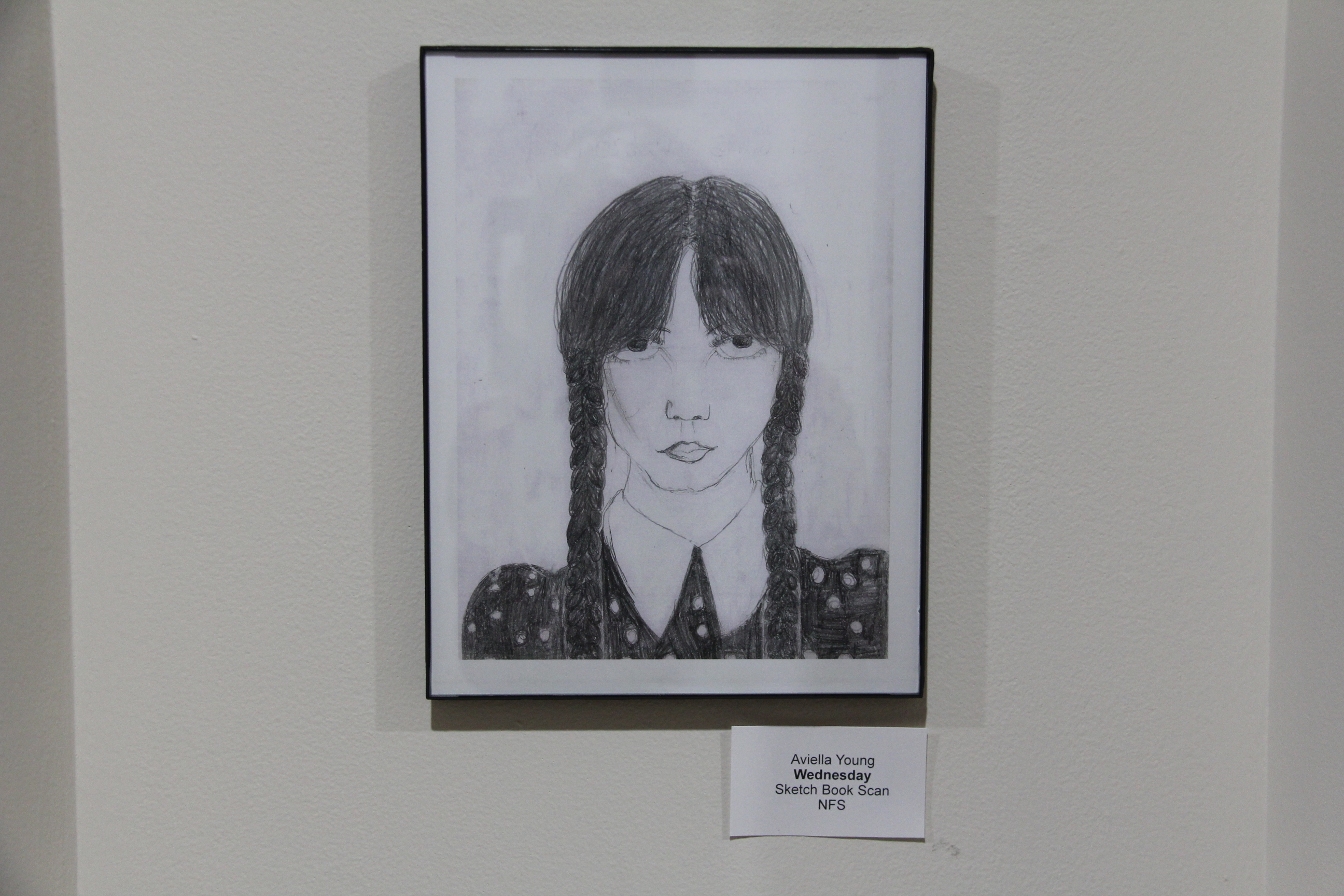
It is the eyes which pulled me in close to view a mini gallery exhibit of art by students in the Paradise’s After School Art Club. The club meets a total of six hours in six sessions with local teaching artists. And what they create impresses. I know I never could have made art like this at their age. Not that I ever had the opportunity to learn. I didn’t.

“Wednesday,” a sketch book scan by student artist Aviella Young. (Minnesota Prairie Roots copyrighted photo March 2023)

But these students, oh, how fortunate they are to pursue their creativity alongside professionals. To learn technique, to be encouraged, to create art is such a gift.

Another gift awaits visitors to the Paradise Center for the Arts in the annual second floor All Area Student Art Show, which runs until April 8. That is one of my favorite exhibits because I love seeing what our young people are creating. Their work is remarkable. They inspire me. That show deserves a solo focus, which will be forthcoming.

“Keep Going Forward,” Amanda Webster’s acrylic, right, leads to more of her abstract paintings. (Minnesota Prairie Roots copyrighted photo March 2023)

For now, head to the Paradise by Saturday, March 25, to take in the current art in the first floor galleries. The Paradise, 321 Central Avenue North, is open from noon to 5 pm Wednesday – Friday and from 10 am – 2 pm Saturday.

NOTE: All art was photographed with permission from the Paradise Center for the Arts. This post includes only a sampling of the art featured in the gallery exhibits.

© Copyright 2023 Audrey Kletscher Helbling