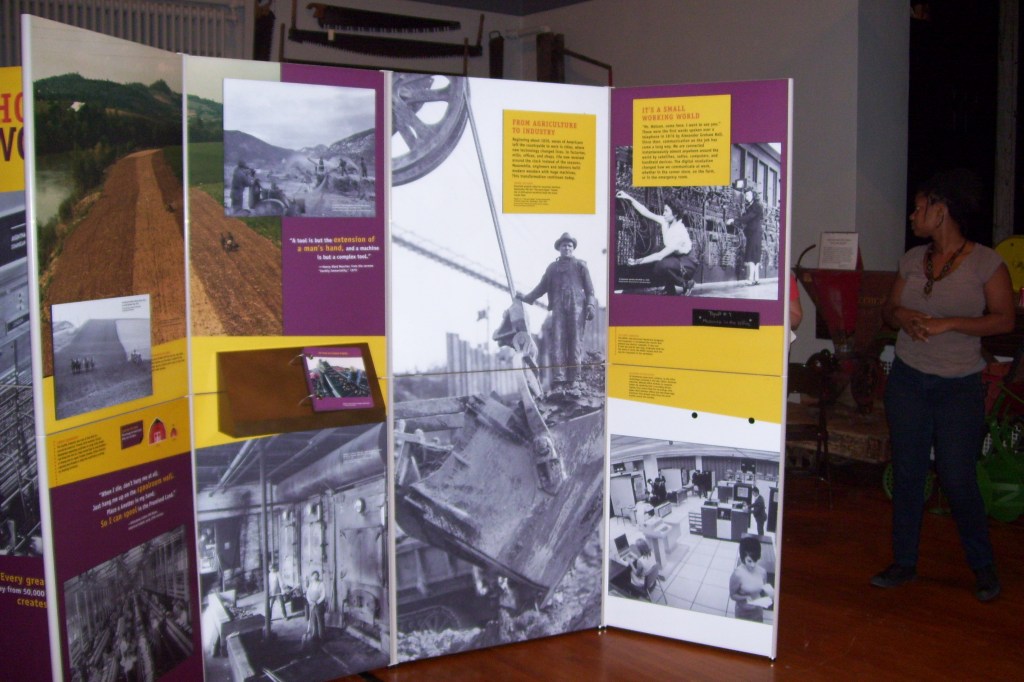
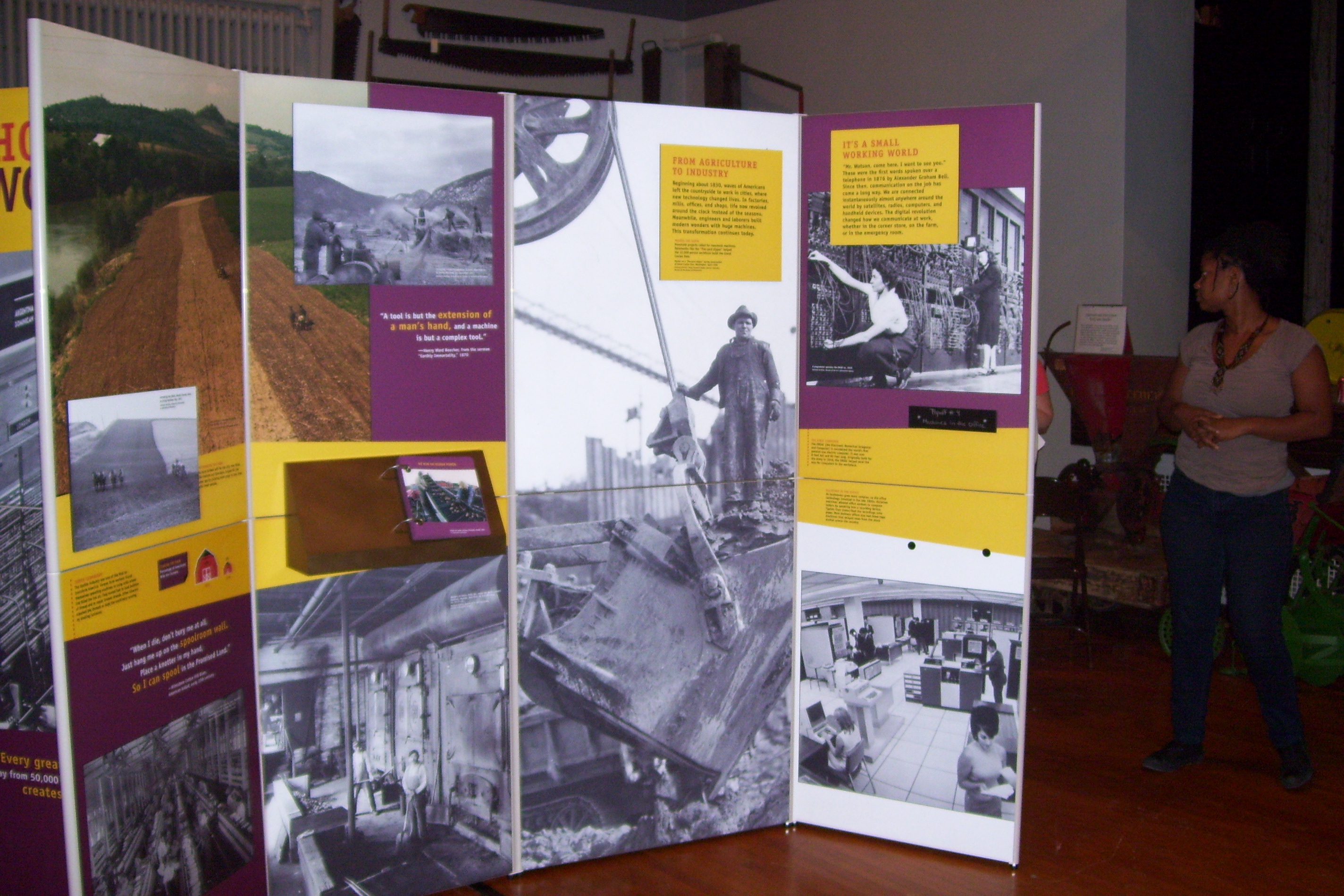
The Smithsonian’s Museum on Main Street exhibit, “The Way We Worked,” features snippets from Minnesota. Photo courtesy of Minnesota’s Machinery Museum, Hanley Falls, in rural southwestern Minnesota.
I DOUBT MANY of the 304 residents of Hanley Falls, rural Yellow Medicine County, Minnesota, have ever visited the Smithsonian or even traveled to Washington D.C.
But now this internationally-acclaimed museum has come to Hanley Falls via “The Way We Worked,” a Museum on Main Street project developed by the Smithsonian Institution Traveling Exhibition Service and adapted from an original exhibition from the National Archives.
Bottom line, if you can’t bring the people to the museum, bring the museum to the people.
Specifically, from now through October 20, Minnesota’s Machinery Museum in Hanley Falls is hosting the exhibit on where, how, who and why Americans work.
But that’s not all. Hanley Falls is part of “The Way We Worked,” as are several other Minnesota places and people.
Says Museum Director Laurie Johnson: “It is an honor in itself to be hosting a Smithsonian Traveling Exhibit. To be an actual part of the exhibit traveling all over the U.S. is a very big honor.”
Hanley Falls’ place in the exhibit falls in the “Communities at Work” section and features a 1987 aerial view photo of Hanley Falls by Vincent H. Mart sourced from the Minnesota Historical Society. The MHS photographic collection includes 5,697 aerial views from around Minnesota photographed by Mart between 1962-1988.
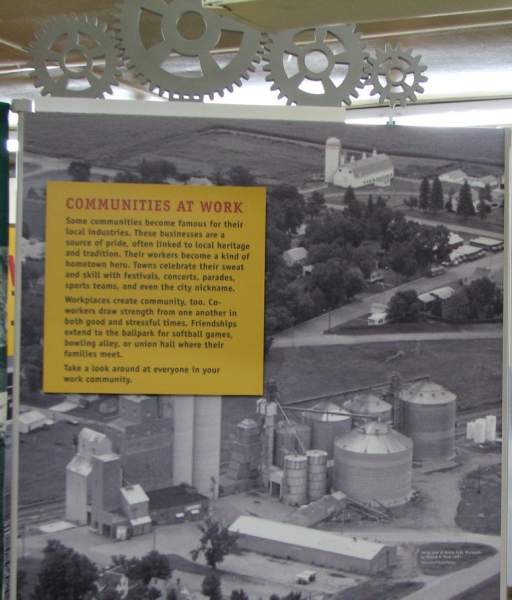
The 1987 Vincent H. Mart photo showing a portion of Hanley Falls and now part of the Smithsonian traveling exhibit. Photo courtesy of Minnesota’s Machinery Museum.
Mart’s black-and-white shot #5,655 in the MHS archives, and now in the Smithsonian exhibit as image 196, shows the then Hanley Falls Farmers Elevator (now the Farmer’s Co-op Elevator) on the west side of town, plus Bennett Transportation (bus company) and the fourth-generation Oftedahl family farm. As a side note, the elevator celebrated its 100th anniversary this past July on Minnesota’s Machinery Museum grounds with more than 2,000 in attendance.
According to Johnson, the scene in the photograph no longer looks the same. Several of the grain bins were damaged in a wind storm and the main office was moved and an elevator built to the southwest of the Oftedahl farm. The old elevator remains and is still used by the Farmer’s Co-op.
The exhibit copy which accompanies the Hanley Falls photo reads, in part:
The reminders of a town’s main industry imprint its landscape and identity. Silos dominate the skyline in Hanley Falls, Minnesota as they do in most small, agricultural communities.
And here’s how Johnson summarizes what the Hanley Falls photo tells us about “The Way We Worked:”
Farming is a way of life here and has been for many generations. The exhibit talks about “community” and we are definitely a community that works, worships, (has) neighborhood get-togethers and plays together.
Johnson, who lives on a farm about 10 miles north of Hanley Falls, further explains that the local elevator, banks and gas station provide jobs in town. Some residents work in neighboring towns. Many are retired.
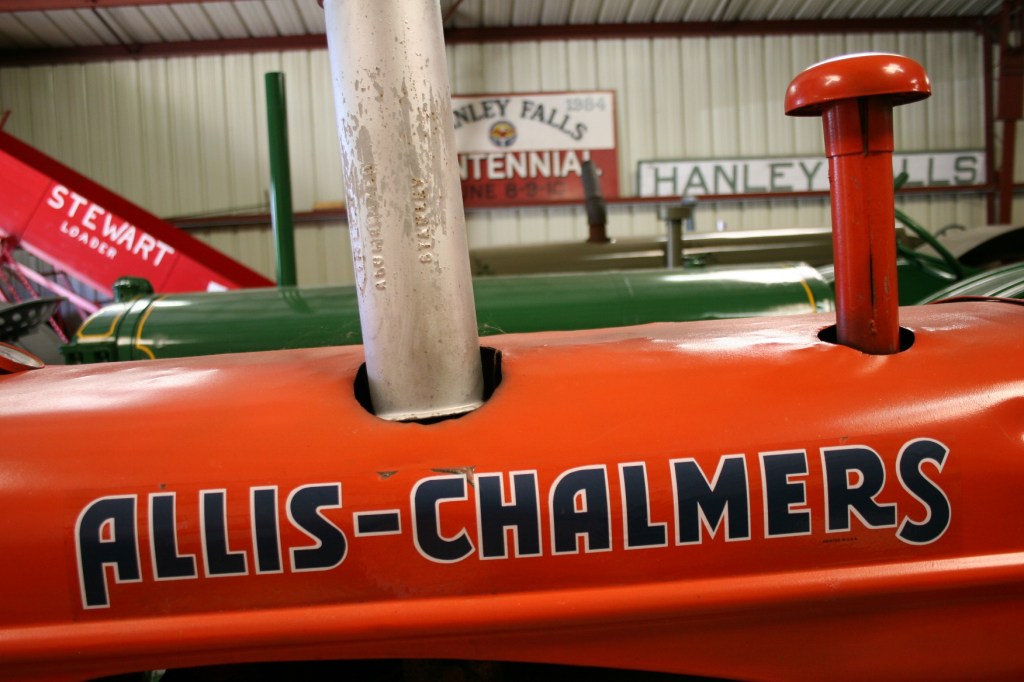
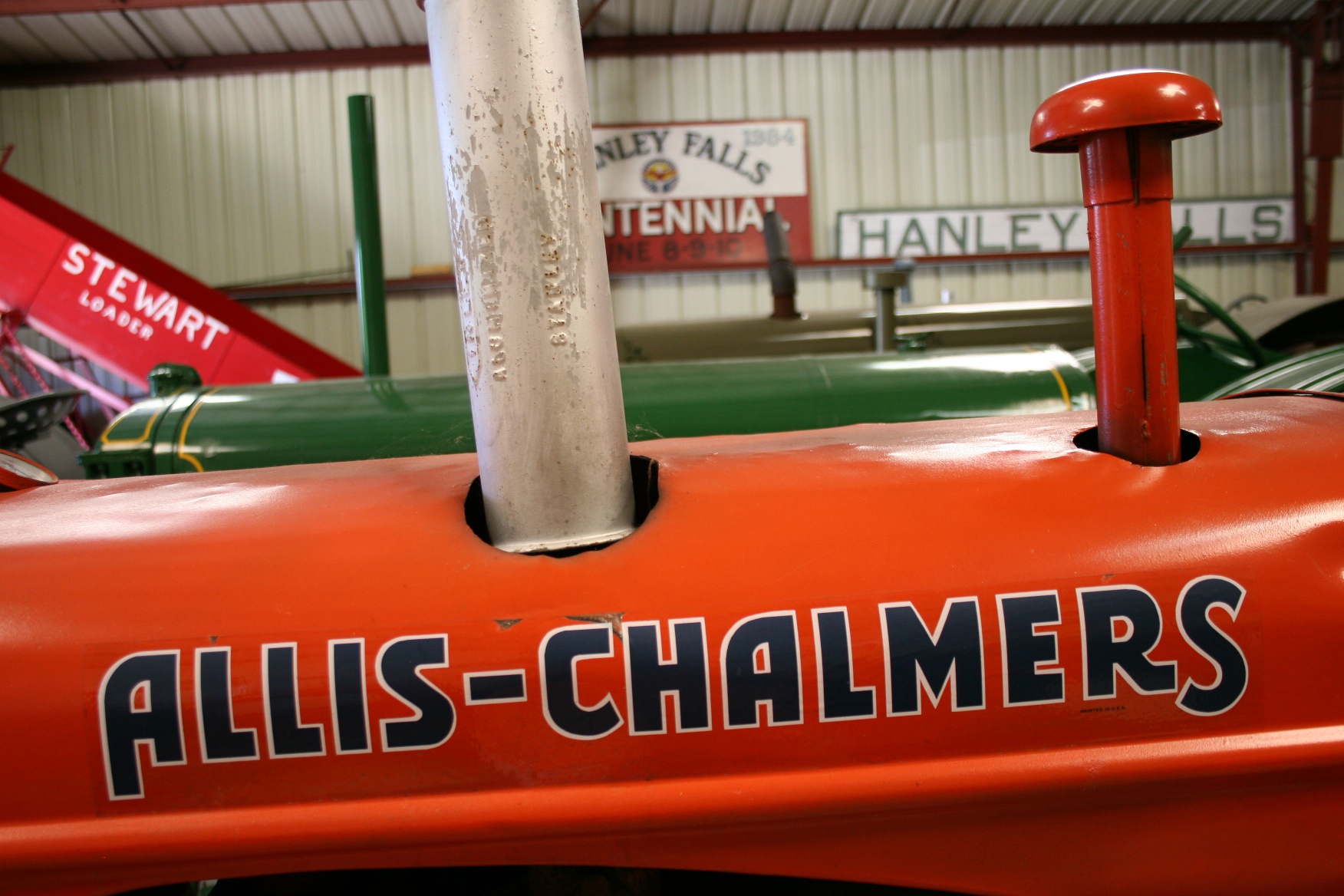
You’ll find plenty of old tractors and farm machinery, along with vintage cars and trucks, in the museum’s outbuildings. Minnesota Prairie Roots file photo.
Already the Smithsonian show is attracting more visitors to Minnesota’s Machinery Museum, defined by Johnson as “an agricultural museum recalling farm life in stories and artifacts from how we farmed with horses to a farm kitchen, bedroom, parlor and general store…preserving our agricultural heritage for generations.”
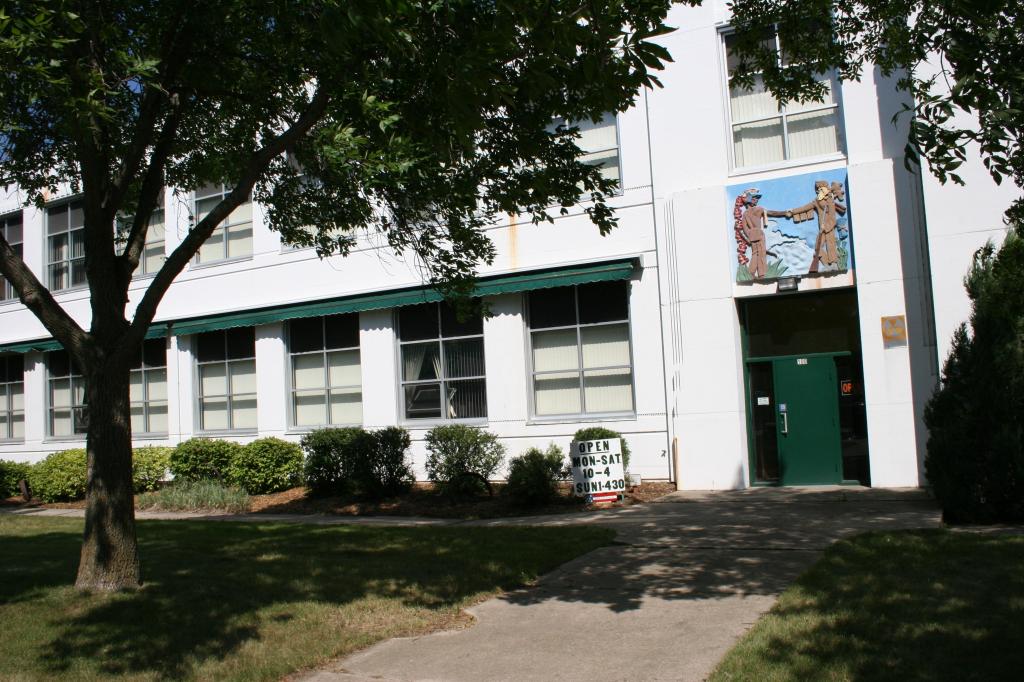
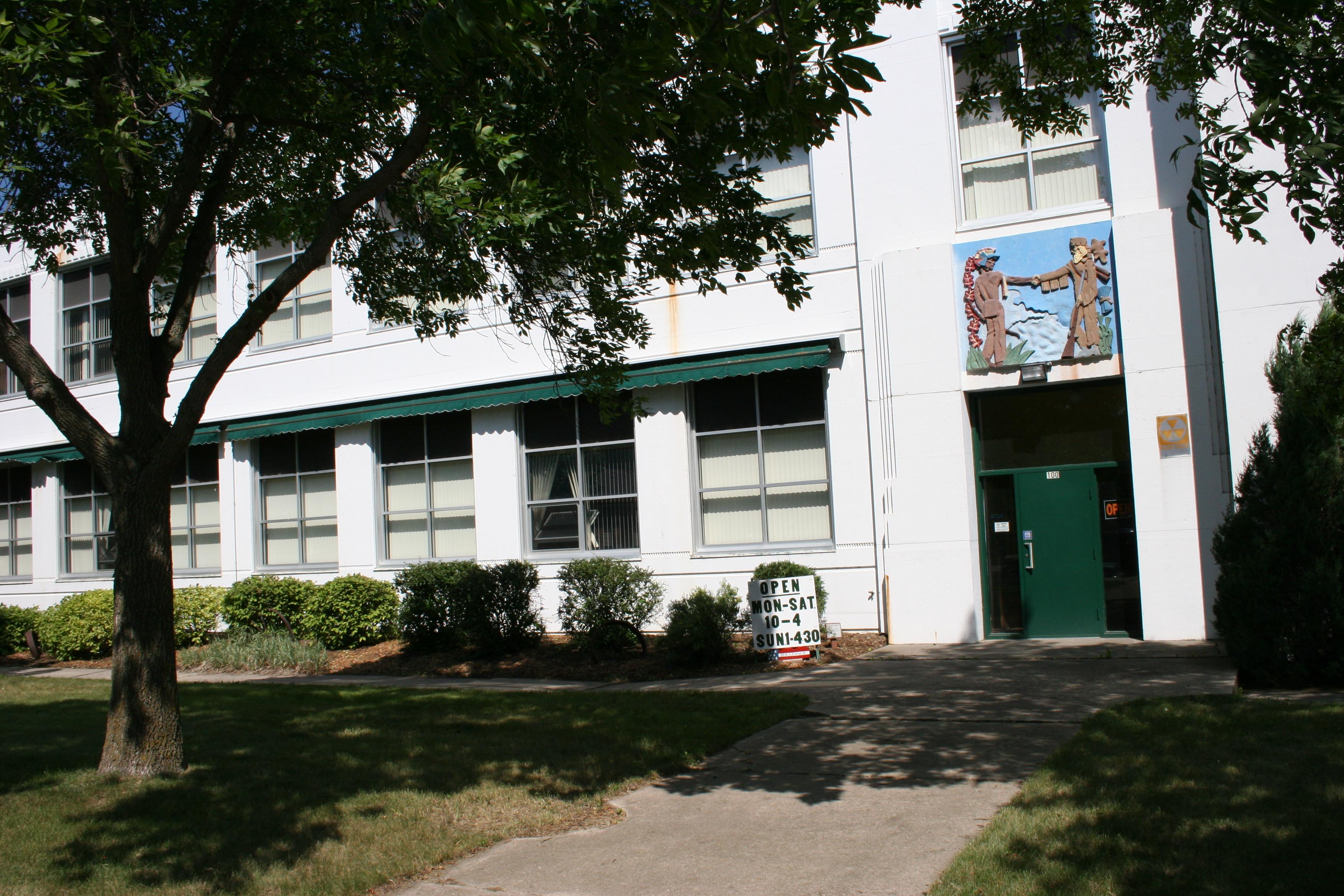
The entrance to the portion of the museum housed in the former school, a WPA building. Minnesota Prairie Roots file photo.
The five-building Yellow Medicine County museum complex, which includes the former Hanley Falls School built in 1939 by the Works Progress Administration, rests on six acres. You’ll find antique tractors, automobiles, gas engines, threshing equipment and other machinery and artifacts in the outbuildings.

A bushel basket, one of the many ag items displayed at the museum. Minnesota Prairie Roots file photo.
Until October 20, you also can find five multi-sided kiosks featuring photos, videos, flip booklets and other interactive activities as part of the Smithsonian’s “The Way We Worked” exhibit.
Besides Hanley Falls, other Minnesota places/information in the show are a photo of women sorting sweet potatoes; quotes from Earl Bakken, founder of Minneapolis-based Medtronics, maker of the first self-contained pacemaker; a 1974 photo from Danheim Dairy in New Ulm; a SPAM Town banner; mention of the Moorhead Spuds (hometown pride for the town team); and a 1928 photo of St. Paul Gas and Light Company workers at a dance.
Johnson has no idea how the Hanley Falls photo became a part of this national touring exhibit. She discovered the town’s inclusion while vacationing in Tennessee, where she stopped to view the exhibit.

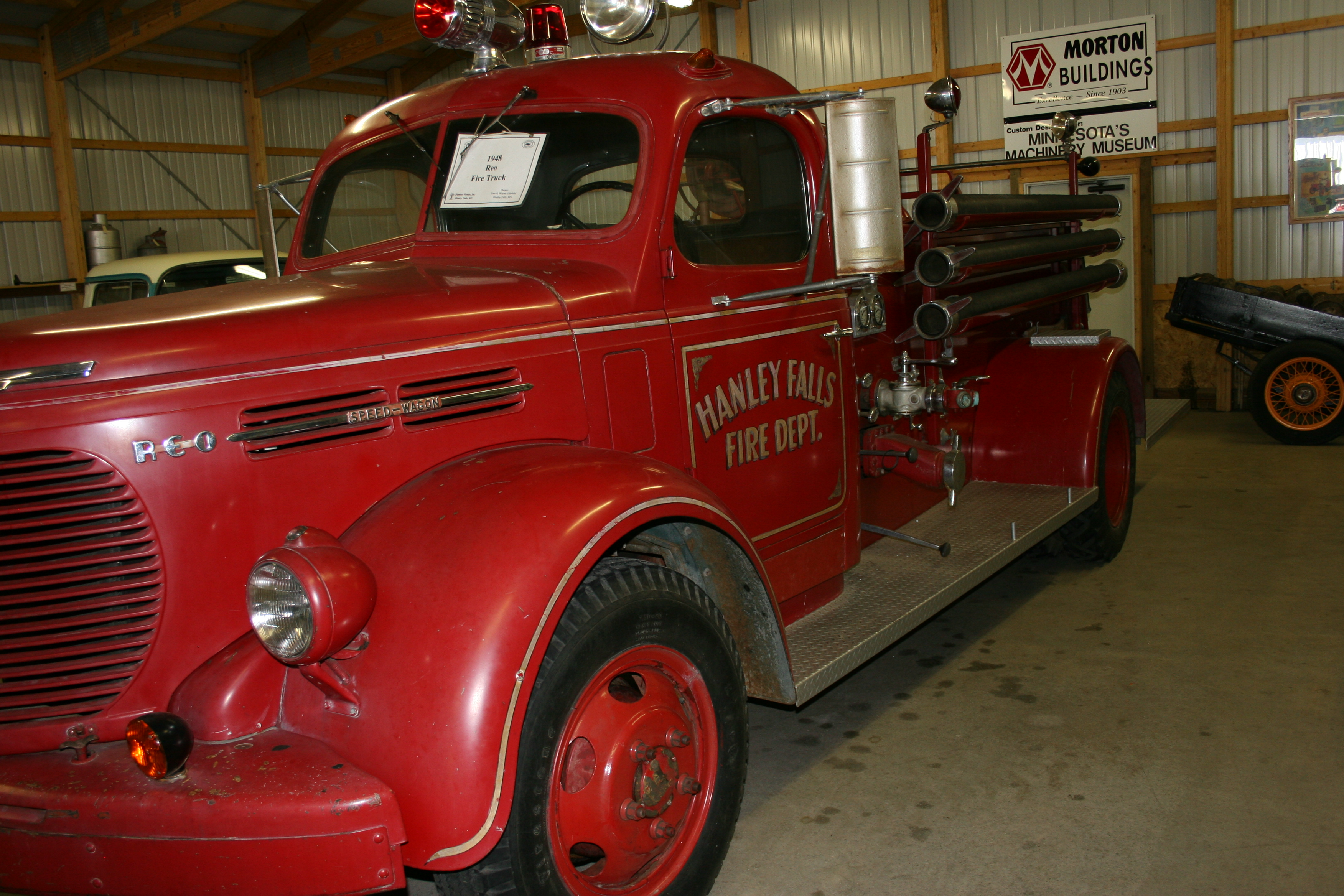
An old Hanley Falls fire truck is among vehicles housed in the outbuildings. Minnesota Prairie Roots file photo.
After leaving Hanley Falls, the exhibit will travel to five other Minnesota locations, including the Wright County Historical Society in Buffalo (Oct. 27 – Dec. 8); the Winona County Historical Society in Winona (Dec. 15 – Jan. 26); the Steele County Historical Society in Owatonna (Feb. 2 – March 16); the Virginia Area Historical Society in Virginia (March 23 – May 4); and the Depot Preservation Alliance in Baudette (May 11 – June 22).
In Hanley Falls, “The Way We Were” can be viewed between 10 a.m. – 4 p.m. Monday – Saturday or from 1 p.m. – 4:30 p.m. on Sunday. The museum season was extended to accommodate the show.
Admission to Minnesota’s Machinery Museum is free, but monetary contributions are accepted via a free will donation box.
Located in southwestern Minnesota, Hanley Falls sits nine miles south of Granite Falls or 20 miles north of Marshall along Highway 23. Go one block west of Highway 23 and then a block north to find the museum.
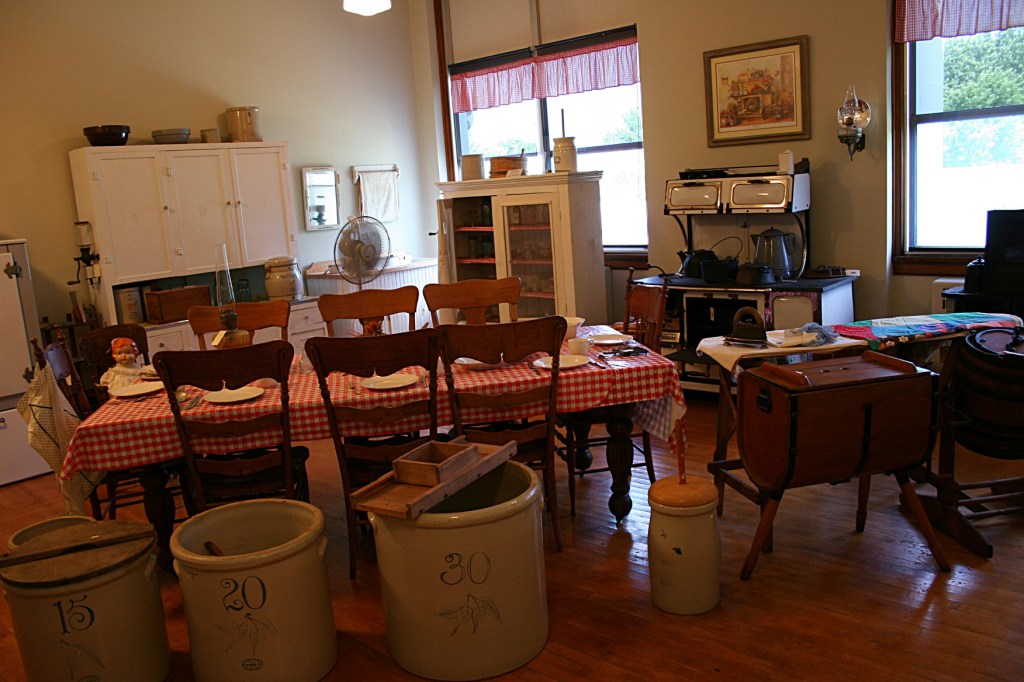
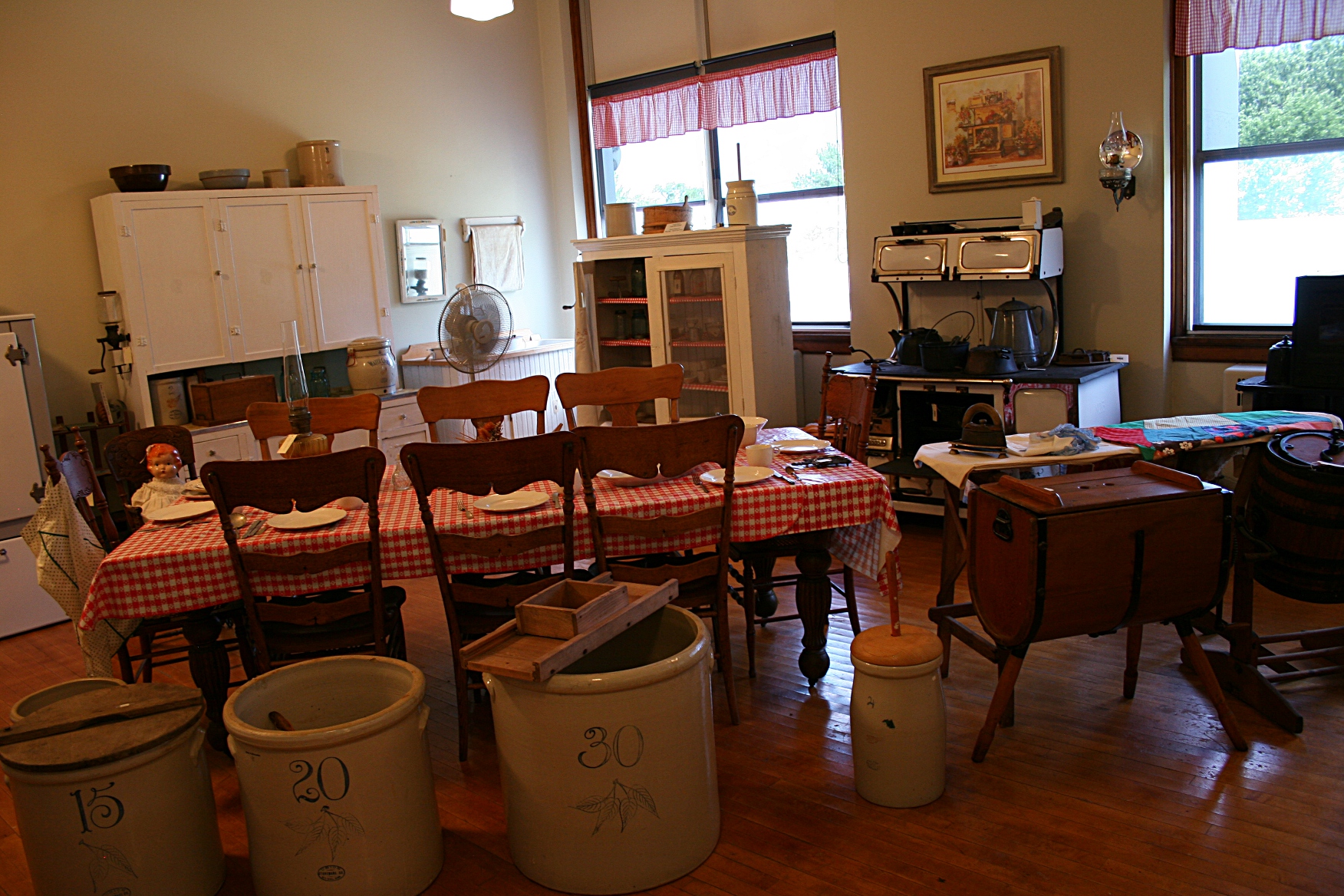
An old-style farm kitchen on the second floor of the museum. Minnesota Prairie Roots file photo.
“The Way We Worked” is presented in Hanley Falls in collaboration with the Minnesota Humanities Center. Funding, says Johnson, is via the Center; The Clean Water, Land & Legacy Amendment (Arts & Cultural Heritage Fund); the Smithsonian Institute; the National Endowment for the Humanities; and the United States Congress.
Minnesota’s Machinery Museum previously hosted the Smithsonian’s Museum on Main Street projects “Barn Again” and “Between Fences.”
FYI: To learn more about Minnesota’s Machinery Museum, click here to link to the museum website.
For more info about “The Way We Worked,” click here.
To view additional photos by Vincent H. Mart in the Minnesota Historical Society archives, click here.
© Copyright 2012 Audrey Kletscher Helbling






 Minnesota Prairie Roots
Recent Comments