Minnesota Prairie Roots

Writing and photography by Audrey Kletscher Helbling

An unexpected prairie place: “Little Yellowstone of Minnesota” June 4, 2026

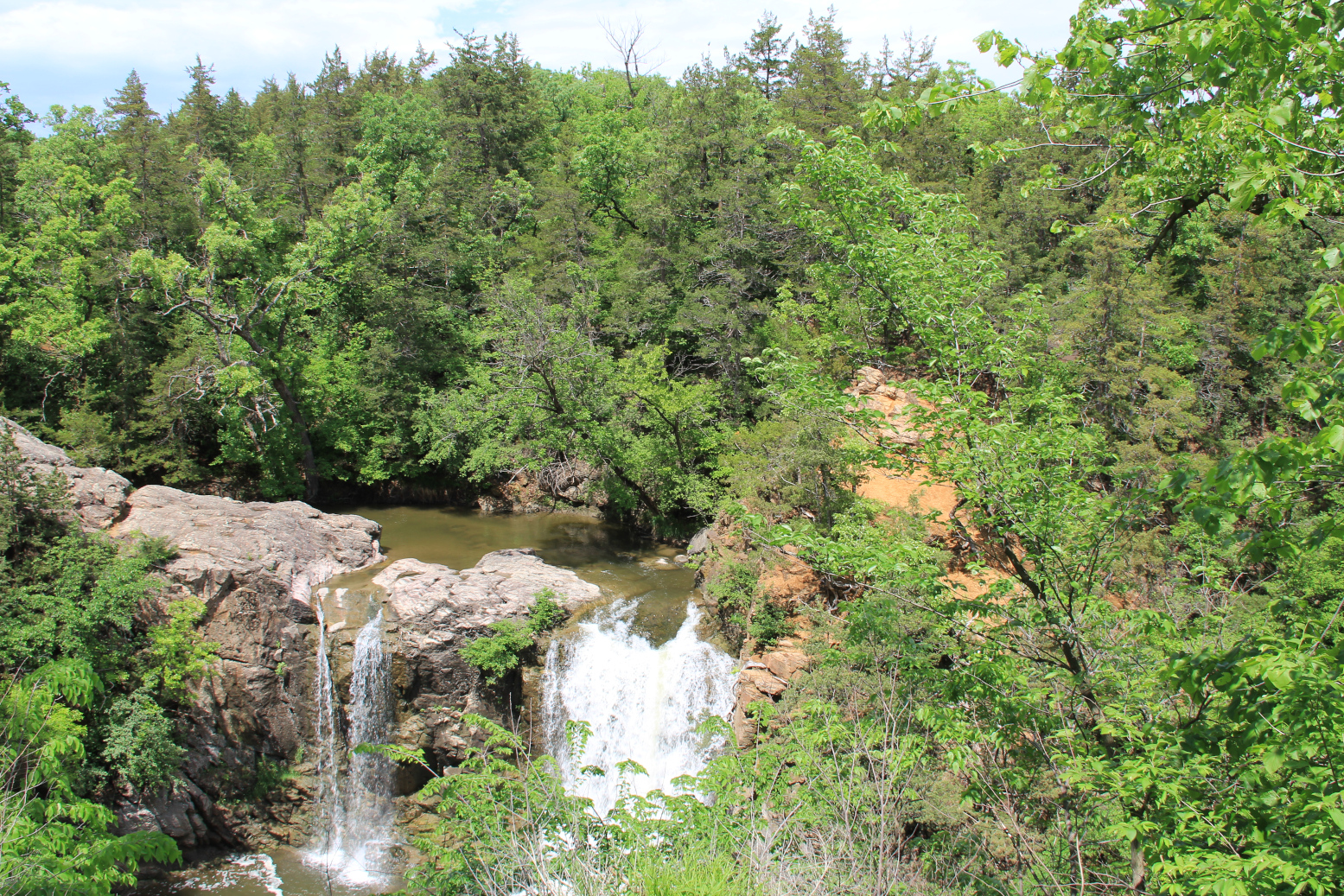
Ramsey Falls in Redwood Falls. (Minnesota Prairie Roots copyrighted photo May 2026)

WATER RUSHES OVER the aged granite rock, roaring into the gorge below. It is a scene so beautiful, so unexpected, that this 256-acre city park has been dubbed the “Little Yellowstone of Minnesota.”
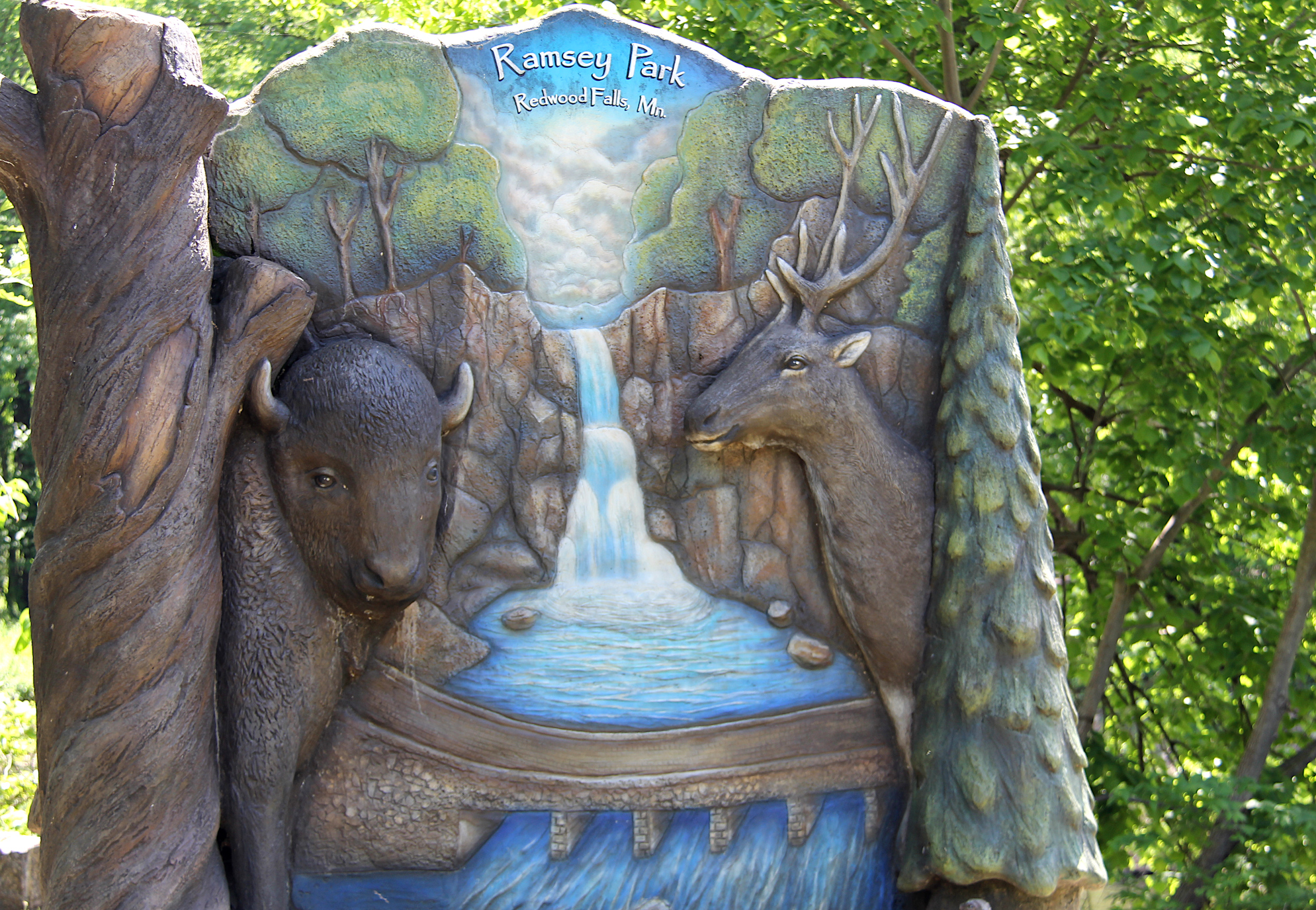
Park signage along the river in the zoo area. (Minnesota Prairie Roots copyrighted photo May 2026)

Recently I revisited Ramsey Park, also known as Cansa’yapi, translated to “where they paint the trees red” from the Dakota language. A Mdewakanton Band of the Dakota live near neighboring Morton and refer to their traditional Minnesota River Valley homeland as Cansa’yapi.

On this day, I come to see Ramsey Falls along Ramsey Creek, which feeds into the Redwood River inside the park. The Redwood then flows into the Minnesota River.
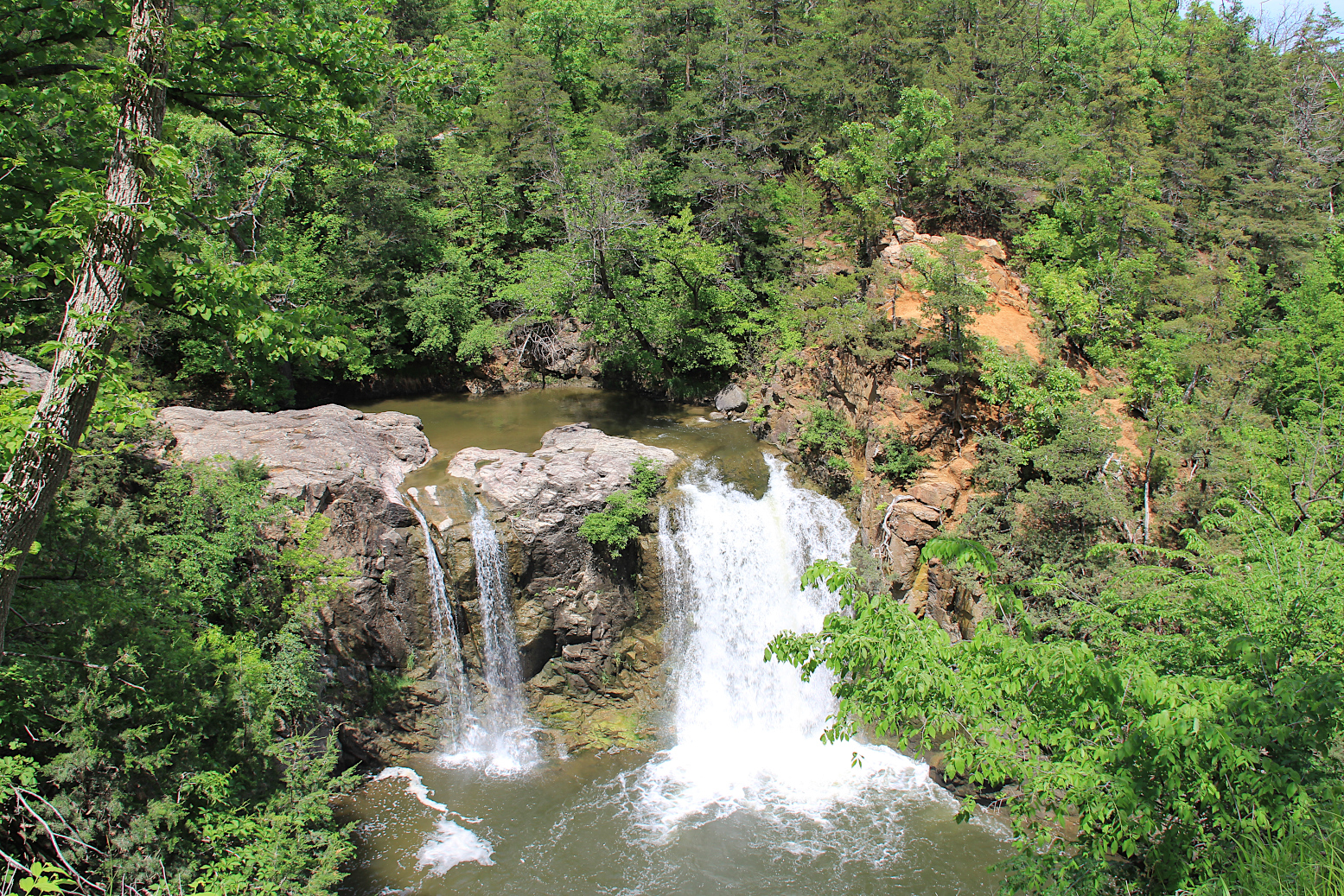
If the creek level is high, water spills over two areas of the rock. (Minnesota Prairie Roots copyrighted photo May 2026)

Ramsey Falls, with its 30-foot drop, is the star attraction in this park founded in 1911 as a state park with ownership transferred to the city of Redwood Falls in 1957. This is a gem in a county marked by farm fields, farm sites, small towns and mostly flat topography.
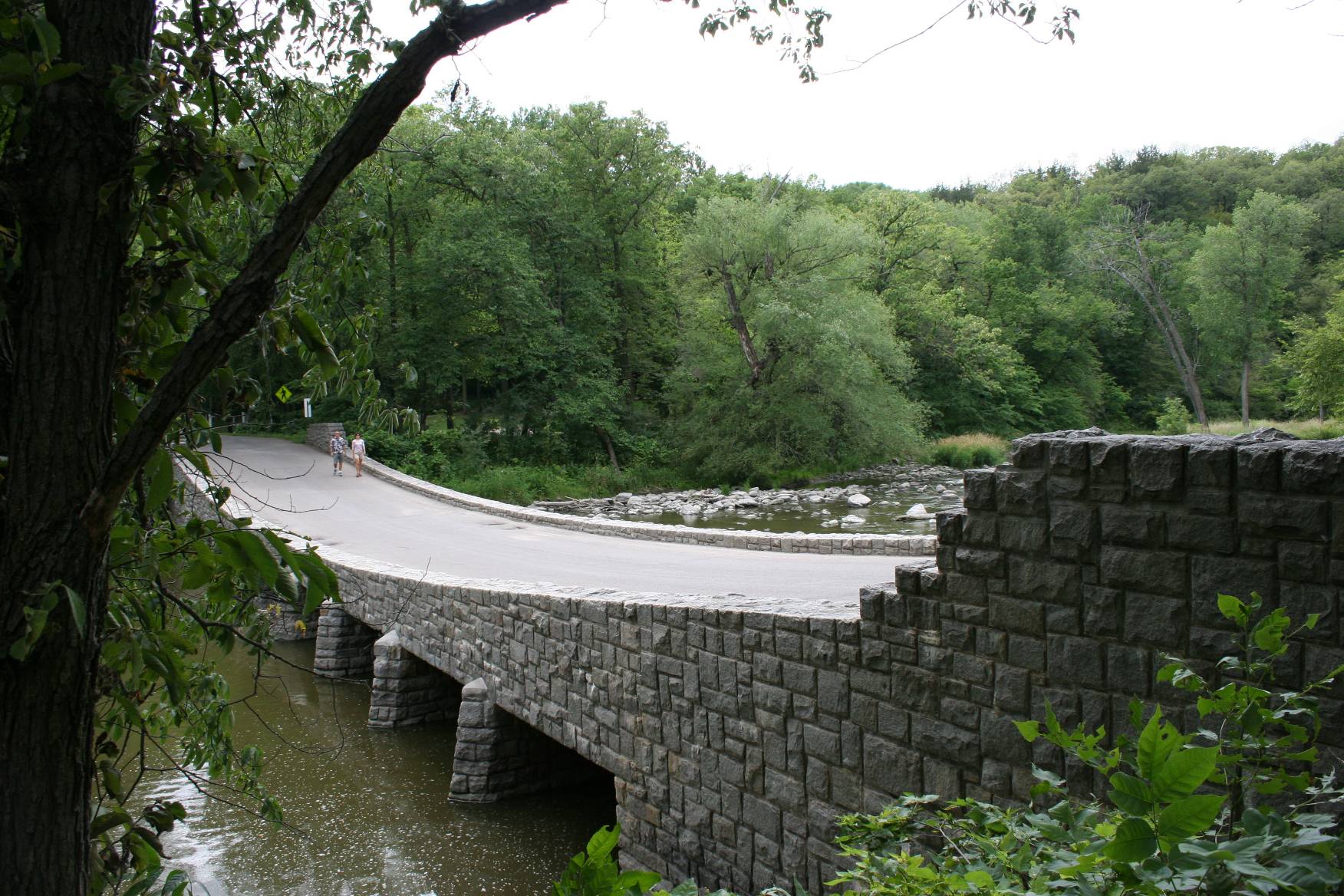
A side view of the swayback bridge from a previous park visit. (Minnesota Prairie Roots copyrighted file photo)

Here, within this park, narrow roads twist and turn through woods, descending to the river bottom. Creek and river waters flow. Three and a half miles of cemented hiking trails (new since I left the area 50 years ago), run throughout the park. A swayback bridge built in 1938 by workers with the Works Progress Administration Project along the Redwood River adds an historic architectural element to the park.
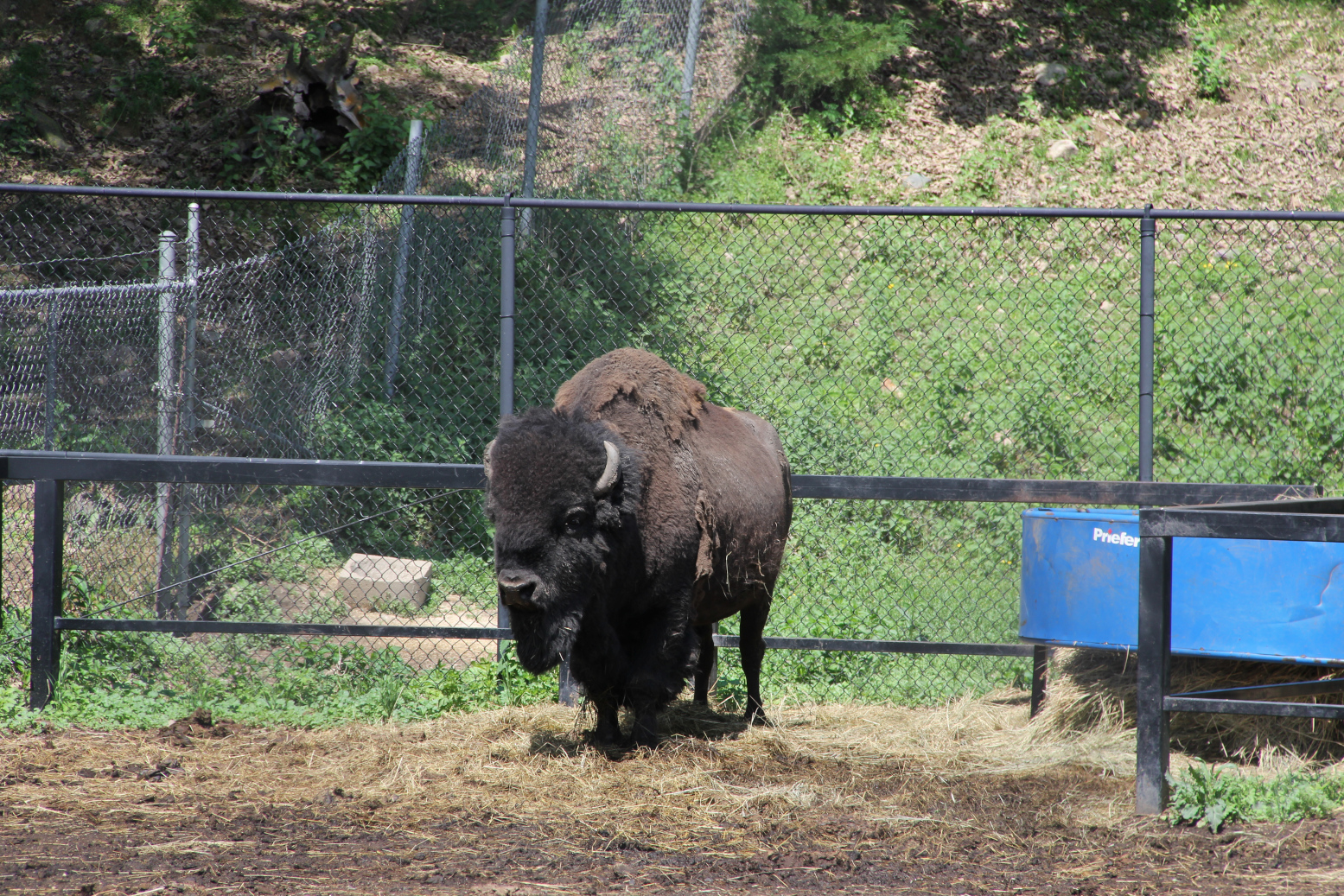
Zooming in on a buffalo through a fence. (Minnesota Prairie Roots copyrighted photo May 2026)

For anyone who loves the outdoors—fishing, hiking, camping, picnicking—this park offers it all. The park is also of interest to geologists and history buffs. A small zoo with its resident buffalo and other animals has always been an attraction, too.
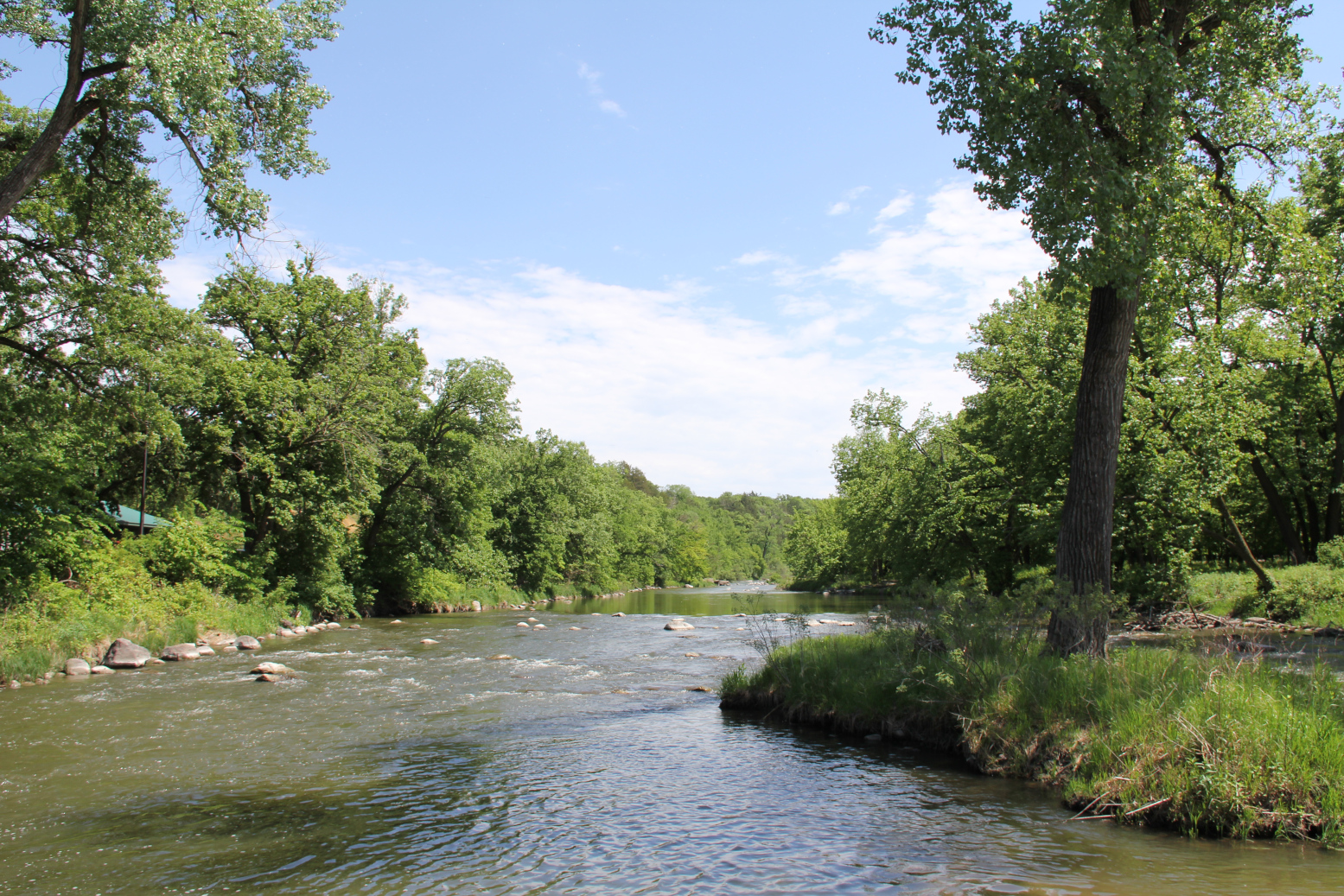
The Redwood River photographed from the swayback bridge. (Minnesota Prairie Roots copyrighted photo May 2026)

But it is really the land and the water that brings visitors like me here. Hills and gorges. Waterways. Trees thickening into dense woods, vastly different than the shelterbelts protecting farm sites from prairie winds.
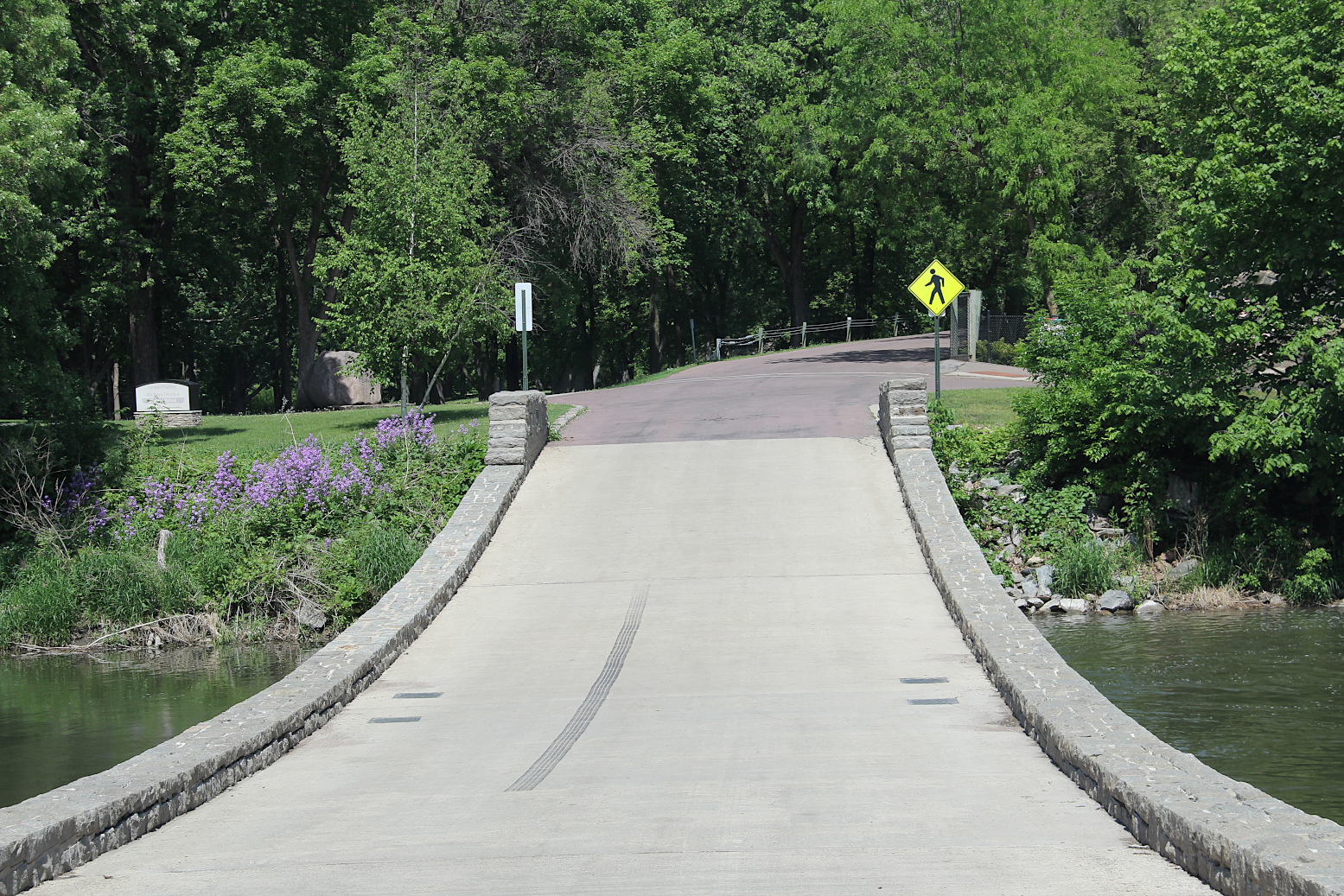
Crossing the WPA swayback bridge over the Redwood River. (Minnesota Prairie Roots copyrighted photo May 2026)

I remember coming here as a child and feeling like I’d entered a different world. Yet, I was still in Redwood County, only 20 miles from the flat farm fields of home to the west. I recall the terror I felt when Dad maneuvered the Chevy around a tight hairpin curve in the park, the steep hillside falling below us. I remember standing in awe of Ramsey Falls, and being more than a little afraid of stepping too close to the fence at the falls overlook. I remember the car dipping across the swayback bridge.

Teenage years took me along a steep, narrow dirt path down to the massive rocks beside the falls for a picnic lunch with friends.
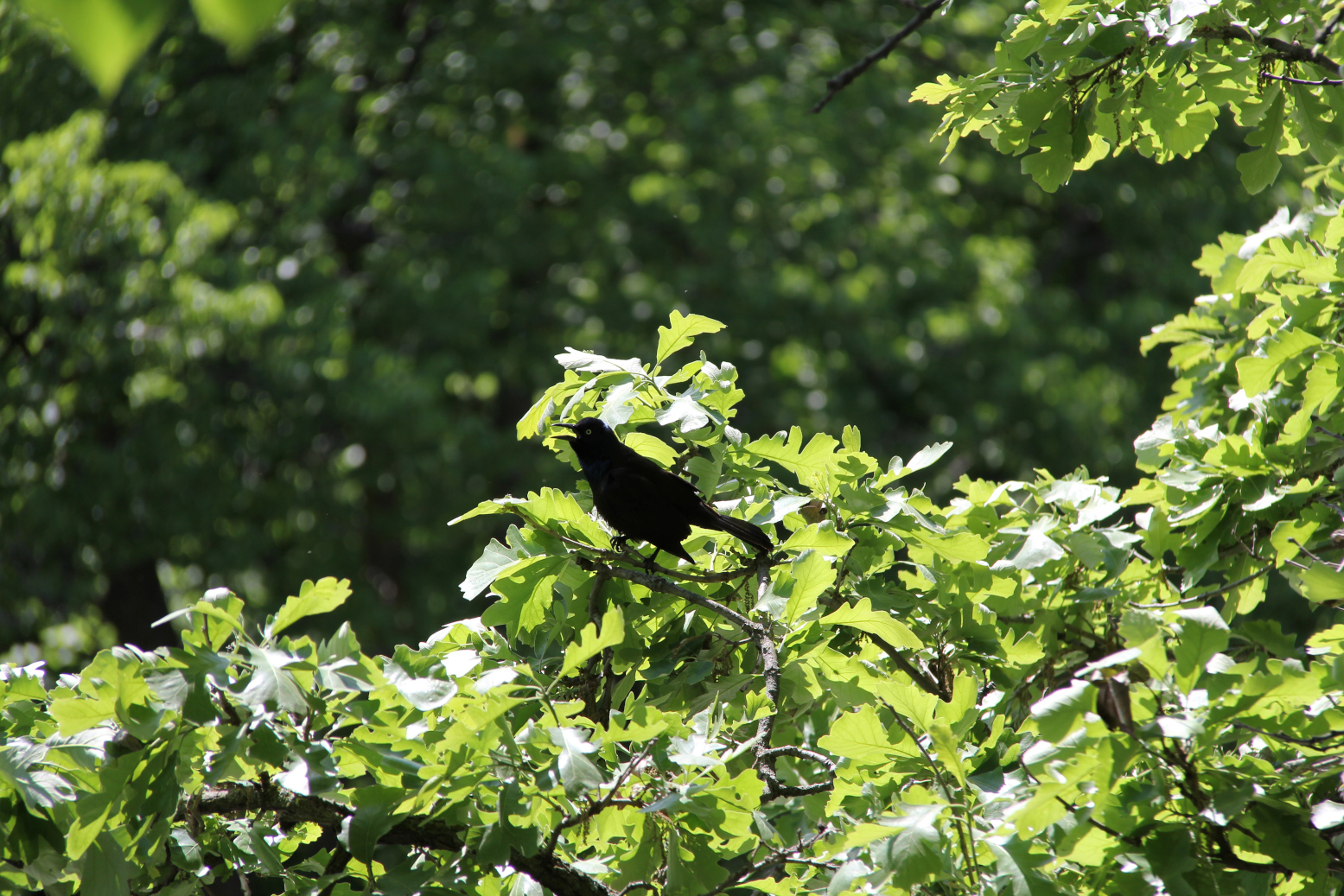
A bird sings in a riverside tree. (Minnesota Prairie Roots copyrighted photo May 2026)

On this afternoon, I lean into the sturdy overlook fence, focus my camera on the rushing waterfalls, notice the surrounding greenery, appreciate this Little Yellowstone of Minnesota. I’ve never been to the Wyoming national park, thus have no comparison to make. That really doesn’t matter; this place holds its own Yellowstone beauty.
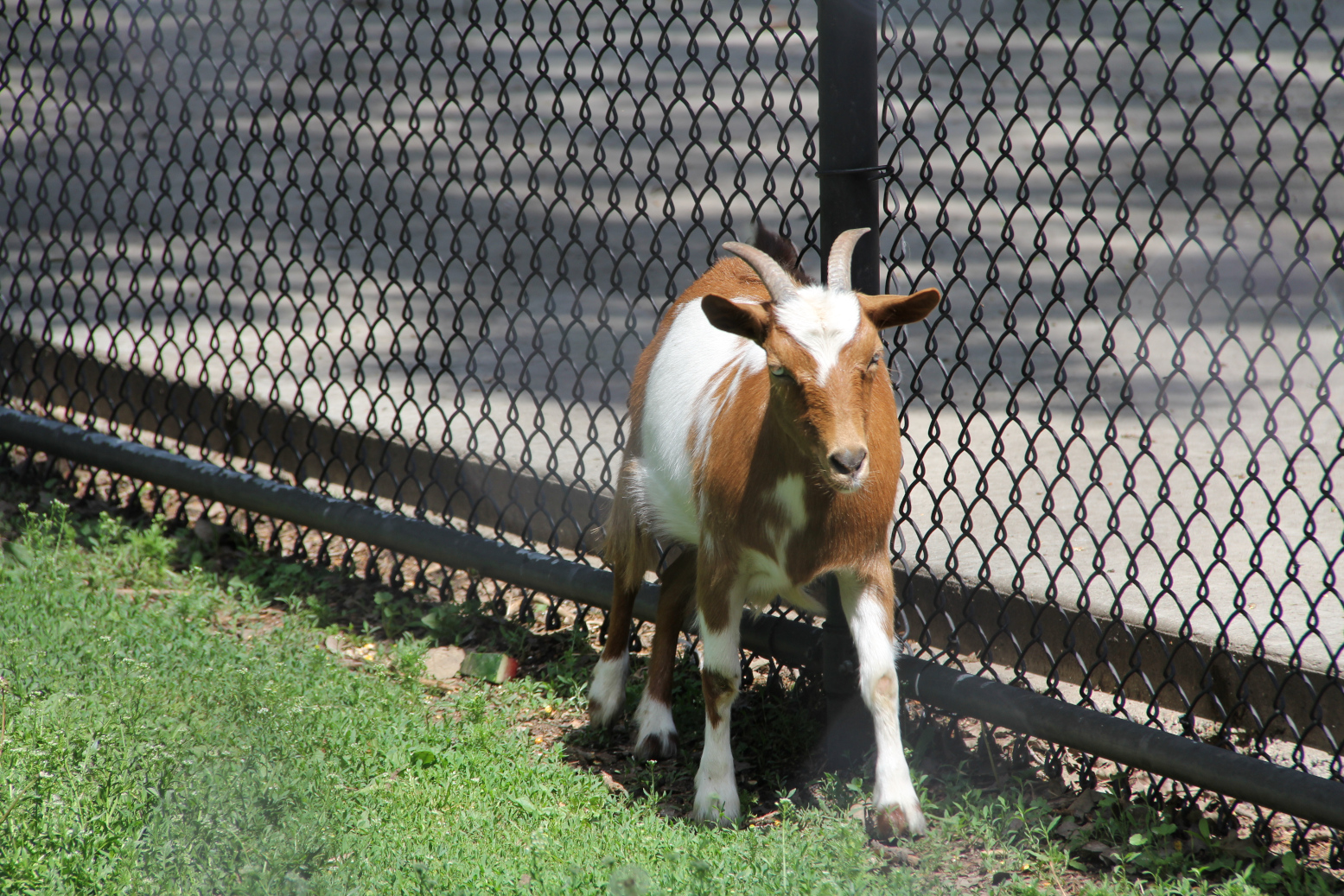
The small zoo is home to several playful goats, other animals and birds. (Minnesota Prairie Roots copyrighted photo May 2026)

At the Ramsey Park Zoo, I focus on the buffalo, who seem considerably more docile than I remember. Still, I respect them and understand their importance to the Dakota, original inhabitants of this land. Long gone are the caged monkeys that once entertained me with their antics.
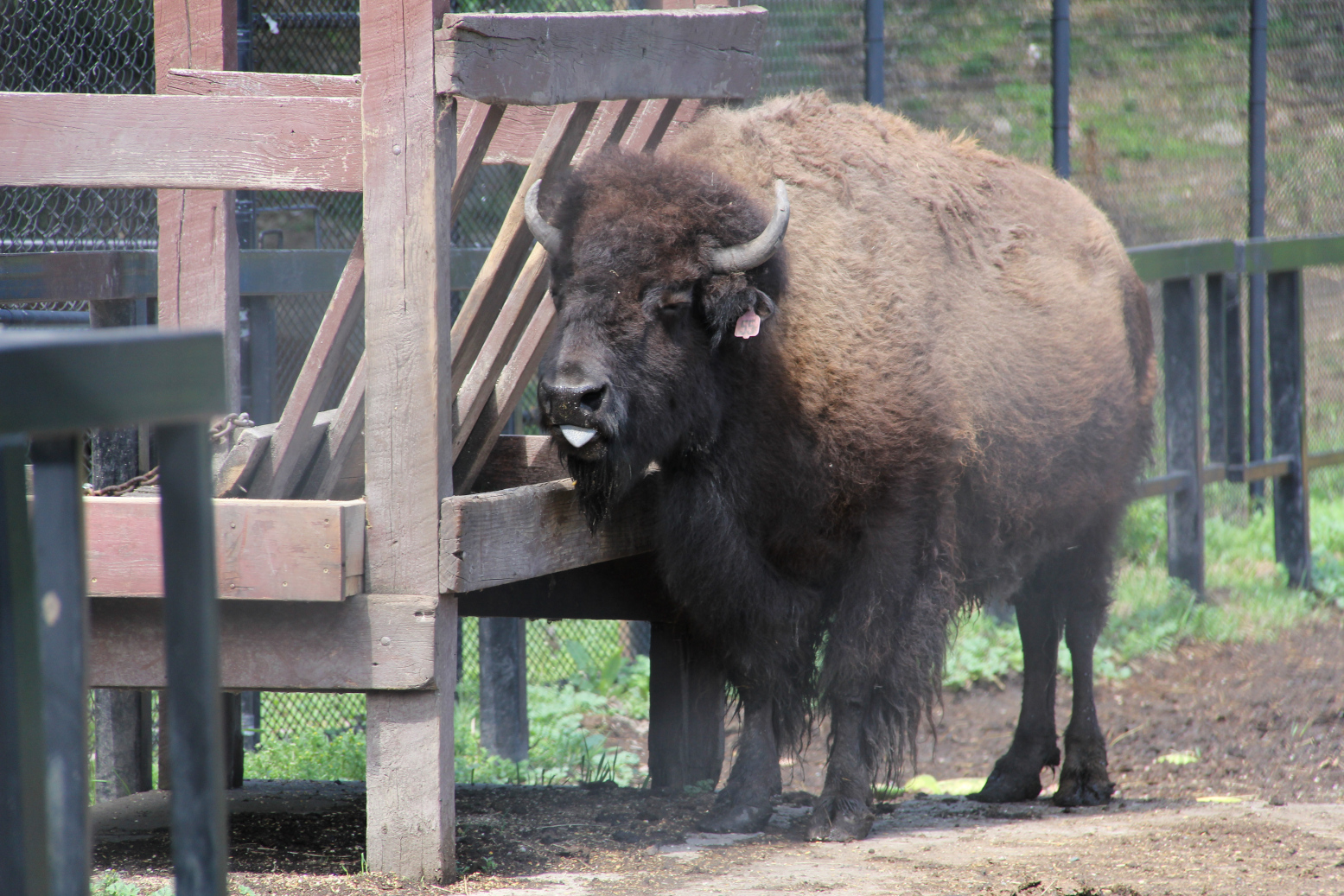
Close up with a buffalo in the Ramsey Park Zoo. (Minnesota Prairie Roots copyrighted photo May 2026)

Ramsey/Cansa’yapi Park lies 110 miles to the north and west of my current home in Faribault. Decades removed from Redwood County, I still feel connected to this oasis in the prairie where the water falls and they paint the trees red.

© Copyright 2026 Audrey Kletscher Helbling


Escape to the tropics in Minnesota at Como November 15, 2018

Filed under: Uncategorized — Audrey Kletscher Helbling @ 5:00 AM
Tags: , , , , , , , , ,

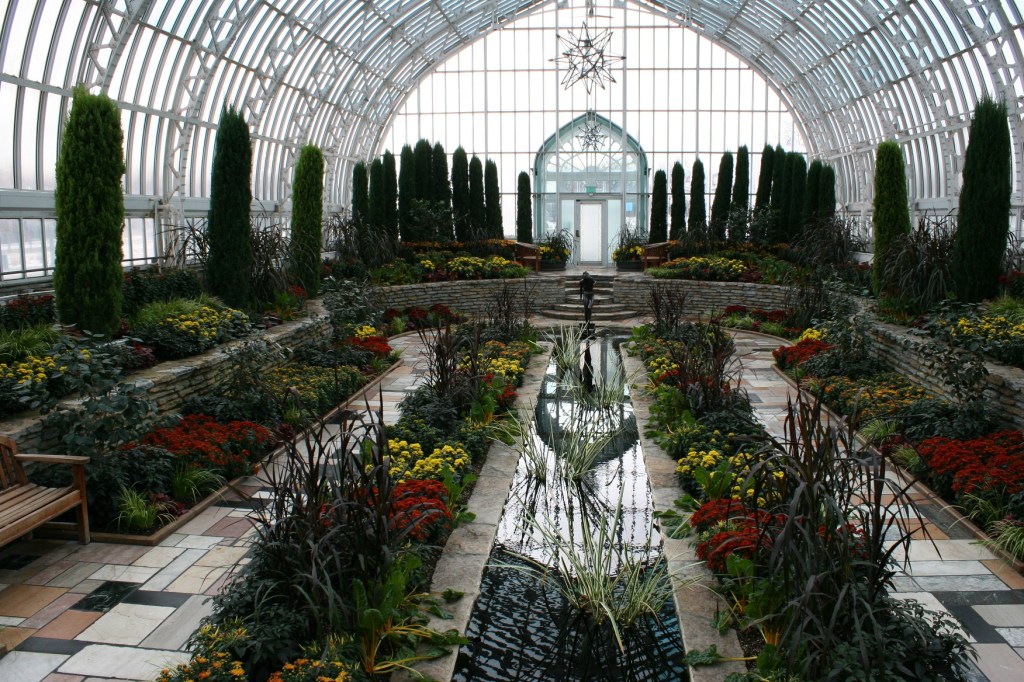
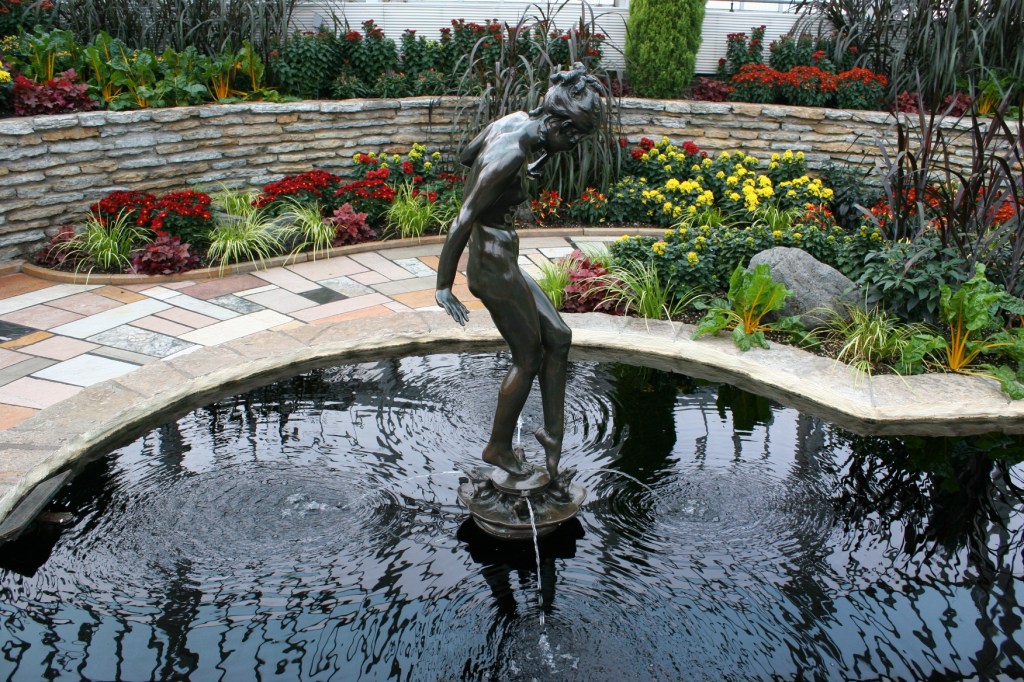
The Sunken Garden at the Como Park Conservatory.


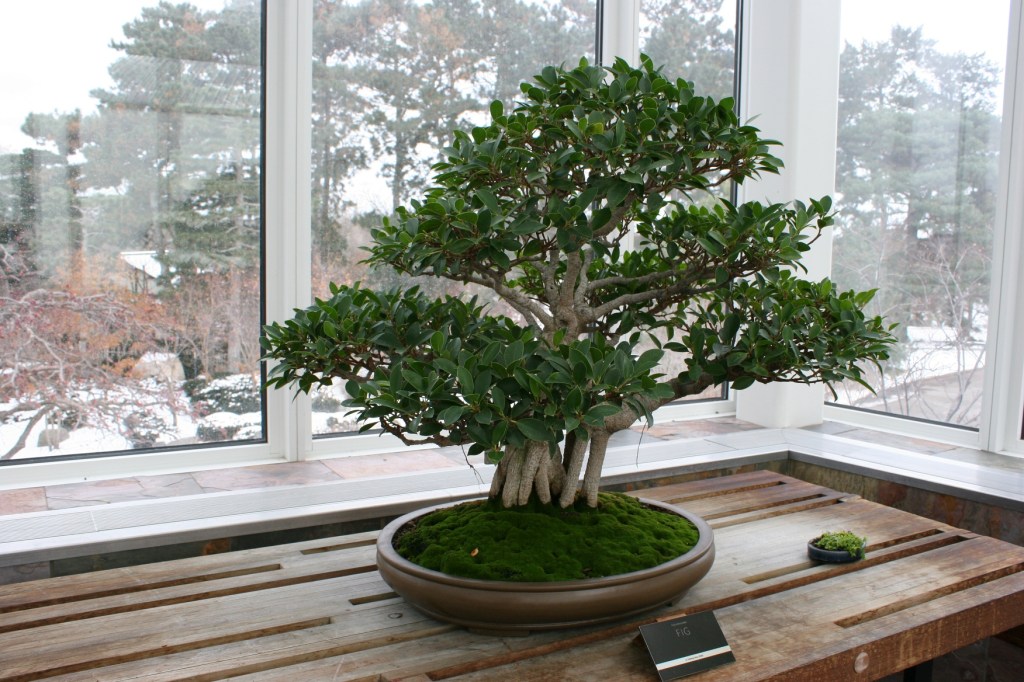
WHETHER HE SOUGHT A RESPITE from single digit temps or whether he wanted to see the bonsai trees, I’m not sure. But the son wanted to visit Como Park Conservatory before his return flight from Minnesota to Boston on Monday.


A section of the conservatory features bonsai trees.


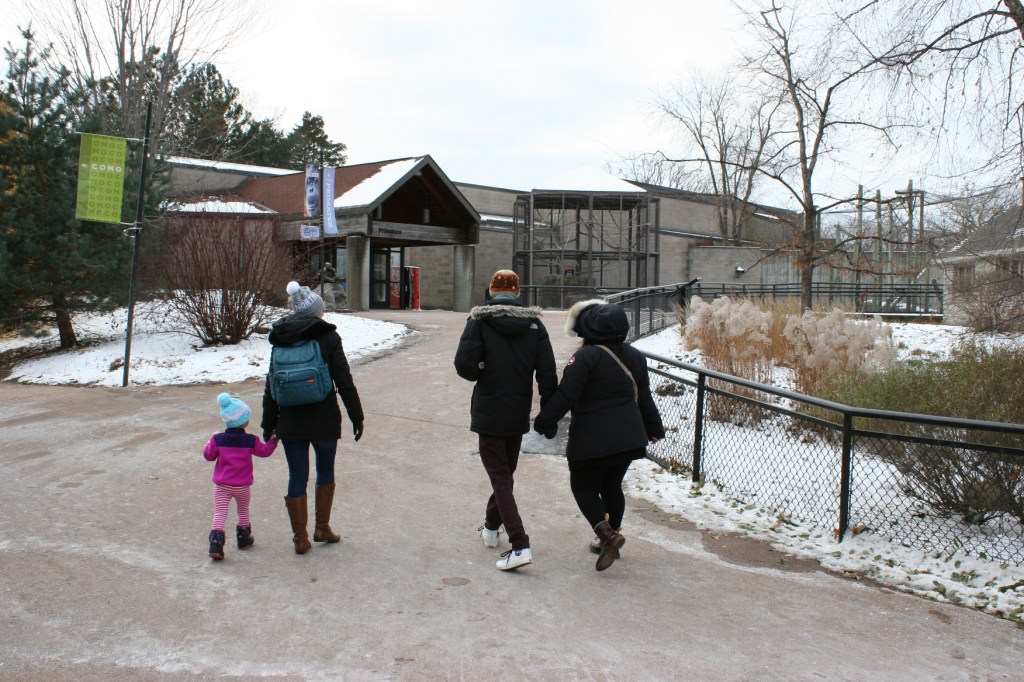
So after an early lunch, we loaded his luggage and that of his girlfriend into our van and headed north an hour to the Twin Cities metro. Our oldest daughter and granddaughter joined us at this St. Paul site they frequent. Izzy’s comfortable familiarity showed as her two year old legs ran more than walked. On a slow day at Como, no danger existed of separation from the five adults.


I could take photos at my leisure without worry of stalling foot traffic winding through lush greenery inside the balmy conservatory. It was a luxury not to feel hurried or pressed by crowds at Como, which ranked as the third top tourist attraction in Minnesota in 2017 with 5.3 million visitors.


Heading to the animal exhibits.


And it was a luxury to escape temporarily from the cold and snow of Minnesota. With temps dipping to six degrees overnight, winter has arrived way too early. We have a brief respite this week with the temp pushing back up to 40 degrees during the day.


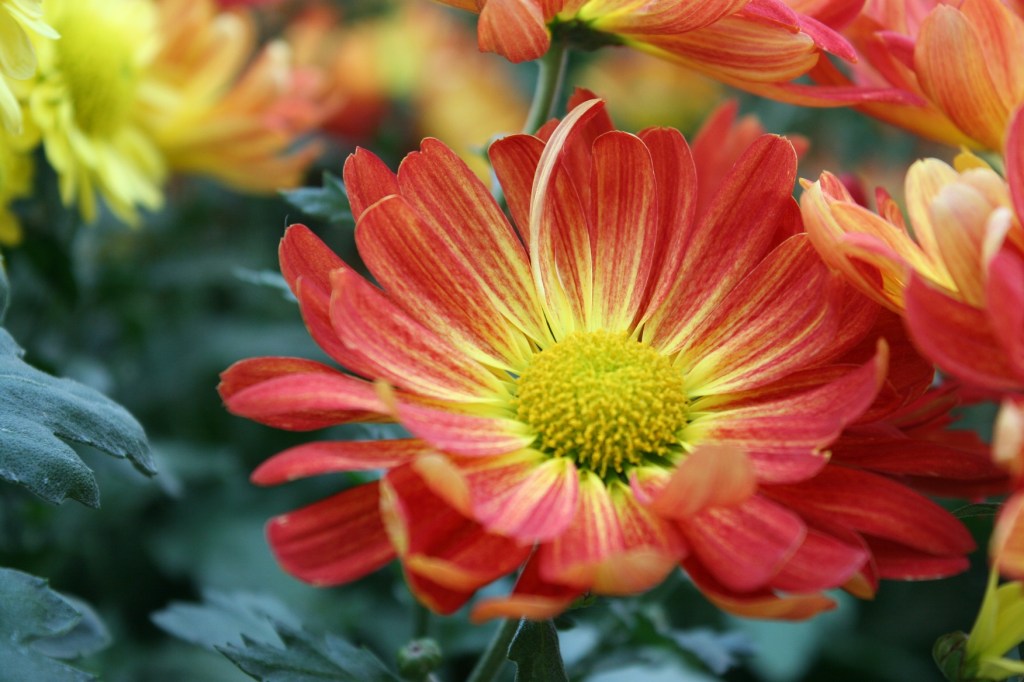
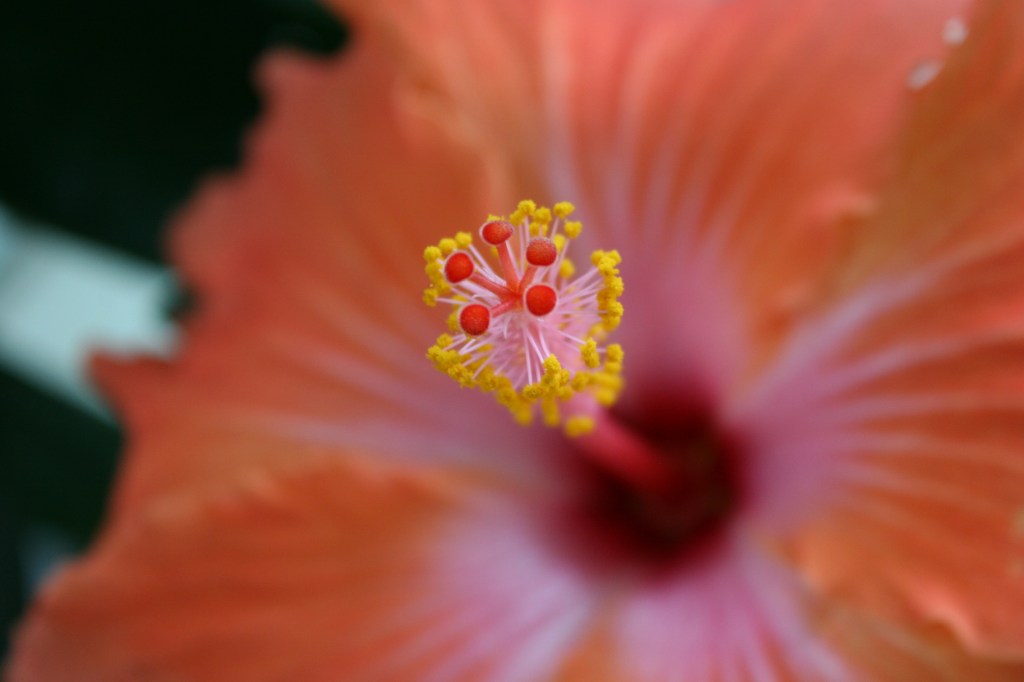
A close-up of a mum inside the Sunken Garden where flowers are changed out seasonally.


Yes, we dwell on the weather here in Minnesota. My son claims everywhere. He’s probably right. Conversations too often begin with weather. If they stick on that topic, then I’m concerned.


While inside the conservatory, I pulled off my winter garb and focused instead on the florals,


the greenery,


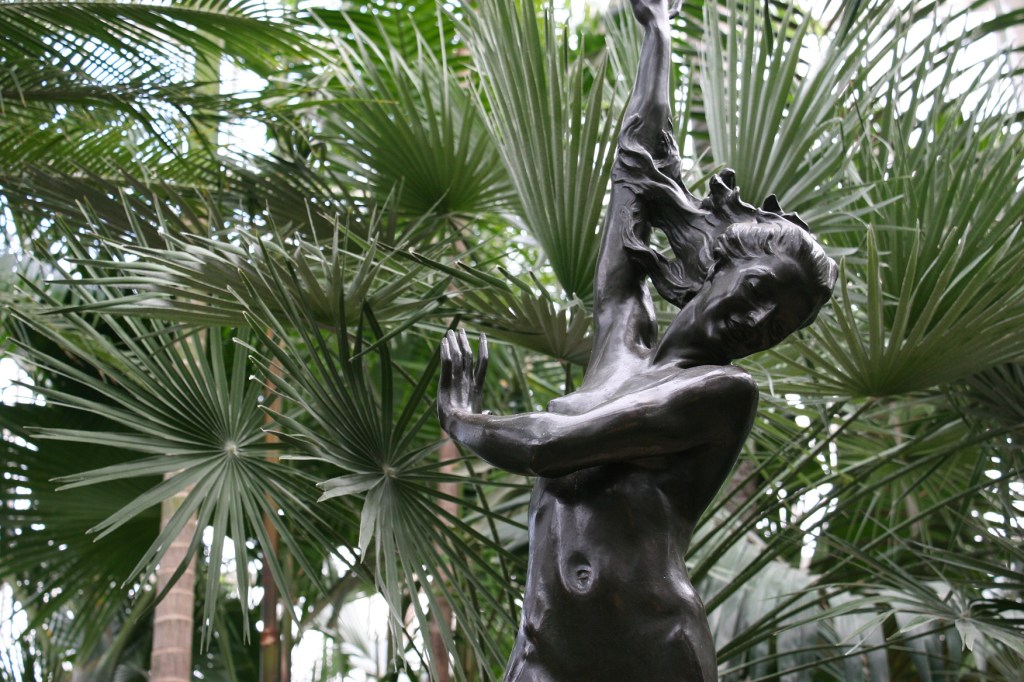
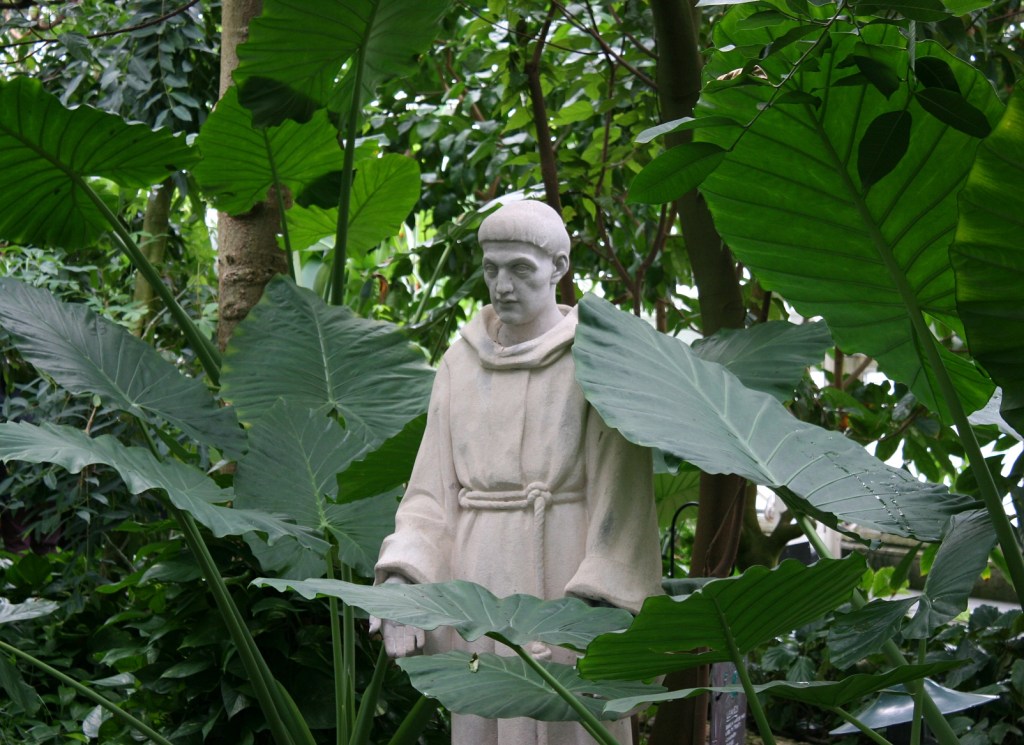
the art, the water.


Anything but the weather.


Lovely orchids.


These tropics offer an ideal escape if you can’t afford a real escape to warmth or the tropics.


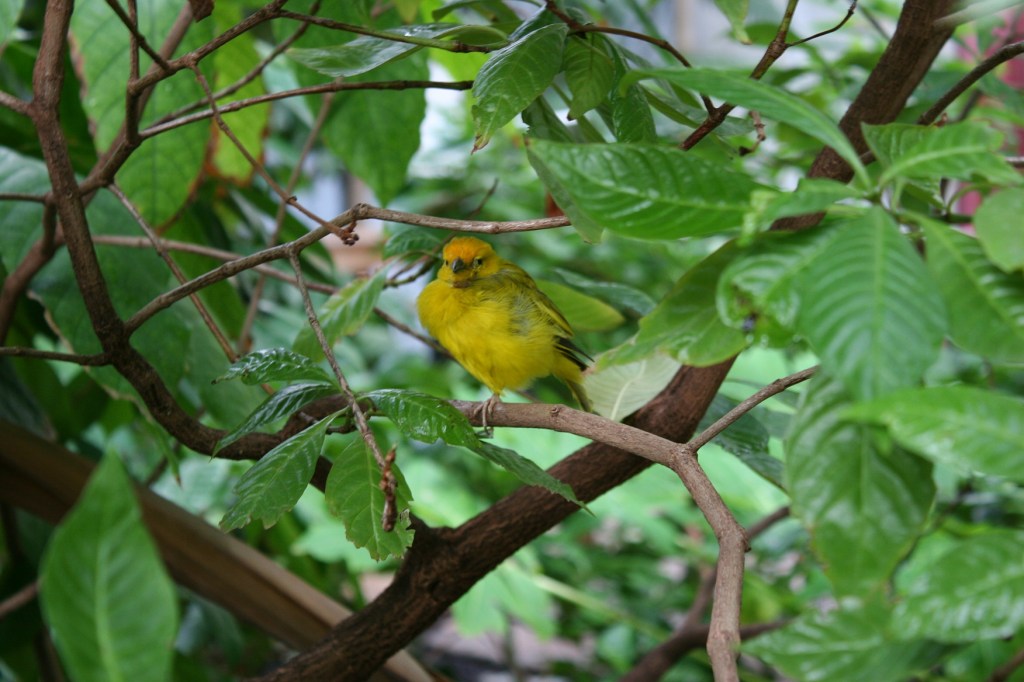
As I photographed this bird, I was cognizant of the possibility of mice.


When the daughter warned me about mice inside one section of the conservatory, I hurried. I wish she hadn’t told me about the varmints I detest. “I didn’t want you to scream if you saw a mouse,” she explained. Alright then, that makes sense.


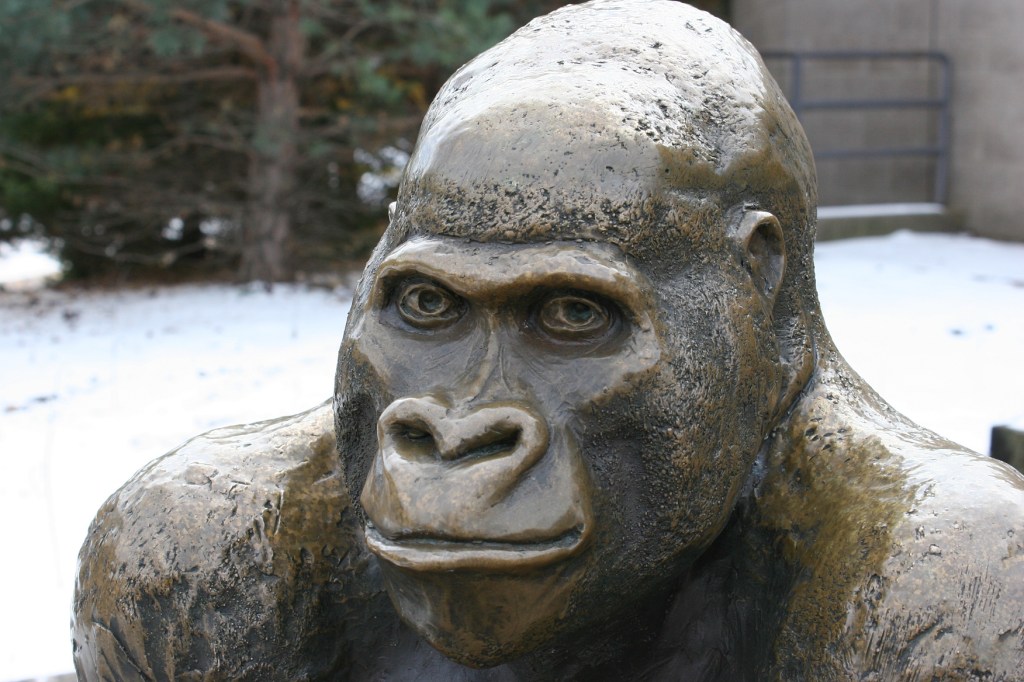
Art outside the primates building set against a backdrop of snow.


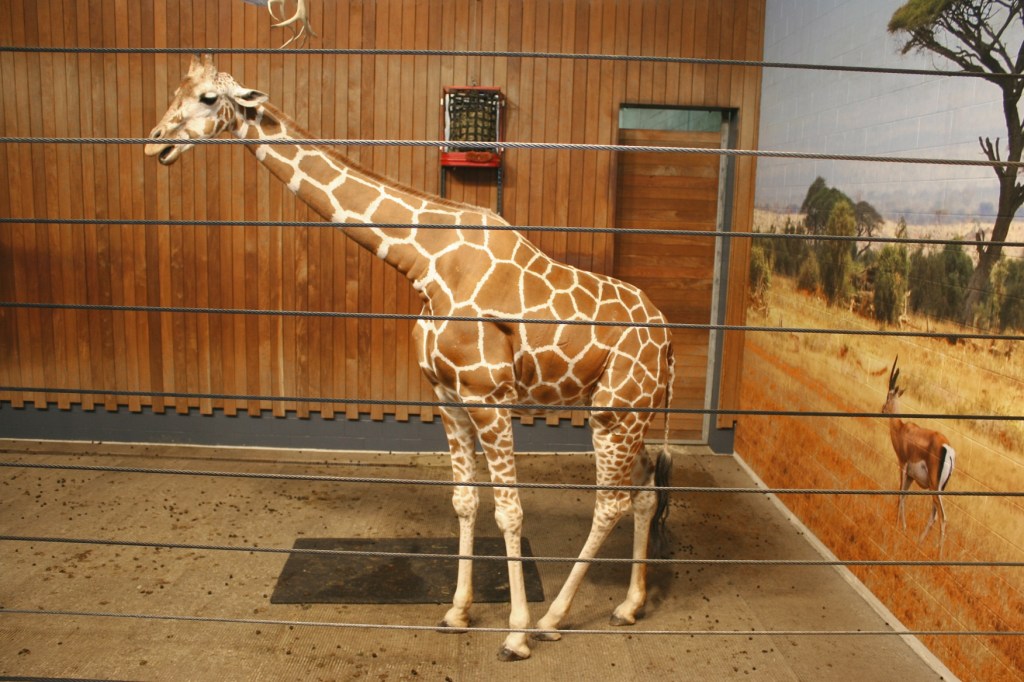
And later, when I commented on the stench of manure in the Como Zoo primate and giraffe buildings, she said, “You grew up on a farm.” Yes, I did. A dairy farm. But, in my memory, cows don’t stink.


Cold temps and construction shortened our time at the zoo. And that was OK by me. I could see the son wasn’t thrilled with viewing caged critters. I, too, felt a certain sadness for these animals. Izzy kept telling us she didn’t like the monkeys, then stood watching them. Next week she might love monkeys. I admired the mama gorilla who turned her back on me when I stepped up to the viewing window.


Soon enough, we exited the zoo and conservatory complex, bending into the frigid wind on our way to the parking lot. For a short time we’d escaped winter. And now, as warmer temps ease into Minnesota for several days, the cold air moves east, toward Boston.

© Copyright 2018 Audrey Kletscher Helbling


My favorite small scale Minnesota zoo June 23, 2016

Filed under: Uncategorized — Audrey Kletscher Helbling @ 5:00 AM
Tags: , , , , , , , , , ,

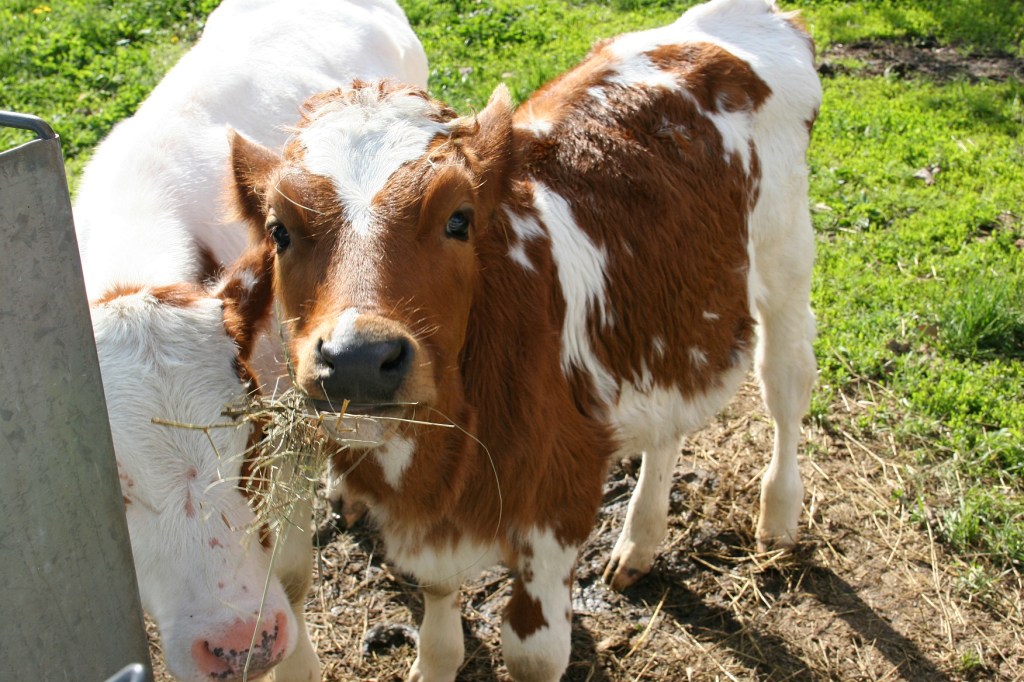
I grew up on a dairy farmer, thus was excited to see these calves.

I grew up on a dairy farm and am always excited to see calves.

WITH SUMMER OFFICIALLY on the calendar, it’s the perfect time to take the kids or grandkids to the zoo. For many Minnesotans, that most likely would be the Minnesota Zoo or Como Park Zoo.

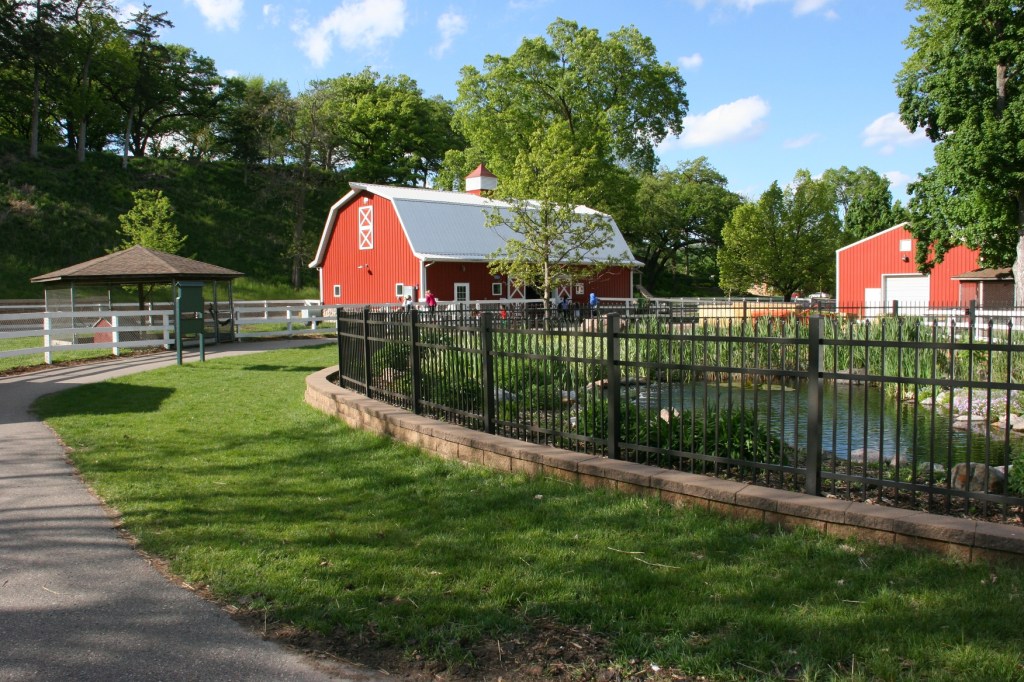
Just a small section of the Farm, which includes two barns.

Just a small section of the Farm, which includes two barns and a shelter available for rent, right.

But I’ve discovered a much smaller rural-themed zoo in Greater Minnesota that impresses me. And, bonus, no metro traffic or pressing crowds. Welcome to Sibley Farm at Sibley Park in Mankato. I’ve posted previously about this southern Minnesota zoo. But now seems a good time to showcase it again during peak season.

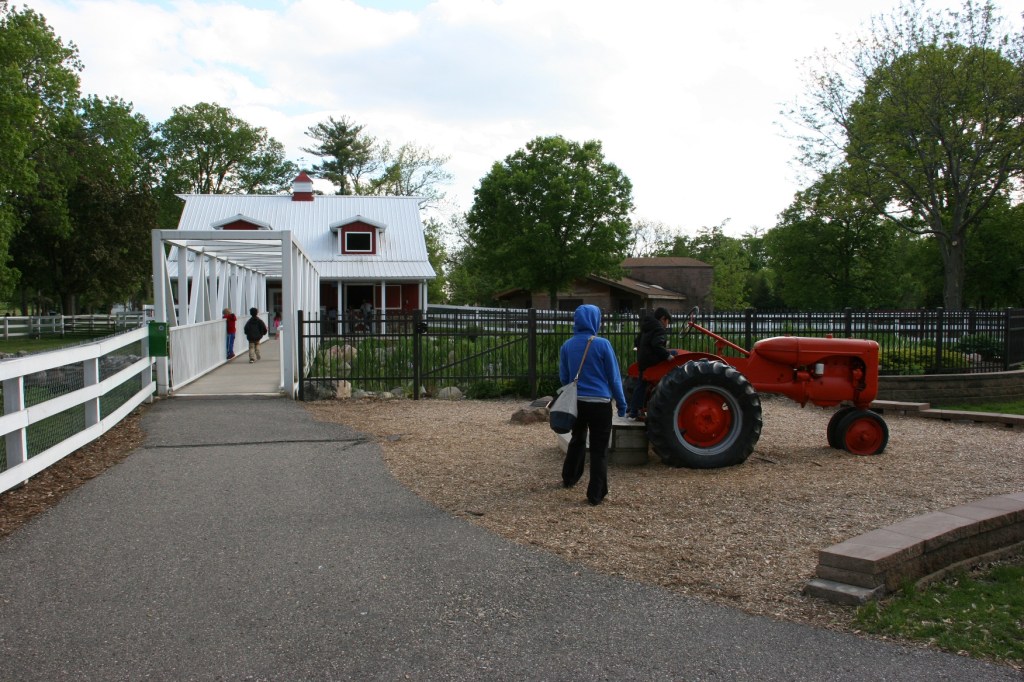
Kids can climb aboard this tractor and another on the adjoining playground.

Kids can climb aboard this tractor and another on the adjoining agriculturally-themed playground.

I last visited Sibley Farm on a cold and windy day in mid-May with minimal time to explore. Even with less than ideal weather, families were there enjoying the baby and other farm animals and the farm-themed playground.

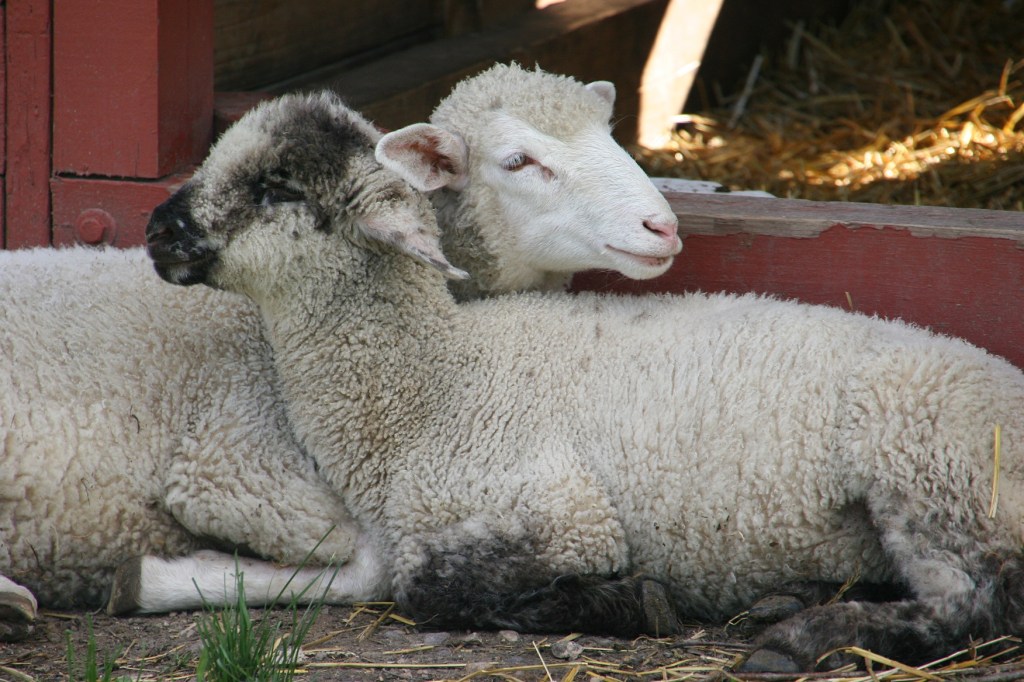
The sheep were snuggling on the spring day I visited Sibley Farm.

The sheep were snuggling on the spring day I visited Sibley Farm.

It is the full-on rural aspect of this zoo which most appeals to me. Most families are so far removed from farm life today that they need this indirect exposure. Even kids who live in the country. Even those who live in Mankato, right in the heart of Minnesota farm land.

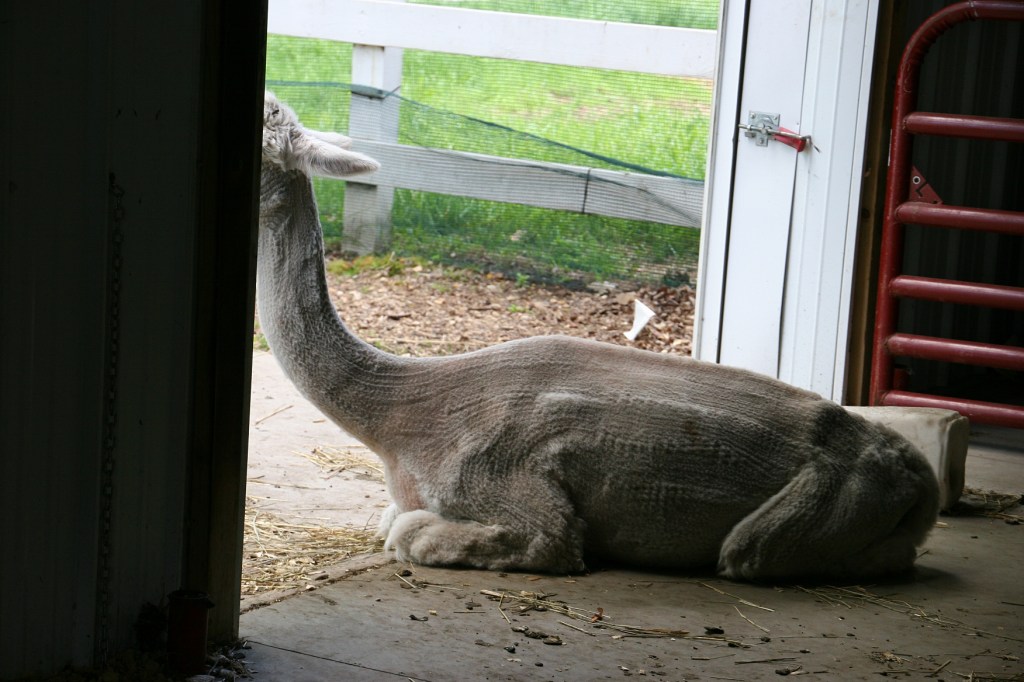
A shorn alpaca.

A shorn alpaca.

Sibley Farm provides a place to connect with and learn about farm life. It also preserves Minnesota’s rural heritage. That’s important. My own three grown kids are only a generation removed from the farm. Yet, their knowledge of farming is limited. It’s important to me that they recognize and value the rural heritage that shaped the Kletscher and Helbling families. I expect many farm-raised parents and grandparents feel the same. Sibley Farm is a great place to learn about farming in a fun and interactive way.

Sibley Farm includes a water feature complete with goldfish.

Sibley Farm includes a water feature complete with goldfish.

Tell me, what’s your favorite zoo and why?

FYI: Sibley Farm is located at 900 Mound Avenue, Mankato, within Sibley Park and is open from 6:30 a.m. – 10:30 p.m. daily mid-spring through early fall. Admission is free.

Besides the farm, Sibley Park offers softball fields, tennis courts, walking trails, lovely gardens, fishing, a winter sliding hill, poetry and more.

Click here to read my previous post about Sibley Farm. And click here to read a story about Sibley Park.

© Copyright 2016 Audrey Kletscher Helbling
 

A roadside oddity: the Kasota Zoo October 26, 2010

Filed under: Uncategorized — Audrey Kletscher Helbling @ 7:37 AM
Tags: , , , , , , , ,

WHEN I WAS A CHILD, I loved the story about The Three Billy Goats Gruff. Do you remember that tale of the three goats planning to cross a bridge, but first encountering a hungry troll?

The goats, beginning with the smallest, tricked the troll into waiting for the next, and bigger, goat. The third, and largest, goat was so big that he easily tossed the troll into oblivion and safely crossed the bridge.

I’m not sure why I enjoyed that tale so much. Maybe because I owned that storybook and my mom read and reread the words until I had them memorized. Or maybe I just appreciated that three goats could outsmart a mean old troll.

Anyway, because of that childhood literary introduction to goats, I’ve always rather enjoyed these mischievous animals. I find them humorous and cute and naughty all at the same time.

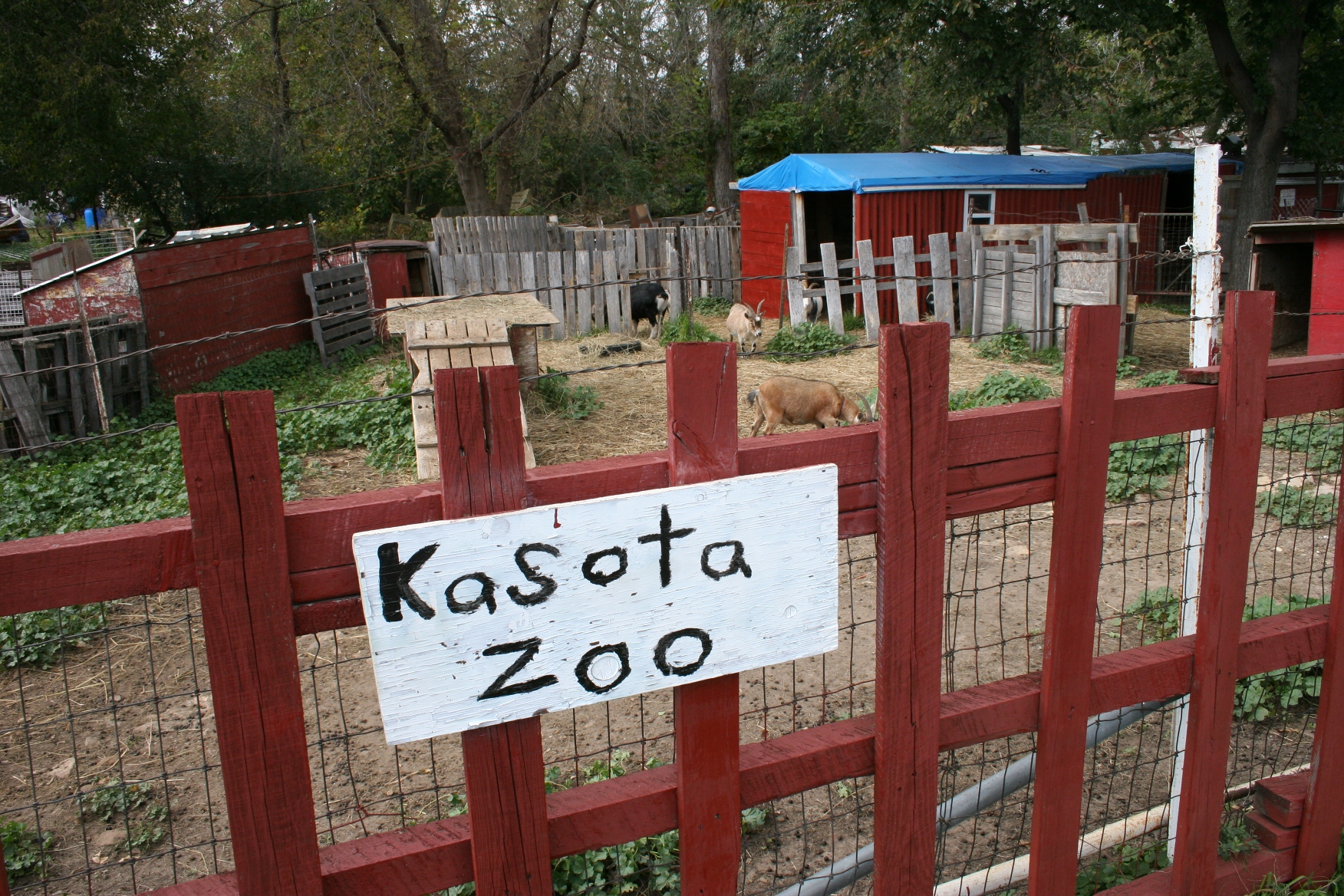
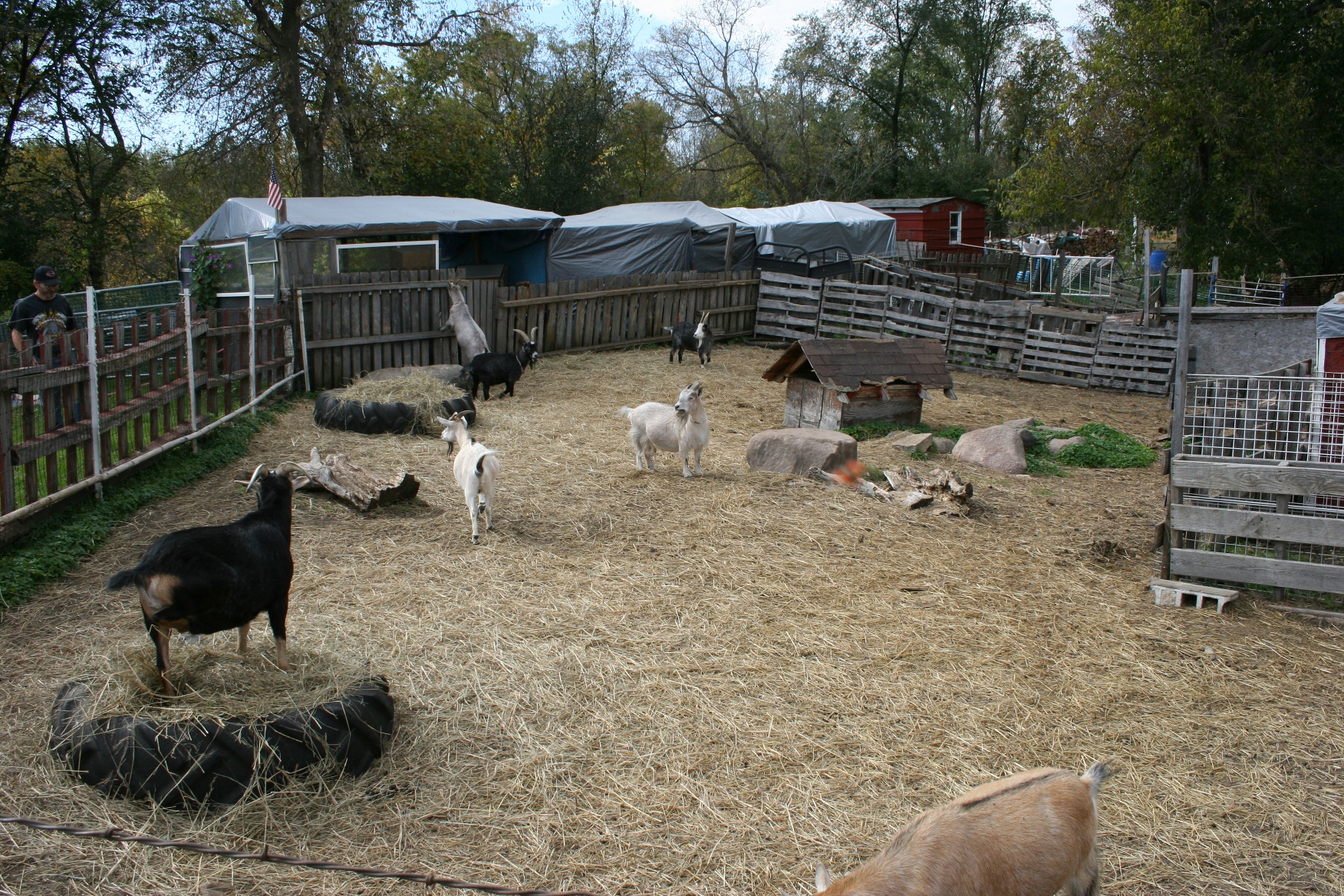
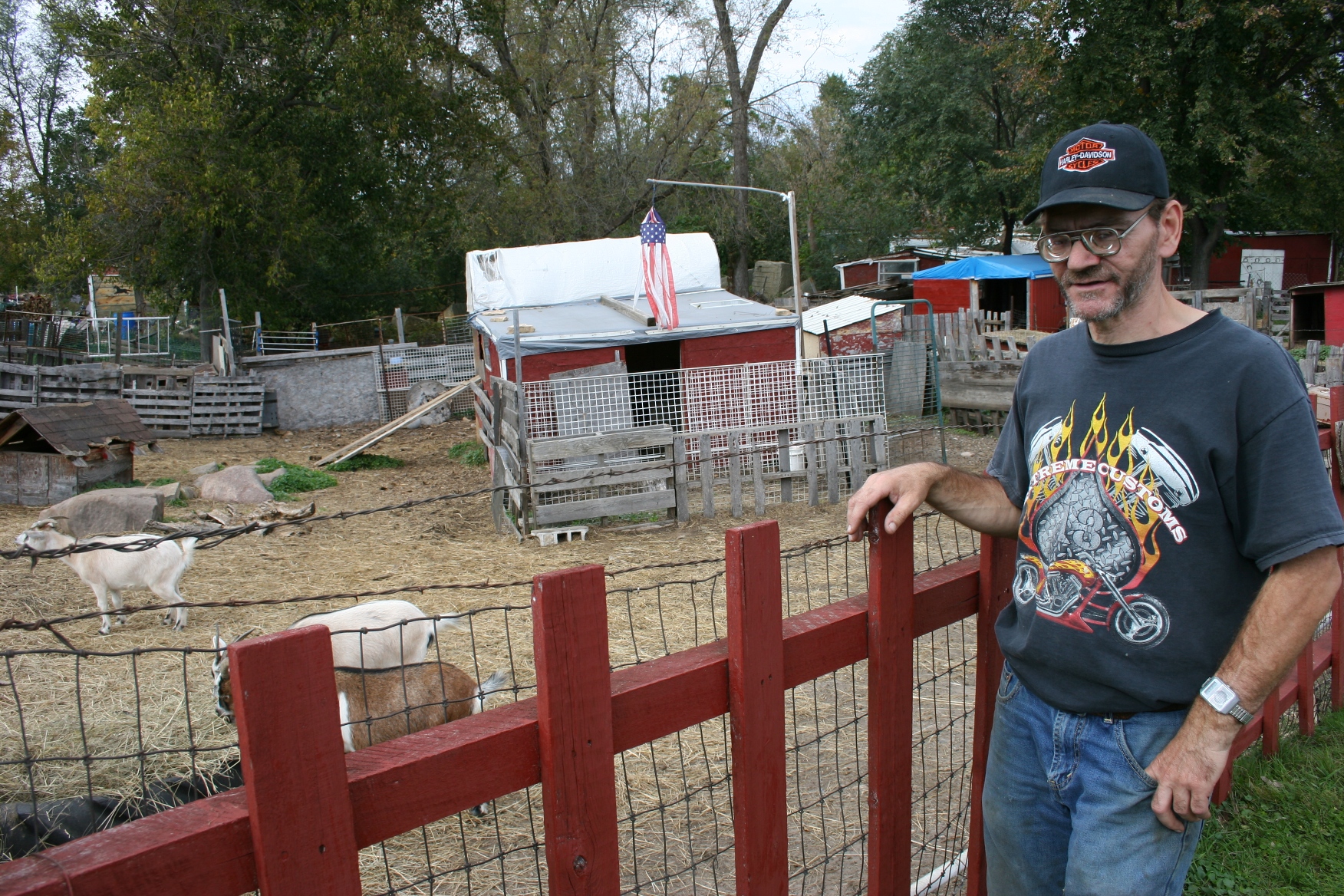
So, when I saw a bunch of goats fenced in at the Kasota Zoo several weeks ago, I had to investigate. Believe me, this is unlike any zoo you’ve ever seen. Propped pallets and a hodge podge of fences corral the 32 pygmy goats at this roadside oddity on the southern edge of Kasota.


The Kasota Zoo, home to 32 pygmy goats.


The goats have plenty of space to roam at the Kasota Zoo.


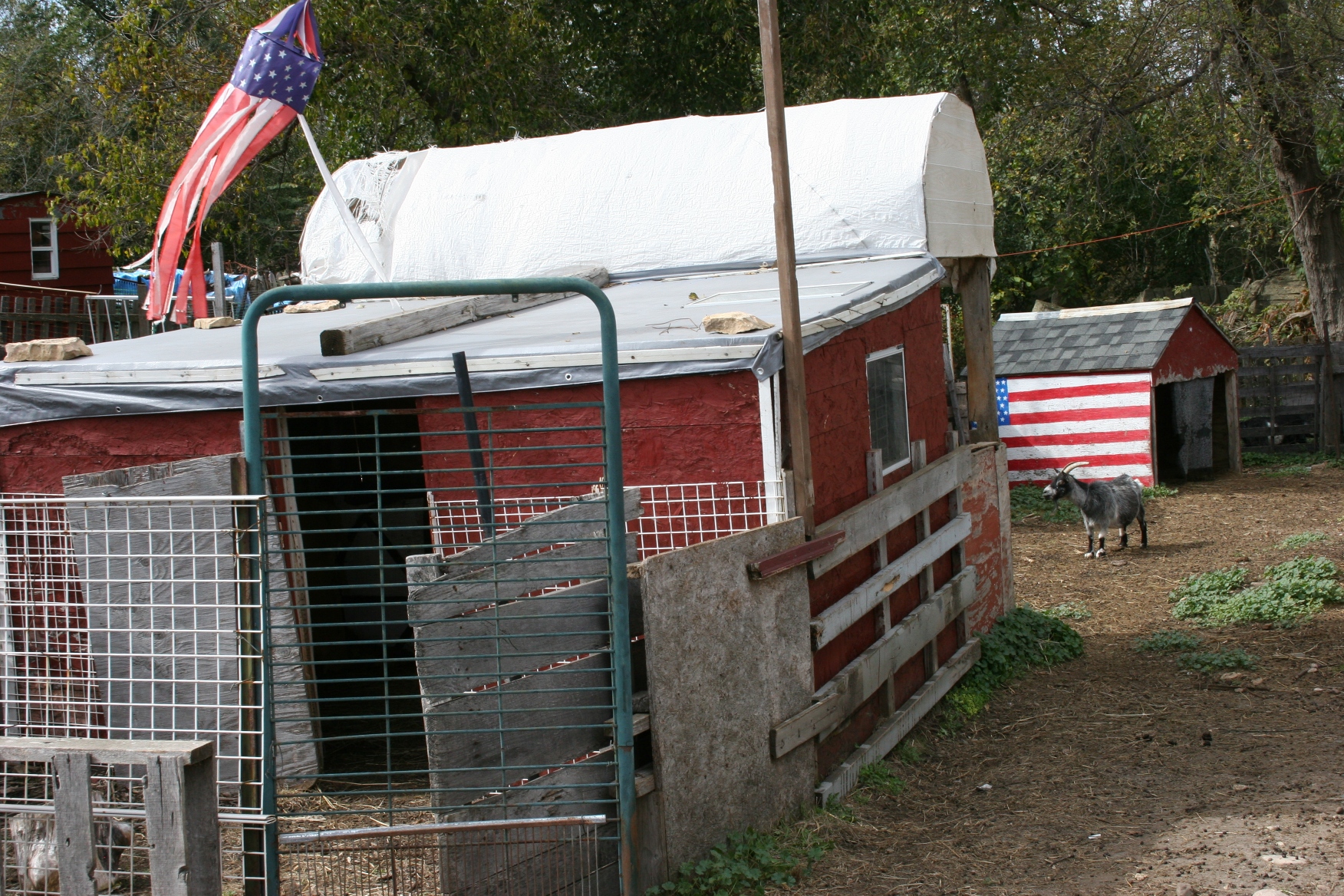
Toss in rocks and old tires, a bunch of shacks (some covered with tarps) and a few American flags and you have, by far, the strangest, weirdest, oddest, most unusual zoo I have ever visited.


American flag decor adds a patriotic flair to this down-home zoo.


I really question whether this even qualifies as a zoo given I paid no admission and saw no pathways that would take me beyond standing next to the fence watching the goats.

That’s when zookeeper Eugene joined me. I have no idea where he appeared from, but, all of a sudden, there he was. His co-zookeeper, girlfriend Patty, was hunkered down in a lawn chair on the zoo driveway.

I didn’t learn too much from Eugene. He’s not the most talkative fellow. But you can tell he genuinely cares for these goats, which are rotund enough to have eaten a troll or two. His zoo has been here 30-plus years, he says.

He grew up with goats; his dad had milk goats.

But Eugene and Patty raise and care for pygmy goats, which they’ll sell to anyone who wants one.

“Do you have names for all of them?” I ask Eugene.

“That one’s Number 8,” he says, pointing, while I struggle to keep from laughing that a goat would be named Number 8.

But then he picks out Spot and Chucky. That’s more like it, I think—name-names for these inquisitive creatures that have scooted up to the fence to see me.


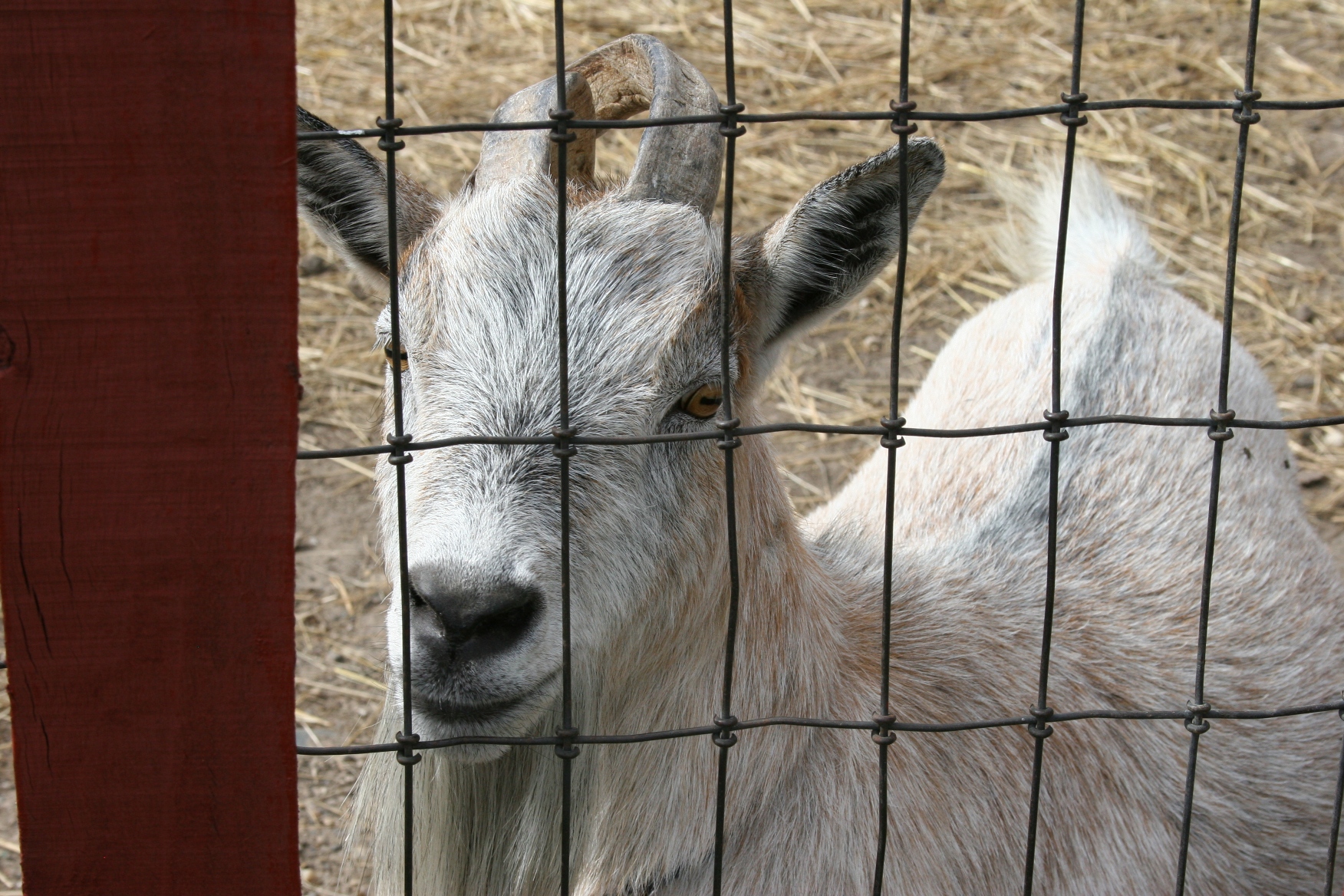
Eugene and Patty have named all their goats, although I can't tell you the name of this one.


I don’t spend much more time at the Kasota Zoo, just enough for Eugene to tell me that he has a visual impairment and that Patty is legally blind.


Eugene, the zookeeper at the Kasota Zoo, wears thick glasses, but still struggles to see.


I don’t mention a word about trolls to these zookeepers. Not a single word.

© Copyright 2010 Audrey Kletscher Helbling