
I WISH MY MEMORIES of the old feed mill were imprinted upon the pages of a book. Indelible ink. Words recorded so that I would always remember. The smell. The sound. The sights. The everything encompassing this agricultural business in my southwestern Minnesota prairie town.
I recall so little—the wooden steps leading to the feed mill; the ground feed residue lingering in the air and on surfaces; the ever-deafening grinding noise of machinery chomping grain; handsome operator Wally Anderson with his shock of white hair who lived in a well-kept corner house several blocks north; and the summer a ventriloquist sat in front of Vesta’s feed mill with a dummy perched on his knee.

The Morristown Feed Mill in Morristown, Minnesota.
Those faint wisps of recollection filtered through my thoughts on Saturday as I meandered through an historic 1860 grist mill along the banks of the Cannon River in Morristown. Once a year this rural southeastern Minnesota community opens the mill for tours and grinds wheat and corn.

A replica waterwheel built in 1997 by Theodore E. Sawle.
I won’t even pretend to understand all I viewed and photographed at this mill once powered by a waterwheel, later by electricity.
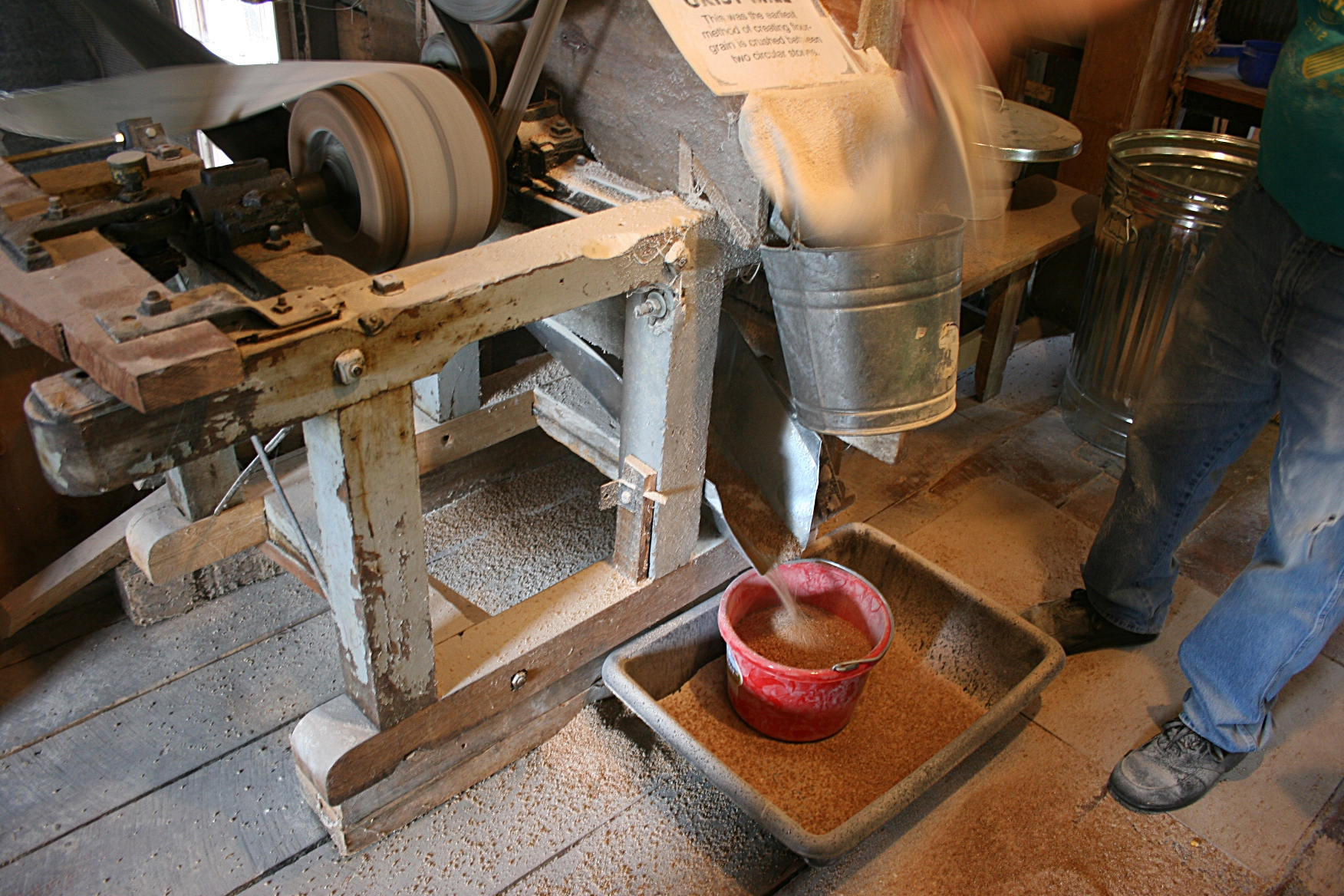
A volunteer grinds wheat into flour in the old grist mill. Each time the waterwheel turns, it spins the millstone 17.5 times in the process of crushing grain between stones. The volunteer’s wife bakes Communion bread for the local Methodist church.
Initially, the mill opened in 1855 as a sawmill. But, within years, the business was replaced by Hershey Grist Mill, a mill for grinding grain into flour and livestock feed. On the afternoon I toured, a volunteer was grinding wheat into flour with the waterwheel powering the grinder. I had intended to buy a bag of the $2 wheat flour, but forgot in the midst of my photographic focus.
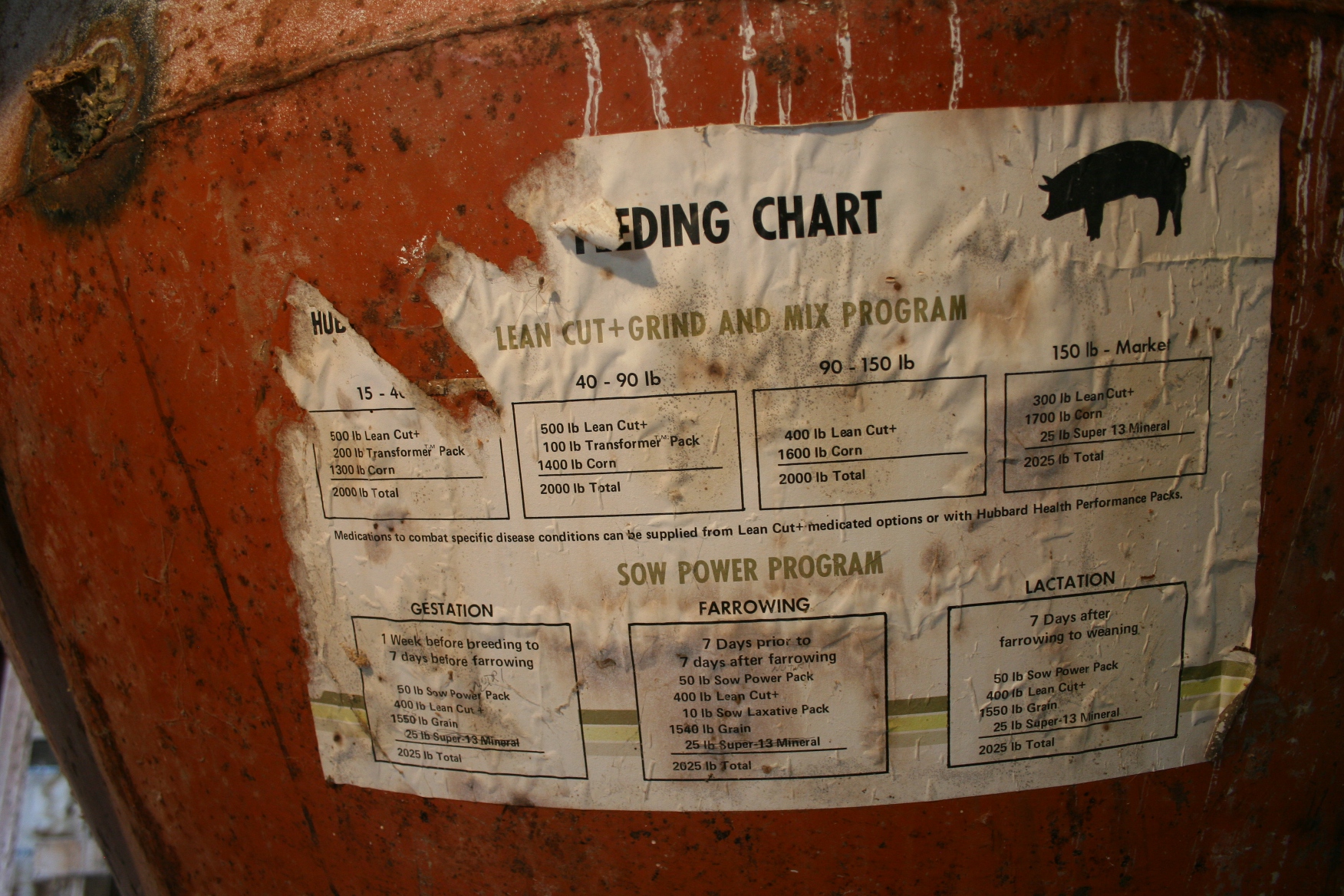
Guidelines for pig feed posted on a mixer.
The Morristown Historical Society today cares for the facility which closed in the 1970s as the Morristown Feed Mill, purveyor of livestock feed. For those like me, who grew up on a farm but have long ago left the land, such endeavors to preserve the rural past are deeply appreciated.

The waterwheel turns these pulleys and belts which operate the grinder.
While I walked the old wooden floor of the feed mill, descended stairs into the cluttered utility room where a dangerous conveyor belt cycled and afterward climbed stairs to the second floor, I reconnected with my rural roots.
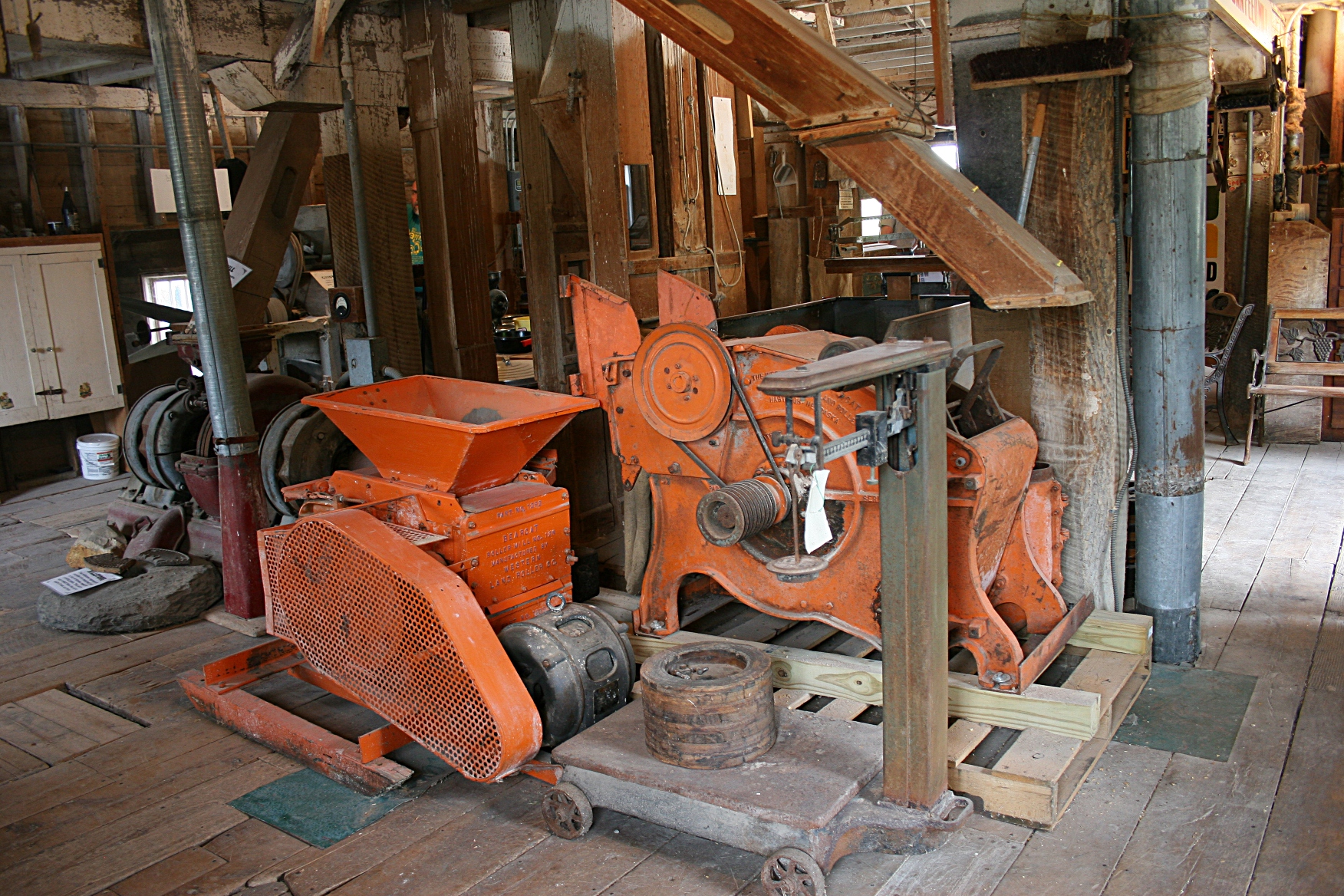
The old feed mill is stocked with lots of vintage mill equipment.
And it may not have been in the way you most likely would expect. For me, the experience was mostly about the dust—knowing I needed to protect my camera from the fine grain dust which permeates a place like this, layers on the skin, hovers in the air, filters into memories.
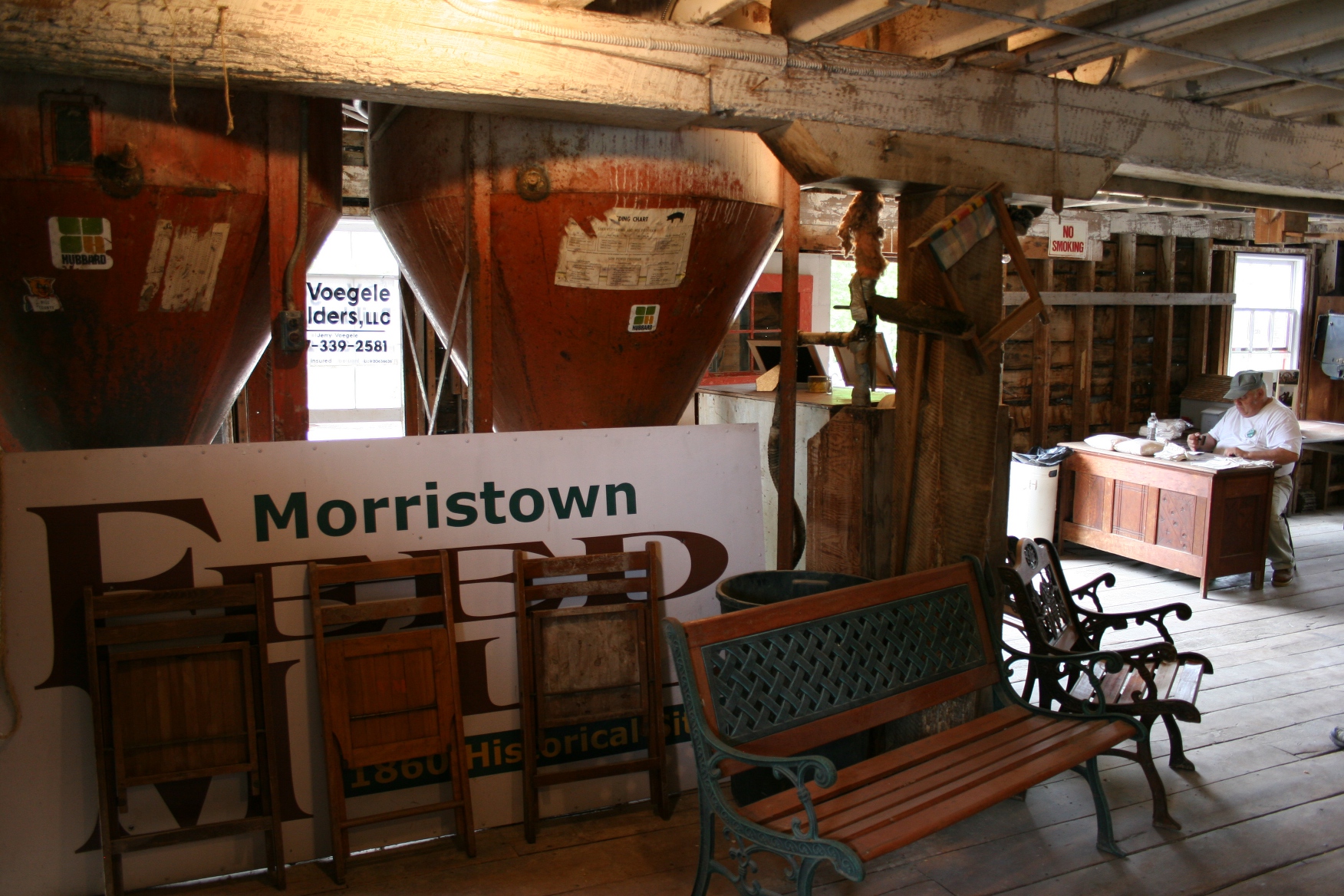
Inside the feed mill, a volunteer stamps cloth bags with Morristown Feed Mill. Behind the sign are two mixers.
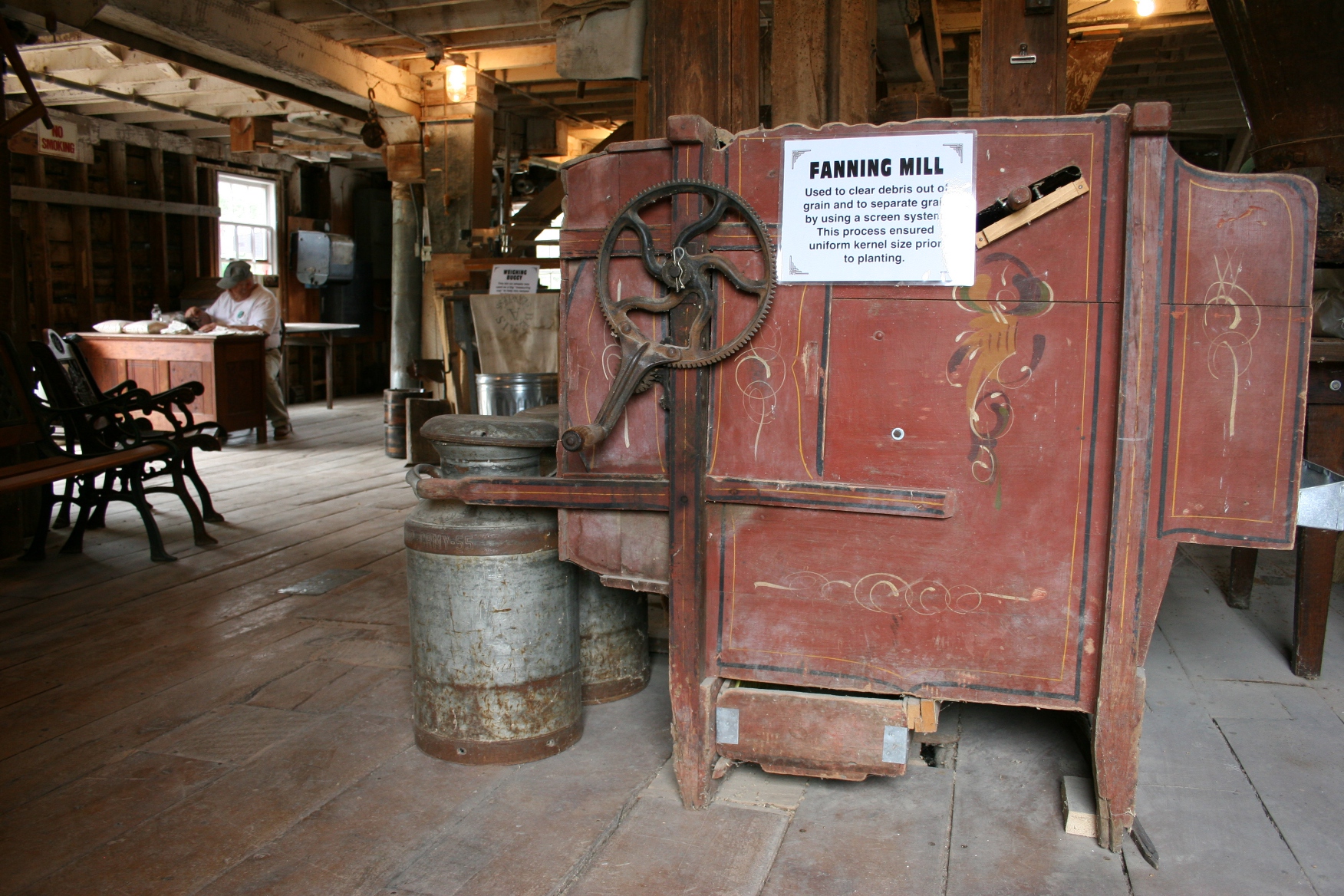
An old fanning mill cleans the grain for planting.

When I heard mention of mice, I was a little nervous about going into the utility room.
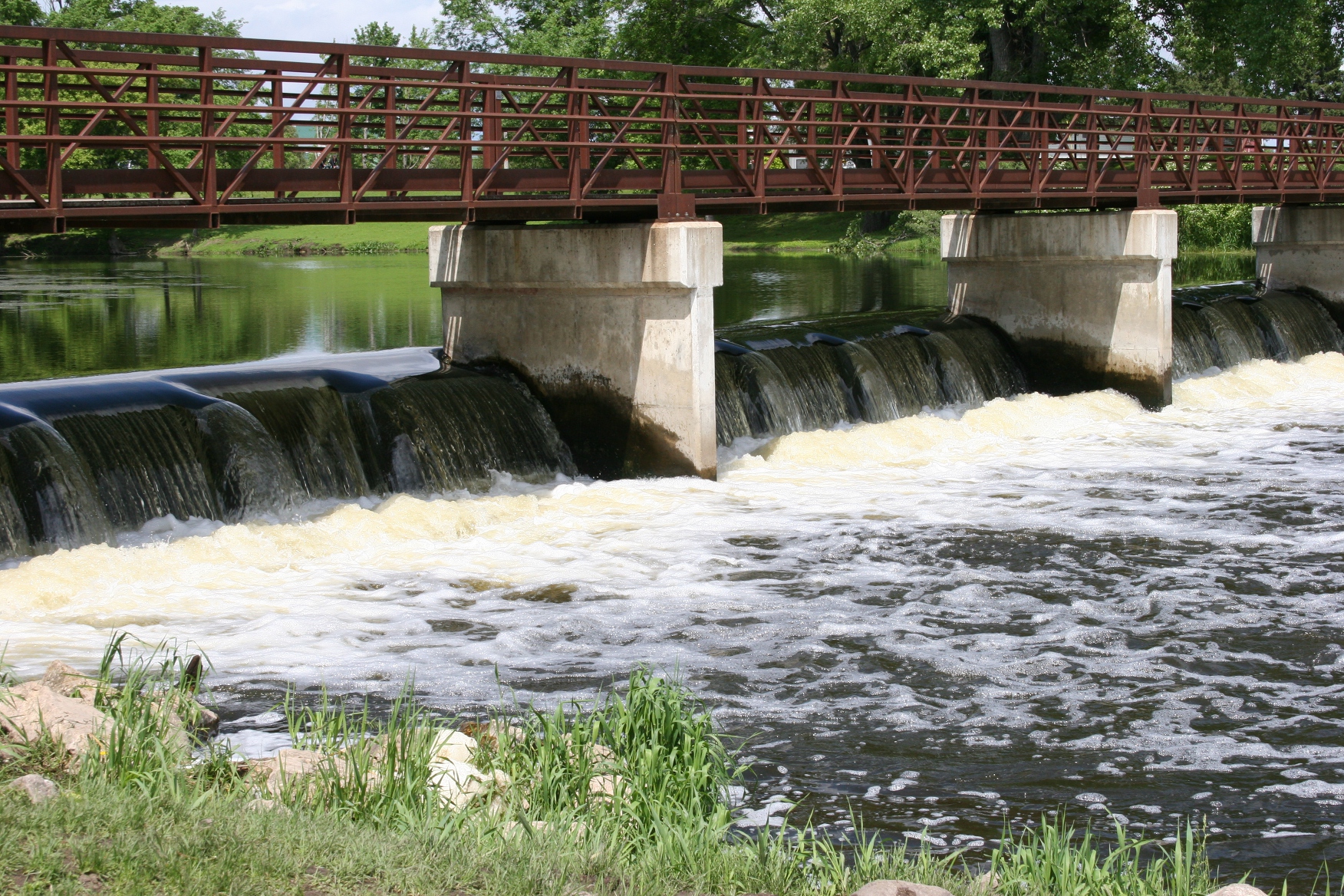
The Cannon River dam right next to the mill.
FYI: As a side note, the mill sheltered several refugees from the U.S. – Dakota Conflict of 1862. Check back for more mill photos.
© Copyright 2013 Audrey Kletscher Helbling


 Minnesota Prairie Roots
Chris and I love to go look at old mills. There is one in Greenville, OH where we lived for 4 years called Bear’s Mill http://bearsmill.com) that we loved to go to. A couple years ago when we were back living in Ohio for 7 months we took a trip back to see it and I took tons of pictures, too! Great history in these old places. Thanks for the tour.
This was my first tour of a water-powered mill. If I hadn’t been quite so worried about the dust and my camera, I likely would have enjoyed my visit more. Still, I meandered inside for quite some time, occasionally tucking my camera under my sweater.
You are ever the protective “mother” be it children or cameras!
Never thought of it from the perspective. But true. I need to take my camera in for a cleaning again. But that means giving it up for a week, and that is tough for me.
There is a grist mill still in operation in a little settlement not far from Houston…Sheldon. Scheck’s Mill originated (along with a saw mill) in the mid/late 1800’s. Mr. Ed Krugmire still opens it on occasion/by tele. arrangements. It is so interesting and the dust/wood smells are intoxicating! Your post allowed me to enter in to a long-ago era. Thank you! Hugs…..
Sounds like another place to add to my list of need-to-see.
Anytime your list grows short let me know (ROFL!) I have a ton of interesting spots!!!! Been to the “Mustard Museum”???
No danger of the list growing short. But please share ideas whenever you wish.
Are you referencing the Mustard Museum in Mount Horeb, Wisconsin? If so, I have not been there. But a dear college friend and her husband live in Mt. Horeb and I would love to visit her. It’s been decades since I’ve seen Marcia.
Before you “take off”, I believe they have moved the museum location from Mt Horeb (have forgotten the reason but I’m sure the town was not happy!). Fun, fun, fun place!!!! And I was totally teasing about your list!!!!!
Oh, I know, Doreen. Totally do appreciate any suggestions you have on great places to visit.
I didn’t know the mustard museum had moved. Thanks for that tip.
Scheck’s Mill is great. You will love it. Don’t worry about the dust too much. Go outside if you need to change lenses though.
If only I had additional lenses. But thank you for the advice not to worry about the dust too much. And the second on Sheck’s Mill.
http://outdoorguyphotography.com/2012/06/27/schechs-mill-established-1876/
Thanks for the link. Just checked out your outstanding mill photos. No wonder you recommend this place.
What a Great Experience – love your captures, especially of the process and the Cannon River! Happy Tuesday:)
Thanks, Renee.
As always, wonderful photos. Have you been to the Mill City Museum in Minneapolis? I took my colleague from Every Day Poets there when she and her husband visited us last September.
I love what you said about the way the dust filters into memories. You are unmistakeably a poet.
No, I have never been to the Mill City Museum. But I bet I would enjoy it. Honestly, I don’t get into the city often, only on occasion to visit the daughter. I tend not to like the traffic or busyness of the metro.
Thank you for your observation that I am unmistakably a poet. It still surprises me to hear that, to realize that I truly am a poet. Why do I still feel that way after successfully publishing quite a bit of poetry?
Kathleen, from one poet to another, I simply want to tell you how much I always appreciate your thoughtful and insightful comments.
I just Love old mills, I saw one like this somewhere, but do you think I can remember where, it had the water wheel too, I should ask my dad, I bet it’s down south of here somewhere. Loved the photo’s…the big plank wooden floors remind me of my grandma’s barn 🙂
Are we sisters, Jackie? You and I share a commonality of appreciation for so many things from barns to gravel roads to exploring cemeteries, and now old mills. You are a sister of the heart, for sure.
Do you like old creameries as well? Yep…I agree, sisters by heart!
Oh, yes, sister of the heart, nearly any aged building will do.
Miller is the 7th most common surname in the USA. I’m not a Miller by nee or now, but the process, the historical connection to my miller ancestors is deeply interesting. My great, great grandfather was the miller for two years at a well-known mill in my home county. Apparently he considered it a stop-gap period in his life, didn’t like it much, but it provided for his young family. After the mill he bacame a farmer for the rest of his life.
Your story causes me to wonder how many of us have millers in our past. Thank you for sharing this info, Marilyn.
happy 4th to you and yours, Audrey
Thank you, Beth, and the same to you.