Minnesota Prairie Roots

Writing and photography by Audrey Kletscher Helbling

About all the sickness circulating in Minnesota January 13, 2025

In a bubble, at a small town carnival. (Minnesota Prairie Roots copyrighted file photo)

PART OF ME WANTS to step inside a bubble to protect myself from all the crud circulating in Minnesota right now. Influenza, norovirus, RSV, whooping cough and COVID—you name it, it’s here. There are a lot of sick people. I can’t recall a time recently when illness was so pervasive.

Certainly, I expect viruses to circulate more in the winter, especially after holiday gatherings and especially since we’re more confined to indoor spaces during cold weather. But, when Minnesota public health officials sound the alarm on increasing cases of these illness and rising hospitalizations, I listen. And what they’re sharing is certainly not the full scope of illness in Minnesota. Their stats are based only on reported and verified cases. These illnesses are clearly much more widespread.

As someone whose body does not handle viruses well, I lean toward leaning away from anyone who is coughing, sounds sick or seems unwell in general. Yet, I understand that illnesses can spread before symptoms appear. So it’s a bit of a gamble to be around people this time of year. For example, at a recent extended family holiday gathering (which I missed due to COVID), one clearly ill child infected many others with influenza. That included five in my core family and we missed celebrating Christmas due to that.

DOING WHAT I CAN TO STAY HEALTHY

For someone who is very much a people person—although I certainly like my alone time to write, read and simply be—it’s difficult to isolate myself. Yet, with a new grandson coming any day, I want to be healthy. So I am limiting my exposure by staying home more, specifically trying to avoid places where people congregate. And if I need to be in that situation, I will wear a mask, use hand sanitizer and wash my hands.

I just got over COVID and then rebound COVID a week later. But with several variants circulating in Minnesota, that’s no immunity guarantee. I’m in no hurry to get the coronavirus again, especially because of my long haul COVID. And I’ve had whooping cough, which, believe me, you do not want to get. I was severely ill with pertussis for three months in the summer of 2008. Adults, your childhood vaccine wears off. Get your booster.

STEPS YOU CAN TAKE TO PREVENT SPREADING ILLNESS

My point in writing all of this is three-fold: To raise awareness of the high levels of illness in Minnesota right now. Secondly, if you feel like you’re coming down with something, stay home. Please. Until you’re fully recovered. You may not get all that sick, but the people you infect could. And that includes me, your elderly neighbor, the woman in line at the grocery store, your friend sitting next to you in church, someone with a compromised immune system, a young child… Finally, practice good habits like coughing or sneezing into your arm, not your hands. Wash your hands. Often. Get vaccinated and stay up to date on those vaccinations, which can both prevent illness and prevent serious illness. Test for COVID if you have symptoms indicating that as a possibility. Simple actions like that help reduce spread of illnesses.

I think what it really comes down at the core is caring about others. We all need to shift our focus from beyond ourselves to considering the health of our friends, family, neighbors and, yes, even strangers. So you’re feeling sick? Stay home. Take care of yourself. Get well. Stay healthy.

© Copyright 2025 Audrey Kletscher Helbling


Inspiring words for all of us from President Jimmy Carter’s funeral January 9, 2025

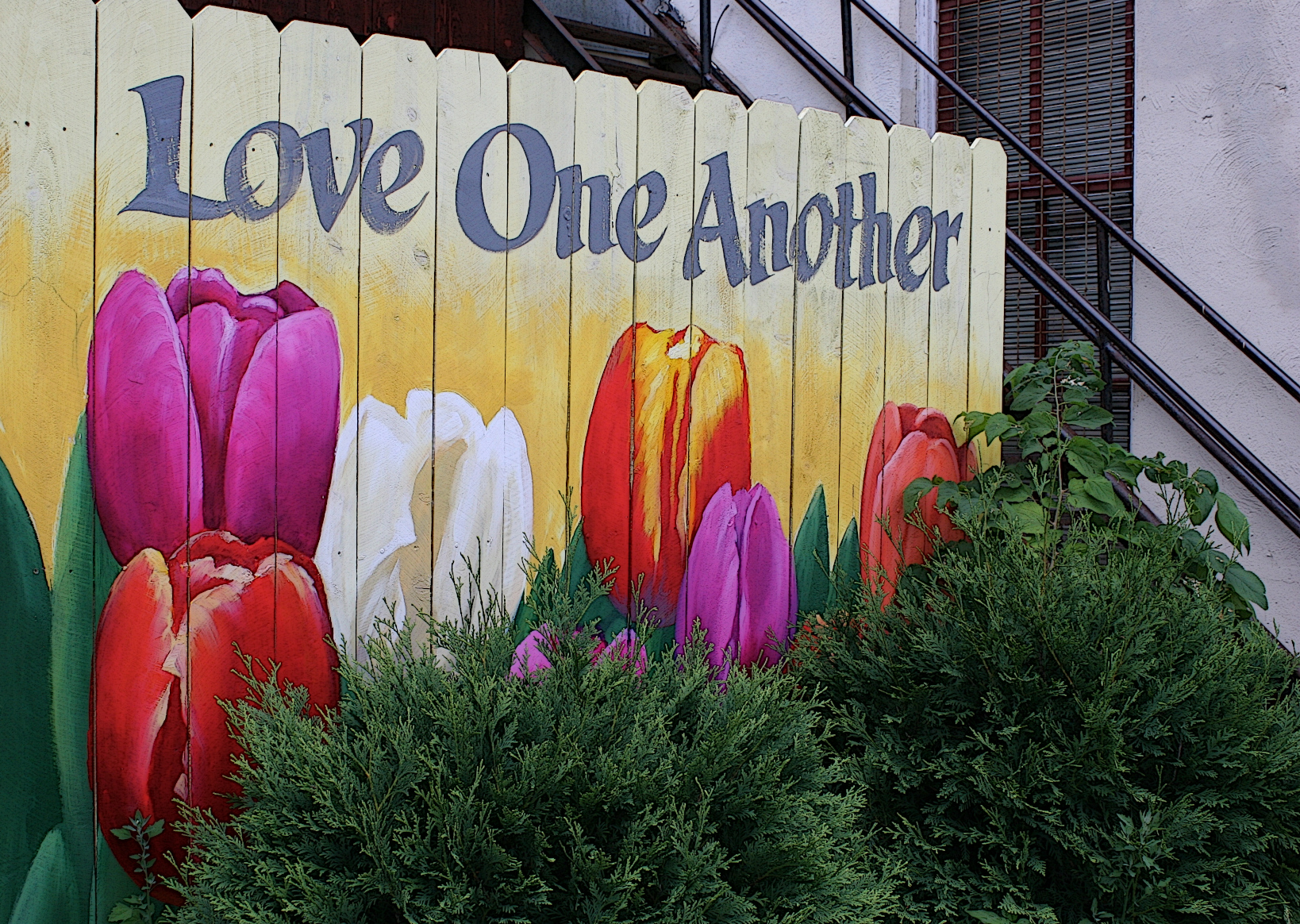
Encouraging words posted near a garden in the heart of downtown Faribault. (Minnesota Prairie Roots copyrighted file photo)

THEIR WORDS WERE MOVING, heartfelt, inspiring. Words that spoke to a selfless, loving, compassionate and kind man. Qualities we should strive to emulate.

It was not lost on me, as I watched the televised funeral of President Jimmy Carter this morning, that some of those attending the service at the National Cathedral in Washington DC have veered far from those traits. When you’re in public office, you are held to higher standards. Or at least you should be. I hope the politicians in the crowd were listening intently.

But I don’t want to get into a political discussion here. Rather, I want to offer a recap of the eulogies that really resonated with me.

A partial quote by civil rights leader and Senator John Lewis displayed on a window in Dundas, Minnesota. (Minnesota Prairie Roots copyrighted file photo)

I was especially impressed with the message delivered by Carter’s grandson Jason Carter. As I listened to this young man speak with such sincerity and eloquence, I thought, he should run for President some day. He spoke of a grandfather who was the same in public as in private, living a life of love and respect. Love. Respect. I can respect a man who, along with his wife, washed and reused plastic bags (as do I), still had a landline with dangling cord (I do) and wore crocs (I don’t). Jason brought laughter to the Cathedral while getting across his strong messages of faith, love and respect.

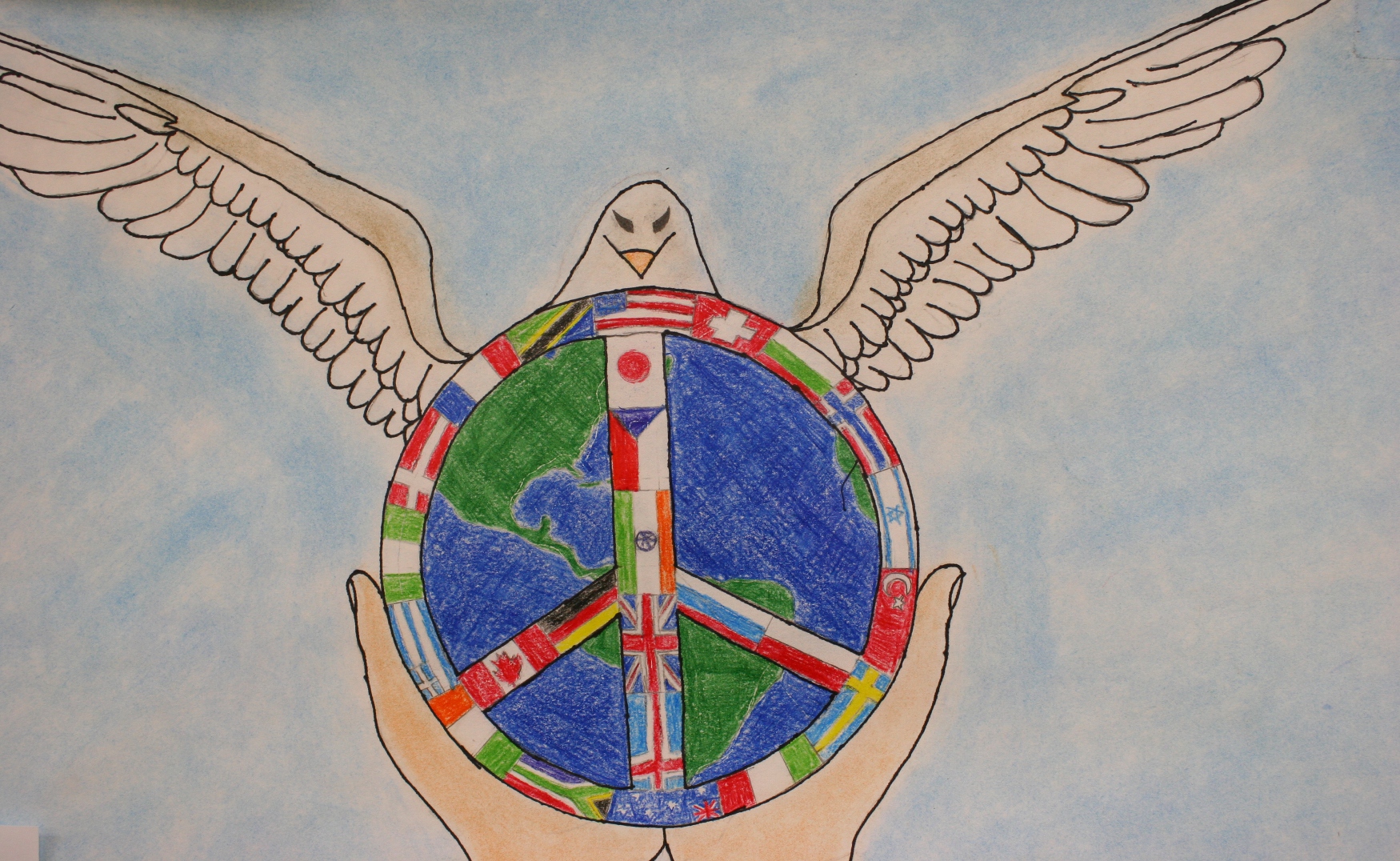
Peace art by Gracie Molden, Faribault Lutheran School, previously displayed at a student art show at the Paradise Center for the Arts. (Minnesota Prairie Roots copyrighted file photo)

Then there’s Ted Mondale who read the eulogy written a decade ago by his father, Vice President Walter Mondale. The stand-out lines written by the elder Mondale were these: that he and Carter “told the truth, obeyed the law and kept the peace.” Those words repeated in my head. I found myself thinking, if only all leaders held to those principles.

An especially bright spot in the heart of downtown Faribault is the Second Street Garden, a pocket garden with positive messages. (Minnesota Prairie Roots copyrighted file photo August 2019)

President Joe Biden, a long-time friend of Jimmy Carter and likewise a man of faith, focused on strength of character. Carter was, he said, a man of character who treated everyone with dignity and respect. There’s that word again—respect. He called Carter “a practitioner of good works” who followed the guideline of “love thy neighbor as thyself.” That statement followed Biden’s comment that faith requires action. I agree. There’s no doubt Carter lived his faith given his humanitarian work. Carter, Biden said, lived a life filled with the power of faith, hope and love.

From my personal art collection, peace dove art by Jose maria de Servin. (Minnesota Prairie Roots copyrighted file photo)

The Rev. Andrew Young, former US ambassador to the United Nations, spoke of a President who grew up as a minority in Sumter County, Georgia, among the majority Black. He celebrated Carter’s ability to get along with everyone, saying the President loved all of God’s children.

Certainly, many additional meaningful words were shared. But these are the messages that struck me as specific, yet broad. Words for all of us. Words that should inspire us to live better, be better.

It was fitting, too, that the gospel reading came from Matthew 5:1-16. That includes The Beatitudes from Jesus’ sermon on the mount and the four verses following. Blessed are…the poor…the meek…the peacemakers… Blessed are those who mourn.

On this national day of mourning for 100-year-old President Jimmy Carter, I feel inspired. Inspired to let my light shine (Matthew 5:16), not in a spotlight-on-me kind of way, but as someone who can light the world by being kind, caring and compassionate. By living a life of love and respect.

© Copyright 2025 Audrey Kletscher Helbling


From Books on Central: A success story about books, dragons & community

An imaginative depiction of a dragon on the merry-go-round at LARK Toys, Kellogg, perhaps not unlike dragons featured in fantasy novels. (Minnesota Prairie Roots copyrighted file photo)

I LOVE WHEN KIDS, like my 8-year-old granddaughter, Isabelle, love to read. It sets them on a path for success in school. If you can read, you can learn anything. I’ve always believed that, except perhaps when it comes to math. Reading didn’t help me there.

Book cover image sourced online.

But Izzy isn’t thinking about math; her dad is a math whiz anyway. Rather, she’s focused on reading for the love of reading a good story. On a recent visit, she could barely contain her excitement about Dragon Rider by Cornelia Funke. Izzy quickly finished the first volume in the series and then breezed through the next two.

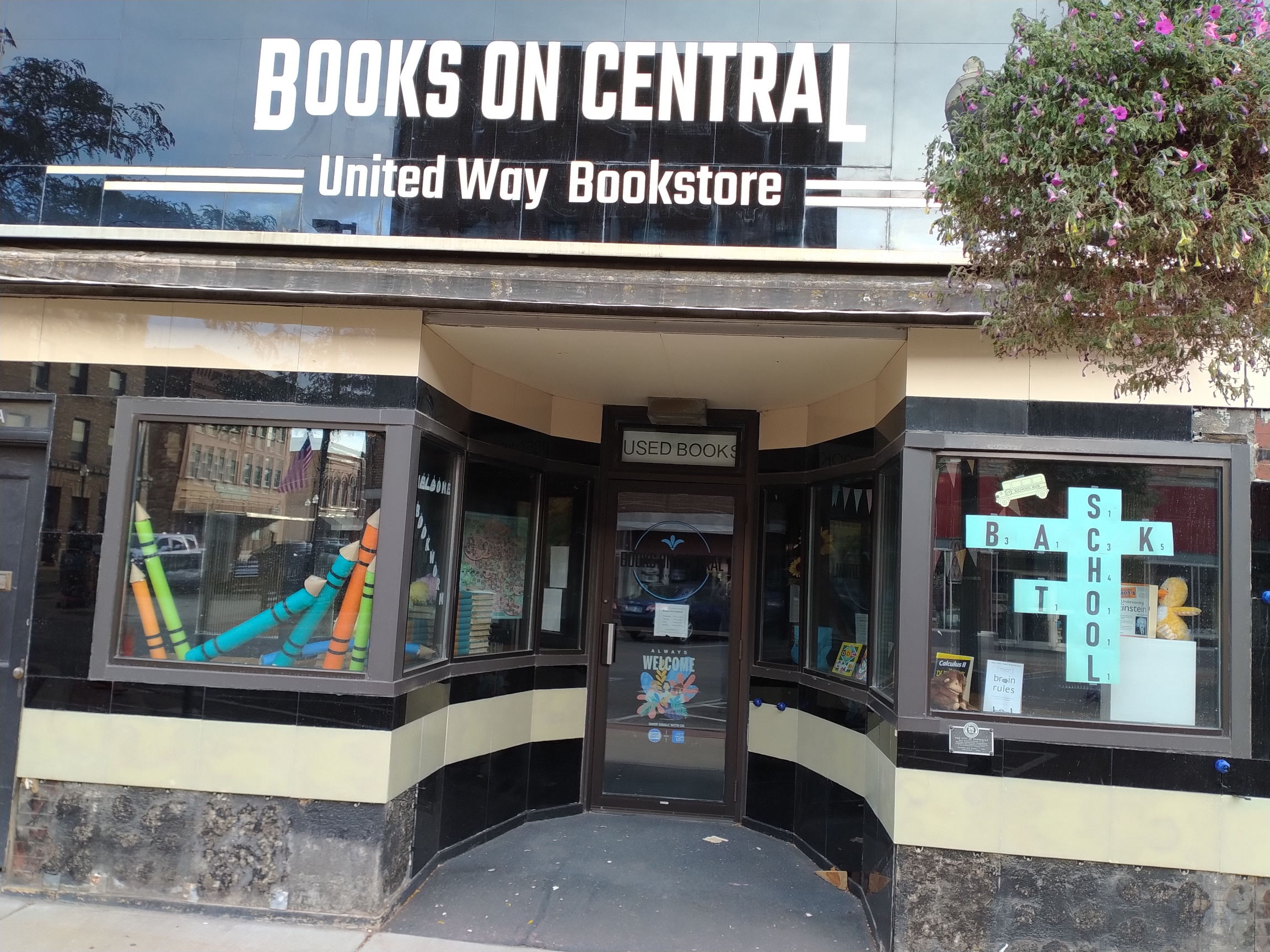
A back-to-school display filled the bookshop windows at the start of the 2024-2025 school year. (Minnesota Prairie Roots copyrighted photo 2024)

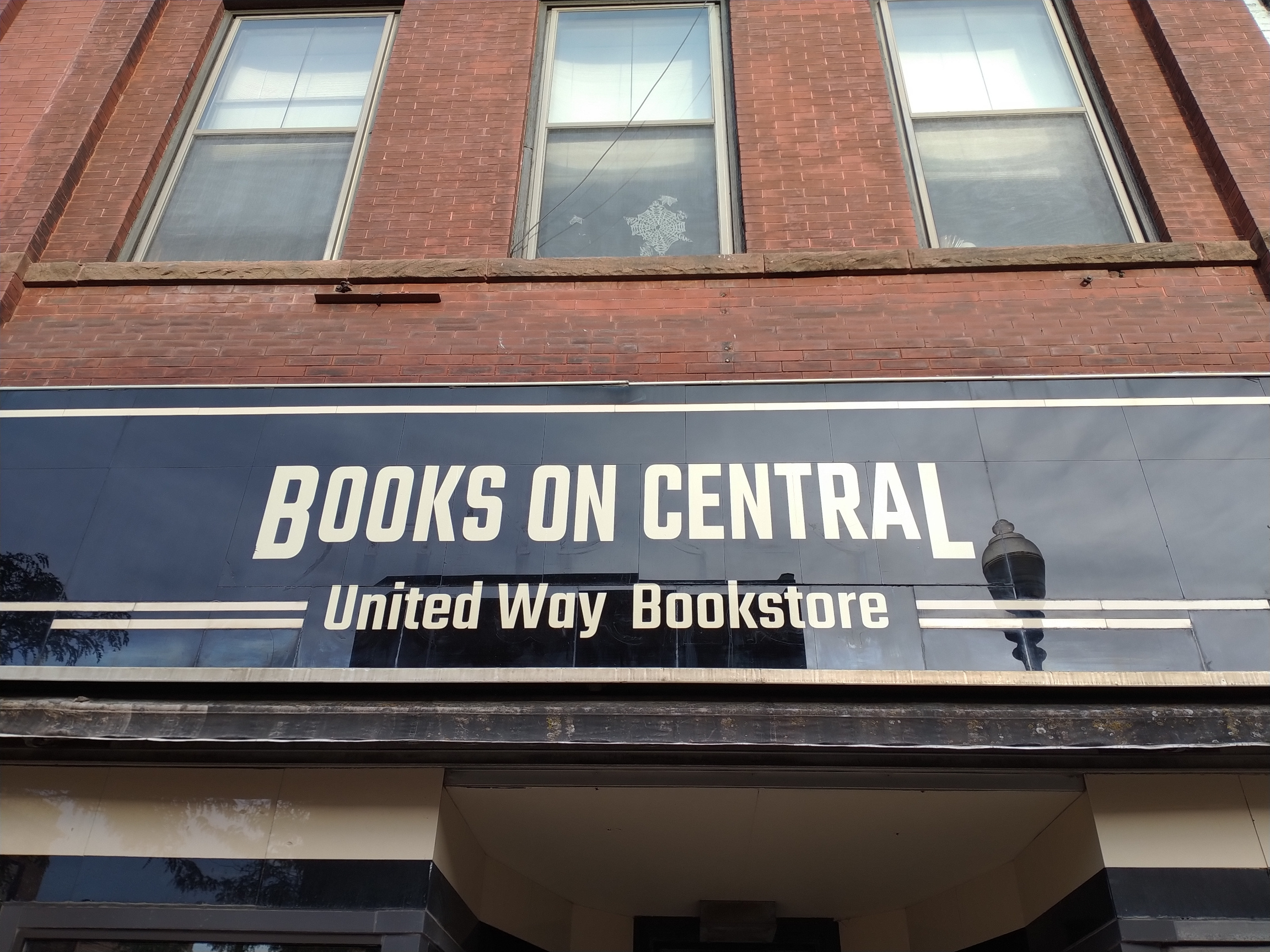
There’s a story here about Dragon Rider. Izzy’s mom, my eldest, found the fantasy novel while we were shopping at Books on Central, a used bookstore run by Rice County Area United Way at 227 Central Avenue North, Faribault. All proceeds go to local nonprofits supported by the United Way. Initially, Izzy wasn’t too excited about the book. But soon after we arrived home, she was snugged in the recliner reading.

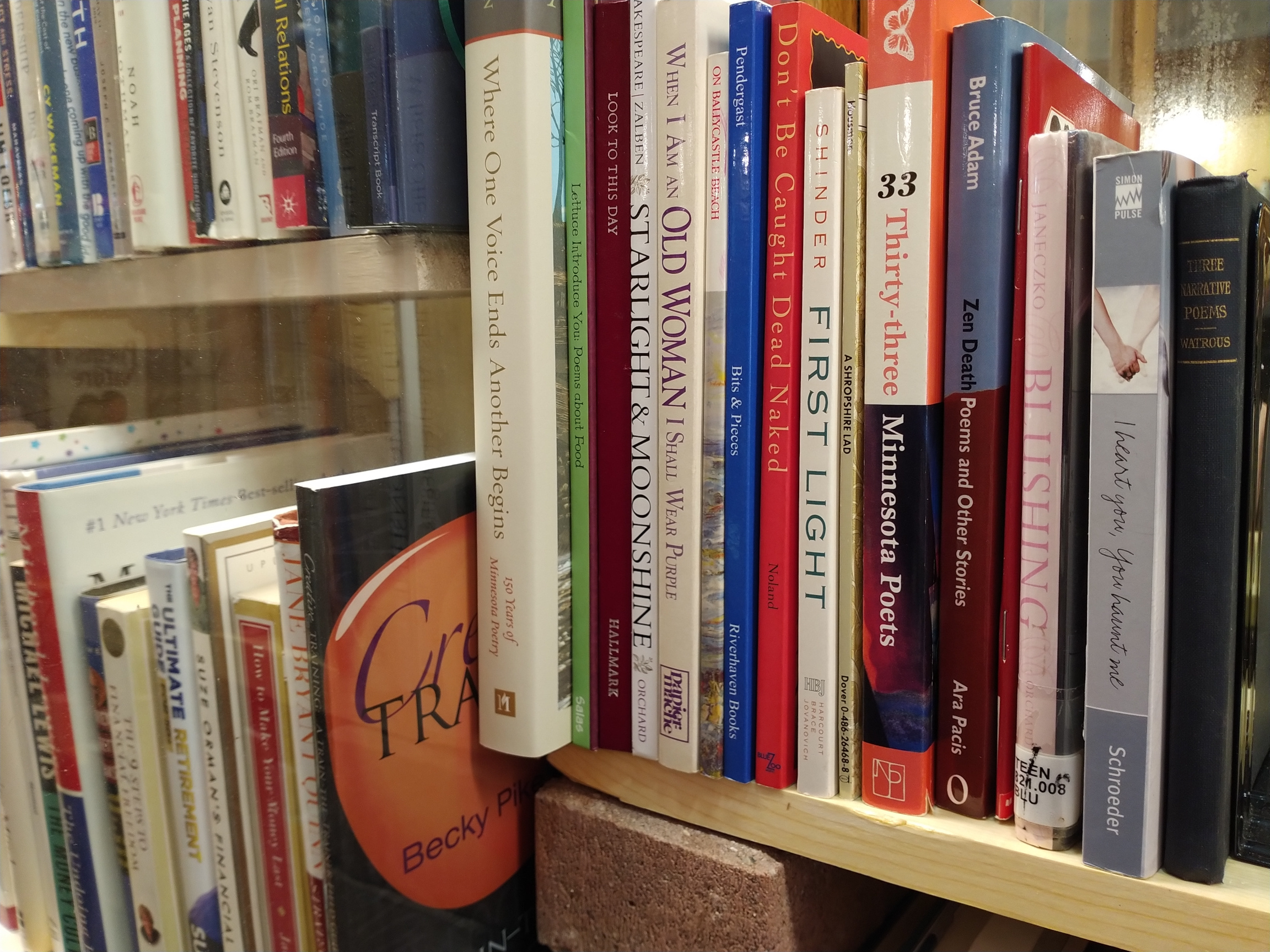
I photographed the poetry section, right, during one of my visits to the bookshop. (Minnesota Prairie Roots copyrighted photo 2024)

This is exactly what grandparents, parents and the good folks at Books on Central like to see. The volunteer-run bookshop just completed its first full year of operation with more than $30,000 in used book sales during 2024, according to lead volunteers Dave and Jeanne Campbell. That’s a whole lot of books considering kids’ books sell for a buck or two and adult books for a bit more.

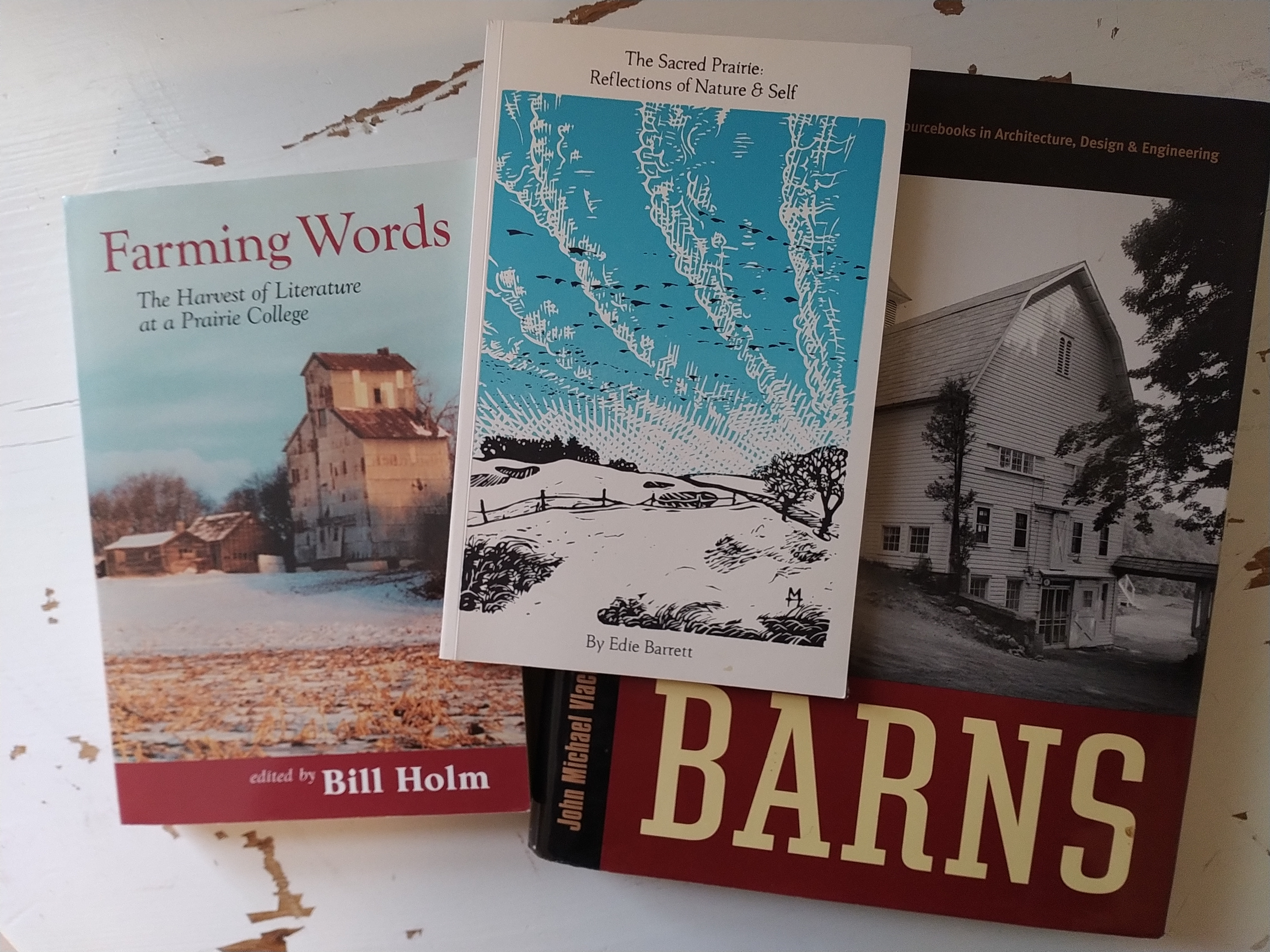
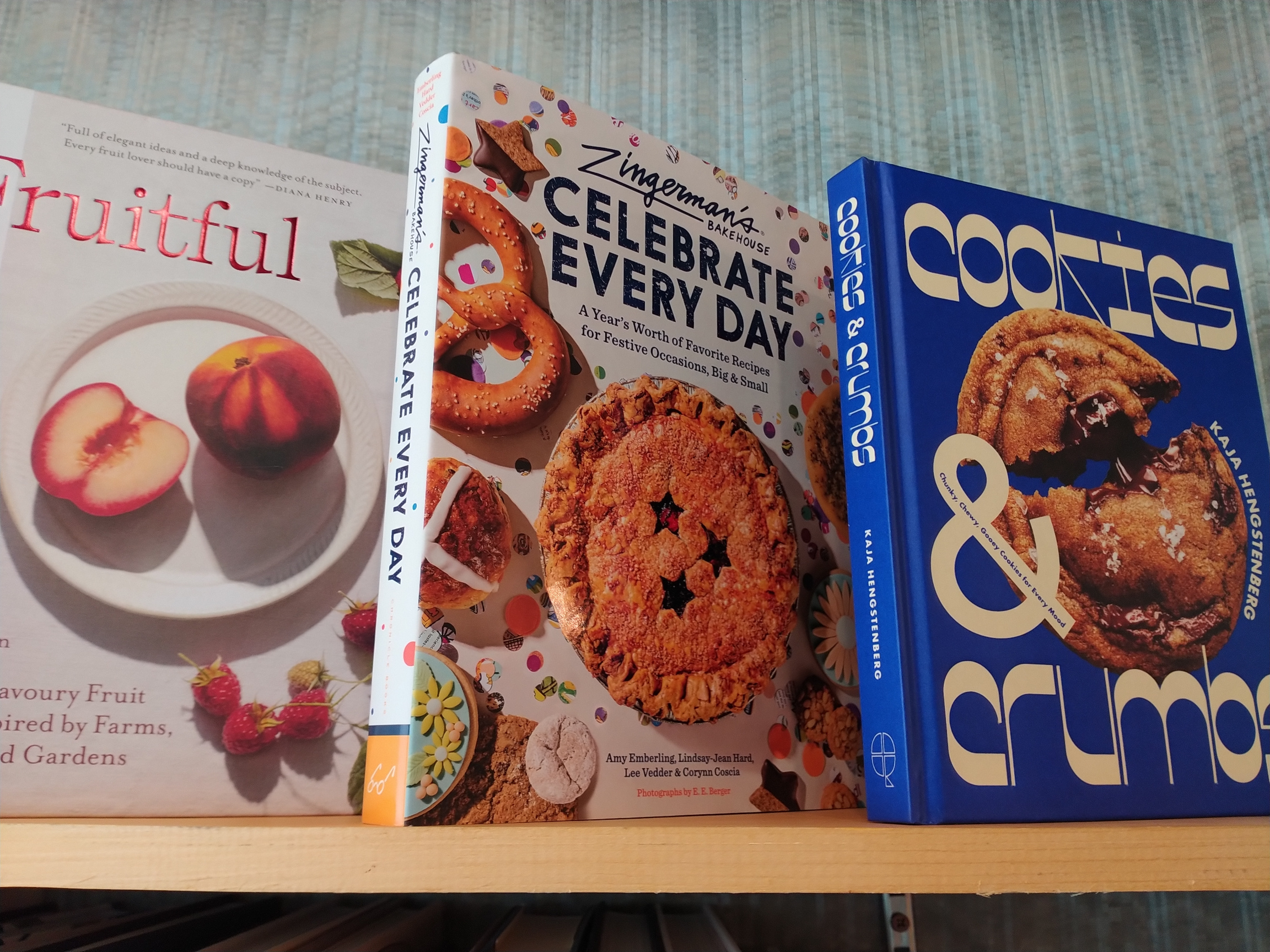
Among the books I’ve purchased at Books on Central. The book on the left features a cover photo of an elevator moved from my hometown of Vesta onto a nearby farm. The book includes writing by Larry Gavin of Faribault. (Minnesota Prairie Roots copyrighted photo 2025)

I’m thrilled that the Faribault community and beyond has embraced and supported this used bookstore by donating books and by buying them. It’s a win-win for everyone. People can get rid of books they no longer need, find books to read and help their neighbors. Bookshop proceeds assist The United Way in their mission of focusing on financial stability, health and education.

Previously in the display window at the bookshop. (Minnesota Prairie Roots copyrighted file photo)

And education includes reading. The local United Way supports Dolly Parton’s Imagination Library, which provides a free book a month to registered area children for the first five years of their lives. Dolly’s Book Bash, an annual fundraiser to support the program, is set for Friday, January 24, with doors opening at 6:30 p.m. at the Northfield Ballroom. The event features music, line dancing, an auction and games.

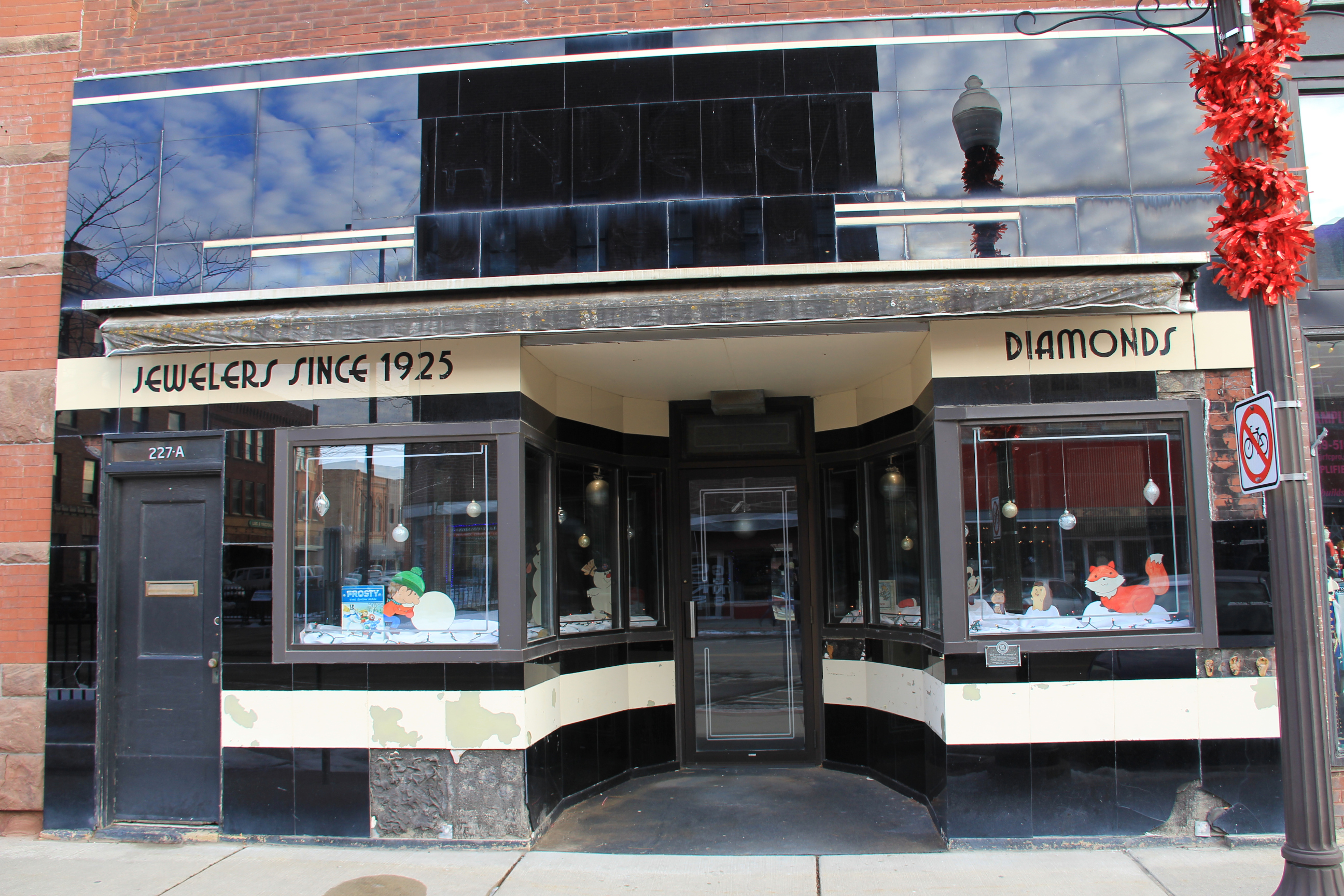
Signs marking the location as a former jewelry store remained when the bookshop opened. (Minnesota Prairie Roots copyrighted file photo)

Back at Books on Central in Faribault, the bookshop is, in some ways, magical. The setting is in the former Dandelet Jewelry with beautiful built-in wooden shelving and drawers and a chandelier centering the space. In the back, kids have an area all their own to peruse the many books ranging from board books for babies to picture books to novels like Dragon Rider. The whole space feels inviting, enchanting.

This is a well-organized bookshop. Volunteers know the books and where to find them. Inventory changes often. (Minnesota Prairie Roots copyrighted photo 2024)

Sales of 2,661 books totaling about $9,000 in the last quarter of 2024 reflect the incredible support and enthusiasm for Books on Central. Those numbers are remarkable considering the bookshop is typically open only 24 hours a week and is totally volunteer-run. Volunteer hours in 2024 totaled 4,479.

Jeff Jarvis talks about the Dakota during a June presentation at Books on Central. (Minnesota Prairie Roots copyrighted file photo June 2024)

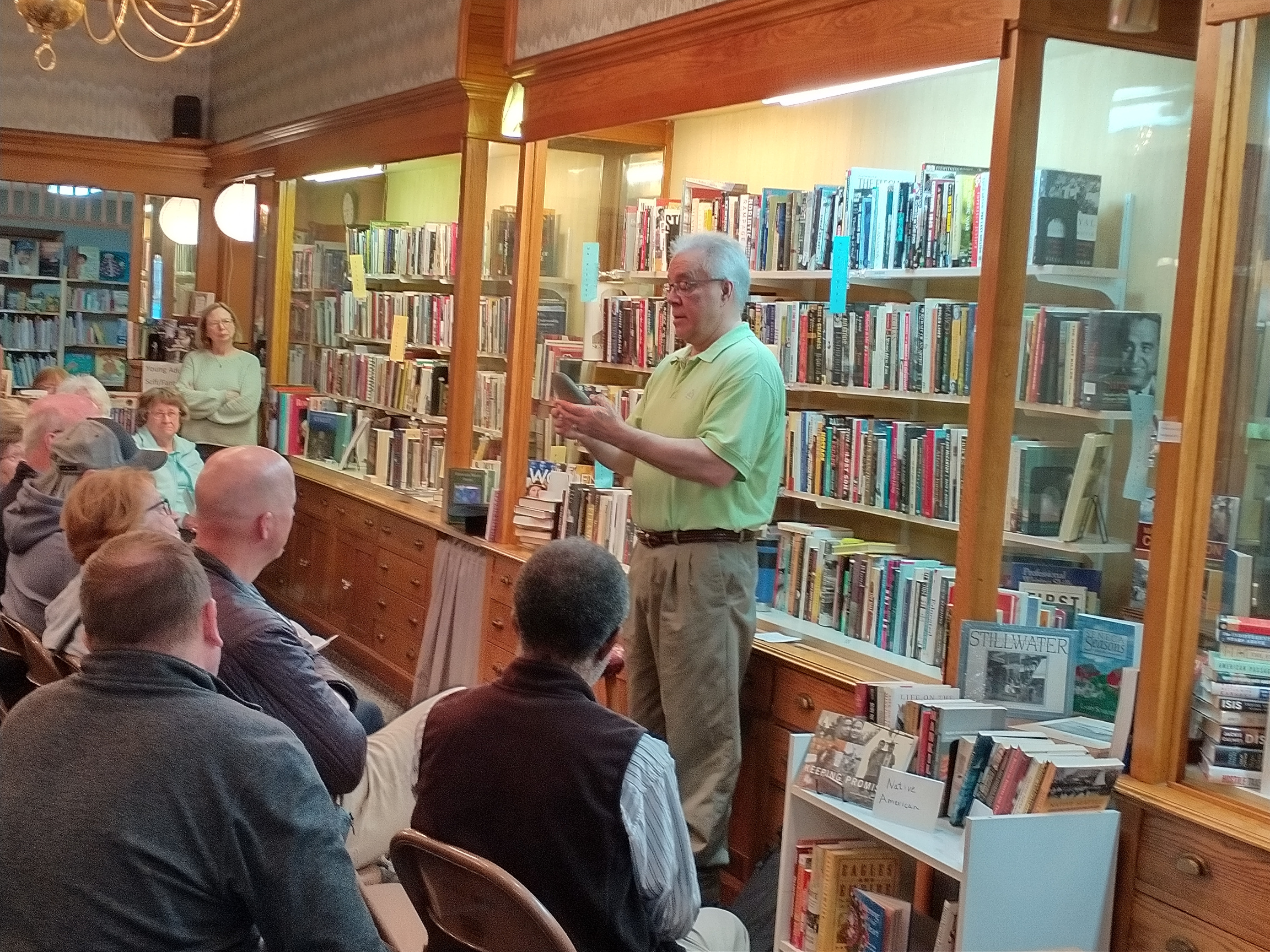
This place is more than a volunteer-run used bookstore. It’s also a place to connect, to build community, to learn. Books on Central hosts frequent literary events featuring area writers. I attended a poetry reading by published poet, retired Faribault High School English teacher and friend Larry Gavin. I could listen to Larry read poetry all day. The way language flows from his mind to his fingertips to create poems, well, it’s magical. He has a radio reading voice that mesmerizes. I also listened to a group of Northfield poets read their poems at Books on Central. I heard local historian, writer and artist Jeff Jarvis talk about the Faribault Dakota. And I delighted in the engaging storytelling of native Tanzanian Joseph Mbele, a St. Olaf College professor, consultant and author of several books, his newest Chickens in the Bus—More Thoughts on Cultural Differences.

New signage was installed on the building in late 2024. (Minnesota Prairie Roots copyrighted photo 2024)

I love that my granddaughter enjoys going to Books on Central. She’s discovered it’s a special place where, if you look (or let your mom look), you’ll discover a silver dragon flying between the pages of a book.

#

FYI: Books on Central is open from 11 a.m.-5 p.m. Wednesday-Friday and from 10 a.m.-4 p.m. Saturdays. Donated books are accepted, but must be in good condition. Volunteers sort and clean the books, determining which to stock. You will not find musty and moldy smelling books here.

© Copyright 2025 Audrey Kletscher Helbling
 

Honoring President Jimmy Carter & a related personal story January 8, 2025

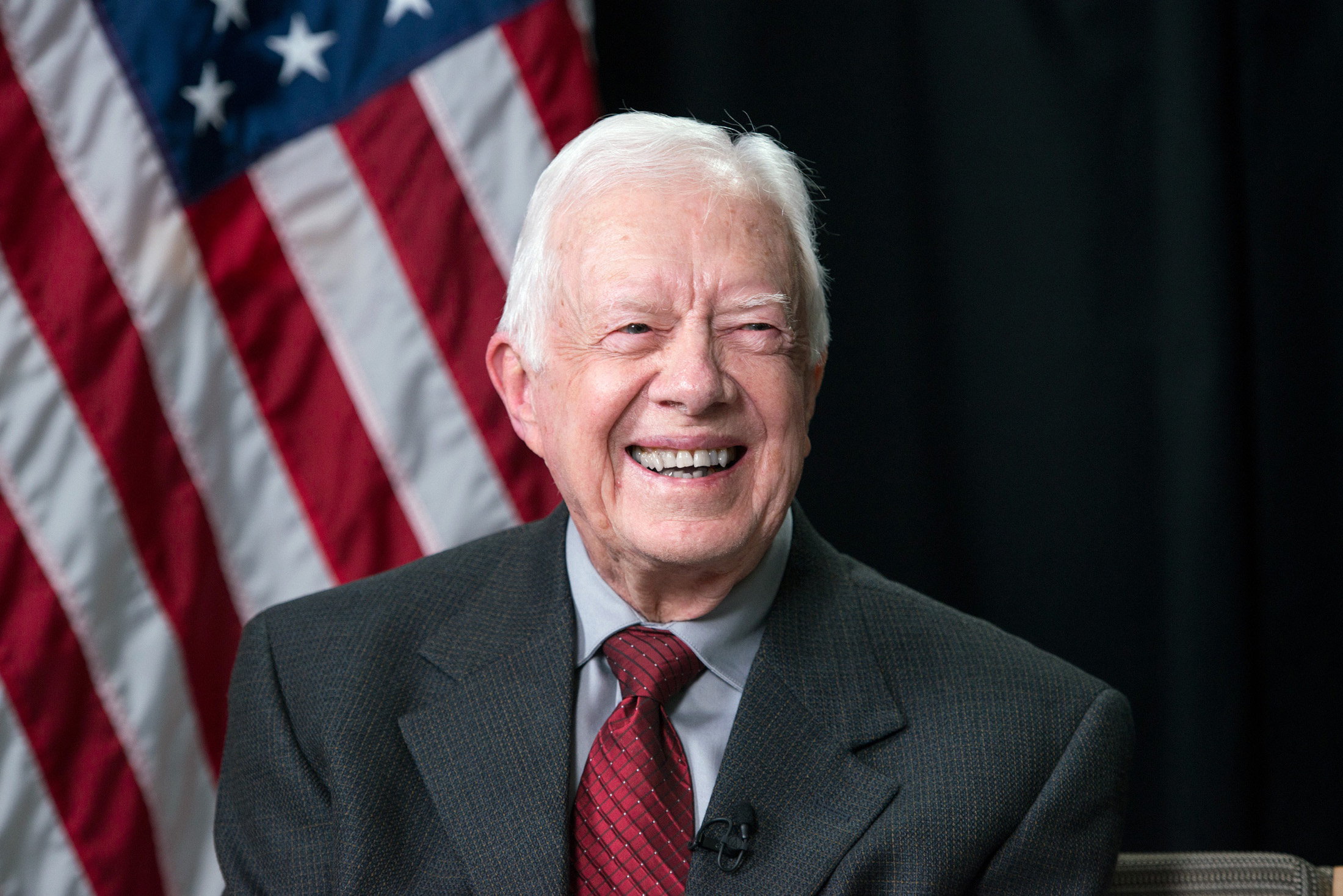
President Jimmy Carter in 2014. (Photo credit: LBJ Presidential Library)

HONEST. COMPASSIONATE. HUMBLE. All describe President Jimmy Carter, who died December 29, 2024, at the age of 100 and whose national funeral will be held Thursday at the Washington National Cathedral. A private funeral and burial will follow in Plains, Georgia.

In many ways, the name of Carter’s hometown, Plains (minus the “s”), describes this soft-spoken man. He was the son of a peanut farmer, grew up in a house without electricity or indoor plumbing, took over the family farm upon the death of this father. Having grown up on a family farm, in a home without a bathroom and closely rooted to the land, I understand Carter’s plain beginnings.

That Carter would go on to become governor of Georgia, the 39th President of the United States, winner of the Nobel Peace Prize and a beloved humanitarian proves that anyone can come from the plainest of places and make a positive difference in this world, emphasis on the word “positive.”

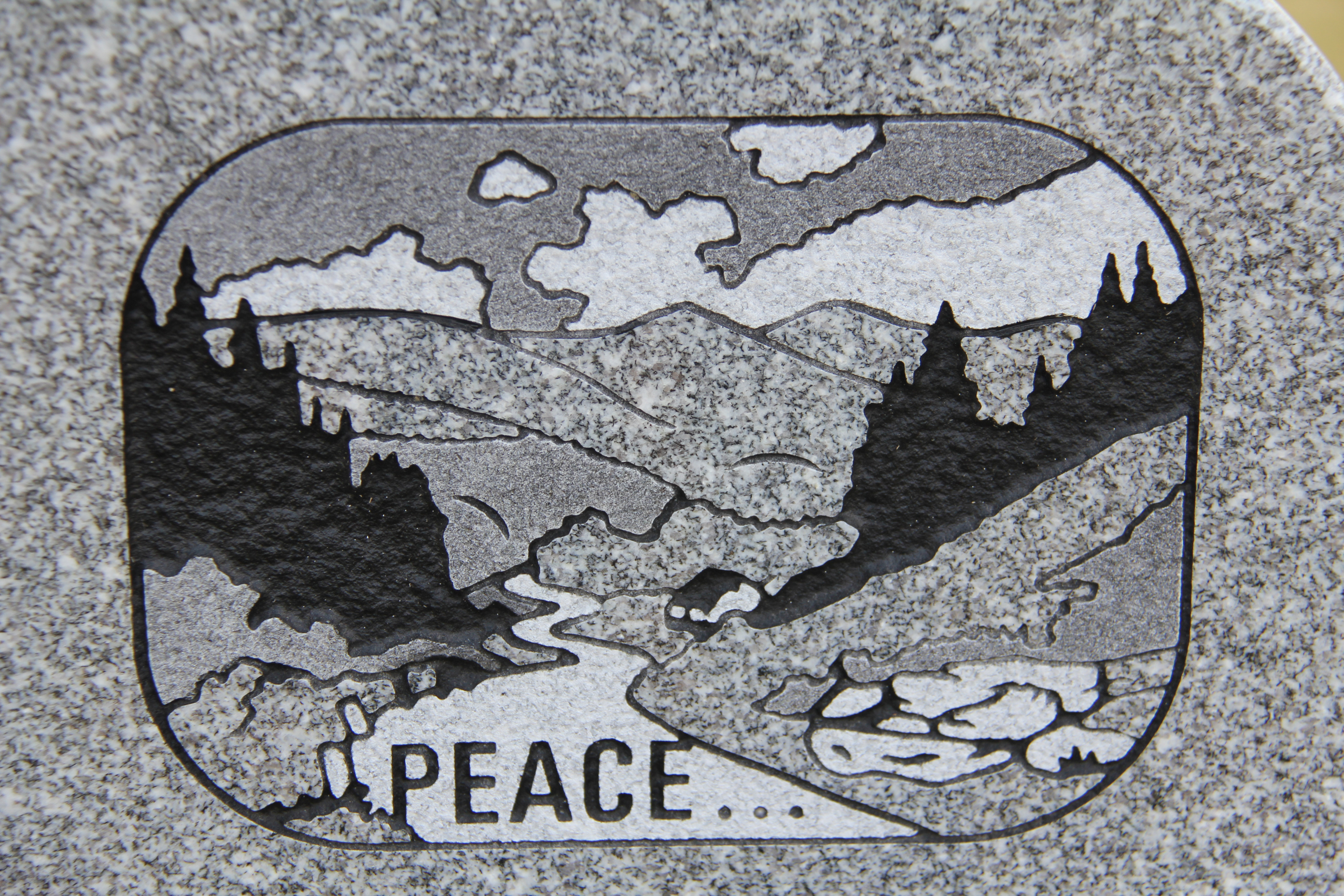
Peace on a tombstone at Valley Grove Cemetery, rural Nerstrand, Minnesota. (Minnesota Prairie Roots copyrighted file photo 2024)

BUILDING A LEGACY OF SERVICE

Certainly, Carter was not perfect—no one is—but the legacy he leaves is, at its core, that of service to others. We should all strive for that. To do good. To help others. To show love, kindness and compassion. For Carter, nowhere was that more evident than in his post-presidency work with Habitat for Humanity. He didn’t just pose for photo ops. He picked up a hammer and actually helped build Habitat houses.

He also built world peace. During his presidency, Carter helped negotiate a peace treaty between Israel and Egypt in 1979. His efforts led to signing of the Panama Canal Treaty in 1977. His work in the areas of peace, democracy, human rights, and economic and social development earned him that coveted Nobel Peace Prize.

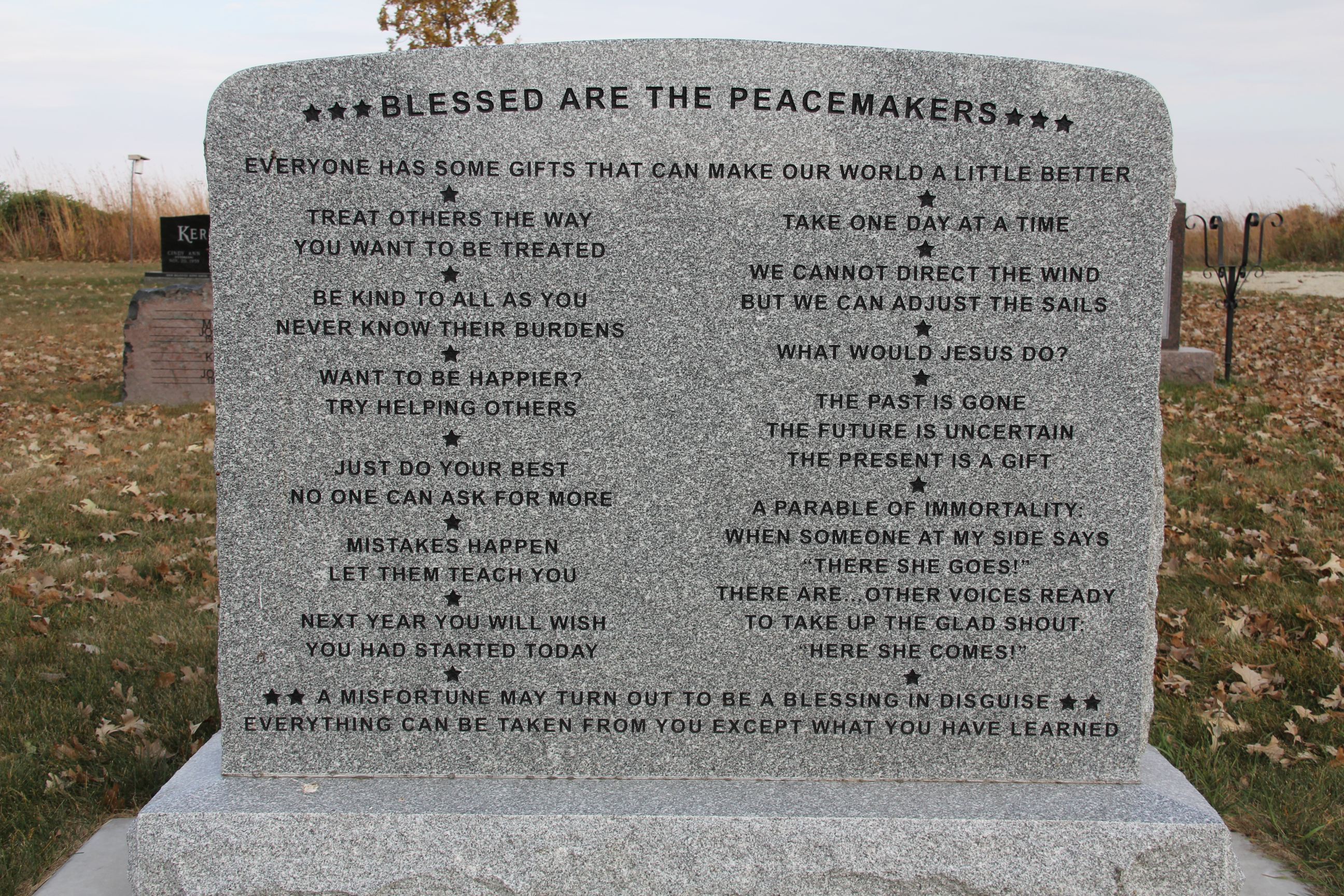
Blessed are the peacemakers” fits President Jimmy Carter. This is a tombstone at Valley Grove Cemetery, rural Nerstrand. (Minnesota Prairie Roots copyrighted file photo 2024)

AN INTERNATIONAL CRISIS & MY CONNECTION

I was just finishing college and starting my career in journalism when Carter was in and ending his presidency. In 1981, while working as a newspaper reporter for the Mankato Free Press, I covered a major national event with a Carter connection. That was the homecoming of Bruce Laingen, one of 52 Americans held hostage for 444 days in Iran. Laingen, a native of Minnesota, was the top American diplomat at the U.S. Embassy in Tehran when protesters stormed the embassy in November 1979. Carter tried unsuccessfully to get those hostages released. On January 20, 1981, the day President Ronald Reagan was sworn into office, the hostages were finally freed. The timing of that release was obviously deliberate. Carter’s re-election bid failed in part due to the hostage crisis.

In my work as a reporter for the Free Press’ St. James News Bureau (my apartment) I covered the southern Minnesota angle on that international crisis. I drove from St. James to nearby small town Odin several times to interview Arvid Laingen at his business, the Odin Feed Mill. We talked about his brother Bruce and his captivity in Iran. I remember photographing Arvid against the feed mill backdrop, American flag draped from the building. When Bruce and the other hostages were released, I joined my regional editor and a Free Press photographer in covering Laingen’s homecoming parade in Odin. Well wishers lined the streets on that cold winter day. Yellow ribbons, which had become a national symbol of hope during the hostage crisis, ringed trees.

My work as a young journalist for a regional southern Minnesota daily newspaper connects me indirectly to President Carter. I admire Carter’s efforts to free the hostages. I can appreciate how defeated he must have felt as days ticked by and the Americans remained in captivity. But he did not let defeat define him. Carter went on to do incredible work worldwide after leaving the highest office in the country. Anyone who remains humble and serves selflessly earns my respect. Carter was clearly a man of integrity, of principles, of faith, someone who never forgot his roots. If only others in public office followed his path of plainness…

© Copyright 2025 Audrey Kletscher Helbling
 

A few book suggestions related to yesterday’s post

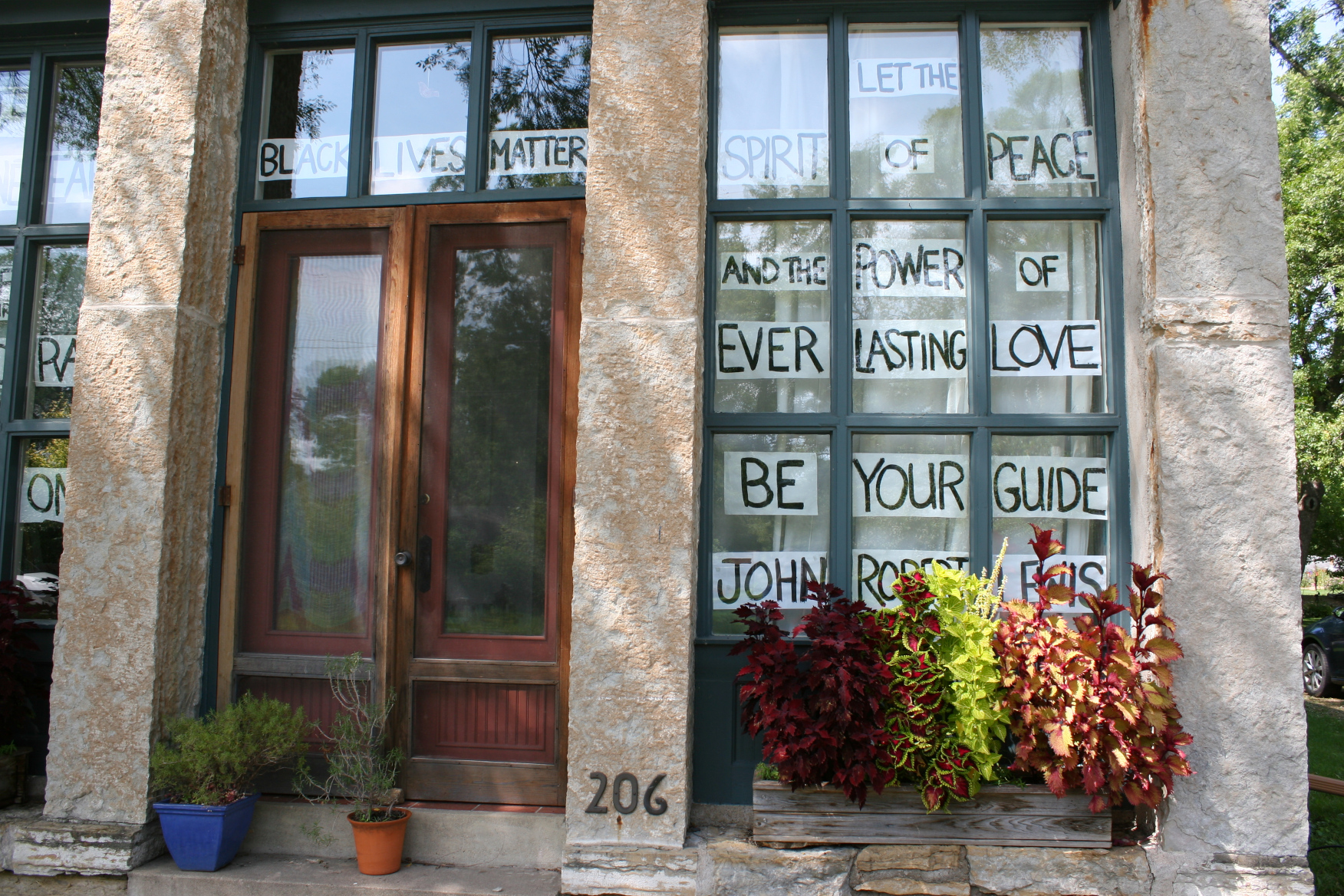
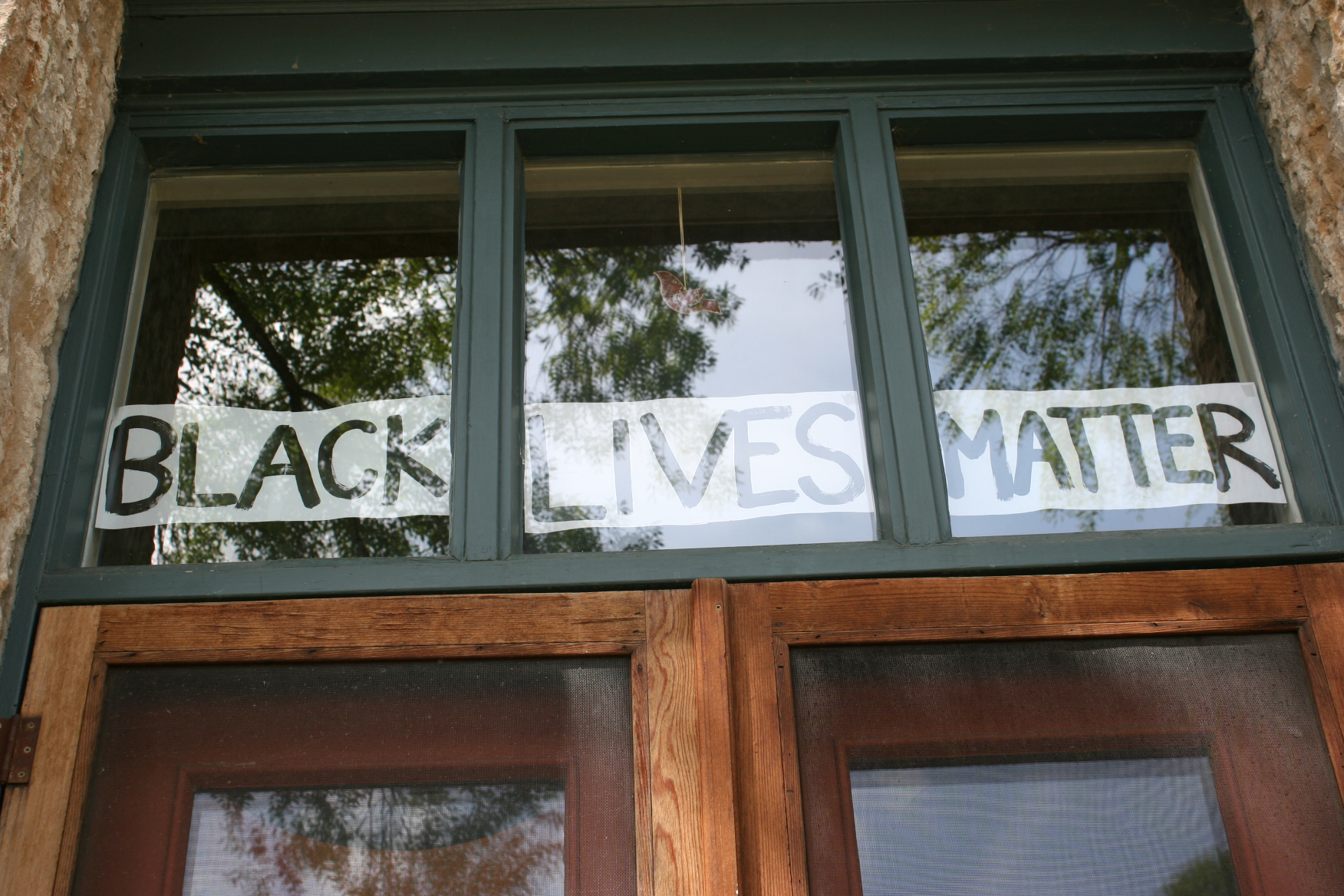
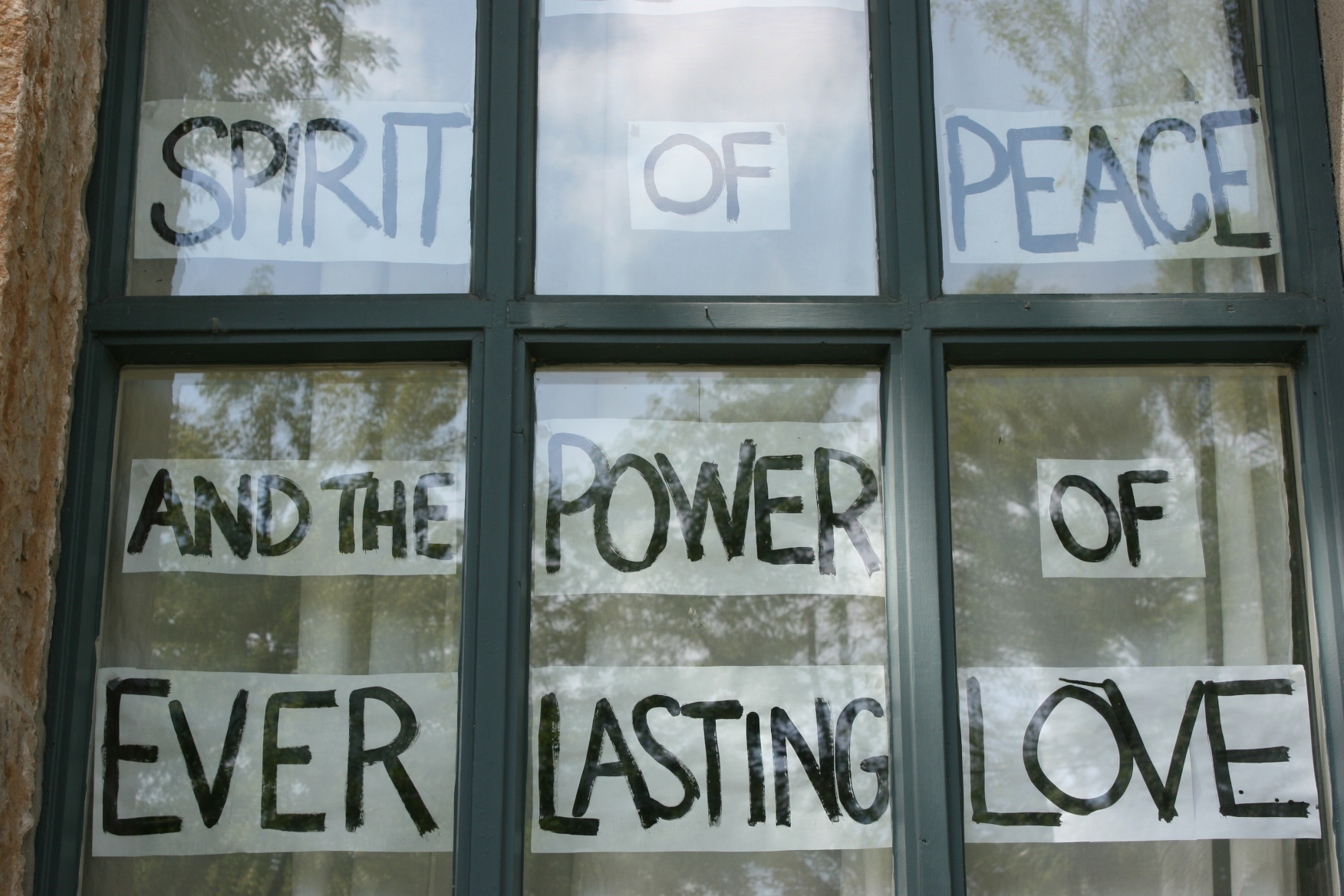
Inspiring messages on a house in small town Dundas, Minnesota. (Minnesota Prairie Roots copyrighted file photo August 2020)

I’M FOLLOWING UP on yesterday’s post focusing on the book Our Hidden Conversations—What Americans Really Think About Race and Identity by Michele Norris to recommend four related books. But before I get to those books, I must share that Norris will be in Minnesota on Monday, January 20, as the keynote speaker for the Martin Luther King Jr. Holiday Breakfast at the Minneapolis Convention Center (Exhibit Hall A). The event begins with networking and mingling from 7-7:30 a.m., breakfast from 7:30-8 a.m. and a program from 8-9:30 a.m. The celebration also includes music by Grammy award-winning Sounds of Blackness and a special collaborative performance by Threads Dance Project and Vocalessence. For more information about this 35th annual MLK breakfast, click here.

Now the books:

Book cover sourced online.

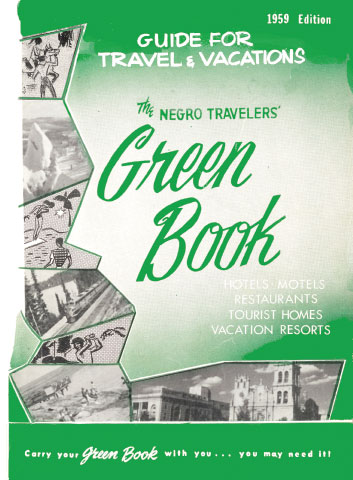
1959 (reprinted) Edition of The Negro Travelers’ Green Book—Guide for Travel and Vacations

I checked this facsimile of The Negro Travelers’ Green Book out from my local library. This guidebook lists, state by state (and in Canada), the hotels, motels, restaurants, tourist homes and vacation resorts where Blacks were welcome in 1959. This list is revealing and sometimes surprising. And clearly, it’s unsettling to read, understanding the discrimination against Blacks that existed not all that long ago.

Book cover sourced online.

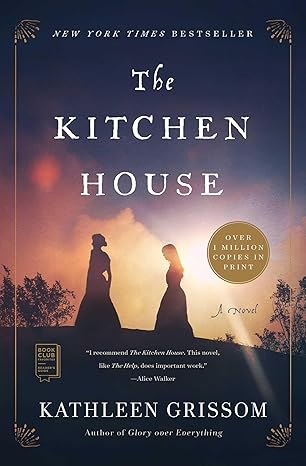
The Kitchen House by Kathleen Grissom

This New York Times bestseller published in 2010 tells the fictional story of life on a tobacco plantation beginning in the late 1700s from the perspectives of a slave (the daughter of a White master and his slave) and an indentured servant (an orphan from Ireland). Although a work of fiction, The Kitchen House is historical fiction, thus rooted in truth. This is a difficult read. But it’s also an inspiring book that speaks to the strength of the human spirit, the love of family and resilience.

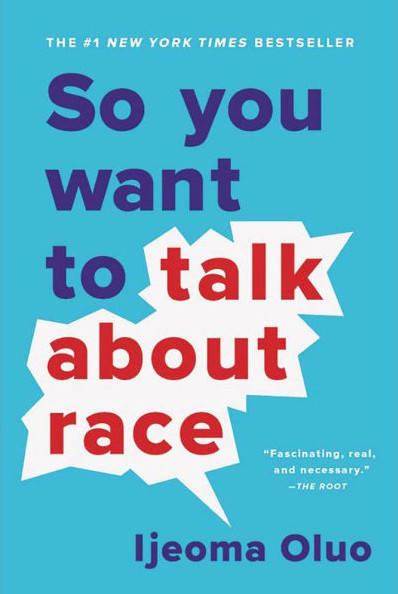
Book cover sourced online.

So you want to talk about race by Ijeoma Oluo

Another New York Times bestseller, this one published in 2019, is in my reading stack. The title, So you want to talk about race, pretty much explains the content. The book was gifted to me by someone who left it in my church mailbox. I am grateful. I expect I will gain new insights from reading this book about race.

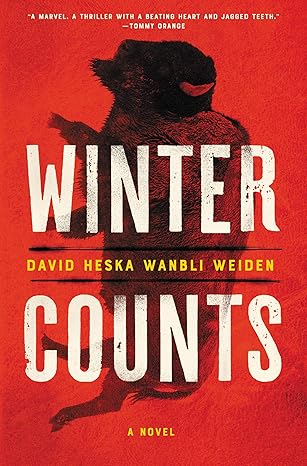
Book cover sourced online

Winter counts by David Heska Wanbli Weiden

This award-winning book published in 2020 has been in my reading stack for some time. I am half way through reading Winter Counts and already know I need to recommend this fictional book. Why? The storyline takes the reader onto the Indian Reservations of South Dakota. But what stands out for me is the authenticity of the writing. Author David Heska Wanbli Weiden, an enrolled citizen of the Sicangu Lakota Nation, knows of what he writes.

I am not only reading an intriguing novel about a vigilante set on justice for the Lakota community in dealing with illegal drugs and other issues. But I am learning about Lakota culture, beliefs, language and challenges, and a reclaiming of Native identity. This book has proven both educational and eye-opening.

TELL ME: Have you read similar books that you recommend I read? Please feel free to share with a brief summary of the book (s). I’m interested in any genre and in books for children to middle and high schoolers to adults.

© Copyright 2025 Audrey Kletscher Helbling
 

A traffic stop & conversations about race & identity January 7, 2025

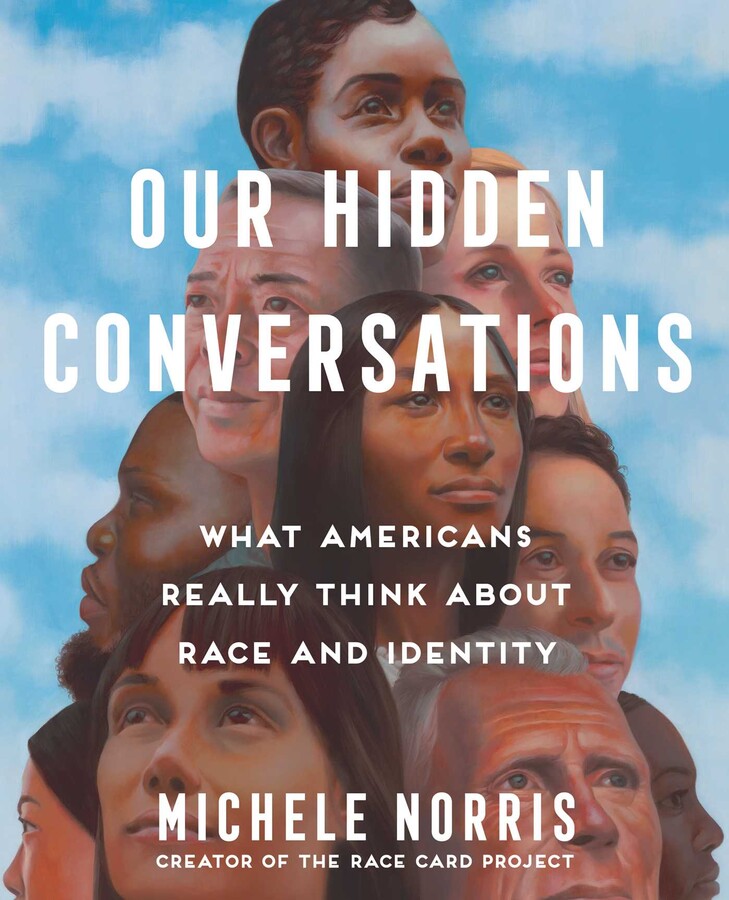
Book cover sourced online

EARLY ON A RECENT WEEKDAY MORNING, my husband was pulled over by a deputy sheriff while driving to work. Randy had no idea why he was being stopped on the edge of Faribault. The officer who approached the passenger side of our rusty 2005 white van and rapped on the window did not immediately tell Randy why he pulled him over.

But the questions and actions that followed left me unsettled and thinking about what could have unfolded. You see, I was in the middle of reading Our Hidden Conversations—What Americans Really Think About Race and Identity by Michele Norris, creator of The Race Card Project. That partially prompted my adverse reaction.

As I listened to Randy’s retelling of the traffic stop, I felt thankful that he is a past-middle-aged White guy. I felt a bit guilty for thinking that. But…

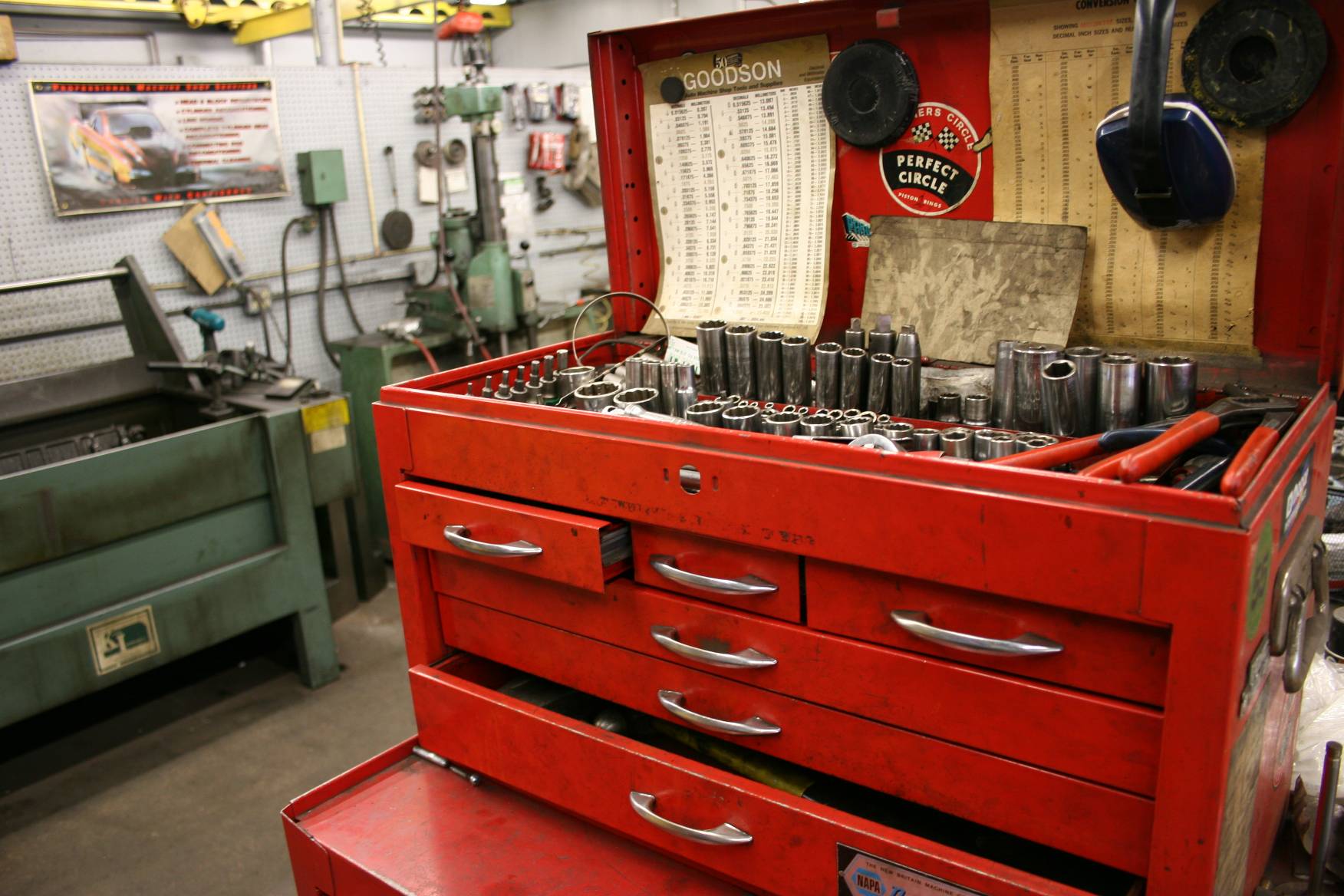
Randy, in his work jacket and uniform, was just driving to work at his job as an automotive machinist when he was pulled over and questioned. (Minnesota Prairie Roots copyrighted file photo)

DO YOU HAVE A WEAPON?”

After requesting the usual identifying documents, the officer asked Randy where he was going, where he worked, whether his address was current and how long he’s lived there. All seemed odd questions. But the next question proved even more unusual. The officer, peering into the van, asked Randy if he had a weapon. Thinking he was referring to an item on the floor between the seats, Randy leaned down and said, “No, it’s a snow brush.”

My immediate reaction to this part of the story was this: “You did what? You could have been shot!”

The deputy wasn’t referencing the brush on the floor, but what he thought was a weapon lying on the passenger seat. He reached inside the van and moved a pair of gloves aside to reveal the case for Randy’s glasses. The supposed gun.

I wasn’t there. I don’t know what was going through the deputy’s mind before and during the traffic stop. But I do recognize what could have happened had the cop felt threatened.

Only after all of this and after the deputy ran a license check did he tell Randy why he’d been stopped—because the brake light in the middle of the tailgate door was not working. Randy has since replaced the bulb.

Posted on a house in small town Dundas. (Minnesota Prairie Roots copyrighted file photo 2020)

THE “WHAT IFS?”

Why am I sharing this story? It’s not because I’m anti-law enforcement. I appreciate and respect our police and the important work they do in serving our communities and keeping us safe. Yet, had Randy been a person of color in the wrong place on the wrong day with an officer who perceived his actions as a threat, this traffic stop may have ended differently. Again, I’m not criticizing this specific cop or law enforcement in general.

Admittedly, Randy should not have reached toward that snow brush. But it is not ingrained in his mind to limit his movements, to think about how his actions may be perceived. Black men, especially, cannot risk such behavior. That I understand based on conversations with my son-in-law, who is biracial; on traffic stop shootings of Black men; and on the stories shared in Our Hidden Conversations—What Americans Really Think About Race and Identity.

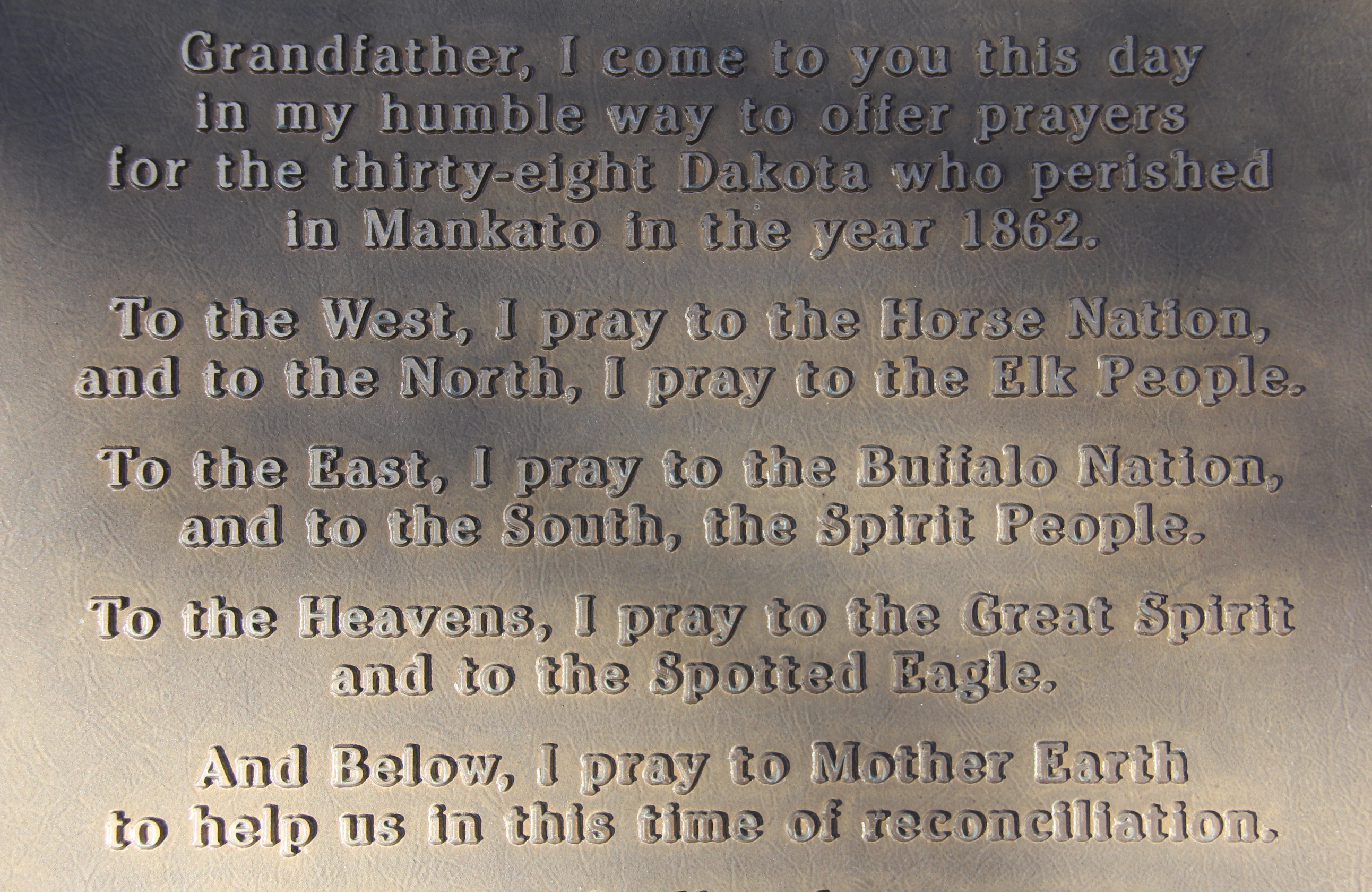
A Dakota prayer focuses on reconciliation at the Dakota 38 Memorial in Reconciliation Park, Mankato. (Minnesota Prairie Roots copyrighted file photo November 2023)

READ OUR HIDDEN CONVERSATIONS

If you read one book in 2025, I encourage you to read this one. The author, who grew up in Minneapolis, is a well-respected, award-winning journalist and former host on National Public Radio. For 14 years, Michele Norris has collected responses to this prompt: Race. Your story. 6 words. Please send. Those responses, submitted on specially-printed postcards and online, shape Our Hidden Conversations. This ranks as one of the most powerful books I’ve ever read on race and identity and should be required reading for every American.

Norris does not focus solely on Blacks in her collection of stories shared by thousands. She also writes about the discrimination, the prejudices, the challenges faced by many others. One entire section, for example, is devoted to Indigenous Peoples. That includes information about long ago Indian boarding schools (specifically the one in Morris, Minnesota) and about the 38 Dakota men who were hung in Mankato, Minnesota following the U.S.-Dakota War of 1862. She writes about Japanese internment camps in America during WWII. She writes about challenges faced by people with disabilities. This is hard stuff. But so necessary to read, to understand the backstory, the history and how things have, and have not, changed. The author writes about lynching, about adopting Black babies, about Blackness perceived as a threat…

The lengthier sections penned by Norris are interspersed with shorter stories from those responding to The Race Card Project prompt. The six word responses are scattered throughout the pages, printed exactly as submitted. One mother wishes her Black son was a girl.

An especially bright spot with an uplifting message in a downtown Faribault pocket park. (Minnesota Prairie Roots copyrighted file photo 2019)

PAINFUL & REVEALING

I cannot even begin to tell you how painful it was at times to read the heartbreaking words printed in this book. It seems unfathomable that we as human beings can treat others with such inhumanity simply because of skin color or other differences. Yet, I saw myself in some of those words, specifically in the subtle (and sometimes not so subtle) racially-charged words that I heard and repeated as a child. I didn’t understand then that the rhyme I was reciting or the term my dad used for Brazil nuts were offensive. I recognize that now.

Like many others quoted in this book, I am determined to grow my knowledge, listen, treat others with respect and compassion, recognizing that we can all do better. I want that for my soon-to-be-born grandson, whose father is biracial, whose mother is White. I want him to grow up in a world where color matters not, where he is appreciated and valued for who he is (and not judged by his skin color), where he doesn’t have to think about what could happen if he is someday pulled over during a traffic stop.

© Copyrighted 2025 Audrey Kletscher Helbling
 

Catching the rebound January 2, 2025

Filed under: Uncategorized — Audrey Kletscher Helbling @ 4:05 PM
Tags: , , , , , , ,
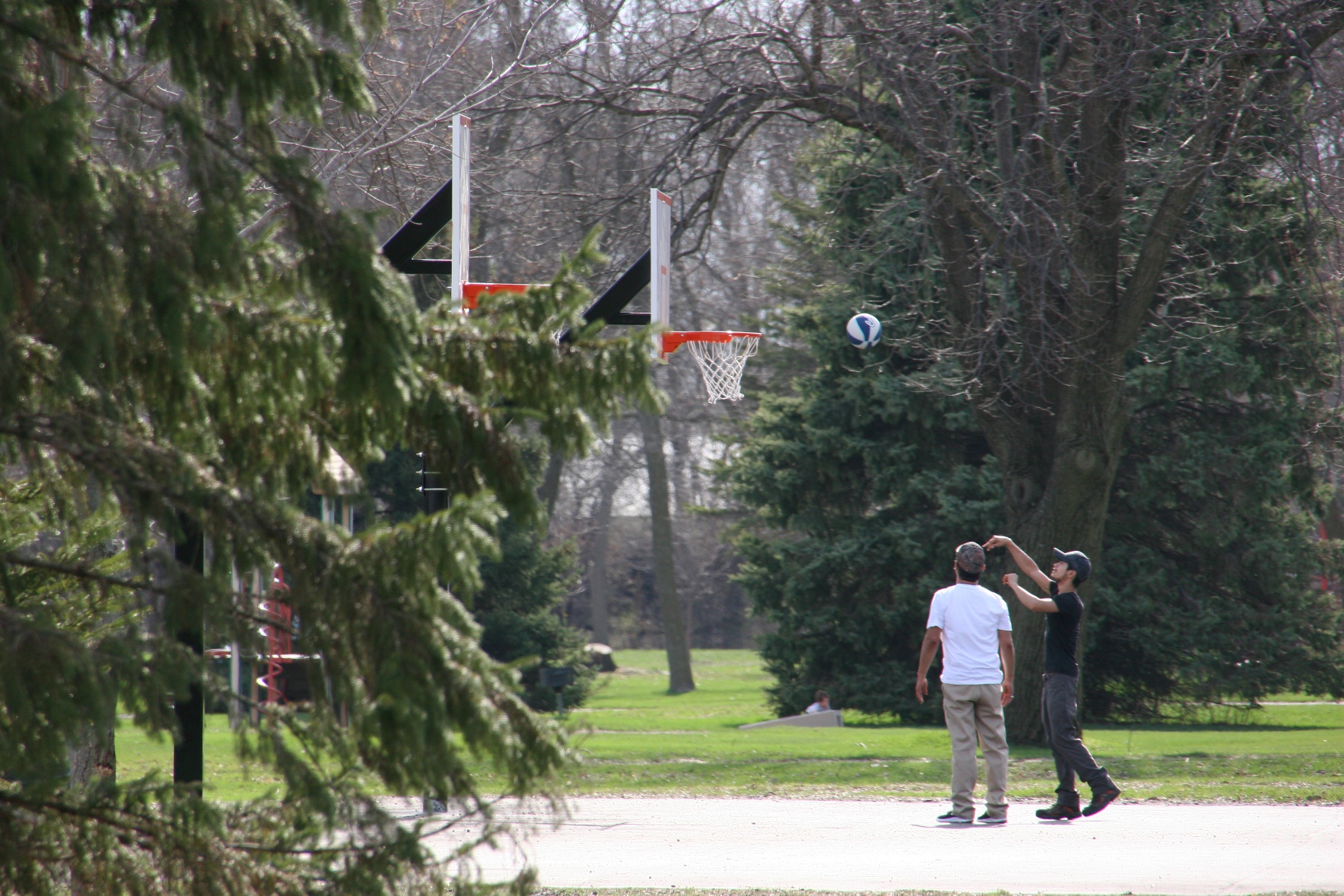
Playing basketball in North Alexander Park, Faribault. (Minnesota Prairie Roots copyrighted file photo)

IMAGINE FOR A MOMENT that I’m a sports reporter. That’s a big ask since I’ve never written a sports story—unless you consider a feature on now WCCO TV sports director Mike Max a sports story. I interviewed Mike, 14, and his brother Marc, 9, in 1979 about their baseball card collection, which numbered in the thousands.

I digress. Today I want to focus on basketball, a game I mostly understand.

Imagine a team driving the ball down the court. Dribbling and passing. Closing in on the basket, a player shoots, but misses. The ball bounces off the backboard into the hands of a teammate. He then shoots and scores to win the game. The player, who’s just come off the bench after recovering from an illness, is suddenly surrounded by cheering fans. All because he caught the rebound.

This recounting is totally fictitious. There was no game. But there was a rebound. Mine. I am currently in the midst of COVID rebound, meaning I have COVID again. Within a week of symptoms abating and testing negative for COVID, I’ve developed symptoms and once again tested positive for the virus.

What are the odds? Some sources say one in five can experience COVID rebound.

So here I am, back in isolation, my body fighting the coronavirus. My symptoms this time are different. This rebound bout started with feeling congested coupled with sneezing, lots of sneezing. Sneezes so strong they could flatten a building. I’m also tired. Symptoms of my initial infection were post nasal drip, sore throat and severe coughing. I took the antiviral Paxlovid, which quickly killed the coughing and, I’m convinced, kept me (along with the vaccine) from getting sicker. I would take Palovid all over again. And, no, the antiviral did not contribute to my rebound case, based on the research I’ve done.

Why did I catch the rebound? Who knows? I’m no athlete. Never have been, never will be.

© Copyright 2025 Audrey Kletscher Helbling