Minnesota Prairie Roots

Writing and photography by Audrey Kletscher Helbling

A glimpse of Northfield on a folk art mural inside the post office February 4, 2025

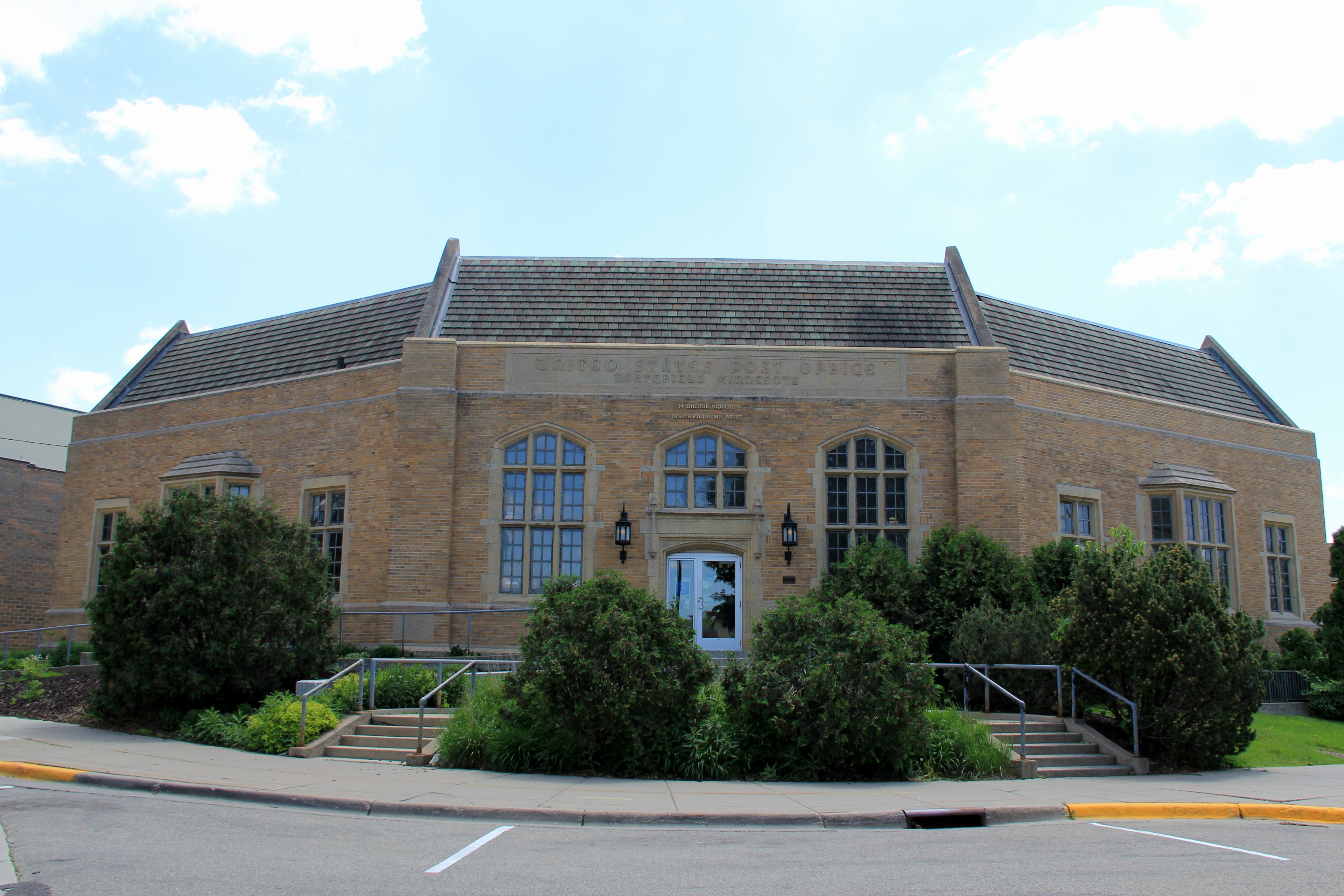
The historic post office in Northfield, Minnesota, holds an art treasure. (Minnesota Prairie Roots copyrighted photo May 2024)

OF ALL THE TIMES I’ve visited neighboring Northfield through the decades, I’d not once stepped inside the downtown Northfield Post Office. Until last May. I’ve frequented Bridge Square across the street, admiring the public art I often find outdoors in this park along the Cannon River. Yet, I never thought to look for art inside the impressive limestone structure angling around a corner of the town center.
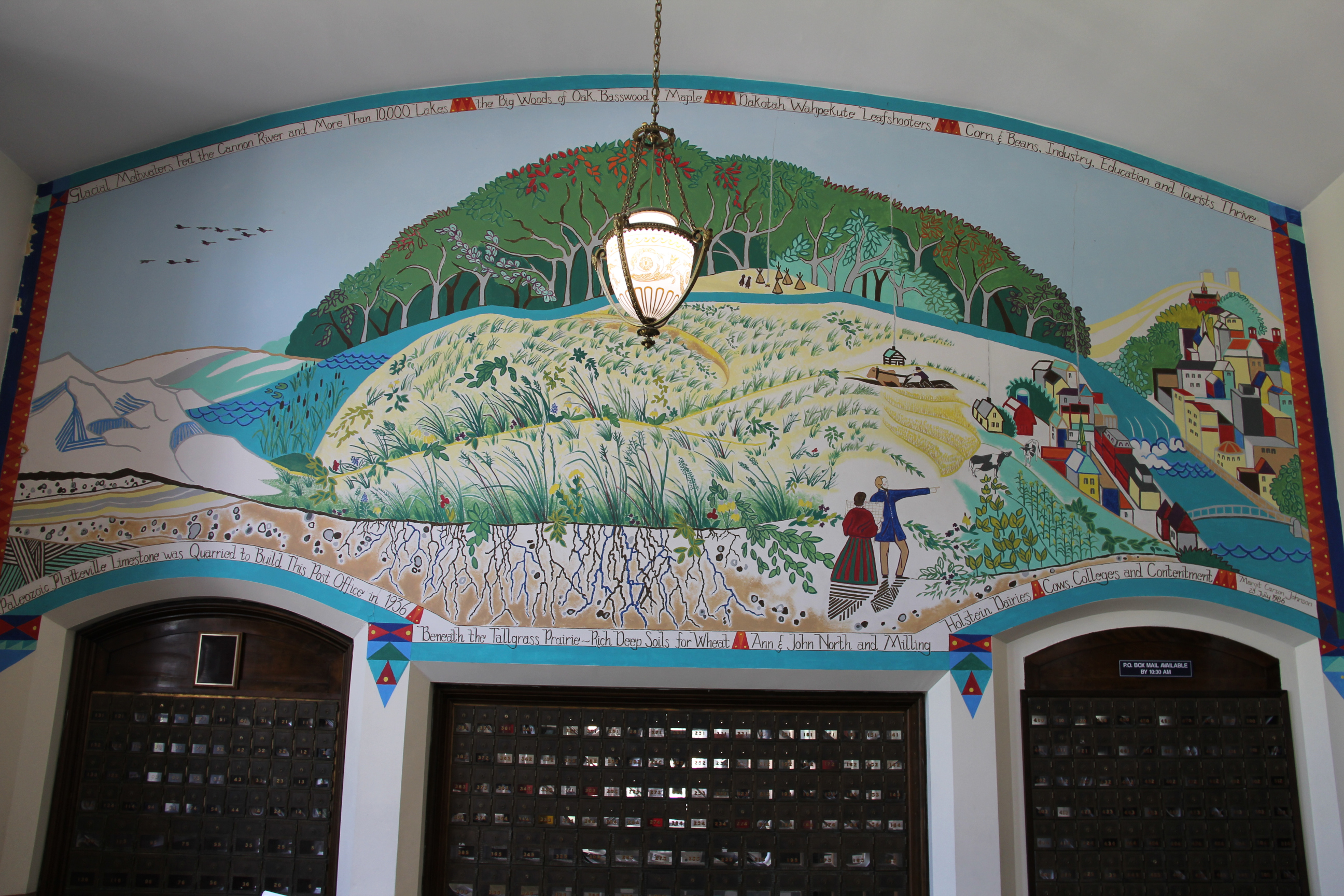
The mural above a row of mailboxes was designed by Margit Carson Johnson. (Minnesota Prairie Roots copyrighted photo May 2024)

But inside the historic 1936 post office, I found a massive piece of public art designed by Northfielder Margit Carson Johnson. The commissioned work defines the essence of Northfield. The city is perhaps most famously known for the townspeople’s defeat of the James-Younger Gang in September 1876 as the outlaws attempted to rob the First National Bank. Johnson’s 1986 mural, though, doesn’t show that. The entire bank robbery history can be learned a few doors down at the former bank site, now the Northfield History Center.
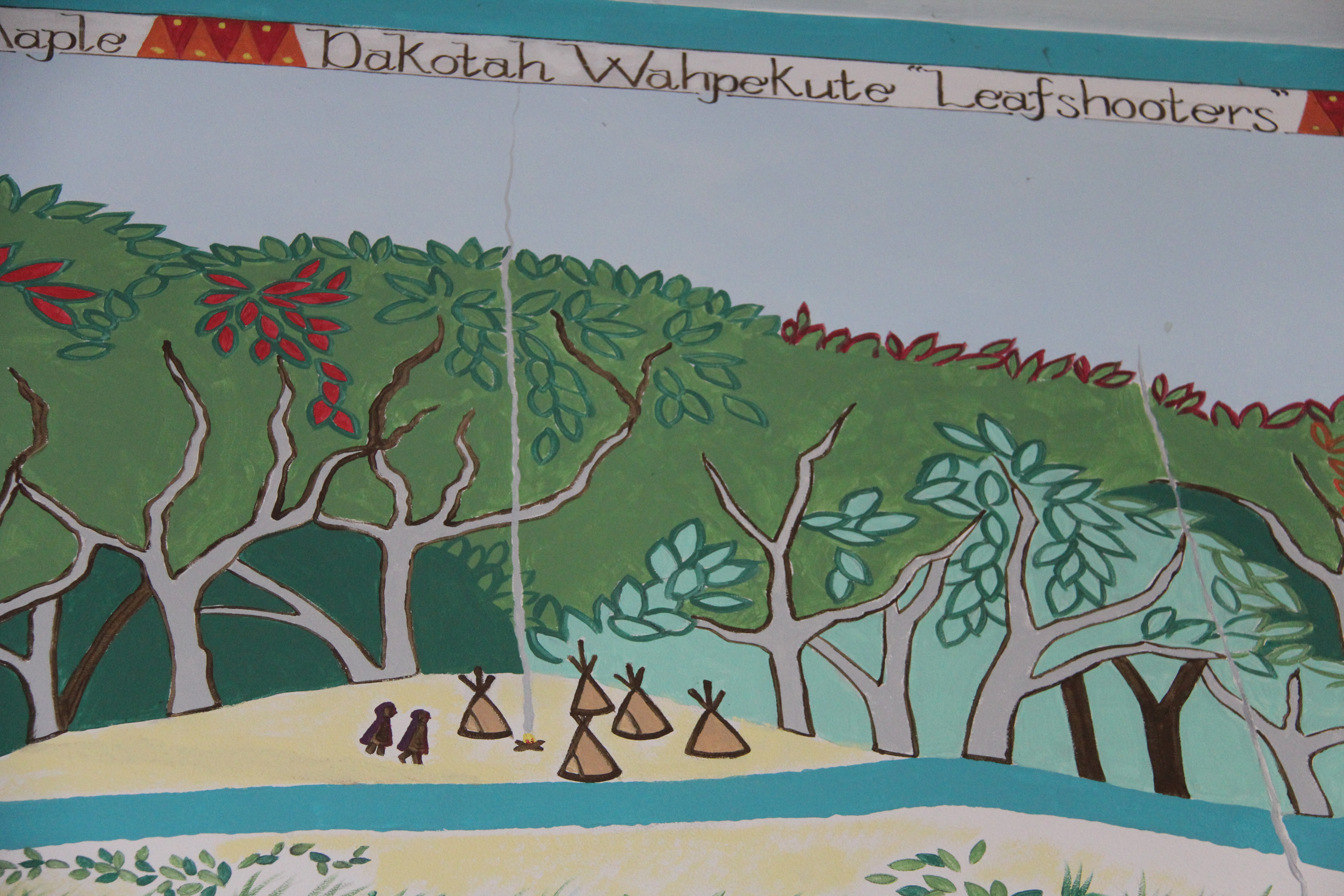
The Dakotah Wahpekute, also known as “Leafshooters,” were the original inhabitants of the land that would become Northfield. (Minnesota Prairie Roots copyrighted photo May 2024)

Rather, the mural on the east side of the post office lobby visually summarizes Northfield’s early history as home to the Dakota Wahpekute, then settlement as a farming (dairy and crop) and milling (flour and sawmills) community, followed by growth as a center for education (St. Olaf and Carleton Colleges), industry (including Post Consumer Brands cereal, formerly Malt-O-Meal) and tourism.
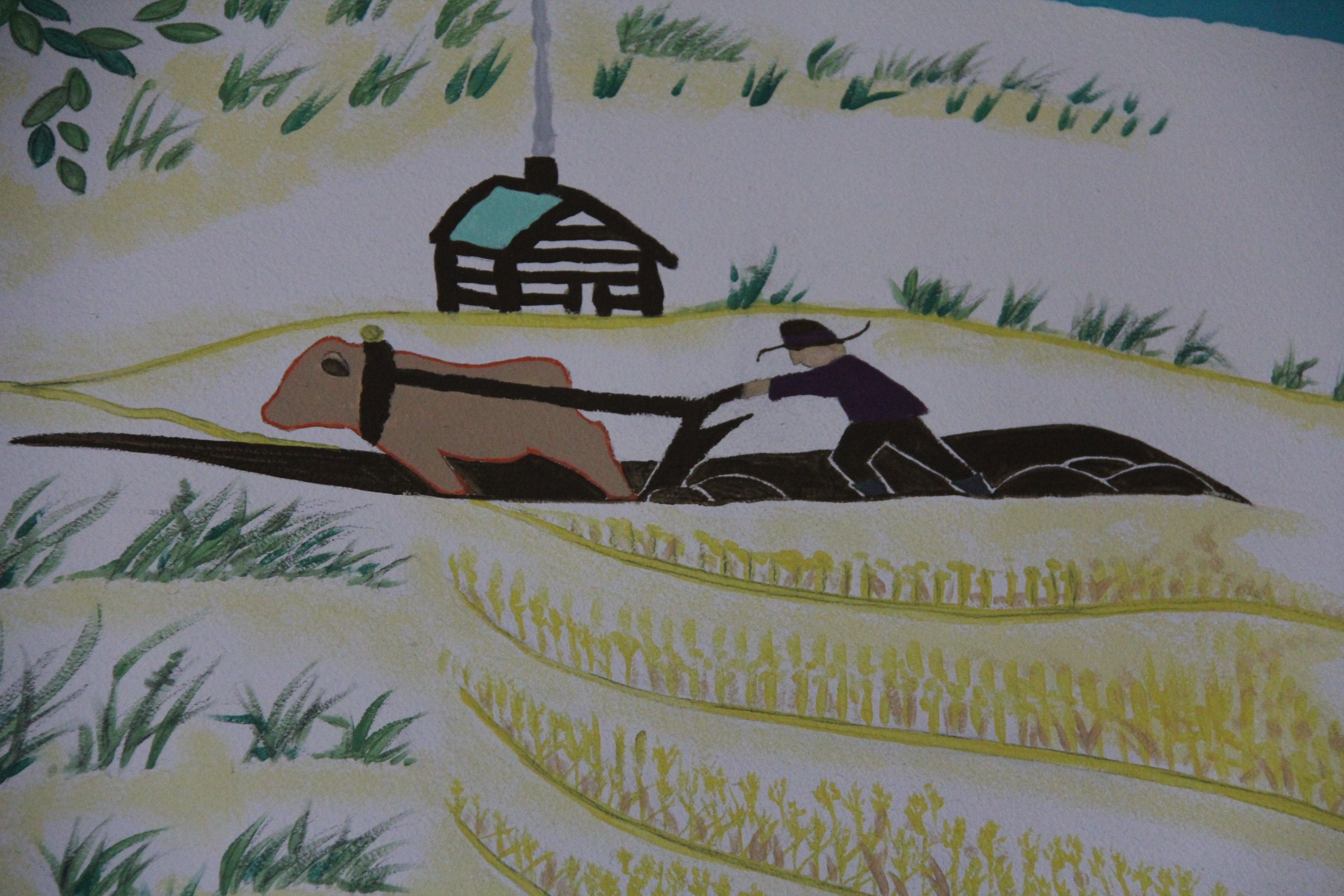
Farmers plowed the prairie grass to seed wheat. (Minnesota Prairie Roots copyrighted photo May 2024)

For anyone who knows little to nothing about Northfield, the folk art style painting completed by a team of volunteers is a good starting point to learn the basics about this community. It’s a visual Cliff Notes type of guide.
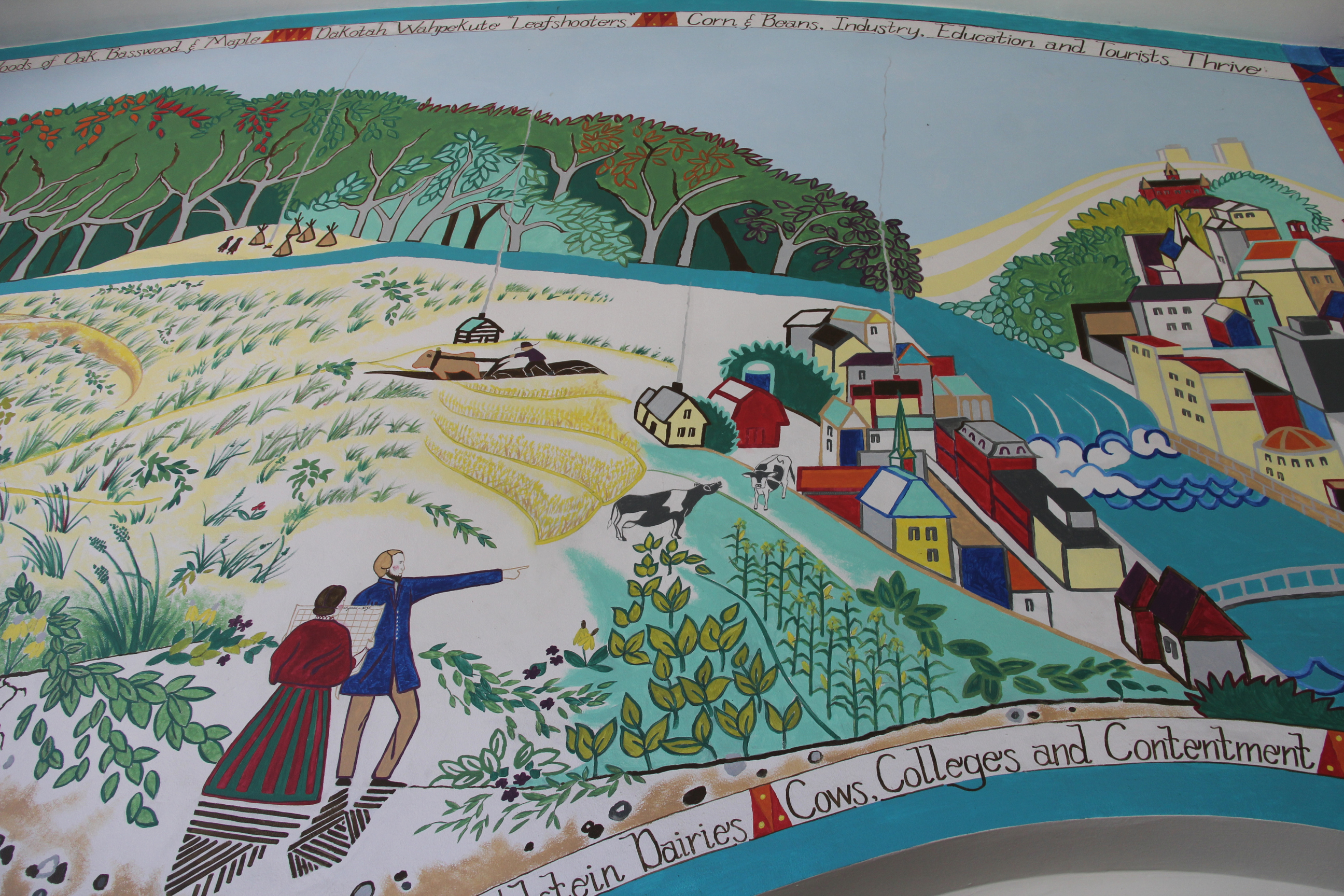
Founders John and Ann North are depicted in the painting of Northfield. (Minnesota Prairie Roots copyrighted photo May 2024)

Like many early Minnesota settlements, rivers and railroads determined the location for new towns. Northfield sits along the Cannon River, a source of water power for early milling and a route for trade. Today the river continues to center this community, creating a picturesque and engaging downtown core with businesses along Division Street backing to the river. A River Walk leads locals and visitors riverside to appreciate the natural beauty of water flowing through Northfield.
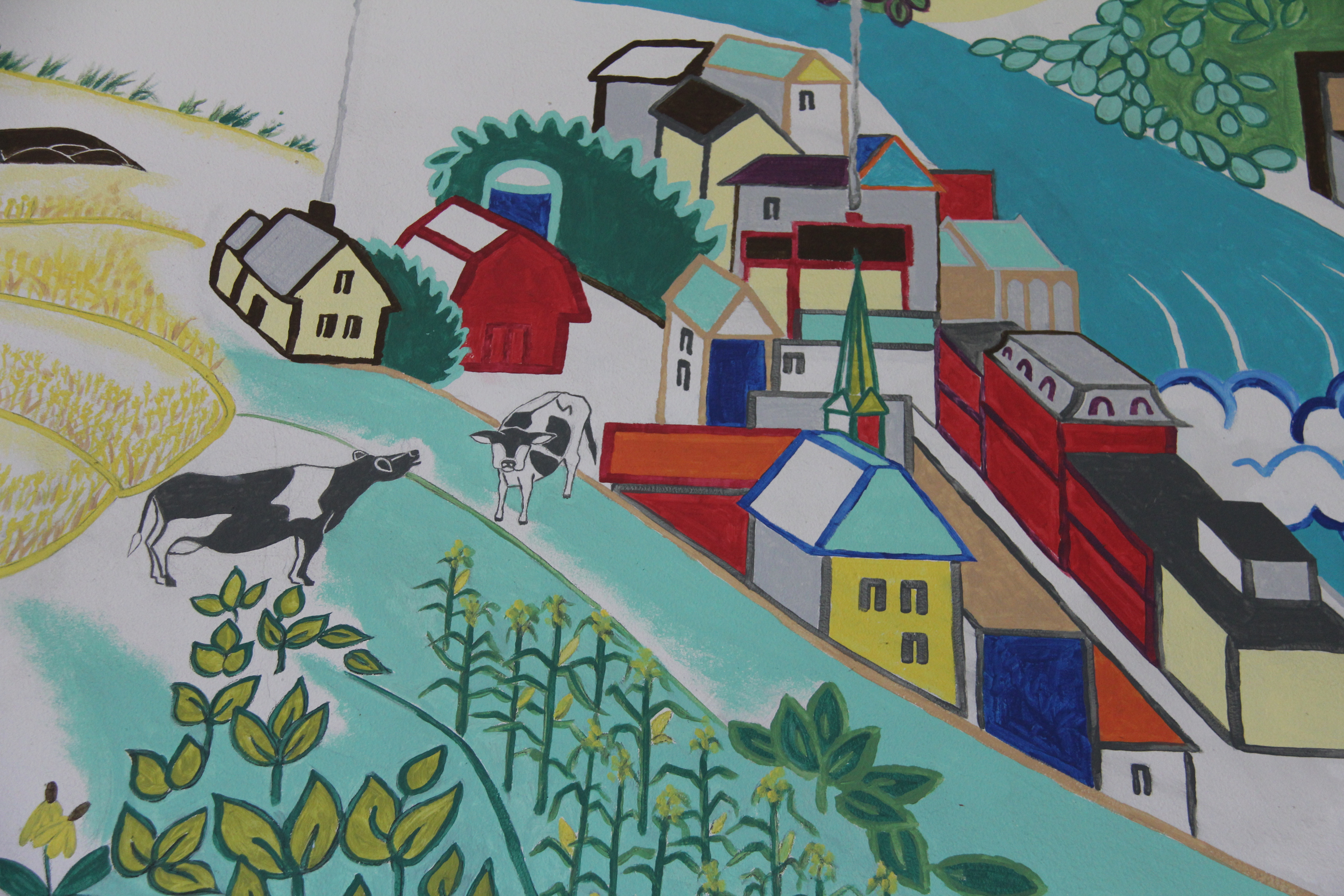
My favorite part of the mural, probably because I grew up on a dairy farm, shows Holsteins. The buildings are actual buildings in Northfield, including the historic Archer House, destroyed in a fire several years ago. (Minnesota Prairie Roots copyrighted photo May 2024)

I love Northfield, once promoted with the theme of “Cows, Colleges and Contentment.” It’s still that, although with fewer dairies than once defined the area. Today the local tourism website tags Northfield as “Close to Home/Far From Ordinary.” That fits, too.
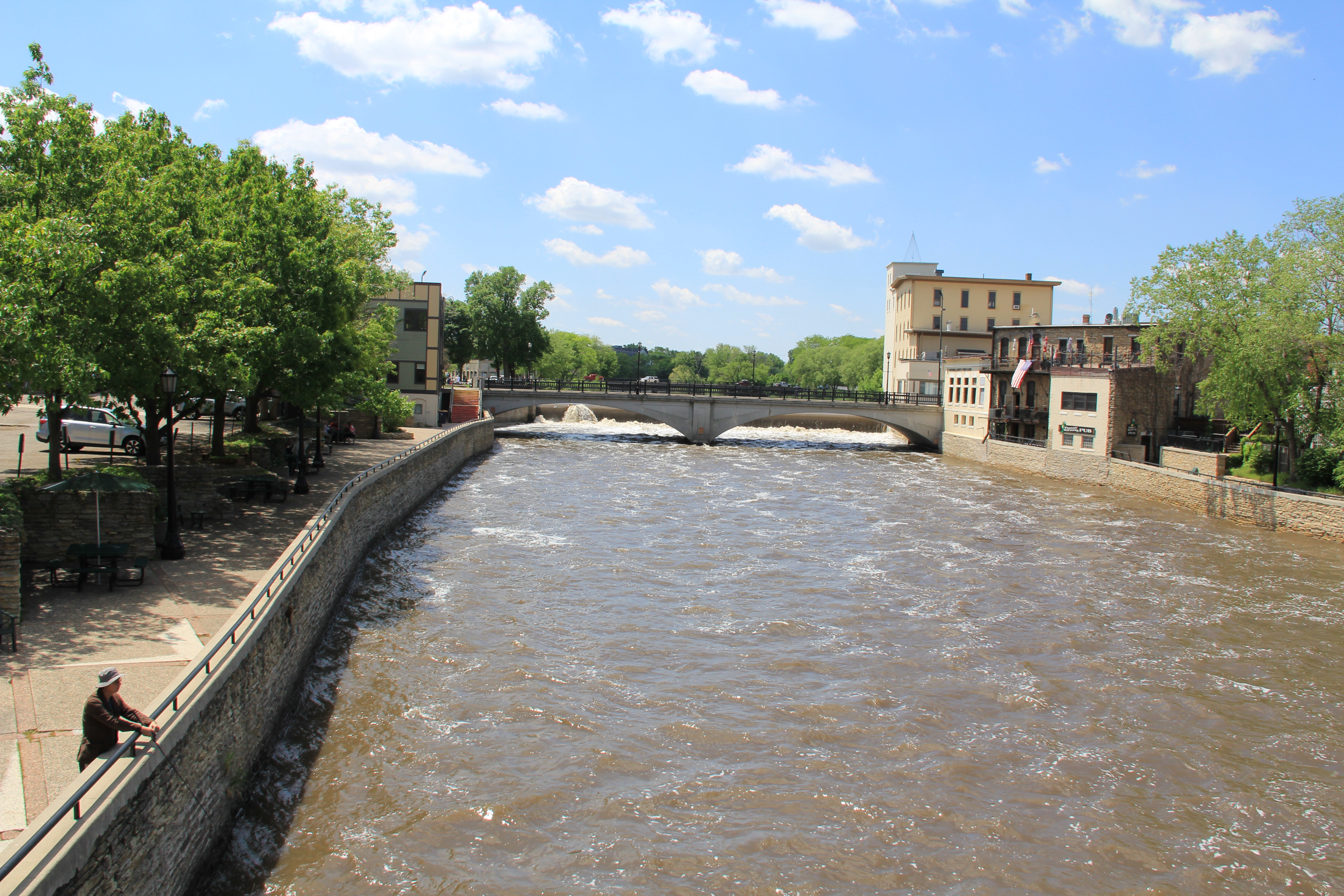
A view of the River Walk and the historic Ames Mill (to the right in the distance) from the pedestrian bridge spanning the Cannon River in the heart of downtown Northfield. (Minnesota Prairie Roots copyrighted file photo May 2024)

Northfield ranks as a popular tourist destination with its James-Younger connection and its many home-grown shops housed in historic buildings in a downtown that fits the definition of “charming.” The setting is decidedly comfortable and homey and as picturesque as a Norman Rockwell painting. There’s a seasonal popcorn wagon in Bridge Square, anglers fishing along the river, an old-fashioned barbershop with barber pole…
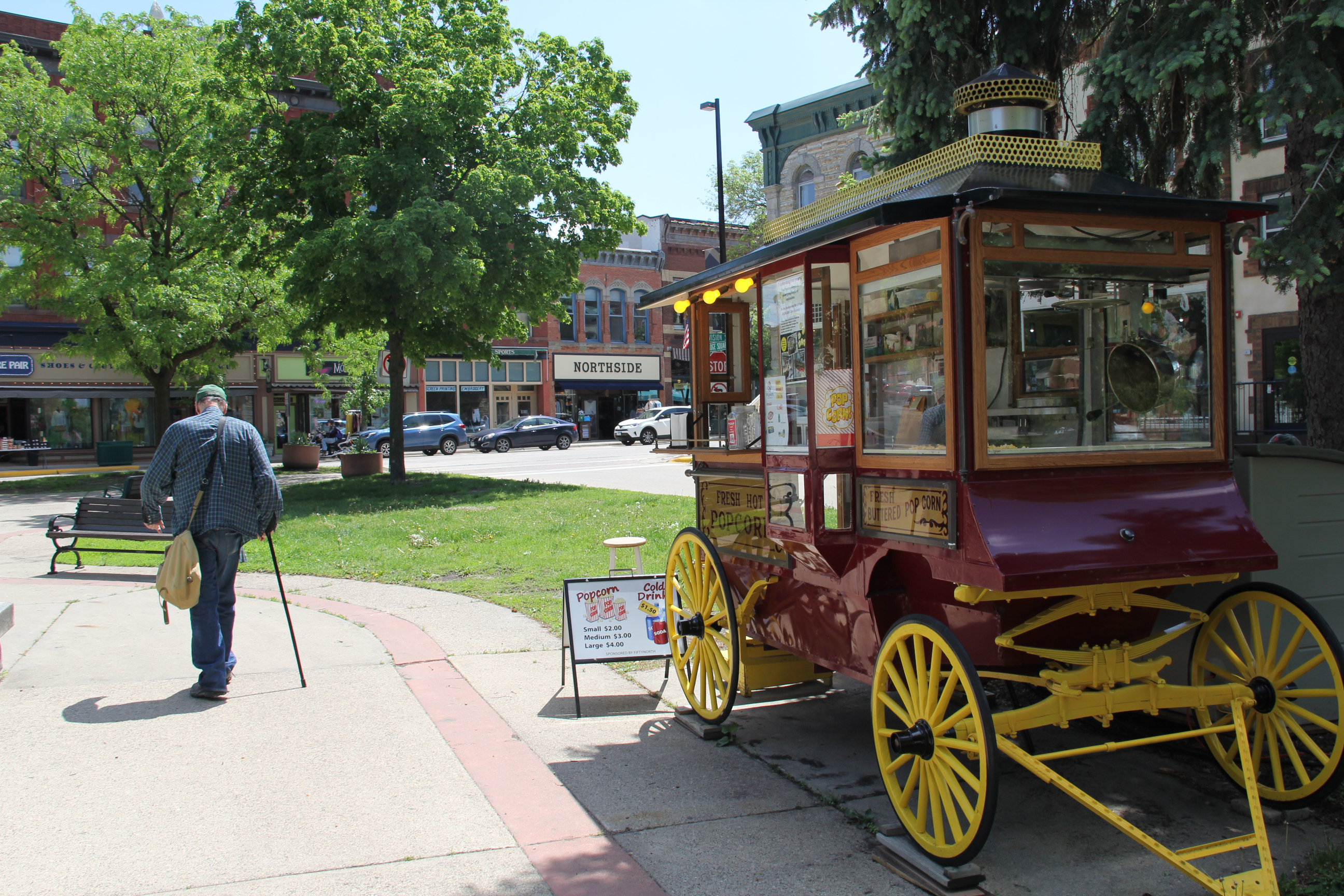
Northfield’s much-beloved seasonal popcorn wagon at Bridge Square. (Minnesota Prairie Roots copyrighted file photo May 2024)

There’s a strong sense of community and of community pride in Northfield. Art matters here. From riverside murals to poetry imprinted upon sidewalks to artwork showcased inside the Northfield Arts Guild to theatre, concerts and much more (including at the two colleges) the arts flourish.
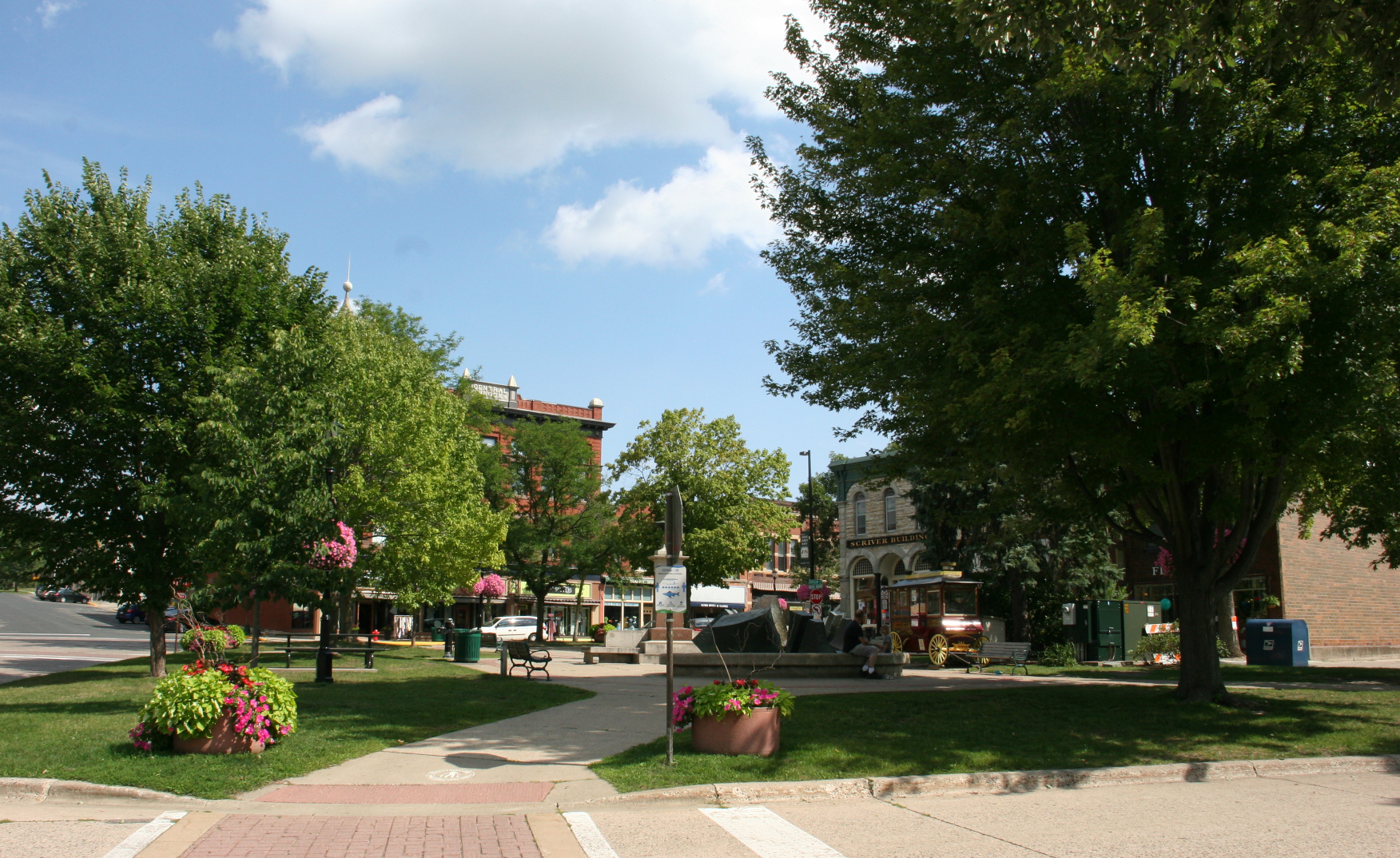
Beautiful Bridge Square, Northfield’s town center. (Minnesota Prairie Roots copyrighted file photo August 2022)

And inside the aged, massive post office, once slated for closing, the folk art mural designed by Margit Carson Johnson stretches above a wall of mailboxes to reveal the core story of Northfield. From the Big Woods to the once glacial meltwater-fed Cannon River, from the Wahpekute to dairy farmers, from tallgrass prairie to the city it is today, Northfield thrives.

© Copyright 2025 Audrey Kletscher Helbling


An African spiritual plus my thoughts during Black History Month February 3, 2025

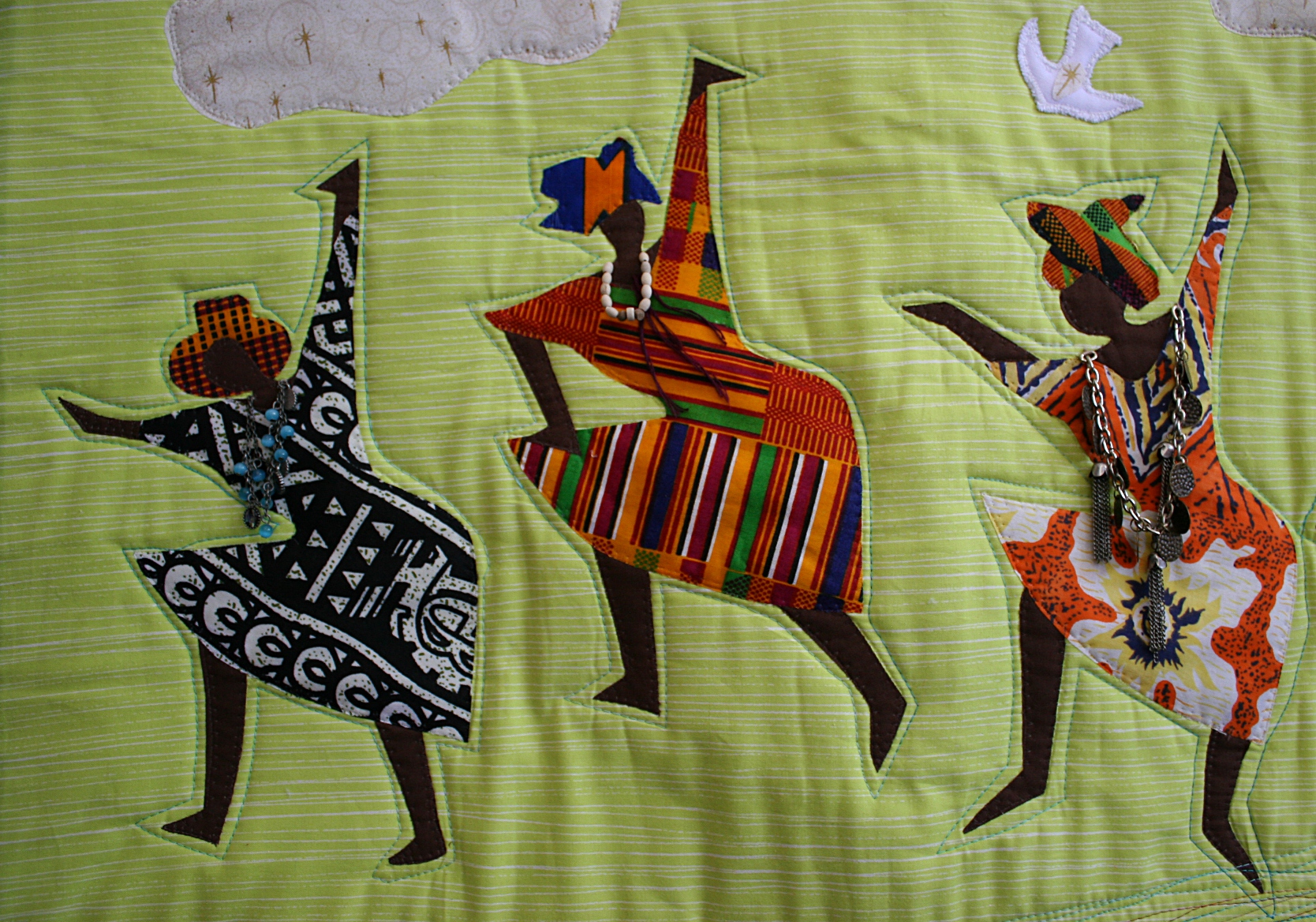
This Nigerian-themed quilt art was created years ago by my friend Susan. The art reflects to me the joy of an African spiritual. The fabric came from Nigeria, where Susan’s father-in-law served as a Lutheran missionary. (Minnesota Prairie Roots copyrighted file photo)

THE SONG WAS UNEXPECTED during Sunday morning worship at the conservative Lutheran church I attend in Faribault. But it was fitting for the day and for my feelings, which have leaned deeply into discouragement recently.

The African American spiritual, “There Is a Balm in Gilead,” proved a temporary balm for my soul. The old school word “balm” holds a healing connotation. The song’s refrain encourages: There is a balm in Gilead to make the wounded whole. There is a balm in Gilead to heal the sin-sick soul.

As I sang the refrain, I wondered, what or where is Gilead? Later research revealed that, during Old Testament days, Gilead was a mountainous region east of the Jordan River and an important source of medicinal herbs. That makes sense as it relates to the lyrics.

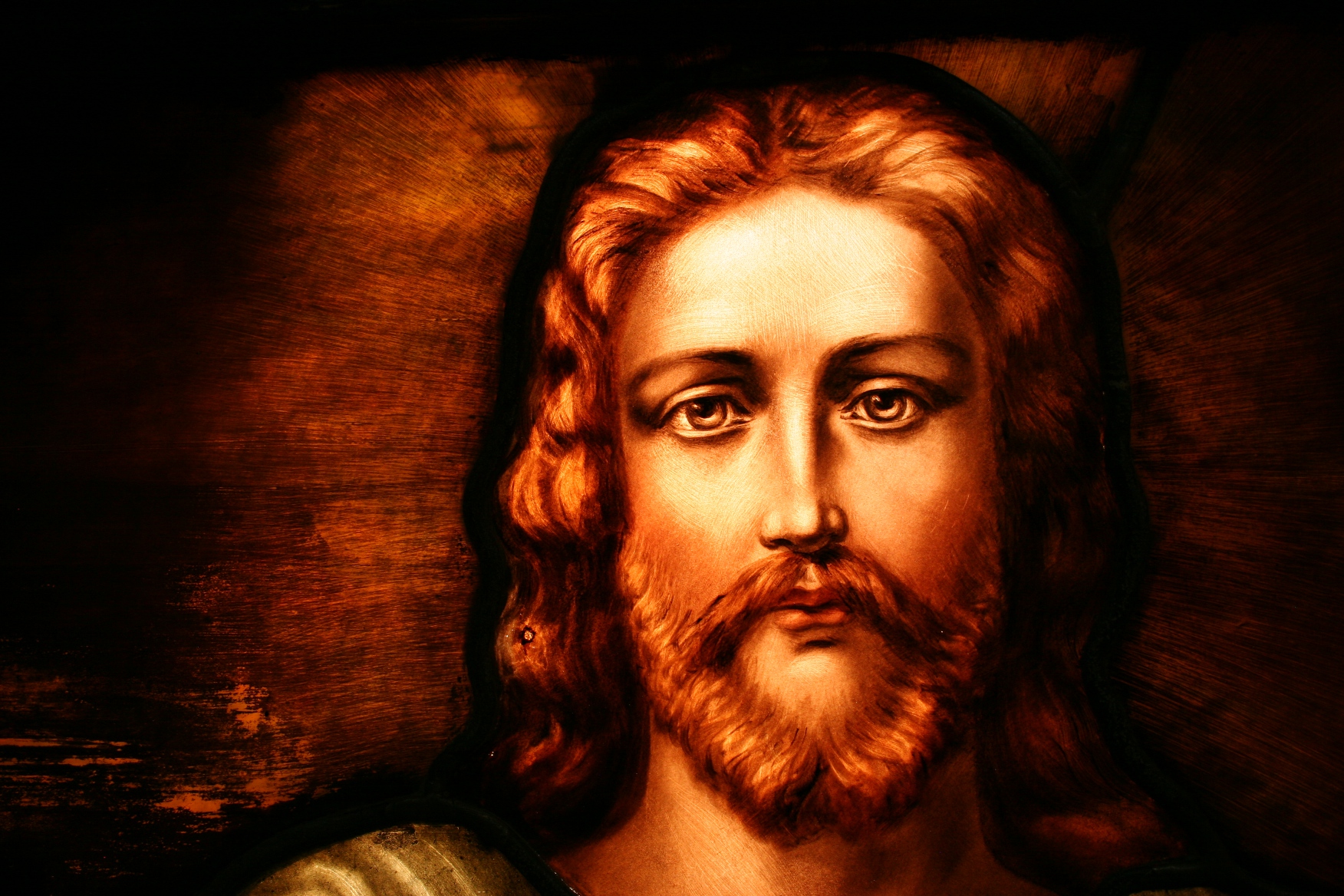
Christ’s face in a stained glass window in the sanctuary of my church, Trinity Lutheran, Faribault. (Minnesota Prairie Roots copyrighted file photo)

In the New Testament, “balm of Gilead” refers not to an herb which heals physically, but to Jesus through whom spiritual healing comes. That also makes sense as it relates to lyrics of the song printed on page 749 of the Lutheran Service Book.

Events of recent weeks in this country have me feeling apprehensive, unsettled, worried, in need of a healing balm. I know I am not alone in these feelings as we face economic challenges, upheaval, chaos and uncertainties on endless levels. Each day seems to bring something of new concern. No matter where you stand politically or spiritually, you have to feel the tension and uncertainties in this country.

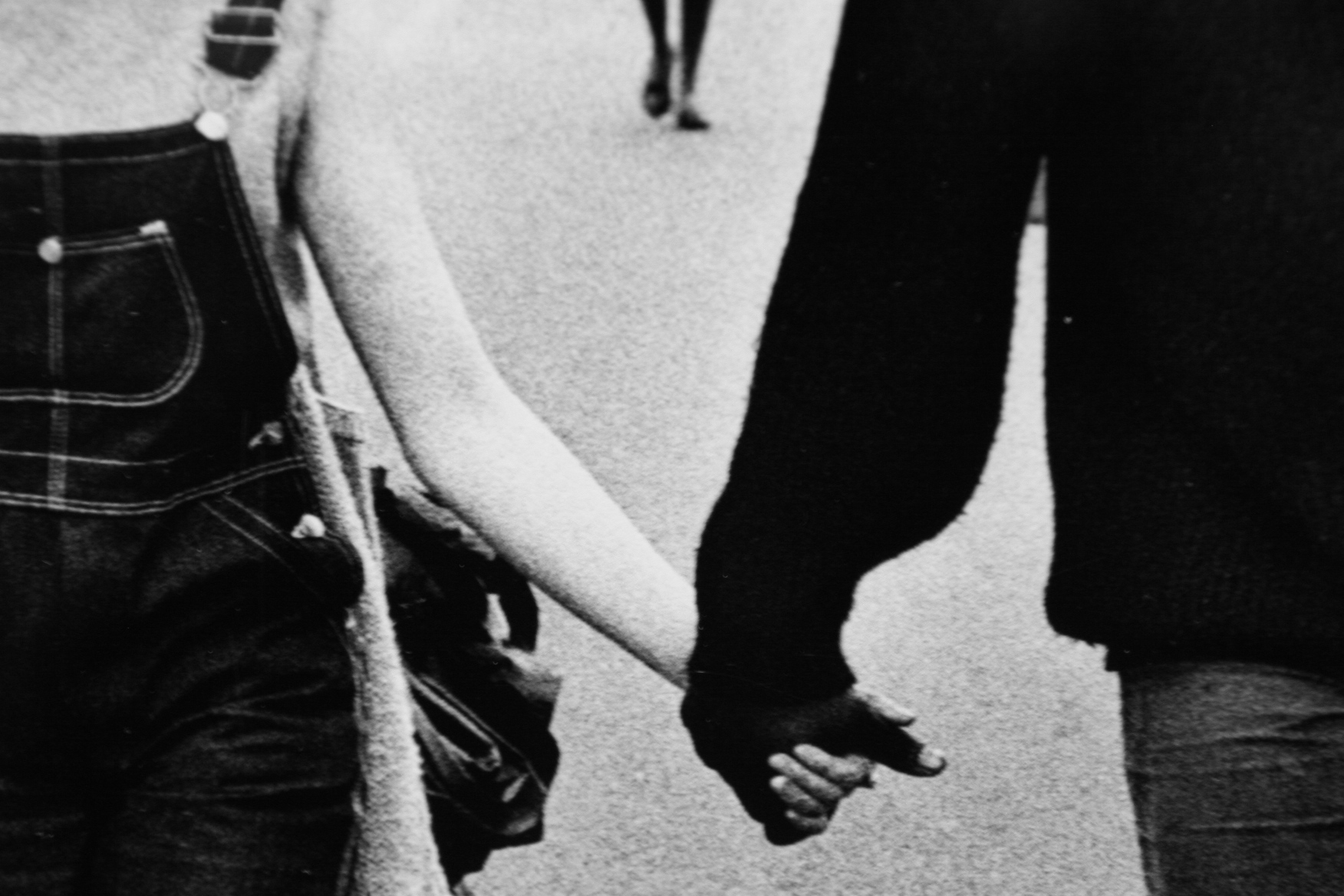
A snippet of a photo by Stephen Somerstein from the exhibit, “Selma to Montgomery: Marching Along the Voting Rights Trail,” which I saw at St. Olaf College in Northfield, Minnesota, in 2015. (Minnesota Prairie Roots copyrighted file photo)

On Sunday, as I sang the African American spiritual, I allowed myself to be swept into the healing words of hope and comfort. It was not lost on me that, sitting on the end of my pew, was a family of mixed race—an African American father, White mother and three biracial children, one a darling baby boy of ten months. I thought of my own newborn grandson, who is mixed race. What does the future hold for these two little boys? Will they face challenges simply because of their skin color? I’d like to think not. But…

And I thought, too, of the new calendar month of February, in which we celebrate Black History Month, focusing on Black history, culture and education. I reflect on slavery, on Civil Rights leaders, on racial disparities, diversity, equity and inclusion, wondering how I, personally, can educate myself and make a difference.

A message left by a visitor to the Selma exhibit at St. Olaf College. It’s so applicable to today. (Minnesota Prairie Roots copyrighted file photo)

It truly does start with each of us standing up for what is good and right and decent and not going along with what we know in our hearts, minds and souls to be wrong. And then, maybe then, we’ll find our balm in Gilead.

© Copyright 2025 Audrey Kletscher Helbling
 

Revisiting the Surf Ballroom in Clear Lake, Iowa, & “the day the music died” January 30, 2025

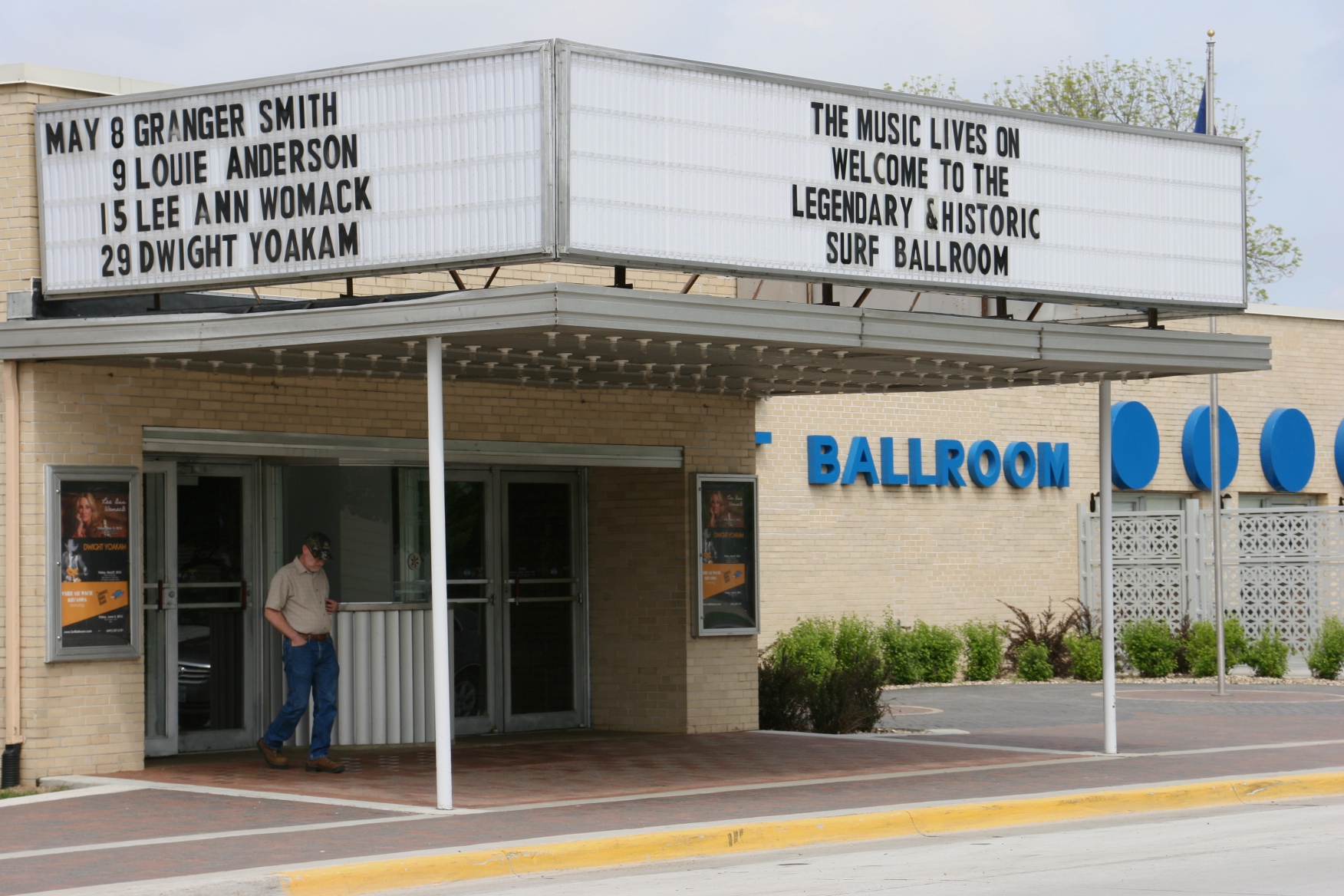
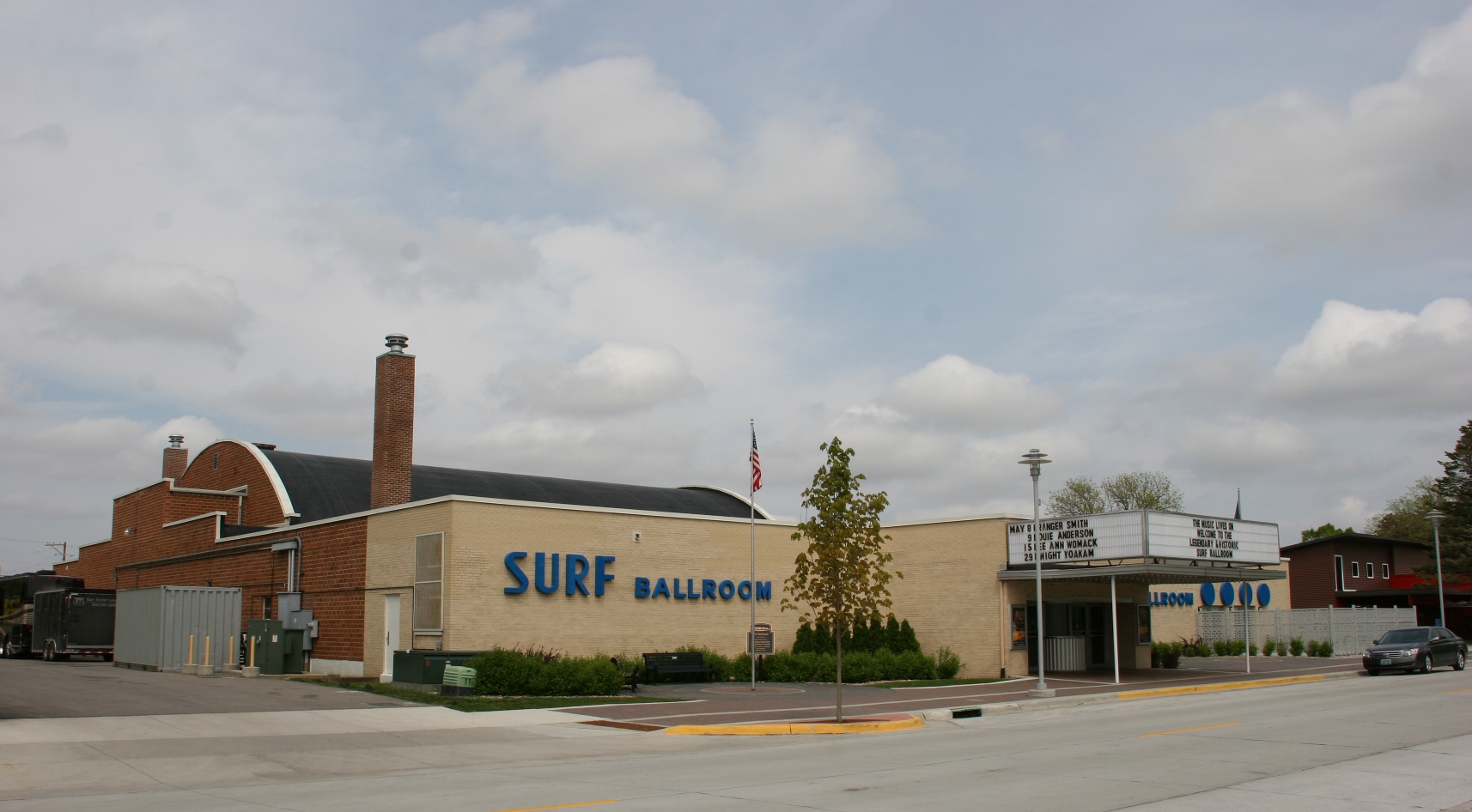
The Surf Ballroom in Clear Lake, Iowa, seats 2,100. (Minnesota Prairie Roots copyrighted file photo May 2015)

A TIME EXISTED when ballrooms centered weekend entertainment and socializing across southern Minnesota: The Monterey Ballroom in Owatonna, no longer a dance hall, but an event center. The Kato Ballroom in Mankato, today primarily a place for banquets, wedding receptions and meetings. The Gibbon Ballroom in Gibbon, once the site of Polka Days, now closed. George’s Ballroom in New Ulm, demolished. The Blue Moon Ballroom in Marshall, destroyed in a 1981 fire. Ballrooms, as they once were in their heyday, are mostly non-existent or altered in usage.

Inside the Surf Ballroom, portraits of Ritchie Valens, left to right, Buddy Holly and J.P. Richardson. (Minnesota Prairie Roots copyrighted file photo May 2015)

But just across the border along Interstate 35 in northern Iowa, an historic ballroom remains open and going strong. That’s the Surf Ballroom in Clear Lake, an 84-mile or one hour and 15-minute drive from my community of Faribault. I’ve been there. Not to dance. But to tour the venue that marked the final performance site for Buddy Holly, Ritchie Valens and J.P. “The Big Bopper” Richardson on February 2, 1959.

This display inside the Surf references “American Pie.” Displays like this line spaces in the museum part of the Surf. (Minnesota Prairie Roots copyrighted file photo May 2015)

The next morning, a chartered plane carrying the trio crashed in a field shortly after take off from the Mason City Municipal Airport, killing the musicians and pilot, Roger Peterson. February 3, 1959, was, according to singer and songwriter Don McClean, “the day the music died.” The tragedy is forever immortalized in McClean’s 1971 “American Pie,” a lengthy song I know well given I was a teen of the 70s.

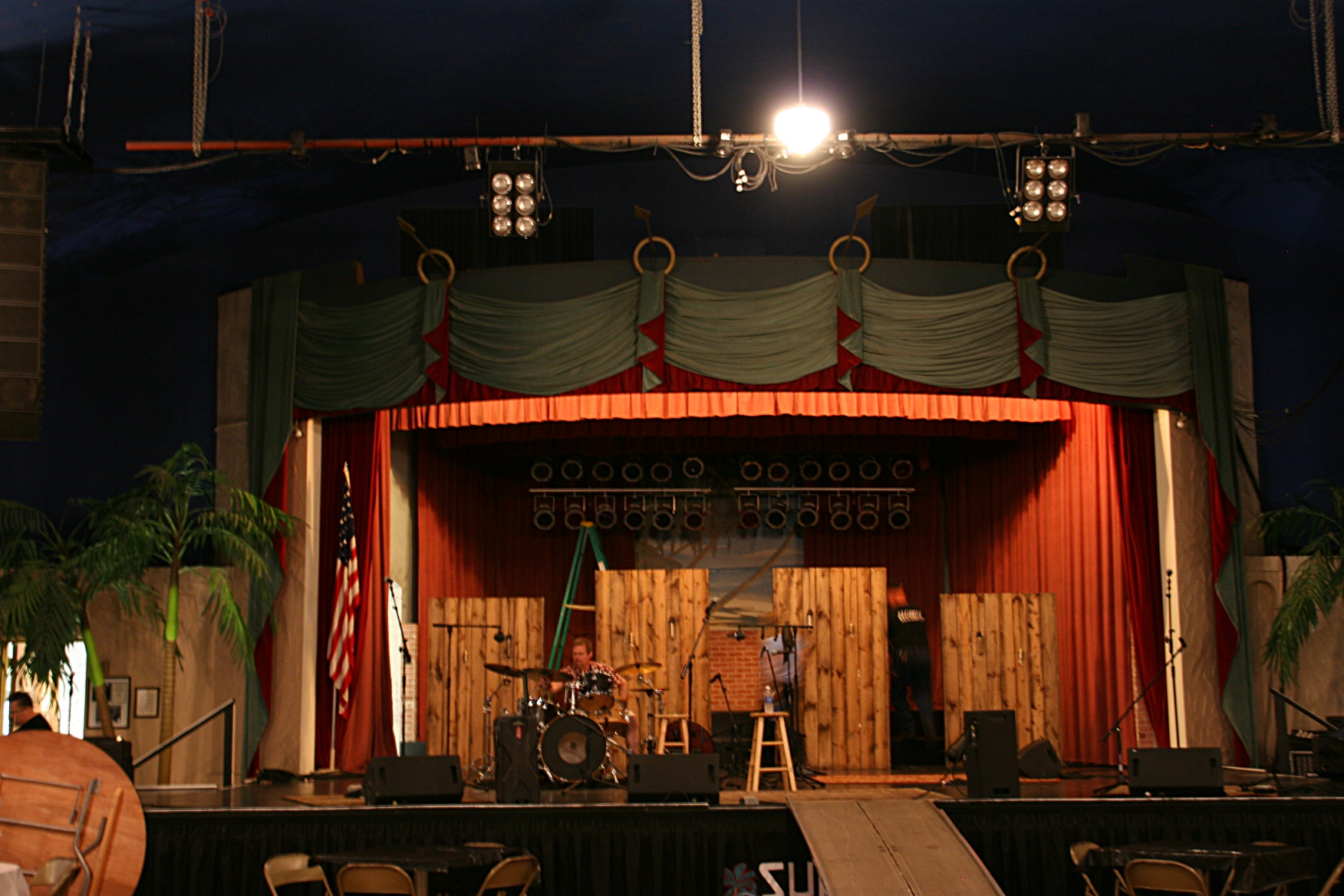
The ballroom stage, where a crew was setting up for a LeeAnn Womack concert during my visit. (Minnesota Prairie Roots copyrighted file photo May 2015)

Ten years have passed since I visited the Surf Ballroom. But nearly every January, I mentally revisit that experience of walking onto the wooden floor of the iconic ballroom and immersing myself in yesteryear. It’s not that I’m a big Buddy Holly fan or even into music all that much. But I can appreciate the significance of this place in rock ‘n roll history.

In the back of the ballroom are layers of booths, all original. (Minnesota Prairie Roots copyrighted file photo May 2015)

The three musicians, plus Dion and the Belmonts, Frankie Sardo, Waylon Jennings, Tommy Allsup and Carl Bunch, were on a 24-day Winter Dance Party tour through Minnesota, Wisconsin and Iowa when they so tragically died. They had been crisscrossing the Midwest in a tour bus, playing in big cities like Milwaukee, Green Bay, St. Paul and Duluth, but also in smaller towns like Montevideo and Mankato in southern Minnesota. That Mankato performance was January 25 at the Kato Ballroom. Following the February 2 gig in Clear Lake, Holly decided to charter a small plane rather than endure the 364-mile bus ride to Moorhead for the next stop on the tour. That decision proved fatal.

The marquee advertises upcoming events on the day I visited in May 2015. (Minnesota Prairie Roots copyrighted file photo May 2015)

The Winter Dance Party continues to this day at the Surf Ballroom as a way to honor the rock ‘n roll legends. This year’s celebration is January 30 – February 1. Closer to home, the Paradise Center for the Arts in Faribault is hosting “Buddy Holly: Oh Boy!” at 7:30 p.m. Friday, January 31. The next day, Saturday, February 1, the show will be at the State Street Theater in New Ulm at 7 p.m. This is a re-staging of Holly’s Winter Dance Party.

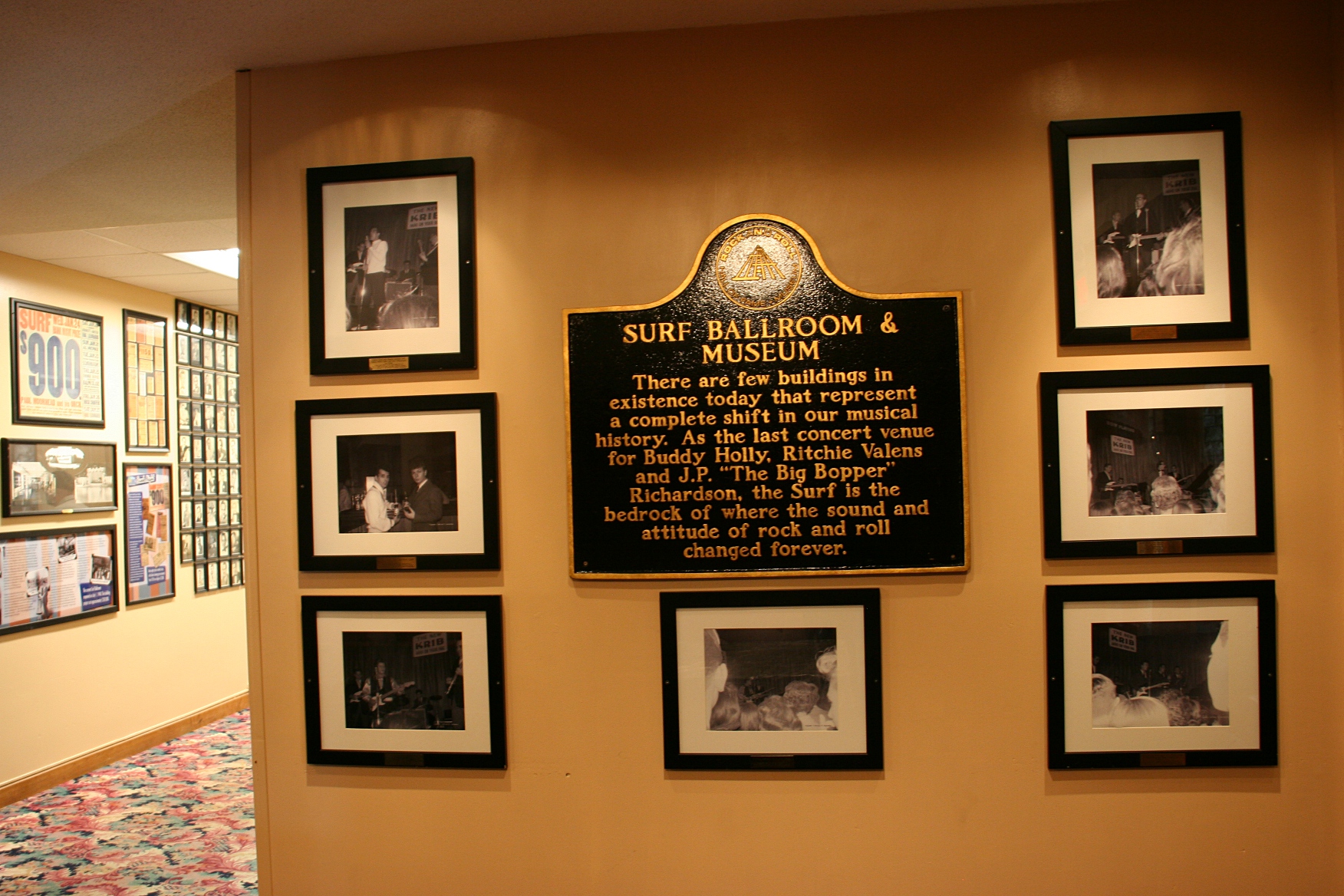
This sign inside the front entry summarizes the importance of the Surf. (Minnesota Prairie Roots copyrighted file photo May 2015)

Whether you’re a fan of Buddy Holly or not, I think it’s important to recognize the significance he held in American rock ‘n roll culture. Music, in many ways, is like an historical account of life. It carries messages, entertains, connects us to memories and events, and touches us emotionally. And when the music died on February 3, 1959, the nation cried.

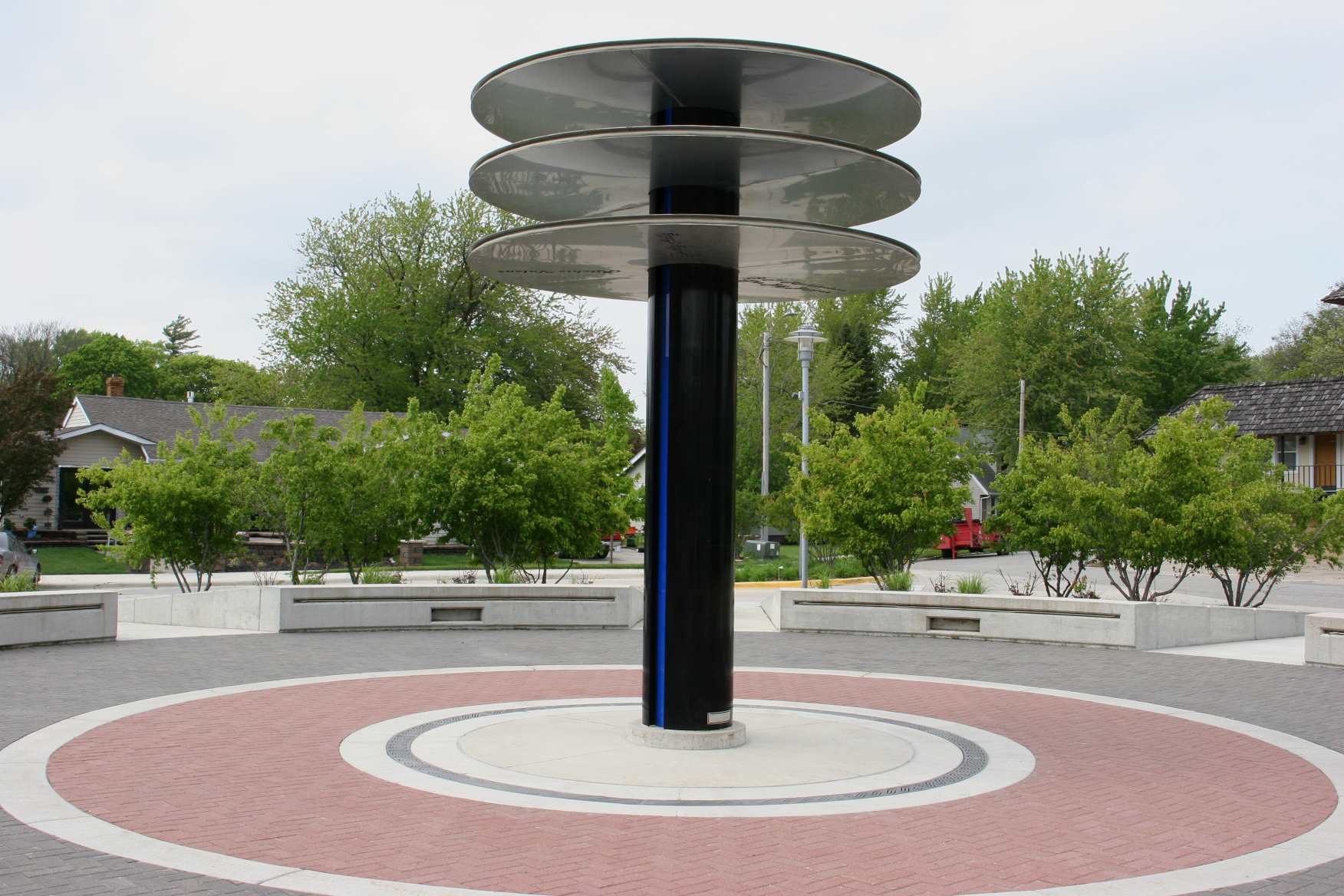
This stacked album sculpture in Three Stars Plaza honors Buddy Holly, Ritchie Valens and J.P. “The Big Bopper” Richardson. (Minnesota Prairie Roots copyrighted file photo May 2015)

FYI: The Surf Ballroom/Museum is open year-round Monday – Friday with additional times during the summer. Always check ahead before visiting as the ballroom can be closed if there’s a rental or concert. Additional related sites are Three Stars Plaza near the Surf and the crash site, about five miles distant.

© Copyright 2025 Audrey Kletscher Helbling
 

Name that Minnesota snowplow January 29, 2025

Blowing snow reduces visibility along Rice County Road 25/197th Street East near Faribault on January 18, 2020. (Minnesota Prairie Roots copyrighted file photo 2020)

WITH THE LONG WINTERS we have here in Minnesota, we find creative ways to get through this lengthy, lingering season. That includes naming our state-owned snowplows.

It’s that time of year again when voting opens in the Minnesota Department of Transportation’s Name That Snowplow Contest. Yup, we started naming our snowplows in 2020. Not all of them, of course, because MnDOT has a large fleet of big orange snowplows. Rather, eight names are selected for a snowplow in each of MnDOT’s eight districts.

The contest, and, yes, this is a contest, garnered more than 7,300 submissions for the 2024-2025 season. Guidelines called for witty, unique and Minnesota or winter-themed names. Rules banned profanity, political connections (thank you, MnDOT) and such. In other words, Minnesotans needed to exercise Minnesota Nice in suggesting snowplow names.

In a nod to Taylor Swift, a snowplow in MnDOT’s District 2 was named Taylor Drift in the 2024 contest. (Photo credit: Minnesota Department of Transportation)

MnDOT staff reviewed the submitted names and narrowed the choices to 50. How would you like that job? Now the public has until noon on Friday, February 7, to vote for up to eight names. Just like in any election, you can vote only once. But not at the ballot box. Vote online.

Scrolling through the list of names, I picked my favorites. Now, if my choices influence your picks, I offer no apologies. You can vote your conscience.

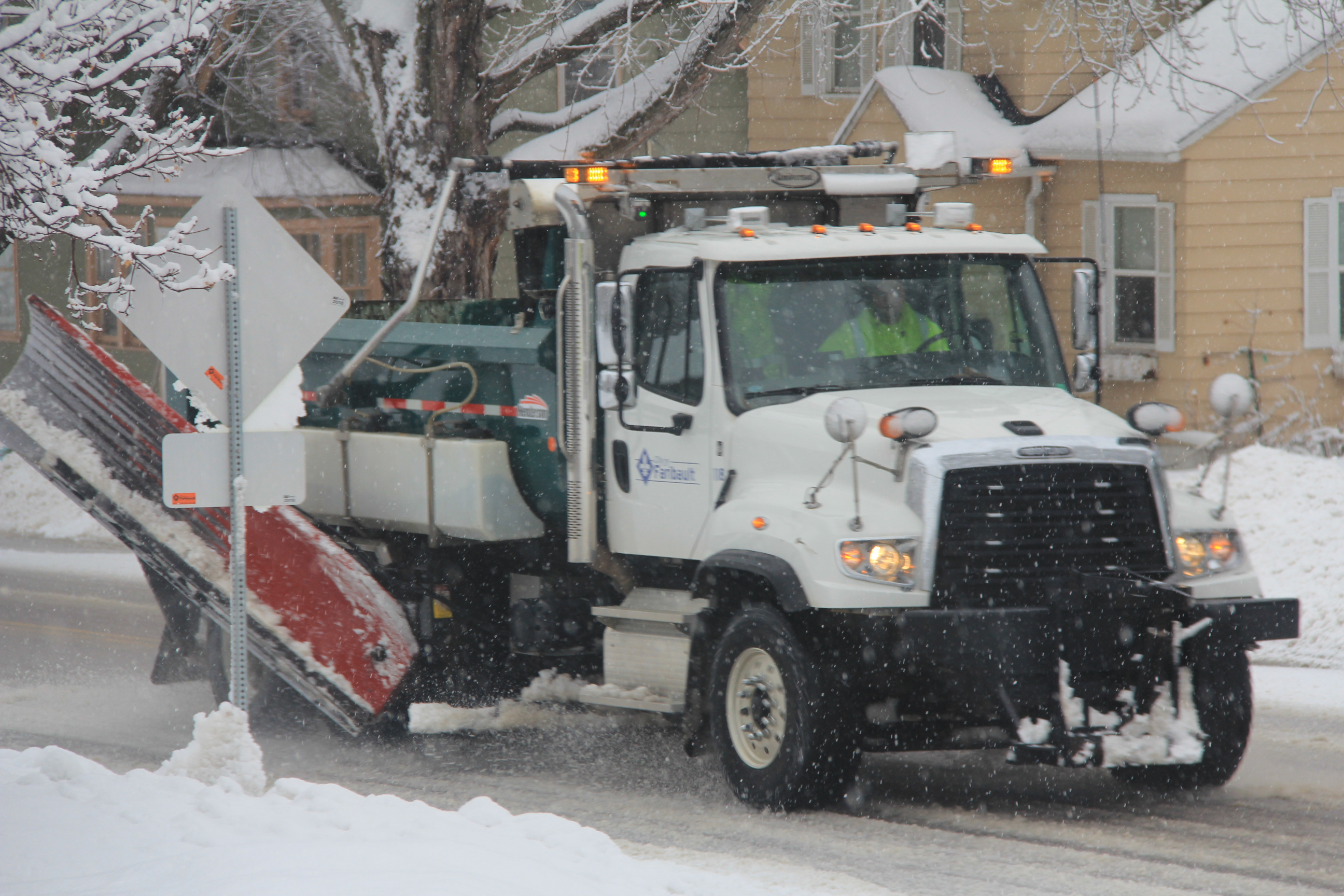
A City of Faribault truck plows snow in the winter of 2023. (Minnesota Prairie Roots copyrighted file photo 2023)

I’m voting for these names, listed in alphabetical order and followed by my reasons for selecting them:

Bob Chillin’—A tribute to native son, singer, songwriter and poet Bob Dylan, who is not a complete unknown.

Catch My Drift—Just because it’s catchy and this is what snowplows do, especially on my native prairie.

Little Plow on the Prairie—A nod to author Laura Ingalls Wilder and the TV series, Little House on the Prairie, set in Walnut Grove, Minnesota (the show, not the book).

Make Snowbegone—A reference to writer Garrison Keillor’s fictional Lake Wobegon and also the way many Minnesotans feel in the deep of a snowy winter.

MinneSNOWta N’ice—Obviously referring to Minnesota weather and the “Minnesota Nice” moniker tagged to Minnesotans.

SKOL Plow—Even if the Minnesota Vikings did not get to the Super Bowl (again), we remain (mostly) loyal to our team and are fond of our Scandinavian cheer chant, SKOL!

Snow Place Like Home—A clever twist on the phrase, “There’s no place like home” from The Wizard of Oz. Judy Garland, Dorothy in the film, was born Frances Ethel Gumm in Grand Rapids, Minnesota.

We’re Off To See the Blizzard—And, yes, that would be a spin off “We’re off to see the wizard (of Oz).” Snowplows are, indeed, sometimes off to see the blizzard.

There you go. Exercise your right to vote in a nonpartisan election. Just for fun. To vote, click here.

© Copyright 2025 Audrey Kletscher Helbling
 

Inspiring garden rocks kindness in Pine River January 28, 2025

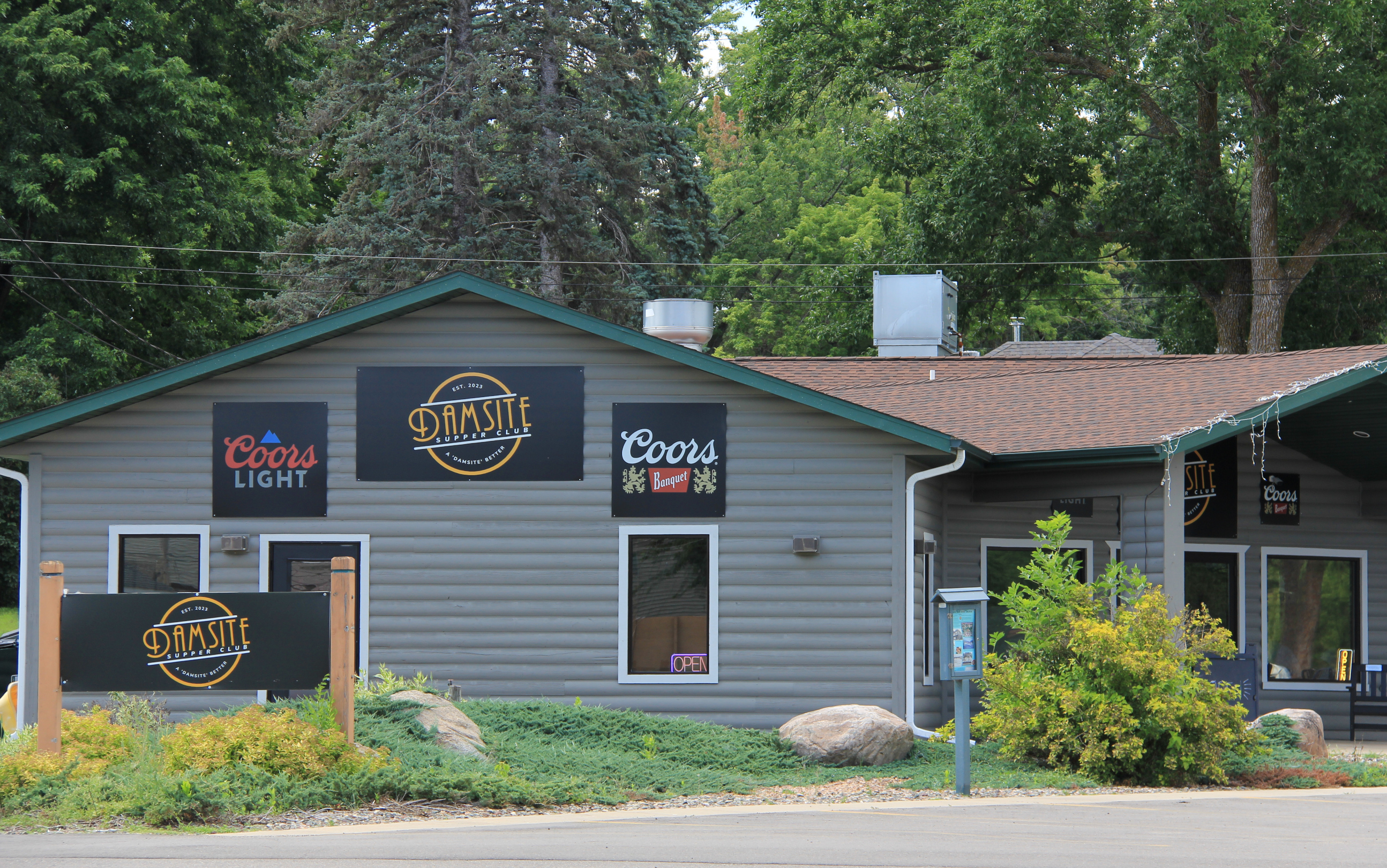
The Damsite Supper Club in Pine River, Minnesota. (Minnesota Prairie Roots copyrighted photo July 2024)

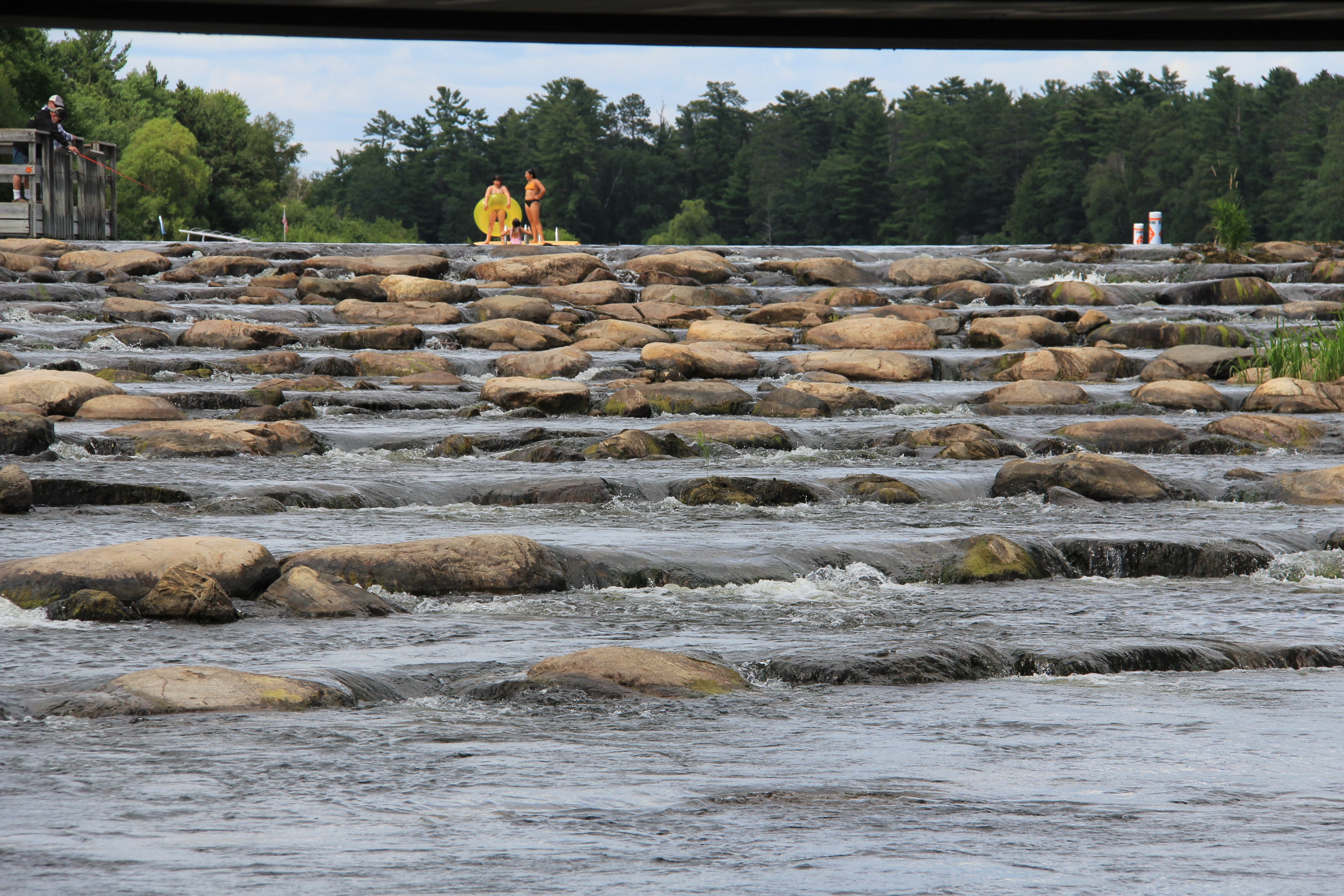
SIX MONTHS AGO, Randy and I met friends, Sue and Charley, for lunch in Pine River while vacationing in the north central Minnesota lakes region. We enjoyed our meals and conversation at the Damsite Supper Club, which really isn’t a supper club by my definition, but which serves damn good food. It sits across the road from the Pine River Dam, thus the restaurant name.

A section of the beautiful rock riffle dam on the Pine River. (Minnesota Prairie Roots copyrighted photo July 2024)

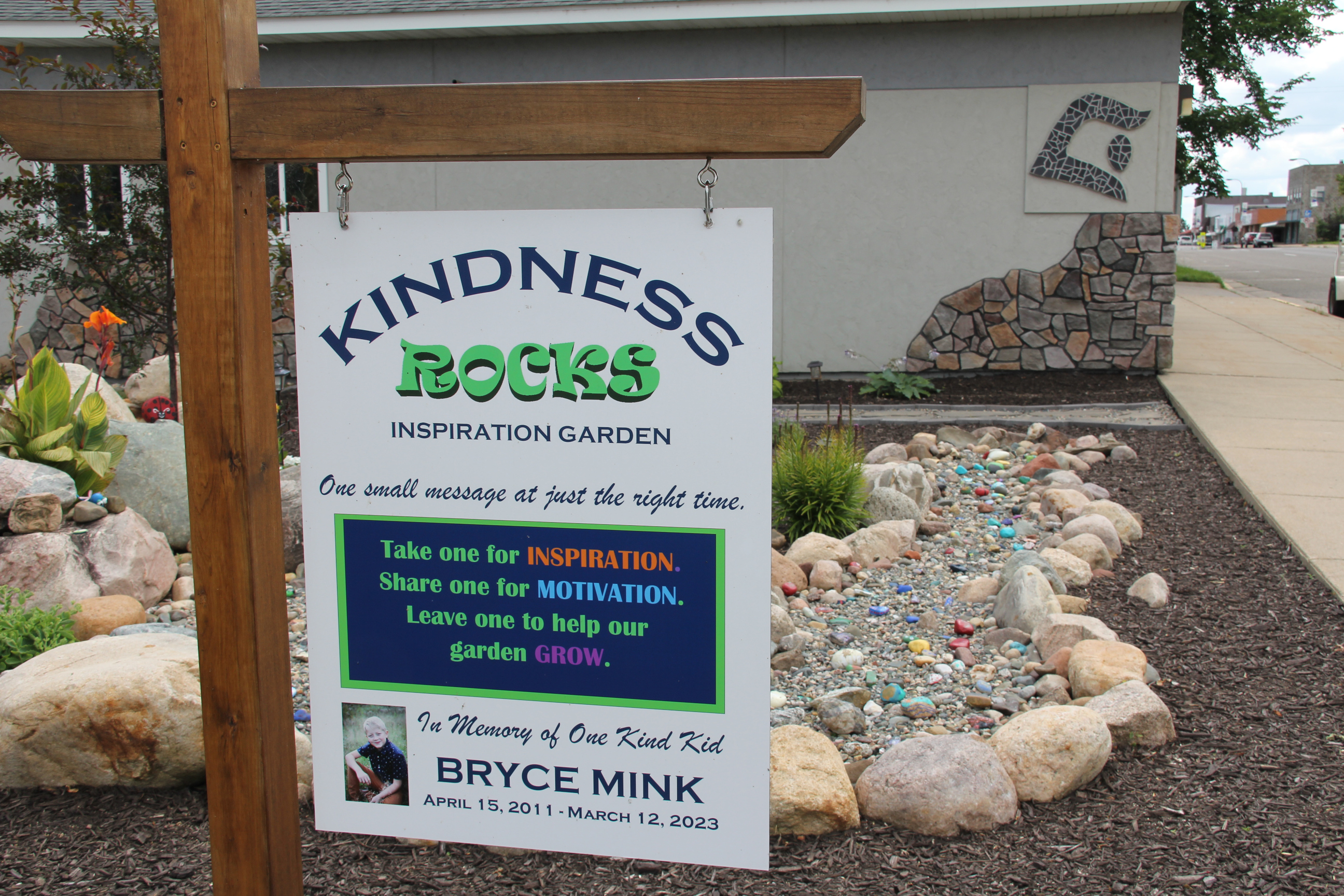
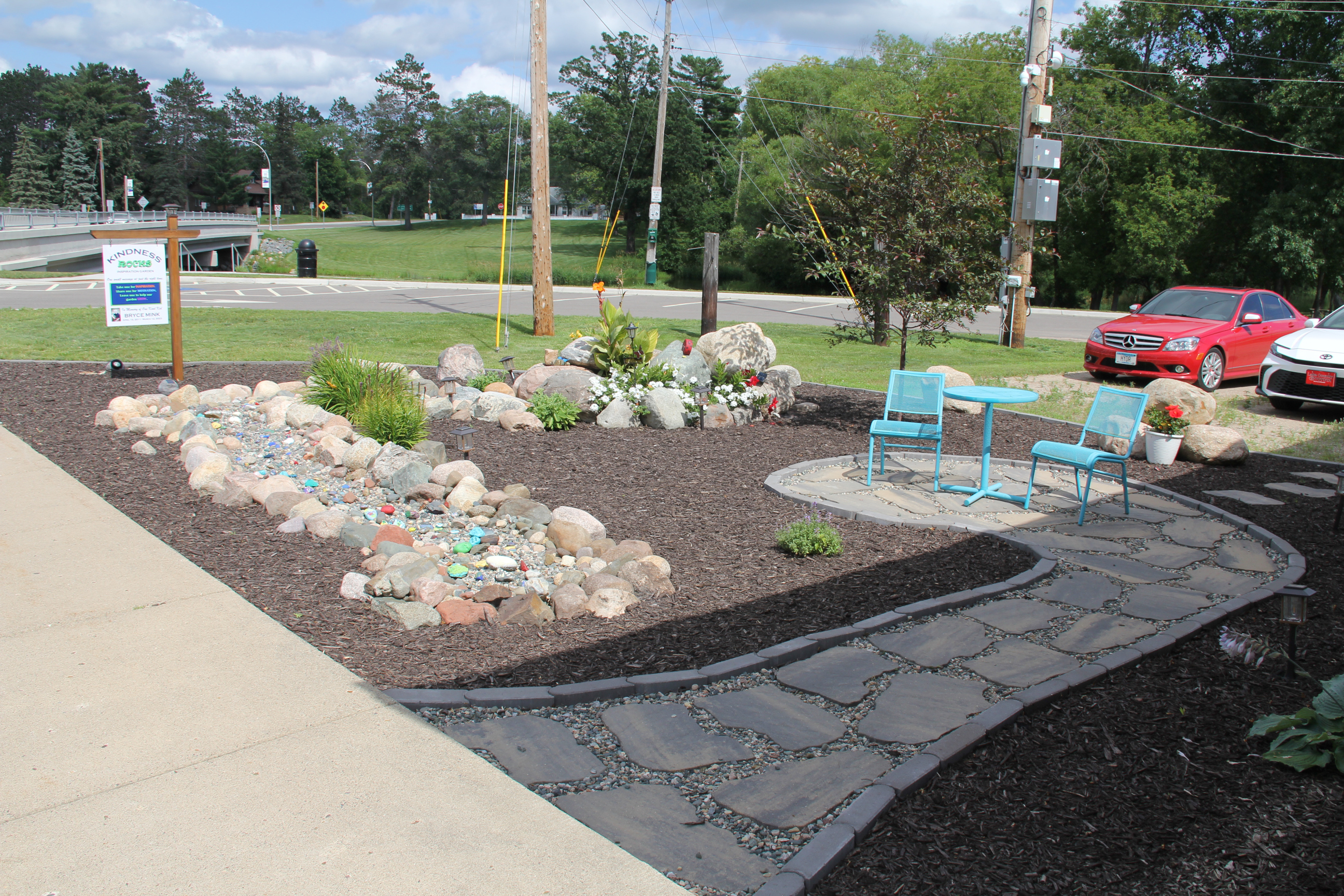
Afterwards, our friends headed back to their Hackensack home while we poked around Pine River. I love exploring small towns for all the treasures they hold. And Pine River holds many, starting with the Kindness Rocks Inspiration Garden, just across from the supper club and river bridge.

The kindness garden celebrates kindness and Bryce Mink. (Minnesota Prairie Roots copyrighted photo July 2024)
This is what it’s all about–love and loving one another. (Minnesota Prairie Roots copyrighted photo July 2024)
In a bend of the rock river by the lily, a memorial stone quotes Christopher Robin in A.A. Milne’s “Winnie the Pooh”: “Promise me that you’ll always remember that you’re braver than you believe, stronger than you seem and smarter than you think.” (Minnesota Prairie Roots copyrighted photo July 2024)

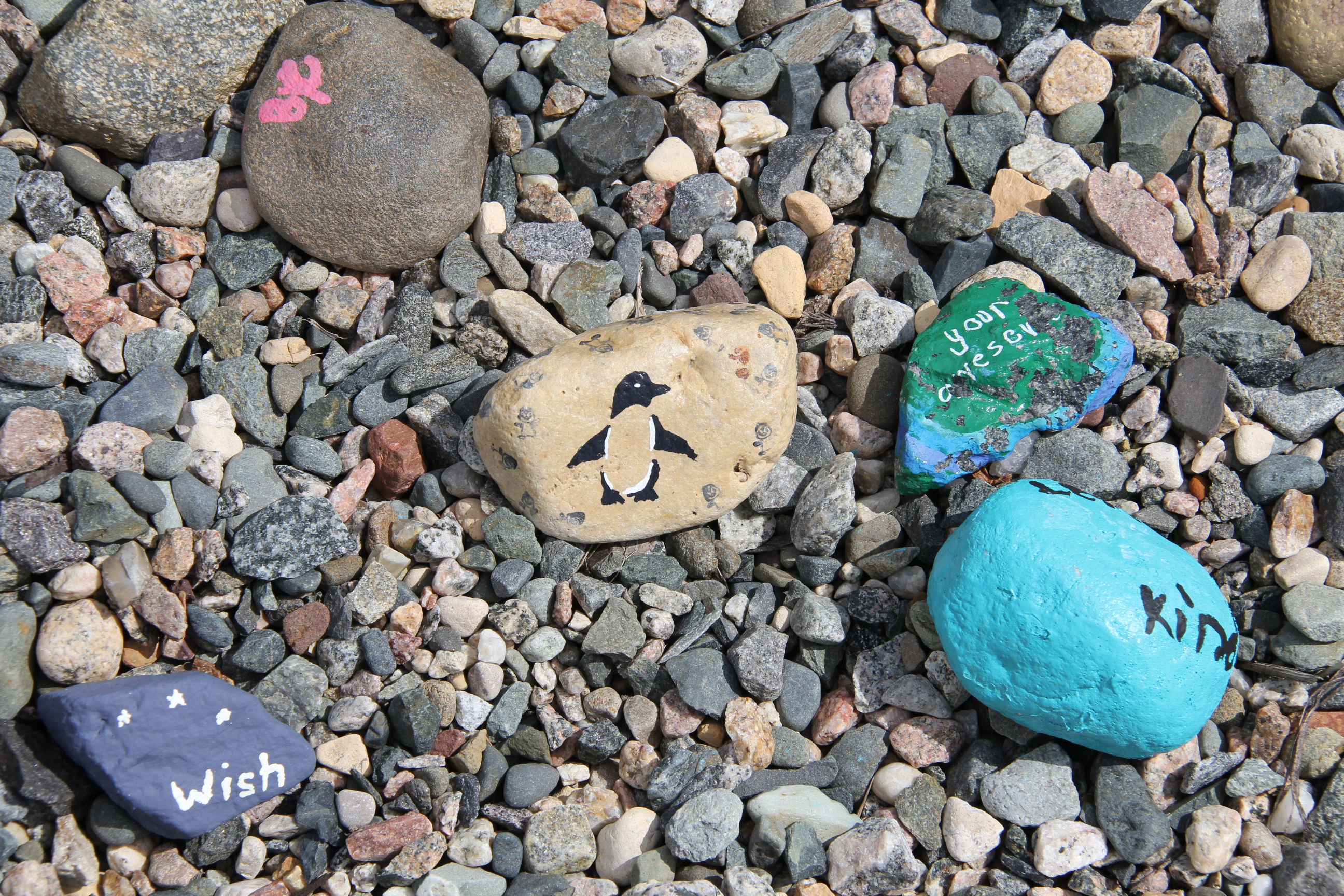
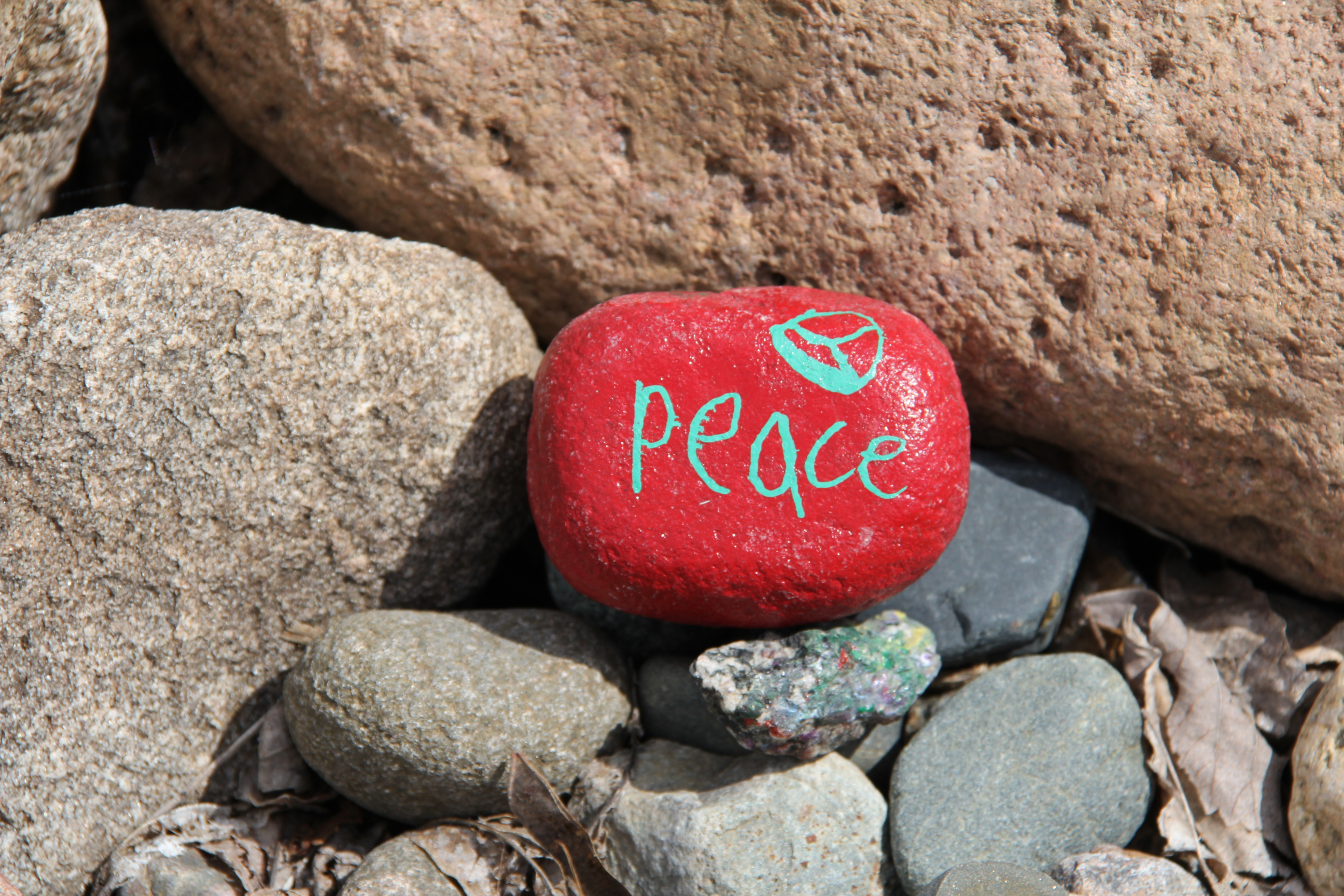
Kindness rock gardens, or simply scattered kindness rocks, are, in my opinion, an inspiring addition to any place. Every time I find kindness rocks, I feel a surge of happiness. The positive messages and art painted, written or drawn onto rocks (technically stones) always uplift me.

(Minnesota Prairie Roots copyrighted photo July 2024)
Peace, a universal message, a universal hope, a universal prayer. (Minnesota Prairie Roots copyrighted photo July 2024)
An overview of the kindness rock garden, which curves like a river. (Minnesota Prairie Roots copyrighted photo July 2024)

And right now I feel like we could use a whole lot of kindness rocks in this country. Boxcars full. Truckloads full. Cargo holds full. Dump them upon the land. Let them rise like mountains or flow like rivers. Let inspiring words, followed by acts of kindness, generosity, love, compassion and care, spill upon the soil and take root.

(Minnesota Prairie Roots copyrighted photo July 2024)
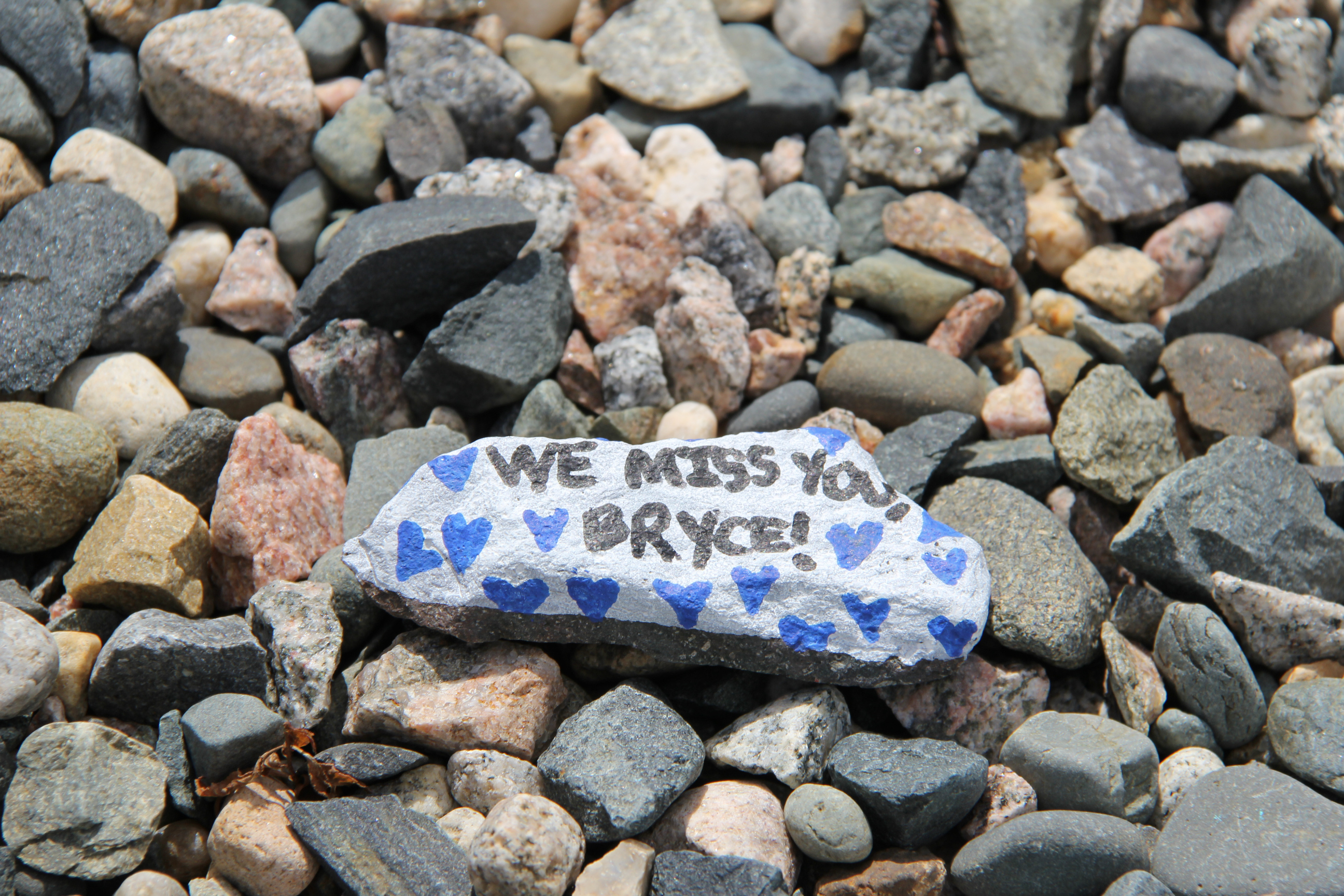
Bryce was known for his kindness. (Minnesota Prairie Roots copyrighted photo July 2024)
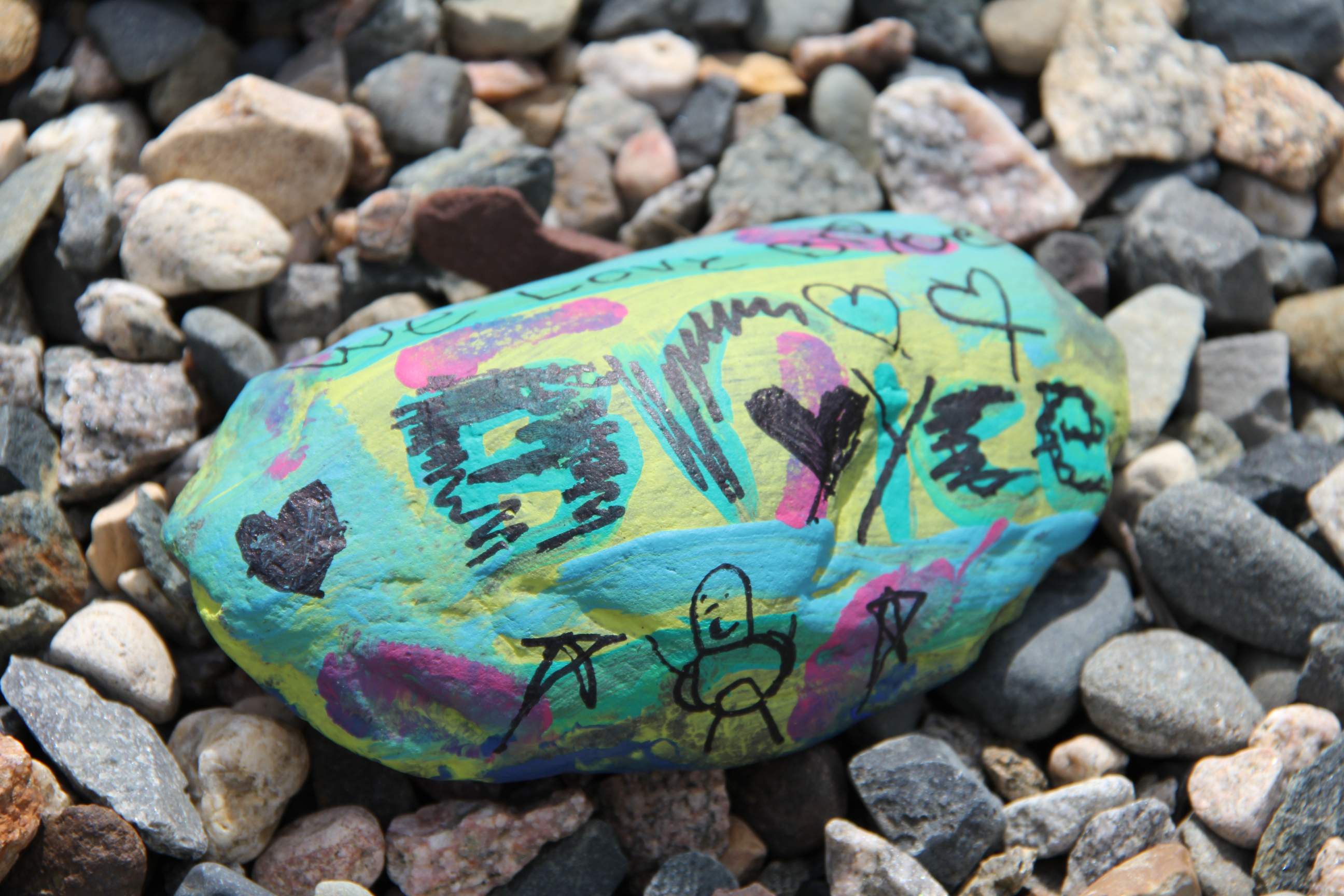
“We love Bryce” kindness rock. (Minnesota Prairie Roots copyrighted photo July 2024)

In Pine River, the Kindness Rocks Inspiration Garden grows from tragedy. The corner community garden honors the memory of 11-year-old Bryce Mink, who died nearly two years ago on March 12, 2023, a month shy of his 12th birthday. Bryce went into cardiac arrest, was airlifted to Children’s Hospital in Minneapolis and died two days later. He had undiagnosed lymphoma with a large mass pressing on his chest, restricting his airway, impeding CPR efforts by his mother and resulting in brain damage.

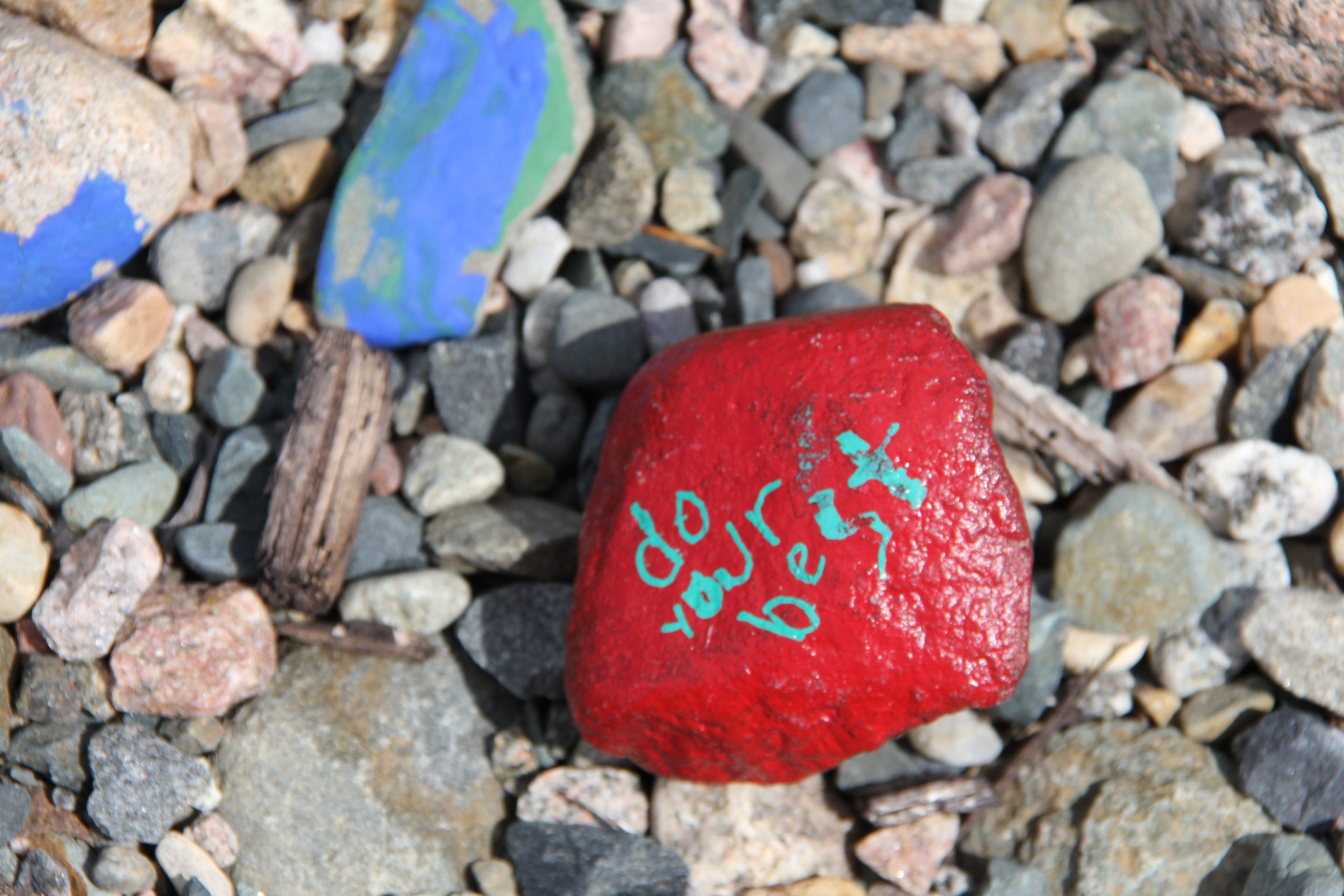
Not only DO your best, but BE your best. (Minnesota Prairie Roots copyrighted photo July 2024)

This is nothing short of tragic, to lose a child unexpectedly, so quickly, so young. But to see Bryce’s legacy of kindness continue in that public park, well, that says something about the impact he made on his community. Bryce was described as “a kind boy and a friend to all.” I believe it. Children, at that age, are often not yet tainted by the unkindness of adults. They live life unencumbered. Make friends easily with most anyone. Play. Learn. Smile and laugh and love and live with exuberance. It’s no wonder we often wish we could still be kids, free of the challenges that come with adulthood.

An encouraging message, even in the most difficult of days. (Minnesota Prairie Roots copyrighted photo July 2024)

It’s tough being a grown-up sometimes, especially now, in a country that seems lacking in the very basics of decency and kindness. Certainly not in everyone and not everywhere, but in too many people and places.

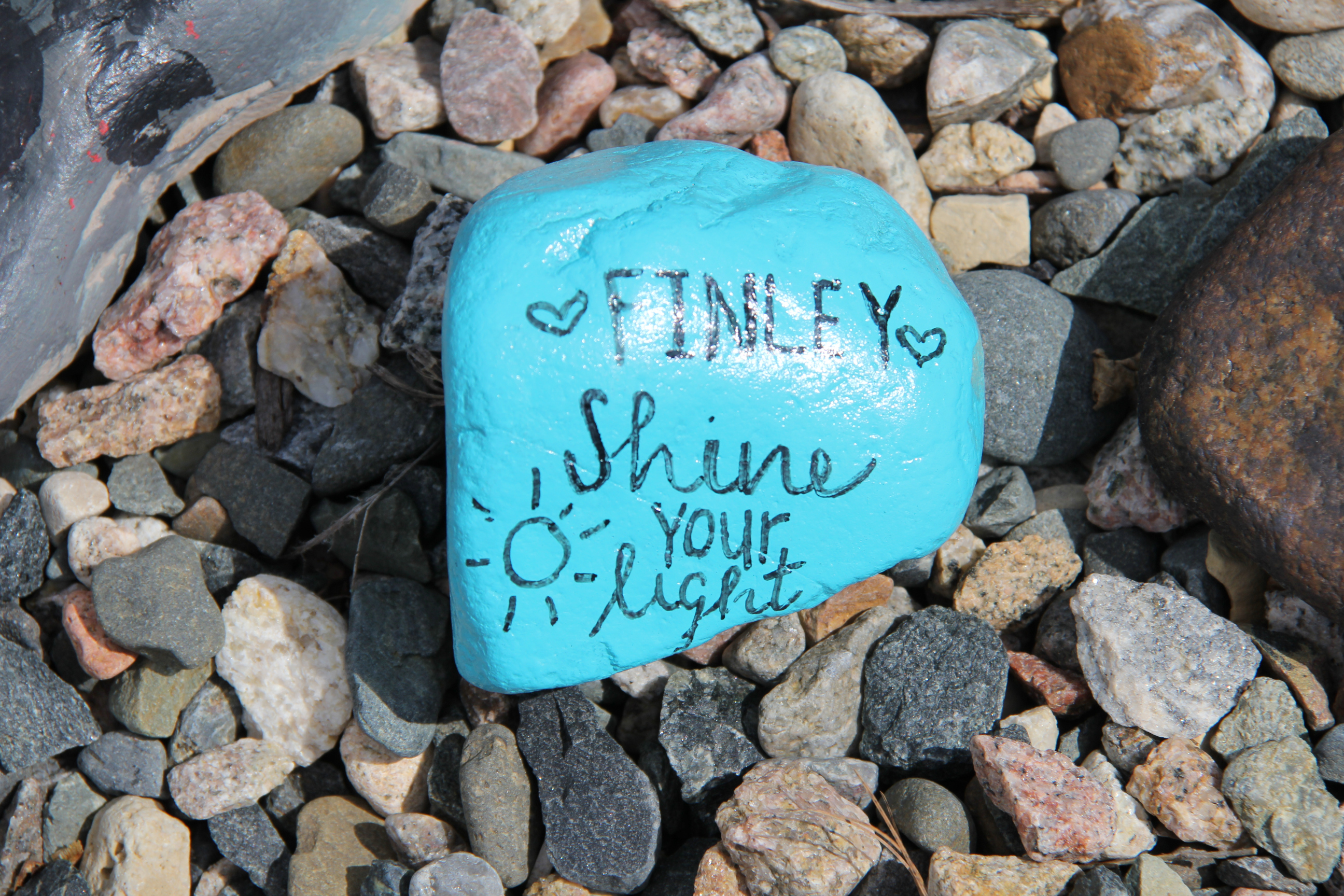
The essence of kindness rocks, to shine your light in a positive way. (Minnesota Prairie Roots copyrighted photo July 2024)

Perhaps it’s time we pick up a rock and, instead of hurling it, print a message of kindness upon it. Write of goodness, generosity, compassion and care: Peace. Do your best. Be kind. Shine your light. Then live those words. Like Bryce did.

© Copyright 2025 Audrey Kletscher Helbling


Long haul COVID officially recognized by MDH January 23, 2025

Filed under: Uncategorized — Audrey Kletscher Helbling @ 12:33 PM
Tags: , , , , , ,
A graphic of the original coronavirus. (Source: CDC 2021)

I FEEL VALIDATED. The Minnesota Department of Health now recognizes long haul COVID as an official, diagnosable illness (even with its own insurance code), according to media reports citing the MDH. I am thankful. This has been a long time coming for someone like me who lives with this illness.

I have often felt that people don’t necessarily understand the severity of long COVID, how it impacts the lives of those of us affected. It’s real. Not in our heads. Debilitating. Long-lasting. Results of a survey by MDH confirm that.

Thankfully, my primary care doctor listened to me, showing great care and compassion when we were trying to figure out what was going on with my body in early 2023. My many symptoms followed an illness that was assuredly COVID, even though I never tested positive for the illness. COVID tests, if not done at the right time or done incorrectly, can give inaccurate results.

When I look at the MDH’s long COVID check list, I see many of the long-lasting symptoms I experienced: fatigue, brain fog, trouble sleeping, headaches, heart palpitations, tightness in chest, dizziness (balance issues) upon standing, skin issues, hair loss, mood changes, and changes in taste and smell (for me intensified). And in the “other” category, I experienced sensory overload, which continues to plague me.

After many tests to rule out a tumor or other health issues, my doctor settled on long haul COVID as my diagnosis, although that’s not in my official health records. I need to get that changed with this new MDH determination.

Some of the initial exercises I did in vestibular rehab therapy to regain my sense of balance. (Minnesota Prairie Roots copyrighted file photo 2023)

I will feel forever grateful to Dr. Todd Sykora of Allina Health for listening to me, for his persistence, for prescribing a medication that eased some symptoms and for his suggestion that I try physical therapy.

I’ve written numerous times about my long COVID experience and treatment in an effort to raise awareness, educate and offer hope to those dealing with the illness. For me, the “help” was six months of vestibular rehab therapy to retrain my brain. My therapist treated me like I’d experienced a traumatic brain injury. He was spot on with that approach. I will feel forever grateful to Ryan Iverson at Courage Kenny Rehabilitation Institute in Faribault for getting me through some really challenging months and helping me reach my goal of “getting my life back.” That also came with lots of hard work on my part and the incredible support of my loving husband.

This hope stone, painted by a great niece, sits on my office desk. (Minnesota Prairie Roots copyrighted file photo)

Today I am using my experience to spread the message about long haul COVID and to also personally support a young man in my community dealing with its devastating affects. J, as I will call him, has been struggling for much longer than me and with much more severe symptoms. I’ve encouraged J (and his mom), offered hope and referred J to my physical therapist. He is making progress.

As for me, I’ve learned to mostly manage the few long haul COVID symptoms that persist, albeit less severe than in 2023. When I got sick with COVID again in December 2024 and then rebound COVID, some symptoms flared. But, for the most part, I’m OK. Like any health issue, you learn to live with it and manage. And when a state agency recognizes your illness as real, it feels validating and empowering.

© Copyright 2025 Audrey Kletscher Helbling
 

An historic connection between Faribault and Benson January 22, 2025

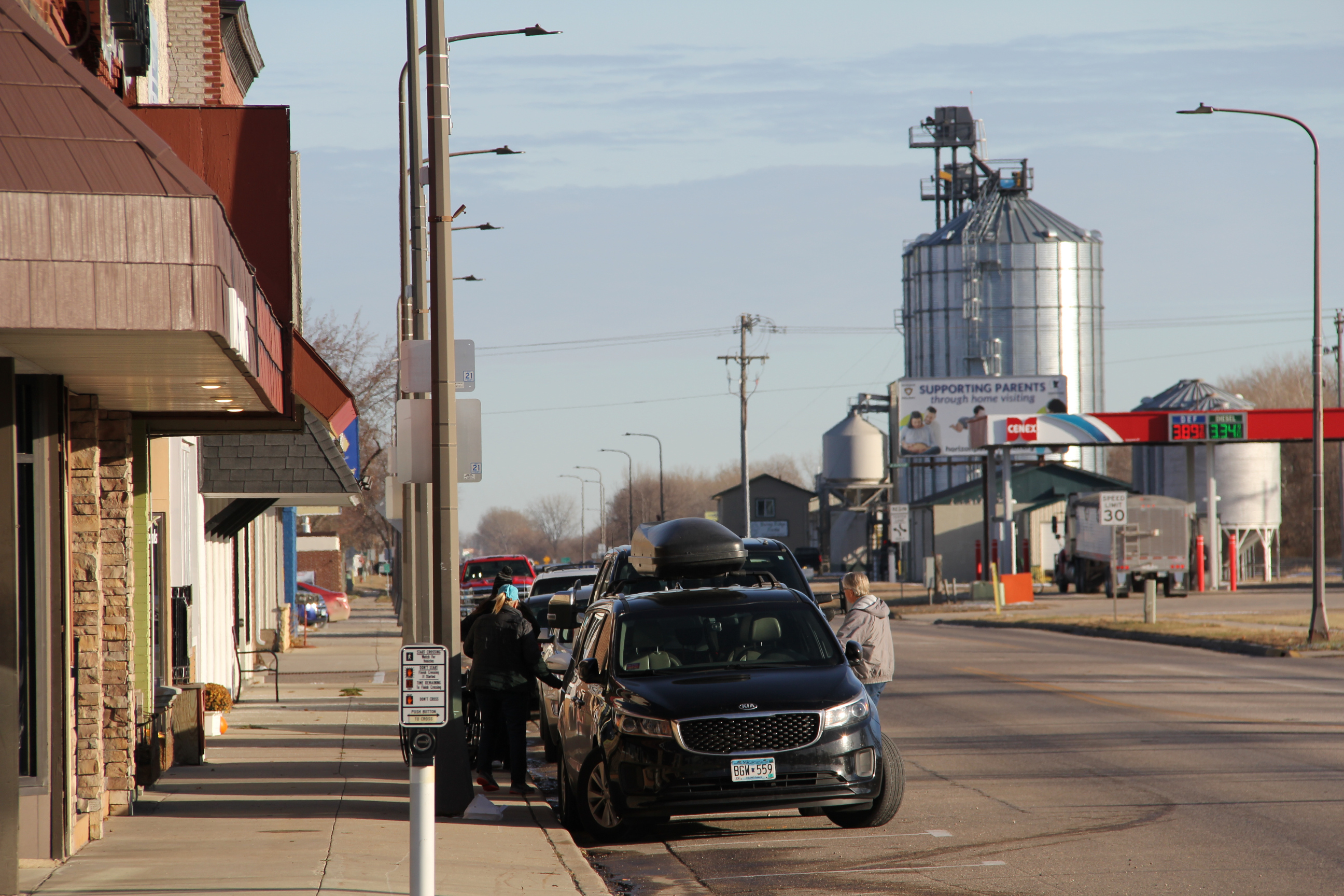
A scene from downtown Benson, Minnesota. (Minnesota Prairie Roots copyrighted file photo November 2024)

SOME 170 MILES separate my community of Faribault from Benson, a small agricultural community in west central Minnesota near the South Dakota border. At first glance, it seems the two share little in common. But they do, a discovery I made following a brief stop in Benson in late November.

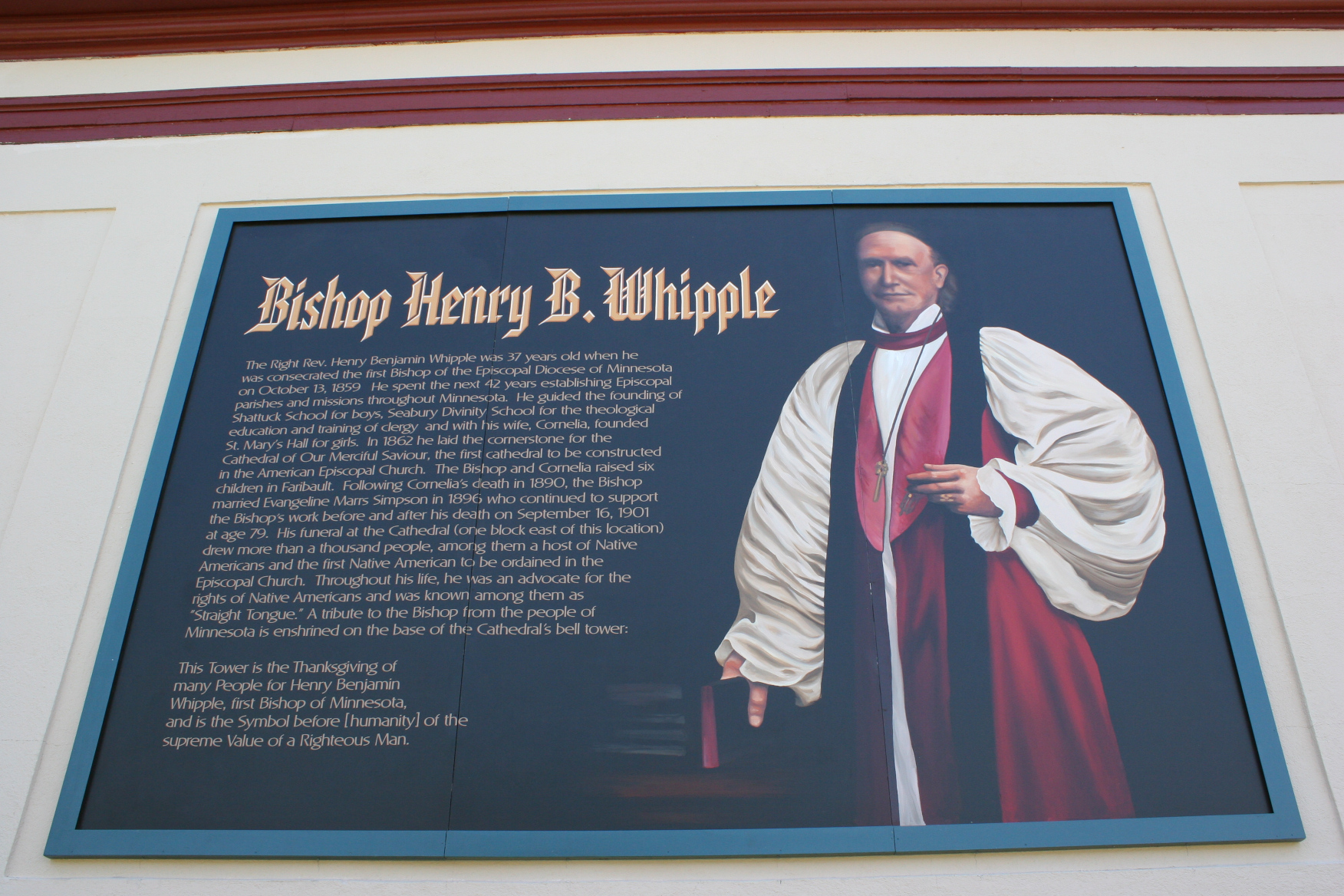
Bishop Henry Whipple, featured in a mural on the bandshell at Faribault’s Central Park, across the street from the Cathedral of Our Merciful Saviour. (Minnesota Prairie Roots copyrighted file photo)

Bishop Henry Whipple, the long ago Episcopal bishop of Minnesota, links Faribault and Benson. Whipple, a missionary based in Faribault, traveled around the Minnesota frontier in the early years of statehood in an effort to spread the Christian faith. That included visits to Benson where, in 1879, Christ Episcopal Church was built for $1,650 by local carpenters. Whipple visited occasionally to lead services and confirm new members.

Christ Episcopal Church, Benson. (Minnesota Prairie Roots copyrighted photo November 2024)

That early Gothic Revival style church with gray board and batten siding caught my eye during a brief drive around Benson’s downtown core. More accurately, the seven-story Parkview Manor apartment across the street from the church initially grabbed my attention. The 55-unit high-rise looks very much out of place in this prairie town. It dwarfs residential houses and the historic church. Typically grain elevators and church steeples mark small town skylines, not a towering 1967 apartment complex.

Parkview Manor, where the church was once located. (Minnesota Prairie Roots copyrighted photo November 2024)

Christ Episcopal Church once sat on the apartment land, but was moved across the street after the Housing and Redevelopment Authority bought the property in 1966. At some point the church, founded by English and Yankees (as New Englanders were once termed), closed due to dwindling membership. Today the building serves as the Swift County Drop In Center, “a safe haven for adults to go to experience life free of stigma.” I think Bishop Whipple would have liked that, knowing the former church serves as a gathering place, a safe spot to just be.

The church sits in a residential neighborhood near downtown. (Minnesota Prairie Roots copyrighted photo November 2024)

Some day I’d like to tour the aged church, which was added to the National Register of Historic Places in 1985. Perhaps I would feel the presence of Benson’s early settlers, hear the words of comfort, peace, hope and unity preached by Bishop Whipple.

While Whipple is primarily viewed as a man who befriended Indigenous Peoples, he was also part of the long ago mindset to assimilate and “civilize” them. That’s a side not often discussed when talking about a man, a missionary who shared his biblical teachings while also compassionately advocating for Native Americans. Whipple is highly-revered in Faribault, where he is buried beneath the Cathedral of Our Merciful Saviour, an historic cathedral worthy of visiting, too.

The Cathedral of Our Merciful Saviour, Faribault. (Minnesota Prairie Roots copyrighted file photo July 2024)

The immense Faribault cathedral differs vastly from the unassuming small church in Benson. Yet, history and a missionary link the two. To uncover that connection simply because I noticed an out-of-place apartment high-rise and then the old steepled church across the street reveals just how small this world really is if only we pause to notice, then uncover the connections.

© Copyright 2025 Audrey Kletscher Helbling


In the deep of January, floral murals jolt joy January 21, 2025

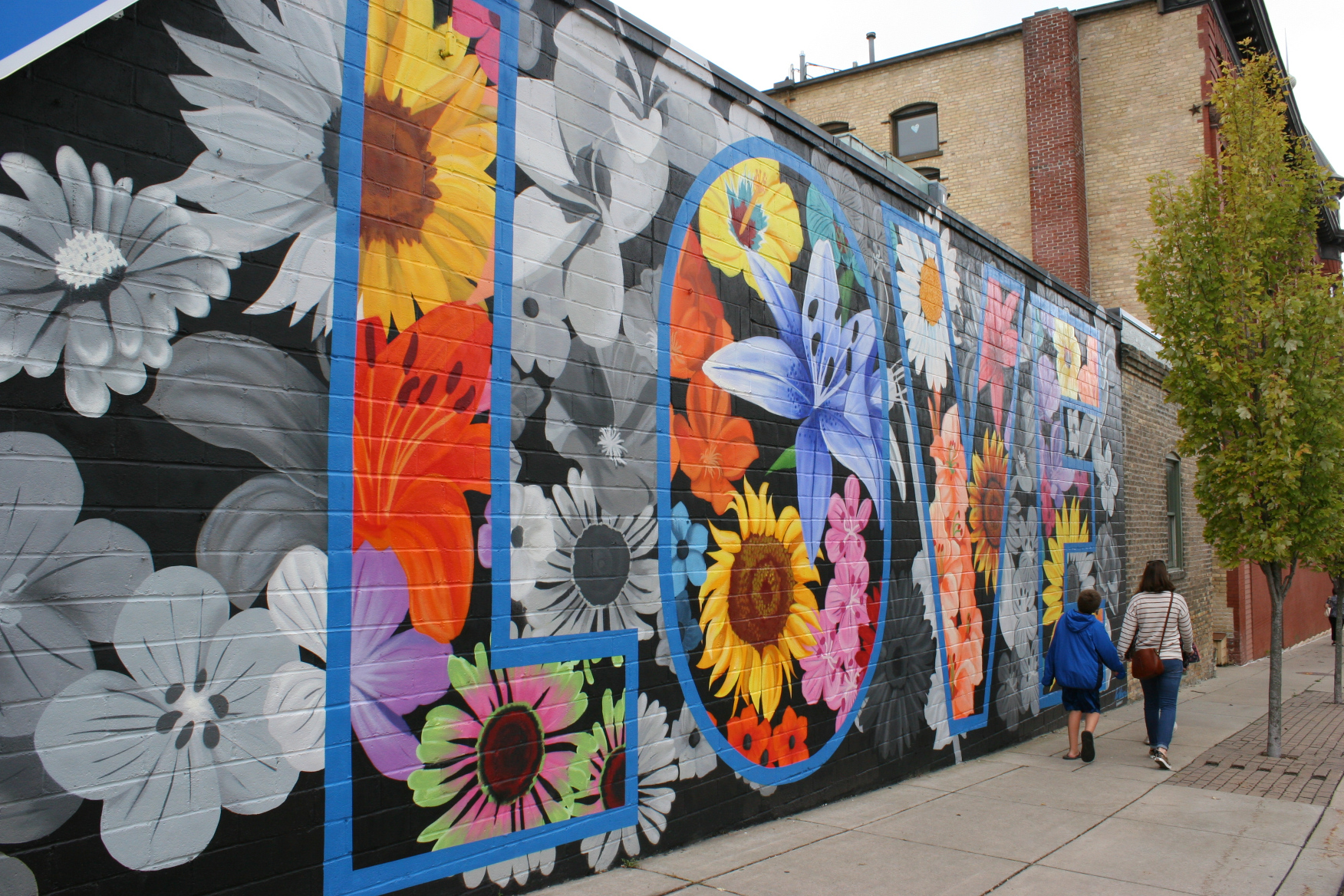
A Northfield Arts and Culture Commission mural by Brett Whitacre, just off Division Street in Northfield, blooms love. (Minnesota Prairie Roots copyrighted file photo)

IS IT COLD out there?” I asked before rolling out of bed on a recent subzero morning.

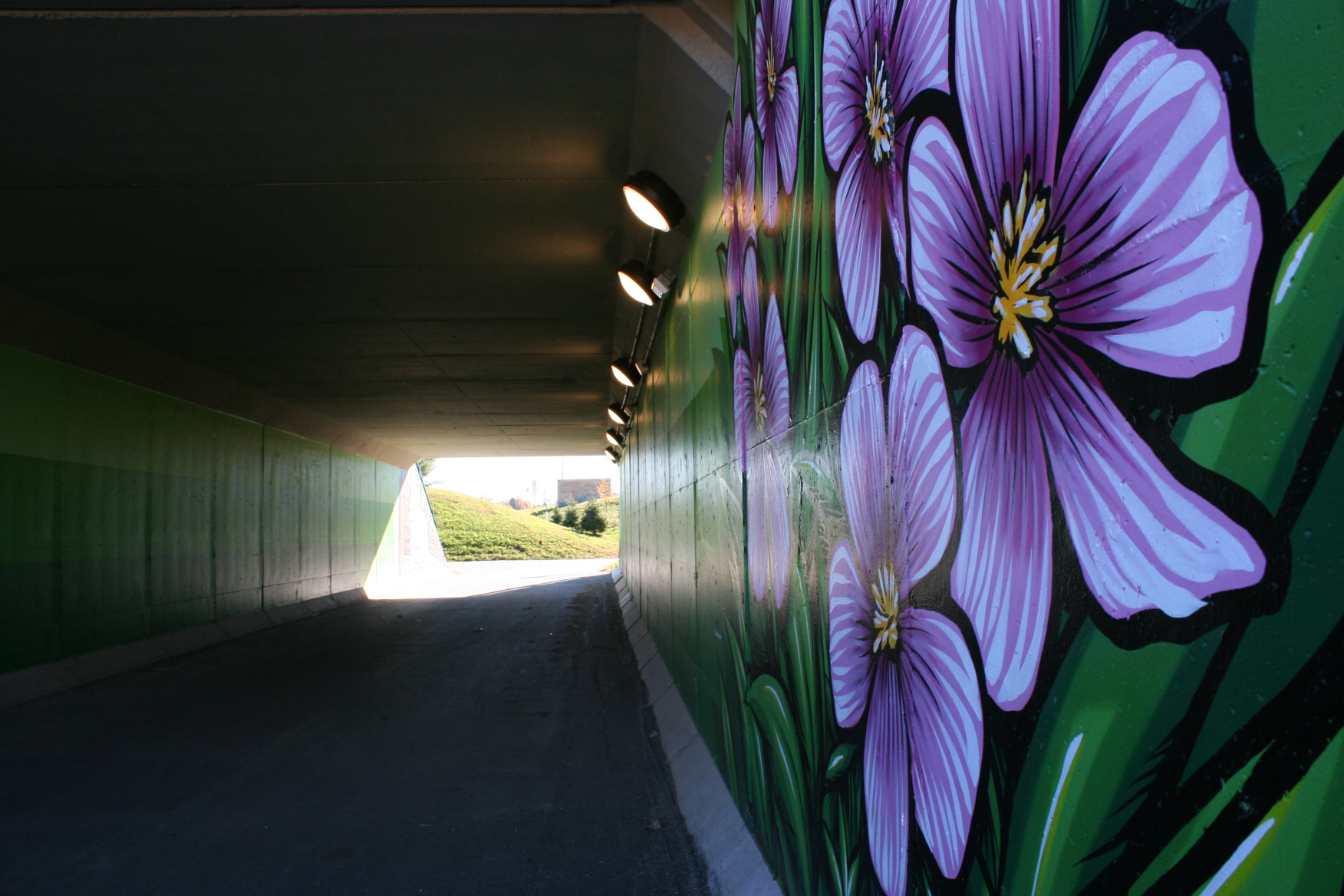
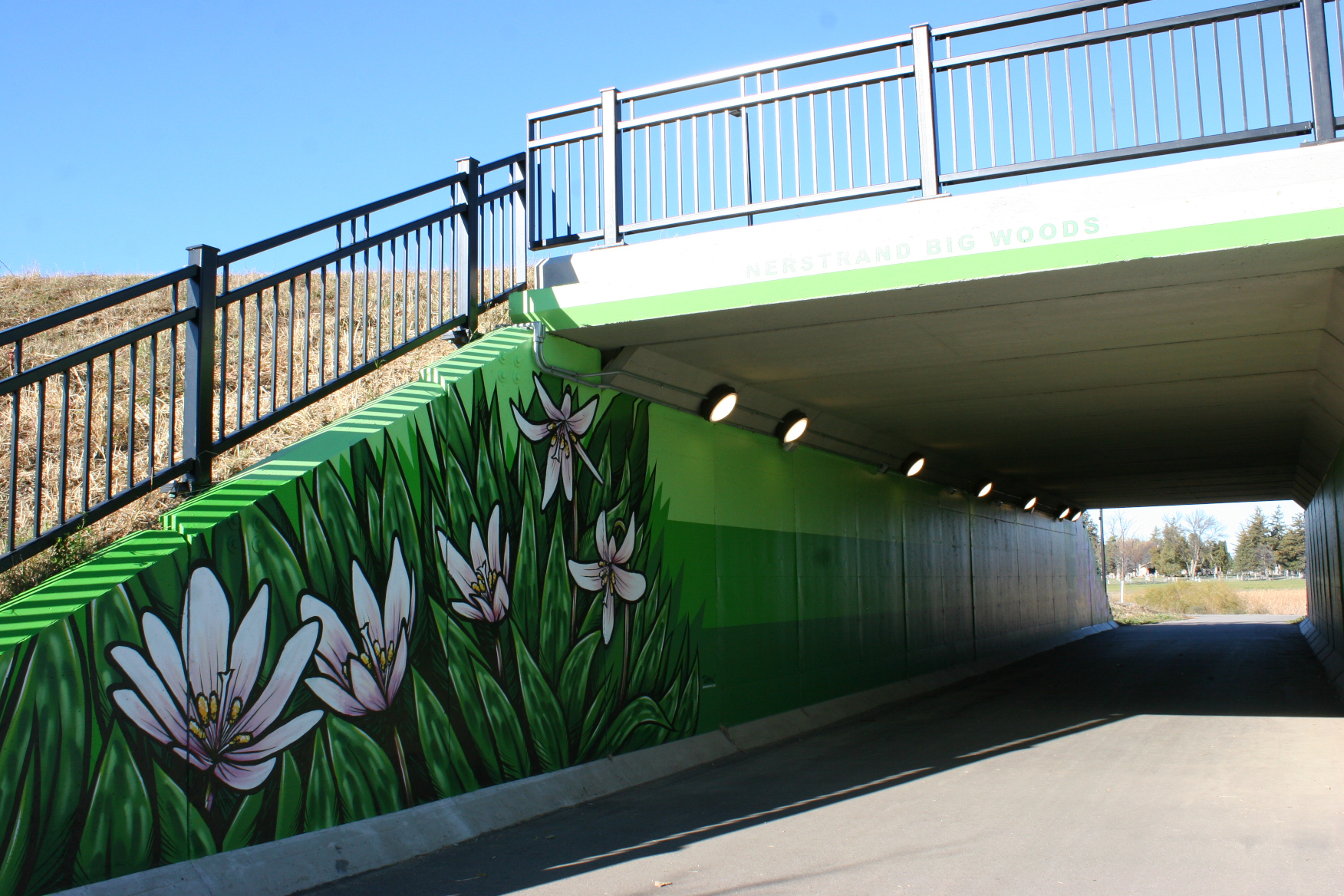
In an underpass tunnel along a recreational trail in Northfield, Adam Turman created this summer scene on a mural. (Minnesota Prairie Roots copyrighted file photo)

“No, it’s summertime,” he answered.

A Montgomery Wings Mural Walk wing on Lanette’s Coffee Shop features flowers watered by Scarlett, who is wearing traditional Czech clothing. That honor’s the Czech heritage of Montgomery, MN. (Minnesota Prairie Roots copyrighted file photo)

That sarcastic response from my husband acted as a writing prompt during this week of cold weather advisories and warnings in Minnesota. We’ve experienced wind chills ranging from -25 to -50 degrees across the state. That’s brutally cold.

Wild geraniums painted by Adam Turman inside an underpass tunnel in Northfield. (Minnesota Prairie Roots copyrighted file photo)

On the morning I asked Randy about the cold, the 7:17 a.m. air temp registered -12 degrees. With the wind chill, it felt like -29 degrees. That marked the coldest day in six years. I know we are not alone here in Minnesota as frigid air and snow sweep the country, including into the deep South.

Flowers fill the LoveForAll mural by Jordyn Brennan in downtown Faribault. (Minnesota Prairie Roots copyrighted file photo)

Because I can’t flee to a warmer location, I opted to transport myself from the currently cold, colorless landscape of southern Minnesota to a place of beauty. Without leaving the area. For me, that comes in photos I’ve taken of floral-themed murals blooming throughout the area. In the deep of winter, these paintings hold the hope of warmer days, of sunshine and flowers.

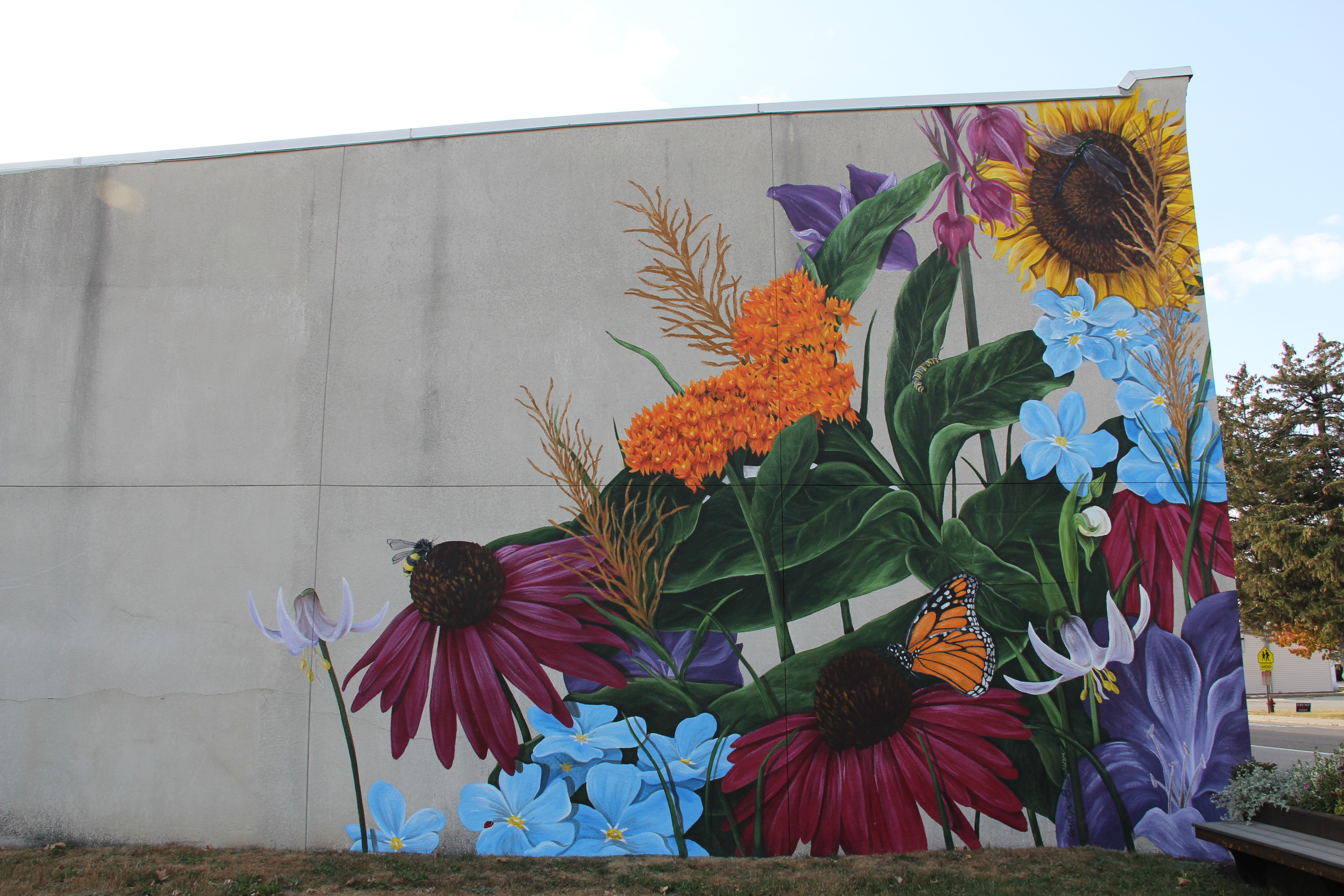
My most recent mural discovery was several months ago on Wild Wood in Nerstrand. (Minnesota Prairie Roots copyrighted file photo)

I love when communities embrace this form of public art, because murals are accessible to anyone, anytime. They spark joy, generate interest in place, show community pride. I get excited when I unexpectedly happen upon a mural.

The rare Dwarf Trout Lily grows only in Rice, Steele and Goodhue counties in Minnesota and is depicted here by Adam Turman on an underpass tunnel wall in Northfield. (Minnesota Prairie Roots copyrighted file photo)

Floral-themed murals, especially, have a way of uplifting spirits, of celebrating all that is beautiful and lovely. Bold, vivid hues in the deep of January in Minnesota, offer a welcome visual respite.

A close-up of mums and peonies, forefront, in Jordyn Brennan’s LoveForAll mural. Faribault was once renowned for those two flowers. (Minnesota Prairie Roots copyrighted file photo)

I can almost imagine meandering through a flower garden, dipping my nose into blossoms, appreciating each scent, each petal, each stem. Oh, the beauty of it all.

Floral-themed wings appropriately placed outside Posy Floral & Gifts in Montgomery as part of the Montgomery Wings Mural Walk. (Minnesota Prairie Roots copyrighted file photo)

On these frigid days, when I view a drab landscape of muted tones, trees stripped of leaves, snow layering the earth, I delight in sharing the floral murals I’ve photographed. No one ever promised me a rose garden. But these murals hold the promise of spring and of summertime in Minnesota.

© Copyright 2025 Audrey Kletscher Helbling


Reflecting on the legacy & celebrating the work of Martin Luther King, Jr. January 16, 2025

I took this photo of a student watching a video of Martin Luther King, Jr. in the exhibit “Selma to Montgomery: Marching Along the Voting Rights Trail” at St. Olaf College in 2015. It was an especially powerful exhibit. (Minnesota Prairie Roots copyrighted file photo 2015)

AS MARTIN LUTHER KING, JR. DAY approaches, I feel such gratitude to this activist, this civil rights leader, this man of integrity, love, justice and peace who left this world a better place. King inspires me to be better, live better, do better.

I appreciate that King is celebrated not only on a national level, but also locally in our cities and small towns. Even without a local celebration, we can each do our part to honor him by taking a moment to reflect on King’s legacy. His words inspire. As a writer, I especially value how eloquently he spoke with such power, passion and conviction.

His messages continue to resonate.

“Darkness cannot drive out darkness, only light can do that. Hate cannot drive out hate, only love can do that.”

“Injustice anywhere is a threat to justice everywhere.”

“I have a dream…”

And then there’s this quote, unfamiliar to me until now, but, oh, one that I find particularly fitting for each and every one of us: “Life’s most persistent and urgent question is, ‘What are you doing for others?’”

Visitors could photograph themselves at the Selma exhibit and express their thoughts. (Minnesota Prairie Roots copyrighted file photo 2015)

The community of St. Peter is taking that King quote and running with it on Monday, January 20, during an MLK Day of Service. The St. Peter Good Neighbor Diversity Council and Gustavus Adolphus College are partnering in this event to “foster a ‘Beloved Community’ and address issues of social justice and equity.” I love the word choices of “Beloved Community.” Already that shows me a depth of care for one another that will thread through Monday and beyond.

MLK Day in St. Peter begins with information shared about local service opportunities from 11:30 a.m.-1 p.m. in the campus center at Gustavus. Then later, folks can gather to share stories and conversations about King’s dream and how that is not yet realized. That’s from 1-2:30 p.m. in the Center for Inclusive Excellence at Gustavus and from 7-8:30 p.m. at the St. Peter Community Center.

To promote service and conversations personalizes this, takes the day well beyond just a commemoration.

Opinions expressed in the exhibit polling place at the Selma exhibit. (Minnesota Prairie Roots copyrighted file photo 2015)

Over in Northfield, the Northfield Human Rights Commission is celebrating MLK Day with a 7-8 p.m. gathering at the high school. The theme, “Mission Possible: Protecting Freedom, Justice and Democracy in the Spirit of Nonviolence 365” seems a fitting title for this event. Freedom. Justice. Democracy. Nonviolence. All are important and relevant words to carry with us 365 days of the year.

Minneapolis City Council member Robin Wonsley, a person of color who hails from Chicago, studied at Carleton College in Northfield and worked on racial justice and worker’s rights for several organizations, is the keynote speaker.

Additionally, and perhaps the aspect I appreciate most about the Northfield event, is a presentation of the annual (since 1998) Northfield Human Rights Award. That goes to an area individual, group or organization that has contributed to the advancement of human rights in Northfield. I think people need to be recognized when they’ve worked to create a “Beloved Community” via advancing human rights.

Photographed in August 2018 in the storefront window of a business in downtown Faribault, Minnesota. Minnesota Prairie Roots copyrighted file photo 2018)

In Owatonna, the Owatonna Human Rights Commission, Rainbowatonna, Alliance for Greater Equity and Riverland Community College are partnering to celebrate MLK Day with a lunch from noon to 1 p.m. at the Steele County History Center followed by a guest speaker. Seema Pothini, a Minnesota author and head equity specialist for the Equity Literacy Institute will talk.

Even if you can’t attend an event like one of the three I’ve highlighted here, I hope you will take time on Monday, January 20, to reflect. Consider the great work of Dr. Martin Luther King, Jr. Ponder how much has changed and how much work remains to be done. And then do what you can, no matter how big or how small, to live a life focused on love, justice, peace and service to others. Be the light that drives out darkness.

© Copyright 2025 Audrey Kletscher Helbling
 

Defining a Minnesota cold snap January 15, 2025

Filed under: Uncategorized — Audrey Kletscher Helbling @ 5:00 AM
Tags: , , , , , , , ,
Bring out the cold weather gear like this photographed at a vintage snowmobile show during a past Winterfest. (Minnesota Prairie Roots copyrighted file photo)

WITH AIR TEMPS DIPPING into the single digit subzero range and windchills at around minus 25 degrees on recent mornings in Minnesota, we’ve been in a bit of a cold snap. We’ll get a several-day respite of 30 degrees before temps plunge again, dipping to even colder early next week when an arctic front moves in.

All this cold got me thinking about ways to define a cold snap. It’s not only about the way it feels, but also how it sounds and looks, yes, looks.

Here’s how a cold snap feels: Like a slap on the cheeks. Biting, bitter, unbelievably cold. Exposed skin can freeze in 10-15 minutes.

The cold of a cold snap also feels like ice on bare feet during a night-time trip to the bathroom. But even before that, cold feels like I-don’t-want-to-get-out-of-bed-from-under-these-warm-covers-because-the-house-is-cold. Our thermostat is set at 62 degrees at night. Comfortable, except during a cold snap when outdoor air seems to infiltrate the indoors.

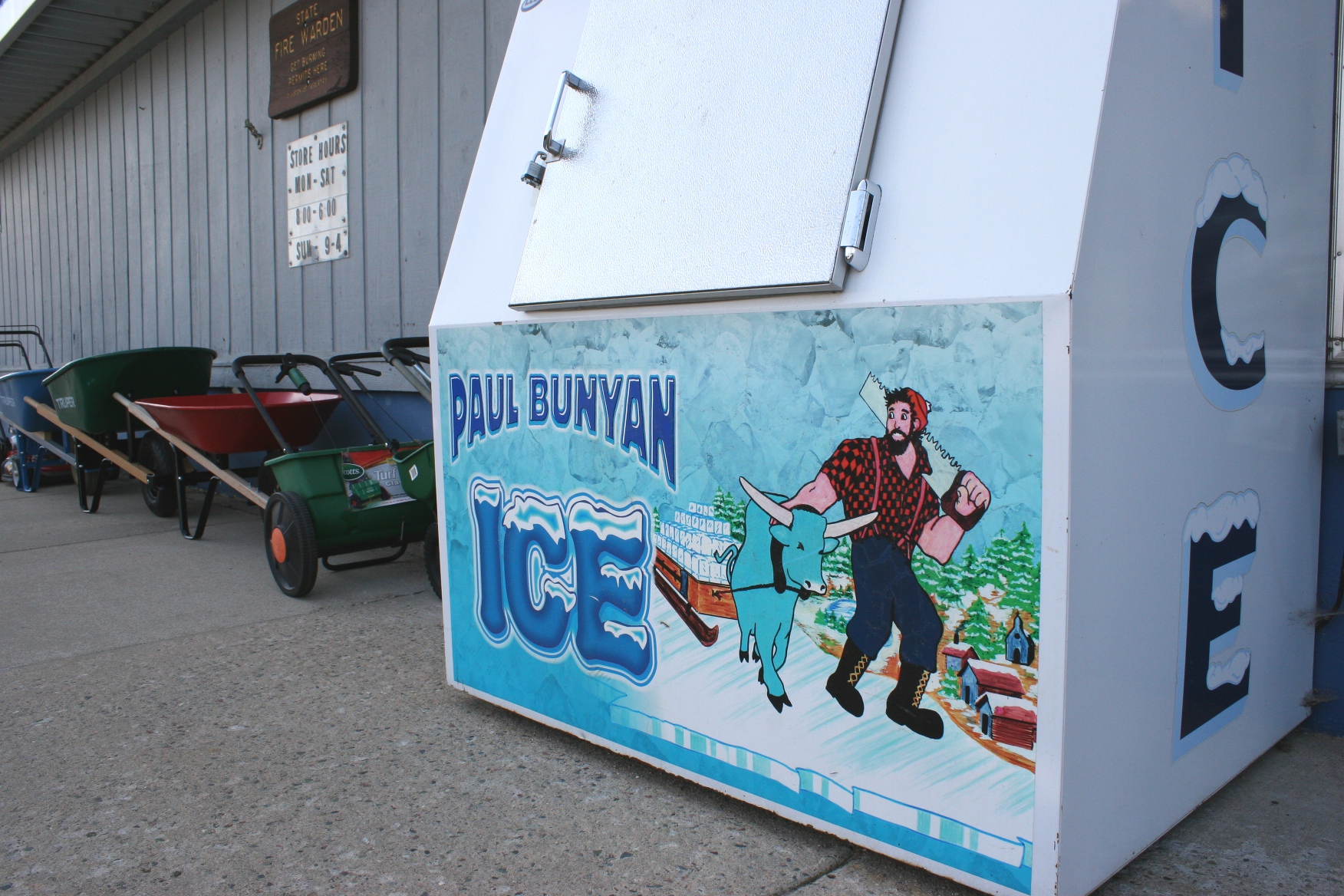
Legendary lumberjack Paul Bunyan has made wearing buffalo plaid flannel fashionable in Minnesota. Here he’s depicted on an ice machine outside Thurlow Hardware and Rental, Pequot Lakes. (Minnesota Prairie Roots copyrighted file photo)

These are the days of layering, of pulling out the warmest flannel or fleece. I wear a tee, topped by a flannel shirt, topped by a sweatshirt or sweater. Randy has pulled out his heavy duty quilt-lined flannel shirt that visually widens his girth. Who cares about fashion? Not me. The goal is to stay warm.
In the evenings, with the thermostat set at 68 degrees, we find additional warmth under fleece throws or, whoever grabs it first, under an especially warm fleece-lined denim quilt. We opt not to crank up the heat in an effort to keep our energy bill down. Even with that, heating an old house with natural gas gets costly.

Chicken Wild Rice Soup, one of my favorite soups, served at a fundraiser in St. Peter years ago. I made a batch of this soup earlier this week. (Minnesota Prairie Roots copyrighted file photo)

A cold snap feels like dry, itchy skin; aching joints; a parched throat. I’m drinking more water and tea. Water flowing from the tap first thing in the morning is ice cold. I’m cooking more soups and comfort foods like Chicken Wild Rice Soup and lasagna.
These deeply cold mornings, Randy warms the van before leaving for work. The sound of tires on the street past our house carries a sharpness and, if snow layers the pavement, tires crunch. Bitter cold holds a distinct, almost indescribable, sound.

Frost art on an upstairs window during a past winter. (Minnesota Prairie Roots copyrighted file photo)

Inside and outside, a cold snap is visible. I see it in the line of frost edging the bottoms of exterior doors. I pull a rag rug snug against the lower edge of the front door to block the draft. I see cold in the intricate frost patterns painted on bedroom windows upstairs.

These cold winter days have me dreaming of summer days at a central Minnesota lake cabin. (Minnesota Prairie Roots copyrighted file photo July 2020)

And when I look outside from my relatively warm house, it simply looks cold, the sky clear, the bright sunshine only an illusion of warmth. For many Minnesotans, though, warmth is a reality as residents escape to warmer places like Arizona, Texas and Florida. Whether for a week, a month or the entire winter, these vacationers and snowbirds seek a break from the bitter cold and snow of a Minnesota winter.

I can’t help but think about those experiencing homelessness, including right here in Faribault. Where are these individuals living, sleeping? Surely not in the tents I’ve seen pitched along the river bottom. In the metro area, facilities are opening as warming centers. So, yeah, even though I’m not fond of this cold snap, at least I have a home.

© Copyright 2025 Audrey Kletscher Helbling