Minnesota Prairie Roots

Writing and photography by Audrey Kletscher Helbling

Sauerbraten and sauerkraut in Morristown November 15, 2010

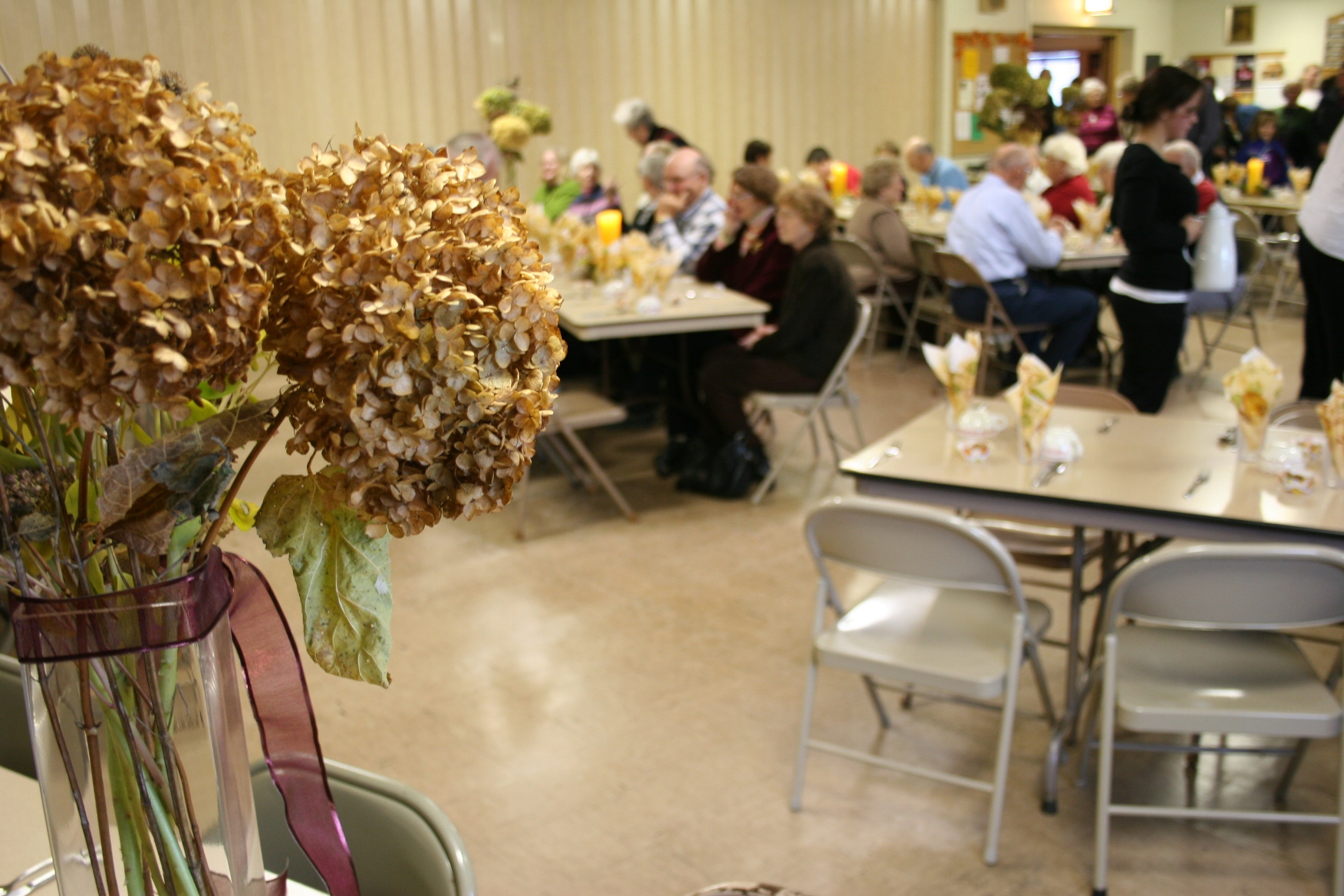
Diners gathered in the fellowship hall at Bethlehem Lutheran Church in Morristown for a German meal served by the Cannon Valley Lutheran High School German Club following a German Fest of Thanks & Praise.

THE LAST TIME I ATE an authentic German meal, I was in high school. The German Club, of which I was a member, was on a Christmas trip to New Ulm, that most Deutsch of all Minnesota cities.

After visiting Domeier’s German Store, a quaint import shop, and Christmas shopping downtown, we gathered at Eibner’s, a German restaurant. Of our ethnic meal there, I remember only the main dish, sauerbraten.

Fast forward nearly four decades to yesterday and a German meal served by the Cannon Valley Lutheran High School German Club at a fundraising dinner in Morristown. The group is traveling to Germany in February. The main dish sauerbraten, beef served atop spaetzle, tasted tangy and vinegary, exactly as I remembered. But then so did several of the other foods like the German potato salad and the purple cabbage, which my friend Mike claimed was transformed from green to purple in a sort of scientific experiment.

The plated portion of the meal included German potato salad, cabbage, brats with sauerkraut, sauerbraten served atop spaetzle (a German dumpling) and bread (rye may have been a more authentic choice).

Magic or not, the meal turned out by the kitchen crew (primarily German students’ parents and CVLHS board members) was worthy of any good German restaurant. I give it five stars.

That said, I honestly could not eat this food on a regular basis. Too much starch. Too heavy. Too all-one-boring blah white, except for that colorful dash of purple cabbage. I fear a steady diet of this would clog my arteries and cause me to gain weight more rapidly than I already am at my slowing metabolism mid-50s age.

In all fairness to the Germans, I’m certain they don’t eat this much or these types of foods daily just like I don’t eat pizza and potatoes every day. In fact, CVLHS language teacher Sabine Bill, who recently moved to Morristown from Germany, told me the German meal served on Sunday is representative of the food eaten in the Bavarian region of southern Germany, not the entire country.

Now I’m unsure where my German ancestors lived, but I know they liked their sauerkraut. My dad was the king of sauerkraut makers, a tradition carried on by my sister Lanae. We got sauerkraut on Sunday served with slices of brats.

Just when I thought I couldn’t possibly eat another bite of anything, I was handed a bowl of bread pudding laced with raisins and immersed in a decadent, over-sweet buttery sauce. My husband complained that his piece was smaller than mine and I offered to share. But I didn’t, not one single bite. I could have. I should have…

The decadent bread pudding...

Typically I don't drink coffee. But it was decaff, went well with the bread pudding and pfeffernusse and was served in the prettiest, sturdiest cups.

Diane, a CVLHS board member, made more than 1,000 pfeffernusse, tiny hard cookies which include black pepper, black coffee and several spices. Each diner got five cookies, served in festive cupcake liners.

On the way out of the Bethlehem Lutheran Church fellowship hall, where the German meal was served, I told my friend Mike that his group had started something. They would have to host this German Fest of Thanks & Praise and the German meal annually.

I could eat this ethnic food once a year. To my several-generations-removed-from-Deutschland taste buds, this homemade meal rated as authentically delicious.
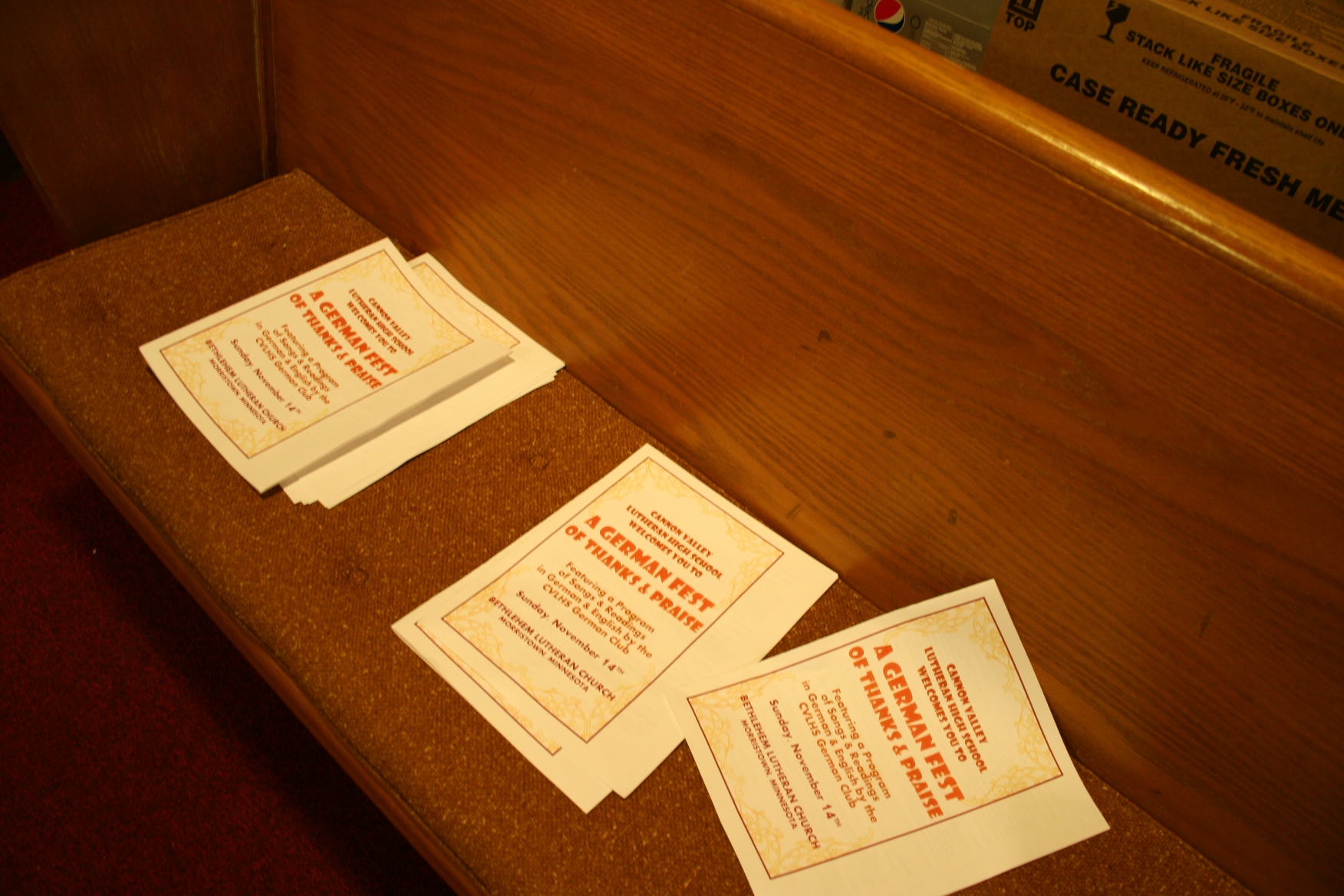
Programs from the pre-dinner German Fest of Thanks & Praise lie on a pew inside Bethlehem Lutheran Church. The fest included prayers, songs and Scripture readings in German.
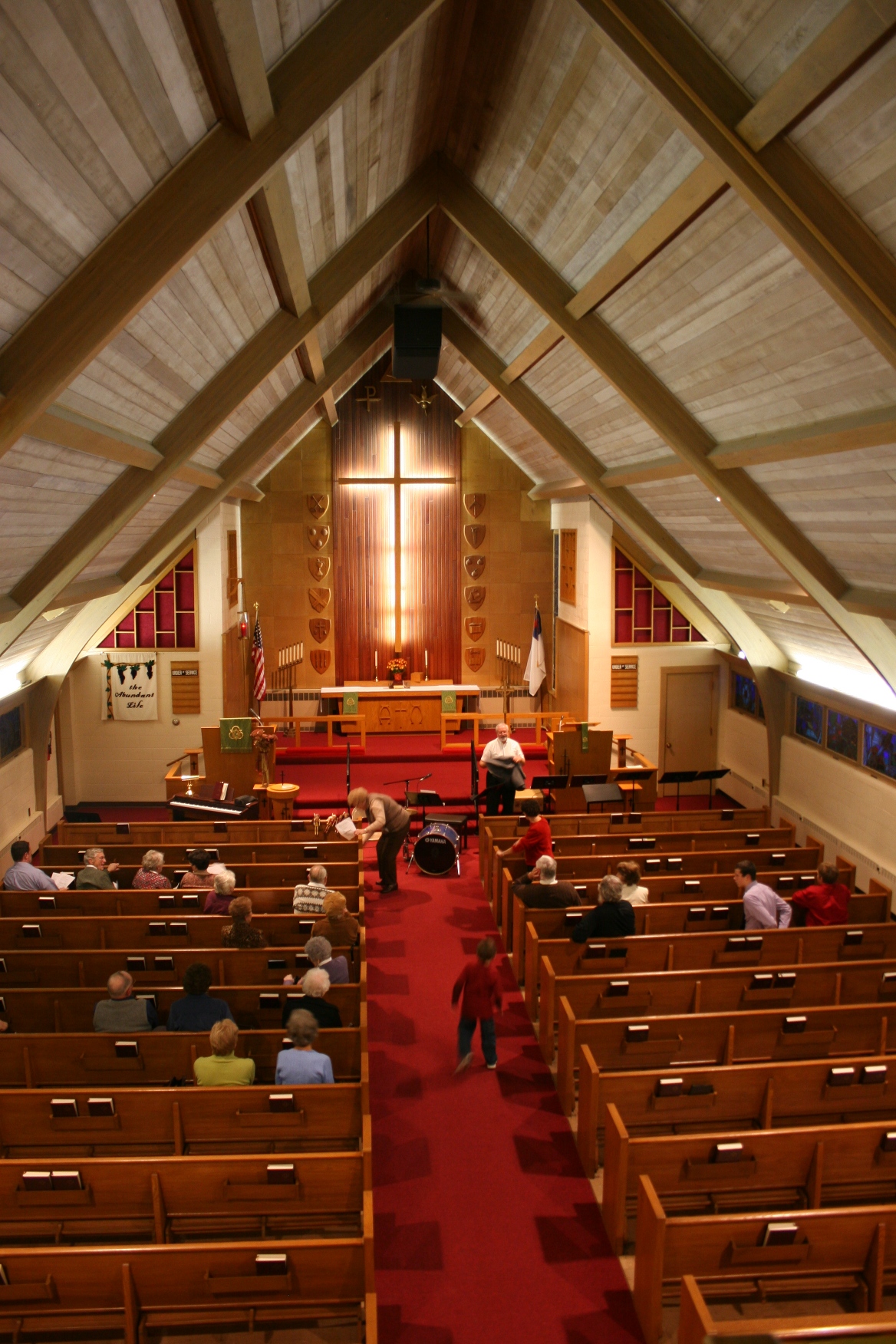
Between meal sittings, musicians entertained waiting diners inside the Bethlehem Lutheran Church sanctuary.
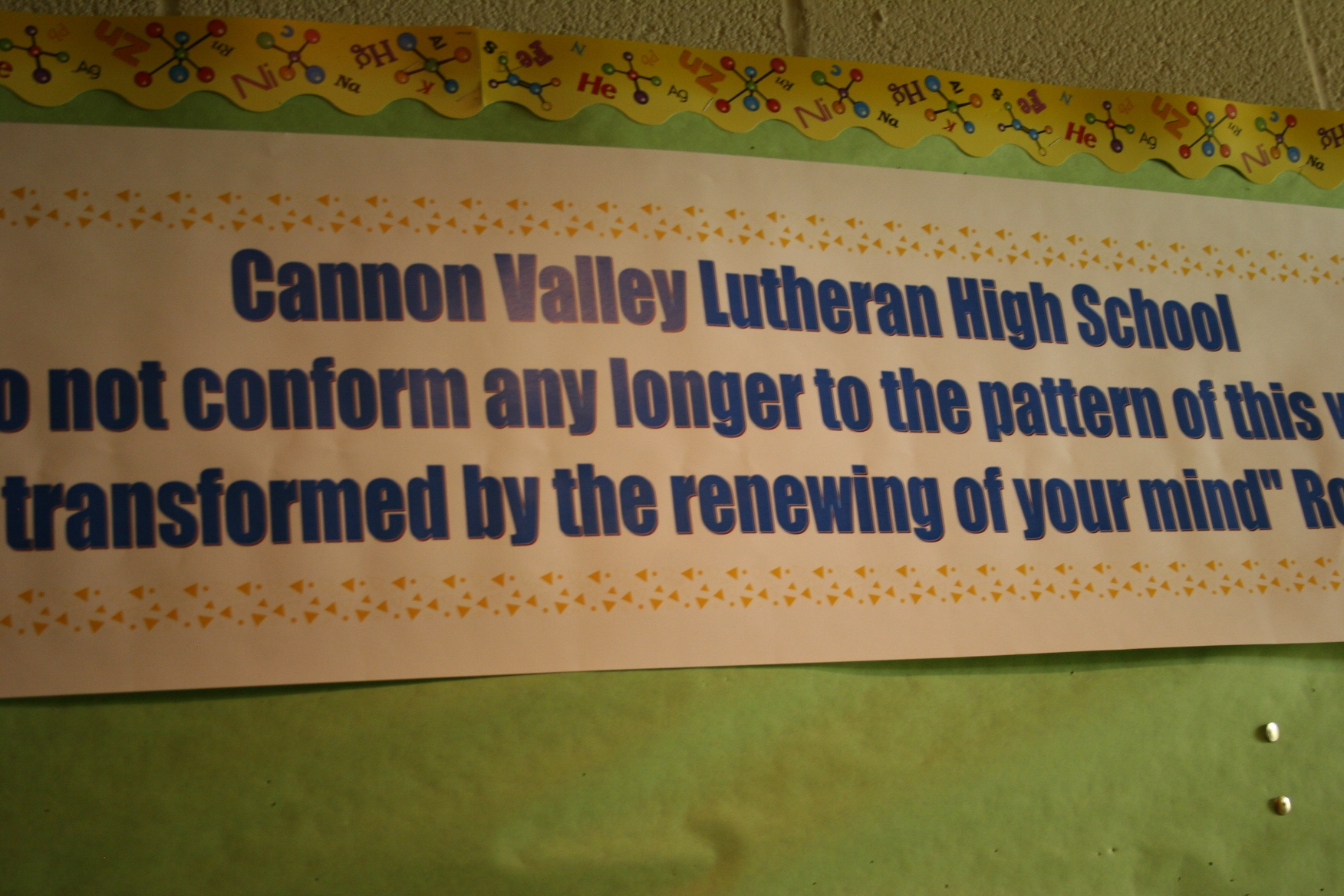
On my way to the church balcony, I found this CVLHS sign on a bulletin board.

© Copyright 2010 Audrey Kletscher Helbling


Greasy first snow in Faribault November 13, 2010

Filed under: Uncategorized — Audrey Kletscher Helbling @ 5:29 PM
Tags: , , , , , , ,

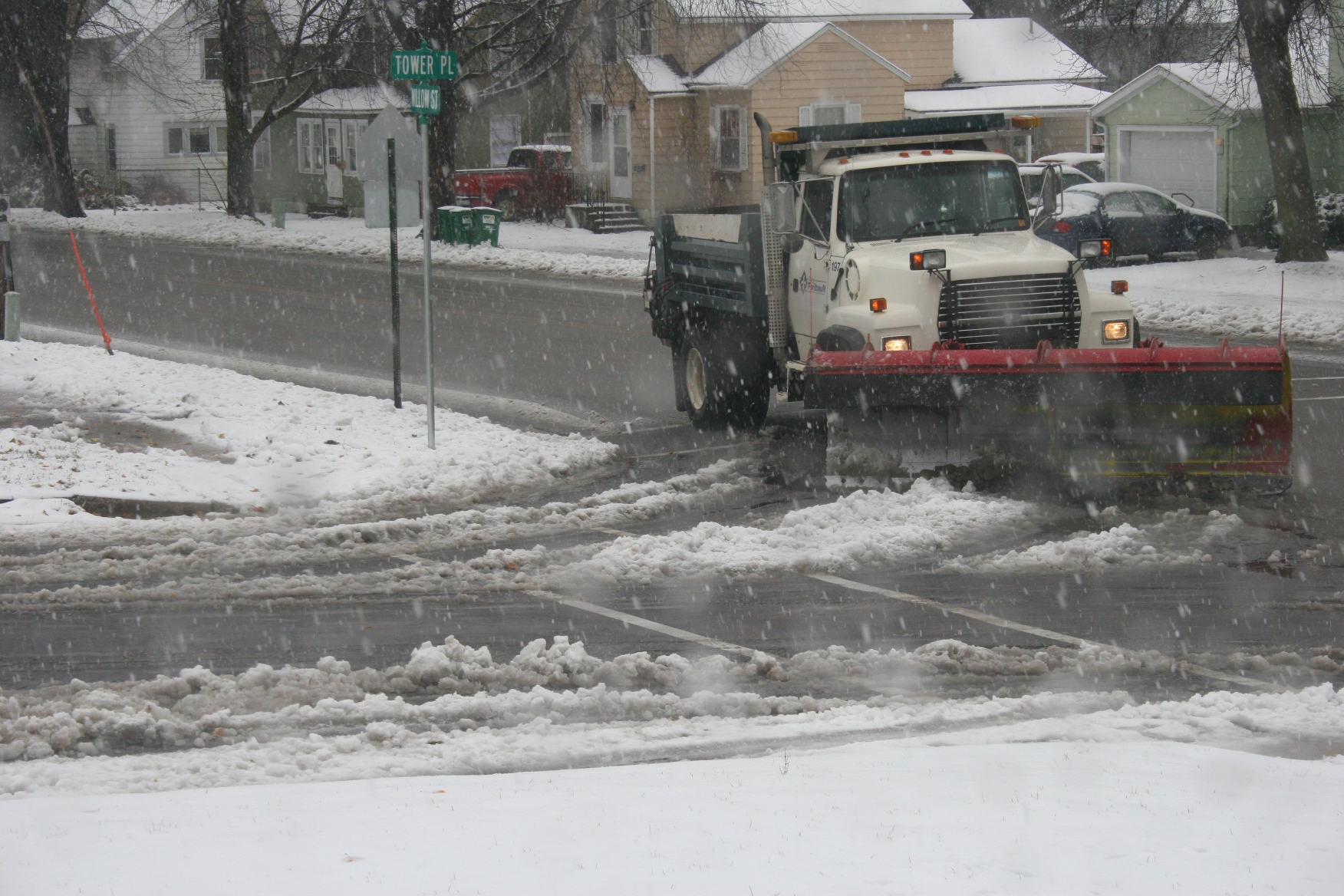
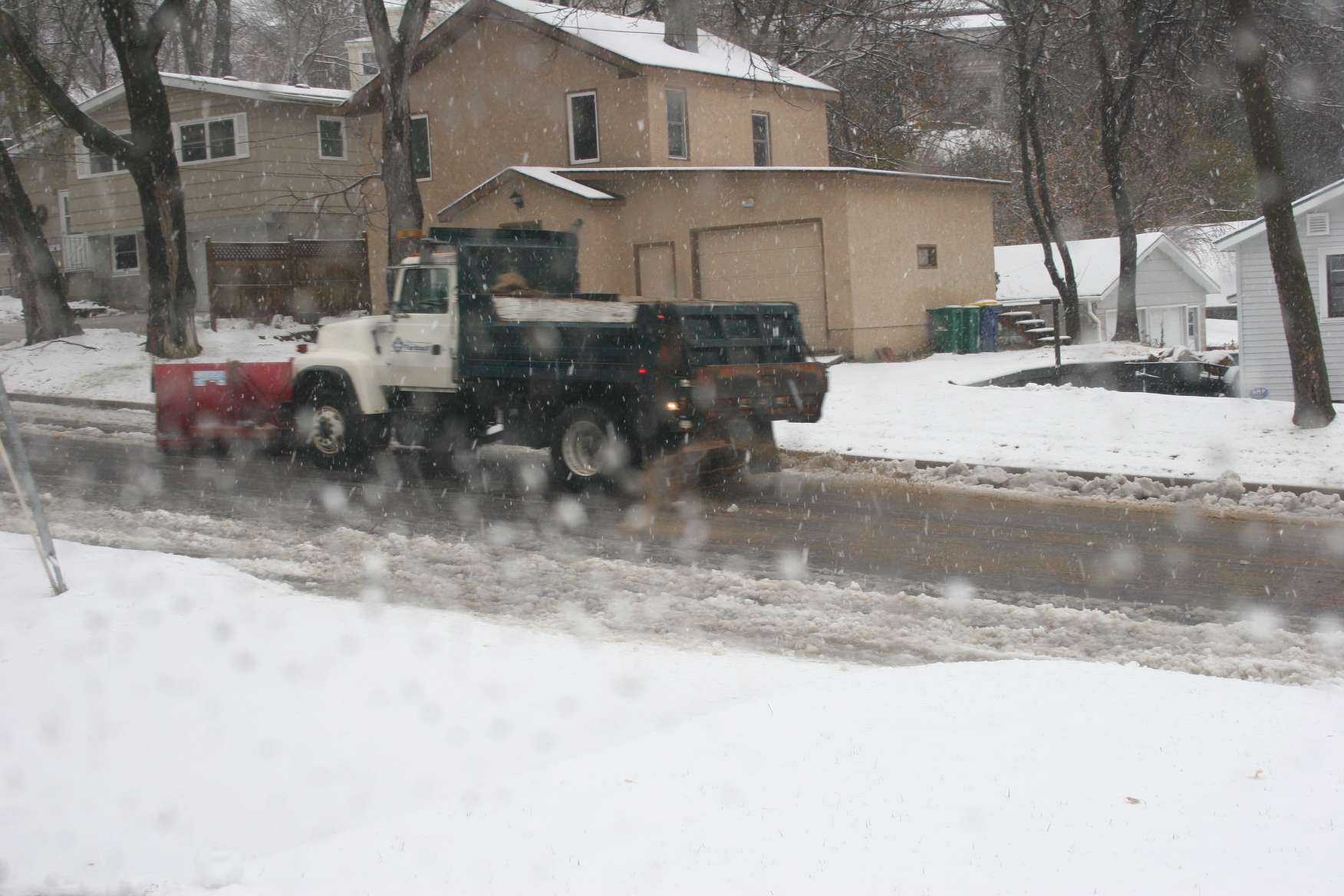
A city of Faribault snowplow plows the street past my house Saturday morning.

I KNEW IT WAS COMING, “it” being snow. The weather forecasters forecast it. And I really should expect it given this is November already.

Yet, I wasn’t ready to wake up this morning to snow blanketing the ground.

Greasy, heavy, wet snow, slick as Crisco on the driveway and sidewalks and roadways.

Not that I’ve been outside. I haven’t. But my husband told me so. He’s shoveled the driveway. Twice.

I’m content inside the house, catching up on tasks, baking bars, phoning my mom in southwestern Minnesota. She reported little snow at her home in Vesta at mid-morning.

In the Cities, conditions are nasty, according to a text message from my eldest. We had planned to go up there today but quickly canceled that trip. No sense being in the metro during the first snowfall of the season if you don’t need to be there.

Down in La Crosse, my second daughter reported no snow earlier today.

Over in Montgomery and Mankato, 10 inches had already fallen by noon, according to an announcer for the local radio station.

My sister said conditions were horrible over in Waseca. Cars in ditches. Snow still falling.

I wonder every year why I’m never ready for the first snowfall. Years ago, as a child, I welcomed it. Today I just wish it would go away.

The plow clears the side street past my corner house. I had wanted to post some "pretty" snow photos here. But alas, I had no desire to slip and slide and try to keep snowflakes off my camera lens. These two images were shot from inside my snug, warm house.

© Copyright 2010 Audrey Kletscher Helbling
 

An update from flood-ravaged Hammond & Floodfest 2010 November 12, 2010

WHEN I MET KATIE SHONES a month ago outside her Hammond home across Wabasha County Road 11 from the Zumbro River, she was angry. She was waiting for President Barack Obama to issue a disaster declaration that would begin the process of rebuilding her flood-ravaged community of 230.

Some 80 percent of the homes in her town, and most if not all of the businesses, were damaged by late September floodwaters. She was one of the lucky ones; the water stopped several feet from her front door.

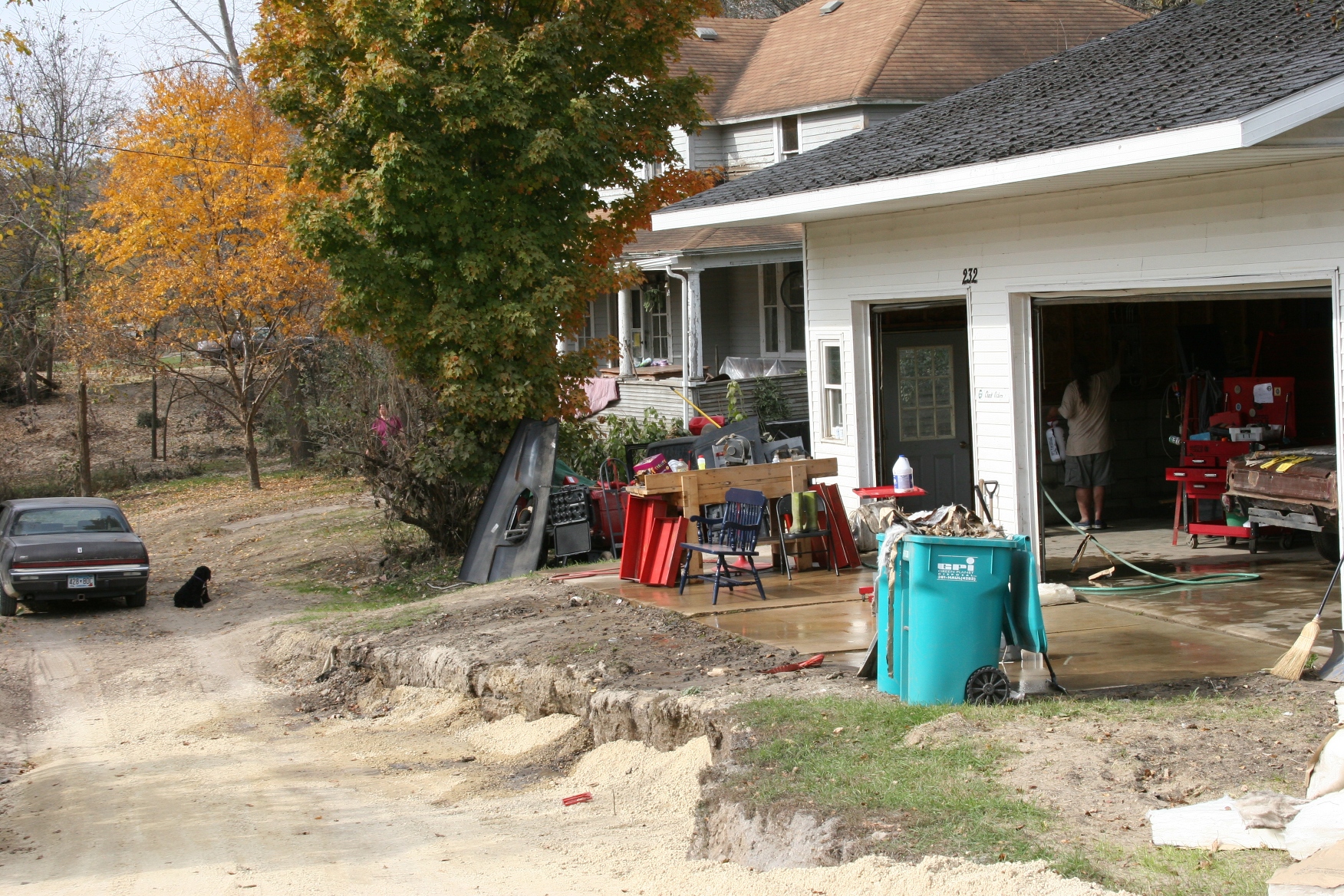
A flood-damaged home and garage in Hammond, photographed in mid-October..

Yet, the impact on her community, on family and friends, left Katie reeling.

We’ve exchanged several e-mails since our mid-October meeting. With Katie’s permission, I am sharing here, in her words, how she and others have been impacted, why she is frustrated and how you can help.

Interestingly enough, Katie begins her first e-mail with a definitive choice of words that truly causes me to pause. She terms the people of southeastern Minnesota “flood survivors,” adding this in parenthesis: (notice I did not say flood victim!).

Right away I ask her to explain why that differentiation is so important.

I prefer the term survivor. The flood is over, it is time to get on with life, move forward and face all the challenges head on. Victim sounds like you are allowing someone or something to take advantage of you. It sounds downtrodden, depressed. I see people of all ages doing what midwesterners do best “pulling themselves up by the bootstraps.”

So who are these people, these strong, strong people whom Katie knows?

My brother’s house is in Zumbro Falls – main street – and had water almost up to the first floor ceiling. They can rebuild if they want providing the first floor is 1.7 ft above the 100 year flood plain. At this point, my brother and his wife will spend the winter at my mom’s and decide what to do in the Spring, as to whether they will raise the existing house up 1.7 ft, rebuild or move to a different home. They did have flood insurance.

My mother-in-law’s home is approximately 2 miles down river from Jarrett. She has lived in that house for 53 years and in that time her house had never once flooded except for this Sept. The flood waters came out of the first floor windows. She did not have flood insurance because she is not in the flood plain. The house is stripped down to the stud walls and she plans on fixing up the house and moving back in sometime this coming year. She has signed up for the free insulation and sheet rock. A son and a son-in-law will do the re-wiring.

For now, Katie’s 75-year-old widowed mother-in-law is bouncing among her five daughters’ homes.

My dear friend and her family have been living in a hotel room since the flood occurred. They still have to make the mortgage payment on their uninhabitable home plus come up with the money for the hotel…….

She details in a follow-up email that her friend’s family has now found a house to rent in Rochester for the winter and will fix up their Hammond home and move back as soon as they can. Three generations lived in that house, which lies in the 500-year flood plain and saw floodwaters rise more than two feet into the first floor.

I can only think that for the trio of flood survivor stories Katie has shared with me, there are hundreds more. She continues:

To be honest with you, I have not talked with many of my former neighbors. I do not know where some of them have moved to. A few Hammondites cannot rebuild because they are in the flood way. Some are walking away because they never want to go through anything like this ever again. I get the feeling the majority of residents will rebuild. Hammond is their home. Some will remodel and others are talking about putting in trailer houses or modular homes.

The exposed side of a restaurant/grocery in Hammond, where a portion of a building once stood. A month ago the ruins lay in a heap in the street.

Katie praises those who have come to the aid of flood survivors.

Many volunteer organizations have come in to the area and have done an amazing job.  People and groups have helped tear down damaged walls and floors, picked up junk and debris, local restaurants and businesses have brought in meals. One church organization is donating insulation and sheet rock to flood damaged homes and the labor to put the materials up!!! Others have come in and power washed basements and walls to prevent black mold.

Volunteers are still needed. Call the Hammond City Hall at (507) 753-2086 and leave a message stating that you are willing to help and what special skills you can offer.

With the exception of winter wear, clothing donations are not needed. Furniture is welcomed, Katie says, adding though that many survivors have no place to store anything.

Monetary donations for flood relief may be directed to:

MinnWest Bank – Rochester, 331 16th Ave NW, Rochester, MN. 55901

People’s State Bank, 100 4th Ave SE, Plainview, MN. 55964

While Katie appreciates the kindness and help of so many, she remains frustrated with the government.

What is so maddening is the government’s response to the homeowners. I have been told that the reason there is so little assistance to the individual is because so few homes (only 604 homes) were affected. That shouldn’t make any difference. A home is a home and these people still need a place to live. Many have moved in with family members. I think the biggest thing people can do is call their elected officials and express outrage at how this entire tragedy has been handled. I truly believe that the average Minnesotan does not realize the extent of devastation in Wabasha County, the hardest hit county during the flood.

THIS WEEKEND YOU CAN JOIN flood relief efforts by attending Floodfest 2010 at Bluff Valley Campground, 61297 390th Ave., Zumbro Falls. Proceeds will benefit those impacted by the southeastern Minnesota flood. The event begins today at 5 p.m with a fish fry and continues until 1 a.m. Floodfest then resumes at 7 a.m. Saturday with a prayer service followed by a pancake breakfast. The weekend is jam-packed with music, a kids’ carnival, sporting activities, a bake sale, silent auction, arts and crafts and more. Click here for more information.

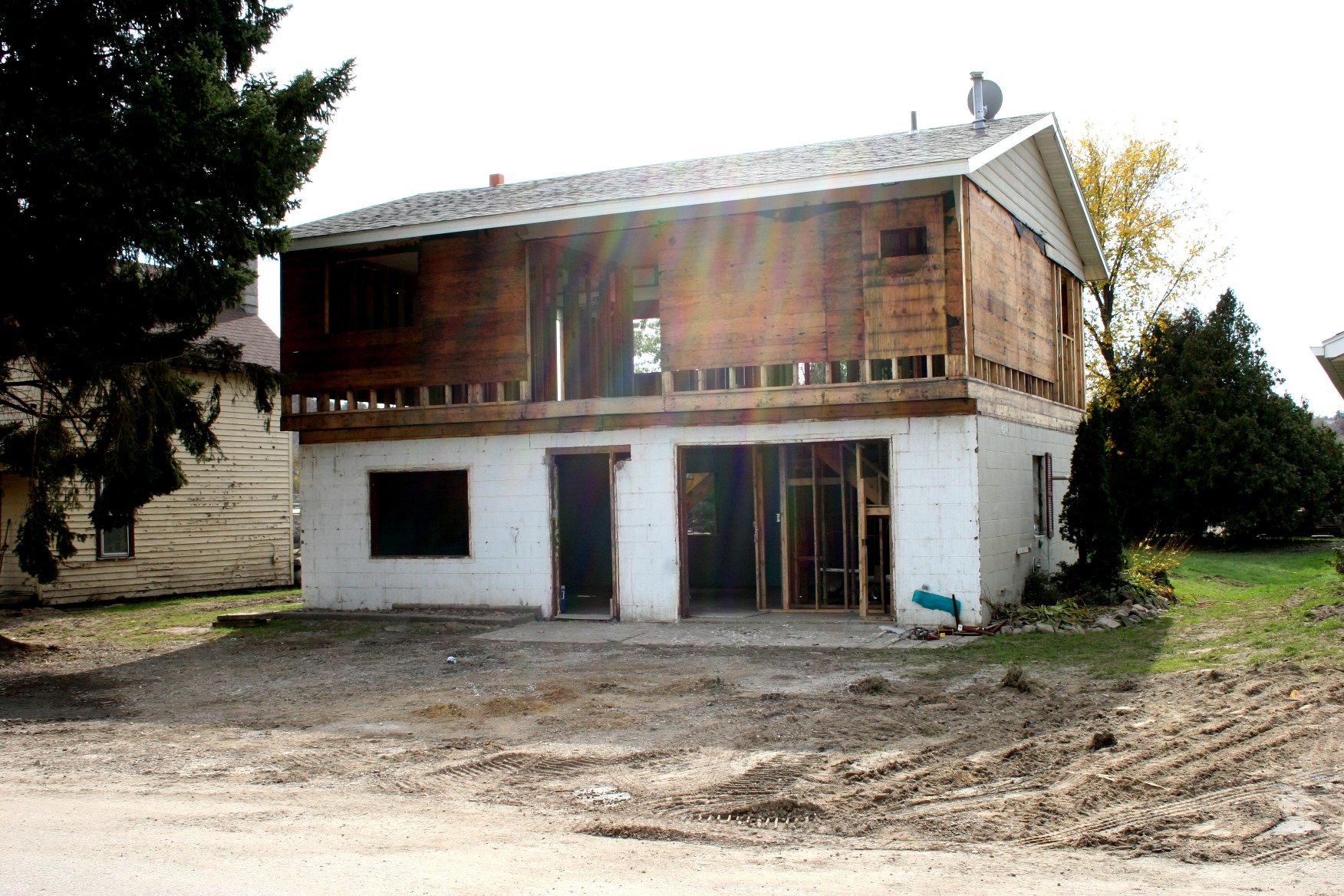
A Zumbro Falls home destroyed by the September flood.

© Copyright 2010 Audrey Kletscher Helbling
 

Reflecting at a veterans’ memorial

Filed under: Uncategorized — Audrey Kletscher Helbling @ 12:10 PM
Tags: , , , , , , , , , , ,

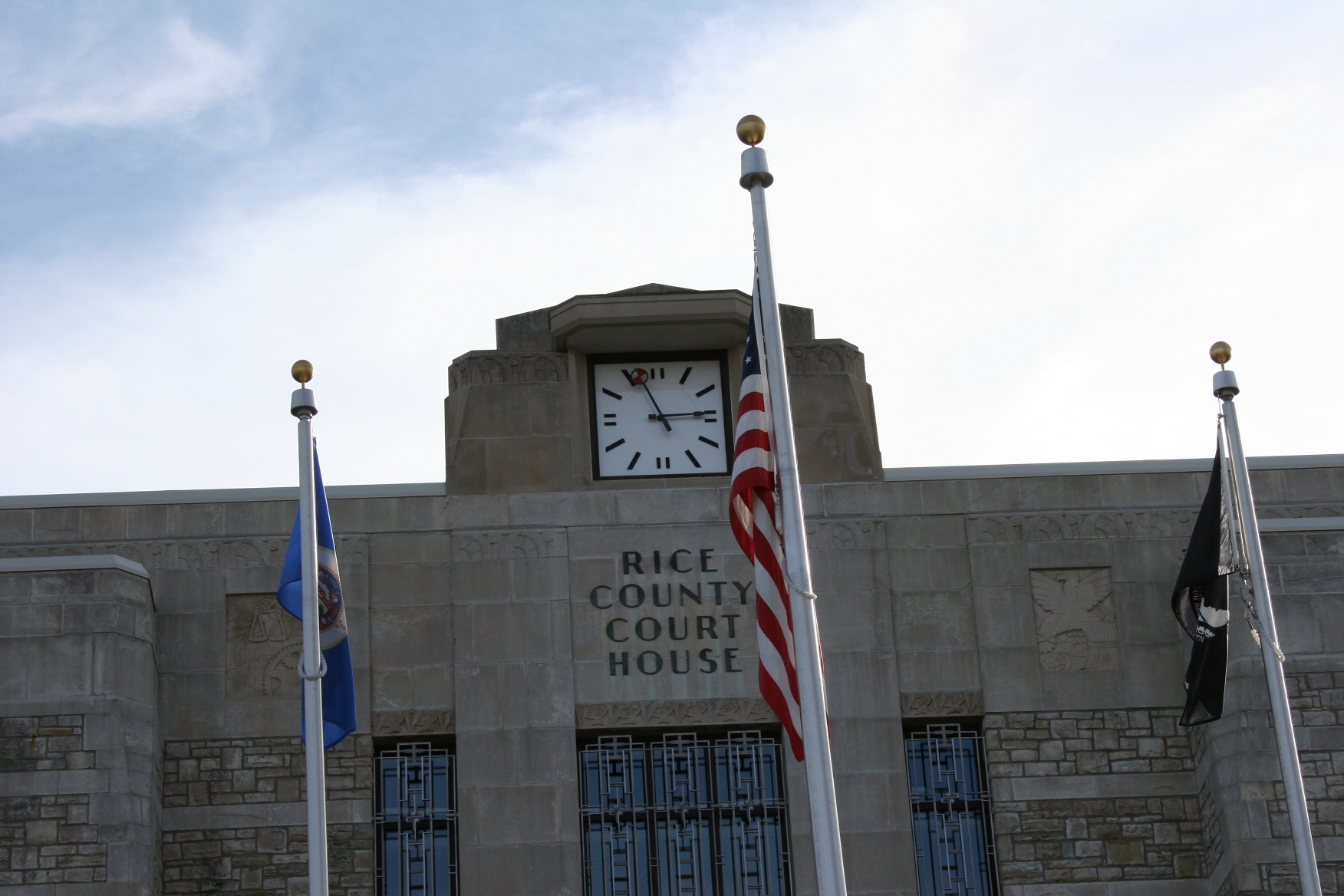
Rice County Courthouse, Faribault

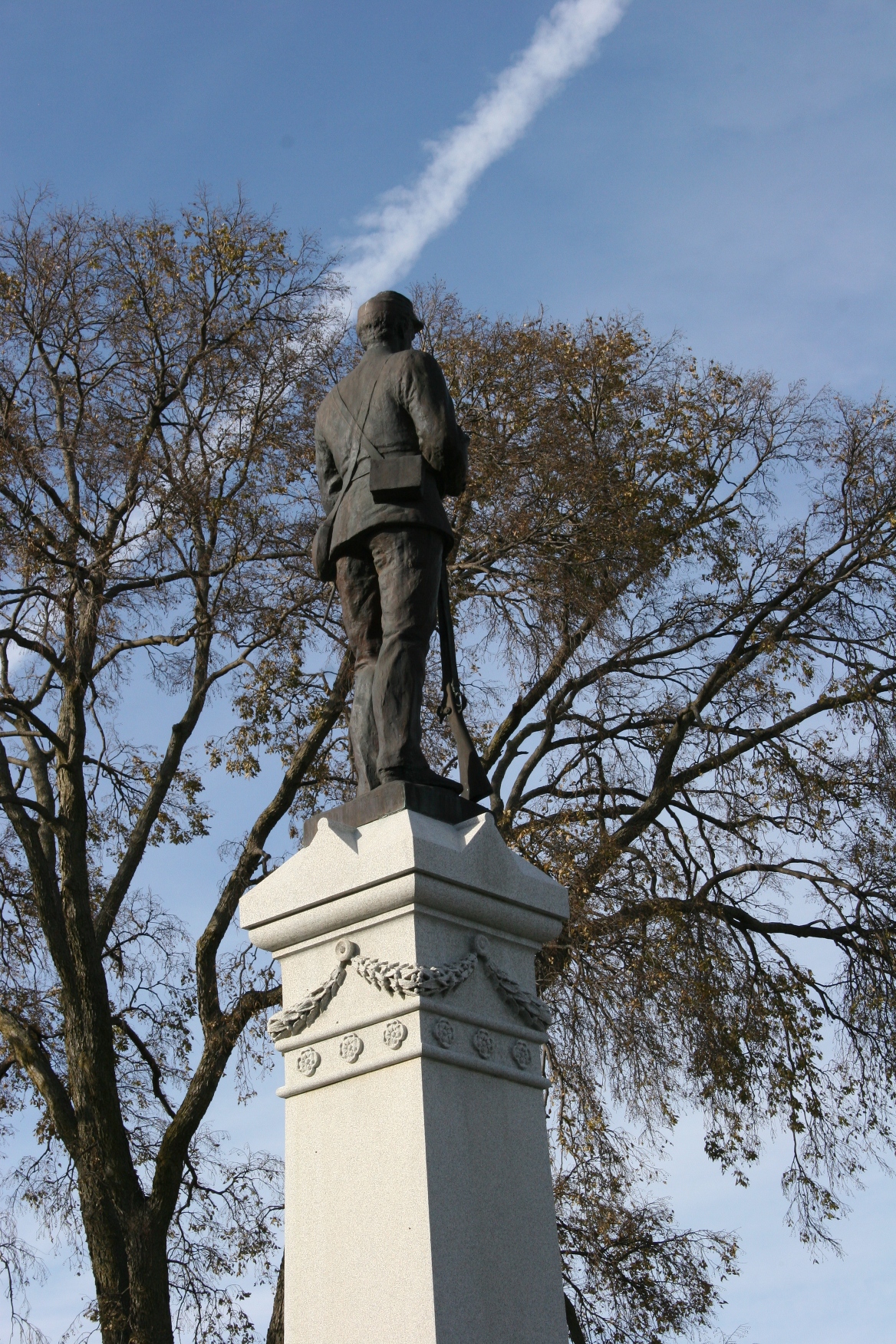
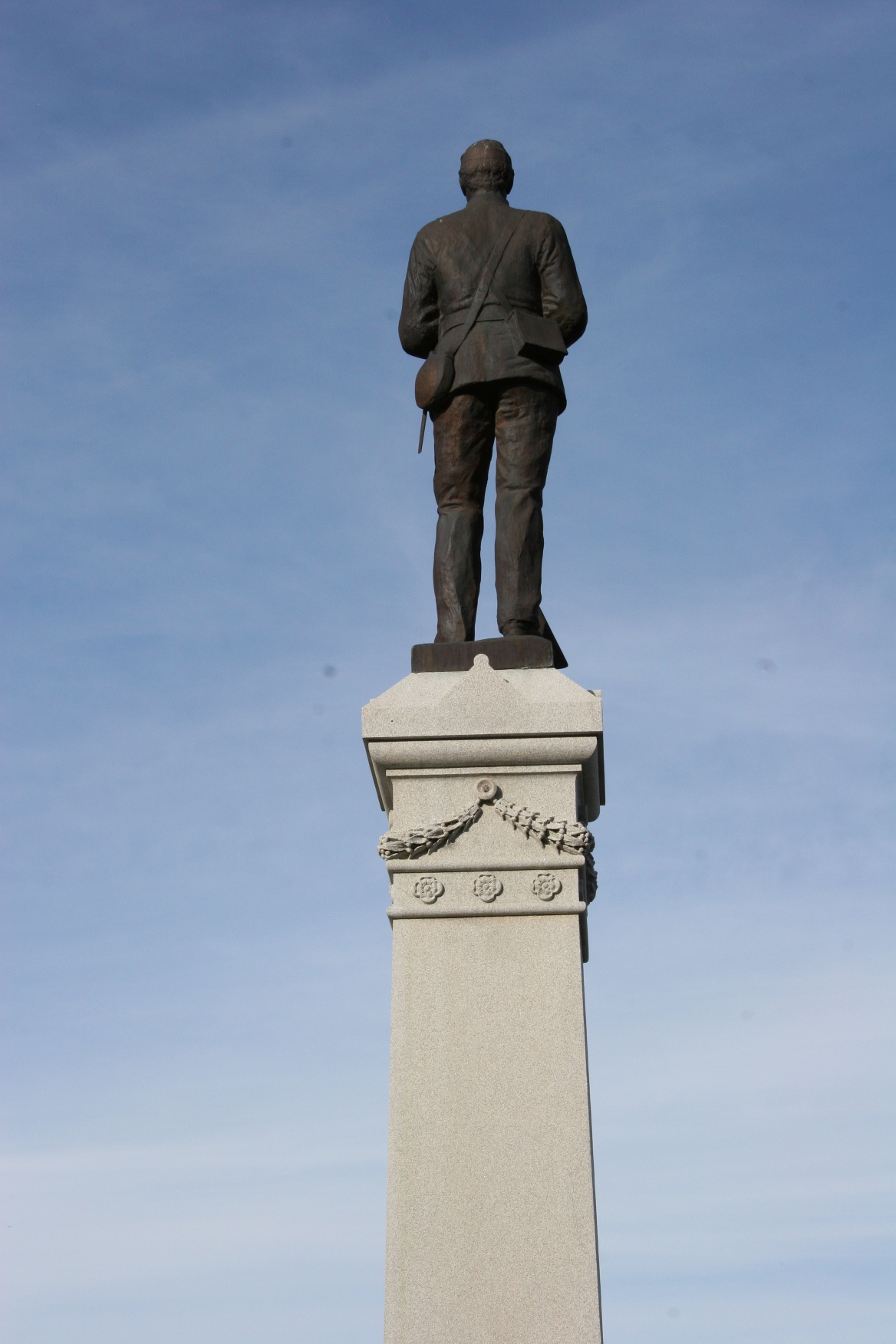
I DIDN’T ATTEND any Veterans Day ceremonies yesterday, and perhaps I should have. But several days earlier, I paid my own quiet tribute by walking the grounds of the Rice County courthouse where a veterans’ memorial expansion project is underway. For years a lone Civil War statue has stood there honoring those who served.

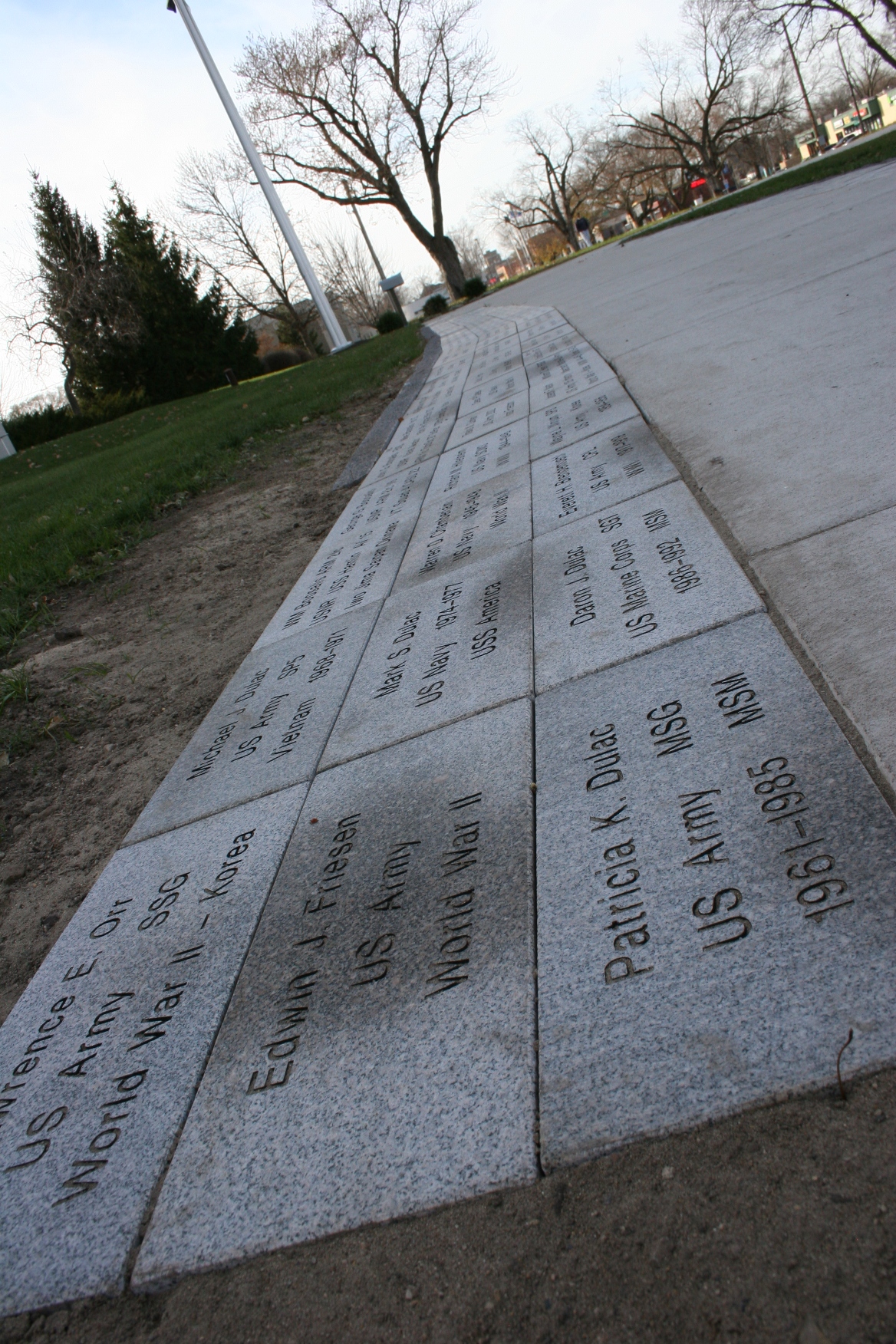
Today new sidewalks edged by honorary pavers lead to the memorial plaza which will eventually feature that Civil War statue, a torch, bronze eagle, dove, granite columns, flags, benches and gardens. I expect a place for quiet reflection, a place of honor, a place to cry.

Honorary pavers line sidewalks leading to the center of the Rice County veterans' memorial on the courthouse lawn in Faribault.

Veterans’ memorials often move me to tears because they always, always, bring thoughts of my dad, a Korean War veteran. I remember how, months after his 2003 death, my emotions overcame me while viewing the veterans’ memorial in Winona. With grief still gripping my soul, I simply wept.

Such strong emotions did not pervade my thoughts at the site of the new Rice County Veterans Memorial in Faribault. Yet, words and images triggered memories in a quiet, deeply personal way of honoring those who have served our country.

Three letters, KIA, imprinted upon a paver signify the ultimate sacrifice. Killed in action. I thought of my dad's soldier-buddy, Ray Scheibe, who was blown apart by an incoming shell on the day before he was to leave Korea. My dad never got over this loss and was forever haunted by the horrible image of Ray's death.

Even though I knew the trail of white in the sky came from an airliner, I imagined this to be the smoke of gunfire or of bombs or of shells as I took this image of the Civil War statue in Faribault.

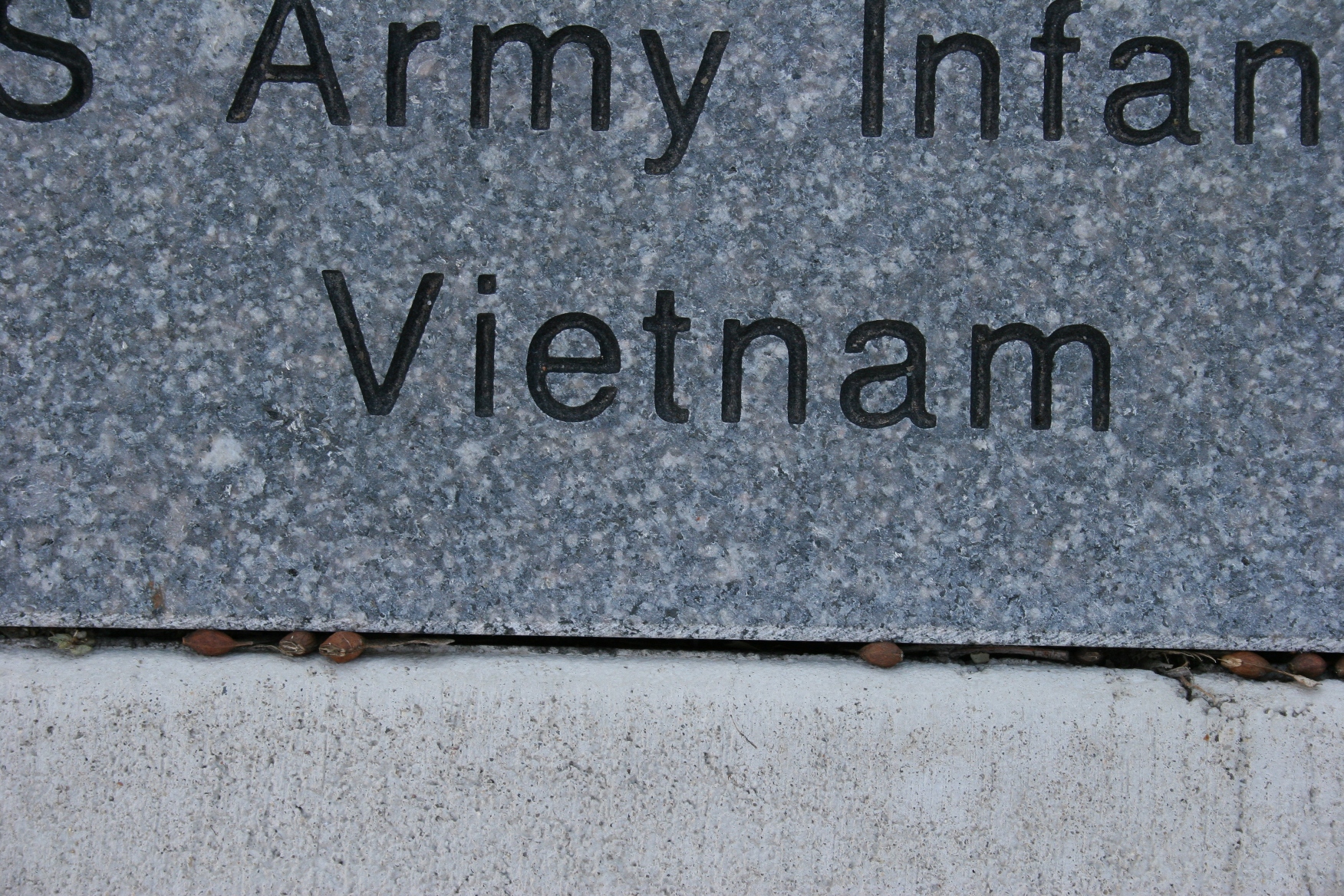
I was coming of age during the Vietnam War. I remember the protests, the anger, the peace signs, all of it...

When I look at the MIA/POW flag, I recall the metal bracelet I wore in high school, the bracelet engraved with the name of a soldier held as a prisoner of war during the Vietnam War. Sadly, I don't remember his name or even know if I still have that bracelet tucked away somewhere in a cardboard box.

When I composed this image, the back of the Civil War statue, I thought about how a soldier must sometimes feel so alone, so vulnerable.

© Copyright 2010 Audrey Kletscher Helbling
 

Remembering my dad, a Korean War veteran November 11, 2010


Elvern Kletscher, my dad


I’VE JUST PULLED TWO FILES from a cabinet in my office. One’s labeled “Elvern K. (obit, death certificate).” The other is simply labeled “KOREA.”

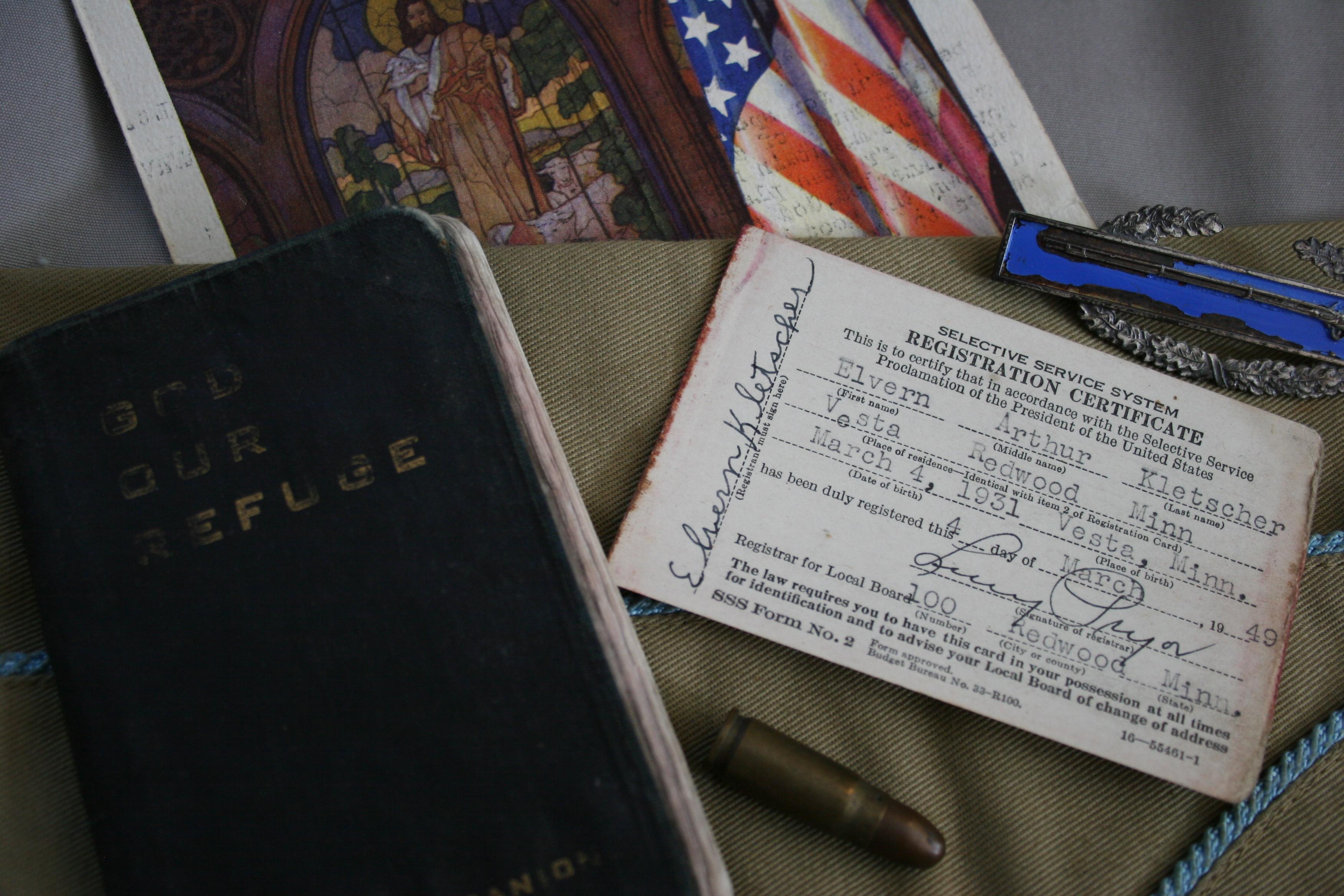
Then I turn toward a chest of drawers, also in my office, and remove a shoebox from the bottom drawer. It’s tagged “Elvern Kletscher’s Korean pix, etc. Important stuff.” I’ve underlined “Important stuff” twice.

The contents of that shoebox connect to the contents of the files. All encompass my dad’s time serving with the U.S. Army during the Korean Conflict.


Some of the items from my dad's time in the military, stored in a shoebox.


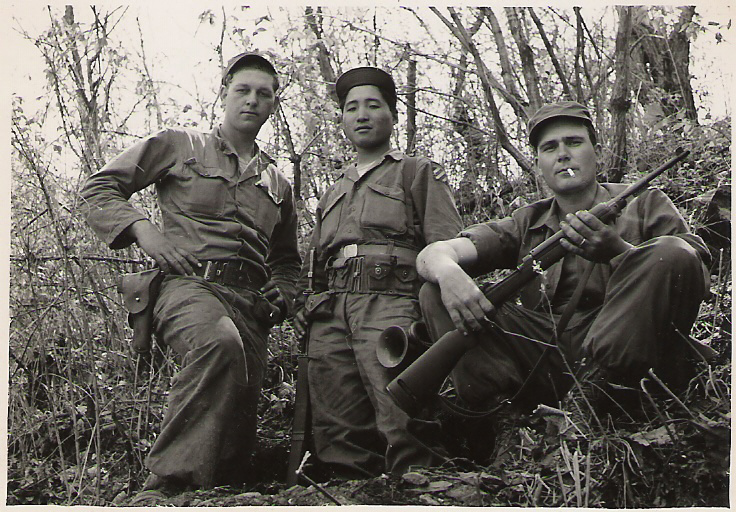
Sifting through the files and shoebox brings me to tears as I remember my dad, who fought on the front lines, was wounded on February 26, 1953, at Heartbreak Ridge and received a Purple Heart medal 47 years later. He died in 2003.

My father talked very little of his time in Korea. So other than generalities and a few shared stories, only his black-and-white photos and letters offer me a glimpse of the young man who was drafted and sent into combat.

In letters written to his family, my dad vents his frustrations and concerns. I’ll share snippets of a letter from Korea dated March 4, 1953, his 22nd birthday, and written days after he was wounded.

Dear Mother, Dad & all

Guess you’s have been snowbound for awhile. “Huh” Just got your letter today. Well I’m 22 now. Birthday is past by a couple hours. Sure isn’t much of a birthday. But guess I can’t expect much over here.

Then he proceeds to blast the draft board and politicians after learning that his younger brother, Harold, may be called to duty. I can’t quote everything he wrote, but let me tell you, my father is fuming. He writes, in part:

Do they know what this is like over here? Hell no. Why the heck don’t some of them come over here and look this over. They’d probably come to their senses…

In the third page of his letter, my father-soldier continues:

I didn’t get your package yet, but they will be here soon mail is awful poor in coming through. Nobody is getting any mail. I’ve got 17 points now I think. They pile up fast. Sure wish I had the 36 of them though. I still think I’ll leave Korea in August. So it isn’t too long anymore. I sure hope I get out 3 months prior to my discharge. That’s almost all we talk about in the day time is how many points each other has got and when we think we will leave this hell hole.

Those are two strong words: hell hole.

But the few war stories that my father shared were nothing short of hellish. He told of digging foxholes and praying that God would save him from death, of a buddy blown up before his eyes, of a sniper picking off members of his platoon until my dad picked off the sniper, of being pinned down for days in trenches under constant enemy shelling…


My dad brought this 7-inch by 9-inch cloth "RETURNED FROM HELL" patch home with him after serving for nearly a year in Korea.


Through the attacks, the combat, the deaths of buddies, all through his year in Korea, my dad held strong to his faith. He wrote:

Sure was good to go to church. I had communion. I always try and make every church service they got over here. Once a week the chaplain comes up here on the hill. It’s always good to go. Always makes a guy know he isn’t alone.

In concluding his 3 ½-page letter, my father tells his parents:

I’m feeling fine and don’t worry about me. I’ll write again. Love Vern

Not once in his 87-line letter does my dad mention that just nine days earlier he was struck on the right side of his neck by shrapnel from a mortar round.


Elvern Kletscher, left, with two of his buddies in Korea.


TODAY, VETERANS DAY, please take time to honor a veteran, remembering all they have sacrificed for their country.

In conclusion, I wish to quote a few lines from a news release issued by former Second District Congressman David Minge on May 12, 2000, the year my dad received his Purple Heart for those wounds suffered on Heartbreak Ridge in Korea.

These two men are a prime example of sacrifice and service to our nation. For fifty years, Norman Kalk and Elvern Kletscher knew the truth that they had earned these medals. I am gratified that we could finally recognize their contributions and acknowledge the debt we can never repay.

#

A STORY WHICH I WROTE about my Dad’s service in Korea was published in 2005 in the book God Answers Prayers Military Edition, True Stories from People Who Serve and Those Who Love Them, edited by Allison Bottke. To read that story, “Faith and Hope in a Land of Heartbreak,” click onto the Harvest House Publishers website.

© Copyright 2010 Audrey Kletscher Helbling


Travel stories from Argentina November 10, 2010

Filed under: Uncategorized — Audrey Kletscher Helbling @ 8:28 AM
Tags: , , , , , , ,


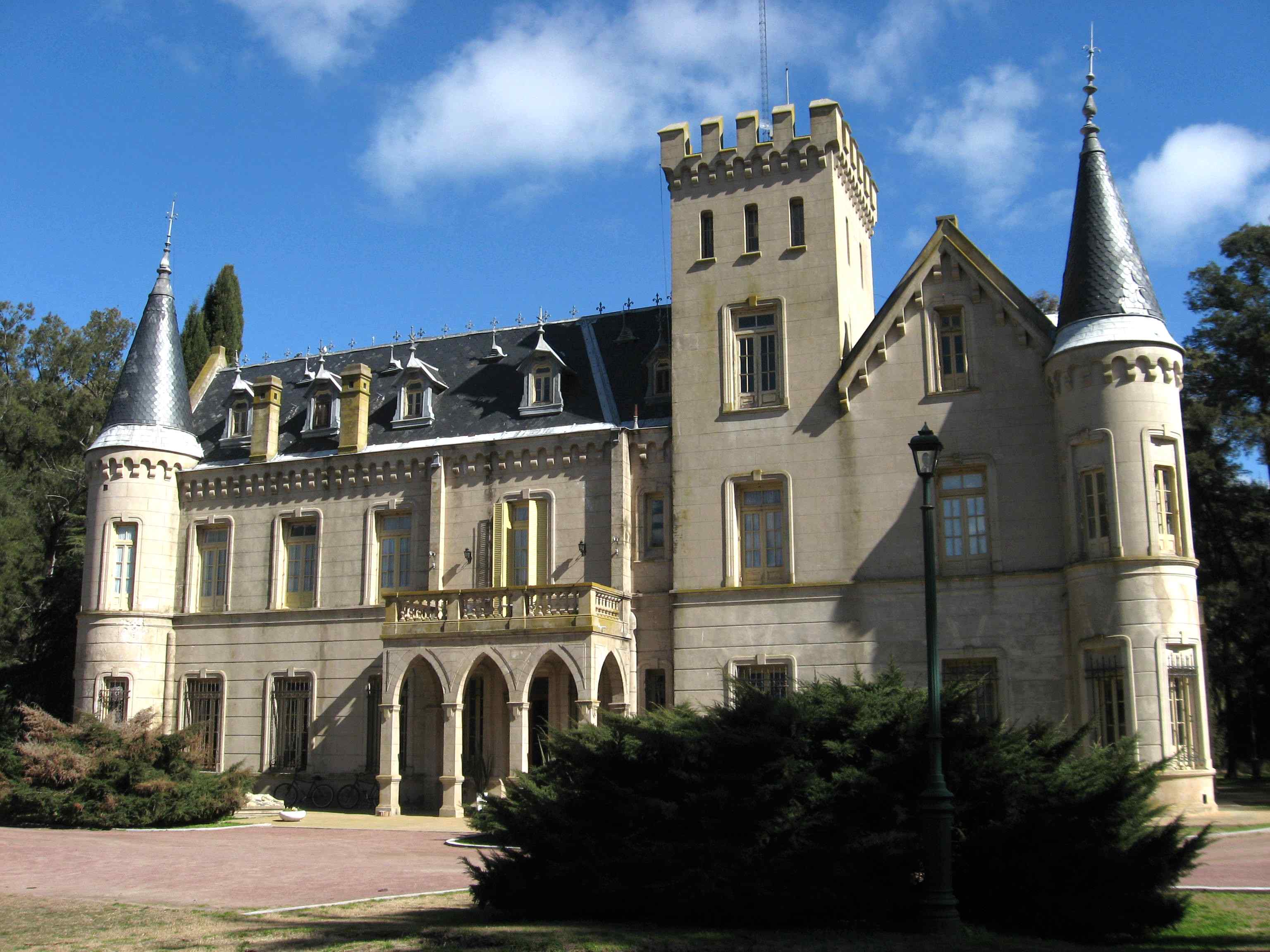
Castle at Estancia La Candelaria in Argentina.


AS DIFFERENT AS my second-born and I are—she’s a fearless traveler, I’m not—we share a common passion and talent. We are both writers.

I never purposely led Miranda on this path, although I suspect that my endless reading aloud of books to her as a child instilled a basic love of language.

She chose to pursue writing on her own with me offering encouragement from the sidelines. In high school, she served as co-editor of the student newspaper, never backing down even when challenged by the principal. At the University of Wisconsin- La Crosse, she also wrote, and edited, for the student newspaper.

Last week Miranda began freelancing for examiner.com, St. Paul. She’s a travel writer with the online entity, and a darned good one. She focuses on Argentina, her adopted country, and the place where she’s studied, done mission work and interned. She just returned from Buenos Aires three weeks ago after a 4 ½-month stint there, her second time in that South American capital city.

Since her return to Minnesota, Miranda has been searching for a job that will utilize her Spanish-speaking skills. She has a Spanish degree and wants to work as an interpreter or translator. I don’t think it’s any coincidence that she opted for minors in international studies and communications studies.

While she searches for employment, Miranda is volunteering with a local charitable service center, helping with Spanish interpreting.

She is also staying connected to the Latin America culture via those examiner.com, St. Paul, articles. She’s penned some interesting features about gauchos, a Buenos Aires cemetery, a favorite pancake restaurant and Mafalda, Argentina’s most popular comic strip. But don’t take my word for it. Read for yourself by checking out the travel section of examiner.com, St. Paul.


An Argentine gaucho


Statue at Chacarita Cemetery, Buenos Aires, Argentina


PHOTOS BY MIRANDA HELBLING

© Copyright 2010 Audrey Kletscher Helbling
 

Choosing a door November 9, 2010

Filed under: Uncategorized — Audrey Kletscher Helbling @ 2:49 PM
Tags: , ,

DEAR READERS:

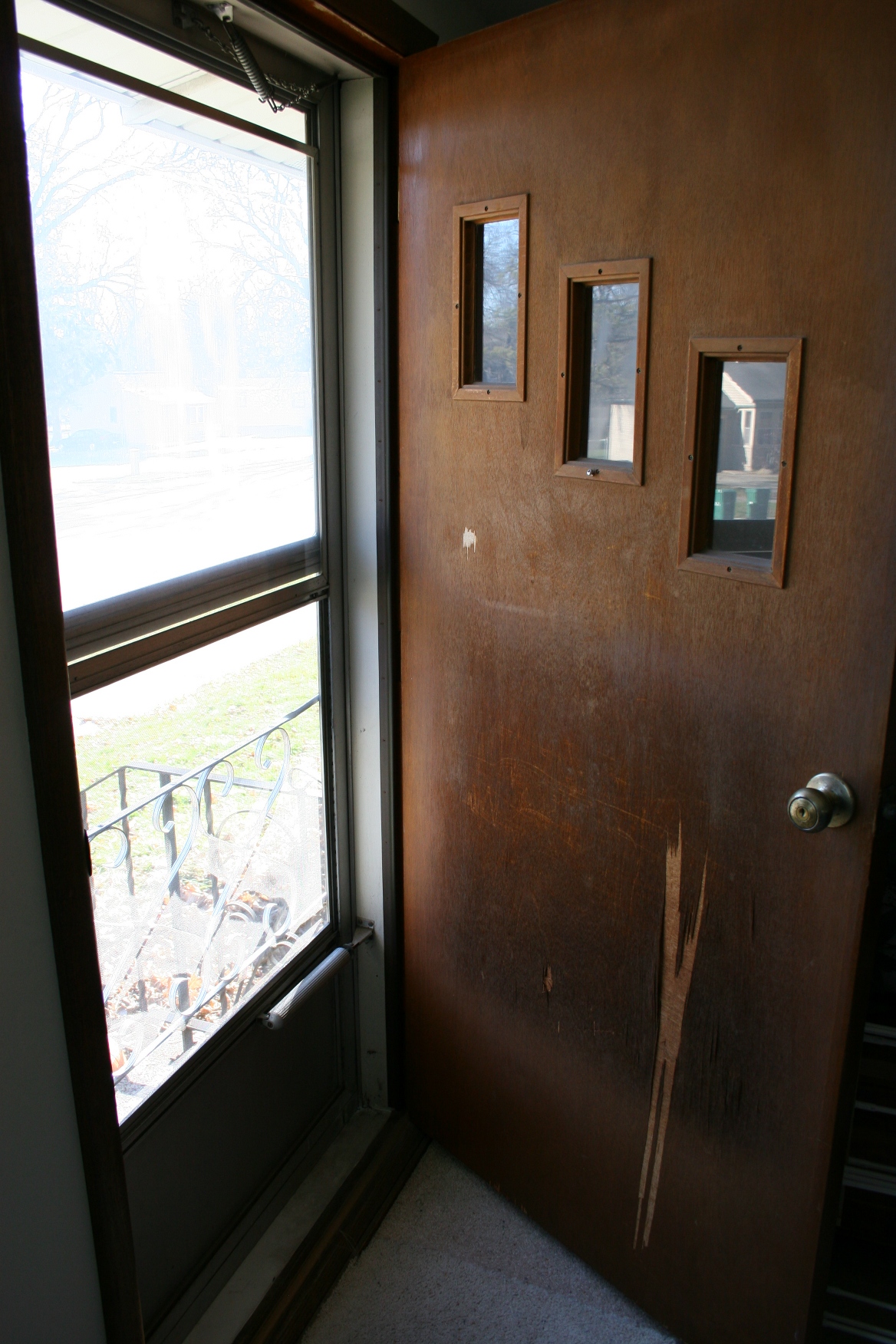
See these weather-beaten, 1960s or 1970s vintage doors?

I'm selecting a new door to replace the wooden entry door on the right. Once the new door is installed, I'll choose a storm door.

I am ashamed to admit that these are the front doors on my house.

No one would argue that they need replacing. My husband and I are in the process of selecting new doors. We’ve chosen the brand and are working with John from a local lumberyard.

John is a patient man. But today I sensed that he is becoming impatient with me when I told him, once again, that I’m not quite ready to order the entry door. (We haven’t even discussed storm doors.) I can’t decide whether I want a single window, windows or no windows in the door.

My biggest dilemma, however, lies in choosing colors for the door, which will be factory-painted. My husband insists on this.

Do I choose one paint color for both sides of the steel-clad entry door? Or, do I select different colors? What color/colors are your door?

My friend Mike, who is a designer, suggested that we choose white for the exterior-facing side since the trim on our new windows will be white. He mentioned to me, however, how he dislikes the white door in his living room. Would I like a white door in my beige living room? I plan to eventually repaint that room.

So, readers, what would you do? I welcome any advice you can offer me on door colors and door windows (or not). And, as long as we’re on the topic of doors, what would you choose in hardware? A knob, handle, pull?

Please hurry with your answers. John from the lumber yard is waiting.

Audrey

© Copyright 2010 Audrey Kletscher Helbling
 

Saving barns

EVEN THOUGH I HAVE NOT lived in the country since I was 17, I still define myself by my rural roots, my Minnesota prairie roots.

Those formative years of connecting to the land shaped and defined me as a person and as a writer.

Picking rocks, walking beans, doing chores, tending the garden—all taught me the value of good, honest labor. I will always appreciate my rural upbringing.

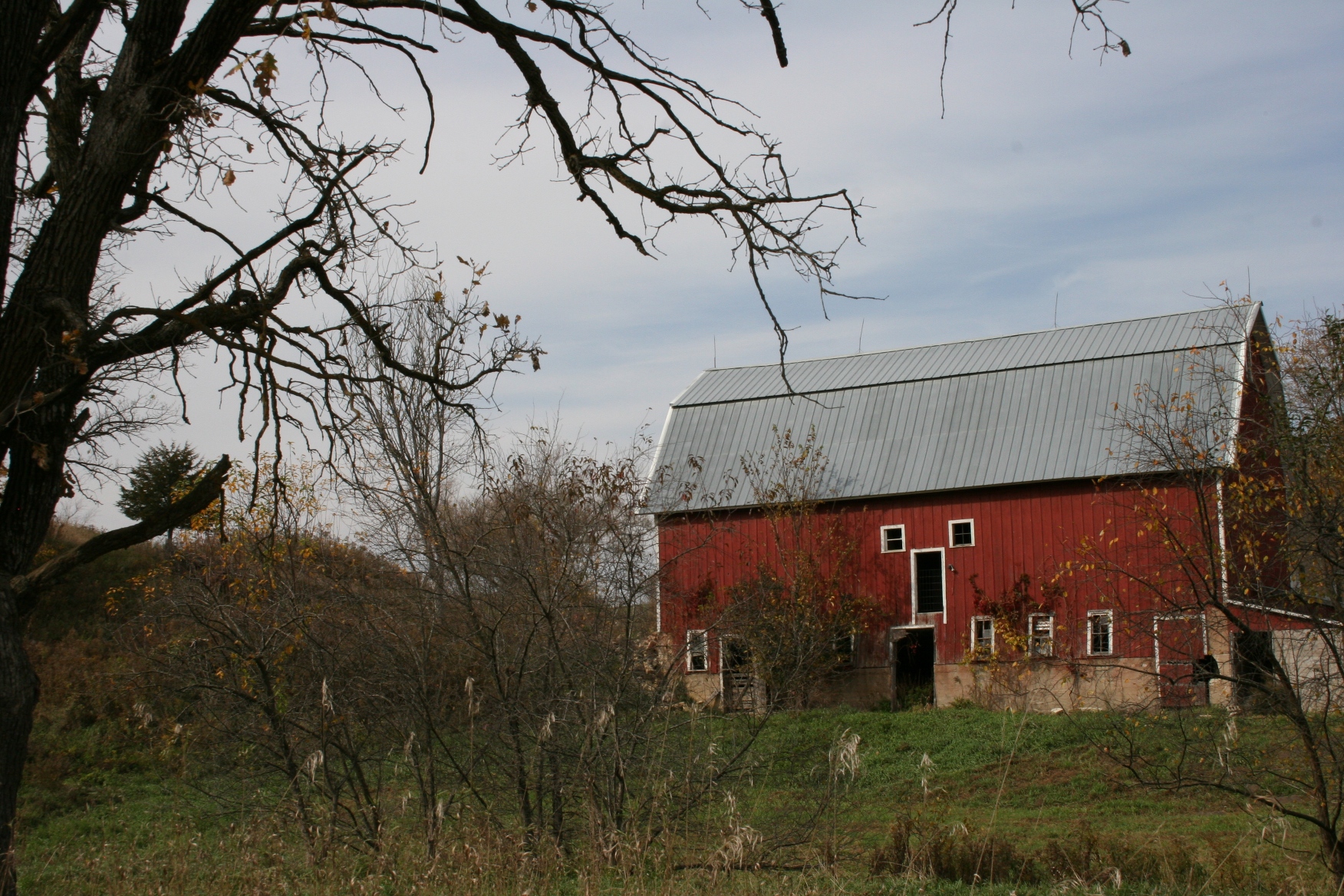
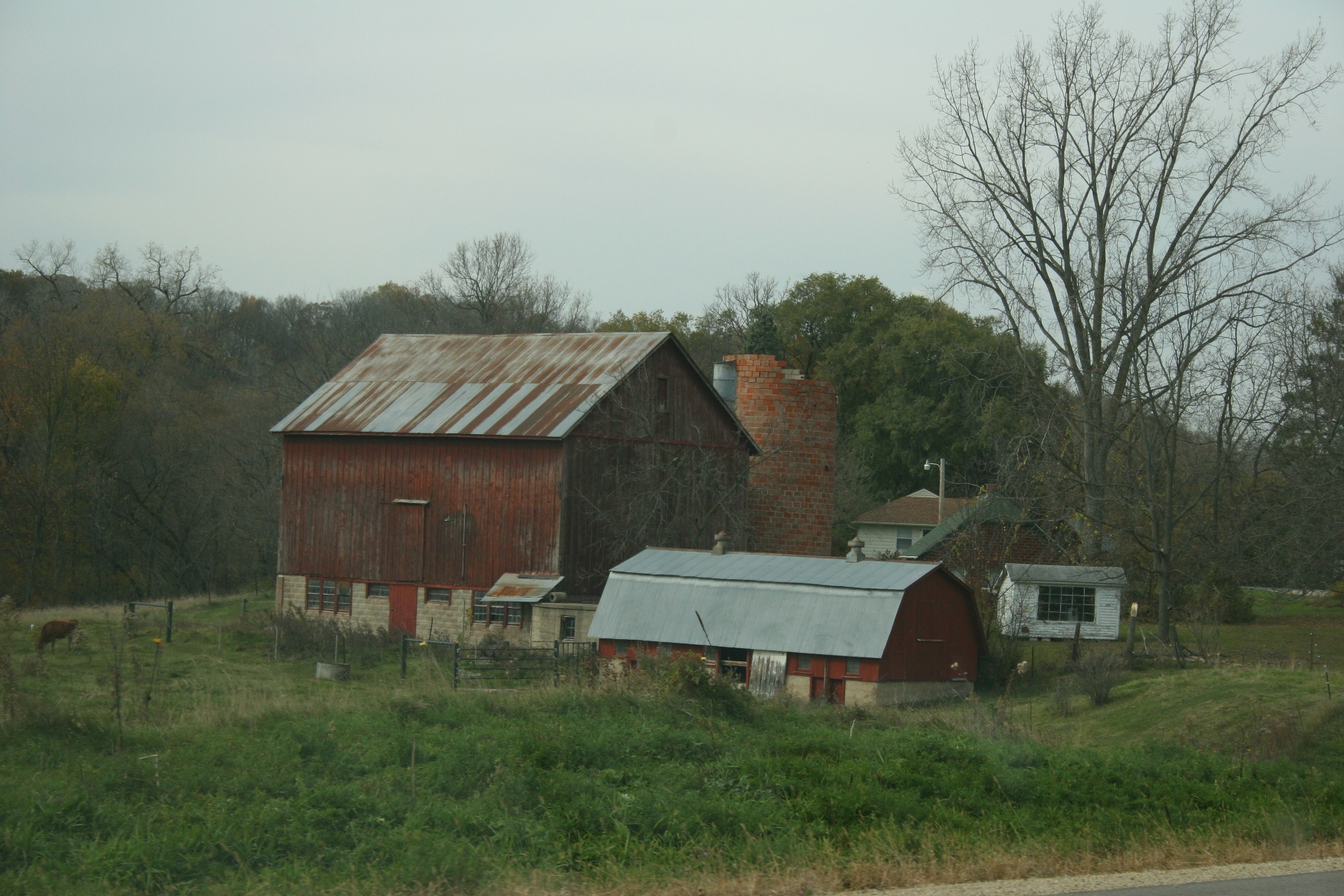
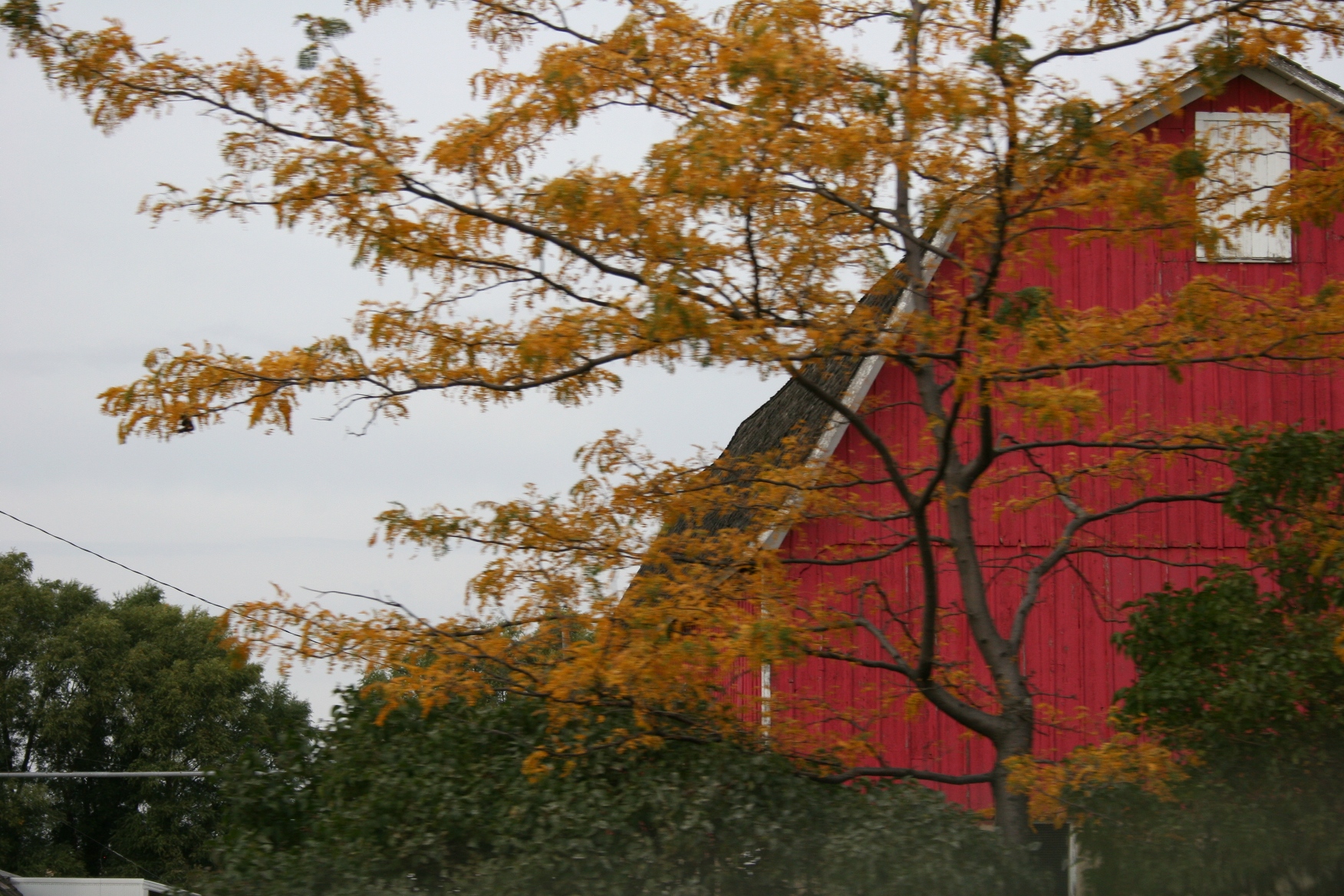
Clearly, I value the family farm. I also value barns, which possess a nostalgic hold on me. I love to photograph them, even if only in passing from a car window.


I photographed this barn in the Hammond/Zumbro Falls area along Wabasha County Road 70 in October.


Another Wabasha County barn.


A quick shot of a barn along Minnesota Highway 60 somewhere between Faribault and Wanamingo.


Unfortunately, many barns today are falling into piles of rotting lumber. Landowners cannot always afford to maintain them or choose not to maintain them.

But many barns have been beautifully-restored, sometimes converted to new uses. Organizations like Friends of Minnesota Barns support efforts to save barns as part of our rural heritage.

This Saturday the FoMB will hold its annual Barn of the Year Awards Reception from 1 p.m. – 4 p.m. at the historic Brandtjen Farm Barn, 16965 Brandtjen Farm Drive, Lakeville. The 80-year-old dairy barn has been renovated as a clubhouse and community and recreation center for the Spirit of Brandtjen Farm housing development.

Barns contending for the 2010 award are owned by Paul Anderson of Pope County, John Lavander and Nan Owen of Isanti County, Eric and Shelly Liljequist of Wright County, and Lyle and Ann Meldahl of Fillmore County.

If you’re interested in attending this event, which includes a social hour, a tour of the Brandtjen barn, a talk by Minnesota Secretary of State and FoMB member Mark Ritchie and presentation of the Barn of the Year Awards, visit the FoMB website. Reservation deadline is November 10.

© Copyright 2010 Audrey Kletscher Helbling
 

Minnesota Teen Challenge shares sobering, inspirational stories November 8, 2010

WHEN YOU PUT faces and stories to statistics, substance abuse in Minnesota becomes real.

On Sunday I heard the stories, saw the faces and spoke to individuals who are currently working toward recovery through Minnesota Teen Challenge, a Christian-based drug and alcohol rehabilitation program. The group brought its inspirational message to Trinity Lutheran Church in Faribault with songs and personal stories.

JEFF: He didn’t tell his story, but he sang a sweet, pure, heartfelt rendition of Amazing Grace. “The chains are broken,” Jeff sang with the Minnesota Teen Challenge Choir as his back-up.

MICAH: Once a church-attending youth with intentions of possibly becoming a pastor, Micah spoke of how he became caught up in alcohol after his church youth group folded and he no longer had anywhere to go, nothing to do. He stresses the importance of maintaining church youth groups.

Through his years of abuse, his girlfriend (now his fiancée) has stuck by him, turning him in when she had to with a tough love that today has led him into recovery. He plans now to enter the ministry.

Later his fiancée would tell me about the irony of their situation, how a vehicle in which they were riding was struck head-on by a drunk driver; how, when she lay in the hospital, Micah was back home drinking.

DAR: She shakes my hand before the church service begins and immediately reveals that she was a teacher with a double life as a cocaine addict. Later, she will stand before the congregation and perform a solo with the Teen Challenge Choir. “Love so amazing…the rescue for sinners…our hope is in you.”

JESSICA: She’s 29, a former heroin addict from St. Cloud with a felony record. She tells me her story as we sit side-by-side at the potluck dinner following the church service.

She’s made the news, for all the wrong reasons. She’s had a gun held to her head. For her, the possibility of death was her rock bottom. She never expected to live past 30.

Today Jessica’s doing well. She worries, though, about several roommates who lasted only one night at Teen Challenge. (Program enrollees are free to leave at any time.) She wonders why they couldn’t see the possibilities of successful recovery in her. She wishes she could have told them to “buck up,” that God has not given up on them. He never gave up on her.

Emotion edges her voice as she shares how her application for entry into the Teen Challenge program was prayed over by staff.

When a church member brings Jessica a piece of German chocolate cake, she becomes emotional again, this time over the simple act of kindness from a stranger.

DEVON: “You name it, I did it,” says Devon, 28, who grew up as a church-attending Catholic, the daughter of an abusive and alcoholic father. She was molested (not by her father), sold meth, spent time in jail, lost custody of her kids, lost everything, she says. One day she looked at herself in the mirror and promised God that she would change her life.

“I would probably be homeless or dead in the gutter if not for Teen Challenge,” Devon tells the congregation.

Later, as she sits across the dinner table from me raving about the Rice Krispie bars, Devon reveals more—how only her Catholic upbringing kept her from killing herself because she had been taught that suicide is a damning, unforgivable sin.

Devon tells me how she once asked for a sign from God, for money, after her home had been broken into while she was in jail. Her dealer, who was high, unknowingly left $1,000 in her apartment. She took that as a sign from God (How many times have you had $1,000 dropped in your lap?” she asks), using some of the money to repay her mom, pay a landlord, buy clothes and then buy more drugs.

Today she’s determined to stick with her recovery program, for the sake of her kids and because, if she left now, she would be homeless, a place she does not want to be.

She speaks with a fierce voice of determination.

JIM: He sings a solo: “You make all things new..I will follow you forward.”

JAMES: He’s returned to his hometown—Faribault—“a good town, but it’s had its down sides and its dark sides.” He’s stolen from people here, maybe even some sitting in the pews, he says. He is nervous about returning to the town where his criminal acts placed his name on the front page of the local newspaper. He shares a dream he had about a banner hung in Faribault’s Central Park that reads “From robbery to restoration.”

JERI: She’s 52, a Lutheran from Duluth, an alcohol abuser with her ninth attempt at rehab. “I never thought it would happen to me…I never thought that a cocktail would turn into a three-day binge…I never thought…”

She speaks with eloquence fitting her former profession as a counselor and an educator. It does not fit the image of a woman who confesses that she tried to kill herself in July, who ended up in a psych ward, whose addiction ended her career and her marriage.

“My heart was so far away from God,” Jeri says, quoting Isaiah 29:13.

She visited with her daughter on Saturday and heard the words, “Mom, you’ve changed.”

OF ALL THE INDIVIDUALS I watch singing in the choir, which is a mandatory part of the Teen Challenge Program, Jeri seems the most animated, swaying, lifting her hands in praise, her face expressing her inward joy.

I wish I could talk to all of these recovering addicts, hear their stories and write about them here. I wonder about the young woman who is fiddling with her hair, twirling her curls with her fingertips while she sings. Her fingernails are painted with bright red nail polish and she looks like the girl next door. I wonder about the tall young man in the back row who barely moves his lips and has all-American boy good looks. I wonder about the men with tattoos covering their arms.

Their leader, the administrator whose name I didn’t catch, tells us that we can help these recovering addicts through a volunteer mentoring program. “Sit and listen over a cup of coffee, go to a movie or go bowling,” he says.

They have all come to Minnesota Teen Challenge for sobriety, he says. They are here to overcome addiction, which he defines as “nothing more than incredible selfishness.”

“When they come in, they get God.”

IF YOU HAVE NEVER heard the Minnesota Teen Challenge Choir, check the MTC website for upcoming concerts. You will be forever changed by the inspirational messages these recovering addicts bring through word and song as they speak openly about their past and their addictions and about how God has worked change in their lives.

Their stories are powerful, sobering, inspiring, heartfelt, uplifting and hopeful.

© Copyright 2010 Audrey Kletscher Helbling

 

PS to my whooping cough post November 7, 2010

Filed under: Uncategorized — Audrey Kletscher Helbling @ 7:34 PM
Tags: , , , , , , , , ,

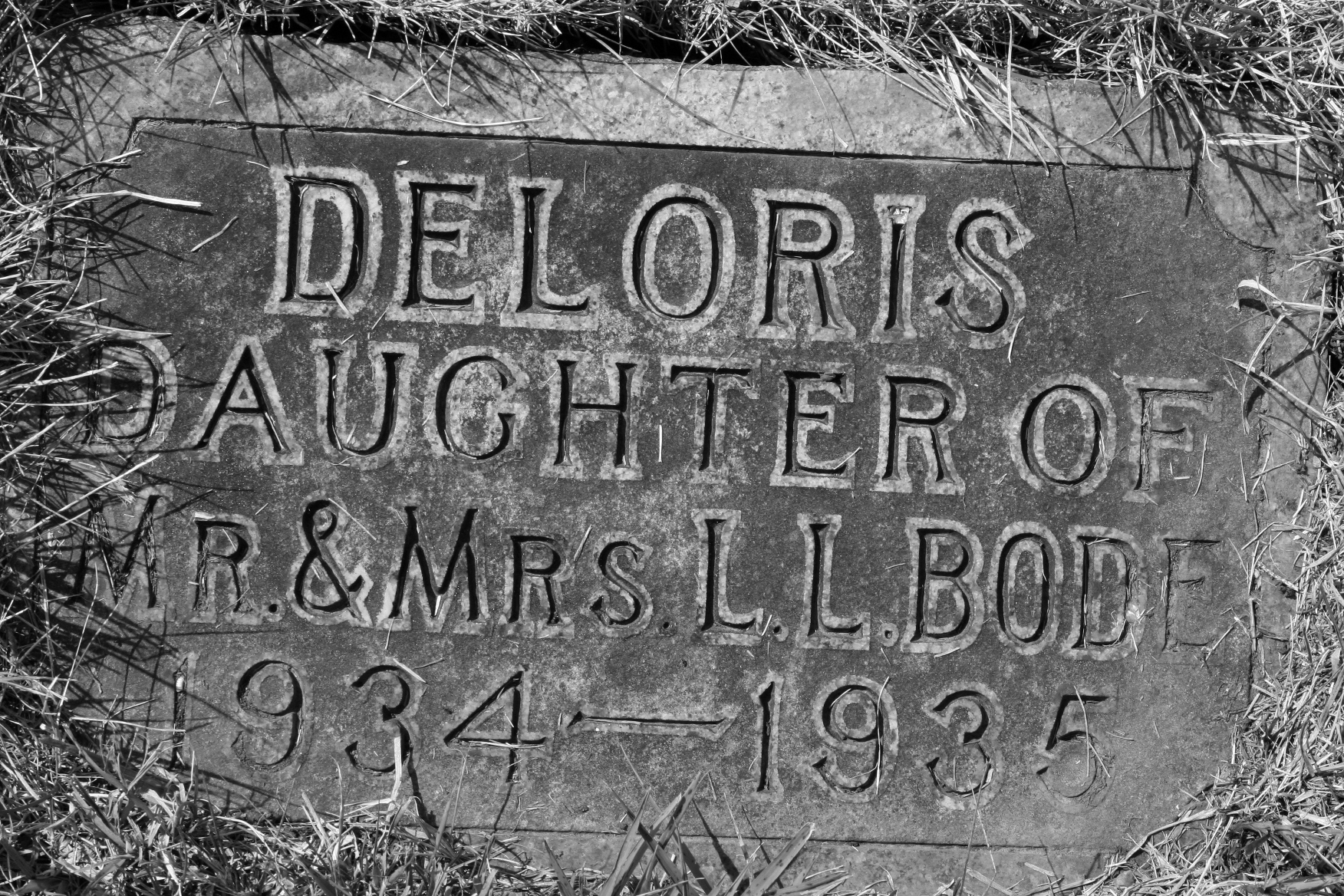
DELORIS EDNA EMILIE BODE died on May 10, 1935, from pertussis (whooping cough), pneumonia and a gangrene-type infection of the mouth.

The second-born daughter of Lawrence and Josephine Bode, she was only nine months and nine days old.

She was my aunt.

The gravestone of Deloris Edna Emilie Bode in the Immanuel Lutheran Cemetery, rural Courtland.

Copyright 2010 Audrey Kletscher Helbling