Minnesota Prairie Roots

Writing and photography by Audrey Kletscher Helbling

West of New Ulm June 15, 2010

Filed under: Uncategorized — Audrey Kletscher Helbling @ 10:12 AM
Tags:

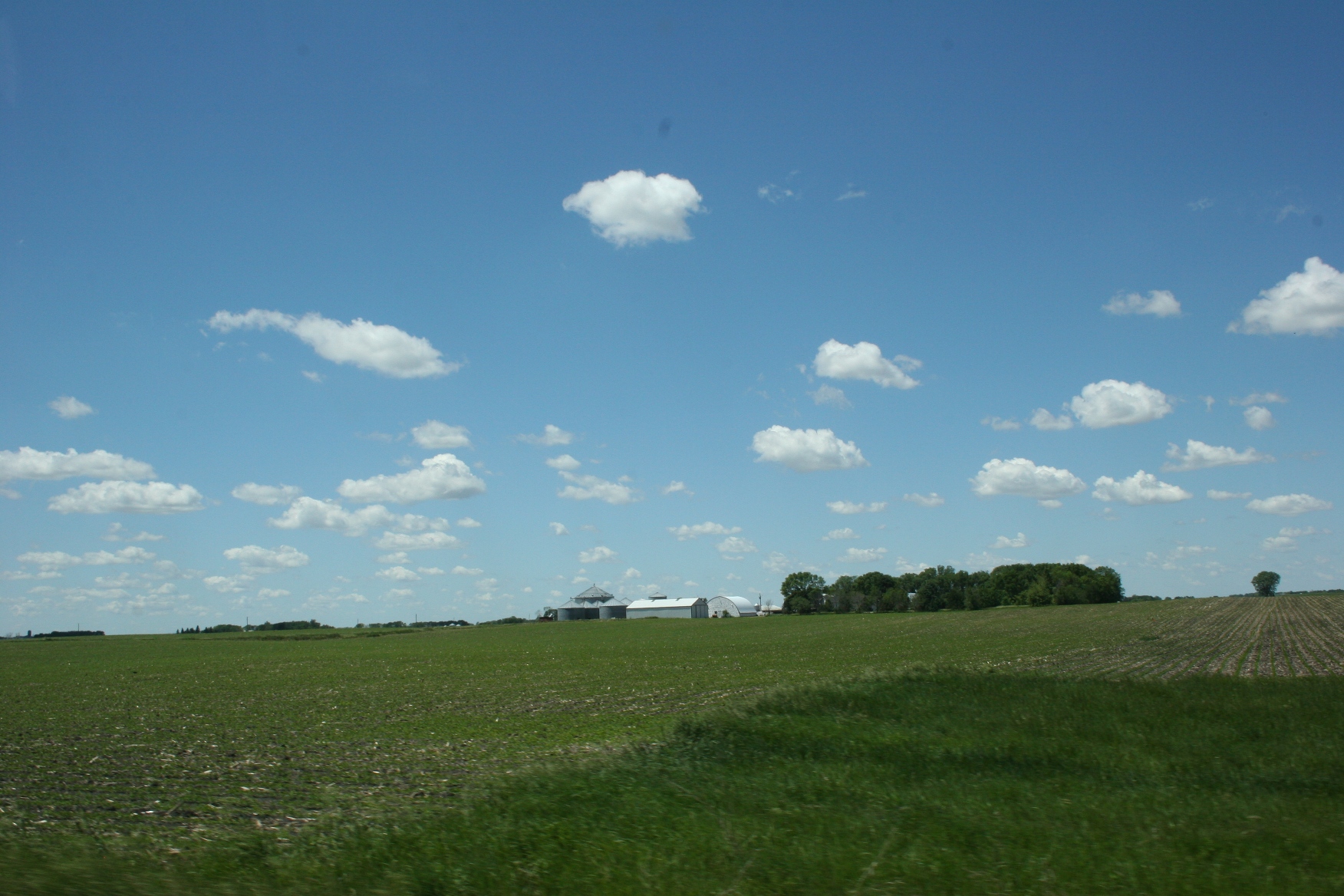
Traveling along Redwood County Highway 10 between Vesta (my hometown) and Lucan in southwestern Minnesota, a land defined by open spaces, big skies, farm fields and small towns.

DOES SOUTHERN MINNESOTA exist west of New Ulm?

Of course it does, you say. Just look at a map, follow a road west.

Well, folks, I can tell you that for many Minnesotans, southern Minnesota ends at New Ulm, or even Mankato some 25 miles to the east.

I’ve drawn this conclusion after decades of trying to explain where I grew up. Typically, I say that my hometown lies half-way between Redwood Falls and Marshall on State Highway 19.

All too often, I’ll get a blank stare, meaning I must resort to a more detailed explanation that Vesta is west of Redwood Falls, which is west of New Ulm, which is west of Mankato.

Then maybe, just maybe, they’ll understand.

Minnesotans unfamiliar with the southwestern part of our state really ought to spend some time there, in this land of wide open spaces and endless skies, of farm fields and small towns, of grain elevators and water towers that can be seen from miles away.

I’m proud to claim roots in the southwestern Minnesota prairie. My blog name, Minnesota Prairie Roots, honors the land that shaped who I became as a person and a writer.

Although I don’t get back to the prairie as often as I’d like, I’ve never lost my connection to this place. I appreciate the solitude, the wind, the sky—especially the skies—the rich black soil, the weathering red barns, even the cemetery where my father and other family members lie buried on a rare prairie hilltop that overlooks the countryside.

I have not lived in southwestern Minnesota for nearly three decades. But I’ll always consider this land, this place my kids call “the middle of nowhere,” my home.

Well, I rather like “the middle of nowhere,” this Minnesota that lies west of New Ulm, which lies west of Mankato.

One of many red barns along Cottonwood County Road 7 near Westbrook.
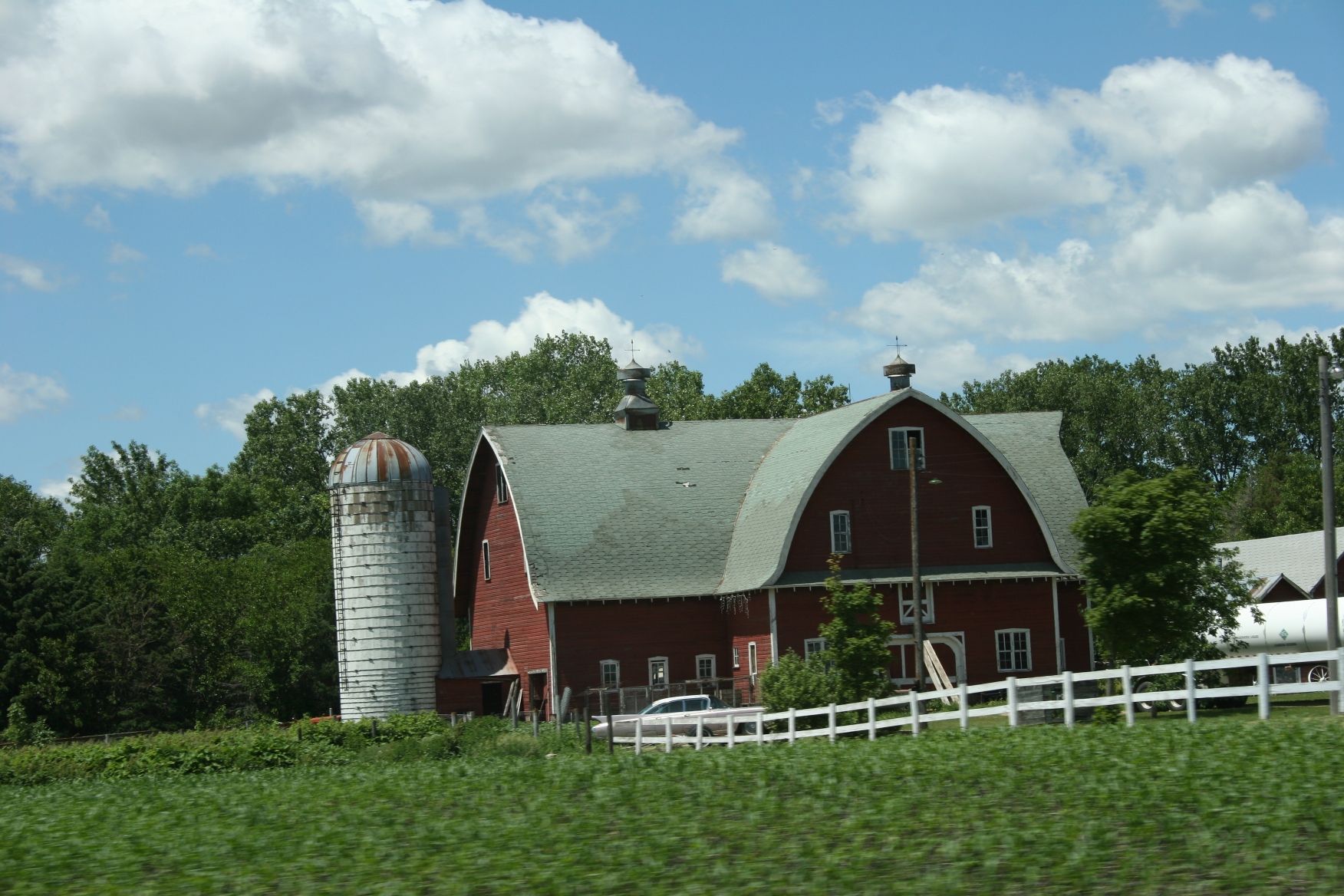
A farm site just outside of Westbrook along Cottonwood County Road 7.
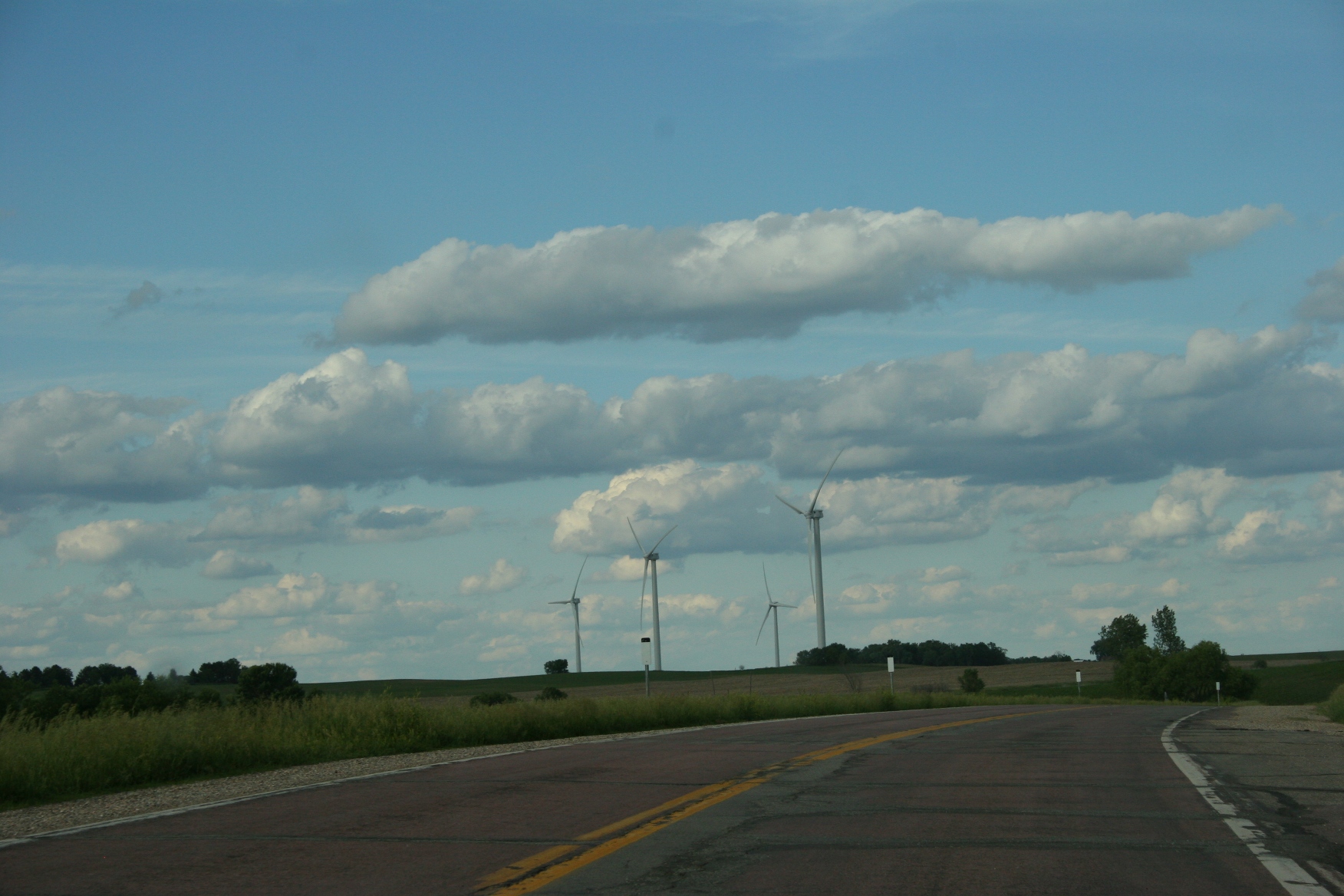
Windmills dominate the landscape along Minnesota Highway 30 in the Jeffers area.
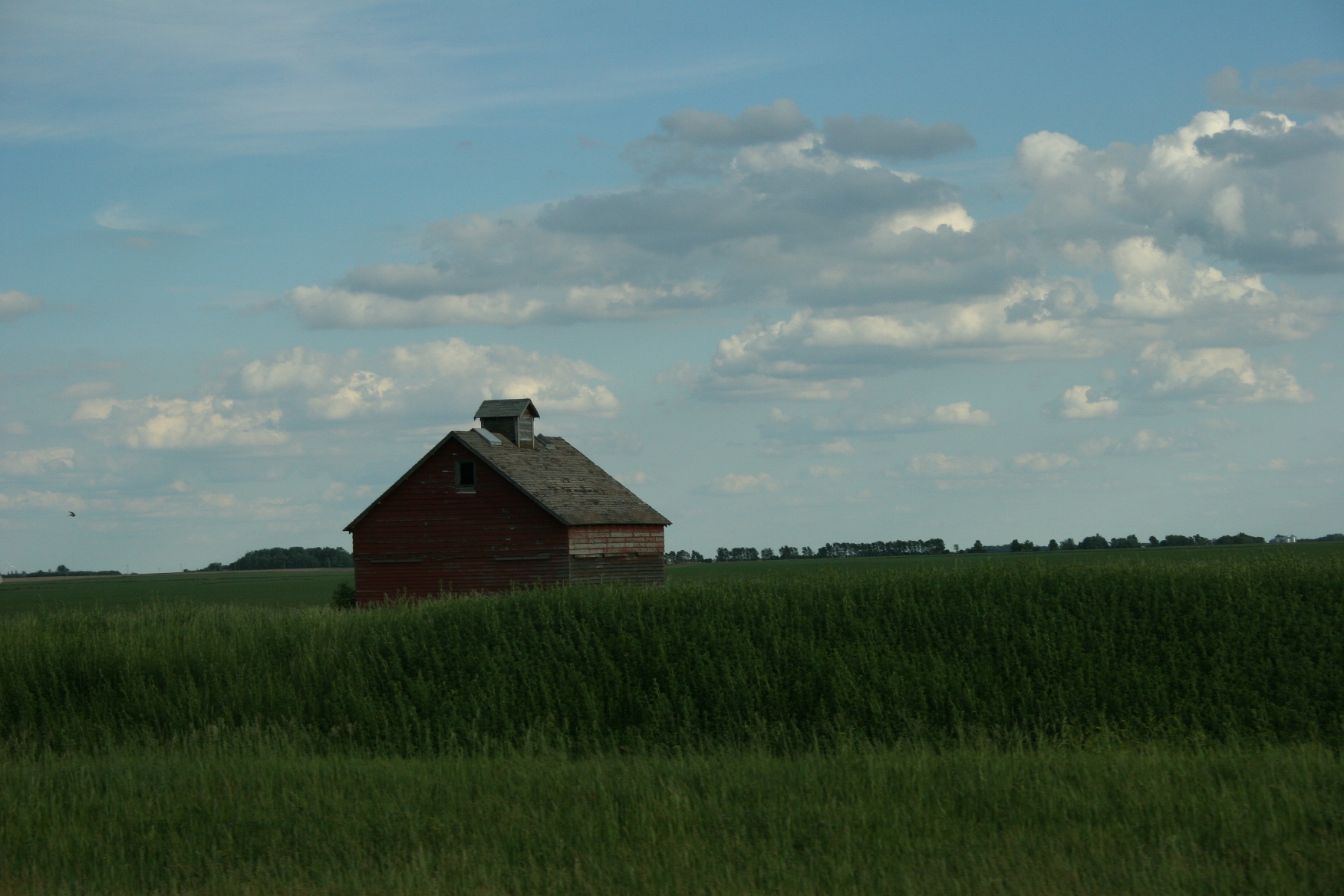
A lone farm building along State Highway 30 in southwestern Minnesota.

Horses graze under the spacious skies upon the southwestern Minnesota prairie along State Highway 30.

© Copyright 2010 Audrey Kletscher Helbling


“You paid how much for a brat and pop at Target Field?” June 14, 2010

Filed under: Uncategorized — Audrey Kletscher Helbling @ 9:13 AM
Tags: , , ,

“THAT’S PRICE-GOUGING, or whatever you call it,” I exclaim.

My husband has just revealed that he shelled out $18 for two brats and two soft drinks for himself and our teenaged son at a Minnesota Twins game.

“That’s ridiculous,” I continue to rant. “Who pays that much for a brat and pop?”

Apparently, if you’re a Twins fan (and dare I say here that I really don’t care about sports in general), that’s the price you’ll pay for simple fare to fill your belly.

Let me restate that. A brat and a pop do not fill the stomachs of two hungry guys, especially one who is 16.

Nor do a brat and a soda satisfy a man who would prefer a brat and a beer. But, with beer priced at $7, even my husband could manage to eat a brat sans beer. I didn’t even ask him the price of Tony O’s Cuban sandwich, the food he once told me he would try if he attended a Twins game.

But he did share, seeming a bit miffed, that Leinenkugel beer, brewed across the border in Chippewa Falls, Wisconsin, is grouped at Target Field with beers labeled as “Minnesota-made.”  That appeared to bother him more than the beer price.

So, wanting to direct him off the topic of beer, I inquire about our oldest daughter’s meal. (She has given her dad and brother the $18 tickets as a Father’s Day gift and is attending the game with them.) “Carrots,” he tells me. “She brought a bag of carrots.”

“I thought you couldn’t bring food into the game,” I say, at the same time inwardly applauding my daughter for her healthy food choice.

“She had that big green purse,” he explains.

Ah.

Later, after I check out the Twins Web site, I read that you can take food into Target Field, but only if you eat it in the general seating area. Ditto for a few beverages, that, for obvious reasons, do not include beer—Wisconsin or Minnesota-made.

© Copyright 2010 Audrey Kletscher Helbling


Remembering the Tracy, Minnesota tornado of June 13, 1968 June 13, 2010

Filed under: Uncategorized — Audrey Kletscher Helbling @ 6:33 AM
Tags: , , ,

“YOU COULD SEE THINGS FLYING in the air…big chunks of wood from houses…everything was circling.”

Forty-two years ago today, then18-year-old Al Koch watched as a tornado, which would soon turn deadly, aimed for his family’s Custer Township farm one mile east of Garvin in southwestern Minnesota.

“It looked like it was coming toward us, then it took a jog,” he remembers. “It was real wide and real black.”

The twister had changed direction, heading at an angle straight toward Tracy four miles to the northeast. When the Koch family—Melvin and Delpha and sons, Bruce and Al—realized that, they sounded the alarm. Delpha phoned the Tracy Police Department dispatcher at about 6:50 p.m., warning of the approaching tornado.

Civil defense sirens sounded five minutes later. And at 7:04 p.m., the twister struck the southwestern edge of this farming community.

The F5 tornado, the most powerful with winds of 261 – 318 mph, ravaged the small town, leaving nine people dead and 150 injured.

If not for that warning from the Kochs, more people likely would have died. The family was honored for their efforts, and drew much media attention.

Today, at age 60, Al recalls how his family nearly immediately drove to the Tracy hospital, where Delpha worked as a nurse. They knew she would be needed. According to news reports, even local veterinarians were called upon to treat the injured.

The Kochs dropped Delpha off and then left Tracy right away. Al remembers, especially, the people he saw walking among the destruction. “They were kind of black, covered with dirt.”

Details like that and his fear that the tornado would hit his family’s farm, even after more than four decades, stick with this Garvin farmer who had just graduated from Tracy High School in 1968. Years later, he would marry Janette, one of my best friends from Wabasso High School.

Earlier this spring while researching the Tracy tornado, I learned of Delpha Koch’s early warning to the community. I e-mailed Janette and asked if Delpha was related to her husband. Of course, she was and that’s how I ended up with a thick packet of newspaper clippings about the deadly twister. These were stories I had never heard.

I was only 11 ½ when the storm struck. On that deadly evening, my dad watched the tornado through an open barn door on our farm near Vesta. He thought the twister was much closer than Tracy 25 miles to the southwest. My family eventually drove to Tracy to see first-hand the destruction. What I witnessed left me with a life-long respect for—even fear of—the powerful strength of a tornado.

Now, 42 years later, as I paged through these first-person accounts, I sensed the horror of those who experienced the June 13, 1968, tornado.

I read, for the first time, the names of those who died: Nancy Vlahos, 2; Walter Swanson, 47; Ella Haney, 84; Mildred Harden, 75; Ellen Morgan, 75; Otelia Werner, 75; Fred Pilatus, 71; Paul Swanson, 60; and Barbara Holbrook, 50.

I read of bodies laid out for identification in the hospital laundry room. I read of the father who struggled to hold onto his 12-year-old daughter as tornadic winds tried to suck her from his grasp. I read of the 50-year-old woman who came out of her basement too early and died. I read about one victim, who had a big, long piece of wood driven through his legs. I read about the woman found lying dead near her couch, presumably unaware of the tornado because she wore a hearing aid and did not hear the storm coming.

I read. I cried.

Today, please take a moment to honor the memories of those who lost their lives in the Tracy tornado of June 13, 1968.

© Copyright 2010 Audrey Kletscher Helbling
 

I belong to a pretty hip club June 12, 2010

Filed under: Uncategorized — Audrey Kletscher Helbling @ 9:36 AM
Tags: ,

TWO YEARS AGO TODAY, at age 51, I became a card-carrying member of a club I never asked to join. It’s a pretty hip organization—pun intended—given all members sport new hips.

My club membership card, which I’m supposed to carry in my pocketbook at all times (and I do), verifies that I have a “metallic surgical implant.” For me specifically, that’s a ceramic hip. The “metallic” part is the pin securing the hip in place.

Now, I really don’t care to think about the artificial joint or about that pin which appears exceptionally long in an X-ray. Such thoughts disconcert me. I’m not the medical type.

But nearly every day I am reminded that I have a body part which is not my own.

That reminder nags at me whenever I bend—when I’m gardening, slipping on my shoes, shooting photos, even cutting my toe nails. I’m not supposed to bend my hip more than 90 degrees or I risk dislocating it.

The mere thought of such a painful event is enough to keep me obedient, although my husband says I break that 90-degree rule all too often. I’ve never professed to be good at math.

Despite that life-long restriction, I remain grateful for my new hip. I can walk again, and without pain.

For two years, until I worked up the courage to undergo total hip replacement, I lived with pain 24/7. The simple act of walking was nearly impossible. Climbing stairs literally meant “climbing stairs.”

Today, unless you know I have an artificial hip, you wouldn’t see that just from looking at me. No one expects a 50-something woman to have a fake hip.

I never expected this either. Even my doctor, who originally diagnosed my medical condition as a pinched sciatic nerve, apparently thought me too young for a hip so arthritic that bone rubbed against bone. Once examined by an orthopedic surgeon, I was given a six-month to five-year time frame in which I would need surgery. I lasted two years.

Because of my young age—in terms of joint replacement—I wanted to delay surgery as long as possible. My surgeon simply told me, “whenever you’re ready.”

Many family members and friends, however, pressured me to have the surgery immediately. They meant well. But unless you have walked in someone else’s shoes, or in my situation walked with an arthritic hip, those comments only serve to madden and frustrate.

I’ve learned much for having gone through this total hip replacement. I appreciate good health and modern medicine. I empathize with those who struggle to walk and/or live with pain. I know the meaning of patience. I’ve experienced the depth and breadth of my husband’s love through his attentive care and encouragement.

Often, in life’s most challenging moments, we learn the most.

In two decades I’ll have the opportunity to advance my education, when my membership card comes up for renewal.

© Copyright 2010 Audrey Kletscher Helbling


Faribault losing one classy restaurant with Monte’s Steak House closure June 11, 2010

Filed under: Uncategorized — Audrey Kletscher Helbling @ 8:44 AM
Tags: , ,

WHEN I WON A $25 gift certificate to Monte’s Steak House at the Faribault Business Expo and Community Showcase in late April, I told my husband, “We better use this before the place closes.”

I should have heeded my own advice.

Monte’s forced to close, a front page headline in this morning’s Faribault Daily News screamed at me.

“Oh, no,” I uttered to no one because no one was around to witness my surprise, even though this wasn’t really a surprise.

Monte’s has been plagued with issues from the get-go and has closed at least once, if not twice (I can’t recall details), during its several years in Faribault. Most recently, the property went in to foreclosure and was purchased by a Northfield bank.

The current tenant, apparently, has had enough and is opting out of signing a month-to-month lease on the building, the story reports.

For the community of Faribault, the closing of Monte’s represents, in my opinion, the loss of a restaurant that offered great cuisine in a classy atmosphere. Some locals even compared Monte’s to “restaurants you would find in the Cities.” I wouldn’t know; I’ve never dined in the metro except at a chain restaurant or two.

But at Monte’s, I sampled food other than battered, deep-fried everything that seems typical fare in these parts. Not a steak-lover, I stuck mostly to the pastas and was never disappointed.

When my second daughter and I last ate at Monte’s on St. Patrick’s Day, I savored a superb salad laced with locally-made blue cheese, toasted pecans, strips of grilled chicken and dried cranberries topped with a maple dressing. Crusty bread served with a garlic-infused olive oil and balsamic vinegar (or maybe it was garlic-infused balsamic vinegar and olive oil) dipping sauce accompanied our meals. I even tried crab cakes for the first time, sampled from my daughter’s seafood pasta platter.

Monte’s initially promoted itself as an upscale restaurant, and that may have attributed to the attitude among many locals that the food was too high-priced. Admittedly, I am frugal to the point that I typically order only water while dining out. And I don’t dine out all that often because, as I said, I’m frugal. So for me to dine at Monte’s means the prices were not, for the most part, unreasonable.

In addition to the unique food offerings, I also appreciated the atmosphere of this historic building, basking in the lovely wooden floors, luxurious leather booths, exposed brick walls and large windows.

Cloth napkins and hefty, real silverware added to the class of Monte’s. Dining here was an experience.

I’ll have one last opportunity to enjoy Monte’s. After I donned my eyeglasses so I could read the entire news story and not just the Monte’s forced to close headline, I learned, thankfully, that the restaurant will be open until June 18. That gives me exactly one week to get my butt downtown and use that $25 gift certificate.

I may even order a glass of wine. After all, my meal will be on a Faribault realtor’s dime and not mine.

© Copyright 2010 Audrey Kletscher Helbling


Reflections, in words and photos, upon graduation June 10, 2010

Filed under: Uncategorized — Audrey Kletscher Helbling @ 8:41 AM
Tags: , , , ,

A soon-to-be graduate walks down the hallway of Westbrook Walnut Grove High School one last time.

ALL ACROSS THIS COUNTRY, family, friends and faculty gather in hot, stuffy gymnasiums or auditoriums to celebrate high school and college graduations.

The honored students perch on hard folding chairs, fidgeting, sweating in their caps and gowns, some crying, others smiling, most simply wishing the ceremony over.

Speakers speak of friendships and memories, of lessons learned and lessons yet to be learned, of the past and of the future.

Mothers wipe away tears. Cameras flash. Applause rings out and choirs sing.

And then the graduates march, down the aisle, tassels swaying, smiles wide, into the waiting arms of those who love them enough to let them go.

My niece, Carlyn, left, and a classmate prior to graduation from Westbrook Walnut Grove High School.

Graduation gowns await graduates at WWG High School.

The guys hang out one last time before graduation ceremonies at WWG High School.

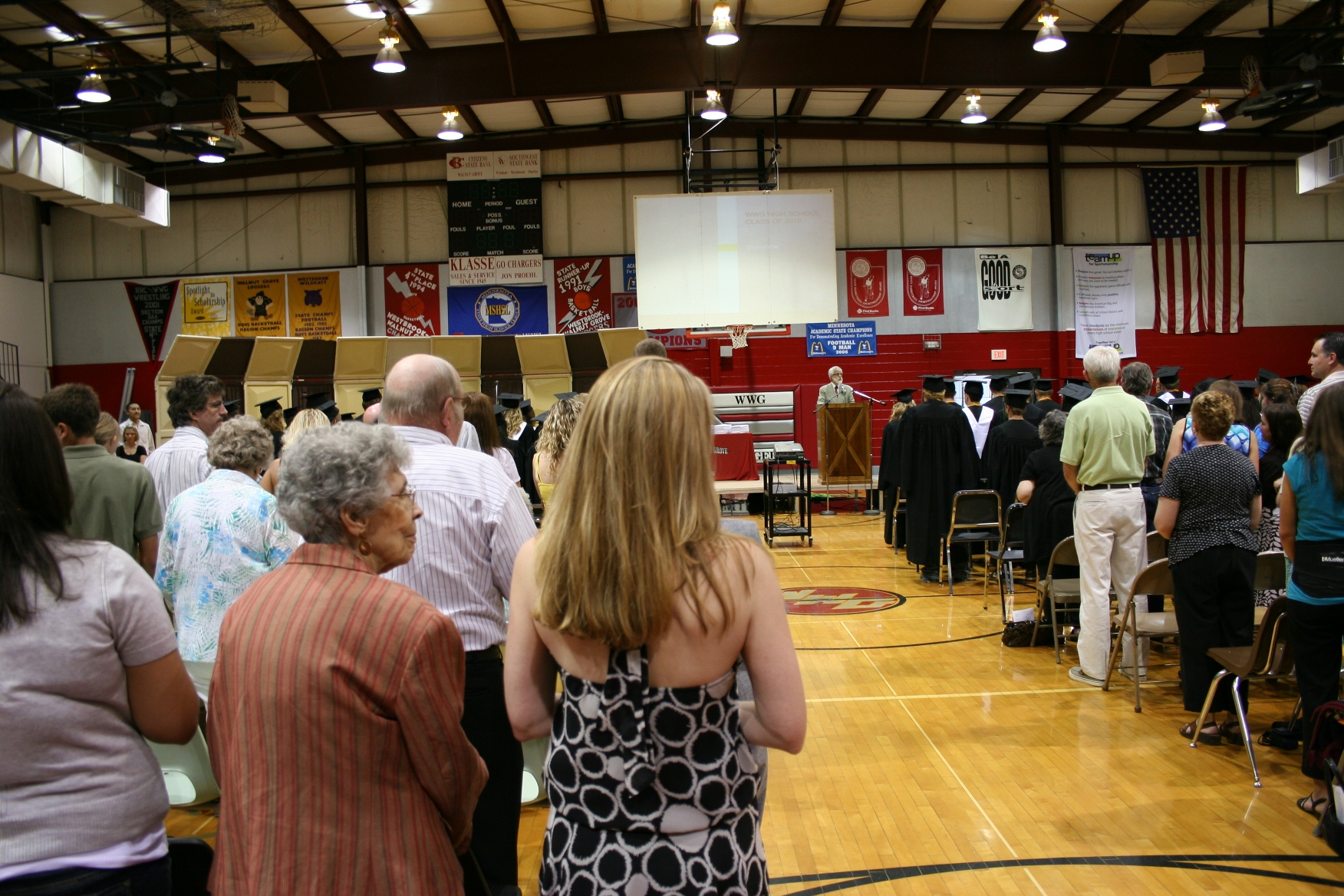
Family, friends and faculty gather in the WWG gym for graduation ceremonies.

A family member videotapes the WWG High School graduation ceremony Sunday afternoon in Westbrook.

WWG students await their diplomas.

A long line of family and friends forms to greet WWG graduates with flowers and hugs.

© Copyright 2010 Audrey Kletscher Helbling
 

A mother’s thoughts as her daughter leaves for Argentina June 9, 2010

Filed under: Uncategorized — Audrey Kletscher Helbling @ 10:31 AM
Tags: , ,

I TOSSED AND TURNED LAST NIGHT, as if wrestling alligators in my sleep, although I dreamed of white rats.

Twice I got up, once to pop an Ibuprofen that I hoped would loosen the muscles in my shoulders that felt like taut, knotted ropes.

The drug worked its magic, if but briefly. I awoke this morning with tension pain still sweeping across my shoulders.

I expect that ache to linger, at least until I hear from my Argentine-bound daughter. She leaves in several hours from the Minneapolis-St. Paul International Airport bound for Houston and then for Buenos Aires.

I’ve made her promise to contact me as soon as possible, to assure me she’s safely reached her destination.

You would think by now that I would be used to this footloose, fancy-free life my second daughter leads. She’s been to Argentina before, lived there for six months while studying abroad and doing mission work. Prior to that, she traveled domestically, beginning in high school.

But this time it’s different. She’s on her own, arriving in Buenos Aires without a defined living space, without a defined schedule of activities, without parameters set by a university. She’ll stay in a hostel for awhile until she finds an apartment.

She’ll be a working woman, interning as a public relations assistant with a company that offers walking tours of the Argentine capital.

I worry that she won’t come home. She’s a Spanish major who loves South America. But my daughter assures me that she purchased a two-way ticket.

The practical, sensible mother in me wants her to stay here, in Minnesota (heck, I’d even settle for the Midwest, even the U.S.), and find a good-paying job (even just a job) to repay the college loans that will come due later this year.

But I must let her go, to follow her dreams, to take this adventure, now while she’s young and free.

© Copyright 2010 Audrey Kletscher Helbling

 

Poetic Strokes, Volume Four, publishes June 8, 2010

Filed under: Uncategorized — Audrey Kletscher Helbling @ 9:41 AM
Tags: ,

Poetic Strokes, Volume Four, just published and on sale for $5.

FOR EVERY WRITER, publication brings a certain thrill, a validation that the words they’ve written hold meaning for a publisher, an editor, and, most importantly, for the reader.

That’s especially true for poets. In poetry, every word counts. Poets understand that. In perhaps no other writing genre is word choice so important.

Of all the writing I’ve done through the years—newspaper, magazine, essay, devotionals, greeting card verses and poetry—poetry and greeting card verse writing have proved the most challenging.

When I nail a line, and then a whole verse or an entire poem, I know it. And, apparently, editors also realize that. I’ve attained success in both publishing of my greeting card verses and my poetry.

Last week a copy of Poetic Strokes, A Regional Anthology of Poetry from Southeastern Minnesota, arrived at my house. The slim volume published by Southeastern Libraries Cooperating includes my poems, A school without a library and Saturday night baths.

Mine are the first two poems in the book. Forty-two poems were selected for publication from 280 submitted by 118 poets in Dodge, Fillmore, Freeborn, Goodhue, Houston, Mower, Olmsted, Rice, Steele, Wabasha and Winona counties.

Of the 30 poets whose poems were selected for publication, 11 of us have multiple poems in the Legacy Amendment-funded anthology.

Within the pages of this volume, you’ll find poems that speak of libraries and veterans’ memorials, of personal pain and spoiled Americans, of wind and harvest and so much more. Among my favorites are Woman of the Earth and Final Harvest by Delores Daggett and The Garden by Ronda Anderson-Sand.

It’s no secret to me why I especially like these poems. They are similar to mine—rooted to the land and vivid with descriptive words that allow me to picture the place, the people, of which the poet writes. They also touch me emotionally.

Whenever I write a poem, I immerse myself in the subject, transitioning to the place or time that is the subject of my writing. I tap into my memory bank, remembering details that appeal to the senses. In Saturday night baths, I recall the red-and-white-checked linoleum, the slippery bar of soap, the oven door tilted open for warmth. Details like that make for a good poem.

Often, I write of my childhood experiences growing up on the southwestern Minnesota prairie. Those seem to resonate with readers.

You can read my latest published poetry by checking out Poetic Strokes, Volume 4, from any SELCO library. If you’re outside the system, request an inter-library loan.

Or, consider adding this anthology to your personal collection. In Faribault, Friends of Buckham Memorial Library are selling a limited number of Poetic Strokes for $5 at the circulation desk.

#

Friends and family, if you want a copy, let me know. For $5 and shipping costs (if you need the volume mailed), I’m willing to get a book for you.

© Copyright 2010 Audrey Kletscher Helbling


Embracing diversity in small-town Minnesota June 7, 2010

Filed under: Uncategorized — Audrey Kletscher Helbling @ 3:21 PM
Tags: , , , , ,

THREE DECADES AGO, maybe even two decades ago, you never would have seen this in rural southwestern Minnesota.

But of the 54 seniors graduating from Westbrook Walnut Grove High School on Sunday afternoon, 15 students were Asian. That’s remarkable in an area originally settled by primarily Scandinavians and Germans.

Seeing those dark-haired, dark-eyed graduates with olive-toned skin among students with fairer complexions struck me more than any single aspect of the WWG high school graduation ceremony.

Hearing surnames like Yang and Vang among Jensen, Erickson and Schweim, simply put, pleased my ears.

Demographics on the Minnesota prairie certainly have changed in the 36 years since I graduated from nearby Wabasso High School. In my class of 89, all of us were Caucasian. Our only cultural exposure came through the foreign exchange students who attended our school.

Thankfully, that has changed, at least in some rural Minnesota communities like Walnut Grove and Westbrook. Walnut Grove, childhood home of author Laura Ingalls Wilder, is home to many Hmong families and boasts a Hmong grocery store. Jobs, primarily in nearby Marshall, and affordable housing apparently drew these immigrants to this rural area.

For young people like my blonde German-Norwegian niece, who graduated with the WWG class of 2010, cultural diversity has always been a natural part of life.

As I sat in the WWG gymnasium Sunday afternoon contemplating this, I watched a Hmong man across the aisle from me videotaping the ceremony. I wondered about his background. Had he fled a war-torn country? What had he endured? Did he feel accepted here? Was this the first generation of his family to graduate from high school? Did he miss his homeland?

A Hmong man videotapes the Westbrook Walnut Grove High School graduation ceremony Sunday afternoo.

Later, when slides of the graduates flashed upon a big screen at the front of the auditorium, I noticed several photos of students in traditional Hmong attire. They are a people proud of their heritage.

When I listened to the WWG High School Choir sing “We Are the World,” I appreciated the appropriateness of the song and pondered how this mixed ethnic group really is the future of our world.

I don’t know how the folks of Westbrook and Walnut Grove welcomed the Hmong. I expect initial adjustments were not always easy for long-time residents or for the newcomers. I expect there are still occasional clashes.

In Faribault, where I live, we still have much to learn as Somali, Sudanese and Hispanic people integrate into the community. Certainly, strides have been taken to bridge differences through efforts like those of the Faribault Diversity Coalition.

But I’ve heard all too many derogatory remarks about minority populations—about the Somali men who hang out on downtown sidewalks, about the Hispanics involved in drug crimes, about the gangs, even about the bright green color painted on a Mexican bakery (which, at the urging of some local businessmen, has since been repainted a subtler green to better fit the historic downtown).

Perhaps if we had, like the WWG class of 2010, grown up together, we would be more accepting of each other.

© Copyright 2010 Audrey Kletscher Helbling


Kitten rescue June 4, 2010

Filed under: Uncategorized — Audrey Kletscher Helbling @ 8:48 AM
Tags: , ,

A SHORT TRIP TO THE COUNTRY to shoot photos for a volunteer project turned into an animal rescue earlier this week.

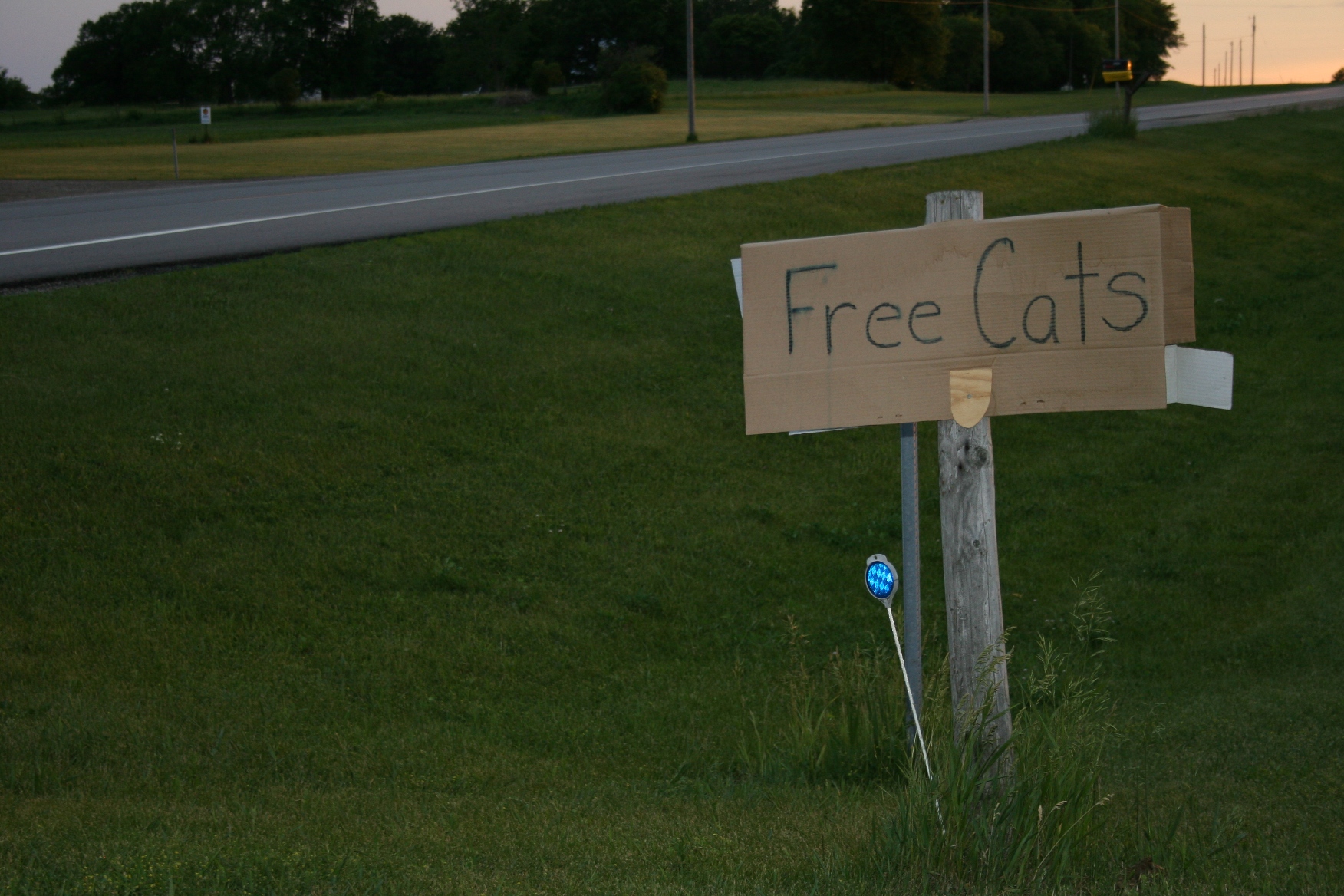
My husband and I never expect this, even though the “Free Cats” sign at the end of our friends’ driveway should have served as a warning.

My friends placed a sign at the end of their long country driveway offering free cats to passing motorists.

“We’d like a cat,” I tell Delores when she opens the door to her house.

“We don’t have any cats left, only kittens,” she answers.

“I’m just kidding,” I say, as I step inside. I have no interest in owning a cat, or a kitten.

Later, after I’ve finishing taking photos for my project, I ask to see the kittens. Delores’ 13-year-old granddaughter Anna, who is staying for the week with her grandparents, leaps from the couch. I follow her outside to a sprawling poleshed where four kittens jostle inside a wire cage.

Not wanting to traumatize the kittens by using the flash on my camera, I shot with natural light. This kitten comes from the older litter of three.

Anna has been caring for the kittens all week, feeding them milk with an eye-dropper.

“What happened to the mother cat?” I ask.

“We gave her away,” Delores answers. Remember that “Free Cats” sign? I’m pretty certain my friend didn’t know about the kittens before she gave away their mother.

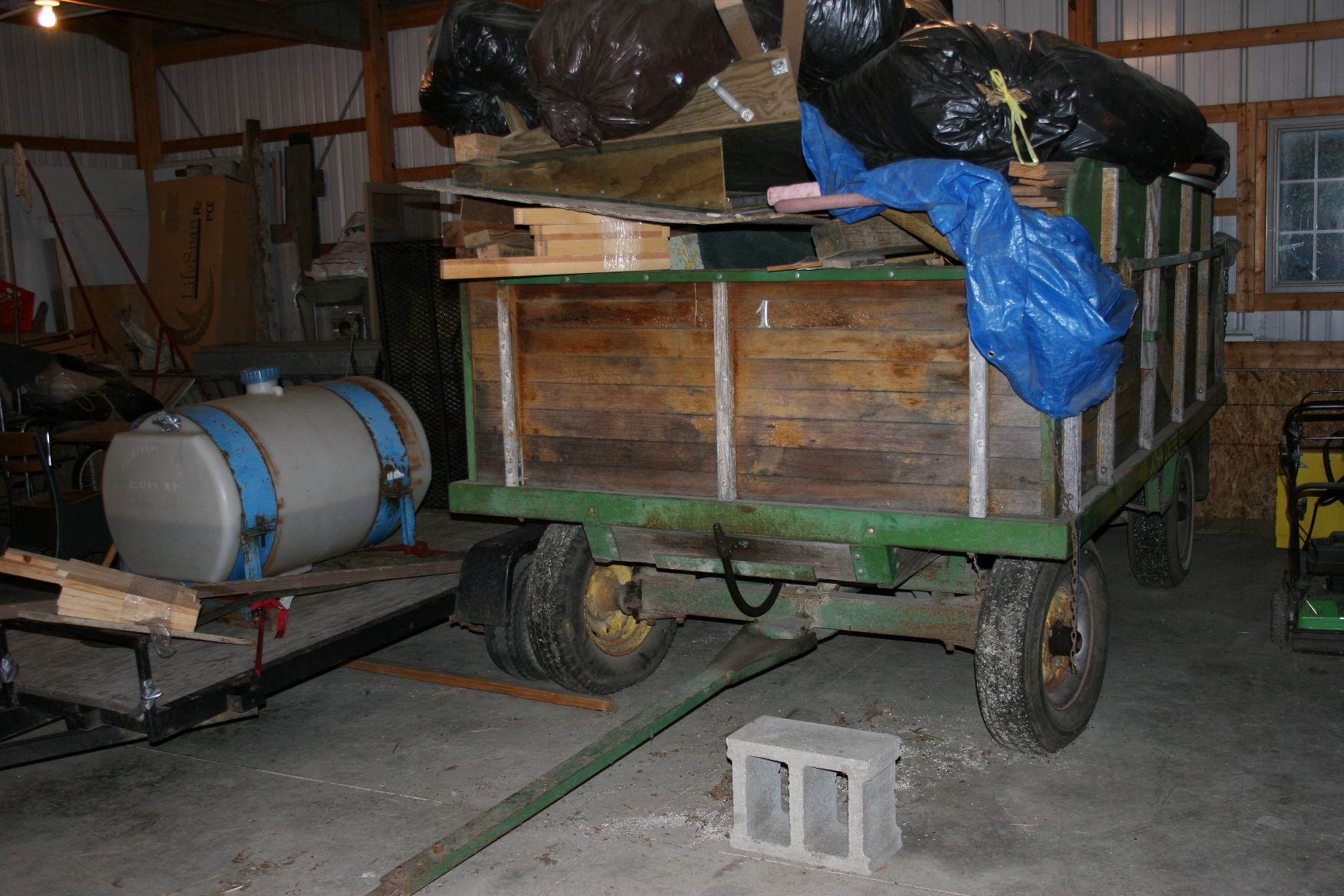
Now she has four hungry kittens to feed. Make that five. In the back room of the poleshed we hear another kitten mewing. In a matter of seconds, we determine that the kitten is trapped inside a wagon. And that wagon is topped with mounds of wood, garbage bags filled with aluminum cans and lots more. Rescuing this baby will be no easy feat.

With a flashlight, a mewing Anna and hands ready to grab, the kitten is eventually coaxed to the front of the wagon, snatched and carried to the cage.

One of the kittens rescued from the wagon, where the mother either gave birth or later hid her litter of three.

“How long has it been without milk?” I ask.

“Three or four days,” Delores says. Already this seems a miracle.

Two kittens were coaxed from the back of this wagon to the front. See that narrow opening near the blue tarp? They were grabbed through that opening.

And then we hear another faint mew coming from the trailer. We start all over again, this time adding a garden hoe to our rescue equipment.

“Come on baby,” Anna encourages, then mews, then encourages some more.

Finally, the kitten is close enough for my husband to gently hook with the hoe and guide into Anna’s welcoming hands.

Now six hungry, mewing kittens are crammed into the cage. Based on size, we quickly determine that these babies are from two different litters. Anna separates them, moving the bigger three into a portable kennel.

We say our goodbyes then as Delores and adoptive mom Anna hurry toward the house. They are on a mission to get milk for the hungry stowaways.

The next evening I call Delores. “How are the kittens?” I ask.

“One died,” she says. “The black one.” It is the first of the two we rescued.

“How is Anna doing?” I ask.

“She called her mom,” Delores answers.

© Copyright 2010 Audrey Kletscher Helbling