Minnesota Prairie Roots

Writing and photography by Audrey Kletscher Helbling

A must-read: Hidden History of the Minnesota River Valley June 3, 2010

Filed under: Uncategorized — Audrey Kletscher Helbling @ 9:51 AM
Tags: , ,

Elizabeth Johanneck, a rural Wabasso, Minnesota, native has just published this history book on the Minnesota River Valley.

I’VE NEVER BEEN THANKED in the introduction to a book…until now.

Minnesota author Elizabeth Johanneck publicly thanked me for guiding and mentoring her while writing Hidden History of the Minnesota River Valley. Her just-published, autographed book arrived Tuesday at my home.

The 156-page soft-cover title from The History Press also includes my essay, “Strong Words on Strong Stone at Birch Coulee.”

Beth’s book, as the title suggests, focuses on stories rooted in the Minnesota River Valley. You’ll read about everything from the founding of the Sears, Roebuck and Company to Alexander Ramsey Park to “The Myth about Scalping.”

Yes, some of the topics covered in this history book are unsettling. But through interviews and research, Beth presents the facts as honestly as possible, even if the truth disturbs or challenges what many of us have been taught.

My friend possesses strong storytelling skills that make her book more than a compilation of historical facts. Beth weaves personal experiences into her writing that connect with the history she shares. That personal perspective engages the reader.

Beth, like me, grew up on a Redwood County farm—she near Wabasso, me a bit further to the west just outside of Vesta. We attended Wabasso High School together where we shared a locker. Her down-to-earth personality and appreciation for the Minnesota River Valley area influence writing that is warm and folksy.

Check out Beth’s Minnesota Country Mouse blog, where she says “the ‘hayseed’ in her writing betrays her ‘city-slicker’ aspirations.”

Whether you’re from the Minnesota River Valley area or not, you’ll find stories in this book that are entertaining, poignant, shocking, revealing and, often, thought-provoking.

If you like ghost stories, you’ll appreciate “The Terrible Story of Little Annie Mary,” which tells of a 6-year-old girl supposedly buried alive in 1886.

Black-and-white photos, both current and historic, are generously dispersed through-out this book, adding to its appeal.

For anyone who enjoys Minnesota history, Beth’s book is a must-read. (And I’m not saying that simply because I’m a friend of the author and have a story in this book.)

Beth will be at the Barnes & Noble bookstore at the River Hills Mall in Mankato from 1 p.m. – 3 p.m. this Saturday, June 5, signing copies of Hidden History of the Minnesota River Valley. The book retails for $19.99.

She also has a signing set for 2 p.m. – 4 p.m. July 17 at the Bavarian Blast in New Ulm. You may also purchase her book online from major retailers.

© Copyright 2010 Audrey Kletscher Helbling


Remembering Cpl. Ray W. Scheibe, my dad’s Army buddy, killed in Korea on June 2, 1953 June 2, 2010

Filed under: Uncategorized — Audrey Kletscher Helbling @ 7:37 AM
Tags: , ,

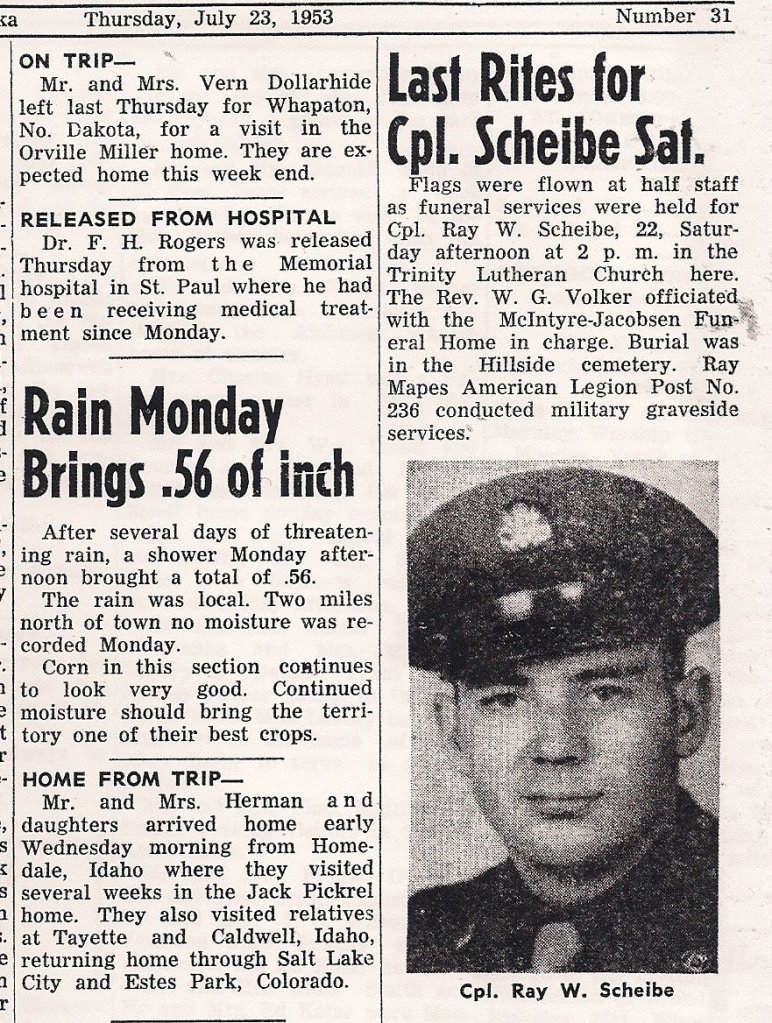
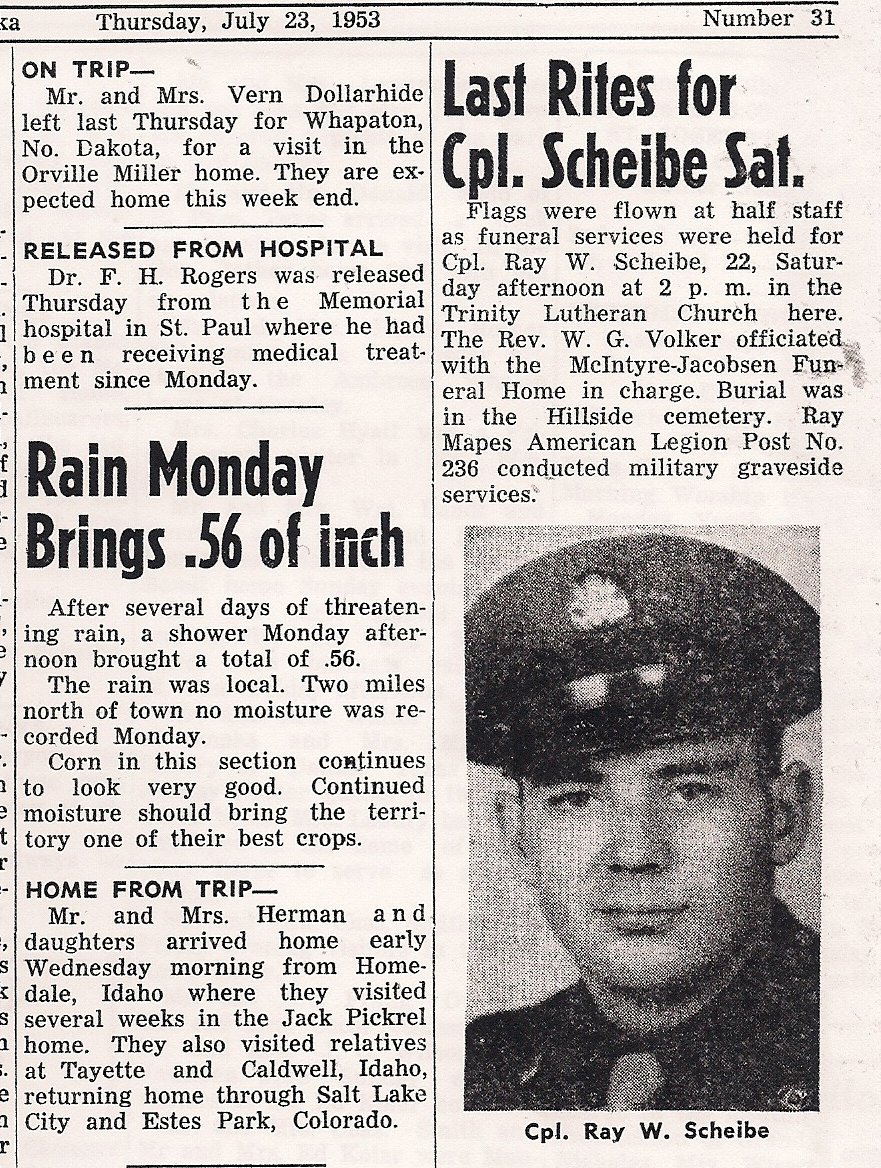
A portion of the story about Cpl. Ray W. Scheibe, published on the front page of the July 23, 1953, issue of The Wolbach (Nebraska) Messenger.

HER VOICE IS HESITANT, strained, edged with 50 years of grief.

I sit at my dining room table, phone clasped tightly to my ear, listening, jotting notes. In the quiet reserve of her voice, in the words she speaks, I hear her pain.

On June 2, 1953, our lives became forever linked. That day, on the battlefields of Korea, two young American soldiers forged into combat. One of them was blown apart by a mortar while the other watched in horror. My father came home; hers didn’t.

Today, after a two-month search, I am speaking to the daughter of Cpl. Ray W. Scheibe, my dad’s army buddy. I have anticipated this day, prayed for this day, wondered if this day would come. In recent months, I made it my mission to find Ray’s daughter, who was only six weeks old when he died in Korea.

My desire to find Teri Rae was spurred by the tragic story of her dad’s death. Just before he was killed, Ray told his comrades, my dad among them, that he was leaving Korea the next morning. Back home his wife and infant awaited his safe return. The new father was excited about seeing his child for the first time and his buddies shared his joy. That jubilation, however, was short-lived as minutes later the 22-year-old was hit by a deadly mortar.

Ray’s death impacted my dad more than any single wartime tragedy, for it is one of the few war memories he ever shared. He mourned for his buddy who would never see his child and for the child who would never know her father. While my dad always referred to the baby as a 9-month-old son, I learned during my search that the infant was really a 6-week-old daughter. My dad’s memory had failed him, but the memory of Ray’s horrific death never left him.

Now this grown daughter, today a grandmother, is on the phone, speaking to me from her home in southwestern Iowa. Only a week earlier I mailed a two-page letter to Teri, a letter which would change both of our lives. I wrote about our fathers’ friendship, about her dad’s death and about my search.

Teri tells me that she cried for two days after receiving my letter.

My quest for Teri began nearly two years after my dad’s 2003 death. While looking through a shoebox filled with my father’s military belongings, I found clues leading to the identity of Ray Scheibe.

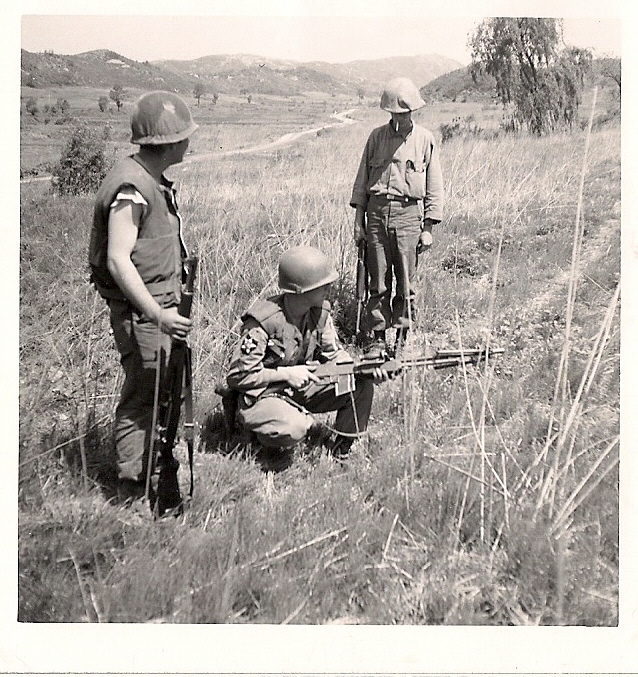
I share with Teri in our phone conversation that I discovered a photo of her dad taken in May 1953. My dad had written “Sgt. Shibe, June 2, 1953” on the back of the photo and drawn a box around it. I recognized the surname, although misspelled, as the one my dad had once spoken when talking about his deceased buddy.
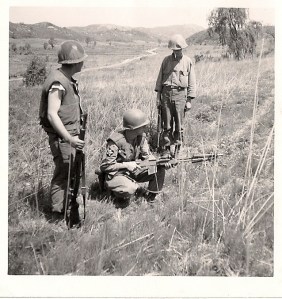
This May 1953 photo, taken by my dad in Korea, helped me track down Ray Scheibe's daughter, Teri Rae. Cpl. Scheibe is on the left.

It is that picture; the discovery of a memorial service bulletin from Korea with Ray’s name listed inside; military documents; internet research into military records; and a phone conversation with Ray’s best friend from high school that confirm the identity of the young soldier from Wolbach, Nebraska.

I compose a letter to Teri and include copies of documents related to her dad, then drop it in the mail, fully expecting I may never hear from her.

But she quickly responds, hers the words of a daughter grieving for her father. “This letter has made him a real person with feelings and personality, before I just knew he existed,” Teri writes in her first correspondence to me. She continues with details about her life and family, about the loss of her beloved husband, Lee, the love of her life, two years earlier.

“My pain has been going on for years it seems like, since I have been born. I have learned to be strong I guess,” Teri continues.

She first learned of her father after starting school in Omaha, Nebraska. Teri’s mom Marilyn had remarried and, as was customary in that time period, death was not openly discussed. But when her teachers called her “Teri Scheibe” instead of “Teri Todd,” her new name, the youngster began to ask questions. For the first time, Marilyn told her daughter about her birth father who died in Korea.

“I know very little about him as no one ever spoke of him,” Teri writes to me. “And I was afraid to ask because they said my mom didn’t take it very well, and I know I was always a reminder. Even his family never spoke of him.”

Now we are on the phone, talking about this man who has been described to me by Robert “Sonny” Nealon as fun-loving, outgoing and a friend to all. Sonny and Ray were best friends who hunted, fished and played sports together while growing up in Wolbach.

The two entered the service on the same day, Ray to the Army and Sonny to the Navy. Sonny, who had been my final contact in finding Teri, was completing his naval tour in California when he learned of Ray’s death. “It was a heart rendering time when we read of Ray’s death in Korea,” Sonny recalls in a letter to me.

He tells of a man nicknamed Pee Wee because Ray stood only five feet seven inches tall. “…recalling the days with Pee Wee brought nothing but smiles and near laughter,” Sonny continues.

It is Sonny’s description of a real, living, breathing person that I wish to share with Teri.  In the depths of 50-plus years of unresolved grief, I hope Teri will see her father through the eyes of his best friend.

I too yearn to know this man who meant so much to my dad. My father never made peace with Ray’s death and in the depths of my heart I carry my dad’s burden of unresolved grief.

As I speak with Teri, sorrow surfaces and I experience a deep sense of relief and of letting go. I sense that Teri, too, as we talk about her dad, his death and the tragedies in her life, is beginning to feel that same peace.

“You gave me a person to cry and grieve for. Thank you!” Teri says.

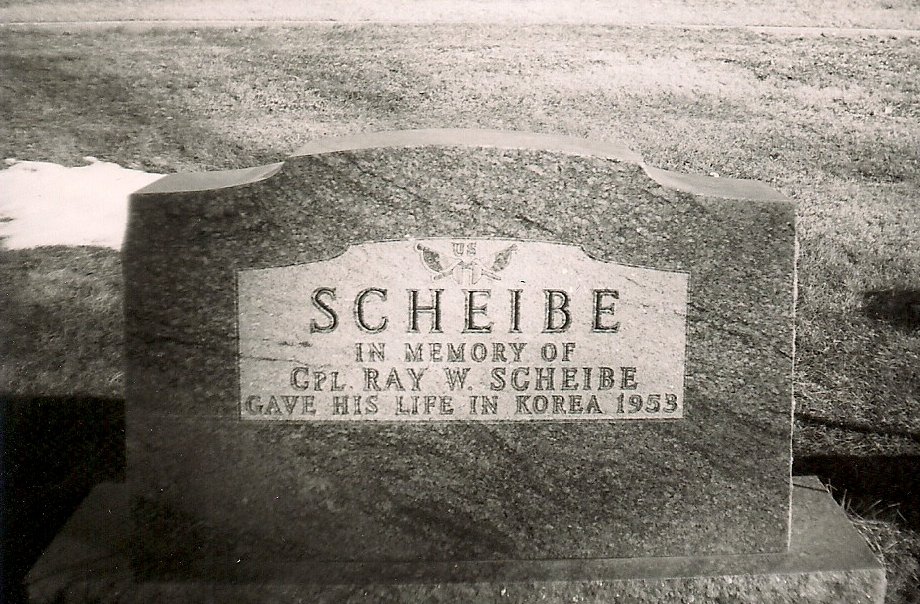
That first phone conversation is just the beginning of an ongoing correspondence with Teri and Sonny. We exchange photos and personal information. I view photos of Ray as a young man, read newspaper accounts of his death and cry over a snapshot of his tombstone, which reads in part, “Gave his life in Korea, 1953.”
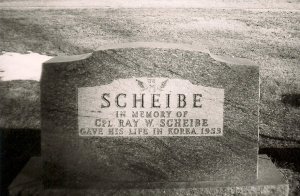
Sonny Nealon sent me this photo he took of his friend Ray's gravestone in Wolbach's Hillside Cemetery.

While Terri struggles with the details of her father’s death, she is comforted by my father’s remembrance of him. “It made me proud that your father thought so highly of him (Ray) and had never forgotten him and liked him,” Teri writes. “I now can imagine a man so excited to be coming home to his family, and he did know about me, because all the letters did not reach him, and he was proud of me and he did love us.”

My father’s memories comfort Teri. Sonny’s memories lift her spirits. “He (Sonny) has made me smile and laugh, which is rare here,” Teri says.

I couldn’t have asked for a better outcome. I can only imagine two fathers smiling down from heaven, delighted that their daughters have connected. A friendship which began on the battlefields of Korea has now come full circle more than half a century later.

#

I wrote this story in 2005 and am publishing it today for the first time in honor of Cpl. Ray W. Scheibe who died in Korea on June 2, 1953. His wife Marilyn died, also on June 2, many decades later. Some day I hope to meet Teri and embrace the woman to whom I am forever linked through the friendship of our soldier fathers.
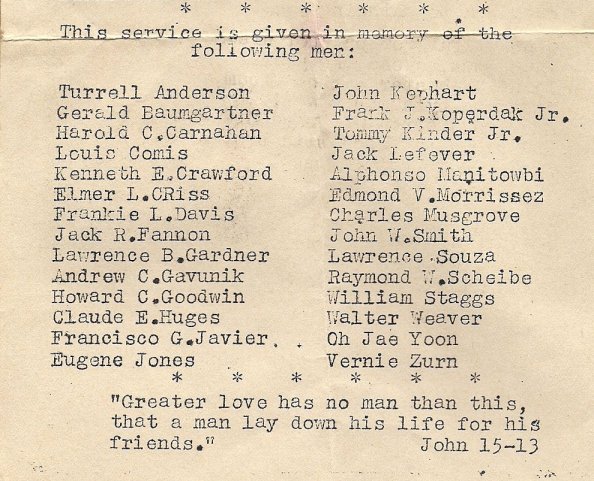
My dad, Elvern Kletscher, carried home a carefully folded July 31, 1953, memorial service bulletin from Sucham-dong, Korea. In the right column is listed the name of his fallen buddy, Raymond W. Scheibe.

© Copyright 2010 Audrey Kletscher Helbling


Beautiful peonies from my friends’ garden June 1, 2010

Filed under: Uncategorized — Audrey Kletscher Helbling @ 9:10 AM
Tags: , ,

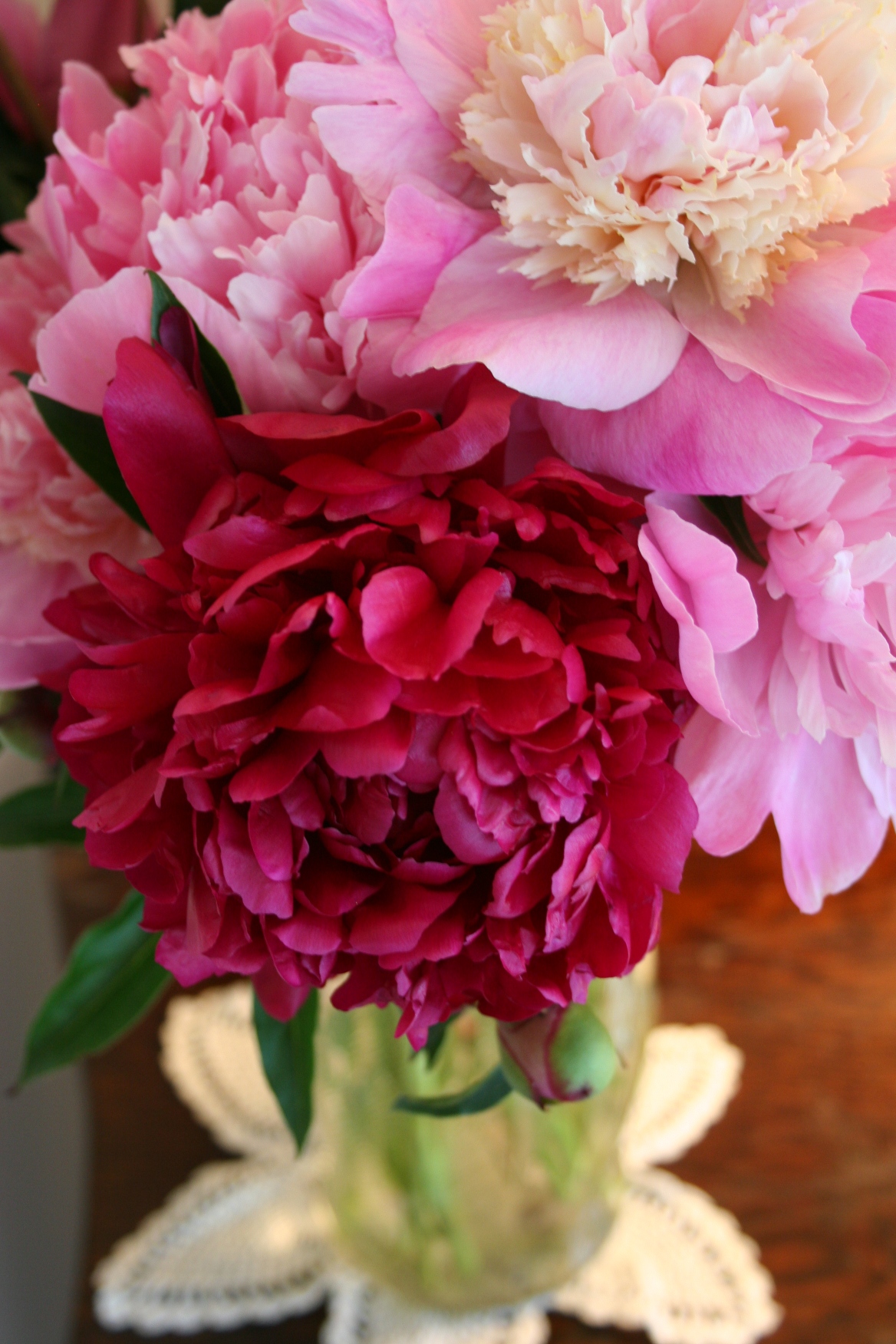
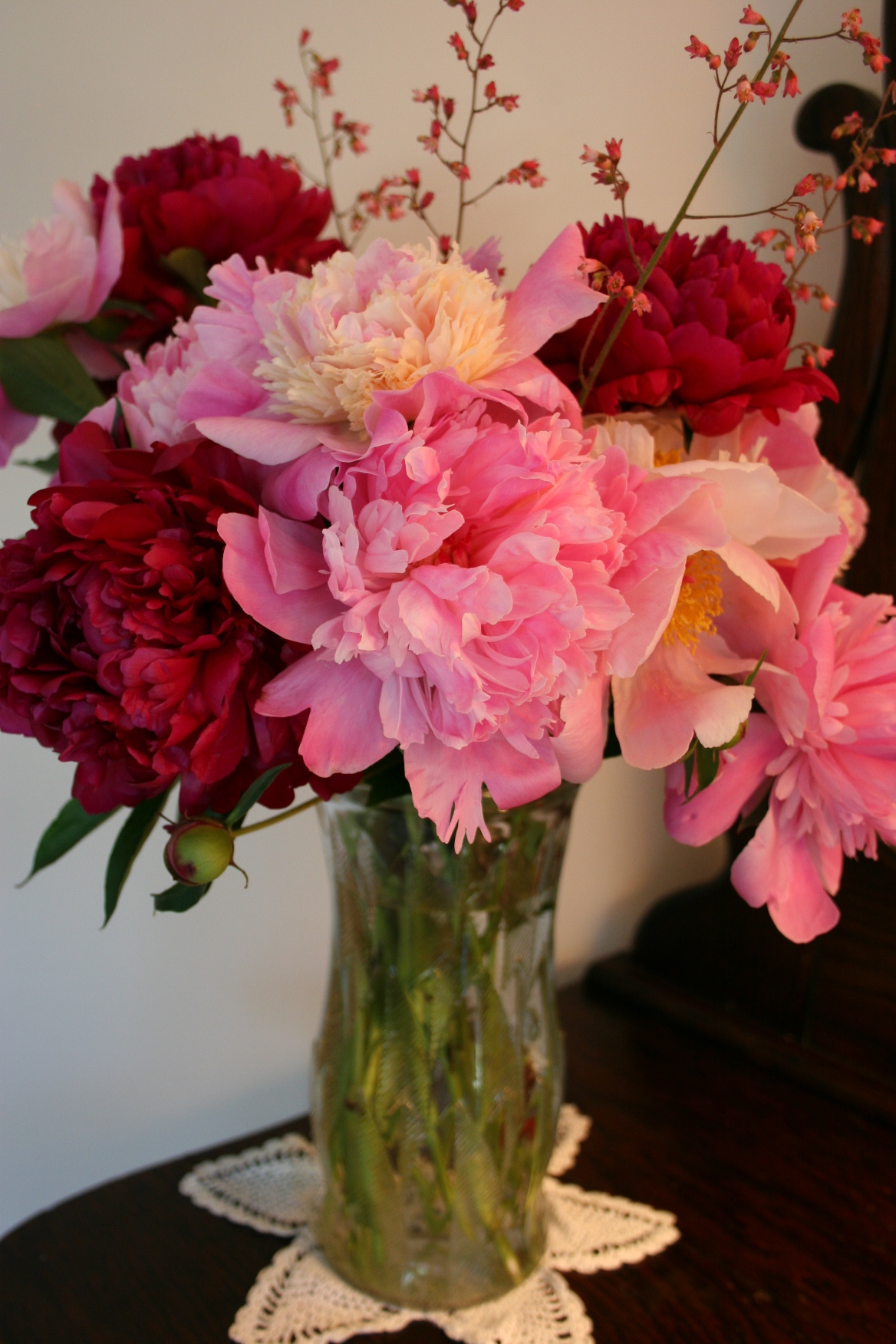
MY FRIENDS VIRGIL and Jane grow beautiful flowers, like gladioli, lilies and peonies.

I know, because I’ve seen their lovely gardens, including a field of glads. Their flowers also often grace Trinity Lutheran Church in Faribault, which the three of us attend.

Bouquets of their carefully-tended florals have also graced my home.

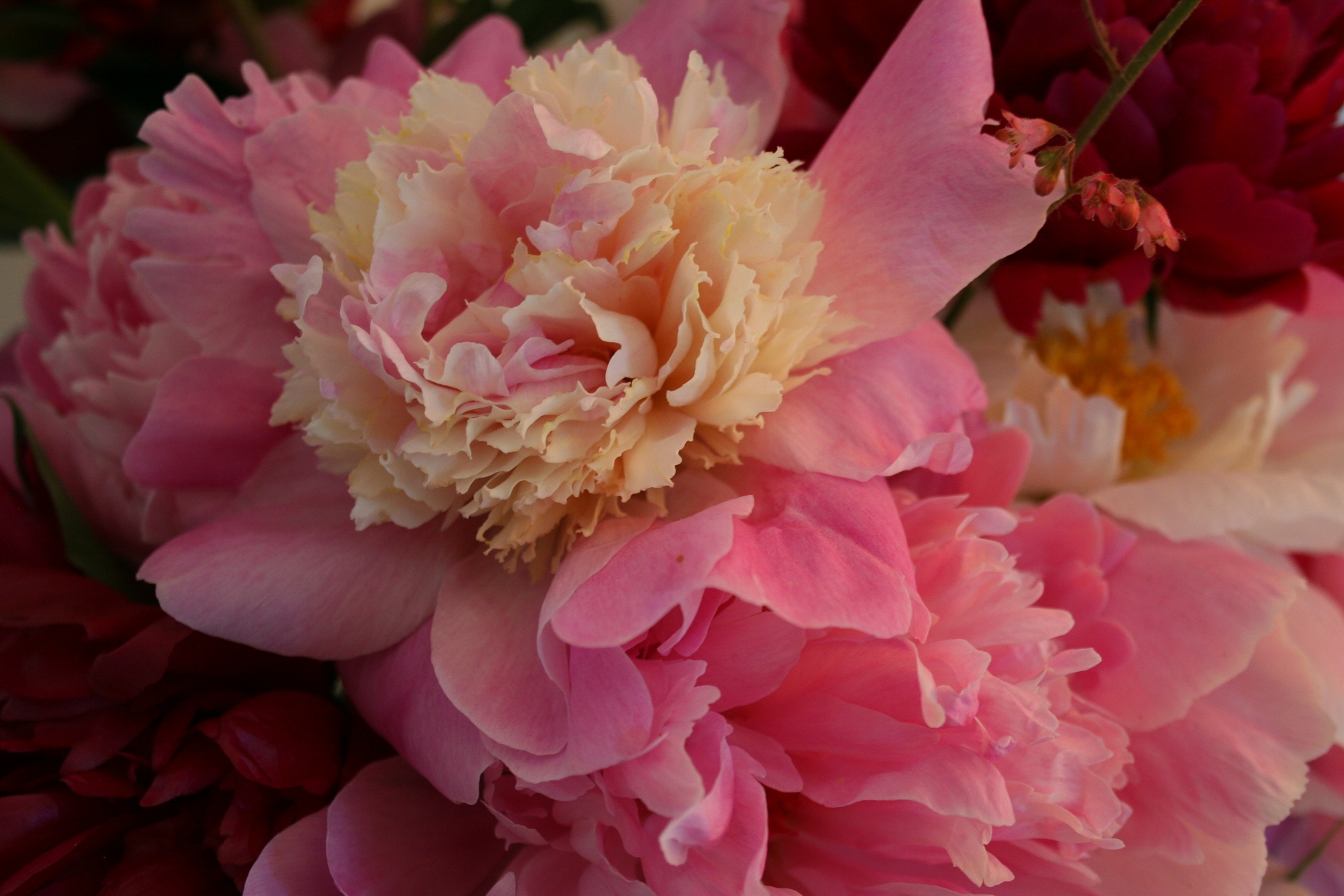
For the past several days, I’ve breathed in the deep perfumed scent of peony blossoms gathered into a beautiful arrangement accented by dainty corral bells. Virgil and Jane delivered them early Friday afternoon.

Always thoughtful, Virgil knew I would appreciate the peony centerpiece for my daughter’s college graduation party the next day. I did. I’m still enjoying the flowers, even as petals fall.

Many others have been the recipients of their flower garden beauties.

What a blessing to have friends like Virgil and Jane.

Copyright 2010 Audrey Kletscher Helbling

 

Honoring our veterans: Memorial Day 2010 May 31, 2010

Filed under: Uncategorized — Audrey Kletscher Helbling @ 3:53 PM
Tags: , , ,

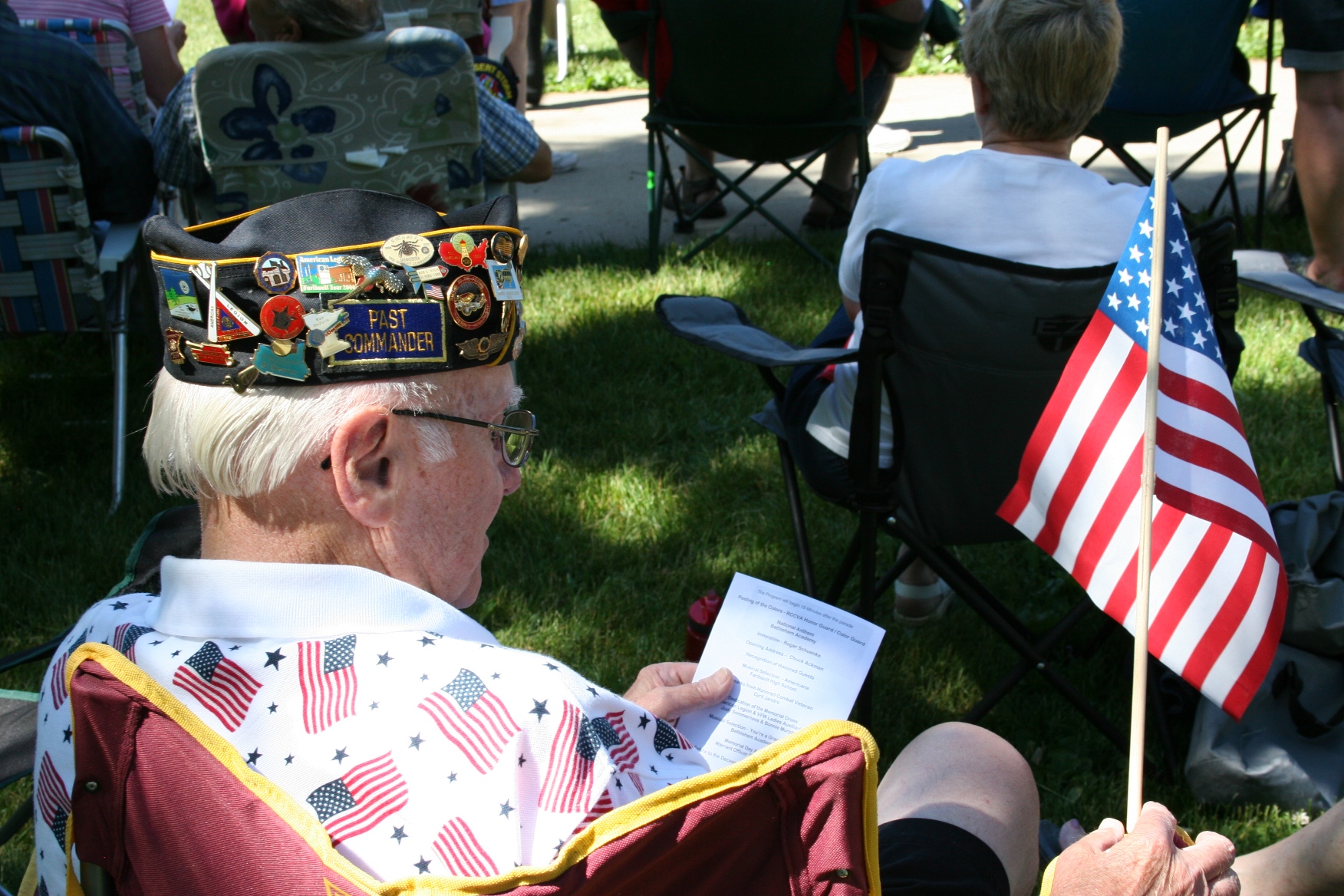
Korean War veteran Ray Sanders reviews a Memorial Day flier prior to a ceremony in Faribault's Central Park.

I NEVER EXPECT TO CRY. But nearly every Memorial Day, I do.

Today tears edge the corners of my eyes as a Korean Conflict memorial wreath is placed upon a white cross during a program in Faribault’s Central Park.

Up until that moment, I am OK. But then, just like that, the emotions surface. I fight to hold back the tears. My lips quiver.

I am thinking of my dad, Elvern Kletscher, who served on the front lines during the Korean War. If he was still here, I would thank him. But now, of my soldier-father, I have only his military photos to peruse, his few shared war stories to remember, his letters to read and his grave to visit.

He has been gone seven years now although, truly, I lost my dad decades before that to the ravages of war.

Today, please take time to remember and honor veterans, those men and women who served our country to preserve the freedoms we enjoy.

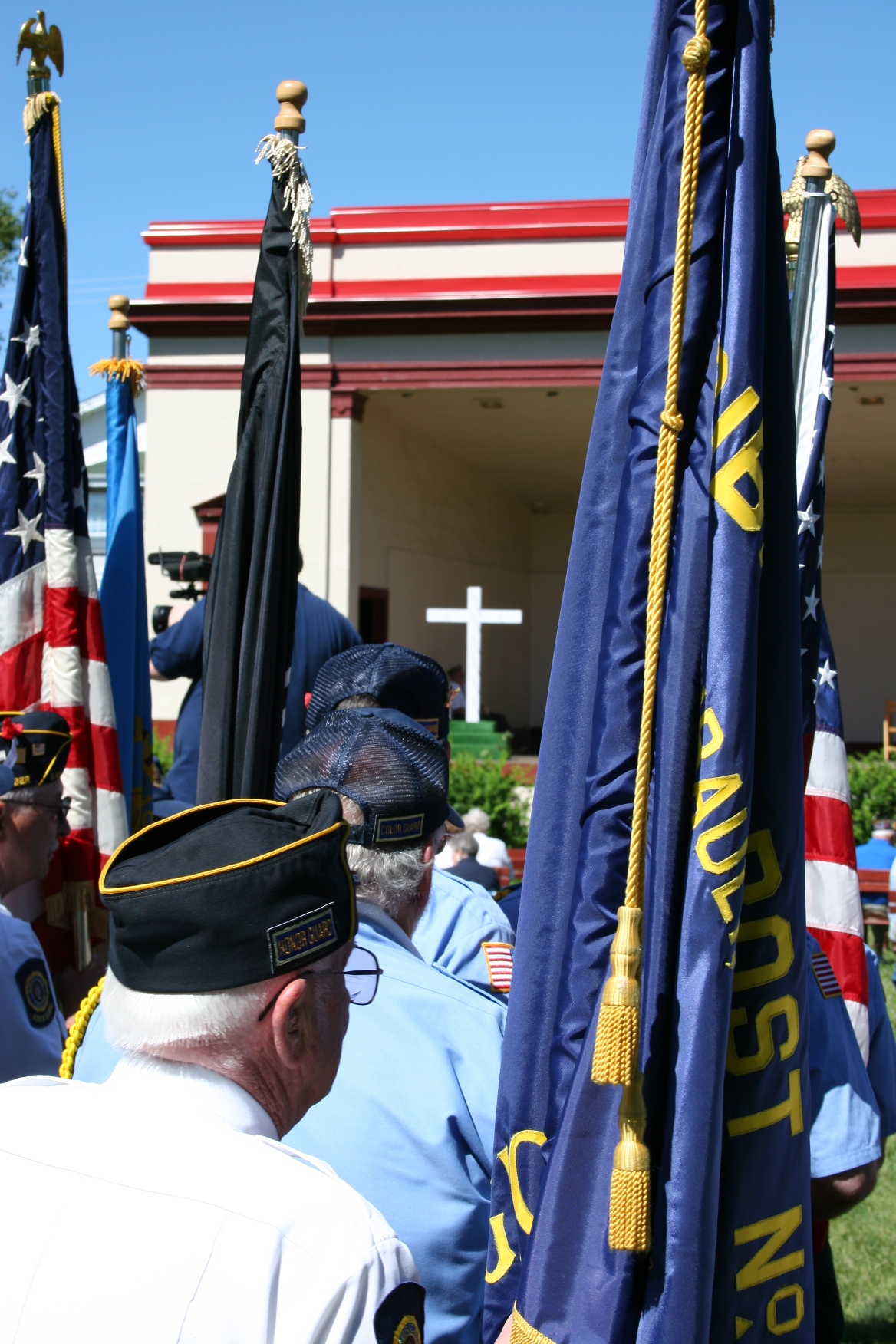
The Rice County Veterans Association Honor Guard/Color Guard awaits the start of a Memorial Day program, where memorial wreaths will later be placed upon the white cross seen here in the center of this photo.

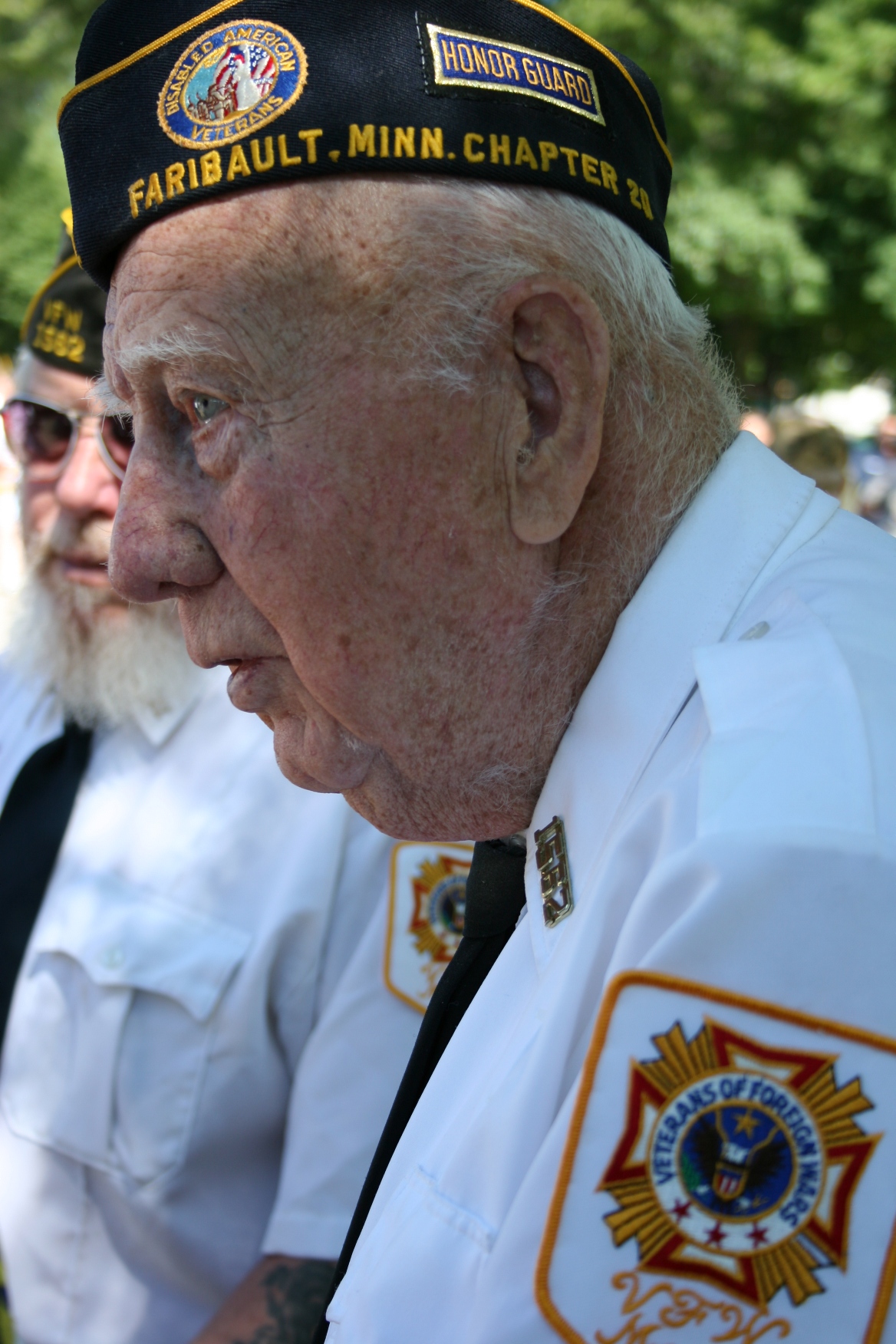
An aging veteran, among those we honor this Memorial Day.

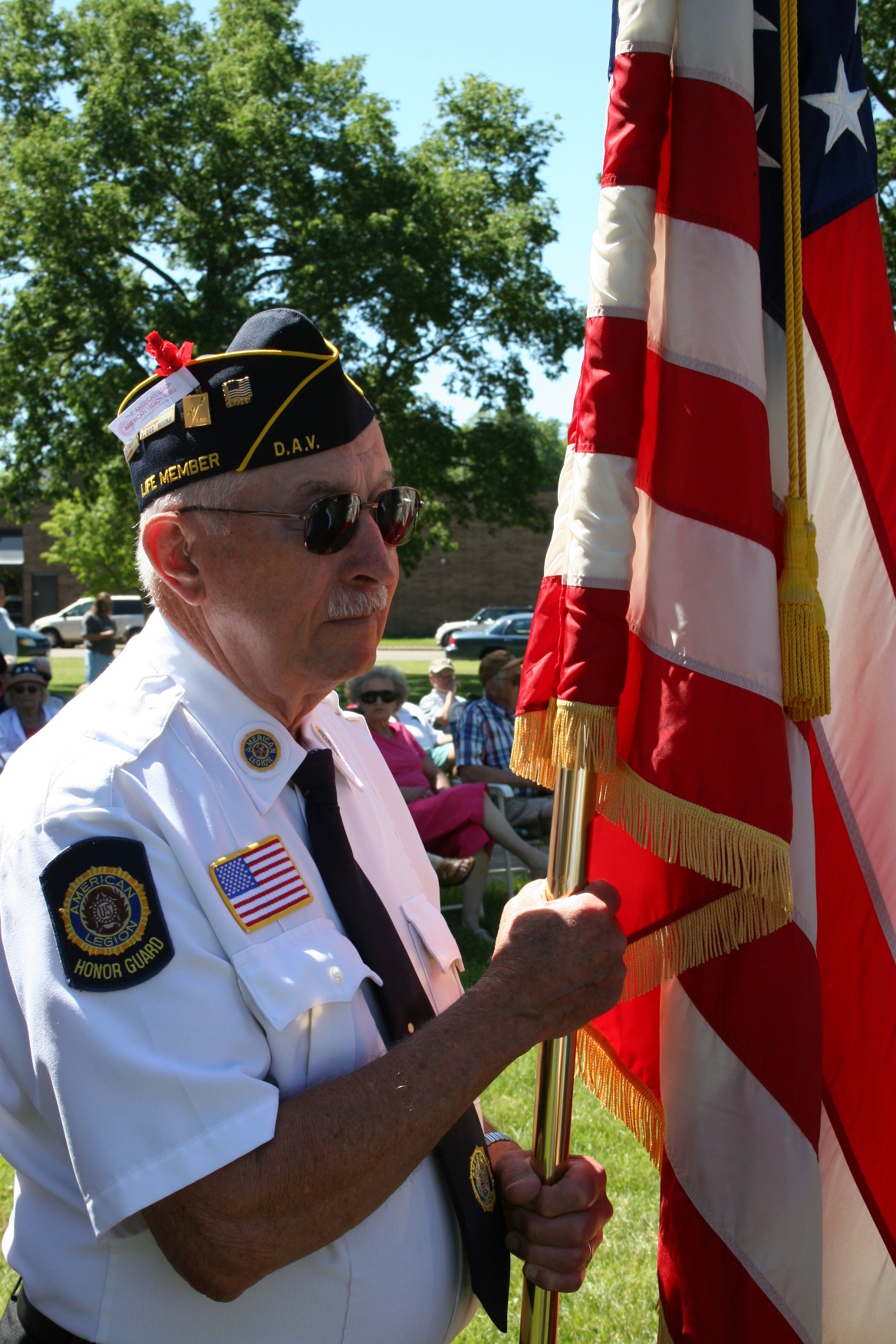
A veteran proudly holds the American flag, representing the country he served, the freedom he preserved.

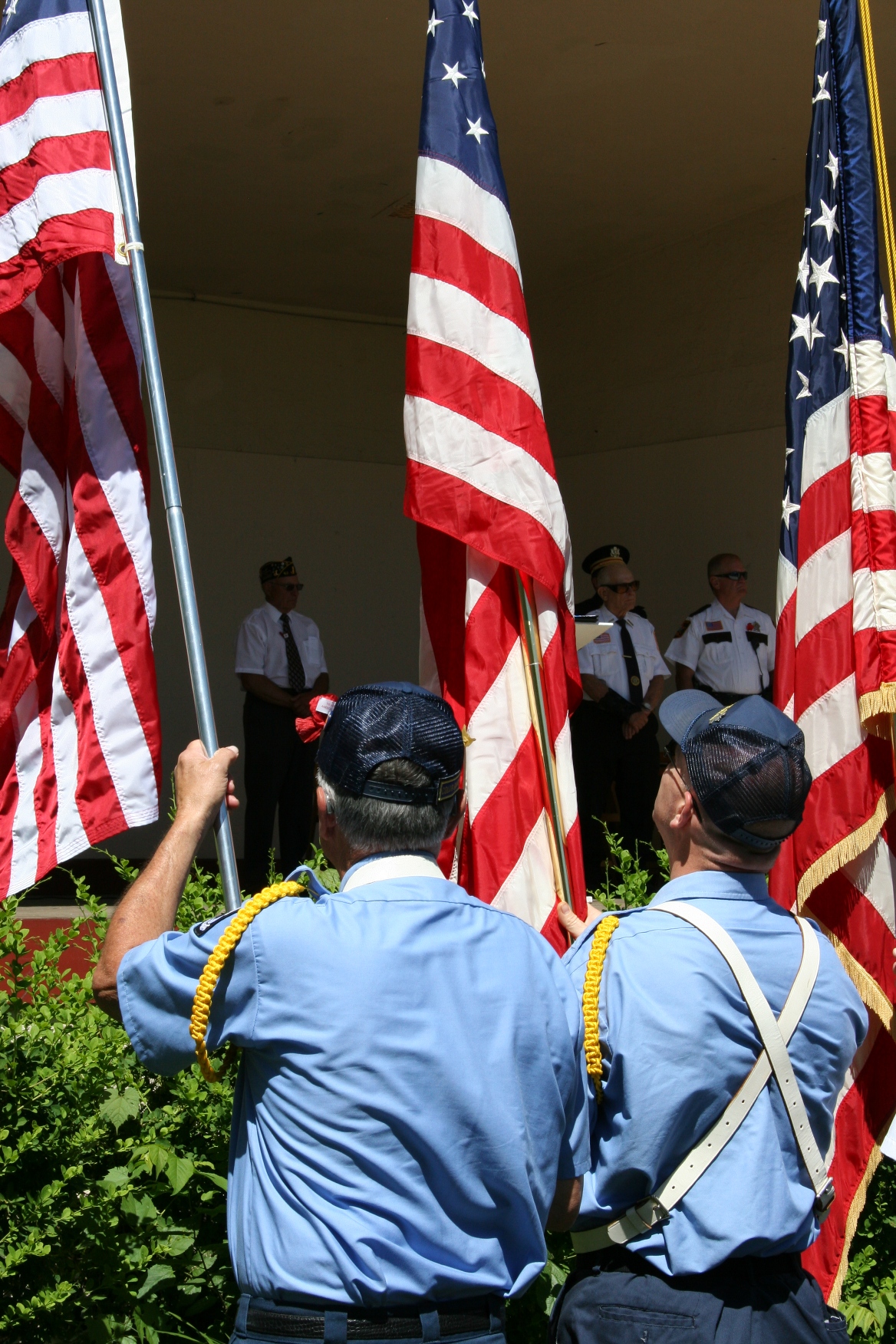
The color guard places American flags in front of the bandshell in Faribault's Central Park.

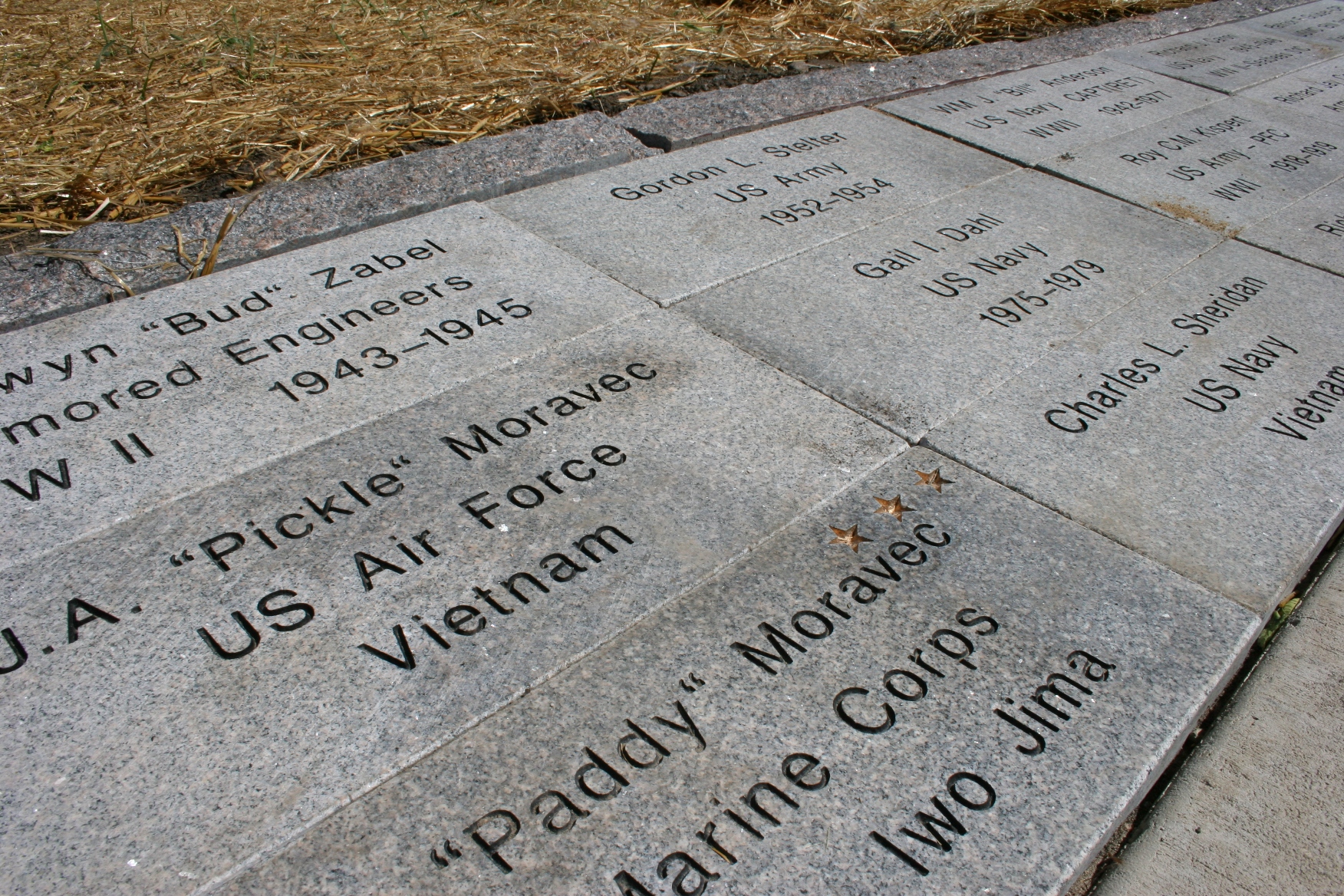
Just-placed pavers honoring veterans at the Rice County Veterans' Memorial in Faribault, currently under construction at the county courthouse.

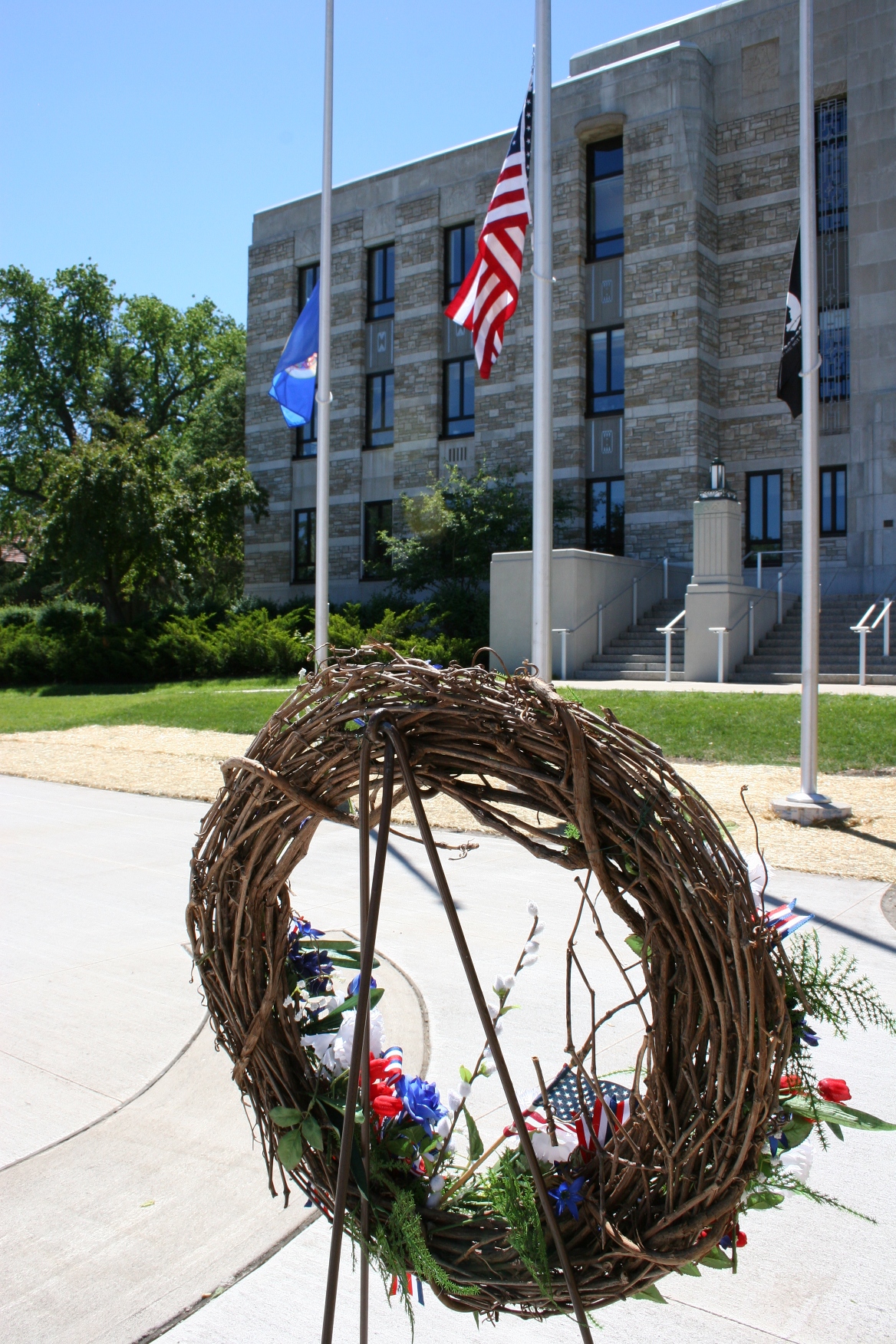
A wreath rests on the plaza of the Rice County Veterans' Memorial which is expanding from the Civil War Monument which has long graced the courthouse grounds.

Flags fly at half-staff at the Rice County courthouse.

TO READ A STORY I WROTE about my father, which was published in the book God Answers Prayers Military Edition: True Stories from People Who Serve and Those Who Love Them, click on this link:

http://www.harvesthousepublishers.com/texts/excerpts/9780736916660_exc.htm

Scroll to my story, Faith and Hope in a Land of Heartbreak. This shares the heart-wrenching experiences of my soldier-father and is my tribute to him. This was published in 2005 by Harvest House Publishers, two years after his death.

© Copyright 2010 Audrey Kletscher Helbling


Minnesota study shows party-goers prefer beer on a hot day May 30, 2010

Filed under: Uncategorized — Audrey Kletscher Helbling @ 10:37 PM
Tags: , ,

IF YOU HOSTED a party and offered five types of pop and bottled water to your guests on an 89-degree day, which would be the top pick?

What if you threw beer and wine into the mix?

A non-government researcher, in an unscientific study conducted Saturday in Faribault, Minnesota, discovered what the general public, or at least the beer-drinking public, has long known. On a hot day, nothing quite quenches thirst like an icy cold beer.

Now scientists have evidence to back up that long-held theory.

The unidentified civilian researcher reported that he sorted and counted all of the empty beer and soda cans and plastic water bottles following a college graduation party at his home Saturday.

“I didn’t think they (party guests) drank that much beer,” he states in an unofficial report released today by the consumer watchdog group Beverage Counters of America, tasked with analyzing beverage consumption in the Midwest. The researcher stresses that party attendees were drinking responsibly and had designated drivers.

Because the study was limited to three selected beers—Grain Belt, Michelob Golden Draft and Michelob Golden Draft Light—BCA officials warn the results are inconclusive and cannot be applied to the general population.

Beer drinkers at the Faribault research party consumed 14 cans of Michelob Golden Draft Light, the BCA report states. But a source, speaking on condition of anonymity, reveals that those numbers are likely tainted.

Party-goers apparently smuggled their favorite brands, including two cans of Michelob Light, into the unsecured pilot test site in an attempt to skew results. Four empty cans of Coors Light, known to be the beer of choice for at least one guest, were also discovered during the can count.

Grain Belt, long a Minnesota-brewed favorite, ranked second among beer drinkers with 12 cans of the beer consumed at the Faribault test site.

Eight cans of Michelob Golden Draft were also consumed, although researchers are apparently questioning the validity of those findings. An unauthorized woman assisting with the research says she discovered an empty Michelob Draft can tossed into a bird bath and another thrown into a bed of ferns at the test site. The BCA speculates this may have been a covert attempt to sabotage the results.

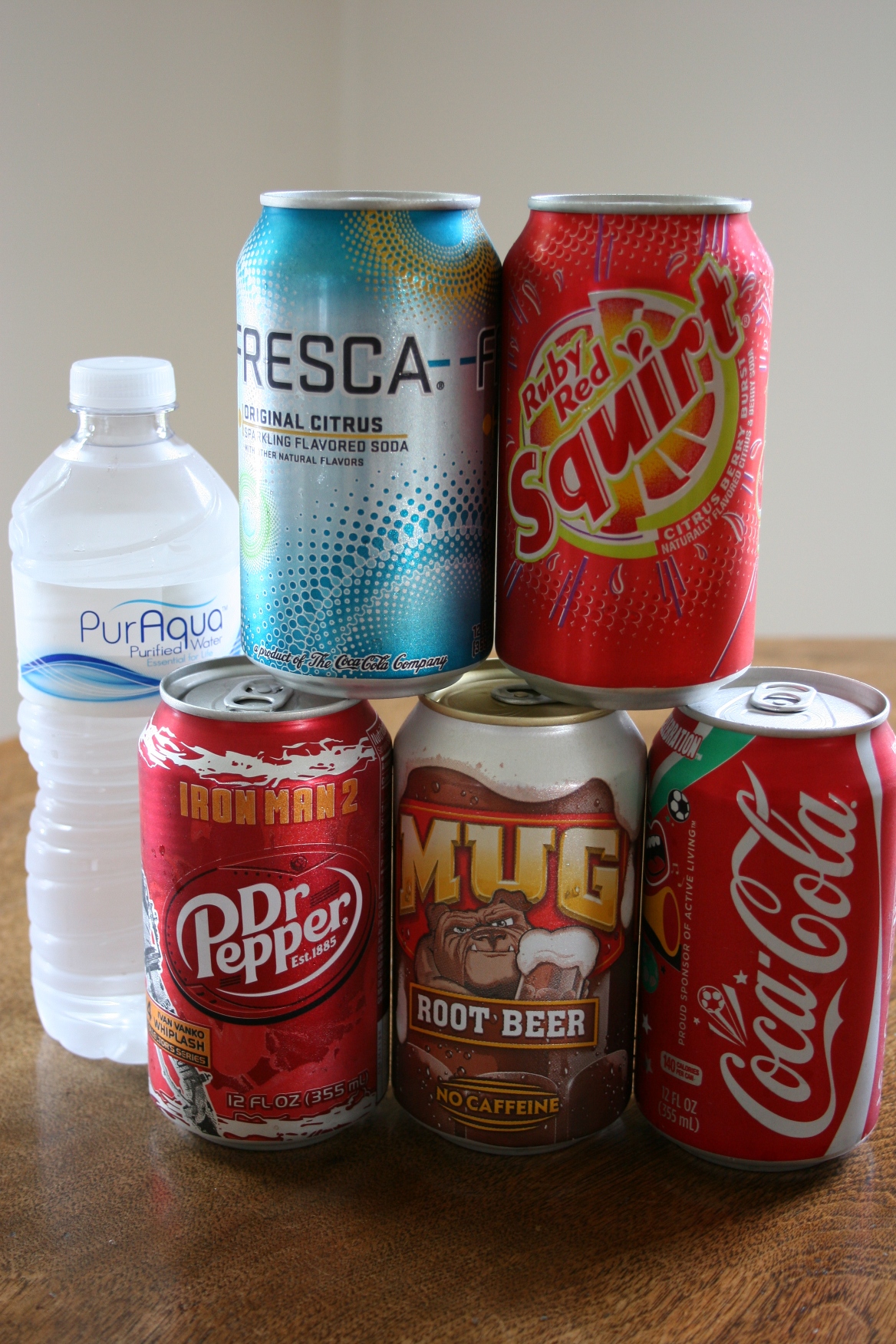
Consumers at the test site chose from these non-alcoholic beverages.

IN REVIEWING POP CONSUMPTION, the researcher found Fresca to be the top soda selected by party guests 10 times. They were also offered Ruby Red Squirt, Mug root beer, Dr. Pepper and Coke.

Total can counts showed that nine cans each of Squirt and root beer were drunk and four cans each of Dr. Pepper and Coke.

Research specialists evaluating the soda can count data say they are focusing now on whether can colors impacted selection. They note that three of the cans are red, but that the top choice, Fresca, is packaged in a blue-green can. Scientists hypothesize that the brain may be predisposed to selecting a cool color during hot weather like that experienced Saturday at the Minnesota test site.

The BCA report concludes that bottled water consumption in the pilot project equaled that of Fresca with 10 empty water bottles counted.

There were no empty wine bottles.

After receiving funding through the government program Cash for Beer Cans, the BCA now moves into the next phase of its research—expanding its test area and uncovering why icy cold beer is more thirst-quenching than pop on a hot day.

© Copyright 2010 Audrey Kletscher Helbling
 

Apple blossoms May 28, 2010

Filed under: Uncategorized — Audrey Kletscher Helbling @ 7:26 AM
Tags: ,

MY FRIEND MIKE has an apple orchard. It’s not an active orchard, meaning he doesn’t market his apples. He shares them with family and friends.

The orchard came with the house he bought in the country some years back.

On a recent spring night after I arrive at Mike’s house for bible study, he gives me a tour of his yard. He’s a former floral designer/business owner and we share an interest in flowers and plants.

As is typical, I have my camera with me.  As we walk, I notice that the sinking sun has cast a certain surreal softness upon the land. The lighting in the orchard is perfect.

So I snap this photo of apple blossoms that will grow into apples, which Mike will pick, then peel and slice into a pan and cover with a crunchy rolled oats topping hinting of cinnamon.

And then my friend will place a square of apple crisp upon a plate, add a scoop of vanilla ice cream and hand the treat to me.

Then I will remember this beautiful spring evening when apple blossoms held the promise of harvest, and of apple crisp.

Apple blossoms on an evening in May.

Copyright 2010 Audrey Kletscher Helbling
 

So, what did you think of the American Idol finale, if you care? May 27, 2010

Filed under: Uncategorized — Audrey Kletscher Helbling @ 8:06 AM
Tags:

WERE YOU SURPRISED THAT Lee Dwyze, and not Crystal Bowersox, won American Idol last night?

If you don’t care, raise your hand.

I’ll admit that I am a fan of this show, although not a faithful fan. I’ve strayed the past two weeks and missed the last singing competitions.

But Wednesday night, with my ironing board set up in front of the television, I watched while I ironed vintage tablecloths for a party I’m hosting this weekend. This multi-tasking redeemed me from the guilt I felt for wasting two hours of a beautiful spring evening indoors and for not helping my husband clean the garage.

In retrospect, I could have tuned in for the first 15 minutes or so of the show and the final five and not missed much. I would have heard the Idol contestants, and Alice Cooper, belt out School’s Out, one of those oldie songs that I’ve always loved. I thought Cooper looked a bit freakish, though, with his teased hair, heavy eye make-up and tight leather pants. There’s something about an old rocker dressing like he’s 20 that seems simply ridiculous.

If I had turned off the television following that performance and then tuned in at around 9 p.m., I would have seen everything that really interested me.

Much of the two-hour time slot was filled with tributes to judge Simon Cowell, who is leaving the show. The tributes were pure overkill given the focus should have been on final contestants Dwyze and Bowersox.

That brings me to those two and to the final five minutes. Did the right singer win? Up until yesterday, and in recent weeks, I figured Dwyze would grab the title. And then, just before Ryan Seacrest announced the winner, I said, “It’ll be Crystal.” I, of course, was wrong.

My husband, who had just finished cleaning the garage that I should have been helping him clean, wasn’t surprised. “It’s mostly women who vote,” he said.

So there you go, if you care.

© Copyright 2010 Audrey Kletscher Helbling
 

We talk about the weather, always the weather, here in Minnesota May 26, 2010

Filed under: Uncategorized — Audrey Kletscher Helbling @ 7:33 AM
Tags: ,

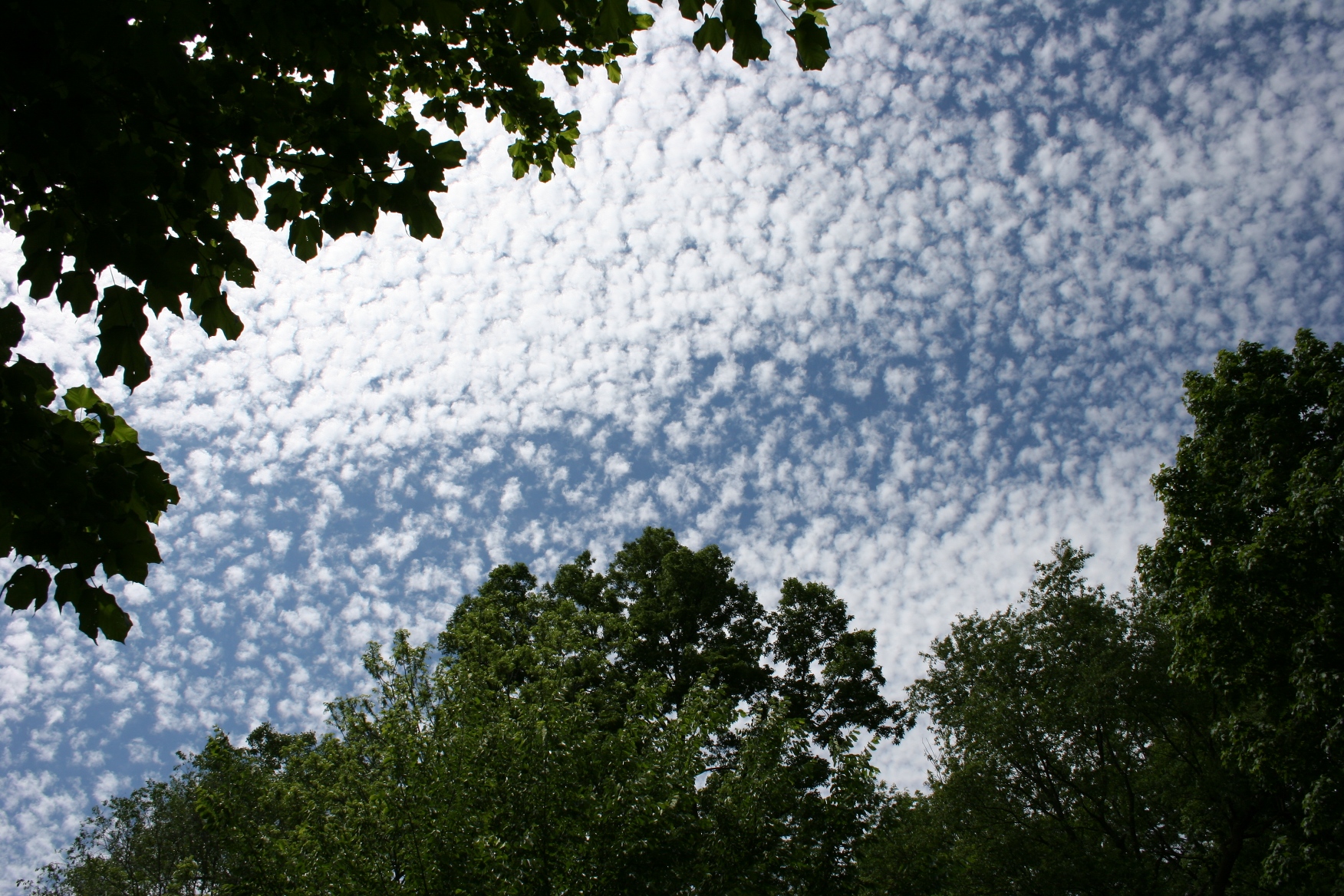
If I was a meteorologist, I could identify these cotton ball masses of clouds that hung over my Faribault home for a short time early Tuesday afternoon, another steamy day in Minnesota. Can anyone identify these?

UNSEASONABLY WARM. Record-breaking temperatures. High humidity.

You knew this blog post had to be coming. If I failed to write about the hot, summer-like weather we’ve experienced in southern Minnesota the past few days, I would risk deportation to Iowa or Wisconsin.

Not that I have anything against those neighboring states, but I am a Minnesotan through and through. And as such, writing or talking about the weather is a given. To do so is a geographical right.

Minnesotans boast/whine/complain/brag (choose your verb) about the weather.

In the winter, we talk about the sub-zero temperatures, windchills, blowing snow, winter storm warnings, blizzard warnings and, oh, yes, school closings.

In the summer we complain about the heat index and the humidity, always the humidity.

In the fall, we worry about an early frost and about too much rain keeping farmers out of fields.

But in the spring, typically, we are more content, unless, of course, the snow lingers too long, the weather is cool and wet or the farmers can’t get in the fields or there’s a late frost or there’s not enough rain.

Let me restate that. Even in spring we live in a season of weather-induced discontent, although we should feel content after six months of winter.

This spring, or at least in recent days, we’ve dealt with record-breaking temperatures. Here in Faribault on Monday, the temp soared to 95 degrees, unheard of for May 24.

In my neighborhood, kids are plunging into wading pools usually reserved for searing summer afternoons.

In my house, just days after our new central air conditioner was readied for use, I clicked the air switch to “on.” The cooling unit ran from Sunday evening to Tuesday evening, when a front brought much-needed rain and cooler temps. Last year we didn’t even install our window air conditioner.

So this is Minnesota. Cool one summer. Hot one spring.

In true Minnesota fashion, I will tell you, it could be worse.

Oh, sky, lovely sky. These clouds captivated me with their unique beauty.

© Copyright 2010 Audrey Kletscher Helbling


Pondering lives lost as I walk along the river in La Crosse, Wisc. May 25, 2010

Filed under: Uncategorized — Audrey Kletscher Helbling @ 7:46 AM
Tags: , ,

The Library, among many bars frequented by college students in downtown La Crosse, Wisc.

WHEN I SPOTTED A UNIQUE STATEMENT on a downtown La Crosse, Wisc., bar recently, I considered the slogan creative genius. I haven’t changed my opinion. The“If Mom calls, tell her I’m at The Library!” excuse is sure to appeal to the college-age crowd that frequents the bars along Third Street South just blocks from the Mississippi River. I mean, who can lie to their mom?

With a scholarly interior atmosphere—I’m told, I didn’t go inside the bar—The Library Bar! certainly presents a new spin on “going to the library.”

Study the book spines on the decorative awning and you’ll find Call of the Wild, Webster’s Drinktionary, Our Two-Party System (and they’re not talking politics), Wildlife of North America, The Boston Ale Party, The Power of Positive Drinking and more. Clearly, this bar targets college students. Why wouldn’t they?

If La Crosse didn’t have so many alcohol-related river drownings, I probably would maintain my light-hearted attitude toward partying in this town. I have no issues with responsible bars or with responsible drinking.

But it’s tough to ignore that since 1997, nine young white males have drowned here in the Mississippi, most of them after a night of too much imbibing.

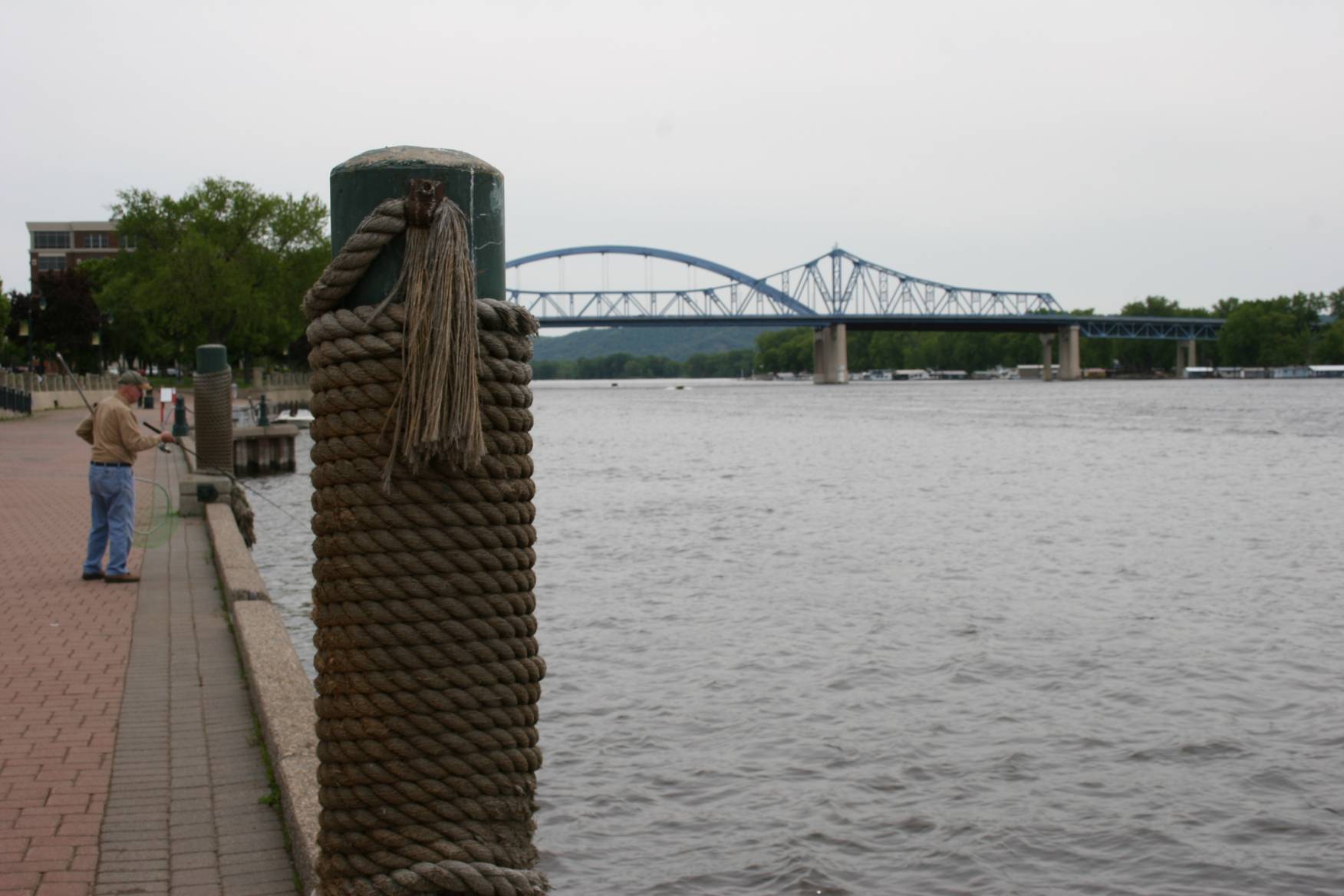
Those men were on my mind when I walked through Riverside Park in La Crosse. I wish they hadn’t been, but they were. As I admired sculptures, watched boats zip by, talked to an old man fishing for walleye, peered over the river wall at six fledgling ducklings in the dark, murky waters far below, I couldn’t push from my thoughts that this river has become a watery grave for too many.

The River Walk in Riverside Park along the Mississippi River in La Crosse, the site of numerous drownings.

© Copyright 2010 Audrey Kletscher Helbling
 

Memorable moments on a Minnesota Honor Flight to D.C. May 24, 2010

Filed under: Uncategorized — Audrey Kletscher Helbling @ 10:20 AM
Tags: , ,

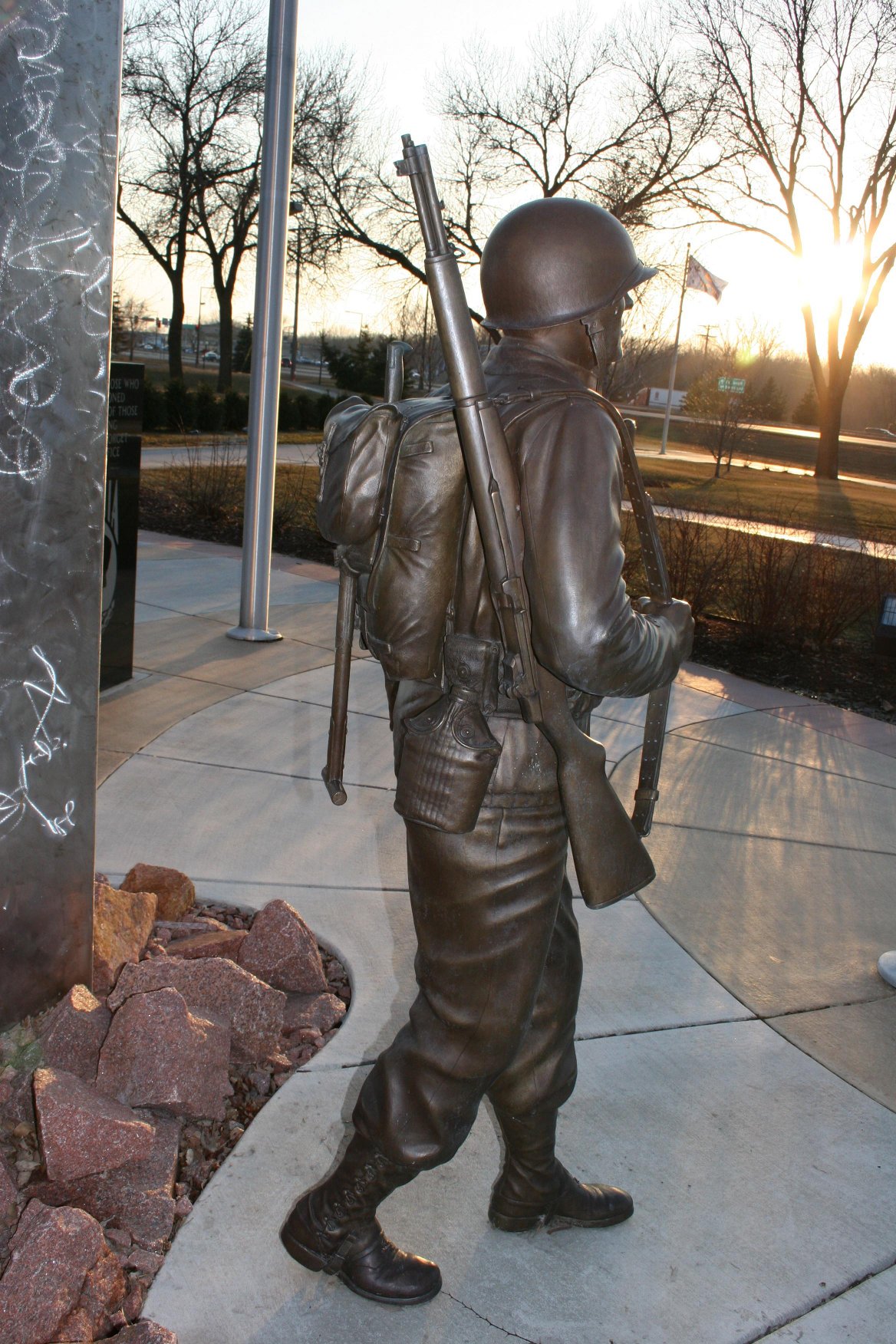
A soldier statue at the Northfield Area Veterans Memorial at Riverside Lions Park in Northfield.

TEARS STREAMED DOWN the old soldier’s face as he read a letter of thanks. The writer could not know how much the note of appreciation meant to this veteran.

But Bob and Louise know. On Saturday the Nerstrand couple accompanied a plane-load of Minnesota WW II veterans on a one-day Honor Flight to Washington, D.C., to visit the WW II and other war memorials. The pair paid for their flight and that of several veterans and served as guardians for two soldiers.

It’s a trip they’ll always remember, particularly “mail call” aboard the flight. As the names of soldiers were read and thank you letters distributed, the tears began to flow. For one veteran, the moment was especially poignant.

Bob shares the man’s story. The soldier, he says, never got, or even expected, a letter while serving in the military. He was an orphan. So Saturday’s mail call deeply touched him, brought the old soldier, and Bob and Louise, to tears.

Many tears fell during that Honor Flight, they say. Bob spoke of the crowds and patriotic escorts, the appreciative signs and personal words of thanks to the soldiers when they arrived in the nation’s Capitol and returned later that evening to Minnesota.

Louise tells of visiting Nerstrand Elementary School to talk about the Honor Flight. The students penned letters of thanks like those received by the orphan soldier.

As Bob and Louise speak of the Honor Flight, goosebumps rise on my arms. I think of my father who fought on the front lines during the Korean Conflict. He was not welcomed home. In some small way, through the words my dad left unspoken, through his years of struggle, I understand the importance of paying respect to WW II soldiers today, decades after they’ve served their country.

I am grateful to Honor Flight organizers and to folks like Bob and Louise who sponsor and accompany these veterans. And I am grateful to the letter writers, for their words have the power to mend a soldier’s heart.

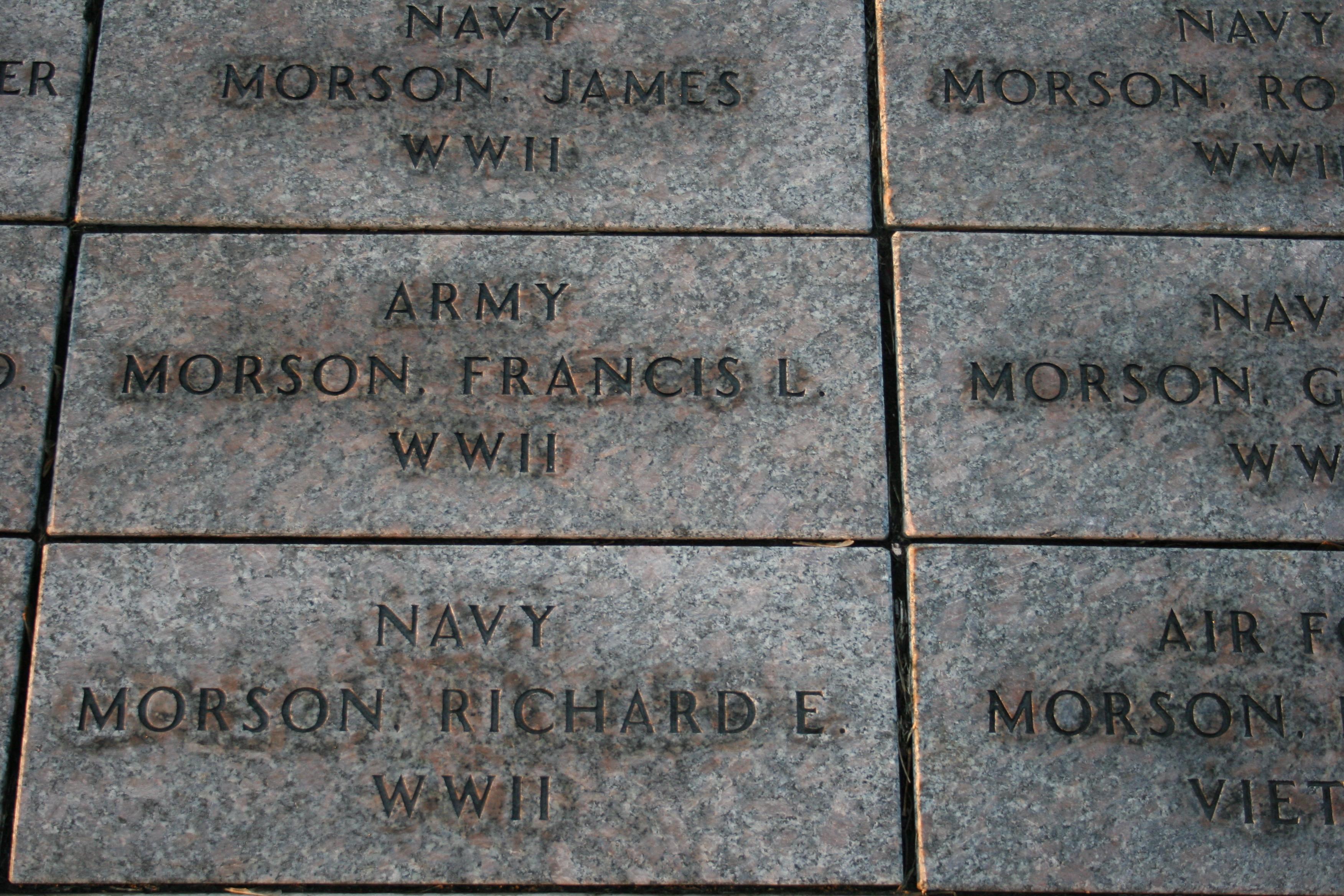
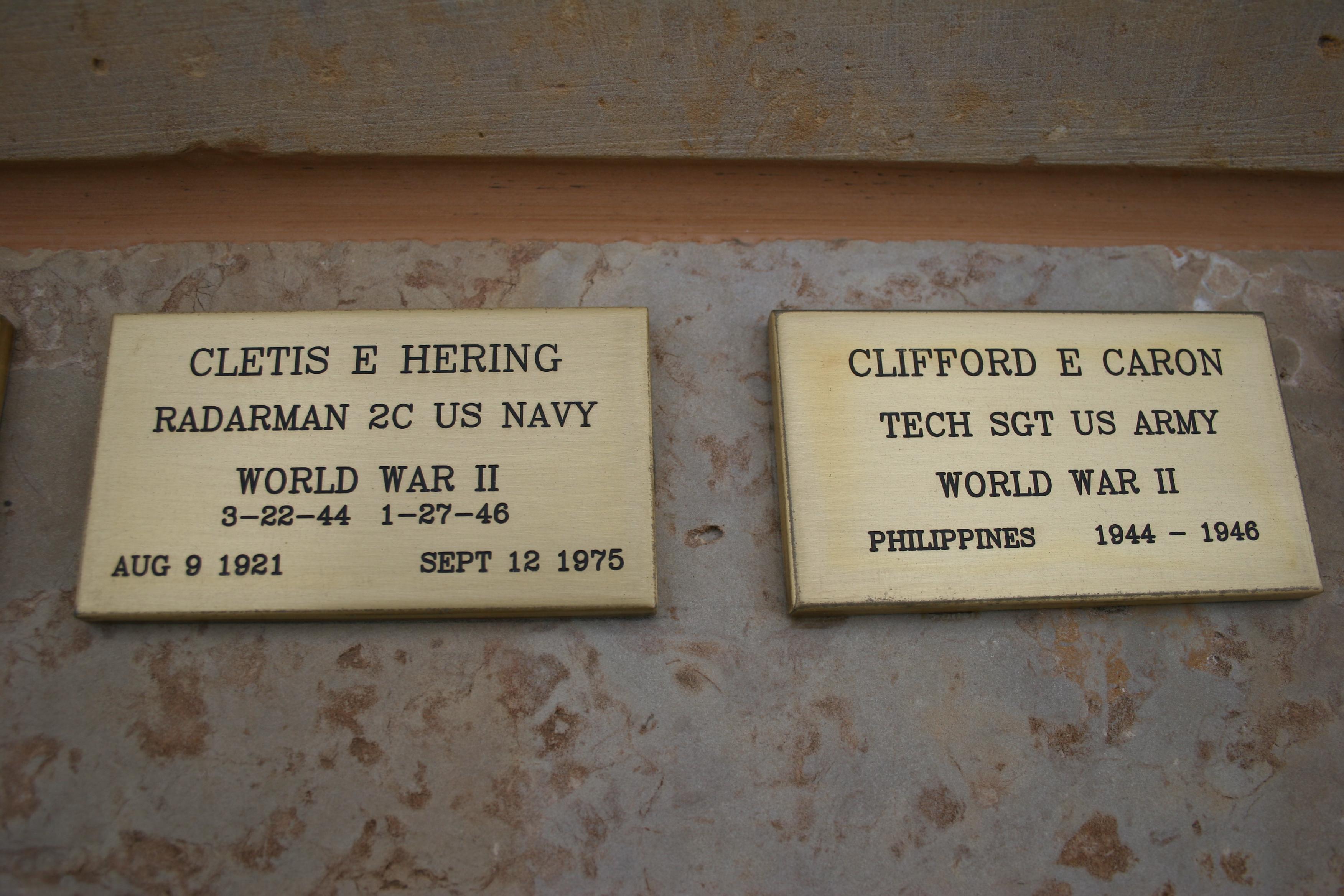
Soldiers' names engraved in pavers at Northfield Area Veterans Memorial Park.

WW II soldiers honored at a veterans' memorial along Minnesota Highway 21 in Shieldsville.

© Copyright 2010 Audrey Kletscher Helbling