Minnesota Prairie Roots

Writing and photography by Audrey Kletscher Helbling

Meet Bob, the opinionated farmer from Madelia September 10, 2012

Filed under: Uncategorized — Audrey Kletscher Helbling @ 6:46 AM
Tags: , , , , , , ,

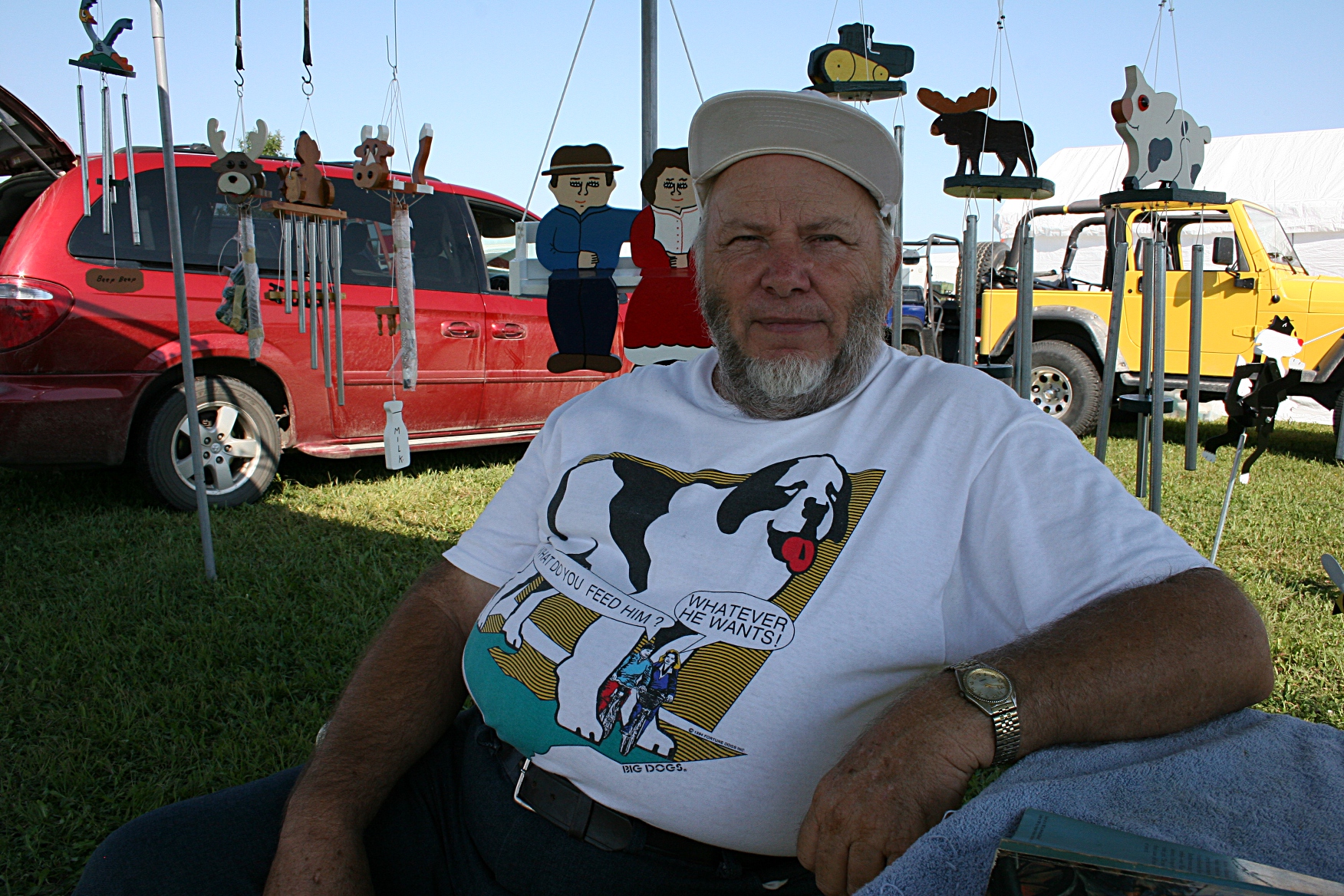
I met Bob Michniewicz  and his wife, Judy, selling their woodcrafts at the recent Rice County Steam and Gas Engine Show. He wouldn’t allow me to photograph his art, except for a single sign and a single cow, not wanting others to steal his ideas. However, a few other crafts got into the photo when Bob obliged my request for a portrait.

OCCASIONALLY YOU MEET a character, and you know it just looking at the person, before lips even part to utter a single syllable.

I knew, just knew, Bob Michniewicz was a character when I saw him and his set-up at the Rice County Steam and Gas Engine Show in rural Dundas. With kitschy wooden lawn ornaments—you know the kind—and wind chimes and eye-catching messages defining his space, Bob was bound to be interesting.

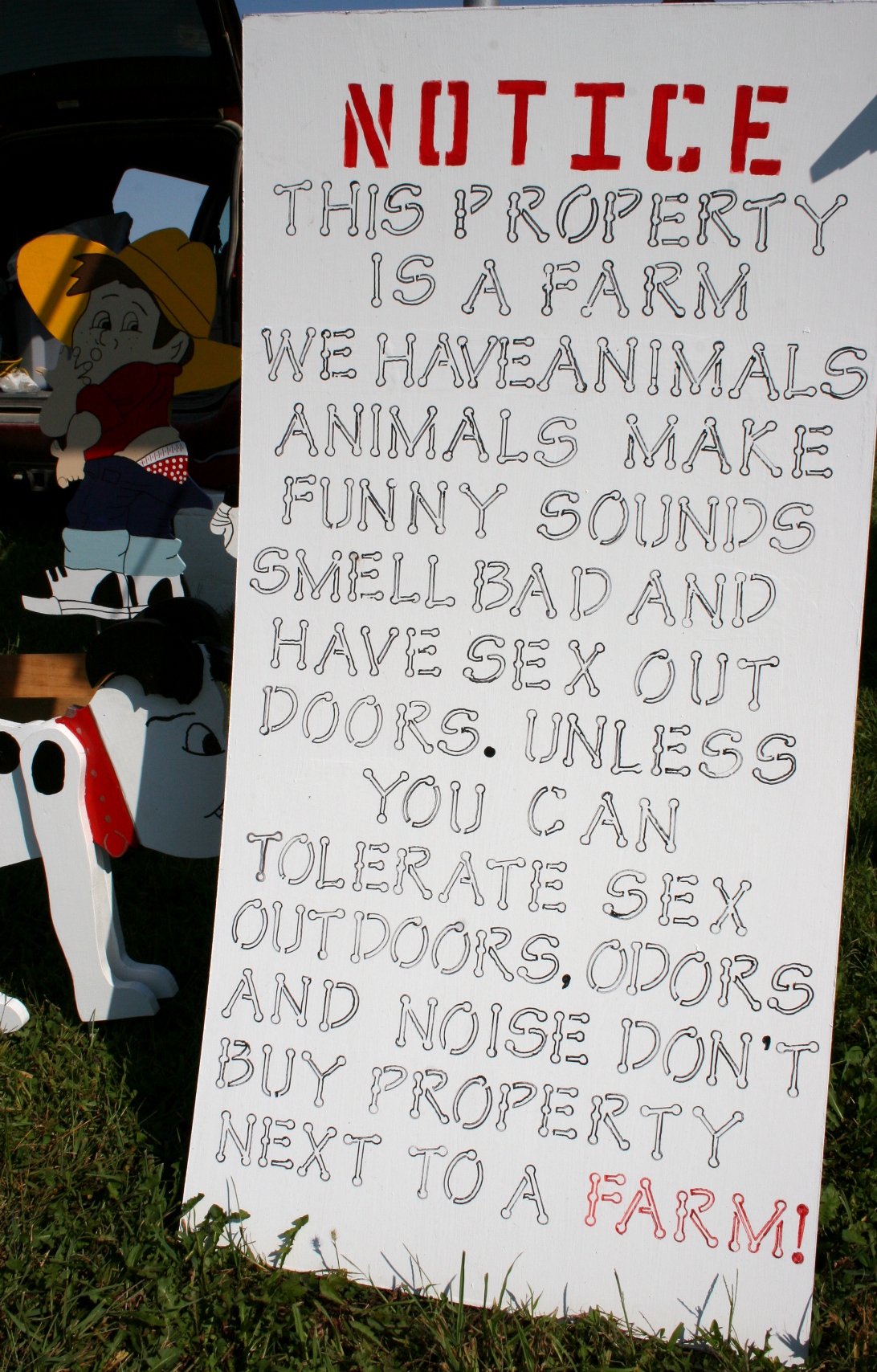
Just look at the poster Bob leaned front and center against a support post for the tent under which he and his wife of 50 years, Judy, were peddling their wares.

Bob was gauging interest in this sign with plans to print it on vinyl and sell it should interest run high.

Naturally, I asked Bob about that message. Seems he’s a bit worked up about all the non-farm folks moving onto farms in his area and then complaining about noise or smell or dust and such from working farms.

“Farmers were here first,” he emphasizes. And that, in this retired farmer’s opinion, should settle any matters of dispute.

All around him, Bob views the ever-changing rural Minnesota landscape. Within a three-mile radius of his farm (the home place) 3 ½ miles from Madelia, only four farmers remain. The rest are people living on the building sites.

Therein, according to Bob, lies the problem. “People don’t know where farm stuff comes from.” I’m not sure I understand what he means, but I think I do and Bob doesn’t allow me to interrupt this rather one-sided conversation.

Bob just steamrolls forward, asking if I know that potatoes in stores are sprayed to keep them from sprouting. (I don’t know this and check later to see if Bob, who is a gardener, is right, and apparently he is, although I’m not saying all potato growers, all stores, follow this practice.)

He looks me directly in the eye and says: “Next time you eat mashed potatoes, you may as well take a shot glass of Round-up with a beer chaser.”

Like I said, Bob’s a character, and an outspoken one at that.

Bob certainly possesses a sense of humor, as seen in this bovine lawn art.

© Copyright 2012 Audrey Kletscher Helbling


Minnesota Museums Month: The Minnesota Machinery Museum, on the prairie May 1, 2012

THINK OF MUSEUMS in Minnesota, and what pops into your mind?

Probably the Science Museum of Minnesota or the Minnesota Children’s Museum or the SPAM Museum in Austin or any other such notable museum.

During May, “Minnesota Museums Month,” I challenge you to think beyond the obvious to those small town museums that are tucked away in nondescript buildings or along back roads or are mostly unknown except to those living within a region.

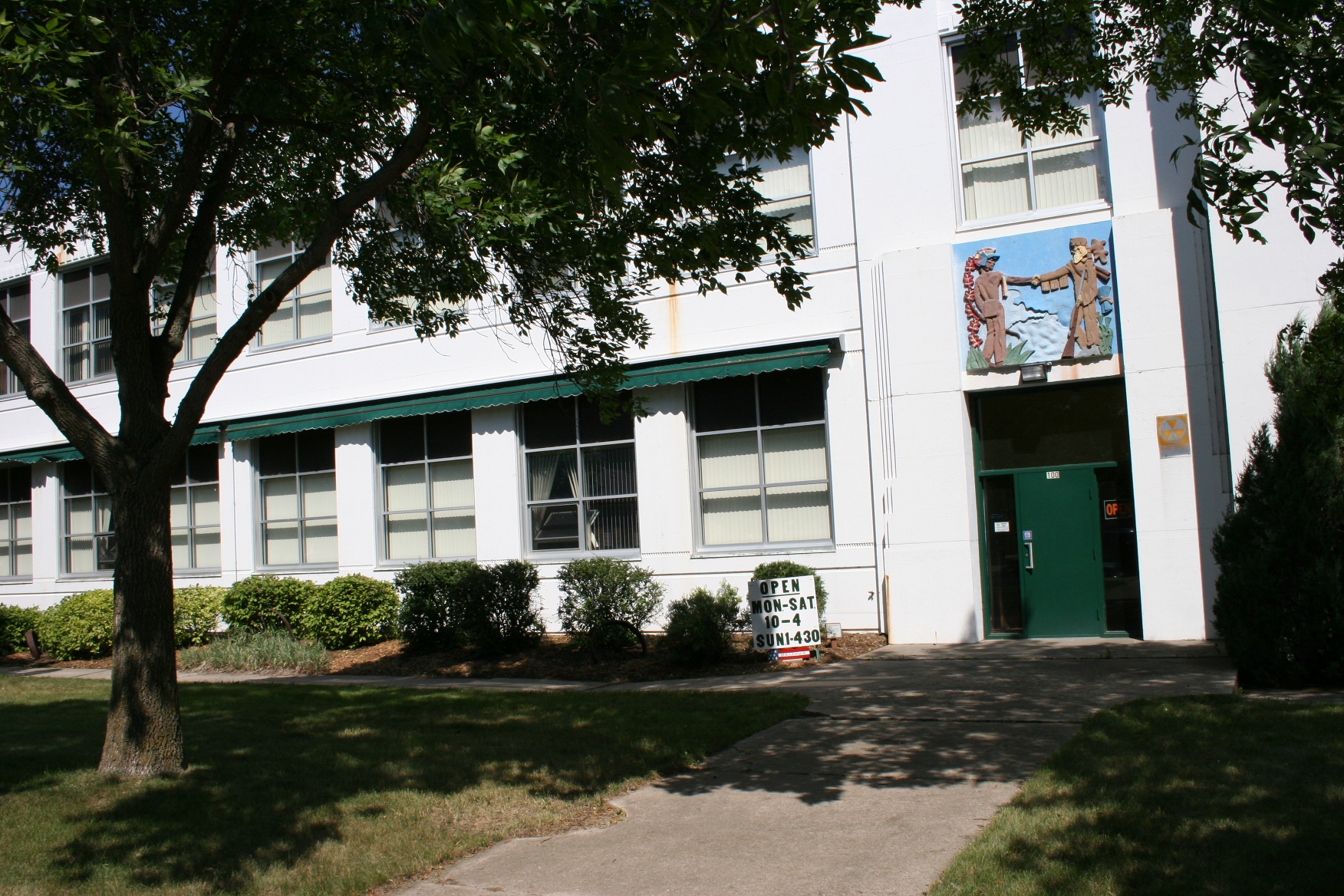
The Minnesota Machinery Museum in a 1939 WPA school building in Hanley Falls.

That leads me directly to Hanley Falls, home of the Minnesota Machinery Museum.

I expect already most of you are asking, “Where the heck is Hanley Falls?”

Hanley Falls, a small farming community, sits along State Highway 23 in southeastern Yellow Medicine County, nine miles south of Granite Falls on the southwestern Minnesota prairie.

It is one of those “blink and you miss it” type towns all too often dismissed by travelers simply flying by on the highway. Let me tell you, Hanley Falls is worth several hours of your time to tour this rural life museum which opened as the Yellow Medicine County Agricultural and Transportation Museum in 1980 and in 1994 became the Minnesota Machinery Museum.

For anyone who appreciates our state’s rich agricultural heritage, this museum rates as a must-see in the heart of our state’s richest farmland. I grew up in this strong agricultural region, in Redwood County next door to the east, and toured the museum for the first time in 2009. Yes, even I was unaware of its presence, having left the prairie in 1974 for college and subsequent employment.

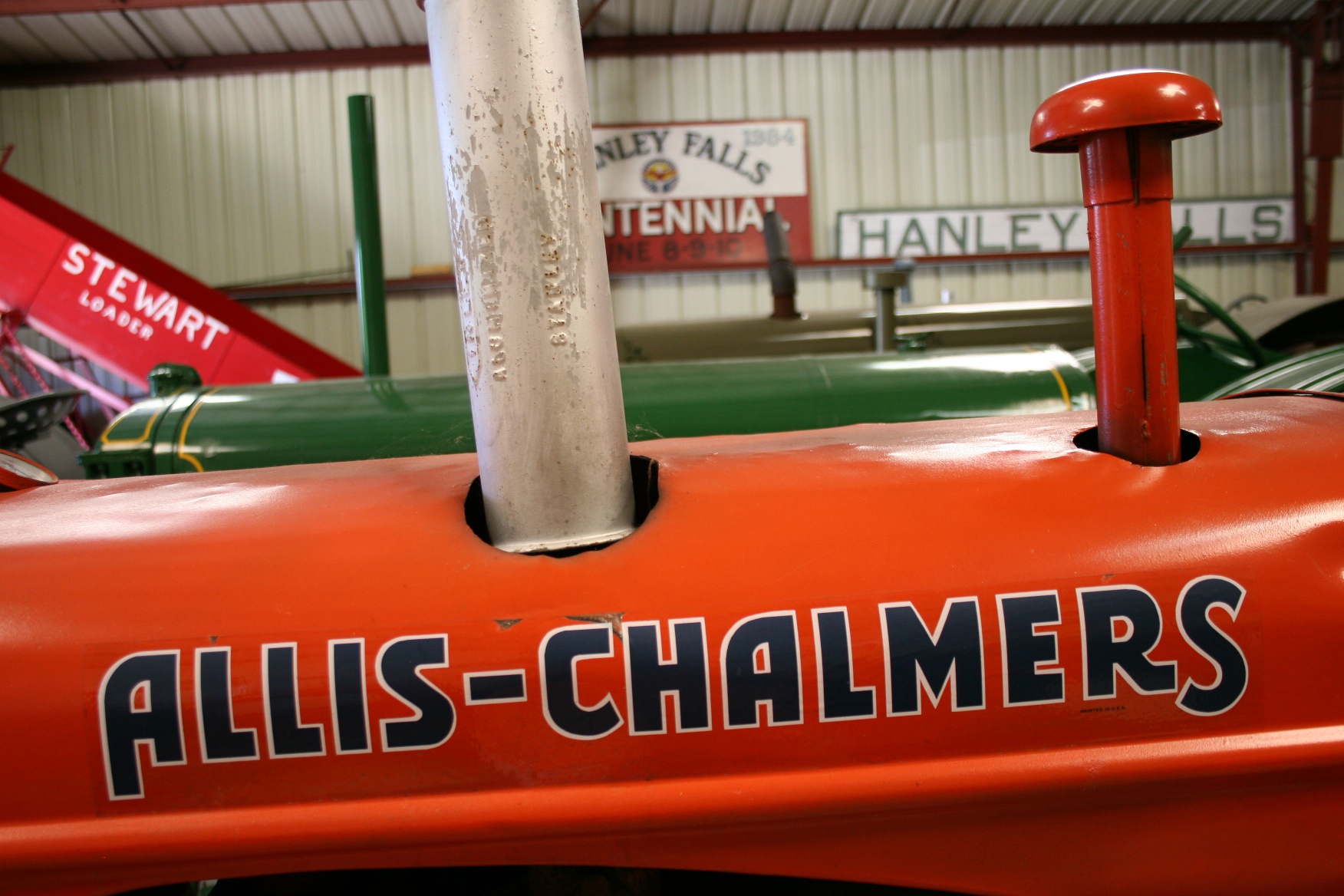
You'll see plenty of old tractors and farm machinery, along with vintage cars and trucks.

The Minnesota Machinery Museum, which is somewhat of a misleading name because it’s not all about farm machinery, reconnected me to my rural roots and educated me on the area’s agricultural history. During my 2009 visit, I learned that visitors will discover “the things you would find on a typical farm before the 1950s” with thousands of artifacts primarily from surrounding communities in a several-county area.

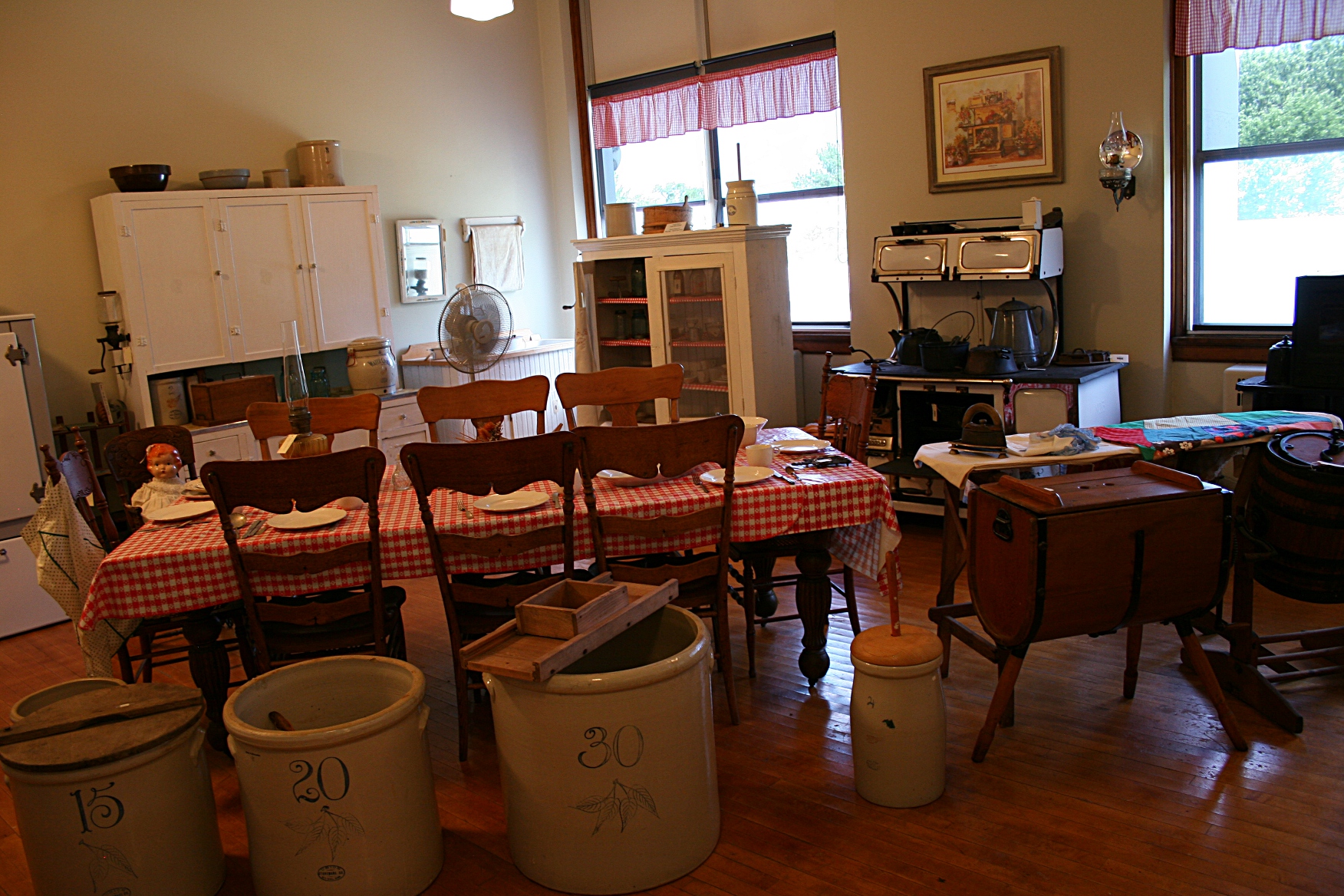
An old-style farm kitchen on the second floor of the museum.

All of those artifacts are housed in five buildings, including a sprawling two-story 1939 Works Project Administration school, on six acres. The first floor of that former school, during my visit, was packed with mostly farm-related equipment while the second floor housed the domestic side of rural life.

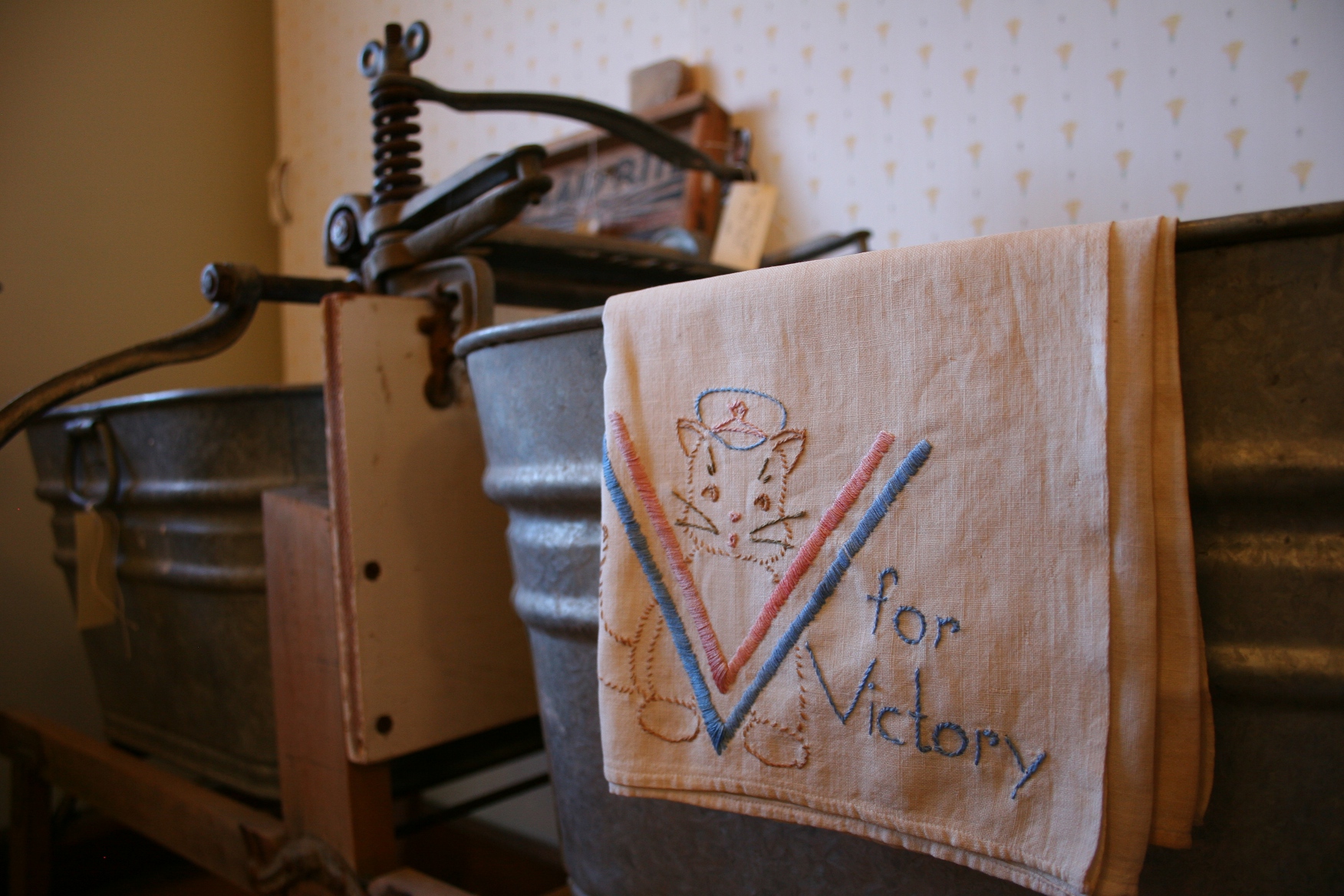
A vintage embroidered dish towel and old wash tubs, both familiar to me. My mother used a wringer washer with wash tubs during the early years of my life on a southwestern Minnesota dairy and crop farm.

It is the mission of the museum, according to its website, “to recapture a century of stories about farm life. Implements, tools, tractors and gas engines in mint condition along with rural art help you look back to an era when neighbors worked together to harvest their crops, raise barns and build a better life for their families.”

Read those words again. They are the essence of this place—the feeling of community, the sense of neighborliness, the embodiment of that which defined rural life at one time. Yes, that life has changed. Neighbors don’t always know neighbors. Oversized farm machinery has, for the most part, replaced the need for neighbors to work together. Barns are falling into heaps of rotting wood. This museum preserves a way of life that exists mostly in stories now.

This bushel basket in the museum brought back memories of feeding cows.

The Minnesota Machinery Museum is as impressive as any you’ll visit in Minnesota. Take time to seek it out, to turn off the highway into Hanley Falls rather than driving by without even a thought of the historical treasure that lies within this small southwestern Minnesota prairie community.

FYI: The Minnesota Machinery Museum is open May – September from 10 a.m. – 4 p.m. Monday – Saturday and from 1 p.m. – 4:30 p.m. on Sunday and is closed on holidays. Click here for more information about the museum.

© Copyright 2012 Audrey Kletscher Helbling


Preserving central Wisconsin’s rural heritage via on-the-road photography January 5, 2012

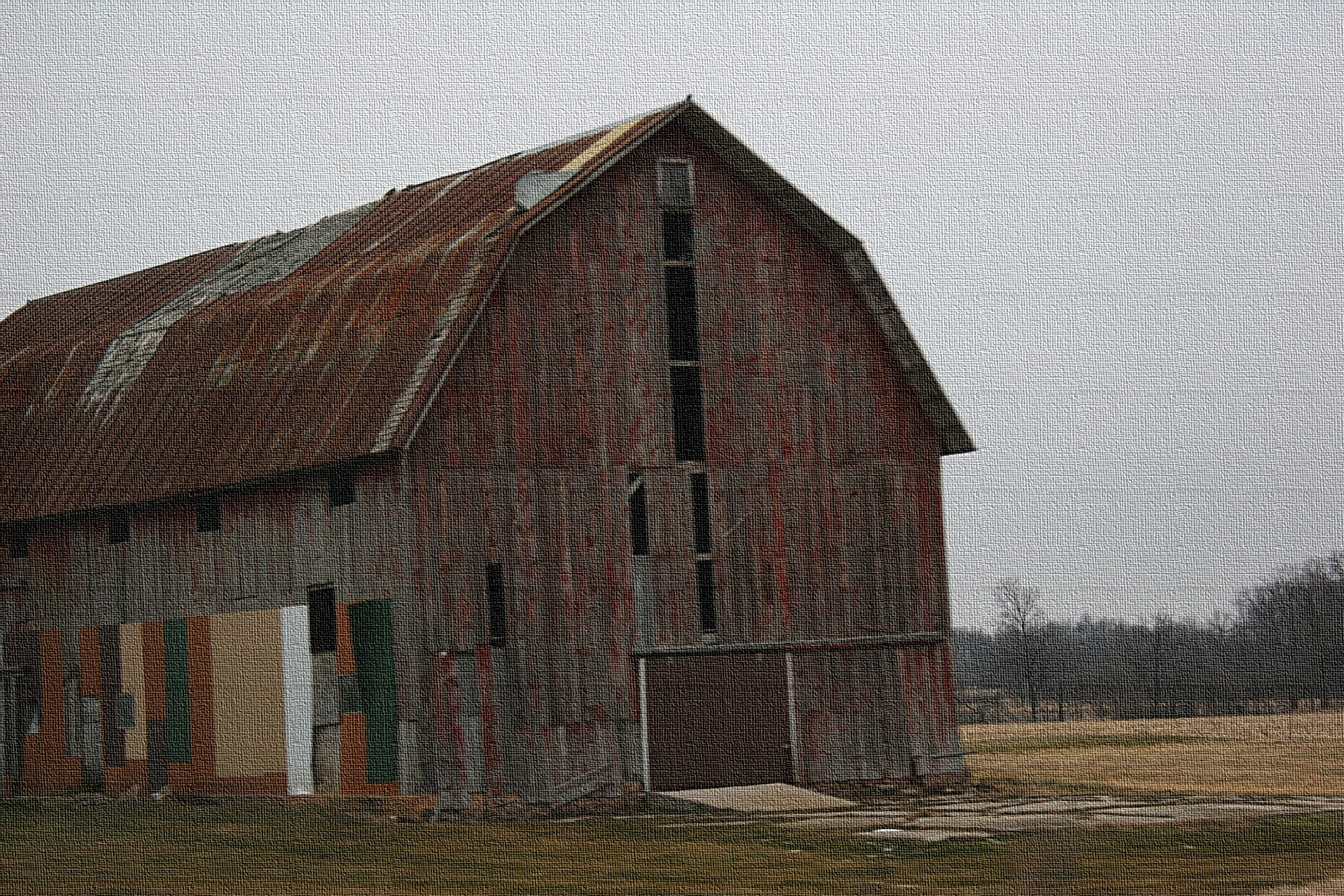
Each time I see this Wisconsin barn, I think of the biblical story of Joseph's coat of many colors.

ON OUR FOURTH TRIP through central Wisconsin in a year along the same route—Interstate 90 to Interstate 94 in Tomah then on Wisconsin Highway 21 to Oshkosh, up U.S. Highway 41 to Appleton—I’m getting to know the Dairyland state from her western to near eastern borders.

She’s a beautiful state of rolling hills, flat marsh land, stands of packed pencil-thin pines, too many towns whose names end in “ville,” infinite piles of stacked firewood, cranberry bogs and potato patches, muskrat mounds, cheese stores, Packers fans, small-town bars and barns—oh, the barns that I love to photograph.

One of my favorite barns along Wisconsin Highway 21 because of the stone walls.

As I’ve done on every 600-mile round trip to and from our second daughter’s Appleton home, I capture the scenery via on-the-road photography, meaning I photograph through the passenger side window or windshield of our vehicle at highway speeds. Sometimes I manage to snap a well-composed image. Other times I fail to lift my camera, compose and click in time and miss the photo op.

Journey after journey, I find my eyes drawn to the many old barns that are so much a part of Wisconsin’s landscape and heritage. And mine. Only in Minnesota.

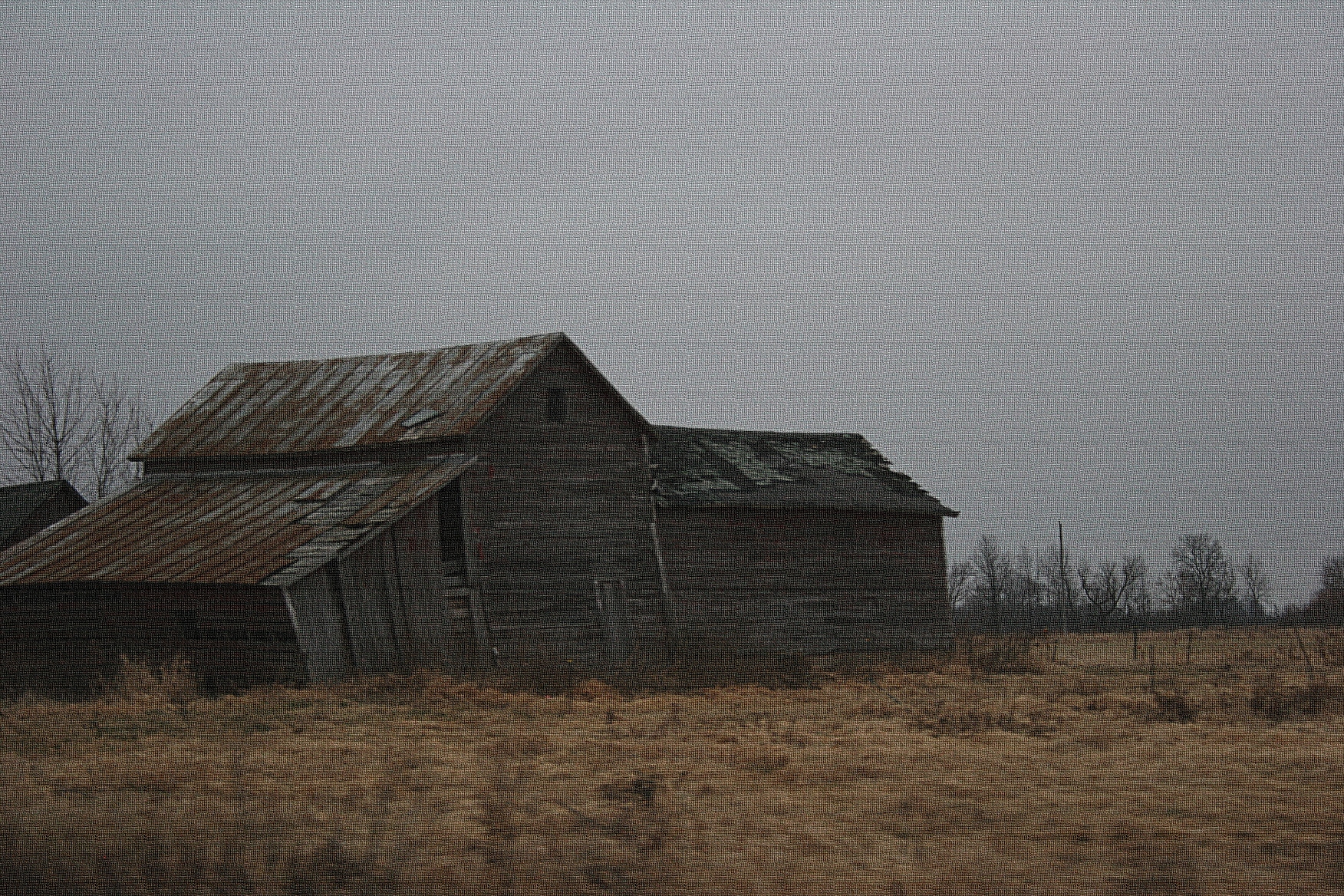
I’ve seen every type of barn, from the well-preserved to the crumbling, pieced-together-with-tin structure. I know that any barn, once left to fall into a rotting pile of boards, will never be replaced by an equally grand structure.

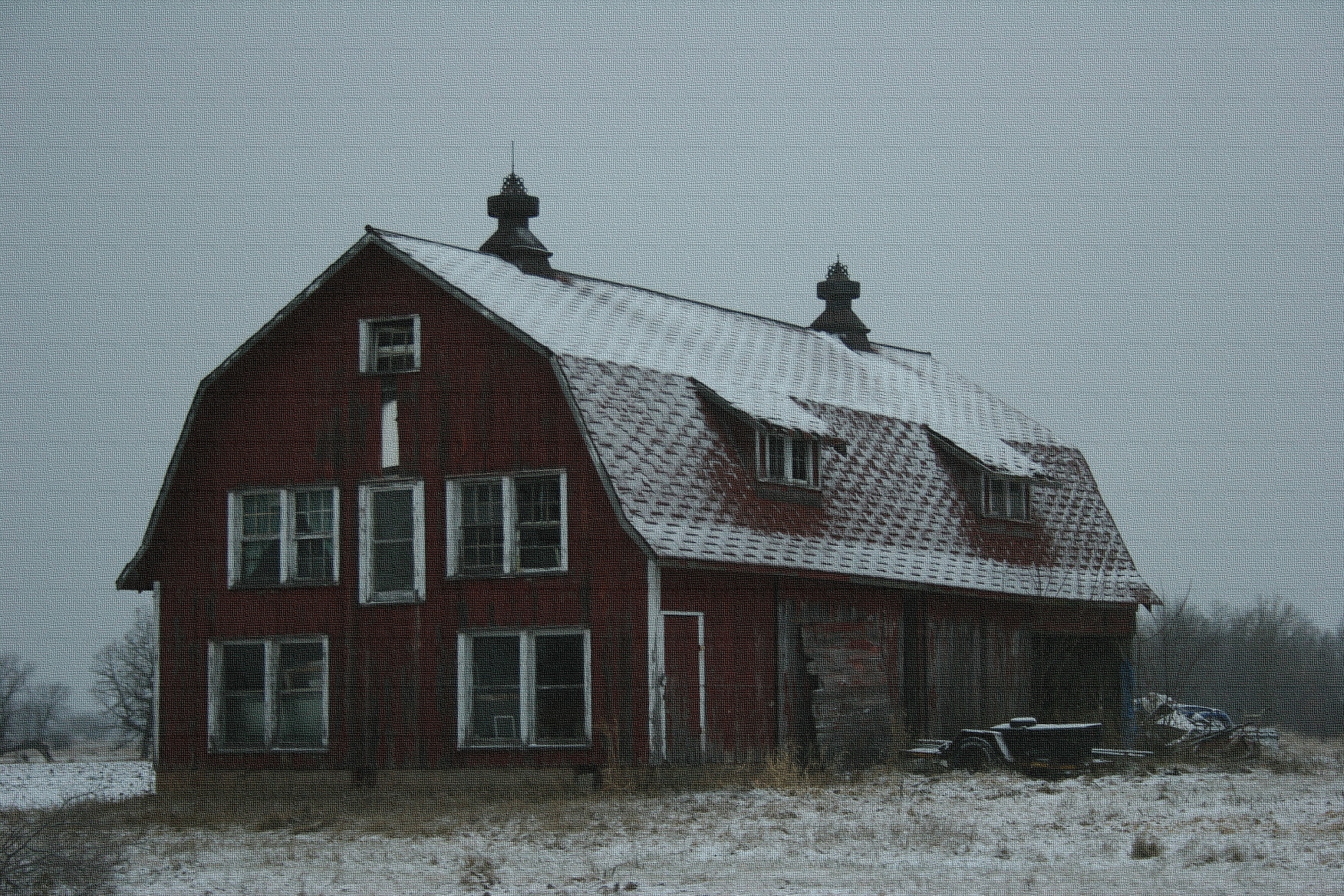
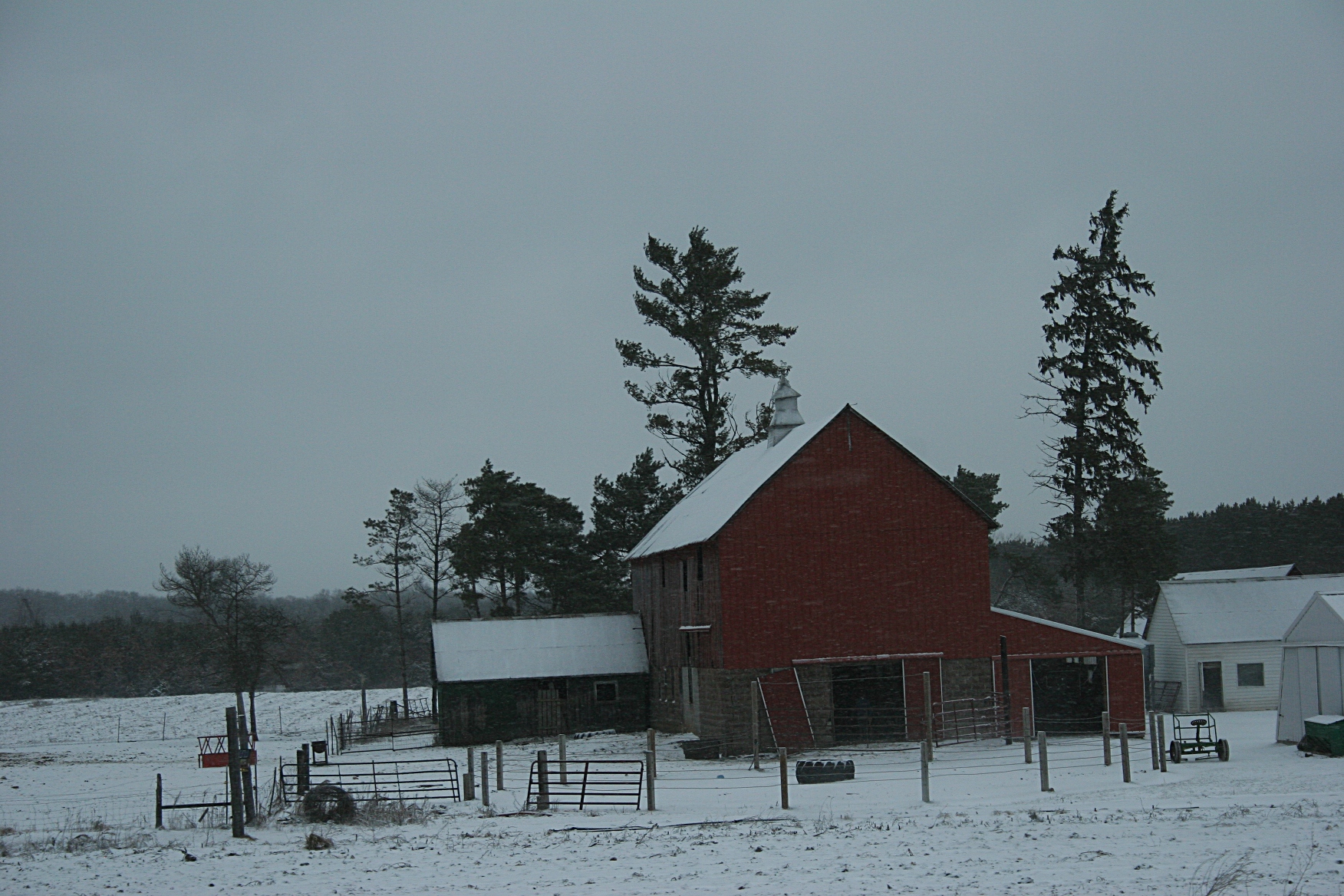
A pieced together weathered barn blends into the gray landscape on a dreary winter afternoon.

A once grand barn shows the first signs of falling into disrepair.

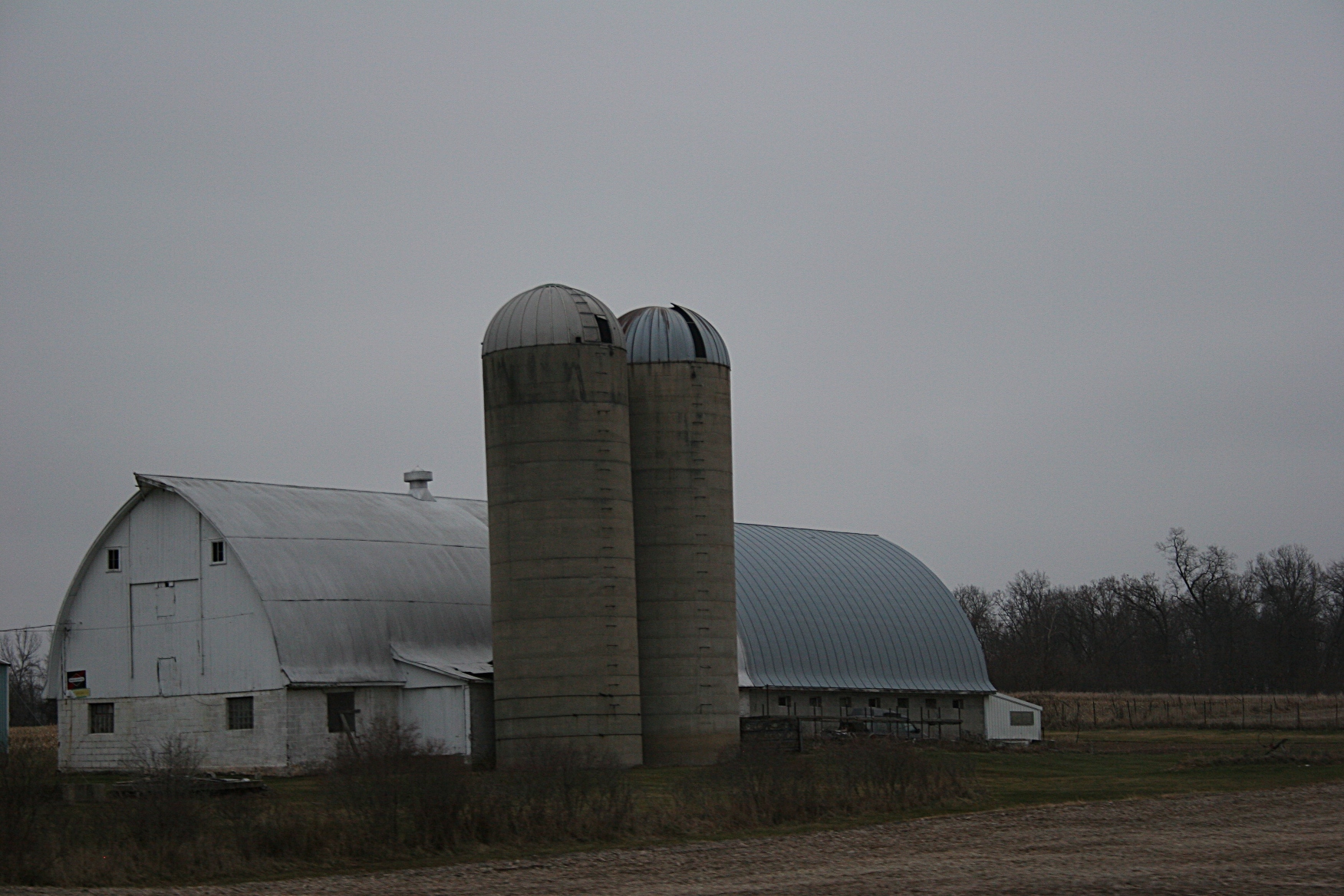
The occasional white barn pops up among the characteristically red barns.

Majestic barns, rising sturdy and proud above the land, are seldom crafted anymore. Instead, mundane metal rectangles sprawl, without any character or beauty, across the landscape. Such structures hold no artistic, but only practical, value on the farm.

Via my barn photography, I am documenting for future generations a way of life—the family farm—which, in many places, has already vanished.

If my photos inspire you to appreciate barns and rural life and the land and our agricultural heritage and the men and women who work the soil and their importance in this great country of ours, then I will have passed along to you something of great worth.

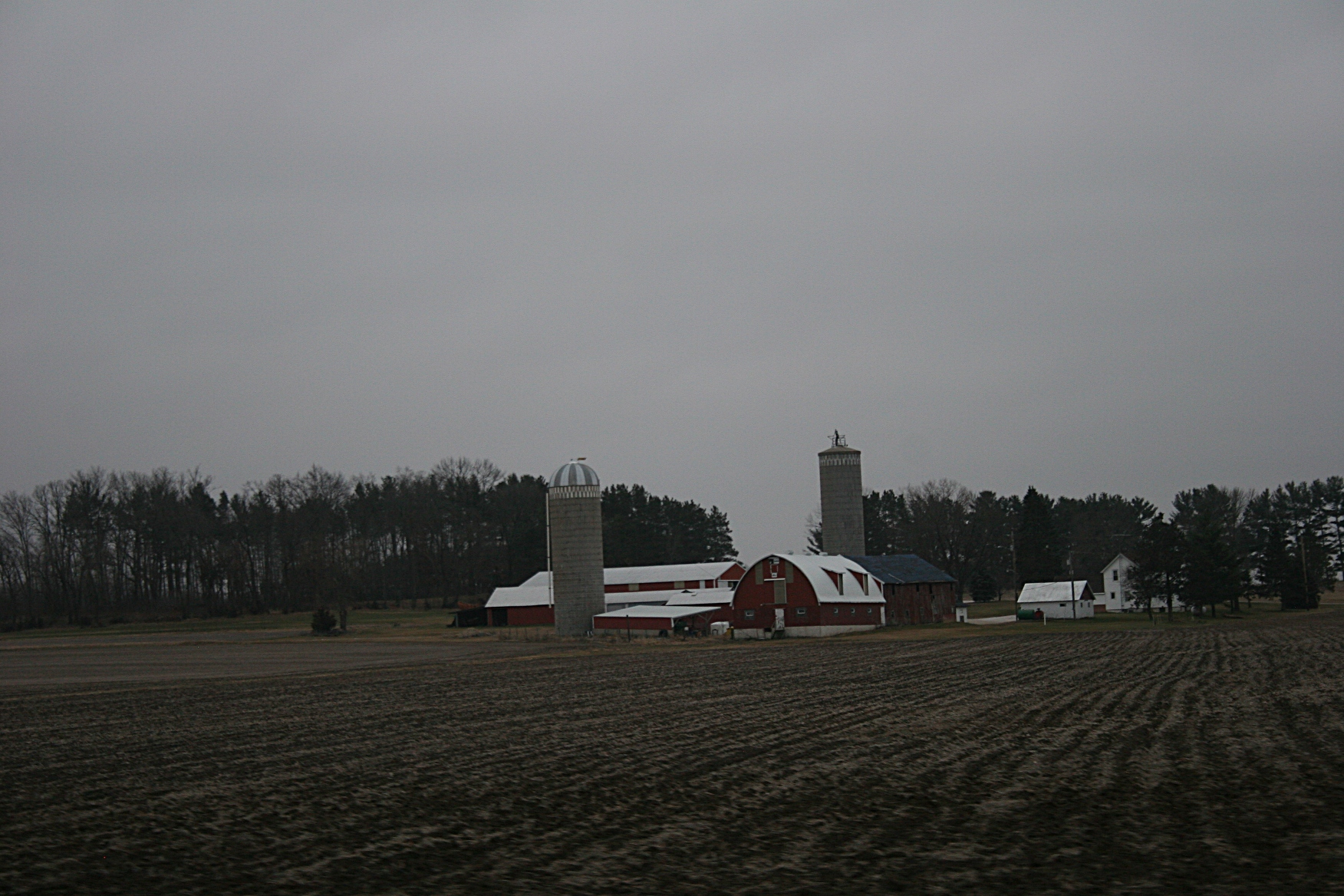
An especially picturesque farm site along Wisconsin Highway 21.

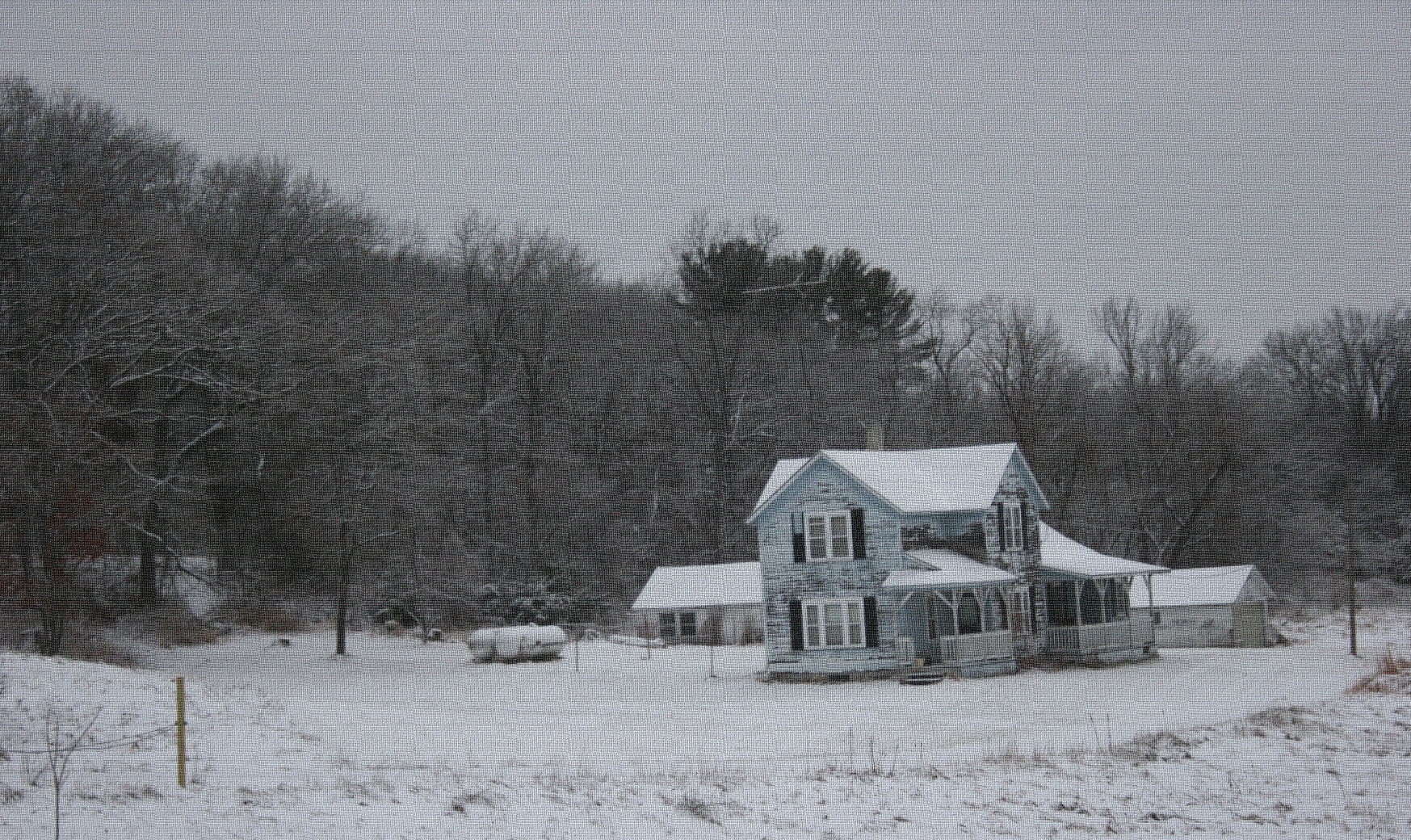
The muted blue-grey of this old farmhouse blends seamlessly with the dreamy landscape on a snowy New Year's Day afternoon in central Wisconsin.

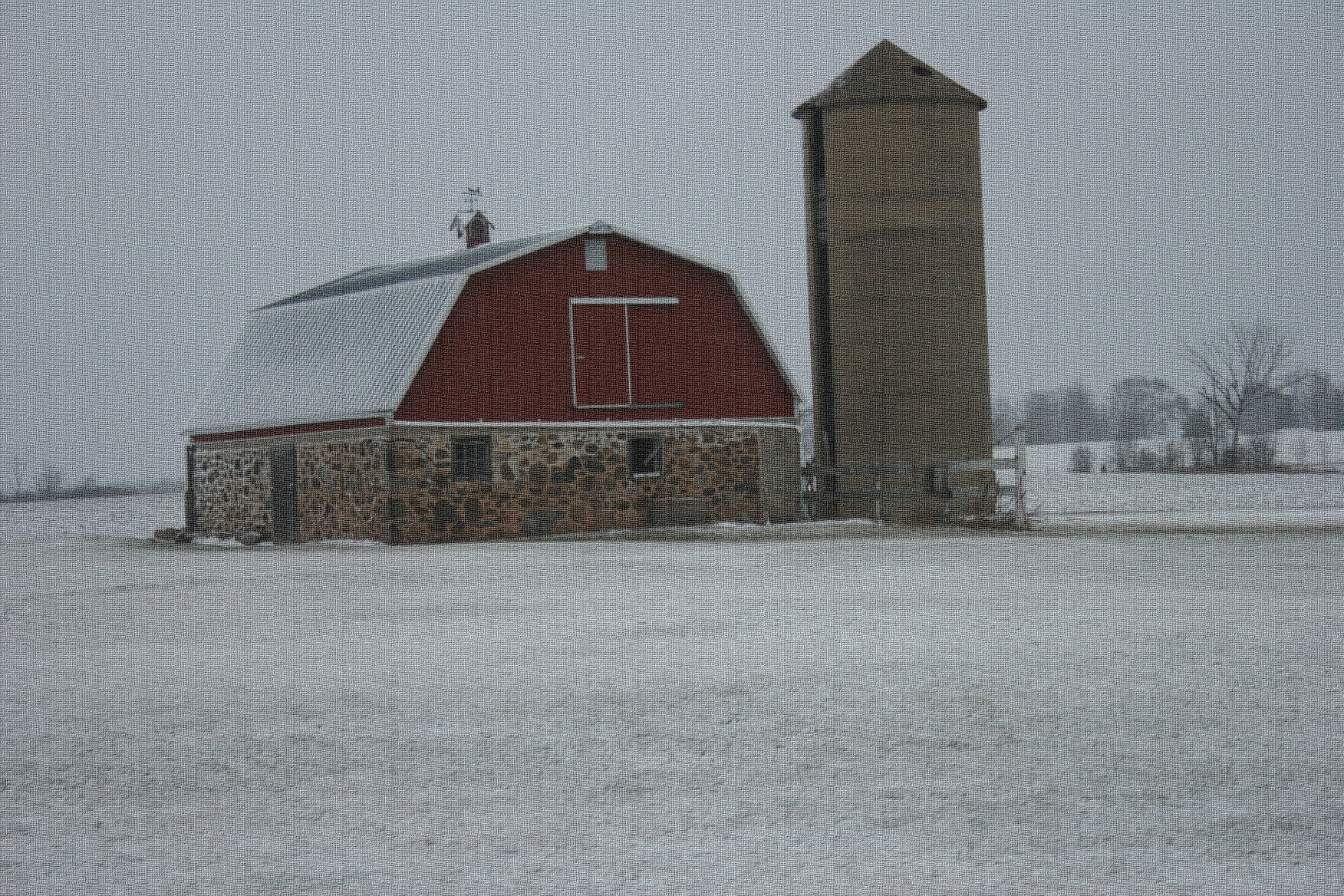
Contrasted against snow, red barns are particularly visually appealing.

NOTE: The above photos were taken on December 30, 2011, and January 1, 2012, along Wisconsin Highway 21 in the central part of the state primarily between Wautoma and Oshkosh.

I have applied a canvas style editing technique to most of the images, creating a quality that is more painting than photo.

© Copyright 2012 Audrey Kletscher Helbling


Tough tilling in Minnesota farm fields November 9, 2011

A farmer works the field recently in this scene shot in southeastern Minnesota.

HAVE YOU TRIED DIGGING into the ground lately? Takes some effort, doesn’t it? This soil in Minnesota rates as rock hard right now given the lack of moisture.

I’m hesitant to admit it, but I don’t think about soil conditions and moisture nearly as much as I once did, when I was not so long-removed from the farm.

But last week when a carpenter, who is also a farmer, was working on a project at my house, we chatted briefly about crops, soil conditions and weather.

Kenny shared how fall tillage has been especially trying this year. Farmers in his area around Owatonna in southeastern Minnesota have been breaking implement parts with all-too-often frequency in the dry, hard earth. He mentioned shanks, which he claims never break.

Some parts are in short supply, Kenny says, meaning farmers sometimes need to wait. That’s not a good thing when you’re trying to finish fall tillage before the snow flies.

Friends of mine who farm near Dundas finally halted all tillage work for the season, leaving some 300 acres, of 700, untilled. The rock hard dry soil proved too difficult to work and too tough on their equipment.

IN SOUTHWESTERN MINNESOTA, my brother Doug Kletscher, the parts manager at Westbrook Ag Power in Westbrook, confirms that tillage is tough there, too, and farmers are going through the parts. “We ran out of ripper points and they have been back-ordered for a good month. I have heard of a few farmers that have pulled their rippers in half,” Doug says. “We have sold at least five years’ worth of chisel plow spikes in one year. Bolts have also been in very high demand.”

On the flip, positive side, farmers haven’t had to deal with mud, Doug reports, and the corn has been very dry with 14 percent or less moisture content (a significant cost savings on corn drying).

However, farmers are facing another issue related to moisture-depleted conditions. “The fertilizer companies are not putting on any anhydrous as it is too dry to hold the anhydrous in the ground,” my brother continues. “Anhydrous needs moisture to adhere to keep it in the ground; also it (the soil) is pulling so hard that they would break their anhydrous bars.”

Doug reports the last rain over a half inch fell on July 14 with .78 inch. Since then any rainfall has been .10 inch or less. That makes for extremely dry soil conditions for farmers trying to prep the soil for next spring’s planting season.

LIKEWISE, IF YOU’RE a gardener, digging vegetables has been anything but easy this autumn. Take my friend Virgil Luehrs, who lives along Cedar Lake west of Faribault. Unearthing potatoes proved tough, he says. But then he got to the carrots:

“First I tried the garden spade, then a round-point shovel and then a tiling shovel. I had to dig a trench beside the rows to loosen the soil around the carrots to get them loose enough to pull out.  Finally I resorted to a pick to loosen the soil and that was easier but still a lot more work than normal.”

Tilling the garden, even with a powerful Troybuilt rear tine tiller, proved equally challenging. “I could not get down deep enough,” Virgil reports. “Hopefully next spring.”

When Virgil talks soil and weather, I listen. He’s not just your average Minnesota gardener. He’s also a retired high school science teacher with a Masters in biology, a former interim and assistant director at River Bend Nature Center in Faribault, and a volunteer rain gauge reader for the Rice County Soil Water Conservation District (SWCD) and the state Climatology Lab.

In other words, he’s a knowledgeable resource.

So then, exactly how much rainfall has Virgil recorded at his Cedar Lake home (where the lake water level is the lowest in 20 years, but not as low as in the drought years of 1988- 1990). Thus far since April, Virgil has taken these rain gauge readings:

April:  3.14”

May:  4.63”

June:  5.26”

August:  1.38”

September:  1.00”

October:  .58”

TOTAL during the past six months: 15.99”

Says Virgil: “This year we had a much wetter spring and that probably helped to carry us through the dry fall. Recall that last fall we had record rainfalls.”

His 2010 readings were as follows:

April:  1.35”

May:  2.75”

June:  4.76”

July:  5.49”

August:  3.91”

September:  9.13”

October:  1.91”

TOTAL during those six months: 29.3”

According to information Virgil passed along from State Climatologist James Zandlo and University of Minnesota Climatology/Meteorology Professor Dr. Mark Seeley, 2010 was the wettest year in Minnesota modern climate record. The 34.10-inch state average precipitation total was roughly 8 inches more than the historical average.

But here we are in November 2011, desperately short of moisture.

What will winter bring here in Minnesota? A continued shortage of precipitation? Or more snow than we care to shovel?

WHAT’S YOUR PREDICITON for snowfall in Minnesota this season? Submit a comment with a forecast and the reasoning behind your prediction.

IF YOU’RE A FARMER, an implement dealer or a gardener, have you faced any special challenges this year due to dry (or other) weather conditions? Submit a comment. I’d like to hear, whether you live in Minnesota or elsewhere.

CLICK HERE to link to climate.umn.edu for detailed statistics and information about Minnesota weather.

© Copyright 2011 Audrey Kletscher Helbling


Farm Rescue: Like neighbors helping neighbors November 7, 2011

NO ONE EVER expects to need help. But then an accident happens or sickness befalls us or tragedy strikes. And we suddenly realize how much we need each other.

Back in October of 1967, neighbors rallied after a corn chopper sliced off the fingers on my father-in-law’s left hand. Not just the tips, but so much that amputation was required between the wrist and the elbow.

An Allis Chalmers corn chopper like this one exhibited at the 2010 Rice County Steam & Gas Engines Show, claimed my father-in-law's left hand and much of his arm in a 1967 accident. That's my husband, Randy, who saved his dad's life by running for help.

In the week after the accident, neighboring farmers came with plows to work the fields of my father-in-law’s Morrison County farm.  Others arrived with tractors and manure spreaders to haul away a manure pile. A week or two later, the neighbors were back to pour a slab of cement at the end of the barn.

Several farmers and a high school student continued to assist the family with twice daily milkings and other farm chores while Tom recovered and adapted to farming with his prosthetic hook hand.

Neighbors helping neighbors in need.

This fall, farmers gathered south of Lucan in Redwood County to harvest corn and soybeans on the farm of their friend and neighbor, Steve, my sister-in-law’s father who was found dead at the scene of a single-vehicle accident on September 20.

Neighbors helping a grieving family in their time of need.

Stories like this are not uncommon in rural Minnesota.

Harvesting corn this fall in southern Minnesota.

But it wasn’t until this past week that I learned about Farm Rescue, “a nonprofit organization that plants and harvests crops free of charge for family farmers who have suffered a major illness, injury or natural disaster.”

Founded in 2005 by a former North Dakota farm boy, this Jamestown, North Dakota-based nonprofit has assisted 155 farm families, mostly in the Dakotas, but also in western Minnesota and eastern Montana, the states within the organization’s coverage area.

In early October, Farm Rescue harvested beans for Renville area farmer Kurt Kramin who is recovering from serious burns sustained while he burned debris following a July 1 severe storm that passed through southwestern Minnesota. (Read a story published in the Morris Sun Tribune about the Farm Rescue assistance provided to Kramin by clicking here.) 

All of this I learned from Paul Oster, a Farm Rescue videographer. Oster read my July blog posts about the tornadic and strong wind storms that swept through southwestern Minnesota and contacted me last week about using several photos in a video he was preparing about Kramin.

Before agreeing to his request, I first checked out Farm Rescue. I wanted to assure that the storm photos my brother, uncle and I had taken would be shared with a respected organization.

My photo of the July 1 storm damage at Meadowland Farmers Co-op in Vesta which Paul Oster included in his video of Kurt Kramin. Renville, where Kramin lives, is north of Vesta.

No problem there. Farm Rescue accepts applicants from farmers in need, reviews the applications and then, if approved, coordinates volunteers to plant or harvest crops. It’s like neighbors helping neighbors.

Click here to read all about Farm Rescue and how this nonprofit truly shines at neighbors helping neighbors in need.

Then, click here to see the videos about farm families aided by Farm Rescue in 2011.

If you want to contribute in any way to this worthy organization, do. Because you never know when you, too, may need your neighbors’ help.

© Copyright 2011 Audrey Kletscher Helbling


Snippets of rural Minnesota in photos November 1, 2011

A harvest scene along U.S. Highway 52 in southeastern Minnesota Sunday afternoon.

YOU CAN TAKE the girl off the farm, but you can’t take the farm out of the girl.

Even decades after leaving my childhood farm at age 17 to start my freshman year of college in the fall of 1974, I hold tight to my agricultural roots.

My rural upbringing shaped me as a person, defined me as a writer and photographer.

More often than not, I find myself creatively focused on the rural, on those places and memories that remind me of the farm and which hold the strongest grasp on my heart.

So I am naturally drawn to photographing rural landscapes and barns and country churches and tractors and small towns whenever I travel. These are the places and objects to which I feel the deepest connection.

I'm always and forever photographing barns like this one along Hwy 52 between Pine Island and Rochester.

Today I’ll take you along U.S. Highway 52 and Interstate 90 in the southeastern section of Minnesota. I’ll show you rural snippets photographed at highway speeds through the passenger side and front windows of our family’s cars. Yes, cars, plural. My husband and I made a quick jaunt to Tomah, Wisconsin, on Sunday to exchange vehicles with our second daughter. Hers needs repair and we met her half-way between her home and ours.

After 2 ½ hours of travel to reach Tomah, we lunched with Miranda and a friend before turning around and heading back home to Faribault.

The day rated as gloomy and dreary weather-wise. Yet, as you will see, such moody skies bring out an emotion in images that you might not feel had the day been sunny bright.

I’m always surprised, when I view the photos, to see the details I missed in the process of shooting the images. But then, along-the-highway scenes flash by in an instant and they are gone, not wholly appreciated until that second, later look in a photo.

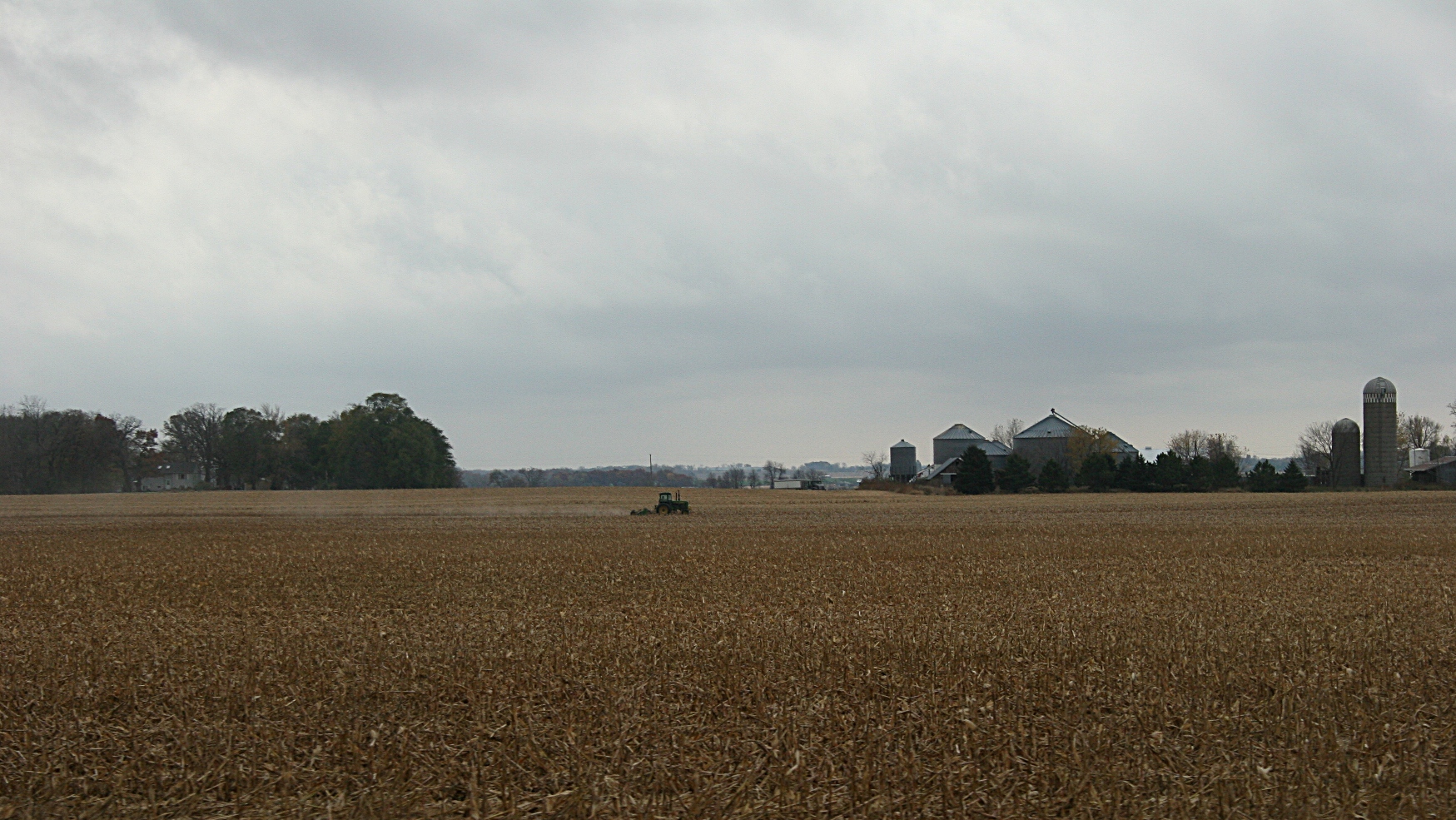
You can barely see the distant tractor in this shot. But that's what I like about this scene, how the sheer size of the cornfield and the skies dwarf the tractor, reinforcing the thought that everything is truly small in comparison to the landscape, to the big, big world.

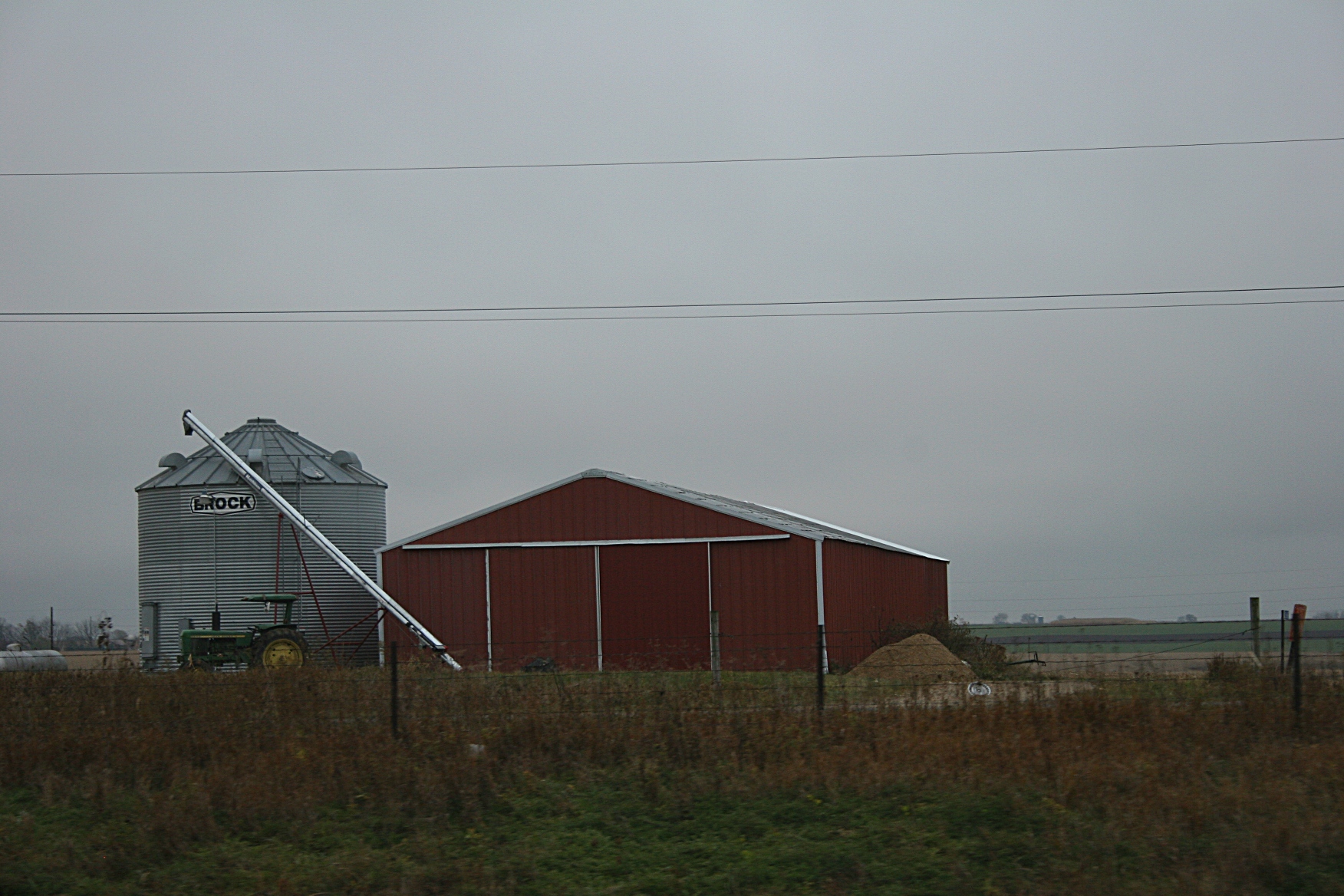
Every red building stood out against the grey, grey skies. Sky is always an integral part of my photos.

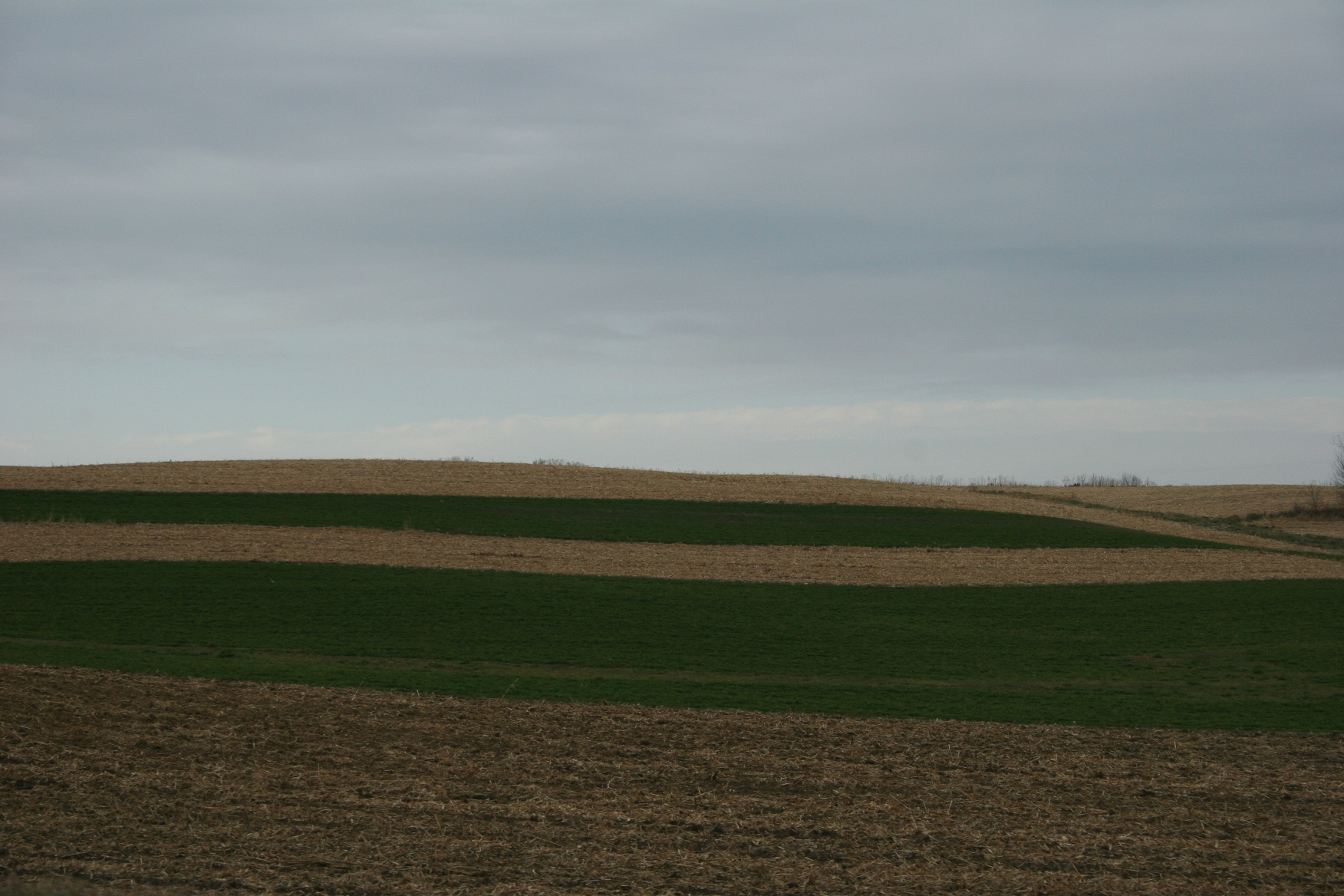
Even the stripes of crops are aesthetically pleasing to my photographer's eye.

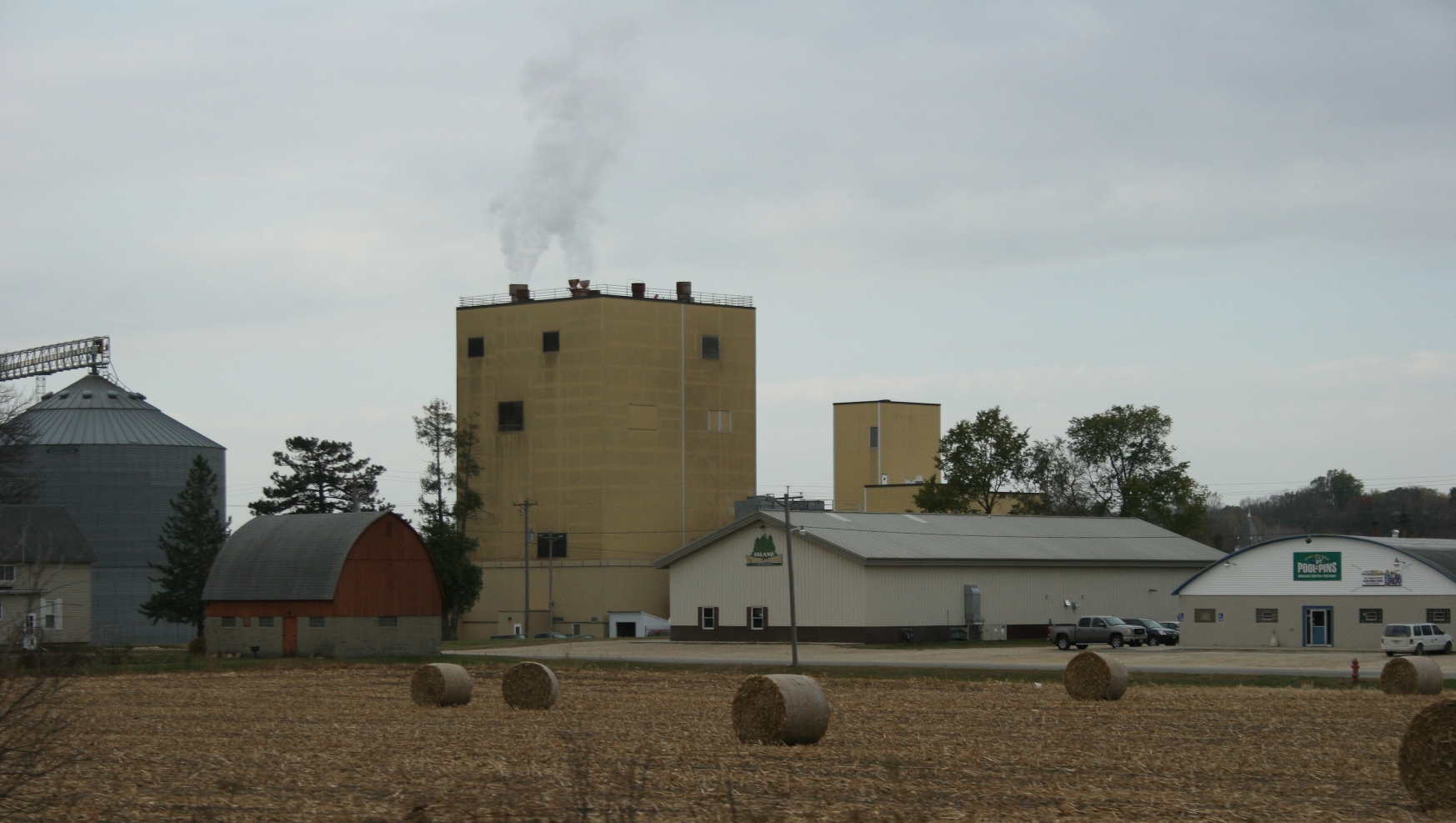
This photo of Pine Island connects town and country in a seamless blend.

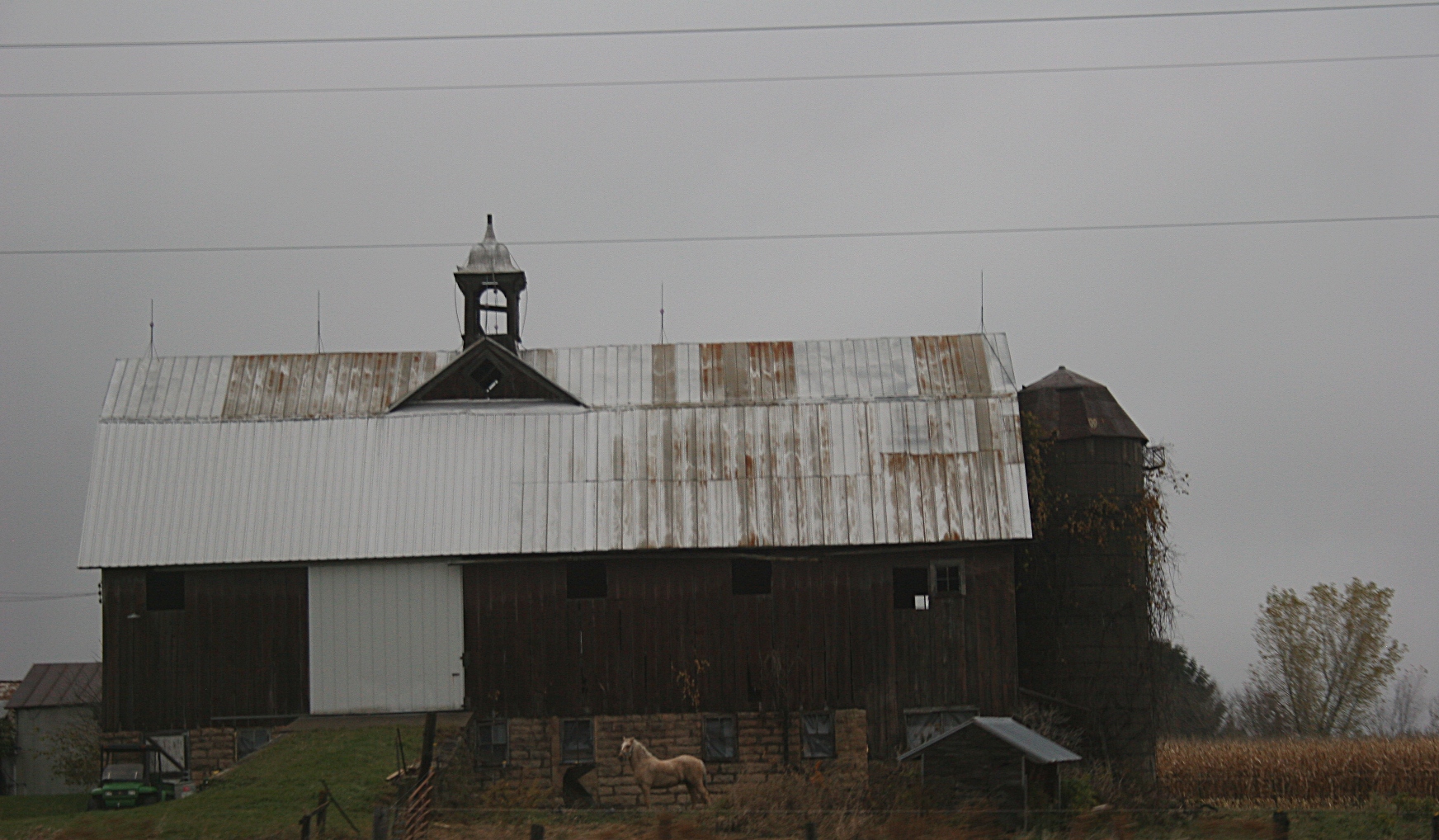
An historic barn and a horse...a common sight along Hwy 52 and I-90.

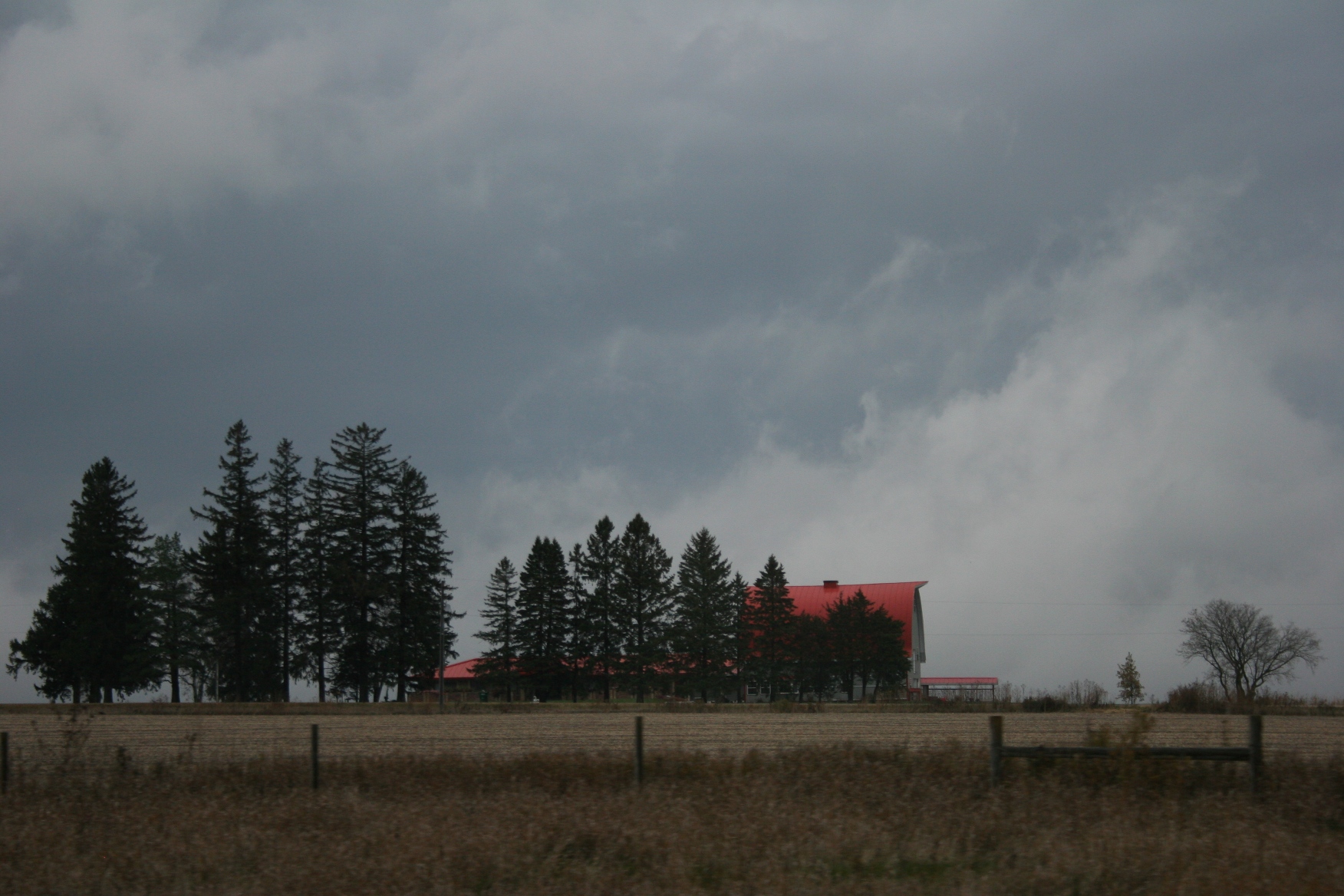
The red-roofed barn provides a jolt of color under heavy grey skies.

A country church, strong and sturdy, along I-90 near the Winona exit. Look closely and you'll see a sheriff's department squad car parked by the church.

Westbound on I-90, the sun begins to set. I like the contrast between the vivid yellow sign and the grey of the day.

© Copyright 2011 Audrey Kletscher Helbling


Minnesotan elected to national FFA office October 24, 2011

MY NIECE HILLARY KLETSCHER e-mailed me with exciting news from the Future Farmers of America national convention. Not news about her personally, but about Minnesota.

For the first time in 26 years, a Minnesota FFA Association member has been elected to office in the National FFA Organization. Jason Troendle, a May 2010 graduate of St. Charles High School and current Bethel University student, was elected secretary at the just-concluded national convention in Indianapolis.

And get this—this past Minnesota FFA president and now the current national secretary, is not even from a farm.

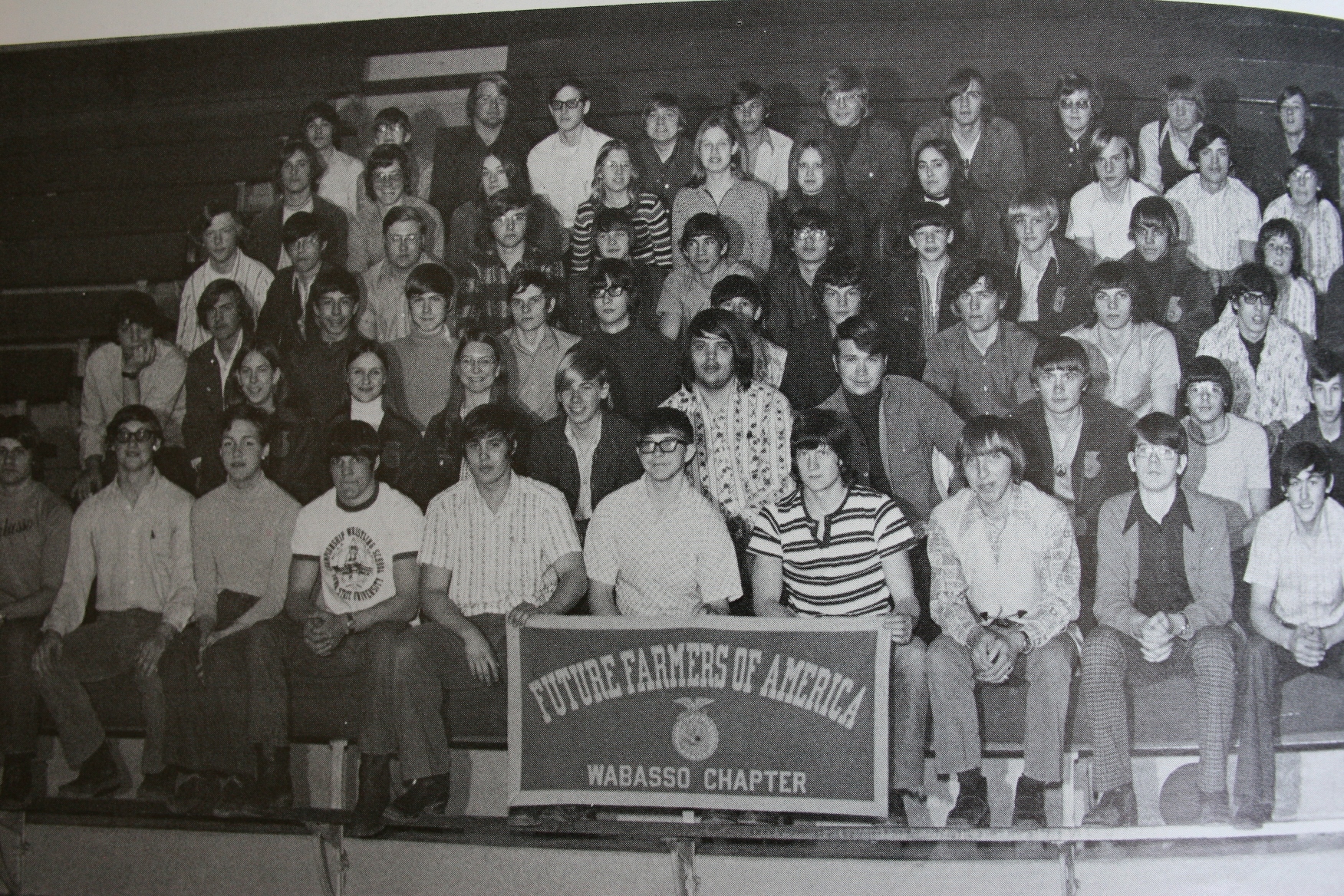
The 1973 - 1974 Wabasso High School FFA chapter consisted of mostly male students. I am among the few females featured in this yearbook photo. I'm seated in the second row, third girl on the right.

Current Minnesota FFA President Hillary Kletscher of Vesta.

When I was a member of the Wabasso High School FFA Chapter in southwestern Minnesota in the early 1970s, I think all of us were farm kids. I was, in fact, the first female to join the WHS chapter back when the organization was mostly male dominated. Things have changed in the past 30 – 40 years. And that’s a good thing.

You don’t need to be from the farm or planning a career in agriculture to be involved in this ag-focused organization. The new national secretary is majoring in economics and environmental studies.

My niece grew up on a farm, although family has not farmed the land but rented it out for the past several years. Hillary’s not planning to become a farmer either. She’s studying biological systems engineering at Iowa State University.

According to the Minnesota FFA website, “FFA makes a positive difference in the lives of young people by developing their potential for premier leadership, personal growth, and career success!”

I’ve seen firsthand how Hillary has benefited from FFA membership. She’s risen through the organization from WHS chapter president and then a regional officer to become Minnesota’s current state FFA president, a position she will hold until next May. She’s a well-spoken, driven, talented, successful 18-year-old.

Currently Hillary’s juggling her college studies with her FFA responsibilities. Last week she attended the national FFA convention as a Minnesota delegate. She’s also traveled throughout Minnesota, speaking, leading workshops, meeting with high school students and doing more than I could possibly list here.

She’s gone to Washington D.C. and, in January, will travel to China for a leadership conference.

Can you imagine Hillary’s resume and networking by the time she completes her term as Minnesota FFA president and upon her graduation from college in several years?

Can you imagine Jason’s resume and networking by the time he completes college and his term as national FFA secretary next October?

But certainly, beyond those individual benefits are the benefits to agriculture through the positive voices, work, commitment and leadership of these young people, our future.

WERE YOU/ARE YOU a FFA member? How did you benefit from membership? Tell me about your involvement.

You can also connect with current and past FFA members and others interested in agriculture through FFA Connect! Click here for more information.

© Text copyright 2011 Audrey Kletscher Helbling

Hillary Kletscher photo by Matt Addington Photography


Walking into yesteryear at the Oak Center General Store October 17, 2011

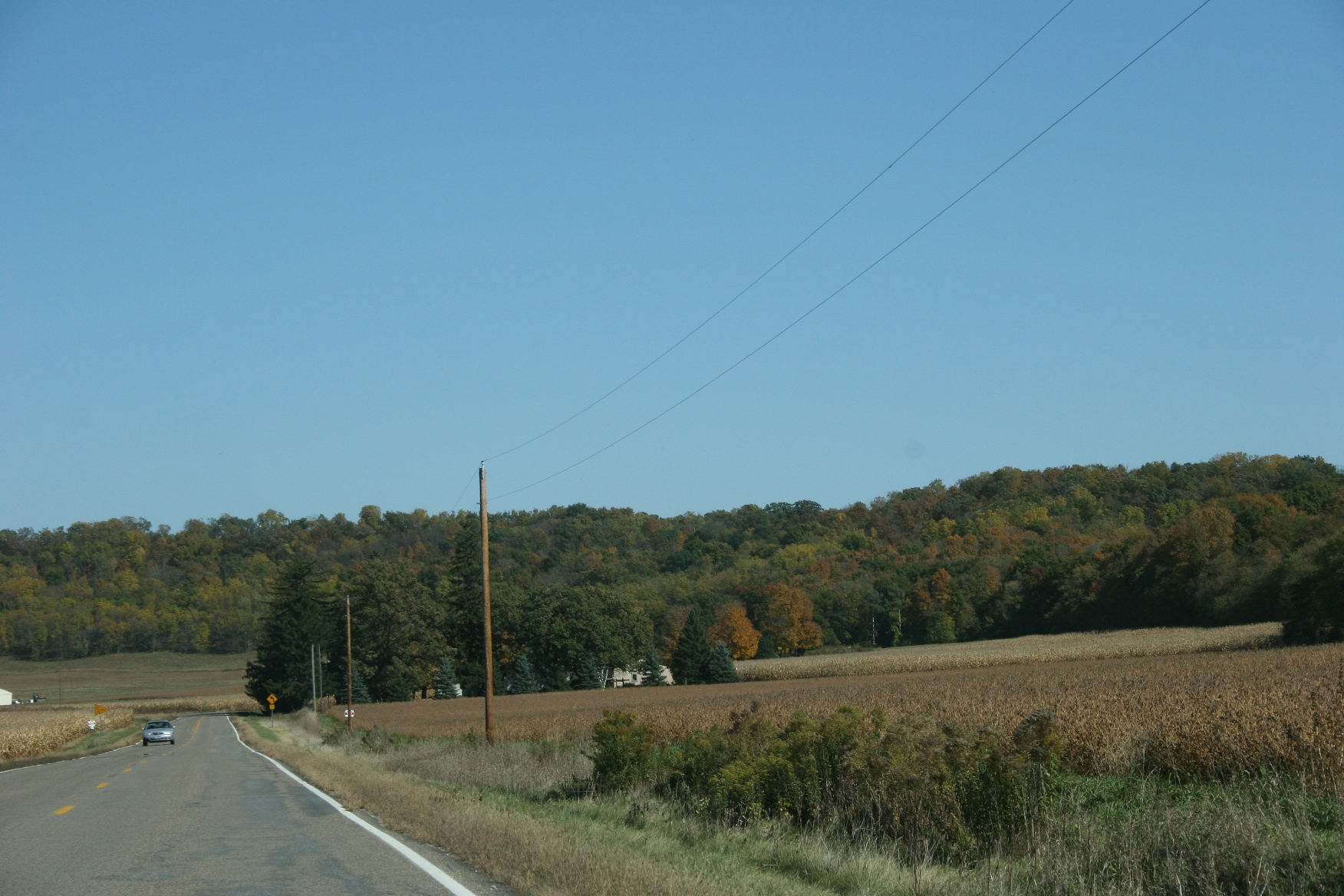
IF NOT FOR THE MINNESOTA Highway 60 detour onto U.S. Highway 63 north of Zumbro Falls, we never would have found Oak Center.

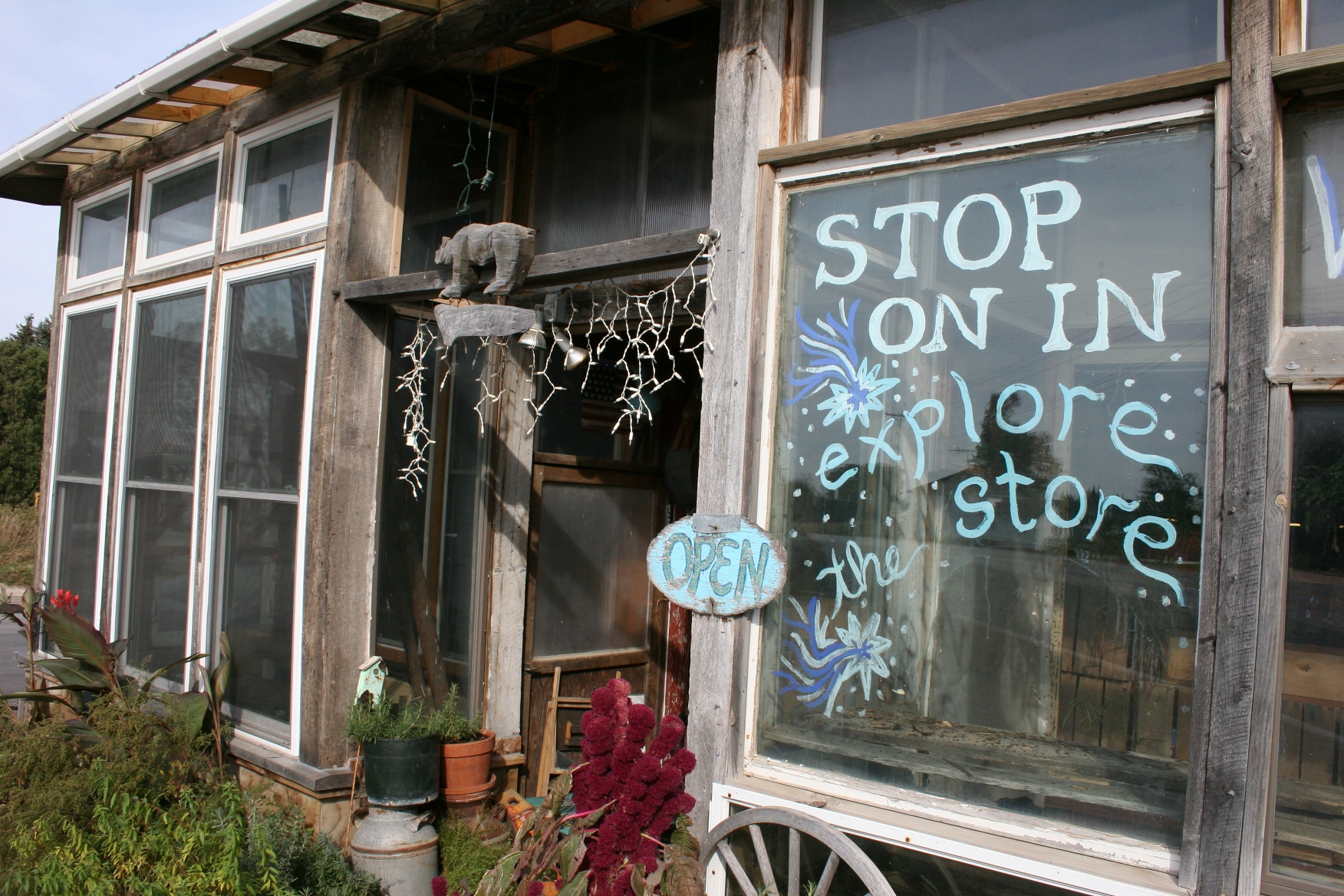
And had we not seen the writing on the window, “Stop on in and explore the store,” and the OPEN sign, we might have driven right by the Oak Center General Store.
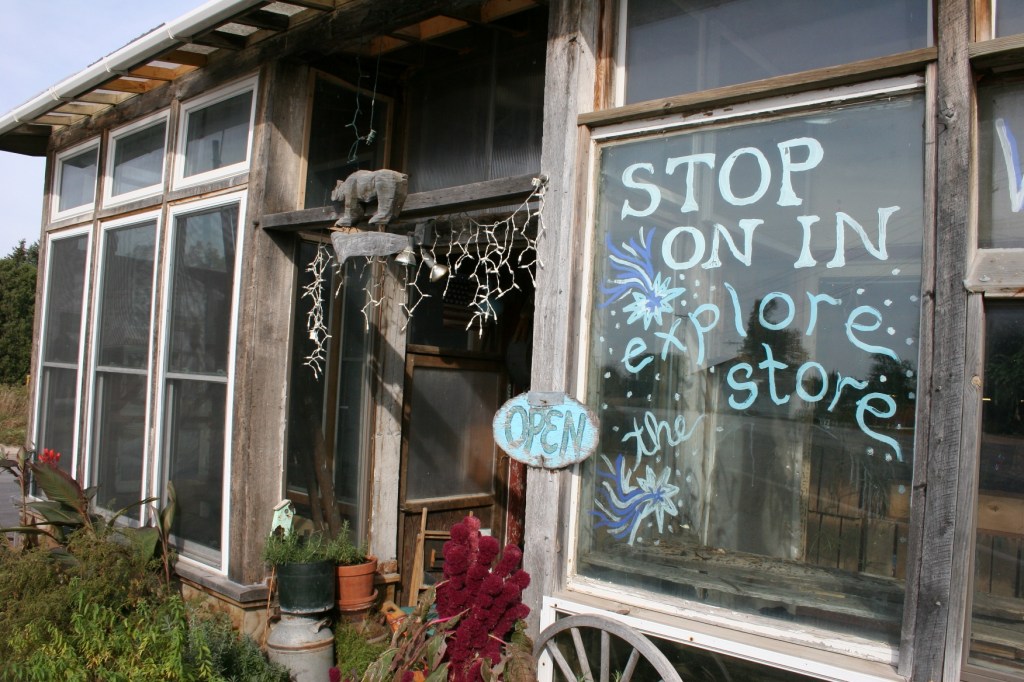
That message on the front window that urged us inside.
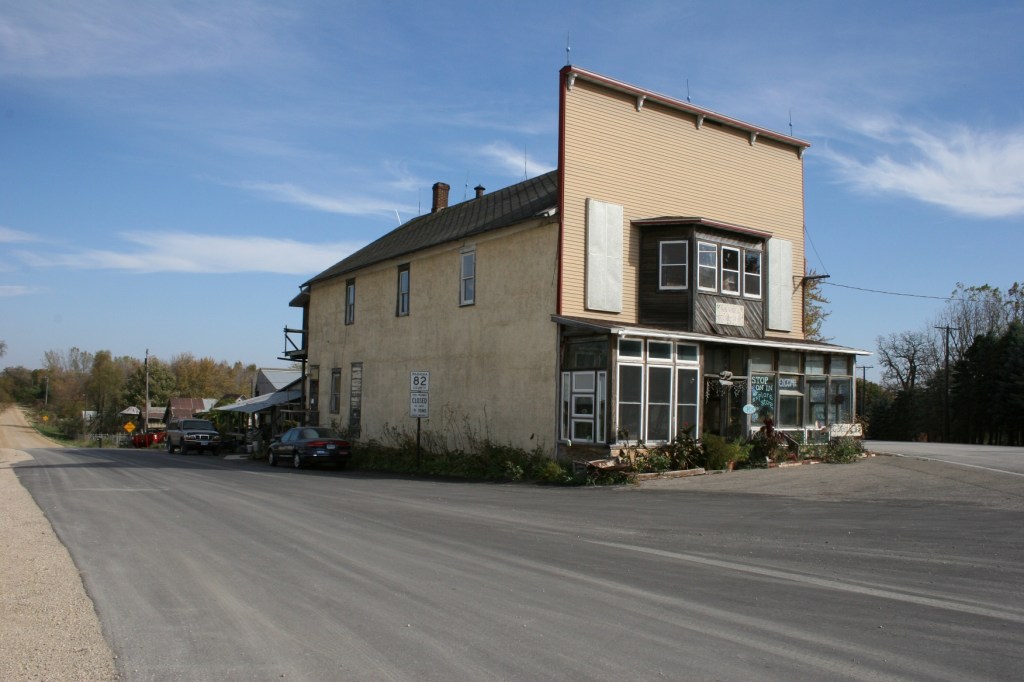
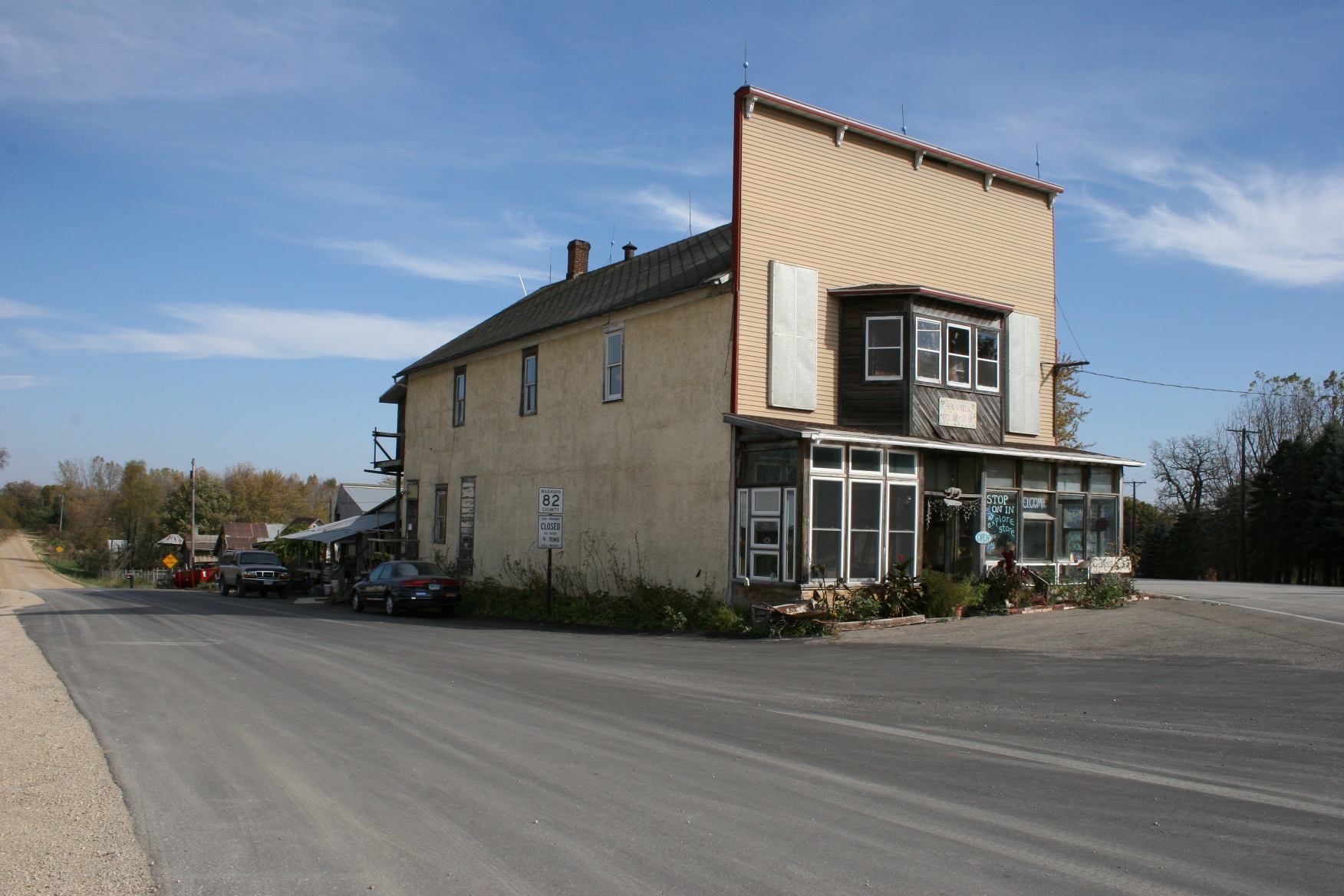
The general store sits nearly on top of Highway 63, right, in Oak Center.

From the exterior, it’s that type of structure and setting—a visual hodgepodge which makes you question whether the place truly is open.

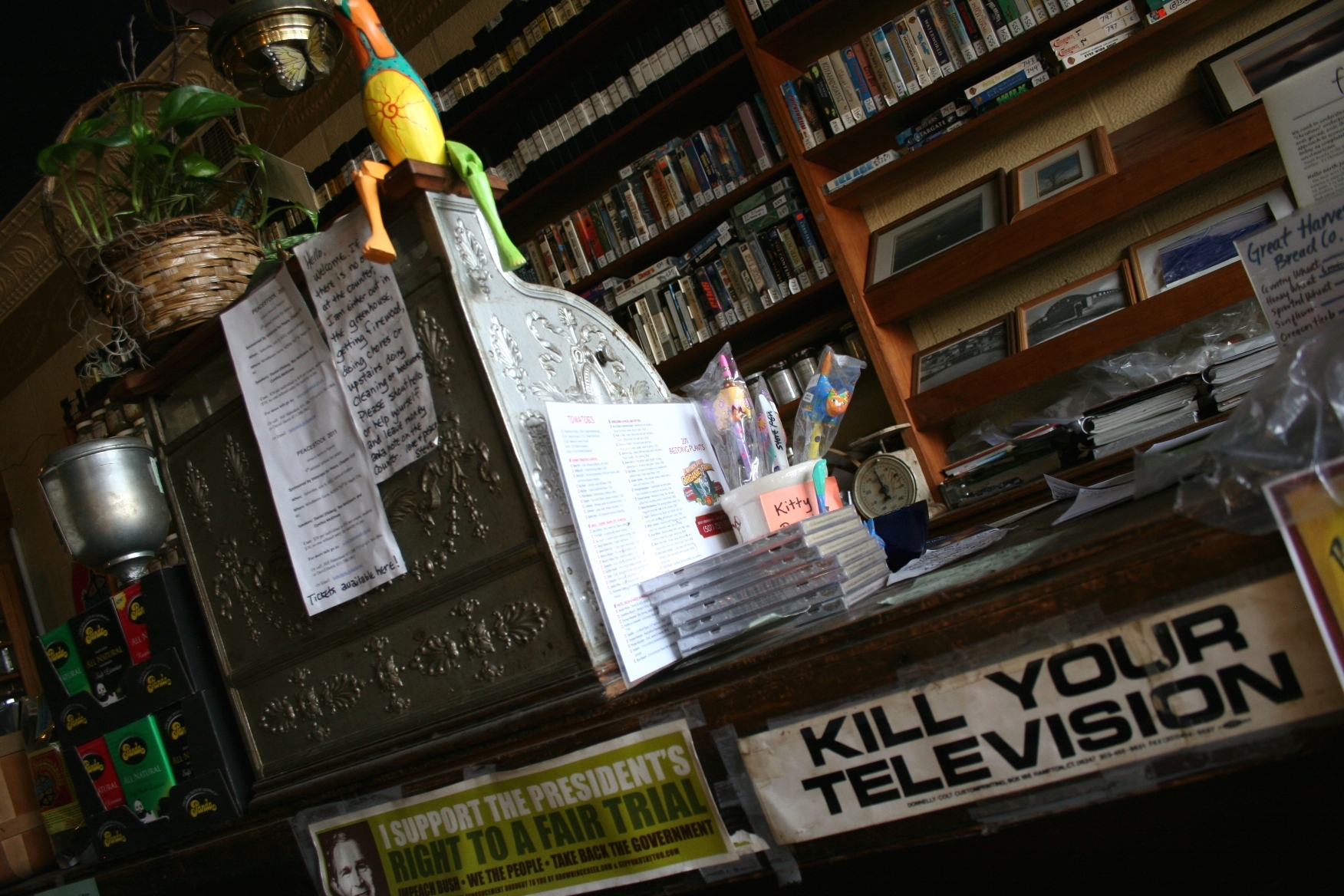
My husband and I wondered that when we pulled off the highway and parked next to the old building. Then we stepped inside and it was like we had walked into a general store of yesteryear, right down to the vintage push-button cash register.

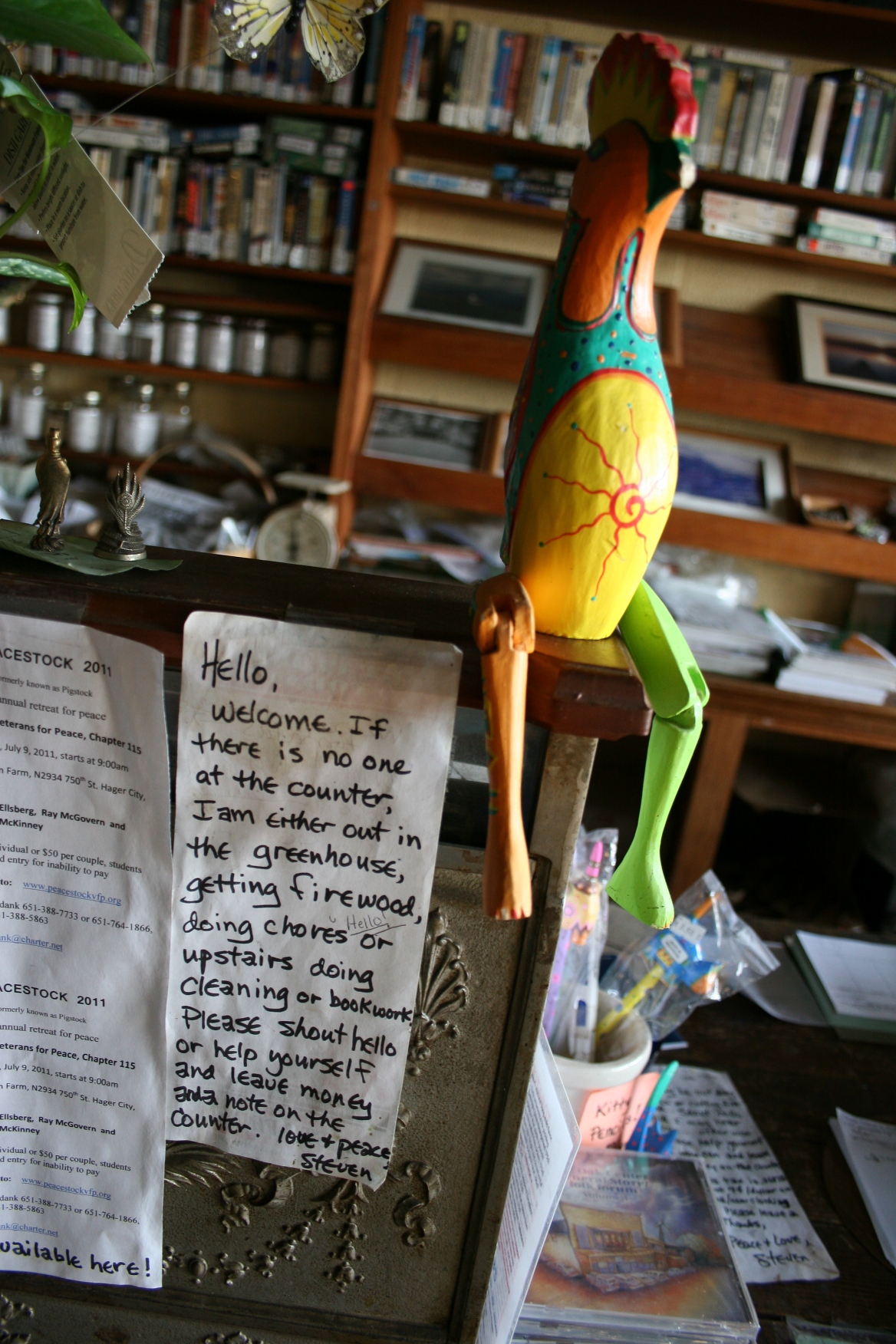
The vintage cash register sits atop a counter labeled with strongly-worded messages.

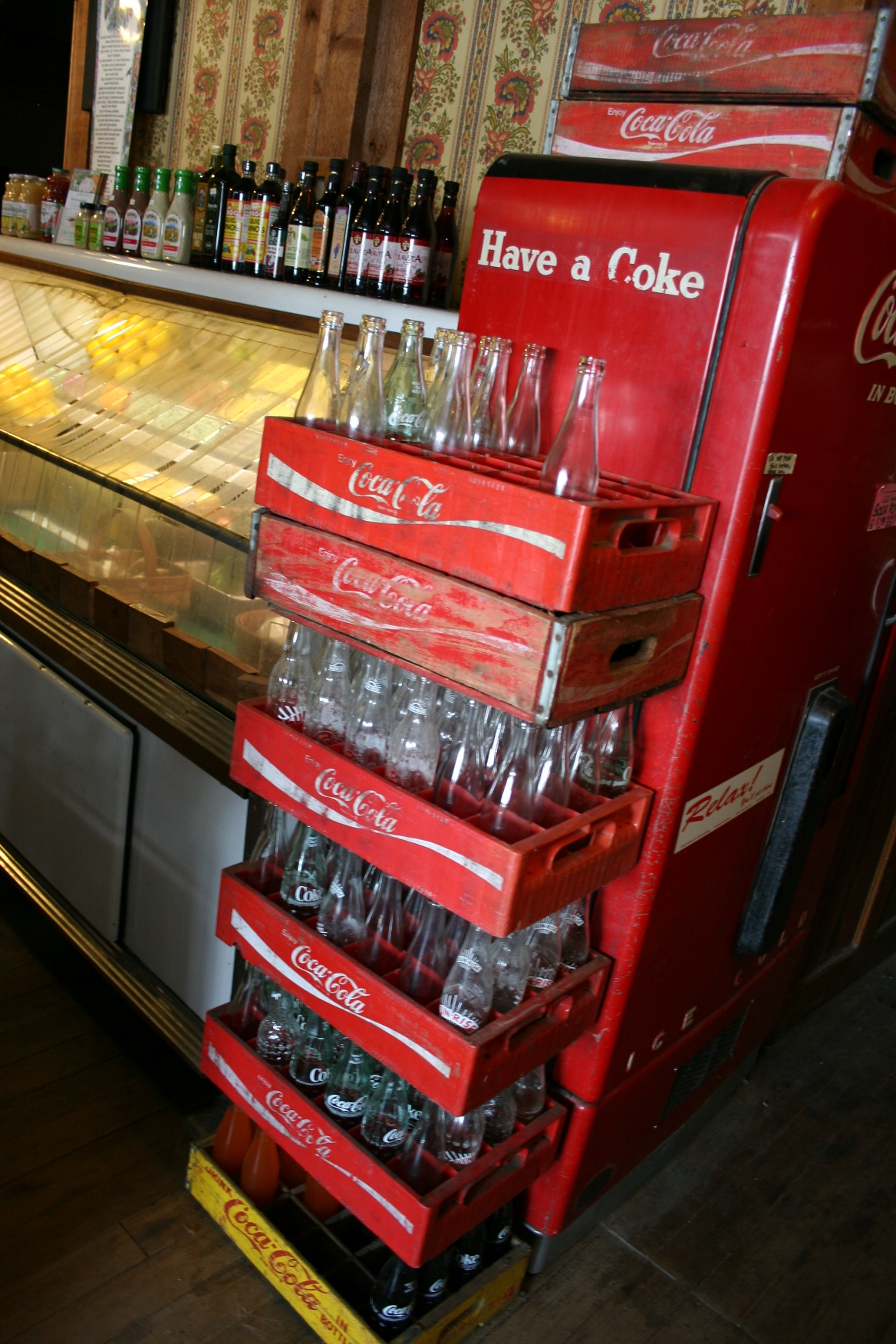
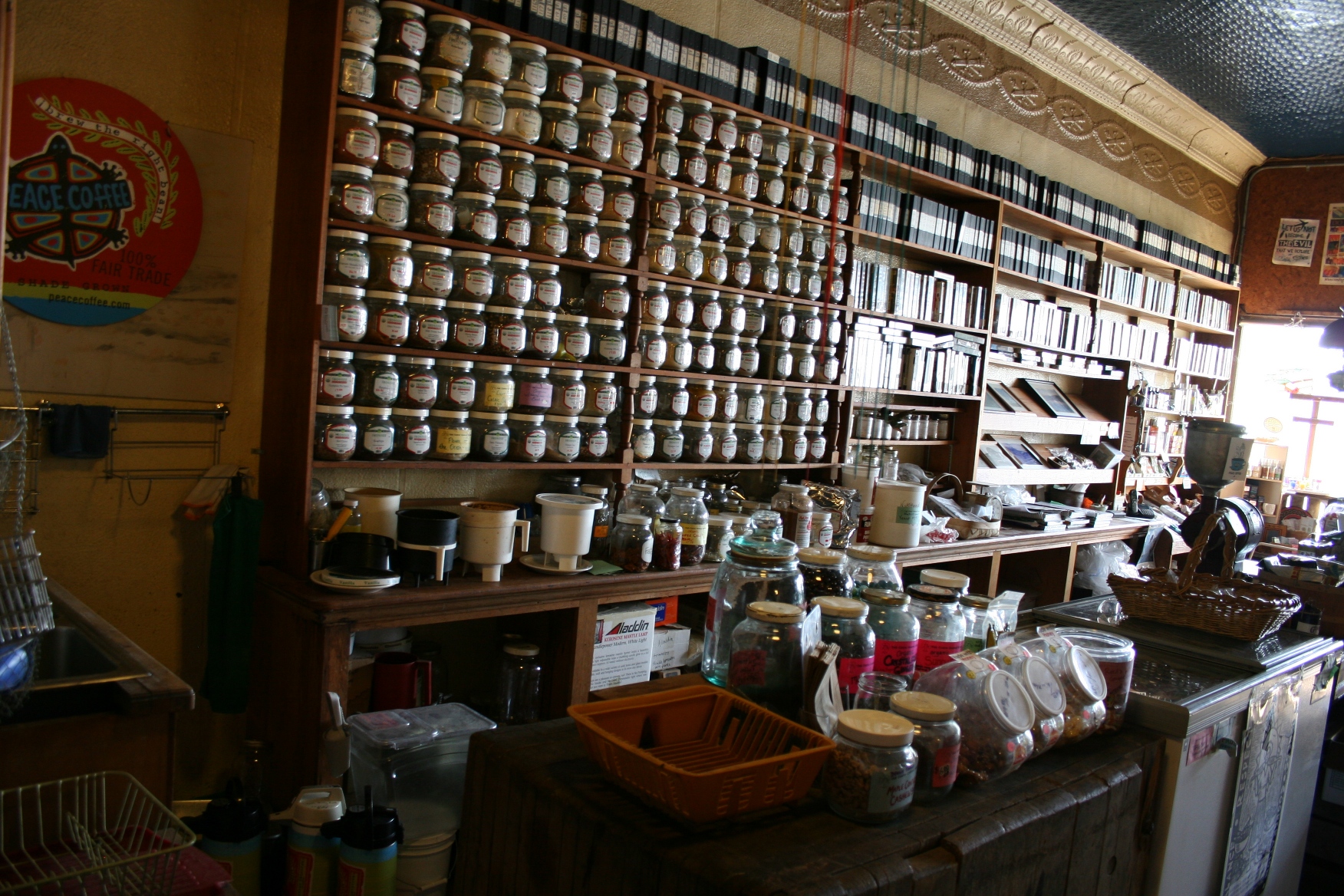
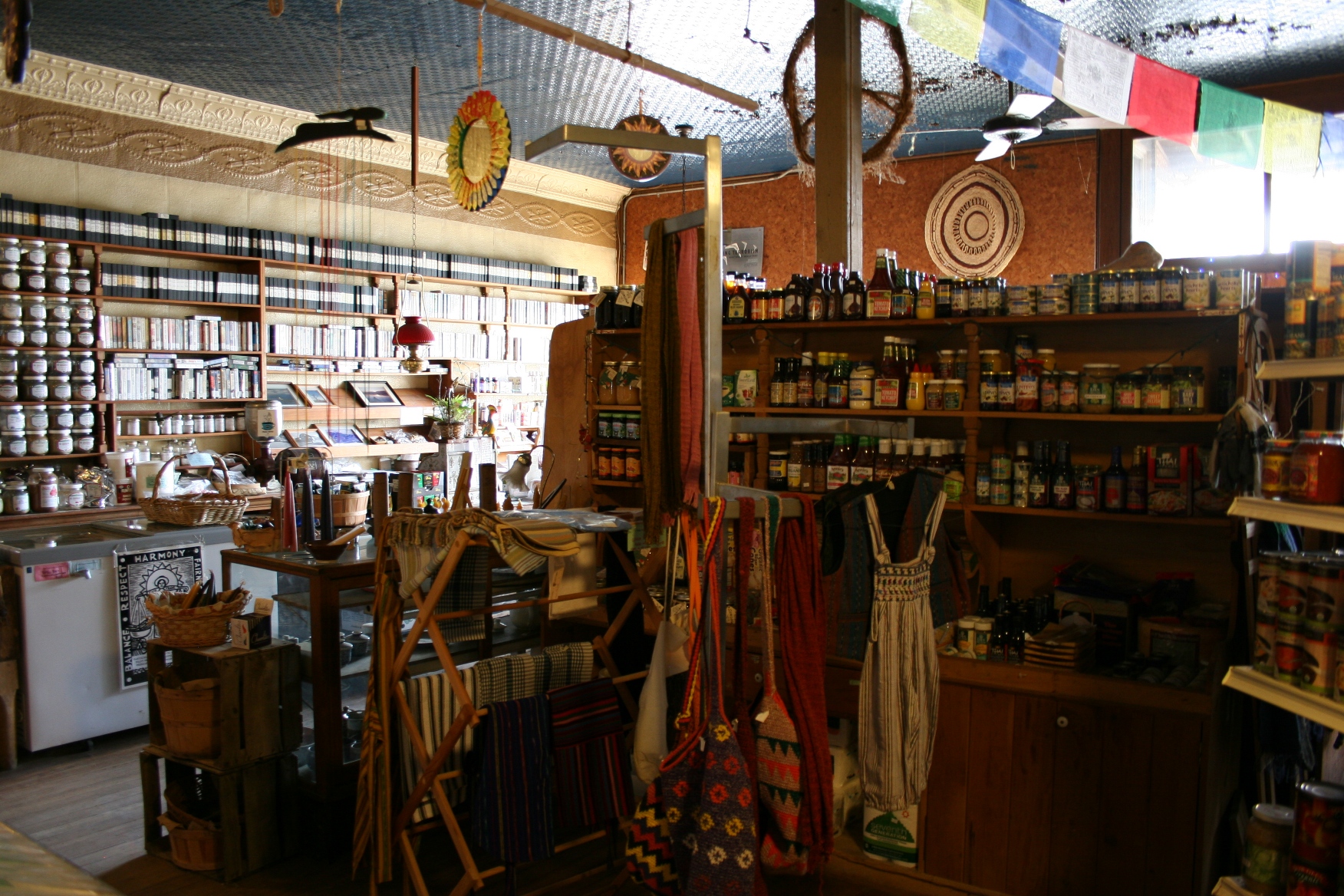
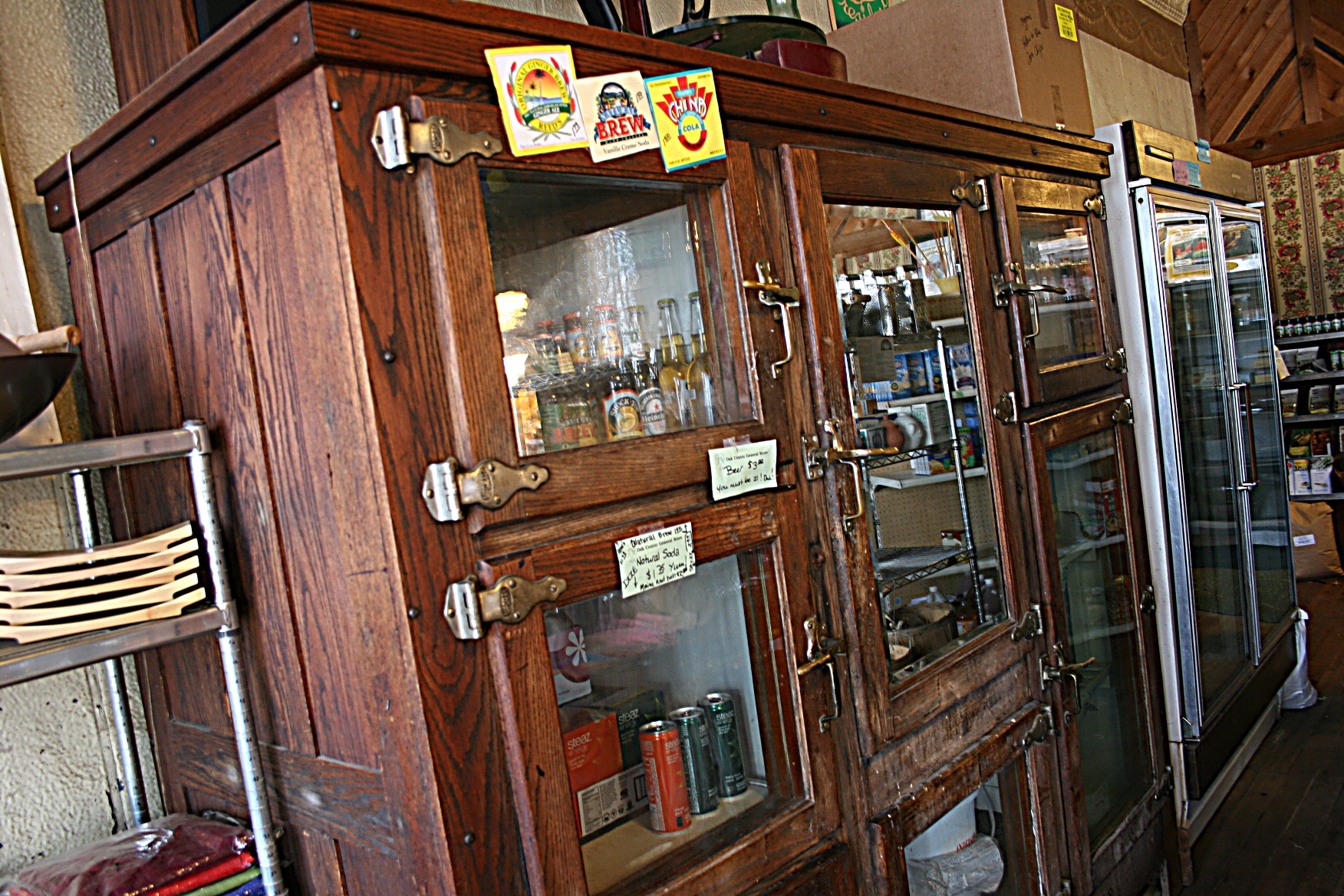
For the longest time we meandered around the shelves, taking it all in—the worn wood-plank floor, the tin ceiling, the old wooden refrigerators, the vintage bottled pop machine, the bulk spices…
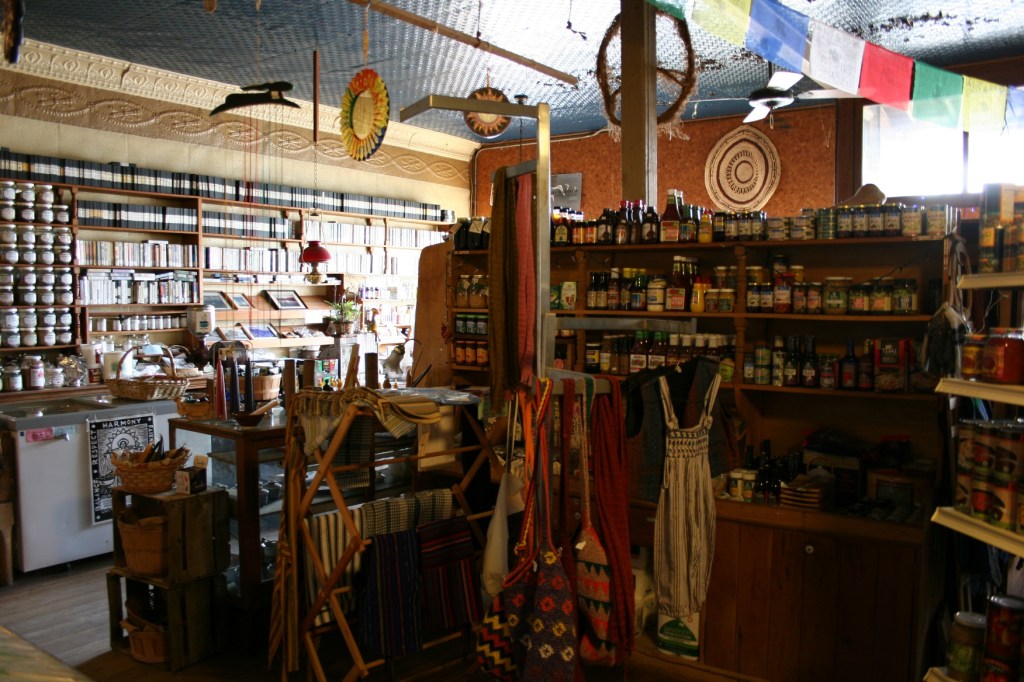
An eclectic mix of merchandise is crammed into the store.
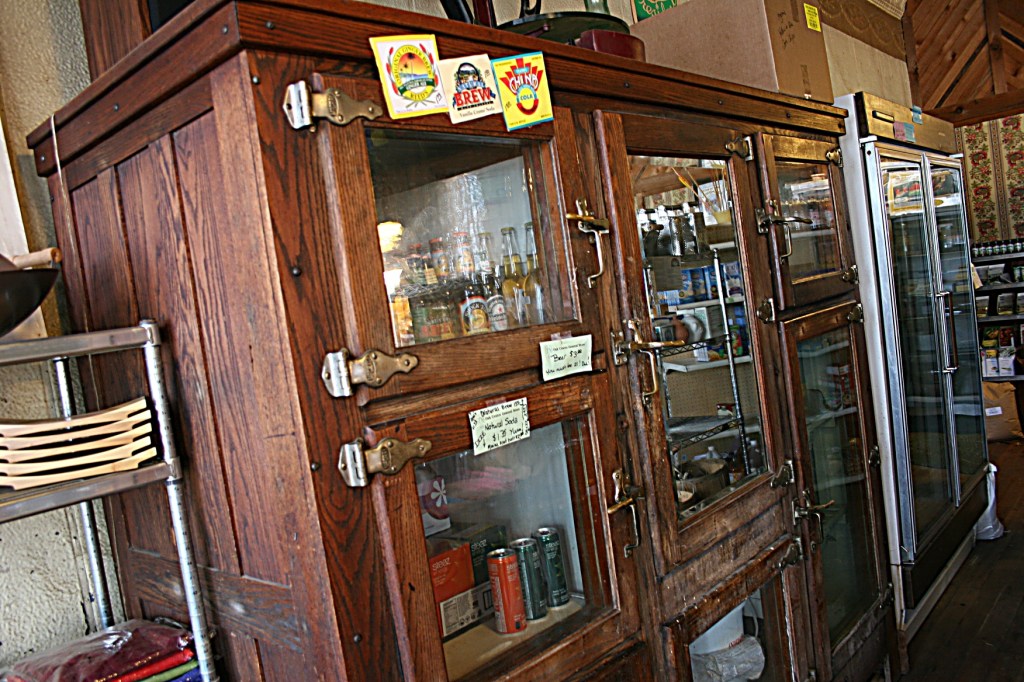
Old-style refrigerators, still in use in the store.
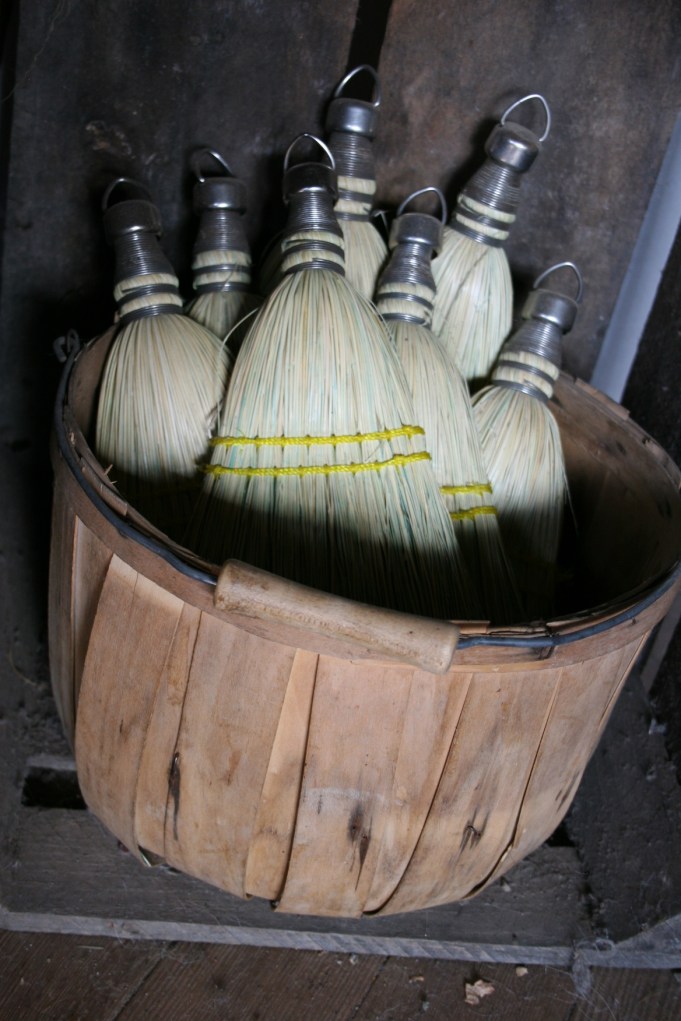
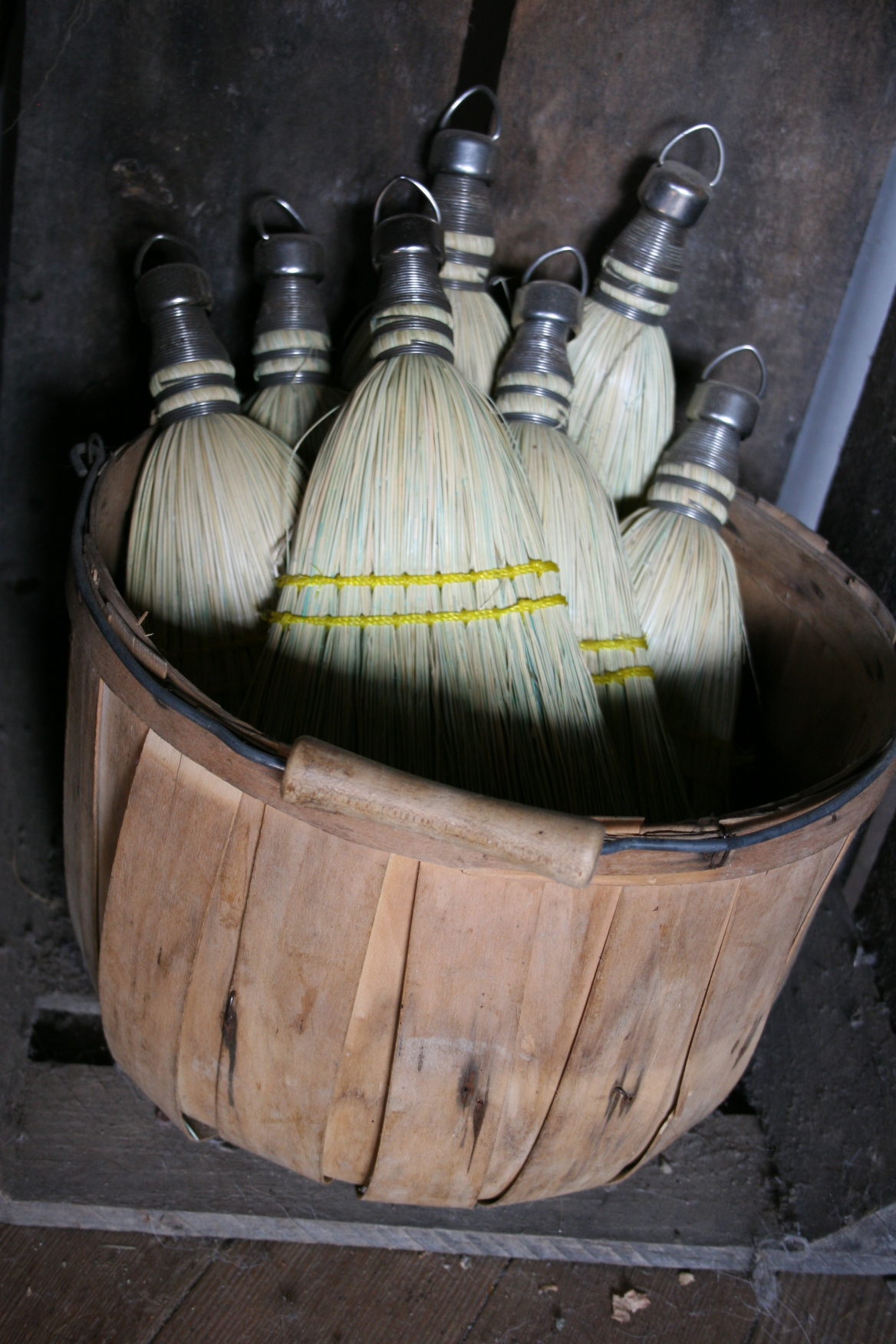
Brooms for sale tucked into a basket on the floor.
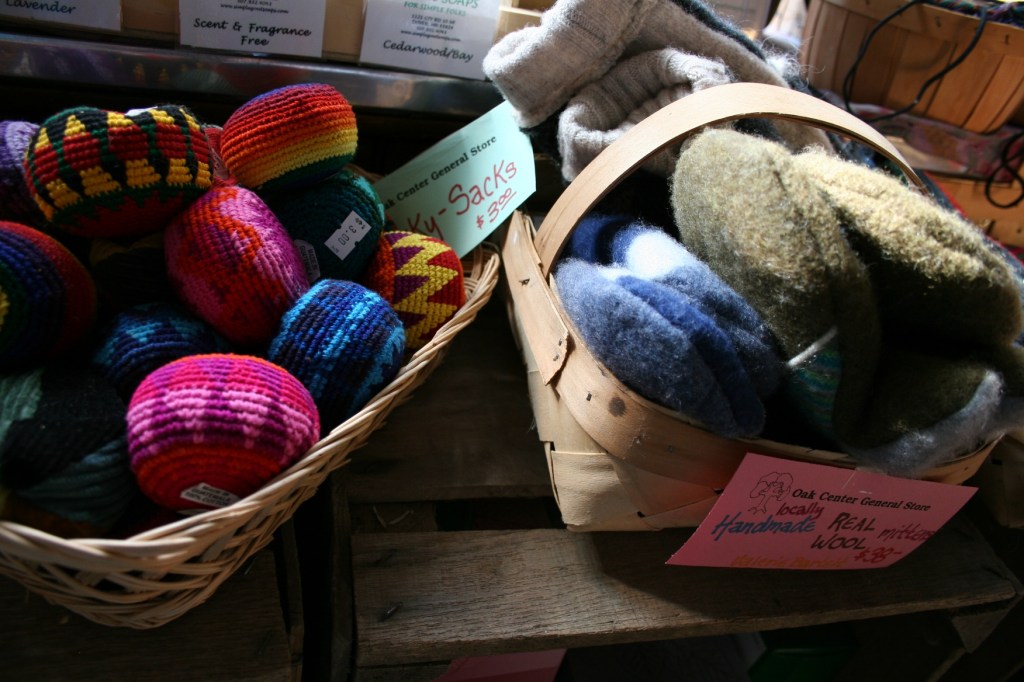
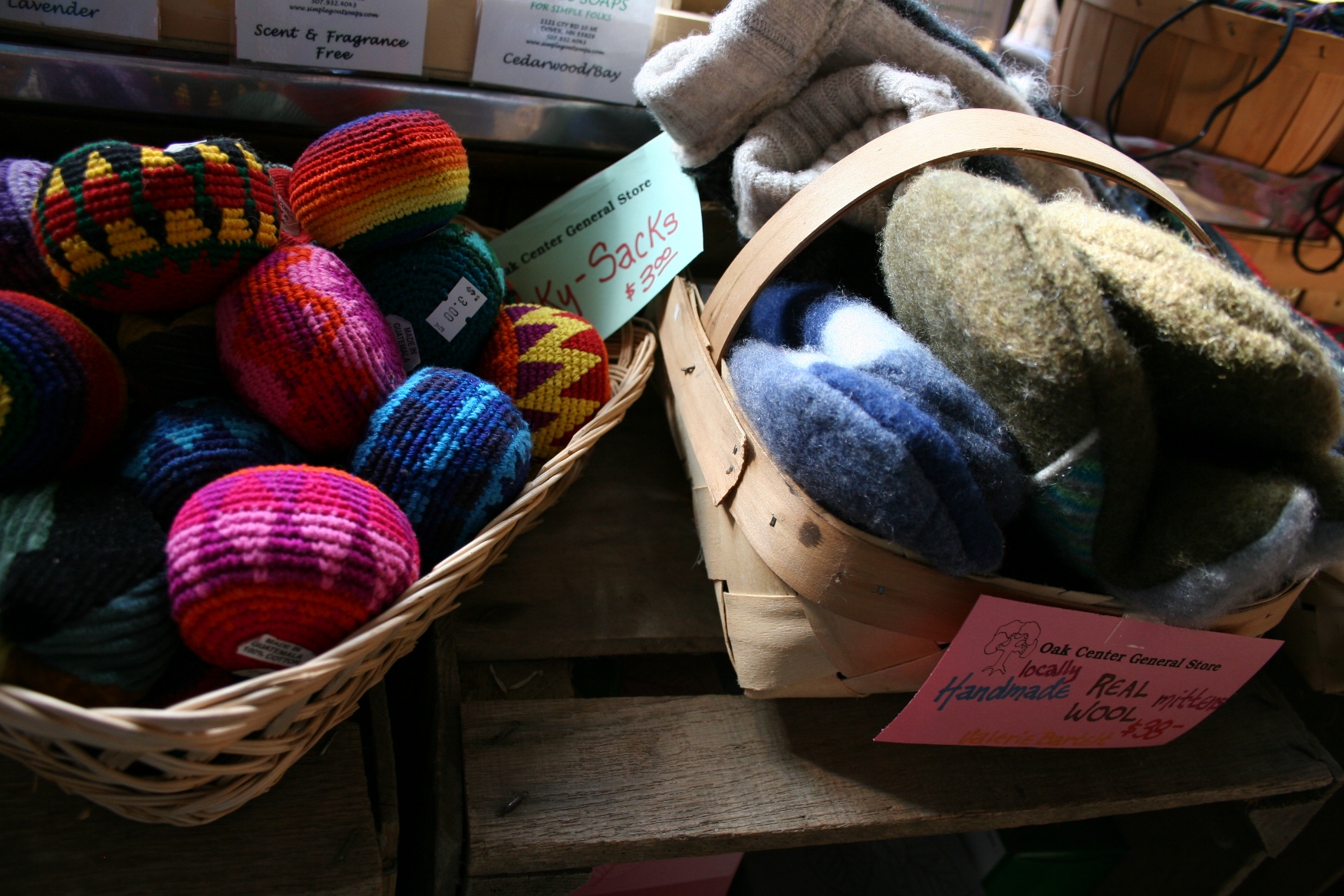
Hacky sacks and handmade woolen mittens on display near a front window.
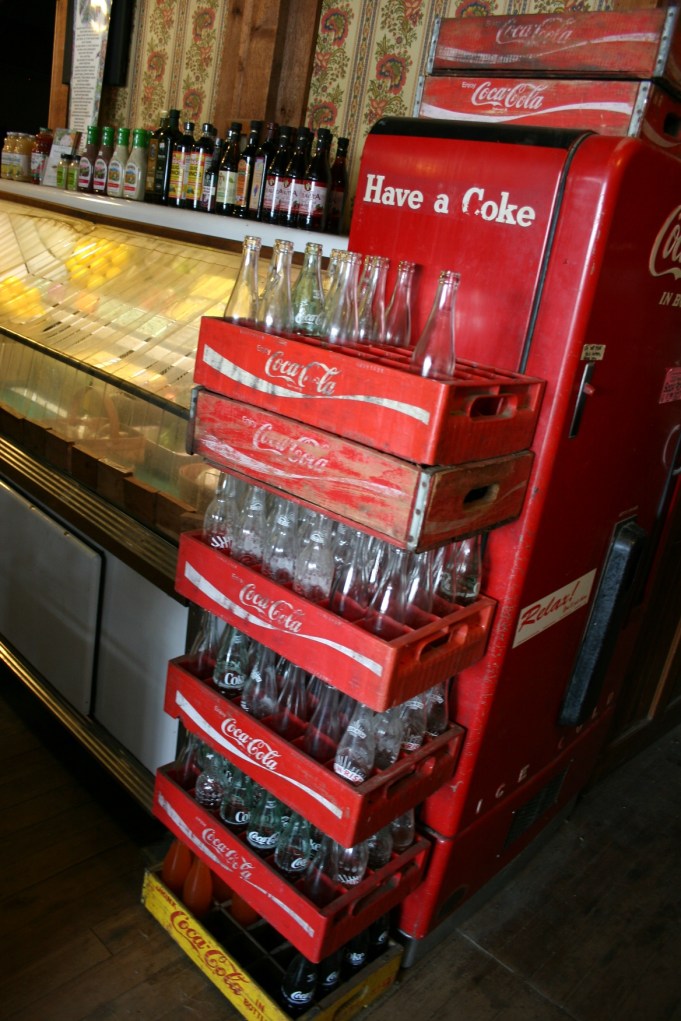
You can purchase pop in bottles from a vintage pop machine.

I couldn’t get enough of this historic general store, which hearkens back to 1913 in this unincorporated locale. I’m not sure exactly what I said to my husband when we were there, all alone, perusing the place. I think we were both too in awe to even talk much.

That’s a good thing, because, even though no one was minding the shop, the baby monitor was switched on, we later learned, and our conversation could be overheard.
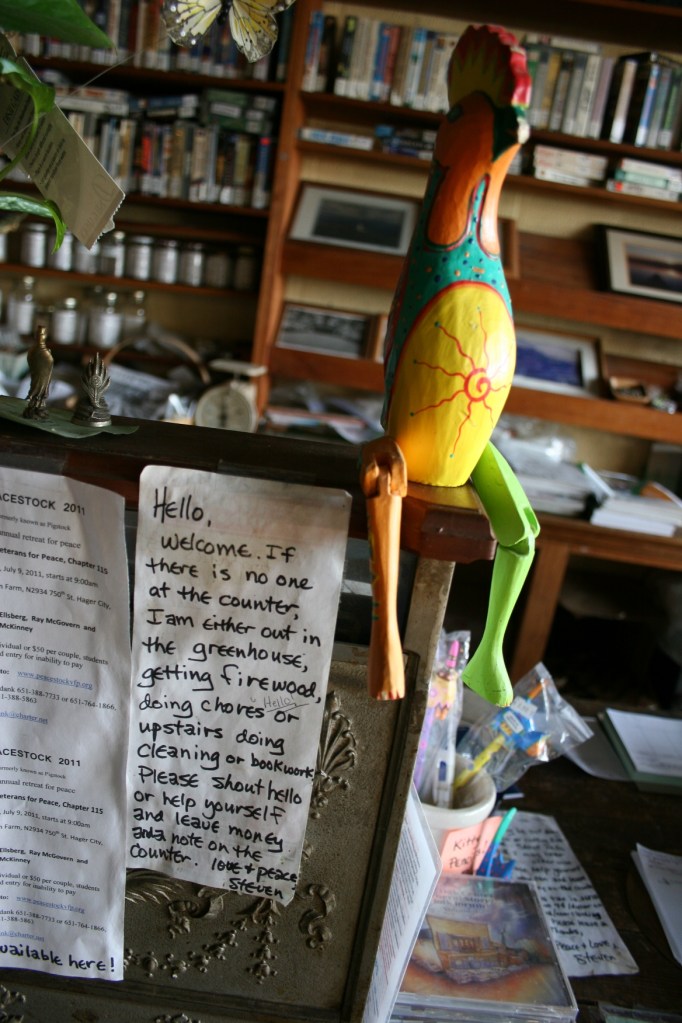
A message on the cash register advises customers to leave their payment on the counter with a note if no one is around.
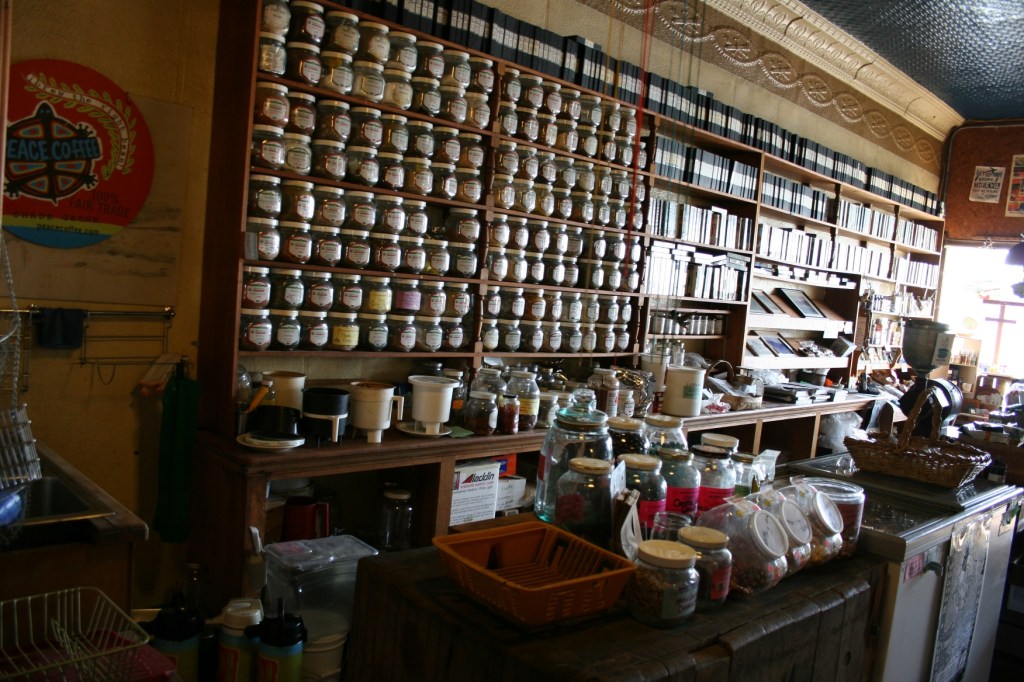
Rows of bulk spices line the shelves behind the counter.

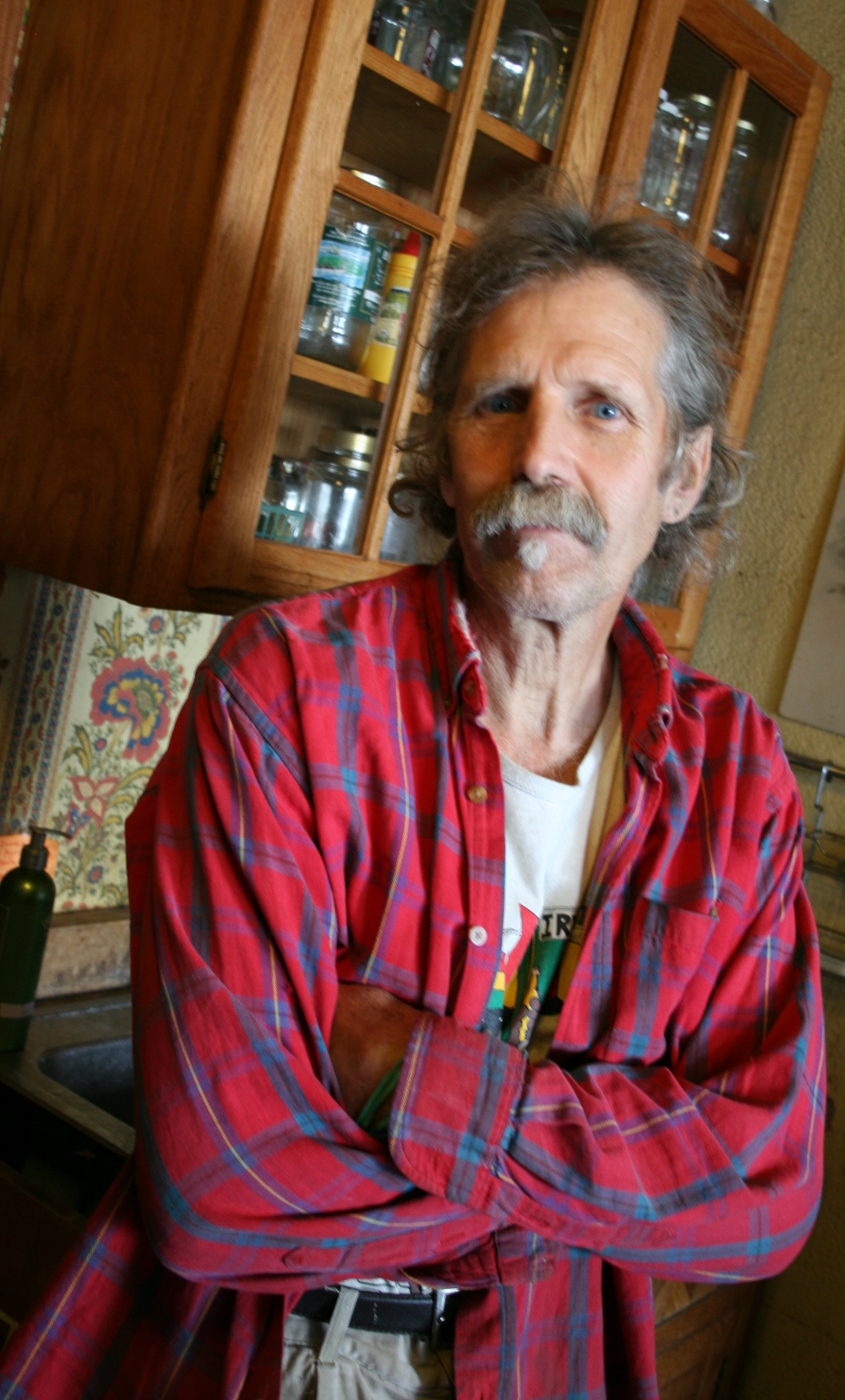
Steven Schwen

About the time I stepped behind the counter to photograph the cash register, Strider Hammer strode into the room and, when I began asking questions, he fetched owner Steven Schwen.

Introducing himself as a “voluntary peasant,” Steven and I shook hands and he apologized for the damp hand. He’d been washing dishes.

Strider clamped my hand in a friendly vise grip handshake.

And so, properly introduced, Randy and I learned a thing or ten about the Oak Center General Store, which Steven purchased 35 years ago after the business closed and the building sat vacant for five years.

Today the Oak Center General Store is “dedicated to rebuilding a better world from the earth up.”

Although I didn’t ask for details about his life views, Steven’s comments and signage inside the store speak to an outspoken, yet gentle, man deeply-rooted in his independent, self-sufficient, non-materialistic, environmental, anti-war beliefs.

“Produce, don’t consume,” he says.

With that philosophy, Steven runs this general store which sells organic foods, kitchenware, candles, incense, local fair trade products, herbs and a lengthy list of other miscellaneous items.

He also operates Earthen Path Organic Farm, a 14-acre fruit, vegetable and herb farm based directly behind the general store, and works with son Joe and daughter-in-law Rebecca of Heartbeet Farm. They sell their products at the Rochester Farmers’ Market and to co-ops in Northfield and the metro area. The Community Supported Agriculture farm, Steven says, supports his family and the store. He also builds furniture and cabinets during the winter months.

Later, after touring the other facet of Oak Center General Store—the music scene—Strider would take us out back to see the farm.

But first things first. Steven disappeared and Strider led us through a dark middle room gathering place cozied with worn couches and a wood burning kitchen stove, past the corner media center (aka computer) to a back stairway nearly as steep as a ladder.

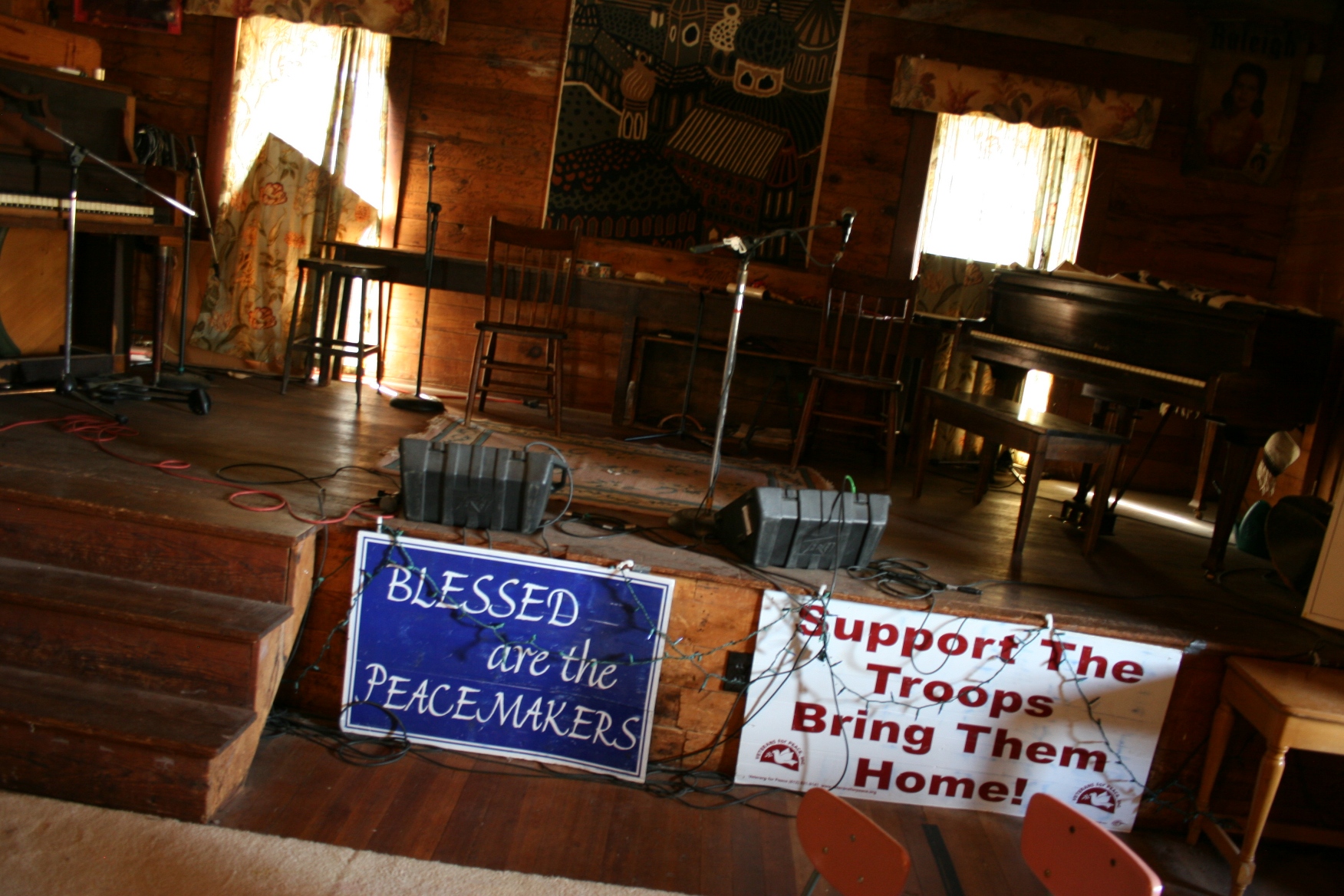
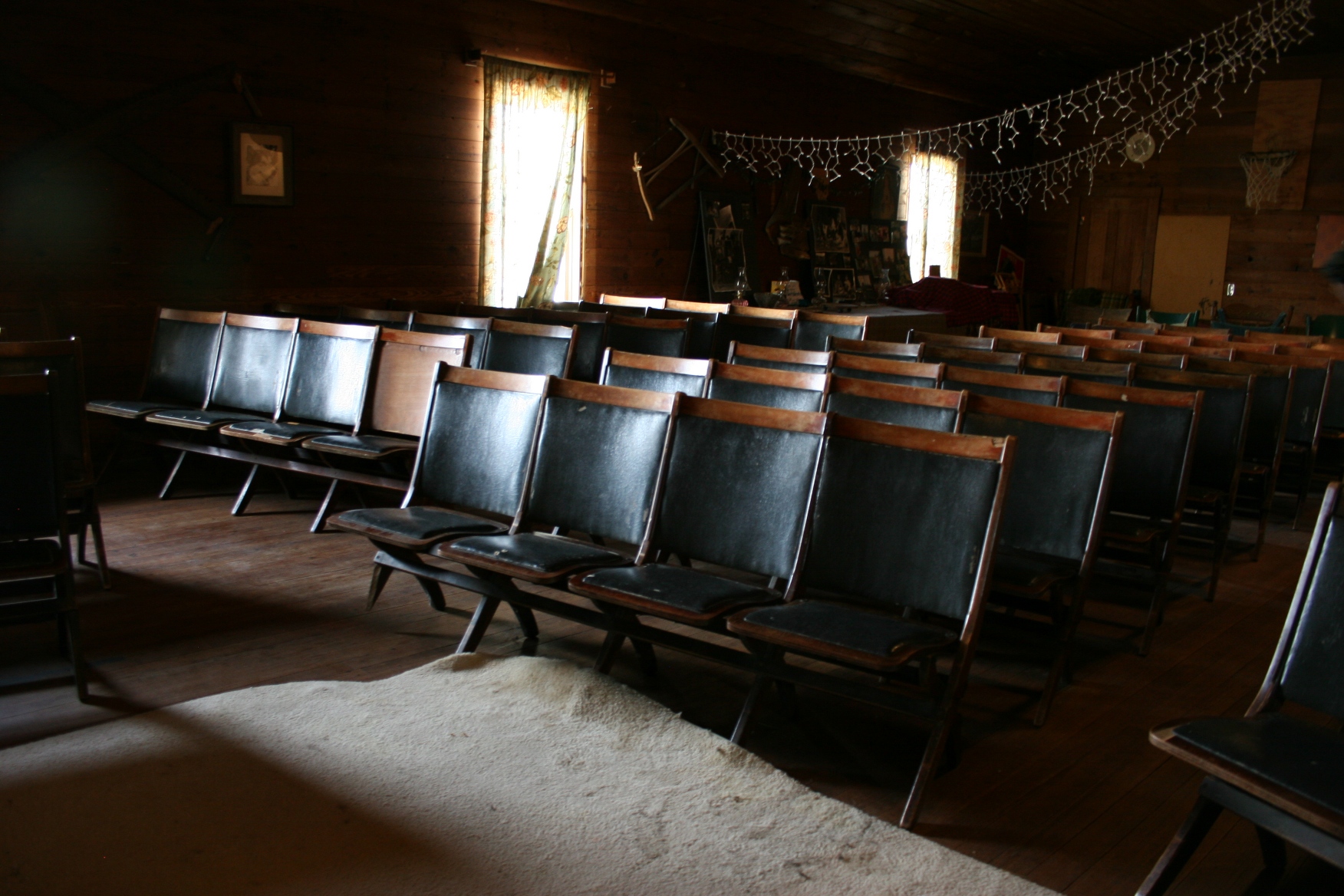
Those steps led us to the old Grange Hall, a former meeting place for farmers and now an entertainment center for local, national and international bluegrass, blues, folk, jazz and similar musical acts.

Earlier, Steven defined the 30-year run of October – April Folk Forum weekend concerts as “non-commercial entertainment connecting people to the land, music and each other.”
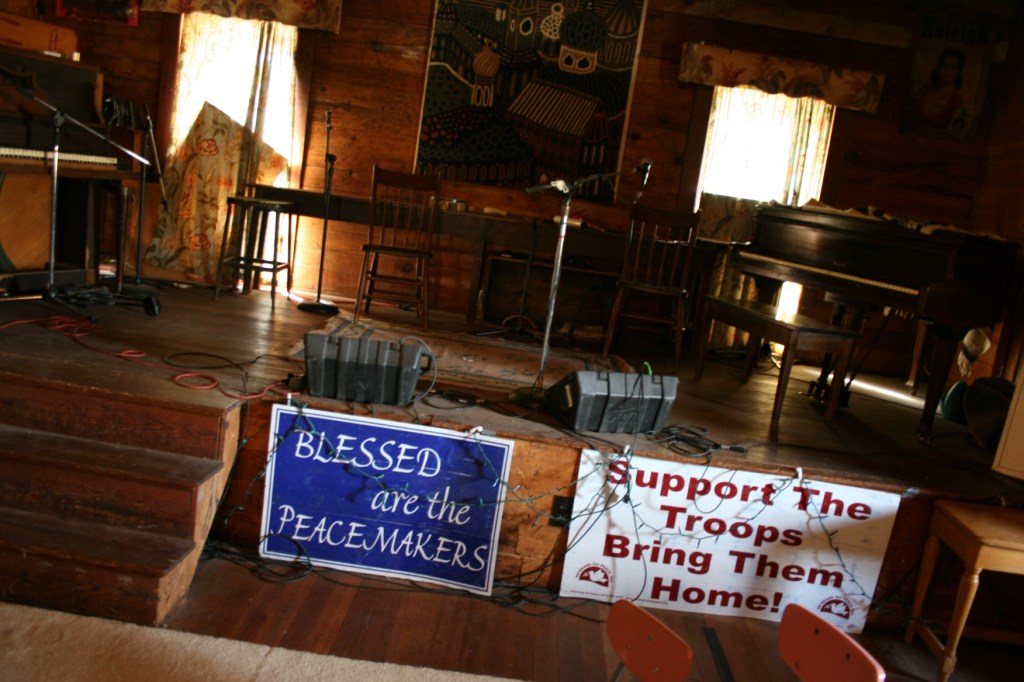
The former Grange Hall stage where musicians perform during the Folk Forums.
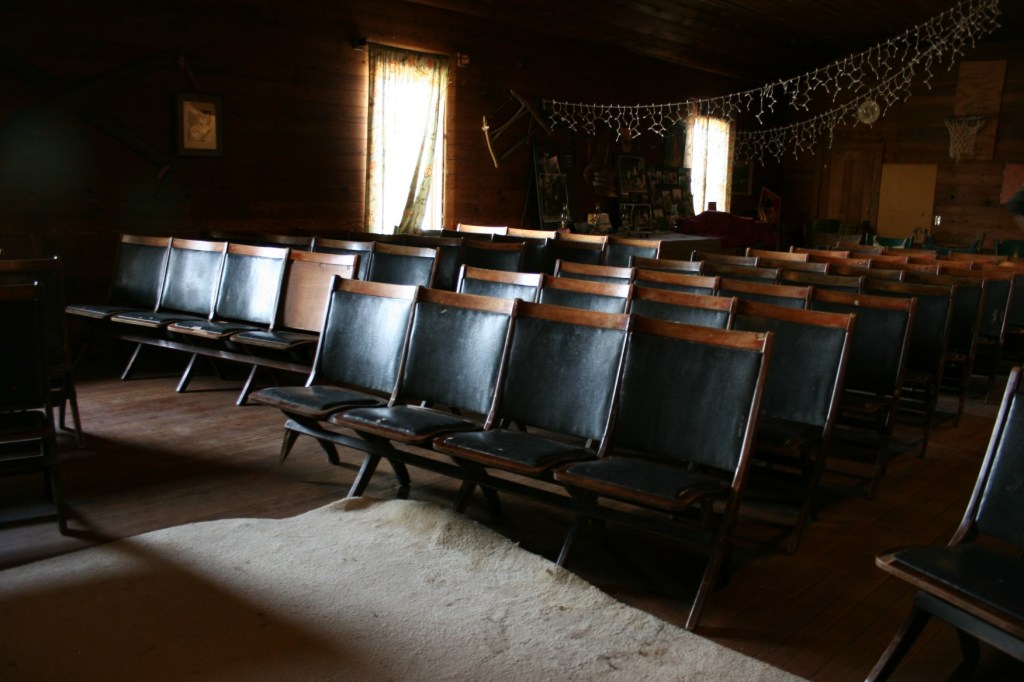
Rows of seating in the old Grange Hall.

I know nothing really about the music genres that entertain at Oak Center. But I recognized Monroe Crossing, the bluegrass group which will present a 2 p.m. Christmas Matinee on Sunday, December 4.

Other upcoming performers include Bingham and Thorne, Marty Marrone & Tangled Roots, Robby Vee, Galactic Cowboy Orchestra and many more slated in from now through December 23. (Click here to get the full line-up of musicians.)

Strider invited us to return for a concert with a recommended $5 – $15, but “pay what you’re able,” ticket price and what I expect would be a laid-back atmosphere.

He’s a personable guy, who, when I asked, said he’s a friend and extended family to Steven. You get the sense that anyone who steps inside Oak Center General Store is family.

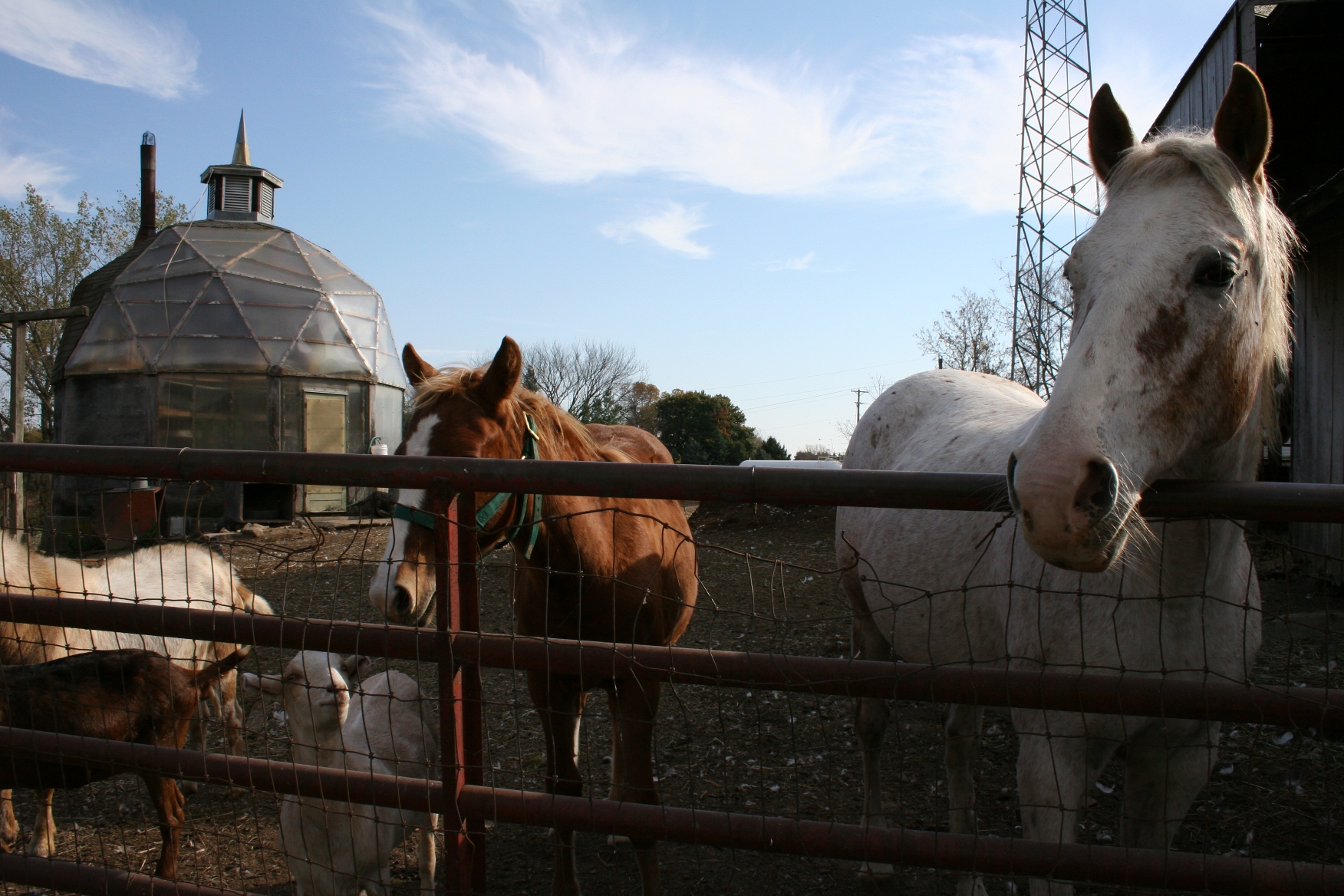
Even the animals out back are the friendly sort; they nuzzle up to the fence when Strider beckons.
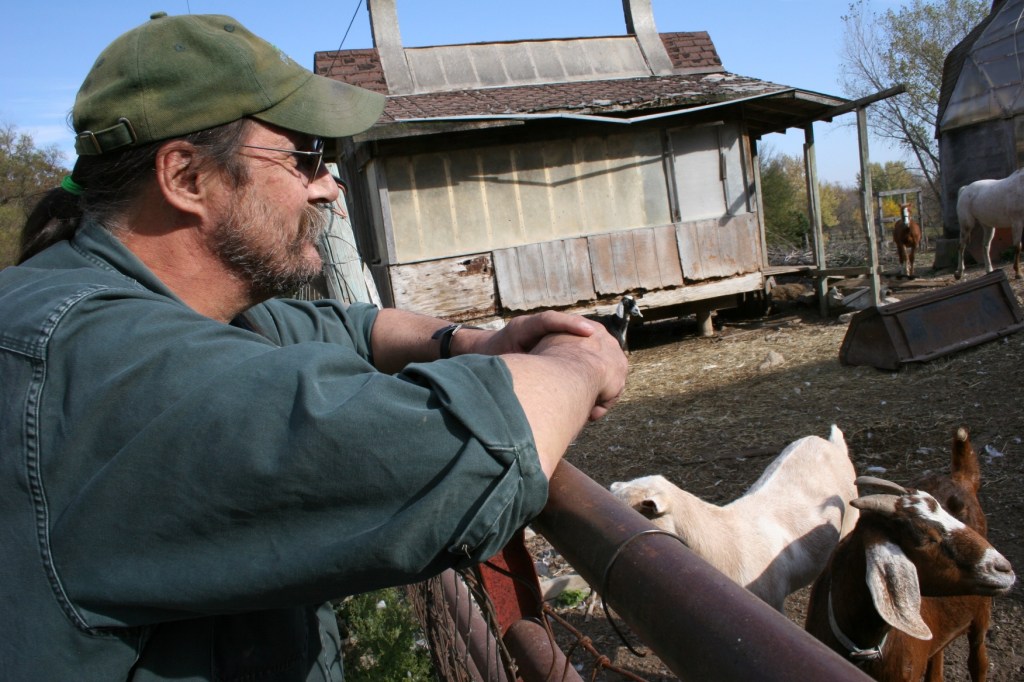
Strider Hammer calls animals to the fence at Earthen Path Organic Farm.
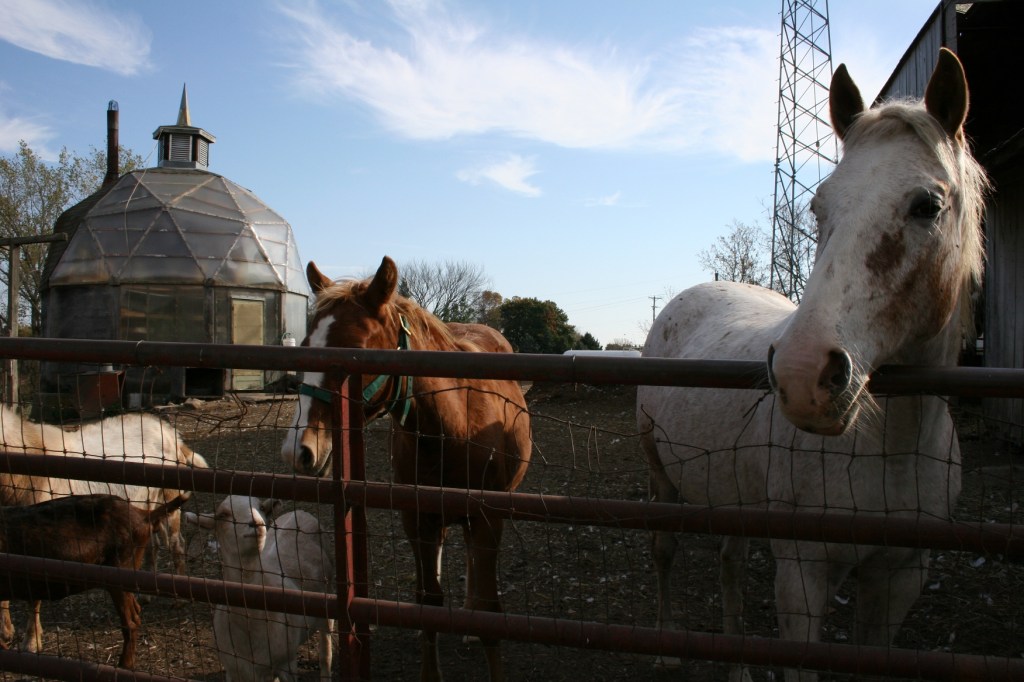
The friendly animals on the "Old McDonald" style farm. Steven's son Joe and his wife Rebecca farm with draft horses. Steven once used those horses to farm, but now, because he can no longer lift the harnesses, relies on tractors.
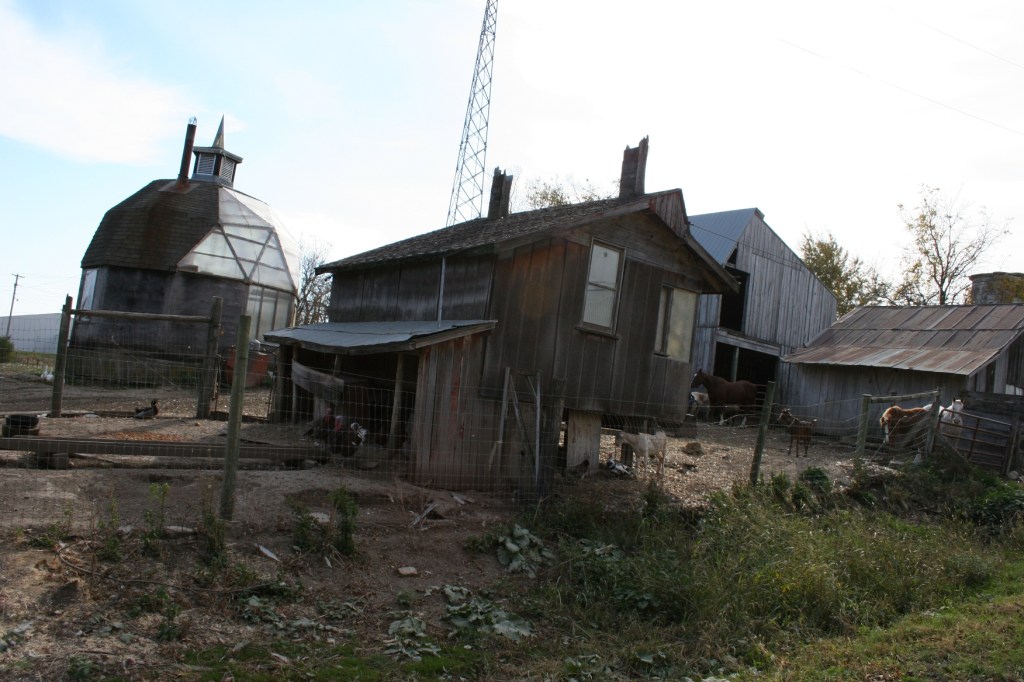
The mishmash of buildings behind the general store.

Back at the side door that leads to the former Grange Hall and back room gathering place, Strider climbed the few stairs onto the weathered deck and bid us farewell with a single and seemingly fitting word for the vibe of the Oak Center General Store:

“Peace,” he said and walked away.

A flower blooms next to the general store.
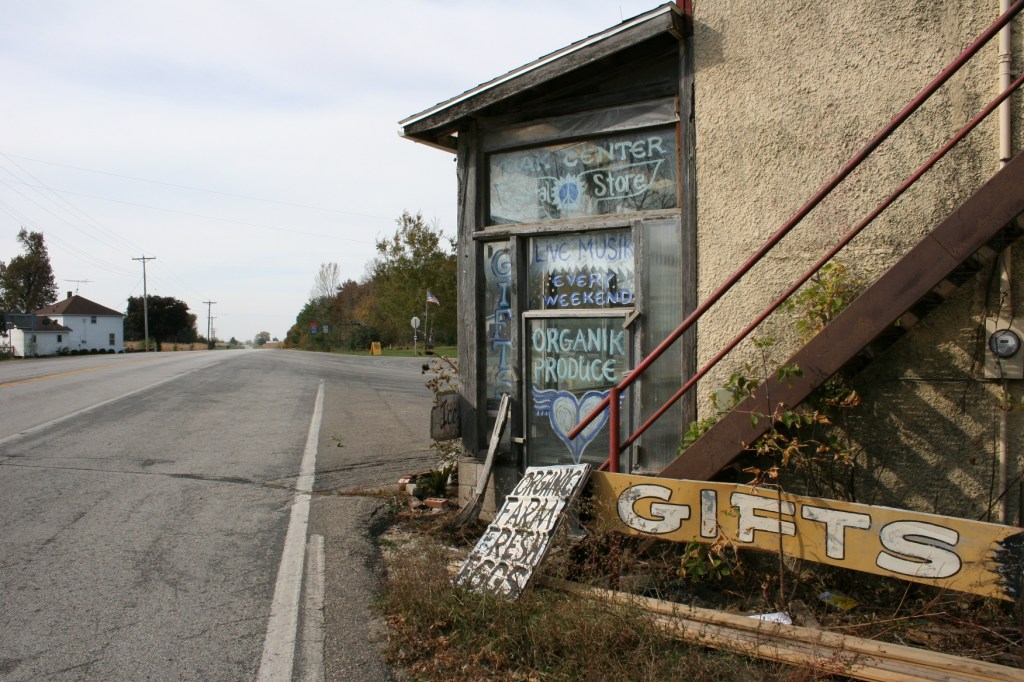
A side view of the store from Highway 63.

FYI: The store is open from 9 a.m. – 6 p.m. Monday – Saturday and some Sundays. In addition to music, Oak Center General Store hosts theater, round table discussions and workshops (ie., holistic medicine, organic gardening, batik) at its Folk Forums.

For more information about the Oak Center General Store, click here.

To learn about  Earthen Path Organic Farm, click here.

For info about  Heartbeet Farm, click here.

© Copyright 2011 Audrey Kletscher Helbling


Alpacas in Sogn Valley October 9, 2011

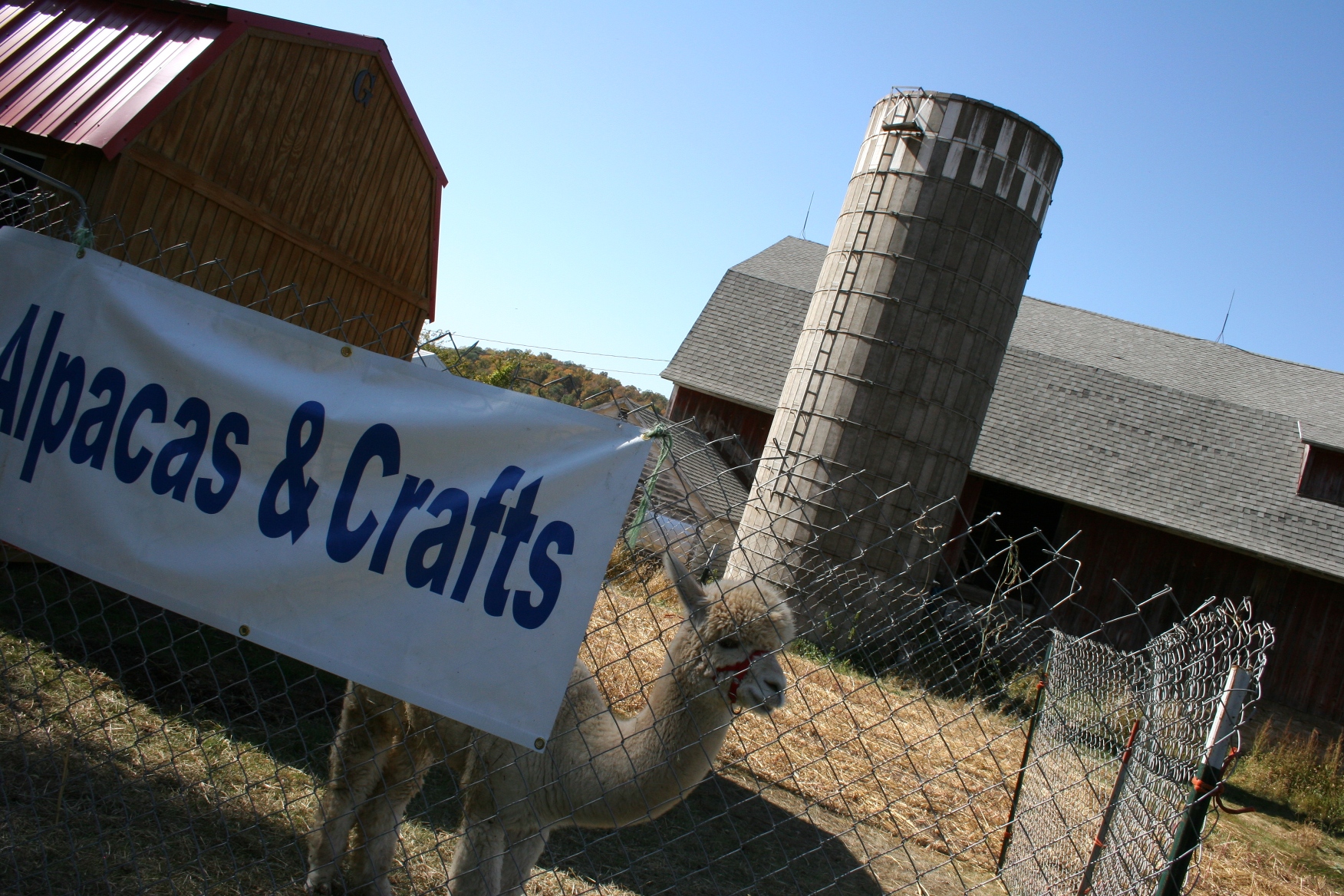
An alpaca outside the craft barn at Sogn Valley Alpacas & Crafts.

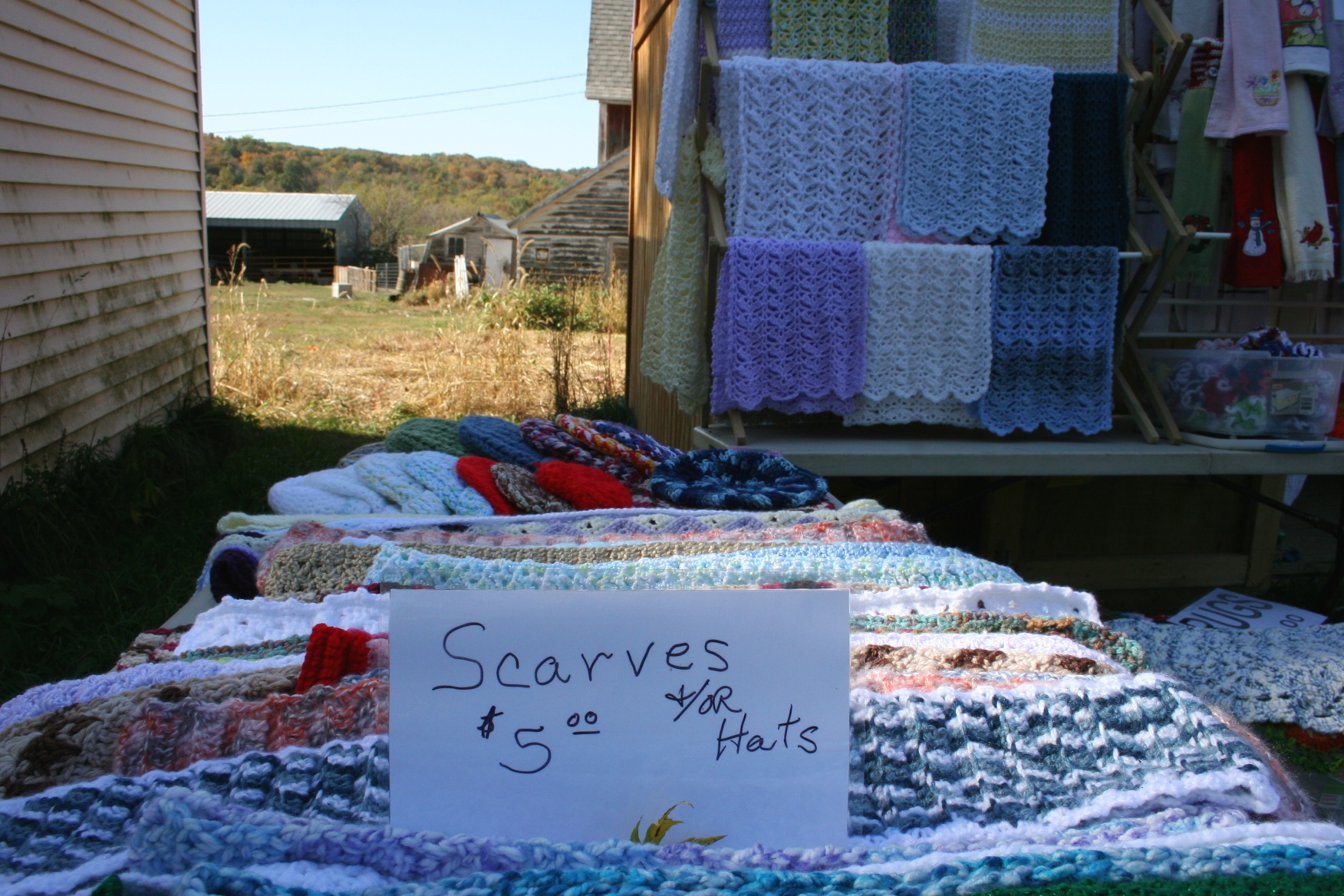
I DREW MY HAND across the scarves, stroking the silky, kitten-soft spun fiber of the alpacas.

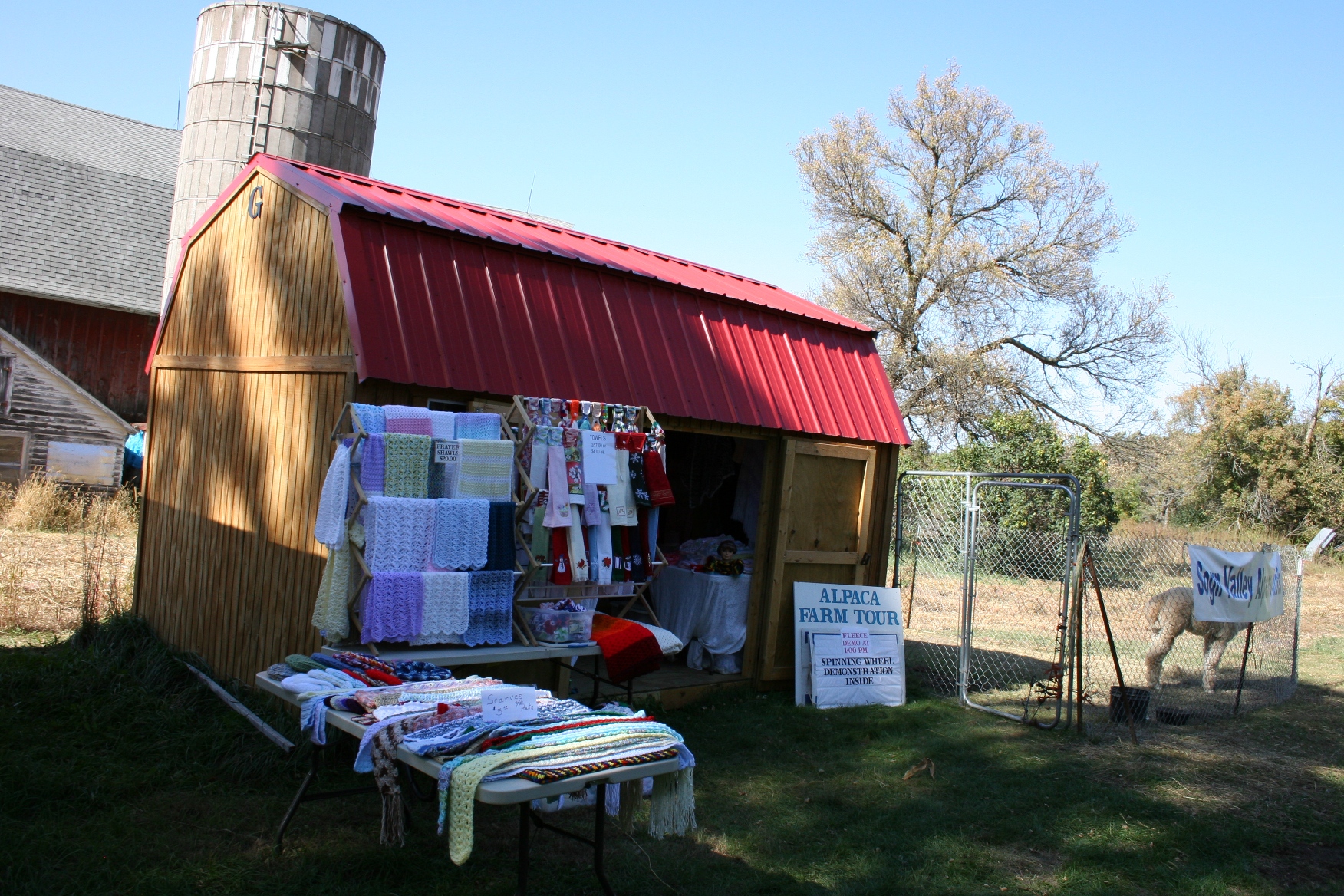
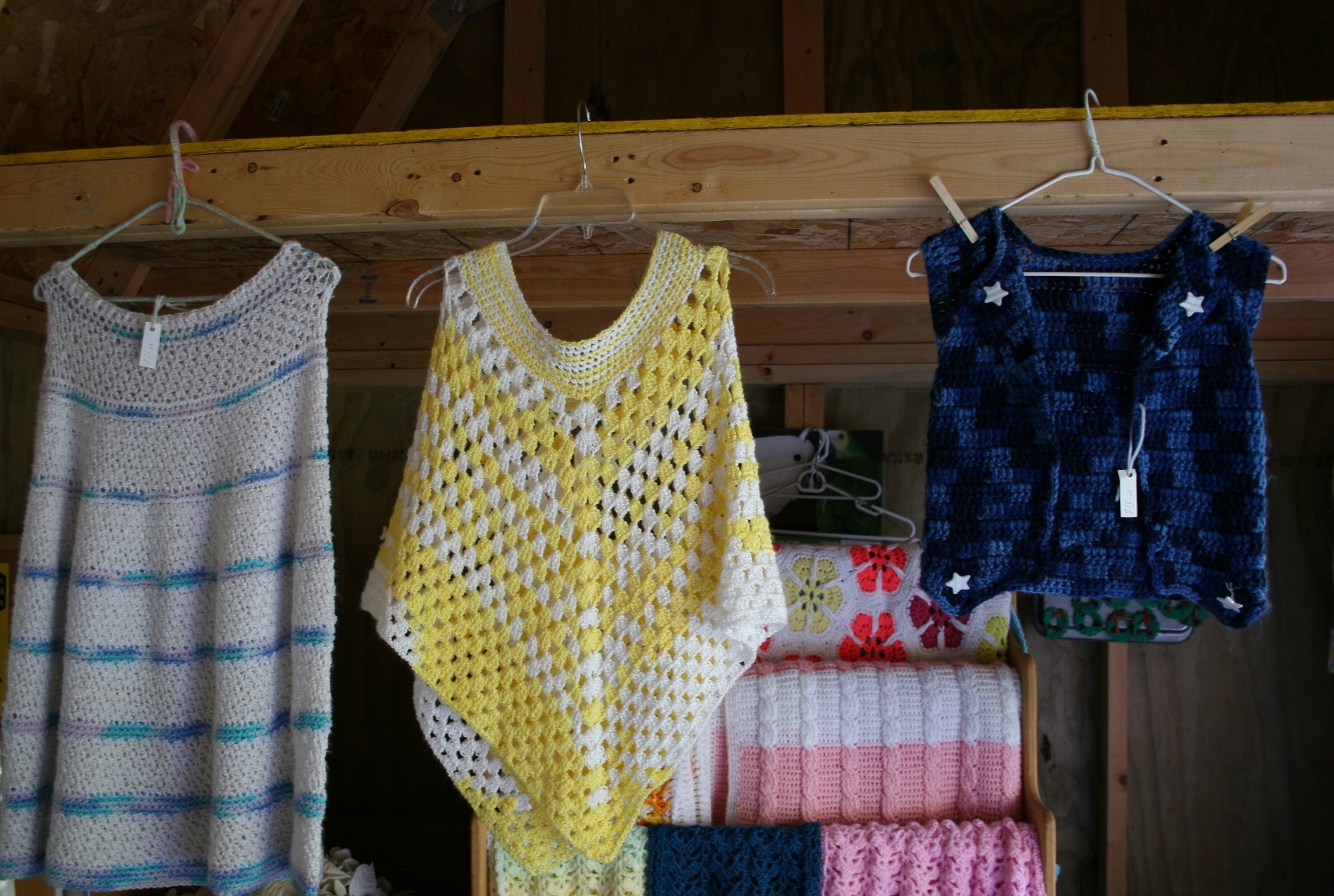
Hats. Scarves. Prayer shawls. Afghans. Rugs. Clothing. Some tucked inside the small-scale barn shed that mimics the real barn a stone’s throw away. Other merchandise is draped across tables and clothes-drying racks outside, near the penned camel-hued alpaca that chose to ignore me for the most part.

Welcome to Sogn Valley Alpacas & Crafts along Goodhue County 14 Boulevard, rural Cannon Falls, a spur-of-the-moment stop on a recent drive to view the fall colors.

Jayne and R.J. Boersma's Sogn Valley Alpacas & Crafts near Cannon Falls.

Scarves and hats, close-up, and prayer shawls in the background displayed outside.

Silky soft clothing hanging inside the craft barn.

My husband and I missed the fleece demo at 1 p.m., the spinning wheel demo inside and the alpaca farm tour, unless, of course, it was self-guided.

We, in fact, missed any human contact. Not a soul was to be seen except for alpacas and chickens scratching and flapping too close for my fear-of-chickens comfort.

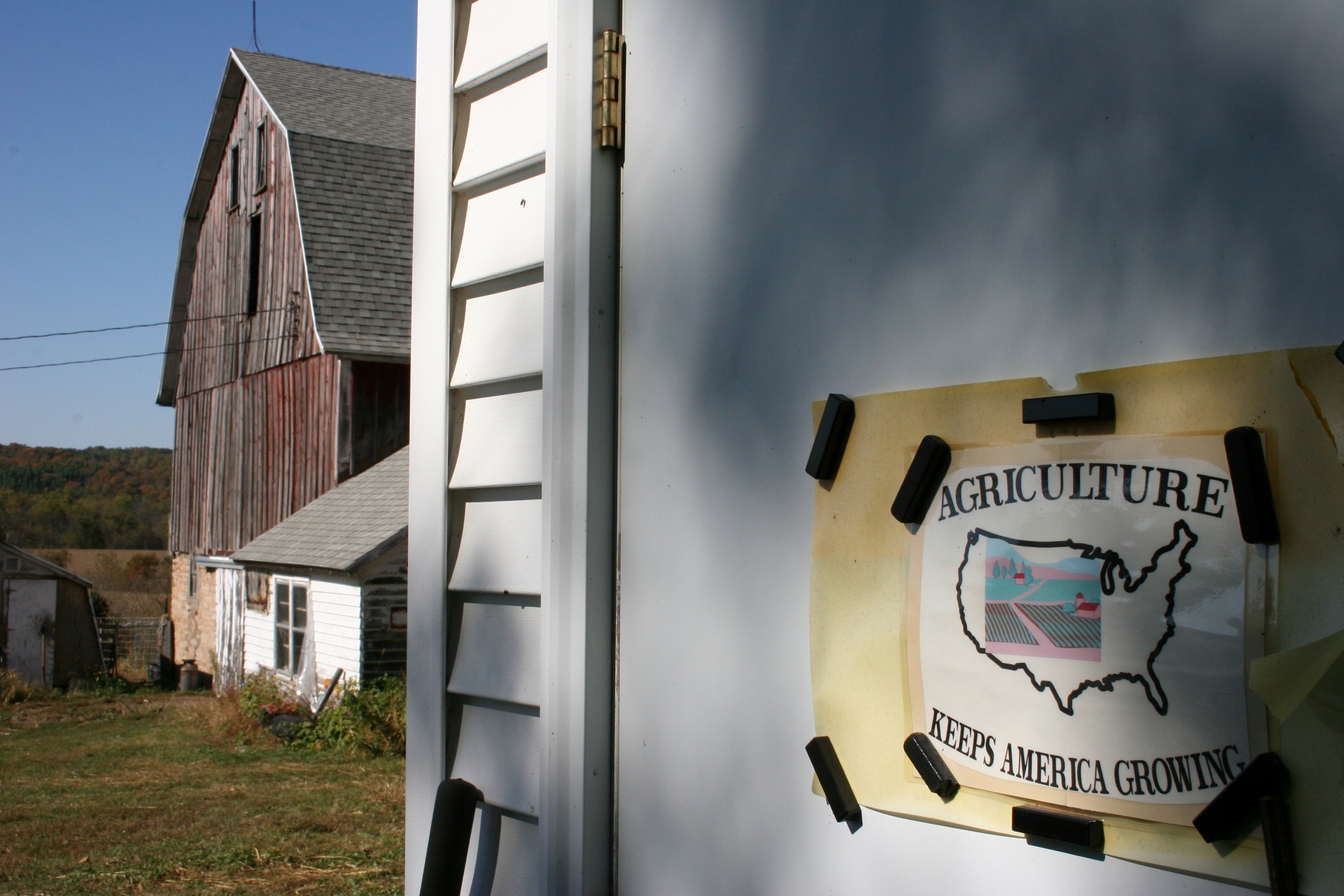
I checked out the merchandise, unsuccessfully tried to coax the elusive alpaca into posing prettily for a photo, side-stepped chicken poop, considered photographing pumpkins and squash splayed out on a picnic table, and then snapped one final photo of an “AGRICULTURE KEEPS AMERICA GROWING” sign before hopping into the car.

The sign supporting agriculture on the side of a shed at the alpaca farm.

© Copyright 2011 Audrey Kletscher Helbling
 

A Sunday drive to view the fall colors in Sogn Valley October 4, 2011

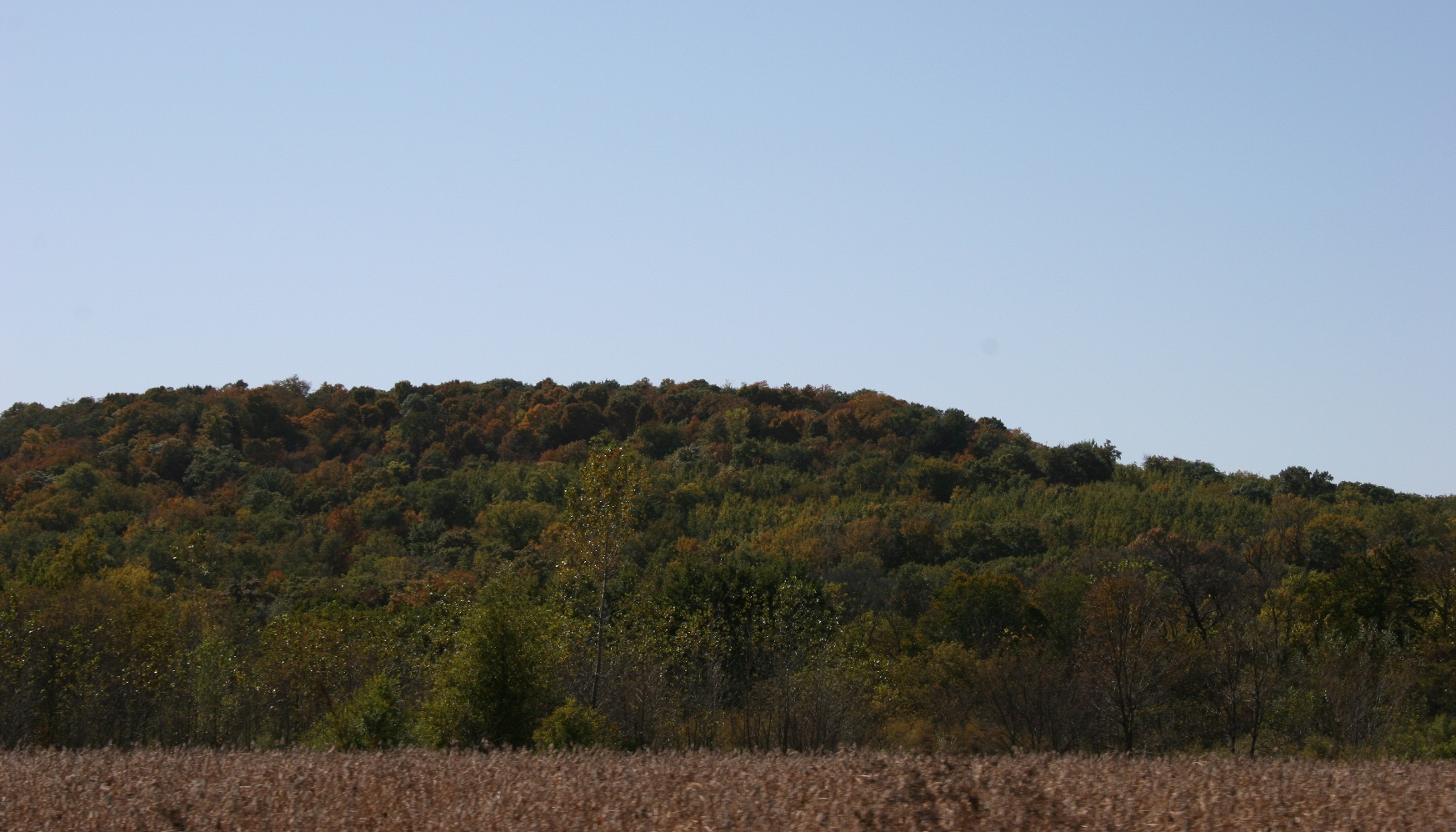
A colorful hillside in the Sogn Valley area of southeastern Minnesota.

MINNESOTANS, THIS is your week.

Get outside. View the fall colors. Experience rural Minnesota at the height of harvest. This could be our best week, weather-wise, until next spring. Not that I’m trying to forecast gray skies and cold and that dreaded word, “snow,” but I’ve lived here long enough—55 years—to realize you should “make hay while the sun shines.”

I took my own advice on Sunday when the husband and I went on a fall color drive to the historic agricultural Sogn Valley area of quaint farms and wooded, rolling hills in northwestern Goodhue County.
We originally planned to paint a bedroom ceiling Sunday afternoon. But then, when a friend asked if the ceiling needed to be painted that day, we decided the project could wait. The afternoon was too beautiful to spend indoors with our eyes focused toward a ceiling instead of upward toward clear blue skies accented by the changing leaves of autumn.
So, just to offer you some visual encouragement to do a fall color drive or go for a walk this week, here are some photos I snapped on that Sunday drive.

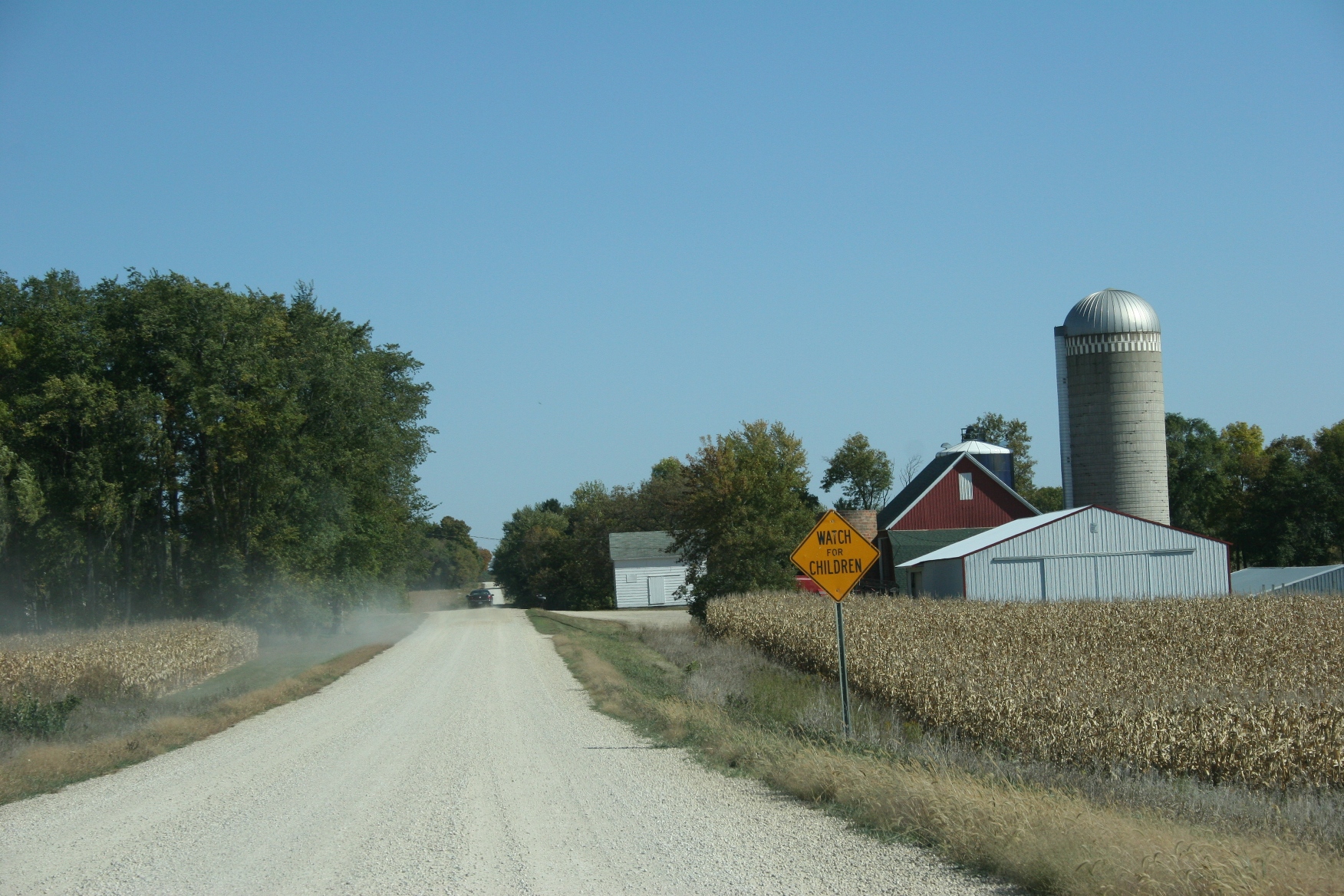
We followed this gravel road, 20th Avenue, between Goodhue County Road 9 and Vang Lutheran Church.

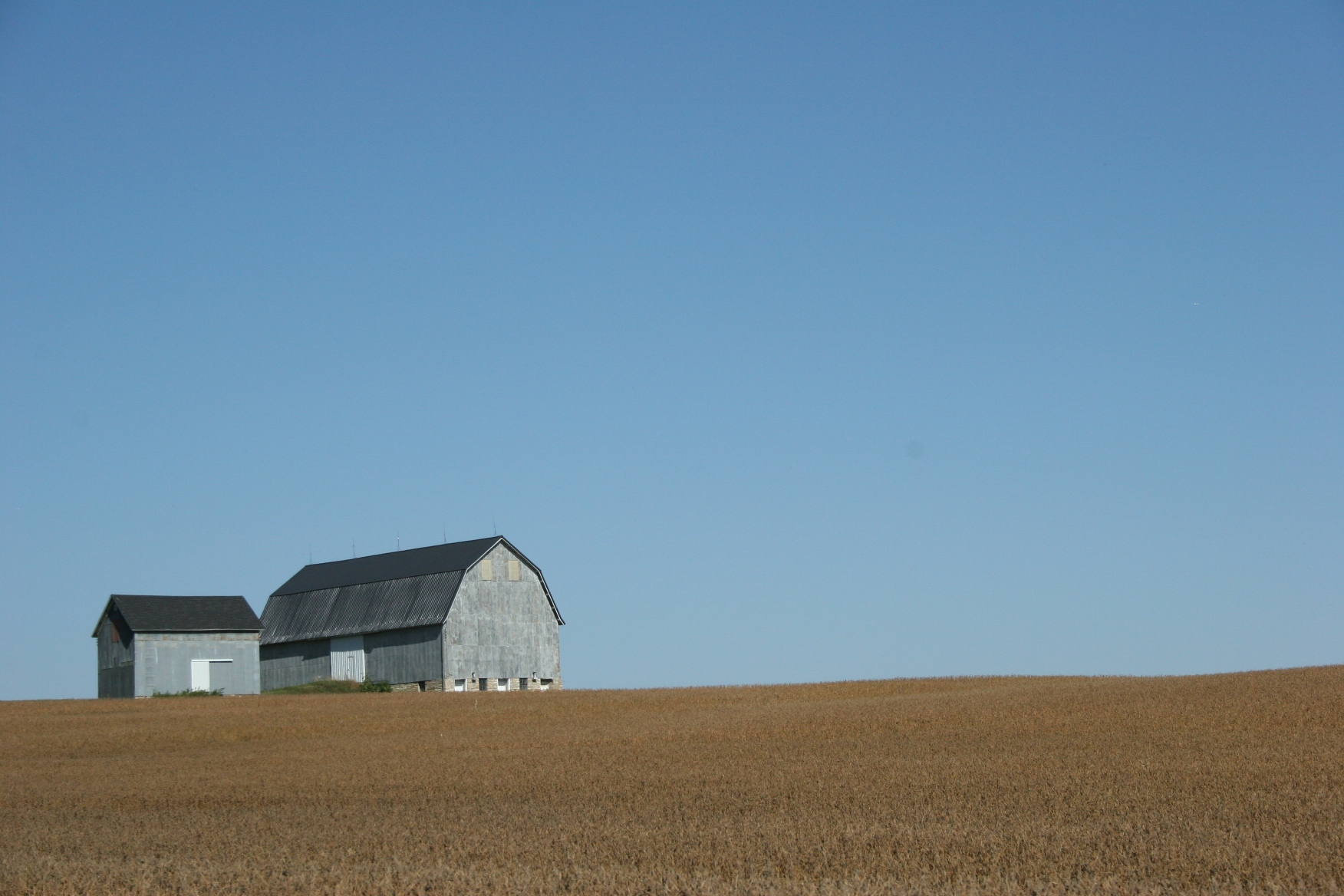
Along 20th Avenue, I spotted these picturesque farm buildings.

I photographed Vang Lutheran Church across the cornfield west of the Potpourri Mill Log Cabin 10 minutes north of Kenyon or 45 minutes south of the Twin Cities.

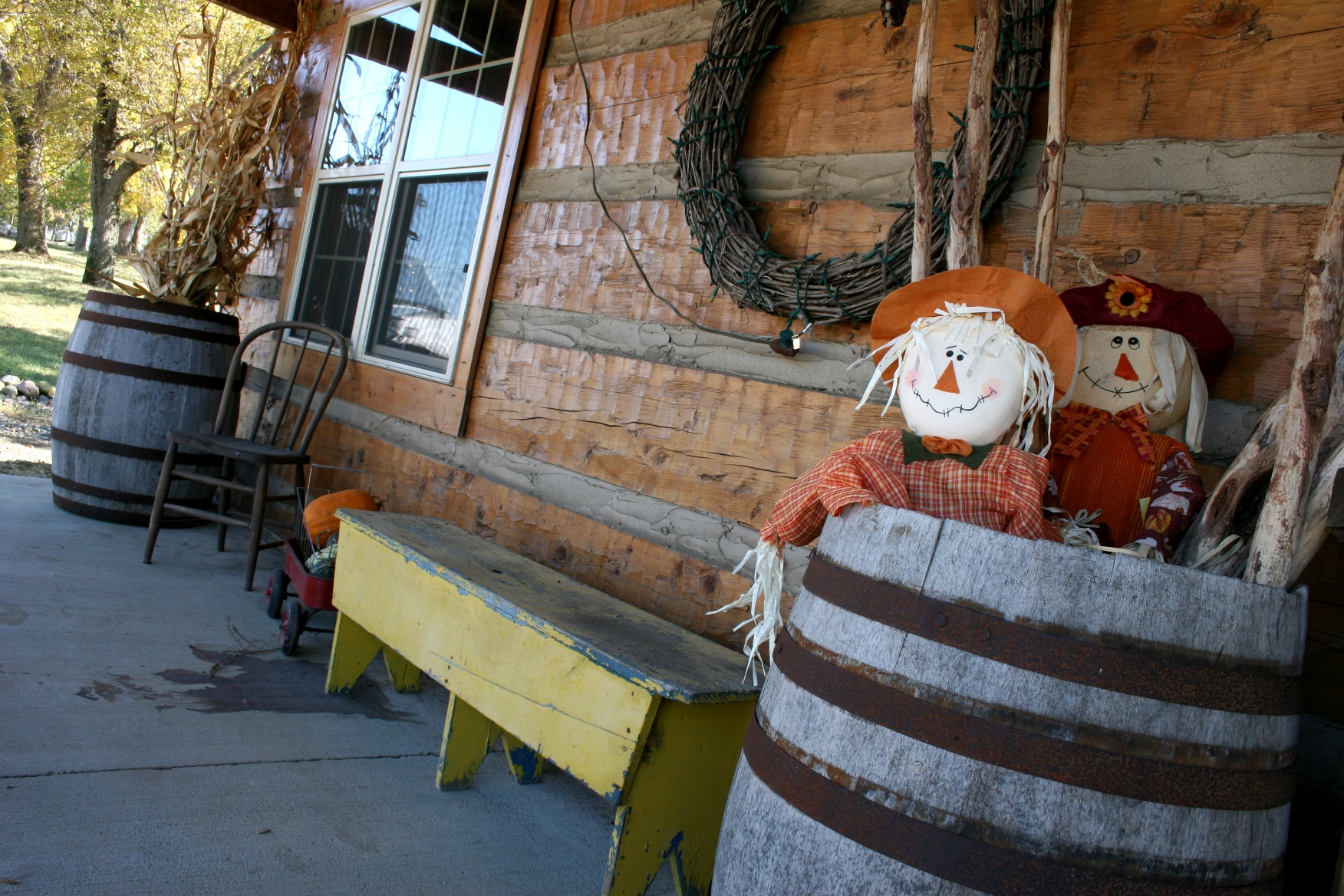
An autumn-themed setting greets shoppers at the seasonal Harvest Thyme Craft Show at the Potpourri Mill Log Cabin, 2290 Goodhue County 49 Boulevard, Dennison. Remaining weekend show hours are 10 a.m. - 6 p.m. October 8-9 and October 15 - 16.

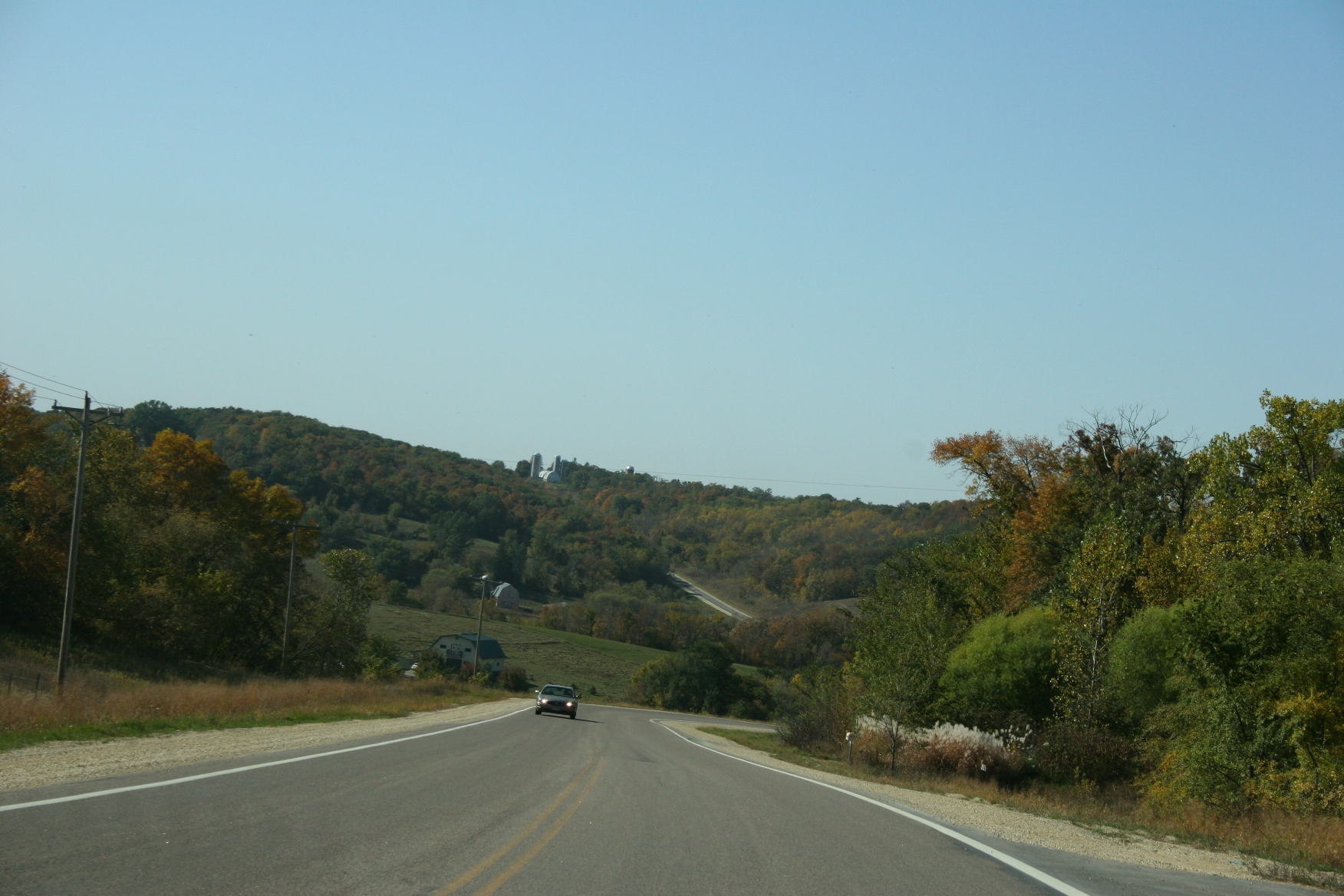
We were driving westbound on Goodhue County Road 9 toward Sogn.

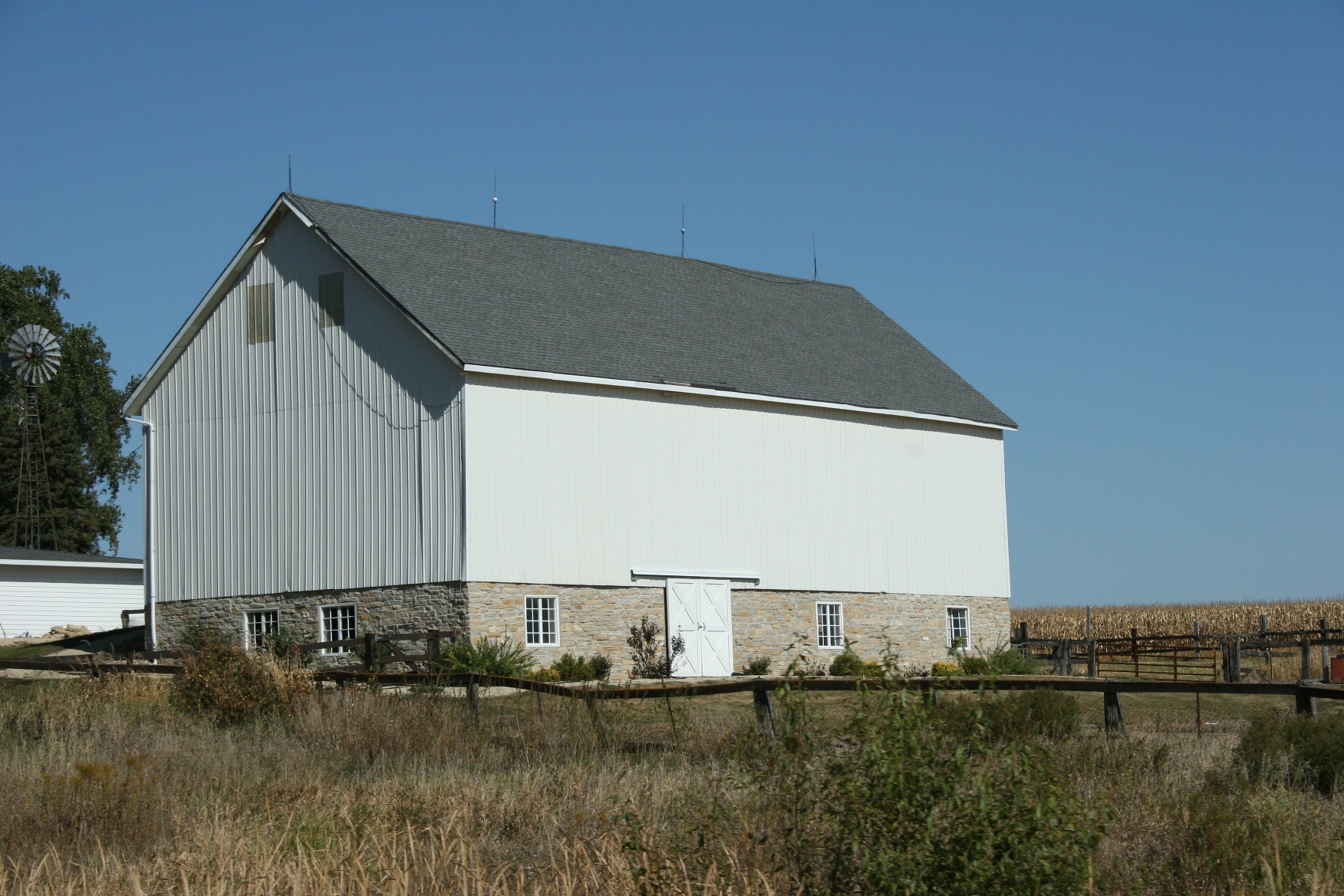
You'll see lots of old barns, like this one along 20th Avenue, in this historic agricultural region.

Farmers are in the fields harvesting corn (pictured here) and soybeans.

The Sogn Valley area offers scenic fall color viewing in a rural landscape with little traffic. To truly experience the region, turn off the highway onto back gravel roads. Have a plat book handy and a navigator with a good sense of direction, which would not be me.

CHECK BACK FOR more photos from this autumn drive and for a post on Nerstrand Big Woods State Park, a popular fall color destination. The park parking lot was overflowing on Sunday. Colors were spectacular.

© Copyright 2011 Audrey Kletscher Helbling