Minnesota Prairie Roots

Writing and photography by Audrey Kletscher Helbling

Faribault artist honors Prince, Dylan & other musicians through her oil portraits October 17, 2016

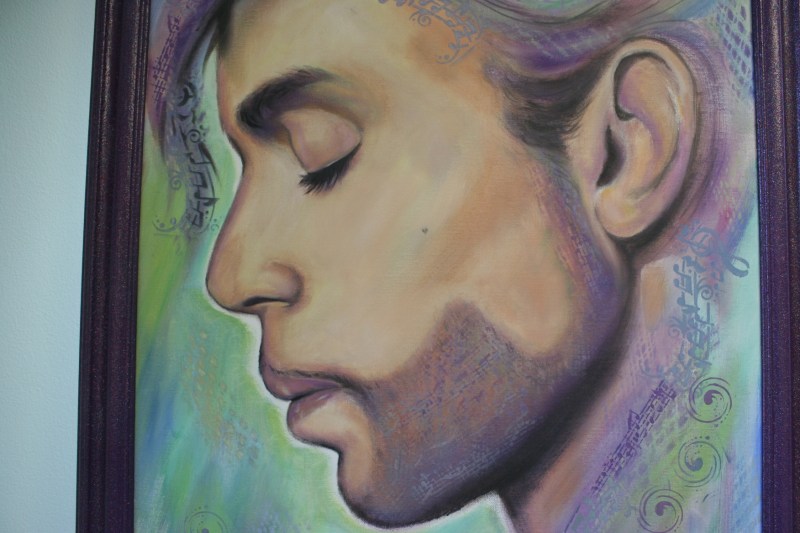
Dana used a stencil to incorporate musical notes in to this painting of Prince. Notice the detail of the heart-shaped mole on the musician's cheek.

Dana Hanson used a stencil to incorporate musical notes in to this painting of Prince. Notice the detail of the heart-shaped mole on the musician’s cheek. Prince Rogers Nelson was inducted in to the Minnesota Music Hall of Fame in 2007.

DANA WARMINGTON HANSON can’t read a single musical note. But she doesn’t need to. She paints music.

Using a photo as her guide, Dana works on her Dylan portrait.

Using a photo as her guide, Dana works on a portrait of Bob Dylan during a summer concert in Faribault’s Central Park. He was inducted in to the Minnesota Music Hall of Fame in 1991. Minnesota Prairie Roots file photo, July 2016.

This past summer, the Faribault artist painted several Minnesota Music Hall of Fame inductees during Faribault’s Concert in the Park Series as part of the Artgo! group of plein air artists.

Dana's younger version of Bob Dylan, born Robert Allen Zimmerman.

Dana’s younger version of Bob Dylan, born Robert Allen Zimmerman.

Her decision to paint Prince and Bob Dylan, especially, seems particularly fitting given the recent focus on those world-renowned musicians. Last week Dylan won the Nobel Prize in Literature. And Prince’s Paisley Park Museum opened temporarily to fans.
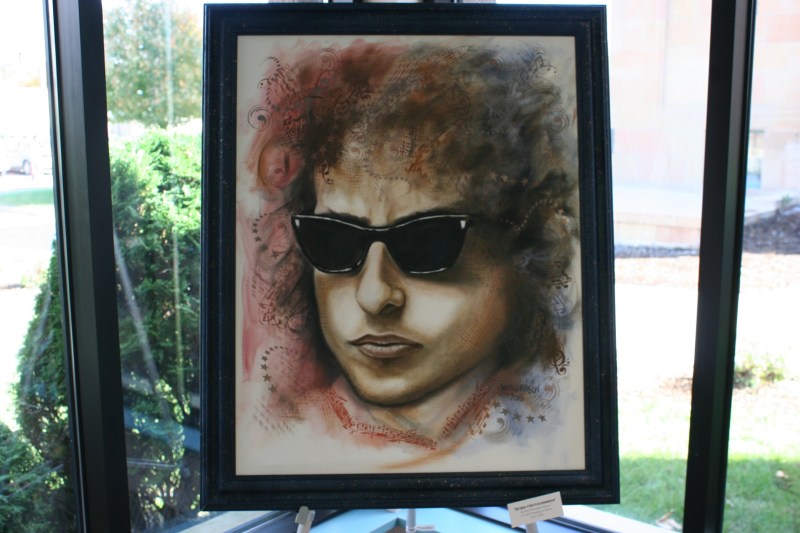
"Bob Dylan: A Voice to be Remembered," a 22 x 28-inch oil portrait by Dana Hanson priced at $1,400.

“Bob Dylan: A Voice to be Remembered,” a 22 x 28-inch oil portrait by Dana Hanson priced at $1,400.

Dana says she appreciates the musical talents of both. Back in the day, she listened to Dylan, which may explain why she painted two portraits of the Hibbing native.
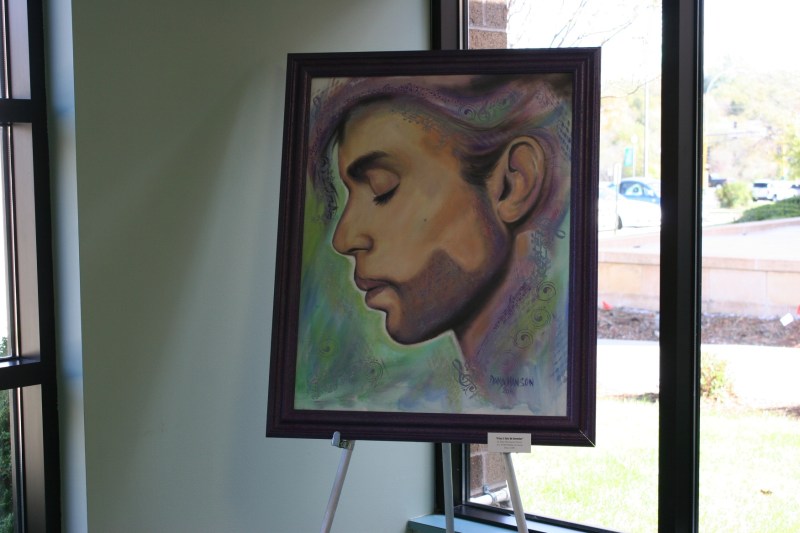
Prince by Dana Hanson.

“Prince: A Voice We Remember,” a 22 x 28-inch oil painting on canvas by Dana Hanson priced at $1,400 honored the musician who died in April.

As for Prince, she’s not a fan per se, but calls him “an extremely talented and gifted musician.”

And I call Dana an extremely talented and gifted artist.
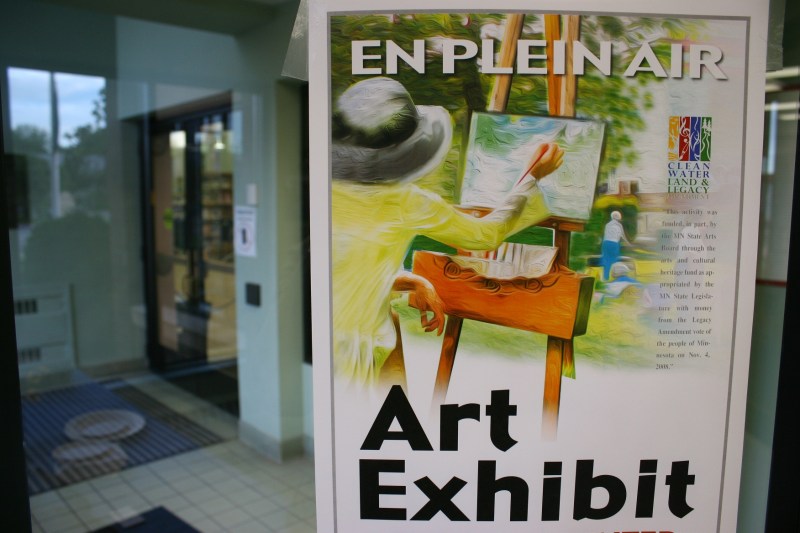
A poster posted at the initial exhibit.

A poster promotes an exhibit of Artgo! work in 2015. Minnesota Prairie Roots file photo 2015.

Her artwork exudes the passion she holds for creating art. I’ve watched her paint for two summers now during the concerts in the park. She paints with a flair, with a zeal, with an obvious love for the craft. As a freelance artist, Dana does commission work of animals and people. She’s also created cover art for books and is currently working on contracted art for a children’s book.
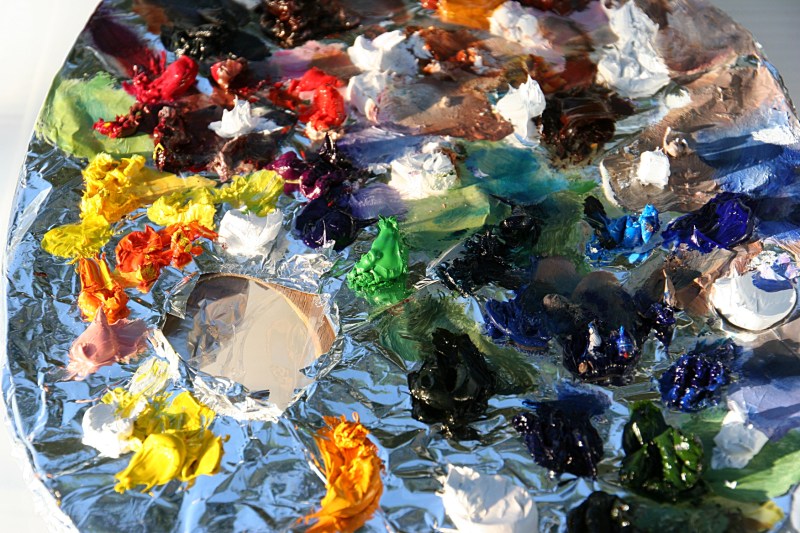
Dana Hanson's oil paints.

The artist’s oil paints on foil during a summer concert. Minnesota Prairie Roots file photo.

At her full-time job in Faribault’s Fareway Foods Bakery, Dana uses her creative skills, too, to bake and to decorate cakes along with her sister Bobbi Dawson. The two long-time professionally trained cake decorators call themselves the Sweet Sisters. Dana is certainly that. Sweet. Friendly. Talented. She hopes to some day make art her full-time work. For now, she paints when she can, with a regular first and third Saturday painting time at House Church in Eagan.
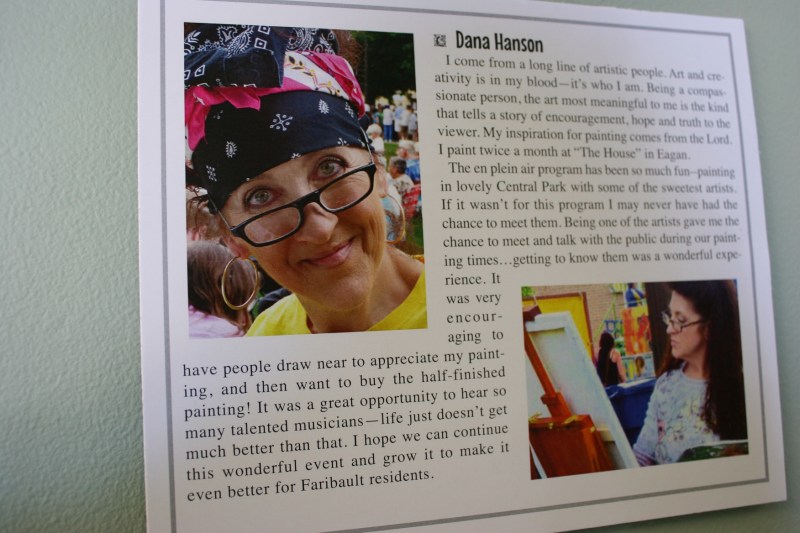
Dana Hanson's artist statement posted at the 2016 Artgo! art show in Faribault.

The artist statement for Dana Hanson posted at the 2016 Artgo! art show in Faribault.

Her artistic talents trace through her family. Dana’s grandma, Frieda Lord, founded the Faribault Art Center, today the Paradise Center for the Arts. Dana has a show coming there in February. It will be just one more opportunity to view and appreciate the talents of this gifted Faribault artist.
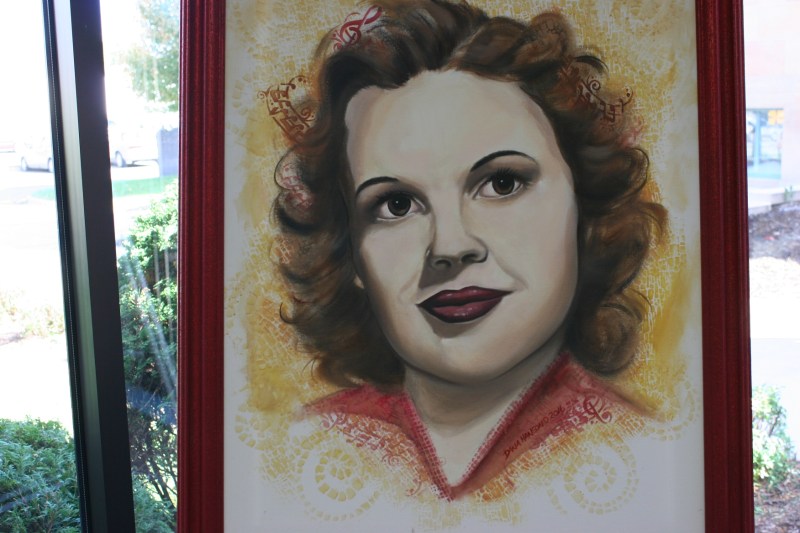
Dana Hanson also painted this portrait of Judy Garland, who was inducted in to the Minnesota Music Hall of Fame in 1991. Judy was born as Frances Ethel Gumm in Grand Rapids, Minnesota, and starred in "The Wizard of Oz."

Dana Hanson also painted this portrait of Judy Garland, who was inducted in to the Minnesota Music Hall of Fame in 1991. Judy was born as Frances Ethel Gumm in Grand Rapids, Minnesota, and starred in “The Wizard of Oz.” The portrait is a 22 x 28-inch oil priced at $1,400 in titled “Judy Garland: Follow the Yellow Brick Road.”

FYI: If you are interested in purchasing one of the portraits featured here, contact the Paradise Center for the Arts, Jeff Jarvis at the City of Faribault or me and we will connect you with Dana.

© Copyright 2016 Audrey Kletscher Helbling

Photos of Dana Hanson’s art were taken with permission of the artist.


Garden tour I: Couple masters the art of landscaping June 29, 2016

Filed under: Uncategorized — Audrey Kletscher Helbling @ 5:00 AM
Tags: , , , , , , , , , ,

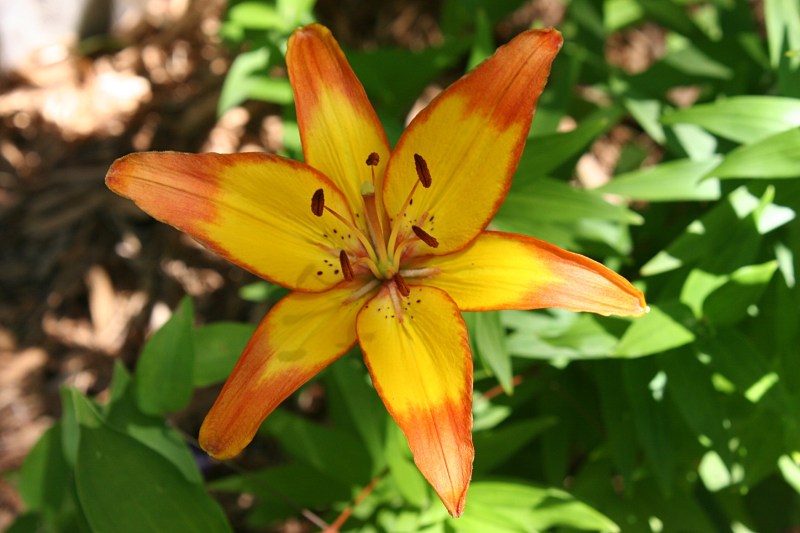
Siegfried garden, 4 lily


LOVELY LILIES LEAN.


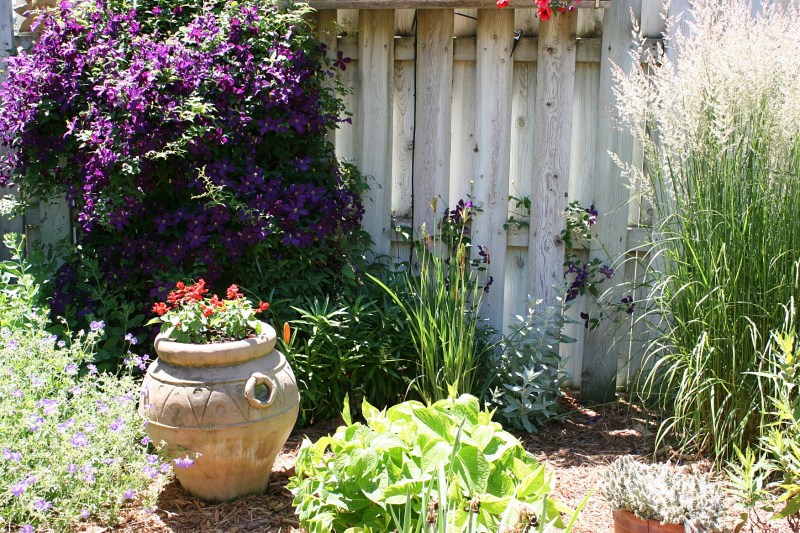
Siegfried garden, 23 clematis, etc.


Clematis cascade.

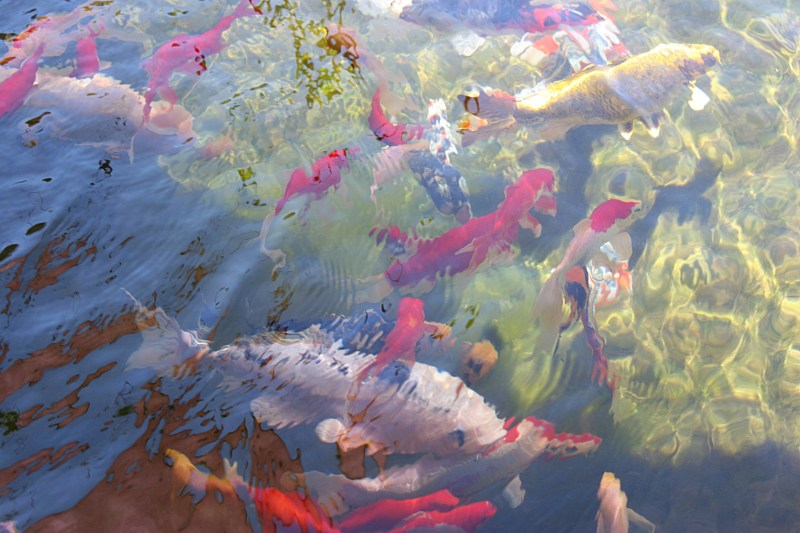
Sixty to seventy fish (guppies and koi) swim in the Siegfrieds' pond.

Sixty to seventy fish (guppies and koi) swim in the Siegfrieds’ pond.

Captive koi circle.

And the sun blazes brilliant on a Sunday summer afternoon in the yard of Karrie and Mike Siegfried.

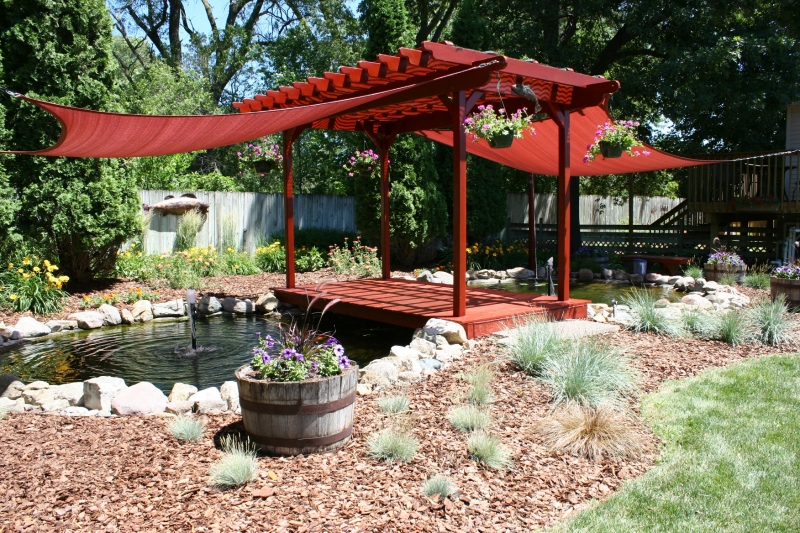
Pond, pergola and bridge create a focal point in the yard.

Pond, pergola and bridge create a focal point in the yard.

The couple has created an outdoor retreat just off busy Minnesota State Highway 3 on the northern edge of Faribault. I admire the property every time I pass by. But on this late June day, I view the yard up close while on the Cathedral of Our Merciful Saviour Garden and Landscape Tour benefiting Full Belly, a local soup kitchen.

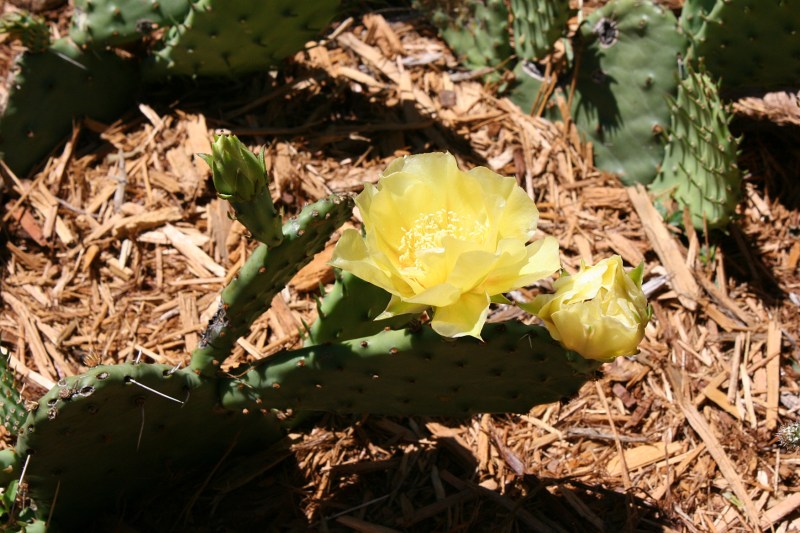
The Prickly Pear Cactus, which will winter over in Minnesota (and is native to sections of southwestern Minnesota) grows in the Southwest Garden. Mike nearly gave up on the plant ever bloomig

The Prickly Pear Cactus, which will winter over in Minnesota (and is native to sections of southwestern Minnesota) grows in the Southwest Garden. Mike nearly gave up on the plant. But this year it bloomed.

This spacious yard features everything from ponds to shade gardens to a Southwest garden complete with cacti to a lawn sprawling enough for a wedding (Karrie’s son’s).

Dubbed the Southwest Garden, this plot features cacti and Southwest style pottery.

Dubbed the Southwest Garden, this plot features cacti and Southwest style pottery.

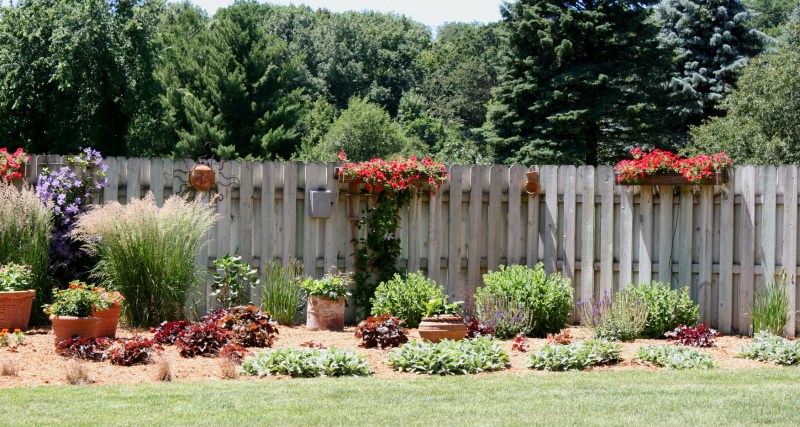
Perennials like clematis, coral bells, lamb’s ears, lilies and more fill borders and soften fence lines. Petunias, geraniums and other annuals spill from pots. Clumps of strategically placed ornamental grasses rise and sway, adding visual interest. Just like the art created by Mike.

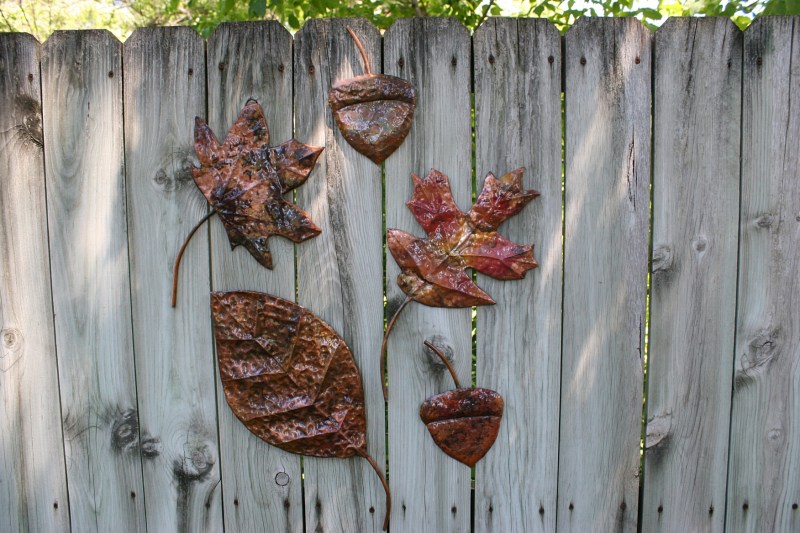
Mike's copper leaf art.

Mike’s copper leaf and acorn art.

A plumber by trade, Mike took an interest in copper art after attending the Minnesota Renaissance Festival. In 2013, he opened an etsy shop, Mystical Copper. He crafts copper into mostly fish and butterflies, but also does custom pieces. I didn’t ask about the intricacies. But the art involves pounding and then heating the copper to get variations in color.

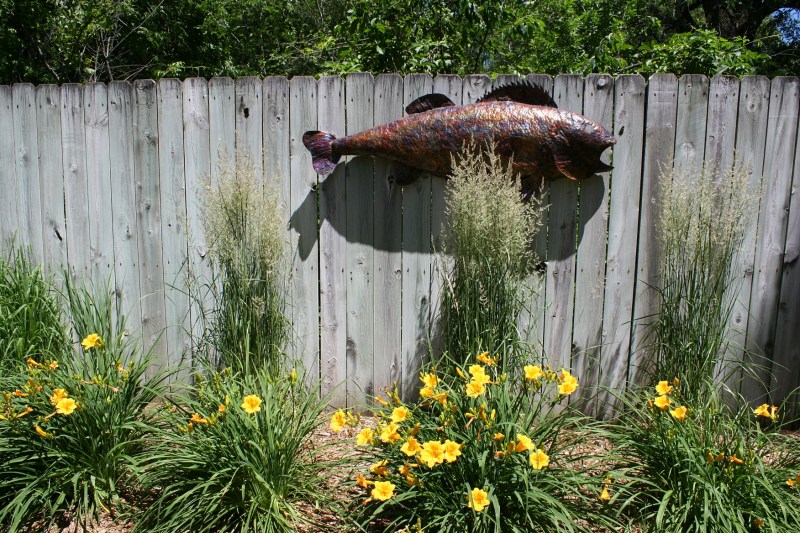
Mike's copper walleye.

Mike’s copper walleye.

Mike’s one-of-a-kind art enhances the Siegfrieds’ already impressive landscaping. Three patches of tall ornamental grasses front an oversized copper walleye attached to a fence. The scene mimics a lake setting. It takes an artist’s eye and a gardener’s knowledge to create such a vignette.

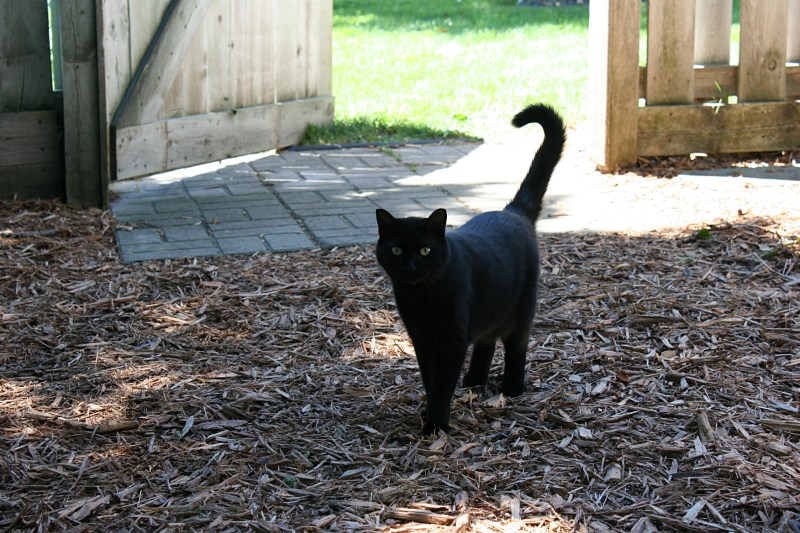
Shadow the cat greeted garden tour visitors.

Shadow the cat greeted garden tour visitors.

In the Siegfried’s yard, art and plants blend artfully and beautifully into this escape, this retreat, this lovely place bordering a busy Minnesota highway.

FYI: Check back for more stories and photos from gardens featured on the Garden and Landscape Tour. Click here to read my first post about Fully Belly.

© Copyright 2016 Audrey Kletscher Helbling


Inside Sleepy Eye Stained Glass, Mike’s passion May 17, 2016

Filed under: Uncategorized — Audrey Kletscher Helbling @ 5:00 AM
Tags: , , , , , , , ,
A customer leaves Sleepy Eye Stained Glass with a refurbished window.

A customer leaves Sleepy Eye Stained Glass with a refurbished window.

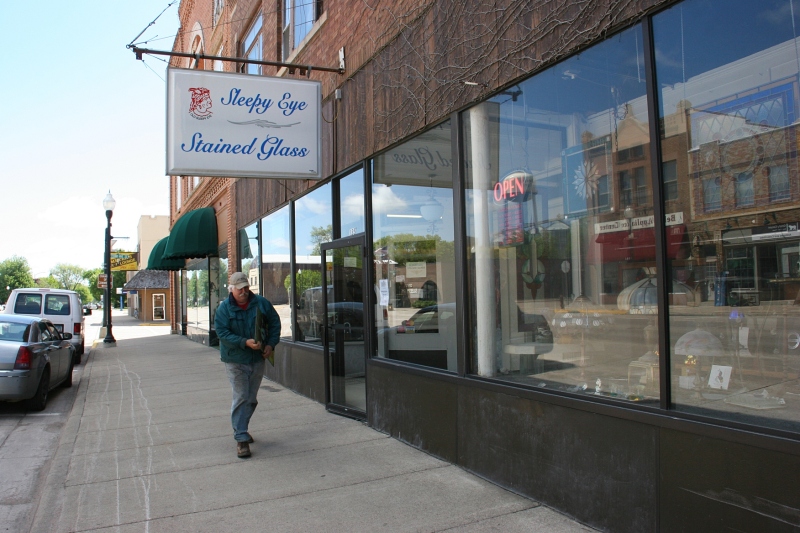
FROM THE EXTERIOR, the brick building along Sleepy Eye’s main drag, US Highway 14, doesn’t make much of an impression. Weathered windows need replacing. Facade needs updating. Vines creep tendrils into a corner of the structure. And over the front door, a simple sign marks this as the home of Sleepy Eye Stained Glass.

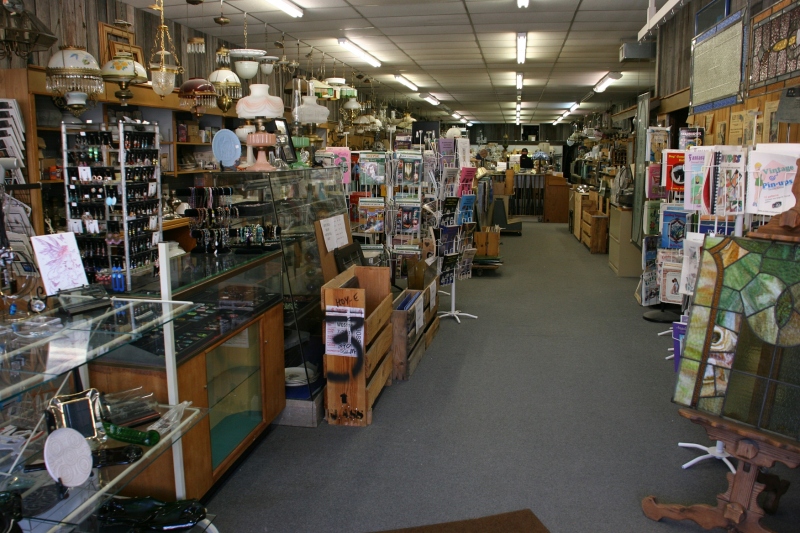
My initial view once inside the retail portion of the business.

My initial view once inside the retail portion of the business.

Many times my husband and I have passed this business on our way to visit family in southwestern Minnesota. Last Saturday, we finally had time to stop. And we met proprietor Mike Mason and his sole employee, Linda.

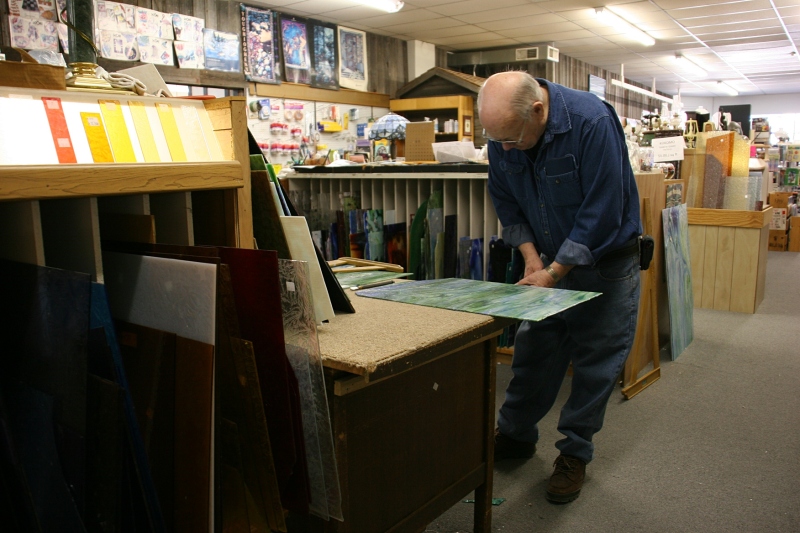
Mike cuts salvaged stained glass to sell.

Mike cuts salvaged stained glass to sell.

As I roamed the store packed with stained glass supplies, sheets of glass, how-to books, finished stained glass art, lamps and more, Mike salvaged pieces of stained glass. He measured and cut with the precision of 35 years of experience. He’s a self-taught artist. Stained glass art began as a hobby for him “that got out of control,” he says.

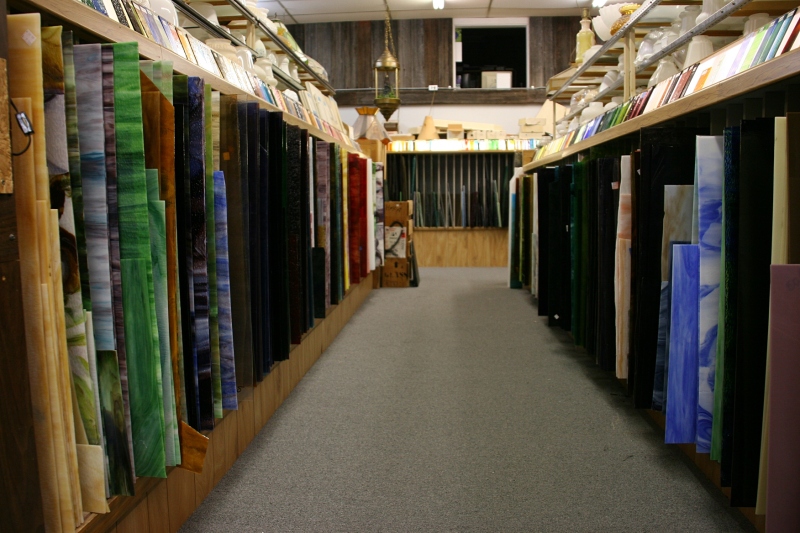
Row upon row of stained glass fill the business.

Row upon row of stained glass fills the business in a stained glass lover’s paradise.

Sleepy Eye Stained Glass is known for repair and restoration work, for custom stained glass art and as one of the largest suppliers of stained glass and related products in the Upper Midwest.

A corner in the workshop section of the business.

A corner in the workshop section of the business.

Mike’s love for stained glass is obvious. Although he didn’t tell me how often he’s here working, I expect a lot. He lives only a few doors down, above an antique shop. It’s clear his life’s work (at least for the past 30-plus years) is his passion.

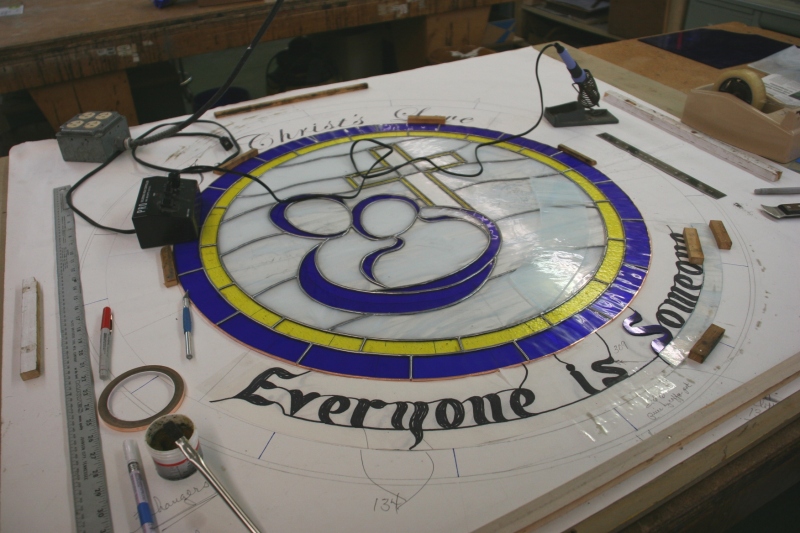
A commissioned work in progress.

A custom work in progress.

When I ask what he’s most proud of, Mike leads me to a television and starts a video showing an interview with Jason Davis of KSTP-TV and his “On the Road” segment. Much to my delight, the story includes images of refurbished stained glass windows at Immanuel Lutheran Church, rural Courtland. It is my mother’s home church. Now I have a personal connection to Mike and his restoration work.

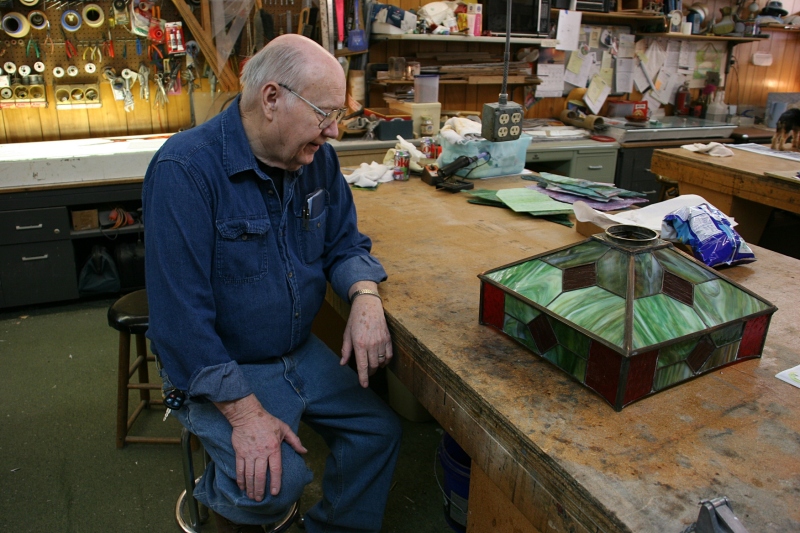
In his workshop, Mike talks to customers who've stopped by to pick up their restored light shade.

In his workshop, Mike talks to customers who’ve stopped by to pick up their restored light shade.

Giddy with excitement, I rush over to tell Mike. He is back cutting glass, drawing blood this time, an occupational hazard.

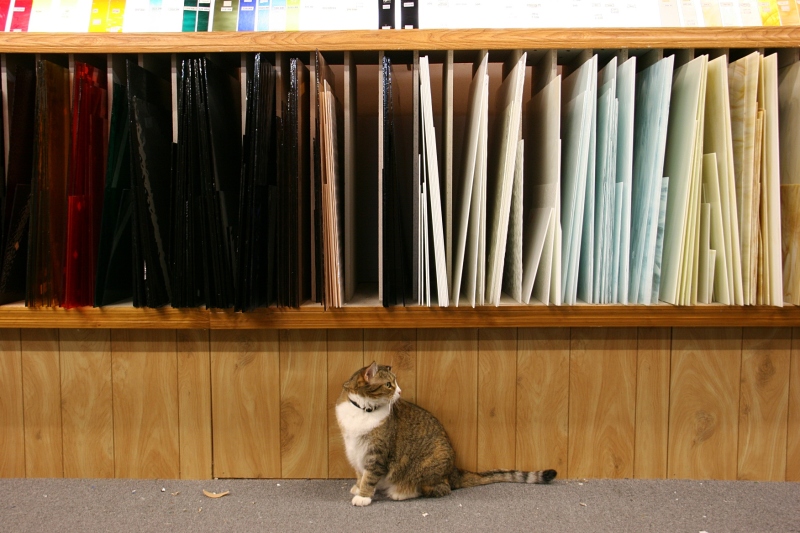
Daisy the shop cat.

Daisy the shop cat sits below glass sheets sorted by color.

We talk a bit more and I ask about the shop cat, Daisy. She was a stray, well-loved now by this artist who brings her to work daily, feline riding on his shoulder as he walks from his apartment to the shop. Mike instructs me to watch as he throws a tin foil ball for Daisy to chase.

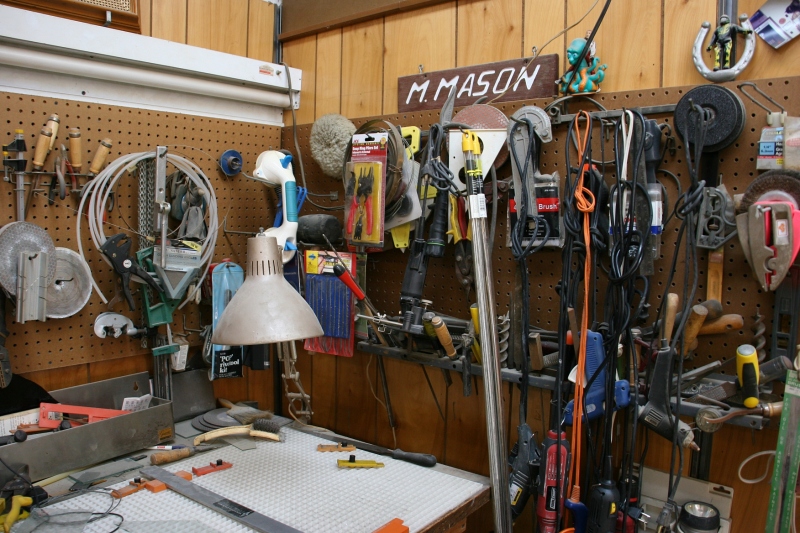
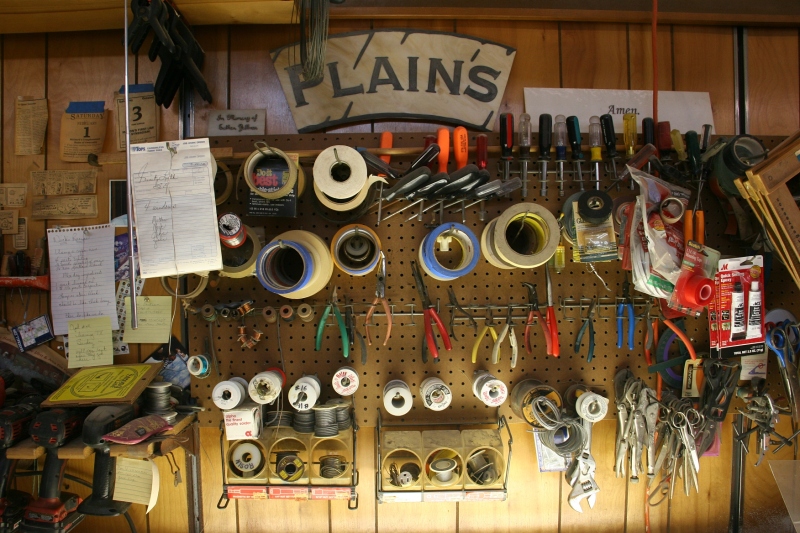
Tools of the trade in the workshop.

Tools of the trade in the workshop.

This place is so unpretentious. Nothing fancy. It’s a working studio with a jumble of tools and glass bits on the floor. Projects in the works. Projects finished. Yet, there’s a certain orderliness to everything, to the sheets and sheets and sheets of glass slid into compartments and the organized displays of how-to books.

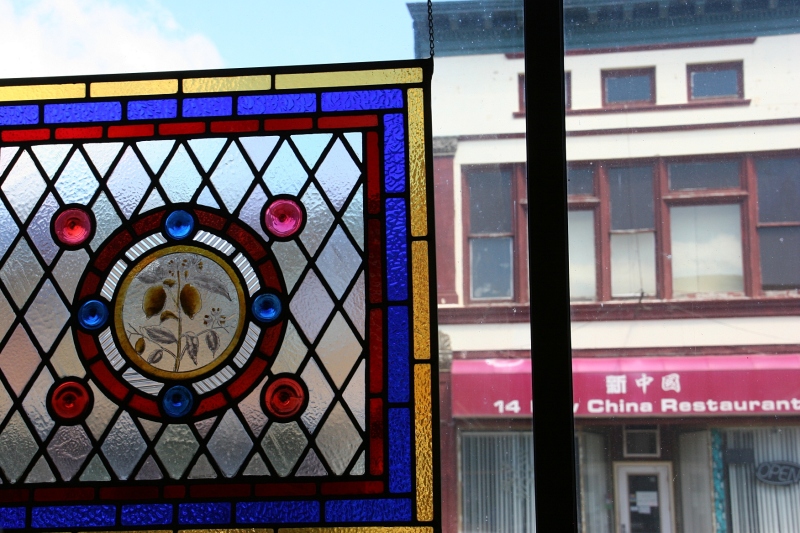
Finished stained glass art hangs in a front window.

Finished stained glass art hangs in a front window.

I met a man who holds a piece of stained glass to the light and is struck by its beauty. It’s that simple for Mike. A pane of salvaged stained glass makes him happy. If we could all only experience such simple joy in a day’s work.

BONUS PHOTOS:

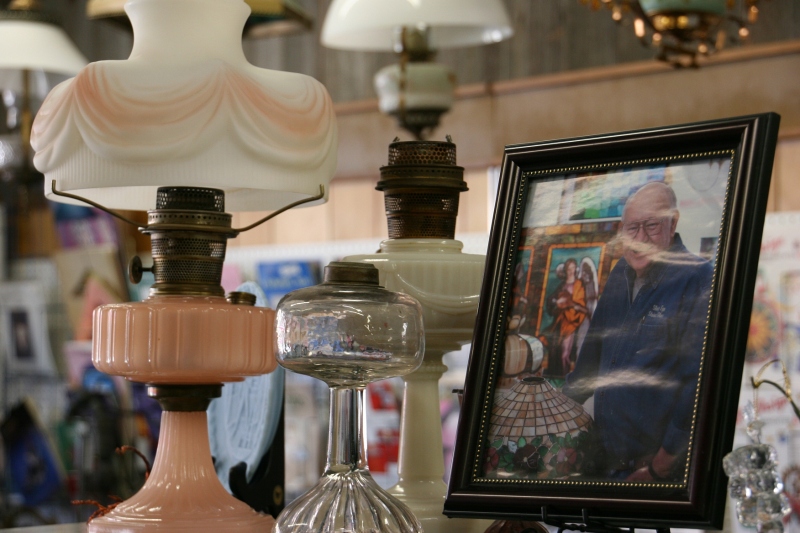
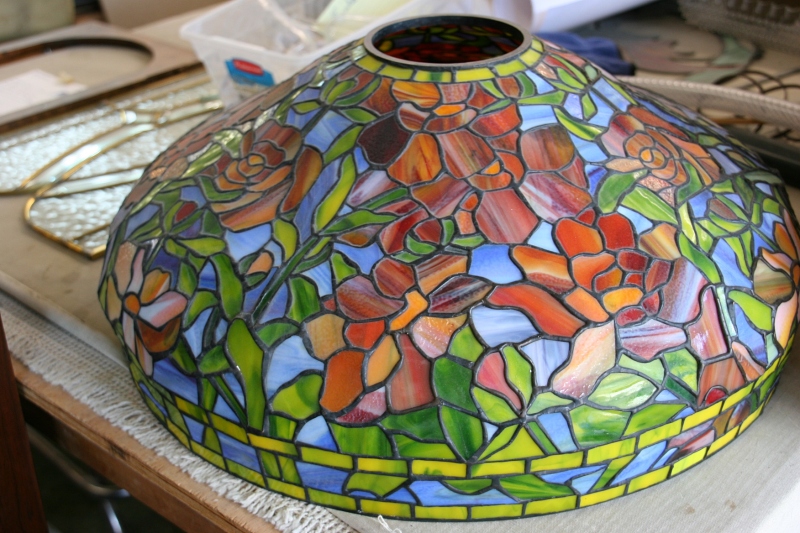
Mike also collects and sells lamps like these showcased next to his photo.

Mike also collects and sells lamps like these showcased next to his photo.

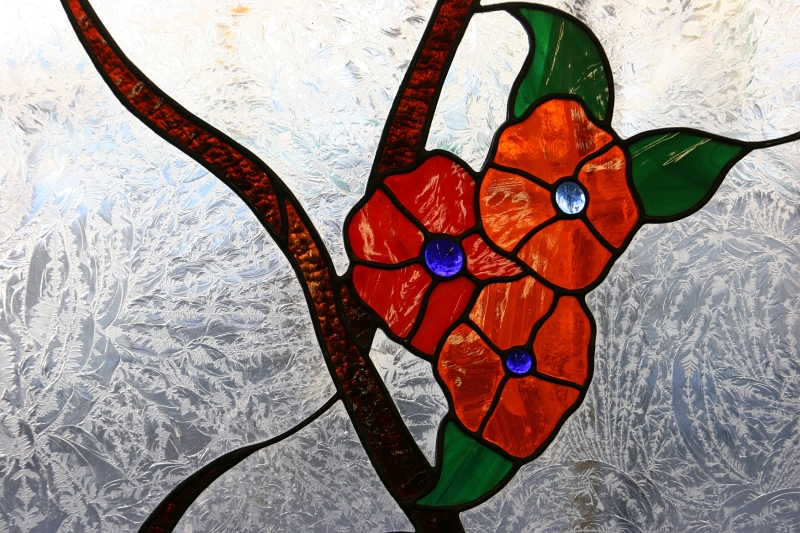
I loved this stained glass art on display.

I loved this stained glass art on display.

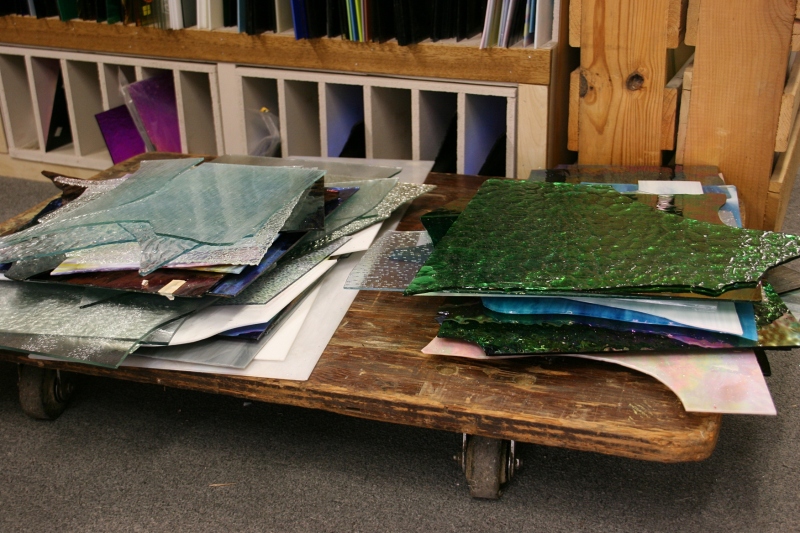
Salvaged glass.

Salvaged glass.

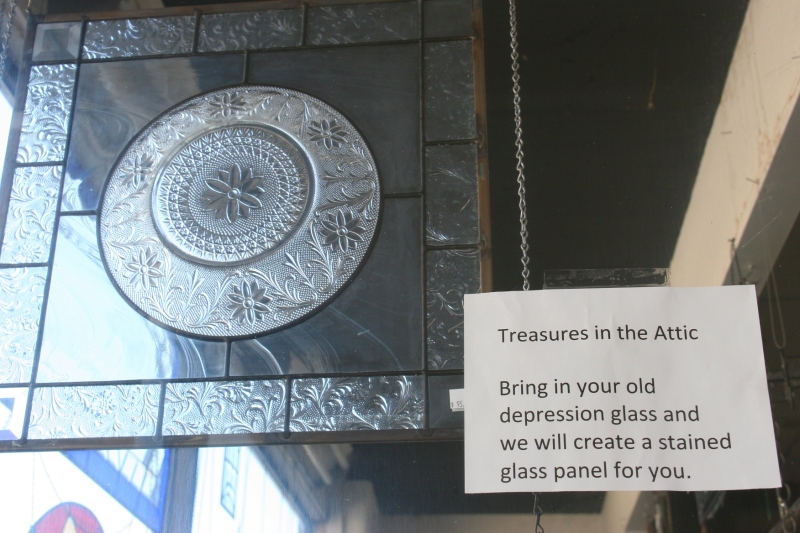
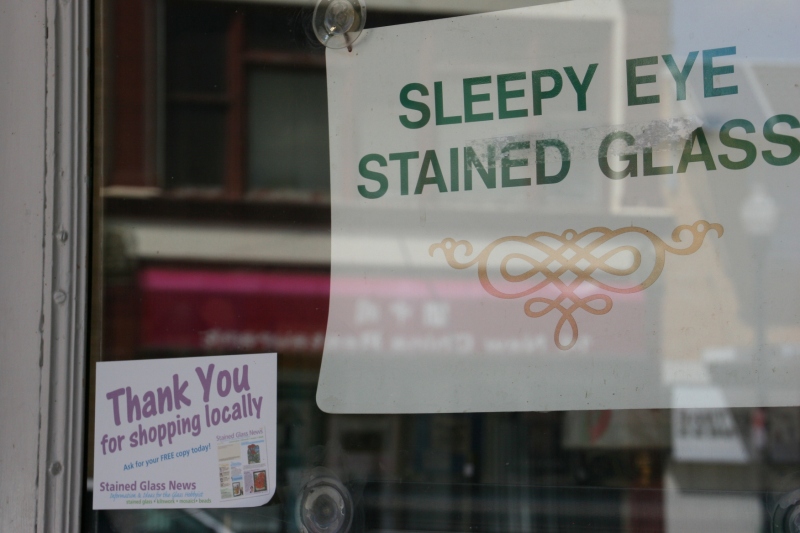
A sign in a window offers a creative option in stained glass.

A sign in a window offers a creative option in stained glass.

More beautiful stained glass, spotted on a table in the workshop.

More beautiful stained glass, spotted on a table in the workshop.

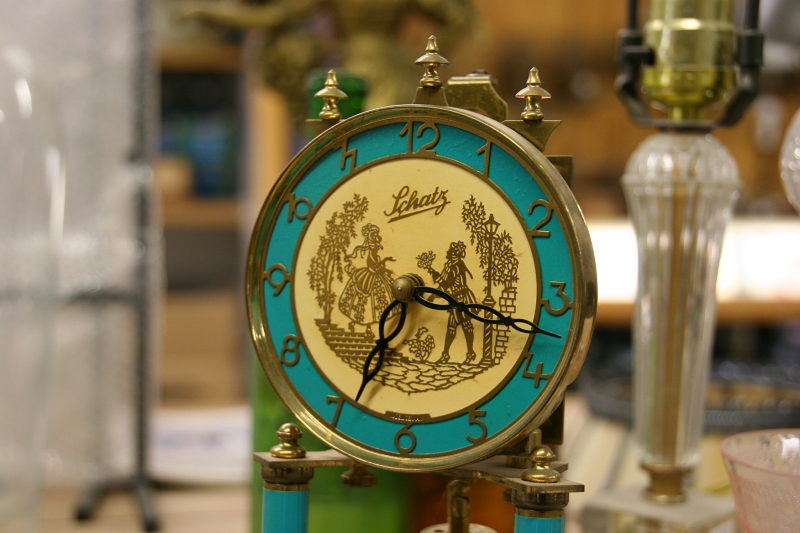
I also spotted some gorgeous tabletop clocks.

I also saw some gorgeous tabletop clocks.

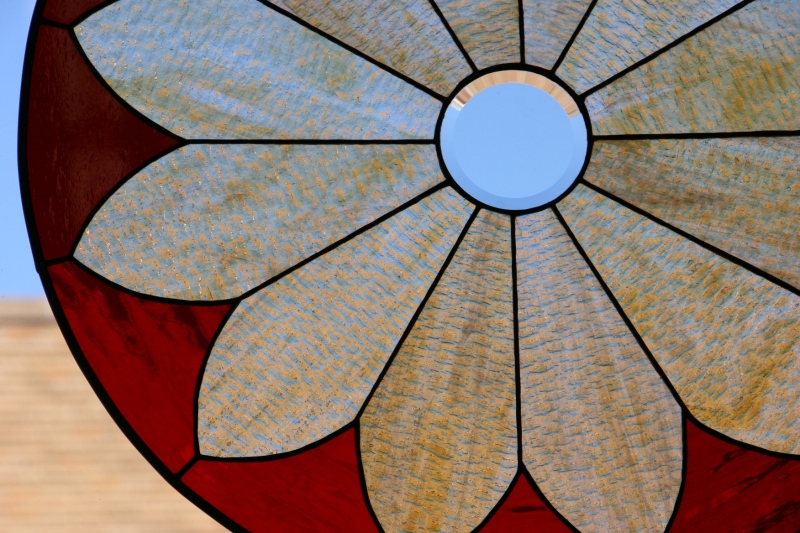
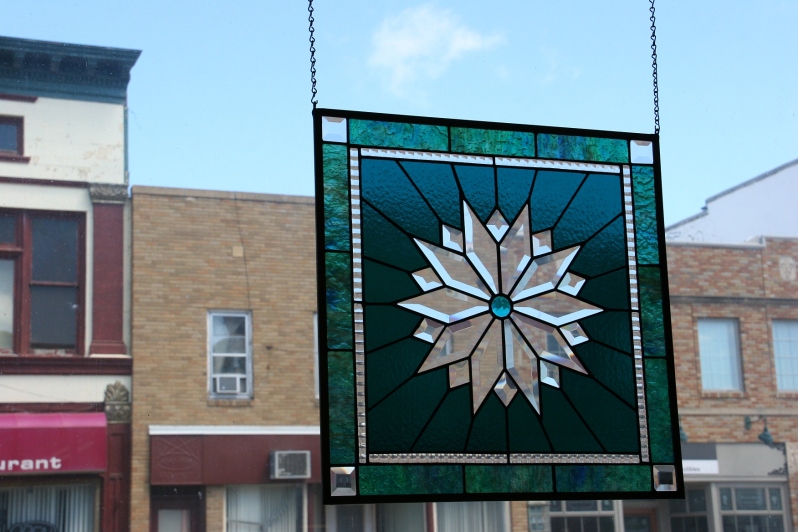
Hanging in the front window, sunlight really showcases the stained glass art.

Hanging in the front window, this stained glass art shines in natural light.

More beautiful art...

More beautiful art…


Stained glass, 75 signs on door

© Copyright 2016 Audrey Kletscher Helbling


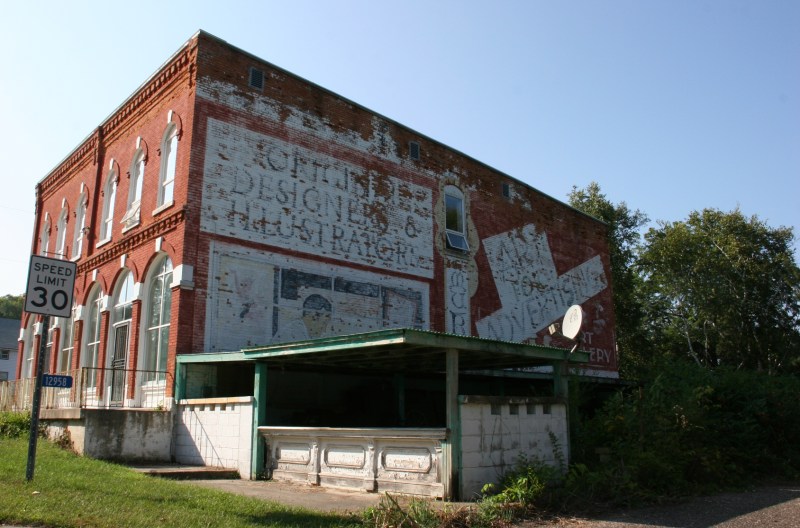
Murals & a myth at an historic mercantile in Weaver February 18, 2016

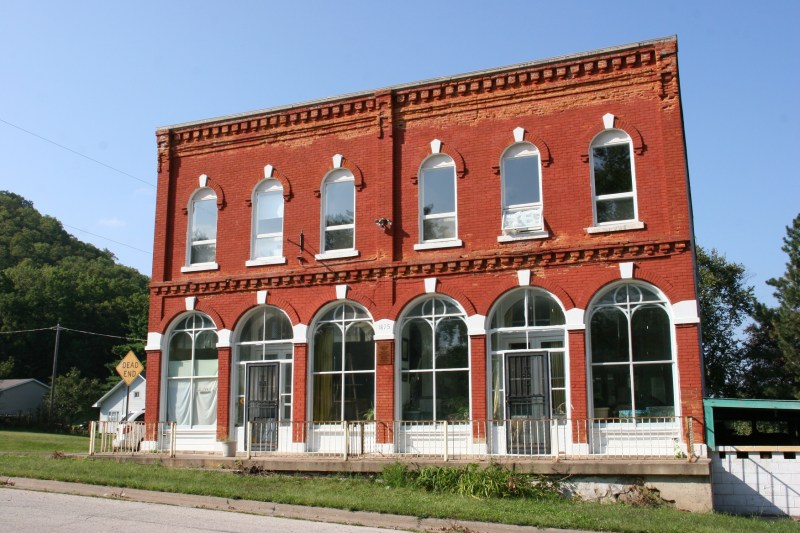
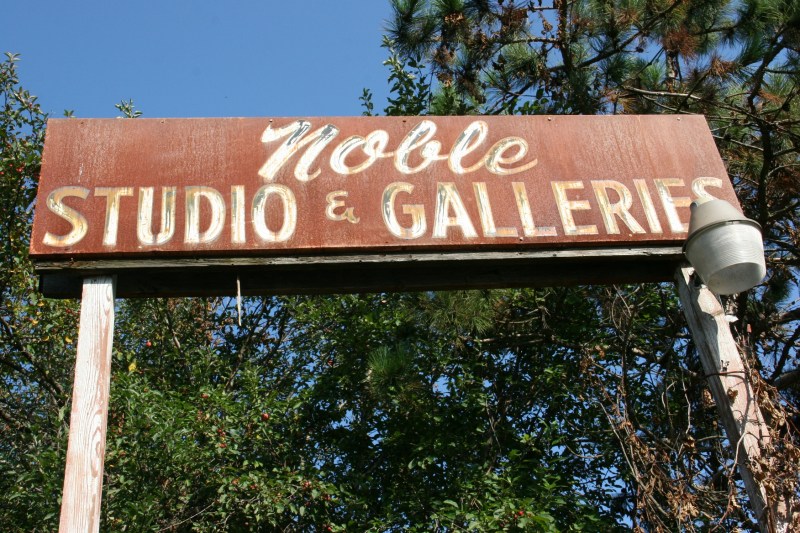
The historic former Weaver Mercantile Buiilding, once home to Noble Studio & Gallery.

The historic former Weaver Mercantile Building, once home to Noble Studio & Gallery.

AGED BUILDINGS, like one in Weaver just off U.S. Highway 61 in southeastern Minnesota, intrigue me. Initially, the architecture and photographic opportunities draw me in. But then I start thinking about the history and the stories.

Carl and Marie Noble opened Noble Studio & Gallery here in 1955.

Carl and Marie Noble opened Noble Studio & Galleries here in 1955.

As luck would have it, a local was jogging down the street toward the former Weaver Mercantile when I happened upon the historic building during an early September get-away. She tipped me off that the building last housed an art gallery. Signage confirmed that. The current owner, she added, lives on the second floor.

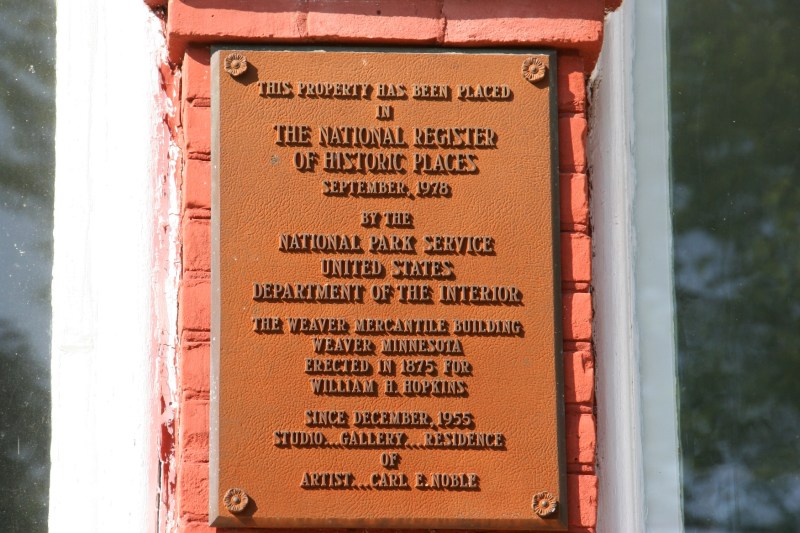
Historic designation came six years after Carl Noble's death.

Historic designation came six years after Carl Noble’s death.

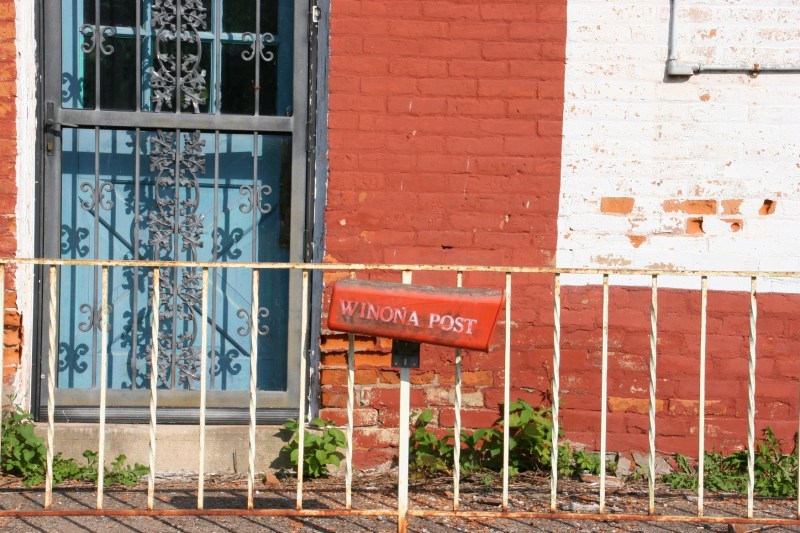
The young woman also expressed her dream of someday transforming the place into a winery. She and her husband, she said, make wine from black caps growing wild on the hillside behind their Weaver home. Then she continued on her run through this unincorporated village of some 50 residents and I continued my exterior photographic exploration of this building listed on the National Register of Historic Places. According to the 1978 nomination for historic designation, the building is a “well-preserved example of commercial architecture in the Mississippi River Valley.” Hardware, groceries and dry goods were once sold in the first floor of Weaver Mercantile while furniture was sold on the upper floor. Additionally, the building housed the Weaver Post Office for many years.

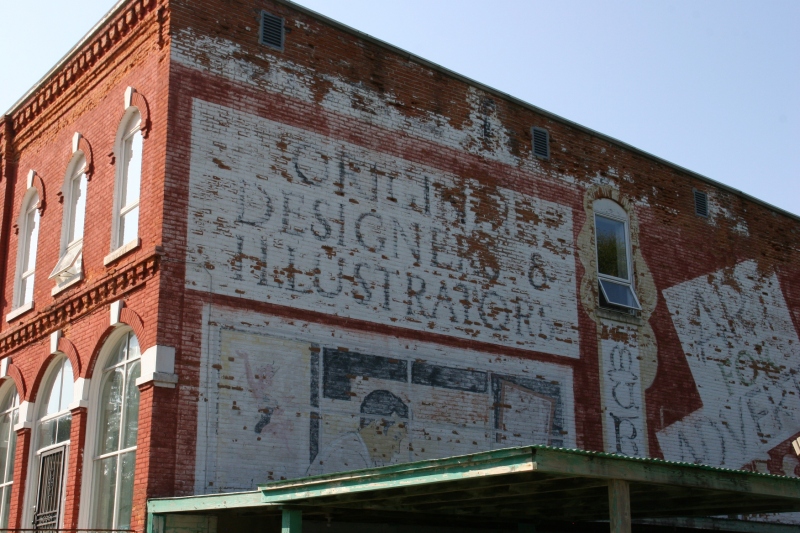
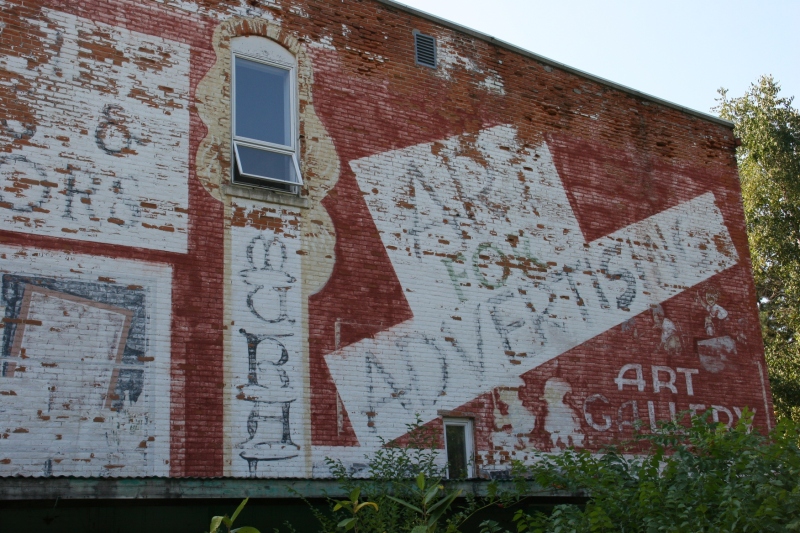
A mural on the east side of the building denotes this as an artist's haven. Cannot you decipher the first word for me?

A mural on the east side of the building denotes this as an artist’s haven. Can you decipher the first word in the top portion, left?

Wanting to know more, I continued my internet search. In 1955, artist Carl E. Noble claimed this place as Noble Studio & Galleries (his home, studio and gallery). He died in 1972. An obituary for his widow, Marie Noble, who died 11 years ago, yielded the most information.

More signage toward the back of the building.

More signage toward the back of the building promotes Noble’s art.

Carl was, by the few accounts I found, an artist for the Federal Art Project of the Work Projects Administration in 1938. His name is listed among photos of FAP art in the Archives of American Art at the Smithsonian Institution.

Another view of Carl and Marie Noble's studio and galleries.

Another view of Carl and Marie Noble’s studio and galleries.

A muralist, cartoonist, illustrator and portrait artist, Carl Noble reportedly studied under Norman Rockwell (according to his wife Marie’s obit). I’ve been unable to verify that via a second source. However, the Nobles lived for awhile in Boston; Rockwell made his home in Stockbridge, MA.

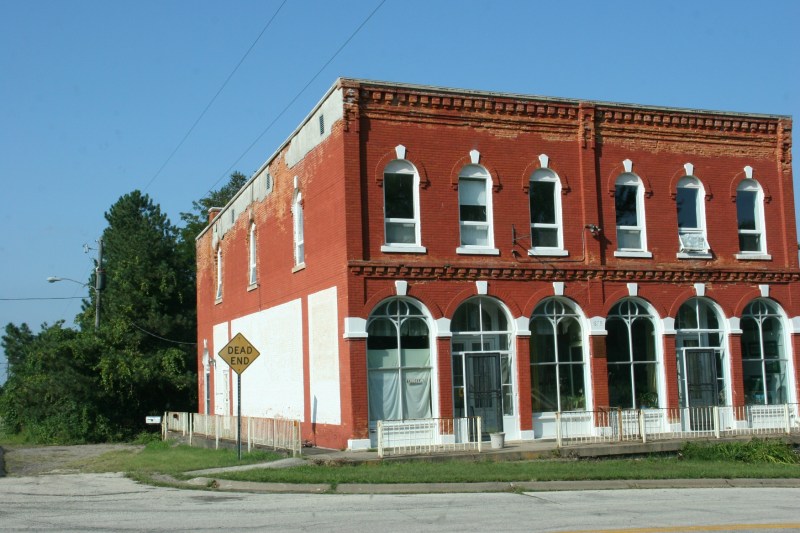
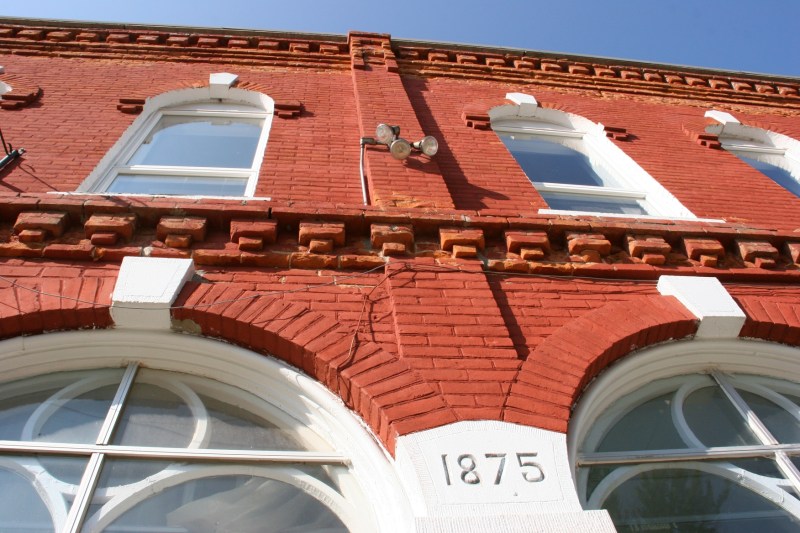
The building was constructed in 1875 and opened as Weaver Mercantile.

The building was constructed in 1875 and opened as Weaver Mercantile.

I discovered that Carl painted six oil on canvas murals for Fire House, Southside Hose Co. No. 2 in Hempstead, New York, in 1938. The artwork depicts the history of local firefighting. Other than that, I’ve been unable to find other information of his WPA art or work at Noble Studio & Galleries. The former gallery itself, though, apparently showcases Carl’s murals on interior walls. If only I could have gotten inside to see and photograph his artwork.

One can only imagine the fun times here as guests enjoyed Marie's hospitality.

One can only imagine the fun times here as guests enjoyed Marie’s hospitality.

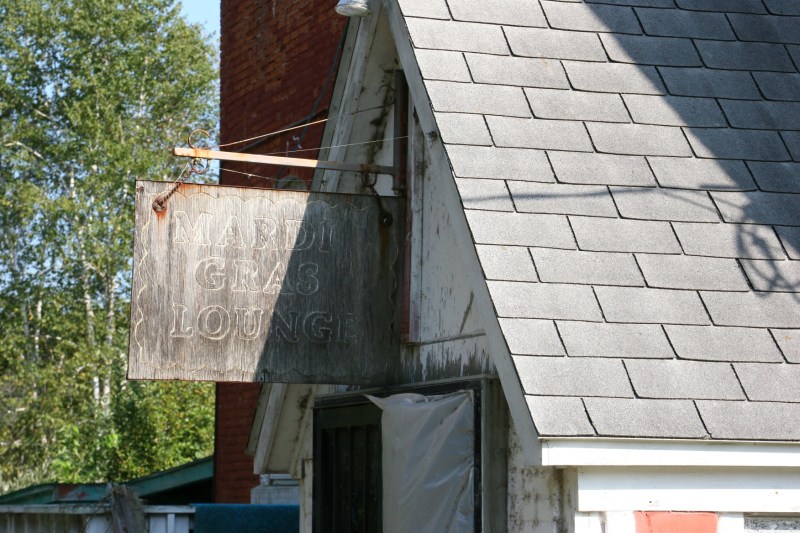
After her husband’s death in 1972, Marie opened a Bed & Breakfast in their home with a party area in the basement. That would explain the faded Mardi Gras Lounge sign above a back entry.

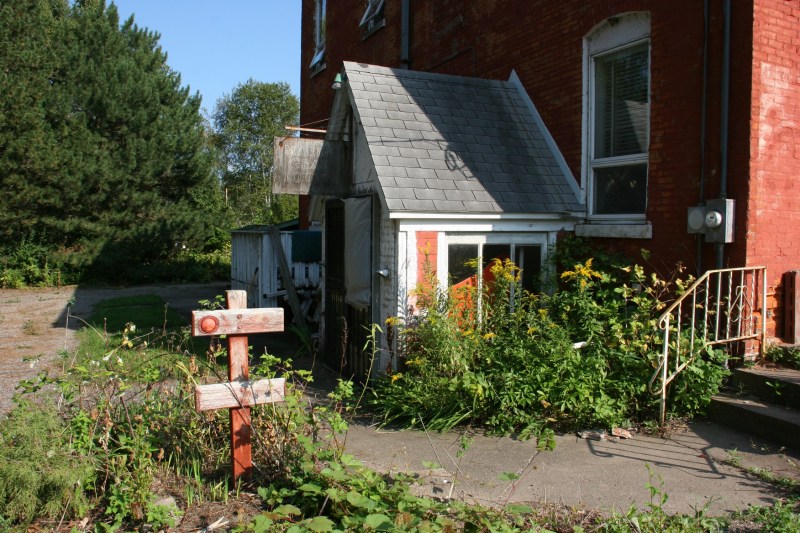
An overview of the Mardi Gras entry at the back of the building.

An overview of the Mardi Gras entry at the back of the building.

Marie reportedly regaled guests with stories, including that Jesse James robbed the Mercantile on his way to robbing the First National Bank in Northfield, Minnesota. Not believing everything I read, I contacted Mark Lee Gardner, noted historian, writer and musician on the western experience. He penned a book, Shot All to Hell: Jesse James, the Northfield Raid, and the Wild West’s Greatest Escape. He confirmed what I suspected. The story of the Weaver robbery is just that, a story.

Here’s Gardner’s response to my inquiry:

I’m afraid the story of Jesse robbing the building in Weaver, Minnesota, isn’t true. The Northfield Raid, as well as the known movements of the James-Younger gang, was heavily reported in the Minnesota newspapers at the time, and if they had been connected with a robbery in Weaver, it should appear in those papers. I never came across any mention of Weaver in my research. The other problem is that the gang didn’t go through Weaver on its way to Northfield. They are documented as having come from the west and south of Northfield.

…There are lots of Jesse James stories out there, and most of them are from someone’s imagination.

My first view of the former Weaver Mercantile and Noble Studio & Galleries.

My first view of the former Weaver Mercantile and Noble Studio & Galleries.

Still, none of this diminishes my appreciation for the Italianate style building in Weaver and my interest in the artists (Marie’s obit notes that she created many lovely paintings) who once lived and created therein.

The village of Weaver is located along U.S. Highway 61 north of Winona in Wabasha County.

The village of Weaver is located along U.S. Highway 61 north of Winona in Wabasha County.

IF YOU KNOW ANYTHING MORE about Carl and Marie Noble, their gallery and art or about the history of the building, I’d like to hear.

© Copyright 2015 Audrey Kletscher Helbling


Artwerk, Steve style September 11, 2014

Filed under: Uncategorized — Audrey Kletscher Helbling @ 6:00 AM
Tags: , , , , , ,

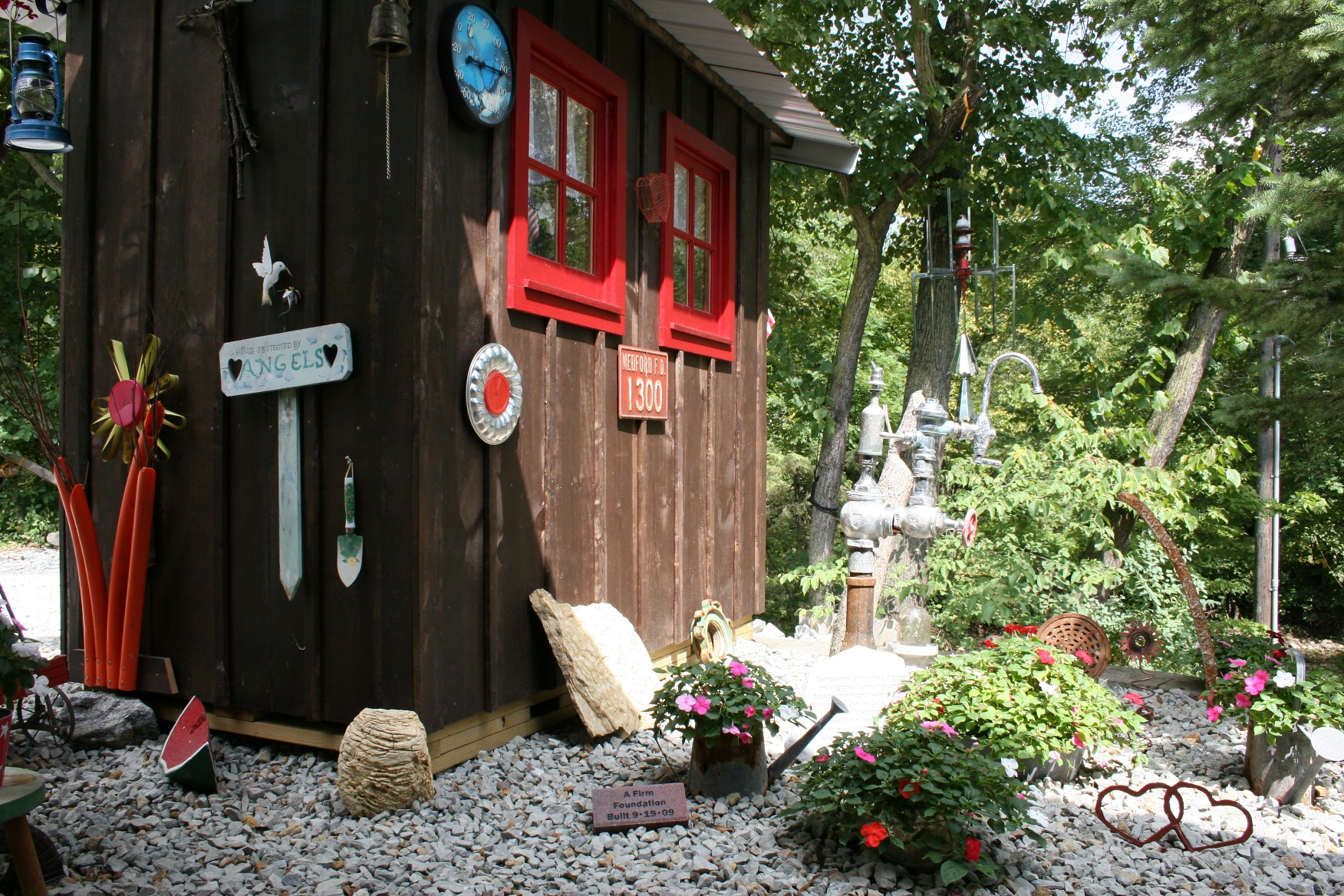
MY FRIEND STEVE, married to my friend Jackie, is an artist. Oh, he may not term himself as such and he prefers you call his creations artwerk rather than artwork. Seems more masculine, this bulk of a guy claims.

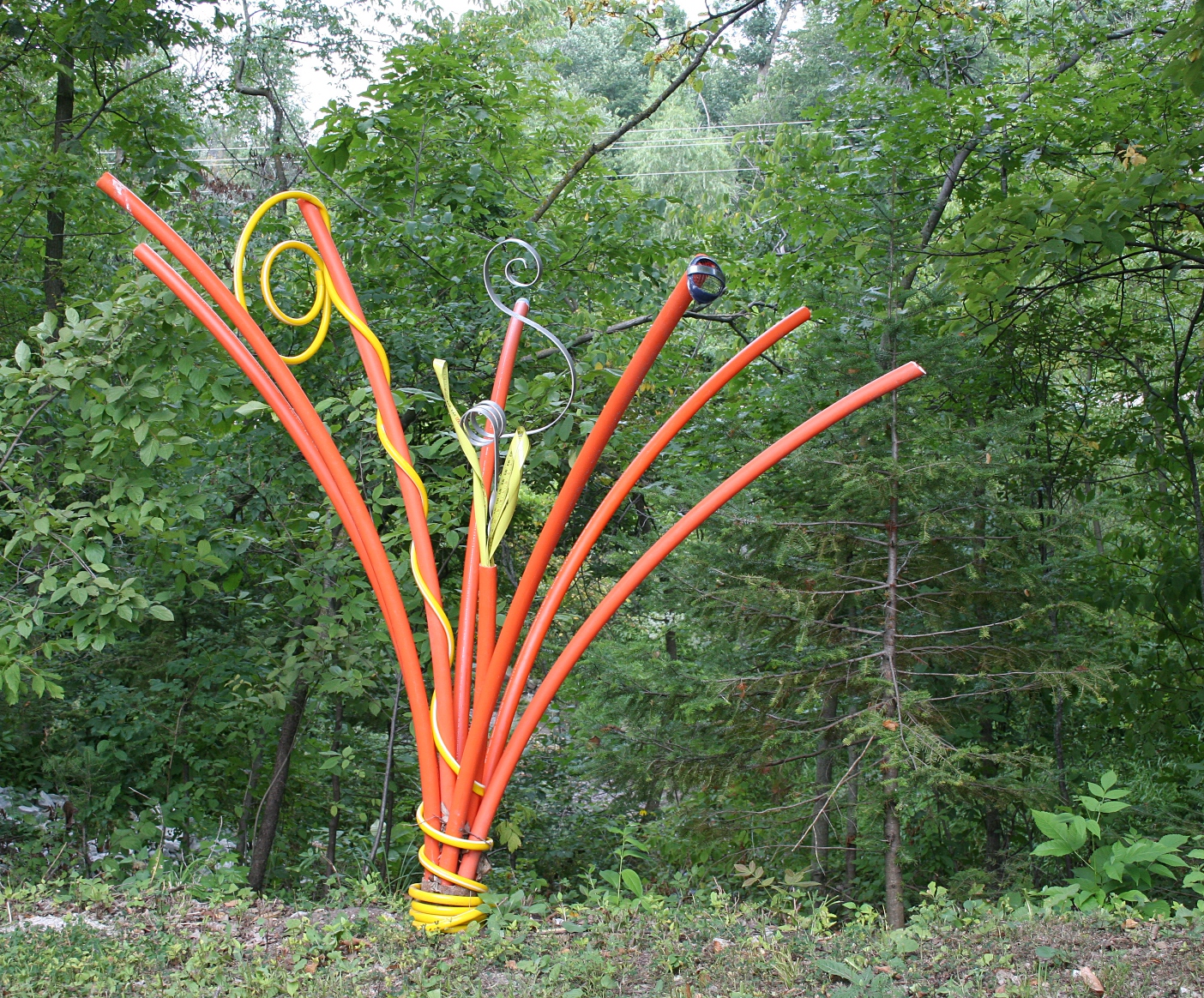
Conduit and pipes transformed into art for placement on Steve's wooded acreage.

Conduit, pipes and metal transformed into art for placement on Steve’s wooded acreage.

But I am 100 percent certain that the art Steve crafts from what many would term junk qualifies him as a bonafide artist. He’s even dumpster dived for art materials and salvaged items from scrap piles.
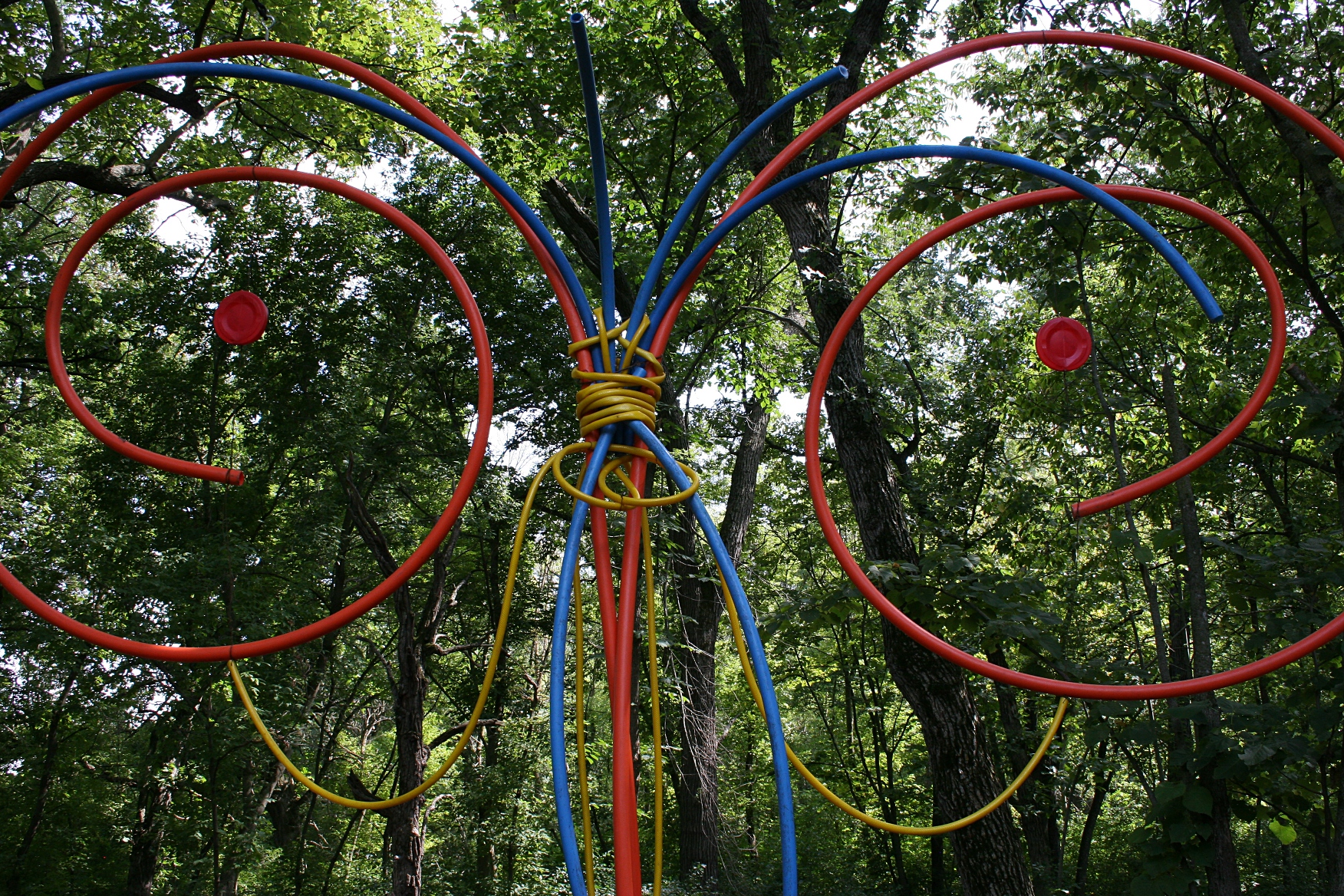
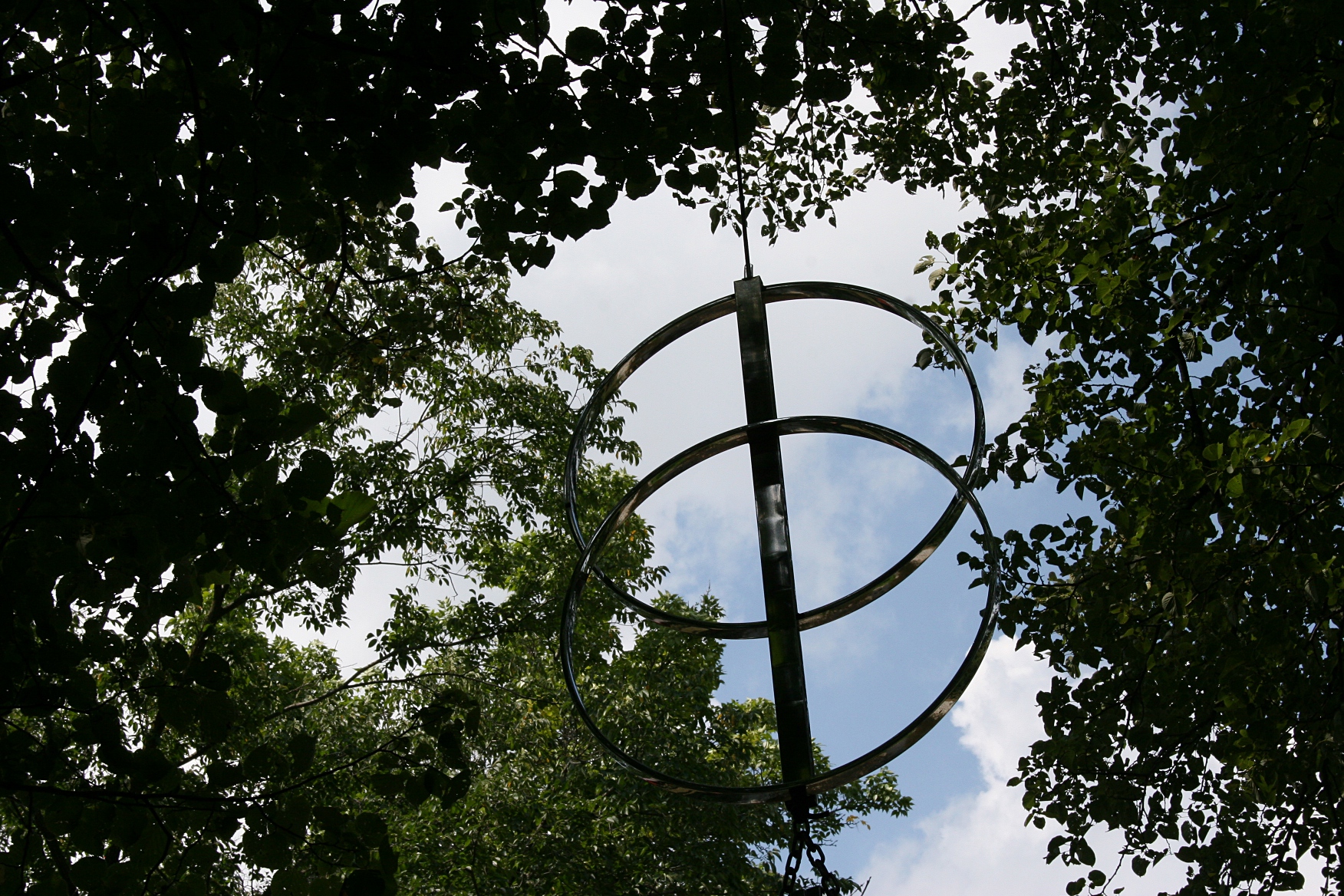
Circles and spirals appear often in Steve's art.

Circles and spirals appear often in Steve’s art.

For now this one-time welder pursues his art passion as a hobby. I’m convinced he could sell his pieces or create works on commission and have suggested such to him. He’s already selected a business name—Big “N” Ugly’s Iron Werks. Catchy. But Steve is certainly not ugly. If I remember correctly, the name relates to some crazy story from his past.

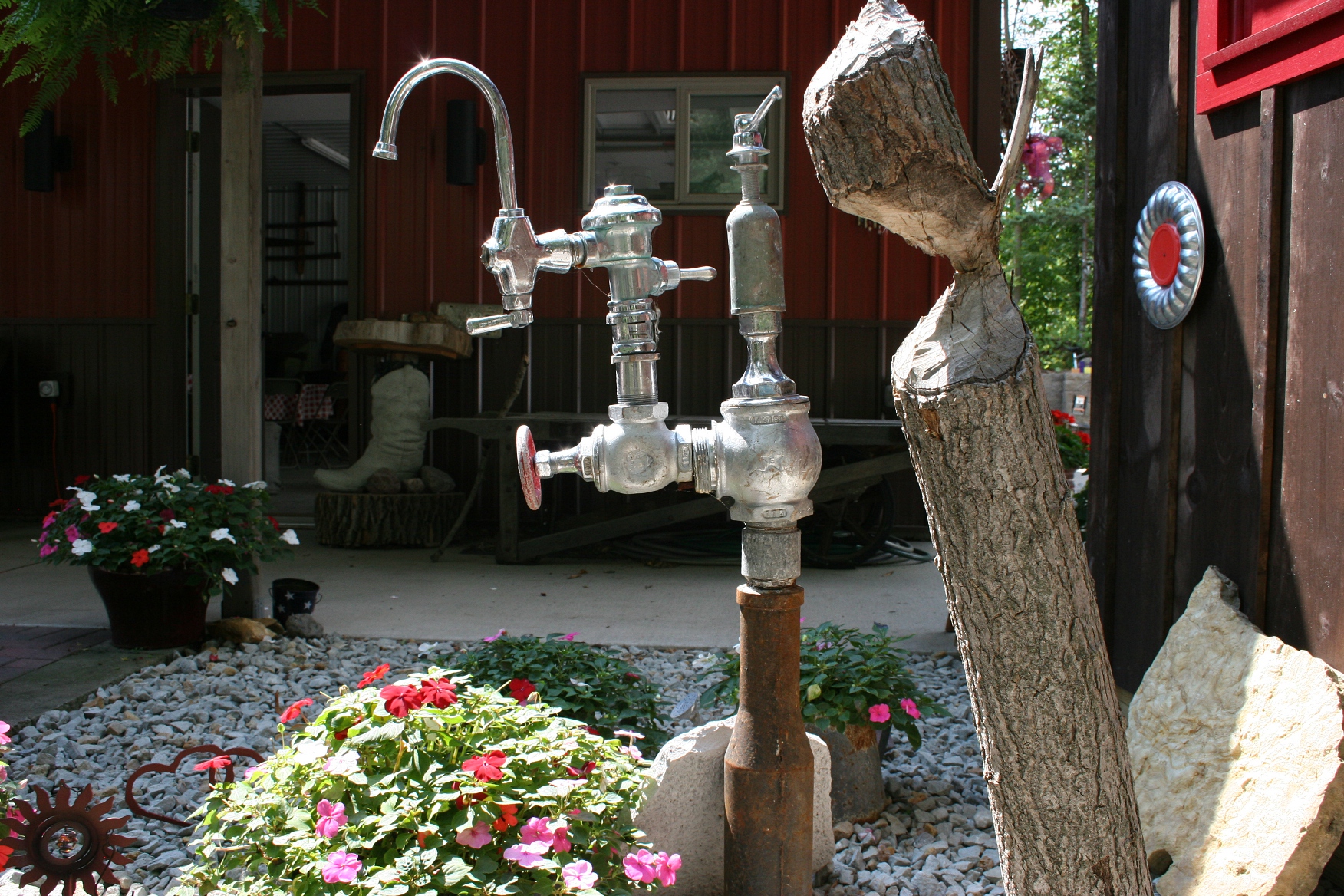
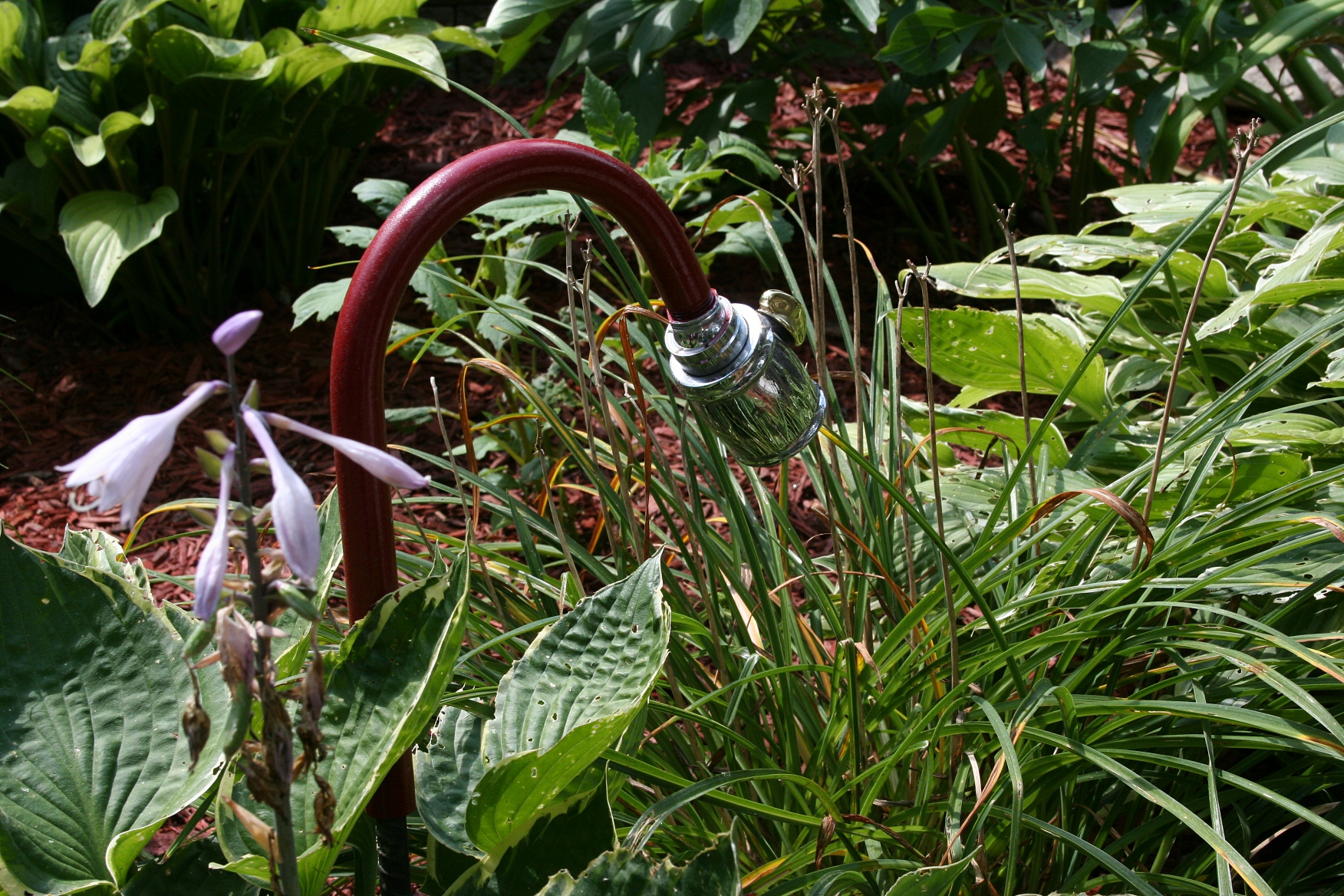
Discarded plumbing provides materials for art in a flower garden.

Discarded plumbing provides materials for art in a flower garden.

Jackie wishes this flowerbed faucet was functional.

Jackie wishes this flowerbed faucet art was functional.

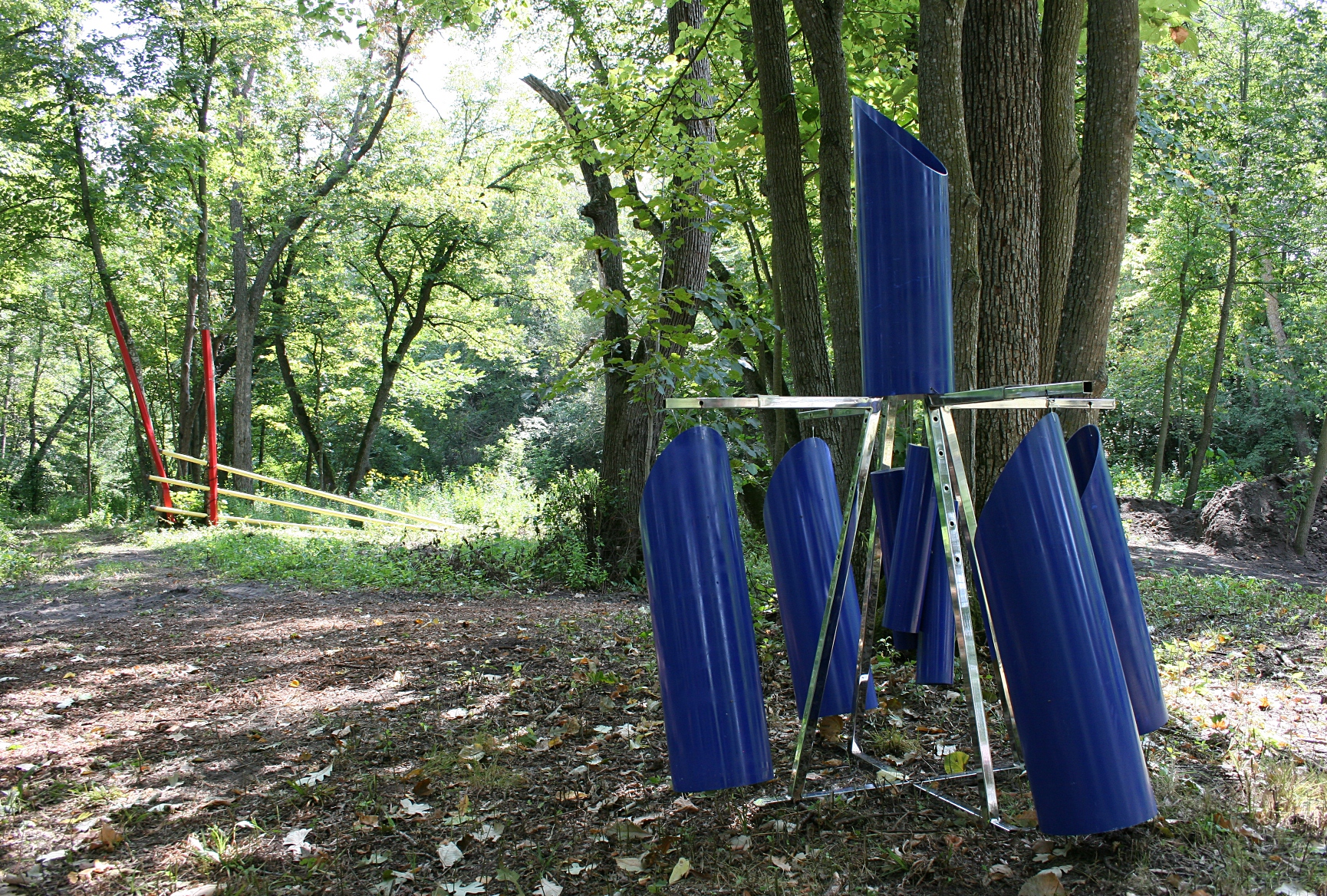
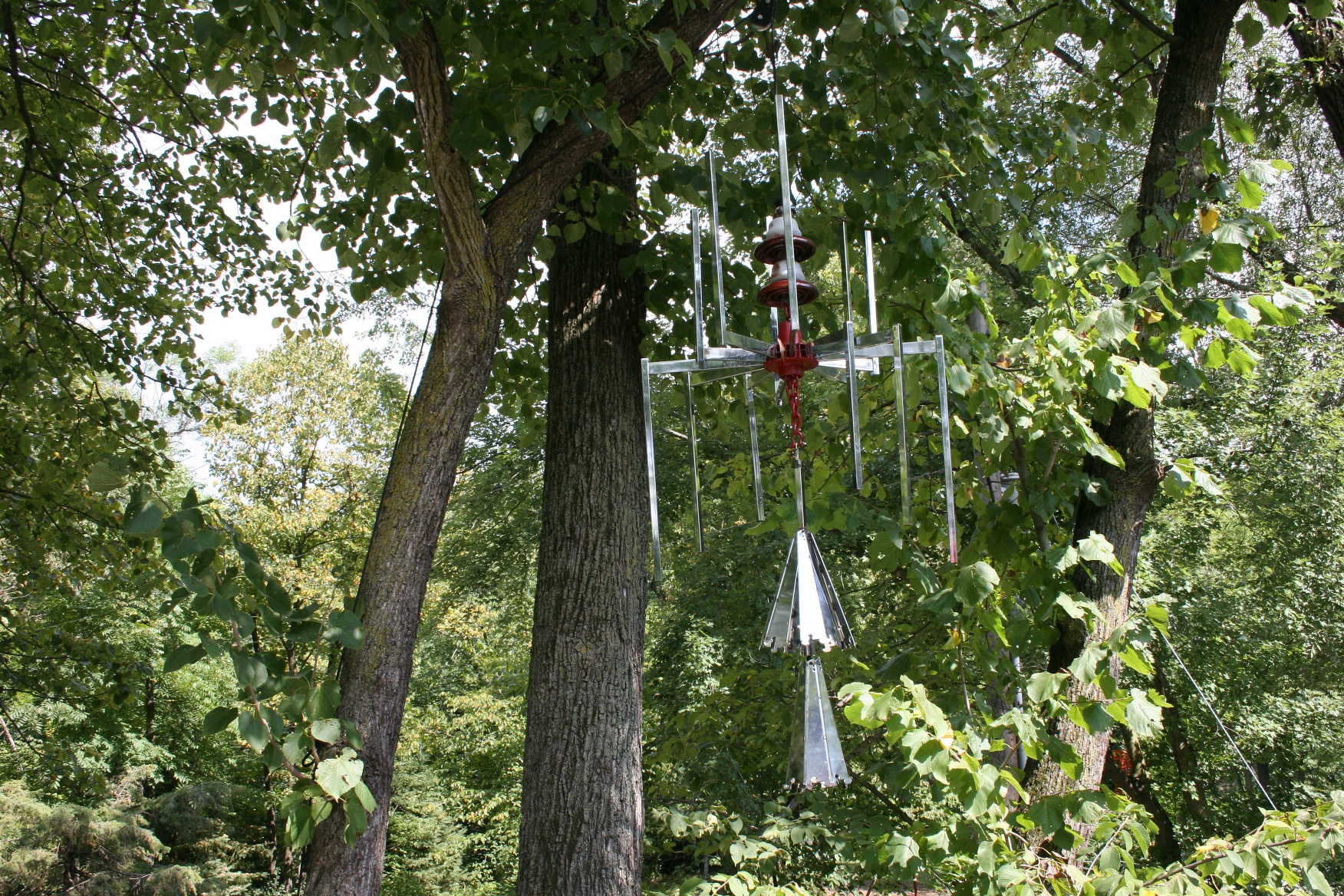
Oversized chimes crafted from discarded clothing racks (etc.) and strung high in a tree.

Oversized chimes crafted from discarded clothing racks (etc.) and strung high in a tree.

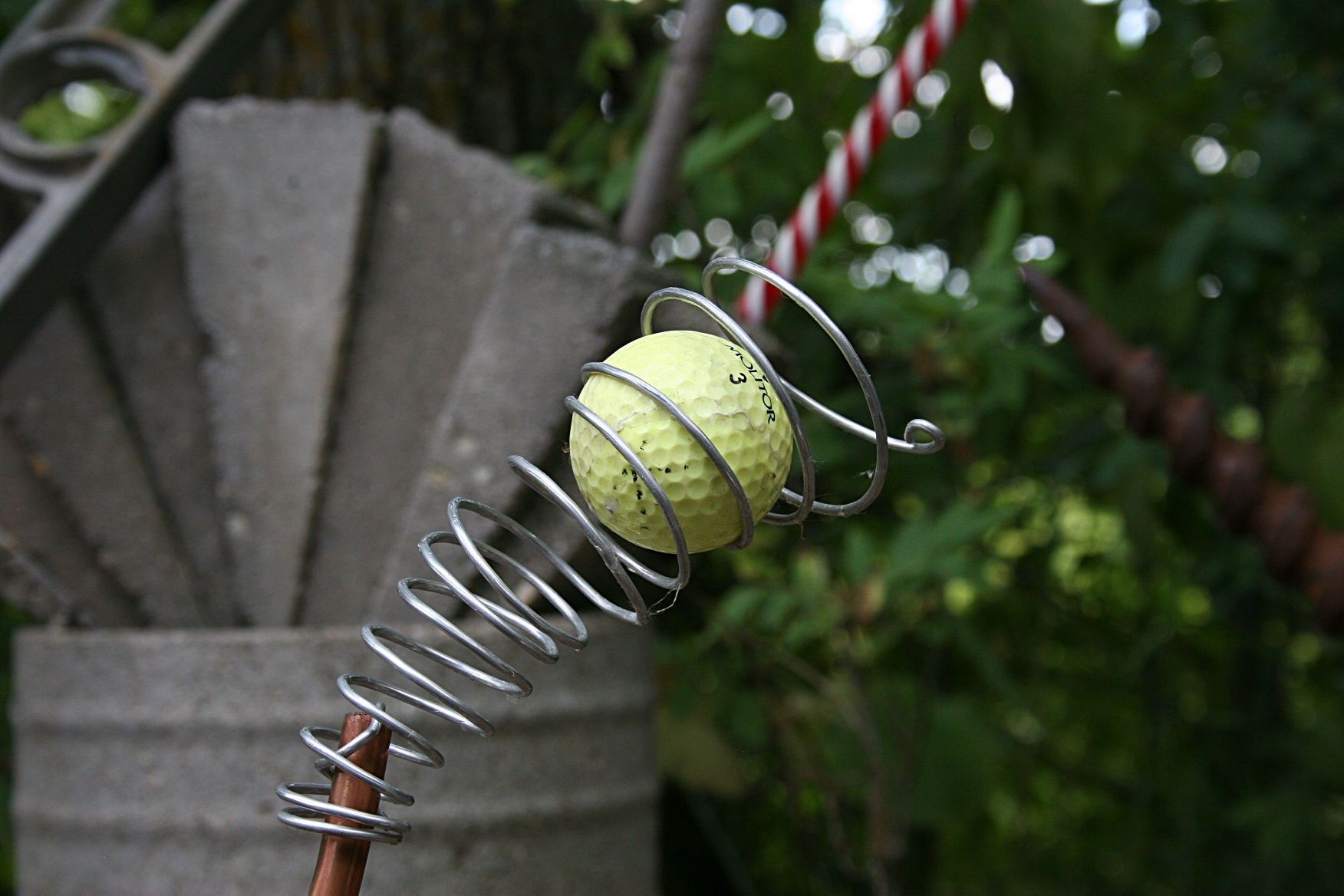
He’s transformed clothing racks, tape measures, a springform pan, old faucets, a grater, conduit and more into visual, and sometimes functional, art. The pieces are strategically placed on the couple’s wooded creekside property just off a quiet county road northeast of Medford. I love their land and many times have wished aloud that I desire to retreat here until all stress has exited my life.

Conduit turned art.

Conduit turned art.

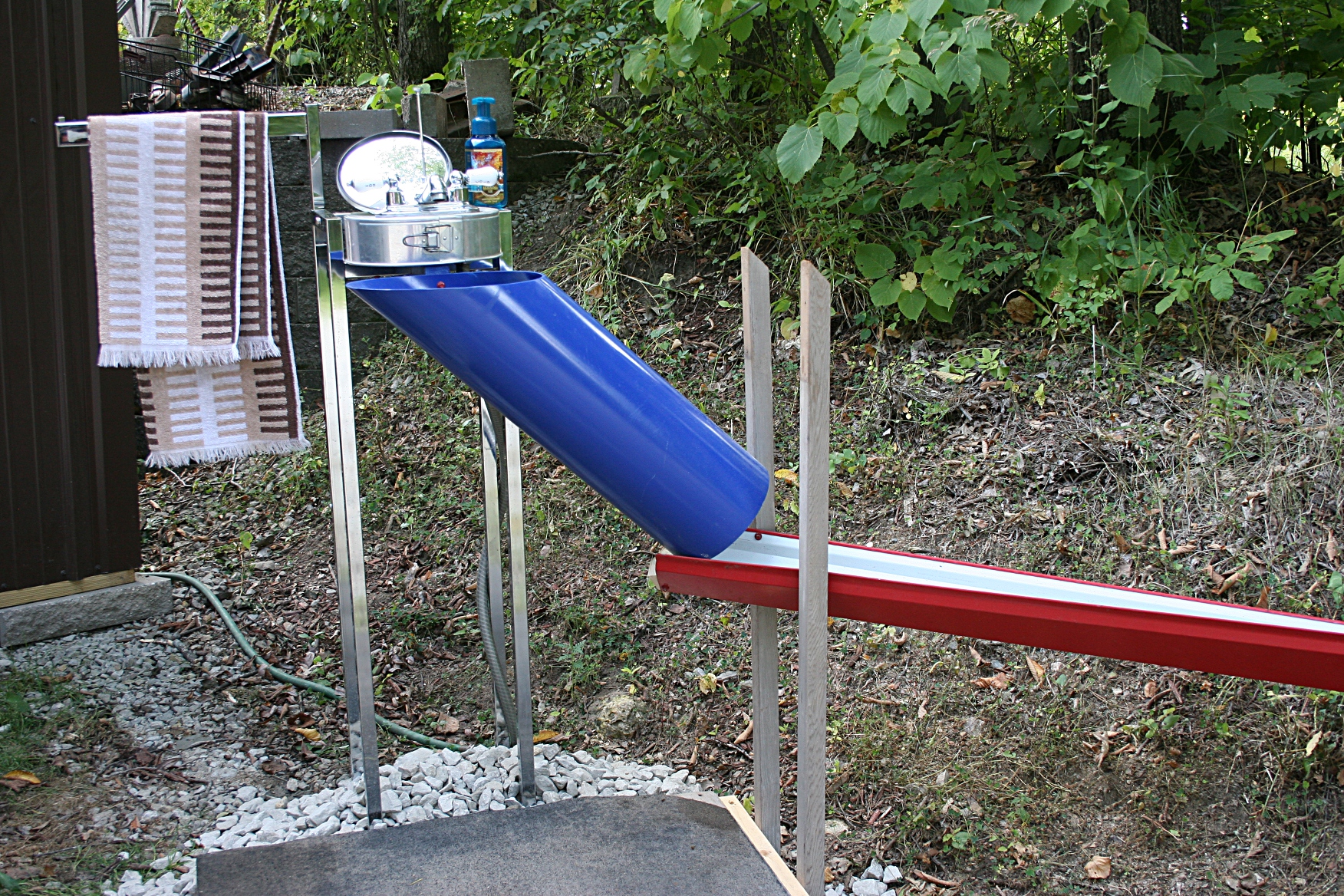
A portable outdoor functioning sink created with old faucets, springform pan, plastic pipes and more.

A portable outdoor functioning sink created with old faucets, springform pan, plastic pipes and more.

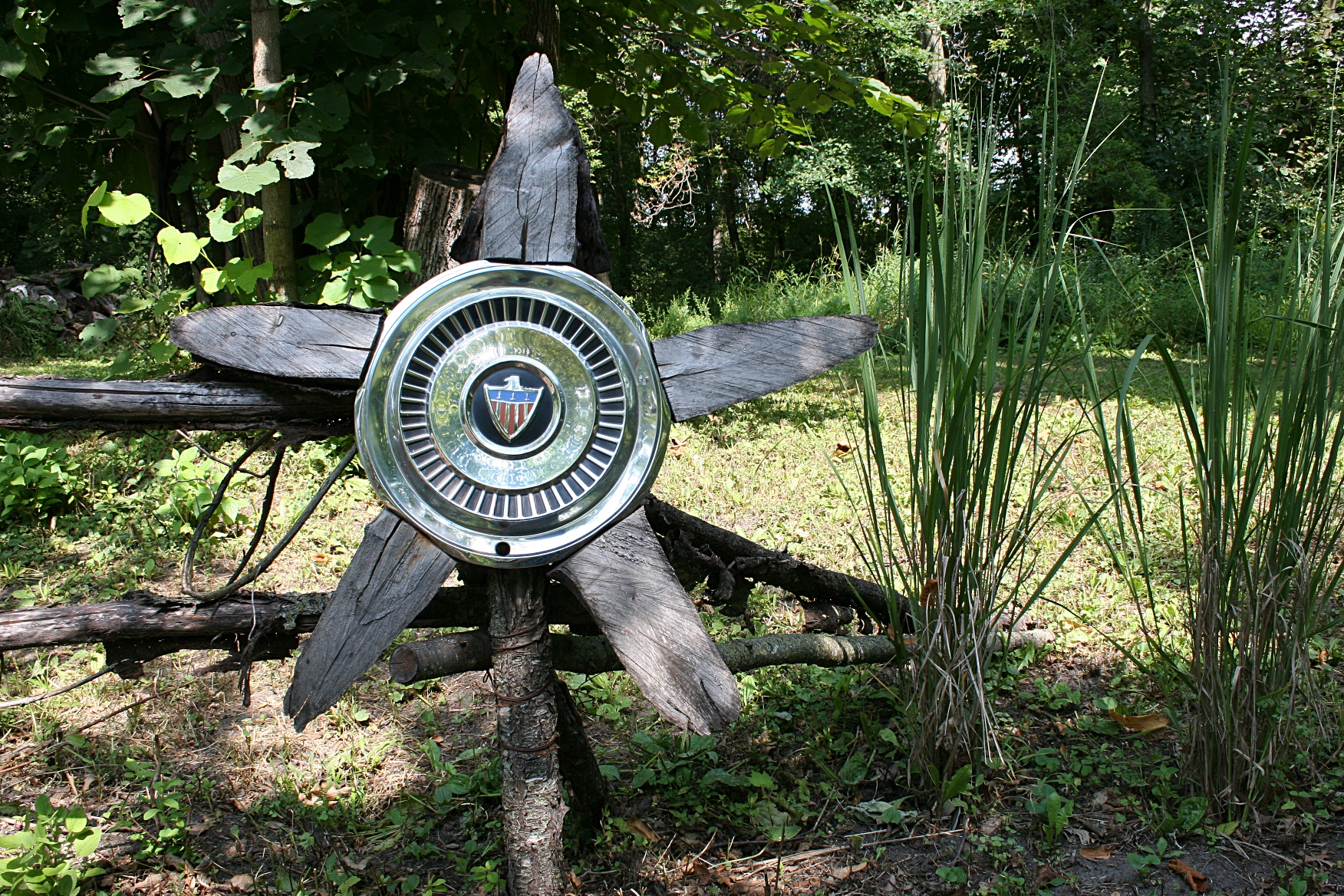
Fence art.

Fence art.

On a recent steamy summer Sunday afternoon, Steve and Jackie invited my husband and me to tour their outdoor sculpture garden featuring Steve’s vast collection of original art.

The close-up spirals on one of Steve's pieces.

The close-up spirals on one of Steve’s pieces.

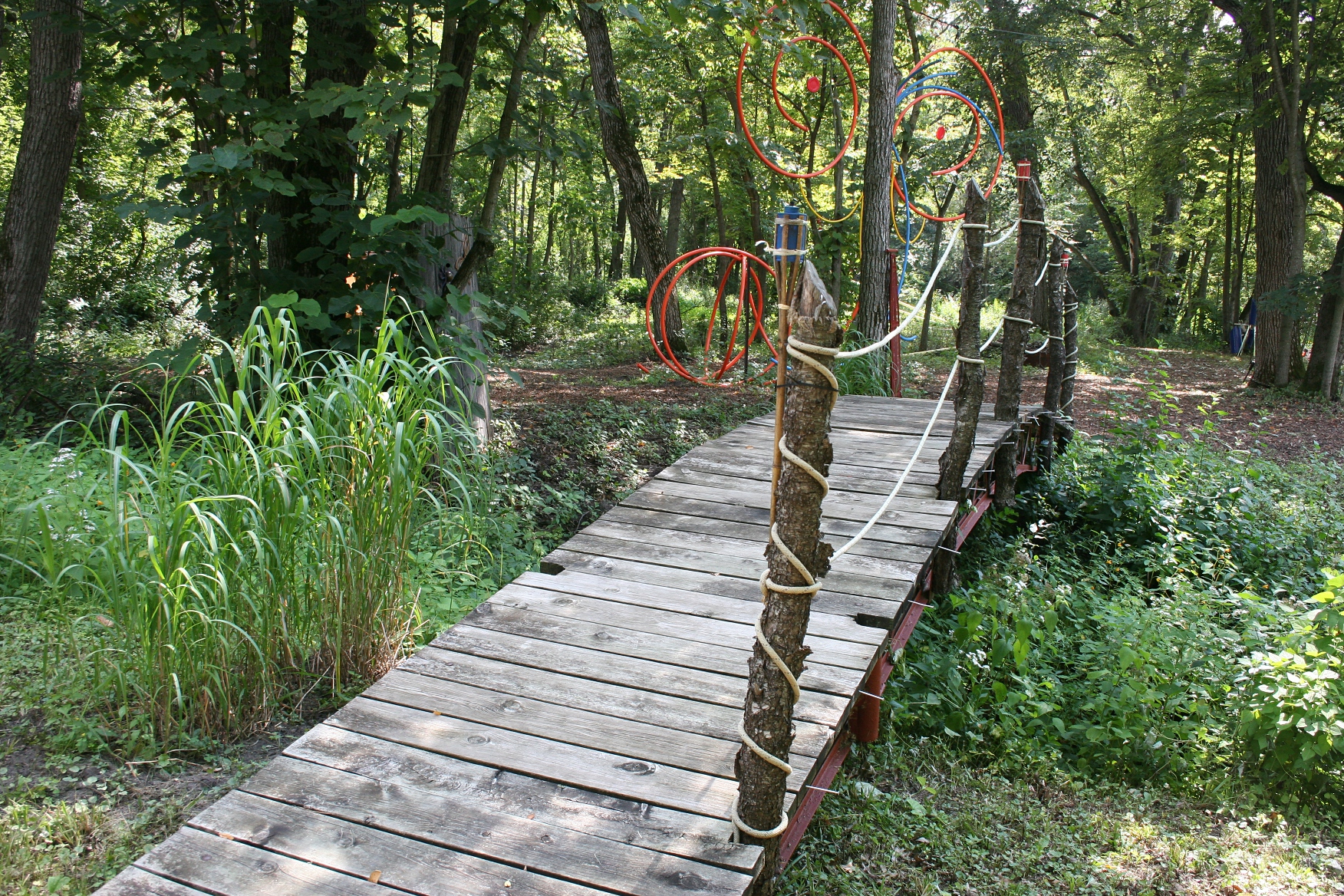
A full view of the same piece above and one of the bridges Steve built.

A full view of the same piece above and one of the bridges Steve built.

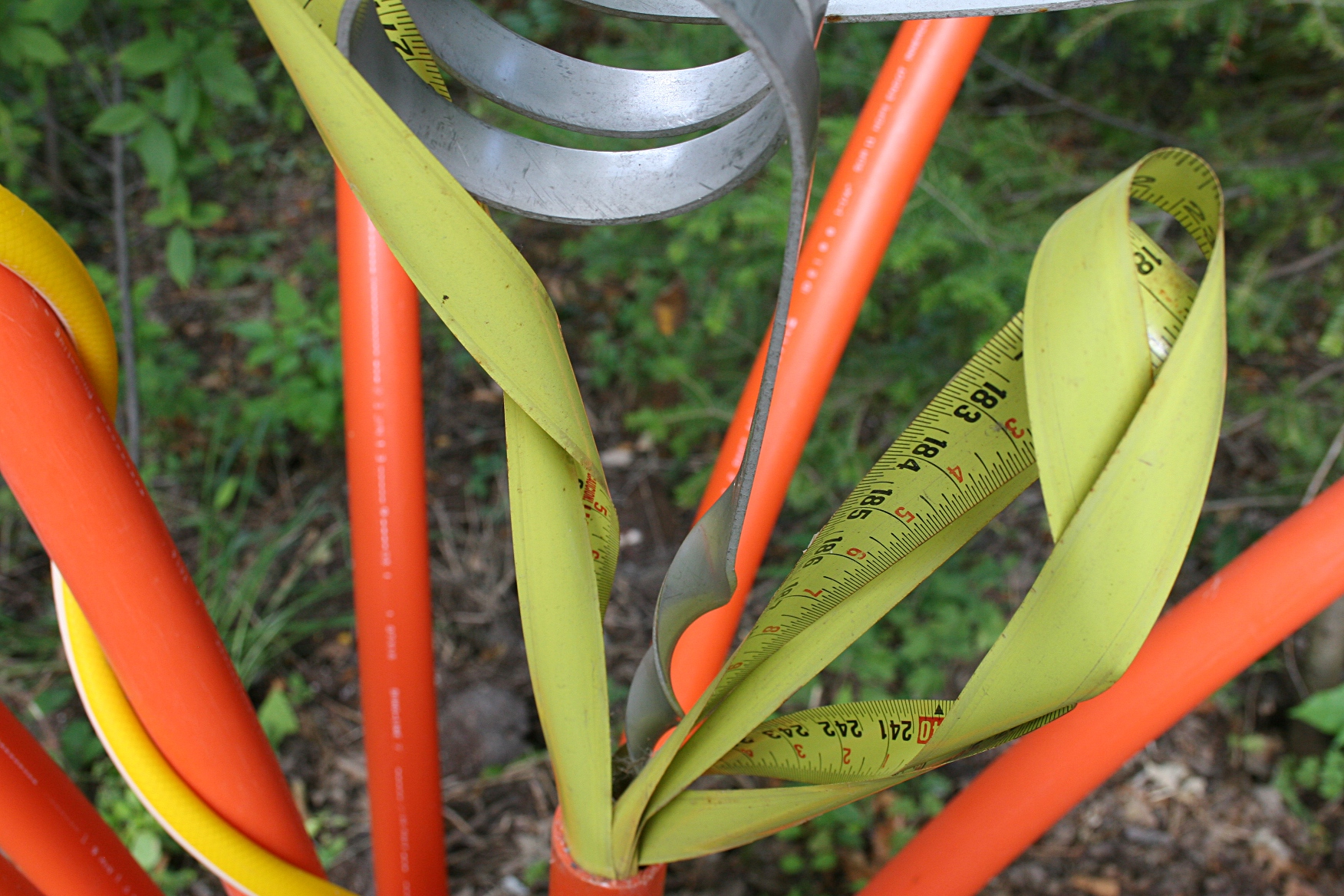
Even old tape measures are worked into his art.

Even old tape measures are worked into his art.

To view his pieces is to wonder how he can possibly come up with ideas to twist and shape and bend and sculpt cast-offs into abstract art that grabs your attention for its uniqueness, cleverness and artsy appeal.

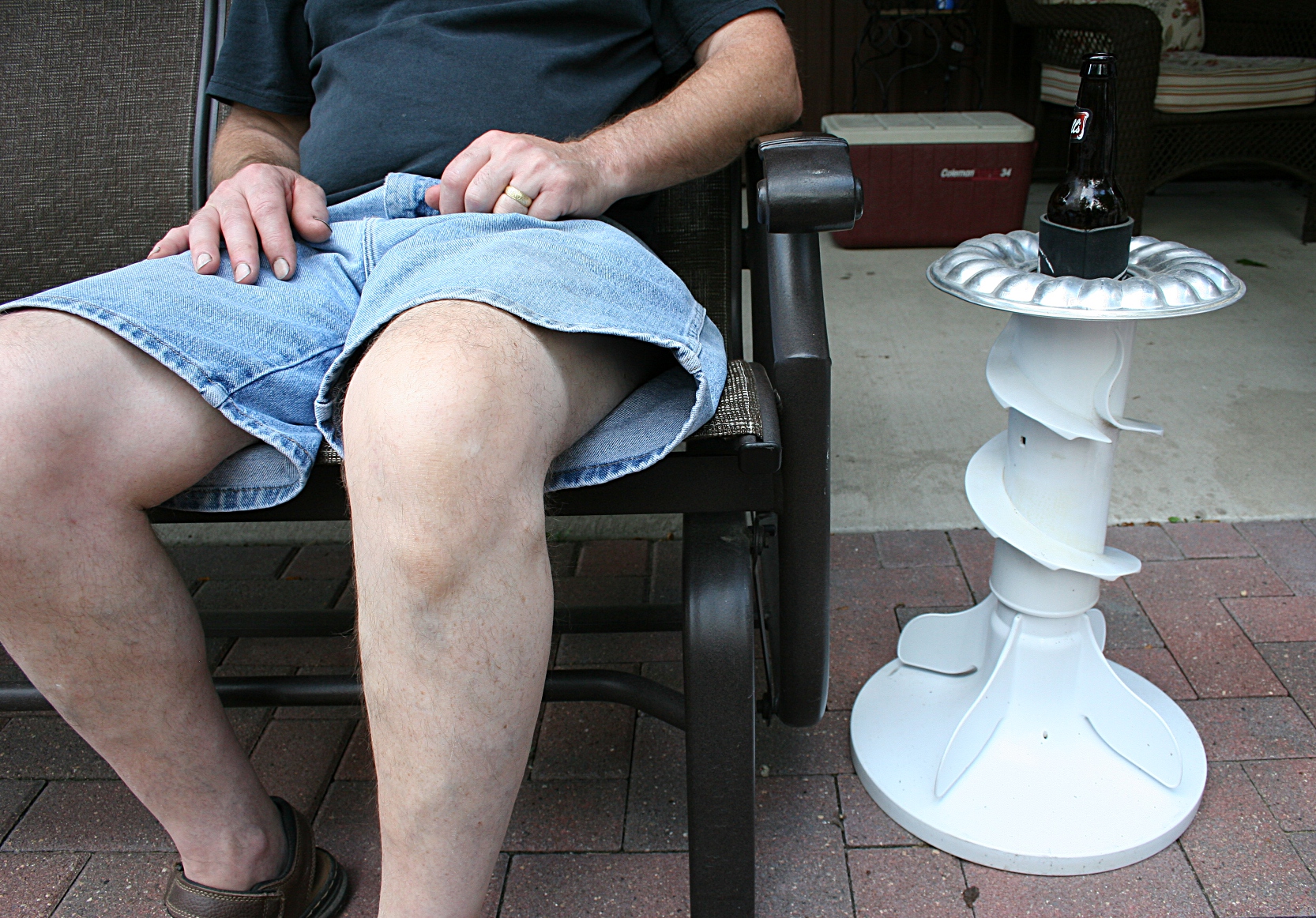
A practical use for an otherwise useless washer agitator, repurposed as a beverage holder.

A practical use for an otherwise useless washer agitator, repurposed as a beverage holder.

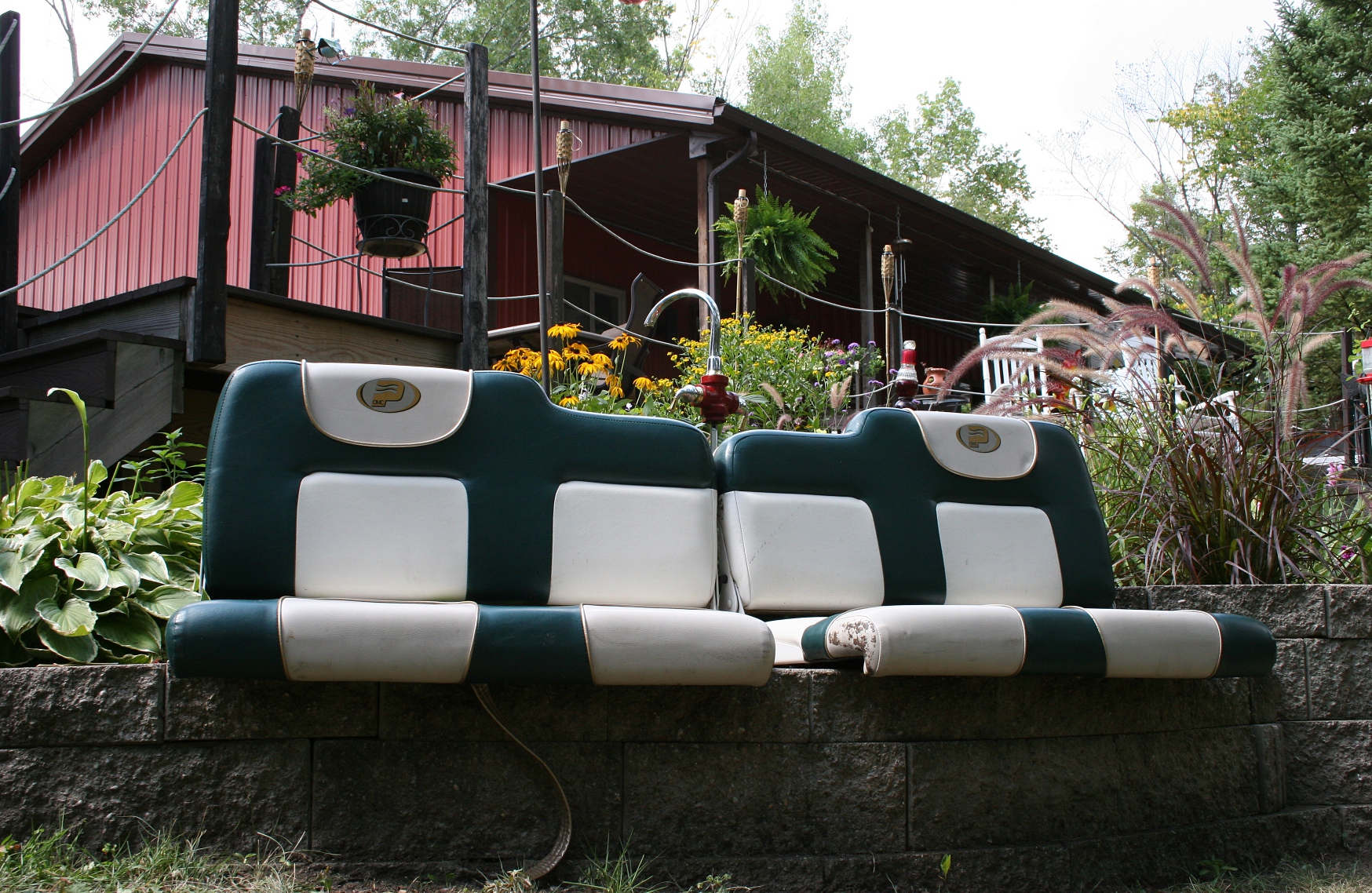
Boat seats repurposed as a seating area on a retaining wall.

Boat seats repurposed as a seating area on a retaining wall.

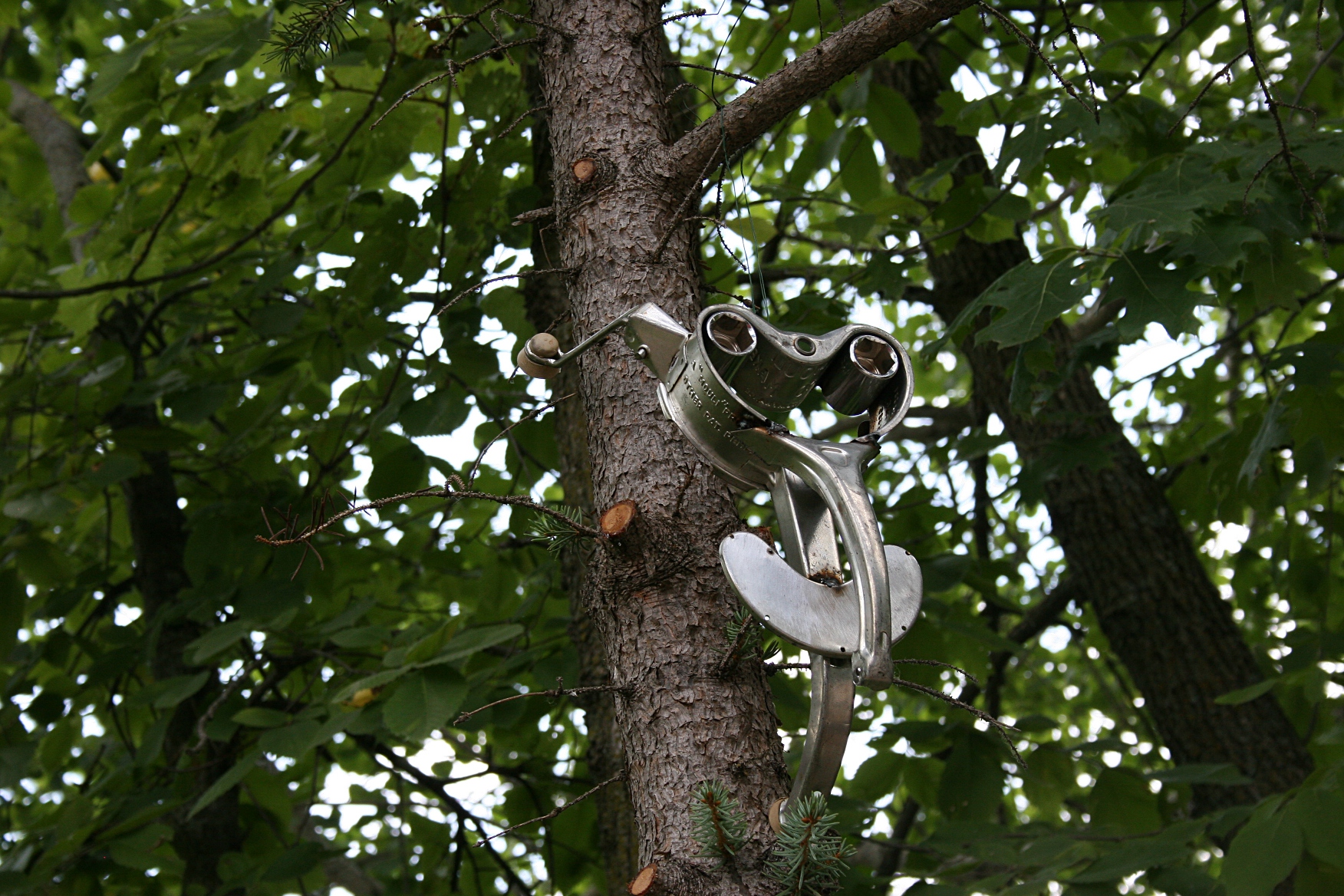
Who thinks of using a vintage meat grinder for art, then suspending it in a tree? Steve.

Who thinks of using a vintage grinder for art, then suspending it in a tree? Steve.

Talk to Steve about his artwerk and you hear his unbridled enthusiasm. This is what he’s meant to do. To create. Artwerk.

Steve has built several of these sheds, this one graced with some of the art he's crafted.

Steve has built several of these sheds, this one graced with some of the art he’s crafted.

Seriously, how does one shape barbed wire into a ball?

Seriously, how does one shape barbed wire into a ball?

A snippet of an art piece dangling high in the trees.

A snippet of an art piece dangling high in the trees.

FYI: If you are interested in purchasing Steve’s art or having him create a piece on commission, let me know via a comment here or in an email (see my “about” page). I’m tapping Steve’s creative brain about a metal headboard from my childhood. Believe me, he can turn anything into art. Anything.

Steve did not want a photo of himself published, which is why you’re not seeing one here. I have one, but…I will honor his request.

© Copyright 2014 Audrey Kletscher Helbling


Garden art: In planting & in painting July 24, 2014

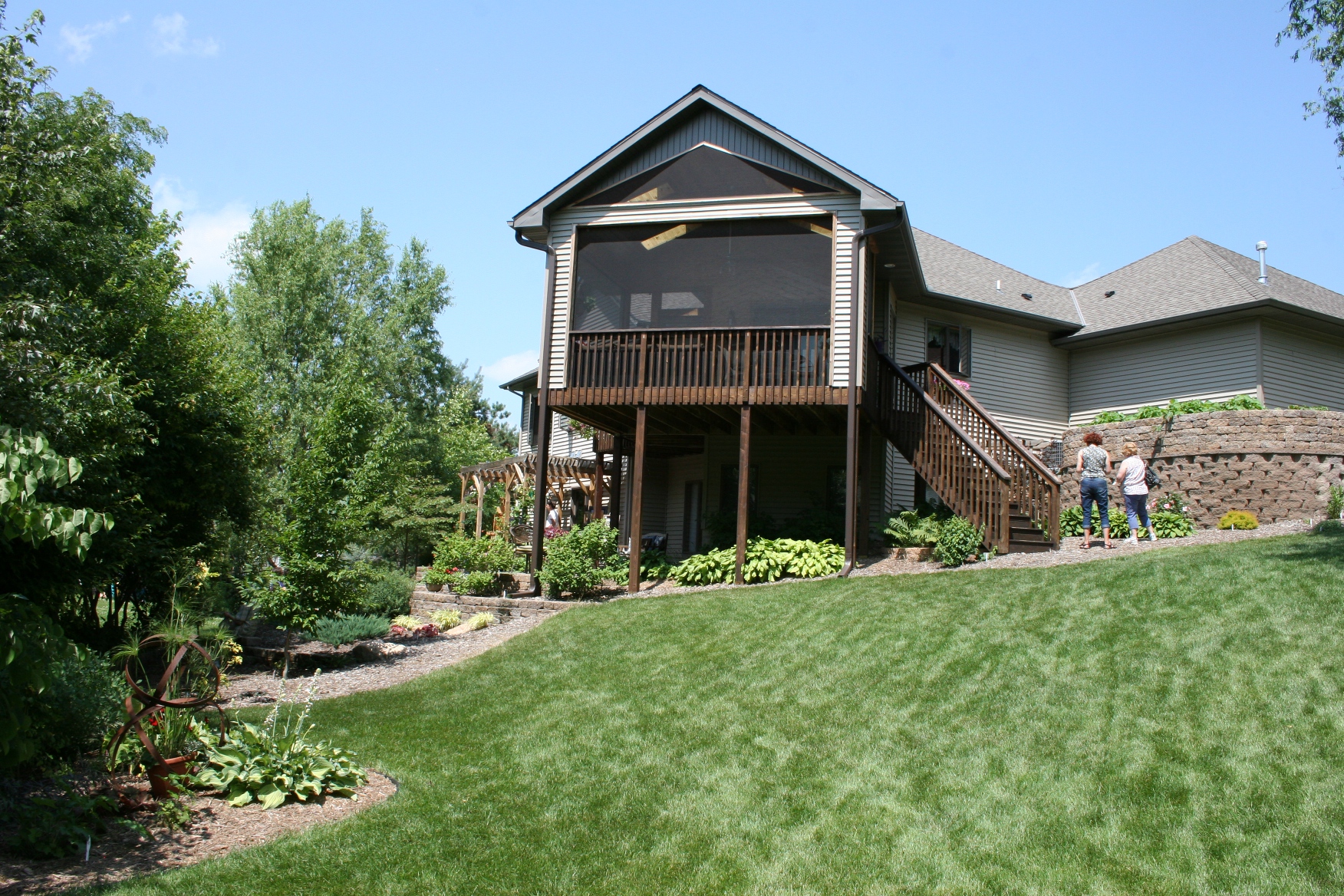
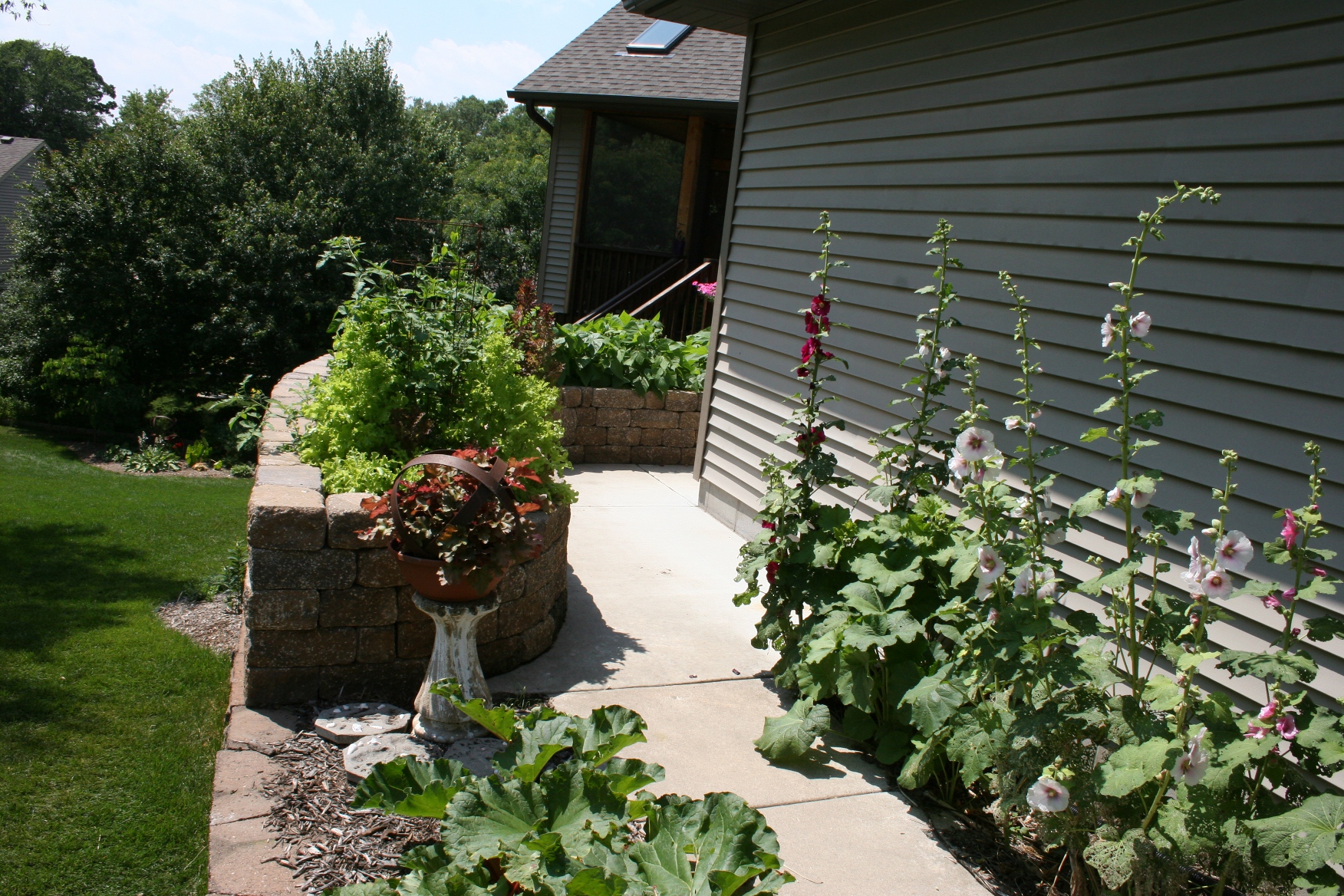
A rear view of Elizabeth Olson's house shows the steep hillside that defines her lot.

A rear and side view of Elizabeth Olson’s house shows the steep hillside that defines her lot.

I ADMIRE GARDENER ELIZABETH OLSON. She gardens on a property that I would term challenging given her home’s hillside location.

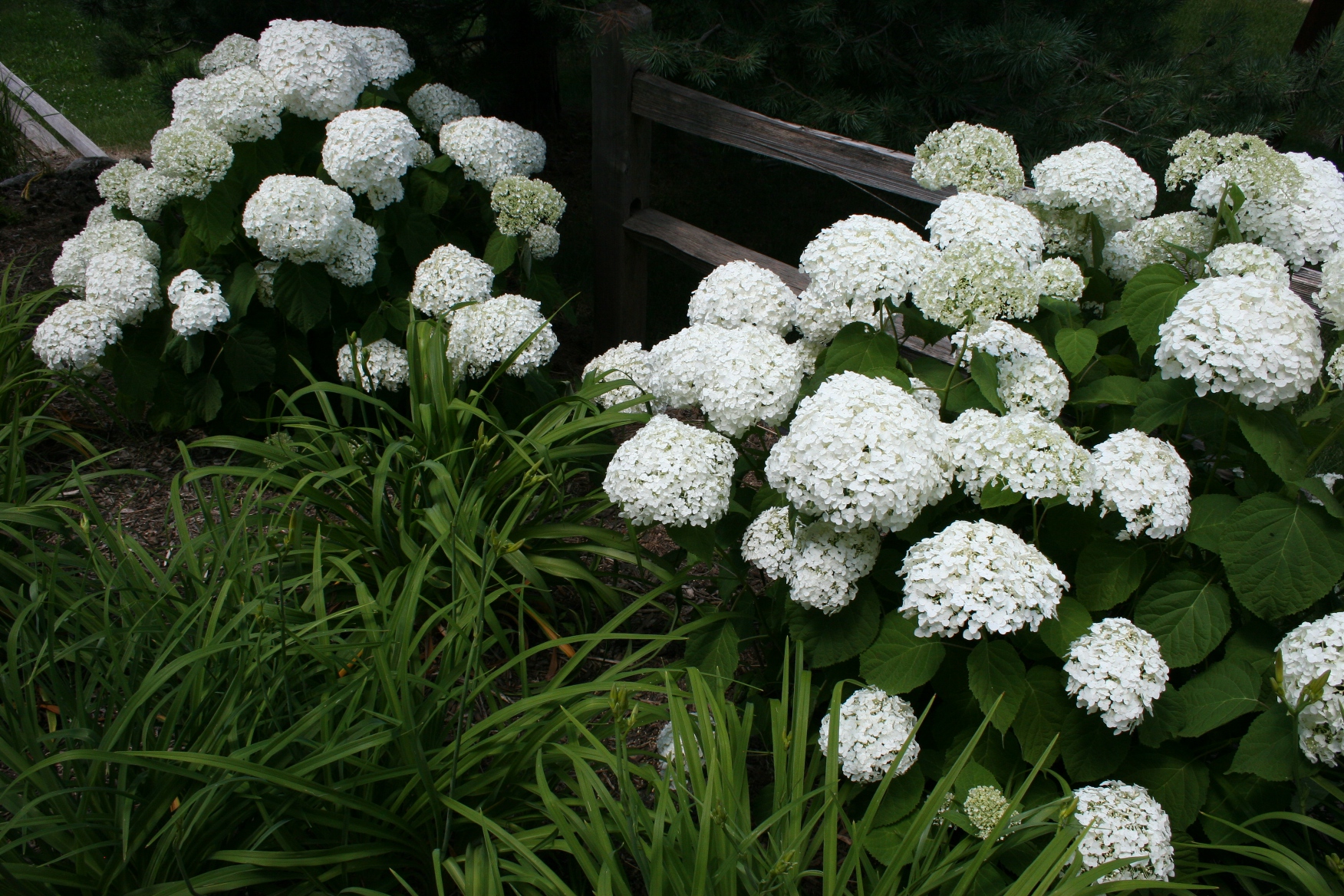
Hydrangea nestle a fence along a side yard stairway.

Hydrangea nestle a fence along a side yard stairway.

Numerous retaining walls and lots and lots and lots of stairs mark her south Northfield yard. Cautiousness proceeded my every step as I tread downhill, up more stairs to the backyard patio, then back down to side yard gardens and back up the hill during the recent Northfield Garden Club 2014 Garden Tour.

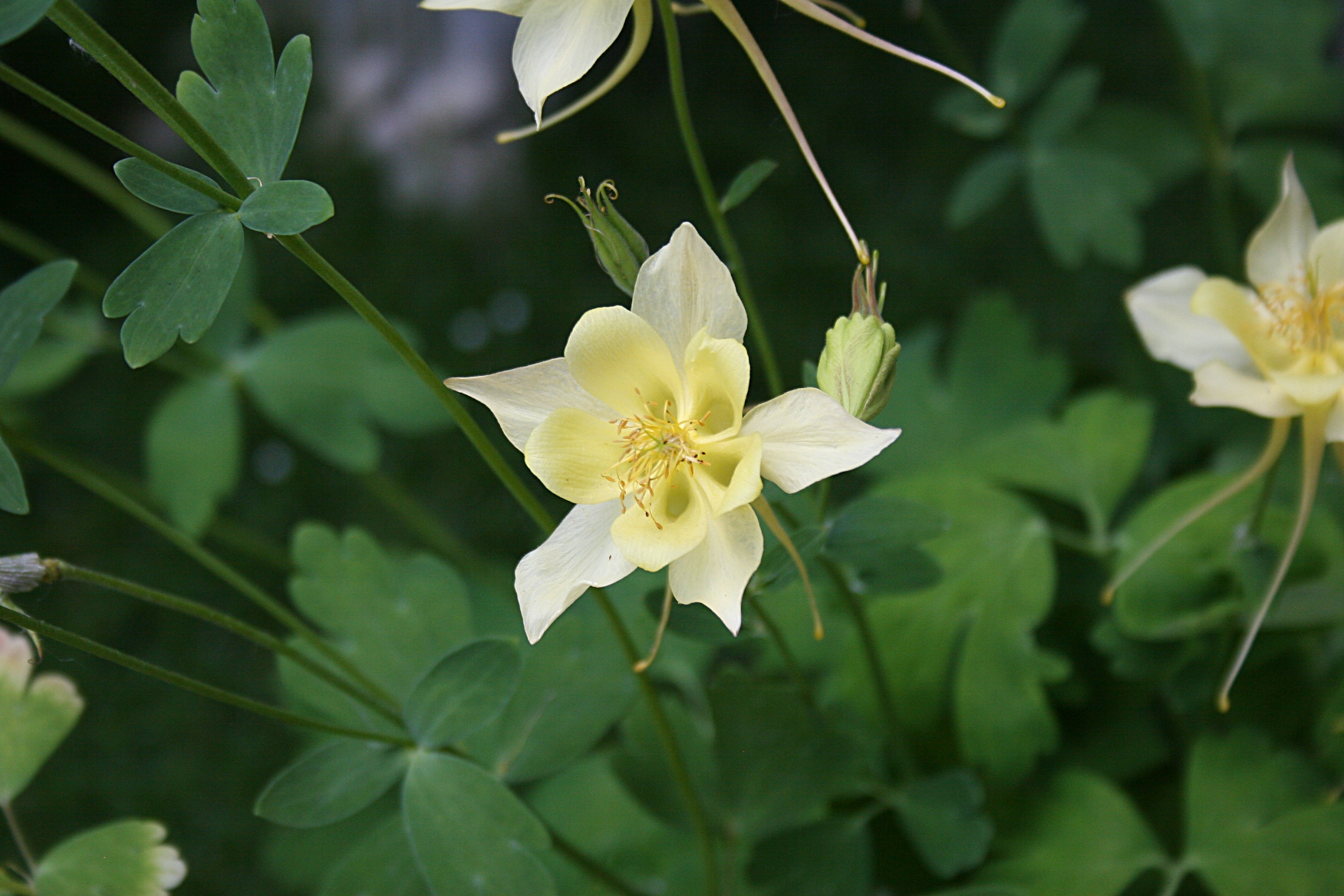
Yellow Columbine.

Yellow Columbine grow near the entry to Elizabeth’s home.

In between all that stepping, I stopped to admire the plants—156 of them tagged for identification. I suppose that’s a good plan if you’re participating in a public garden tour.

Sculpture art mixed with plant art.

Sculpture art mixed with plant art.

During a brief chat with Elizabeth, she claimed no artistic talent except in gardening. She creates art via plants. That, I think, makes her an artist.
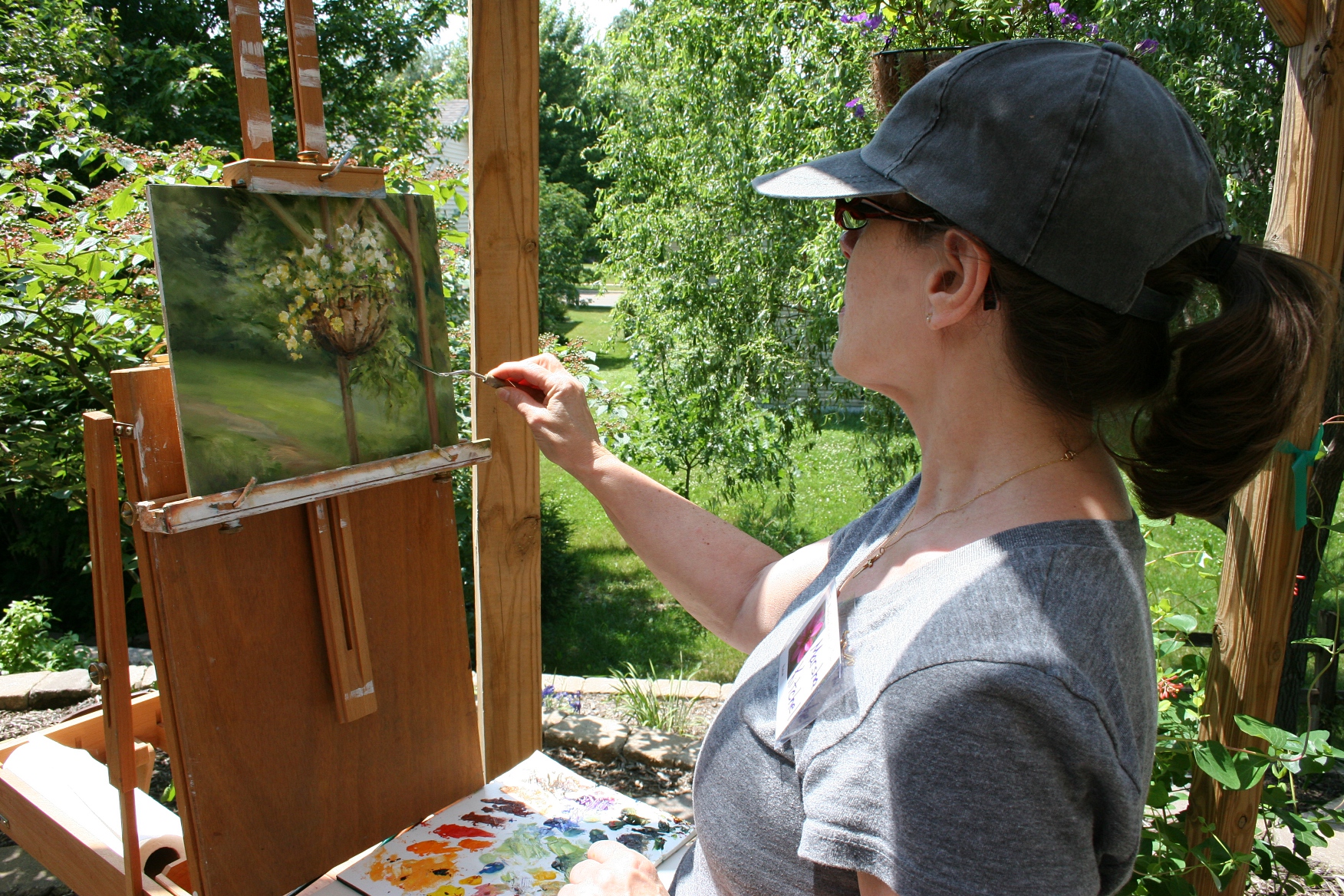
Artist Marsha Kitchel paints on the patio.

Artist Marsha Kitchel paints on the patio.

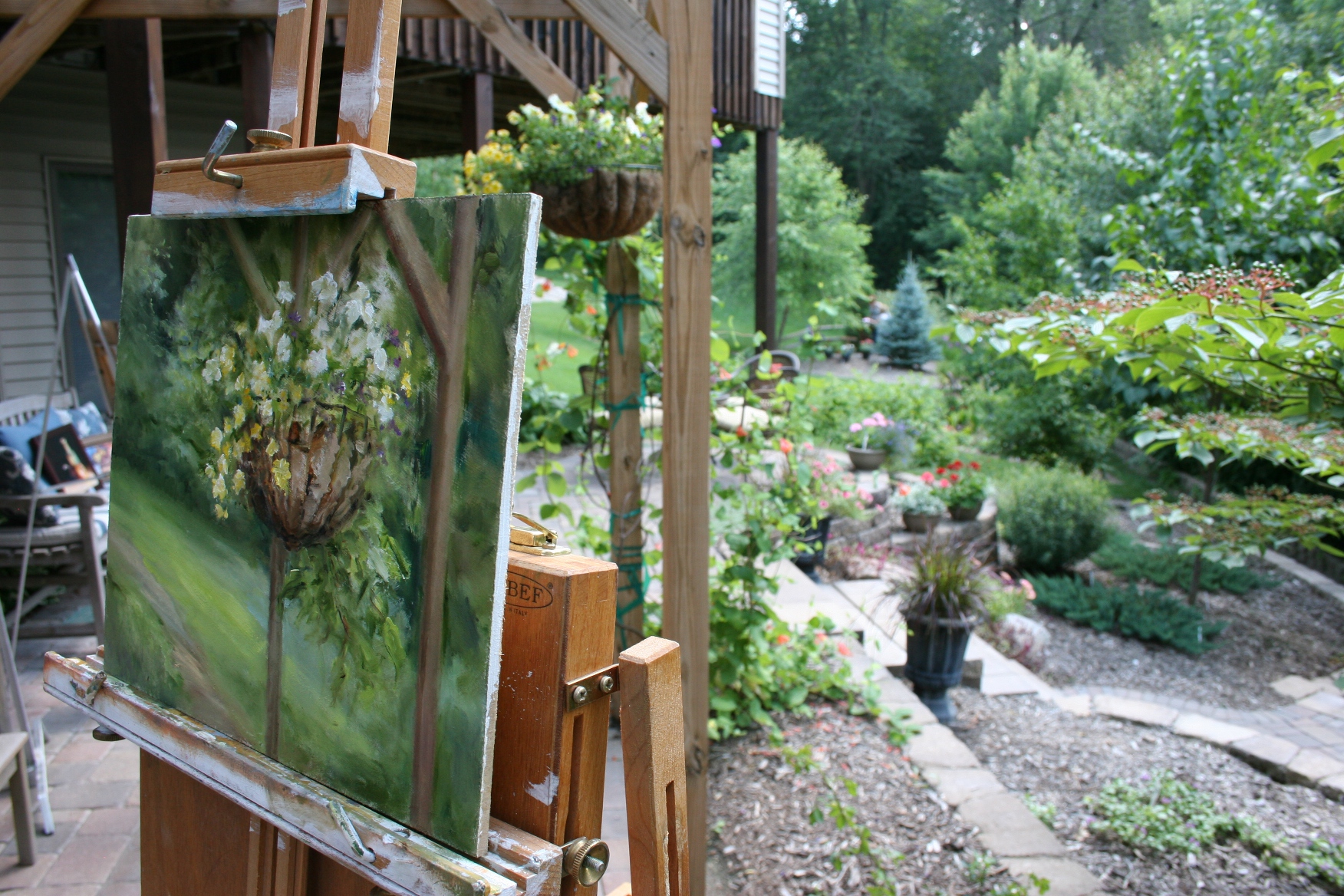
On the backyard patio, another artist had set up an easel to create en plein air. I watched as Marsha Kitchel daubed oils, recreating one of Elizabeth’s hanging baskets.

Marsha was painting the basket in the background.

Marsha was painting the basket in the background, just to the right of her easel.

I love this concept of incorporating artists and their work into garden tours. It makes sense as an unassuming way to introduce artists to the public. Other artists in the Northfield Garden Club Tour were Derrin D. O’Connell, Judy Saye-Willis, Tom Willis, James Wilson and Dick Zawacki.

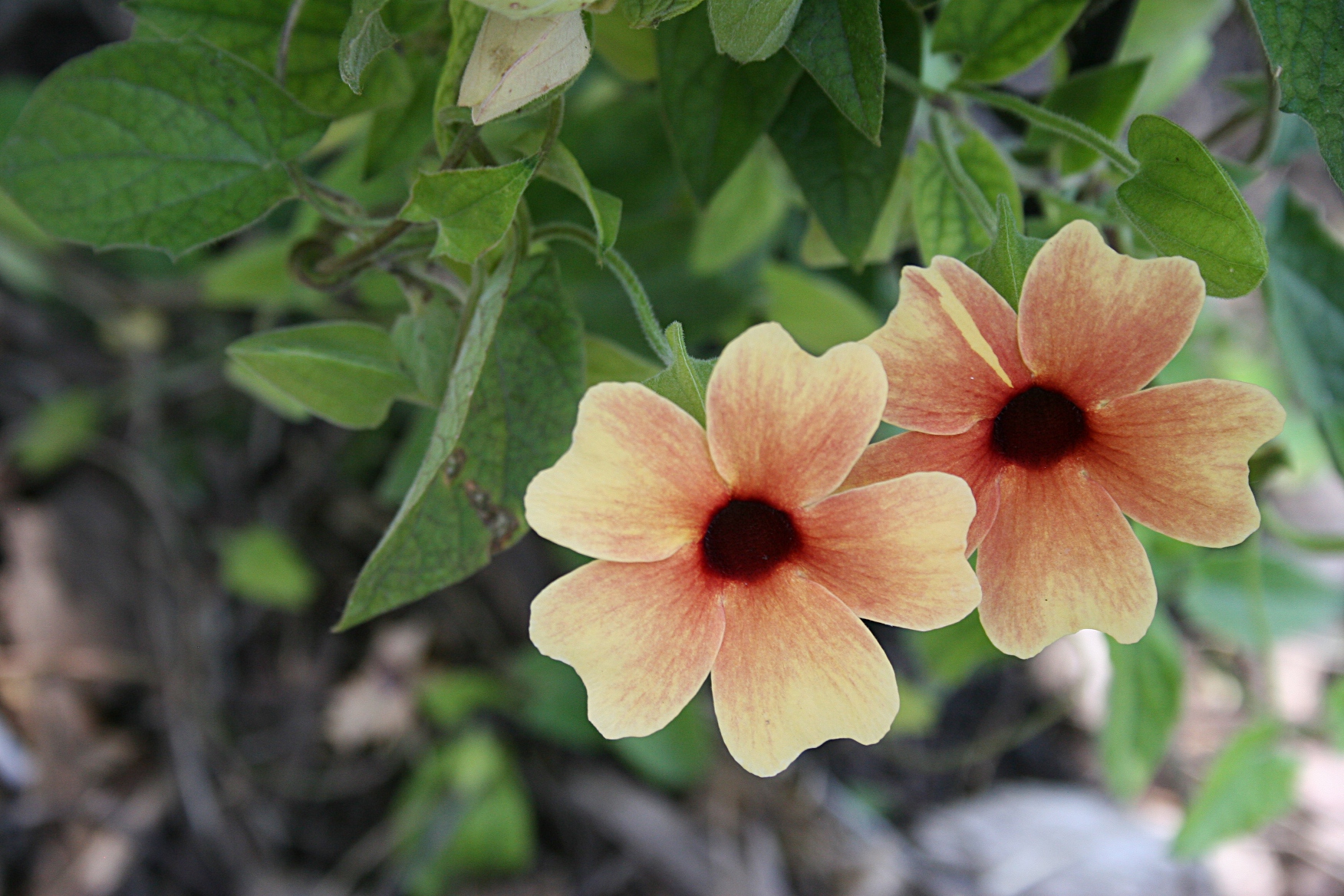
I failed to check Elizabeth's cheat sheet to identify these lovely peach flowers. Anyone know their identity?

I failed to check Elizabeth’s cheat sheet to identify these lovely peach flowers. Anyone know their identity?

BONUS PHOTOS:

This area features a raised vegetable garden.

This area features a raised vegetable garden.

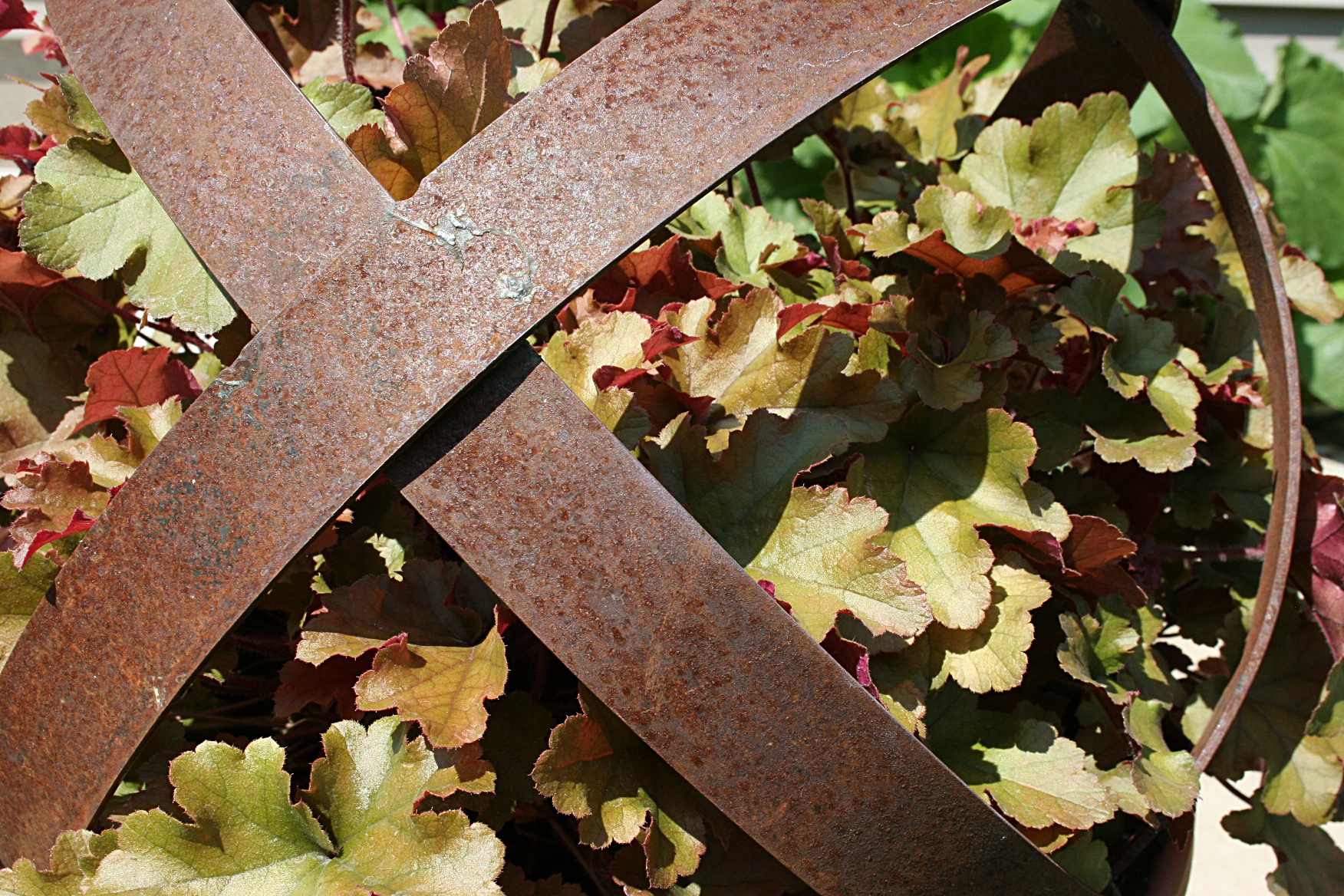
Here's a close-up of the sculpture in the photo above.

Here’s a close-up of the sculpture in the photo above.

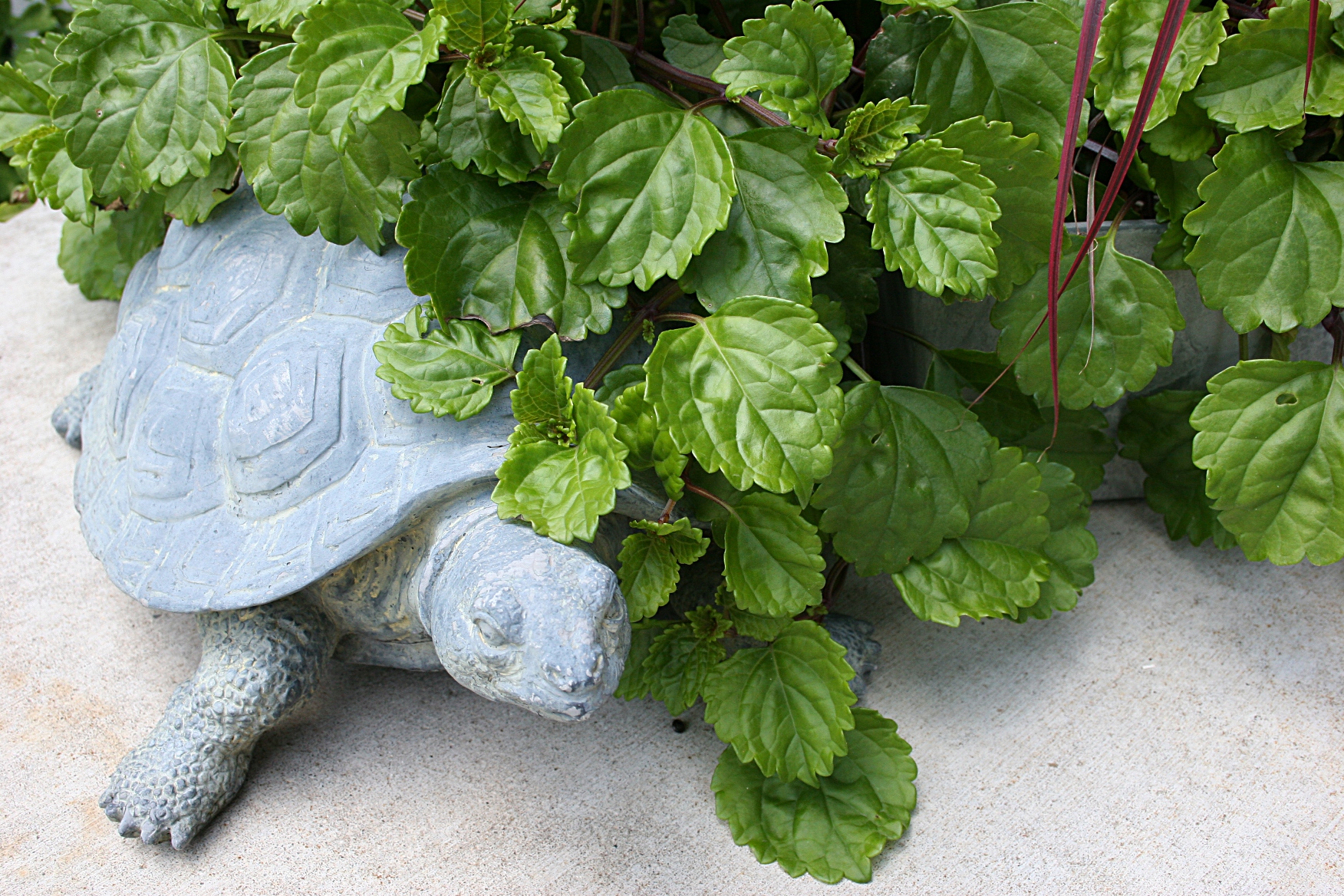
This turtle tucked next to a pot of ivy and other plants belonged to Elizabeth's mother.

This turtle tucked next to a pot of ivy and other plants belonged to Elizabeth’s mother.

FYI: Click here and here for previous posts from the Northfield Garden Club 2014 Garden Tour. And watch for additional posts.

© Copyright 2014 Audrey Kletscher Helbling


How my poetry inspired a still life painting of lilacs April 10, 2014

POETRY INSPIRING ART. It’s a fabulous concept and even better when you are part of such a pairing.

A poem I penned has inspired art for Poet-Artist Collaboration XIII, which opened March 31 and runs through May 15 at Crossings at Carnegie, 320 East Avenue, Zumbrota.

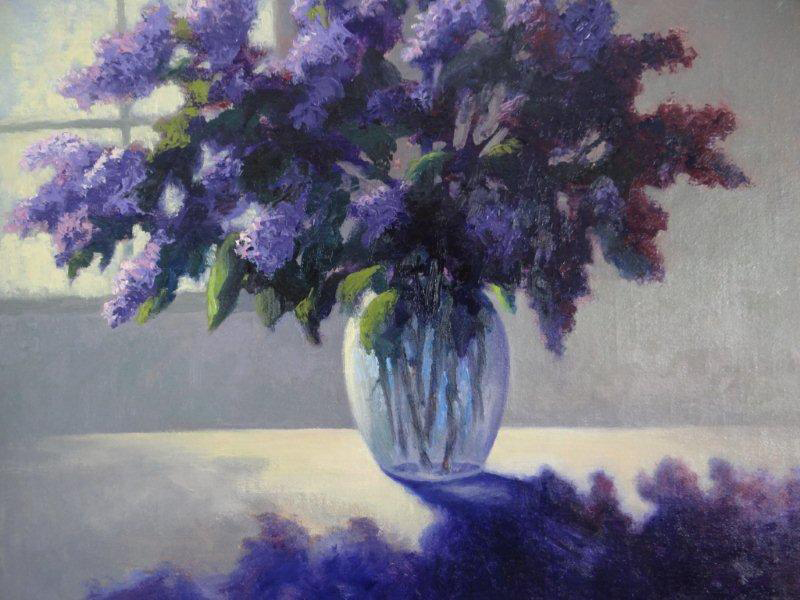
"Lilacs on the Table" by Jeanne Licari

“Lilacs on the Table” by Jeanne Licari. Photo courtesy of Crossings at Carnegie.

I recently connected with “my” artist, Jeanne Licari, to learn how my poem, “Lilacs,” inspired her to paint “Lilacs on the Table,” an 11 x 14-inch still life oil on linen.

Twenty-six poems were chosen from nearly 210 submissions with 26 artists then selected via a juried process. This is Jeanne’s ninth time participating in the collaboration and my second.

Artist Jeanne Licari

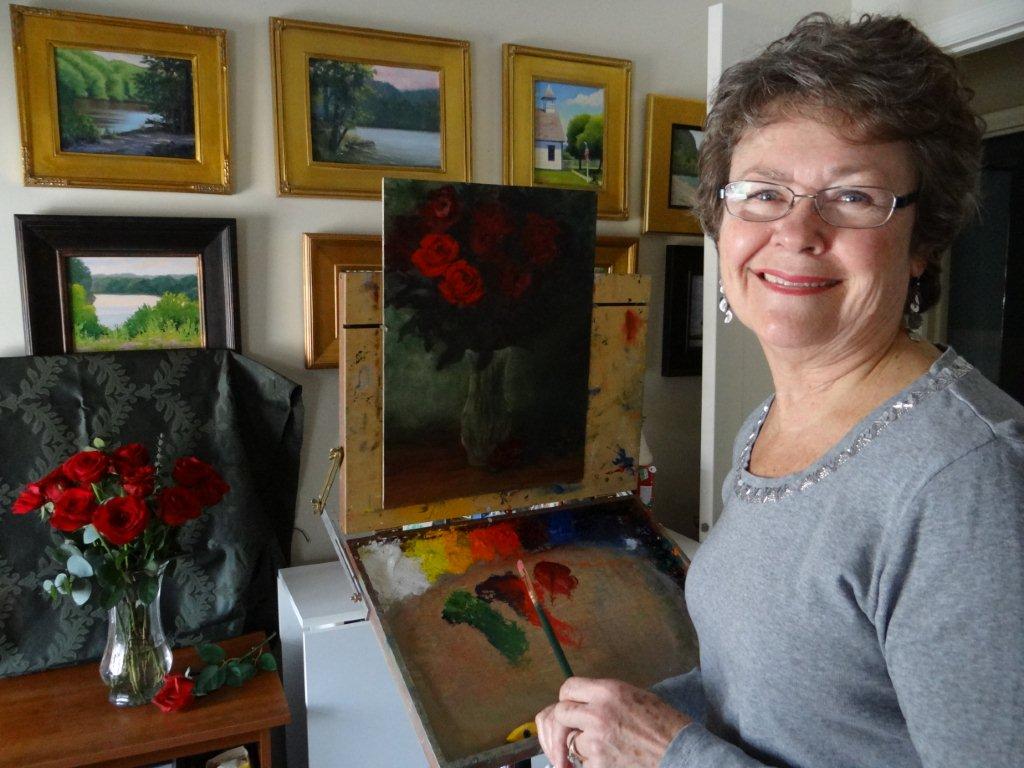
Artist Jeanne Licari in her studio. Photo courtesy of Jeanne Licari.

A mostly self-taught artist who drew and painted as a child, this Rochester resident also furthered her talent through painting classes and workshops. She terms herself a representational oil painter who prefers to paint from life, whether a landscape or a still life.

Jeanne is both plein air—painting outdoors on location—and studio painter.

“My art reflects the beauty I see in mankind and nature,” she says. “My paintings are a direct response to what I see.”

Or, in the case of “Lilacs,” to what she read.

Lilacs

Breathing in the heady scent of lilacs each May,
I remember my bachelor uncle and the gnarled bushes,
heavy with purple blooms, that embraced his front porch
and held the promises of sweet love never experienced.

He invited his sister-in-law, my mother, to clip lilacs,
to enfold great sweeps of flowers into her arms,
to set a still life painting upon the Formica kitchen table,
romance perfuming our cow-scented farmhouse.

Such memories linger as my own love, decades later,
pulls a jackknife from the pocket of his stained jeans,
balances on the tips of his soiled Red Wing work shoes,
clips and gathers great sweeps of lilacs into his arms.

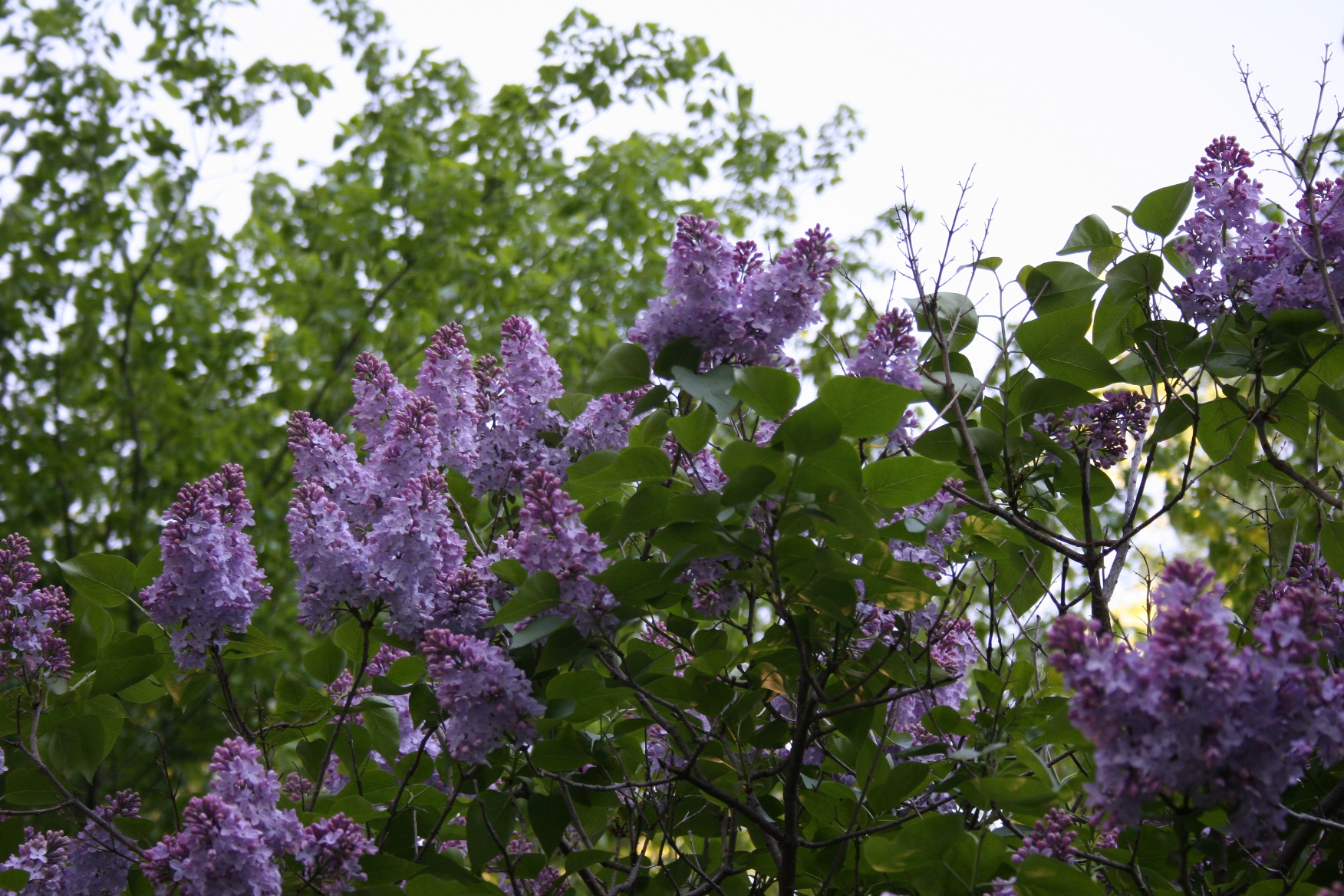
Plenty of lilacs to gather in the spring.

Minnesota Prairie Roots file photo of lilacs.

Jeanne explains how she created “Lilacs on the Table”:

“…I wanted to tell the viewer how I felt about lilacs. The poem triggered memories of many bouquets of lilacs in my lifetime. I love the dense bouquet of purple flowers, the beauty of the different pinks and purples against the green leaves, and the abundant fragrance of lilacs. Since there were no lilacs blooming in March, I painted them using memories of lilacs and how they grew, an oil study of lilacs painted from life, and photos.

I painted the lilacs on a table in response to the line, ‘to set a still life painting upon the Formica kitchen table.’ That line, plus the words about farming, made me remember many bouquets of lilacs on our Formica table in my childhood home on the farm.”

How fabulous to know that Jeanne comes, like me, from a rural background. Her words and oil painting show me that she understands and connects to my words in a deeply personal way.

And that is my hope as a poet—that those who read my poetry will connect to it.

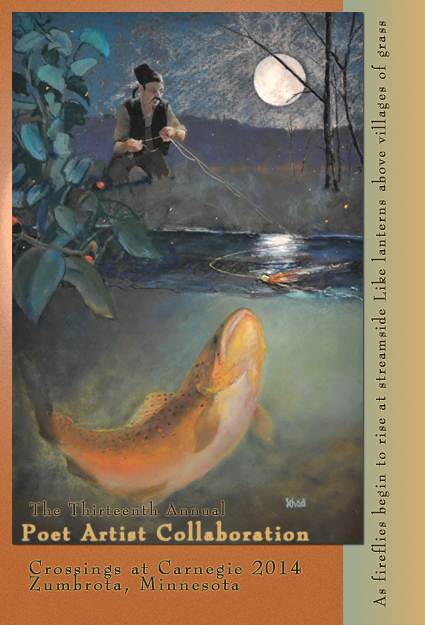
A promotional for the collaboration features "Li Bai at the South Fork," art by Mike Schad inspired by a poem of the same name written by Justin Watkins for the 2013 Poet-Artist XII collaboration.

A promotional for the collaboration features “Li Bai at the South Fork,” art by Mike Schad inspired by a poem of the same name written by Justin Watkins for the 2013 Poet-Artist Collaboration XII.

FYI: A reception, poetry reading and slide show honoring the featured poets and artists is set for Saturday, May 10. Mingle and meet for an hour beginning at 6:30 p.m. in the Crossings gallery. Then, at 7:30 p.m., move next door to the historic State Theatre where poets will read their works and artists will also briefly discuss their art, shown on a screen.

Another poet from my community of Faribault, Larry Gavin, who has published several poetry collections and teaches English at Faribault High School, will read two of his selected poems, “Ashes” and “Two Cranes.”

Collaboration participants come from Minnesota, Iowa, North Dakota and Wisconsin.

The featured artwork is available for sale, including “Lilacs on the Table,” priced at $395. Jeanne Licari’s art is also sold at the SEMVA (South Eastern Minnesota Visual Arts) Gallery in downtown Rochester.

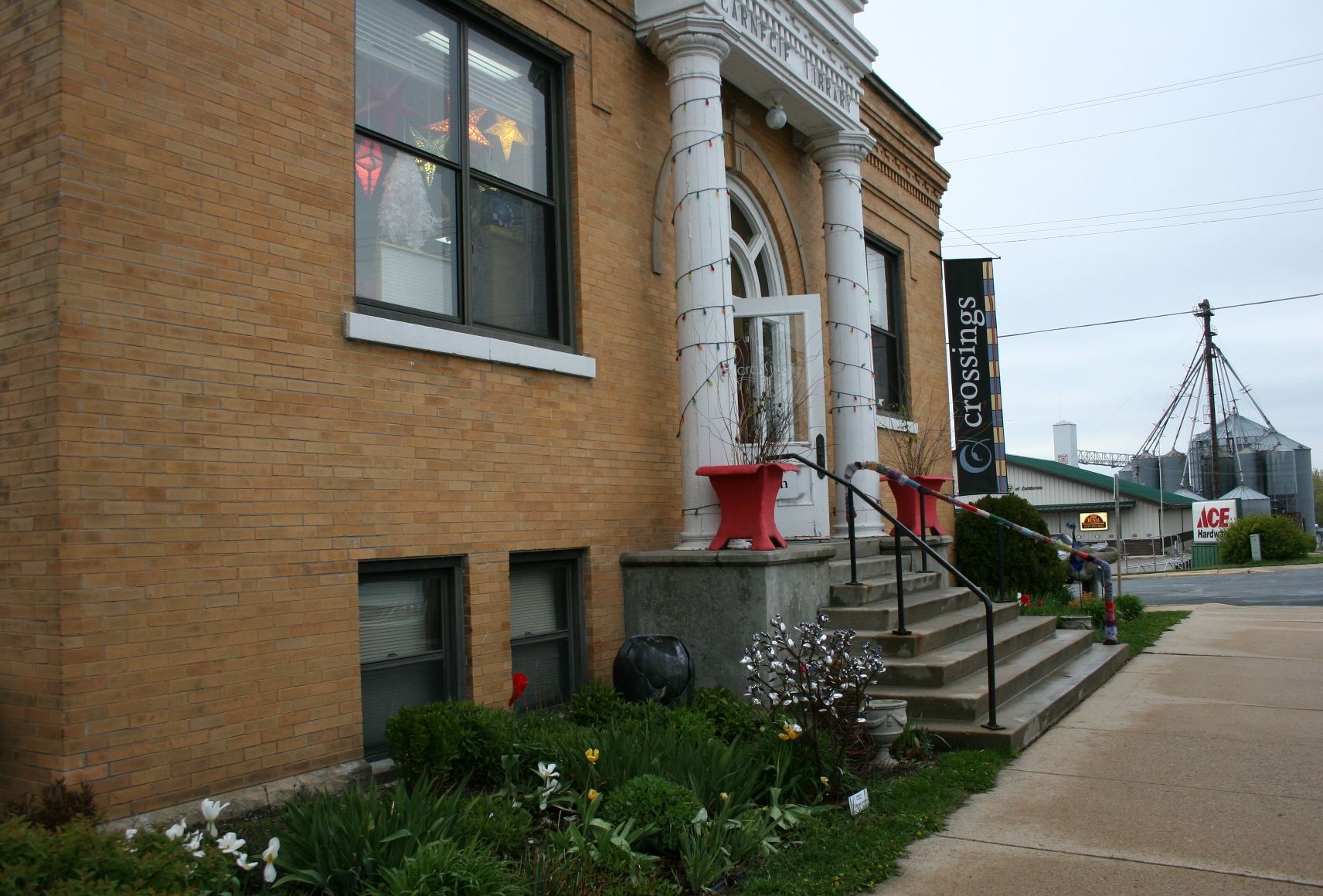
Crossings at Carnegie, housed in a former Carnegie library, is a privately-owned cultural visual and performing arts center in Zumbrota. I love the rural atmosphere with the hardware story and grain elevator just down the street.

Crossings at Carnegie, housed in a former Carnegie library, is a privately-owned cultural visual and performing arts center in Zumbrota. Minnesota Prairie Roots file photo 2012.

If you can’t attend the May 10 reception, you can view the exhibit during gallery hours from 10 a.m. – 5 p.m. Monday, Tuesday, Wednesday and Friday; from 10 a.m. – 8 p.m. Thursday; or from 10 a.m. – 4 p.m. Saturday.

Click here for more details about Poet-Artist Collaboration XIII.

Click here to see how my poem, “Her Treasure,” inspired Connie Ludwig to paint “Pantry Jewels” for the Poet-Artist Collaboration XI in 2012.

© Copyright 2014 Audrey Kletscher Helbling


Raising awareness of MS via snow art, plus an idea for Faribault March 11, 2014

IF KURT KLETT CAN CONVINCE city councilors, my community could host an annual snow carving competition in Central Park.

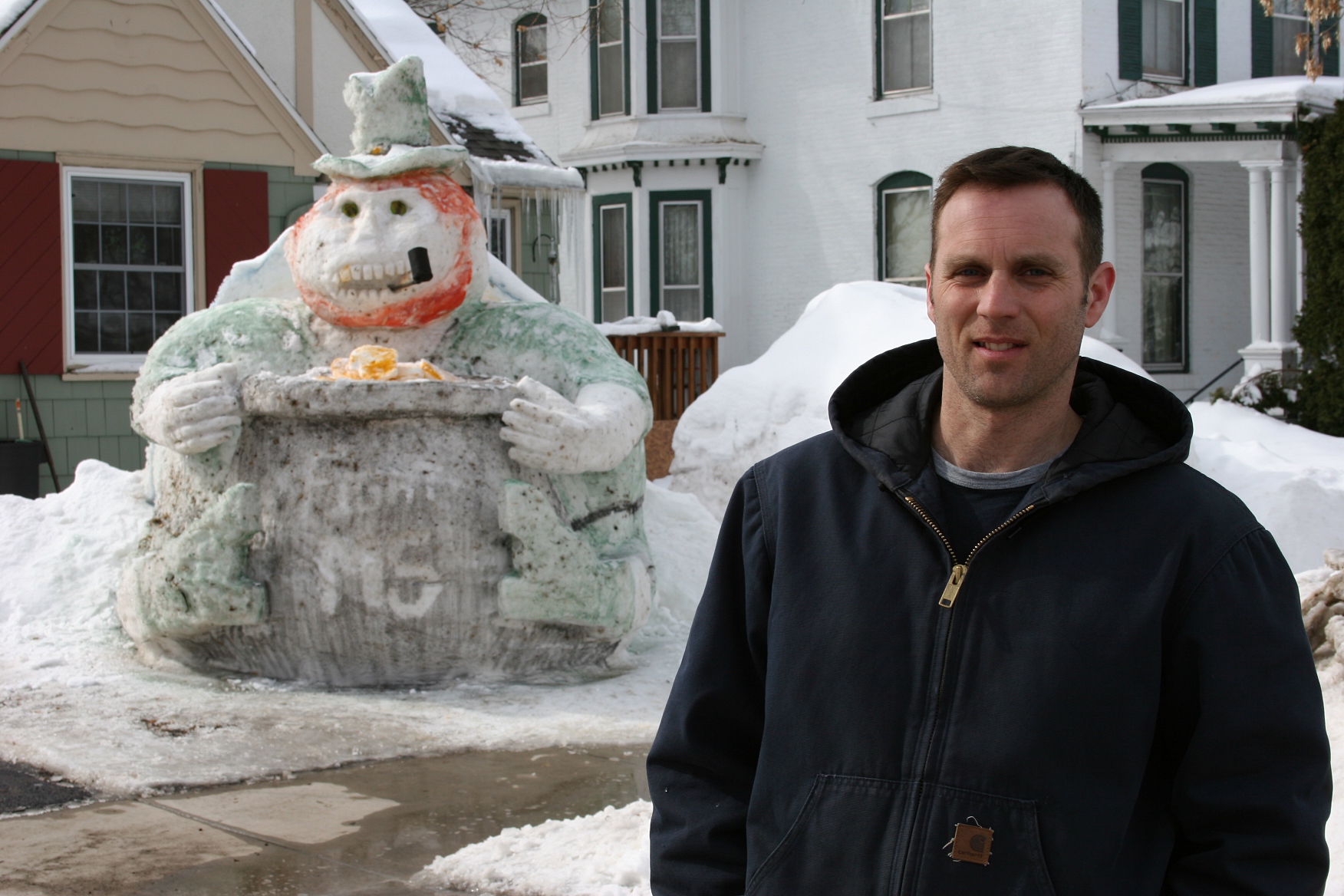
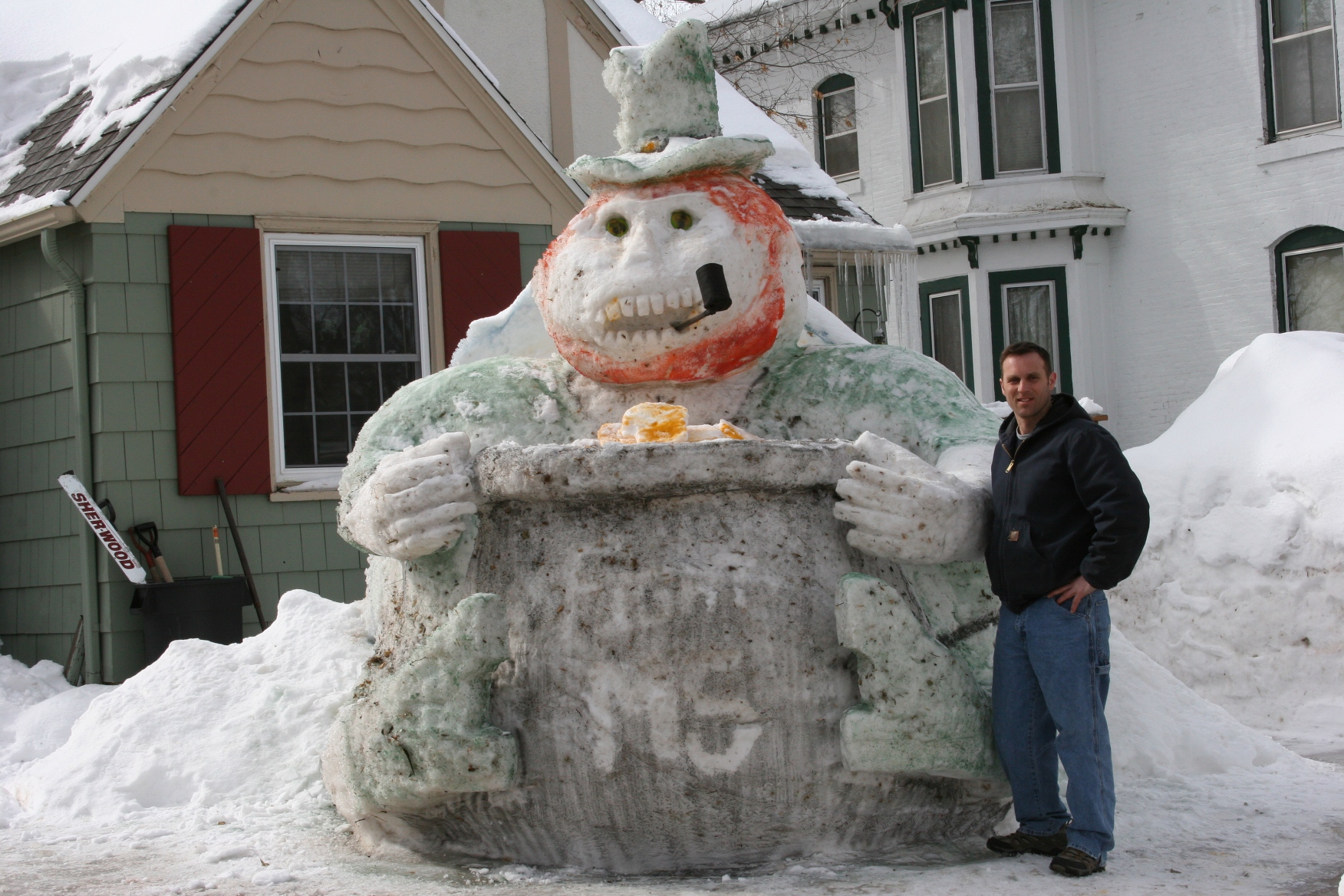
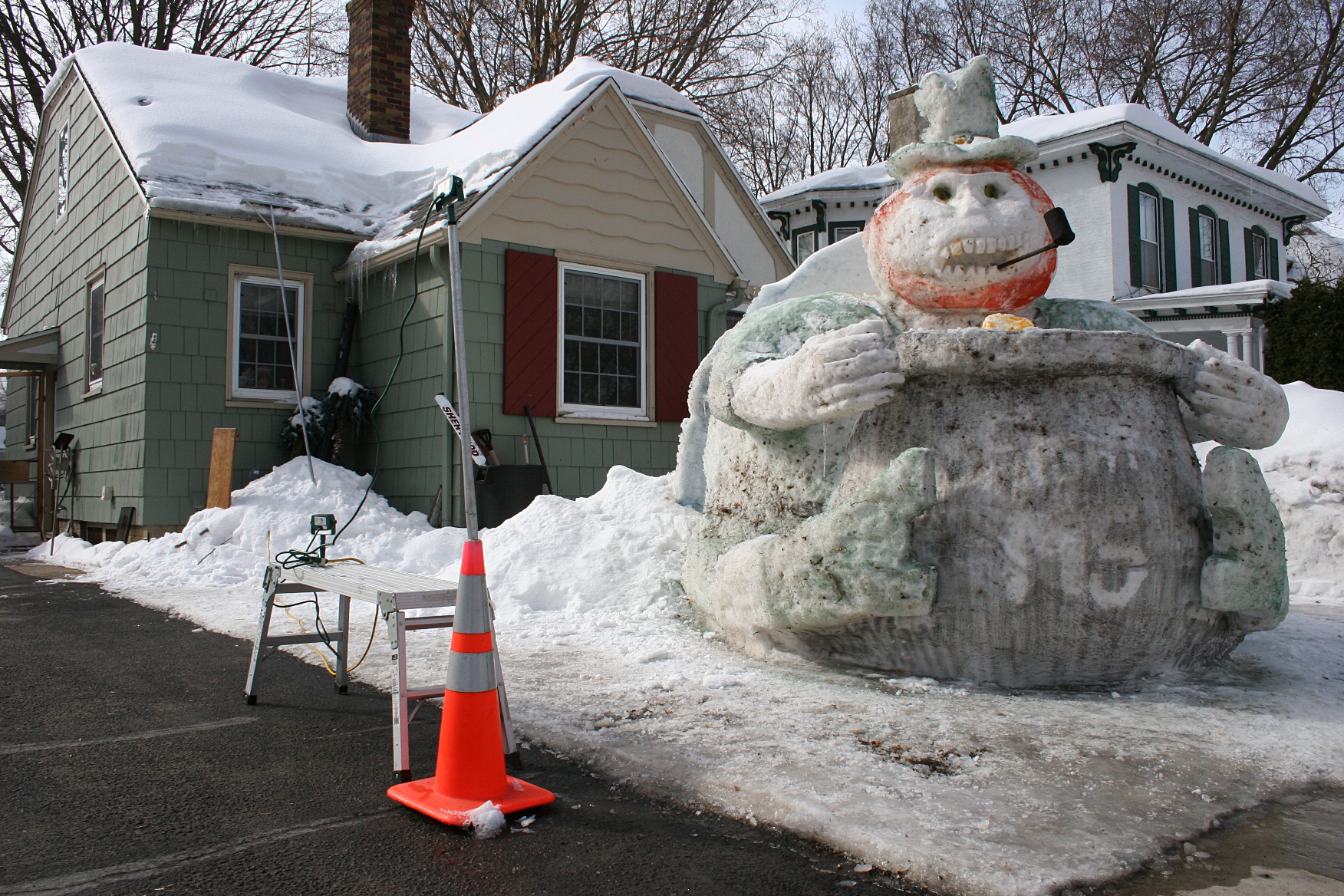
Faribault resident Kurt Klett and his latest snow sculpture, a leprechaun with a pot of gold.

Faribault resident Kurt Klett and his latest snow sculpture, a leprechaun with a pot of gold. Warm temps had partially melted the snow, fading the colors, when I photographed the art late Sunday morning.

That’s the plan, according to this 42-year-old Faribault resident who, for the past five winters, has created snow sculptures in his front yard and this year also entered the St. Paul Winter Carnival snow sculpting contest.
Photographed from Second Street.
Photographed from Second Street.
Given Klett’s enthusiasm and talent and the admiration of locals, his idea certainly could fly. I absolutely support his proposal as a way to bring visitors into Faribault, add a fun, diversionary aspect to an oftentimes long Minnesota winter and promote awareness of Multiple Sclerosis.

Entry fees for the proposed snow sculpting contest would go toward MS, says Klett, diagnosed with the disease of the central nervous system in 1999. The single father of three, ages 6 – 13, suffers from vision and other issues and is currently on disability. He once worked in construction and sales and now works at the Shattuck-St. Mary’s School hockey arena.

His body embraces cold temperatures, Klett says, so he needs to take care not to become overheated while sculpting.

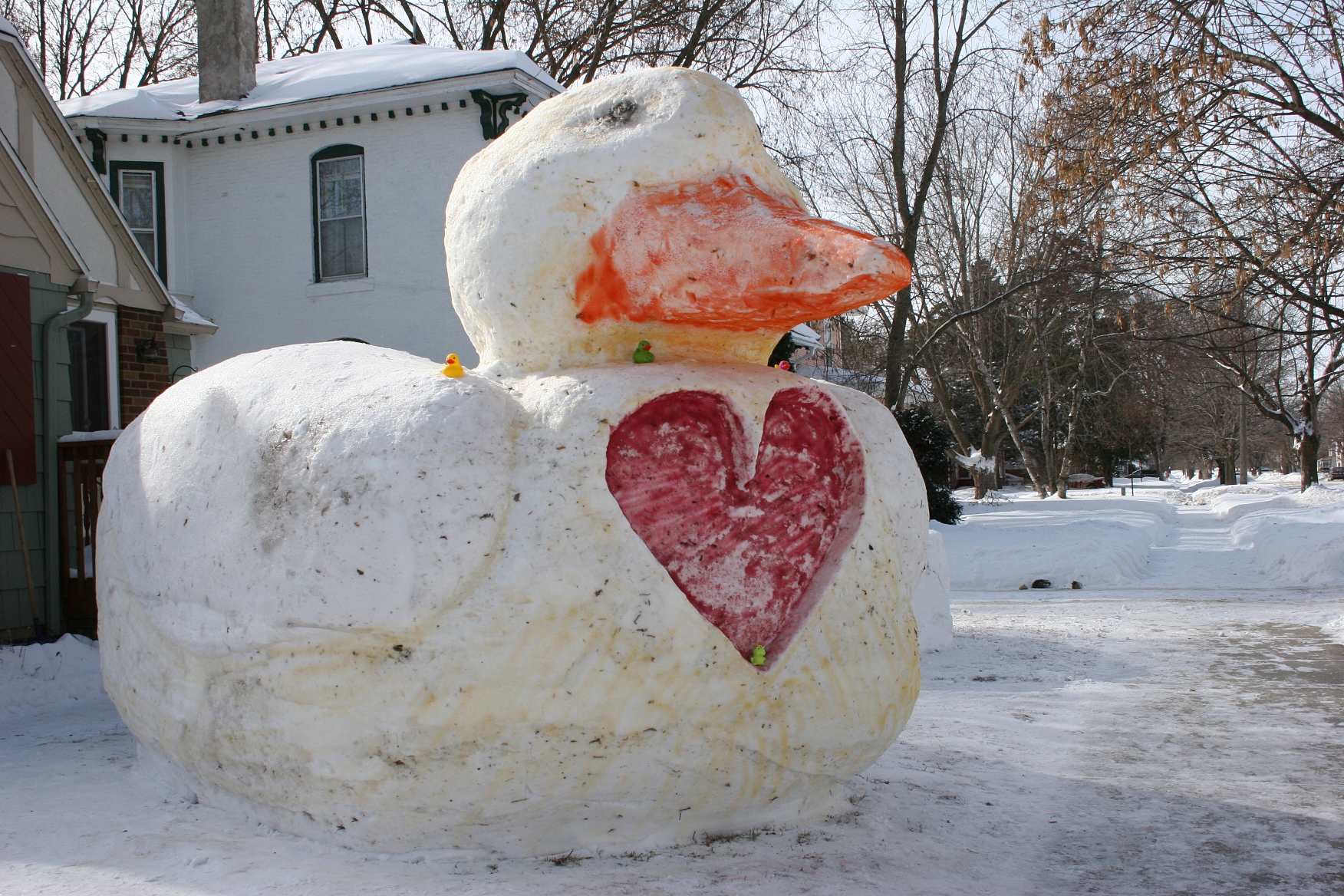
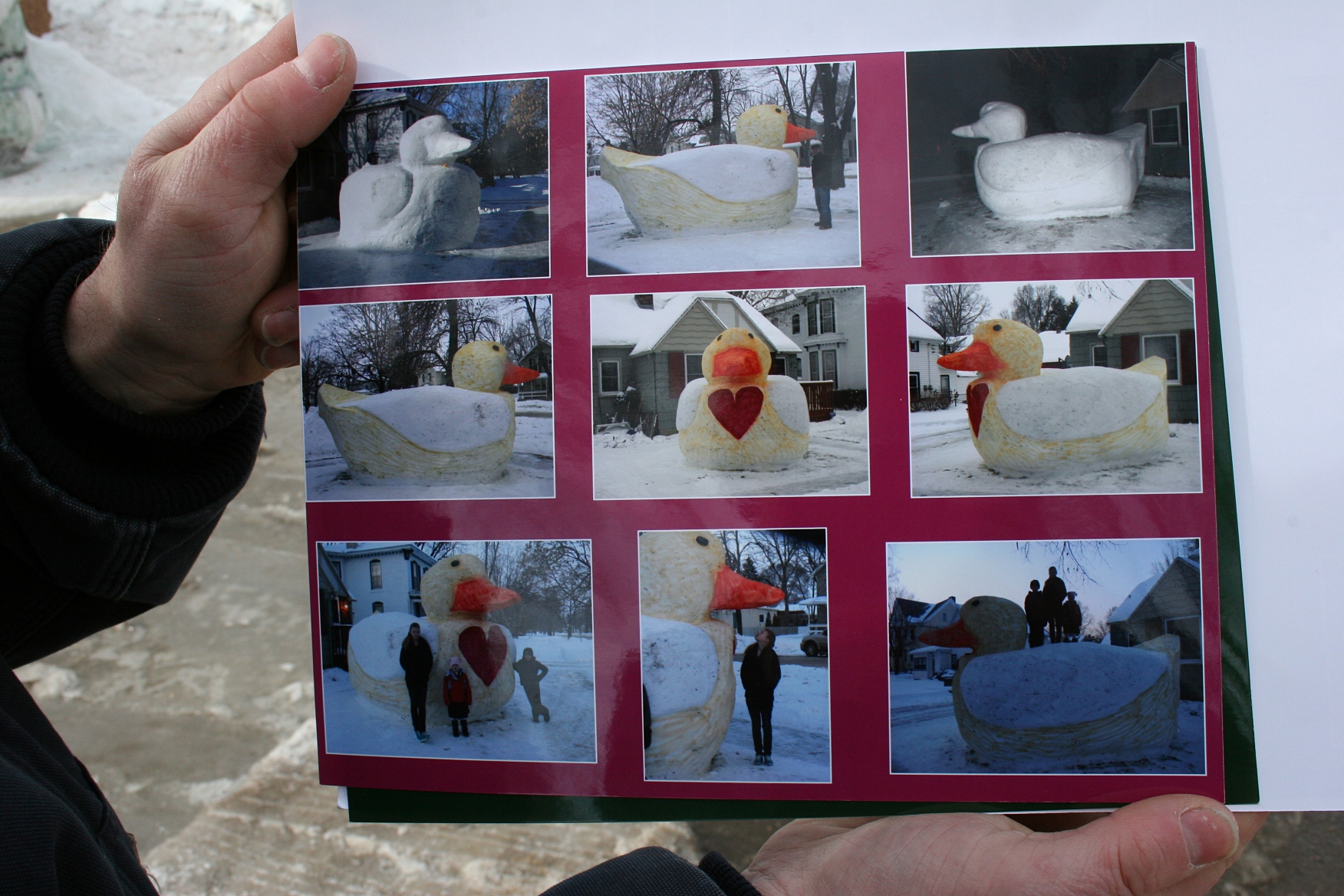
Multiple rubber duckies not sit atop the giant duck graced with a heart and a colored bill.

Klett’s first sculpture of this winter, photographed in late February.

This winter he’s already crafted two snow sculptures in Faribault. The first, a duck, stood completed until two days of 40-degree temps caused the beak to partially fall off.

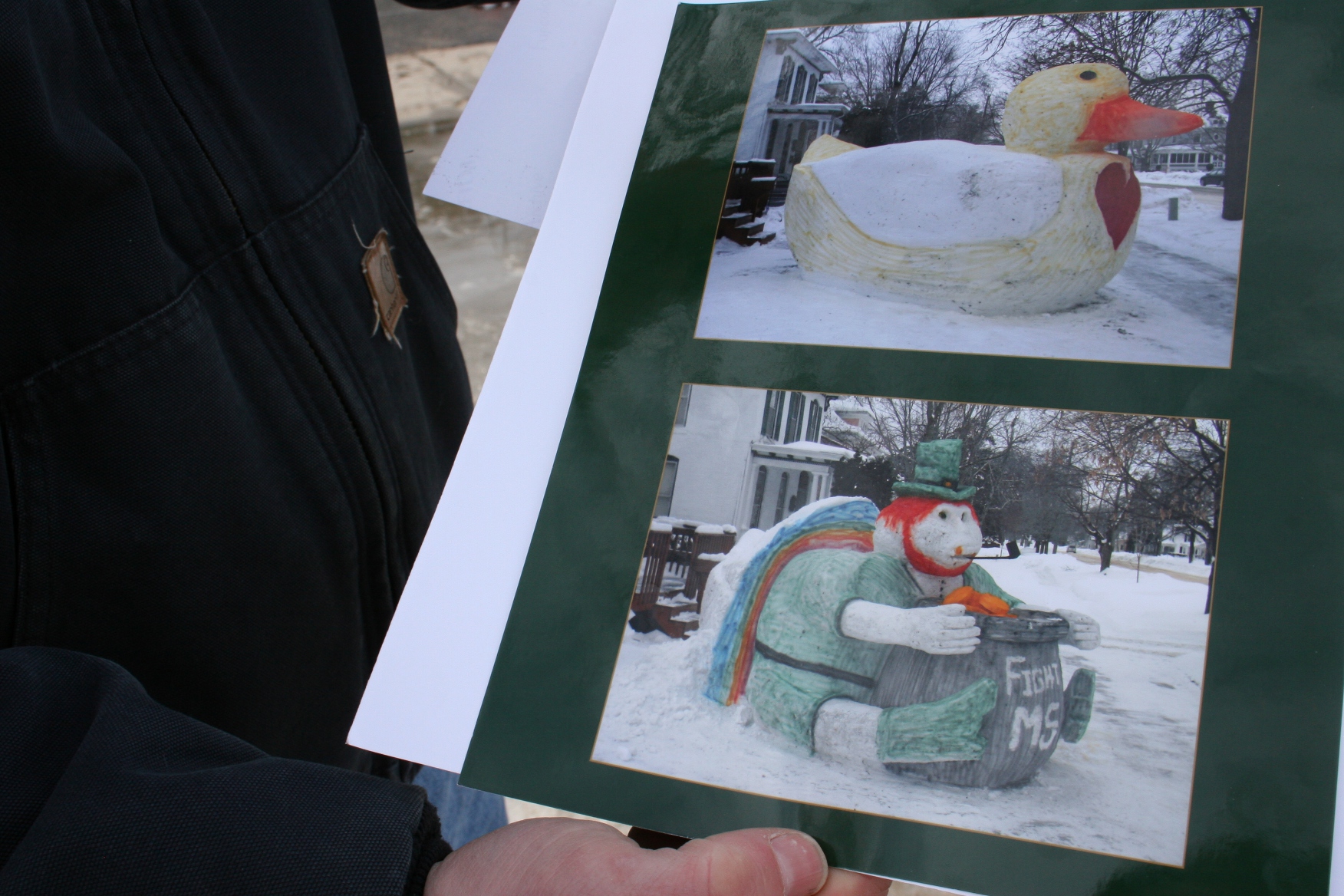
Klett showed me these photos he took of the two sculptures showing the especially vibrant colors before temps warmed.

Klett showed me these photos he took of the two sculptures with especially vibrant colors before temps warmed.

Undaunted, Klett and a neighbor then “sawed” the remainder of the beak off with a 10-foot chain so he could reshape the duck into a leprechaun holding a pot of gold.

As I’ve observed and as Klett notes, his sculptures are constantly changing, just like the effects of MS. His art, he says, is an ode to MS, a way to raise awareness of the disease.

FIGHT MS is barely visible now on the pot of gold after warm temps began melting the sculpture.

FIGHT MS is barely visible now on the pot of gold after warm temps began melting the sculpture.

FIGHT MS marks the front of the leprechaun’s pot of gold. Klett carved a bull for the St. Paul Winter Carnival snow sculpting contest, dubbing the bull as “Bully the MS Goalie.” Last year he created a stop sign with hockey sticks in his yard, honoring Minnesota Wild goalie Josh Harding who also has MS.

The leprechaun's pipe is crafted from a crowbar and a raisin container wrapped in hockey tape.

The leprechaun’s pipe is crafted from a crowbar and a raisin container wrapped in hockey tape. This sculpture reaches 12 feet to the top of the hat.

What he crafts from the snow gathered into a huge mound from his and sometimes a neighbor’s yards and even from the roof of his house at 417 Second St. N.W. “depends on what the pile looks like,” this sculptor says.

He’s previously also created a leprechaun on a shamrock, a komodo dragon surrounded by a skyscraper with two hearts, and a T-Rex. Sometimes his kids help choose the art.

This photo montage by Klett shows the process of creating the duck sculpture.

A photo montage by Klett of his 10-foot high duck sculpture.

The process of sculpting this year’s duck and leprechaun took him 14-16 hours each. Depending on the weather, the leprechaun may eventually evolve into a third sculpture. Already warm temps are eroding his leprechaun, fading the colors.

The artist shines a spotlight on his sculptures.

The artist shines a spotlight,left, on his sculptures.

His art draws admiring fans, so much that Klett shines a spotlight on his sculpture at night. As I photographed his leprechaun and chatted with the artist Sunday morning, an older couple stopped. The driver rolled down his car window. “That’s remarkable,” enthused the man. “It’s beautiful.”

I agree. Now imagine Central Park in Faribault graced next winter with such remarkable and beautiful snow art.

FYI: Kurt Klett has not yet approached the Faribault City Council with his request for a snow sculpture contest in Central Park. He is currently raising awareness and gathering support for this project.

© Copyright 2014 Audrey Kletscher Helbling


On ARTour: An eye for feathers, an eye for nature November 1, 2013

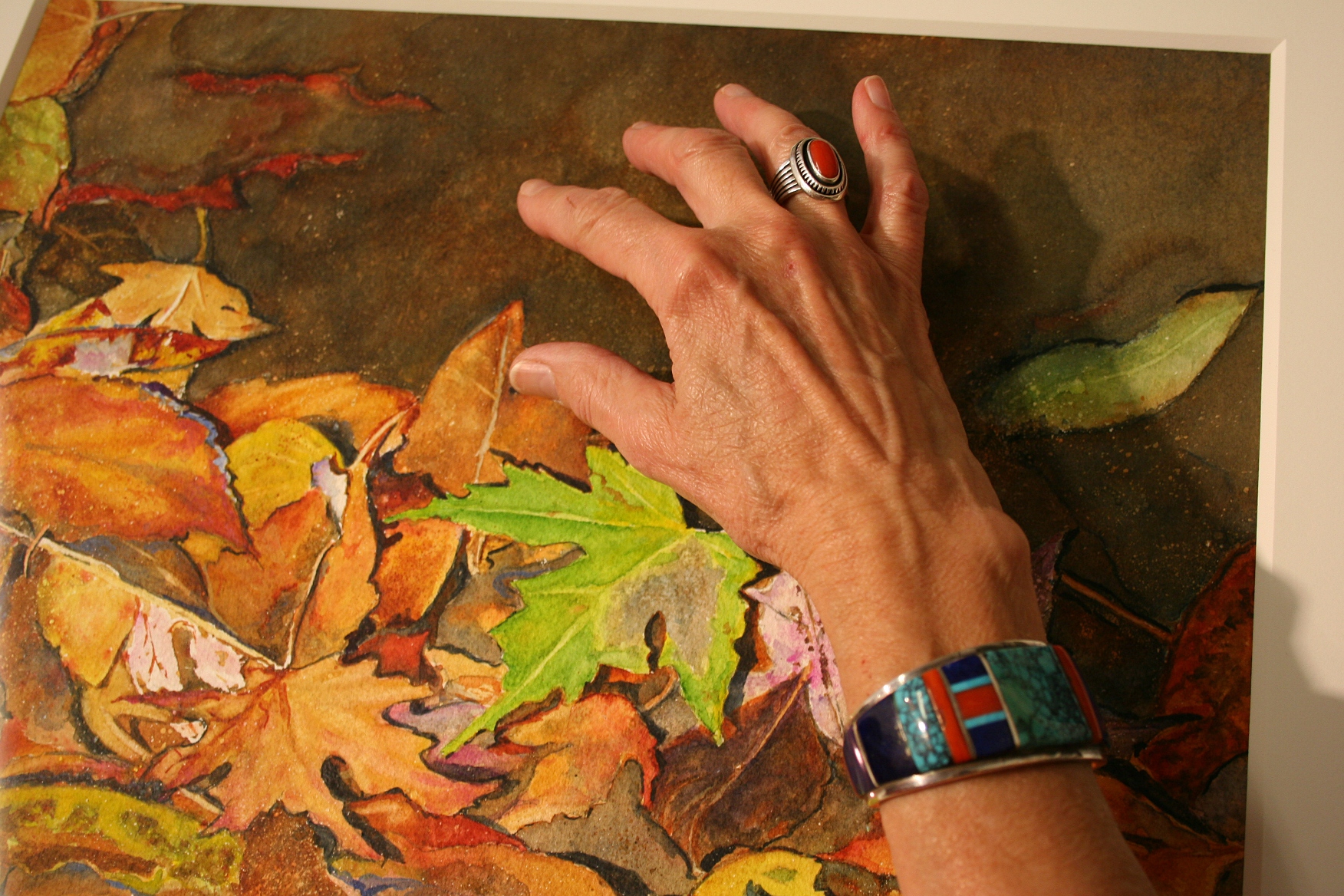
Watercolorist Kathy Miller shows me Leafscapes.

Watercolorist Kathy Miller shows me “Leafscapes.”

HER HAND MOVES across the watercolor painting with a familiar intimacy, stroking the sand, caressing the single green maple leaf floating among autumn-hued leaves.

I notice her ring, how the orange oval stone mimics colors in the painting below her fingertips.

I notice, too, the same hue in the bracelet that wraps her wrist, like art wraps her soul.

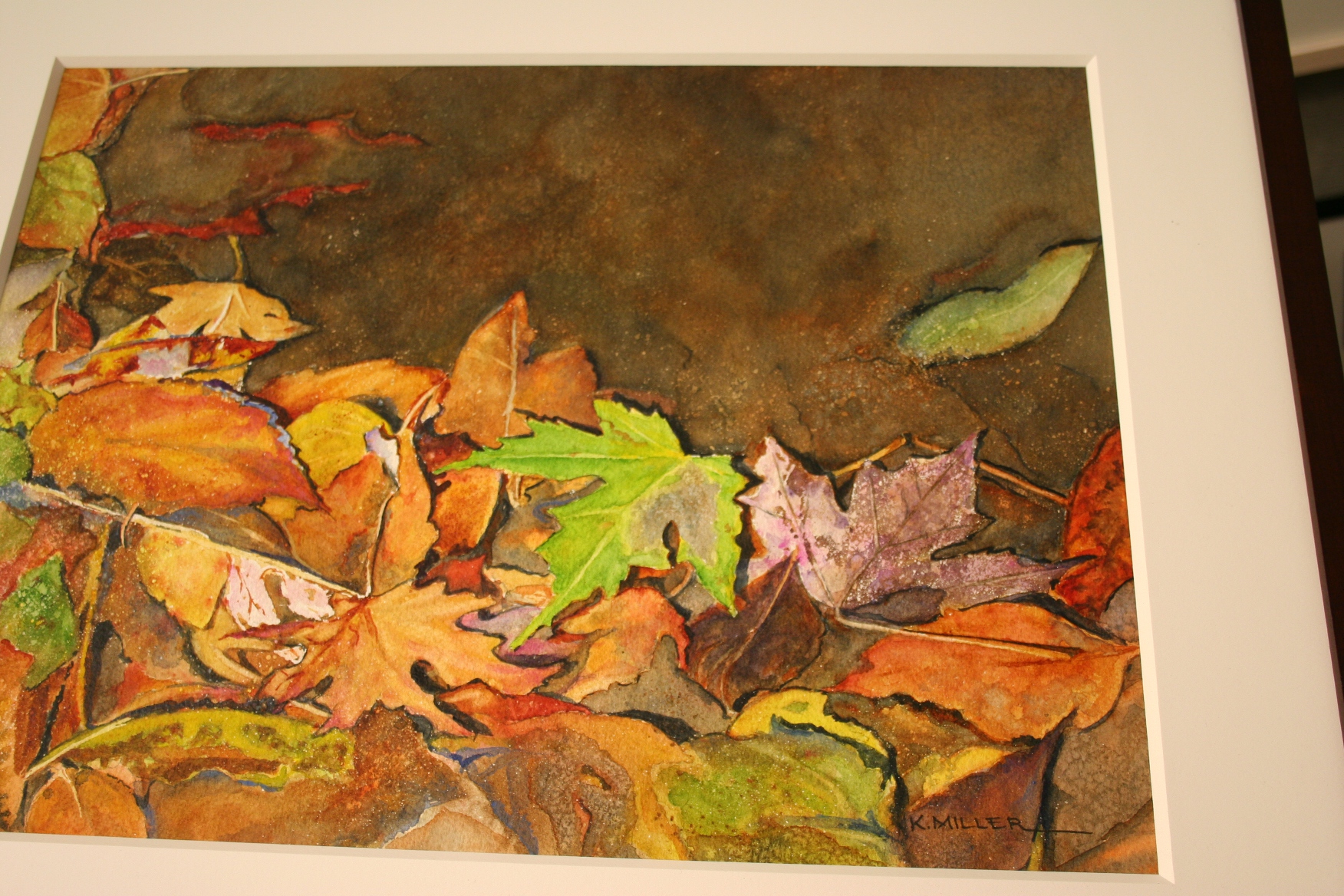
Watercolorist Kathy Miller speaks with a mesmerizing passion about her art, of the “Leafscape” watercolor in her hands. Mosaic. Grains of sand. Muddied waters.

Another view of that vibrant autumn watercolor.

Another view of that vibrant autumn watercolor.

I cannot take my eyes off this vivid watercolor, created via multiple layers of painting. Let one layer dry, then add another layer. So different from the muted, dreamy tones of most watercolors.

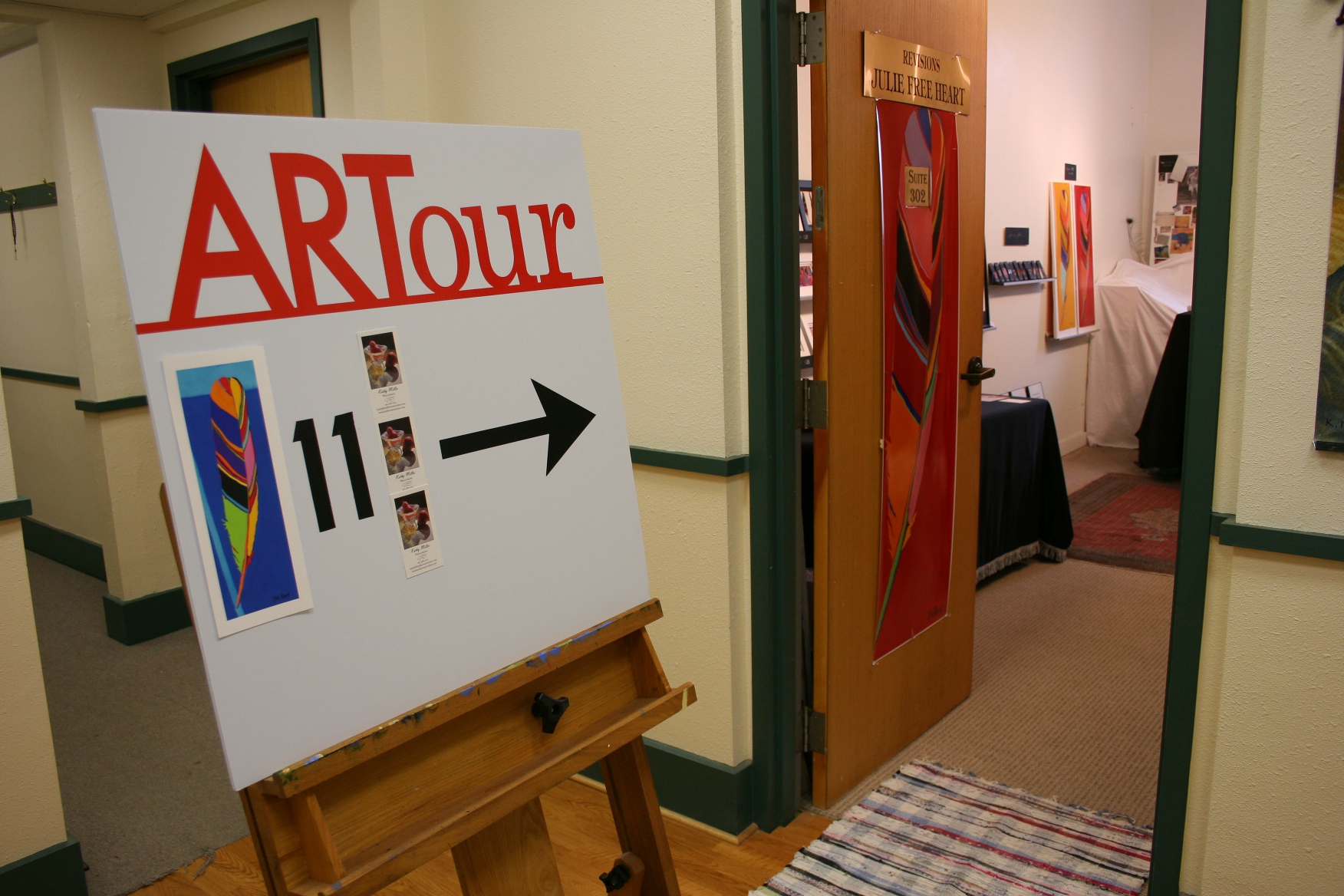
A sign directs visitors to Julie Free Heart's Revisions studio.

A sign directs visitors to Julie Free Heart’s Revisions studio.

From landscapes to florals to still lifes, Miller displayed samples of her watercolors inside Julie Free Heart’s Revisions upper level studio in the heart of downtown Northfield during the recent South Central Minnesota Studio ARTour.

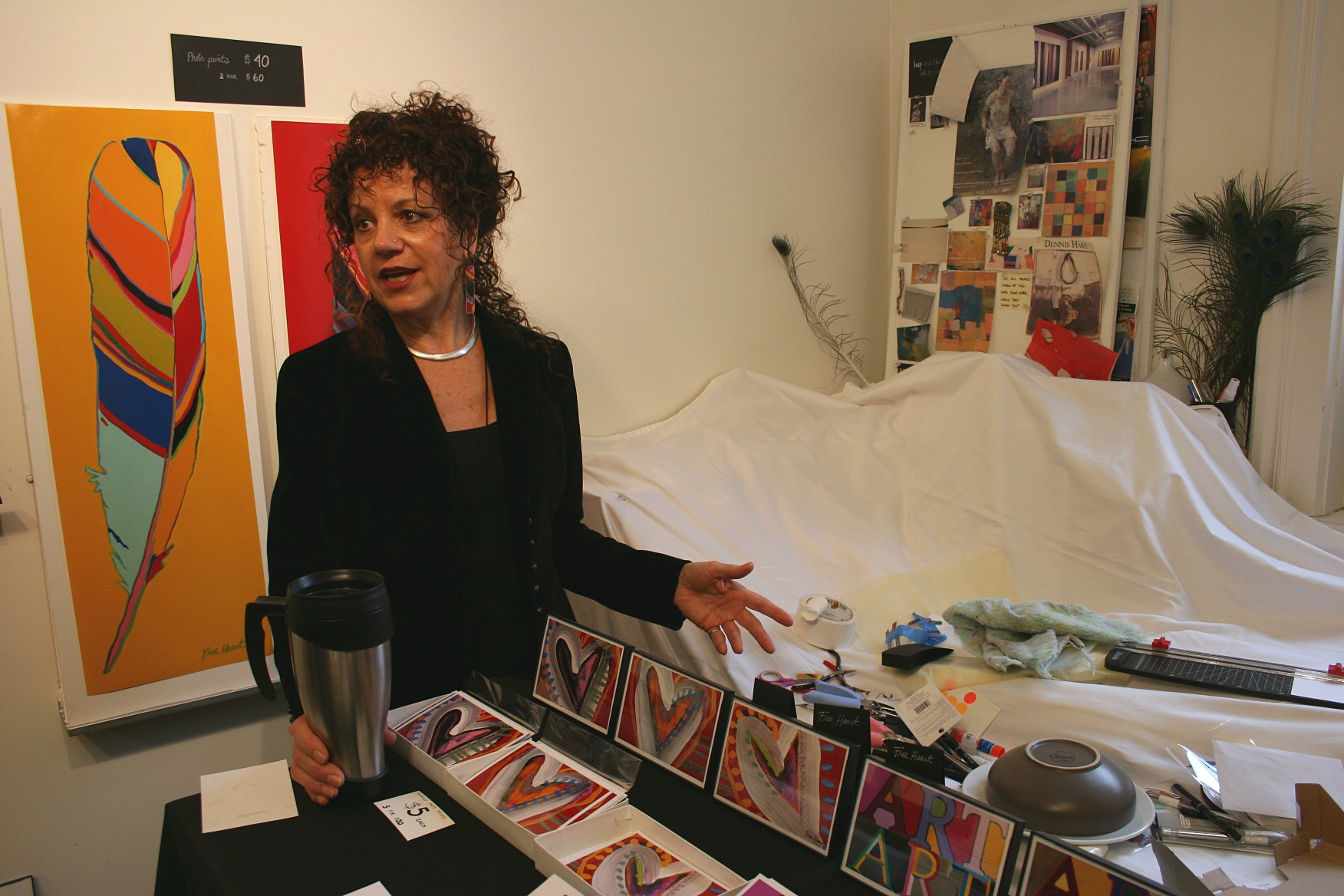
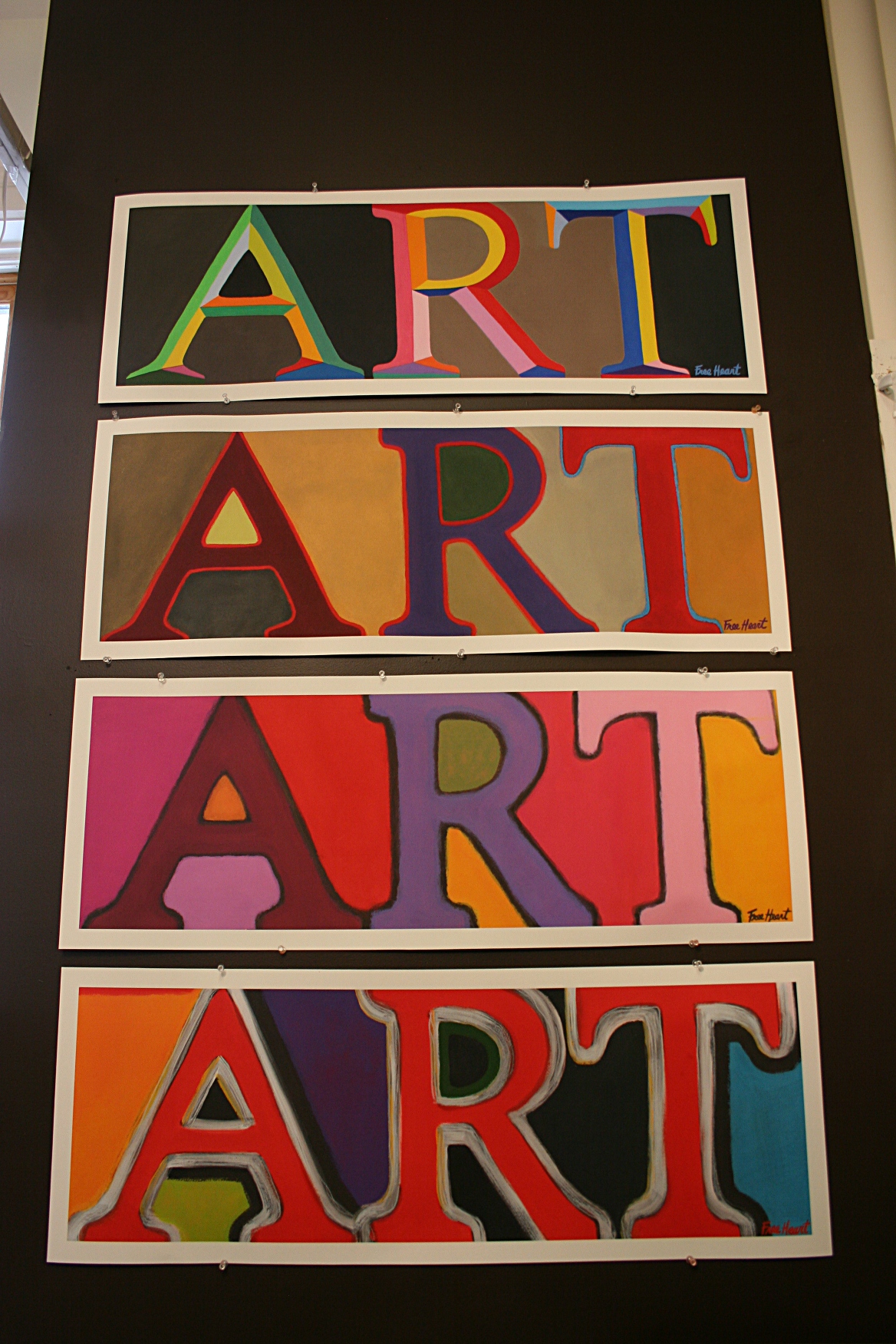
Julie Free Heart talks about her bold art.

Julie Free Heart talks about her bold art.

Free Heart’s paintings prove a sharp contrast to Miller’s. Defined. Bold. Single subject. Colorful feathers that to my arts uneducated mind seem modern art.

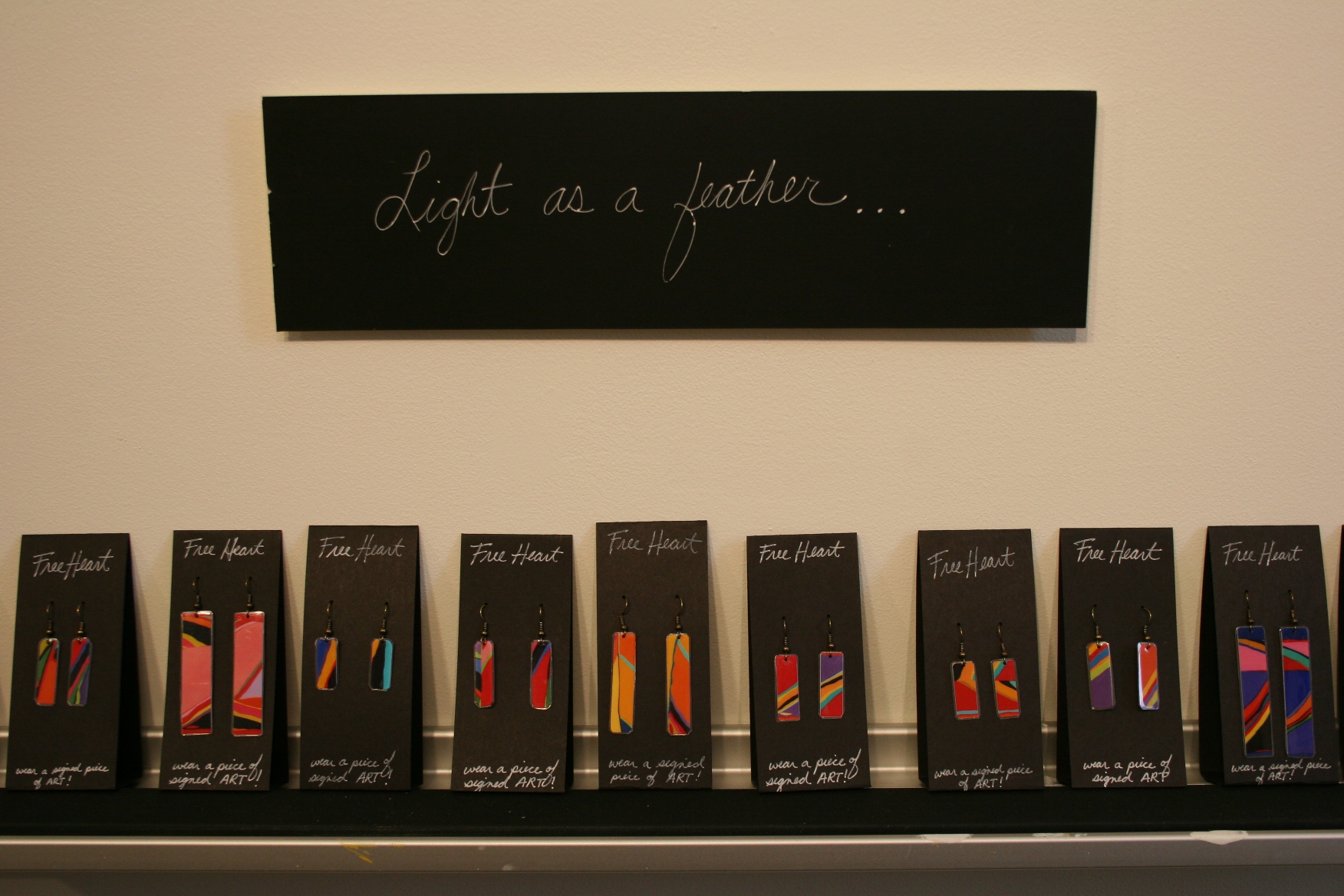
Free Heart's "light as a feather" earrings.

Free Heart’s “light as a feather” earrings.

There is a reason she paints feathers. The break-up of a long-time relationship. Feathers, actual feathers, floating before her at unexpected times, unexpected places. A sign that she was being carried, Free Heart says. She was meant to paint these bold, bright feathers, to celebrate, to be joyful.

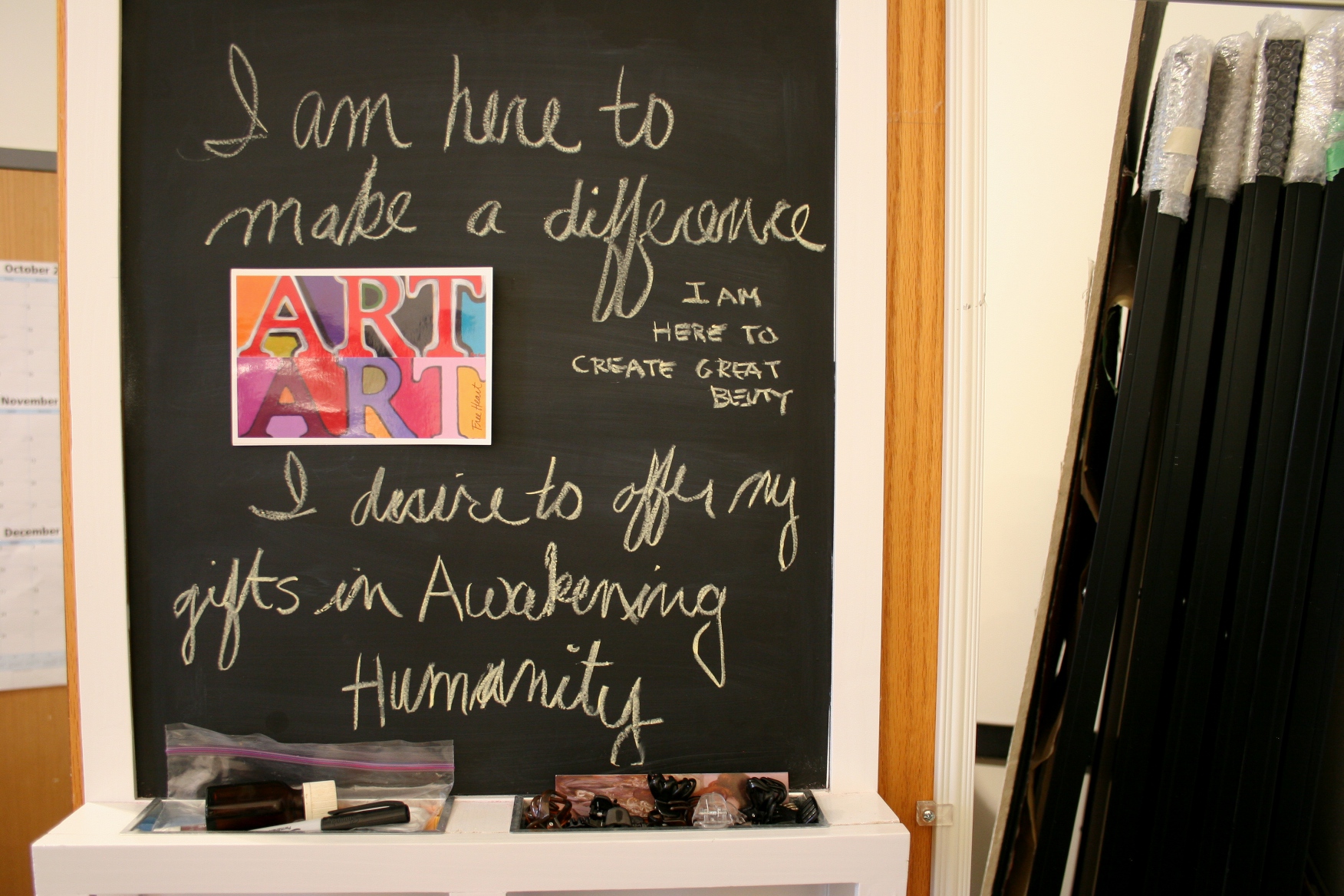
A message chalked on the back of Free Heart's studio door shares her philosophy on art.

A message chalked on the back of Free Heart’s studio door shares her philosophy on art.

After her marriage ended and not wanting to take back her maiden name, she chose the name Free Heart. It reflects who she is, she says. And I can see that. In her art. Hear that in her enthusiasm for painting these bold feathers, uniquely her own, uniquely carrying this artist on her journey through life and art.

More of Free Heart's bold art.

More of Free Heart’s bold art.

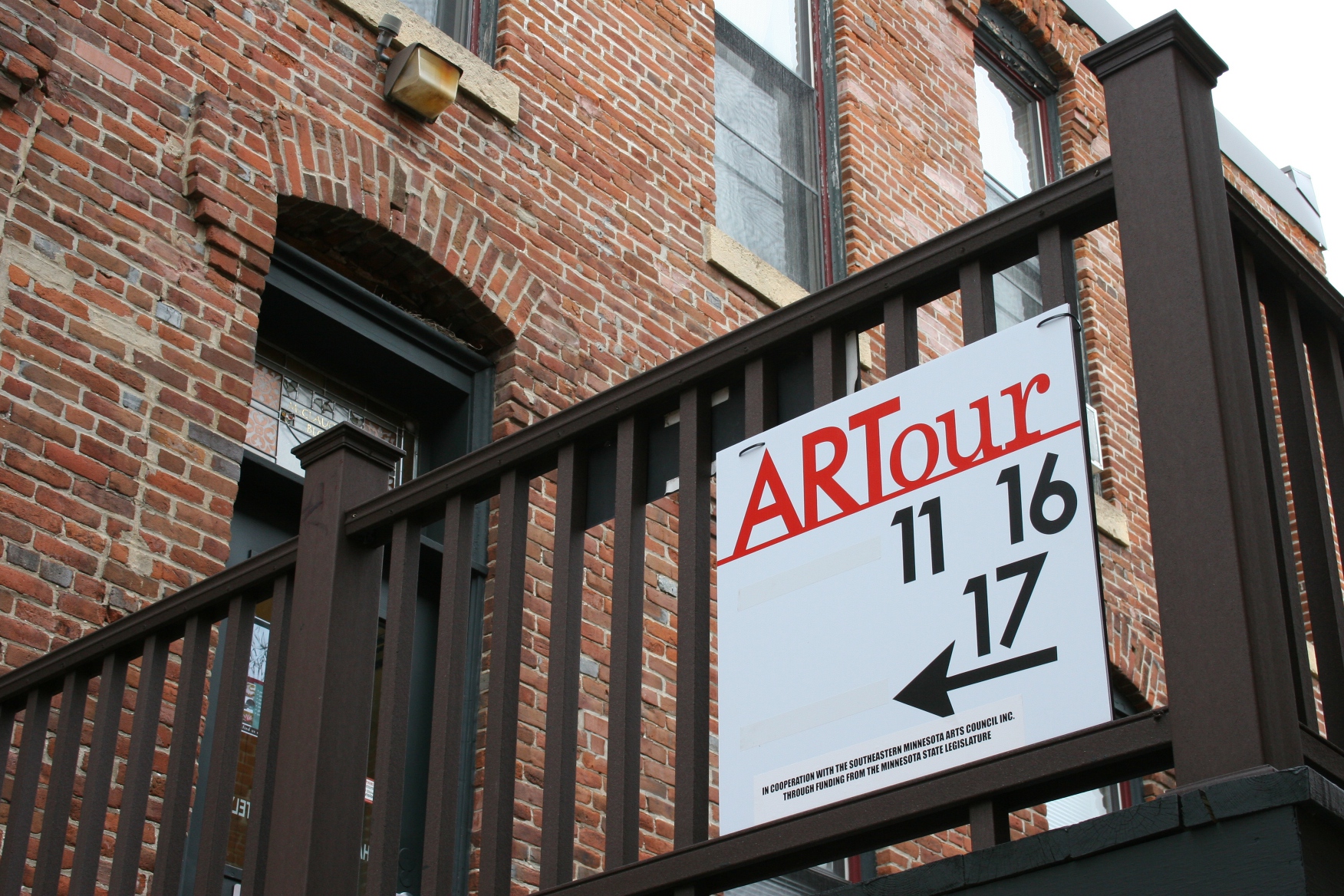
Signage directs visitors toward art studios on the third floor of an historic downtown Northfield building along East Fifth Street.

Signage directs visitors to art studios on the third floor of an historic downtown Northfield building along East Fifth Street.

FYI: To read about other artists whose work and/or studios I viewed during the recent South Central Minnesota Studio ARTour, click here and here and here.

Please check back for one final post from a downtown Northfield art studio.

© Copyright 2013 Audrey Kletscher Helbling


On ARTour: Inside an old milkhouse October 23, 2013

I FEEL COMFORTABLY AT HOME in the old milkhouse, Kittens underfoot. The smokey scent of a wood burning stove warming a kettle of apple cider. Pipelines, that once carried fresh milk, poking through the wall.

Some of Lessing's ceramics displayed outside The Milkhouse Studio.

Some of Glynnis Lessing’s ceramics displayed outside The Milkhouse Studio.

This is the studio of ceramics artist Glynnis Lessing. This weathered building forked off a circular farm drive along Minnesota Highway 3 just north of Northfield. This land the artist’s home since relocating from Chicago with her family about a year ago.

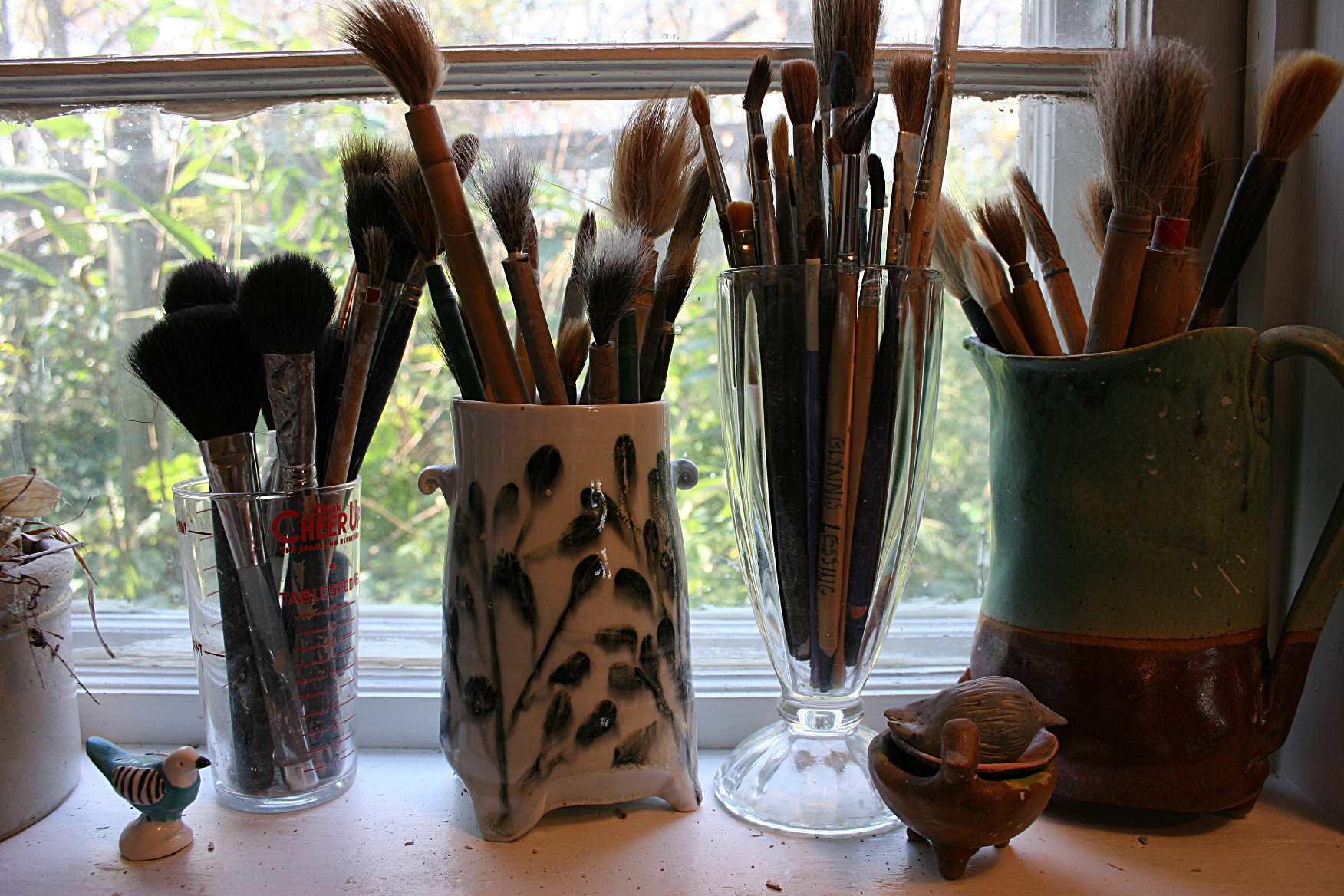
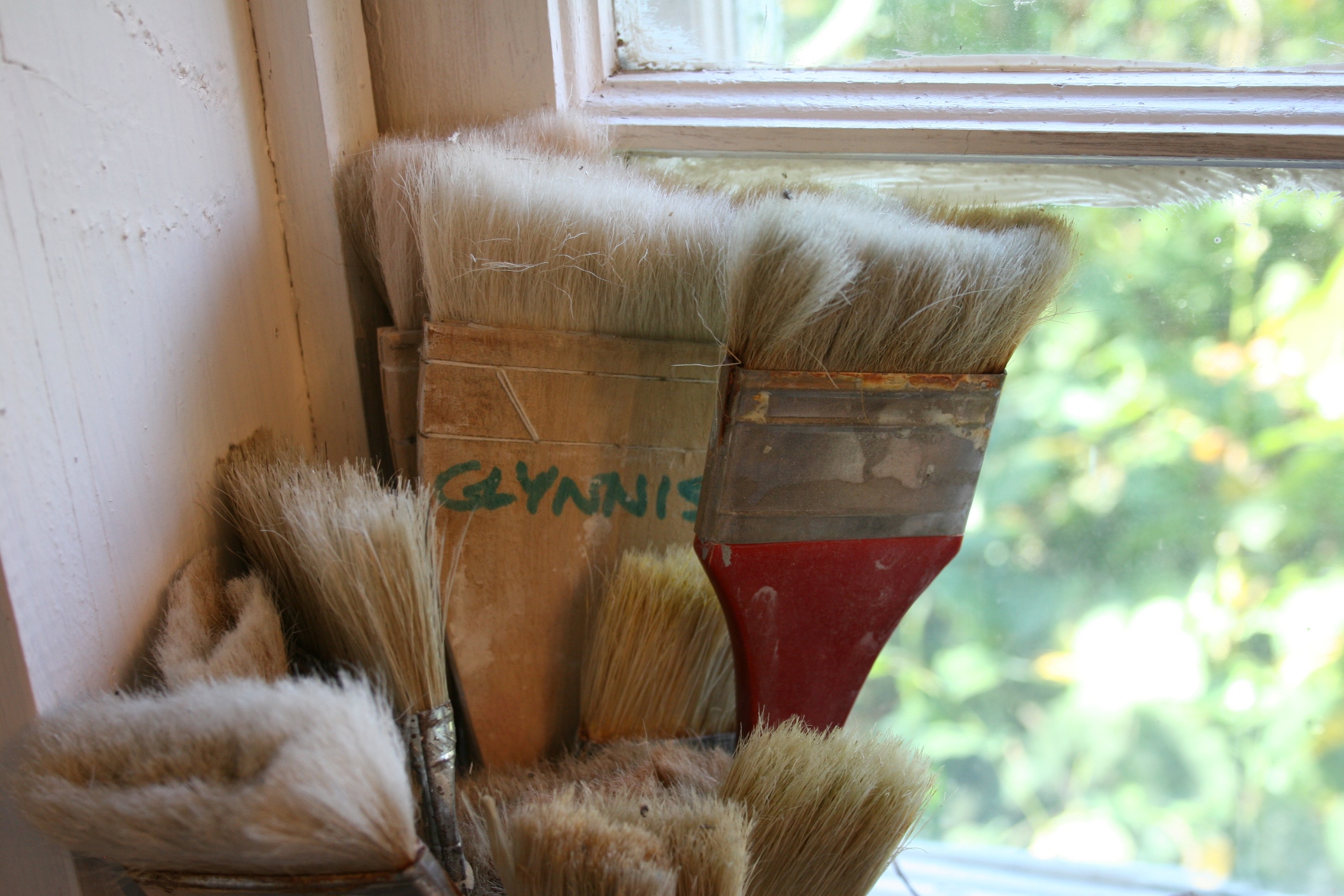
Tools of the trade on a milkhouse windowsill.

Tools of the trade on a milkhouse windowsill.

I have come here, to The Milkhouse Studio, on a Sunday afternoon for the South Central Minnesota Studio ARTour, a once-a-year opportunity to meet local artists where they create.

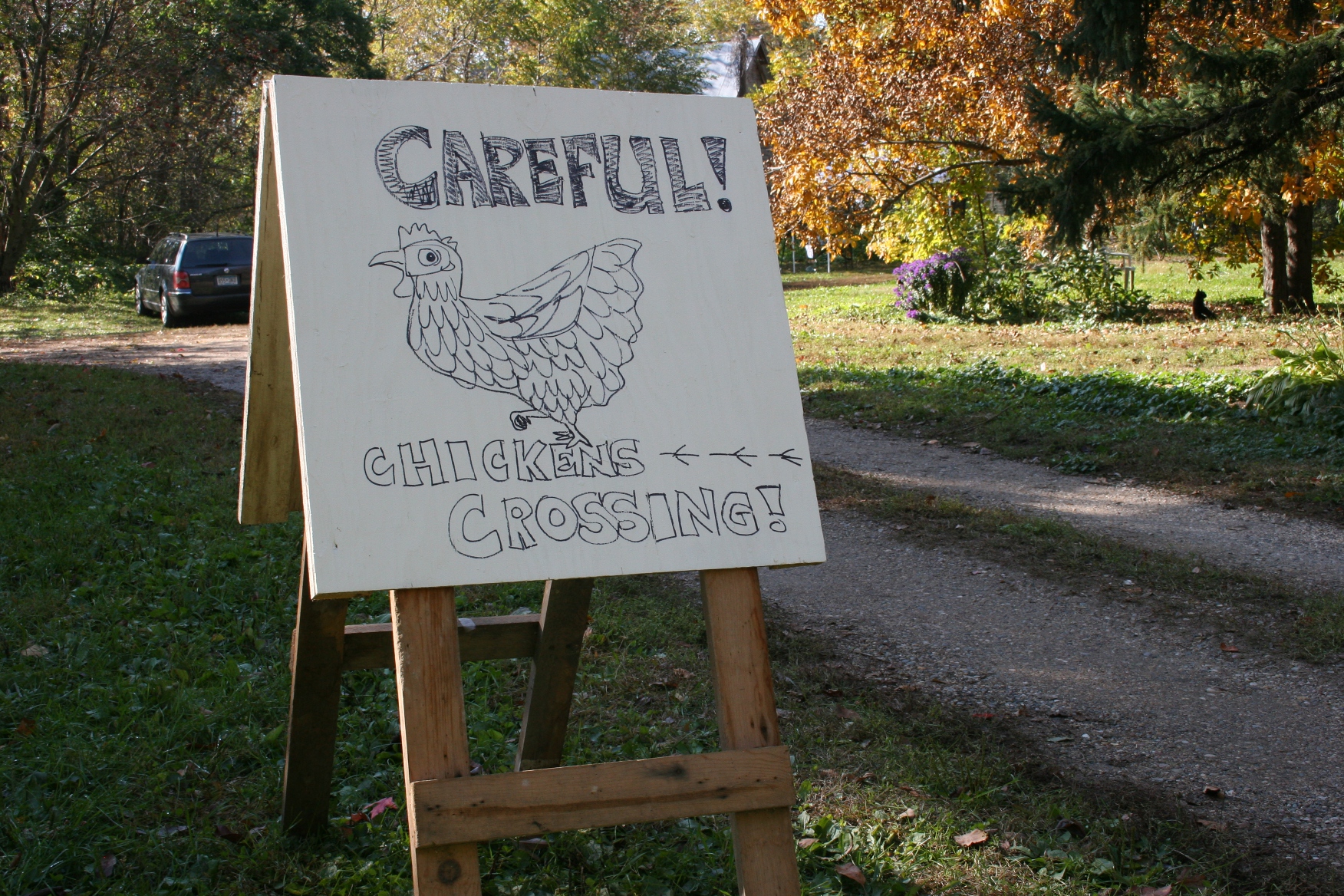
A sign advises visitors of chickens on the farm.

A sign advises visitors of chickens on the farm.

This rural setting reminds me of my childhood, growing up on a southwestern Minnesota dairy farm where I labored many hours in the milkhouse and barn.

Milking equipment remains in the milkhouse.

Milking equipment, right, remains in the milkhouse next to Lessing’s creations.

Although I never imagined a milkhouse as an artist’s studio, for Lessing it seems the perfect fit—creating in this place where her grandfather milked cows in the adjoining barn. Worked with his hands, just like her. In these aged buildings, on the land.

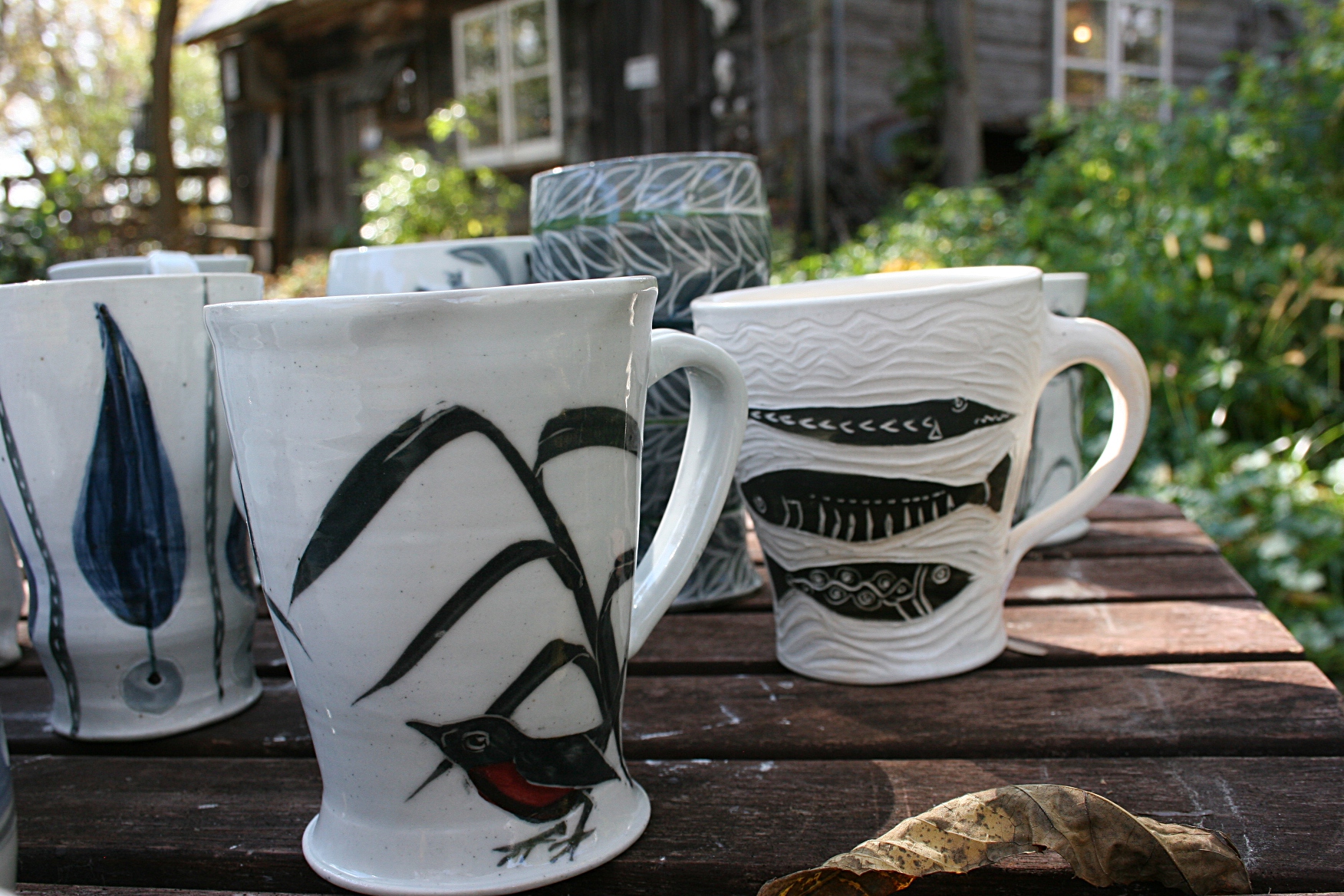
Love these nature-themed mugs.

Love these nature-themed mugs.

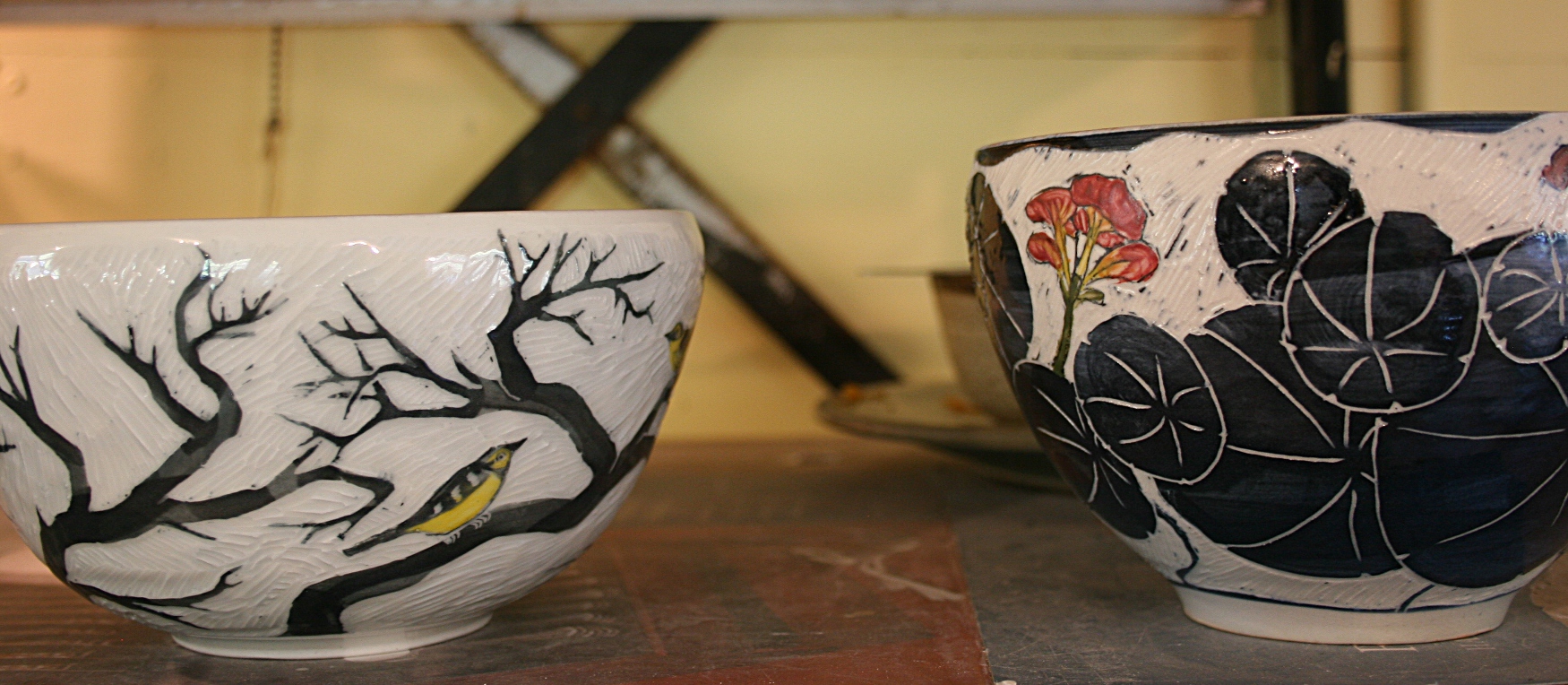
Love these bowls, too.

Love these bowls, too.

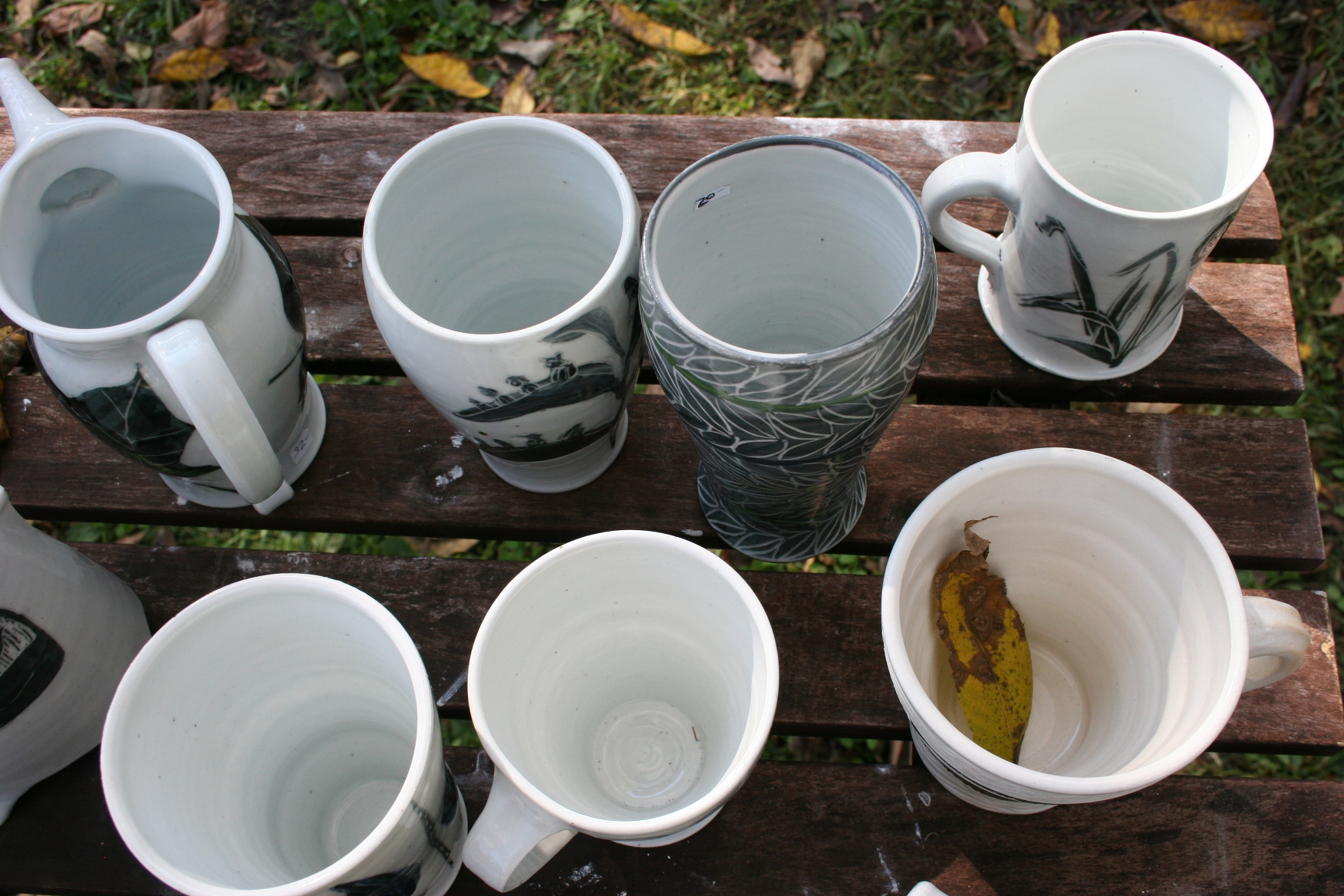
And then I noticed the leaf that had settled inside the mug. So fitting.

And then I noticed the leaf that had settled inside the mug. So fitting.

I can see the influence of rural life in Lessing’s pieces. Branches and birds. Leaves and blades of grass. An earthy quality that appeals to me and causes me to reflect on my rural roots.

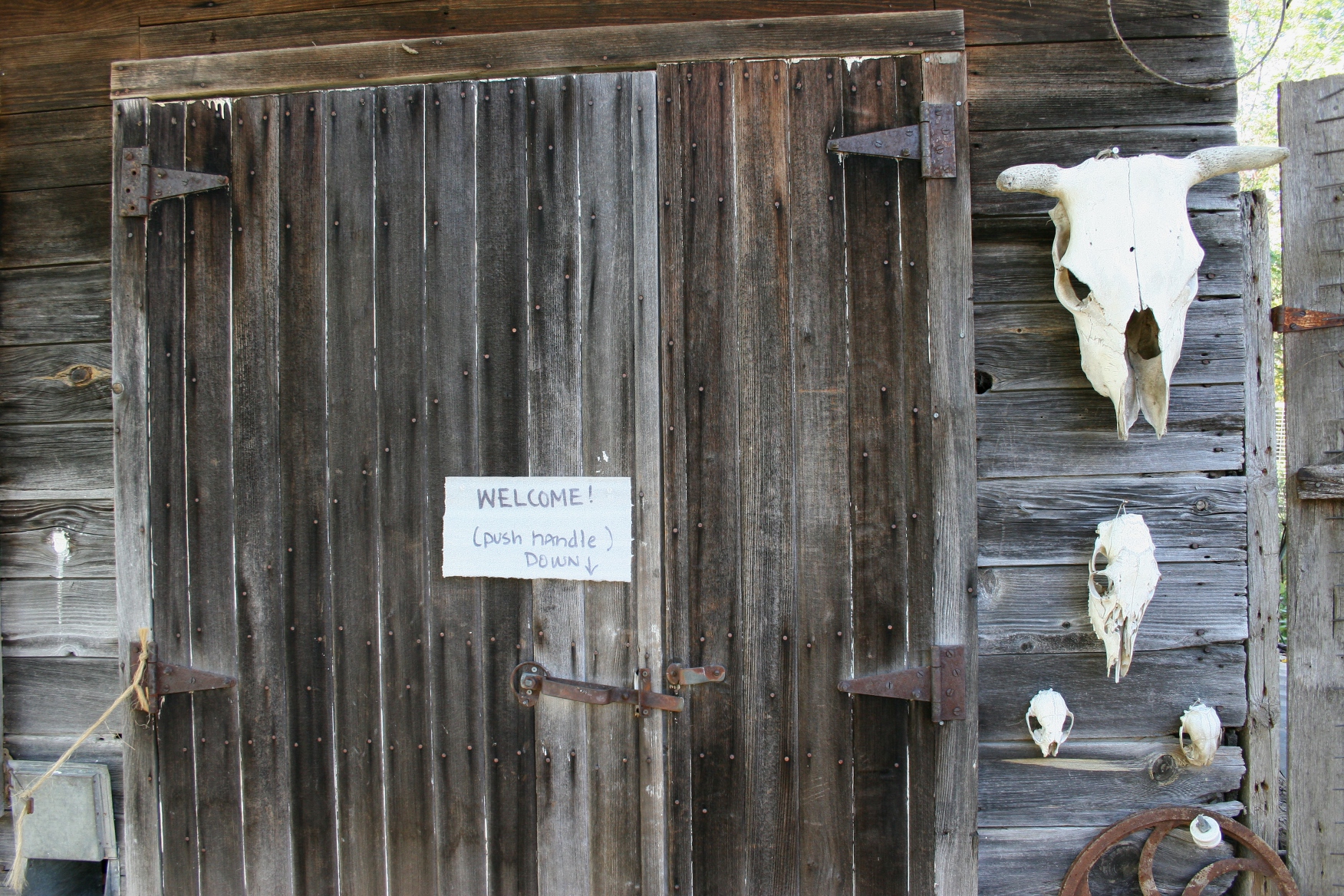
The Milkhouse Studio front door. Lots of history and memories here.

The Milkhouse Studio front door. Lots of history and memories here.

My memories: Felines circling around a battered hubcap to lap warm milk fresh from the cows. Frothy milk dumped, through a strainer, into the bulk tank. Sudsy water swished inside a milk bucket with a stiff brush. Yellow chore gloves drying atop an oil burning stove in the milkhouse…

Tucked into a corner of a milkhouse windowsill.

Tucked into a corner of a milkhouse windowsill.

FYI: To learn more about the history of the old milkhouse, click here to read Lessing’s blog post on the subject.

And for more info about Lessing the artist, click here.

To read my first post about the South Central Minnesota Studio ARTour, click here. Please check back for more posts from artists’ studios.

© Copyright 2013 Audrey Kletscher Helbling