Minnesota Prairie Roots

Writing and photography by Audrey Kletscher Helbling

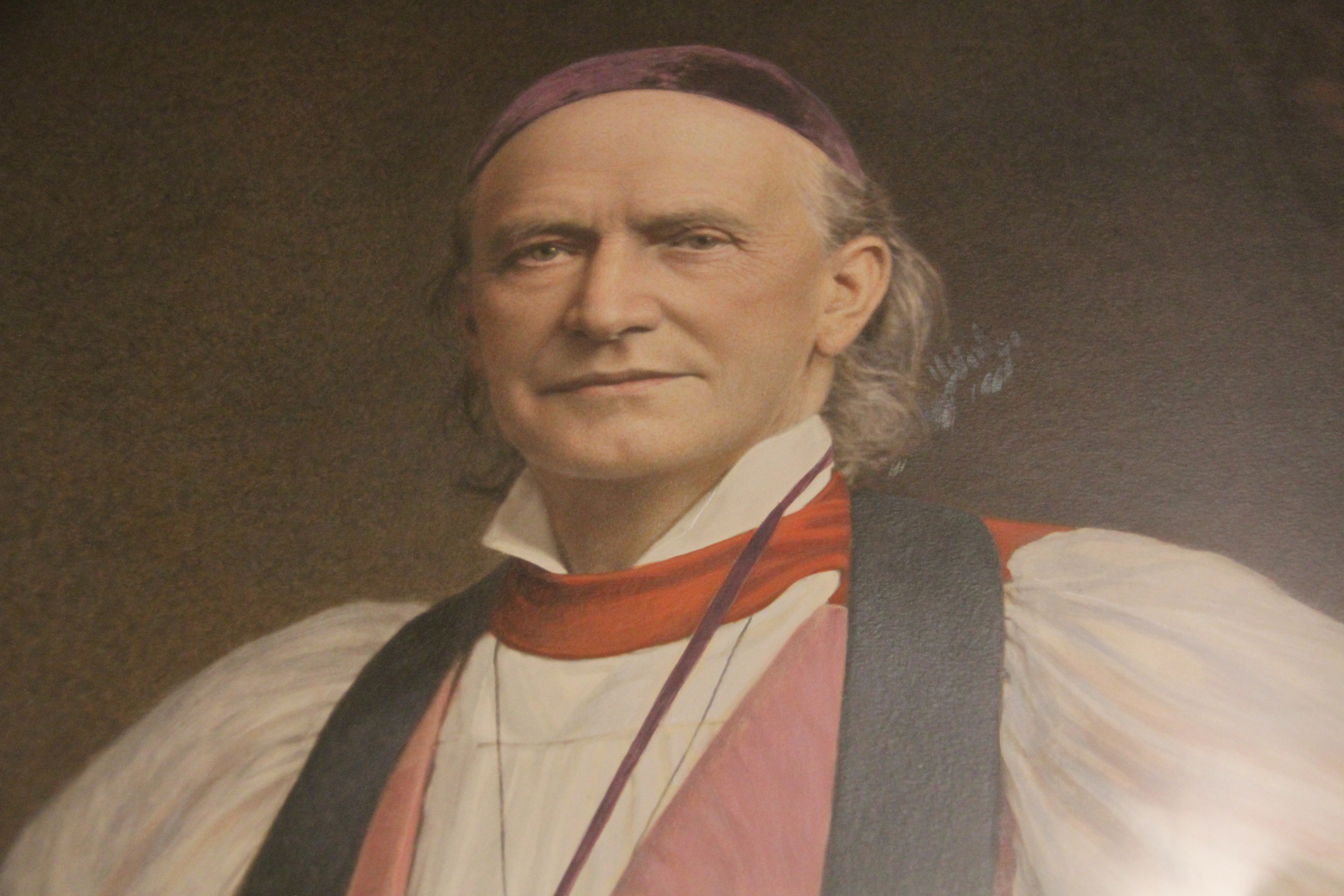
Bishop Henry Whipple, the man behind the federal building bearing his name January 16, 2026

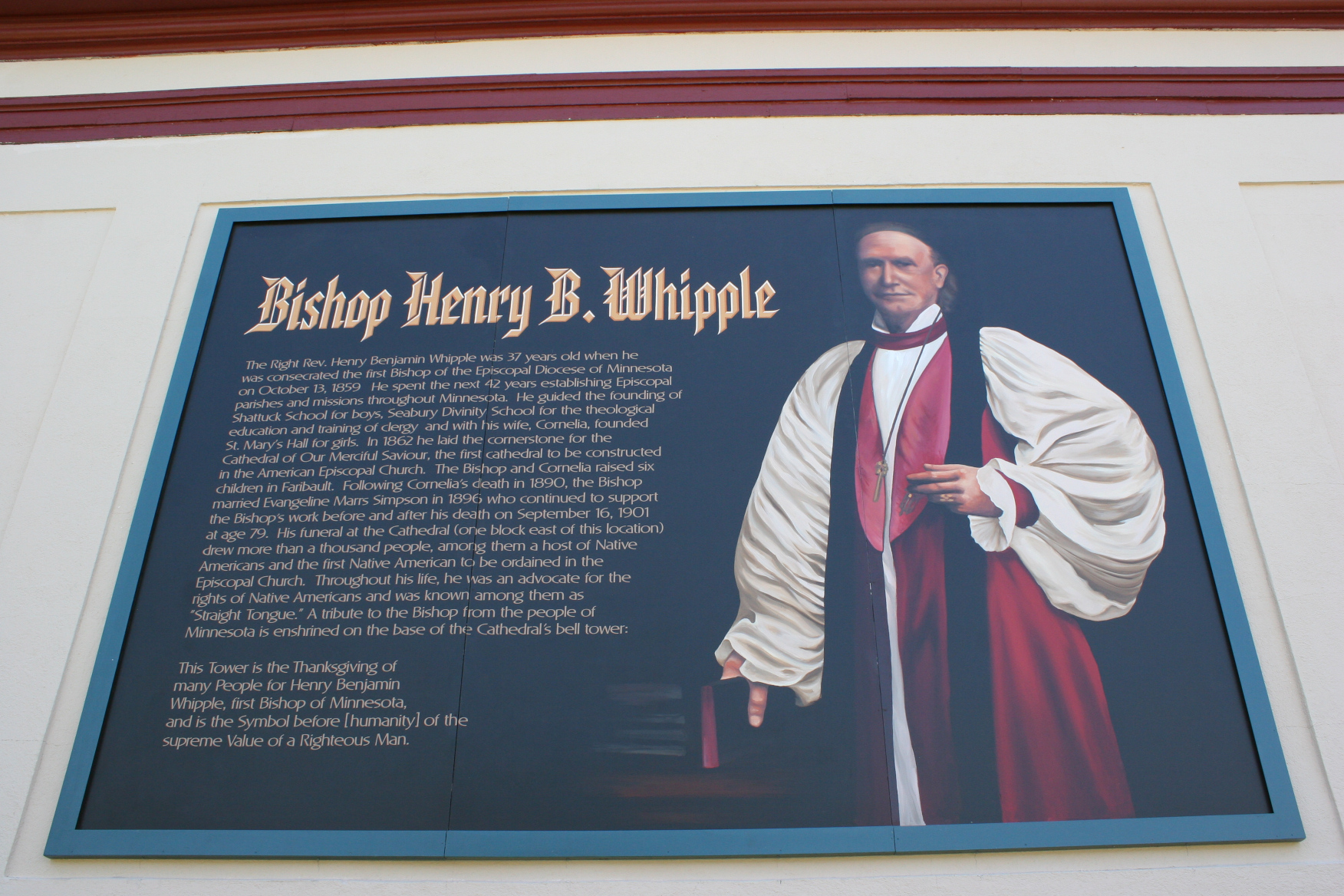
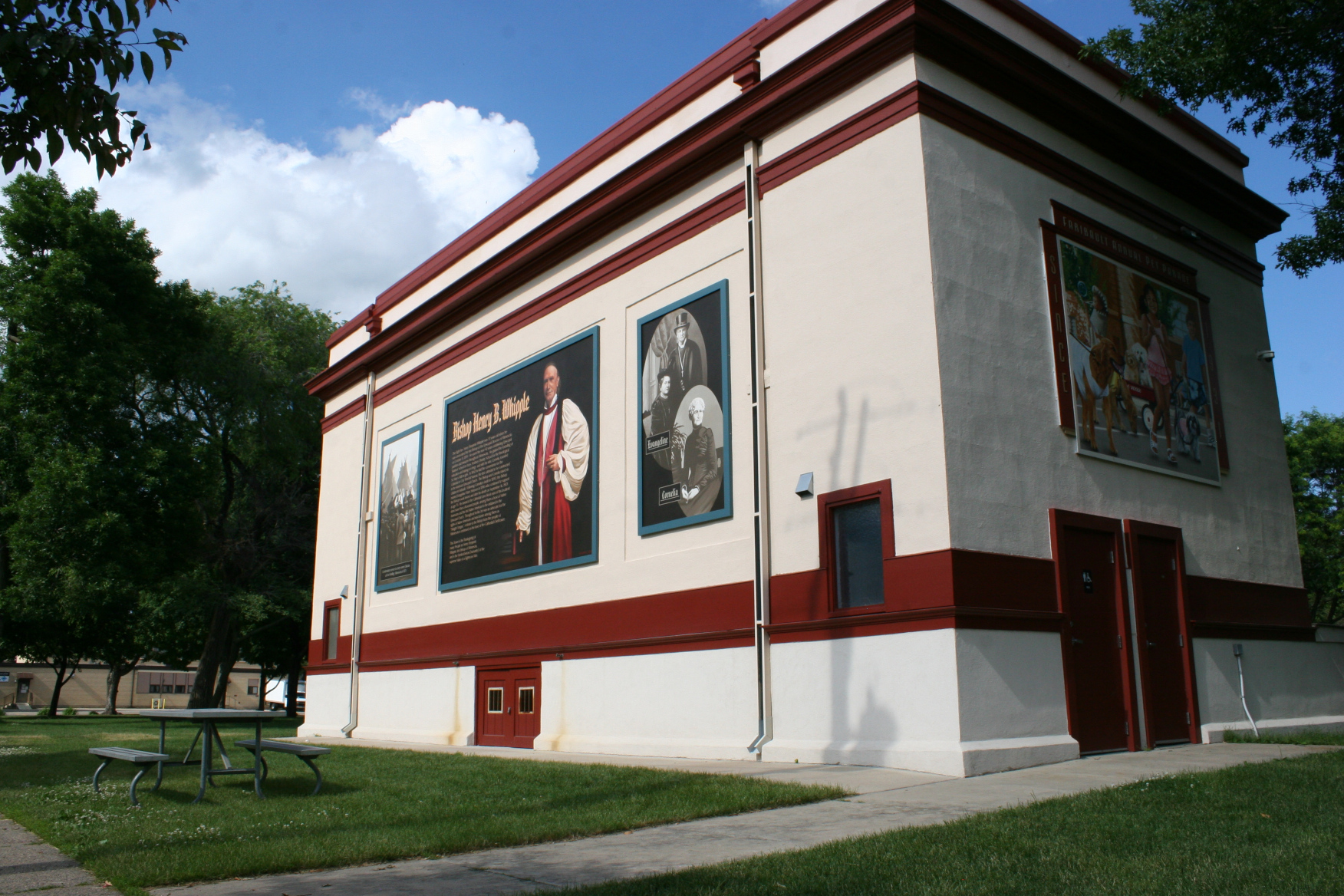
A mural on the bandshell at Faribault’s Central Park honors Bishop Henry Whipple. (Minnesota Prairie Roots copyrighted file photo)

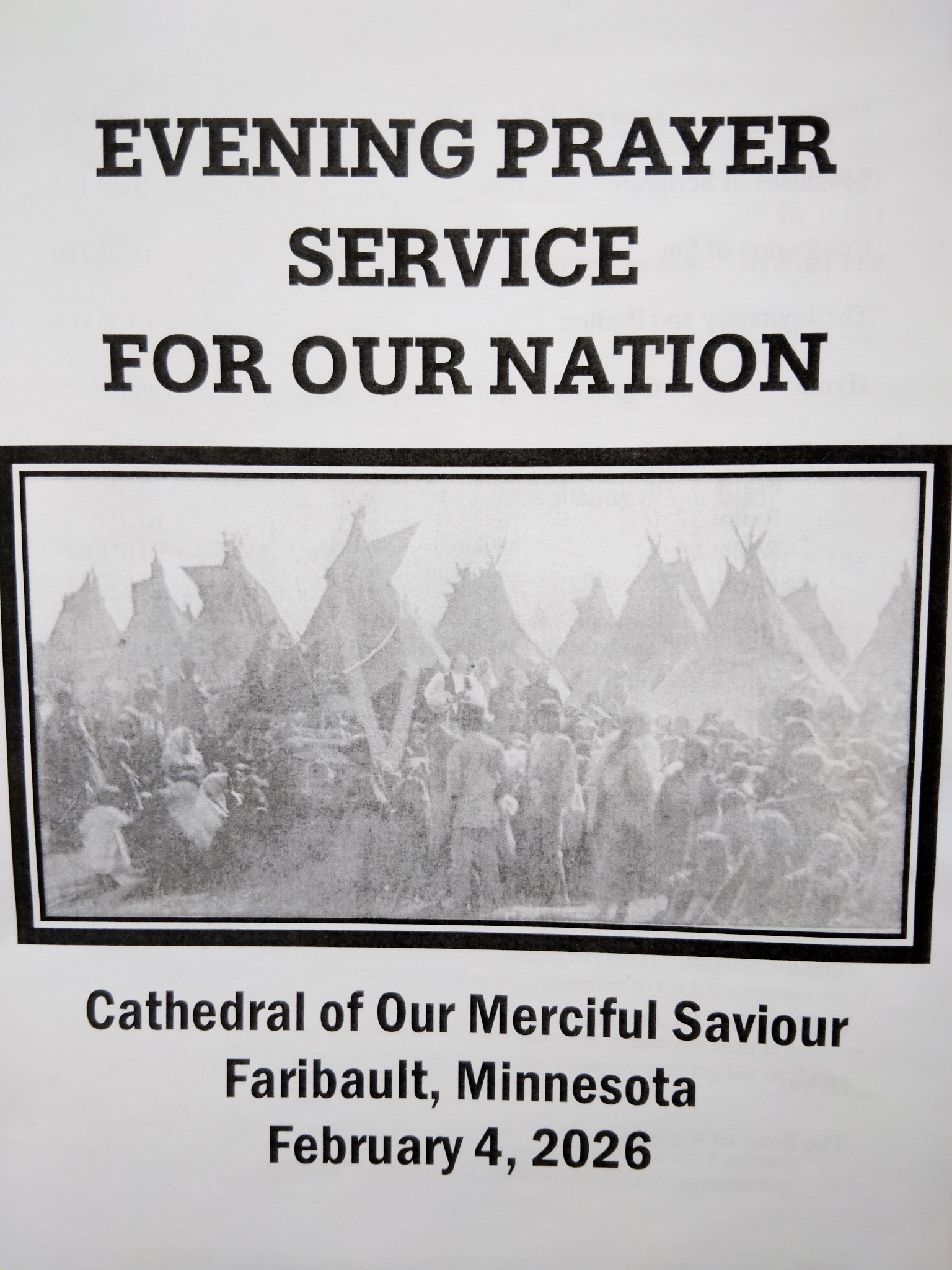
I EXPECT BISHOP HENRY WHIPPLE may be turning over in his grave under the altar inside the Cathedral of Our Merciful Saviour in Faribault. He would be appalled by what’s happening in this community with ICE enforcement. And he would also likely be standing side-by-side with protesters outside the Bishop Henry Whipple Federal Building at Fort Snelling protesting ICE’s presence in Minnesota. The federal agents are based inside the building named after him.

Whipple was all about compassion and embracing others, especially as a friend to the Dakota in Minnesota following his arrival here in 1860 and throughout his ministry. He would not be fine with ICE violently, or non-violently, taking people from their vehicles, their homes, clinics, outside schools and churches, inside businesses…and illegally detaining them without due process. That includes those here legally and American citizens imprisoned inside the building bearing Whipple’s honorable name.

I am not OK with this. None of us should be.

HOW BISHOP WHIPPLE MIGHT REACT

As Minnesota continues to deal with the presence of 3,000 ICE agents in our state, I think of the Episcopalian bishop, known as “Straight Tongue” for his honesty, and how he would react. He would assuredly be on the streets advocating for human rights. He would be talking with the current president, just like he did in 1862 with President Abraham Lincoln. Whipple traveled to DC then to personally plead for the lives of 303 Dakota sentenced to death by hanging.

Whipple would probably also be out buying groceries for Faribault residents afraid to leave their homes. He would be walking kids to their bus stops in trailer parks. He would be preaching peace, love and compassion.

HONORING WHIPPLE’S LEGACY

Those who disliked Whipple, and the Dakota, disparagingly tagged the clergyman as “The Sympathizer.” Little has changed. There are far too many in my community who hate, and, yes, that’s a strong word, anyone whose skin color is other than white. I don’t understand. They all, unless they are Native American, can trace their presence in America back to immigrants.

If only Bishop Henry Whipple was still alive to spread love in Faribault and beyond. It’s up to us to honor his legacy by loving and helping our neighbors during these especially dark days of injustice and oppression.

#

FYI: To learn more about the bishop, I direct you (click here) to a previous blog post I wrote about him and his role in Minnesota history following a 2023 presentation at the Rice County Historical Society.

© Copyright 2026 Audrey Kletscher Helbling


Beyond just fun, finding the history & heritage in Heritage Days June 11, 2025

This sculpture of Alexander Faribault and a Dakota trading partner stands in Faribault’s Heritage Park near the Straight River and site of Faribault’s trading post. (Minnesota Prairie Roots copyrighted file photo)

HOW DO YOU DEFINE heritage? I ask that question because this week my southern Minnesota community celebrates Heritage Days.

I would define heritage as a cultural or ethnic background. I am, for example, of German heritage.

So one would likely assume then that Heritage Days focuses on heritage. It did. Once. But no more. Not primarily. Rather, this multi-day event in Faribault seems more a June get together with the usual food, music, parade, craft fair and such of any summer community gathering.

It’s not that my city of some 24,000 lacks in cultural and ethnic diversity to theme Heritage Days. We are a bit of a melting pot with our newest residents arriving from Somalia and Sudan. Early on, the French, Irish, Germans and others settled here to shape and grow Faribault. Latinos also define a sizable part of our population. Many others have come from multiple countries to this place along the Cannon and Straight Rivers. Most are generations removed from the homeland. Some, though, are first-generation immigrants.

Jeff Jarvis created and handed out this mini booklet about the Wahpekute Band of the Dakota at a previous presentation at Books on Central. (Minnesota Prairie Roots copyrighted file photo)

But back to Heritage Days. Looking through the long list of events, I see several opportunities to learn about local heritage and history. The first happens at 6:30 p.m. Wednesday, June 11, at the Cathedral of Our Merciful Saviour. Regional artist and historian Jeff Jarvis will talk about “The Wakpekute Dakota & Early Faribault History.” I’ve previously heard Jarvis speak on the Dakota, original inhabitants of the land. He’s done his research. I highly recommend attending his presentation. I’m always surprised by how little long-time residents seem to know about the Dakota and their long ago presence in what would become Faribault. Jarvis presents an informative lesson in local Native heritage.

Likewise, the Rice County Historical Society Museum will be open, free of charge, from 10 a.m.-5 p.m. Thursday-Saturday. It’s a good place to see Native American and other artifacts, learn about our early fur trading and additional local history, learn about notable people like Chief Taopi and Bishop Henry Whipple, and more. Bishop Whipple founded and served the Cathedral where Jarvis is speaking.

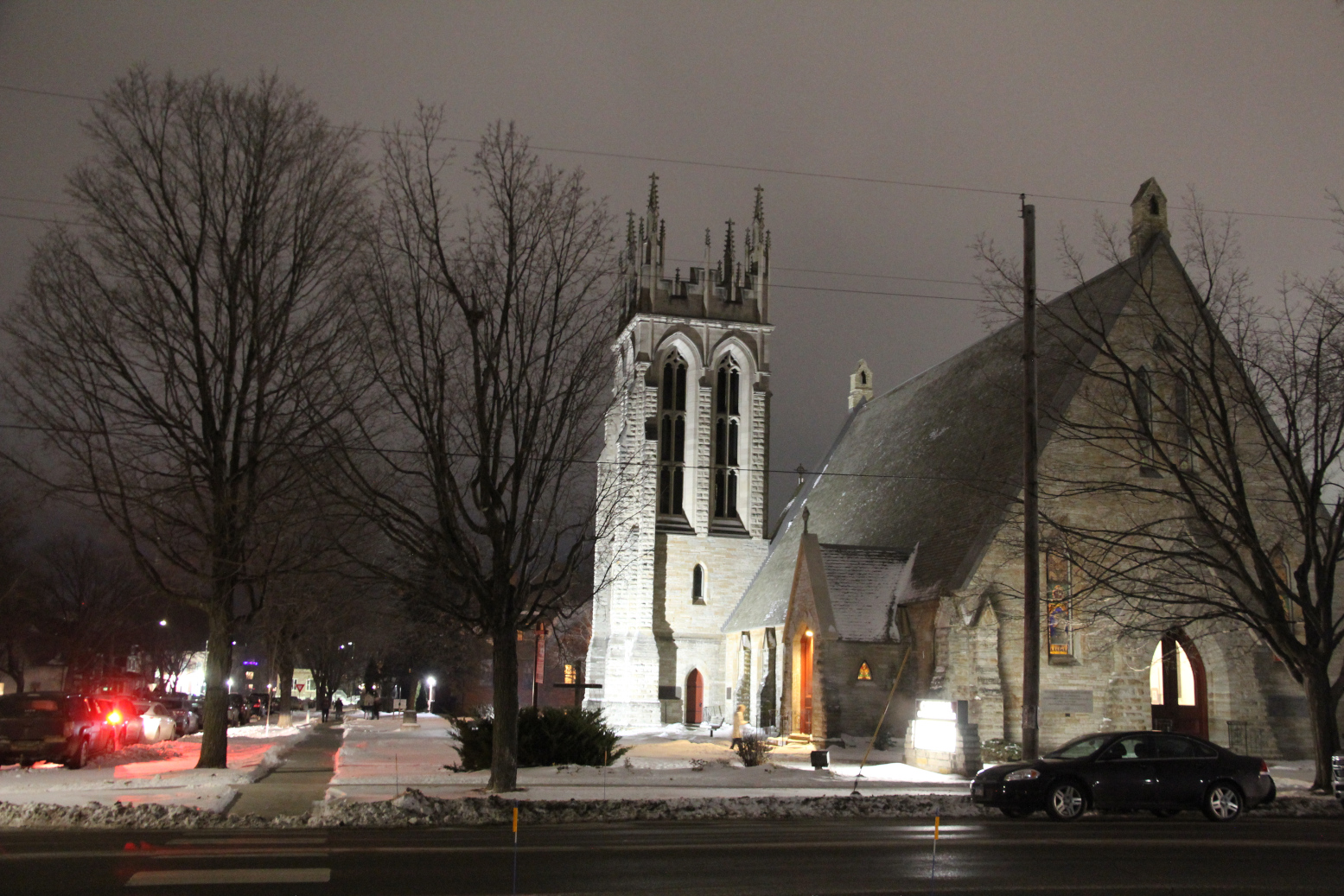
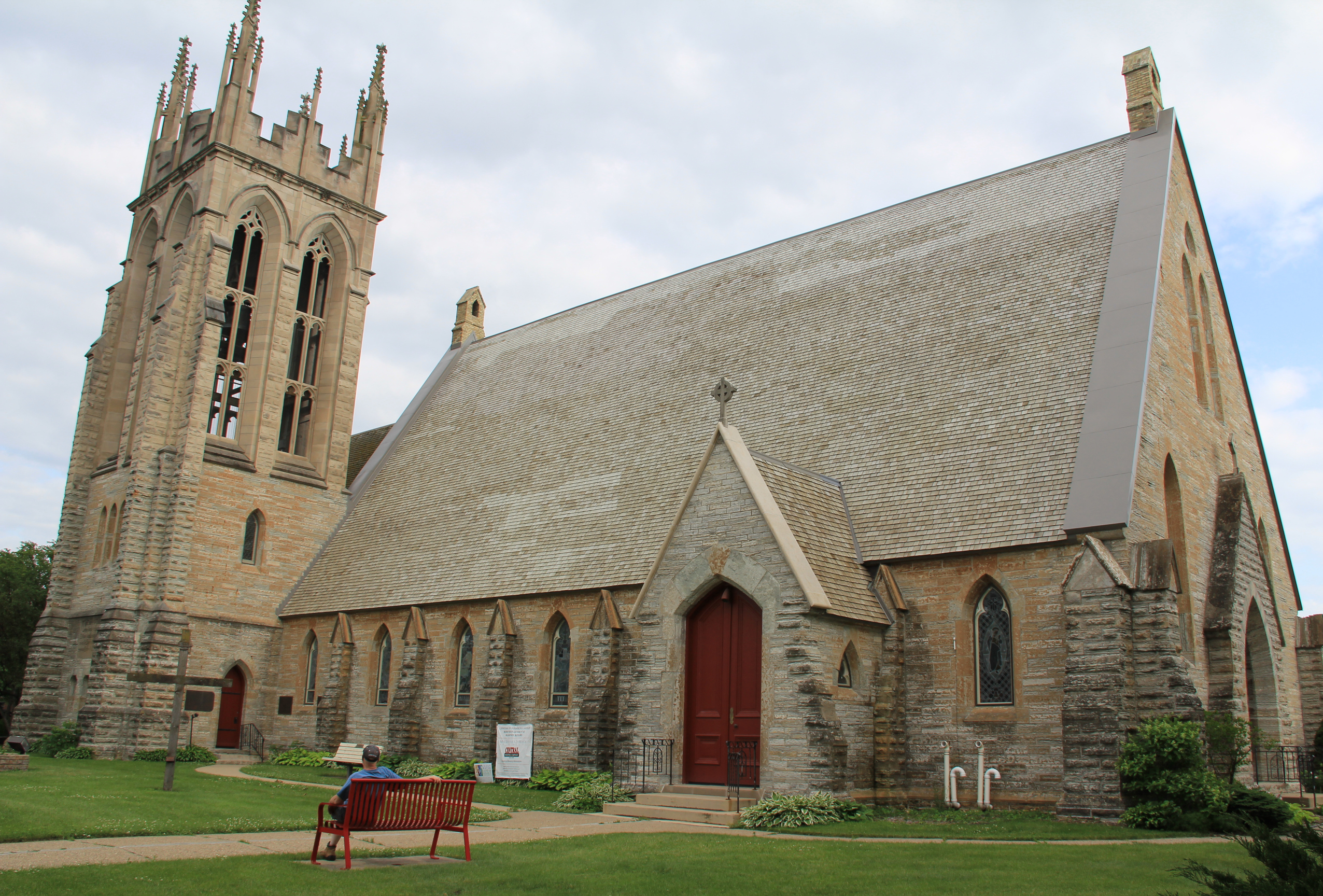
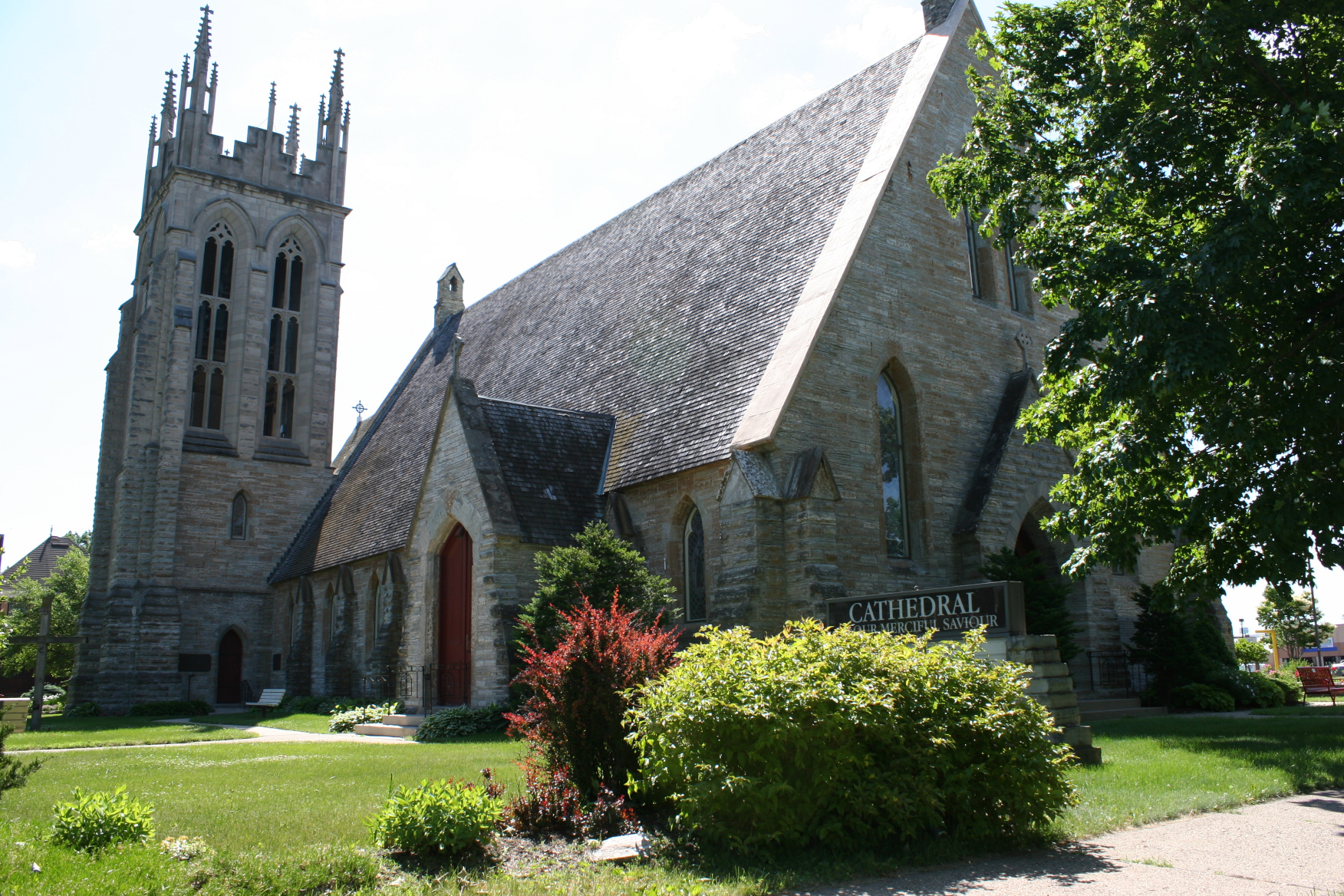
The historic Cathedral of Our Merciful Saviour sits across from Central Park and is a must-see in Faribault. (Minnesota Prairie Roots copyrighted file photo 2024)

The historic Cathedral will be open for tours at 11:30 a.m. Sunday, June 15, following a 10 a.m. Ecumenical Service including bluegrass music. This massive cathedral—and, yes, it really is a cathedral—is important in local Dakota history as the bishop worked closely with Native Americans, some of whom worshipped here.

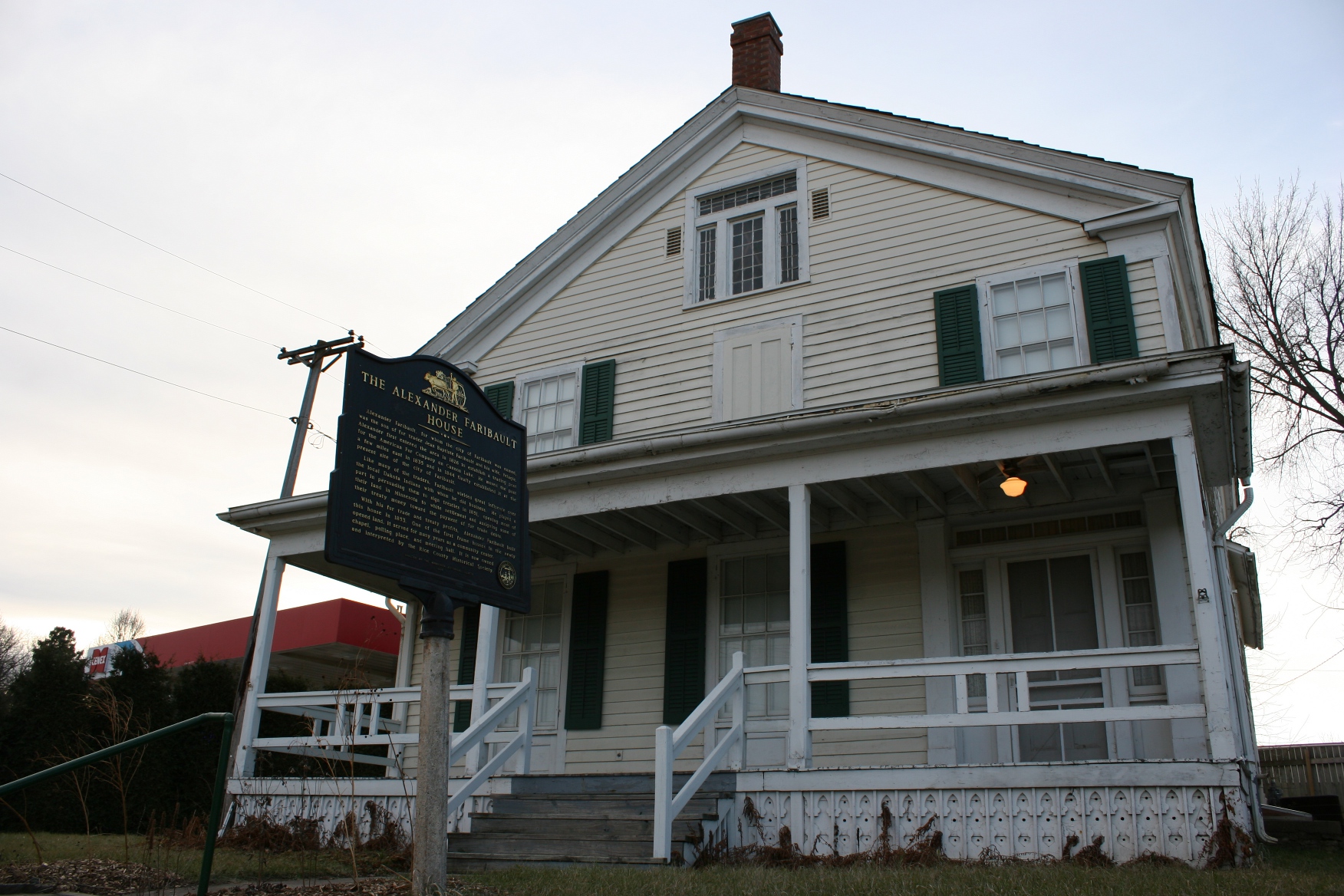
Fur trader and town founder Alexander Faribault, who was of Dakota and French Canadian heritage, also worked closely with the Dakota. His wood-frame house will be open for free tours from 11 a.m.-3 p.m. Saturday, June 14.

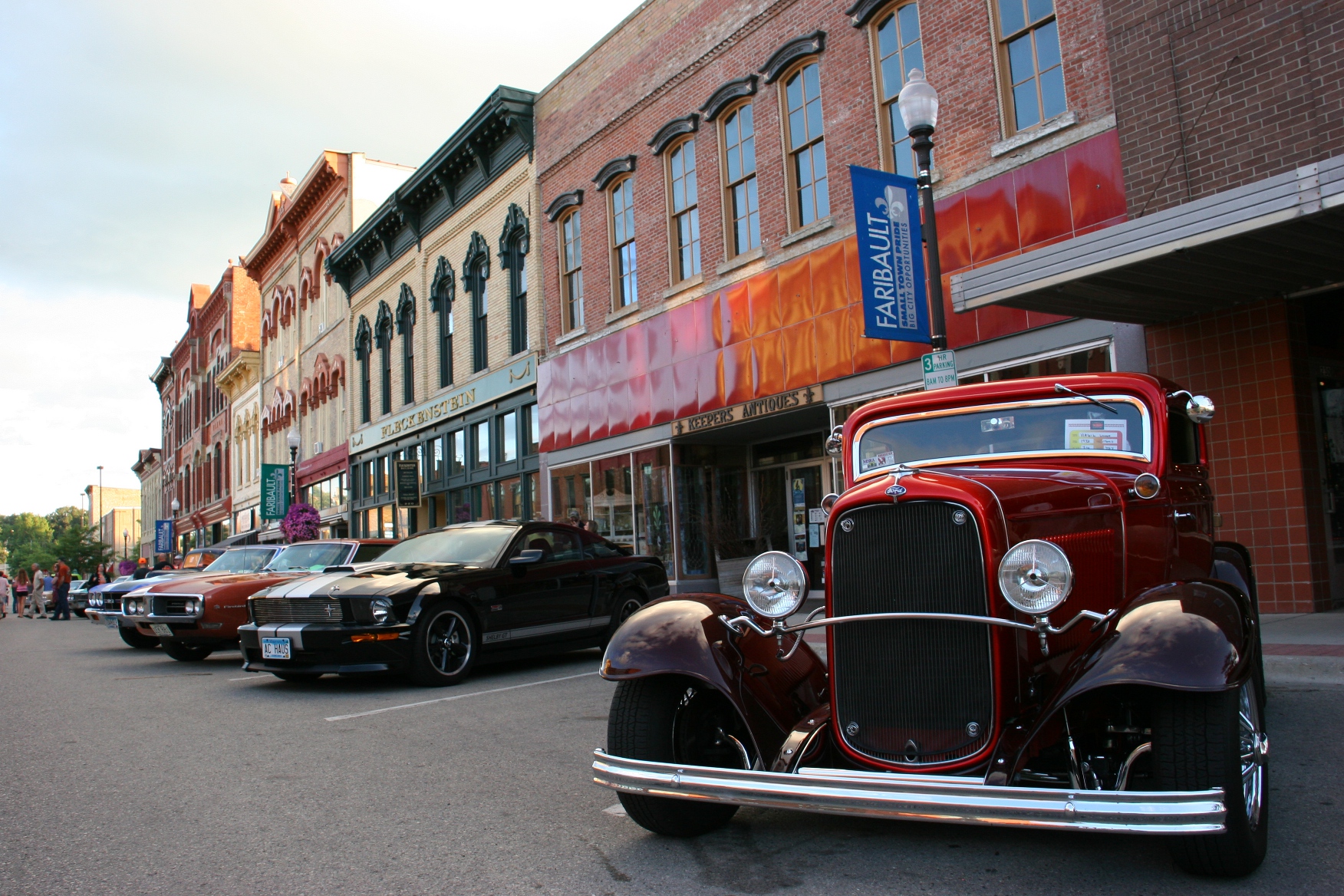
Downtown Faribault features well-kept aged buildings in our historic district. I photographed this scene during a Car Cruise Night. There’s a Car Cruise here Friday, June 13, from 6-9 p.m. (Minnesota Prairie Roots copyrighted file photo)

The Rice County Historical Society will also offer a guided Downtown Walking Tour on Friday and Saturday with two time slots of 11 a.m. and 2 p.m. The $5 tour, led by RCHS Program and Outreach Coordinator Kiran Loewenstein, begins at Central Park. Anticipated to take 1-1 ½ hours, the tour route follows Central Avenue with a focus on the historic district and buildings and early general Faribault history. I expect that will offer ample opportunity to not only learn about early history and heritage, but also to see the heritage of our newest residents in downtown core ethnic businesses.

Two more opportunities to embrace local history (although not officially part of Heritage Days) are inside the State Bank of Faribault along Central Avenue. Local streetscapes and landscapes by Father Jim Zotalis, spiritual leader of the Cathedral, are displayed in a pop-up exhibit in the bank lobby. And for those interested in Faribault’s brewing history, the bank holds an extensive collection of Fleck’s beer memorabilia form long ago Fleckenstein Brewery. Both are accessible during business hours only.

There’s lots happening during Heritage Days, activities that mostly aren’t about heritage. But some are. To see a complete listing of events, click here.

© Copyright 2025 Audrey Kletscher Helbling
 

Chief Taopi: Man of peace, community leader & more April 21, 2025

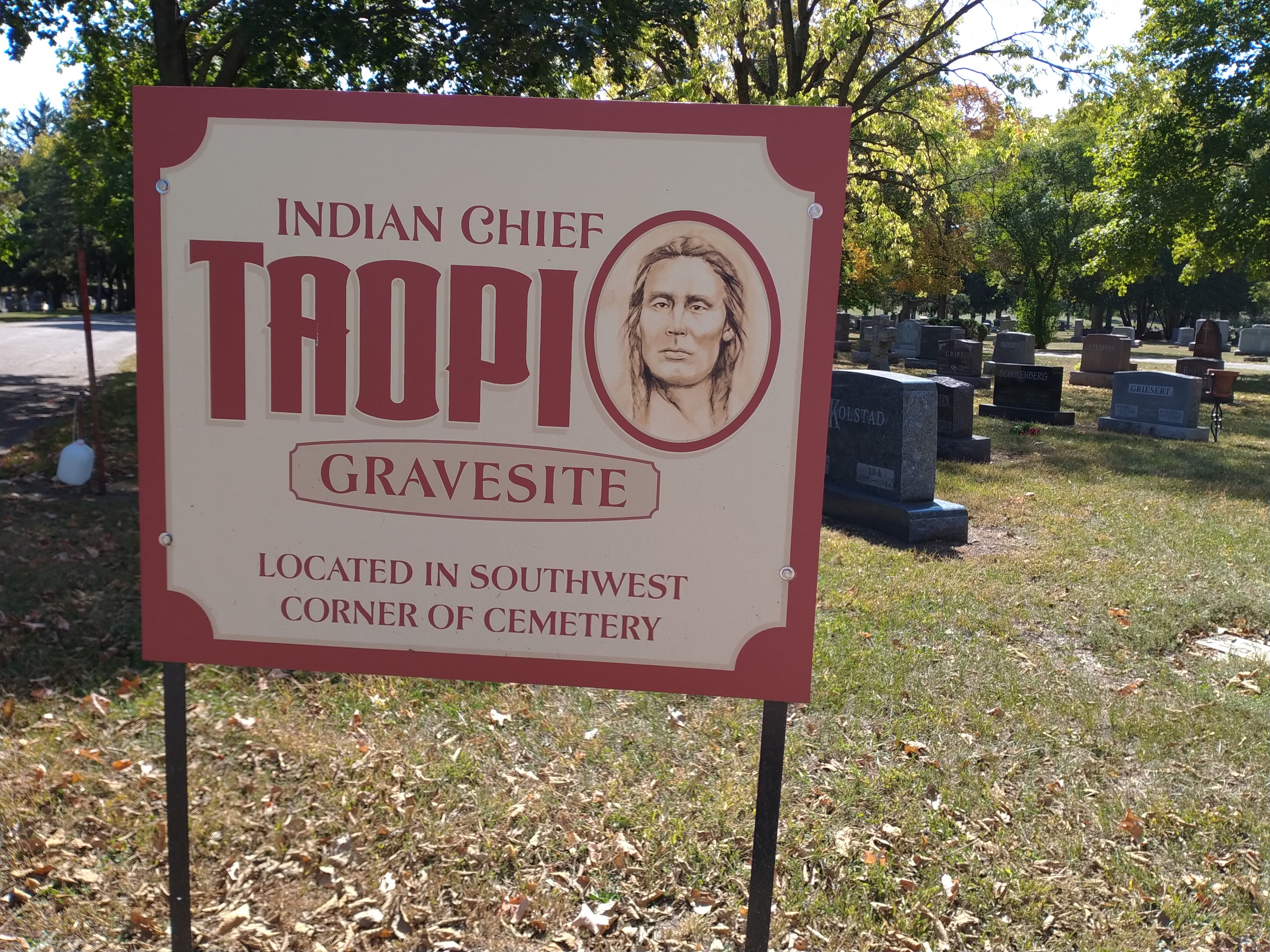
Prominent signage at Maple Lawn Cemetery directs visitors to the gravesite of Chief Taopi, “Wounded Man.” He was wounded in a battle with the Ojibwe. (Minnesota Prairie Roots copyrighted file photo)

HE FOUND HIMSELF AT ODDS with his own people. A “Farmer Indian” among “Blanket Indians.” A peace promoter among those who favored war. He was Chief Taopi, a member of the Little Crow Band of the Mdewakanton Dakota. He’s buried in Faribault, at Maple Lawn Cemetery.

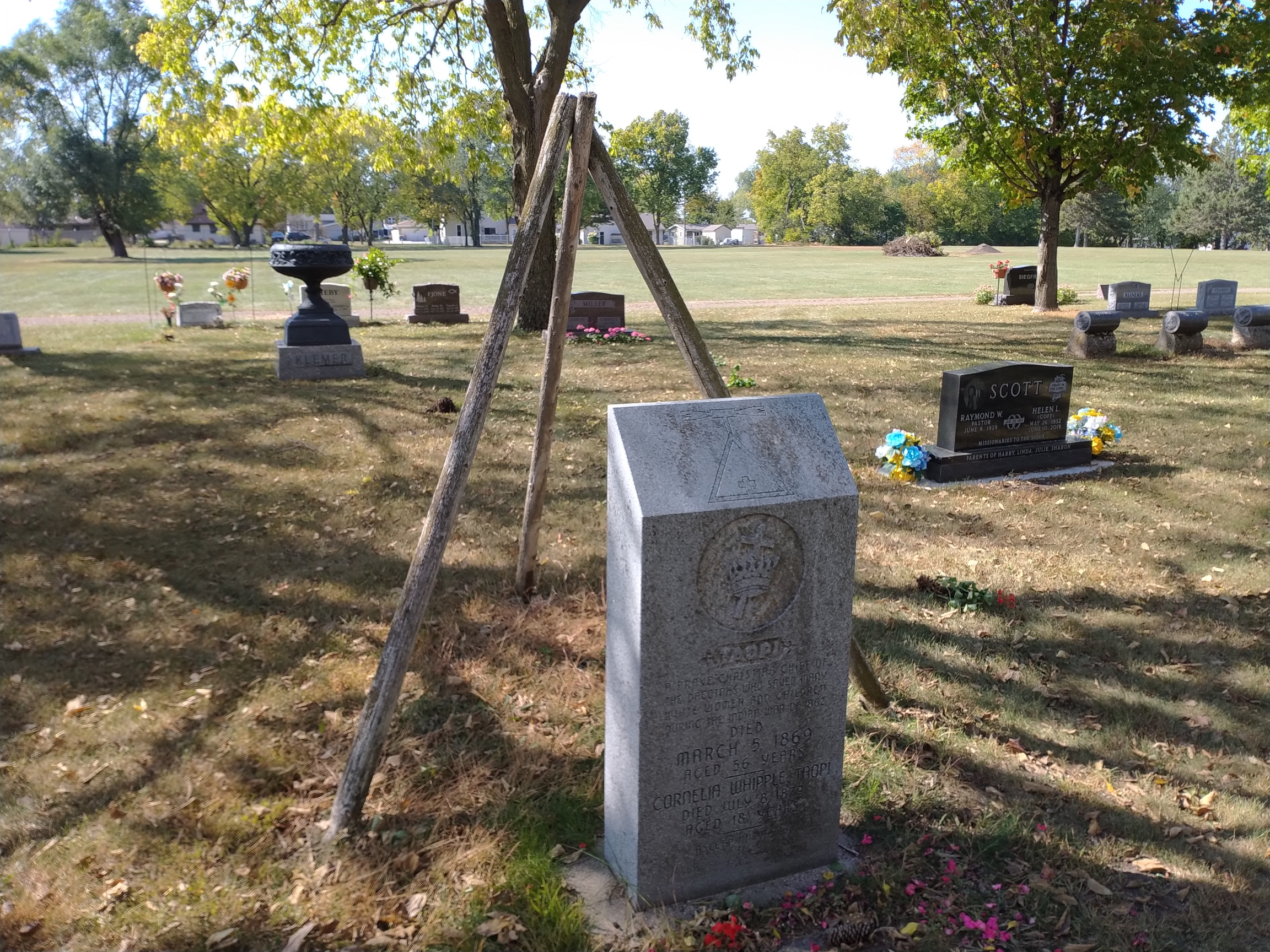
A tipi formation easily identifies the burial site of Taopi and his daughter, Cornelia Whipple Taopi. She died at age 18. He died at 56. (Minnesota Prairie Roots copyrighted file photo)

Recently, I attended a presentation about Taopi by Rice County Historical Society Executive Director Dave Nichols. It’s not the first time I’ve listened to local talks on the history of Native Americans in Minnesota, focused on those who called Faribault home. Each time I learn something new.

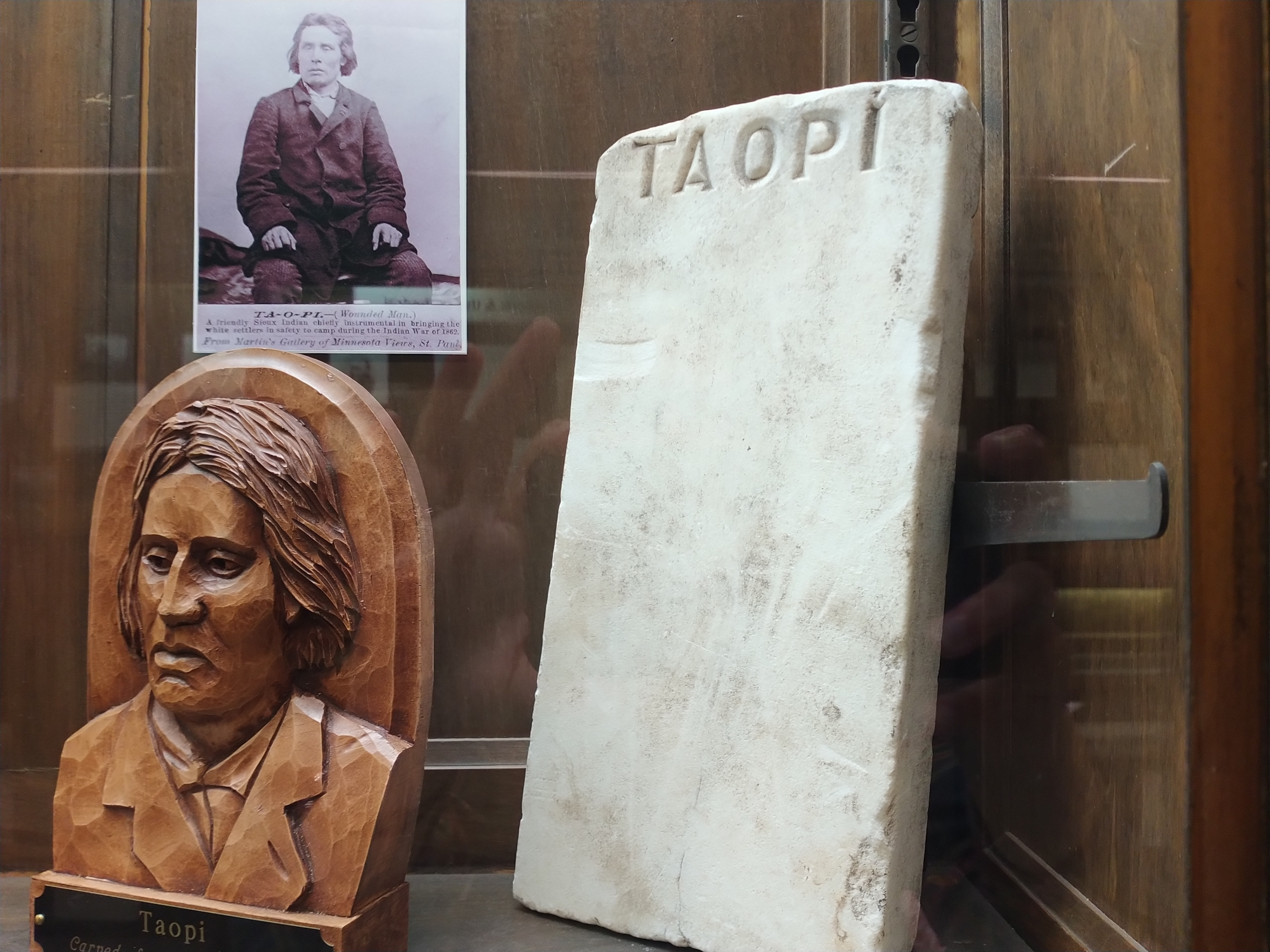
A Taopi exhibit at the Rice County Historical Society. The carving (by Ivan Whillock) and photo show Taopi with short hair as a “Farmer Indian.” (Minnesota Prairie Roots copyrighted file photo)

During his talk, Nichols called Taopi “a poster child for what an assimilated Dakota looks like.” And he didn’t mean that in a negative way. “You either assimilated or you would be destroyed,” Nichols said, qualifying that he wasn’t saying assimilation was right. Understood.

As settlers moved into Minnesota, pushing onto Native lands, the Dakota found themselves facing many challenges. Some, like Taopi, gave up their culture and adopted European ways, believing that was the only way to survive. That included learning to farm as the White man farmed. Taopi was considered the leader of the “Farmer Indians,” a term assigned during the U.S. Census. Dakota who continued in traditional cultural ways were labeled “Blanket Indians.”

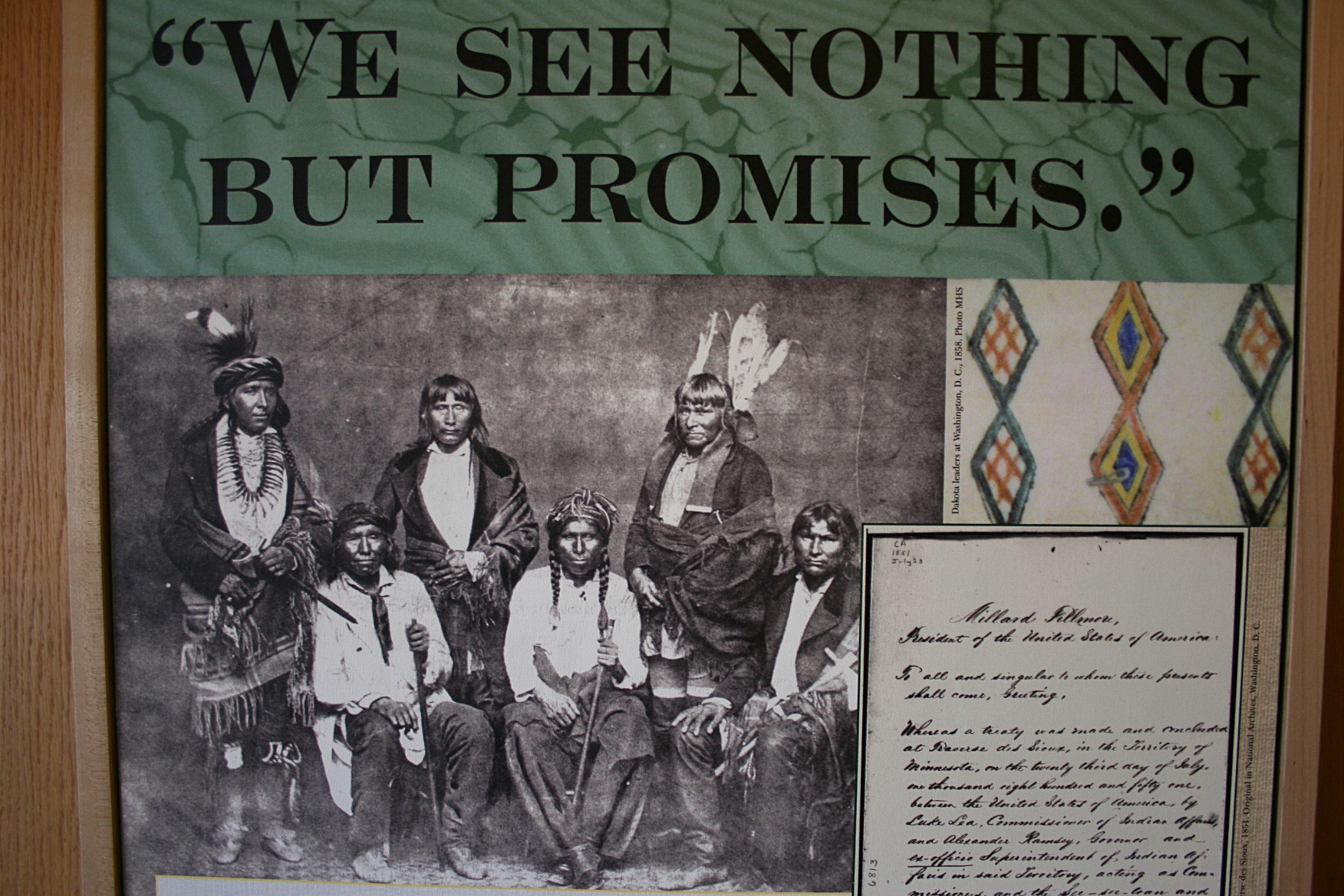
A photo panel at the Traverse des Sioux Treaty Center in St. Peter shows Dakota leaders photographed in Washington D.C. in 1858. The photo is from the Minnesota Historical Society. The war followed broken treaties. (Minnesota Prairie Roots copyrighted file photo)

Taopi farmed and established a school and mission, Hazelwood Republic, with chiefs Wabasha and Good Thunder on the Lower Sioux Reservation along the Minnesota River in southwestern Minnesota, Nichols shared. Because I grew up in that region, I’ve always been particularly interested in the Indigenous Peoples who were original inhabitants of the land, including Redwood and Brown counties. The region became the epicenter of the U.S.-Dakota War of 1862, which centered around issues of land, hunger and broken promises.

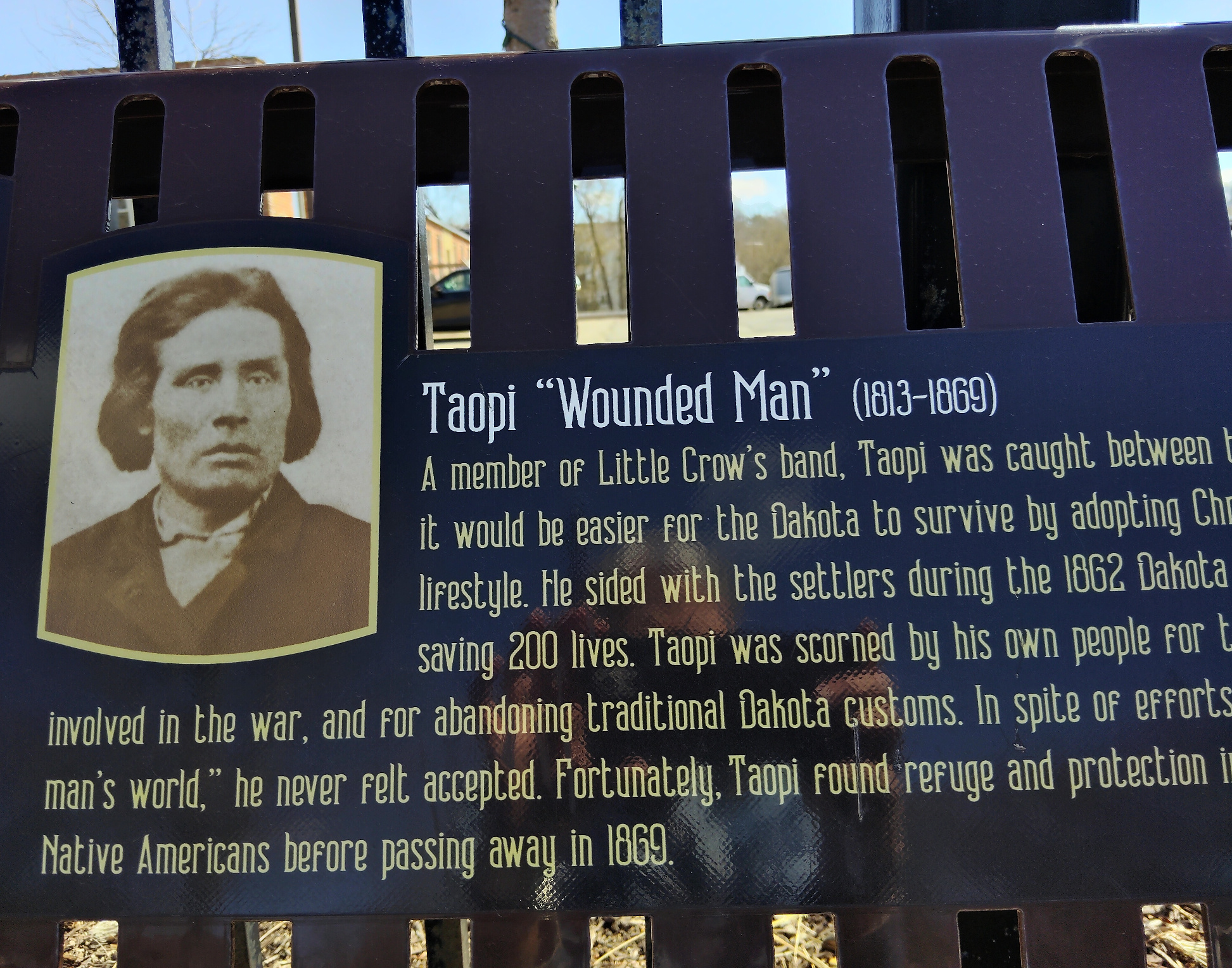
An historic-themed bench on the corner of Central Avenue and Sixth Street in Faribault highlights Taopi. (Minnesota Prairie Roots copyrighted photo April 2025)

That war facilitated the banishment of most Native Americans from Minnesota. If Taopi and other Dakota would have had their way, that war may not have happened. He led the Peace Party opposed to war, while his cousin, Little Crow, led the War Party, Nichols said. Taopi protected White settlers during the short war which claimed countless lives on both sides.

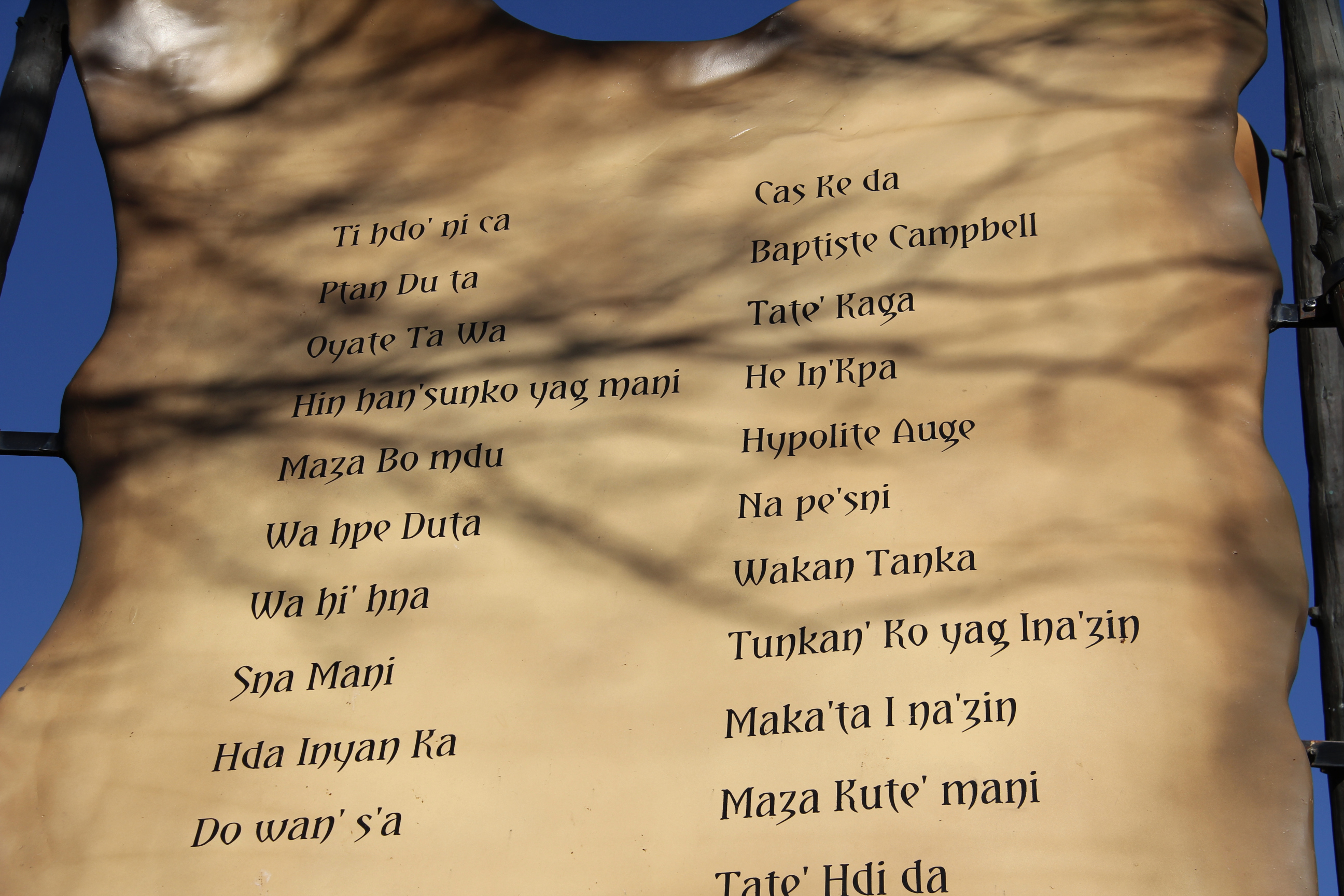
The names of the Dakota who were hung are listed at Reconciliation Park in Mankato. (Minnesota Prairie Roots copyrighted file photo)

Post-war, though, it mattered not to the U.S. government whether you were a Dakota person who opposed the war or who engaged in war, according to Nichols. All were considered guilty, imprisoned and eventually exiled from Minnesota (although not the Mdewakanton). Thirty-eight Dakota men were hung on December 26, 1862, in Mankato (40 miles from my community) during the largest mass execution ever in the U.S. It’s truly a tragic event in Minnesota history. But what multiples the awfulness is that 1,600 Dakota prisoners were marched to Mankato to watch the hangings before being marched back to Fort Snelling. That was new information I had not previously heard and it troubles me greatly.

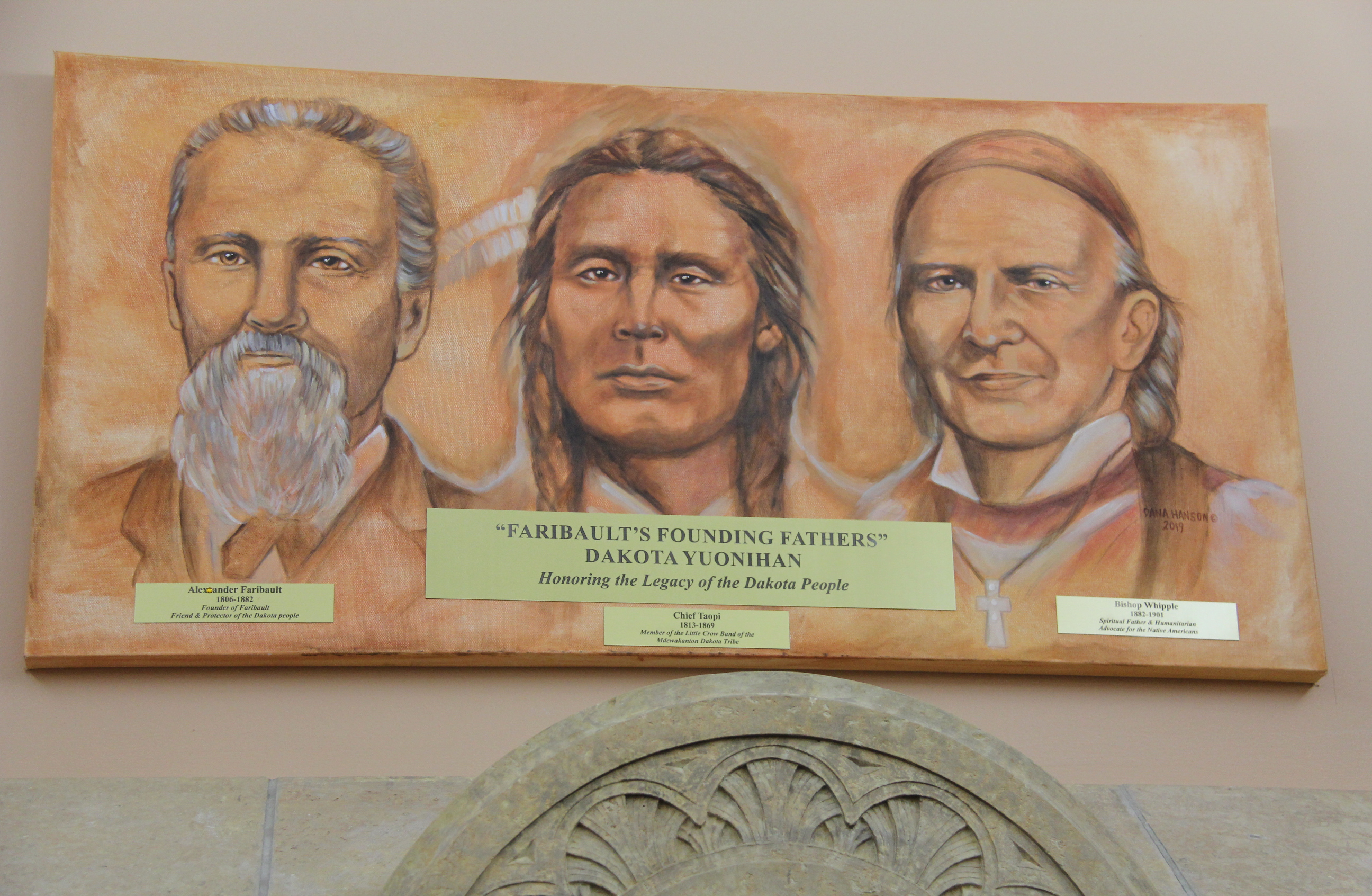
These portraits by Dana Hanson of Faribault’s Founding Fathers, Alexander Faribault (left to right), Taopi and Bishop Henry Whipple, hang in Buckham Memorial Library. (Minnesota Prairie Roots copyrighted file photo)

Taopi avoided prosecution and banishment, eventually landing in Faribault with 180 other Mdewakanton. About 80 were family members, according to Nichols. It was his friendship with Bishop Henry Whipple, who had long worked with and advocated for Native Peoples, that brought Taopi here. Town founder Alexander Faribault housed “the Peacefuls,” as the 180 were considered, on his land. They lived in tipis and lodges.

The home of fur trader and town founder Alexander Faribault. (Minnesota Prairie Roots copyrighted file photo 2017)

As you might rightly guess, not everyone in Faribault liked the Mdewakanton living among them. A wall was built in the area around Alexander Faribault’s house to protect them. Taopi became a community leader, said Nichols. As such he represented his people and mediated when necessary.

By the time of Taopi’s 1869 death, 90 of the 180 Mdewakanton who settled in Faribault had already left. But they left behind an imprint upon the land, not necessarily seen or appreciated even today. Yet, efforts are underway to change that with The Faribault Dakota Project. Nichols couldn’t speak specifically to that, only to say that local historian Jeff Jarvis has been working with the Dakota community on how to memorialize and honor the Indigenous Peoples of Faribault. That also includes the Wahpekute Dakota.

Peace Park, a protected Dakota burial site (but unmarked as such) next to the parking lot of Buckham Memorial Library. (Minnesota Prairie Roots copyrighted file photo)

Among the locales discussed by those attending Nichols’ talk was Peace Park, a triangle-shaped slice of property near Buckham Memorial Library. Alexander Faribault donated the land to the city with the stipulation that it never be developed. According to Nichols, the park is a protected burial site, where at least two Dakota are buried. Their bones were unintentionally uncovered in 1874 and then reburied. Today nothing marks that land as a cemetery. Rather a faith-based WWII monument stands in Peace Park. There is no reference to the Dakota. Perhaps some day this will be righted and the land publicly recognized as sacred ground. That is my hope as I continue to learn about the Dakota who once called Faribault home. I am grateful for every opportunity to grow my knowledge of them and their importance in local and state history.

#

FYI: Here are some suggested Dakota-connected places to visit in Faribault: the Rice County Historical Society Museum, Maple Lawn and Calvary cemeteries, the Cathedral of Our Merciful Saviour, a mural on the Central Park Bandshell and information on an historic-themed bench along Central Avenue.

Two fun facts: A small southeastern Minnesota town in Mower County near the Iowa border is called Taopi, named after the Mdewakanton Dakota chief. It suffered a devastating tornado in April 2022. The town celebrates its 150th birthday this year.

A woman attending Dave Nichols’ talk named her horse Taopi after Chief Taopi.

© Copyright 2025 Audrey Kletscher Helbling
 

An historic connection between Faribault and Benson January 22, 2025

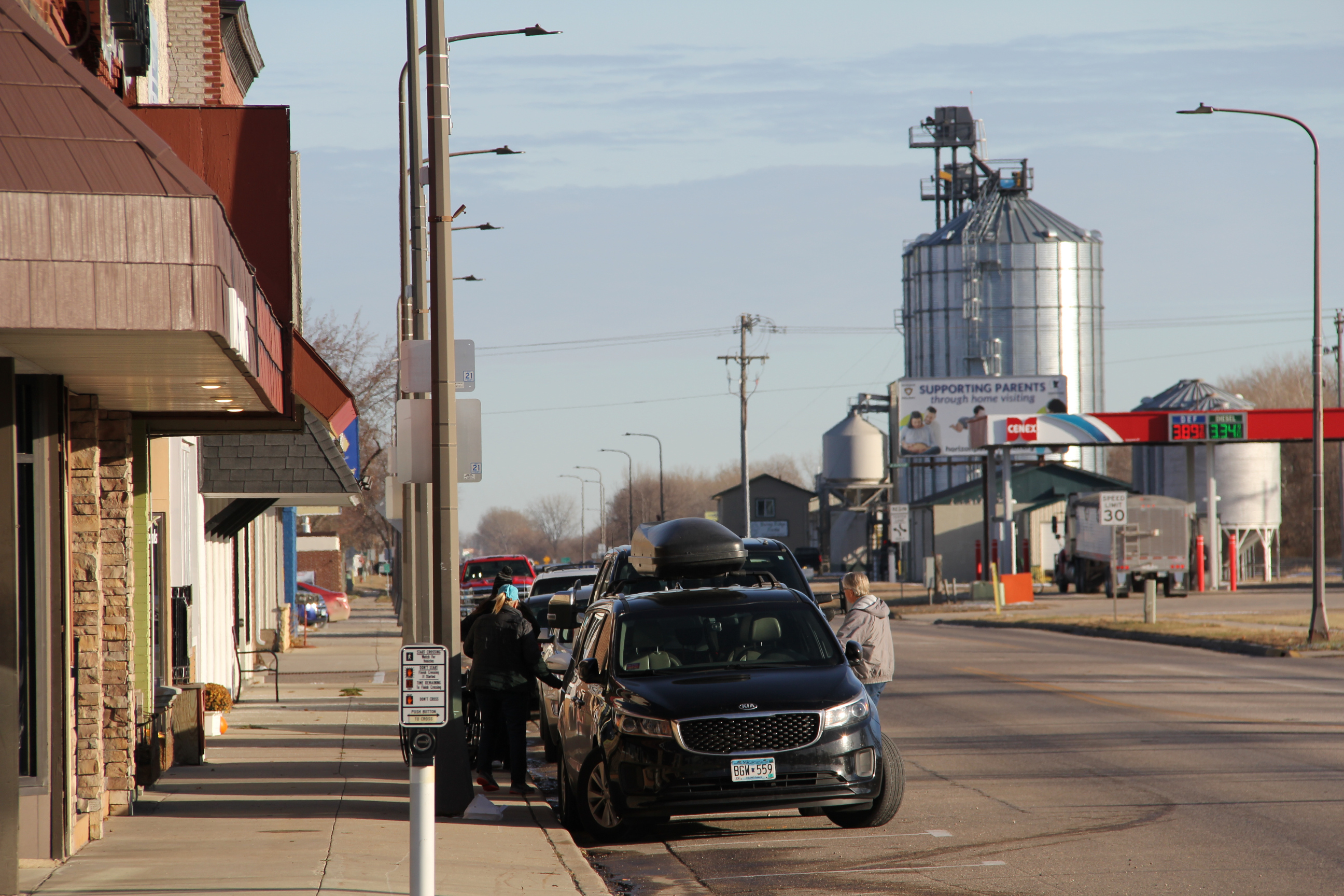
A scene from downtown Benson, Minnesota. (Minnesota Prairie Roots copyrighted file photo November 2024)

SOME 170 MILES separate my community of Faribault from Benson, a small agricultural community in west central Minnesota near the South Dakota border. At first glance, it seems the two share little in common. But they do, a discovery I made following a brief stop in Benson in late November.

Bishop Henry Whipple, featured in a mural on the bandshell at Faribault’s Central Park, across the street from the Cathedral of Our Merciful Saviour. (Minnesota Prairie Roots copyrighted file photo)

Bishop Henry Whipple, the long ago Episcopal bishop of Minnesota, links Faribault and Benson. Whipple, a missionary based in Faribault, traveled around the Minnesota frontier in the early years of statehood in an effort to spread the Christian faith. That included visits to Benson where, in 1879, Christ Episcopal Church was built for $1,650 by local carpenters. Whipple visited occasionally to lead services and confirm new members.

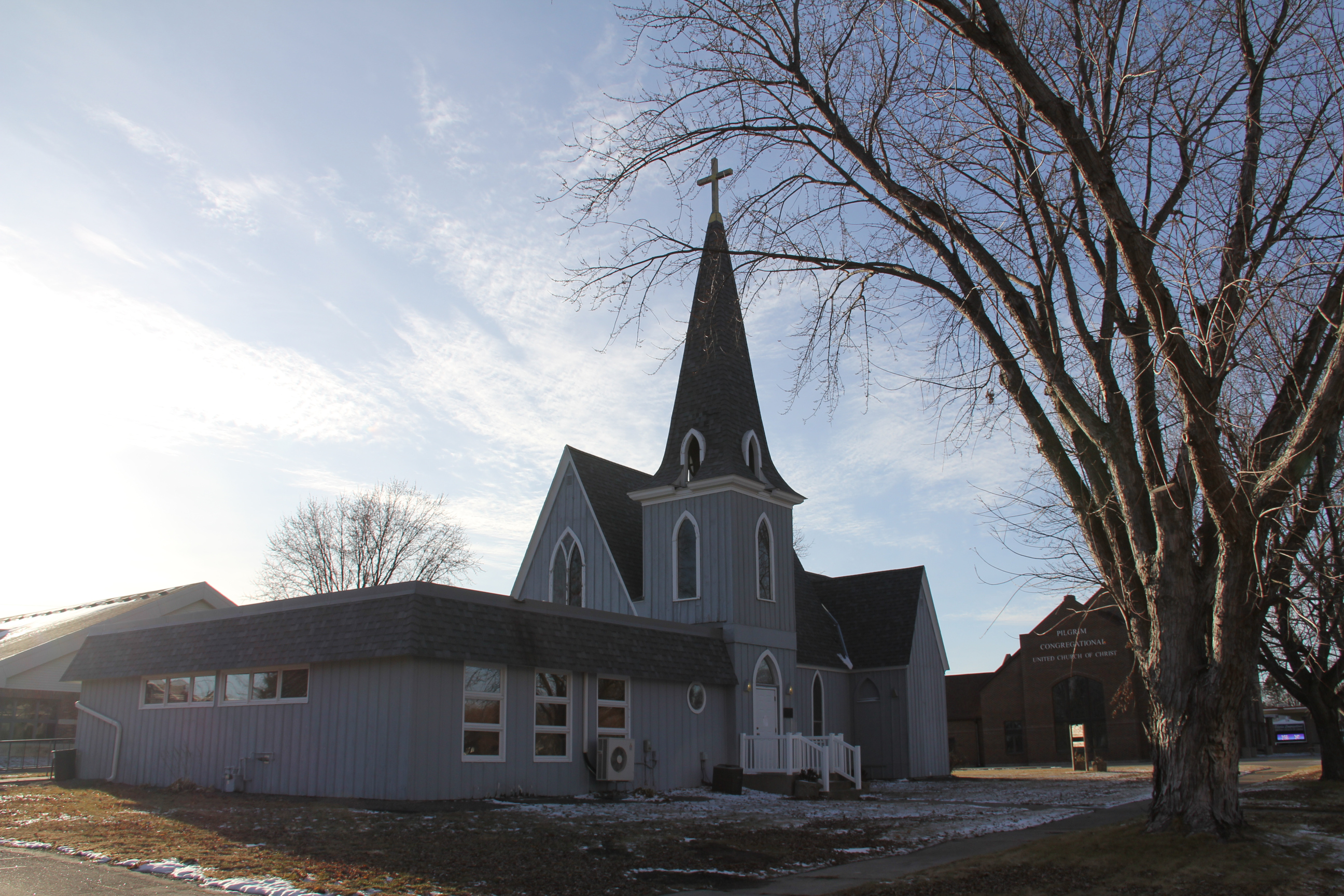
Christ Episcopal Church, Benson. (Minnesota Prairie Roots copyrighted photo November 2024)

That early Gothic Revival style church with gray board and batten siding caught my eye during a brief drive around Benson’s downtown core. More accurately, the seven-story Parkview Manor apartment across the street from the church initially grabbed my attention. The 55-unit high-rise looks very much out of place in this prairie town. It dwarfs residential houses and the historic church. Typically grain elevators and church steeples mark small town skylines, not a towering 1967 apartment complex.

Parkview Manor, where the church was once located. (Minnesota Prairie Roots copyrighted photo November 2024)

Christ Episcopal Church once sat on the apartment land, but was moved across the street after the Housing and Redevelopment Authority bought the property in 1966. At some point the church, founded by English and Yankees (as New Englanders were once termed), closed due to dwindling membership. Today the building serves as the Swift County Drop In Center, “a safe haven for adults to go to experience life free of stigma.” I think Bishop Whipple would have liked that, knowing the former church serves as a gathering place, a safe spot to just be.

The church sits in a residential neighborhood near downtown. (Minnesota Prairie Roots copyrighted photo November 2024)

Some day I’d like to tour the aged church, which was added to the National Register of Historic Places in 1985. Perhaps I would feel the presence of Benson’s early settlers, hear the words of comfort, peace, hope and unity preached by Bishop Whipple.

While Whipple is primarily viewed as a man who befriended Indigenous Peoples, he was also part of the long ago mindset to assimilate and “civilize” them. That’s a side not often discussed when talking about a man, a missionary who shared his biblical teachings while also compassionately advocating for Native Americans. Whipple is highly-revered in Faribault, where he is buried beneath the Cathedral of Our Merciful Saviour, an historic cathedral worthy of visiting, too.

The Cathedral of Our Merciful Saviour, Faribault. (Minnesota Prairie Roots copyrighted file photo July 2024)

The immense Faribault cathedral differs vastly from the unassuming small church in Benson. Yet, history and a missionary link the two. To uncover that connection simply because I noticed an out-of-place apartment high-rise and then the old steepled church across the street reveals just how small this world really is if only we pause to notice, then uncover the connections.

© Copyright 2025 Audrey Kletscher Helbling
 

Prayer ribbons at the Cathedral July 16, 2024

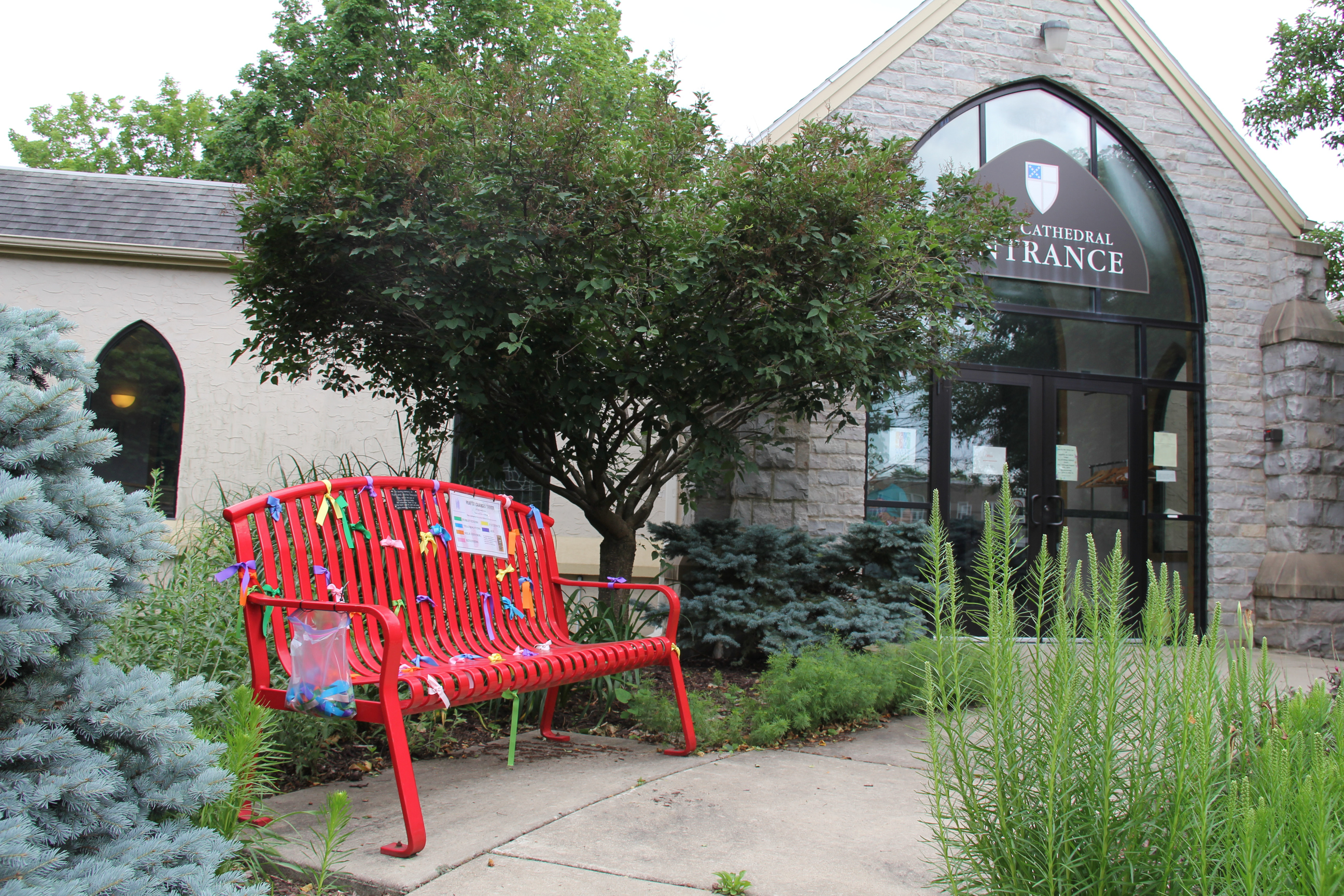
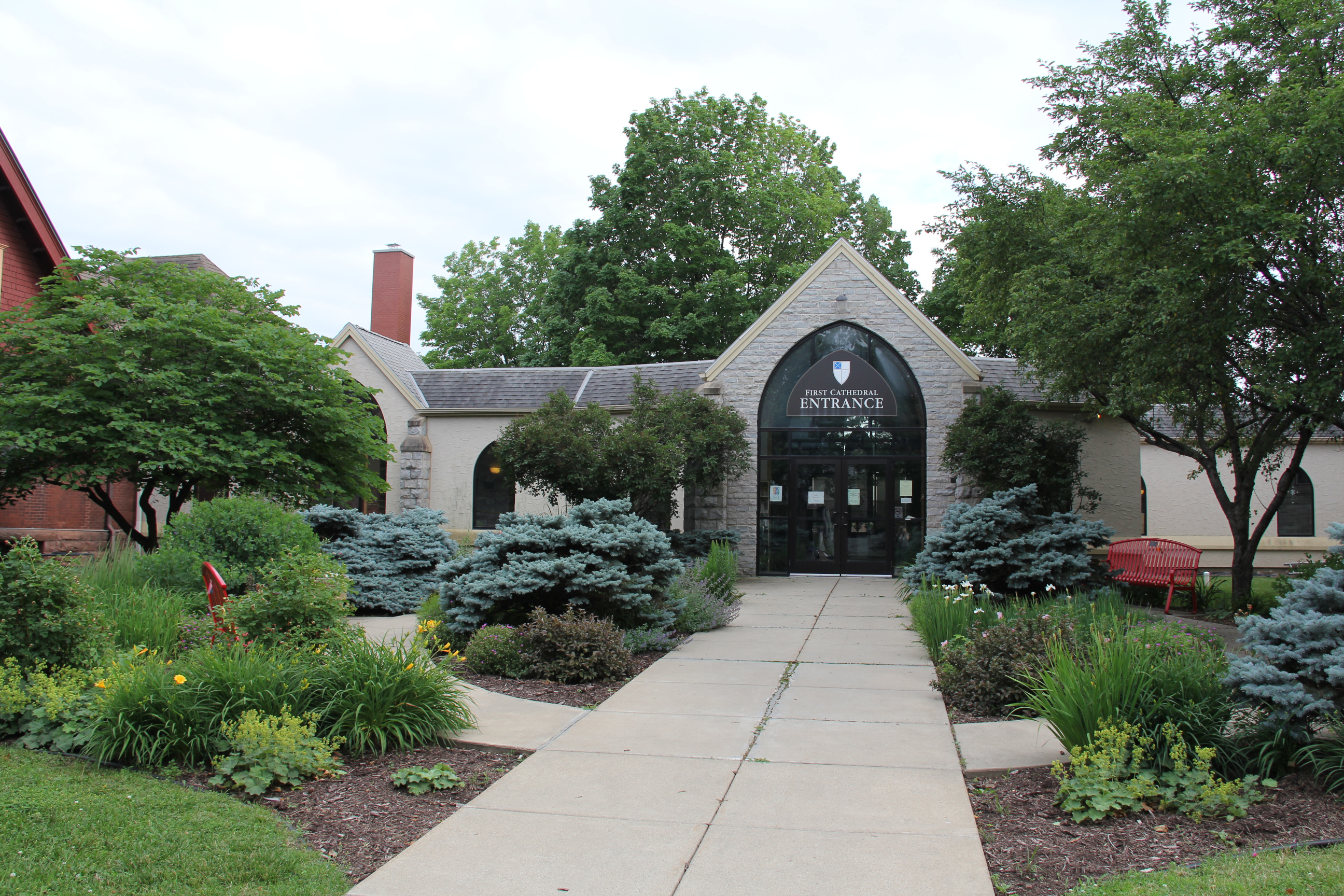
A garden graces a side entry to The Cathedral of Our Merciful Saviour in Faribault. (Minnesota Prairie Roots copyrighted photo June 2024)

AMONG THE FLOWERS, trees and shrubbery fronting a side entry to the space that connects church to guild house, three red benches nestle. Bold. Vibrant. Statement pieces in a garden at The Cathedral of Our Merciful Saviour.

Construction on the original part of the Cathedral began in 1862 and was completed in 1869. It is listed on the National Register of Historic Places. (Minnesota Prairie Roots copyrighted photo June 2024)

But those benches outside the massive limestone church towering above the landscape along Second Avenue across from Central Park in Faribault serve as more than a place to rest. They are a place for prayers.

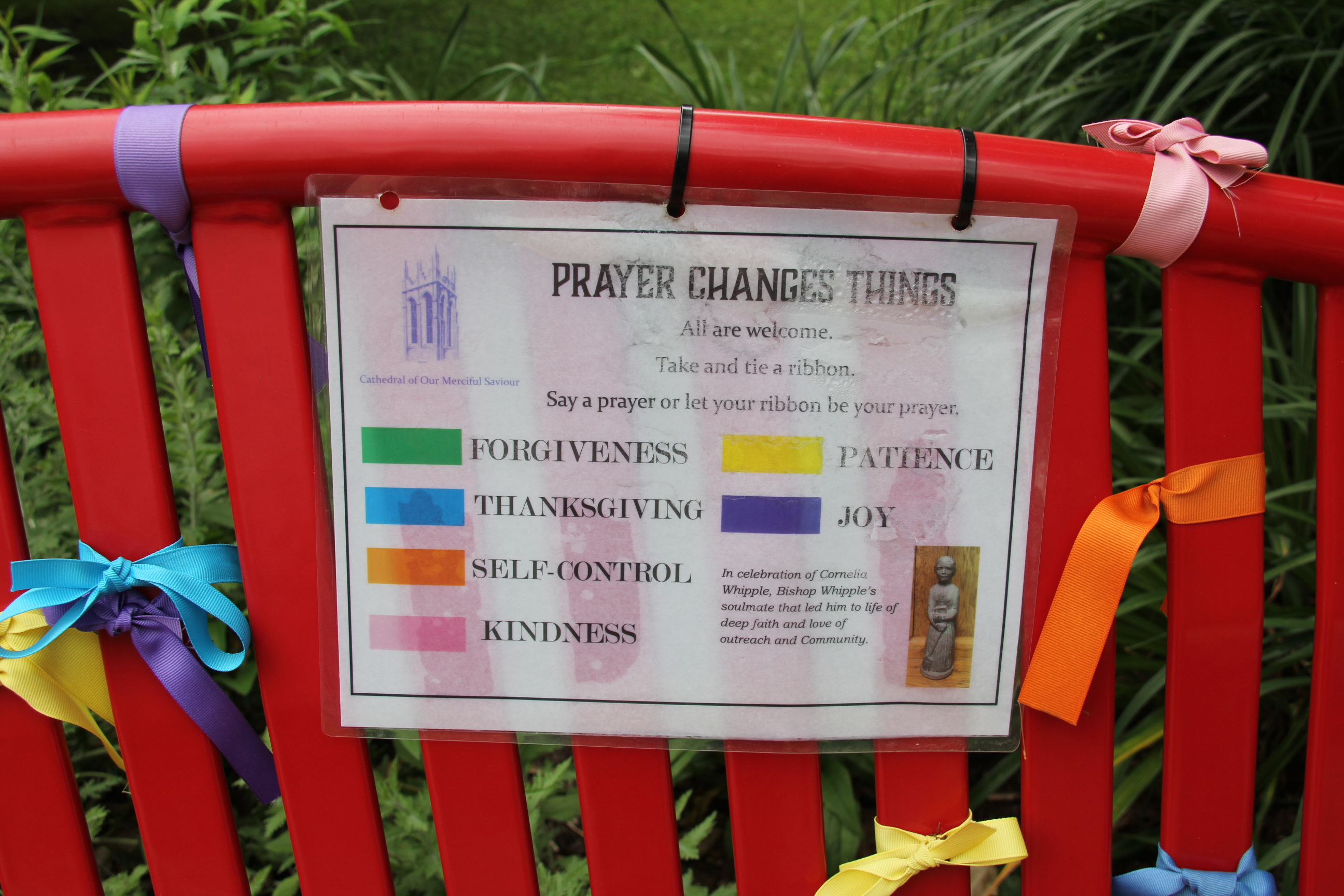
Prayer ribbon instructions posted on a bench. (Minnesota Prairie Roots copyrighted photo June 2024)

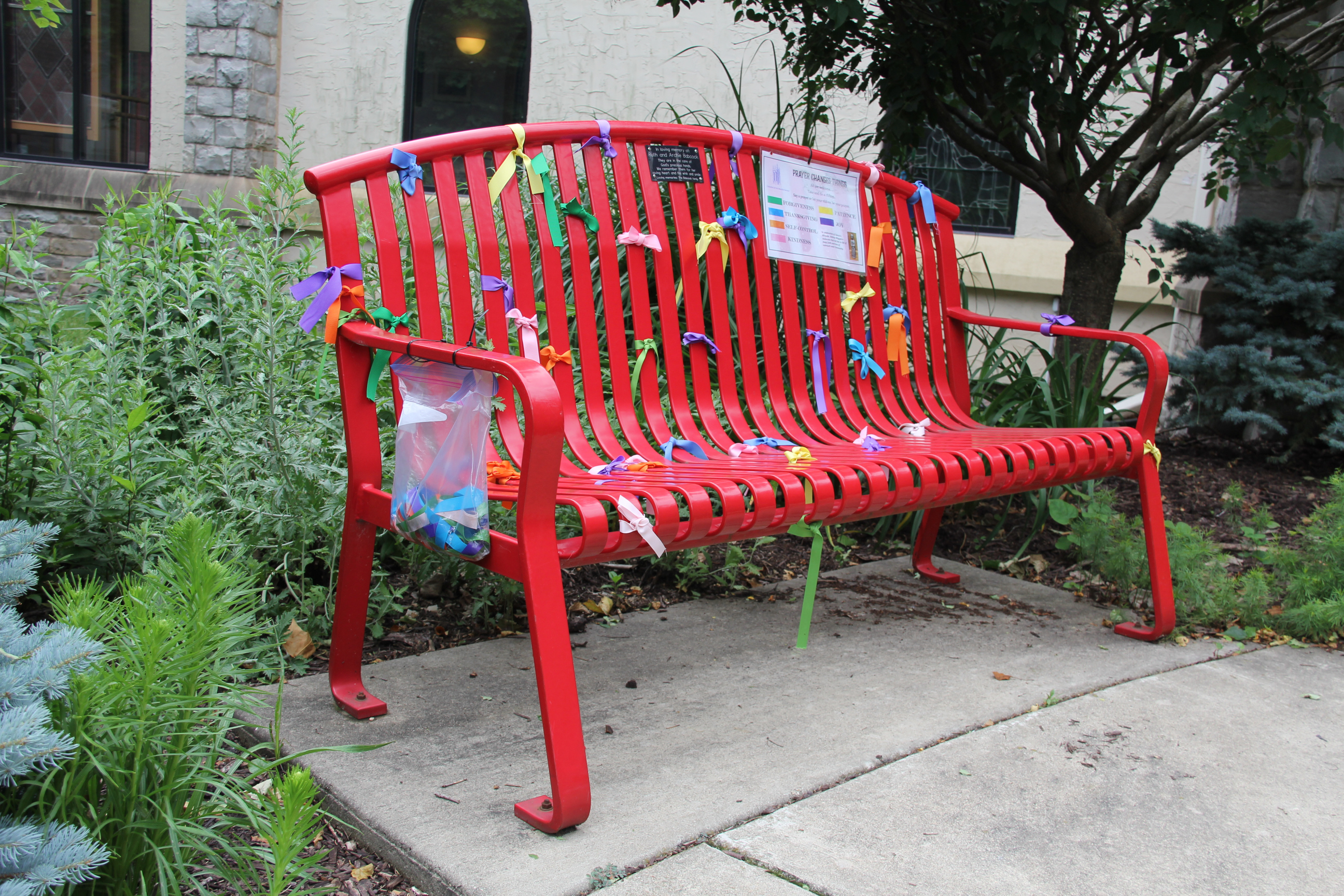
Ribbons, representing prayers, are tied to the slatted benches. A sign explains: PRAYER CHANGES THINGS. All are welcome. Take and tie a ribbon. Say a prayer or let your ribbon be your prayer.

Choose a ribbon from the bag. (Minnesota Prairie Roots copyrighted photo June 2024)

What a creative idea. A Ziploc bag of multi-colored ribbons hangs on one of the benches. Each hue represents a different prayer. Green for forgiveness. Blue for thanksgiving. Orange for self-control. Pink for kindness. Yellow for patience. Purple for joy.

One of the three garden benches is covered with prayer ribbons. (Minnesota Prairie Roots copyrighted photo June 2024)

These prompts prove soul-searching. Too often prayers focus on needs/wants/desires, not tough topics like forgiveness and self-control. And how often we forget to express gratitude and joy in prayer.

Ribbons representing prayers of joy, kindness and self-control. (Minnesota Prairie Roots copyrighted photo June 2024)

To be reminded of these traits, these feelings, these thoughts can only make us kinder, gentler, better people.

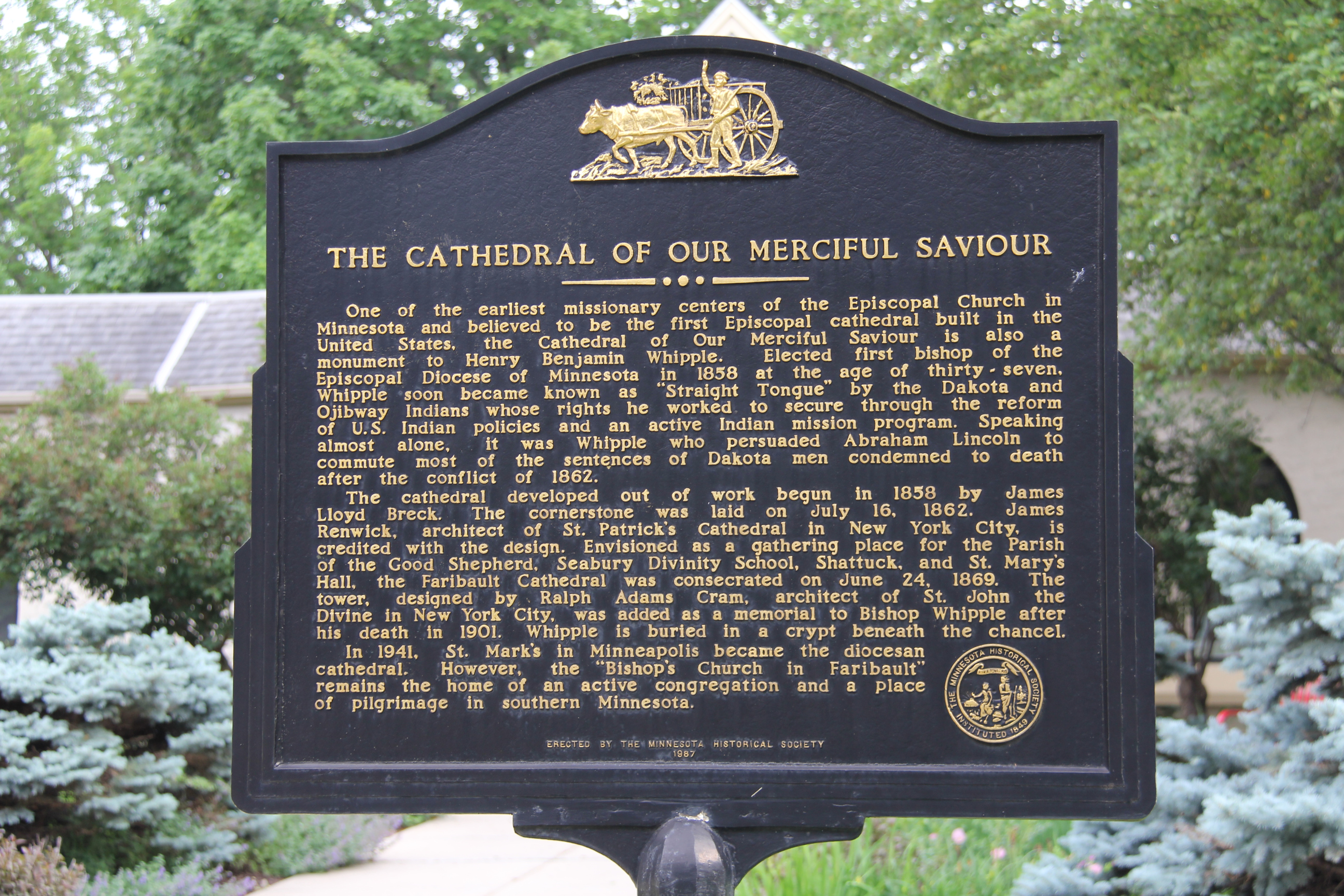
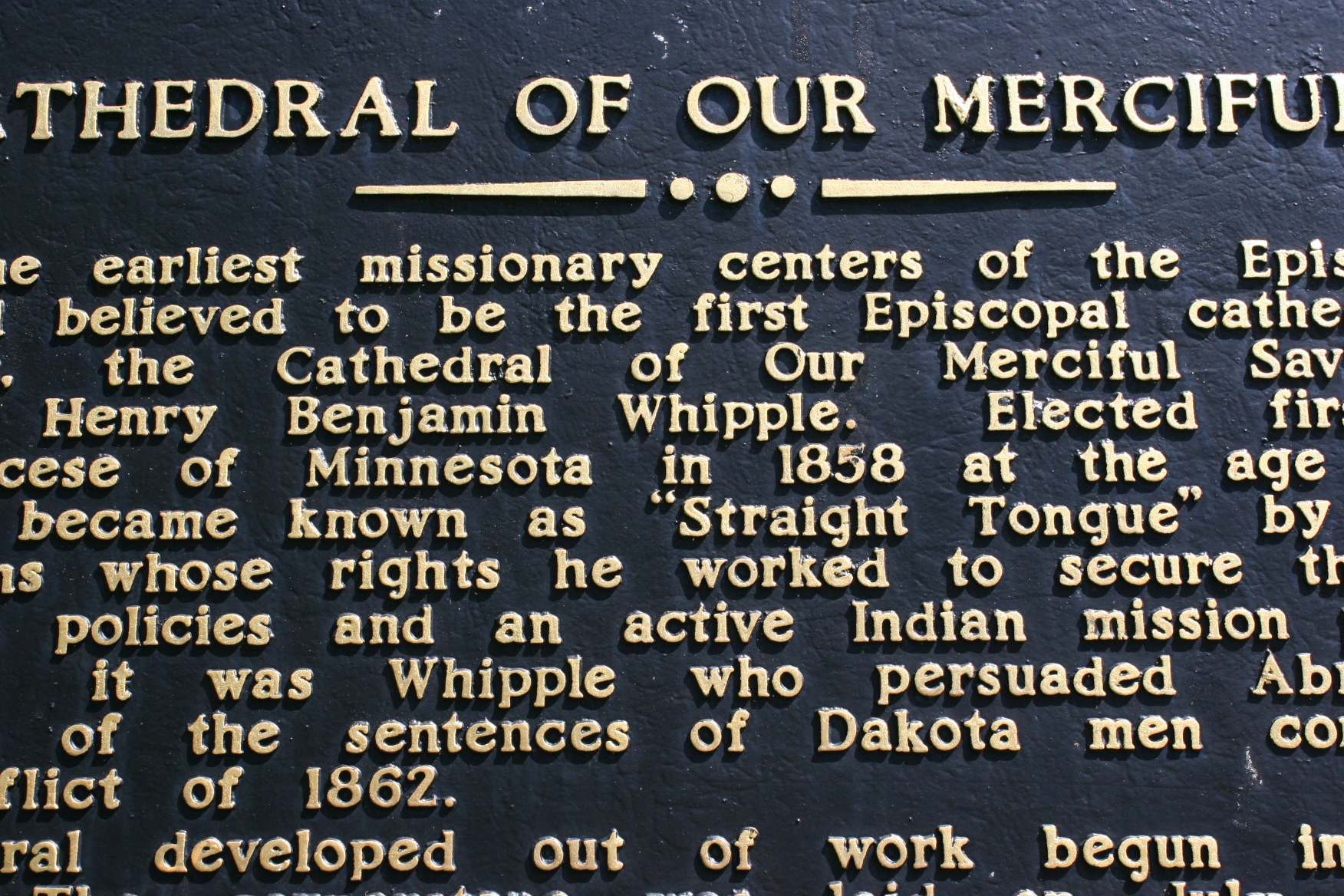
A historical marker at the Cathedral summarizes its history. (Minnesota Prairie Roots copyrighted photo June 2024)
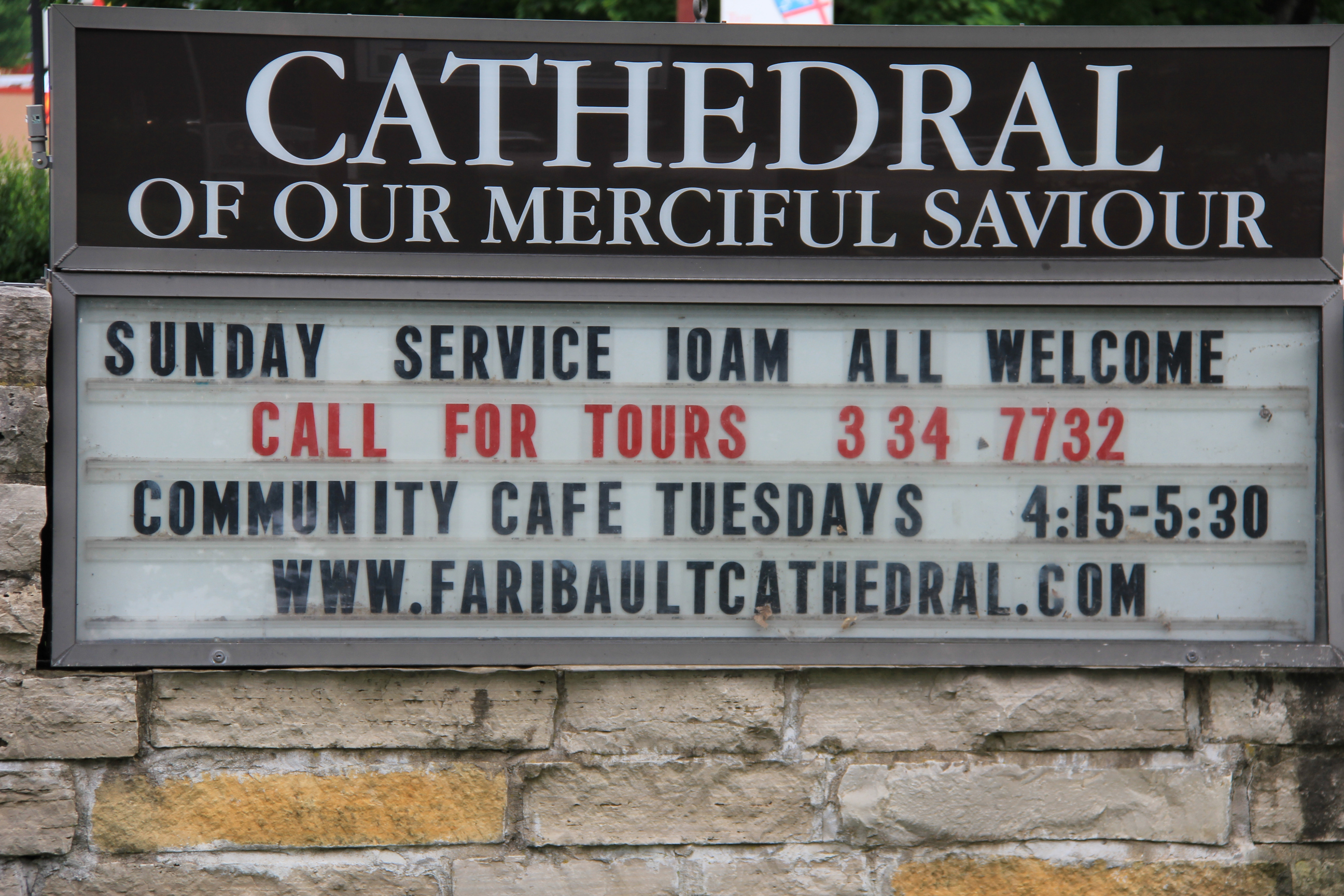
The Cathedral sign lists community connections. (Minnesota Prairie Roots copyrighted photo June 2024)

That follows a guiding principle of the Cathedral as a place “where history meets heart.” The Cathedral, since it’s founding in the mid-1800s, has long centered on community. Bishop Henry Whipple befriended the Dakota people and many more. Today the church still opens its doors—as the site of the Community Cafe (serving free meals weekly to the community), as a venue for free concerts, as a historic site to tour, as an active participant in Faribault’s annual Heritage Days celebration, as a location for Red Cross blood drives…

Ribbons representing patience, thanksgiving and joy. (Minnesota Prairie Roots copyrighted photo June 2024)

And now this seemingly small, yet powerful thing, this beckoning to ponder and place prayers upon public benches. Prayer changes things. Just as a faith family can, when thoughts and ideas expand into actions. Actions that embrace community, providing a welcoming place to gather, to celebrate, to contemplate life.

An inviting entry garden…with prayer beribboned benches. (Minnesota Prairie Roots copyrighted photo June 2024)

We all hold the capacity to forgive, to thank, to control our thoughts, words and behavior, to practice kindness, to exercise patience, to express joy. If tying a ribbon to a red bench encourages self-reflection and positive change, then that is a good thing. We can always be better, do better, live better, in ways that improve our lives and the lives of those around us.

© Copyright 2024 Audrey Kletscher Helbling
 

Heritage Days talk focuses on the Wahpekute Dakota June 12, 2024

An exhibit at the Rice County Historical Society, Faribault, shares information on the original inhabitants of the county, the Dakota. (Minnesota Prairie Roots copyrighted file photo)

HERITAGE. It’s a word that identifies us, connects us to our families, to our ethnicity, to the way we were raised, the place of our roots. At least that’s my definition.

This week Faribault celebrates Heritage Days. I’ve never felt totally comfortable celebrating heritage in the city I’ve called home since 1982. My heritage, my home, my roots run deep in the southwestern Minnesota prairie some 2 ½ hours west of here.

But many are rooted in this community by birth, by families that trace back generations. If it’s one thing I’ve learned in four decades about the people of Faribault, it’s that many are related to one another via blood and marriage. But I’ve also learned much about the peoples who came before the French, the Irish, the Scandinavians, the Germans, the Cambodians, the Latinos, the Hispanics, the Sudanese, the Somalis… I’ve learned about the Dakota, the original inhabitants of this region.

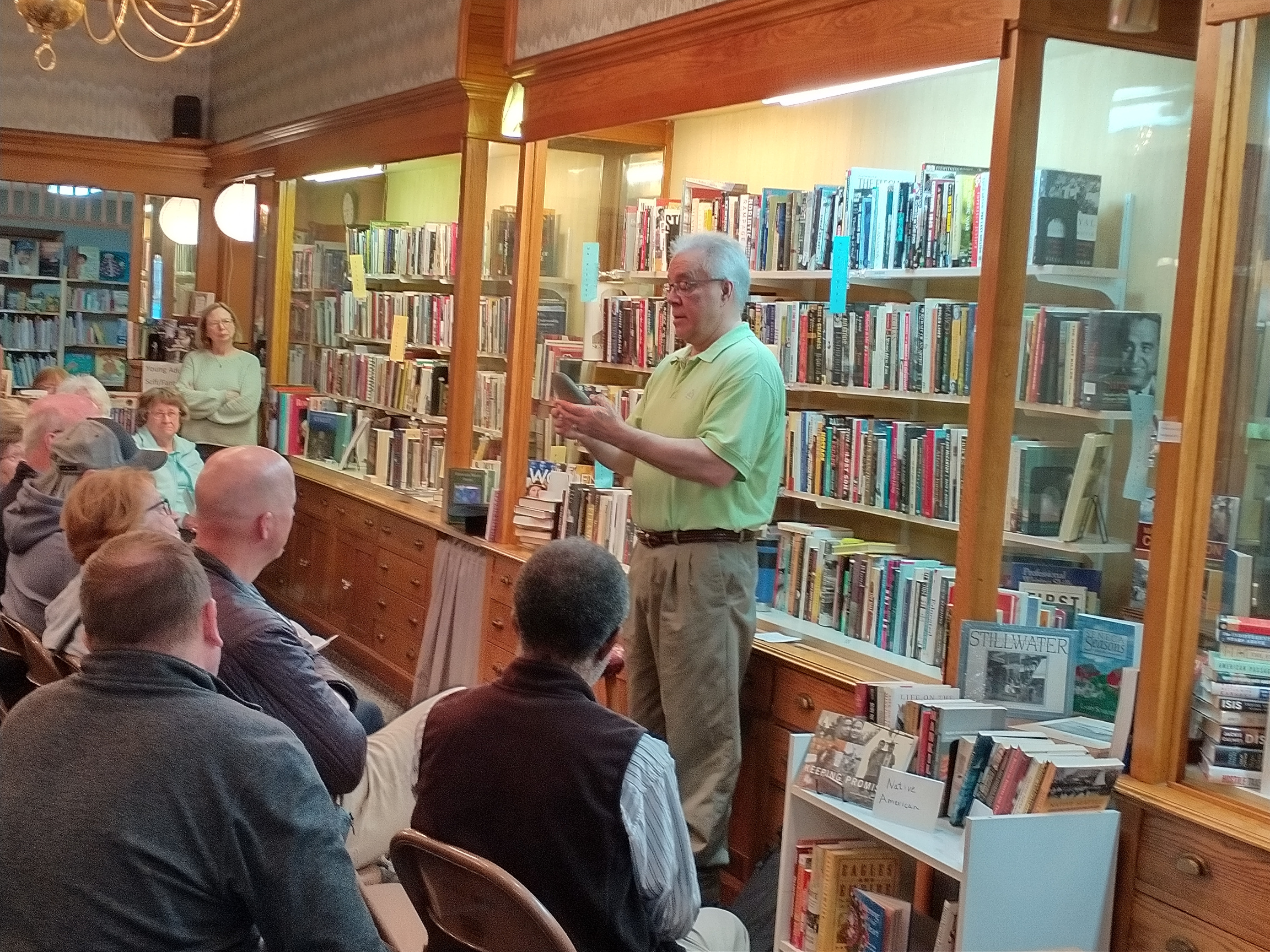
Jeff Jarvis talks about the Dakota at Books on Central. (Minnesota Prairie Roots copyrighted file photo April 2024)

That knowledge came through my own reading and via attending events focused on the Dakota. In April, I listened to local historian and artist Jeff Jarvis talk about the Dakota to a packed audience at Books on Central in Faribault. Jarvis is presenting again, speaking at 6:30 p.m., Wednesday, June 12, on the Wahpekute Dakota at The Cathedral of Our Merciful Saviour, 101 NW Sixth Street, across the street from Faribault’s Central Park.

Information on Bishop Henry Whipple focuses one of the murals on the back of the bandshell at Central Park. (Minnesota Prairie Roots copyrighted file photo June 2020)

The Cathedral and its founding leader played an important part in local, state and national history with then Bishop Henry Whipple befriending the Wahpekute Dakota. He also pled with President Abraham Lincoln to spare the lives of 303 Dakota men sentenced to death by the US government following the US-Dakota War of 1862. Eventually all but 38 were pardoned, partially due to Whipple’s efforts.

The pamphlet Jeff Jarvis created about the Wahpekute Dakota. (Minnesota Prairie Roots copyrighted file photo April 2024)

I expect Jarvis will touch on that in his Wednesday evening presentation. He’s an engaging speaker, knowledgeable and passionate. He’s met with Dakota people, compiled a summary of his research in a mini pamphlet titled “The Faribault Dakota, Wahpekute Band.” It features an historic timeline, a Dakota primer of place names, his original art and more.

Chief Tapoi, a leader and member of the Little Crow Band of the Mdewakanton Dakota Tribe, lived in Faribault for a while and is buried at Maple Lawn Cemetery. (Minnesota Prairie Roots copyrighted file photo October 2023)

Jarvis is involved in the Faribault Dakota Project, a local endeavor that aims to increase awareness, visibility and knowledge of the original inhabitants of this land. To that end, presentations like his set during Heritage Days are important for locals to attend.

Just across the street from Central Park, the stunning Cathedral of Our Merciful Saviour. (Minnesota Prairie Roots copyrighted file photo)

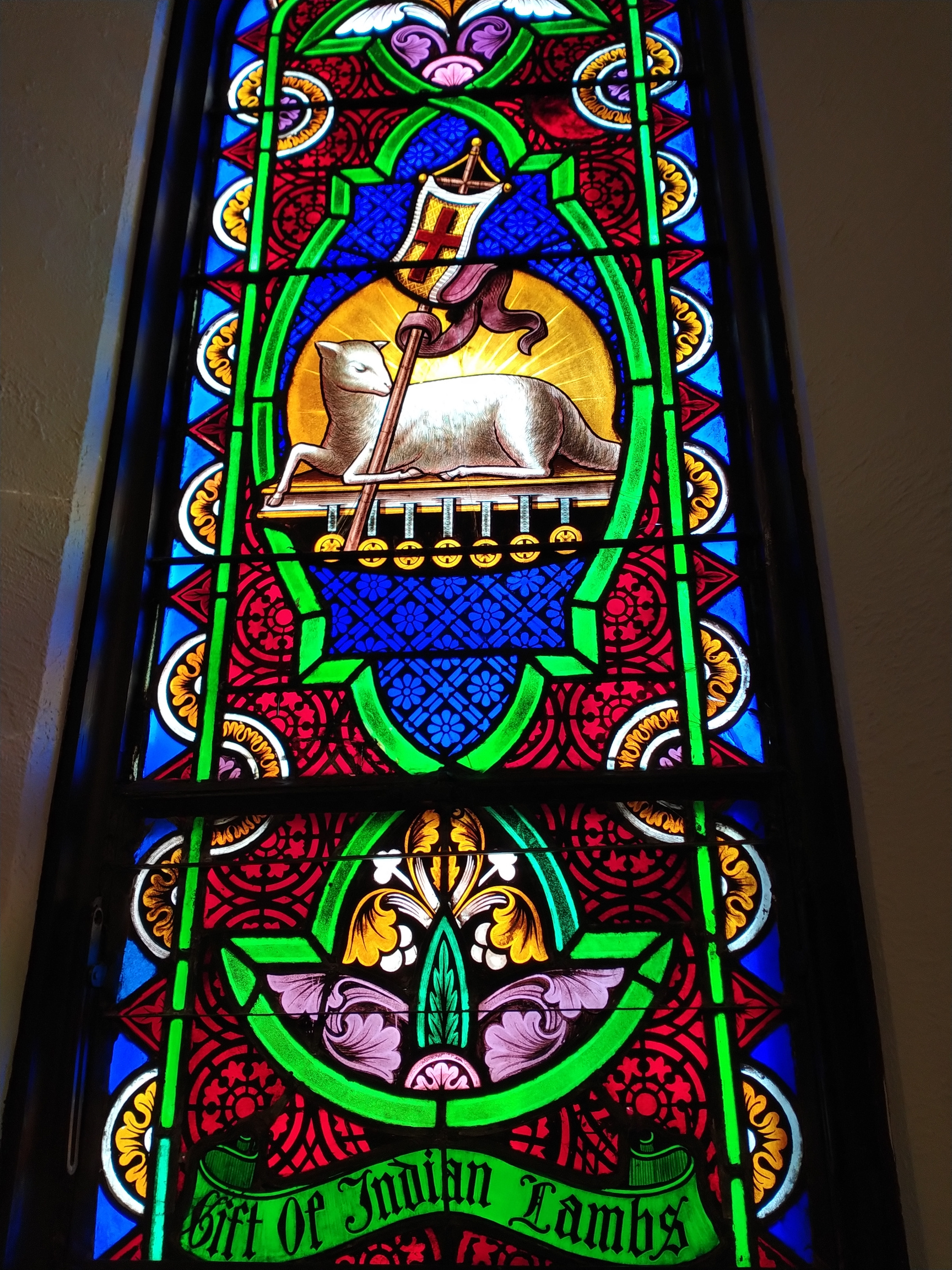
Likewise, free tours of the Cathedral at 11:30 a.m. Sunday, June 16, following a 10 a.m. ecumenical church service, likely will provide more information on the Wahpekute and their connection to Bishop Whipple and the massive limestone church. Several stained glass windows inside the sanctuary were gifted to the Cathedral by the Dakota.

This stained glass window was gifted by the Dakota to the Cathedral in honor of Dakota children. (Minnesota Prairie Roots copyrighted photo November 2023)

The Dakota and this house of worship, which focuses on connecting to the broader community, are such a vital part of Faribault’s history. That’s important to understand, to recognize, to honor no matter one’s heritage. I know locals who’ve lived here their entire lives and have never stepped inside the historic Cathedral. I find that almost unbelievable. We need to understand our past—our connections to peoples and land—to grow our future.

FYI: For a complete listing of Faribault Heritage Day events, click here.

© Copyright 2024 Audrey Kletscher Helbling


Johnston Hall film screening at historical society December 15, 2023

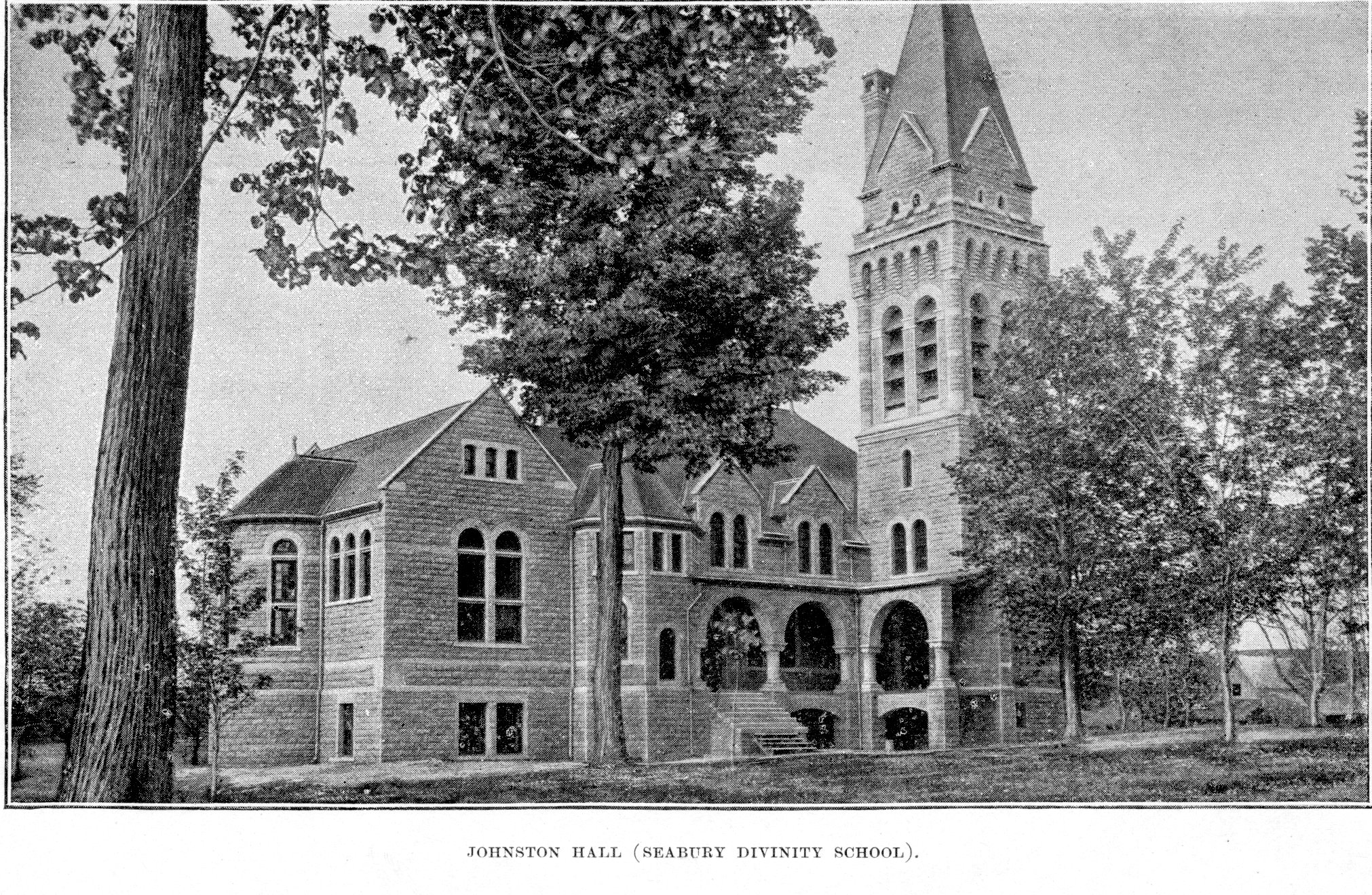
Johnston Hall, date unknown. (Photo courtesy of Rice County Historical Society)

IN EARLY NOVEMBER, I watched a local documentary online about Johnston Hall in the comfort of my home office. The film, “Love Inwrought: Johnston Hall and the Memory of a Building,” was created by Sam Temple and Logan Ledman. The ambitious and talented young filmmakers have, since their high school days, focused on local history through their 1855 History Team (Steamboat Media Co.). Their latest project focuses on Johnston Hall, completed in 1888 as part of Seabury Divinity School. The building was demolished in 2021 after standing on Faribault’s east side for 133 years.

Sam Temple, left to right, Logan Ledman and Troy Temple. (Photo courtesy of 1855 History Team)

This Saturday, December 16, the duo will present a public screening of their film at the Rice County Historical Society in Faribault from 5:30-6:30 pm. And while I am not able to be there, I encourage anyone interested in Johnston Hall and the fine work of writers and directors Temple and Ledman to attend.

A Q & A follows the screening. Attendees are encouraged to share their stories about Johnston Hall, which saw many uses through the years.

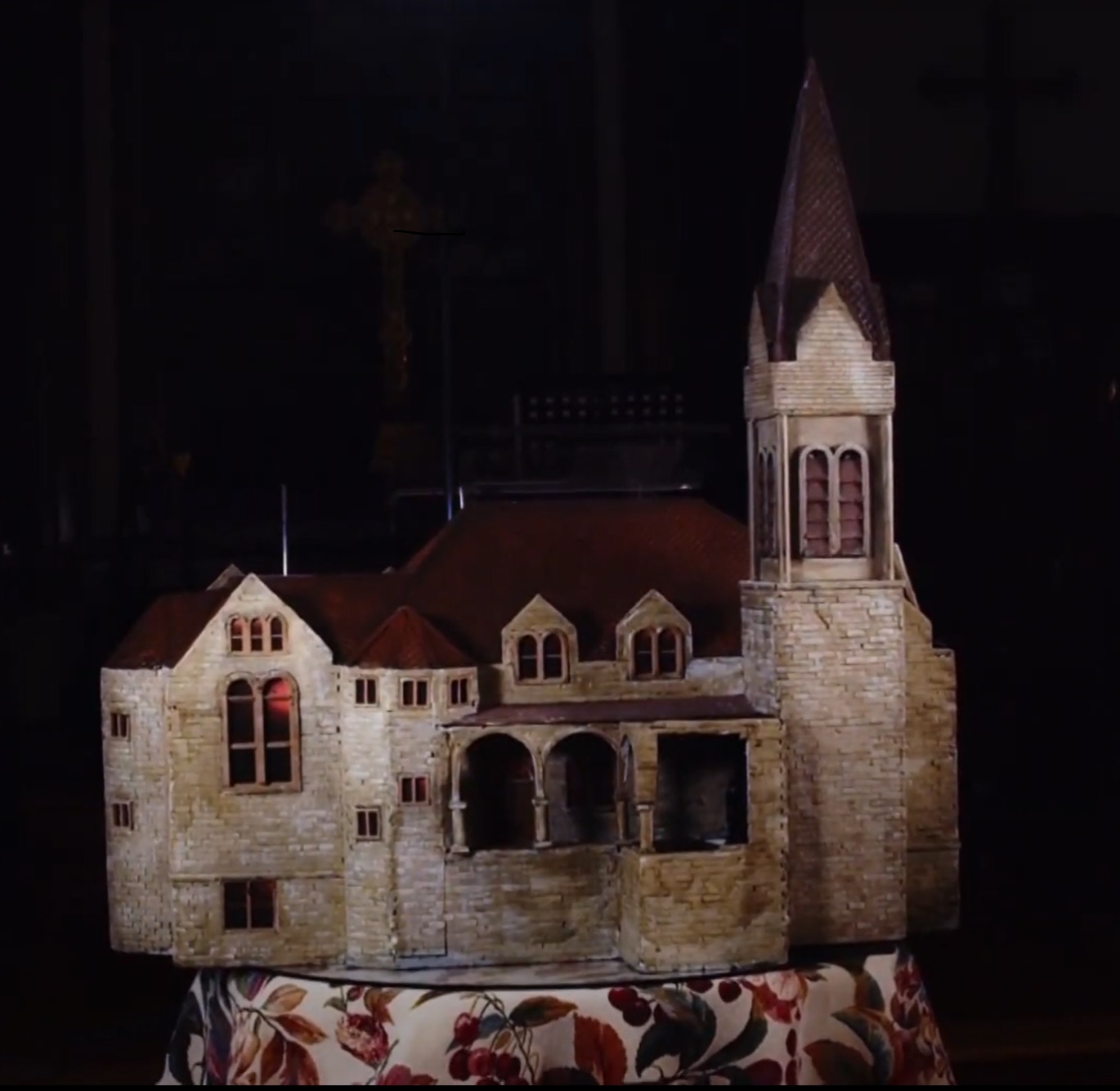
Johnston Hall model. (Photo courtesy of 1855 History Team)

But that’s not all. A model of the building handcrafted by Rathbun Reliquilaries plus artifacts and architectural items saved by the historical society will also be available for viewing.

Saturday’s event offers an ideal opportunity to learn more about Johnston Hall and to meet members of the team that worked diligently to create the documentary. Besides Temple and Ledman those include Troy Temple, illustrator Piper Mohring, composer Sam Dwyer, and actors Steve Searl (portraying Bishop Henry Whipple) and Eli Hastings (as the Rev. Henry St. Clair).

Documentary promo. (Courtesy of 1855 History Team)

According to Sam Temple, the title of the documentary traces to a quote by Bishop Whipple: “There is an unwritten history of faith and love inwrought in every building erected here.” The Episcopalian bishop was referencing buildings (including Johnston Hall) at the schools he helped organize.

This signage stands at Johnston Hall Memorial Garden across the street from the local hospital and clinic. (Minnesota Prairie Roots copyrighted file photo August 2023)

The work of Temple, Ledman and their team is top-notch professional, outstanding and deserving of accolades. These young men are passionate about history, storytelling, filmmaking and creating an appreciation for our past. Their enthusiasm and work impress me. I can’t wait to see what they do next.

FYI: To read my review of “Love Inwrought,” click here.

© Copyright 2023 Audrey Kletscher Helbling
 

A look at Bishop Henry Whipple’s role in Minnesota history February 17, 2023

A painting of Bishop Henry Whipple and information about him grace a mural on Faribaults’ Central Park Bandshell. (Minnesota Prairie Roots copyrighted file photo June 2020)

He was known as “Straight Tongue” for his honesty. He was disparagingly called “The Sympathizer” by others for the compassion and care he held for the Dakota. He was Bishop Henry Whipple.

Thursday evening, Rice County Historical Society Executive Director David Nichols spoke to a packed room about this Episcopal priest who played such a pivotal role in Minnesota history, specifically during the time shortly before, and then after, The U.S.-Dakota War of 1862. For me, personally, Nichols’ focused talk connected my home region of Redwood County, the area in which the war centered, to my home of 40 years, Rice County.

I grew up with a limited (white) perspective of the war with no knowledge of Whipple. I only learned of this New York born clergyman upon my move to Faribault in 1982. Nichols broadened my understanding during his presentation and during a question and answer session that followed.

A panel at the Traverse des Sioux Treaty Center in St. Peter shows Dakota leaders photographed in Washington D.C. in 1858. The photo is from the Minnesota Historical Society. It references broken treaty promises and rising tension. (Minnesota Prairie Roots copyrighted file photo)

HIGH TENSIONS

Whipple arrived here in 1860 as the newly-elected Bishop of Minnesota, settling in Faribault. Already at that time, tensions were mounting among settlers and the first peoples of Minnesota, Nichols said. Tensions also existed between the “Farmer Indians” (those who adapted to Euro culture) and “Blanket Indians” (who maintained their Native culture, traditions and lifestyle). Conditions on reservations were terrible with disease, starvation, and dishonest agents failing to provide promised government annuities.

That is the situation Whipple found when he landed in Minnesota. It was a time, noted Nichols, of “tensions about to boil over.” And eventually they did with the outbreak of war in August 1862. It was a decidedly bloody and awful war, as all wars are. Some 600-800 died and the Dakota were eventually displaced from their land.

Details on a sign outside The Cathedral of Our Merciful Saviour, Whipple’s church in Faribault. (Minnesota Prairie Roots copyrighted file photo 2020)

THE SHAPING OF A HUMANITARIAN

To understand Whipple’s position and part in this, Nichols provided background. Whipple was involved in New York politics as a “conservative Democrat,” a term which drew laughter from the crowd at Thursday’s presentation. He briefly attended Oberlin College, notable because the college was among the earliest to admit women and African Americans. And Whipple was ordained in 1849, during the so-called “Second Great Awakening” with a focus on civil rights.

Learning this helped me better understand the bishop. All of these experiences shaped a man who spoke with honesty and compassion, advocated for Minnesota’s Indigenous Peoples (both the Dakota and the Ojibwe, natural enemies), called for reform and peace and understanding. Whipple was, said Nichols, a voice for calm, calling for justice, not vengeance, when the short-lived U.S.-Dakota War ended.

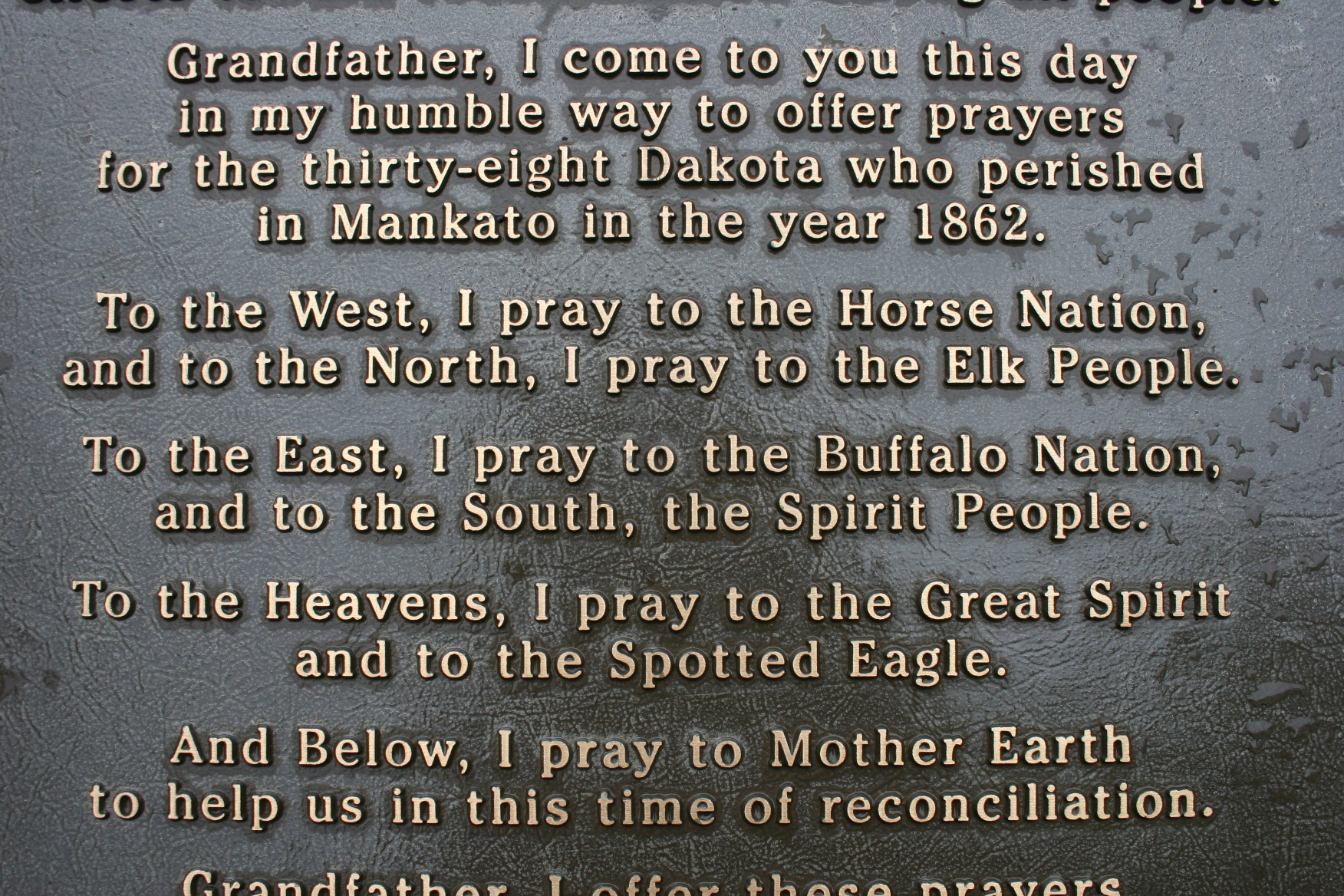
Words on a marker in Reconciliation Park in Mankato where 38 Dakota + 2 were hung on Dec. 26, 1862. (Minnesota Prairie Roots copyrighted file photo May 2012)

ADVOCATING FOR PARDONS

In his many years of missionary work and advocacy, even when his life was threatened by those who viewed him as an “Indian sympathizer,” one singular moment stands out to me. And that is Whipple’s efforts to save the lives of 303 Dakota men sentenced to death after the war. He met with President Abraham Lincoln and was “partly responsible,” Nichols said, for Lincoln’s eventual pardon of all but 38 Dakota. The 38, plus two others, were hung in a public mass execution in Mankato on December 26, 1862. It is a terrible and profoundly awful moment in Minnesota history, especially the history of the Dakota.

A full view of the bandshell mural featuring Bishop Whipple and his first wife, Cornelia, and his second wife, Evangeline. (Minnesota Prairie Roots copyrighted file photo)

ASSIMILATION

While listening to Nichols’ presentation on Whipple, I felt conflicted. Conflicted because the bishop was, he said, “a strong assimilationist.” That label bothered me until I talked further with Nichols. He explained that Whipple did not view himself and Europeans as superior to Native Peoples, but rather observed, in the context of place and time and thinking, the need to adapt versus being driven out. That helped me better understand Whipple’s approach. I recognize, though, and acknowledge the current-day struggles with assimilation, especially as it relates to Indian boarding schools. I appreciate the recognition of, and return to, culture, tradition and heritage today.

“Faribault’s Founding Fathers,” portraits of Alexander Faribault, left to right, Chief Taopi and Bishop Henry Whipple, by Dana Hanson hangs in Faribault’s Buckham Memorial Library. (Minnesota Prairie Roots copyrighted file photo November 2022)

WELCOMING THE DAKOTA TO FARIBAULT, OR NOT

Whipple, by his words and actions, embraced the Dakota and Ojibwe who called Minnesota home long before white settlers arrived, long before he moved to Faribault. My community, founded by fur trader Alexander Faribault, himself half Dakota, was a safe haven for the Dakota (“you don’t attack family”) during the 1862 war and thereafter, Nichols said. Faribault and Whipple worked together to move 180 Dakota from St. Paul’s Fort Snelling, where they were held following the war, to live on land Alexander owned along the Straight River in Faribault.

I wondered, “Were they welcomed here?” The answer, given by former RCHS Executive Director Susan Garwood, was as I expected. Mixed. While some supported the Dakota’s presence in Faribault, others were vocal in their opposition. In that moment, I thought of our ever-growing immigrant population in my community. Many welcome our newest neighbors and, like Alexander Faribault and Bishop Henry Whipple, support and encourage them. But many also want them gone. History repeats.

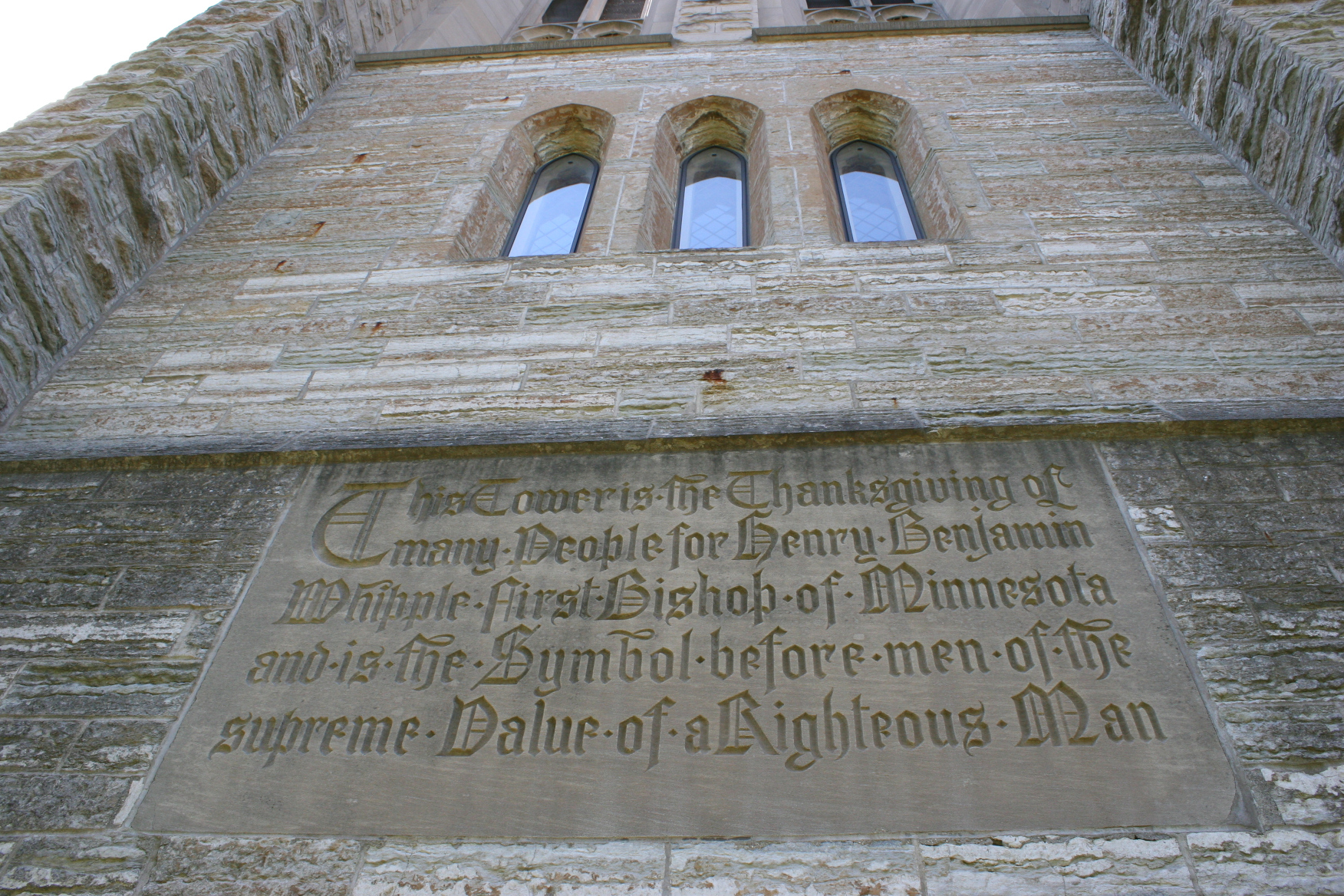
An inscription honors Whipple on the Cathedral bell tower. (Minnesota Prairie Roots copyrighted file photo June 2020)

MARKING HISTORY

Walk around Faribault today and you will see many reminders of the work Whipple did not only locally, but across Minnesota. Historical markers and inscriptions about the bishop grace The Cathedral of Our Merciful Saviour, his faith base. He’s buried under the altar there. Across the street at Central Park, Whipple-themed murals cover the west side of the historic bandshell. Downtown, one of many history-focused benches honors Whipple. And across town, at the Chapel of the Good Shepherd on the campus of Shattuck-St. Mary’s School, a marker notes his role in founding Shattuck and other schools in Faribault.

Efforts are underway now locally to recognize the Dakota as well, to publicly mark their place in the history of Faribault. I’d like to think Bishop Henry Whipple, also known as “Straight Tongue” and “The Sympathizer,” would welcome the idea, would even step up to fund raise, just as he did some 160 years ago to support the relocation of 180 Dakota from Fort Snelling to Faribault.

© Copyright 2023 Audrey Kletscher Helbling
 

At Buckham Library: Portraits honor Faribault’s founding fathers November 21, 2022

“Faribault’s Founding Fathers,” Alexander Faribault (left to right), Chief Taopi and Bishop Henry Whipple, painted by Dana Hanson. “Yuonihan” means honor or respect. (Minnesota Prairie Roots copyrighted photo November 2022. Art copyrighted by Dana Hanson.)

MY LIBRARY, BUCKHAM MEMORIAL in Faribault, features dozens of art pieces by local artists scattered throughout the building. I’ll admit that I really don’t even notice the art any more in my frequent visits to the library. Like anything, after time, familiarity begets overlooking.

But that all changed recently when I looked across the library to the west by the adult fiction and saw a work of art I hadn’t previously noticed. It’s been there for about a year. Yet, just now, I happened to see Dana Hanson’s original art piece, “Faribault’s Founding Fathers.” I strode across the library toward the high-hanging portrait piece and took pause.

Dana Hanson’s artist statement posted at the 2016 Artgo! art show at Buckham Center. (Minnesota Prairie Roots copyrighted file photo October 2016)

I first met Dana, who specializes in portraits, in 2015 during Faribault’s summer Concerts in the Park weekly outdoor music series at Central Park. Local artists were invited to paint on-site and Dana was among them. She has since moved away from Faribault.

A close-up of Dana’s “The Native Man, His Eagle & His Chanupa,” an oil painting exhibited in Owatonna in 2018. (Minnesota Prairie Roots copyrighted file photo April 2018)

Eventually, her art started showing up in exhibits—at Buckham Center, at the Paradise Center for the Arts and at the Owatonna Arts Center. Her work ranged from faith-inspired to celebrity (like Bob Dylan, Prince and Judy Garland) and Native American portraits and more. In Owatonna, her “Healing the Land” exhibit several years ago focused on the Dakota people.

Up close with Chief Taopi, center, and Bishop Henry Whipple, right. (Minnesota Prairie Roots copyrighted photo November 2022)

So when I saw the recently-donated 2019 painting of Faribault’s founding fathers, I was not at all surprised. Dana holds a heart full of gratitude, love and compassion for Indigenous peoples. That shows in her art, including in these portraits of Chief Taopi, a member of the Little Crow Band of the Mdewakanton Dakota Tribe; town founder Alexander Faribault, “friend and protector” of the Dakota; and Bishop Henry Whipple, “Spiritual Father and Humanitarian” and “Advocate for the Native Americans.”

Another example of Dana’s art, MESSENGERS OF HOPE with the horses subtitled, from left to right, “Light,” “Passion Fire” and “Grace.” These were exhibited at the Paradise Center for the Arts in 2017. (Minnesota Prairie Roots copyrighted file photo March 2017.

Indigenous peoples were the original inhabitants of Faribault, of Rice County, a fact now only beginning to be widely-acknowledged and honored. The Wakpekute, part of the Dakota Nation, placed their dead on scaffolding on the hill just up from my house in today’s current-day Wapacuta (sic) Park, a fact I only learned this fall at an historical presentation. Eventually, they were buried in Peace Park, a triangle of land near the library. There’s so much rich local history I am beginning to learn.

“Protector of the 38 + 2,” an oil on canvas by Dana Hanson and previously displayed in Owatonna. Her art honors the 38 Dakota men who were hung in Mankato following the US-Dakota War of 1862. (Minnesota Prairie Roots copyrighted file photo April 2018)

Chief Taopi, who centers Dana’s portrait trio, was a leader among his people and a member of a Peace Party during the US-Dakota War of 1862. Eventually he landed in Faribault, living on land owned by founder and fur trader Alexander Faribault. Taopi and the Bishop forged a strong friendship also. The Dakota chief died in 1869 and is buried at Maple Lawn Cemetery in Faribault.

Now, to see these three men honored via a painting in a place of learning, a place of connection, a place where history writes onto pages, reminds me of their importance in my community. In the familiarity of the library and during this, Native American Heritage Month, I need to pause, appreciate and respect those who shaped this place I’ve called home for 40 years.

© Copyright 2022 Audrey Kletscher Helbling
 

Honoring Bishop Whipple’s “unfailing love & hope for humanity” on a mural in Faribault June 29, 2020

The Central Park Bandshell mural on the left honors Bishop Henry Benjamin Whipple. The one to the right features the Faribault Pet Parade and was placed there several years ago.


THE RECENT INSTALLATION of an historic-themed mural on the west side of the Central Park Bandshell in Faribault prompted me to look more closely at the man featured thereon—Bishop Henry Whipple.


The middle mural panel features a portrait of Bishop Whipple and a summary of information about him.


Just across the street from Central Park, the stunning Cathedral of Our Merciful Saviour.


The historic marker posted on the Cathedral bell tower.


He is a prominent figure in the history of my community and the history of Minnesota. Explore Faribault, and you will find Whipple’s name on numerous plaques, including across the street from the park at the Cathedral of Our Merciful Saviour, the cathedral he helped build as Minnesota’s first Episcopal bishop. He’s buried in a crypt beneath the chancel there. The bell tower was dedicated in his honor by his second wife, Evangeline, as “a monument of love and Christian unity.”
 

Posted outside the front door of the Chapel of the Good Shepherd. The church is on the National Register of Historic Places. Minnesota Prairie Roots file photo.


On the east side of town, Whipple’s name graces an historical marker at The Chapel of the Good Shepherd on the campus of Shattuck-St. Mary’s School. He helped found the school, separately first as Shattuck School for boys and St. Mary’s Hall for girls, along with St. James and Seabury Divinity schools, all in Faribault.
 

The soaring tower landmarks the Cathedral. Ralph Adams Cram, architect of St. John the Divine in New York City, designed the Cathedral tower. The tower was added as a memorial to Whipple after his death in 1901.


The inscription, in stone, on the bell tower.


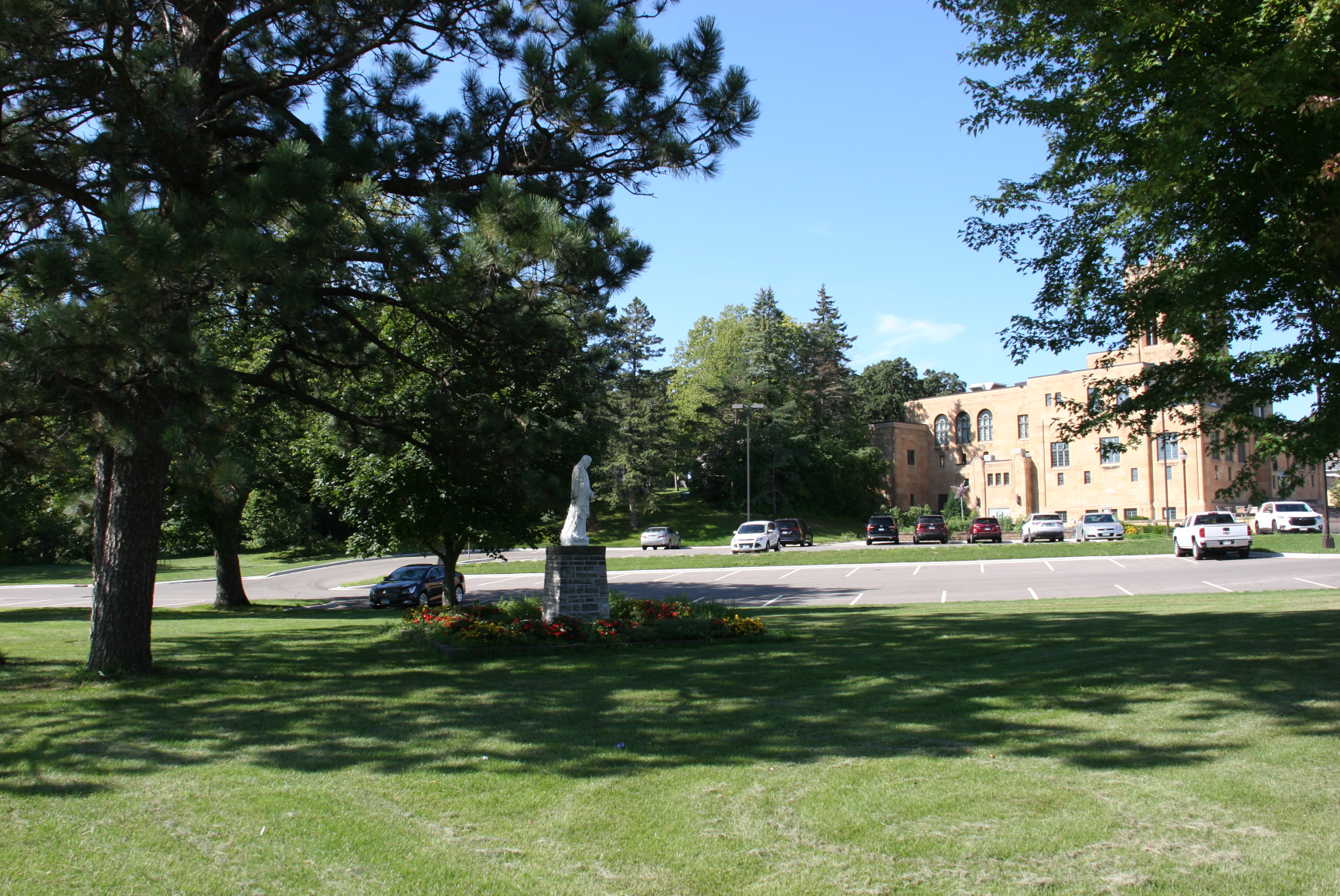
An historic marker on the Cathedral grounds.


As admirable as Whipple’s role in founding educational institutions, it is another facet of this man—his humanitarian efforts—which are often cited in history. The inscription on the Cathedral bell tower states that Whipple’s “unfailing love and hope for humanity have made his life an inspiration far and near.”


This panel depicts the relationship between Native peoples and Bishop Whipple.


Bishop Whipple’s portrait, up close.


Details on a sign outside the Cathedral reference Whipple as “Straight Tongue.”


What, exactly, does that mean? To understand, one must consider the time period in which Whipple arrived in Minnesota, just years before the U.S.-Dakota War of 1862. He was a missionary and, as such, worked to educate and convert the Native peoples to Christianity and agrarian ways. (Not necessarily the adaptive approach one would take today toward other cultures, but the mindset then.) In his work, Whipple observed poverty among the Dakota and Ojibwe and mistreatment by the government and began to advocate for their rights. The Native peoples called the bishop “Straight Tongue.” That title speaks to their trust and respect for him.


The mural, in full, including the right panel recognizing Whipple and his first wife, Cornelia, and his second wife, Evangeline.


Whipple was among the few leaders who publicly pressed for sparing the lives of 303 Dakota warriors sentenced to death following the war. President Abraham Lincoln spared or pardoned most, but 38 were still hung during a mass execution in Mankato.

Whipple’s strong public stances on behalf of Native peoples were not necessarily widely-embraced. Rice County Historical Society Executive Director Susan Garwood shared at a presentation I attended several years ago that several assassination attempts were made on the bishop’s life. Following the U.S.-Dakota War, about 80 Native people, under Whipple’s protection, moved to Faribault. Some helped build the Cathedral, a construction process which took from 1862-1869. Additionally, several Dakota and African Americans attended Seabury Divinity School, Garwood noted. That, too, caused concern.


The Whipples.


But through it all, from the information I’ve read, Whipple remained steadfast, unwavering in his compassion toward Native peoples, advocating for them, loving humanity.


FYI: The Mural Society of Faribault actively promotes Faribault history through public murals posted throughout the downtown area, this one the latest. Dave Correll of Brushwork Signs crafted, painted and installed the Whipple mural with help from his team.

For more information about Bishop Whipple, click here to reach MNOpedia.

Or read this post I wrote about a Rice County Historical Society event in 2018. The RCHS features a museum exhibit on Bishop Whipple.


© Copyright 2020 Audrey Kletscher Helbling