Minnesota Prairie Roots

Writing and photography by Audrey Kletscher Helbling

Ugly chapped hands February 13, 2011

Filed under: Uncategorized — Audrey Kletscher Helbling @ 12:42 PM
Tags: , , , , , , , ,


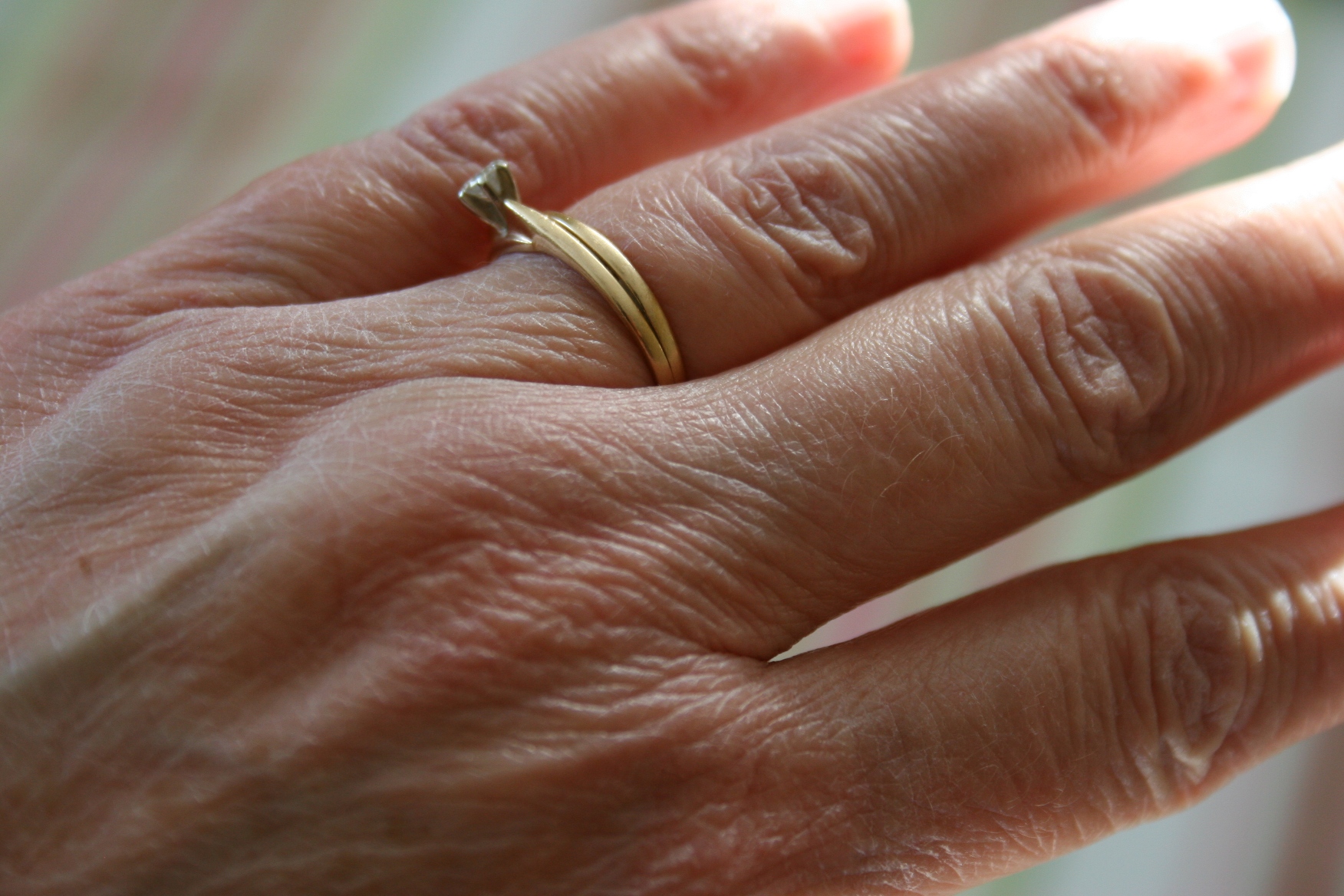
My not-so-beautiful left hand.

THIS IS THE HAND of a writer. My left hand. I would show you my right hand, too, but I can’t hold my camera and photograph my right hand with my left hand. Never mind.

I’m not showing you my appendage because it’s pretty. It’s not.

It’s really rather ugly. My right hand is worse, with cracks and dried spots of blood edging split skin.

The dry, cold air of winter has been rough on my skin. Cleaning a paintbrush with mineral spirits more than a dozen times during the past two weeks has added to the epidermis damage.

I doubt my hands have looked this bad since I was a child. Back in the day, back on the farm, my hands cracked and bled every winter. That was a result of working in the brutal outdoors, protecting my hands with only a thin pair of brown cotton chore gloves as I fed calves and cows, bedded straw and pushed manure into barn gutters.

Dipping my hands into buckets of hot water to mix milk replacer for the calves temporarily warmed numbed fingers. But it also caused them to chap.

My mom offered a solution: Corn Huskers lotion

Oh, how I detested that slimy, clear gel that she insisted we slather across our skin. I’m not here to endorse or not endorse any hand care products, but this lotion did nothing to improve the condition of my chapped hands.

Only the arrival of warmer weather, of spring, signaled relief from the itching, bleeding and cracking.

So, now, like decades ago, I am awaiting the spring renewal and healing of my hands.

© Copyright 2011 Audrey Kletscher Helbling


Thanks for the Sputnik memories, Mr. President January 27, 2011

GROWING UP on a southwestern Minnesota dairy farm back in the 1950s and 60s, in the middle of the Cold War, I didn’t know all that much about the Soviet Union, except to fear “the Russians.”

Then along came Sputnik, the Russian satellite, which made quite an impression on my impressionable young mind.

So when President Barack Obama worked Sputnik into his Tuesday night State of the Union address and stated, “This is our generation’s Sputnik moment,” something niggled in my memory.

That something would be a cat.

Just to make sure I was remembering correctly, I phoned my mom, who quickly assured me that I was right. During my childhood, we had a black-and-brown mixed barn cat called Sputnik.

“I think you kids named it after the Russian satellite,” my mom said.

She was right. My oldest brother and I, enamored with the whole space thing, had named the barn cat with the stump tail (likely sliced off by a mower in the alfalfa field) Sputnik.

I hadn’t thought about that feline in decades, until the President tripped my memory Tuesday evening while referencing Sputnik in his call for American innovation.

Then Wednesday I got caught up even more in the Russian satellite memory when I learned that the President was visiting Manitowoc in eastern Wisconsin. On September 6, 1962, a 20-pound chunk of glowing debris from Sputnik IV plummeted to earth, landing on 8th Street in Manitowoc.

This Wisconsin city celebrates that monumental event every September at Sputnikfest, complete with a Miss Space Debris Pageant, Cosmic Cake Contest, Cosmic Costume Contest, a Sputnik Re-enactment and more.

How space-age cool is that?

The President’s trip to Manitowoc was clearly well-planned and orchestrated to tie in with his Sputnik speech reference. Otherwise why would he have chosen to visit this city of 32,520 southeast of Green Bay? It’s not like he’s a Packers fan, although he received a yellow and green jersey upon his arrival.

This town on the shores of Lake Michigan is also home to several green energy plants, which Obama toured, thus reemphasizing his State of the Union directive to move forward in developing clean energy alternatives.

That all said, thank you, Mr. President, for mentioning Sputnik in your speech. I hadn’t thought about that barn cat in decades.

© Copyright 2011 Audrey Kletscher Helbling


The winters of my childhood January 20, 2011

Filed under: Uncategorized — Audrey Kletscher Helbling @ 8:56 AM
Tags: , , , , , , , , ,

REMEMBER THE WINTERS of fun?

You could hardly wait to rush out the door and slog through freshly-fallen snow, plowing furrows for a game of fox-and-goose.

You could barely wait for Dad to push bucketsful of snow from the farmyard with his tractor and loader into mountains suitable for scaling.


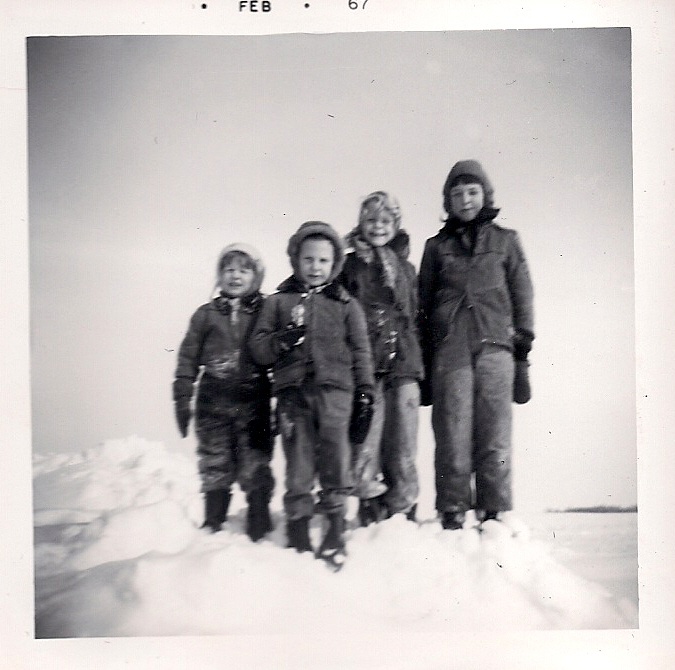
Three of my younger siblings and I pose atop a snow mountain our dad created in our southwestern Minnesota farmyard in this photo dated February 1967.

You excitedly dug into the sides of snowdrifts, hard as bedrock, to carve out snow caves.

You raced across the tops of those snowdrifts, up and down and all around the world of white.


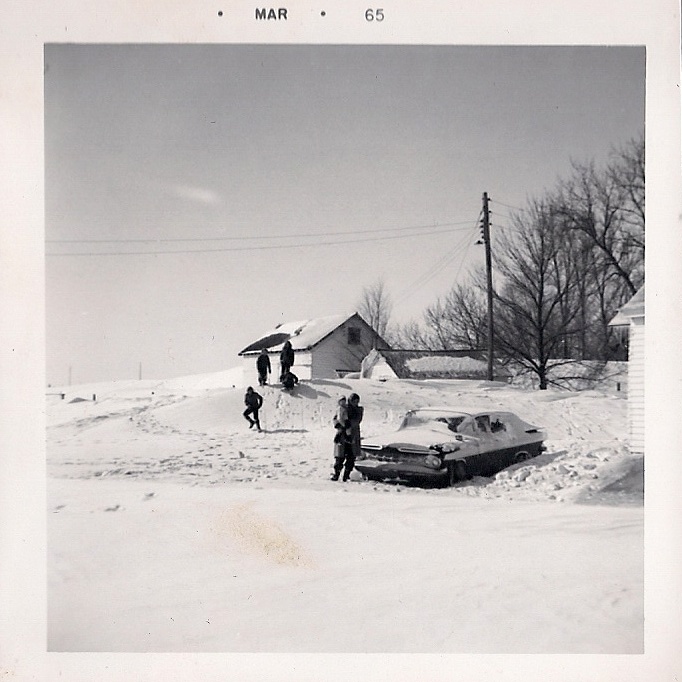
Our southwestern Minnesota farmyard is buried in snowdrifts in this March 1965 image. My mom is holding my youngest sister as she stands by the car parked next to the house. My other sister and two brothers and I race down the snowdrifts.

You packed snow into hard balls, aiming for siblings, wiggling and screaming at the brother who grabbed your collar and stuffed ice-cold snow down the back of your neck.

And when the snow was the perfect consistency, you rolled and packed it into big balls, shoving and grunting and straining, working together with classmates or siblings to build a snowman or a snow fort.

Such were the winters of my childhood on a southwestern Minnesota farm. Fierce. Brutal. But, mostly, fun.

Today, living through one of our snowiest winters in forever, I am reminded of those childhood winters. I would be wise to remember the fun I once experienced on the cold, snowy, wind-swept Minnesota prairie.


This huge, hard-as-rock snowdrift blocked our farm driveway in this March 1965 photo. My uncle drove over from his nearby farm to help open the drive so the milk truck could reach the milkhouse. That's my mom and five of us kids atop the drift.

WHAT ARE YOUR MEMORIES of childhood winters?

© Copyright 2011 Audrey Kletscher Helbling


Discovering the beauty of winter in Minnesota December 28, 2010

Filed under: Uncategorized — Audrey Kletscher Helbling @ 8:41 AM
Tags: , , , , , , , , , , ,

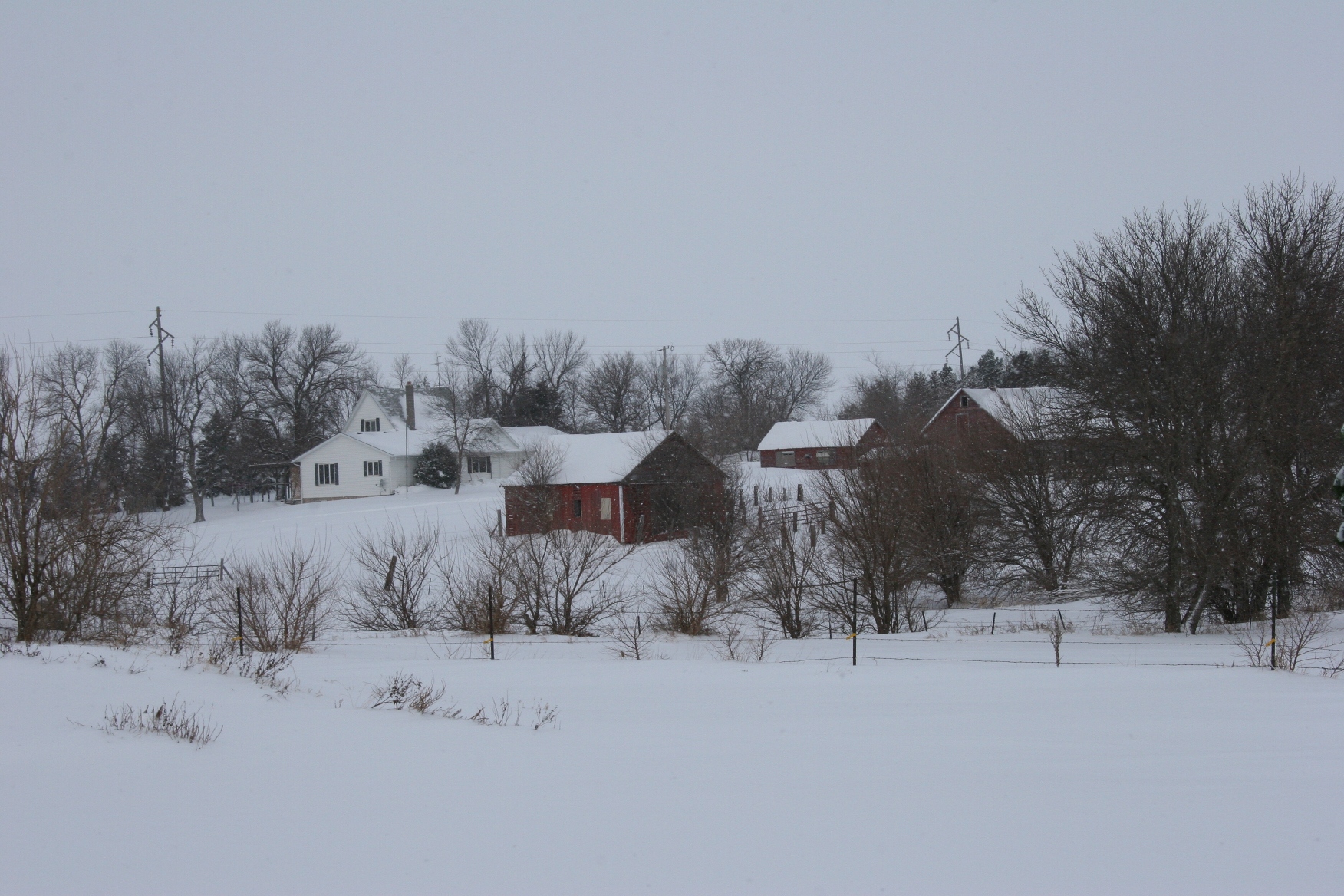
WHEN I LOOKED through the patio doors of my middle brother’s rural Redwood County home on Christmas morning, I saw this picture-perfect postcard scene.


A farm place near Lamberton on Christmas Day morning.

The quaint farm place sits along Redwood County Road 6 near Lamberton, just north of the county park I call the “gypsy park” because my paternal grandma told me gypsies once camped there.

From the park, the farm site lies only a short distance from an electrical substation which, during my growing up years, my siblings and I dubbed “the chicken pox factory.” It was a name we gave to all such substations, I suspect around the time chicken pox plagued the area. Ironically, the brother who now lives near the chicken pox factory never had the disease.

But I am getting sidetracked here. I wanted to share this photo with you for several reasons. First, this winter in Minnesota is quickly becoming long and wearisome with all of the snow we’ve gotten recently.

That’s why it’s more important than ever to search for the positive (which I have not been too good at lately) in winter. For me, that means viewing the landscape as a photo opportunity. Photography forces you to really see, not simply look at, the details in your environment.

While composing this image, I noticed the contrast of the red buildings against the pristine white snow, the defined fencelines, the old farmhouse that surely has many stories to tell, the slight rise of the land, the shelter belt of trees protecting the farm from the fierce prairie winds. With a gentle snow falling, the scene possessed a dreamy, peaceful, surreal quality.

So, yes, when you make a conscious effort, you truly will find beauty in this winter of overwhelming snow.

© Copyright 2010 Audrey Kletscher Helbling


Merry CHRISTmas December 24, 2010

Filed under: Uncategorized — Audrey Kletscher Helbling @ 7:40 AM
Tags: , , , , , , ,


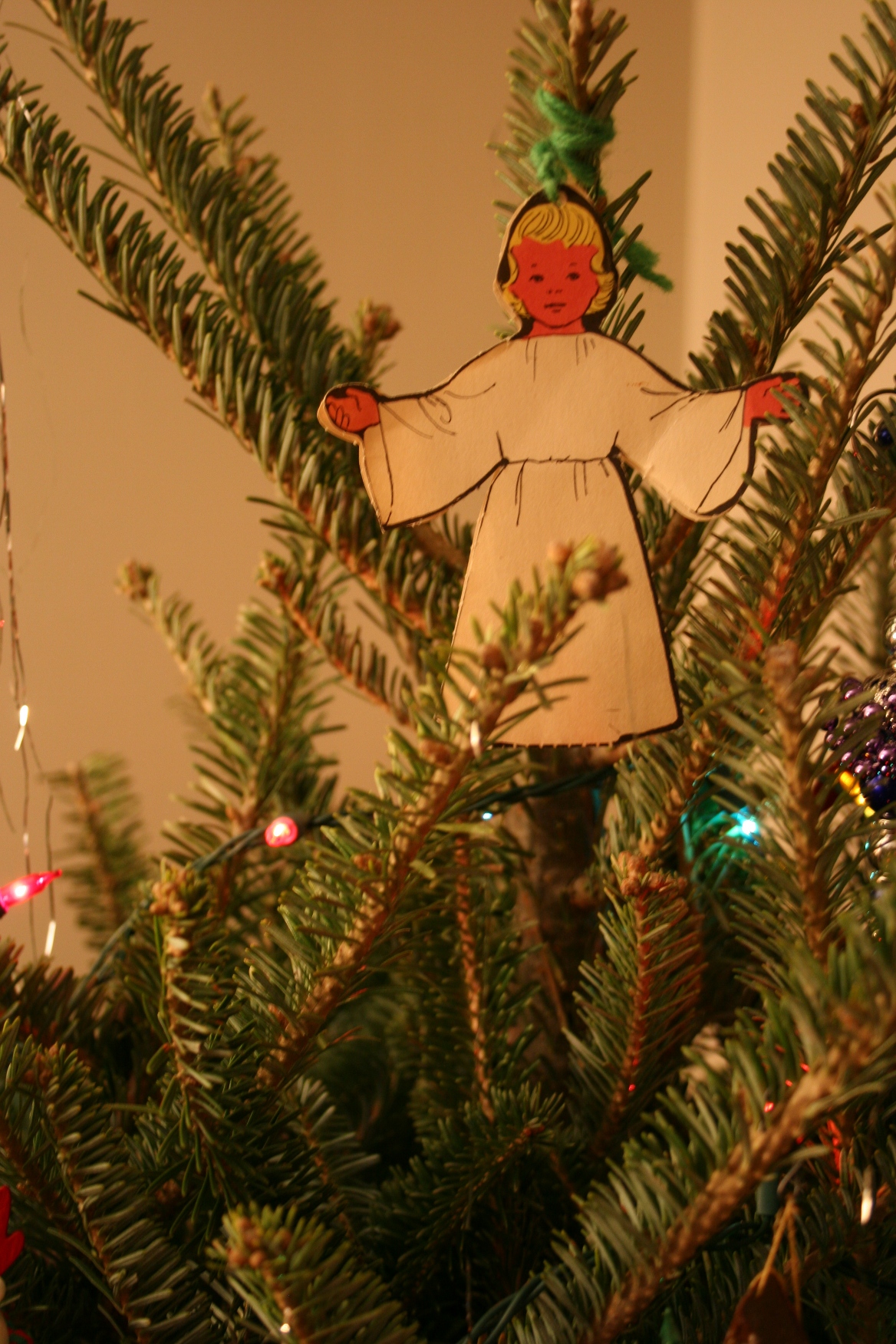
Each year I place this paper angel on our family Christmas tree. The angel is from my childhood, cut from a Sunday School lesson. I also have a Jesus in a manager from the same era and same lesson that goes on the tree.

BUT THE ANGEL said to them, “Do not be afraid. I bring you good news of great joy that will be for all the people. Today in the town of David a Savior has been born to you; he is Christ the Lord. This will be a sign to you: You will find a baby wrapped in clothes and lying in a manger.”

Suddenly a great company of the heavenly host appeared with the angel, praising God and saying,

“Glory to God in the highest, and on earth peace to men on whom his favor rests.”

Luke 2: 10 – 14


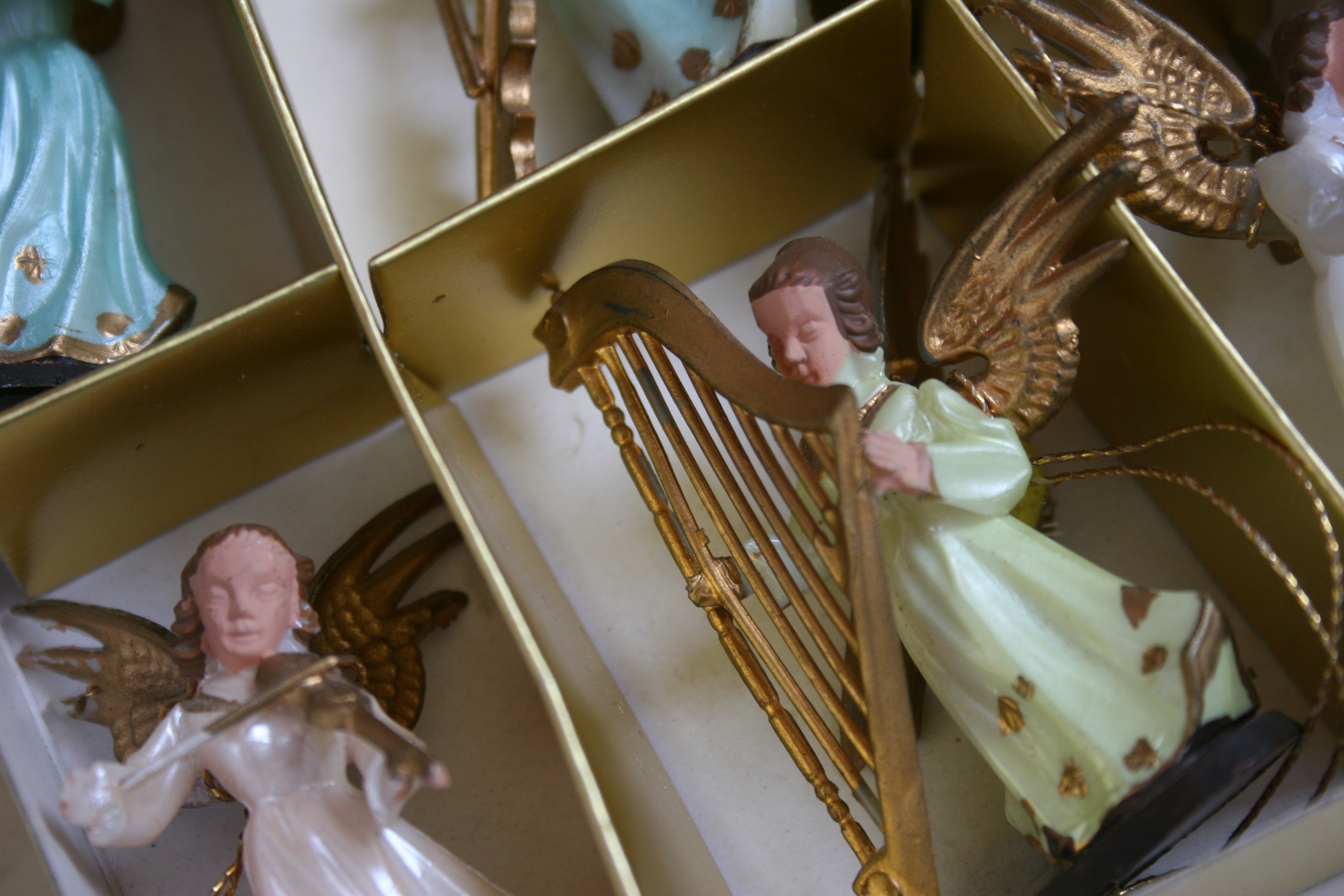
Every year I display the six angels that comprise the Shiny Brite Christmas Angel Band. My oldest brother and I bought the angels for our mom for Christmas one year back in the 1960s at a hardware store in Echo. Several years ago my mom gave the tiny plastic angels to me. They are among my dearest Christmas treasures.


Members of the Christmas Angel Band, still in their original box.

May your Christmas be blessed with hope, with peace, with joy and with love as we celebrate the birth of the Savior.

Merry Christmas from Minnesota Prairie Roots!

© Copyright 2010 Audrey Kletscher Helbling


Too much winter already December 2, 2010

Filed under: Uncategorized — Audrey Kletscher Helbling @ 11:48 AM
Tags: , , , , , ,

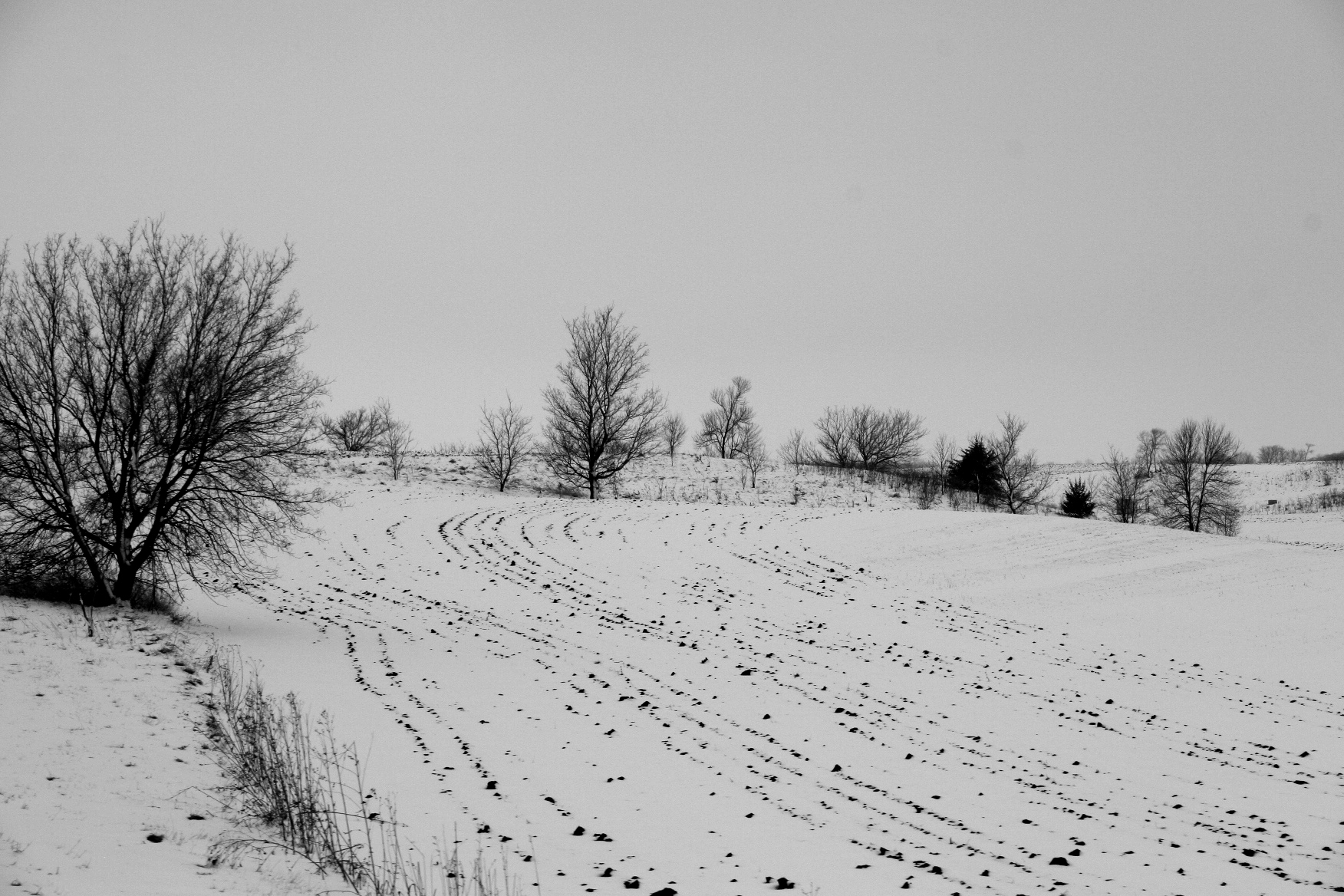
Now, would you call this recently-photographed scene a winter or fall landscape?

I HATE TO ADMIT THIS already, especially since the calendar just flipped to December. But I am tired of winter.

Technically, though, I should state that I am tired of fall given winter does not officially begin until December 21. Really? Looking outside my office window, I see snow and bare trees, pretty much a winter landscape if you ask me.

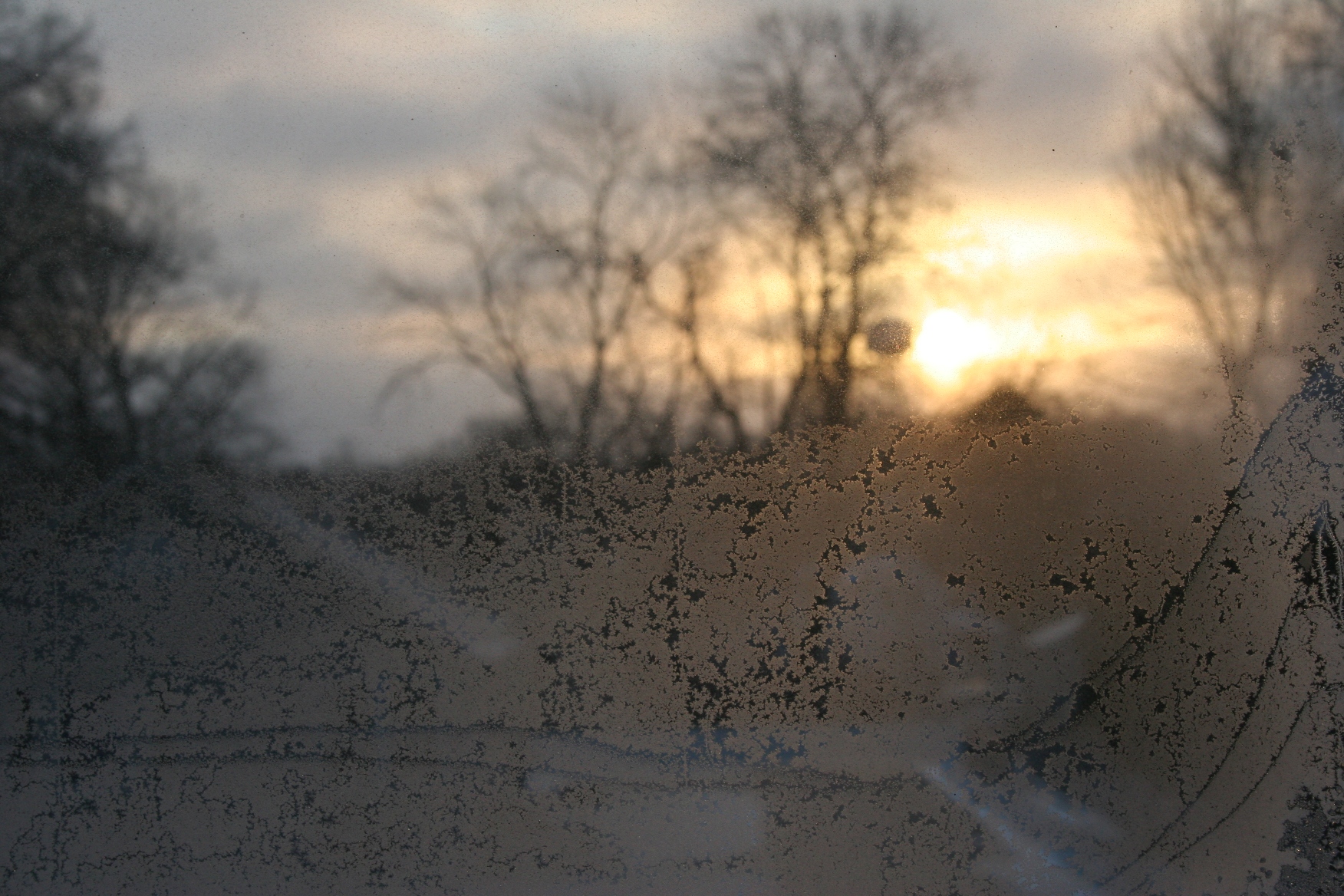
A frosty view of the winter sunrise through my home office window. We're getting five new windows soon, which should make the house a bit more cozy.

The calendar says otherwise.

For me, though, winter arrives when I find myself snuggling under a warm lap throw while sitting at my computer, watching TV, reading a book and, yes, even while eating dinner or supper. (Note that I did not say “lunch or dinner” per deference to my rural roots.)

I wrongly assumed that installation of a new furnace last year would banish cold air from our house and allow me to permanently stash the pile of wool and fleece throws in the back corner of the closet. Uh, uh.

If I notched the thermostat beyond 67 degrees, I suppose I would feel warmer. But I am stubborn and frugal and I have a strong history of fending off the cold via methods other than cranking up the heat.

I grew up in a drafty old farmhouse where, every winter, the foundation was first wrapped in brown paper and then snuggled with straw bales. The house was heated by an oil-burning stove in the living room. That stove didn’t exactly provide much warmth for “the girls'” upstairs, west-facing bedroom, which endured the brunt of the unrelenting prairie winds.

My sister burned her behind on that stove once when she got a little too close while warming up after her weekly Saturday night bath. (She didn’t tell anyone until the burn festered.) Yes, we took baths only once a week, in a tin tub hauled into the kitchen. In the winter Mom turned on the oven and opened the door, either to keep us warm or to keep the bathwater from freezing, I’m not sure.

After pondering those childhood days, I have to wonder now why I’m complaining about winter. Really, I don’t have it so bad—no tin tub, no oil-burning stove to light with a farmer match, no bales stacked around the house, no plastic covering storm windows…

If I really, really want to, I can bump the thermostat up a few degrees.

© Copyright 2010 Audrey Kletscher Helbling


Winter storm on the prairie December 1, 2010

Filed under: Uncategorized — Audrey Kletscher Helbling @ 11:59 AM
Tags: , , , , , , , , , ,

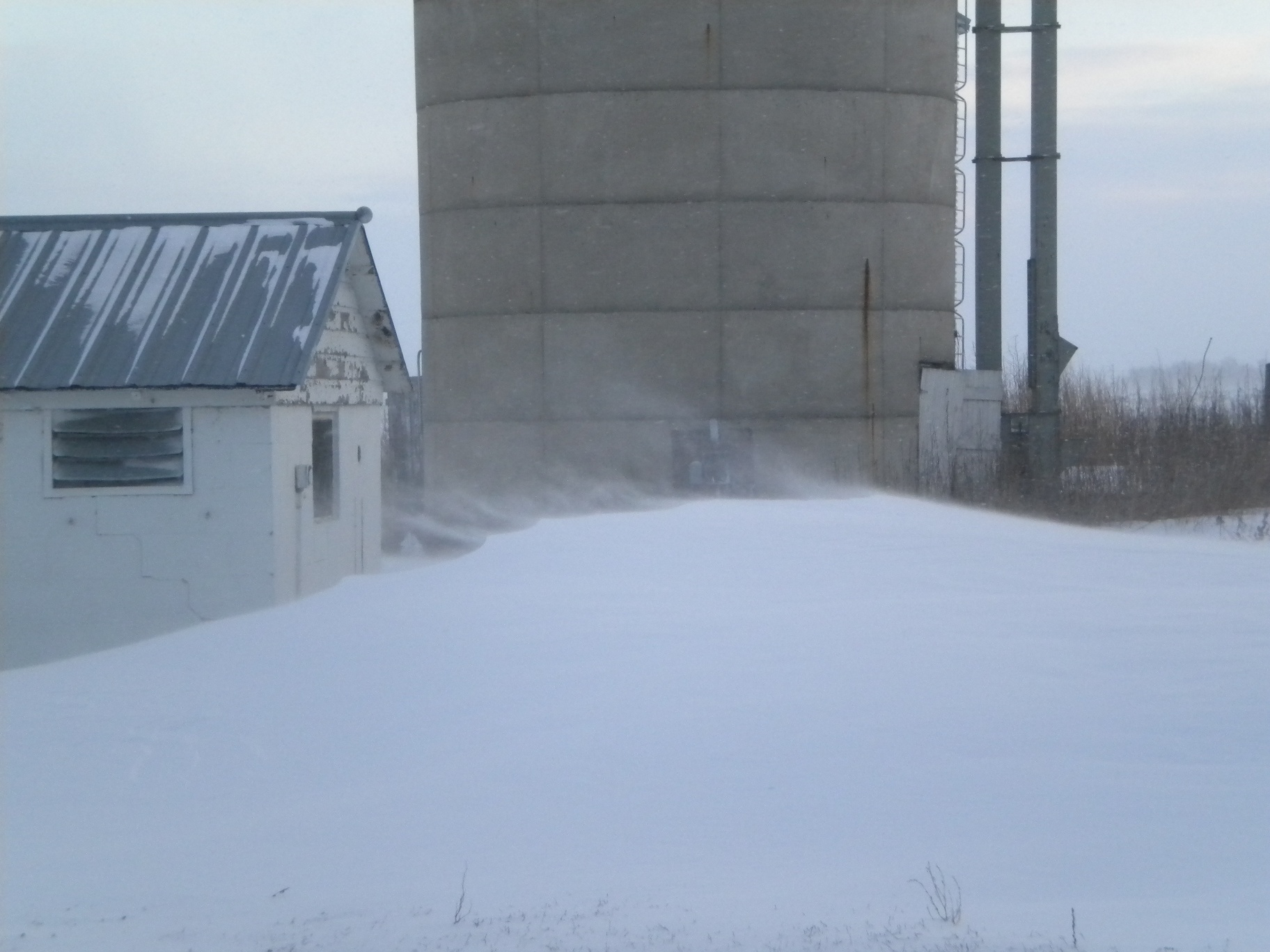
Snow blows across the driveway on the farm where I grew up near Vesta.

WHEN I HEARD yesterday of five-foot snowdrifts in the Springfield area, west of New Ulm, I simply had to get my hands on some photos from southwestern Minnesota. Honestly, unless you’ve lived on the flat, open, wind-swept prairie, you really can’t comprehend the ferocity of a Minnesota winter.

In that part of the state, November exited with a strong winter storm that whipped snow into hard, sculpted drifts, made roads nearly impassable if not impassable and closed schools on Monday and Tuesday.

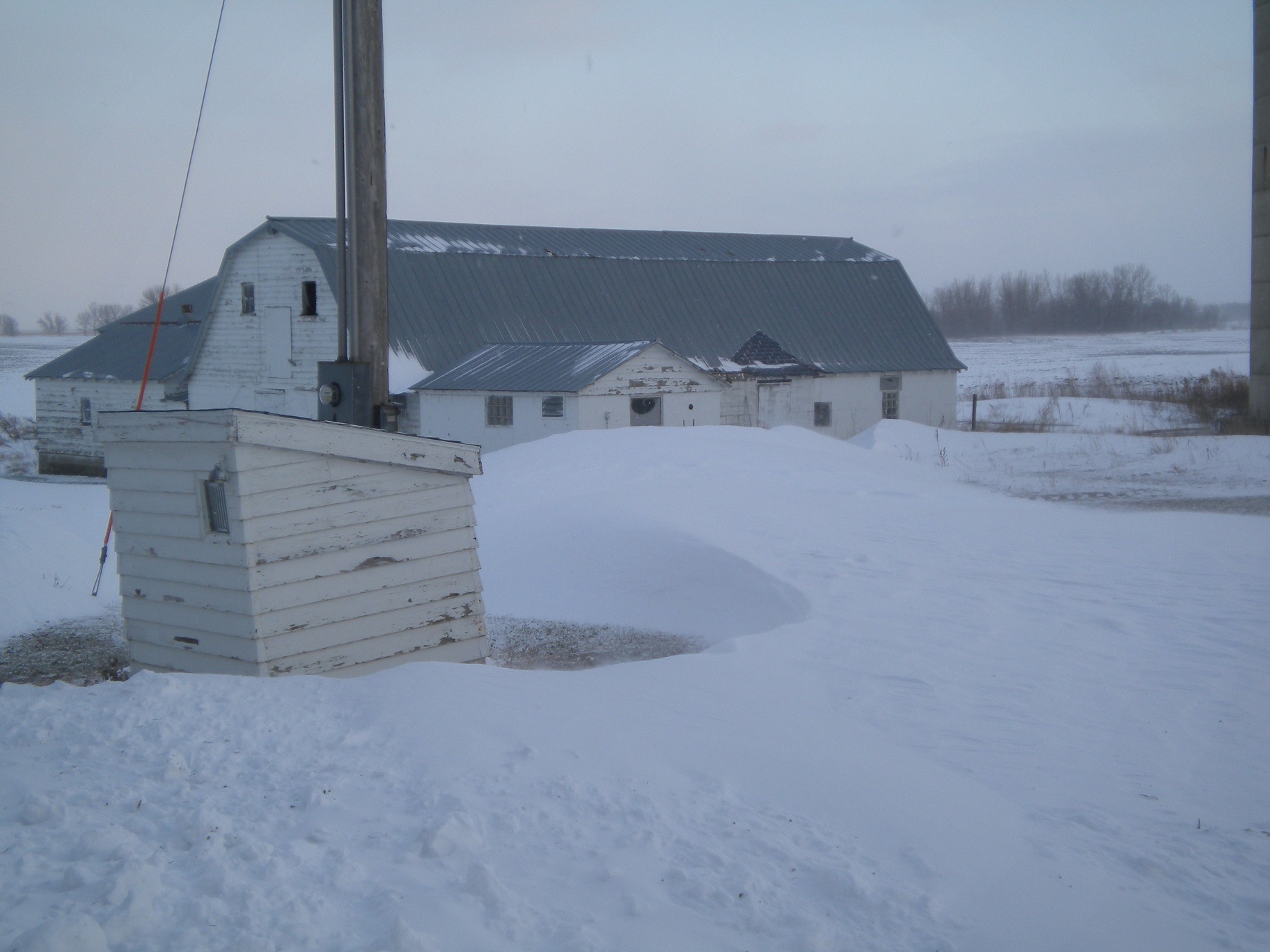
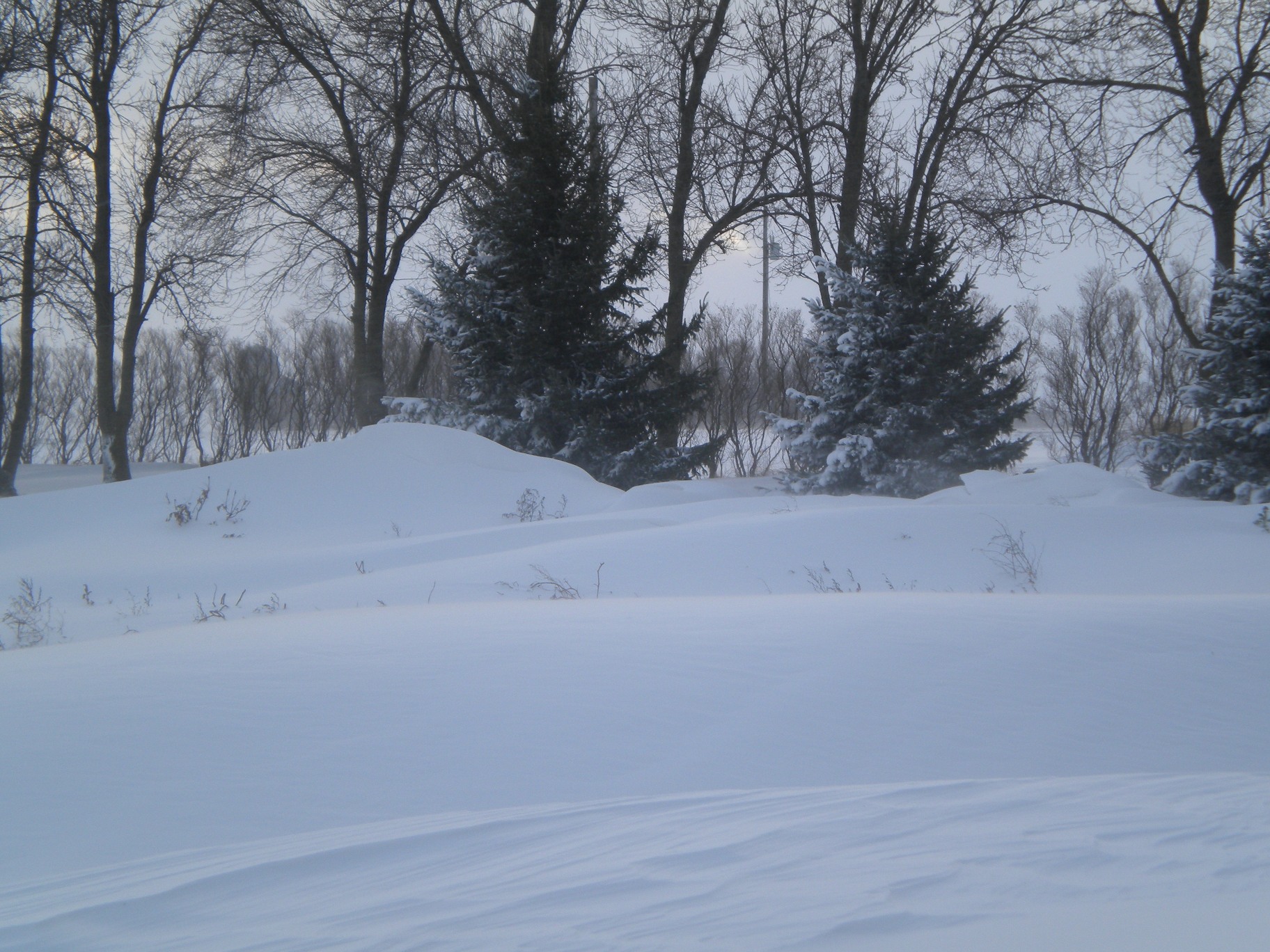
Snowdrifts, some six feet high, sculpted around the grove and bins on the home place.

Although I have not lived on the prairie for nearly four decades, memories of winters there are as fresh as the five, up to 10, inches of snow that fell there.

I won’t tell you that I walked uphill two miles to school in snowdrifts eight feet deep. But I will tell you that when I attended junior high school in Redwood Falls some 20 miles from my farm home, we had a difficult time getting to school one winter. Because of all the snow and poor road conditions, buses would not make their rural routes. One bus left the cafe in my hometown of Vesta each morning bound for Redwood Falls. If you could get into town, then you could go to school. For my brother and me, that journey into Vesta was via an open cab John Deere tractor driven one mile down a county road by our dad. After school he would drive back in to town and bring us home.

I also recall during high school once riding home on a single school bus crammed with students who would normally fill two buses. The driver opted to take all of the Vesta area kids to Vesta (not home) in one bus as weather conditions were so poor. The bus crept along the highway with one student standing just inside the open bus door guiding the driver in near-visibility conditions.

The often brutal winters on the prairie also necessitated designated “snow homes,” homes in town where country kids could stay if snow stranded them in town. Although I had snow homes every year from junior high until I graduated in 1974, I never once had to stay at one. My siblings did.

Even though the prairie winters were harsh, as a kid, I loved winter. Rock-hard snowdrifts that circled the granary and the house and the barn and the snow piles formed by my dad with the bucket of his John Deere tractor became treacherous mountains to explore. We drove our imaginary dog sleds there, played King of the Mountain, dug snow tunnels, slid in our sleds…

Winters were fun back then.

Wind-whipped snow drifts around the abandoned milkhouse and silo.

I’m certain, though, for my parents, winter must have been a lot of hard work—pushing all that snow from the driveway and yard to open a path for the milk truck, thawing frozen drinking cups and a frozen gutter cleaner, emptying the pot that served as our bathroom in the cold front porch…

All of these memories rushed back as I viewed the photos my niece Hillary took of this recent winter storm in southwestern Minnesota. Her images are from the farm where I grew up, the place of sweet memories and of long, cold, harsh winters.

Snow began falling Monday afternoon in the Vesta area, causing low visibility and poor driving conditions as snow covered roadways, according to my niece.

Snow swirled into drifts in the farmyard on the farm of my childhood.

Snowdrifts formed at the edge of the yard, next to the grove.

IF YOU HAVE WINTER memories or stories to share, submit a comment to Minnesota Prairie Roots. I’d like to hear yours.

Text © Copyright 2010 Audrey Kletscher Helbling

Photos © Copyright 2010 Hillary Kletscher


Barns full of memories October 6, 2010

Filed under: Uncategorized — Audrey Kletscher Helbling @ 7:39 AM
Tags: , , , , , ,

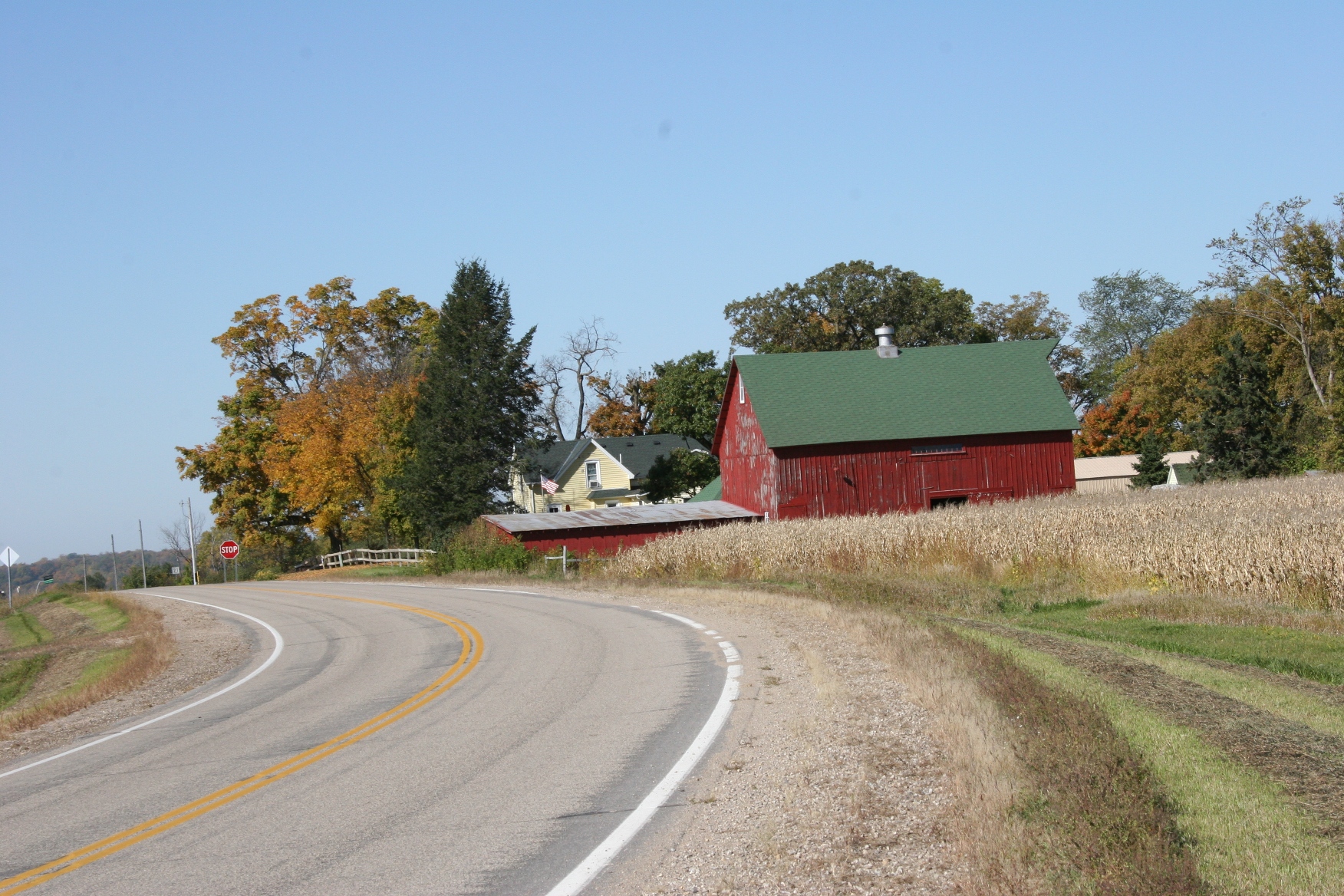
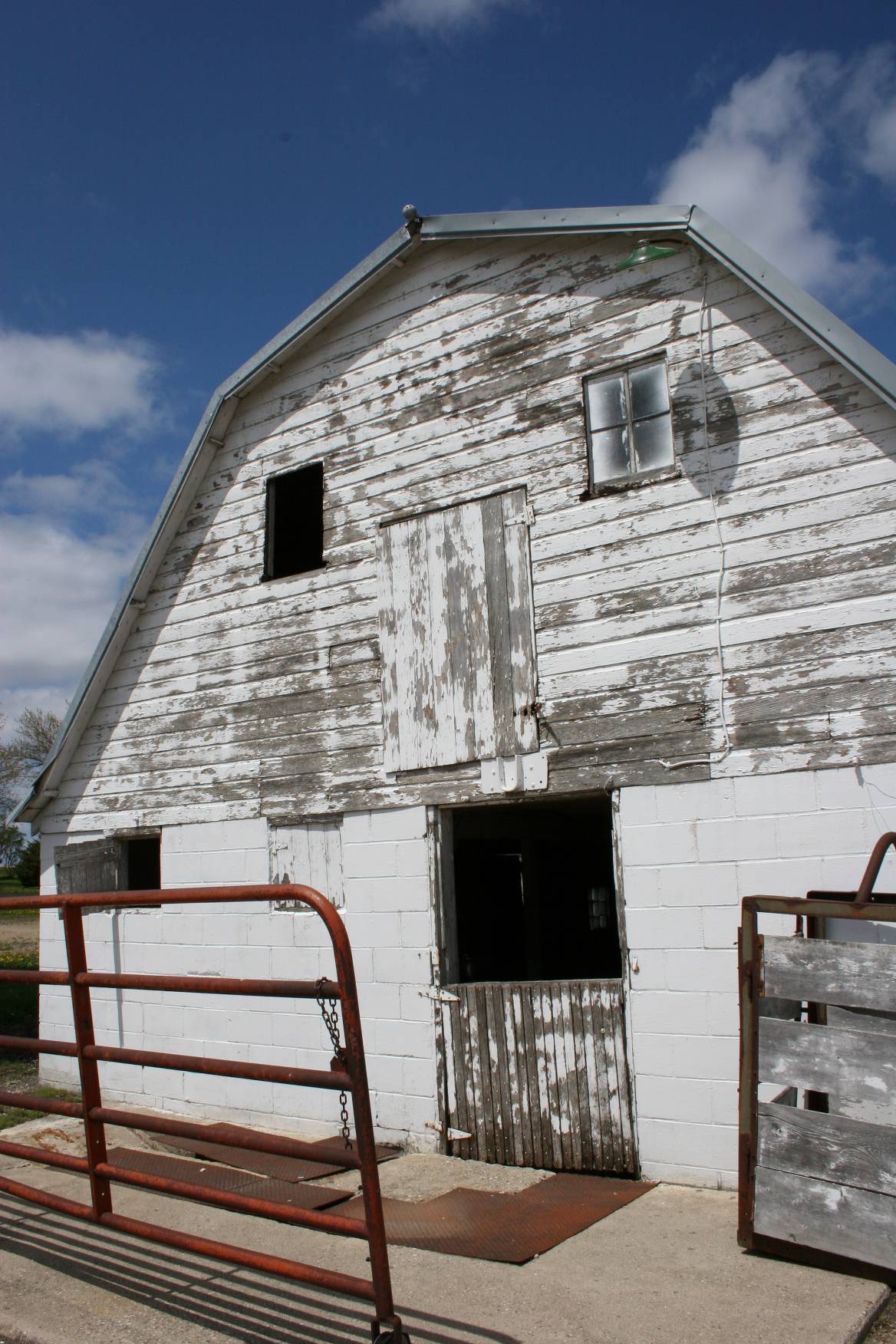
I photographed this barn along Le Sueur County Road 21 while on a recent drive to see the fall colors.

LIKE COUNTRY CHURCHES and abandoned farmhouses, old barns draw me close, calling me to not only look, but to truly see.

All too often these days, though, my view is periphery, a quick glimpse from a car window of a barn that stands straight and strong or crooked and decaying.

Because these are not my barns on my property, I typically settle for photographing them from the roadway, although I would like nothing more than to meander my way around the farmyard.

Barns evoke memories—of sliding shovels full of cow manure into gutters, of dumping heaps of pungent silage before stanchions, of pushing wheelbarrows overflowing with dusty ground feed down the narrow barn aisle, of dodging streams of cow pee, of frothy milk splashing into tall metal pails, of Holsteins slopping my skin with sandpaper tongues.

Such memories come from years of hard work on my childhood dairy farm in southwestern Minnesota. That barn stands empty now, has for longer than I care to remember. No cows. No kids. No farmer. No nothing.

I have only my memories now and those barns, those roadside barns, which symbolize the hope, the fortitude and the dreams of generations of Minnesotans.

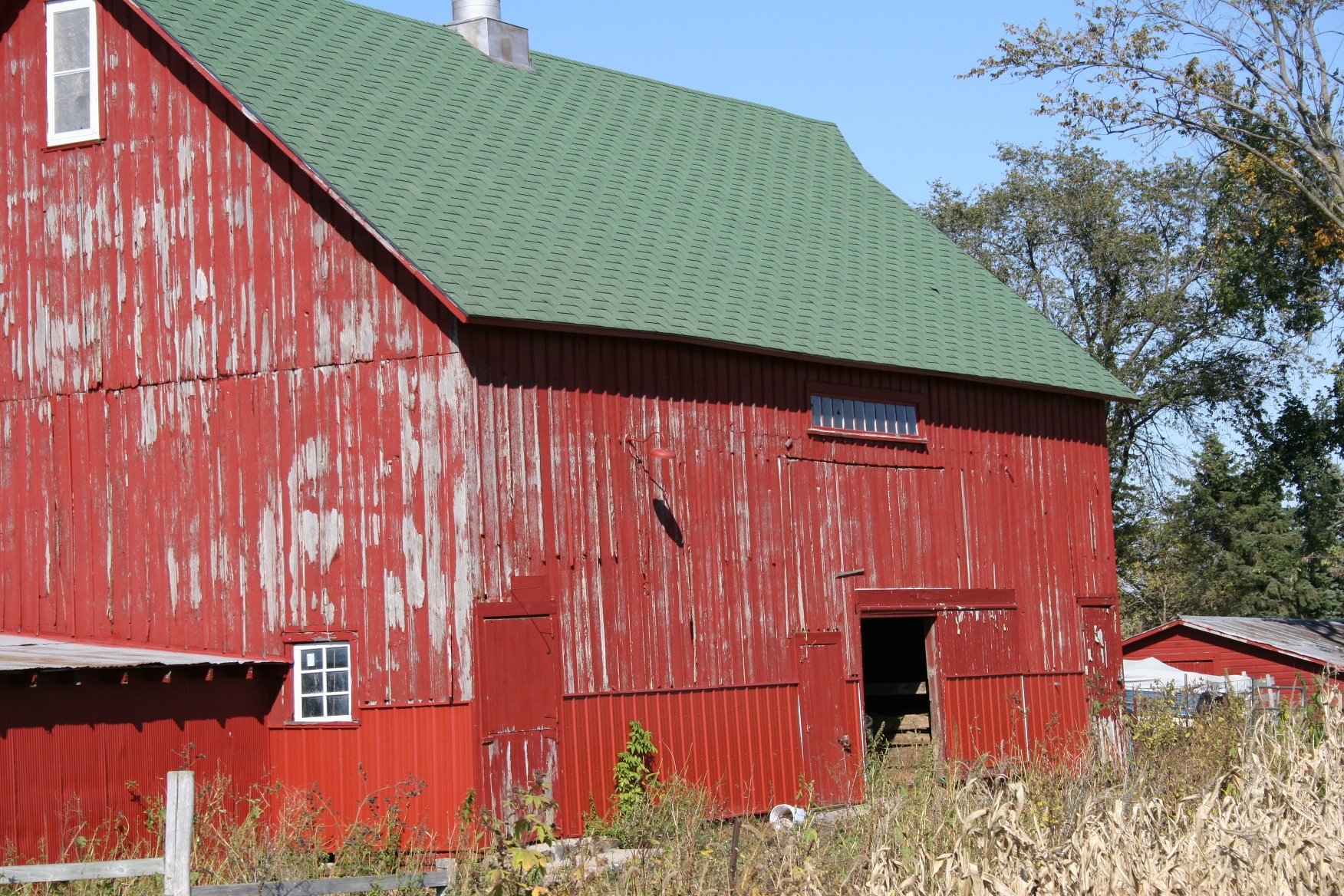
The early 1950s barn on the Redwood County dairy farm where I grew up is no longer used and has fallen into disrepair.

A close-up image of the red barn (above), snapped while driving past the farm.

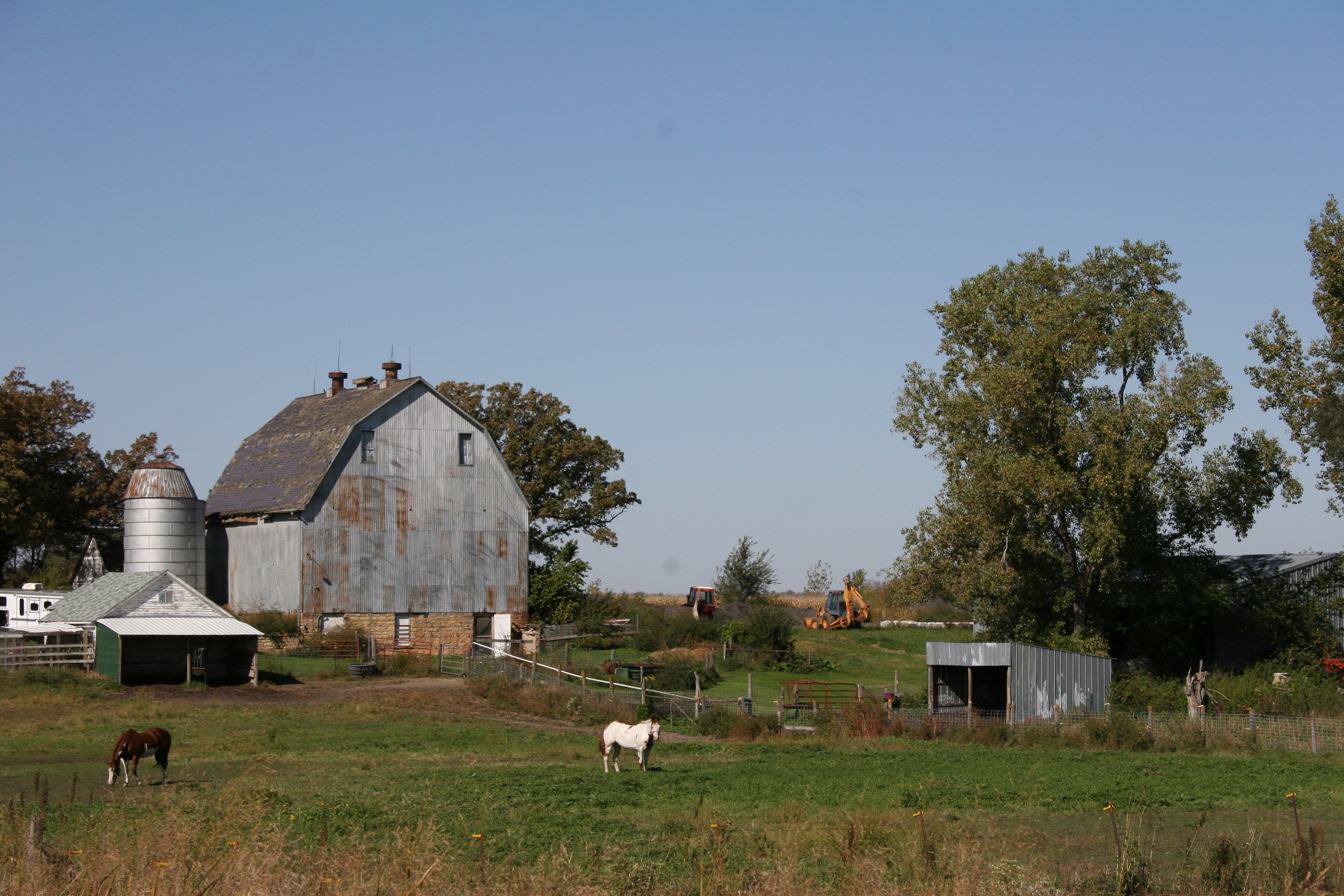
Another barn in Le Sueur County.

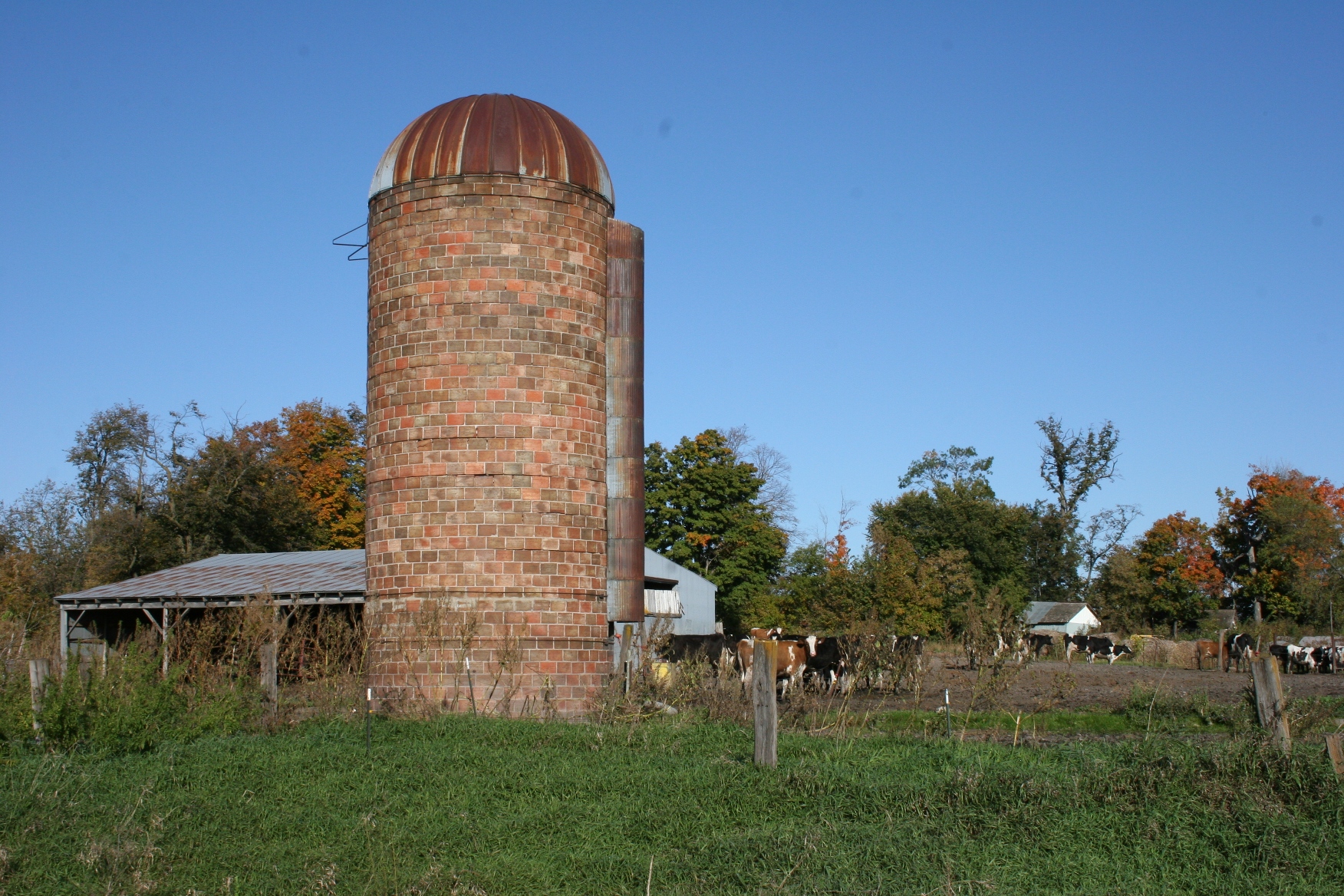
Old silos, like this one along Rice County Road 10, also intrigue me. Growing up on a farm, I climbed into the silo to throw down silage for the cows. Below my brother scooped up the silage to feed cows on his side of the barn. It took me awhile to figure out what he was doing, and that was making me do half his work.

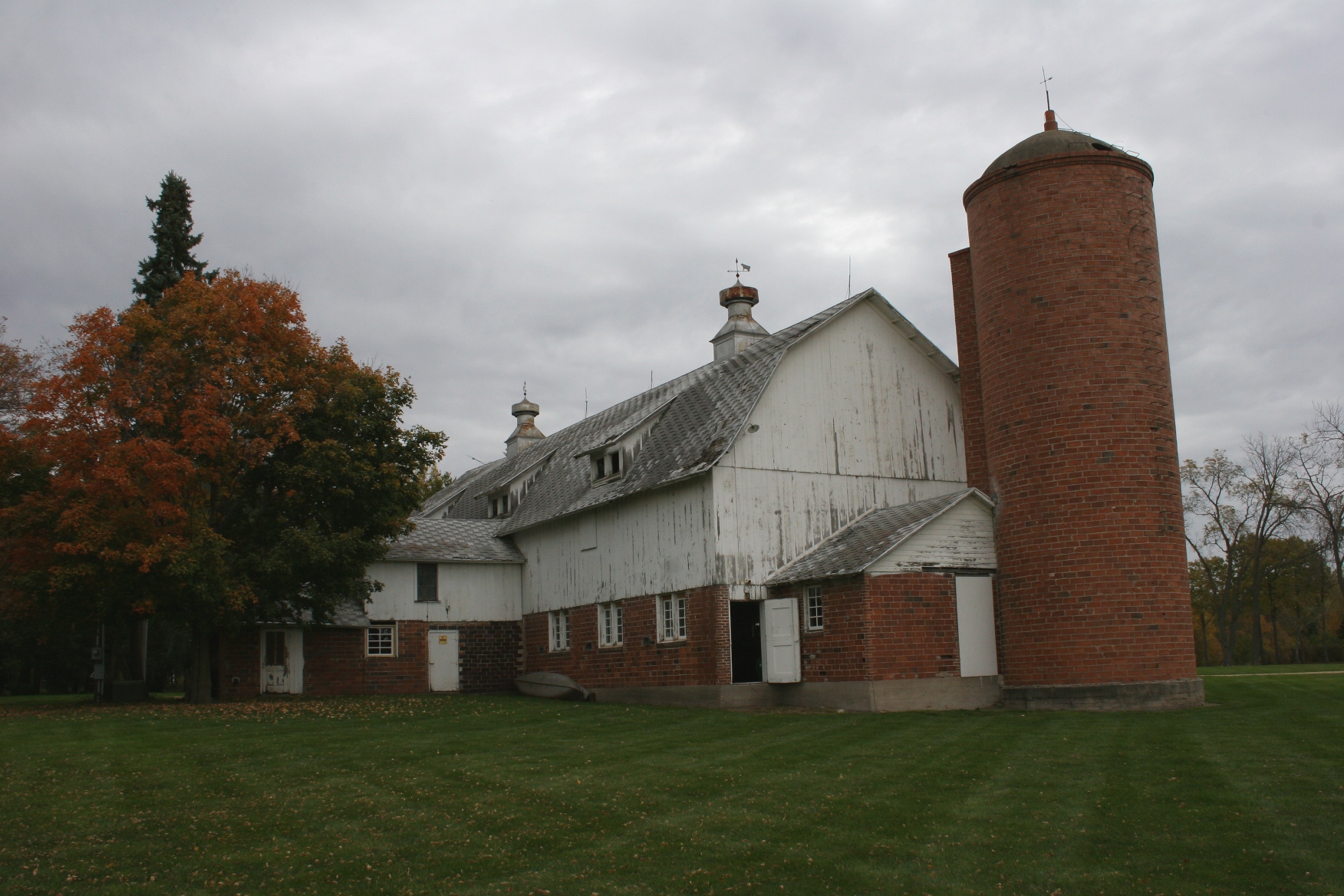
If ever a barn could impress, it would be this one I spotted on the Le Sueur/Blue Earth County line, I believe along Le Sueur County Road 16. I doubt I've ever seen such a stately barn.

Here's another angle of the sprawling old barn. Yes, I trespassed and tromped across the lawn to capture this photo. Imagine the dances you could host in this haymow. What a fine, fine barn.

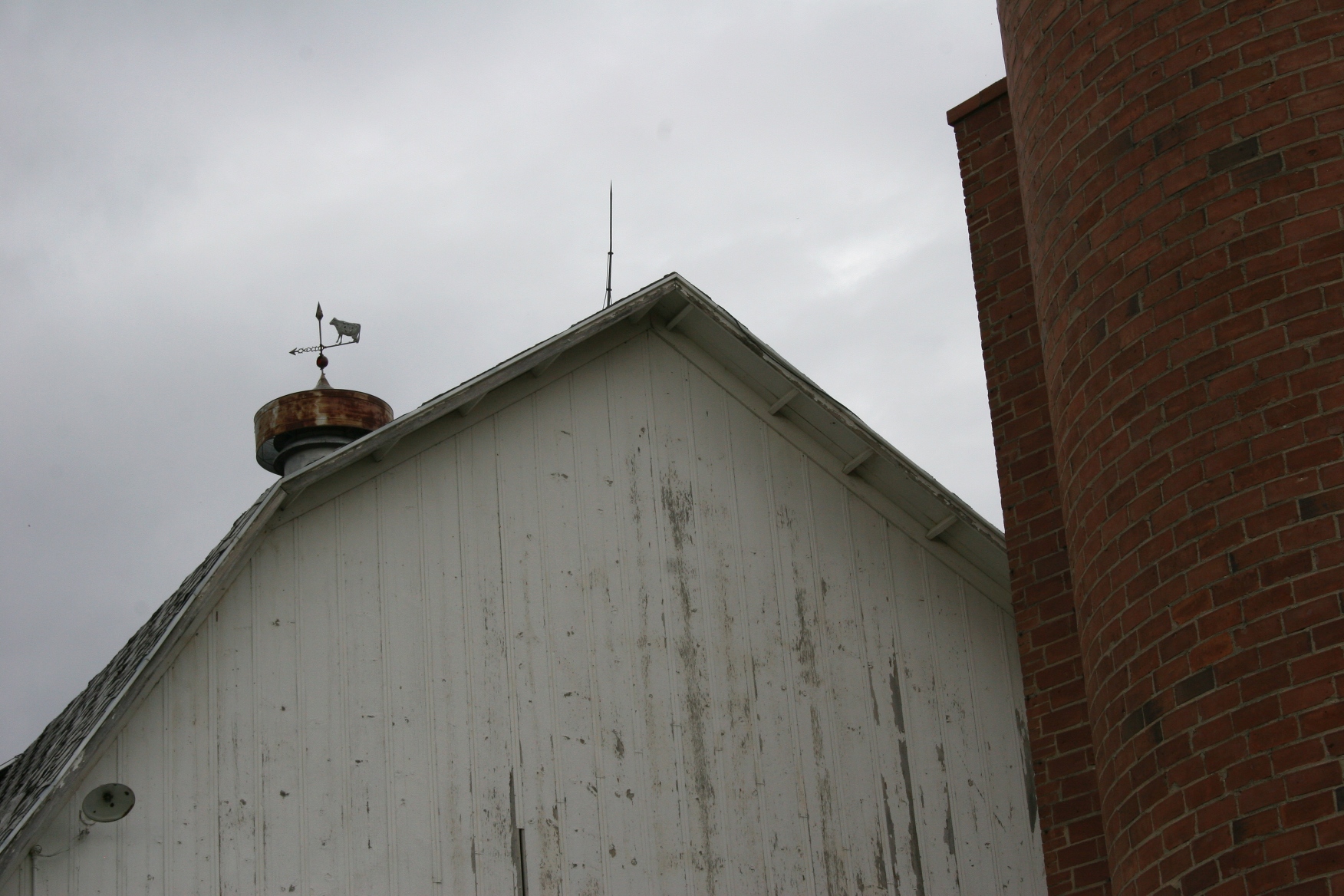
I zoomed in even closer to capture the barn roof and a portion of the silo.

© Copyright 2010 Audrey Kletscher Helbling


Wishing I could open doors to childhood memories in Redwood Falls September 4, 2010

Filed under: Uncategorized — Audrey Kletscher Helbling @ 8:50 AM
Tags: , , , , ,

HAVE YOU EVER HAD one of those moments when you drive by a place from your childhood days, desperately want to get inside, but can’t?

That happened to me twice on a recent visit to Redwood Falls, where my maternal grandfather lived, where I attended junior high school and where my family shopped when I was growing up.

The first tour took my husband, son, mom and me past my Grandpa Bode’s house, located across the street from the hospital. Several years ago I had seen grandpa’s rambler and nearly cried at its dilapidated condition. Since then the house has been re-sided, so I felt better on this recent stop.

Yet, simply viewing the exterior didn’t satisfy my yearning to get inside. Had I been alone, I may have jumped from the car, run up to the house and knocked on the door. Honestly, I really wanted to see if the bathroom walls are still tiled in pink.

Caring so much about a bathroom may seem odd to most of you. But I grew up in a house without a bathroom (at least until I was about 12). I fondly recall bathing in grandpa’s pink bathroom, where my Aunt Dorothy would grab a bar of gold Dial soap, lather the soap into a washcloth and scrub and rub and scrub and rub and tickle my toes and feet until I giggled. Dial is still my favorite soap and the only brand I purchase because of those sweet, sweet memories.

After pausing briefly in front of grandpa’s house, we headed toward downtown. I had no desire to see the school where I attended seventh and eighth grades. My memories of junior high are of bullying and of tears. Those are two years I would rather forget. Besides, students now attend classes in a new building and for all I know, or care, the old building could be gone.

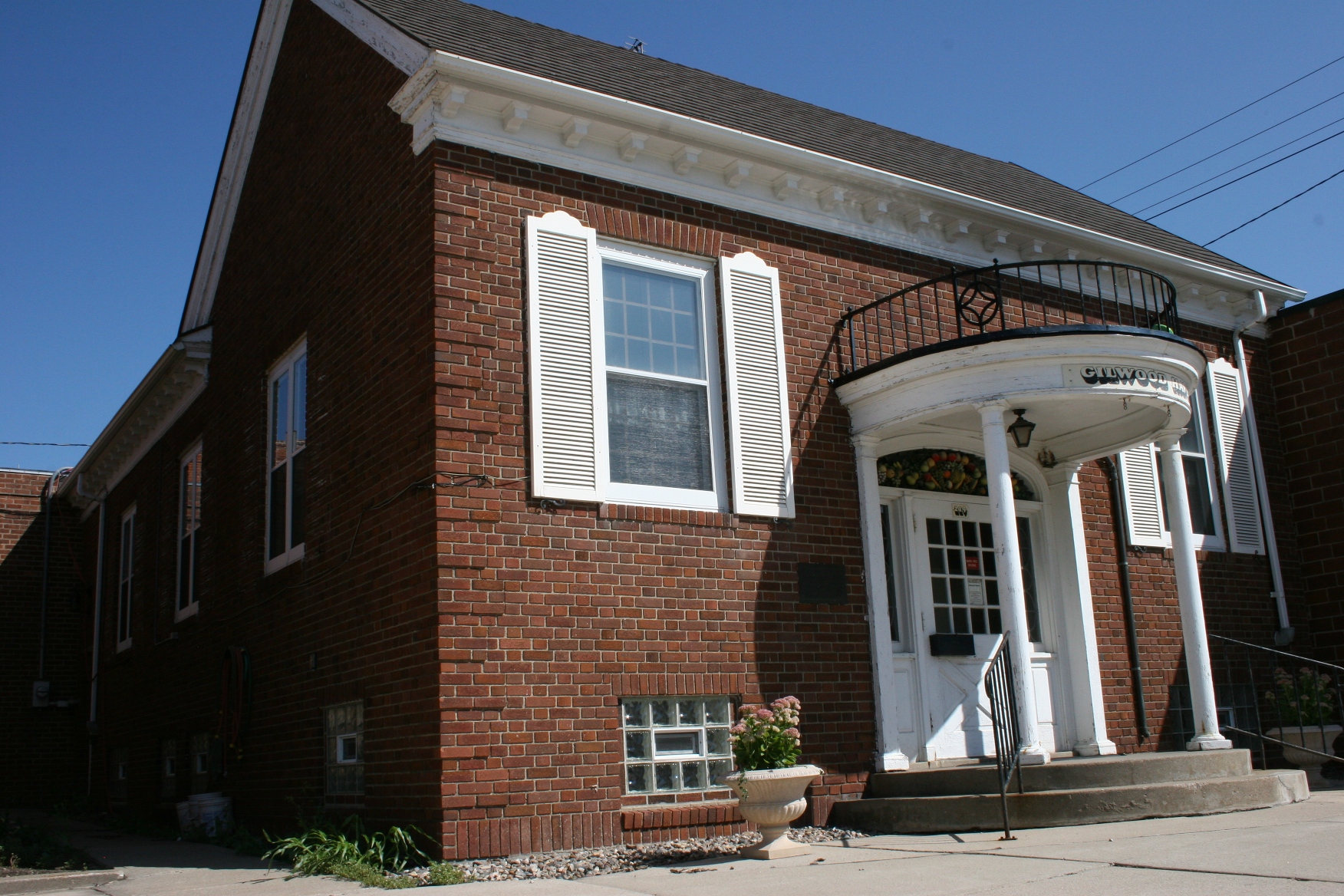
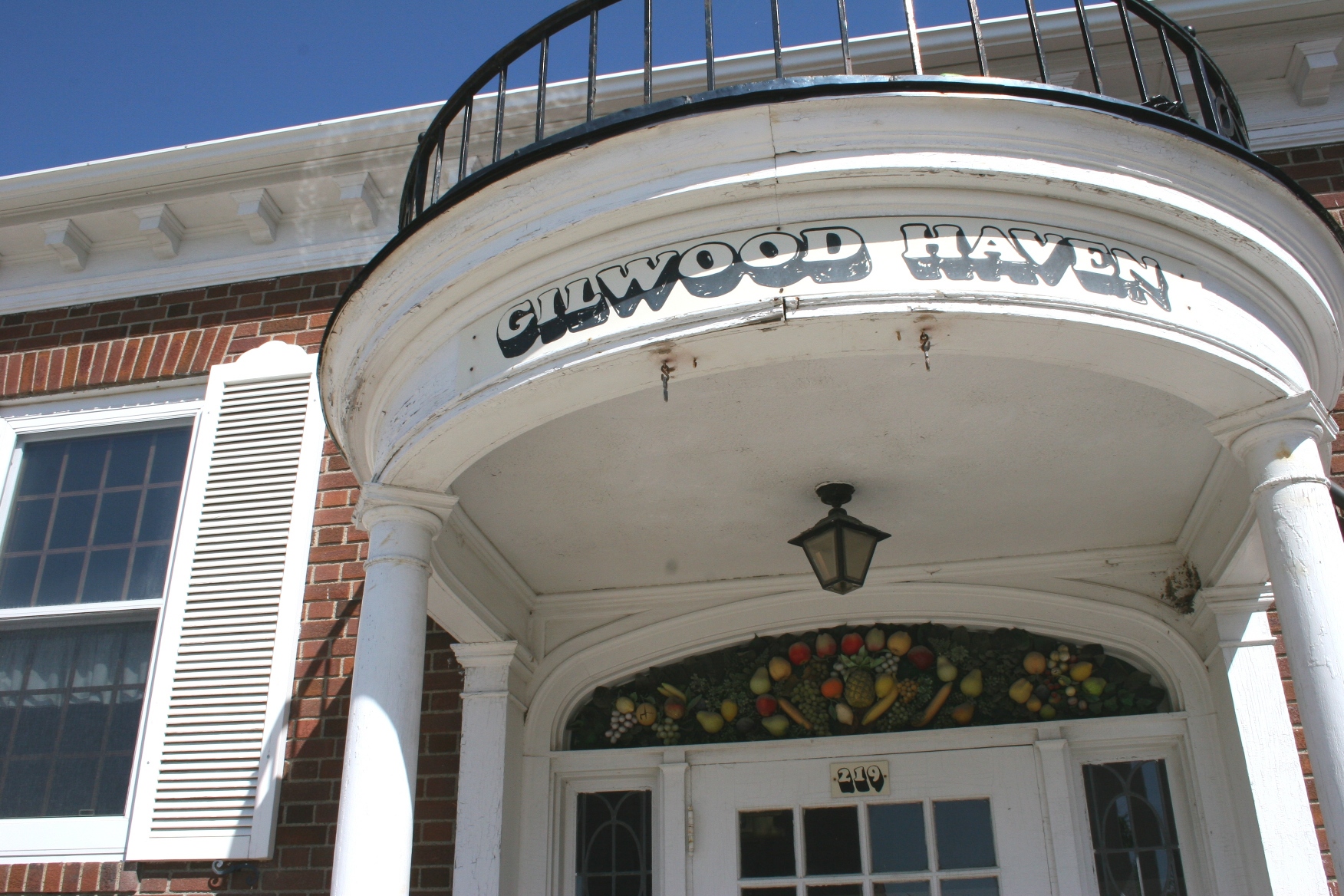
But I was interested in seeing Gilwood Haven, a columned, shuttered brick building in the downtown. I remembered, while on childhood shopping trips, going to the bathroom at Gilwood.

Are you seeing a common theme here? Bathrooms. I suspect this is tied to years of indoor bathroom deprivation.
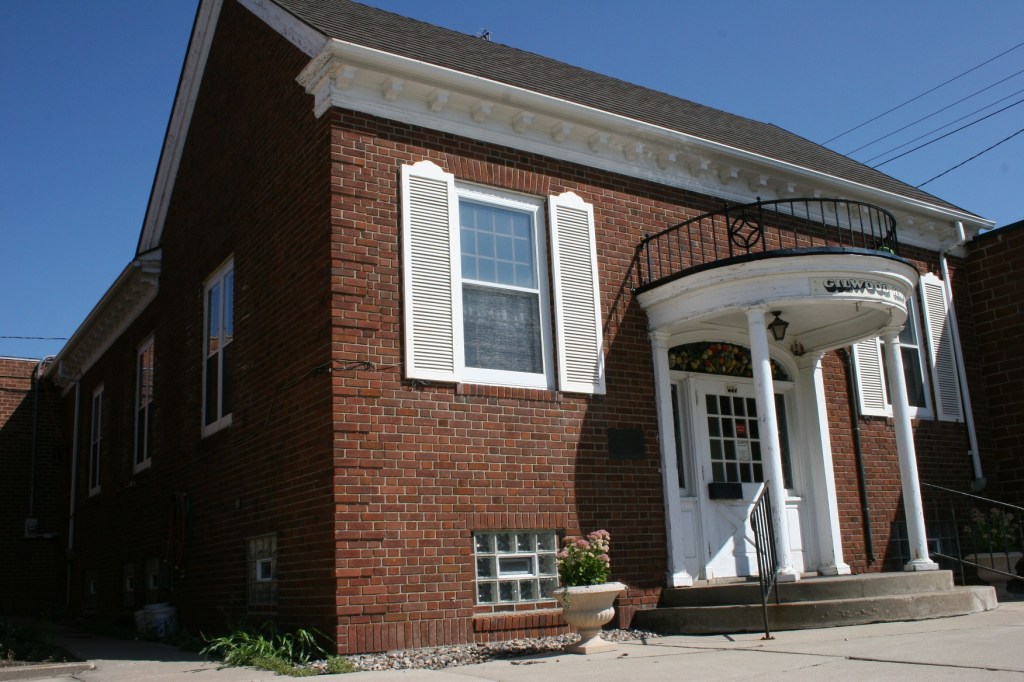
As the story goes, C. O. Gilfillan donated money for Gilwood Haven after observing mothers and their children without a warm place to go into during the cold winter months while in downtown Redwood Falls.

Anyway, Gilwood Haven was built specifically as a lounge for women and children to use while their husbands/fathers were doing business. City offices and a public bathroom were located on the lower level. I don’t recall really lounging at Gilwood, but I remember walking downstairs to use the bathroom in this haven. Haven—what a name, huh?

C. O. Gilfillan, a wealthy and generous community-minded landowner from nearby Paxton Township donated money for the public lounge which opened in 1940 at 219 South Mill Street. He also gave 80 acres of rental land to finance building upkeep and to hire a matron attendant.
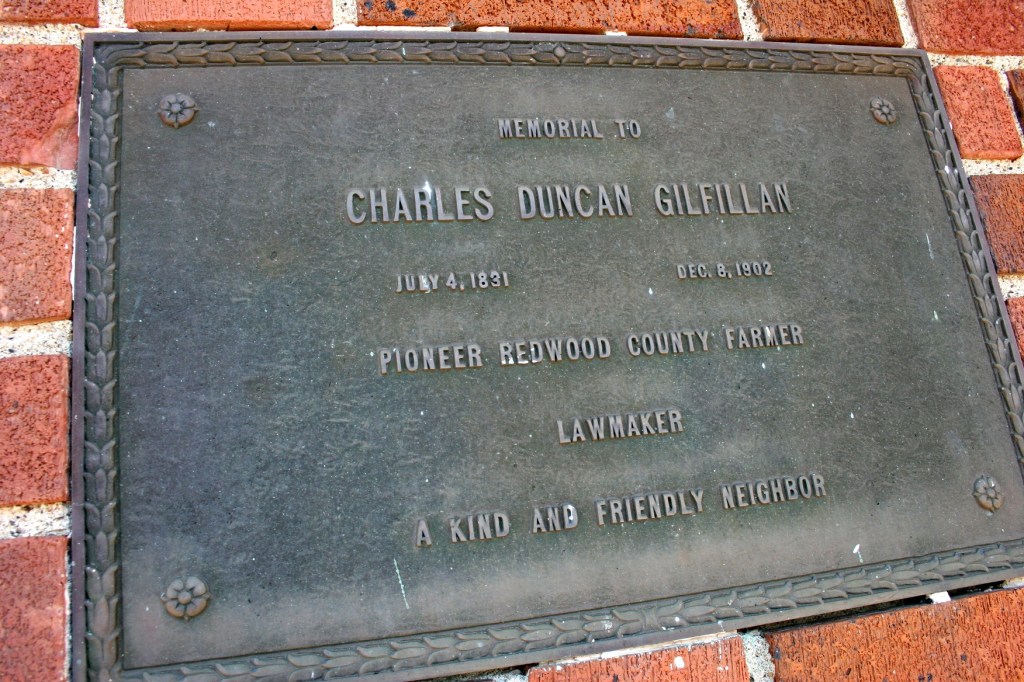
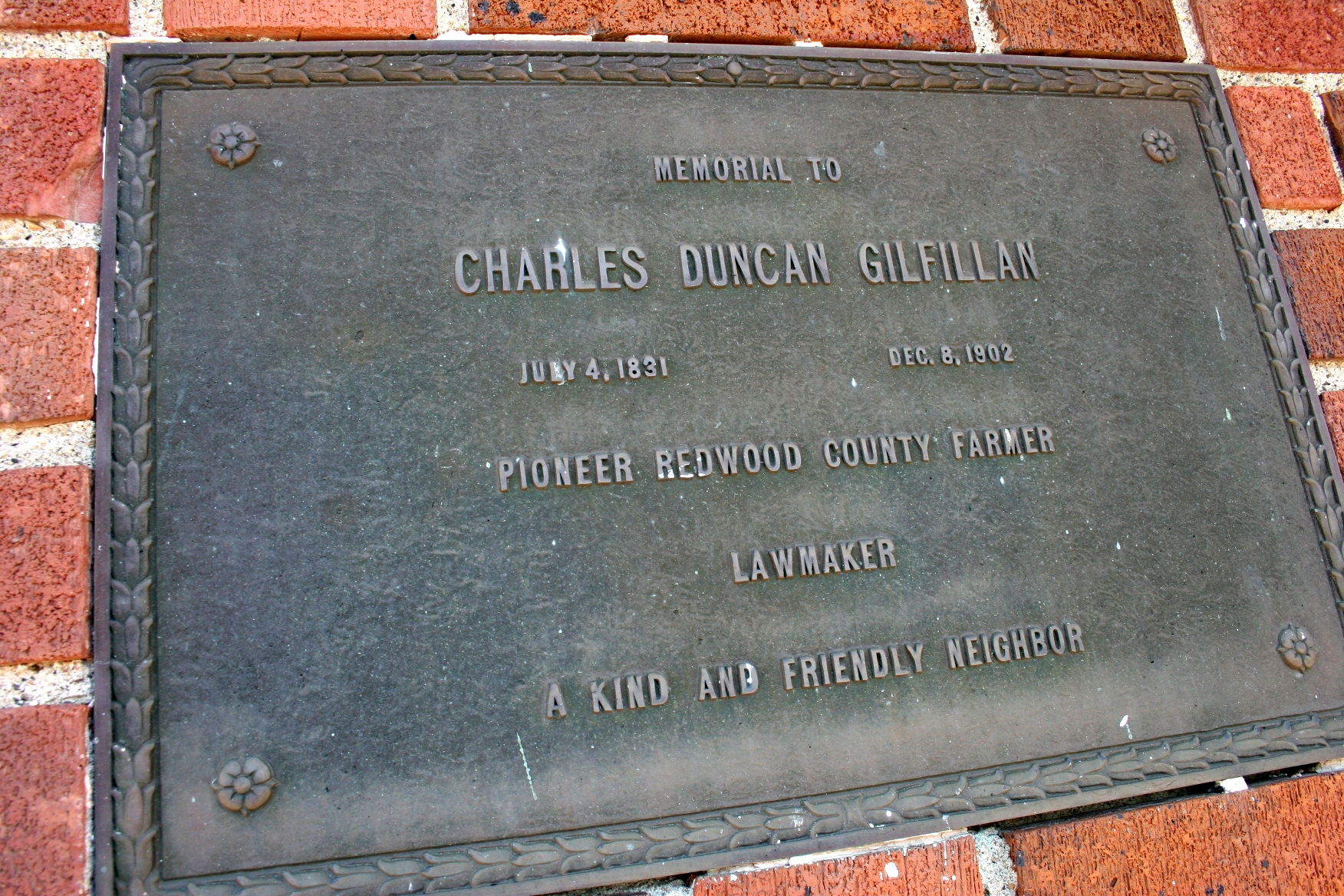
An exterior plaque on Gilwood Haven honors C. O.'s father, Charles Duncan Gilfillan, a pioneer farmer.

So there I was on a recent week day afternoon, longing to get inside the locked building. Not that I needed to use the restroom, I just needed to view this place of childhood memories.

But that wasn’t going to happen. This haven now serves as a meeting place rather than a public facility.

I had to settle instead for snapping photos of the exterior and wondering whether the fruit above the entry door is original to the building. And if it is, why didn’t I remember the apples, bananas, grapes, pineapple and pears?
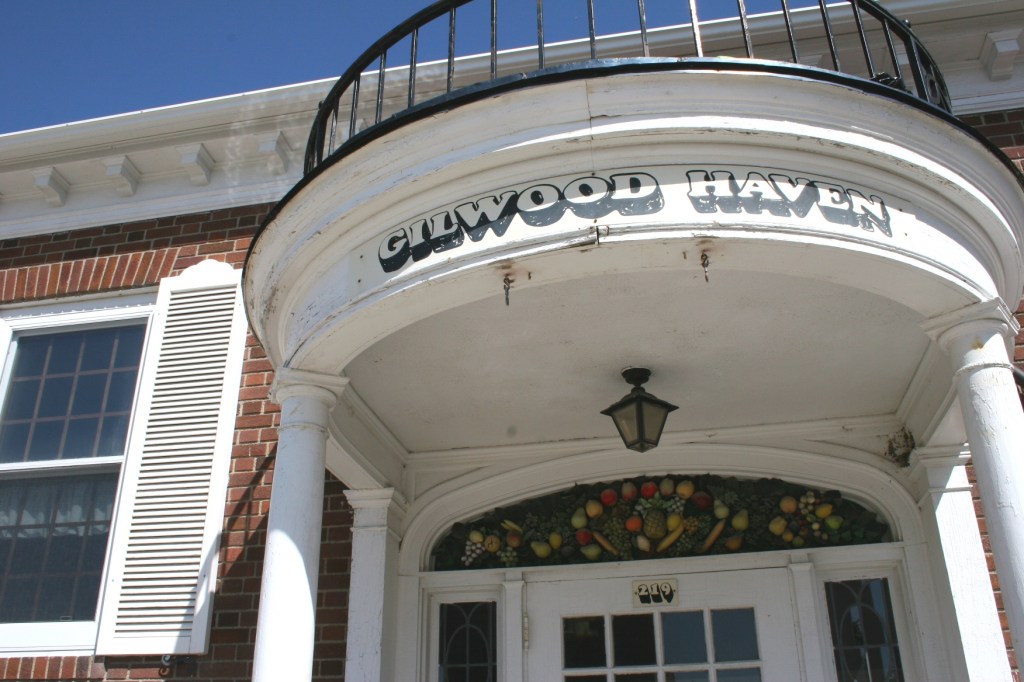
Has this fruit, which looks like plastic, always been above the doorway entry? And, if so, why fruit?

© Copyright 2010 Audrey Kletscher Helbling


Memories of toiling in the Minnesota cornfields July 20, 2010

Filed under: Uncategorized — Audrey Kletscher Helbling @ 7:17 AM
Tags: , , , ,

WHAT’S THE WORST SUMMER JOB you’ve ever worked?

For me, the response to that question practically flies off my tongue. Detasseling corn ranks, hands down, as the worst job I’ve ever held, beating out picking rock and walking beans by acres.

Here’s a scenario of how that part-time summer position played out for me back in the early 1970s in southwestern Minnesota: Rise early to catch a school bus. Bounce along bumpy gravel roads with a bus full of other sleepy teenagers to the edge of a cornfield. Slide on a rain coat. Then begin your day’s work, stretching on your tiptoes to pull tassels from corn stalks.

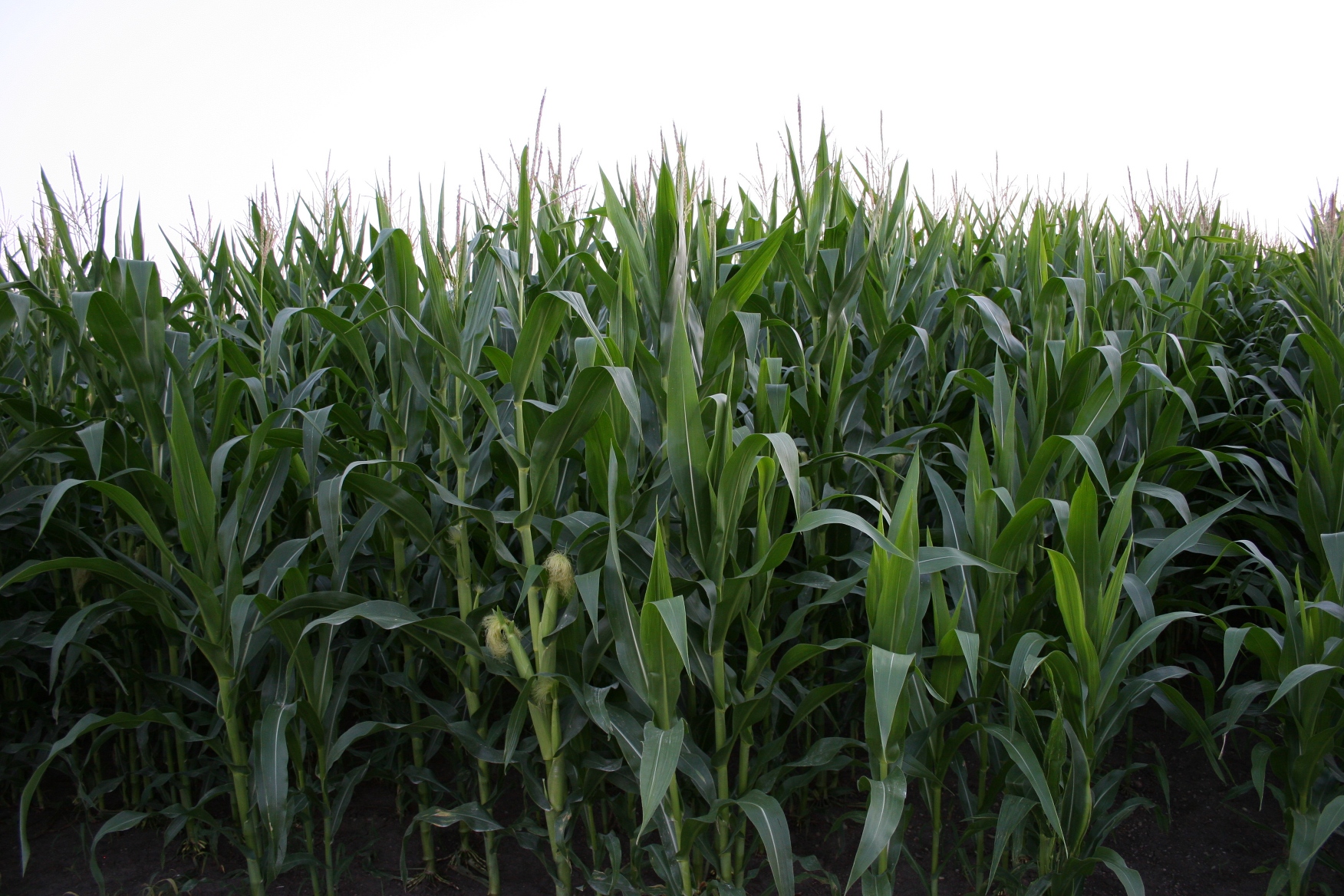
Rows and rows of corn stretch across acres and acres of land under the hot summer sky.

Dew slides down your arm. Rough corn leaves scratch across every inch of exposed skin. You itch. You sweat. You hurry up. Sometimes you bend low to the earth to snap sucker plants that leech onto the main corn stalk. Your back aches. Your muscles scream.

And then, when you have to urinate, you squat between corn rows and hope no one is watching. Forget toilet paper, unless you’ve stashed some in your pants pocket.

As the sun moves higher in the sky, heat and humidity rise. You shrug off the raincoat. Your skin burns. (Who’s heard of sunscreen?) Sweat trickles down your face, burning your eyes. You sweat and sweat some more.

Come noon, you’re thankful for a break in the shade-tree oasis of a farm yard (if you’re lucky) or in the shade of the school bus. You grab your Styrofoam cooler, remove the cover with grimy hands, unscrew the lid of a quart jar and lift the glass to your lips, gulping Kool-Aid like a thirsty camel.

Hungry from all that physical labor, you wolf down a sandwich, inhale chips, nearly consume an entire apple in several bites.

Then it’s back to the corn for a few more hours of reaching and yanking. The oppressive afternoon heat blasts like a furnace, smothers your breath, sucks away your energy. Your feet drag. Your mind screams: How much longer must I tread this land, pull these tassels, endure this misery?

By 3:00, you are bone-weary, exhausted, thankful that your supervisor has finally hollered, “This is the last round.” You are finished, for the day, with the tug-of-war you’ve played with the corn.

You join the line of subdued teens climbing onto the bus, bodies weighted with lead-heavy weariness.

Tomorrow you’ll return to the farm fields to fight the corn again, all for $1.25 an hour.

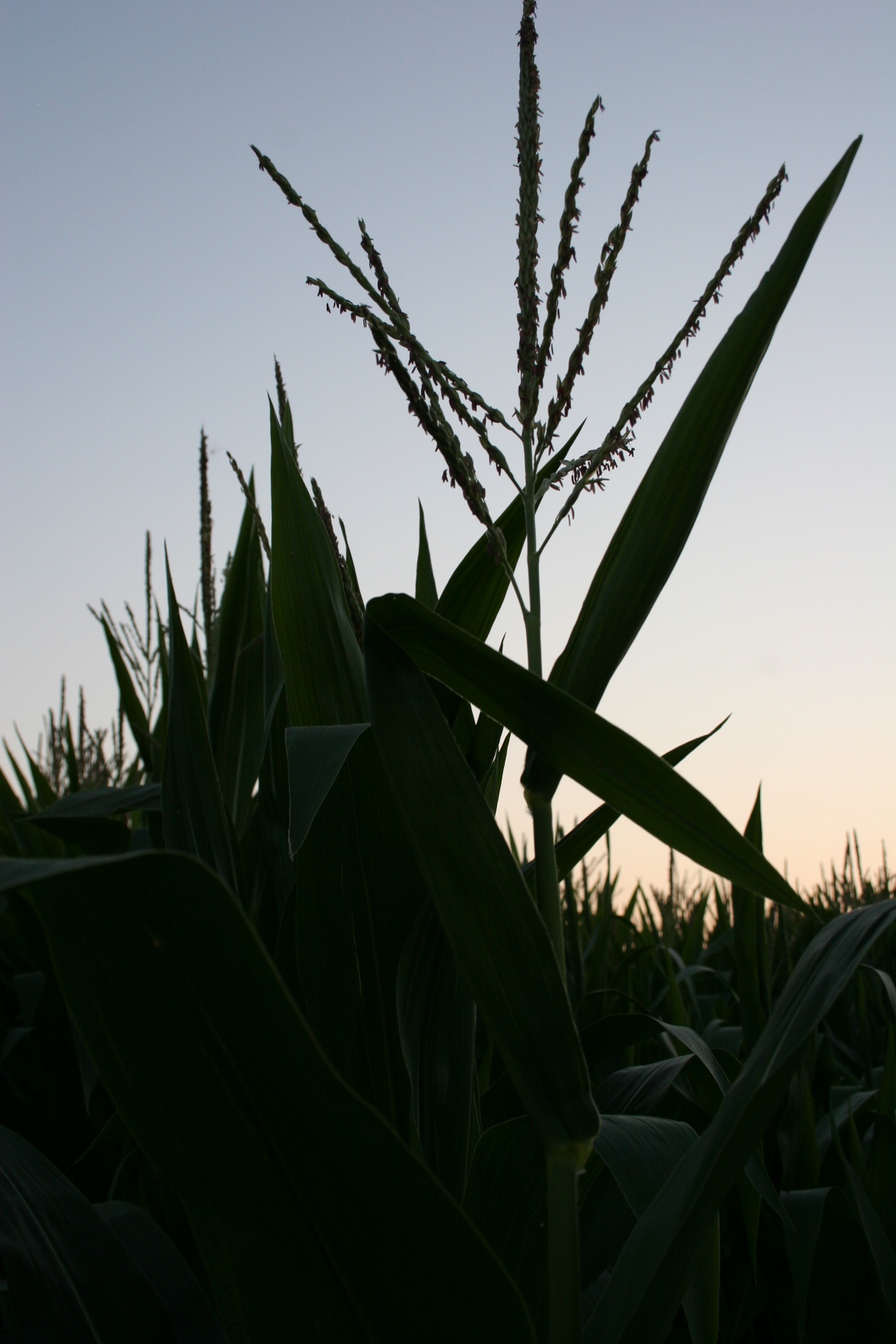
In the setting sun, a corn tassel stretches high above the corn plant.

JUST A NOTE: Working conditions in cornfields have improved dramatically since the 1970s. Today detasselers ride machines (I’m pretty sure), have access to bathrooms and certainly earn more than $1.25 an hour.

If you have a worst summer job story, submit a comment and tell Minnesota Prairie Roots readers about your experience.

© Copyright 2010 Audrey Kletscher Helbling