Minnesota Prairie Roots

Writing and photography by Audrey Kletscher Helbling

Insights into domestic violence & a Minnesota father’s mission after his daughter’s murder February 2, 2016

Filed under: Uncategorized — Audrey Kletscher Helbling @ 5:00 AM
Tags: , , , , , , , ,
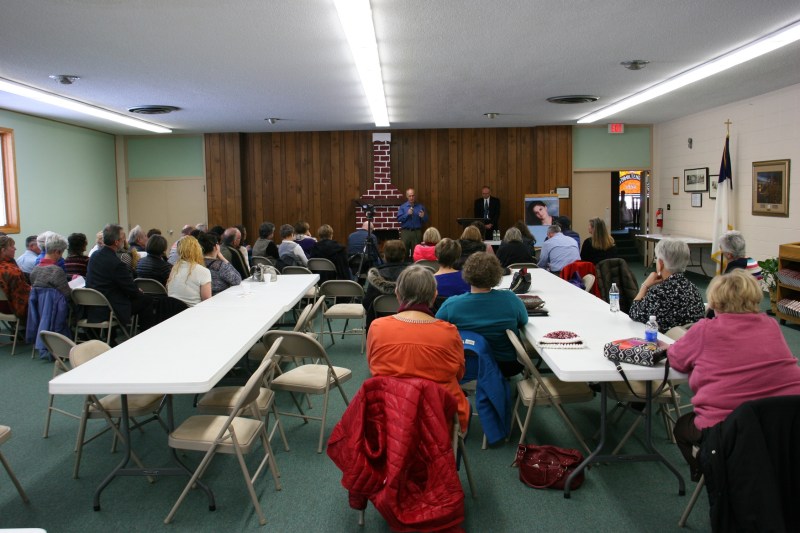
Local clergy, representatives from crisis centers and many others gathered to hear Dan Kasper's powerful message on domestic violence.

Local clergy, representatives from crisis centers and many others gathered to hear Dan Kasper’s powerful message on domestic violence.

IN A NEARLY TWO-HOUR presentation Sunday afternoon to a crowd of around 50 gathered at Redeemer Lutheran Church in Owatonna, Dan Kasper of Northfield spoke from the heart—of losing a daughter to domestic violence.

In April 2013, Becky Kasper, a 19-year-old marketing major at Arizona State University, was murdered by her former boyfriend, Luis Soltero. He is currently serving 25 years in an Arizona prison for second-degree murder, plus an additional five for kidnapping, followed by a lifetime of probation with mental health terms.

Dan Kasper delivered a powerful message that personalizes domestic violence. With a portrait of Becky to his left, Dan remembered his daughter—with the beautiful brown eyes of her mother, Sheryl—as determined, a go-getter, a leader, a problem solver. Friends described her as strong, bold, brave, independent and a loyal friend.

“Becky did everything right in life,” her father said, dispelling preconceived notions about victims of domestic violence. “No one could see this coming. Doing everything right got her killed.”

He explained: Becky was trying to help Luis deal with drug and alcohol abuse. But his daughter, he said, “didn’t know what she was up against.” Luis was dealing with mental health issues and had previously attempted suicide, as recently as six weeks before Becky’s murder. “Trying to help puts you in a vulnerable spot…we are losing a lot of young women.”

On April 9, Becky and Luis ended their relationship. On Saturday, April 20, within the two-week time frame that is most dangerous for any domestic abuse victim leaving a relationship, Luis killed Becky with a 10-pound dumbbell. The following Tuesday Luis turned himself into police, after using Becky’s bank card, going to a movie within hours of her murder and attempting suicide. His plan was murder-suicide.

We need to get rid of the “he snapped” notion, Dan said, accepting that a process leads an abuser, like Luis, to domestic violence.
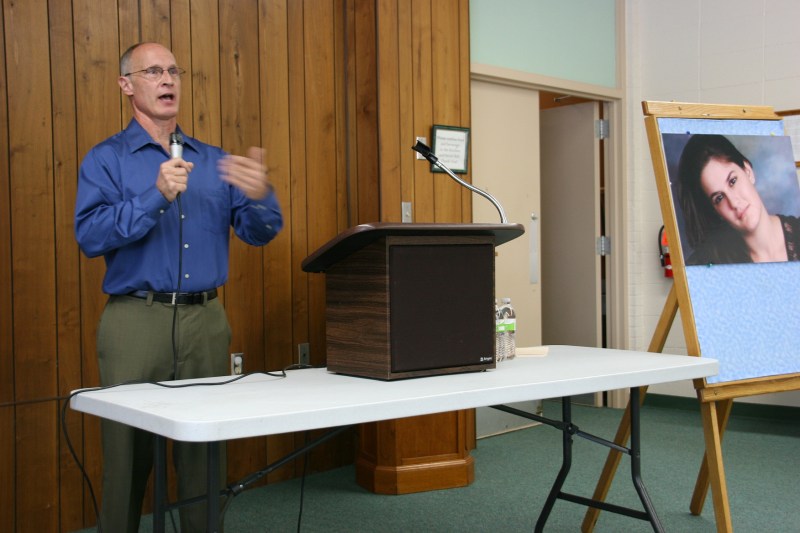
Dan Kasper spoke with passion and purpose.

Dan Kasper speaks with passion and purpose.

The Kaspers’ mission and the warning signs

Dan and Sheryl Kasper are on a mission now to honor their daughter. Specifically, Dan encourages parents to educate their children about and mentor healthy relationships. He emphasizes the need to increase communication and to maintain that communication, especially if a daughter is in an abusive relationship. It is up to parents, he said, to fight the battle against domestic violence because they have the most to lose.

For the Kaspers, living 1,600 miles away from Becky, there was no reason to suspect anything was amiss in Becky and Luis’ relationship. The pair spent a Christmas with the Kaspers in Minnesota and Dan drove back with the couple to Arizona in a car he’d purchased for Becky. All seemed well between them. Dan would next see Luis 1 ½ years later in an Arizona courtroom.

In hindsight, the Kaspers now recognize Becky’s calls for help. Literal calls. In one phone conversation, Becky told her mother about bruises on her arm, explaining that she’d bruised herself while pulling pans from the oven in the coffee shop where she worked. On another occasion, she told them about two black eyes caused by an air bag deploying when a friend’s car, in which she was a passenger, crashed.

“Why would we think she was lying?” Dan asked. “She was always truthful before.”

The Kaspers would learn later that, in Arizona, “people were seeing these warning signs.” They learned that “Becky was roughed up,” that people “heard screaming and stuff flying around” and even the foreboding scream, “Stop it, I can’t breathe!”

“No one told us,” Dan said. “We never had the chance to help.”
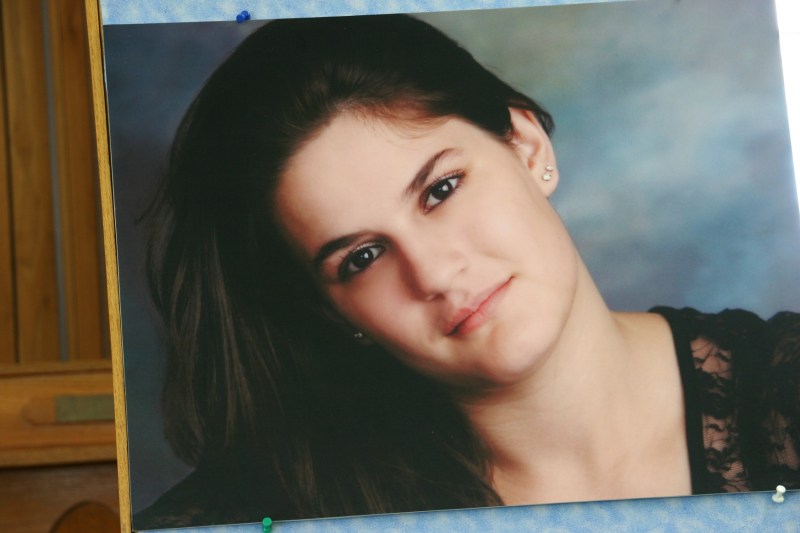
Becky Kasper's portrait.

Becky Kasper’s portrait.

Honoring their daughter

But now, despite his frustrations with “the system,” despite this tragedy that has left him existing rather than living, despite no longer feeling emotions but only thinking logically in survival mode, Dan is determined to make a difference. He quoted the words inscribed on a plaque in Becky’s honor at Arizona State University: This is not where it ends.

Sunday marked his first public speaking engagement to educate, to begin to effect changes in laws and in policies on college campuses, to fight the battle against evil. “Domestic violence is under the umbrella of evil,” Dan said, encouraging audience members to be persistent, relentless, never changing the course in being good people. “By being good people, we are fighting domestic violence.” He likened that to putting “a little grain of sand in the devil’s shoe.”

As the murder case worked through the judicial system—which Dan says is all about the abuser—the Kaspers begin to ask themselves, “What will best reflect and honor Becky’s life?” Their top priority, they determined, was assuring Luis gets the mental health help he needs and to also protect the public. That was accomplished with the 30-year prison sentence and lifetime probation with mental health terms.
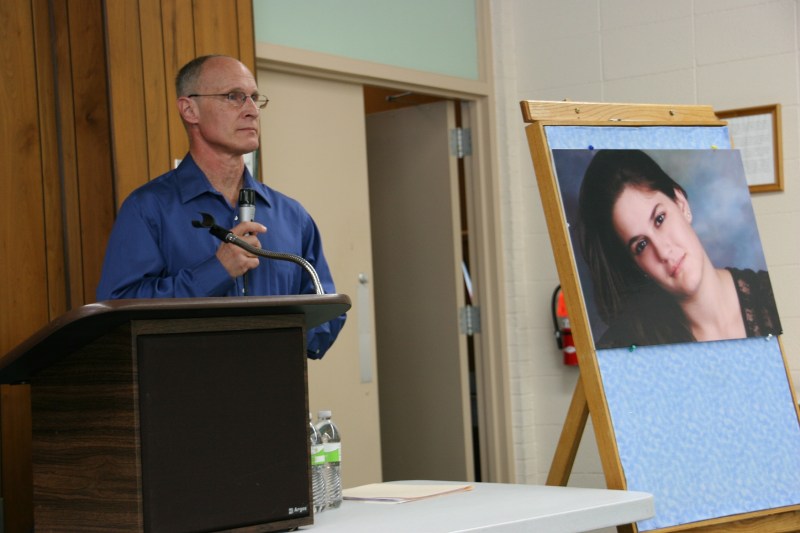
Dan Kasper next to a portrait of Becky.

Dan Kasper listens to audience questions.

Meeting the murderer in prison

In November 2014, Dan met face-to-face with his daughter’s killer. Luis walked into the prison visiting room unshackled with a bounce in his step, a smile and as happy as could be, like they were old buddies, Dan said. This father didn’t get the answer to his question, “Where is the mental illness I didn’t see?” Nor did he get an apology. Nor an explanation other than Luis “got in his head that Becky needed to die.”

Luis accepted responsibility for the crime, not blaming it on mental illness. He also talked about dedicating his life to Christ and repentance and said he some day wants to speak about domestic violence.

During that prison conversation, when Dan revealed that he would have helped Luis had he known of his problems, Luis shared that he would have called him.

“The abuser is a victim, too…he has a family,” Dan told audience members on Sunday. His wife, he noted, “would rather be Becky’s mother than Luis’ mother.”

In the final hours before her death, Becky and Luis’ mother were texting each other about Luis. In her last text late in the afternoon of April 20, 2013, Becky wrote, “He seems relatively OK.”

That day, Luis murdered Becky.

#

FYI: If you are in an abusive relationship, seek help. You are so worth it. Contact a local crisis resource center or women’s shelter for help and support. If you are in immediate danger, call 911. Leaving an abuser is the most dangerous time; have a plan to leave safely. Additional information is available, for abuse victims, family, friends and survivors by clicking on any of these links:
National Coalition Against Domestic Violence
Minnesota Coalition for Battered Women
NO MORE

© Copyright 2016 Audrey Kletscher Helbling


One father’s powerful story about domestic violence January 27, 2016


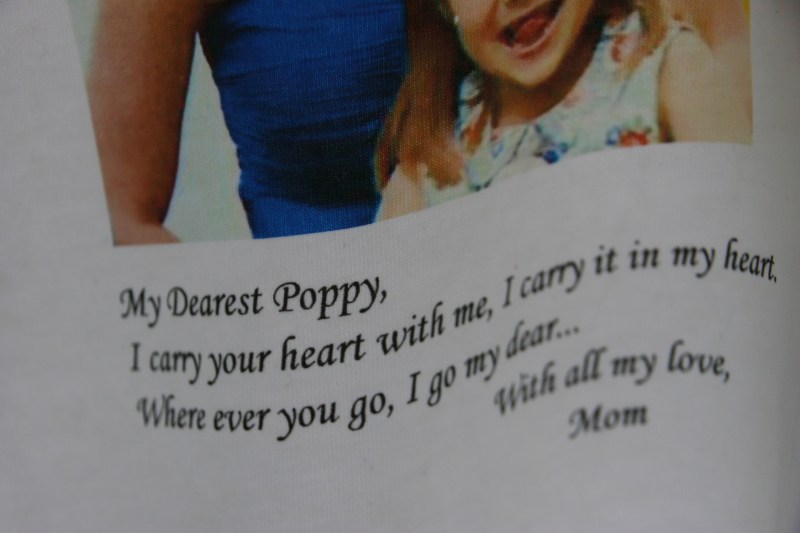
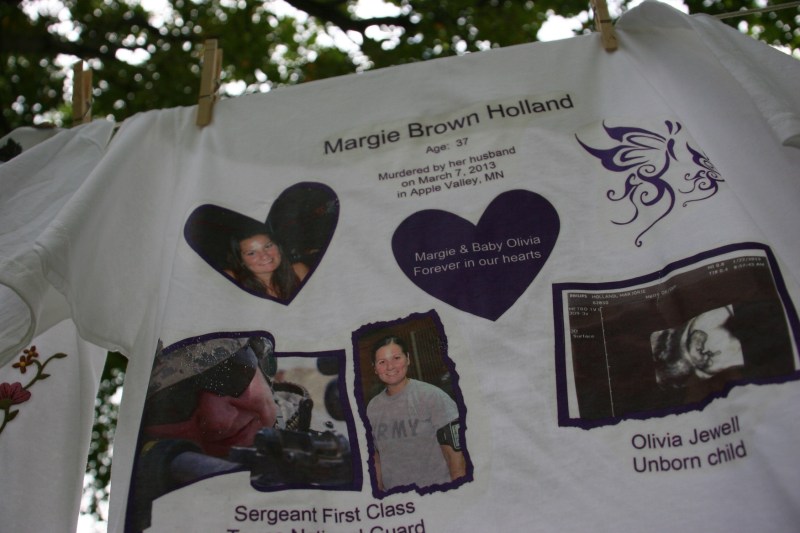
Margie Brown Holland and her unborn daughter, Olivia, were honored at The Clothesline Project display this summer in Owatonna. The Minnesota Coalition for Battered Women coordinates the project to honor victims of domestic violence. Redeemer Lutheran Church brought the project to Owatonna this past summer.

Margie Brown Holland and her unborn daughter, Olivia, were honored at The Clothesline Project display this summer in Owatonna. Margie is the daughter of my former neighbor Ron. The Minnesota Coalition for Battered Women coordinates the project to honor victims of domestic violence. Redeemer Lutheran Church brought the project to Owatonna.

JUST OFF THE TOP of my head, I can think of perhaps 20 family, friends and indirect acquaintances who have been victims of domestic abuse/violence. Nearly all survived; some did not.

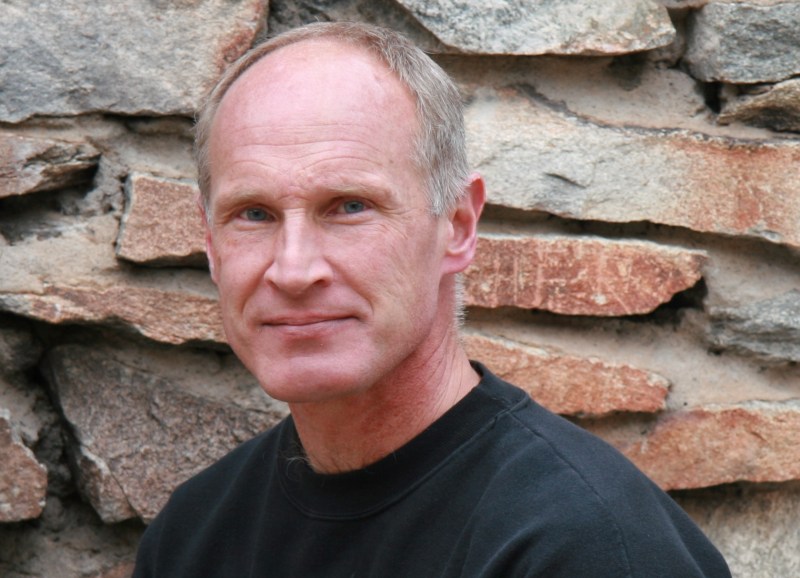
Dan Kasper

Dan Kasper. Photo courtesy of Redeemer Lutheran Church/Dan Kasper.

On Sunday afternoon, January 31, Dan Kasper of Northfield will talk at a church in Owatonna about his daughter Becky, who was murdered in April 2013 by her ex-boyfriend. Dan’s personal story of “Finding hope in the midst of loss” is certain to make a powerful impact.

Last week I spoke with Dan in a 90-minute phone conversation. I didn’t take notes to shape this blog post. I only listened.

Another t-shirt from The Clothesline Project.

Another t-shirt from The Clothesline Project.

And what I heard was the strength of a father determined to honor his 19-year-old daughter by sharing his experiences. I learned of the warning signs Dan and his wife missed, mostly because they live in Minnesota and Becky was far away attending college in Arizona. I heard a father who, even through the worst pain a parent can experience, has risen up to make a difference.

I learned more about his precious Becky, how she was compassionate and caring and how she was trying to help her ex-boyfriend work through issues. Dan would later meet, face-to-face, with her killer in prison.

I heard a man of faith speaking to me.

I heard the anguish of a man abandoned by some friends after Becky’s death, but also the recipient of unexpected support from others.

I heard this father, a secondary victim of abuse, state that “you can’t rely on the system.”

I listened to a hard-working man from a small Midwestern college town tell me of the near financial ruin his family has faced since Becky’s death due to funeral costs, lost income, travel related expenses and more.

His story is powerful. If you live anywhere near Owatonna, plan to attend this 2 p.m. Sunday, January 31, presentation at Redeemer Lutheran Church, 1054 Truman Avenue. We all need to be educated about domestic violence/abuse. And I can’t think of anyone, other than a victim, more poised to educate us than a father who has lost his daughter to domestic violence.

#

the logo

FYI: Dan and Sheryl Kasper have established the non-profit Becky Kasper Foundation to honor their daughter. Click here for more information.

If you are in an abusive relationship, seek help. You are so worth it. Contact a local crisis resource center or women’s shelter for help and support. If you are in immediate danger, call 911. Leaving an abuser is the most dangerous time; have a plan to leave safely.

Additional information is available, for abuse victims, family, friends and survivors by clicking on any of these links:

National Coalition Against Domestic Violence

Minnesota Coalition for Battered Women

NO MORE

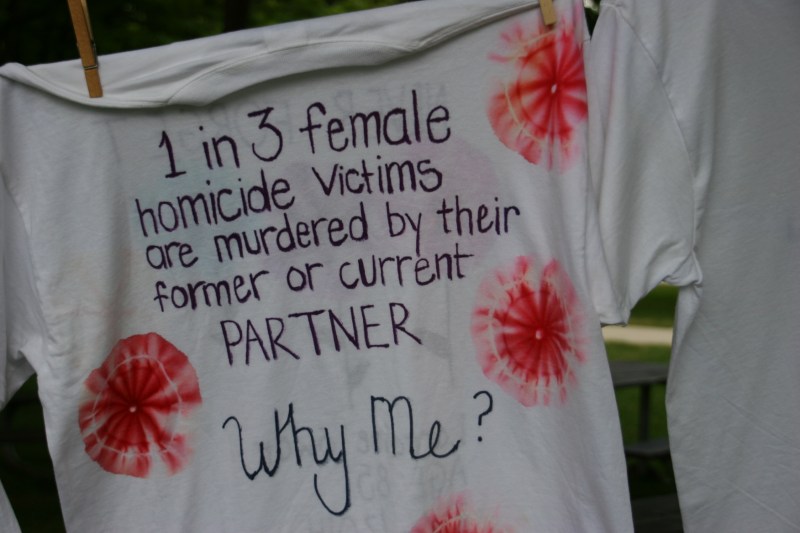
Statistics on a The Clothesline Project t-shirt.

Statistics on a The Clothesline Project t-shirt.

Click here to read my July 2015 blog post about The Clothesline Project.

And click here to read the just-released Minnesota Coalition for Battered Women 2015 Femicide Report. Last year at least 34 people in Minnesota were killed due to domestic violence.
© Copyright 2016 Audrey Kletscher Helbling
 

Bird out of the cage May 23, 2015

Filed under: Uncategorized — Audrey Kletscher Helbling @ 5:00 AM
Tags: , , , , , ,
Bird art perched on a front yard rock.

Bird art perched on a front yard rock in a Northfield, MN., garden. Minnesota Prairie Roots file photo.

PLEASE TAKE TIME this weekend to read and/or view this story from Fargo:

http://www.inforum.com/news/3749387-fargo-tv-anchor-shares-personal-story-physical-emotional-abuse

It’s that important.

Be free. Be that bird out of the cage.

FYI: If you are in an abusive relationship, seek help. Call your local domestic abuse hotline or the National Domestic Violence hotline at 1-800-799-7233. If you are in immediate danger, call 911. Have a safe plan to leave your abuser. You deserve to be free of physical, emotional, mental and verbal abuse, control and manipulation.

Copyright 2015 Audrey Kletscher Helbling


Choosing to see black and blue March 16, 2015

IF YOU ARE PART OF A FAITH community, what is your church doing to raise awareness and help victims, survivors and families/friends of those involved in domestic violence/abuse?

Nothing? Something?

I hadn’t considered this in depth until reading an article, Aiming for AWARENESS, CARING RESPONSE—Domestic violence task force to hold spring training sessions, in the March issue of Reporter, the official newspaper of The Lutheran Church, Missouri Synod.

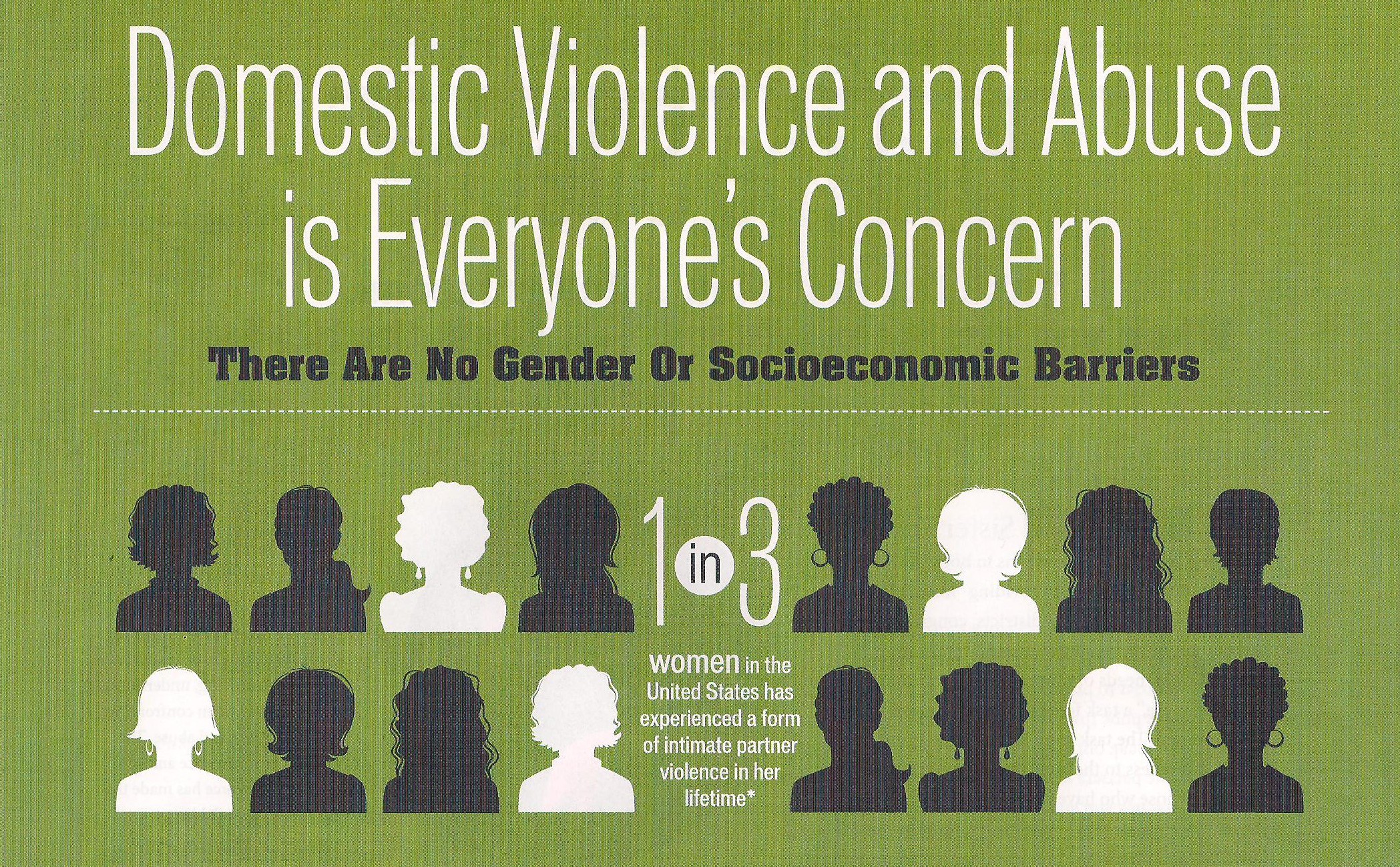
A snippet of the domestic violence poster published by the Lutheran Church, Missouri Synod.

A snippet of the domestic violence poster published by the Lutheran Church, Missouri Synod.

Additionally, the paper includes an insert, Domestic Violence and Abuse is Everyone’s Concern—There Are No Gender Or Socioeconomic Barriers, for posting in churches.

I am pleased to see the LCMS working on this issue which has been so much in the public eye in recent months. It’s important that clergy, parish nurses and other church workers understand domestic abuse and learn how to assist by listening, by offering help, hope and referrals, and by educating parishioners.

I’ve read conflicting data on the number of women who experience domestic violence. Some sources say one in three. Others one in six. Whatever the correct number, one is one too many. (Note here that I am well aware that men are also victims. But, since the majority are women, that is the reference I am using in this post.)

Among people I am connected to, either directly or indirectly, 10 women have been/are being abused. Two of them were murdered by the men who supposedly loved them.

Last year in Minnesota, at least 23 individuals were killed due to violence from a current or former intimate partner, according to a report issued by the Minnesota Coalition for Battered Women. You can read that full report by clicking here.

As LCMS Domestic Violence and Child Abuse Task Force Chair Kim Schave says, “Domestic violence and abuse can happen to anyone.”

Don’t think it can’t.

And let’s remember the secondary victims—children, parents, siblings, friends… They, too, need support, encouragement and healing.

The faith-based Salvation Army South Africa’s recent campaign, WHY IS IT SO HARD TO SEE BLACK AND BLUE, utilizing a photo of that infamous black and blue striped (or gold and white striped depending on what you see) dress is brilliant. A subtext published in the Cape Times newspaper stated, “The only illusion is if you think it was her choice.”

While I still cannot see a black and blue dress, the message is absolutely clear to me. We all need to start seeing domestic abuse in all its forms. Sometimes the abuse is visible. Often it is not. Emotional abuse (lies, manipulation, controlling behavior, etc.) is even more common than physical abuse. Domestic abuse can also take the form of spiritual abuse.

We need to understand that these women are not to blame for the abuse inflicted upon them. We need to understand that they are being manipulated/controlled/brainwashed. We need to understand that “love” and mind control are powerful. We need to understand that we cannot simply swoop in and “rescue” them.

Knowledge is power.

What have you learned about domestic abuse in recent months with the spotlight shining on the issue? What are you doing with that knowledge? If you are part of a faith community, what is your church doing, if anything? Do you know a survivor of domestic abuse or someone currently in an abusive situation (no names or identifying details, please)? Let’s hear your voice and insights.

FYI: If you are in an abusive situation, contact the 24/7 National Domestic Violence Hotline at 1-800-799-7233. If you are in immediate danger, call 911.

I’d encourage you to learn more about domestic violence from a personal perspective by checking out (click here) “My Inner Chick,” a blog written by a Minnesota woman whose sister was abused and murdered by her husband. Be sure to read the comments section. This blog and the comments posted therein are powerful.

© Copyright 2015 Audrey Kletscher Helbling


No more December 30, 2014

Filed under: Uncategorized — Audrey Kletscher Helbling @ 5:00 AM
Tags: , , , , , , , ,

YOU KNOW HOW IT IS when a conversation starts and then rolls seamlessly from one topic into another and soon you have these thoughts spinning through your brain.

Here’s how it started: Sunday morning a friend told me that her husband and youngest daughter rode along with their police officer son/brother during a Christmas night shift in another city in another state. That shadowing proved uneventful. I’m sure that was just fine with my friend. No mother likes to see her son placed in a dangerous situation.

I shared that ride-along tidbit with my husband and son during Sunday dinner and then we were talking about my Uncle Bob, a retired Minneapolis police officer, and how he always said domestics were the most dangerous calls. Makes sense given the emotions involved.

The holidays often see an increase in the number of domestics. Daily we hear and read reports of (mostly) women assaulted and sometimes murdered in cases of domestic violence. Saturday evening a woman was fatally stabbed in St. Paul, allegedly by her ex-boyfriend.

Last week the Faribault Daily News, the newspaper in my community, published this headline: Faribault man charged with assaulting girlfriend, two police officers. The story included a photo of the 28-year-old repeat domestic abuse offender. I think I recognize the man.

In late October, I phoned local law enforcement when I witnessed a young man verbally attacking, grabbing and shoving a young woman. I believe it is the same man now charged with fourth-degree assault on a peace officer and domestic assault. My stomach churned. A year ago, this man was convicted of felony domestic assault and violation of an order for protection. Now this.

When will this ever end, this psychological control and manipulation, the physical and/or verbal assaults, the lies and deception that define domestic abuse? When?

I’m not privy to details about the Faribault man’s past. But any felony charge and conviction is serious. And now to read in a newspaper story of his live-in girlfriend found crying and huddling in the corner of the living room holding their two-year-old…after she was allegedly attacked.

I just want to take that young mother in my arms, embrace her, rescue her, and tell her everything will be OK.

But I can’t save her; only she can decide to leave her abuser. I can’t promise her everything will be alright, that the judicial system will work, that this man will never harm her, or any other woman, ever again.

It would be all too easy to give up. Yet, we cannot. Ever. As a society, as human beings, as parents who love our daughters, as sisters who love our sisters, as friends who love friends, we cannot simply walk away.

Like the Hope Center in Faribault, recently awarded a $135,000 federal grant to fight domestic violence through The Blueprint for Safety Project, we must continue to do all we can to educate ourselves about domestic violence and to say, “No more.”


NO MORE logo

The signature blue “vanishing point” in the NO MORE campaign logo evolved from the concept of zero, as in zero incidences of domestic violence and sexual assault.


Like NO MORE, a national public awareness and engagement campaign focused on ending domestic violence and sexual assault, we must do all we can to end domestic violence. NO MORE ran a spot during Sunday afternoon’s Minnesota Vikings-Chicago Bears football game. That outreach to football fans was good to see.


NO MORE logo


No more. Strong words. Let’s speak them, believe them, practice them.

If you witness a case of domestic abuse, whether verbal or physical or both, call the cops. In the case of the 28-year-old Faribault man, officers were responding “to a report of a woman being grabbed by a man outside a home,” according to the newspaper article.


NO MORE logo


Someone saw. Someone called. Someone decided, no more.

© Copyright 2014 Audrey Kletscher Helbling


Ending domestic violence: It takes a community October 21, 2014

This logo comes from a 5K walk/run honoring Faribault native Margie (Brown) Holland and her unborn daughter, Olivia. Margie's husband, Roger Holland, is serving two terms of life in prison for their 2013 murders.

This logo comes from a recent fundraiser honoring Faribault native Margie (Brown) Holland and her unborn daughter, Olivia, murdered in 2013. Roger Holland, Margie’s husband, is serving two terms of life in prison for their murders. Margie’s dad was once my neighbor.

THE MEMORY STILL STIRS ANGST.

His voice rising in anger. Yelling in her face. Rage exploding. The peace of a glorious autumn morning shattered.

The disturbance drew me from my task of emptying flower pots to observe the young couple passing by across the street.

He was shirtless on this October morning when the temp had not yet reached 60 degrees. That in itself seemed odd.

But it was his anger toward the woman walking beside him that led me into my front yard, thoughts of calling the police already formulating.

I pulled muddy gloves from my hands, patted the cell phone locked in my back jeans pocket. Then I watched. I watched as he shoved her, grabbed her. Then a parked vehicle blocked my view before they emerged on the other side and she attempted to cross the street. He pulled her back. Then they disappeared around the corner, out of my view.

I’d witnessed enough.

This is not fiction. This is an actual case of domestic abuse. This happened last week in my neighborhood in my community of Faribault, Minnesota, where last year the Hope Center served 473 women and 54 children through its domestic violence program. The center’s sexual assault program served 62 primary and 38 secondary (family and friends) victims.

Hope Center advocates provide additional assistance and education. Click here to learn more.

I don’t know what happened to the couple after I phoned law enforcement. Could I have done more? Should I have intervened?

If this man was verbally and physically abusing this woman in public along a busy street, I fear how he treats her behind closed doors.

#

THE HOPE CENTER and my county of Rice have submitted a grant request to fund a new program, “The Blueprint for Safety,” in an effort to stop domestic violence, according to information on the county attorney’s Facebook page. I wish it wasn’t needed. But it is.

The program initiates a collaborative effort among agencies to tackle issues, “to move forward with things such as better data collection, information sharing, training, and understanding of each player’s role to help improve the response to domestic violence in our community.” (Click here to learn more.)

I applaud this effort.

But it still takes each of us, individually, to speak up with a strong and unwavering voice against domestic violence. It takes a community.

FYI: If you live in Rice County, Minnesota, and are a victim of domestic abuse, you can call the Hope Center 24-hour SafeLine at 1-800-607-2330.  The center also offers support to family and friends. Call 507-332-0882 during business hours to speak with an advocate.

#

FORTY YEARS AGO in St. Paul, the first shelter in the U.S. for battered women and their children was established. Women’s Advocates will mark that occasion with an anniversary celebration and benefit on Thursday evening, October 23, at the Minnesota History Center in St. Paul. Click here for more info. Today the center serves an average of 45 women and children daily.

FYI: For Women’s Advocates information or help, call the 24-hour crisis line at 651-227-8284 or state-wide toll free at 1-866-223-111.

#

TO THE NORTH IN DULUTH,  a coordinated community response to domestic violence has just received an international award. The World Future Council last week bestowed the 2014 Future Policy Award for Ending Violence against Women and Girls upon The Duluth Model at a ceremony in Geneva, Switzerland. The equivalent of a gold award recognizes best policies to combat violence against women and girls. In summary, the plan focuses on the community working together to end domestic violence and on holding offenders accountable and keeping victims safe. To learn more about The Duluth Model, click here. To learn more about the World Future Council, click here.

FYI: For more information about the Domestic Abuse Intervention Programs in Duluth, call 218-722-2781.

#

Another resource to call is the National Domestic Violence Hotline at 1-800-799-SAFE (7233).

Click here to read an earlier post I published about domestic violence.

© Copyright 2014 Audrey Kletscher Helbling


Raising awareness: Much more than “just a domestic” October 2, 2014

The Clothesline

The Clothesline Project, initiated in Cape Cod in 1990, addresses the issue of violence against women. Those impacted by violence against women express their emotions via decorating a t-shirt. Those are then hung on a clothesline as a way to raise awareness of domestic violence.

SHE MAY BE YOUR DAUGHTER, your sister, your niece, your next-door neighbor, your friend or co-worker’s daughter. She may even be you.

You likely know someone who has been in an abusive relationship. Except you may not realize it. These victims, mostly women, may not bear the bruises or other physical signs of abuse. The level of abuse may not have reached that stage of a slap or a push or a hand around the neck. Or a threat to kill or to kill one’s self, which spoken by an abuser should be taken as seriously as the threat of homicide.

Domestic abuse isn’t solely (and sometimes never) about the physical. It’s first about emotional and psychological control and manipulation—the lies, the deceit, the charm, the promises/proclamations of change, the “I’m sorry; I didn’t mean to do that,” the pleading, the “I won’t ever do that again,” the intimidation, the excuses, the justification for placing a hand upon a woman.

Do you know families who have lost loved ones to domestic violence? I do. The daughter of a former neighbor. The niece of a sister-in-law and brother-in-law.

Do you know families whose loved ones have been in relationships with domestic abusers? I do.

Let’s stop for a moment. I wish domestic violence/abuse wasn’t termed as such. The word choice minimizes the crime. If a woman is killed by her husband or partner, it’s murder. Murder. If she’s physically harmed, it’s assault or attempted murder. You can agree or disagree, but the words “domestic violence/abuse,” for me, minimize the act as if a relationship lessens the crime, putting blame upon the victim.

Blame. Don’t blame the victim. Ever. If you think a woman can simply leave the man she loves, or thinks she loves, then you do not understand the very basic premise of domestic abuse. Control. Manipulation. Power.

Equally as important is remembering that you cannot “make” a woman leave an abusive relationship. That must be her decision.

October marks Domestic Violence Awareness Month. We each hold a personal responsibility to understand and educate ourselves about this crime. You need look no further than the court report in your local newspaper or to sports figures held in such (undeserved) high esteem to see how domestic violence against (mostly) women permeates our society. Maybe you need only look next door or in the mirror.

This month, determine to understand and to educate yourself, to do something in whatever way you can to honor those women who have died, those women who have survived and, yes, even those women who have no clue they are in an abusive relationship.

Margie's VoiceDonate monies to a local support center that focuses on assisting victims and/or survivors of domestic abuse. In my community, Ruth’s House of Hope, a shelter for homeless women and children located several blocks from my house; HOPE Center, a site offering support to those dealing with sexual and domestic violence; and Whispers of Hope, a faith-based healing center for young women, are always in need of financial gifts.

All three of those resource centers will benefit from an a capella concert fundraiser set for 4 p.m. Saturday, October 4, at River Valley Church in Faribault.

Or participate in a domestic violence awareness fundraiser like Margie’s Voice 5K Walk/Run, beginning at 8 a.m. Saturday, October 4, at the River Bend Nature Center in Faribault. Margie’s Voice honors the memory of Margie (Brown) Holland and her unborn daughter, Olivia. Roger Holland was sentenced to two terms of life in prison for the 2013 murders of his wife and daughter. Margie’s dad once lived across the street from me.

Yes.

She may be your daughter, your sister, your niece, your next-door neighbor, your friend or co-worker’s daughter. She may even be you.

FYI: If you are in an abusive relationship, seek help now by calling a local resource center or the National Domestic Violence Hotline at 1-800-799-SAFE (7233). Click here to reach the national website for more information.

© Copyright 2014 Audrey Kletscher Helbling


The truths in “The Help” December 1, 2011

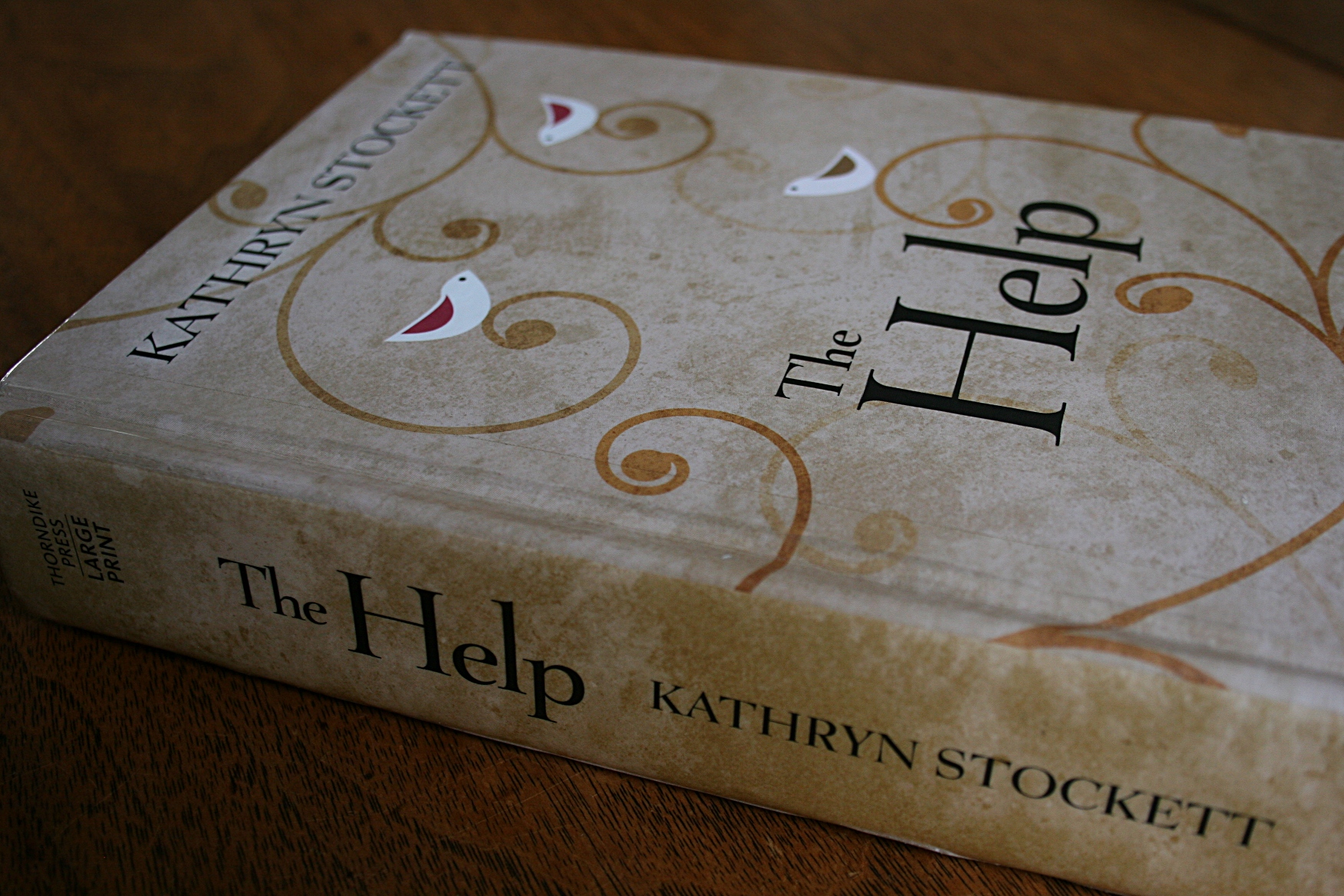
The large print version of The Help.

THREE MONTHS AGO I reviewed “The Help,” a movie based on the New York Times bestseller by Kathryn Stockett. (Read that review by clicking here.)

I wrote then:

In a nutshell, “The Help” tells the story of black women working as maids in upper class Southern white households during the 1960s.

It is that and more. So much more.

Yesterday I stole away 10 minutes to finish the final chapter of The Help. My opinion of the book rates as high as my opinion of the movie. Everyone ought to read this novel and see this movie.

Why?

Although a work of fiction, this book speaks the truth.

Let me show you. While reading The Help, I jotted three page numbers onto a scrap of paper, noting passages that especially struck me.

In chapter 17, from the perspective of Minny, a “colored” maid, are these thoughts:

But truth is, I don’t’ care that much about voting. I don’t care about eating at a counter with white people. What I care about is, if in ten years, a white lady will call my girls dirty and accuse them of stealing the silver.

Consider those words. Do attitudes of “stealing the silver” still linger today?

Near the end of the book, in chapter 34, I came across this line:

Please, Minny, I think. Please, take this chance to get out.

Aibileen wishes this as she speaks on the phone with her friend Minny, who has hunkered down in a gas station after fleeing her abusive husband. Minny finally finds the courage to leave Leroy.

Personal courage, in my summation, is a reoccurring theme in The Help—courage to speak up, courage to be true to yourself, courage to escape abuse.

I would like to see copies of The Help placed in every women’s shelter, given to every victim of domestic abuse, handed to every woman trying to muster the courage to flee an abusive relationship. Stockett’s writing on the topic is that powerful, that motivating, that moving.

Profound, strong words of encouragement for anyone who's been abused, known someone who's been or is being abused, or is currently in an abusive relationship.

Finally, a few pages later I found this passage, a favorite line from the movie and repeated in the book by Mae Mobley, the little girl in maid Aibileen’s care:

“You is kind,” she say, “you is smart. You is important.”

Aibileen ingrained that phrase in Mae Mobley, a child mostly ignored by her mother.

How often do we tell our children, “You is kind. You is smart. You is important” and really, truly, mean it?

IF YOU’VE READ The Help, what nuggets did you glean from this book? What themes or passages made a lasting impression on you?

© Copyright 2011 Audrey Kletscher Helbling