
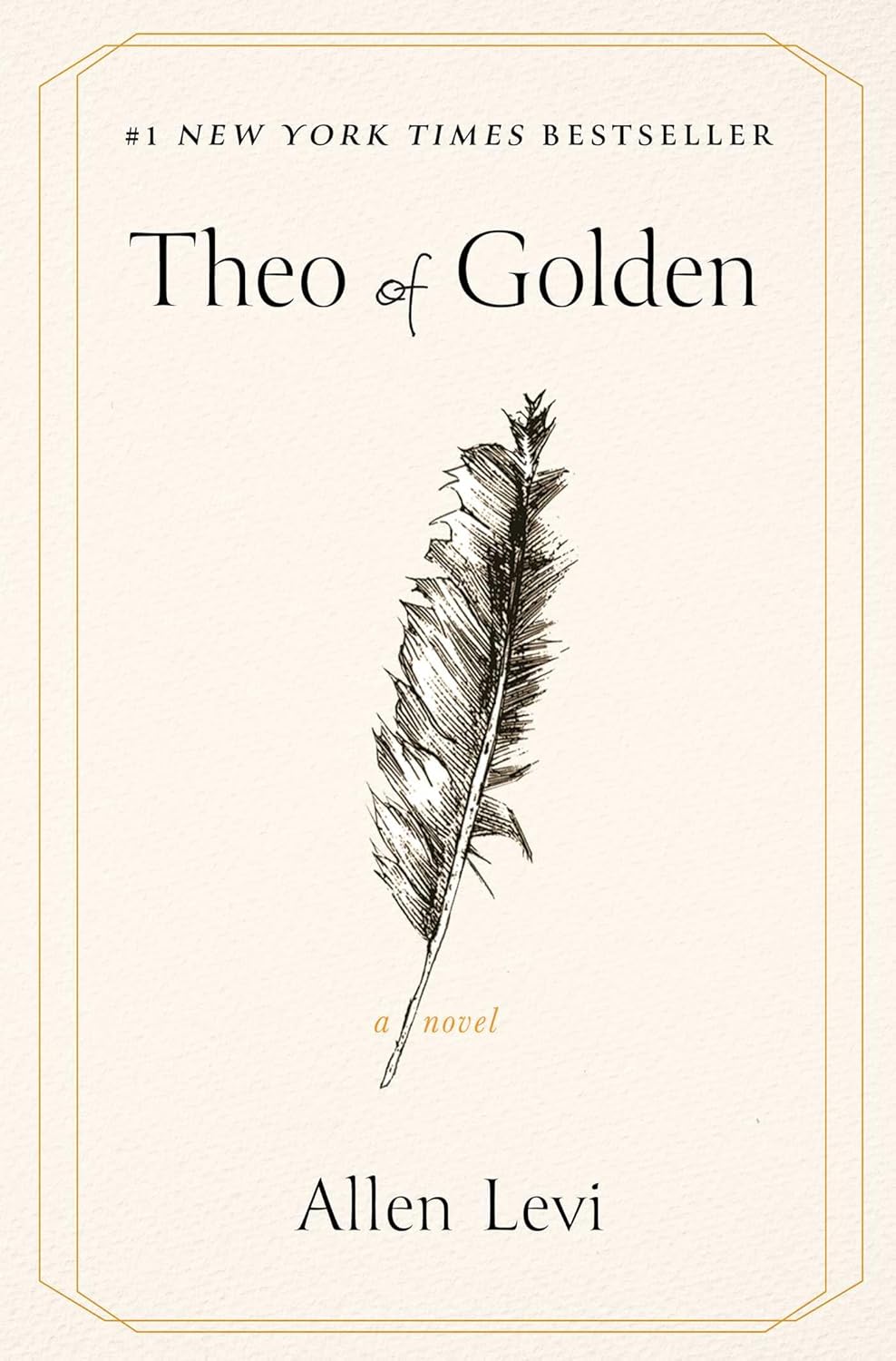
WHEN I RESERVED Theo of Golden through my regional library system, I ranked as number 300 on the waiting list for this New York Times bestseller by Allen Levi. I don’t think I’ve ever been on a longer reserve list.
But within about two months I had the book, recommended by my dear friend Valerie, in hand. She read it in four days. I finished this fictional story in 10 days, primarily because I took notes to write this review.
One would not necessarily expect a novel published in 2023 to still be so popular. But, after reading Theo of Golden, I understand its ongoing appeal. This is one of those books everyone needs to read. Let me repeat. Every. Single. Person. It’s that good.

EVERYONE HAS A STORY
Goodness, kindness and generosity center the story of octogenarian Theo who arrives in Golden, Georgia, from New York City. He soon settles in, slowly connecting, building friendships, bestowing blessings. He does that by purchasing portraits of locals displayed in a coffee shop and then arranging to meet the subjects beside a central fountain.
And that is where this story takes root. Theo looks into the eyes of the people he meets, draws out their stories, their sadness, their strengths in one-on-one conversations. He listens. He cares. He encourages. He gifts them with their portraits drawn by local artist Asher Glissen.
What’s important to emphasize here is that none of this is about Theo. He intentionally doesn’t reveal his last name. He artfully dodges questions about himself. The focus is always on the individual before him, the face he sees. Theo wants to hear the stories behind each face in every portrait.

THE IMPORTANCE OF LISTENING
That is one of the “lessons” that threads through this novel. How often do people try to one-up a story, shift a conversation onto themselves and away from the storyteller? Happens all the time. Theo values every individual, gives them grace, gives them voice. He listens intently, not with the ear of someone waiting to interject his own story.
He listens to Tony, Vietnam veteran and owner of the Verbivore bookshop. He listens to Ellen, who is experiencing homelessness but who is brilliant, artistically-gifted and worthy of hearing. He listens to Simone, a gifted student of the cello. He listens to Minnette with her own secrets and dream of becoming a mother. He listens indirectly to the story of Mateo Mandez, an illegal immigrant from Guatemala. Yes, this book is relevant to today.
Theo tells every person he meets during his bestowals of portraits that they are capable of saintliness. Imagine if you heard that. And when he encounters individuals while out and about and engages in “sidewalk chats,” he listens with genuine, not surface, interest.

RELATABLE, EMOTIONAL
I cried several times while reading this novel. The book is not without heartache, tragedy, cruelty, violence, meanness, disappointments and suffering. The stories therein are real. Often relatable. But it is a book which, at its core, centers on treating others with respect, kindness, goodness and love.

“DO UNTO OTHERS…”
As I read page after page, story after story in this remarkable first novel by Allen Levi, my mind kept returning to the title, Theo of Golden. Why “Golden?” The answer that repeatedly popped into my thoughts was “The Golden Rule” of “do unto others as you would have them do unto you.” The author quotes Scripture, the influence of Levi’s faith clear in his writing, but not in a preachy sort of way.
Today, more than ever, we need a book like Theo of Golden to remind us to be kind, loving, forgiving. To listen. To encourage. To uplift. To think before we speak or write. To be like Theo, the mysterious stranger who showed up in Golden, Georgia, and forever changed a community with his kindness.
THOUGHTS? I’d like to hear your thoughts on Theo of Golden, whether you’ve read the book or just read my, or another, review.
© Copyright 2026 Audrey Kletscher Helbling



Recent Comments