Minnesota Prairie Roots

Writing and photography by Audrey Kletscher Helbling

Ten months after the storm, a rural Minnesota congregation returns “home” May 4, 2012

St. John’s Evangelical Lutheran Church in Vesta, hours after a July 1, 2011, storm ripped half the roof from the sanctuary. Photo courtesy of Brian Kletscher.

“There is no place like home. We cannot wait to be back in our own church.”

And so, 10 months after a powerful July 1, 2011, storm packing winds of 90 – 100 mph ripped half the roof from St. John’s Evangelical Lutheran Church in my hometown of Vesta in southwestern Minnesota, congregants will worship for the first time in their rebuilt sanctuary this Sunday morning.

I expect many of St. John’s 323 baptized members feel exactly as my uncle, Milan Stage, does—simply happy to return to the comfortable familiarity of their home church.

Since the storm, parishioners have worshiped at their sister congregation in neighboring Echo. Says long-time St. John’s member Karen Lemcke, “We thank Peace Lutheran of Echo for allowing us to join their services for all of this time. It was enjoyable to be in fellowship with them but still nice to be back in our church.”

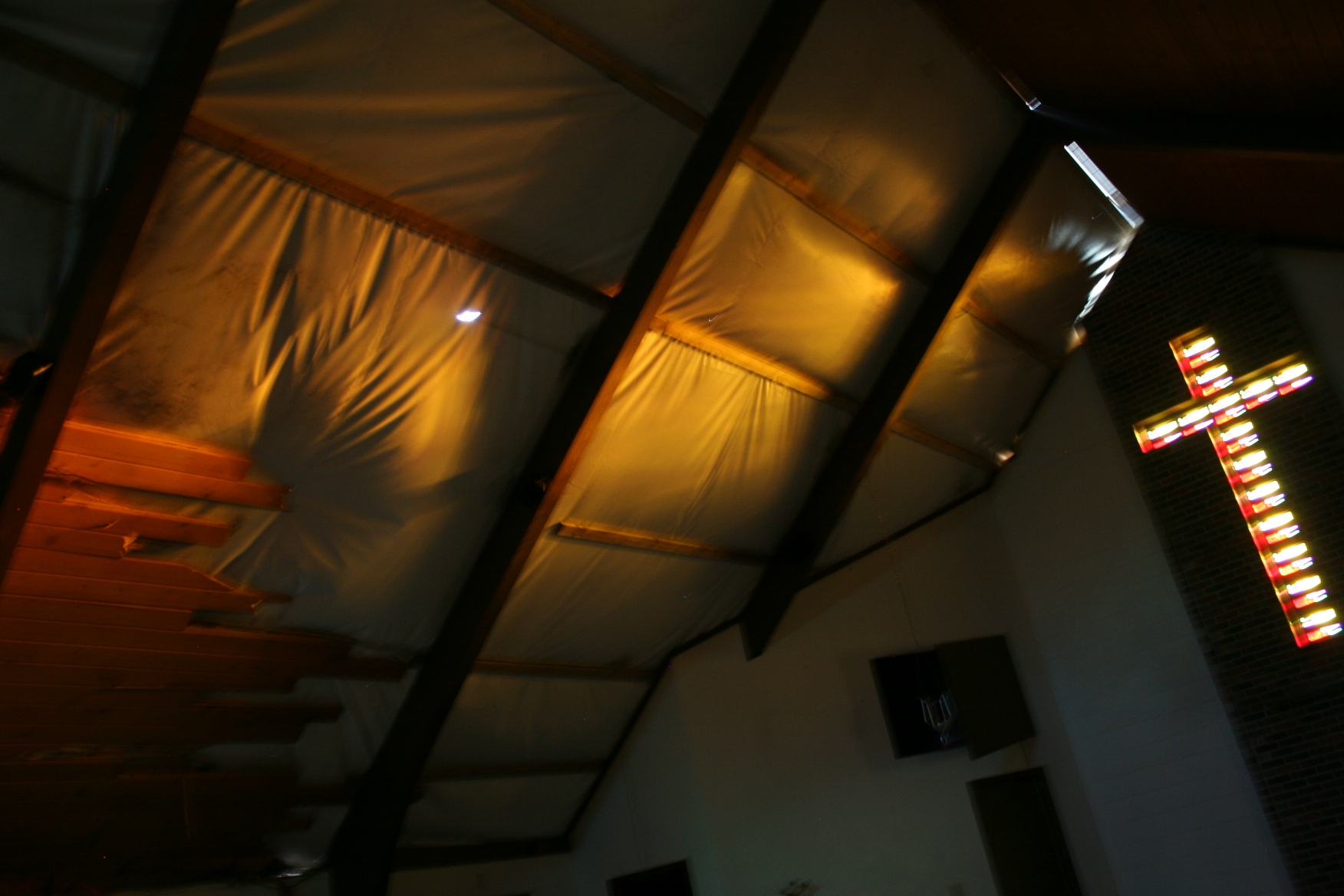
Inside St. John’s sanctuary in September, I listened to the wind flap the tarp that covered the damaged roof.

When worshipers arrive at St. John’s Sunday morning, they will enter through a new south-facing 20 x 40-foot addition which includes a handicap accessible bathroom, storage room and study area/office for the pastor.

And above them a new south roof—the portion ripped off by the winds—and a new exterior steel roof cover the sanctuary refurbished with new ceiling planking and hanging lights.

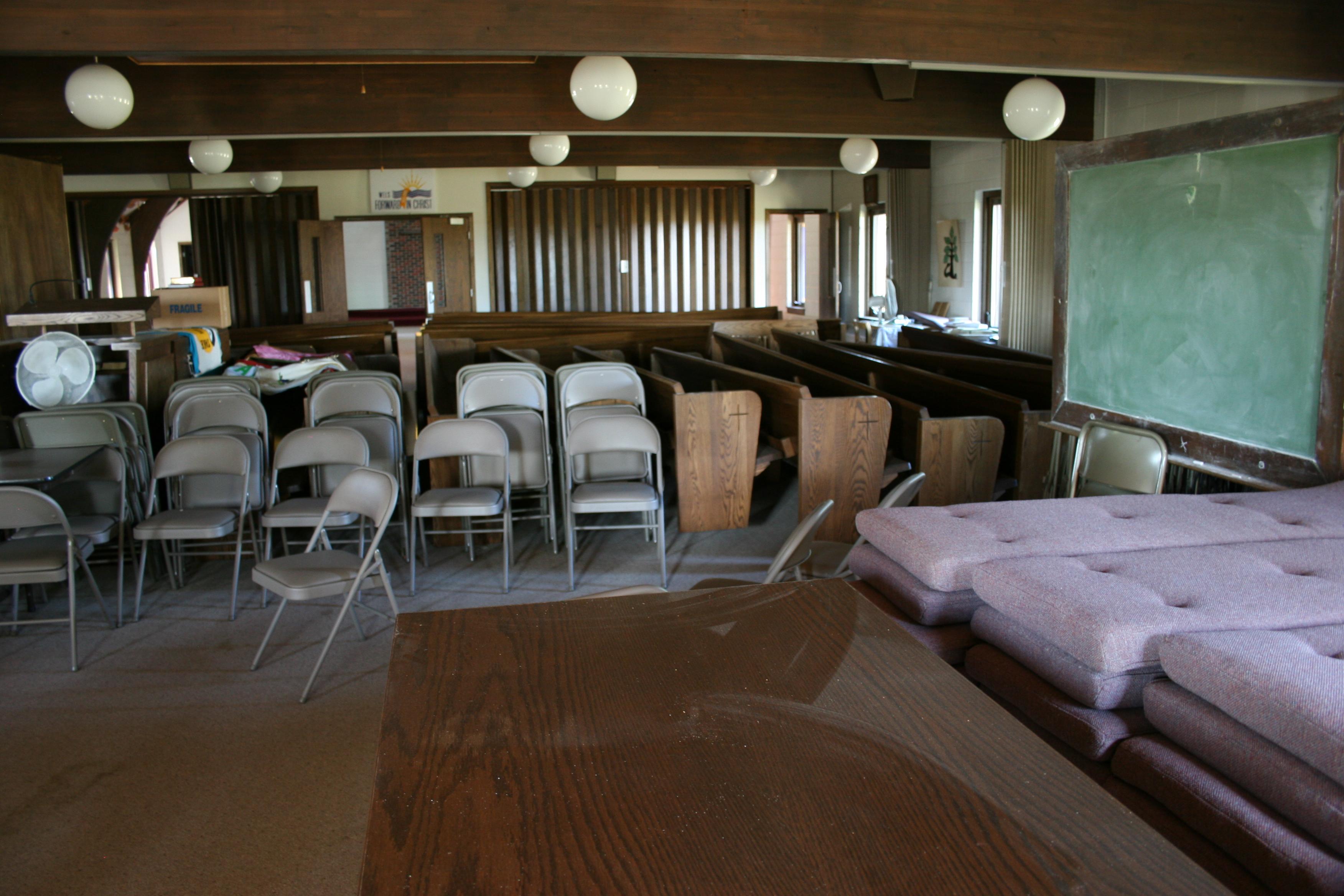
The pews and other items from the church were moved into the undamaged social hall after the storm.

They’ll walk on new carpeting and settle onto new pew cushions to hear the sermon delivered by a former St. John’s pastor, the Rev. Randy Bader, Mission Advancement Director of Great Plains Lutheran High School in Watertown, S.D.  Says Rev. Bader, in part:

I am planning on using the Holy Spirit-inspired words of Isaiah as the basis for the sermon. It includes these words: “For My thoughts are not your thoughts, neither are your ways My ways,” declares the Lord. “As the heavens are higher than the earth, so are My ways higher than your ways and My thoughts than your thoughts.”

We may wonder why our gracious God would allow such a dangerous and difficult situation to touch the lives of His people as it did on that July day last summer. So often we do not understand. But the truth is, we don’t have to understand. Jesus has a purpose for everything that he allows to happen to us, and His ultimate purpose is to bless and save us. 

…Trust Him. His love is the constant, in, and even through, challenging circumstances.

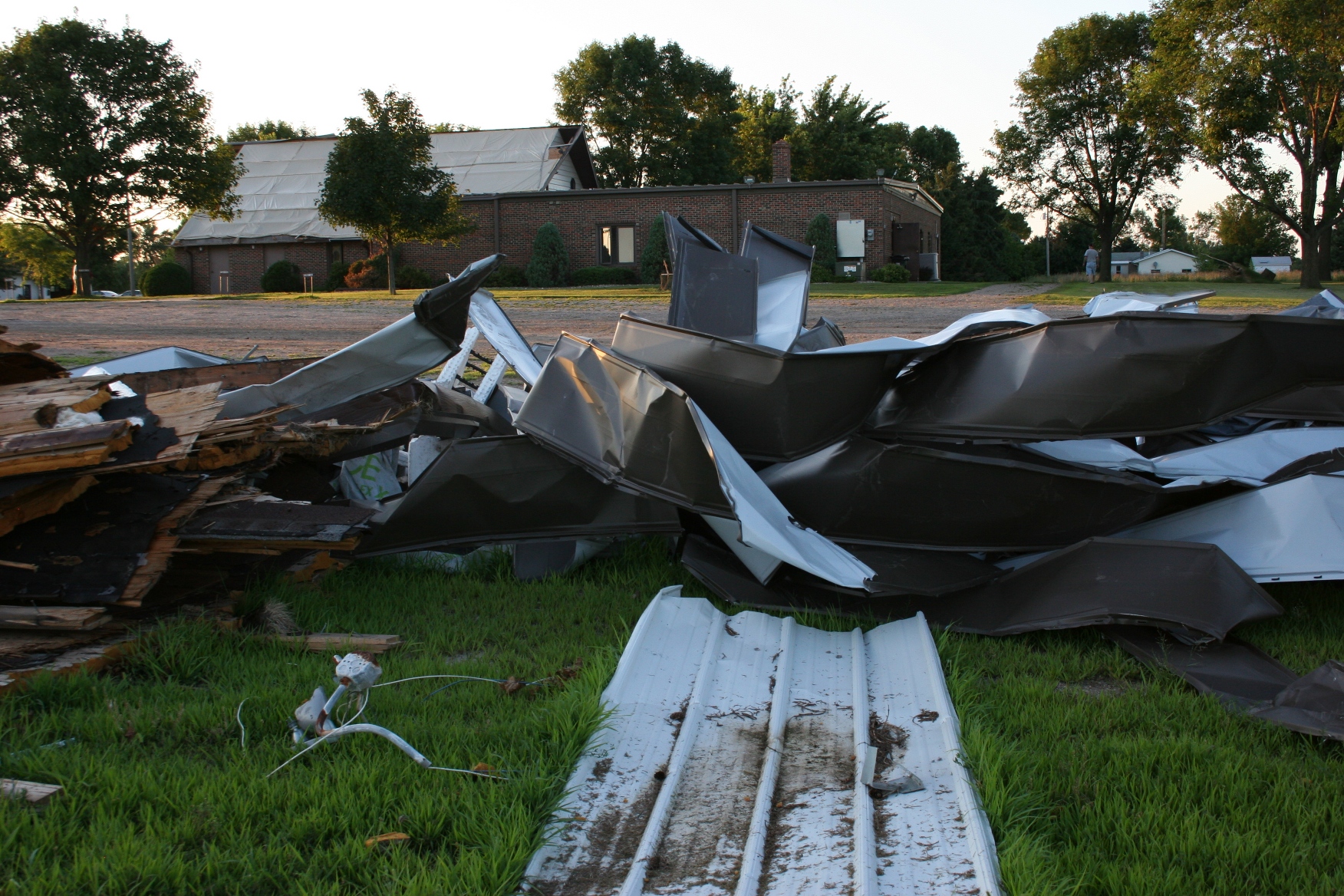
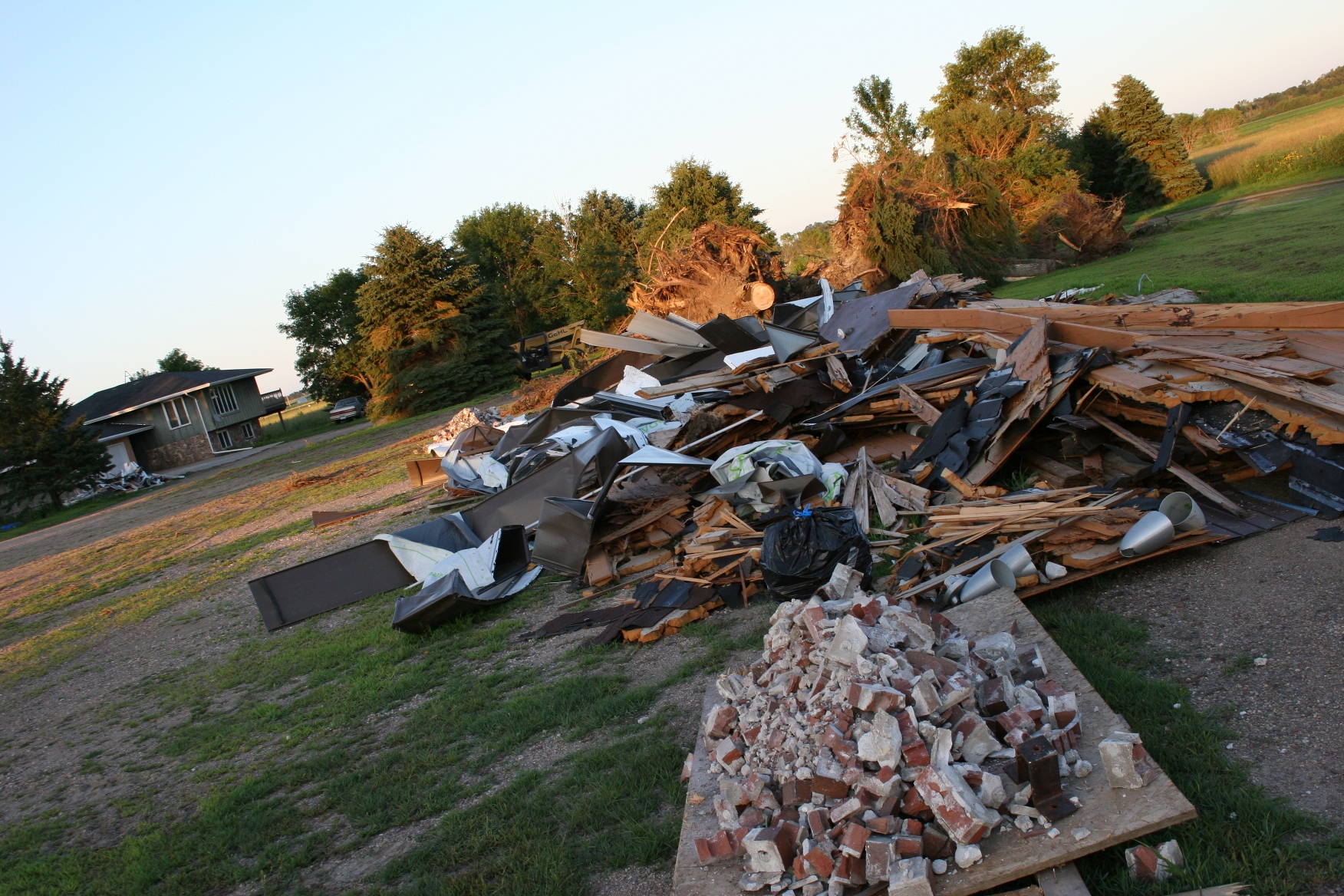
A debris pile on the edge of the church parking lot includes pieces of steel from the roof and brick from the bell tower. Photo taken in September 2011.

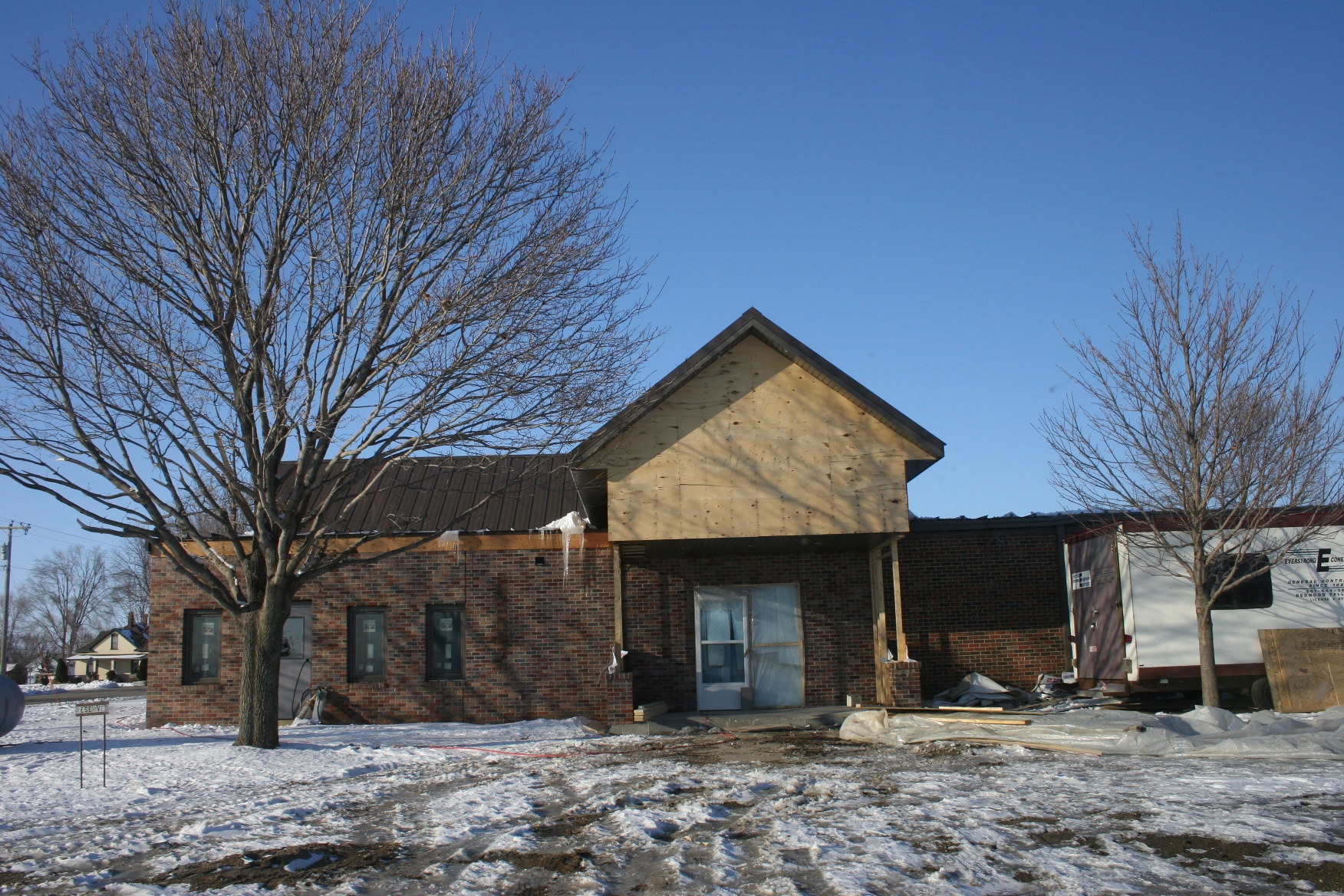
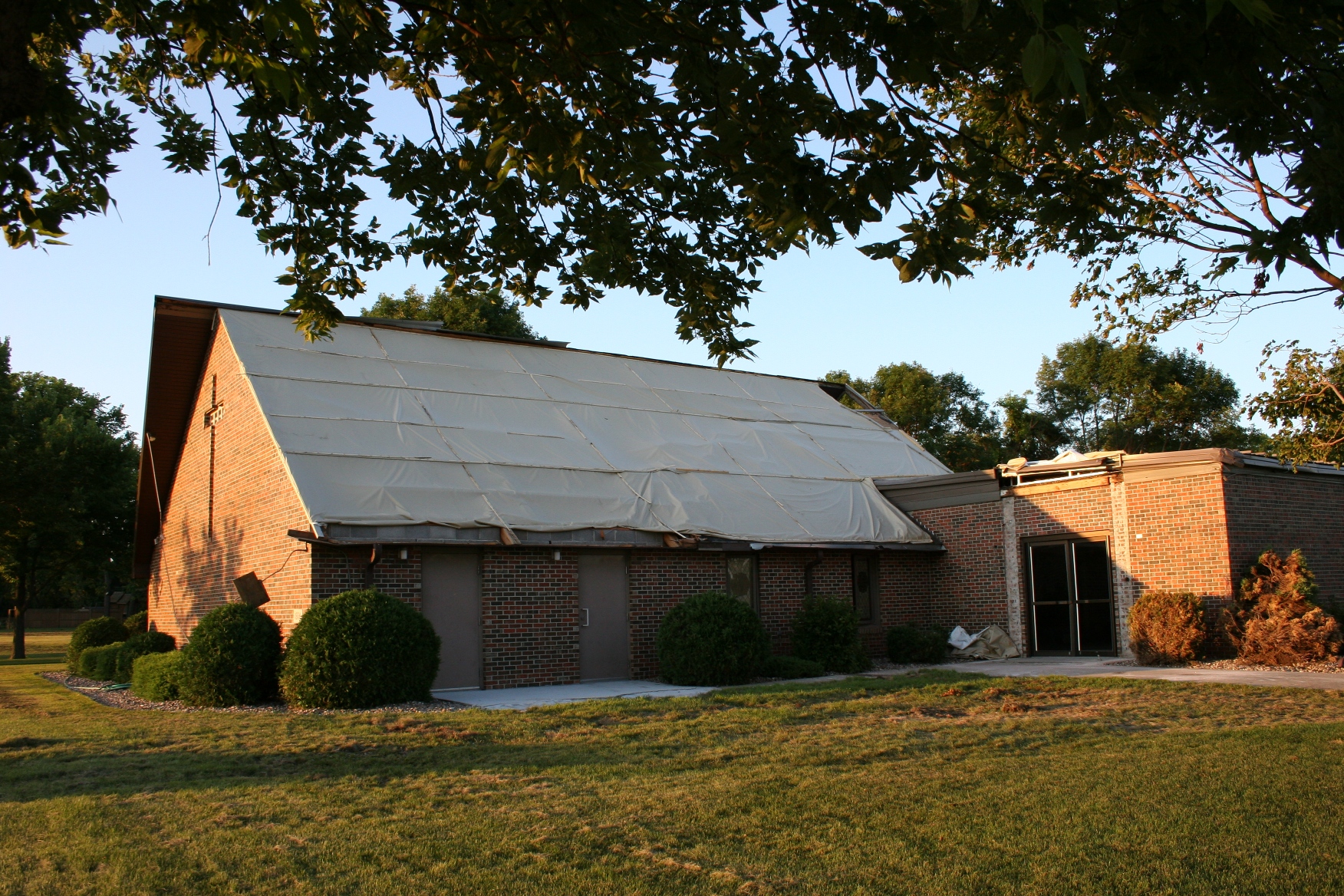
Under construction in March, a pastor’s office, bathroom and storage room were added to the south side of the early 1970s era church.

St. John’s members like my 80-year-old mom, especially, welcome the reopening of the church. It’s much easier for her to drive across town to worship services and other functions than to drive or catch a ride the eight miles to Peace Lutheran in Echo. I’m thankful for family members who’ve taken my mom to church services.

During the 10 months since the storm ravaged Vesta and the surrounding area, I’ve kept tabs on St. John’s, checking in most visits back to my hometown to see how the reconstruction was progressing. This, after all, is the church where I was married 30 years ago this May 15. It is the church where my family mourned the loss of our father, maternal grandfather, paternal grandmother and many other loved ones. We celebrated family weddings here and attended confirmations and worshiped here on Sunday mornings and on Christmas Eve.

The old saying goes that a church is not a building. That adage holds true if you consider the essence of a congregation.

But, there is much to be said for a physical structure, for the memories it holds, for the comfort it gives in familiarity. Boards and walls and details in construction and décor connect us to our past, to emotions and to loved ones. A place represents, if anything, a tangible legacy of faith.

And in a farming town like Vesta, population 330, a church building also serves as a place to gather, to swap rain gauge totals and crop reports, to exchange family news, to embrace each other in sorrow and in joy, to welcome the newest residents with baptism banners, to grieve the loss of neighbors and friends and family. A church building represents community within a community, the very soul of small town life.

© Copyright 2012 Audrey Kletscher Helbling


Praying for the tornado survivors March 6, 2012

Filed under: Uncategorized — Audrey Kletscher Helbling @ 11:19 PM
Tags: , , , , , , ,

ON SUNDAY I ATTENDED morning worship services at Peace Lutheran Church in Echo, the sister congregation of St. John’s Lutheran Church in Vesta, the congregation of my youth.

St. John’s members have been worshipping at Peace since a July 1, 2011, series of downbursts with wind speeds of 90 – 100 mph ripped the south roof from the sanctuary.

St. John's, hours after the July 1 storm tore through Vesta. Photo courtesy of Brian Kletscher.

Just to the north, west and east in this region of southwestern Minnesota, EF-1 tornadoes with winds of 95 – 105 mph wreaked havoc on farms and on the neighboring community of Belview.

Eight months later, St. John’s is still in the process of rebuilding.

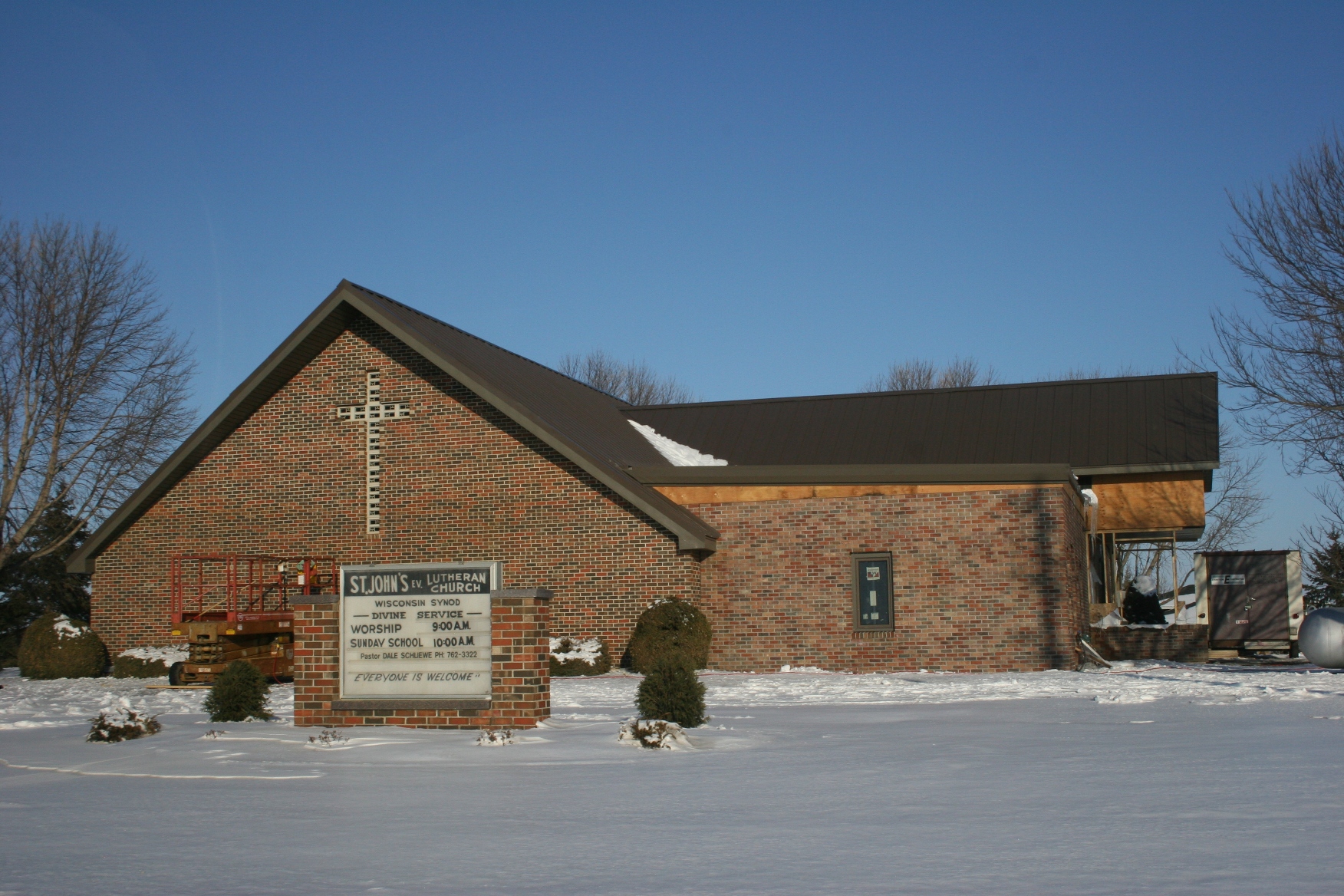
Eight months after the storm, St. John's is still under construction with a new addition to the right. Congregants had hoped to be back in the church by Easter, but that likely will not happen until May.

The narthex was expanded and a pastor's office and handicapped accessible bathroom were added on the southwest side of the church built in 1974. This photo and the one above were taken on Saturday.

Despite the inconvenience of driving additional miles to worship and the temporary loss of their church home, St. John’s members realize the situation could have been so much worse. No lives were lost in the storms and their church could be salvaged.

This we—visitors and members of the two sister congregations—understood as we bowed our heads to pray for the survivors of the recent deadly tornadoes.

© Copyright 2012 by Audrey Kletscher Helbling
 

Snapped out of complacency November 23, 2011

Filed under: Uncategorized — Audrey Kletscher Helbling @ 9:48 PM
Tags: , , , , , , ,

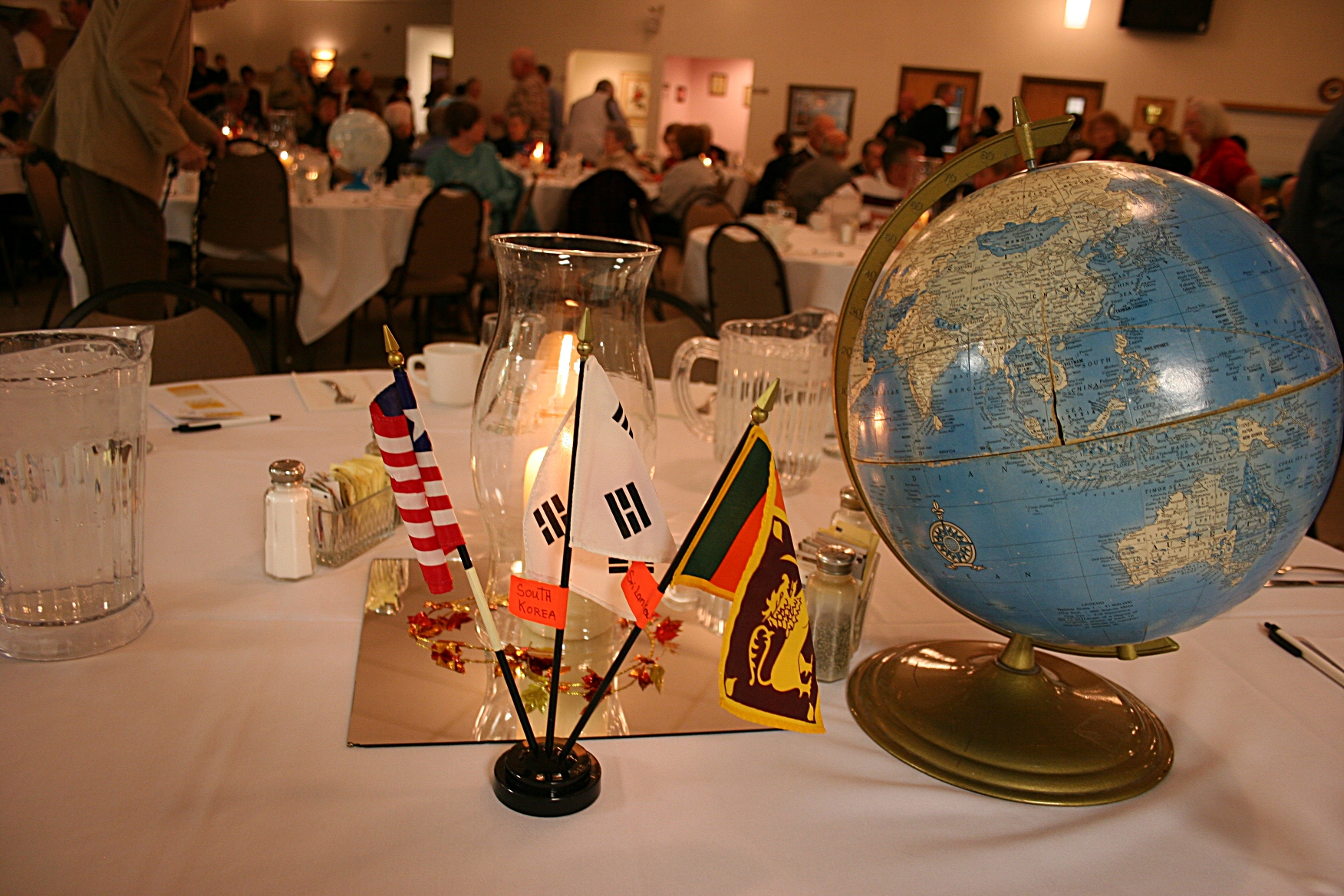
Globes and flags decorated tables at a missions appreciation dinner Sunday in Faribault.

YOU KNOW HOW EVERY once in awhile someone says something and you suddenly appreciate your life a whole lot more than you did only minutes earlier?

Take me on Sunday, when I spent an hour at morning worship services, another hour in bible study, 2 ½ hours at a mission gathering and another 3 ½ hours at a mission-centered appreciation dinner.

You can bet I heard enough in those eight hours to realize I have it pretty good living right her in Faribault, Minnesota, in a three-bedroom mortgage-free home with one bathroom.

Good because—

  • Even though I have an outdated kitchen with a brown sink, leaky faucet, vintage countertops and yellowing cupboards, at least I don’t cook my meals outside over an open fire and I don’t live in a yurt.
  • I don’t rely on the generosity of a missionary to supply me with two bags of rice so I have something to eat.
  • I can speak freely about, and live, my faith without fear of reprisal. Missionaries in Iran would be killed for doing so if they were caught.
  • Even though I’m unhappy with the high costs of health insurance and medical care, at least I have healthcare, unlike so many in Third World countries. Tears edged my eyes when I saw the photos and heard the story of 11-year-old Emay who died from an inoperable tumor.
  • I am blessed to have been raised by Christian parents.
  • I can read a bible that has not been censored and/or edited by the government.
  • God is my boss.

To those who spoke and sang during the “Let the People Praise!” Mission Event on Sunday at Trinity Lutheran Church in Faribault, and to Gary Thies of Mission Central in Mapleton, Iowa, thank you for snapping me out of my complacency.

The timing couldn’t have been better, coming right before Thanksgiving.

HOW ABOUT YOU? Have you heard or seen something lately that made you more appreciative of all that you have?

FYI: Click here to learn more about Mission Central, the largest mission supporting agency in the U.S. for the Lutheran Church Missouri Synod. Credit goes to Thies for the “God is my boss” phrase cited above. Like a company president’s portrait in a corporate boardroom, Christ’s portrait hangs in Gary’s office, above his desk.

© Copyright 2011 Audrey Kletscher Helbling
 

Reaching “the nations” November 21, 2011

I STILL REMEMBER the derogatory label, even after all these years. “Gooks,” he called them. I lashed back, defending the Asian families who fled their war torn countries to start new lives in America in the late 1970s and early 1980s.

“Didn’t your great grandparents immigrate here?” I asked, trying to control my emotions as I confronted the Faribault man who spit out the venomous word. But I knew, even as I spoke, that I could not quell his hatred.

Now, nearly 30 years later, I hear similar disparaging terms directed toward Somalis and Sudanese and, yes, Hispanics, too.

Don’t we ever learn?

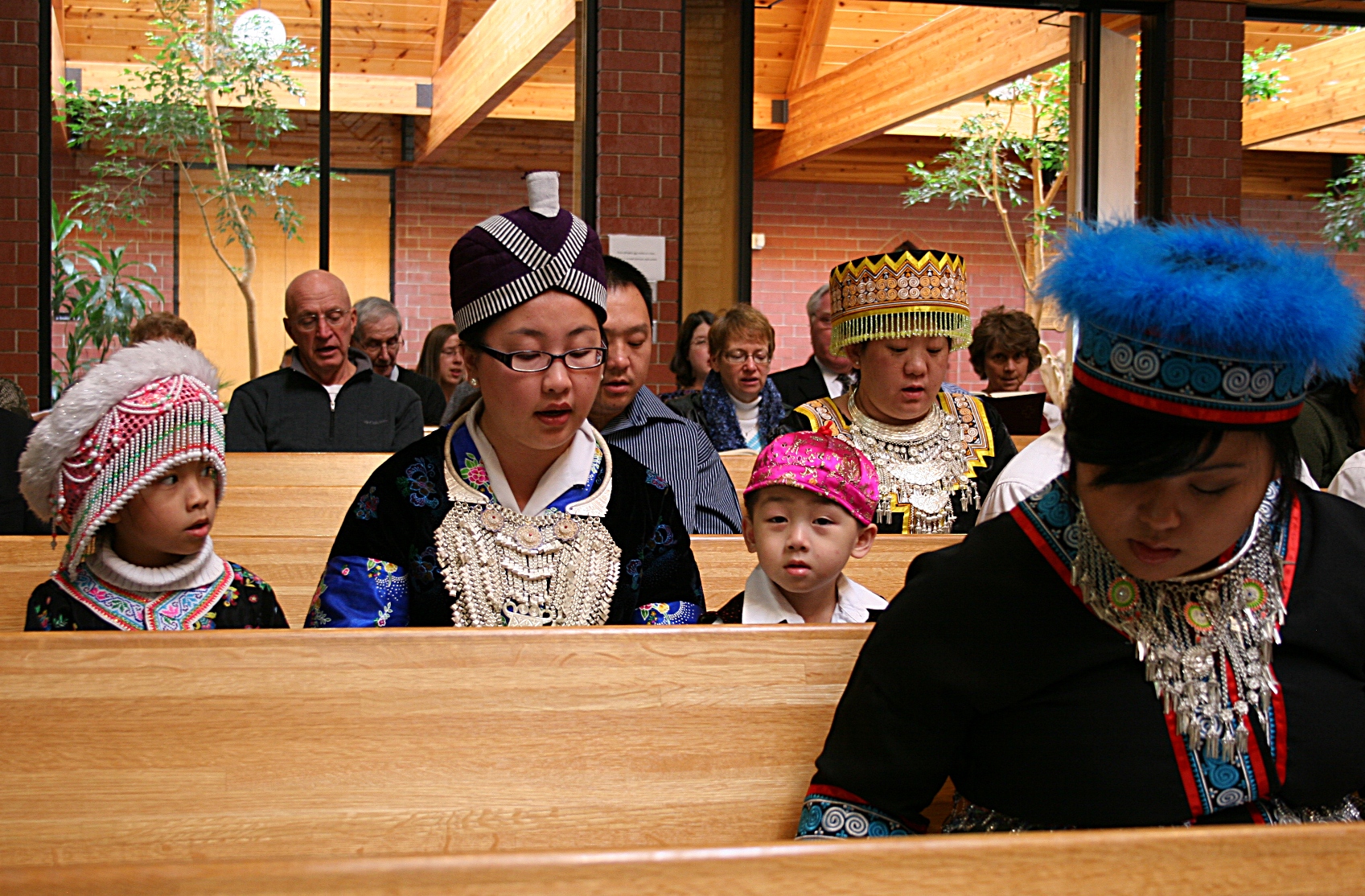
These thoughts, of anything I could have considered, passed through my mind yesterday afternoon as I photographed Hmong families participating in a “Let the People Praise!” mission event at my Faribault church, Trinity Lutheran.

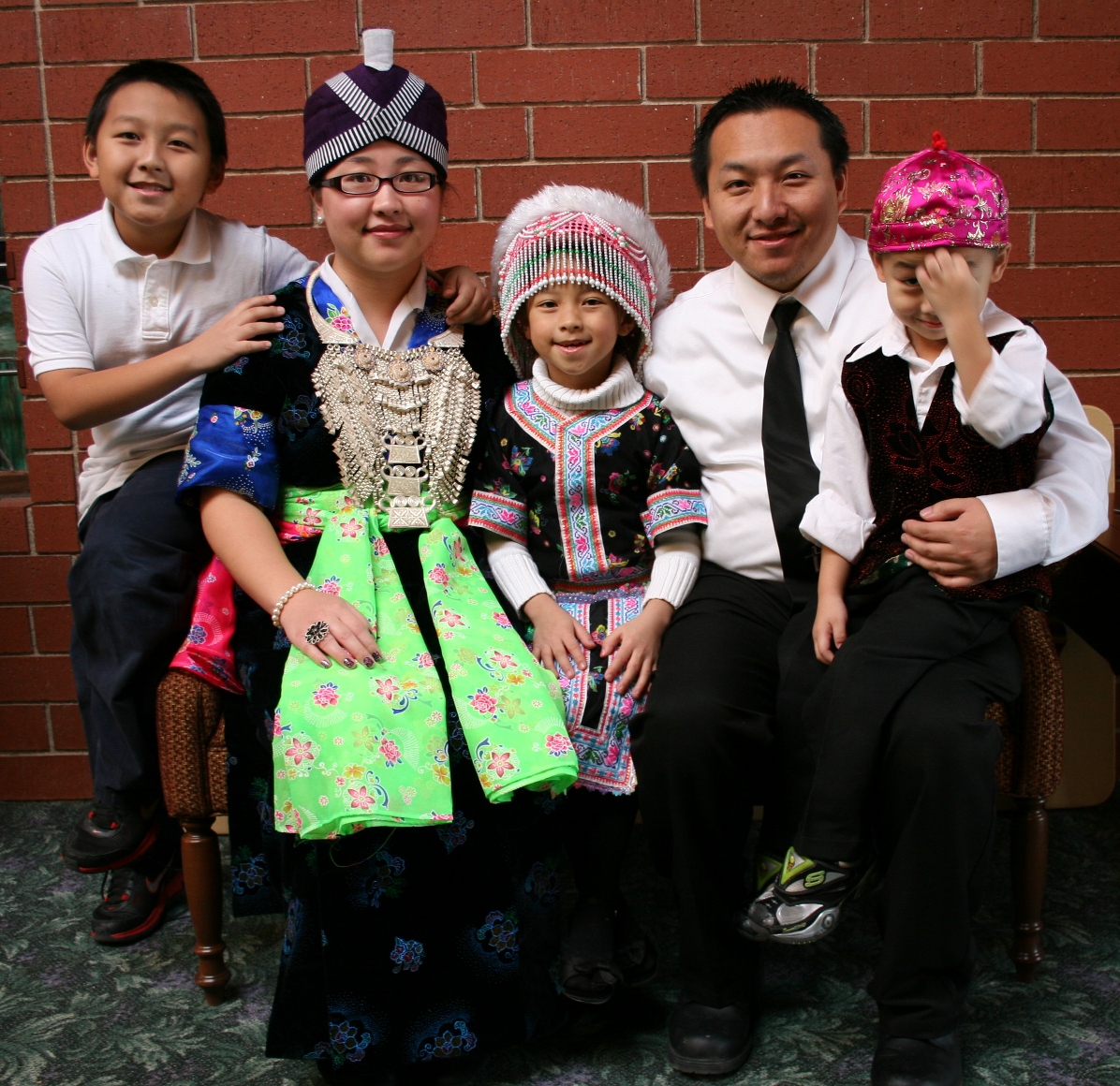
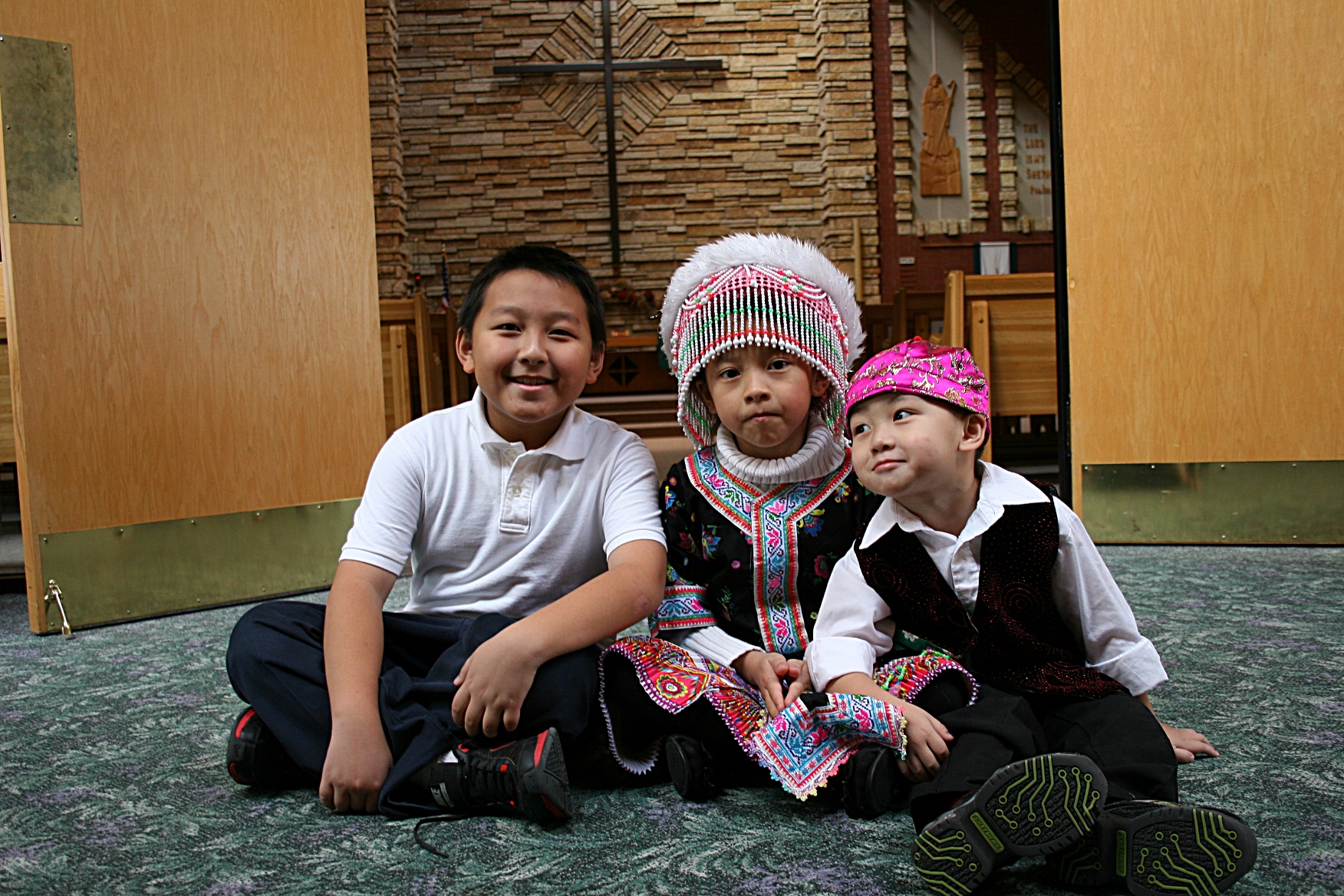
Deacon Johnny Vang of New Life Lutheran Church, Robbinsdale, with his wife Tina and children, Leviticus, 10, Cecilia, 7, and Christian, 4.

I could forgive the man who nearly three decades prior had spoken with such ignorance. But I could not forget.

The organizers and participants in Sunday’s mission gathering wouldn’t expect my thoughts to wander back to that previous unwelcoming American attitude toward Southeast Asians. But I am honest and this post would not be mine if I ignored that unsettling flashback.

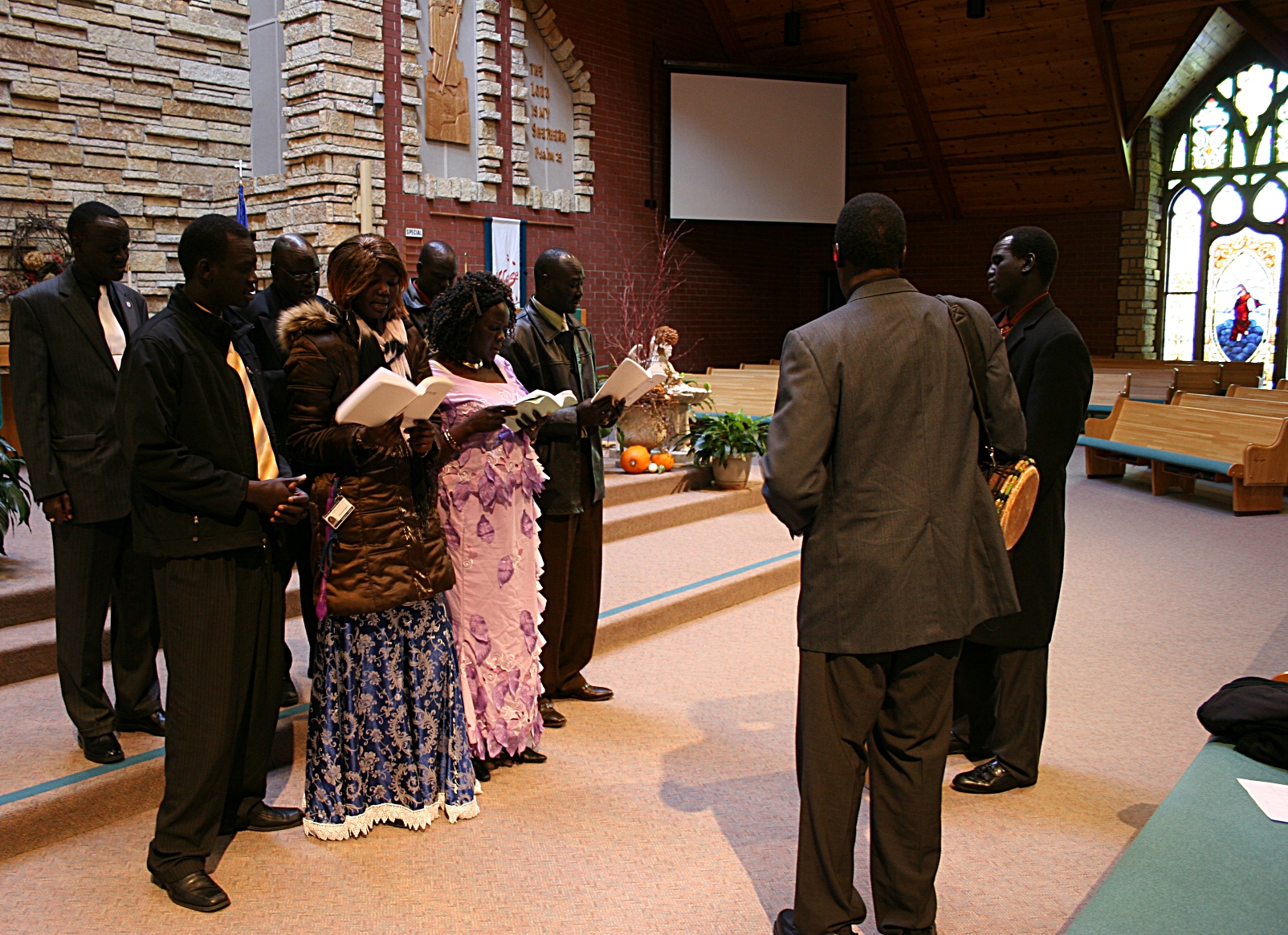
With that historic frame of reference, I could only admire the faith and fortitude of the men and women who stood before me in the sanctuary singing in the Hmong choir, speaking of their mission outreach to Southeast Asia and in Minnesota, specifically in Robbinsdale and the east side of St. Paul.

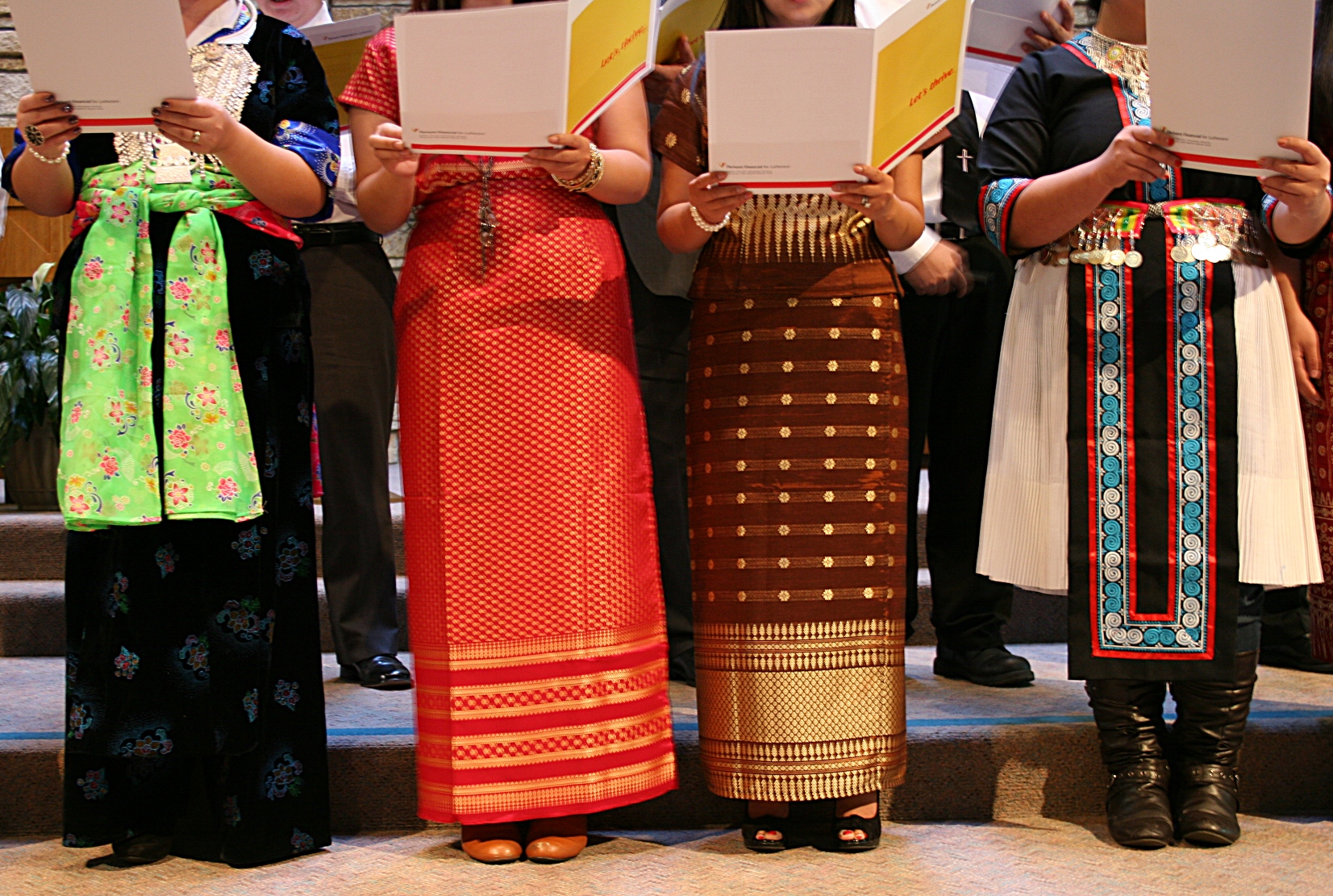
Members of the Hmong choir wore colorful, ethnic costumes.

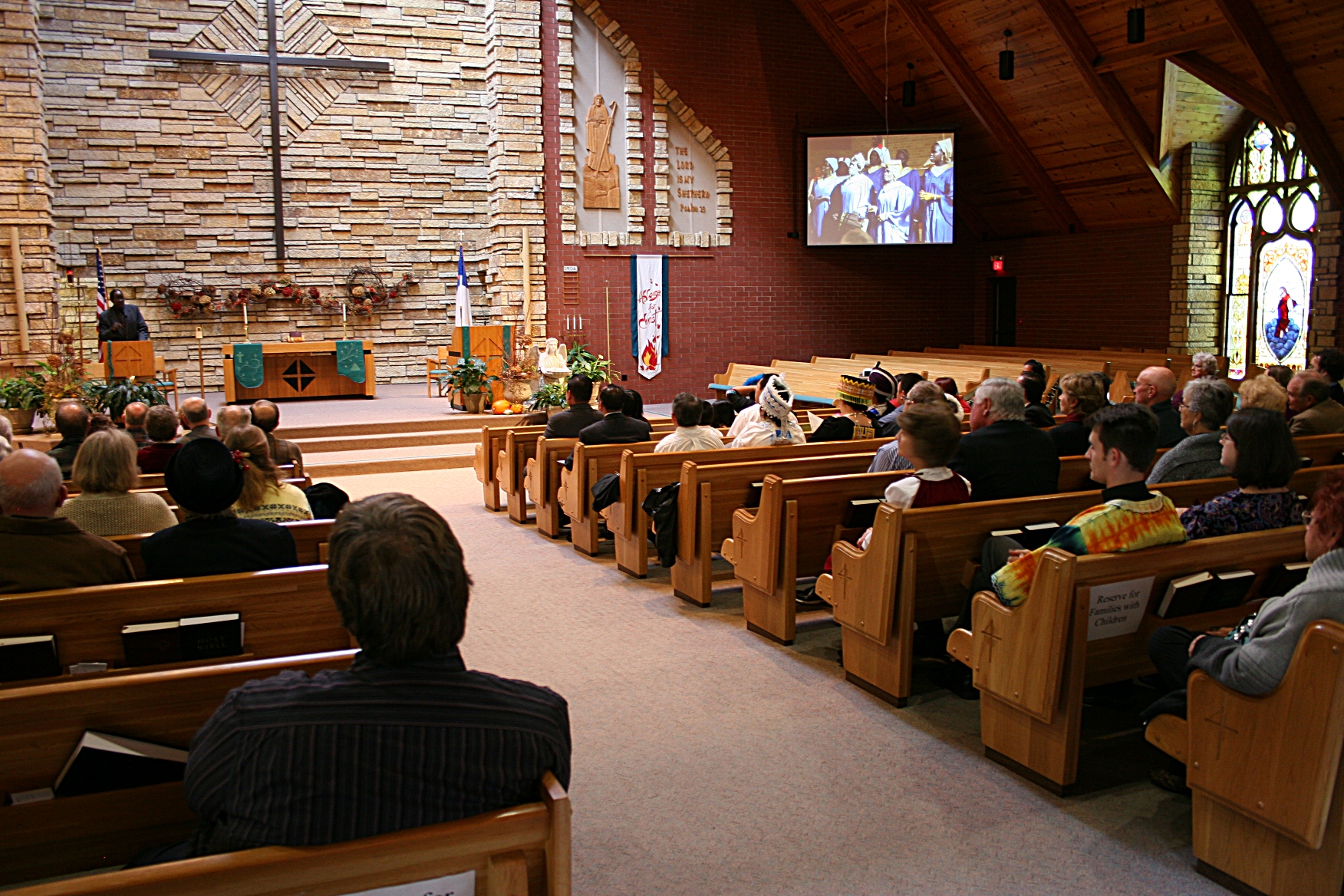
The congregation, including individuals from the Hmong community, sang at Sunday's mission celebration.

Churches initially embraced Cambodian and Laotian refugees in the years following the divisive and turbulent Vietnam War. I remember, during my first newspaper reporting job out of college in 1978, writing about a Southeast Asian family resettling to the small Minnesota town of Gaylord. I don’t recall details now, but the compassionate sponsorship of this family by a local church made an impression on me.

That care and love triumph over the hateful words and attitudes of the past.

It pleased me to listen to those involved in the Hmong Lutheran Ministry speak of mission trips to the Communist countries of Laos and Vietnam and to Cambodia and Thailand. The “Communist” part certainly doesn’t please me, but the Christian outreach does.

“They are hungry for the gospel and they want to be saved,” a Hmong deacon told us.

My favorite photo of the day shows the Vang children, Leviticus, Cecilia and Christian on the floor in the narthex, the church doors into the sanctuary flung wide open. This symbolizes to me the doors that are being opened to Christianity through mission work here in Minnesota and in Southeast Asia.

Later the Rev. David Seabaugh of Bethel Lutheran Church in St. Paul, home to a Liberian ministry, used nearly the same words: “The Liberian people are hungry for the gospel.”

I considered then how complacent I’ve sometimes become in my Christian faith, even in my free access to the bible, and in my personal outreach.

I needed to hear this Scripture from I Chronicles 16: 24:

Declare his glory among the nations, his marvelous deeds among all peoples.

God doesn’t care if we’re black or white or yellow, or even Lutheran for that matter, or where we live. He considers us “the nations.”

Today, just like 100 years ago when the Germans and Italians and Swedes and Norwegians and so many others immigrated to America, “the nations” are still arriving on our doorstep.

Are you welcoming them?

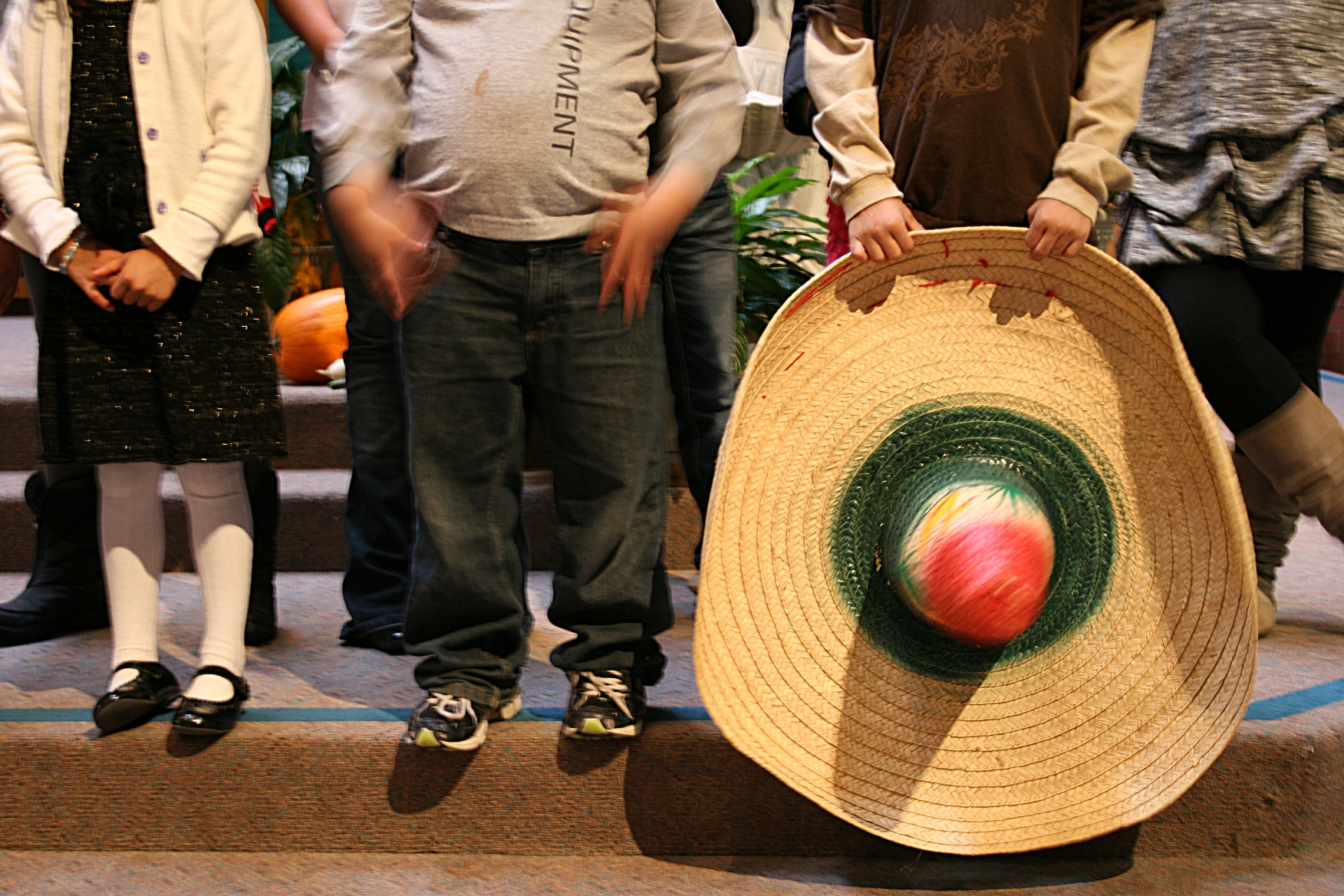
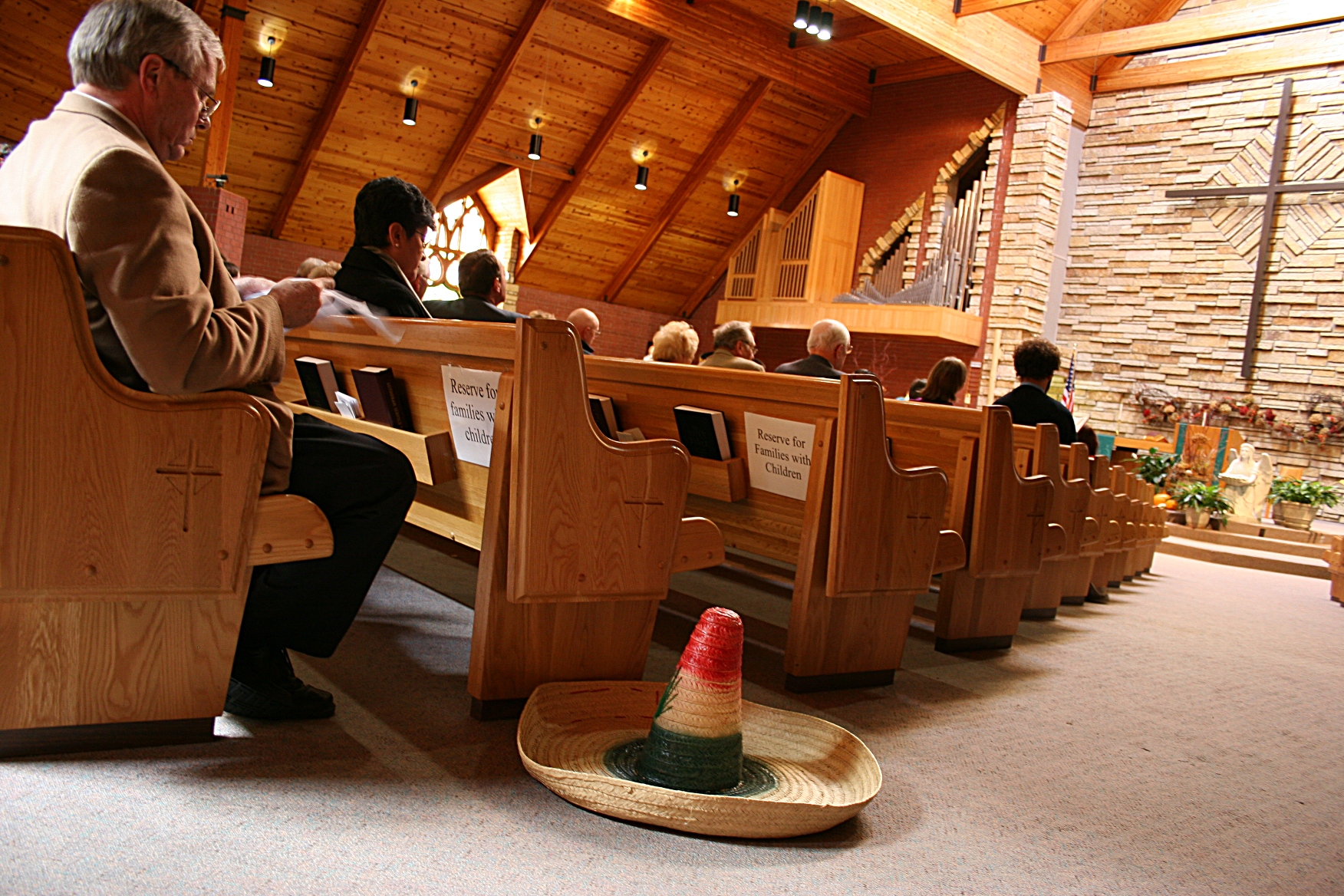
A sombrero rests in the side aisle prior to a musical performance by Hispanic children from the Le Sueur and Henderson areas.

Members of the Hispanic children's choir perform.

A representative of the Sudanese ministry spoke at the mission gathering. "Before, we suffer a lot," he said, calling it "God' s plan" that the Sudanese came to America and to Minnesota.

A musical performance by the Sudanese.

Copyright 2011 Audrey Kletscher Helbling
 

Grieving September 22, 2011

Filed under: Uncategorized — Audrey Kletscher Helbling @ 10:19 PM
Tags: , , , , , , ,

“THANK GOD FOR MY FAITH,” my mom said as she shared yet another piece of tragic news that has touched my extended family this week.

Her dear cousin Alice, 79, died Tuesday as a result of injuries sustained in a car accident in North Mankato. This I learned in a phone call on Wednesday. After I hung up, and per my mom’s request, I began phoning four of my five siblings.

A day earlier I had done the same.

My sister-in-law’s 64-year-old father was found dead at the scene of a single-vehicle accident in Cottonwood County early Tuesday morning, news I was asked to share with other family members.

This is almost more than we, my extended family, can bear right now. We’ve leaned on and supported each other and relied on our strong faith in God and on friends to get us through our hours and days.

Yet, I know the most difficult minutes are yet to come—when I see my brother and his wife and their two children. What will I say that will console them? Words and hugs seem inadequate. Prayers are not.

My mom is right. It is faith in God that sustains us. We are not alone.

And, certainly, we are not the only family grieving. In Waseca, many are mourning the loss of 11-year-old Jaiden, a sixth-grader who on Monday committed suicide. My sister, a Waseca floral designer, has been creating floral arrangements for Jaiden’s funeral. My two young nieces, who attend school in Waseca, and my other sister, who teaches in Waseca, have all been impacted by Jaiden’s death.

Grief runs deep.

In Faribault, family and friends are mourning the death of 25-year-old Wendi due to injuries sustained in a motor vehicle accident. She was a Faribault High School classmate of my eldest; my daughter did not know her well.

Grief runs deep.

We all know we are going to die. Yet, when a death comes unexpectedly, in a tragic way, it’s especially difficult to comprehend, to accept, to understand.

We do the best we can. We cry and pray and talk and, for me, write.

And last night I laughed, a laugh that built and rolled into a deep belly laugh that left my muscles aching. When I think about it now, the subject of my laughter wasn’t at all funny—as my husband told me at the time. But I asked him, “Would you rather I cry?”

So I laughed. Because I’ve already cried too much.

© Copyright 2011 Audrey Kletscher Helbling
 

God’s beauty blooms in Richard’s art September 18, 2011

I HAVE NOT MET Richard Vilendrer, only spoken with him briefly on the phone.

Yet, I feel a connection to this 72-year-old Faribault man, this artist who creates art for the pure joy of doing so. I understand that. It is the same reason I write and take photos for this blog.

You can see that joy in Richard’s art, which I discovered Saturday morning at the Faribault Farmer’s Market. I had passed only a few vendors’ booths—laden with the typical fresh produce, flowers and baked goods you would expect to find in this venue—when I noticed the pen-and-ink and colored pencil drawings vended by Carol Vilendrer, Richard’s wife of 35 years.

I stopped and just stood there. And it flashed through my mind that this Christian-themed art would be a good fit for Christian greeting cards. And when I looked further, I saw that Richard had already made cards. But I write greeting card verses for an Indiana-based publisher and I asked Carol then and there if I could direct my editor to Richard’s work. So I am. I don’t know if this will go anywhere; I have to try, though.

There’s a certain passion in Richard’s art and you can sense that when you speak with the man. He doesn’t do this for the money—although he’s sold some pieces—but for the pure enjoyment of creating art.

Since grade school this former Faribault Regional Center employee, who worked with handicapped children until the center closed, has put pencil to paper. As a youth, when he should have been listening in English class, he was instead inspired by textbook images—of Indians and of soldiers in helmets and of airplanes—to duplicate those drawings.

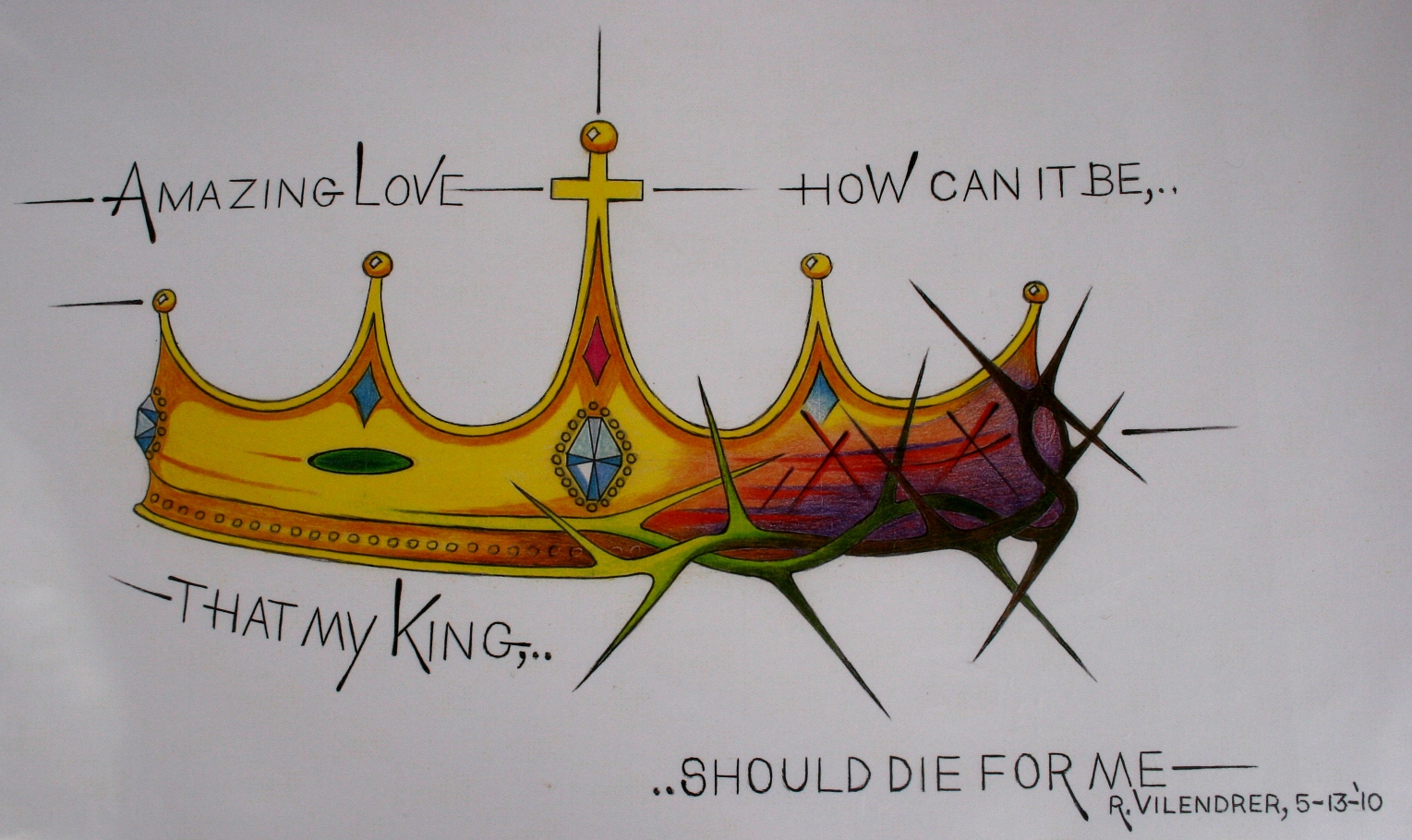
Scripture and Christian songs inspire Richard.

Today words from a song heard on Twin Cities-based Christian radio station KTIS, or words from Scripture or a found feather on a nature walk inspire him to first draw in pencil, then go over the pencil with ink and finally fill in with colored pencil.

He prefers to draw small, detailed subjects like his hand or a feather or a maple leaf. Yet, he’s also drawn John Deere tractors and buildings and classic cars.

Richard uses a technique called cross hatching—to perfect shading—by using a ball point pen to draw lines close together in one direction and then crosses in an opposite direction. He learned that in high school. Mostly, though, he’s self-taught, without formal training. He calls his artistic skills a “God-given talent.”

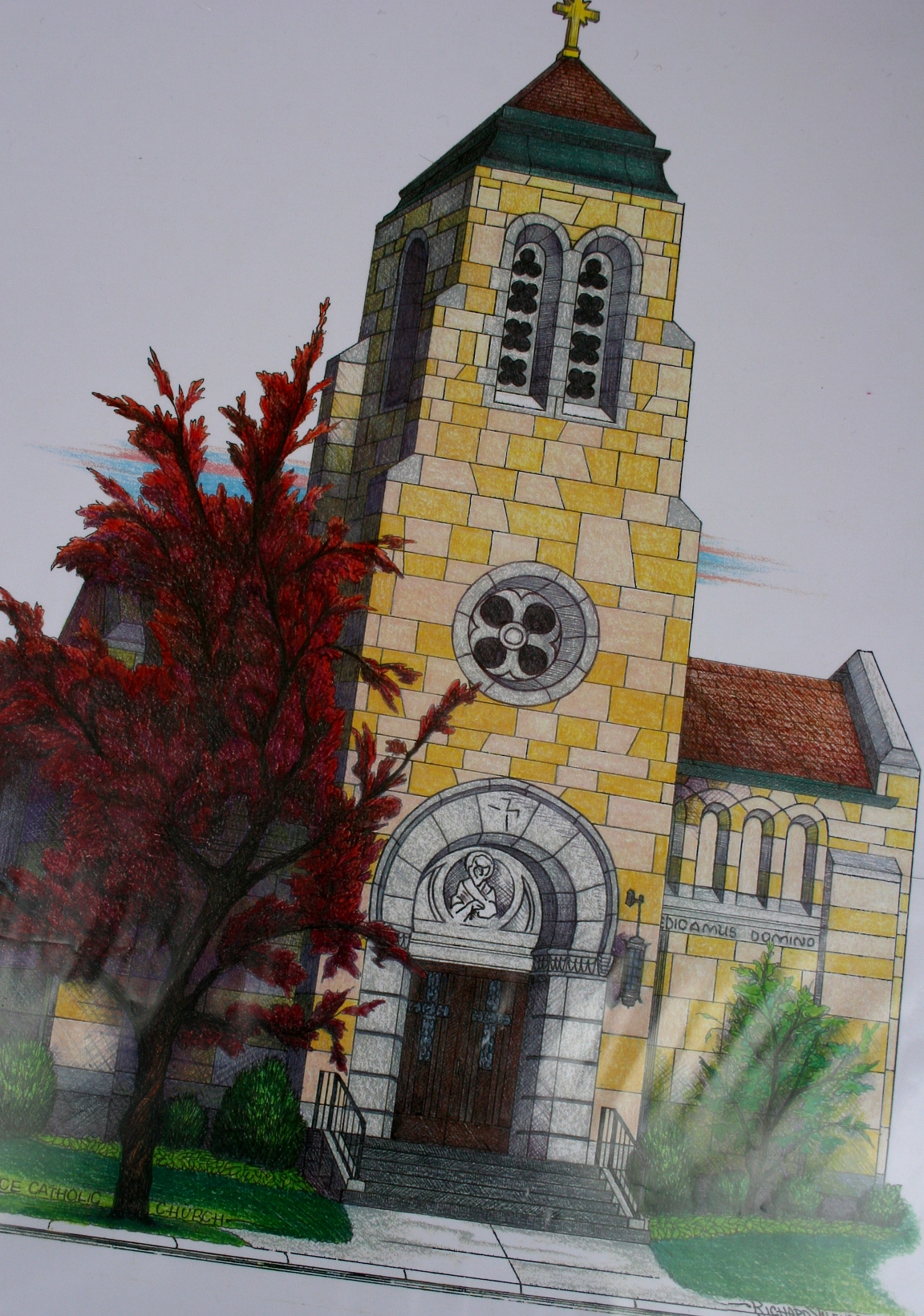
This man of faith has used that gift from God to create artwork for fundraisers at his church, Divine Mercy in Faribault.

A year ago, he suffered a stroke. But even in that he sees the blessing—the stroke affected his entire right side, not his left. Richard, the artist, is left-handed.

Nature and faith inspire his detailed art.

A pen-and-ink drawing of a building at the former Faribault Regional Center where Richard worked.

St. Lawrence Church in Faribault where Richard and Carol Vilendrer were married 35 years ago this coming October 1.

IF YOU ARE INTERESTED in purchasing Richard’s art or learning more about him, submit your contact information (which I will not publish) in a comment and I will pass that along to Richard.

PLEASE NOTE THAT the photos in this post are not 100 percent accurate to the true colors of Richard’s work. His drawings were wrapped in plastic, which filtered the colors and which created some glare. I edited each image somewhat to overcome those challenges.

© Copyright 2011 Audrey Kletscher Helbling
 

The armless Jesus at storm-damaged St. John’s in Vesta August 4, 2011

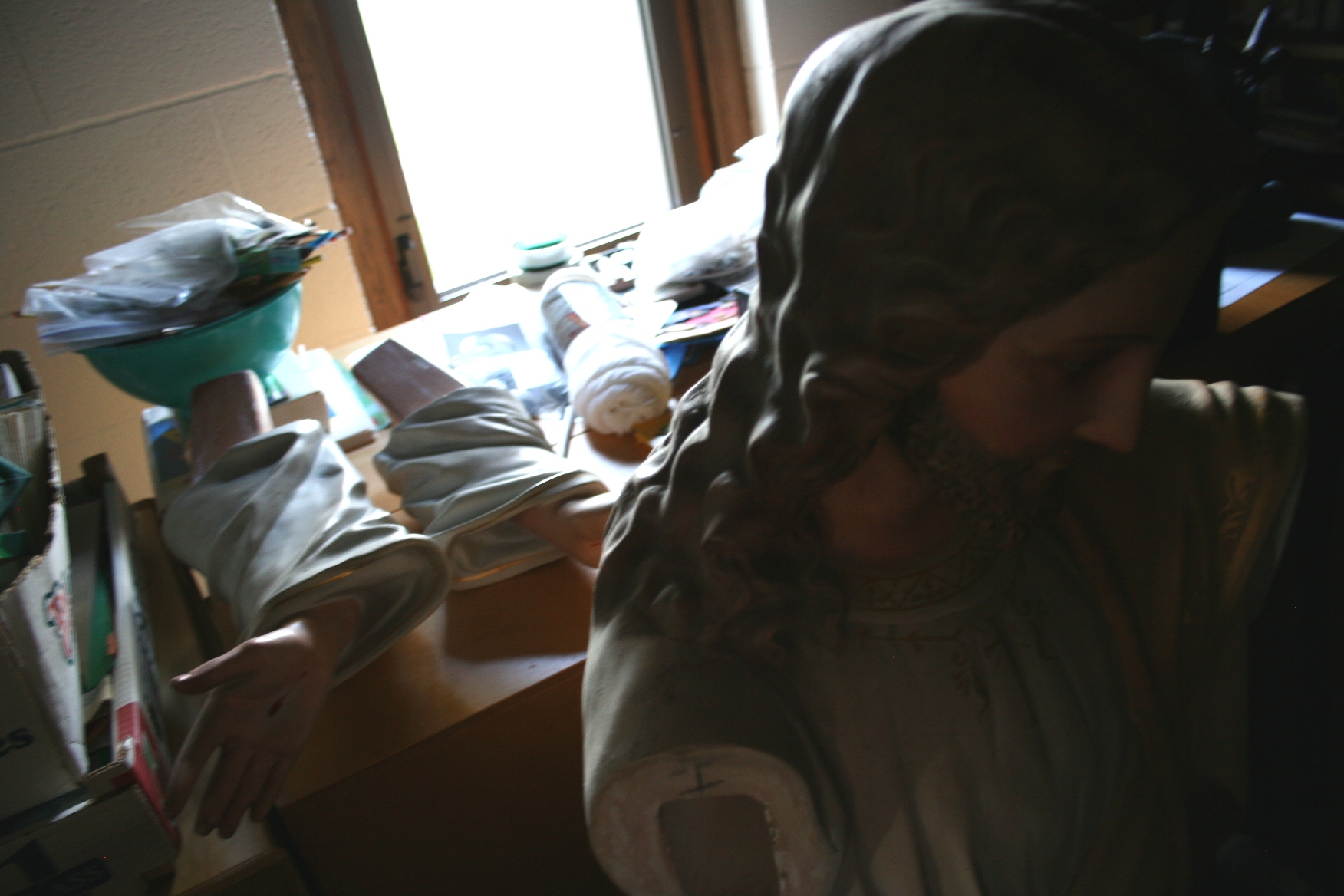
THE ARMLESS JESUS stood there, shoved into the back corner against a desk in the dark fellowship hall packed with misplaced pews.

That’s when I panicked, thought for a moment that Jesus had lost his arms in the July 1 storm, until I realized his appendages had been removed, not broken.

To the right in this photo, stands Jesus. His arms were removed and lie behind him on a desk.

The statue of Christ has been my greatest concern ever since a series of downbursts with winds of 90 – 100 mph ripped half the roof from St. John’s Lutheran Church, exposing the sanctuary and Jesus to the heavens.

One month after that strong windstorm, I returned to my hometown of Vesta in southwestern Minnesota and viewed the damage I’d only seen in photos. The town looks better than I’d feared, although I’m certain if I’d been there right after the storm, I wouldn’t be writing that.

St. John's, hours after the July 1 storm with half of the south roof ripped off by high winds. The roof fell against and cracked the bell tower, which has since been taken down. Photo courtesy of Brian Kletscher.

It’s the damage to St. John’s that I knew would impact me the most emotionally. My worries centered on that Jesus statue, the single remaining visual reminder of the old 1900 church building across town where I was baptized and confirmed and worshipped for the first 18 years of my life. In May of 1982, I was married in the new brick church built in 1974.

Jesus, who once blessed us with outstretched arms from the altar of the old church, was alright. For that I was thankful.

As St. John’s members await word from an engineer on whether the damaged building is structurally-sound or will need to be demolished, they are attending their sister church, Peace Lutheran, in Echo seven miles to the north.

That seems to be working for now. But come winter, when travel can sometimes be difficult and dangerous on the southwestern Minnesota prairie due to blowing snow, options to worship in Vesta may need to be considered. Or maybe not. Pastor Dale Schliewe doesn’t expect the church to be rebuilt by the time the snow flies.

Right now, though, church members are more concerned about getting the building process started. That could include an expansion.

No matter what ultimately happens, this congregation remains a thriving one, attended by many members of my extended family. My great grandfather, Rudolph Kletscher, helped found St. John’s. The first church service was held in his home one mile east of Vesta.

My emotional attachment to this congregation runs deep, rooted in that legacy of faith passed from generation to generation.

I understand that a building does not comprise a church. Yet, when I walked into the empty sanctuary of St. John’s, gazed upward at the tarp covering the missing roof, saw the splintered wood, walked around the pews jammed into the fellowship hall, noticed Jesus standing armless in the corner, spotted the hymnals stacked on a kitchen counter and skirted the pile of debris in the church parking lot, my soul ached.

Inside the sanctuary, you see the damage to the roof, now covered by a tarp. To the right, a stained glass cross centers the worship area in this photo shot at an angle.

One month after the storm, the south side of the roof is covered with a tarp.

A debris pile on the edge of the parking lot includes pieces of steel from the roof and brick from the bell tower.

Another angle of that debris pile shows uprooted trees and, to the east, a house which was damaged.

© Copyright 2011 Audrey Kletscher Helbling
 

St. Mary’s of Melrose, Part II July 17, 2011

STARK CHURCHES appeal to me. The ones with the simple wooden cross, the white clapboard siding, the time-worn pews settled upon plain plank floors.

But the ornate houses of worship likewise snag my soul with crosses of gold, walls of brick and gleaming, carved pews.

One of the many ornate carvings at St. Mary's Catholic Church in Melrose.

I am most comfortable with, most accustomed to, the unadorned churches of the Lutherans, my religious heritage. We keep things simple. No cluster of burning candles. No wafting incense. No pools of holy water. Minimal, if any, gold.

Perhaps for that reason, when I step into an historic Catholic church, I feel like I’ve entered a foreign land. I am often awed by the opulence, by the details that visually overwhelm me.

The side aisle on the left leads to an ornate altar in St. Mary's which is on the National Register of Historic Places.

That’s exactly how I felt upon entering St. Mary’s Catholic Church of Melrose, featured here in an earlier post. Overwhelmed. But good overwhelmed. Because I could not possibly present all of the images I wanted to share with you in a single post, here are the remainder.

No matter your religious affiliation, you simply have to appreciate a place like St. Mary’s. What beauty. What art. What history. What heavenly splendor.

This was the top or bottom of something. Can't recall what. But it sure is stunning.

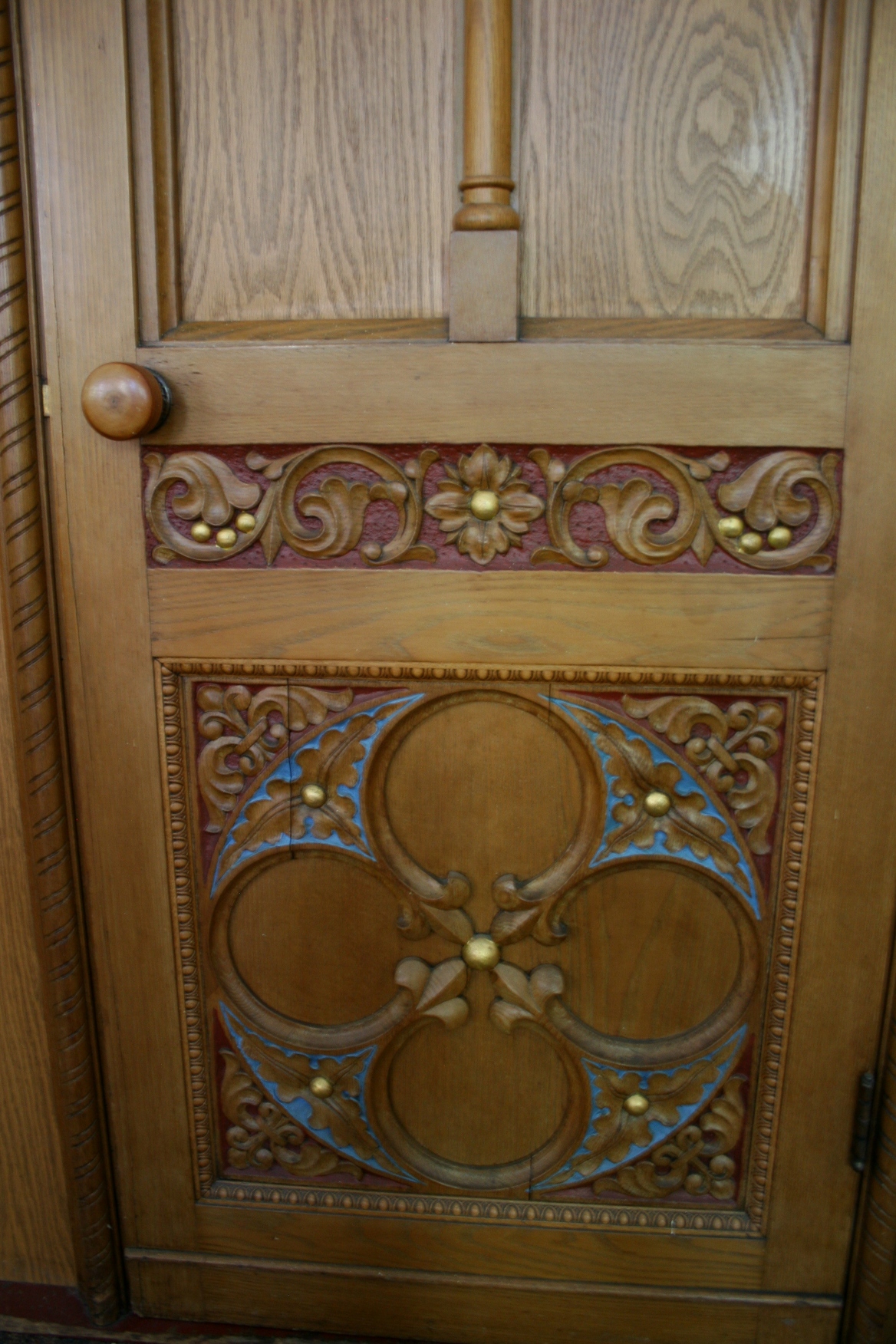
Look at this gorgeous, carved door, will you?

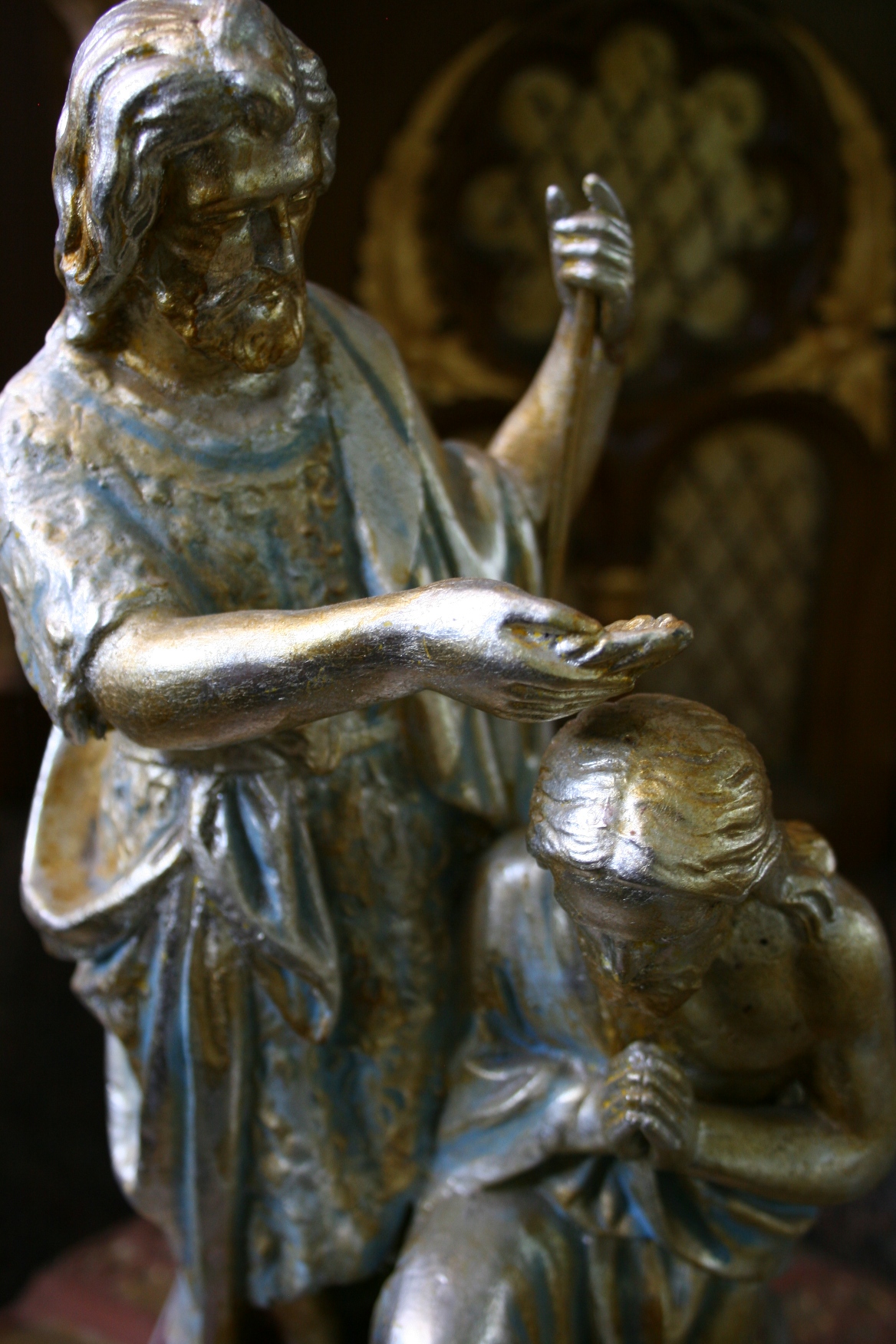
Golden statues. Beautiful.

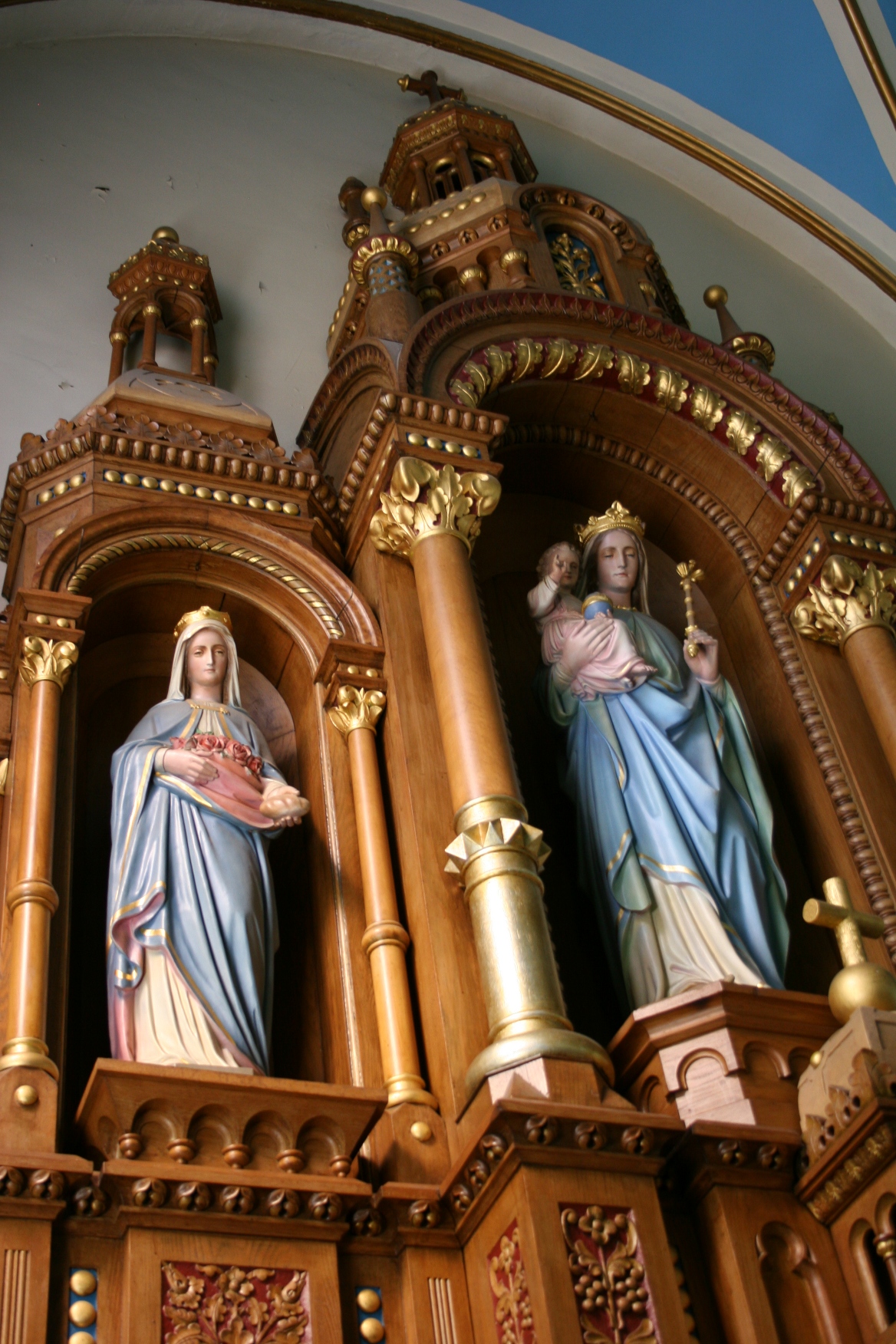
Just look at this detailed side altar. I could have spent hours in St. Mary's.

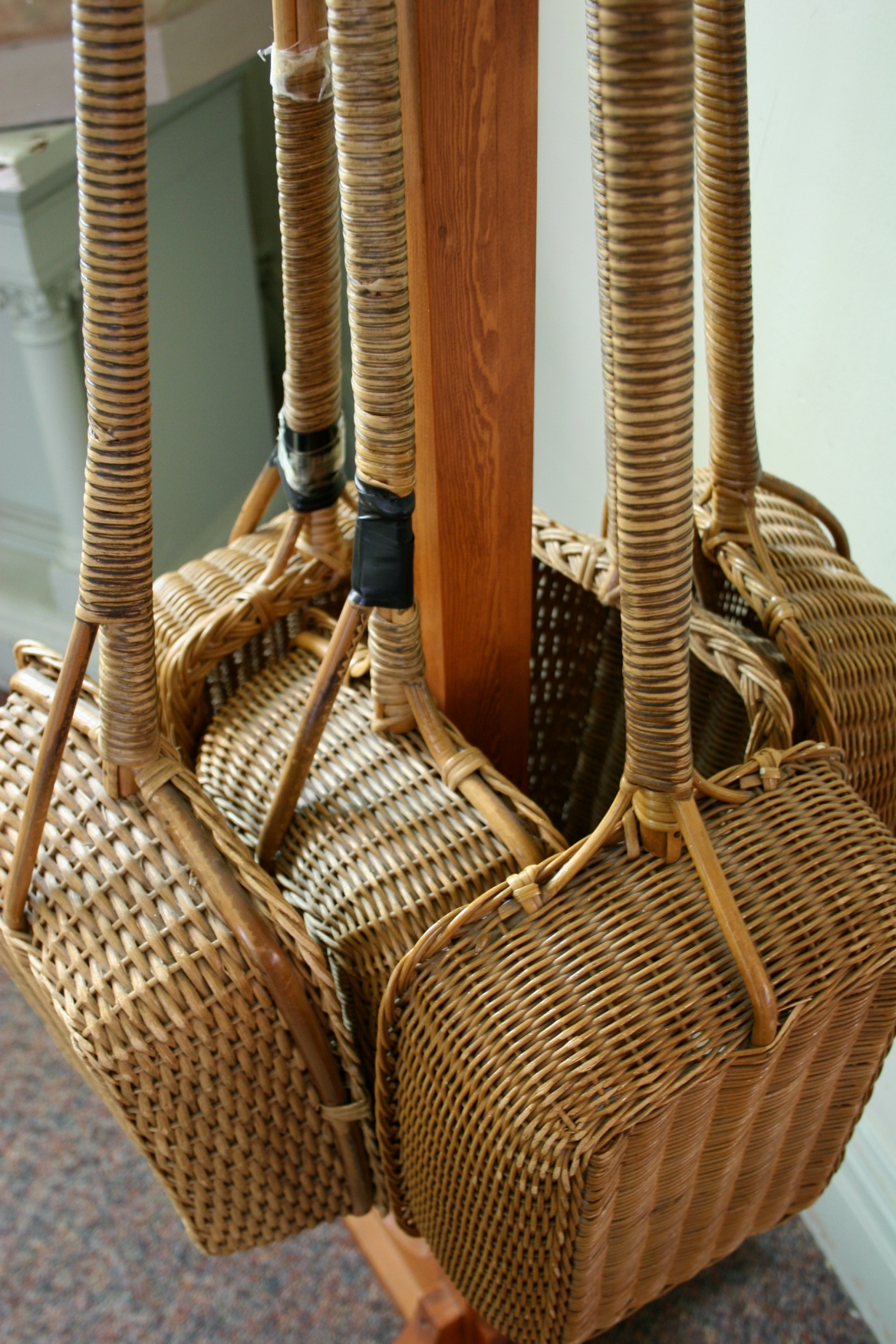
And then I discovered these collection baskets hanging from a rack. We Lutherans don't have wicker baskets with long handles. These contrast so sharply with the the ornateness in the church and that is why I so appreciated this grouping.

St. Mary's Catholic Church stands strong as a fortress in Melrose, next to the turkey plant, its towering steeples visible from nearby Interstate 94 in west central Minnesota.

© Copyright 2011 Audrey Kletscher Helbling
 

Oh, blessed summer eve on a Minnesota farm June 30, 2011

If you look closely, you will see the farm dog in front of the 1915 farmhouse to which a machine shed was added.

WIDE SWATHS OF SHADOWS sliced across the farmyard as the sun edged toward the horizon on a whisper of a summer night.

The old farm dog, tethered to a chain next to the 1915 farmhouse-turned-granary-turned storage shed, rose from his resting place on a paw-worn patch of grass. Water and food bowls rested on the single cement step nearby, within his reach.

The dog didn’t bark, didn’t lunge, just let me be as I moved into his territory. He stood, paced and then eased onto his haunches, acknowledging my non-threatening presence as I dropped to one knee to view the world from his perspective.

I wanted only to photograph this guardian of the farm on a summer evening as absolutely picture-perfect as any day you’ll get in Minnesota. Still. Serene. Colors sharp like new crayons. Sunlight, eye-blinding bright to the west, on the other side of the barn, outside the dogs’ reach.

This June evening, for these few hours, this watchdog could not roam the farmyard. He could only eye the visitors seated across the gravel drive at a picnic table. Friends gathered for pizza and lemonade sweetened with fresh strawberries and then more berries atop angel food cake and ice cream topped off with whipped cream.

Laughter punctuated conversation. Then bibles flipped open to words written upon pages thin as butterfly wings. The shrill call of a cardinal pierced the silence between ideas shared and scripture read.

Then, as the farm dog watched, the friends bowed their heads in a prayer of thanksgiving—gratitude to God for protecting the owners of this farm from serious injury in a motor vehicle accident the previous day. A rear-end collision. Truck spinning, tipping onto its side along a Minnesota highway. Glass in teeth and waistbands and hair.

None of this the guard dog knew on this most blessed of summer evenings on a Minnesota farm.

TODAY, JUNE 30, has been designated as “Maroon Day” in Minnesota, historically the deadliest day on our state’s roadways. Since 2000, more fatal crashes have occurred on this final day of June, leading into the July Fourth holiday, than on any other day of the year. Statistics show 30 fatal crashes resulting in 35 deaths.

All of Minnesota’s nearly 600 state troopers, in their signature maroon vehicles, will be patrolling today.

Buckle up. Drive carefully and be safe.

© Copyright 2011 Audrey Kletscher Helbling
 

Hail St. Mary’s of Melrose June 26, 2011

The steeples of St. Mary's Catholic Church of Melrose.

I STOOD THERE. Just stood there. For minutes, taking in the glorious splendor before me.
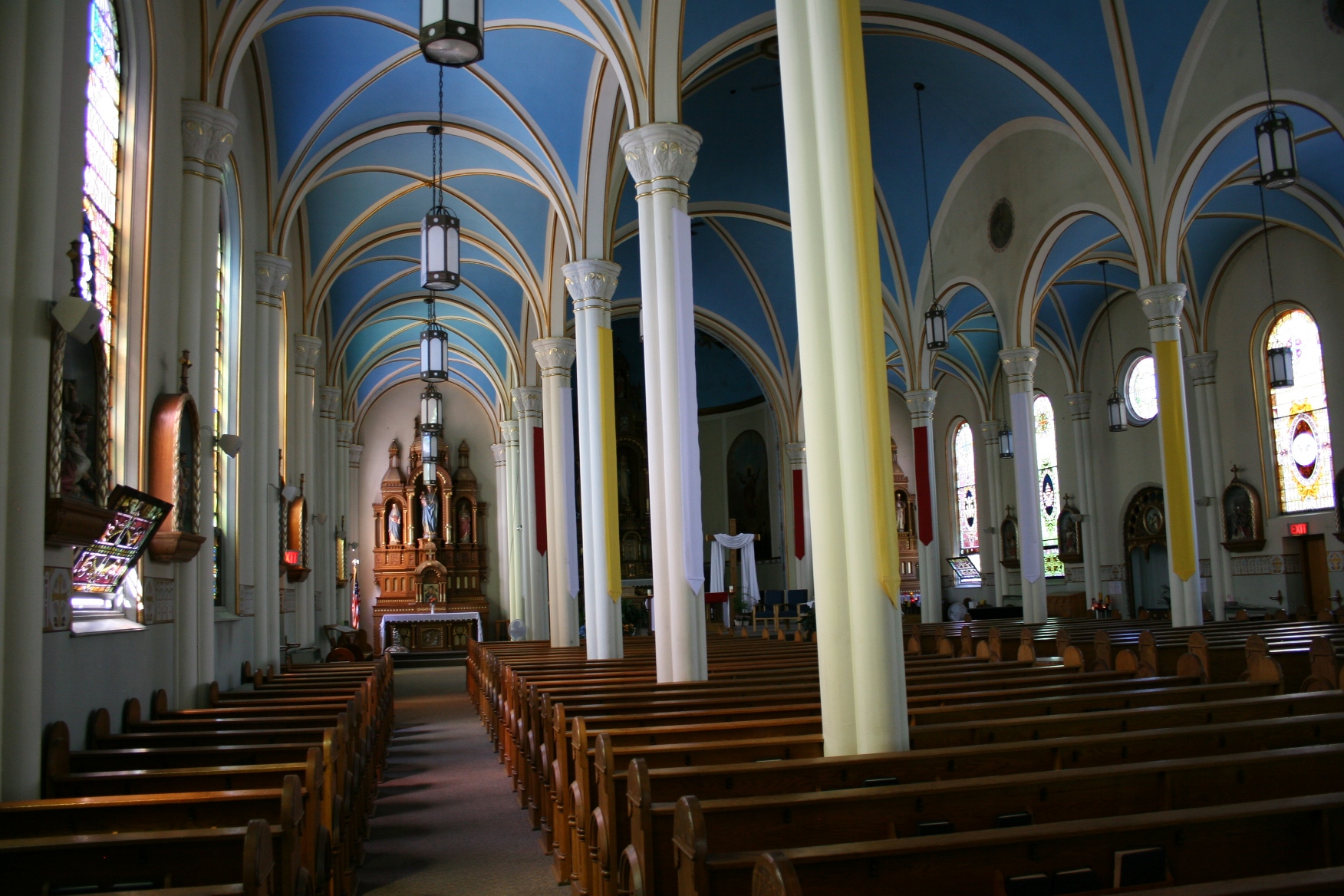
The cornflower blue of the arched ceiling. The pillars. Pews—endless carved pews stretching from the fonts of holy water to the steps leading to the altar.
A view from the back of St. Mary's Catholic Church looking toward the main altar.

I didn't even try to count the hand-carved pews that grace this church. But they are many.

A stone font holding holy water at the back of the church.

Such beauty. Such holiness. Such wonderment.

Opulent, stained glass windows bedecking the sanctuary like jewels on a crown.

One of too many stained glass windows to count.

Statues fit for the finest of museums.

This statue of Jesus and Mary sits at the back of the church.

And then I moved, not sure which direction to go, wondering how I could possibly see every detail. Prayerful hands. Flickering candles. The frayed ends of the bell pull. Gold-leaf stenciled crosses. Worn wood. Angels in flight above the altar.

Clustered candles of prayer at St. Mary's.

Bell ropes dangle by the balcony stairway. Two stairways lead to the balcony.

A gold-leafed stenciled cross borders a side wall of the sanctuary.

My eyes swept across the Church of St. Mary’s, or St. Mary’s Catholic Church of Melrose. Choose the moniker you prefer.

The name and the denomination of this 1898 church mattered not to me. I cared only for the heavenly feel of this holy place.

How could I not be impressed by this multi-steepled house of worship next to the turkey plant and soaring above the landscape 100 miles northwest of the Twin Cities?

How many times, if you travel Interstate 94 in central Minnesota, have you noticed those steeples while zipping by Melrose, but never taken the time to drive into town? Placed on the National Register of Historic Places in 1993, this Catholic church is worth a stop if you appreciate craftsmanship, art, history and reverent beauty beyond belief.

The church rises above the land, defining Melrose.

The 113-year-old building was constructed by the parishioners of St. Boniface and renamed St. Mary’s when St. Boniface and St. Patrick’s parishes merged in 1958.

History runs deep here. You will see it in the hitching post out front, smell it in the incense, hear it in the creak of steps leading to the locked balcony.

And if you listen closely, you can almost hear the whispered prayers of those who have come here on bended knees to lift up their sorrows to the Lord.

#

I COULD NOT POSSIBLY share my many photos of St. Mary’s with you in one blog post. Please check back for more images in a future post.

© Copyright 2011 Audrey Kletscher Helbling