Minnesota Prairie Roots

Writing and photography by Audrey Kletscher Helbling

In loving memory of Rhody C. Yule June 16, 2011

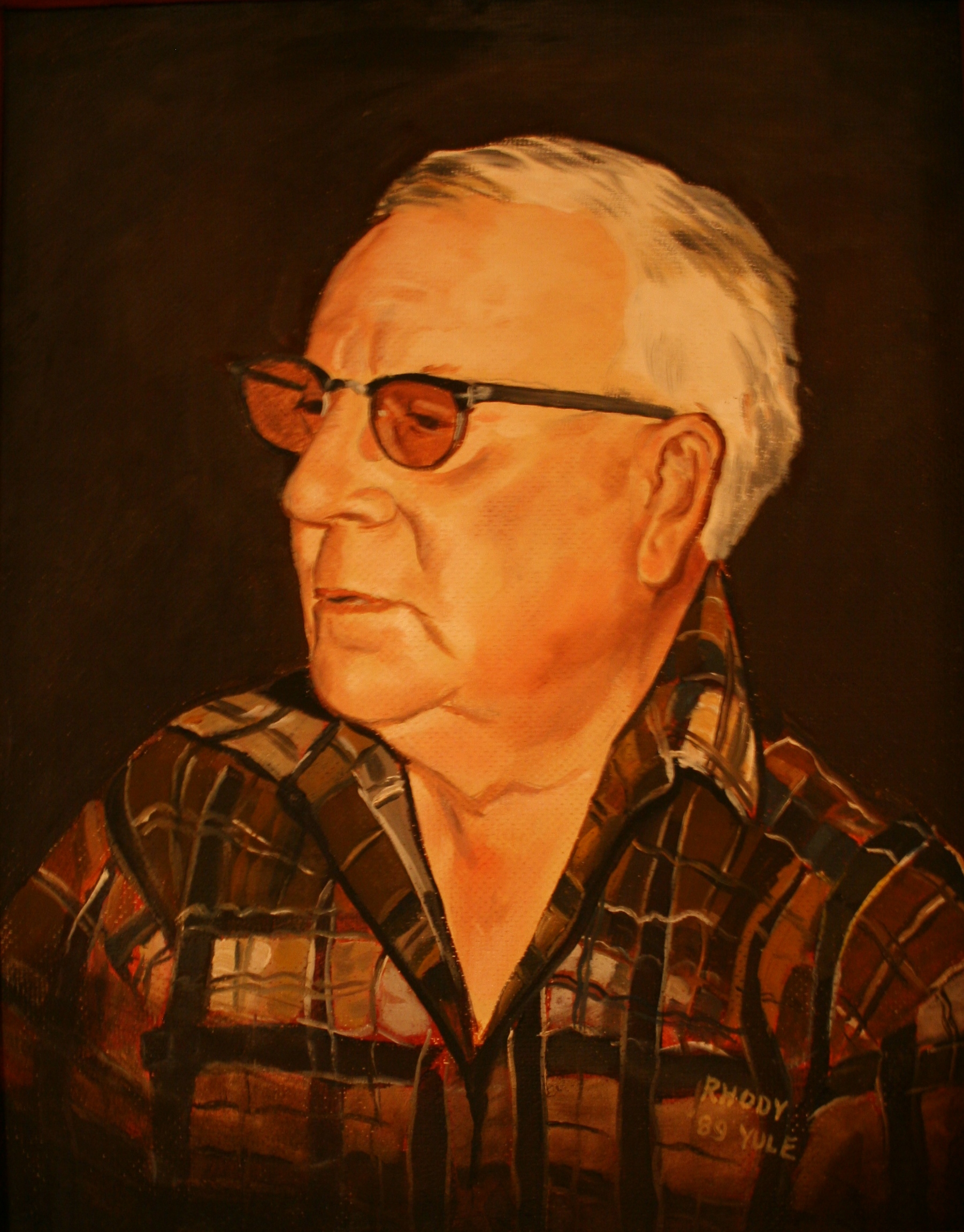
Rhody's self-portrait, 1989

WEDNESDAY AFTERNOON we eulogized and buried my 92-year-old artist friend, Rhody Yule.

I have known Rhody for less than two years, having met him quite by happenstance in the fall of 2009. While driving by his rural Faribault home, I spotted celebrity portraits hanging on his garage, stopped to photograph them and then went to his front door.

There I met this sprite of a man and his yapping dog, Jo-Jo.

With his dog shut in the kitchen because I feared being bitten, Rhody shared the story of his life with me and my husband, Randy, strangers until then. I did not hesitate to ask about the paintings hung in his cozy living room and on his garage. He did not hesitate to share that he had been painting since age 16.

Even on that first visit, I learned so much about a man who would come to mean so much to me. His wife, Shirley, had fallen and was living in Hastings. Oh, how he missed her. His only child, Paul, died in a car accident in 1977 at age 23. Oh, how he missed him.

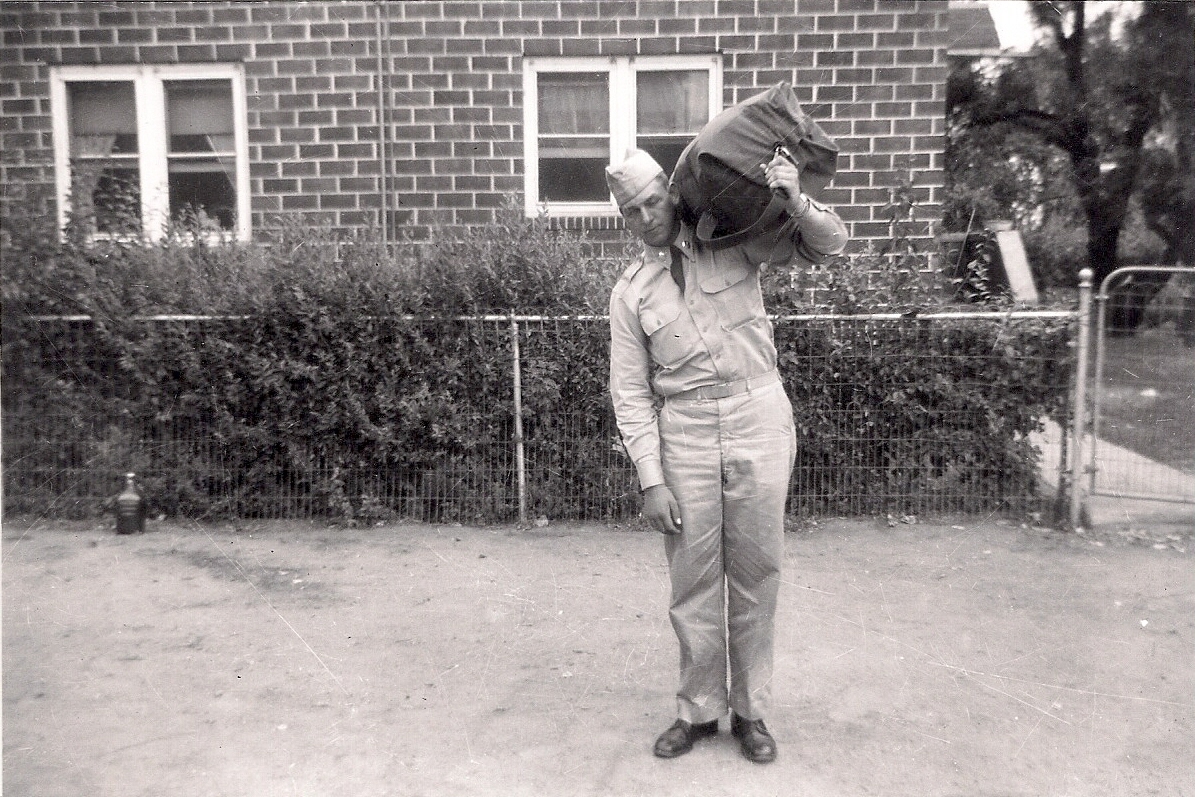
Rhody told us about his military service, including time in Nagasaki, Japan, cleaning up after the atomic bomb. He showed us photos and paintings on that first visit and grass-woven sandals from Japan snugged inside a wooden box he had crafted.

I thought to ask, thank God, if he had ever publicly exhibited his art. He hadn’t. That became my mission, to get a gallery show for this life-long artist. His first mini-show, of his religious paintings, came in September 2010, when he was invited to Christdala Church near Millersburg. He had, many years prior, done a painting of the church. Randy and I coordinated that exhibit, then loaded the paintings into our van and set them up outside this historic country church. Rhody and I spoke briefly at that event and he assured me that, despite our nervousness, we did well.

At Christdala, I distributed mini fliers for his upcoming gallery show at the Paradise Center for the Arts in Faribault. I had applied for the exhibit on his behalf and, in January, with the assistance of family and friends and volunteers, “A Lifetime of Art: The Rhody Yule Collection” opened to a packed gallery.

In typical Rhody fashion, this man of gentle spirit and quiet humility took it all in, never once boasting, but enjoying every second of his evening. This marked a shining moment for him in his 92 years of life and I was honored to have helped him achieve this public recognition of his art.

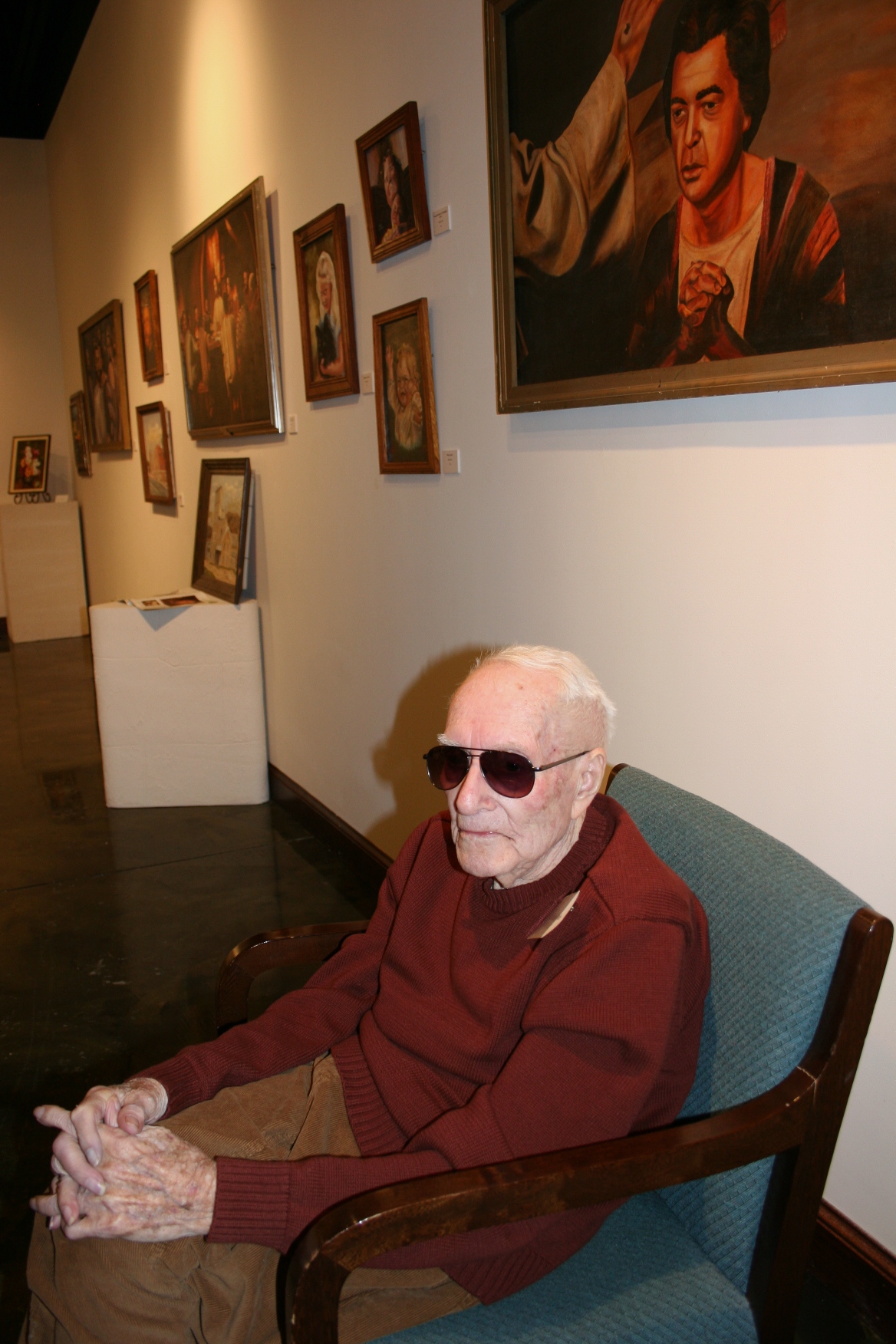
Rhody, minutes before his gallery show opened in January 2011.

RHODY’S FUNERAL SERVICE on Wednesday, while tinged with grief, also caused us to laugh out loud at his humor. We reminded each other of his forgiving attitude, his unshakable faith, his always positive attitude.

Just days before his death,  my husband Randy and I visited one last time with Rhody. Physically his body had deteriorated to a shell of the man he had been, but his mind and spirit remained strong. We saw him on a good night.

In that last hour with our friend, we reminisced about his gallery exhibit as I, one-by-one, held up photos I had taken that evening. He was too weak to grasp the images. And then we paged through several of his photo albums with pictures of a younger Rhody, a freckle-faced Paul, a beautiful Shirley.

I thought to myself, “You will be with them soon, Rhody. Soon.”

Rhody did not fear death. Yet he wished to live, even thought he might recover. I knew better. When I mentioned Millersburg, Rhody was ready for a night out and a beer at his favorite eating establishment there. Family and friends celebrated with him last fall in Millersburg at a patriotic-themed freedom party. His idea. His celebration after overcoming a recent, temporary loss of his personal freedom.

Rhody had more living to do. I learned at his funeral that this WW II veteran wanted to travel on a Washington D.C. Honor Flight to see the war memorials. It breaks my heart that he did not live long enough for that to happen.

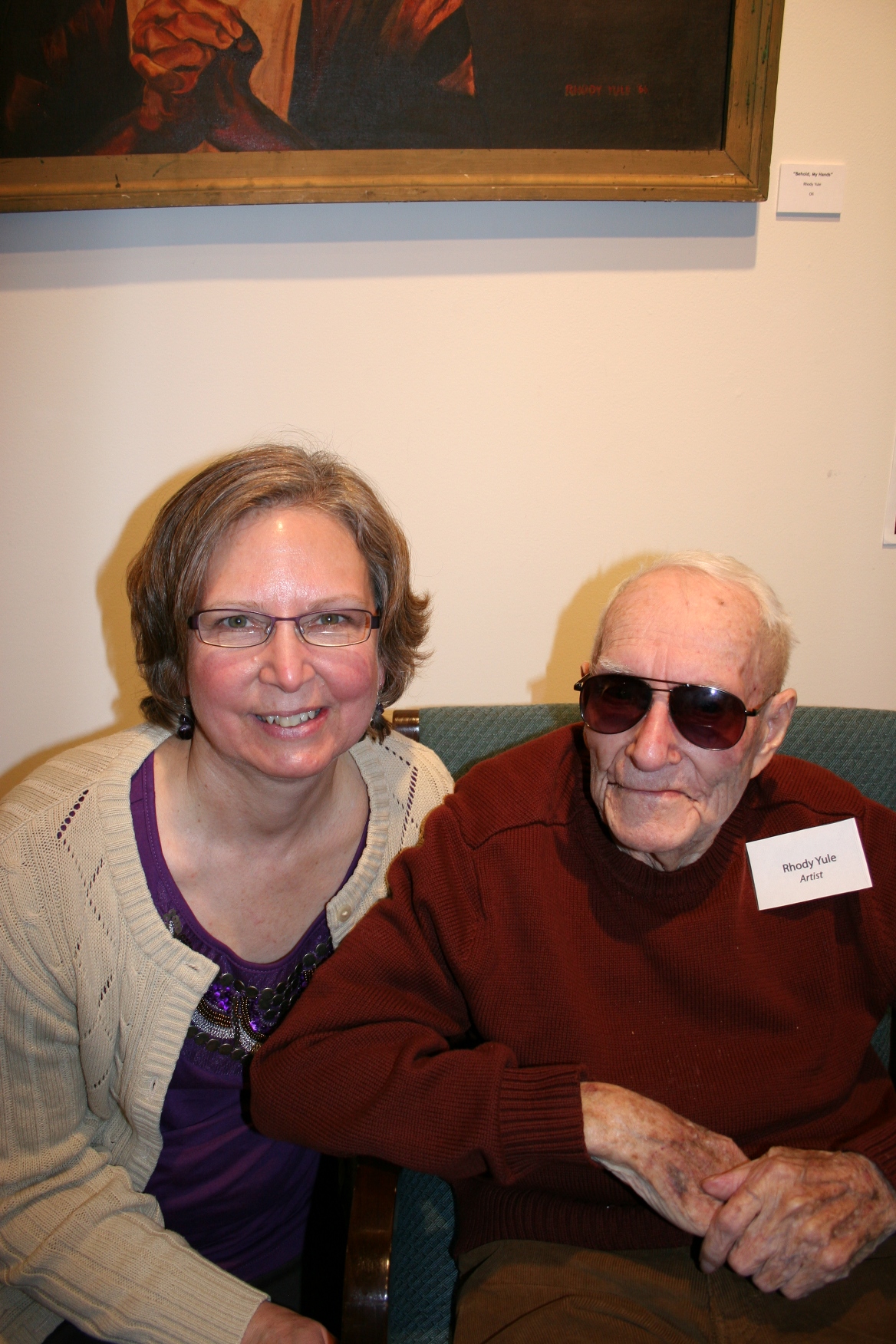
Me and Rhody at his opening night gallery reception.

He prayed every night for the soldiers to come home.

He was smartly dressed for burial in his military uniform, which hung loosely on the gaunt body of a man who once stood strong in service to his country.

Those honoring his memory were directed to donate to the Rice County Veterans Memorial Expansion Project.

A spray of patriotic red and white flowers adorned with a blue ribbon decorated Rhody’s carved wooden casket, a casket so appropriate for a man who crafted wooden boxes and also picture frames (for his art). Had he been physically capable, I expect Rhody may have built and carved his own casket.

But Rhody is gone now and, as the eulogist, the Rev. Ron Mixer, said, Rhody is busy painting sunrises and sunsets in heaven. He suggested we look for a signature “Y” in the clouds.

Rhody has left those of us who knew and loved him with more than his legacy as an artist and the thought that he is still painting. He has gifted each of us with his spirit of forgiveness and kindness, his humor and humility, his desire for fun, a love of life and a faith that endured challenges.

I knew Rhody such a short time. But how blessed that time has been.

We drove through nearly-torrential rain Wednesday afternoon to the rural Cannon City Cemetery to bury Rhody beside Shirley. As we gathered under the tent and next to it, sheltered by umbrellas gripped tight against the whipping wind, members of the Central Veterans Association fired an honorary salute to their brother soldier. Taps mourned. An aging veteran presented a folded American flag to Rhody’s step son in a voice choking with gratitude and emotion.

Soon the rain stopped and the sun wedged through the clouds as if Rhody was there, telling us to wipe away the tears. He would have wanted us to celebrate his life, and we did, but only if we didn’t brag about him.

Rhody's favorite painting, "The Last Supper," which he painted in honor of his beloved son Paul.

© Copyright 2011 Audrey Kletscher Helbling


BibleSticks and battle prayers May 28, 2011

A tattered prayer book carried by my father to Korea, where he fought on the front lines during the Korean Conflict. Touching these pages, I feel the faith of my soldier father.

LAST SUNDAY AFTER SERVICES at my church, Trinity Lutheran in Faribault, we watched a brief video about BibleSticks.

Never heard of them? I hadn’t either, until viewing that clip.

“The Military BibleStick is a digital audio player that is pre-loaded with a dramatized recording of the entire New Testament,” according to the Faith Comes by Hearing website. The organization, dedicated to getting the Word of God into the world, “offers 557 Audio Scripture recordings in 553 languages reaching more than 5 billion people in more than 185 countries.”

Part of that outreach includes the U.S. military. Demand is great for the 3 ½-inch long, less than one inch thick, camouflaged, battery-operated BibleSticks, I learned via the video. For whatever reason, the BibleSticks must be processed through military chaplains.

With a $25 donation, we could give a slip-in-the-pocket, portable New Testament to military men and women.

Although I personally don’t know of anyone who has used a BibleStick, I do understand the importance of access to Scripture, especially for our soldiers.

Flashback to February 1952, when my father, Elvern Kletscher of Vesta, was drafted. Less than a year later, he found himself in the mountains of Korea, a U.S. military infantryman fighting on the frontline during the Korean Conflict.

My father, Elvern Kletscher, preparing to leave his Vesta farm home in April 1952, six weeks after he was drafted.

On February 26, 1953, he was struck in the neck by shrapnel at Heartbreak Ridge. Later, he would be awarded the Korean Service Medal with 3 Bronze Service Stars, the National Defense Service Medal, the United Nations Service Medal, the Combat Infantry Badge and the Purple Heart.

During those combat days, when my dad feared for his life, when he was forced to shoot the enemy or die, he relied on his deep faith in God.

My Dad's worn copy of God Our Refuge.

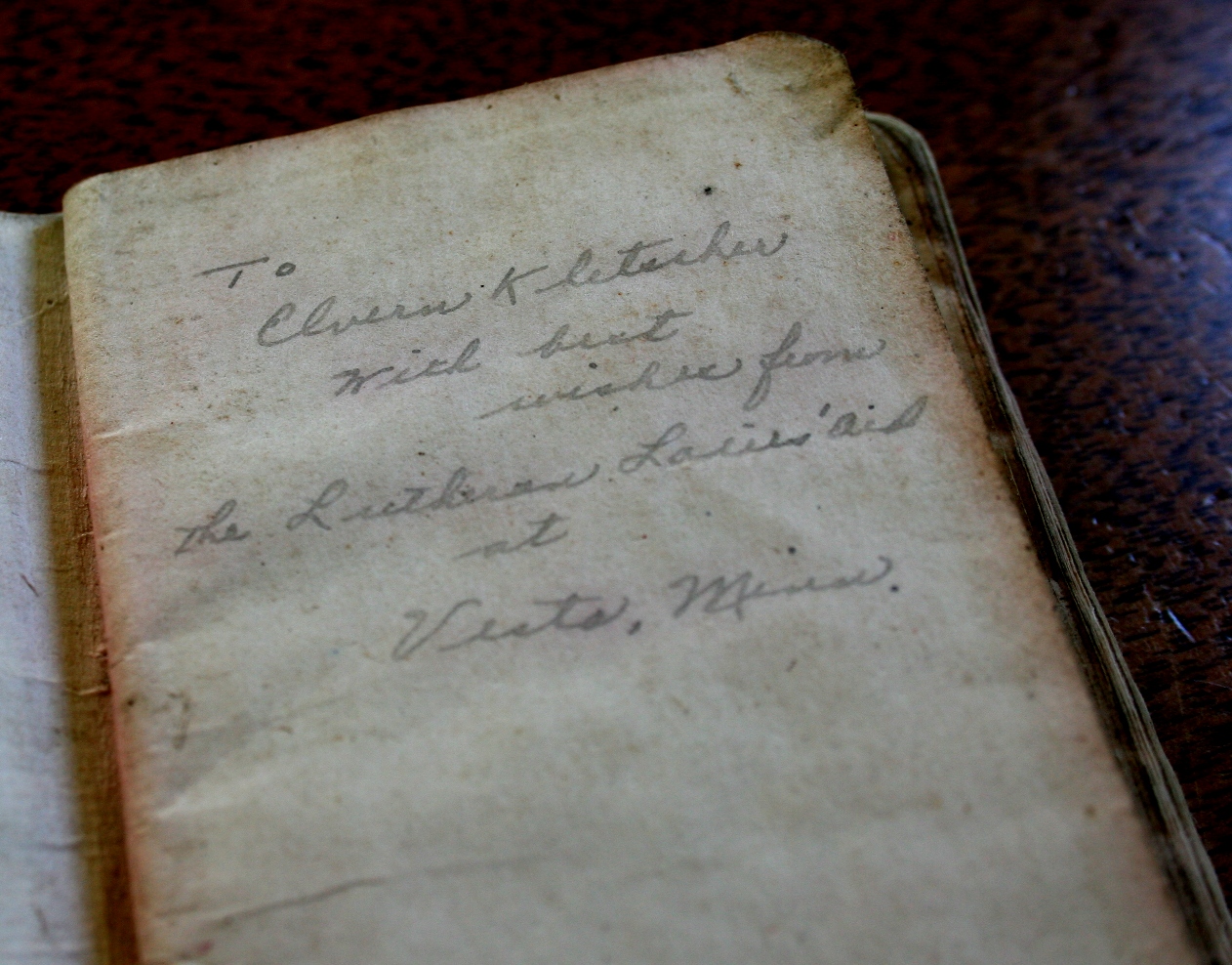
And he carried with him a 3-inch by 4 ½-inch black book, God Our Refuge. A gift from the St. John’s Lutheran Ladies’ Aid of Vesta, the book includes gospel readings, devotions, meditations, prayers, hymns and more.

Within the pages of that volume, my dad found solace, hope and comfort in the face of constant death.

Now eight years after his death, I cradle the tiny book in my palm, brush my fingers against the brittle, black leather covers, open the curled pages that are loosening from the binding. I think of my father, how he carried this book in his pocket, how he flipped and read the 144 pages, how he prayed while trapped inside the cold earth of a foxhole, while engaging in battle, while lying inside his tent at night.

The inscription reads: To Elvern Kletscher with best wishes from the Lutheran Ladies' Aid at Vesta, Minn.

As I turn to page 117 of my dad’s tattered copy of God Our Refuge, I feel forever connected to him, my fingers touching the paper he touched, reading the words he read 58 years ago as a young soldier in battle:

“In Thine arms I rest me;

Foes who would molest me

Cannot reach me here.

Though the earth be shaking,

Every heart be quaking,

Jesus calms my fear.

Lightnings flash and thunders crash;

Yet, though sin and hell assail me,

Jesus will not fail me.”

HAVE YOU OR SOMEONE you know used a BibleStick? If so, I’d like to hear about your experience with this audio version of Scripture and what it meant to you.

My grandparents, Ida and Henry Kletscher, posing with some of their children, flank my father, Elvern Kletscher, who is about to leave for military service in 1952. My uncle Merlin is the youngest, standing in the front row wearing the bib overalls.

BEHIND EVERY PICTURE, there is a story, including stories about the images of my father and his family, above.

My uncle, Merlin Kletscher, found these two photos in the winter of 2010 while researching for a family reunion. They were tucked inside a worn copy of The Lutheran Hymnal, copyright 1941, published by Concordia Publishing House. That hymnbook belonged to my grandfather, whose name, Henry Kletscher, was inked in gold on the cover. He had taped the edges and binding of the much-used songbook.

The two photos were sandwiched between song 409, “Let Us Ever Walk with Jesus,” and song 410, “Jesus Lead Thou On.”

The latter was one of my Grandpa Henry’s favorite hymns, Uncle Merlin recalls.

“I have not found any other photos or negatives which leads me to think that these pictures were very dear to him,” my uncle says.

Now those photos are also very dear to me. When Merlin handed copies to me last summer, I teared up. Little did my father know then what horrors awaited him on the battlefields of Korea, how his life and death experiences would forever change him.

And my heart ached for my Grandma Ida, standing there beside her soldier son. I wish I had asked her how she felt, how they all felt. Now I have only these photos to show me the close love of a family sending their boy off to war.

© Copyright 2011 Audrey Kletscher Helbling


The Passion of Christ in scripture and art April 22, 2011

When evening came, Jesus arrived with the Twelve. While they were reclining at the table eating, he said, “I tell you the truth, one of you will betray me—one who is eating with me.”  Mark 14:17-18

Going a little farther, he fell to the ground and prayed that if possible the hour might pass from him. “Abba, Father,” he said, “everything is possible for you. Take this cup from me. Yet not what I will, but what you will.”  Mark 14:35-36

Now the betrayer had arranged a signal with them: “The one I kiss is the man; arrest him and lead him away under guard.” Going at once to Jesus, Judas said, “Rabbi!” and kissed him. The men seized Jesus and arrested him.  Mark 14:44-46

They put a purple robe on him, then twisted together a crown of thorns and set it on him…With a loud cry Jesus breathed his last.  Mark 15:17 and Mark 15:37

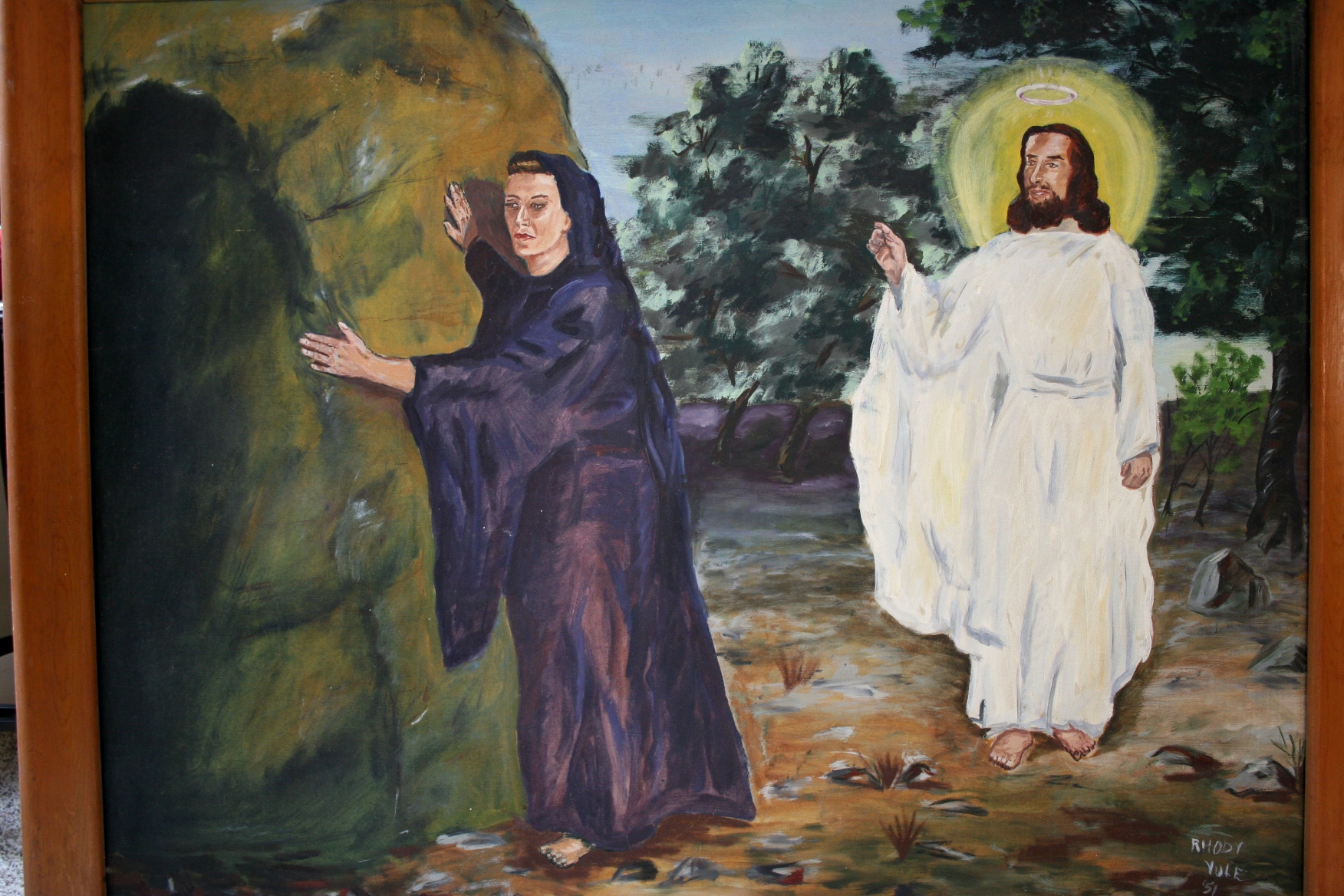
When Jesus rose early on the first day of the week, he appeared first to Mary Magdalene…  Mark 16:9

“He has risen! He is not here.”  Mark 16:6

(Scripture from The New International Version of the Holy Bible.)

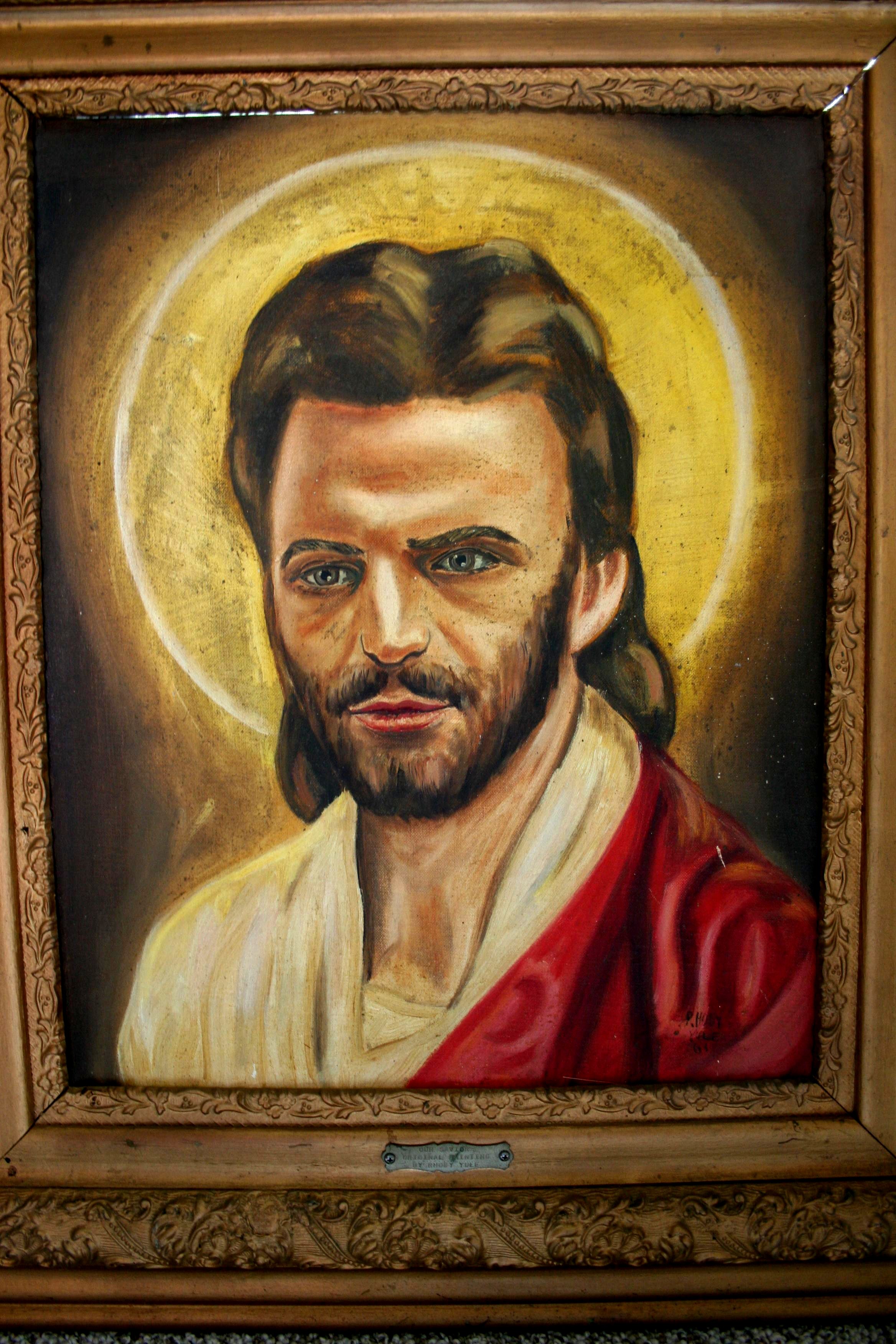
© Photos copyright 2010 Audrey Kletscher Helbling of paintings by Faribault, Minnesota, artist Rhody Yule, copyrights reserved


Presenting Leonardo da Vinci’s The Last Supper at a Minnesota church April 19, 2011

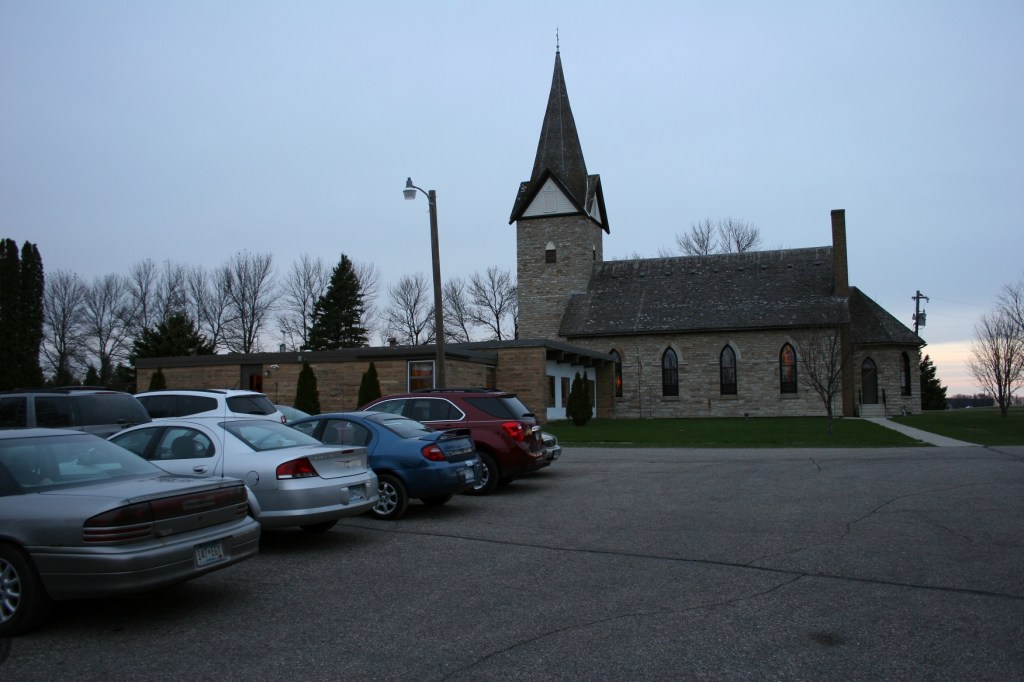
The parking lot at St. John's United Church of Christ, Wheeling Township, is nearly full 20 minutes before the congregation's annual performance of The Last Supper Drama.

AS THE FINAL wisps of daylight dissipate into darkness, the church windows glow with the subtle warmth of welcome on this Palm Sunday evening.

Inside, worshippers are already gathering in the tightly-knit pews, eyes focused on the long table before them.

As I wait, seated in a pew tucked under the rim of the balcony, I study the stained glass windows, the suspended ceiling lights where lady bugs cling, the golden cross high above the altar.

Then, shortly after 8 p.m., after the hymn and the invitation and recitation of The Lord’s Prayer, the drama begins unfolding—for the 49th consecutive year.

St. John’s United Church of Christ, Wheeling Township, is presenting its annual The Last Supper Drama.

The Rev. Lora Sturm provides brief historical background on Leonardo da Vinci’s The Last Supper painting, the visual basis for the evening’s drama.
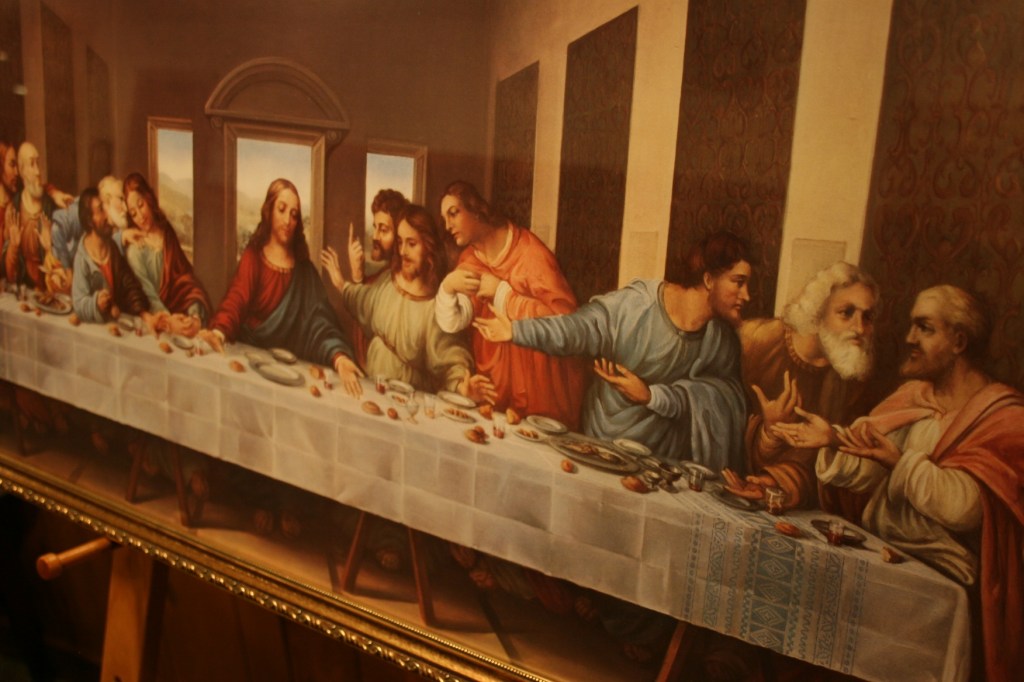
Leonardo da Vinci's painting of The Last Supper inspired the dramatic presentation at St. John's. This print was donated to the church in memory of Arnold Keller.

And then the lights fade, slowly, until a spotlight shines only on the cross. Soon that light and the organ light are extinguished, plunging the sanctuary into near darkness save for the remnants of daylight filtering through the stained glass windows.

A quiet reverence, a sense of anticipation, falls upon the congregation in the moments of silence and darkness before the actors begin filing into the church. Small clusters of men, seemingly engaged in conversation, without words to be heard, walk toward the table set with bread and a chalice and a bag of silver, although I am not sure whether the betrayal money was there initially or was carried in by Judas, the betrayer.

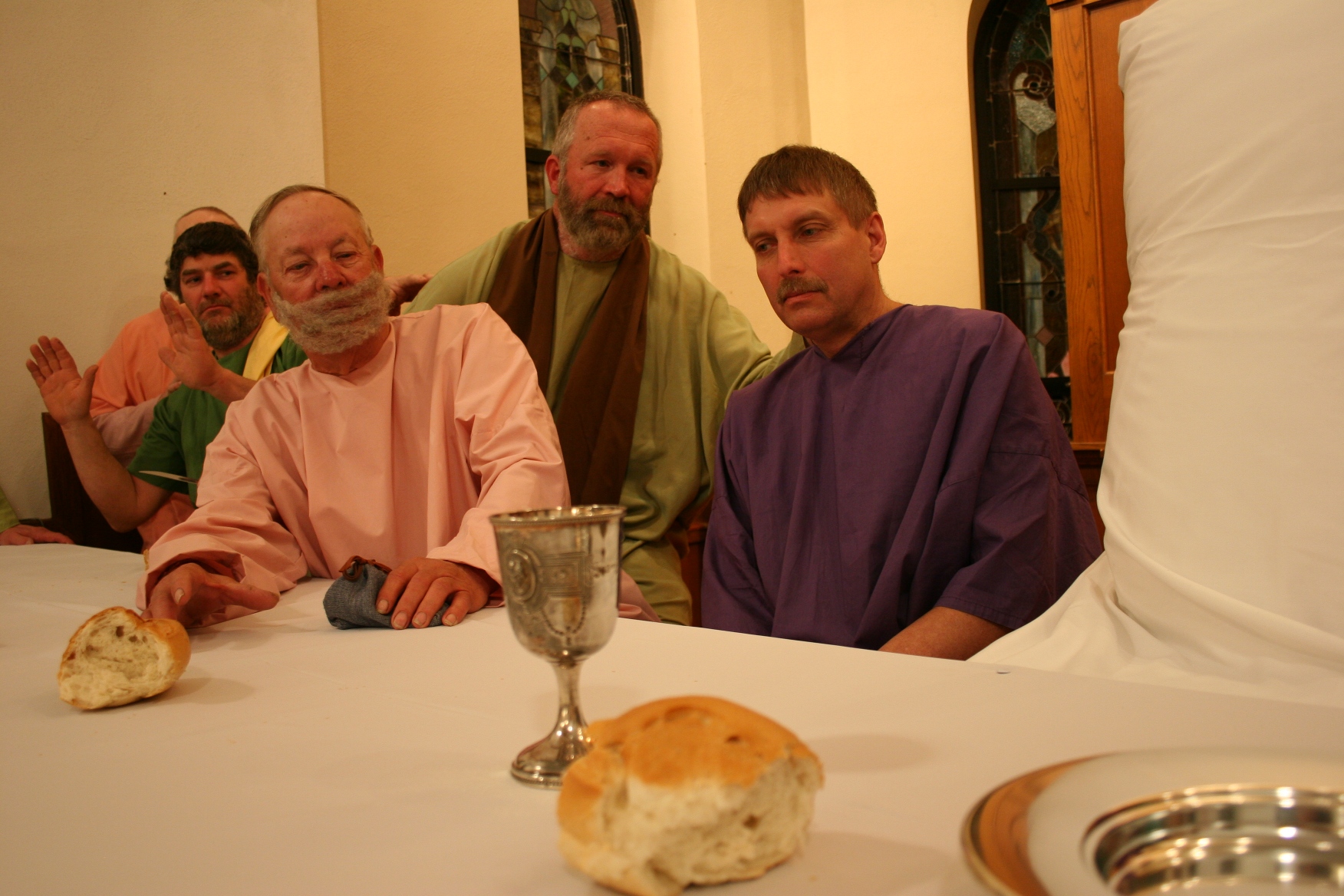
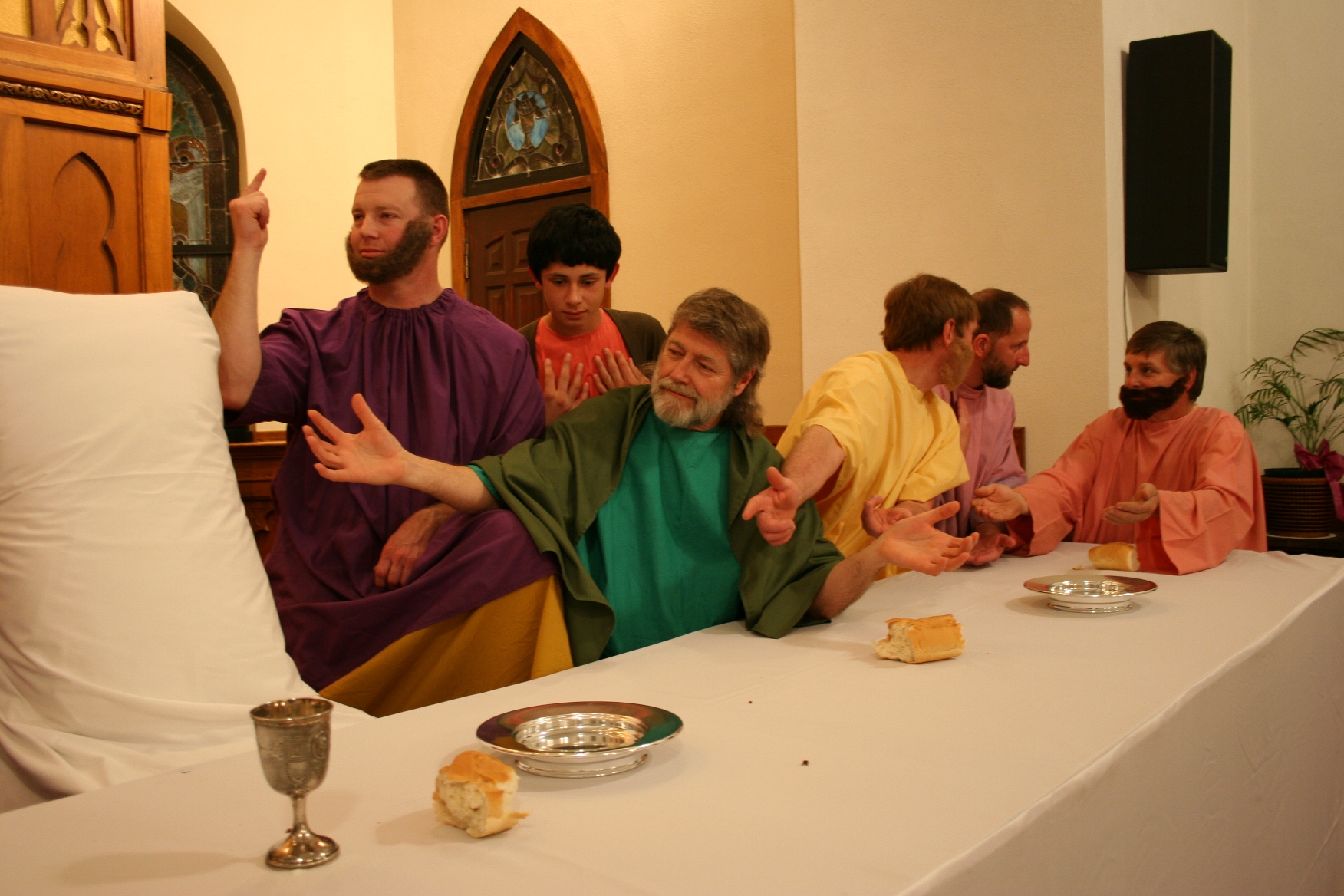
In darkness, these actors, these 12 disciples, pose themselves, replicating the positions da Vinci painted into his famous The Last Supper painting. But no one plays the role of Jesus, represented instead by an empty chair draped in white cloth.
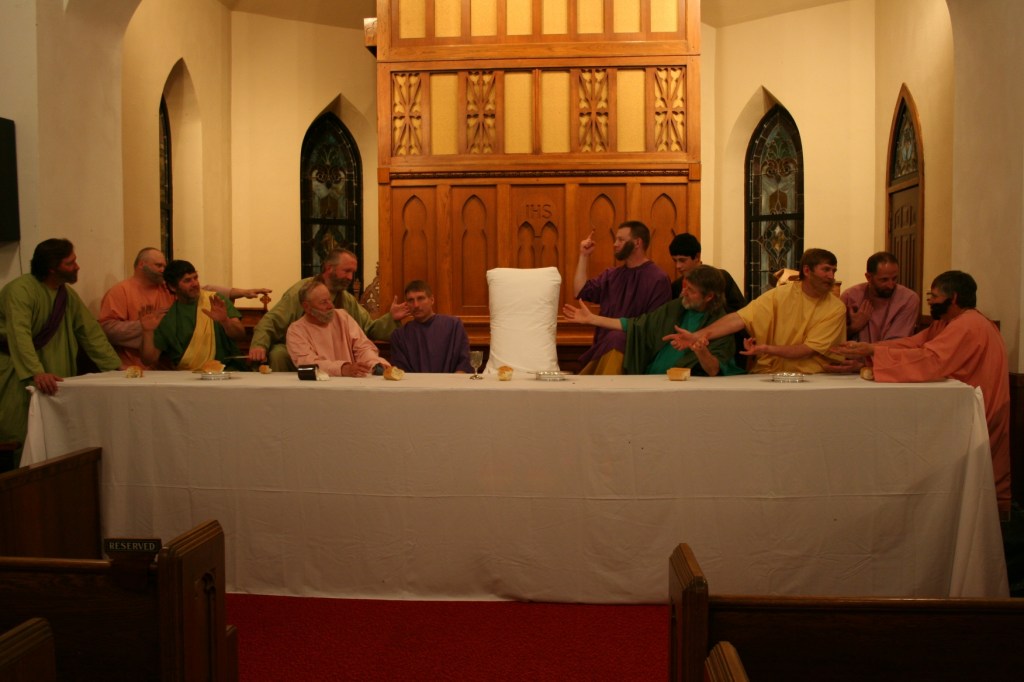
The actors position themselves to replicate da Vinci's The Last Supper, except for Jesus, who is represented by the empty white chair in the middle of the table setting.

When the lights flick on, the frozen scene catches me off guard, even though I’ve previously seen the performance. The stillness fills me with a certain sense of peace, yet uneasiness.

I know what is coming. Words from Scripture that will tell of Jesus’ forthcoming death. The accusation that one of the 12 will betray Christ. It is the moment da Vinci depicts in his art—that moment when the disciples learn that one of them will give up their Lord to death.

Yet, in this script penned by a St. John’s pastor, Walter Rasche, 49 years ago, it is the depth of faithfulness that causes me to pause and look inside. Would I be so faithful as to become a martyr, to die, like the disciples, by stoning or crucifixion or beheading?

In their monologues, each disciple speaks honestly of his struggles, his lack of faithfulness, his travels to preach the gospel, and, then, the blessed words of a better and more abundant life found in following Christ.
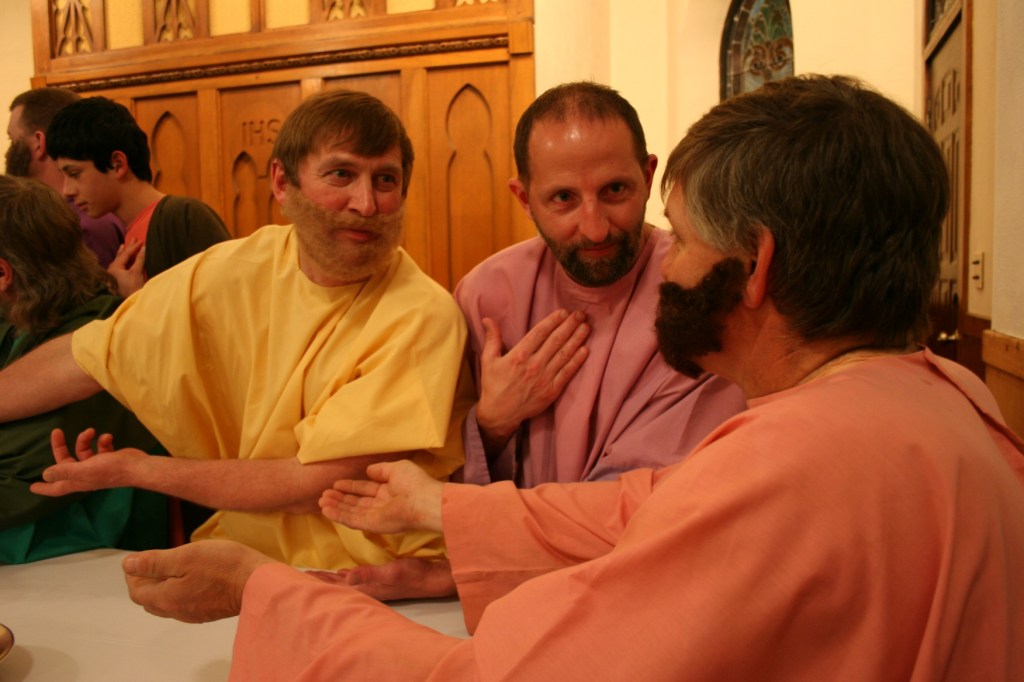
The actors freeze as they role-play the disciples.
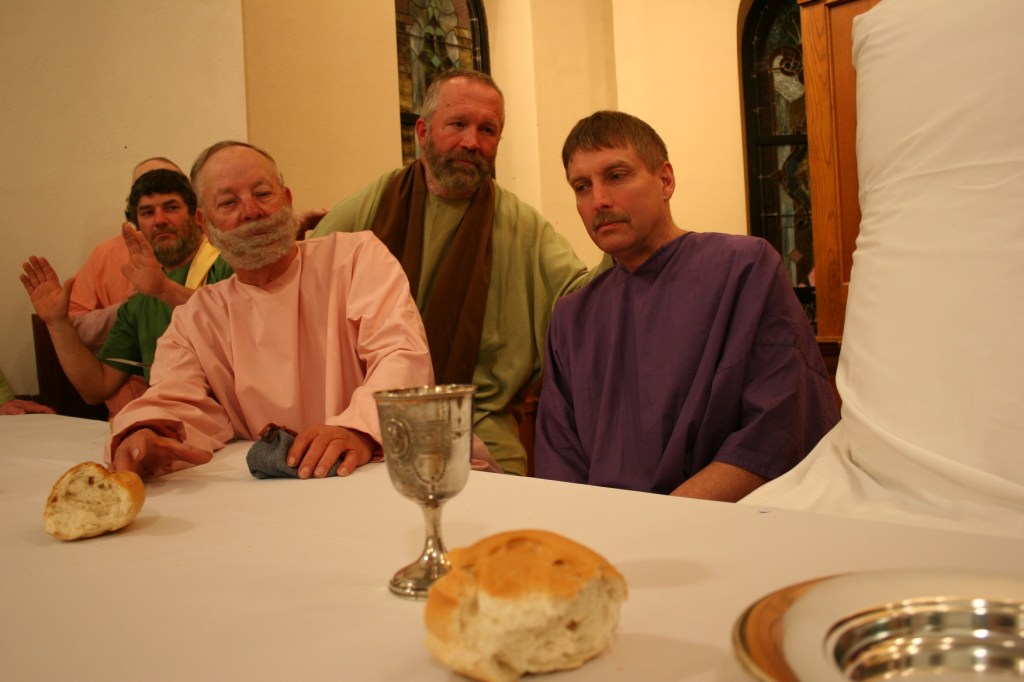
Five of the six disciples sitting to Jesus right with Christ represented by the empty white chair.
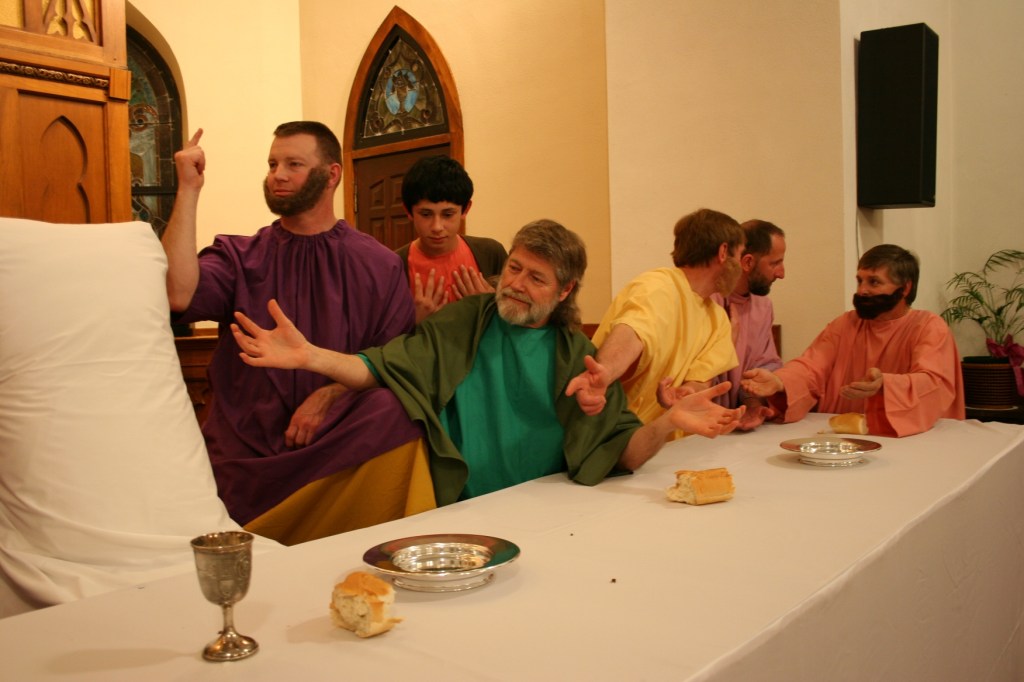
The disciple/actors to Christ's left, including first-time actor, 13-year-old Kyle Keller, the youngest cast member.

Judas’ words—that he regrets betraying Christ with a kiss, turning him over to the authorities for 30 pieces of silver—sting.
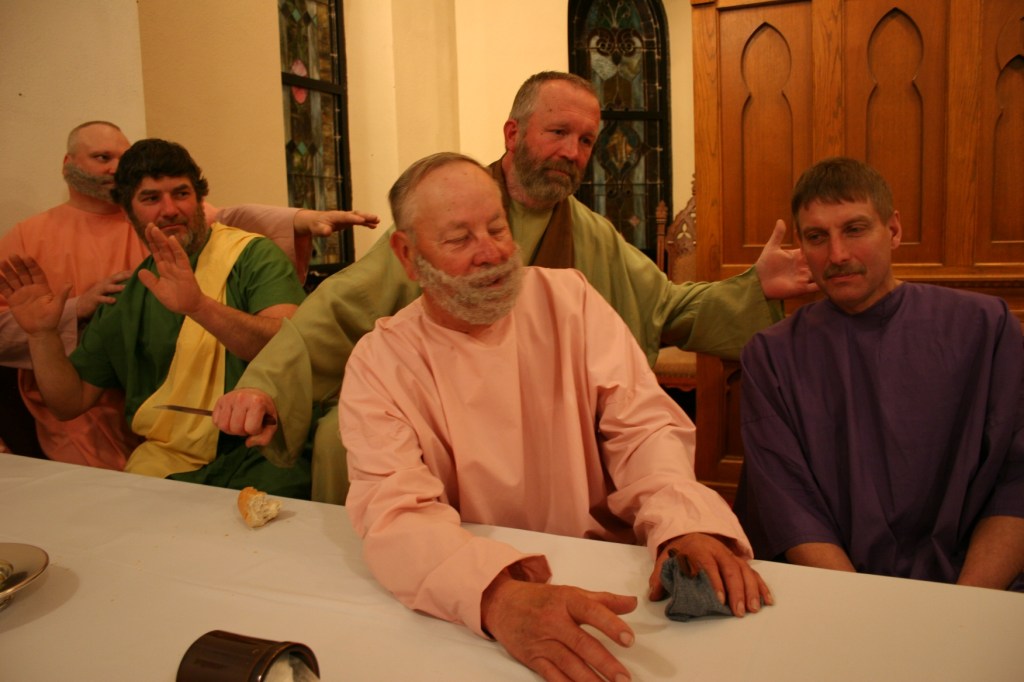
Judas, front, betrays Jesus with a kiss and 30 pieces of silver.

But the pastor’s prayer afterward encourages and uplifts me: “…hear your voice calling us to follow you…you call us to simply follow…”

And then her benediction blesses me with peace: “The Lord bless thee and keep thee…”

As the actors exit, as the worshipers file out of the sanctuary, I linger, waiting for the opportunity to shoot photos, which weren’t allowed during the performance. The men return, pose at the table, some of them telling me how they watched this drama as boys and now role-play as men.

This year a boy-becoming-a-man, 13-year-old Kyle Keller, plays the part of Philip, standing behind his father, Keith, who has assumed the role of Matthew. The seventh grader is the youngest participant ever in the St. John’s re-enactment. He was talked into playing the part, but says now that he’ll be back.

With two casts, the actors (most of them) return every other year to assume the same character roles. Some travel from the Twin Cities back to this, their home church near Nerstrand Big Woods State Park. They speak and gesture like seasoned actors, some growing beards for the occasion, others sporting fake, glued-on facial hair. Sharon Meyer jokes that she has the shaver charging at home, ready to shave off her dairy farmer husband’s beard. Alan Meyer has played the part of Andrew in the evening’s performance.

Occasionally, a new cast member like Kyle is recruited. He’s the grandson of Elsie Keller, who stands after the service next to a print of The Last Supper angled onto an easel in the church narthex. The Keller family gave the print to the church in memory of Elsie’s husband, Arnold, who died in 1999. On Palm Sunday the print is moved from its usual spot in the fellowship hall to this place of honor.
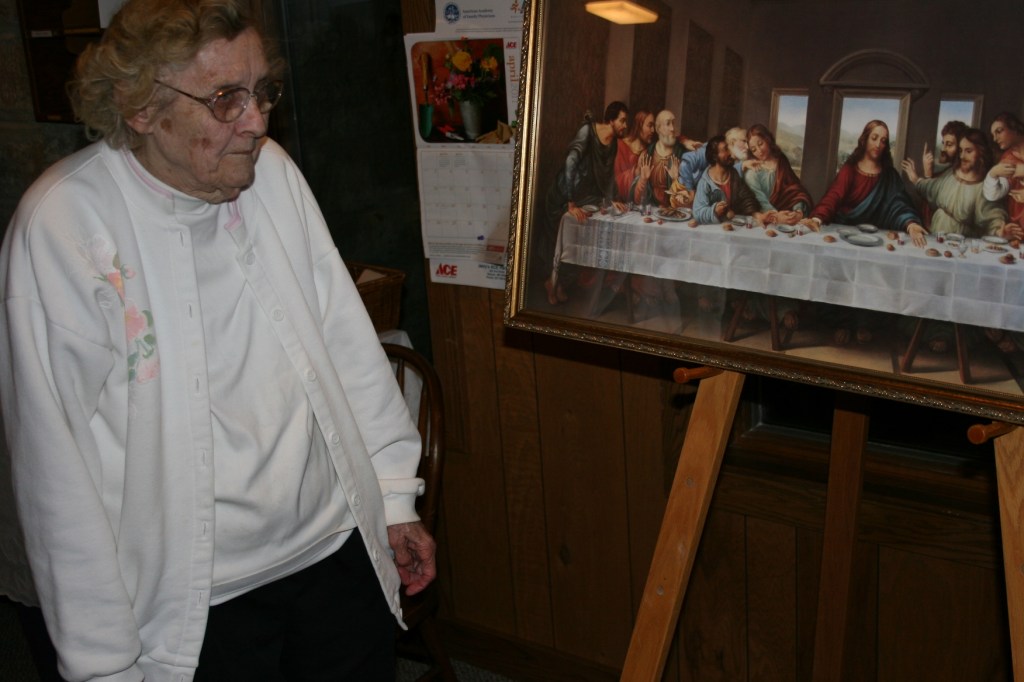
Elsie Keller, 85, stands next to The Last Supper painting given to St. John's in honor of her husband, Arnold.

The evening takes on special significance for this 85-year-old as she watches Thomas and thinks of her husband. Arnold played Thomas in the debut performance at St. John’s and continued with that role for many decades thereafter. Elsie, who was baptized, confirmed and married at St. John’s, as was her husband, hasn’t missed a single performance of The Last Supper Drama.

Her son, Craig Keller, the church organist, tells me that the drama originally was staged on a Wednesday during Lent. At one time there were two evening performances and even an afternoon presentation with the windows covered in black plastic to block out the light.

On this evening, some half-dozen church pews remain empty and I wonder why this place is not packed with a standing-room only crowd.

I’ve been deeply impressed with so many facets of the drama—by the level of commitment within this country congregation to continue a nearly 50-year tradition, by the professionalism of the actors, by the words they’ve shared that make the painting and Scripture and apostles come to life and, certainly, by the actors’ ability to freeze without barely an eye blink or a twitch. How do they do it?
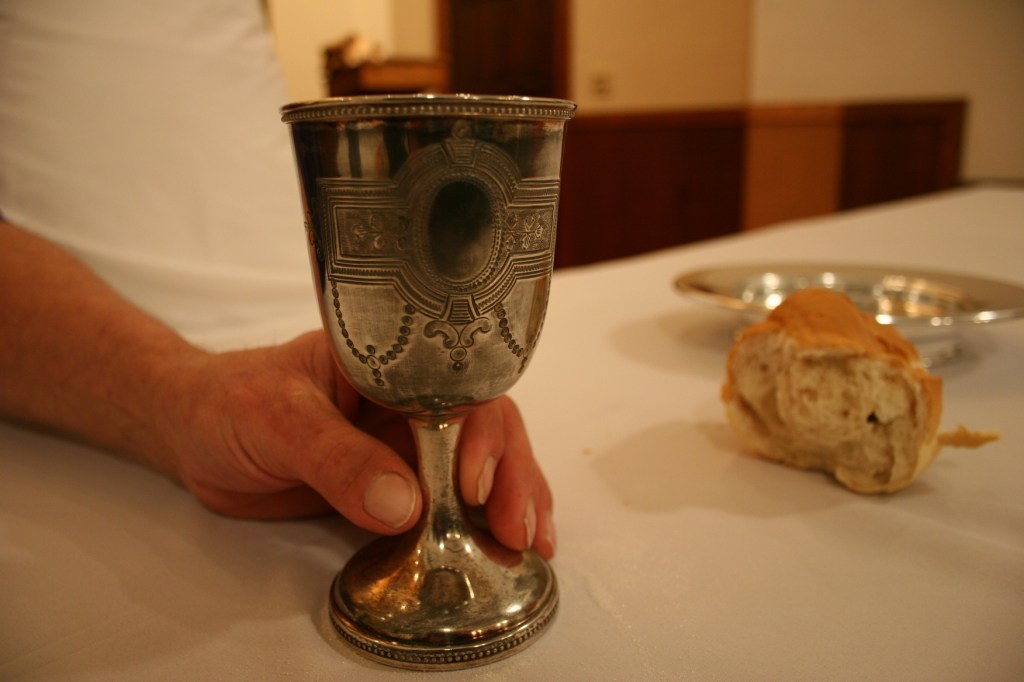
The congregation's original chalice is used each year in the drama.
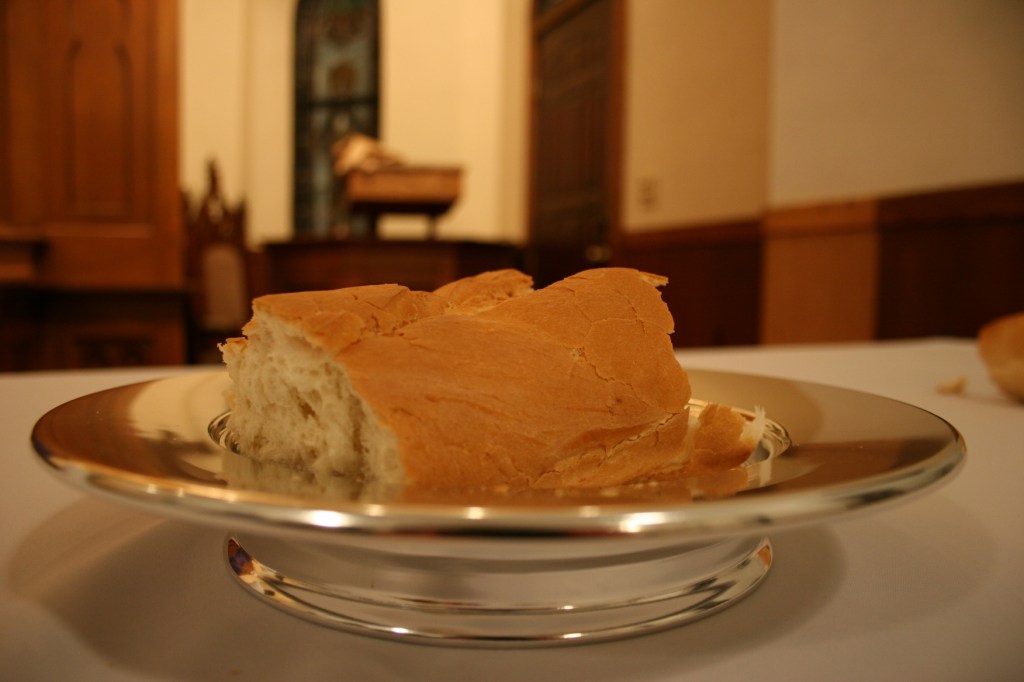
"Take eat, this is my body..." bread on the table during The Last Supper Drama.

FYI: Next year plan to attend the 50th presentation of The Last Supper at 8 p.m. on Palm Sunday. St. John’s United Church of Christ, Wheeling Township, is located about a 15-minute drive east of Faribault on Minnesota Highway 60 and then north on Rice County Road 24. At this point, I expect organizers may add activities to commemorate the 2012 anniversary production.

Credit goes to the following for their parts in presenting this year’ production: directors Shirley Little and Kelly Dahl; co-director Pauline Wiegrefe; organist Craig Keller; narrator Don Katra; prompter Steve Wille; lighting, Ben Heil; greeters Steve and Deb Wille; the youth fellowship ushers; the church council coffee hour servers; pastor Lora Sturm; and actors Alan Meyer, Grant Meese, Craig Mueller, Kyle Keller, Todd Lien, Thad Monroe, Keith Keller, Doug Spike, Marty Budde, Brian Little, Randy Tatge and Paul Meyer.

Thank you all for this exceptional gift during Holy Week.

© Copyright 2011 Audrey Kletscher Helbling


The Last Supper at St. John’s April 14, 2011

Rhody Yule, a 92-year-old Faribault artist, painted this version of The Last Supper.

LIVING ART. A tribute to Christ. A contemplative event to mark the beginning of Holy Week.

However you view it, a dramatic presentation of Leonardo da Vinci’s The Last Supper by a rural church should be on your must-see list for the weekend if you live in my area of southeastern Minnesota.

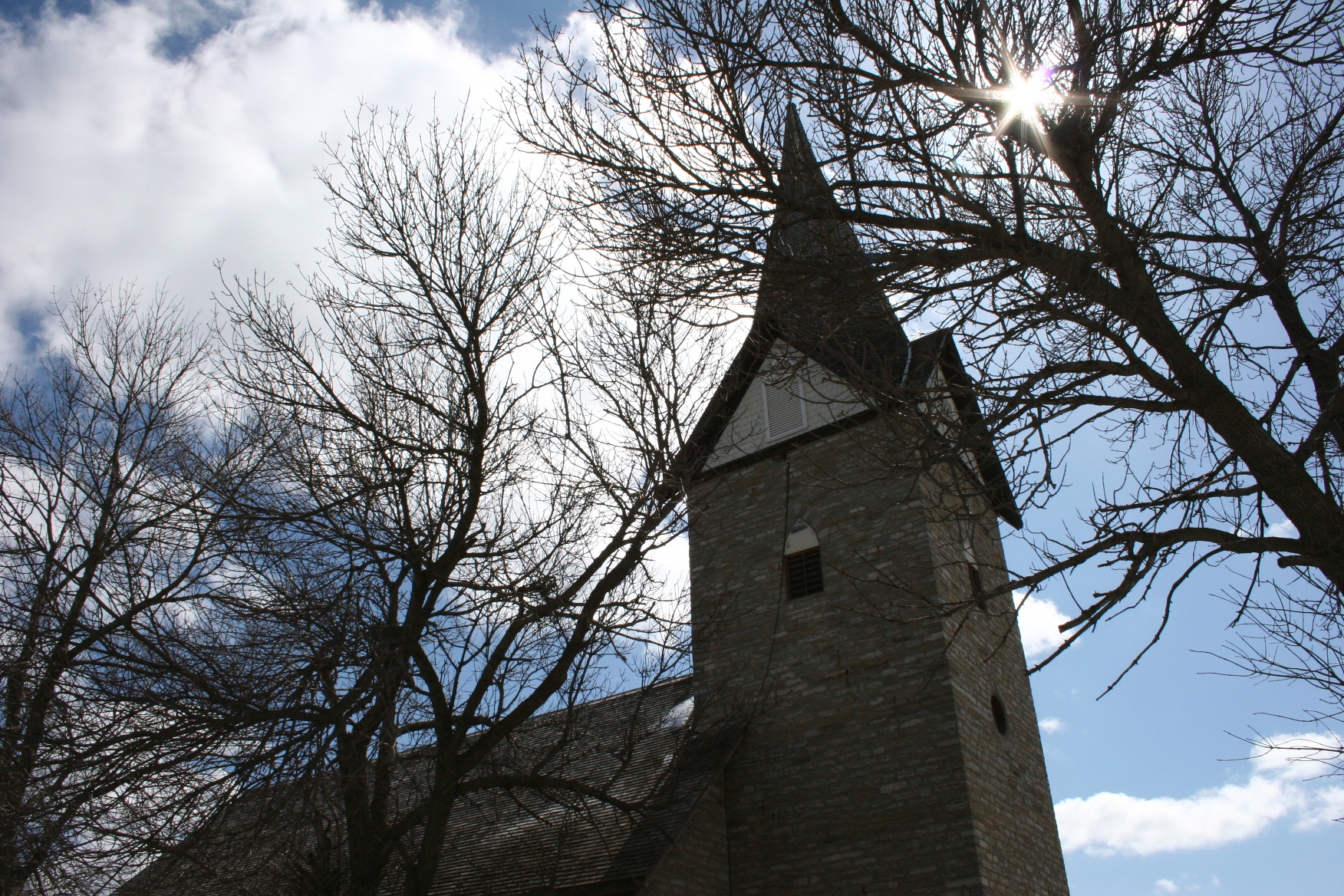
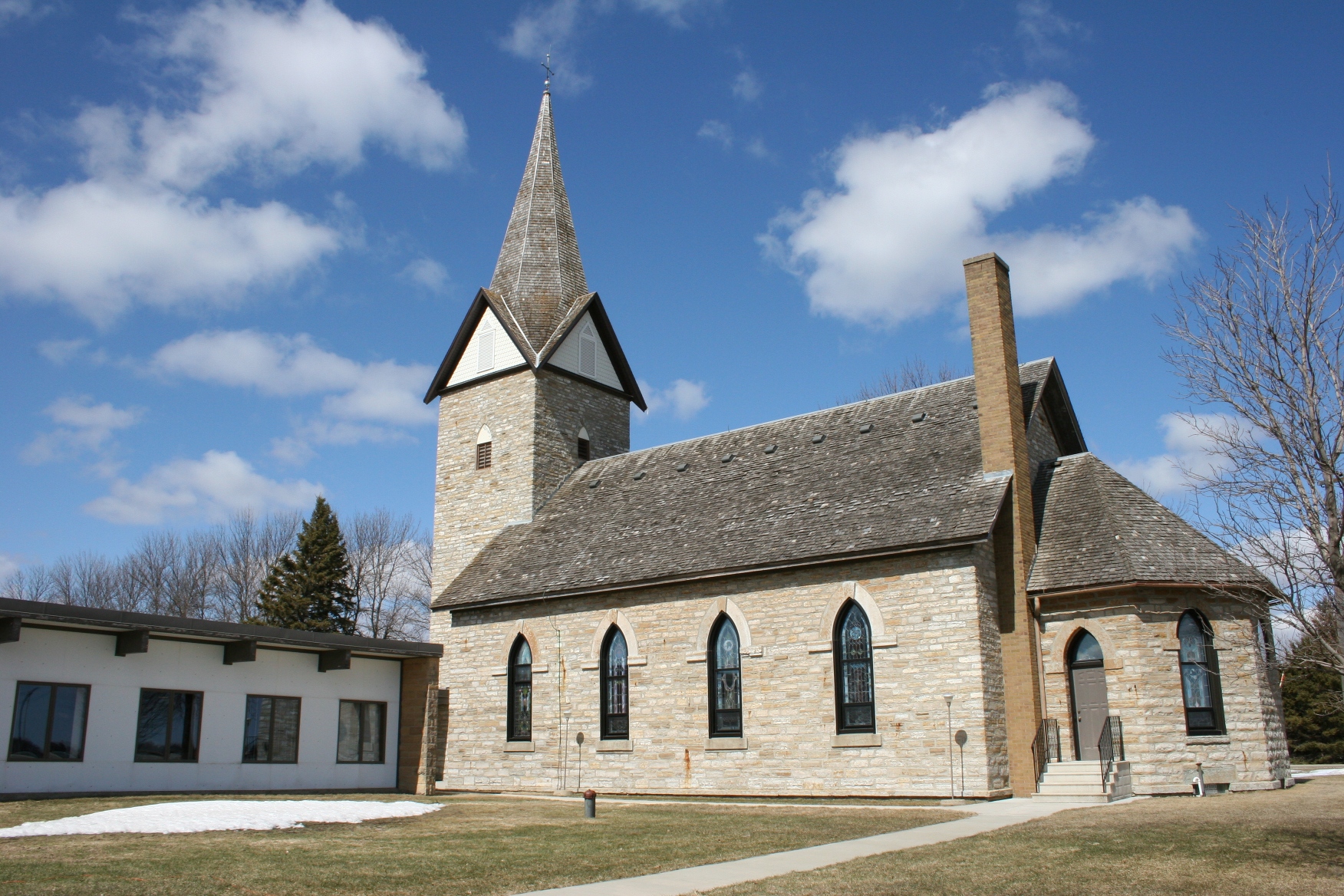
For 49 years now, St. John’s United Church of Christ, Wheeling Township, has presented Drama of the Last Supper in the old limestone church set among flat farm fields and scattered farm places near Nerstrand Big Woods State Park in Rice County.

At 8 p.m. on Palm Sunday, April 17, as darkness falls upon the land, the sanctuary too will darken and the spotlight will shift to 12 men seated at the front of the church. Alan, Grant, Craig, Kyle, Todd, Thad, Keith, Doug, Marty, Brian, Randy and Paul will assume the roles of the 12 disciples.

Christ, if I remember correctly from attending a previous performance, is not portrayed by an actor.

When evening came, Jesus was reclining at the table with the Twelve. And while they were eating, he said, “I tell you the truth, one of you will betray me.” Matthew 26:20 – 21

The Betrayal, a painting by Faribault artist Rhody Yule.

So the scene unfolds with a monologue featuring each of the 12 disciples and their relationships with Christ.

“I tell you, I will not drink of this fruit of the vine from now on until that day when I drink it anew with you in my Father’s kingdom.” Matthew 26:29

Enveloped in darkness, listening to the somber words of forthcoming betrayal, worshippers experience the tense emotions that marked The Last Supper, setting the mood for a week that leads to the crucifixion of Christ and then, on Easter morning, to his glorious resurrection.

It is a thoughtful, serious drama presented by the local men, many of whom are repeat performers.

It is worth seeing, worth hearing and worth contemplating as Holy Week begins.

And he took bread, gave thanks and broke it, and gave it to them, saying, “This is my body given for you; do this in remembrance of me.” Luke 22:19

St. Johns United Church of Christ, Wheeling Township

FYI: St. John’s is about a 15-minute drive from Faribault. Take Minnesota Highway 60 east and then turn north onto Rice County Road 24. The church is located at 19086 Jacobs Avenue.  A fellowship hour, with food, follows the presentation.

© Copyright 2011 Audrey Kletscher Helbling

 

Grassroots dining: Church dinners are the best March 28, 2011

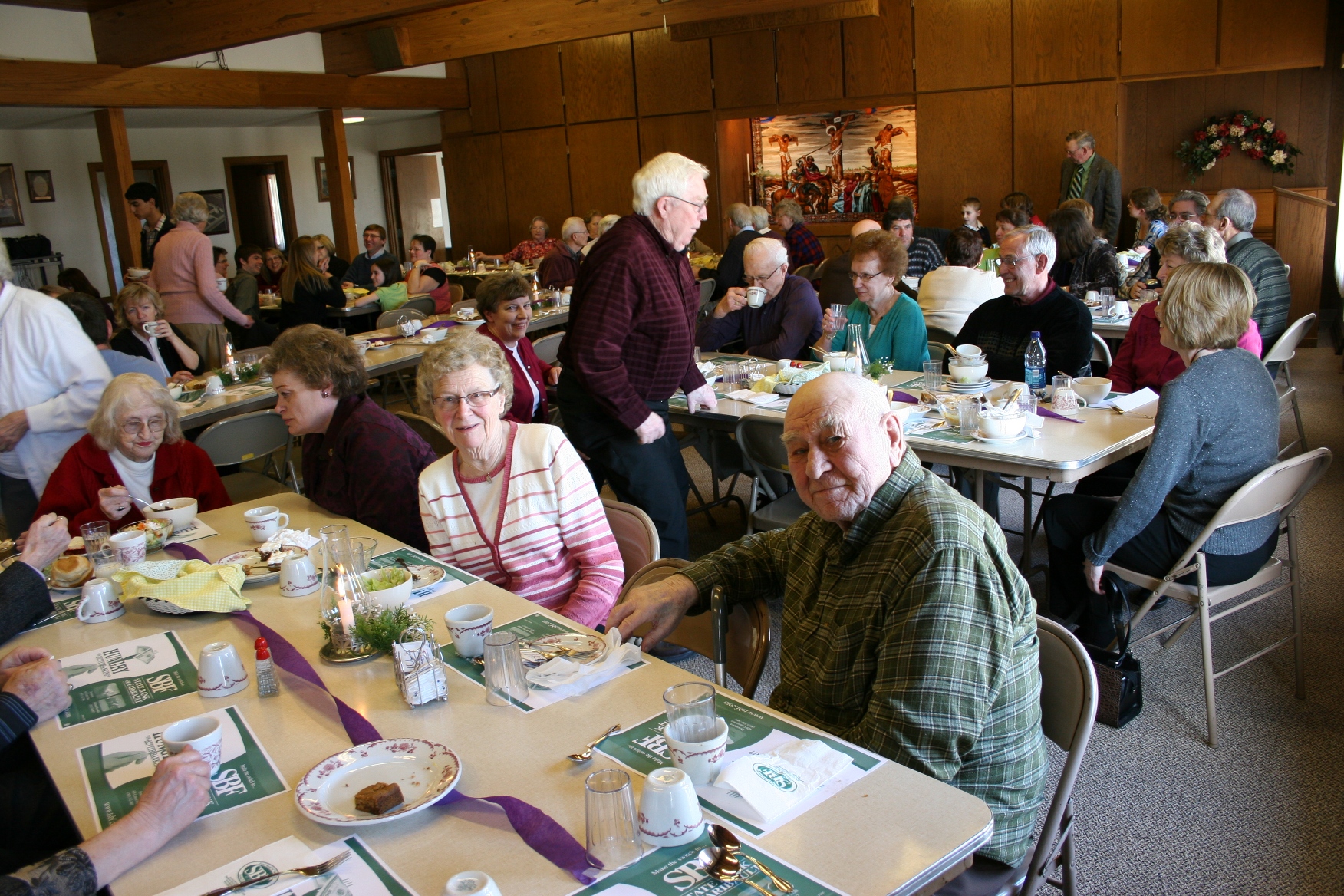
GIVEN A CHOICE of eating at a church dinner or dining at a restaurant, I’ll choose the holy place. I appreciate the good home cooking and fellowship that comprise church dinners.

So Sunday my husband and I headed to St. John’s United Church of Christ in Wheeling Township, about a 15-minute drive from Faribault, for a Lenten Soup Luncheon.


St. John's United Church of Christ is northeast of Faribault about two miles off State Highway 60 on Rice County Road 24 near Nerstrand Big Woods State Park.

As soon as I stepped inside the fellowship hall attached to the old stone church and saw the spread, I regretted that I’d snacked on a doughnut at my church only an hour earlier.

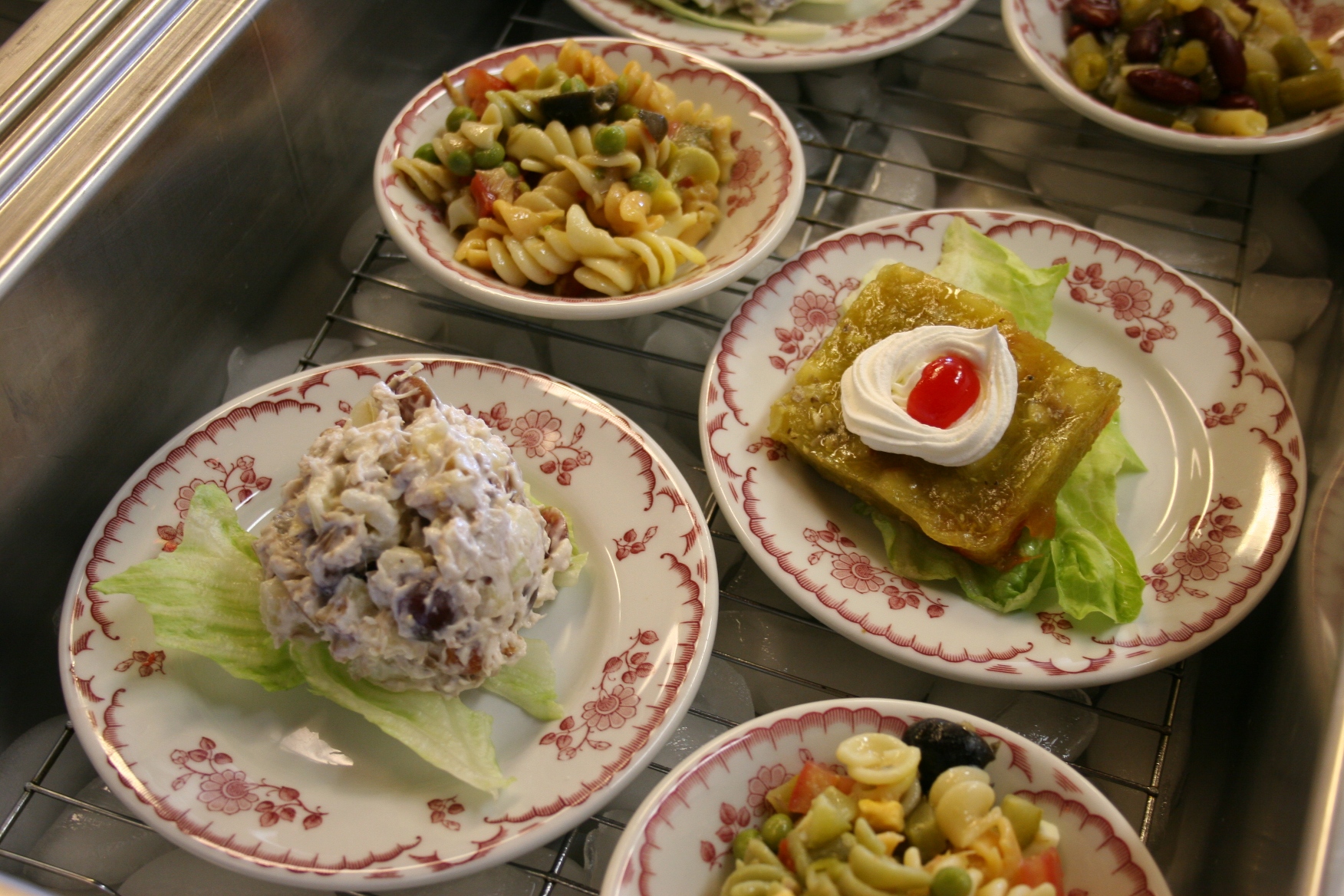
This luncheon offered soups, salads, sandwiches and bars. A regular smorgasbord with nine salad and three soup options and, well, I didn’t count the varieties of bars but suffice to say any chocolate lover would have been happy.


Some of the bars offered for dessert. I tried the bar with the marshmallow topping on the back left.

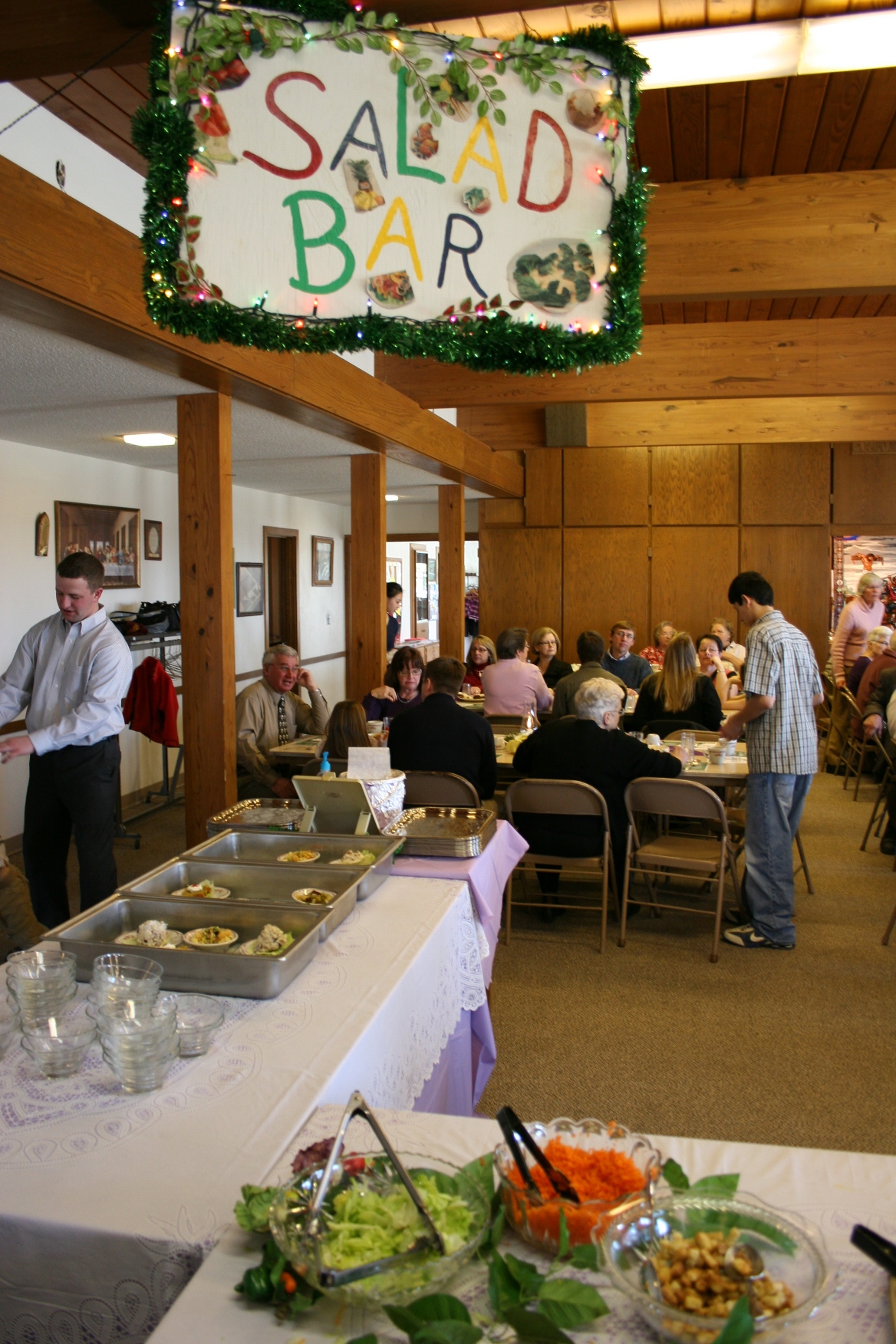
Salads like tuna pasta, tangy rhubarb squares and 3-bean, and the spinach-strawberry I chose, awaited diners who could select plated salads and/or build their own.


Even the salad bar sign grabbed my attention. How cute and eye-catching and kitschy.

The plated and build-your-own salad bar fills two tables in the dining hall.

A few of the salad bar choices, including a tangy rhubarb square on the right in this photo.

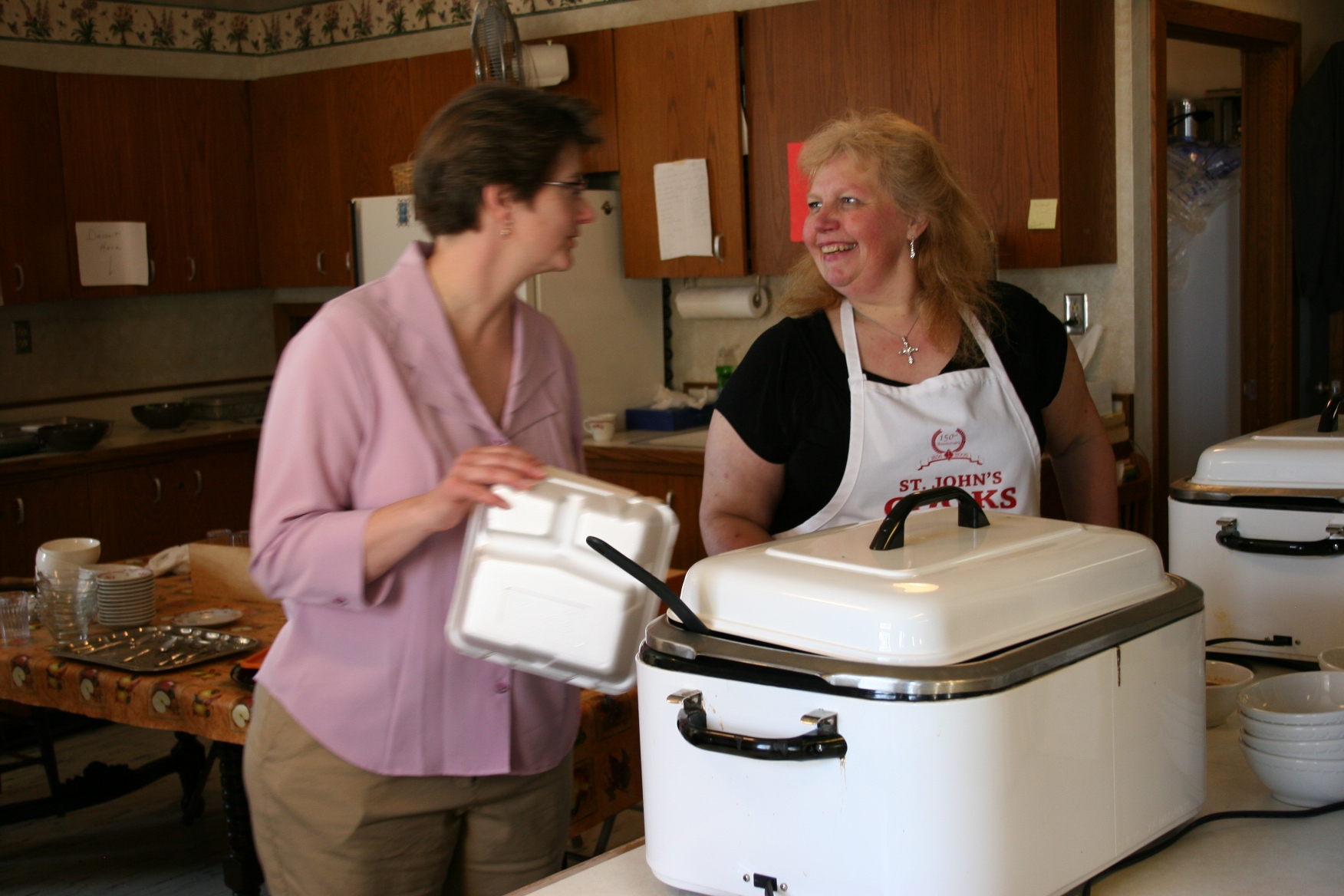
After I’d selected my salad and placed it on a fancy silver tray, I headed to the kitchen where cooks were ladling potato-bacon chowder, hamburger vegetable soup and chicken noodle with dumpling soup from large roasting pans into hefty bowls.


The busy-as-a-beehive kitchen crew at St. John's United Church of Christ.

Volunteers were ready with roasters full of soups in the kitchen.

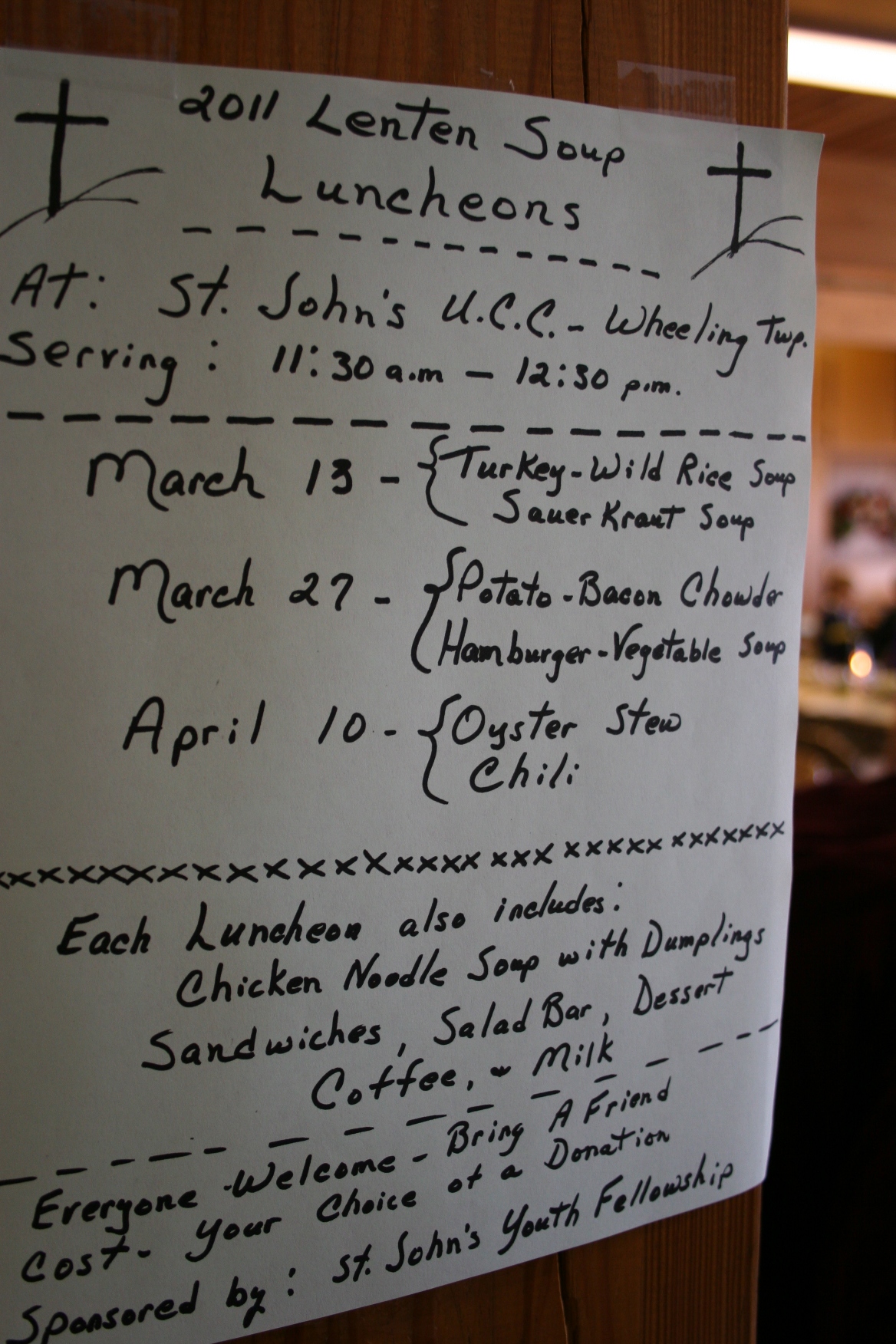
I started with the potato and eventually sampled the other two. The creamy and savory potato was my hands-down favorite, although I also appreciated the spicy kick to the hamburger veggie. I’ve never been big on chicken noodle soup or dumplings. The chicken soup is served at every Lenten Soup Luncheon the church hosts. Oyster stew and chili will be the other featured soups at the last luncheon from 11:30 a.m. – 12:30 p.m. on Sunday, April 10.


The Lenten Soup Luncheon sign posted by the kitchen. The final luncheon is from 11:30 a.m. - 12:30 p.m. on Sunday, April 10.

A diner's tray (not mine) that includes a bowl of chicken noodle soup with dumplings.

Church dinners are all about food and fellowship. I scored an invitation to visit a farm with a robotic milking operation while visiting with church members at my table.

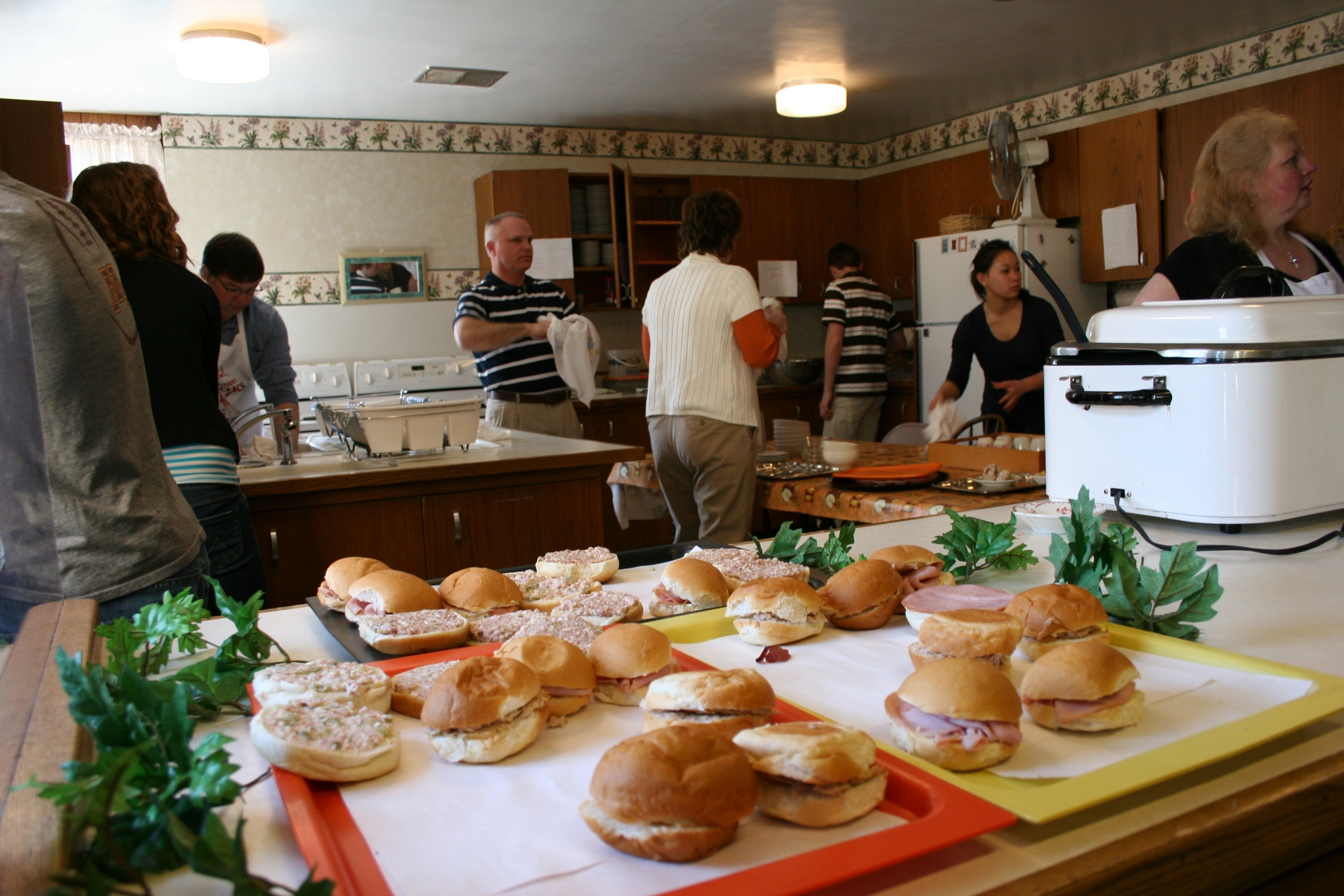
Of course, no church dinner is complete without bread, so diners were offered an array of sandwiches. I inquired about the ground concoction on an open-faced sandwich, was told it was bologna and pickles, paused, thought, and picked it up. And you know, for someone who doesn’t really care for bologna, I liked the spread.


Plenty of sandwich choices like ham, tuna and, yes, even ground bologna and pickles were offered.

Except for lutefisk, I’ve never tasted a church dinner I didn’t like.

I notice and appreciate details like the lovely floral dishware. My husband and I learned that once you carry your food to your table on the fancy silver tray, you're supposed to take your plates and bowls off the tray and servers will pick it up for others to use. We even had big, hefty soup spoons for eating our soups. Now that impressed me.


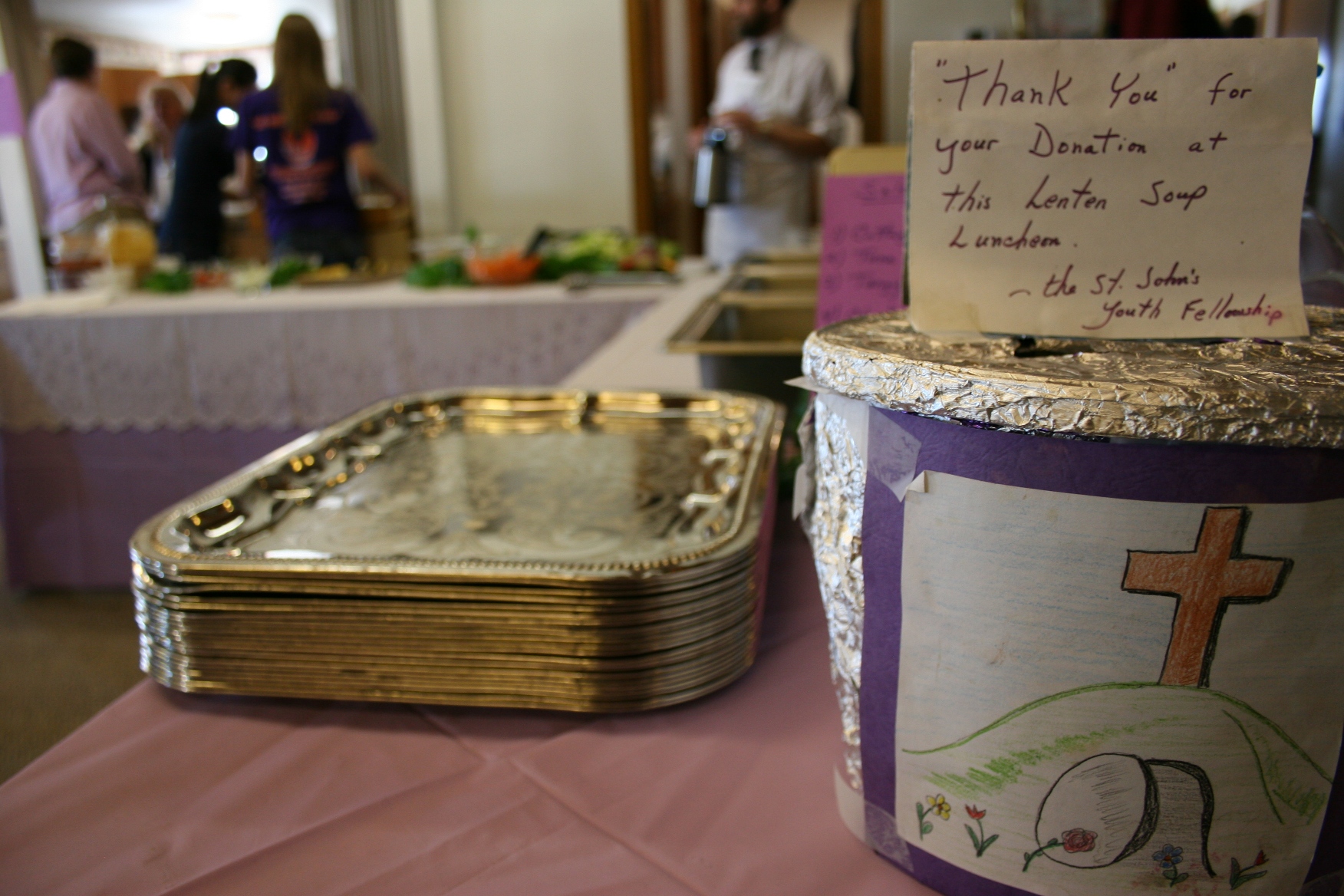
There's no specific cost for the St. John's Lenten Soup Luncheon, which benefits the youth fellowship group, helping members finance mission trips and more. Cost for the meal is whatever you choose to donate. Just drop your money in the bucket before picking up a fancy silver tray at the salad bar.

FYI: Click here for more information about St. John’s United Church of Christ, 19086 Jacobs Avenue, located near Nerstrand Big Woods State Park, rural Faribault. Watch for a future post featuring photos of the church interior and exterior.

PLEASE SUBMIT A COMMENT and tell me about a church dinner you enjoy and why.

© Copyright 2011 Audrey Kletscher Helbling
 

A glorious sunset at St. John the Baptist Church March 27, 2011

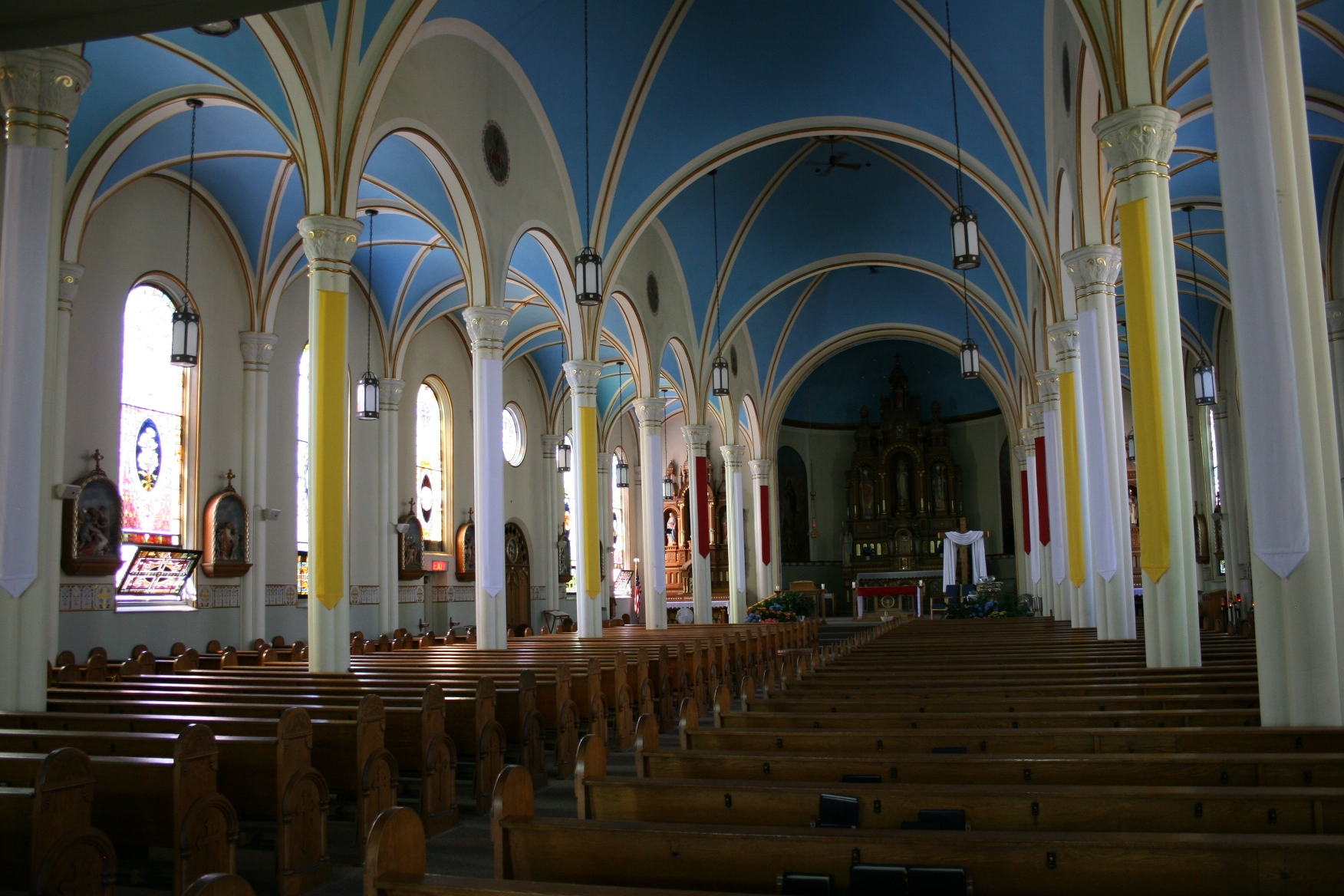
THAT I APPRECIATE country churches should come as no surprise to those of you who’ve followed Minnesota Prairie Roots. I value their beauty, architecture, history, reverence and connection to the land and its people.

Therefore, I photograph these rural sanctuaries whenever possible. If a church door is unlocked, I’ll take you inside for a photographic tour. If not, you’ll at least see the exterior.

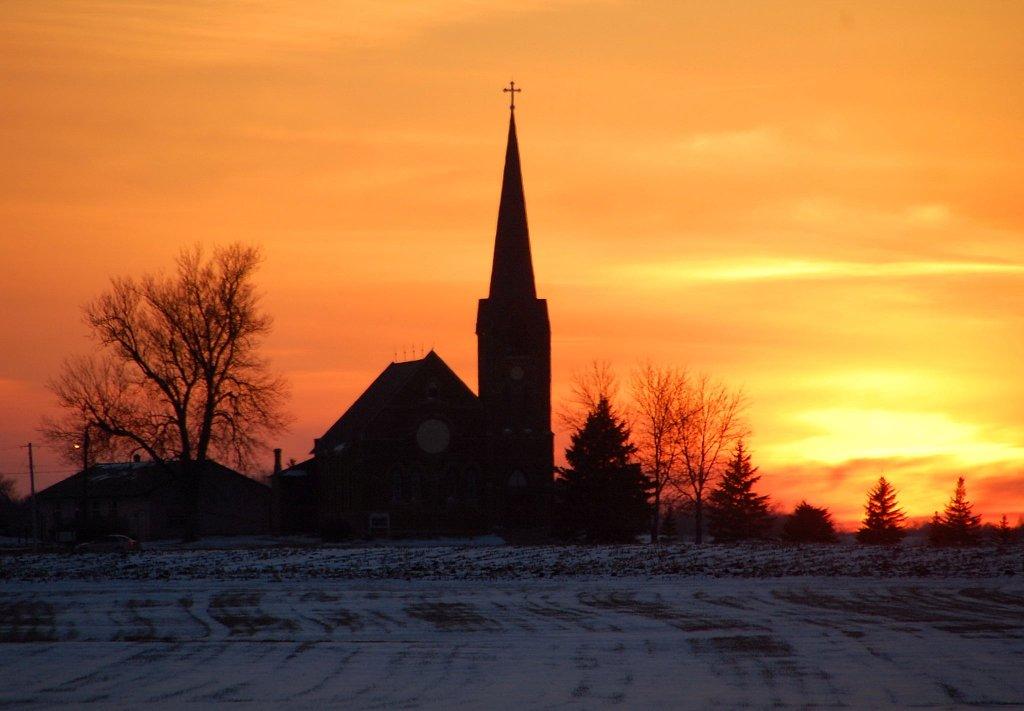
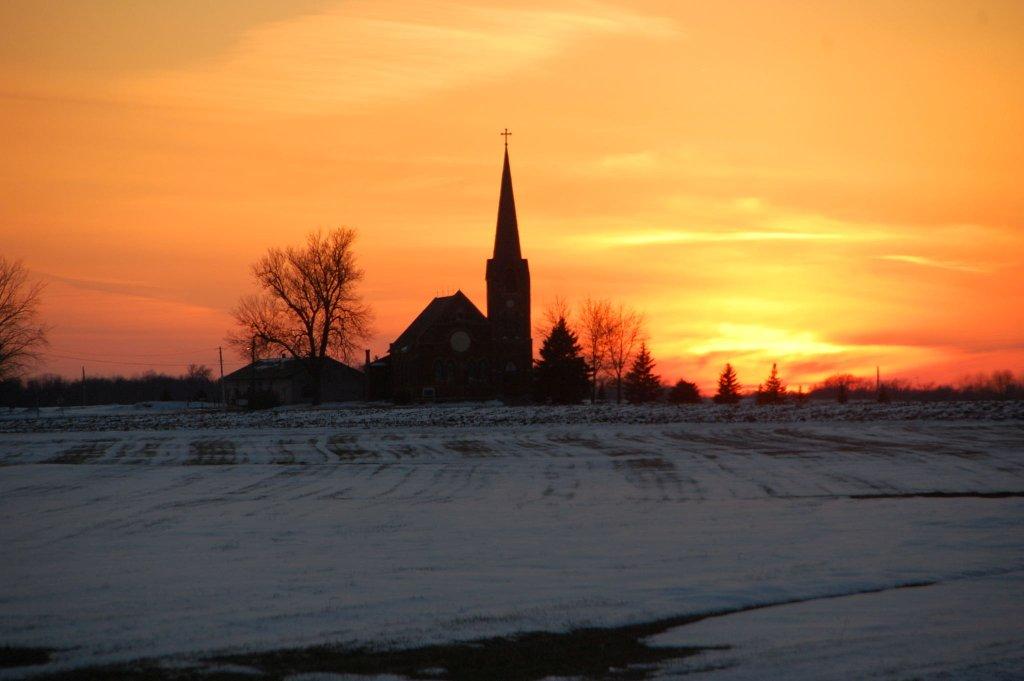
Others, like rural Carver resident Harriet Traxler, share my interest in photography and all things country. So when Harriet emailed images of a local rural church, St. John the Baptist Catholic Church in Faxon Township some four miles northwest of Belle Plaine, I asked if I could share her photos with you.

Because I struggled to pick my favorite of the four, shot around sunset on Friday, I’m publishing three of Harriet’s photos.

I hope you’ll agree with me that even on a cold Minnesota March day, these gorgeous photos warm the heart, and the soul.


Built around 1870, St. John the Baptist Catholic Church still holds Sunday Masses and has many young parishioners.

In the summer, the church is surrounded by cornfields.

The sun sets the sky on fire behind St. John the Baptist Catholic Church, rural Belle Plaine, Minnesota.

FYI: Harriet has published a series of barn books featuring barn and other rural images from her native Sibley County, Minnesota. To view her work, click here. Some of Harriet’s work will be featured in the spring issue of Minnesota Moments magazine.

© Text copyright 2011 Audrey Kletscher Helbling
© Photos copyright 2011 Harriet Traxler


Back in Faribault, Minnesota, from Japan March 23, 2011

FIVE DAYS HAD PASSED since a young Faribault woman posted on her blog from earthquake and tsunami stricken Japan.

And now I know why. She was on her way back from Fukushima to Minnesota for her brother’s wedding.

Haidee, a Christian outreach worker and English teacher, has been safely reunited with her family at their rural Faribault home.

But her decision to leave Japan did not come without struggle. Read Haidee’s insightful post by clicking here. She reveals, in a March 22 post, the emotional turmoil she experienced, being torn between wanting to stay in Japan and returning to the United States.

Her words are honest, poignant and touching. They also point to an unshakable faith and an undisputed belief that God directed her onto the path that would take her to the airport and then back to Minnesota.

God, clearly, was watching over and guiding her on this journey.

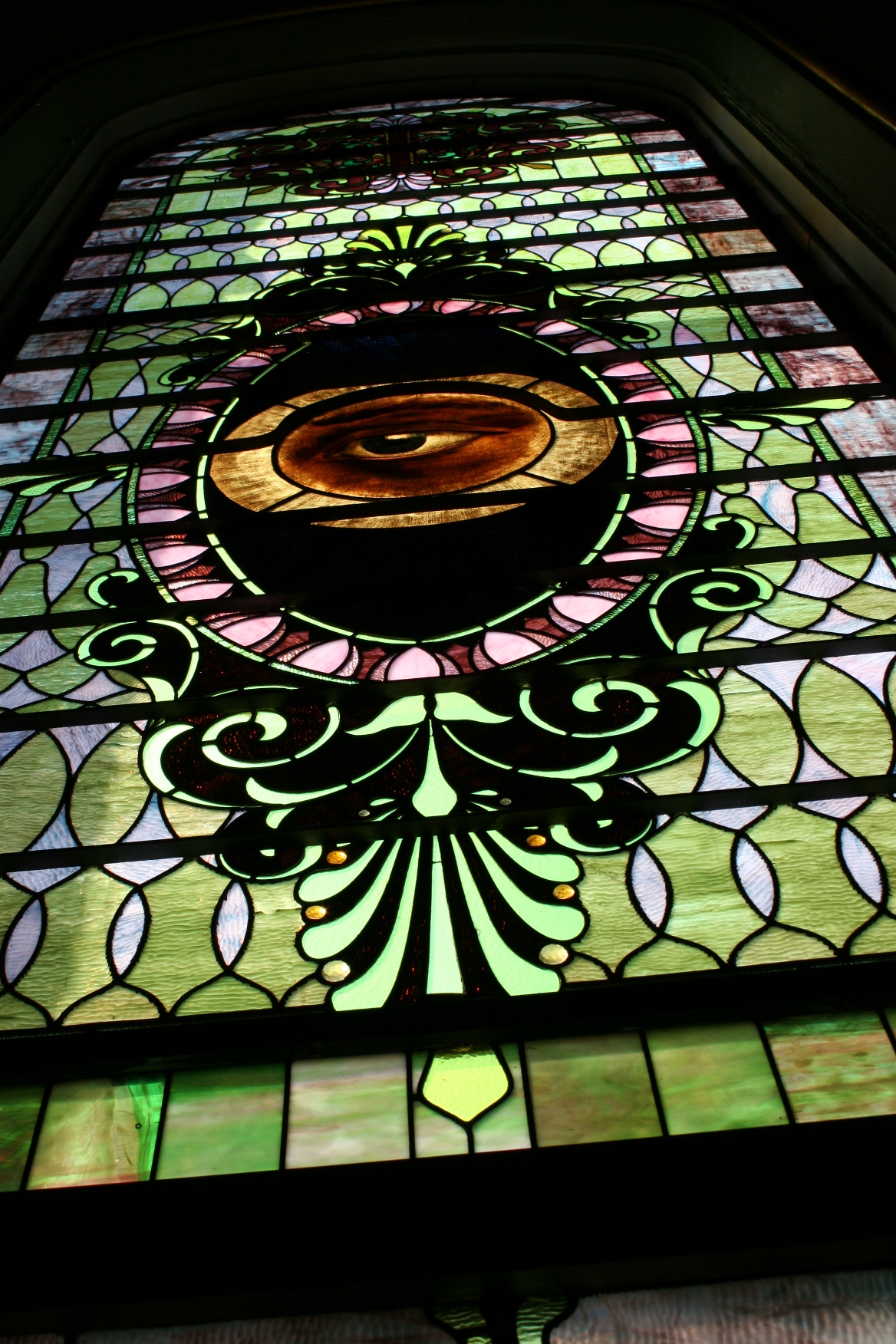
A snippet of Jesus' face in a stained glass window at Trinity Lutheran Church in Faribault, where Haidee's father serves as the pastor. I'm certain that many times since the disaster in the Pacific, Haidee has been especially cognizant of God watching over her.

SHOULD I HAVE the opportunity to speak with Haidee, I’ll share that information with you. Click here to read my first post about Haidee, shortly after the disaster devastated Japan.


© Copyright 2011 Audrey Kletscher Helbling


A Minnesotan, safe in Japan, for now March 12, 2011

EVER SINCE I HEARD yesterday of the earthquake and tsunami in Japan, I’ve prayed for the people of Japan and specifically for a young Minnesota woman living there.

I’ve known Haidee, a Christian outreach worker and English teacher there, since she was born in 1986. She grew up with my oldest daughter, came to my house for birthday parties. She’s the second eldest of my pastor’s children—strong, confident and on fire for the Lord.

So this morning, rather than call her parents lest they give me bad news, I phoned a friend to inquire about Haidee. Thankfully, in answer to my ongoing prayers, my friend shared that, for now, Haidee and her roommate are safe.

You can read about Haidee’s experience by clicking here.

Unfortunately, this native Minnesotan’s home of Fukushima, Japan, is also the site of a nuclear plant. An online news report I just read states that tens of thousands are being evacuated from the area because of the threat of a nuclear meltdown.

I cannot imagine living with such possibilities. But if anyone can remain strong through this epic disaster, it is Haidee with her unshakable faith.

She has managed to maintain her sense of humor. Haidee ends her Friday, March 11, 9:34 p.m. blog post with this: “And now I’m signing out…because we’re going to go walk around and look for bathrooms. People survived walking to outhouses for years, right? :)”

Photos of my 1970s Japanese pen pal, Etsuko Tamura, pasted in a photo album.

IN ADDITION TO HAIDEE, I’ve worried about Etsuko Tamura, whom I honestly have not thought about in decades.

Yesterday after I heard the news about the Japanese disaster, her name popped into my head just like that. She was my pen pal during the 1970s, when writing to someone overseas was a popular hobby for young girls. We stopped corresponding 35 – 40 years ago.

Through her letters, Etsuko showed me the world beyond rural southwestern Minnesota.

Now I am seeing her devastated world through the lens of a news camera and online from citizen-shot videos. And I wonder, all these decades later, whether she’s OK.

© Copyright 2011 Audrey Kletscher Helbling
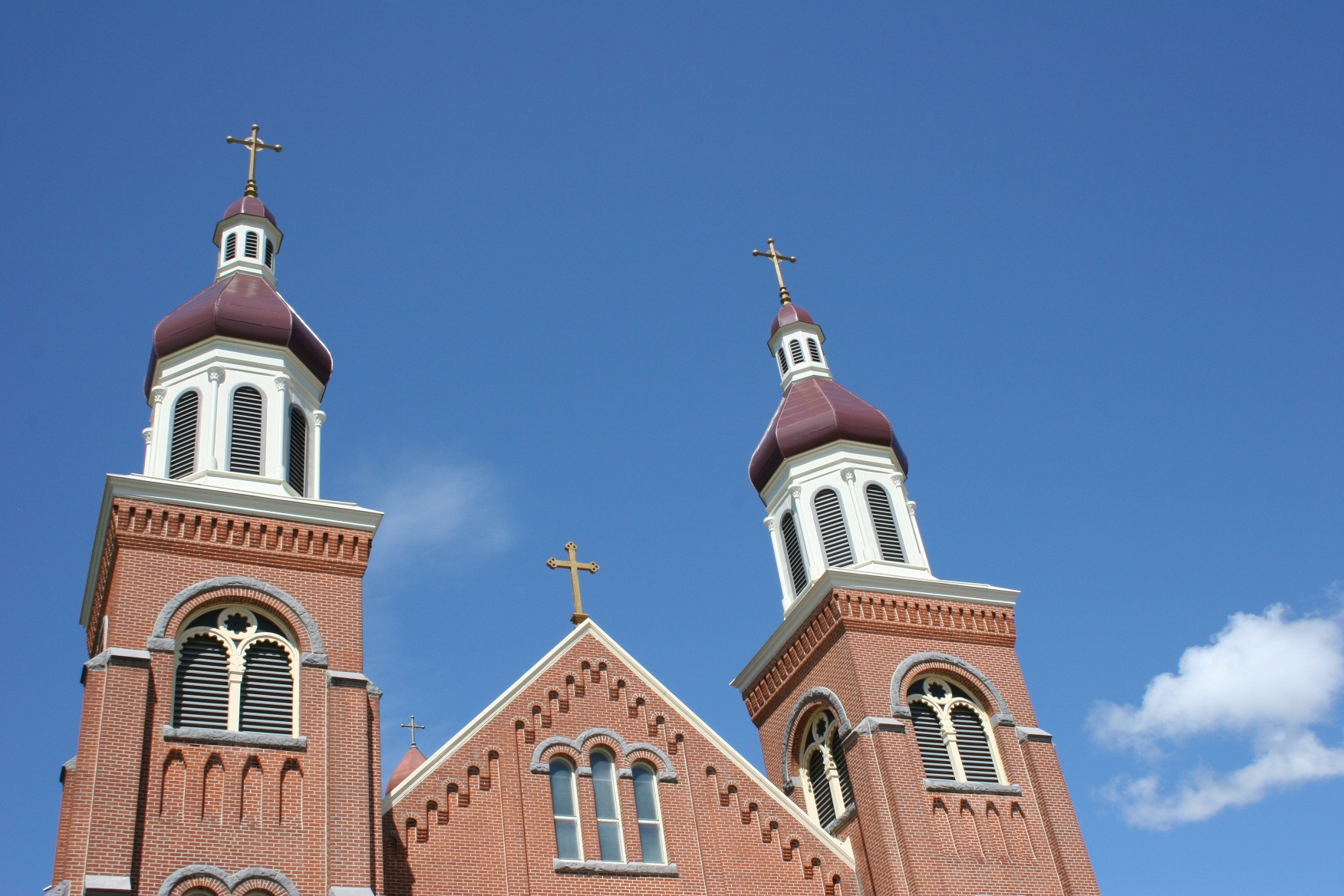
 

Nettie January 31, 2011

Filed under: Uncategorized — Audrey Kletscher Helbling @ 11:48 AM

Tags: , , , , , , , ,

I WANTED TO BELIEVE HER—that her husband died eight months ago in a car accident, that she has cancer, that she has two teens at home, that she believed God led her to my church.

But I didn’t quite know what to think of the woman who walked into Trinity Lutheran Church between services Sunday morning. She was dressed nicely, although her light-weight coat didn’t seem warm enough for winter weather. Her fingers felt ice-cold as she extended her hand to shake mine and introduced herself as Nettie.

I offered her some coffee and orange juice, some doughnuts.

She declined and, instead, through lips lined with plum lipstick that matched her scarf, asked to speak with a pastor.

While my husband went to find a pastor, Nettie volunteered her story. I hadn’t probed, hadn’t asked, she simply told me about her dead husband, her cancer, the kids back home in Minneapolis, her need for money, the direction from God.

She spoke politely, warmly and with ease, her voice smooth as honey. I could easily imagine her praising God in a southern Baptist church choir.

All the while she spoke, I wondered. Was she telling the truth?
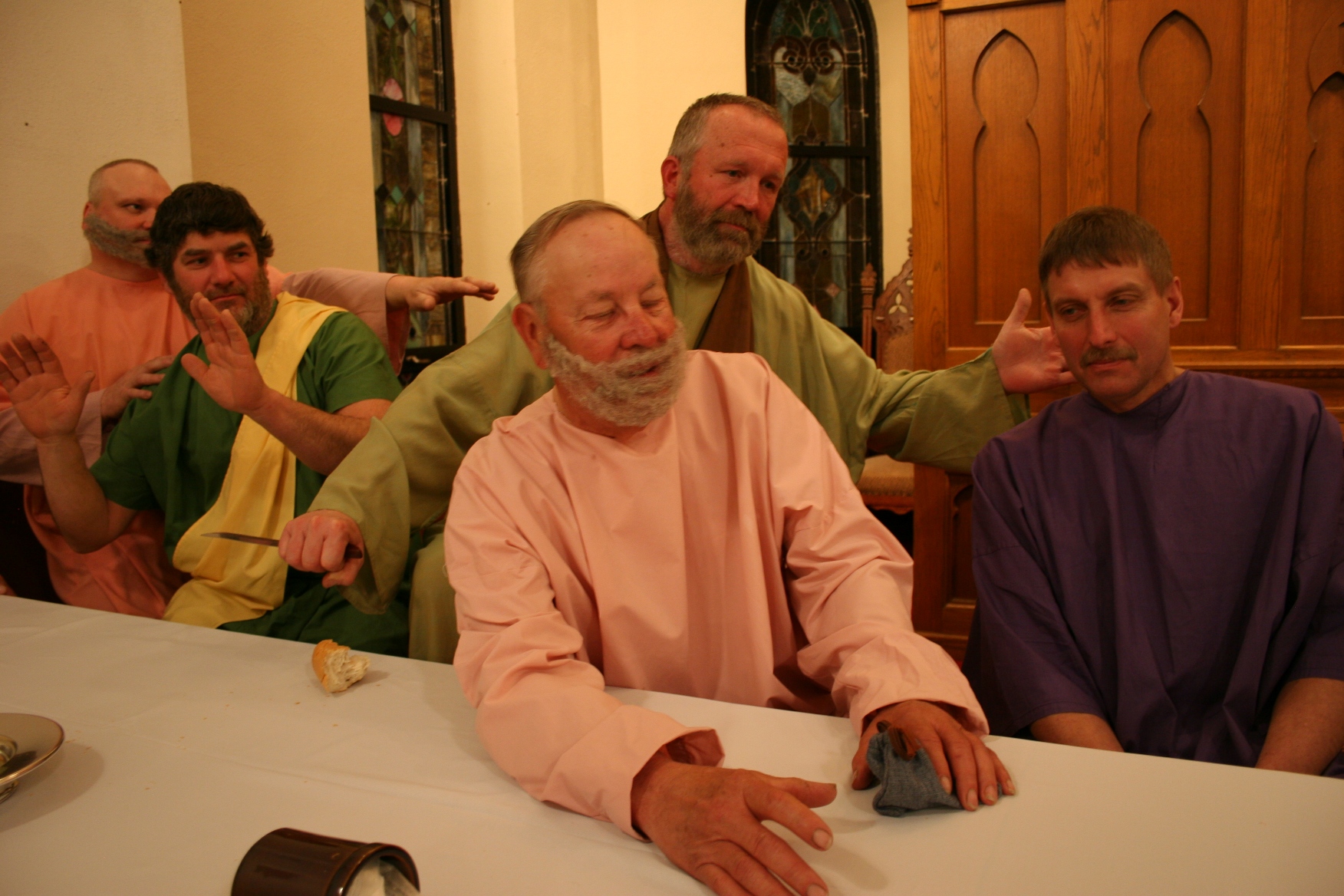
Had she really gone to the Salvation Army and the Red Cross and had those organizations turned down her requests for help?

Had she really, as she told me, just hopped in her car that morning and started driving, ending up in Faribault, at my church?
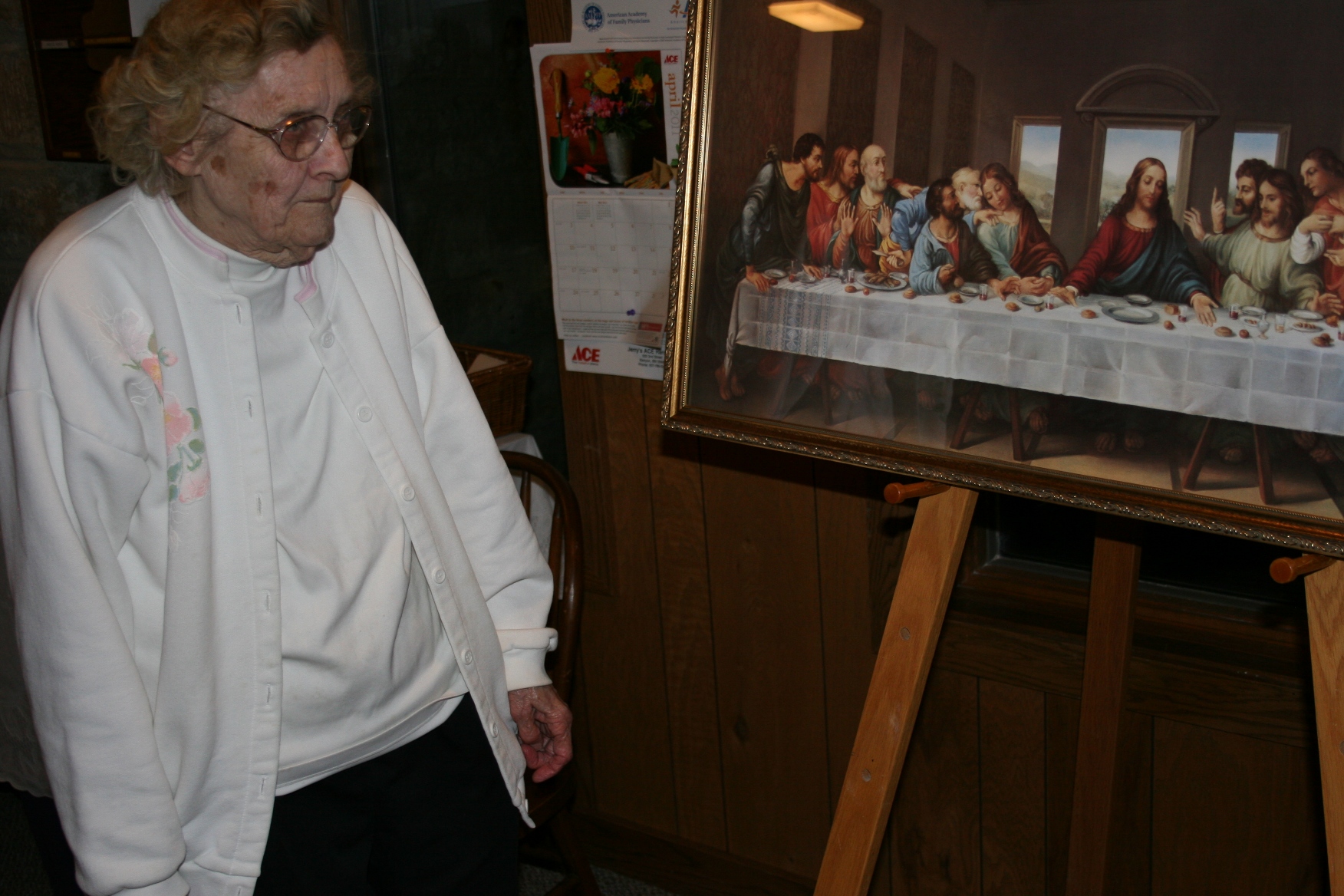
About that time, the pastor arrived and I introduced the two. They walked to a quiet area of the narthex, to talk, and, I could see, to pray.

A short while later Nettie walked out the door, into the cold.

I knew she hadn’t gotten the money she requested.

Today, more than 24 hours later, the entire scene replays in my mind. Should I have asked more questions? Could I, should I, have done more for Nettie?

Was she being truthful?

Did I fail Nettie?

And why am I so bothered by this encounter?

© Copyright 2011 Audrey Kletscher Helbling