Love in three languages along the Virtues Trail in Faribault. (Minnesota Prairie Roots copyrighted file photo August 2018)
THE GREETING CARD arrived in a non-descript blue envelope, our names and address printed in reddish marker. No return address, only a flower sticker in the upper left corner. A Saint Paul, MN postmark with a May 13, 2022, date inked the paper next to a floral postage stamp. And, on the back, an artsy heart sticker graced the envelope flap.
I expected to find a card inside wishing Randy and me the best on our 40th wedding anniversary. I was right on that. I appreciated the verse focused on God’s blessings and a prayer for continued blessings in our lives.
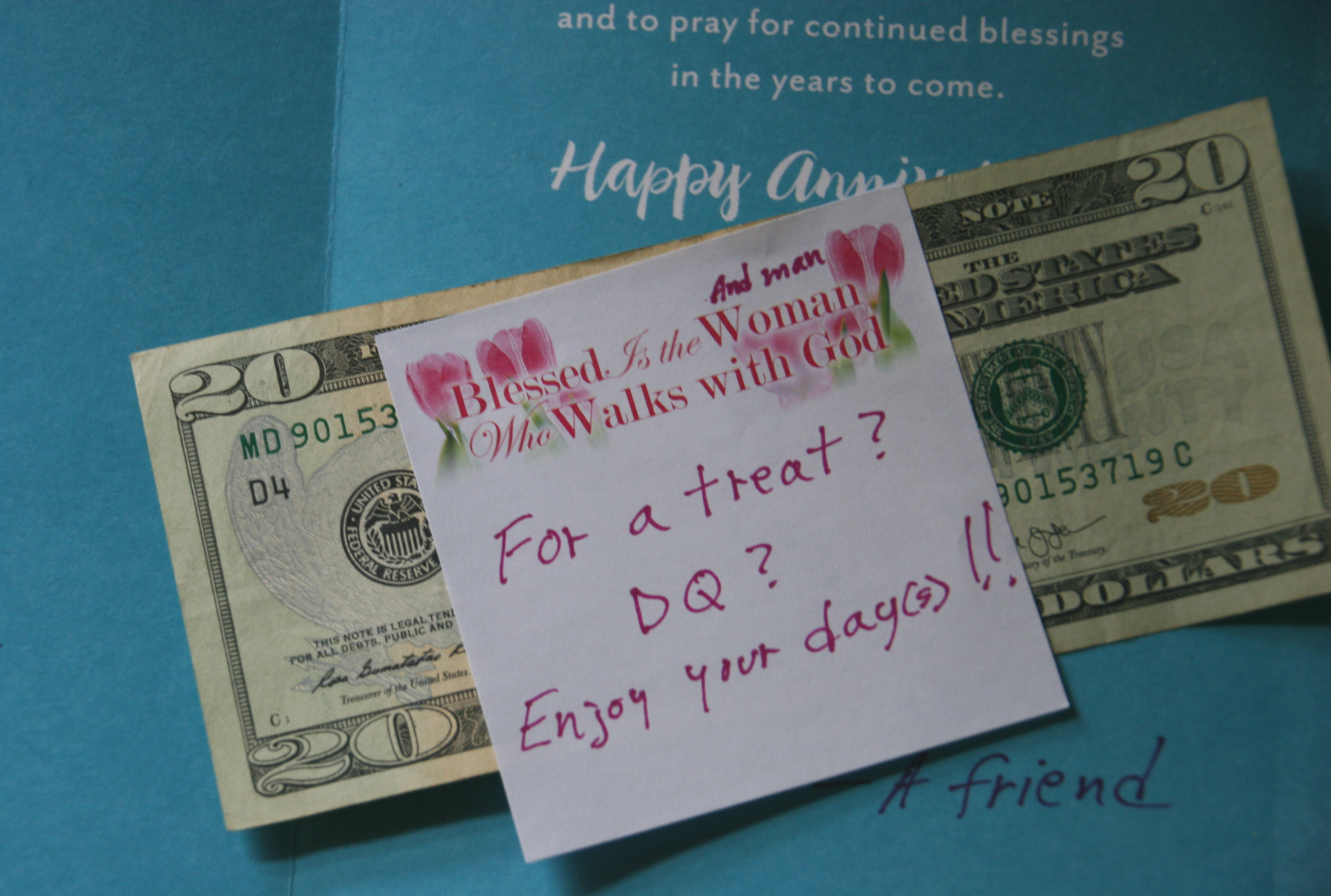
From an anonymous friend, an anniversary wish and gift. (Minnesota Prairie Roots copyrighted photo May 2022)
But I did not expect the anonymous signature—A friend—or a faith-themed post-it note attached to a $20 bill. That note suggested we treat ourselves, perhaps to Dairy Queen ice cream, and to enjoy our day(s).
The thoughtfulness of this anonymous friend (whom I suspect reads this blog) touched me deeply. There are moments in life when we all need an extra hug, extra words of encouragement, extra kindness. For me, that moment is now. This year, thus far, has proven challenging with the death of my mom in January and recently the news that my husband will be losing his job of 39 years due to a change in business ownership and closure of the automotive machine shop.
A Peanut Buster Parfait from DQ. (Minnesota Prairie Roots copyrighted file photo)
So, when that surprise anniversary card and cash gift arrived, I felt a surge of gratitude for the reminder that others care, that I am blessed by a loving and caring husband of 40 years, that God will, and always has, given us the strength we need to face and work through life’s difficulties.
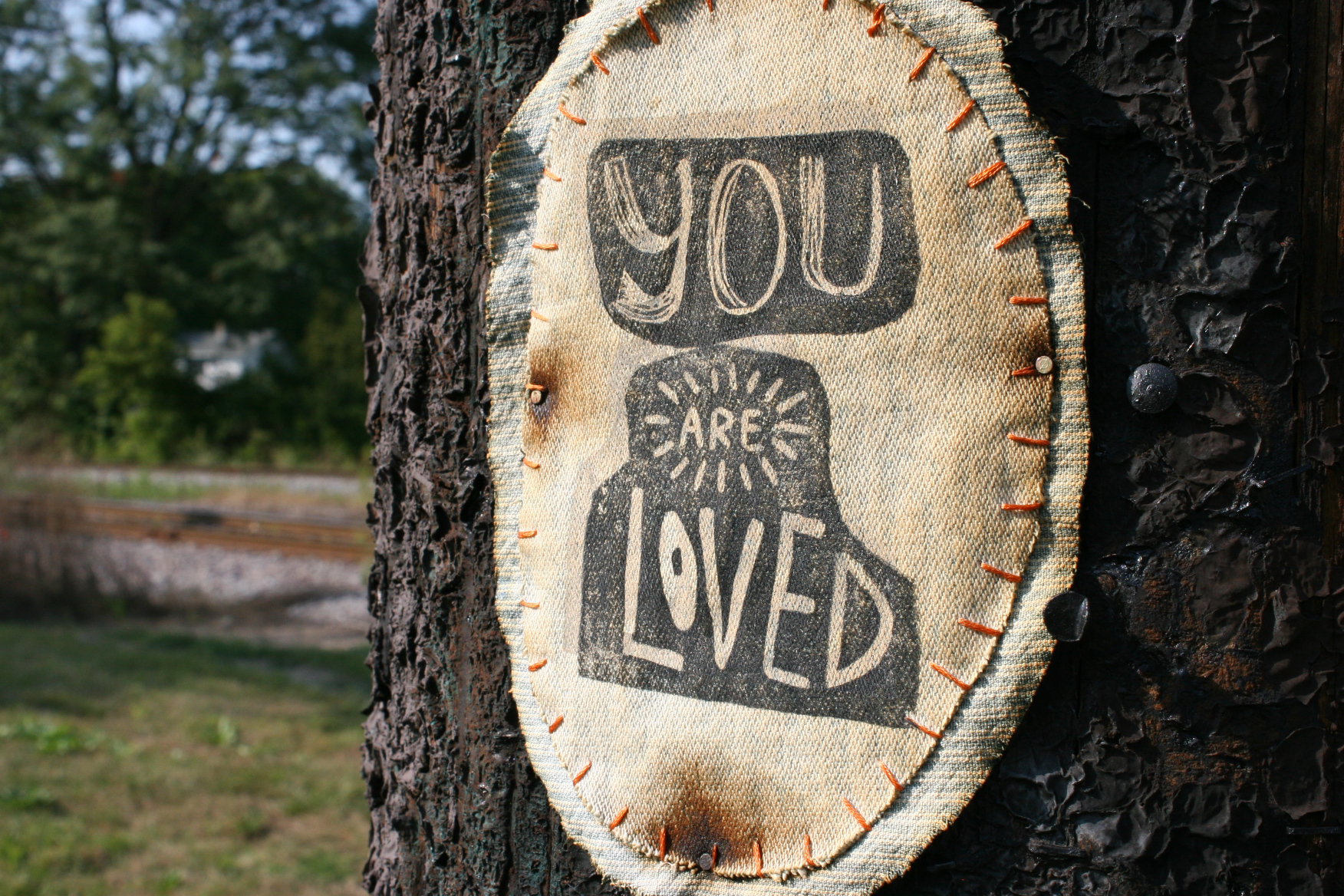
While walking a recreational trail in Madison, Wisconsin, when my son lived in the Atwood Neighborhood there, I spotted this wonderfully uplifting message. (Minnesota Prairie Roots copyrighted file photo)
Many times in my life, I’ve been uplifted by others. I’ve tried to do the same. When someone is struggling or celebrating, I acknowledge that. We all need to be heard, understood, loved, cared for, uplifted. Appreciated. Valued. Encouraged.
The Betty, from The S’Cream in Owatonna. (Minnesota Prairie Roots copyrighted file photo 2016)
And today, because of that anonymous friend—who’s apparently read on this blog that Randy and I treat ourselves to Dairy Queen Peanut Buster Parfaits twice a year (upon opening and closing of the local franchise)—I feel especially cared for. When I taste the sweetness of ice cream, either from DQ or from our favorite area ice cream shop, The S’Cream in Owatonna, I will taste, too, the sweetness of love sent by an anonymous friend.
#
TELL ME: How has someone encouraged you in life? Or how have you encouraged someone? I’d like to hear your stories.
I’d like to thank you, my readers, for your kindness, generosity and encouragement through the years. What a blessing you have been in my life.
The birth of Christ depicted at St. Michael’s Catholic Church, Buckman, Minnesota. This is my husband’s home church. (Minnesota Prairie Roots file photo September 2020)
STAINED GLASS ART graces many a church. Most often that art depicts the history of Jesus’ birth, death and resurrection.
This stained glass window inside the Mother of Good Counsel Votive Chapel at The Shrine of Our Lady of Guadalupe, La Crosse, Wisconsin, depicts Mary and Jesus. I often think of Mary during Holy Week and how great her loss in losing her son. (Minnesota Prairie Roots copyrighted file photo 2015)
So it’s fitting that this week, Holy Week, I share some images from my archives of beautiful stained glass windows discovered in my wanderings. As a woman of faith, an art appreciator and one who values churches, I am drawn to this art form.
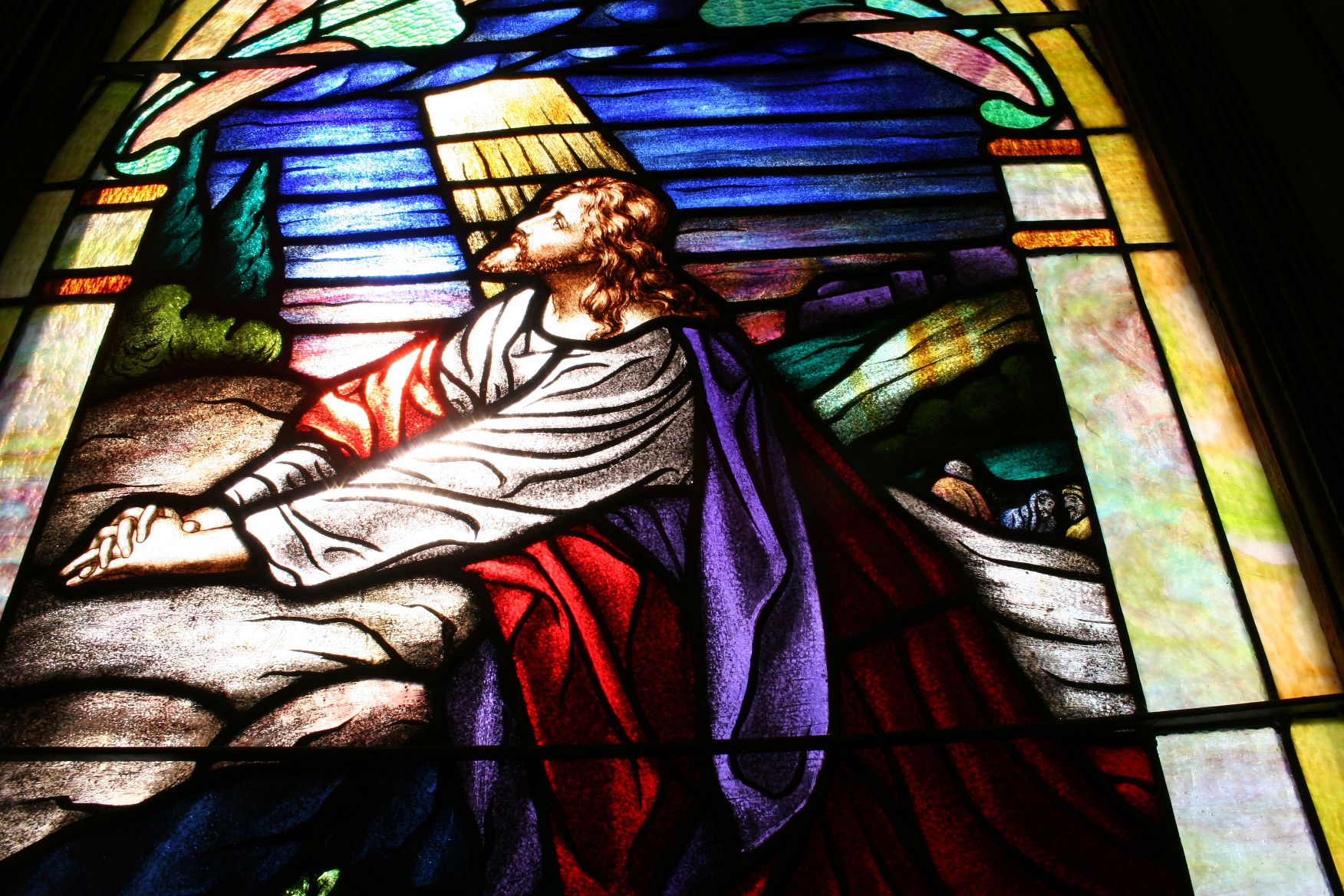
Jesus prays in the Garden of Gethsemane. Stained glass window in the sanctuary of Vang Lutheran Church, rural Dennison, Minnesota. (Minnesota Prairie Roots copyrighted file photo 2014)
My husband, Randy, has dabbled in stained glass art and I know from watching him that creating this art takes time, patience, skill and dedication. He took a stained glass class locally decades ago, has crafted several sun catchers and also repaired aged windows at our church, Trinity Lutheran in Faribault. I hope that when he retires, he can more fully embrace this art form.
Jesus carries his cross to Golgotha. Stained glass at St. Michael’s Catholic Church, Buckman. (Minnesota Prairie Roots copyrighted file photo September 2020)
That sidebar aside, I feel such gratitude to those long ago craftsmen who labored to create stained glass windows for churches. Such windows enhance worship, infusing a sanctuary with beauty and a visual telling of biblical stories. Like the birth of Jesus. The agony of his suffering, death and glorious resurrection.
Like illustrations in a book, the art of stained glass adds to the words, opens our eyes to better see that which we hear and read.
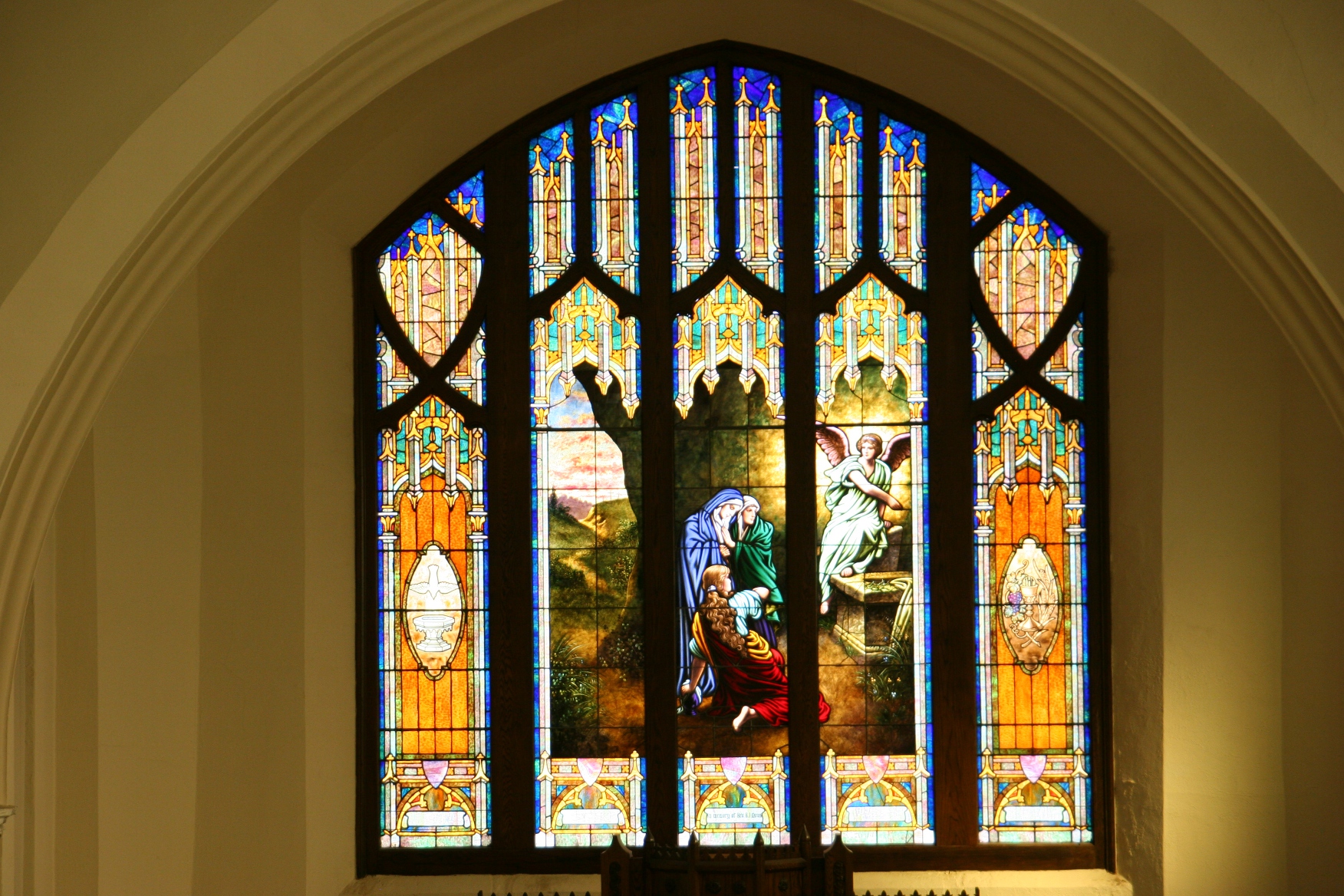
This stained glass window of the women and angel at Jesus’ empty tomb rises above the altar at Holden Lutheran Church, rural Kenyon, Minnesota. (Minnesota Prairie Roots copyrighted file photo 2016)
Art adds a depth to my understanding and to my faith.
This shows a snippet of the center stained glass window in a trio above the altar at Trinity Lutheran Church, Wanamingo, Minnesota. This section shows Jesus risen from the dead. (Minnesota Prairie Roots copyrighted file photo 2016)
As we near the end of Holy Week, please take time to reflect on the stained glass art here or within your own community.
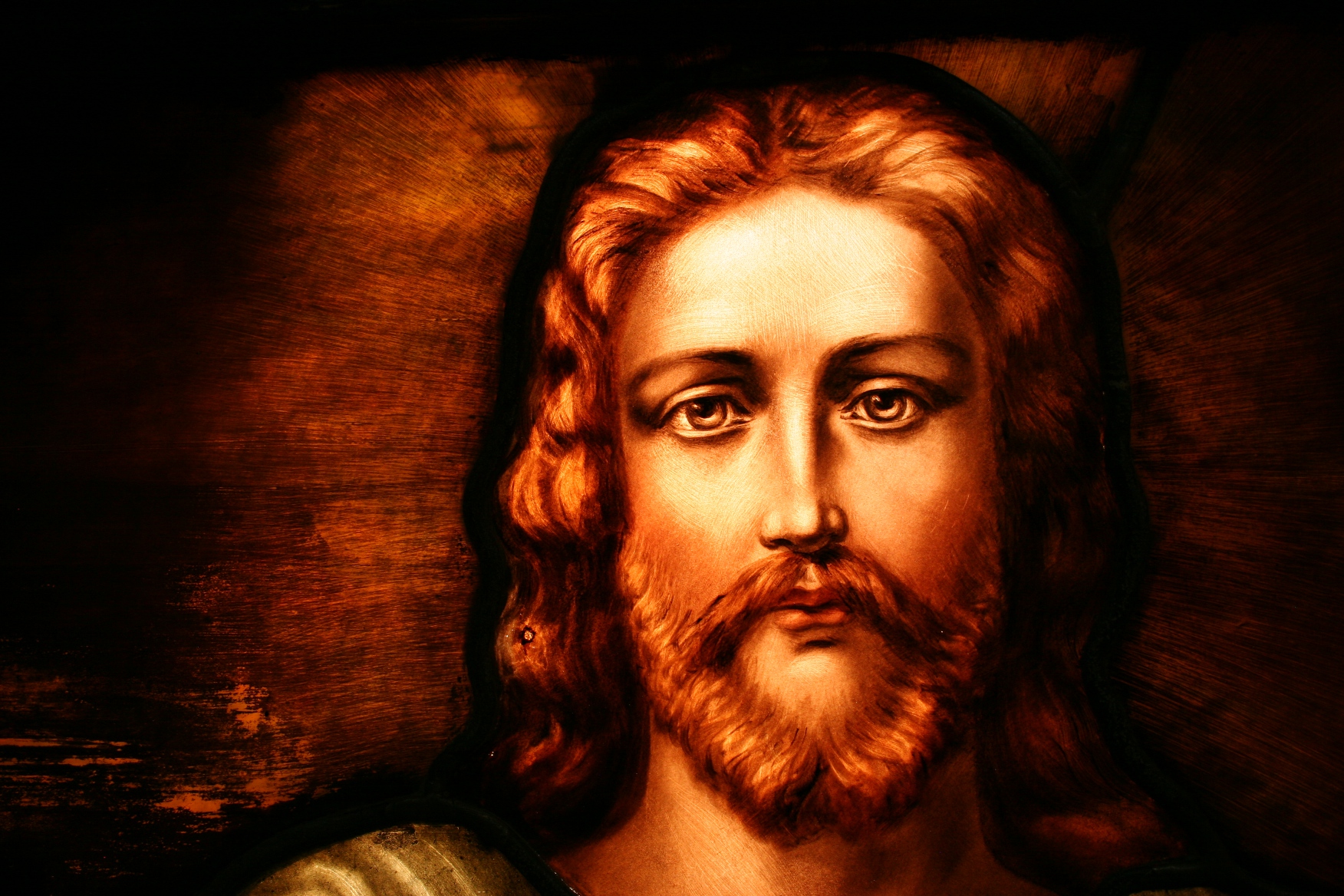
A photo of Christ’s face from a stained glass window in my church, Trinity Lutheran, Faribault. (Minnesota Prairie Roots copyrighted file photo 2012)
And may this art bless you as it has me. Have a joyful and blessed Easter!
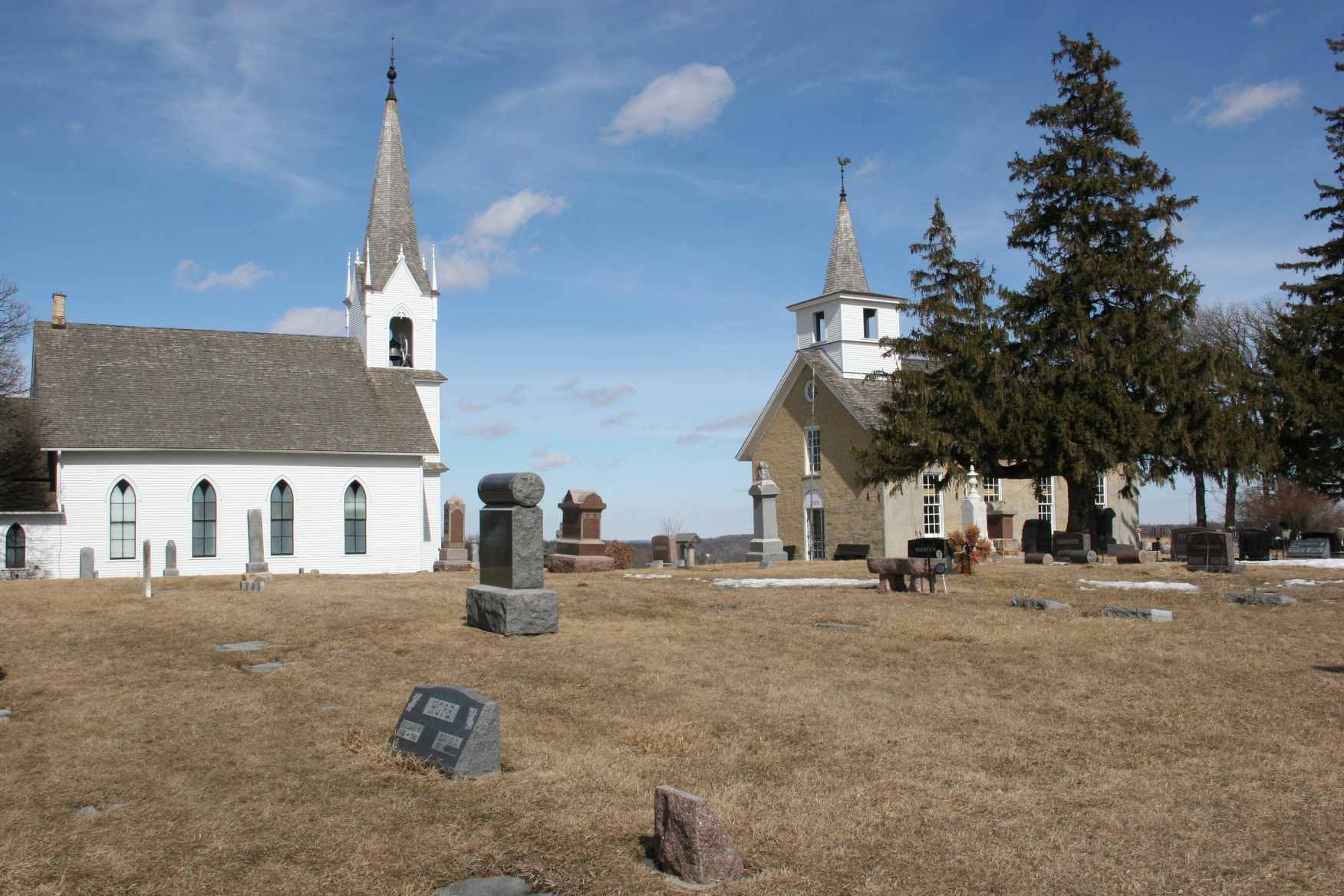
The cemetery at Valley Grove sidles near the two historic Norwegian churches. (Minnesota Prairie Roots copyrighted photo March 2022)
A TIME EXISTED when I avoided cemeteries. I didn’t like the thought of being among the dead. It creeped me out. The thought of bodies beneath the ground. Bones. Nightmarish thoughts fueled by imagination. Long ago I left those dark fears behind, accepting the reality of death. That came with maturity, a deepening of my faith and the deaths of many loved ones.
Art and heritage and faith and lives remembered. (Minnesota Prairie Roots copyrighted photo March 2022)
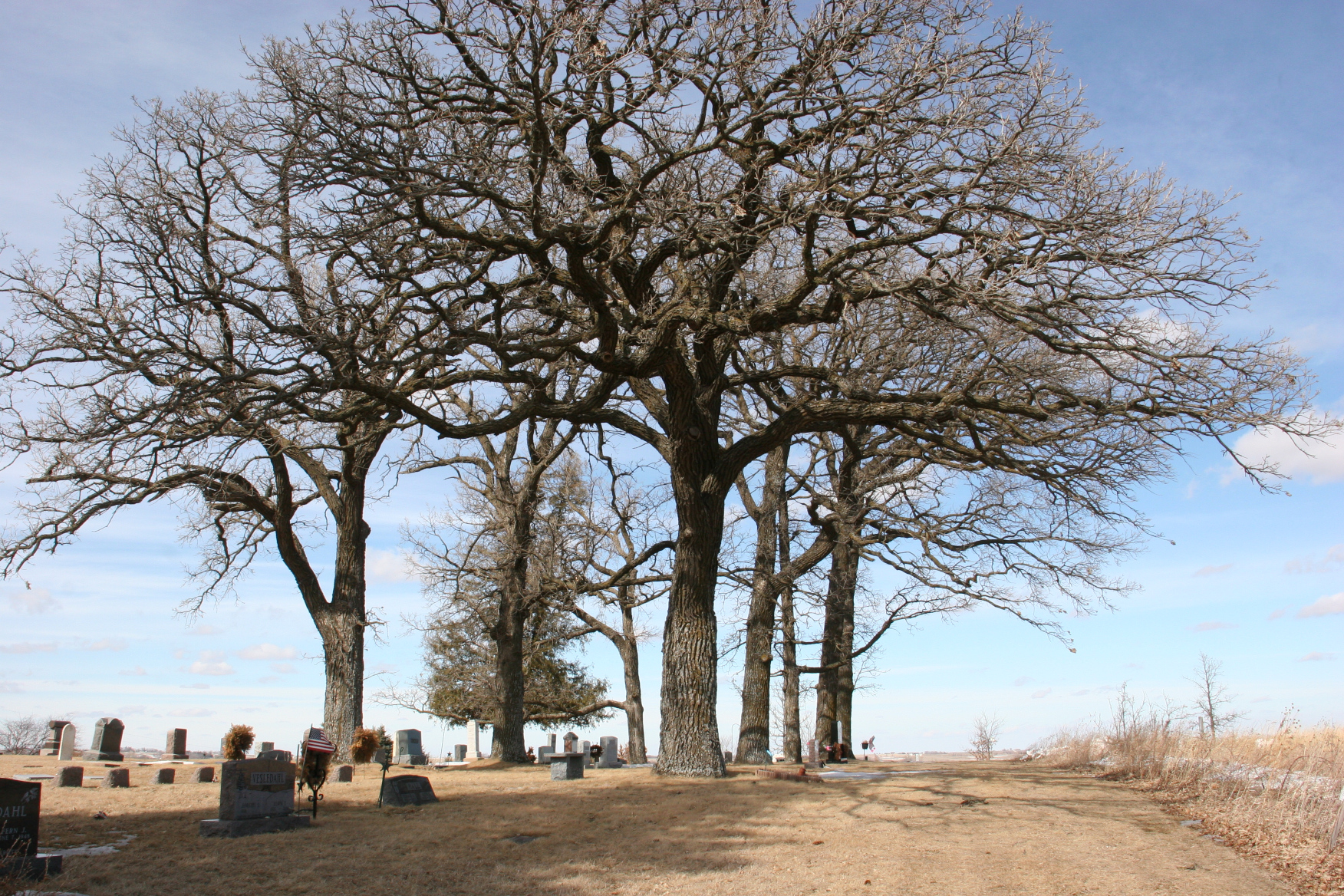
Oaks edge the cemetery and a road along it. (Minnesota Prairie Roots copyrighted photo March 2022)
Graveyards are more than a final resting place, as we so nicely phrase it, for loved ones. Graveyards are also places to grieve and remember. They are also places of history, heritage and art, often sited in the most peaceful of settings. Valley Grove checks off all those items on that place list.
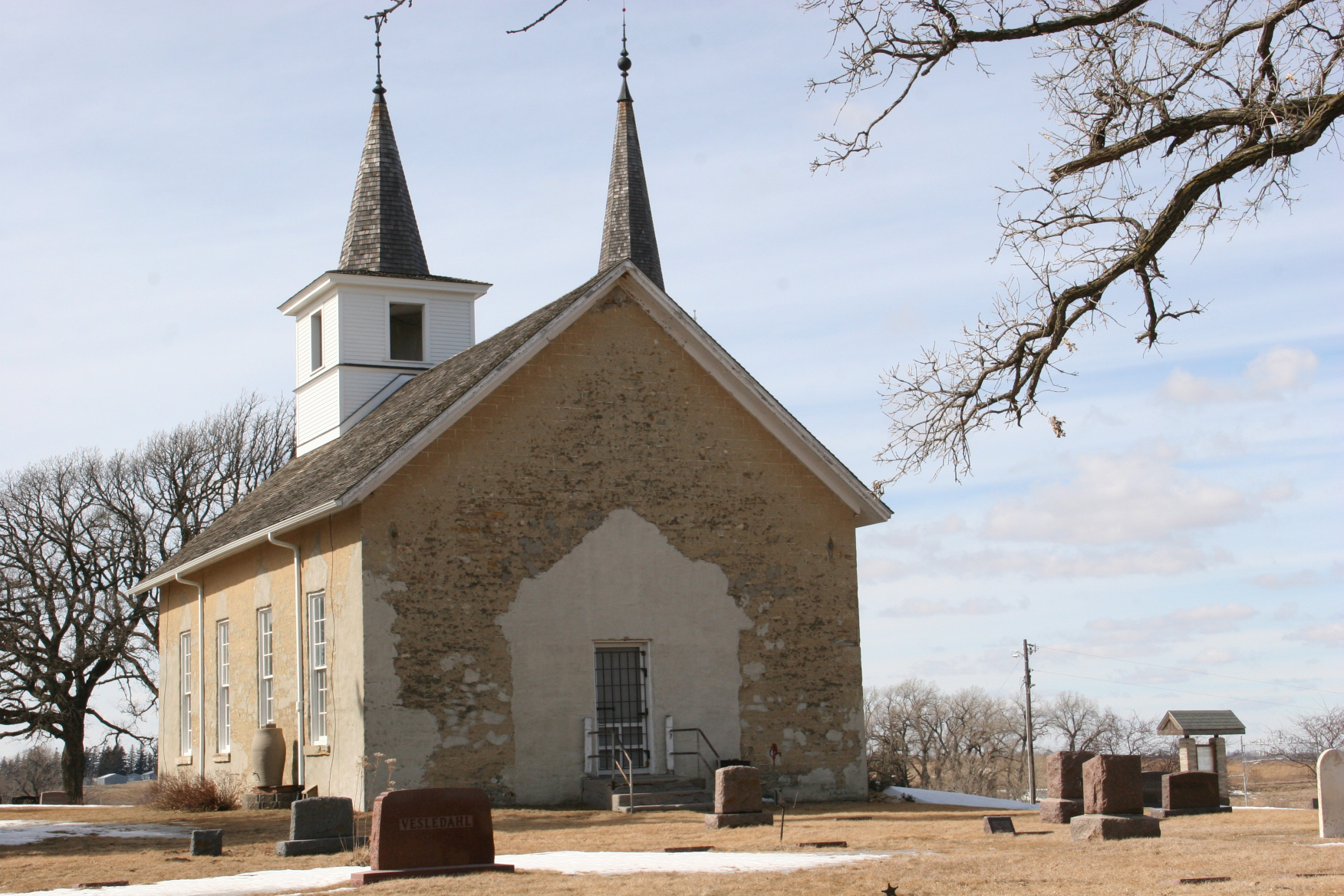
The cemetery surrounds three sides of the 1862 stone church. (Minnesota Prairie Roots copyrighted photo March 2022)
I’ve explored many other country cemeteries, wandering among the tombstones, wondering about the people buried there. Why did they die so young? What were they like? What were their occupations? What made them happy? Who misses them?
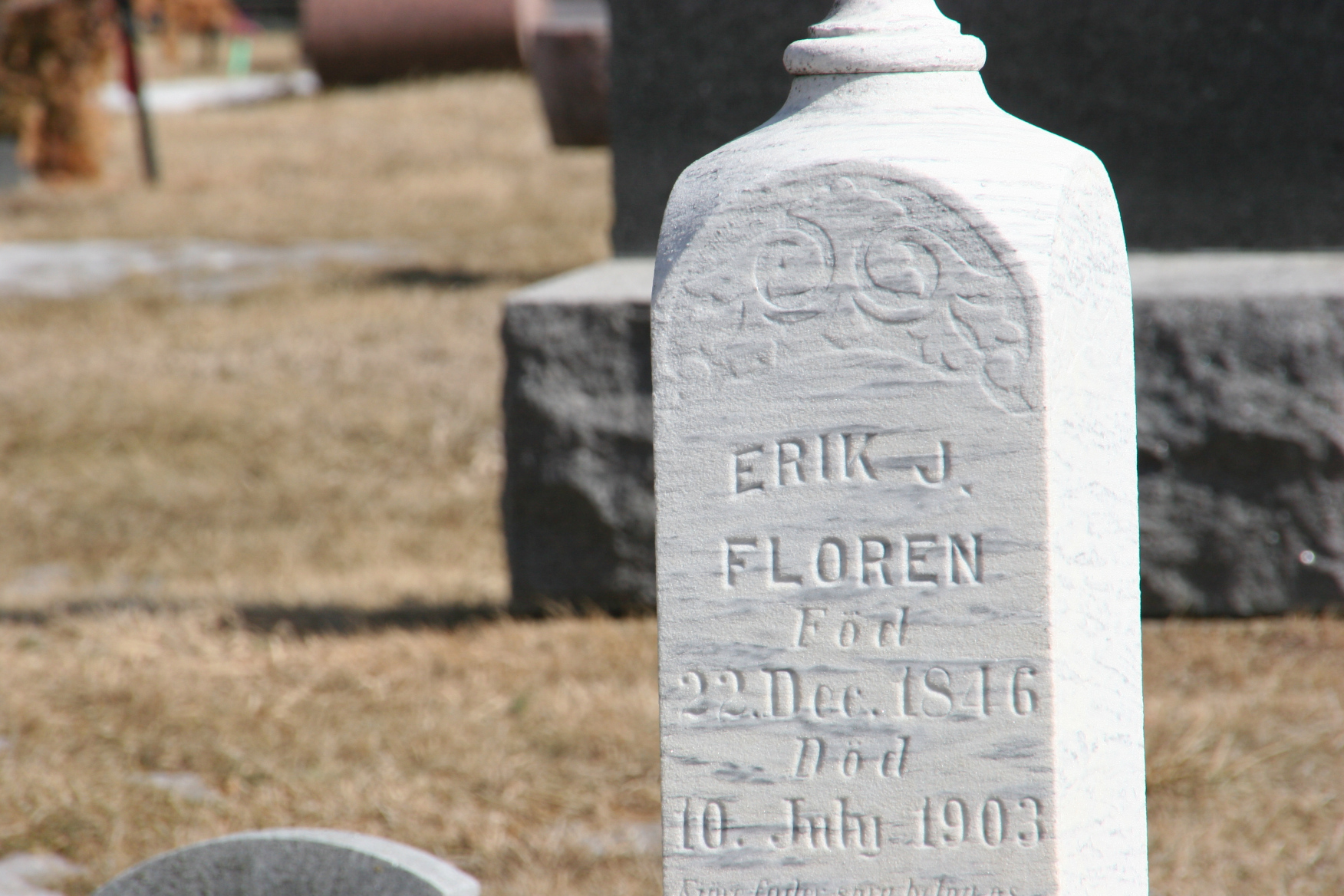
Erik Floren’s tombstone. (Minnesota Prairie Roots copyrighted photo March 2022)
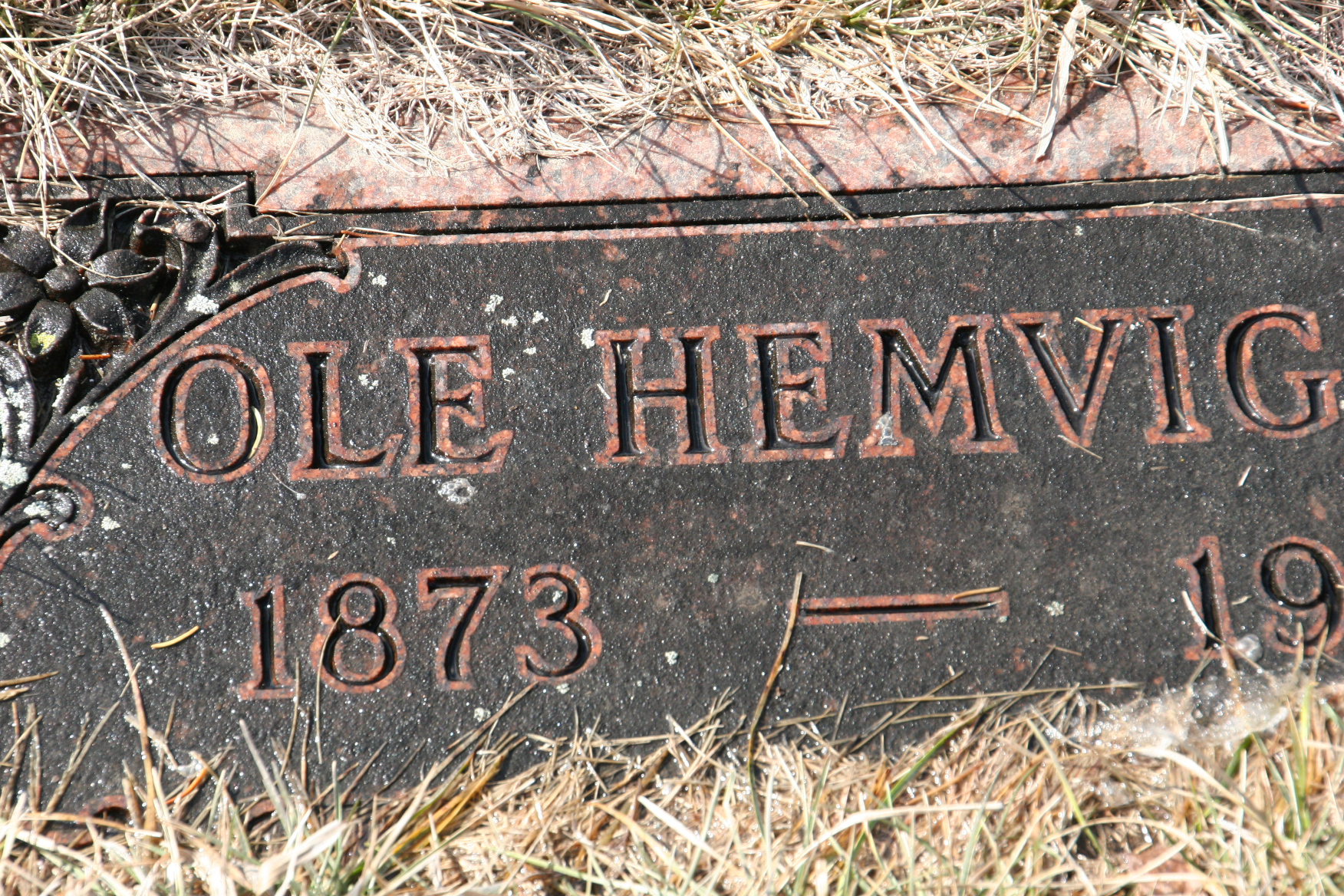
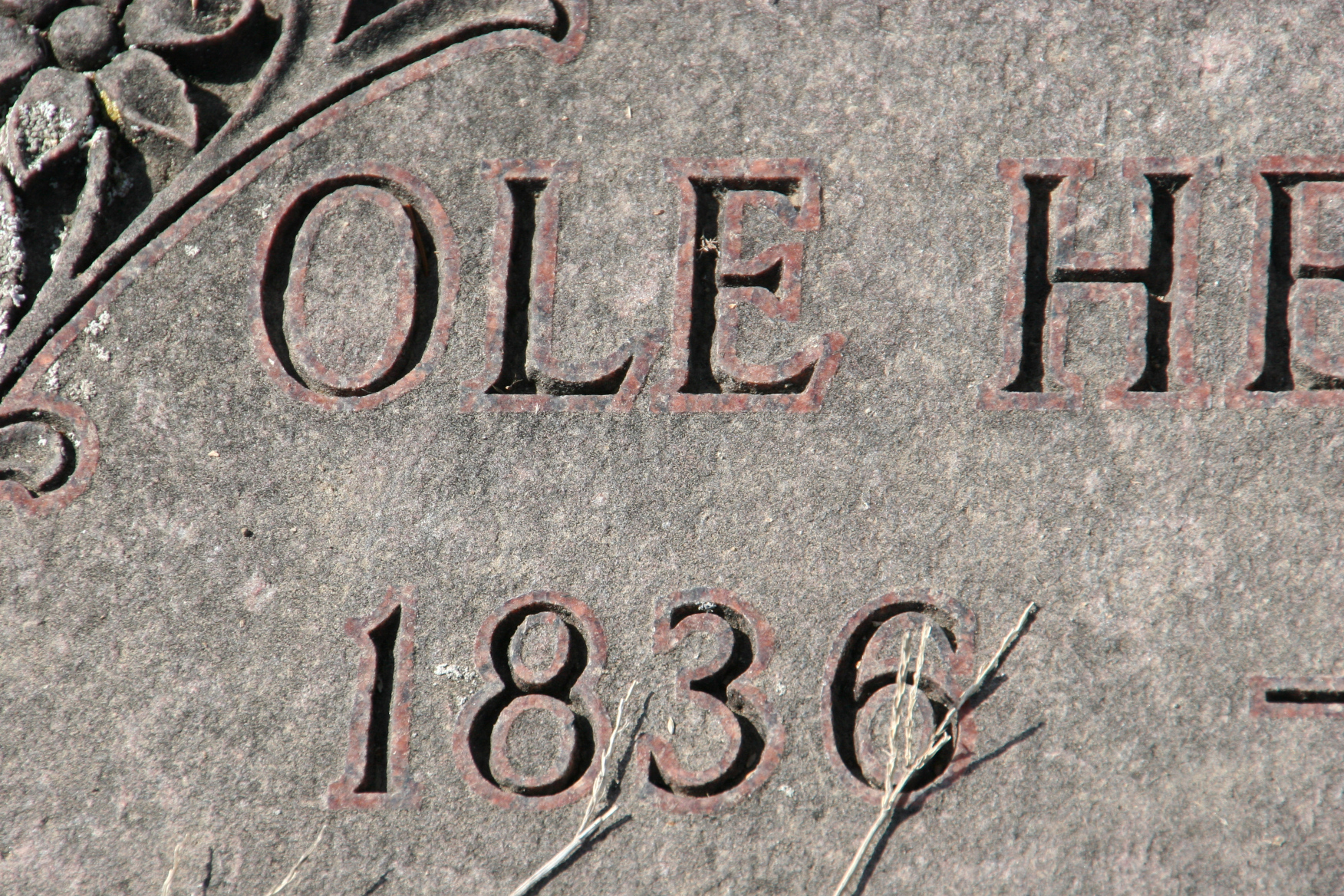
The in-ground marker of Ole Hemvig. (Minnesota Prairie Roots copyrighted photo March 2022)
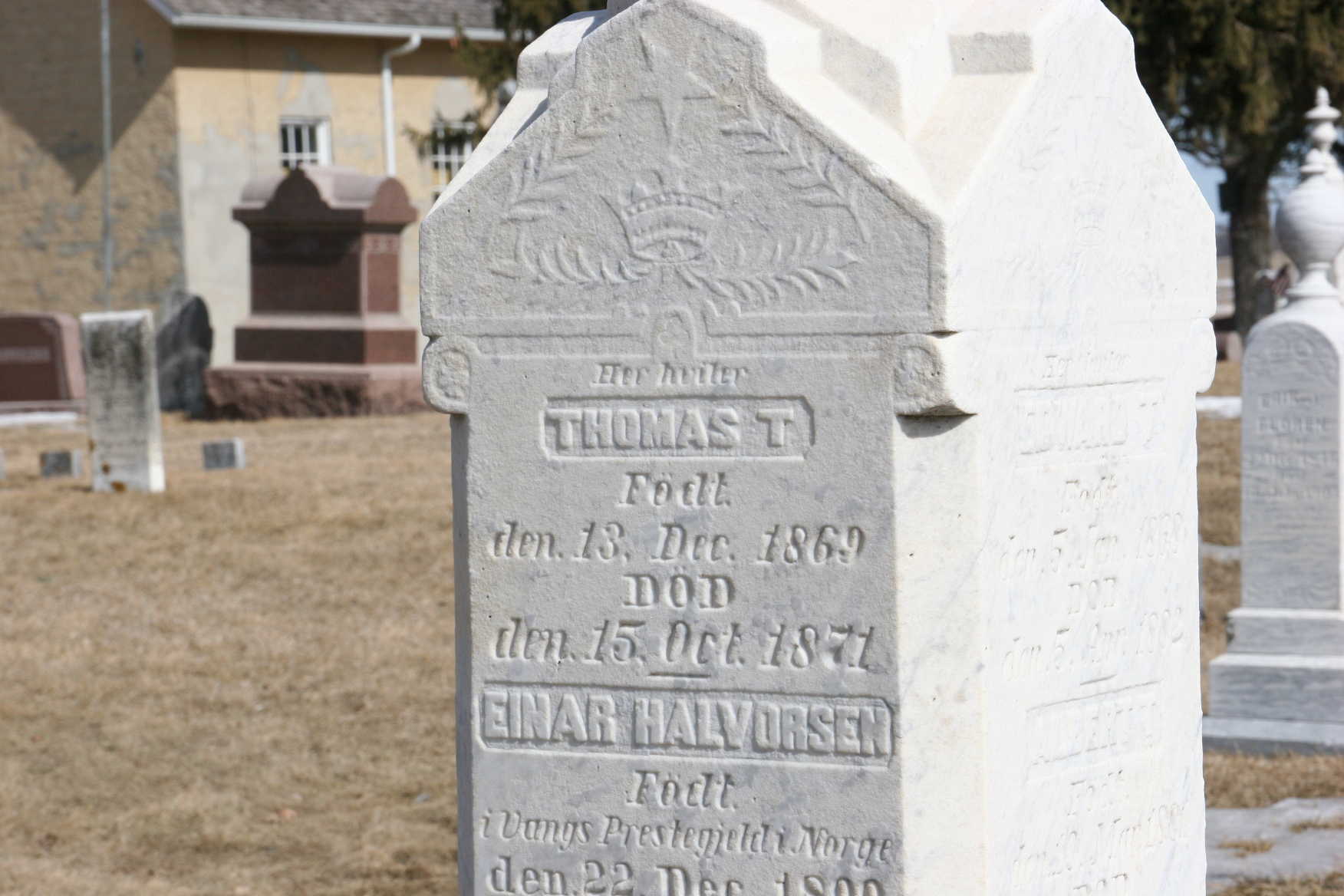
Honoring Thomas and Einar Halvorsen. (Minnesota Prairie Roots copyrighted file photo March 2022)
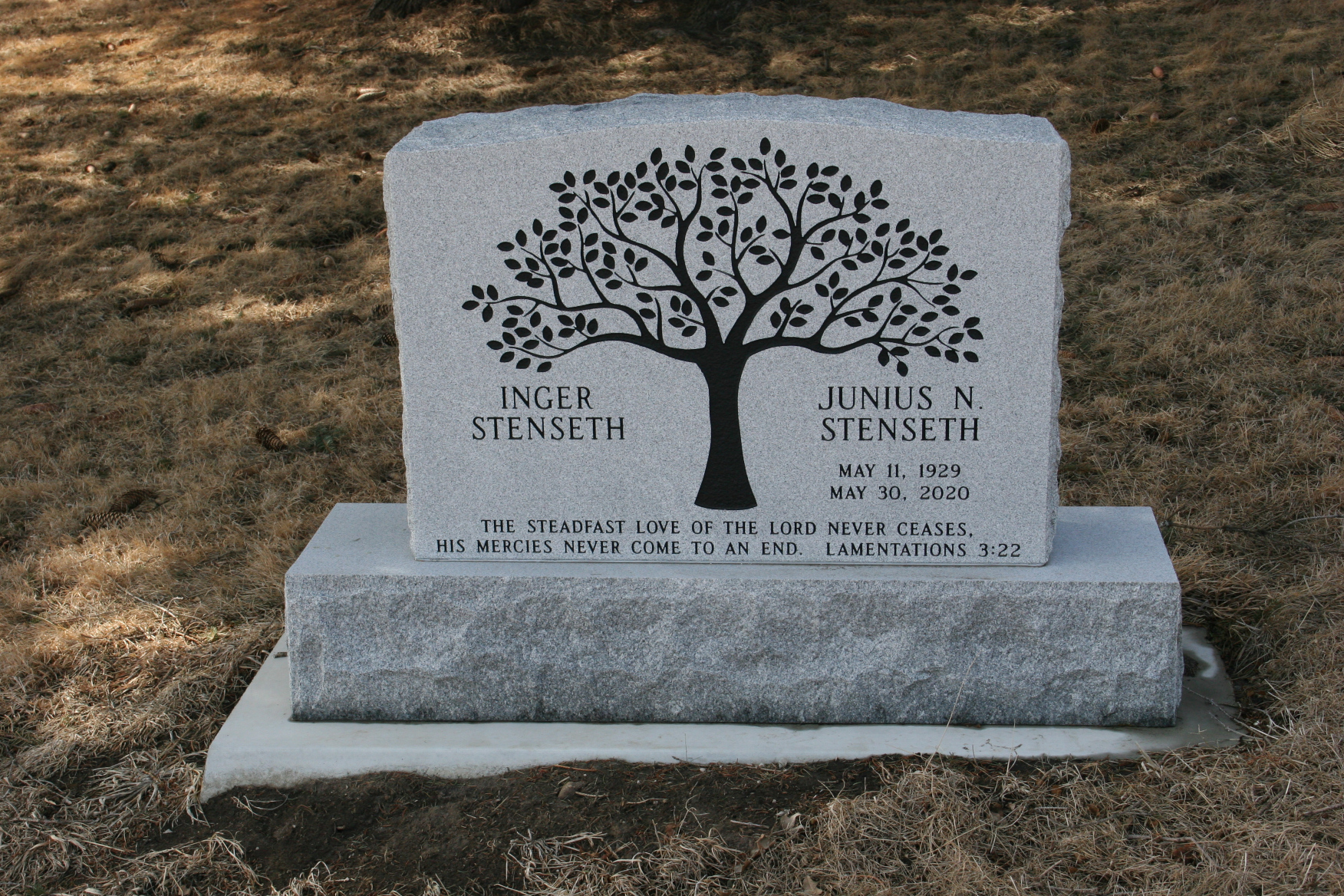
Tombstone engravings reveal bits and pieces of life stories. Sometimes of heritage. At Valley Grove, many names reference a Norwegian heritage. Ole. Erik. Einar. Inger. Junius. I doubt I’ve ever found so many “Oles” buried in a Minnesota cemetery. That’s not unexpected given the Norwegian immigrants who settled here and built the two churches which still stand. Older stone inscriptions are sometimes written in the Mother Tongue. German I can occasionally decipher. Norwegian, not.
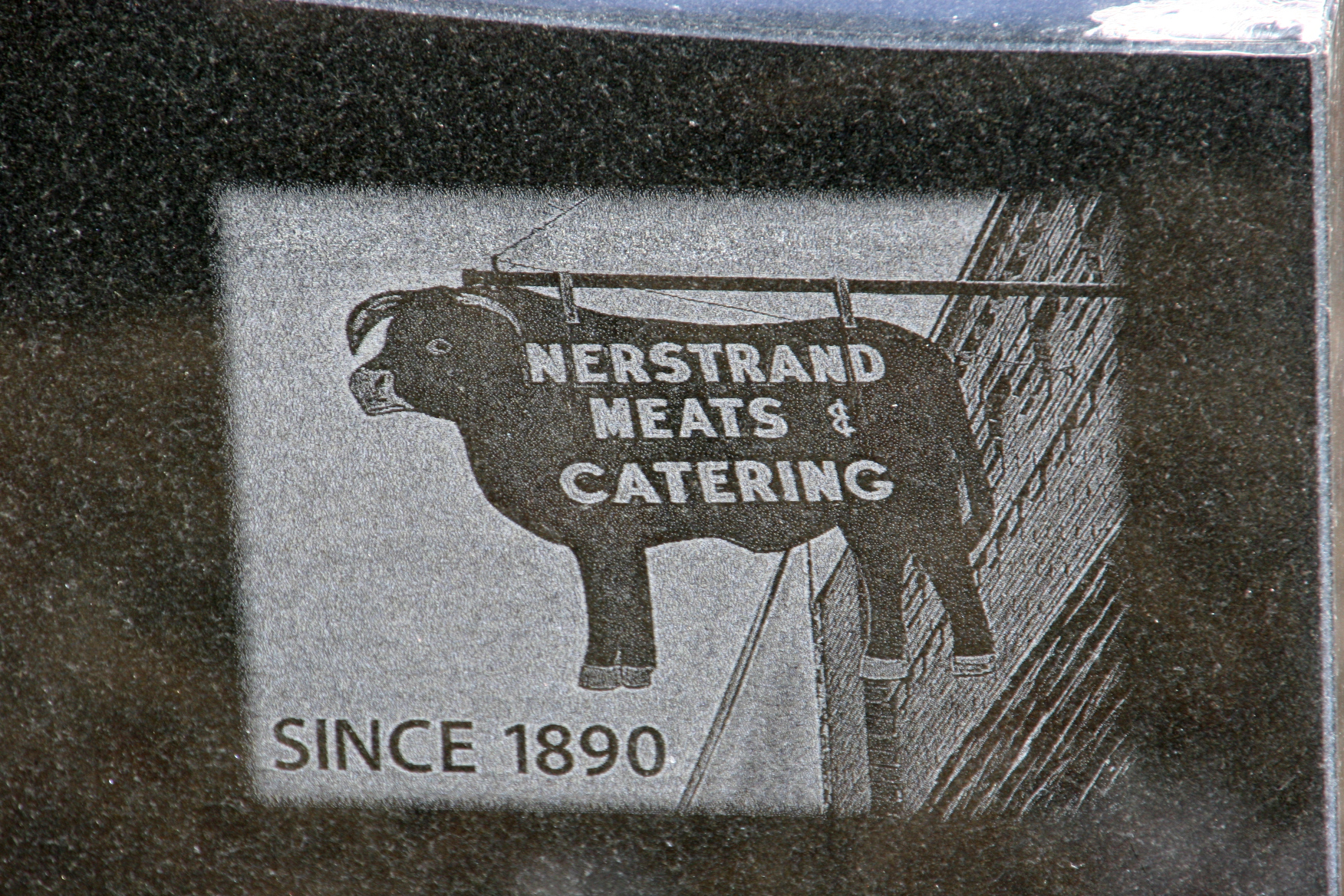
On Clyde Heggedahl’s tombstone. (Minnesota Prairie Roots copyrighted photo March 2022)
Through the years, the art of grave markers has evolved to more elaborate artwork that tells a story. For example, at Valley Grove an image of Nerstrand Meats & Catering decorates the stone of Clyde Heggedahl of that long-standing business co-owned with his wife, Mary. He died in 2016. At the meat market.
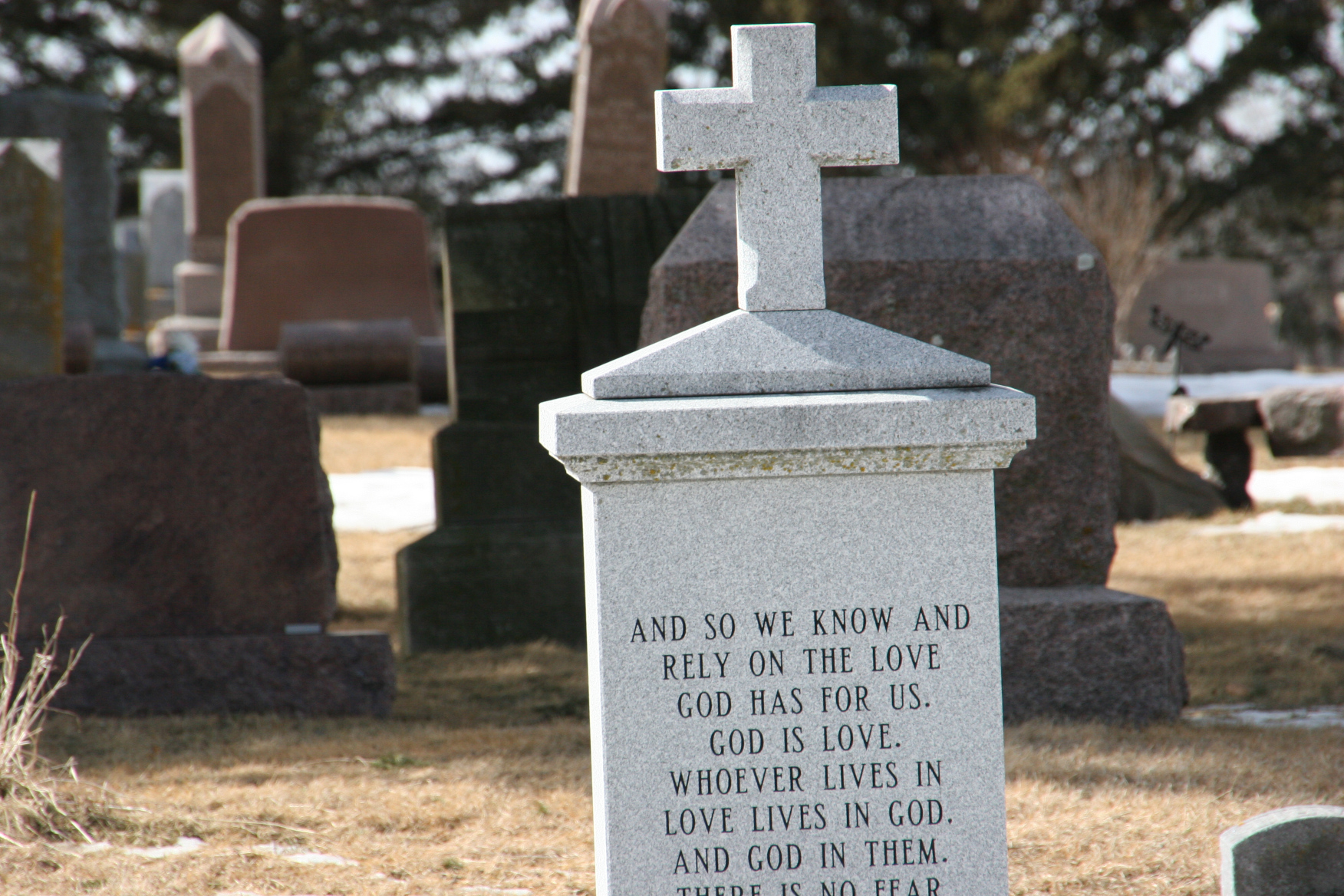
A faith and love-filled message. (Minnesota Prairie Roots copyrighted photo March 2022)
Bible verses and inspirational messages grace gravestones, too, offering insights and comfort. Sharing hope and faith. Love.
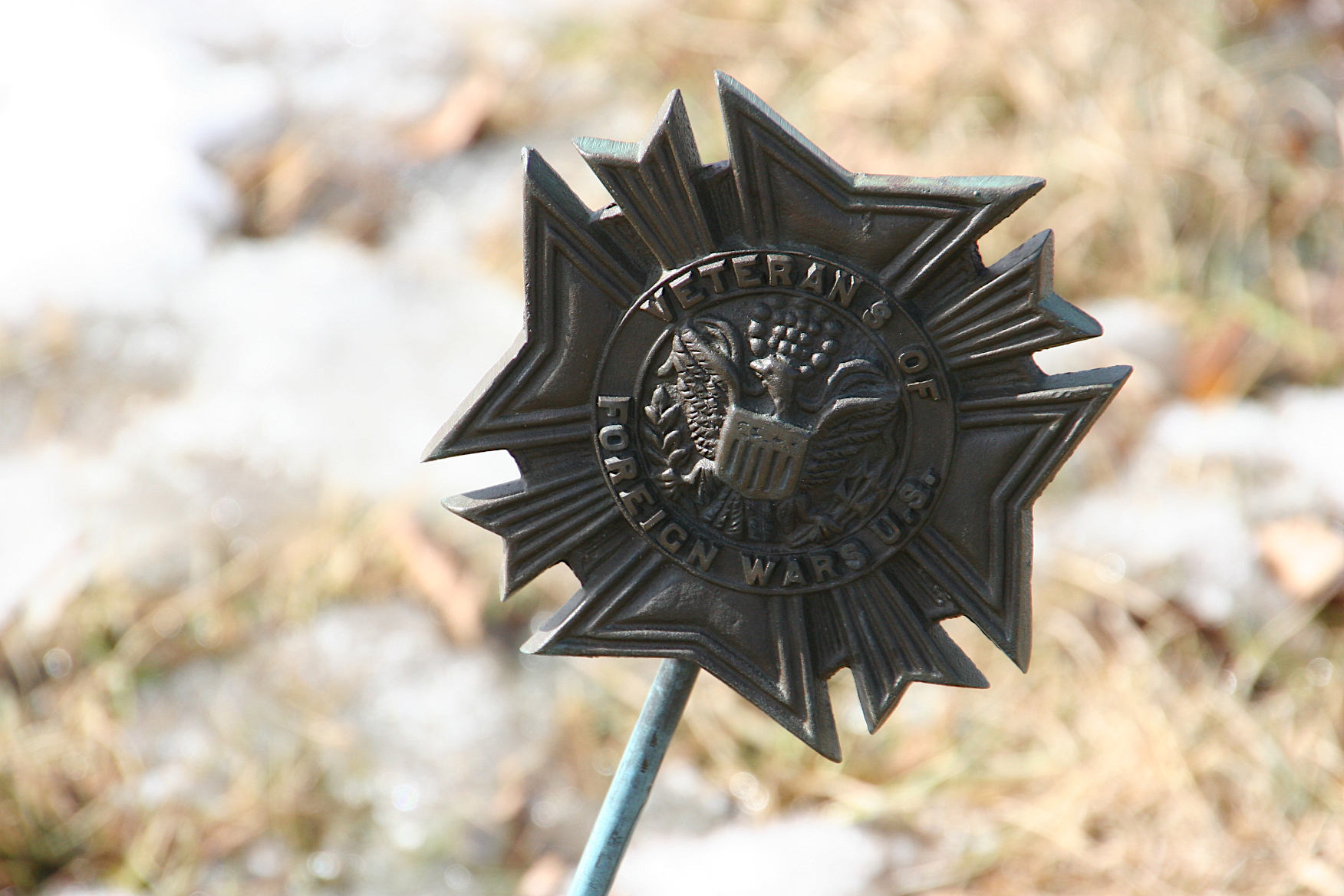
A special marker for a veteran’s grave. (Minnesota Prairie Roots copyrighted photo March 2022)
I often pause at burial spots marked by military markers. As the daughter of a Korean War veteran, I hold honor in my heart for those who have served. I recognize the sacrifices, whether given through death on the battlefield or the life-long challenges faced by too many of our veterans. That included my father, who died in 2003. Dad received his purple heart 47 years after he was wounded in Korea. War forever wounded his spirit; he battled Post Traumatic Stress Disorder. I am thankful veterans’ graves are flagged with honor.
The old stone church and cemetery at Valley Grove. (Minnesota Prairie Roots copyrighted photo March 2022)
There’s simply lots to observe and contemplate while meandering among tombstones. I always do so with respect, for these grounds feel almost sacred. At Valley Grove, a certain serenity envelopes me in this peaceful hilltop setting among oaks and prairie.
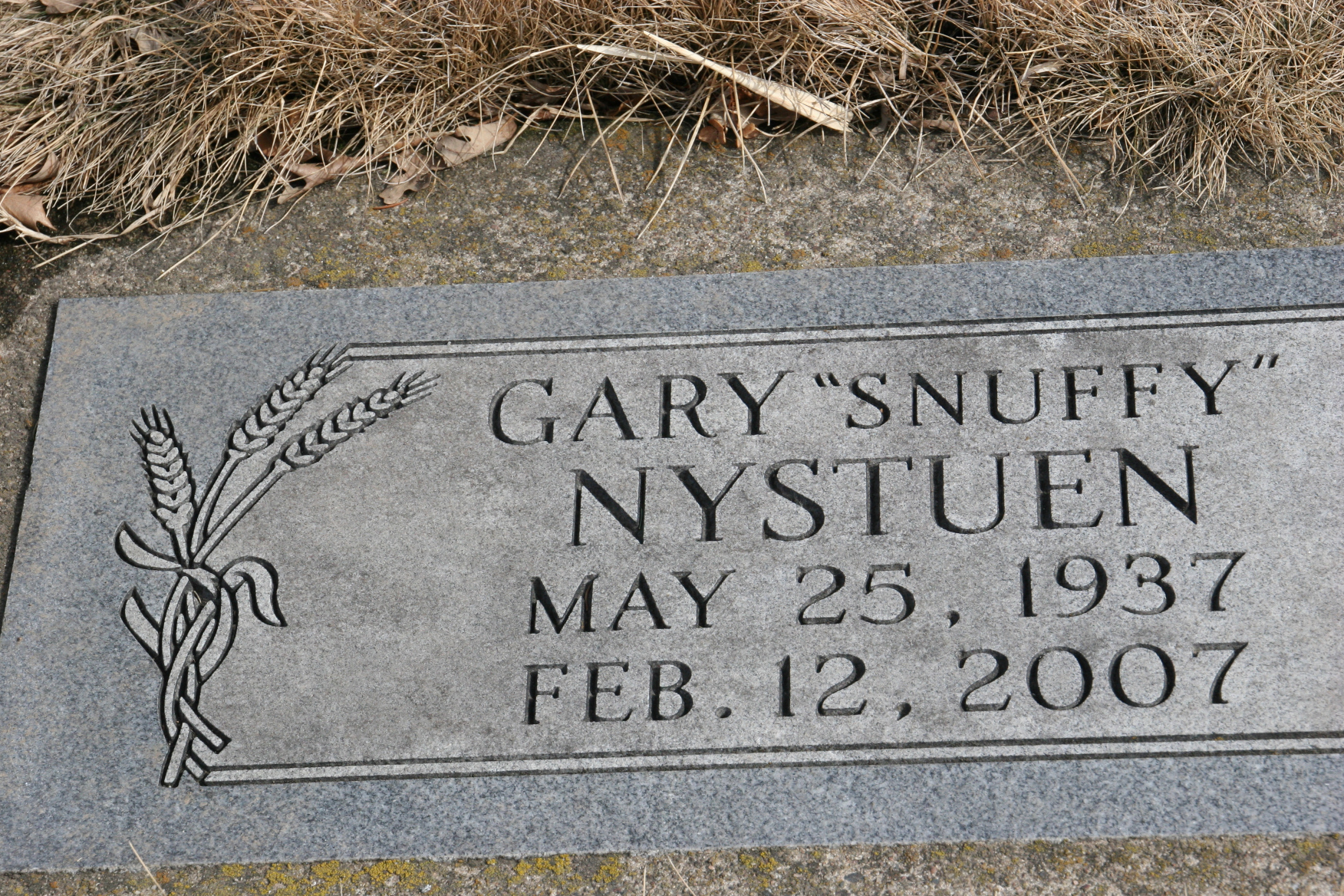
What’s the story behind the “Snuffy” nickname? (Minnesota Prairie Roots copyrighted photo March 2022)
Although those buried here were unknown to me in life, I’ve come to know them a bit in death. The countless “Oles.” The young and the old. They were all cherished. Loved. Part of the family of humanity. They mattered. And their stories matter.
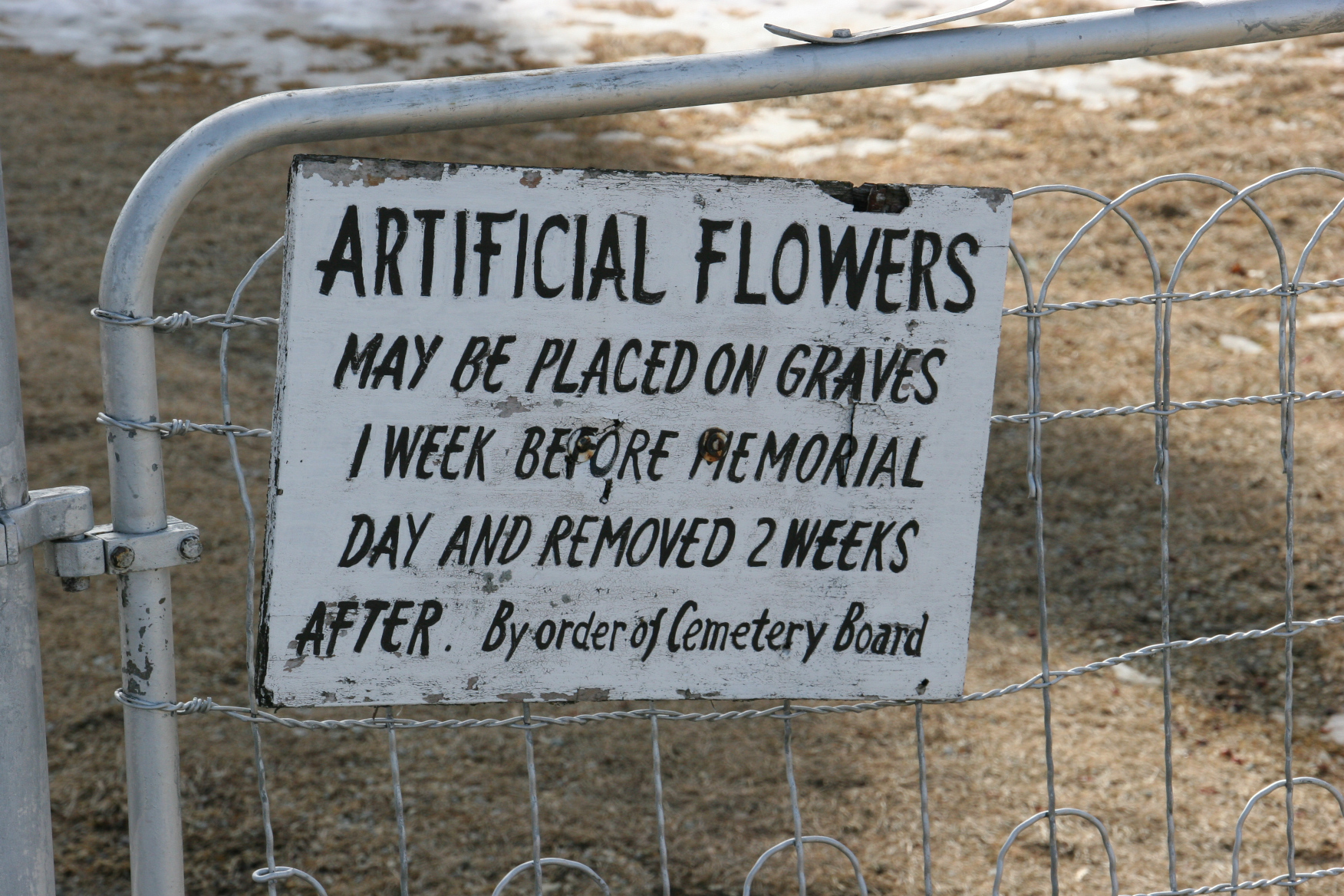
Posted on the gated entry to Valley Grove. (Minnesota Prairie Roots copyrighted photo March 2022)
TELL ME: Do you explore cemeteries and, if you do, why?
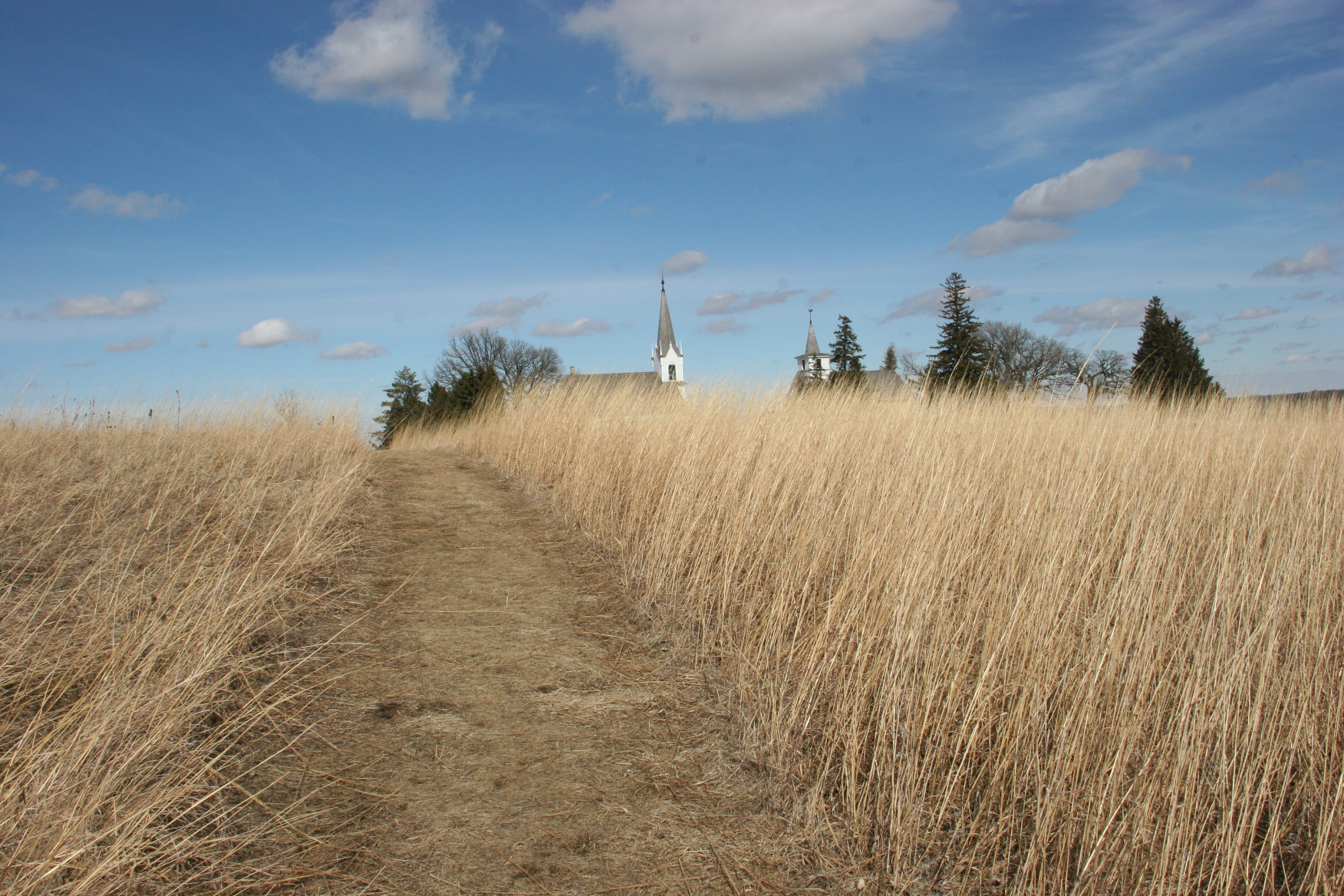
Valley Grove churches rise over the hill as I follow the prairie path back to the church grounds. (Minnesota Prairie Roots copyrighted photo March 2022)
ATOP THIS HILL, here on the edge of the Big Woods among acres of fields near Nerstrand, I hear the whispers. Wrapping around the two historic churches. Rising from the cemetery. Sweeping through the tall prairie grasses.
The cemetery sits next to the churches, then rings the old stone church. (Minnesota Prairie Roots copyrighted photo March 2022)
This is Valley Grove, overlooking the countryside, the place where Norwegian immigrants came. Here they crafted their first church from stone in 1862, then built a second, of wood, in 1894. Both still stand.
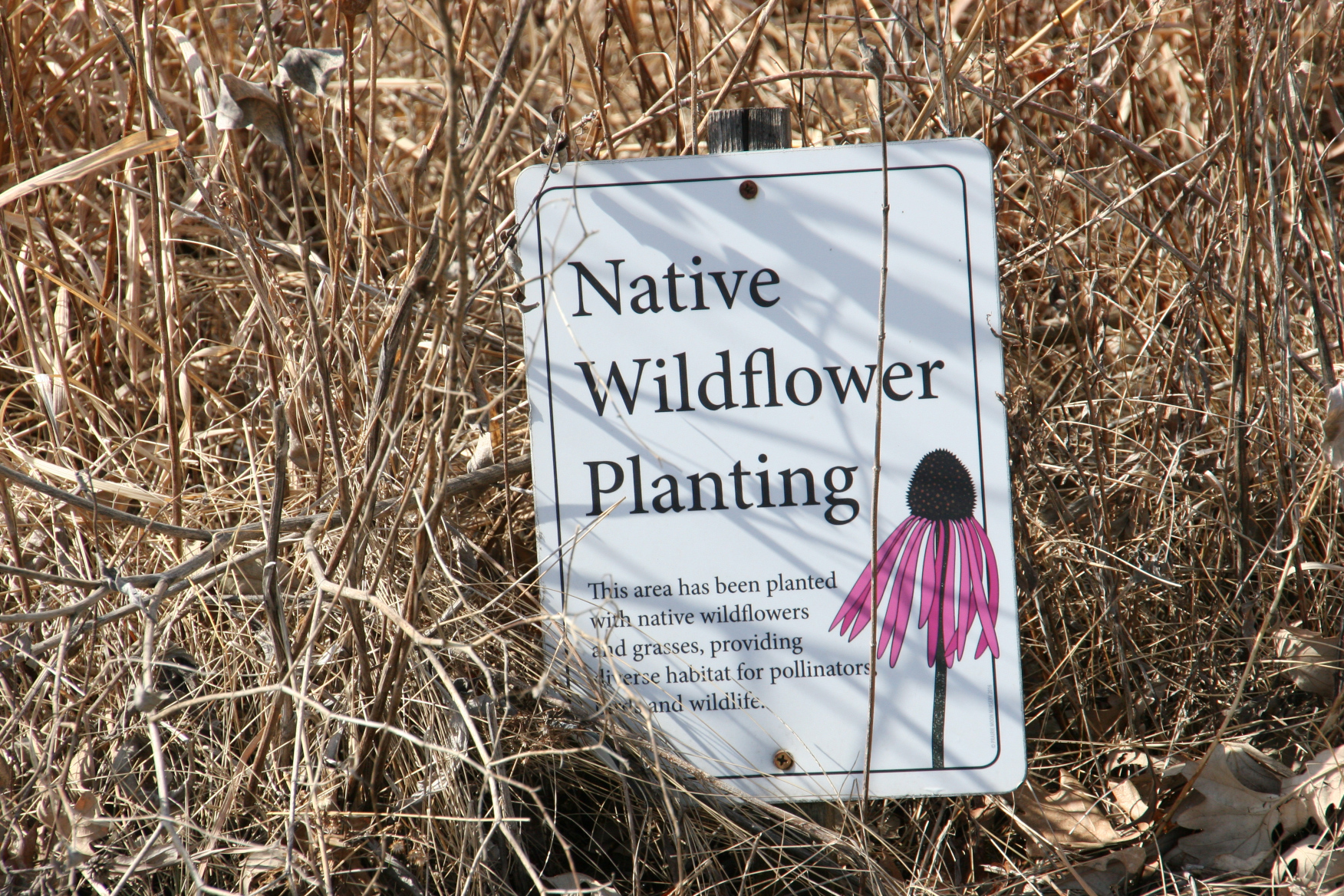
The Valley Grove Preservation Society cares about the land, too, with restoration and preservation. (Minnesota Prairie Roots copyrighted photo March 2022)
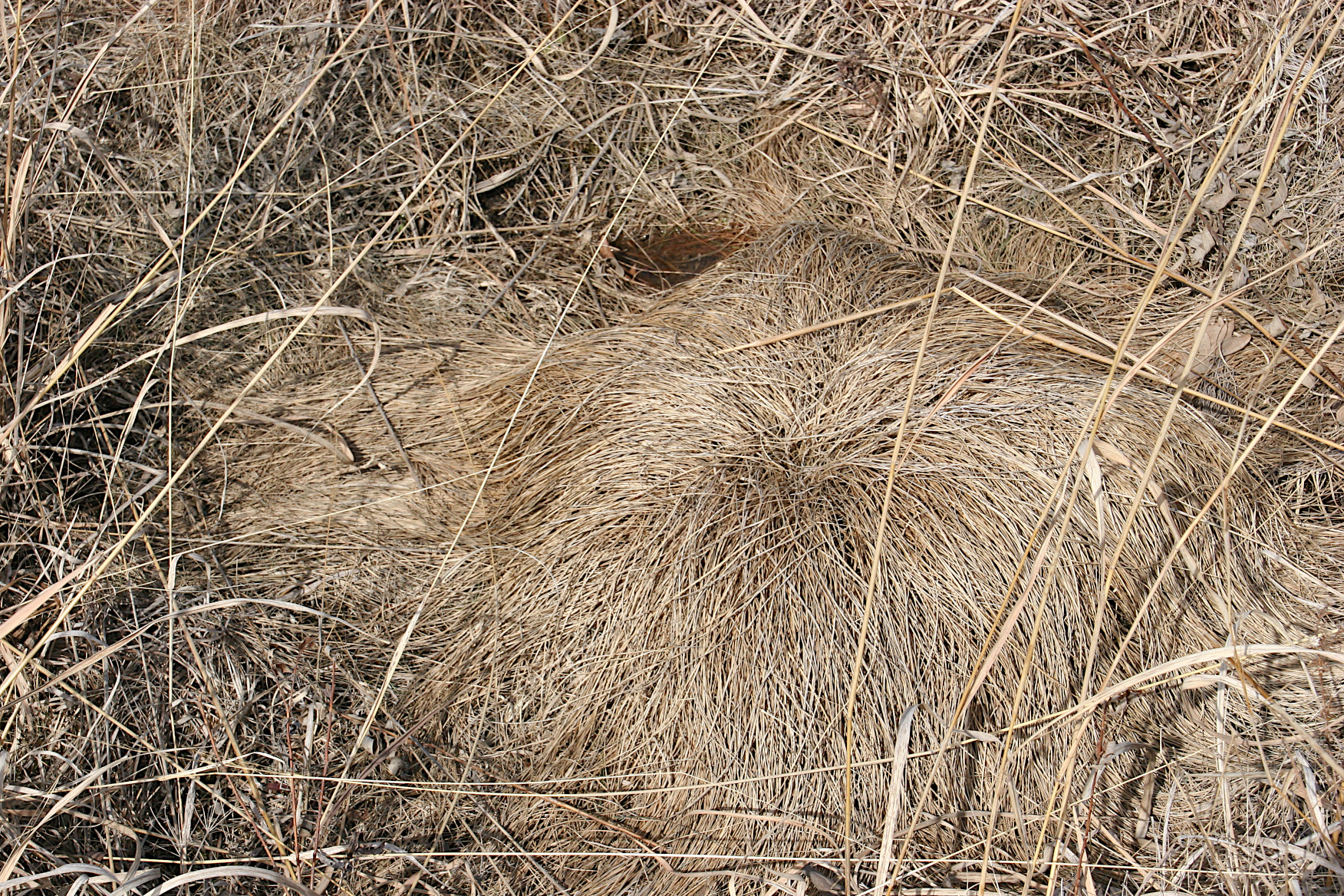
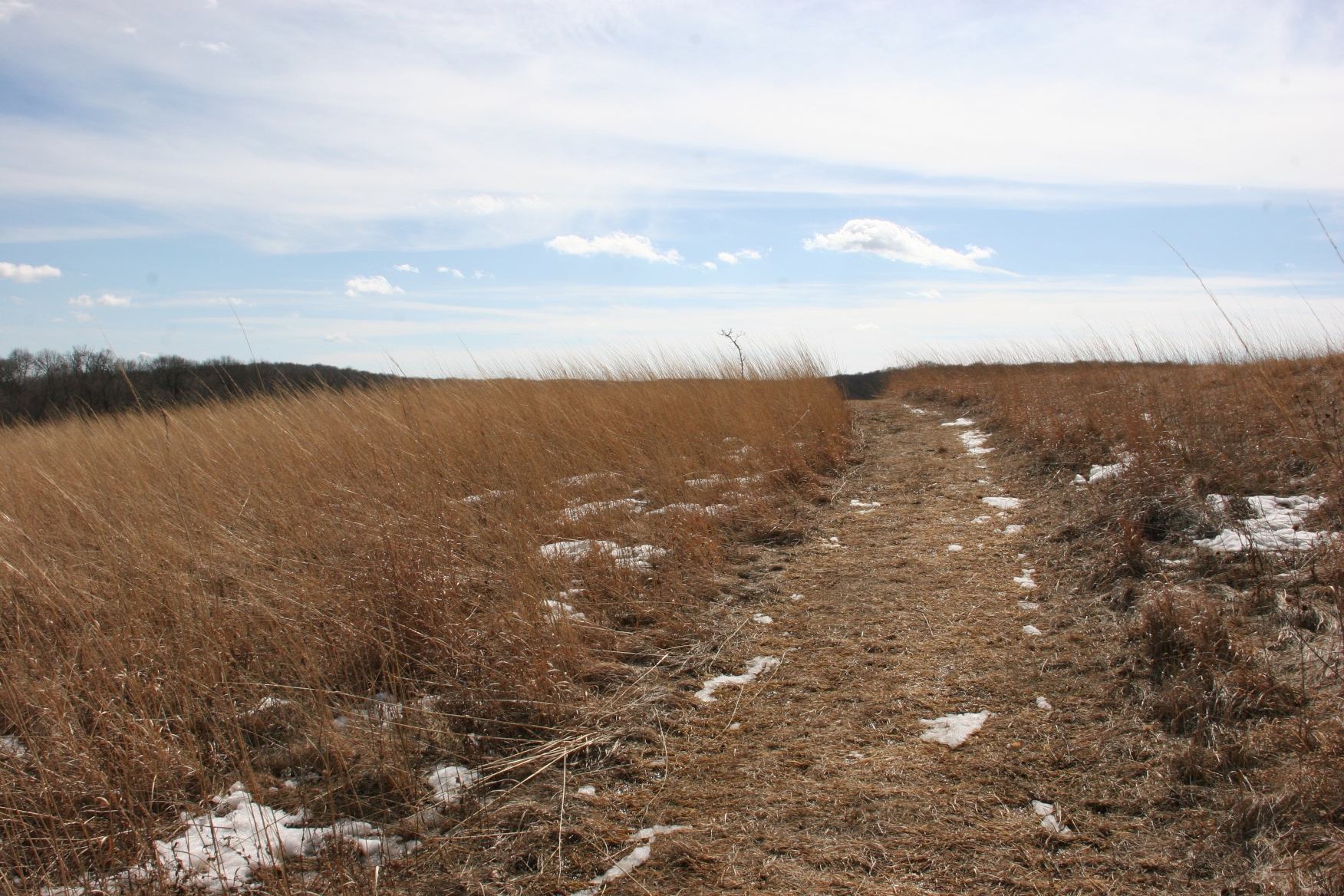
I spotted swirls of prairie grass alongside a trail. (Minnesota Prairie Roots copyrighted photo March 2022)
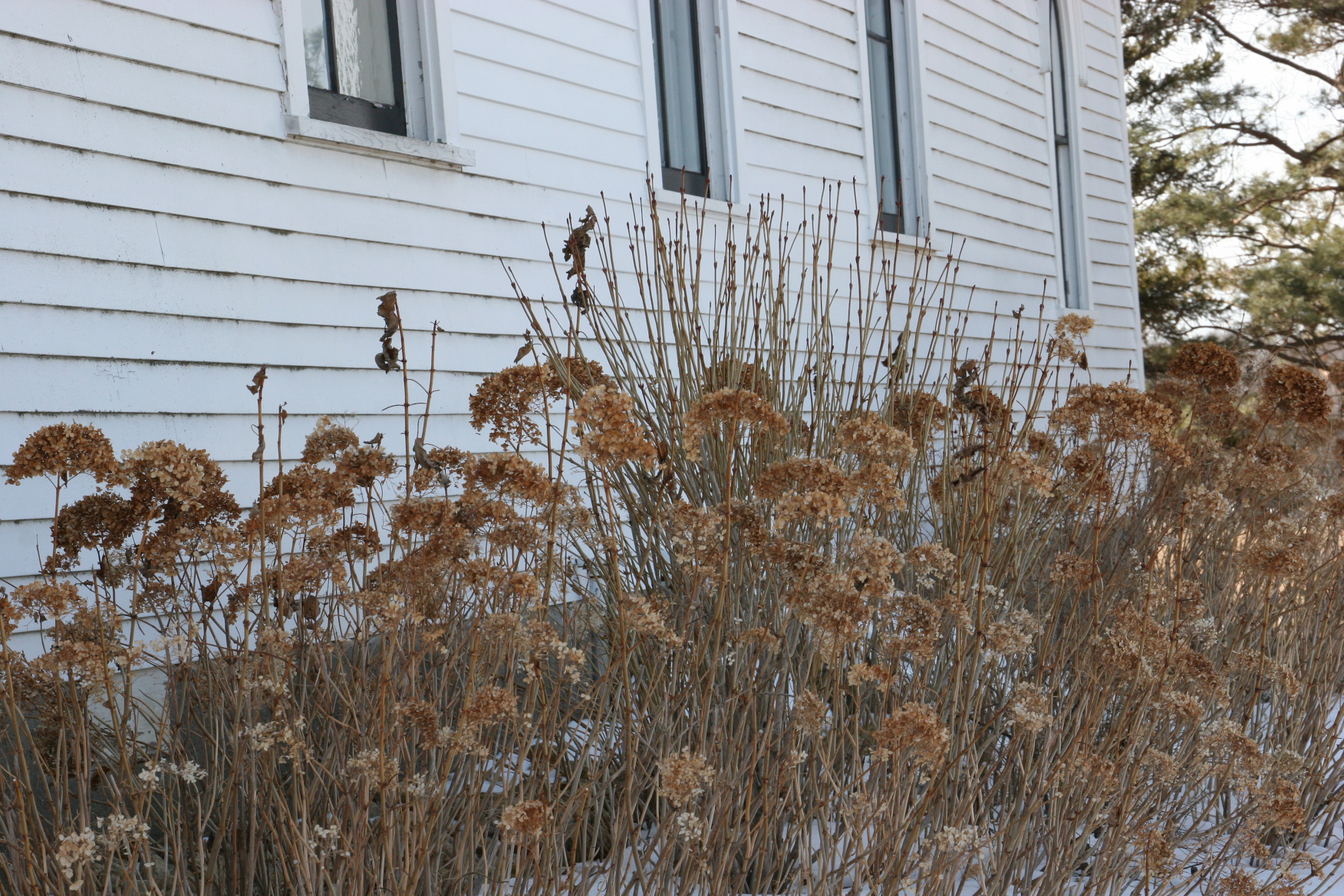
Dried hydrangea alongside the wooden church. (Minnesota Prairie Roots copyrighted photo March 2022)
The churches, cemetery and surrounding 50 acres are today owned, preserved and managed by the Valley Grove Preservation Society. They are a favorite nearby rural destination for me. I appreciate the natural beauty, the history, the country quiet and more. Even the wind.
A view from the parking lot, outside the fenced grounds. (Minnesota Prairie Roots copyrighted photo March 2022)
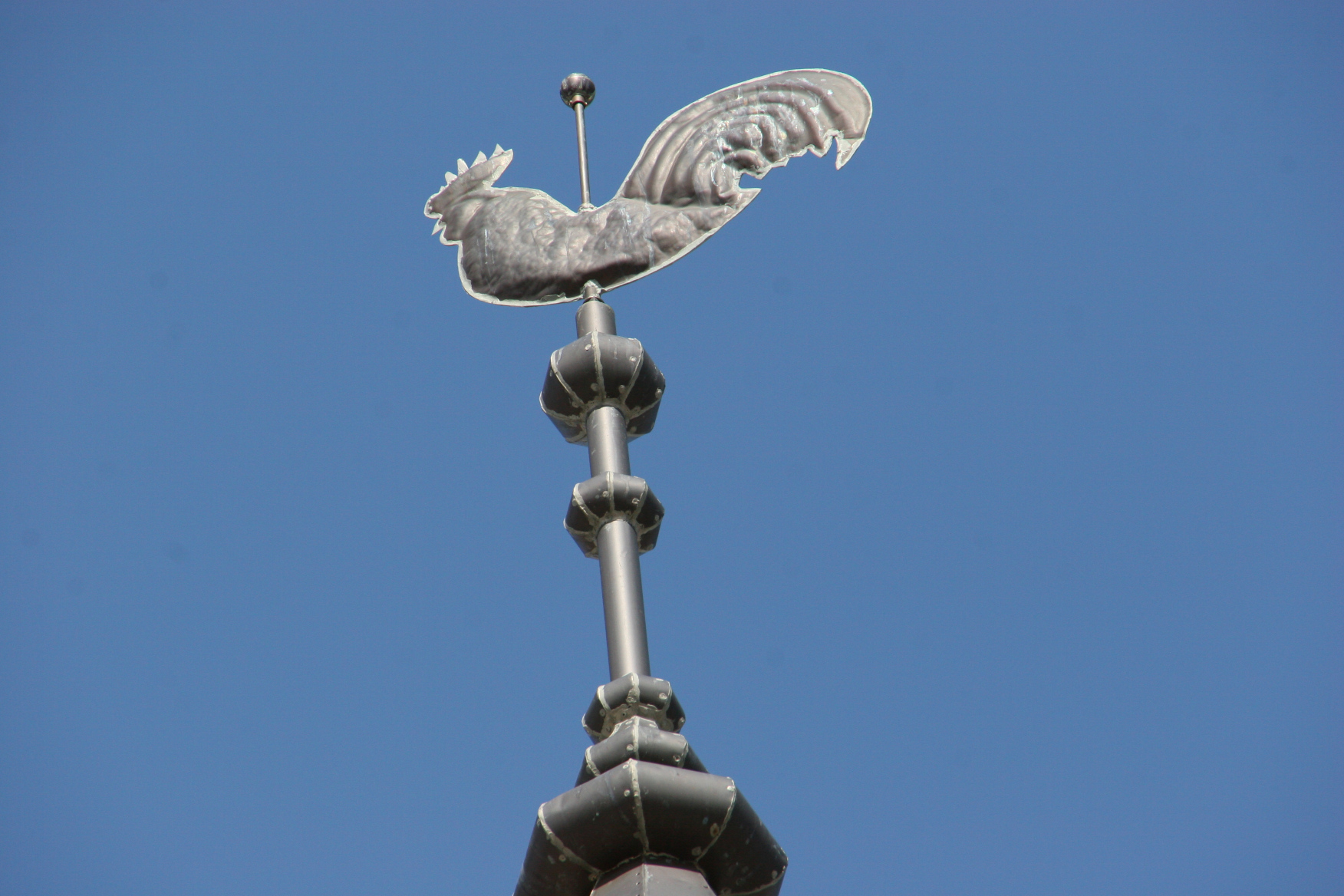
Atop the steeple of the old stone church. (Minnesota Prairie Roots copyrighted photo March 2022)
I value the rural-ness. On this afternoon, the shrill crow of a rooster, the sharp crack of gunshots and the barks of two dogs running loose broke the silence. In the context of location, the sounds fit. Not that I like gunshots echoing or strange canines circling me. But they did no harm as I continued along the stomped, sometimes soggy grass trail back toward the Valley Grove Cemetery and churches.
Land and sky define the prairie path. (Minnesota Prairie Roots copyrighted photo March 2022)
When following the prairie paths under a wide sky, I hear whispers of the past. Of wheels creaking under the weight of wagons crammed with an immigrant family’s belongings. Of a young mother bent over her baby, singing a soothing song from the Old Country. Of a weary farmer sighing after a long day of breaking the land.
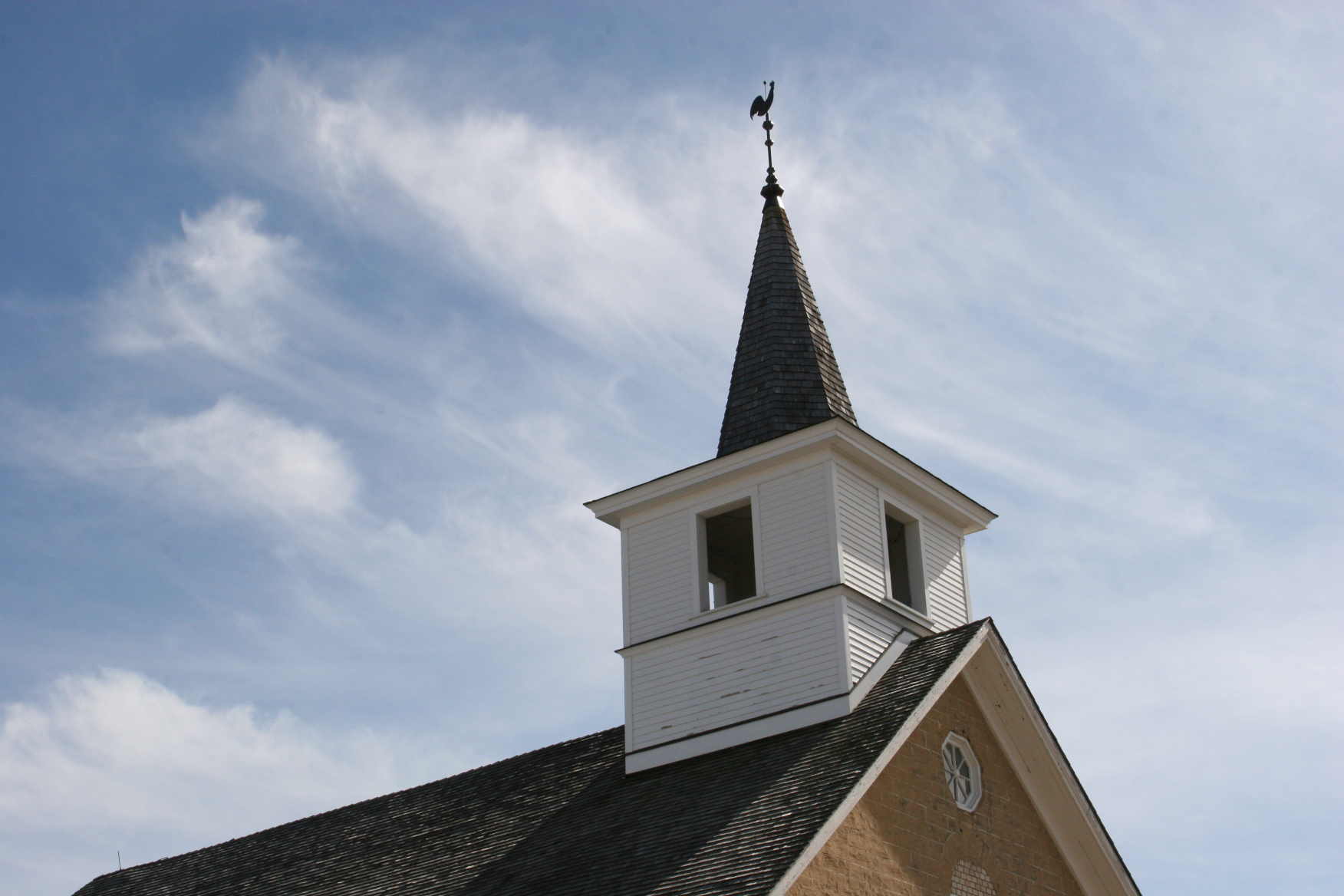
The roofline and steeple of the simple 1862 stone church rise above the rural landscape. (Minnesota Prairie Roots copyrighted photo March 2022)
If this place could speak, it would whisper the stories of all those Norwegian immigrants who settled in and around Valley Grove and then gathered on this hilltop location to worship, socialize, celebrate, mourn.
The 1894 church closeup. (Minnesota Prairie Roots copyrighted photo March 2022)
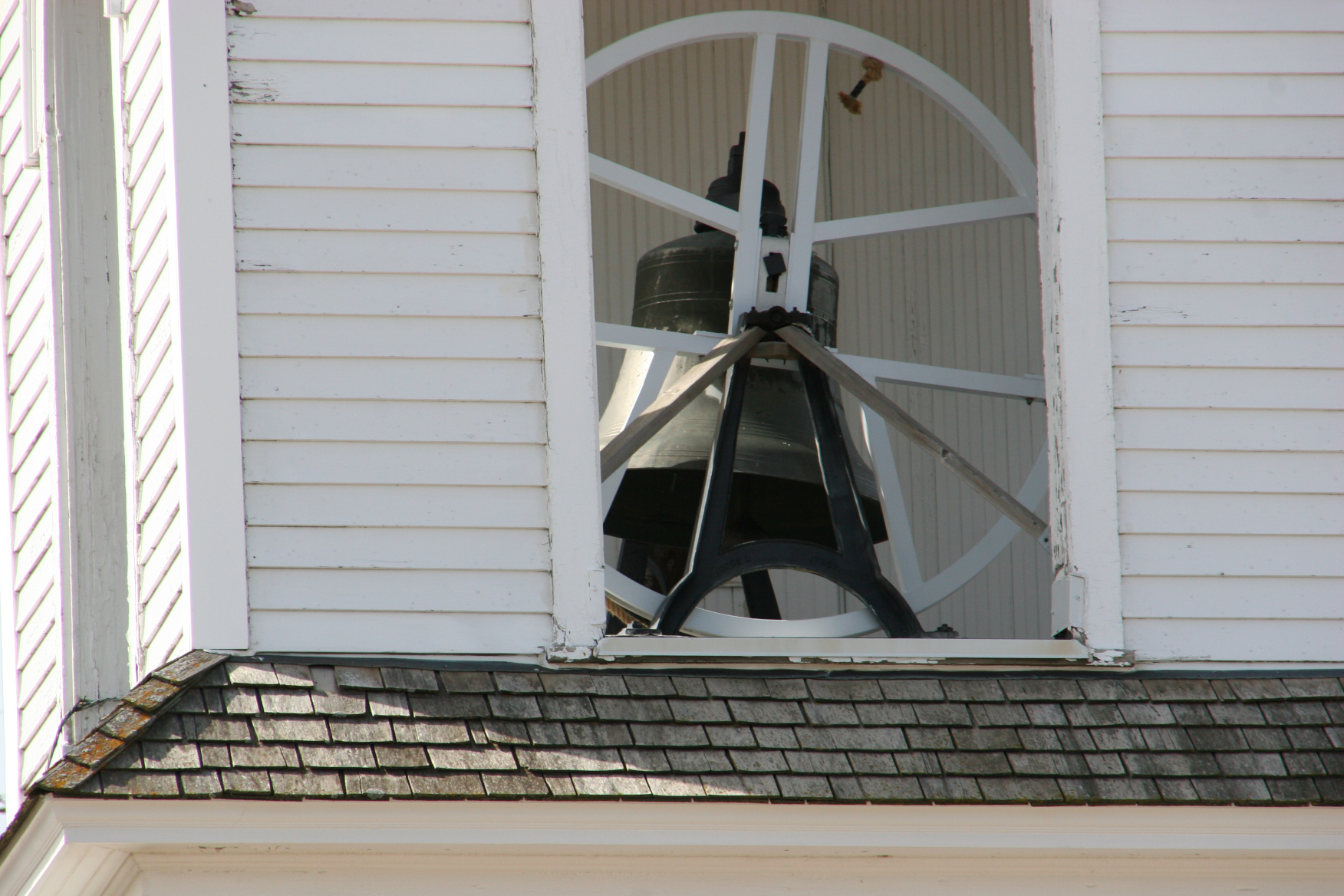
The bell in the wooden church still rings for special occasions. (Minnesota Prairie Roots copyrighted photo March 2022)
On this winter day, the church doors are locked. But I’ve been inside both buildings. They are basic. Simple. Mostly unadorned. The wooden church is still used today for special worship services like weddings. The old stone church serves primarily as a social gathering room. Both are well preserved. Valued.
In the foreground, the back of the old stone church, which sits near the wooden church. (Minnesota Prairie Roots copyrighted photo March 2022)
One of many Oles buried at Valley Grove. (Minnesota Prairie Roots copyrighted photo March 2022)
Much art already exists at Valley Grove, within the cemetery. I consider tombstones to be works of art, documentations of lives. The stone markers are many, from aged to recent. Names engraved thereon reflect the primarily Norwegian heritage. Ole. Erik. Einar. Inger. If these tombstones among the oaks could speak, oh, the stories they would tell. Of life in the Old Country. And of life in the New World, of this place, this Valley Grove.
FYI: Please check back for a post about the Valley Grove Cemetery.
A winter storm creates near white-out conditions along Minnesota State Highway 19 north of my hometown of Vesta in southwestern Minnesota in January 2013.(Minnesota Prairie Roots copyrighted file photo January 2013)
LOSS STORMS INTO THIS WINTER of 2022 like an old-fashioned Minnesota blizzard. The snow just keeps falling. The wind keeps whipping. Powdery snow blows into rock hard drifts that edge roadways, fill ditches, encircle homes. Visibility is limited. Travel conditions poor. Bitter cold settles in and I feel as if this storm will never end.
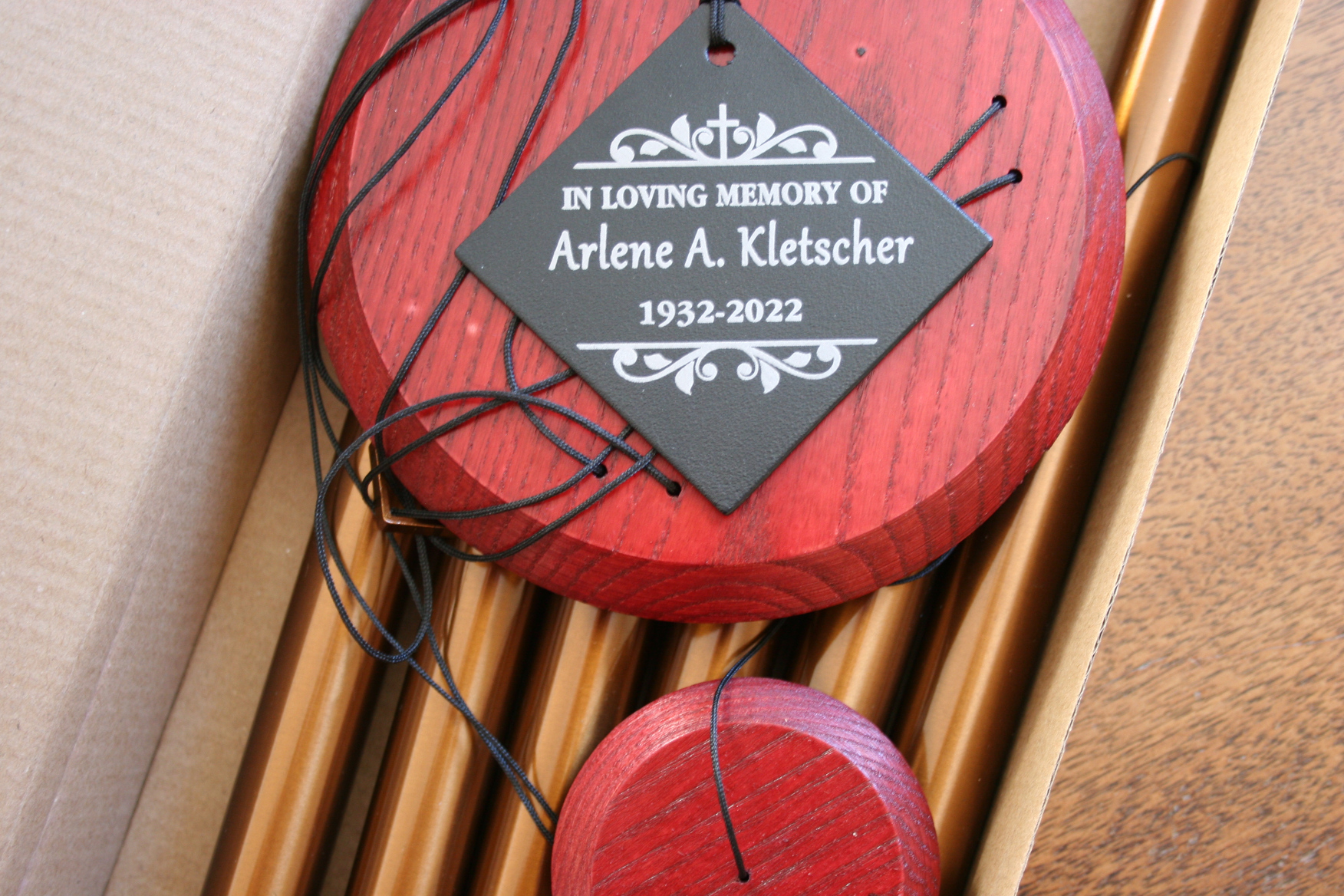
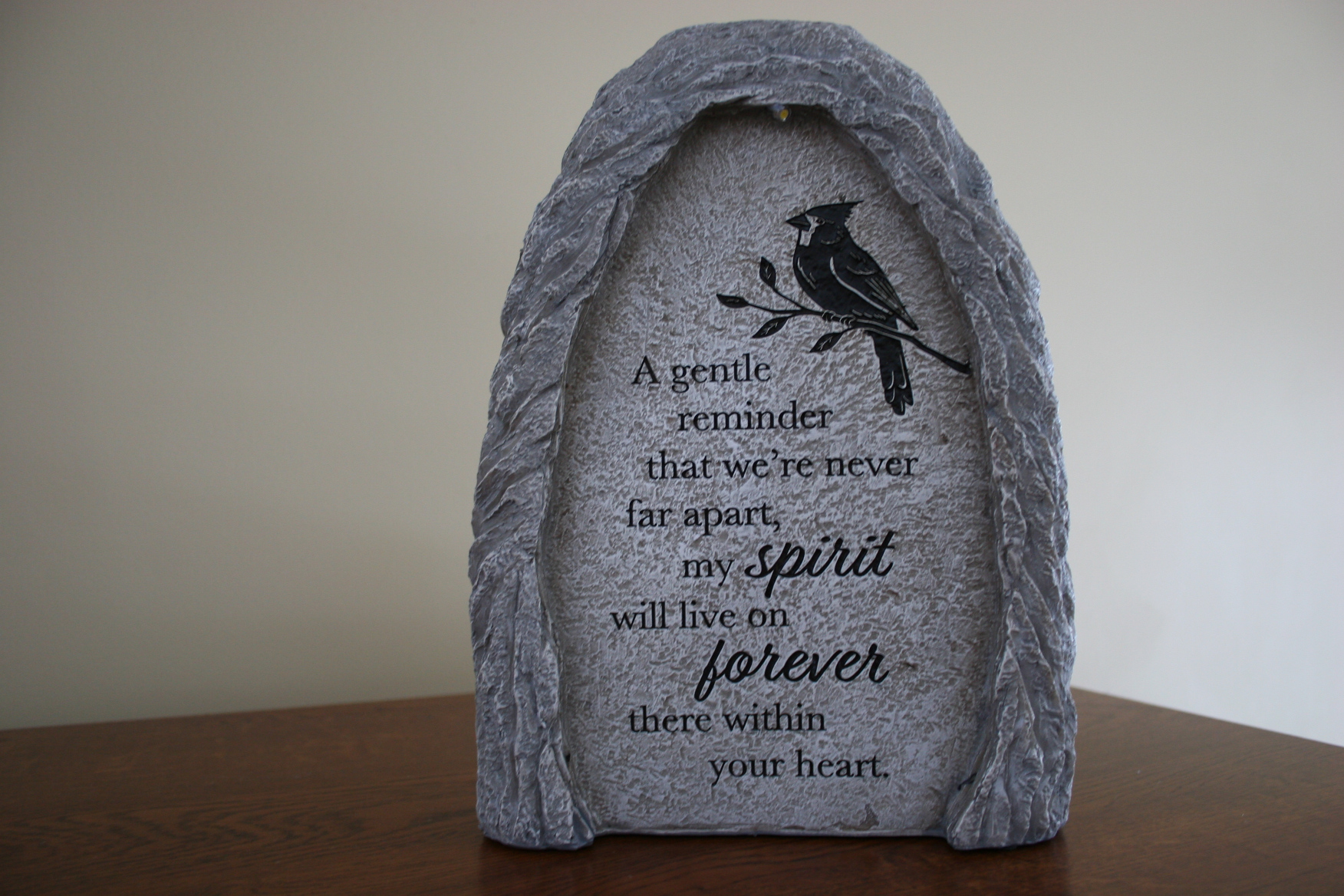
Wind chimes from my friend Beth Ann in North Carolina honor my mom. Beth Ann lost her mom just over a year ago and has been a great support to me. (Minnesota Prairie Roots copyrighted photo February 2022)
Just like a winter storm, we must all deal with loss and grief. (Minnesota Prairie Roots file photo of Randy snowblowing our driveway)
It’s a lot at once—this loss, this grief.
Ruth, a friend from Pittsburgh, knit this beautiful prayer/comfort shawl from the softest acrylic yarnfittingly labeled CELESTIAL STRIPES. These are in hues my mom would have liked. Each time I wrap this shawl around my shoulders, I feel Ruth’s love in the warmth and texture. (Minnesota Prairie Roots copyrighted photo February 2022)
Anyone who’s experienced a Minnesota blizzard understands the analogy. Yet, blizzards always end. We shovel and snow-blow our way out of snow-clogged driveways. We clear the walks and steps. And we get on with life, despite the storm. Yet, we remember.
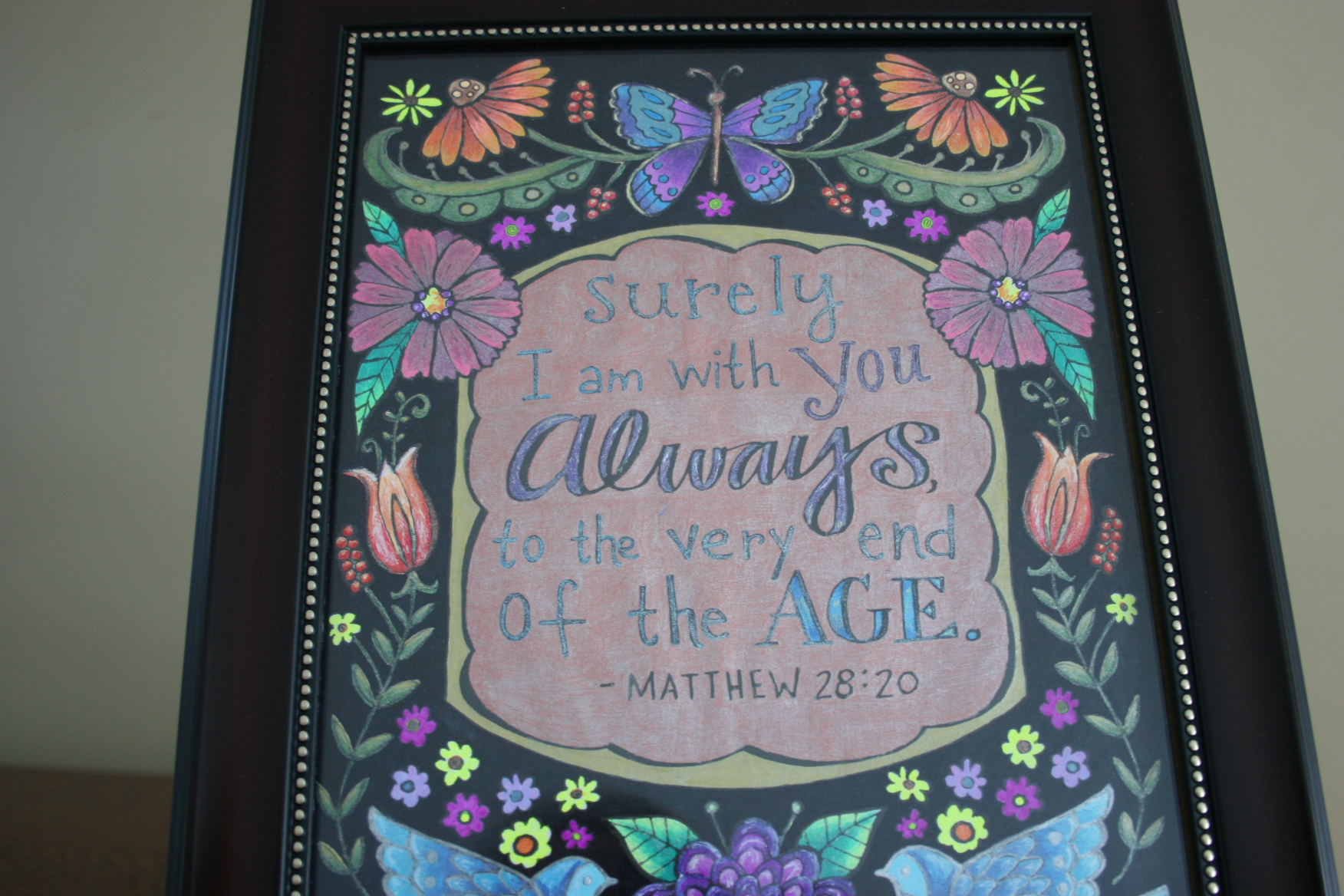
My friend Mandy colored this beautiful faith-based art for me. (Minnesota Prairie Roots copyrighted photo February 2022)
I am digging myself out of a blizzard now, working through the drifts of grief. But I’ve never felt alone in this storm. First, as a woman of faith, I’ve felt God’s presence, his strong hand upon the snow shovel. I’ve heard his encouraging voice in the comforting words of pastors shared at these recent funerals (my mom’s attended in-person, the others virtually).
I’ve appreciated the nearly 60 sympathy cards which have landed in my mailbox. I’ve read and reread the encouraging words and notes. (Minnesota Prairie Roots copyrighted photo February 2022)
Assorted shovels used in clearing snow from our property. (Minnesota Prairie Roots file photo December 2021)
I feel incredibly loved, as if an entire neighborhood has showed up with shovels and snowblowers to unclog the driveway, to clear the walk and steps. To help me dig out from this blizzard of loss.
My friend Kathleen from Idaho crafted this beautiful mini altered book honoring my mom and her life. I will share more soon about this book, a comfort to me as I remember my mother. (Minnesota Prairie Roots copyrighted photo February 2022)
There will be days when I feel like hunkering down inside, watching the wind-driven snow pile up, sheltering within my grief. Just like during a blizzard, when going outdoors proves risky.
Inspirational garden art from my sister-in-law Cheryl and family uplifts. (Minnesota Prairie Roots copyrighted photo February 2022)
But winter storms are not forever. Rock hard drifts melt, replaced by the greening earth, new life. The wind calms, stirring peace in summertime breezes. Visibility clears to the window of memories. Roads take us back to places once shared with those we’ve lost. And the bitter cold of death lessens as time passes, as love endures.
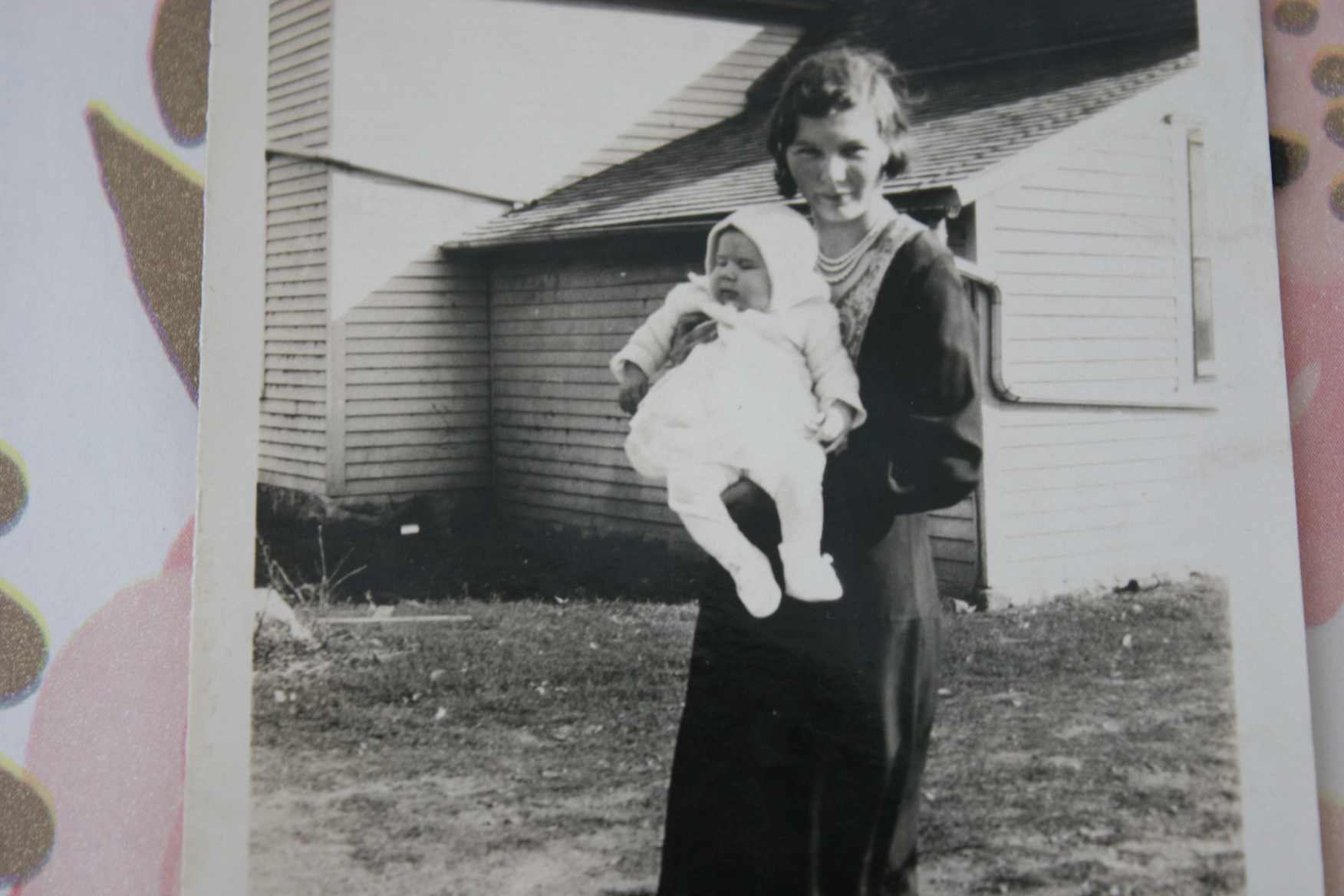
My Grandma Josephine holding her baby daughter, my mom Arlene, in 1932.
AMAZING GRACE, how sweet the sound…
The lyrics brought me to tears. Sobbing. A week after I followed family into the St. John’s Lutheran Church sanctuary, behind Mom’s casket, and settled onto a pew only feet from her coffin.
On that January 22 morning, with “Amazing Grace” as the funeral processional, tears did not fall. Nor did they in the immediate days thereafter. But a week later, while watching the movie, I Can Only Imagine, grief bubbled over. I cried as I listened to “Amazing Grace” in a funeral scene. Actor J. Michael Finley, playing Christian musician/vocalist Bart Millard of MercyMe, sat in a pew at his father’s funeral. When the camera shifted from Finley to his father’s casket, my own new grief erupted.
Me with my mom during a January 2020 visit. (Minnesota Prairie Roots file photo January 2020 by Randy Helbling)
It is a process, this grieving. For me, the process began years ago as Mom’s health declined. Every time I saw her, which was not often in the past two years due to COVID-19, I felt like it would be my last. And so I savored each visit—the moments of connection, the glimpses of recognition, the slightest of smiles. I hoped my presence comforted her, brought her a bit of joy, reassured her of my love. This was about her, not me.
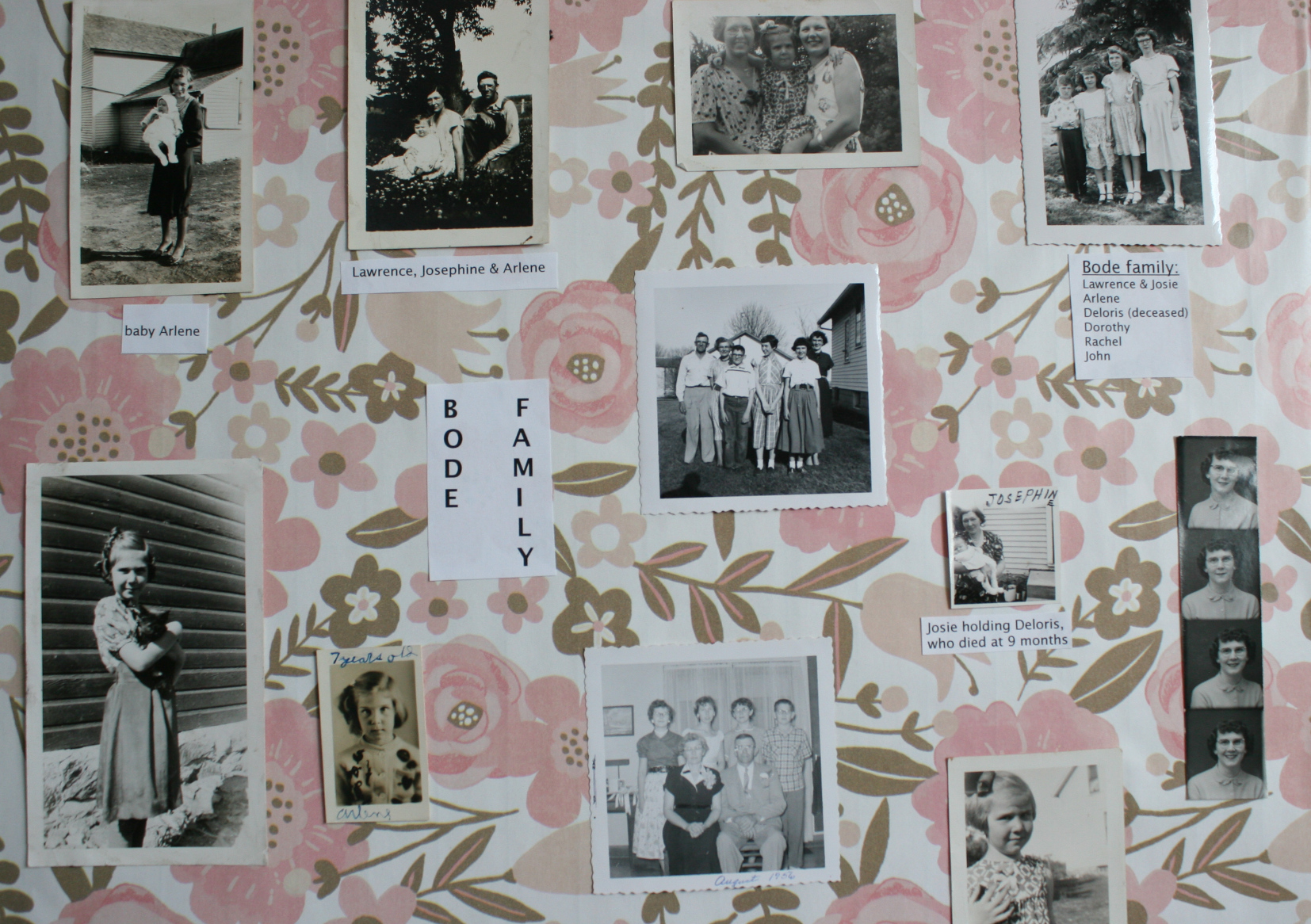
A portion of a photo board I created of my mom and with her parents and siblings.
And so here I am, approaching three weeks since her death, only now feeling the depth of my mother’s forever absence on this earth. On Sunday I removed pictures from photo boards I crafted. Storyboards which highlighted her life. Photo collages intentionally focused on her. Not me or others. But on her and the story of her life.
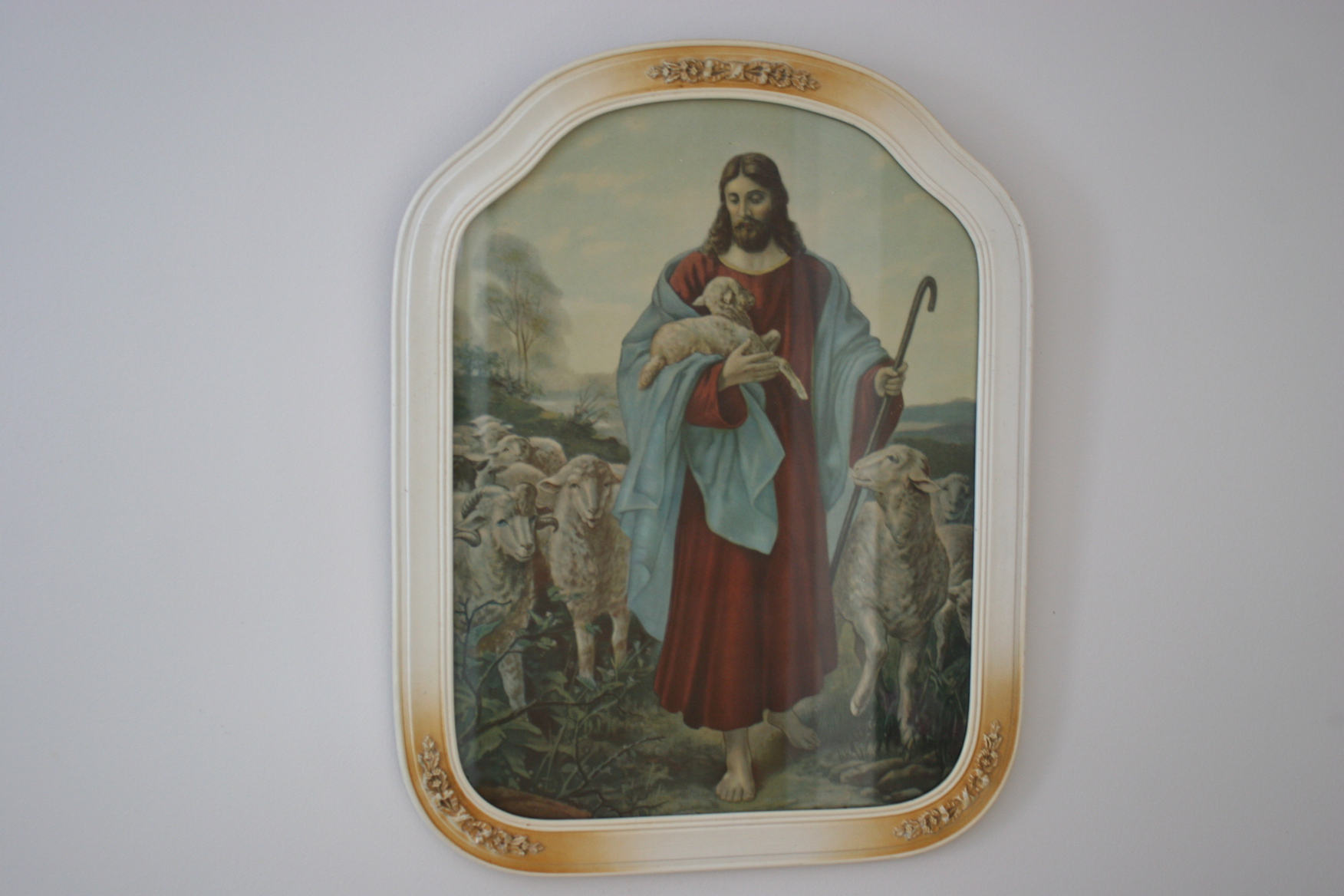
Mom’s “The Good Shepherd” art. (Minnesota Prairie Roots copyrighted photo January 2022)
On my dining room wall hangs a framed print, “The Good Shepherd,” a wedding gift to my parents in 1954. It always hung in their bedroom and then on my mom’s care center wall until the end. Now I have this cherished art, this visual reminder of Mom’s faith. For 67 years, that image of Jesus, “The Good Shepherd,” reassured and comforted her, just as it does me today. In my grief, especially in my grief.
#
TELL ME: Dear readers, do you have a special piece of art, a song, something that reminds you of a dear loved one now departed? I’d like to hear what touches your spirit/comforts/uplifts you when you think of a loved one (s) now gone.
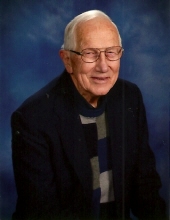
A life-long Faribault resident, he made a major impact on this community. Not in a splashy, attention-calling way, but rather in the simplicity of a kind and generous soul who lived his Christian faith. He was soft-spoken, gentle, giving. Always smiling. I expect many stories will emerge in the coming days about Buck’s acts of love. I have my own to share. But first a little background.
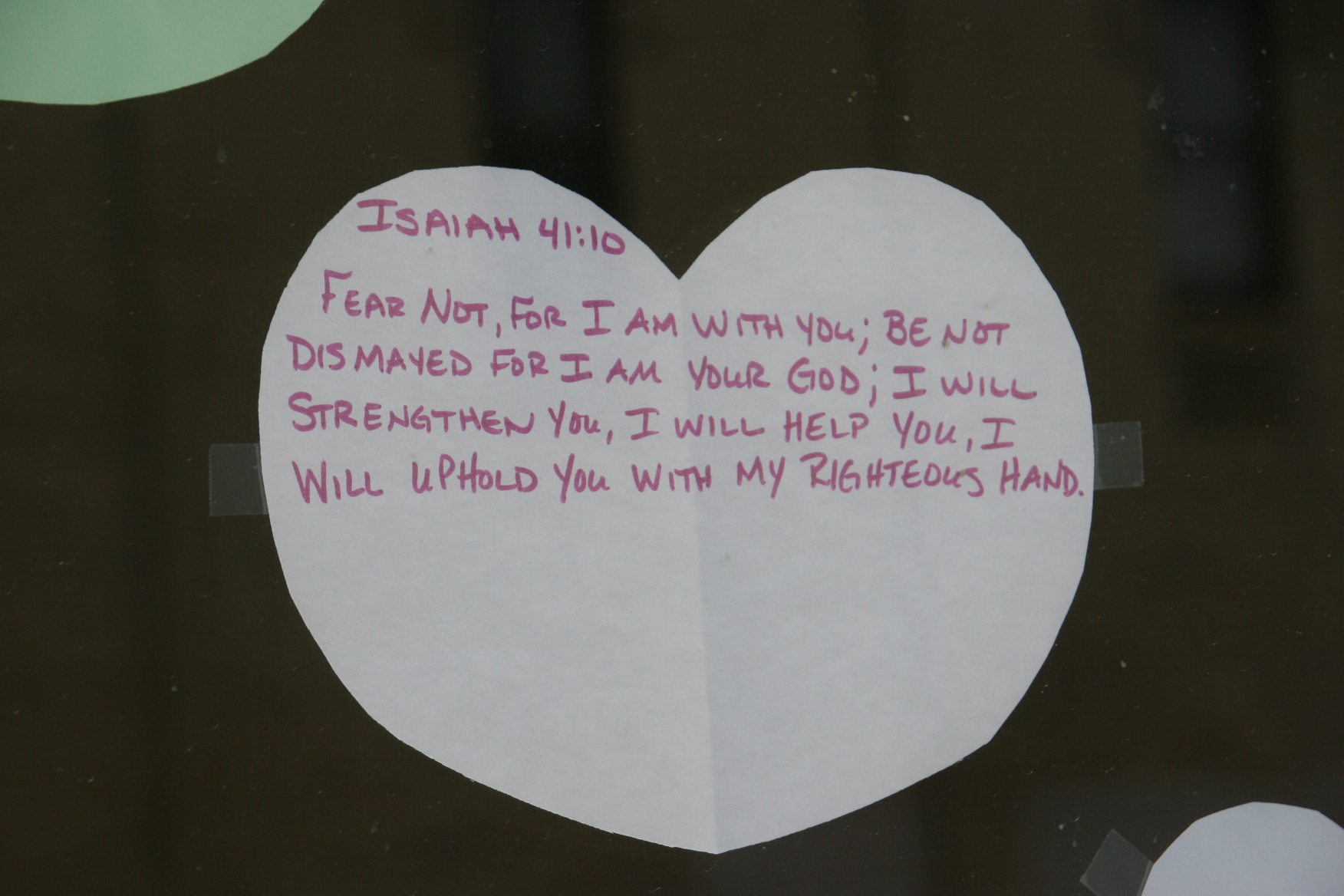
Early in the pandemic, inspirational Scripture was posted in the windows of Burkhartzmeyer Shoes. (Minnesota Prairie Roots copyrighted file photo August 2020)
A MAN OF FAITH & FAMILY
Buck was first and foremost a man of great faith. He faithfully attended my church, Trinity Lutheran, where he welcomed me to Faribault nearly 40 years ago. Buck was an unofficial community ambassador, showing newcomers around town. He made me feel comfortable as a new bride living in a new place. His example of devotion to God and service to others proved inspirational. He was involved in church and in many community organizations.
He was, too, a family man—husband of Delilah (she preceded him in death), father of four, a grandfather. Friend to many.
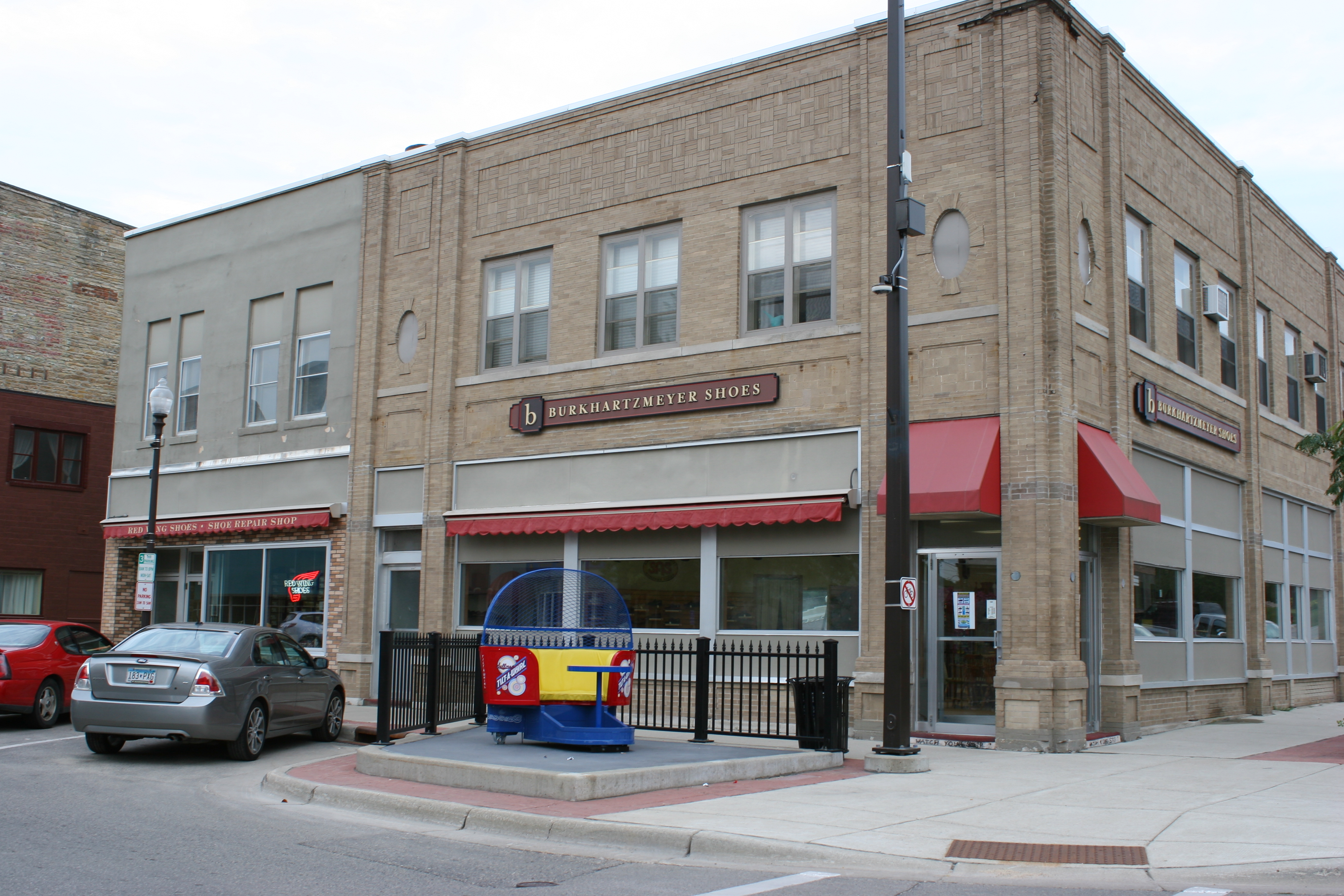
Burkhartzmeyer Shoes anchors a corner in downtown Faribault. (Minnesota Prairie Roots copyrighted file photo 2015)
BURKHARTZMEYER SHOES
After WW II, he joined his brothers, Alvin (Al) and Walter (Putts) in operating Burkhartzmeyer Shoes. He is the last surviving brother. Their parents, Ferdie and Martha, started the business with a shoe repair and harness shop opened in the late 1930s. The Burkhartzmeyers grew the family shoe business, now with third-generation owners, Brian (Buck’s son) and Bruce (Al’s son). And, yes, the store still includes a repair shop.
Buck specialized in fitting and modifying shoes as a certified pedorthist. Now Brian continues that tradition of offering corrective footwear to meet the needs of customers. Their services are well-known, and not just locally. Inside the shoe repair shop hangs a framed thank you letter from Twins baseball great and Hall of Famer Harmon Killebrew. Buck, who enjoyed Minnesota sports and played basketball while in the Navy, assisted many an athlete with their shoe needs. Helping the everyday person, though, meant just as much to Buck.
Through the decades, our family purchased footwear from Burkhartzmeyer Shoes. Work boots. Snow boots. Tennis shoes. Dress and casual shoes. Kids shoes. This is the type of shoe store where owners and/or employees measure your feet, slip your feet into shoes/boots, watch you walk, push on toe ends to check fit, adjust sizes as needed. Every effort is made to get a good and comfortable fit. Buck remembered people’s shoe sizes. Burkhartzmeyer Shoes excels in customer service.
I purchased these snow boots at Burkhartzmeyer Shoes. (Minnesota Prairie Roots copyrighted file photo 2017)
GENEROSITY, FROM CANDY TO SHOES
Buck excelled in goodness and kindness, too. In 2004, the year my eldest daughter graduated from high school, he told her to come down to the store before she left for college. He wanted to give Amber a complimentary pair of tennis shoes. Why? Amber had applied for a scholarship from the Faribault High School Class of 1942, but was not awarded the monies. Buck, who served on the scholarship committee, felt so bad that he decided to give her a new pair of shoes. I’ll always remember the moment we walked into Burkhartzmeyer Shoes to find Buck waiting. He fit Amber with a new pair of shoes and wished her well at Winona State University. That was Buck. Generous. I expect many others in this community can share stories of shoes given to them.
He gave away more than shoes. Buck also handed out red licorice sticks to children after Sunday morning church services. He pulled the candy from his suit coat pocket and slipped it into little hands.
HIS MINISTRY
But perhaps the selfless and loving spirit of Buck is best shown in his many visits with those living in nursing homes. Daily he visited his mother, Martha, at St. Lucas Care Center. She died in 2005 at the age of 107. What a loving son. And husband. Later, when his wife, Delilah, moved into St. Lucas, he visited her daily also. And many others. Endless elders whom he remembered and uplifted with his visits. Employees at Faribault’s east side Kwik Trip, where Buck often stopped after those visits, knew him well.
MORE MEMORIES
A number of years back, Randy and I, as part of our bible study’s Christmas outreach ministry, stopped at Buck’s house to deliver a basket of fresh fruit. I remember sitting in his sprawling living room engaged in conversation. I don’t recall what we discussed. But to be in Buck’s presence was to feel uplifted. And joyful.
There’s one more thing Buck did—and I expect he did this for others, too. Whenever an article about me published in the Faribault Daily News, he laminated a copy and stuck it in my church mailbox. That tells you something. He recognized my accomplishments as a writer and wanted me to understand how much he valued me and my God-given gifts.
Today I mourn the loss of this incredibly kind and generous man who showed such love to me and my family. I expect many in this community can say the same. We are all the better for having known Buck. He touched many lives with his gentleness of spirit and will be forever cherished.
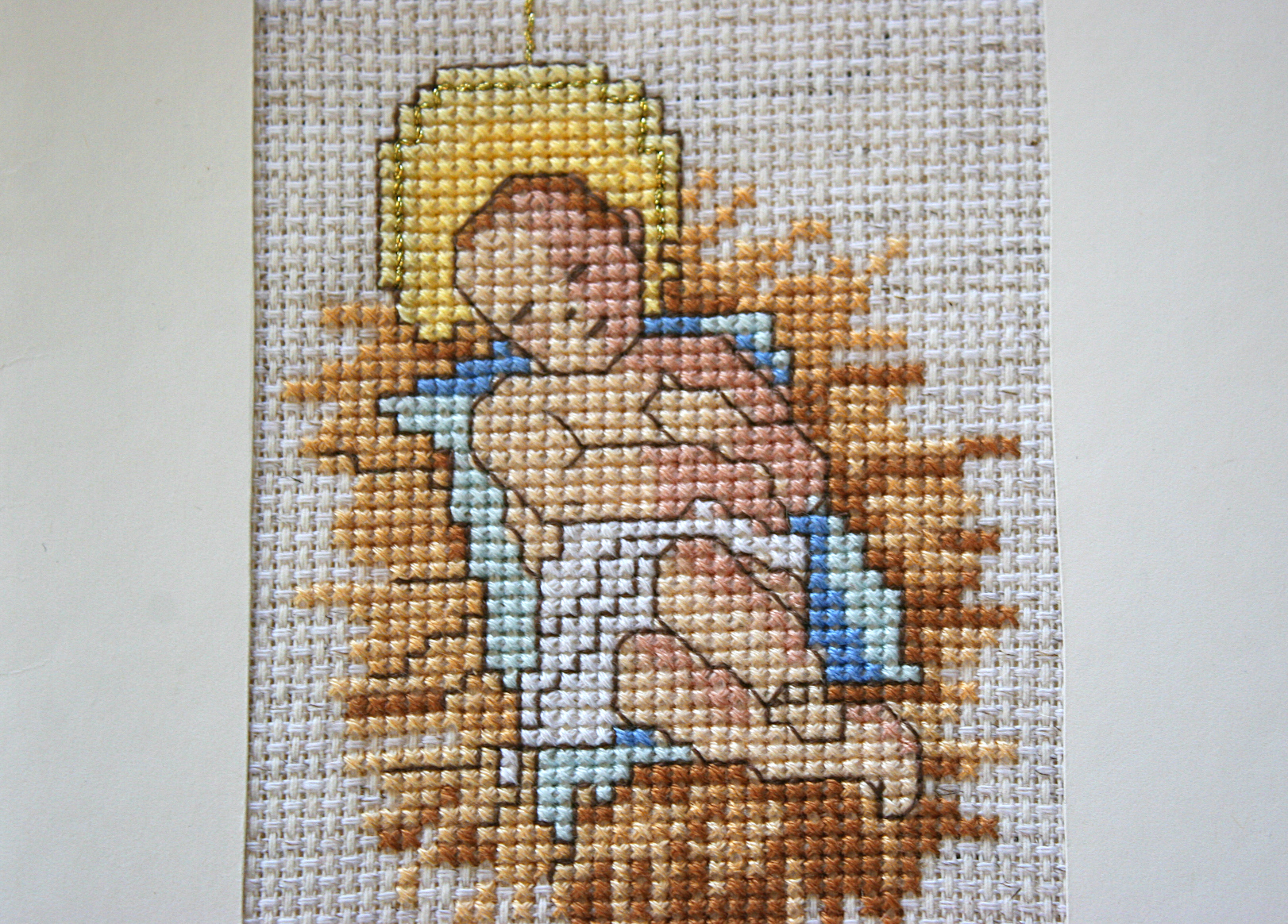
Baby Jesus stitched by my cousin Traci Sanford. (Minnesota Prairie Roots copyrighted photo)
SIX COUNTED CROSS-STITCH CARDS depicting the birth of Christ grace an aged chest of drawers anchoring a corner of my living room. I’ve leaned the cards against the backdrop mirror reflecting my Christmas tree.
These works of art visually tell the Christmas story minus a few important characters—Joseph and the Three Wisemen, who would later come bearing gifts. Perhaps those cards were lost. Or maybe my cousin Traci, who stitched the art, didn’t complete the series. She gifted my mom with these cards. One each Christmas.
A few years back, after Mom moved into assisted living and eventually long-term care, my extended family divided the Nativity sets our mother collected. And, among those I chose were these cards. My mom was also an avid counted cross stitch artist.
I cherish the stitched collection. Not only for its artistic value but also for the emotional connection to a mother celebrating her final Christmas on this earth. That is reality and I’ve reached a sense of peace in that certainty.
This Christmas, I hope you, too, experience peace. I hope you find a connection to those loved ones no longer on this earth via treasured memories or objects. I hope you feel connected also to those still here. To those who can still hear the words, “I love you.”
After the Community Christmas Dinner. (Minnesota Prairie Roots copyrighted file photo December 2012)
IN THE DAYS LEADING to Christmas, busyness can cause us to lose focus. Busy baking. Busy cleaning. Busy buying. Busy wrapping and trying to do too much. I invite you to pause and reflect.
Reflect on hope.
Reflect on peace.
Reflect on joy.
Reflect on love.
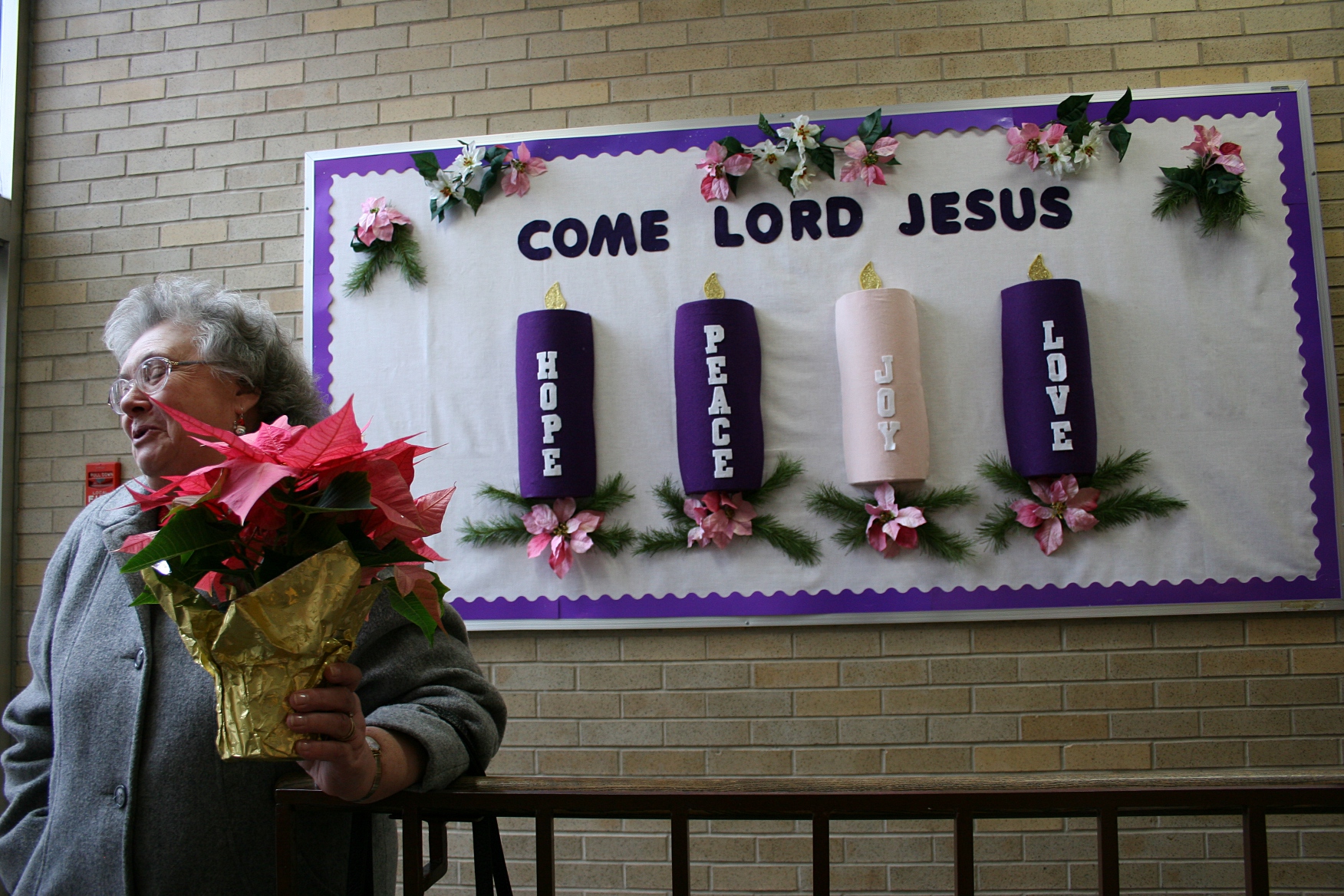
Those four words centered a bulletin board display I photographed in 2012 at Fourth Avenue United Methodist Church. I love this image. For the message. And for the story behind it. The Faribault church annually (except during COVID) hosts a free Community Christmas Dinner in mid-December. Volunteers serve a full holiday meal in the church basement. I’ve attended many times and enjoyed not only the food, but also the coming together of my community.
In this particular photo, a woman awaits a ride home. I’d just finished my meal and came across her standing at the top of the stairs, poinsettia in hand. The holiday flowers decorated dinner tables and diners were welcome to take them home. She was unaware of my presence. I framed the moment. A moment that, against the backdrop Advent message, captures the reason for the season.
Hope. Peace. Joy. Love. May all be yours as we draw near to Christmas.
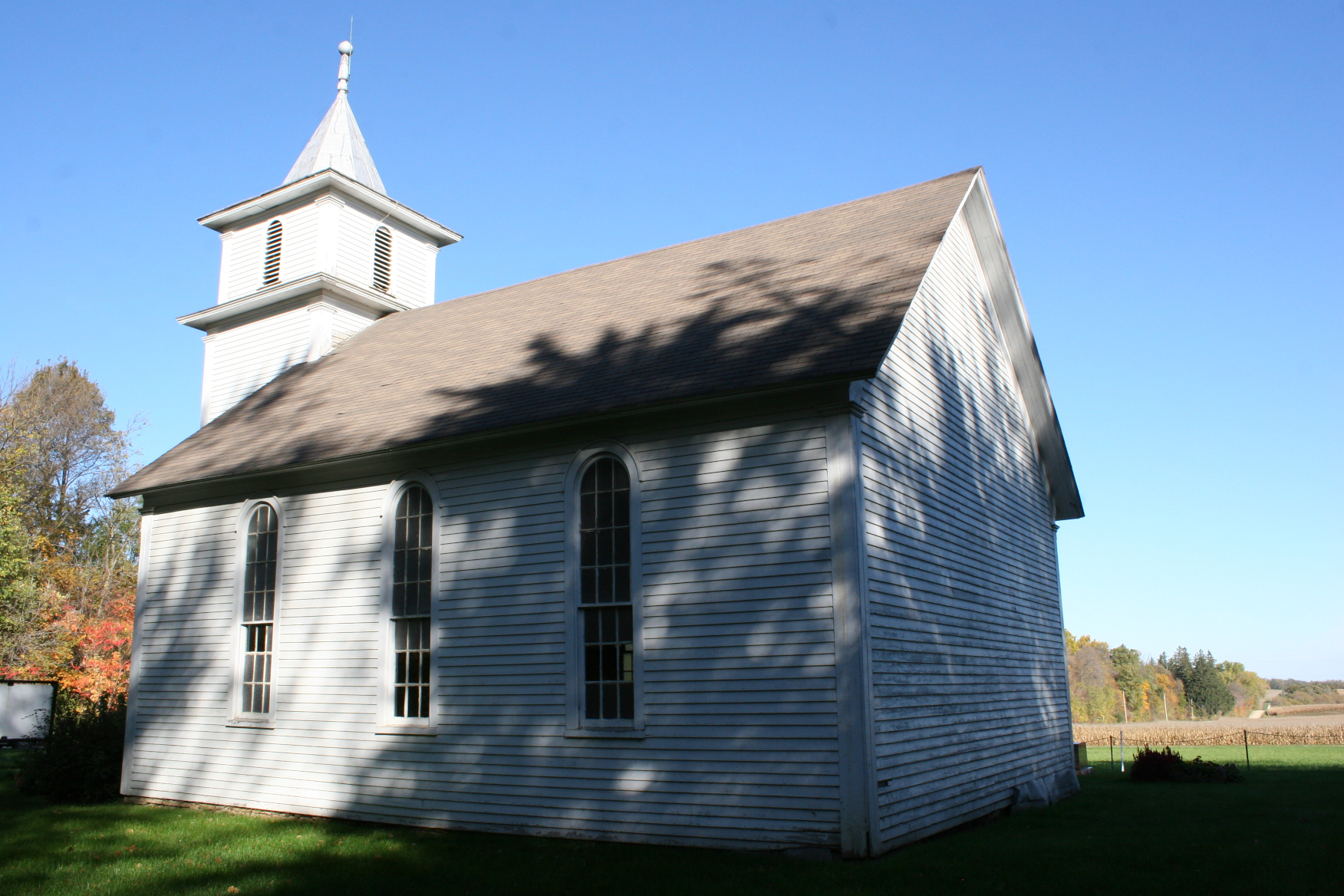
A simple country church, Eidsvold Norwegian Methodist. (Minnesota Prairie Roots copyrighted photo October 2021)
WHENEVER I HAPPEN upon an aged rural Minnesota church, as I did recently in Leon Township south of Cannon Falls, I wonder about the immigrants who founded it. What are their stories? How did they feel living an ocean apart from their beloved homelands and families? I admire their strength. Their ability to board a ship and sail toward The Land of Opportunity.
A Norwegian name in the Eidsvold Church cemetery. (Minnesota Prairie Roots copyrighted photo October 2021)
Oftentimes, the very names of these country churches and the names of those buried in the churchyard cemeteries reveal roots and heritage.
A brief history of the church. (Minnesota Prairie Roots copyrighted photo October 2021)
The small white clapboard church Randy and I discovered on 70th Street in the Sogn Valley area was clearly founded by Norwegian immigrants. Eidsvold Norwegian Methodist Church banners a sign with a brief history. Founded in 1893. Also known as “Ring Church.” Built by Gulbrand Nilson. Last service in 1949.
My initial view of the Eidsvold Church. (Minnesota Prairie Roots copyrighted file photo October 2021)
An online search dates the congregation’s organization to 1860. Perhaps the signage date references building construction. I couldn’t find much other information other than parishioners originally meeting for worship in homes, a common practice.
My own great grandfather, Rudolph Kletscher, who immigrated to the US from Germany in 1885, eventually settling on a farm near my hometown of Vesta in southwestern Minnesota, opened his home for worship. A pastor from the Lutheran church in neighboring Echo led services for 8-9 families and in 1900 those German immigrants built St. John’s Lutheran Church in town.
For those brave souls settling in a new land, I expect their faith provided comfort, strength and hope. And a place to gather, to sing and pray in their mother tongue, to support one another, to socialize. To celebrate. Baptisms. Weddings. Confirmations. Christmas and Easter. And to mourn.
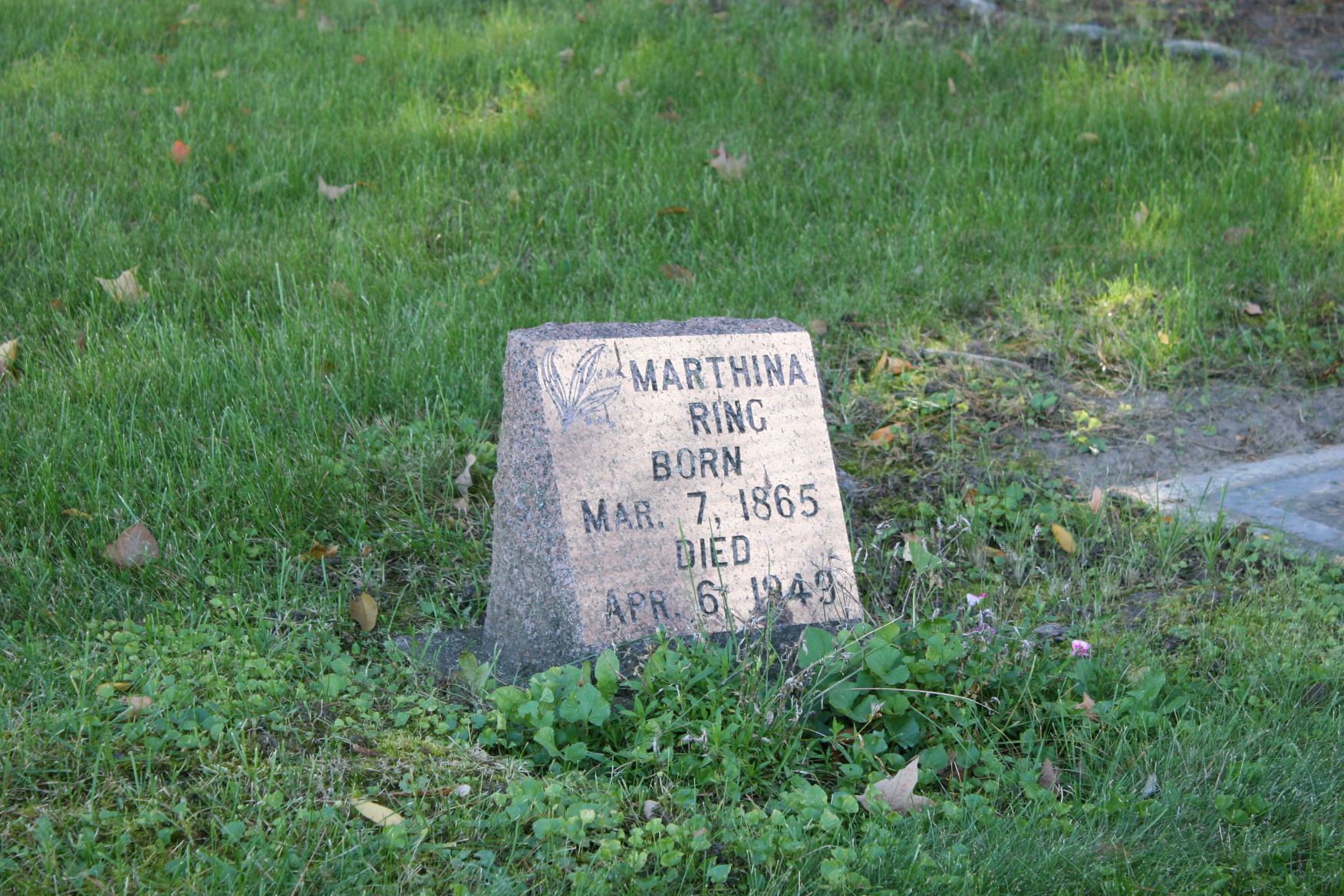
The final service held at Eidsvold, as noted on the church sign, was the funeral of Marthina Ring on April 11, 1949. I determined to find her grave marker and I did. It’s a small, unassuming stone engraved with her birth and death dates. Born March 7, 1865. Died April 6, 1949. Other Ring family stones are larger, more prominent. John Ring, I learned online, was a leading supporter of this church. I have no idea of his connection to Marthina.
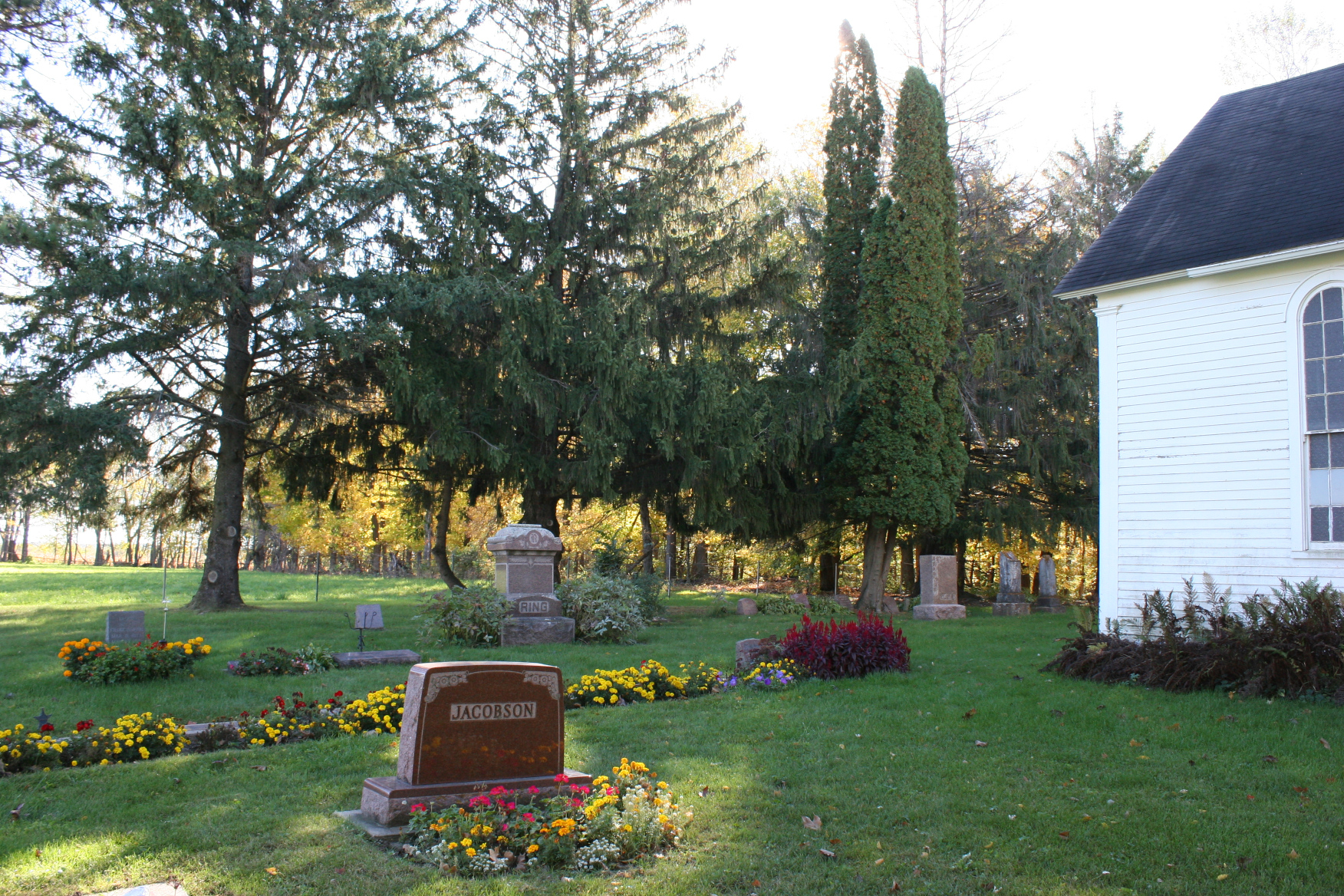
Beautiful flowers grace the cemetery. (Minnesota Prairie Roots copyrighted photo October 2021)
This cemetery appears cared for with golden marigolds, red and pink geraniums and other annuals splashing color among the grey and brown tombstones.
Water at the ready… (Minnesota Prairie Roots copyrighted photo October 2021)
Jugs of water snugged against the church foundation show me that someone comes here regularly to water those plants.
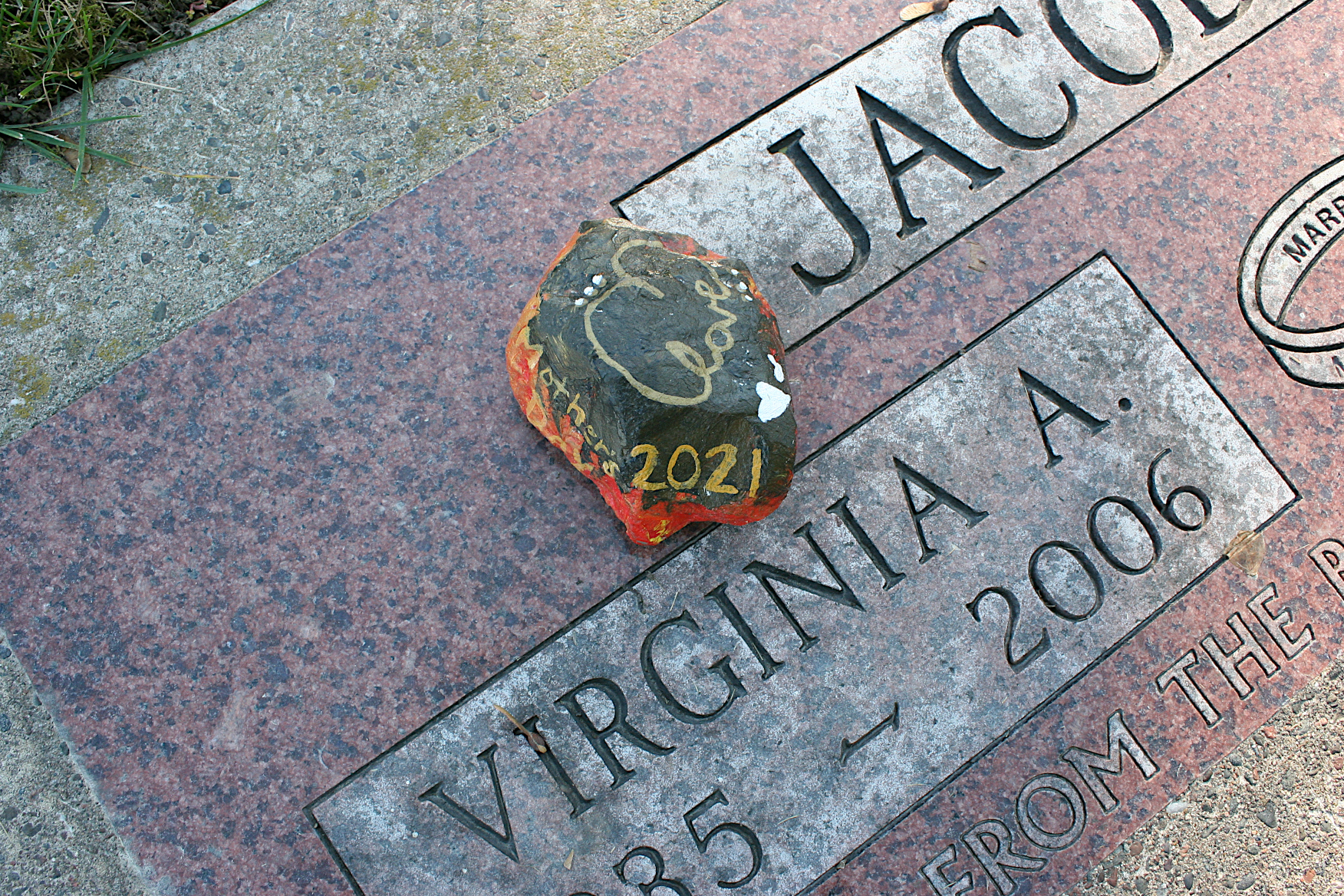
A token of love left for a mother. (Minnesota Prairie Roots copyrighted photo October 2021)
And a painted stone placed atop a marker for Virginia Jacobson reveals how much she is missed. Has been missed since her 2006 passing.
The door into Eidsvold was padlocked. (Minnesota Prairie Roots copyrighted photo October 2021)
That this church and graveyard have not been abandoned here among the fields in the Sogn Valley pleases me. This land, this church building, this cemetery meant something to those long ago Norwegian immigrants. And that is to be valued. Cherished. Honored. Celebrated, even by those of us with no connection to Eidsvoll/Eidsvold, Norway.
#
IF YOU KNOW more about the Ring Church, please share. I welcome additional information. As is often the case at rural churches, I found the front door locked.
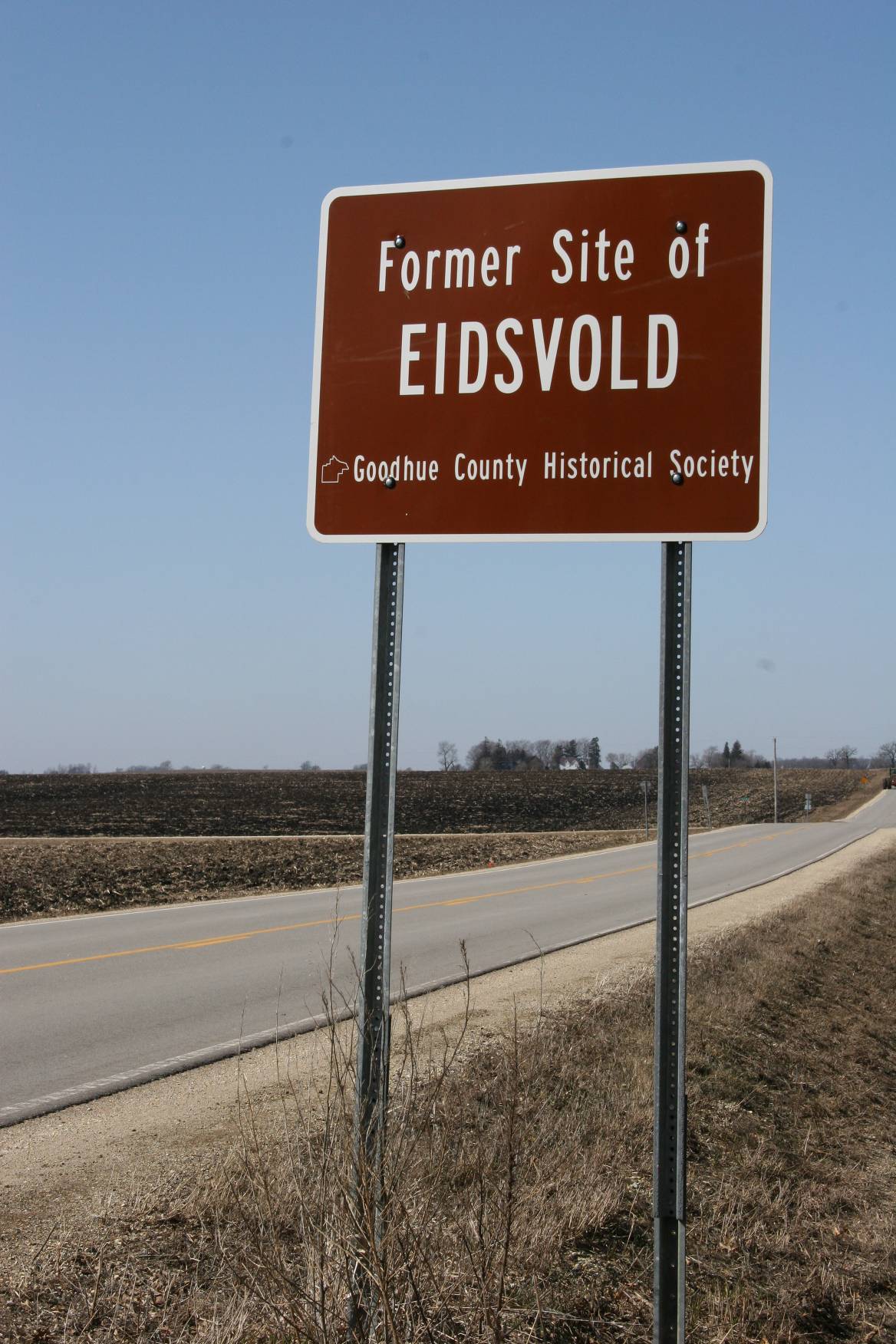
The Goodhue County Historical Society placed this historical interest sign at the ghost town of Eidsvold. The sign was erected to preserve the history of this former post office site and to recognize its historical contribution to the area. (Minnesota Prairie Roots copyrighted file photo 2010)




























Recent Comments