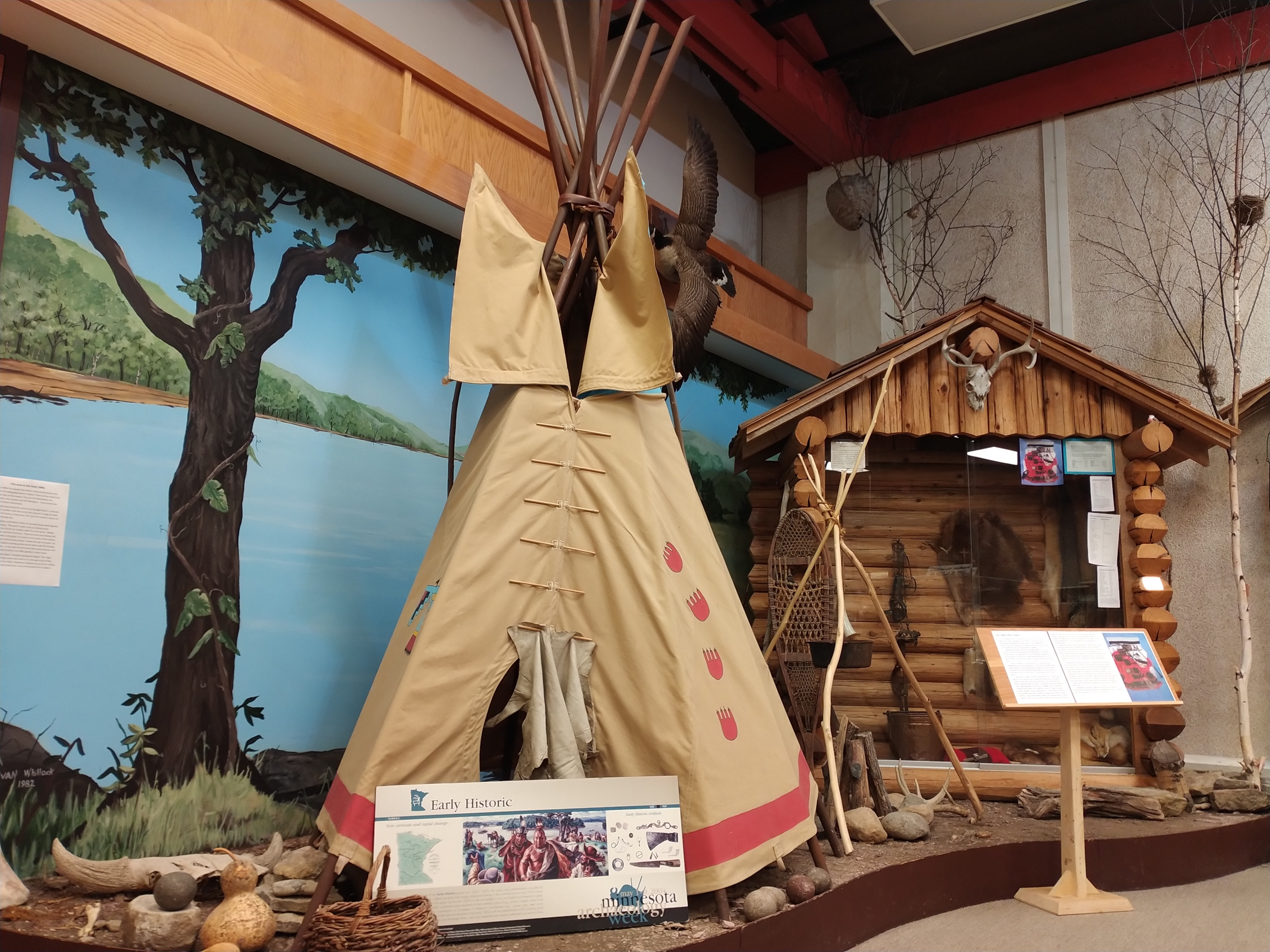
An exhibit at the Rice County Historical Society, Faribault, shares information on the original inhabitants of the county, the Dakota. (Minnesota Prairie Roots copyrighted file photo)
HERITAGE. It’s a word that identifies us, connects us to our families, to our ethnicity, to the way we were raised, the place of our roots. At least that’s my definition.
This week Faribault celebrates Heritage Days. I’ve never felt totally comfortable celebrating heritage in the city I’ve called home since 1982. My heritage, my home, my roots run deep in the southwestern Minnesota prairie some 2 ½ hours west of here.
But many are rooted in this community by birth, by families that trace back generations. If it’s one thing I’ve learned in four decades about the people of Faribault, it’s that many are related to one another via blood and marriage. But I’ve also learned much about the peoples who came before the French, the Irish, the Scandinavians, the Germans, the Cambodians, the Latinos, the Hispanics, the Sudanese, the Somalis… I’ve learned about the Dakota, the original inhabitants of this region.
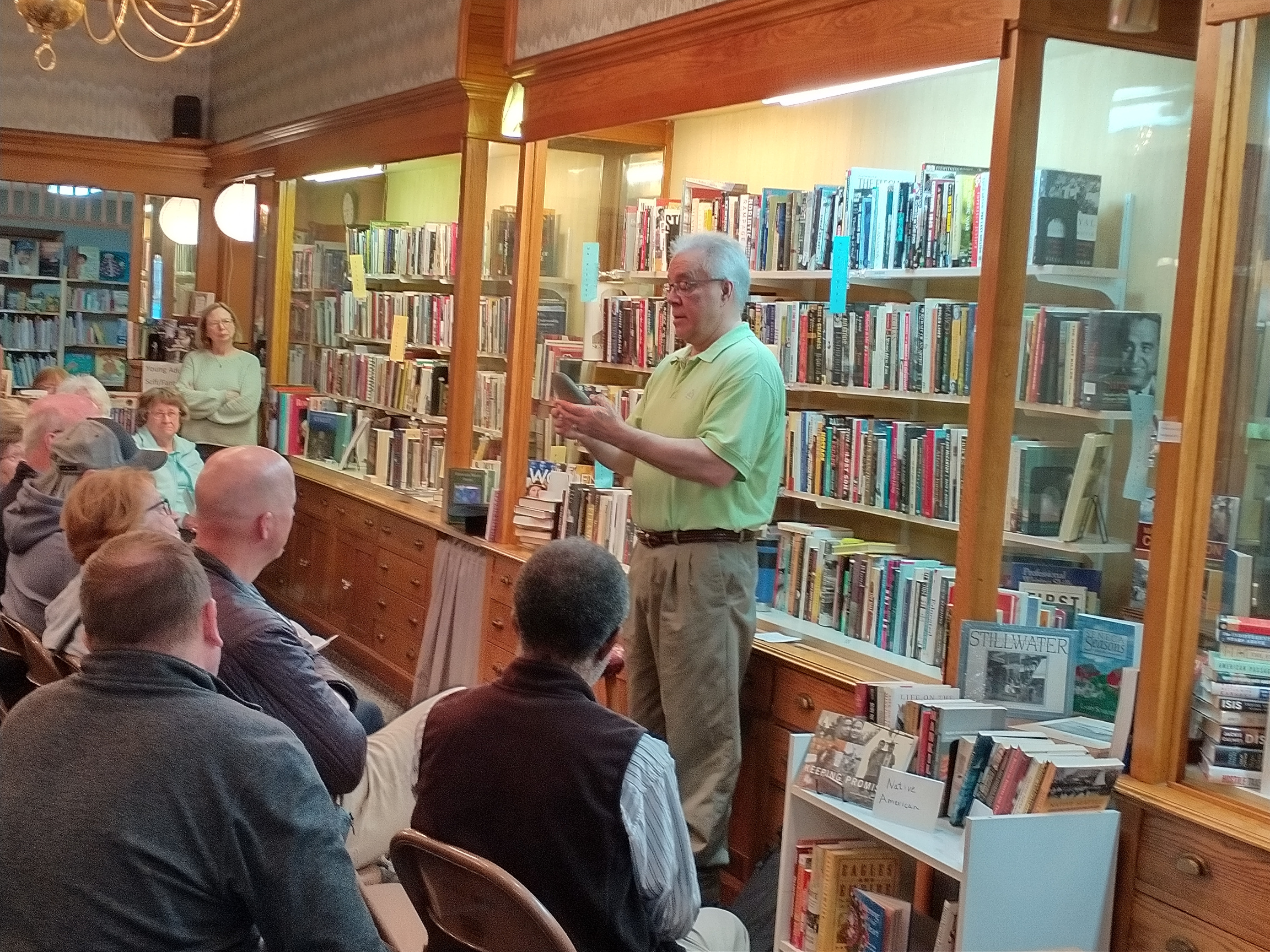
Jeff Jarvis talks about the Dakota at Books on Central. (Minnesota Prairie Roots copyrighted file photo April 2024)
That knowledge came through my own reading and via attending events focused on the Dakota. In April, I listened to local historian and artist Jeff Jarvis talk about the Dakota to a packed audience at Books on Central in Faribault. Jarvis is presenting again, speaking at 6:30 p.m., Wednesday, June 12, on the Wahpekute Dakota at The Cathedral of Our Merciful Saviour, 101 NW Sixth Street, across the street from Faribault’s Central Park.
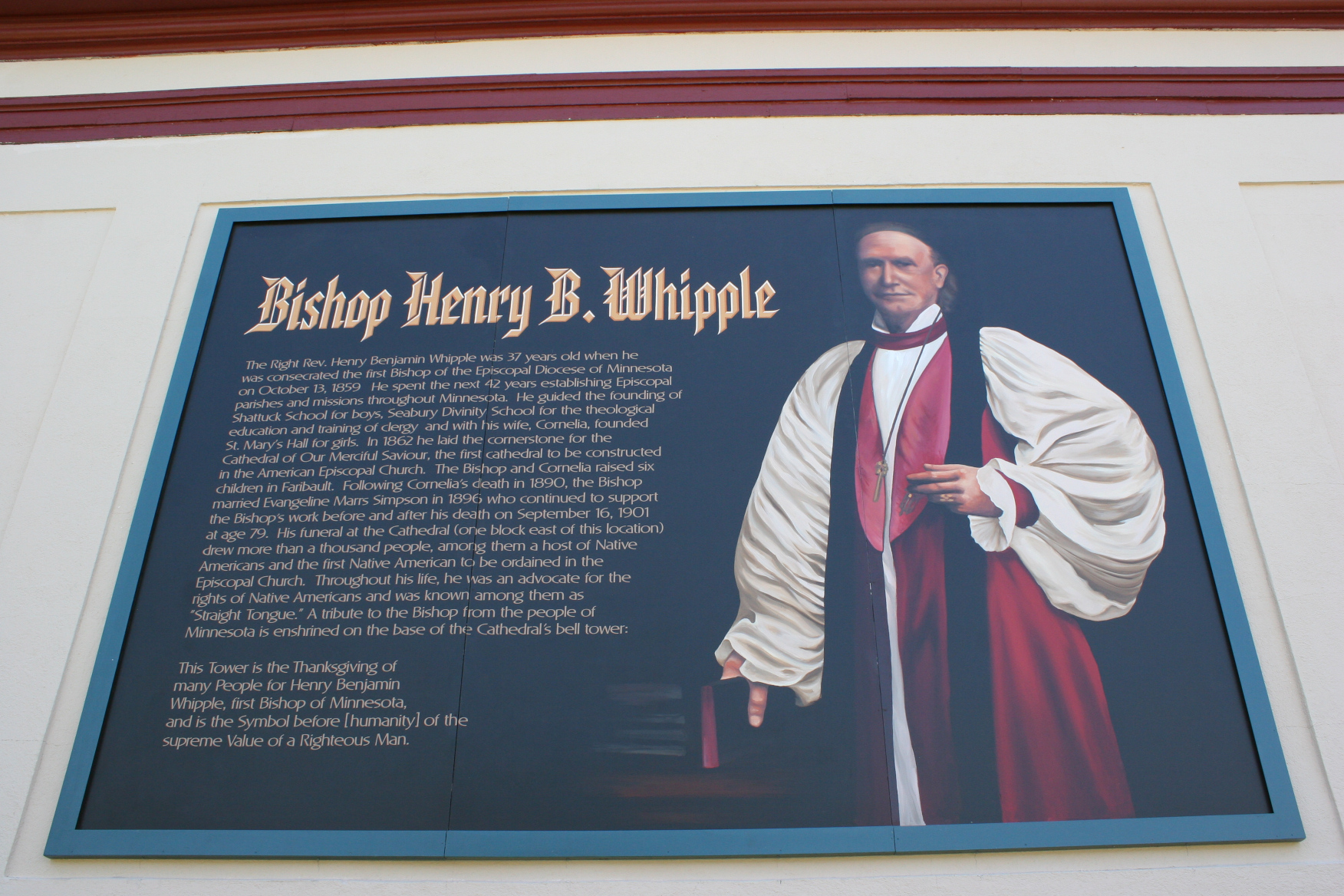
Information on Bishop Henry Whipple focuses one of the murals on the back of the bandshell at Central Park. (Minnesota Prairie Roots copyrighted file photo June 2020)
The Cathedral and its founding leader played an important part in local, state and national history with then Bishop Henry Whipple befriending the Wahpekute Dakota. He also pled with President Abraham Lincoln to spare the lives of 303 Dakota men sentenced to death by the US government following the US-Dakota War of 1862. Eventually all but 38 were pardoned, partially due to Whipple’s efforts.
The pamphlet Jeff Jarvis created about the Wahpekute Dakota. (Minnesota Prairie Roots copyrighted file photo April 2024)
I expect Jarvis will touch on that in his Wednesday evening presentation. He’s an engaging speaker, knowledgeable and passionate. He’s met with Dakota people, compiled a summary of his research in a mini pamphlet titled “The Faribault Dakota, Wahpekute Band.” It features an historic timeline, a Dakota primer of place names, his original art and more.
Chief Tapoi, a leader and member of the Little Crow Band of the Mdewakanton Dakota Tribe, lived in Faribault for a while and is buried at Maple Lawn Cemetery. (Minnesota Prairie Roots copyrighted file photo October 2023)
Jarvis is involved in the Faribault Dakota Project, a local endeavor that aims to increase awareness, visibility and knowledge of the original inhabitants of this land. To that end, presentations like his set during Heritage Days are important for locals to attend.
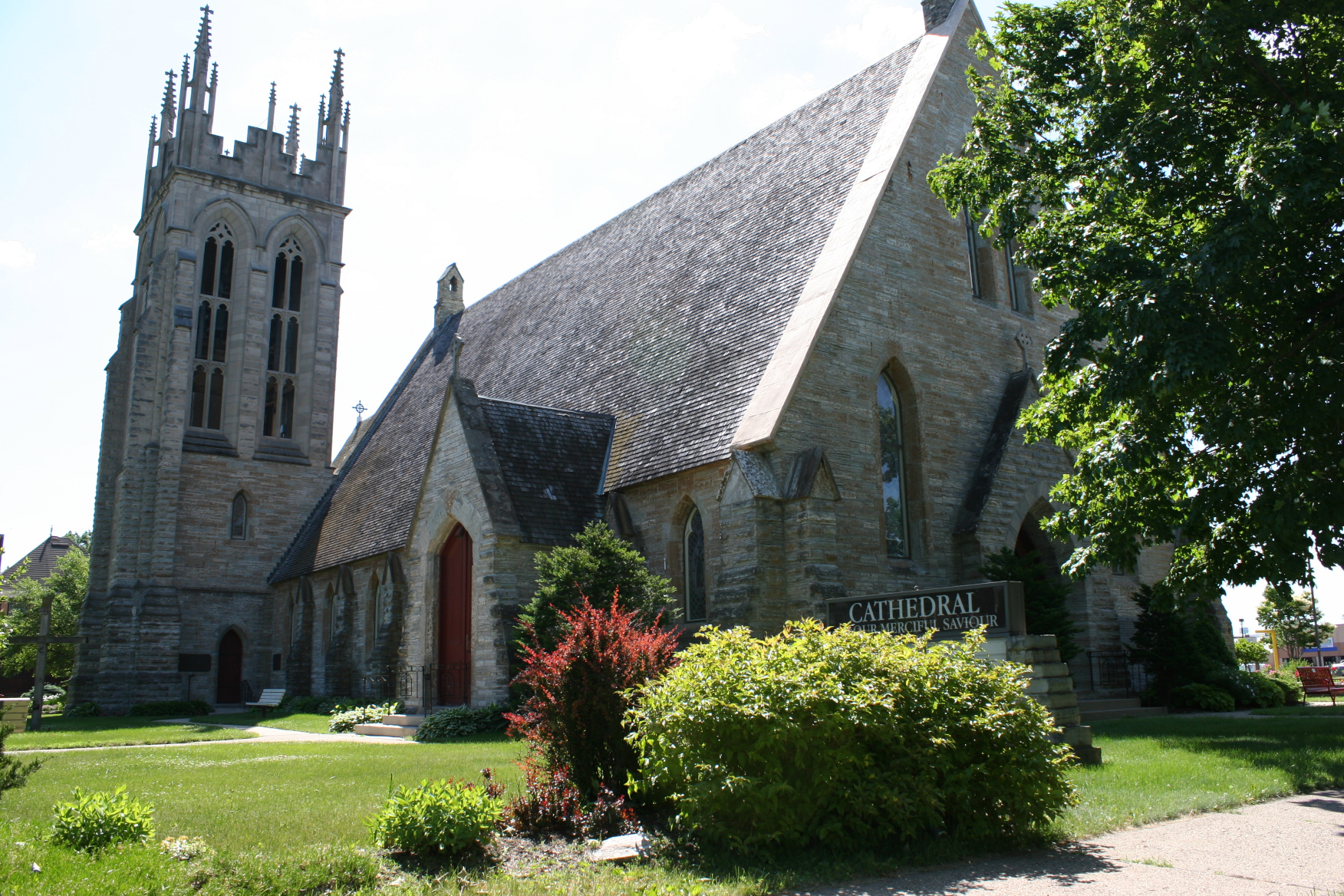
Just across the street from Central Park, the stunning Cathedral of Our Merciful Saviour.(Minnesota Prairie Roots copyrighted file photo)
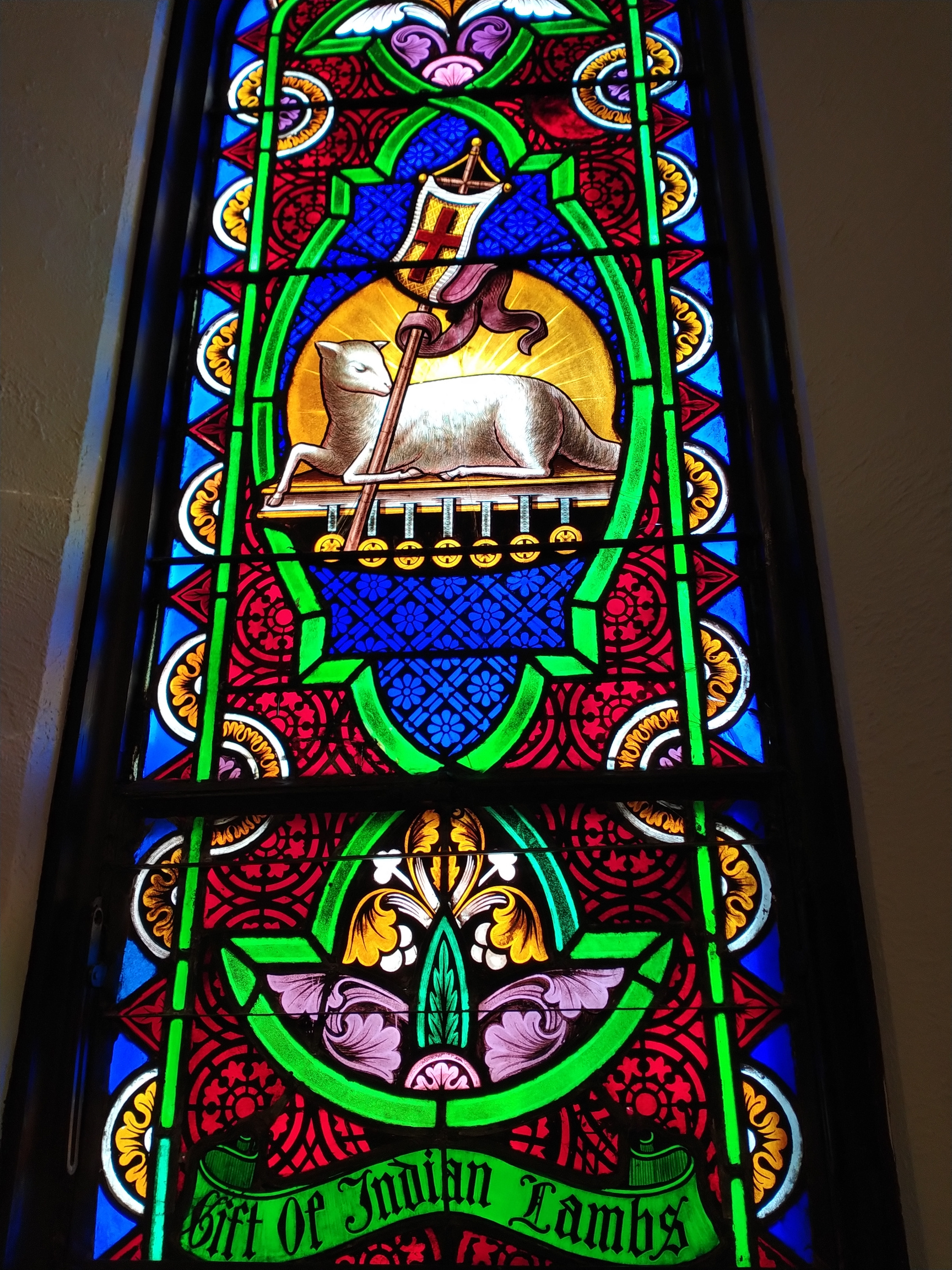
Likewise, free tours of the Cathedral at 11:30 a.m. Sunday, June 16, following a 10 a.m. ecumenical church service, likely will provide more information on the Wahpekute and their connection to Bishop Whipple and the massive limestone church. Several stained glass windows inside the sanctuary were gifted to the Cathedral by the Dakota.
This stained glass window was gifted by the Dakota to the Cathedral in honor of Dakota children. (Minnesota Prairie Roots copyrighted photo November 2023)
The Dakota and this house of worship, which focuses on connecting to the broader community, are such a vital part of Faribault’s history. That’s important to understand, to recognize, to honor no matter one’s heritage. I know locals who’ve lived here their entire lives and have never stepped inside the historic Cathedral. I find that almost unbelievable. We need to understand our past—our connections to peoples and land—to grow our future.
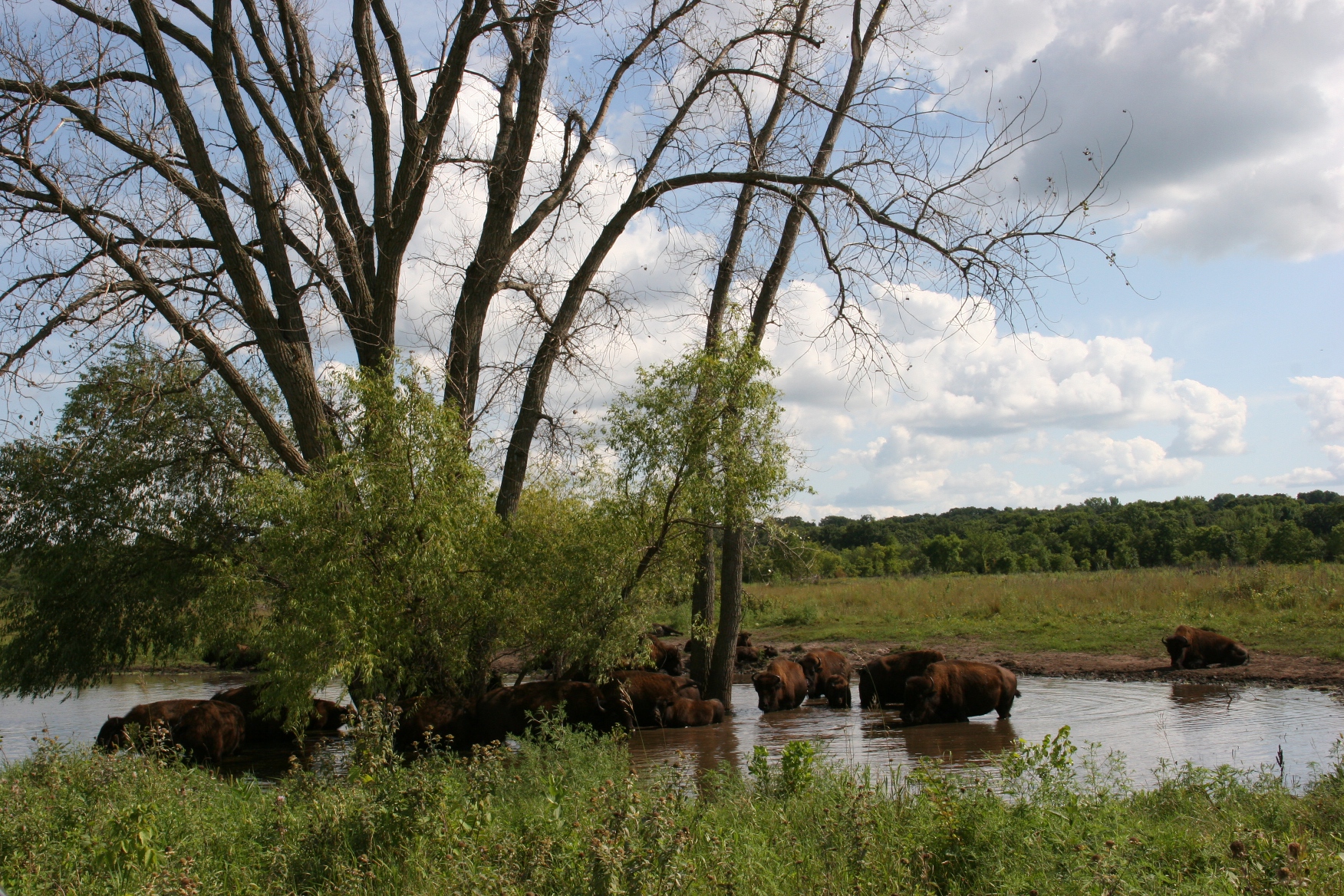
Minneopa State Park near Mankato is home to 30-40 bison fenced on 325 acres of primarily prairie. (Minnesota Prairie Roots copyrighted file photo 2019)
THEY ARE MASSIVE BEASTS, once roaming the American Great Plains by the millions. They are bison, also called buffalo, today numbering some 370,000 in North America. Most are raised as livestock. But some 31,000, or eight percent, are part of conservation herds, including right here in Minnesota. Such herds are designed to protect wild bison and preserve their genetic diversity.
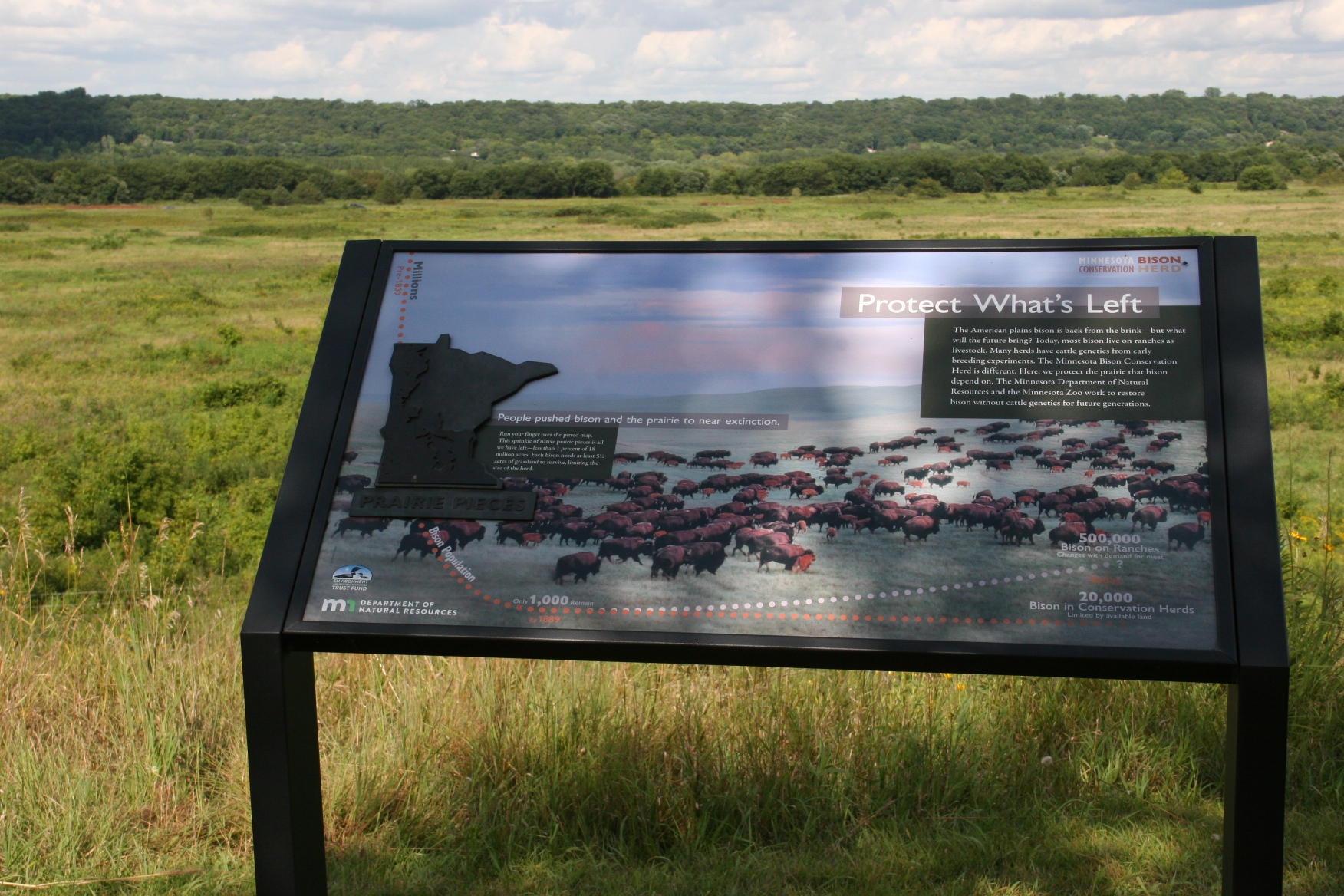
Interpretive signage about bison overlooks the prairie at Minneopa State Park. (Minnesota Prairie Roots copyrighted file photo 2019)
An upcoming documentary, “The American Buffalo—A Story of Resilience” by awarding-winning filmmaker Ken Burns, and my own recently posted poem about bison prompted my renewed interest in this animal. Burns’ 4-hour film airs in two parts, at 7 pm on Monday, October 16, and on Tuesday, October 17, on PBS. His documentary traces the history of bison, their importance in Native peoples’ lives and culture, their near extinction, and efforts to bring them back.
Bison up close while driving through Minneopa State Park. (Minnesota Prairie Roots copyrighted file photo 2019)
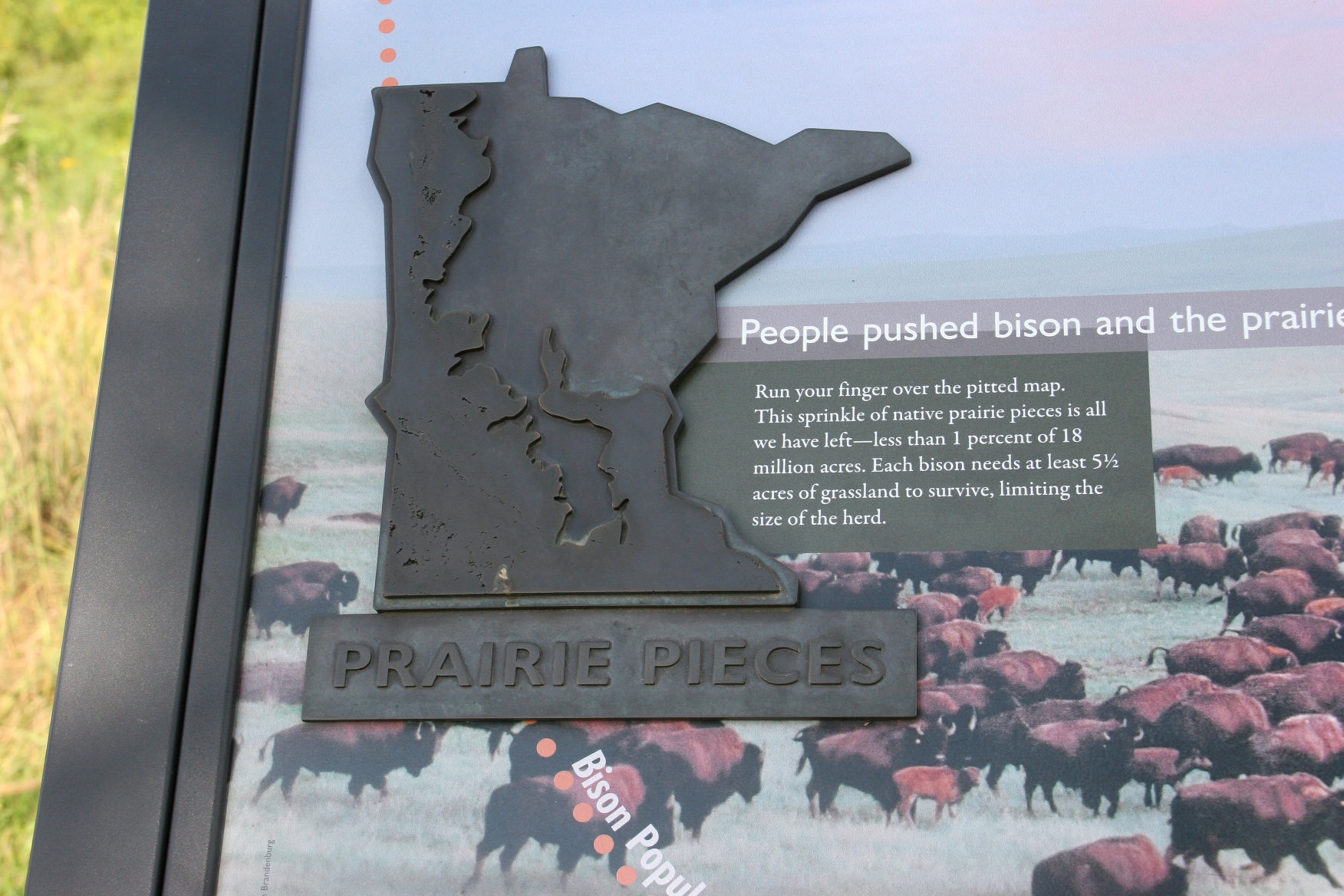
A map, posted in Minneopa State Park, shows the prairie and historic bison territory in Minnesota. (Minnesota Prairie Roots copyrighted file photo 2019)
Given the region’s rich Native heritage, the presence of a small group of bison in the Ramsey Park Zoo seems fitting. I recall rushing to see the buffalo there, both excited and intimidated by their massive hulk. Today I’m not so much afraid as respectful of their size and their importance in Indigenous Peoples’ culture.
A sculpture of White Buffalo Calf Woman, part of Indigenous culture, displayed at the 2011 Mankato City Art Walking Sculpture Tour. Artwork by Lee Leuning and Sherri Treeby. (Minnesota Prairie Roots copyrighted file photo 2011 by Audrey Kletscher Helbling)
One need only look back in history to see how invaluable bison were to these original inhabitants of the prairie, the plains. Bison provided food, shelter, clothing and more to Indigenous Peoples. They also held spiritual and cultural significance. Bison were considered kin, respected by those who respected Mother Earth.
Bison at Minneopa State Park watering hole. (Minnesota Prairie Roots copyrighted file photo 2019)
And then the white man came in the 1800s, overtaking the land, nearly driving bison to extinction as they hunted and slaughtered the animal primarily for their hides.
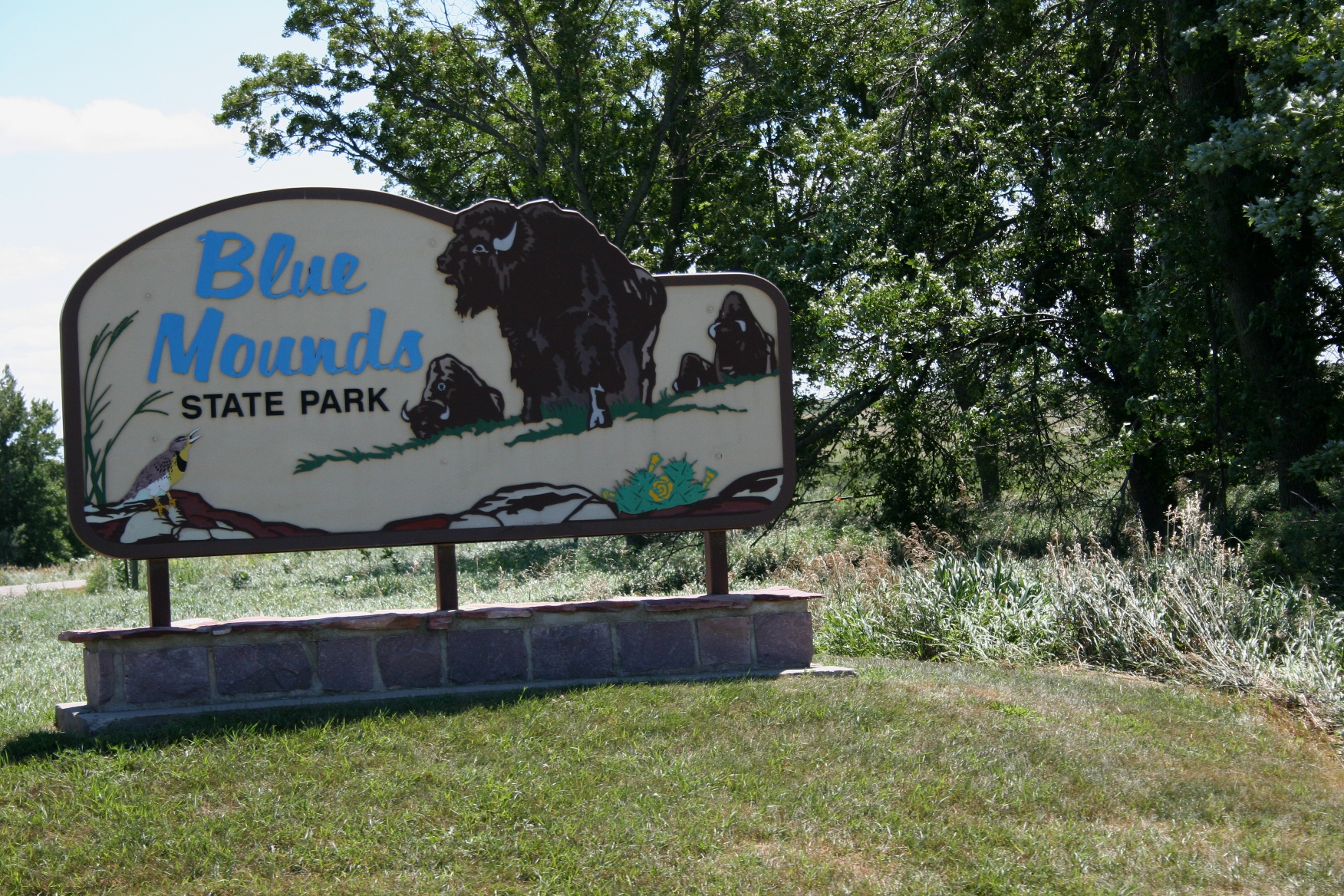
Blue Mounds State Park in rural Rock County, Minnesota, is home to 80-90 bison, although I did not see them when I visited the park in 2013.(Minnesota Prairie Roots copyrighted file photo 2013)
And so the story of bison is not only one of past atrocities in American history, but also one of personal history for me with those fenced bison in Minnesota’s largest municipal park, known as “The Little Yellowstone of Minnesota” for its beautiful natural topography seemingly like Yellowstone National Park. Yellowstone, the one in Wyoming, is home to nearly 6,000 bison.
A sign along the prairie’s edge at Minneopa State Park informs about bison in Minnesota. (Minnesota Prairie Roots copyrighted file photo 2019)
In my youth, I didn’t understand the importance of bison in Native culture. I simply delighted in seeing them in the zoo at then Alexander Ramsey Park in my native Redwood County. Neither did I recognize how offensive the name of the park I loved as a child—Alexander Ramsey Park. Alexander Ramsey served as our first territorial governor and then as the second state governor of Minnesota during the US-Dakota War of 1862. He offered a bounty to anyone who killed a Dakota person and called for Indigenous Peoples to be driven out of Minnesota.
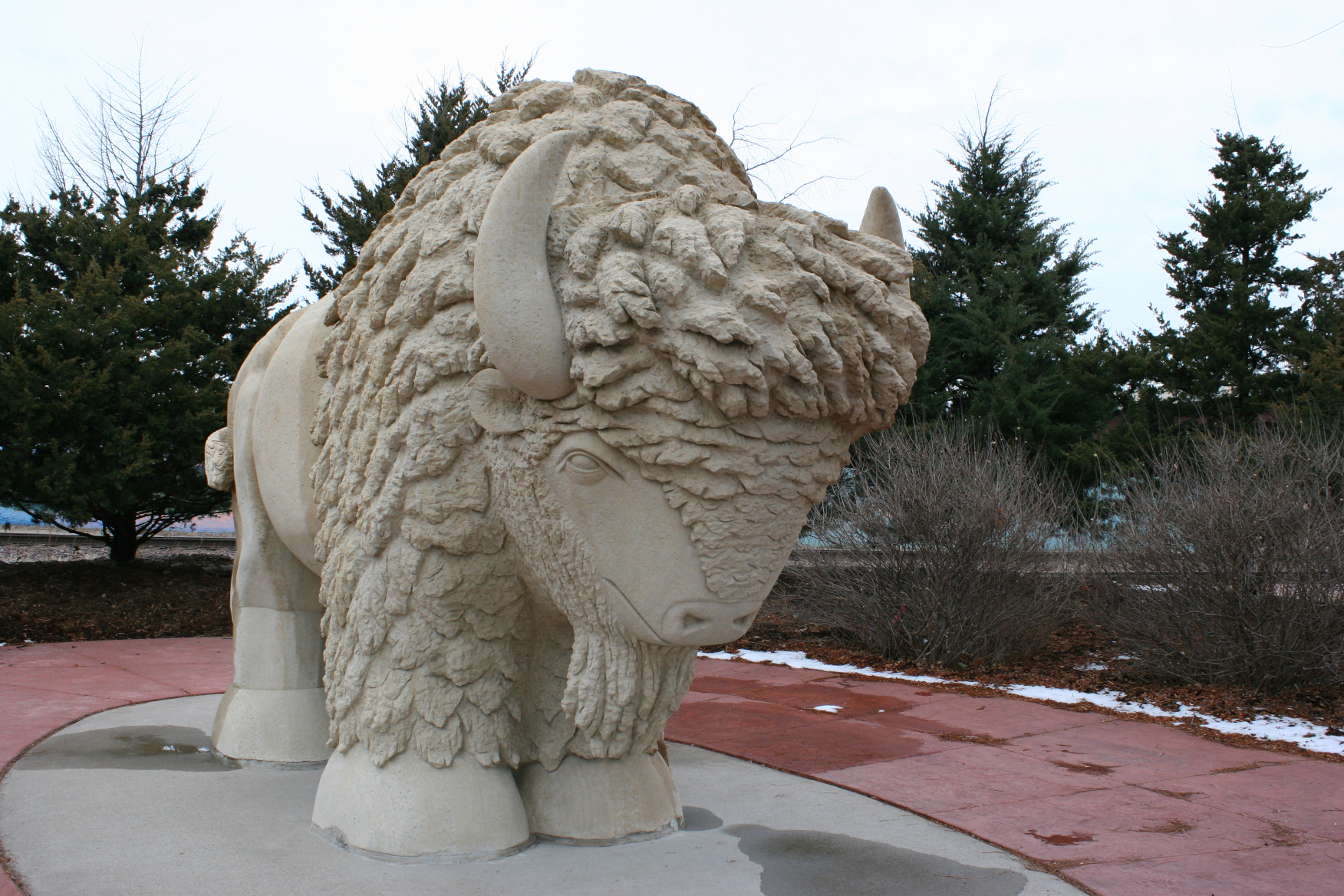
This 67-ton Kasota limestone sculpture stands in Reconciliation Park in Mankato. It symbolizes the spiritual survival of the Dakota People and honors the area’s Dakota heritage. The park is the site of the largest mass hanging in U.S. history. (Minnesota Prairie Roots copyrighted file photo 2019)
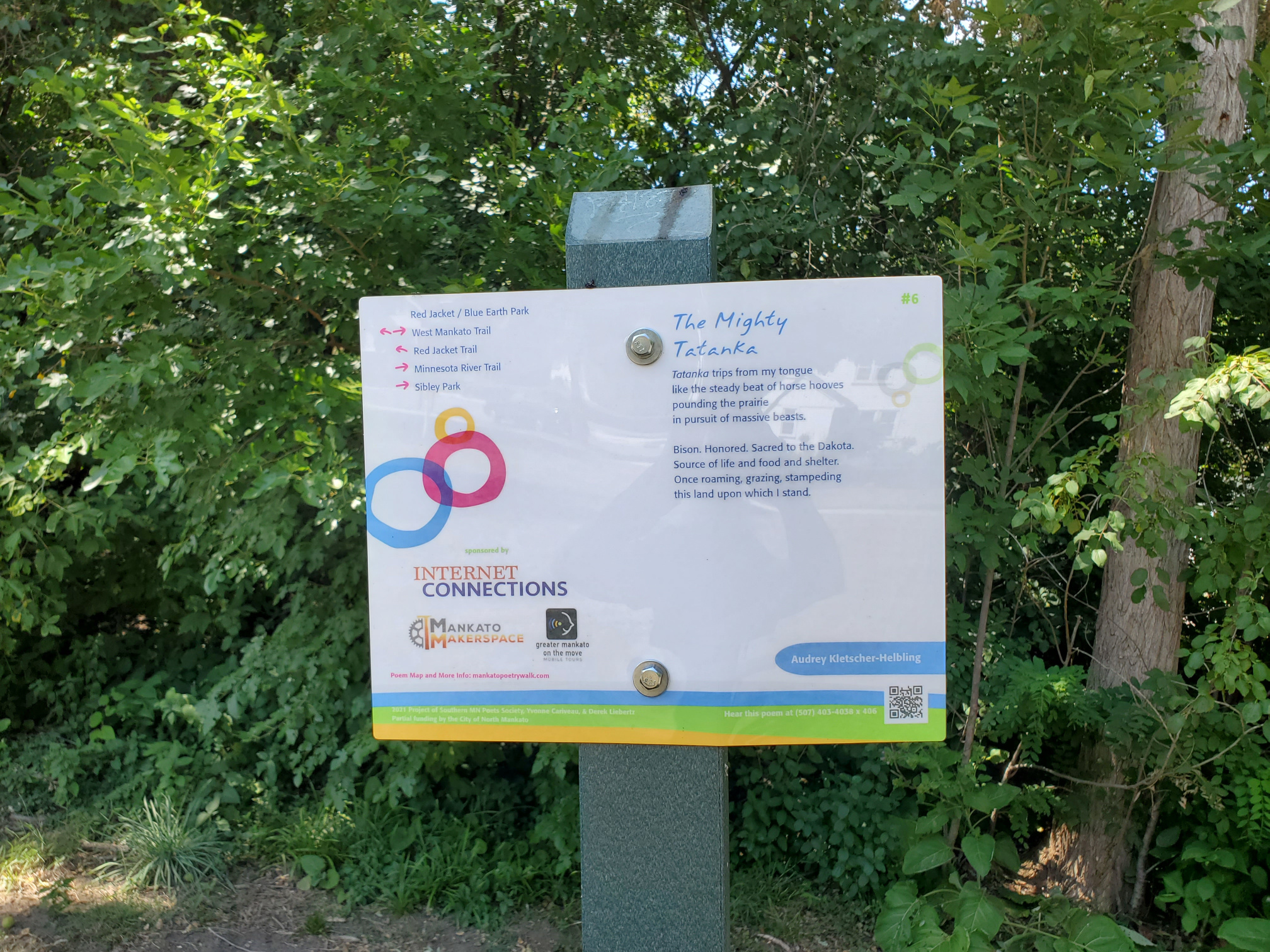
My poem posted along a recreational trail in Mankato. (Photo credit: Kay Herbst Helms)
I wanted to honor the original inhabitants of Mahkato, the bison, the Native culture, the land. And so I wrote “The Mighty Tatanka,” using the Dakota word for bison. My poem was selected for inclusion in the Mankato Poetry Walk & Ride and is posted on a sign in West Mankato.
The Mighty Tatanka
Tatanka trips from my tongue like the steady beat of horse hooves pounding the prairie in pursuit of massive beasts.
Bison. Honored. Sacred to the Dakota. Source of life and food and shelter. Once roaming, grazing, stampeding this land upon which I stand.
While my poem is succinct, limited by wordage requirements in the poetry competition, I’d like to think “The Mighty Tatanka” is powerful. It holds not only the rhythm of carefully selected words, but a story. A story of bison, of Indigenous Peoples, of a way of life, of a culture. It holds, too, honor for the land and of those who first inhabited, and respected, it.
#
FYI: My poem is posted on a sign along the West Mankato Trail near the intersection of Owatonna Street and Blue Earth and Sylvia Streets in West Mankato. You can listen to me read my poem by calling 507-403-4038 and entering 406.
Noted Minnesota wildlife photographer Jim Brandenberg’s (right in video) work, including this image of bison, is featured in a gallery bearing his name in Luverne, near Blue Mounds State Park. (Minnesota Prairie Roots copyrighted file photo 2013)
To see Minnesota Bison Conservation Herd bison in Minnesota, visit Minneopa State Park near Mankato, Blue Mounds State Park near Luverne, the Minnesota Zoological Garden, Oxbow Park & Zollman Zoo by Byron, and Spring Lake Park Reserve Bison Prairie in Dakota County.
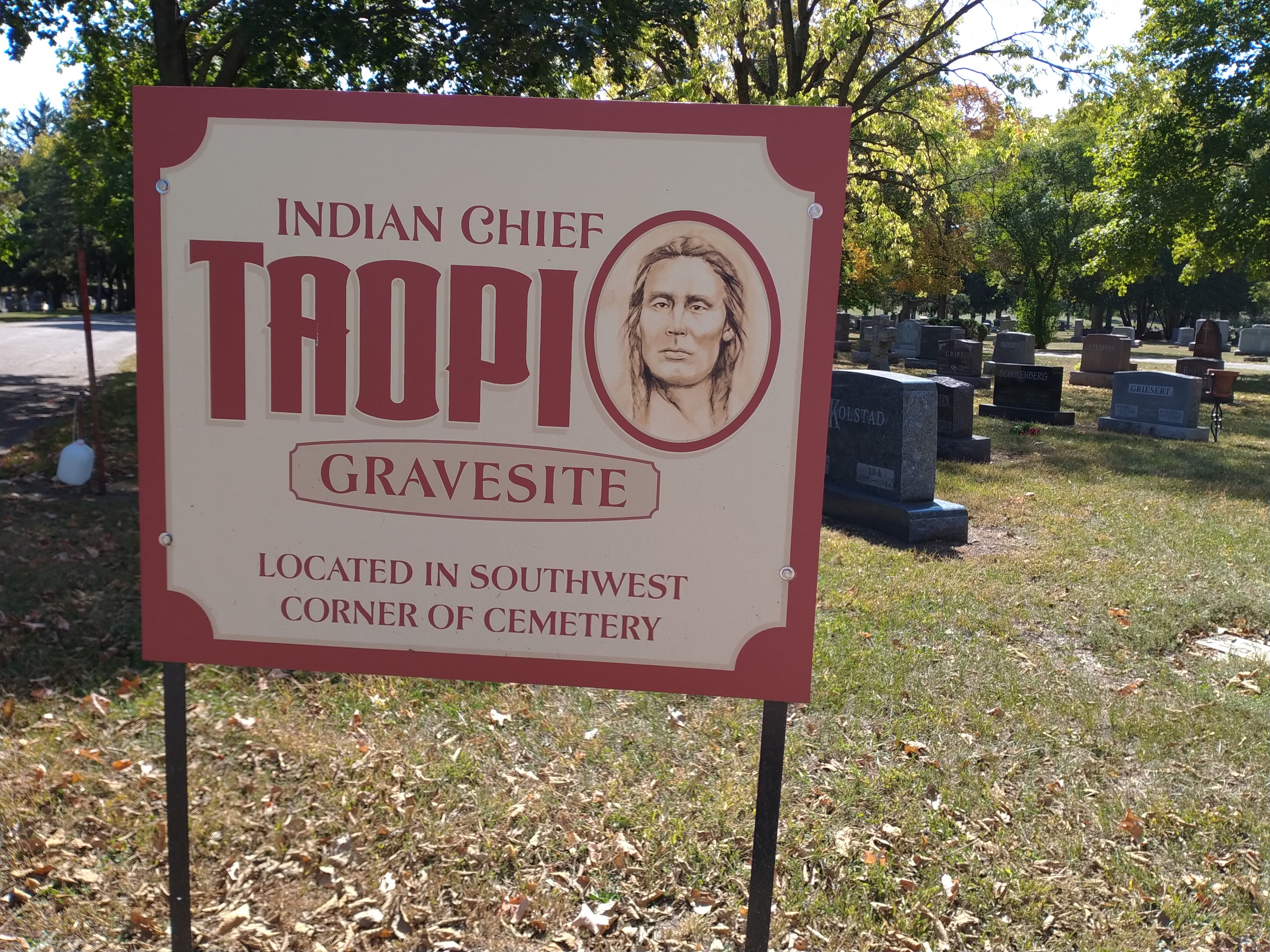
Just inside the entrance to Maple Lawn Cemetery, a sign directs visitors to Taopi’s gravesite. (Minnesota Prairie Roots copyrighted photo October 2023)
MY GOAL WAS SIMPLE—to write a piece honoring Indigenous Peoples’ Day. My focus, I initially decided, would be on Taopi, a member of the Little Crow Band of the Mdewakanton Dakota Tribe. Taopi is perhaps best known in Faribault, where he lived for a while and is buried. A small Mower County town near the Iowa border also honors him in name. But my writing expanded beyond Taopi.
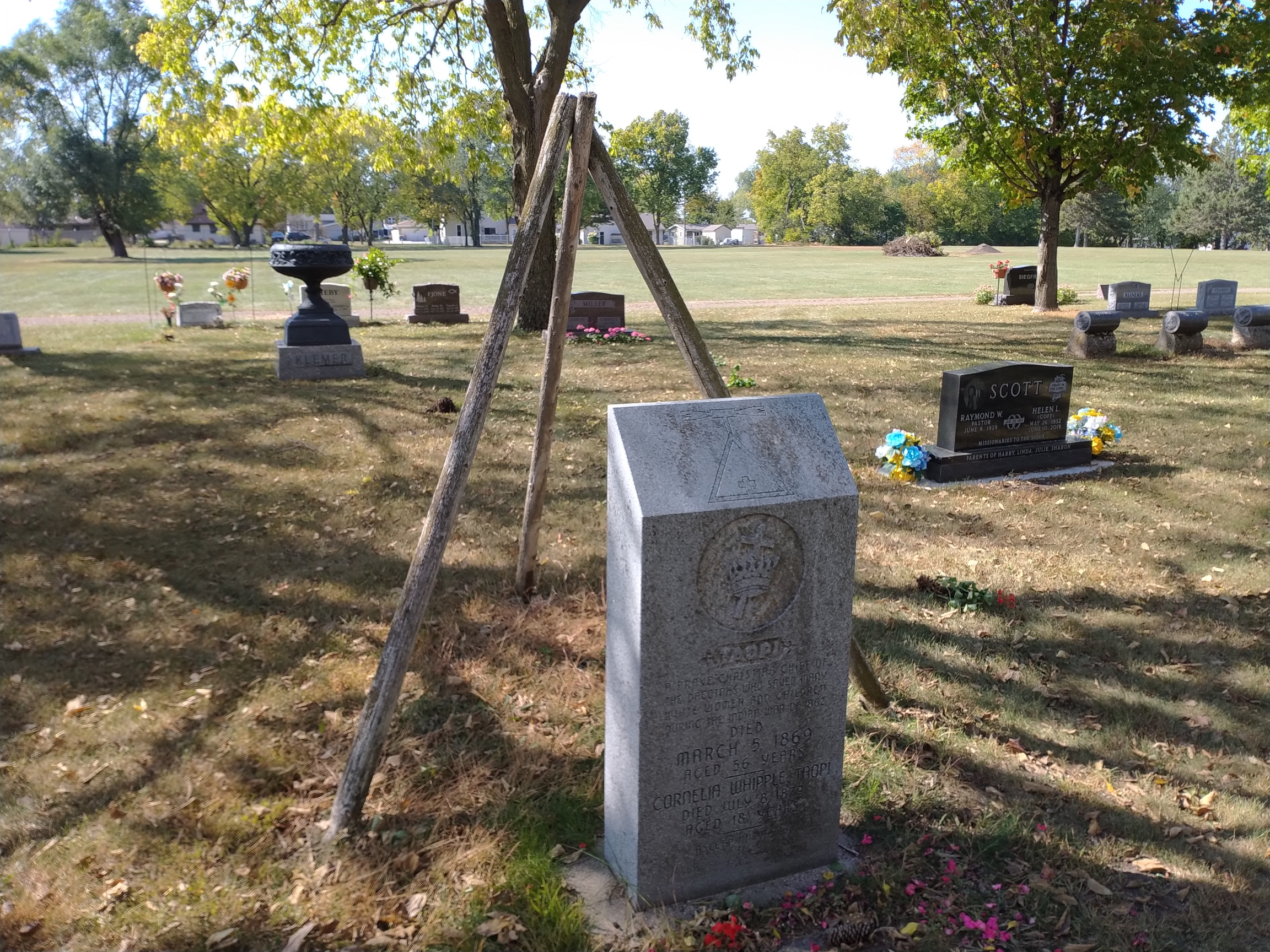
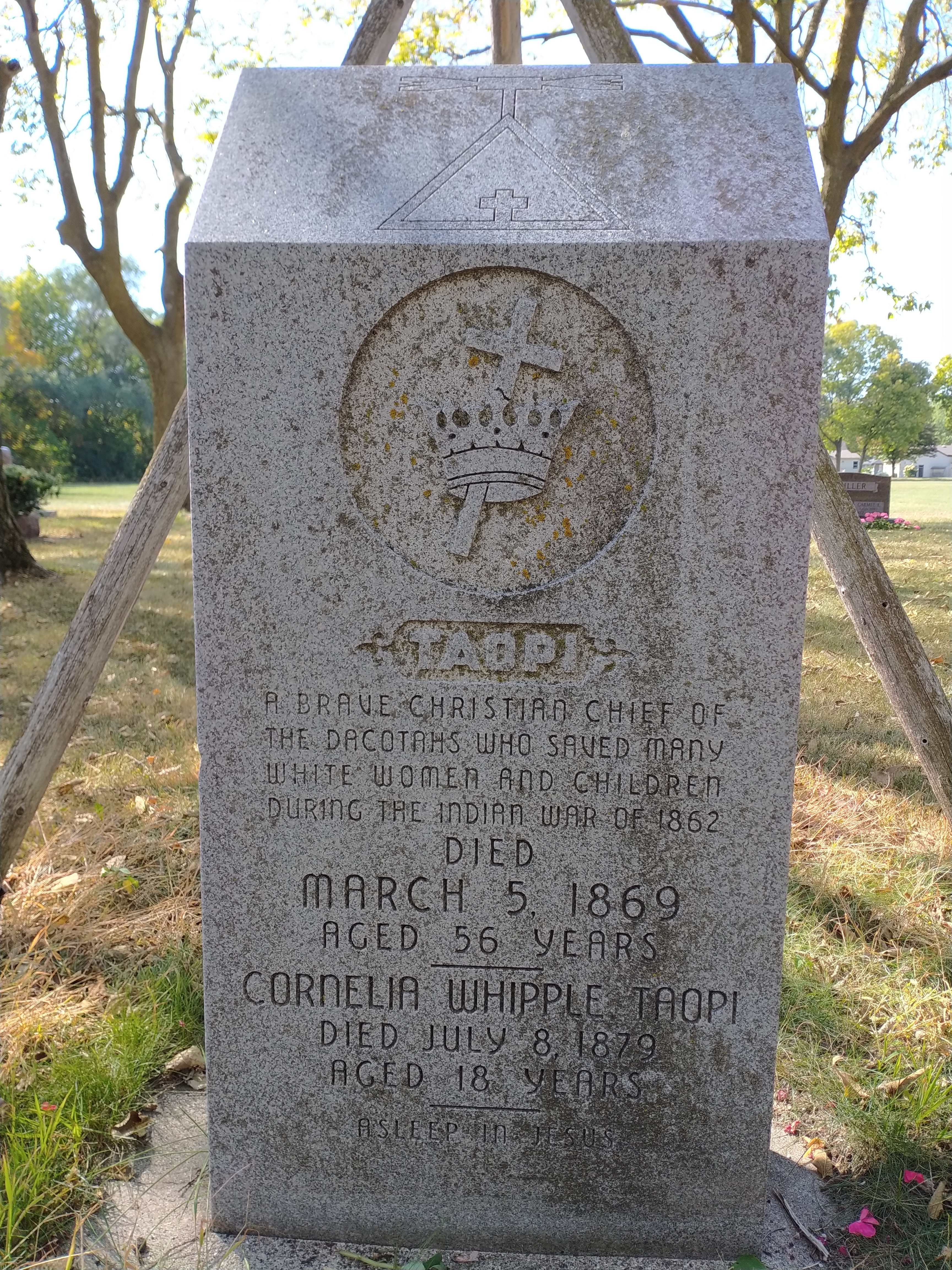
Taopi’s grave, and that of his daughter, are easily spotted via the propped poles. (Minnesota Prairie Roots copyrighted photo October 2023)
Recently I visited Taopi’s gravesite at Maple Lawn Cemetery. My interest piqued. I wanted to learn more about this Dakota leader and his importance in my community and in Minnesota history. His place in history connects to the US-Dakota War of 1862, a war all too familiar to me. My native Redwood County, where the Lower Sioux Agency was located, centered that deadly, short-lived conflict between white people and Native Peoples.
Now, viewing this war through a lens not tinted primarily by a white perspective, I understand the injustices. Decades ago, when I wrote a high school term paper on the war, I admittedly wrote a biased, unbalanced report based on biased, unbalanced research sources.
With time and maturity came the realization of the great injustices done, first when the US government acquired Indigenous Peoples’ land at a seemingly low cost and then failed to honor those treaties. The treaties opened nearly 24 million acres to white settlers. It was the Natives, the original inhabitants of this land, who found themselves cheated of government annuities, starving, pushed off their land and confined to strips of land along the Minnesota River. That includes the Wahpekute, a small band of the Dakota who lived in south central Minnesota, including the Faribault area. I live just below a Faribault city park called Wapacuta.
An exhibit at the Rice County Historical Society Museum. Artifacts from Indigenous Peoples are also displayed in cases. (Minnesota Prairie Roots copyrighted photo October 2023)
At the time of the US-Dakota War of 1862, Taopi was in the thick of all of it as a “farmer Indian,” the name tagged to Native Peoples who opted to farm, adapting the ways of the white man in occupation, dress and sometimes religion. He lived near the Lower Sioux Agency, relocated to a reservation there following the Treaty of Mendota in 1851. Those who continued with their hunting and fishing culture were known as “blanket Indians.” Taopi assuredly felt the animosity of his own people for the lifestyle and other choices he made.
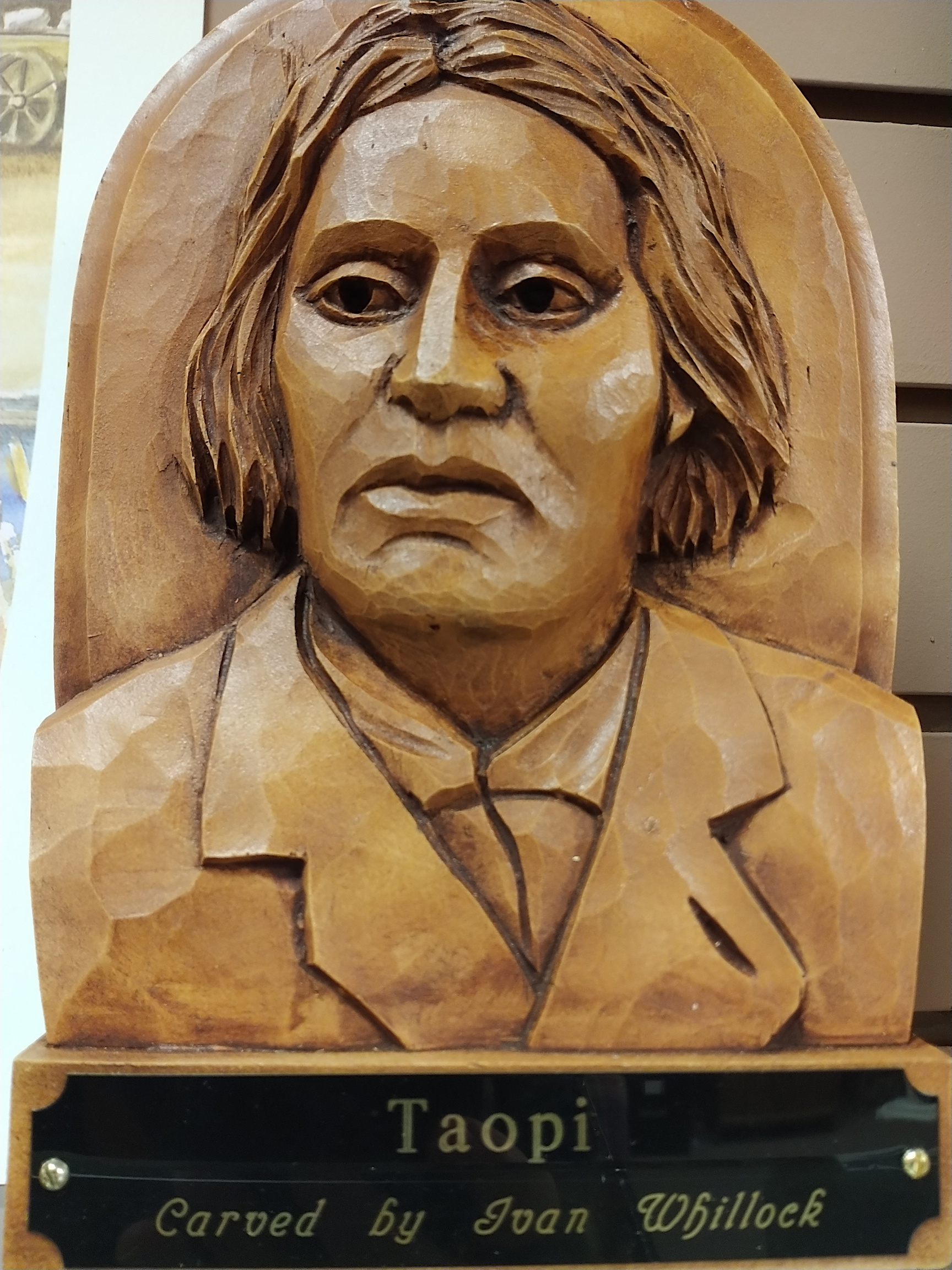
A woodcarving of Taopi by noted Faribault artist Ivan Whillock is for sale in the Rice County Historical Society Museum’s gift shop. One is also displayed in a museum exhibit on Taopi. (Minnesota Prairie Roots copyrighted photo October 2023)
I can only imagine the pressure Indigenous Peoples experienced as white settlers moved into the area. The change, at times, had to feel overwhelming. Life would never be the same. Long-time homelands were lost, tradition and culture endangered. And so Taopi and others adapted, likely accepting that change was inevitable.
The gravesite of Taopi and his daughter, Cornelia Whipple Taopi (named after Cornelia Whipple, married to Bishop Henry Whipple). (Minnesota Prairie Roots copyrighted photo October 2023)
But one thing that remained constant with Taopi was his focus on peace. He opposed the war and was a leader in the Dakota Peace Party. He is credited with saving the lives of many.
Yet, at war’s end, Taopi found himself caught—disliked by his peoples, who considered him a traitor, and disliked by whites holding a deep animosity toward any Native person. In Faribault, though, he had a friend in Bishop Henry Whipple, a strong advocate for First Peoples, and in town founder Alexander Faribault. Eventually, Taopi and other Natives moved onto land owned by Alexander Faribault, living under his protection on a bluff overlooking the Straight River. Taopi died in 1869. In 1895, the Indigenous Peoples of Faribault were displaced once again, moved to the Lower Sioux Reservation. They had always existed on the fringes in Faribault, never fully-accepted by most residents while under the protection of the bishop and town founder.
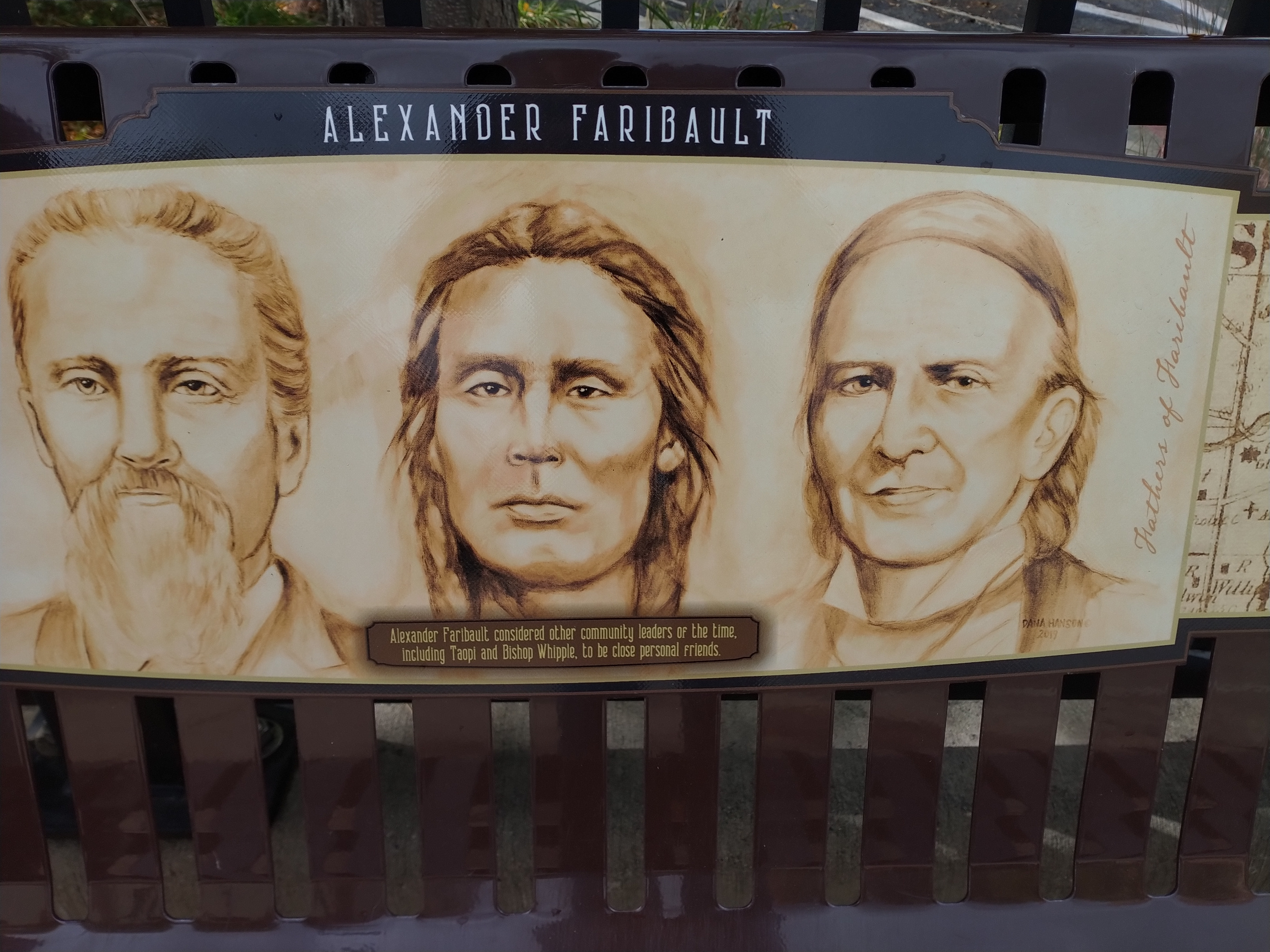
Dana Hanson’s “Father’s of Faribault” (left to right, Alexander Faribault, Taopi and Bishop Henry Whipple) featured on a bench along Central Avenue in downtown Faribault. The same artwork hangs inside Buckham Memorial Library. (Minnesota Prairie Roots copyrighted photo October 2023)
Sources: The First Cathedral, an Episcopal Community for Mission by Benjamin Ives Scott and Robert Neslund; the Minnesota Historical Society website; and the Rice County Historical Society Museum’s Taopi display.
Cover design by Mary Austin Speaker. Cover beadwork art by Holly Young. (Credit: Publisher, Milkweed Editions)
VISUALIZE A PACKET OF SEEDS. Then open the envelope and spill a handful of seeds onto your open palm. What do you see? You likely envision seeds planted in rich black soil, covered, watered, sprouting, growing, yielding and, then, harvested. And while that visual is accurate, seeds hold more. Much more.
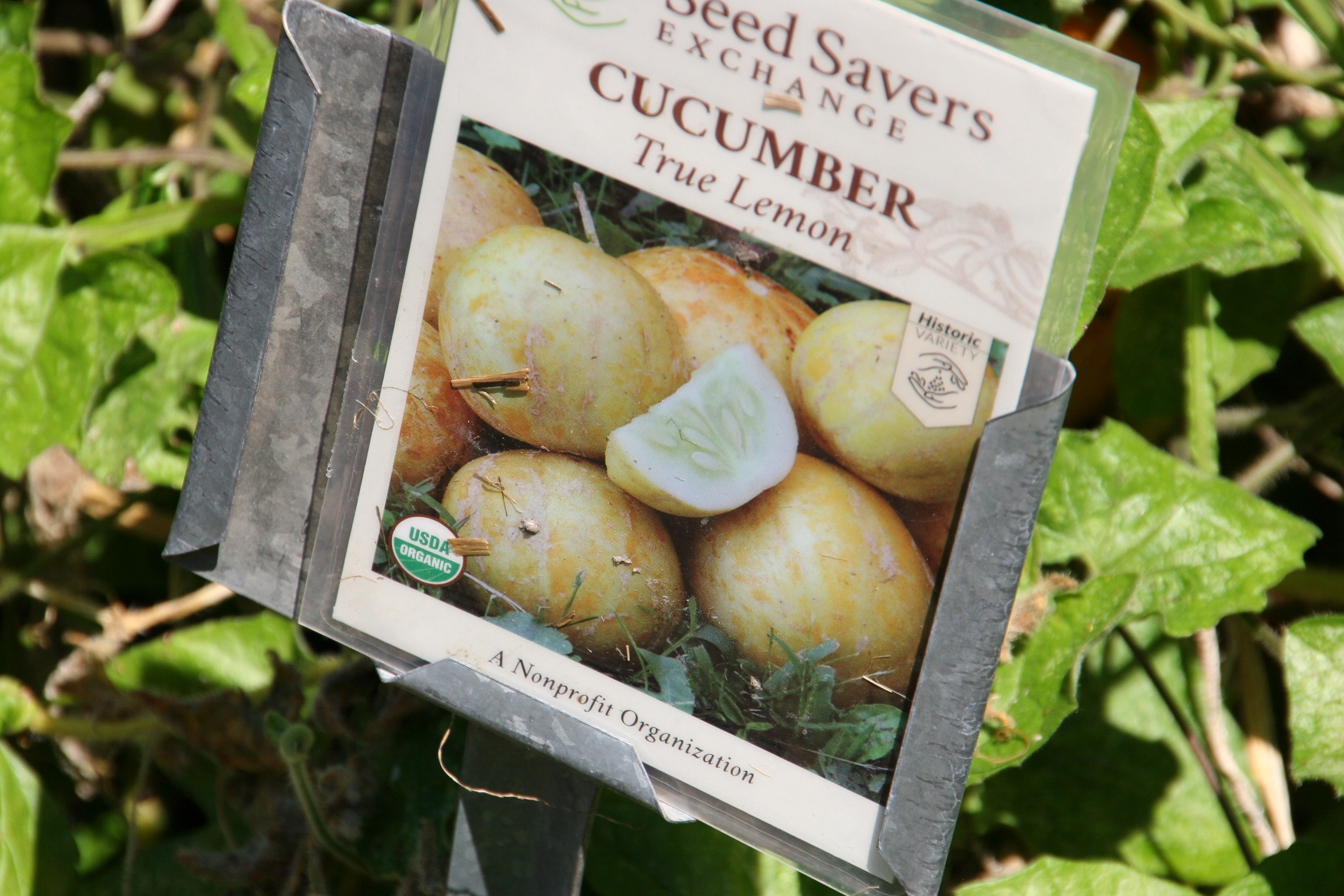
Photographed at Seed Savers Exchange near Decorah, Iowa. The farm specializes in saving heirloom/heritage seeds. (Minnesota Prairie Roots copyrighted file photo October 2018, used here for illustration only)
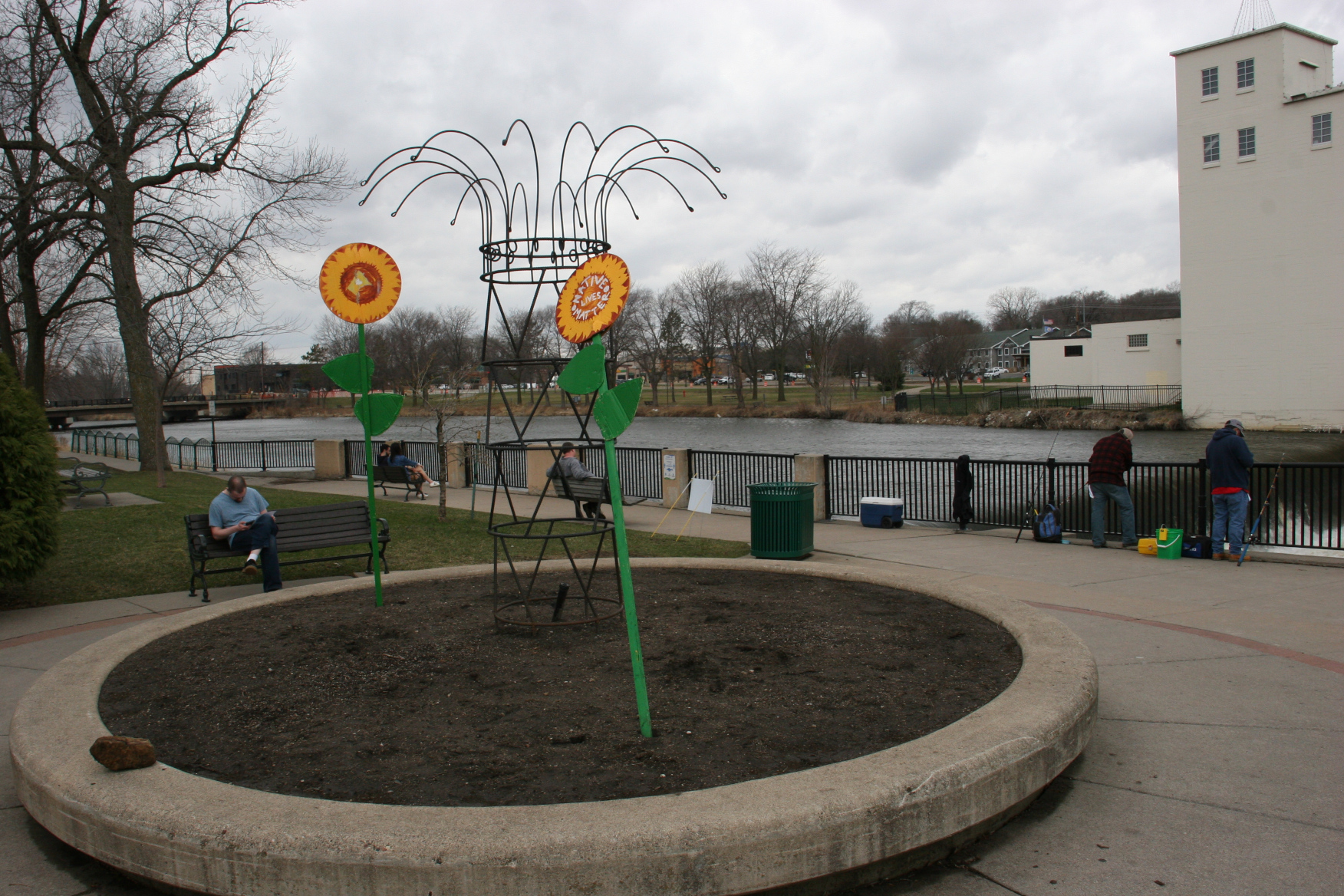
Part of a public art installation at the Northfield Earth Day Celebration in April. (Minnesota Prairie Roots copyrighted file photo April 2022)
Hers is the story of the Dakota people, specifically of several generations of women, The Seed Keepers. Hers is the story of a connection to the land, sky, water, seeds and of reclaiming that relationship. Hers is a story of wrongs done to indigenous people in Minnesota, of atrocities and challenges and struggles. Past and present. Hers is a story of wrongful family separation and of reuniting with family and community.
A full view of the art planted in Northfield for Earth Day. (Minnesota Prairie Roots copyrighted file photo April 2022)
At the core of Wilson’s novel are the seeds. The seeds, stored in a willow basket, and eventually passed through the generations. The seeds that not only provided food for their families’ survival, but held the stories of Dakota ancestors and a way of life.
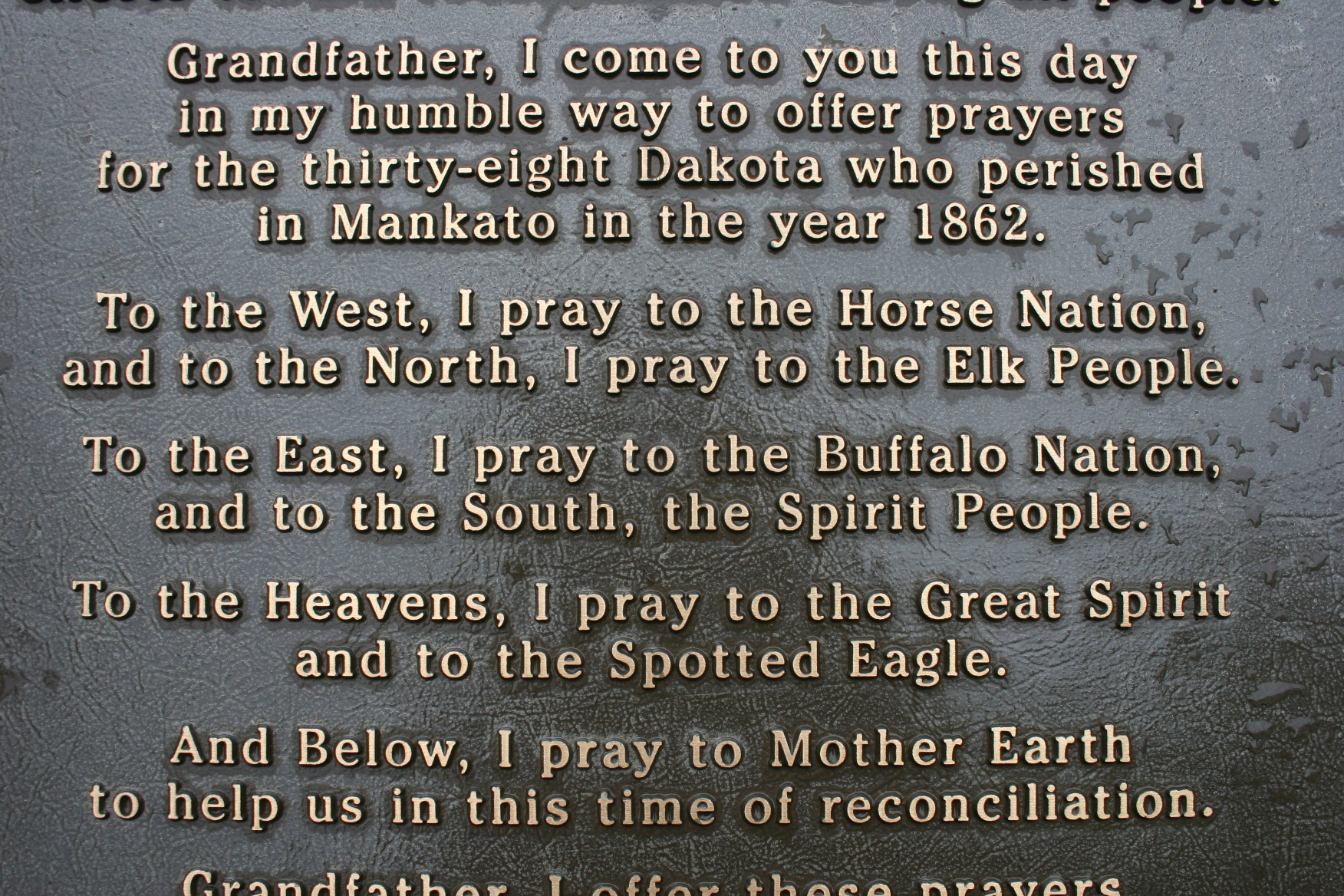
Words on a marker in Reconciliation Park in Mankato where 38 Dakota were hung on December 26, 1862. Wilson references the park, and the theme of forgiveness, in her novel. (Minnesota Prairie Roots copyrighted file photo May 2012)
The subject of this book holds personal interest to me because of its setting in southwestern Minnesota, site of The US-Dakota War of 1862. Wilson covers that war, including the hanging of 38 Dakota warriors in Mankato. As a native of Redwood County, I studied that war, even researched and wrote a term paper on the topic some 50 years ago. But I expect if I read that paper now, I would find many inaccuracies. My writing was shaped by the White (settlers’) narrative without consideration of the Dakota. I long ago realized the failings of that narrow-minded, biased perspective.
Even though I wasn’t taught the whole story, at least I was aware of The U.S.-Dakota War of 1862. It was centered in my home region and in neighboring Brown County, where my maternal ancestors fled their rural New Ulm farm for safety in St. Peter. Many Minnesotans, I’ve discovered, are unaware of this important part of our state’s history.
The Seed Keeper, though fictional, reveals just how devastating this war was to the Dakota people in removal from their native land, in their imprisonment and in efforts by Whites to control and shape them. I found this sentence penned by the author to be particularly powerful: What the white settlers called progress was a storm of fury thundering its way across the land, and none of us were strong enough to withstand it.
This 67-ton Kasota stone sculpture stands in Reconciliation Park in Mankato. It symbolizes the spiritual survival of the Dakota People and honors the area’s Dakota heritage. The park is the site of the largest mass execution in U.S. history. (Minnesota Prairie Roots copyrighted file photo November 2019)
Still, strength sprouts and grows in The Seed Keeper through a riveting storyline that stretches back to Marie Blackbird in 1862 and then follows main character Rosalie Iron Wing through the decades to 2002. Even her name, Iron Wing, evokes strength and freedom. Rosalie marries a White farmer, births a son and her two worlds collide.
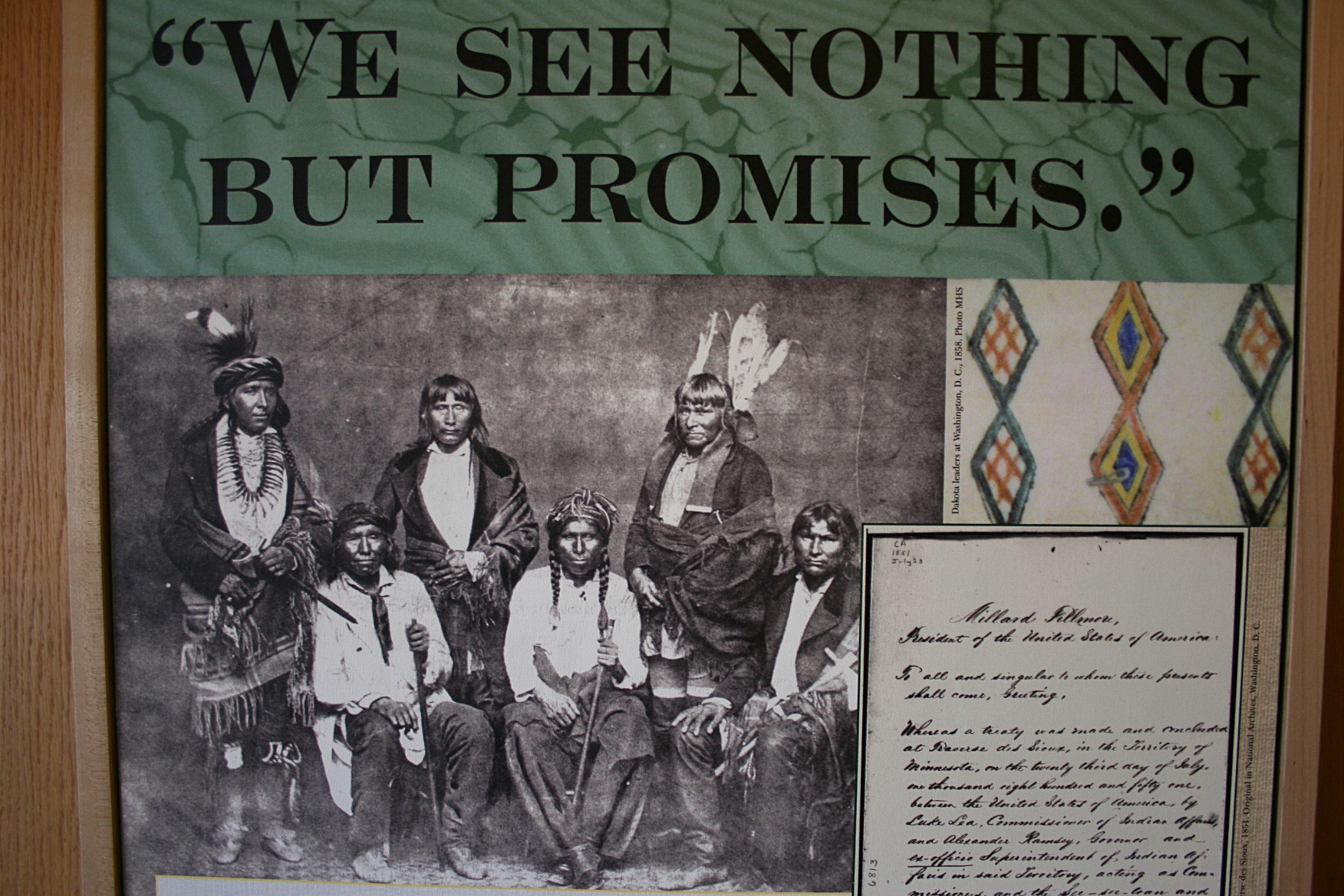
A photo panel at the Traverse des Sioux Treaty Center in St. Peter shows Dakota leaders photographed in Washington D.C. in 1858. The photo is from the Minnesota Historical Society. The quote represents the many broken treaties between the Dakota and the U.S. government. (Minnesota Prairie Roots file photo 2013)
I was especially drawn to this statement by a Dakota elder in Wilson’s book: People don’t understand how hard it is to be Indian. I’m not talking about all the sad history. I’m talking about a way of life that demands your best every single day. Being Dakhóta means every step you take is a prayer.
Wilson writes with authenticity as a Mdewakanton descendant, enrolled on the Rosebud Reservation. She’s walked the steps of the Dakhóta.
#
TELL ME: Have you read The Seed Keeper and, if so, what are your thoughts? I’d encourage everyone, Minnesotan or not, to read this award-winning novel.
Part of a temporary public art installation at Northfield’s Earth Day Celebration. (Minnesota Prairie Roots copyrighted photo April 2022)
IN THE GEOGRAPHICAL BACKGROUND of my childhood, I knew of the “Indian Reservations” to the northwest near Granite Falls and then to the east near Morton. My hometown of Vesta sits between the two, no longer referred to as “reservations” but as the Upper Sioux Indian Community and the Lower Sioux Indian Community.
A Dakota man and Alexander Faribault are depicted trading furs in this sculpture at Heritage Park near the Straight River and site of Faribault’s trading post. Ivan Whillock created the sculpture which graces the Bea Duncan Memorial Fountain in my community of Faribault. (Minnesota Prairie Roots copyrighted file photo 2012)
Today I live 120 miles to the east in Faribault, next to Wapacuta Park. Rice County is the homeland of the Wahpekute (not Wapacuta), a tribal band of the Dakota.
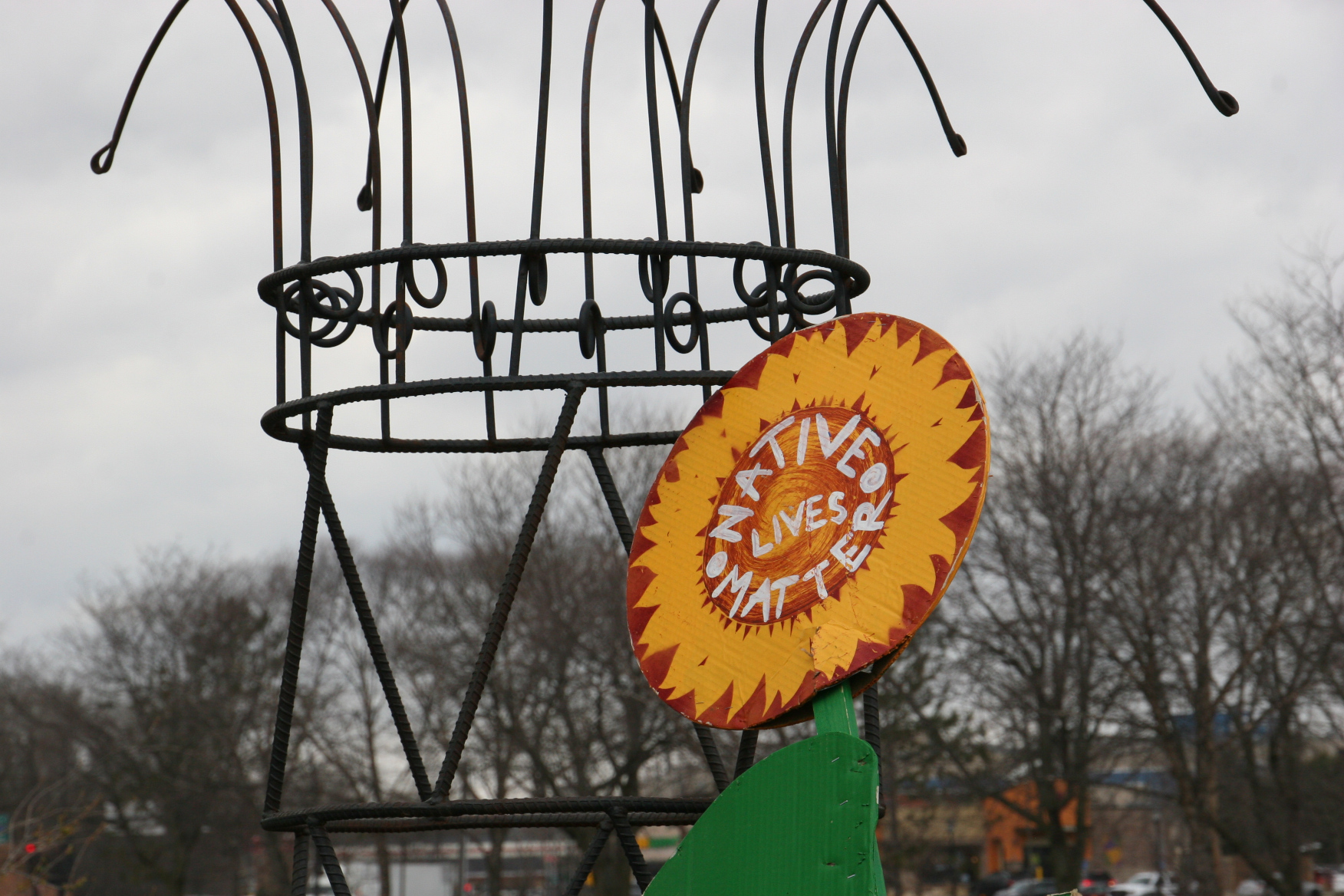
The Earth Day art carried two messages: NATIVE LIVES MATTER and CLIMATE JUSTICE. (Minnesota Prairie Roots copyrighted photo April 2022)
A temporary public art installation at the recent Earth Day Celebration in neighboring Northfield prompted me to reflect on Indigenous people in southern Minnesota. Growing up in Redwood County, my knowledge of area Native Americans focused primarily on “The Sioux Uprising.” History teachers then used that term, rather than the current-day “US-Dakota War of 1862,” which should tell you a thing or ten about how biased that perspective back in the 1970s. How thankful I am that my awareness and understanding have grown and that attitudes are shifting to better reflect all sides of history.
The message grows, blossoms in the Earth Day art. (Minnesota Prairie Roots copyrighted photo April 2022)
We stand on the homelands of the Wahpekute and other Bands of the Dakota Nation. We honor with gratitude the people who have stewarded the land throughout the generations and their ongoing contributions to this region. We acknowledge the ongoing injustices that we have committed against the Dakota Nation, and we wish to interrupt this legacy, beginning with acts of healing and honest storytelling about this place.
NATIVE LIVES MATTER fits the spirit of the Land Acknowledgment Statement. Those three words caused me to pause, to think, to consider what I’d been taught all those decades ago and how my thinking has shifted as I’ve aged, opened my mind and learned.
Dakota beadwork displayed and photographed at the Rice County Historical Society Museum, Faribault, in 2010. (Minnesota Prairie Roots copyrighted file photo 2010)
The Rice County Historical Society, which exhibits a collection of Native American artifacts in its Faribault museum, shares a statement similar to the City of Northfield’s on its website:
We acknowledge that the land that is now Rice County, MN, was their (Dakota) homeland and for many tribal members today, it is still their home.
In all of this, I feel a sense of gratitude regarding increasing public recognition of the land history and contributions of Indigenous People in Minnesota. In my home area of Redwood County, nearly 1,000 individuals from the Mdewakanton Band of Dakota call the Lower Sioux Indian Community home. To the east in Yellow Medicine County near Granite Falls, nearly 500 individuals from the Dakota Oyate call the Upper Sioux Indian Community home.
Words on a marker in Reconciliation Park in Mankato where 38 Dakota were hung on Dec. 26, 1862. (Minnesota Prairie Roots copyrighted file photo 2012)
I hope educators in my home area are today teaching students about the local Dakota and even bringing elders into classrooms. I graduated, after all, from Wabasso High School, the name Wabasso coming from a Native word meaning “white rabbit.” I would then go on to attend college in Mankato, site of the largest mass execution in the US with 38 Dakota killed in a public hanging on December 26, 1862.
I would be remiss if I did not share that, during the US-Dakota Conflict of 1862, family members on my mom’s side fled their rural Courtland farm for safety in St. Peter. They later put in a claim to the US government for crop loss.
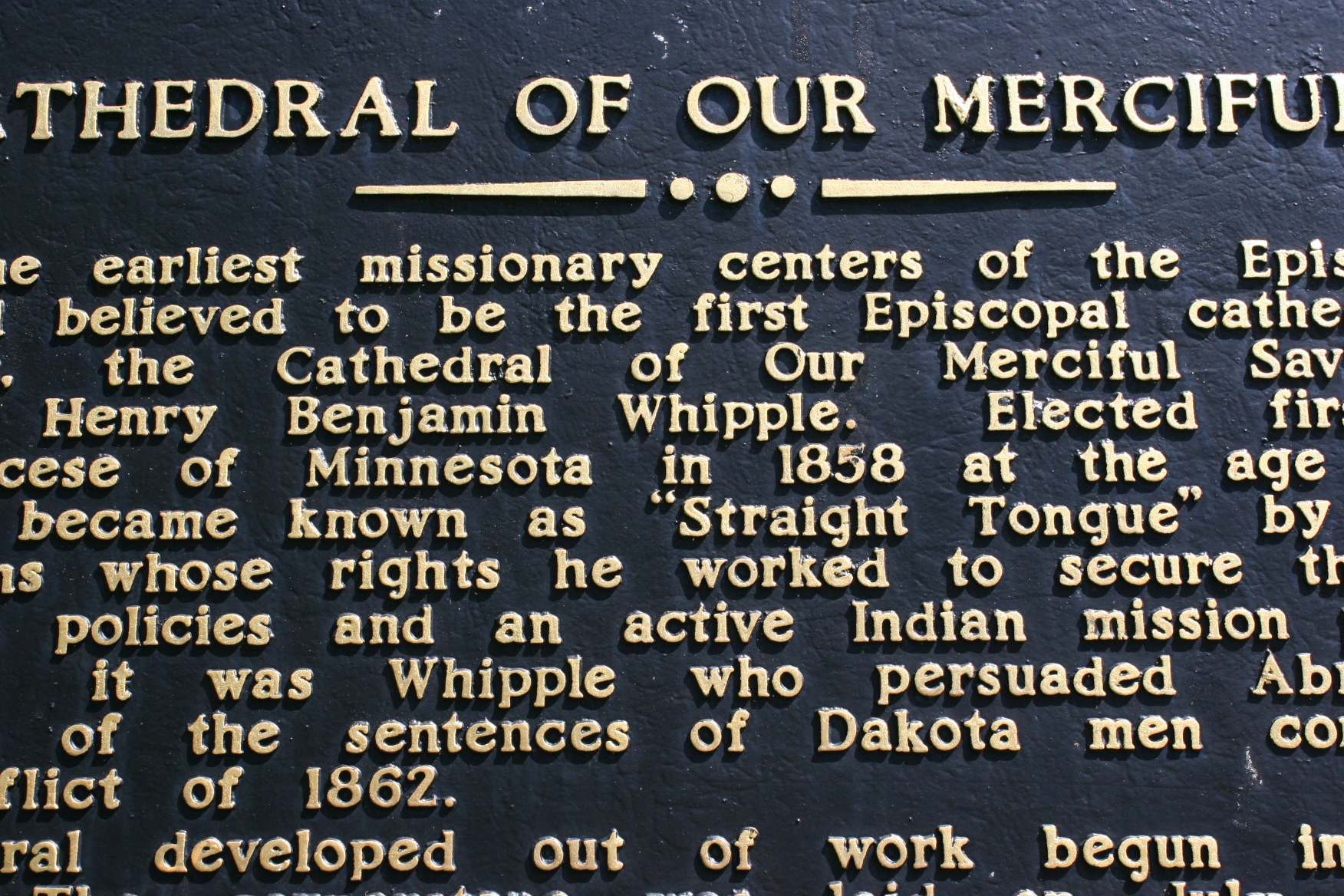
Details on a sign outside the Cathedral of our Merciful Savior in Faribault. Bishop Henry Whipple, who served here, advocated for the rights of Native Americans and had a strong friendship with them. (Minnesota Prairie Roots copyrighted file photo 2020)
Now, 160 years after that event in my ancestors’ history, I continue growing my knowledge, widening my understanding of Minnesota history and of the Indigenous people who first called this land home.
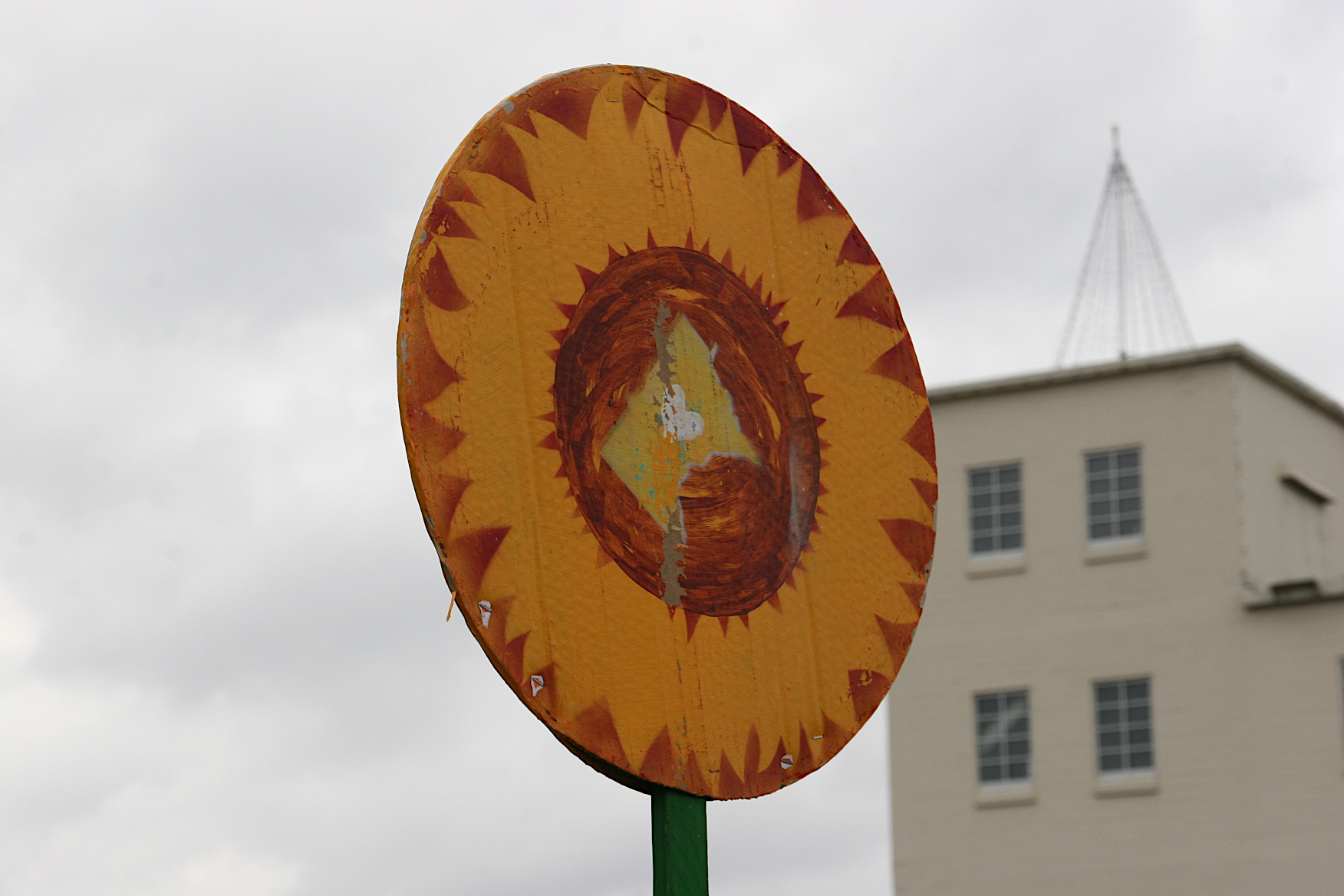
A graphic of Minnesota is painted on the back of the art installation. (Minnesota Prairie Roots copyrighted photo April 2022)
Also, I suggest you read an article on the Minnesota Public Radio website about efforts to change the Minnesota State flag. The flag depicts, among other details, a Native American in the background riding off into the sunset while a settler focuses the foreground, hands on a plow, rifle nearby. I agree that change is needed. But, as too often happens, the issue has become politically-charged.















 Minnesota Prairie Roots
Recent Comments