Minnesota Prairie Roots

Writing and photography by Audrey Kletscher Helbling

Domestic Violence Awareness Month: Remembering in Red Wing October 30, 2025

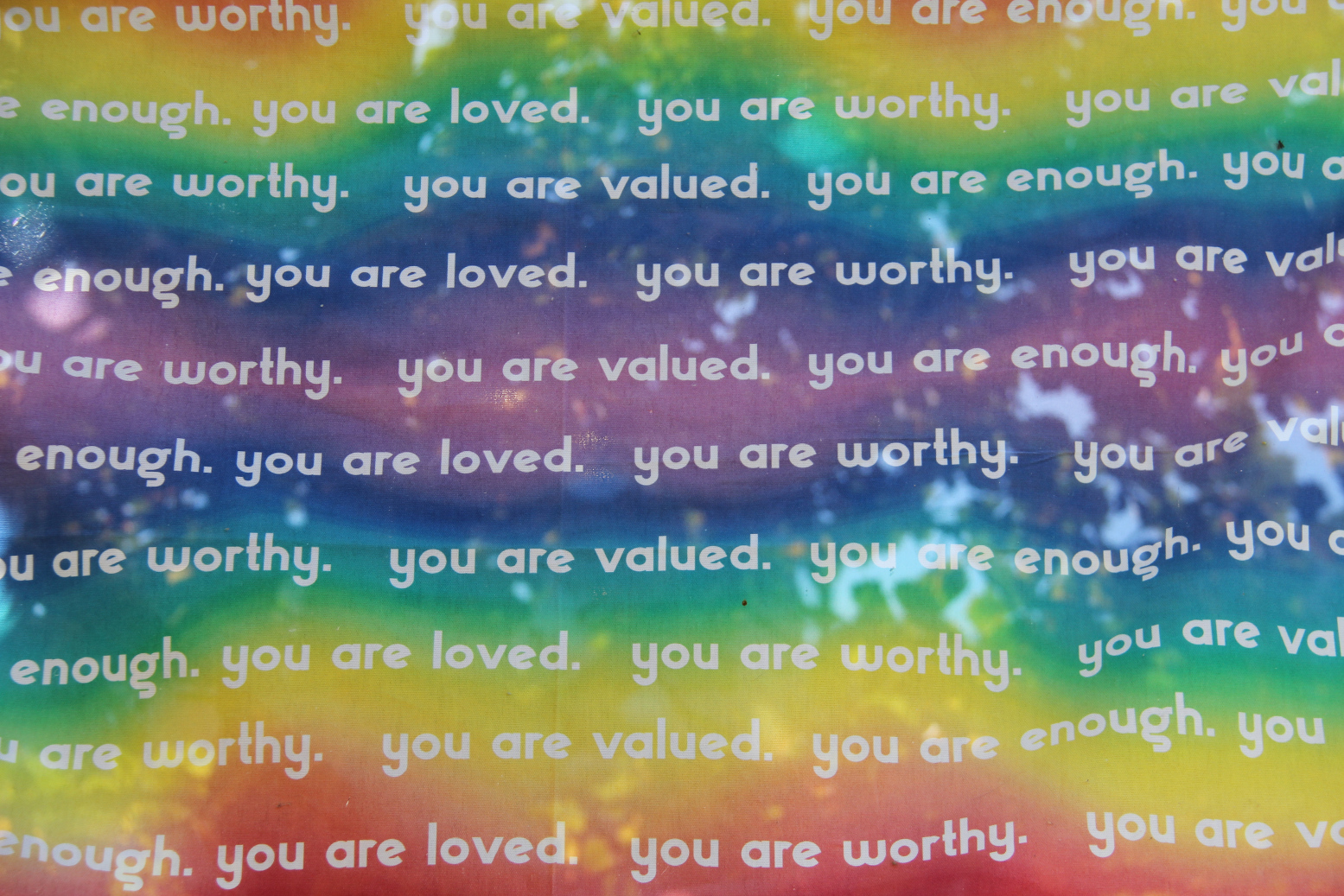
An affirming sign photographed in a storefront window in downtown Red Wing. (Minnesota Prairie Roots copyrighted photo October 2025)

NOT FAR FROM THE CHURCH, bannered in the window of a downtown Red Wing business, I spotted uplifting signage: you are valued. you are enough. you are worthy. you are loved. I always appreciate such positive public postings of care and affirmation.
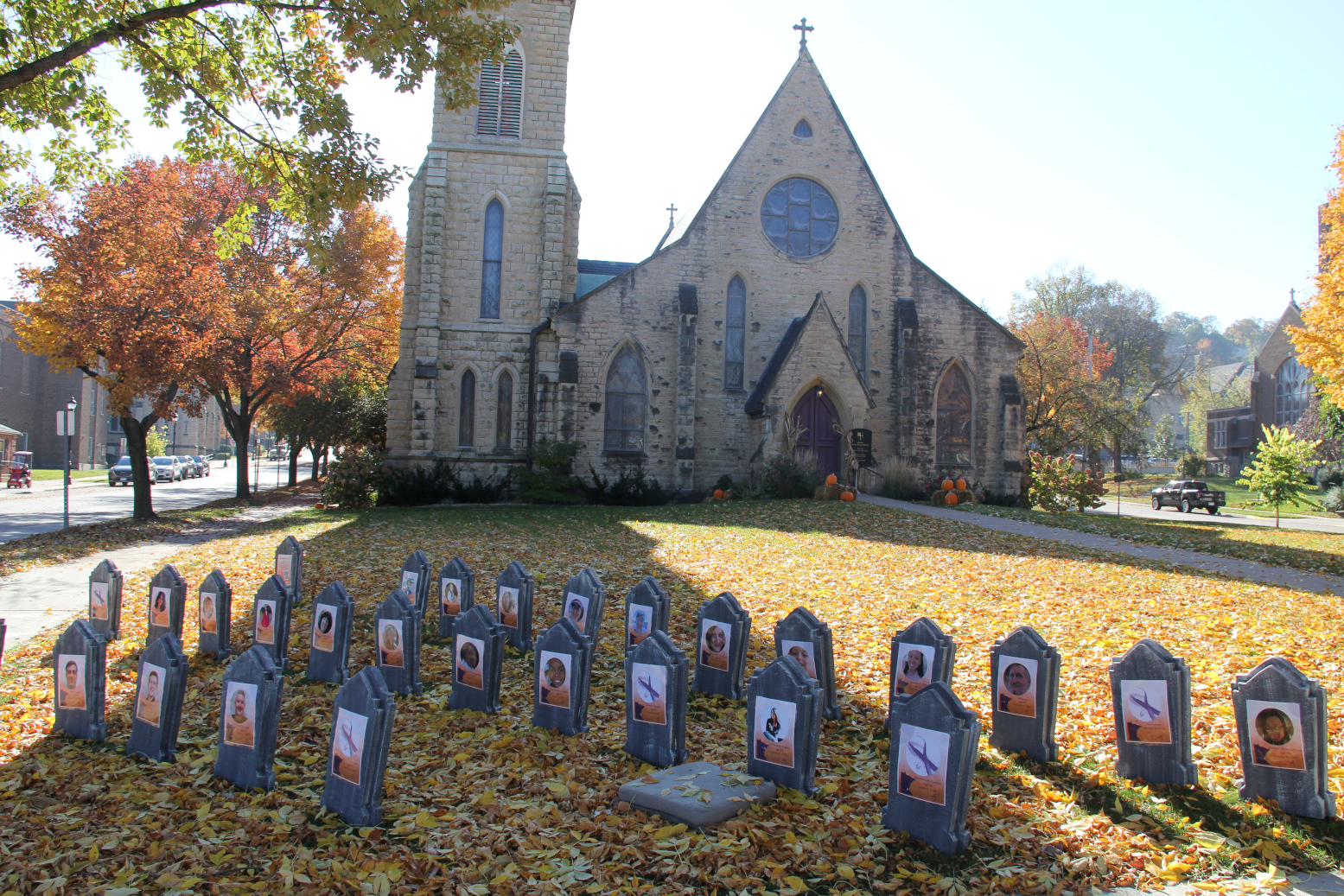
The “We Remember 2024” display outside Christ Episcopal Church, Red Wing. (Minnesota Prairie Roots copyrighted photo October 2025)

And then, just up the street across from the public library and a small park, I noticed rows of fake tombstones placed upon a corner of the Christ Episcopal Church yard. From a distance, I thought this to be part of a Halloween display. But when I got closer, I realized I was looking at something far scarier. This was a memorial to the 24 Minnesotans who died as a result of domestic violence in 2024. It also honors three others whose deaths are called “suspicious,” with many details yet unknown, but enough to be included in the Violence Free Minnesota “We Remember 2024 Report.”
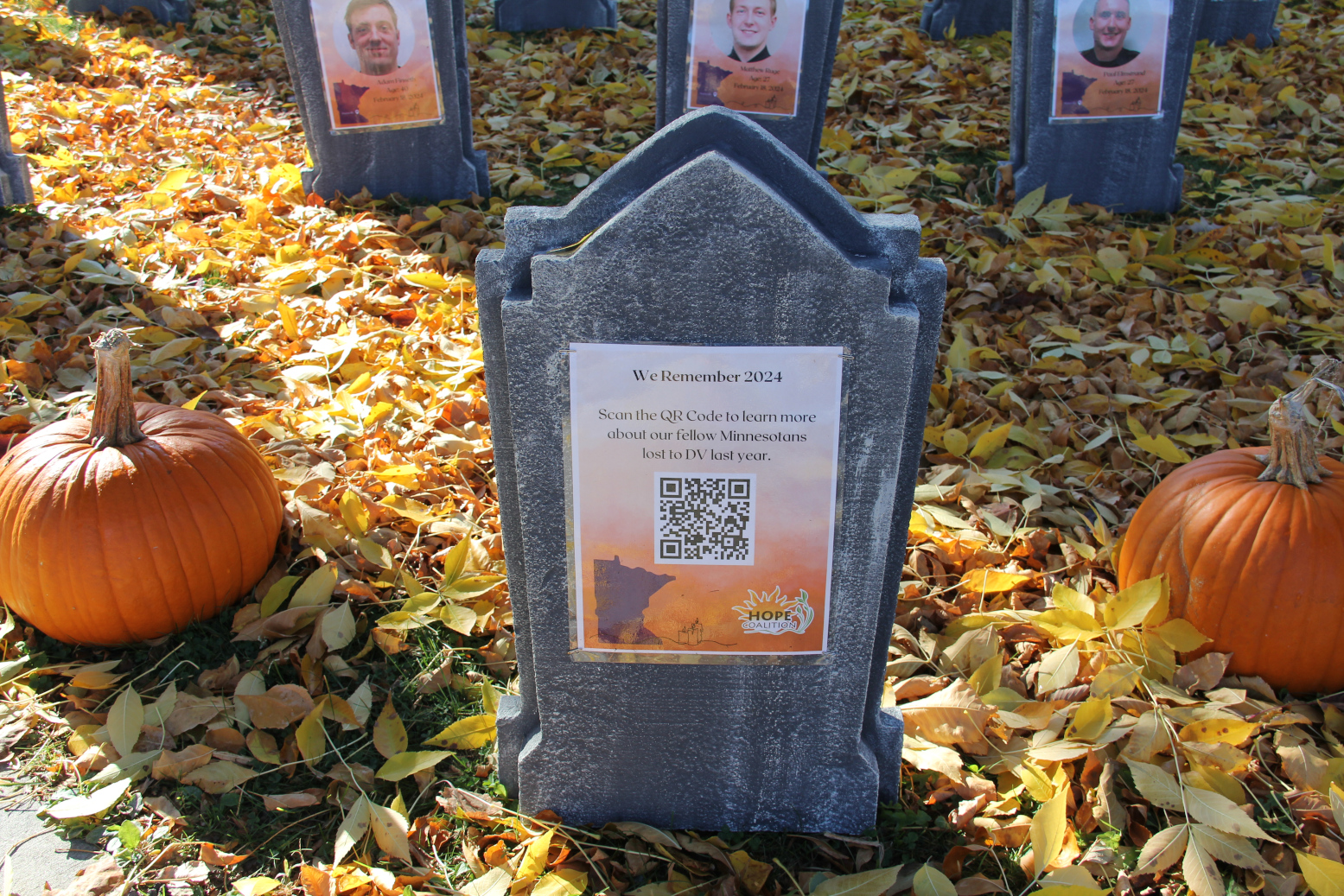
The front “tombstone” explains the project. (Minnesota Prairie Roots copyrighted photo October 2025)

It is sobering and sad to stand on a busy street corner in the heart of a beautiful Mississippi River town in southern Minnesota on a lovely October morning and ponder these lives lost. Yet, this needs to be known, to be publicly shared, especially now during National Domestic Violence Awareness Month.
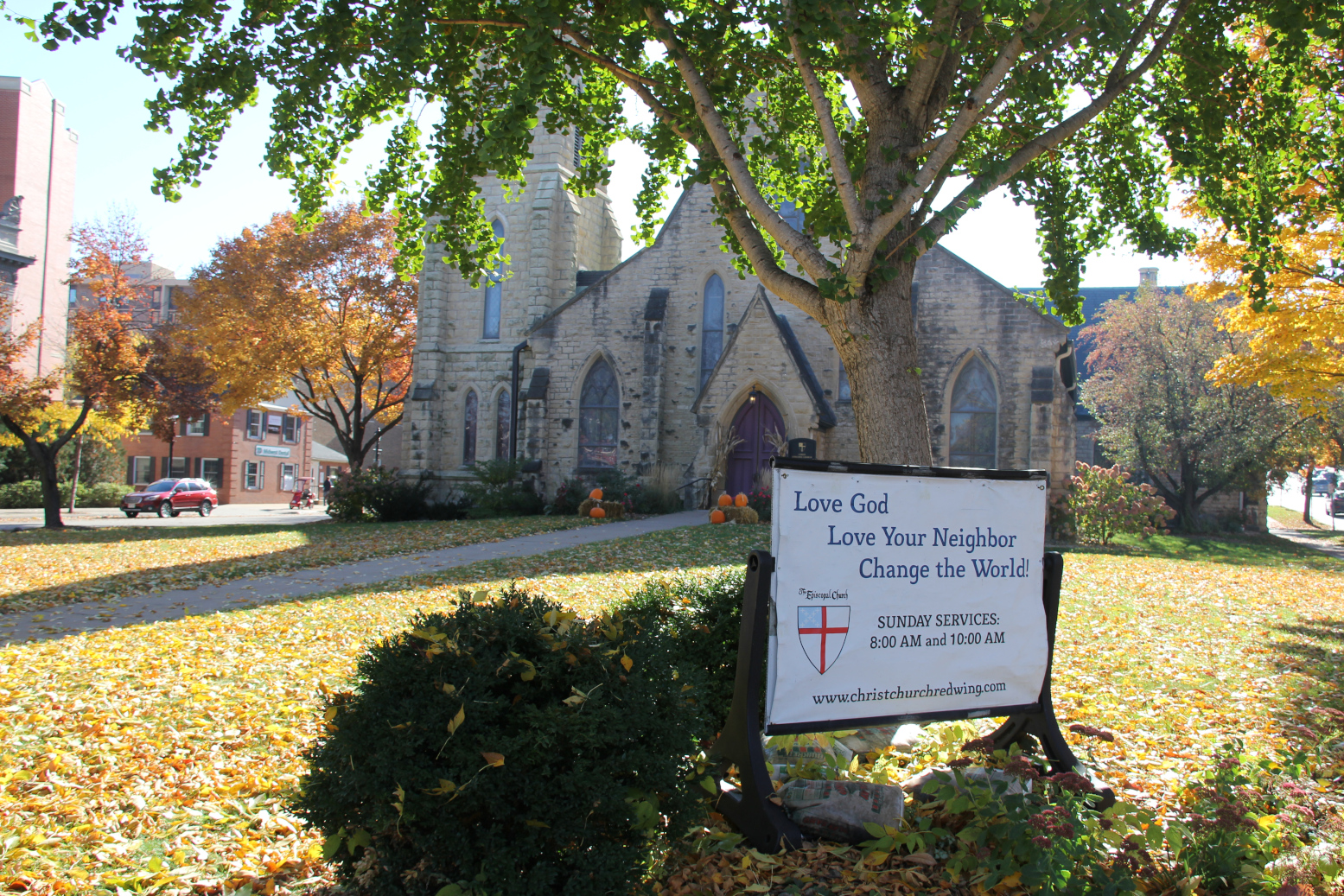
Christ Church, according to its website, actively reaches out into the community via a Coat Shed, the food shelf, a “Feeding of the 5,000” event, housing Hope & Harbor and much more. (Minnesota Prairie Roots copyrighted photo October 2025)

Hope Coalition, an advocacy and support organization for domestic abuse survivors and their families in Goodhue and Wabasha counties, placed this temporary graveyard against the backdrop of the impressive 1871 stone church with a mission of “Serving God. Serving our Community.”
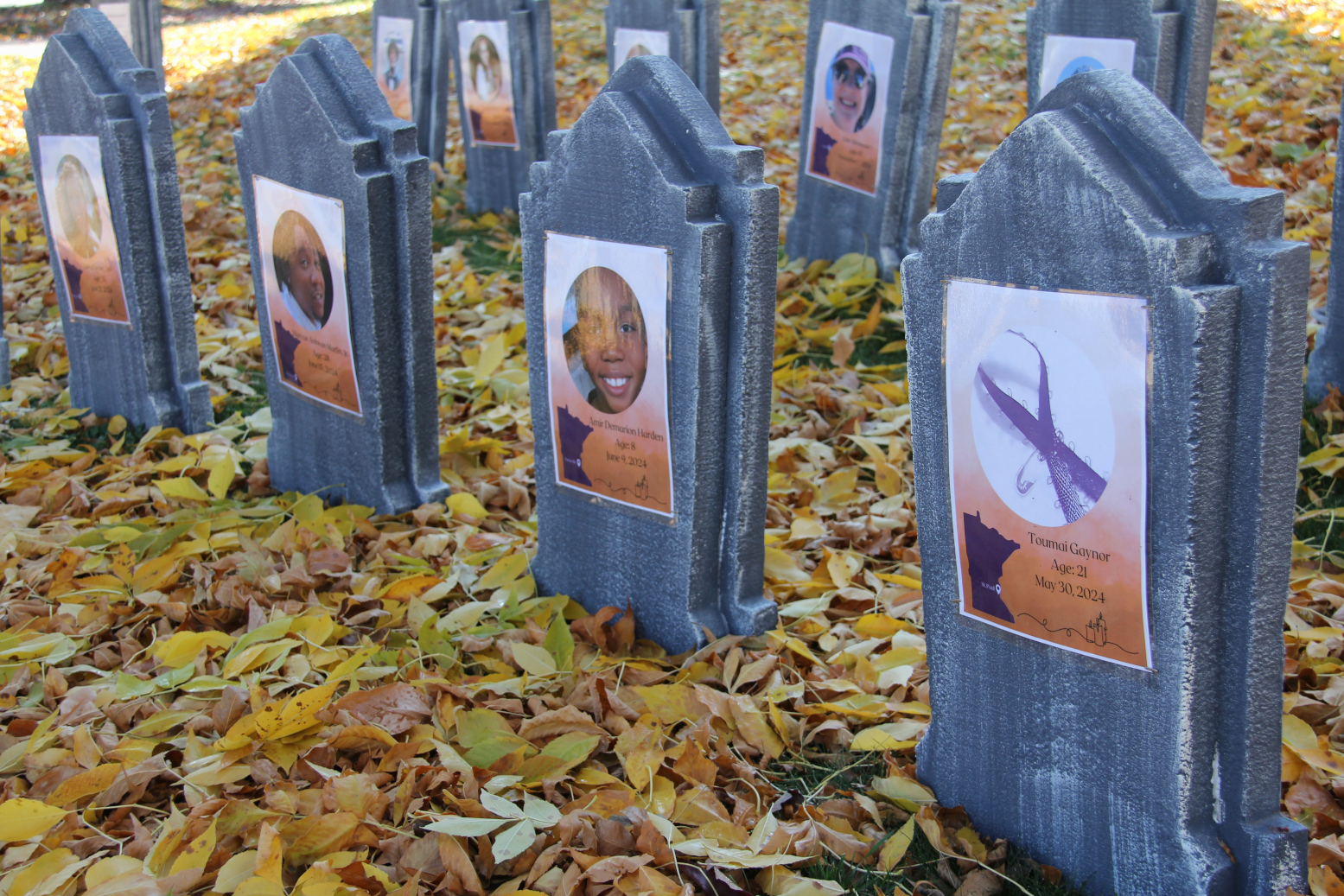
It’s heartbreaking to see the faces and then to go online and read the stories. (Minnesota Prairie Roots copyrighted photo October 2025)

As I paused, I felt the power of this public display revealed in photos, ages and dates. To place the faces of domestic violence victims upon fake tombstones personalizes the crime. You can’t look at those photos without understanding that these were individuals who were valued and loved.
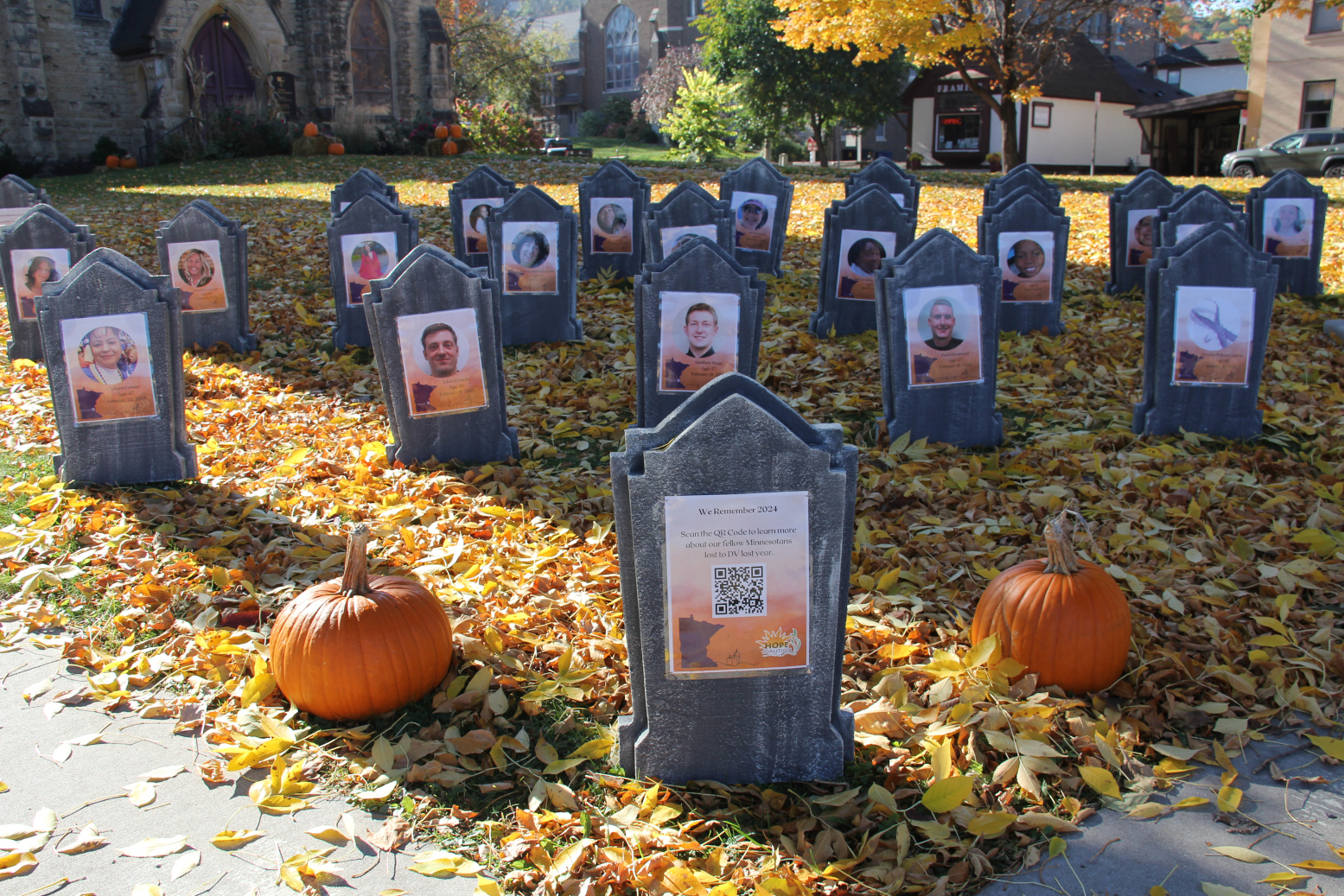
In the second row you will see the mock tombstones of the police officers and paramedic/firefighter shot in Burnsville. Matthew Ruge, center, lived in Northfield in my county of Rice. (Minnesota Prairie Roots copyrighted photo October 2025)

Center front were the images of three men, all killed while responding to a 911 call regarding an alleged sexual assault in Burnsville on February 18, 2024. Shot to death were Burnsville police officers Paul Elmstrand and Matthew Ruge, both 27, and paramedic/firefighter Adam Finseth, 40. It was a high profile case as were the murders of four in Duluth on November 7, 2024. Kathryn “Kat” Ramsland, 45, and her son, Oliver Nephew, 7, and Erin Abramson, 47, and her son, Jacob Nephew, 15, were shot and killed in their homes in a case of domestic violence.
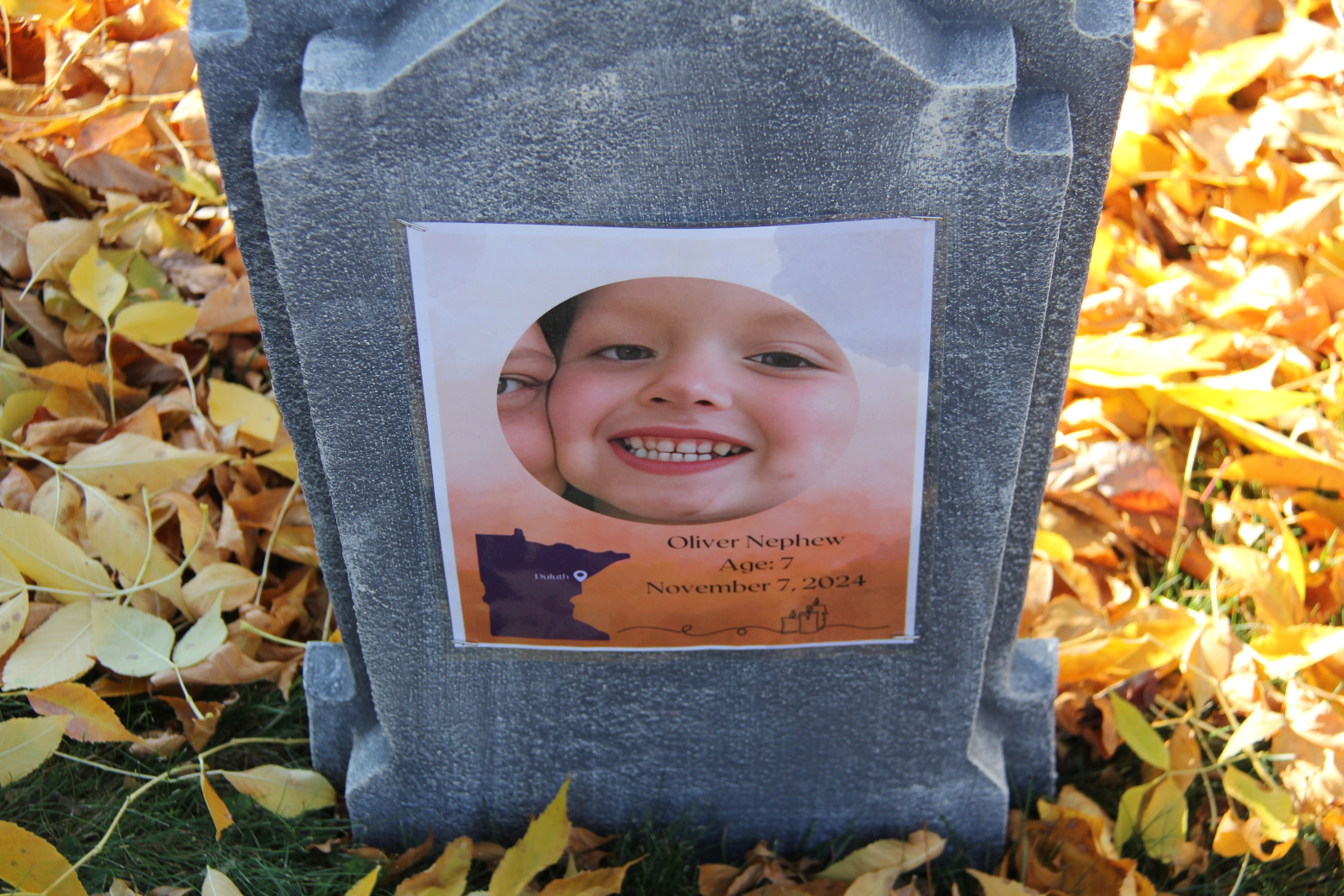
Oliver Nephew was only seven when he was murdered. (Minnesota Prairie Roots copyrighted photo October 2025)

Those who died due to domestic violence in Minnesota in 2024 come from all areas of the state. Rural. Suburban. Urban. This crime knows no geographical or economic boundaries, no age limits, no educational or job status… Each life lost means someone, some family, is grieving.

That includes in Red Wing, the very city where I stood in the churchyard viewing the photos on tombstones. Andrea “Drea” Broyld, 41, who worked at a local coffee shop, was shot and killed inside her Red Wing home on November 17, 2024. The suspected shooter has been charged with second-degree murder. As the anniversary of Andrea’s death approaches, I expect a wave of grief will sweep across the community as people remember the nice young woman who wrote encouraging notes on coffee cups.
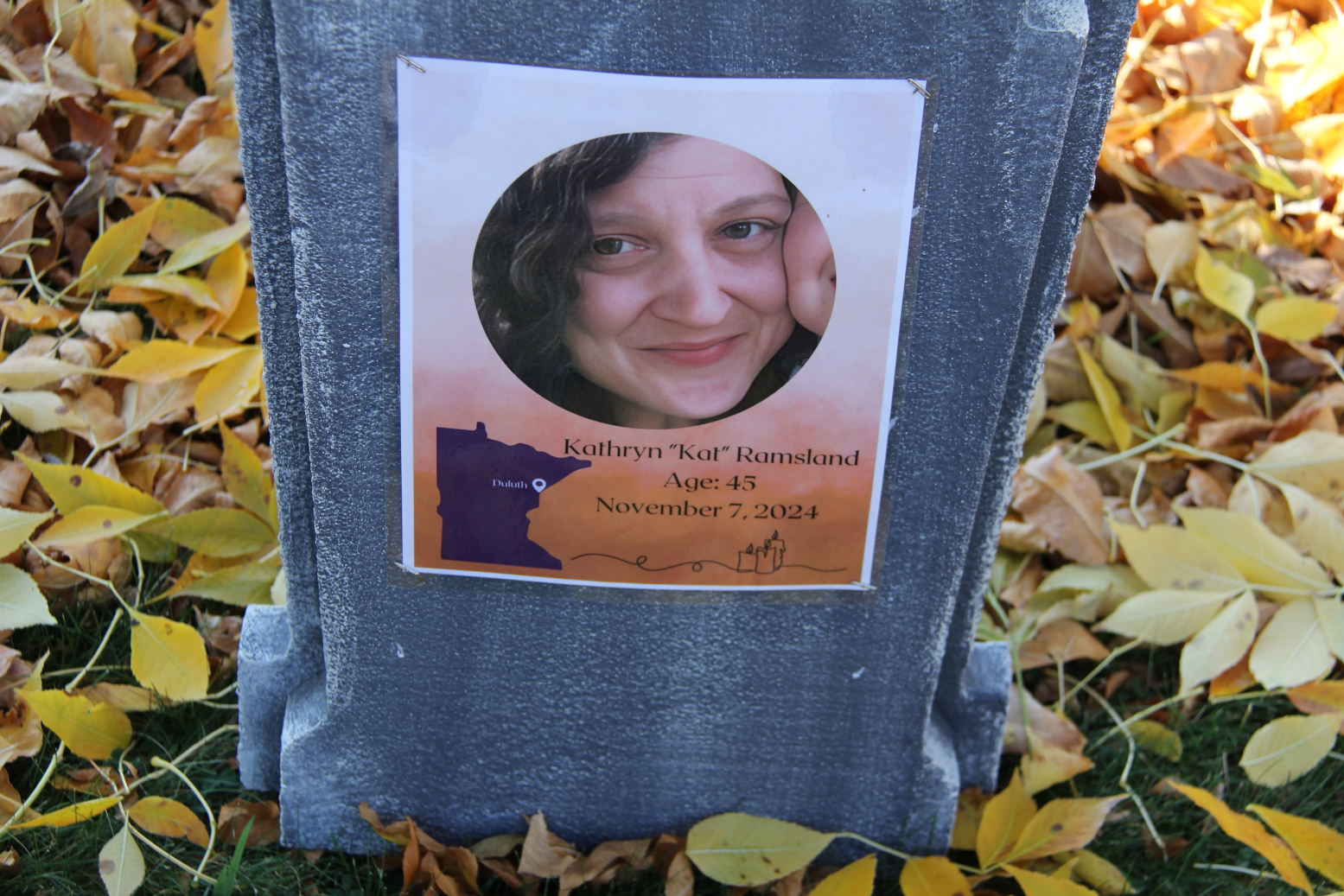
Kathryn Ramsland was shot and killed along with her son, Oliver Nephew. (Minnesota Prairie Roots copyrighted photo October 2025)

We should all encourage one another, in life in general, but especially in cases of domestic abuse and violence where listening and support are essential. If something doesn’t look or feel or seem right, it likely isn’t. Trust your gut. That’s a starting point. So is awareness. And seeking professional help.
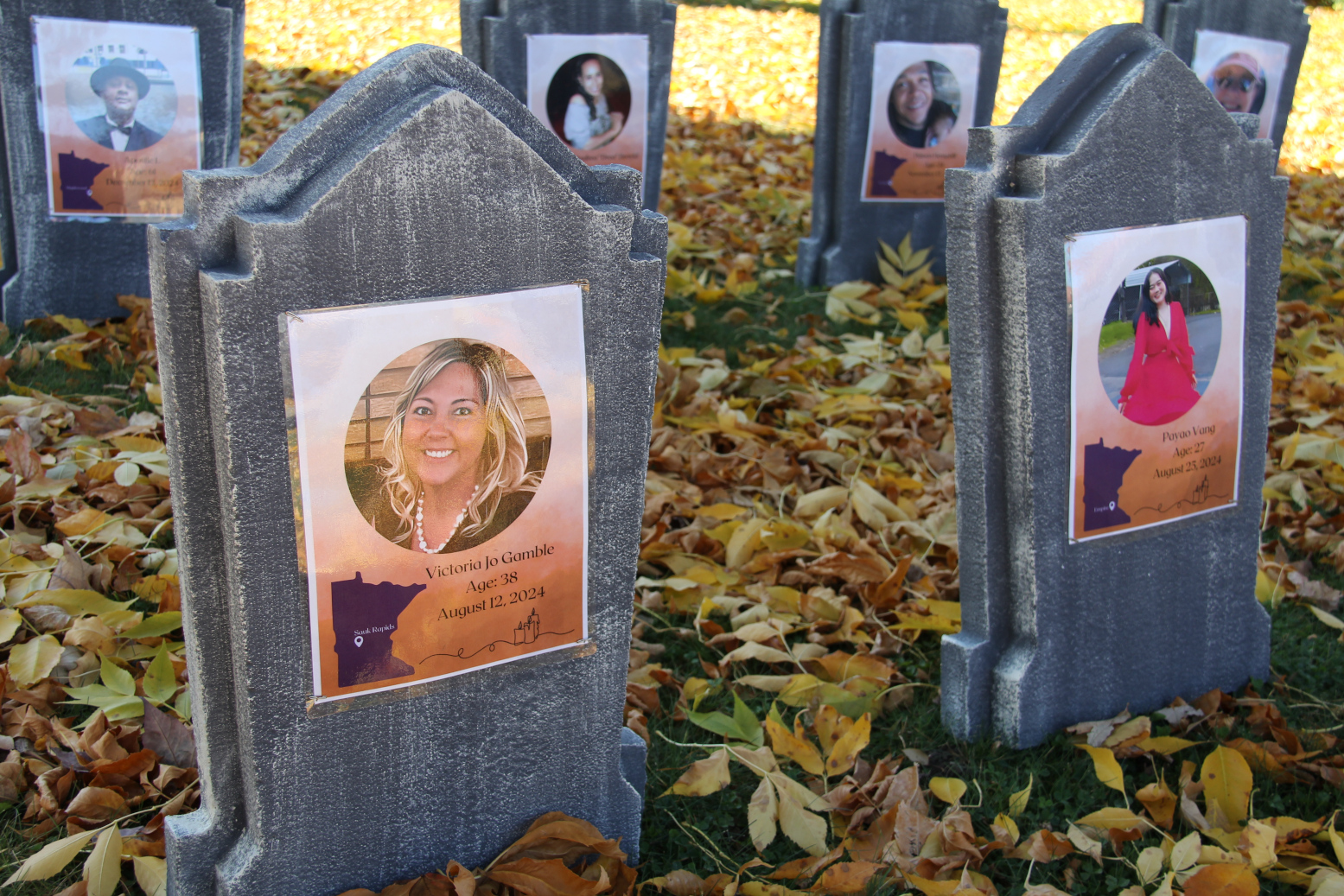
Two more victims, Victoria Jo Gamble, 38, strangled in Sauk Rapids, and Payao Vang, 27, shot and killed in Empire. (Minnesota Prairie Roots copyrighted photo October 2025)

While I never expected to happen upon a “We Remember 2024” display in a churchyard, I’m grateful I did. Photographing this gives me the opportunity to raise awareness about domestic abuse and violence. And it gives me the opportunity, too, to repeat these words: you are valued. you are enough. you are worthy. you are loved.

FYI: Click here to reach Violence Free Minnesota and the “We Remember 2024” report. This features the photos, stories and other information about those killed in acts of domestic violence last year. To learn more about Hope Coalition, click here. And to learn about Christ Episcopal Church in Red Wing and some of the great work they do in the community, click here.

If you, or someone you know, is being abused (whether physically, psychologically, mentally, financially or otherwise), please seek help. Call 911 if you feel threatened and/or your life is in danger.

© Copyright 2025 Audrey Kletscher Helbling


Forgiveness on December 26 December 24, 2024

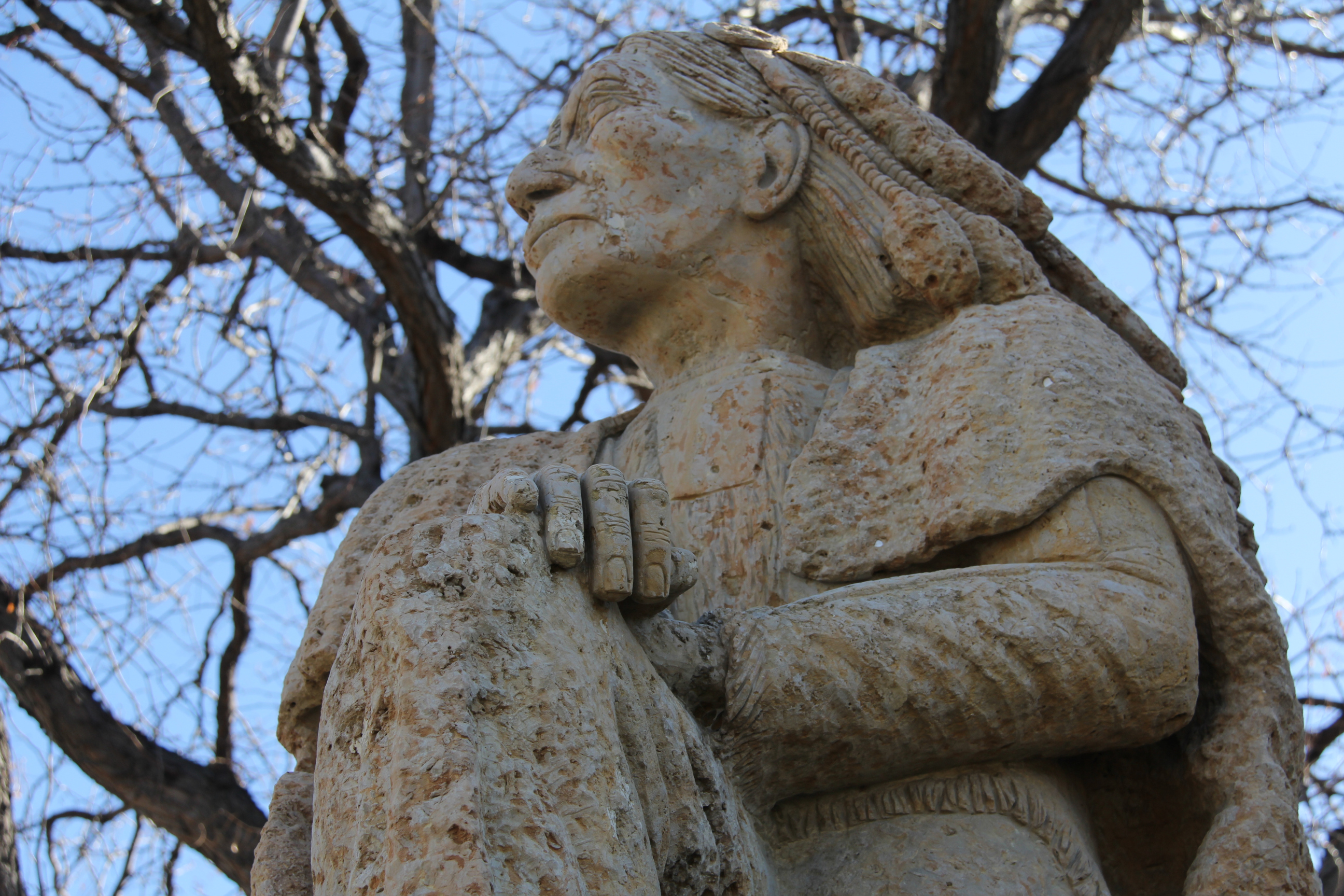
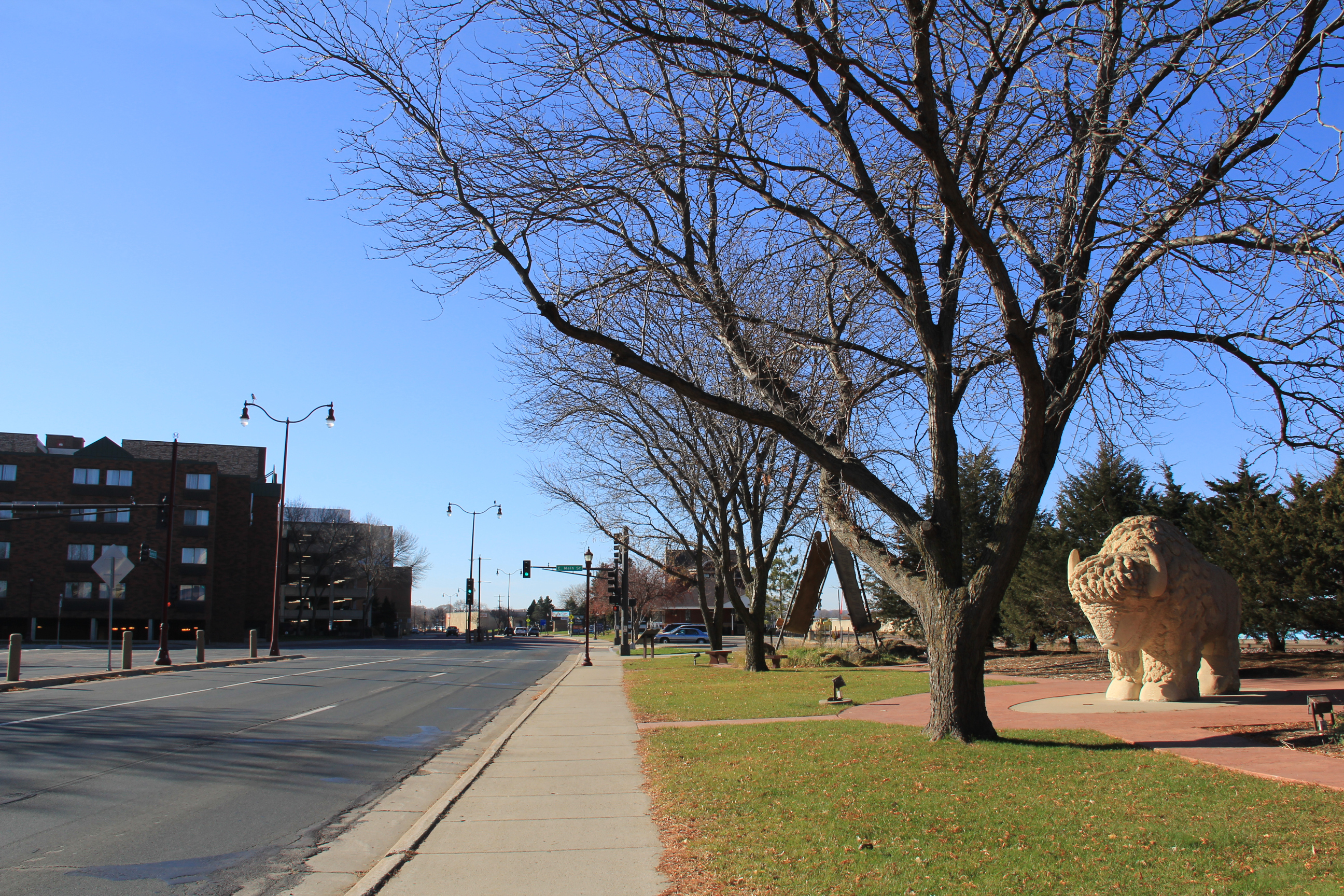
This limestone sculpture by Thomas Miller depicts a Dakota warrior. It sits across from Reconciliation Park in Mankato at the Blue Earth County Library. (Minnesota Prairie Roots copyrighted file photo November 2023)

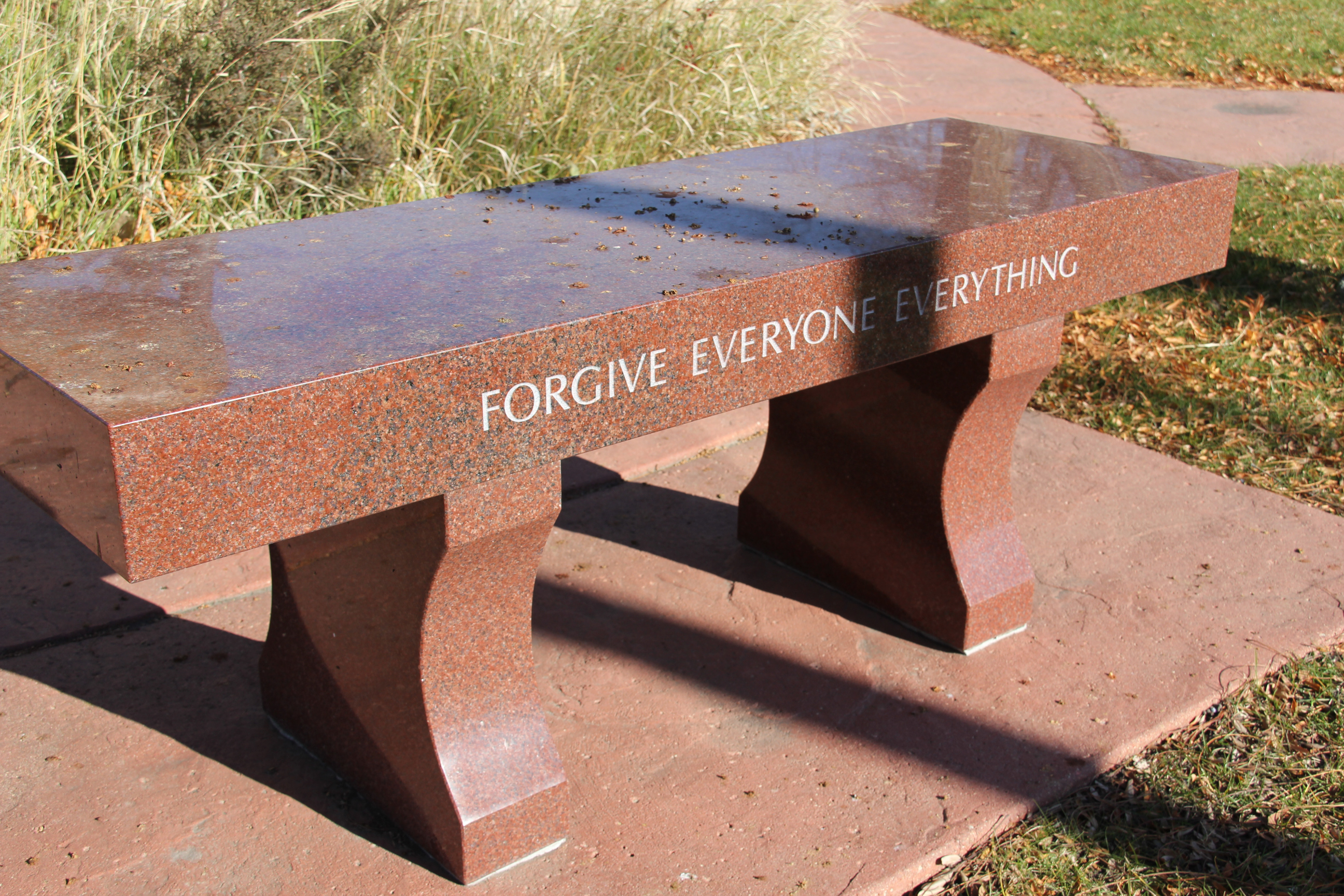
FORGIVE EVERYONE EVERYTHING.

Powerful words on a bench at the Dakota 38 Memorial in Reconciliation Park. (Minnesota Prairie Roots copyrighted file photo November 2023)

Those uppercase engraved block words, white against red on a stone bench at the Dakota 38 Memorial in the heart of downtown Mankato at Reconciliation Park, hold the strength of a people who really have no reason to forgive. But they choose to do so. And in forgiveness comes healing.

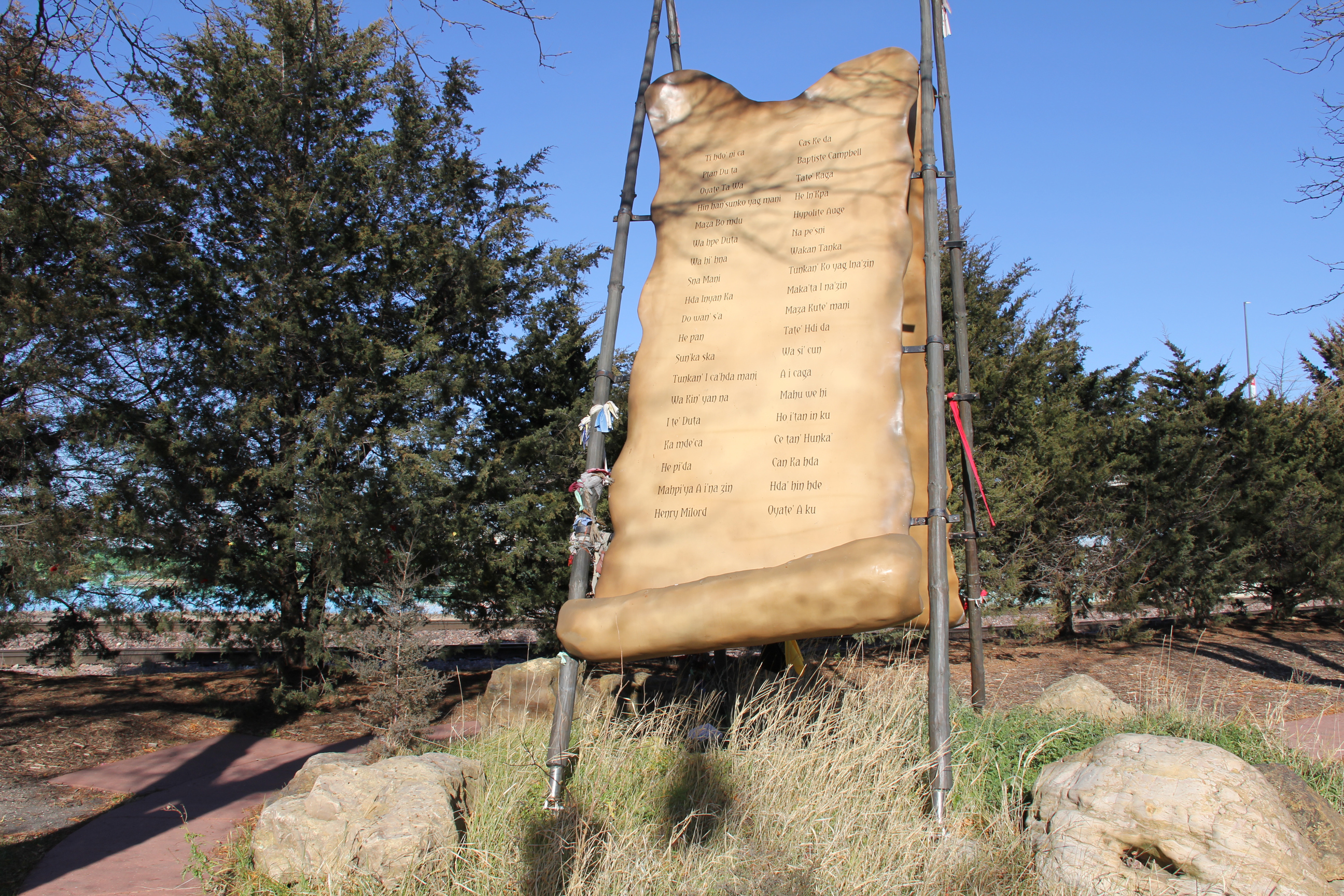
The names of the 38 Dakota men hung in Mankato are listed on the Dakota 38 Memorial. (Minnesota Prairie Roots copyrighted file photo November 2023)

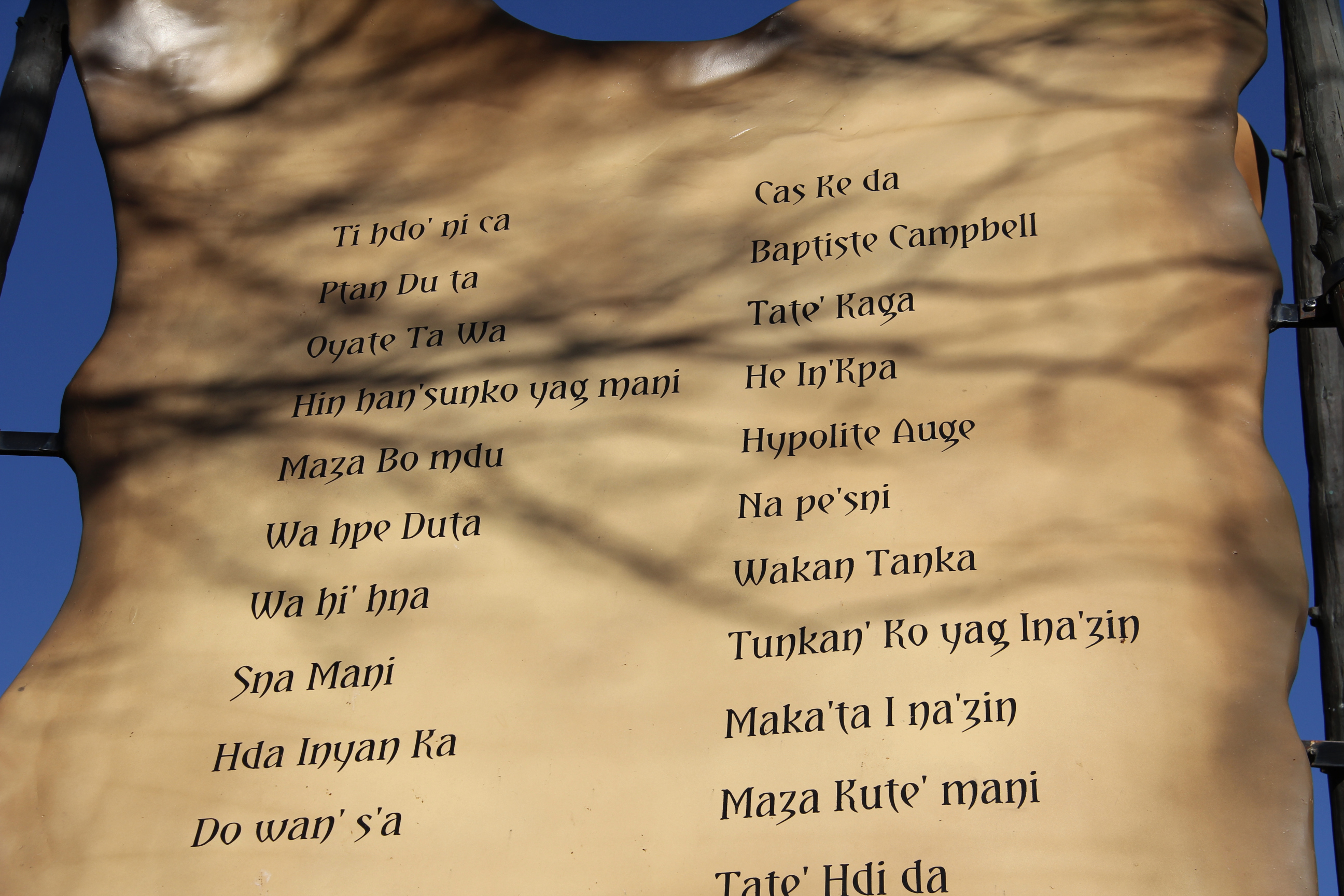
December 26 marks the date in 1862 when 38 Dakota men were hung near this site along the Minnesota River in America’s largest mass execution. Originally, 303 Dakota were sentenced to death following “trials” (the quotes are intentional) after the U.S.-Dakota War of 1862. President Abraham Lincoln reviewed the list of those sentenced to death, approving the hanging of thirty-eight. Thousands gathered to watch the execution on the day after Christmas 162 years ago.

Up close, names of the Dakota who were hung. (Minnesota Prairie Roots copyrighted file photo November 2023)

This history I learned early on, but only from a White perspective and only because of my roots in southwestern Minnesota, at the epicenter of the war. I expect many Americans, including many Minnesotans, to this day know nothing of this conflict that killed hundreds of Whites and Dakota. Internment and exile of the Dakota followed. Native Peoples suffered because of the atrocities before and after the war.

A massive limestone sculpture of a white buffalo in Reconciliation Park represents the spiritual survival of the Dakota. (Minnesota Prairie Roots copyrighted file photo November 2023)

This is history I’d encourage everyone to study. And not just from a one-sided perspective. I won’t pretend that I am fully-informed. I’m not. I do, though, have a much better understanding than I did growing up. I’ve read, listened, learned. I know of stolen land, broken treaties and promises. Starvation. Injustices. Demeaning words like those attributed to a trader who told starving Dakota to “eat grass.” Andrew Myrick was later reportedly found dead, his mouth stuffed with grass.

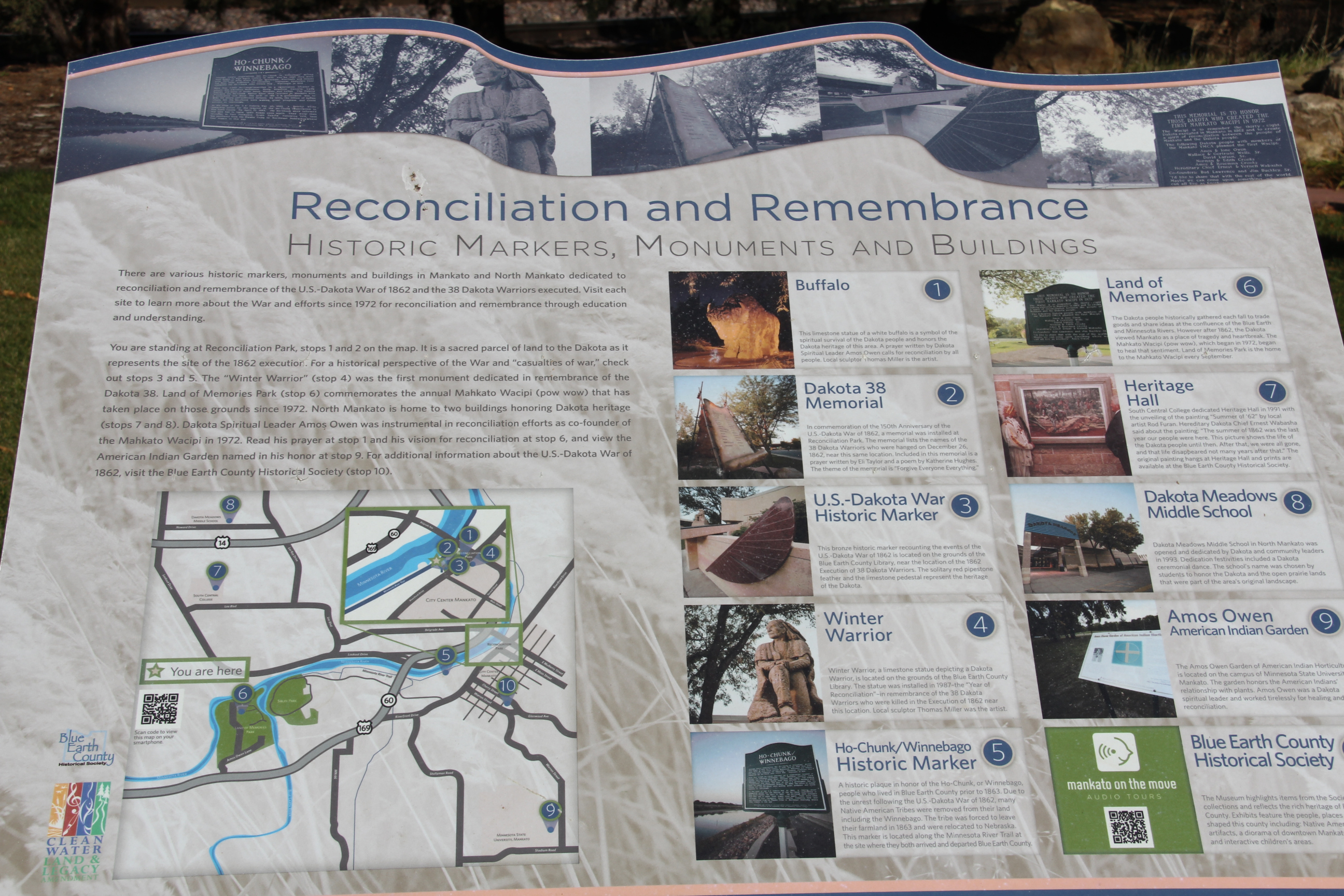
A sign in Reconciliation Park directs visitors to the many sites around Mankato focused on reconciliation and remembrance. (Minnesota Prairie Roots copyrighted file photo November 2023)

But back to those three words on that stone bench in Mankato: FORGIVE EVERYONE EVERYTHING. The Dakota truly have no reason to forgive. But they choose to do so. I’ve learned that forgiveness is part of Dakota culture and beliefs.

An overview of the location of Reconciliation Park along Riverfront Drive in Mankato, along the Minnesota River and across from the public library. (Minnesota Prairie Roots copyrighted file photo November 2023)

In the month of December, the attitude of forgiveness extends beyond words in stone to an annual horseback ride honoring the 38+2 (two more Dakota were sentenced to death two years later). This year, two rides—The Makatoh Reconciliation & Healing Horse Ride and The Dakota Exile Ride, the first originating in South Dakota, the other in Nebraska—will end on December 26 with gatherings at Reconciliation Park and the Blue Earth County Library, located across from each other.

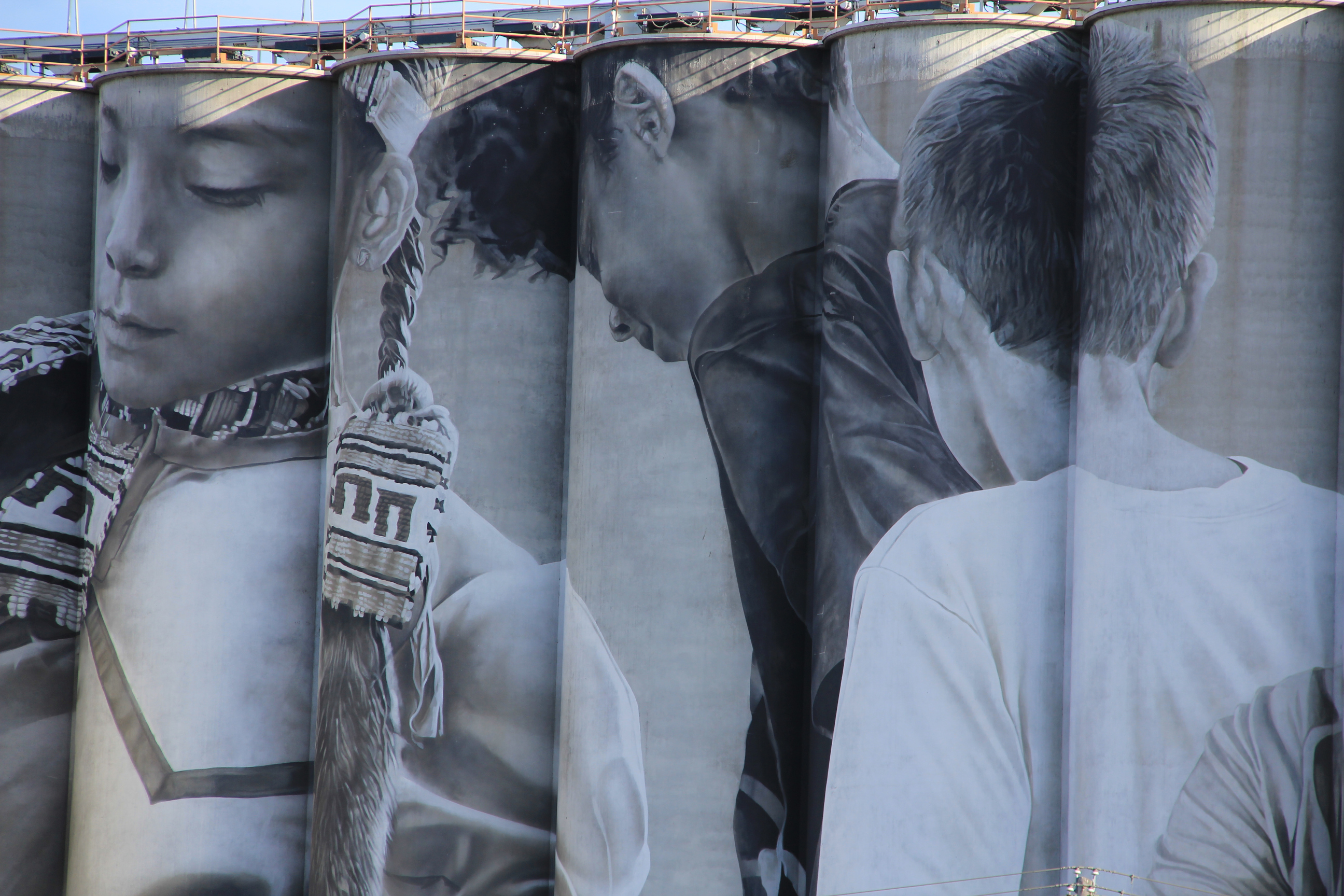
Just down the street from Reconciliation Park, murals on the Ardent Mills grain silos celebrate the diversity of Mankato, including that of the Dakota. (Minnesota Prairie Roots copyrighted file photo November 2023)

These rides focus on educating, remembering, honoring, healing and forgiving. Five powerful verbs when connected with the U.S.-Dakota War of 1862.

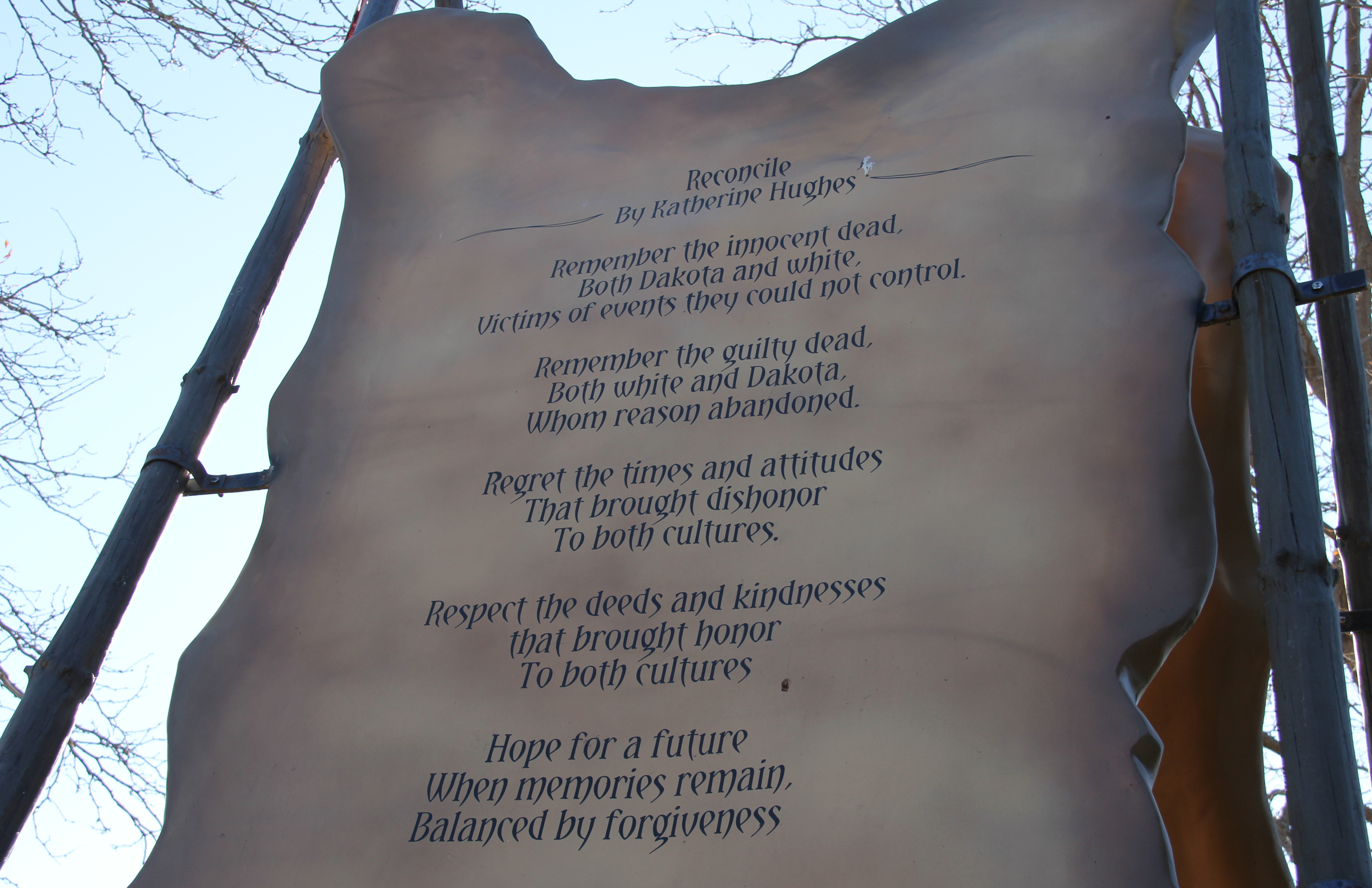
Katherine Hughes’ poem ends with the word “forgiveness.” (Minnesota Prairie Roots copyrighted file photo November 2023)

The poem “Reconcile,” written by Katherine Hughes and posted in Reconciliation Park, closes with this powerful verse: Hope for a future/When memories remain/Balanced by forgiveness.

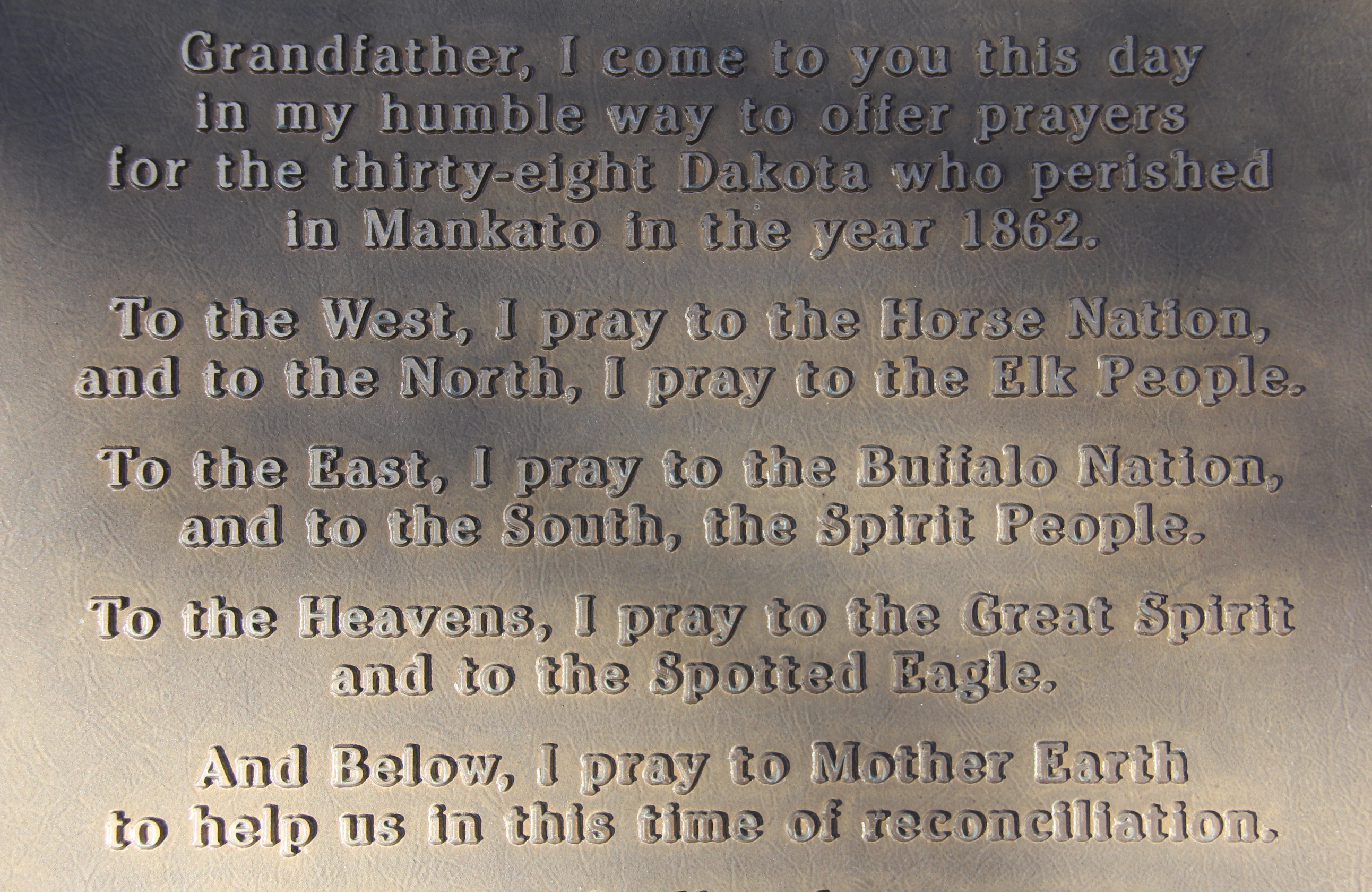
A Dakota prayer in the park ends with the word “reconciliation.” (Minnesota Prairie Roots copyrighted file photo November 2023)

FORGIVE EVERYONE EVERYTHING.

#

FYI: Here’s the schedule for the December 26 events. A community gathering is set for 9 am-10 am at Reconciliation Park and the library. Horseback riders arrive at 10 a.m. A ceremony in the park takes place from 10 am-11:30 am. From 11:30 am-1 pm, a healing circle will happen at the library with discussion surrounding the events of December 26, 1862, covering the past, present and future. A community meal for the horseback riders, who rode hundreds of miles to Mankato, follows.

© Copyright 2024 Audrey Kletscher Helbling


Light a candle in honor of the little ones October 15, 2023

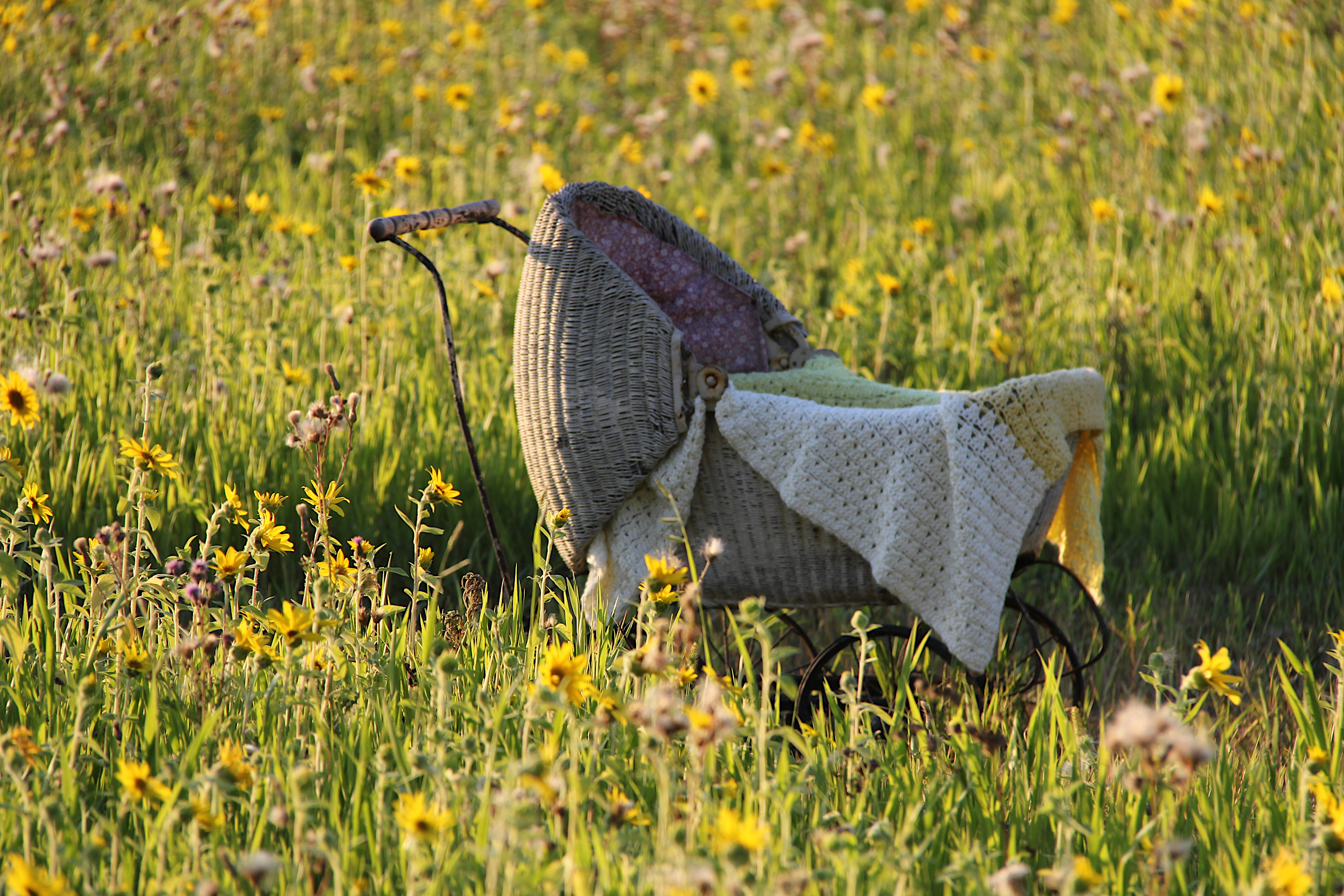
An empty buggy parked in a field of sunflowers was part of the IRIS Sunflower Garden planted in Faribault for the first time this summer. It offered a quiet place to contemplate, to grieve, to honor. (Minnesota Prairie Roots copyrighted file photo July 2023)

TO LOSE A CHILD, whether in utero, to stillbirth, to SIDS or some other disease, illness or tragedy is to experience profound grief. It is unfathomable, yet reality for too many. It is heartbreaking and gut-wrenching and painful beyond words.

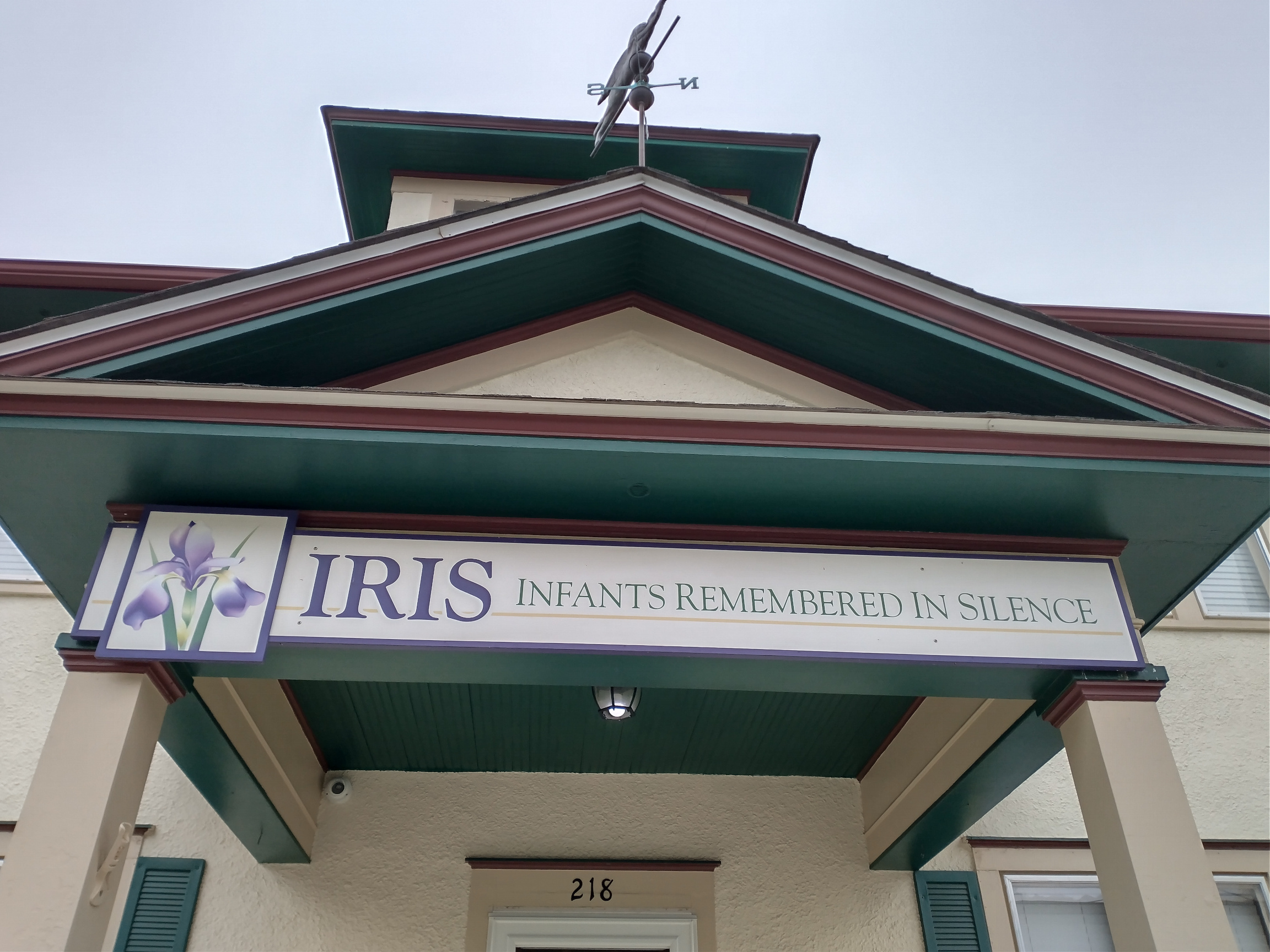
The IRIS house is located in central Faribault near downtown and near the Rice County courthouse and government services building. (Minnesota Prairie Roots copyrighted photo October 2023)

This evening at 7 pm, Faribault-based Infants Remembered in Silence (IRIS) hosts a Wave a Light Gathering to honor the memories of those children lost too soon, whether pre-birth, in infancy or in childhood. October 15 is Pregnancy and Infant Loss Remembrance Day. People around the world are invited to light a candle honoring those children in a collective show of love, support and care.

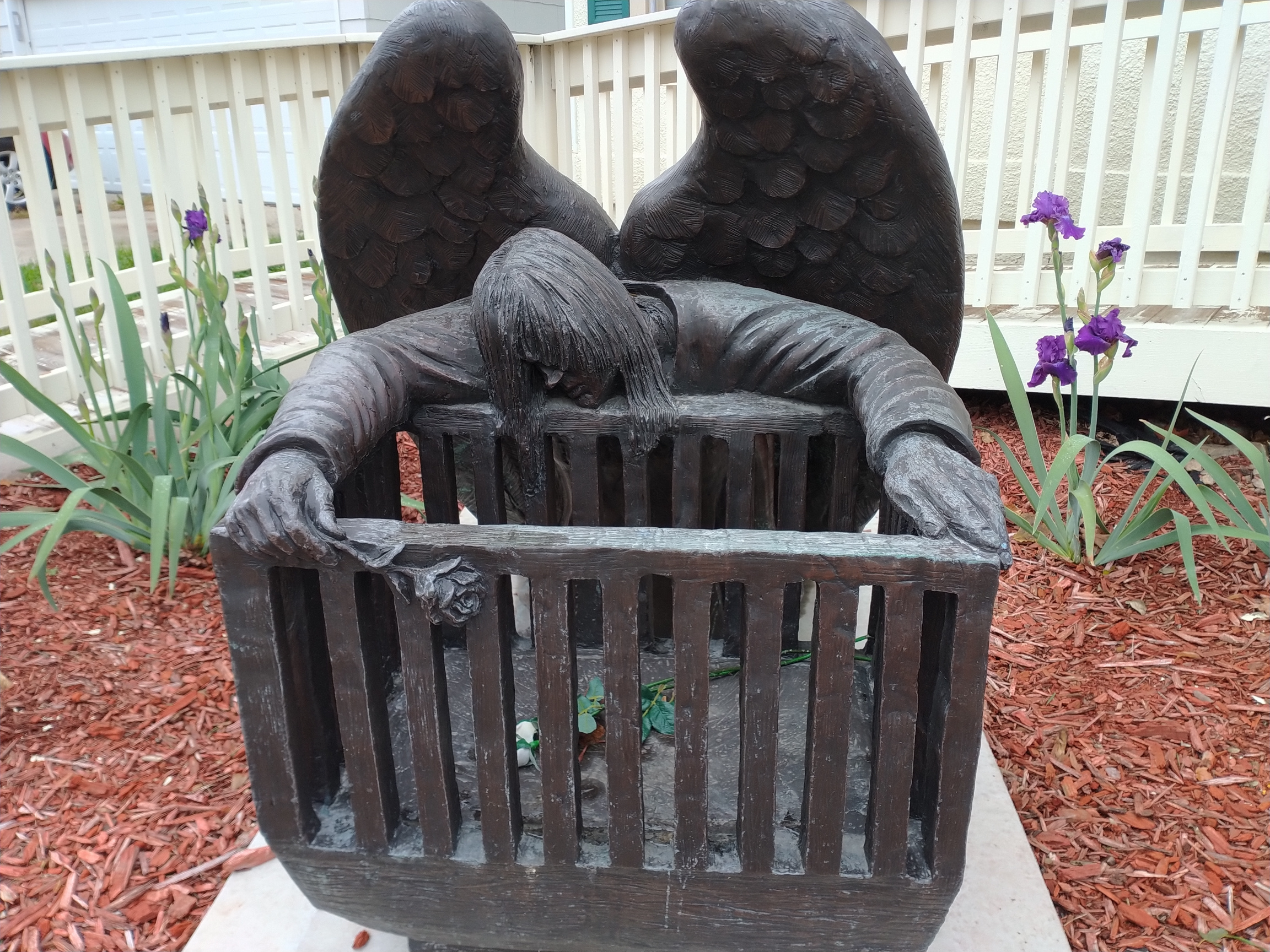
This moving sculpture defines the front yard flower garden of IRIS, where iris are currently blooming. Hearts will be placed inside the cradle this evening. (Minnesota Prairie Roots copyrighted photo October 2023)

Locally that will happen at the IRIS office, 218 Third Avenue. The Faribault event includes the sharing of poems, songs and readings plus the placing of hearts in the empty cradle of the on-site bronze statue, “I Knew You In The Womb.” Attendees should arrive with candles and with hearts (with the names of lost little ones written thereon). Those hearts will be added to IRIS’ permanent collection.

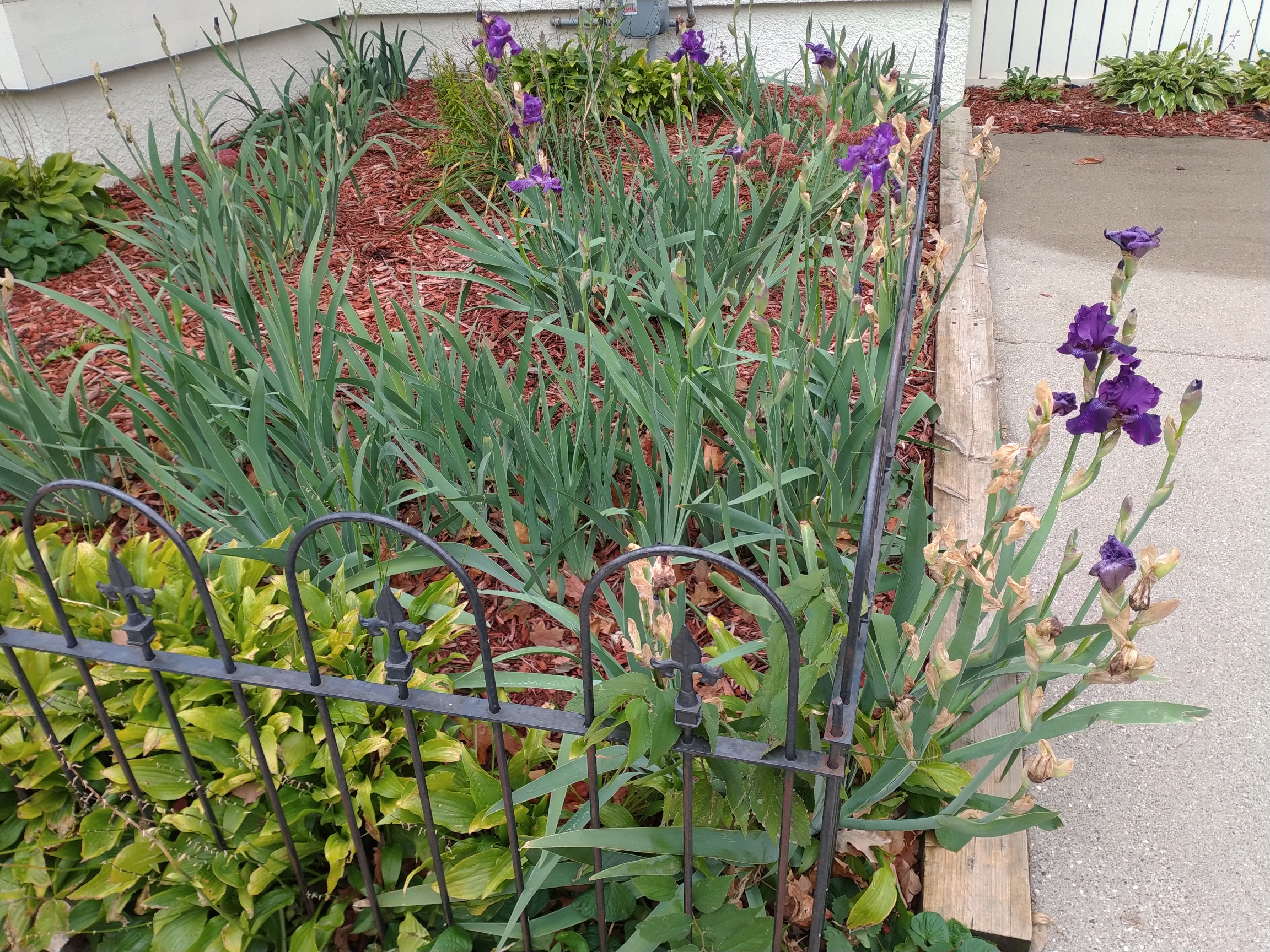
More iris bloom in a side garden of IRIS. (Minnesota Prairie Roots copyrighted photo October 2023)

IRIS, a non-profit which started in my community, has grown to a world-wide outreach. It supports, advocates, educates, serves, comforts and much more and is truly an invaluable resource for anyone grieving the loss of an infant, a child.

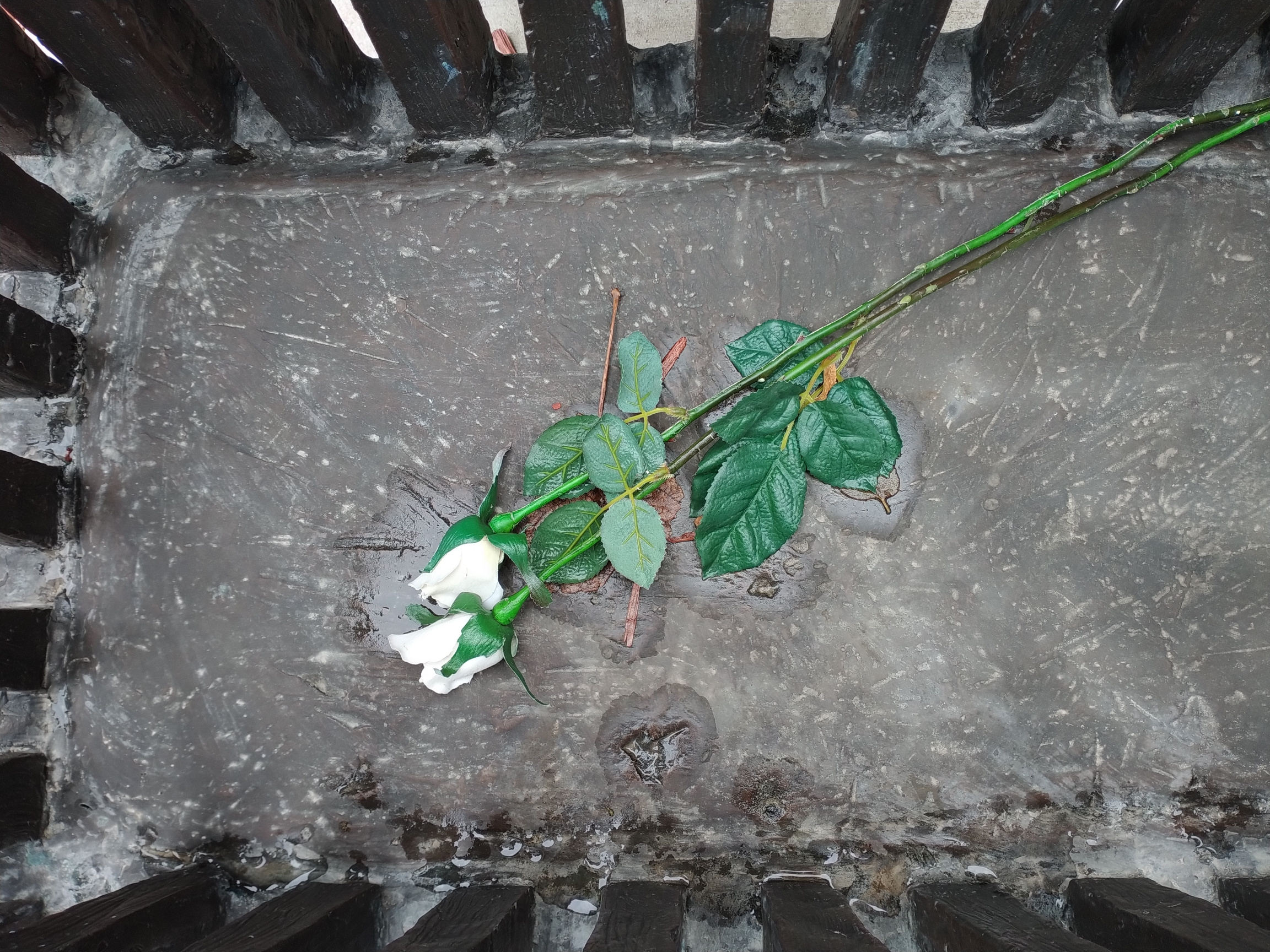
Sunday morning two roses lay inside the otherwise empty cradle of the IRIS sculpture. (Minnesota Prairie Roots copyrighted photo October 2023)

So this evening, light a candle. And if you see blue and pink lights lighting a public structure like the 35W bridge, the Lowry Avenue Bridge or the IDS Center, all in Minneapolis, think of the sweet babies, the darling children, the dear little ones lost, and, oh, so loved.

FYI: For more information about IRIS, click here.

To read my earlier post about the IRIS Sunflower Garden, click here.

© Copyright 2023 Audrey Kletscher Helbling


Connecting with nature at Carleton College August 19, 2019

Filed under: Uncategorized — Audrey Kletscher Helbling @ 5:00 AM
Tags: , , , , , , , , ,


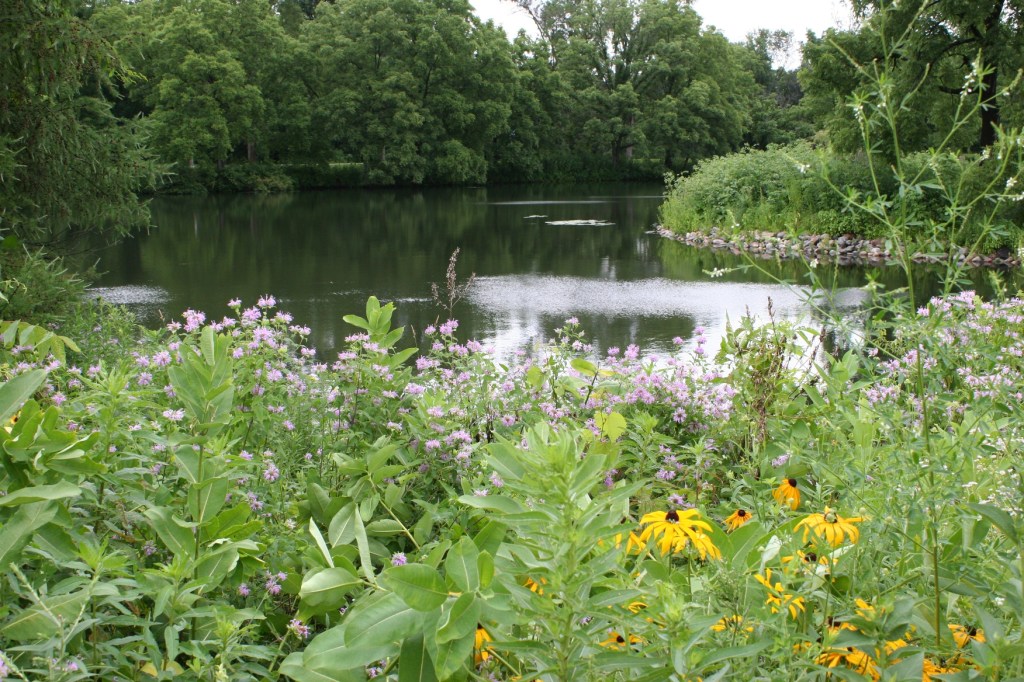
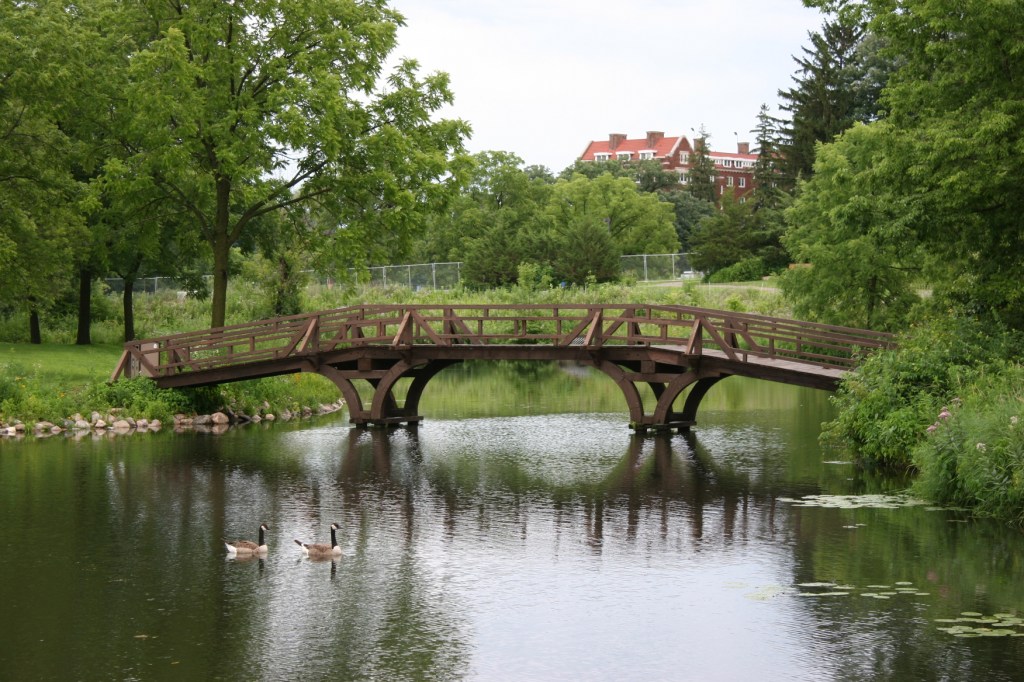
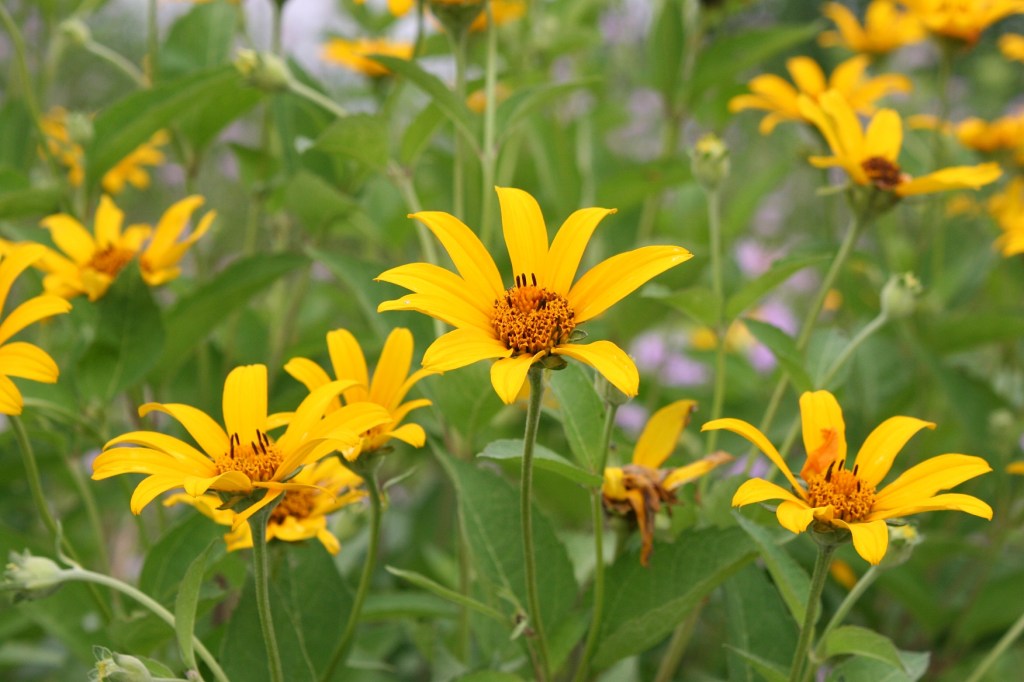
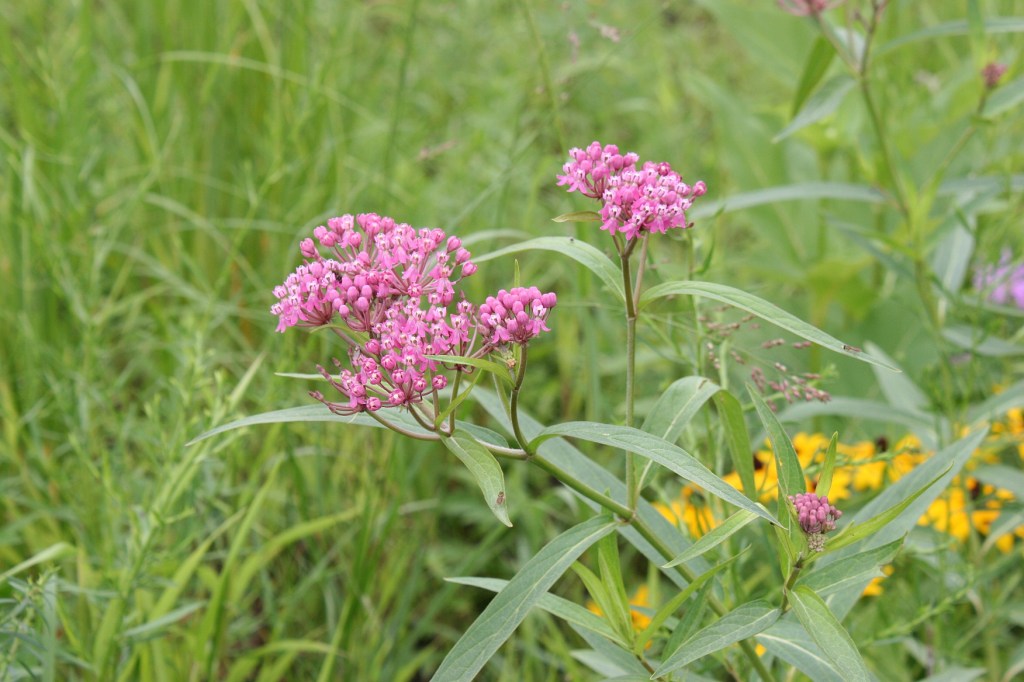
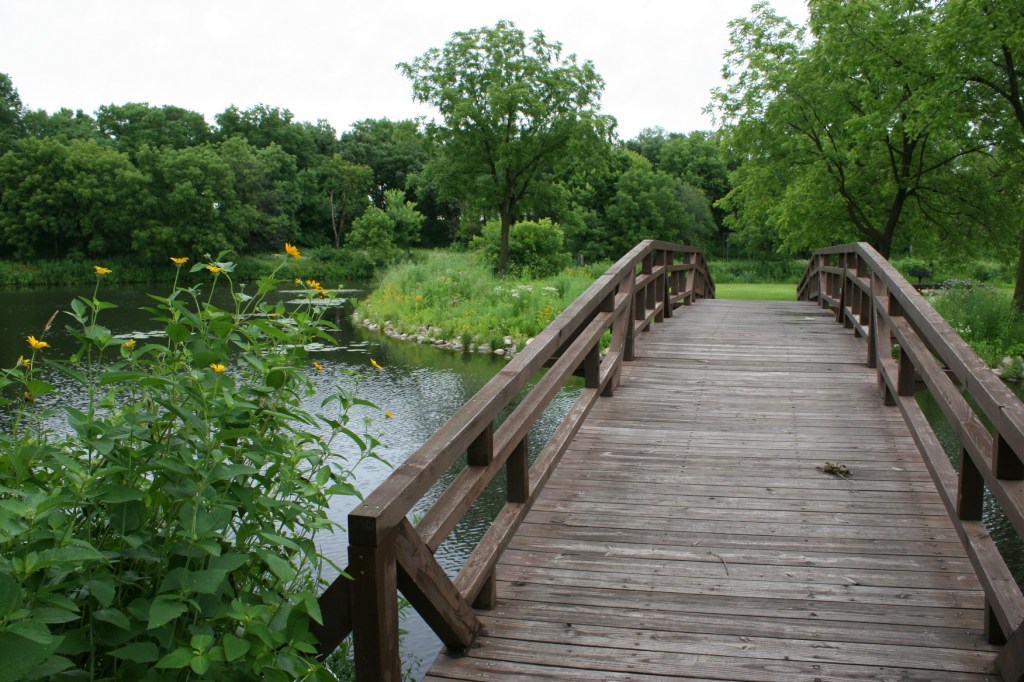
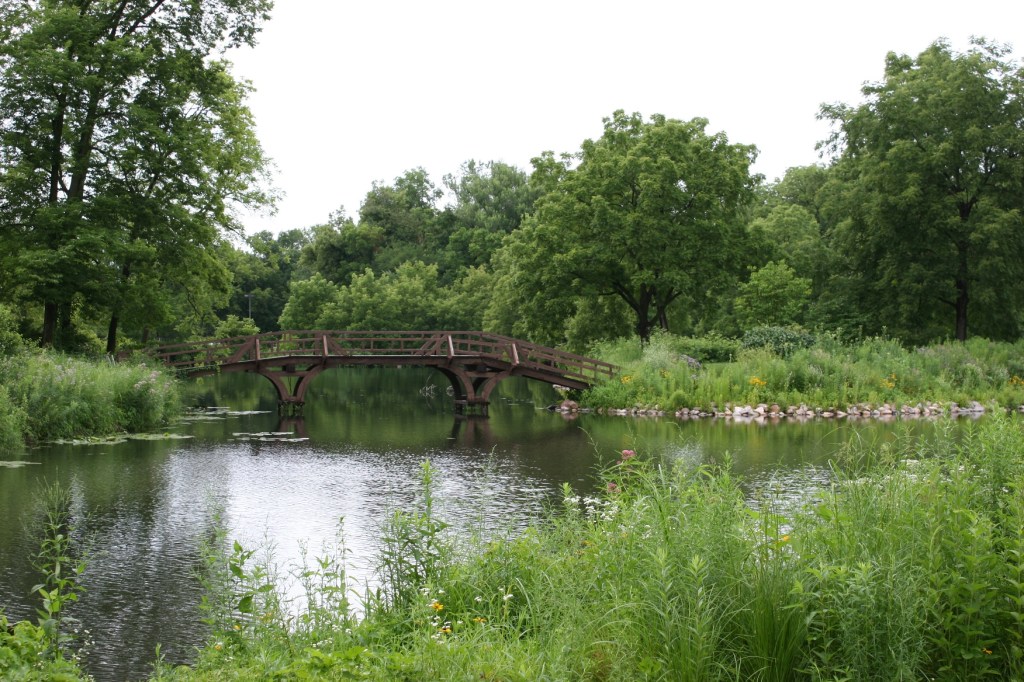
TO WALK HERE, among wildflowers lining water’s edge, is to find peace. And these days I crave peace, a short escape from the challenges of life. Nature offers that quiet, that solitude, that ability to forget reality for awhile.


On a recent Saturday, Randy and I followed a trail into a nature area at Carleton College in Northfield. I thought how lovely to attend college here, to have this natural space available on the edge of campus. A place for students to retreat, to recharge, to reboot.


On this day, I retreated, focusing my attention (and camera) on vivid and pastel petals,


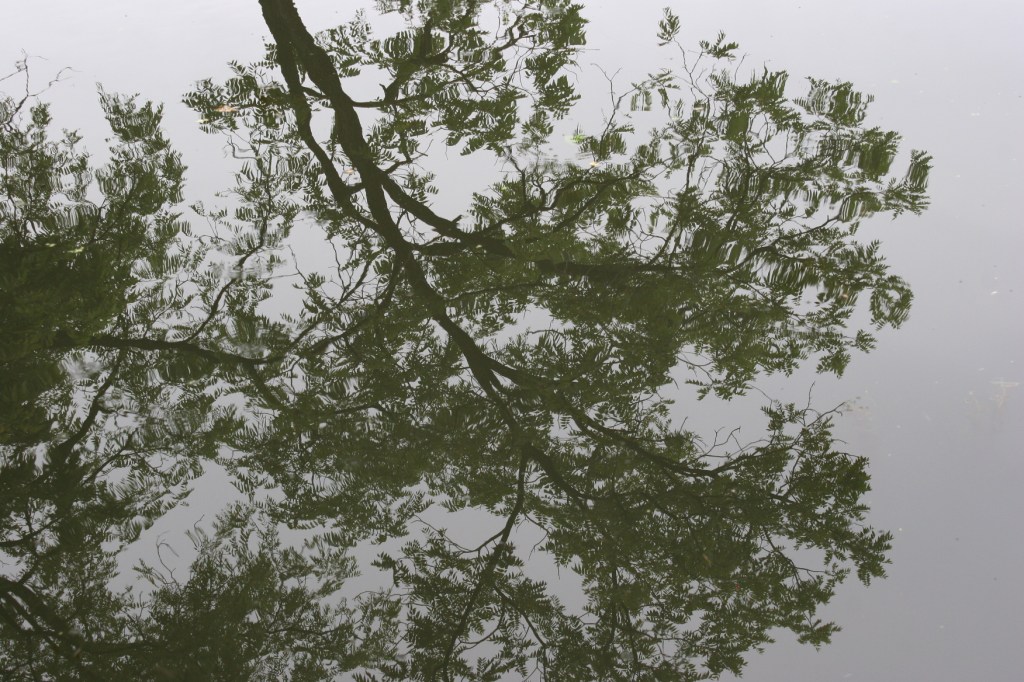
reflections on water,


the arc of bridges


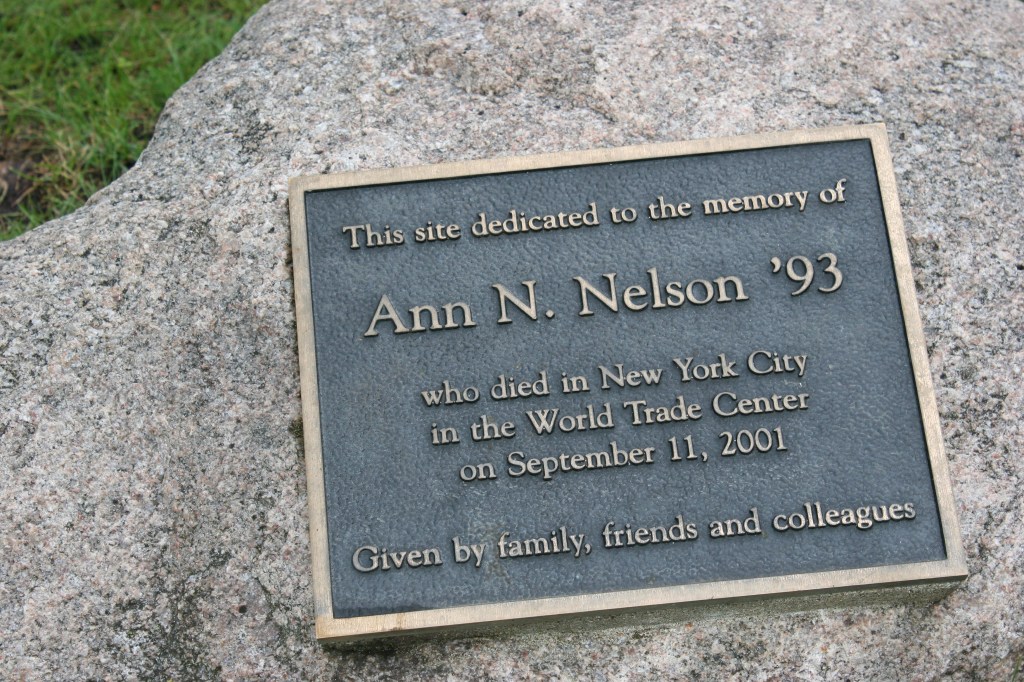
and then, the unexpected—a memorial to Carleton alum Ann N. Nelson who died during the 9/11 terrorist attacks on the World Trade Center. A second Carleton alum, Joe McDonald, also died there.


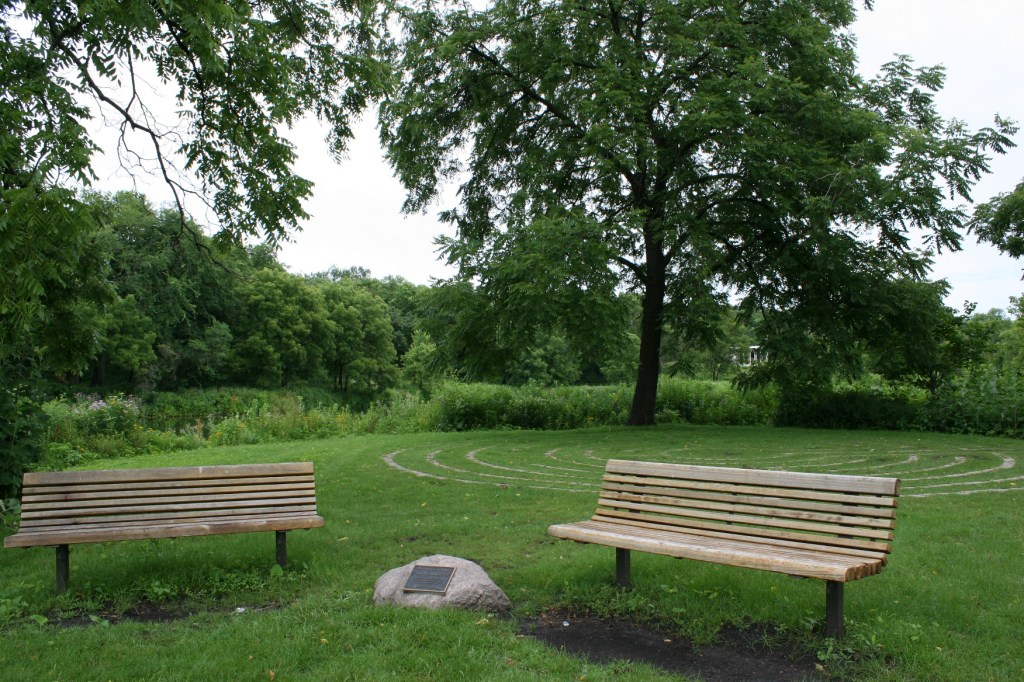
The memorial stone placed between benches next to a labyrinth drew my thoughts away momentarily to that awful day in our nation’s history. And I considered the pain and the horror of it all and how, even in this peaceful place, one cannot fully-escape the difficult realities of life.


THOUGHTS?

© Copyright 2019 Audrey Kletscher Helbling


Remembering Barb Larson one year after her murder via an act of domestic violence December 21, 2017

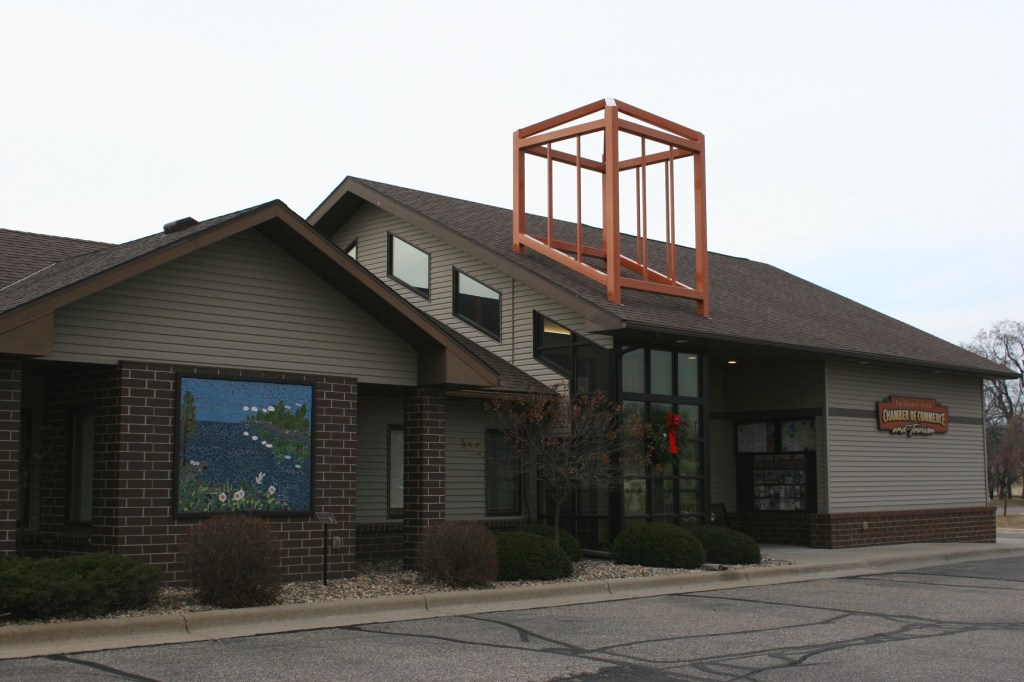
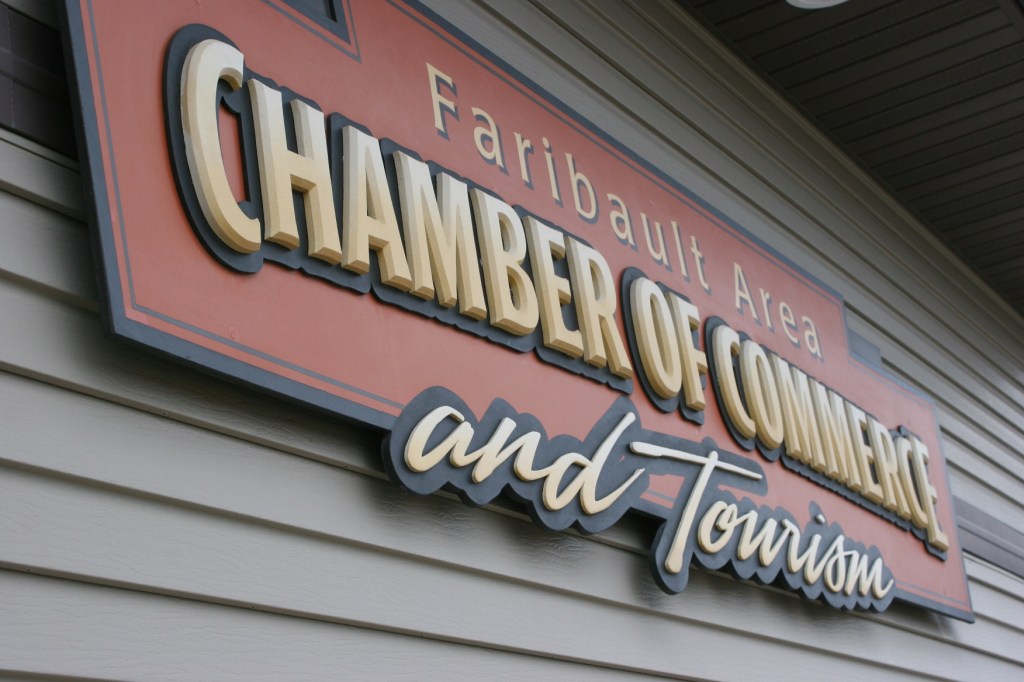
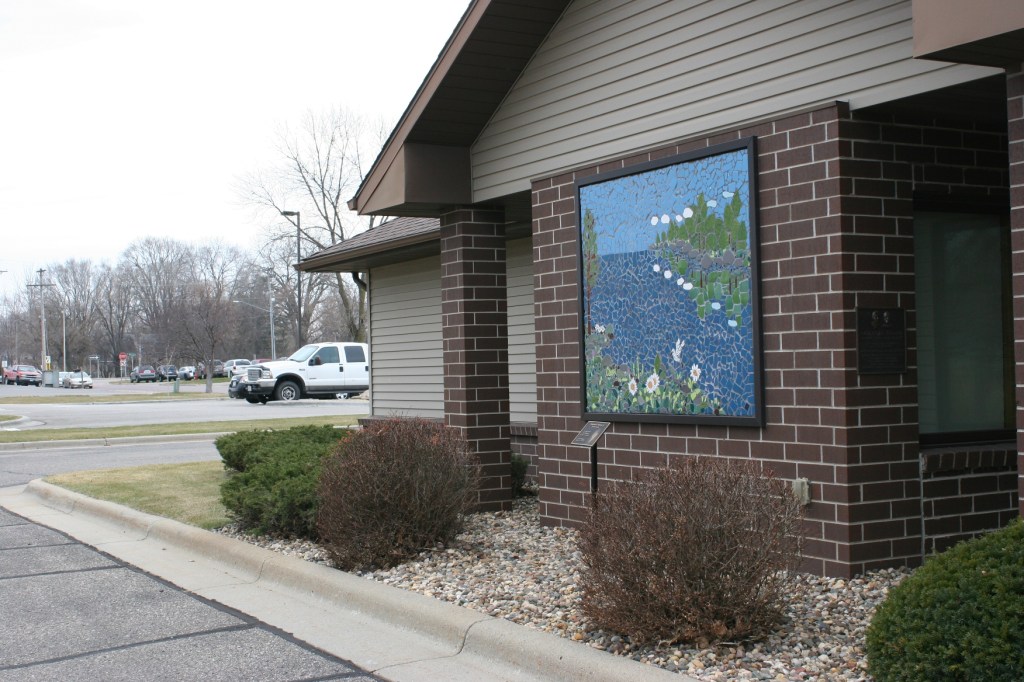
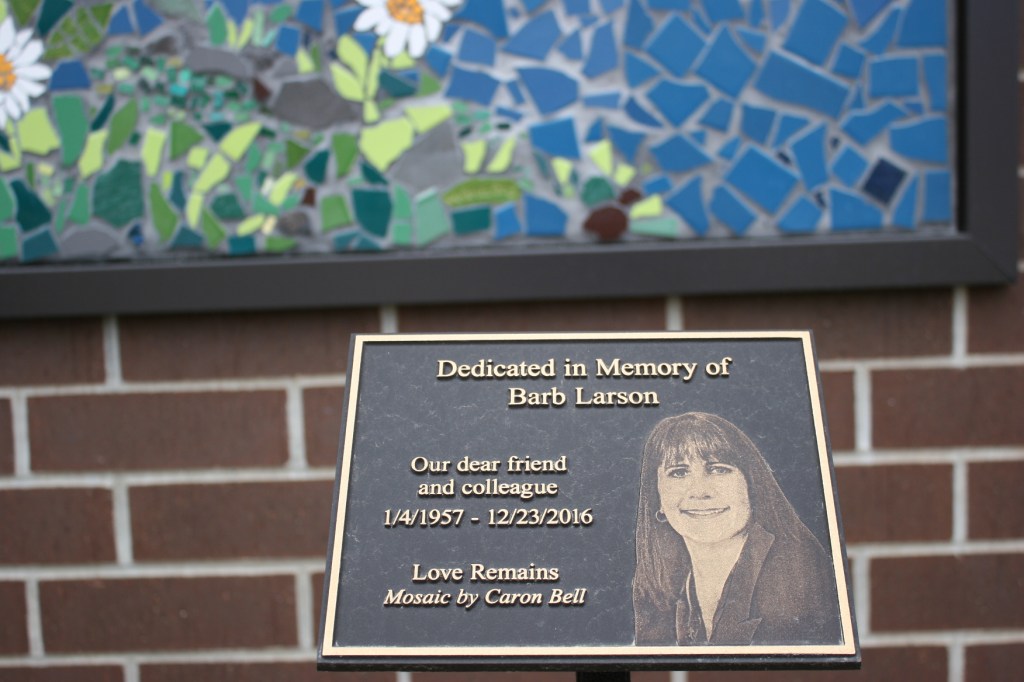
Barb Larson, an employee of the Faribault Area Chamber of Commerce & Tourism, was murdered on December 23, 2016, at her workplace. A memorial mosaic on the building exterior honors her.


ON DECEMBER 23, 2016, Barb Larson was murdered inside the Faribault Area Chamber of Commerce and Tourism office. She was shot by her ex-husband, a former cop, who then turned his gun on himself.


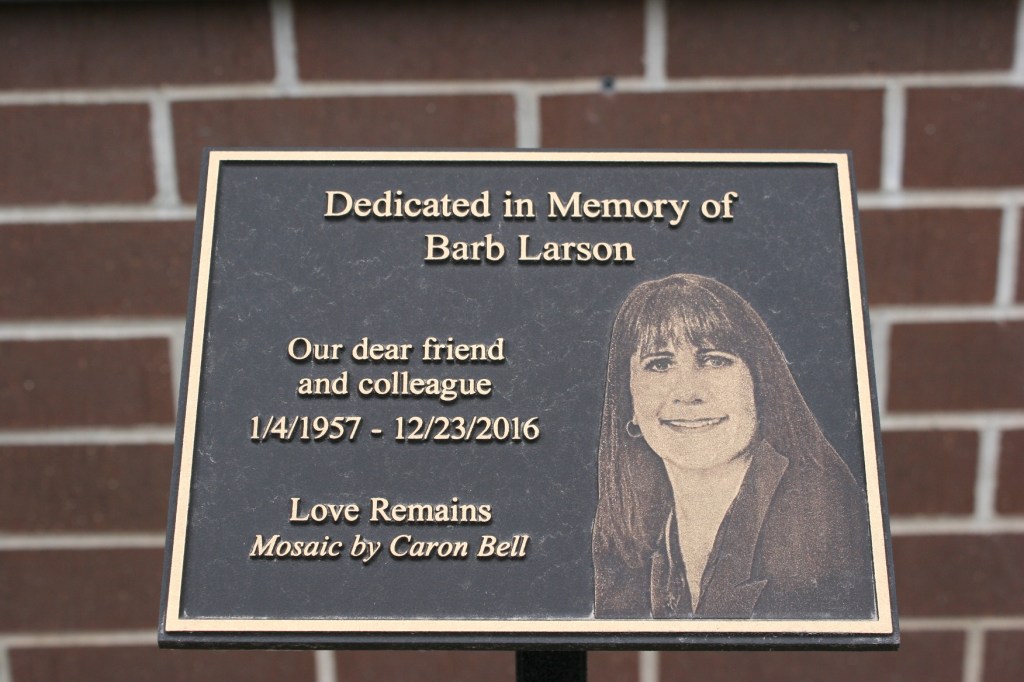
This plaque fronts the artwork.


The murder of Barb Larson and the suicide of her killer, Richard Larson, just days before Christmas 2016 stunned my community. Both were well-known in Faribault. For Barb to die in an act of domestic violence in the workplace—in a place promoting our community—seemed unfathomable.


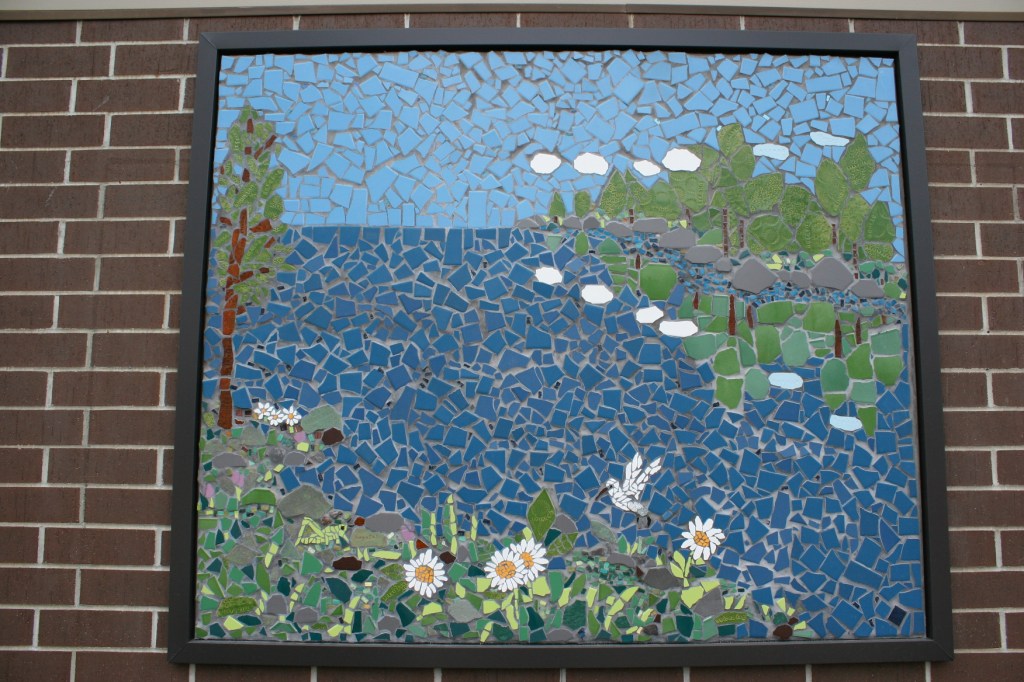
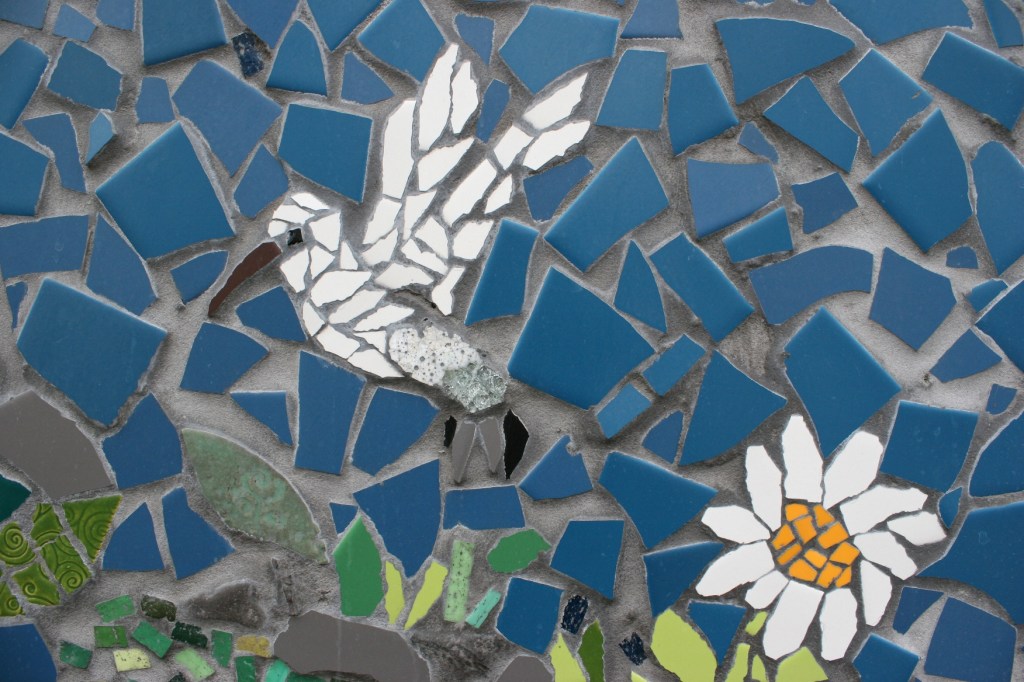
Caron Bell’s mosaic is titled “Love Remains” and was designed with input from Barb’s family and friends.


But it happened. Just like domestic abuse and violence still occur daily in my city. And in yours, too. Most often the violence does not result in death. Sometimes, tragically, it does.


I see grief, a swirling of emotions, in the grey tile.


A year out from Barb’s murder, I wonder if anything in my community has really changed. Reports of domestic-related calls continue to fill police reports published in the local newspaper. Domestic violence stories still cover too many column inches.


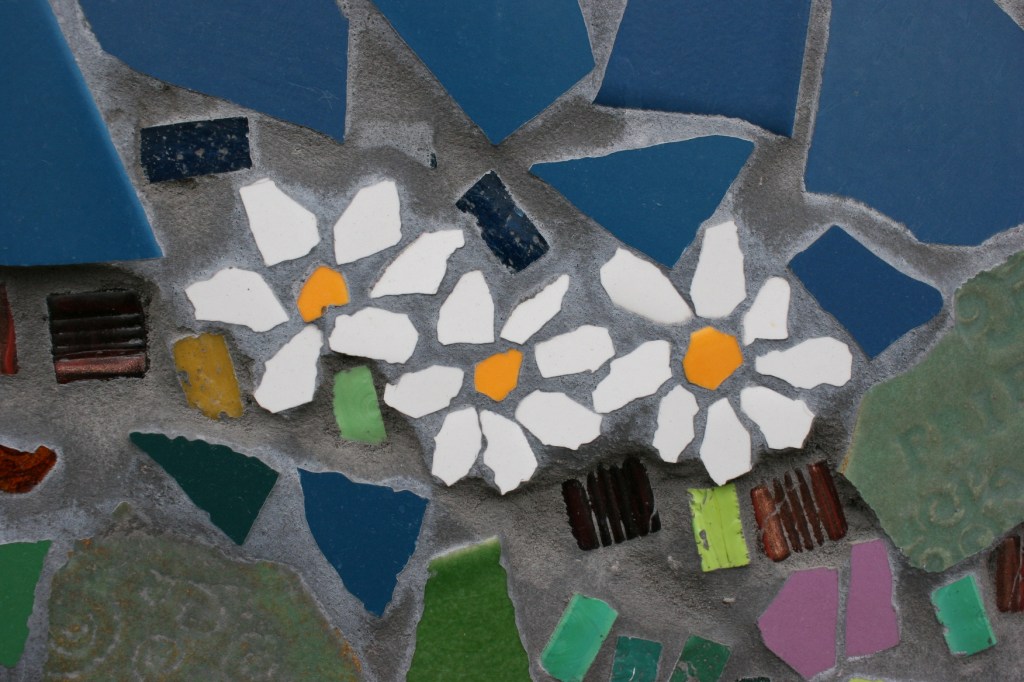
Even after Barb’s death, beauty and hope still bloom.


Are we more aware, educated, alert now than we were before Barb’s high profile death? And if we are, what are we doing to make a difference in the lives of those affected by domestic abuse and violence? I’m talking individuals here, not those who already serve victims/survivors/families through advocacy programs like those at HOPE Center and through Ruth’s House, a local shelter for women and their families.


Inspirational and honoring words are embedded in the mosaic tile.


Initially, some positive action followed—a Faribault church gave away battery-operated candles to shine the light of hope; the Chamber celebrated Happy Barb Day on what would have been Barb’s 60th birthday; public art exhibits honored Barb and spotlighted the darkness of her death and hope rising; a statewide It Happens Here awareness campaign highlighted the issue of domestic violence; and HOPE Center staffers attended a Domestic Violence Homicide Memorial event honoring Barb and other victims.


In addition to the art commission, the Chamber interior was refurbished by volunteers after Barb’s murder there. Inside the office, a word collage also honors Barb as does a fiber art piece by long-time friend and Northfield artist Judy Sayes-Willis.


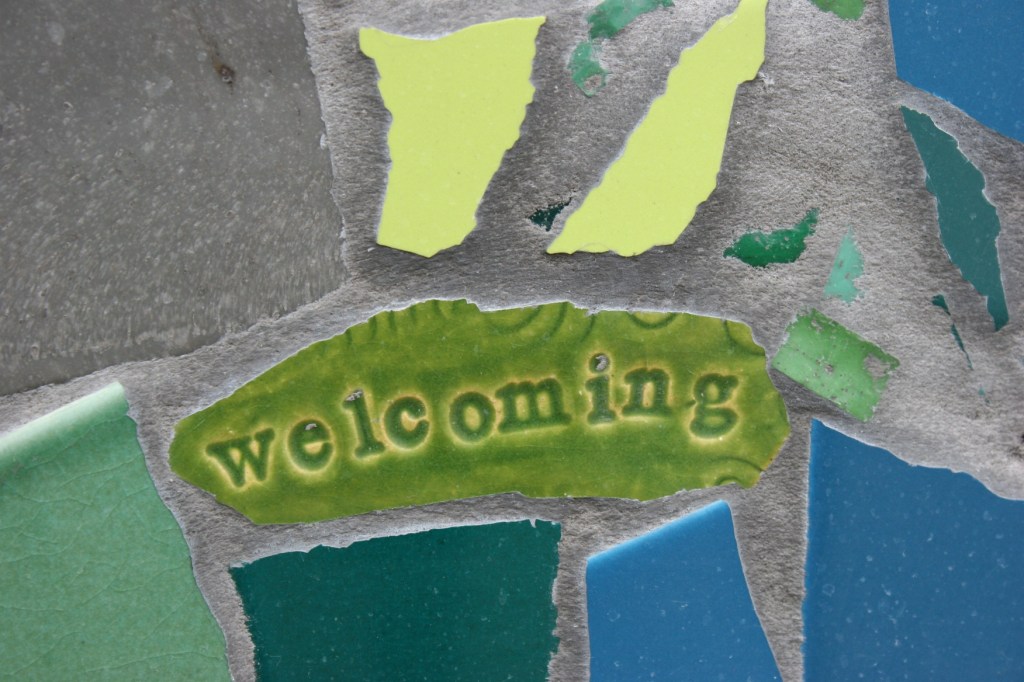
As a Chamber employee, Barb was especially welcoming.


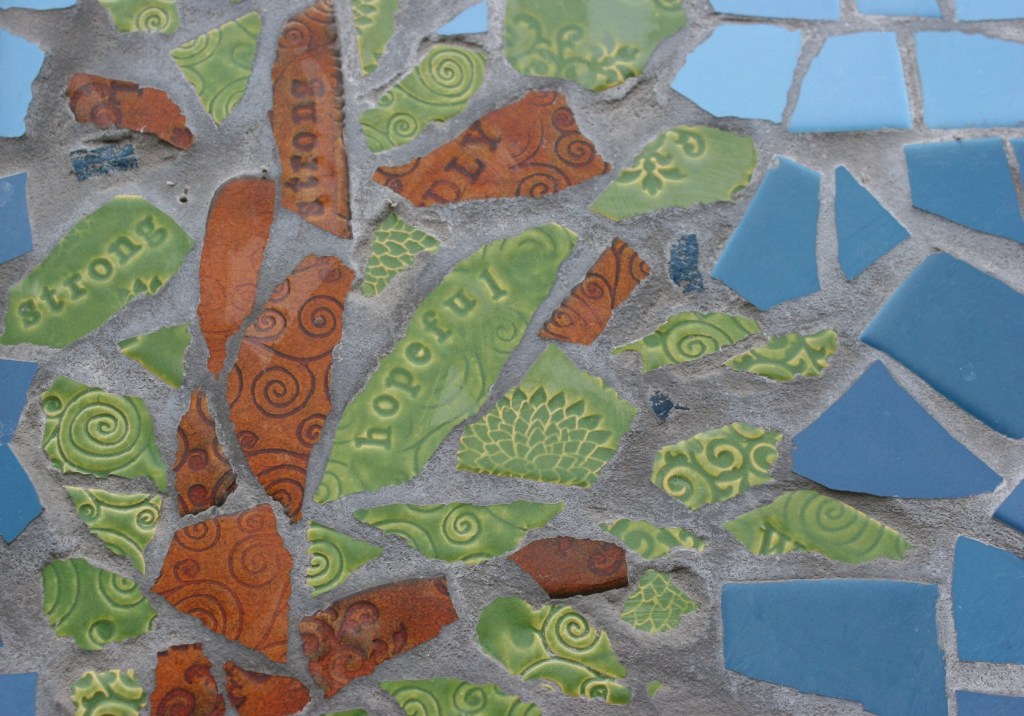
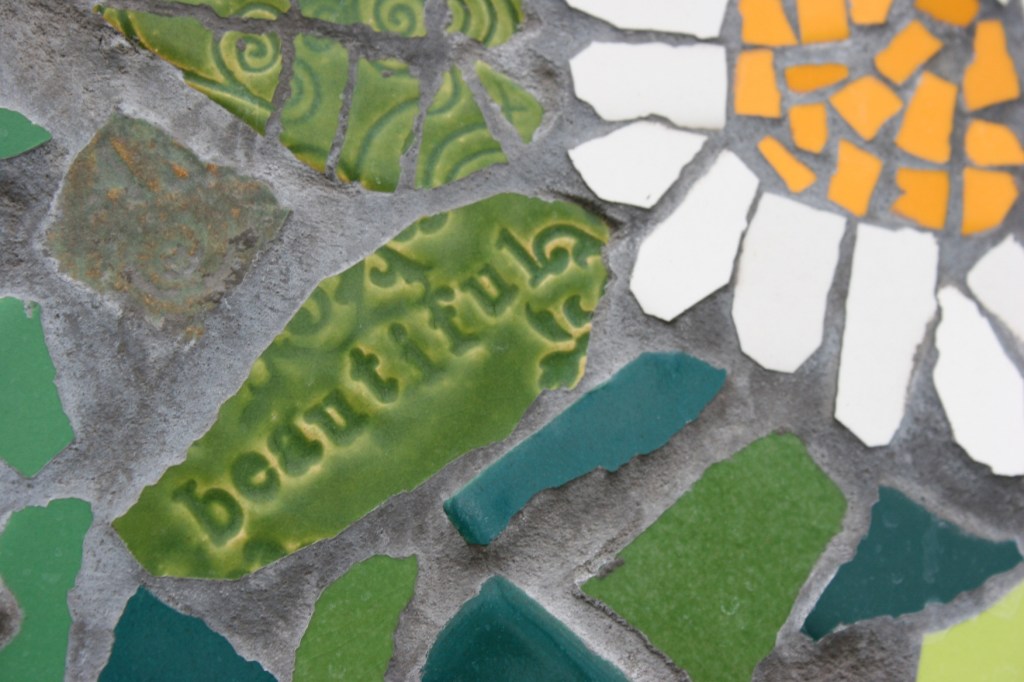
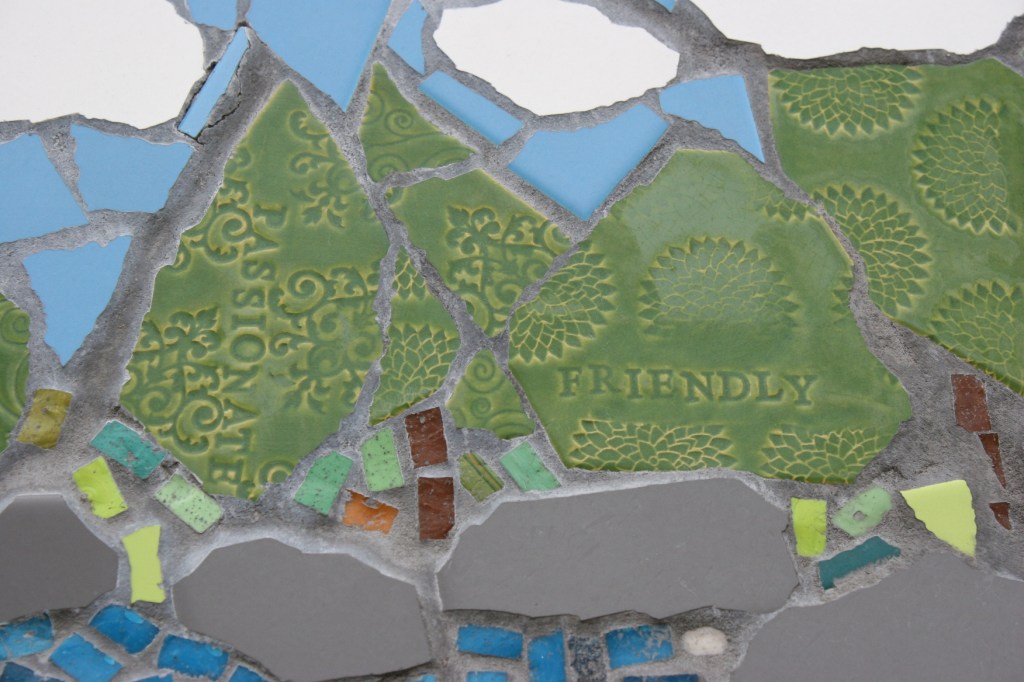
Additionally, the Chamber commissioned an art piece by Minneapolis artist Caron Bell. Titled “Love Remains,” the mosaic on the exterior of the Chamber office honors Barb through a peaceful landscape scene and six words describing her: friendly, passionate, hopeful, beautiful, strong and welcoming.


“Love Remains” needs to be viewed up close to see all the words celebrating Barb.


I didn’t know Barb personally. But I especially appreciate the words hopeful and strong. Strong and hopeful.


I’m thankful for these multiple efforts focusing public attention on the issues of domestic abuse and violence. I hope these efforts continue. Our awareness and concern must remain even when headlines vanish into the next day’s news.


In the year since Barb’s death, 21* known individuals have died in Minnesota due to domestic violence. That’s too many in 2017, or ever. We need to remember these victims and their families and friends. And we need to care about those who remain in abusive relationships. Whether sisters by blood, sisters by community connection, sisters by workplace, sisters by church or neighborhood or friendship, we must pledge to believe them, support them, help them. Stop blaming them.

We need also to question why men continue to abuse women. Beyond that, how can we prevent such abuse and change the negative ways in which some men and boys view women and girls?

We need to break the silence. We need to do something. And that starts with each of us.


Please click on the highlighted links within this post (especially in the final paragraphs) to view enlightening and informative stories and videos on the topics of domestic abuse and violence. These are important and worth your time. 


FYI: If you are in an abusive relationship, please seek help. Confide in someone you trust such as a family member, friend, co-worker, pastor, women’s advocate… You are not alone. There is hope and help. You deserve to be free of any type of abuse whether verbal, emotional, psychological, mental, financial, spiritual, technological and/or physical. Believe in yourself and in your strength.

If you are in immediate danger, call 911. The time period in which you try to leave (or after you’ve left) your abuser is the most dangerous time for you. Have a safety plan in place. In Barb’s case, a harassment restraining order had been served on her ex-husband the week he murdered her. Don’t rely on a piece of paper or “the system” to protect you.

If you know someone in an abusive relationship, offer your support, love and care. Educate yourself. Seek professional advice so you best know how to help a victim. That’s vital.


* This number may actually be higher, but is the most recent figure published on the Minnesota Coalition for Battered Women Facebook page.

NOTE: Since most victims of domestic abuse and violence are women, I choose to use that gender when I write on this topic. I am aware that men can also be victims.

© Copyright 2017 Audrey Kletscher Helbling


At St. Olaf College: A Minnesota connection to the 1965 Civil Rights Movement May 12, 2015

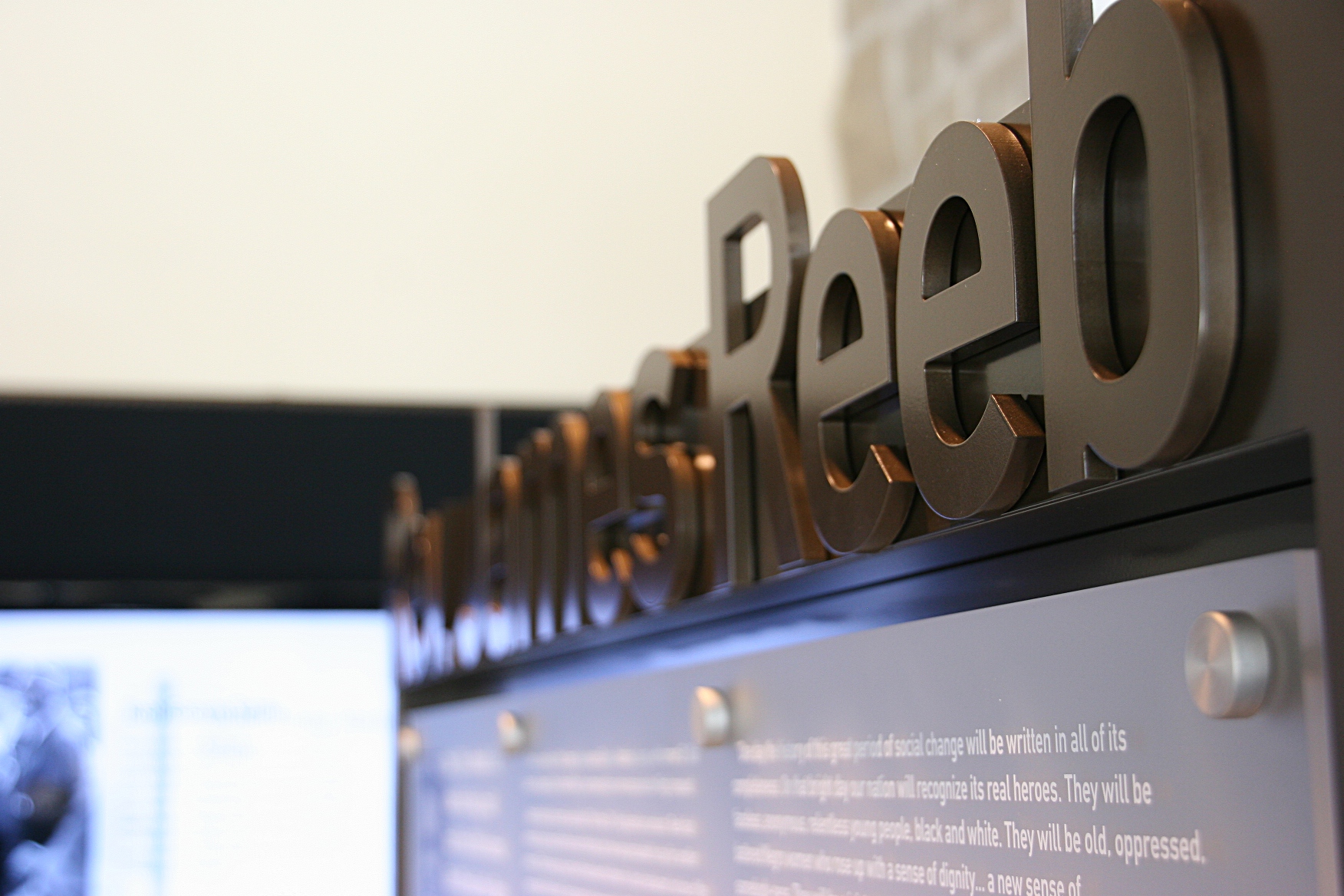
The name Reeb holds special significance at a Minnesota college.

The name Reeb holds special significance in a memorial at a Minnesota college.

JAMES REEB. You may not recognize his name. Or you may remember an actor portraying the Rev. Reeb in a scene in the movie, Selma. Or heard/read his name in a recent news story.

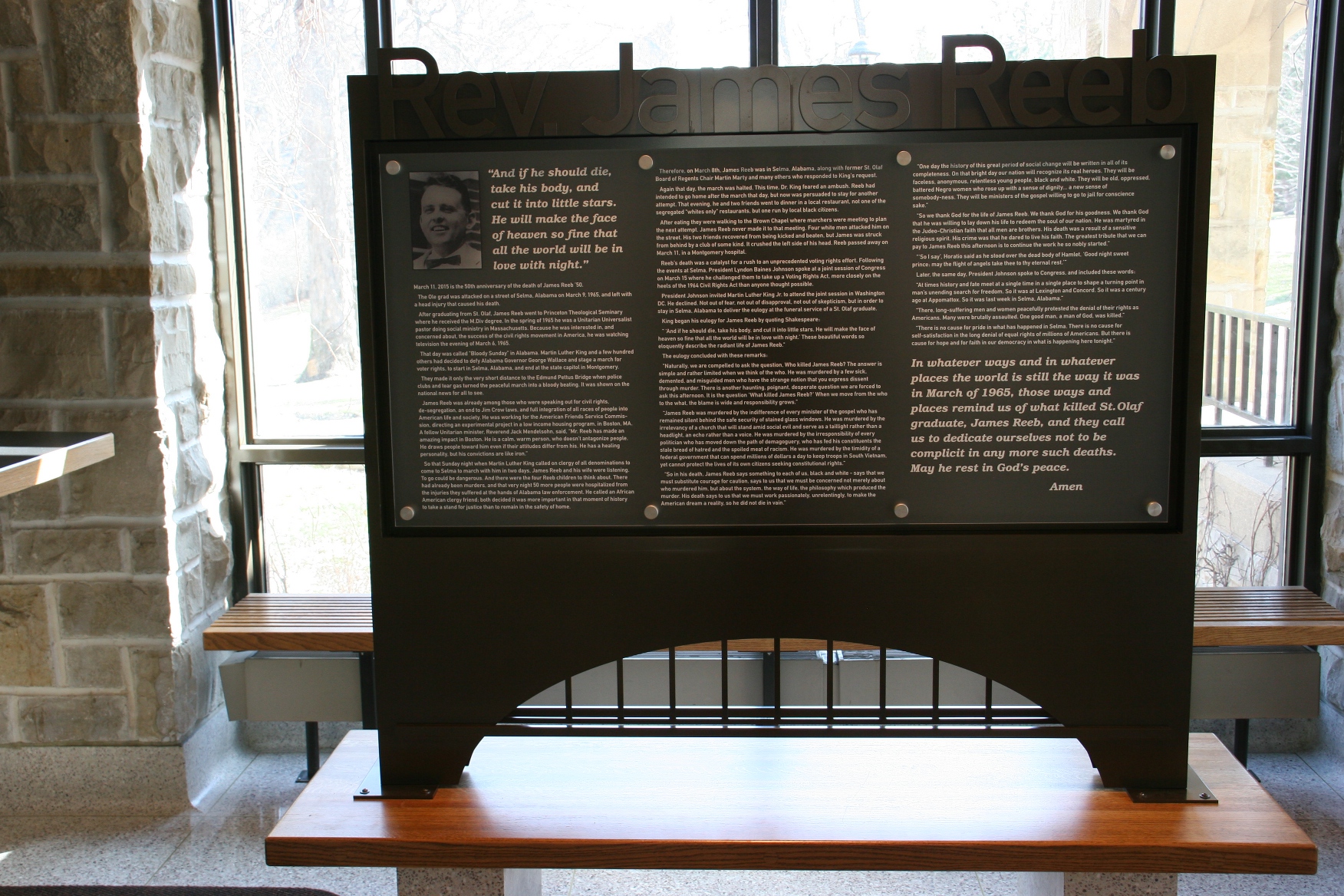
The memorial honoring the Rev. James Reeb was dedicated in March, on the 50th anniversary of his death.

The memorial honoring the Rev. James Reeb was dedicated in March, on the 50th anniversary of his death.

Today, just outside the entrance to Rolvaag Library on the hilltop campus of St. Olaf College in the southern Minnesota community of Northfield, Reeb is honored with a memorial for his efforts in the Civil Rights Movement.

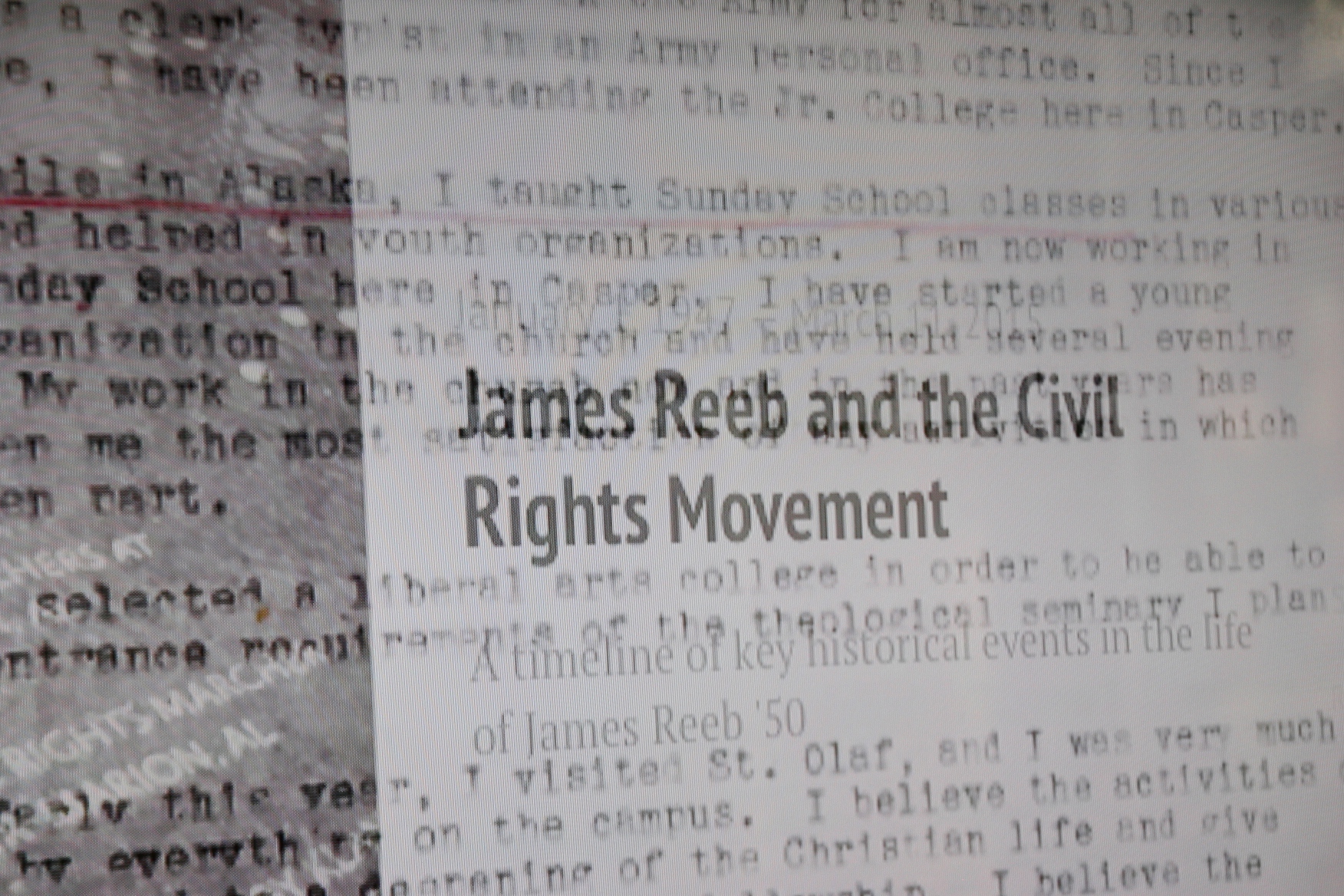
Words play across a screen in a video next to the memorial.

Words play across a screen in a video next to the memorial.

His involvement cost him his life.

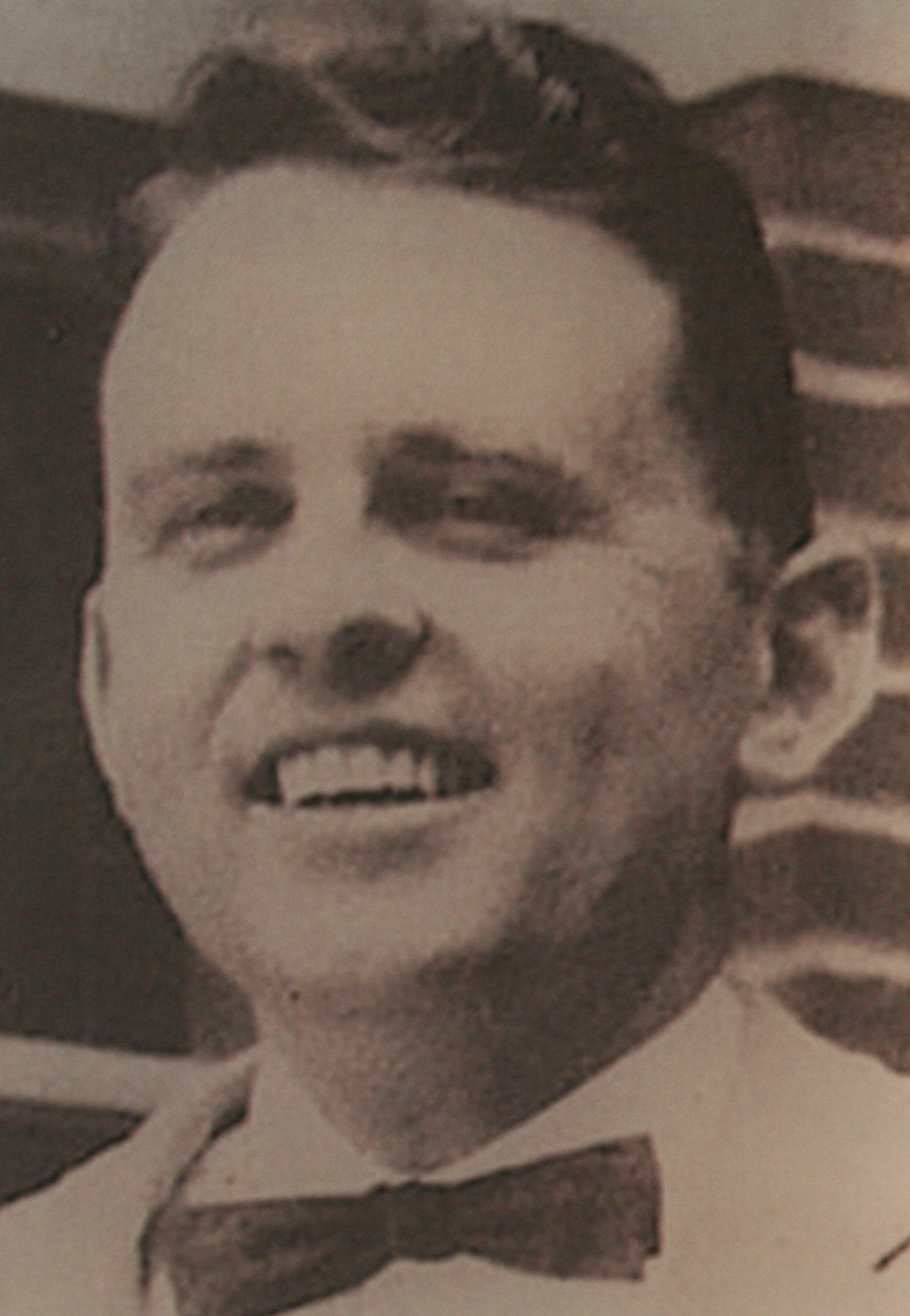
A portrait of Reeb printed on the memorial.

A portrait of Reeb printed on the memorial.

On March 9, 1965, Reeb and two friends were attacked after dining at a Selma restaurant run by local black citizens. The Massachusetts clergyman, an outspoken advocate for civil rights, desegregation and more, died two days later from his injuries.

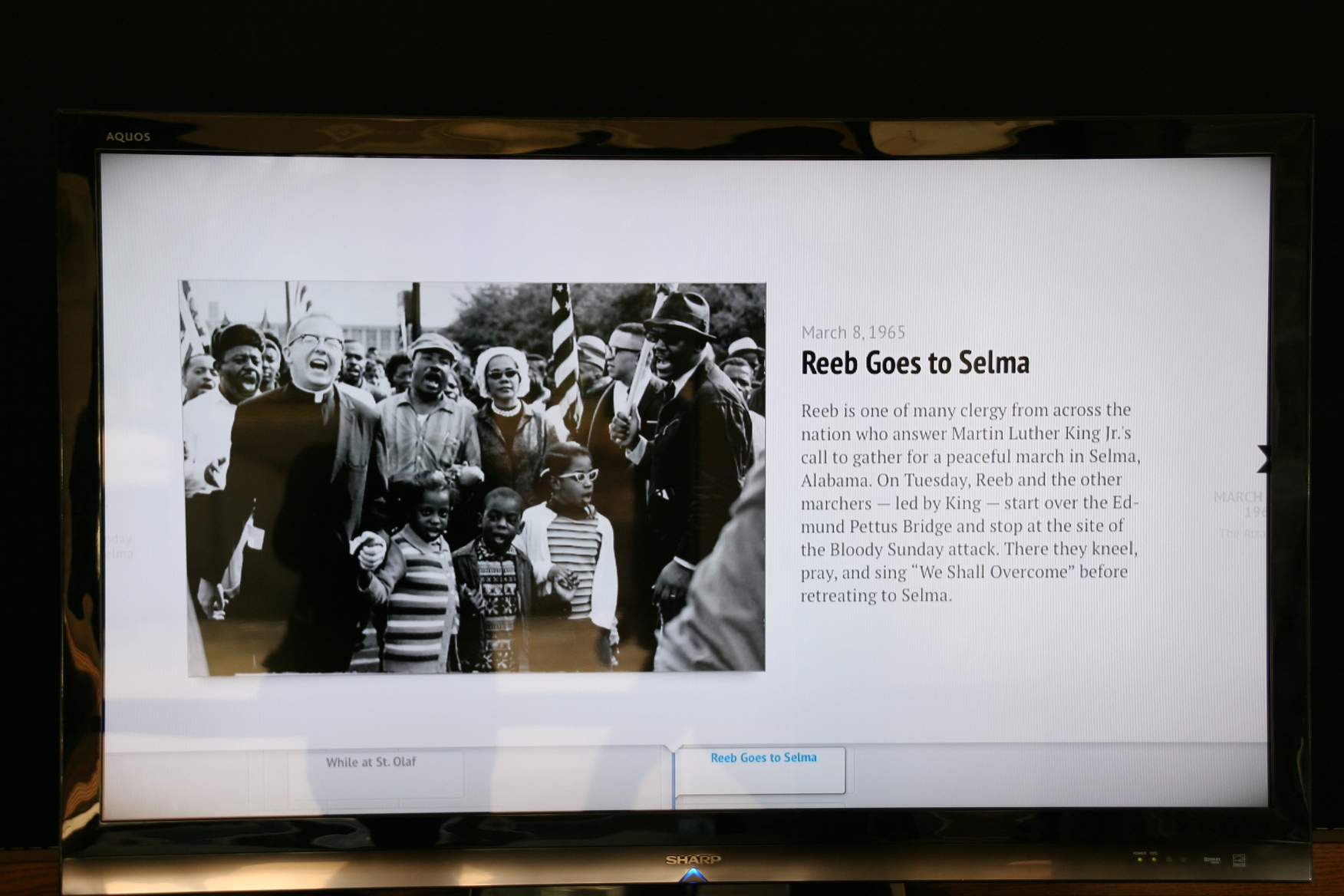
Reeb, shown to the left in this photo, was among those who marched to the Edmund Pettus Bridge on March 7, 1965, Bloody Sunday.

Reeb, shown to the left in this photo, was among those who marched to the Edmund Pettus Bridge on March 7, 1965. This image is in a video at the St. Olaf memorial.

Dr. Martin Luther King, Jr., who’d called upon clergy to join a voting rights march from Selma to Montgomery, Alabama, delivered Reeb’s eulogy.

Reeb’s death served as a catalyst for passage of the Voting Rights Act of 1965, according to information published on the memorial to this 1950 St. Olaf graduate.

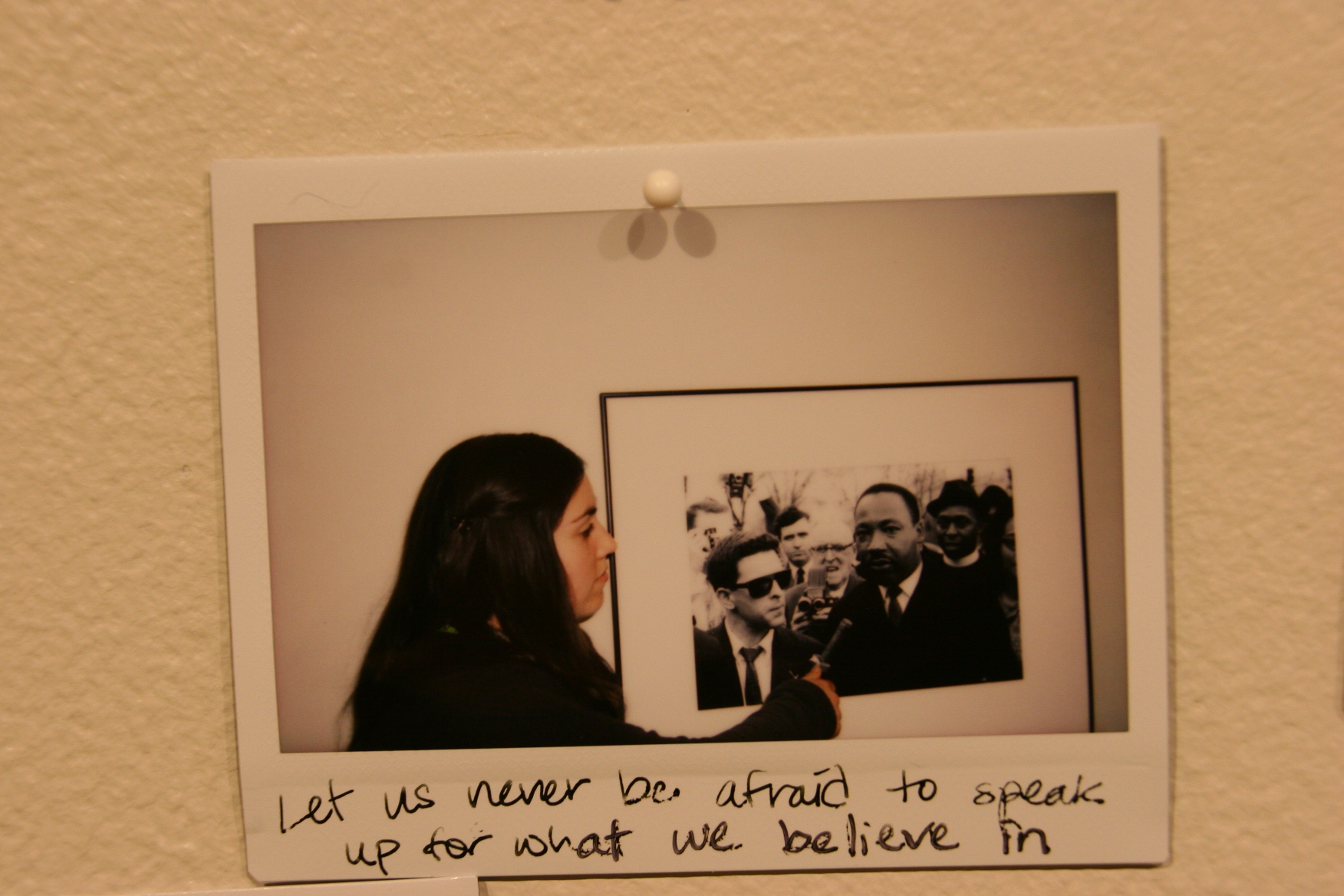
Visitors to the "Selma to Montgomery: Marching Along the Voting Rights Trail" exhibit at St. Olaf College let their voices be heard.

Visitors to the recent “Selma to Montgomery: Marching Along the Voting Rights Trail” exhibit at St. Olaf College let their voices be heard.

To view this recently-installed memorial, to read that Reeb possessed “a healing personality, but his convictions are like iron” is to understand that one voice can make a difference. Reeb considered taking a stand for justice more important than remaining in the safety of his home. He left his family in Massachusetts to join the march from Selma to Montgomery. While walking to a planning meeting for that march, Reeb was brutally attacked.

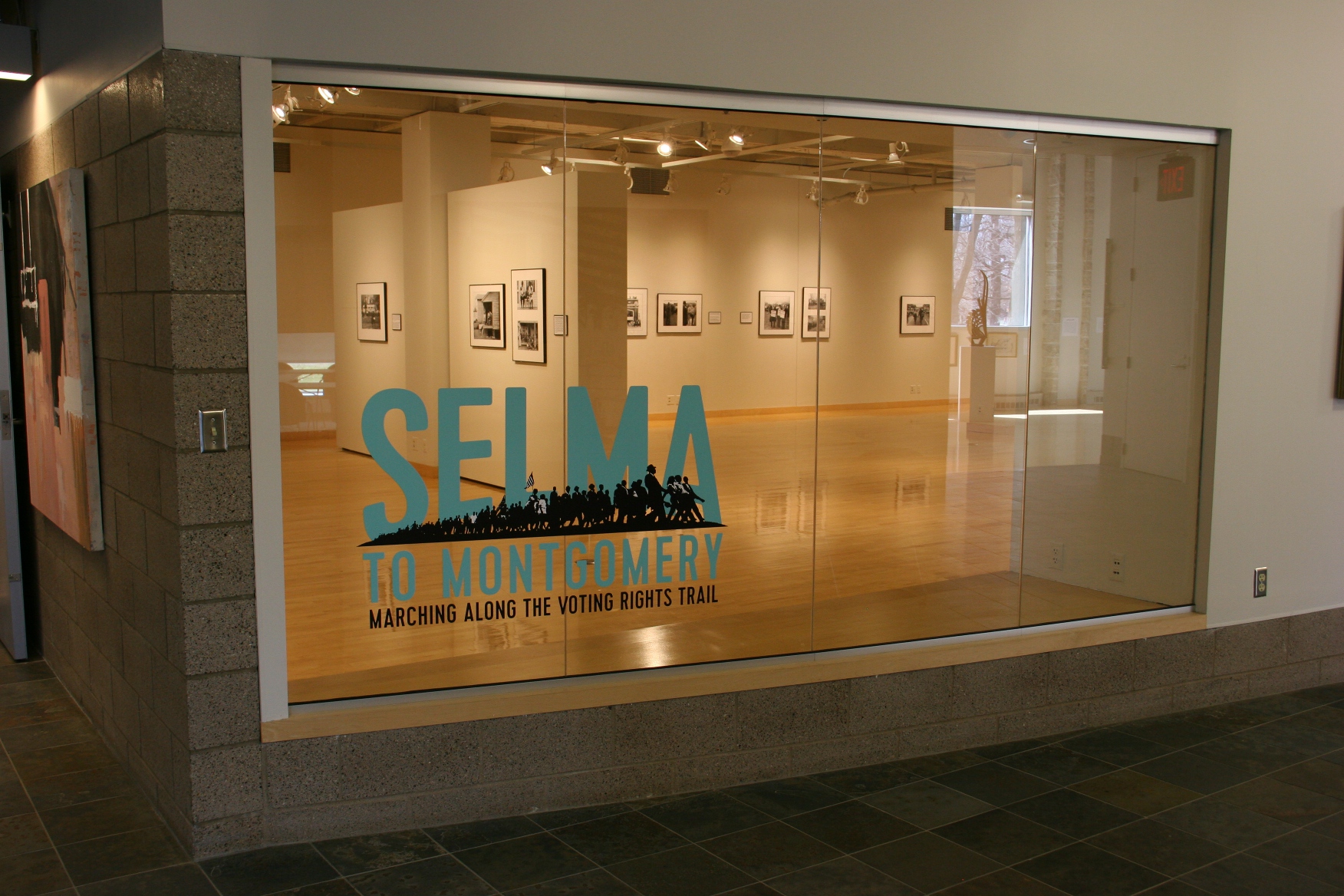
The "Selma to Montgomery" exhibit at the Flaten Art Museum, St. Olaf, recently closed.

The “Selma to Montgomery” exhibit at the Flaten Art Museum, St. Olaf, recently closed.

In Reeb’s eulogy, King noted that, “His death says to us that we must work passionately, unrelentingly, to make the American dream a reality, so he did not die in vain.”

Those are words we would do well to remember today, 50 years after Reeb’s death and the march from Selma to Montgomery.

FYI: Click here to read my post about the recently-closed Selma to Montgomery: Marching Along the Voting Rights Trail exhibit at St. Olaf College.

© Copyright 2015 Audrey Kletscher Helbling
 

Remembering Brittney at a rural Faribault cemetery May 5, 2015

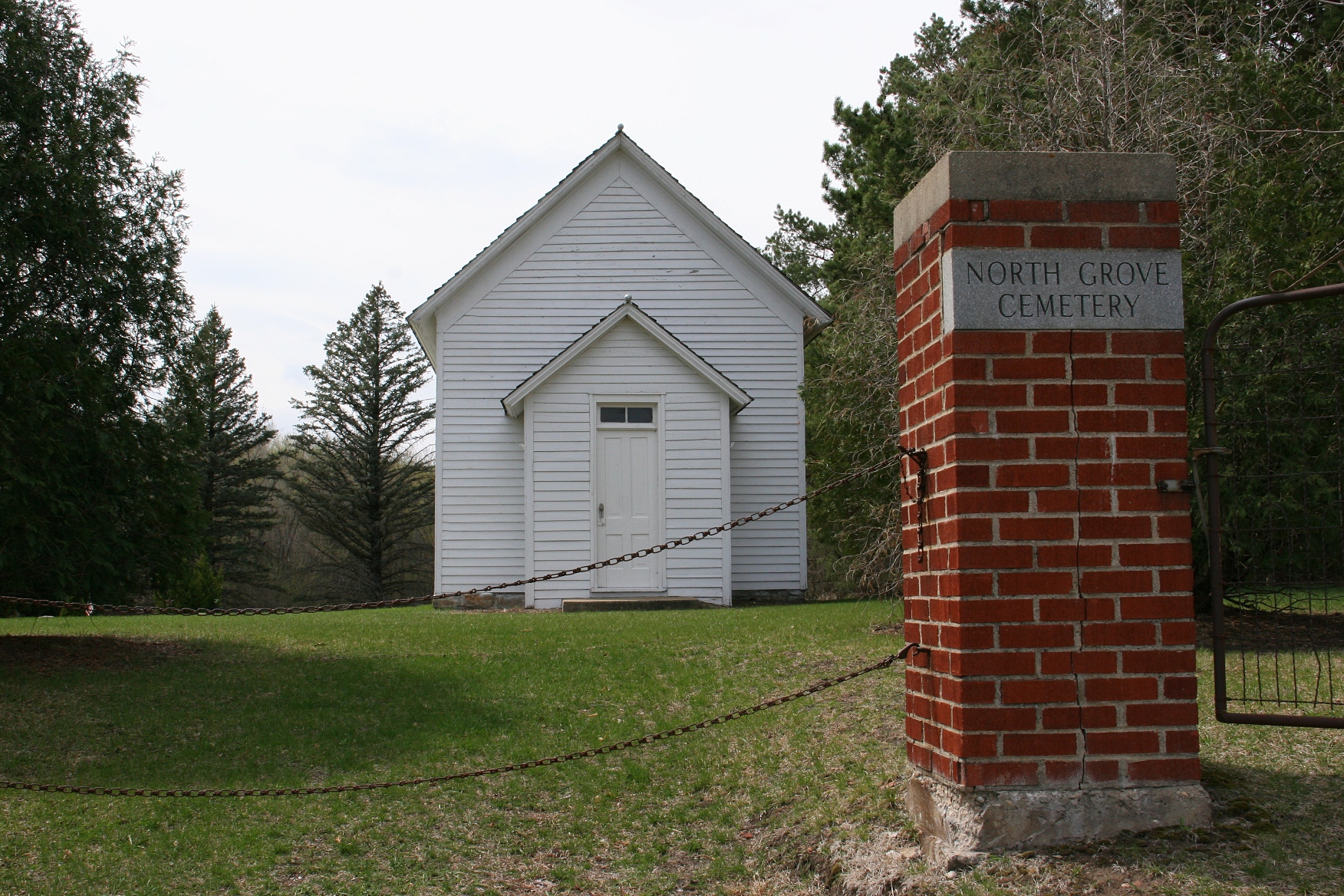
HUNDREDS OF TIMES during the past 30 years, I’ve passed North Grove Cemetery along busy Minnesota Highway 3 between Faribault and Northfield.

The entrance to North Grove Cemetery, which sits along Minnesota Highway 3 north of Faribault. The building once housed a church.

The entrance to North Grove Cemetery, which sits along Minnesota Highway 3 north of Faribault. The building once housed a church.

Not once have I stopped to explore this final resting place sheltered by trees butting a small white church. You know how it is. If you pass something often enough, you fail to notice it after awhile.

The flash of red that caught my eye.

The flash of red that caught my eye.

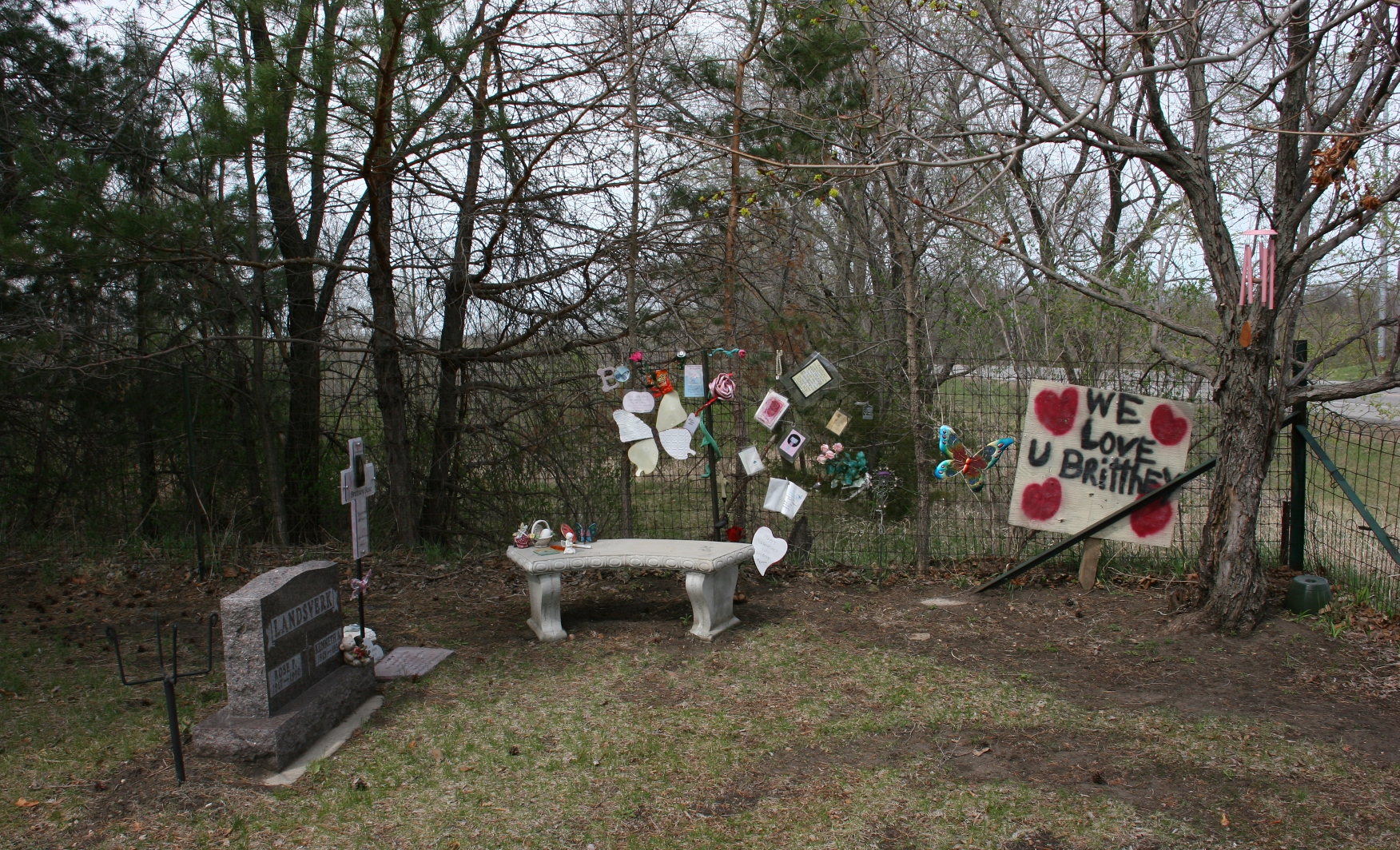
That is until recently, when a flash of red in a corner of the cemetery caught my eye. My husband, whose vision is far superior to mine, managed to read the words—WE LOVE u BRittnEY—on the handcrafted sign cornered with four red hearts.

There was no time to tour the graveyard that day. But on a recent Saturday, we stopped.

The memorial to Brittney Landsverk.

The memorial to Brittney Landsverk.

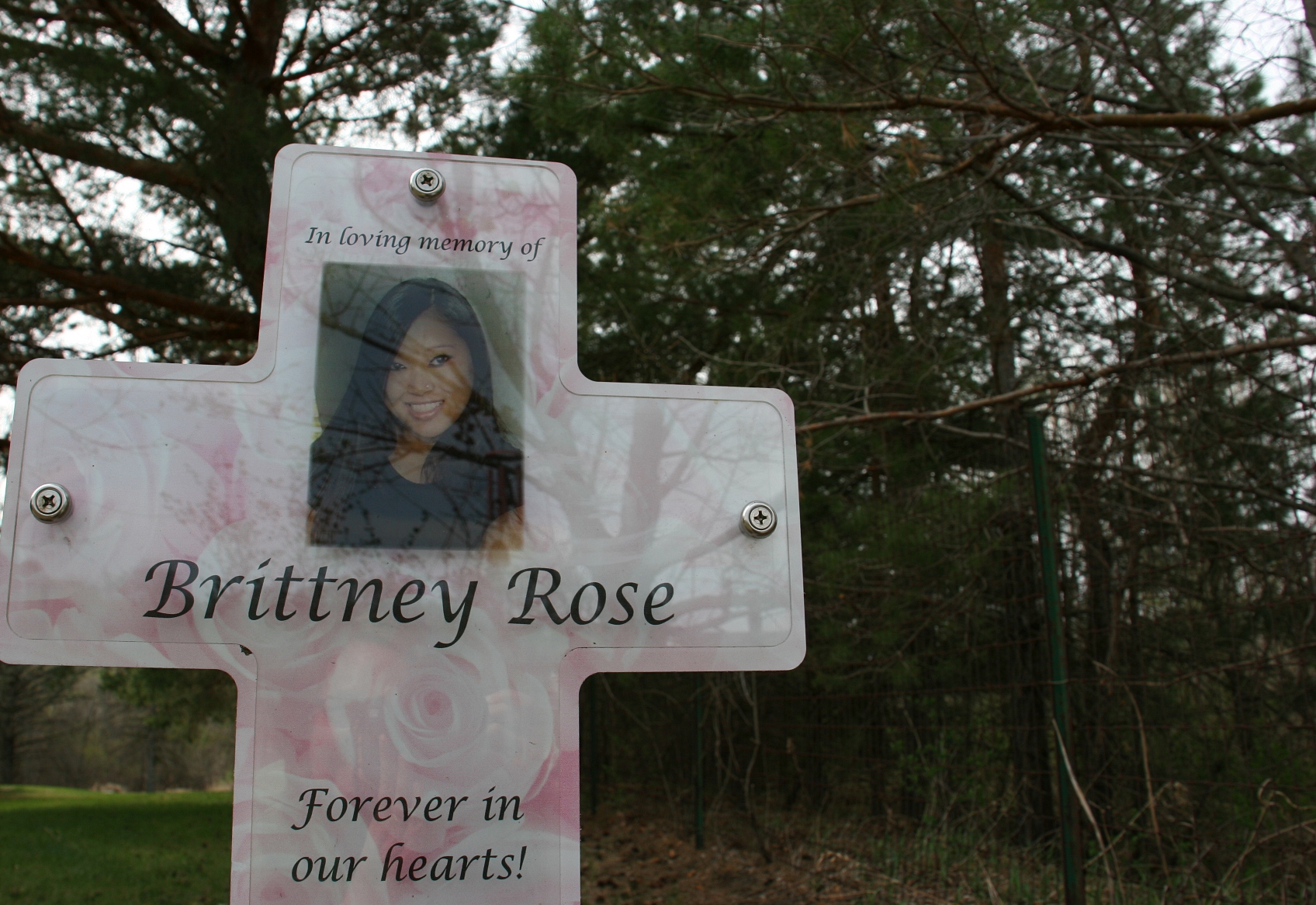
In this small Norwegian cemetery, I found an abundance of markers for Oles and Sophias who died long ago. But my focus was on the corner memorial created for 20-year-old Brittney Rose Landsverk. Five years have passed already since her April 2, 2010, tragic death flooded my community of Faribault with grief.

Brittney drowned after the young man she was dating drove a car in which she was a passenger into the nearby Cannon River. Mitchell Bongers would later admit to drinking, plead guilty to criminal vehicular homicide and receive a four-year prison sentence.

A loving, permanent tribute to Brittney.

A loving, permanent tribute to Brittney.

I cannot fathom the agony Ron and Kelly Landsverk endured while searchers looked for their daughter’s body in the twisting Cannon River. Eighty-seven days of wondering and waiting. And then, a life-time of grief at the loss of their only child.

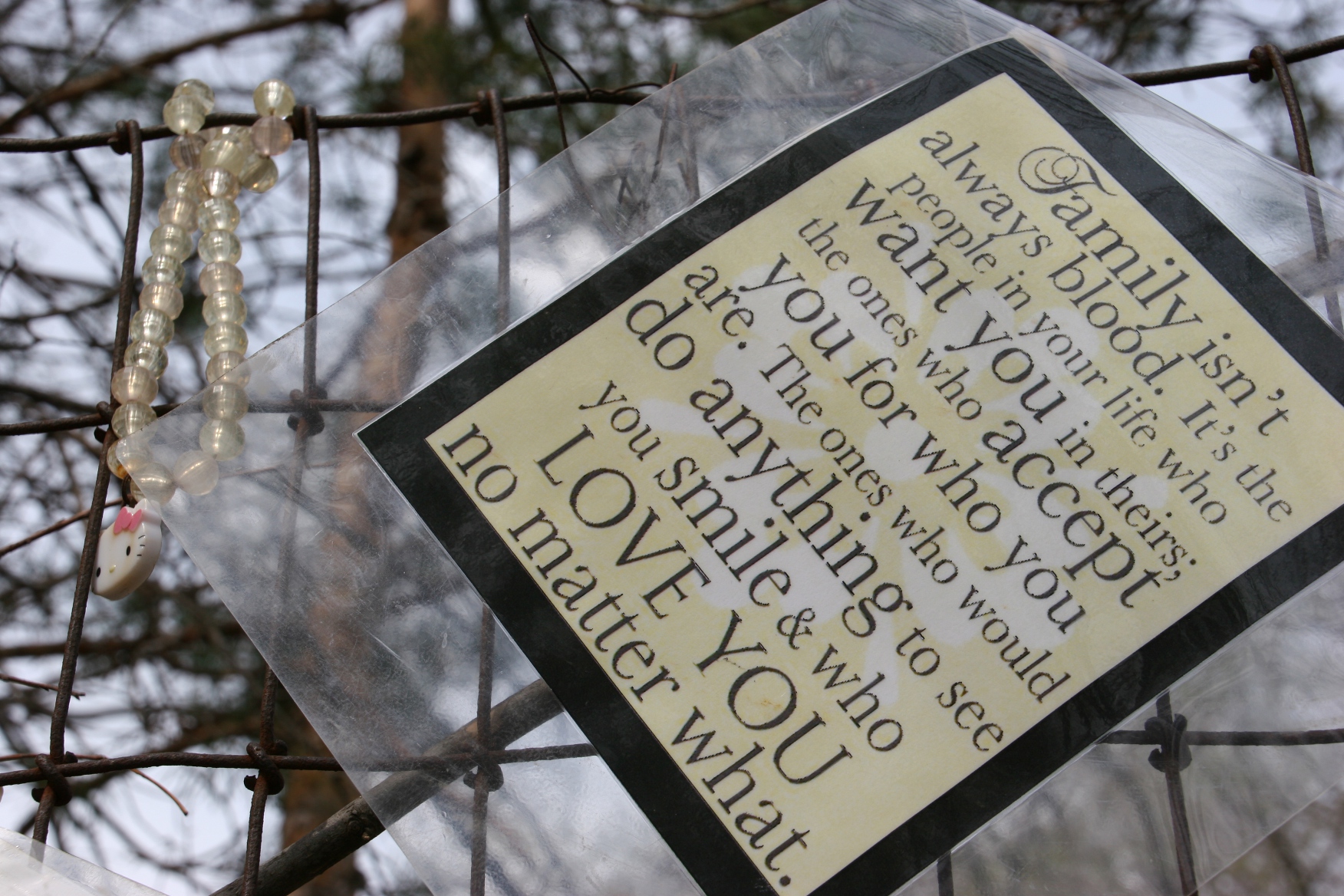
Words of love for Brittney expressed.

Words of love for Brittney expressed.

I don’t know the Landsverk family. But I am a mother and a part of the Faribault community. That is enough to connect me to them. When a child dies in such a senseless and tragic way, the impact is far-reaching. It touches all of us.

Visitors to Brittney's memorial can write a message on the bench.

Visitors to Brittney’s memorial can write a message on the bench.

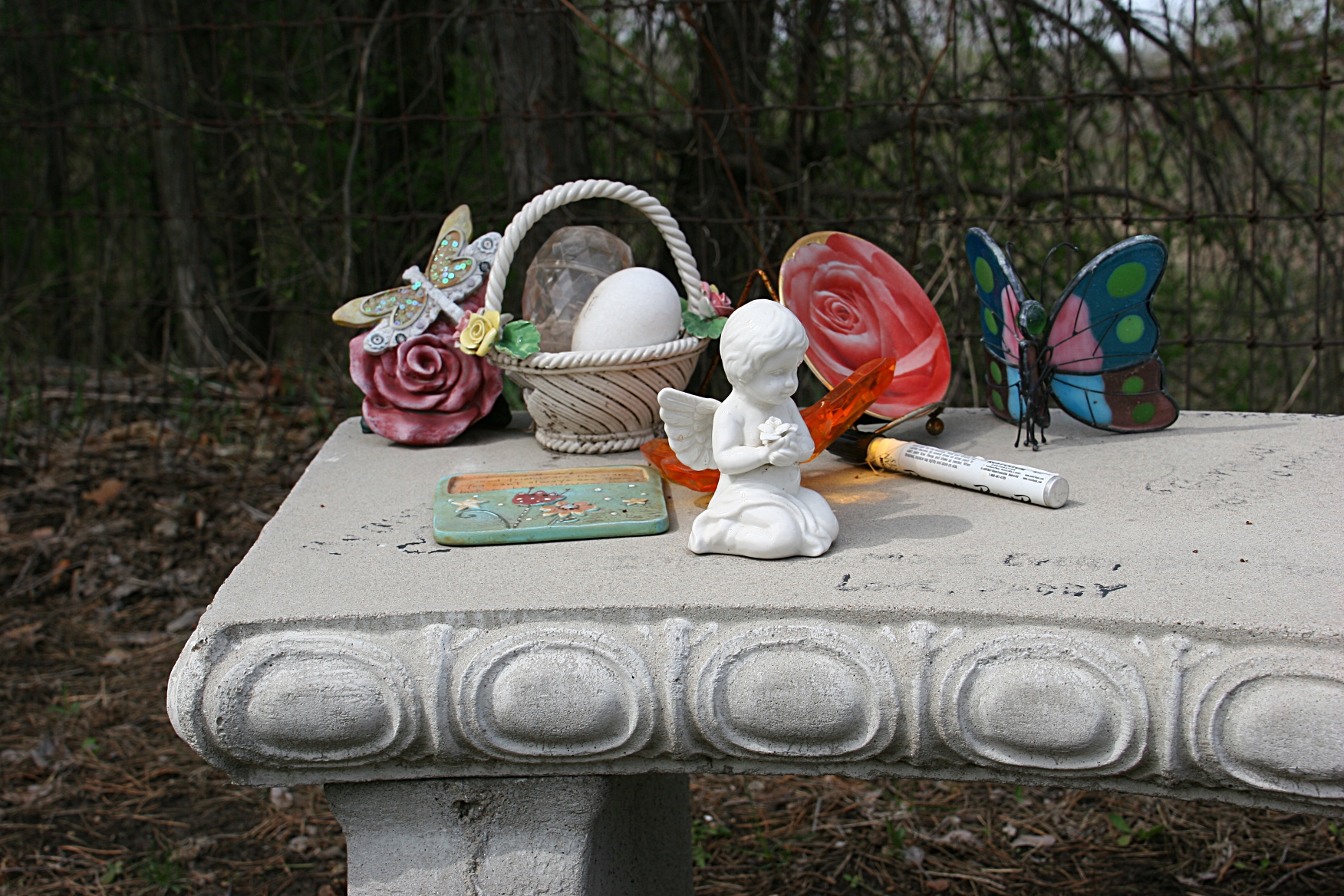
Visiting Brittney’s memorial, I got a sense of who she was, what she loved, how much she was loved/is still loved and missed.

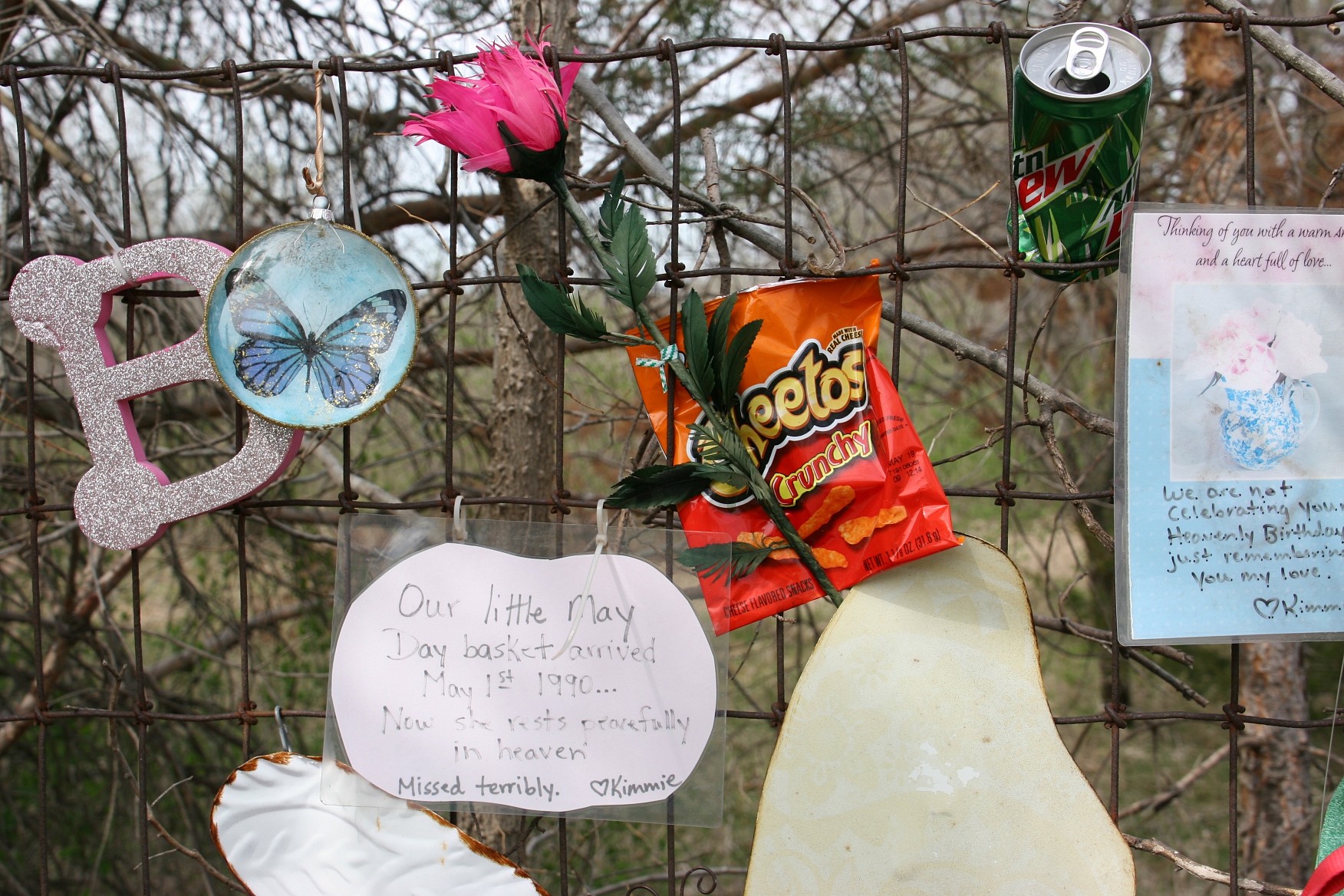
Items attached to a fence  reveal more about Brittney.

Items attached to a fence reveal more about Brittney.

She was a young woman who apparently liked Cheetos and Mountain Dew, Hello Kitty and butterflies.

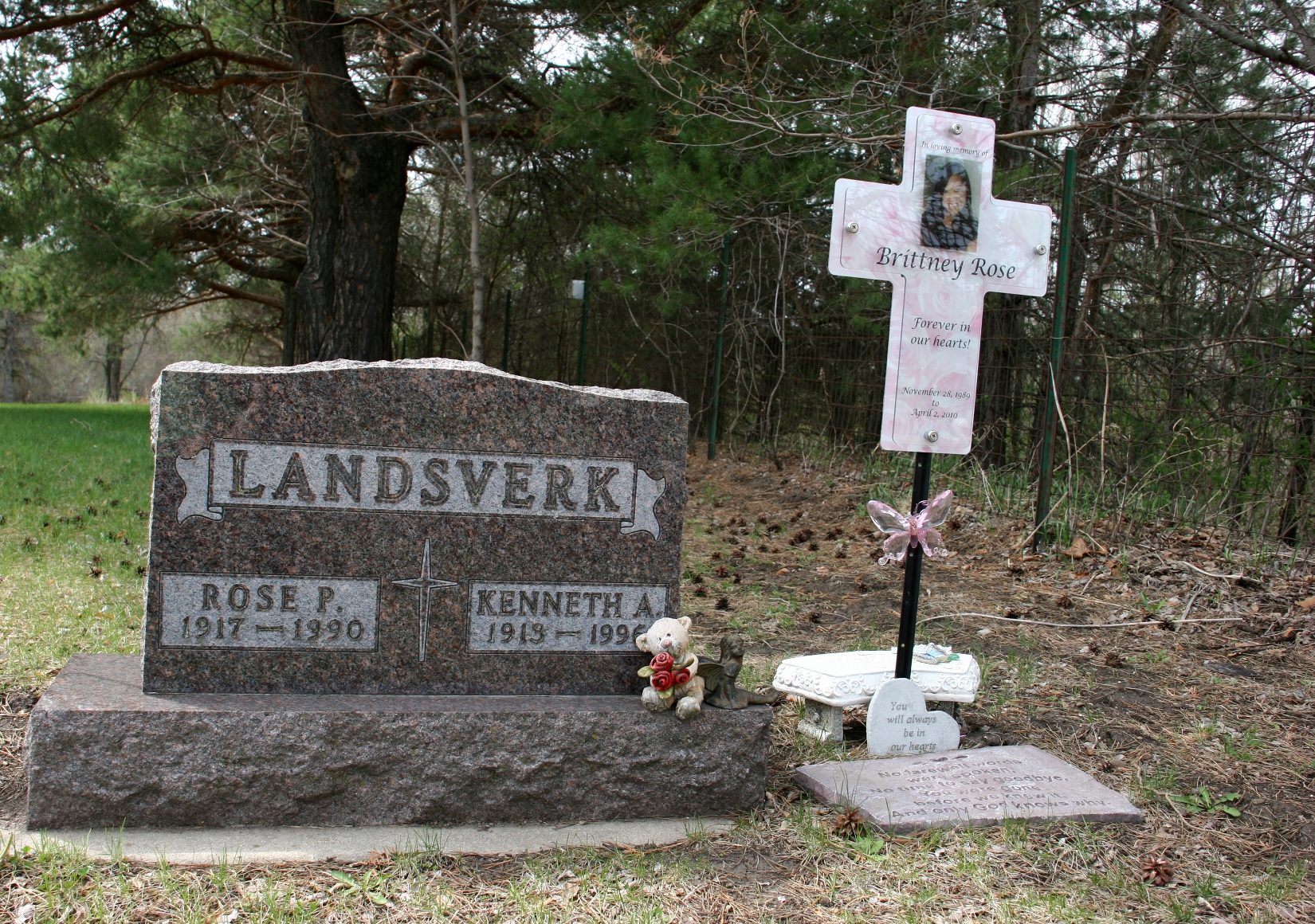
Brittney's memorial is next to her grandparents' grave.

Brittney’s memorial is next to her grandparents’ grave.

Born in South Korea, Brittney Rose arrived in her parents’ arms on May 1, 1990. She is named after her paternal grandmother, Rose. Brittney’s memorial is located next to Rose and husband Kenneth’s gravesite.

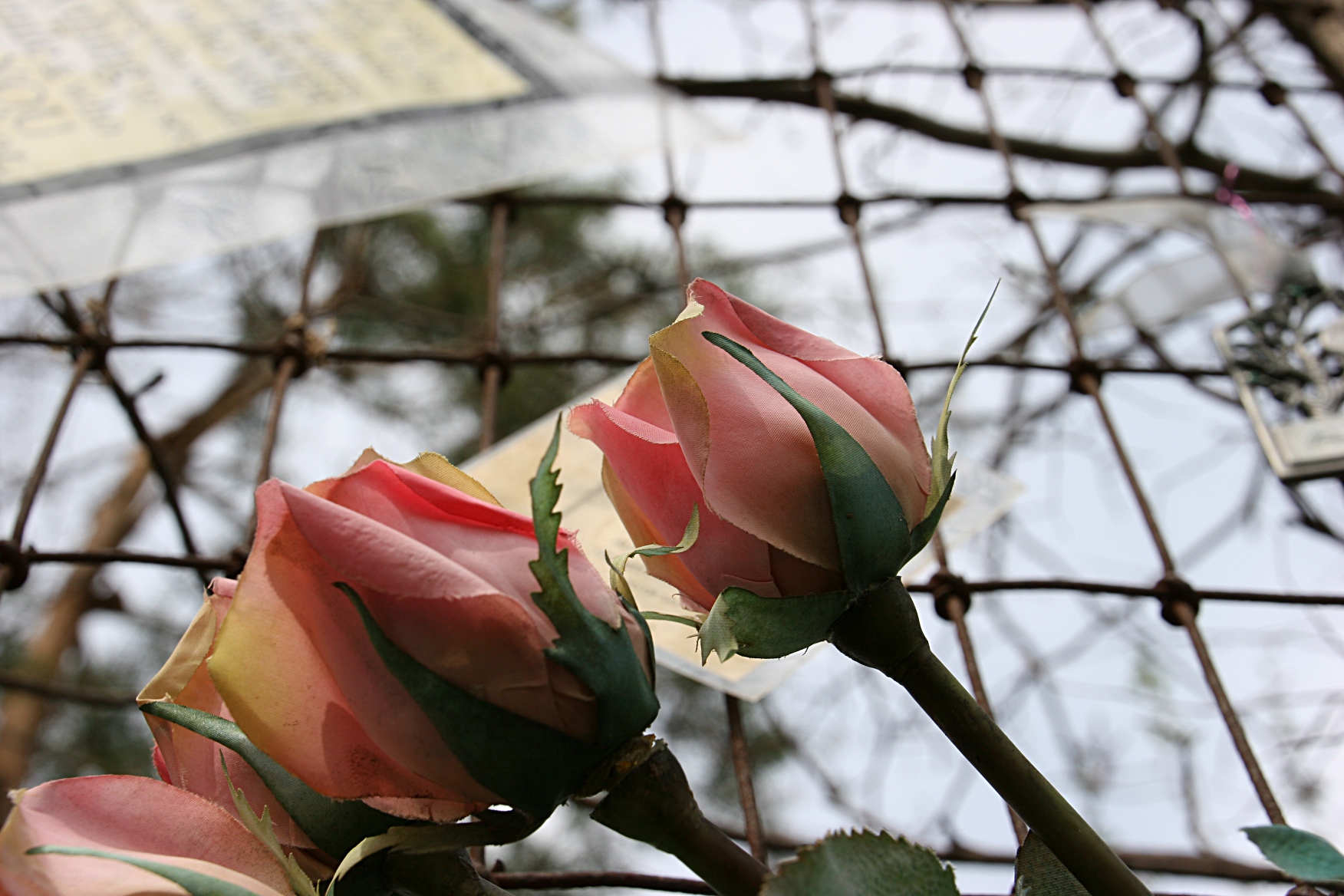
Roses abound, including these on the fence.

Roses abound, including these on the fence.

Roses grace the memorial. The flowers seem symbolic beyond honoring Brittney Rose’s name. To me they also represent that adage, “Stop and smell the roses.” We never know when the roses may cease to bloom, when their sweet scent will merely linger in the memory of our days.

#

Click here to read my first post on North Grove Cemetery.

© Copyright 2015 Audrey Kletscher Helbling
 

The Boys of ’61 memorial May 9, 2011

ON AUGUST 21, 1862, he was mustered into the Seventh Regiment Minnesota Volunteer Infantry, Company K. He was 34 years old. He was my great great grandfather, John Dallmann.

More than two years later, he was among seven men from his company wounded in the Battle of Nashville. The battle represented one of the Union Army’s largest victories during the Civil War. Two soldiers from Company K were killed in that December 15-16, 1864, conflict.

Remarks written in the Company K roster, published in Minnesota in the Civil and Indian Wars 1861-1865, under the supervision of The Board of Commissioners appointed by the act of the Minnesota legislature in 1889, state that Dahlman (the roster spelling) was “Wounded at Nashville; discharged in hospital in ’65.”

Other than that basic information, I know nothing of my great great grandfather’s military service.

He was among some 24,000 Minnesotans who marched off to war 150 years (or so) ago. Some came home; many died on battlefields or of disease.

My great great grandfather, John Dallmann (seated in the front row) was wounded on December 16, 1864, at the Battle of Nashville. My great grandmother, Anna Dallmann Bode is standing in the center in the back row, between her siblings, Minna, left to right, Carl, Herman and Hulda.

On this the sesquicentennial of our nation’s bloodiest war, plans are in place to construct a memorial honoring “all Minnesota citizens who served and fought to preserve Minnesota and the Union between 1861 and 1866,” according to the Minnesota Boys of ’61 nonprofit corporation.

A one-acre site south of the State Capitol in Summit Park has been selected for the state-wide memorial, current location of a monument to Josiah King, the first Minnesotan to volunteer for the Union.

Design plans call for granite monuments recognizing each Minnesota regiment, battery, battalion or independent organization encircling a full-scale bronze infantryman, calvaryman and civilian volunteer. Artillery pieces will flank each side of the memorial.

Efforts are currently underway to raise $750,000 for the project, which will be funded entirely by private donations.

For Minnesotans, this monument offers an opportunity to honor a soldier-ancestor on a state-wide level. Contributions made payable to “Minnesota Boys of ’61 Memorial” should be sent to:

Minnesota Boys of ’61 Memorial

1524 East Cliff Road

Burnsville, MN. 55337

A “Wall of Honor” will recognize donors at various levels, beginning with patriot donors who give a minimum $150. Contributors may choose to be recognized by personal or business name or may honor an ancestor.

Those who donate over $1,000 in money or in-kind services will also receive a signed, limited edition print of Minnesota Iron, the official Boys of ’61 print by Minnesota artist David Geister.

My great great grandfather's name is listed on the Veterans Wall of Honor in Bella Vista, Arkansas, where my two maternal aunts and their husbands live.

FYI: Log on to boysof61.org for more information about the Minnesota memorial and how you can donate.

Click here to read about the Arkansas memorial.

© Copyright 2011 Audrey Kletscher Helbling
Family photo courtesy of Dorothy Bowman