Minnesota Prairie Roots

Writing and photography by Audrey Kletscher Helbling

Unlike Tiny Tim, I never tiptoed through the tulips May 23, 2016

Filed under: Uncategorized — Audrey Kletscher Helbling @ 5:00 AM
Tags: , , , , ,
A row of vibrant ukuleles are suspended in the front window of Eastman Music in historic downtown Faribault, Minnesota.

A row of vibrant ukuleles are suspended in the front window of Eastman Music in historic downtown Faribault, Minnesota.

I REMEMBER PLAYING a ukulele in junior high school. I had no clue what I was doing; I could not read a musical note. Somehow, though, I managed to strum my way through a concert and pass a music class. Interesting how I remember that all these decades later. And interesting how the teacher failed to notice that I was not learning to read notes under his instruction.

Unlike nearly every other student, I never had the opportunity to play piano or a band instrument. I was the second oldest of six children in a poor farm family. There was no extra money for music anything. Plus, my elementary school didn’t offer a band program and the junior high school, at 20 miles distant, was too far away for me to be involved in band.

I’ve always regretted not being able to read music or play an instrument. I cherished the toy accordion I received one year for Christmas. It is the closest I’ve ever come to owning a musical instrument. When my sister, three years my junior, took flute lessons, I taught myself to play “Mary Had a Little Lamb.” Yes, my parents somehow scrimped money for musical instruments for my younger siblings.

How about you? Can you read music? Do you play a musical instrument? If not, why not?

NOTE: I took this photo a year ago and just now pulled it from my files.

Copyright 2015 Audrey Kletscher Helbling


Thoughts after 34 years of marriage May 15, 2016

Filed under: Uncategorized — Audrey Kletscher Helbling @ 5:00 AM
Tags: , , , , , , ,
Wedding guests toss rice at Randy and me as we exit St. John's Lutheran Church following our May 15, 1982, wedding.

Wedding guests toss rice at Randy and me as we exit St. John’s Lutheran Church following our May 15, 1982, wedding. That’s my mom in the pinkish dress standing next to my bachelor uncle Mike. My paternal grandma, in the red scarf and blue coat, is just behind me. That’s my sister Lanae, my maid of honor, in the long green dress. I love this photo. It captures a moment and portraits of loved ones, some no longer with us.

THIRTY-FOUR YEARS AGO TODAY, I married the man I love.

Our wedding day began with drizzle and clouds. But by the time of the reception and dance, skies cleared to a beautiful May evening in rural southwestern Minnesota. Family and friends celebrated with us in the Vesta Community Hall, where veterans’ uniforms hang in cases along walls. We polkaed and waltzed and bunny hopped and swung across the worn wood dance floor. I kicked off my toe-pinching ballet flats to dance barefoot.

There was nothing fancy about our wedding or the reception. Crepe paper strips running down tables and single carnations in vases. A meal catered by HyVee. Gingham aprons, stitched by me, for the waitresses. Green punch prepared by my mom. To this day, Randy remembers the not-so-appealing hue of that punch.

There are memories, too, of the trickster brother-in-law who let air out of our truck tires, necessitating a drive several blocks west to my Uncle Harold’s gas station.

While some of the memories have faded, others have not. Nor has our love. I love my husband as much today as the day I married him.

Admittedly, it’s a different kind of love, one shaped by years together, by a shared history, by the comfort that comes from being with someone for this long. Our experiences—good and bad—have made us stronger as a couple. Life isn’t always easy. But it’s easier with a loving partner beside you.

Randy isn’t the most demonstrative man. It’s just not in his nature or his genes. But he’s always been here for me and our three children, now grown.

I would be remiss if I didn’t mention the little things he does for me, which aren’t really little things. Every Sunday he prepares brunch. And nearly every weekend, even in the winter, he grills. I appreciate the break from cooking.

Occasionally, he buys me flowers for no reason other than he knows I need them. Each spring he brings me a bouquet of lilacs cut with a jackknife pulled from his pocket.

He works hard, sometimes too hard. I was grateful when he stopped working Saturdays a few years ago.

On Sunday mornings, he’ll sometimes slide his arm across the back of the church pew, his fingers lingering on my left shoulder. I feel so loved by that simple gesture, by having this man beside me as we worship.

Randy has also accompanied me to many poetry readings, supporting me in this writing venture. He’s a grease rimming his fingernails hard-working automotive machinist, certainly not the type you would envision ever listening to his wife read poetry. But he does, because he loves me.

I am blessed.

© Copyright 2016 Audrey Kletscher Helbling


In honor of spring planting season in southern Minnesota April 18, 2016

Filed under: Uncategorized — Audrey Kletscher Helbling @ 5:00 AM
Tags: , , , , ,
A pause in field work along the Rice-Steele County line Sunday afternoon.

A pause in field work along the Rice-Steele County line Sunday afternoon.

FARM IMPLEMENTS KICKED up dust Sunday afternoon under blue skies clumped with white clouds here in southeastern Minnesota.

Prepping the soil for planting along 270th Street East in southern Rice County.

Prepping the soil for planting along 270th Street East in southern Rice County.

It was the kind of balmy spring day that draws me to the land, to memories of spring planting.

This tractor and grain cart (typically used during harvest) sat unattended in southern Rice County Sunday afternoon.

This tractor and grain cart (typically used during harvest) sat unattended in southern Rice County Sunday afternoon.

While tractors and other equipment have changed since I left the farm of my roots at age 17, way too many years ago, one constant remains. This is the season of transition. An awakening. Black earth turned to warm sun. Seeding of the soil. The promise of a harvest.

Just outside Medford this farmer prepped the soil Sunday afternoon.

Just outside Medford this farmer prepped the soil Sunday afternoon.

The farm girl in me still lingers, waiting for spring days like this, for a drive into the country, for an opportunity to honor the land via photos, via thoughts, via a deep emotional connection to the earth.

© Copyright 2016 Audrey Kletscher Helbling
 

Part I: Minnesota disasters up close April 14, 2016

The panel to the right introduces the Minnesota Disasters exhibit with each panel featuring a different disaster in our state.

The panel to the right introduces the Minnesota Disasters exhibit with each panel featuring a different disaster in our state.

DISASTER. How do you define that word? In a Minnesota Historical Society Traveling Exhibit currently displayed at the Steele County History Center in Owatonna, disaster covers everything from tornadoes to the 35W bridge collapse to the grasshopper plague, drought, blizzards and more.

I personally remember many Minnesota disasters—such as the bridge collapse; the Halloween blizzard of 1991; the 1998 St. Peter-Comfrey tornadoes; the 1968 Tracy tornado which killed nine; the drought of 1976; and the devastating floods of September 2010.

During Severe Weather Awareness Week, we prepare for dangerous storms like tornadoes. One panel in the exhibit highlights some of Minnesota's deadliest and most devastating tornadoes. The Tracy tornado was not included.

During Severe Weather Awareness Week, we prepare for dangerous storms like tornadoes. One panel in the exhibit highlights some of Minnesota’s deadliest and most devastating tornadoes. The Tracy tornado was not included.

This week, Minnesota Severe Weather Awareness Week, seems an appropriate time to focus on the topic of disasters and to show you the MHS exhibit, Minnesota Disasters: Stories of Strength and Survival.

Eric Lantz, 16, of Walnut Grove, shot this award-winning photo of the Tracy tornado as it was leaving town. He often took photos for the Walnut Grove Tribune, owned by his uncle, Everett Lantz. This image by Eric was awarded third place in the 1968 National Newspaper Association contest for best news photo.

Eric Lantz, 16, of Walnut Grove, shot this award-winning photo of the Tracy tornado as it was leaving town. He often took photos for the Walnut Grove Tribune, owned by his uncle, Everett Lantz. This image by Eric was awarded third place in the 1968 National Newspaper Association contest for best news photo. This copyrighted photo is courtesy of Scott Thoma with the original copyright retainted by Lantz.

I expect many of you have been, at some point, personally impacted by a disaster. The deadly Tracy tornado forever put the fear of tornadoes in my heart. That southwestern Minnesota community lies only 25 miles from my hometown; I saw the devastation in Tracy. Decades later, a tornado damaged the farm where I grew up and high winds partially ripped the roof from my home church of St. John’s Lutheran in Vesta. I respect the powerful forces of nature, specifically of wind.

A debris pile on the edge of the church parking lot includes pieces of steel from the roof and brick from the bell tower. Photo taken in September 2011.

A debris pile on the edge of the St. John’s Lutheran Church parking lot includes pieces of steel from the roof (covered with a tarp here) and brick from the bell tower. Minnesota Prairie Roots file photo September 2011.

Elsewhere in Minnesota—in Belview, St. Peter and individual farm sites across Minnesota—I’ve seen the damage a tornado can cause.  I reported on and photographed tornado damage while working as a newspaper reporter. When a tornado warning siren blows, you won’t see me standing in the driveway looking for the twister. I’ll be sheltering in the basement.

I cannot imagine so many grasshoppers that they obliterated everything.

I cannot imagine grasshoppers so thick that they obliterated everything.

As I perused the MHS disaster exhibit and the accompanying stories of disasters in Steele County, I realized the depth of loss Minnesotans have endured. The Grasshopper Plague of 1873-1877 recounts how locusts devoured even the laundry hanging on clotheslines.

I knew nothing of the flooding at the Milford Mine until I read this panel.

I knew nothing of the flooding at the Milford Mine until I read this panel.

On February 5, 1924, forty-one miners drowned in the Milford Mine near Crosby in northern Minnesota. “For God’s sake, run!” one miner shouted to his co-workers. A warning like that floods the mind with fear. I’d never heard of the mine disaster until touring the MHS exhibit in Owatonna. Now I’ll never forget it.

Because I have extended family in the Hinckley area, I was fully aware of The Great Hinckley Fire of 1894 which claimed 418 lives. To read of feet baking inside shoes and stockings from the fire is horrifying.

The devastation of dust and drought are covered in this panel.

The devastation of dust and drought are covered in this panel.

As bad as those and many other natural disasters, Minnesotans voted the drought of the 1920s and 30s (the Dust Bowl era) as the “number-one state weather event of the 20th century,” according to information posted in the exhibit. I was born decades after that disaster. But, as a teen, I recall a Good Friday dust storm that blew into Redwood County. We were shopping in nearby Marshall and arrived home to find the house layered in dirt; we’d left the windows open. For hours we worked to wash away the grime.

This huge, hard-as-rock snowdrift blocked our farm driveway in this March 1965 photo. I think my uncle drove over from a neighboring farm to help open the drive so the milk truck to reach the milkhouse.

This huge, hard-as-rock snowdrift blocked our rural Vesta driveway in this March 1965 photo. My uncle drove over from a neighboring farm to help open the drive so the milk truck could reach the milkhouse. I’m standing here with my mom, older brother and three younger siblings.

Blizzards, especially, imprinted upon my memory. There is nothing like a prairie blizzard that drives snow across open farm fields, sculpting the snow into rock-hard drifts around buildings and trees. Those winter storms of the 1960s and mid-1970s created all kinds of problems with roads closed, the power out and cows to be milked. Snowstorms of today don’t compare. And, no, I didn’t walk two miles to school uphill in a blizzard. Rather, in one particularly snowy winter, I rode to town on my dad’s cab-less John Deere tractor so I could catch the bus at Don’s Cafe to ride the 20 miles to junior high school in Redwood Falls. The bus drove sometimes on a single lane cut through snowbanks higher than the bus.

More panels in the Minnesota Disasters exhibit.

More panels in the Minnesota Disasters exhibit.

Tell me, what’s your story of dealing with a natural disaster? If you don’t have one, be thankful.

FYI: Check back tomorrow for a look at disasters in Steele County, Minnesota. The disasters exhibit will be on display through March 2017 at the history center in Owatonna. Click here for more information.

© Copyright 2016 Audrey Kletscher Helbling
 

Thoughts following a country drive west of Wanamingo March 30, 2016

Filed under: Uncategorized — Audrey Kletscher Helbling @ 5:00 AM
Tags: , , , , ,

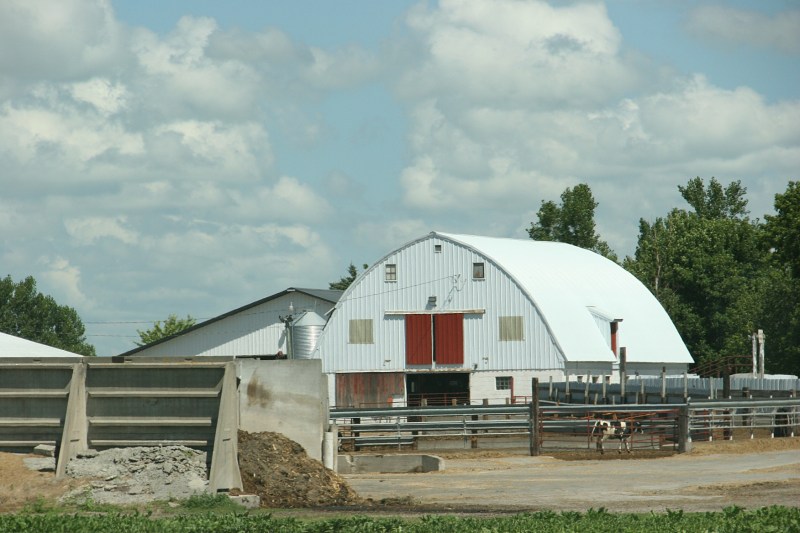
Rural Minnesota, 102 barn & cattle


WE ALL HAVE OUR PLACE of comfort, the place that brings us peace and allows us to escape, if but for a minute or an hour or a day.

For me, that’s a drive in the country, along the less-traveled back roads of Minnesota.


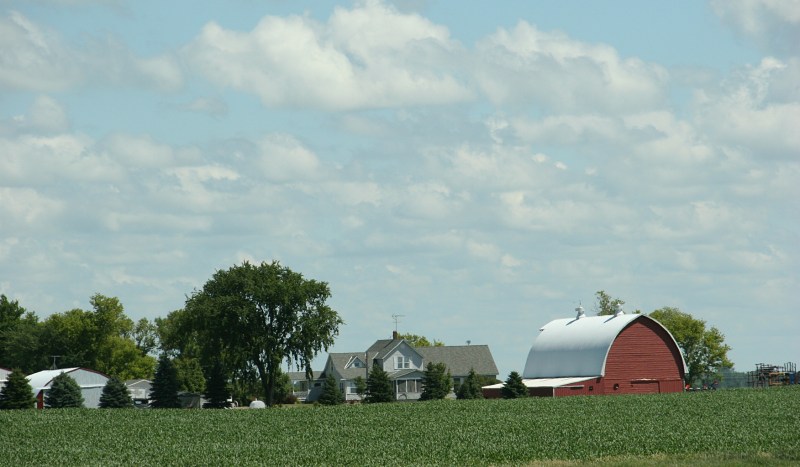
Rural Minnesota, 106 barn and corn stubble


I am of the land, of sky and fields and barns and silos and farmhouses. Rural Minnesota shaped me into the person I’ve become. A writer. A photographer. A poet. A keeper of rural life and of small towns.


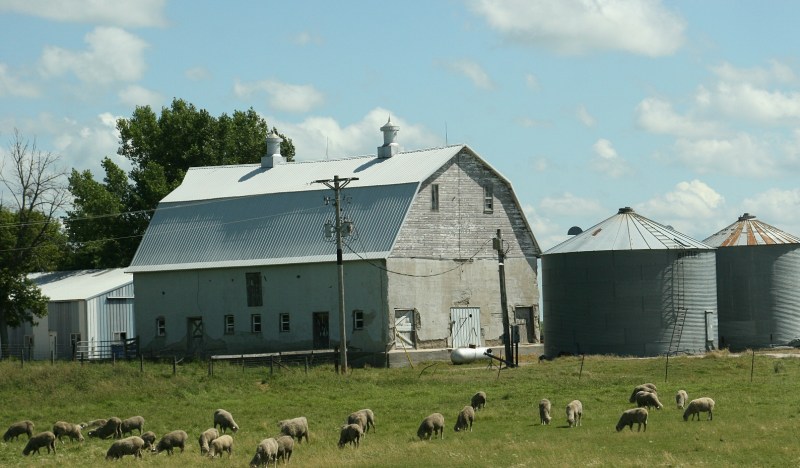
Rural Minnesota, 110 barn & Harverstore silos


Memories of farm life tuck away in my heart. Doing chores—feeding calves and cows and scooping silage and manure. Walking beans. Picking rock. Gathering around the supper table with my parents and siblings to eat that which we’d grown and raised. Playing in the grove. Racing across rock solid snowdrifts sculpted by the prairie wind.

Life on the farm wasn’t easy. But it was good. Good in the sort of way that comes from working hard and understanding that family and faith come first.


Rural Minnesota, 111 house in Aspelund


I grew up poor. There were no birthday gifts, except from an aunt, my godmother. A meal was sometimes comprised of a kettle of plain white rice. Clothes were sometimes stitched from feed sacks and most certainly handed down. There was no telephone or television or indoor bathroom in the early years of my life. I went to church and Sunday School every week.

I am grateful my parents were never wealthy in the monetary sense. I would not be the person I am today. It is not important to me to have the newest or latest or best. I am content with what I have. I consider myself grounded and honest and loyal. Down-to-earth. Rooted. I love the land and I love family.


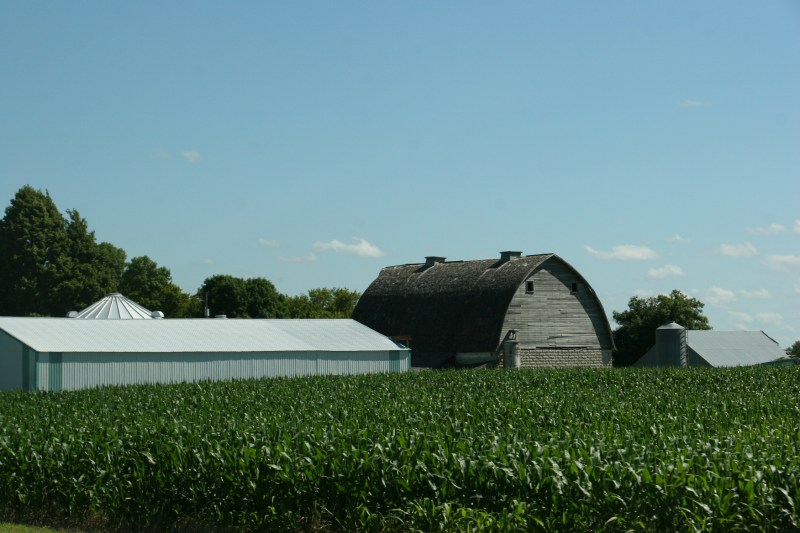
Rural Minnesota, 103 barn & silo


These are the thoughts that surface when I journey through the Minnesota countryside, when I photograph barns and farmhouses and other rural scenes. I am capturing the essence of the place that shaped me. Land. Sky. Fields. Barns. Silos. Farmhouses. And, yes, my family and my faith.


Rural Minnesota, 108 sprawling farmhouse


FYI: These images were taken while traveling along Goodhue County Road 30 west of Wanamingo, Minnesota, and in Aspelund, a slight veer to the north. I did not grow up in this area. Rather, I was raised on a dairy and crop farm in Redwood County, on the southwestern Minnesota prairie. My childhood home was nothing like the houses pictured here. Ours was a tiny woodframe farmhouse heated by an oil burning stove in the living room. The kitchen had an interior trap door that led to a dirt cellar. It was cramped. But it was home.

© Copyright 2016 Audrey Kletscher Helbling
 

From small town Minnesota: Should Gaylord keep its noon & 6 p.m. whistles? March 2, 2016

Filed under: Uncategorized — Audrey Kletscher Helbling @ 5:00 AM
Tags: , , , , , , ,
I photographed this aged water tower, which looks a lot like the 1917 one in Gaylord, several years ago. It stands in Freeport, Minnesota, along Interstate 94.

I photographed this aged water tower, which looks a lot like the 1917 one in Gaylord, several years ago. It stands in Freeport, Minnesota, along Interstate 94.

WHAT IS THE PRICE of history, of nostalgia, of tradition in a small town?

Folks in Gaylord, a county seat community of some 2,300 in southern Minnesota, are grappling with that question as the city replaces its aging water tower with a new one.

Should the city spend several thousand dollars annually for inspections and $100,000 every 10 years for upkeep of the 1917 tower? Or should the tower be torn down? And, if so, what happens to the siren attached to it?

The issue isn’t simply one of economics. That’s clear in Facebook comments on the City of Gaylord Facebook page. Residents and former residents are discussing not only whether to keep the tower, but whether to continue with the tradition of blowing the noon and 6 p.m. whistles. A siren on the old water tower blares twice daily as it has for decades. The whistle has become a hot topic of discussion.

Wabasso's water tower, painted in the school colors and adorned with a white rabbit, the school mascot.

This aged water tower stands in Wabasso, Minnesota, where I attended high school. Wabasso means “white rabbit” and is the school’s mascot. Minnesota Prairie Roots file photo.

I understand the small town nostalgia bit. I grew up on a farm near Vesta, a town of several hundred with an old water tower (long gone) and those roaring daily sirens. I also lived in Gaylord where I worked as a newspaper reporter for two years fresh out of college.

The noon and 6 p.m. whistles (and if I remember correctly, even a 9 p.m. whistle) in Vesta alerted residents to the time of day. Time for dinner. Time for supper. Time to get home and prepare for bed.

This water tower stands in Canton, Minnesota, near the Iowa border. Minnesota Prairie Roots file photo.

This water tower stands in Canton, Minnesota, near the Iowa border. Minnesota Prairie Roots file photo.

Do those whistles still hold importance in 2016? Are they necessary? Are they welcome?

In perusing comments from Gaylord, I read of overwhelming support for keeping the whistles.

Folks write of the whistle in terms of small town charm and values, nostalgia, memories, historical importance, uniqueness and more.

One Gaylord native says of the siren:

It was the singular mechanical device that, by itself, taught us Gaylord kids what responsibility meant. If I and my siblings weren’t walking in the door at noon and six, there was hell to pay. It is a legacy.

Another commenter surmises:

I have continued the tradition and taught my children to listen for the whistle. A watch just isn’t enough when you are talking about kids. They need an audible reminder of the progression of time. The noon whistle is a blatant reminder of the time of day, as is the 6:00 whistle. I think it is an important tool for responsibility as we raise the next generations. The matter of $5,000 – $10,000 is actually a small price to pay when averaged out for a big payout. Besides, what is more monumental in a small town than a noon and/or 6:00 whistle. Can’t get that in the “big city”.

The City Council will decide on the 1917 tower and the whistle in several months. For now, they’ve taken this stand:

The council has determined taking it (the old water tower) down makes the most sense in the long run. The City is looking into keeping the whistle in some capacity…An alternative whistle is being explored; an unused severe weather siren (behind the Prairie House), is proposed to be relocated to the old water tower site.

WHAT ARE YOUR THOUGHTS on keeping the aged tower and/or daily whistles? Let’s hear.

FYI: Click here to reach the City of Gaylord Facebook page. Read the comments and even listen to the siren.

© Copyright 2016 Audrey Kletscher Helbling
 

My view of “The Cities” February 16, 2016

Filed under: Uncategorized — Audrey Kletscher Helbling @ 5:00 AM
Tags: , , , , , , ,

MINNEAPOLIS AND ST. PAUL. Two cities. The Twin Cities. Or, as I called them growing up, simply The Cities.

Frame 7: I love this painterly view of the Minneapolis skyline.

The Minneapolis skyline, Minnesota Prairie Roots file photo October 2015.

I am more familiar with Minneapolis, specifically south Minneapolis where an aunt and uncle lived until retiring to Arkansas.

Sailboats sit upon the waters of Lake Harriet.

Sailboats sit upon the waters of Lake Harriet. Minnesota Prairie Roots file photo, September 2009.

About once a year during my childhood, our farm family would pile into the Chevy—Dad, Mom, six kids and Grandpa—to visit our metro dwelling relatives. And, on a few occasions during summers of my youth, I boarded the Greyhound bus in Vesta to travel solo some 140 miles to Minneapolis for one-on-one time with my Aunt Rachel. We would bike around Lake Harriet, tour the Rose Garden, catch a city bus to purchase fabric at Munsingwear.

The Minnesota state capitol

The Minnesota state capitol, Minnesota Prairie Roots file photo.

To the east in St. Paul, my youthful memories connect to the State Capitol building and Minnesota History Center, which I toured as a sixth grader. I waited in our farmhouse kitchen one dark spring morning for headlights to swing into the yard indicating my ride to Vesta Elementary School had arrived. My stomach churned at the thought of leaving Redwood County on a school bus bound for St. Paul.

Driving through St. Paul on a recent Saturday morning.

Driving through St. Paul on a recent Saturday morning.

Growing up in a rural area, I’ve never been particularly comfortable in big cities. Traffic and tall buildings and cement and closeness and busyness sometimes overwhelm my senses. But I manage and I appreciate the cultural opportunities a place like the Twin Cities offers, although I seldom take advantage of such offerings.

Creeping along in a congested area near downtown Minneapolis.

Creeping along in a congested area near downtown Minneapolis. Minnesota Prairie Roots file photo.

My trips to The Cities are primarily through or around. To visit family.

Approaching St. Paul from the south, the speed limit drops.

Approaching St. Paul from the south, the speed limit drops.

Each city, I’ve observed, has a unique look and feel. Minneapolis appears urban while St. Paul seems rooted to the land with a deep sense of place and history. I feel more comfortable in St. Paul, where even the Interstate 35-E speed limit drops to 45 mph for awhile upon entering the city. In Minneapolis, traffic races along Interstate 35-W toward downtown.

For awhile, my eldest daughter and son-in-law rented an apartment in a high-rise in the Mears Park neighborhood of Lowertown St. Paul. It’s the happening place, akin to Uptown or Northeast Minneapolis. The daughter lived in Uptown prior to her marriage and subsequent move to St. Paul. Now she and her husband have settled in a northern burb.

I prefer gravel roads to interstates. My East Coast dwelling son appreciates the extensive mass transit system in Boston.

I prefer gravel roads to interstates. This scene was photographed while traveling under an Interstate overpass in St. Paul. My East Coast dwelling son appreciates the extensive mass transit system in Boston.

My rural roots, and those of my husband, have not threaded into the DNA of our offspring. All three of our adult children live in metropolitan areas—in Minnesota, Wisconsin and Massachusetts. They need to be where they are happiest and feel most comfortable.

Not where I wish they lived. Geographically close and far away from any place defined as The Cities.

© Copyright 2016 Audrey Kletscher Helbling
 

More than just an aged pick-up truck January 29, 2016

A GMC 150 parked in historic downtown Faribault.

A GMC 150 parked in a city lot in historic downtown Faribault. Minnesota Prairie Roots file photo July 2015.

GROWING UP ON A FARM, I never truly appreciated pick-up trucks. They were simply a part of farm life—the workhorse of the farmer.

The truck needs a lot of work, but it has potential.

The truck needs a lot of work, but it has potential. Minnesota Prairie Roots file photo July 2015.

In the bed of his red and white Chevy pick-up, my dad tossed fence posts, seedcorn bags, chains, shovels, and a myriad of other agricultural essentials. He may even have transported an animal or two.

I recall flying along gravel roads in the front seat of the pick-up, and sometimes in the bed, dust trailing a cloud across the prairie. Other times Dad would bump his truck across the stubbled alfalfa field.

Every time I spot an aged pick-up truck, I covet it. Not because I necessarily desire ownership. Rather, it’s about reliving, and holding onto, those rural memories.

© Copyright 2015 Audrey Kletscher Helbling


Snowmen, then & now January 25, 2016

Filed under: Uncategorized — Audrey Kletscher Helbling @ 5:00 AM
Tags: , , , , ,
The Hoisington family's 2016 snowman.

The Hoisington family’s 2016 snowman.

FOR THE PAST THREE YEARS, I’ve photographed the over-sized snowmen sculpted in the Hoisington family’s yard in the heart of Faribault at 18 Third Avenue Northwest.


Snowman, 11 head close-up


This year I braved double digit below zero windchills on a bitterly cold Sunday afternoon to document a sculpture that brings me joy.


Snowman, 10 close-up


A snowman hearkens to carefree days of childhood, when I actually loved winter. It brings memories of laboring with my siblings to roll snow into monumental balls. Three snowballs stacked atop each other to build our version of Frosty.

Snowmen and snow days. Snowdrifts hard as granite. Snow bucked into piles by Dad behind the John Deere tractor and loader. Imaginary mountains upon which we raced as Canadian Mounties.

Boots crunching on snow, the sharp sound slicing the quiet of the Minnesota prairie. Noses dripping. Cheeks flaming red. Fingers numbing through too thin gloves.

These are my winter memories, elicited by photographing a snowman.

What are yours?

FYI: Click here to view last year’s snowman pix. And click here to see my photos from 2014.

Check back tomorrow to see another notable snowman gracing a Faribault yard just blocks from the Hoisington snowman.

© Copyright 2016 Audrey Kletscher Helbling

 

Lighting up the holidays in rural Faribault December 28, 2015

Filed under: Uncategorized — Audrey Kletscher Helbling @ 5:00 AM

Tags: , , , , , , , ,

WHEN OUR KIDS were little, we made it a late December tradition to drive around Faribault viewing residential holiday light displays. It is a lovely, cherished family memory that connects to my childhood. Each December, my parents, five siblings and I packed into our Chevy and twisted through the Tangle Town neighborhood of Redwood Falls to see the lights.

Fast forward to 2015. My three kids are now adults, two of whom live out of state. Only one was home on Christmas Day. Three evenings before Christmas, my husband slid behind the wheel of our Chevy. I buckled into the front passenger seat. And the college son folded into the backseat. We were on our way to view a rural holiday light display about two miles east of Faribault.


Holiday lights, 6 trees and stars


Pulling into the driveway at Cathy Hoban and Pat Spence’s place, a sign advised us to tune into 103.1 FM and to turn on our parking lights. Before us, lights flashed as the magic unfolded.
 

Holiday lights, 15 1939 Ford pick-up truck


From towering Christmas trees to stars, Santa, snowmen, reindeer, candy canes, a Nativity and even a light-bedecked 1939 Ford pick-up truck, this dazzling music-synchronized show is wondrous.


Holiday lights, 17 circling the driveway


Randy crept the Chevy along at a snail’s pace, then stopped so we could take it all in. I stepped outside the car to snapshot the scene, hoping for a few good frames. He followed the circle drive then retraced his route.


Holiday lights, 14 star atop tree


We were mostly silent as we watched and listened, delighting in this gift from Cathy and Pat to the Faribault community. The couple loves Christmas. And it shows in the strings and strings and strings of colorful lights, in the effort it takes to put this all together, in the creativity and music.


Holiday lights, 21 reindeer


I couldn’t help but smile and feel propelled into the Christmas spirit while touring here. And I felt, too, the connection between past and present, in memories remembered and those being formed.


Holiday lights, 9 Nativity


How about you, do you drive around your community, or elsewhere, to view holiday light displays?

FYI: Cathy and Pat’s holiday light show is open from 5 p.m. – 10 p.m. daily through the holidays. However, because of warm temps, which led to a muddy driveway, the display closed some evenings. That shouldn’t be a problem this week. The address: 4531 197th Street East, Faribaut.

© Copyright 2015 Audrey Kletscher Helbling