Minnesota Prairie Roots

Writing and photography by Audrey Kletscher Helbling
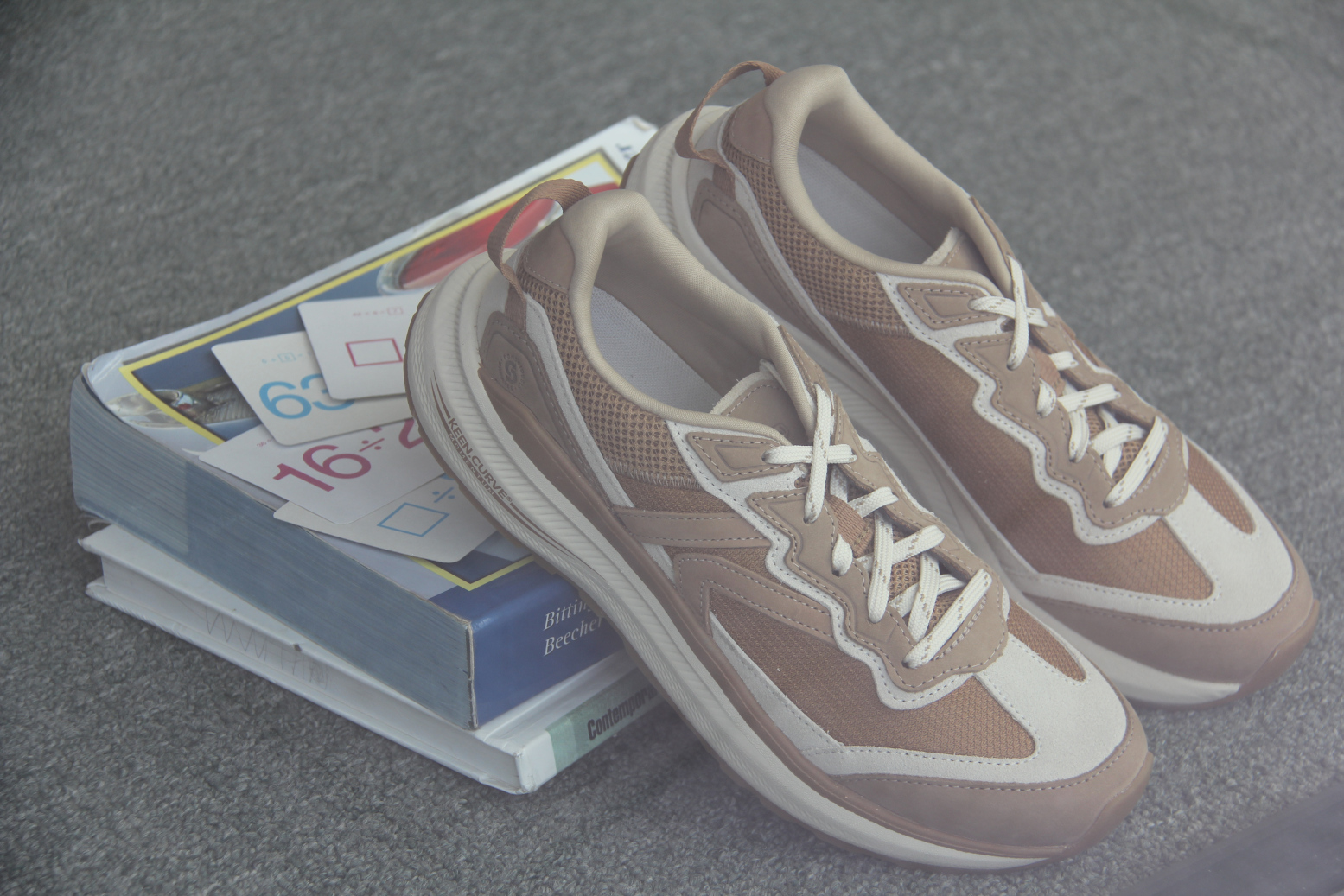
As school starts for most in Minnesota September 2, 2025

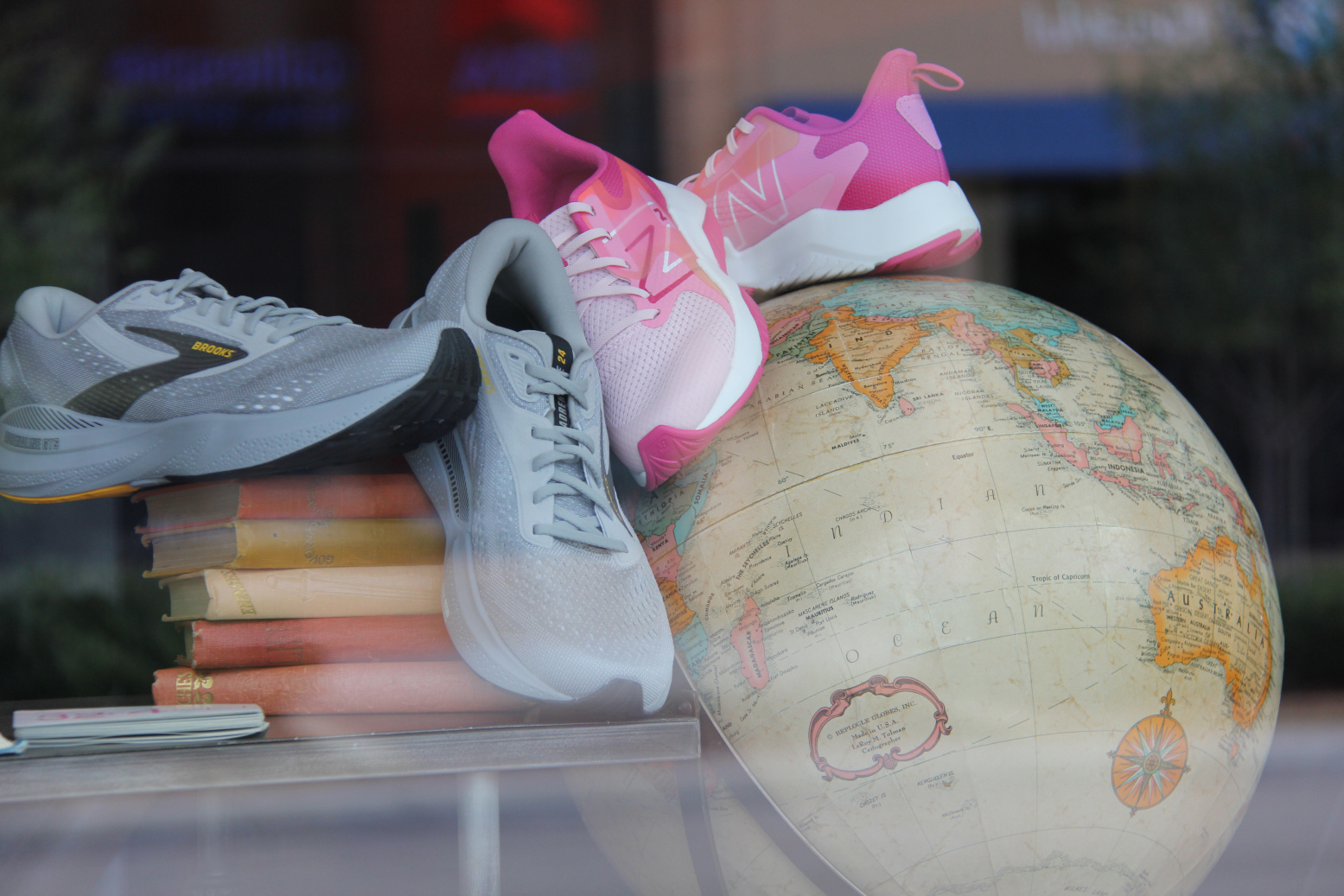
I photographed this creative back-to-school front window display at Owatonna Shoes Monday afternoon. (Minnesota Prairie Roots copyrighted photo September 2025)

HOW WELL I REMEMBER the first day of classes at the start of a new school year. Decades ago as a student. Then as a parent of three. And now as a grandparent.

As a student, I felt excited. Nervous. Happy. I remember the sharp tips of new Crayola crayons. The discomfort of new shoes. Piles of multi-colored notebooks awaiting words.

As a mom, I remember worrying if my kids would catch the right bus, make friends, like their teachers.

But none of that matches the concerns I feel today as the grandmother of a first grader and a fourth grader who begin classes Tuesday morning in a community in the south metro. The deadly shooting of two students and injury of 21 others (including three octogenarian worshipers) during a morning back-to-school Mass last week at Annunciation Catholic Church in south Minneapolis weighs heavy on all of us.

(Minnesota Prairie Roots copyrighted photo September 2025)

Children, teachers and staff should feel and be safe in school. Parents should never have to wonder if their children will come home. Grandparents shouldn’t have to worry how their children, their grandchildren, are going to navigate all of this.

But school violence is all too real. And it shouldn’t be. I invite you to read a blog post by Kathleen Cassen Mickelson (click here), a mother, grandmother, writer, photographer, poet and activist. She writes with passion and clarity about the Annunciation shooting and gun violence, including steps we can take to change things. Kathleen’s words are powerful and move us to a place of action with the strong word, “Demand.”

As someone who grew up in Minneapolis, Kathleen writes from the heart. She is grieving. Angry. Frustrated. Just like me. Just like so many of us in Minnesota and beyond.

(Minnesota Prairie Roots copyrighted photo September 2025)

To the politicians out there who put guns before kids and who vote against funding for mental health programs, pause for a moment and assess your priorities. Walk in the shoes of kids, parents, grandparents, teachers. And then think of Fletcher Merkel, 8, and Harper Moyski, 10, shot to death in a Minneapolis church during the first week of classes at Annunciation Catholic School.

© Copyright 2025 Audrey Kletscher Helbling

 

The day after a mass shooting…thoughts from Minnesota August 28, 2025

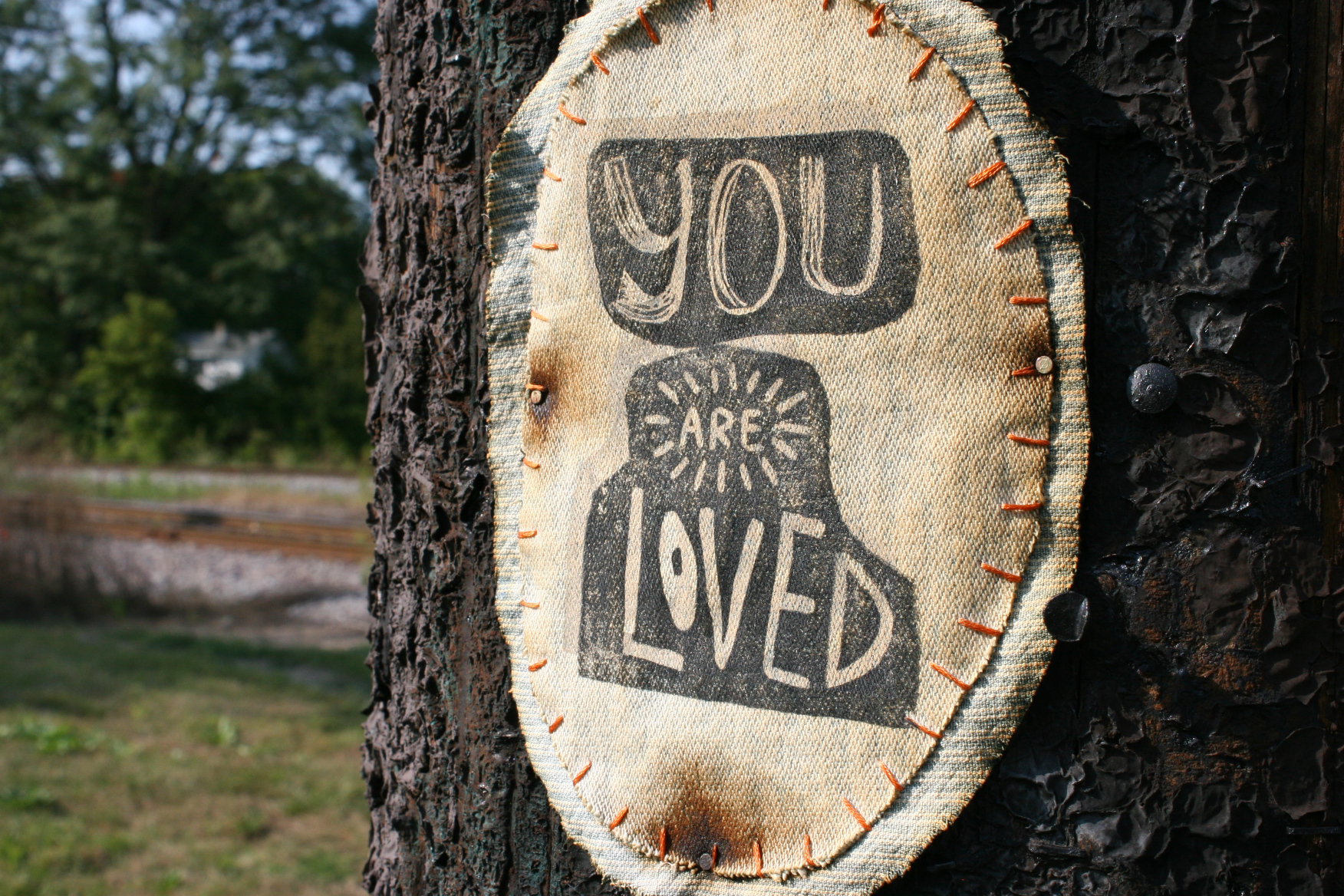
An inspirational word in an art installation honoring Barb Larson, shot and killed in 2016 inside her workplace, the Faribault Area Chamber of Commerce & Tourism. Used here for illustration only. (Minnesota Prairie Roots copyrighted file photo)

IN MY BIBLE, I highlight verses that resonate with me, that inspire, that uplift and offer hope. Those include Jeremiah 29:11. It reads: For I know the plans I have for you, declares the Lord, plans to prosper you and not to harm you, plans to give you hope and a future. In faith communities, this specific scripture is often directed to youth, who are our future.

On Wednesday morning those words written by the prophet Jeremiah were shared by Matt DeBoer, principal of Annunciation Catholic School in south Minneapolis, following a mass shooting at the adjacent church. The shooter fired from outside through stained glass windows into the church, killing two students and wounding 18 others, including three parishioners in their eighties. All were attending a back-to-school morning Mass.

The churning Straight River, visually reflective of what we’re feeling now in Minnesota. (Minnesota Prairie Roots copyrighted file photo)

NEVER AGAIN”

This act of gun violence is nothing short of horrific. No one can deny that. Fletcher, 8, and Harper, 10, are dead. Seven others were critically injured, taken to a level 1 trauma center. All are expected to survive. The level of pain and grief and anger, yes, anger, we are feeling collectively in Minnesota right now is palpable.

In all the media coverage I’ve watched and read, I keep circling back to Principal DeBoer and his message at a late Wednesday morning press conference hours after the shooting. He shared the school’s Jeremiah 29 based theme for 2025-2026 of “a future filled with hope.” Hope happens to be one of my favorite words, but not one I personally relate to a mass shooting. Yet on Wednesday morning, the principal called for all of us to look to the future with hope, because we can’t change the past. I listened. I heard. I heard him say, “Never again.” I heard DeBoer ask us to commit those two words to our speech pattern. “Never again.”

And I heard, too, his call for action as he referenced this African proverb: When you pray, move your feet.

As the day progressed into evening vigils, I continued to watch television coverage. Clergy led a prayer service at the Academy of Holy Angels, a nearby private Catholic high school that Annunciation students often attend beginning in ninth grade. In a message also themed to hope, Archbishop Bernard Hebda mentioned the broad support received from those of all faiths—Protestants, Jews, Muslims… And from Pope Leo XIV. I would expect nothing less. We are all hurting.

Another vigil followed at Lynnhurst Park. As I watched television coverage begin, I focused on the diverse crowd. A young girl seated on the ground clutching a teddy bear. A priest in a wheelchair. Attendees sheltering flickering candles with their hands. People in bright orange t-shirts emblazoned with “Protect Minnesota.” Photographers working. A woman in a black tee with the simple word, “Enough,” and a slash drawn through a circled gun. Instrumental music played—”Bridge Over Troubled Water”—setting an introspective mood.

“Doing something” must be about our kids. Photo used for illustration only. (Minnesota Prairie Roots copyrighted file photo)

WE NEED TO…”

And then the line up of speakers stepped up, addressing the crowd. The mood at this vigil was decidedly different. This gathering focused on a call to action in oftentimes fiery and emotional speeches by politicians and local leaders calling for stronger gun laws. In all the thoughts shared, Minnesota Lieutenant Governor Peggy Flanagan’s message rose to the top for me. While she spoke the usual “You are not alone” and “Enough is enough,” here’s the one soundbite that sticks with me: “We need to love our babies and our children more than our guns.” That bears repeating. “We need to love our babies and our children more than our guns.”

On this, the morning after the murder of two children and wounding of 17 others at Annunciation Catholic Church less than an hour from my Faribault home, I reflect on Flanagan’s words. And I think of my own two elementary-aged grandchildren starting the new school year on Tuesday. I want them to feel, to be, safe. I want this gun violence to end. As the mayor of Minneapolis said, his is “a city united in grief,” which must now become “a city united in action.”

I hold hope that perhaps this time something will change. I understand that gun violence is complicated, that it involves addressing the root causes of such violence. Yet, if not for the guns—three used in the Minneapolis shooting—two children would still be alive.

#

This story has been updated to include the first names of the two children killed in the shooting. Their names were released late Thursday afternoon. The number of injured has also been updated to 18.

© Copyright 2025 Audrey Kletscher Helbling
 

My heart breaks after another mass shooting, this time at a Minneapolis church/school August 27, 2025

I’ve photographed many stained glass windows in churches. I looked through my archives and found this image of a window at Mother of Good Counsel Votive Chapel, LaCrosse, Wisconsin and it struck me as fitting for this post. (Minnesota Prairie Roots copyrighted file photo 2015)

I HAD MY MORNING PLANNED. Wash sheets and towels and hang them on the line. Pay bills. Write a blog post. I finished the laundry. But then all activity stopped and my attention focused to breaking news—a mass shooting in south Minneapolis.

For hours I’ve watched media coverage of events unfolding at Annunciation Catholic Church and School in south Minneapolis. Early today two school children were shot and killed during morning Mass. Seventeen others were injured, among them two adults. Four required surgery. Seven were in critical condition at Hennepin County Medical Center, a level one trauma center. Several went to other hospitals.

My heart breaks for the families, friends and classmates of the eight and 10-year-olds who were killed. My heart breaks for all who were part of and witness to this violence. Minneapolis Mayor Jacob Frey and Minneapolis Police Chief Brian O’Hara, who spoke at a press conference, echoed the same. Their pain and anguish were evident in their words, their voices breaking with emotion.

I was especially touched by Mayor Frey’s message that we must go beyond simply saying “thoughts and prayers” because, as he stated, these kids were literally in church praying. He’s right. I believe in prayer. But I also believe that caring and compassionate action must accompany prayer. Frey called upon all of us to wrap our arms around the affected families, to love and support them. These are not only Minneapolis families affected, but American families, he said, adding that these shootings happen far too often.

According to officials, the gunman, dressed in black and armed with a rifle, shotgun and pistol, fired from the outside through church stained glass windows, hitting victims sitting in the pews. The man, in his early 20s and with no known criminal record, is dead from a self-inflicted gunshot wound, according to the police chief.

Both the mayor and police chief used the word “evil” when describing this morning’s shooting. They also used words like “deliberate act of violence,” “unspeakable act,” and “unthinkable tragedy.” We’ve heard those words way too often following mass shootings that have occurred way too often. Once is too often.

My day goes on, not as I planned, but tinged now with deep sadness. I can’t shake the images of children emerging from Annunciation School with their parents, hands clasped, faces showing the deep pain they are feeling. They are forever changed.

This is tough. All of it. Something must change.

© Copyright 2025 Audrey Kletscher Helbling


The powerful messages delivered during the funeral of Minnesota lawmaker Melissa Hortman & her husband, Mark June 28, 2025

(Minnesota Prairie Roots copyrighted file photo)

I RUSHED HOME from the grocery store late Saturday morning to watch the live broadcast of the funerals of Melissa and Mark Hortman, shot to death in their Minnesota home two weeks ago during an apparent politically-motivated assassination. Melissa was Minnesota’s Speaker of the House, a respected politician, but, more importantly, a beloved wife, mother, daughter, friend, neighbor and more. Much more.

The private service at the Basilica of Saint Mary in Minneapolis revealed the professional and personal sides of the Hortmans with stories shared during eulogies after the Catholic Mass. Laughter rang through the massive church, filling the spaces between grief.

I jotted down 3 ½ pages of notes, not only to share information with you, but also because I focus better, retain more, by doing that. It’s also the reporter in me emerging.

HERE FOR EACH OTHER IN OUR GRIEF

So what stood out? A lot.

First, it was a recognition that we are all grieving. Individually. Collectively, as a state. “Nothing conveys love and support more than presence,” presiding pastor, Father Daniel Griffith, told those packing the pews. That included former President Joe Biden and former Vice President Kamala Harris, sitting in the front row next to Minnesota Governor Tim Walz and Gwen Walz. The Hortmans’ adult children, Colin and Sophie, and other family sat just across the aisle.

LIGHT & HOPE IN DARKNESS

The remarkable strength of Colin and Sophie continues to stand out. Rev. Griffith noted the courage and grace of the two, saying they are “a source of light and hope in the darkness.” In a message earlier released to the public, the siblings called for each of us to make our communities better for someone else. Plant a tree. Pet a dog. Stand up for justice and peace. And more.

GROUND ZERO” FOR CHANGE

Father Griffith, with permission of the Hortman family, spoke candidly. The nation, he said, is “in need of deep healing.” He referred to Minnesota as a past “ground zero” for racial injustice in the 2020 killing of George Floyd and now for political violence and extremism in the murders of the Hortmans and the shootings of Senator John Hoffman and his wife, Yvette, on the same morning. The Hoffmans are recovering, John still hospitalized. Minnesota, Griffith said, can now be the “ground zero” for restoration, justice and healing. If we work together. And strongly decry injustice and violence.

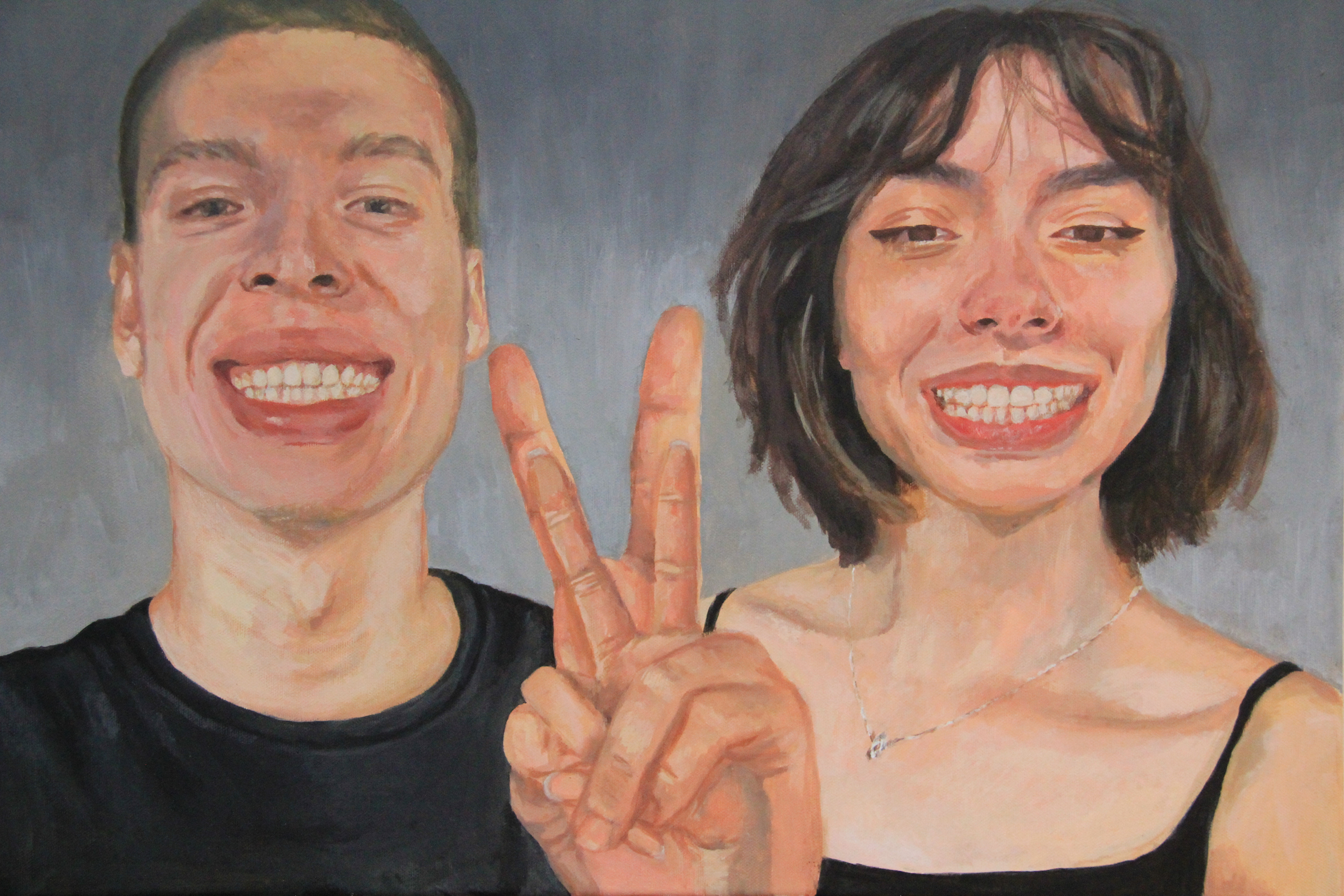
“Peace & Love,” an acrylic painting by Angelina Dornquast exhibited at the Paradise Center for the Arts, Faribault. (Minnesota Prairie Roots copyrighted file photo October 2024)

LET THERE BE PEACE

Words like hope, goodness and kindness were repeated often during the lengthy service. Likewise justice and peace. The gospel reading of The Beatitudes from Matthew 5 seemed especially fitting: Blessed are those who mourn…blessed are the merciful…blessed are the peacemakers…

Peace. Father Griffith shared that Melissa’s mother found a worn copy of the prayer of St. Francis of Assisi in her daughter’s purse. I expect it’s familiar to most of you. Lord make me an instrument of your peace… Colin later read that prayer, a moment I found profoundly moving. In his grief, he had the composure to share those powerful words of where there is hatred, let me sow love… I can only imagine how proud his parents would have been.

DOING GOOD

Governor Walz said Melissa’s goal in life was “to get as much good done for as many people as possible.” He pointed to her legislative efforts that resulted in fewer kids living in poverty, safe and secure housing for Minnesotans and more trees. She loved trees and gardening. Earlier, the priest referenced much the same, calling service and community the Hortmans’ guiding lights.

LAUGHTER IN STORIES

But it was close family friend and former co-worker (at the Legal Aid Society of Minneapolis), Robin Ann Williams, who brought laughter to the Basilica with her personal stories. She shared about a call from Melissa to help choose a paint color for her kitchen. When Williams arrived, she found all the paint samples were shades of beige. The kitchen is still beige. The kitchen centered gatherings, like the “Gourmet Supper Club” dinners with law school friends. Mark Hortman’s sour dough bread was better than his home-brewed beer, she said. Laughter erupted often, especially when she held up a souvenir photo placard of vice presidential candidate, Minnesota Governor Tim Walz, which Melissa brought home for her friend from the national DFL convention.

Photographed in downtown Faribault. (Minnesota Prairie Roots file photo August 2019)

JOY & MORE ARE POSSIBLE

On this Saturday, the funeral was not about politics, though. It was about coming together to celebrate the Hortmans, to honor their memories, to reflect on their public and private lives, to collectively grieve. The day prior, some 7,500 people converged on the Minnesota State Capitol to pay their respects as the couple and their dog, Gilbert, lay in state.

“We are buried in sorrow right now,” family friend Williams said, adding that joy will come.

I have to believe it will, if we begin to follow the advice of the Hortman children, the prayer of St. Francis of Assisi, the teachings of The Beatitudes and the directive of Father Griffith to work together for restoration, justice and healing.

© Copyright 2025 Audrey Kletscher Helbling

 

The eyes have it until they don’t May 7, 2024

My old glasses atop info about bilateral strabismus eye surgery. (Minnesota Prairie Roots copyrighted file photo November 2023)

SIGNIFICANT REGRESSION OF SURGICAL EFFECT. Those are words you don’t want to read/hear following any surgery. But, three months out from surgery to realign my eyes, that’s where I’m at with my vision.

During my second post-op check last week with my neuro ophthalmologist, Dr. Collin McClleland, I learned that my eyes apparently have a mind of their own. They are back to not working together. This came as no surprise. I’ve been experiencing ongoing double vision, although less than before my January 22 surgery.

What I didn’t expect was the word “significant.” I knew the possibility existed that my eyes would return to misalignment; I did my homework in advance of bilateral strabismus eye surgery. But who thinks they are going to be in the minority of that final surgical outcome? Not me.

Several days after my January surgery, I was smiling, happy to have surgery behind me, happy with flowers from my family. (Minnesota Prairie Roots copyrighted file photo by Randy Helbling, January 2024)

Immediately after surgery, my eyes were in near perfect alignment. I was happy. My surgeon was happy. But then, as my eye muscles healed and my brain and eyes adjusted, the shift began.

Extensive testing during my recent appointment showed “significant regression.” I won’t confuse you with numbers and medical terminology. Suffice to say I’m frustrated and disappointed as is my surgeon. But, Dr. McClelland said, he wouldn’t have done anything differently during surgery. I needed it, and the surgery did improve alignment. I agree. Why my eyes reverted mostly back to their misaligned positions is unknown. I asked. There’s no answer.

I explained to my doctor that it takes effort sometimes to see just one, and not two. That exhausts me. And if I’m doing anything that requires a lot of visual back-and-forth, like shopping, my eyes feel like they’ve done calisthenics. They hurt. Whenever I have lots of sensory input or am doing multiple things, my double vision worsens. I was experiencing all of this before surgery, too.

In the recovery room after surgery on both eyes in January. (Minnesota Prairie Roots copyrighted file photo by Randy Helbling, January 2024)

What to do next was the question of the morning. My surgeon offered two choices: One, add more prisms to my glasses and hope that alleviates some of my double vision. Or try surgery again. I was mentally unprepared for this. But I quickly opted for more prisms. I am in no hurry to rush back into an operating room, even if the 1 ½-hour surgery was not horrible and I have full confidence in Dr. McClelland. Surgery is surgery.

So here I am, no line bifocal prism glasses ordered. The lenses will take about two weeks to make given the extensive work required. Then I’ll be without glasses while the lenses are placed in my frames. Then the test begins. Will the added prisms, divided between both lenses, help with my double vision? Time will tell. Prisms bend light before it travels to your eyes and the brain has to sort it all out and create a singular image, or something like that.

The issue, my ophthalmologist explained, is whether I can tolerate more prisms added to my prescription lenses. I could experience distortion, what he calls “the fish bowl effect.” The goal is “comfortable singular binocular vision.” If I can’t handle the added prisms (which are actually less than they should be, but within the hopefully tolerable range), then I will need to revisit surgery.

That’s where I’m at today. Waiting for those prism-heavy lenses. I’m trying to prepare myself for what I know will be several weeks of adjusting to my new prescription. And hoping this non-surgical approach works.

These buildings house outpatient clinics, including the M Health Fairview Eye Clinic, on the campus of the University of Minnesota in Minneapolis. (Minnesota Prairie Roots copyrighted photo May 2024)

As disappointed and frustrated as I feel about the final surgical outcome, I remain grateful for the vision I do have, even if far from perfect. Sitting in the waiting room at M Health Fairview Eye Clinic in Minneapolis puts my situation in perspective. I have watched little kids there navigating with the aid of a white cane…

© Copyright 2024 Audrey Kletscher Helbling
 

Reflecting on pre-surgery anxiety & ways I coped February 20, 2024

Information about my eye muscle surgery. (Minnesota Prairie Roots copyrighted file photo 2023)

SURGERY. Most of us would rather not hear that word when it comes to our health. But sometimes surgery is necessary. I’ve had surgery nine times in my lifetime. I’m currently four weeks out from my second bilateral strabismus eye surgery (the first was at age four) to realign my misaligned eyes. Healing and recovery are progressing.

Nearing downtown Minneapolis, the route to M Health Fairview Surgery Center and Clinics. (Minnesota Prairie Roots copyrighted file photo)

Today’s post, though, is not about recovery, but rather about my January 22 surgery day. As a creative, I have stories to tell about my experiences at M Health Fairview Clinics and Surgery Center. Admittedly, I felt anxious as Randy and I aimed north along Interstate 35 to the surgery center about an hour away on the campus of the University of Minnesota in Minneapolis. I detest metro traffic, which added to my pre-surgery anxiety. But on this morning, traffic was not horrible.

Waiting is always the hard part. I waited at check-in behind an angry patient. We’d ridden the same elevator to the fifth level, but she got ahead of me because she knew where she was going. I did not. And so I had to stand there listening to her spew about how she’s never been called about whatever. Her voice volume increased. I felt increasingly frustrated by this hostile woman who should have taken her complaints elsewhere, not to the surgery check-in desk. She was not there for surgery. Finally, I bypassed her to another check-in station, wondering if the first employee would need to call security. This was not off to a good start.

I settled onto a green upholstered chair in a spacious room filled with people, most on their phones, waiting. A bank of tall windows revealed a sunny day. I heard persistent coughing on the other side of a waiting room half-wall, somewhat worrisome to me. I’d been screened for COVID symptoms, but Randy and other caregivers weren’t. That is typical of clinic screenings, it seems. But I digress.

Eventually, after I’d people-watched, tried to work a crossword puzzle, studied abstract fabric artwork, Tatenda called me to begin the process of preparing for surgery. That started with basic questions followed by depression screening. I am thankful this screening is now routine in healthcare and I told Tatenda that. And then I added, “But you didn’t ask about anxiety.” Anyone who says they aren’t anxious about surgery is, in my opinion, not being truthful. Thankfully, Tatenda and others who cared for me understand pre-surgery anxiety and helped ease mine.

One of my go-to Bible verses when I’m worried or anxious. This is displayed at my church, Trinity Lutheran in Faribault. (Minnesota Prairie Roots copyrighted photo February 2024)

There was one point, though, when I had to dig deep mentally to stop myself from fleeing a small room where I waited alone for the next step in surgery prep. Tatenda handed me a lavender paper gown, instructing me to change into that and pull on a pair of purple socks. Then she left. Do. Not. Leave. Me. Alone. I expected her back quickly. As the minutes ticked by, I felt my anxiety rising. I was cold, shivering almost, hugging my folded legs to my body for warmth. The over-sized, one-size-fits-all paper gown that smelled to me of antiseptic provided zero warmth. Maybe I should have wrapped it around my slim body twice. I attempted to calm myself by repeating the words of Psalm 46:10: Be still…be still…be still…

Eventually nurse Amanda arrived and connected a hose to my lovely lavender gown, a hose that blew air inside to either warm or cool me. She explained how I could turn a switch to adjust the temperature. It was a game-changer not only for my comfort level, but also in giving me control. Of. Something.

Signage on The Pearl, a popular ice cream spot in downtown La Crosse. (Minnesota Prairie Roots copyrighted file photo 2015)

As Amanda searched and poked twice for an adequate vein to start an IV, we talked. Conversation distracts me. This nurse, the same age as my eldest daughter, and I chatted about her hometown of Potosi, Wisconsin, where I’ve been to the brewery; our love of La Crosse (and The Pearl ice cream shop); motorcycles; and then how I met Randy and where we went on our first date. “Stir Crazy,” I replied. The movie starring Richard Pryor and Gene Wilder. Amanda said she would ask Randy the same when she brought him to see me shortly before surgery. When he answered “Blazing Saddles” to the first date question, I told Amanda that he was an imposter, that she needed to find my real husband. We laughed. Humor helps.

Once Amanda left, the anesthesiologist and neuro ophthalmologist surgeon arrived for last-minute briefings and questions. I was ready. Soon I was being wheeled down a hallway toward the operating room. I remember nothing until I awoke 1 ½ hours later in recovery. That is another story…please check back for more storytelling.

TELL ME: If you’ve had surgery, how did you cope with pre-surgery anxiety? How did others help ease your anxiety right before surgery?

© Copyright 2024 Audrey Kletscher Helbling


Discovering the greeting cards of Artists to Watch December 29, 2023

The thrift shop holiday card that led me to a Minnesota greeting card company. (Minnesota Prairie Roots copyrighted photo December 2023)

IF NOT FOR MY APPRECIATION of thrift shops, I would have missed out on some incredible art. Not art in the usual sense of either original art or a print. Rather, I am referencing greeting card art.

On the second floor of Something For All, a thrift and consignment store in small town Lonsdale, I found several boxes of holiday cards featuring the hand-colored woodcut art of Mary Azarian. Since my high school days of hand-carving a linoleum block into a long forgotten design for a two-week shop class, I’ve loved block print art. And I immediately loved Azarian’s “Moon Gazing” winter scene which reminded me not of her home state of Vermont, but of mine, Minnesota.

That I even spotted the brand new cards among all the merchandise crammed into nooks and crannies of the many-roomed, two-story thrift shop was exceptional in itself. There’s a whole lot to see here. I found the cards on a second pass through, and then only because I looked toward the floor. I snapped up the boxed cards for a few dollars. The 12-pack retails for $19.95.

Found at a garage sale, this card was among boxed holiday cards illustrated by Mia Saine. (Photo by Miranda Boyd)

I bought the cards in October and stashed them with other Christmas cards I’d found at bargain prices. I mail nearly 100 cards, meaning I’m always on the search for deals. I also bought three boxes of African American-themed cards on a hot autumn day at a garage sale blocks from my house. Again, I paid just several dollars. This was a great find not only because of the low cost but mostly because I was excited to find culturally-diverse Christmas cards, these illustrated by Memphis artist Mia Saine. The woman selling the cards shared that she buys pallets of close-out merchandise from Target to resell. I don’t understand how that works. But I didn’t care. I was simply happy to find these and other cards.

Granted, sourcing new Christmas cards from a garage sale and from a thrift shop is rather unusual. But for someone who is budget conscious like me and who also appreciates art, this proved a win-win.

Also a win was flipping the thrift shop-found holiday card to the back to learn the name of the artist—Mary Azarian—and the type and name of the art. I also learned the cards were published by Artists to Watch, a Minneapolis-based greeting card company that collaborates with independent fine artists to create beautiful greeting cards. The company uses recycled content paper, soy-based inks, and prints and packages its cards in Minneapolis. I love the feel of the paper, everything about this product, including the plain Kraft colored packaging.

An example of Adam Turman’s art, featured here on a tunnel mural in Northfield. (Minnesota Prairie Roots copyrighted file photo October 2021)

Scrolling through the Artists to Watch website led me to a whole lot of other artists, many from Minnesota: Duluthians Nick Wroblewski, a printmaker of hand-cut woodblocks, and Ricky Allen and Marian Lansky of The Kenspeckle Letterpress; Minneapolis artists Jennifer Davis and Adam Turman; Betsy Bowen of Grand Marais with her woodcut prints; and Jim Brandenburg, a gifted photographer from my native southwestern Minnesota now living in Ely. The list of creatives is lengthy and I expect other Minnesotans are among Artists to Watch artists.

So this is the story of how a stop at a small town thrift shop in southern Minnesota led me to discover an eco-friendly Minnesota greeting card company which supports independent artists by printing their art. I love everything about this concept.

Plus, I loved “Moon Gazing” by 1999 Caldecott Medal winner Mary Azarian (illustrator of Snowflake Bentley) so much that I kept one holiday card for myself to display as art in my home office. (If only the 11×14 Fine Art Print wasn’t out of stock…)

FYI: Artists to Watch publishes boxed and individual greeting cards, not just for Christmas, but also for other celebrations and occasions. Additional products include notecards, vinyl stickers, stationery, journal sets and more.

© Copyright 2023 Audrey Kletscher Helbling
 

Looking for Lucy July 11, 2023

This sculpture of Lucy Van Pelt in Faribault is titled “Land O’Lucy.” (Minnesota Prairie Roots copyrighted photo June 2023)

SHE’S OUTSPOKEN. Loud. Sometimes bossy. Opinionated. Strong. And, in her own unique way, lovable. She is Lucy Van Pelt of the Peanuts cartoon strip.

Lucy stands outside the east wing entry to Noyes Hall at MSAD. (Minnesota Prairie Roots copyrighted photo June 2023)

Lucy and the other characters created by Charles Schulz represent diverse personalities. They are some of us. They are all of us. And that is perhaps what makes this comic strip so endearing, so relatable.

Agricultural-themed “Land O’Lucy” features a farm site. (Minnesota Prairie Roots copyrighted photo June 2023)

In Minnesota, especially, we hold a deep fondness for the Peanuts’ characters. Cartoonist Schulz was born in Minneapolis, raised in St. Paul, moved to Colorado, back to Minnesota, and then eventually to California in 1958 with his wife and their five children. As a high school student, he studied art through a correspondence course at the Art Instruction Schools in Minneapolis and later taught there. His Peanuts cartoon debuted in October 1950 and would eventually include some 70 characters, their stories, trials, triumphs.

Pastured Holsteins detail the rural theme. (Minnesota Prairie Roots copyrighted photo June 2023)

St. Paul honors their native son with bronze sculptures of Peanuts at Landmark Plaza in the heart of the capital city. While I’ve never seen that art, I’ve seen art from an earlier endeavor, “Peanuts on Parade.” After Schulz died in 2000, St. Paul undertook the five-year parade project beginning with Snoopy fiberglass statues painted by artists and then auctioned to fund scholarships for artists and cartoonists and to finance the bronze statues. In subsequent years, “Peanuts on Parade” featured Charlie Brown, Lucy, Linus, and, finally, Snoopy and Woodstock.

“Land O’Lucy” stands outside the east wing of Noyes Hall. (Minnesota Prairie Roots copyrighted photo June 2023)

It is a statue of Lucy which found its way into my community, landing at the Minnesota State Academy for the Deaf. “Land O’Lucy” now stands in a visible spot on campus, moved during a recent construction project from an obscure location outside Quinn Hall to the front of Noyes Hall East Wing. She’s become my silent, if Lucy can be silent, cheerleader as I walk the deaf school campus doing my vestibular rehab therapy exercises. I like to think that Lucy is encouraging me, just as she is encouraging the young deaf and hard of hearing students who attend this specialized residential school. Lucy symbolizes strength with her nothing’s-going-to-stop-me attitude. We can all use a bit of that empowering approach to life’s challenges.

Informational signage at the base of Lucy. (Minnesota Prairie Roots copyrighted photo June 2023)

This particular statue from the 2002 “Looking for Lucy, Peanuts on Parade” project was painted by Dubuque, Iowa, artist Adam Eikamp with Land O’Lakes Inc. the sponsoring company. The dairy plant in Faribault has since closed. But its support of this public art remains forever imprinted in informational signage at the fiberglass statue’s base.

Artwork shows disking the field in preparation for spring planting. (Minnesota Prairie Roots copyrighted photo June 2023)

The agricultural theme of the MSAD Lucy is fitting. Our area of southern Minnesota is a strong agricultural region. The paintings on the statue reflect that with fields, barn, farmhouse, cows and chickens. Lucy banners rural. She is among 105 five-foot tall Lucys painted as part of “Looking for Lucy.”

Extroverted “Land O’Lucy” outside Noyes Hall east wing. (Minnesota Prairie Roots copyrighted photo June 2023)

If you’re looking for this Lucy, travel to MSAD on Faribault’s east side. You can’t miss the domed Noyes Hall, on the National Register of Historic Places and among many beautiful historic limestone buildings on campus. She stands outside Noyes’ east wing, welcoming students and others, arms flung wide. Typical Lucy with body language that reveals her extroverted personality, her loud, strong and encouraging voice.

© Copyright 2023 Audrey Kletscher Helbling
 

George Floyd’s aunt lifts her voice in an impactful book February 3, 2023

IT’S NOT ENOUGH. I recognize that. It’s not enough to simply read books about black history and racism in America and call it good. But reading is a step toward widening my knowledge and understanding and then my compassion. So I will continue to read, and learn.

I recently finished Lift Your Voice—How My Nephew George Floyd’s Murder Changed the World. Angela Harrelson—who is Floyd’s aunt, lives in Minneapolis and works as a registered nurse—wrote this book with Michael Levin. Floyd, known as “Perry” to his family, died on May 25, 2020, at the hands of Minneapolis police officers, three now serving prison time in Floyd’s death, the fourth awaiting a judge’s decision on charges.

On the day I turned the last pages of Lift Your Voice, family, friends and activists were raising their voices at the funeral of Tyre Nichols, who was brutally beaten by police during a traffic stop in Memphis and died three days later. Listening to a portion of that service, a speaker called the young black man a “son, father, brother, friend and human being.” Human being. Those two words emerge in Harrelson’s book when she writes of (those) white people who don’t see black people as human beings. She traces that back to slavery (when slaves were viewed as property), sharing her own family history of slavery and lynchings.

Harrelson specifically cites Minneapolis Police Officer Derek Chauvin as failing to view her nephew as a human being. Chauvin kneeled/pressed on Floyd’s neck for more than nine minutes as the young man lay handcuffed and face down on the street pleading for his life, “I can’t breathe.”

It’s a lot, this book. To read about Floyd’s tragic death and the deeply personal stories of Harrelson and her family and all they’ve endured simply because of the color of their skin is difficult. But stories resonate and make an impact. When she writes of “white privilege” as something held simply because of white skin color and unrelated to wealth and status, that clicked for me. Unlike Harrelson, I don’t have to think about being watched in public, suspected of something, anything, because of my skin color. Harrelson does and she shares specifics.

Her book covers topics of systemic racism, a police culture that needs to change (she’s not anti-police), the emotional exhaustion and trauma she feels, the importance of faith in her life, her role as an activist. But she doesn’t stop there. Harrelson calls for each of us, individually, to call out racism, to speak up when we see injustices, to treat each other with respect.

In my own community, I’ve, on more than one occasion, found myself responding to racist comments related to housing, employment, even the way people dress or their scent. It’s hard to hear this stereotyping, this obvious disrespect and racism. So I speak up, or as George “Perry” Floyd’s aunt encourages, I lift my voice. Lifting voices and being heard is how, Harrelson writes, the world will heal.

© Copyright 2023 Audrey Kletscher Helbling
 

No ordinary walk to the store, a book review January 17, 2023

Book cover credit: Beaver’s Pond Press

SHE WAS ONLY NINE YEARS OLD, too young to walk alone to the store to buy candy with the $3 clutched in her hand. Eventually, her 17-year-old cousin, Darnella Frazier, agreed to accompany Judeah Reynolds to Cup Foods. That decision on May 25, 2020, would forever change their lives. And the world.

What happened in Minneapolis that evening—the murder of George Floyd at the hands of four Minneapolis police officers—is the subject of a powerful new children’s picture book, A Walk to the Store by Judeah Reynolds as told to Sheletta Brundidge and Lily Coyle.

When I learned of the book’s September 2022 release by St. Paul-based Beaver’s Pond Press, I knew immediately that I needed to read this recounting of Judeah’s witness to Floyd’s death. The cousins arrived on an unfolding scene outside Cup Foods where Floyd lay on the ground next to a squad car, a police officer pressing his knee into the 46-year-old’s neck. Judeah, Darnella and other bystanders pleaded with the police to stop while Darnella recorded the scene on her cellphone and then shared that video online. She won a 2021 Pulitzer Prize for that documentation.

While this book recounts the death of George Floyd from a child’s perspective, it is much more than a basic retelling. The story also reveals the trauma Judeah experienced. The sadness. The difficulty sleeping. The bad dreams. The replaying of Floyd’s killing in her mind.

But this is also a story of strength and hope and about being brave enough to speak up. To say something. To let your voice be heard. To effect change.

Messages like this are included in the book. I photographed this two years ago in small town Kenyon, MN. (Minnesota Prairie Roots copyrighted file photo 2020)

I heard Judeah’s determined voice in her words. I saw it, too, in Darcy Bell-Myers’ art, which reinforces the story with strong, message-filled illustrations. This book is empowering for children who read or hear this story. And it’s equally as impactful for adults.

At the end of the book is a list—How to Help Children Process a Traumatic Event. I appreciate the inclusion of those 10 suggestions given Judeah did, indeed, experience trauma. Her family even moved out of Minnesota.

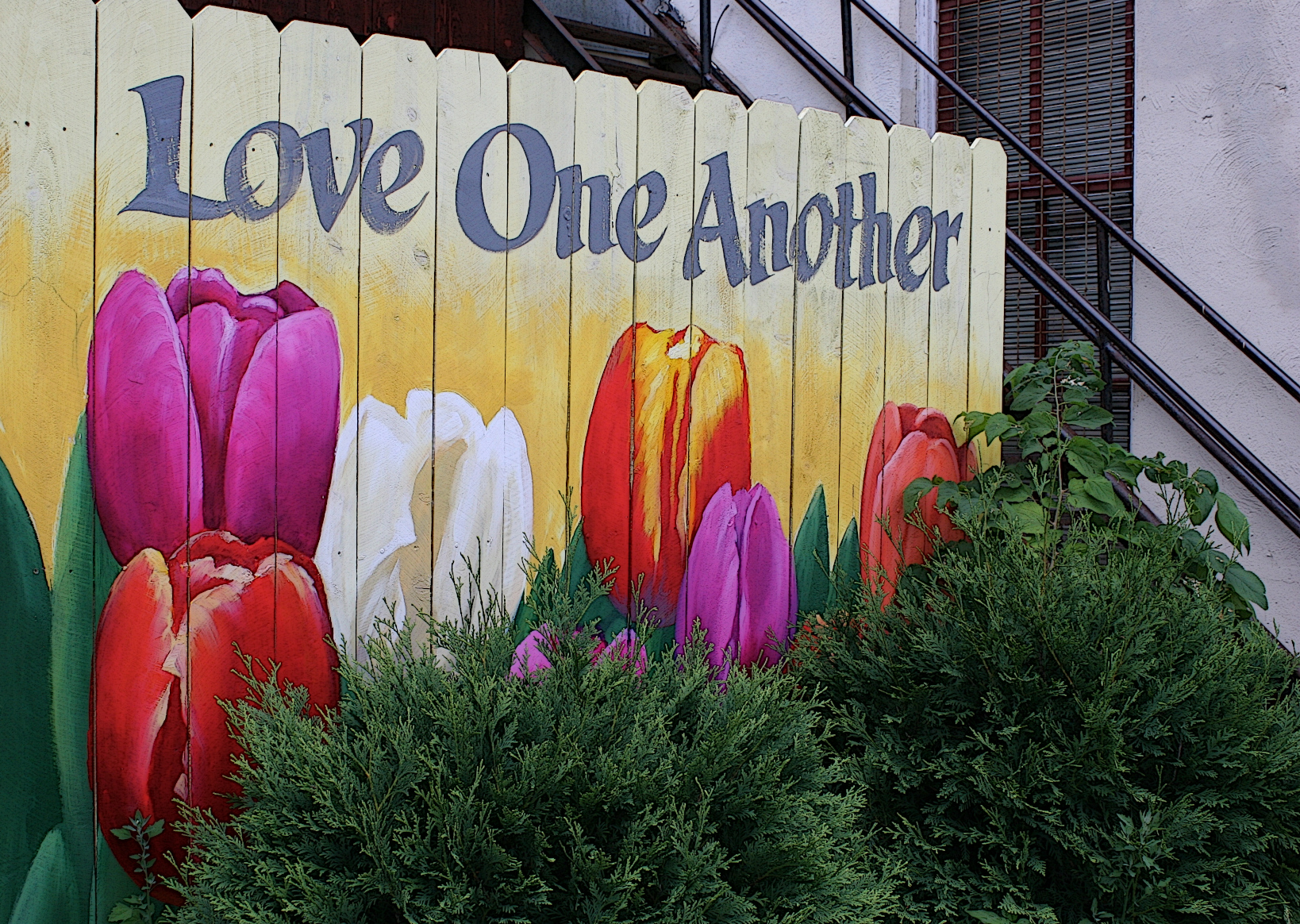
This LOVE mural by Minneapolis artist Jordyn Brennan graces a building in the heart of historic downtown Faribault. The hands are signing LOVE. (Minnesota Prairie Roots copyrighted file photo June 2021)

As I finished reading A Walk to the Store, I considered how ironic that young Judeah wore a colorful shirt emblazoned with the word LOVE as she stood on the sidewalk outside Cup Foods, witness to George Floyd’s murder.

© Copyright 2023 Audrey Kletscher Helbling