Minnesota Prairie Roots

Writing and photography by Audrey Kletscher Helbling

Is this even legal? November 26, 2014

Filed under: Uncategorized — Audrey Kletscher Helbling @ 5:00 AM
Tags: , , , , ,
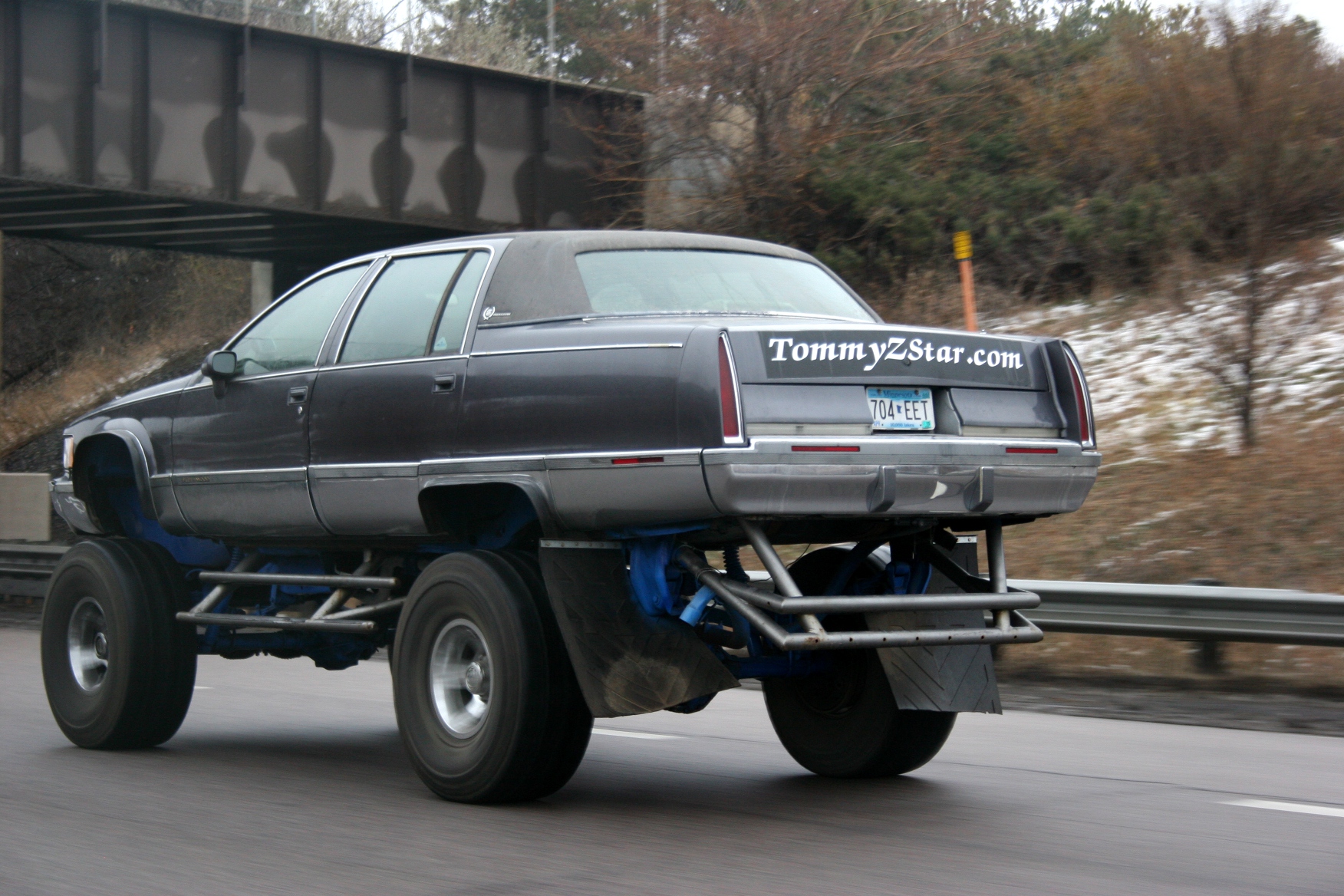
A monster Caddy.

A monster Caddy.

THREE QUESTIONS:

Why?

Is this street legal in Minnesota, or anywhere?

How do you get in and out of this Cadillac?

(Photographed early Saturday afternoon along Interstate 35 northbound toward downtown Minneapolis.)

© Copyright 2014 Audrey Kletscher Helbling


On the road metro Minnesota photography November 25, 2014

Filed under: Uncategorized — Audrey Kletscher Helbling @ 6:00 AM
Tags: , , , , , ,

I’M NO FAN OF METRO TRAFFIC. But then who is, I suppose?

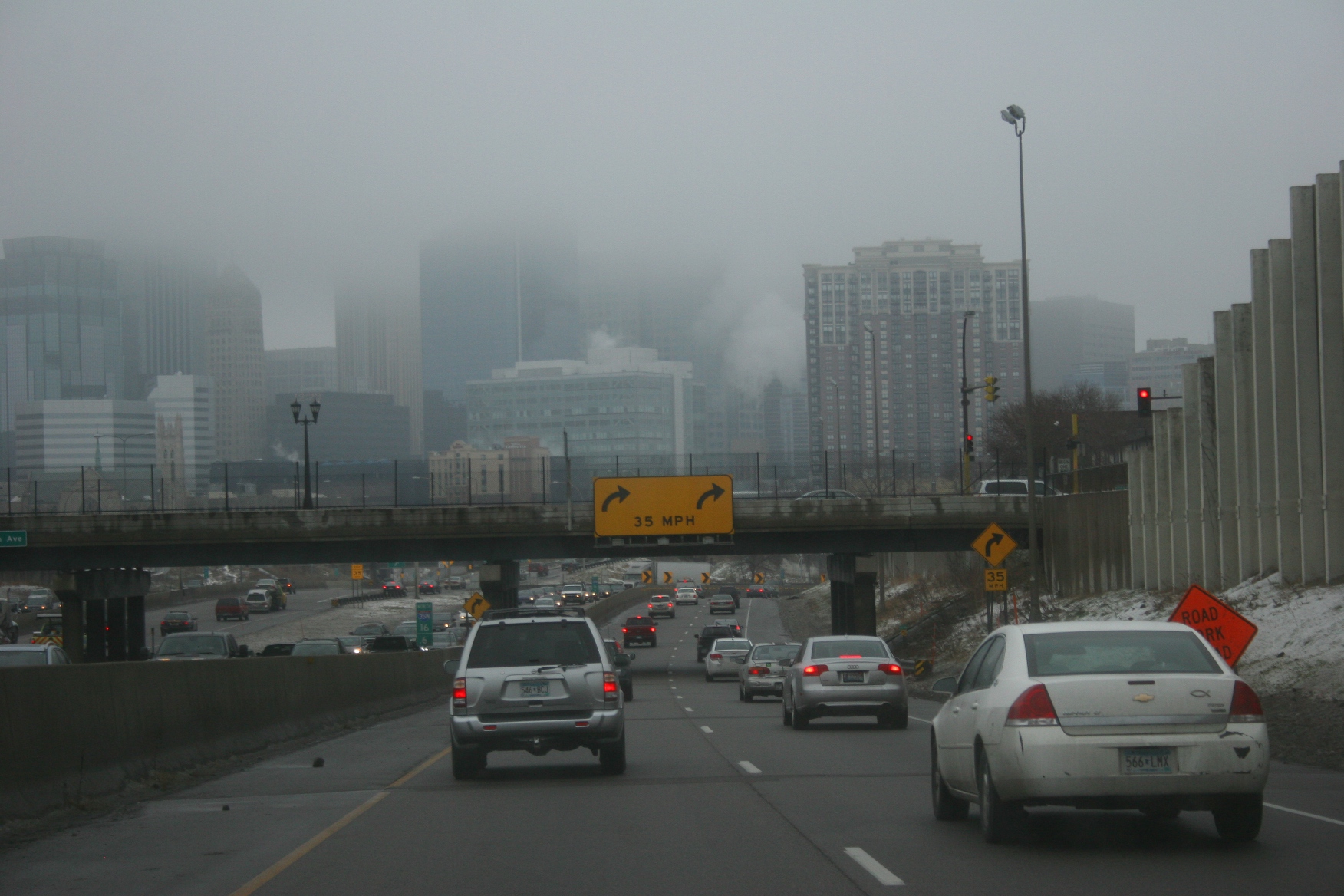
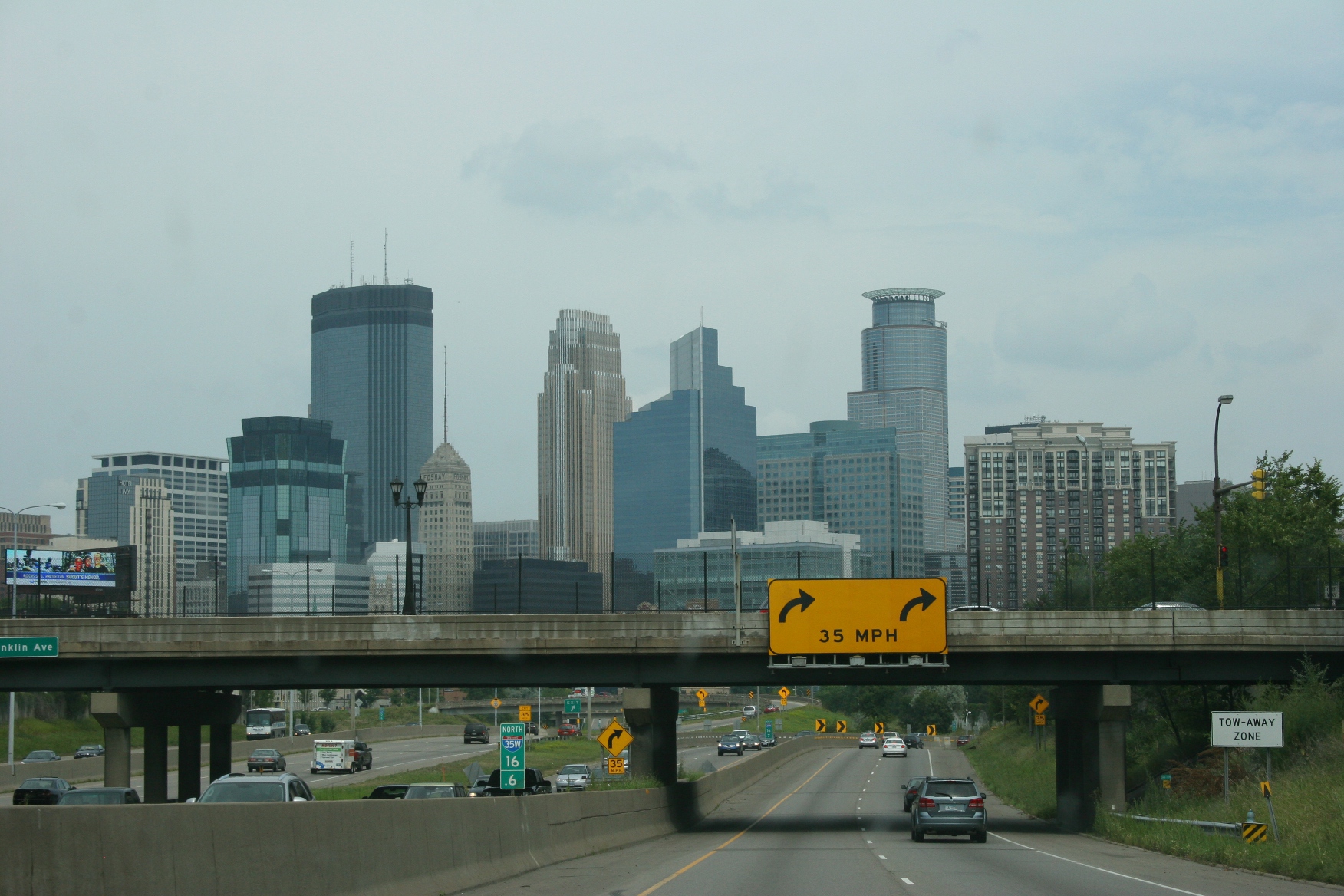
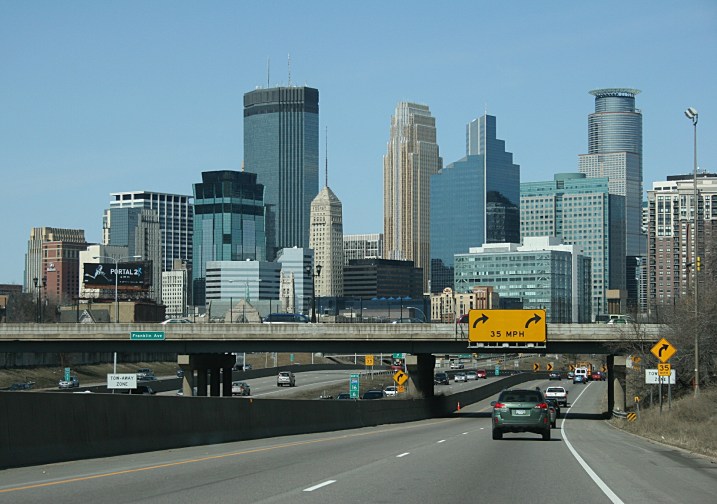
A view of downtown Minneapolis on a foggy Saturday from Interstate 35.

A view of downtown Minneapolis on a foggy Saturday afternoon from Interstate 35.

I try to make the best of it, though, to focus on details of my surroundings rather than on the crazy drivers weaving in and out of traffic or the tailgater or the road construction or the sudden flash of brake lights.

As you can tell from that second paragraph, my attempts at distracting myself are not all that effective.

My primary distraction tool is my camera, typically at the ready to photograph whatever unfolds before me from the front passenger seat.

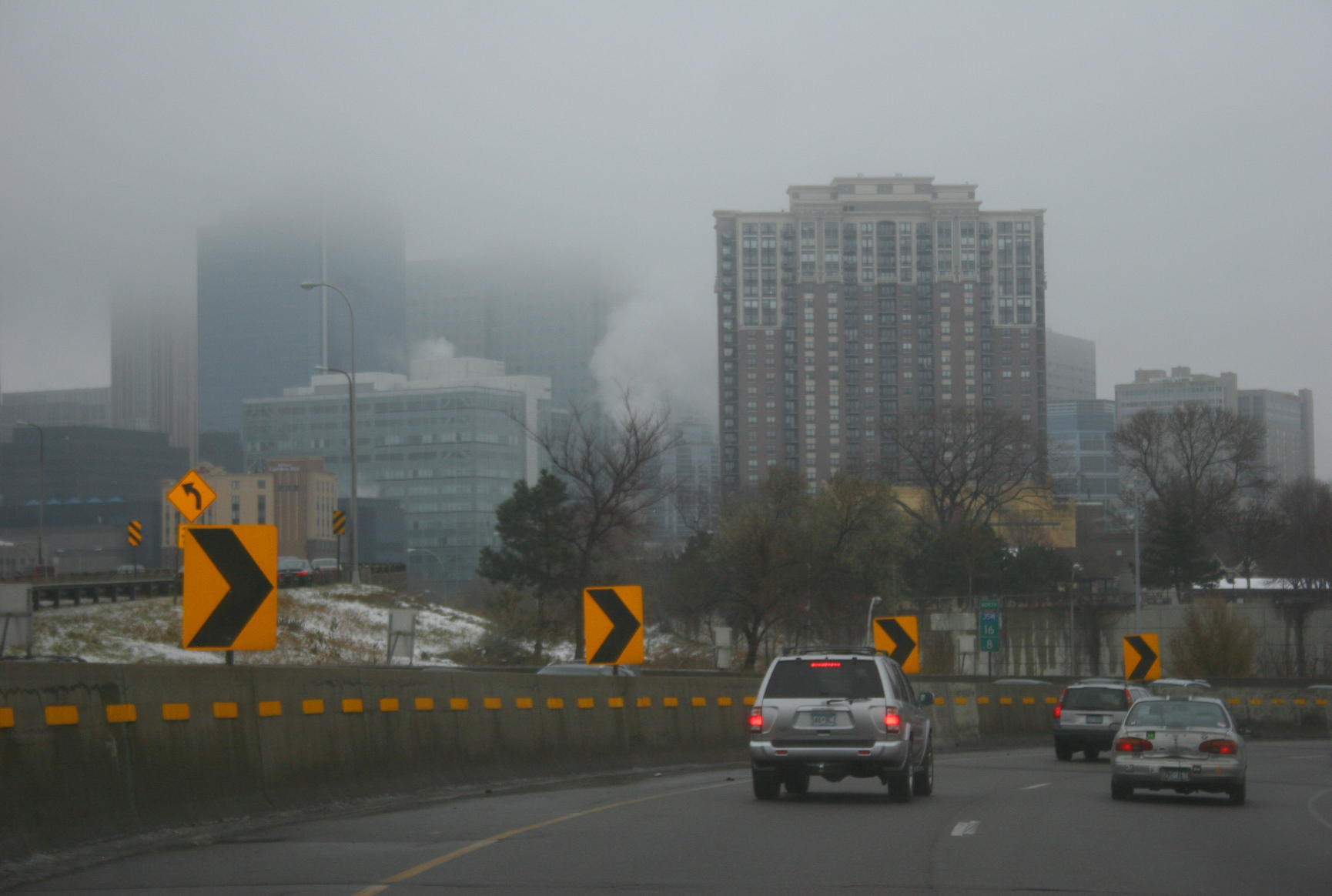
Why are the interstates around downtown Minneapolis so curvy?

Why are the interstates around downtown Minneapolis so curvy?

On Saturday, while traveling Interstate 35 into Minneapolis, I missed two photo ops because my Canon DSLR sat at my feet, zippered inside the camera bag. What was I thinking?

After my husband noticed a dog with his head hanging out a truck window (why do dogs do that?) and after I spotted a woman texting while driving, I snatched my camera from the bag. I wasn’t about to miss more such photo opportunities.

One of the few scenes I shot while traveling Interstate 35 into Minneapolis.

One of the few scenes I shot while traveling Interstate 35 into Minneapolis.

As Red Wing, Minnesota photo blogger Dan Traun advises, “You always have to be ready.” And Dan is. Among his photographic specialties are shooting streetscapes and everyday slices of mostly metropolitan Minnesota life. He’s good, no great, at what he does. His timing is uncanny as is his ability to notice a scene worth documenting. Most shots are taken from his vehicle.

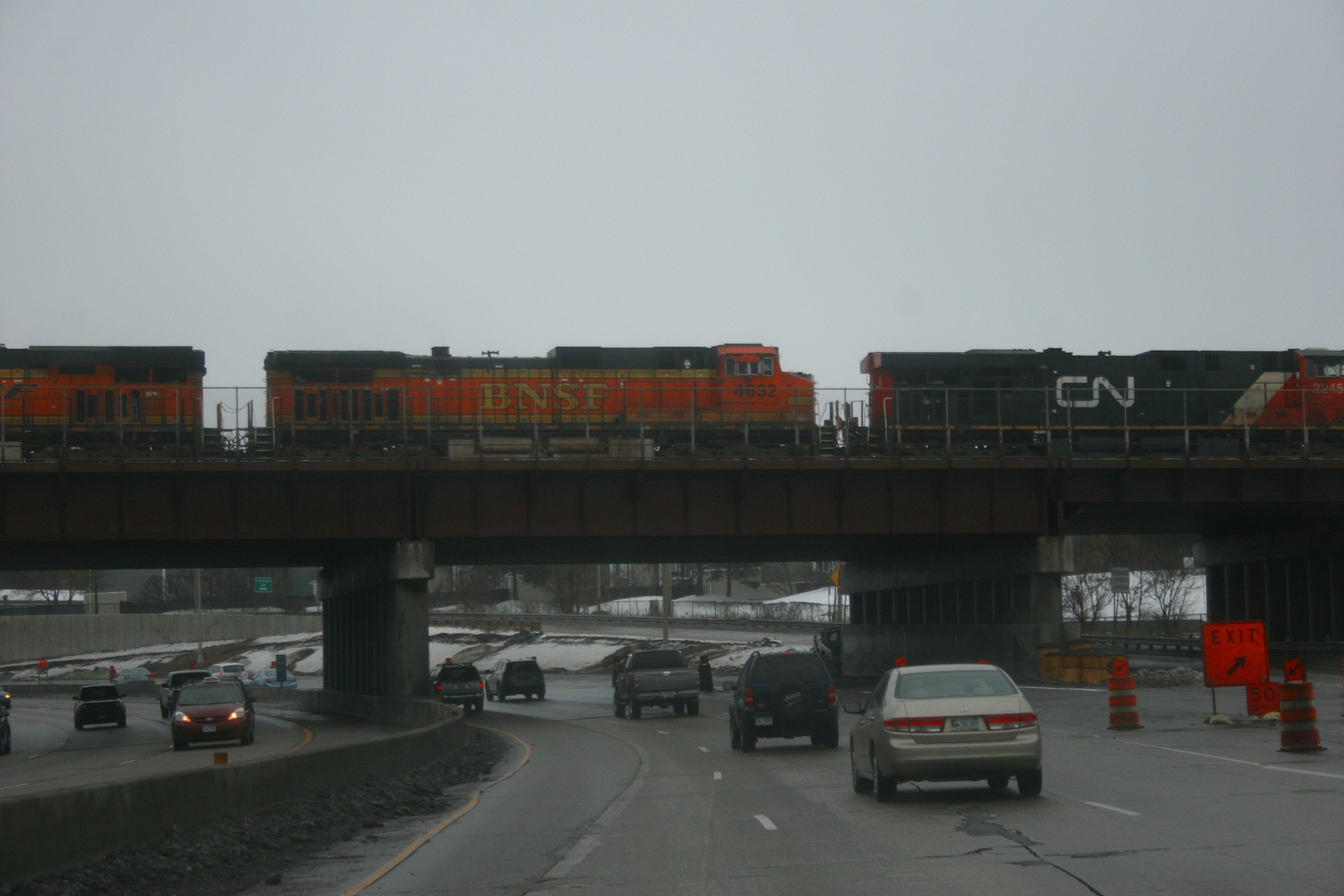
Approaching yet another curve, this one under a railroad overpass.

Approaching yet another curve, this one under a railroad overpass.

Dan shows you buildings and everyday life and streets and alleys and all those subjects folks see daily, but perhaps don’t notice like they should.

We should all slow down and appreciate life. Even those crazy drivers in the metro.

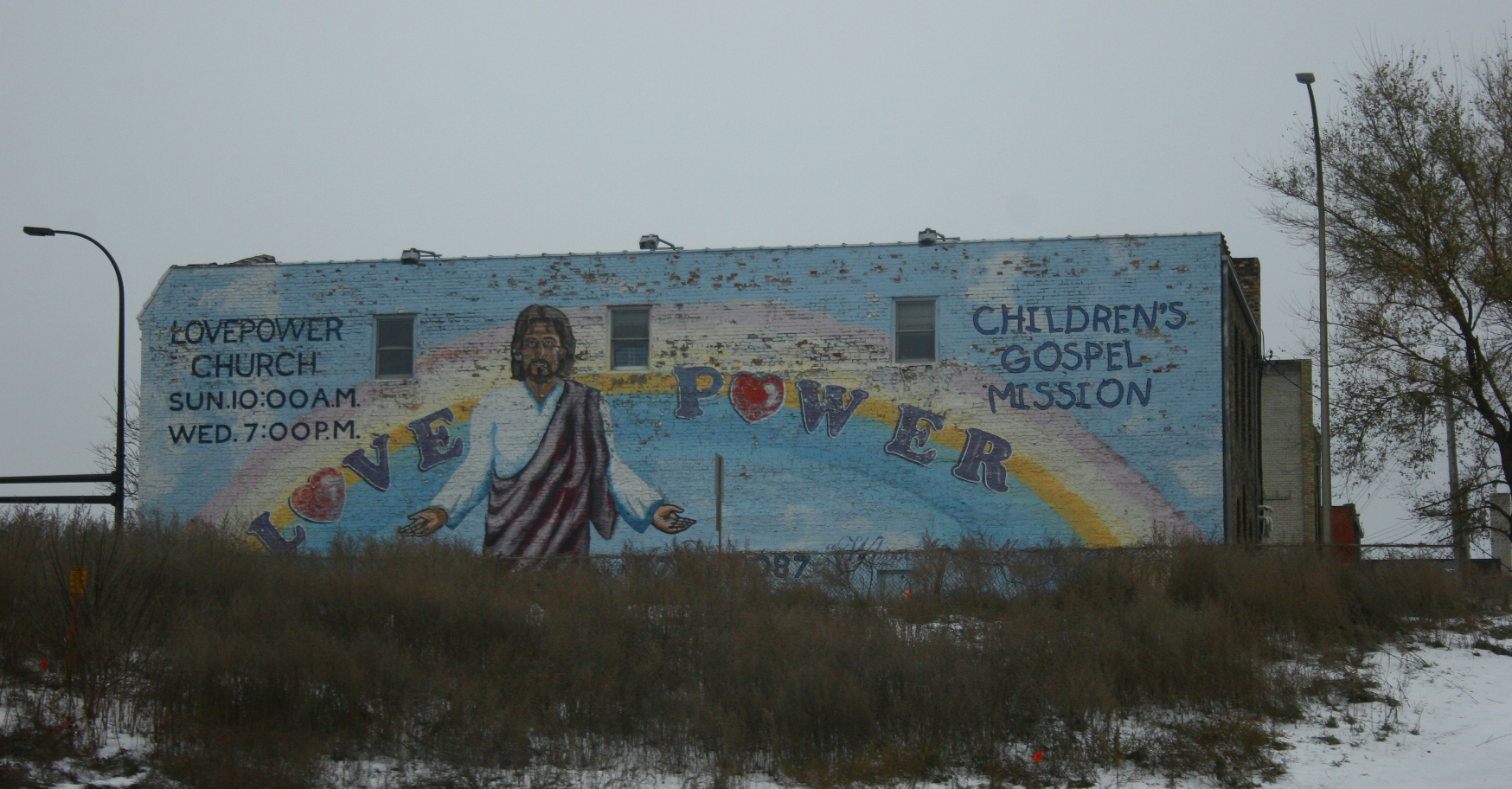
PLEASE CHECK BACK to see the craziest subject I photographed along Interstate 35.

© Copyright 2014 Audrey Kletscher Helbling


How the 35W bridge collapse changed my view of bridges August 8, 2014

SEVEN YEARS AGO at 6:05 p.m. on August 1, 2007, the 35W bridge in Minneapolis collapsed, killing 13 and injuring 145. It is a moment that all of us who call Minnesota home will remember with a deep sense of sadness.

Crossing the 35W bridge near downtown Minneapolis.

Crossing the 35W bridge near downtown Minneapolis.

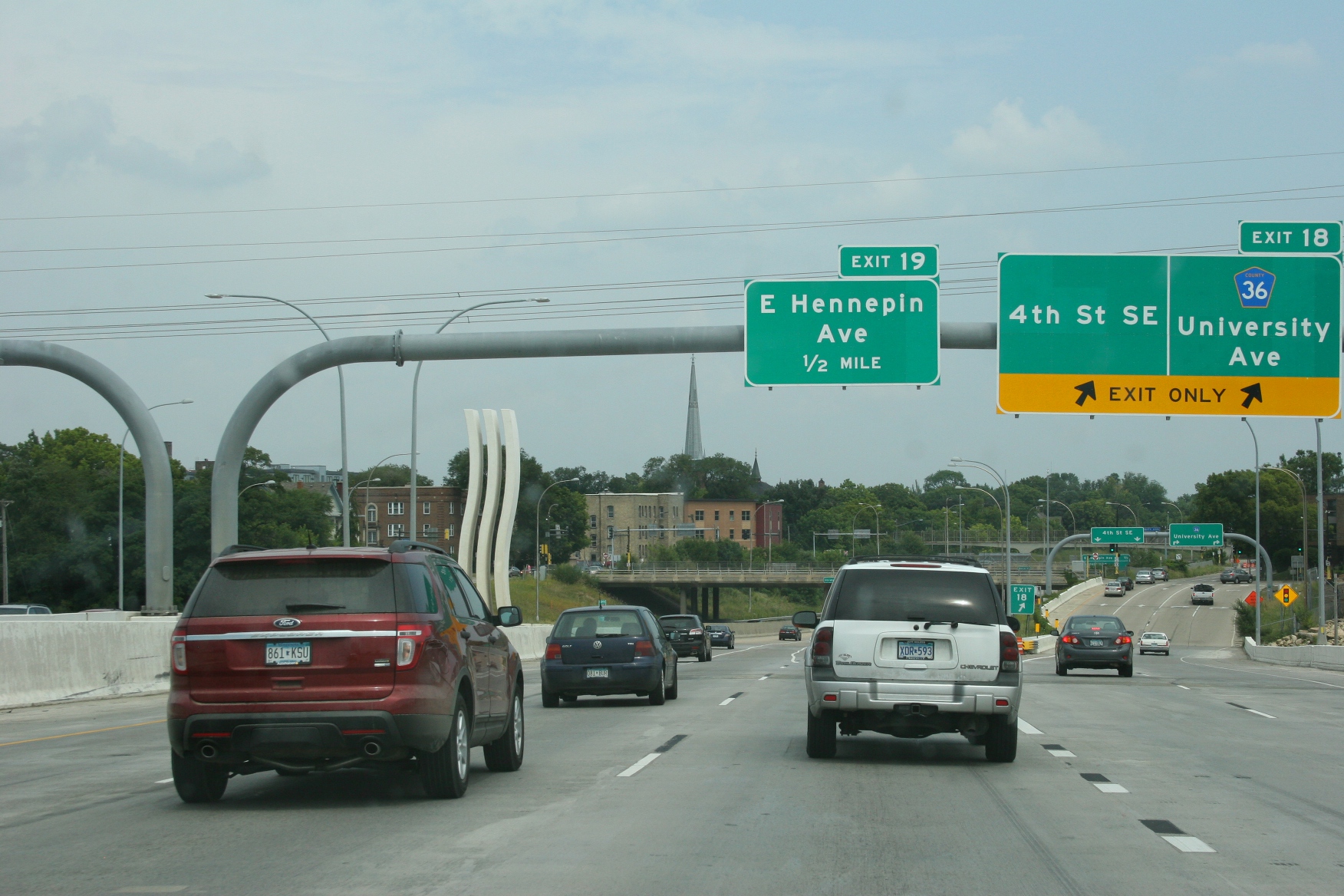
Last weekend, my husband and I traveled across the “new” 35W bridge, marked by wavy pillars. I didn’t realize we were on the bridge until I noticed the 30-foot high water symbol sculptures. We seldom drive this way and I’m just not all that familiar with Twin Cities roadways.

Nearing the other end of the 35W bridge.

Nearing the other end of the 35W bridge.

As we crossed the bridge, my thoughts flashed back to that terrible tragedy and specifically to survivor Garrett Ebling, former managing editor of the Faribault Daily News, the newspaper in my community. He was among those most seriously injured when his Ford Focus plunged into the Mississippi River.

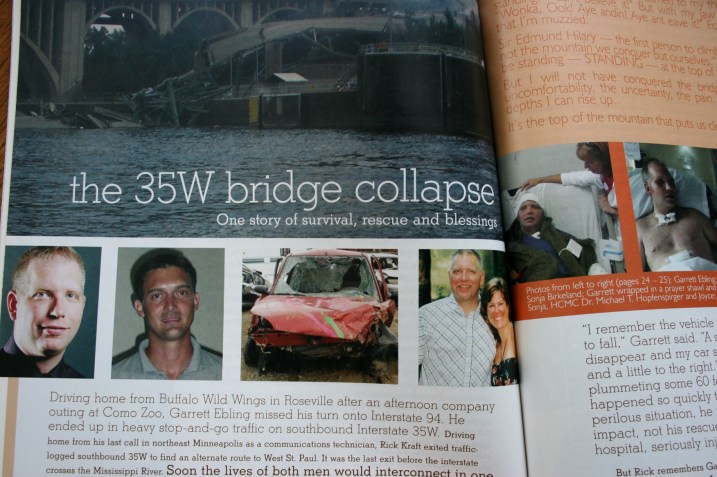
This photo shows the opening spread of the feature article published in the November/December 2007 issue of Minnesota Moments. Casey McGovern of Minneapolis shot the bridge collapse scene. To the far left is Garrett before the collapse, to the right, his rescuer. The next photo shows his Ford Focus which plummeted into the Mississippi River. And to the right are Garrett and Sonja, before the collapse.

This photo shows the opening spread of the feature article published in the November/December 2007 issue of Minnesota Moments. Casey McGovern of Minneapolis shot the bridge collapse scene. To the far left is Garrett  Ebling before the collapse, to the right, his rescuer, Rick Kraft. The next photo shows his Ford Focus which plummeted into the Mississippi River. And to the right are Garrett and and his fiancee, Sonja Birkeland, before the collapse. On the second page are photos of Garrett in the hospital.

Shortly after the collapse, Garrett was the subject of a magazine feature article I wrote on his experience and survival. I interviewed him via email as he was unable to speak. He impressed me then with his tenacity and determination. I also interviewed his then fiancee, Sonja Birkeland, and his rescuer, Rick Kraft.

Garrett Ebling's book.

Garrett Ebling’s book.

In 2013, I published a review here of his book, Collapsed, A Survivor’s Climb from the Wreckage of the 35W Bridge. You can read that review by clicking here.

Garrett, like so many others, was simply commuting home when the bridge gave way. The ordinariness of this, I think, strikes me most. Just driving home…

I’ve never liked bridges. Not because I’m afraid they will fall, but because I don’t like heights. I remember a brother-in-law asking shortly after the collapse whether I was now afraid to cross a bridge. I’m not.

But, like many Minnesotans, I now have a heightened awareness of the condition of bridges. How could you not?

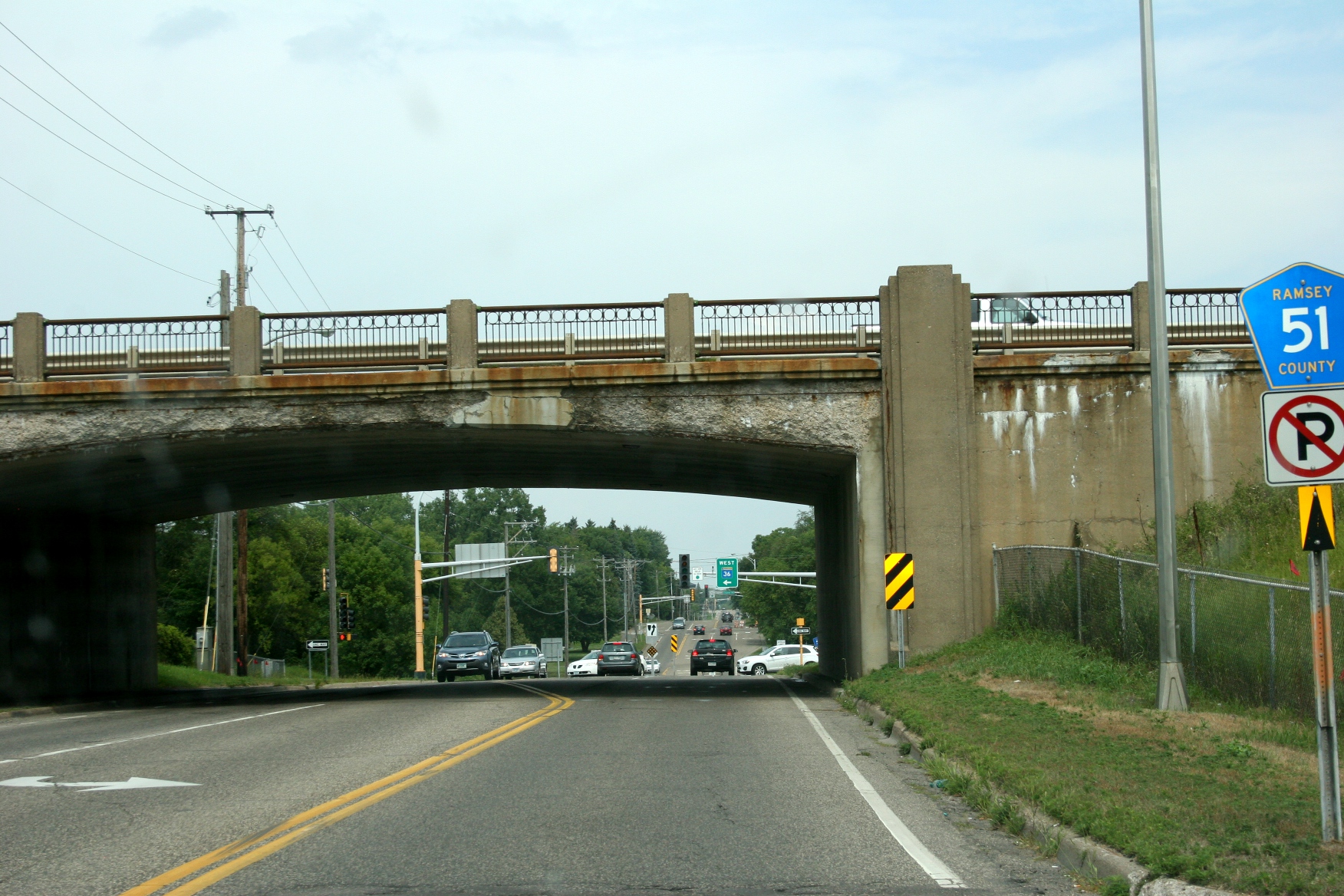
The Minnesota Highway 36 bridge over Ramsey County Road 51. (Shot taken through a dirty windshield, thus the spots on the image.)

The Minnesota Highway 36 bridge over Ramsey County Road 51. (Shot taken through a dirty windshield, thus the spots on the image.)

So, when my husband and I exited Minnesota State Highway 36 to Lexington Avenue/Ramsey County Road 51 not long after crossing the 35W bridge, we nearly simultaneously noted the condition of the highway 36 bridge. Now I’m sure inspectors have checked the bridge for structural safety. But to the untrained eye, rust and crumbling concrete raise concern.

Tell me, what holds fast in your memory about the 35W bridge collapse and did that tragedy impact how you view bridges?

© Copyright 2014 Audrey Kletscher Helbling


I’ll take country over big city any day August 5, 2014

Filed under: Uncategorized — Audrey Kletscher Helbling @ 6:00 AM
Tags: , , , , , , ,
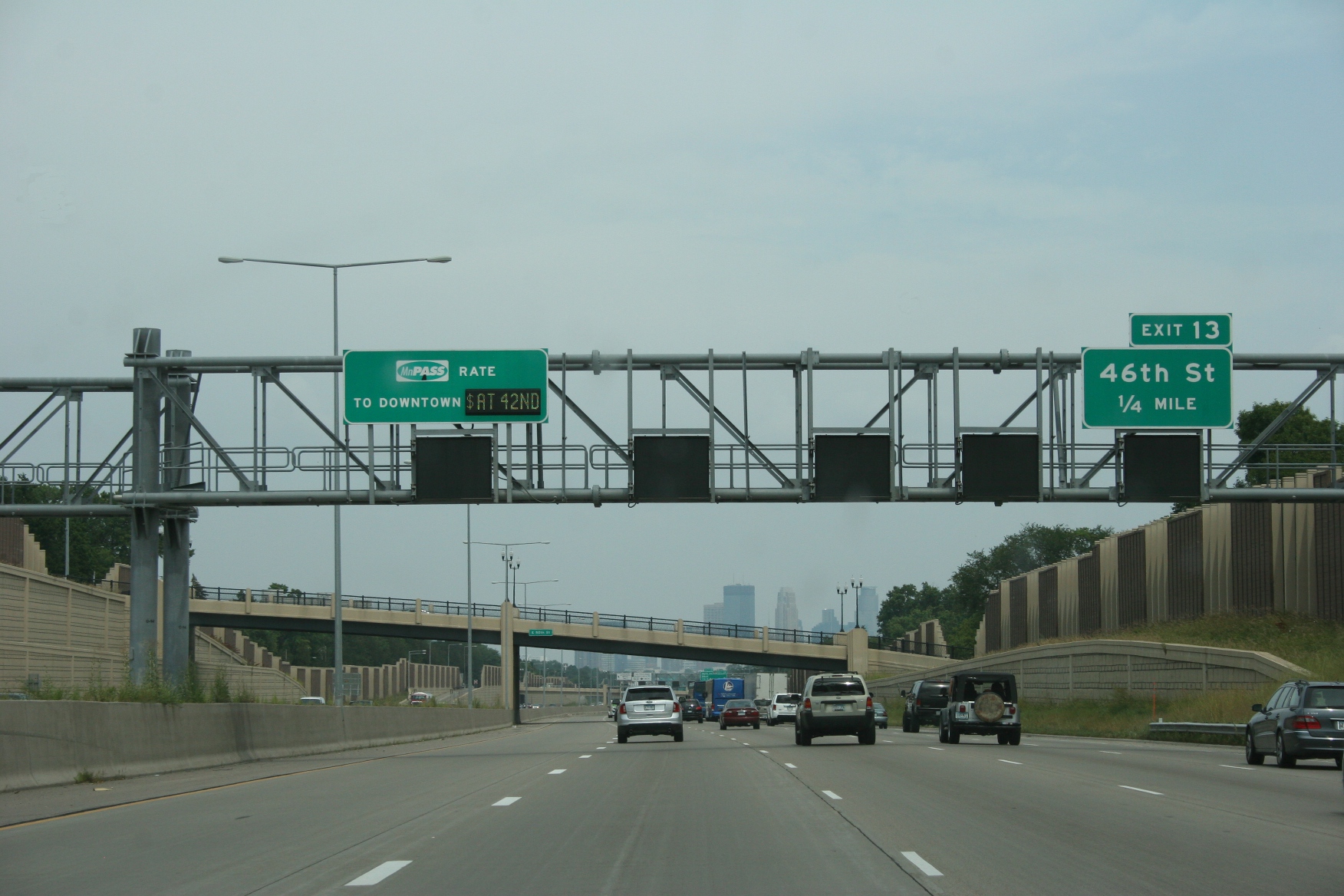
Approaching downtown Minneapolis. Growing up on a southwestern Minnesota dairy and crop farm, I would travel with my parents and siblings once a year to visit relatives in Minneapolis. We got off at the 46th Street exit.

Approaching downtown Minneapolis. Growing up on a southwestern Minnesota dairy and crop farm, I would travel with my parents and siblings once a year to visit relatives in Minneapolis. We got off at the 46th Street exit. Thankfully lanes have been added since then. But I don’t understand that sign on the left: “RATE TO DOWNTOWN $ AT 42ND.” Whenever I see these signs entering the Cities, I wonder.

I CAN’T RECALL THE LAST TIME I’ve been in downtown Minneapolis. But it’s been more than 30 years since I’ve walked in the heart of the city and I have no intention of visiting anytime soon.

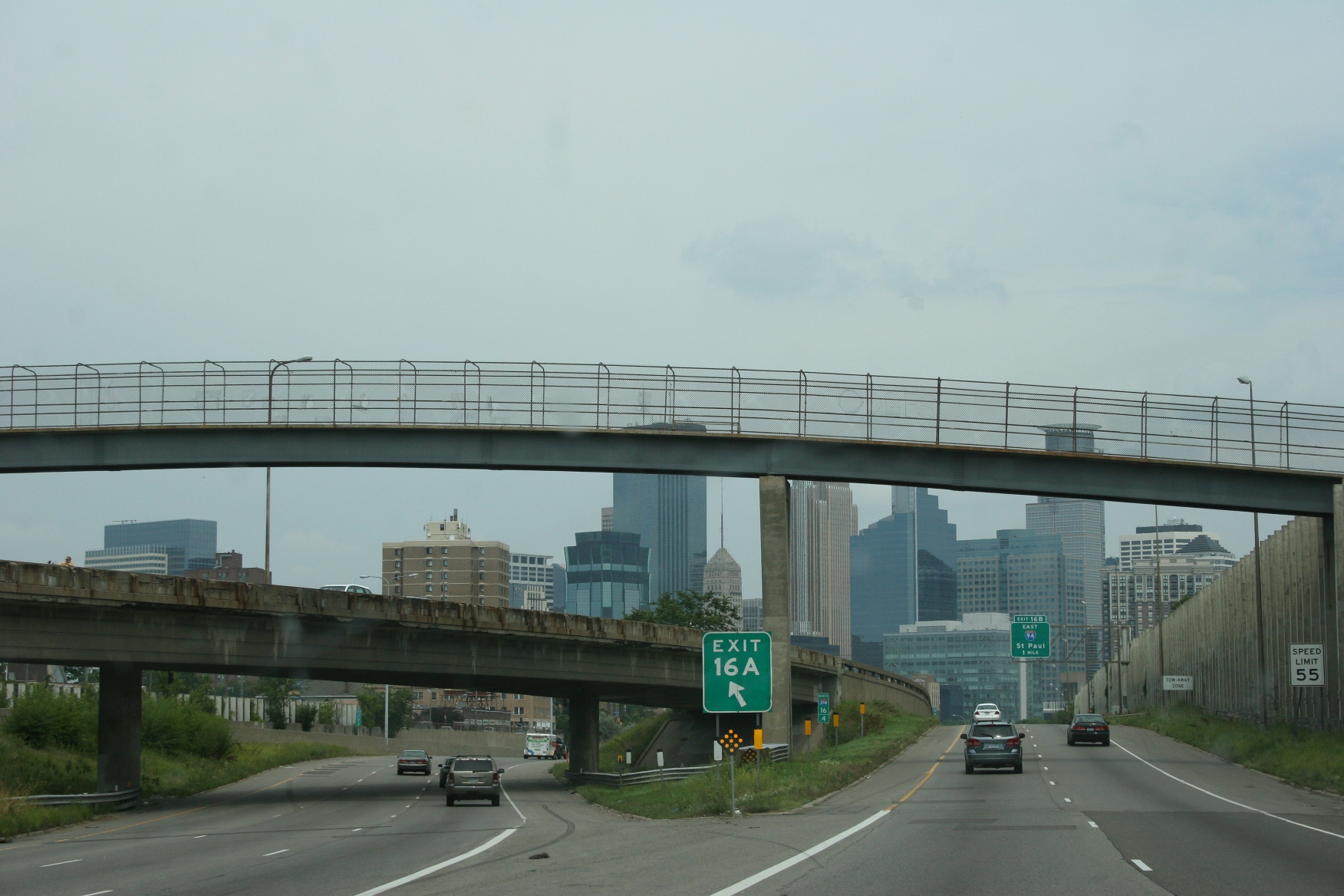
Almost to the I94/35W split near downtown Minneapolis.

The I94/35W split near downtown Minneapolis.

The big city is not for me. Give me wide open space and sky and fields and farms and small towns.

Give me horizontal, not vertical.

Minneapolis presents a photogenic skyline from afar.

Minneapolis presents a photogenic skyline as my husband and I bypass the downtown on our way to visit family in the metro.

Give me alfalfa or soybeans or a cornfield, not concrete and asphalt parking lots and buildings so tall I need to visually strain my eyes to see their tops.

I need to breathe, to see the horizon, to touch the earth.

Oh, you might advise me that I am missing out on cultural and unique dining experiences and whatever else the big city offers. Maybe. But I’ve found my own happiness in “outstate Minnesota,” as the geographical region outside the metro is termed. That moniker, even though I sometimes use it, seems to diminish the importance of anything outside the Twin Cities area.

I am thankful, however, that we don’t all like living in the same place. If that was the situation, there would be no rural, only metro. Or only rural and no cities. That, of course, is oversimplifying, but you get my point. We all crave different environments. That is a good thing.

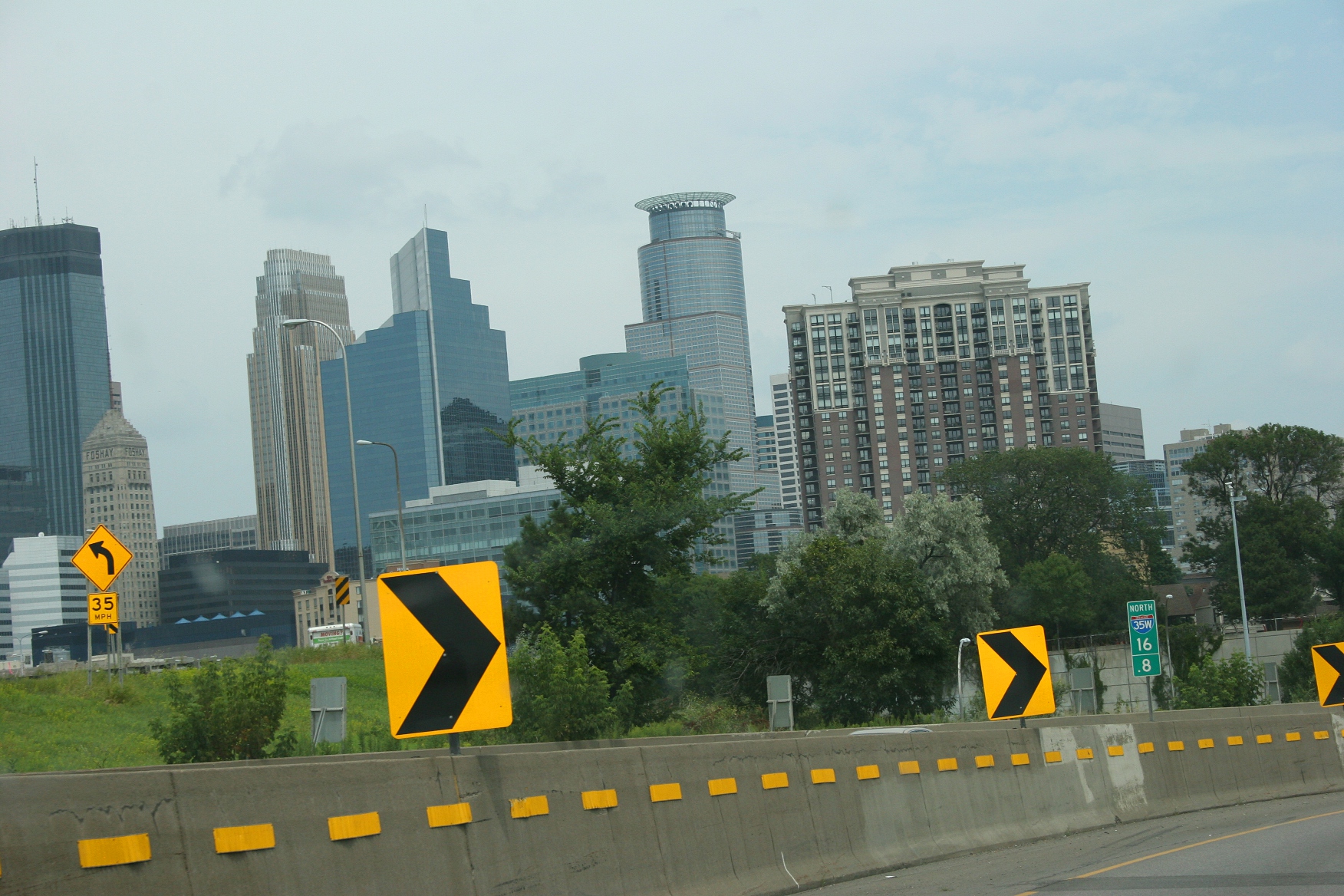
The curving interstate and speeds of some vehicles can give the illusion of being on a racetrack.

The curving interstate and speeds of some vehicles can give the illusion of being on a racetrack.

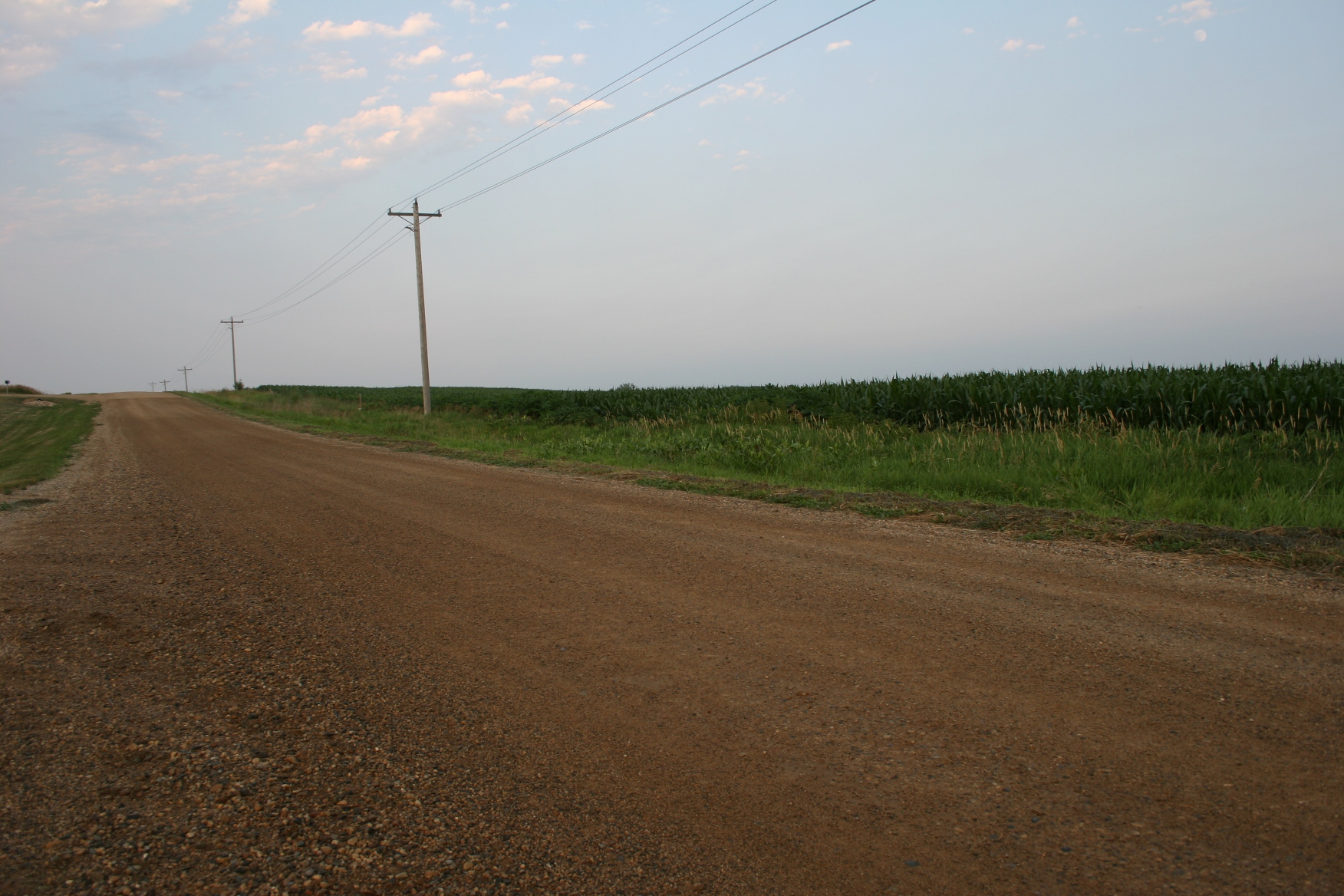
I will always prefer a country gravel road over the racetrack craziness, or gridlock, depending, of a Twin Cities area interstate.

A gravel road just north of Lamberton in southwestern Minnesota.

A gravel road just north of Lamberton in southwestern Minnesota. File photo.

But that’s me, deeply rooted in rural Minnesota.

© Copyright 2014 Audrey Kletscher Helbling


Shopping vintage in Minneapolis: I never thought my daughter would find her wedding dress in a (former) garage April 16, 2013

The unassuming exterior of Andrea's Vintage Bridal, housed in a former garage.

The unassuming exterior of Andrea’s Vintage Bridal, housed in a former garage.

IN THE UNLIKELIEST OF PLACES—an old auto garage—in the definitively hip and cool Lyn-Lake Neighborhood south of downtown Minneapolis, my first-born bride-to-be daughter set her heart on finding the perfect gown for her late September wedding.

On Saturday, Amber, her sister Miranda and I arrived for our 10 a.m appointment at Andrea’s Vintage Bridal, located in an unassuming block building angled into a corner of West 26th Street and Aldrich Avenue just off arterial Lyndale Avenue.

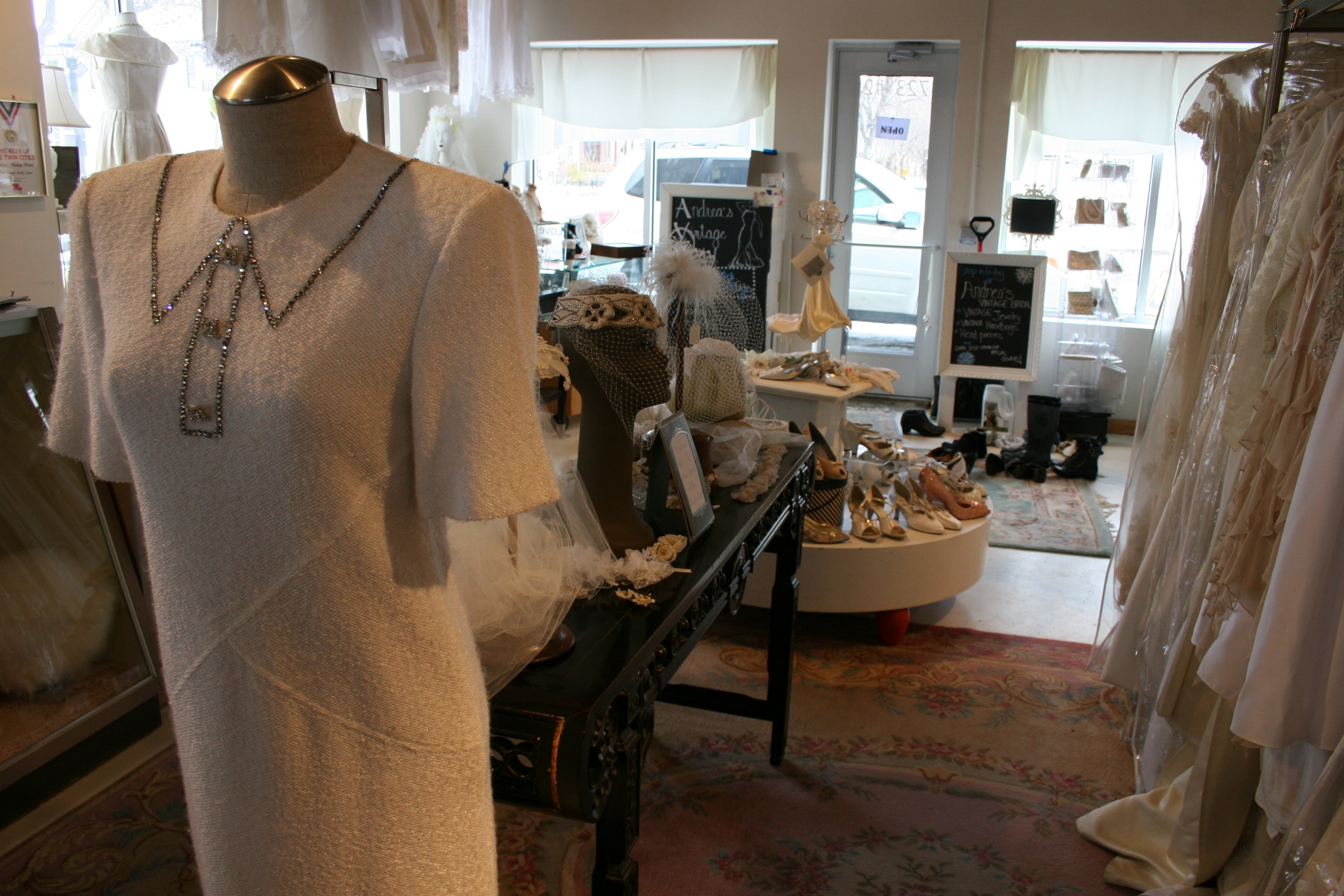
Inside Andrea's you'll find a wide selection of vintage dresses, shoes and accessories.

Inside Andrea’s you’ll find a wide selection of vintage dresses, shoes and accessories.

I was expecting a Victorian venue for this vintage attire. But, instead, I found the sweet surprise of this garage transformation from grease under your nails to manicured nails, from rags to lace. I expect if I’d peeked under one of the many scattered area rugs, I may have uncovered a faint oil stain.

The mismatch of expectations and reality seems fitting for a bridal shop that rates as anything but ordinary in the wedding fashion business.

Nikolina Erickson-Gunther consults with my eldest daughter.

Nikolina Erickson-Gunther consults with my eldest daughter.

“No one in the world is doing what we do—focusing on redesign (of vintage bridal gowns),” says Nikolina Erickson-Gunther, who runs the shop with her mother, Andrea Erickson.

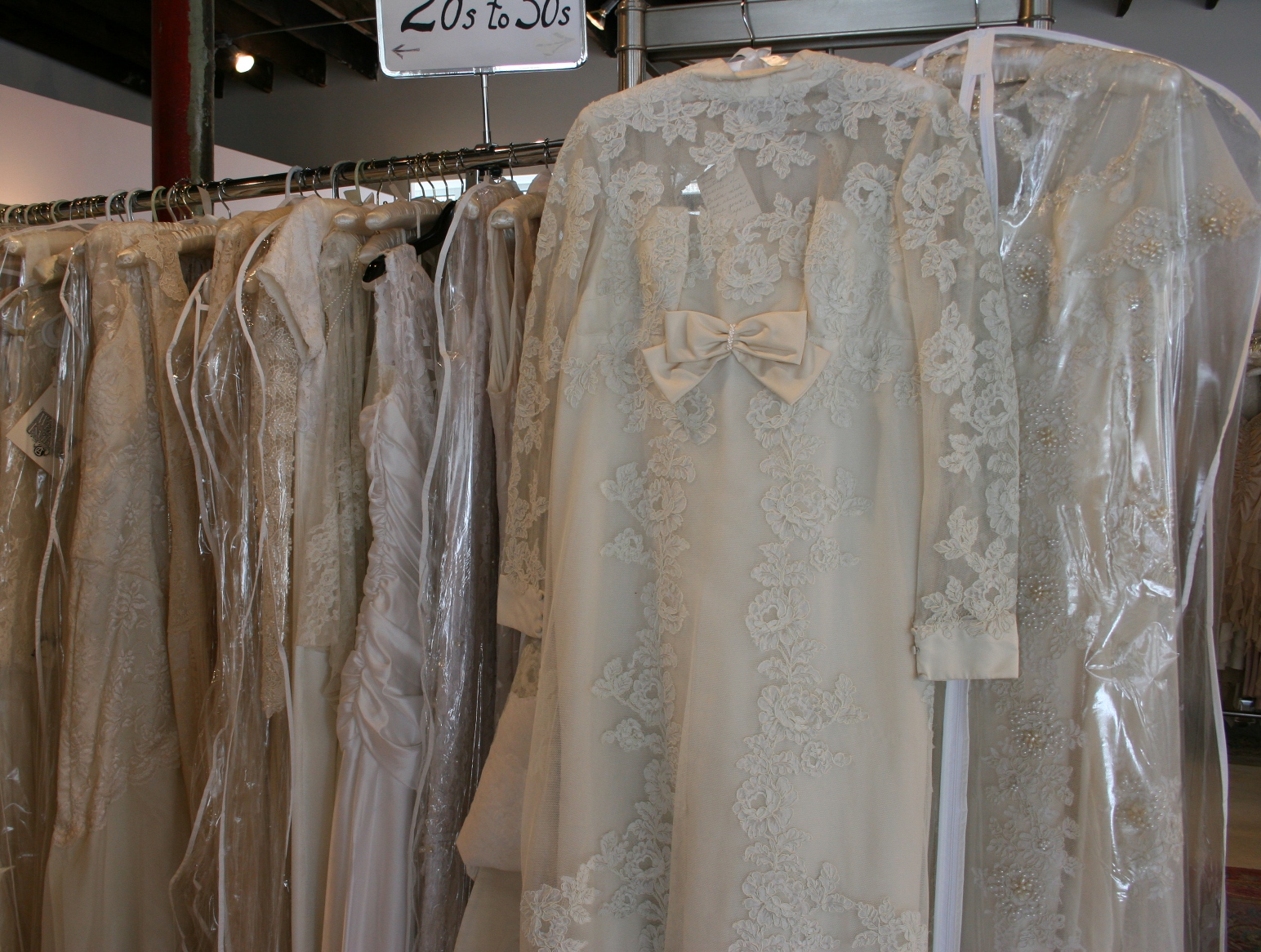
Dresses from the 20s and 30s.

An example of Andrea’s bridal gown offerings, divided by vintage year.

From pre-1920s antique to 80s glam and everything in between—sleek 30s, lacy 50s, early 60s ballroom and those oh-so-cool hip flower child late 60s and early 70s—Andrea’s continually stocks around 350 gowns for those future brides, like my daughter, who appreciate vintage and a dress that is anything but the latest trendy style. You would be hard-pressed to find a strapless gown here.

Nikolina, her mom and associates specialize in customer service that focuses as much on individualized attention as the vision of how a bridal gown can be redesigned. Because these are one-of-kind finds, brides-to-be shopping Andrea’s need the ability to envision the transformation of a pulled-from-the-rack bridal dress into the perfect gown.

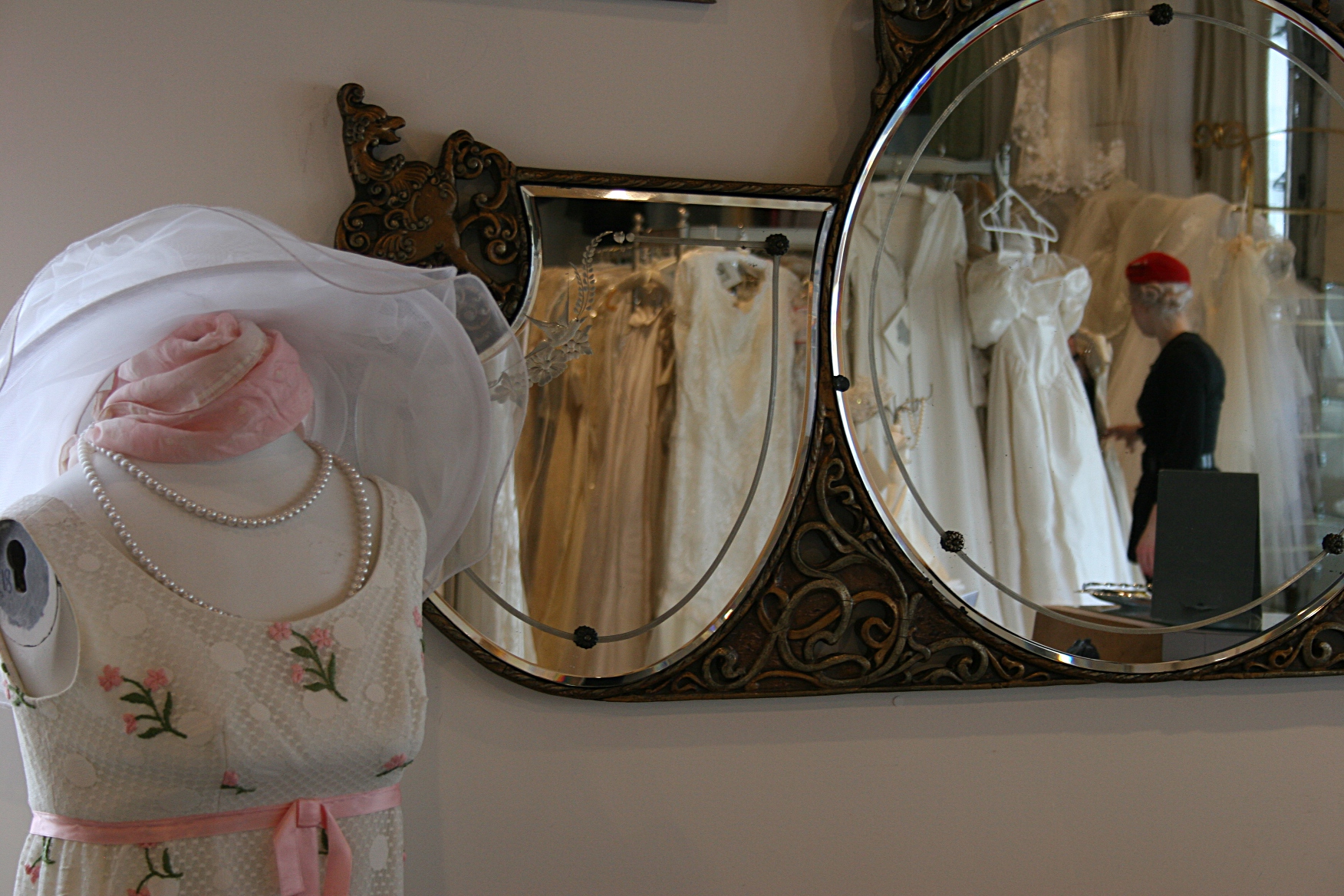
A sweet vintage dress, left, and Nikolina reflected in shop mirrors.

A sweet vintage dress, left, and Nikolina reflected in shop mirrors with racks of bridal gowns.

Working with vintage-attired and vintage-obsessed fashionable Nikolina, it’s easy to imagine any dress customized to fit a bride’s body and style. Nikolina, who holds a degree in film and 10 years experience as a make-up artist, possesses a commanding knowledge of fashion and style that exudes confidence.

Andrea's focuses on redesigning vintage wedding dresses.

Andrea’s focuses on redesigning vintage wedding dresses.

Under her tutelage, it was easy to envision sleeves and high necklines removed, lace tacked, straps added and more as Amber tried on about a half dozen dresses before finding hers, one that needs few adjustments. Because I am sworn to secrecy, I cannot share her pick. But suffice to say, she will look stunningly elegant on her wedding day.

That it should have been so easy for my girl to find “the dress” not only pleased, but surprised me. I was not expecting this.

And for someone like me, who really dislikes clothes shopping, Andrea’s offers a relaxing singular customer-focused experienced. Nikolina wasn’t darting between future brides trying to make the sale during our two-hour appointment. She settled Miranda and me onto a comfy cream-colored sofa outside a dressing room and dubbed us “the queen and princess” when I asked her to define our roles. Then she continued in her sole role of adviser and visionary to Amber.

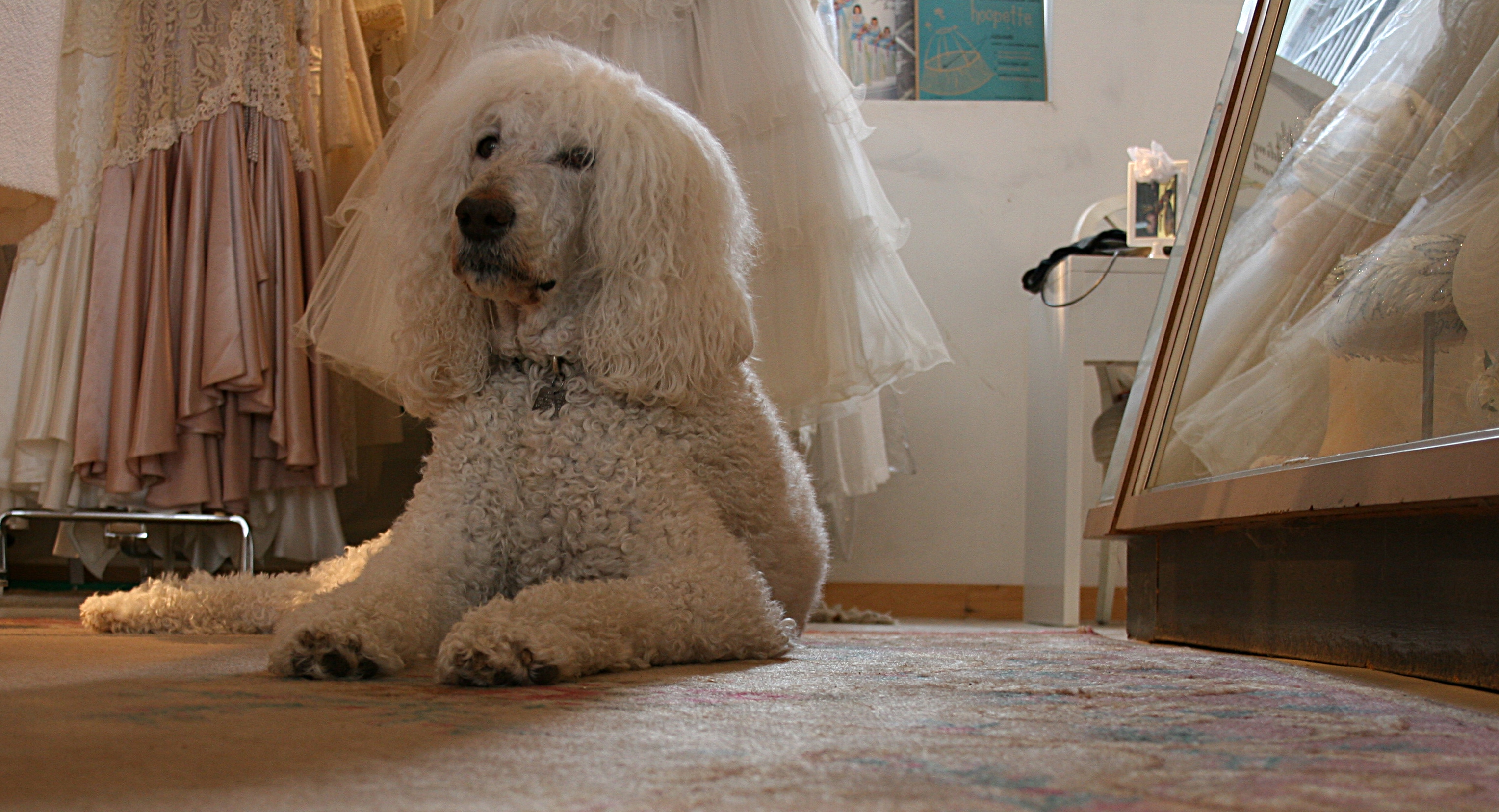
Pierre

Pierre

Shopping for a bridal gown can become emotionally-charged, Nikolina says. And that perhaps is the reason her mother brings Pierre, a white poodle, to the shop. Pierre, Andrea’s unofficial therapy dog, accompanies her to her other job as a licensed counselor. Now I am not much of a dog person, but even I was drawn to the charming Pierre who mostly lounges on the floor. Nikolina advised us, if we had food in our bags, to keep them close or Pierre would rummage for the treats. I kept my purse close, having stashed several granola bars inside.

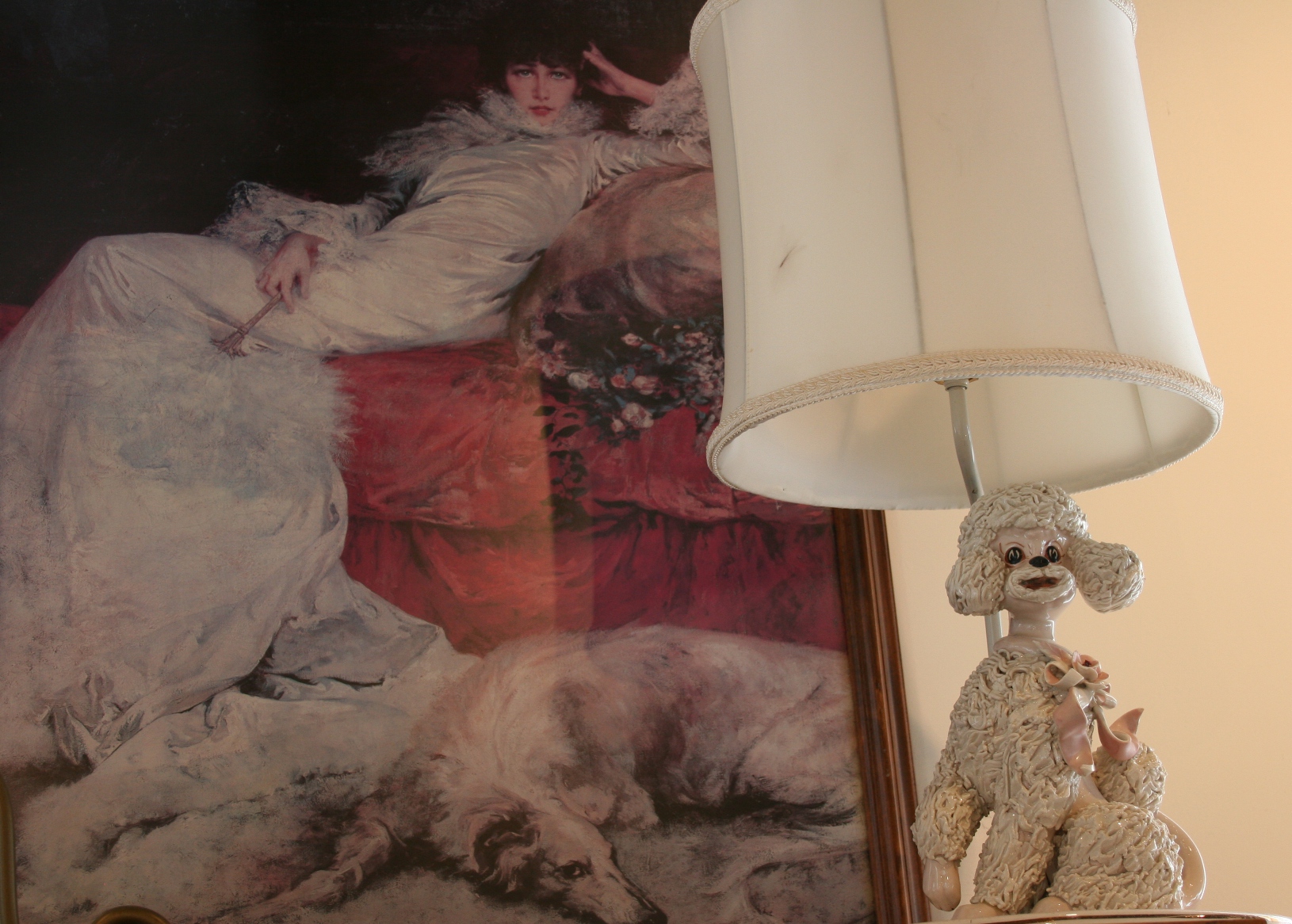
Poodle decor in the shop.

Canine art, in lamp and painting.

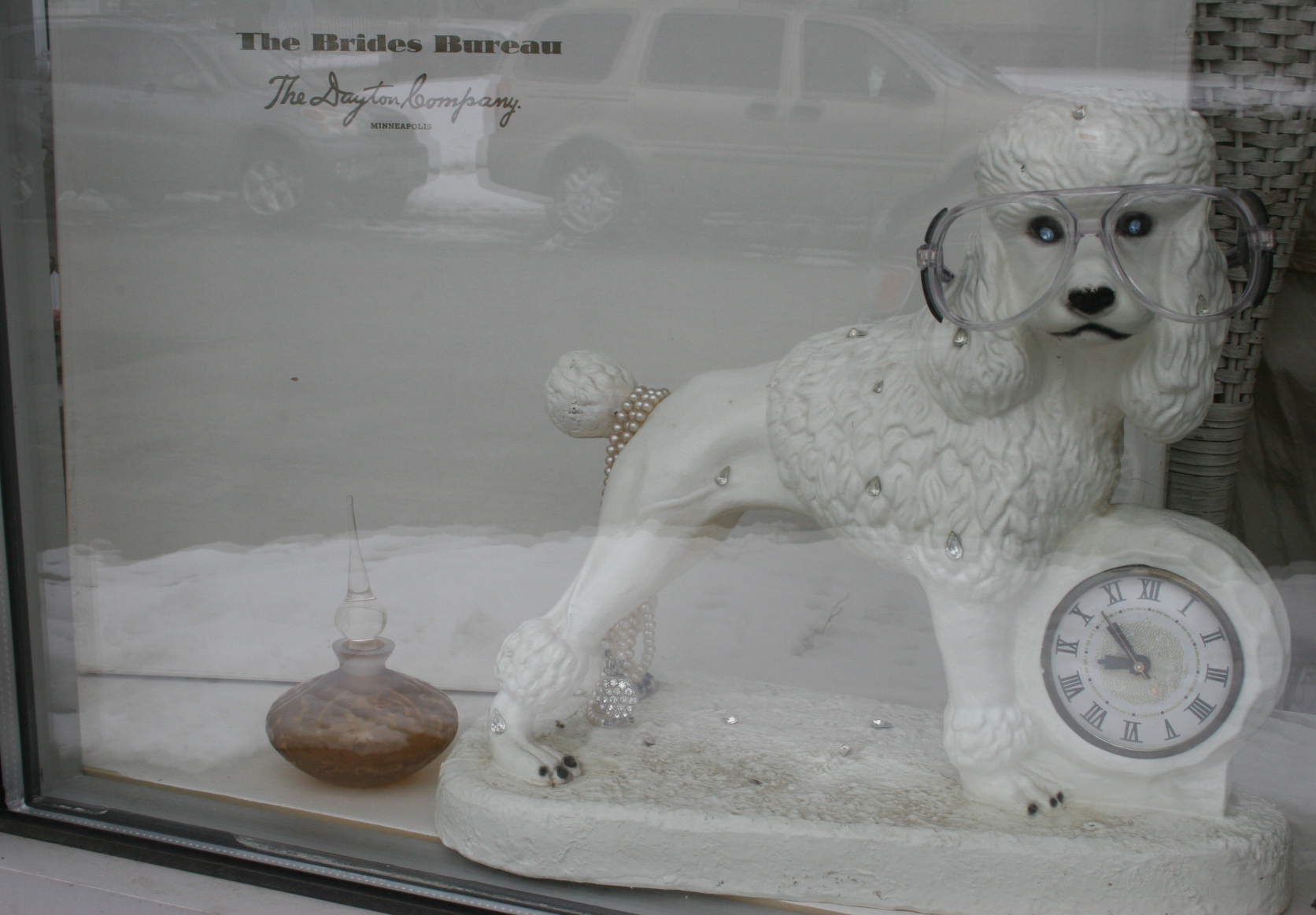
A kitschy poodle clock in a window display.

A kitschy poodle clock in a window display.

While a dog in a shop can ease tensions, so can the loving rapport between Andrea and Nikolina, evident when Andrea several times calls her daughter Pickles, a sweet childhood nickname. They work well together with Nikolina leading the gown fittings and Andrea occasionally offering input.

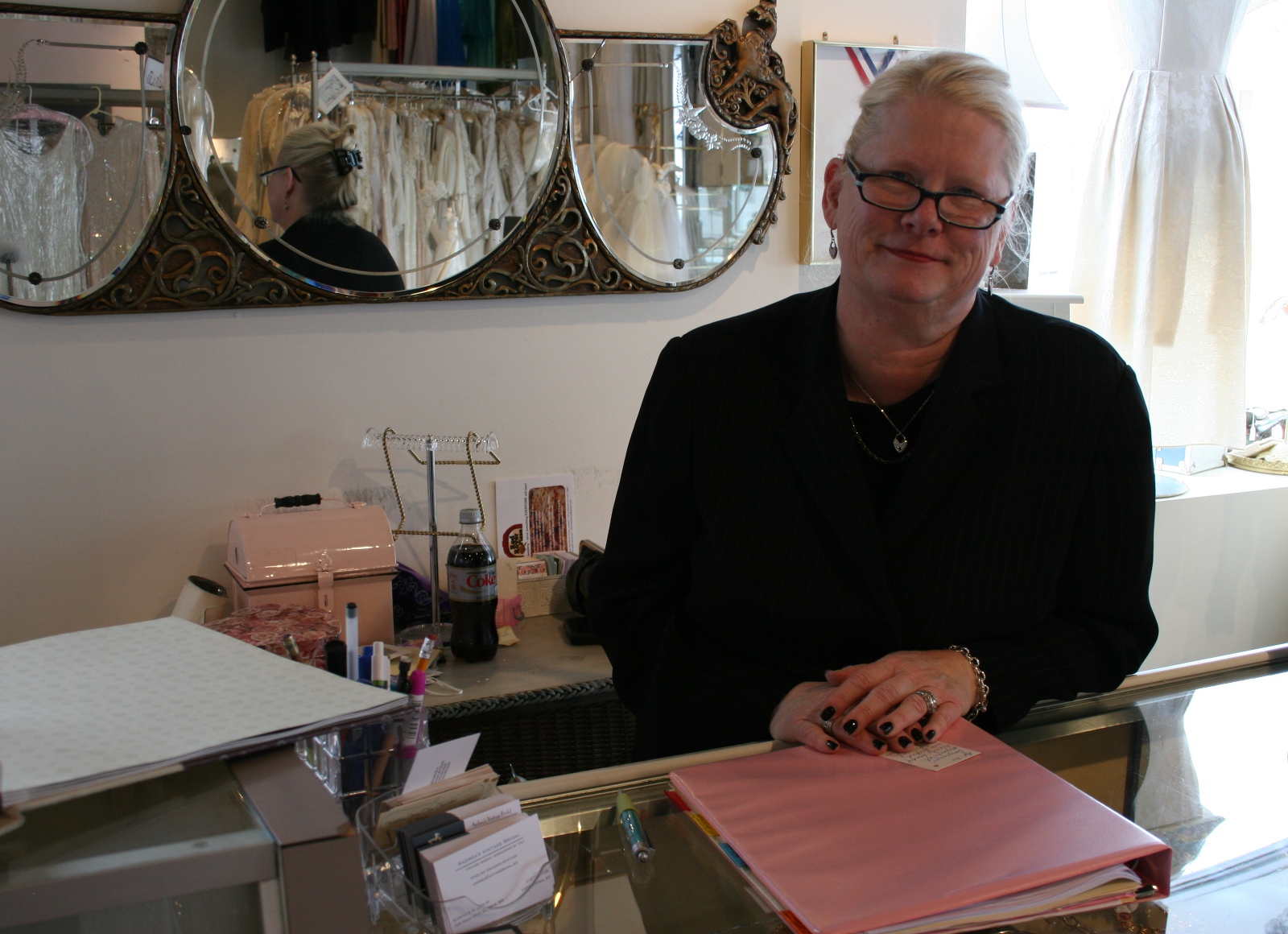
Andrea Erickson, bridal boutique owner and therapist.

Andrea Erickson, bridal boutique owner and therapist.

Nikolina returned from Boston to Minneapolis to help her mom run this organically-grown vintage bridal boutique, opened some half-dozen years ago. Andrea’s desire to offer brides an alternative wedding dress shopping venue and experience stems from her own frustrations in 2004 as a middle-aged bride-to-be seeking a gown different from what other brides were wearing. She eventually settled on a custom-made dress.

A view looking toward the front door.

A view looking toward the front door.

Soon thereafter, Andrea began collecting vintage wedding dresses, eventually opening Andrea’s Vintage Bridal and creating, as her daughter says, “a space that was different.”

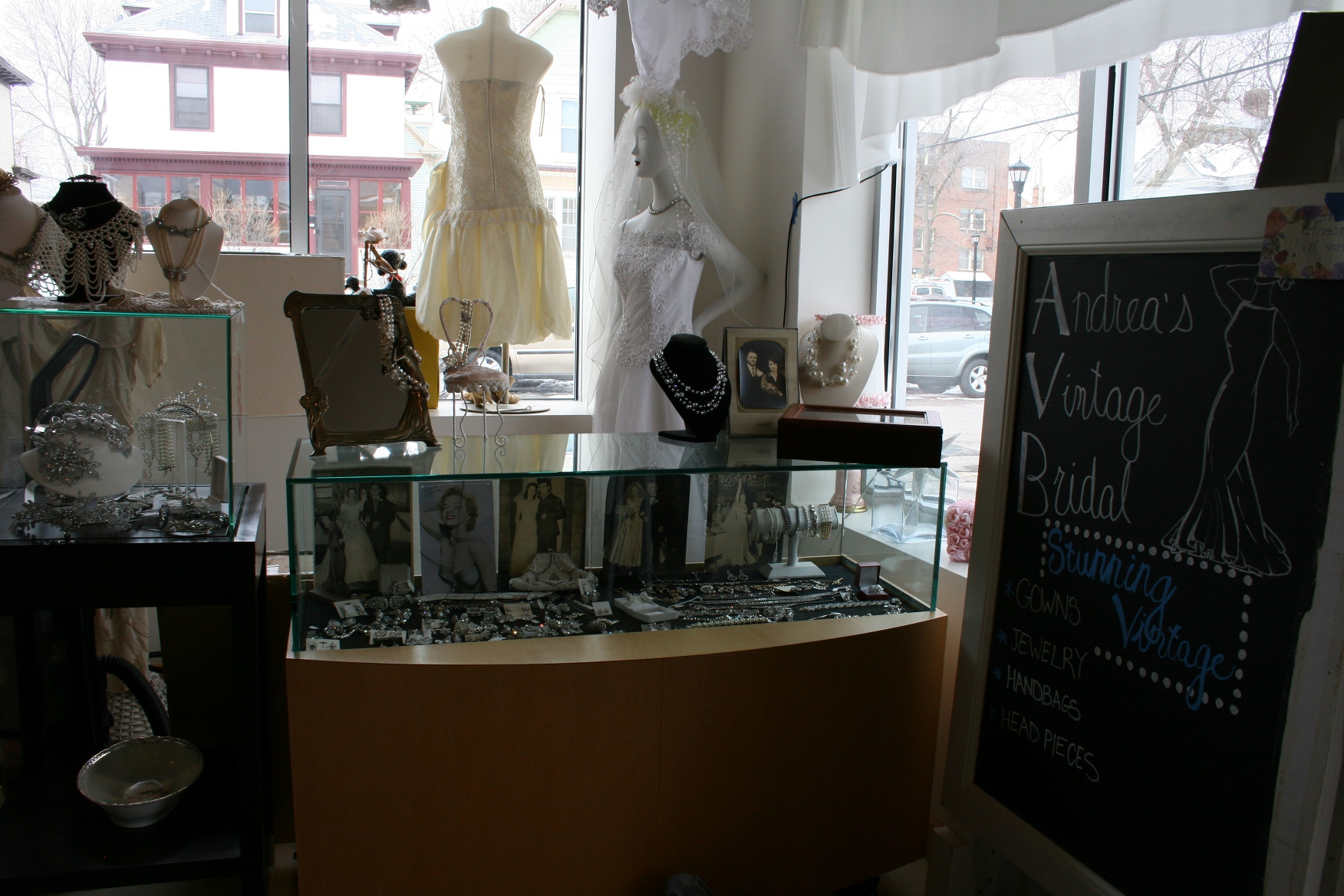
Andrea's sells an assortment of vintage merchandise that includes jewelry, displayed here.

Andrea’s sells an assortment of vintage merchandise that includes jewelry, displayed here.

On this Saturday morning the old auto garage at 723 West 26th Street proves the ideal venue for my bride-to-be eldest who often shops thrift stores and appreciates vintage.

It is not lost on me either that her father, my husband, works as an automotive machinist, an unexpected historical link that brings this entire vintage wedding dress shopping experience full circle for our family.

Shopping Andrea’s Vintage Bridal was simply meant to be.

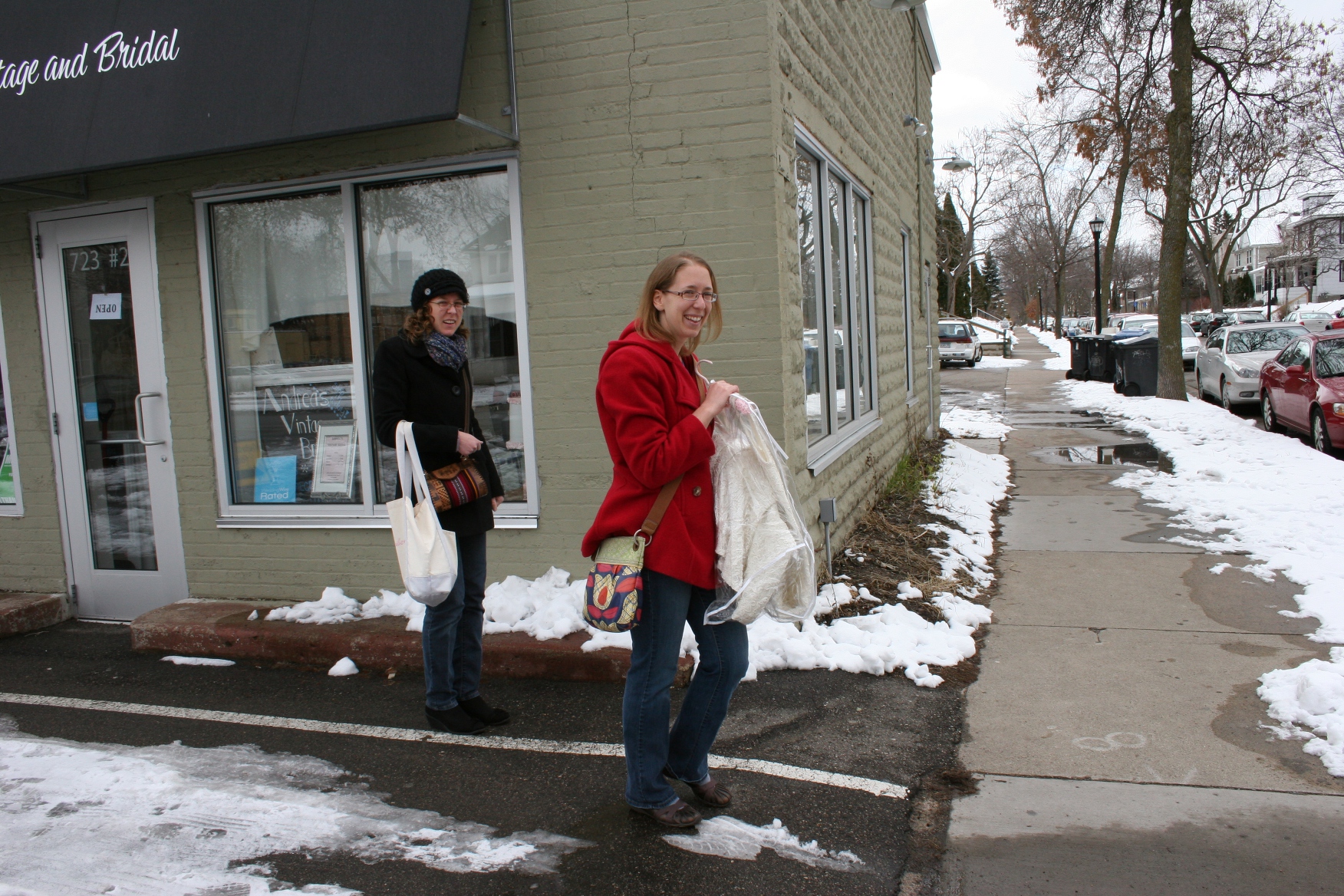
My daughters leave Andrea's Vintage Bridal after Amber, right, finds her "perfect" wedding dress.

My daughters leave Andrea’s Vintage Bridal after Amber, right, finds her “perfect” wedding dress.

FYI: Regular store hours at Andrea’s Vintage Bridal are from 2 p.m. – 8 p.m. Tuesday and Thursday and from 11 a.m. – 5 p.m. Friday and Saturday. Gowns are shown by appointment. Click here to reach Andrea’s website.

BONUS PHOTOS:

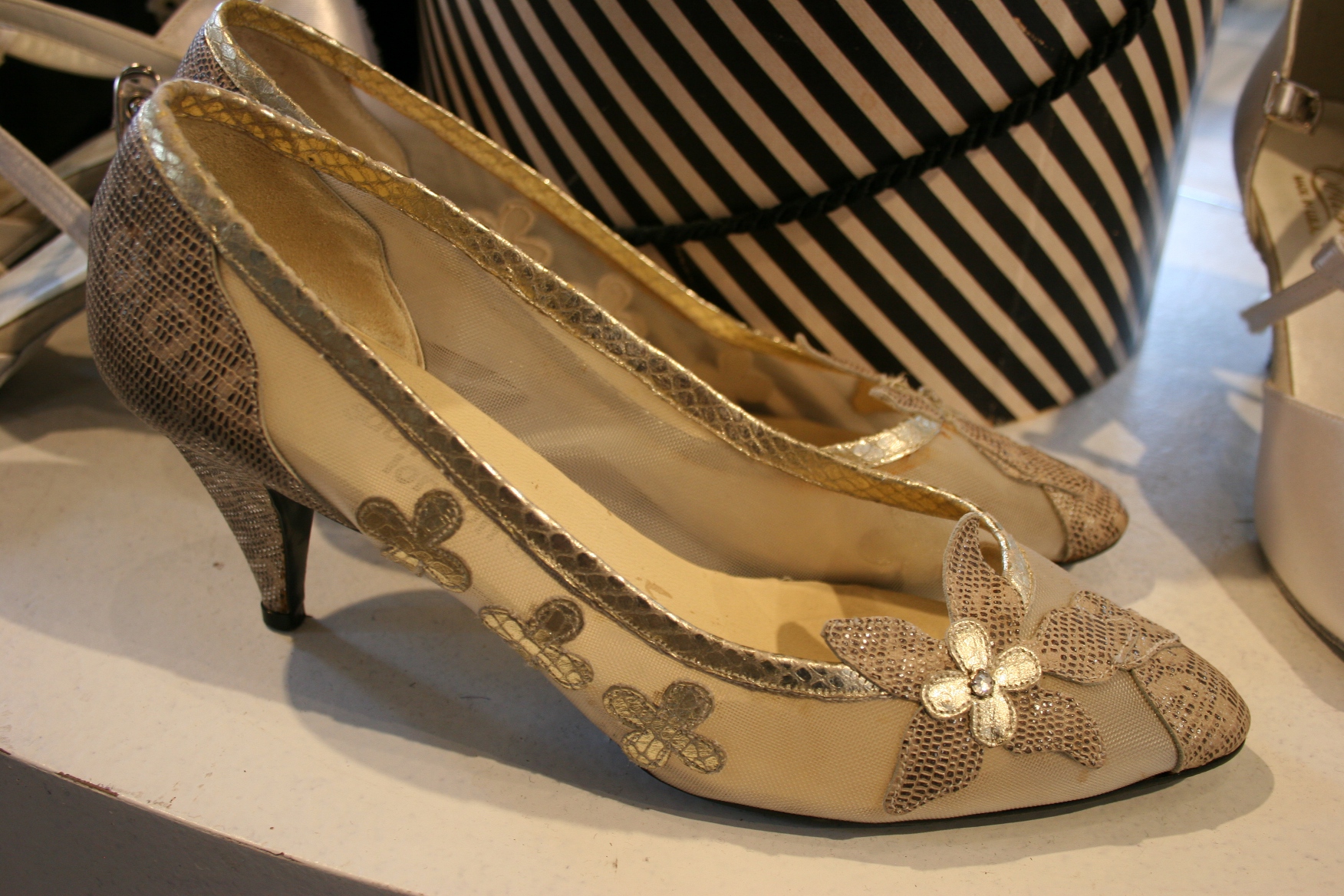
Need shoes? Andrea's sells those, too.

Need shoes? Andrea’s sells those, too.

Plenty of shoes from which to choose.

Plenty of shoes, and gloves, from which to choose.

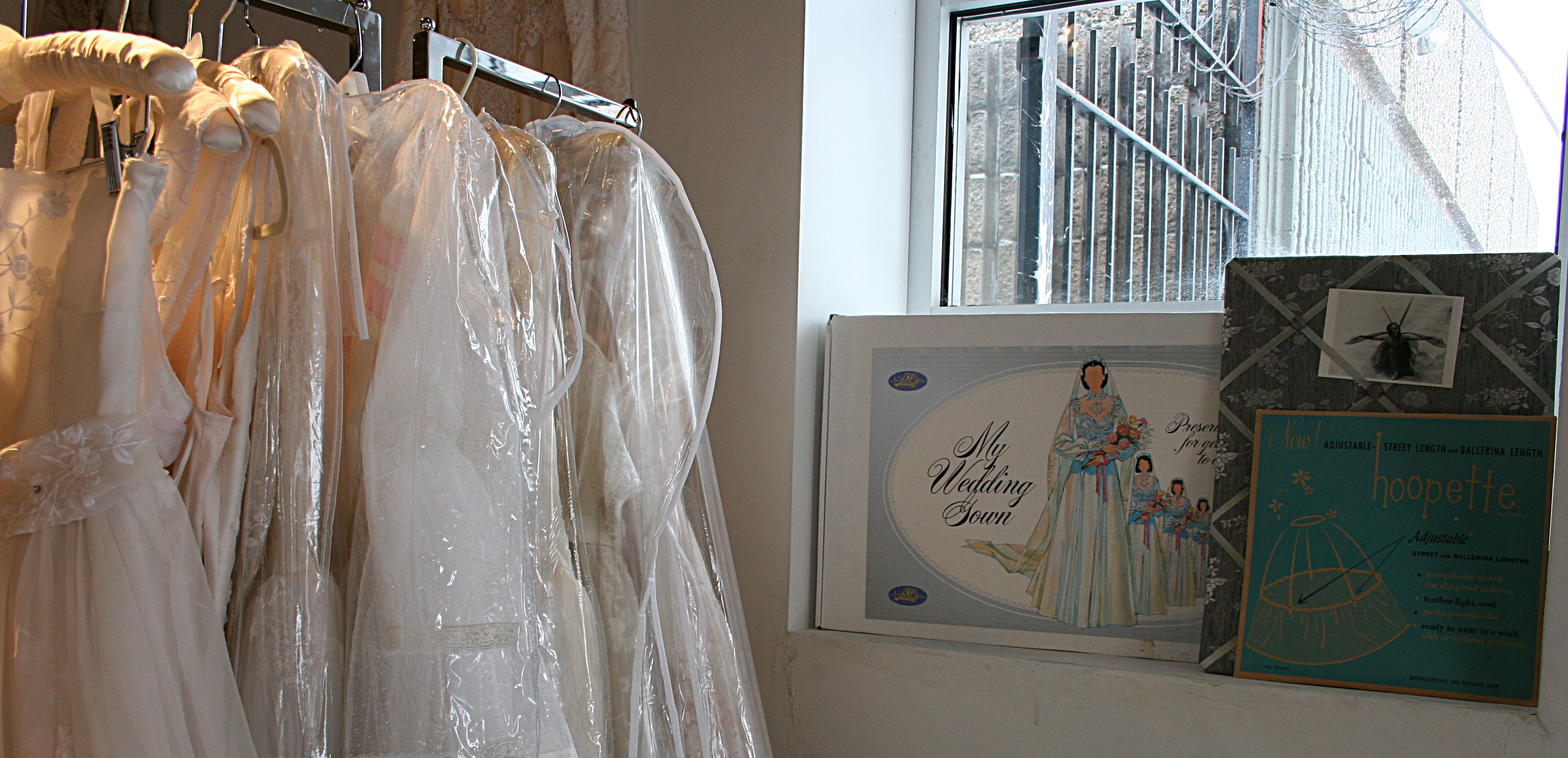
Vintage dresses, vintage signage.

Vintage dresses, vintage signage.

© Copyright 2013 Audrey Kletscher Helbling


The search is on for the “perfect” wedding dress April 8, 2013

Filed under: Uncategorized — Audrey Kletscher Helbling @ 7:32 AM
Tags: , , , , , , , , ,
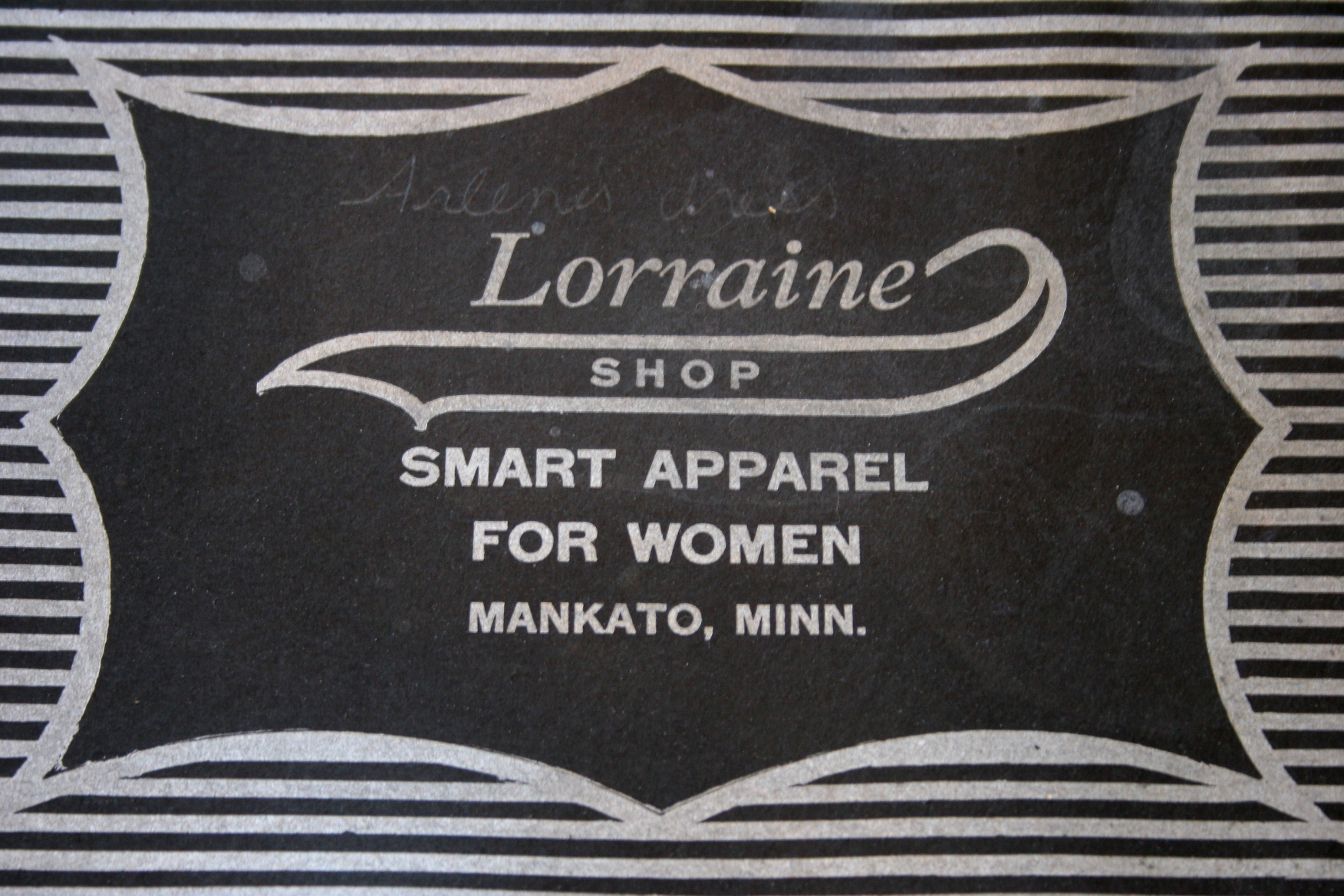
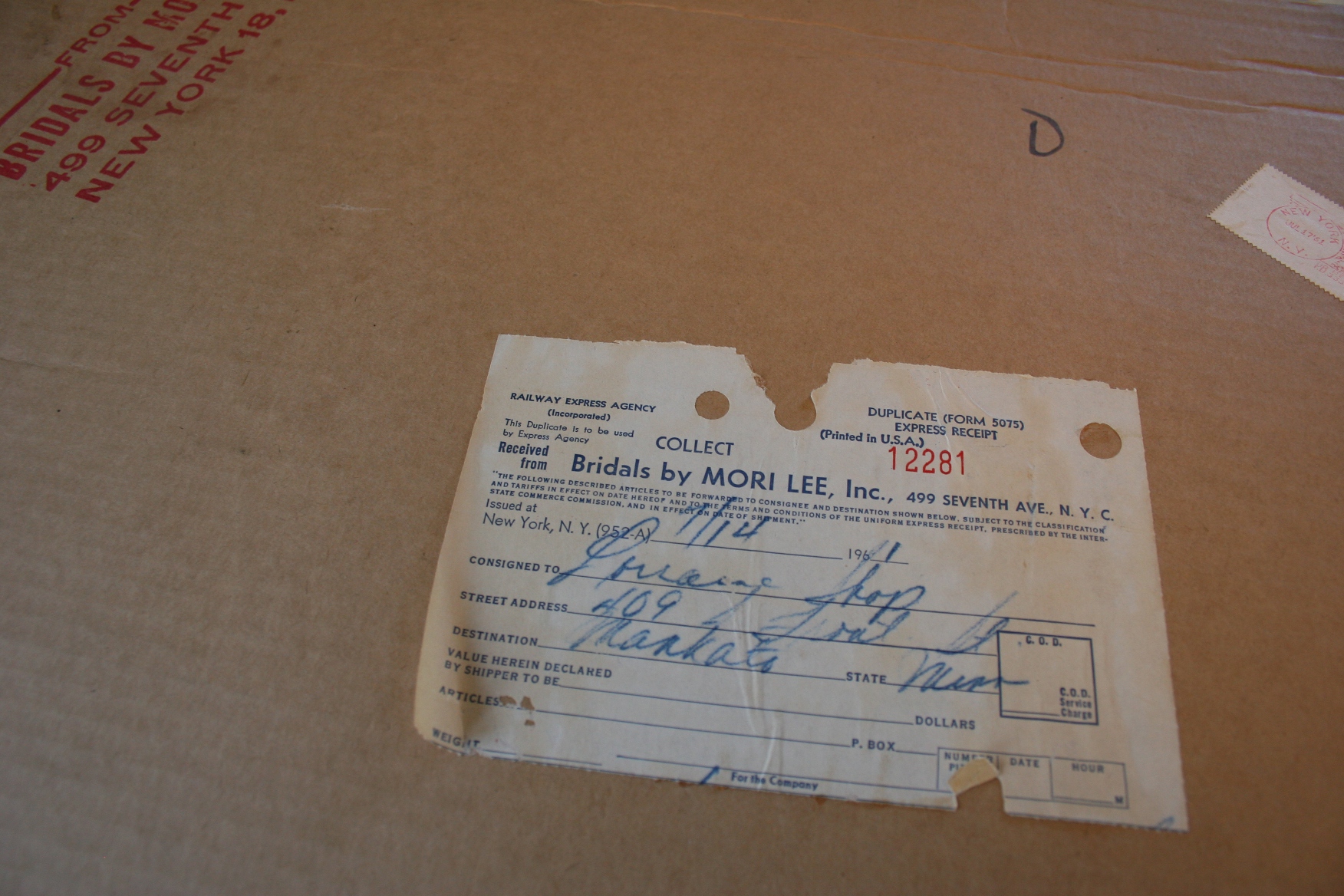
My mom's dress came from the Lorraine Shop in Mankato. You'll see my mom's name, Arlene, written on the box cover.

My mom’s dress came from the Lorraine Shop in Mankato. You’ll see my mom’s name, Arlene, written on the box cover.

I HAD HOPES, when the boxed vintage wedding dresses were stashed into the back of the van for the 120-mile trip from Vesta to Faribault, that one would fit my newly-engaged daughter.

My Aunt Marilyn's bridal gown was shipped from New York to the Lorraine Shop in Mankato for 77 cents in 1961.

My Aunt Marilyn’s bridal gown was shipped from New York to the Lorraine Shop in Mankato for 77 cents in 1961.

She’d asked that I bring them—her grandma’s and her Great Aunt Marilyn’s bridal gowns—back for her to try on.

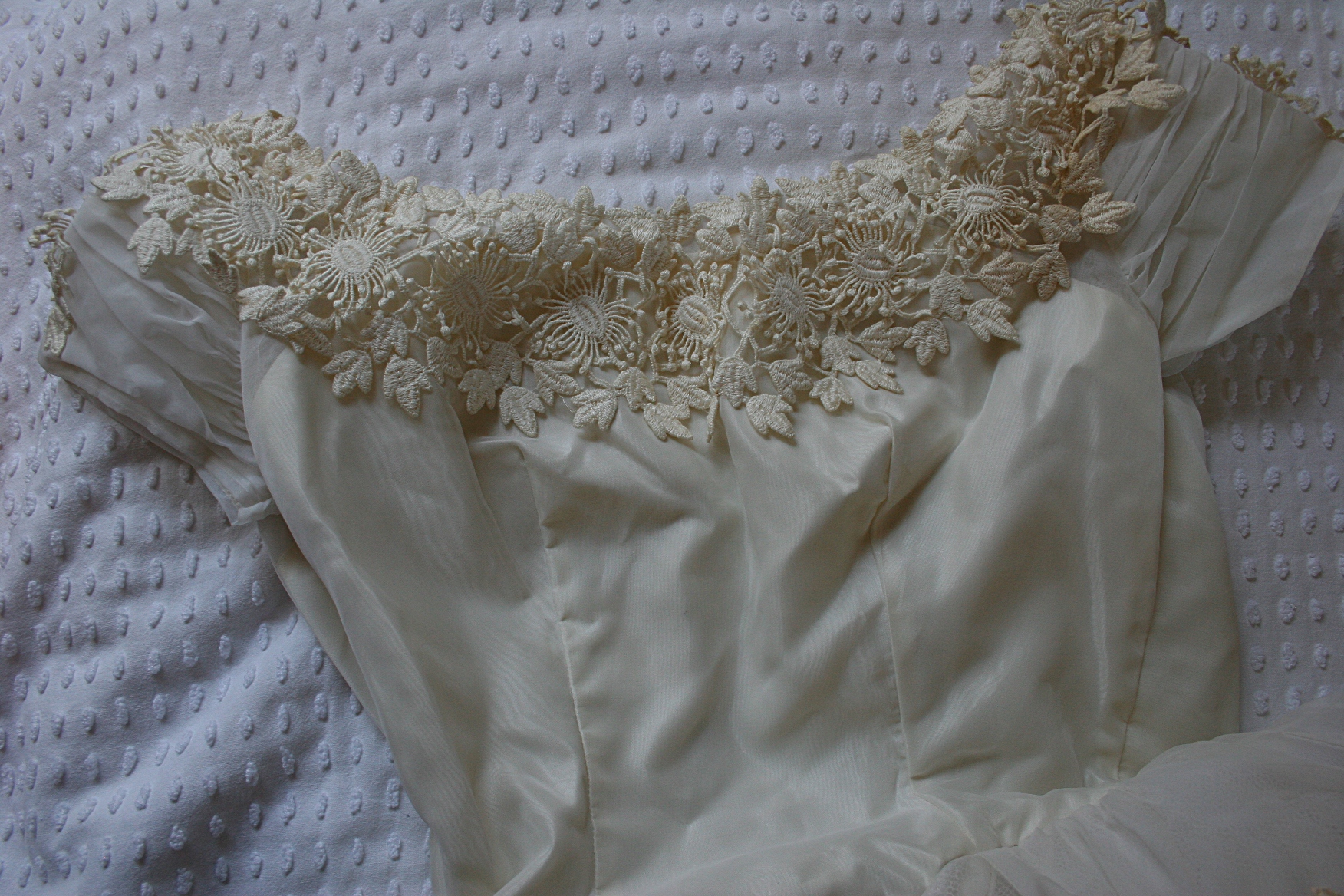
Aunt Marilyn's dress with the slim waist.

The bodice of Aunt Marilyn’s dress with the slim waist.

But, alas, no matter that my daughter is tiny, she was not slim enough to be buttoned into Marilyn’s 1961 bridal gown. Besides, she thought the skirt too pouffy.

Just like the back of my aunt's dress, my mom's bridal gown closes with a long row of buttons.

Just like the back of my aunt’s dress, my mom’s bridal gown closes with a long row of buttons.

And, although my mother’s 1954 dress was not quite as narrow, the fit was still too snug for comfort on my 27-year-old. But mostly, the bodice lace was itchy and comfort counts on your wedding day.

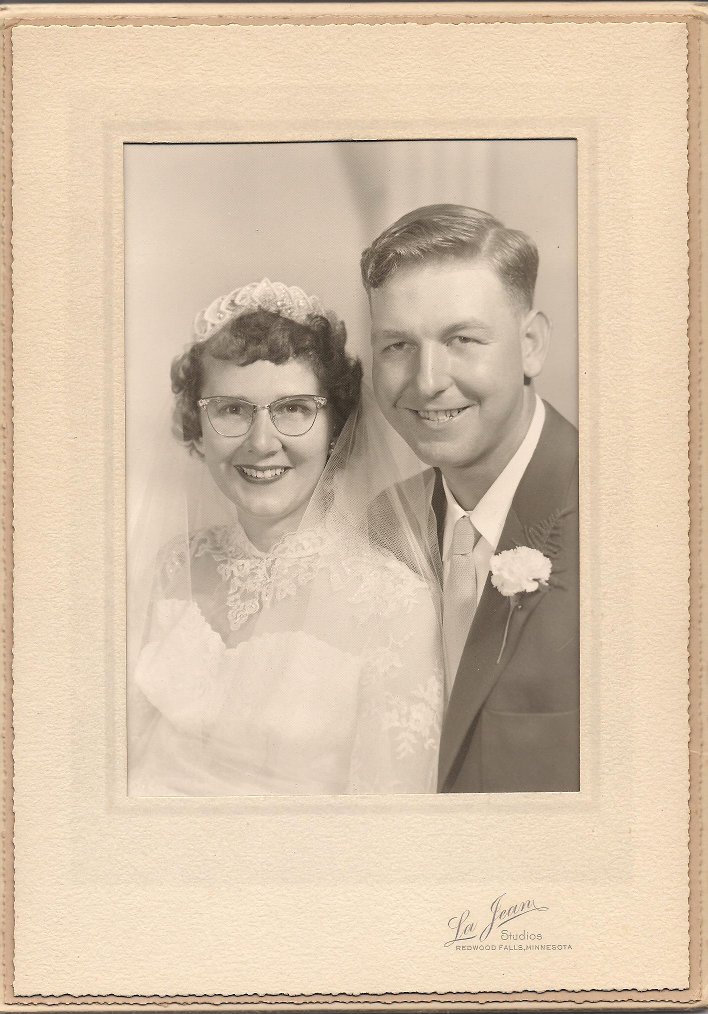
My parents, Vern and Arlene, on their September 25, 1954, wedding day.

My parents, Vern and Arlene, on their September 25, 1954, wedding day.

So the bride-to-be has moved to Plan B, scheduling an appointment at Andrea’s Vintage Bridal in south Minneapolis. I am delighted with my daughter’s first shopping choice. I can easily envision my girl wearing something from a bygone era. It fits her down-to-earth style and personality.

Several times she’s expressed her desire to find a gown different from the norm and, most definitely, not a strapless one. I’m totally with her on that. At way too many weddings, I’ve watched brides tug at their strapless bodices to keep everything up and in place.

No matter what dress she eventually chooses, I am confident it will be the right choice for her. Not me. Not her sister. But her, my darling precious bride-to-be eldest daughter.

SHARE YOUR WEDDING dress story with us, or tips on how and where to find the “perfect” bridal gown. And, if you have a vintage bridal dress…

© Copyright 2013 Audrey Kletscher Helbling


My thoughts after reading a book by 35W Bridge collapse survivor Garrett Ebling February 21, 2013

SOMETIMES, MANY TIMES, life is not as it seems upon the surface.

That summarizes my overall reaction to reading Collapsed, A Survivor’s Climb from the Wreckage of the 35W Bridge by Garrett Ebling.

Now, before I explain, you should know that I wrote a feature article, “The 35W bridge collapse: One story of survival, rescue and blessings,” which published in Minnesota Moments magazine in 2007. That story included information and quotes from interviews with Garrett (done via e-mail given his physical condition), his then fiancée, Sonja Birkeland, and his rescuer, Rick Kraft.
This photo shows the opening spread of the feature article published in the November/December 2007 issue of Minnesota Moments. Casey McGovern of Minneapolis shot the bridge collapse scene. To the far left is Garrett before the collapse, to the right, his rescuer. The next photo shows his Ford Focus which plummeted into the Mississippi River. And to the right are Garrett and Sonja, before the collapse.

This photo shows the opening spread of the feature article published in the November/December 2007 issue of Minnesota Moments. Casey McGovern of Minneapolis shot the bridge collapse scene. To the far left is Garrett before the collapse, to the right, his rescuer. The next photo shows his Ford Focus which plummeted into the Mississippi River. And to the right are Garrett and Sonja, before the collapse. Photos on the opposite page show Garrett during his recovery.

Garrett granted a limited number of interviews, mine included, shortly after the August 1, 2007, collapse in Minneapolis, favoring print journalists given his background in newspapers. He had worked as managing editor of the Faribault Daily News. And although I’d never met him, we’d communicated after my son was struck by a hit-and-run driver while crossing a Faribault street the previous year. Garrett showed a great deal of compassion toward my family and that meant a lot to me as a mother.

With that background, you can understand why my approach to Garrett’s memoir is more personal than that of the average reader. And, for that reason, my reaction is more emotional. Reading of his ongoing struggles, I could hardly believe this was the same positive and determined man I’d interviewed shortly after the bridge collapse.

But I expect, at the time of our 2007 interview, Garrett was in pure recovery mode, so focused on his physical recovery that he had no idea of the emotional struggles ahead. And I’ll be honest here, I’d not considered either how plunging from a bridge (in your car) the equivalent of an 11-story building into a river would impact every aspect of your life. Garrett’s injuries, including a traumatic brain injury, were numerous, his survival termed miraculous by many. Every facial bone plate shattered in an impact compared to hitting a brick wall at 100 mph.
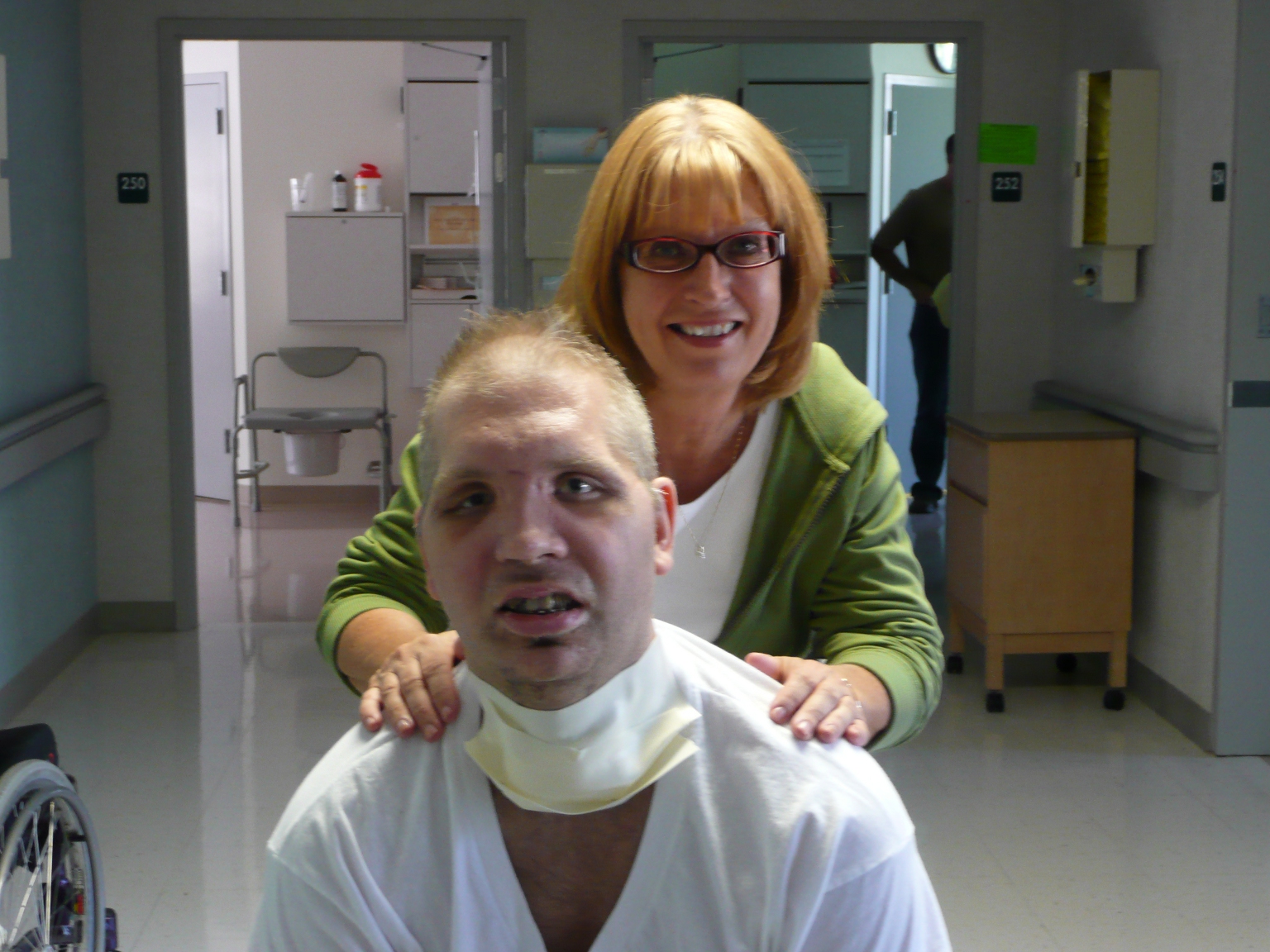
Garrett with his mom, Joyce Resoft, about a month after the bridge collapse.

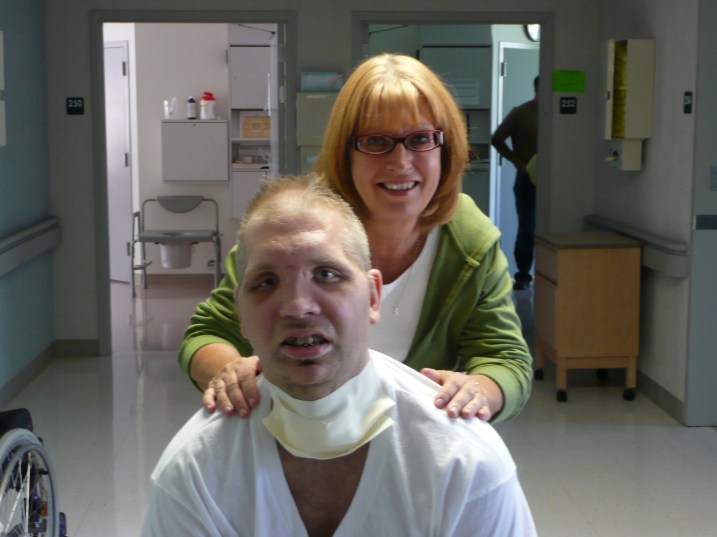
Garrett with his mom, Joyce Resoft, about a month after the bridge collapse. Photo courtesy of Garrett Ebling.

In his book, which also shares the recovery stories of several other bridge collapse survivors, Garrett holds nothing back. Nothing. Upon seeing himself in a mirror for the first time, he writes:

This man’s face, unlike mine, was swollen and quite asymmetrical. One eyelid drooped far lower than the other. One pupil remained fully dilated. There were gashes and scabs around his brow. His temples were sunken in. His teeth were either missing or horribly out of place. This man should be living up in Notre Dame’s bell tower.

Even prior to viewing himself for the first time after the collapse, the then 32-year-old realized: “I might be fixable, but I wouldn’t ever be the same.” That declaration, in the context of the book, applies as much to his physical appearance as to his personality.

Throughout the book, survivor after survivor reveals issues related to diagnoses of Post Traumatic Stress Disorder such as new fears, anger, loss of control, lack of joy in life, challenges in relationships… Prior to reading Garrett’s book, I’d only considered PTSD an issue of soldiers, like my father, who’d served in war. How ridiculously limited I was in that thinking.

Garrett’s book will catch you like that, revealing the obvious which you may not have considered. Take his story about a Halloween night out in a downtown Minneapolis bar with his buddies. A friend warned him about a young man wearing a 35W bridge collapse costume. Garrett writes of the incident:

I approached him. I acted as though I couldn’t figure out his costume…asked him who he was supposed to be. ‘I’m the 35W Bridge collapse,’ he said in an almost proud way, like he’d just thought of the most clever Halloween costume ever. I pointed to a Matchbox school bus glued to his chest. ‘You know, thirteen people died and dozens more had their lives forever changed on that bridge just two years ago—and you’re looking at one of them.’

That’s one powerful story, not only for exposing the insensitivity of a young man, but also for revealing how we oftentimes fail to understand that even the most ordinary aspects of life—like an evening out—can be impacted by a disaster.
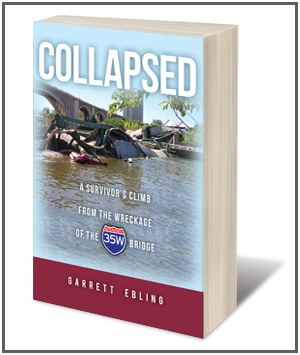
book1

Garrett’s book shows, in very personal ways via the stories of survivors Lindsey, Kim (that bus driver), Paula, Omar, Erica and others, the individuals behind the 35W Bridge collapse. That enables the reader to connect in a world where disasters are often lumped into numbers and places and quickly forgotten when the next disaster occurs.

I have never forgotten the 35W Bridge collapse. I doubt any Minnesotan could. When disaster happens that close, affects people who were simply commuting home from work, as Garrett and Lindsey were; driving a bus load of kids back from a day at the waterpark, as Kim was; or heading out for or a celebratory dinner with family as Paula, her husband and two daughters were, you realize how life can change in an instant, for any of us.

Only four days before the collapse, Garrett proposed marriage to Sonja. These should have been among the happiest days of his life, as should have been his marriage on the one-year anniversary of the bridge collapse. But Garrett reveals, much to my surprise, that he felt no joy on his August 1, 2008, wedding day, simply pasting a smile on his face, his spirit crushed.

That deeply personal revelation—and Garrett shares even more about the difficulties in his relationship—shocked me. What had happened to the couple I’d interviewed in 2007? Sonja, at the time a church youth director, told me then:

This could be the blessing of our life. God has done fantastic things out of bad things. The seeds have been planted. If we can get through this, we can get through anything.

Sonja couldn’t have known. And I never would have predicted that this couple, rock hard in their faith, would struggle to keep their relationship together. This, for me, proved the toughest part of the book to read. Eventually they worked it out and saved their marriage.
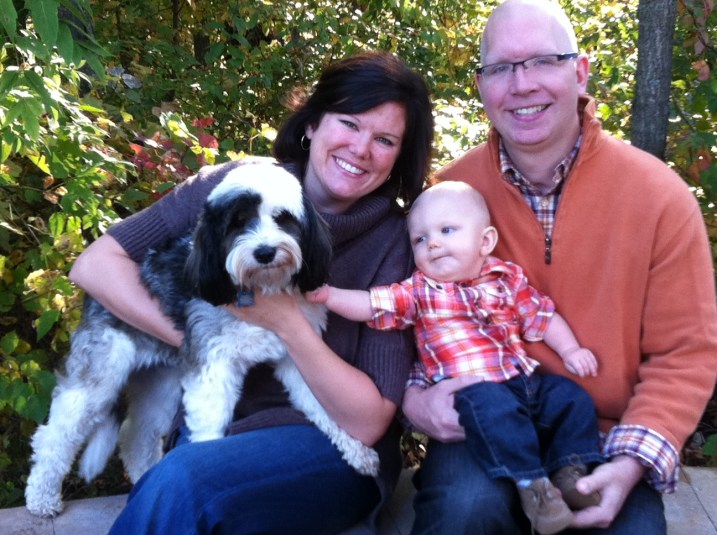
Sonja and Garrett, with their son, Cooper.

Sonja and Garrett, with their son, Cooper. Photo courtesy of Garrett Ebling.

For Garrett, the pivotal point in his recovery comes in June 2010 as he prays to God:

…I asked you to take the reins. But what I really should have asked of you was to place your hands over mine and guide me, rather than allow me to walk away and demand you do the work.

What a powerful revelation. I’d encourage you to read Collapsed: A Survivor’s Climb from the Wreckage of the 35W Bridge. You’ll never view a disaster in quite the same way. You’ll appreciate all that survivors of a disaster endure. And you will realize, as did Sonja without knowing, the possibilities: “If we can get through this, we can get through anything.”

FYI: Click here for more information about Garrett Ebling’s book.

Copyright 2013 Audrey Kletscher Helbling

Book excerpts quoted with permission from Garrett Ebling


What’s your take on these St. Paul moments? January 4, 2013

Filed under: Uncategorized — Audrey Kletscher Helbling @ 8:10 AM
Tags: , , , , , , , ,
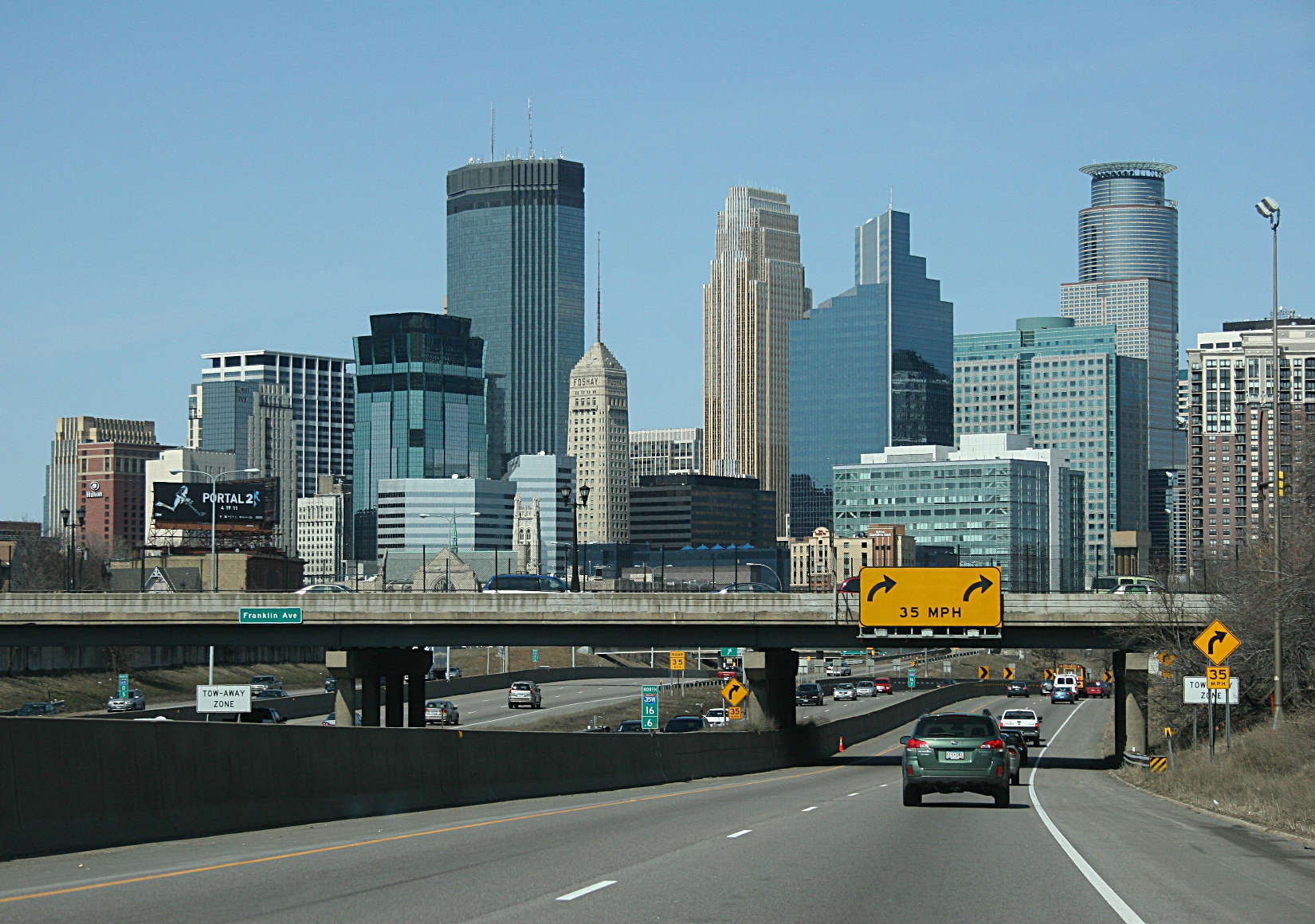
A view of the Minneapolis skyline from Interstate 35 on a light traffic day. Minnesota Prairie Roots file photo.

A view of the Minneapolis skyline from Interstate 35 on a light traffic day. Minnesota Prairie Roots file photo.

SELDOM DO MY HUSBAND and I venture into the Twin Cities.

I abhor the heavy traffic rocketing down the interstate, especially that one crazy driver who weaves from lane to lane.

I detest the Interstate 35W/Interstate 494 interchange, which throws our vehicle into the midst of a dodge ball game. I am not a nail biter. But, at this juncture, I bite my nails as my husband tries to merge into near bumper-to-bumper traffic on I-494 before the right lane ends.

You get the picture. Mostly, we stay out of the metro, unless we need to drive to Fargo where the son attends North Dakota State University or we need to visit our eldest daughter in south Minneapolis or the in-laws, most of whom live north of the metro.

An edited cell phone snapshot of Kellogg Boulevard shot from the skyway into the Xcel Energy Center.

An edited cell phone snapshot of Kellogg Boulevard shot from the skyway into the Xcel Energy Center.

But last Saturday we had to travel to St. Paul for the Trans-Siberian Orchestra concert at the Xcel Energy Center. I’d rather motor toward St. Paul any day given the traffic (at least when we’ve driven there) in the capitol city seems less rushed, less dense (you can take that word “dense” either way) than in Minneapolis.

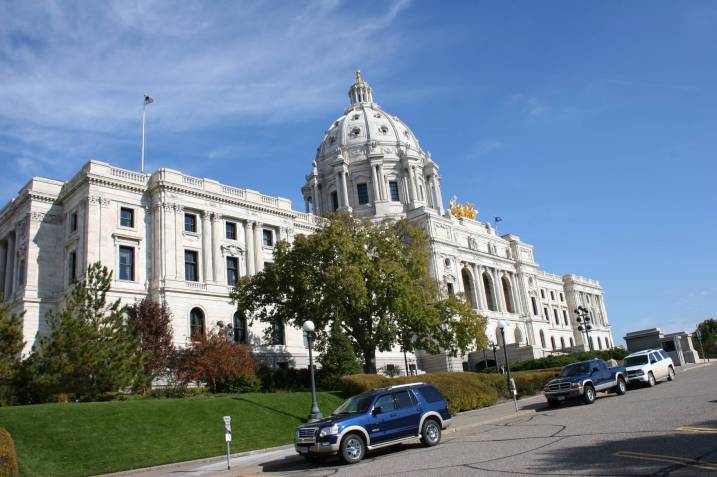
A file photo of the stunning Minnesota state capitol in St. Paul.

A file photo of the stunning Minnesota state Capitol in St. Paul.

I also appreciate the less urban feel of St. Paul versus Minneapolis. I expect this assessment, right or wrong, stretches back to my childhood knowledge of St. Paul as the home of the state Capitol and the South St. Paul Stockyards and Minneapolis as the location of the Foshay Tower.

Both of the Twin Cities can be seen in this view taken from the state capitol. You can see the downtown Minneapolis skyline in the distance.

Both of the Twin Cities can be seen in this view taken from the state Capitol. You can see the downtown Minneapolis skyline in the distance to the left. Minnesota Prairie Roots file photo.

Alright, I probably should not stir up a battle between the Twin Cities here. That is not my intent. Rather, I want to share a little story from our recent foray into St. Paul. The eldest daughter’s boyfriend lives and works there, so we stopped after the Trans-Siberian Orchestra concert to see his apartment and then dine out at Cafe Latte.

That visit to a sprawling apartment complex across from Mears Park brought the first odd moment of the evening. During the elevator ride to the underground parking garage, a young woman stepped inside and promptly pressed herself into a corner, her back to the four of us. I was so stunned by her strange behavior that I remember thinking “What is wrong with her?” and “Should I say anything?” I noticed only her long auburn-dyed locks, her knee-high boots and the paper towels crammed into a plastic bag gripped in her right hand. I never saw her face.

Should I have spoken to her?

The second unusual moment came when we were dining at the Cafe Latte along historic Grand Avenue. While savoring my tasty asparagus chicken stew and smokey turkey pasta salad, I noticed a football-player-sized man peddling M & Ms directly outside the cafe’s front door. Anyone trying to enter Cafe Latte would have to weave around the man blocking the entry. Many diners pulled bills from their wallets. By the time we finished our meal, the mysterious Candy Man had vanished.

Who was this Candy Man? And would you have purchased M & Ms from him?

Finally, on our way back to the daughter’s car, parked in a ramp just off Grand, we encountered a woman who’d been standing inside the ramp entry before we ate. This time, upon our return, she asked, “Can you spare $1.75 for bus fare?” None of us reached into our billfolds.

Should we have given this woman money? How long had she been standing there and how much money had she collected?

Perhaps all of these incidents are common occurrences in the Twin Cities. I really do not know. But for this out-state Minnesotan, the moments were impressionable and, certainly, unsettling.

© Copyright 2013 Audrey Kletscher Helbling


What is this world coming to? July 20, 2012

Filed under: Uncategorized — Audrey Kletscher Helbling @ 9:17 PM
Tags: , , , , , , , ,

THE QUESTION LINGERS on the edge of my brain, nearly tumbling in words onto my tongue, over my lips and out my mouth.

What is this world coming to?

Do you ever ponder that very same question, asking today why a 24-year-old would open fire in a Colorado movie theater killing a dozen and injuring some 60 more? Why? What drives a person to such violence, to take the lives of other human beings who are simply out for an evening of entertainment?

Why, on July 10, did a father in River Falls, Wisconsin, kill his three young daughters? To get back at/punish/hurt his ex-wife?

Why do two young girls vanish, poof, just like that, while riding their bikes in a small Iowa town?

What is this world coming to?

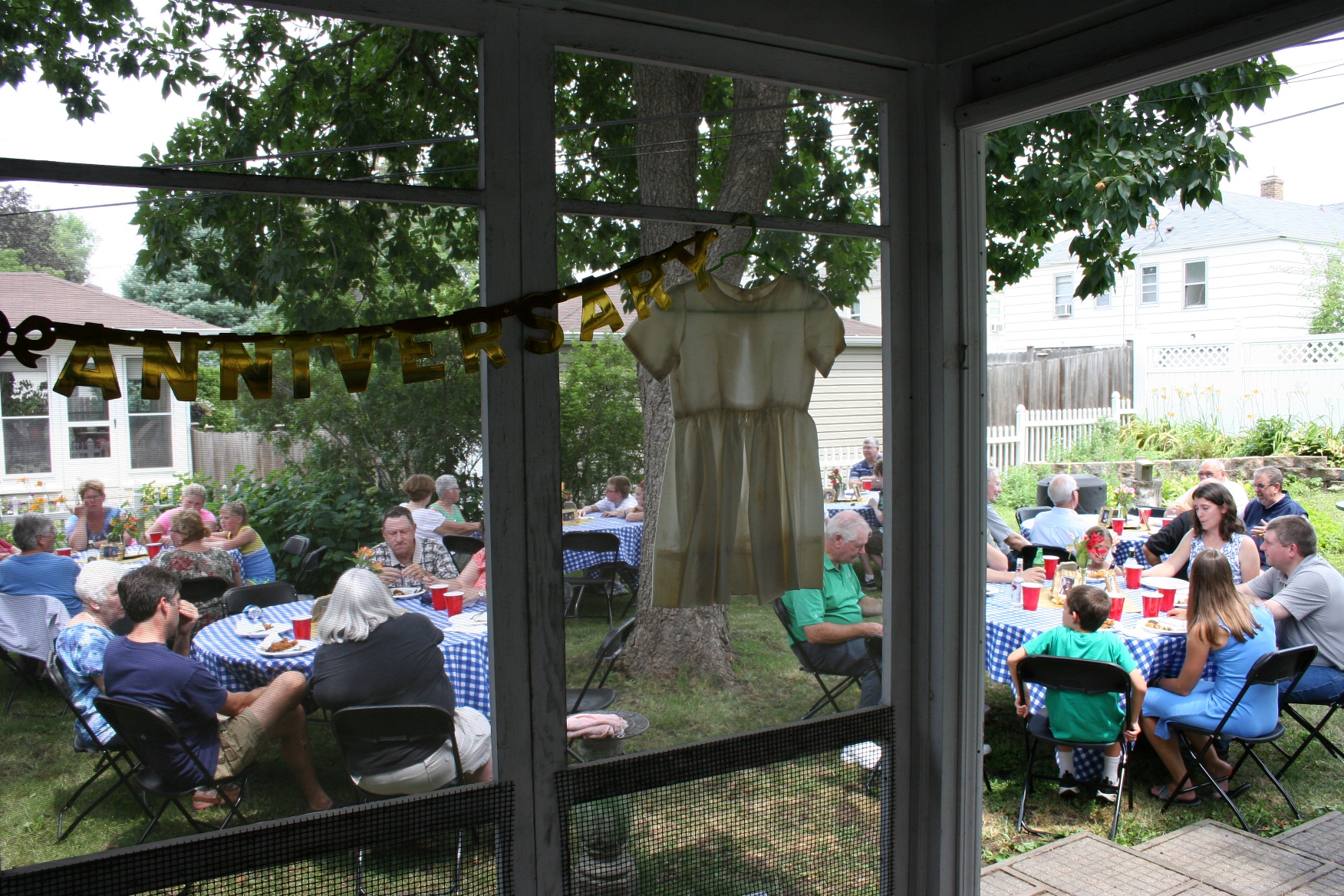
About two blocks away from this anniversary party in south Minneapolis, a crime scene was unfolding late last Sunday morning.

Why, last Sunday, when my family drove to south Minneapolis for a 50th wedding anniversary party, did we turn off Lyndale Avenue and a block away encounter a multitude of police cars and yellow crime scene tape and a TV news crew arriving? We continued on our way wondering what was unfolding as we greeted family, sipped lemonade and slipped into folding chairs in the festive, fenced in backyard just down the street and around the corner.

When my middle brother arrived a bit later, he noted that officers were posed with weapons drawn. Were any of us in danger as we drove past the scene?

What is this world coming to?

Why are children, the most innocent of victims, being shot and killed in Minneapolis on such a regular basis that this horrible crime no longer surprises us?

Have we become immune to violence and the essence of evil which drives it?

What is this world coming to?

When will the killing stop?

© Copyright 2012 Audrey Kletscher Helbling


What’s your line? January 31, 2012

WHAT LINES DEFINE your world? Horizontal or vertical?

Perhaps you’ve never considered that question. But ponder that for a minute.

Where do you live? Where do you work? What lines define your environment?

Do you live in the city, the country or a small town? Do you live on the prairie, in the mountains or somewhere in between?

My world has always been horizontal. I prefer it that way—flat and unbroken by vertical obstacles. Towering buildings overwhelm me; make me feel small, visually overpowered and uncomfortable.

Can you understand that? Perhaps if you grew up or live in a rural area, you do.

The sun sets on my native southwestern Minnesota prairie in this December 2010 image.

I traveled to Chicago once during college, and to New York. While touring the garment district in the Big Apple, I was nearly flattened by a vendor pushing a rack of clothing as I paused on the sidewalk to gawk at the skyscrapers. In Chicago, I struggled with sleeping in a hotel that stretched too far into the sky.

A view of the Minneapolis skyline from Interstate 35.

I can’t recall the last time I visited downtown Minneapolis, but I’m certain it’s been decades. I’ve never been to any other big cities and I have no desire to travel to them.

Some of you will say I am missing out on culture and shopping and so much more by staying out of the city. You would be right.

But to counter that, I will tell you many a big city resident fails to leave the confines of the city to explore the small towns and rural areas that offer grassroots culture and shopping and much, much more.

I am not trying to pit city against country, horizontal against vertical, here. Rather, I’d simply like you to think about your world from a visual perspective. Then, tell me, what lines define your landscape? Vertical or horizontal, or a mixture of both?

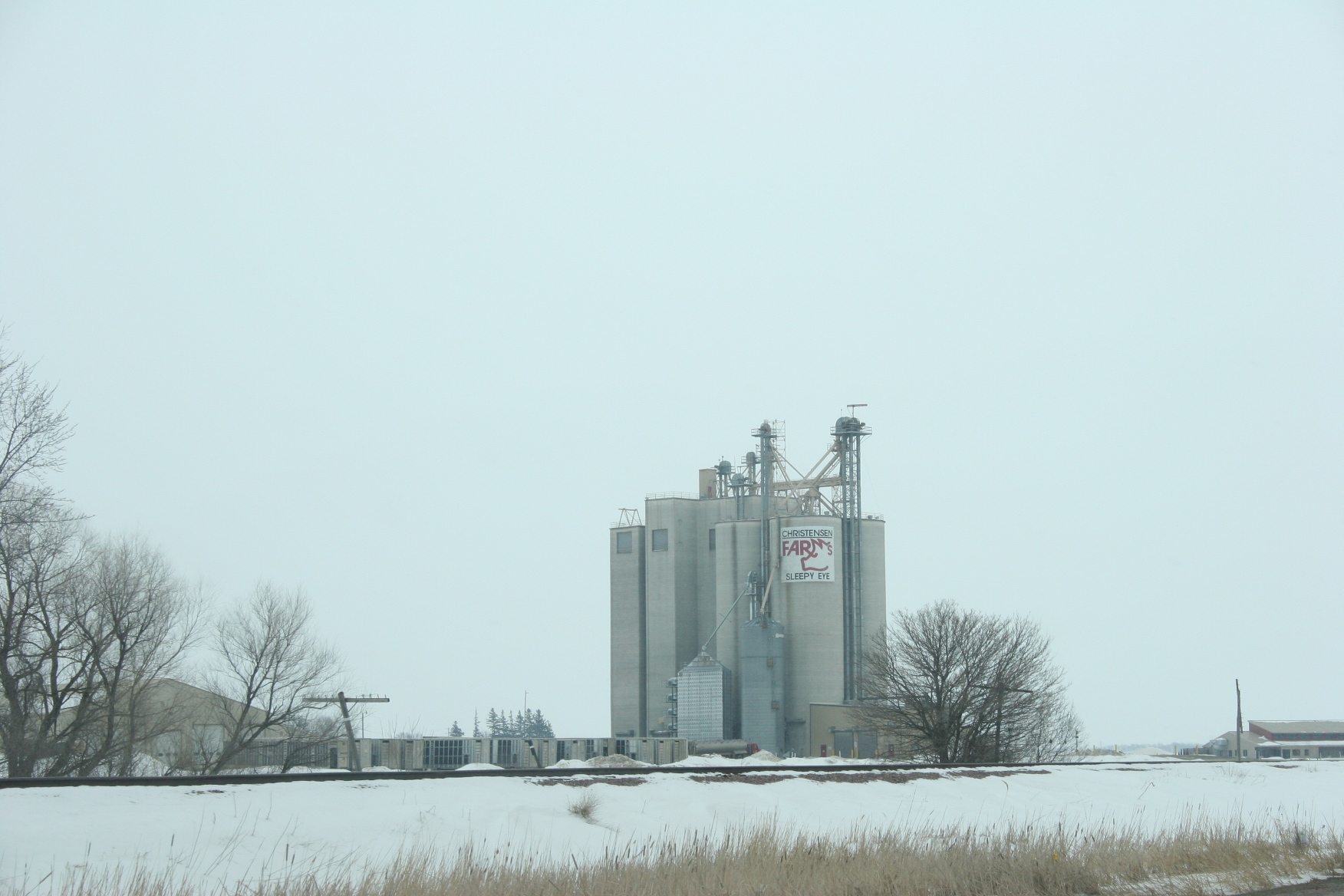
Even in rural Minnesota, vertical lines occasionally break the horizon, like this scene at Christensen Farms along U.S. Highway 14 east of Sleepy Eye in southwestern Minnesota.

The strong horizontal lines of railroad tracks and trains cross the flat prairie landscape of southwestern Minnesota. I shot this along U.S. Highway 14 between Springfield and Sleepy Eye as snow fell late on a March morning in 2011.

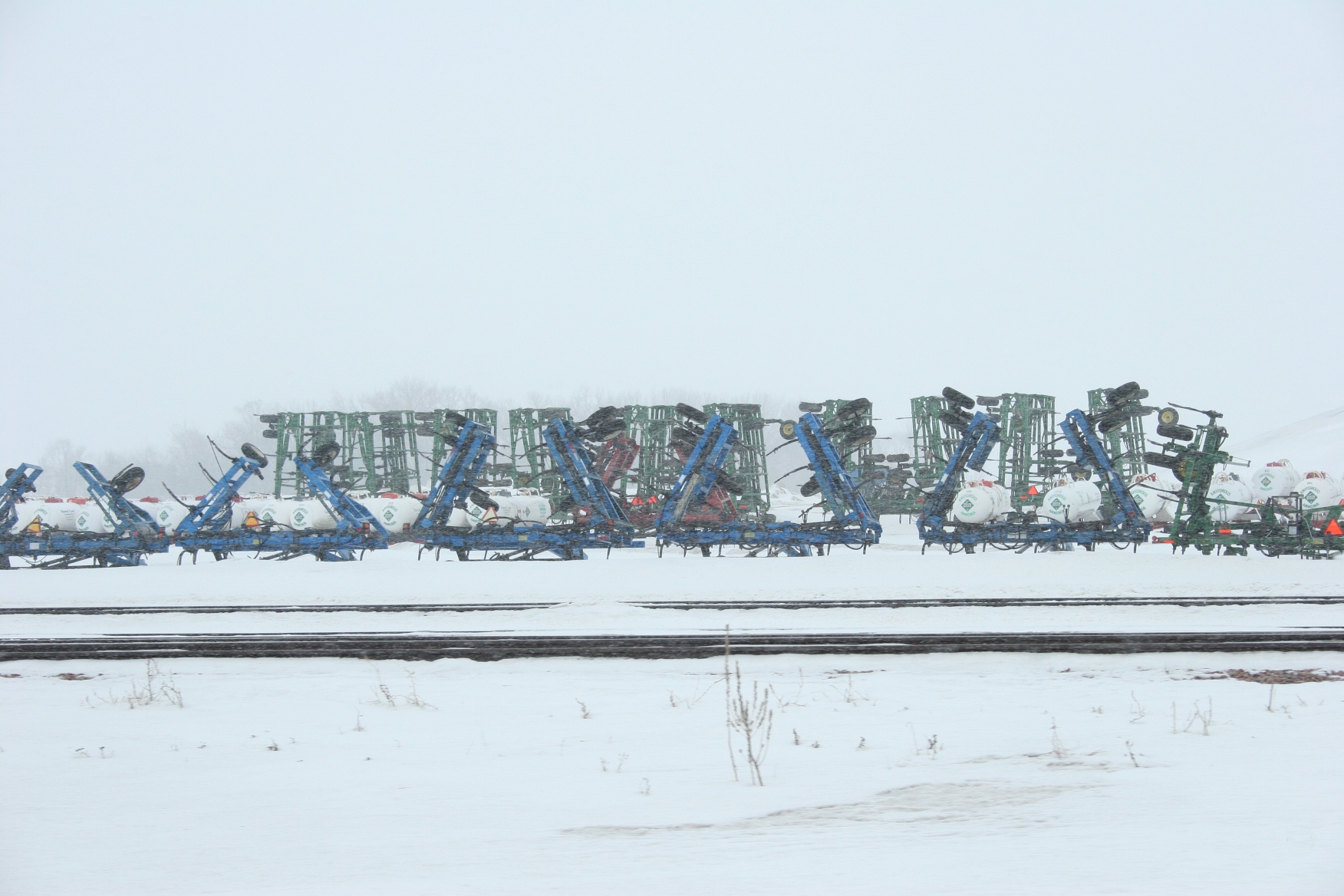
Railroad tracks and diggers slice precise horizontal lines across the landscape in this March 2011 image shot while traveling U.S. Highway 14 between Springfield and Sleepy Eye, in my native southwestern Minnesota.

I live in Faribault, an hour's drive south of Minneapolis along Interstate 35. While I certainly don't consider Faribault, with a population of around 22,000 to be a small town, it's definitely not urban. I shot this pastoral scene last spring several miles west of town near Roberds Lake.

© Copyright 2012 Audrey Kletscher Helbling