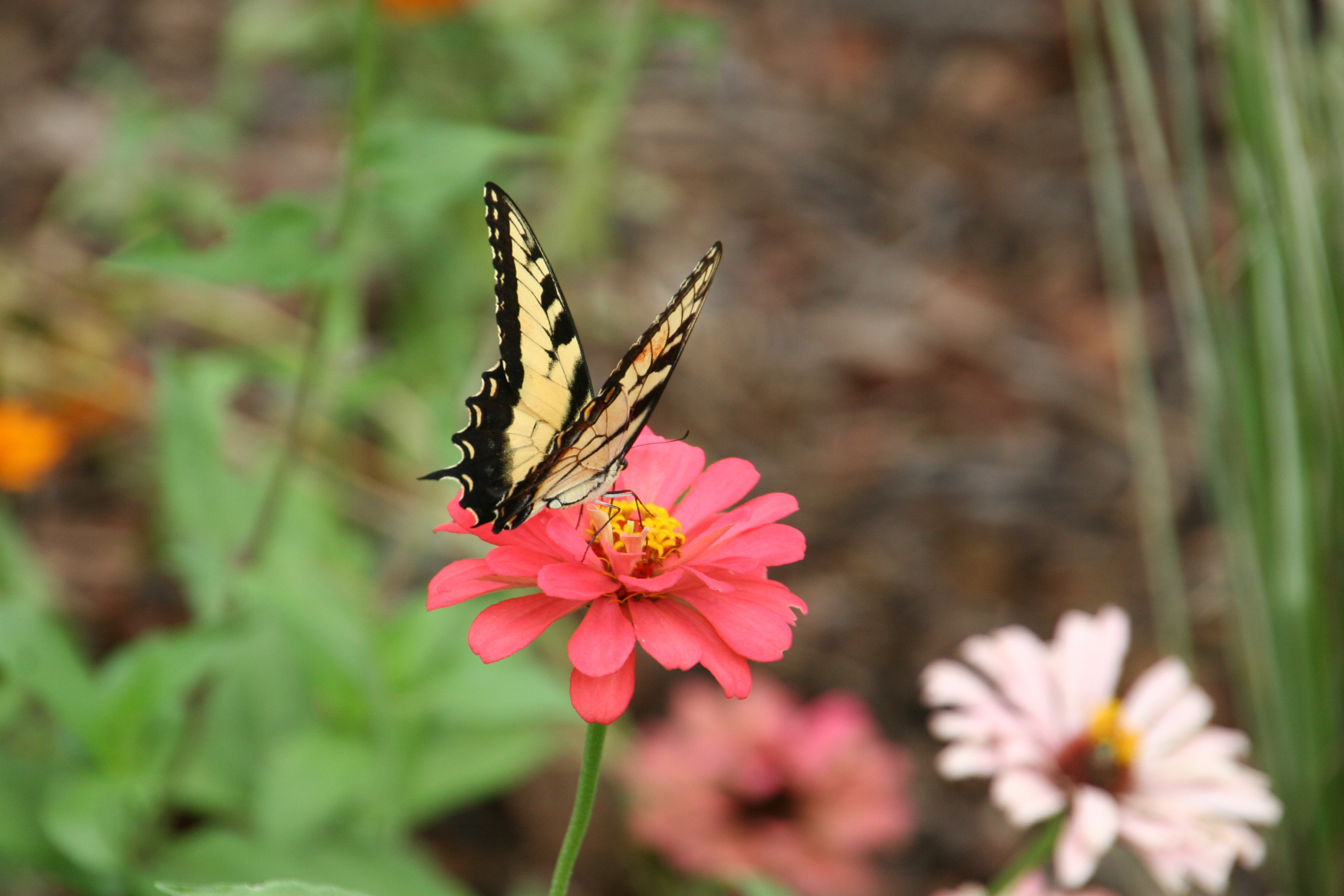
An Eastern tiger swallowtail butterfly atop a zinnia. (Minnesota Prairie Roots copyrighted photo August 2022)
EVERY TIME I SPOTA BUTTERFLY, joy surges through me. There’s something about the flitting flight of a butterfly that captivates me.
But it’s more than that. I appreciate how these insects appear so carefree, as if their very existence is simply to bring beauty and joy into the world. And maybe it is.
The butterfly perches among my favorite garden flowers, zinnias. My mom planted zinnia seeds when I was growing up on the farm. Zinnias are easy to grow from seed, are prolific, hardy and colorful. (Minnesota Prairie Roots copyrighted photo August 2022)
In recent days, I’ve observed two swallowtail butterflies, one black, the other yellow, among the phlox growing wild in my flowerbeds. And some 10 days ago I photographed an Eastern tiger swallowtail atop a zinnia at the Rice County Master Gardeners Teaching Garden in Faribault.
That well-tended garden has become a new favorite oasis for me within the city limits. On the Sunday afternoon I visited the garden, I found friends Paula and Ed already there, resting on a bench. Paula was involved early on with development of this garden. She no longer is, but remains an active gardener. Paula was the one who spotted the swallowtail among the zinnias.
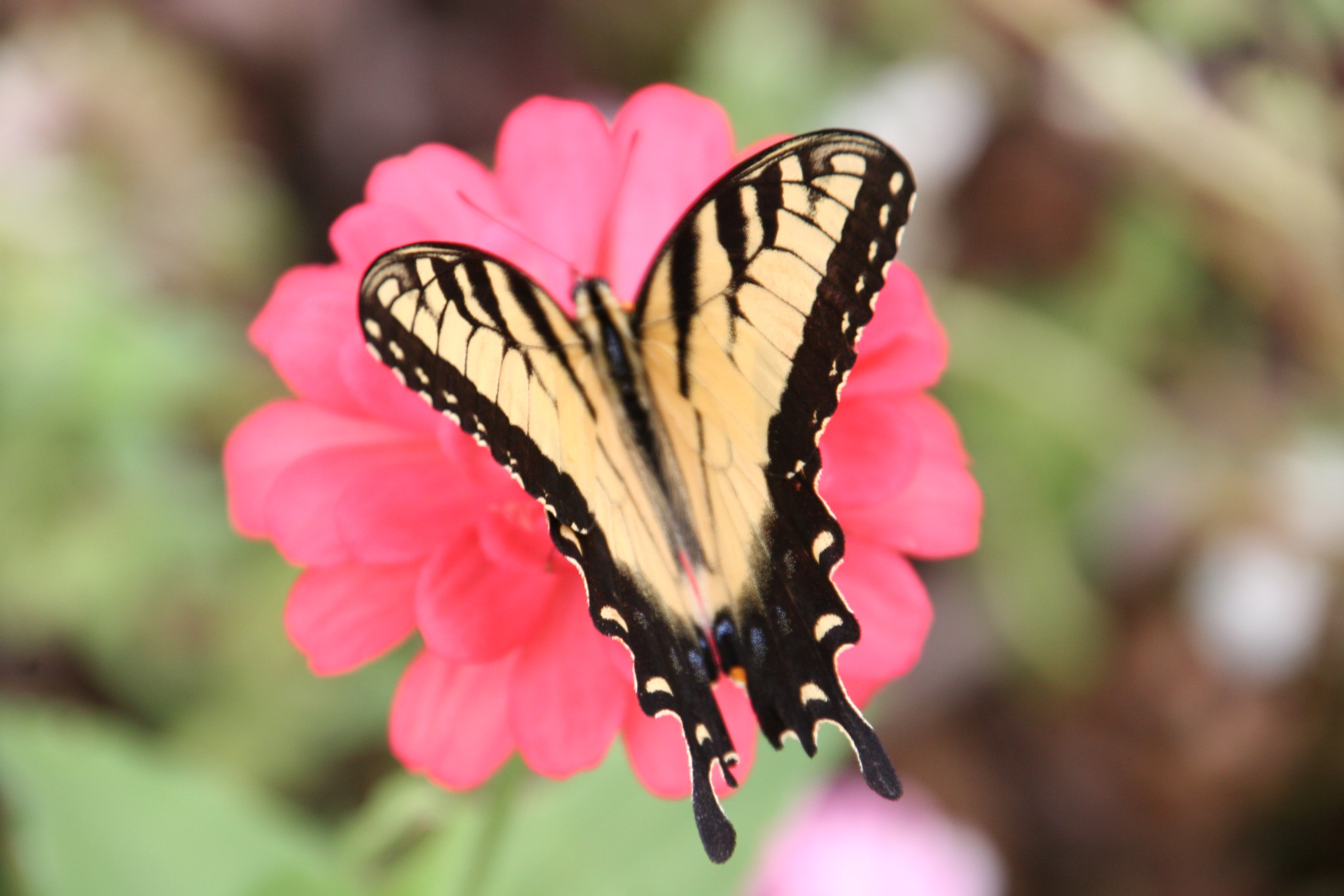
Per her direction, I headed to the zinnia patch to photograph the yellow swallowtail with wings outlined in black, splotches of blue and orange adding to the coloring.
Black-bordered wings are nearly wide open atop a zinnia. (Minnesota Prairie Roots copyrighted photo August 2022)
The swallowtail perched, unhurried atop the yellow-centered pink flower. I had plenty of time to snap multiple frames. That’s often not the case with butterflies.
That butterflies survive a four-stage life cycle from egg to larva (caterpillar) to pupa (chrysalis) to adult butterfly impresses me. At any one stage, a predator could end their lives. But yet, here was this beautiful butterfly among the zinnias. Like the final verse in a lovely summer poem.
TELL ME: What do you appreciate about butterflies? Do you have a favorite?
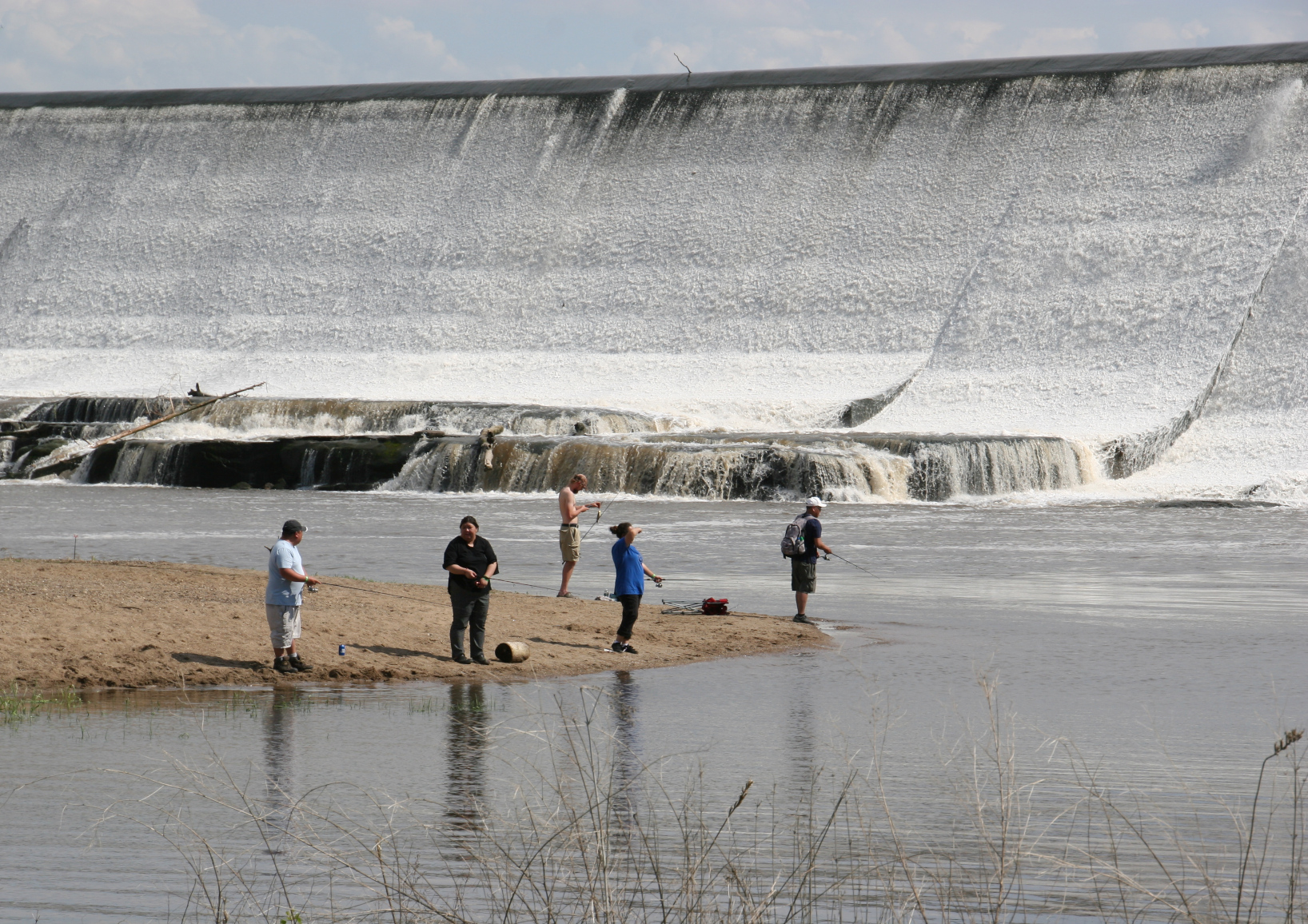
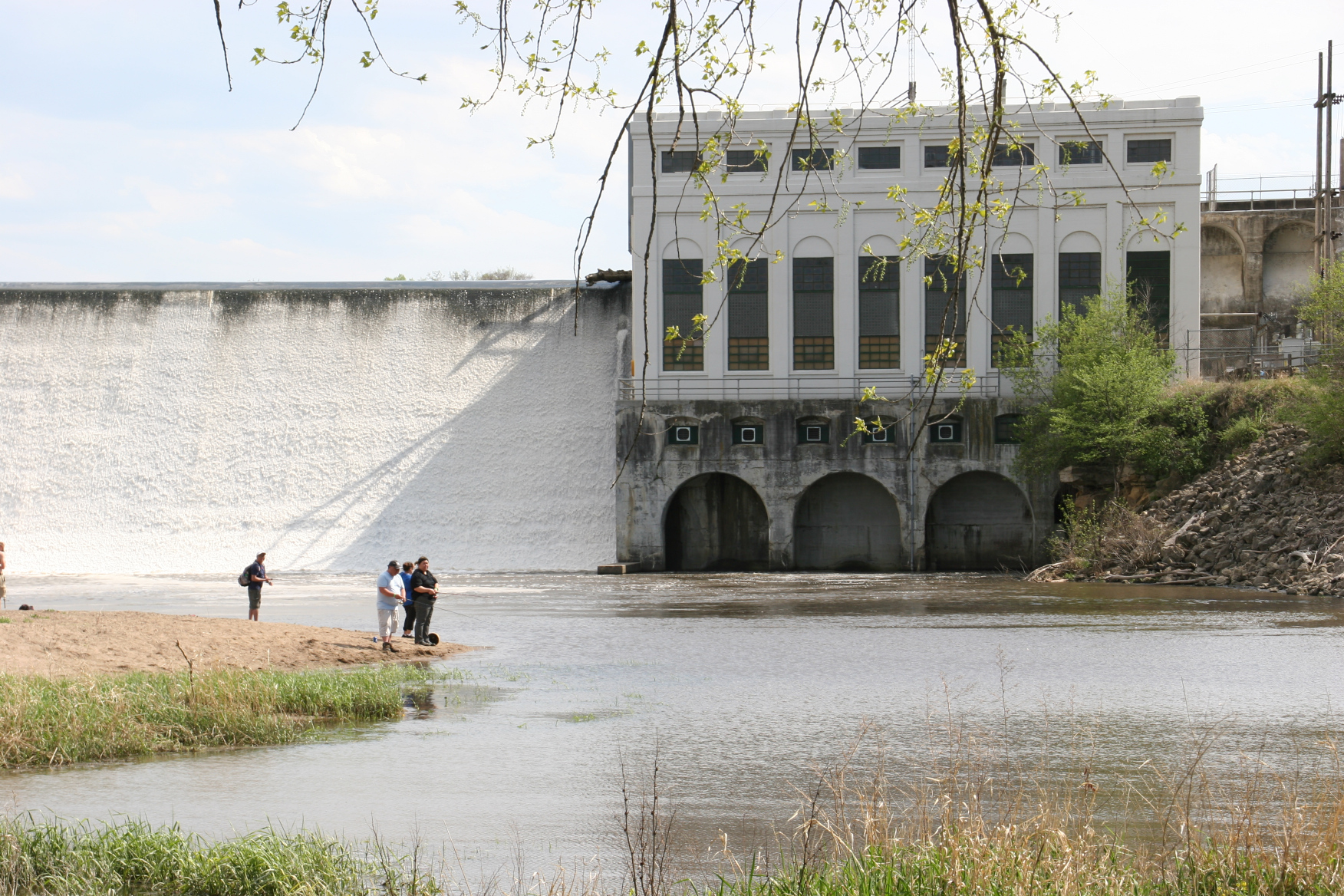
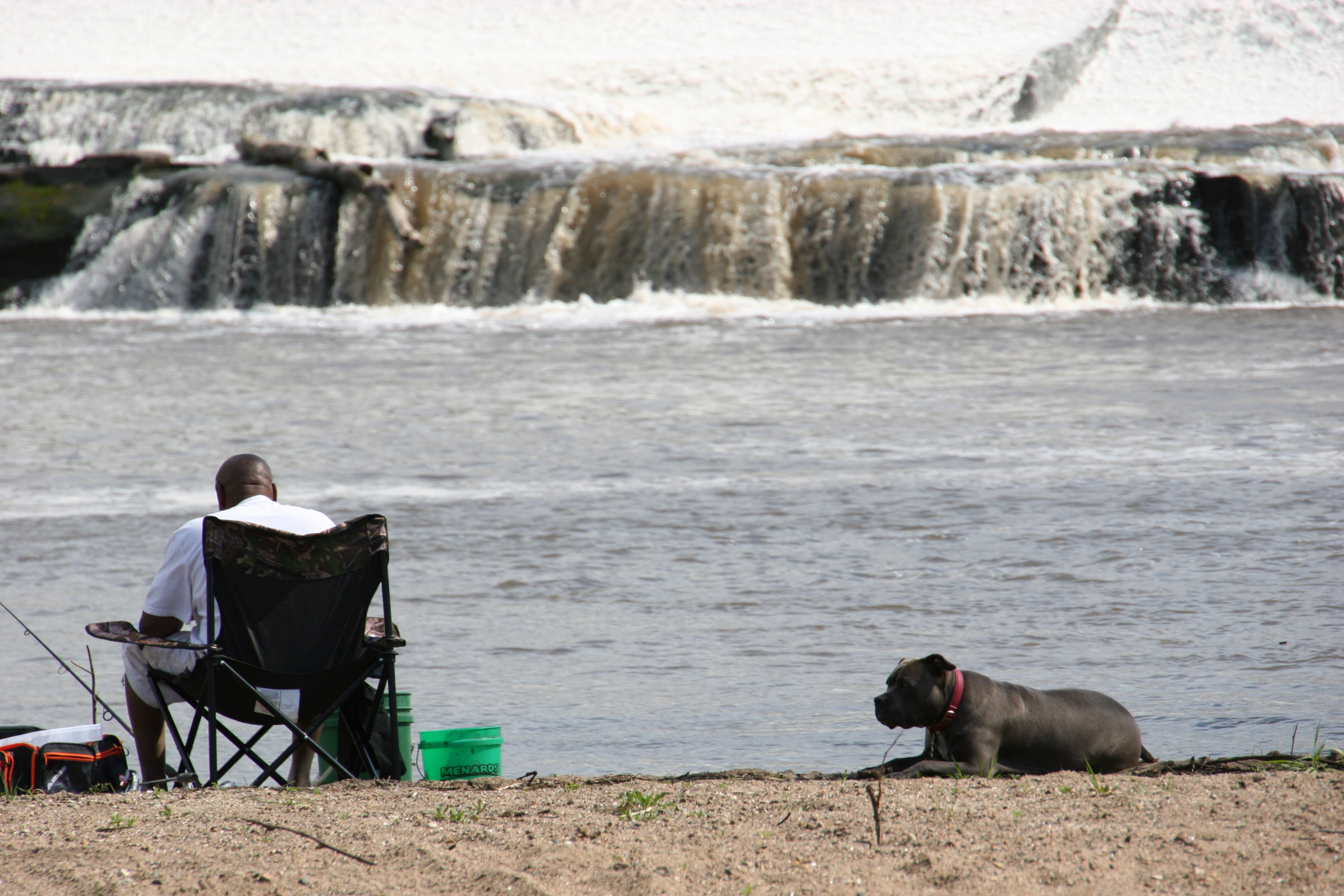
Fishing at the base of the Lake Zumbro Dam. (Minnesota Prairie Roots copyrighted photo May 2022)
WATER RUSHES IN A SHEET over the dam, a powerful wall of water spilling from the 600-acre Lake Zumbro reservoir into the river below by Mac’s Park Place & Campground in rural Mazeppa.
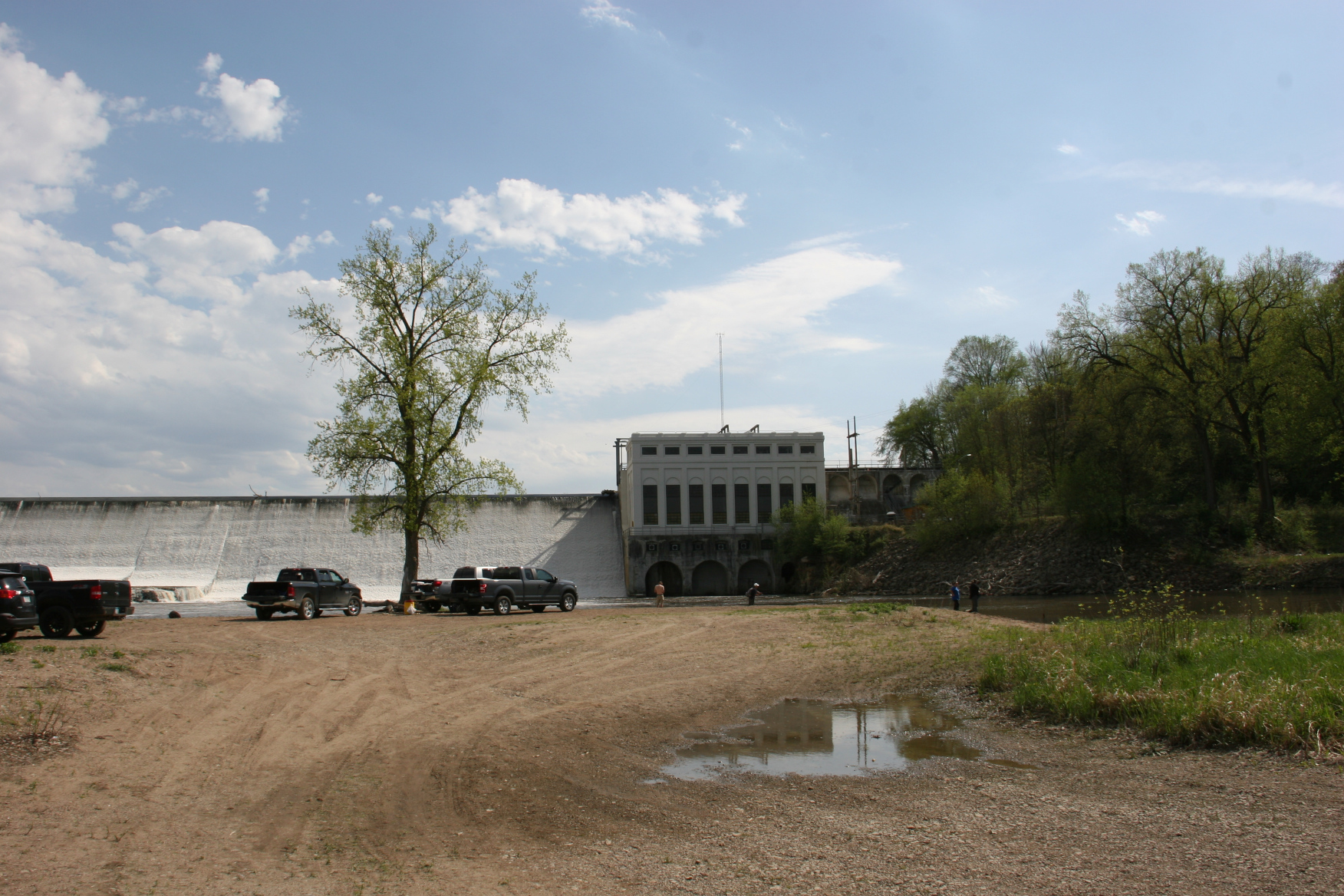
An overview of the dam and fishing area next to Mac’s. (Minnesota Prairie Roots copyrighted photo May 2022)
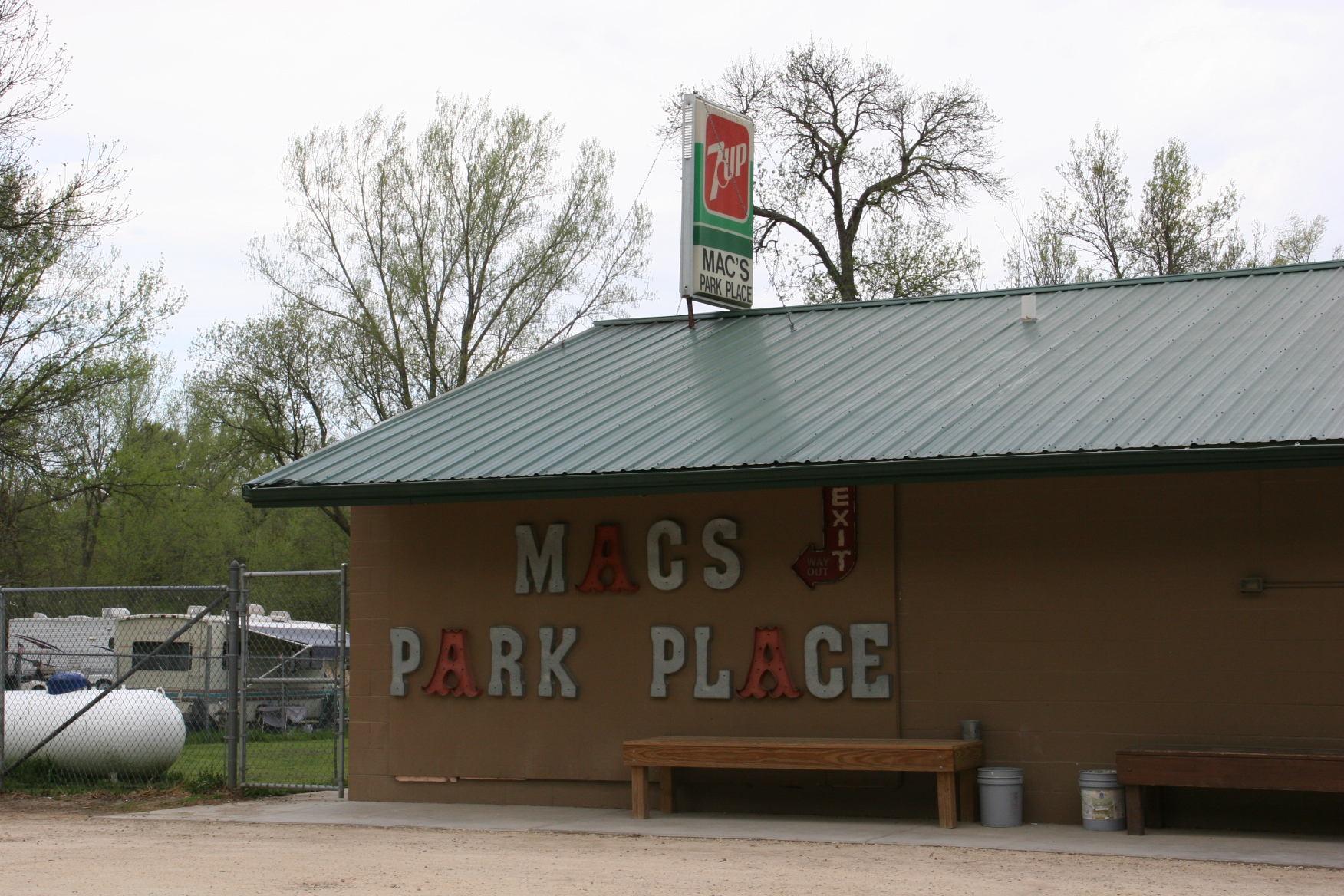
Mac’s Park Place by the Zumbro River and dam. (Minnesota Prairie Roots copyrighted photo May 2022)
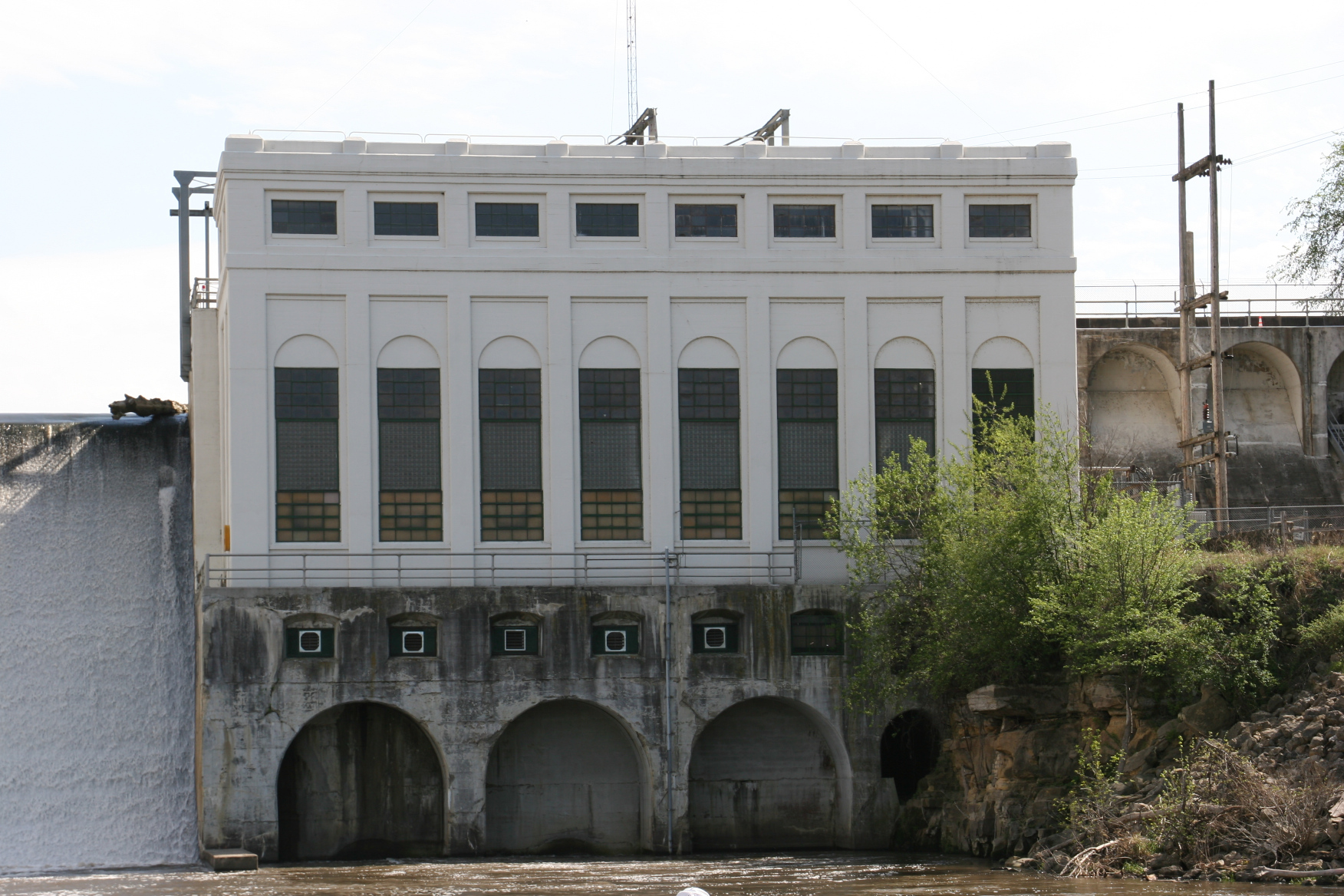
The 100-plus year-old powerhouse. (Minnesota Prairie Roots copyrighted photo May 2022)
Until several months ago, I was unaware of this hydroelectric generating plant along the Zumbro River in southeastern Minnesota. But Randy and I discovered the Rochester Public Utilities facility after turning off Wabasha County Road 21 onto a gravel road that led us to Mac’s at the base of the dam.
The Lake Zumbro hydroelectric dam. (Minnesota Prairie Roots copyrighted photo May 2022)
I stood in awe of this structure with a spillway spanning 440 feet and a height of 55 feet. Constructed beginning in 1917 and operating since 1919 under ownership of the RPU, this hydroelectric generating plant is on the National Register of Historic Places. It’s truly an amazing feat of engineering and construction. Renowned engineer Hugh L. Cooper led the project.
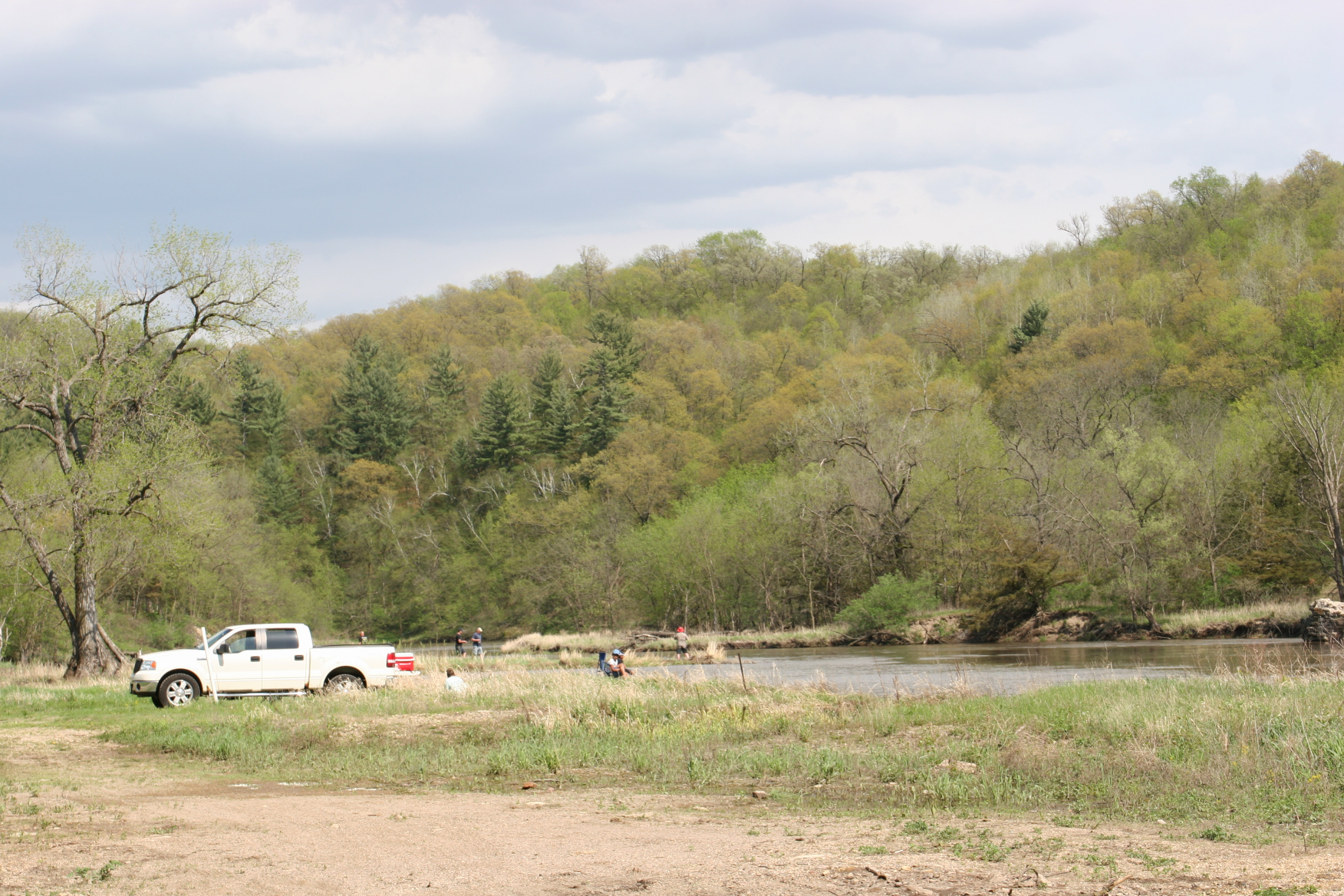
A hillside of trees hugs the bank of the Zumbro River. (Minnesota Prairie Roots copyrighted photo May 2022)
Not only are the dam and powerhouse impressive, but so is the natural setting in the backwoods of the river valley. Here trees fill the hillside across the Zumbro from Mac’s. In the greening of spring, when we visited, the scene was wild, scenic, beautiful. I expect autumn would yield a hillside flaming in color.
Fishing below the Lake Zumbro Dam on a Saturday afternoon. (Minnesota Prairie Roots copyrighted photo May 2022)
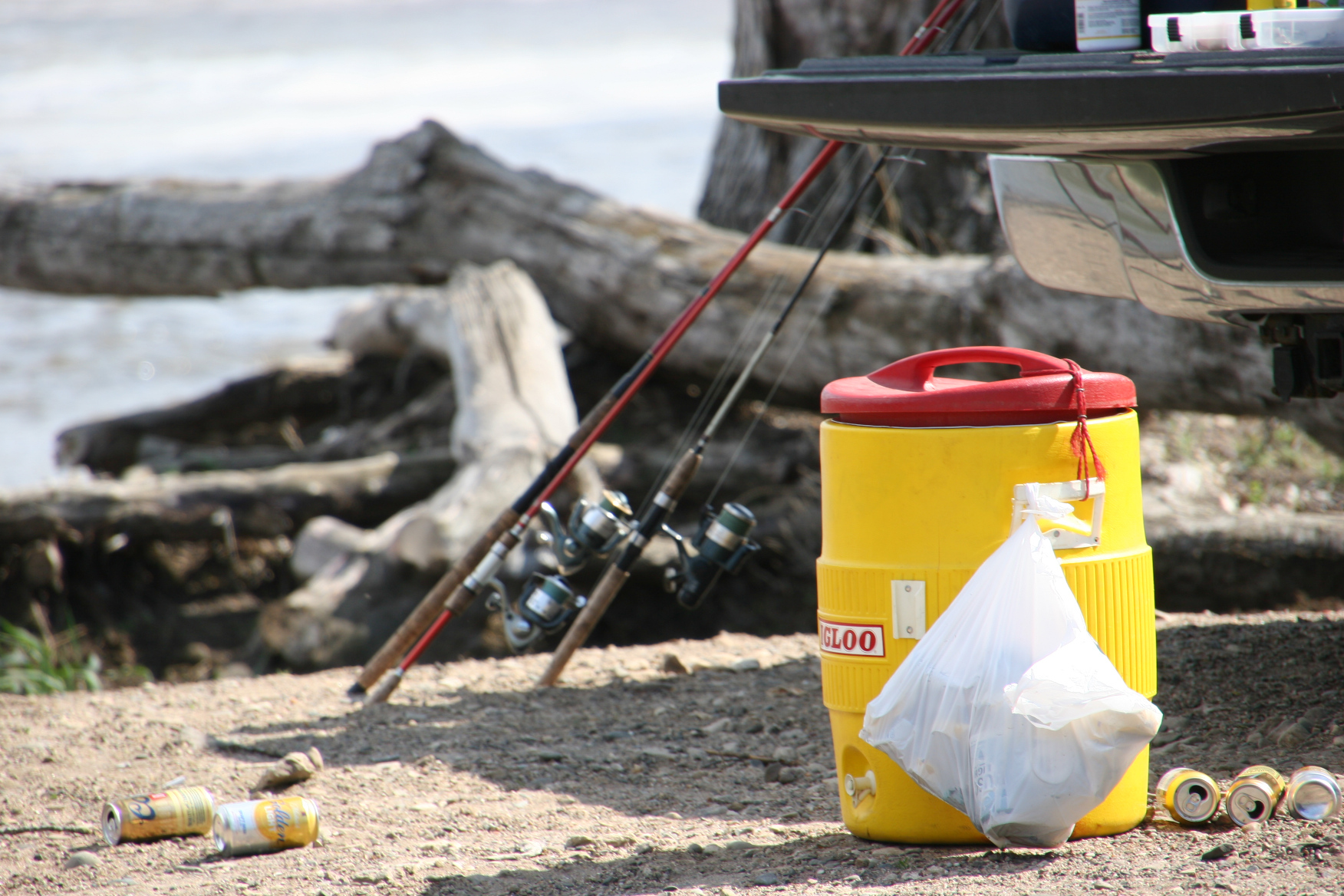
An angler’s gear, beverages, etc. (Minnesota Prairie Roots copyrighted photo May 2022)
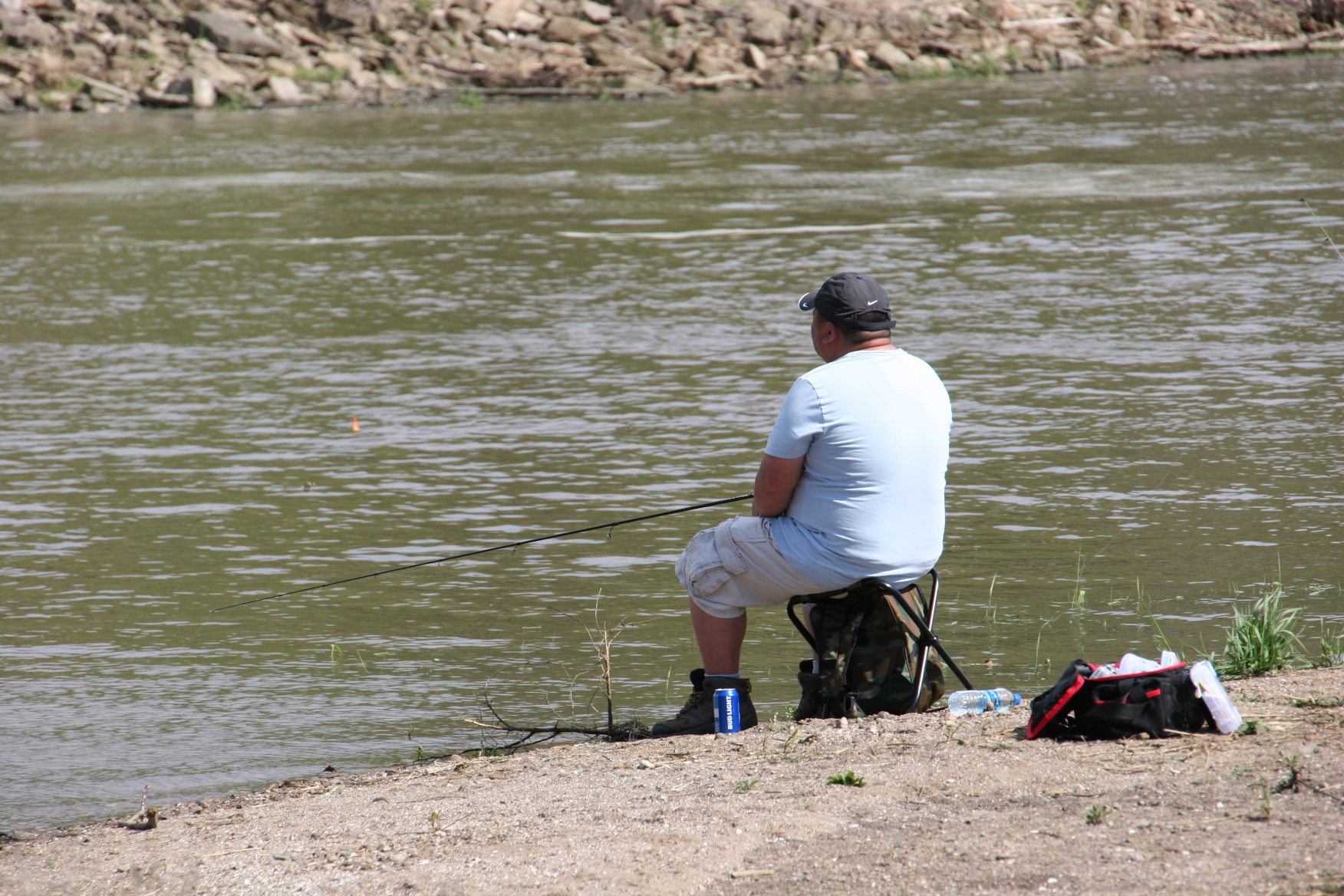
Fishing along the grassy river bank. (Minnesota Prairie Roots copyrighted photo May 2022)
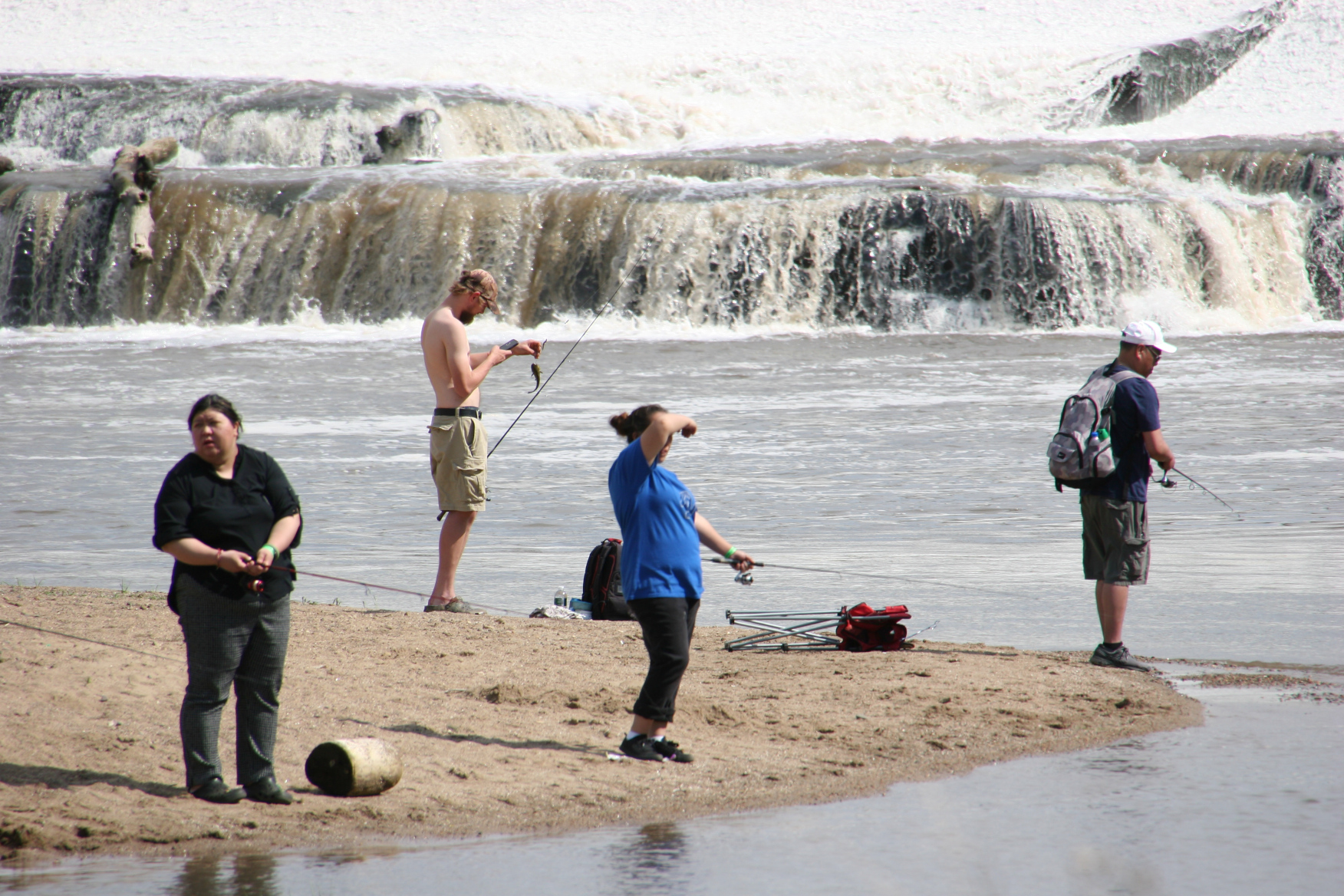
On a Saturday afternoon in May, anglers angled for fish in the placid river, the roaring dam nearby, dwarfing their size. Access to this seemingly popular fishing spot comes via Mac’s, which charges a fee for non-campers.
Fishing near that powerful wall of rushing water. (Minnesota Prairie Roots copyrighted photo May 2022)
Angling in the Zumbro River. (Minnesota Prairie Roots copyrighted photo May 2022)
There’s power here, in this wall of water. I heard it, saw it, felt it.
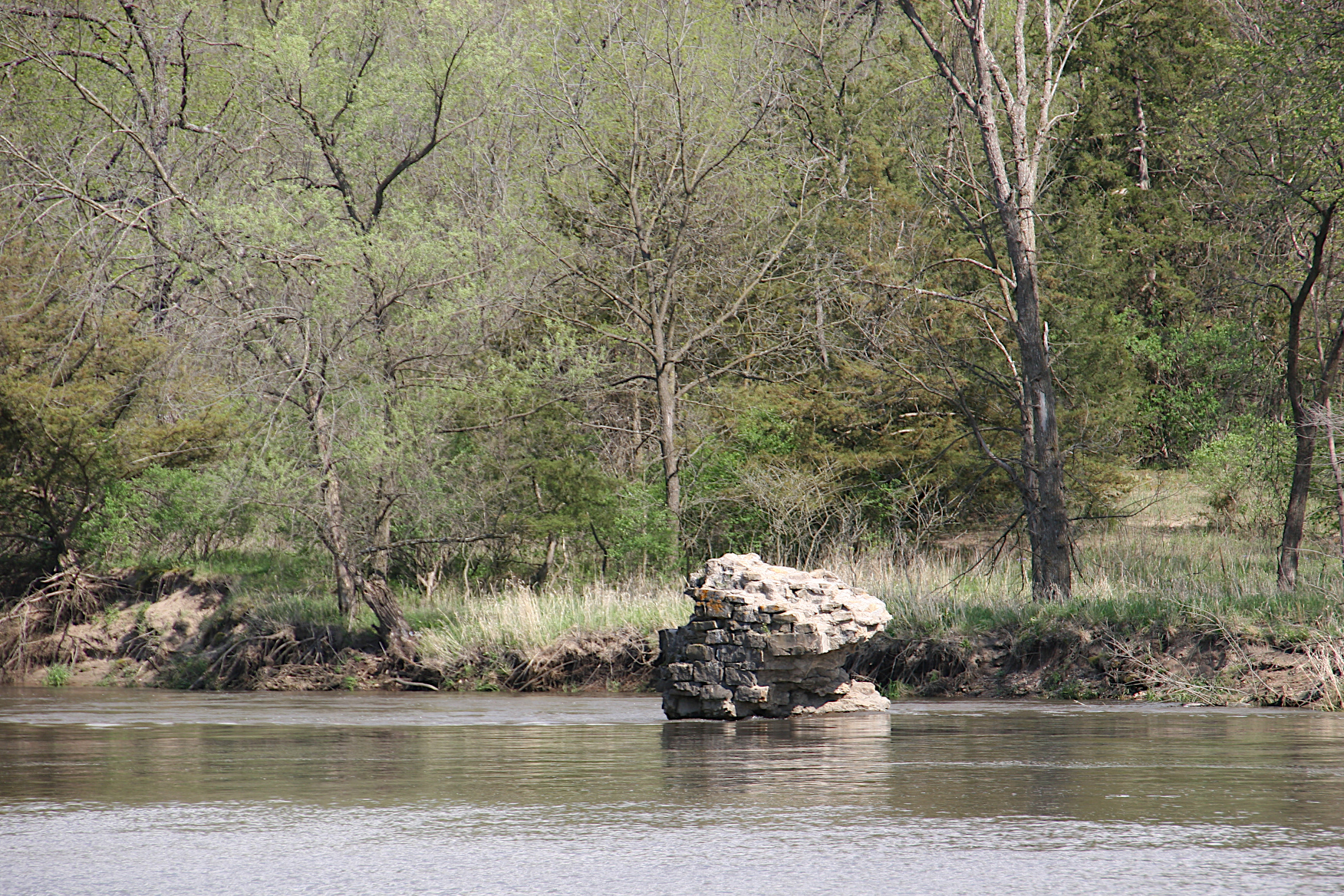
This rock formation in the Zumbro River caught my eye. (Minnesota Prairie Roots copyrighted photo May 2022)
But then I experienced the power, too, that comes with this natural setting. The power to quiet the spirit in the placid river, the rock formations, the tree-filled hillside… The Zumbro River can be harnessed, but not tamed. There’s an undeniable wildness in this place that yields peace.
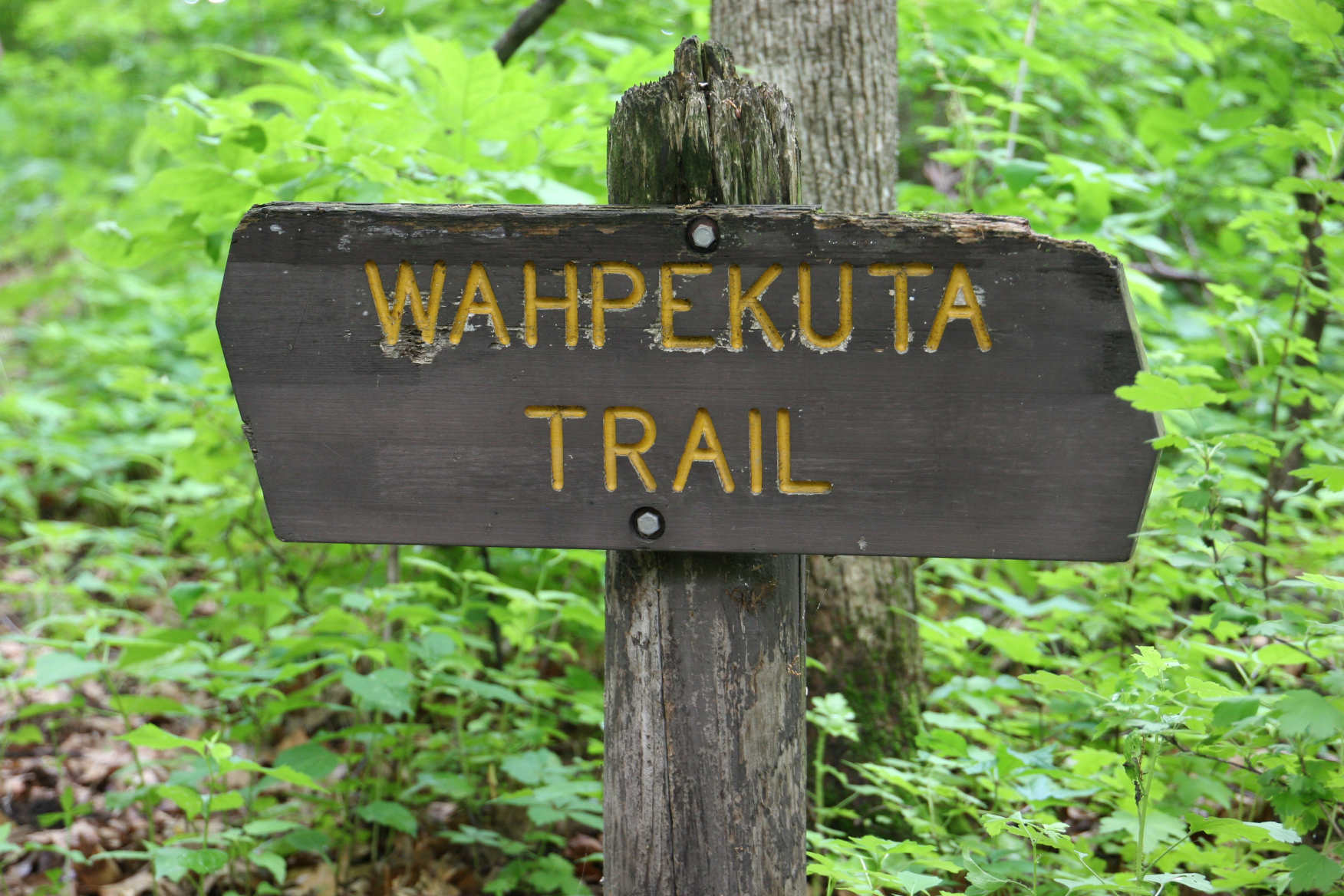
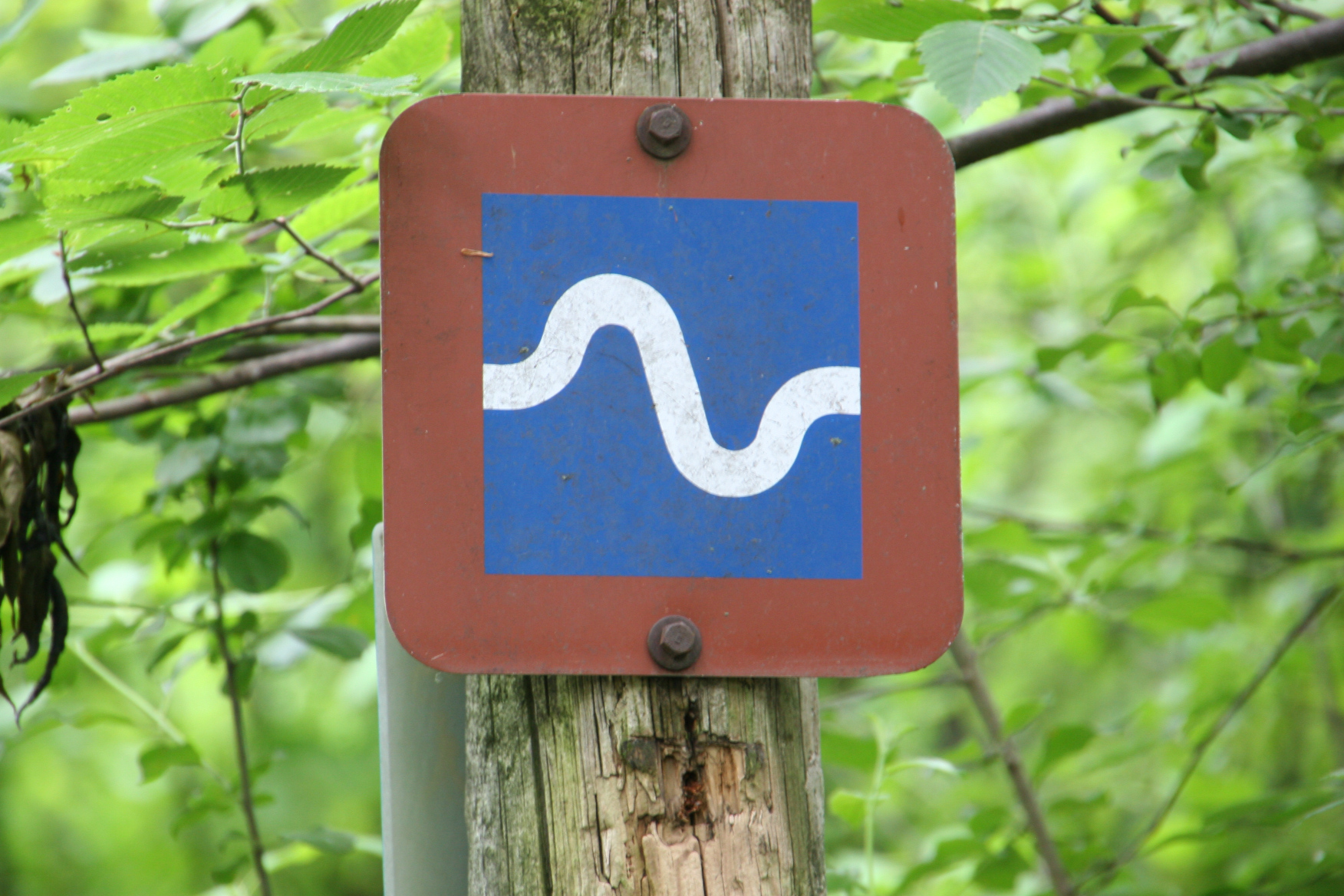
Following the Wahpekuta Trail (albeit incorrectly spelled) at Sakatah Lake State Park, rural Waterville, Minnesota. (Minnesota Prairie Roots copyrighted photo June 2022)
IF I WAS TO CLIMB the hill behind my house through the tangle of weeds, wildflowers and woods, I would reach Wapacuta Park. But it’s easier to take the street and then the mowed hillside to this Faribault city park.
Years ago, this was the go-to spot for our family—for the kids to zoom down the towering slide and scale the massive rock in the summer and to slide down the sledding hill in the winter. Today it’s a place to occasionally take the grandkids to play on the updated playground.
My research shows this sign at Sakatah Lake State Park should be spelled differently, as Wahpehkute. (Minnesota Prairie Roots copyrighted photo June 2022)
A posted map of the park. (Minnesota Prairie Roots copyrighted photo June 2022)
To the west, along Minnesota State Highway 60 between Faribault and Waterville, Sakatah Lake State Park also reflects the Dakota influence in its name. The native Dakota called the land thereon Sakatah or “singing hills” in their native language.
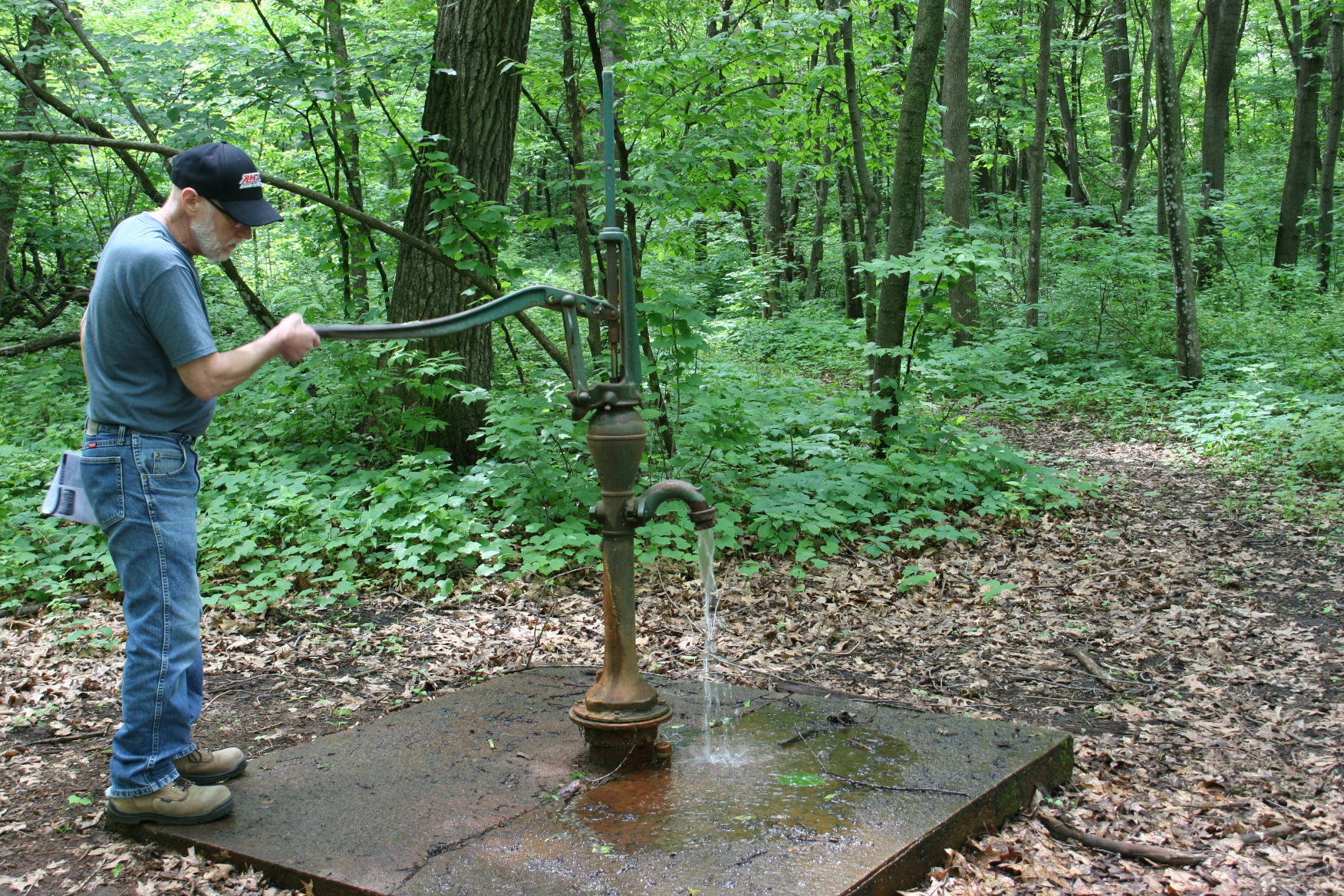
Native peoples sourced water directly from the Sakatah lakes, unlike here via a water pump. (Minnesota Prairie Roots copyrighted photo June 2022)
The Sakatah Singing Hills State Trail runs through the park for three miles. That trail spans 39 miles from Faribault to Mankato, another Dakota-sourced name correctly spelled Mahkato, meaning “greenish blue earth.” Mankato is the site of the largest mass execution in US history with 38 Dakota hung on December 26, 1862, after the US-Dakota War of 1862. It is a horrible atrocity in our state’s history and one which, to this day, remains unknown to too many Minnesotans.
Southern Minnesota lakes are typically polluted/green, not sky-tinted. Here the fishing pier at Sakatah State Park is inaccessible, not linked to land, due to excessive ice damage last winter. (Minnesota Prairie Roots copyrighted photo June 2022)
We are a state with many location names tracing back to the Dakota—Mankato, Wabasha, Wabasso, Sleepy Eye, Winona, Winnebago… Even the name Minnesota comes from the Dakota Mnisota, meaning “sky-tinted waters” and referencing the Minnesota River.
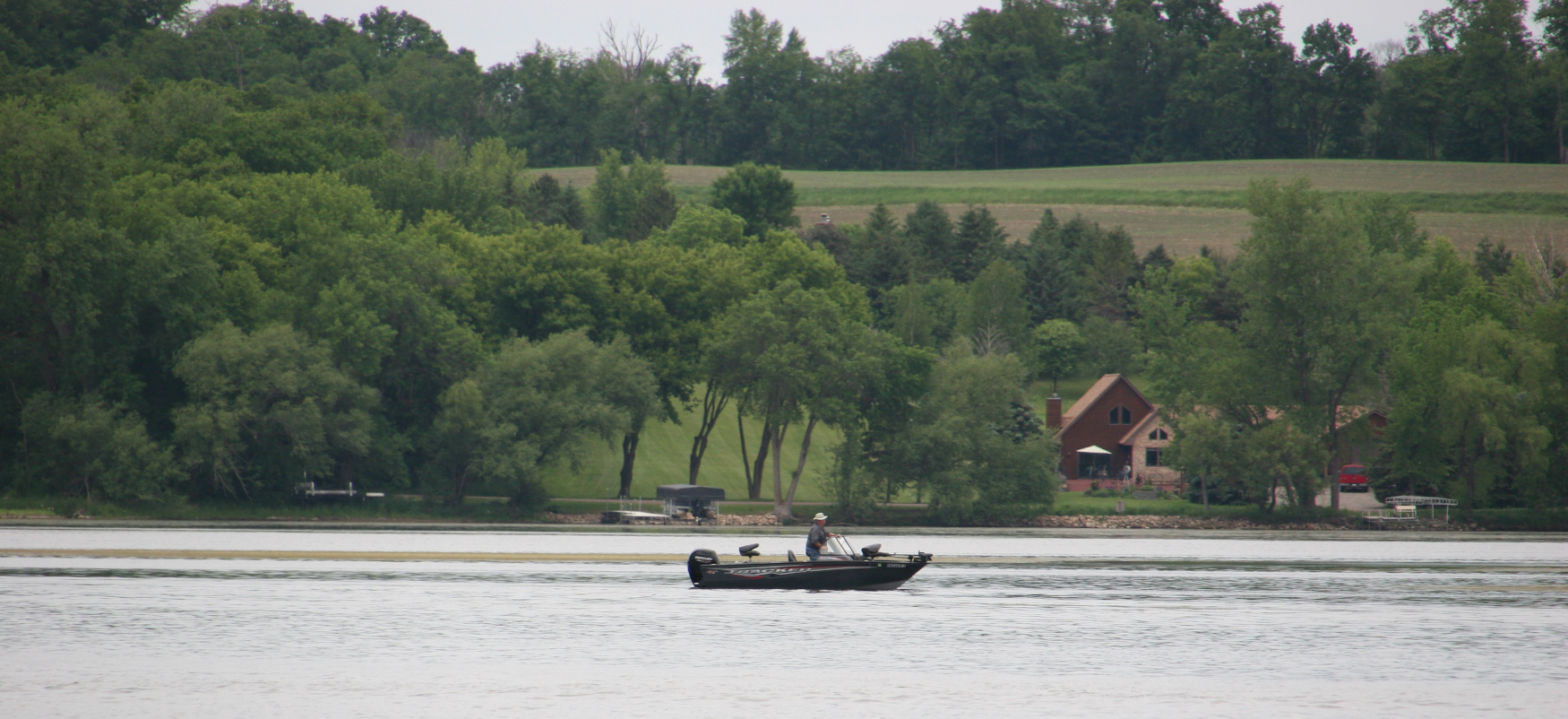
I saw several motorboats on the lake at Sakatah. (Minnesota Prairie Roots copyrighted photo June 2022)
On a mid-June visit to Sakatah Lake State Park, rural Waterville, I thought about the Dakota who lived on this land, including at a village on the point separating Upper Sakatah and Lower Sakatah Lakes. I imagined the Wahpekute gliding across the lakes in canoes, angling for fish in these waters.
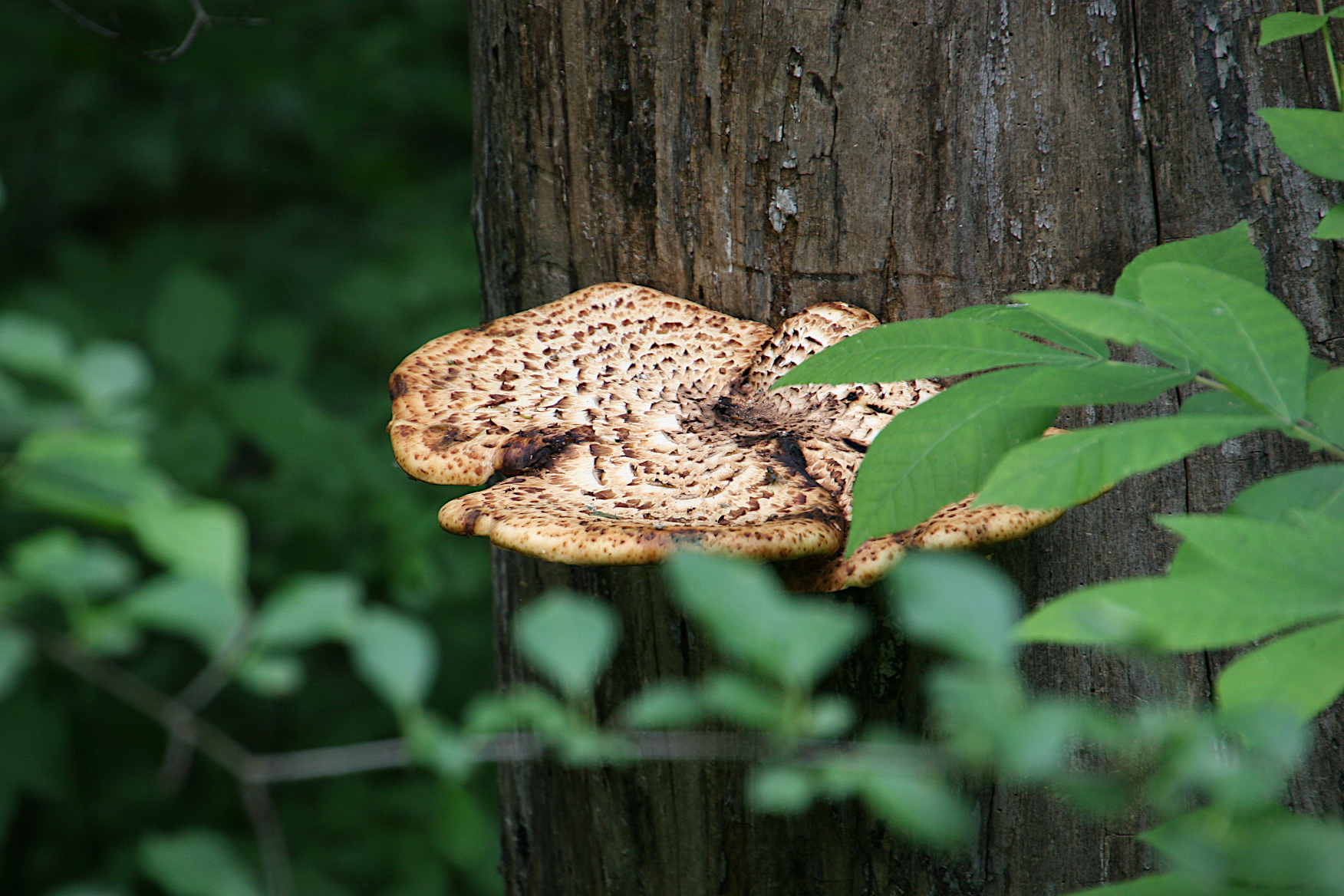
Mushrooms cling to a tree in the woods. (Minnesota Prairie Roots copyrighted photo June 2022)
Then, as I followed the Wahpekuta Trail, I wondered about hunting and berry picking and perhaps mushroom gathering in the denseness of woods.
The Sakatah campgrounds fill quickly, like many Minnesota state parks. (Minnesota Prairie Roots copyrighted photo June 2022)
And, instead of campers in these trees, I imagined tipis.
We have much to learn as we follow the trails of history.(Minnesota Prairie Roots copyrighted photo June 2022)
I have much to learn about the Wahpekute. But at least I hold basic knowledge of their early presence here, of their importance in the history of this place I call home.
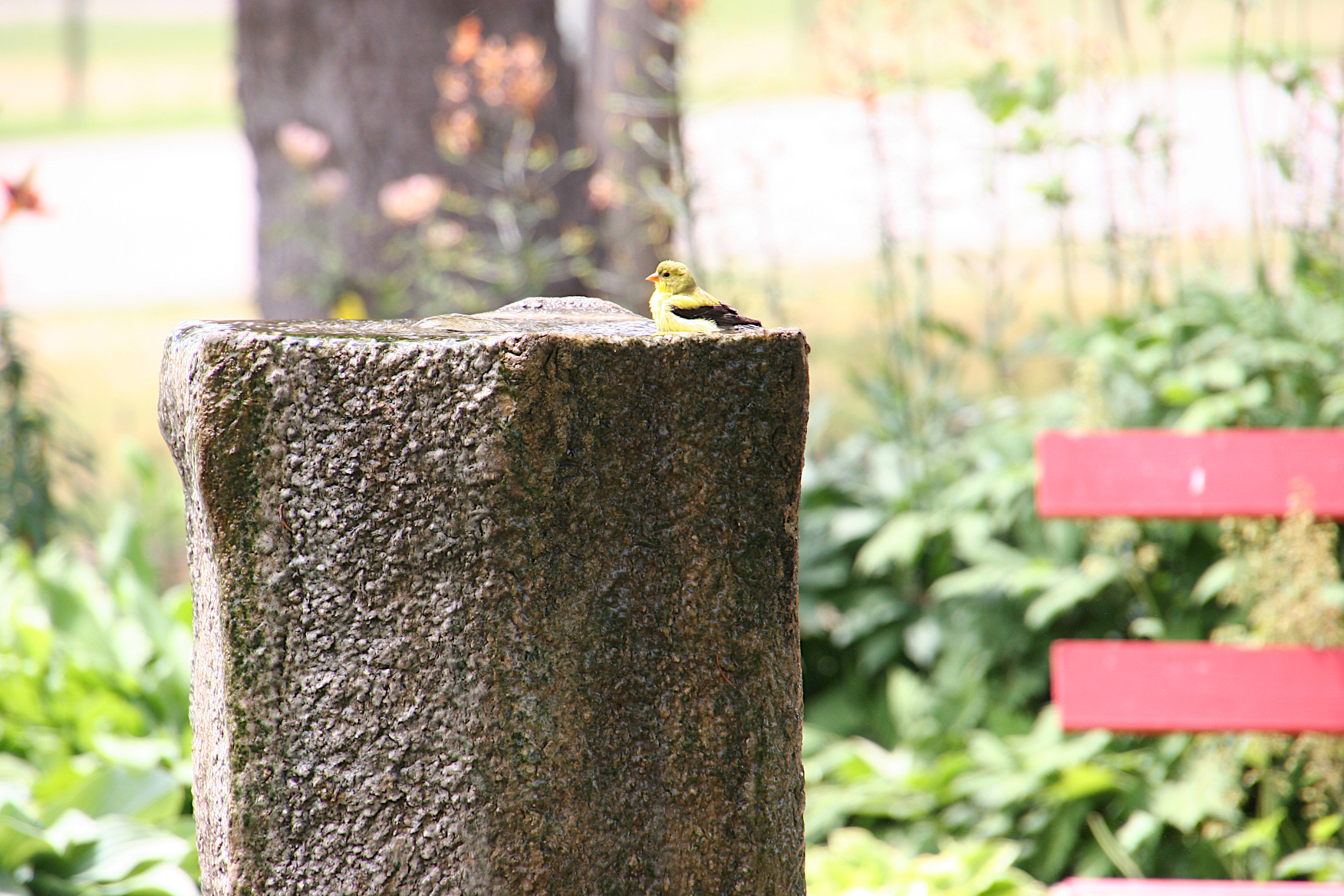
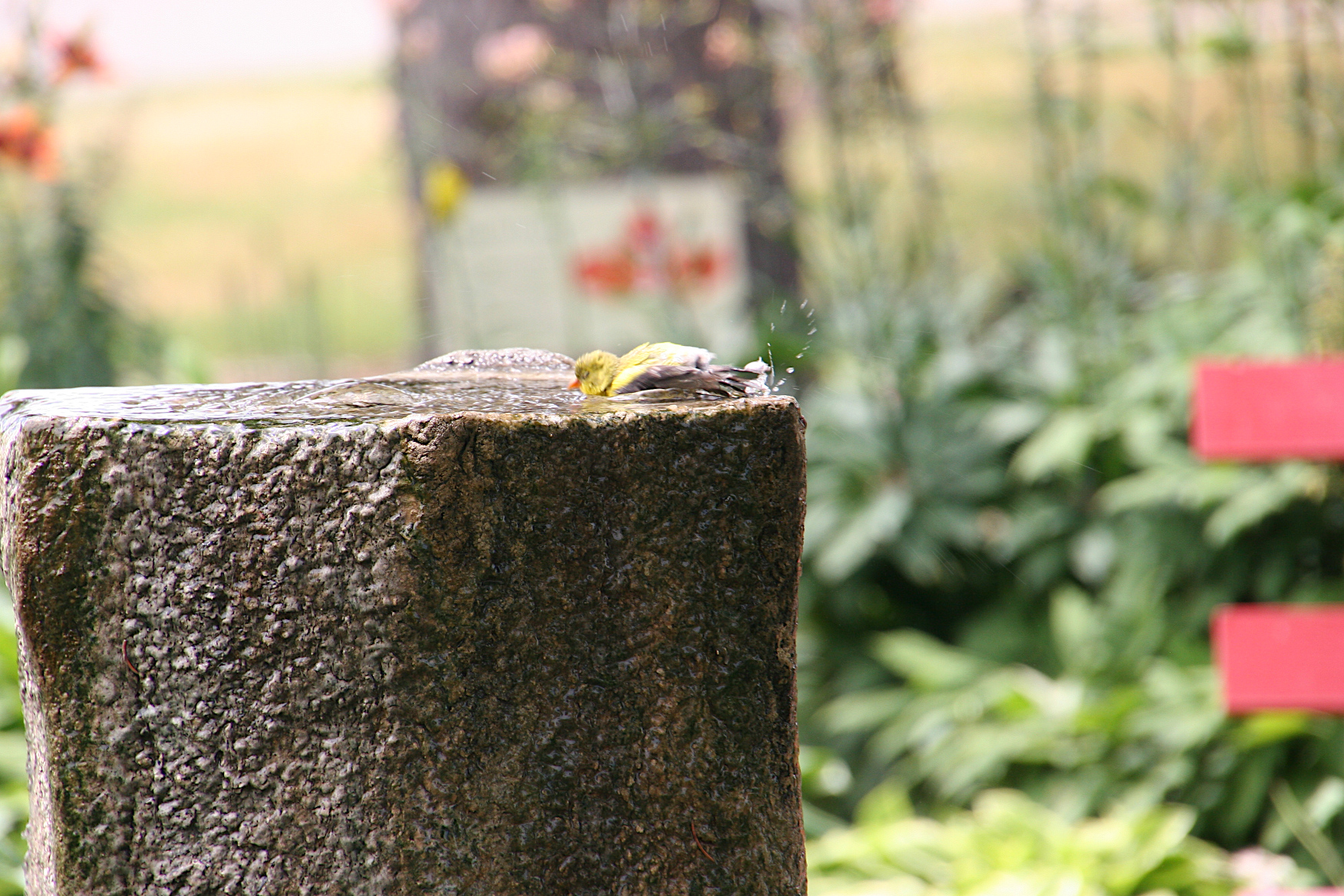
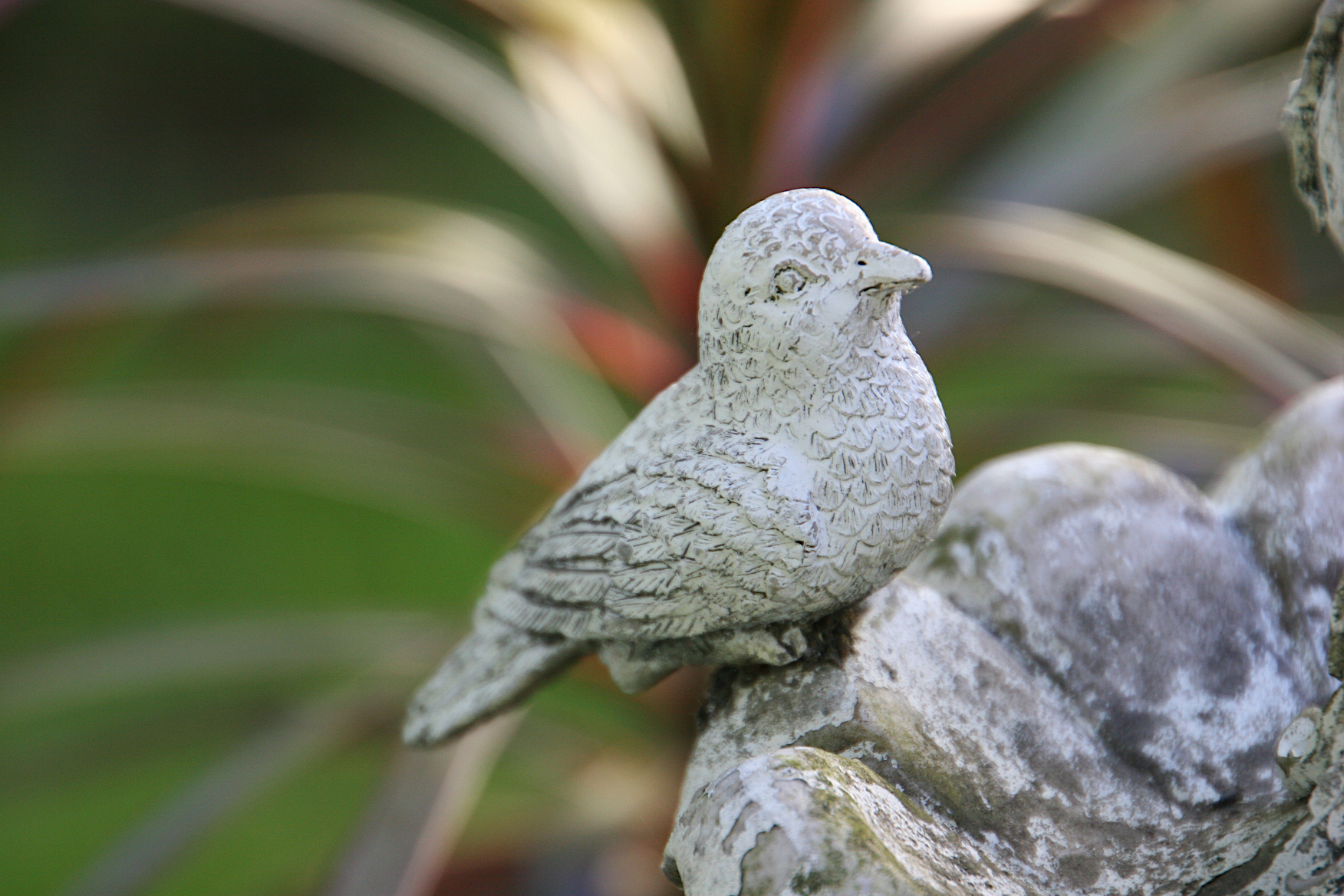
A tiny bird perches in a fountain at the Rice County Master Gardeners Garden, Faribault, Minnesota. (Minnesota Prairie Roots copyrighted file photo July 2022)
I HAVE A MIXED OPINION of birds. I appreciate them at a distance, but not necessarily up close, although I’ve grown more comfortable with their nearness as I’ve aged. Just don’t plunk me in an enclosed garage or other space with a trapped bird. Outdoors is mostly fine.
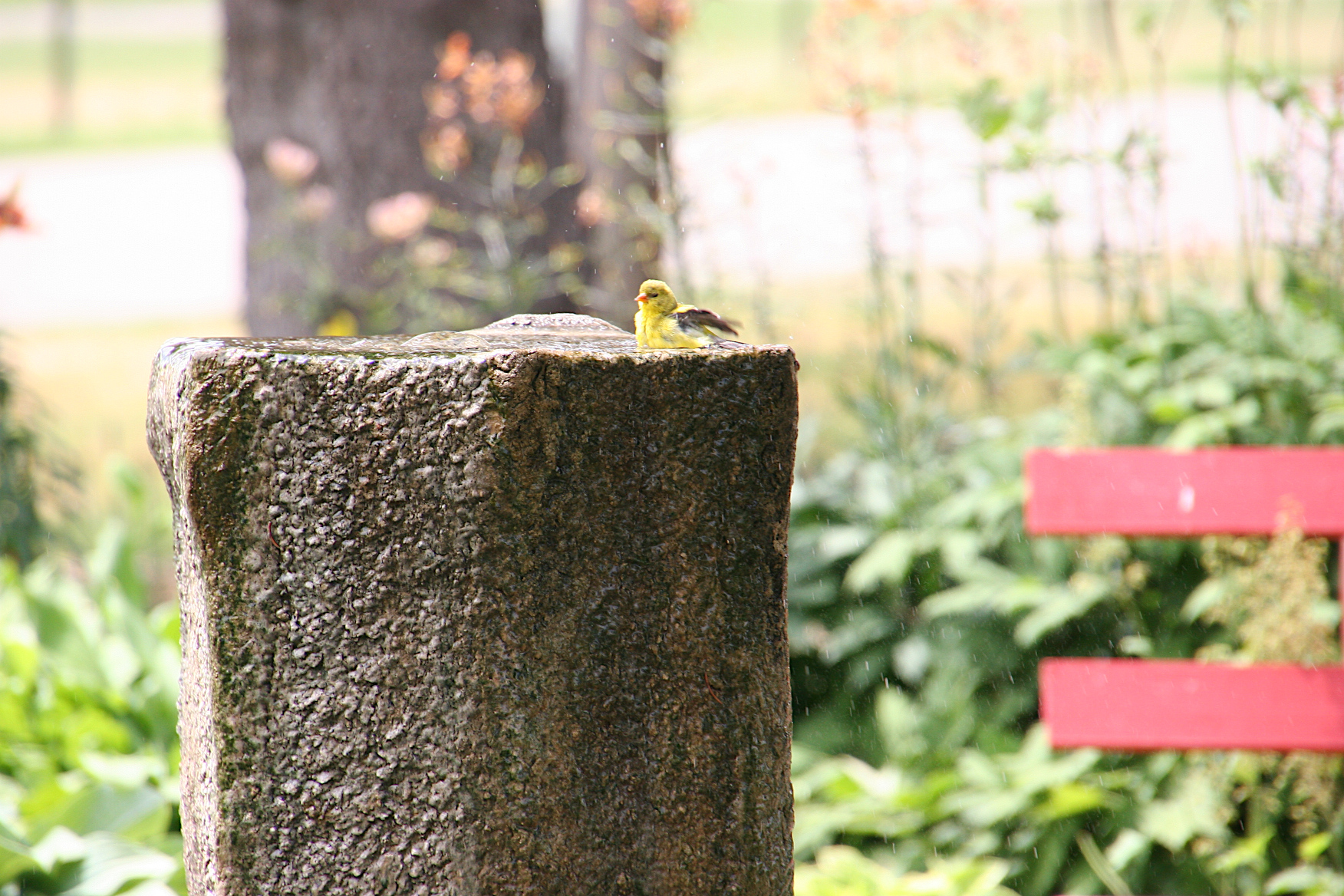
Unfolding of wings to splash in the fountain. (Minnesota Prairie Roots copyrighted photo July 2022)
Recently I observed a cute little yellow bird, a finch, I think, dip into a tree stump water feature at the Rice County Master Gardeners Teaching Gardens at the county fairgrounds in Faribault. With a zoom lens on my 35 mm camera, I photographed the finch briefly splash in the water before flitting away. There was something joyful in that sole moment of focusing on a tiny winged creature.
Water droplets fly as this bird bathes in the fountain. (Minnesota Prairie Roots copyrighted photo July 2022)
We need such moments of simplicity. Of peace. Of birdsong, even if this bird isn’t singing. Moments to quiet our souls in the midst of too much busyness and too many distractions. And too much technology.
I remember how my mom loved the Baltimore orioles that one year, quite unexpectedly, showed up on my childhood farm in southwestern Minnesota flashing orange into the trees. She thrilled in their presence among all the blackbirds, sparrows and barn swallows. In her delight, Mom taught me that not all birds were like the swooping swallows I despised.
In my years of doing farm chores, I grew to dislike the swallows that dived as I pushed a wheelbarrow of ground feed down the barn aisle or shoved cow manure into gutters. That the barn ceiling was low only magnified their, to me, menacing presence. The swallows, I now acknowledge, were only protecting their territory, their young, in the mud nests they built inside the barn. And they ate mosquitoes, which I should have appreciated.
Yet I don’t miss the swallows or the rooster that terrorized my siblings and me, until the day Dad grabbed the axe and ended that.
More than 40 years removed from the farm, I seldom see barn swallows. Rather, in my Faribault backyard, I spot cardinals, wrens, robins and occasionally a blue jay. The front and side yards, however, bring massive crows lunching on remnants of fast food tossed by inconsiderate motorists who find my property a convenient place to toss their trash. I’ll never understand that disrespectful mindset of throwing greasy wrappers and bags, food bits, empty bottles and cans, cigarette butts, and more out a vehicle window.
And so these are my evolving bird stories—of shifting from a long ago annoyance of swallows to understanding their behavior, of delighting in the definitive whistle of a cardinal flashing red into the wooded hillside behind my Faribault home, of observing the feeding habits of crows in my front and side yards drawn to garbage tossed by negligent humans.
TELL ME: I’d like to hear your bird stories, positive or negative.
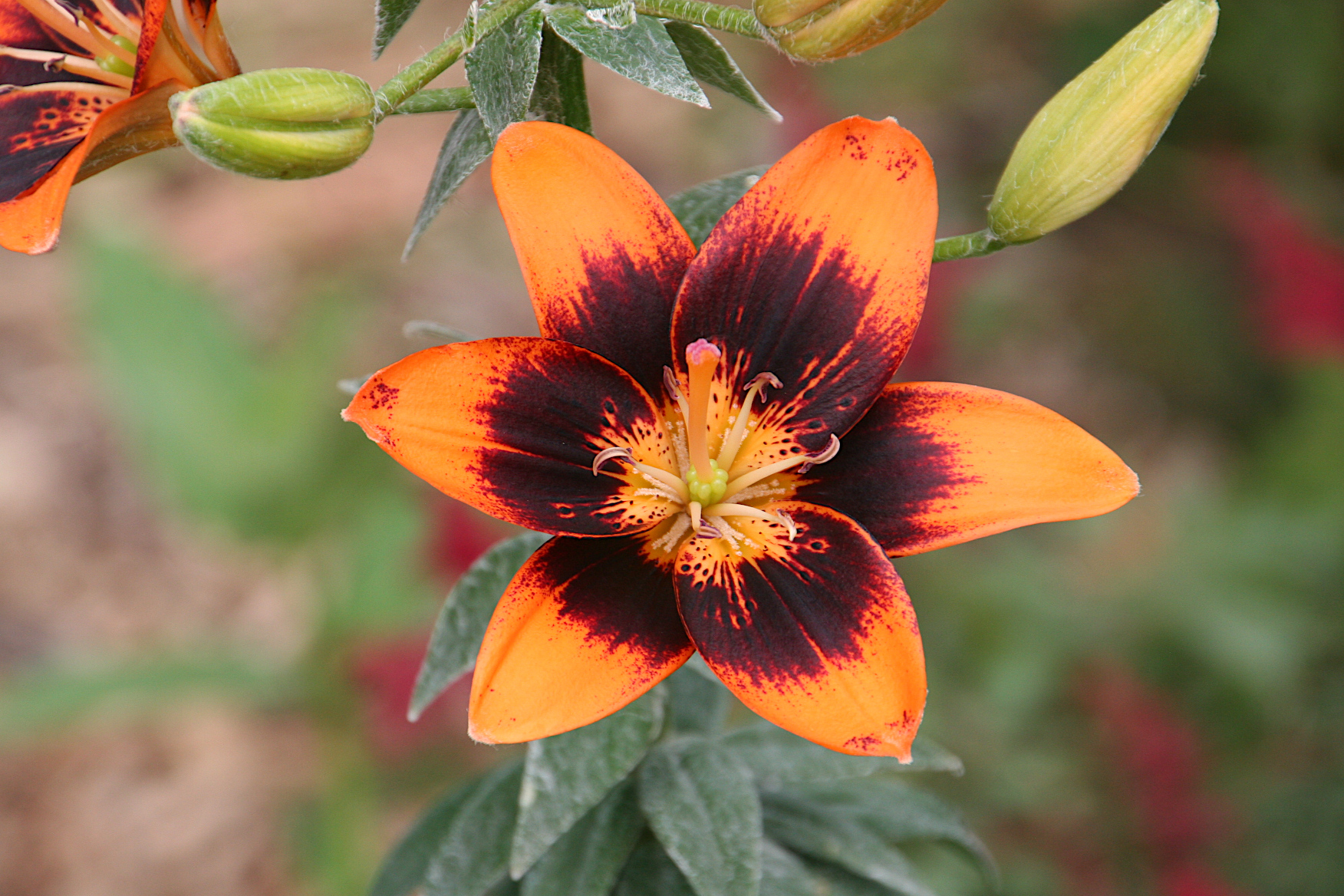
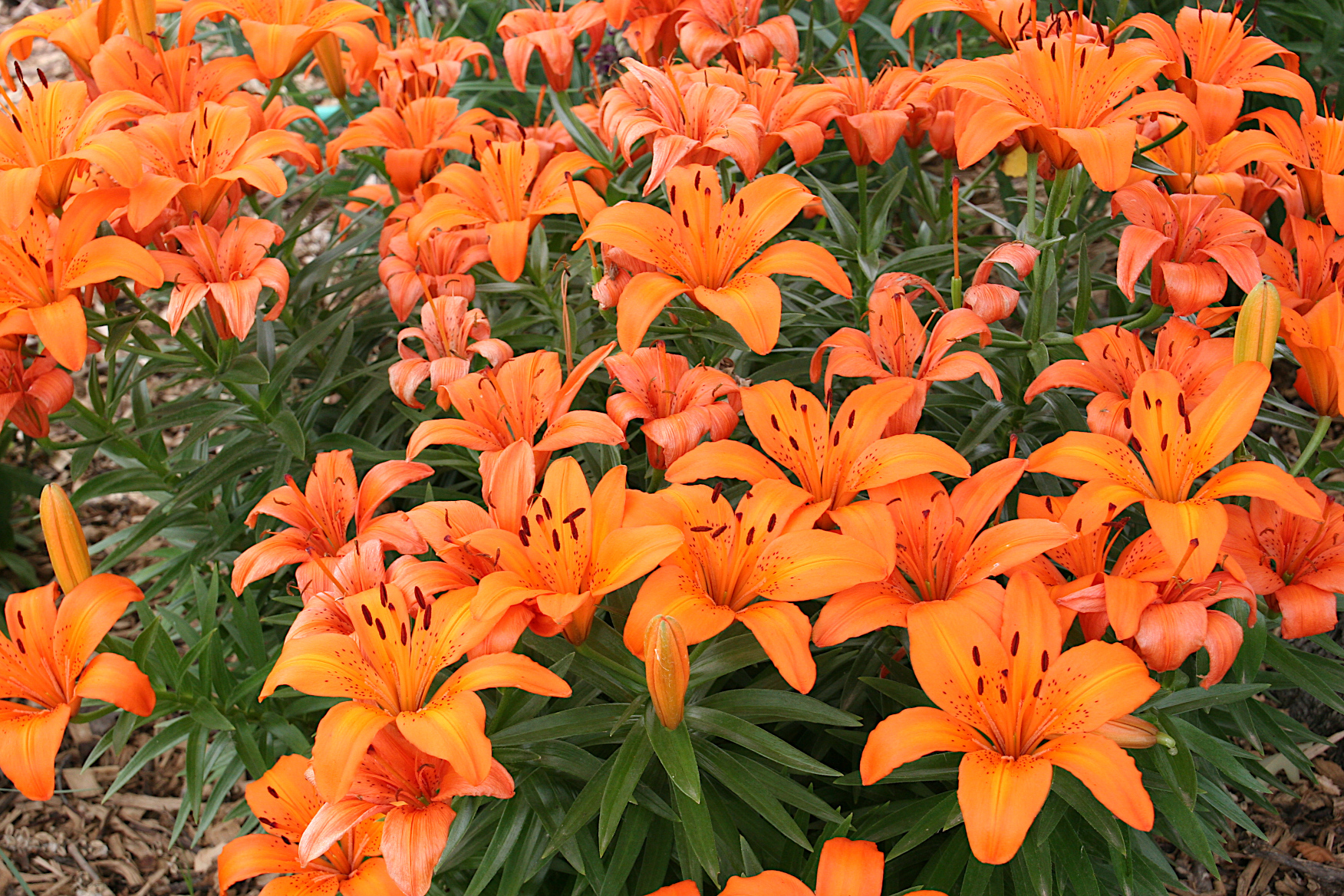
In early July, lilies bloomed in the Rice County Master Gardeners Teaching Garden. (Minnesota Prairie Roots copyrighted photo July 2022)
IN MY FARIBAULT BACKYARD, wild tiger lilies stretch above a tangled mess of greenery, popping orange into the hillside. On the other side of town, domesticated orange lilies grace the neatly-cultivated Rice County Master Gardeners Teaching Gardens at the Rice County Fairgrounds.
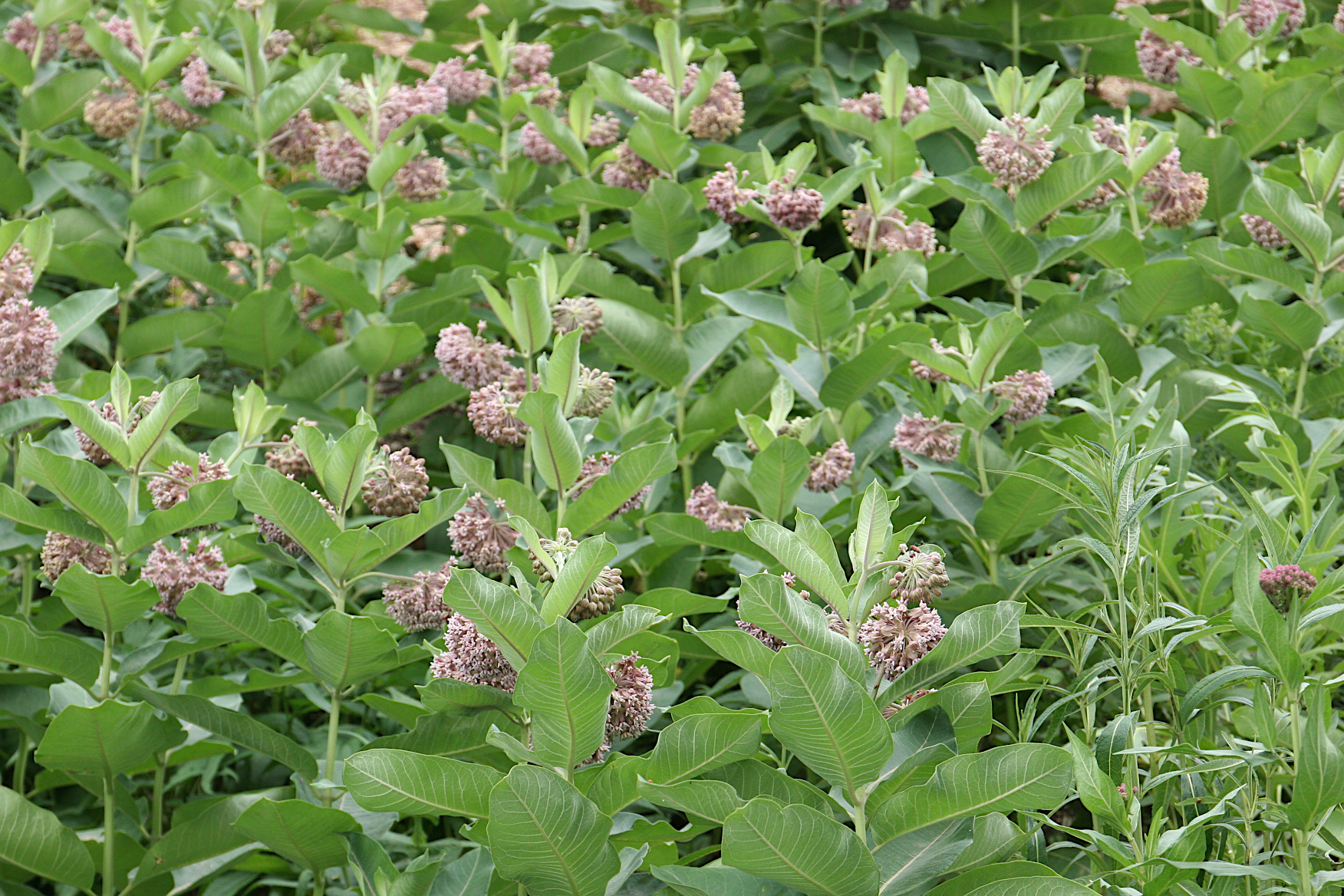
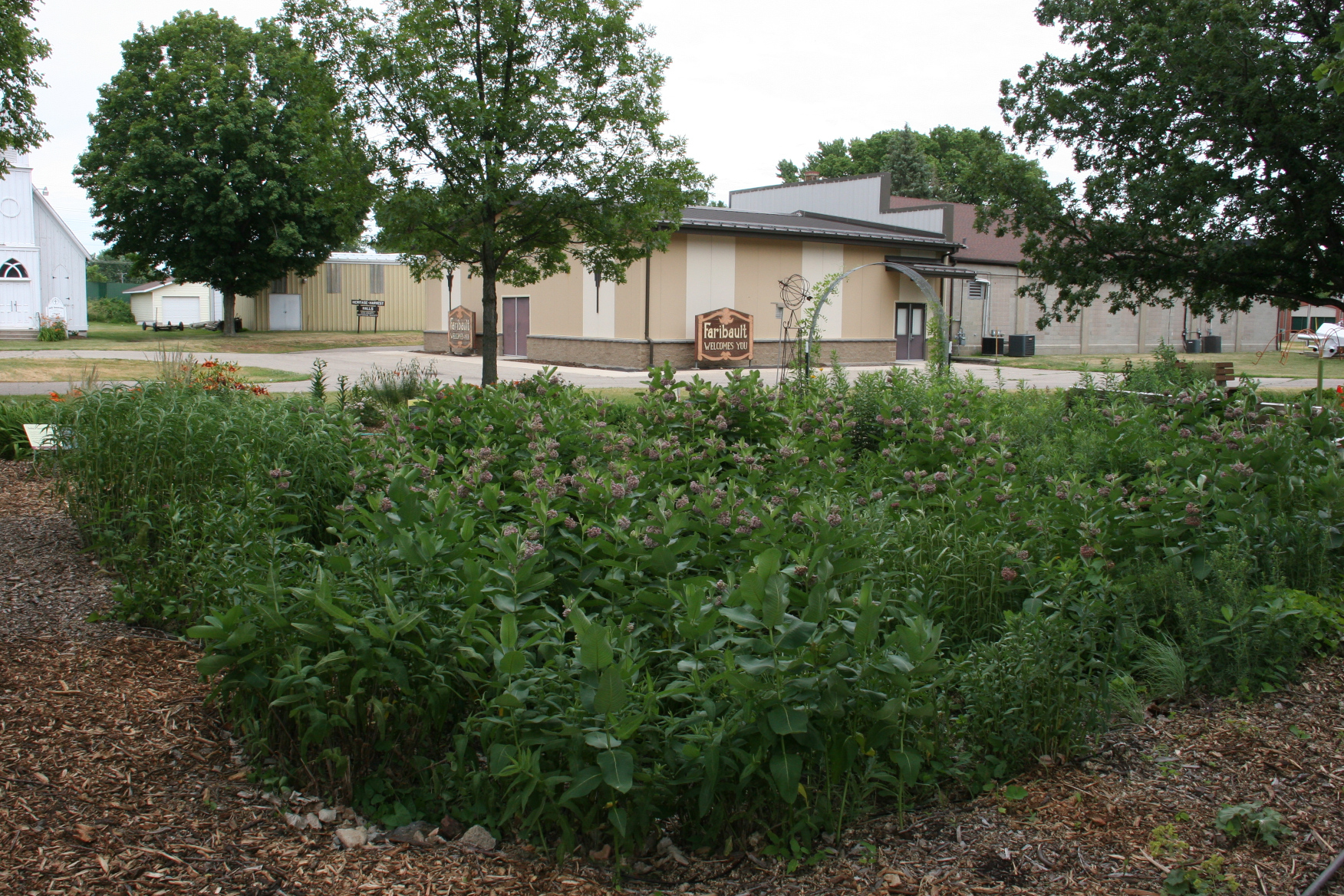
The master gardeners’ milkweed patch. (Minnesota Prairie Roots copyrighted photo July 2022)
Also in my yard are scattered milkweeds, food for Monarch caterpillars. In the gardens tended by the experts, a mass of intentionally-planted milkweeds flourishes.
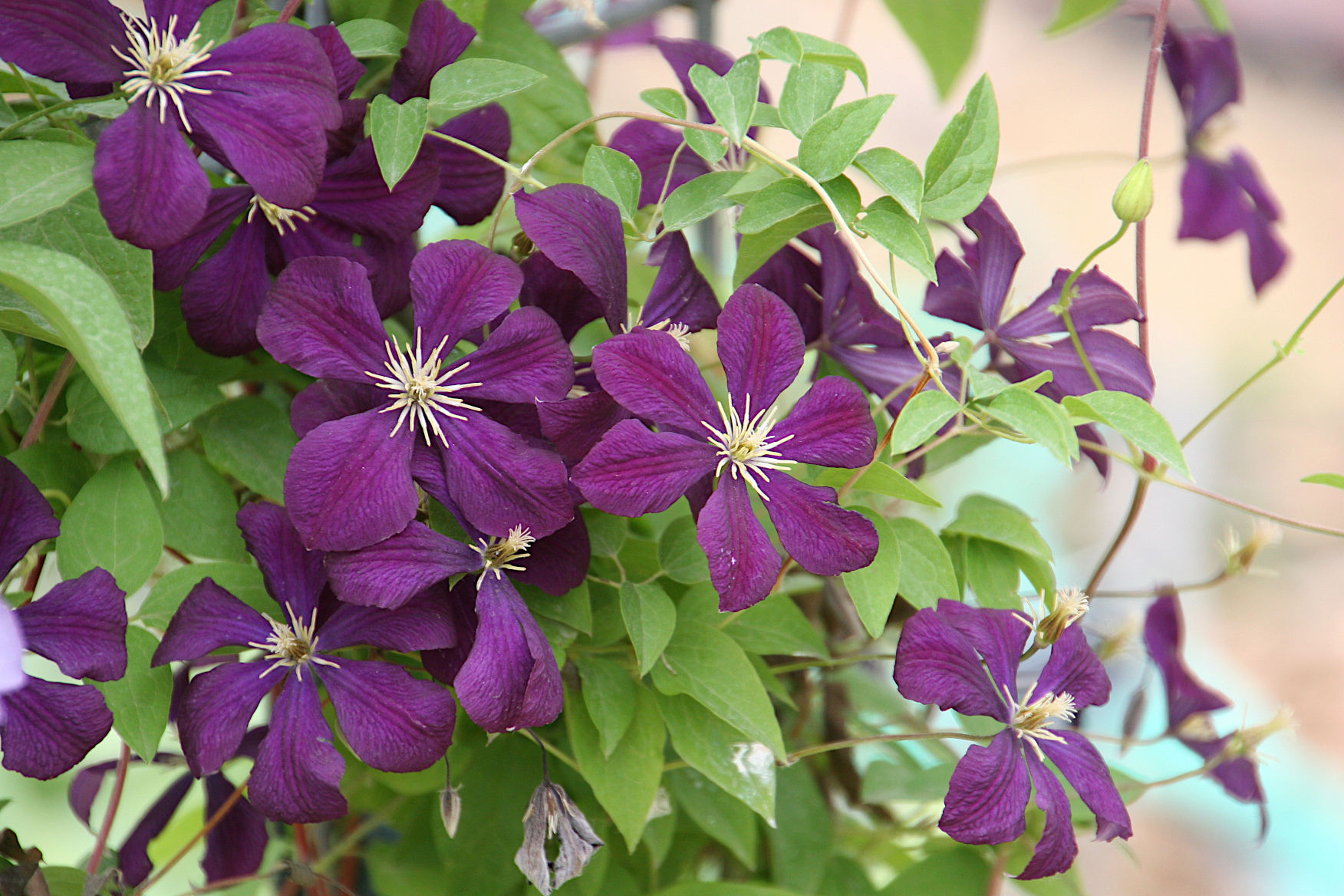
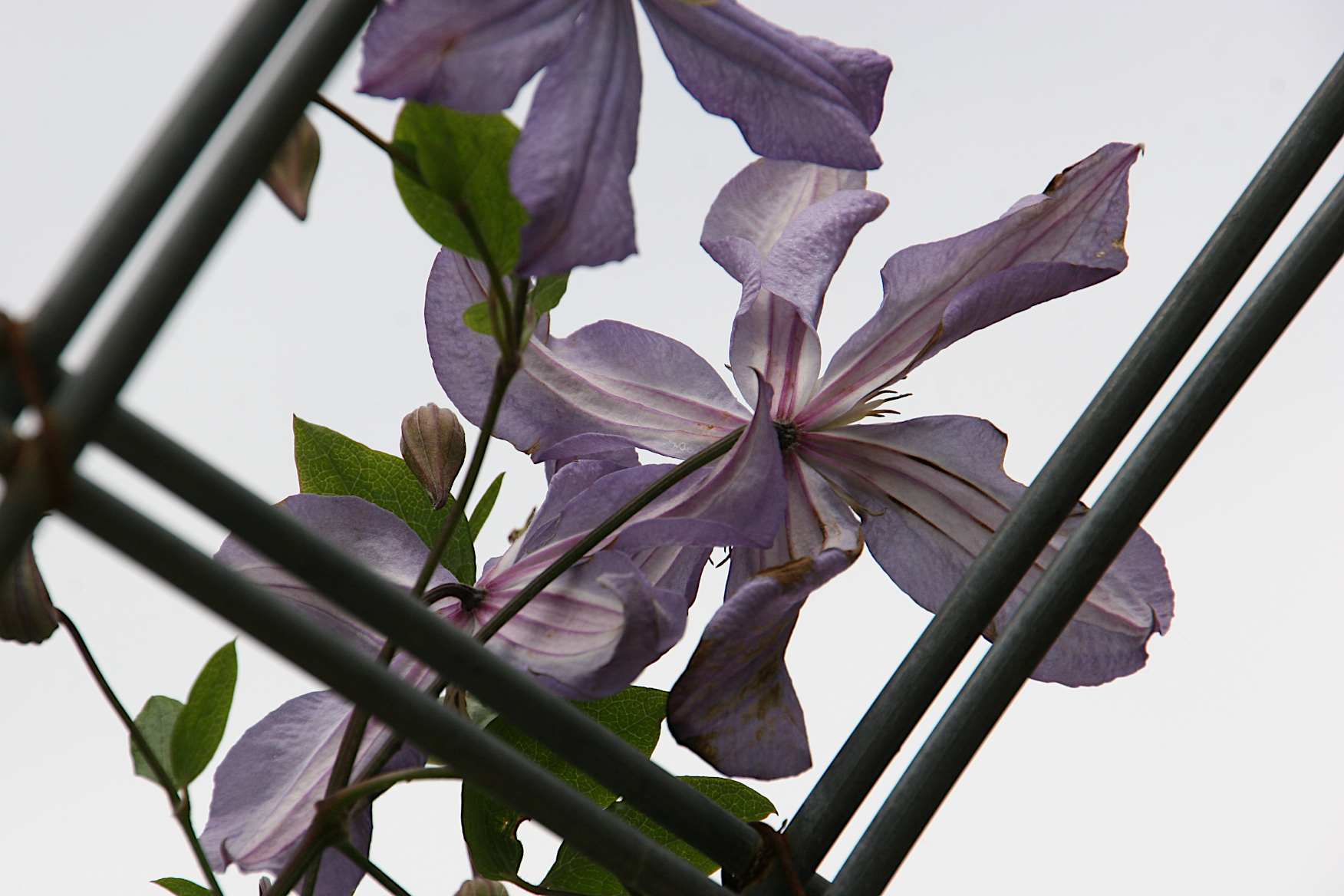
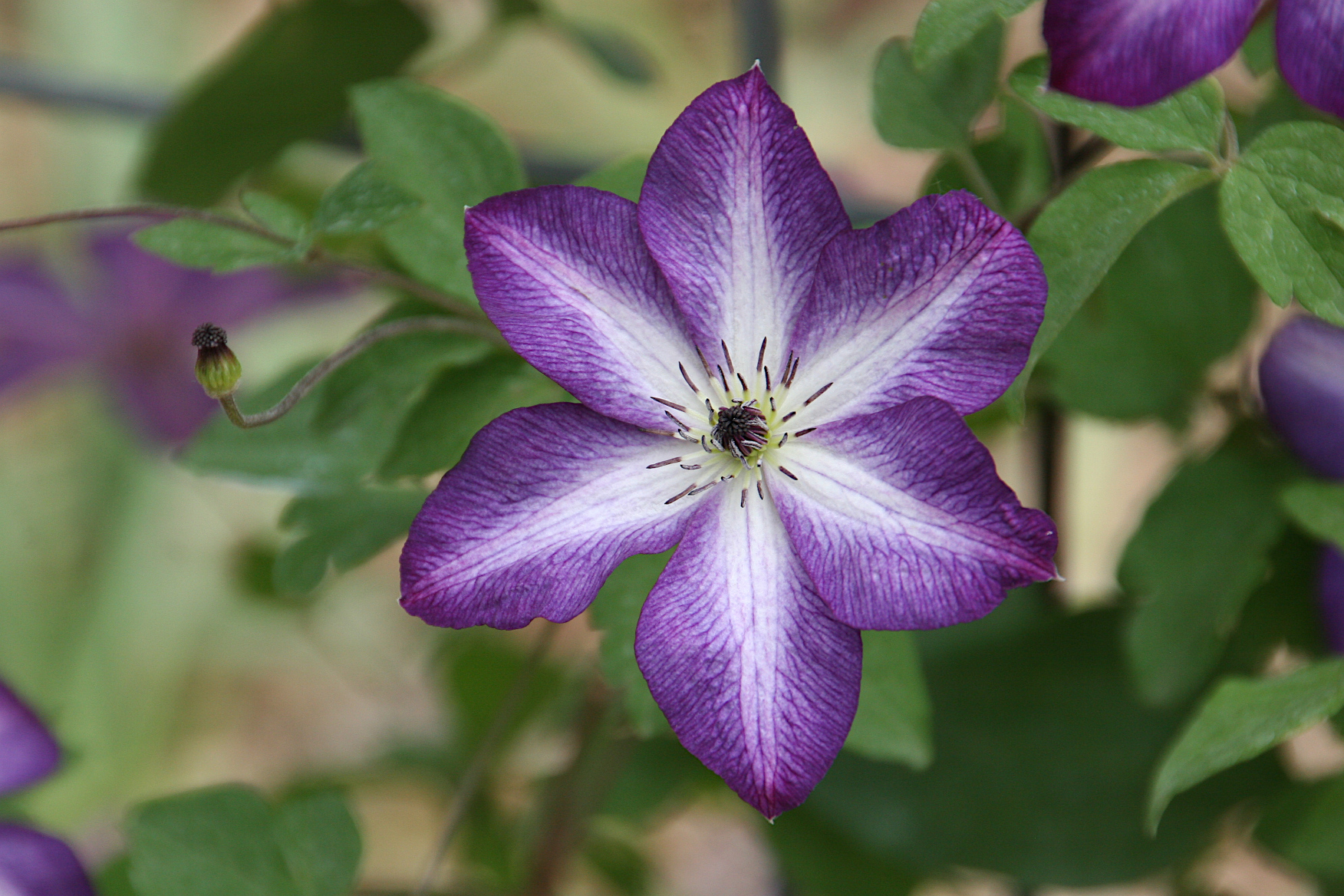
Clematis. (Minnesota Prairie Roots copyrighted photo July 2022)
Blocks away from my home, Donahue’s Greenhouse grows one of the largest selections of clematis in the U.S. That’s their specialty. Across town at the master gardeners’ garden, clematis climb an arbor, lovely blooms opening to the summer sky.
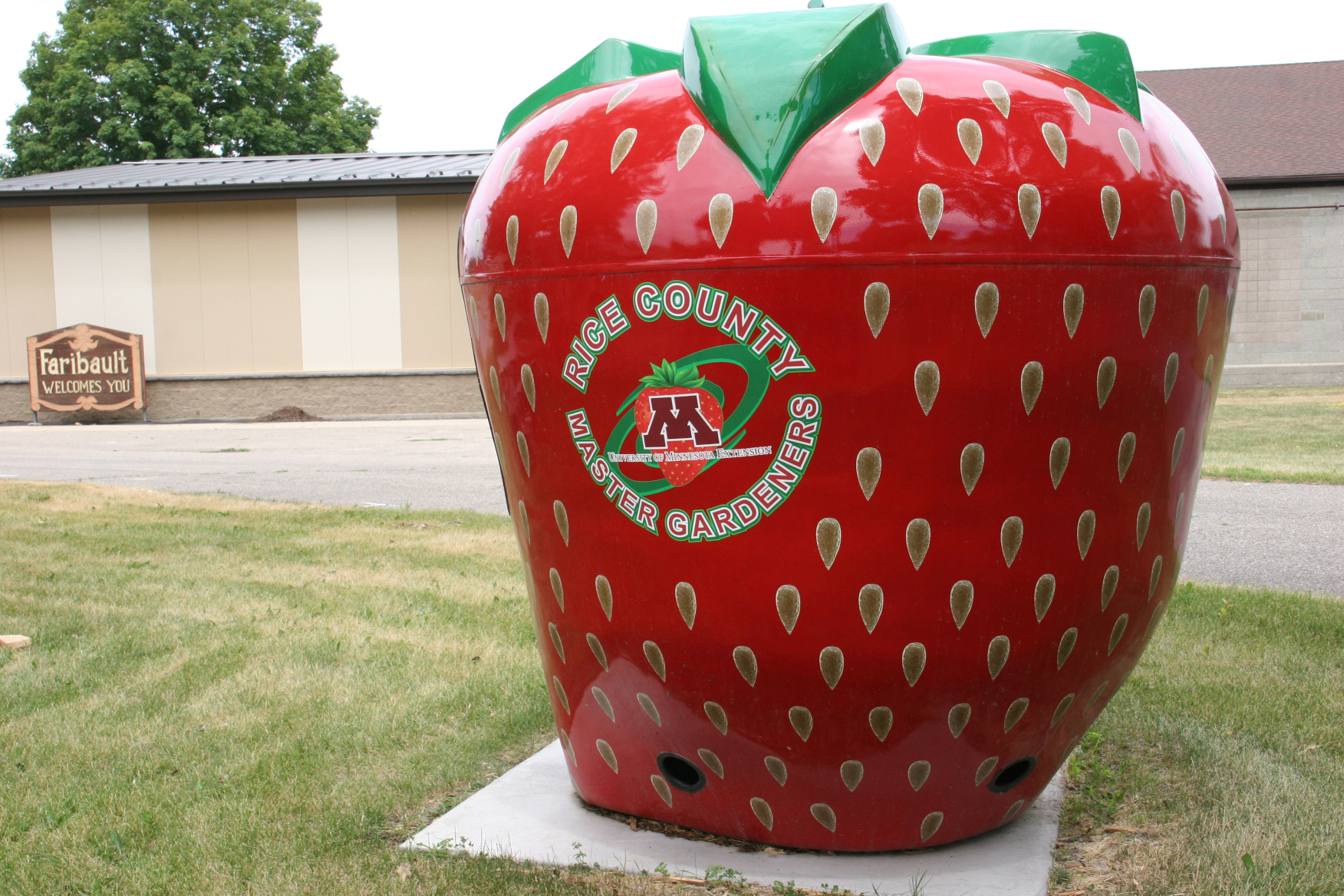
The Berry-Go-Round. (Minnesota Prairie Roots copyrighted photo July 2022)
Within a short distance of my home is the birthplace of the Tilt-A-Whirl, a carnival ride no longer made in Faribault but in Texas. On the edge of the master gardeners’ garden, a giant strawberry sits. It’s a Berry-Go-Round, a spin ride produced by Sellner Manufacturing beginning in 1987, before the company was sold.
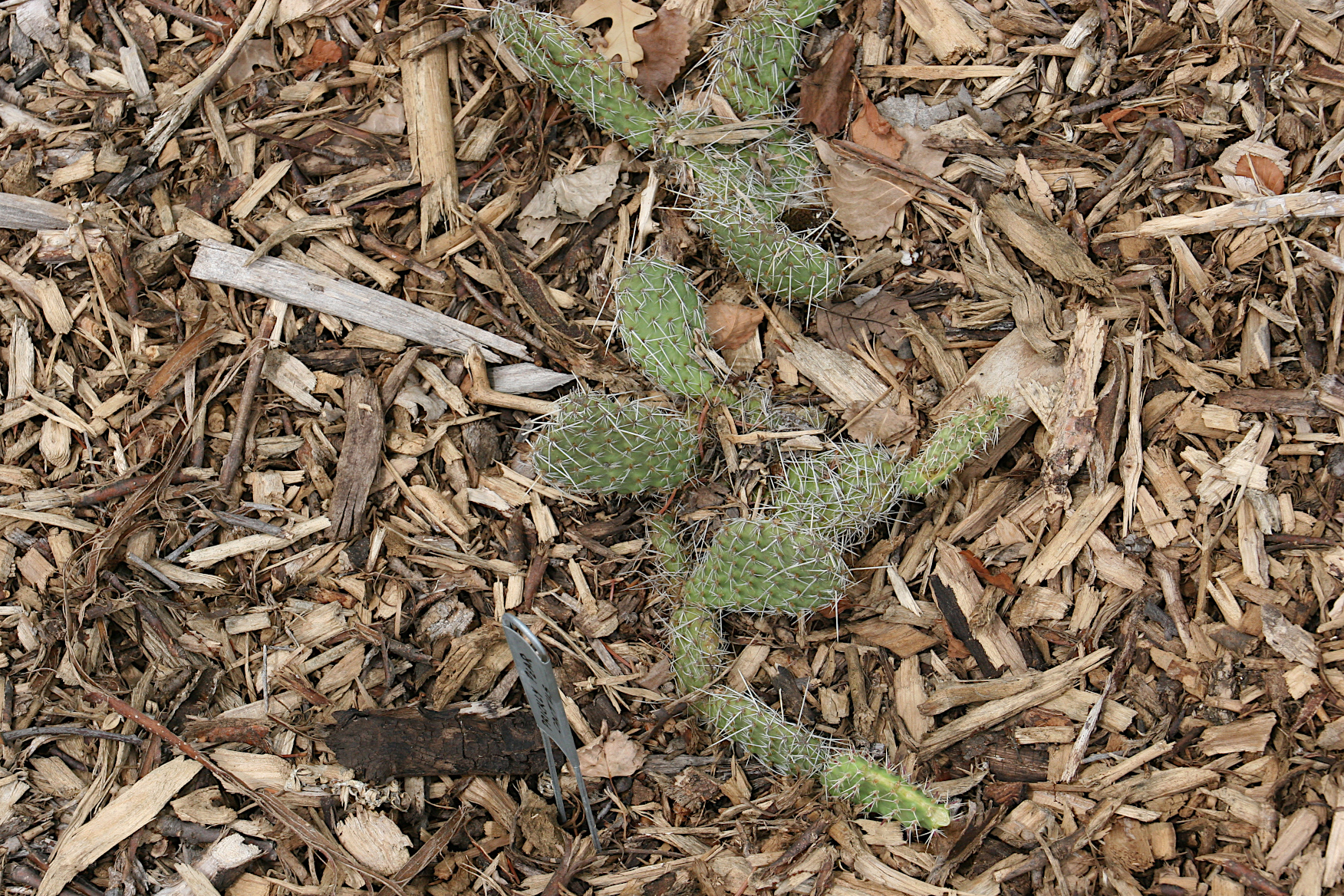
Prickly pear cactus. (Minnesota Prairie Roots copyrighted photo July 2022)
More than 150 miles to the southwest of Faribault near the South Dakota border, prickly pear cactus thrive in the rocky lands of the prairie. I’ve seen them at Blue Mounds State Park near Luverne. And now I’ve seen them in the gardens at the local fairgrounds.
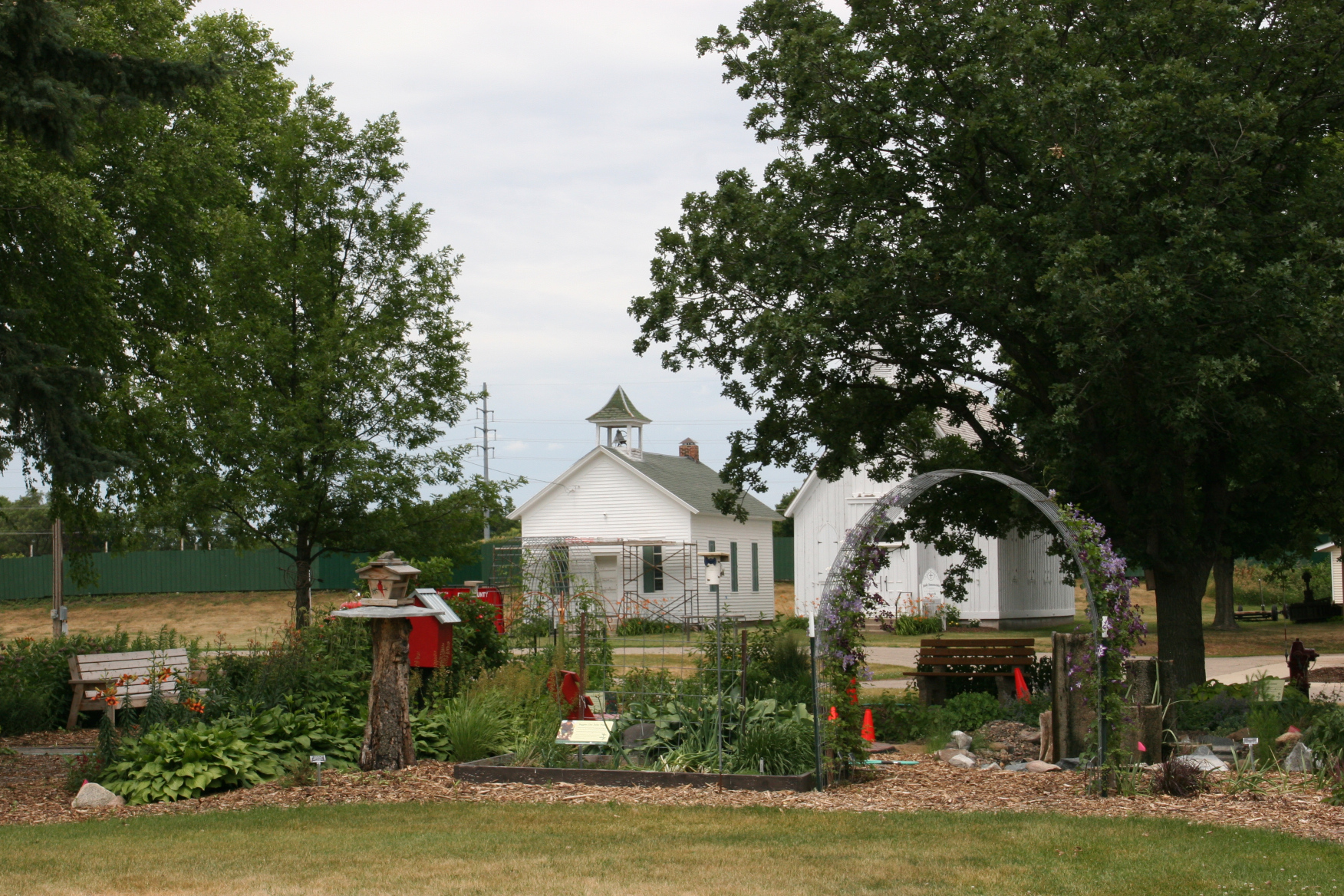
An overview of the Rice County Master Gardeners Teaching Gardens, photographed in early July, with an historic school and church (part of the county historical society) in the background. (Minnesota Prairie Roots copyrighted photo July 2022)
It’s interesting how, in life, so many connections exist. Even in a garden.
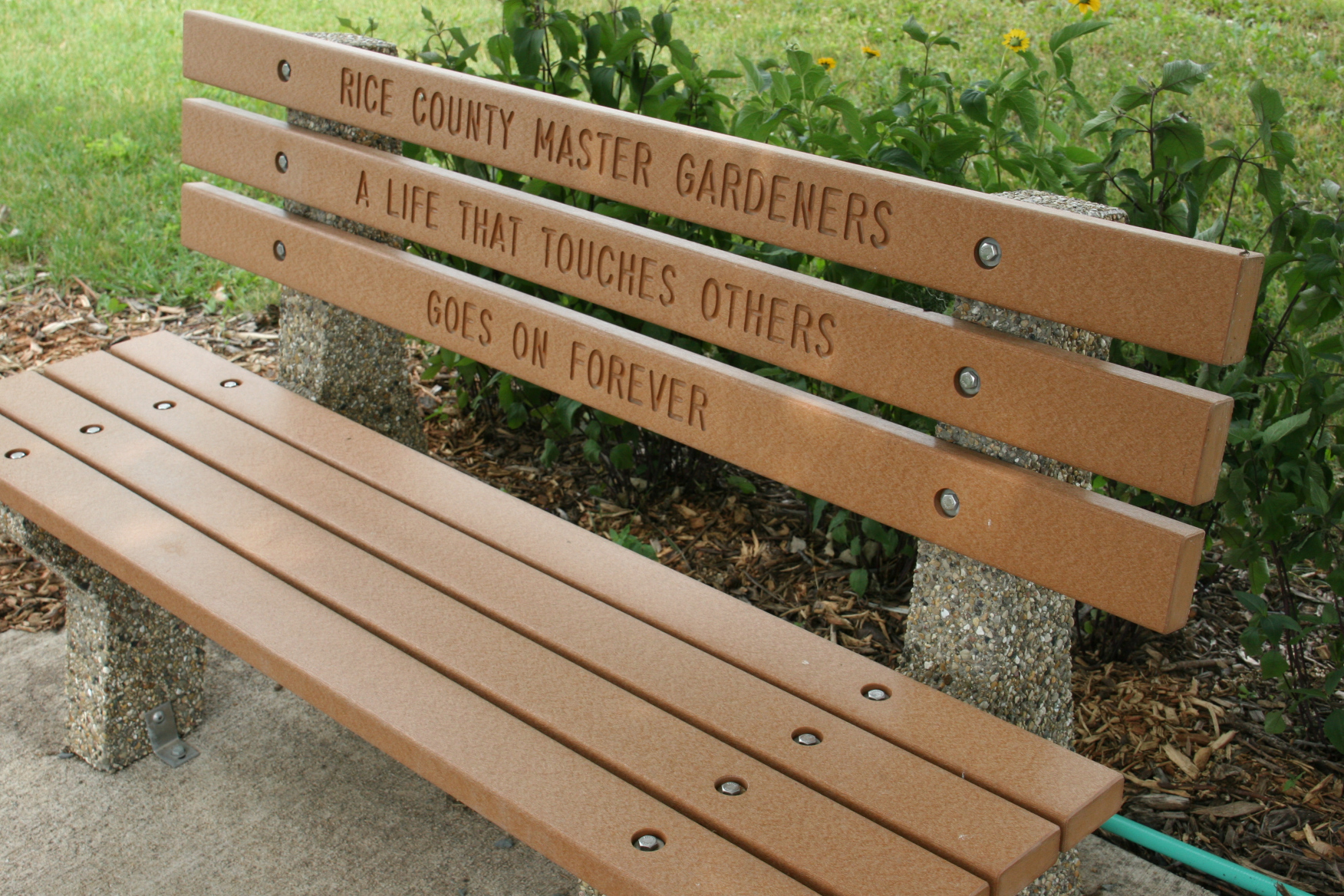
One of several benches in the master gardeners’ garden in Faribault. (Minnesota Prairie Roots copyrighted photo July 2022)
Gardens connect us to people, places, memories. A life that touches others goes on forever. I come from a family of gardeners tracing back generations. Vegetables grown in my mother’s massive garden fed me, and my family of origin, for the first 18 years of my life. I worked that garden with her, planting, weeding, tending, harvesting. I left gardening when I left southwestern Minnesota. But I still appreciate gardeners and gardens.
An artsy scene of clematis on arbor. (Minnesota Prairie Roots copyrighted photo July 2022)
I value the beauty of flower gardens, the purpose of vegetable gardens to feed. And I appreciate, too, the peace a garden brings. To sit among the blooms and plants in a garden oasis like the Rice County master gardeners created is to feel a calm, a sense of serenity in the midst of chaos and struggles and challenges.
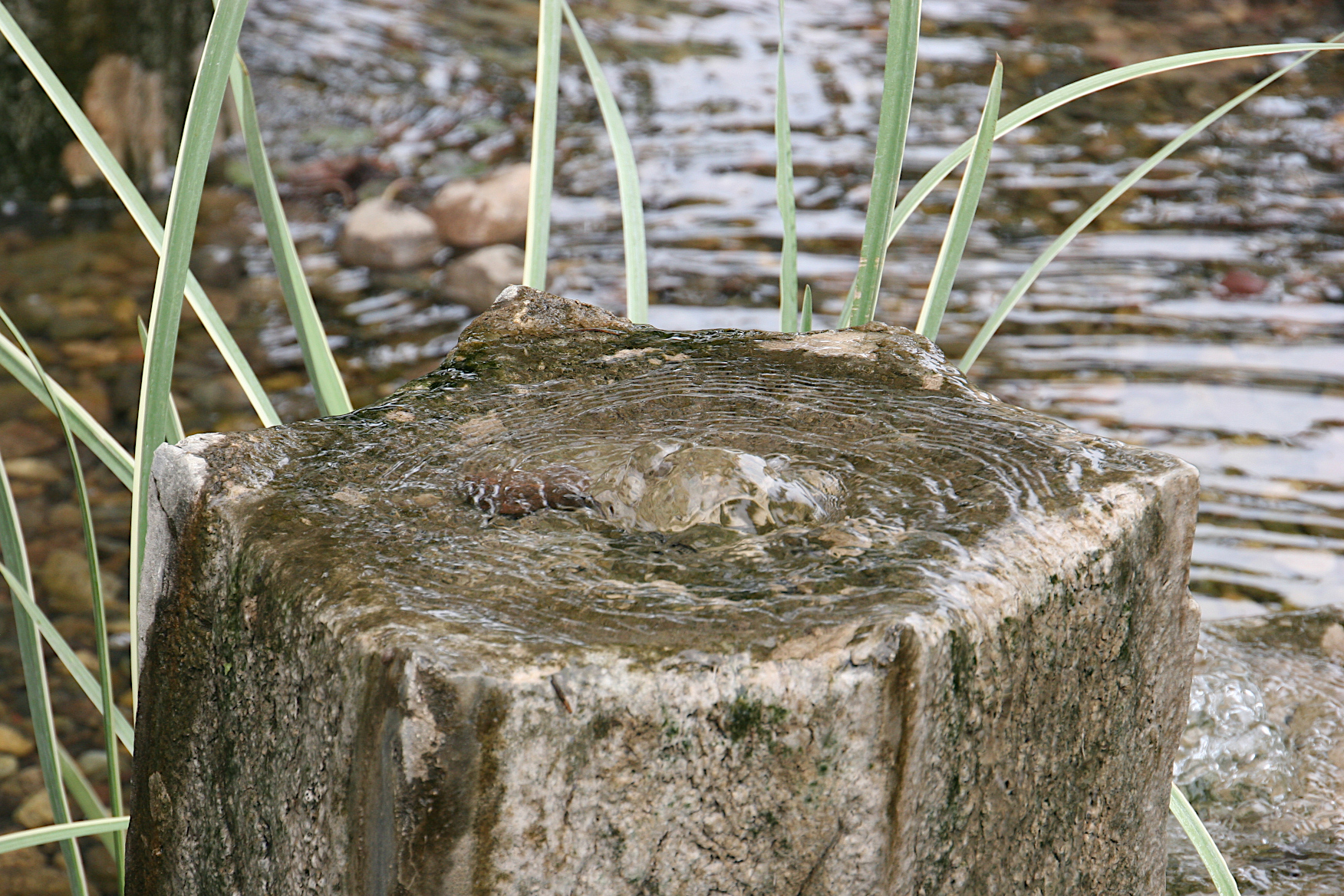
The water feature is shaped like tree stumps. (Minnesota Prairie Roots copyrighted photo July 2022)
Water, especially, soothes me. The Rice County master gardeners understand that and added a water feature to their garden plot. I delighted in watching a tiny yellow bird (I think a goldfinch) splash in the water. Such a simple joy.
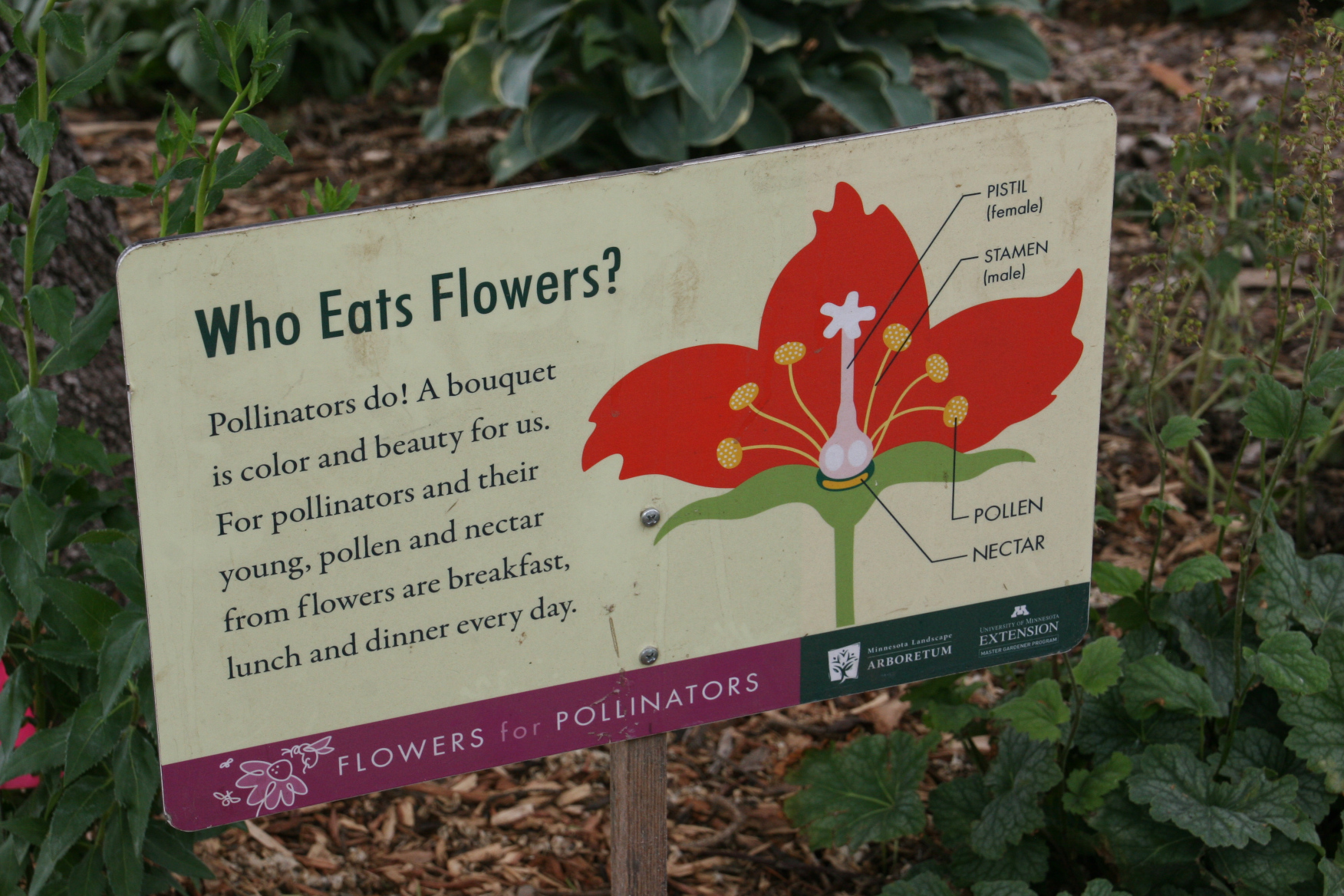
One of many educational signs in the Rice County Master Gardeners Teaching Gardens. (Minnesota Prairie Roots copyrighted photo July 2022)
And isn’t that part of a garden’s purpose—to bring joy? Joy to those who work the soil, seed or plant, tend and care for that which grows. Joy to those who delight in the all of it.
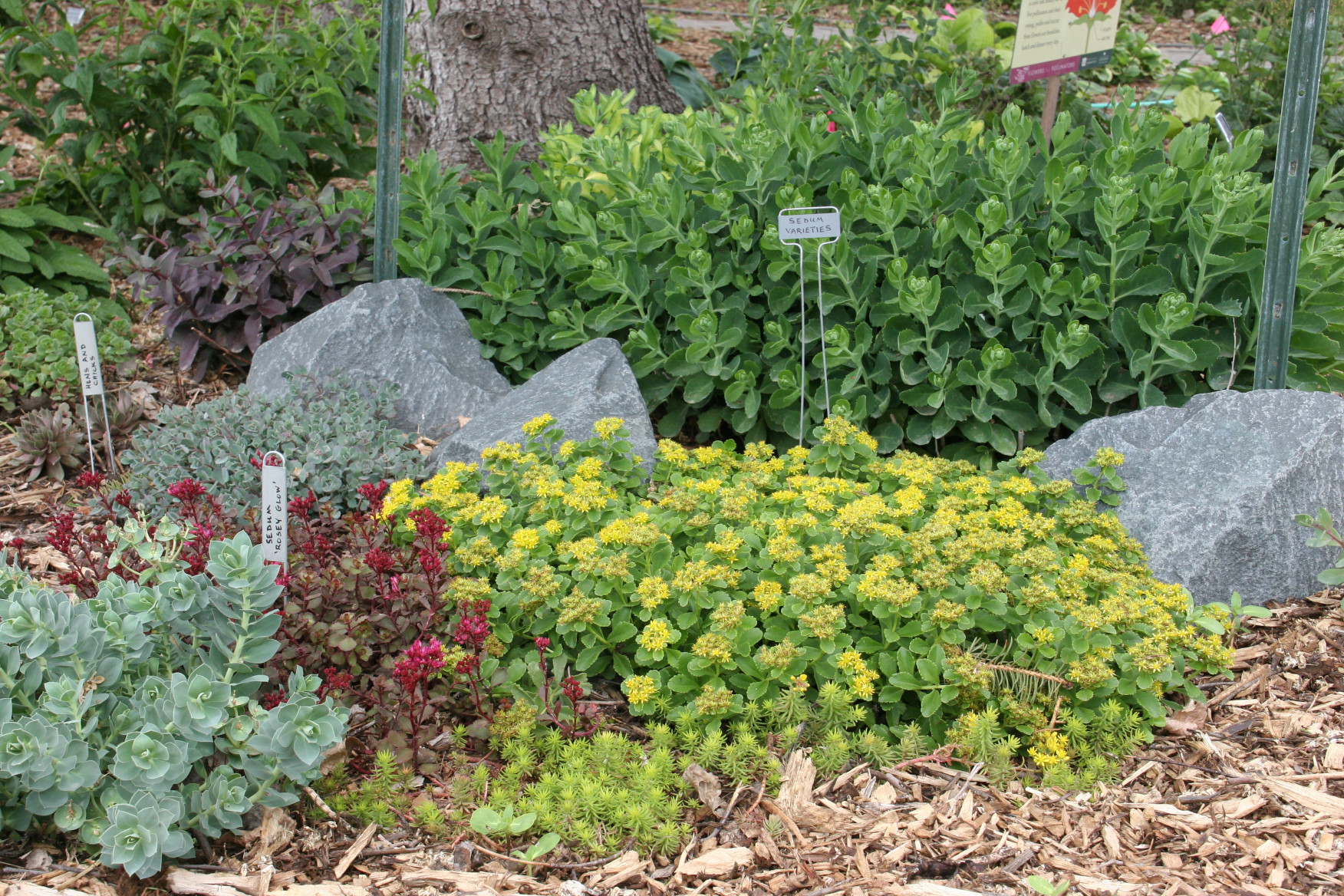
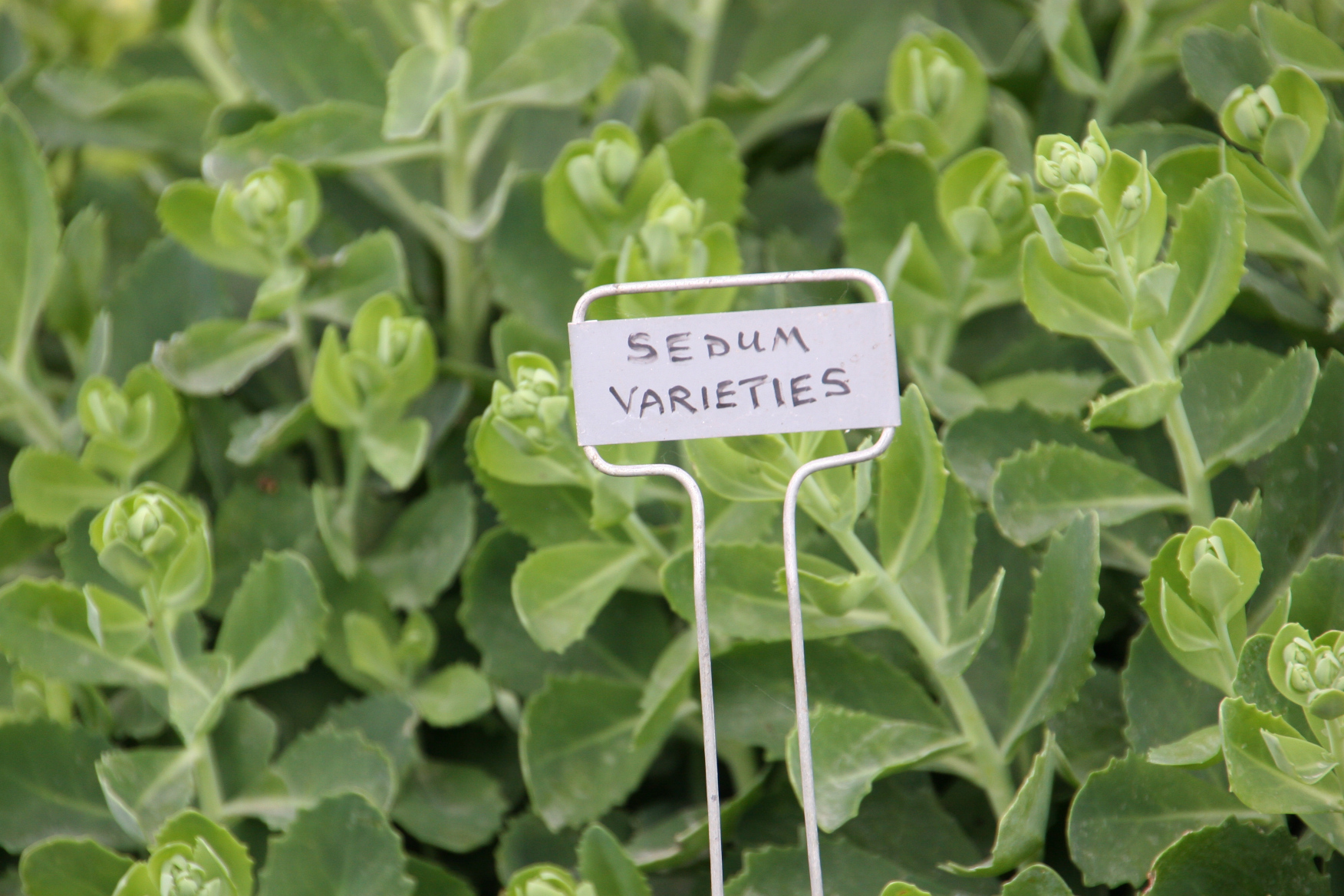
A sedum patch planted by the master gardeners. (Minnesota Prairie Roots copyrighted photo July 2022)
I feel such gratitude for gardeners, for the nurturing hands that link me to nature. It’s all about connecting to each other in this world we share, in the commonality of humanity.
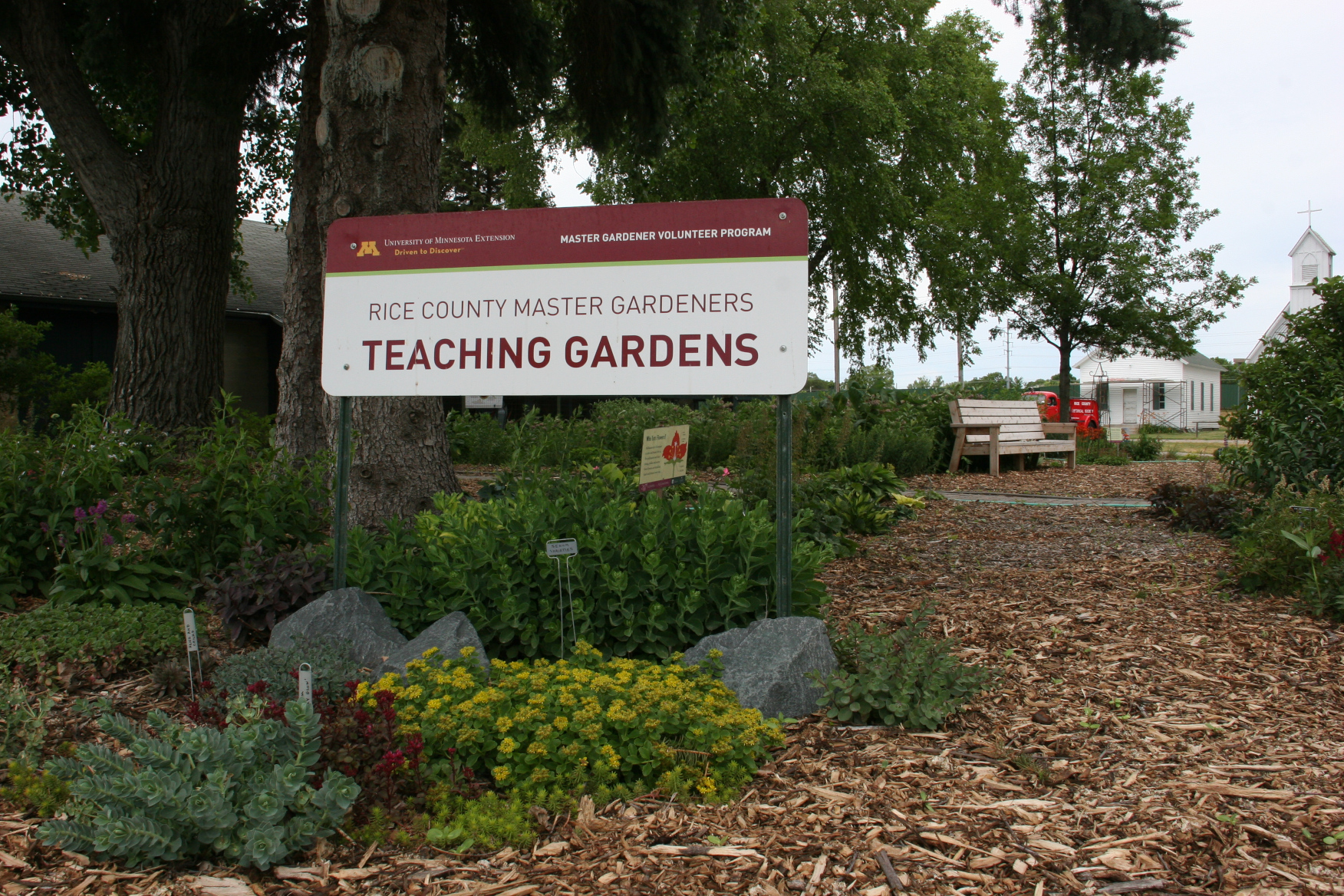
Next to the conservation building, with an historic church and school in the background, the Teaching Gardens grace the Rice County Fairgrounds.(Minnesota Prairie Roots copyrighted photo July 2022)
AT THE RICE COUNTY FAIRGROUNDS in Faribault, an unexpected oasis brings nature into a setting of buildings, grandstand and roadways. It’s a welcome respite, this Rice County Master Gardeners Teaching Gardens.
I love the “tree stump” water feature that blends so naturally into the garden. (Minnesota Prairie Roots copyrighted photo July 2022)
On a Sunday in early July, Randy and I packed a picnic lunch and set out for the fairgrounds garden, a place we haven’t previously lunched. There we settled onto a fountain-side shaded bench, the soothing rush of water creating a peaceful ambiance.
Clematis. (Minnesota Prairie Roots copyrighted photo July 2022)
Sedum. (Minnesota Prairie Roots copyrighted photo July 2022)
Lilies. (Minnesota Prairie Roots copyrighted photo July 2022)
Afterwards, I ambled through these gardens, admiring the plants and blooming flowers. Clematis climbing an arbor. Sedum. Hosta. Lilies and roses and Pig Squeak. Masses of milkweed for monarch caterpillars. Eggplant, prickly pear cactus, Mugo pine and much more.
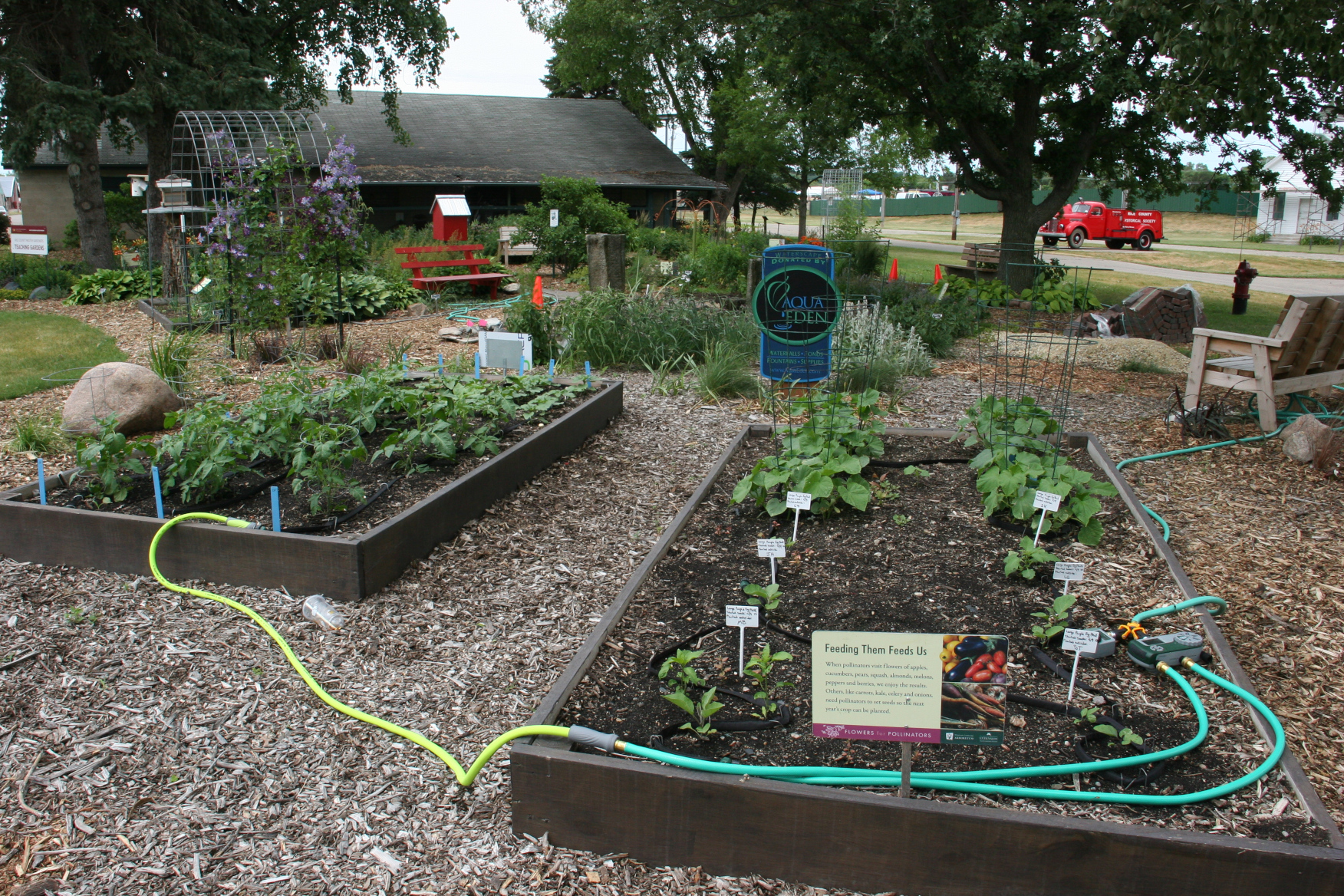
An overview of the gardens with vegetables in the foreground. (Minnesota Prairie Roots copyrighted photo July 2022)
If you’re into gardening, and even if you’re not, this compact garden patch showcases a wide variety of plants that are beautiful to behold. Some are grown as seed trial plants for the University of Minnesota.
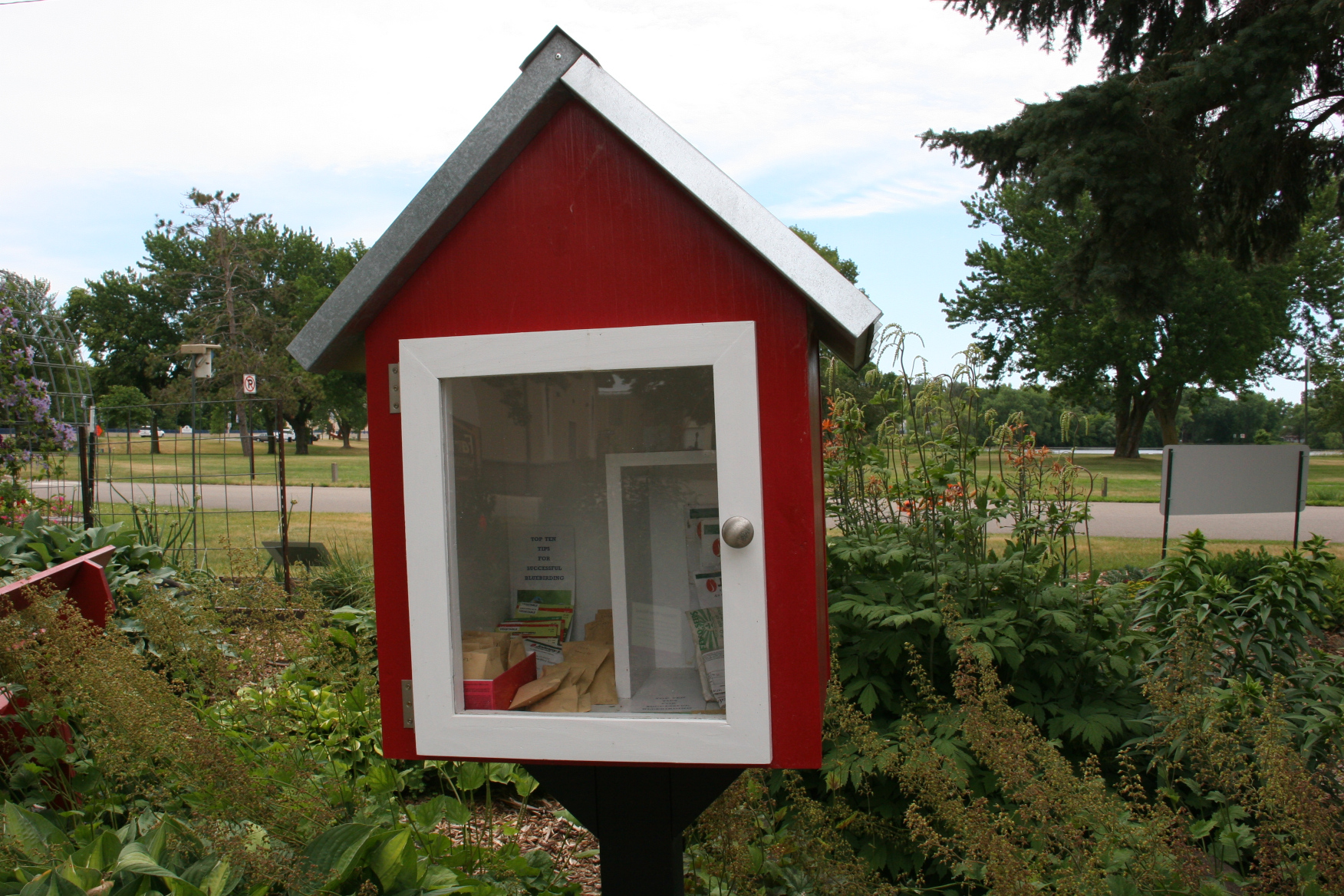
The Seed Library. (Minnesota Prairie Roots copyrighted photo July 2022)
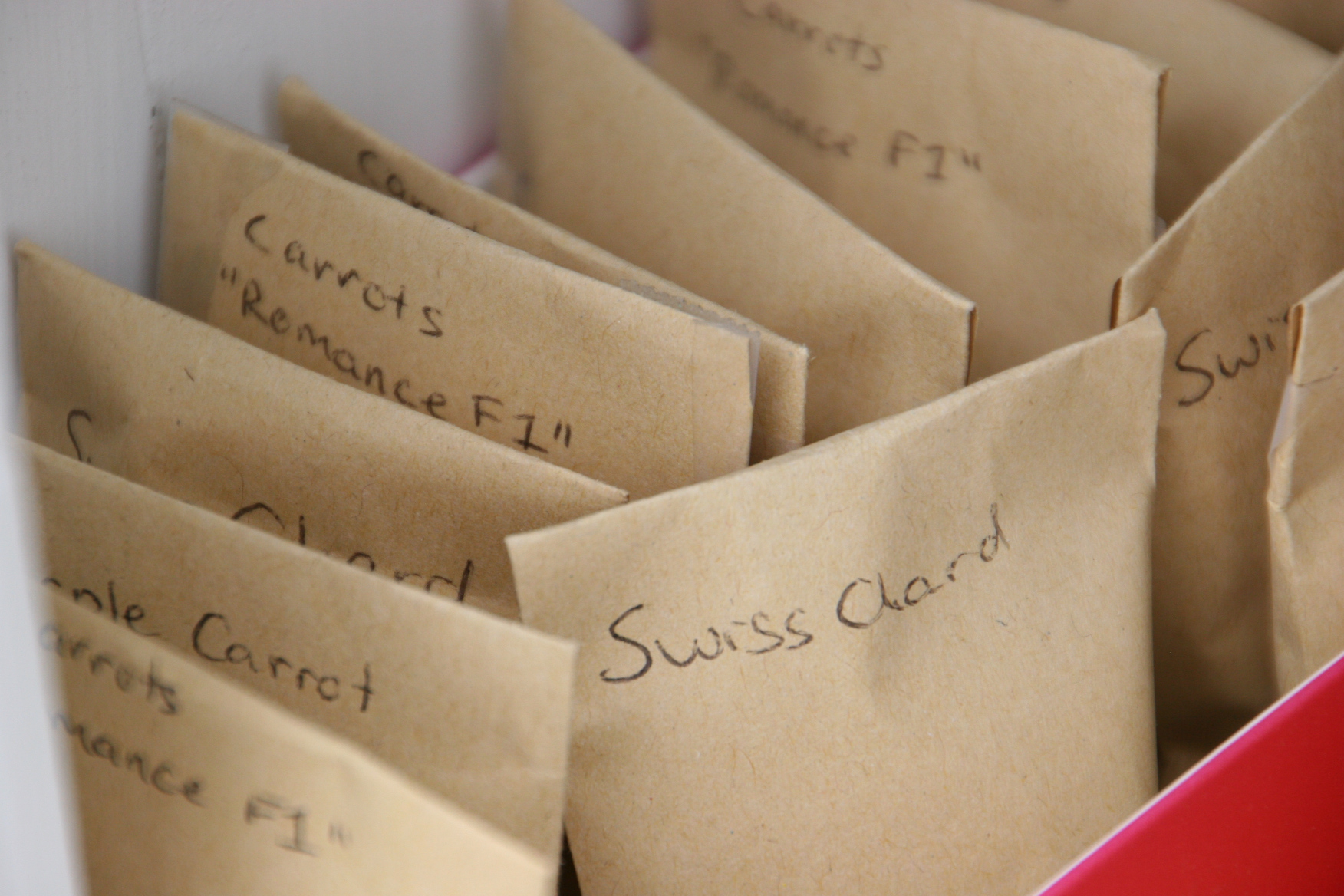
Seed packets inside the library.(Minnesota Prairie Roots copyrighted photo July 2022)
There’s a seed library, too, with packets of seeds tucked into a tiny red house similar to a Little Free Library.
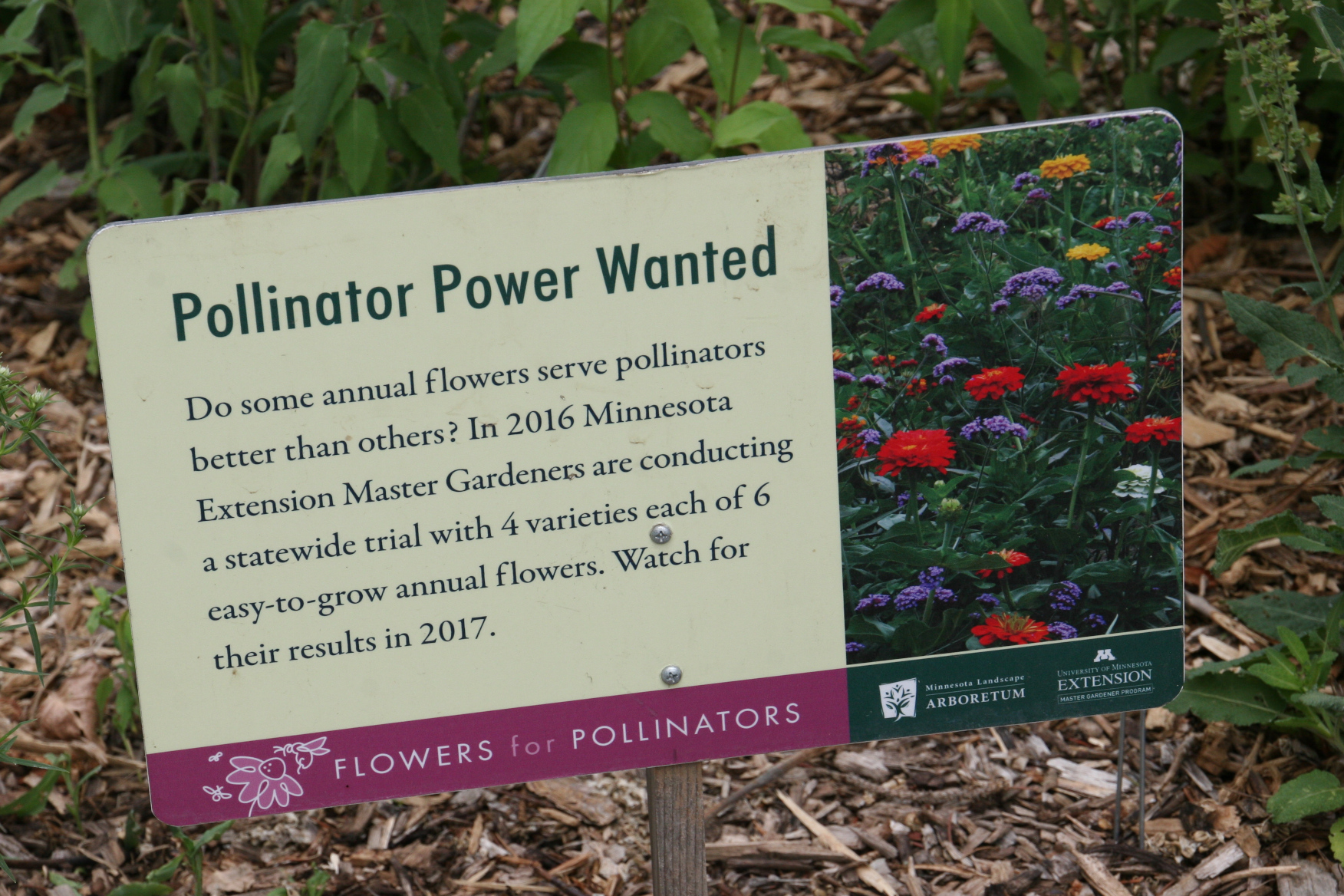
Informational signage in the gardens. (Minnesota Prairie Roots copyrighted photo July 2022)
Strategically-placed signs identify plants and provide information about gardening in general. This is, after all, a teaching garden.
The milkweed patch with the Rice County Historical Society in the background. (Minnesota Prairie Roots copyrighted photo July 2022)
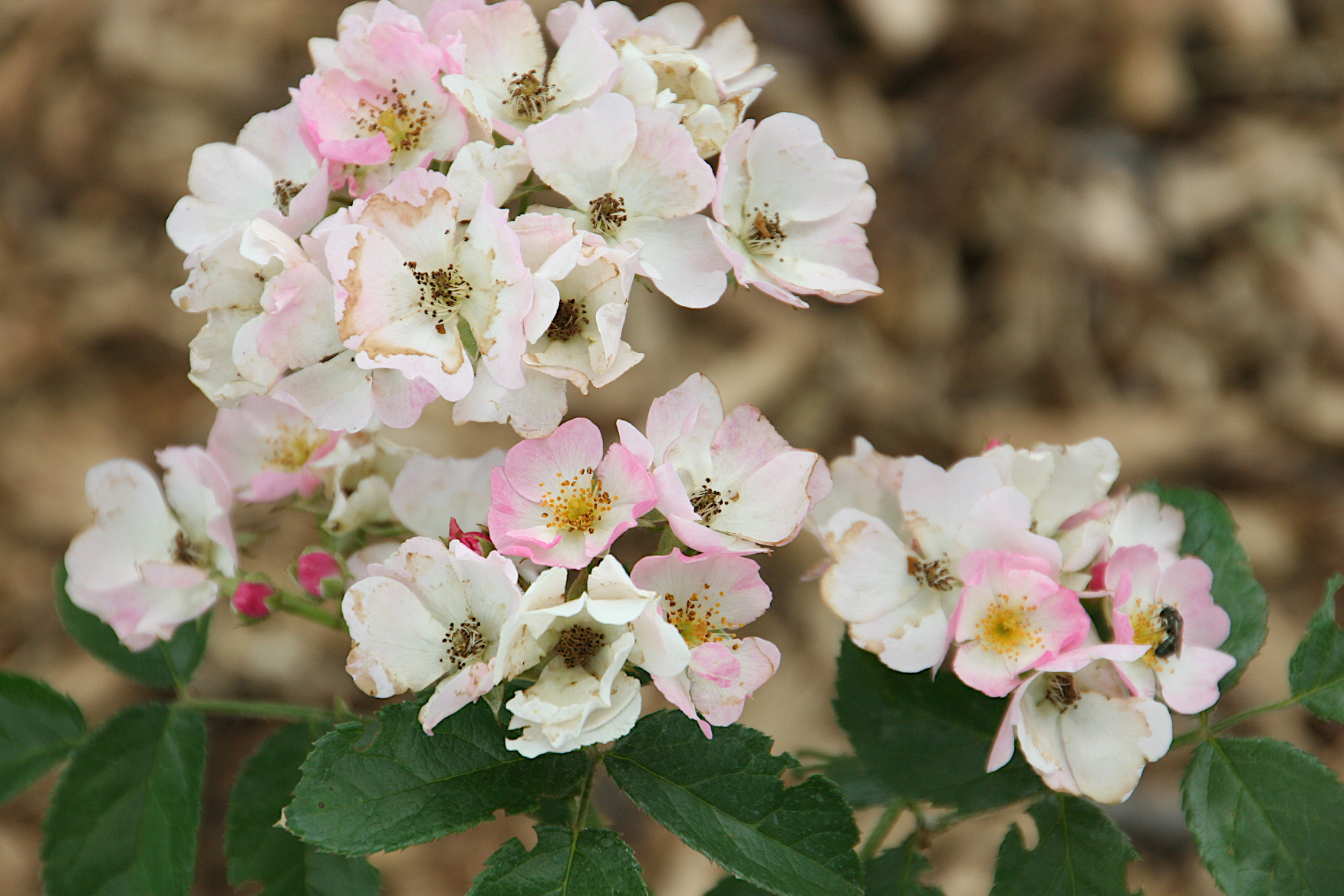
Roses. (Minnesota Prairie Roots copyrighted photo July 2022)
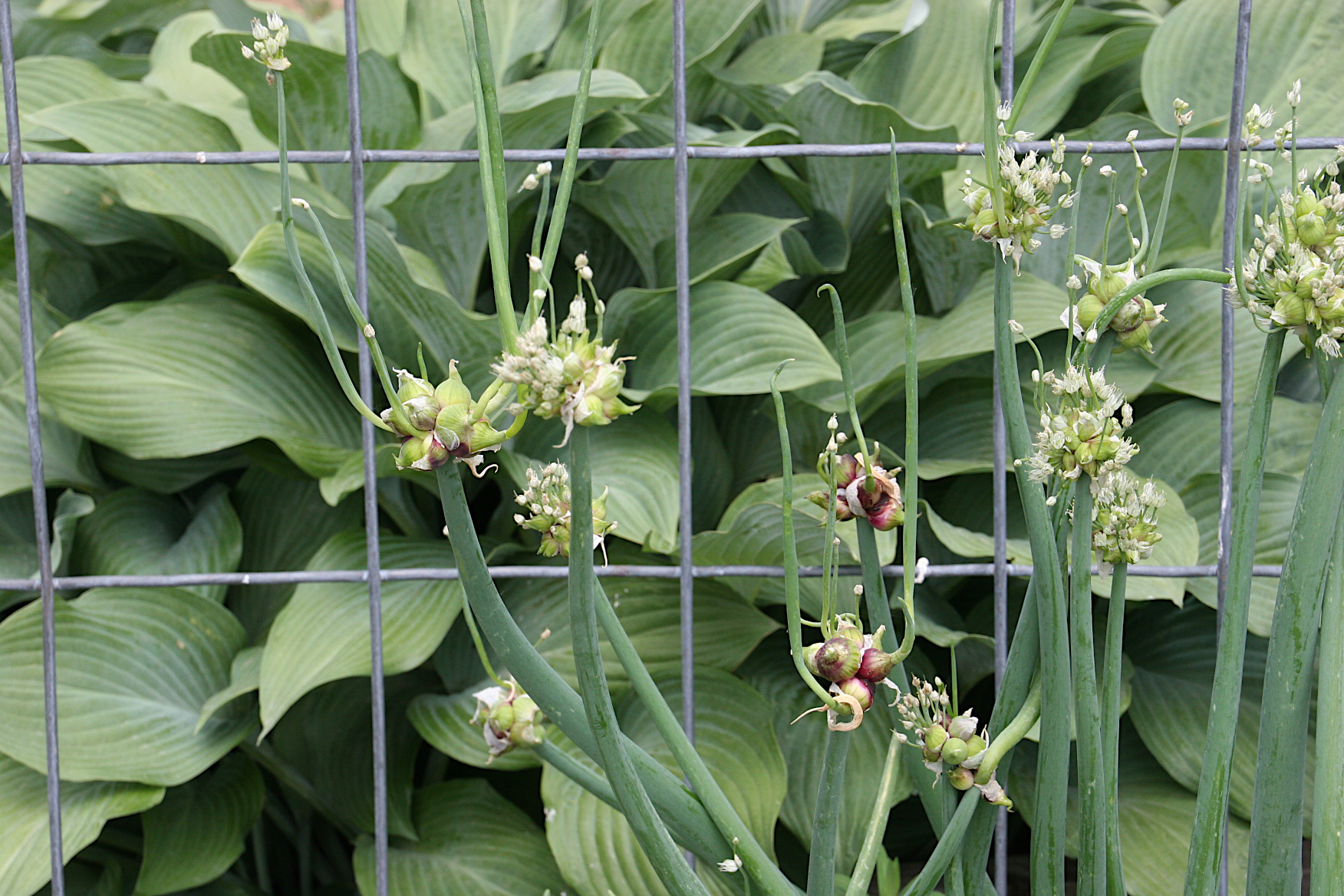
I believe these are onions gone to seed. (Minnesota Prairie Roots copyrighted photo July 2022)
But for me, these gardens proved primarily a spot to retreat for a bit, to immerse myself in a place that feels restful, soothing, calming. Connecting to nature, whether in a natural or cultivated setting always, always renews my spirit.
TELL ME: Have you found a similar oasis mini garden where you live?
Please check back for more photos from this lovely teaching garden in additional posts.
The clothespins I use are weathered by years of exposure to the Minnesota elements. (Minnesota Prairie Roots copyrighted file photo)
HANGING LAUNDRY OUTDOORS on the clothesline rates as an enjoyable activity for me, not a chore. Several times a week I unwind three lines, string them across the patio and clip laundry pulled from a clothes basket placed on the back steps. It’s pretty routine. I place heavier items in the full morning sun, sometimes shift clothing as the sun moves in the progression of the day.
A tabletop fountain on my patio features bird art. Birds sometimes drink water from the fountain. (Minnesota Prairie Roots copyrighted photo June 2022)
The rhythm of pulling, clipping, pulling, clipping, is calming, soothing. I notice the sky, the weather. Hear birds above the drone of traffic. Feel the sun on my face.
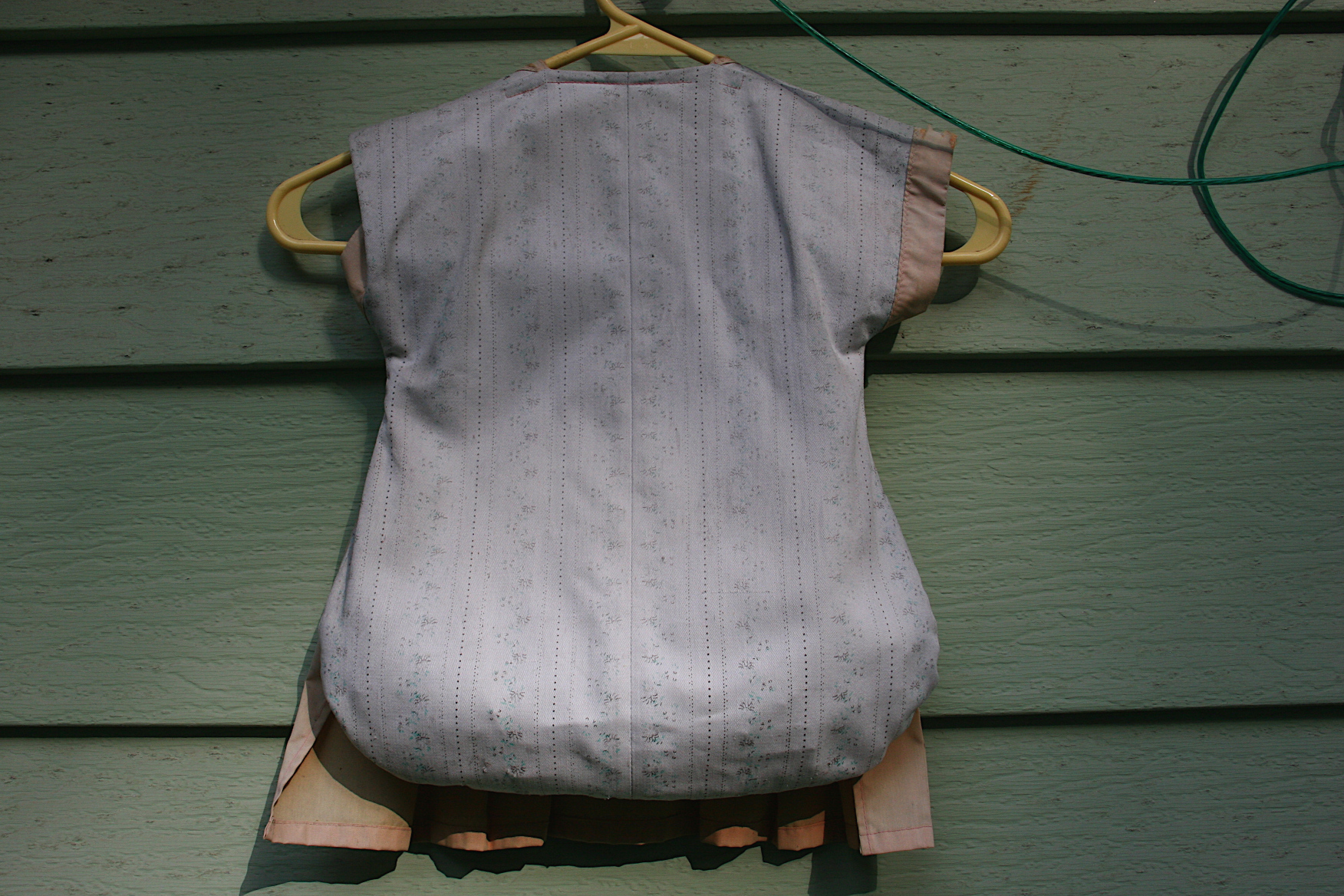
I hang my clothespin bag, open side in, to the side of the house. (Minnesota Prairie Roots copyrighted photo June 2022)
I feel, too, a connection to the past, to all those women who, without dryers, relied on the sun and the wind to dry their laundry. Women who were saving energy and money long before that became an environmental and financial concern.
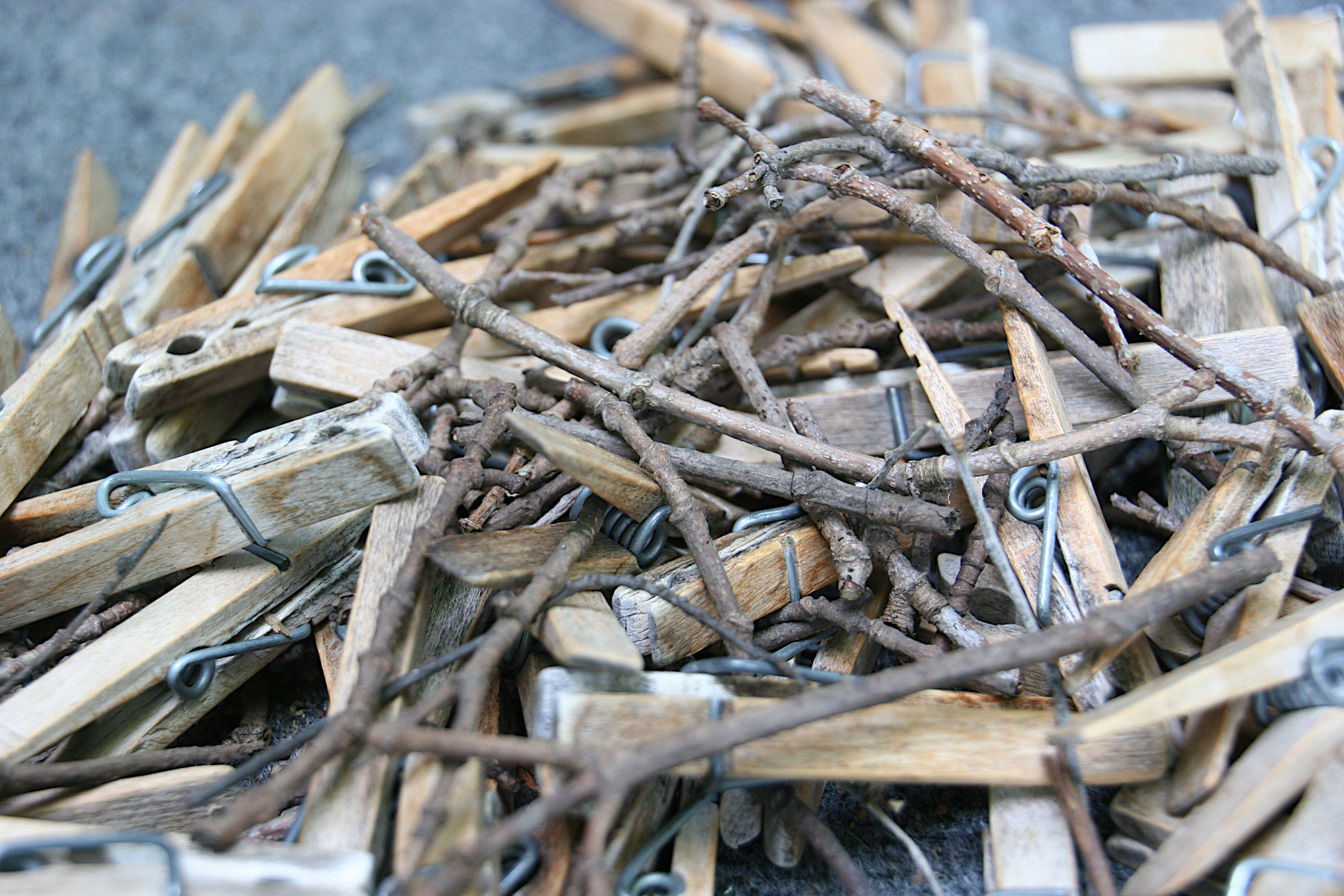
I discovered a jumble of clothespins and twigs inside the clothespin bag. (Minnesota Prairie Roots copyrighted photo June 2022)
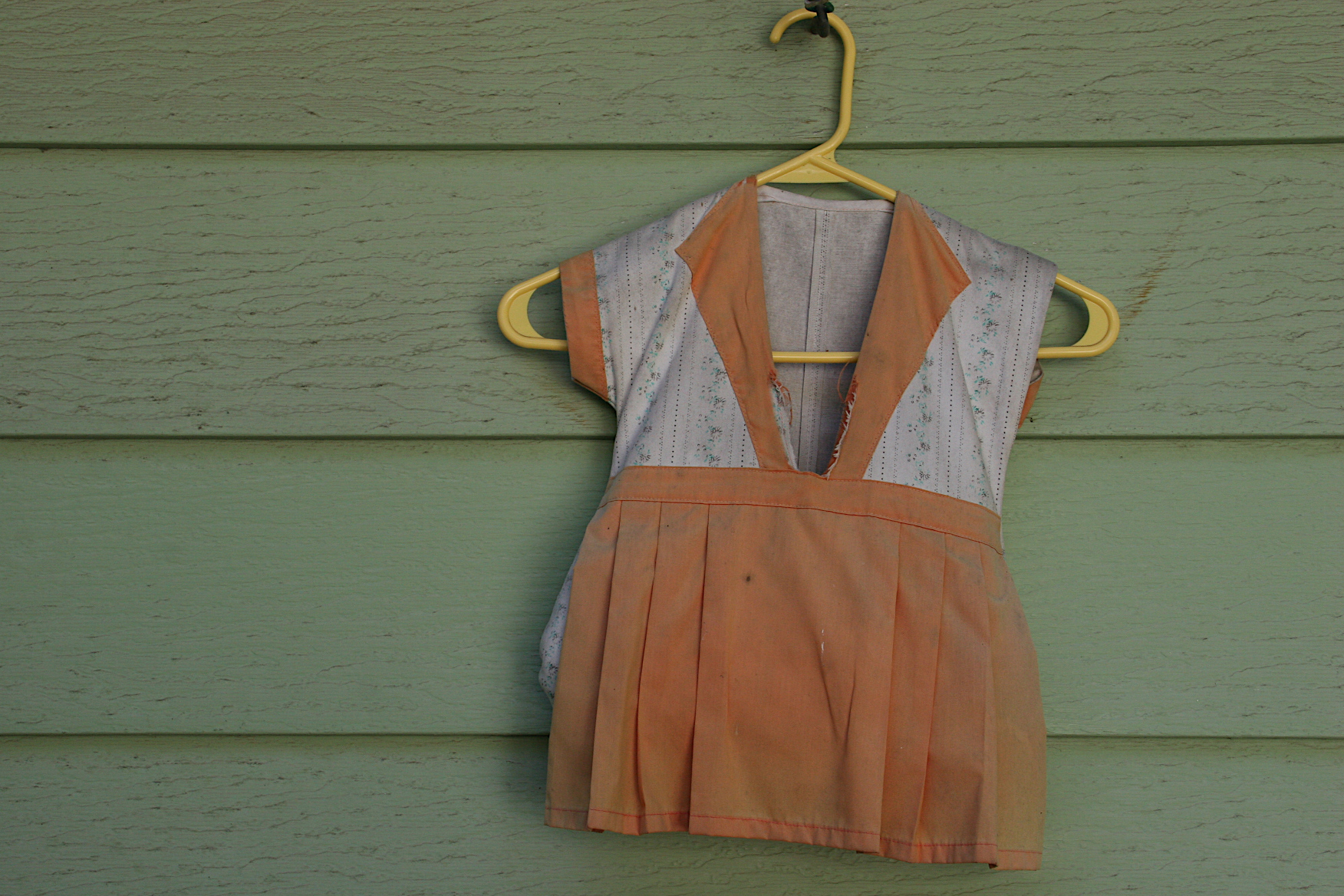
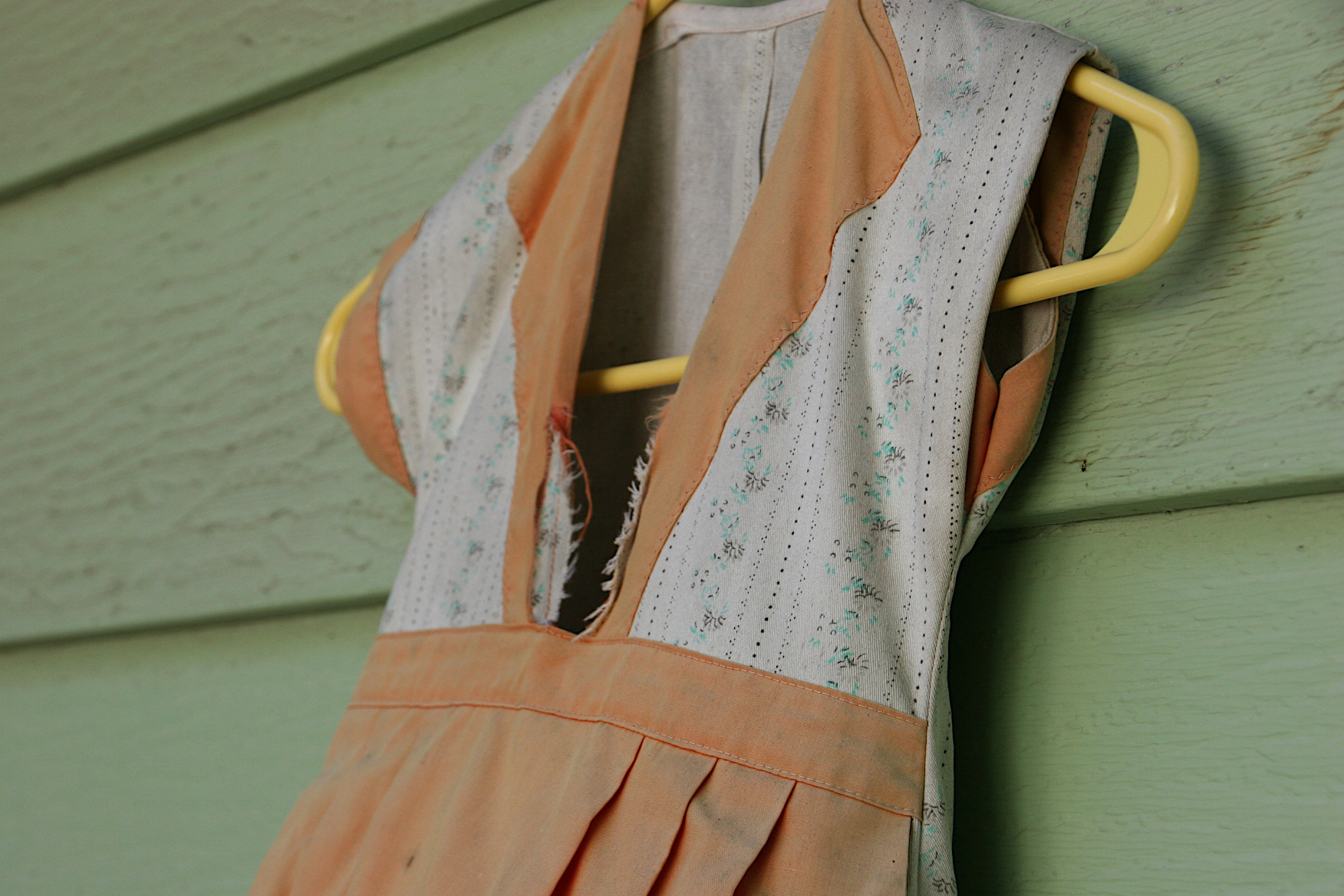
A few weeks back, my normal routine of pinning laundry onto the clotheslines proved anything but routine. When I reached into the faded dress-shaped clothespin bag crafted by my dad’s cousin Lindy, I felt something other than clothespins. I felt twigs. Lots and lots and lots of twigs.
I never leave the bag fully exposed when I’m not hanging laundry. (Minnesota Prairie Roots copyrighted photo June 2022)
I removed the bag, which I always hang with the opening placed inward against the side of the house, to investigate. I spilled the contents onto the back steps to reveal a pile of twigs, the makings of a bird’s nest. In less than two days, a bird had managed to somehow maneuver a stash of short sticks into the bag. How? I don’t know given the bag opened flat against the house. I do admire that bird’s determination and hard work.
I always keep the open side of the bag turned flush to the house, not exposed as shown here. (Minnesota Prairie Roots copyrighted photo June 2022)
But…I didn’t want a nest, broken eggs and baby birds among my clothespins. I felt some guilt in dismantling the under construction nest. Not enough, though, to cause me to refill the bag with clothespins and twigs and turn the bag to allow that bird easier access.
TELL ME: Would you have done the same as me, or allowed a bird to nest in a clothespin bag? No right or wrong answer here. Do you hang laundry outdoors?
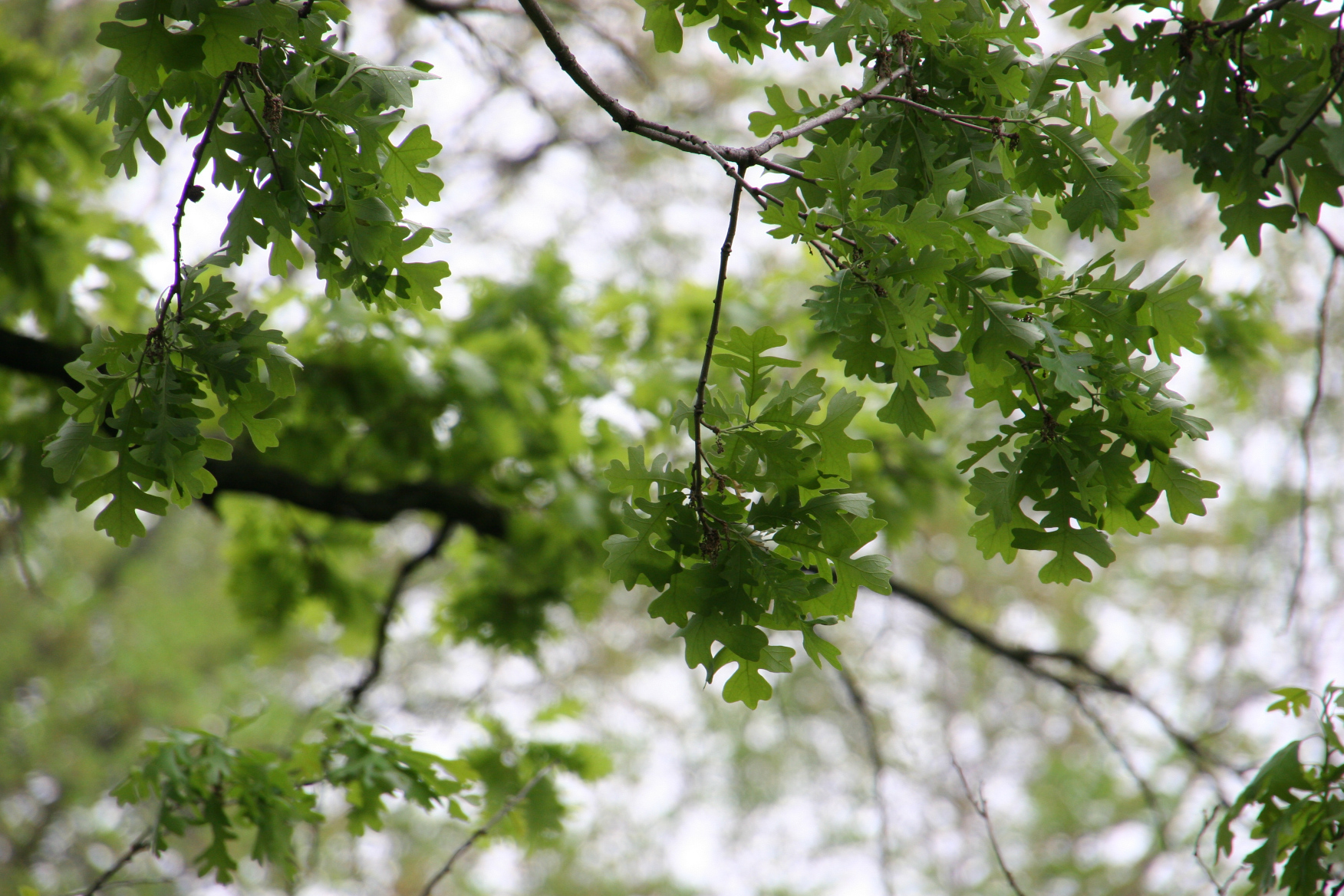
Acanopy of oak leaves. (Minnesota Prairie Roots copyrighted photo June 2022)
When life gets especially stressful, as it has thus far in 2022, enveloping myself in nature allows me to temporarily escape reality. Who doesn’t need a break? Focusing on the natural world rather than struggles and challenges brings a sense of peace, of calmness and sometimes clarity.
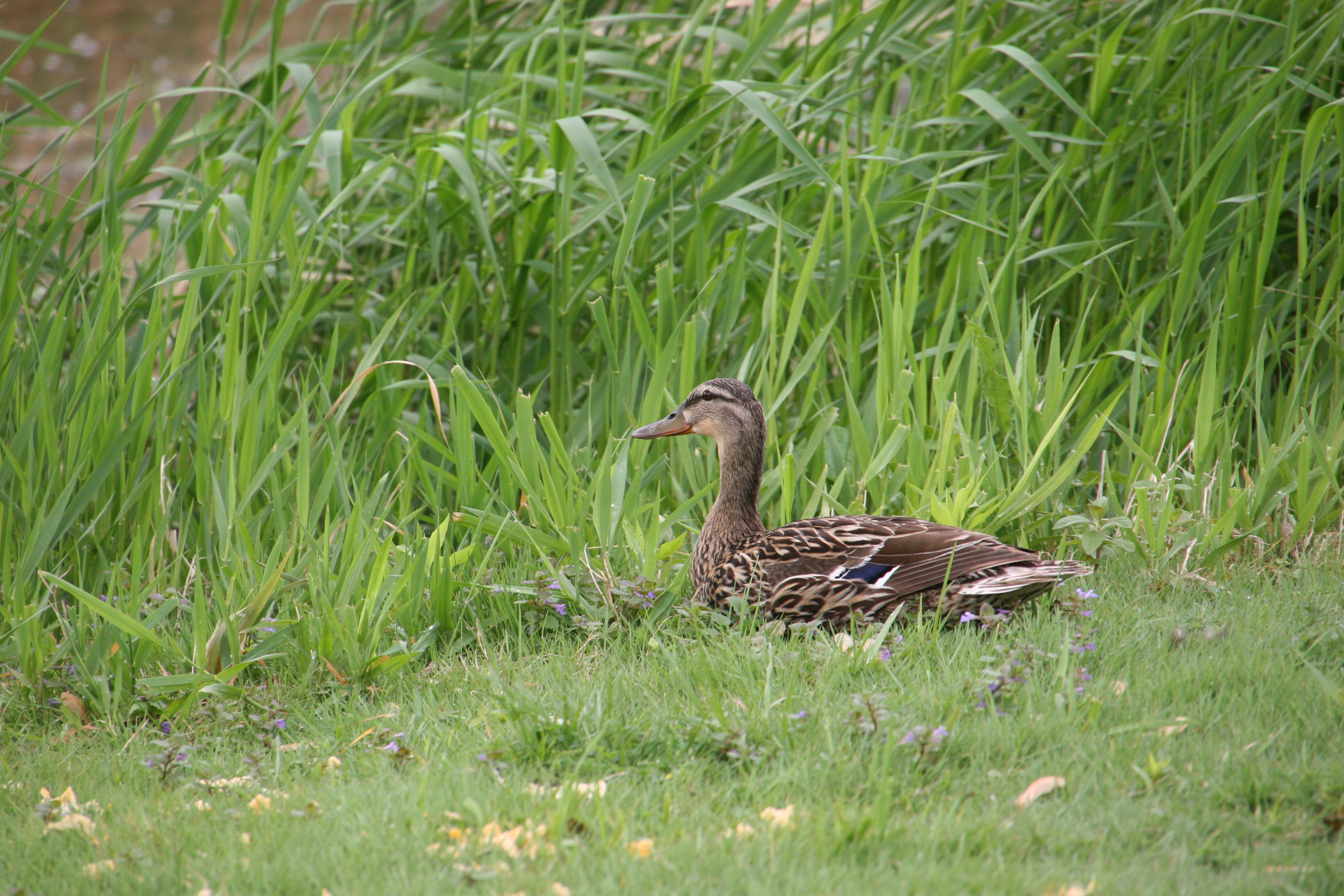
A mallard hen sits on the riverbank. (Minnesota Prairie Roots copyrighted photo June 2022)
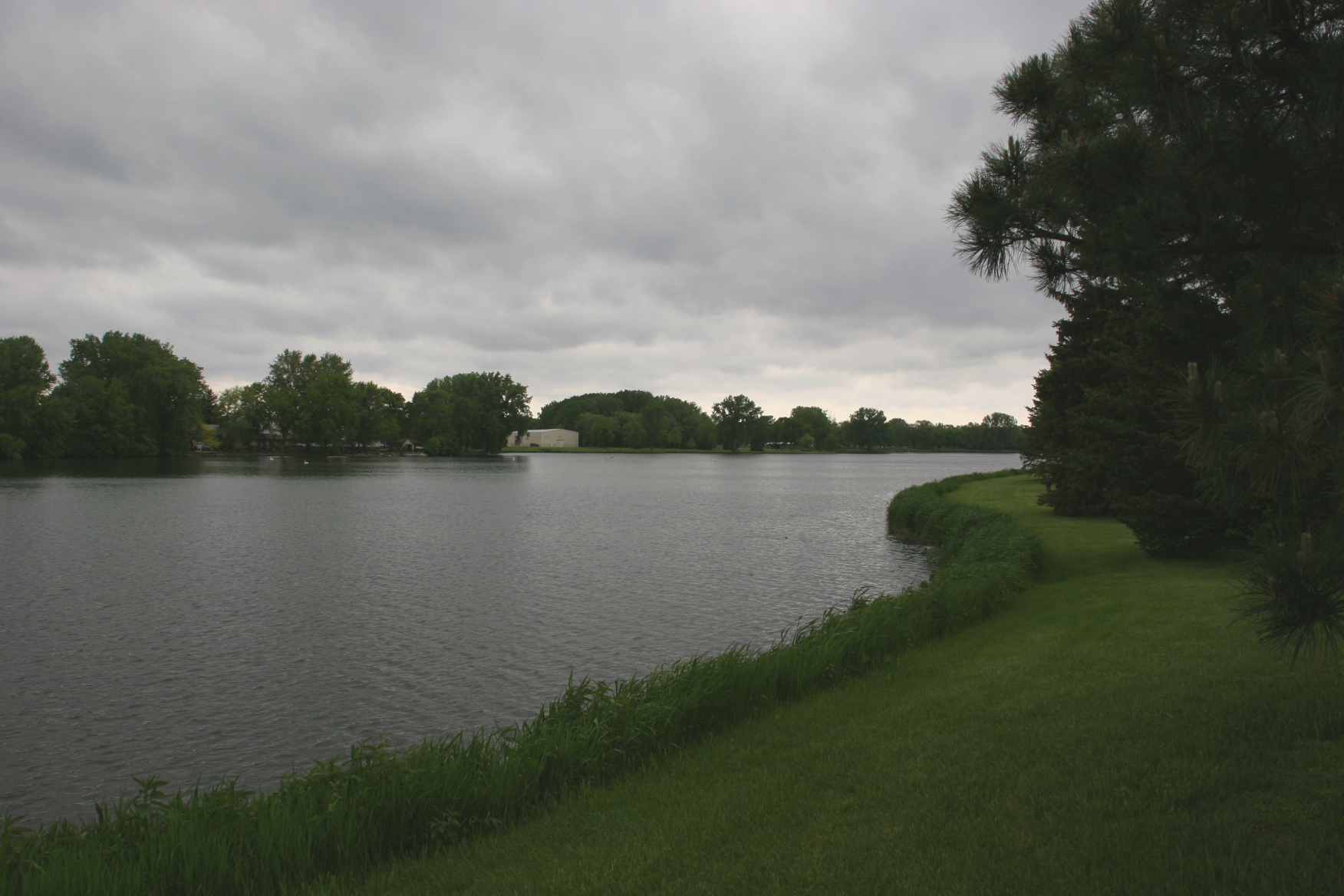
This sprawling park on Faribault’s north side is home to many waterfowl, drawn to the Cannon River. I never tire of watching them, whether in flight over the water, in the water or beside the water.
A view of the Cannon River in North Alexander Park. (Minnesota Prairie Roots copyrighted photo June 2022)
Their numbers seem down this year, perhaps due to avian influenza. Still enough ducks and geese meander the shoreline and trail to make me watch where I step.
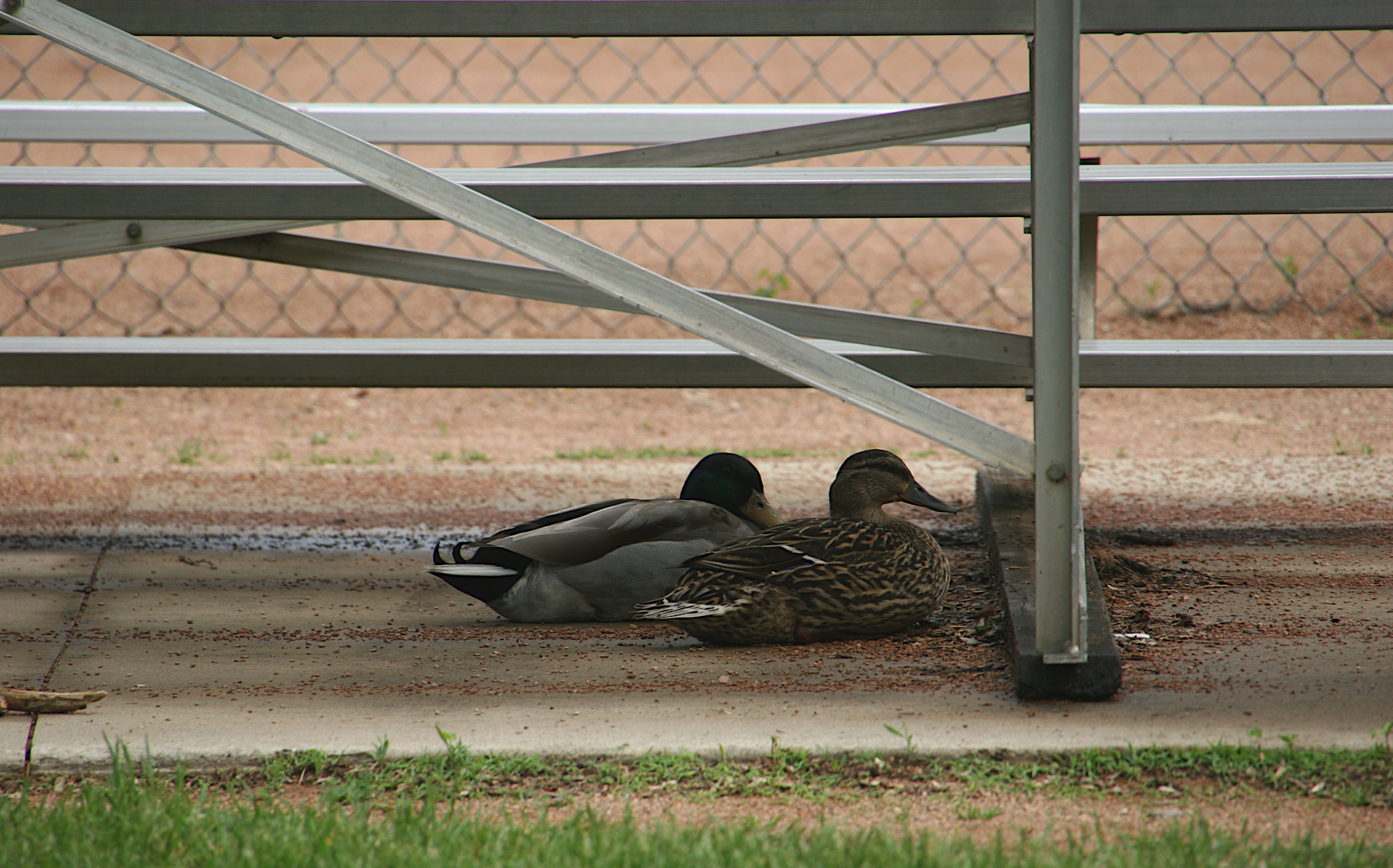
A pair of mallards huddle under the bleachers. (Minnesota Prairie Roots copyrighted photo June 2022)
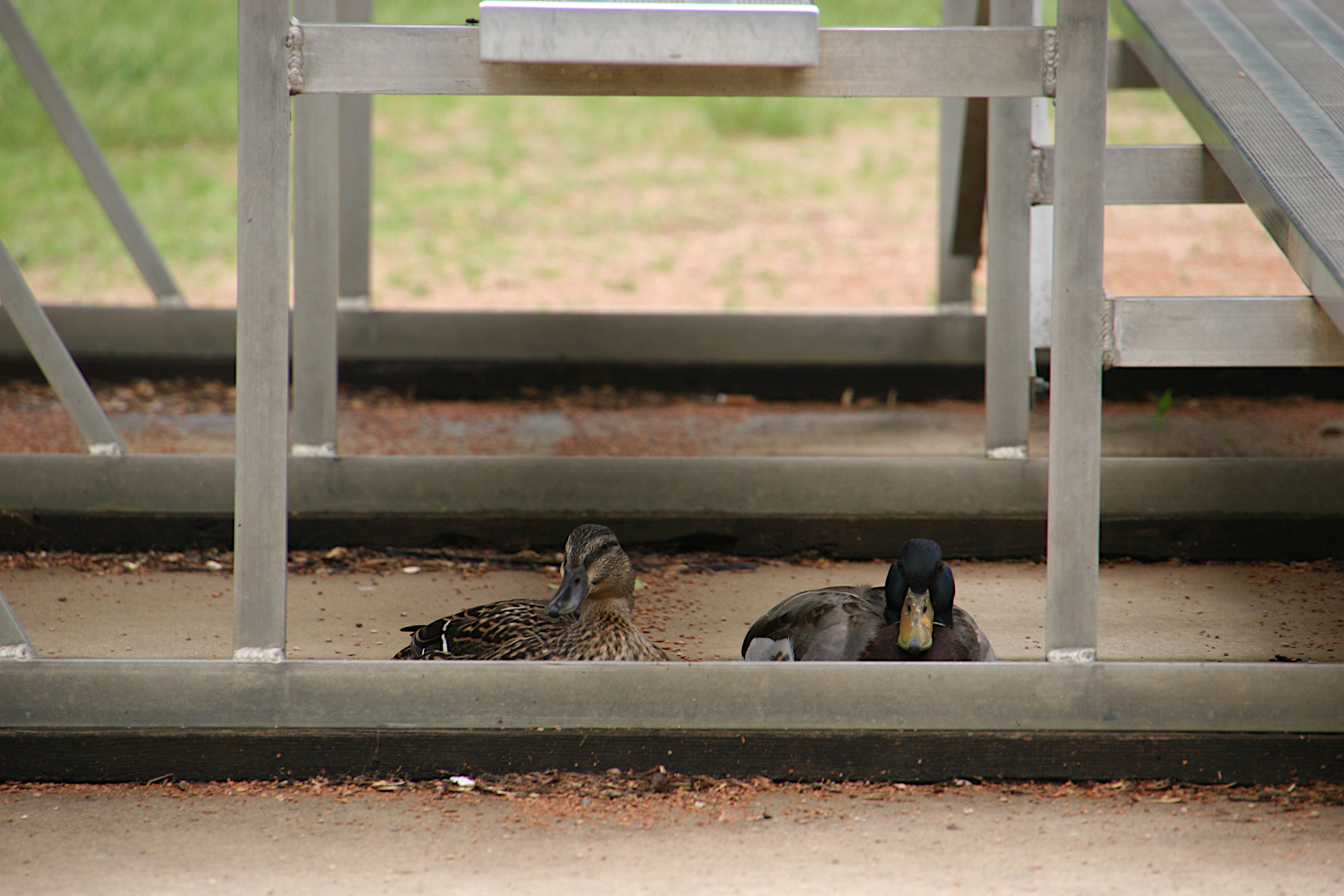
Up close under the bleachers. (Minnesota Prairie Roots copyrighted photo June 2022)
I even spotted a pair far from shore, under the bleachers at a ball field.
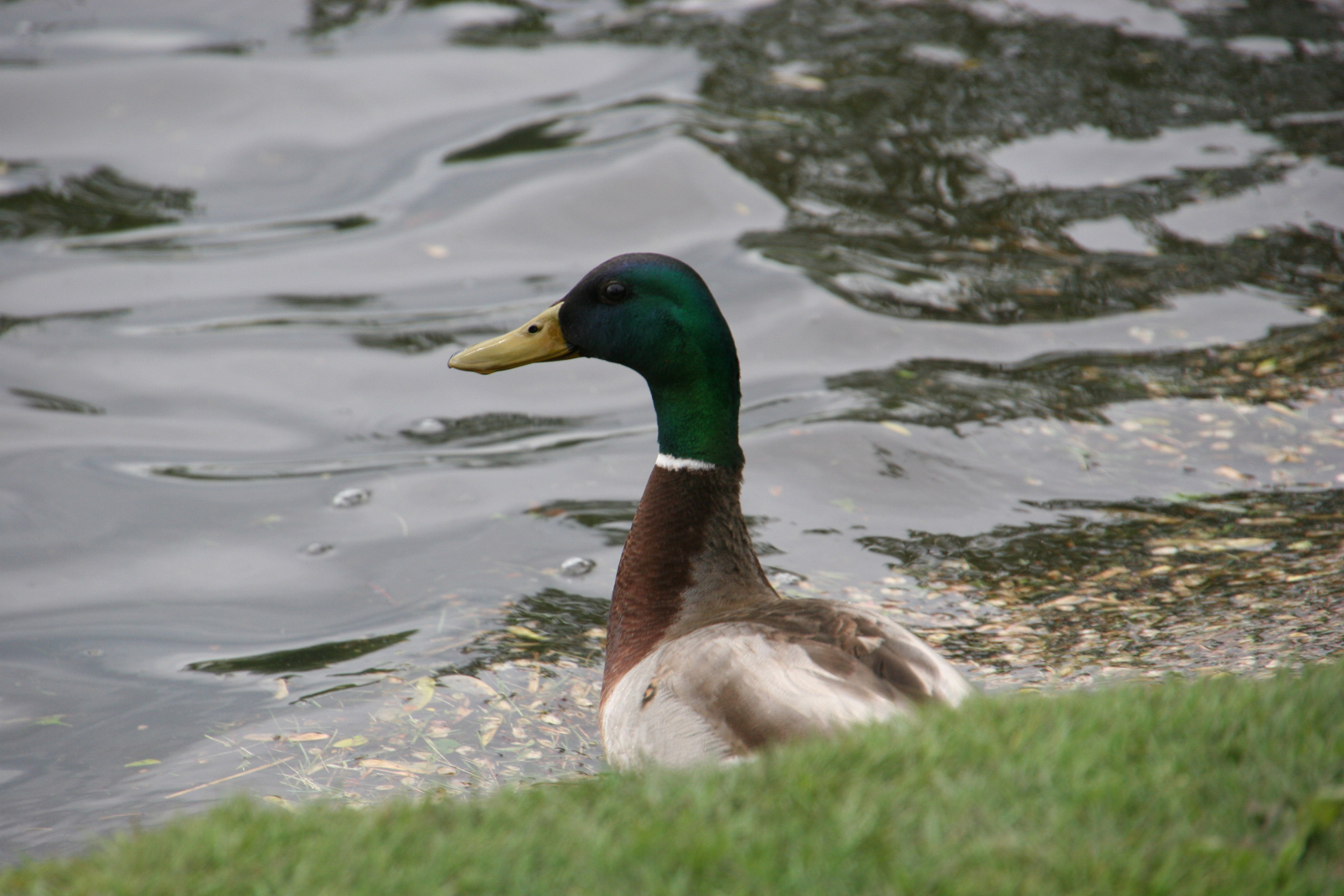
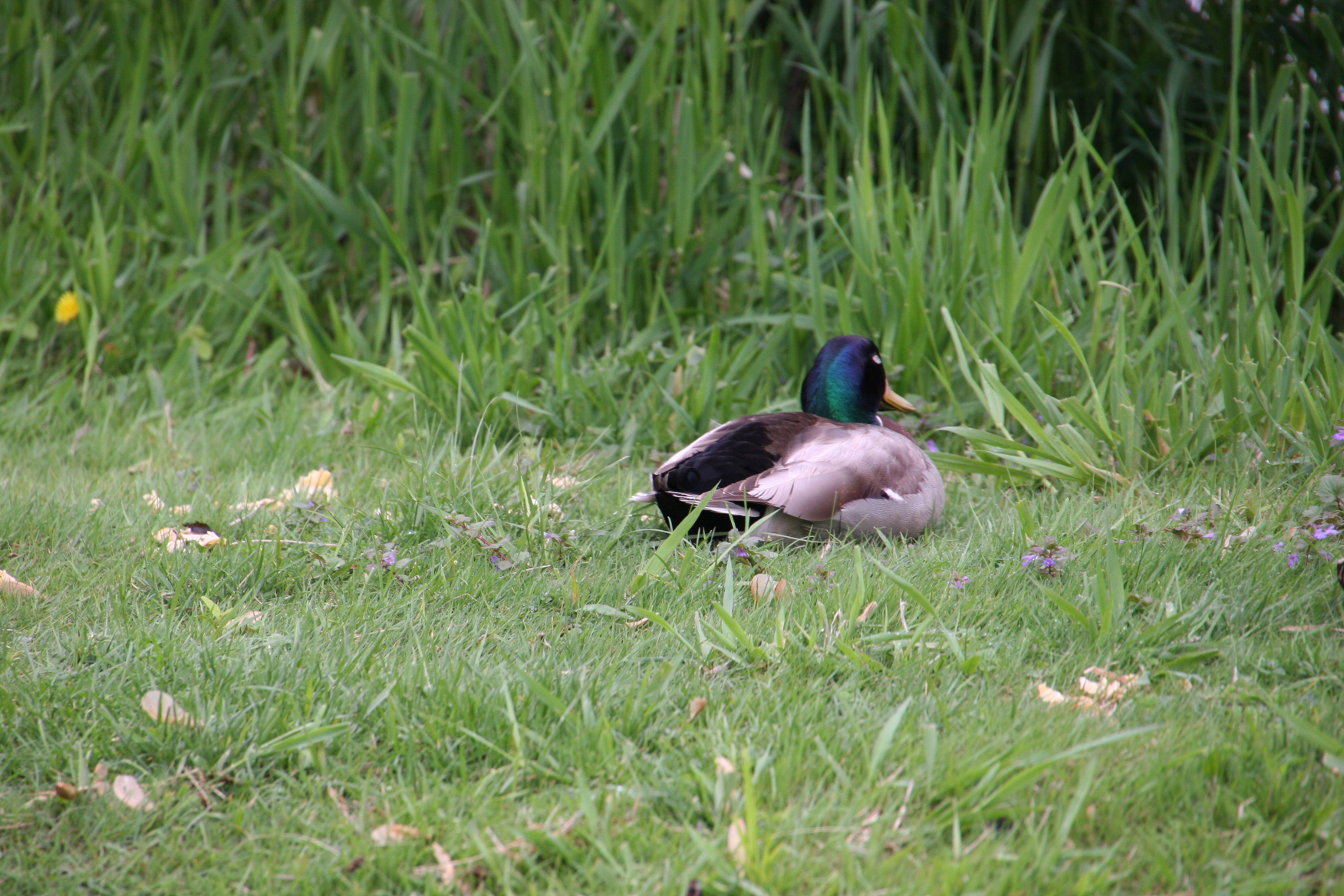
A mallard drake. (Minnesota Prairie Roots copyrighted photo June 2022)
While I’ve never been fond of winged anything up close, I certainly admire them (except bats) at a distance. Mallard drakes, with their iridescent green heads, practically shimmer with beauty. And the hens are lovely, too, in their mottled brown feathers.
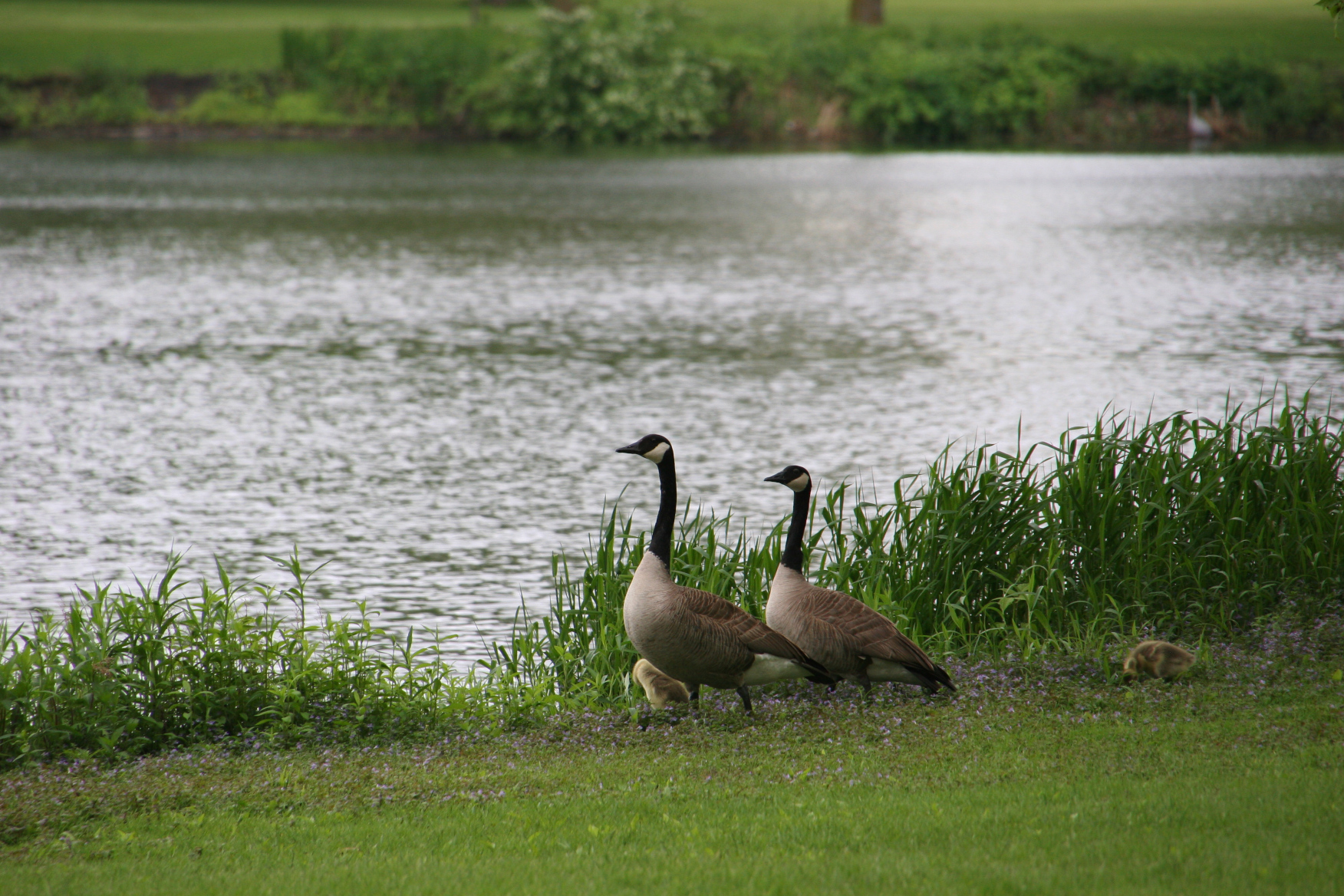
A family of geese photographed about a month ago along the river. (Minnesota Prairie Roots copyrighted photo June 2022)
In the spring, ducklings and goslings draw my motherly eye. There’s something about a baby.
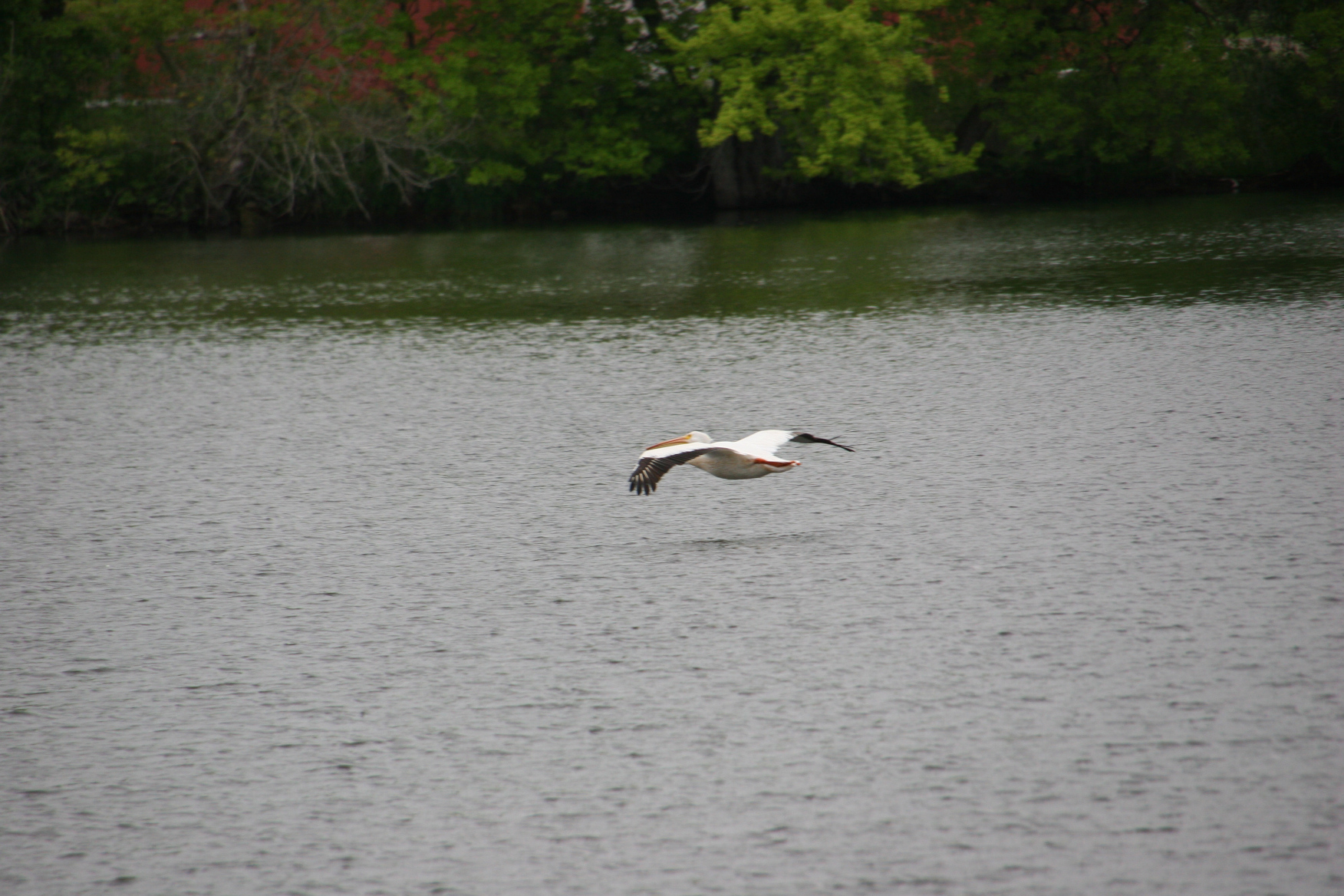
A pelican comes in for a landing atop the Cannon River. (Minnesota Prairie Roots copyrighted photo June 2022)
The Cannon River also attracts pelicans. And eagles. On a recent riverside walk, I saw an eagle trace the river, reverse course and settle low in a tree along the opposite shoreline. Too far away to photograph even with my zoom lens. It just sat there. I was hoping it would swoop down to grab a fish. But, when I left, the eagle still perched in that tree. Quiet. Still.
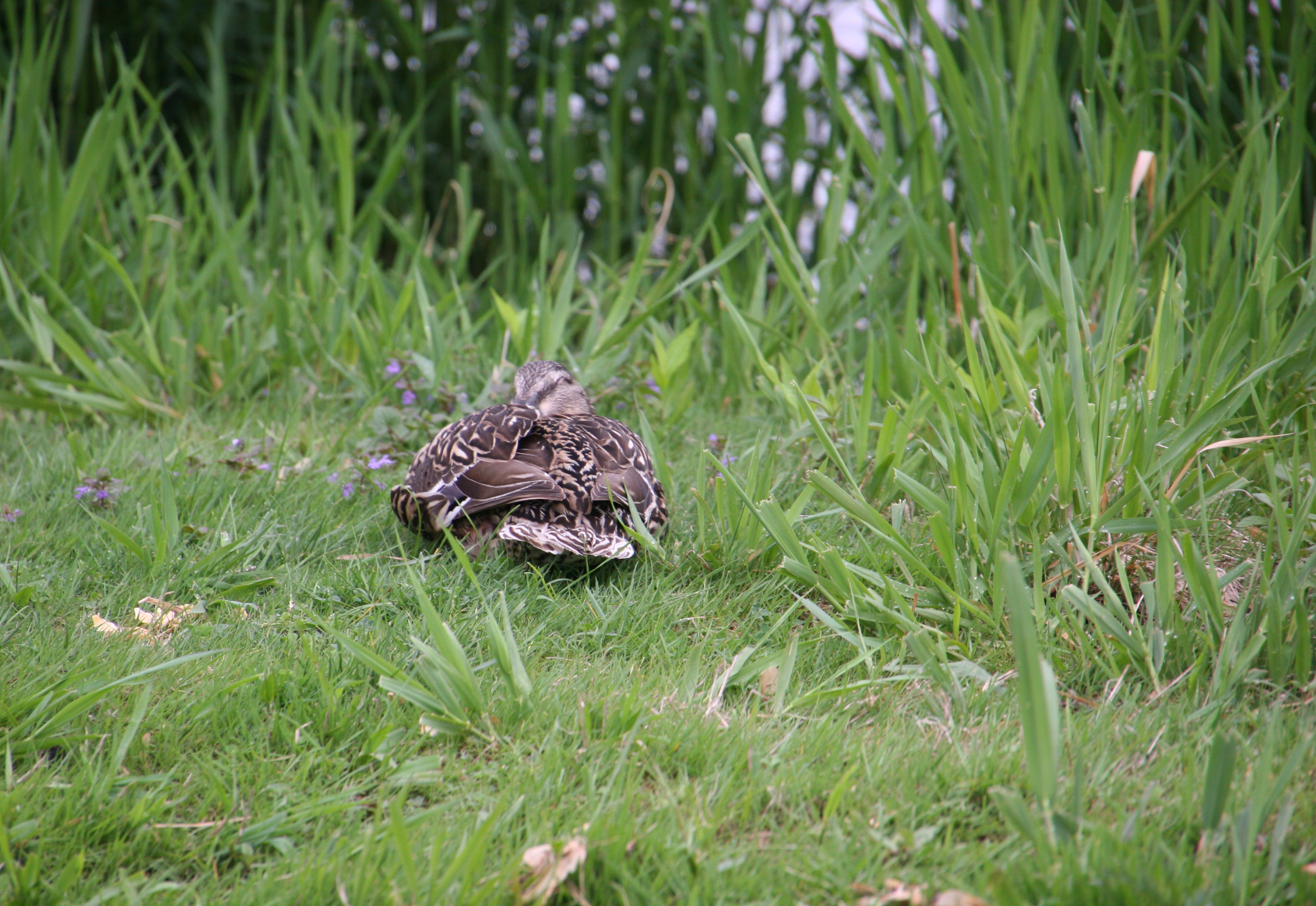
A snuggling mallard hen, defined by mottled feathers. (Minnesota Prairie Roots copyrighted photo June 2022)
There’s something to be learned from observing waterfowl. How they sit. How they glide. How they navigate wind and water. How they adapt.
So I will continue these riverside walks, immersing myself in nature, discovering the peace and quiet that comes from connecting with ducks and geese, pelicans and eagles at North Alexander Park in Faribault.
TELL ME: Do you escape into nature? If yes, where’s your favorite place to go and how does being in the natural world benefit you?
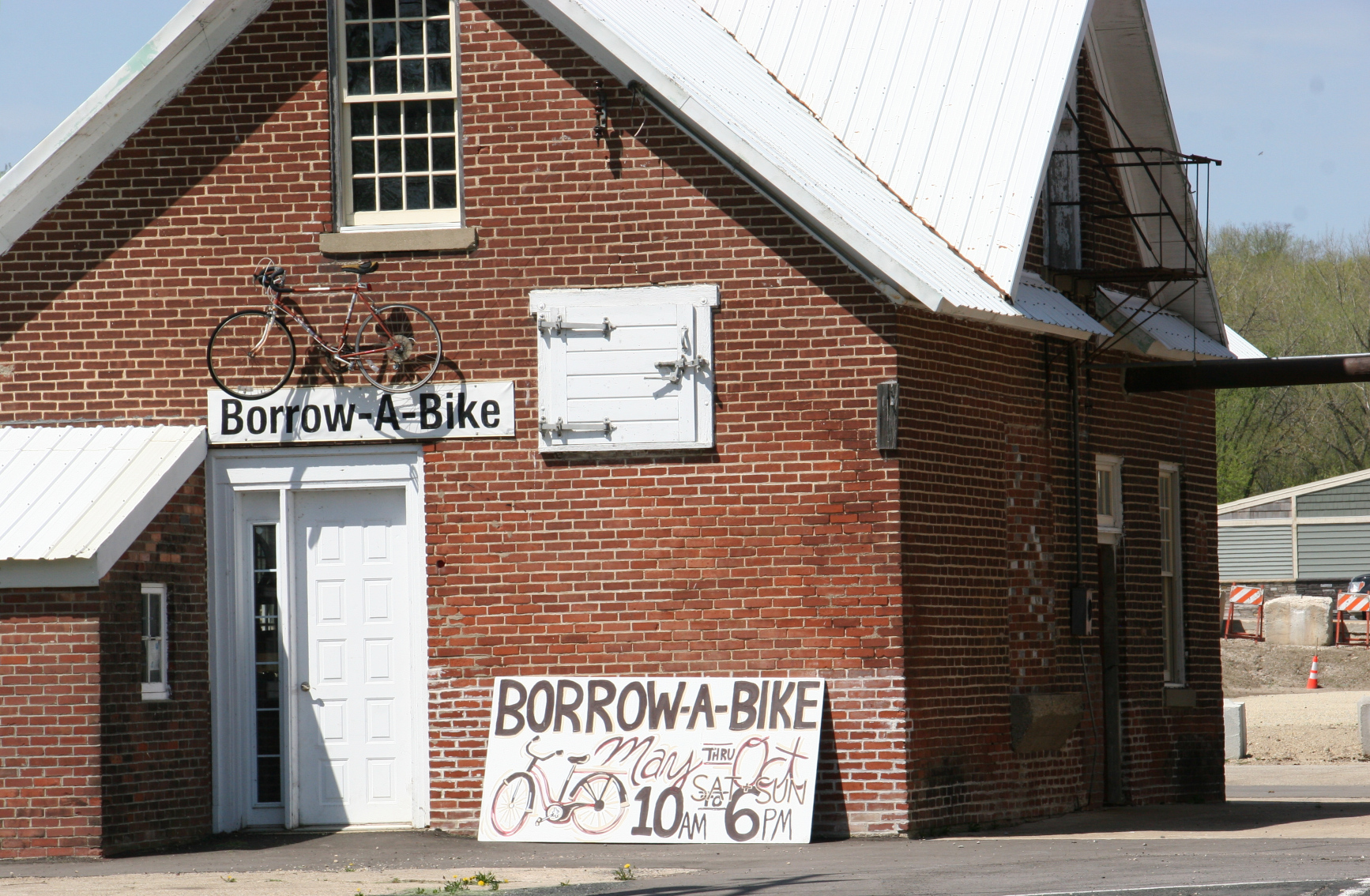
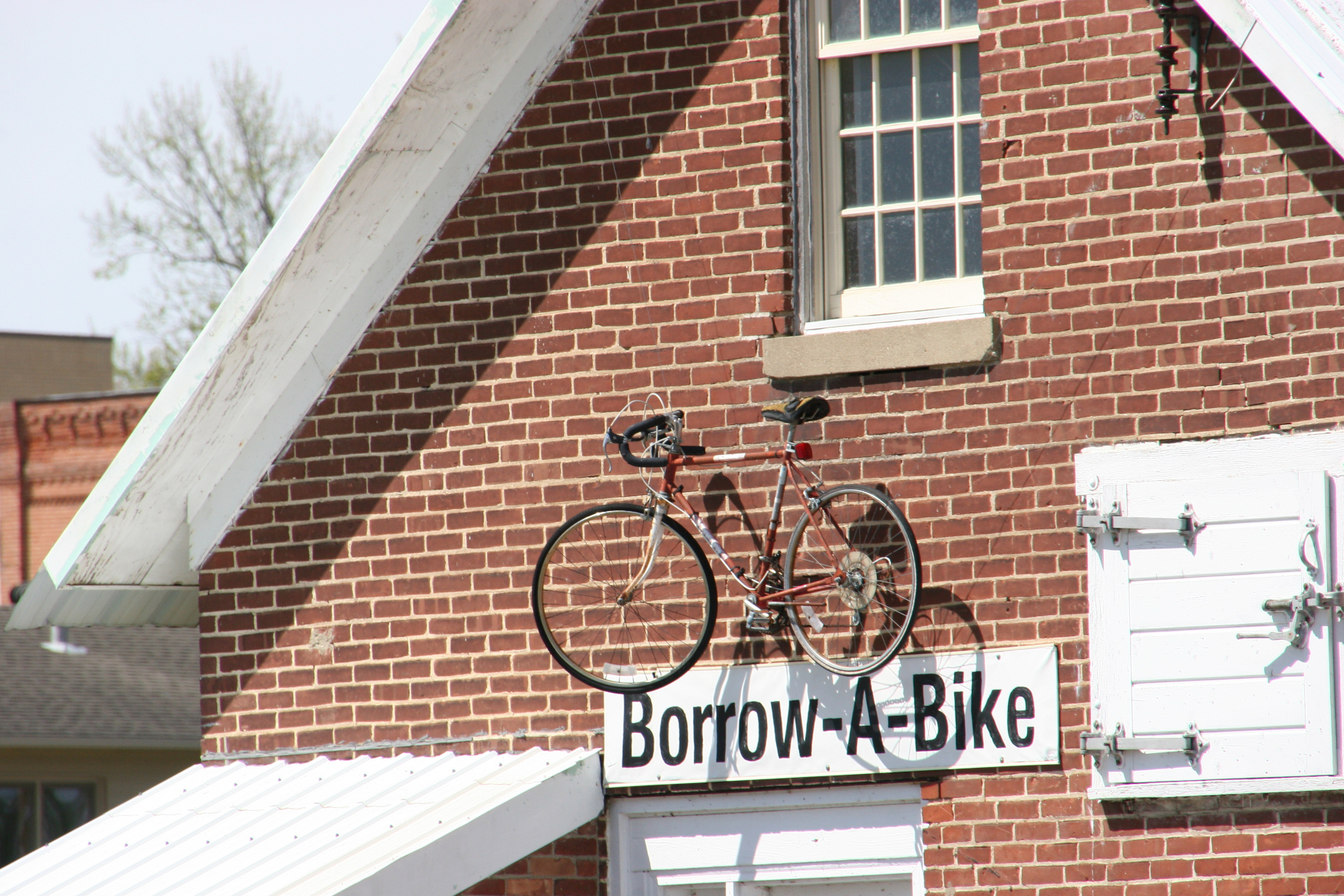
In Pine Island, site of the “Borrow-A-Bike program. (Minnesota Prairie Roots copyrighted photo May 2022)
NOTHING IN LIFE is free. How often have you heard or read that adage? I expect often enough to recognize that statement mostly always rings true.
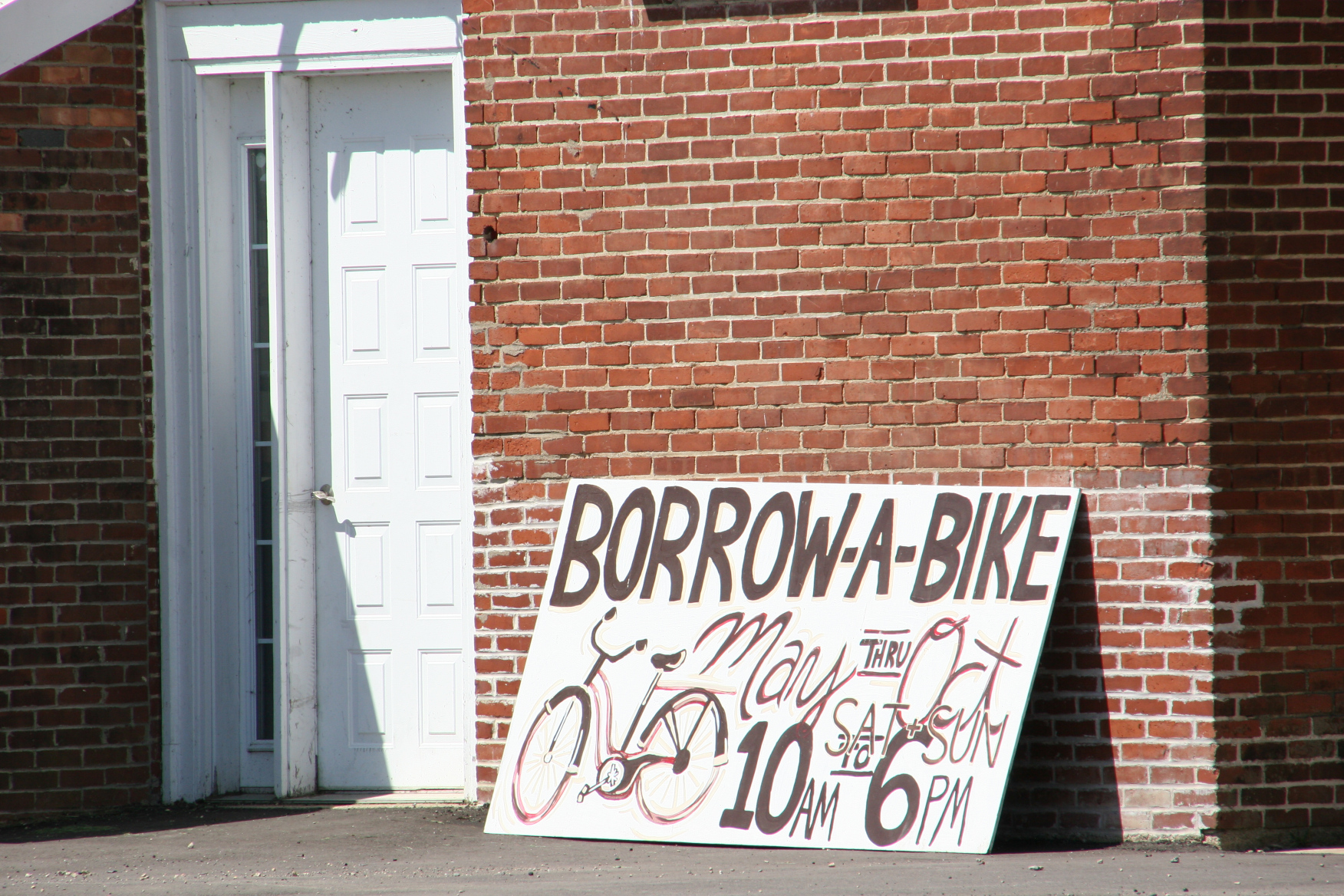
Details on borrowing a bike in Pine Island. (Minnesota Prairie Roots copyrighted photo May 2022)
But in the southeastern Minnesota community of Pine Island, located along busy US Highway 52 some 10 minutes north of Rochester, there is, indeed, something offered for free. And that’s the use of a bicycle to ride the Douglas State Trail.
The bike borrowing building is next to the parking lot at Trailhead City Park. (Minnesota Prairie Roots copyrighted photo May 2022)
When I recently photographed the Borrow-A-Bike signs posted on a lovely aged brick building by Pine Island Trailhead City Park, I assumed the bikes were available for rent, because, you know, nothing is free. Turns out I was wrong.
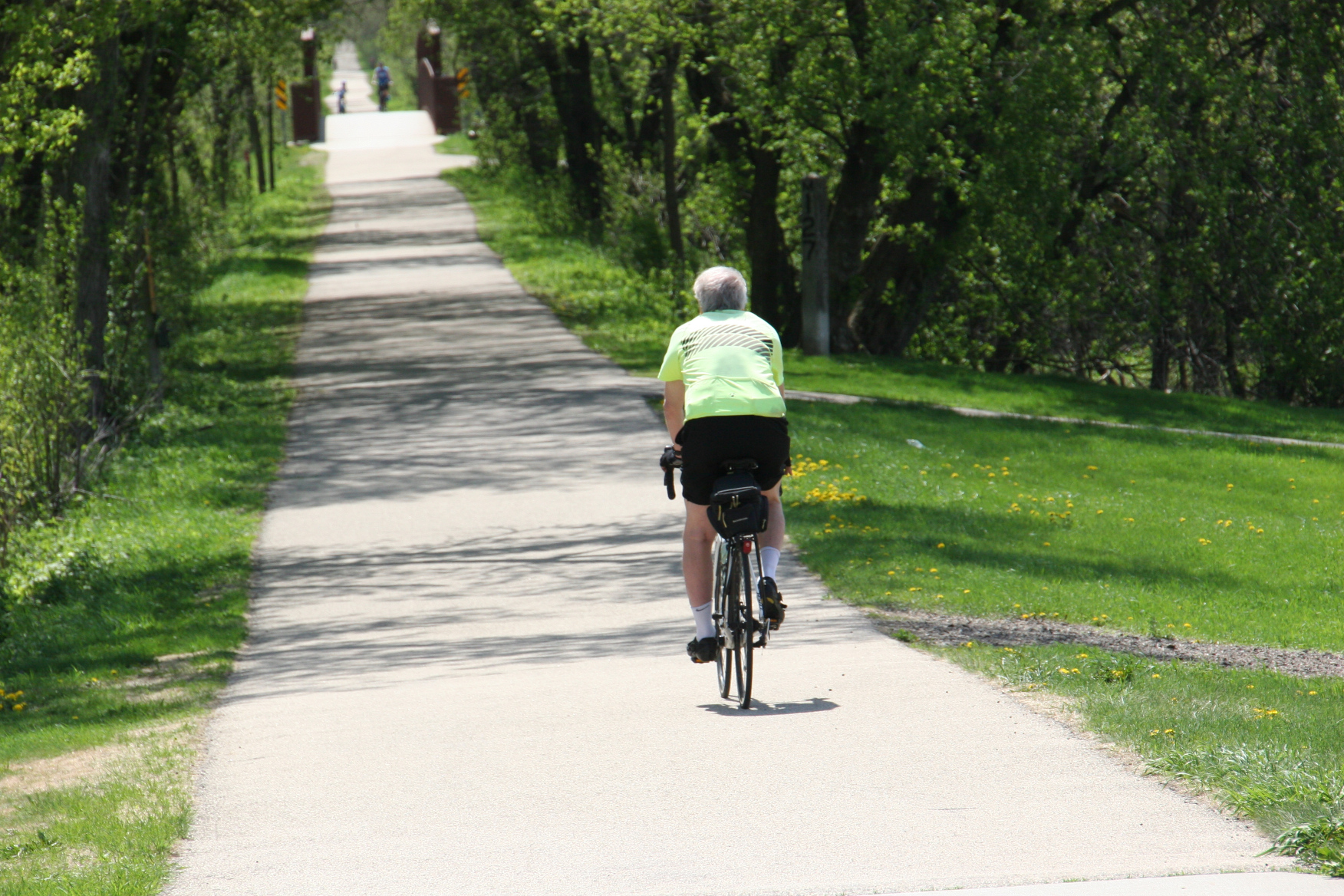
Biking the Douglas State Trail in Pine Island. (Minnesota Prairie Roots copyrighted photo May 2022)
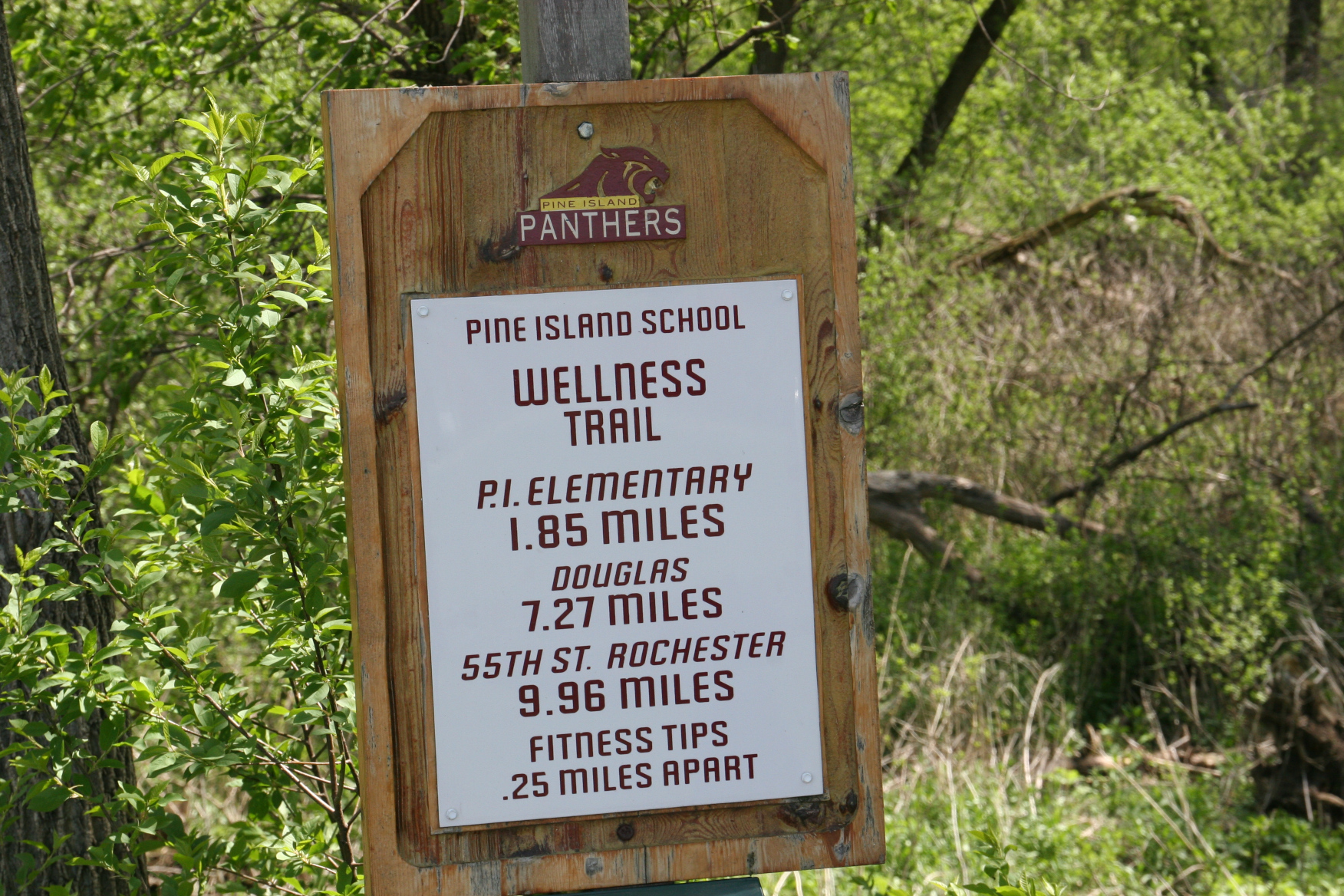
Since 2009, the city has offered locals and visitors free usage of a fleet of bikes to ride the 12.5-mile paved recreational trail between Pine Island and northwest Rochester. The 70 donated, restored and maintained bikes are available in all sizes and even include some tandem bikes. Note that kids need signed authorization by a parent or guardian to borrow a bike and adults must register, sign a waiver, and grab a helmet before checking out a bike.
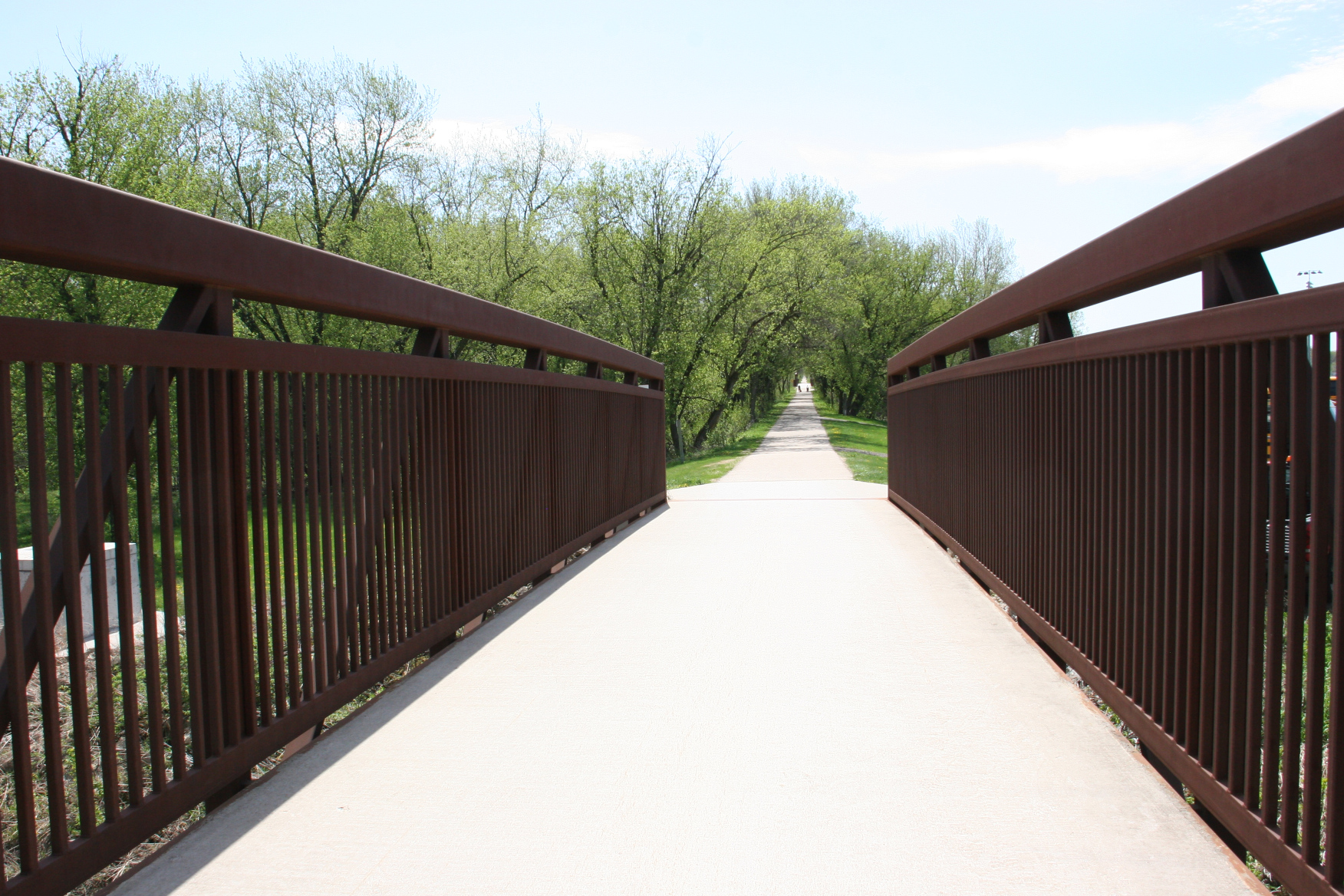
The trail bridge over the Zumbro River leads into the woods. (Minnesota Prairie Roots copyrighted photo May 2022)
Bikes are available from 10 am – 6 pm Saturdays and Sundays, May – October, or by appointment weekdays.
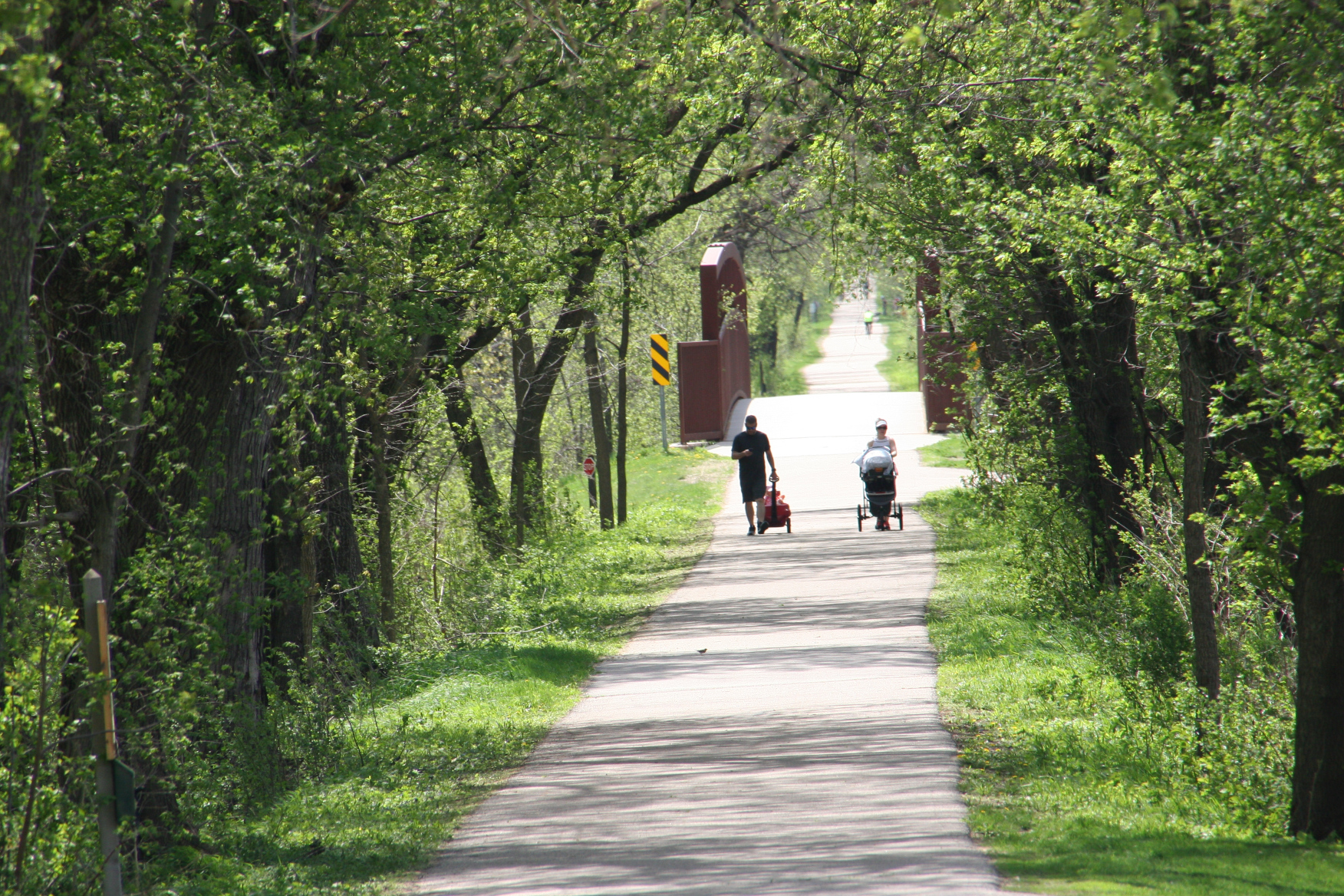
A family walks the Douglas State Trail in Pine Island. (Minnesota Prairie Roots copyrighted photo May 2022)
What a great idea to not only draw visitors to Pine Island, but also to encourage people to get outdoors, exercise and explore rural Minnesota.
Douglas State Trail signage in Pine Island. (Minnesota Prairie Roots copyrighted photo May 2022)
The trail follows an abandoned railroad line past wooded areas, open countryside and along the Zumbro River with a half-way stopping point in the unincorporated community of Douglas in Olmsted County. Next trip to the area, I need to find Douglas.
The Pine Island Cheese Company name honors the community’s history in cheese and butter-making. The building is available for event rental from the city. (Minnesota Prairie Roots copyrighted photo May 2022)
This Borrow-A-Bike program is especially needed now with ever-rising gas prices and out-of-control inflation. Couples and families are seeking low-cost ways to enjoy time together and this offers that. Not everyone owns a bike. Not everyone can transport a bike/bikes. This program makes biking easy and accessible to all. Plus, it gets people outdoors and away from screens.
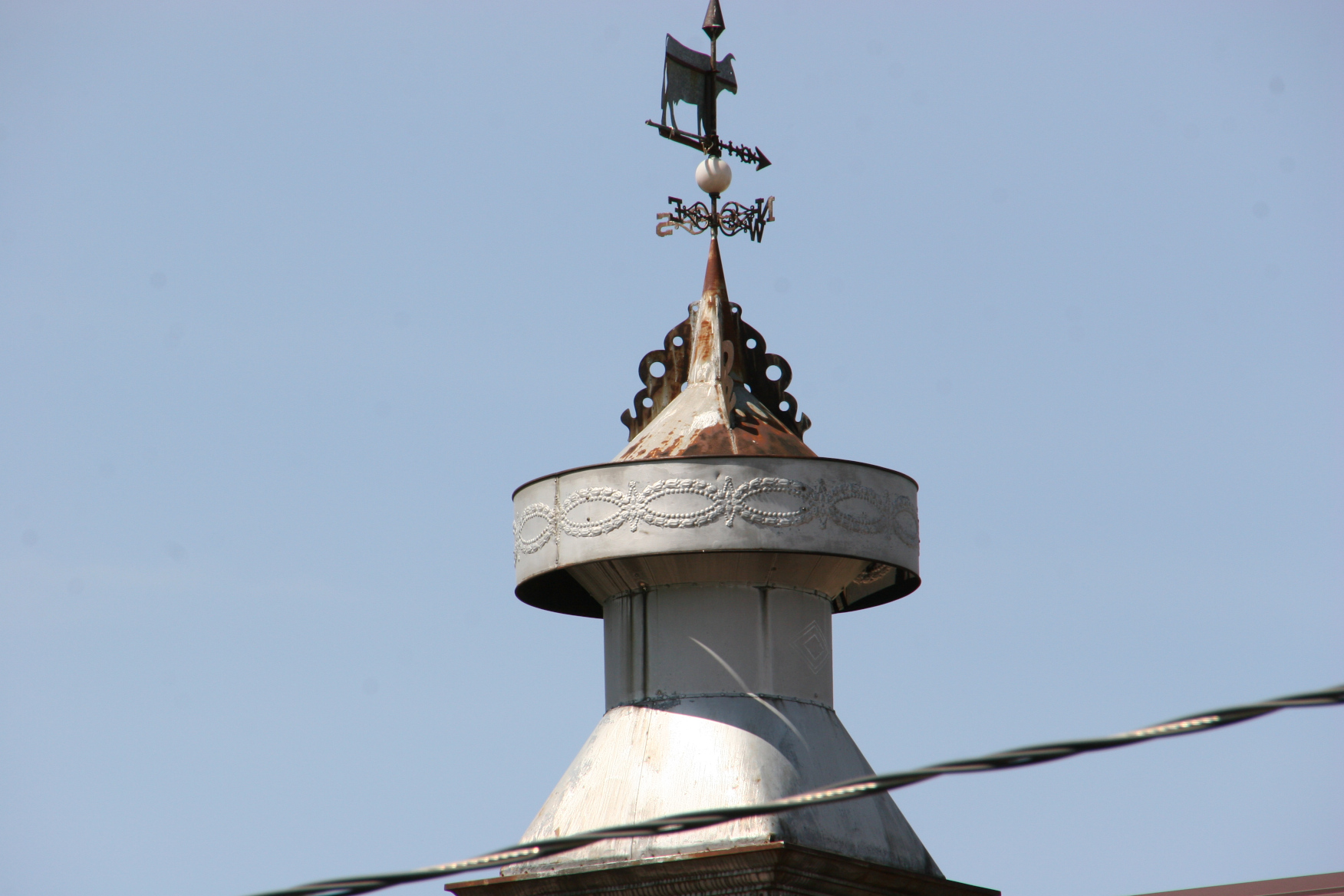
One of two cupolas atop the cheese company building in Pine Island. (Minnesota Prairie Roots copyrighted photo May 2022)
Nothing in life is free…until you find something that is—like Borrow-A-Bike in Pine Island.
Geese atop a nest at River Bend. (Minnesota Prairie Roots copyrighted photo May 15, 2022)
Opportunities abound to observe newly-hatched spring waterfowl in my Minnesota community of Faribault, where two rivers run through—the Straight and the Cannon—and assorted ponds dot the landscape.
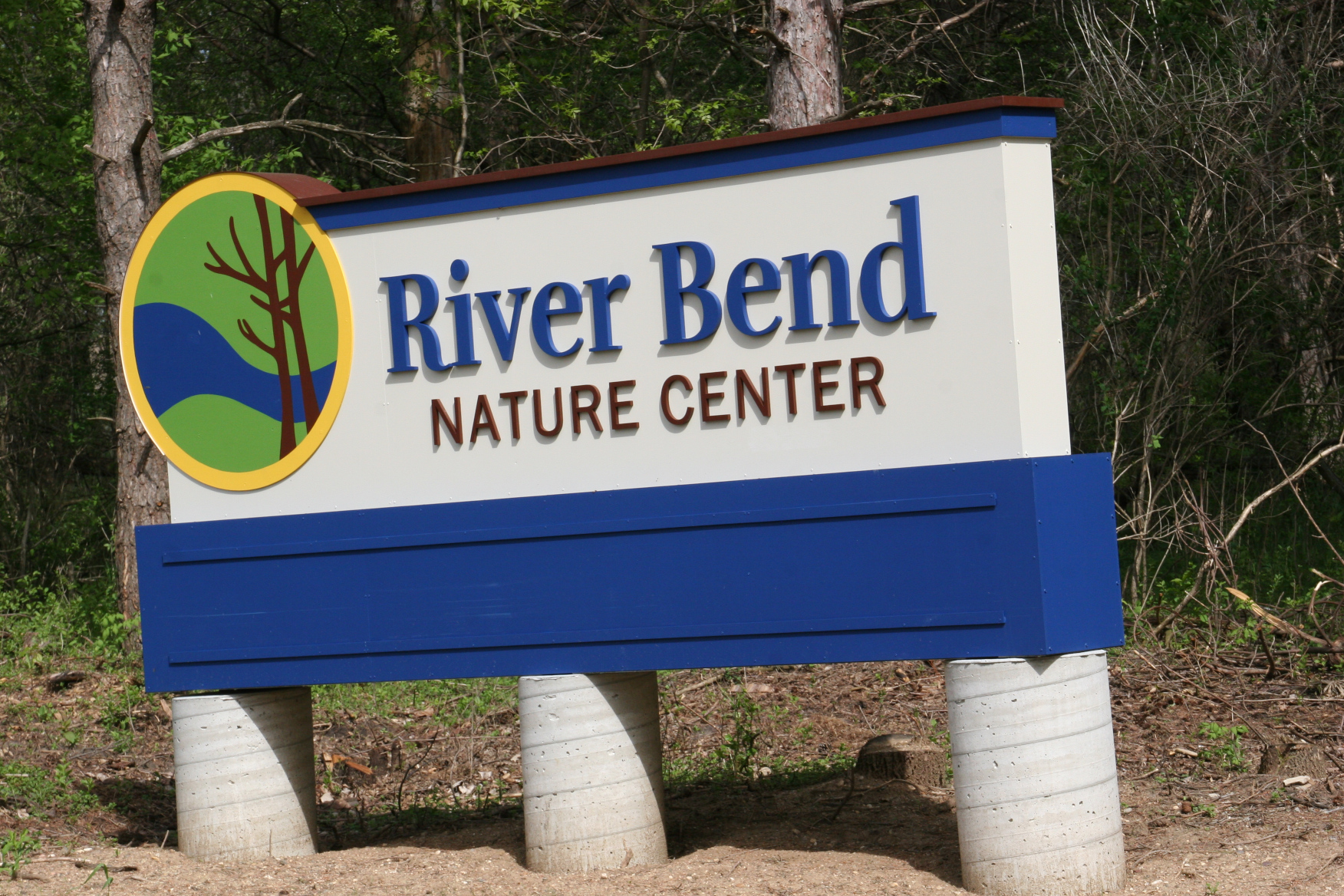
New signage graces the entrance to the nature center in Faribault. (Minnesota Prairie Roots copyrighted photo May 2022)
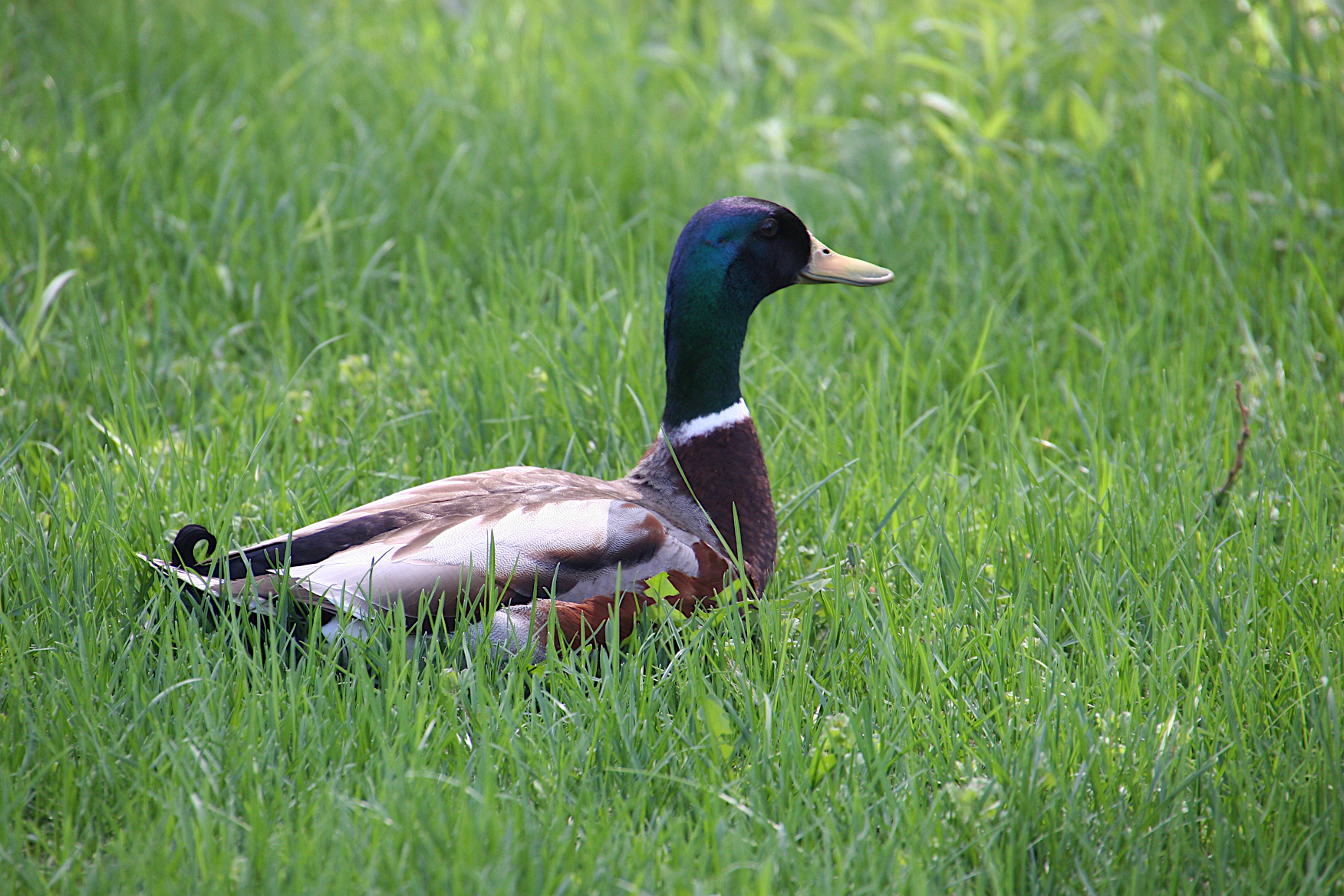
One of two mallards I saw. (Minnesota Prairie Roots copyrighted photo May 15, 2022)
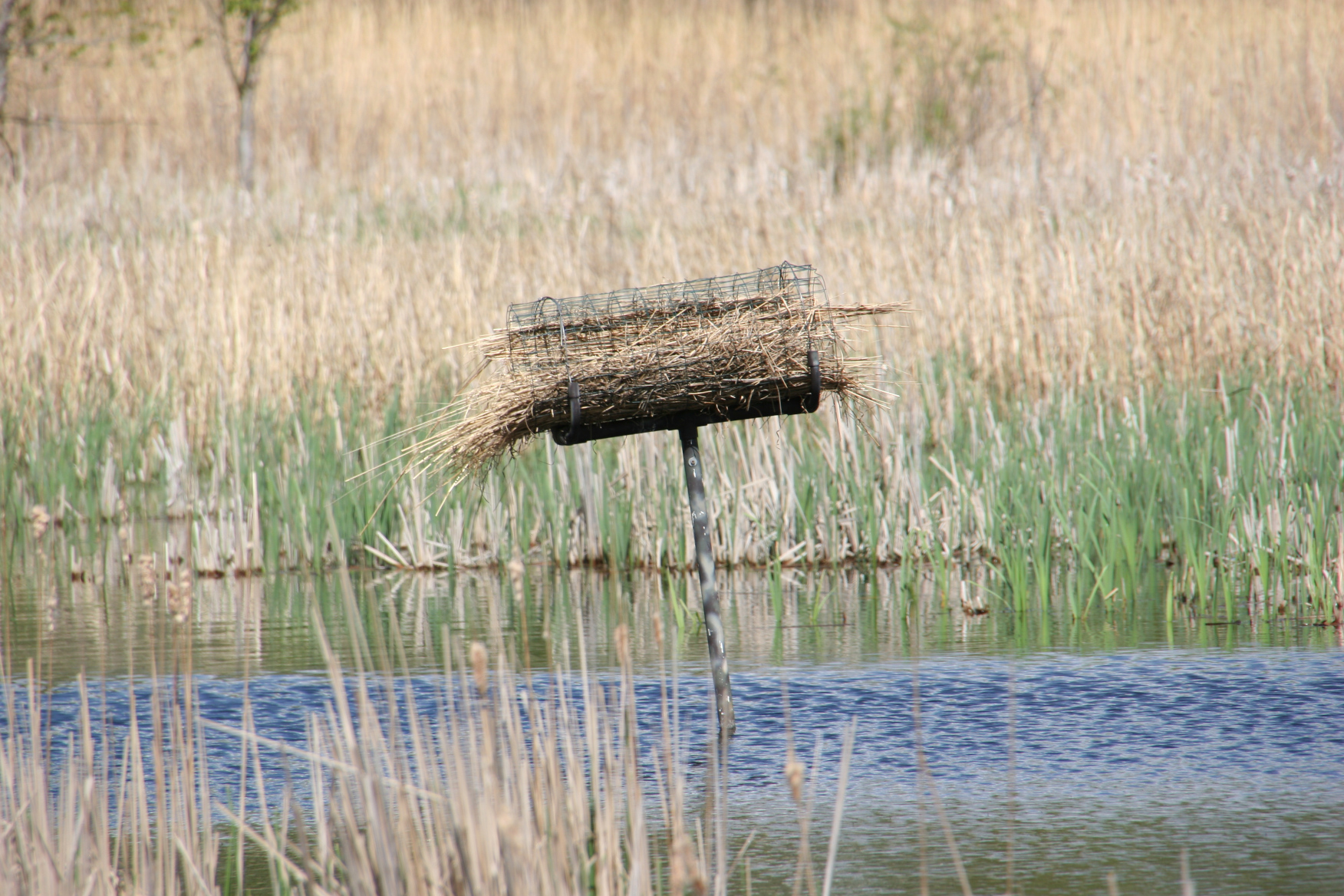
An obviously human-made nest in the pond. (Minnesota Prairie Roots copyrighted photo May 2022)
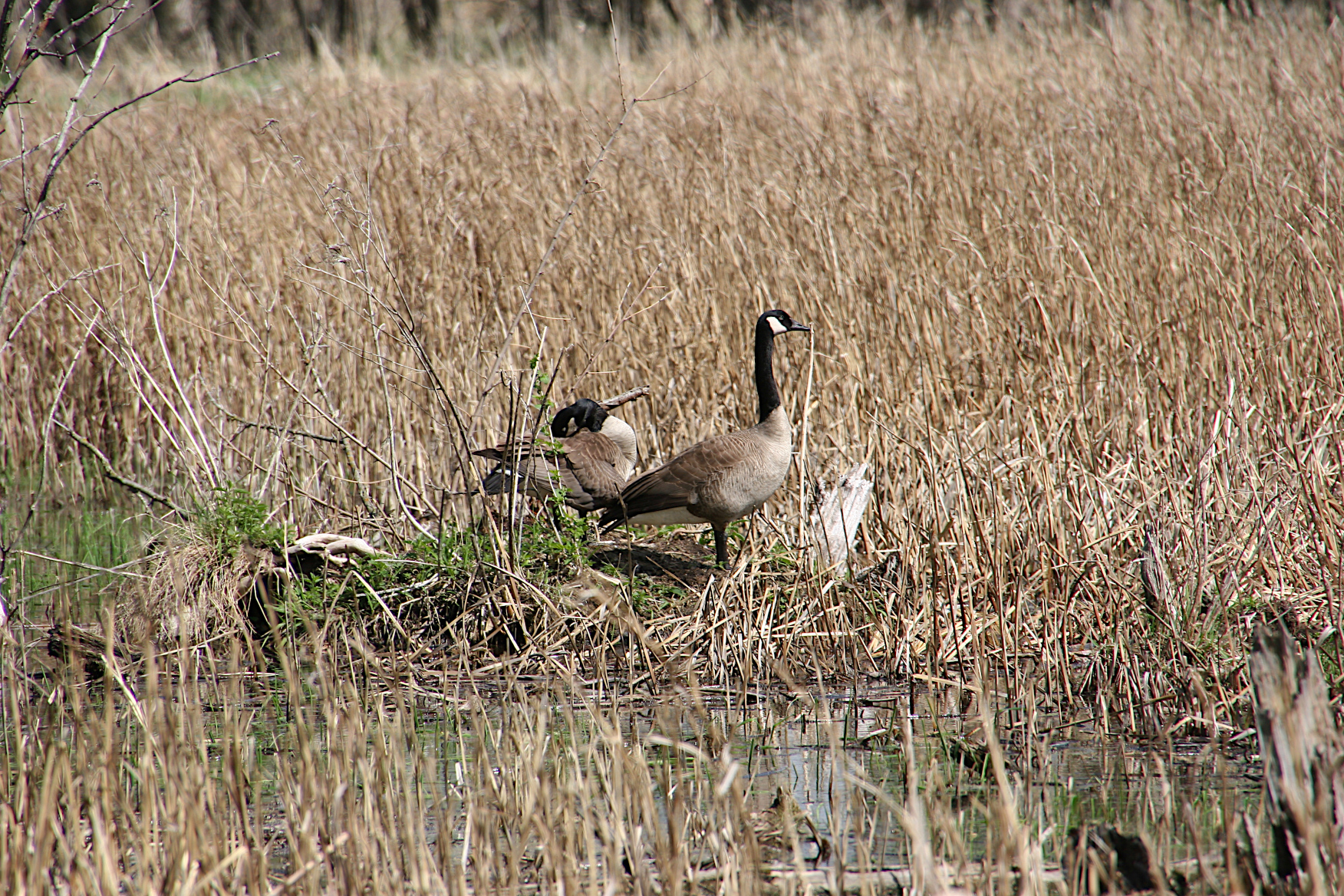
On a recent stop at River Bend Nature Center, I expected to see goslings and ducklings. But I didn’t. Instead, I saw two adult ducks in the grass aside the road upon entering the center. And then I spotted two grown geese atop a nest and a lone goose cruising the nearby pond. I need to check other locales, like the Cannon River in North Alexander Park. Ducks and geese are prolific there to the point of being a nuisance. I always watch where I step.
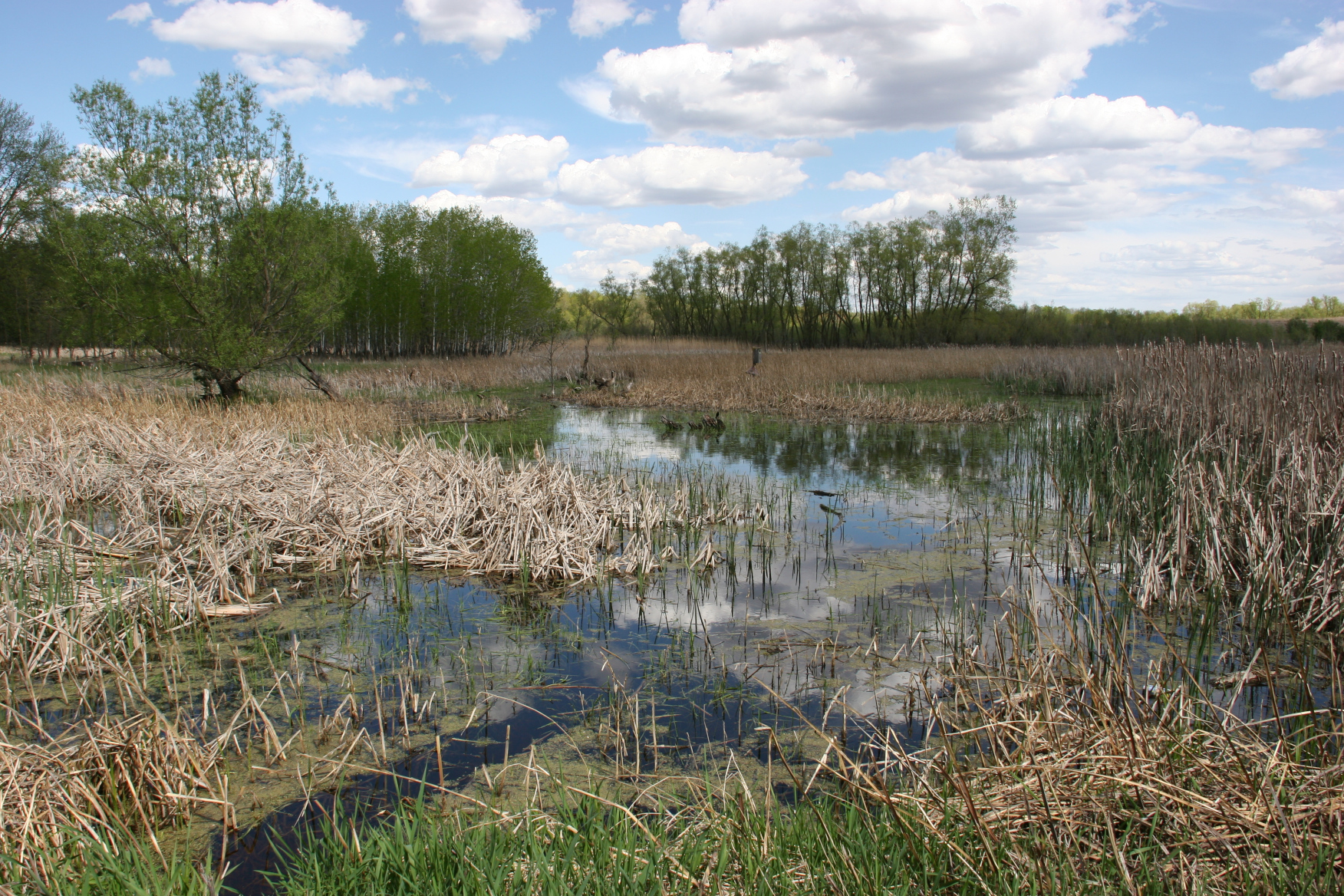
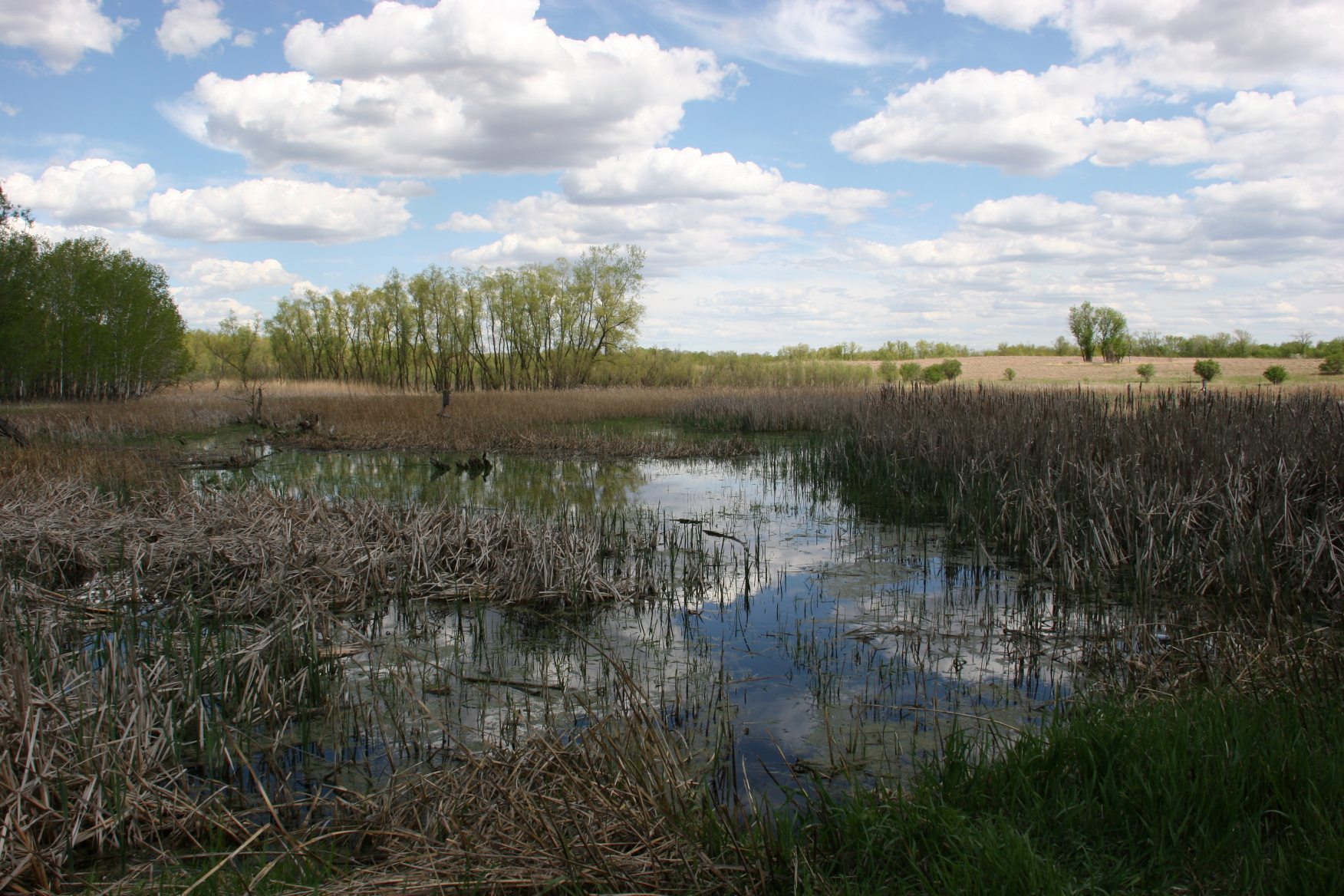
Sky and water come together. (Minnesota Prairie Roots copyrighted photo May 2022)
Despite the absence of sighting newborn waterfowl at River Bend, I found other scenes to focus my interest. I especially appreciated the sky, a patchwork of blue and white with clouds seemingly suspended overhead.
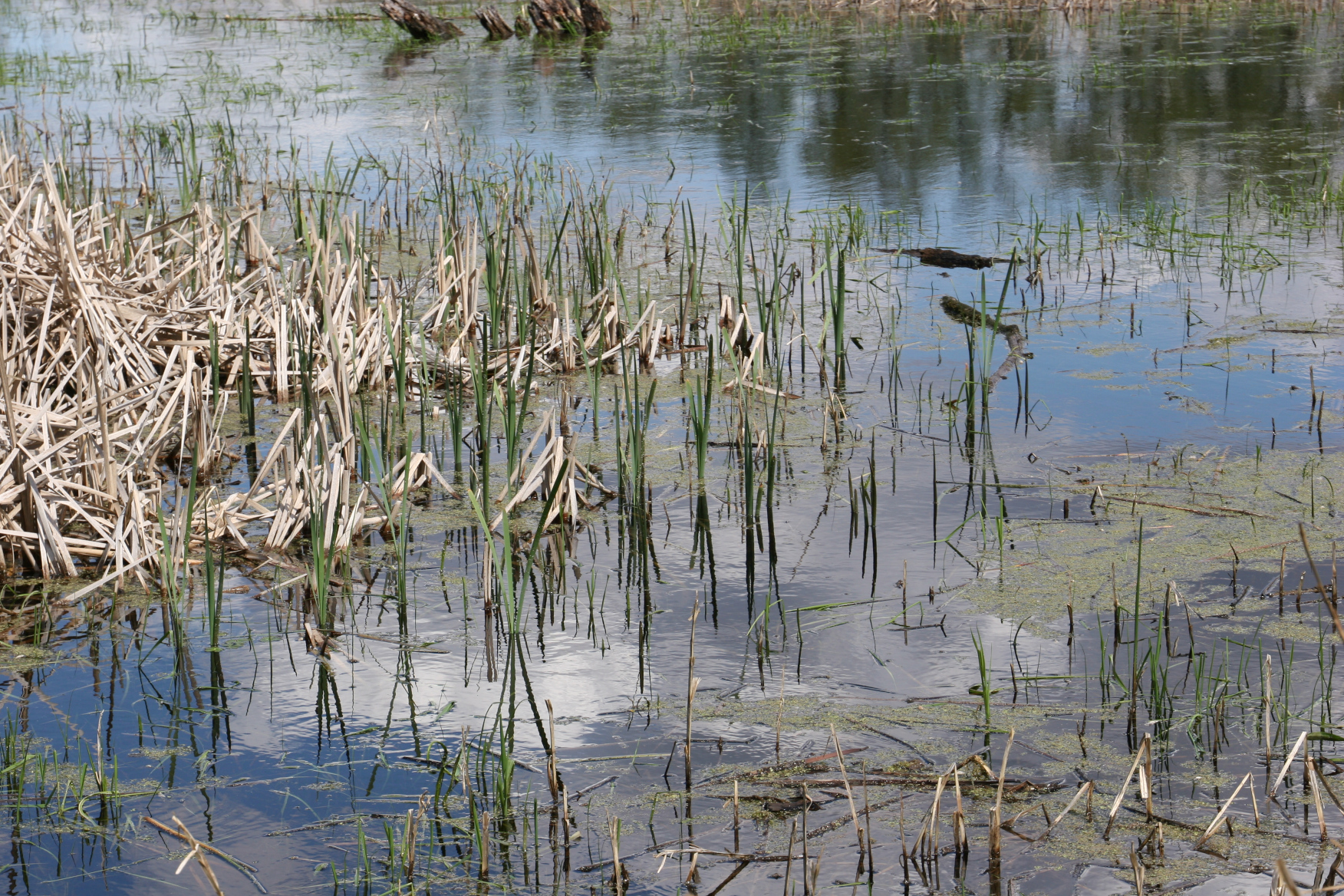
Pond close-up. (Minnesota Prairie Roots copyrighted photo May 2022)
And below, in the pond, those skies reflected on the water, among dried and greening grasses.
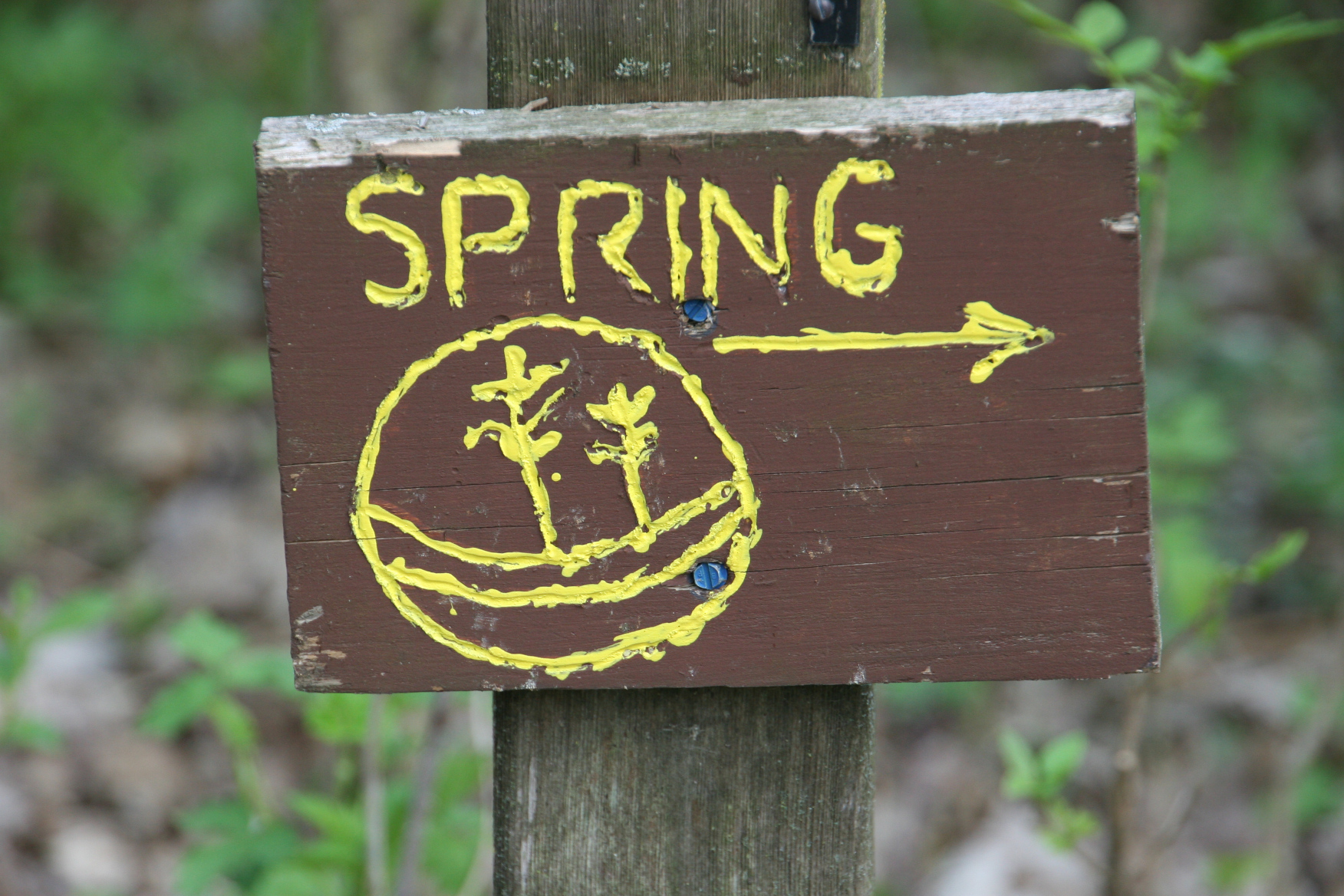
This sign at River Bend points to an actual spring, not a reference to the season. I love these kitschy homemade signs scattered throughout the nature center. (Minnesota Prairie Roots copyrighted photo May 2022)
This time in May, especially with a late spring, seasons mix. Textures and remnants of autumn remain, contrasting with the greening of spring.
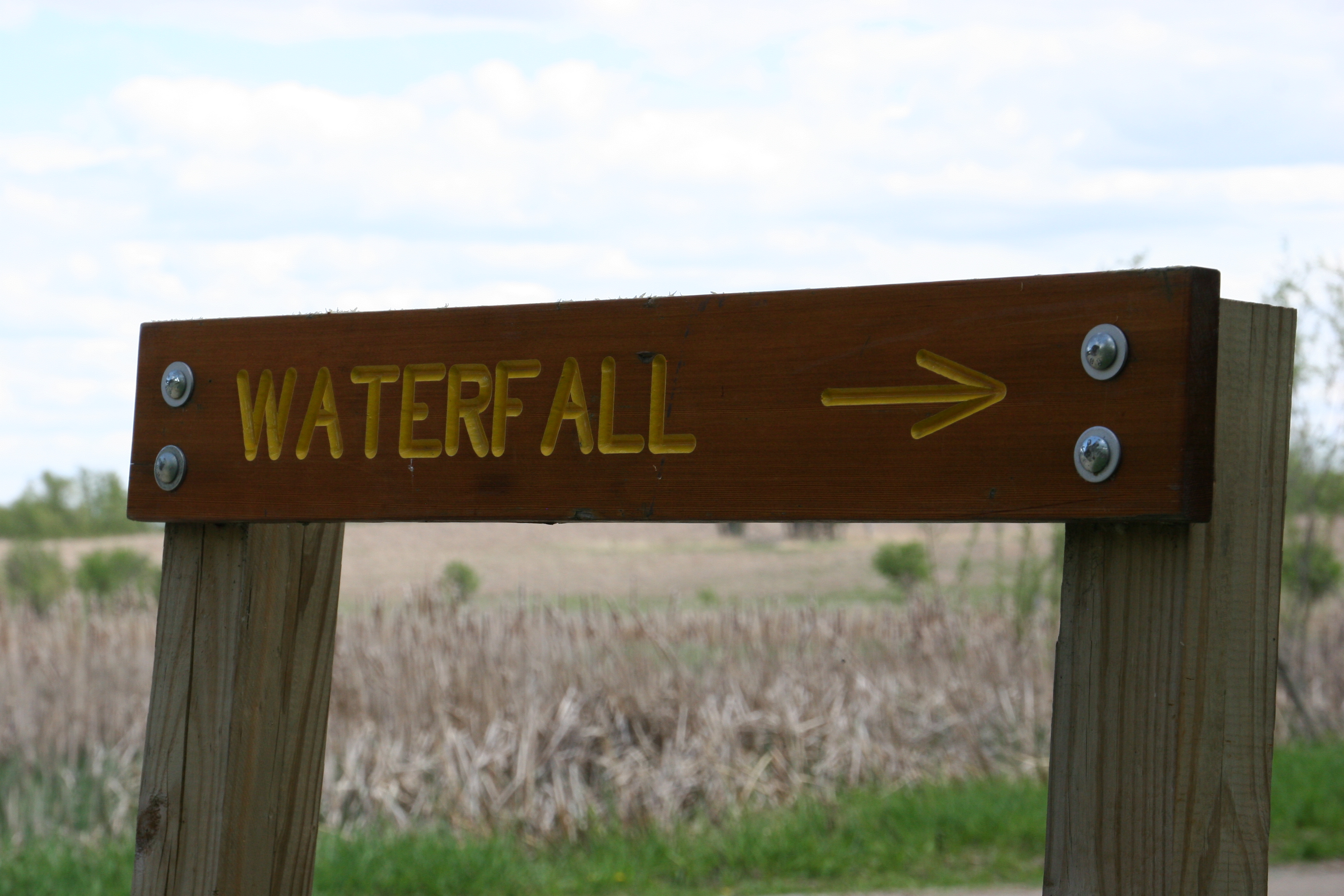
Just inside the entrance a short distance is the waterfall, between the road and the Minnesota State Correctional Facility, Faribault. (Minnesota Prairie Roots copyrighted photo May 2022)
A short walk to the nearby waterfall yielded disappointment. With the recent rains, I expected water to be rushing over the rock ledges. Rather, there was barely a trickle. The same went for the spring, just off the parking lot near the nature center entrance. No water flowed.
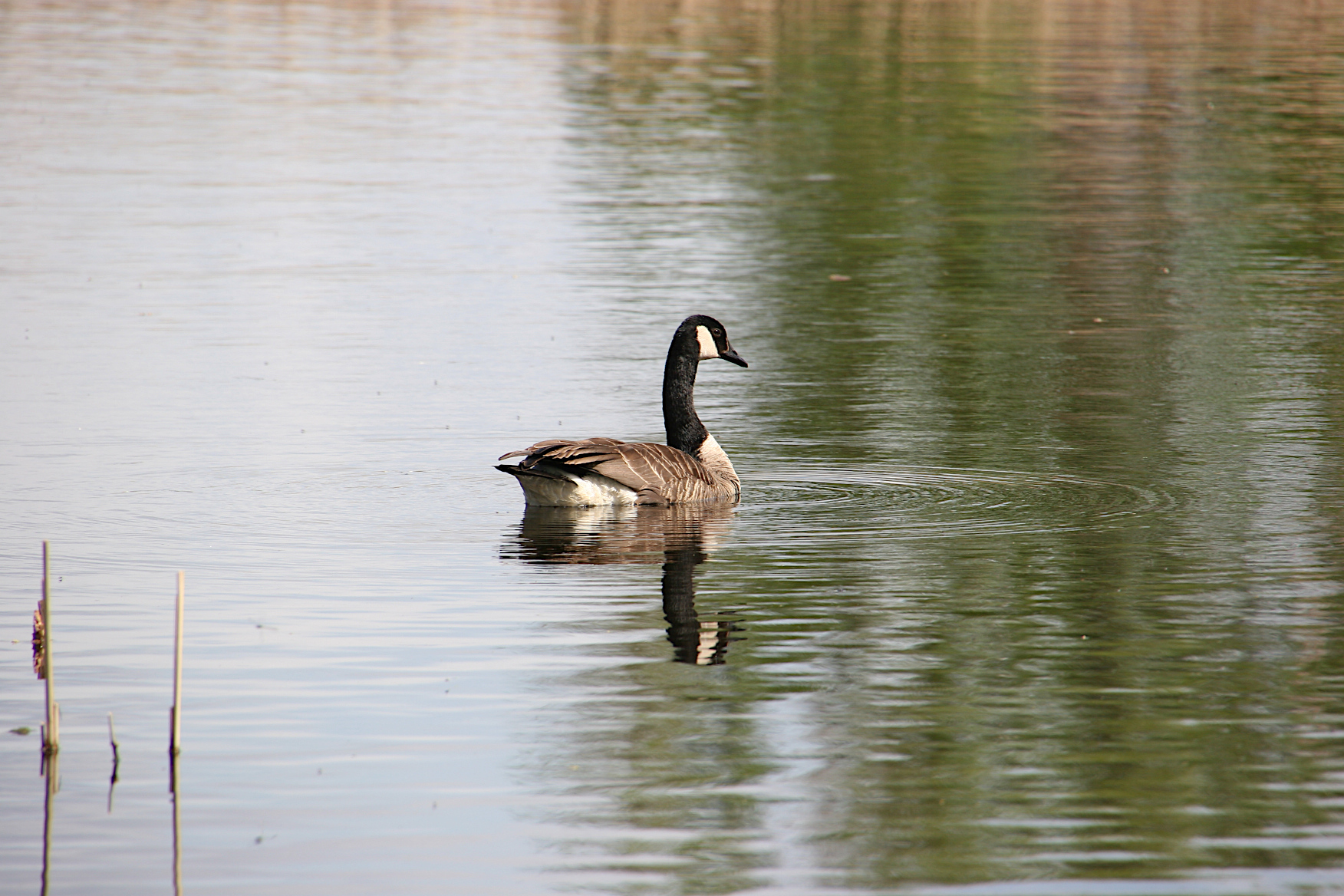
A goose swims alone in the pond. (Minnesota Prairie Roots copyrighted photo May 2022)
But back in the pond, the three geese I watched seemed comfortably settled. Soon, I expect, they will make way for goslings (not ducklings).












 Minnesota Prairie Roots
Recent Comments