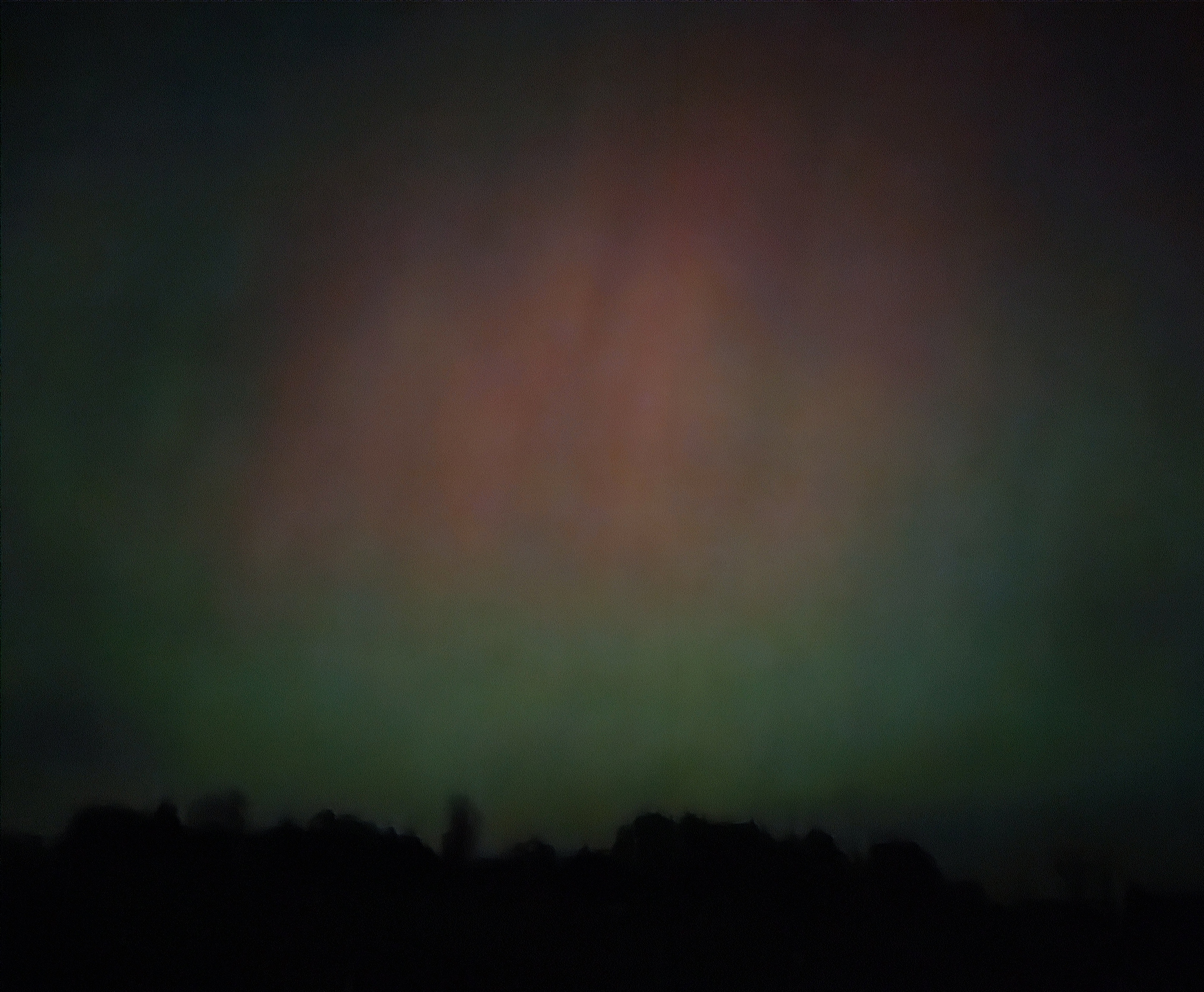
The Northern Lights, photographed northeast of Faribault near Cannon City (with a treeline in the foreground) around 9 p.m. Tuesday, November 11. (Minnesota Prairie Roots copyrighted file photo November 2025)
IT TOOK A LIFE TIME, but I finally saw the Northern Lights for the first time. Ever. And they were poetic, artistic, inspiring, incredible, wondrous, glorious…all the adjectives you can use to describe a dark night sky colored with streaks of green, red and pink.
Randy and I were sitting comfortably in the warmth of our southern Minnesota home Tuesday evening when our son texted that he could see the Northern Lights even in the city lights of Boston. A photo proved it. Then the daughter who lives 35 minutes to the north of us texted that they, too, could see the lights in Lakeville, south of the Twin Cities. Photos proved it.
We popped up, grabbed our coats and set out to see for ourselves. We didn’t have to drive far into the countryside before we noticed the first streaks of light. Turning onto a gravel road, we parked, stepped outside and turned our eyes heavenward. Then we eventually tried to figure out how to photograph the majestic scene above us on our smartphones, with only minimal success.
While I would have loved some spectacular images, what matters most is that I saw, with my own eyes, that which I’ve wanted to see my entire life. Others were doing the same. We counted about a dozen vehicles parked along rural roads, the occupants gazing skyward.
This imprinted upon me how something like the Northern Lights can bring people outdoors, appreciating this beautiful natural world that surrounds us and, which on this November evening, put on a spectacular light show.
TELL ME: Have you seen the Northern Lights? When and where? How would you describe them?
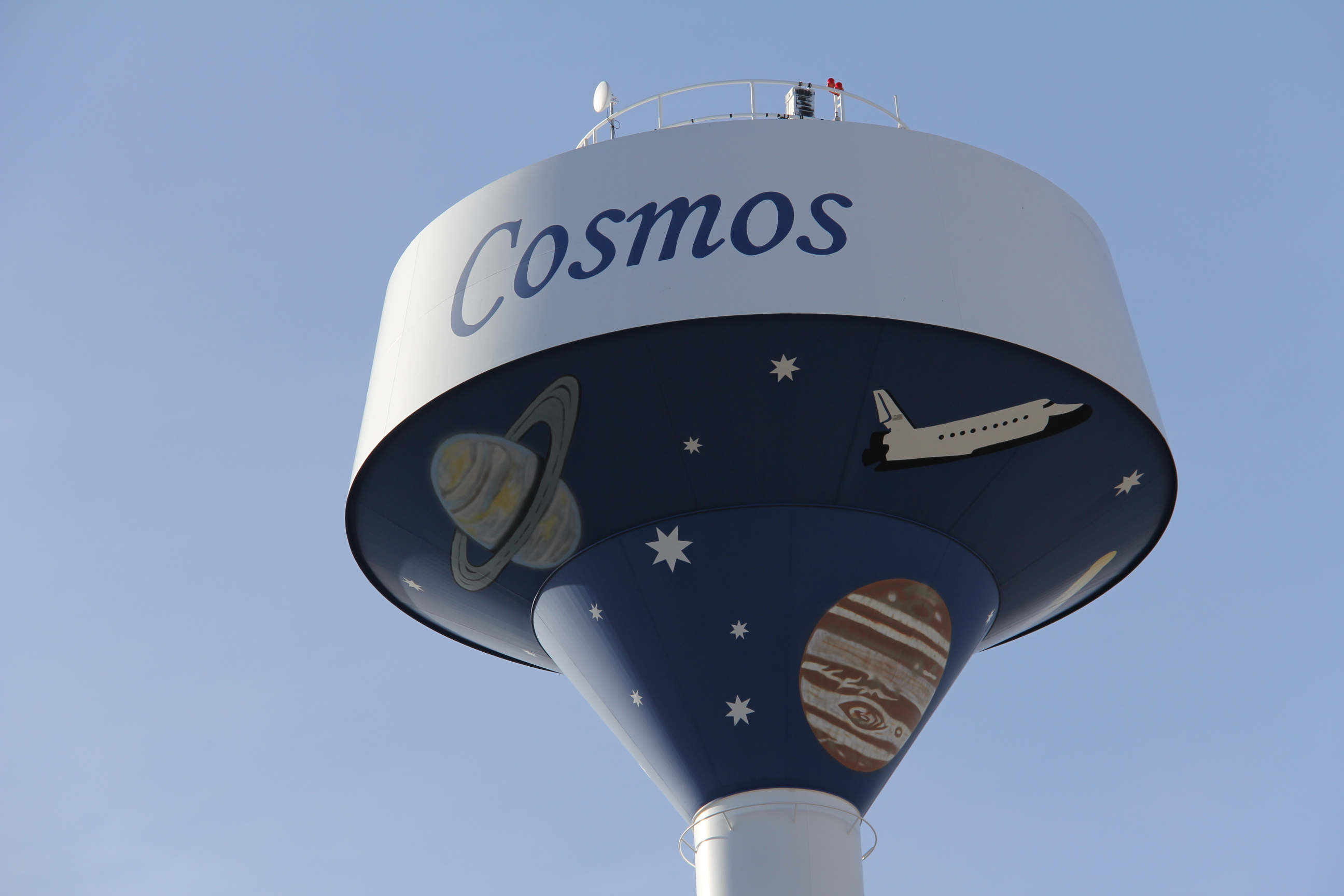
An artistic interpretation of the night sky painted on the underside of the water tower in Cosmos, Minnesota. (Minnesota Prairie Roots copyrighted photo November 2024)
THE NIGHT SKY HOLDS a vastness that makes me feel small. It’s mysterious and dark and, in some ways, intimidating. Yet, it possesses an alluring beauty that draws me to gaze heavenward. To imagine. To delight. To stand in awe of its infinity.
Fascination with the night sky seems universal. Kids, like my kindergartner grandson and, years ago, my own son, fixated on the solar system and all the night sky encompasses. I, too, find it interesting, although not to the degree of learning everything I can about the expanse above me.
Rather, if I learn of a newsworthy event in the night sky, I may step out after dark to look. Right now, that’s a seven-unit “planet parade” of Mercury, Venus, Jupiter, Mars and Saturn visible to the naked eye after sunset and Uranus and Neptune visible via a visual aid.
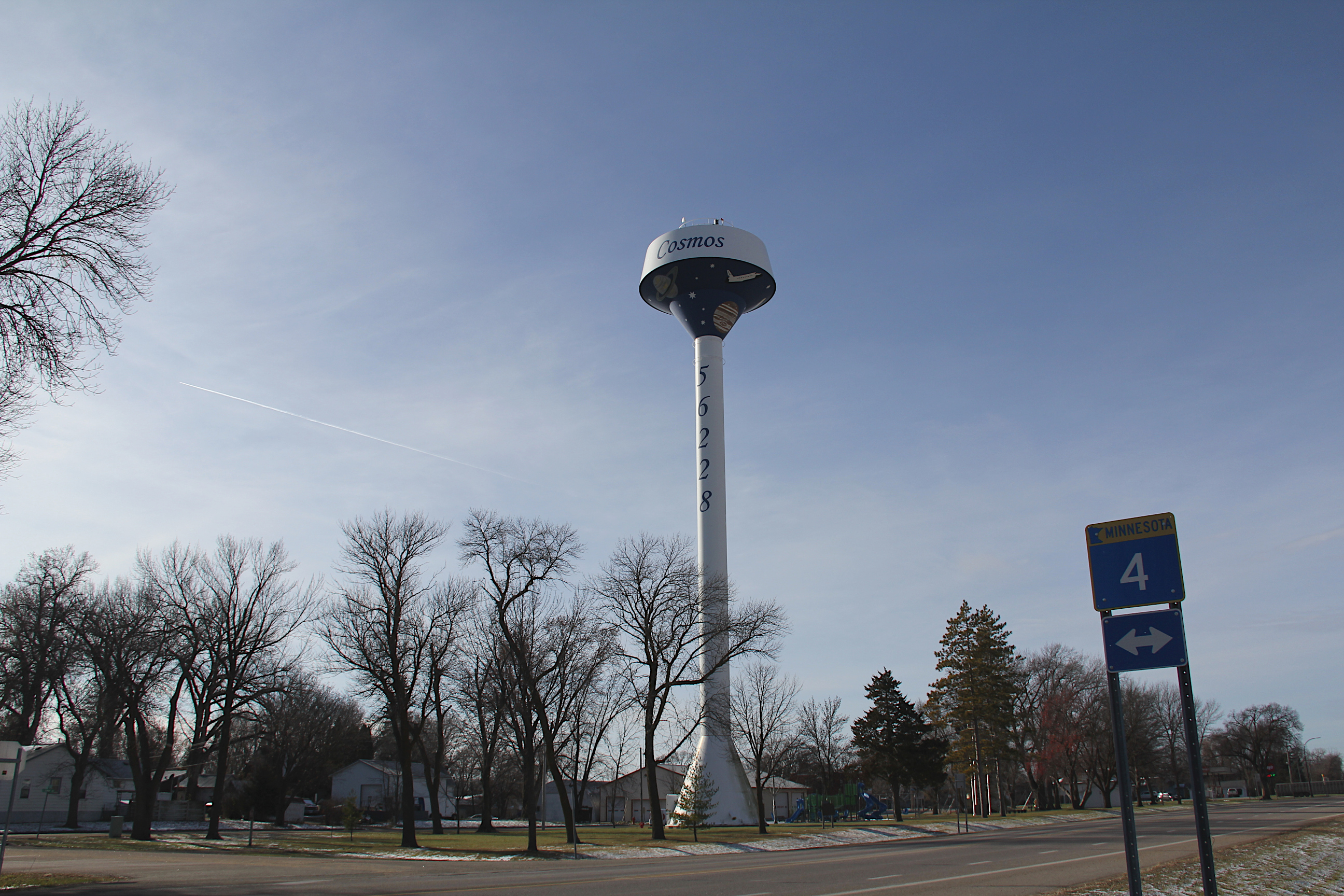
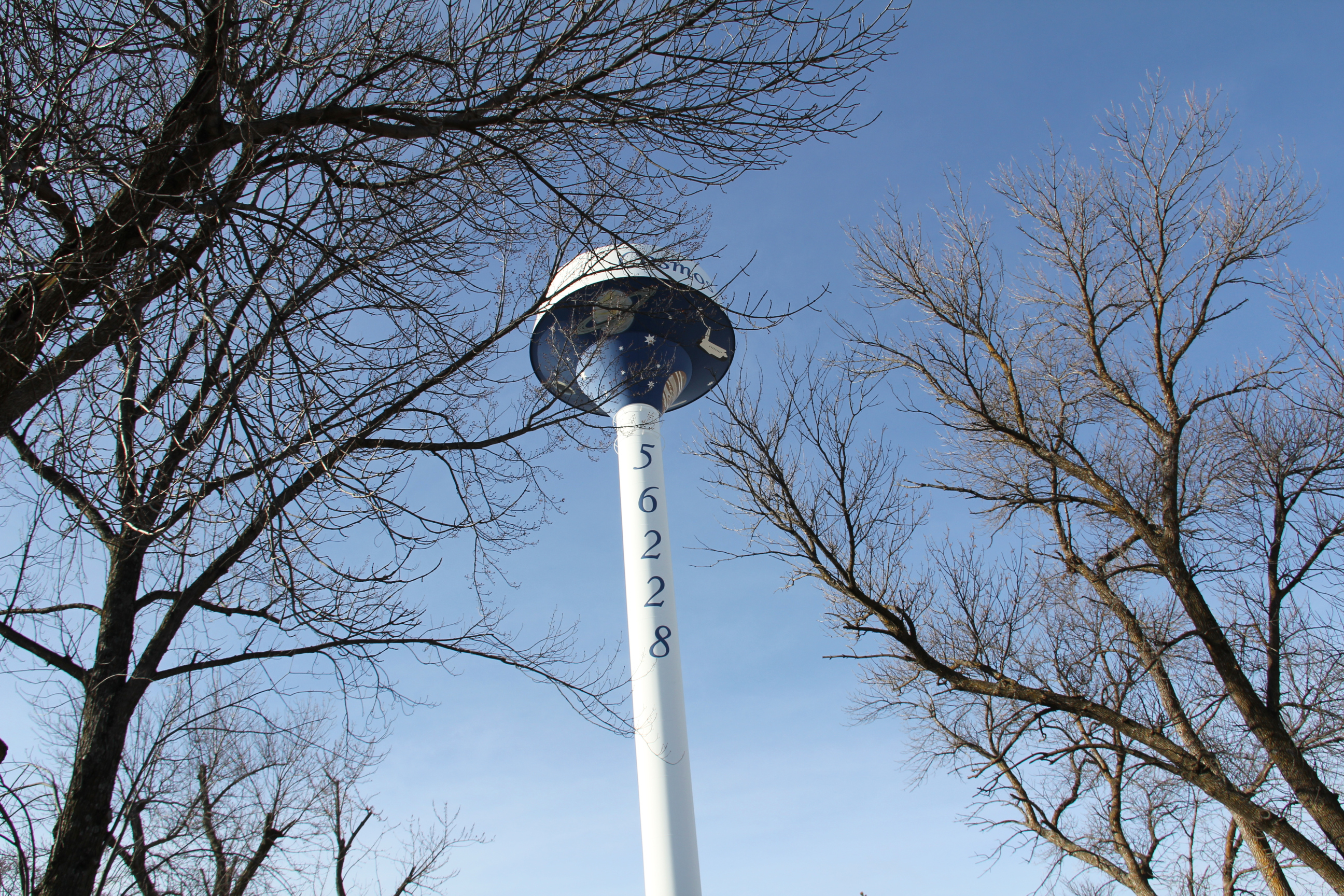
My first view of the space-themed water tower in Cosmos. The town is located at the intersections of Minnesota State Highways 4 and 7. (Minnesota Prairie Roots copyrighted photo November 2024)
All of this reminds me of a cosmic discovery I made this past fall while on the back roads to Morris in far western Minnesota. In the small town of Cosmos, population around 500, in southwestern Meeker County, I discovered a unique space-themed water tower and community event, the Cosmos Space Festival.
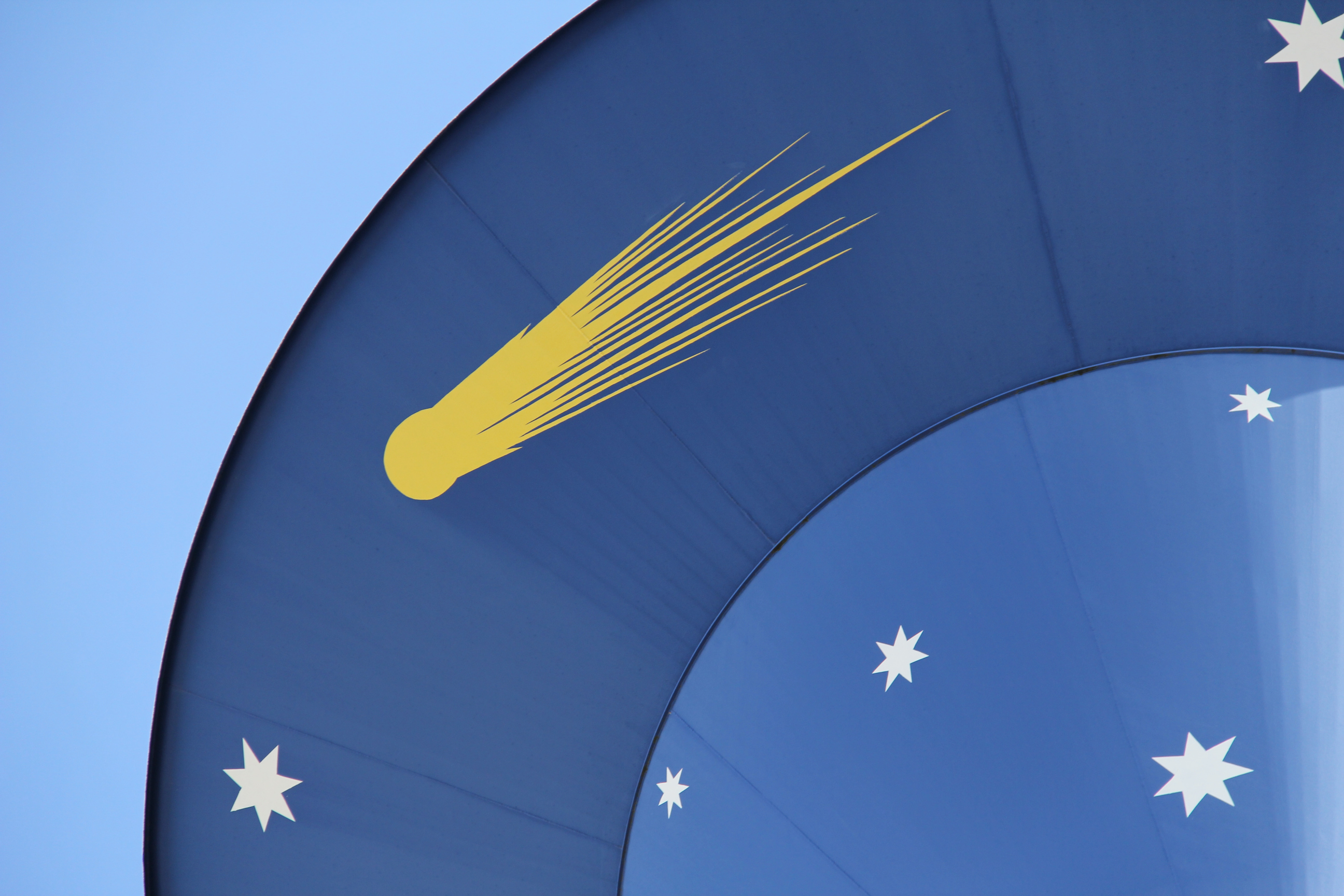
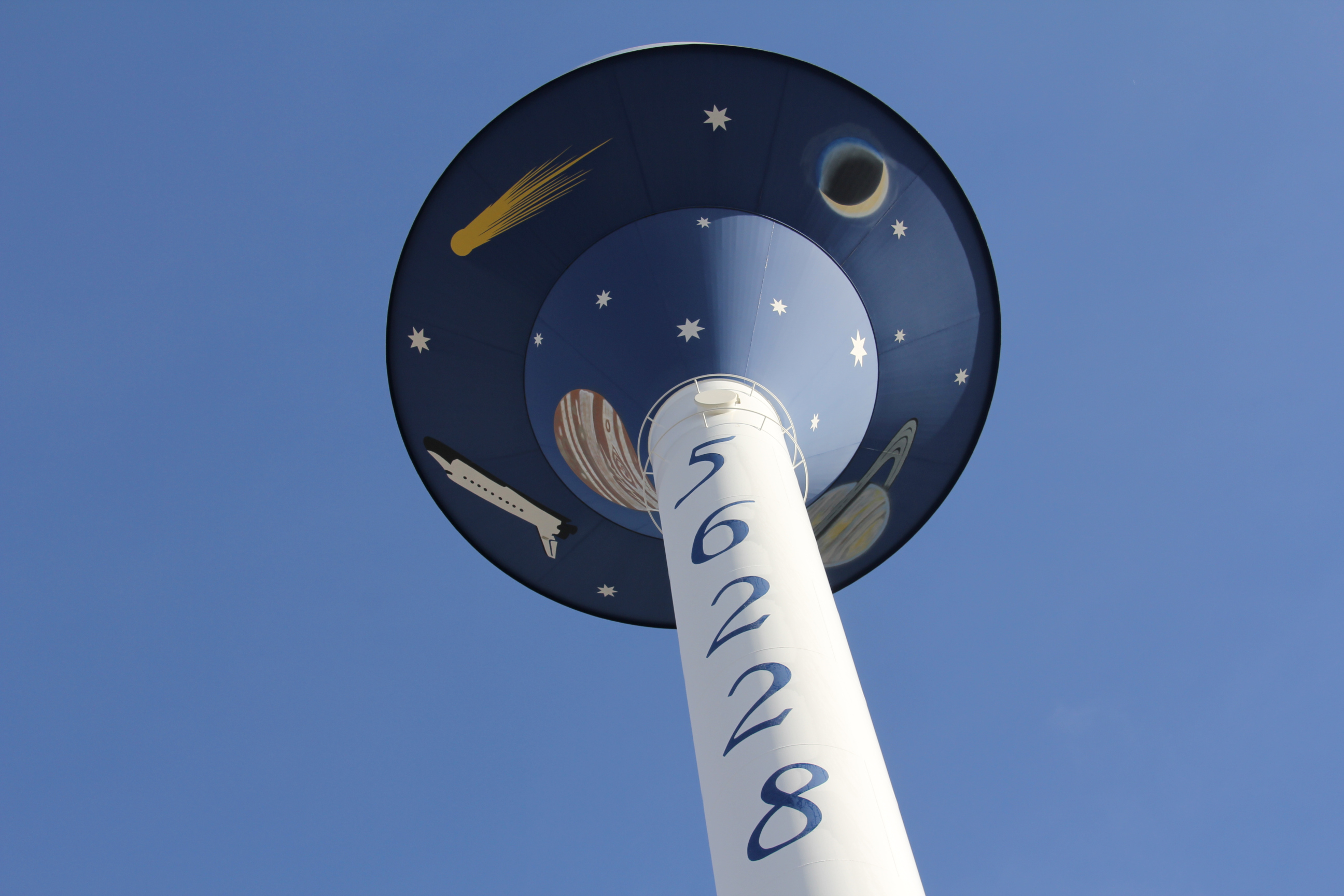
The underbelly of the Cosmos water tower is themed to space. (Minnesota Prairie Roots copyrighted photo November 2024)
With a town name like Cosmos (originally called Nelson), it should come as no surprise that the community would build on the Greek word meaning “order and harmony.” The cosmic focus makes this place along Minnesota State Highways 7 and 4 stand out among all the other little towns in this part of the state. When I spotted the water tower with a space shuttle, planets, stars and more painted on its underbelly, I immediately wanted to stop and photograph this work of art, this town identifier.
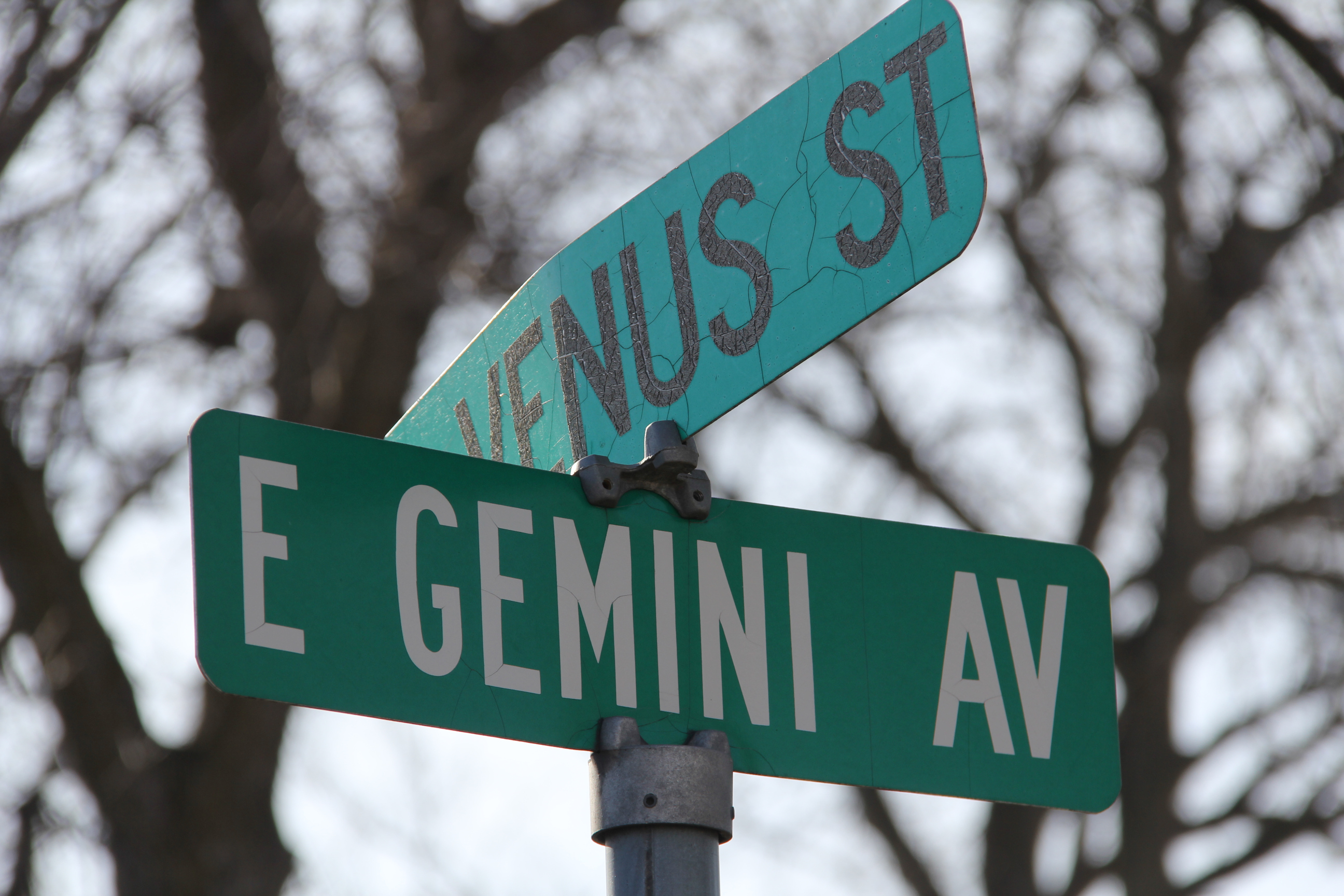
You’ll find cosmic street names in Cosmos. (Minnesota Prairie Roots copyrighted photo November 2024)
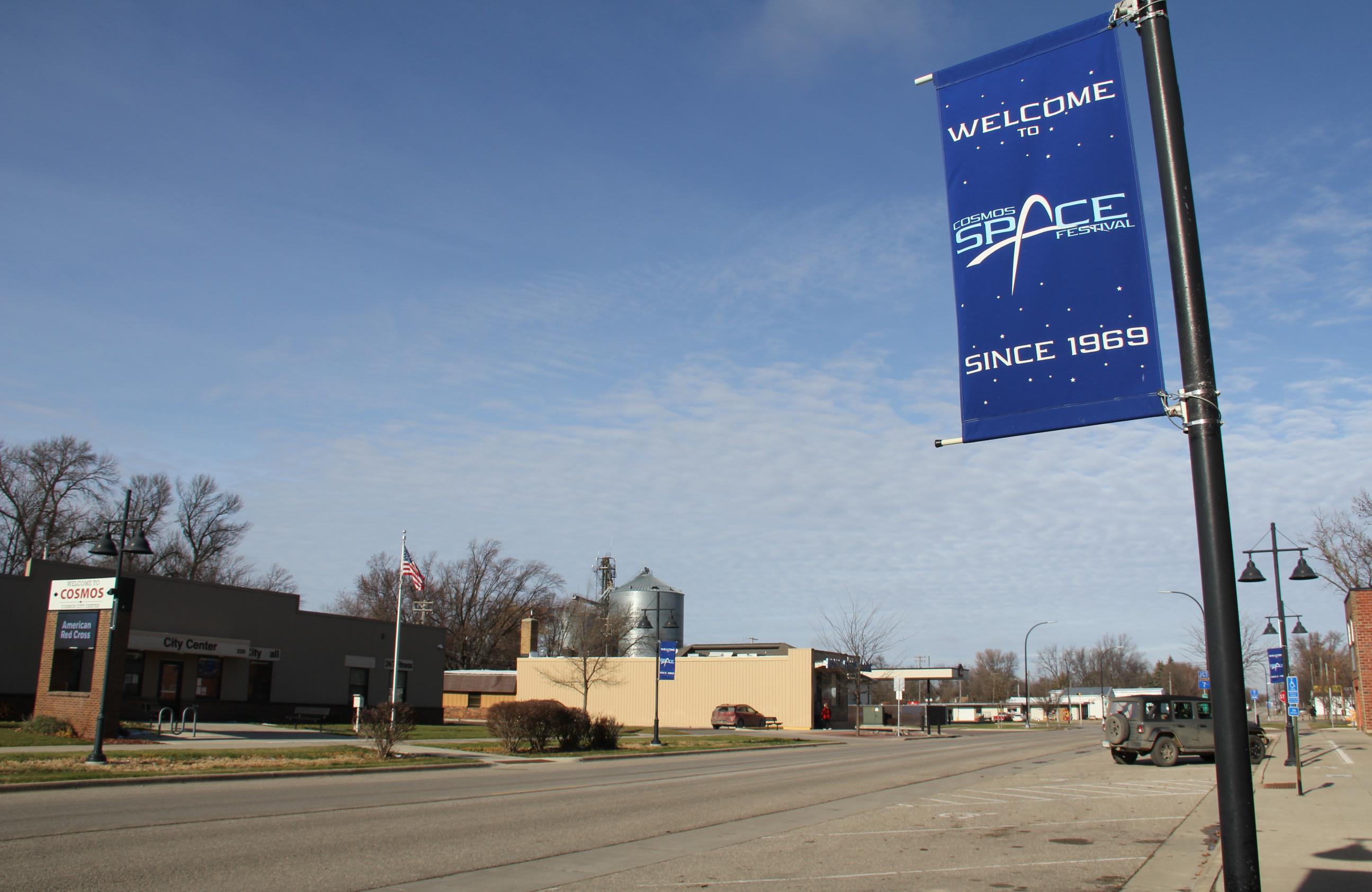
In the process, I discovered that all the streets are named after planets and constellations and that the town celebrates the Cosmos Space Festival annually on the third weekend of July. That started in 1969 as a celebration of man’s (Neil Armstrong and Buzz Aldrin in Apollo 11) first moon landing. I’m old enough to have watched that monumental moment in history on a black-and-white television.
Cosmos Space Festival banners hang throughout the downtown, shown here. (Minnesota Prairie Roots copyrighted photo November 2024)
The Cosmos space fest has been going strong ever since, marking its 57th year on July 17-20, 2025. The festival features your usual small town celebration activities like street dances, softball tournaments, city-wide garage sales, a hog roast, pedal tractor pull, pony rides, beer garden, fireworks, parade and much more. That includes the crowning of fest royalty—Little Miss Universe and Man on the Moon. Gotta love those cosmic titles.
And you gotta love how kids (and adults) get excited about the night sky. Locally, River Bend Nature Center is hosting its annual Minnesota Starwatch Party from 8-10 p.m. on Thursday, March 27, with retired meteorologist, amateur astronomer, stargazing columnist and author Mike Lynch. I attended the starwatch party with my husband and son many years ago. Lynch brings telescopes and vast knowledge, so this is a hands-on educational program.
The memorable water towerin Cosmos, zip code 56228. (Minnesota Prairie Roots copyrighted photo November 2024)
Another opportunity to view the night sky through telescopes happens more frequently, from 8-10 p.m. the first Friday of every month inside and outside Goodsell Observatory on the campus of Carleton College in neighboring Northfield. I’ve been to this free monthly activity twice, again years ago with my husband and son. The next open house is on Friday, March 7. But only if the night sky is clear for viewing.
The Cosmos water tower is among the best I’ve seen. It’s interesting, unique, artsy and makes this small Minnesota town stand out. (Minnesota Prairie Roots copyrighted photo November 2024)
Whatever your interest level in the night sky, it’s fascinating. Vast. Dark. The subject of poetry and song and science. And above all, it’s a cosmic wonder, whether viewed from Cosmos, Faribault, Northfield or your little place in the big wide universe.
(Minnesota Prairie Roots copyrighted file photo September 2022)
IN THE PAST YEAR, my desire to learn more about Native American culture has heightened. My new interest followed a talk in September 2022 by then Rice County Historical Society Director Susan Garwood about “The Indigenous history of the land that is now Rice County, Minnesota.” This county, this community, in which I live was home first to Indigenous peoples, long before the first settlers, the fur traders, the Easterners who moved west.
This sculpture of Alexander Faribault and a Dakota trading partner stands in Faribault’s Heritage Park near the Straight River and site of Faribault’s trading post. Ivan Whillock created this art which sits atop the Bea Duncan Memorial Fountain. (Minnesota Prairie Roots copyrighted file photo)
I knew that, of course. But what I didn’t know was that the Wahpekute, one of the seven “Council Fires” of the Dakota Nation, used the current-day Wapacuta Park just up the hill from my house for honoring their dead.
This Faribault city park, where my kids once zipped down a towering slide, clamored onto a massive boulder, slid on plastics sleds, was where the Wahpekute many years ago placed their dead upon scaffolding prior to burial. That ground now seems sacred to me.
That it took 40 years of living here to learn this information suggests to me that either I wasn’t paying attention to local history or that my community has not done enough to honor the First Peoples of this land.
(Book cover sourced online.)
Whatever the reason, I have, on my own, decided to become more informed about Indigenous peoples. And for me, that starts with reading. I recently headed to the children’s section of my local library and checked out the book, The Forever Sky, written by Thomas Peacock (a member of the Fond du Lac Band of Lake Superior Anishinaabe Ojibwe) and illustrated by Annette S. Lee (mixed-race Lakota-Sioux of the Ojibwe and Lakota-Sioux communities).
These two Minnesotans, in their collaborative children’s picture book, reveal that “the sky and stars all have stories.” Oh, how I value stories. And the stories shared in this book, these sky stories, are of spirits and animals and the Path of Souls, aka The Milky Way, and…
I especially appreciate the book’s focus on the northern lights, explained as “the spirits of all of our relatives who have passed on.” The descriptive words and vivid images make me view the northern lights, which I have yet to see in my life-time, through the eyes of Indigenous peoples. The changing blues and greens are their loved ones dancing in the night sky. Dancing, dancing, dancing. How lovely that imagery in replacing loss with hope and happiness.
The Forever Sky has created an awareness of Native culture previously unknown to me. Just like that talk a year ago by a local historian aiming to educate. I have much to learn. And I am learning via books found not only in the adult section of the library, but also among the children’s picture books. That writers and illustrators are covering topics of cultural importance in kids’ books gives me hope for the future. My grandchildren, even though they will never see the vast, dark, star-filled sky I saw nightly as a child of the prairie, are growing up much more informed. They will understand cultures well beyond their own heritage. And that encourages me.
THE HOUR HAD SLIPPED well past midnight when I joined my sister Lanae and my son on the patio.
“Is there a place for me to sit?” I asked, as I stood still, waiting for my eyes to adjust to the blackness of the night.
“There’s a lawn chair next to me. Caleb’s lying on the patio.”
And so he was and she was and now I was—the three of us clustered under a sky filled with more stars than I’ve seen since my last visit to the southwestern Minnesota prairie.
I gazed skyward, quickly finding the Big Dipper.
“Do you see the Milky Way,” my astronomy-loving 17-year-old asked. I pivoted my head to the right and pointed.
We sat in silence, for minutes, simply staring at the immense sky studded with all those stars.
“This is what I miss about this place,” my sister said, finally breaking the contemplative silence. “The stars.”
And she is right. It is one of many things I miss about my native southwestern Minnesota. Only in rural areas like this, mostly untouched by light pollution, can you view the night sky as it is meant to be seen.
“Did you see that?” my boy enthused, eying the same falling star I had just seen shooting a trail of light across the dark.
“This is better than that place we went to in St. Cloud,” he said. He was referring to a high school astronomy class field trip last summer to the St. Cloud State University planetarium. I remember his visit there, how unimpressed he was with the whole thing and how he disliked being caught in Twin Cities rush hour traffic on the drive home.
No doubt experiencing the night sky here at my brother’s place just north of Lamberton—where only rural yard lights and small-town lights in the distance punctuate the darkness—would outshine any planetarium any night.




 Minnesota Prairie Roots
Recent Comments