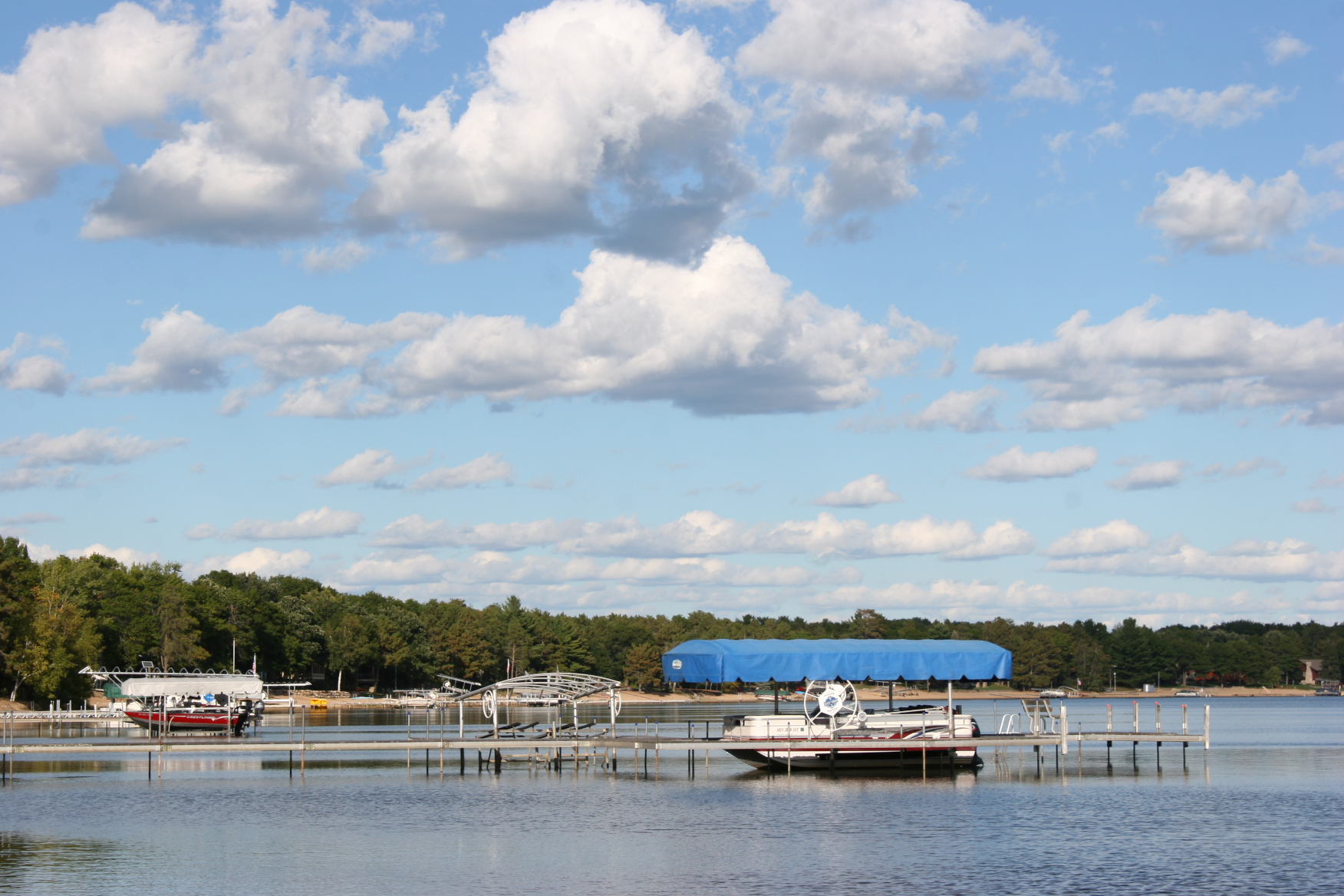
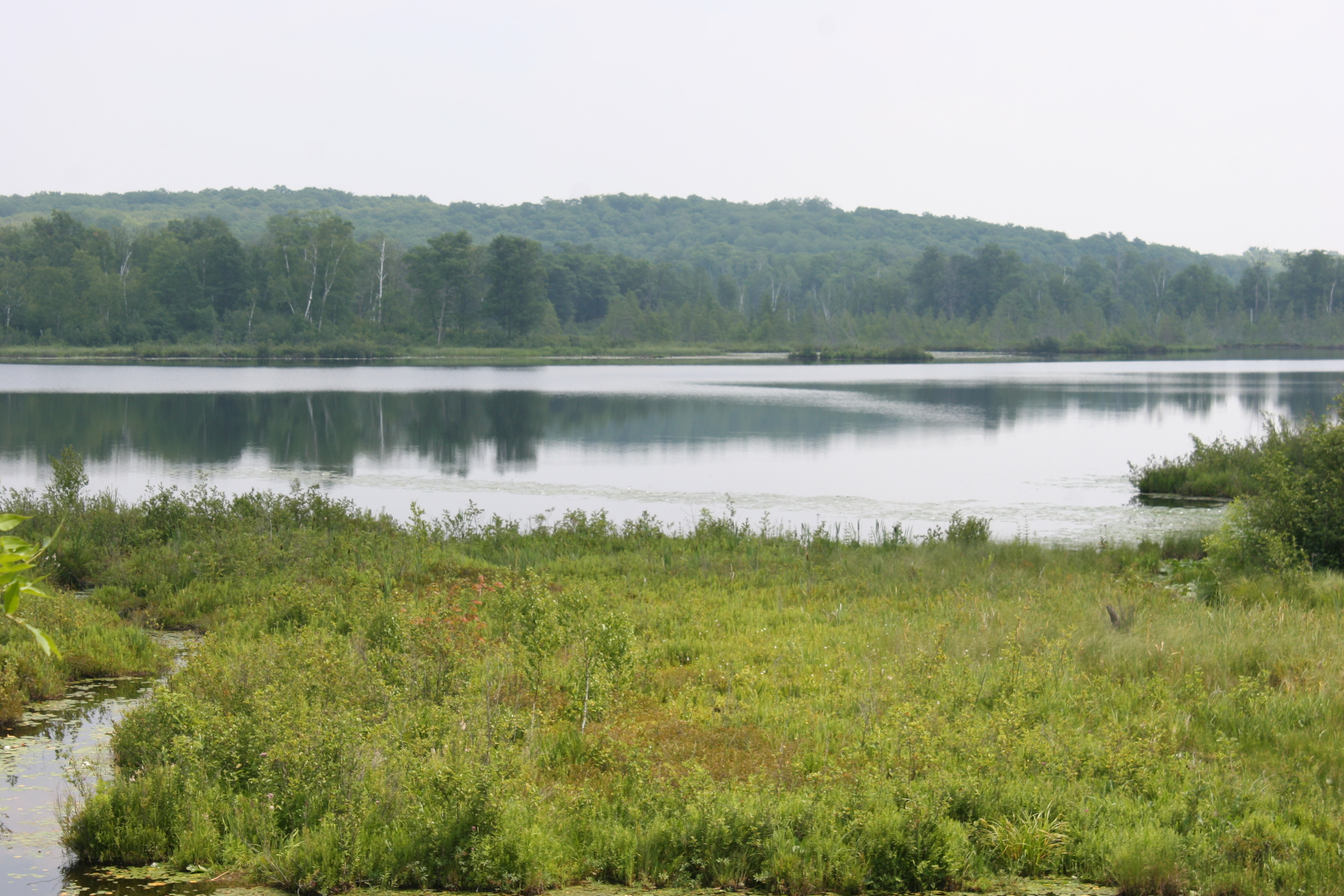
Horseshoe Lake in the central Minnesota lakes region in mid-September. Minnesota Prairie Roots copyrighted photo September 2021.
I NEVEREXPECTED to be one of those Minnesotans who would, each summer, go Up North to the cabin. But, thanks to the generosity of in-laws with lake property including a guest cabin, that is now part of my experience.
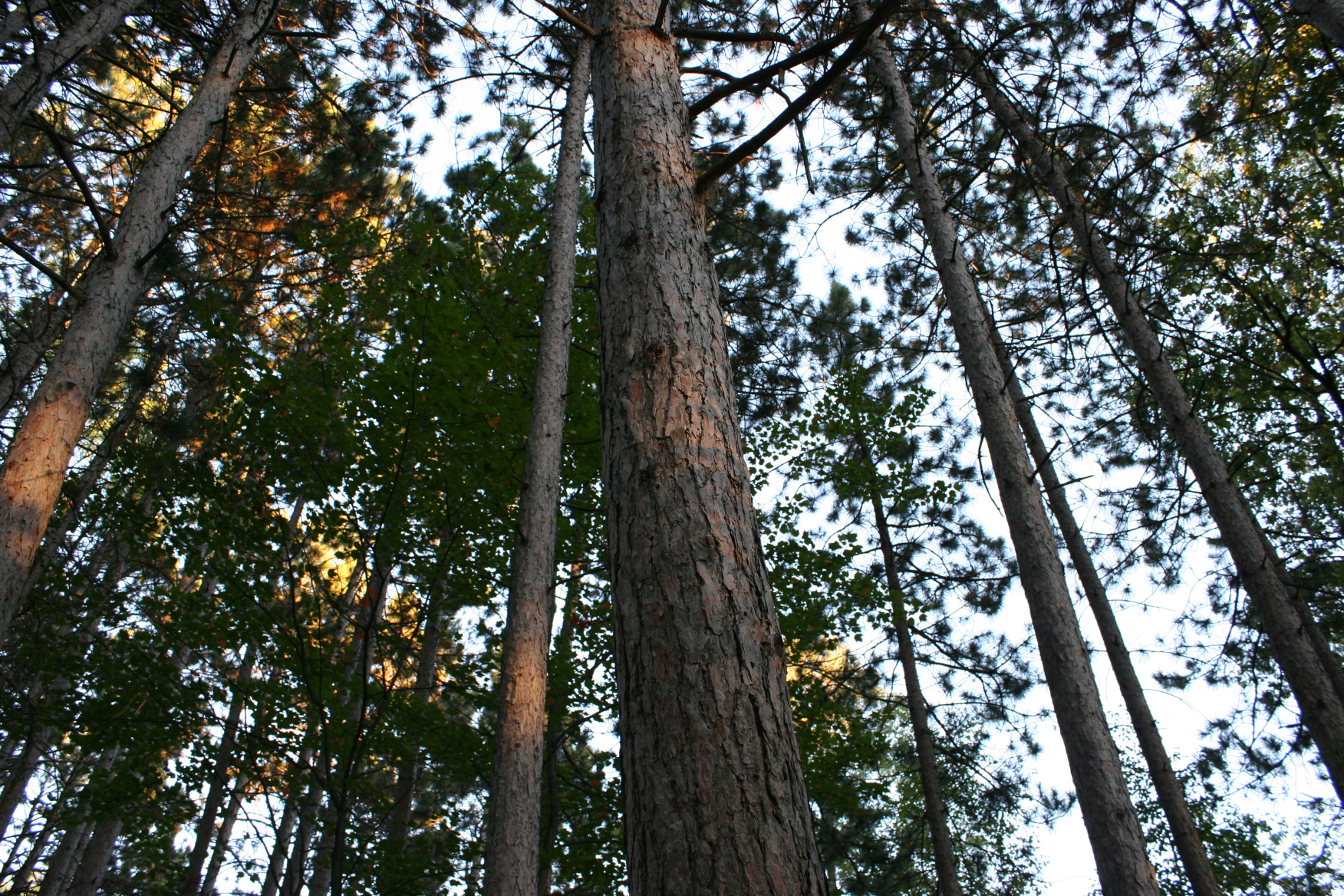
Looking up into the towering pines which populate this region of Minnesota. Minnesota Prairie Roots copyrighted photo September 2021.
Thrice since May, Randy and I have headed Up North to the cabin, most recently in mid-September. Each visit leaves me feeling at peace. Relaxed. Content. Refreshed. Thankful for this place of solitude and natural northwoods beauty.
The view through the pines as the sun edges down. Minnesota Prairie Roots copyrighted photo September 2021.
As soon as the van swings onto the jackpine-edged drive leading to the cabin, I feel like I’m entering another world. Those slim, tightly-packed evergreens set the scene, defining for me the essence of Up North. I especially delight in walking the lane at sunset, golden light filtering through the stand of pines.
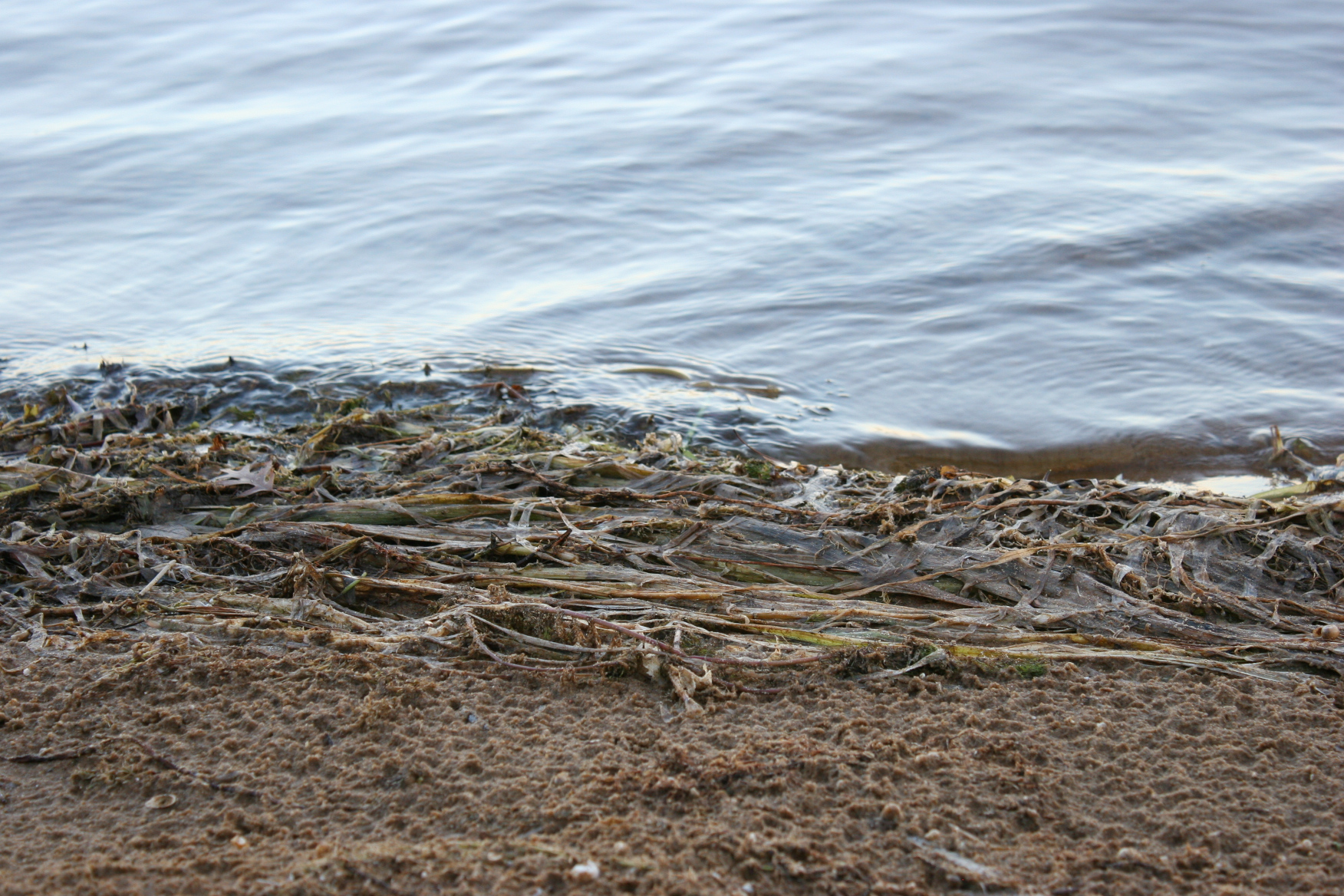
Gently lapping water pushes aquatic plants onto the beach. Minnesota Prairie Roots copyrighted photo September 2021.
And then there’s the lake. Horseshoe Lake. Water mesmerizes me. The stillness. Or the lap of gentle waves against shoreline.
The warm September days proved ideal for relaxing on the beach. Minnesota Prairie Roots copyrighted photo September 2021.
While I don’t like being on water and will only enter to shoulder depth, I like being near water. Lounging on the beach, the sun heating the sand and warming my skin. Book in hand. Beverage nearby.
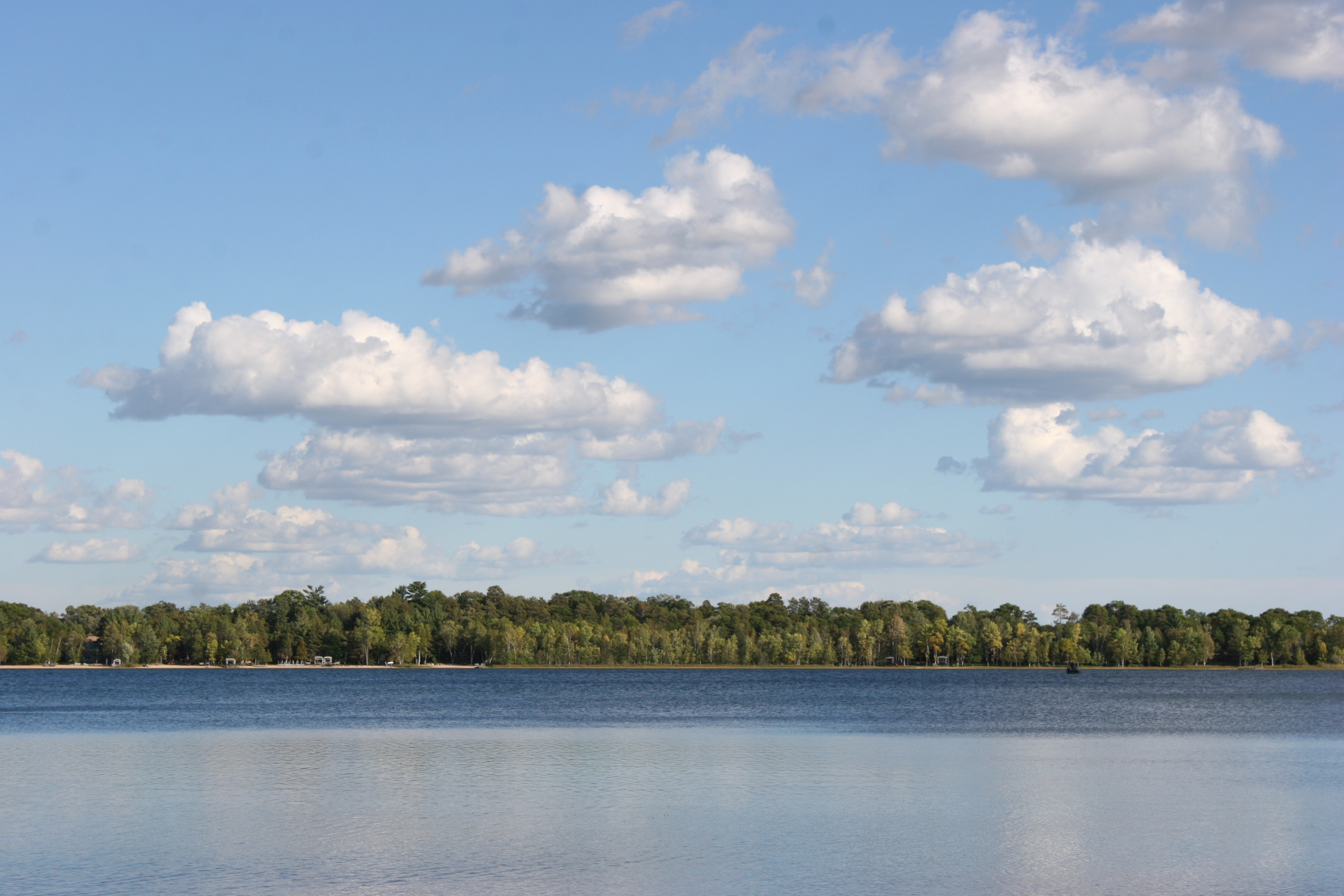
Sky and water merge… Minnesota Prairie Roots copyrighted photo September 2021.
It’s as if time ceases here. Here, where the sky and the water meet and loons cry and an eagle traces the shoreline.
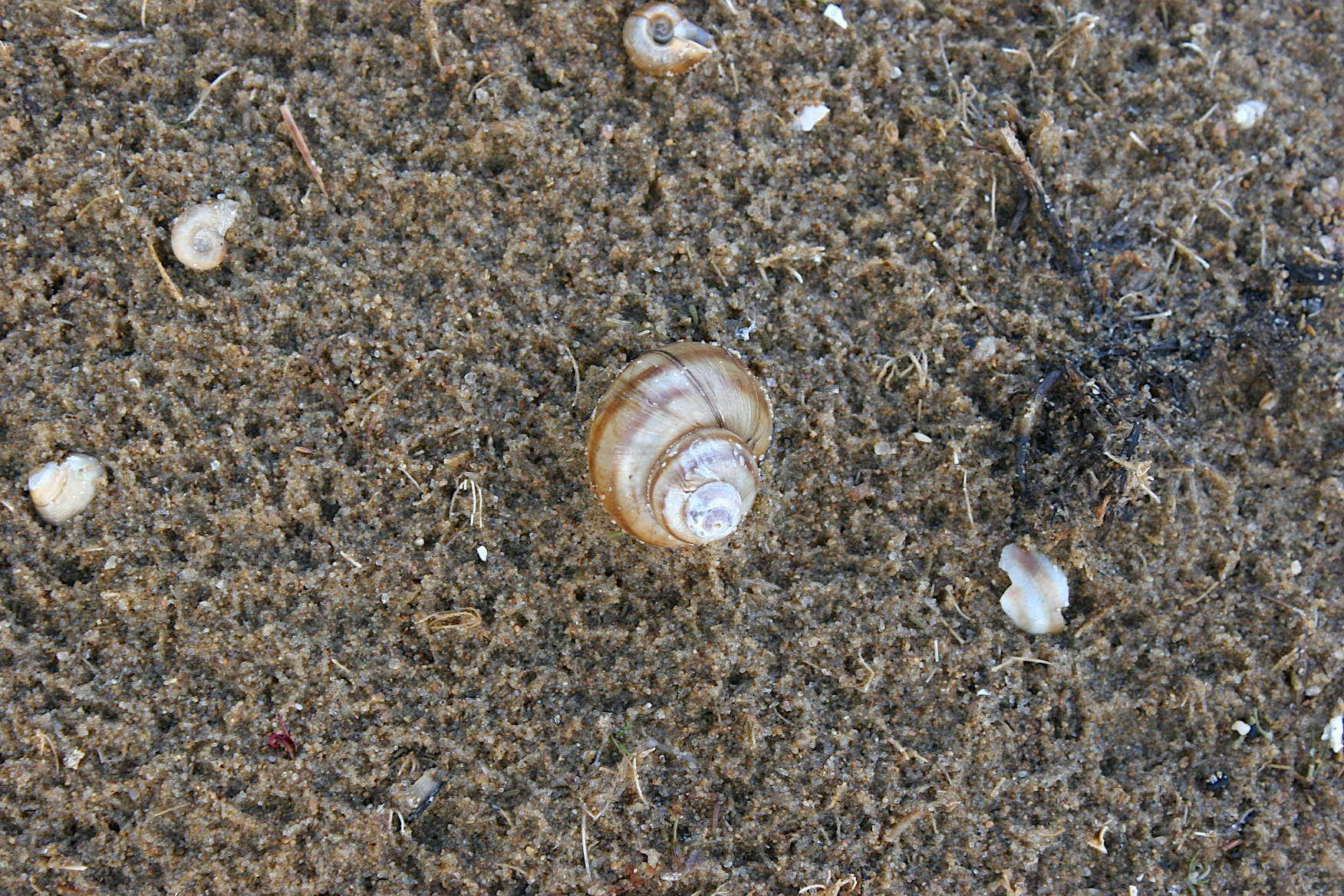
I love collecting shells, although this trip I didn’t gather any. Minnesota Prairie Roots copyrighted photo September 2021.
Here, where only months earlier I gathered shells with my 5-year-old granddaughter and waded into the lake and lay on a hammock with my two grandchildren cozied beside me.
The dock was already removed from the lake, but a child’s slide remained. Minnesota Prairie Roots copyrighted photo September 2021.
This lake place holds memories now of half-moons and pink skies and star-filled darkness. Of campfires and s’mores. Of little feet pounding the dock and sandy toes. Of waking up to a sunrise that writes poetry across the water, into the day, into Up North at the cabin.
TELL ME: Do you have cabin memories? I’d like to hear.
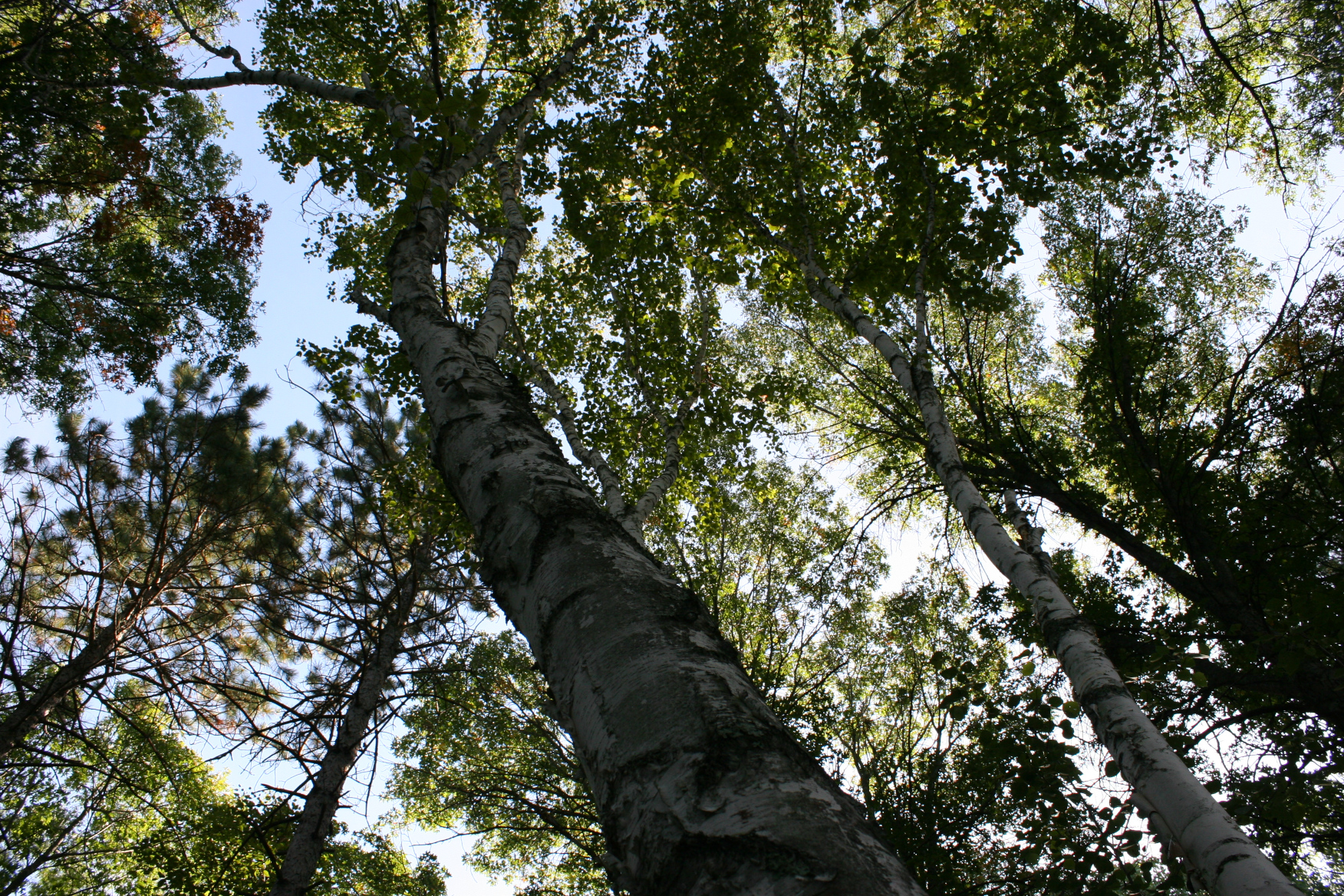
Looking skyward toward the trees inside the woods at Mission Park, Merrifield, MN. Minnesota Prairie Roots copyrighted photo September 2021.
A QUIET PLACE TO BE.
That message banners signs in Mission Township in the heart of central Minnesota’s lake country. The nearly 35-square-mile rural community is, indeed, quiet, if you tuck yourself in among the woods, off the main routes Up North to the cabin.
Leaves are changing color in the park. Minnesota Prairie Roots copyrighted photo September 2021.
From mid-May fishing opener well into autumn, until the first hard freeze, vacationers and seasonal cabin owners travel into and through Crow Wing County to reach their personal and resort destinations. And now Randy and I, too, are living the Minnesota Up North experience thanks to family who are sharing their lake property. Thrice this year we’ve spent time at the cabin, each visit heading to nearby Mission Park.
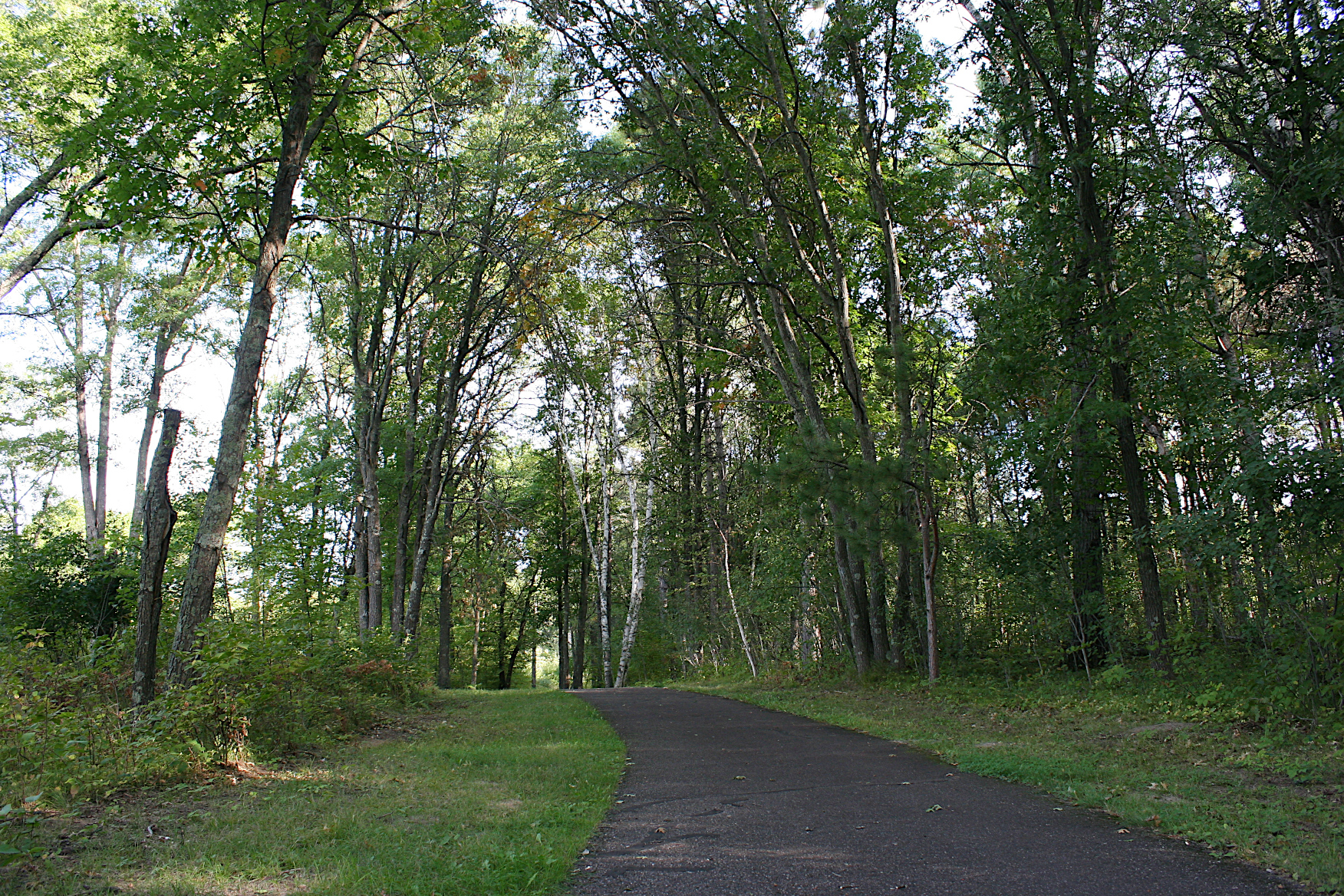
We typically follow the well-maintained paved trail. Minnesota Prairie Roots copyrighted photo September 2021.
The close-to-the-cabin proximity of the park and its 3/4-mile paved hiking trail draw us to this quiet spot in the woods. During our most recent stay in mid-September, we twice hiked in the park. Here leaves are already turning color and I paused often to photograph the autumn hues.
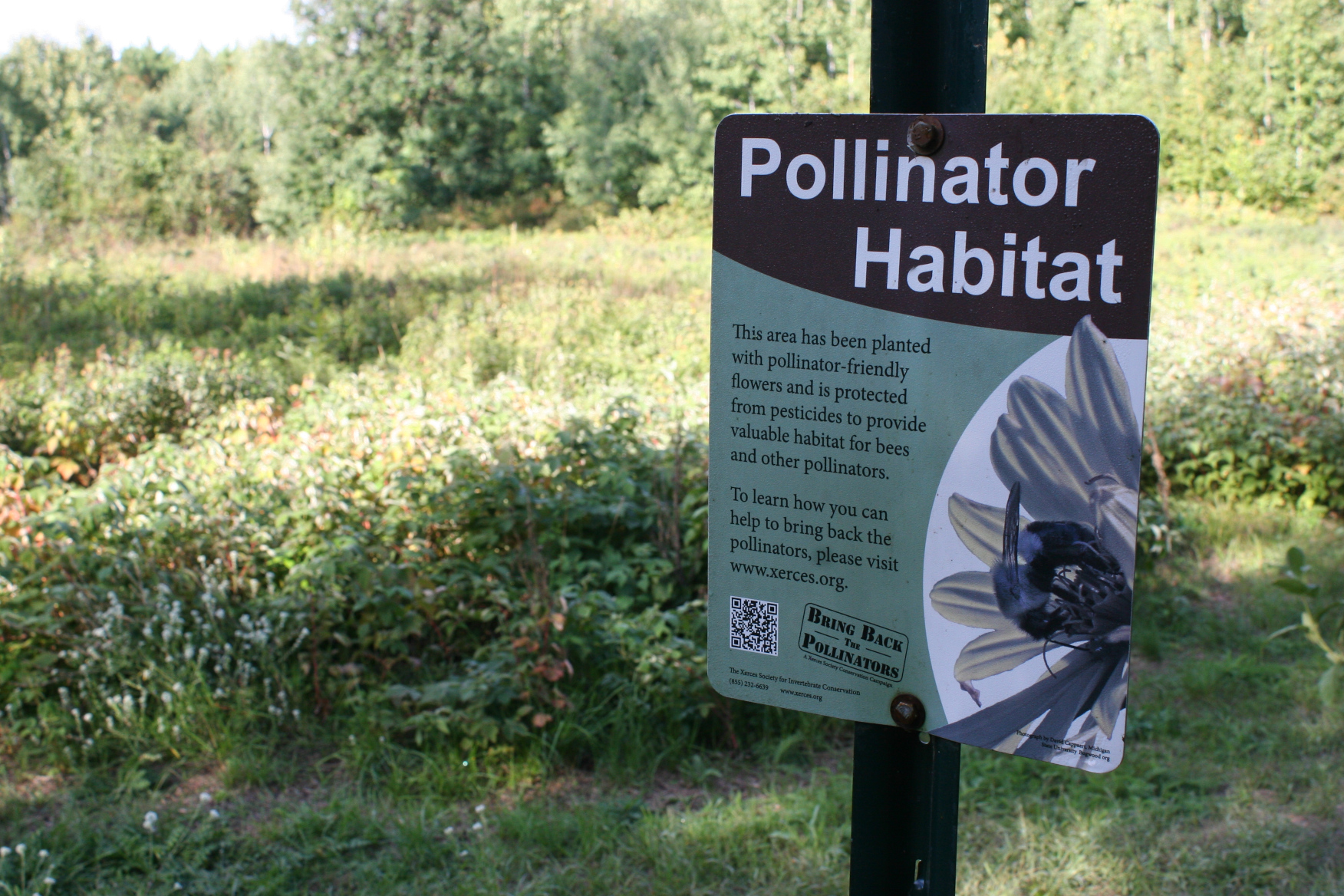
In an open spot in the woods, a pollinator garden has been started. I caught the end of the season. Minnesota Prairie Roots copyrighted photo September 2021.
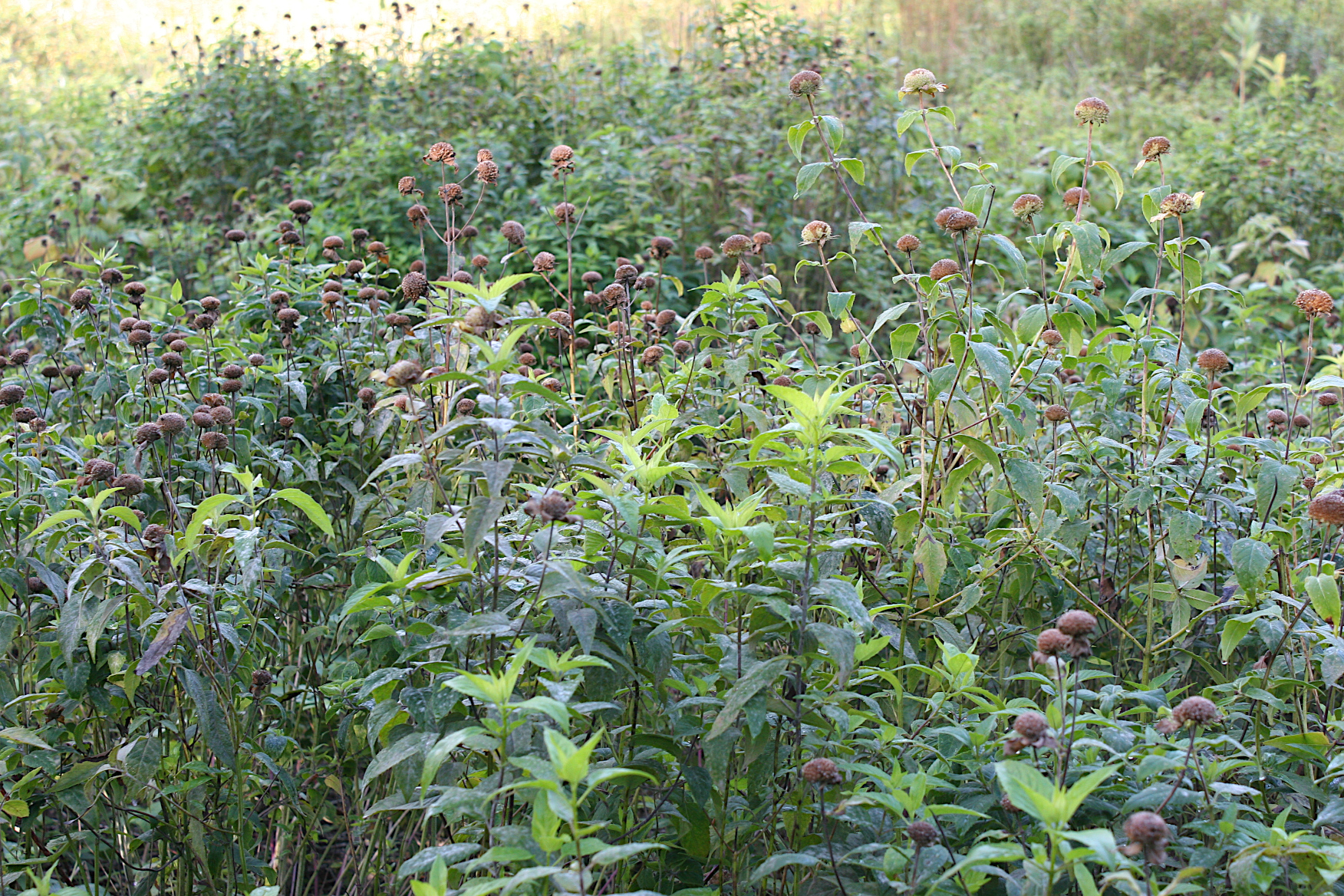
Seed heads in the pollinator garden. Minnesota Prairie Roots copyrighted photo September 2021.
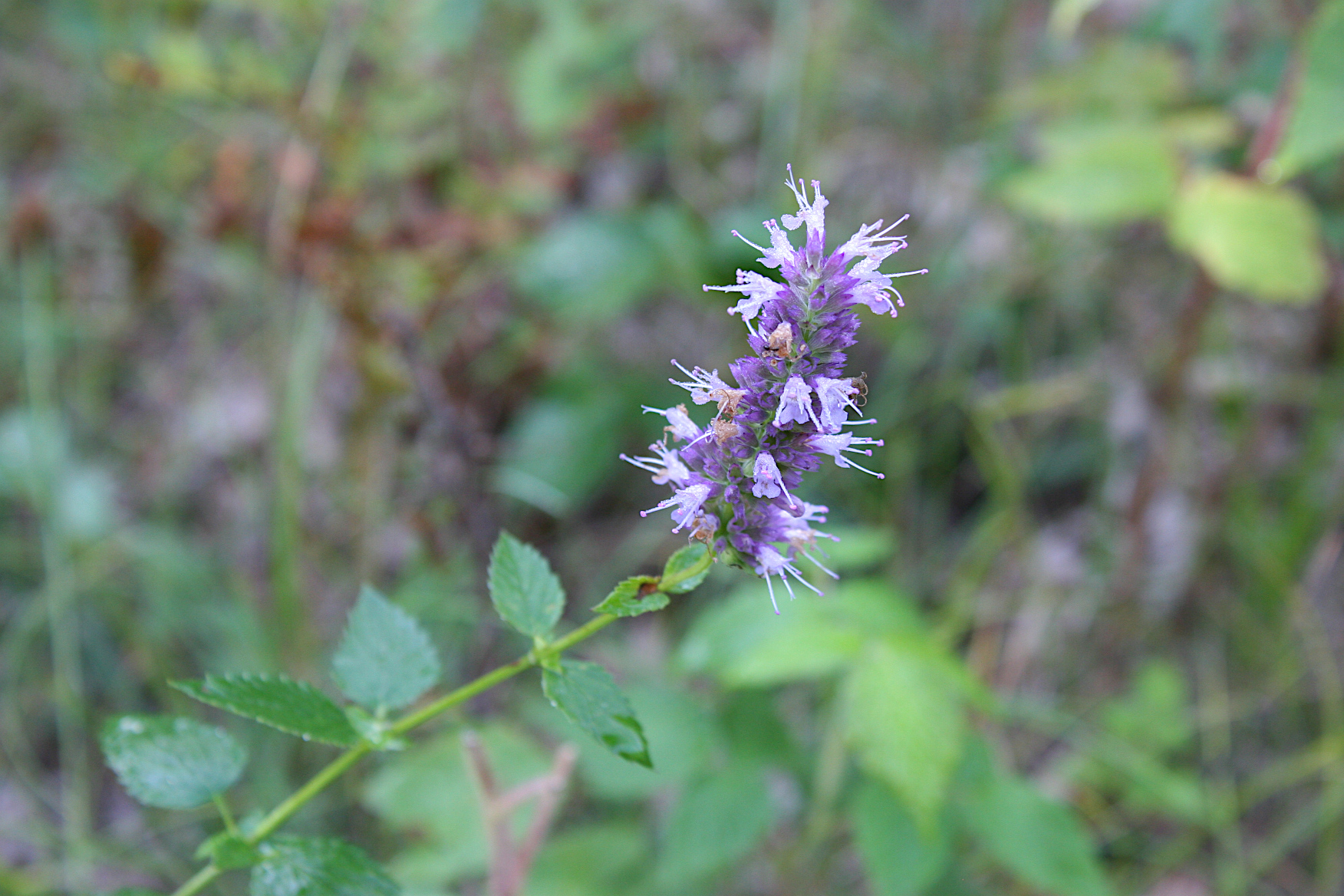
I spotted a few wildflowers still blooming along trails. Minnesota Prairie Roots copyrighted photo September 2021.
Once, while detouring along a mowed grass path to a pollinator garden, I also stopped to examine a pile of dung. It glistened in the sun, indicating freshness to my untrained non-expert eyes. The sheer volume of excrement led me to wonder…bear? Later, when I shared this with my brother-in-law who is especially knowledgeable about the outdoors, I determined this likely was not bear scat given the lack of acorns and other such matter in the pile. That said, bears (yes, plural) have been sighted in the area, according to the brother-in-law and a park worker who advised to “Make yourself as big as possible and don’t run” if you encounter a black bear. Alright then. Thank you.
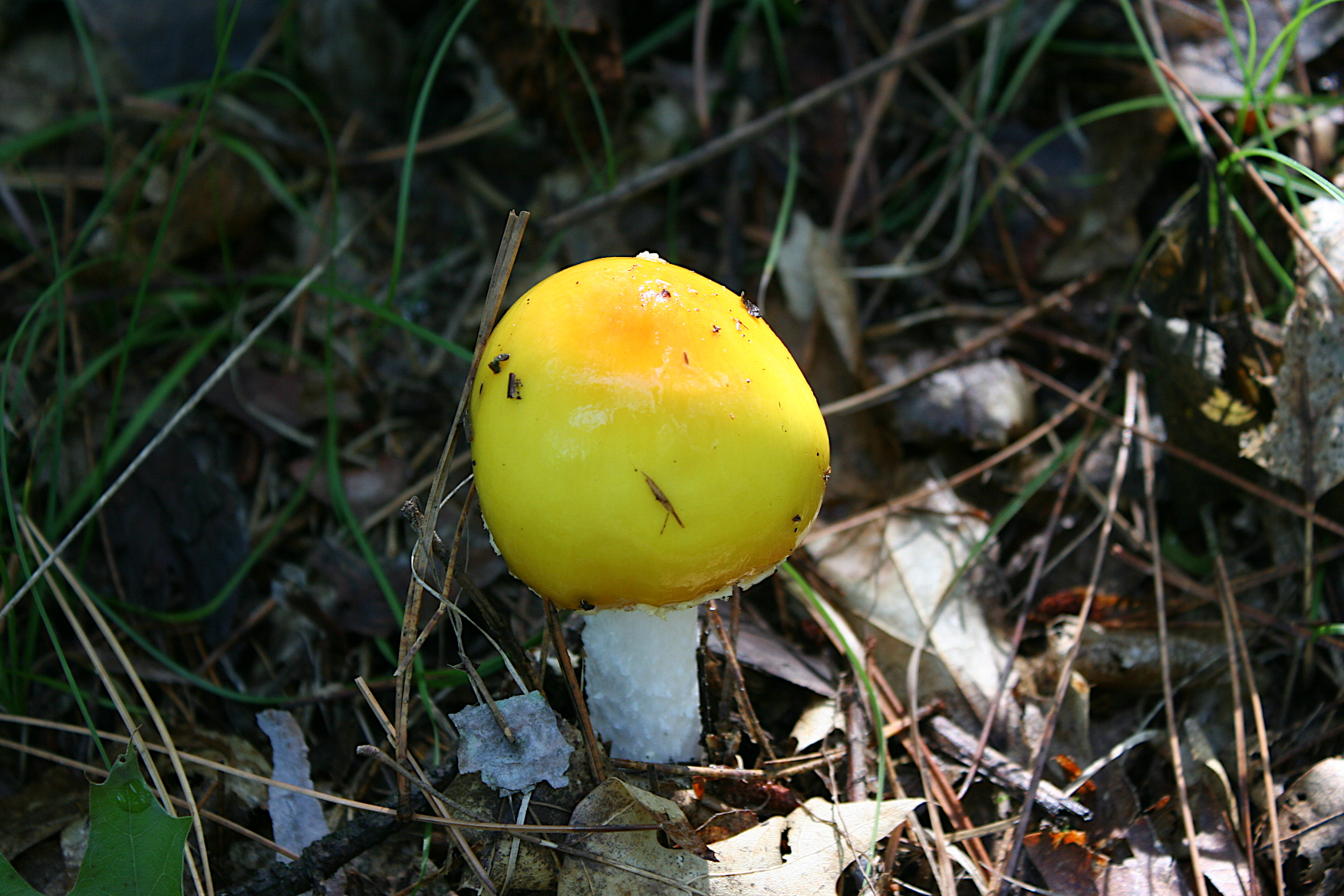
Among the colorful mushrooms I found. Minnesota Prairie Roots copyrighted photo September 2021.
Another unknown to me mushroom, nearly camouflaged. Minnesota Prairie Roots copyrighted photo September 2021.
I have never seen a mushroom in this vibrant hue. Minnesota Prairie Roots copyrighted photo September 2021.
As long as he was parceling out advice, I asked about the many wild mushrooms growing in the park. That, he said, was not within his realm of knowledge. Nor is it in mine. So I admired the fungi, in varieties and hues I’ve never seen. Ever. Anywhere. Bold yellow and orange. Stunning. Still life art.
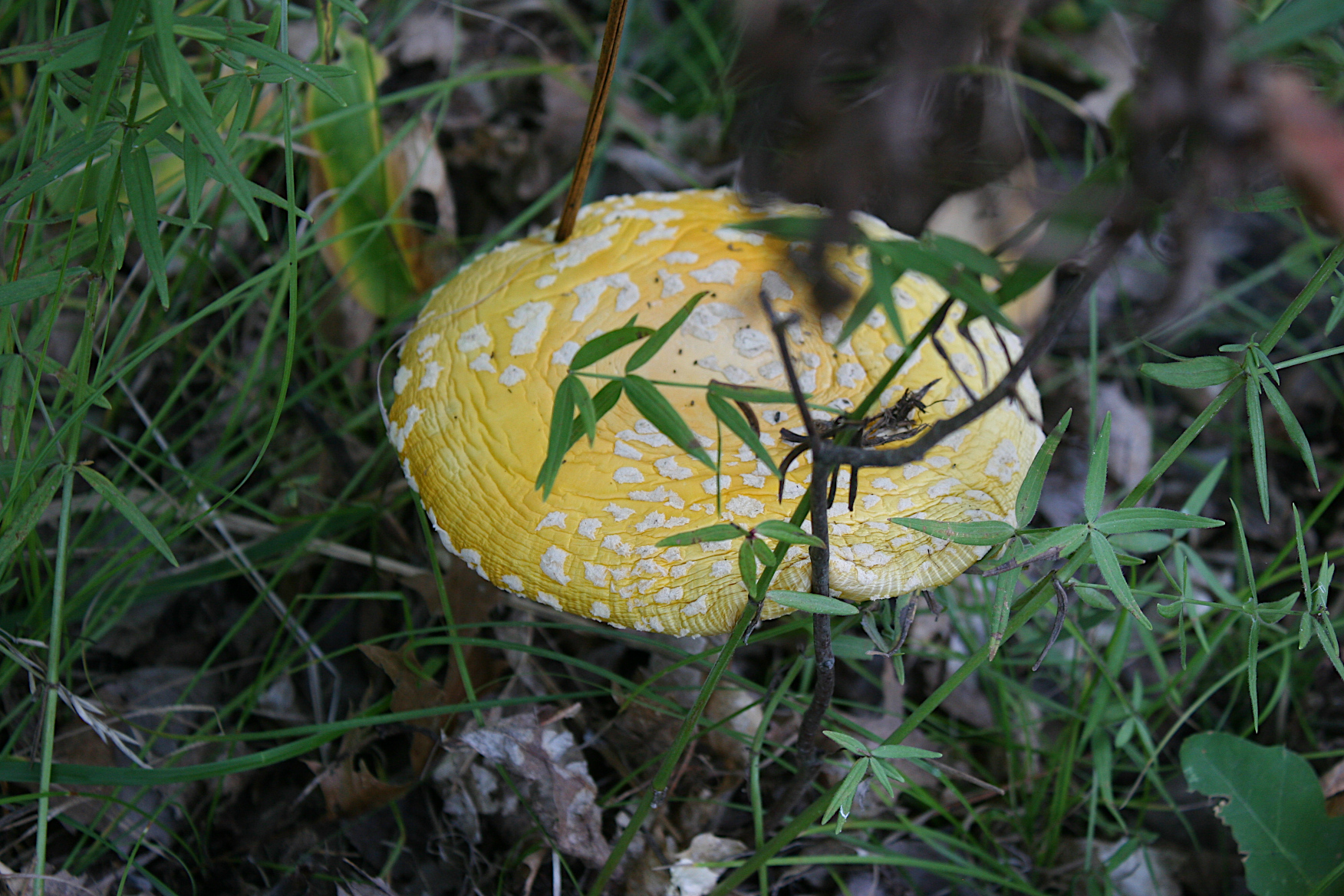
Discovered growing on the forest floor, a large disc-shaped mushroom. Minnesota Prairie Roots copyrighted photo September 2021.
If quick research is correct, the more colorful the mushroom, the more likely it’s poisonous. Deadly. Nope, you’re not going to catch me picking mushrooms in the woods. I’ll settle for photographing them, as much as I like the taste of (store-bought) portabella mushrooms.
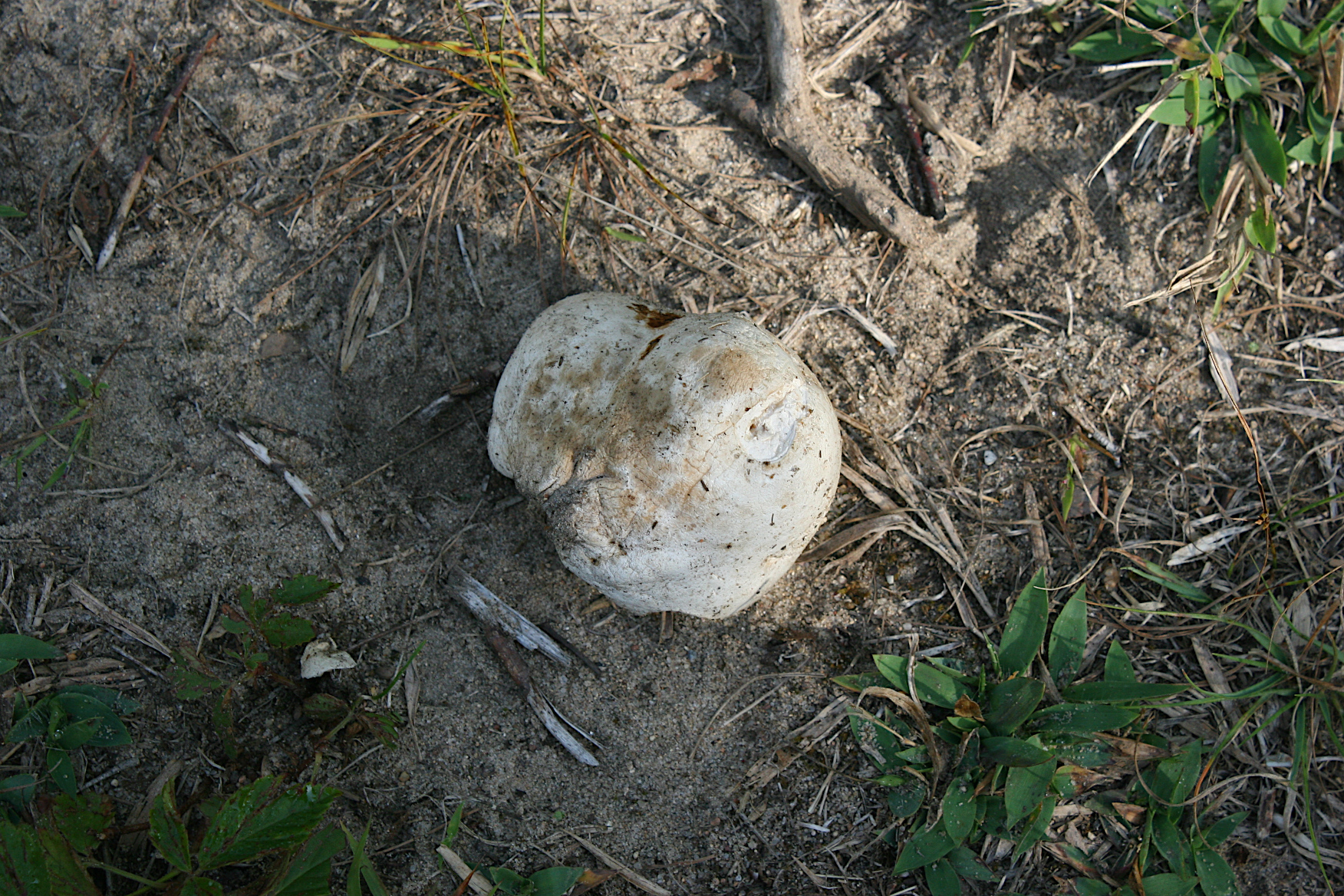
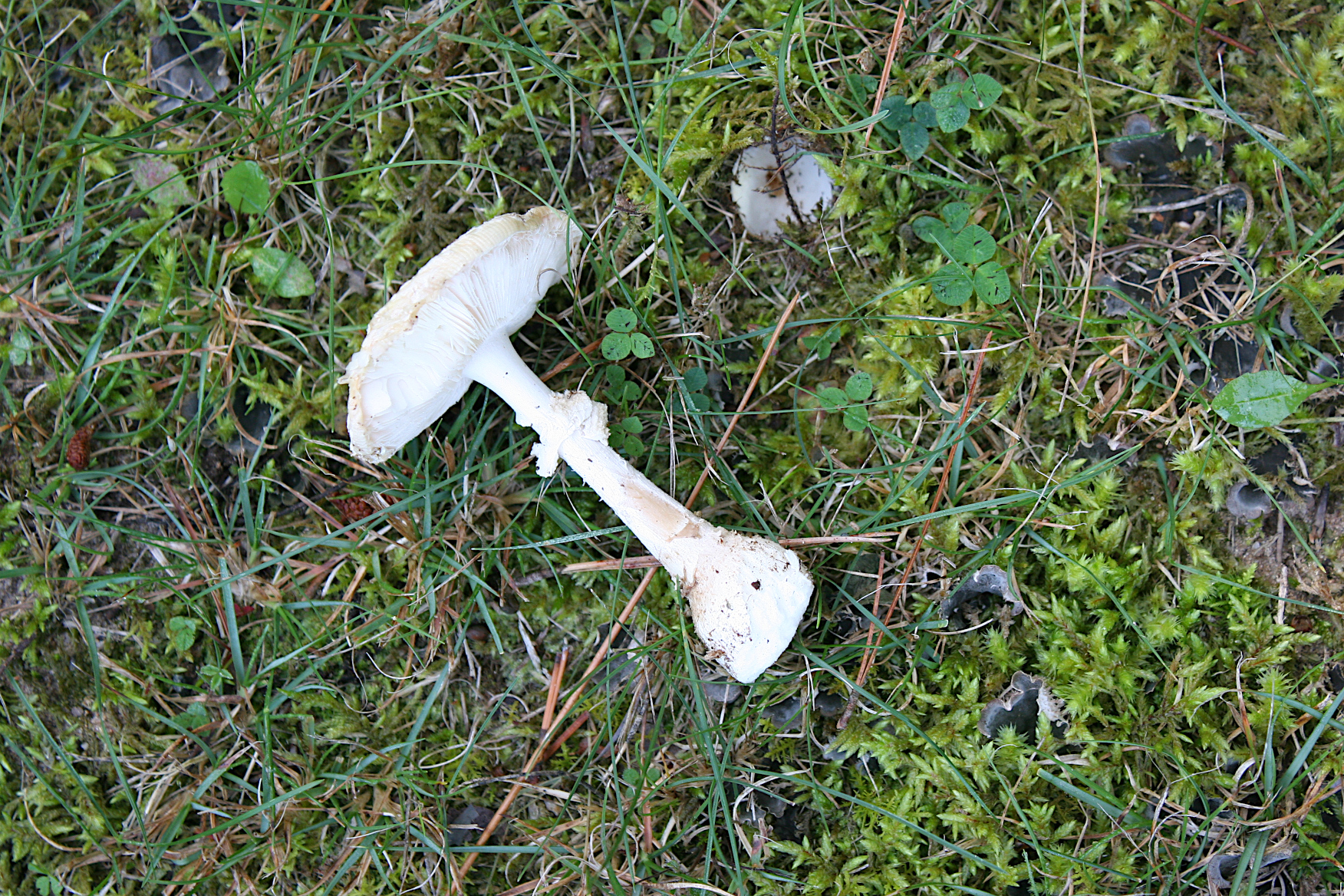
I spotted this broken off mushroom on the grass at woods’ edge. Minnesota Prairie Roots copyrighted photo September 2021.
The park employee noted, however, that a guy knowledgeable about mushrooms forages for them here.
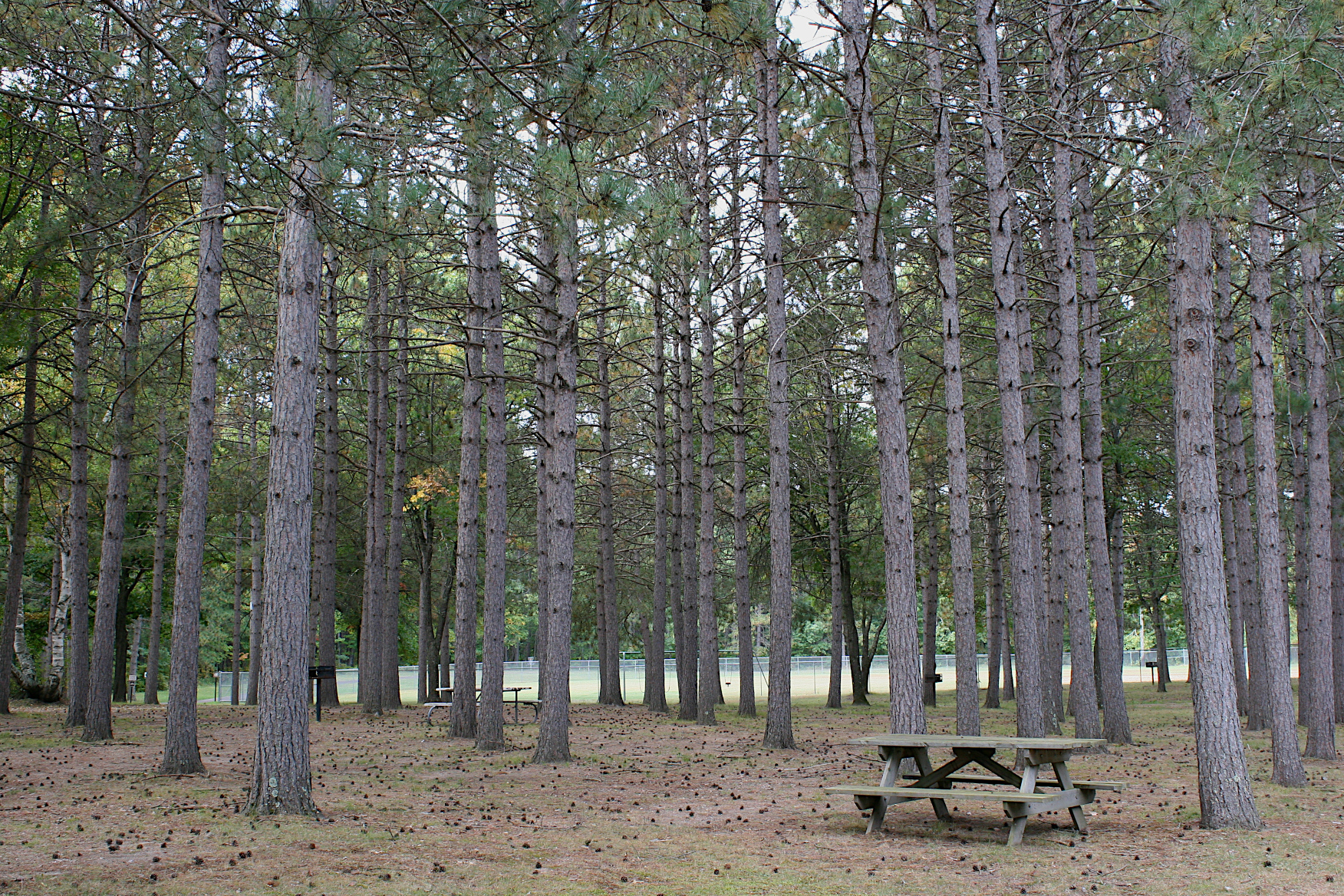
Set among the slim jackpines, a picnic area. Minnesota Prairie Roots copyrighted photo September 2021.
If you’re not into mushroom hunting or photography or hiking, Mission Park offers plenty of other options—tennis and pickleball courts, a disc golf course, ball fields, horseshoe pits, playground, picnic shelter and much more.
Every single time we’ve hiked through this park, the motto, A QUIET PLACE TO BE, holds true. Here you can hear the quiet, even as you listen for bears.
#
PLEASE CHECK BACK for more photos from Mission Park and a post on the area’s connection to my Faribault church.
If you are familiar with mushrooms, feel free to educate me on those I photographed.
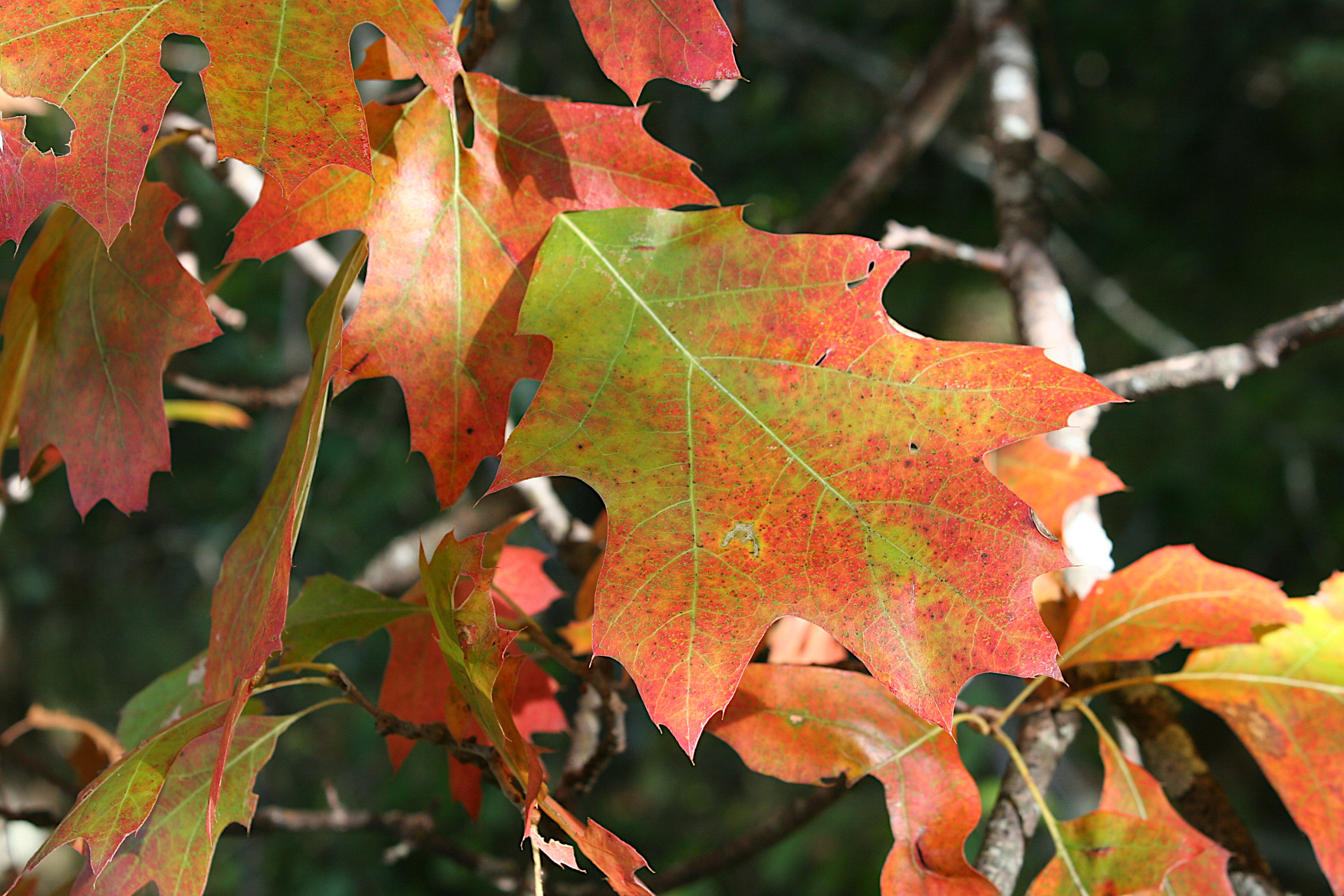
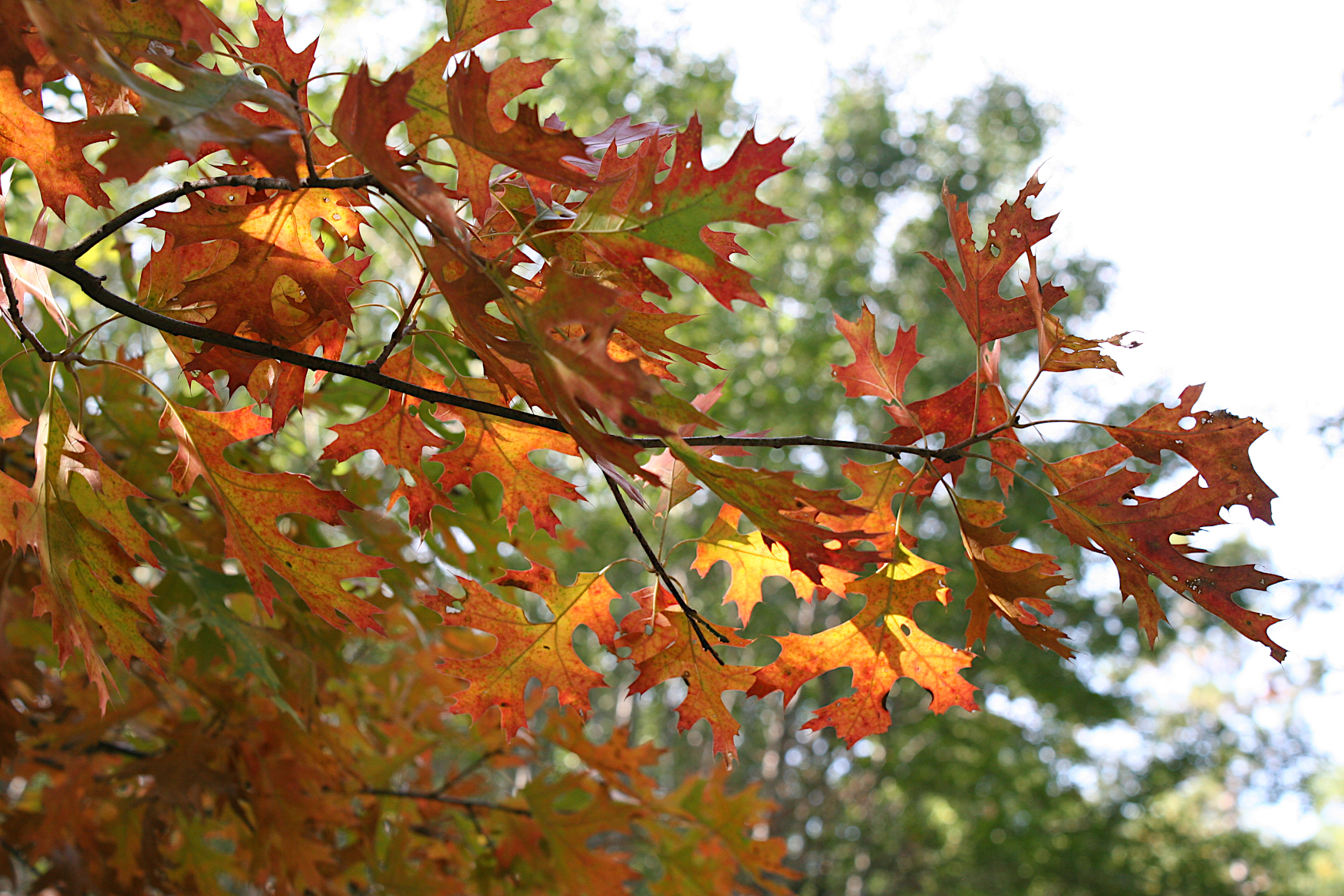
Colorful oak leaves at Mission Park south of Crosslake. Minnesota Prairie Roots copyrighted photo September 2021.
DAYS AGO I SWITCHED out the art in my home to autumn scenes. To reflect the changing season.
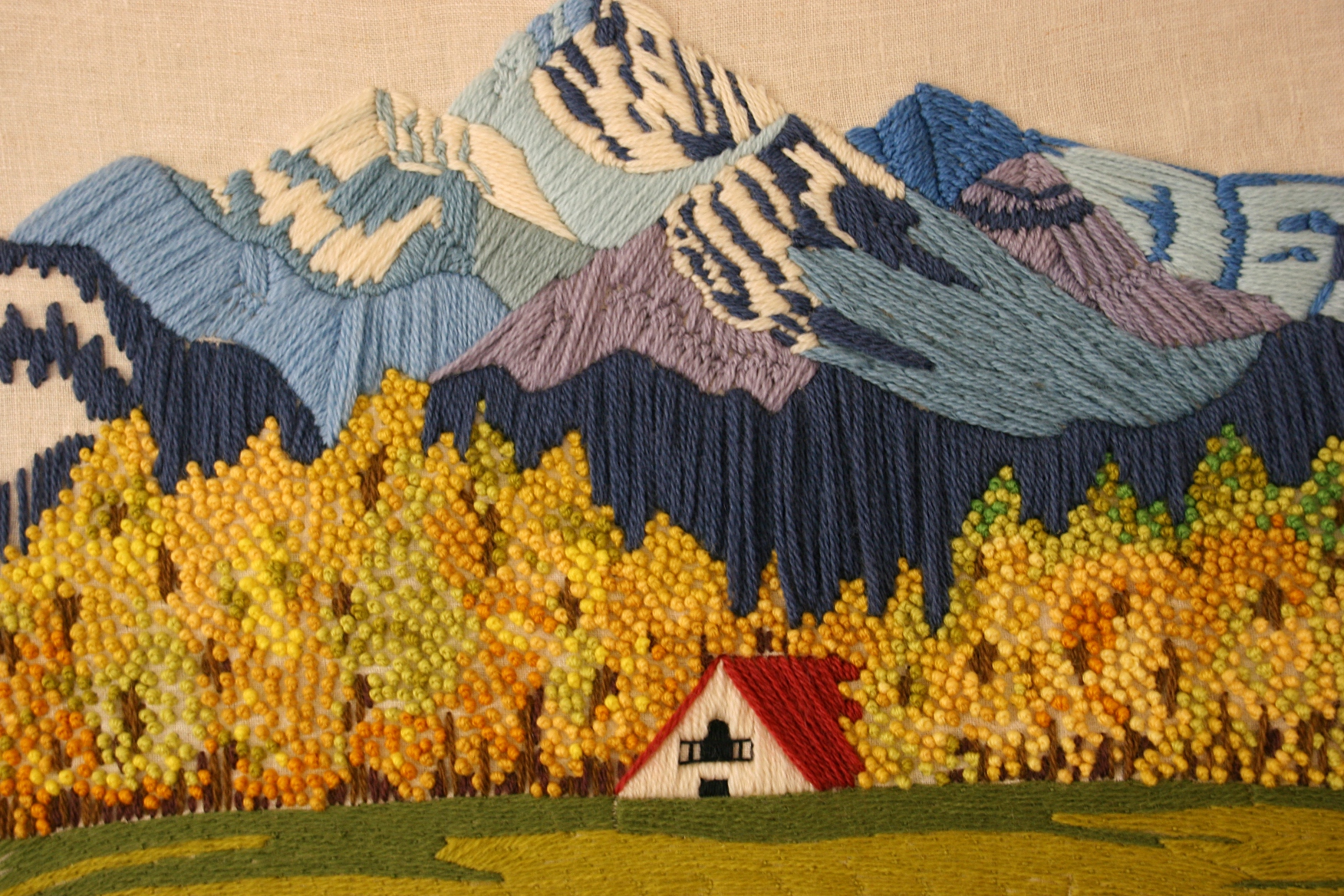
I stitched this crewel embroidery art in the 1970s from a kit gifted by an aunt and uncle. Minnesota Prairie Roots copyrighted file photo.
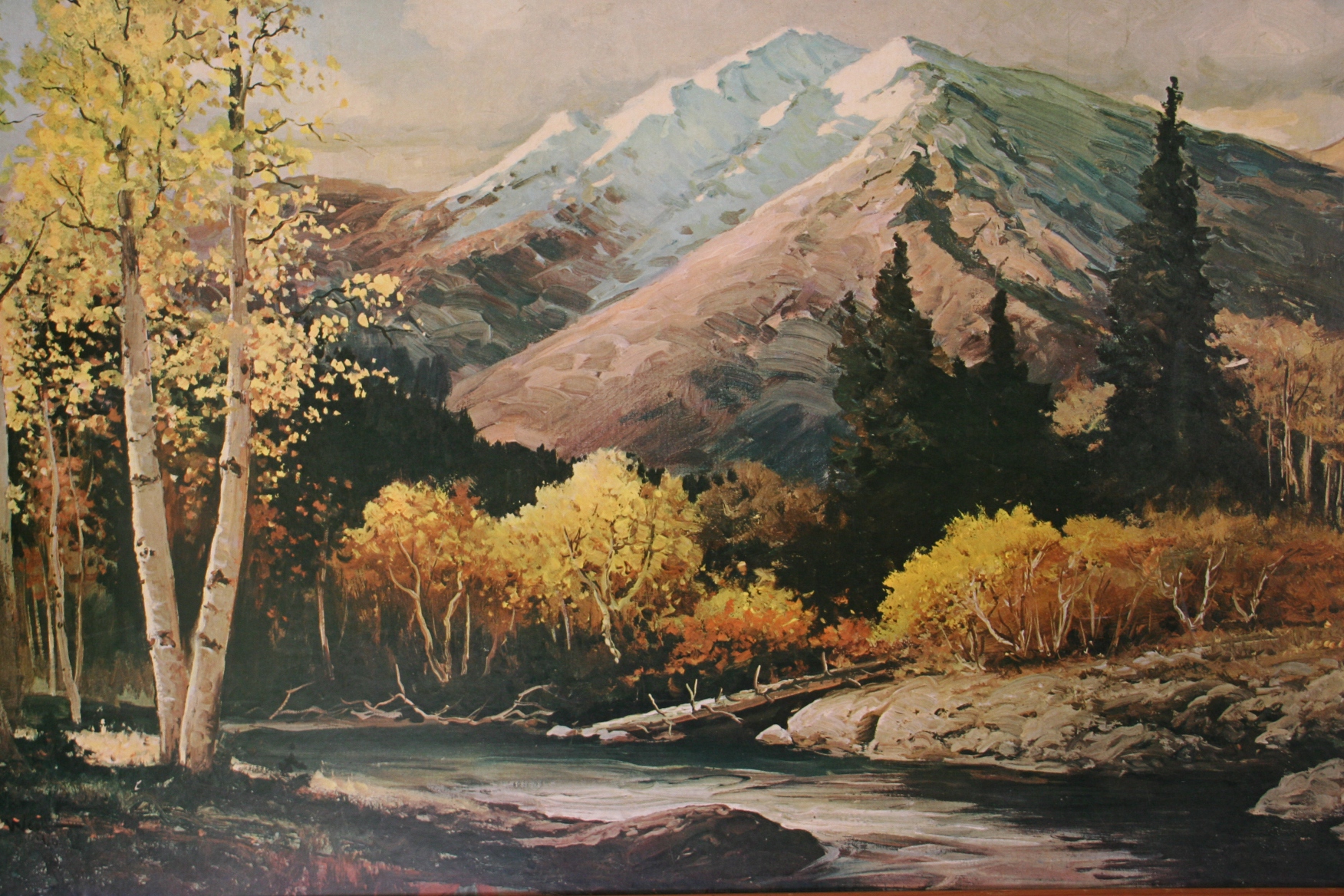
I leaned two paint-by-number autumn landscapes, acquired several years ago in Detroit Lakes, atop a vintage chest of drawers. I exchanged an old mill scene for a rendition of a river winding through flaming orange woods in an interchangeable print my parents received as a 1967 housewarming gift. I hung a crewel embroidery piece I stitched of a multi-hued treeline set against a mountain backdrop. It was a 1974 high school graduation gift from my Uncle John and Aunt Sue. And I placed, too, a mammoth print of Robert Woods “White Mountains and Aspens” purchased for a few dollars at a garage sale in Medford.
“White Mountains and Aspens” by Robert Wood. Minnesota Prairie Roots copyrighted file photo.
Every piece of art I own—and I have a lot, acquired mostly at garage sales, thrift stores and recycled art sales at bargain prices—means something to me. Some is personal. But others simply inspire me or give me peace or take me into nature, as does most of the art now decorating my home.
It’s as if I’m bringing the outdoors in.
Outside, autumn eases into the landscape with oranges, yellows, reds and browns painting over green leaves. I noticed that especially last week on a short get-away to the central Minnesota lakes region where Randy and I stayed for several days at a family lake cabin south of Crosslake. We hiked into the woods at Mission Park and I found myself stopping often to photograph the leaves and the abundance of wild mushrooms. I’ll showcase images from that park soon. But for today, you get this solo image.
Take time to step outdoors. To walk in the woods. To appreciate the beauty of autumn as she paints color into the landscape. I welcome these September days. The cool mornings and evenings. The sunshine that warms the day. The earthy scent of the outdoors. The changing colors that delight me visually, that make this season so beloved to me.
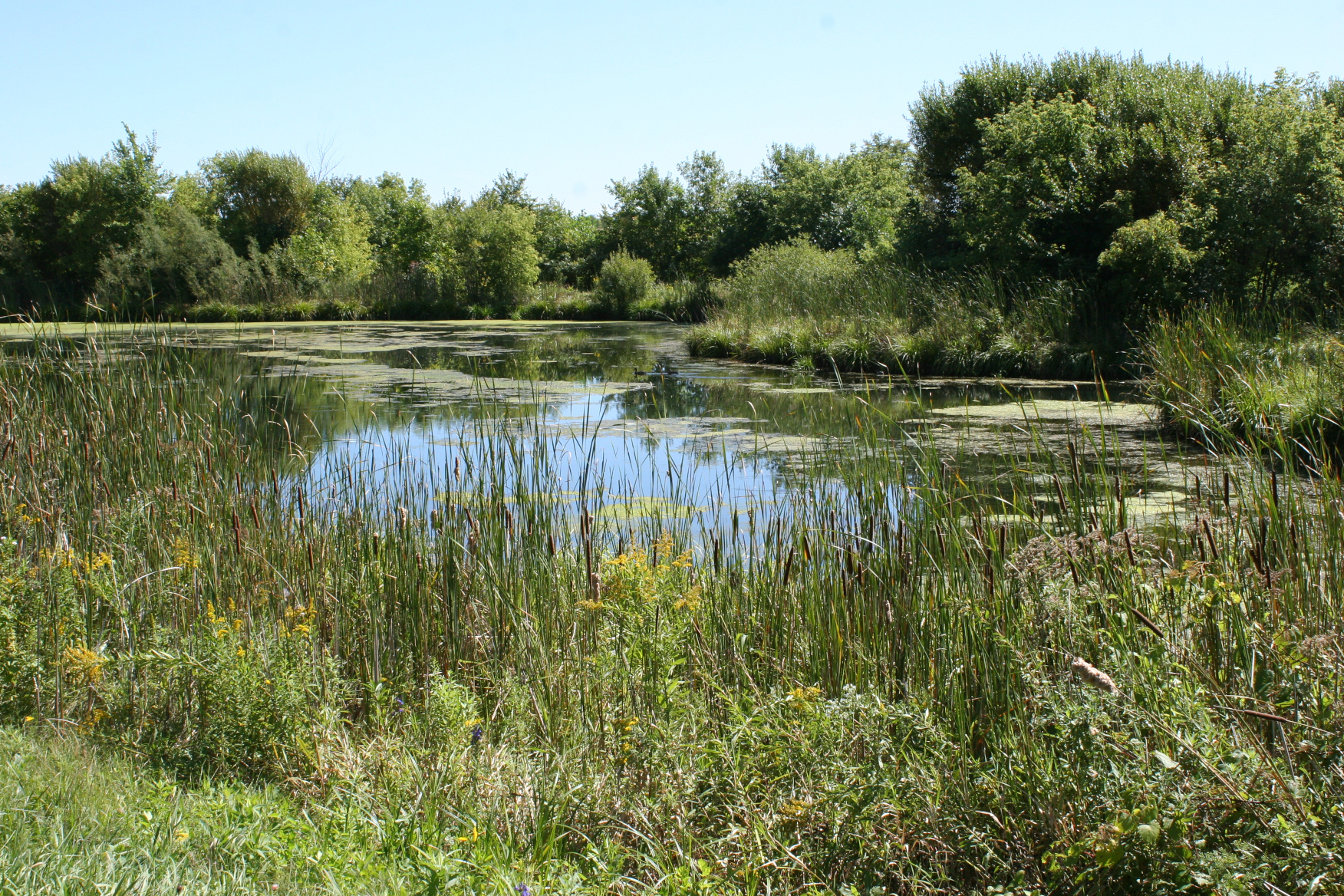
Among the many beautiful wildflowers growing at Faribault Energy Park. Minnesota Prairie Roots copyrighted photo September 2021.
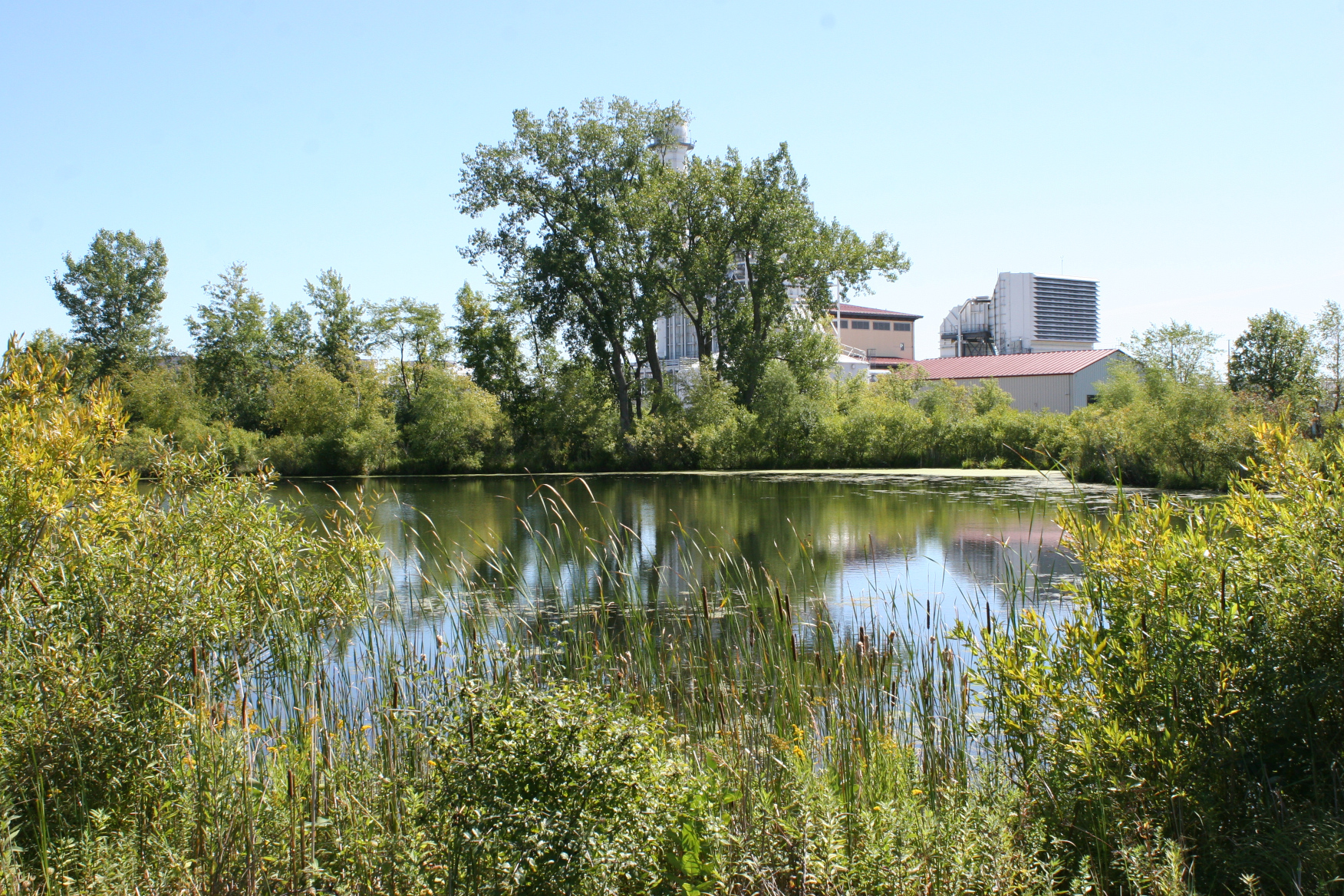
DESPITE THE STEADY THRUM of traffic along adjacent Interstate 35 and the drone of the power plant, Faribault Energy Park remains a favorite place to walk. Not because it’s quiet—because it’s not, not at all. But because of the dirt trails that wind through 35 acres of wetlands and ponds.
Dirt trails ring the ponds. Minnesota Prairie Roots copyrighted photo September 2021.
Here, when I put sneaker to ground, I feel connected to the land. There’s something satisfying and comforting about earth directly beneath my soles.
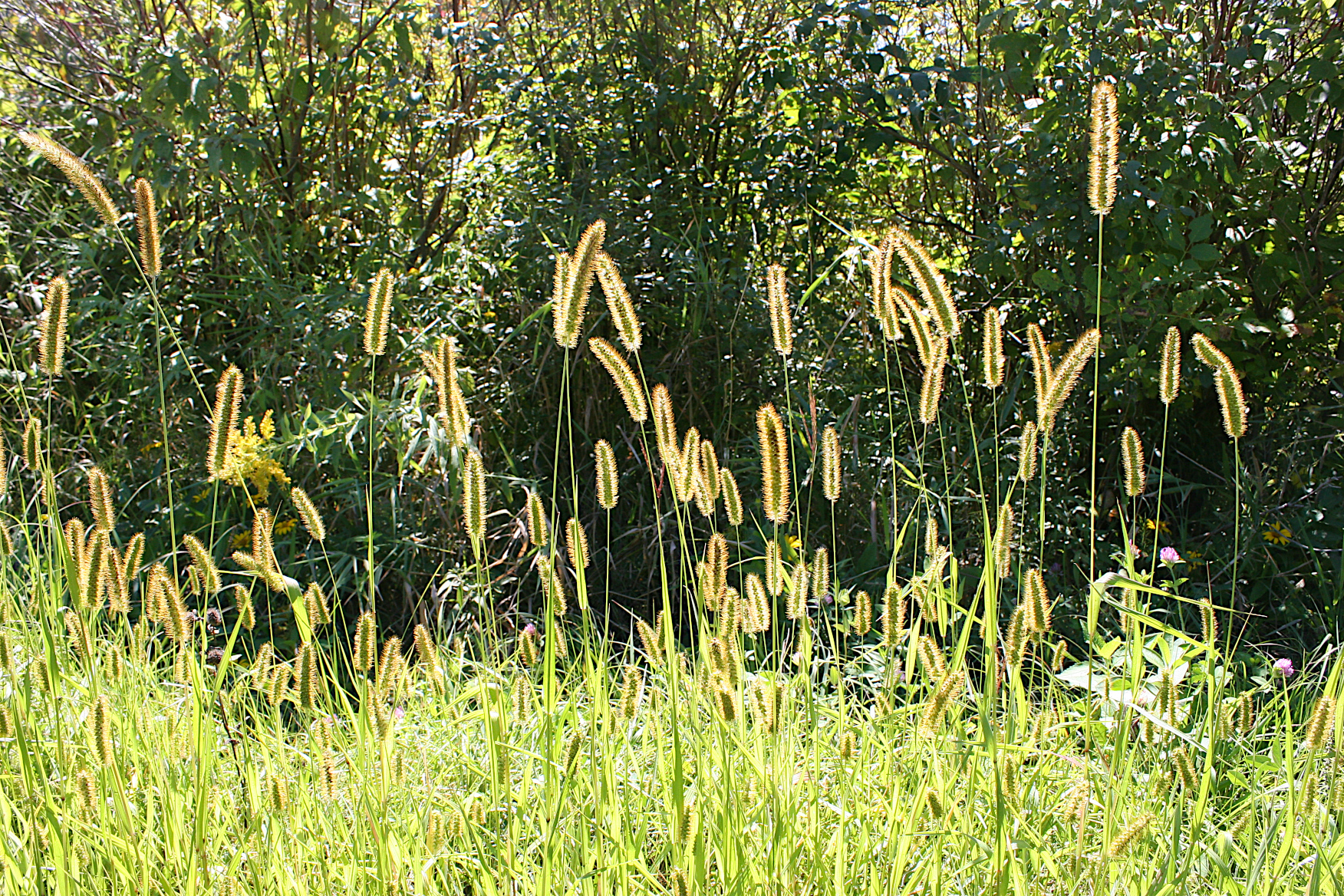
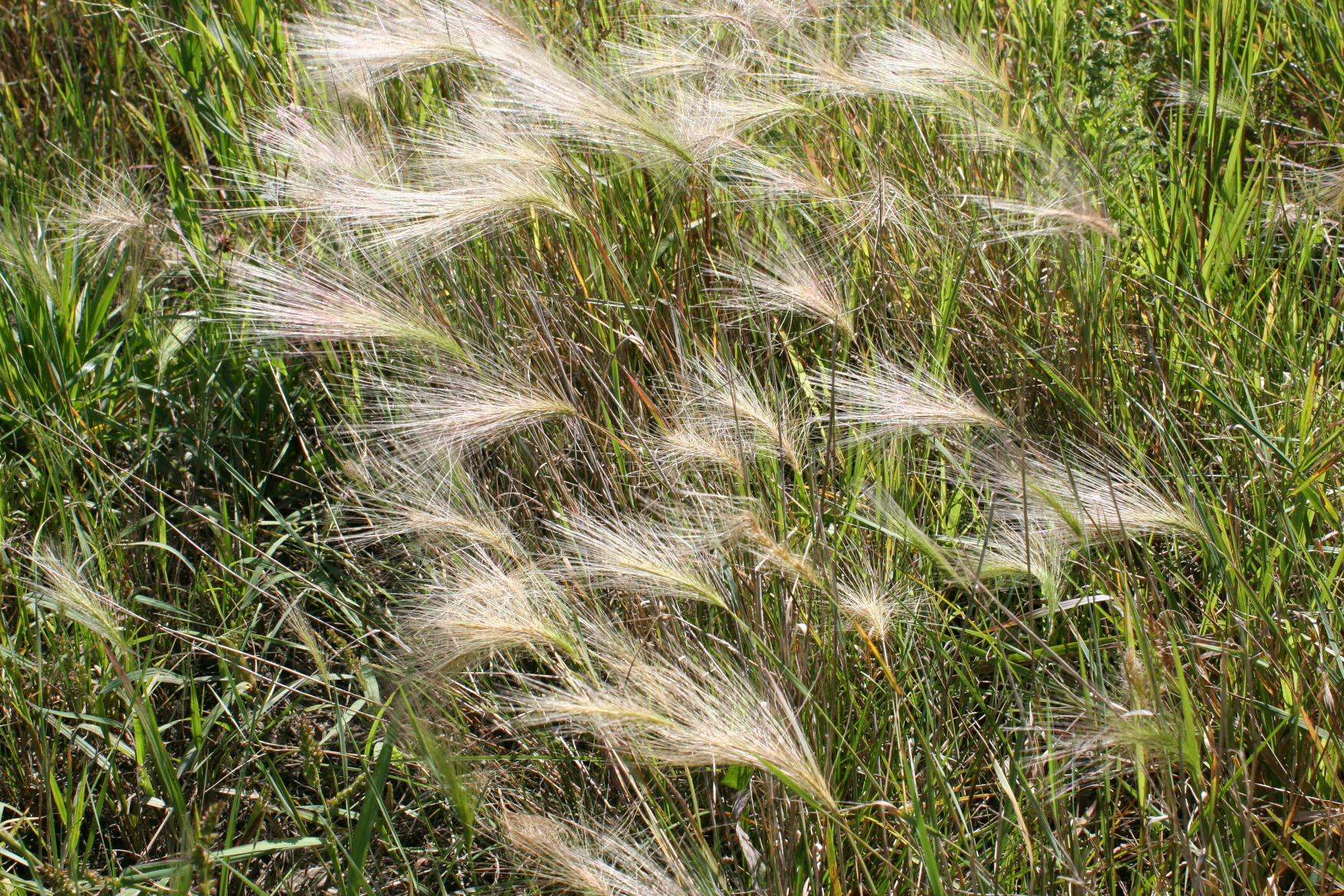
The foxtail, especially, remind me of the prairie. Minnesota Prairie Roots photo September 2021.
And although this isn’t prairie, the openness of this park appeals to me. It reminds me of my prairie roots, of the gravel drives and roads I biked and walked while growing up in southwestern Minnesota. Sometimes my heart hurts for missing those familiar wide open spaces and spacious skies.
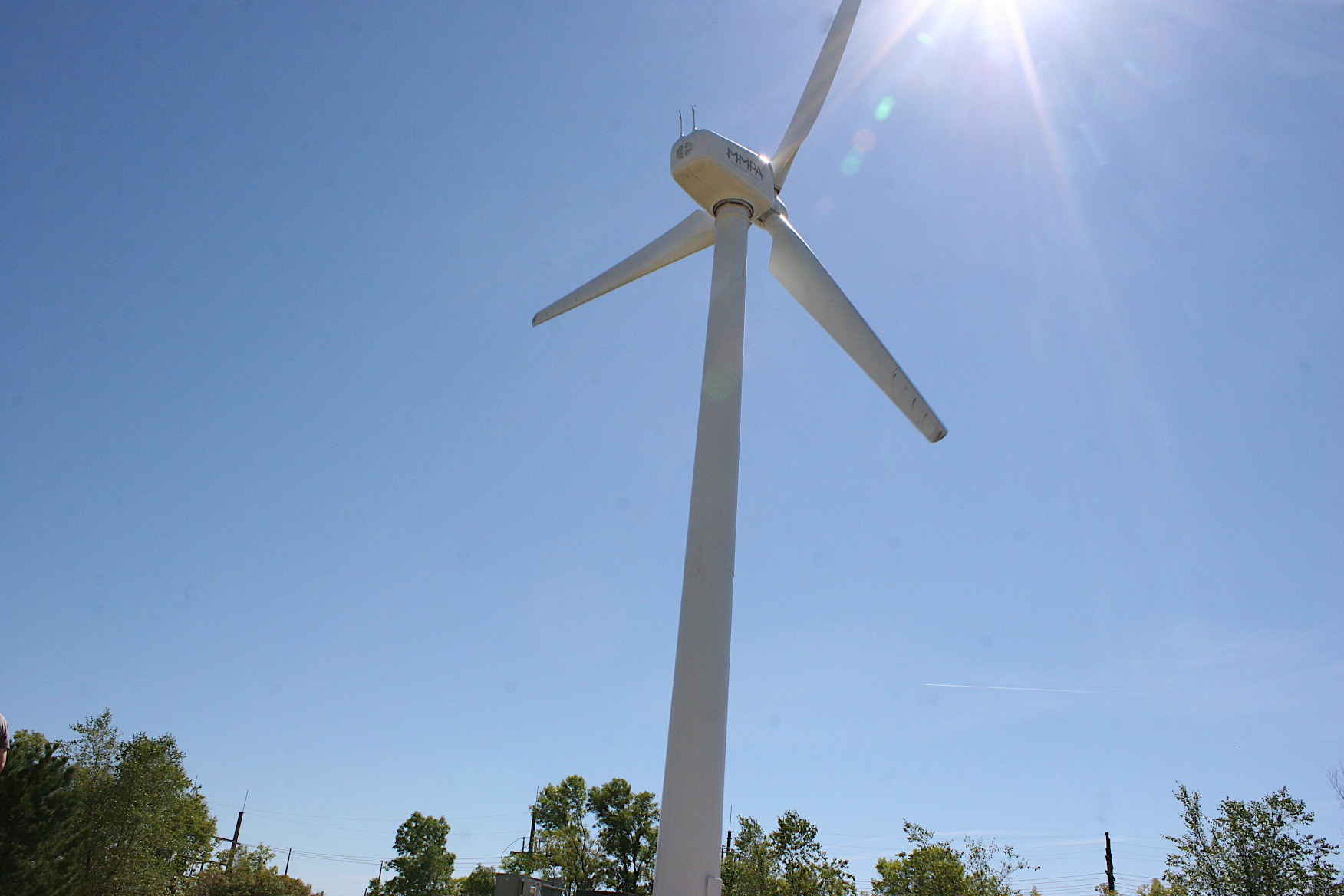
The park’s single wind turbine. Minnesota Prairie Roots copyrighted photo September 2021.
At Faribault Energy Park, I pause occasionally to look skyward, to the expanse of blue. Or toward the churning arms of the wind turbine which, during my most recent visit, spun shadows across the land.
A view of the power plant from across the pond. Minnesota Prairie Roots copyrighted photo September 2021.
It should be noted that I’m not particularly fond of wind turbine fields. I understand their importance, but don’t like their visual intrusion upon the landscape. Like visual pollution, they detract from the beauty of the land. They seem out-of-place, invasive to my eyes. I feel the same about massive solar panel fields planted on farmland. But here at Faribault Energy Park, only one wind turbine stands, across the road from a solar garden (not field).
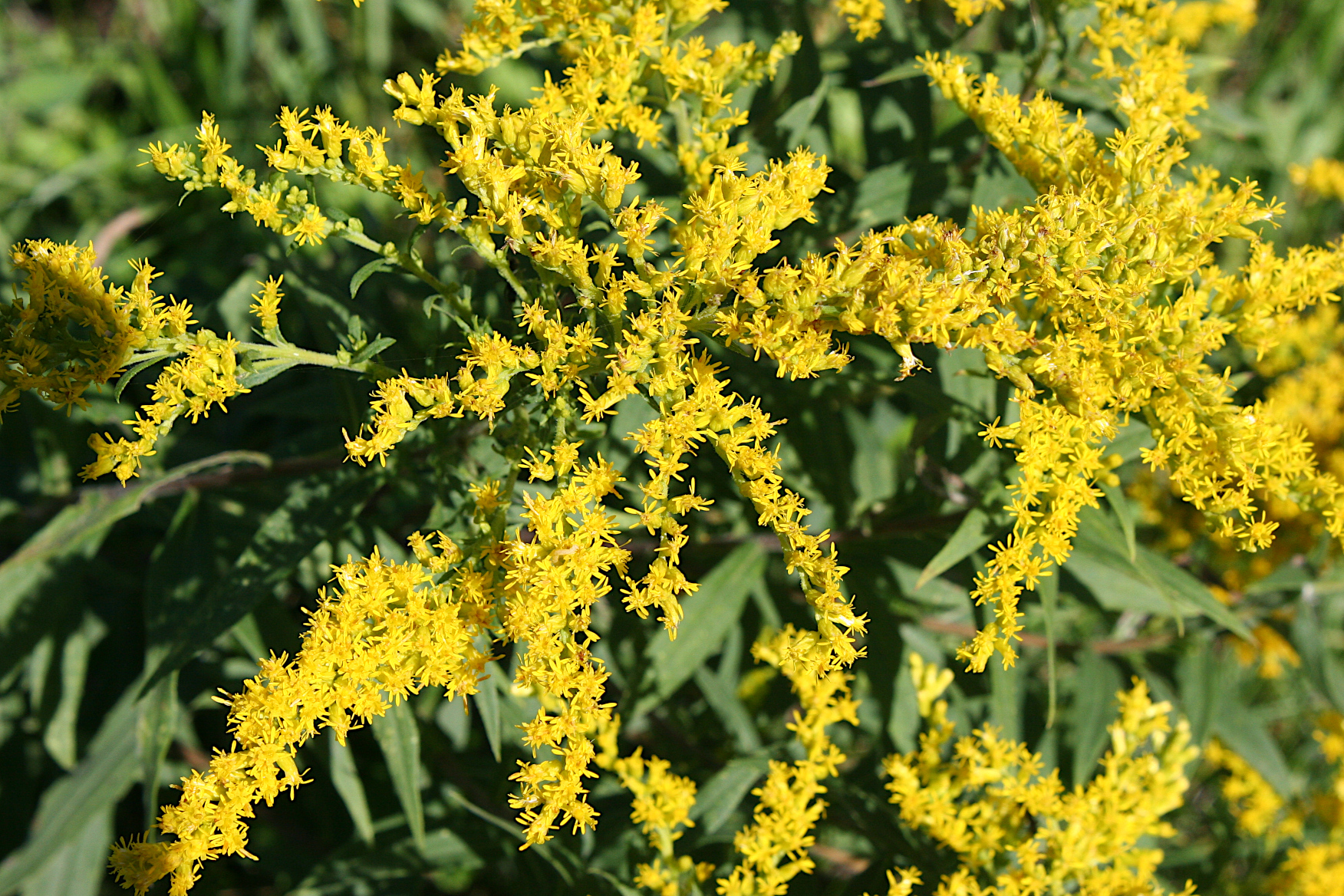
Goldenrod, one flower I can identify. Minnesota Prairie Roots copyrighted photo September 2021.
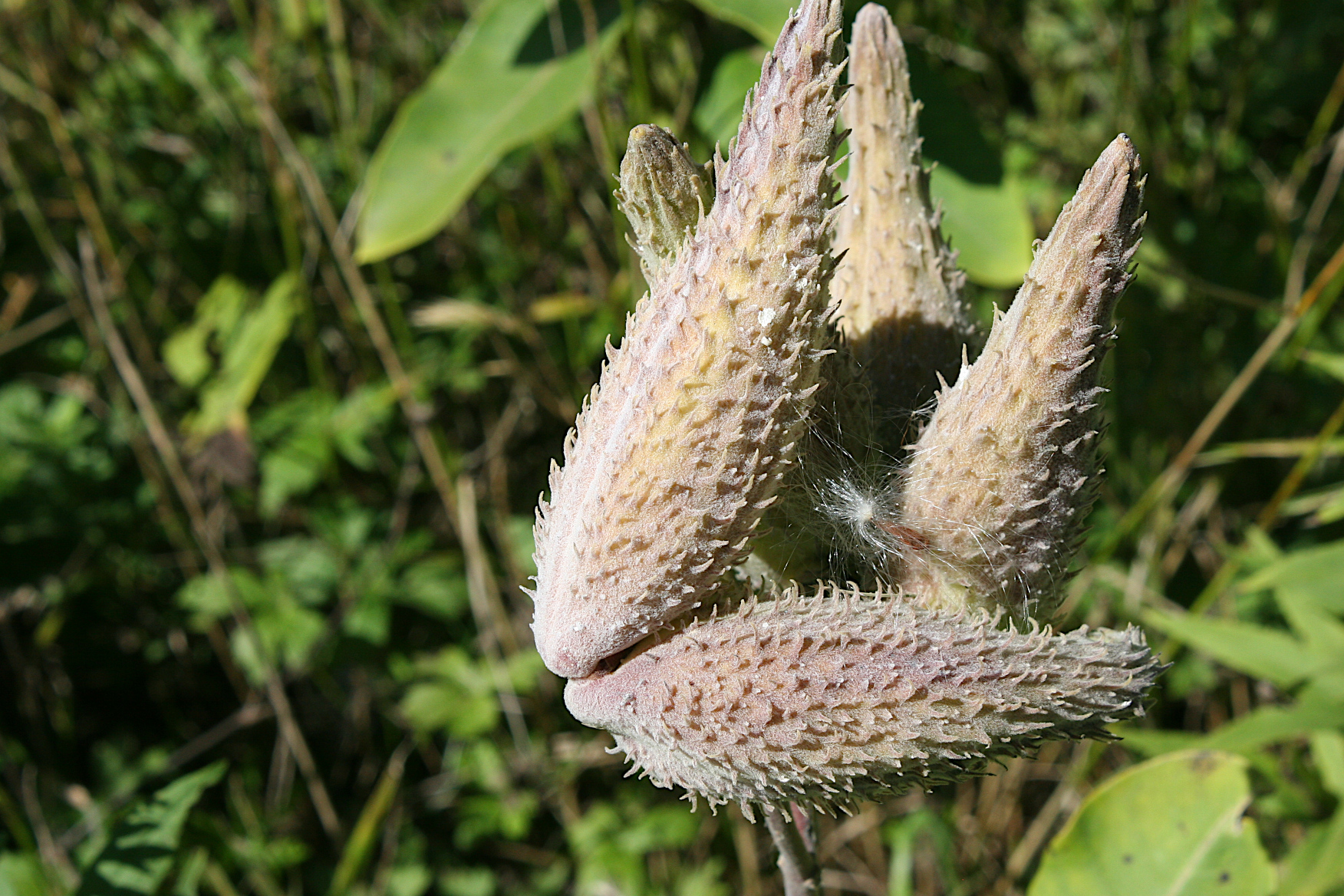
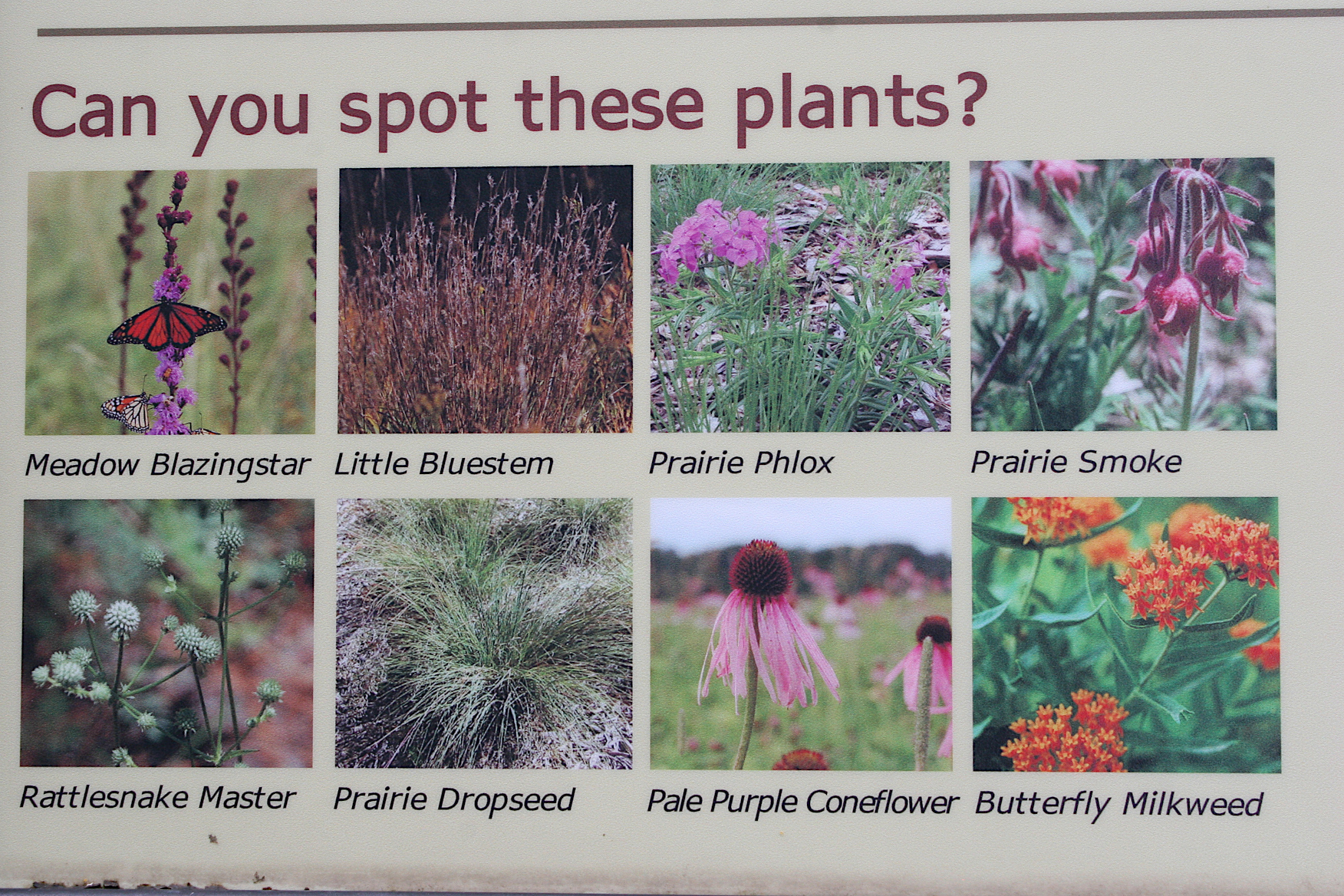
I’ve always loved milkweeds from fluff to pods to how they are necessary for the monarch butterfly population. Minnesota Prairie Roots copyrighted photo September 2021.
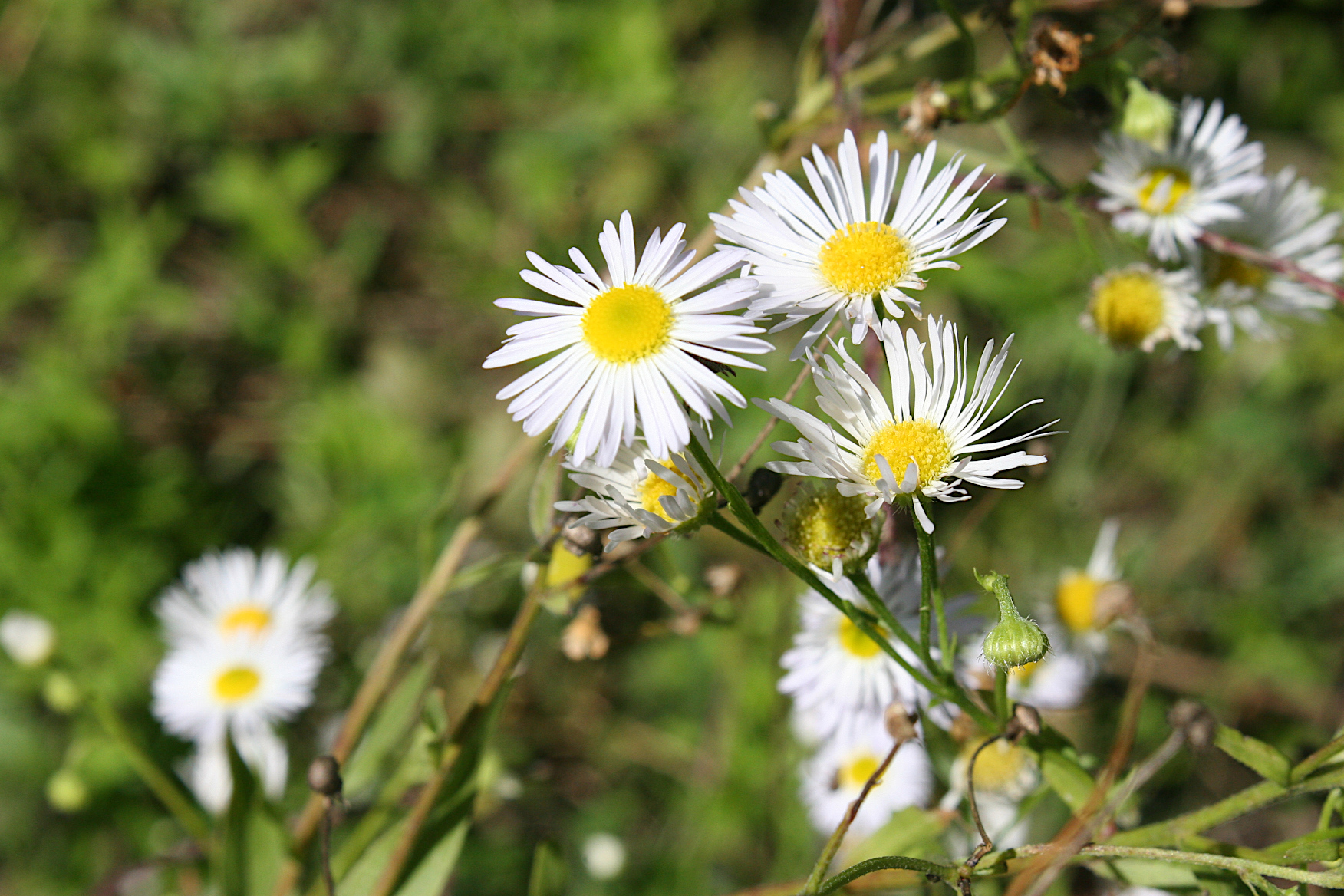
Dainty wildflowers. Minnesota Prairie Roots copyrighted photo September 2021.
Mostly, I notice the wildflowers and grasses. Goldenrod. Black-eyed Susans. An endless variety of plants that I should take time to research for identification. Rather, I settle for photographing them and appreciating their beauty. How they sway in the wind. How they appear in the sunlight. How they splash color into the landscape.
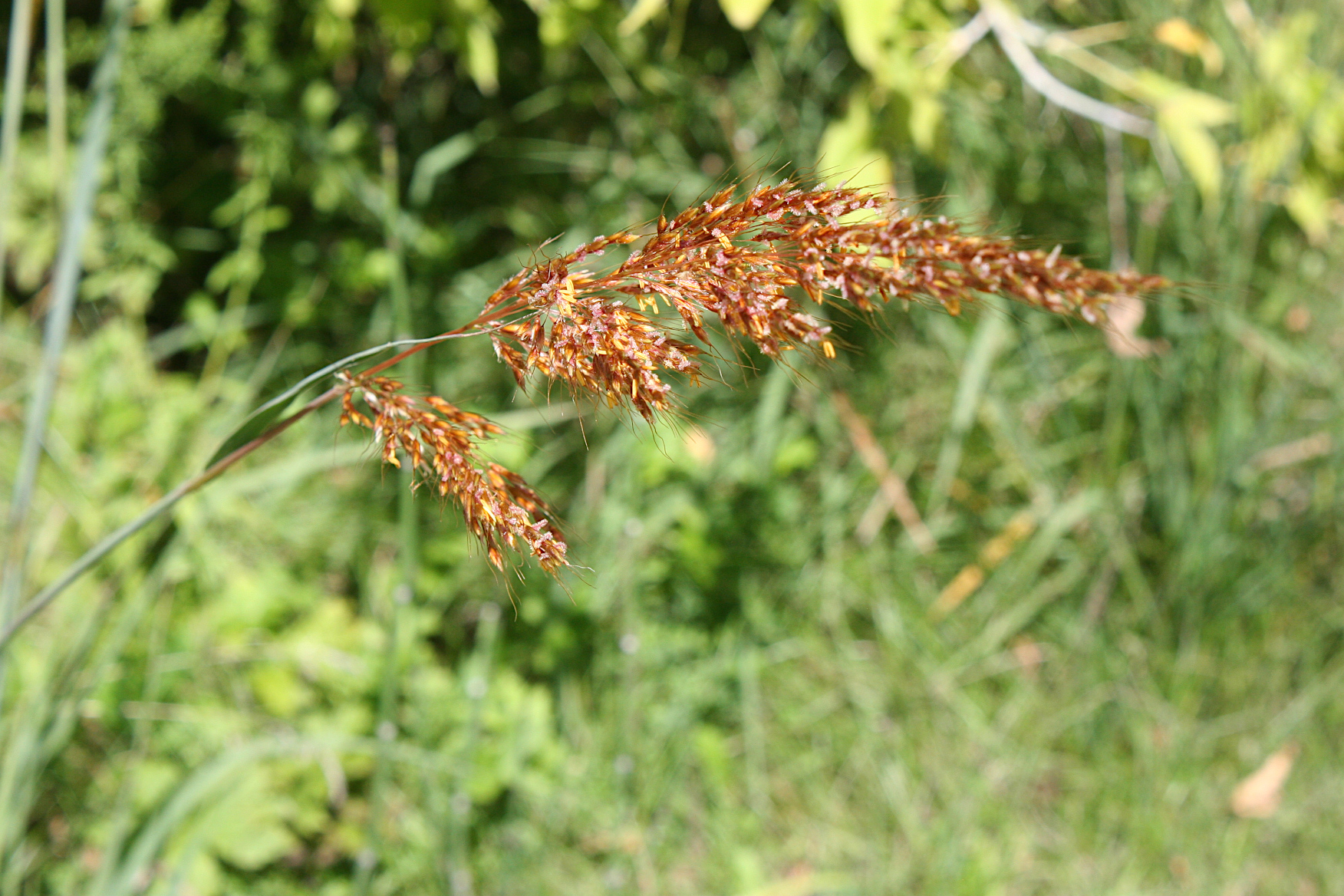
I especially love how these grass plumes bend and blow in the wind, like poetry. Minnesota Prairie Roots copyrighted photo September 2021.
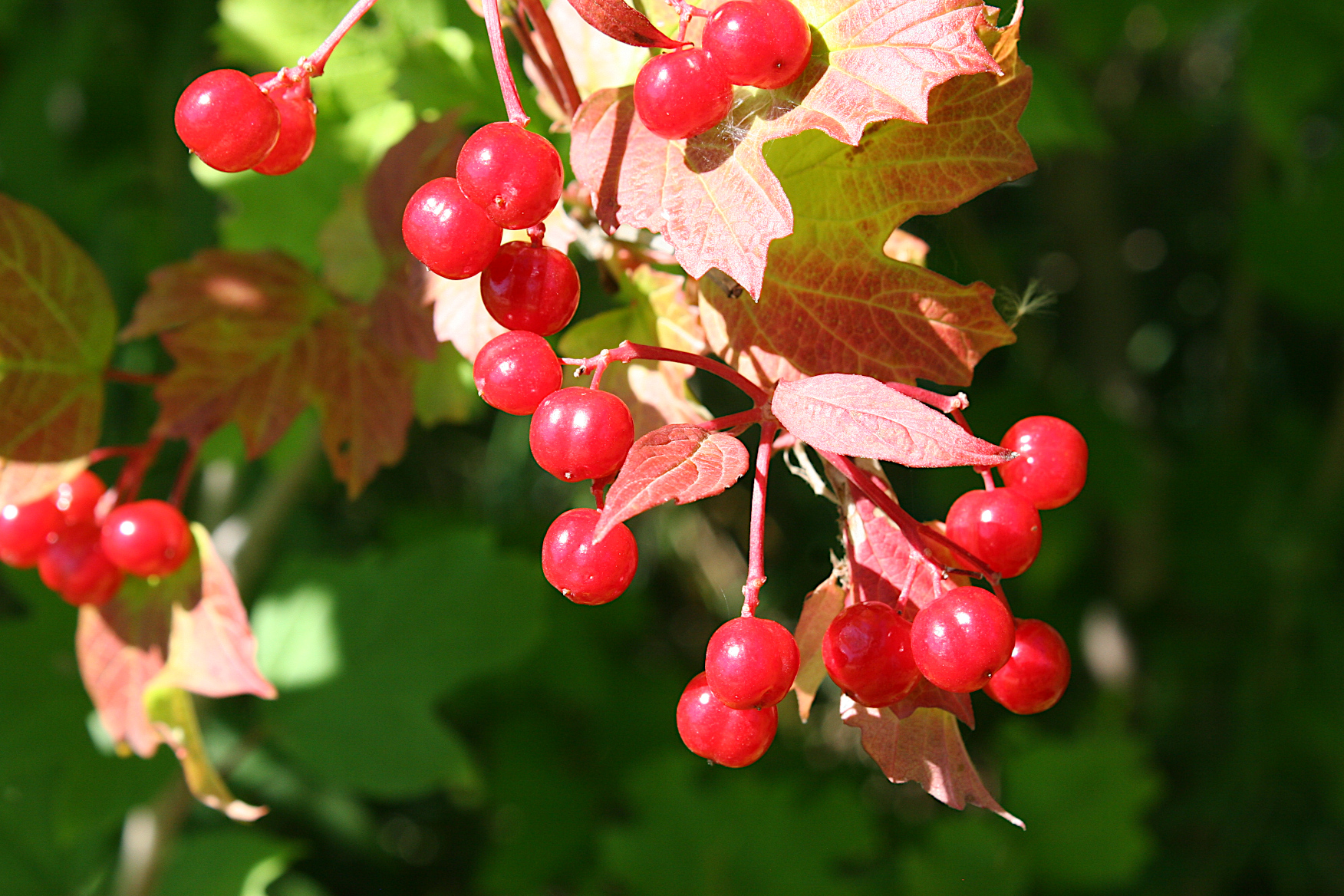
Bold berries jolt color into the landscape. Minnesota Prairie Roots copyrighted photo September 2021.
I love the hue and texture of this grass, whatever it may be. Minnesota Prairie Roots copyrighted photo September 2021.
If my current photos were poems, they would write of Autumn and her floral dress flowing, billowing as she walks the runway of Faribault Energy Park. (My poetic interpretation of all those colorful wildflowers edging trails.) Audience applause rising. (My poetic interpretation of the droning traffic on I-35 and the noisy power plant.) I imagine that as easily as I recall prairie memories.
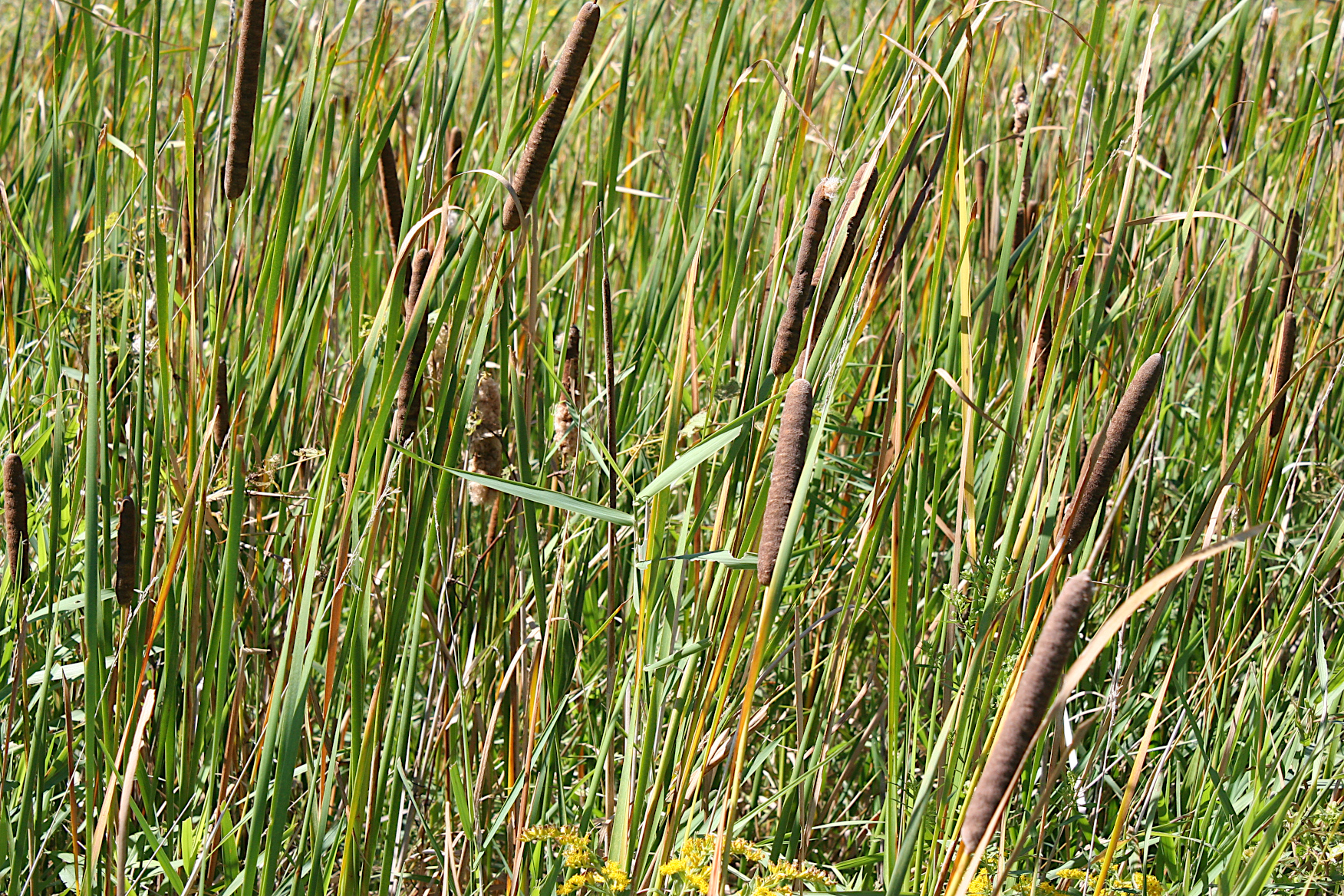
There is an abundance of cattails at Faribault Energy Park. Minnesota Prairie Roots copyrighted photo September 2021.
Faribault Energy Park, 4100 Park Avenue North, keeps drawing me back. To follow the dirt trails. To appreciate the landscape. To, for a short while, escape, even if quiet remains elusive.
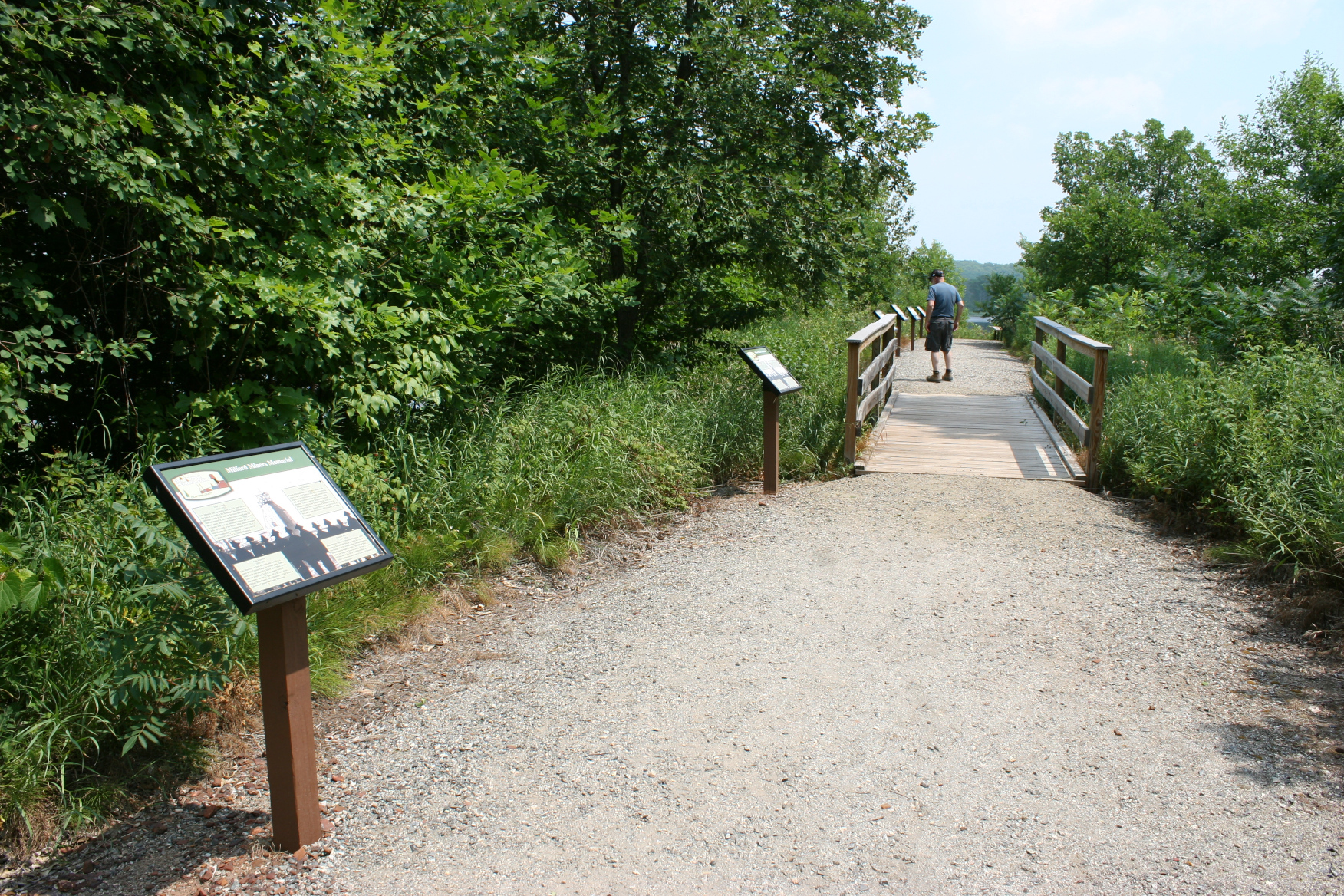
A peaceful and lovely scene at Milford Mine Memorial Park on a hazy July afternoon, rural Crosby. Minnesota Prairie Roots copyrighted file photo July 2021.
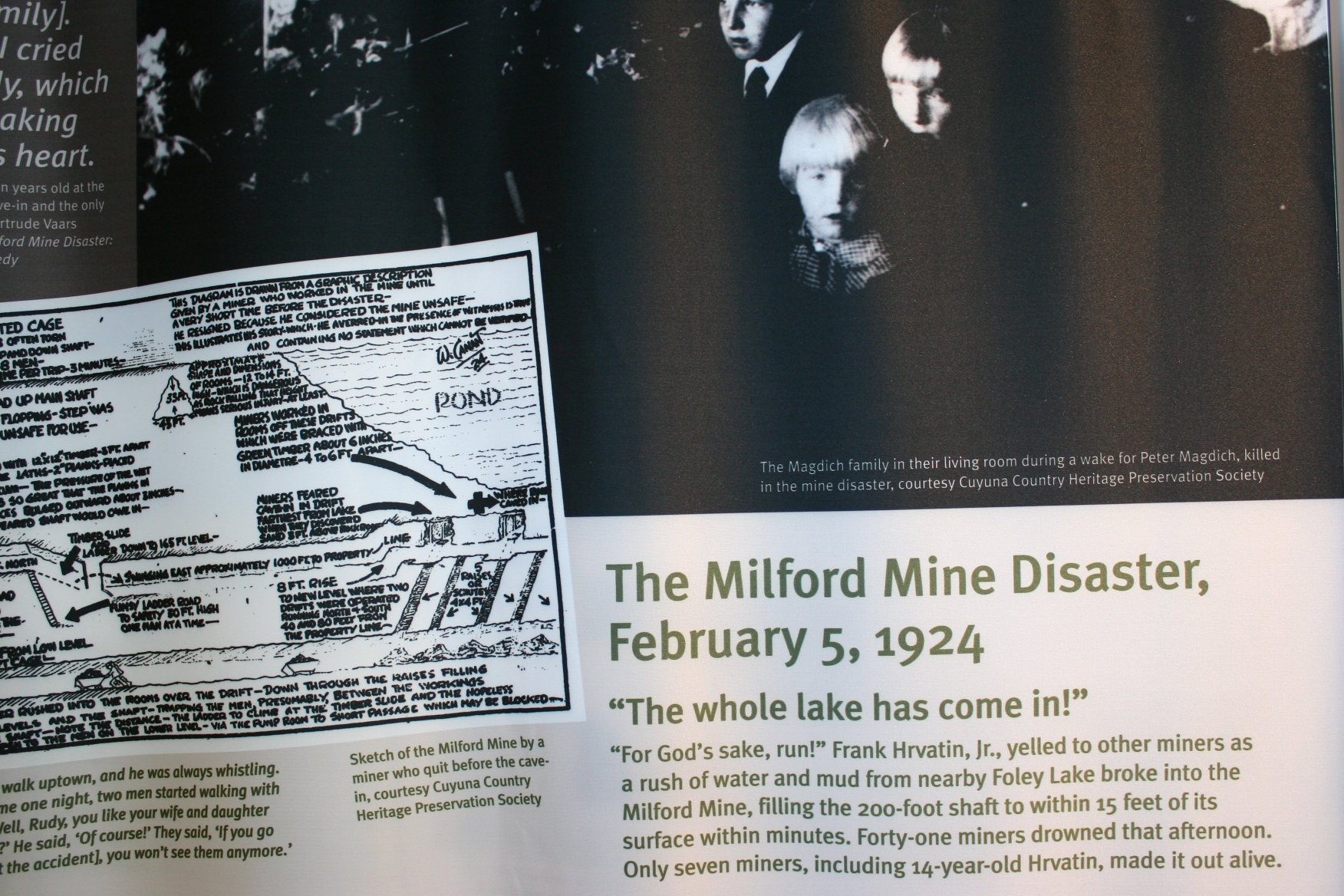
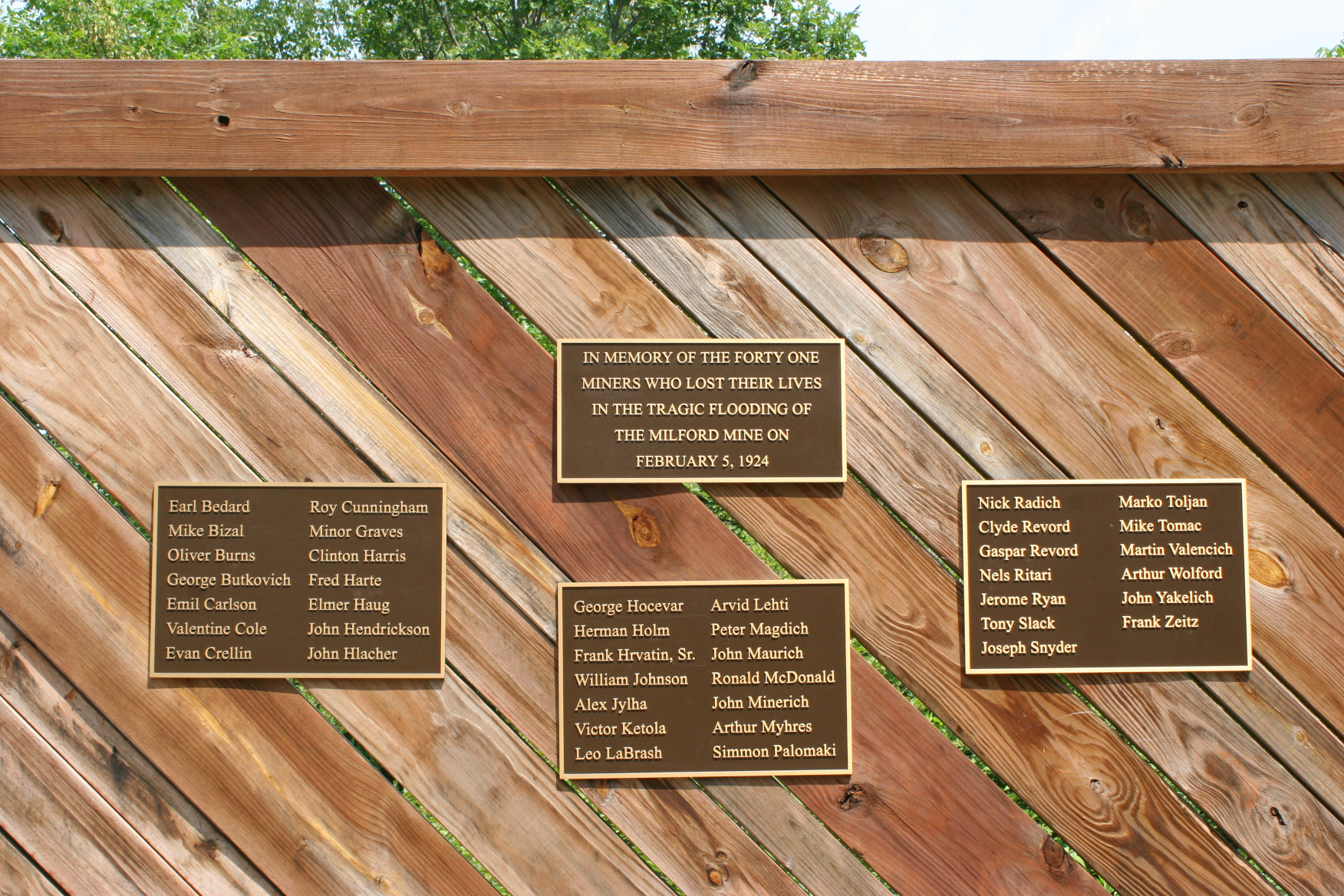
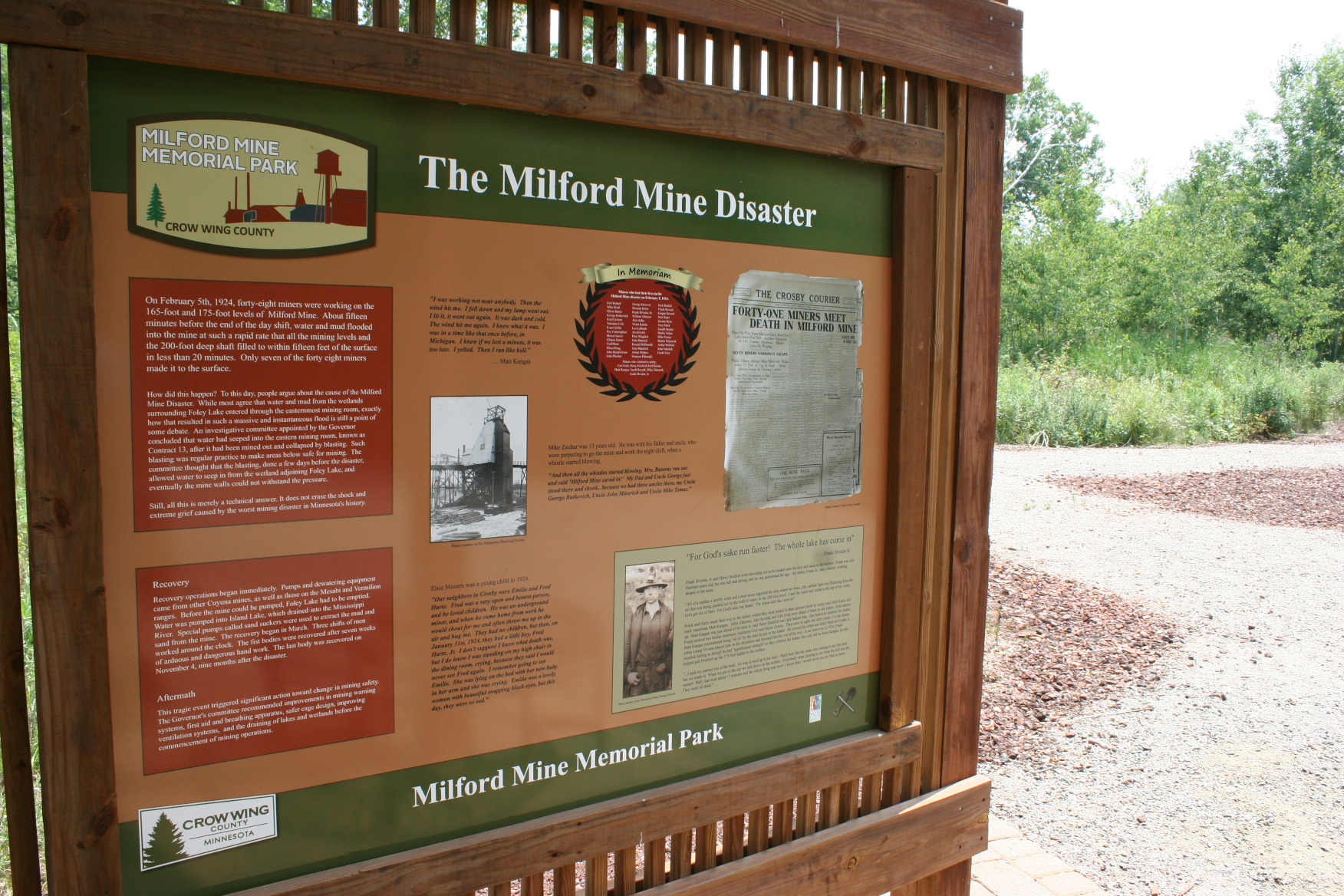
IN A BEAUTIFUL NATURAL SETTING, among the woods and water and wetlands, an American tragedy unfolded nearly 100 years ago on the Cuyuna Iron Range. In the late afternoon of February 5, 1924, water seeped into and then flooded the Milford Mine near Crosby, killing 41 miners in Minnesota’s worst mining disaster.
Information about the mine disaster is included in a traveling exhibit from the Minnesota Historical Society. I photographed this at the Steele County History Center in Owatonna several years ago. Minnesota Prairie Roots file photo.
Their deaths left 38 women without husbands. And 83 children without fathers.
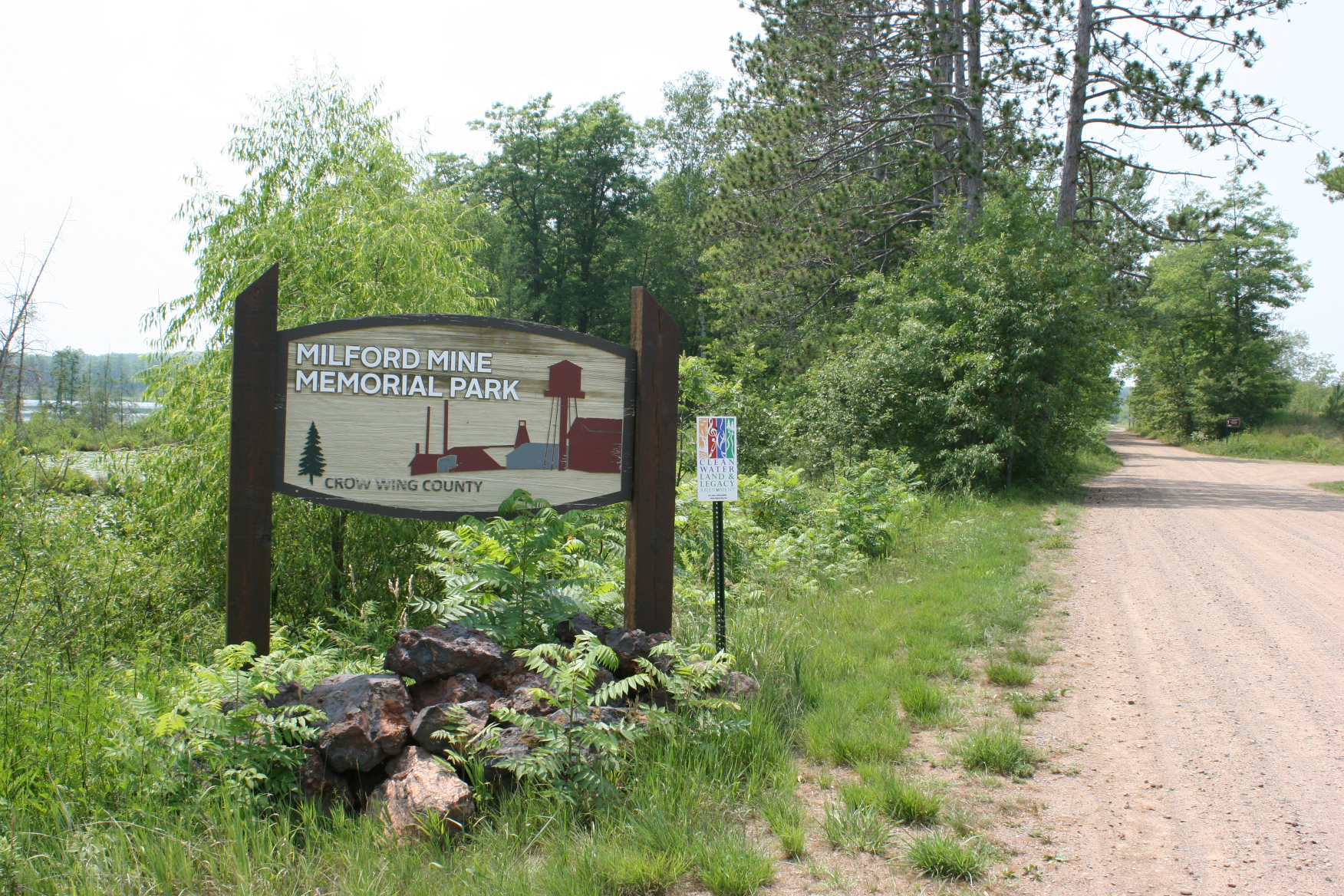
This sign marks the gravel road entry to the memorial park. Minnesota Prairie Roots copyrighted file photo July 2021.
Today the memories of those 41 hardworking iron ore miners, and the seven who survived the mine collapse, are honored at Milford Mine Memorial Park. The Crow Wing County Park is located four miles north of Crosby, just off County Road 30. The Milford Mine Historic District is on the National Register of Historic Places, so important is this to the region’s mining history.
Those who died in the mine. Minnesota Prairie Roots copyrighted file photo July 2021.
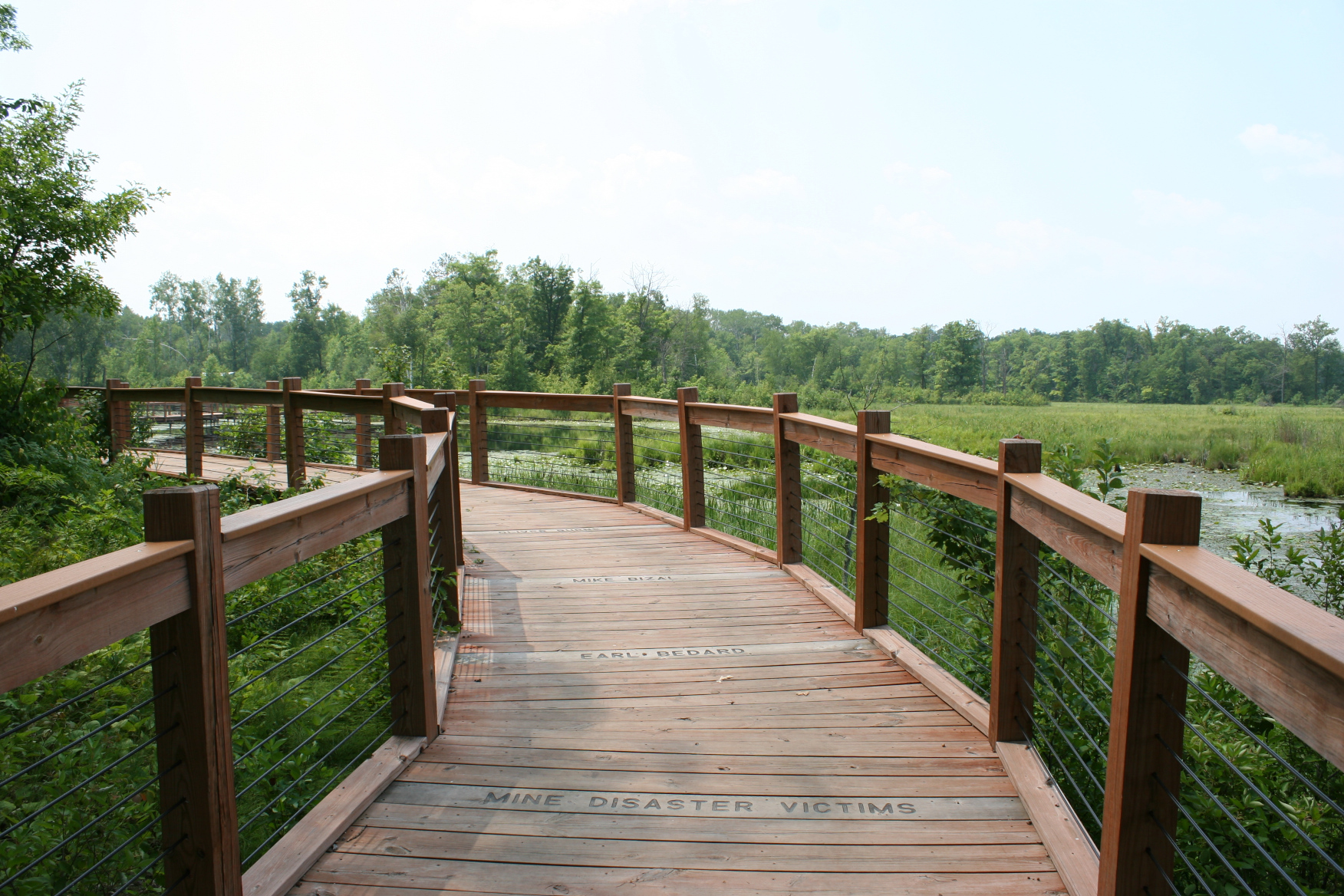
The first boardwalk lists the victims’ names, spaced alongthe path. Minnesota Prairie Roots copyrighted file photo July 2021.
Signs along the trail honor each miner. Minnesota Prairie Roots copyrighted file photo July 2021.
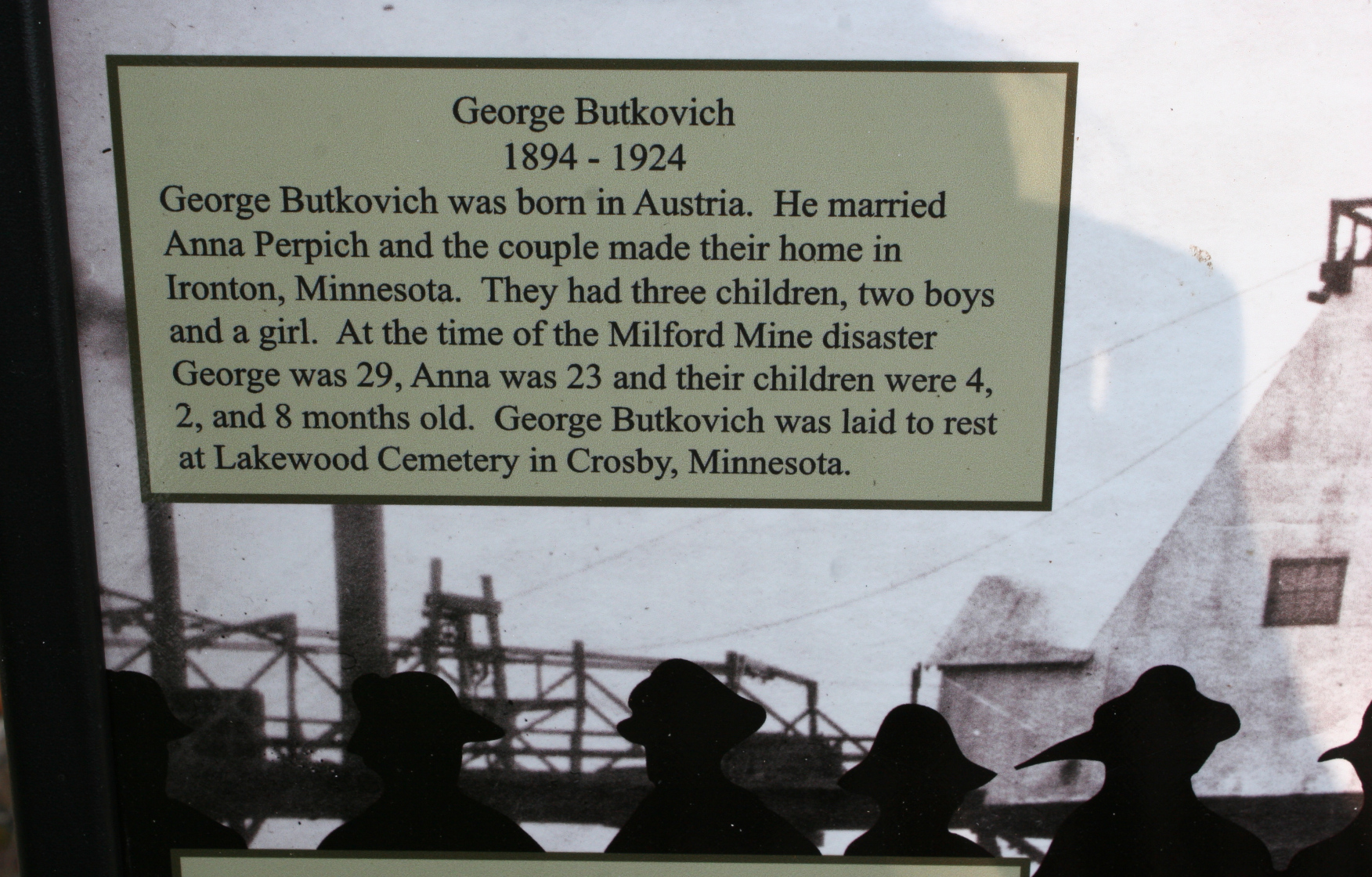
This is truly a remarkable park that covers the history of this event in a deeply personal way. Through names on boardwalks and brief bios on signs, this park moves this disaster beyond statistics. Only then do we begin to understand, to feel the loss.
Honoring George Butkovich. Minnesota Prairie Roots copyrighted file photo July 2021.
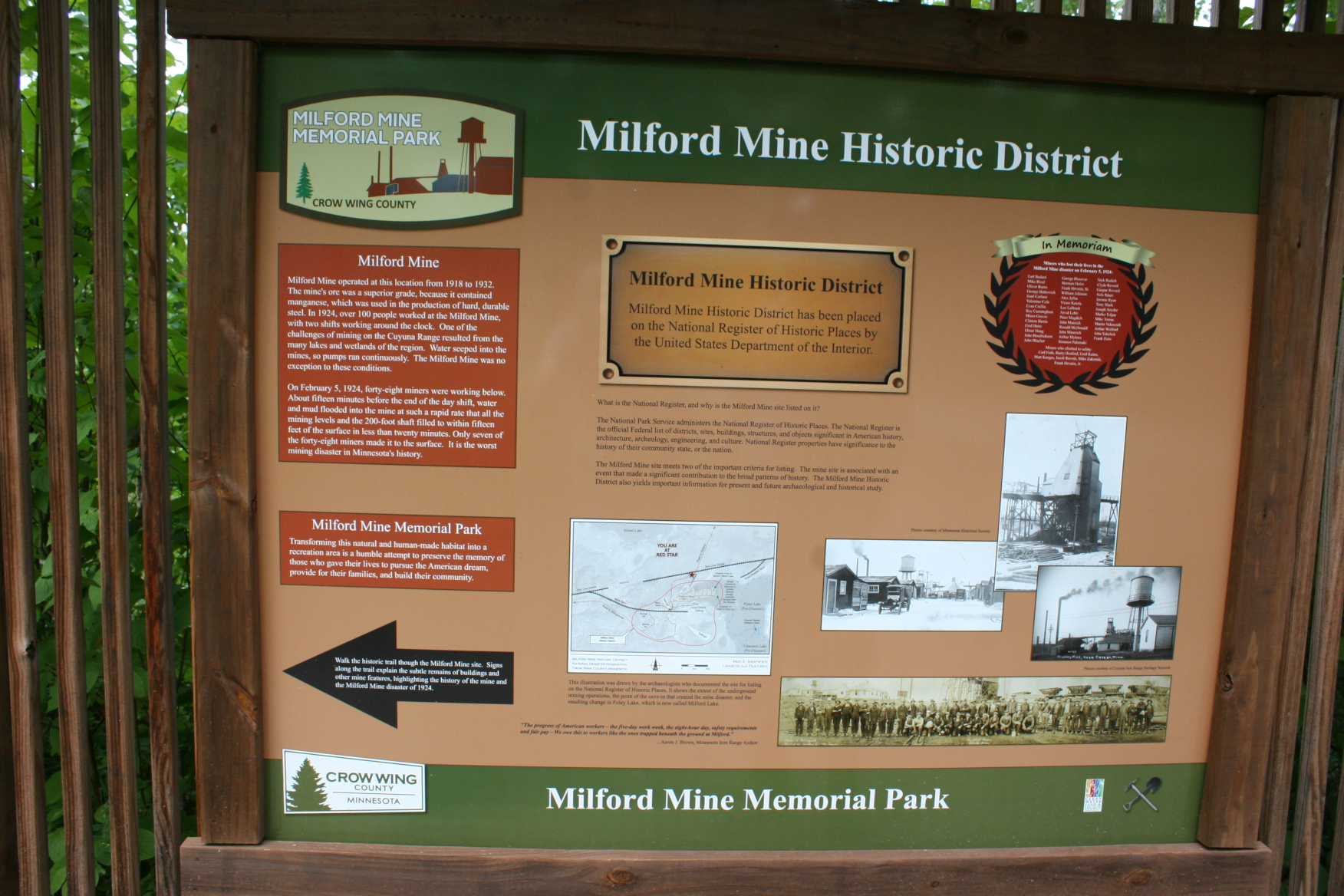
A summary of the disaster. Minnesota Prairie Roots copyrighted file photo July 2021.
Emil A. Carlson, 29, from Finland, was the father of four and married to Elma. They lived in Crosby.
The bios of four who died in the mine. Minnesota Prairie Roots copyrighted file photo July 2021.
Nels R. Pitari, 37, also a Finnish immigrant, was married to Hilda. They lived in Brainerd and had four children, one only five months old at the time of his father’s death.
The park is not only a great place to learn about history, but also a great place to hike and enjoy nature.
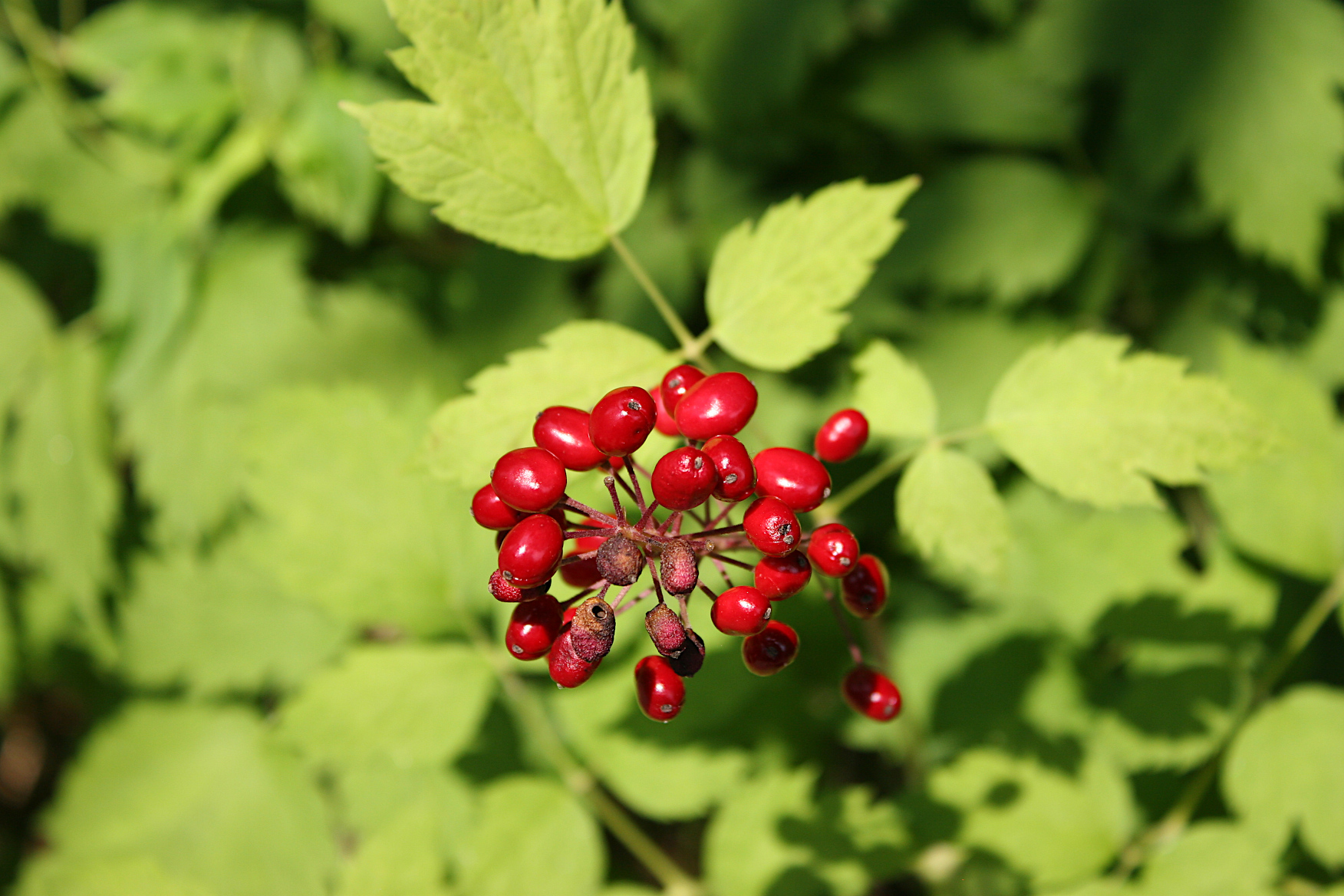
Bold berries pop alongside the trail. Minnesota Prairie Roots copyrighted file photo July 2021.
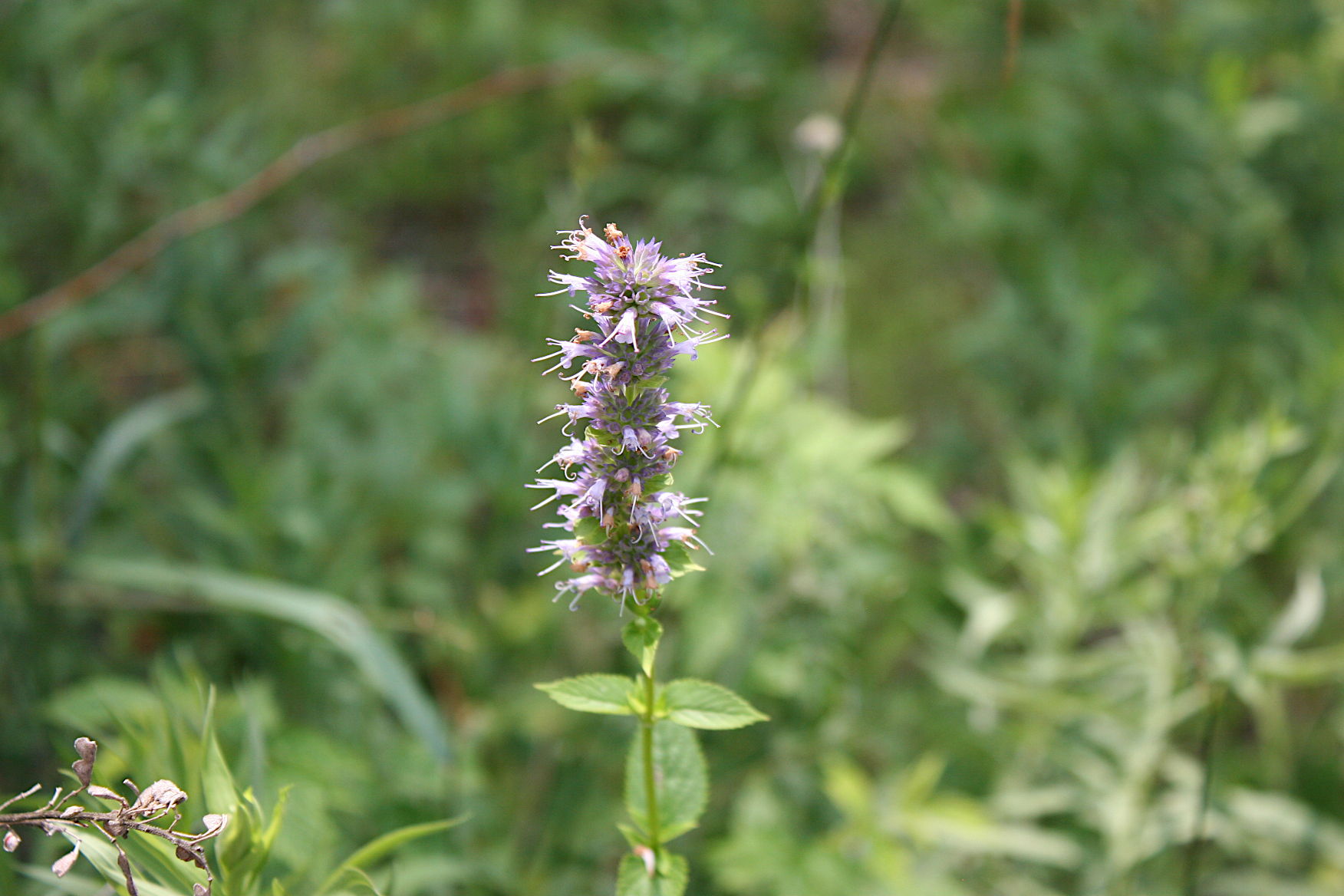
Not to be missed, the many wildflowers gracing this park. Minnesota Prairie Roots copyrighted file photo July 2021.
According to signage at Milford Memorial Park, the park “is an attempt to preserve the memory of those who gave their lives to pursue the American dream, provide for their families and build their community.” That’s necessary to understand given the importance of iron ore mining in this region. The high grade ore from the Milford Mine was used in the production of steel. This region of Minnesota was built around iron ore mining.
History honored and shared… Minnesota Prairie Roots copyrighted file photo July 2021.
Many who came to this area arrived from across the US, Canada and the European continent. They were a diverse group, looking to better their lives, to raise their families in a new place, to build strong communities.
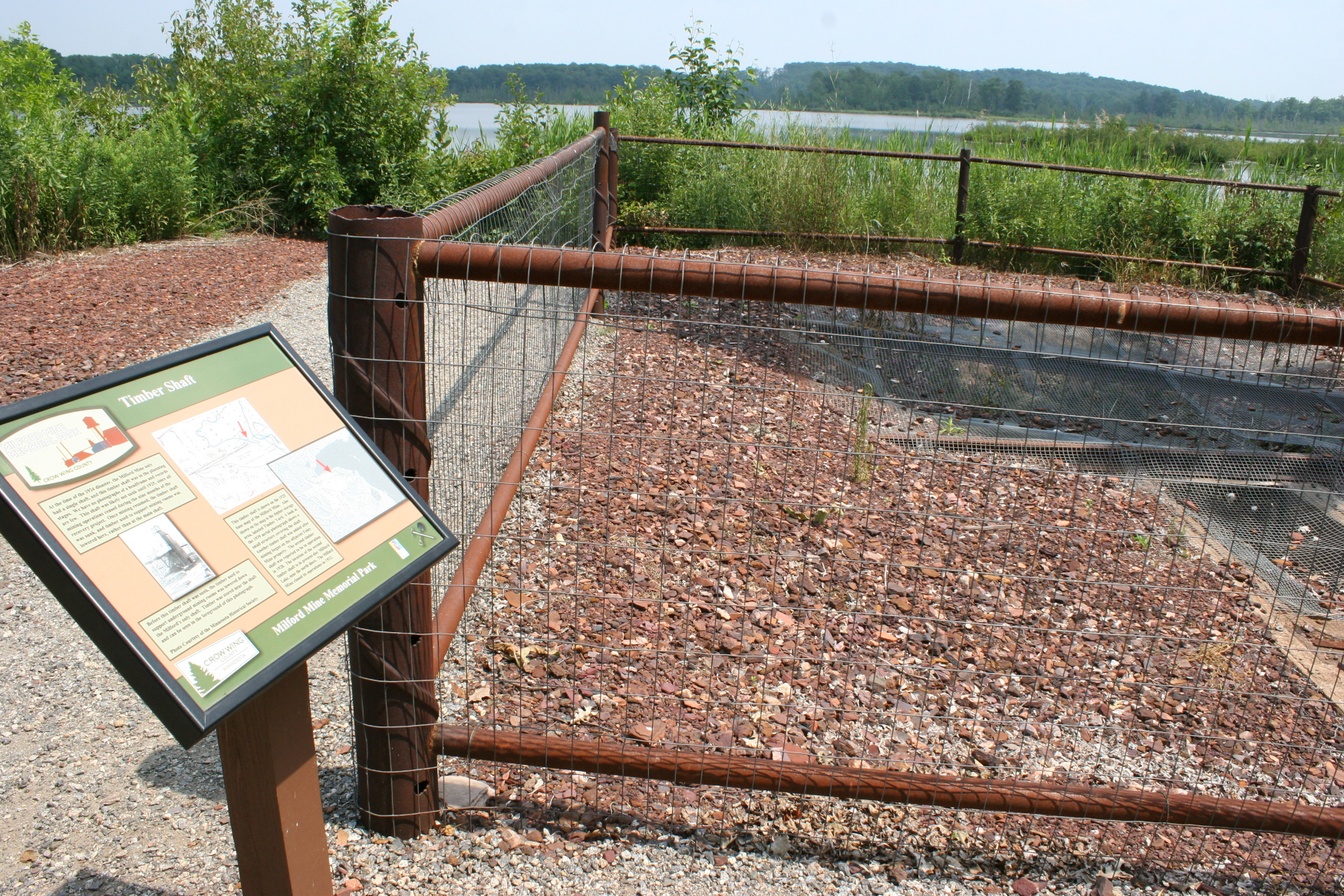
Site of the timber shaft. Minnesota Prairie Roots copyrighted file photo July 2021.
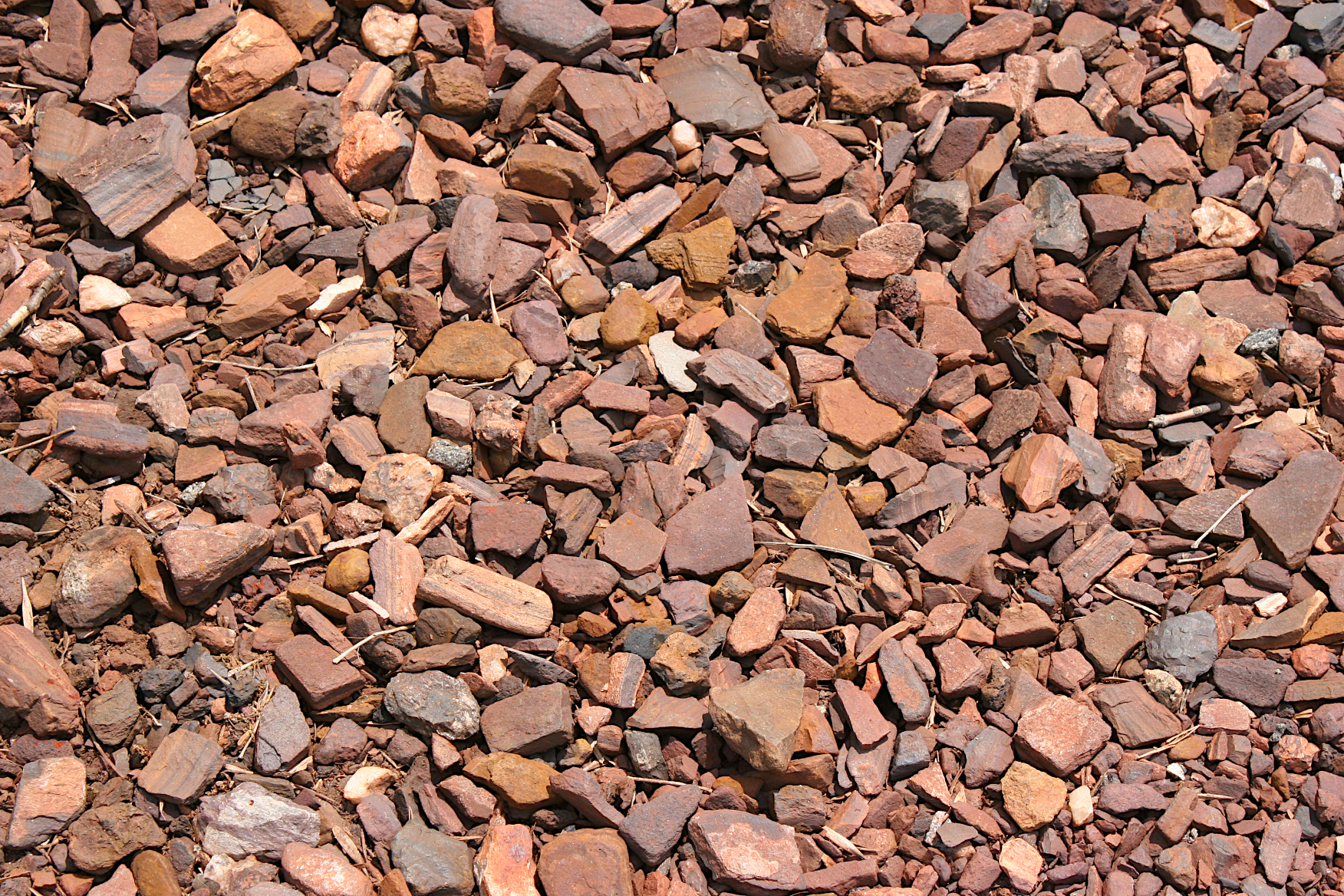
What I presume to be iron ore. Minnesota Prairie Roots copyrighted file photo July 2021.
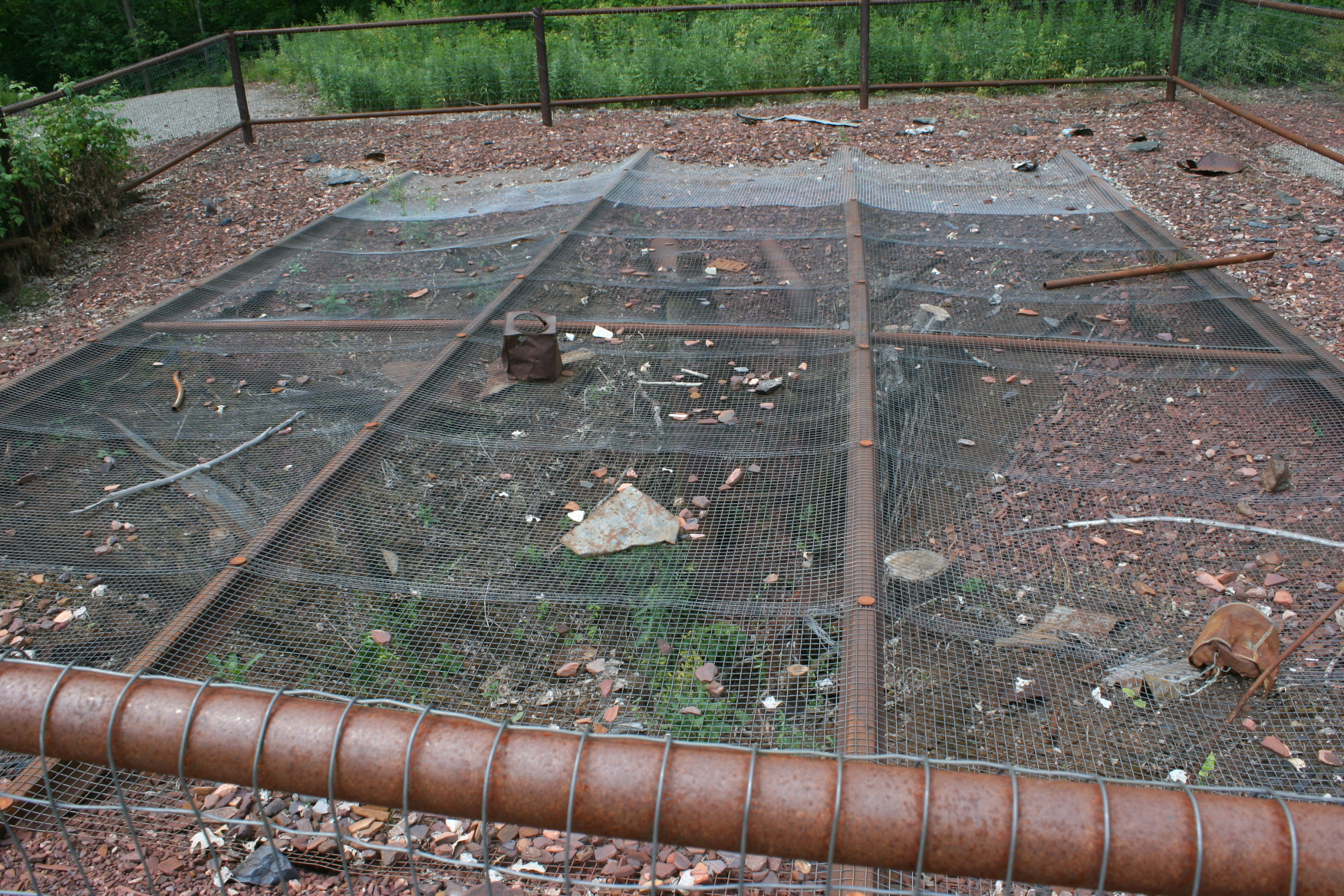
The entry to the mine shaft is fenced around and over. Minnesota Prairie Roots copyrighted file photo July 2021.
In walking through the park, pausing often to read the history of this place and to view marked sites like the machine and blacksmith shops and the mine and timber shafts, I felt a sense of reverence, a sense of understanding of the loss connected to this land.
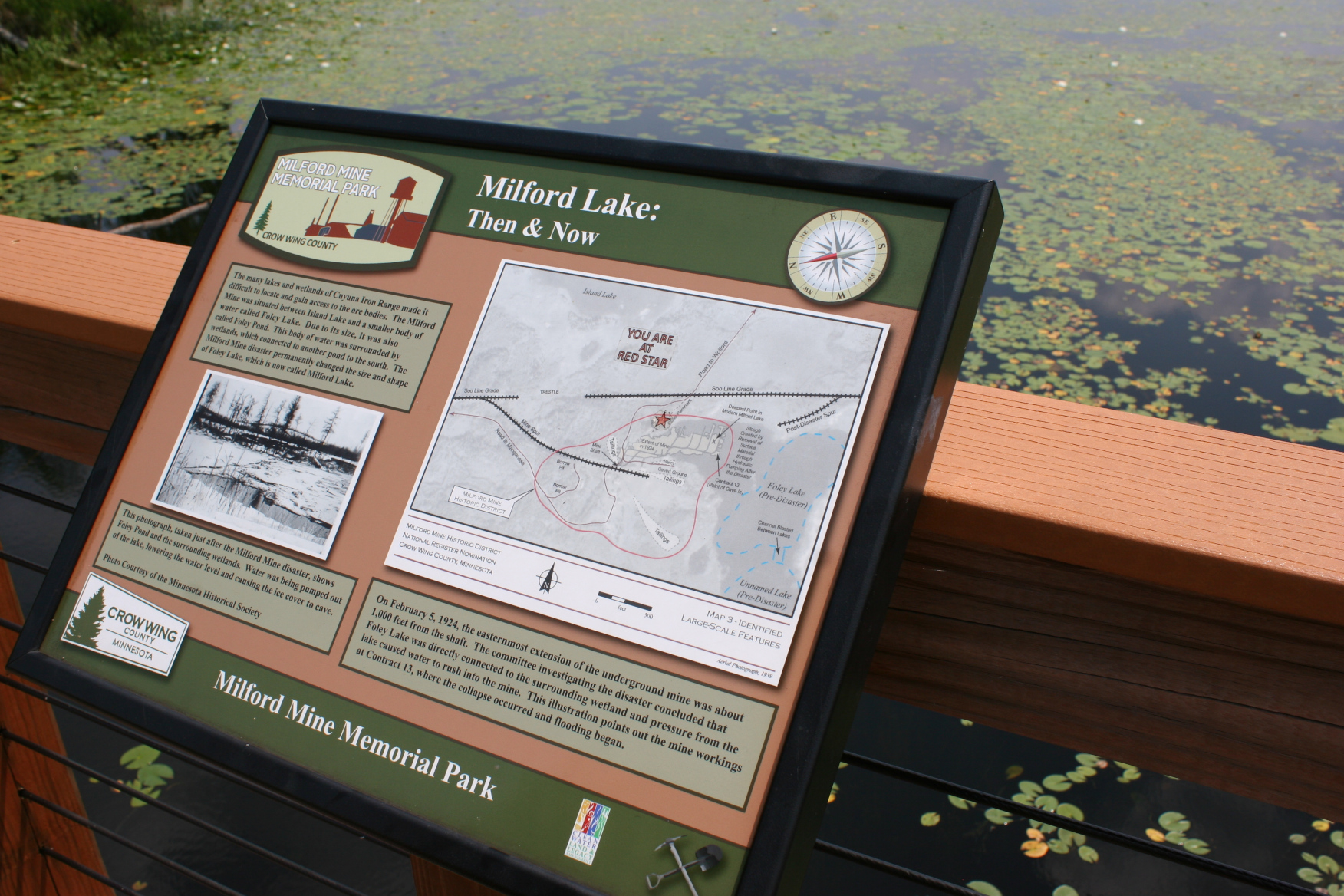
Originally named Lake Foley, the lake has since been renamed Milford Lake. Minnesota Prairie Roots copyrighted file photo July 2021.
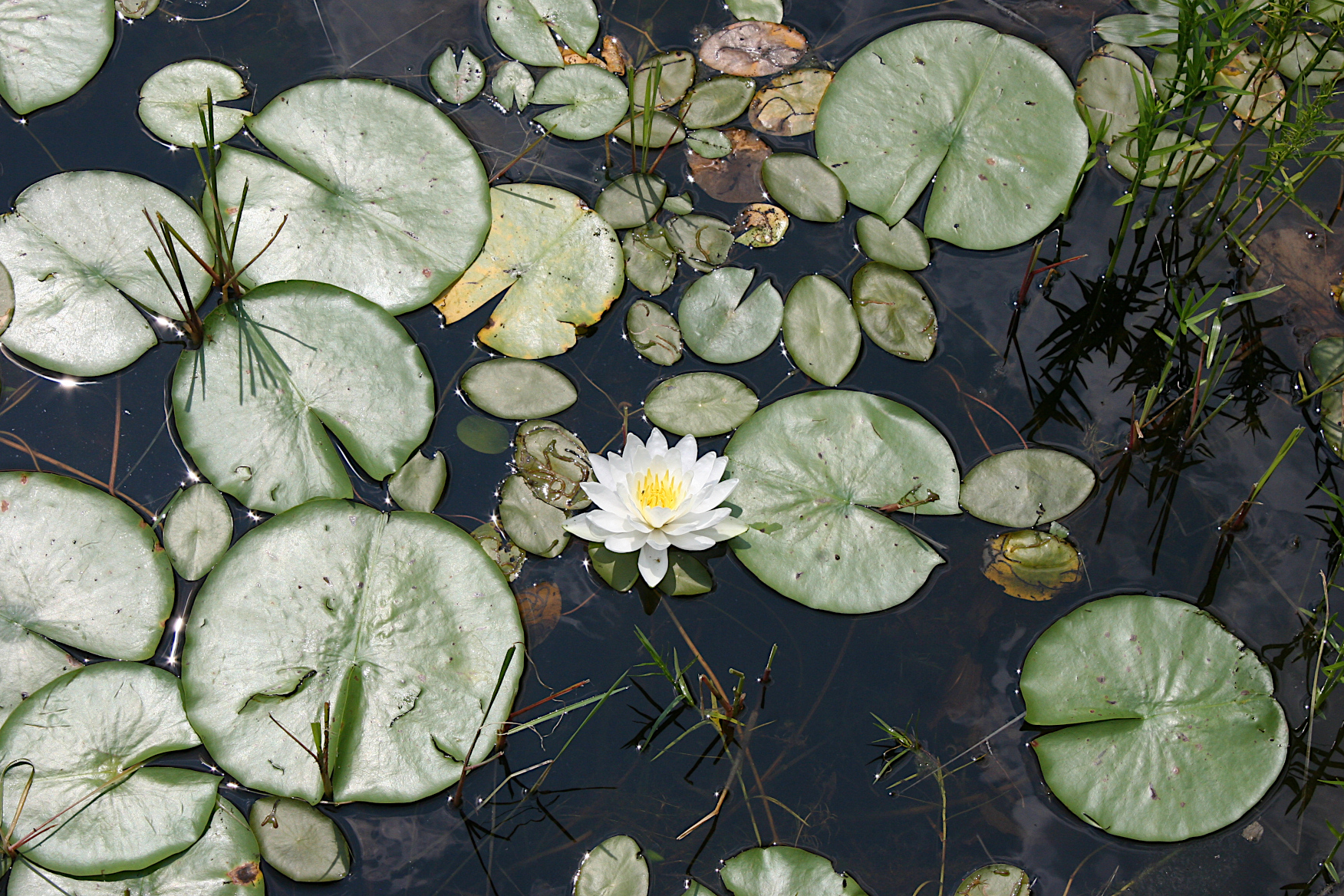
Water lilies in Milford Lake, Minnesota Prairie Roots copyrighted file photo July 2021.
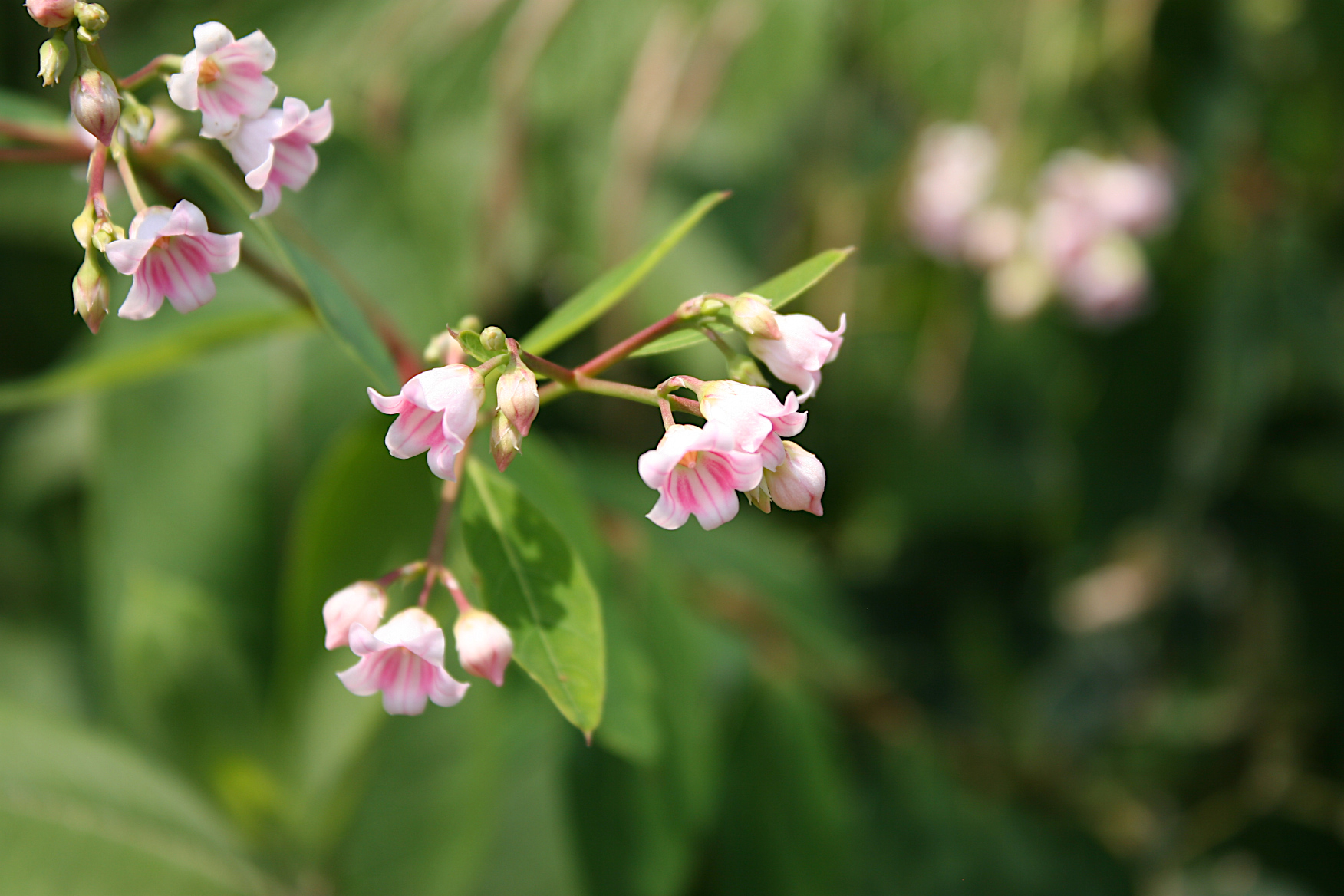
A flower brightens woods’ edge near the lake. Minnesota Prairie Roots copyrighted file photo July 2021.
Investigators determined that pressure from Lake Foley, connected to adjoining wetlands, caused water to rush into the mine resulting in the collapse of the mine’s walls. Within 20 minutes of that occurrence, the 200-foot deep mine shaft filled to within 15 feet of the surface. That allowed only minimal time for the miners to attempt an escape. Only seven got out. They, too, are recognized at the memorial park on a survivors’ boardwalk: Carl Frals, Harry Hosford, Mike Zakotnik…
Lengthy memorial boardwalks curve into the park. Minnesota Prairie Roots copyrighted file photo July 2021.
As I walked the boardwalks and trails, I felt sometimes overwhelmed by the sheer tragedy of the Milford Mine Disaster. So much loss. So much grief and pain. So many father-less children. And it is that, perhaps, which touched me the most.
NOTE: Milford Mine Memorial Park is open daily from sunrise to sunset. I encourage you to visit, to experience this important part of Minnesota history.
Black-eyed susans on the prairie at River Bend. Minnesota Prairie Roots copyrighted photo 2021.
WHENEVER I NEED TO CONNECT with nature nearby, my go-to destination is River Bend Nature Center, just across the Straight River on Faribault’s east side.
A viewing and resting spot by the prairie wetlands, now drying up due to the drought. Minnesota Prairie Roots copyrighted photo 2021.
In this 743-acre natural space, I can immerse myself in a diverse landscape of woods, prairie and wetland. Each setting provides not only a sensory change from the noise and motion of living along a busy street, but also a much-needed mental break.
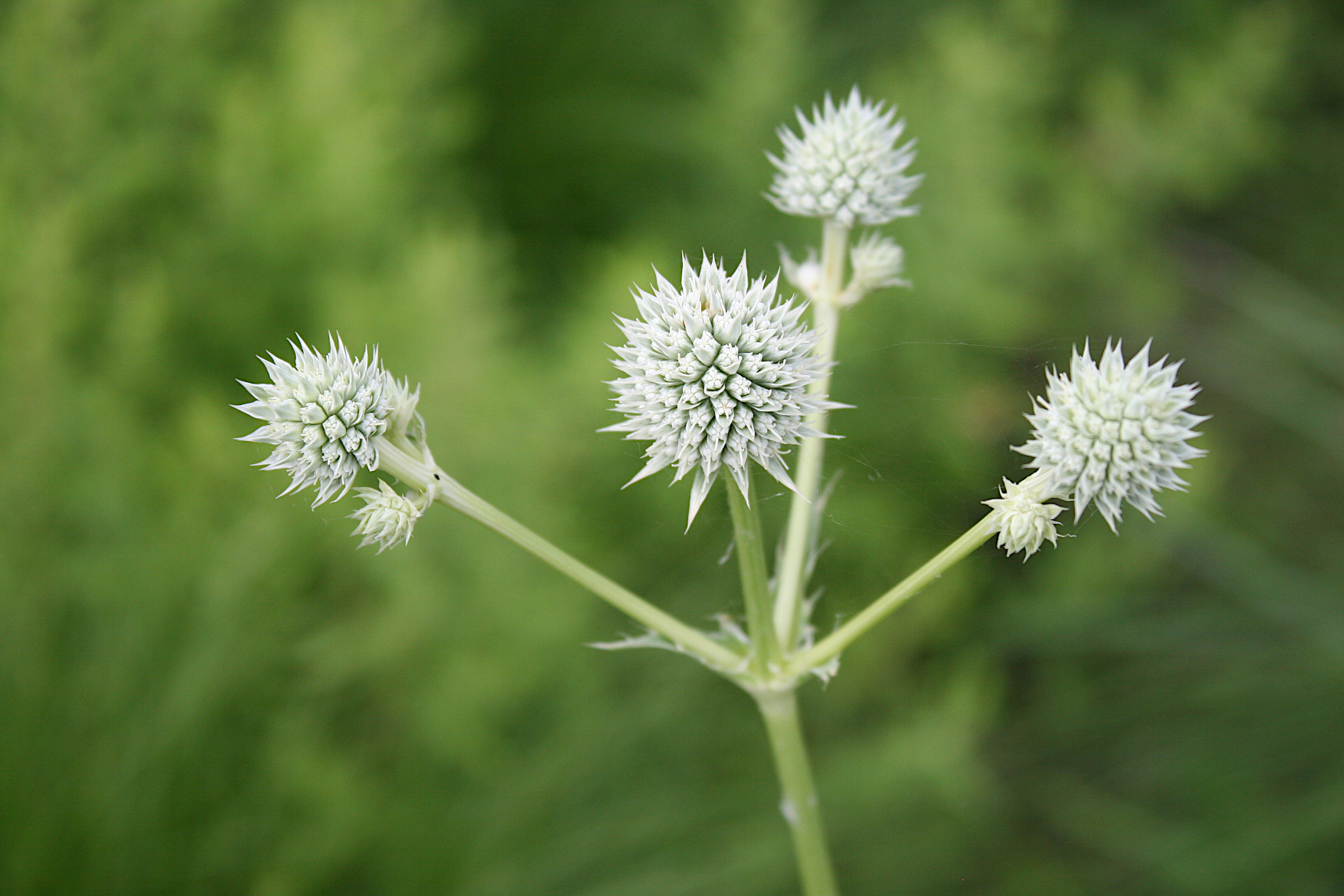
An unknown to me prairie plant. Minnesota Prairie Roots copyrighted photo 2021.
When I’m at River Bend, I forget about what’s happening in my life or the world. Rather, I focus on being present in nature. Listening. Observing. Connecting.
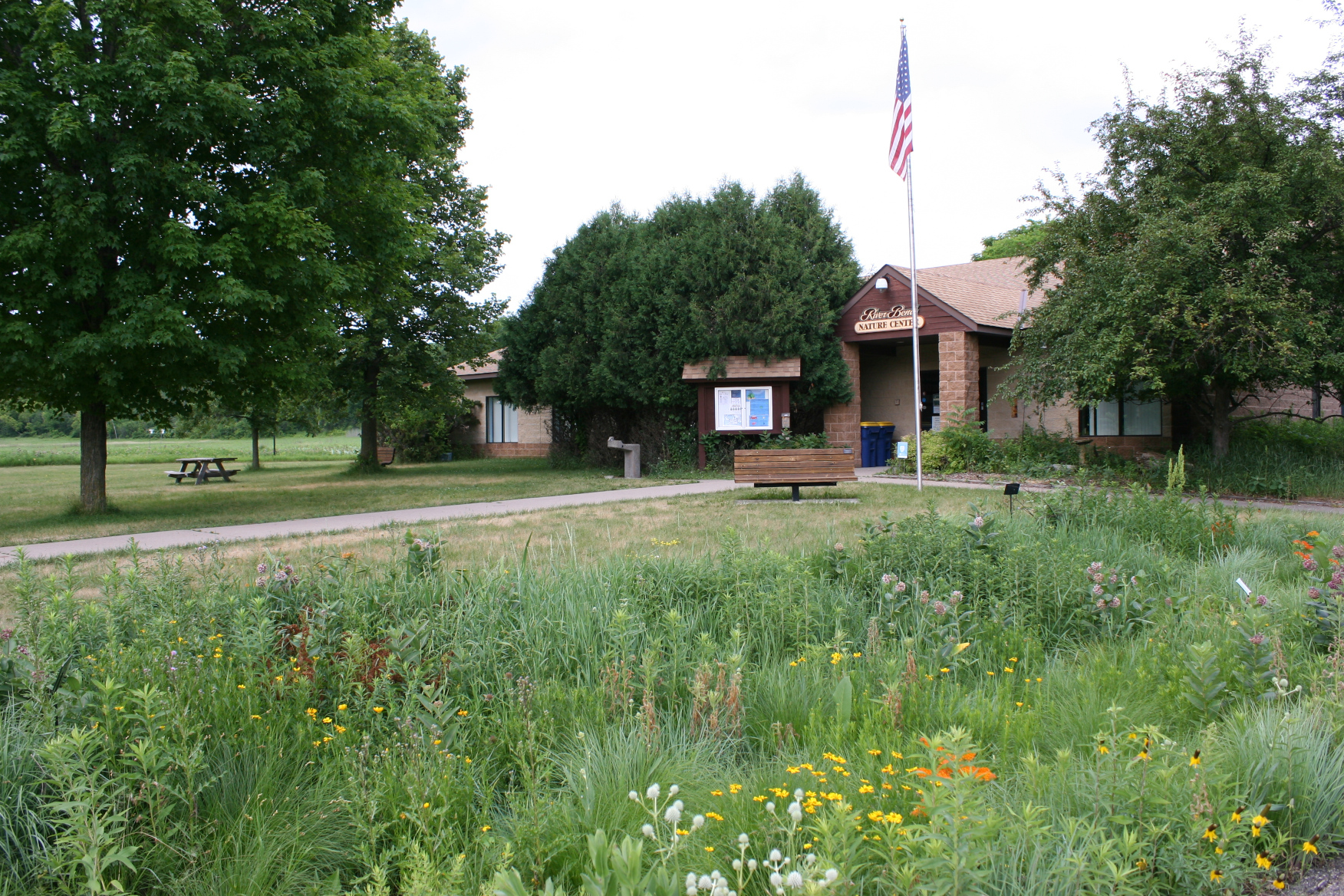
Rain gardens front the RBNC interpretative center. Minnesota Prairie Roots copyrighted photo 2021.
That word, connecting, fits River Bend, which emphasizes its purpose as helping connect people to outdoor education, recreation and natural resource conservation close to home.
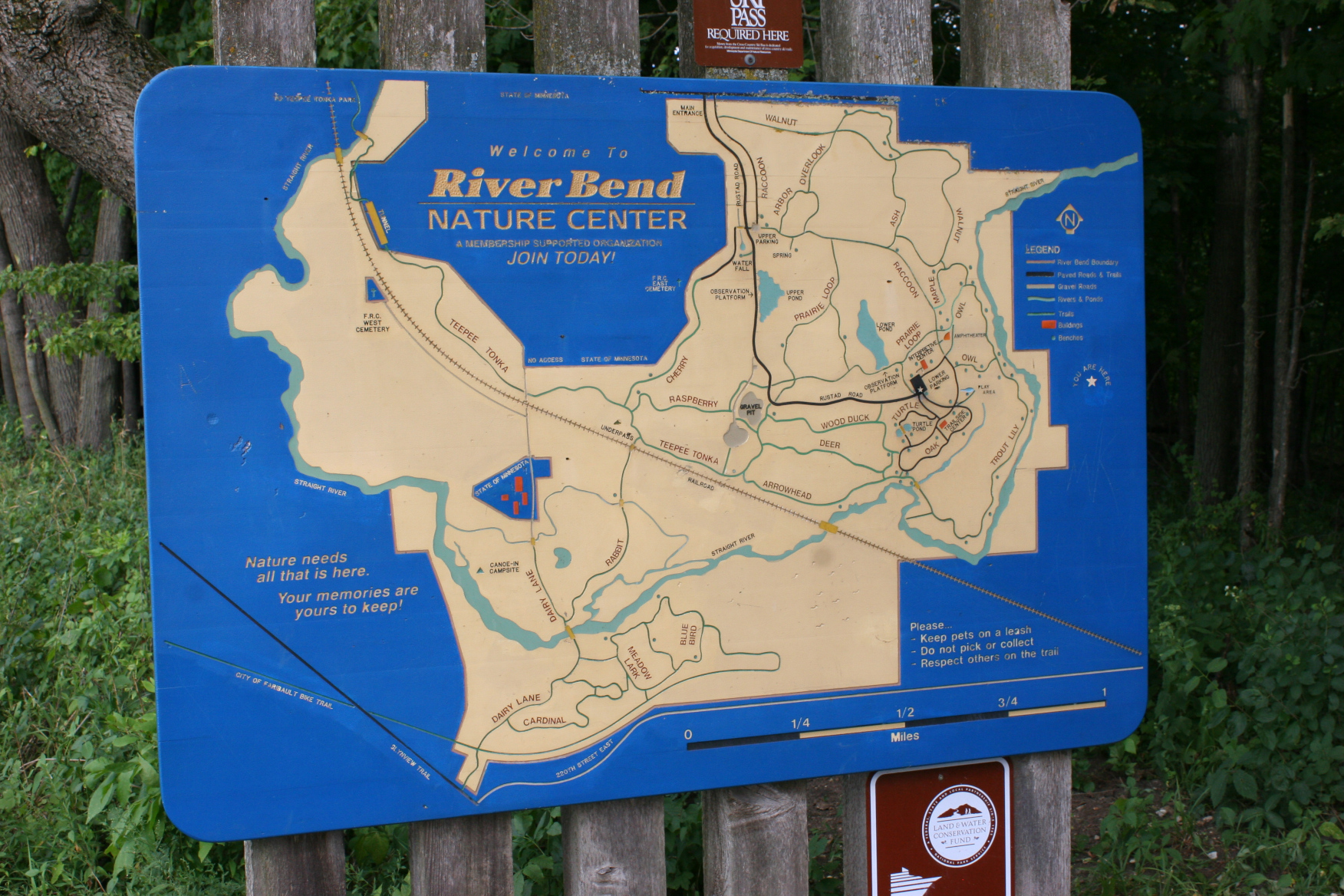
River Bend has an extensive trail system, some paved, some not. Minnesota Prairie Roots copyrighted photo 2021.
My own children, while growing up and attending school in Faribault, went on many field trips to River Bend. I remember also one winter evening when our then-young son delighted in a star-gazing event, complete with telescopes, on prairie’s edge. Today I occasionally take my grandchildren to walk RBNC’s trails. Randy and I also hike the paths.
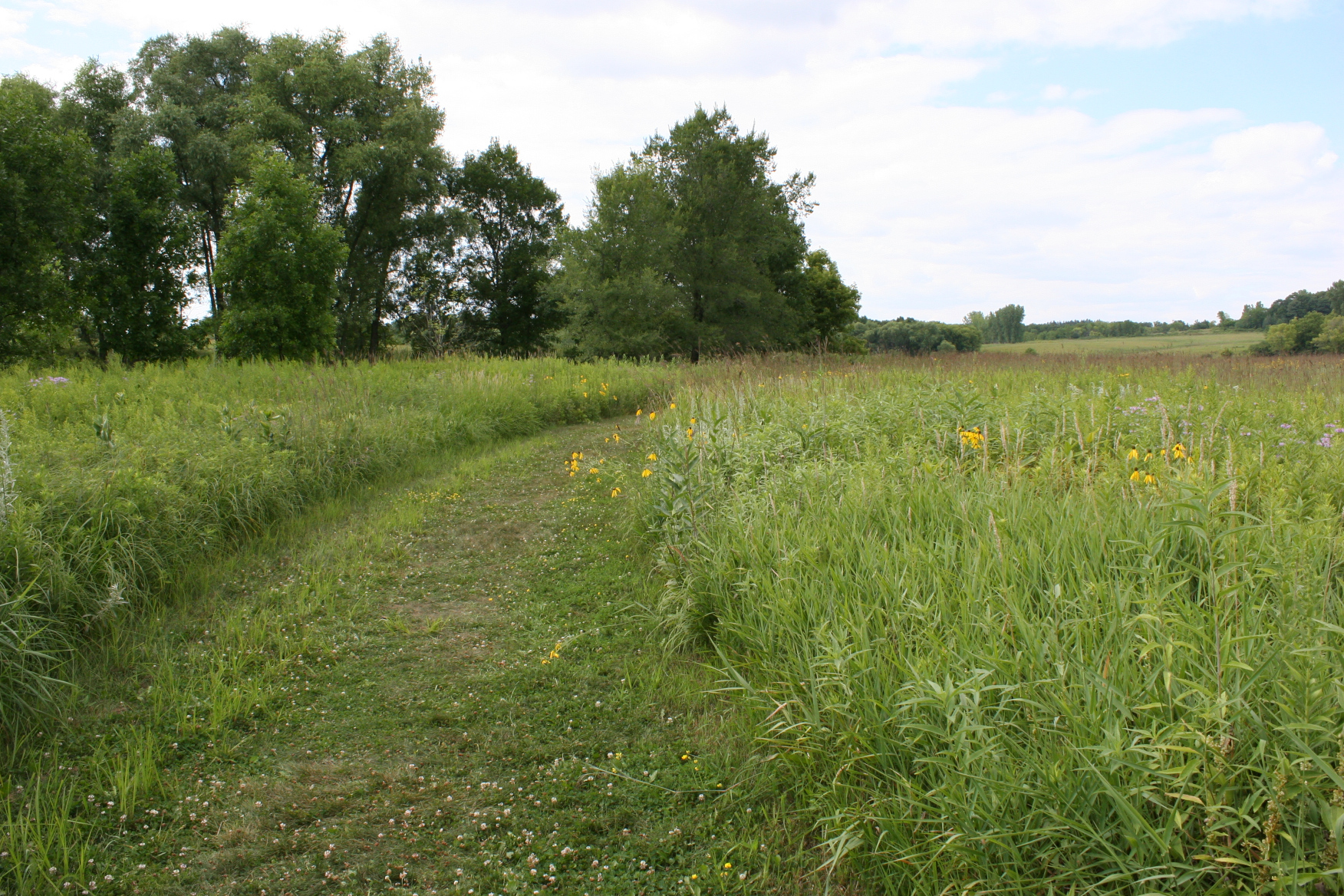
A prairie path. Minnesota Prairie Roots copyrighted photo 2021.
Perhaps my favorite part of this spacious nature center is the prairie. It reconnects me with my prairie roots. With southwestern Minnesota, the land of open spaces and spacious skies. I love to walk through the path sliced into the prairie at River Bend. The path edged by tall prairie grasses and wildflowers. The path where I can pause to take in the vast sky with no trees blocking my view. I need to visually breathe.
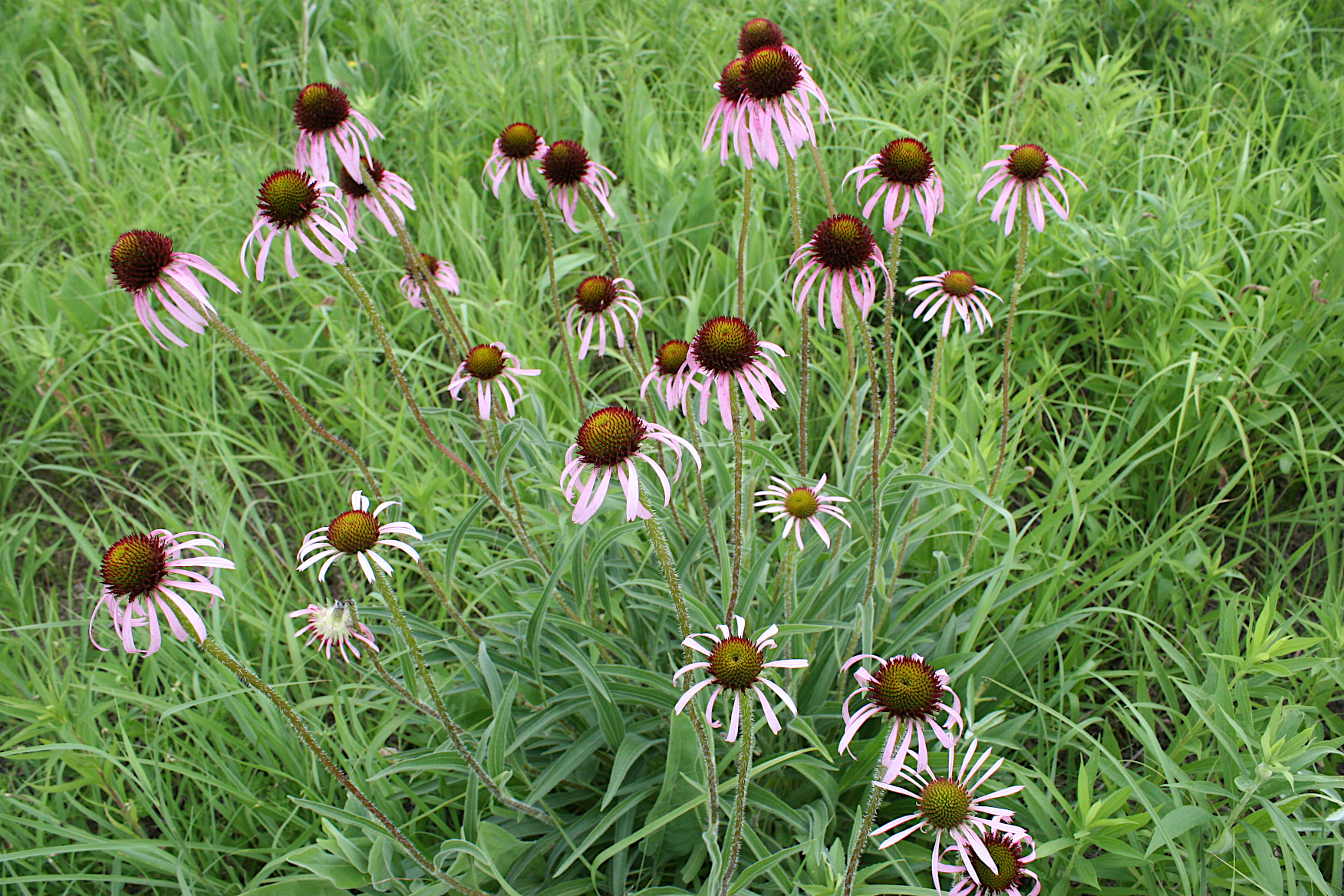
Coneflowers, one of my favorite prairie flowers. Minnesota Prairie Roots copyrighted photo 2021.
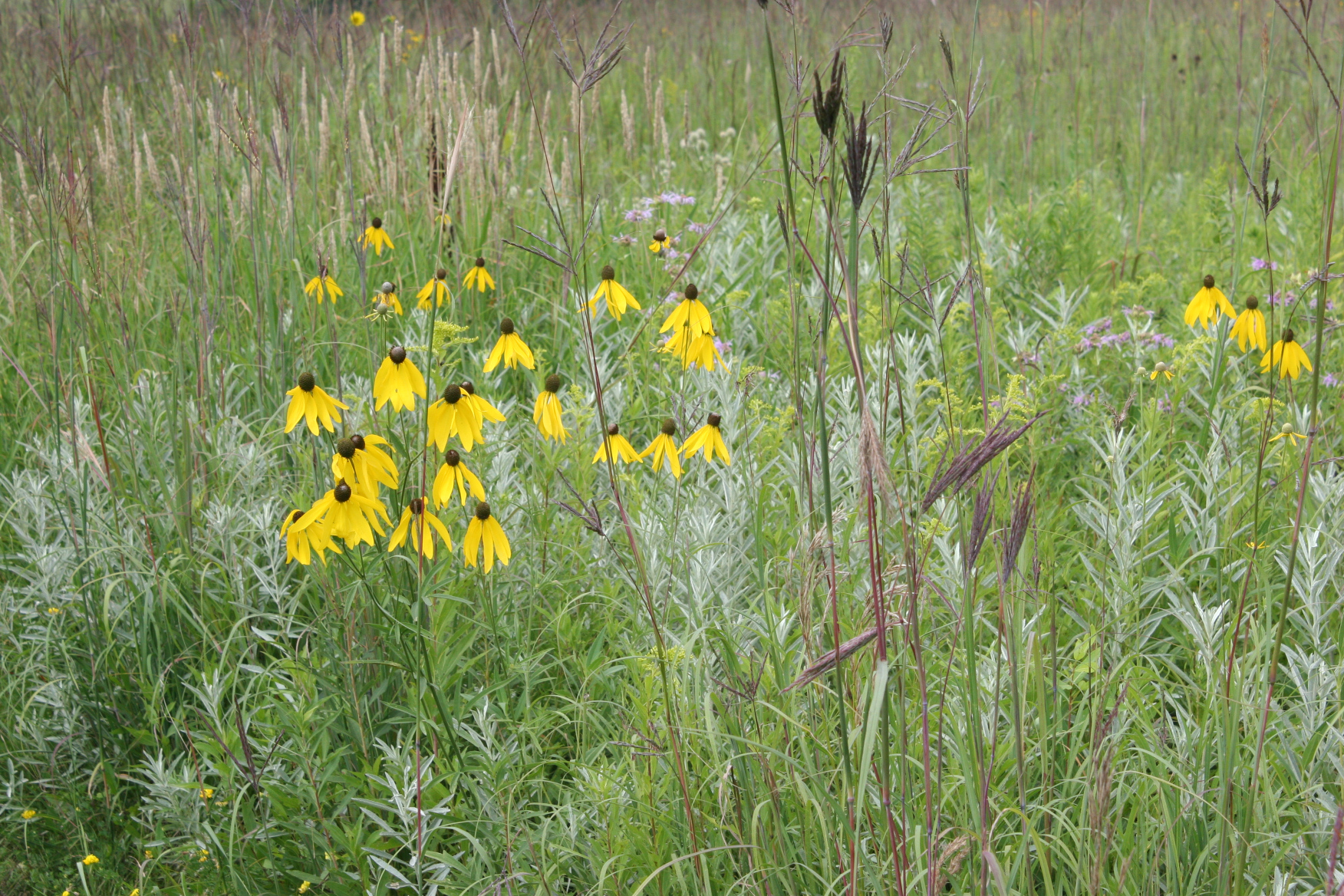
Wildflowers and grasses mix on the prairie. Minnesota Prairie Roots copyrighted photo 2021.
On my most recent visits, the prairie has focused my attention. Specifically the wildflowers—those interspersed among the grass and those planted in the rain garden near the interpretative center. While fading, the flowers remain an integral part of the prairie eco-system as they form seeds and then grow and/or re-sprout in the spring.
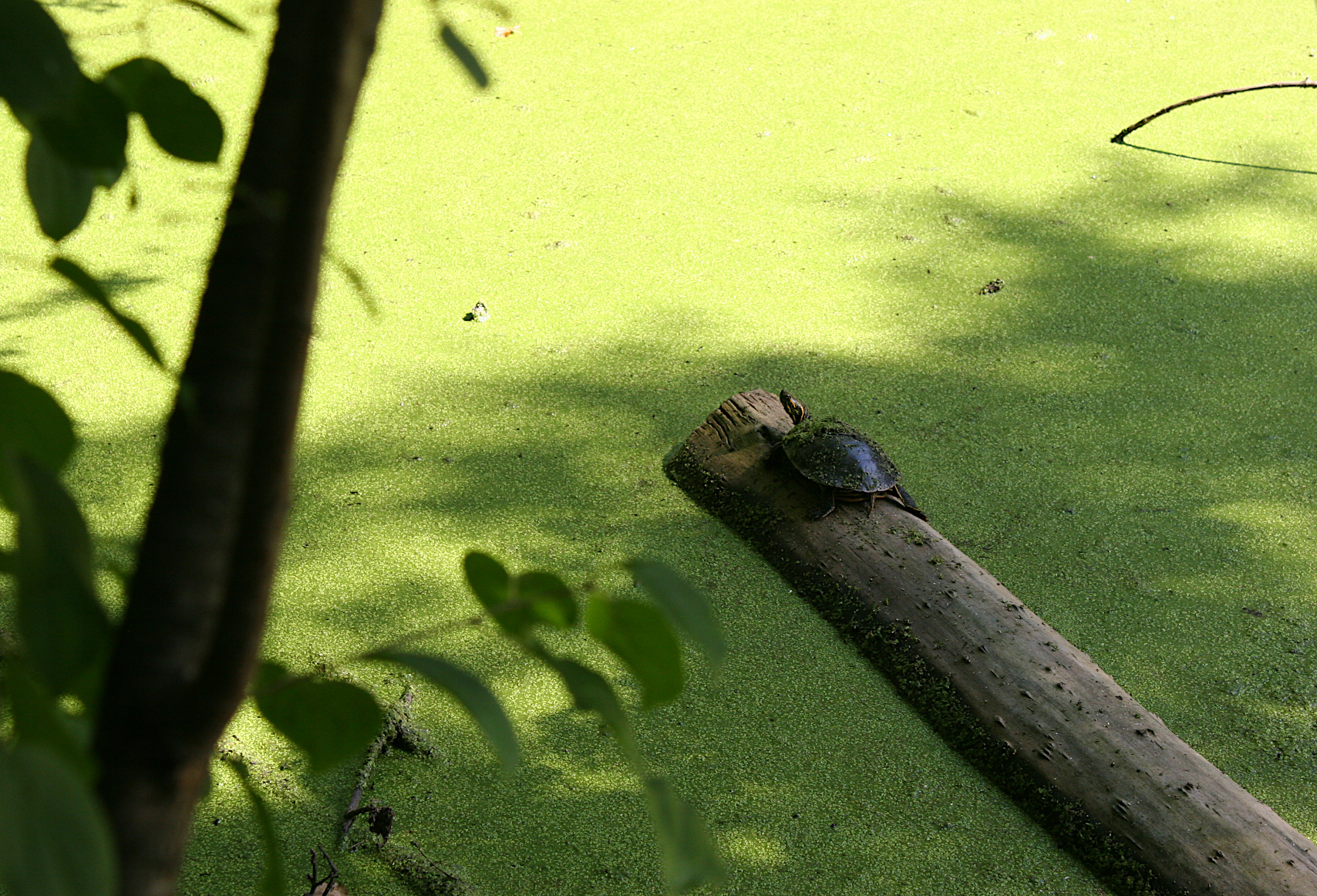
A lone turtle suns itself on a log. Minnesota Prairie Roots copyrighted photo 2021.
I also spent time in the nearby woods, stopping at the Turtle Pond to photograph turtles sunning on logs. They delight me and generations of kids, including mine, fascinated by those lazing turtles.
River Bend holds generational appeal. I’ve seen young families pushing babies in strollers, teens driving remote-controlled vehicles on limestone shelves, older couples like us walking, and much more.
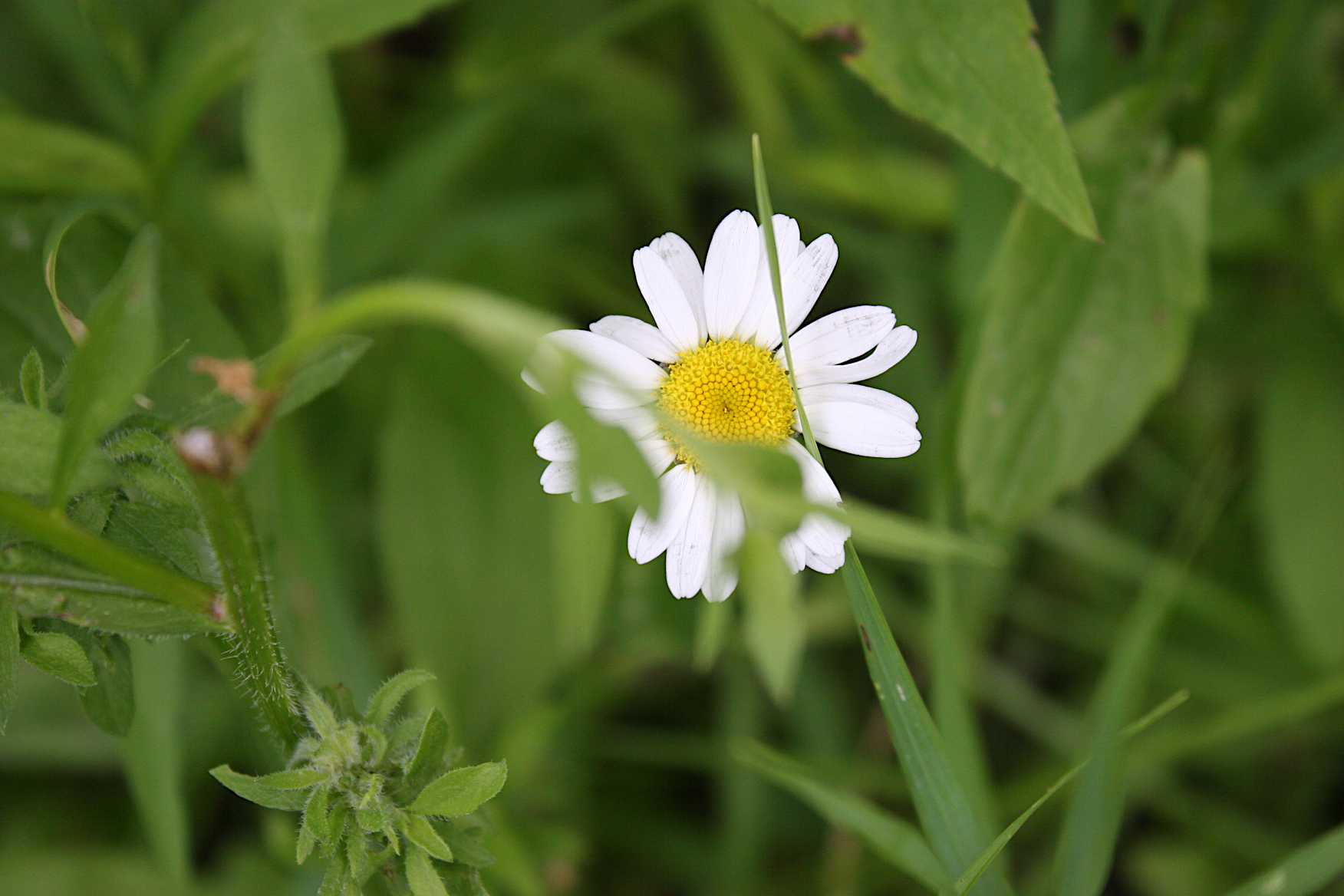
A lone daisy blooms among the prairie grass. Minnesota Prairie Roots copyrighted photo 2021.
Next week, August 16-20, River Bend focuses on its annual Ramble fundraising campaign. As a nonprofit, RBNC relies on fundraising, donations and memberships to keep the center open and operating. For more information about the Ramble, visit the RCNC website.
TELL ME: Where’s your favorite place to escape into nature near your home?
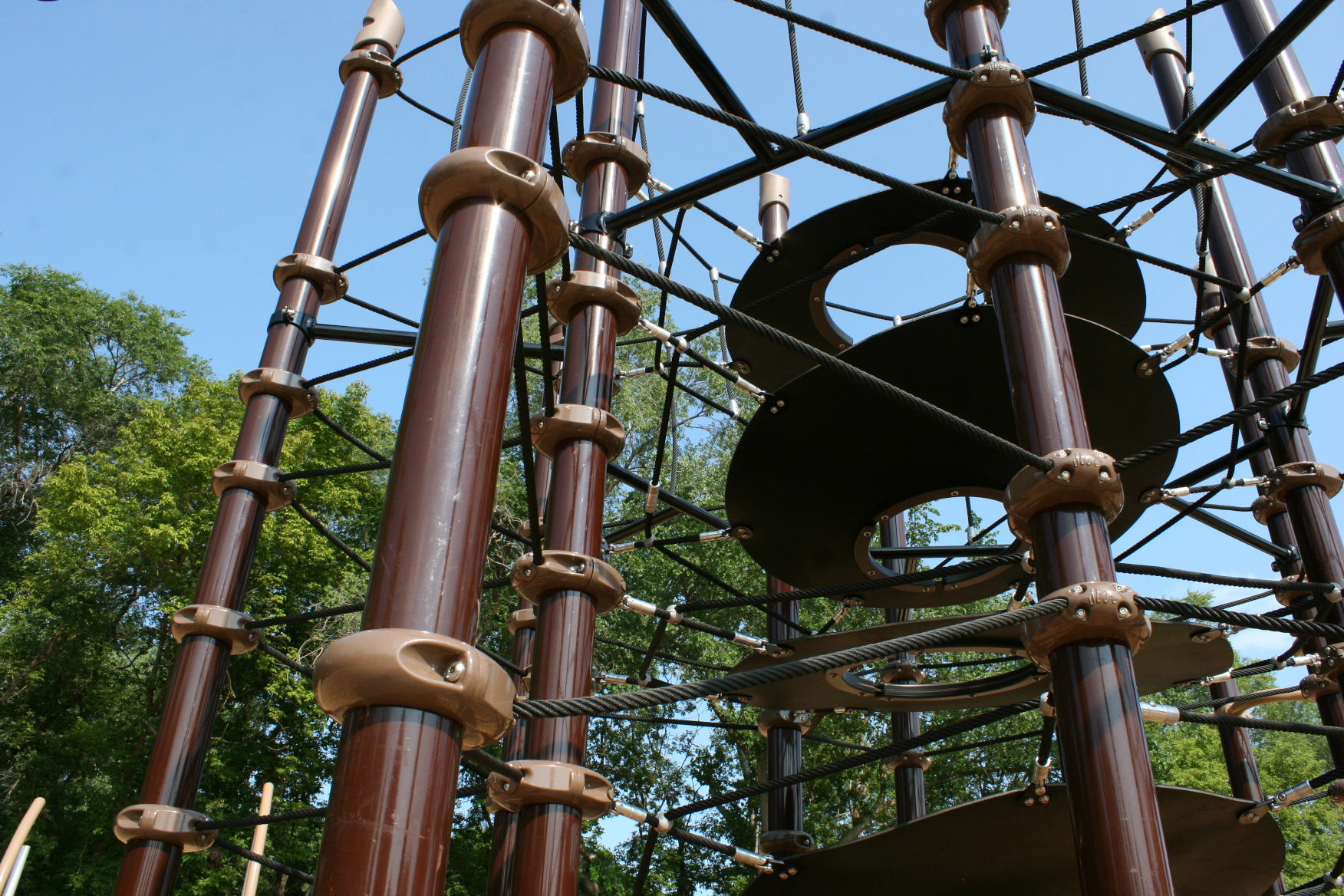
Creative climbing apparatus at Faribault’s newest park, Fleckenstein Bluffs. Minnesota Prairie Roots copyrighted photo.
AS A GRANDMOTHER OF TWO, ages 2 ½ and 5 who sometimes spend the weekend with Randy and me, I’m appreciative of public playground equipment. The City of Faribault is doing a great job of installing/updating playground equipment and other amenities in our city parks. Our park system is growing as our community grows and our needs change.
A paved recreational path, part of the city trail system, runs right next to the park. Minnesota Prairie Roots copyrighted photo.
Among the newest of parks is Fleckenstein Bluffs Park, located near downtown (First Avenue NE) and along the Straight River. Next door sits an under-construction apartment complex. A riverside recreational trail runs nearby. This park is sure to be well-used, especially once a picnic shelter, canoe launch site and river overlook are in place.
Just waiting for kids to discover, hidden animals. Minnesota Prairie Roots copyrighted photo 2021.
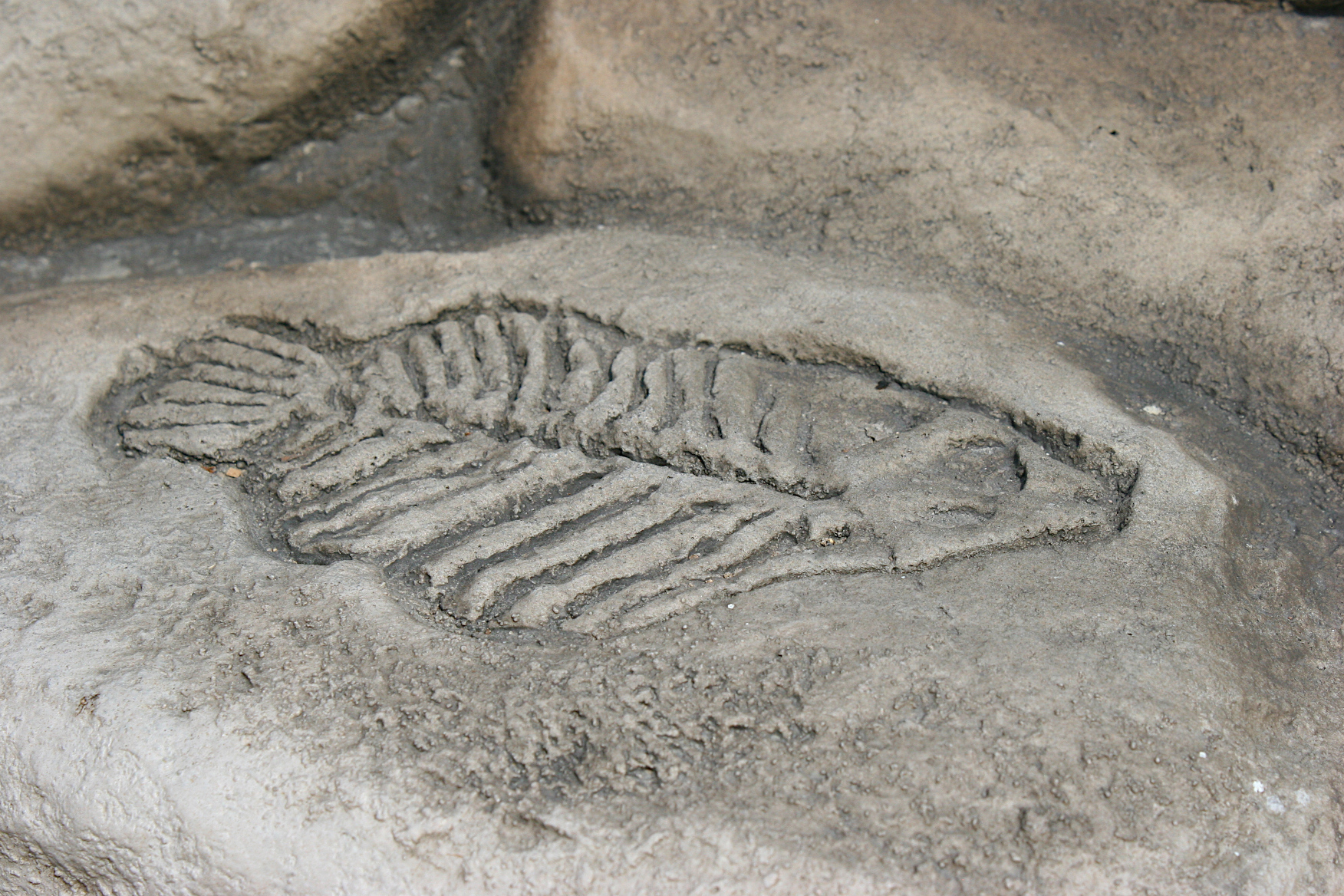
Fossils are imprinted in the “stone” too. Minnesota Prairie Roots copyrighted photo.
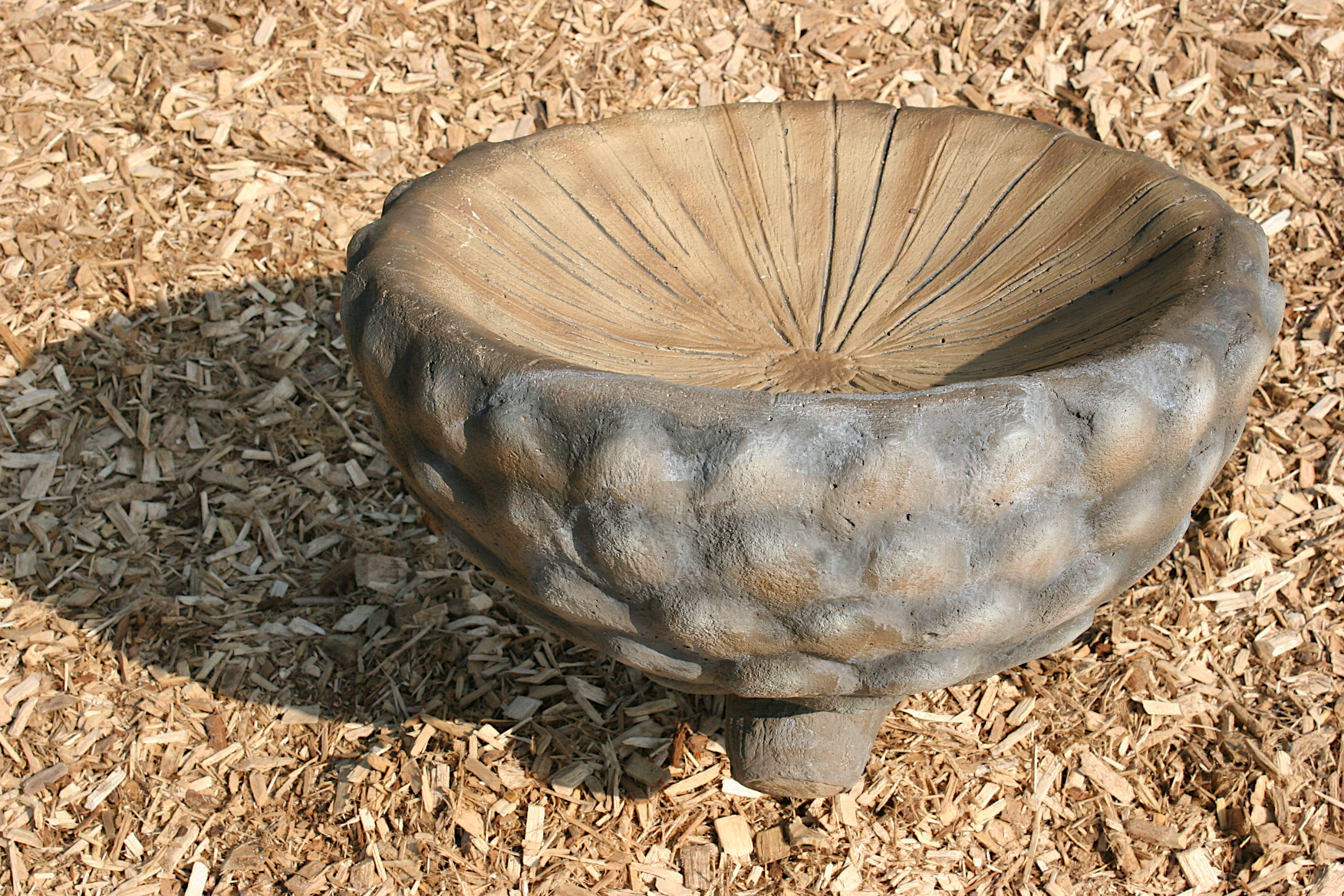
Love these acorn cap seats. Minnesota Prairie Roots copyrighted photo.
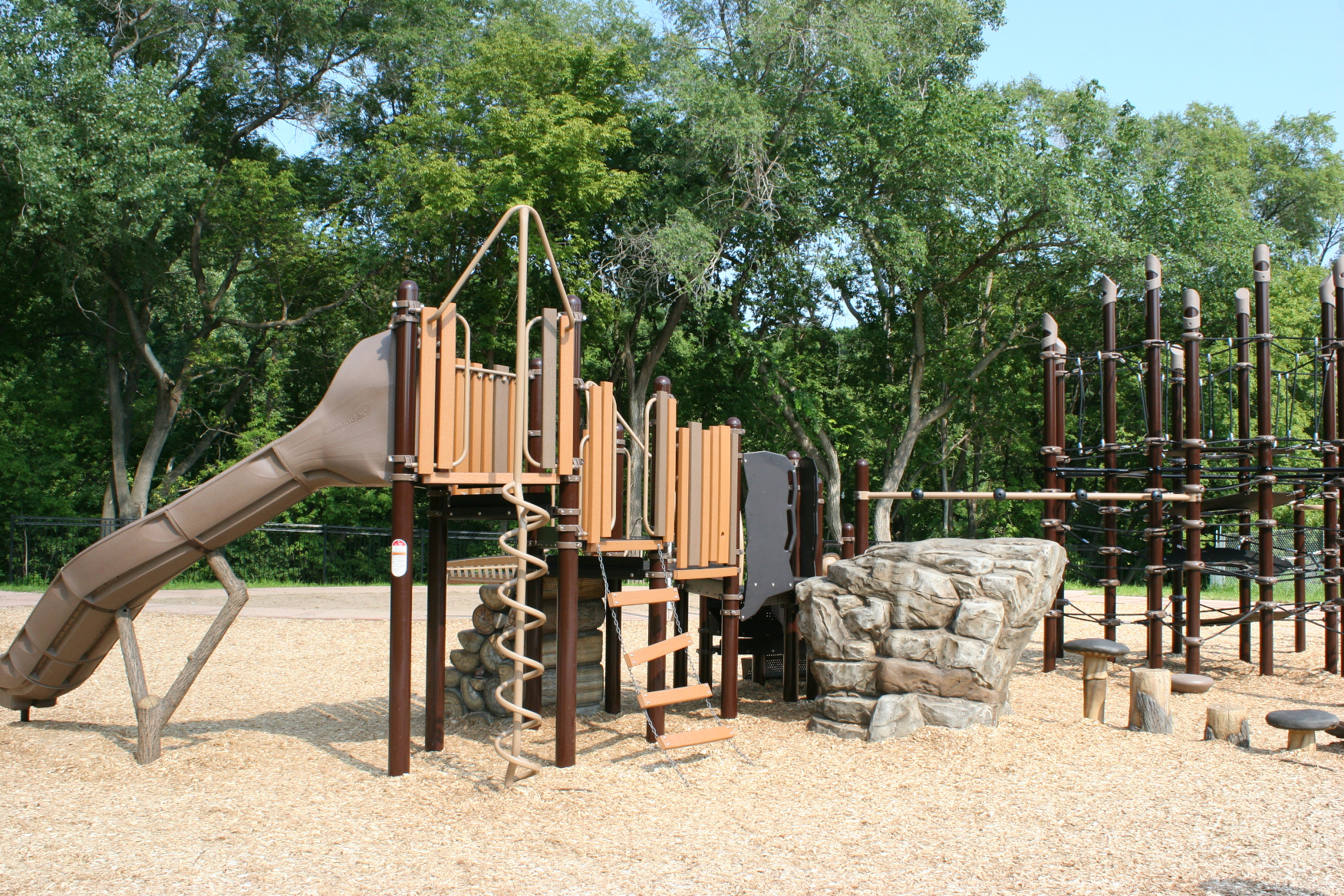
Recently, I stopped at the park to check out the nature-themed playground equipment. The closer I looked, the more I discovered—like animals and fossils hidden in the mini rock climbing walls and stacked logs, the acorn caps, the replica branch supports, the toadstool and stump stepping points, and much more. What a creative way to incorporate nature in to play. I expect my grandchildren will delight in finding a chipmunk, for example, among the logs.
Kids can make music at Fleckenstein Bluffs. Minnesota Prairie Roots copyrighted photo.
Opportunities to create music on an over-sized xylophone also impress me.
The natured-themed playground equipment at Fleckenstein Bluffs Park. Minnesota Prairie Roots copyrighted photo.
I appreciate, too, that this playground is subdued in brown hues, fitting into the natural environment rather than splashing bold colors. This spot, after all, highlights the river, the woods, the backdrop bluffs. Nearby, the Fleckenstein Brewery once stood—thus the park name.
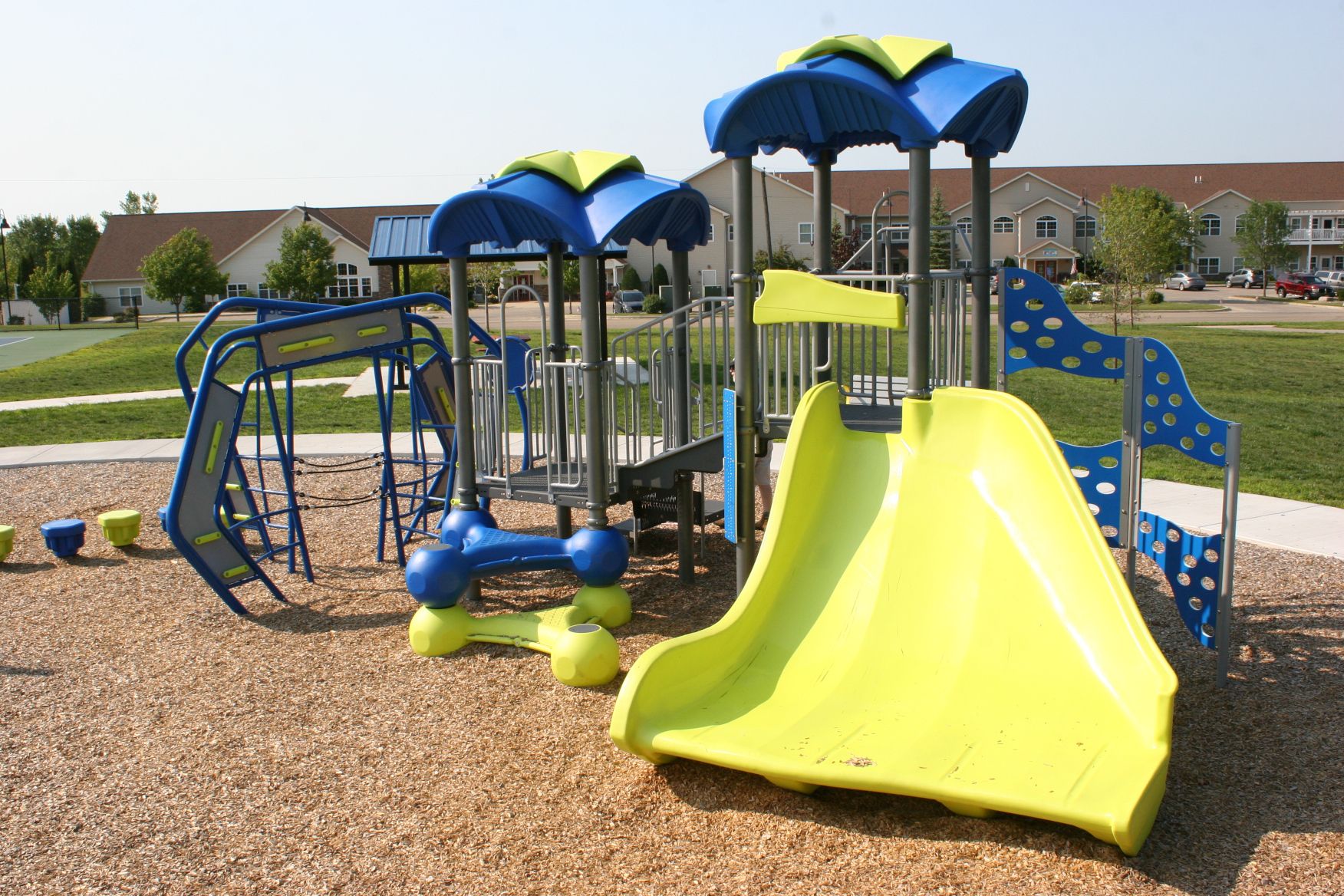
Meadows Park on Faribault’s east side. Minnesota Prairie Roots copyrighted photo.
Across the river on the east side of town, another new park offers diverse playground equipment. My friend Brenda, who lived in Faribault until moving to Connecticut with her family, tipped me off to Meadows Park during a summer visit. Her daughter, Lyla, played with friends at this park along 14th Street NE across from Milestone Senior Living Faribault.
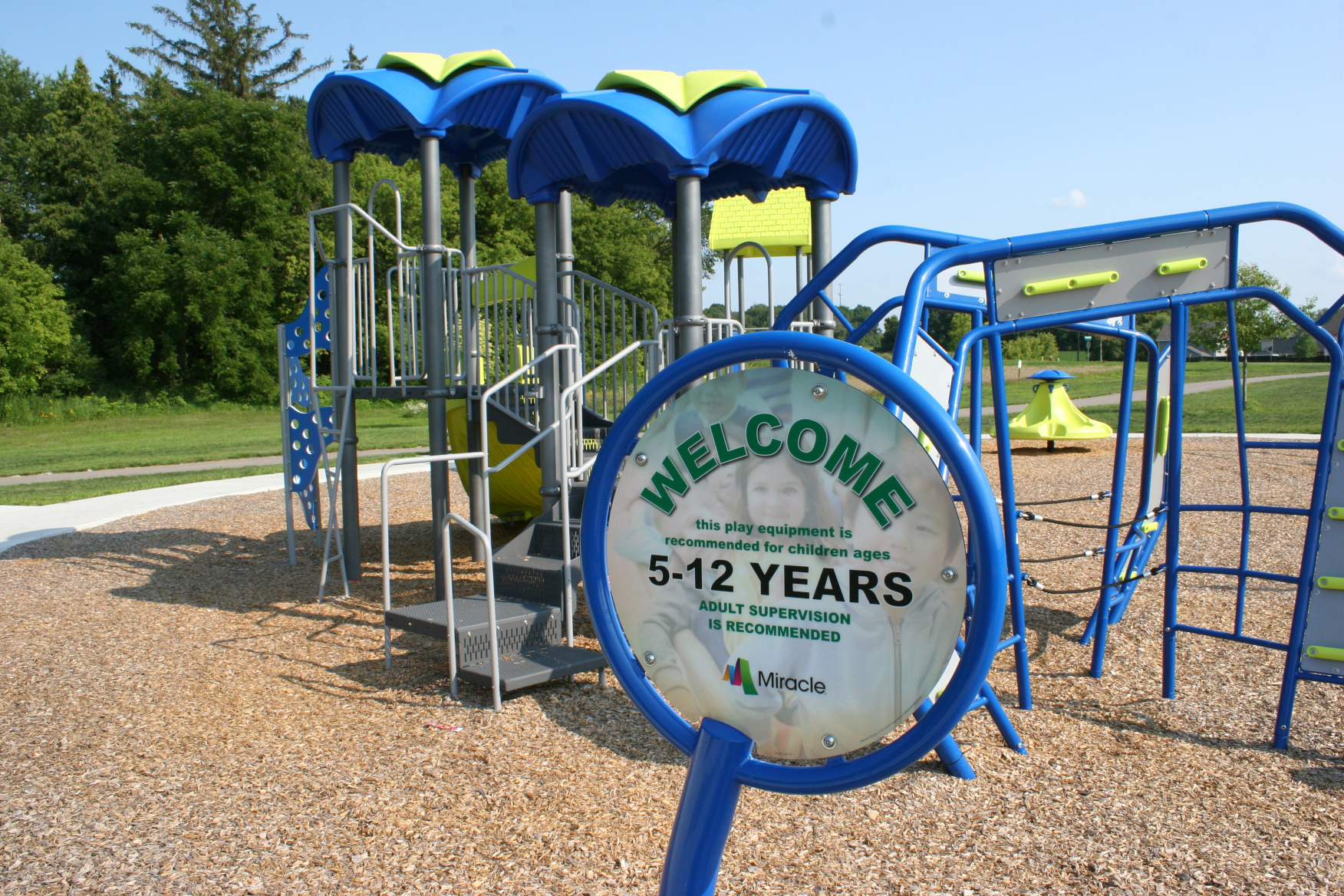
I appreciate that the playground equipment is labeled by age appropriateness. Minnesota Prairie Roots copyrighted photo.
I appreciate Brenda’s recommendation as this will be a good play space for my grandchildren, especially given their age differences. The park offers distinct play areas marked for specific ages—one for ages 2-5 and another for ages 5-12. I don’t always feel comfortable with Isaac playing on the same equipment as his big sister, Isabelle. So this arrangement is ideal.
Up close playground details. Minnesota Prairie Roots copyrighted photo.
And, if I ever decide to pick up pickleball, Meadows Park also has courts.
Age labeled at Meadows Park. Minnesota Prairie Roots copyrighted photo.
Likewise, Windsor Park in south Faribault offers pickleball courts and playground equipment sized to various ages. I liked what I saw from a distance, although I didn’t stop to investigate close-up.
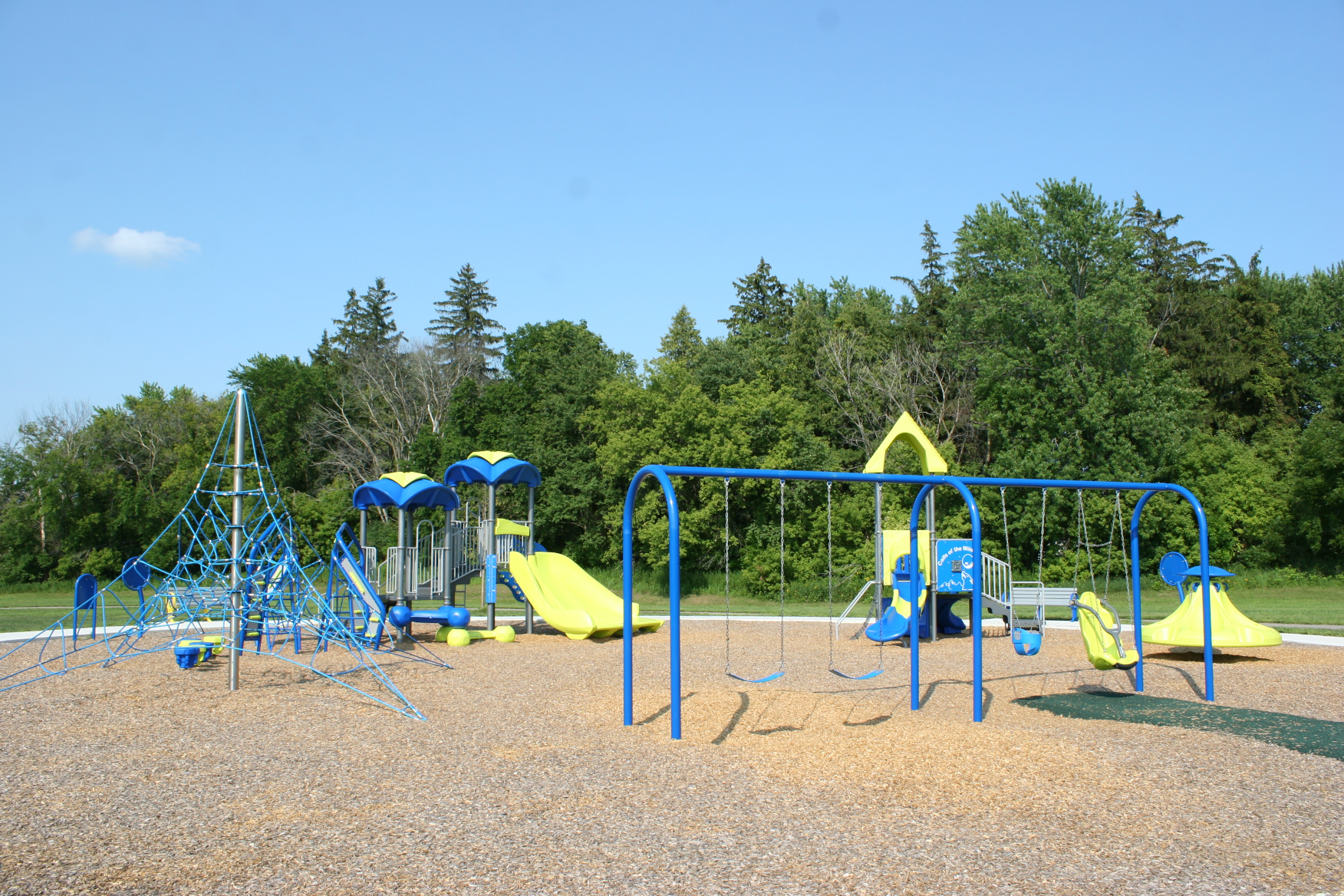
“Call of the Wild” details at Meadows Park. Minnesota Prairie Roots copyrighted photo.
And just up the hill from my home, the city recently installed a basketball court in Wapacuta Park. It was much-needed and is already well-used. In the evening, especially, I hear young people playing basketball, their voices drifting over and down the wooded hillside. I smile thinking of these teens bouncing balls and shooting hoops outdoors rather than locked inside staring at screens. Years ago this park housed basketball and tennis courts, which, for whatever reason, were removed. I’m thankful the tall metal slide that our daughters climbed is gone and replaced with safer playground equipment. The grandkids enjoy Wapacuta, too.
An overview of the Meadows Park playground. Minnesota Prairie Roots copyrighted photo.
Finally, I’m especially excited about another planned park, this one in a green space under and around our historic viaduct. The park, as yet unnamed, will be in a highly-visible location along Minnesota State Highway 60 and just a block from Central Avenue (the main street through our historic downtown). So many possibilities and opportunities exist to make this a community gathering spot. A place for the arts. For enjoying the outdoors. For recreation. For showcasing Faribault.
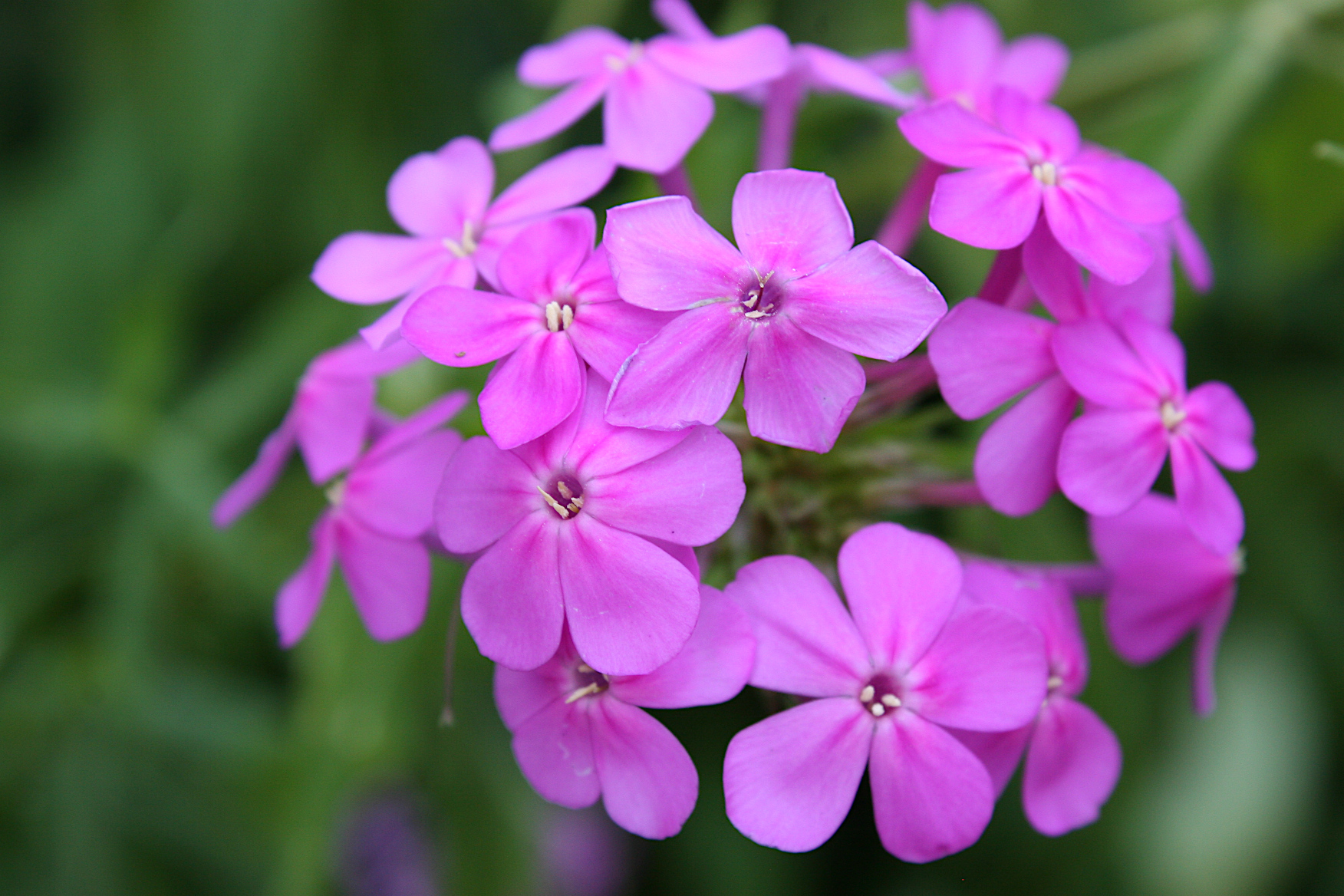
PHLOX IN VIBRANT SHADES of purple and pink, interspersed with occasional white blossoms, fill my flowerbeds. They thrive, their fragrance scenting the air that drifts through my office window.
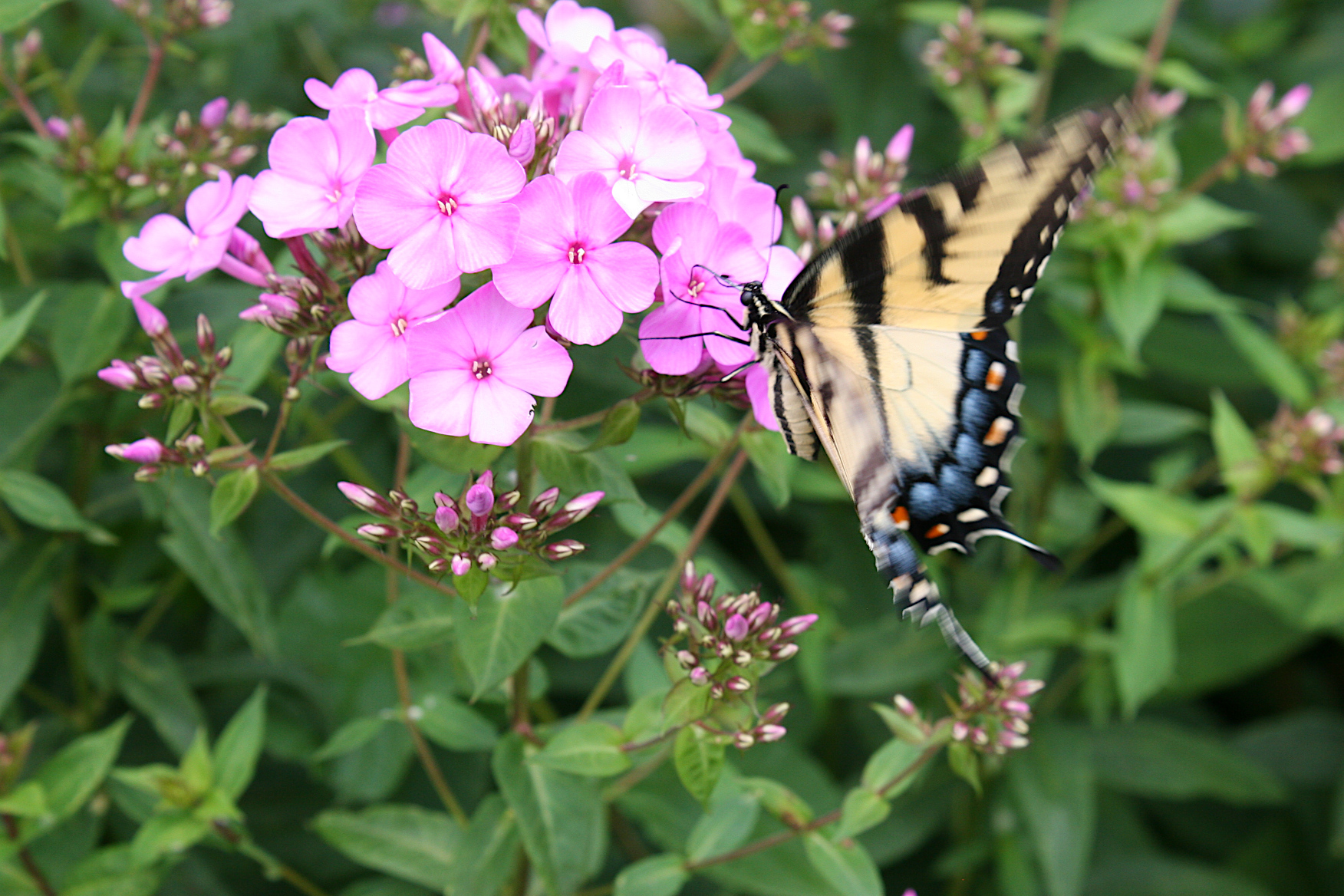
A yellow swallowtail butterfly. Minnesota Prairie Roots copyrighted photo 2021.
Occasionally I spot butterflies flitting among the phlox, random milkweeds, wild orange tiger lilies, ferns and other unidentified plants growing in a tangled mess of wildness. I love watching them—the monarchs and the swallowtails—their wings flapping with such incredible grace. They swoop and dip and pause. As if dancing. As if performing. As if penning poetry.
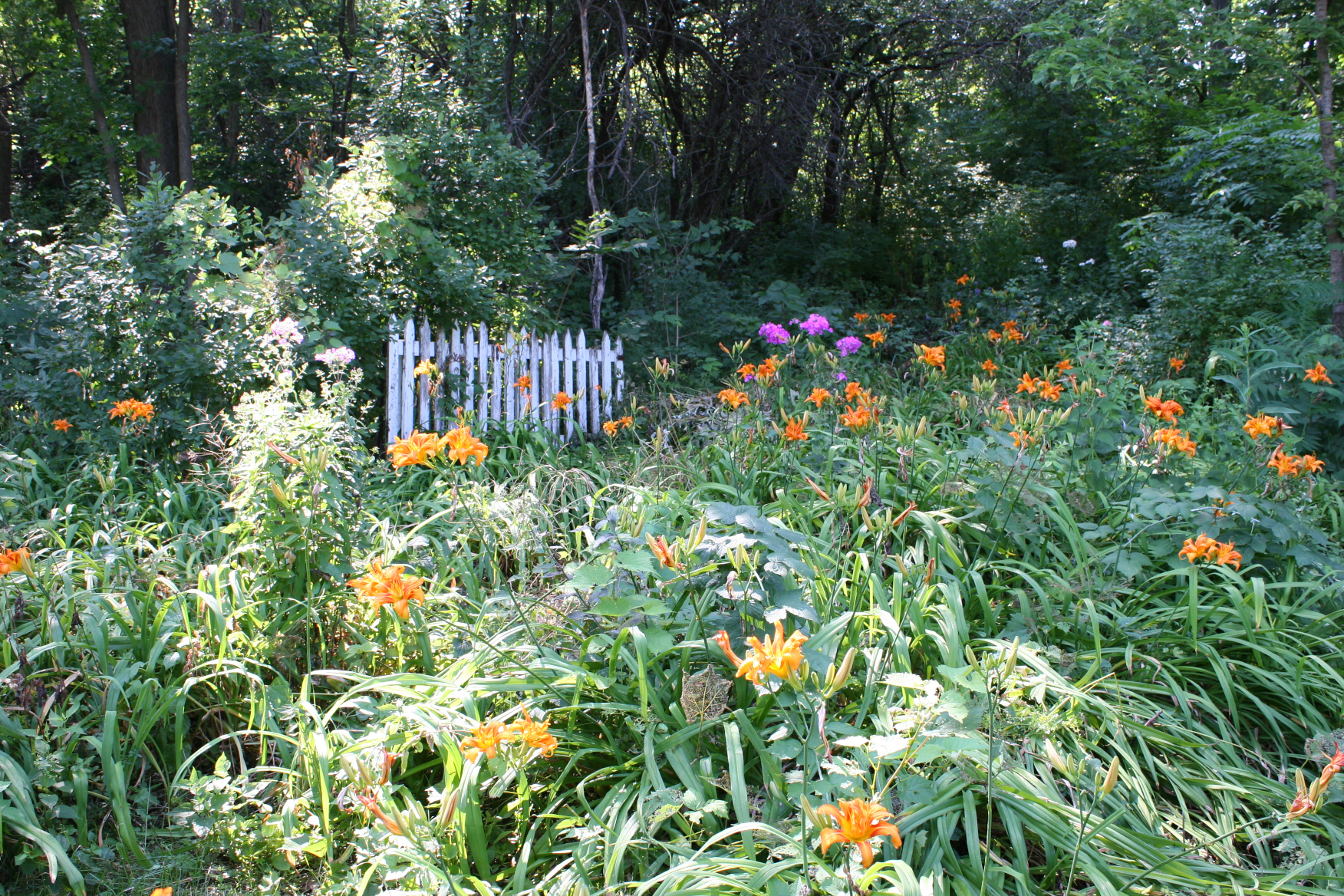
A mess of flowers grow on a hillside next to woods in our backyard. Minnesota Prairie Roots copyrighted photo 2021.
Moments like this imprint upon me the importance of pausing to appreciate the beauty of nature. The details of a flower petal. The curve of a butterfly wing. The bend of a milkweed pod.
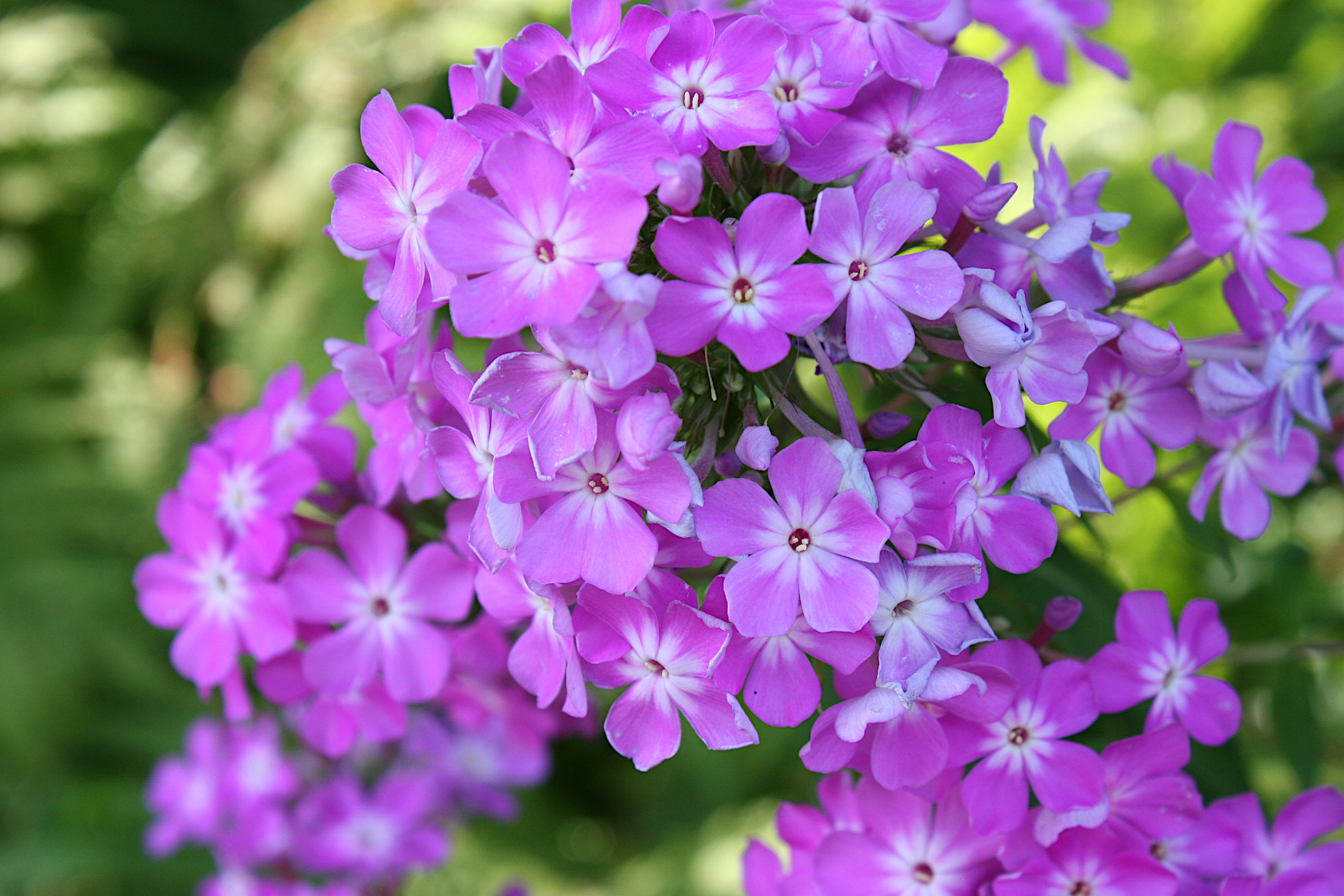
Phlox up close. Minnesota Prairie Roots copyrighted photo 2021.
Now, more than ever, I need this connection to nature, these moments to reset. To see that, even as a pandemic rages, flowers still bloom and butterflies still fly.
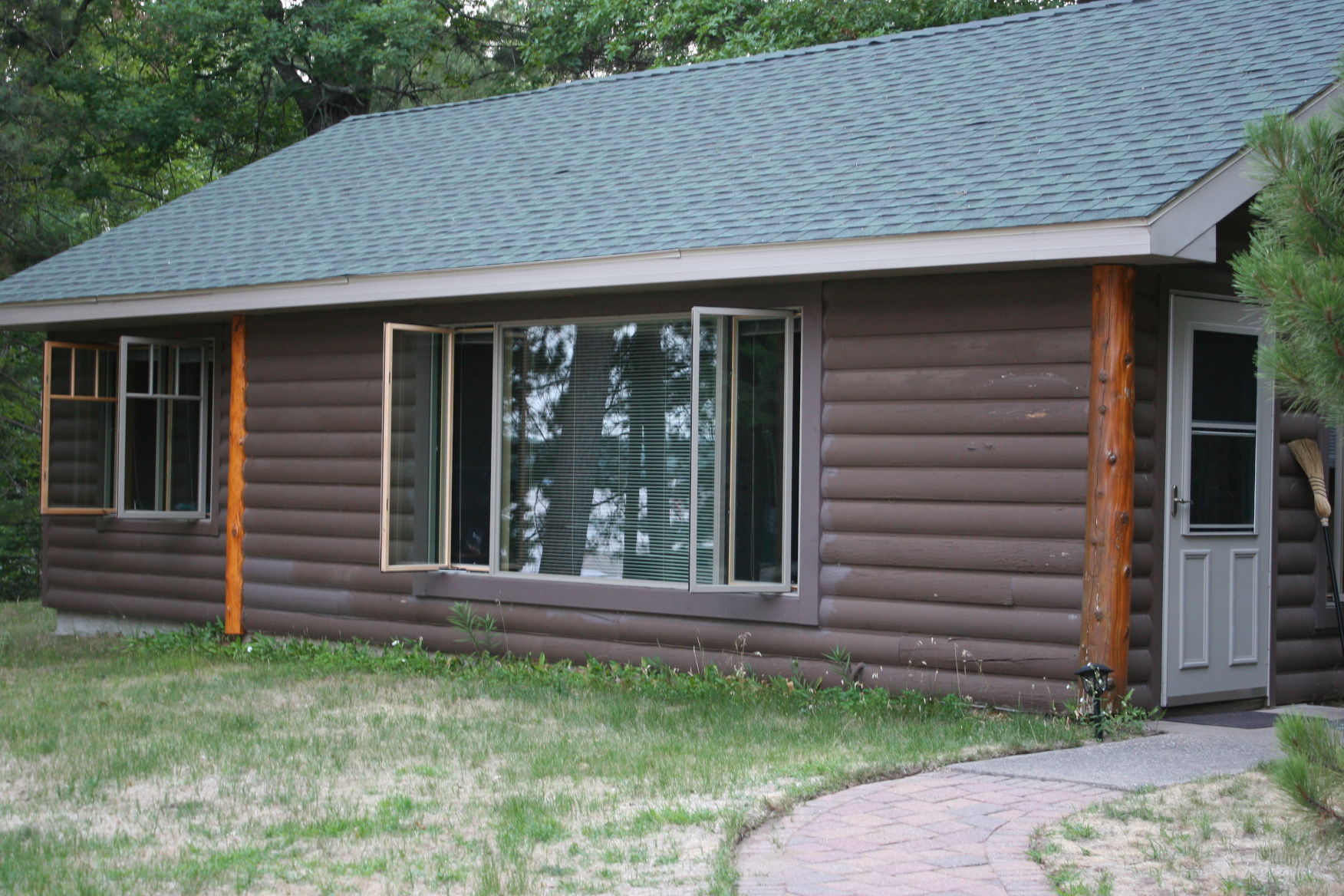
The lake cabin where we stay. Minnesota Prairie Roots copyrighted photo.
THROUGH THE SCRUB GRASS and pines we hurried. Me leading.
“You go first, Grandma,” 5-year-old Isabelle urged on our mission to corral the dragons. I’d heard them earlier, their breathy, fiery voices coming from near the cabin. Just down the lane, I noted the broken fence and the missing dragons.
There were no dragons, of course, except in our imaginations. But the sound of the blower vent on the water heater prompted the dragon round-up. We four—the two grandchildren and Grandpa and I—chased the creatures back to their enclosure.
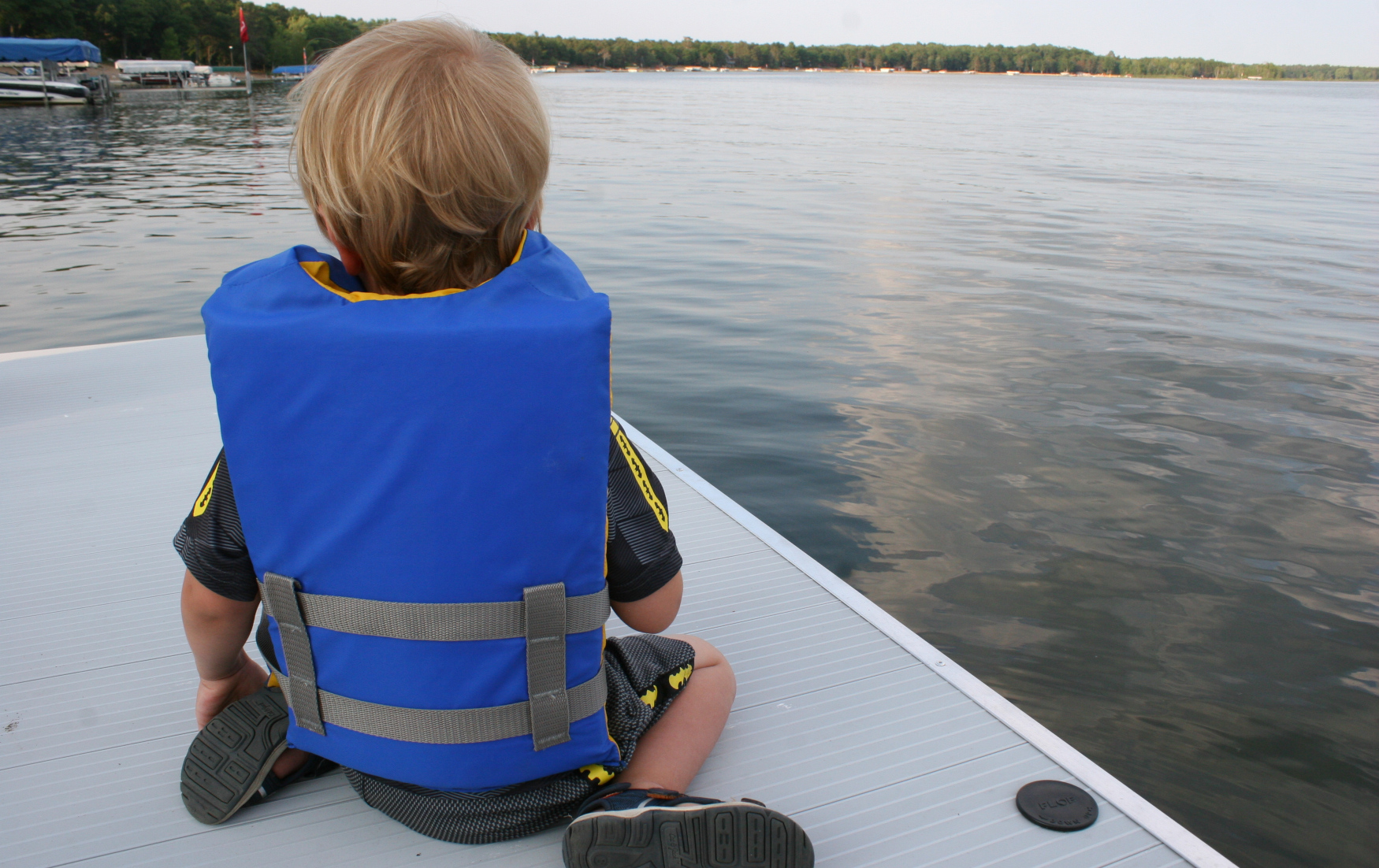
Isaac waits to fish with Grandpa. Minnesota Prairie Roots copyrighted photo.
This dragon tale is among the memories I hold from our recent stay at a central Minnesota lakes region cabin. Time with Izzy and Isaac, 2 ½, and their parents is precious family time. Days of loving and bonding and building memories.
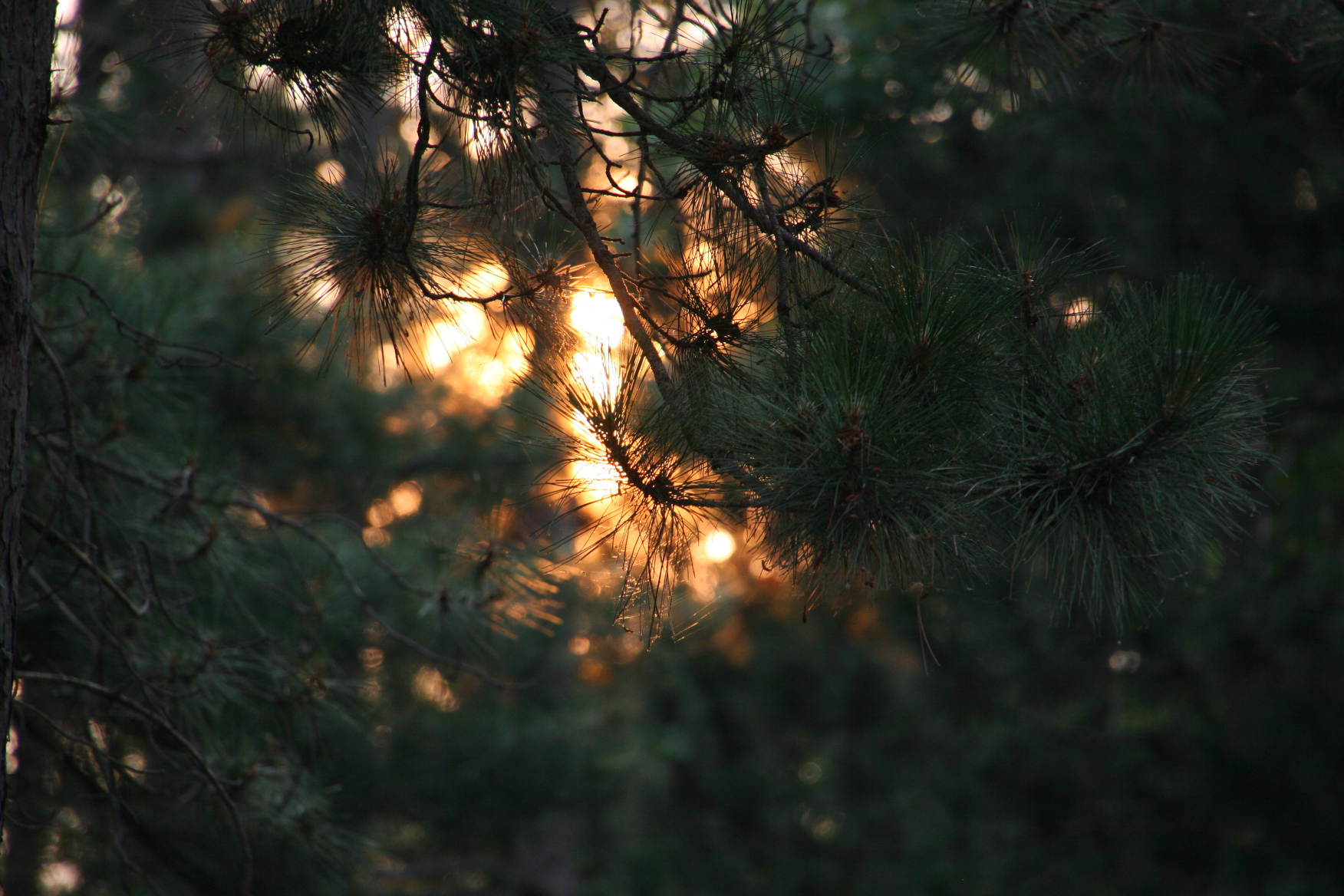
Sunset through the pines lining the driveway. Minnesota Prairie Roots copyrighted photo.
As in previous visits, Randy and I took the kids on numerous nature walks down the pine tree-lined driveway. And when we returned to the cabin, we dropped our finds in a tub of water. To see what would float—acorns, leaves, pinecones, twigs, birch bark… And what wouldn’t—stones. And that offered an opportunity to educate about Native Americans who crafted canoes from birch bark.
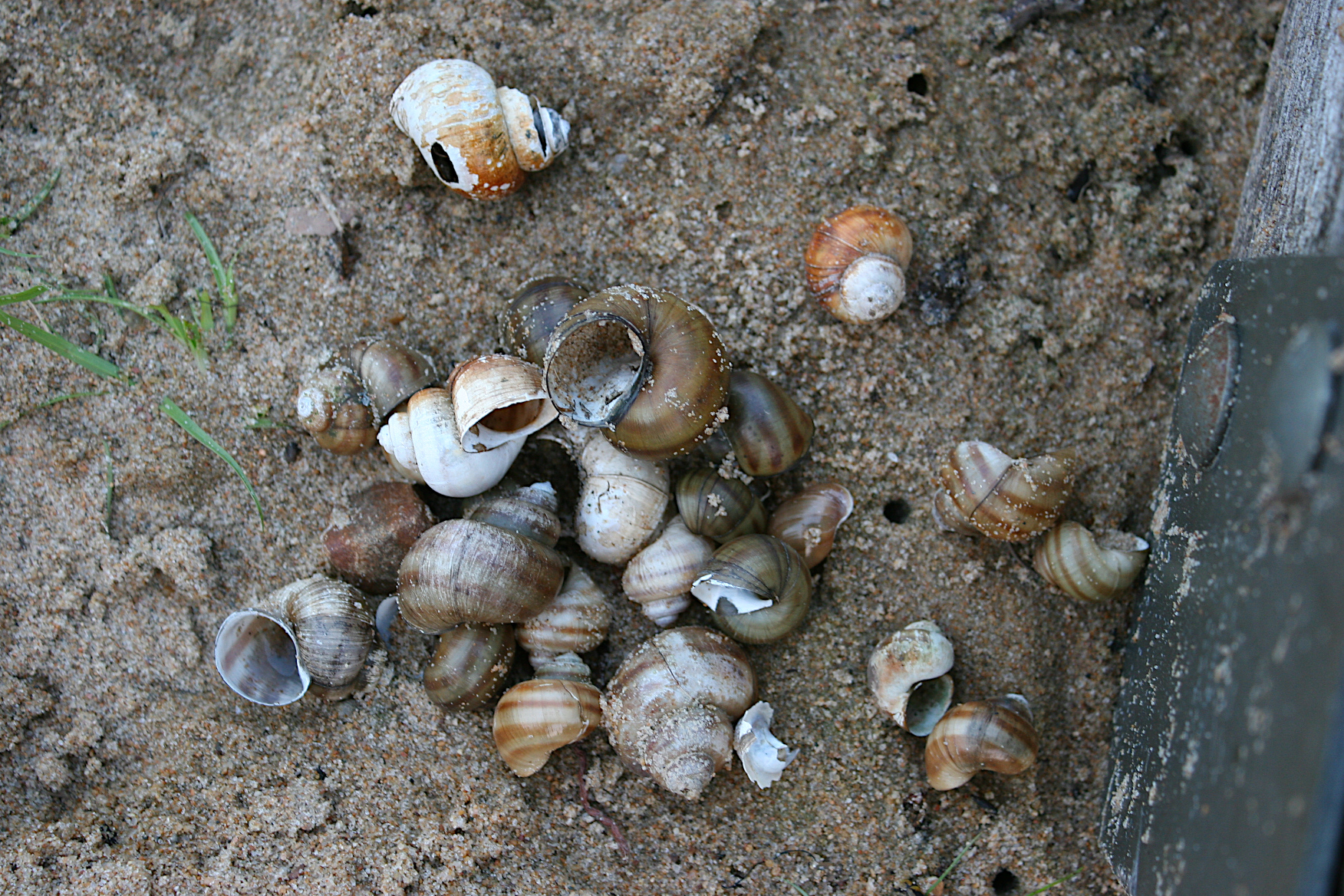
Izzy started a shell collection on the beach. Minnesota Prairie Roots copyrighted photo.
Staying at a lakeside cabin immerses us in nature without the distractions of technology and life in general. Izzy collected a mound of shells, five of which she was allowed to keep. I brought the rest home for Randy to bleach, dry and then deposit in a pint jar, a visual reminder of our time at the lake. Memories in a jar.
The water and beach drew us. To dip in the clear water, where schools of fish swarmed our feet.
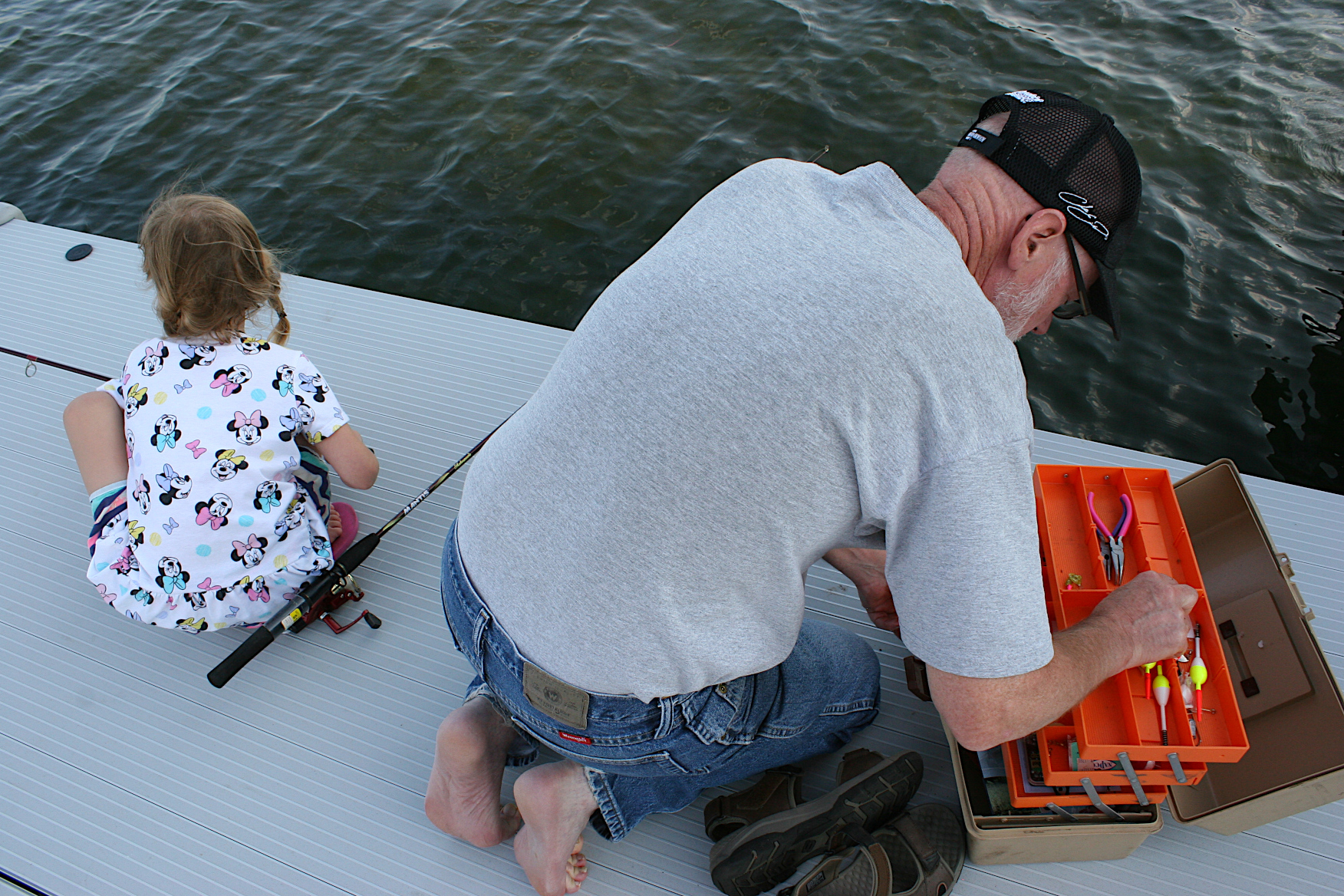
Preparing to fish. Minnesota Prairie Roots copyrighted photo.
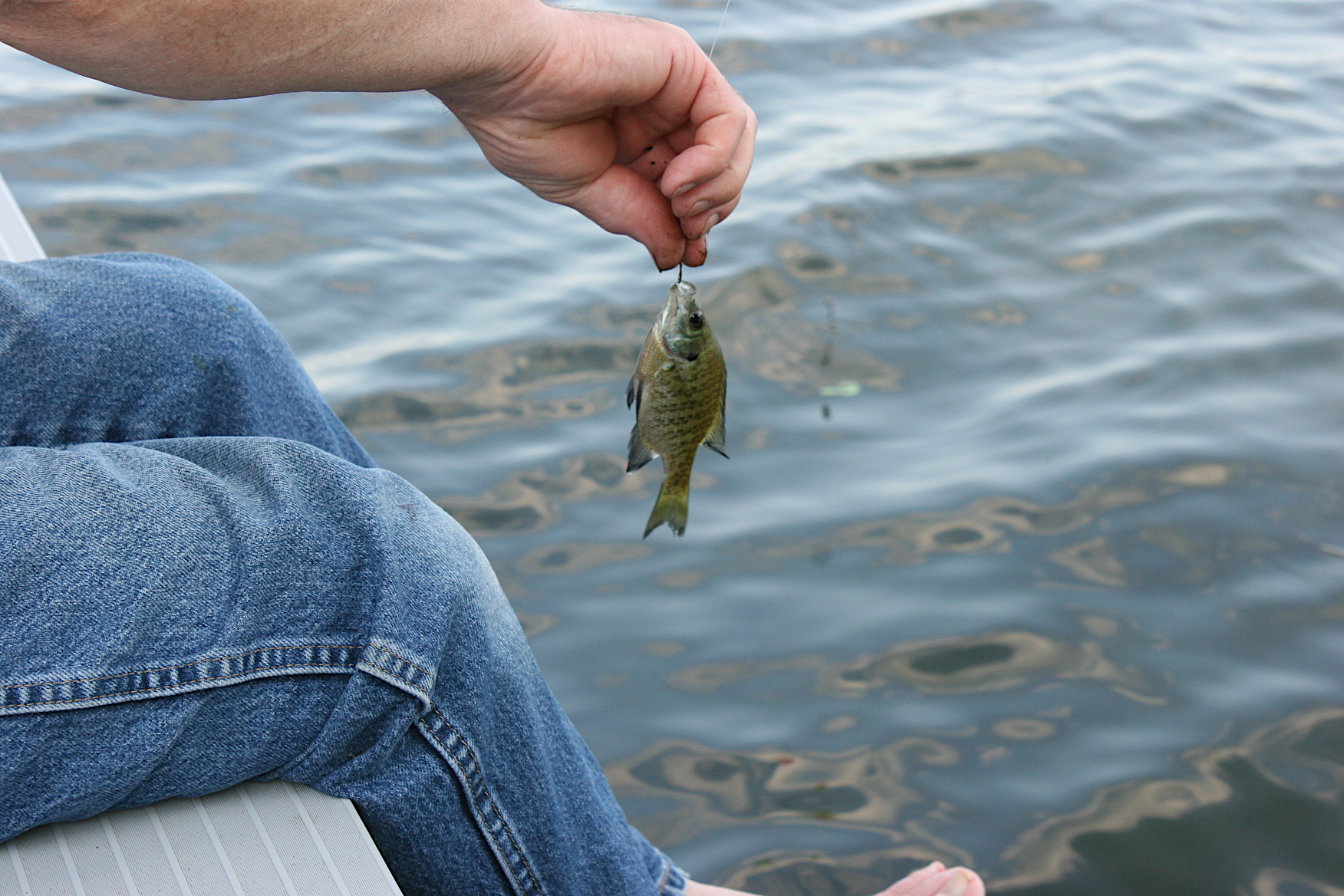
None of the fish were “keepers.” Minnesota Prairie Roots copyrighted photo.
Fishing, though, proved futile. While Randy, with the “help” of the grandkids, hooked some fish from the dock, all were too small to keep. Yet, the experience of fishing, of attempting to teach Izzy and Isaac how to reel in a line, bonds Grandpa and grandchildren. I loved watching the trio.
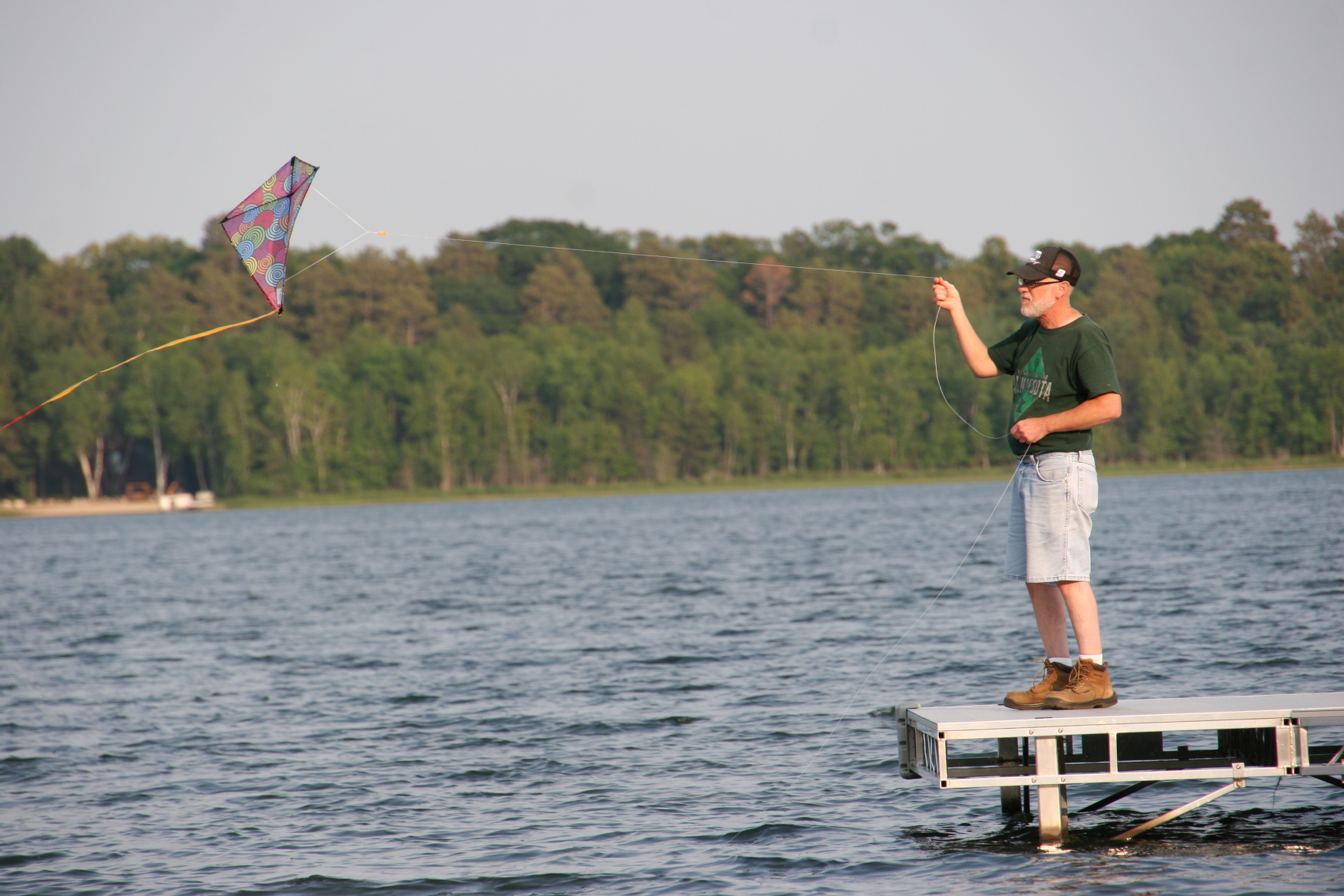
Launching a kite from the dock. Minnesota Prairie Roots copyrighted photo.
On one particularly windy day, Randy grabbed two kites from our van and headed to the end of the dock. The kids showed minimal interest, probably because they couldn’t run with the kite lakeside. We mostly watched from the beach as Randy patiently retrieved fallen kites from the water and then attempted relaunch. Repeatedly. His determination impressed me.
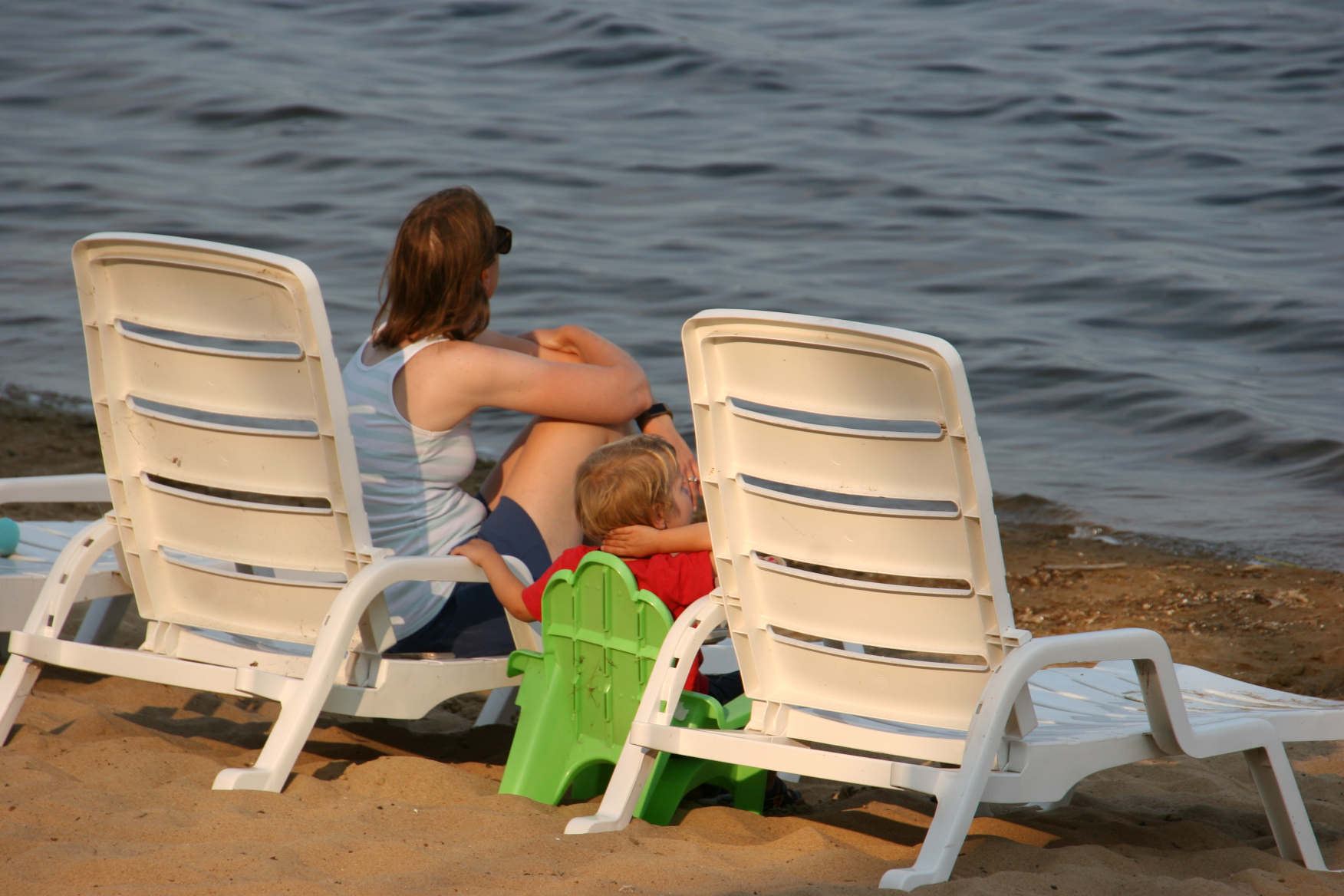
Our eldest daughter and grandson relax on the beach. Minnesota Prairie Roots copyrighted photo.
Like our last stay, Izzy opened her Sand Pie Bakery and we adults (role-playing vacationers) ordered pies in non-Minnesotan accents. Son-in-law Marc had us nearly rolling on the beach after he asked for a Mississippi Mud Pie in the thickest of Southern drawls. It was good fun, especially when Izzy claimed unfamiliarity with that particular pie while she stood with mud (sand) pie in hand.
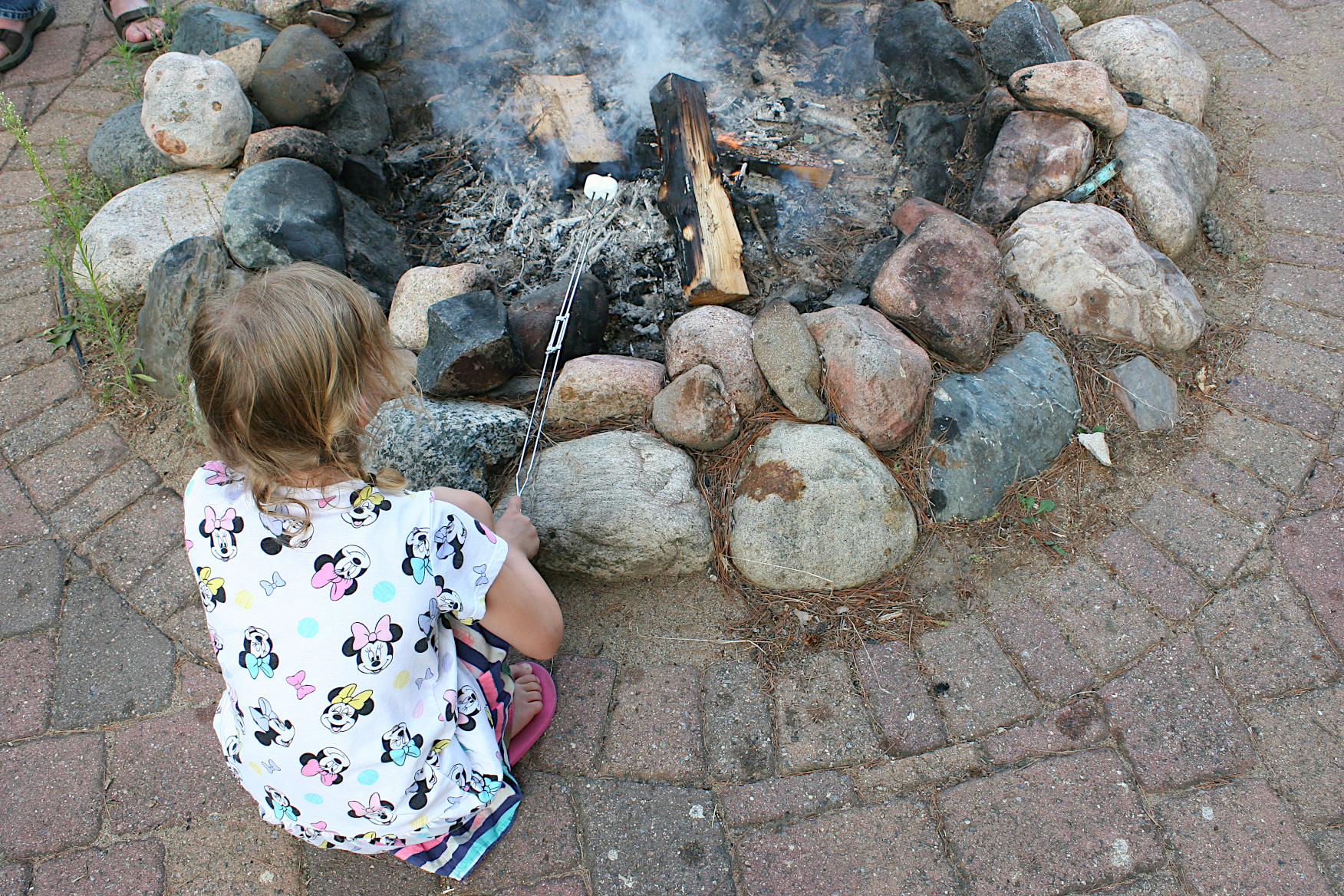
But the grandkids are enthusiastically familiar with s’mores, a campfire treat prepared each evening, except on the day strong winds warranted fire safety first due to tinder dry drought conditions. This visit Isaac joined his sister as a s’more making apprentice. I tasked him with spreading peanut butter on graham cracker halves, then adding Hershey pieces. Doing this myself would have proven easier, quicker. But easy and quick are not necessary on lake time.
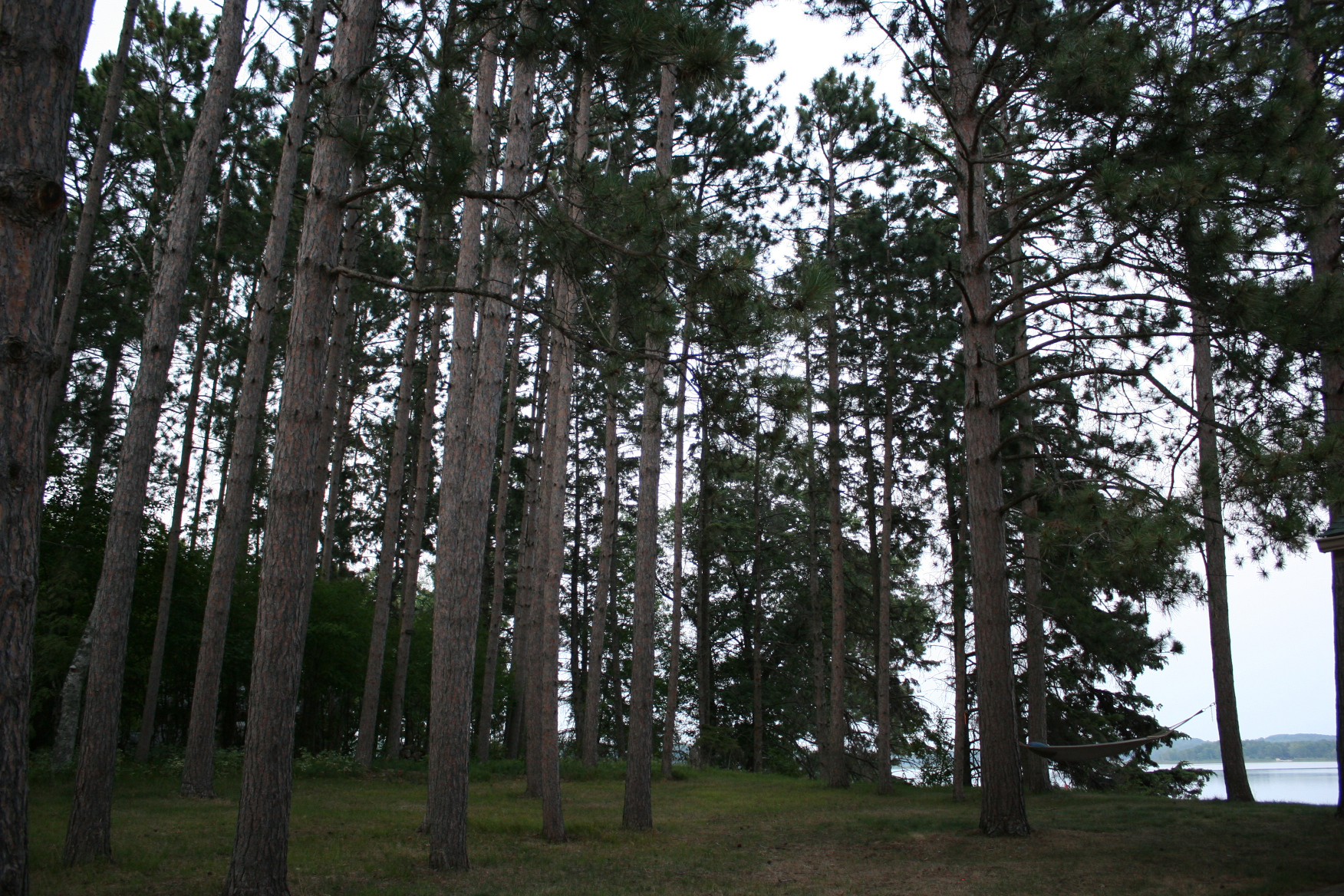
To the far right you can see the hammock strung between pines with the lake nearby. Minnesota Prairie Roots copyrighted photo.
I loved the lazy time of lying in the hammock strung between pines and with a lake view. Izzy and I lay there late one afternoon while I shared about my growing up on a farm. I’m not sure how the topic drifted to that. But my memories interested her…until she brought up bears. “What if there really was a bear here, Grandma?” She asked. We’d shared bear stories around the campfire during our last cabin stay. I didn’t have the heart to tell her the truth, that a bear had been sighted in the neighborhood. I didn’t want to scare her.
“We would just scare it away,” I said, as the hammock gently swayed. That proved good enough for her.
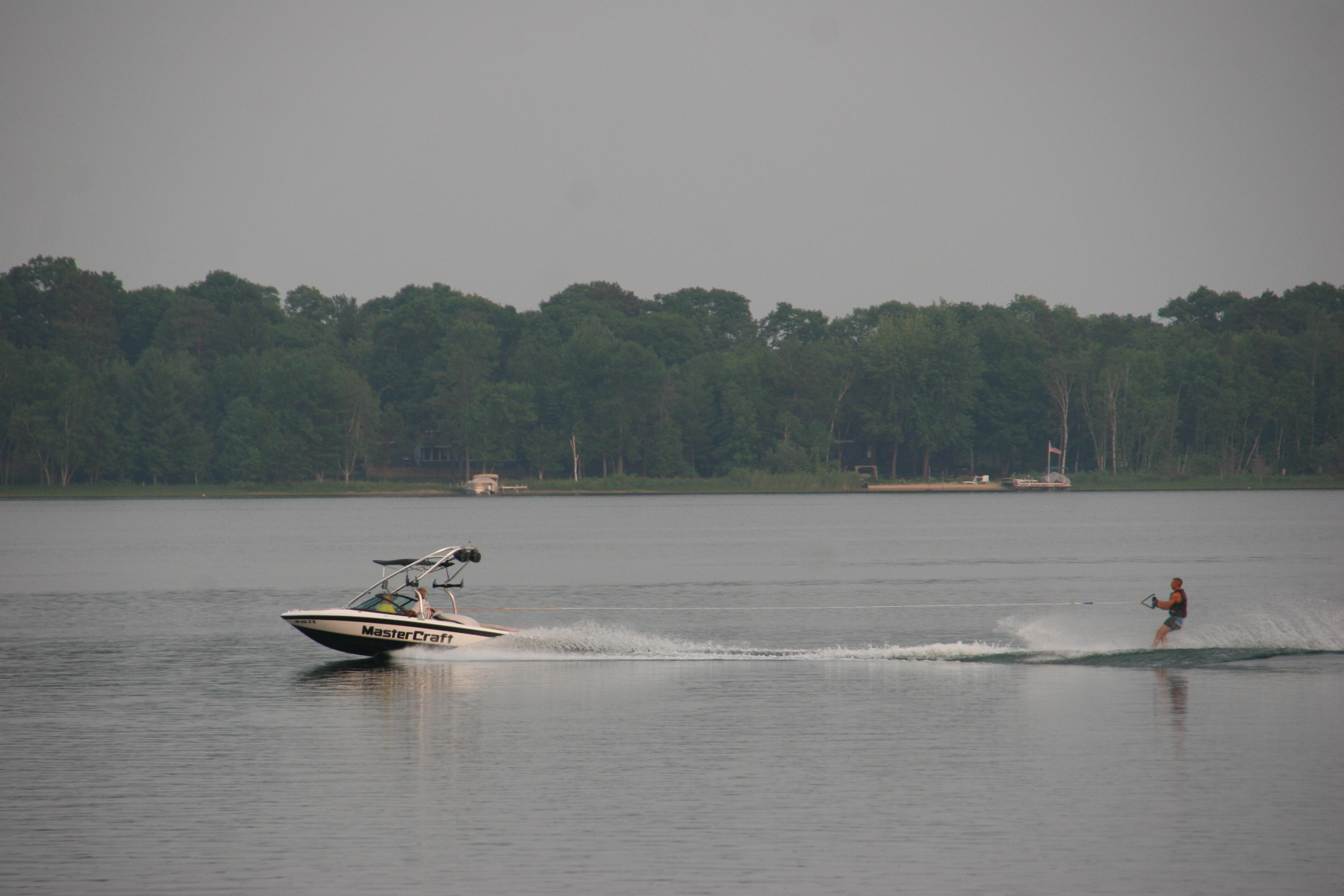
Horseshoe Lake was busy with water sports. Canadian wildfires created hazy skies. Minnesota Prairie Roots copyrighted photo.
She snuggled up to me. “I love you, Grandma.” In that moment, my heart overflowed with love for this precious little girl. This 5-year-old who wears tulle skirts on nature walks, who collects shells, who bakes pies from beach sand. Who, like me, didn’t want to leave the lake cabin…
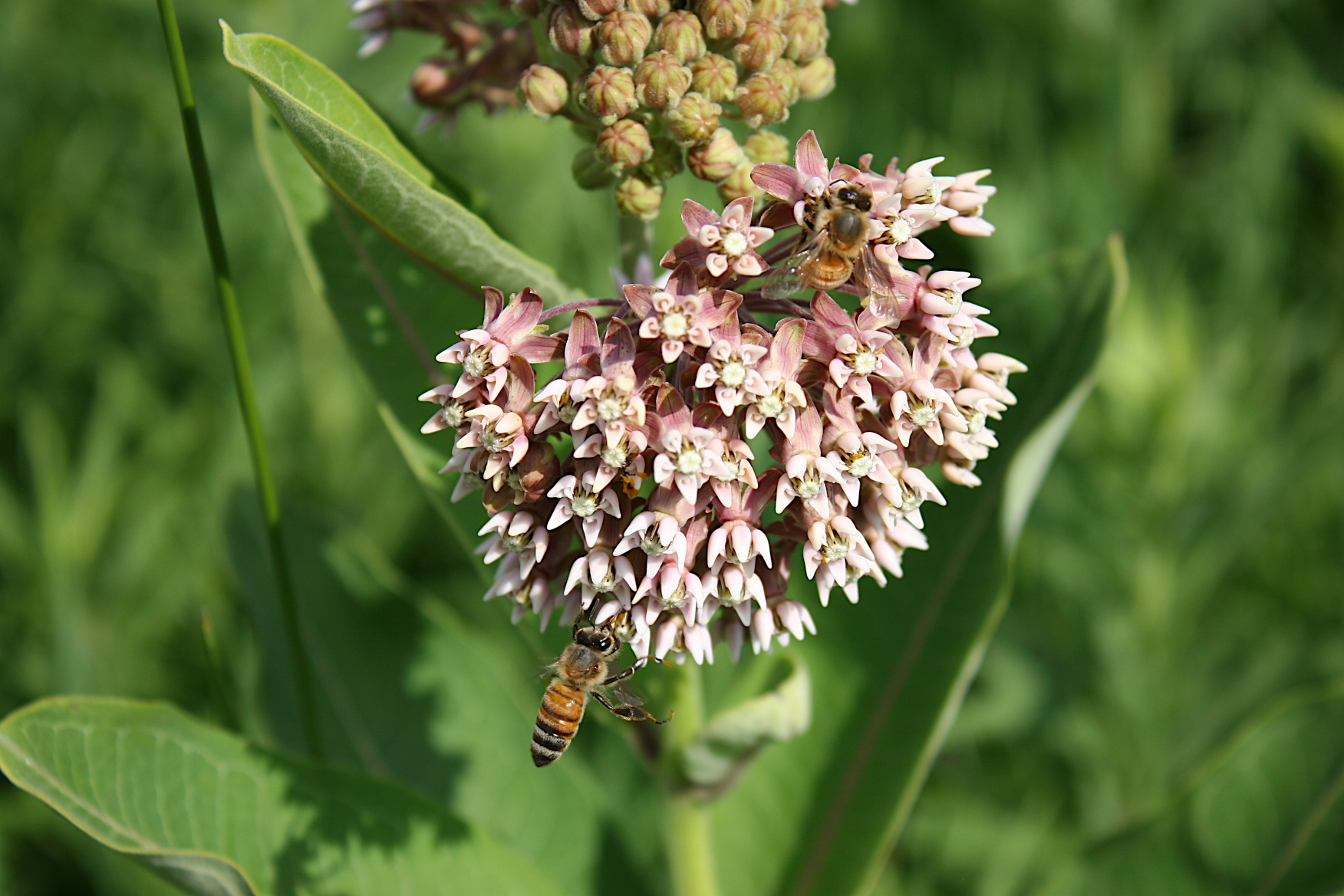
Bees feed on a milkweed flower at River Bend Nature Center, Faribault. Minnesota Prairie Roots copyrighted photo.
IN MY MESS OF FLOWERBEDS, which are anything but orderly, random milkweeds grow. Some sprouted in the lawn. Others simply popped up among the phlox and ferns and iris and greenery, seeds blown by the wind, dropping to the ground, rising now toward the sun.
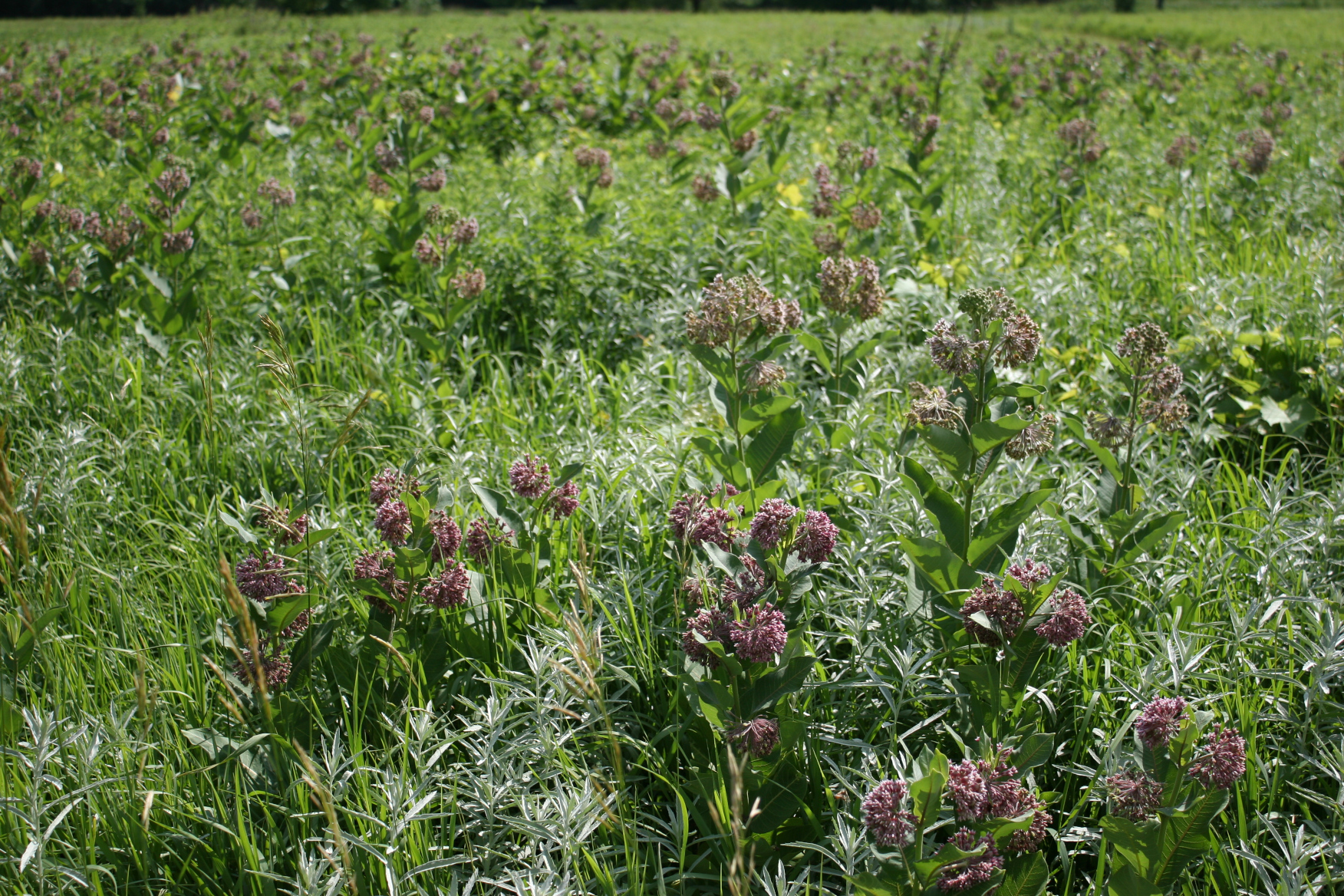
Milkweeds thrive on the prairie at River Bend. Minnesota Prairie Roots copyrighted photo.
Back in the days of my youth, I would have yanked these milkweeds from the soil under the direction of my farmer father. Remove those weeds from the corn and soybean fields. I know better now. Milkweed plants are essential to the monarch butterfly.
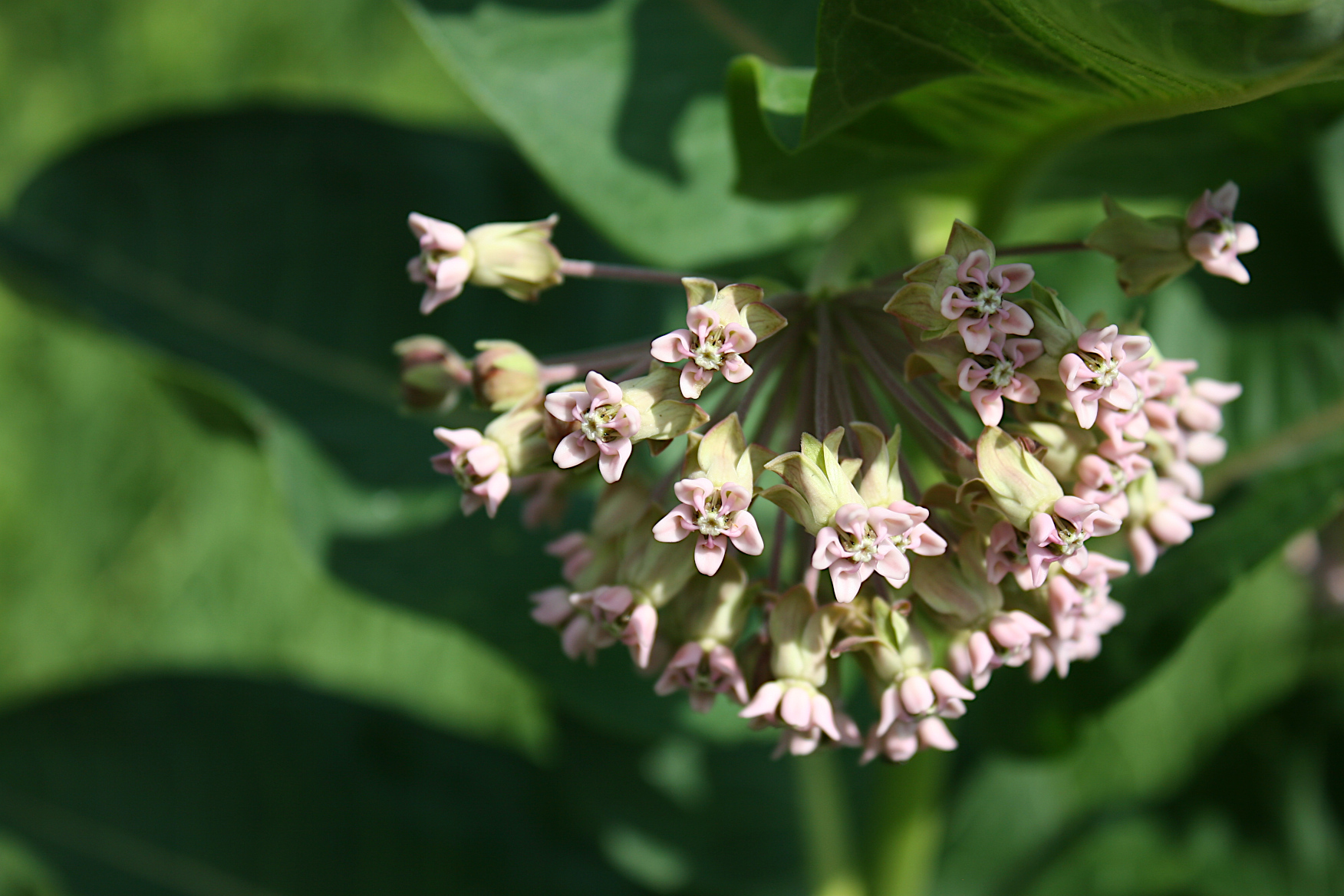
I love the dusty hue of the common milkweed. Minnesota Prairie Roots copyrighted photo.
The milkweed is the host plant for the monarch. They lay eggs on the leaves, the larvae then feeding on those leaves.
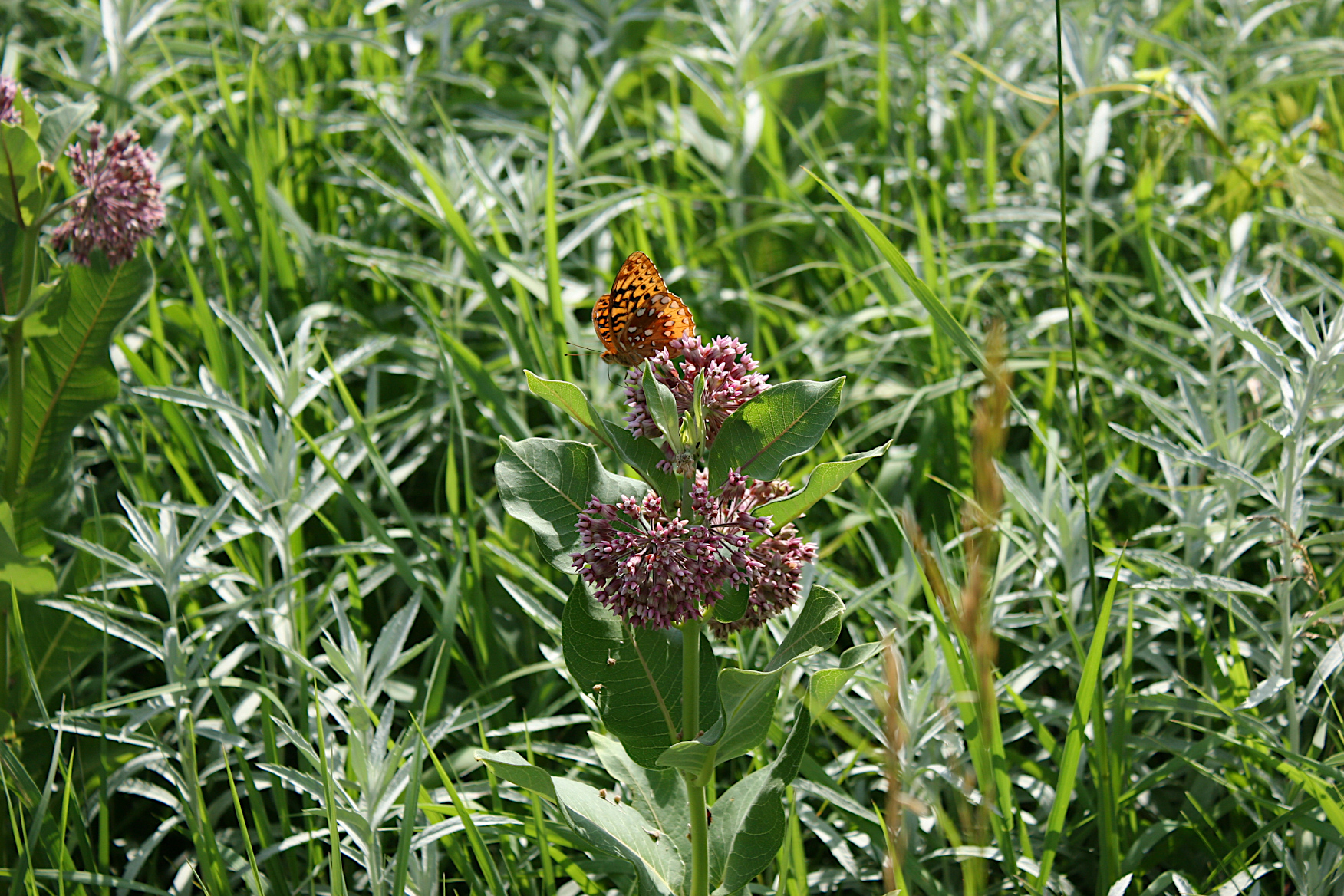
The milkweed attracts more than just monarchs. Minnesota Prairie Roots copyrighted photo.
Without milkweeds, the monarch would become extinct.
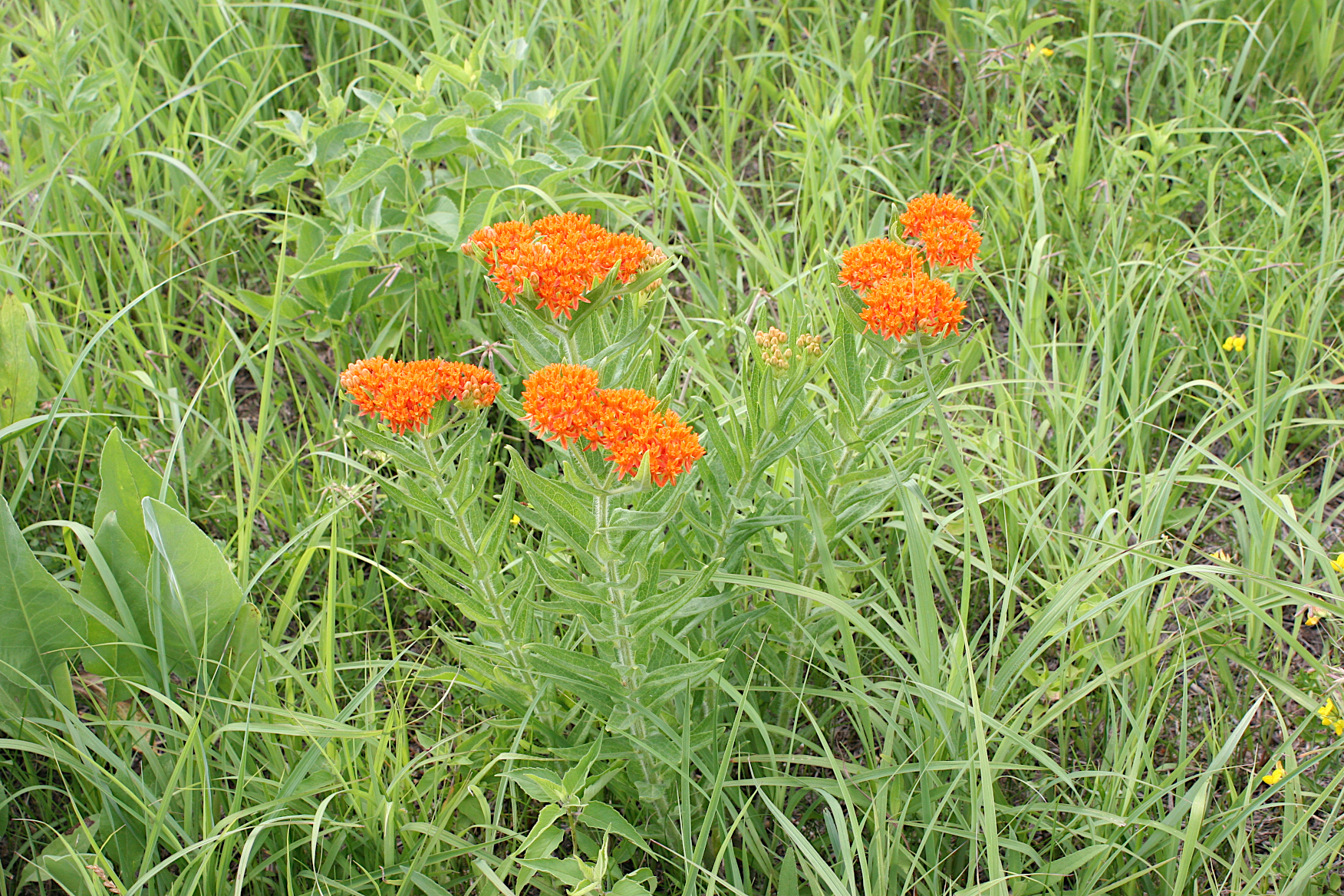
Butterfly milkweed, although much less abundant, also grows at River Bend. Minnesota Prairie Roots copyrighted photo.
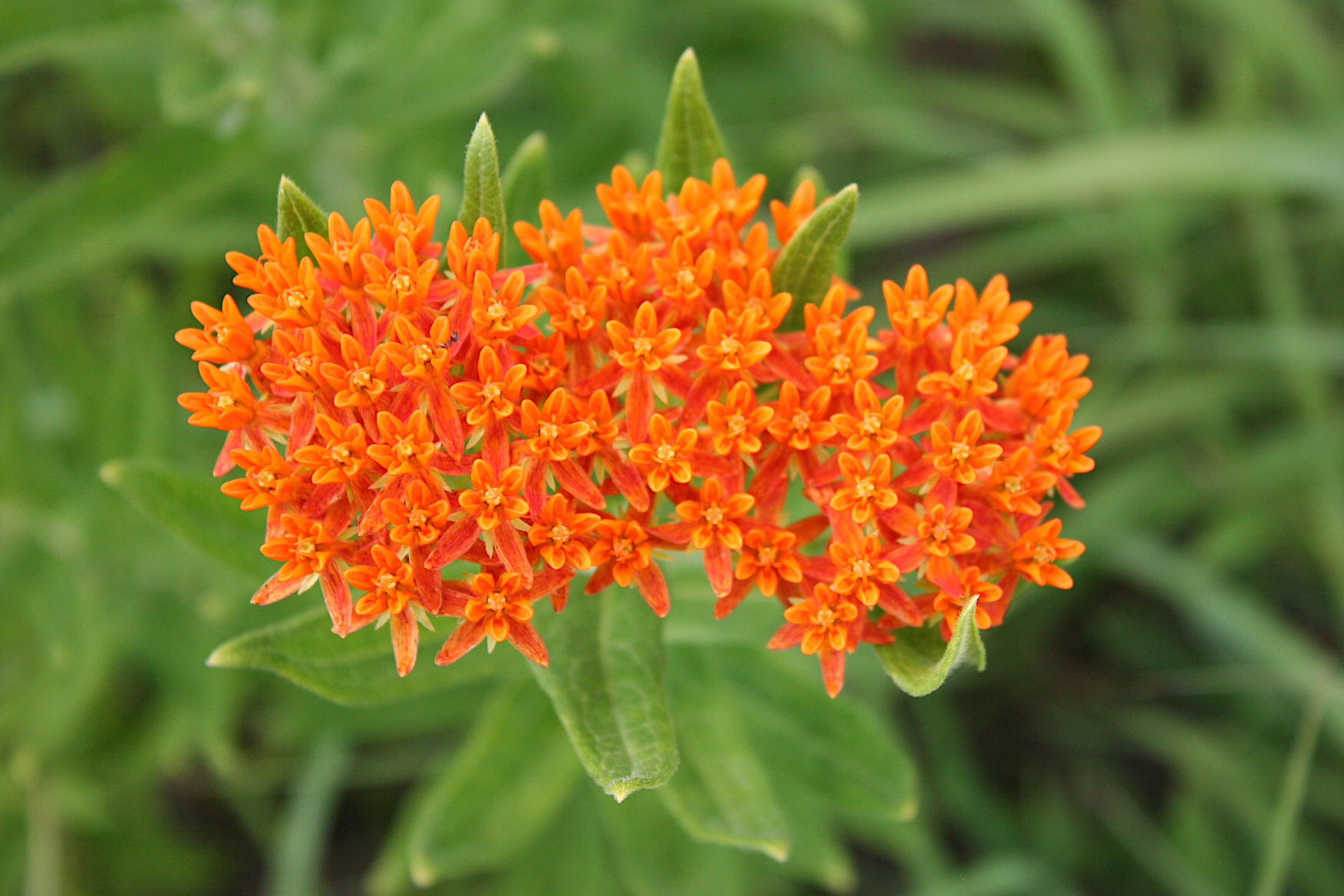
The exceedingly brilliant butterfly milkweed, up close. Minnesota Prairie Roots copyrighted photo.
I appreciate the value of this plant in the natural cycle, in sustaining the monarch butterfly population. This is but one example of how we are all intertwined. Every creature. One dependent on the other.
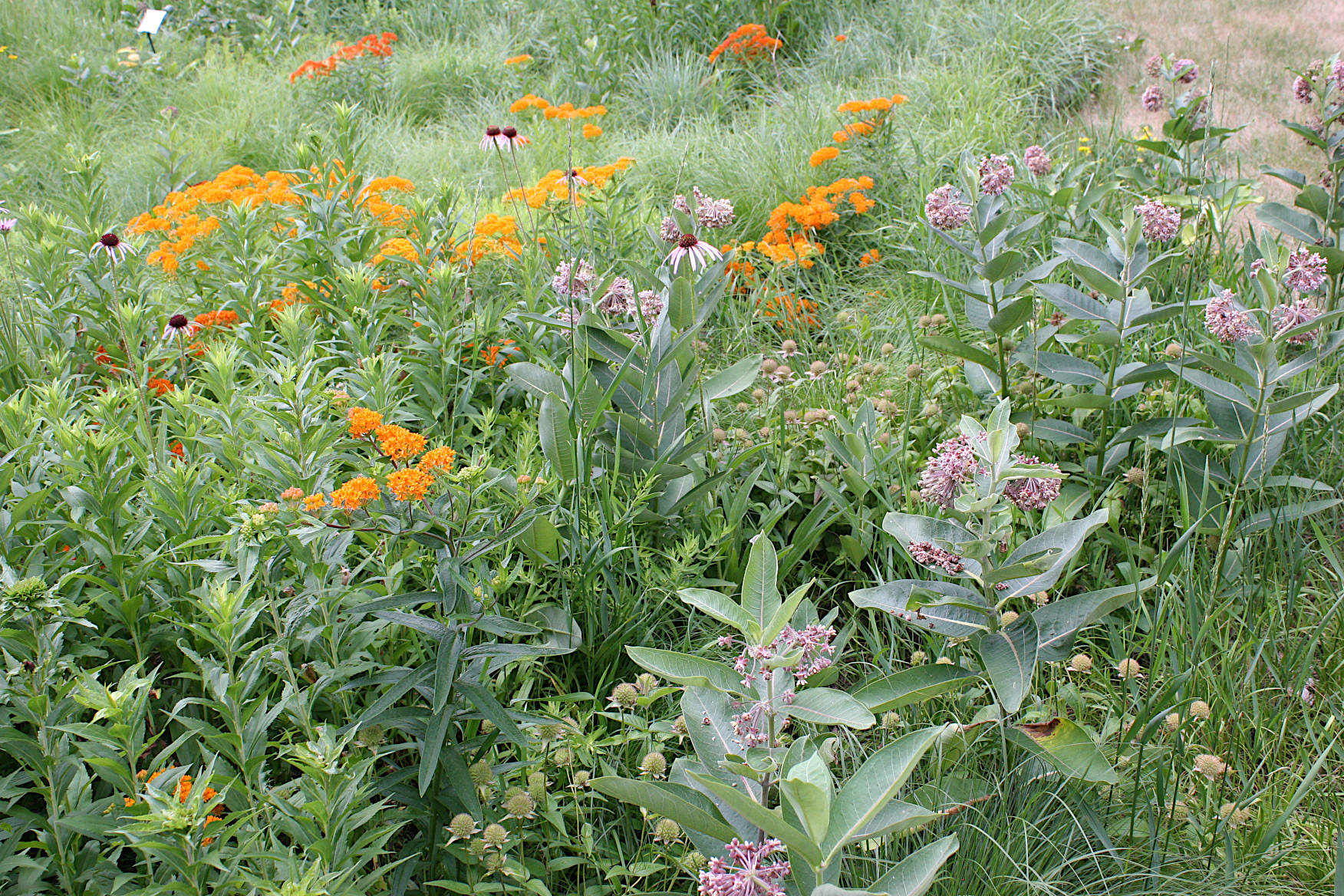
Milkweed and flowers flourish on the River Bend prairie. Minnesota Prairie Roots copyrighted photo.
I marvel at this intricate world God created. I love to watch a monarch butterfly flit through the air, settle on a blossom, drink its fill of nectar, then rise and fly. Delicate, yet sturdy. Dependent on milkweed and other flowers, yet free.
What a lovely and beautiful sight in a world where beauty is too often missed in the busyness of life, among all the weeds.
















 Minnesota Prairie Roots
Recent Comments