Minnesota Prairie Roots

Writing and photography by Audrey Kletscher Helbling

Minnesota Faces: Country Crooner April 24, 2015

Portrait #18: Dunnell Lenort
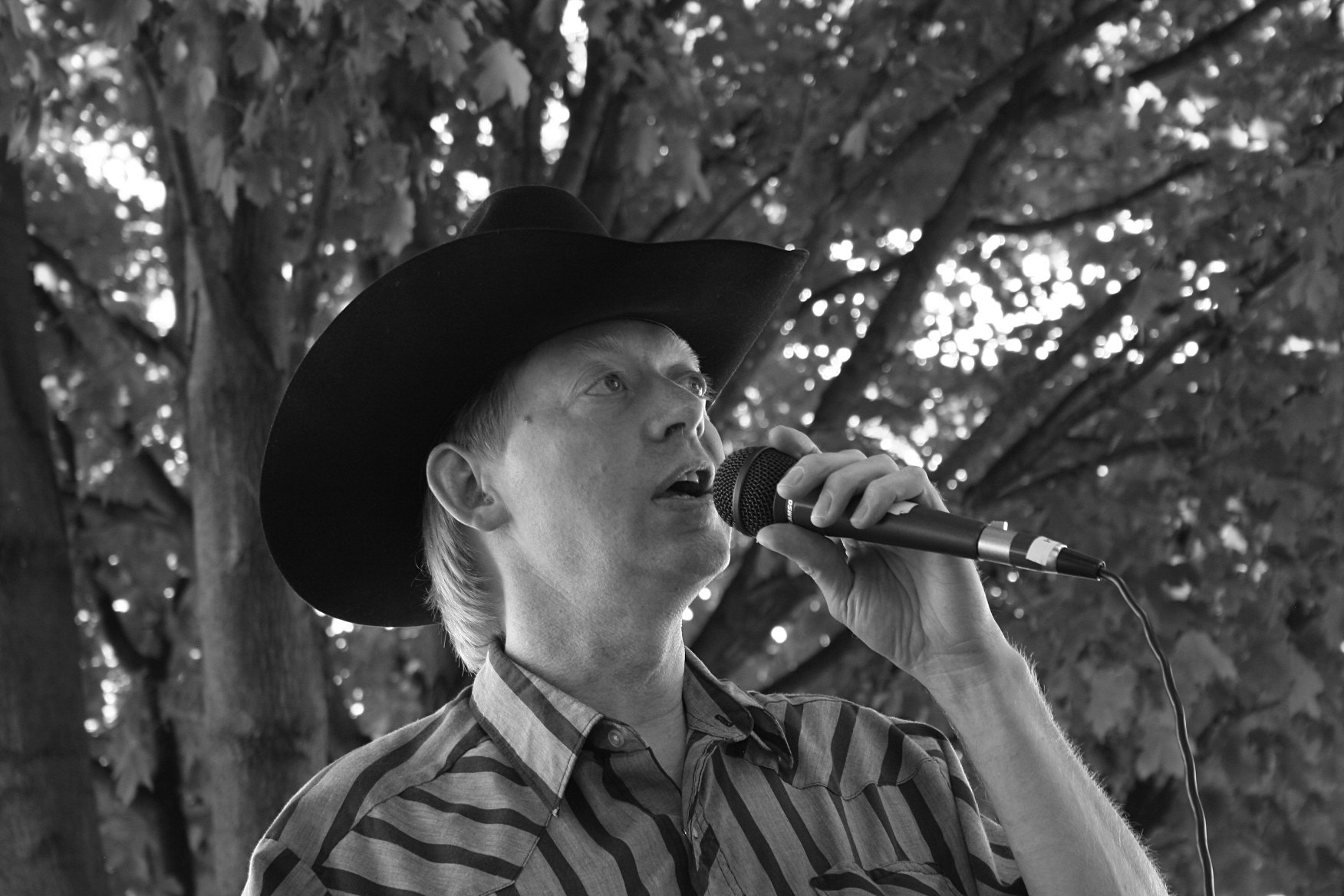
 

Portrait 16, Dunnell Lenort, Village of Yesteryear 2012


If you were to read the biography of country and oldies rock n’ roll singer Dunnell Lenort, it would read like a country song.

Heartache and hardship. Good times and bad. But through it all, he perseveres.

I knew none of this when, in July 2012, I listened to Dunnell perform “I Fought the Law” at the 26th annual Steele County Historical Society Extravaganza at the Village of Yesteryear in Owatonna. It was an afternoon of living history, activities and entertainment.

I often wonder what brings a singer onstage to perform with a passion. So when I chose Dunnell’s image for today’s portrait feature, I googled his name to learn more. After hearing Johnny Cash on a home stereo at age five, Dunnell knew he wanted to sing.

But his journey into music starts even earlier. A stroke at only eight months old paralyzed Dunnell’s right leg and arm, beginning 20 plus years of trips to Gillette Children’s Hospital for treatment and multiple surgeries. Through it all, one thing kept this young man’s spirits high—music.

His music career has ebbed and flowed. He once performed on the stage of the Grand Ole Opry and as an opening act for Roy Clark at the Surf Ballroom. (Buddy Holly performed his last show there before the February 3, 1959, fatal plane crash near this Clear Lake, Iowa, venue.)  Mostly Dunnell has entertained audiences in southern Minnesota and northern Iowa. County fairs, casinos, community events. He lives in Twin Lakes, a small town in Freeborn County.

In early 2008, Dunnell’s beloved wife, Angie, underwent surgery to remove a cancerous brain tumor. Things were going good until the couple was seriously injured in an automobile accident several months later.

Angie lost her battle with cancer on September 24, 2014.

On the home page of Dunnell’s website, you won’t find a photo of him. Rather, you will find an image of Angela and these loving words:

I love you Angie and will miss you so very much.—Dunnell

I would like to thank everyone who have expressed their condolences to myself and the family at the loss of my companion, friend and wife Angie. I will miss her tremendously. God’s blessings to you all.—Dunnell

Now that’s a country love song if ever I read one.

Dunnell has many performances booked already for this year, including an appearance again at the July 12 Steele County Historical Society Extravaganza. He’ll take the stage at the Village of Yesterday at 1 p.m.

If you happen to hear Dunnell perform anywhere, remember his inspirational story. His is a story of strength and love, holding strong to hope and a dream.

#

This is part of a series, Minnesota Faces, featured every Friday on Minnesota Prairie Roots.

© Copyright 2015 Audrey Kletscher Helbling


The Civil Rights Movement as photographed by Stephen Somerstein April 23, 2015

POWERFUL. HISTORIC. MEMORABLE.

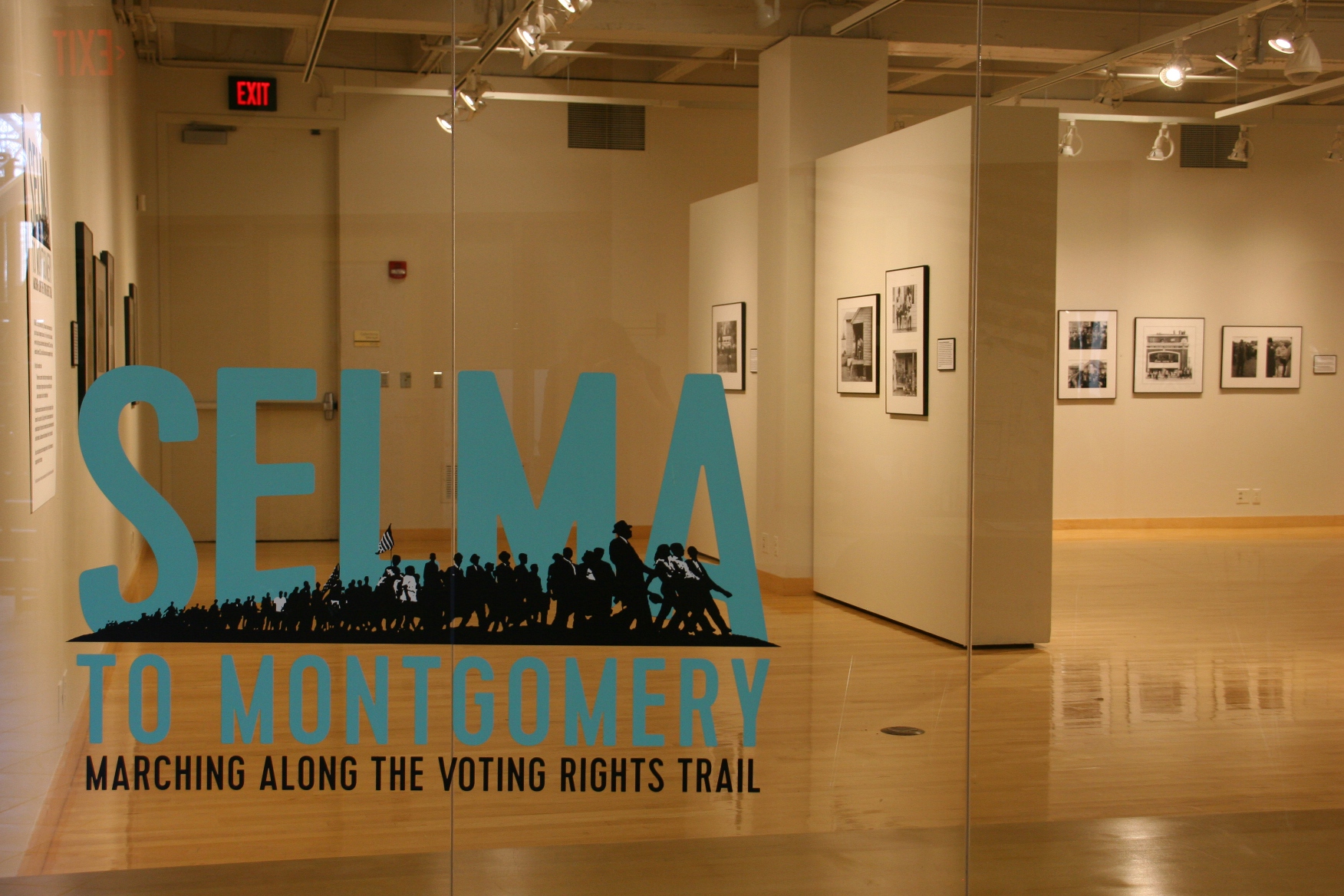
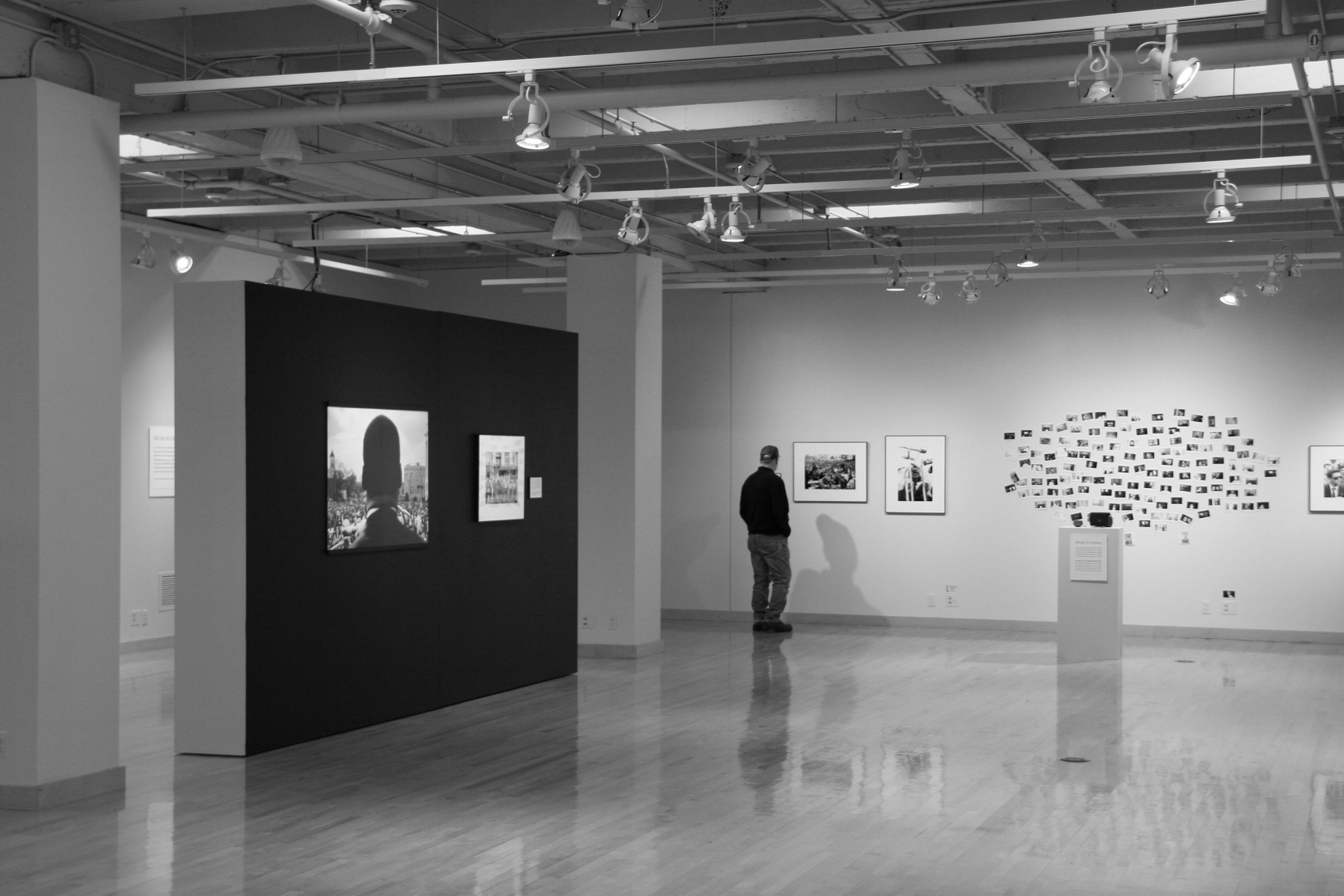
Looking through a window into an exhibit space at Flaten Art Museum.

Looking through a window into the “Selma to Montgomery” exhibit in the Flaten Art Museum at St. Olaf College in Northfield, MN.

That trio of adjectives describes Selma to Montgomery: Marching Along the Voting Rights Trail, an exhibit of 45 black-and-white photos documenting the 1965 Civil Rights Movement through the work of photographer Stephen Somerstein.

I was only eight years old in 1965, living in rural southwestern Minnesota, far removed from what was occurring in Alabama.

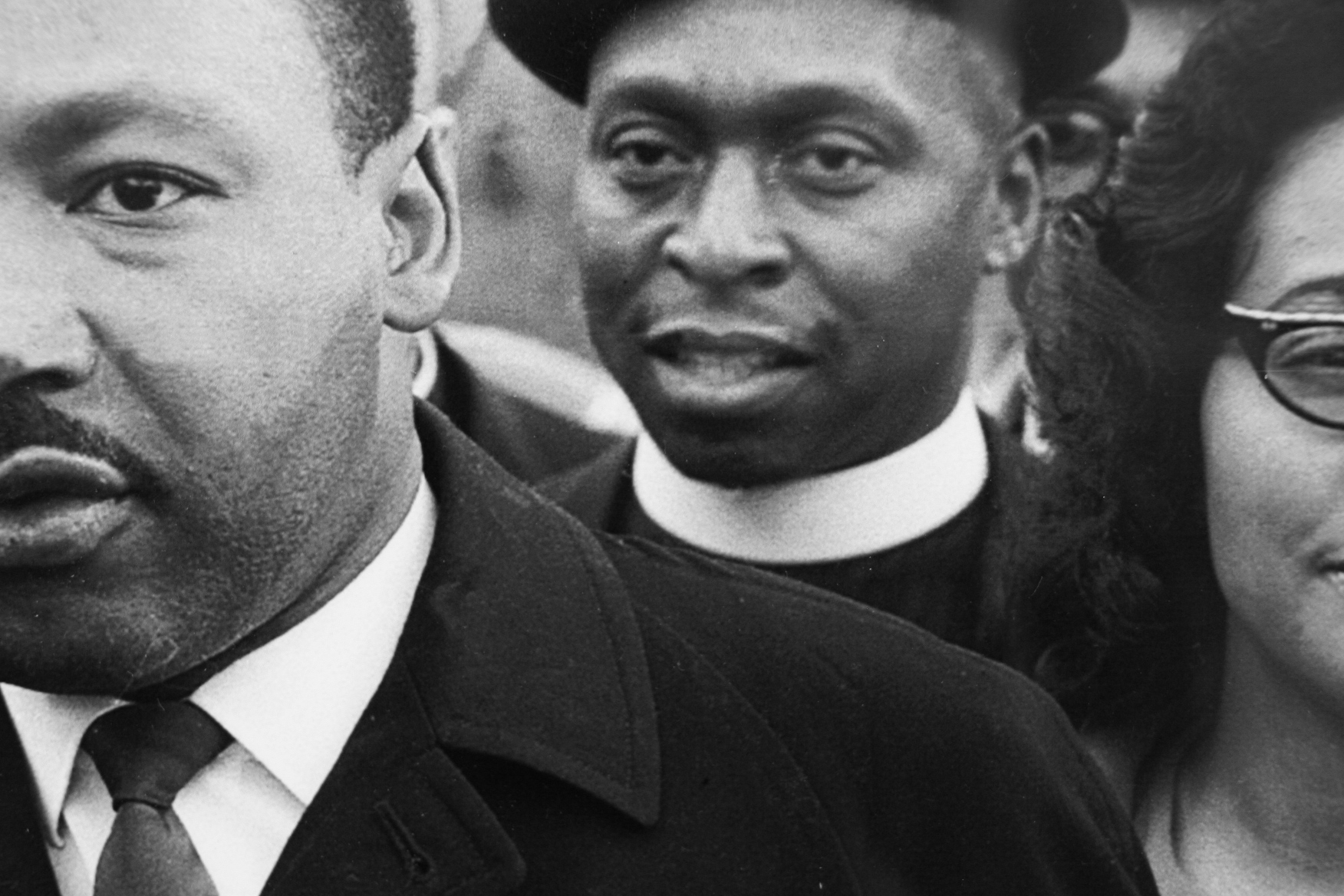
The faces of the Civil Rights Marches and Movement include Dr. Martin Luther King, Jr. Photo by Stephen Somerstein.

Faces of the Civil Rights Movement include Dr. Martin Luther King, Jr., left, and his wife, Coretta Scott King, right. This shows a snippet of a photo by Stephen Somerstein.

But the exhibit, showcased at the Flaten Art Museum of St. Olaf College, took me to Alabama in 1965 and into the movement for equality in an up close and personal way.

An overview of a section of the exhibit at St. Olaf College, Northfield, Minnesota.

An overview of a section of the now-closed exhibit at St. Olaf College.

If a picture is worth a thousand words, then Somerstein’s pictures are worth 45,000 words. My one regret is that I did not visit this exhibit until the day before it closed on April 12 thus failing to inform you, my readers, of the opportunity to see this for yourselves.

This portion of a photo by Stephen Somerstein drew my attention.

This portion of a photo by Stephen Somerstein drew my attention.

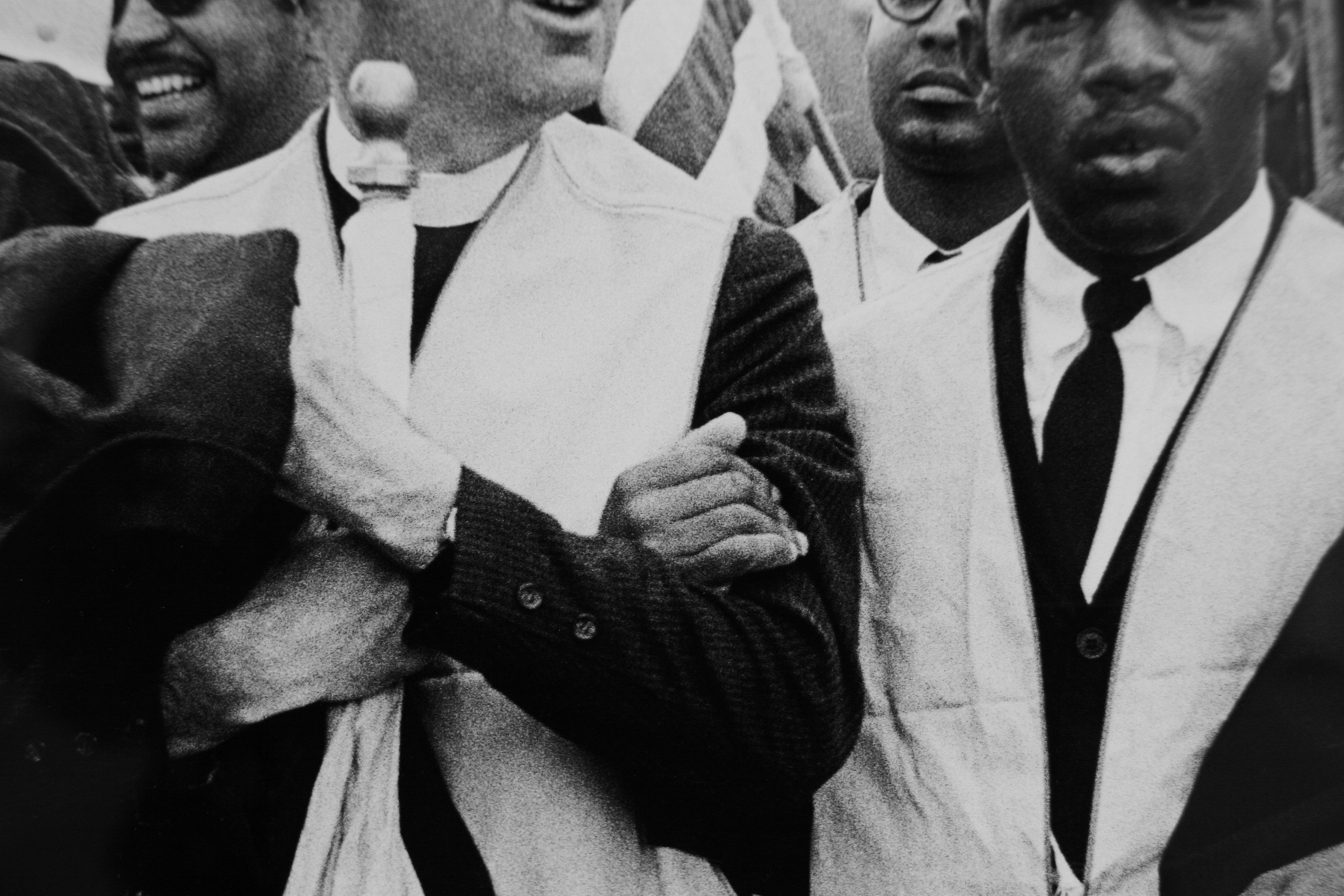
As I circled the museum space, I studied many of the photos in detail. These images by Somerstein, a then student at City College of New York and editor of the school newspaper, call for close examination. It is in the details that we begin to fully understand, to see the fear, the hope, the defiance, the anger, the love, the determination.

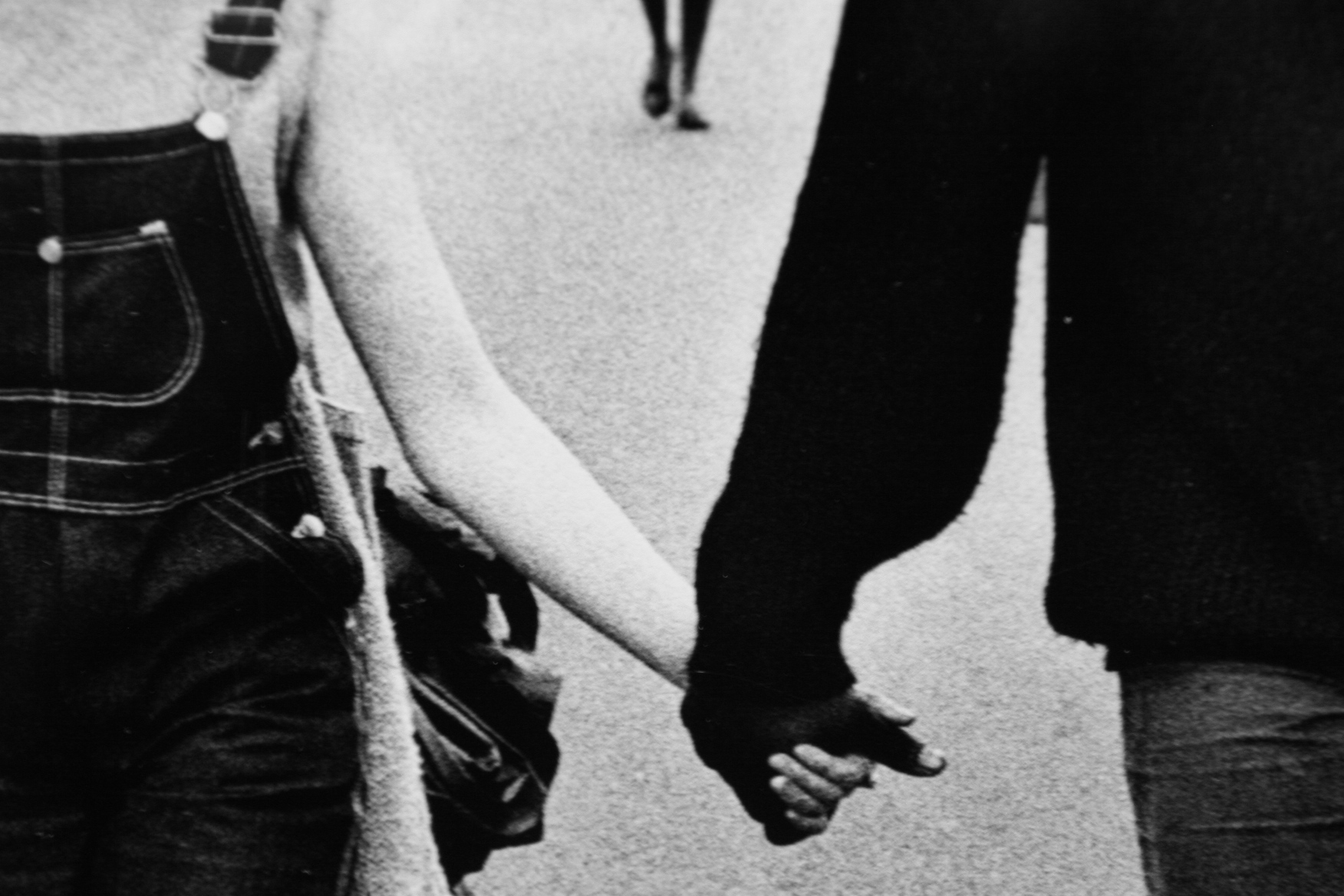
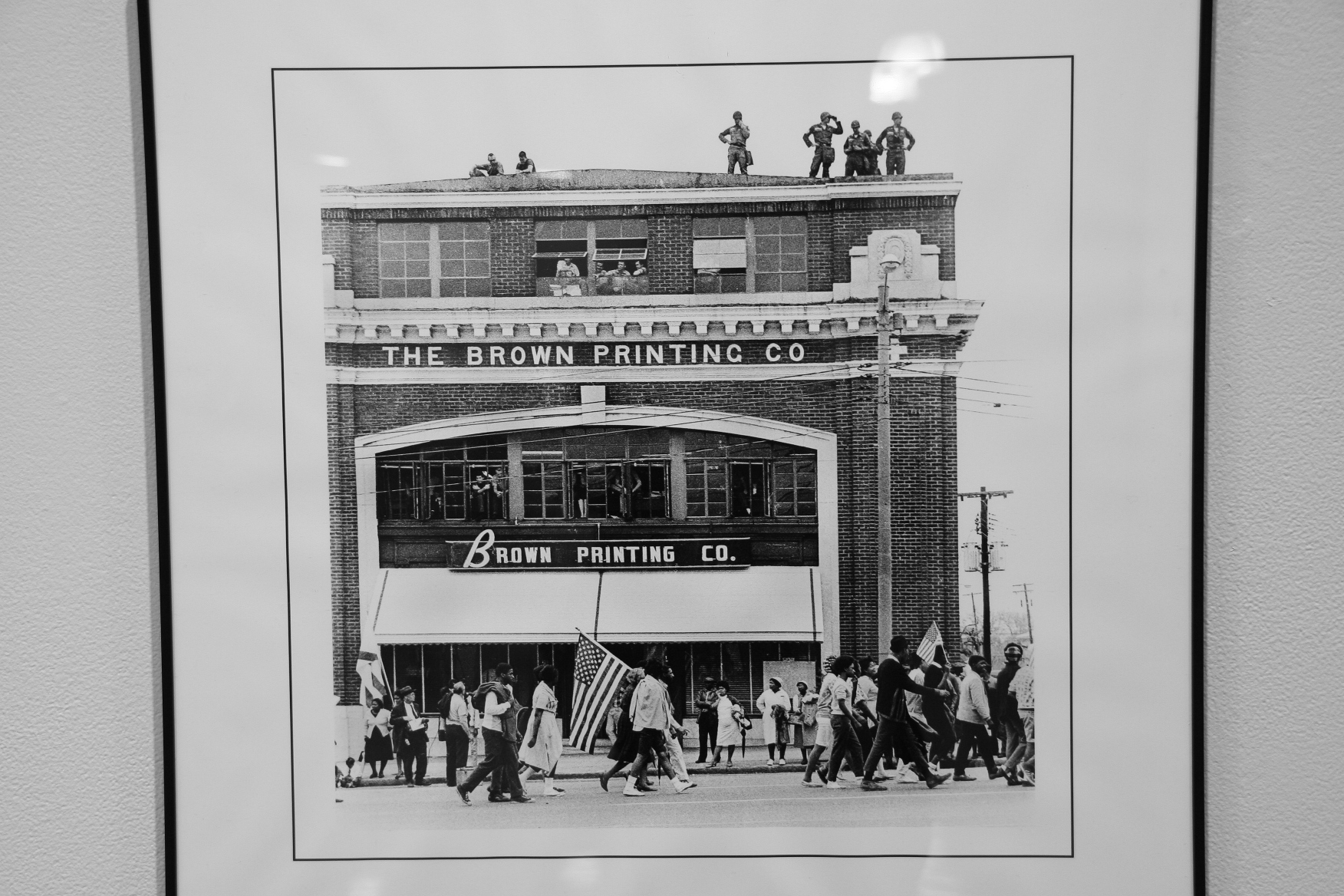
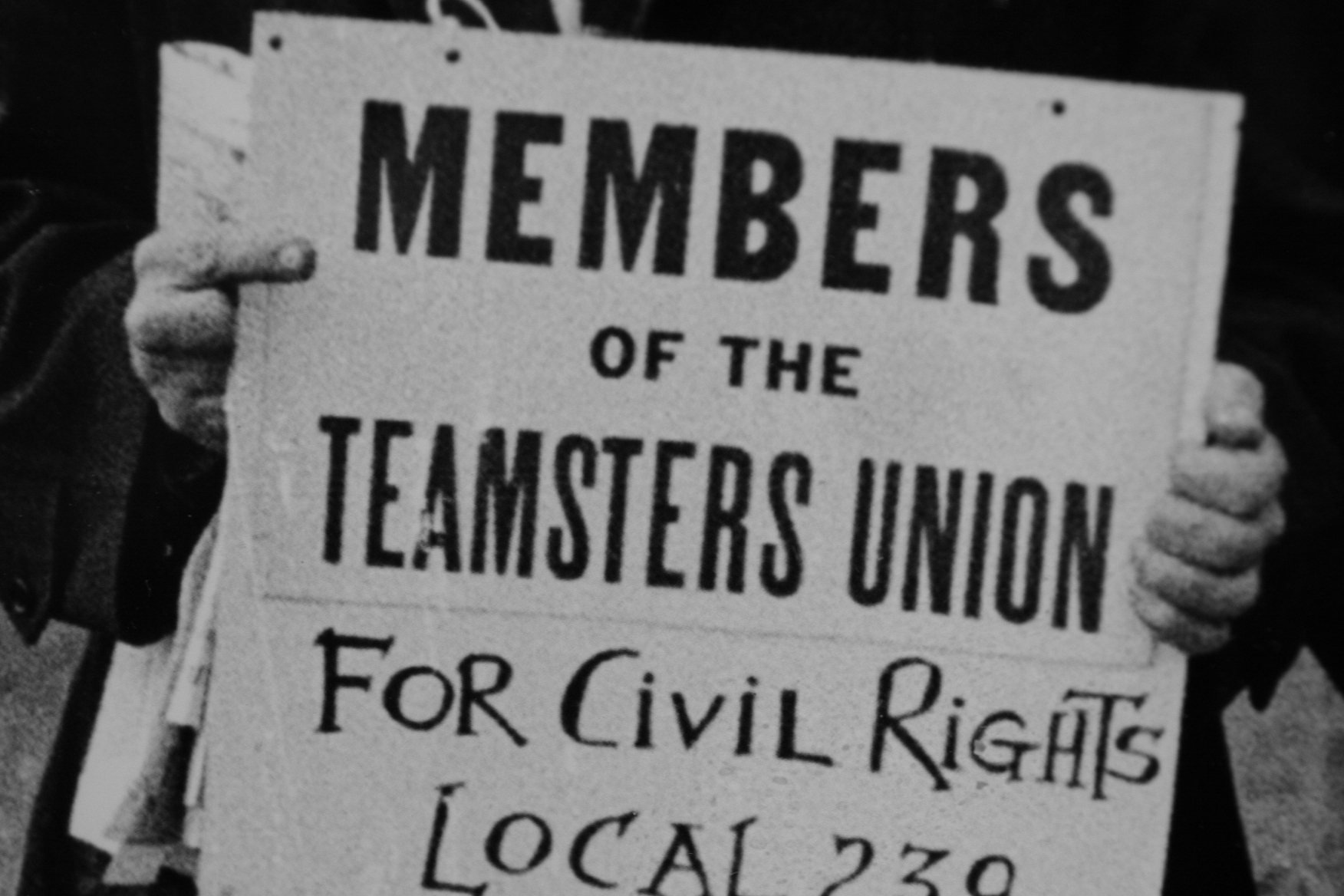
I found myself drawn to hands and arms—those of an interracial couple, that of a union member gripping a sign, activists carrying American flags, a soldier focusing binoculars, a mother cradling her son:

One of my favorite images

One of my favorite photos by Stephen Somerstein.

Skin color matters not, as showcased in this section  of a Stephen Somerstein photo.

Skin color matters not, as showcased in this section of a Stephen Somerstein photo I photographed.

The two things I noticed in this Stephen Somerstein photo: the marcher carrying and American flag and the soldier atop the building scanning the scene with binoculars.

The two things I noticed in this Stephen Somerstein photo: the marchers carrying American flags and the soldier atop the building scanning the scene with binoculars. It’s truly a multi-layered image.

The Teamsters Union

The Teamsters Union Local 239 sent supplies to activists who were marching. This is a selected section of a photo by Stephen Somerstein.

Eyes and words also drew me in:

vote

Bobby Simmons, a member of the Student Nonviolent Coordinating Committee, wearing zinc oxide to prevent sunburn, wrote VOTE onto his forehead. This is a section of Stephen Somerstein’s portrait of Simmons.

The exhibit featured explanatory information about photos and the movement.

The exhibit featured explanatory information about photos and the movement.

And although I did not participate in the interactive portions of the exhibit created by artist Nancy Musinguzi, I appreciated that visitors could photograph themselves and pen thoughts on working toward justice and equality.

Visitors could photograph themselves at the exhibit and express their thoughts.

Visitors could photograph themselves at the exhibit and express their thoughts.

Opinions expressed in the exhibit polling place.

Opinions expressed in the exhibit polling place.

They could also vote in a People’s Survey. Vote.

A St. Olaf College student staffing the museum makes sure a video is working properly.

A St. Olaf College student staffing the museum makes sure a video is working properly.

The exhibit drew a wide range of interest at St. Olaf College with students in social work, history, art history, gender studies and more viewing the photos, says Flaten Art Museum Director Jane Becker Nelson. The timing of the exhibit—on the 50th anniversary of the Civil Rights Movement, relating to current day issues and release of the movie, Selma—added to the interest.

Another overview of part of the exhibit.

Another overview of part of the exhibit. Photos displayed are by Stephen Somerstein.

Additionally, Becker Nelson notes that the exhibit connects to the 50th anniversary of the death of St. Olaf graduate James Reeb. (More to come on that in a post next week.)

A chair placed before a Stephen Somerstein photo offers visitors a place to sit and contemplate.

A chair placed before a Stephen Somerstein photo offers visitors a place to sit and contemplate.

This remarkable collection of documentary photos impresses in a deeply personal way. Beyond headlines. Beyond news stories. Beyond the pages of history books. Somerstein’s photos document the humanity of the Civil Rights Movement in the eyes, in the hands, in the stances of individuals. And that connects all of us, no matter our skin color.

#

© Copyright 2015 Audrey Kletscher Helbling
Original photos are by Stephen Somerstein. My photos of Somerstein’s images are published here with permission of Flaten Art Museum, St. Olaf College.

Selma to Montgomery was booked through New York-based National Exhibitions & Archives.


A photo documentary of Minnesota barns & thoughts on their demise April 16, 2015

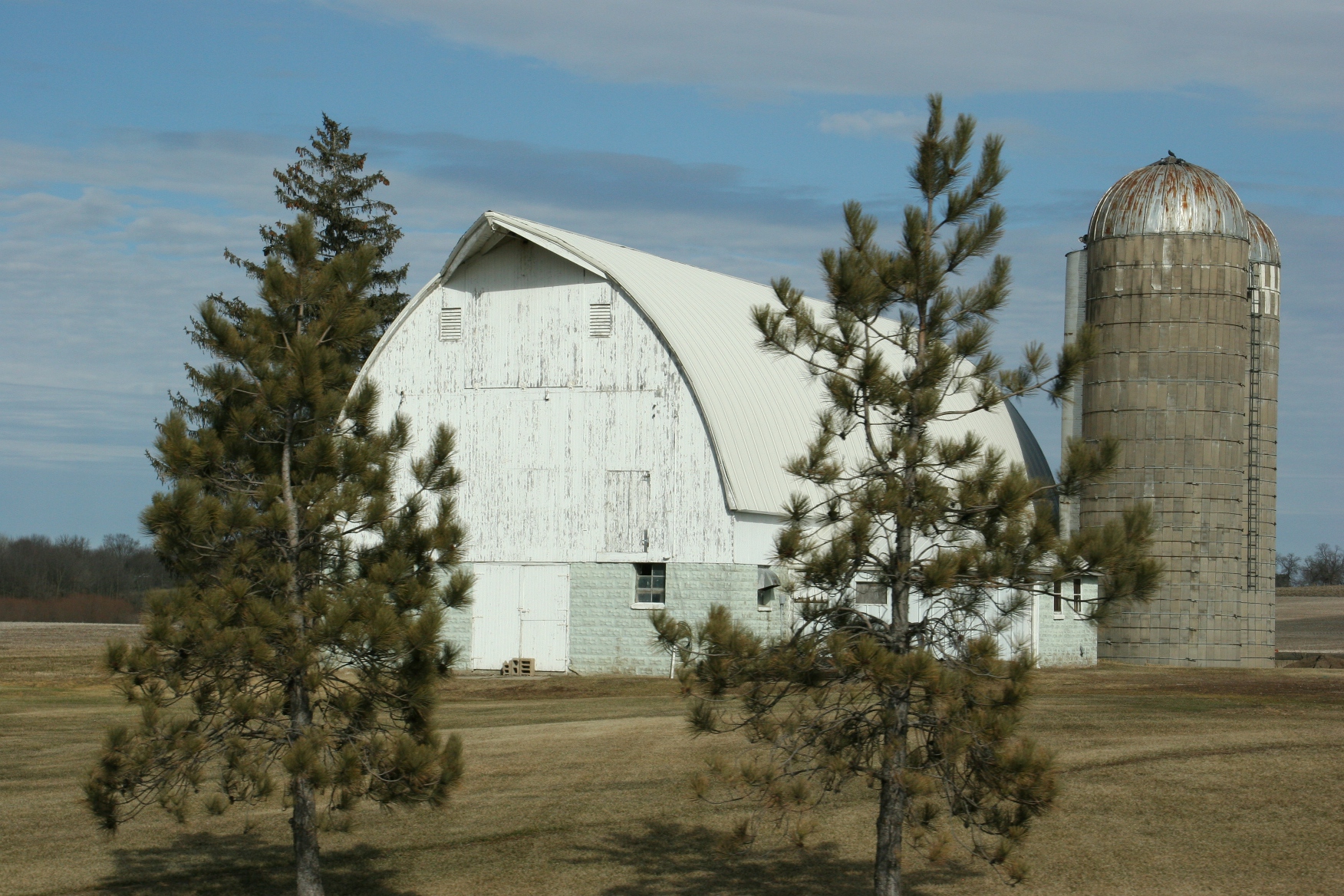
Barn, 7 se MN


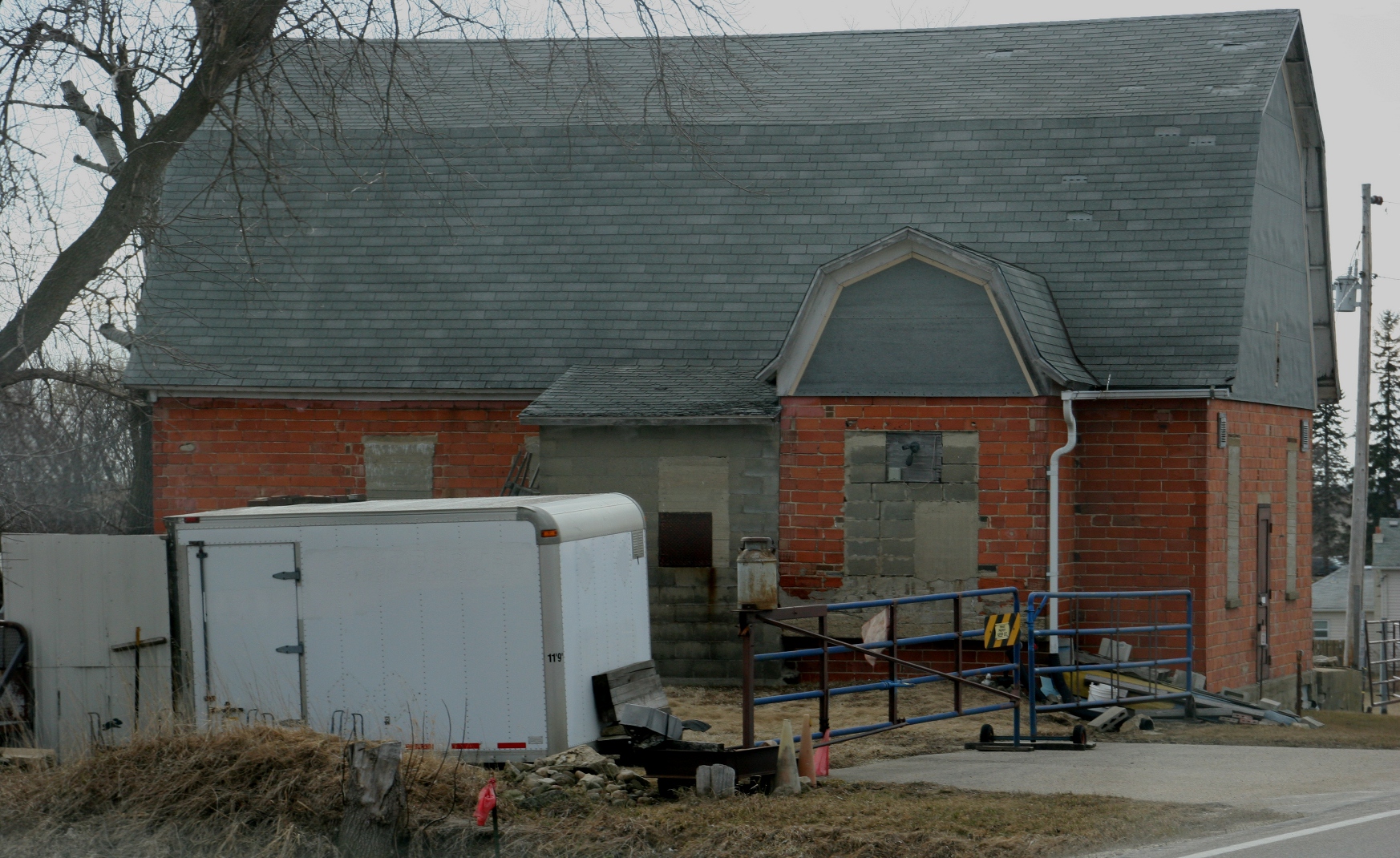
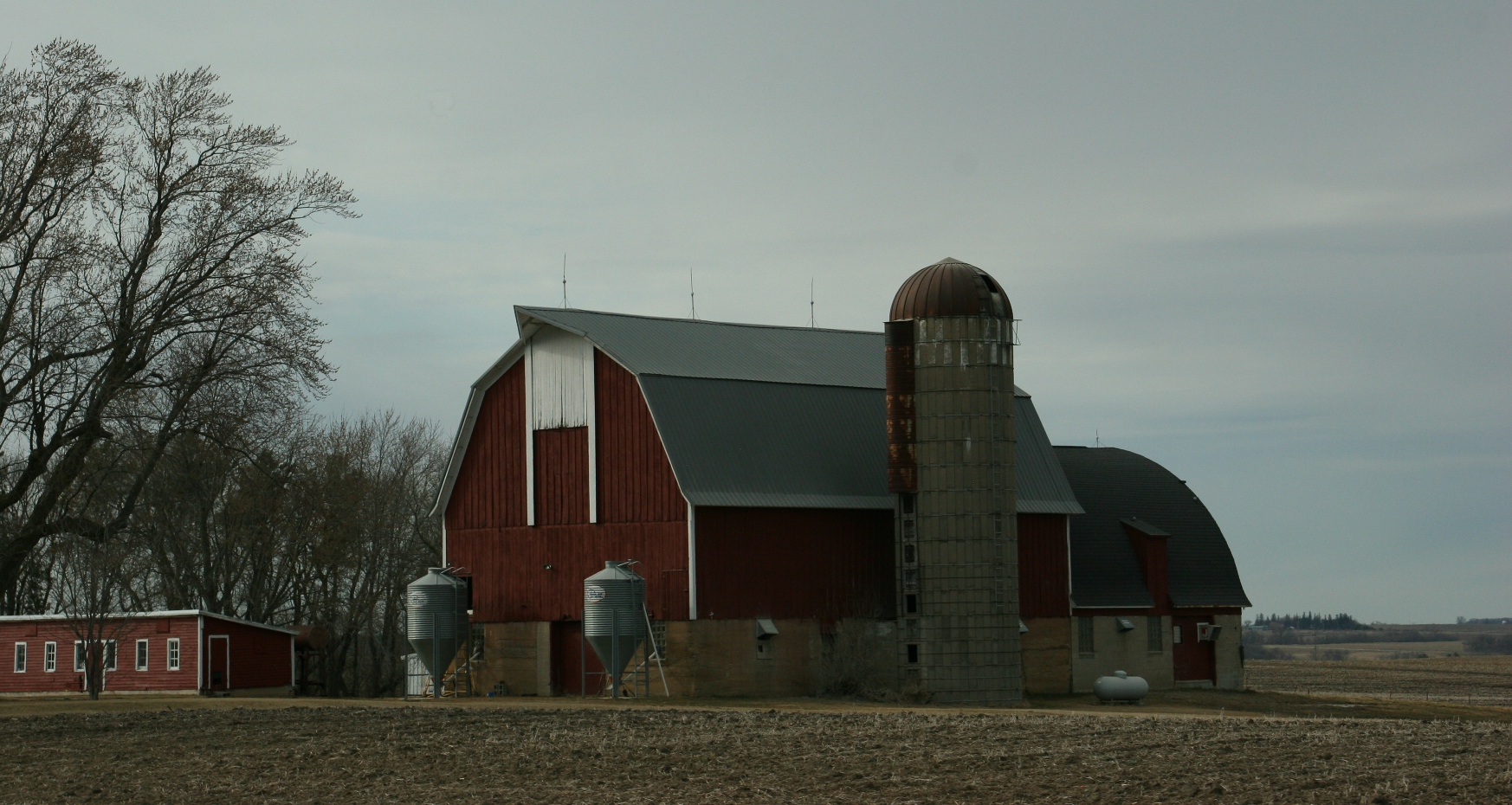
BARNS ONCE SHELTERED cows, pigs, sheep, a farmer’s livelihood. Some still do. But most don’t.


Barn, 14 se MN


Today all too many barns stand empty of animals and are used instead for storage of recreational vehicles and other possessions. Others are simply slumping into heaps, like rotting carcasses with backbones exposed.


Barn, 10 se MN


I fear barns will soon become memories rather than strongholds, symbols, anchors of farm sites. Their demise has been steady, sure. I see it every time I drive through the Minnesota countryside. Empty barns. Weathered siding. Curling shingles. Boarded windows. Weeds overtaking former cow yards.


Barn, 15 se MN


I understand the financial burden of keeping up these massive structures. Sometimes it just is not in the budget to maintain a barn that provides zero income.


Barn, 11 se MN


Back in the day when I rolled a wheelbarrow brimming with ground feed down the barn aisle, forked straw onto cement for cow’s bedding, shoved manure into the gutter, dodged streams of hot cow pee, shoveled pungent silage before stanchions, the barn and associated source of revenue were more important than the house. Long before my childhood home had an indoor bathroom, the barn had a gutter cleaner.


Barn, 18 se MN


Times have changed. Many farmers no longer raise cattle or hogs or milk cows. They plant cash crops and work off the farm.


Barn, 19 se MN


And so days and weeks and months and years pass and the empty barns, without the humid warmth of animals, without the daily care of the farmer, without the heartbeat of life, begin to die.


Barn, 21 se MN


Except for those that are saved.


Barn, 9 se MN


FYI: All of these barns were photographed in southeastern Minnesota, mostly around Pine Island and Oronoco.

Click here to learn about Friends of Minnesota Barns, a non-profit dedicated to celebrating and preserving Minnesota’s rural heritage.

© Copyright 2015 Audrey Kletscher Helbling


Minnesota Faces: Beauty shop portraits April 10, 2015

Portraits # 16 and 17: Charlotte and Fonzie

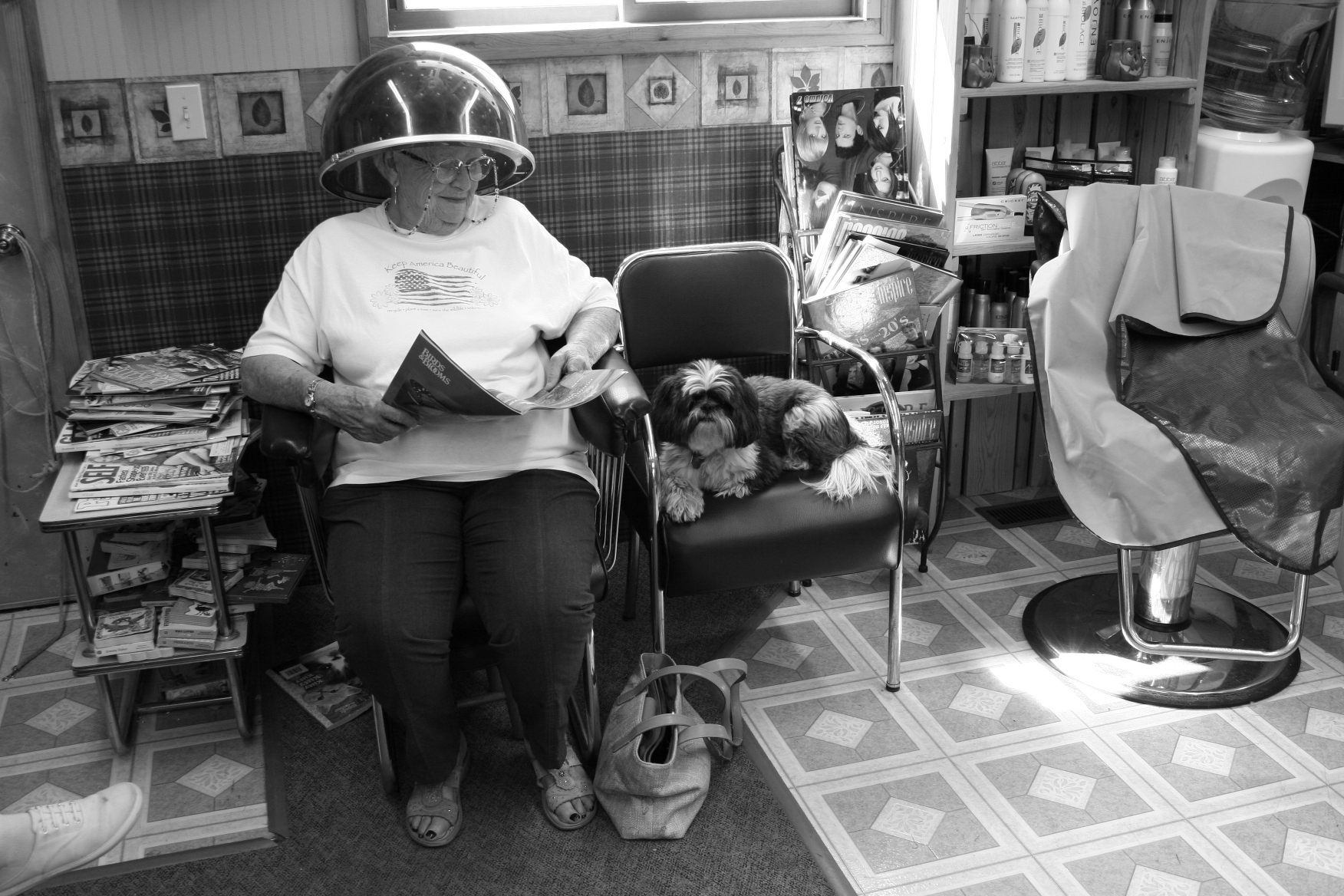
Charlotte Lurken

Charlotte Lurken

Typically, I would not enter a salon unless in need of a hair cut.

But it was the “gifts” part of Colleen’s Salon & Gifts on West Concord’s main drag that drew me into her shop in the summer of 2011.

Colleen Snaza's dog, Fonzie

Colleen Snaza’s dog, Fonzie

And therein I photographed Charlotte and Fonzie, whose portraits stand as favorites among the thousands of images I’ve shot through the years.

I captured a slice of small town life. A place, a woman, a dog. Ordinary. Yet extraordinary. It is the everyday that matters most to me as a photographer.

Even now, year’s after taking these portraits, I still like to study them, to focus on the details—the smile on Charlotte’s face as her eyes linger on Fonzie, whom I dubbed “The Beauty Shop Dog;” Charlotte’s polished toenails; the messy stashes of magazines and tilted hairstyling books; the puzzle of floor coverings; the woman’s tennis shoe poking into the scene on the left…

There’s so much to see, and appreciate.

Colleen may call this a “salon.” But to me, this will always be a beauty shop. For this place defines beauty, small town style.

#

This is part of a series, Minnesota Faces, featured every Friday on Minnesota Prairie Roots.

© Copyright 2015 Audrey Kletscher Helbling
 

Minnesota Faces: “The disciples” March 27, 2015

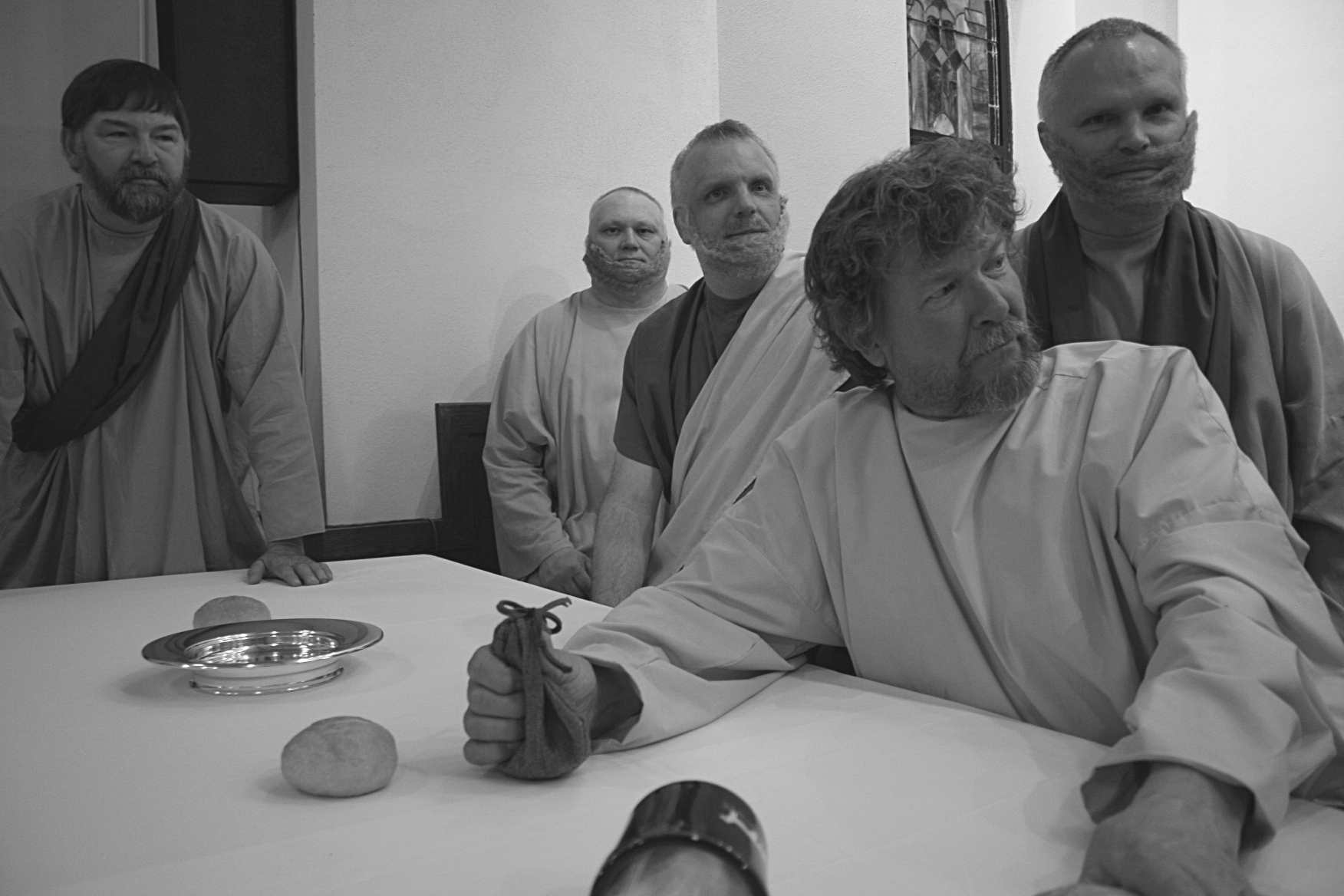
Portraits # 14 & 15: The cast from The Last Supper Drama

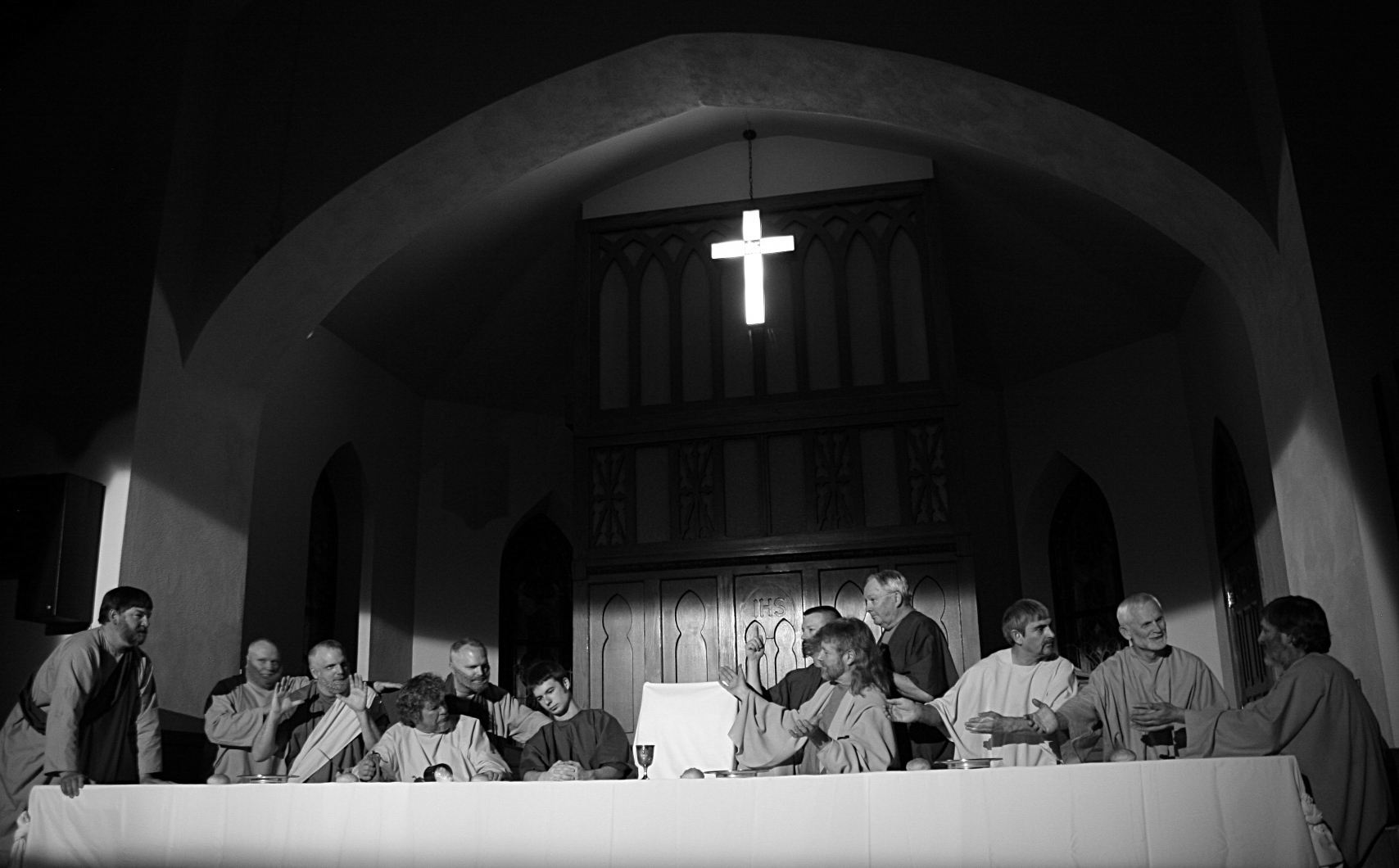
The cast of the 2012 The Last Supper Drama poses like the Leonardo da Vinci painting.

The cast of the 2012 The Last Supper Drama poses like the Leonardo da Vinci painting.

For 53 years, St. John’s United Church of Christ, Wheeling Township, rural Faribault, has presented The Last Supper Drama.

It’s a remarkable way to begin Holy Week in the darkness of this aged country church. Here actors portraying Jesus’ disciples gather for the final meal with their Lord in a scene straight from Leonardo da Vinci’s painting of The Last Supper. Only Christ is missing, replaced by an empty chair.

Judas, in the foreground, is about to betray Jesus with 30 pieces of silver. Minnesota Prairie Roots file photo 2012.

Judas, in the foreground, is about to betray Jesus with 30 pieces of silver. Minnesota Prairie Roots file photo 2012.

The drama was penned by long ago pastor, the Rev. Walter Rasche. Only the actors change in the performance that features each disciple speaking about his relationship with Christ.

It is powerful and moving, and a tribute to a congregation which has sustained this Holy Week tradition for more than five decades.

This year’s 53rd drama will be presented at 8 p.m. Sunday, March 29, in the church located at 19086 Jacobs Avenue, which is east of Faribault along Rice County Road 24. Food and fellowship follow.

#

This is part of a series, Minnesota Faces, featured every Friday on Minnesota Prairie Roots.

© Copyright 2015 Audrey Kletscher Helbling
 

Minnesota Faces: Our newest immigrant families March 20, 2015

Portrait #13: A boy with an unforgettably sweet face


Portrait 13, International Festival Faribault 2012, Somali boy


He represents the present and the future, the changing face of my Minnesota community, of many Minnesota communities. More and more, Somali and other immigrants are settling in our state, starting life anew.

I photographed this young boy at Faribault’s 2012 International Festival.

Oh, the sweetness of his face and those big dark eyes. I just wanted to hug him.

He possesses a soulful look beyond his young years, a depth that defies definition. I can’t pinpoint precisely what I see, but there’s something in this portrait that mesmerizes me.

Perhaps it is his childhood innocence. Trust. A certain softness. The hint of a smile. Hope.

What do you see in this boy’s face?

#

This is part of a series, Minnesota Faces, featured every Friday on Minnesota Prairie Roots.

© Copyright 2015 Audrey Kletscher Helbling
 

Minnesota Faces: The butterfly-loving bookseller March 13, 2015

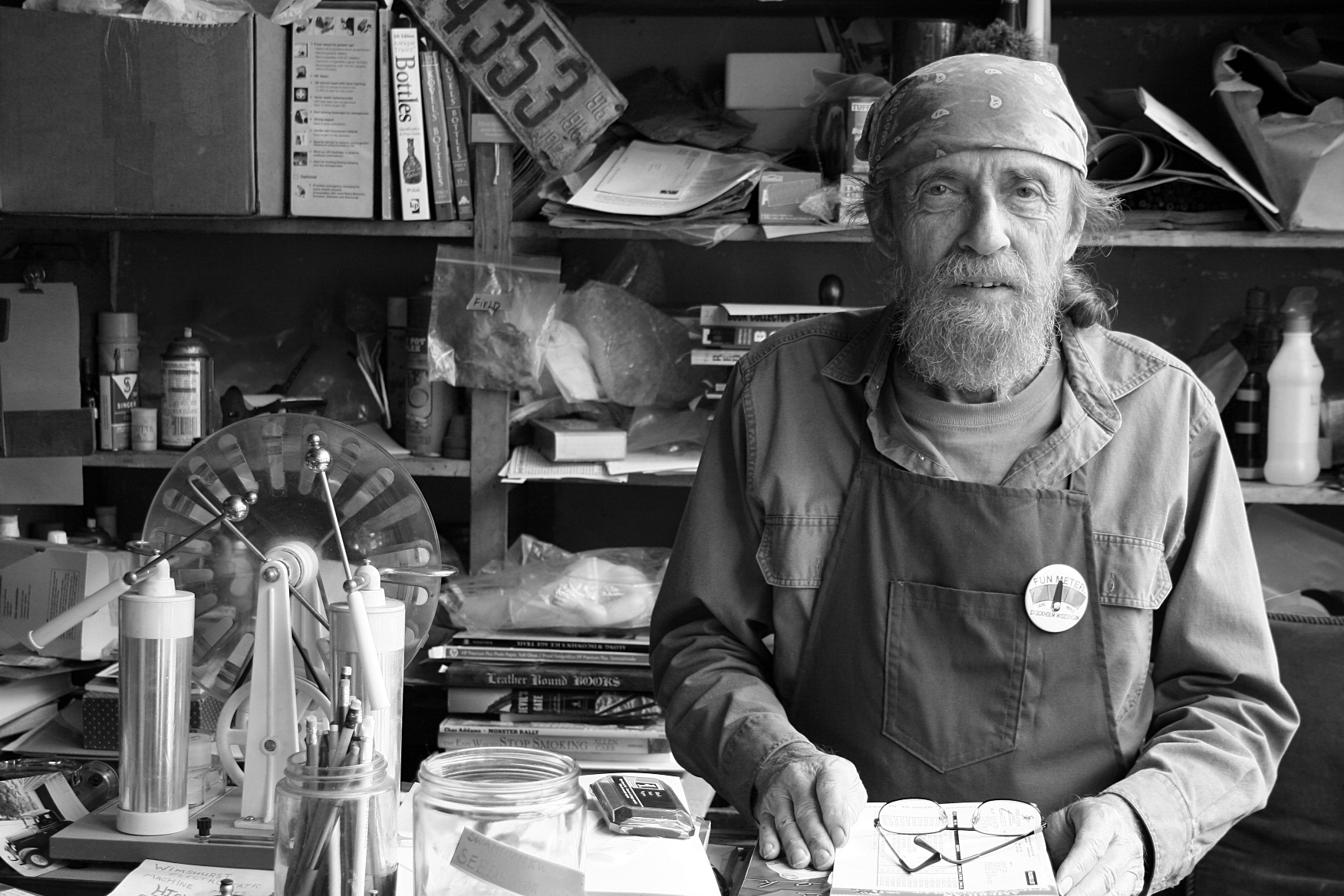
Portraits #11 & 12: Russell Mattson, purveyor of books

My first portrait of Russ, taken in October 2011.

My first portrait of Russell, taken in October 2011.

His eyes hold a certain depth of sadness that I can’t define. Or perhaps his eyes simply hold stories of hard times or too many good times, or wisdom that comes with aging.

Russell Mattson, St. Paul, Minnesota, native and owner of Chandler’s books in the Mississippi River town of Stockholm, Wisconsin, seems a free spirit, a character, a former hippie type.

I first met him in October 2011 at his cluttered bookstore along Stockholm’s main drag. I learned that he’s an amateur photographer, a candle maker, a car nut, a lover of Monarch butterflies and, clearly, a bibliophile.

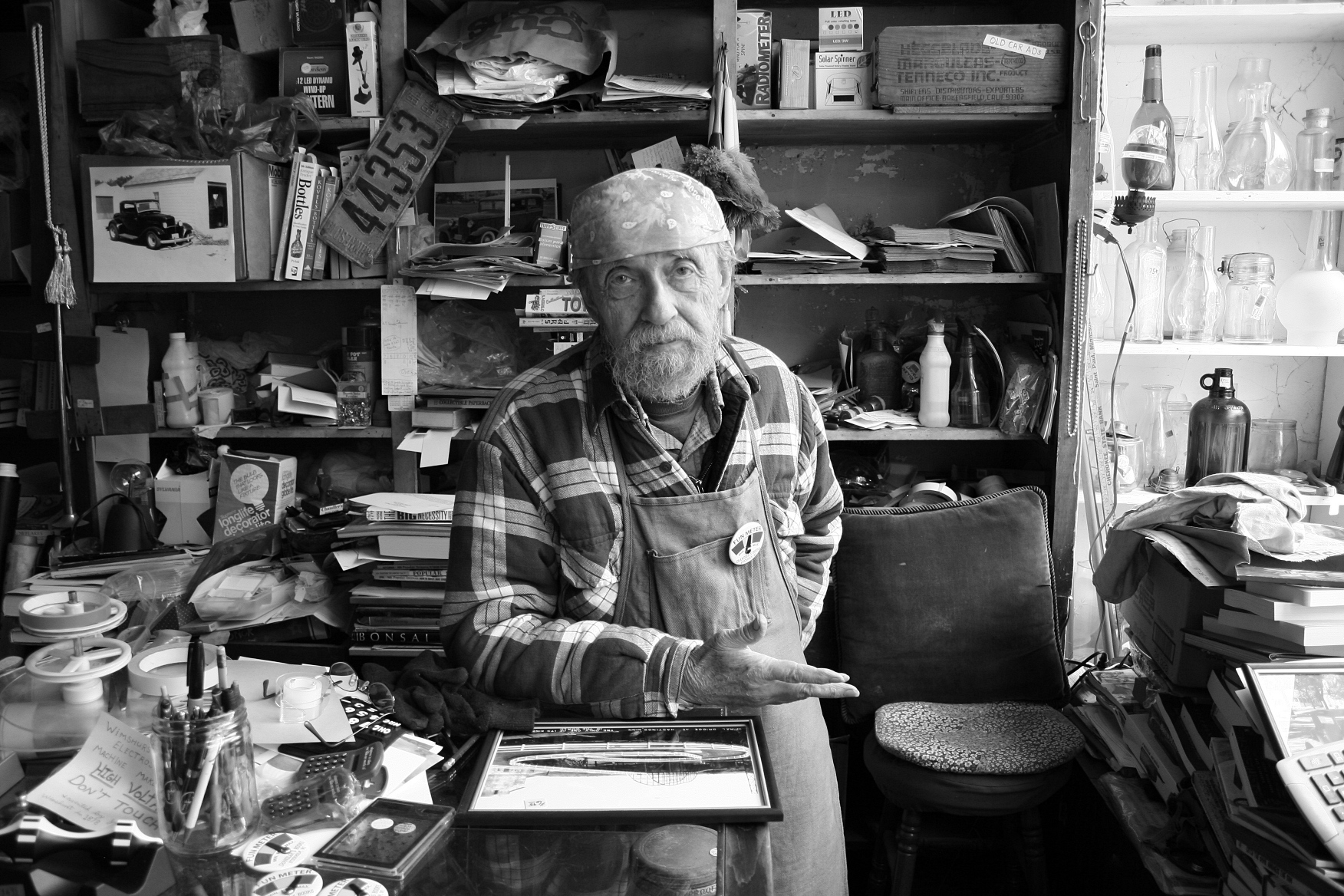
Russell three years later in October 2014.

Russell three years later in October 2014.

Last fall I revisited Stockholm and Russell. I found him behind the counter of his book shop, the same blue print do-rag bowling his head, the same FUN METER button pinned to his apron.

Russell was still offering customers free milkweed seeds to maintain the Monarch population. Monarch larvae feed exclusively on milkweed, making the plant essential to the butterfly’s survival.

Personalities like this shopkeeper intrigue me for their individualism, their eccentricities, their uniqueness—all of which are synonyms really. The Russells of this world offer interesting portraits, interesting conversation, interesting studies in small town life.

I find a certain hope in meeting individuals like Russell who care about something as simple as Monarch butterflies.

#

This is part of a series, Minnesota Faces, featured every Friday on Minnesota Prairie Roots.

© Copyright 2015 Audrey Kletscher Helbling
 

Minnesota Faces: Rural community volunteers March 6, 2015

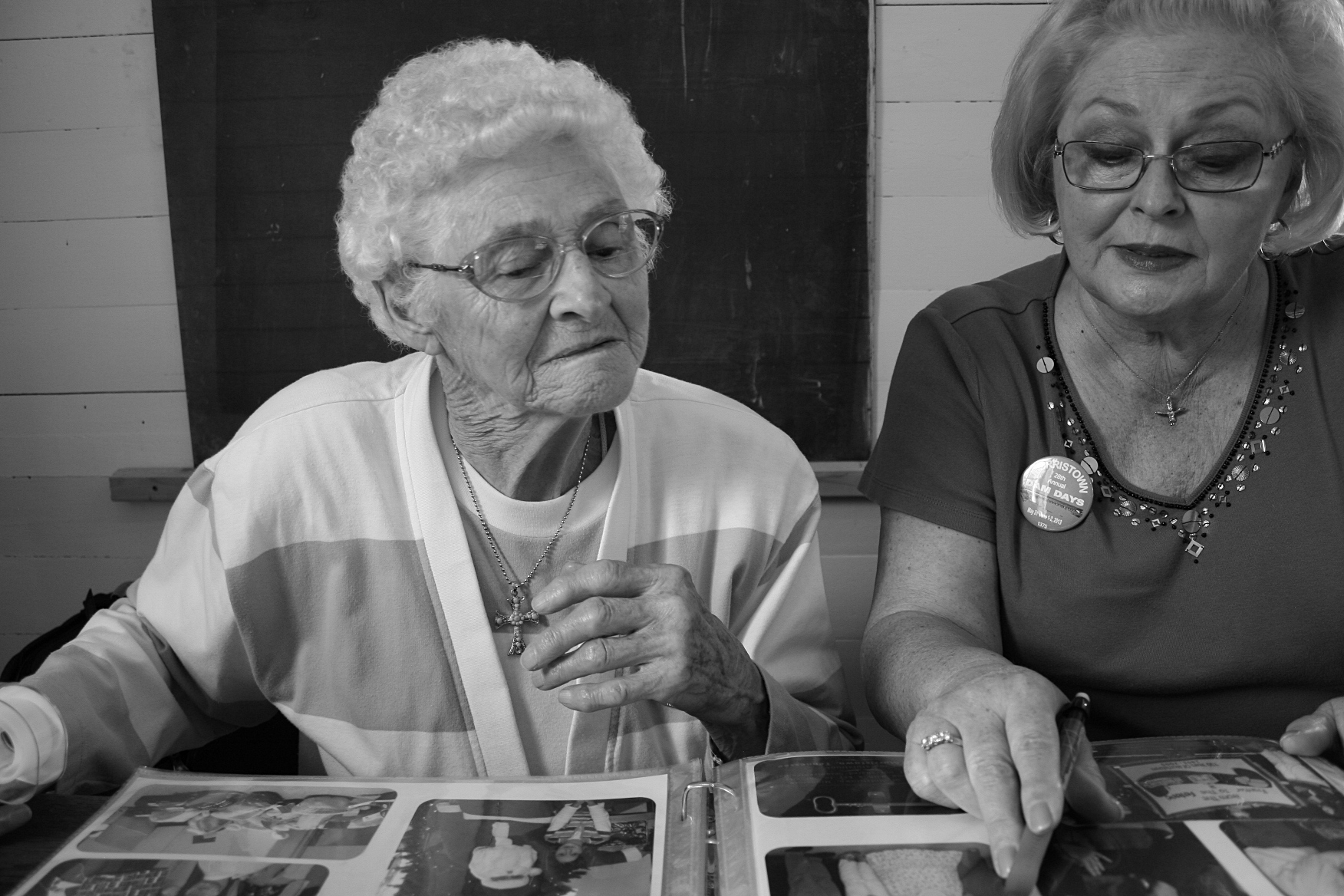
Portrait #10: Helen Newman and Cindy Packard

Helen Newman, left, and Cindy Packard work on a Morristown sesquicentennial scrapbook in June 2013.

Helen Newman, left, and Cindy Packard work on a Morristown sesquicentennial scrapbook in June 2013.

When I photographed life-long Morristown resident Helen Newman nearly two years ago clipping newspaper stories and taping them into her community’s sesquicentennial scrapbook, I knew I’d met a cherished volunteer.

She was settled behind a teacher’s desk with Cindy Packard, visiting her hometown from Colorado Springs, on the June afternoon I walked into the District #54 Schoolhouse Museum with my notebook and camera. My presence didn’t stop Helen from focusing on the task at hand. She understood the importance of saving documents.

But there was more than dedicated volunteerism that drew me to the then 87-year-old. Her friendliness and gentleness of spirit reminded me of my mom. I think, had they lived in the same rural area, they would have been friends.

Helen died on Monday. She was all I assessed her to be, and more.

Her obituary is a beautiful tribute to a woman who led a joyful life. She clearly worked hard, loved deeply and lived out her faith in God.

Her four surviving children wrote an especially heartfelt obit that includes this descriptive paragraph:

Our Mom was a kind and generous person who believed the best in all people. She was a wonderful friend. She believed in us and was our biggest cheerleader. Some of our favorite memories of our Mom are: Her wonderful smile that would light up a room; her love of dancing; her awesome full-body hugs; her boundless energy; her green thumb; and her canned beef and pork chop dinners.

What a wonderful way to be remembered—for believing in others, for kindness, for dancing…and for canned beef and pork chop dinners.

FYI: To read Helen’s full obituary, click here.

#

This is part of a series, Minnesota Faces, featured every Friday on Minnesota Prairie Roots.


The poetry of black-and-white photography March 5, 2015

Filed under: Uncategorized — Audrey Kletscher Helbling @ 5:00 AM
Tags: , , , , , ,

THERE’S A CERTAIN TIMELESS beauty in black-and-white images.

Monochrome equals zero distractions.

Lack of color encourages study of light and shadows and patterns.

The absence of hues calms the spirit in a way that’s almost poetic, meditative, spiritual.

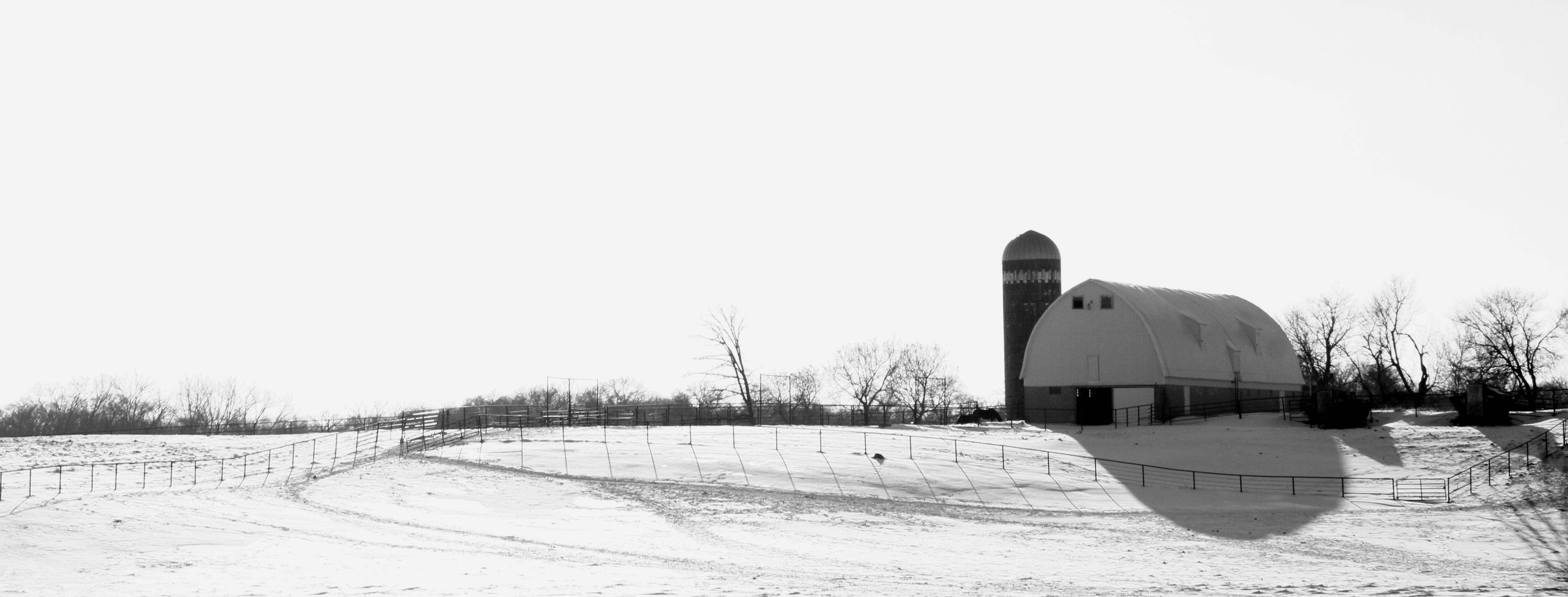
This rural scene was shot along Interstate 35 somewhere south of Lakeville, Minnesota.

This rural scene was shot along Interstate 35 somewhere south of Lakeville, Minnesota.

I’ve learned that not every image deserves color, especially in a landscape mostly devoid of color like that of a Minnesota winter.

In it’s unedited state, this photo was blown-out. I almost discarded it. But then I waved the magic wand of photo editing. The muses wrote shadows across the snow like lovely lines of lyrical poetry.

© Copyright 2015 Audrey Kletscher Helbling


Minnesota Faces: Friends February 27, 2015

Portrait 9: Nimo and Nasteho

Friends, Nimo, left, and Nasteho.

Friends, Nimo, left, and Nasteho.

“They assume I’m a terrorist.”

I’ll always remember that statement shared with me 2 ½ years ago by a then high school senior who asked me to photograph her and a friend at the International Festival Faribault.

Nasteho, a native of Kenya, posed with Nimo for this beautiful portrait of the pair. They were among students volunteering at the fest.

What Nasteho told me that August day in 2012 broke my heart. She’d been subjected to ongoing insults from a customer in her workplace, felt stares at the grocery store, been flipped the bird while driving. All because of the way she dressed, her skin color and her ethnicity.

“There is no respect for Somalis,” she concluded.

I couldn’t disagree with her. I’d heard the negative comments, too, about Faribault’s newest immigrants.

Despite the outright prejudice Nasteho had already endured at such a young age, she did not appear bitter or angry, only desiring of respect and understanding. She seemed wise beyond her years. Poised. Thoughtful. Well-spoken.

I recall thinking, if only those who hold disdain for Somalis could meet Nasteho. They would see her as the beautiful, young and spirited woman I photographed.

It is the personal connections that bridge differences. I believed that then. I still believe that now.

#

This is part of a series, Minnesota Faces, featured every Friday on Minnesota Prairie Roots.

© Copyright 2015 Audrey Kletscher Helbling